BASEBALL ROUNDTABLE MAY UPDATE – A DAY LATE, BUT NOT A DOLLAR SHORT

GophersApologies are in order.  I know Baseball Roundtable’s May Wrap Up is a day late, but I have a good excuse.  What’s better than writing about baseball?  Watching  it … and this weekend I am taking in the NCAA Regionals (first round) here at the Unviersity of Minnesota’s Siebert Field.  Side note: Gophers won their first game (against Coniscius by a 10-1 margin. Next up: UCLA.

Since I am a day late, I’ll try not to be a dollar short; and give you your money’s worth of observations  on MLB May baseball.  (Keep in mind, you are reading this  for free.)  It is a long post – 31 days of stats and highlights – but I think I’ve included a little something for everyone along the way. So, let’s get on with the traditional BBRT look at the stories and statistics that caught my eye in May.

TROT INDEX …

Through May 31, 35.0 percent of all MLB 2018 plate appearances have ended in a trot (back to the dugout, around the bases, to first base). We are talking about strikeouts (we’ve still seen more strikeouts than base hits this season), home runs, walks and hit by pitch – all outcomes that are, bascially, devoid of action on the base paths or in the field (unless of course a hit batsman should charge the mound).  Even if you subscribe to the “fans love the long ball” theory (and take out home  runs), about one-of-three MLB plate appearances this season have ended  without a ball being put in play. 

Now, before we get into more detail, here are a few surface observations from May.

  • The Giants’ Chris Stratton went 4-1 in May, with a 6.31 earned run average in six starts; while the Mets’ Jacob deGrom won only once in five starts (1-0), despite an MLB-best 0.69 May ERA. Does that seem fair.
  • The Red Sox displayed power and speed in May – leading MLB in home runs for the month (50) and tying for the lead in stolen bases (22).
  • The Nationals and Astros were the only teams  to record earned run averages under 3.00 for May – 2.51 and 2.82, respectively.
  • No team recorded more  pinch-hit at bats in May then the Dodgers, with 58.  They delivered just 10 hits, for a .172 average.
  • In May. three pitching staffs averaged 10+ strikeouts per nine innings (Red Sox – 10.13; Astros – 10.06); Yankees – 10.02). BBRT finds it interesting that they are all in the AL, where pitchers do not hit.
  • Royals’ OF Jon Jay had the second most hits  in MLB in May (43 in 117 at bats – .368) – but did not hit a single home run. Jay, in fact, has the most at bats THROUGH MAY of any player without a roundtripper – 218. The 5′ 11, 195-pound left-handed hitter has 33 home runsin nine MLB seasons.
  • Giants’ SS Brandon Crawaford, who hit just .189 in March/April, hit .412 in May. What a comeback!
  • The Giants had MLB second-highest May batting average (.281 – only the Indians were higher at .283) adn second-most hits, but only managed to score the 11th most runs. (They were 23rd in home runs with 27.)
  • Arizona hit just .193 at a team for May – the only team under  .200.

MORE ON BBRT’S CONTENTION THAT IN BASEBALL WE COUNT/TRACK “EVERYTHING.”

MLB.COM reports that, on May 31, when Indians SS Francisco Lindor rapped two home runs and two doubles (driving in four tallied) to help the Triube top the Twins 9-8, he made a little history – joining Rafael Palmeiro (1993(, Jim Edmonds (2003) and Adrian Beltre (2007) as the only players to have two games  with two home runs and two doubles in the same season.  Lindor also did it on May 12 – against the Royals.

Still not convinced we count everything?  Found this factoid in a trivia collection some time ago.  Yankee pitcher Jim Bouton, of the small hats and violent follow-through, holds the record for the most times having his hat fall of in a World Series game – 37.  Yep, it’s reported that somebody watched the film of Game Three of the 1964 Series, when Bouton and the Yankees topped the Cardinals 2-1, and counted.


Before we get into the standings, here’s BBRT’s Players and Pitchers of the Month.

________________________________________________________________

BASEBALL ROUNDTABLE PLAYERS/PITCHERS OF THE MONTH FOR MAY

AL PLAYER OF THE MONTH … Francisco Lindor, SS, Indians

Francisco Lindor photo

Photo by Keith Allison

It was a close competition, but Indians’ SS Francisc0 Lindor gets the nod. Lindor put up a .382-10-23 stat line – good for the second-highest May AL average; third-most home runs; and seventh-most RBI. He also led the league in both runs scored (27) and base hits (44) for the month.

Other Contenders: 1) Red Sox’ RF Mookie Betts gets the nod.  Betts hit .372 for the month – and showed power and speed.  His nine May home runs tied for  fifth in the league and his ten stolen bases (in 11 attempts) were tops in the AL. Betts also scored 23 runs and drove in 19.  2) Indians’ LF Michael Brantley, who put up a .333-7-26 line for the month (the 26 May RBI led the AL) and scored 26 times. In addition, his May included a 19-game hitting streak.

AL PITCHER OF THE MONTH … James Paxton, Mariners

James Paxton photo

Photo by hj_west

The Mariners’ James Paxton went 3-0, 1.67 in six May starts – including a no-hitter (May 8) against the Blue Jays.  He was one of only four AL pitchers to strike out 50 or more batters in the month (his 51 whiffs in 43 innings were second only to the Red Sox’ Chris Sale) – and he walked just nine.  His numbers were similar to his  closest competition.  That no-hitter is what gave him a slight edge.  (Also, I was at the Twins’ Home Opener and was impressed at how stoically he handled “the eagle landing.”)

Other Contenders: 1) The Astros’ Justin Verlander pounded the strike zone in May – and he had to.  In six May starts, the Astros provided him with only 12 runs – and nine of those came in his final two appearances.  As a result, Verlander was only 3-2 for the month – despite the AL’s lowest May earned run average at 0.86.  He was also one of only four AL pitchers to fan fifty batters (41 2/3 innings) in the month – and he walked only seven. 2) Luis Severino of the Yankees went 4-0 in May, with a 2.03 ERA and 50 strikeouts in 40 innings to earn a spot here.

NL PLAYER OF THE MONTH … Brandon Crawford, SS, Giants

Wow!  This was a squeaker.  But you simply have to go with the guy who hit .400 for the month.  That would be Giants’ SS Brandon Crawford, who put up a .412-4-21 line and also rapped nine doubles and scored 16 runs. Crawford was held hitless in only four of 27 May games and had 13 multi-hit contests. Crawford would not have been considered a favorite for this recognition at the start of the month – he hit just .189 for March/April.

Other Contenders: BBRT’s other contenders were both Reds’ infielders.  1) Close behind Crawford was the Reds’ 2B Scooter Gennett, who hit .398, collected the NL’s fourth-most hits (37), popped eight home runs (third in the NL for May), drove in 24 (also third) and scored 16 runs.  2) Also in the running was Reds’  3B Eugenio Suarez, who led the NL with 29 May RBI – and also hit .296 with eight long balls. Ultimately, Crawford’s .400 won the day – or month.

NL PITCHER OF THE MONTH … Max Scherzer, Nationals

Max Scherzer photo

Photo by Corn Farmer

Talk about consistent excellence! The National’s Max Scherzer came into May as the only MLB pitcher with five victories (5-1). He also had an NL-topping 57 strikeouts (39 innings) and a 1.62 earned run average in March/April.  In May, he continued his scorching pace, going 4-0, 2.21 in six starts, while leading led all of MLB with 63 strikeouts in 40 2/3 innings (just ten walks).  What more can you say?

Other Contenders: 1) The Dodgers’ Ross Stripling earned a spot here on the basis of a May record of three wins and no losses, a 1.20 earned run average and 41 strikeouts against just four walks (in 30 innings). In his last three May starts, Stripling fanned 28 batters in 19 2/3 innings (two walks), gave up just two earned runs and picked up three victories. Not bad for a pitcher who started the season in the bullpen and had only one start before May 1. 2) Got to give a mention to the Braves’ Sean Newcomb, MLB’s only five-game winner in May (5-0) – who proved you don’t have to strike out nine-plus every nine innings to be effective.  Newcomb fanned 30 batters in 35 innings (16 walks), but gave up just 19 hits, for a 1.54 May ERA. 3)  Okay, they weren’t really in the running, but I have to give a nod here to Jacob deGrom who put up an MLB-low 0.69 ERA in five May starts, fanning 37 batters in 26 innings, but picked up just one win (in his five May starts, the Mets scored a total of nine runs) and the Phillies’ Jake Arrieta, who went just 2-1 in five May starts, despite a 0.90 ERA.

_________________________________________________________________

With the monthly recognitions out of the way, let’s take a look at the standings and the best and worse team performance in May. Note:  If you are more interested in unique  plays and achievement, scroll down a bit to find them.

IF THE SEASON HAD ENDED MAY 31, YOUR PLAYOFF TEAMS WOULD BE …

American League: Red Sox, Indians, Astros. Wild Cards: Yankees; Mariners

National League: Braves, Brewers, Rockies. Wild Cards: Nationals, Phillies.

Note:  Full standings and month of May records can be found in a box, just before the year-to-date statistics. 

May was a big month for the Brewers and Nationals in the National League and the Red Sox, Yankees and Mariners over in the junior circuit.

THE BEST OF THE NL IN MAY

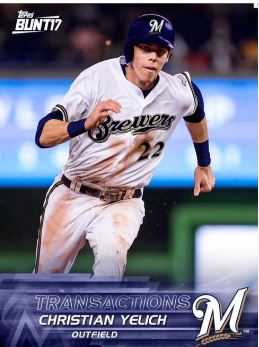
The Nats and Brew Crew were the only teams to win 19 games in May – going 19-7 and 19-8, respectively. The surge moved the Nationals from fourth place in the NL East (5 ½ games behind the Mets) to second place (just ½ game behind the Braves). The Mets who went 10-18 in May, fell to fourth.  The key to the Nationals’ NL-best record was pitching, as Washington recorded the NL’s lowest May ERA (2.51) – led by Max Scherzer (4-0, 2.21 in May); Gio Gonzalez (3-0, 1.47); Stephen Strasburg (4-1, 2.51); and Jeremy Hellickson (2-0, 1.30); as well as eight saves and a 1.46 ERA from Sean Doolittle.     The Brewers’ ERA was a middle of the pack 3.76, but they scored the NL’s second-most May runs (132). Among the keys to the Brewers’ attack were Christian Yelich (.330-5-17, with a league-leading 22 runs scored); Jesus Aguilar (.272-8-22); and Travis Shaw (.261-8-22).

THE BEST OF THE AL IN MAY

In the AL, The Red Sox (21-7 in March/April) needed their 18-11 May to stay in front of the Yankees, who went 17-7. Boston ended May just 1 ½ game ahead of New York. The Mariners also won 18 games in May (11 losses), to move within a game of the Astros (16-12 in May). How did these teams do it? Like the Brewers in the NL, the Red Sox and Yankees had middle of the pack (7th and 8th) earned run averages, but they scored the second- and fourth-most runs in the AL. The Yankees got an unexpected boost from Gleyber Torres (.317-9-24 in May) and expected power from Aaron Judge (.266-8-22). The Red Sox offense was led by J.D. Martinez (.299 with a league-topping 13 home runs for the month); Mookie Betts (.372-9-19); and Andrew Benitendi. (349-6-23). The Mariners scored the AL’s ninth-most runs, but put up the league’s second-lowest ERA for the month (3.13). The Seattle staff was led in May by James Paxton (3-0, 1.67).  In addition, starters Wade LeBlanc and Marco Gonzalez – while only going 3-1 in a combined 11 starts – kept the Mariners in games with ERAs of 1.72 and 2.30, respectively,

EVERY COIN HAS TWO SIDES

At the wrong end of the May spectrum were four teams that failed to win ten games during the month: White Sox and D-backs (each 8-19) and Blue Jays and Orioles (each 9-19). The Orioles are the furthest out of any division race – 21 ½ games behind the Red Sox at the end of play May 31. The road to the bottom was paved, in great part, by pitching lapses.  The White Sox, Blue Jays and Orioles all put up May ERA’s over 5.00.  The D-backs bucked that trend, with a middle-of-the-road 3.87 May ERA, but they scored MLB fewest runs (77 in 27 games) and hit an MLB-low .193 for the month. Among the Arizona disappointments – Paul Goldschmidt (.144 in 97 at bats); Nick Ahmed (.146 in 89 at bats); and Chris Owings (.151 in 73 trips to the plate)

Here are the team stats for May – and a few BBRT observations.

TEAM STATISTICS (leaders) FOR THE MONTH OF MAY

RUNS SCORED … MLB Team Average – 120

AL: Indians (179); Red Sox (144); Astros (138)

NL: Cubs (144); Brewers (132); Braves (131)

The Diamondbacks scored an MLB-low 77 runs in May (27 games). The A’s  were at the bottom of the AL with 104.  Other teams scoring fewer than 100 runs over the month were the Marlins (96), Padres (97) and Mets (98).   Arizona was also the only team to hit under .200 – as a team – for the month, at an anemic .193).  Ouch!

BATTING AVERAGE … MLB Team Average – .248

AL: Indians (.283); Royals (.268); Red Sox (.264)

NL: Giants (.281); Cubs (.273); Brewers (.265)

HOME RUNS … MLB Team Average – 33

AL: Red Sox (50); Indians (48); Yankees (47)

NL: Nationals (41); Brewers (37); Cubs (36)

The Marlins and D-backs were the most power-starved clubs in May  (22 home runs each). 

STOLEN BASES … MLB Team Average – 13

AL: White Sox, Mariners & Red Sox (22)

NL: Padres (19); D-backs & Rockies (18)

The Marlins stole only four bases in May (in nine attempts), MLB’s lowest total number  of  steals and second-worst success rate (44.4 percent). Oakland swiped the fewest bags in the AL (5) and A’s runners  were caught ten times for a 33.3 percent success rate. 

STRIKEOUTS … MLB Team Average – 232

AL: Rangers (292); Blue Jays (271); A’s (260)

NL: Giants (261); D-backs (255); Padres (249)

The Angels and Rays led MLB in grounding into double plays in May at 32 each. Saint Louis led in in sacrifices (not sacrifice flies) with 16. The Mets had zero successful sacrifice hits in May.  

WALKS DRAWN … MLB Average – 88

AL: Angels (124); Rangers (101); Indians (98)

NL: Cubs (122); Braves (103); Dodgers (97)

The Phillies, Cubs and Marlins tied for the MLB lead in May pinch hits (13), while the Orioles topped the major leagues with a .556 pinch-hiting average for the month (5-for-9). Rangers’ pinch-hitters logged seven at bats – and seven outs.

EARNED RUN AVERAGE … MLB Average – 4.05

AL:  Astros (2.82); Mariners (3.13); Rays (3.39)

NL:  Nationals (2.51); Phillies (3.00); Dodgers (3.10)

Six teams finished May with ERA’s north of 5.00: the Giants (5.39); Blue Jays (5.35); Royals (5.19); Marlins (5.13); Orioles (5.08); White Sox (5.07). 

STRIKEOUTS … MLB Average – 232

AL:  Red Sox (295); Astros (282); Indians (258)

NL: Dodgers (273); Nationals (260); Phillies (246)

Astros’ pitchers racked up May’s best strikeout-to-walk ratio at 4.15.  They had MLB’s second-most  strikeouts and second-fewest  walks for the month.

SAVES … MLB Average – 7

AL: Red Sox (12); A’s (10); three with nine

NL: Padres (11); Dodgers & Nationals (10)

______________________________________________________________________

Now let’s take a look at some plays and achievements that caught BBRT’s eye.

—–A FEW HIGLIGHTS FROM MAY—-

Pujols Joins an Elite Club

On May 3, as the Angels topped Seattle 5-0, Albert Pujols collected his 3,000th MLB hit – a fifth-inning single. The safety made him one of just four MLB players to collect both 3,000 hits and 600 home runs.  Pujols joins Hank Aaron (3,771 hits, 755 home runs); Willie Mays (3,283 hits and 660 home runs); and Alex Rodriguez (3,115 hits and 696 home runs) in that elite club.  Note:  3,000 hits seem the most attainable of those two landmark numbers: 32 Players have reached 3,000 or more hits, while just nine have hit 600 or more home runs.

The Hit Man Retires

Ichiro photo

Photo by Keith Allison

On May 3, the Seattle Mariners announced the Ichiro Suzuki was transitioning to a front office role – retiring a swing that had produced 3,089 MLB hits, two batting titles and the AL Rookie of the Year AND Most Valuable Player Award in 2001.  Ichiro was a ten-time All Star, ten-time Gold Glover and started his MLB career with a record  ten consecutive seasons of 200 or more safeties (leading the league in hits seven times). He also holds the MLB record for hits in a season with 262 (in 2004).  He career MLB average was .311 with a high of .372 in 2004. Before joining the Seattle Mariners in 2001 (at age 27), Ichiro was a star in Japan – collecting 1,278 hits and winning seven batting titles in nine seasons (a .353 average)


Scooter Gennett – a Pretty FOUR-tunate Guy

GennettLast season, as you may recall, Reds’ 2B Scooter Gennett tied an MLB record by homering four times in one game (for the full story on that game, click here). He also hit four Grand Slams in 2017 – joining Lou Gehrig as the only two players to have a four-homer game and four “four-run” round trippers in the same season. This season, when Reds’ fans often have little to cheer “for,” Gennett gave them a boost by homering in four straight games – May 7-10.  In that streak Gennett went 10-for-17 (.588), with two doubles, four home runs, ten RBI and six runs scored.  Surprisingly, he did not draw a single walk (nor did he strikeout) over the four contests  All BBRT can say is “Four goodness sakes!”

OH No-No, You Don’t

On May 4, Dodger pitchers threw just the 12th “combined” no-hitter in MLB history – as Dodger hurlers Walker Buehler (six innings), Tony Cingrani (one inning); Yimi Garcia (one inning); and Adam Liberatore (one inning) held the Padres hitless in a 4-0 win.  For more on combined no-hitters, click here.

James Paxton Finishes What He Starts – For the First Time – in a Big Way

Photo by hj_west

Photo by hj_west

On May 8, Seattle southpaw James Paxton (in his sixth MLB season) pitched his first-ever MLB complete game – and he made it count.  Not only did he top the Blue Jays 5-0, his gem was also the third no-hitter of thee 2018 MLB season. Paxton also became just the second Canadian-born major leaguer to throw an MLB no-hitter and the first to do so in Canada.  Paxton used just 99 pitches, the 12th no-hitter under 100 pitches thrown since pinch-count data is considered complete and accurate (1988).  For more on hurlers who first complete game was a no-hitter, click here. 


Persistence – This Mann Has It

In June 2002, 18-year-old southpaw Brandon Mann was selected by Tampa Bay in the 27th round of the MLB draft.  In 16 professional seasons, Morrow played for 17 different teams at pretty much every level except the major leagues – both in the U.S. and Japan.  He pitched 1,270 2/3 minor, independent and foreign league innings, with a 4.35 earned run average. Finally, on May 13 of this season – just three days shy of his  34th birthday, Mann “got the call.” He made his MLB debut for the Rangers against the Astros on May 13, with 1 2/3 innings of scoreless relief.  He appeared again on May 15 and May 19 – each time tossing 1 2/3 scoreless frames.  Mann was optioned back to Triple A Round Rock on May 24. His career MLB stats, so far, three games, five innings, two hits, two walks, one strikeout and 0.00 earned run average. My guess, he’ll be back.

Save the Last Dance (or inning)  for Me – I’m Kinda in a Hurry

Craig Kimbrel photo

Photo by Keith Allison

On May 5, Red Sox reliever Craig Kimbrel did what he does best – closed the door on a ball game. He came into the contest in the bottom of the ninth, with the Red Sox leading the Rangers 6-5.  He  used eleven pitches to induce a foul pop out from  3B Renato Nunes and swinging strikeouts by C Robinson  Chirinos and pinch-hitter Ronald Guzman.    It was Kimbrel’s 300th save – making him the youngest pitcher to achieve 300 saves (29), as well as the quickest in terms of appearances (494) and save opportunities (330).


Don’t Worry, I’ll Make Up For It

Luke Maile photo

Photo by Keith Allison

On May 11,  Red Sox C Sandy Leon came to the plate in the  top of the fourth with the Red Sox/Blue Jays game tied at two runs each, Red Sox’ 2B Brock Holt on first and two out. Leon swung and missed a change up from Jays’ pitcher Aaron Sanchez.  The ball got by catcher Luke Maile (passed ball) and Leon sprinted toward first. Maile recovered the horsehide and fired to first – well, actually fired into right field. On the play, Holt scored all the way from first base to give the Sox the lead – and Leon made it into third.

Maile, however, made up for his double miscue.  The 24-year-old rookie had already driven in one of the Blue Jays’ first two tallies with a second-inning single. In the seventh, with Toronto trailing 3-2. Maile hit his first MLB home run (with two out and no one on) to tie the game.  It came off Red Sox’ ace Chris Sale. Later, with one on and no one out in the bottom of the twelfth, Maile hit his second home run of the game – and second of his career – for a walk-off 5-3 Toronto victory.  I doubt if anyone (until now) even remembered that passed ball and errant throw.

Mariners’ backstop David Freitas was not so lucky.   On May 16, he let a third strike (from pitcher Marc Rzepczynski – had to get that name in this post somewhere – past the Rangers’ Ronald Guzman) get by him.  There were two out and the bases were loaded, with the Rangers ahead 1-0.  As Freitis retrieved the (passed) ball and fired (late) to first baseman Ryon Healy, Rangers’ SS Jurickson Profar (who had been on third) scored.  Seeing the throw to first, Texas’ 3B Isiah Kiner-Falefa (who had been on second) rounded third and beat the throw home – giving Texas two runs on a strikeout.  The Rangers won 5-0 and Freitas went zero-for-three.

Merry-Go-Round the Bases (More of “We track everything.’)

On May 14, the Brewers’ Tyler Saladino was called on to pinch hit for pitcher Josh Hader with two out and one on in the top of the ninth (the Brewers were leading 5-2 at the time).   It was Saladino’s first home run since August 29, 2016 – a span of 96 games played – and it was also his first-ever inside-the-park round tripper. It was also the Brewers’ first-ever pinch-hit inside-the-parker.

What Goes Down Must Come Up … If You Are Jose Altuve

Jose Altuve photo

Photo by Keith Allison

If you are Astros’ second baseman Jose Altuve – coming off your fourth straight season of 200 or more base hits (leading the league in each campaign) – slumps, even mini-slumps, are a rarity.  So, there was a bit of surprise in the Houston dugout when Altuve went without a hit from the fourth inning of a May 23 game against the Giants through the sixth inning of a May 25 game versus the Indian – a stretch of 11 at bats, during which he dropped his average from .318 to .301. During the negative streak, he logged six ground ball outs, two fly outs and two strikeouts. Note: Altuve collected 845 hits in the four seasons from 2014 to 2017, leading the league in hits every year and winning three batting titles.

When you are as good as Altuve, what goes down must come up. Altuve doubled in the eighth inning of that May 25th game – and went on to record hits in his next nine at bats (through the eighth inning of a May 27 game against the Indians). He was finally stopped on a spectacular catch by Indians’ CF Rajai Davis in the final inning of that May 26 contest.  During the streak, Altuve collected four singles, three doubles, one triple and one home run.  He scored six runs, drove in six and raised his average from .301 to .333.

The record for most consecutive base hits is 12 – shared by Walt Dropo of the Giants (1952) and Pinky Higgins of the Red Sox (1938).  Dropo’s record came in 12 consecutive plate appearances, while Higgins streak was interrupted by two walks (which do not count as at bats).

____________________________________________________

May 26 — The Hall of Fame Classic

May 26 marked the Tenth Annual MLB Hall of Fame Classic – played at Doubleday Field in Cooperstown, New York.  The contest featured two teams made up of retired MLB players – The Knucksies, managed by Hall of Famer Rollie Fingers and the Wizards, managed by Hall of Famer Ozzie Smith.  (HOFers Goose Gossage, Eddie Murray, Gaylord Perry and Tim Raines served as coaches.)  Each MLB team had a (retired) player-representative on the rosters.

The Knucksies prevailed by a 6-0 scored, with  Shane Victorino collecting two hits, scoring one run, driving in two and earning the Bob Feller Player of the Game Award.  A.J. Pierzynski won this year’s Hall of Fame Classic Home Run Derby.

HOF1

HOF 2

____________________________________________________

Verlander Fans Ohtani for 2,500th Career Whiff

No doubt, Astros’ starter Justin Verlander is having a great season – at the close of May he was 7-2, with an MLB-low 1.11 earned run average and 98 strikeouts in 81 1/3 innings.  Along the way, on May 16, he also notched a landmark strikeout – number 2,500 of this career – during a five-hit shutout against the Los Angeles Angels.  The victim was the Angels’ star rookie pitcher/designated hitter Shohei Ohtani and it came as Ohtani – who was zero-for-four with three whiffs against Verlander – led off the ninth with the Angels down 2-0.  For the day, Verlander went the distance, giving up five hits and one walk, while fanning seven.

Ohtani photo

Photo by shinya

After the Angels’ much-publicized Japanese league star pitcher/designated hitter Shohei Ohtani put up a 27.00 earned run average and .125 batting average in Spring Training, skeptics predicted a long adjustment to the Major Leagues.  Oops!  Through May, only eight players with at least 25 plate appearances with runners in scoring position were hitting over .400 in those situations. One of them was Ohtani – at .417.  Through May, he is hitting  .292 with six home runs and 20 RBI in 31 games.  As a pitcher, his March-May numbers are 4-1, 3.18 in eight start. 


All You Need it Glove

On Friday May 18, Pirates’ pitcher Ivan Nova deftly handled a comebacker to the mound off the bat of the Padres’ Freddy Galvis.  Only one problem, when he went to make the throw to first, the ball was stuck in his glove.  As the video shows – no problem.

Choo-sing the Right Time to Go Deep

On May 26, Rangers’ DH Shin-Soo Choo hit a walk-off home run in the bottom of the tenth inning to give the Rangers a 4-3 win over Kansas City. Not only was it a game winner, it was Choo’s 176th MLB round tripper – the most ever for an Asian-born player. (Choo had been tied with Hideki Matsui at 175.)

Taking One (or more positions) For the Team

Who says you can’t teach an old dog new tricks?  Blue Jays 35-year-old catch Russell Martin is in his 15th major league season.  Going into this year, he had started 1,384 games at catcher, 23 at designated hitter, 19 at 3B and one in right field.  This May, Martin started 13 games at catcher; three games at 3B (May 9, 12 and 18); and notched his first-ever game starts at shortstop (May 26) and left field (May 28).

In another “old dogs and new tricks” move, on May 27, the San Francisco Giants gave 3B Pablo Sandoval his first-ever start at second base. – where he recorded one putout and two assists, with no miscues.  Over 11 seasons, Panda has made 947 starts at 3B, 67 at 1B, 14 at DH, 12 at catcher and, now, one at the keystone sack. This follows his first-ever appearance on the mound (April 28), when he threw a 1-2-3 ninth in a Giants 15-9 loss to the Dodgers.  By the way, Sandoval currently has an earned run average of 0.00 and a fielding average at second base of 1.000.

SERIOUS IN SEATTLE

The Seattle Mariners, off to one of the strongest starts in franchise history, let the competition know they are serious about contending in 2018. On May 25, the Mariners made the first major 2018 in-season plunge into the trade market – acquiring veteran outfielder Denard Span and relief Alex Colome from the Rays for pitchers Tommy Romero (3-3., 2.45 at Class A Clinton) and Andrew Moore (1-5, 5.34 for Seattle).

BBB – Brantley Be Back

Indians’ LF Michael Brantley put together an 18-game hitting streak (May 9-May 30) – going 30-for-82 (.366), with three doubles, six home runs, 19 RBI and 21 runs scored.  Coming off a pair of shoulder surgeries that limited him to 101 games in 2016-17, it’s good to see Brantley back in top form.

Cycling Your Way to the Top

Ronny Rodriguez was tearing it up for the Toledo Mudhen (Detroit system) at Triple A this season. The 26-year-old Toledo third baseman was hitting .318-8-35 in 48 games.  And, on May 30 – as Toledo downed Syracuse 12-7 – Rodriguez hit for the cycle: double in the first, homer in the third, single in the sixth and the sundae-topping triple in the ninth. How did he celebrate? A major league call up, his first MLB start and two hits for the Tigers the very next day.

Going to the Matt for your Pitcher

On May 30, as Oakland downed Tampa Bay 7-3, three A’s homered in support of starter Daniel Mengden – 1B MATT Olson; 3B MATT Chapman; LF MATT Joyce.

______________________________________________________________

—INDIVIDUAL LEADERS FOR MAY—

BATTING AVERAGE (75 or more plate appearances)

AL:  Jean Segura, Mariners (.382); Francisco Lindor, Indians (.373); Mookie Betts, Red Sox (.372)

NL: Brandon Crawford, Giants (412); Scooter Gennett, Reds (.398); Nick Markakis, Braves (.362)

The lowest May average among players with at least 75 plate appearances in the month  belonged to the Angels’ Kole Calhoun at .108 (8-for-74). Miami’s Lewis Brinson had the lowest NL May average (same qualifiers) at .137 (13-for-95). Twenty-six players who notched 75 or more May plate appearances hit under .200 for the month – the list included such unexpected names as Paul Goldschmidt (.144); Didi Gregorius (.151); Rhy Hoskins (.161); Cody Bellinger (.180); and Carlos Correa (.192). 

HOME RUNS

AL: J.D. Martinez, Red Sox (13); Jose Ramirez, Indians (11); two with ten

NL: Bryce Harper, Nationals (10); Matt Adams, Nationals (9); four with 8.

RUNS BATTED IN

AL: Michael Brantley, Indians (26); Salvador Perez, Royals, J.D. Martinez, Red Sox & Jose Ramirez, Indians (25)

NL: Eugenio Suarez, Reds (29); Anthony Rizzo, Cubs (28); Scooter Gennett Reds (24)

The Royals’ Salvador Perez drove in 25 runs in May, despite a .232 batting average – the second lowest May average among the 28 players who drove in 20 or more runs.  The lowest?  The Nationals’ Bryce Harper at .223.

RUNS SCORED

AL: Francisco Lindor, Indians (27); Mike Trout, Angels, Michael Brantley, Indians & Jose Ramirez, Indians (26)

NL: Charlie Blackmon, Rockies &  Christian Yelich, Brewers (22); Nolan Arenado, Rockies (21)

HITS

AL: Francisco Lindor, Indians (44); Jon  Jay, Royals & Eddie Rosario, Twins (43)

NL: Brandon Crawford, Giants & Nick Markakis, Braves (42); Freddie Freeman, Braves (39)

Francisco Lindor and Jose Ramirez of the Indians tied for the MLB extra-base hit lead in May (23) – with Lindor having the edge in total bases 87 to 81. 

STOLEN BASES

AL: Mookie Betts, Red Sox (10); Whit Merrifield, Royals (8); three with seven

NL: Travis Jankowski, Padres (7); Jose Peraza, Reds (6); three with five

BATTER’S STRIKEOUTS

AL:  Joey Gallo, Rangers (46); Chris Davis, Orioles  & Mike Zunino, Mariners (39)

NL: Paul Goldschmidt, D-backs (35); Michael Taylor, Nationals (34); Ronald Acuna,  Braves (33)

WALKS DRAWN

AL:  Mike Trout, Angels (30); Shin-Soo Choo, Rangers (21); Justin Smoak, Blue Jays (20)

NL: Justin Bour, Marlins (23); Johan Carmargo, Braves (19); Anthony Rizzo, Cubs (18)

Among players with at least 75 May plate appearance, the Angels’ Andrelton Simmons had – far and away – the best walks-to-strikeouts ratio at six-to-one. In 121 plate appearances, he drew 12 walks and only fanned twice. Anthony Rizzo was second at 1.80 – 18 walks versus ten whiffs.

PITCHING VICTORIES

AL:  Luis Severino, Yankees (4-0); Corey Kluber, Indians, Alex Claudio, Rangers & Daniel Mengden, A’s (4-1)

NL:  Sean Newcomb, Braves (5-0); Max Scherzer, Nationals (4-0); five at 4-1

EARNED RUN AVERAGE (minimum 25 May innings)

AL:  Justin Verlander, Astros (0.86); Daniel Mengden, A’s (1.51); James Paxton, Mariners (1.67)

NL:  Jacob deGrom, Mets (0.69); Jake Arrieta, Phillies (0.90); Ross Stripling, Dodgers (1.20)

The highest ERA among pitchers with at least 25 May innings or four May starts belongs to the Reds’ Homer Bailey – six May starts and a 9.76 ERA in 27 2/3 innings.

STRIKEOUTS

AL:  Chris Sale, Red Sox (59 – 40 innings pitched); James Paxton, Mariners (51 – 43 IP); Justin Verlander, Astros (50 – 41 2/3 IP) & Luis Severino (50 – 40 IP)

NL: Max Scherzer, Nationals (63 – 40 2/3 IP); Aaron Nola, Phillies (46 – 40 IP); Patrick Corbin, D-backs (43 – 35 1/3 IP)

Among pitchers with at least 20 inning pitched in May, the Nationals’ Max Scherzer had the highest rate of strikeouts per nine innings at 13.94, followed by the Red Sox’ Chris Sale at 13.28 and Astros’ Gerrit Cole at 13.09.

SAVES

AL:  Craig Kimbrel, Red Sox (11); Blake Treinen, A’s (10); Shane Greene, Tigers (9)

NL: Brad Hand, Padres (11); Kenley Jansen, Dodgers (9); two with eight

GAMES PITCHED

AL: Ryan Pressley, Twins & Joe Jimenez, Tigers (16); four with 15

NL: Andrew Chafin, D-backs & Wandy Peralta, Reds (15); four with 14

Joe Kelly of the Red Sox topped MLB in “holds” in May, with nine.  Kelly tossed 14 1/3 innings (14) games, gave up just five hits (also five walks) and one run, while fanning 17. He notched three wins (no losses), one save and nine holds.  A pretty busy month. 

_____________________________________________________________________

May Stnding


—–LEAGUE LEADERS – TEAMS –  YEAR-TO-DATE (through May 31)—–

RUNS SCORED … MLB Team Average – 245

AL: Red Sox (303); Yankees (299); Astros (287)

NL: Braves (282); Cubs (277); Pirates (265)

The Marlins scored an MLB-low 192 runs through May – the only team under 200 tallies.

BATTING AVERAGE … MLB Team Average – .246

AL: Red Sox (.267); Rays (.261); Mariners (.259)

NL: Braves (.264); Cubs (.263); Giants (.260)

The Diamondbacks had the lowest team batting average through May (.202); while the Blue Jays held the AL’s bottom spot at .228.

HOME RUNS … MLB Team Average – 62

AL: Yankees (87); Indians (84); Red Sox (82)

NL: Nationals (72); Brewers (69); Rockies (68)

The Marlins and Tigers were the most power-starved clubs through May, with 42 and 48 homers, respectively.  No other teams were under 50.  

STOLEN BASES … MLB Team Average – 28

AL: White Sox (47); Mariners & Red Sox (39)

NL: Nationals (43); Brewers (40); Braves (37)

The A’s not only stole the fewest bases through May (11), they also had the worst success rate at 47.8 percent (tossed out twelve times in 23 attempts.) Compare that to the Angels – caught just five times in 37 attempts for an MLB-best 86.6 percent success rate. 

BATTERS’ STRIKEOUTS … MLB Team Average – 477

AL: Rangers (573); A’s (512); Orioles (511)

NL: Padres (558); Giants (528); Phillies (523)

The best teams, through May, with runners in scoring position? The Red Sox (.289 average) and, in the NL, the Braves (.281). The other side of that coin? The D-backs (.211) and Rangers (.212).

EARNED RUN AVERAGE … MLB Average – 4.08

AL:  Astros (2.67); Red Sox (3.58); Angels (3.80)

NL:  Nationals (3,23); Cubs (3.29); Phillies (3.40)

Two teams carried ERA’s over 5.00 through May: the Royals (5.26) and White Sox (5.13). Those two squads are a combined 37 games under.500. 

PITCHERS’ STRIKEOUTS … MLB Average – 477

AL:  Astros (598); Red Sox (563); Yankees (531)

NL: Dodgers (558); Nationals (544); ; Mets (503)

Through May, the Astros were averaging an MLB-tops 10.31 strikeouts per nine innings. Overall, eight teams averaged at least one whiff per nine frames through May 31. 

SAVES … MLB Average – 14

AL: Red Sox (21); Mariners (20); Rays (15)

NL: Rockies (19); Nationals (18); Brewers, Mets & Padres (17)

The Red Sox and the Padres topped MLB in successful save opportunity conversion percentage through May at 80.8 and 80.0 percent, respectively. The Tigers were at the bottom at 53.9 percent (14 saves, 12 blown saves).

The best bullpen earned run average went to the Brewers at 2.45; while the Indians’ pen had an MLB-high 6.13 ERA through May.  

FEWEST WALKS SURRENDERED … MLB Average – 185

AL: Indians (139); Astros (143); Mariners (157)

NL: Nationals (159); Dodgers (165): Pirates (166)

No team hit more batter than the Rangers through May – 42  – followed by the White Sox and Mariners (30).  The A’s led MLB in wild pitches through May (39), while the Pirates sat atop the NL (33). The Mets staff has launched an MLB-low nine wild pitches. 

FEWEST ERRORS IN THE FIELD … MLB average – 31

AL: Astros (16); Royals (21); Angels (24)

NL: Rockies & D-backs (18); Nationals (27)

The Rangers (50) and Giants (45) made the most errors through May. 


__________________________________________

—INDIVIDUAL LEADERS FOR YEAR TO DATE (throggh May 31)—

BATTING AVERAGE (qualifiers)

AL:  Mookie Betts, Red Sox (.359); Jean Segura, Mariners (.339); Jose Altuve, Astros (.338)

NL: Matt Kemp, Dodgers (.343); Scooter Gennett, Reds (.343); Nick Freddie Freeman, Braves (.335);

The lowest average (through May) among qualifying players belonged to the Angels’ Kole Calhoun at .145 (25-for-173).  The Marlins’ Lewis Brinson had the lowest average in the NL at .152 (29-for-19).  Eleven qualifying players had averages below “The Mendoza Line” (under .200). 

 HOME RUNS

AL: Mike Trout, Angels, J.D. Martinez, Red Sox & Jose Ramirez, Indians (18)

NL: Bryce Harper, Nationals (18); Chris Villanueva, Padres (15); Ozzie Albies, Braves (14).

Among players with at least 100 plate appearances through May, Bryce Harper of the Nationals  had the best at bat/home run  ratio at 10.7; while the Red Sox’ Mookie Betts  was the best in the AL at 10.8. 

RUNS BATTED IN

AL: J.D. Martinez, Red Sox (47); Manny Machado, Orioles (45); two with 41

NL: Javier Baez & Eugenio Suarez, Reds (43); two with 40

Among players with at least 25 plate appearances with runners in scoring position, the Braves’ Freddie Freeman had the best average through May at .447 (21-for-47). The Orioles’ Manny Machado topped the AL in this category at .417. 

RUNS SCORED

AL: Mookie Betts, Red Sox (52); Mike Trout, Angels (47); Francisco Lindor, Indians (44)

NL: Ozzie Albies, Braves (49); Charlie Blackmon, Rockies (44); Tommy Pham, Cardinals (39)

HITS

AL: Jose Altuve, Astros (80); Jean Segura, Mariners (76); three with 71

NL: Nick Markakis, Braves (74); Freddie Freeman, Braves & Scooter Gennett, Reds (71)

The Angels’ Mike Trout had an MLB-best .444 on base percentage through May (among qualifiers); while the Braves’ Freddie Freeman topped the NL at .435.

STOLEN BASES

AL: Dee Gordon, Mariners (16); Mookie Betts, Red Sox (13); four with 12

NL: Ender Inciarte, Braves (18); Trea Turner, Nationals (16); Michael Taylor, Nationals (13)

BATTER’S STRIKEOUTS

 AL:  Joey Gallo, Rangers (82); Chris Davis, Orioles (72); Yoan Moncada, White Sox (71)

NL: Paul Goldschmidt, D-backs (71); Lewis Brinson, Marlins (66); two with 65

WALKS DRAWN

 AL:  Mike Trout, Angels (50); Aaron Judge, Yankees (43); Shin-Soo Choo, Rangers (33)

 NL: Bryce Harper, Nationals (47); Freddie Freeman, Braves, Cesar Hernandez, Phillies & Justin Bour, Marlins (37)

You want a piece of me?   Apparently not.  Freddie  Freeman (Braves); Bryce Harper (Nationals); and Manny Machado (Orioles) shared the MLB lead in intentional walks through May at eight each.  

PITCHING VICTORIES

AL:  Luis Severino, Yankees (8-1); Corey Kluber, Cleveland (8-2); six with seven

NL:  Max Scherzer, Nationals (9-1); Aaron Nola, Phillies (7-2); seven with six

What ever happened to finsihing the job?  There have been only 19 complete games thrown through May – with the Indians’ Carlos Carrasco and Mariners’ James Paxton leading the way with two each. What do you have to do to avoid the manager’s hook?  Twelve of the 19 complete games were shutouts.

EARNED RUN AVERAGE (qualifiers)

AL:  Justin Verlander, Astros (1.11); Corey Kluber, Indians (2.02); Gerrit Cole, Astros (2.05)

NL:  Jacob deGrom, Mets (1.52); Max Scherzer, Nationals (1.92); Gio Gonzalez, Nationals (2.10)

STRIKEOUTS

AL:  Gerrit Cole, Astros (109 – 74 2/3 IP); Chris Sale, Red Sox (104 – 75 IP); Justin Verlander, Astros (98 – 81 1/3 IP)

NL: Max Scherzer, Nationals (120– 79 2/3 IP); Patrick Corbin, D-backs (98 – 75 1/3 IP); Jacob deGrom, Mets (85 – 65 1/3 IP)

Among pitchers with at least 40 inning pitched through May, the Nationals’ Max Scherzer had the highest rate of strikeouts per nine innings at 13.46 (120 strikeouts in 79 2/3 innnings).  Using the 40-inning qualifier, the Indians’ Corey Kluber had the best strikeouts per walk ratio at 9.35 (88 strikeouts versus 10 walks).  

SAVES

AL:  Edwin Diaz, Mariners (19); Craig Kimbrel, Red Sox (18); two with 13

NL: Wade Davis, Rockies (18); Brad Hand, Padres (17); Jeurys Familia, Mets (14)

GAMES PITCHED

AL: Joe Jimenez, Tigers (30); Ryan Pressley, Twins (29); Edwin Diaz, Mariners (29)

NL: Bryan Shaw, Rockies & Wandy Peralta, Reds (30); Sammy Solis (Nationals (29)

—-AND THAT’S THE MAY WRAP UP – HOPE YOU MADE IT THIS  FAR!—-

Primary Resources: ESPN.com; Baseball-Reference.com; MLB.com

I tweet baseball @DavidBRT

Follow/Like the Baseball Roundtable Facebook page here.

Member: Society for American Baseball Research; The Baseball Reliquary; The Negro Leagues Baseball Museum. 


Pennock, Blyleven and Morgan … A Longevity List

BlylevenMay 30, it turns out, is a (somewhat) historic day for Twins fans.  On that date in 1992, 41-year-old Bert Blyleven (who would eventually enter the Baseball Hall of Fame under the bill of a Twins’ cap) toed the rubber for the California Angels (versus the Cleveland Indians).  The right-hander, noted for one of the best curveballs in MLB history, threw seven innings of scoreless ball (three hits, two walks, seven strikeouts) and got the win as California prevailed 3-1.

Why did this catch BBRT’s eye?  First, I’m a big Blyleven fan. Second, Bert’s presence on the mound marked an unexpected comeback of sorts – he had missed the 1991 season recovering from rotator cuff surgery (and was 41, after all). Third, it was the first win of his final MLB season.  But most important, it made Blyleven just the second pitcher to notch MLB victories as a teenager AND after age 40. (A third has since joined the list, but more on that later).


Pitchers with Victories as a Teenager and After Turning Forty

Herb Pennock  … Bert Blyleven … Mike Morgan

Bert Blyleven

The “Dutchmaster’s” first MLB win, by the way, came in a Twins’ uniform, when the 19-year-old Blyleven made his MLB debut (June 5, 1970) against the Washington Senators (in D.C.). Young Bert went seven innings in that game, giving up one run on five hits and a walk, and fanning seven in a tight 2-1 Minnesota win. It was, of course, the first win of his first MLB season.  Blyleven picked up nine more MLB wins before his 20th birthday (10-9, 3.18).

We’ve already looked at Blyleven’s first win after turning forty (first two paragraphs of this post) – which was the first tinw of his final MLB season.  He did pick up seven more victories that campaign.

Blyleven’s Hall of Fame career covered 22 seasons (Twins, Rangers, Pirates, Indians, Angels) – 287 victories (250 losses); a 3.31 earned run average; 242 complete games; 60 shutouts; and 3,701 strikeouts. He was a two-time All Star and a 20-game winner in 1973.

Herb Pennock

PennockThe first pitcher to earn MLB victories as a teenager and a 40-year-old was another Hall of Famer – Herb Pennock – whose career spanned from 1912 to 1934 (missing 1918 for military service). The southpaw’s first win came in the second game of a twin bill on June 28, 1912 – as his Philadelphia Athletics topped Washington 5-4 in ten innings. The 18-year-old Pennock came on in relief – pitching a scoreless ninth and tenth – for the victory. Pennock added two more victories (as a teenager) in 1913 – giving him a record of 3-3, 4.75 before his twentieth birthday.

Pennock’s first win as a 40-year-old (he had two) came on May 20, 1934 – again in relief – as his Red Sox bested the White Sox 1-0. Pennock went 3 1/3 scoreless innings in that one, giving up one hit and one walk. The future Hall of Famer played 22 MLB seasons, going 241-162, 3.60 (37 saves), with 249 (410 starts) complete games and 37 shutouts.  He was a two-time twenty game winner.


Mike Morgan

MorganThe third pitcher to notch wins as a teenager and after age 40 was Mike Morgan – who, as a 18-year-old, was pushed out onto the major league mound by Oakland A’s owner Charlie Finley on June 11, 1978; less than a week after the A’s made the high schooler the fourth overall pick in the 1978 MLB draft.  Despite going the distance in his debut (nine innings, three runs-two earned, five walks and no strikeouts), the teenager did not pick up the win.  He got the loss as the A’s dropped a 3-0 decision to the Orioles.  Morgan had to wait until July 29, 1979 for his first MLB win. On that day, the 19-year-old right hander picked up a 2-1 complete game win over the Seattle Mariners (three hits, one run, four walks and one strikeout).  Morgan added a second win in his very next start (again over Seattle), but his overall record as a teenager was 2-13, 6.12. Morgan spent 1980 and 1981 in the minors before returning to the major leagues with the Yankees in 1982.

The victory that made Morgan a member of the under-twenty/over-forty winning pitchers’ club came on April 19, 2000. Morgan came into that game in the top of the eighth inning with his Diamondbacks tied at seven with the Rockies. He pitched a 1-2-3 inning and the Diamondbacks scored in the bottom of the frame to give Morgan the win (with relief in the ninth from Greg Swindell and Byung-Hyun Kim). Morgan added four more wins in 2000, one in 2001 and one in 2002.

For his 22-season career (A’s, Yankees, Blue Jays, Mariners, Orioles, Dodgers, Cubs, Cardinals, Reds, Twins, Rangers, Diamondbacks), Morgan was 141-186, 4.23 (8 saves) – appearing in 597 games (411 starts) with 46 complete games and 1,403 strikeouts.

FINAL TIDBIT – JUST IN CASE YOU ARE INTRESTED

Players with home runs as a teenager and after turning forty: Ty Cobb, Rusty Staub, Gary Sheffield, Alex Rodriguez.

Primary Resources: Baseball-Reference.com; Society for American Baseball Research


I tweet baseball @DavidBBRT

Follow/Like Baseball Roundtable’s Facebook page here. Blog post notifications, additional baseball commentary, prizes.  

Member: Society for American Baseball Research; The Baseball Reliquary; The Negro Leagues Baseball Museum

Carl Hubbell’s Remarkable Streak – And a Day of Legend-Making

HubbellToday (May 27, 2018) is the 81st anniversary of the 24th victory in Giants’ Carl Hubbell’s MLB-record 24-decision winning streak (July 17, 1936 – May 27, 1937). “King Carl” Hubbell started the streak with a complete-game, nine-hit shutout of the Pirates – as the Giants topped the Bucs 6-0 in Pittsburgh.  The last win in the streak came as the result of a two-inning relief stint (May 27. 1937).  Hubbell came on in the seventh inning with the Giants trailing the Reds 2-1 in Cincinnati. He retired six straight in the eighth and ninth frames and the Giants scored in the top half of each of those innings to give Hubbell the win. The 6’, 170-pound hurler (known for his knee-buckling screwball) saw his streak end in his next trip to the mound (May 31), when the rival Dodgers reached him for five runs on seven hits and three walks in just 3 1/3 innings. (The Dodgers prevailed by a 10-3 score).

Over the course of his streak, Hubbell pitched in 27 games – starting 22 (two of the 24 wins came in relief).  He notched 19 complete games and put up a 1.82 earned run average over 207 2/3 innings (158 hits, 38 walks, 104 strikeouts).  In games he started,  Hubbell gave up two or fewer runs 17 times and picked up ten one-run victories.

King Carl Versus Dizzy Dean – Memorable Matchups

The toughest game in Hubbell’s 24-decision streak of victories came against fellow future Hall of Famer Dizzy Dean. On July 21, 1936, Hubbell faced Dean and his Cardinals in New York.  After nine innings, Hubbell and Dean were both still in the game, which was knotted at 1-1. Dean had actually outpitched Hubbell to that point, giving up one run, four hits and two walks – while fanning six. Hubbell had fanned just two and had given up one run, nine hits and four walks. Both runs had scored on solo homers: Giants’ catcher Gus Mancuso had gone deep against Dean in the bottom of the fifth inning; Cardinals’ right fielder Pepper Martin had answered with a solo shot in the top of the sixth.

In the top of the tenth, Hubbell gave up a walk to Pepper Martin, got LF Joe Mediwick to hit into a double play and then fanned 1B Ripper Collins. Dean got the first two outs in his half of the tenth before Giants’ SS Dick Bartell hit a walk off home run to give Hubbell win number-three in the streak.

Note: Hubbell faced St. Louis four times during the streak and Dean appeared in all four contests – three times as a starter and once in relief. On September 3, 1936, Dean and Hubbell both went the distance in a 2-1 contest. On September 14, Hubbell picked up his 14th win of the streak with five-innings of one-run relief and Dean pitched 2 1/3  scoreless innings out of the pen for St. Louis.  The final Hubbell/Dean matchup during the streak came on May 19, 1937, when Hubbell picked up his 22nd consecutive win, topping Dean 4-1 (only two of the four tallies against Dean were earned), as they both again went the distrance.  In those four matchups, Dean put up a 1.80 ERA over thirty innings – and all he got to show for it was three losses as a starter and a no decision in relief.

Hubbell finished the 1936 season on a 16-decision winning streak, with a league-leading 26 wins against just six losses (for a league-best .813 winning percentage), as well as a league-lowest 2.31 earned run average. He started 8-0 in 1937 and finished the year with a league-leading 22 wins (versus eight losses), a league-topping .733 winning percentage and a 3.20 ERA.  Over a 16-season career, the Hall of Famer was 253-154, 2.98. He led the NL in wins three times, ERA three times, complete games once, shutouts once and strikeouts once.


THE STUFF OF LEGENDS

1934In the 1934 All Star Game, Carl Hubbell created his own piece of MLB history – fanning five future Hall of Famers consecutively: Babe Ruth, Lou Gehrig, Jimmie Foxx, Al Simmons and Joe Cronin. Hubbell, who started the game for the National League actually fanned a sixth future Hall of Famer in his three-inning stint – AL starting pitcher Lefty Gomez.

Of course, the game was ripe for some type of legendary achievement.  Of the 18 players who started that contest, seventeen – all but NL CF Wally Berger – were future Hall of Famers.  Here’s how Hubbell’s now legenday appearance went.

First Inning …

Charlie Gehringer – Single, taking second on an erro by Giants’ CF Wally Berger

Heinie Manush – Walk

Babe Ruth – Strikeout

Lou Gehrig – Strikeout

Jimmie  Foxx – Strikeout


Second Inning …

Al Simmons – Strikeout

Joe Cronin – Strikeout

Bill Dickey – Single

Lefty Gomez – Strikeout


Thrid Inning …

Charlie Gehringer – Flyout ro right

Heinie Manush – Groundout to second

Babe Ruthg – Walk

Lou Gehrig – Flyout to right


I tweet baseball @DavidBBRT

Follow/Like the BaseballRoundtable Facebook page here.  Blog post notifications, additional baseball commentary, prizes.

Member: Society for American Baseball Research; The Baseball Reliquary; The Negro Leagues Baseball Museum.
An Historic … “We’ll Never See That Again” … Day – Rookie Pat Caraway Fans Joe Sewell TWICE!

Joe Sewell - a true contact hitter. Struck out twice in a game only twice in his Hall of Fame career.

Joe Sewell – a true contact hitter. Struck out twice in a game only twice in his Hall of Fame career.

Baseball Roundtable is drawn to on-field events that we are not likely to see again.  You know, like a pitcher winning 30 or more games in a season, a reliever topping 200 innings in a season, a batter hitting .400 for a campaign, or a player stealing home eight times in a season or more than 50 times in a career.

On this date (May 26) in 1930, MLB saw an event that is sure to never happen again. There are several reasons for that assertion. One is that the primary players involved – Joe Sewell and Pat Caraway – both passed away quite some time ago.  Another is how the game has changed, becoming a harder-throwing/freer-swinging affair.  Finally, and most important, we are not likely to ever see a hitter like Joe Sewell again.

The event?  On May 26, 1930, a 24-year-old rookie southpaw named Pat Caraway (White Sox) fanned Indians’ third baseman Joe Sewell in two consecutive plate appearances. What’s so unique about that?  Well, the 5’6”, 155-pound infielder was known for his uncanny ability to put his bat on the ball. As Rod Serling would have said, “We offer, for your consideration” the following facts:

  • Caraway’s consecutive whiffs of Sewell would be the only time in Hall of Famer Sewell’s entire 14-season MLB career (1,903 games and 8,333 plate appearances) that he struck out in consecutive at bats.
  • In that 1930 season, Sewell only struck out one more time – just three whiffs in 353 at bats (414 plate appearances).
  • Joe Sewell fanned twice in a game only twice in his career.

Caraway also seemed an unlikely candidate to fan Sewell in consecutive plate appearances. A rookie in 1930, Caraway would last just three MLB seasons – going 22-40 with a 5.35 career earned run average and 151 strikeouts in 478 innings. BBRT Note:  The only other time Joe Sewell fanned twice in one game (May 13, 1923), he was facing another rookie lefthander – Wallace Walter “Cy” Warmoth – who (like Caraway) appeared in only three MLB campaigns, going 8-5. 4.26.

In 2017, 96 major leaguers fanned more times than Joe Sewell did in his entire career. (Keep in mind that only 300 MLB players reached 250 at bats last season.)

Notably, Sewell’s two-strikeout game against Warmoth did not come during the infielder’s “free-swinging” days.  In his first five MLB seasons (1920-24), Sewell struck out 66 times in 2,794 plate appearances – once every 42.3 times he came to the plate. He tightened things up over his final nine campaigns (1925-33), fanning just 48 times in 5,539 plate appearances – once every 115.4 time he stepped up to the dish.

In 1920, Joe Sewell graduated from the University of Alabama – where he played varsity baseball and football, belonged to the Pi Kappa Phi fraternity and was elected Class President in his Senior year.

A few other Sewell tidbits that fall into BBRT’s “We’ll Never See That Again” category:

  • In 1929, Sewell played an MLB (modern) record 115 consecutive games without striking out (May 19-September 19). During his 115-game streak, Sewell racked up 436 at bats and 143 hits (.328), with 27 doubles, two triples, seven HR and 56 RBI.
  • In 1932, Sewell struck out just three times in 503 at bats – one strikeout for every 167.7 at bats, the MLB single-season record.
  • Sewell struck out in consecutive games only three times in his career – two of those in his first two MLB seasons.
  • For his career, Sewell fanned 114 times in 7,132 at bats – or once each 62.6 at bats. That puts Sewell second on the career list (among players who played after 1900) to Wee Willie Keeler, who fanned just once every 63.2 at bats in 19 MLB seasons (1892-1910). It’s a notable drop to third place – Lloyd Waner at 44.9 at bats per strikeout.
  • Baseball, apparently, was in the Sewell DNA.  Joe Sewell’s brothers, Luke and Tommy Sewell, also played in the major leagues.

Another “We’ll Never See That Again” or “They Don’t Make ‘Em Like They Used To” Tale

Now this tale may seem apocryphal, but is has enough “legs” to have made it into Joe Sewell’s Society for American Baseball Research biography and his New York Times obituary. It has been reported that when Sewell first made it to the major leagues in 1920, Indians’ teammate first baseman George Burns – seeing that Sewell did not have what he thought was a decent bat for the big leagues – gave young Joe a forty-ounce bat to use.  Joe is said to have cared for that bat – and used it for the rest of his career.  It is now on display at the Alabama Baseball Hall of Fame at the University of Alabama’s Sewell-Thomas Stadium. (Sewell was a star player for Alabama from 1917-1920 and the school’s baseball coach from 1964-69.)

Joe Sewell was inducted into the National Baseball Hall of Fame in 1977. He is also a member of the National College Baseball Hall of Fame and the Alabama Sports Hall of Fame.

Primary Resources: Society for American Baseball Research; Baseball-Refeence.com; TideSports.com


I tweet baseball @DavidBBRT

Follow/Like the BaseballRoundtable Facebook page here.  Blog post notifications, additional baseball commentary, prizes.

Member: Society for American Baseball Research; The Baseball Reliquary; The Negro Leagues Baseball Museum.
A Power Trifecta – The Three Teams to Hit 21 Home Runs Over Five Games

The New York Yankees, MLB.com reports, have now hit at least three home runs in five consecutive games (May 19-23) … the second-longest such streak recorded in MLB. (The 1987 Orioles hit at least three home runs in six straight from May 8 to May 13 of that season.)

When the 1977 Red Sox bashed 21 long balls over a five-game span. Goerge "Boomer" Scott was responsible for six of the blasts.

When the 1977 Red Sox bashed 21 long balls over a five-game span, George “Boomer” Scott was responsible for six of the blasts.

The Yankees also tied an MLB record with 21 home runs in that five-game span.  As always, a little bit of information is a dangerous thing for Baseball Roundtable.  That five-game mark (In baseball we do count everything, and in every way possible, don’t we?) sent me on a mission for more information. Specifically, a look at the three teams that share the five-game/21-dinger record … how they fared during the streak and who were the primary authors of those 21 long-balls.


Let’s start with the 2018 Yankees. Who hit their 21 shots between May 19 and May 23.

  • They won three games and lost two over that span.
  • They outscored their opponents 42 to 27.
  • Their power output was pretty consistent. Game-by-game, their home run totals were: 5-4-5-3-4.
  • Ten different players contributed home runs toward the record total.

The leader in the Bronx Bombers’ Barrage (I do love alliteration) was second baseman Gleyber Torres, who collected five of the 21 home runs and now has eight on the year.  During the streak, the Yankee rookie hit .300 (6-for-20), with five home runs, ten RBI and five runs scored.  Here’s a list of the Yankees who contributed to the 21 long balls, with their totals during the streak and on the season.

  • Gleyber Torres, 2B … Five during the streak, eight on the season.
  • Neil Walker, 1B … Two during the streak, two on the season.
  • Aaron Judge, RF … Two during the streak, 13 on the season.
  • Miguel Andujar, 3B … Two during the streak, five on the season.
  • Austin Romine, C … Two during the streak, two on the season.
  • Aaron Hicks, CF … Two during the streak, five on the season.
  • Tyler Austin, 1B … Two during the streak, eight on the season.
  • Gary Sanchez, C … Two during the streak, 12 on the season.
  • Giancarlo Stanton, DH … One during the streak, 11 on the season.
  • Didi Gegorius, SS … One during the streak, 11 on the season.

______________________________________________________________

Let’s go now to the 1999 Reds, whose five-game/21-dinger streak ran from September 4-7.

  • They won four games and lost one over that span.
  • They outscored their opponents 48 to 18.
  • Their streak was built on a pair of big power bookends. Game-by-game, their home run totals were: 9-5-1-0-6.
  • The fourth and fifth games were part of a September 7 doubleheader in which the Reds hit zero home  runs in game one and six in game two.
  • They are the only team to go without a homer for a game during their streak.
  • Nine different players contributed home runs toward the record total.

Left fielder Greg Vaughn, who hit 45 homers that season, led the way with five round-trippers during the streak.  During the five-game span, he hit .333 (6-for-18), with five home runs, 11 RBI and nine runs scored. Here are the players who contributed, with their home run count during the streak and for the full season.

  • Greg Vaughn, LF … Five during the streak, 45 for the season.
  • Aaron Boone, 3B … Three during the streak, 14 for the season.
  • Dmitri Young, RF … Three during the streak, 14 for the season.
  • Jeffrey Hammonds, RF … Three during the streak, 17 for the season.
  • Ed Taubensee, C … Three during the streak, 21 for the season.
  • Pokey Reese, 2B … One during the streak, ten for the season.
  • Brian Johnson, C …One during the streak, five for the season.
  • Mark Lewis, 3B … One during the streak, six for the season.
  • Mike Cameron, CF … One during the streak, 21 for the season.

______________________________________________________________________

Finally, there’s the 1977 Red Sox, whose streak ran from June 14-19.

  • They won four games and lost one over that span.
  • They outscored their opponents 40 to 17.
  • Game-by-game, their home run totals were: 3-2-6-5-5.
  • Eight different players contributed home runs toward the record total.

The Red Sox’ five-game/21-home run streak included a three-game sweep of the arch-rival Yankees in which the Red Sox outscored the New Yorkers 30-9.

The big boomer in the streak was George “Boomer” Scott, who was responsible for six of the long balls and hit at least one home run in each game. During the five games, Scott hit .500 (10-for-20), with six homers, nine RBI and seven runs scored. Here are the contributors, with the number of home runs during the streak and for the full season.

  • George Scott, 1B … Six during the streak, 26 for the season.
  • Carl Yastrzemski, LF … Four during the streak, 28 for the season.
  • Bernie Carbo, RF … Four during the streak, 15 for the season.
  • Jim Rice, DH … Two during the streak, 39 for the season.
  • Carlton Fisk, C … Two during the streak, 26 for the season.
  • Rick Burleson, SS …One during the streak, three for the season.
  • Denny Doyle 2B …One during the streak, two for the season.
  • Fred Lynn, CF … One during the streak, 18 for the season.


Primary Resources:  MLB.com; Baseball-Reference.com


I tweet Baseball @DavidBBRT

Follow/Like the Baseball Roundtable Facebook page here.

Member: Society for Americana Baseball Research; The Baseball Reliquary; The Negro Leagues Baseball Museum.

Youth Will Be Served – 2018’s Youngest Major Leaguers

Until May 20, the surprising Atlanta Braves seem to have a lock on MLB’s youth movement. As of May 19, the Braves had the first-, second- and third-youngest players to appear in the majors in 2018. The Braves, in fact, had the only 2018 major leaguers born after January 1, 1997.  (More on that in a few paragraphs.  First a look at the “newest youngest” player in the “show.”)

sotoOn May 20, 19-year-old Juan Soto (born October 25, 1998) made his MLB debut for the Washington Nationals – as a pinch hitter in the eighth inning of a 7-2 loss to the Dodgers; fanning on a 1-2 pitch.  Not an auspicious first at bat, but the 6’1”, 185-pound left-handed hitter made up for it the very next day – starting (batting sixth) in left field against the Padres. In his first at bat in that contest, Soto took the Padres’ starter Robbie Erin deep for a three-run home run. Soto finished the game two-for-four with two runs scored and three RBI.  And, as long as we’re on the topic of youth movements – the last player (before Soto) to hit an MLB long ball as a teenager?  Soto’s teammate Bryce Harper.

Soto’s solid day at the dish should come as no surprise.  Since signing as a 17-year-old in 2016, he has “raked” at every level he’s played. In 2016, he hit .361-5-31 with five steals  in 45 games for the Rookie-level Gulf Coast League Nationals, before being promoted to A-level Auburn, where he hit .429 in six games.  Injury slowed his progress in 2017, but he still hit .320 in nine games back with the Gulf Coast League Nationals and .360-4-14 for the Class A Hagerstown Suns.

Soto started this season back at Hagerstown, where he hit .373 with five homers in 16 games and was promoted to the High-A Potomac Nationals of the Carolina League – where he continued to mash (.371, with seven home runs, in 15 games). From there it was on to the Double A Harrisburg Senators, where he hit .323 with two homers in eight games. All of this resulted in a well-earned call up to the injury-riddled Nationals.

Now, about those Braves.  When the season opened, Braves’ second baseman Ozzie Albies (born January 7, 1997) was 2018’s youngest major leaguer.  He lost that status on April 25, when Braves’ OF Ronald Acuna (born December 18, 1997) took over as MLB’s youngest current player – dropping Albies to second place.  Then, on May 1 , Braves’ pitcher Mike Soroka (born August 4, 1997) made his MLB debut, becoming the season’s second-youngest MLB-er, dropping Albies to third.  (Acuna, Soroka and Albies, of course, all dropped a spot when Soto was called up.)

These are the only players born after January 1, 1997 in the majors today.  Next on the list is the American League’s youngest player – Angel’s pitcher Jaime Barria (born July 18, 1996).

So, how are these youngsters doing?  We already know about Soto, let’s take a look at the others among the youngest five. (All stats as of close of play May 21.)

  1. Ronald Acuna, Jr., OF, Atlanta Braves B: December 18, 1997

The 6’, 180-pound right-handed hitting outfielder made his MLB debut on April 25 (and was, at the time, the 2018 season’s youngest MLB player).  Acuna, who signed with the Braves as a 17-year-old in 2015 hit 269-4-18, with 16 steals, in rookie ball that season.  He followed that with a .312-4-19 stat line at Rookie-level and Single A in 2016. The real breakout came in  2017.  After a 2017 season in which he moved from the Class A Florida Fire Frogs to the Double A Mississippi Braves to the Tripe A Gwinnett Braves – Acuna was named the Minor League Player of the Year by USA today and Baseball America.   His combined stat line for 2017 was .325-21-82, with 44 stolen bases, in 139 games.  Acuna had a solid 2018 Spring Training (.432-4-11 in 16 games, but started the season in the minors (reportedly due to a contract control/time of service issue.) Since his call up, he has hit .253 (24-for-95), with four home runs and 11 RBI in 24 games.

The youngest player to homer in an MLB game is the Brooklyn Dodgers’ SS tommy Brown, who went yard on August 20, 1945 at the age of 17 years-and 257 days. His long ball was the Brooklyn team’s only run in an 11-1 loss to the Pirates.

  1. Mike Soroka, RHP, Atlanta Braves B: August 4, 1997

Mike Soroka was drafted (as a 17-year-old) by the Braves (28th overall) in the 2015 draft.  The 6’5”, 225-pound righty pitched in the Rookie-level Appalachian and Gulf Coast Leagues in 2015, going 0-2, but putting up a 3.18 ERA and 37 whiffs in 34 innings. In 2016, he moved up to Class A (Rome Braves, South Atlantic League), where he went 9-9, 3.02, with 125 strikeouts in 143 innings. He took another step up in 2017, going 11-8, 2.75, with 125 strikeouts in 153 2/3 innings at Double A.  He started this season at Triple A Gwinnett and was 2-0, 1.99 when he received the call to Atlanta.

He was called up to the big club on May 1 and, that same night, pitched six innings against the Mets – picking up his first MLB win (six innings pitched, six hits, one run, no walks and five strikeouts).  Since his call up, Soroka is 1-1, 3.68 in three starts – fanning 15 and walking just four in 14 2/2 innings.

The youngest player to appear in an MLB game – and the youngest to pitch in an MLB game – was southpaw Joe Nuxhall, who pitched two-thirds of an inning for the Cincinnatti Reds on June 10, 1944 at the age of 15 years-and 316 days.  (There was a shortage of pro players – World War II – and Nuxhall at 15-years-old was north of 6’ tall, close to 200 pounds and had been playing semi-pro ball.) He did not appear in another MLB game until 1952, but did have a 16-season MLB career (135-117, 3.90). It is believed – records are sketchy – that the youngest pitcher to win an MLB game was Willie McGill, who went 11-9, 4.12  for the Cleveland Infants of the Players  League in 1890 – as a 16-year-old.

  1. Ozzie Albies, 2B, Atlanta Braves B: January 7, 1997

Albies actually made his MLB debut on August 1 of last year. That makes him the seasoned veteran of this group. Still just 20-years-old, he is in his second MLB season – and looking like an All Star. The 5’8”, 165-pound right-handed hitting infielder was signed (as a shortstop) by the Braves in 2014.  His first professional season, he put in time with the Rookie-level Gulf Coast League and Danville Braves – going a combined .364-1-19, with 22 steals, in 57 games. In 2016, Albies started the season at Double A (Mississippi Braves) and hit .321-4-33, with 21 steals, in 82 games before being promoted to Triple A Gwinnett. He struggled a bit (learning a new position) and put up a .248-2-20 line, with nine steals, in 56 games.   In 2017, he started the season at Gwinnett and showed his ability to make the adjustment – going .285-9-41, with 21 steals, in 97 games before his August 1 call up to Atlanta. He got in 57 games at the major league level and hit .286-6-28 with eight stolen bases.

So far this season, Albies is hitting .281-13-33 with six steals. His 42 runs scored leads the NL; his 13 home runs are second; his 33 RBIs fourth; his 56 hits third; and his 15 doubles second.

  1. Jamie Barria, RHP, Kos Angeles Angels B: July 18, 1996

Jaime Barria – unlike the others on this list – was not born after January 1, 1997.  However, he deserved recognition as the youngest player in the American League (and fifth youngest to play in MLB this year). The 6’1”, 210-pound righty made his MLB debut April 11.

Barria was just 16-years-old when he signed with the Angels out of Panama in 2013. He started out in the 2013 Dominican Summer League, where he went 0-1, 10.80 in four games as a 16-year-old.  The following season, still just 17, his line was 4-4, 3.03 and he fanned 55 batters in 59 1/3 innings. In Rookie-level ball (2015), he went 5-4, 4.02 – as he continued steady movement upward. 2016 saw Barrie with the Burlington Bees of the A-level Midwest League, where he went 8-6, 3.85 and fanned 78 in 117 innings.  His breakout came in 2017 (still, keep in mind, just 20-years-old), when he pitched at High-A, AA and AAA – going a combined 7-9, but with a stingy 2.80 ERA and 117 whiffs in 141 2/2 innings.

Barria won his first MLB start (April 11), topping the Rangers 7-2.  Barria went five innings in that game giving up three hits, a walk and one earned run, while fanning three.  He was back down in the minors  briefly, before a second start on April  22.  He has now made 5 starts and has a 3-1, 2.13 record. .

Rookie Jaimie Barria had an epic confrontation Giants’ veteran Brandon Belt on April 22.  The at bat took 21 pitches and included 16 consecutive foul balls – before ending in a fly out.  The 21-pitch at bat is generally accepted as MLB’s longest ever (although early records are not complete.)

Primary resouces:  Baseball-reference.com; MLB.com; Society for American Baseball Research

I tweet baseball @DavidBBRT

Follow/Like the Baseball Roundtable Facebook page here.

Member: Society for American Baseball Research; The Baseball Reliquary; The Negro Leagues Baseball Museum

Plenty of Base Hits – Runs? Not So Much.

Eduardo rodriguez photo

Eduardo Rodriguez Photo by Keith Allison

Yesterday (May 20, 2-18), the Baltimore Orioles put on an offensive display (sort of) at Fenway Park, as they outhit the Red Sox 13-12 – and still lost by a 5-0 score.  What makes the outcome even more surprising is that the Red Sox’ shutout was not aided by a single double play. The Orioles left 14 runners on base.  In the game, the Orioles went 1-for-ten with runners in scoring position and  had at least one hit in every inning, as well as hits by nine of the ten O’s that batted in the contest. The Orioles’ offense went like this:


  • With one out in the first, CF Adam Jones collected a one-out, ground-ball  single off Boston starter Eduardo Rodriguez – followed by two fly-ball outs.
  • Orioles’ DH Mark Trumbo opened the second with a ground-ball single off Rodriguez – followed by two fly outs and an inning-ending strikeout.
  • 1B Trey Mancini singled to right off Rodriguez with one down in the third. Jones followed with another right-field single, moving Mancini to second. Rodriguez then got a pop up (infield fly rule) and a ground out to third.
  • In the fourth, 3B Danny Valencia reached on a one-out error by Red Sox’ 3B Rafael Devers; RF Joey Rickard reached on a fielder’s choice (Valencia out at second); C Andrew Susac singled to center, advancing Rickard to second; and LF Craig Gentry flied out to end the frame.
  • Rodriguez toughened up in the fifth inning – giving up just one single (Jones) and striking out three Orioles.
  • Rodriguez, who had given up six hits (all singles), was still on the mound in the sixth, which started with a Trumbo strikeout and then singles by Valencia and Rickard (Valencia to second). Rodriguez then got another strikeout, before Gentry singled to load the bases – bringing in reliever Heath Hembree, who ended the inning by inducing a Mancini fly out.
  • Hembree had an easy seventh, just a lone single by SS Manny Machado, two K’s and a pop up.
  • Bobby Poyner came on in the eighth for Boston and sandwiched two singles (Rickard and Gentry) between a lead-off ground out, third-hitter pop up and inning-closing ground out.
  • The ninth, with Brian Johnson on the mound, opened with the Orioles’ 13th hit and first extra-base knock – a double by LF Jace Peterson. Johnson then got ground out, fly out, strikeout to finish the whitewashing.

Eduardo Rodriguez got the win, his fourth of the season (4-1, 4.13).

It’s been ten seasons since a team collected 13 hits in a nine-inning contest without scoring. On August 25, 2008, the Dodgers collected 13 hits and lost to the Phillies (who had ten hits) by a 5-0 score. The Dodgers had two extra base hits (both doubles by CF Matt Kemp), also collected three walks, fanned ten times and hit into two double plays.  Los Angeles went 1-for-17 with runners in scoring position and left 14 runners on base.  The Phillies used three pitchers in the contest.

The last American League team to collect 13 hits, while failing to score (nine innings) was the Minnesota Twins – in a 1-0 loss to the Royals on August 31, 2005. The Twins’ offensive output included two doubles and two walks. Twins’ hitters fanned just five times and hit into three double plays. They were 0-for-10 with runners in scoring position and left ten on base. The Royals used three pitchers. The game’s lone run scored on a walk-off single by RF Emil Brown (just one of five Kansas City hits) with one out in the bottom of the ninth.  Brown’s hit followed a single by 2B Denny Hocking; an error by Twins’ 3B Terry Tiffee on a grounder by Royals’ LF Chip Ambres (sending Hocking to second); and a strikeout by DH Matt Stairs. 

For those who track such things, the Orioles’ unlucky thirteen is NOT the most hits by a team failing to score in a nine-inning game.  I did find two instances in which a team failed to score ove nine innings while collecting 14 safeties. Notably, to show how times have changed – both resulted in complete-game shutouts and both games were completed in 120 minutes or less.

On September 14, 1913, Cubs’ right-hander Larry Cheney tossed a 14-hit shutout against the Giants in Chicago – as his Cubs won 7-0 and collected 11 hits.  As with the Orioles yesterday, the Giants collected only one extra base hit (a double by C Chief Meyers.) It was the 20th win of the season for Cheney, who walked none and fanned four. The game lasted a crisp two hours even. Cheney (who led the NL with 26 wins in 1912) finished 1913 at 21-14, 2.57 (with 25 complete games and eleven saves).He was 116-100, 2.70 in nine MLB seasons.

On July 10, 1928. Washington Senators’ righty Milton Gason shutout the Cleveland Indians on 14 hits. Just as the Orioles outhit the Red Sox and the Giants outhit the Cubs, the Indians outhit the Senators 14-13 – but lost the contest 9-0.  The Indians also drew a pair of walks and had three extra base hits (two doubles and a triple) in their output.  Gaston went the distance in that contest (which lasted just 1 hour and 49 minutes), fanning just two and getting the benefit of two double plays.  Gaston would finish the 1928 season at 6-12, 5.51 and an 11-season MLB career at 97-164, 4.55 – leading the AL in losses in 1926 and 1930.

Primary resources:  Baseball-Refrence.com; MLB.com


I tweet baseball @DavidBBRT

Like/Follow the Baseball Roundtable Facebook page here.  We’re getting ready for another bobblehead giveaway.

Member:  Society for American Baseball Research; The Baseball Reliquary; The Negro Leagues Baseball Museum.

Perfect Bookends: Lead-Off and Walk-Off Long Ball … Same Player – Same Game

In today’s hard-throwing/free-swinging game, fans have come to expect plenty of opportunities to see the long ball.  Still, there are certain dingers that create a little extra rush – including those times when your team’s first batter opens a game by going yard or when your last batter closes a contest with a walk-off long ball.  And, MLB has tracked those occasions pretty well.

Rickey Henderson holds the career record for leading off his team’s offense with a home run – a start-ling 81 of his 297 home runs (30 percent) were game openers for his squad. Game-ending walk-off blasts are much rarer.  Jim Thome holds the career record for walk-off blasts with a lucky 13.

Alfonso Soriano holds the single-season record for game-opening long balls in both the American (13 for the 2003 Yankees) and National (12 for the Cubs) Leagues.

Even rarer are those instances in which a player has launched a game-opening and walk-off home run in the same contest. That has happened only six times in MLB history – and today is the anniversary of the first such occasion (Billy Hamilton, Phillies – May 17, 1893.) Here’s a look at the half dozen players who have pulled off this feat.

Billy Hamilton, LF-Phillies. May 17, 1893

HamiltonHamilton – known for speed, rather than power – opened the bottom of the first with a long ball, and then topped off the Phillies 11-9 win over the Washington Senators with a blast in the bottom of the tenth.  They were two of just five home runs Hamilton would hit in 1893. Hamilton hit 40 round trippers in a 14-season Hall of Fame MLB career that included a .344 average and 914 stolen bases.


Vic Power, 1B-Athletics, May 7, 1957

PowerPower’s Athletics were playing the Orioles, when he opened the game with his first home run of the young season). He later wrapped up the game – a 3-2 Athletics win – with a solo shot with one out in the bottom of the tenth. The slick fielding first sacker would hit 12 more home runs that season and 126 long balls in his 12-season MLB career.

Vic Power also is one of just eleven players (and the most recent one) to steal home twice in a game.  He did it for the Indians on August 14, 1958 – as the tribe topped the Tigers in Cleveland. They were the second and third of the three bases he would swipe all season and the second steal – with the bases loaded and two outs in the bottom of the tenth – gave the Indians a “run-off” win in


Darin Erstad, DH-Angels, June 25, 2000

Darin Erstad photo

Photo by Rich Anderson

Erstad was leading off at DH for the Angels against the Twins, when he opened the bottom of the first with a home run off Minnesota starter Mark Redman and ended it in the bottom of the eleventh with a home run off Twins’ reliever Eddie Guardado.  They were Erstad’s 15th and 16th homer runs in a season in which he would hit 25 round trippers and drive in 100 runs (.355 average in 157 games).  Erstad ended a 14-season MLB career with a .282 average and 124 home runs.  That 2000 season was the only year he would hit 20 or more round trippers.


Reed Johnson, RF-Blue Jays, June 15, 2003

JohnsonThe Blue Jays’ RF Reed Johnson was not exactly a household name when he became the first (and still only) MLB rookie to hit a game-opening and game-closing home run in the same contest. His Blue Jays were taking on the Cubs, when he opened the Toronto offense with a lead-off home run and then ended the game – a 5-4 Toronto win – with a second blast in the bottom of the tenth. They were Johnson’s fifth and sixth home runs of a season in which he would hit just ten dingers. Reed played 13 MLB seasons, hitting .279, with 65 home runs (a high of 12 in 2006) and drive in 408.


Ian Kinsler, 2B-Rangers, July 19, 2009

Ian Kinsler photo

Photo by Keith Allison

One of two still active players on this  list, Kinsler had his lead-off/walk-off day against the Twins – belting a home run  to left-center in the bottom of the first and another to left (a two-run shot) in the bottom of the twelfth (giving the Rangers a 5-3 win). They were his 21st and 22nd homer runs in a season in which he would belt 31. (Kinsler has topped 20 home runs in five of his 12 MLB seasons. He is playing this, his 13th MLB season, with the Angels.) As of this posting, Kinsler has a .272 career average, with 236 home runs, 844 RBI and 228 stolen bases.


Chris Young, CF-Diamondbacks, August 7, 2010

youngYoung, playing this season with the Angels, hit his bookend home runs against the Padres. He started the D-backs’ scoring, opening the offense with (of course) a lead-off home run in the bottom of the first. The D-backs built a 5-0 lead over the first four innings, but the Padres came back with three in the sixth and two in the top of the ninth to tie it up. Young ended the suspense, leading off the bottom of the ninth by hitting a 1-2 pitch into the left-field stands.  He is the only player to hit lead-off and walk-off home runs in a game that did not go extra innings. They were his 18th and 19th round trippers of the season – a campaign in which he would hit 27 long balls.   Young has hit 20 or more home runs in four seasons (he is in his 13th MLB season) and stolen 20 or more bases in threecampaigns.


Primary resources:  Baseball-Referece.com; Baseball-Almanac.com


I tweet baseball @DavidBBRT

Follow/Like the Baseball Roundtable Facebook page here.

Member: Society for American Baseball Research; The Baseball Reliquary.  The Negro Leagues Baseball Museum.

Bumpus, Bud, Bobo … and others … Their First MLB Complete Games Were No-Hitters

James Paxton Photo by hj_west

James Paxton
Photo by hj_west

Earlier this week (May 8), Seattle Mariners’ southpaw James Paxton threw a no-hitter, topping the Blue Jays 5-0 in Toronto.  The effort was somewhat unique in a number of ways.  Paxton was the first Canadian-born pitcher to throw a no-hitter in Canada; the no-no was the third no-hitter of the season – each accomplished in a different country (Mexico; Canada; USA); and Paxton threw just 99 pitches, becoming just the 12th pitcher to complete a no-hitter with less than 100 pitches (the record is held by Addie Joss,  who – on October 2, 1908 – needed just 74 pitches to throw a perfect gamer against the White Sox, as his Cleveland Naps triumphed 1-0).

None of the above spurred this Baseball Roundtable post.  Rather it was the fact that no-hitter was James Paxton’s first complete game, coming in his 82nd major league start. So, to this date, Paxton’s first (and only) complete game was a no-hitter. Paxton, by the way, is the second pitcher to accomplish this feat in 2018.  Sean Manaea of the A’s also pitched a no-hitter in his first complete game (April 21). As is so often the case with BBRT, one thing led to another, and I started to explore how many other pitchers’ first complete games were no-hitters – and, further, how many of those were the only complete game in the no-hit twirler’s career.

There have been 22 no-hitters thrown in a pitcher’s first MLB complete game. Rarer is the player whose ONLY career complete game has been a no-hitter.  There are eight of those among the 22 first-complete game no-hitters – and four of those players are still active, so they could drop off that short list.  As you might anticipate, as the number of complete games has declined, the number of first-compete game no-hitters has risen (you need to give a manager a good reason to keep you in a game, these days). Fourteen of the 22 first-complete game no-hitters have occurred since. 2000.

Before we get into the lists, and later the details on each game and each pitcher’s career, here are a few trivia tidbits:

  • The St. Louis Browns’ Alva Lee “Bobo” Holloman is the only player to meet these three criteria: 1) First complete game a no-hitter; 2) Only complete game a no-hitter; Accompishing the feat in his first MLB start. (May 6, 1953 – Browns 6/Athletics 0).
  • In addition to Holloman, Ted Breitenstein, St. Louis Browns (October 4, 1891 – Browns 8/Louisville Colonels 0) and Bumpus Jones, Reds (October 15, 1892 – Reds 7/Pirates 1) pitched no-hitters in their first starts. Each, however, also racked up additional complete games and their no-hitters were accomplished when the pitching distance was 50 feet.
  • The Chicago White Sox’ Philip Humber threw only one complete game in eight MLB seasons – and it was a perfect game. (April 12, 2012 – White Sox 4/Mariners 0).
  • The White Sox’ Philip Humber and A’s Dallas Braden (May 9, 2010) are the only two pitchers to throw a perfect game as their first MLB complete game.
  • The Marlins’ A.J. Burnett (May 12, 2001 – Marlins 3/Padres 0) may have thrown the most chaotic first-complete game no hitter. In beating the Padres 3-0, Burnett walked nine (a record for a nine-inning no-no) and hit one batter.

Now, here are the  lists. After the lists, there is a more detailed look at each player’s first career complete game and career accomplishments.

—–FIRST – AND ONLY – COMPLETE GAME A NO-HITTER—-

Asterisk = Still Active

  • Bobo Holloman, St. Louis Browns – May6, 1953 – Browns 6/Athletics
  • Bud Smith, Cardinals – September 3, 2001 – Cardinals 4/Padres 0
  • Jonathan Sanchez, Giants – July 10, 2009 – Giants 8/Padres 0
  • Philip Humber, White Sox – April 12, 2012 – White Sox 4/Mariners 0
  • Hasahi Iwakuma*, Mariners – August 12, 2015 – Mariners 3/Orioles 0
  • Mike Fiers*, Astros … August 21, 2015 – Astros 3/Dodges 0
  • Sean Manaea*, A’s – April 21, 2018 – A’s 3/Red Sox 0
  • James Paxton*, Mariners – May 8, 2018 – Mariners 5/Blue Jays 0

—–FIRST COMPLETE GAME A NO-HITTER (not only career complete game)—–

  • Ted Breitenstein, St. Louis Browns – October 4, 1891 – Browns 8/Louisville Colonels 0
  • Charles Leander “Bumpus” Jones, Reds – October 15, 1892 – Reds 7/Pirates 1
  • Bill Stoneman, Expos – April 17, 1969 – Expos 7/Phillies 0
  • Charlie Lea, Expos – May 10, 1981 – Expos 4/Giants 0
  • Wilson Alvarez, White Sox – April 11, 1991 – White Sox 7/Orioles 0
  • Kent Mercker, Braves – April 8, 1994 – Braves 6/Dodgers 0
  • Jose Jimenez, Cardinals – June 25, 1999 – Cardinals 1/Diamondbacks 0
  • A.J. Burnett, Marlins – May 12, 2001 – Marlins 3/Padres 0
  • Derek Lowe, Red Sox – April 27, 2002 – Red Sox 10/Rays 0
  • Anibel Sanchez*, Marlins – September 6, 2006 – Marlins 2/Diamondback 0
  • Clay Buchholz*, Red Sox – Septsember 1, 2007 – RedSox 10/Orioles O
  • Jon Lester*, Red Sox – May 19, 2008 – Red Sox 7/Royals 0
  • Dallas Braden, A’s – May 9, 2010 – A’s 4/Rays 0
  • Francisco Liriano*, Twins – May 3, 2011 – Twins 1/White Sox 0

A POINT OF CONTRAST

Walter JOhnson baseball photo

Photo by pingnews.com

No one went further in his career – in terms of complete games – before throwing a no-hitter than Walter Johnson. When he threw his only no-hitter on July 1, 1920 – a Senators  1-0 win over the Red Sox – Johnson was in his 14th MLB season and had 398 complete games under his belt.  Johnson, by the way, pitched 21 MLB seasons and led the American League in wins six times, ERA five times, complete games six times, shutouts seven times, innings pitched five times ans strikeouts 12 times.


Now, a deeper dive into all those first-complete game no-hitters.

____________________

FIRST – AND ONLY – COMPLETE GAME A NO-HITTER

BOBO HOLLOMAN LEADS IT OFF

HollomanHolloman gets a box – not just a listing – as the only MLB pitcher who not only can claim a  no-hitter in his first MLB complete game, but also in his very first MLB start (at the current pitching distance of 60’ 6”).   It came in his fifth appearance of the 1953 season (May 6). In that game, Holloman, pitching for the St. Louis Browns, no-hit the Philadelphia Athletics (in St. Louis) and picked up his first MLB win by a 6-0 score.  He walked five and fanned three. Holloman also collected two hits and drove in three runs in the game – his only career MLB safeties and RBI.

The historic no-hitter would be one only three wins for Holloman in 1953 and in his MLB career. Holloman would appear in 22 games that seasons (10 starts) and go 3-7, 5.23. It would make up the sum total of his MLB career – due to a sore arm.

Note: Holloman had built quite a reputation before coming up to St. Louis.  From 1946 through 1952, he had run up 110 wins and 69 losses in 268 minor league games – a workload that may have taken a toll by the time he reached the major leagues.  

Bud Smith … MLB Career: 2001-2002

Bud Smith made only 24 major league starts and had just one complete game – but he made it count.  On September 3, 2001, Smith (pitching for the Cardinals) no-hit the Padres, leading a 4-0 St. Louis win in San Diego. Smith threw 134 pitches (78 strikes), walking four and striking out seven.  It was the rookie’s 13th MLB game and 11th big-league start.

Smith finished the season 6-3, 3.83.  In 2002, the southpaw was 1-5, 6.94 in 11 games (10 starts) before a trade to the Phillies (Smith and infielder Placido Polanco for pitchers Mike Timlin and Doug Nickle, third baseman  Scott Rolen and cash).  Smith did not appear in another MLB game.

Jonathan Sanchez … MLB Career: 2006-13

Sanchez tossed a no-hitter on July 10, 2009, as the Giants defeated the San Diego Padres 8-0 in San Francisco. Sanchez truly dominated that day, carrying a perfect game, with nine strikeouts, into the top of the eighth inning. Only a one-out error by third baseman Pablo Sandoval stood between Sanchez and perfection.  He ended throwing 110 pitches to produce a no-hitter, zero walks and eleven strikeouts.

Sanchez’ gem (and first complete game) came at the age of 26, in his fourth MLB season and his 51st MLB start.  The performance was hardly expected.  He came into the game 15-26 (with a 5.21 ERA) for his career and with a 2-8, 5.30 record on the season. Sanchez ended the 2009 season at 8-12, 4.24, with 177 whiffs in 163 1/3 innings.  He had his best major league campaign the following year, going 13-9, 3.07, with 205 strikeouts in a 193 1/3 innings. For his eight-season MLB career, Sanchez went 39-58, 4.70.  He pitched for the Giants from 2006 through 2011; the Royals and Rockies in 2012; and the Pirates in 2013.

FIRST AND ONLY – AND ABSOLUTELY PERFECT

Philip Humber baseball photo

Photo by Keith Allison

Philip Humber deserves special mention on the “First and Only Complete Game” list. He threw only one complete game in eight MLB seasons – and it was a Perfect Game. It came on April 21, 2012 – in Humber’s second start of the season – as his White Sox beat the Mariners 4-0. Umber used just 96 pitches (67) strikes in  his “perfecto.”  He logged nine strikeouts.  The perfect Game was not a portent of things to come. In his very next outing, the right-hander gave up eight hits, three walks and nine earned runs in five innings. He finished the season 5-5, 6.44 in 26 appearances (16 starts). Humber pitched for the Mets, Twins, Royals, White Sox and Astros during his MLB career (2006-13). His final stat line was 16-23, 5.31 in 97 games (51 starts). Still, he stands alone as the only MLB pitcher whose first AND ONLY complete game was a perfect outing.

Hasahi Iwakuma … MLB Career: 2012 – Still Active (Currently recovering from a shoulder injury)

Iwakuma’s no-hitter came on August 12, 2015, as his Mariners bested the Baltimore Orioles 3-0 in Seattle. The former Japanese League (NPB) All Star threw 116 pitches (77 strikes), walking three and fanning seven.  He was just the second Japanese player to throw a no-hitter in MLB (the first was Hideo Nomo). That season, Iwakuma went 9-5. 3.54 in 20 starts.

Hasahi Iwakuma gets an asterisk on this list, as he threw 48 complete games in 225 starts in Japan’s Nippon Professional Baseball (NPB) league before coming to MLB.

His no-hitter was his only complete game in 136 starts over six MLB seasons and came in his 88th career starting assignment. Iwakuma had three seasons of double-digit wins: 14-6, 2.66 in 2113, when he was an All Star; 15-9, 3.52 in 2014; and 16-12, 4.12 in 2016.   His career record:  63-39, 3.42,

Mike Fiers … MLB Career: 2011 – Still Active

Fiers threw his no-hitter on August 21, 2015 – while a member of the Houston Astros. He used 134 pitches (88 strikes) to shut down the Dodgers 3-0 in Houston.  He walked three and fanned ten.  The no-hitter was his first complete game and came in his 59th MLB start. His 2015 record was 7-10, 3.69 (with the Brewers and Astros).

Fiers’ best season was 2016, when he went 11-8, 4.48 for the Astros (31 games/30 starts). Since the no hitter, he has started an additional 79 games without a complete game.  He has pitched for the Brewers (2011-2015); Astros (2015-2017); and Tigers (2018). His career record (as this is posted):  45-49, 4.18.

Sean Manaea … MLB Career: 2016 – Still Active

Manaea’s no-hitter came on April 21, 2018, as the A’s topped the Red Sox 3-0 in Oakland.  The no-hitter came in the 26-year-old lefty’s 58th career start. He threw 108 pitches (75 strikes), walking two and fanning ten.  His 2018 record (as this post is written) is 4-4, 2.11.  He will, no doubt, eventually move from the “First and Only Complete Game a No-Hitter” list to the “First Complete Game a No-Hitter” list.  Manaea’s career MLB record (as this is written), all with Oakland: 23-23, 3.81.

James Paxton …. MLB Career: 2013 – still active

Paxton’s no-hitter came on May 8, 2018, as his Mariners topped the Blue Jays 5-0 in Toronto.  It was his first complete game in 82 MLB starts. He threw 99 pitches (64 strikes), walking three and fanning seven. Paxton had his best season in 2017, when he went 12-5, 2.98 in 24 starts.

As this is posted, Paxton’s career record (all with the Mariner) is 32-21, 3.30 – and his 2018 record is 2-1, 3.40.   It’s likely he will soon move from the “First – and Only” list to the “First Complete Game a No-hitter” list very soon.

FIRST (not only) COMPLETE GAME A NO-HITTER

Ted Breitenstein … MLB Career: 1891-1901

Breitenstein made just six appearances – and only one start – in his first MLB season (for the American Association St. Louis Browns in 1891). On October 4, the last day of the 1891 season, he faced off against the Louisville Colonels.  The southpaw came out on the right end of an 8-0 score – and pitched a no-hitter, coming within one walk of a perfect game. Note:  The no-hitter was pitched at a time when the pitchers’ box was 50’ from home plate.

Breitenstein went on to pitch 11 MLB seasons, going 160-170, 4.03 – and tossing 301 complete games in 342 starts (380 appearances). He pitched for St. Louis (1891-96 & 1901) and Cincinnati (1897-1900).

Bumpus Jones … MLB Career: 1892-93

Right-hander Bumpus Jones got only one start in 1892. On October 15, the 22-year-old Jones got his first MLB start, as his Reds faced off against the Pirates.  Jones came away with a no-hit, 7-1 win (one unearned run) in which he walked four and struck out three. Note:  Like Ted Breitenstein’s no-hitter, Jones’ was thrown in the days of the pitching box 50’ from the plate.

The following season, Jones went 1-4, 10.19 for the Reds and Giants (two complete games in six starts) – and his MLB career was over.  Speculation has often been raised that the change in the pitching distance may have contributed to Jones’ inability to continue his career.

Bill Stoneman … MLB Career: 1967-74

Stoneman threw his first MLB complete game in his third big league season and just his fifth start. Stoneman began his MLB career with the Cubs, getting just two starts in 46 appearances in 1967 and 1968. Then came the expansion draft and a trip to Montreal that changed everything – although things did not look that good at first blush.

In his first start for Montreal, the right-hander lasted just one-third of an inning and gave up four runs (all earned). Then, in his second start, he lasted 8 2/3 (one more out and he wouldn’t have made this list), but gave up seven runs (only one earned). Third time out, apparently, was the charm.  On April 17, 1969, Stoneman pitched his first complete game – a 7-0, no-hit, white washing of the Phillies (in Philadelphia). Stoneman walked five and struck out eight in the win. He didn’t wait long for his second career complete game, throwing a six-hit shutout at St. Louis just five days later.

Stoneman finished the 1969 season at 11-19, 4.39, with eight complete games and five shutouts. In his eight MLB seasons, he pitched for the Cubs (1967-68); Expos (1969-73); and Angels (1974). He was an All Stair in 1972 and his best campaign was 1971 (17-16, 3.15 for Montreal).  His final stat line was 54-85, 4.08, with 45 complete games in 169 starts (245 total appearances).

Charlie Lea … MLB Career: 1980-84, 1987-88

Charlie Lea threw his first complete game – a no-hitter against the Giants – in his second MLB season and 22nd MB start.  It came on May 10, 1981, as his Expos downed San Francisco 4-0. Lea walked four and fanned nine in the contest. Lea finished the season 5-4, 4.62.

WHO’S YOUR DADDY?

In May of 1981, Charlie Lea had the San Francisco Giants’ number – and it was zero.  On May 10, Lea pitched his first career complete game, no-hitting the San Francisco squad in a 4-0 win in Montreal. In his next start, six days later in the City by the Bay, he pitched his second career complete game – a four-hit shutout, topping the Giants 5-0.

Lea pitched in seven MLB seasons for the Expos (1980-84 & 1987) and Twins (1988). He went 62-48, 3.54 and had 22 complete games in 144 starts (152 total appearances). His best season was 1984, when he was an All Star and went 15-10, 2.89, with eight complete games for the Expos.

Wilson Alvarez … MLB Career: 1989, 1991-99, 2002-05

Left-hander Wilson Alvarez made his major league debut with the Rangers as a 19-year-old on July 24, 1989.  Things did not go well. He got the start against the Blue Jays and his first big league inning went like this: single; home run; home run; walk; walk.  At this point, he was pulled – without getting an out.  Less than a week later, he was traded to the White Sox with Scott Fletcher and Sammy Sosa for Harold Baines and Fred Manrique.

Alvarez didn’t see a major league mound again for just over two years.  However, on August 11, 1991, he redeemed himself.  In just his second MLB start – this time for the White Sox (at Baltimore) – he no-hit the Orioles in a 7-0 Chicago win. He threw 128 pitches (75 strikes) in his first MLB complete game, walking five and fanning seven.

In his 14 MLB seasons, Alvarez pitched for the Rangers (1989); White Sox (1991-97); Giants (1997); Rays (1998-99 & 2002: and Dodgers (2004-05). He went 102-92, 3.96 in 355 games (263 starts) and pitched 12 complete games.  Alvarez was an All Star in 1994 and had his best season in 1993, when he went 15-8, 2.95 for the ChiSox.

Kent Mercker … MLB Career: 1989-2001, 2002-06, 2008

Mercker was primarily a relief pitcher for the Braves from 1989 through 1993 (11 starts in 184 appearances). Then in 1994, he made 17 starts in 20 appearances and threw his first (of just two) career complete games.  That first complete outing came on April 8, 1994 – the 26-year-old southpaw’s first 1994 start.  He got off to a great beginning, no-hitting the Dodgers in LA, as the Braves won 6-0. Mercker threw 131 pitches (85 strikes), walking four and striking out ten.

In an 18-season MLB career, Mercker made 692 appearances (150 starts), going 74-67, 4.16, with 25 saves. He pitched for the Braves (1989-95 & 2003); Orioles (1996); Indians (1996); Reds (1997, 2003, 2005-06 & 2008); Cardinals (1999); Red Sox (1999); Angels (2000); Rockies (2002); Cubs (2004).

Jose Jimenez … MLB career: 1998-2004

Jimenez went 3-0, 2.95 in a September 1998 call up to the Cardinals.  Then, on June 25, 1999, the rookie pitched a gem – shutting out the Diamondbacks 1-0 in Arizona.  In that game, his first complete game, Jimenez gave up no hits, walked two, hit one batter and struck out eight.  He needed just 101 pitches (62 strikes).  The performance was a bit of a surprise.  Jimenez came into the game with a 1999 record of 4-8, with a 6.69 ERA.

Jimenez pitched in seven MLB seasons: Cardinals (1998-99); Rockies (2000-03); and Indians (2004). He threw two complete games in 38 starts and also picked up 110 saves in 291 relief appearances.  His career stat line:  24-44, 4.92. His best season was 2002 (Rockies), when he went 2-10, but also earned 41 saves and put up a 3.56 ERA.

A.J. Burnett … MLB Career: 1999-2015

Burnett threw his first complete game (for the Marlins) on May 12, 2001 – when he no-hit the Padres (3-0) in San Diego.  It was the 24-year-old righty’s 22nd career MLB start, coming in his third MLB season.  It wasn’t exactly a classic no-hitter.  Burnett threw 129 pitches (65 strikes), walking nine, hitting a batter and striking out seven. Burnett finished the season 11-12, 4.05.

Burnett went on to a 17-season MLB career – making his first All Star team in his final campaign (at age 38), when he went 9-7, 3.18 for the Pirates.  Burnett pitched for the Marlins (1999-2005); Blue Jays (2006-08); Yankees (2009-11); and Pirates (2012-15). His final record was 164-157, 3.99, with 24 complete games in 430 starts.  He struck 2,513 batters and walked 1,100 in 2,731 1/3 innings. The wildness that typified his early no-hitter was a sign of things to come, as Burnett led his league in walks in 2009 and 2014; hit-by-pitch in 2010; and wild pitches in 2002, 2009 and 2011. His best season was probably 2012, when he went 16-10, 3.51 for the Pirates (although he also went 18-10, 4.07 for the Blue Jays in 2008).

Derek Lowe … MLB Career: 1997-2013

Lowe’s first complete game came in his sixth MLB season and 27th start (by this time, Lowe had also made 295 relief appearances and had a 42-save season in 2000).   In his first complete game, Lowe no-hit Tampa Bay, as his Boston Red Sox won 10-0 in Boston. He threw just 97 pitches (66 strikes) and recorded one walk and six strikeouts.

Lowe’s 17-season MLB career included time with the Mariners (1997); Red Sox (1997-2004); Dodgers (2005-08); Braves (2009-11); Indians (2012); Yankees (2012); and Rangers (2013.).  He made 377 starts (10 complete games) and 304 relief appearances. His final stat line was 176-157, 4.04, with 86 saves.  His best season was either 2002, when he went 21-8, 2.58 as a starter for the Red Sox or 2000, when he went 4-4, 2.56 and led the American League in saves with 42.

Derek Low, a two-time All Star, led the American league in saves in 2000 (42) and the National League in victories (16) in 2006.

Anibel Sanchez … MLB Career: 2006 – Still Active

Sanchez threw his first complete game September 6, 2006 (his rookie season), no-hitting the Diamondbacks in a 2-0 Florida Marlins win in Miami. It was just his 13th MLB start. Sanchez threw 103 pitches (67 strikes), walking four and fanning six.

The right-hander finished the 2006 campaign 10-3, 2.83 and threw a second complete game that September. Now in his 13th MLB season, Sanchez has pitched for the Marlins (2006-12); Tigers (2012-17); and Braves (2018). His career  record, as this is written, is 91-94, 4.07 and he has thrown nine complete games in 264 starts. For the 2018 season, he is 1-0, 1.29. His best season was 2013, when he went 14-8, with a league-low 2.57 ERA for the Tigers (striking out 202 batters in 182 innings).

Clay Buchholz … MLB Career: 2007-2017; active not in the major leagues

Buchholz threw a complete-game, no-hitter in just his second MLB start, after going six-innings and picking up a win in his first start (August 17, 2007). The right-hander’s big game came on September 1, 2007, with his Red Sox beating the Orioles 10-0. Buchholz threw 115 pitches in the game (73 strikes), walking three, hitting one batter and whiffing nine.  He ended the season, after his August call up, at 3-1, 1.59.

Buchholz pitched for the Red Sox from 2007 through 2016 and the Phillies in 2017.  His career stat line is 81-62, 4.01, with nine complete games in 190 starts (a total of 208 appearances). He is a two-time All Star and his best season has been 2010, when he went 17-7, 2.33 for the Red Sox.  Buchholz, who had arm surgery (flexor tendon) in 2017, signed a minor league contract with the Diamondbacks this May.

Jon Lester … MLB Career: 206 – Still Active

Lester threw his no-hitter on May 19, 2008 – handcuffing the Kansas City Royals as his Red Sox won 7-0 in Boston. It came in his third MLB season (first full season) and his 37th MLB start. Lester tossed 130 pitches (86 strikes) in the game, walking two and fanning nine. The left-hander went 16-6 on the year and picked up his second career complete game, a five-hit shutout – eight starts after his no-no.

Lester pitched for the Red Sox from 2006 through 2014; the A’s in 2014; and the Cubs 2014 to this season. As this is being written, Lester has 161 wins (93 losses) and a 3.50 career ERA in 356 games (355 starts) – and a total of 15 complete games. He is 2-1, 2.82 on the 2018 season. His is a four-time All Star and his best season was 2016, when he went 19-5, 2.44 for the Cubs.

Dallas Braden … MLB Career: 2007-2011

Braden tossed a perfect game and his first MLB complete game on May 9, 2010, as his A’s topped the Tampa Bay Rays 4-0 in Oakland. It came in the 25-year-old right-hander’s fourth MLB season and 53rd career MLB start. Braden didn’t wait long to secure his next complete game.  He went the distance (eight innings) in his very next appearance (May 14) in a 4-3 loss to the Angels. Braden threw all five of his career complete games in 2010 (in 30 starts), as he put up an 11-14, 3.50 record. In his perfect outing, Braden threw 109 pitches (77 strikes) and fanned six batters.

Braden’s career stat line (all with the A’s)  was 26-36, 4.16 with 94 appearances (79 starts) and eight complete games. His career was cut short early in the 2011 season by a shoulder injury that demanded surgery.

Francisco Liriano, Detroit Tigers … MLB Career: 2005 – Still Active

Liriano’s first major league complete game came on May 3, 2011.  Liriano was with the Twins at the time and he walked six and struck out two while no-hitting the White Sox 1-0 in Chicago. He threw 123 pitches (66 strikes) and fanned just two hitters. The no-hitter and first complete game came in Liriano’s 104th MLB start. He finished the 2011 season at 9-10, 5.09 in 26 games (24 starts).

As this is written, Liriano has a 3-1, 3.35 record in seven 2018  starts for the Tigers; and a career record of 105-100, 4.13, with three complete games in 281 starts.  He has pitched for the Twins (2005-06, 2008-12); White Sox (2012); Pirates (2013-16); Blue Jays (2016-17); Astros (2017); and Tigers (2018). His best season was 2013, when he went 16-8, 3.02 for the Pirates, fanning 163 batters in 161 innings.

Francisco Liriano may be the Comeback Kid.  He won the American League Comeback Player of the Year Award in 2010 and was the NL Comeback Player of the Year in 2013.

Primary Resources: Baseball-Reference.com; MLB.com; Society for American Baseball Research.


I tweet baseball @DavidBBRT

Follow/Like the Baseball Roundtable Facebook page here.

Member: Society for American Baseball Research; The Baseball Reliquary; The Negro Leagues Baseball Museum.
CORRECTION – PLEASE NOTE

CORRECTION – PLEASE NOTE

In yesterday’s post – on The Baseball Reliquary’s Shrine of the Eternals – the 2018 Induction Ceremony date should be July 22.  That is now corrected in the post.