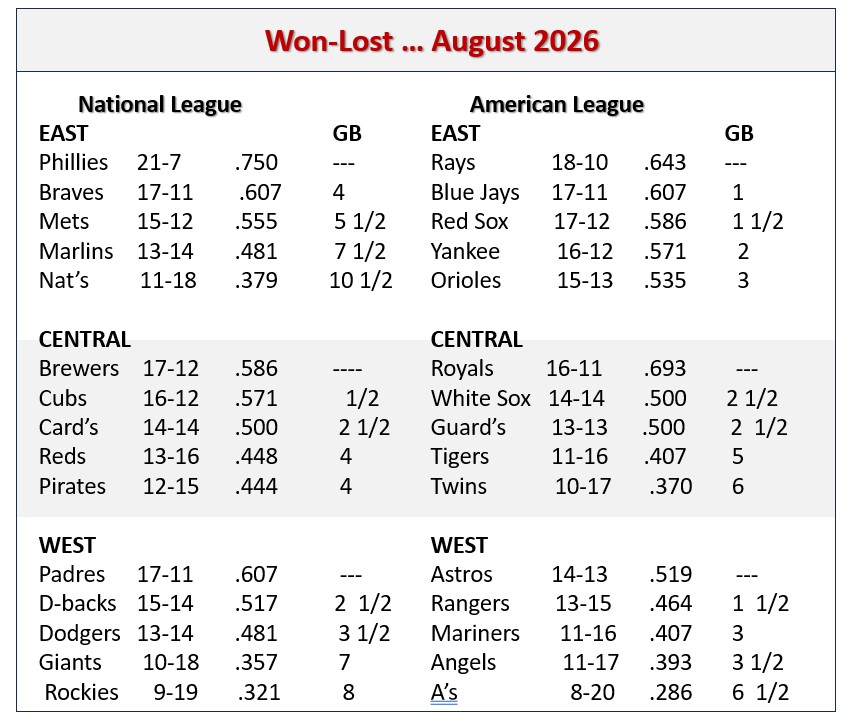
With the World Series just srounod the corner (Congratulations Brewers and Rays) Baseball Roundtable would like to bring readers an updated post on Fall Classic targets to shoot for (or to avoid). I’ve worked to incorporate Negro League World Series records ( 1924-27, 1942-48) whenever possible (relying heavily on retrosheet.org and statehead.com). You should keep in mind, those records are still incomplete or, in some cases, not thoroughly documented. Note: For a past post on Baseball Roundtable favorite World Series, click here.
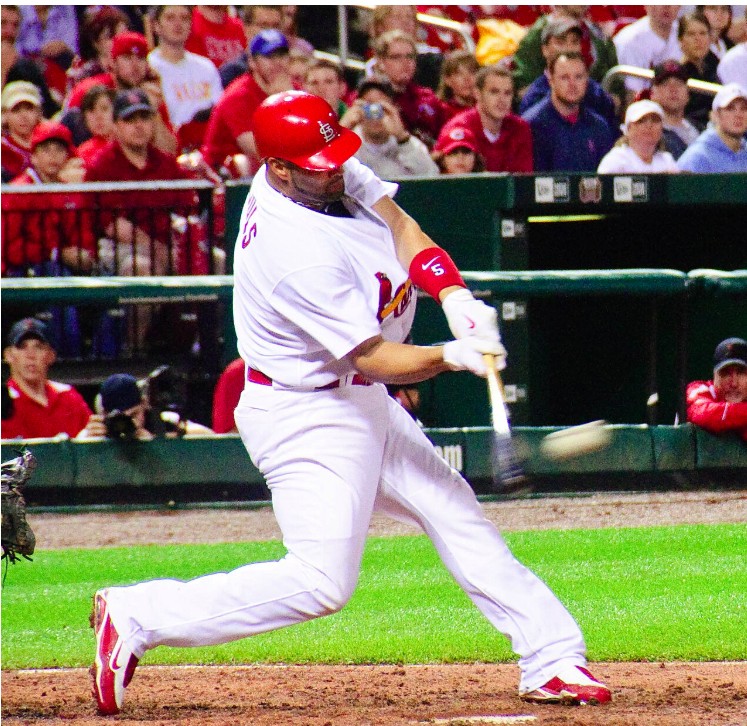
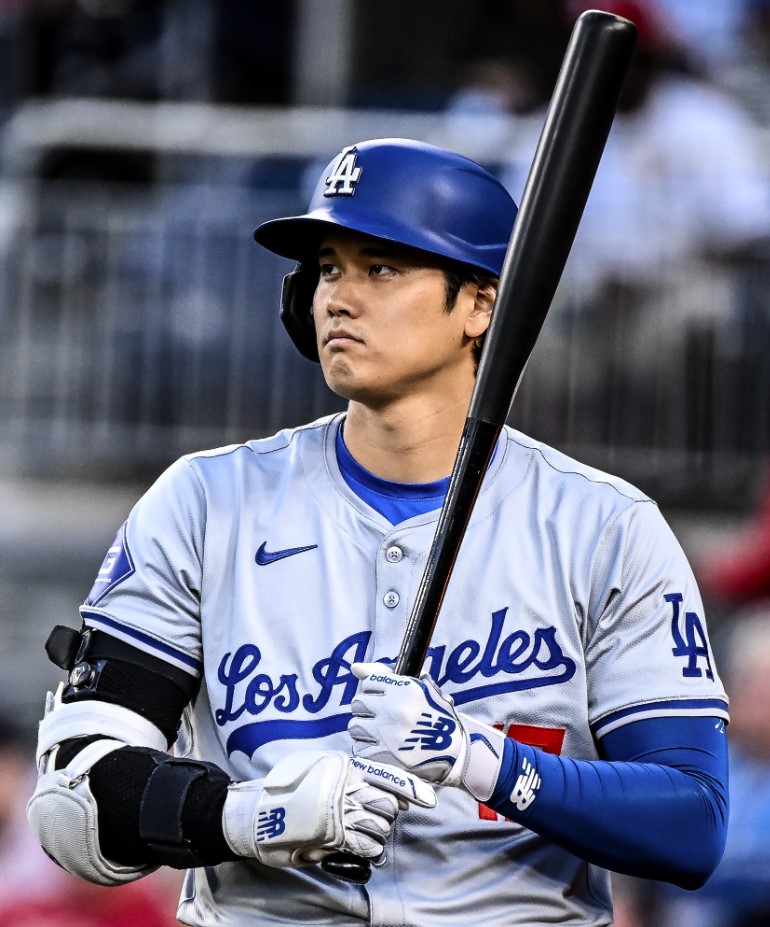
Albert Pujols & Shohei Ohtani – Pretty much a tossup for the Best World Series Game at the Plate … Ever
Photo: Herkie on Flickr (Original version) UCinternational (Crop), CC BY-SA 2.0 <https://creativecommons.org/licenses/by-sa/2.0>, via Wikimedia Commons
On October 22, 2011 – in Game Three of the Cardinals/Rangers World Series matchup (won by the Cardinals 16-7) – Redbirds’ 1B Albert Pujols went five-for-six with four runs scored and six RBI. In the process, he established a new (and still-standing) record for total bases in a World Series game (14) and also earned, and still holds, a share of the World Series’ single-game records for hits (5), runs scored (4), RBI (6) and home runs (3). Ironically, in the other six games of the Series, he went one-for-nineteen, with six walks, four runs scored and no RBI.
Photo: All-Pro Reels from District of Columbia, USA, CC BY-SA 2.0 <https://creativecommons.org/licenses+/by-sa/2.0>, via Wikimedia Commons
Still, The Roundtable found it impossible to choose between Pujols’ game and the performance of Dodgers’ DH Shohei Ohtani in Game Three of the 2025 World Series – won by the Dodgers 6-5, over the Rays, in 18 innings. Ohtani came to the plate nine times and got on base a World Series record nine times. He recorded two doubles, two home runs, five walks, three runs scored and three RBI. The five walks are also a World Series record. Even more impressive, four of the free passes were Intentional Walks, another Series single-game record. After Ohtani had peppered Rays’ pitching for his two doubles and two home runs over the first seven innings, the Rays wanted notnhing to do with him. He drew four consecutive Intentional Walks (ninth, eleventh, thirteenth and fifteenth innings), before drawing a four-pitch “unintentional” walk in the 17th frame.
Now, let’s look at the Fall Classic record book.
SOME SINGLE-GAME WORLD SERIES MARKS TO SHOOT FOR (or avoid)
Home Runs in a World Series Game – Three
Babe Ruth, Reggie Jackson, Albert Pujols, Pablo Sandoval
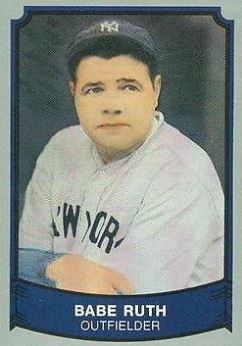 Babe Ruth … While three players have hit three home runs in a World Series game, the Yankees’ Babe Ruth is the only player to accomplish the feat twice – October 6, 1926 and October 9, 1928. In Game Four of the 1926 Series, as the Yankees topped the Cardinals 10-5, Ruth went three-for-four, with three home runs, two walks, four runs scored, four RBI and, of course, three dingers. The long-ball victims were Redbirds’ starter Flint Rhem (twice) and reliever Herman Bell. In Game Four of the 1928 World Series (a Yankees’ sweep over the Cardinals), Ruth went three-for-five with three solo home runs – two off Bill Sherdel and one off Grover Cleveland “Pete” Alexander.
—–
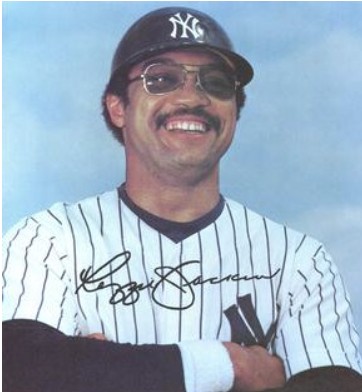
Reggie Jackson … The Yankees’ Reggie Jackson’s feat was unique in that he hit his three long balls (October 18, 1977) off three consecutive pitches offered up by three different pitchers. After drawing a walk to lead off the bottom of the second inning of Game Six (versus Dodgers’ starter Burt Hooton), Jackson hit the first pitch he saw from Hooton in the fourth inning for a two-run home run. He came up again in the fifth, facing Elias Sosa, and hit the first pitch in that at bat for another two-run homer. In his next at bat, leading off the eighth frame, Jackson hit the first pitch from Charlie Hough for a solo home run. A three-for-three day with four runs scored and five RBI.
—–
Albert Pujols … Albert Pujols hit his three home runs in Game Three of the 2011 World Series (versus the Rangers) in Texas – as part of a five-for-six day. He hit a three-run homer on a 1-1 pitch from Alexi Ogando in the top of the sixth; a two-run shot on the first pitch he saw from Mike Gonzalez in the seventh; and a solo shot homer on a 2-2 pitch from Darren Oliver in the ninth. Those six RBI – which tie for the World Series single-game record – were the only runs driven in by Pujols in the seven-game Series – won by the Redbirds four games-to-three.
—–
Pablo Sandoval … In Game One of the 2012 World Series (October 24), the Giants’ Pablo Sandoval went four-for-four, with three home runs, three runs scored and four RBI. He homered in the first and third innings off the Tigers’ Justin Verlander and in the fifth off Al Alburquerque before adding a single off Jose Valverde in the seventh – as the Giants triumphed 8-3.
Pablo Sandoval hit just 12 home runs in 108 games during the 2012 season and only 153 in 14 MLB seasons. In the 2012 post-season, however, he hit six home runs in 18 games.
________________________________________________
Home Runs in a Single World Series – Five
Reggie Jackson, Chase Utley, George Springer
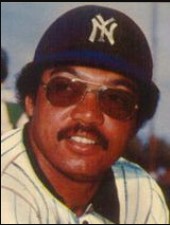
Hostess via tradingcarddb.com, Public domain, via Wikimedia Commonshoto:
Reggie Jackson … As noted above, Yankee RF Reggie Jackson had a three-home run game in the sixth and final matchup of the 1977 World Series. The Yankees won the game 8-4 and the Series four games-to-two. Jackson also went deep in the Yankees’ Game Four 4-2 win over the Dodgers (a solo shot off Rick Rhoden) and in the Yankees’ 10-4 loss in Game Five (a solo homer off Don Sutton). Over the final three games of the Series, Jackson went seven-for-eleven, with a double, five home runs, eight runs scores and eight RBI.
Chase Utley … Utley’s Phillies lost the 2009 World Series (four games-to-two), but it wasn’t Utley’s fault, The Philly 2B led all players with five homers and tied the Yankees’ Hideki Matsui for the Series RBI lead with eight. He hit two solo homers in the Phillies’ Game One 6-1 win, had a home run and a double in a 7-4 Game Four loss; and had a second two-homer game as the Phillies took Game Five 8-6. (Utley drove in four of the eight runs).
George Springer … Astros’ CF and leadoff hitter George Springer hit .379, with five home runs and seven RBI as the Astros topped the Dodgers four games-to-three in the 2017 World Series. This was after a Game One in which he came to the plate four times and fanned four times (on a total of 19 pitches). He went on to homer in Games Two, Four, Five, Six and Seven.
Bases – Just Add ‘Em Up
George Springer holds the record for total bases in a single World Series at 29. In the 2017 World Series – as his Astros topped the Dodgers four games-to-three, Springer collected 11 nits in 29 at bats, including three doubles and five home runs.
___________
Base Hits in a World Series Game – Five
Paul Molitor, Albert Pujols
Paul Molitor … Brewers’ third baseman and leadoff hitter Paul Molitor – who hit .302 with 201 hits in the 1982 regular season – grounded out to second base leading off the 1982 World Series (Inning One, Game One, in St. Louis on October 12). It would be the only time he was retired in the game, as the Brewers triumphed 10-0. Molitor followed with a single in the second inning; an RBI-single in the fourth; a single in the sixth; a single in the eighth; and an RBI single in the ninth.
Taking It One Base at a Time
When the Brewers’ Paul Molitor hit .355 (11-for-31) in the 1982 World Series, every one his safeties was a single. The Brew Crew lost the Series to the Cardinals four games-to-three.
—–
Albert Pujols … Cardinals’ first baseman Albert Pujols had his five-hit World-Series contest in Game Three (October 22) of the 2011 Series (in Texas). Like Molitor (above), Pujols grounded out in his first at bat – and then went on to record five straight hits. Unlike Molitor, his safeties were not all singles. He led off the fourth inning with a single (off Matt Harrison); led off the fifth with a single off Scott Feldman; popped a three-run home run off Alexi Ogando in the sixth; homered off Mike Gonzalez in the seventh; and homered off Darren Oliver (solo) in the ninth. The Cardinals won the contest 16-7 and won the Series four game-to-three.
_______________________________
Base Hits in a Single World Series – Fifteen
Judy Johnson
Judy Johnson … The Hilldale Club’s 3B Judy Johnson rapped 15 hits in 44 at bats in the best-of-nine 1924 Negro Leagues World Series. (The Hilldale Club topped the Kansas City Monarchs five games -to-four (with one tie). Johnson hit .341 for the Series with five doubles, one triple, one home run and seven runs scored.
Side Note: The record for base hits in a best-of-seven World Series is 13, shard by Bobby Richardson, Yankees (1964); Lou Brock, Cardinals (1968); and Marty Barrett , Red Sox, 1986). Each of those Series went the full seven games.
___________________________________________________
Runs Batted in a World Series Game – Six
Bobby Richardson, Hideki Matsui, Albert Pujols, Addison Russell
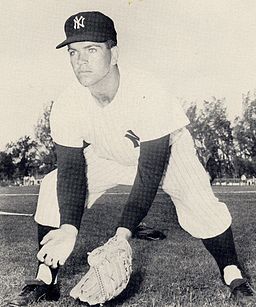
Bobby Richardson – added a surprising bat to a polished glove in the post season.
Bobby Richardson … In Game Three of the 1960 World Series (October 8), the Yankees trounced the Pirates 10-0. Despite a lineup that included the big bats of Mickey Mantle, Roger Maris, Yogi Berra, Bill Skowron and Elston Howard, little 5’9” second baseman Bobby Richardson (a .252 hitter with just one home run and 26 RBI in 150 1960 regular-season games) did the most damage to the Pirates’ pitching staff. His day included a Grand Slam home run in the first frame and a tw0-run single in the fourth (part of a two-for-five day). Richardson’s six RBI set a new MLB single-game World Series RBI record (since tied). How unlikely was the Richardson Grand Slam? In 12 MLB seasons (1,412 regular-season games), he had just 34 home runs and one regular-season Grand Slam. Despite the Yankees losing the Series four games-to-three, Richardson, who drove in a World Series’ record 12 RBI in the seven games, was named the Series MVP – the only player from the l0sing team ever granted that honor.
——–
Hideki Matsui … In the final game of the 2009 World Series (Game Six on November 4), Yankee DH Hideki Matsui filled the DH role well – driving in six runs in the Yankees’ 7-3 win over the Phillies. His three-for-four day included a two-run home run (off Pedro Martinez) in the second inning; a two-run single off Martinez in the third; and a two-run double off J.A. Happ in the fifth. Matsui had quite a series, leading the Bronx Bombers in average (.615); home runs (3); and RBI (8) – and winning World Series MVP Honors. Matsui was coming off a .274-28-90 regular season.
Put Me In, Coach
In Hideki Matsui’s first three seasons with the Yankees (2003-05), he played in every Yankee Game – going .297-70-330. Matsui joined the Yankees (and MLB) after playing ten seasons in Japan, where he hit .304-332-889.
—–
Albert Pujols … Yep, Albert Pujols is here again – thanks to his three-home run, six-RBI game in the 2011 World Series (Game Three, October 22). As noted earlier, in that 16-7 win, Pujols set the World Series single-game record for total bases and tied the World Series single-game records for hits (5), home runs (3), RBI (6) and runs scored (4).
—–
Addison Russell … The Cubs faced elimination for the second game in a row as they came into Game Six of the 2016 World Series. (The opposing Indians had won three of the first four games.) Cubs’ SS Addison Russell lashed a two-run double in the top of the first to put the Cubbies ahead 3-0 and, two innings later, smacked a Grand Slam to push the edge to 7-0. The Cubs eventually won 9-3 and ended up taking the Series four games-to-three, with a ten-inning, 8-7 win in Game Seven. Russell hit just .222 for the Series, but drove in a Series-leading nine runs. Over a five-season MLB career, Russell hit .242-60-253 in 615 games. 2016 was his only All Star year and he reached career highs in runs (67), home runs (21) and RBI (95).
____________________________________________
RBI in a Single World Series – 12
Bobby Richardson, Freddie Freeman
Bobby Richardson … Yankees’ 2B Bobby Richardson drove in a record 12 runs (.367-1-12 for the Series), as the Yankees lost to the underdog Pittsburgh Pirates four games -to- three. The Yankees lost the Series despite outscoring the Pirates 54-26 over the seven games. Again, (this deserves repeating), during the 1960 regular season, Richardson had driven in 26 runs in 150 games.
Freddie Freeman … Dodgers’ first baseman Freddie Freeman went .300-4-12, as the Dodgers topped the Yankees in five games in the 2024 Fall Classic. During the regular season, Freeman had gone ,282-22-89.
__________________________________
Runs Scored in a World Series Game – Four
Babe Ruth, Earle Combs, Frankie Crosetti, Enos Slaughter, Reggie Jackson, Kirby Puckett, Carney Lansford, Lenny Dykstra, Jeff Kent, Albert Pujols, Lance Berkman
This is a mark, I ‘d like to see broken, if only to end an 11-player tie.
______________________________________
Runs Scored in a Single World Series – Ten
Monte Irvin, Reggie Jackson, Paul Molitor
Monte Irvin … Newark Eagles’ SS Monte Irvin scored ten runs as his Newark Eagles topped the Kansas City Monarchs four games-to-three in the 1946 Negro League World Series. Irvin was pretty much unstoppable in the Series, going 12-for-26 (.462), with two doubles, three homers, ten runs scored and eight RBI. Oh, and he also stole two bases.
—–
Reggie Jackson … Yankees’ RF Reggie Jackson went .450-5-8 with ten runs scored as the Yankees bested the Dodgers four games-to-three in the 1977 World Series. Six of Jackson’s nine hits went for extra bases (five homers, one double).
—–
Paul Molitor … Blue Jays’ DH/1B Paul Molitor went 11-for-24 (.458) in the 1993 Worlds Series, won by the Blue Jays over the Phillies four games-to-two. Molitor had one double, two triples, two homers and seven RBI in the six games.
_____________________________________________
Stolen Bases in a World Series Game – Three
Honus Wagner, Willie Davis, Lou Brock, B.J. Upton, Rajai Davis, Jazz Chisholm, Jr.
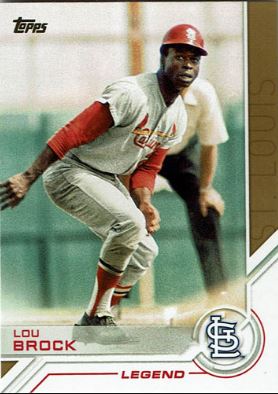 Lou Brock … Lets’ just note here, that Lou Brock remains the only player to steal three bases in a World Series game twice in his career. The fleet Cardinals’ outfielder accomplished the feat against the Red Sox in Game Seven of the 1967 World Series (October 12) and in Game Three of the 1968 World Series (October 5) against the Tigers.
___________________________________________
Stolen Bases in a Single World Series – Seven
Lou Brock
Lou Brock … Lou Brock, who stole 938 bases in his career (regular-season), is not just the only player to steal seven bases in a single World Series, he did it twice. In 1967, as his Cardinals lost to the Red Sox 4-3, and in 1968, as St. Louis topped the Tigers 4-3. Brock was seven-for-seven in steal attempts in 1967 and seven-for-nine in 1968. Notably, in those two World Series, Brock hit .414 (1967) and .464 (1968).
_____________________________________________
Intentional Walks in World Series Game – Four
Shohie Ohtani
As noted earlier in this post, on October 27, 2025 (in the 18-inning Game Three of the World Series) Blue Jays’ pitchers Intentionally Walked Ohtani four times. Further, the walks came in consecutive plate apperances -in the ninth, eleventh, thirteenth and fifteenth innings.
__________________________________
Grounded into Double Plays in a World Series Game – Three
Willie Mays
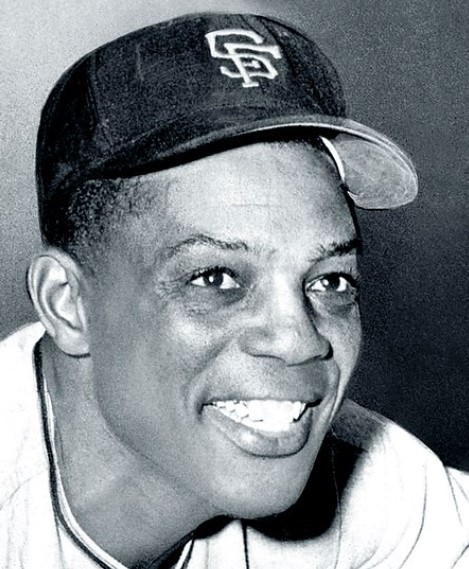
PHOTO: New York World-Telegram and the Sun staff photographer, William C. Greene, Public domain, via Wikimedia Commons
Willie Mays … On October 8, 1951 – in Game Four of the Yankees/Giants World Series – Giants’ rookie CF Willie Mays came to bat four times and not only was held hitless, but grounded into a Series single-game record three double plays.Three seems to be the magic number as 22 players have grouinded into two double plays in a single World Series Game (only Iriv Noren accomplished this feat twice).
Baseball Roundtable Extra – Whiff and Poof
While 21 players have fanned at least four times in a World Series Game – including 15 position players Josh Devore, Mickey Mantle, Joe Collins, Wayne Garrett, Devon White, Brad Hawpe, Ryan Howard, Evan Carter, Pat Burrell, Mike Napoli, George Springer, Rhys Hoskins, Will Smith, Teoscar Hernandez and Cody Bellinger:
- Only pitcher George Pipgras has fanned five times in a World Series Game. The Yankee righthander did it in Game Three of the 1932 Cubs/Yankees World Series – whiffing in all five of his plate appearances. Pipgras, a career .163 hitter, did get the win in a 7-5 Yankee triumph.
- Only Cody Bellinger has fanned four times in a World Series Game twice – and he did it in a span of five days. The Dodgers’ rookie 1B did it in Game Three of the 2017 Dodger/Astros World Series (October 27) – fanning four times in four at bats on fourteen pitches. He repeated the “feat” in Game Six (October 31) fanning four times in four plate appearances – this time on 24 pitches.
______________________________________________
Most Times Striking Out In a Singe World Series – Seventeen
Cody Bellinger
The Dodgers’ Cody Bellinger had a solid rookie season in 2017 (.267-39-97), making the NL All Star Team and winning NL Rookie of the Year honors. As the Dodgers fell to the Astros four games-to-three in the World Series, however, Bellinger had only four hits in 28 at bats (.143), although he did havce one home run and five RBI. He did swing his way into the record books, striking out a single Series record 17 times. To add a little balance here, Bellinger did go two-for-four, with a home run, a triple, four RBI (and two strikeouts) in the Dodgers’ 13-12 loss in Game Five.
Doubles in a World Series Game – Four
Frank Isbell
Frank Isbell … In Game Five of the 1906 World Series (Cubs/White Sox), White Sox’ 2B Frank Isbell went four-for-five, rapping four doubles, as the White Sox topped the Cubs 8-6. Isbell scored three times and drove in two. Isbell was not exactly a doubles machine. In the 1906 regular season he hit just 18 doubles in 617 plate appearances.
________________________________________
Doubles in a Single World Series – Seven
Newt Allen
Newt Allen … Kansas City Monarchs’ 2B Newt Allen rapped seven doubles in the best-of-nine 1924 Negro League World Series, as his Monarchs topped the Hilldale Club five games-to- our (one tie). Allen collected 11 hits (39 at bats) in the Series and seven of them were doubles. During the 1924 regular season, Allen hit just eight doubles in 73 games (298 at bats).
Side Note: The most doubles in a best-of-seven World Series is six, by Tigers’ RF Pete Fox in the 1934 World Series. For the Series (Cardinals over Tigers four games-to-three), Fox went 8-for-28 (.286).
___________________________________________
Triples in a World Series Game – Two
Tommy Leach, Patsy Dougherty, Dutch Reuther, Bobby Richardson, Tommy Davis, Mark Lemke
Tommy Leach, Pirates … Game One 1903 World Series (Pirates/Boston Americans). Notably, both three-baggers were hit off Cy Young. Part of a four-for-five day.
—–
Patsy Dougherty, Boston Americans … Game Five 1903 World Series, part of a three-for-six, three-RBI day.
——
Dutch Reuther, Reds … Game One, 1919 World Series (Reds/White Sox). Reuther gets special mention as the only pitcher on the list. He collected two triples, a single and a walk in four plate appearances – and also pitched a one-run, six-hit, complete game as his Reds triumphed 9-1. Reuther was a solid-hitting pitcher, putting up a .258 average, with seven home runs and 111 RBI over 11 MLB seasons.
—–
Bobby Richardson, Yankees … Game Six 1960 World Series (Pirates/Yankees). The Yankee second-sacker went two-for-three with one run and three RBI in the game.
—–
Tommy Davis, Dodgers – Game Two, 1963 World Series (Dodgers/Yankees). The Dodgers’ CF went two-for-four, with one run and two RBI.
—–
Mark Lemke, Braves … Game Six, 1991 World Series (Braves/Twins). A two-for-three day with two runs and three RBI for the Braves’ 2B.
_______________________________
Triples in a Single World Series – Four
Tommy Leach
Tommy Leach … Pirates’ 3B Tommy Leach had four triples among his nine hits (in 33 at bats) in the 1903 best-of-nine World Series, won by the Boston Americans five games-to-three.
Now Let switch to the moundsmen.
Perfect Games in the World Series – One
Don Larsen
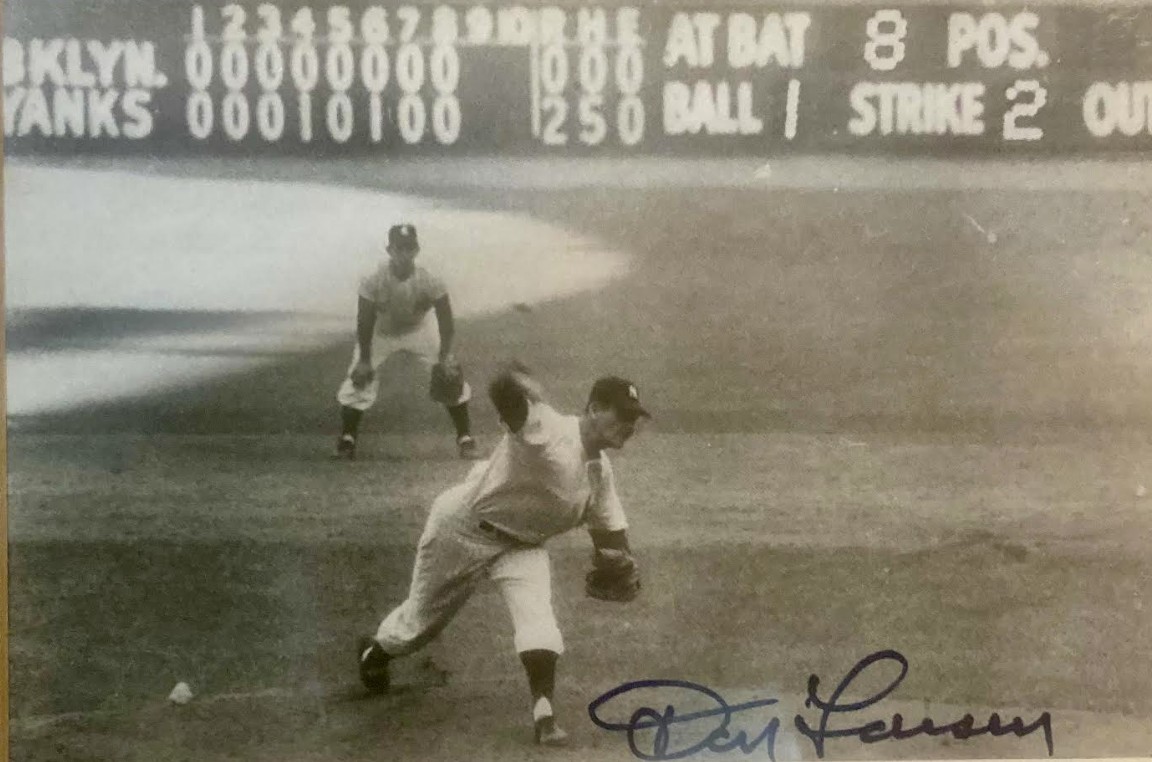
 Don Larsen, Yankees …. Game 6 1960 World Series (October 8). Don Larsen, coming off a 11-5, 2.36 season, pitched the World Series’ only Perfect Game – retiring all 27 Dodger batters on a total of 97 pitchers as the Yankees won 2-0. Larsen, who fanned seven, reached ball three on only one Dodger hitter (Dodgers’ shortstop Pee Wee Reese in the first inning). Dodgers’ pitcher Sal Maglie had the longest at bat versus Larsen – a seven-pitch at bat before fanning on a 2-2 pitch to end the sixth inning.
_______________________________
No-Hitter (not a Perfect Game) in a World Series – Two
Red Grier
Red Grier … Claude “Red” Grier of the Atlantic City Bacharach Giants (Eastern Colored League) tossed a no-hitter versus the Chicago American Giants (Negro National League) in a 10-0 win in Game Three of the 1926 Negro League World Series. Grier walked six and fanned eight in the outing – and also collected three hits (a double and two singles) and a walk.
Red Farrell
Red Farrell …. Luther “Red’ Farrell of the Atlantic City Bacharach Giants tossed a seven-inning (game called on account of darkness) no-hitter in Game Four of the 1927 Negro League World Series – as Atlantic City topped the Chicago American Giants 3-2. Luther gave up two unearned runs, walked five and fanned three. (Atlantic City made four errors.)
____________________________________
There have been more than 90 single-pitcher shutouts in World Series play, so let’s just look at the two narrower categories: Extra-Inning, Single-Pitcher Shutouts & Multiple Shutouts in a Single World Series.
Extra-Inning World Series Shutouts
Johnny Markham Homestead Grays … In Game Seven of the 1943 Negro League World Series (the Series went eight games – one tie), Markham threw an eight-hit, 11-inning shutout (one walk and zero – yes, zero – strikeouts), as his Homestead Grays topped the Birmingham Black Barons 1-0. His mound opponent, Roy Partlow gave up ten hits (two walks/two whiffs) and one run in 10 2/3 innings. Markham’s is the longest single-pitcher shutout in World Series history.
—–
Christy Mathewson, Giants … In Game Two of the 1913 World Series (Giants/Athletics), Christy Mathewson pitched a ten-inning, eight-hit, one-walk, five-strikeout shutout as his Giants won 3-0. Mathewson himself drove in the game’s first run with a single off Athletics’ starter Eddie Plank. (The Giants scored three times in the top of the tenth.)
_____
Clem Labine, Dodgers … In Game Five of the 1956 World Series (Dodgers/Yankees), Clem Labine went ten innings and shutout the Yankees on four hits, two walks and five strikeouts. Bob Turley went the distance for the Yankees, giving up just one run on four hits, with eight walks and 11 whiffs. Jackie Robinson drove in the only run of the game plating Jim Gilliam with a single with two outs in the bottom of the tenth.
_____
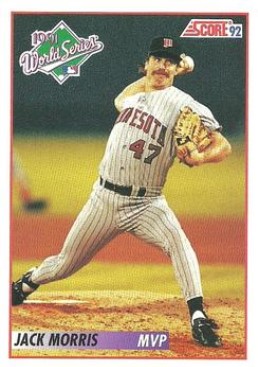
Jack Morris, Twins … Jack Morris tossed a ten-inning, complete-game shutout as the Twins won Game Seven of the 1991 Series 1-0. Ironman Morris tossed 126 pitches in shutting out the Braves on seven hits, with two walks and eight whiffs.
Most Single-Pitcher Shutouts in a World Series – Three
Christy Mathewson
When Christy Mathewson threw a recorf three shutouts in the five-game 1905 World Series, he did it in a span of six days. On October 9 (Game One), the New Y0rk Giants’ mounds giant shutout the Athletics 3-0 on four-hits. On October 12, still in Philadelphia, he whitewashed the A’s 9-0 on another four-hitter. Then, on October 14, he tossed a six-hit shutout in a 2-0 win that gave the Giants the Series four games to one. Notably, every game in the Series saw the winning pitcher go the distance in a shutout.
Other Pitchers With At Least Two Shuouts In A Single World Series
- Lew Burdette shutout the favored Yankees in in Games 5 and 7 of the 1957 World Series. At one point, the Braves’ righty threw 24 straight scoreless innings versus a powerful (and favored) Yankee squad.
- The Dodgers’ Sandy Koufax shutout the Twins in Games Five and Seven of the 1965 World Sereis. He threw his second shutout on just two days rest.
- In the 1960 World Series, the Pirates scored zero runs in Whitey Ford‘s two starts (Games Three ans Six) and 27 runs in the other five games. The Yankees scored 22 runs in Ford’s two starts and 33 runs in the other five games.
- Johnny Wright, who went 18-3, 2.52 (and won the Negro National II League pitching Triple Crown) for the Homesdtead Grays in 1943, started four games against Birmingham Black Barons in the Negro League World Series. He tossed shjuouts in Games Four and Six.
- Bill Dineen of the Pirates started four games in the best-of-nine 1903 World Series (which went eight games), completed them all and went and went 3-1, 2.06, He threw shutouts against the Pirates in Games Two and Eight.
____________________________________________
Lowest Earned Run Average – Single World Series (minimum 18 innings pitched) – 0.00
Christy Mathewson, Waite H0yte, Carl Hubbell, Whitey Ford
Photo by trialsanderrors 
Christy Mathewson … Okay, this is a little repetitive, but it bears repeating. In the 1905 World Series, Giants’ righty Christy Mathewson put up a 0.00 earned run average over 27 innings . In fact, he threw three shutouts in six days. So, three starts, 27 innings pitched, no runs, 13 hits, one walk and 18 whiffs. (Keep in mind, in 1905, MLB pitchers average just 3.9 strikeouts per nine frames.) That season, by the way, Mathewson went 31-9, 1.28 with 32 complete games and eight shutouts in 43 appearances (37 starts).
—–
Waite Hoyte … In 1921, 21-year-old Waite Hoyt (after a 19-13, 3.09 season for the Yankees) was pegged to start Game Two of the World Series (on October 6 versus the rival Giants). Hoyte responded with a two-hit shutout (five walks and five strikeouts) in a 3-0 Yankee win. Four days later (October 10), with the Series tied at two games apiece), he started again and threw a gutsy ten-hitter giving up just one unearned run as the Yankees won 3-1. In that game, the Giants had runners on base in seven of the nine innings. Hoyte next pitched on October 13 – in the winner-take-all Game Seven and, despite giving up just one unearned run, took the loss in a 1-0 Giants win. In that one, Hoyte gave up six hits and four walks, while fanning seven. The only run scored in the top of the first inning, on an error by shortstop Roger Peckinpaugh.
——-
Carl Hubbell … Hubbell started two games for the Giants, as they topped the Nationals in the 1933 World Series. He put up a 0.00 ERA over 20 innings. his efforts included a complete game in a Giants’ 5-2 win in Game One (two unearned runs, five hits, two walks, ten strikeouts) and an 11-inning complete game in Game Four – one unearned run, eight hits, four walks, five strikeouts.
—–
Whitey Ford … In the 1960 World Series (won by the Pirates over the Yankees in seven games), Whitey Ford pitched in two of the most lopsided shutouts in Series’ history, In Game Three, Ford pitched a four-hit (one walk/three strikeouts) shutout as New York prevailed 10-0. In Game Six, he again blanked the Pirates (seven hits, one walk, five whiffs), as the Yankees won 12-0.
In the 1960 World Series, the Yankees outhit the Pirates .338 to .256, outhomered them 10-4, and outscored them 55-27. The Pirates, however, won the Series four games to three.
__________________________________________
Most Innings pitched in a World Series Game -14
Babe Ruth
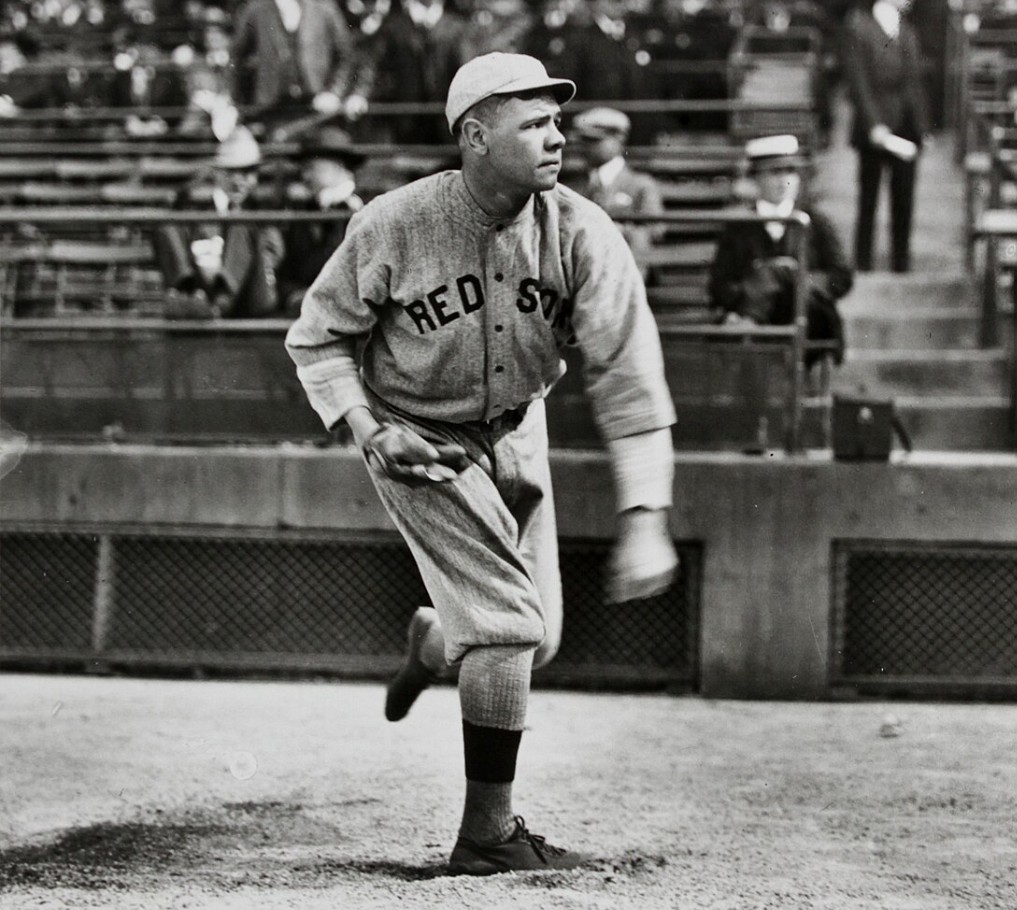
 Babe Ruth … Babe Ruth pitched 14 innings for the Red Sox in a World Series complete-game, six-hit, 2-1 win ( over the Brooklyn Robins) on October 9, 1916. Ruth gave up just six hits (three walks/four strikeouts) over the 14 frames. He also picked up an RBI on a third-inning ground out.
________________________________________
The Deacon Phillippe Standard Setter
In the 1903 World Series (best-of-nine between the Boston Americans and Pittsburgh Pirates), the Pirates Deacon Phillippe set a host of World Series records – most games started (5), most complete games (5), most innings pitched (44). (The Series went eight games.)
——-
Most Strikeouts in a World Series Game – 17
Bob Gibson
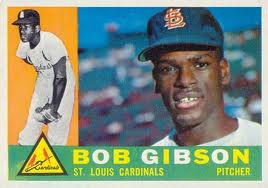
 Bob Gibson … In the Opening Game of the 1968 World Series (October 8), the Cardinals’ Bob Gibson (facing the Tigers) struck out a World Series’ single-game record 17 hitters – getting each of the nine players in the Tigers’ starting lineup at least once. Gibson threw a five-hit shutout, as St. Louis won 4-0.
_____________________________
Most Strikeouts in a Single World Series
Bob Gibson
Bob Gibson ... As you might expect, Gibson holds the record for strikeouts in a single World Series (35 in 27 innings pitched in 1968). Gibson also holds the second spot on this list with 31 strikeouts in the 1964 Series (27 innings pitched) and is tied for the number-five spot with 26 strikeouts in the 1967 World Series. At number-three is the Dodgers’ Sandy Koufax, with 29 strikeouts in 24 innings in 1965. Number four is the Boston Americans’ Bill Dineen, with 28 strikeouts in 35 innings in 1903. Tied with Gibson for the five spot are the Atlantic City Bacharach Giants’ Claude “Red” Grier (26 strikeouts in 27 2/3 innings in the 1926 Negro league World Series) and the Diamondbacks’ Curt Schilling (26 strikeouts in 21 1/3 innings in 200).
_______________________________
Batters Hit-by-Pitch in a World Series Game – Four
Lance McCullers, Jr.
Lance McCullers, Jr. … in Game Seven of the 2017 World Series (November 1), Lance McCullers of the Astros plunked four Dodgers in 2 1/3 innings. Surprisingly, despite giving up three hits and hitting four batters in 2 1/3 innings, McCullers did not surrender a run.
It went like this:
- Bottom of the first – Astros up 2-0. Dodgers’ CF Chris Taylor opens with a double; McCullers fans SS Corey Seager on a 3-2 pitch; 3B Justin Turner is hit by a 1-2 pitch; 1B Cody Bellinger fans on a 1-2 pitch; RF Yasiel Puig is hit by a 3-1 pitch loading the bases. LF Joc Pederson grounds out on an 0-2 pitch to end the inning.
- Second Inning – 2B Logan Forsythe leads off with a single to left (on a 1-0 pitch); C Austin Barnes grounds out, Forsythe moving to second; PH Enrique Hernandez is it by a 3-1 pitch; Taylor lines into a double play.
- Third Inning – Seager singles to center on a 1-2 pitch; Turner is hit by an 0-0 pitch; Bellinger strikes out on a 2-2 pitch. Brad Peacock relieves McCullers and retires Puig and Pederson with no damage., The Astros go on to win the Game 5-1 and the Series four games-to-three.
________________________________
Strikeouts by A Reliever in a World Series Game – 11
Moe Drabowsky
Moe Drabowsky … In the Opening Game of the 1966 World Series (October 5) between the Orioles and Dodgers, Drabowsky came on in the bottom of the third inning with the Orioles up 4-1. The Dodgers, however, had the bases loaded with one out (starter Dave McNally had walked RF Lou Johnson, LF Tommy Davis and 2B Jim Lefebvre in succession). Drabowsky got 1B Wes Parker on a strikeout; walked 2B Jim Gilliam to force in a run; and retired got C Johnny Roseboro on a foul pop up.
Drabowsky went on to fan the side in order in the fourth and fifth innings. Ultimately, he finished the game, pitching 6 2/3 frames – giving up one hit and two walks and fanning 11, as the Orioles won 5-2. Those two runs would be the Dodgers only tallies in the four-game Series. They lost the final three games by scores of 6-0, 1-0 and 1-0.
_____________________________________
Most Mound Appearances in a Single World Series
The record for pitching appearances in a single World Series in seven, shared by Darold Knowles (1973 A’s) – seven appearances, 6 1/3 innings, two saves and a o.oo ERA – and Brandon Morrow (2017 Dodgers) – seven appearances, 5 1/3 innings pitched, and an 8.44 ERA.
_____________________________________
Most Hits Allowed in a World Series Game – 16
Ray Brown
Ray Brown – The Homestead Grays’ Ray Brown threw a complete-game in the 1942 Negro League World Series Game Three matchup with the Kansas City Monarchs. The Monarch won the contest 9-6, with Brown giving up a Series-record 16 hits.
______________________________________
Most Home Runs Allowed in a World Series Game – 5
Lance McCullers, Jr.
In Game Three of the 2022 World Series, Astros’ starter Lance McCullers, Jr. gave up six hits in 4 1/3 innings pitched – and five of those hits ended up in the stands. (He also fanned five batters.) McCullers gave up a two-run shot to the Phillie’s DH Bryce Harper in the first; solo homers to both 3B Alec Bohm and CF Brandon Marsh in the second; and a two -run homer to LF Kyle Schwarber, as well as a solo shot to 1B Rhys Hoskins in the fifth.
____
Most Walks Allowed in a Word Series Game – Ten
Bill Bevens
Bill Bevens … On October 3, 1947, the Yankees’ Bill Bevens gave up just one hit (8 2/3 innings) in a 3-2 World Series loss to the Dodgers. Bevens, unfortunately, walked a World Series single-game record ten batters (one intentional), and free passes contributed to all the scoring.
____________________________________________
Most Runs Given Up in a World Series Game – Ten
Brickyard Kennedy
Bill “Brickyard” Kennedy … Bill Kennedy gave up a World Series single-game record ten runs on October 7, 1903, as his Pirates lost to the Boston Americans (AL) 11-2. Kennedy was matched up in a scoreless duel with Cy Young through five innings, before giving up six runs – all unearned – on three hits and three errors in the sixth and another four runs (all earned) in the seventh.
_______________________________
Most Earned Runs Given Up In A World Series Game– Eight
Grover Cleveland (Pete) Alexander, Ray Brown, Cotton Williams, Jay Witasick, Guy Bush
Grover Cleveland Alexander … On October 5, 1928, Grover Cleveland (Pete) Alexander (16-9, 3.36 in the regular season) lasted only 2 1/3 innings against the Yankees – giving up eight runs on six hits (one home run) and four walks, in a game the Yankees won 9-3. The 41-year-old Alexander, with 364 regular-season wins under his belt, pitched just five innings in the Series (a Yankee sweep), giving up 11 runs.
—–
Ray Brown … A little repetition here. The Homestead Grays’ Ray Brown threw a complete-game in the 1942 Negro League World Series Game Three matchup with the Kansas City Monarchs. The Monarch won the contest 9-6, with Brown giving up a Series-record 16 hits, a total of nine runs of which eight were earned tying another Series record.
—–
Cotton Williams … In Game Three of the 1946 Negro League World Series (Newark Eagles versus Kansas City Monarchs), the Eagles’ Cotton Williams came on in relief to open the fifth inning (with the Eagles trailing 6-2). Over the next 3 2/3 innings, he gave up 11 hits and nine runs – including a Series record-tying eight earned runs.
—–
Jay Witasick … On November 3, 2001 – in Game Six of the World Series – Yankees’ reliever Jay Witasick came on in the third inning against the Diamondbacks, who already had roughed up starter Andy Pettitte for six runs (on seven hits and two walks) in just two innings. Witasick gave up a record-tying eight earned runs (plus one unearned) in 1 1/3 innings. While he gave up ten hits, Witasick walked none and recorded all four of his outs on strikeouts. Eight of the first nine batters Witasick faced collected base hits (six single and two doubles).
Guy Bush … Bush started Game One of the 1932 World Series for the Cubs (versus the Yankees) and, after retiring the first nine hitters he faced, he ran into trouble in the fourth inning – giving up three runs on a walk, a single and a home run, He came back to pitch a scoreless fifth, but th roof fell in in the sixth. His inning went walk, walk, walk, pop out, two-run single, run-scoring fielder’s cjopice, walk before being relieved of mound duties. The Cubs eventually lost 12-6.
Most Saves in a Single World Series
John Wetteland
The Yankees’ John Wetteland appeared in five Games in the 1996 World Series – won by the Yankees (over the Braves) four games-to-two. Wetteland picked up four saves in 4 1/3 innings of work (four hits, one run, one walk, six strikeouts).
Fifteen pitchers have recorded three wins in a single World Series: Deacon Phillippe (1903): Bill Dinneen (1903); Nip Winters (1904 NLBWS); Christy Mathewson (1950; Babe Adams (1909); Jack Coombs (1910); Joe Wood (1912); Red Faber (1917); Stan Covelski (1920); Harry Brecheen (1946); Lew Burdette (1957); Bob Gibson (1967); Mckey Lolich (1968); Randy Johnson (2001); Yoshinobu Yamamota (2025).
The 1903 World Series, which saw two hurlers win three games, was a best-of-nine that went eight games. Three-game winner Deacon Phillippe got five starts for Pittsburgh, while three-game winner Bill Dinneen starte four games for Boston. The most recent three-game winner (2025), Dodger Yoshinobu Yamamoto two games as a starter and one in relief, He pitched a complete Game four-hitter in a 5-1 Game Two win; gave up one run in six innings in a Game Six 3-1 victory; and pitched the final 2 2/3 innings of the Dodgers’ 11-inning 504 win in Game Seven.
Primary Resources: Baseball-Reference.com; Retrosheet.org; Baseball-Almanac.com; The World Series (Dial Press/Sports Products, Inc.);
Baseball Roundtable – Blogging Baseball Since 2012.
Baseball Roundtable is on the Feedspot list of the Top 100 Baseball Blogs. For the full list click here.
I tweet (on X) baseball @DavidBaseballRT
Follow Baseball Roundtable’s Facebook Page here. More baseball commentary and blog post notifications.
Member: Society for American Baseball Research (SABR); Negro Leagues Baseball Museum; The Baseball Reliquary.

P 1193
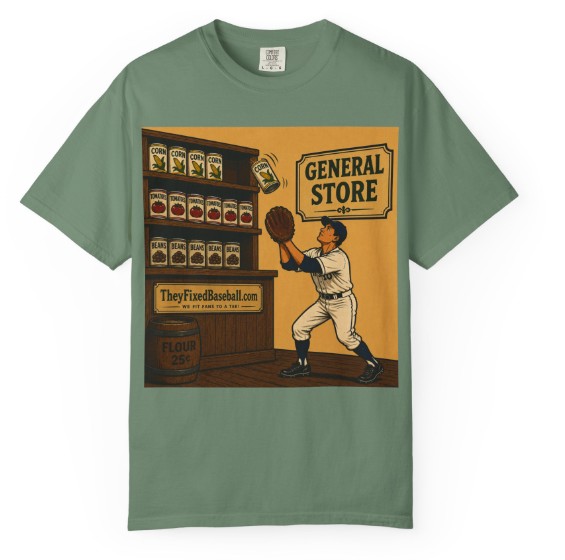 Side Note: The Roundtable does not carry ads. However, I am making a small exception. On the sidebar to the right of the screen (under Links), you’ll see a “widget” that looks like a baseball with “We Fit Baseball Fans To A Tee” in it. My brother and I – more for fun that profit – have launched (and are expanding) a line of baseball-themed T-Shirts, Mugs and Hats that you might find interesting, Just click on the image to go to the site. (Check out the expanding Sandlot Section.)