2022 Baseball Roundtable John Paciorek Award …. Karl Spooner, A Blaze of Strikeouts

Early each season, since 2014, Baseball Roundtable has announced the John Paciorek Award (JPA). The JPA recognizes players who have had short, sometimes very short, major-league careers, but whose accomplishments, nonetheless, deserve recognition.  Past winners have included:  a player whose every MLB hit (three in nine career at bats) was a home run;  a player who had only one MLB at bat, but earned  a World Series ring and a Purple Heart; a player who had just two home runs in 61 MLB at bats (for the vaunted Yankees and Dodgers), but whose “body of work” made him one of just two players in MLB history to homer in their first and final official appearances in a major league batter’s box; a war hero who pitched in the majors on one leg; and more.  There are links to the bios of past honorees later in this post. (Note: Information on John Paciorek’s career – the inspiration for the JPA – can be found at the end of this post. Paciorek’s day in the sun constitutes arguably the best one-game MLB career ever.)

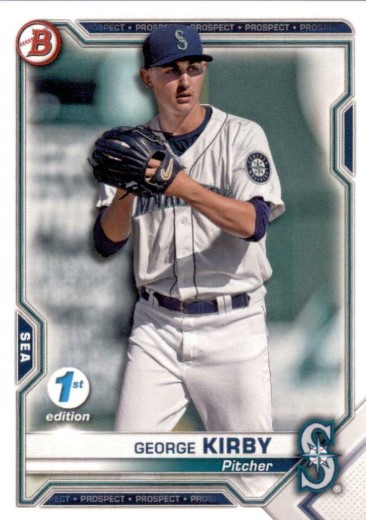
This year’s JPA honoree is one of the better known (if not the best known) players to appear on this list –  Southpaw Karl Spooner, who holds a share of the record for strikeouts in an MLB debut (15) and also threw complete-game shutouts in each of his first two starts.  Let’s look at how Spooner got to these pages.

Karl Spooner was born and raised in Oriskany Falls, New York, where – was a teenager – he played not only for his high school, but also for the local townball  team. He became known for a trio of high-velocity pitches (fastball, curve and sinker).  After his junior year in high school, Spooner was signed by the Dodgers (1950).  He quickly established himself as a hard thrower with good stuff – but command issues. In 1951, with the Class-D Hornell Dodgers the 20-year-old Spooner went 10-12 –  leading the league with 200 strikeouts in 170 innings, but also walking 163.  In 1952 (in Class-C & -B), he went 4-12, 5.42 – and continued to rack up strikeout and walks.  Things stared to come together in 1953, when he went 12-12, but with a 2.75 ERA at A-level. He fanned 233 batters in 203 innings, but still walked 164.
Then came that marvelous 1954 season. Spooner started the year with the Double-A Fort Worth Cats – and went 21-9, 3.14, with 262 strikeouts and 162 walks in 238 innings. That earned him a September call up to the Dodgers – and a place in MLB history.

The Dodgers threw the 23-year-old rookie right into the fire – starting him on September 26 against the first-place Giants (6 ½ games up on the Dodgers) and Johnny Antonelli, who was 21-6, 2.29 at the time. In the first frame, it looked like it might be a short game for Spooner – as his command issues were exposed. It took him 32 pitches to get out of the inning (17 strikes – 15 balls). He gave up a single and two walks and had to fan Giants’ 3B Bobby Hoffman with the bases loaded and two out (on a 3-2 pitch) to escape unscathed.

In the second inning, something seemed to “click.” Spooner needed just 13  pitches to retire the Giants (10 strikes), fanning two – and would have gotten back to the dugout sooner  if strikeout victim Antonelli hadn’t reached first on a third-strike passed ball.  From the second inning on, Spooner dominated the eventual World Series Champion Giants. In that span, he threw 111 pitches, 72 for strikes, fanning 14 batters – bringing his whiff  total to an MLB-debut record 15 for the game (a record which still stands, tied by the Astros’ J.R. Richard in 1971). Over those last eight frames, Spooner gave up just two singles and a walk, and no runner reached second base.  He finished his debut with a 3-0, complete-game, 15-strikeout  shutout victory.

Karl Spooner hit the very first MLB pitch he ever saw (from Johnny Antonelli) for a double to center.  He finished his inaugural game one for three with a walk and a run scored.

But the story gets better. Four days later (September 26), Spooner made second MLB appearance – a start against the Pirates (in Brooklyn). In this one, he threw another complete-game shutout – giving up four hits and fanning 12 in a 1-0 win.  His 27 strikeouts in his first two appearances remain an MLB record.   Those 27 whiffs in his first 18 MLB innings are even more notable when you consider that, in 1954, the MLB average for strikeouts per nine innings was 4.2.

That man had a fastball that was unbelievable, not for sheer speed, but for how much the ball moved. He was one of the toughest left-handers that I’ve ever seen.

Dodger Pitcher Clem Labine

Spooner clearly was off to a blazing start, but the fire was dimmed quickly – by a shoulder injury suffered in Spring Training the following year (1955). Long story short: Spooner didn’t get his first start of the 1955 season until May 15, but things were still apparently not right – as he gave up five hits and four tuns in 2 1/3 innings. He didn’t pitch again until June 5, when he lasted four innings (four hits, four runs, two walks, six strikeouts). He finished the season, his last in the major leagues, 8-6, 3.65 in 29 games (14 starts) – fanning 78 in 98 2/3 innings (41 walks). He also pitched in two games in the 1955 World Series, giving g\up five runs in 3 1/3 innings.  His last MLB appearance was on October 3, 1955, when he started Game Six of the World Series (against the Yankees in New York). He faced six batters, got just one out (appropriately a strikeout) and gave up five runs on two walks, two singles and a home run. His final major-league pitch was hit for a three-run home run by Moose Skowron. Spooner pitched for three more seasons in the minors, but never recaptured 1954 glory.  Still, he put on a show well worth recognizing – and still unmatched –  in his first two MLB appearances.

Nobody ever threw harder than that kid did in the first two games he pitched in the majors. He’s the greatest young pitcher I’ve ever seen.

                                                Hall of Fame Dodger Catcher Roy Campanella

_____________________________________

Now, here are links to the stories of past JPA honorees.


2014 – Brian Scott Dallimore

In his first start (not his first game) for the 2004 Giants, Dallimore had two singles, a Grand Slam (his first MLB hit and only MLB home run), a walk and a hit by pitch.  For the full JPA take on Dallimore’s 27- game MLB career, click here.

2015 – Roy Gleason

Gleason played in just eight MLB games, had a double in his only MLB at bat – but also earned a World Series ring (1963) and a Purple Heart. Ultimately, he was the only ballplayer with MLB experience to serve on the front lines in Vietnam. For the full JPA take on Gleason, click here. Note: Gleason’s life is detailed in the book “Lost in the Sun – Roy Gleason’s Odyssey from the Outfield to the Battlefield.”

2016 – John Allen Miller

Miller played just 32 MLB games (during the 1966 and 1969 seasons), taking the field (at 1B/LF/3B/2B) for the Yankees and Dodgers. Miller collected ten hits in 61 MLB at bats (.164 average) and hit just two home runs – but he made those long balls count – becoming one of just two players in MLB history to homer in their first and final official appearances in a major-league batter’s box. For more on Miller, click here.

2017 – Chris Saenz

RHP Chris Saenz’ big day came on April 24, 2004 – when he was called up from Double-A Huntsville (where he was 1-1, 3.86) to make a spot start against the Saint Louis Cardinals, whose powerful lineup included the likes of Albert Pujols, Scott Rolen, Jim Edmonds and Reggie Sanders.   The rookie went six innings, giving up just two hits, three walks and no runs, while fanning seven. Two days after this debut, he was on his way back to Huntsville, where he suffered an elbow injury and never returned to the majors. Statistics before 1900 can be sketchy, but baseball-reference.com shows that Saenz is the only pitcher to complete a one-game MLB career of at least five innings pitched, without giving up a single run (earned or unearned). For more details on this JPA honoree, click here.

2018 – Keith McDonald

McDonald’s MLB career (Cardinals 2000-2001) covered just eight games and 11 plate appearances (nine at bats) and three hits – but he made them count.  All of McDonald’s safeties were home runs – making him the only MLB player with more than one career hit who can look back on major league career in which his every hit was a home run. .For the full story, click here.

2019 – Harley Hisner

Hisner’s MLB tenure encompassed the day of September 30, 1951. That’s when the 24-year-old righty faced the New York Yankees – and a lineup that included five future Hall of Famers: Mickey Mantle in RF; Joe DiMaggio in CF; Phil Rizzuto at SS; Johnny Mize at 1B; and Yogi Berra behind the plate. In is very first MLB inning, Hisner faced five batters, four of them future Hall of Famers, and gave up two singles and no runs.  His place in history? One of those singles was Joe DiMaggio’s last MLB safety. For more on Hisner and his ongoing involvement in and love of the game (he went on to earn the Northeast Indiana Baseball Association Colin Lister Award for “dedication to the game of baseball and its historic legacy,” click here.

2020 – Bert Shepard

Shepard set aside his baseball mound dreams in 1943 – after four minor-league seasons – to enlist in the U.S. Army, where he became a P-38 Lightning fighter pilot. Shepard was shot down on his 34th combat mission and, while a prisoner of war, his wounds resulted in the amputation of his right leg below the knee.  Upon his release (a prisoner exchange), Shepard did not surrender his dreams and fought his way back to the major leagues. He made one major-league appearance (for the Washington Senators), pitching 5 1/3 innings of three-hit, one-run ball.  While Shepard’s MLB career consisted of that sole appearance, he did continue to pitch, coach and manage in minor leagues – and his story proved an inspiration for disabled veterans.  For more of Bert Shepard story, click here.

2021 – Henry Schmidt

Henry Martin Schmidt didn’t make it to the big leagues until eight seasons after his professional (minor-league) debut.  In fact, he was just two months shy of his 30th birthday when he first took the major-league mound.   Why did it take so long?  Simple answer – location.  He had considerable difficulty “locating” his pitches.  While it took a long time for Schmidt to make it to the major leagues, it didn’t take him long to leave MLB. He lasted just one season – and is the only pitcher in MLB history who was a 20-game winner in his only major league season. Why was his MLB career so short? Simple answer – location.  He did not care for the geographic “location” of major league baseball. For more on Henry Schmidt’s unusual career, click here.


—–INSPIRATION FOR THE JPA—–

John Paciorek – signed out of Saint Ladislaus High School in Hamtramck, Michigan (where he had starred in football, basketball and baseball) – appeared in his first major-league game on the final day of the 1963 season (September 29) at the age of 18.  The 6’ 1”, 200-pound outfielder had spent the 1963 season with Class-A Modesto Colts. The Colts’ parent club, the Houston Colt .45s (that was the current Astros’ franchise name back then), was suffering through a difficult season. The team was 65-96 going into that final game.  Looking to the future, Houston had, in fact, fielded an all-rookie lineup (average age 19) on September 27. Youth was still being served two days later when John Paciorek started his first MLB game. The results were surprising – and worthy of recognition.

Playing right field and batting seventh in a 13-4 win over the NY Mets, Paciorek ended up with three hits and two walks in five plate appearances, with four runs scored and three runs batted in.  Perhaps equally surprising is that it was not only Paciorek’s first major-league appearance, it was to be his only MLB appearance.  Back pain the following spring, followed by surgery (he played 49 minor league games in 1964 and missed all of the 1965 season), put an end to his MLB playing days. (Paciorek did play in four more minor-league seasons.)  Still, you will find John Paciorek in the Baseball Encyclopedia and his is arguably the greatest one-game MLB career ever.  Among one-gamers, he holds the record for times on base and runs scored, and shares the record for batting average, on base percentage and RBIs.

Paciorek, by the way, went on to become a high school teacher and multi-sport coach and is the author of the books (Plato and Socrates – Baseball’s Wisest Fans;  The Principles of Baseball: And All There Is To Know About Hitting; and If I Knew Then What I Know Now. You also can enjoy Paciorek’s prose (and expertise) at his blog “Paciorek’s Principles of Perfect Practice” by clicking here. You can find out even more about Paciorek in Steven Wagner’s 2015 book Perfect: The Rise and Fall of John Paciorek, Baseball’s Greatest One-Game Wonder.

A final note. John Paciorek’s insight into the national pastime should come as no surprise. Paciorek comes from a true “baseball family.”  He was the first born of eight siblings and was followed to the big leagues by younger brothers Jim and Tom Paciorek.  (Like John, Jim’s MLB career was short – 48 games for the Brewers in 1987. Brother Tom, however, achieved a .282 average over an 18-season MLB career.

Primary Resources: Baseball-Reference.com; The Third K, by Harold Uhlman, Think Blue LA, January 15, 2013; Karl Spooner SABR bio, by Richard S. Cohen.


100Baseball Roundtable is on the Feedspot list of the Top 100 Baseball Blogs.  To see the full list, click here.

I tweet baseball @DavidBasebalRT

Follow/Like Baseball Roundtable’s Facebook Page here.  More baseball commentary; blog post notifications.

Member: Society for American Baseball Research (SABR); Negro Leagues Baseball Museum; The Baseball Reliquary. 


A Quick Look at MLB’s Worst Shutout Losses

Yesterday (April 23, 2022), the Cubs crushed the Pirates 21-0 in Chicago. (Despite, I might add, hitting only one home run.)  The big bat in the game was rookie 1B Alfonso Rivas, who went three-for-five with a home run and five RBI. In the game, four other Cubs had at least three hits: RF Seiya Suzuki (three-for-for); C Wilson Contreras (three-for-five); LF Ian Happ (three-for-six); and SS Nico Hoerner (four-for-five).  In the contest, the score was 16-0 by the end of the fifth inning. Pirates’ starter Zach Thompson took the loss – giving up nine runs (four earned) on nine hits and two walks in two innings pitched.

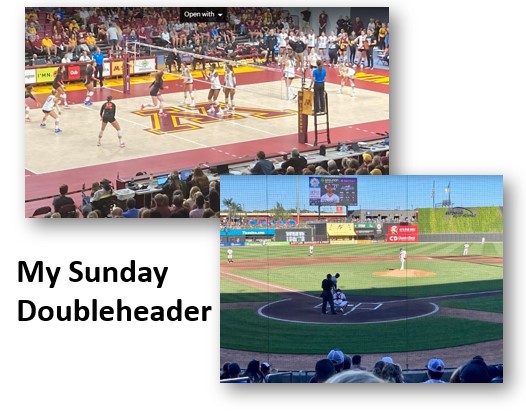
Side note:  This post is going out a little later than I would have preferred, but I have a good excuse.  I was at this afternoon’s Twins’ extra-inning win. 

Surprisingly, it was not MLB’s worst-ever shutout loss. In fact, it was not even the worst-ever shutout loss in a Cubs-Pirates game.  On September 16, 1975 – with the Pirates and Cubs matched up at Wrigley Field – the Pirates dealt the Cubs the worst shutout loss in MLB history (at least since 1901) – 22-0 (a lopsided whitewashing later tied) … with the Cubs getting only three hits to the Pirates’ 24.  The Pirates got home runs from Richie Hebner and Dave Parker.

This game was 9-0 after just one frame – which went like this:

Rick Reuschel Pitching

  • 2B Rennie Stennett– double.
  • 3B Richie Hebner – RBI single.
  • CF Al Oliver – walk.
  • 1B Willie Stargell – RBI single, Oliver to third.
  • RF Dave Parker – sacrifice fly.
  • LF Richie Zisk- single, Stargell to third.
  • C Manny Sanguillen – walk.
  • SS Frank Taveras – RBI single, loading the bases.
  • P John Candelaria – two-run single. Taveras to third.

Tom Dettore Pitching

  • Stennett – RBI single, Candelaria to third.

Wild Pitch – Candelaria scores, Stennett to second.

  • Hebner – ground out to first.
  • Oliver – walk.
  • Stargell – RBI single, Oliver to third.
  • Parker – ground out to first.

Reuschel took the loss, surrendering eight runs (all earned) on six hits and two walks in one-third of an inning.

In this game Rennie Stennett of the Pirates tied the major-league record for base hits in a nine-inning game – going seven-for-seven: four singles, two doubles and a triple. Stennett  had two hits in both the first and fifth innings.


___________________________________

On August 31, 2004, the Cleveland Indians tied the 22-0 mark, topping the Yankees by that score in New York.  SS Omar Vizquel was six-for-seven (five singles, two doubles) in that one, with three runs scored and four RBI. Nine different Indians collected RBI in the game: Vizquel (4); C Victor Martinez (4); CF Coco Crisp (3); DH Travis Hafner (3); RF Jody Gerut (3); 1B Ben Broussard (2); LF Matt Lawton (1); 3B Casey Blake (1); and RF Ryan Ludwick, who didn’t start the game, (1). The Indian got  home runs from Crisp, Gerut and Martinez.

For those who might be wondering, the worst-ever run differential in an MLB game (at least since 1901)  is 27.  On August 22, 2007, the Rangers topped the Orioles 30-3 in Baltimore.  That, however, is a topic for another post.


100Baseball Roundtable is on the Feedspot list of the Top 100 Baseball Blogs.  To see the full list, click here.

I tweet baseball @DavidBBRT

Follow/Like Baseball Roundtable’s Facebook Page here.  More baseball commentary; blog post notifications; PRIZES.

Member: Society for American Baseball Research (SABR); Negro Leagues Baseball Museum; The Baseball Reliquary. 


The Athletics Nightmare’ Inning – 63 Years Ago Today

On this Date (April 22) in 1959, the Chicago White Sox completed what may be the weirdest MLB offensive inning ever – an event Baseball Roundtable loves to revisit and a nightmare Kansas City (Athletics) players and fans would surely like to forget. So,. I guess we’ll remind them here.

Nellie Fox drew two bases-loaded walks in the seventh inning of the White Sox 20-6 win. For the game. Fox was four-for-five, with a double, two walks,a run scored and five RBI.

In the seventh inning of a 20-6 road win over the Kansas City A’s, the Chicago White Sox scored 11 runs on just one base hit. In fact, they got only one ball out of the infield … and benefited from eight bases-loaded walks (ten total walks)  and one bases-full hit by pitch.  Actually, it did not start out like it was going to be a good day for the White Sox.  The A’s knocked Chicago’s starting pitcher Early Wynn – who would go on to lead the AL in wins with 22 – out of the game with six runs on six hits and two walks in the first 1 2/3 innings. The Sox trailed 6-1 after two frames. The White Sox, however, had come back to take the lead 8-6 before their 11-run sixth.

A Brief Break in the ChiSox Story – One for the Record Books

The ten seventh-inning walks received by the White Sox on April 22, 1959 were not a record. On September 11, 1949, the Yankees got the benefit of an MLB record 11 walks in a single inning – the 12-run third frame of a 20-5 win over the Senators in New York. In that inning, the Yankees had 11 walks, two doubles, two singles and one batter safe on an error. Eight different Yankees drew free passes that frame,  with RF Cliff Mapes, LF Charlie Keller and 1B Joe Collins drawing two each. Five of the 11 walks came with the bases loaded (a full replay of that inning can be found at the end of this post)

This White Sox’ unique “offensive outburst” would prove to be a portent of things to come. The 1959 AL pennant-winning White Sox became known as the “Go-Go Sox” for their ability to manufacture runs despite a punch less offense. (The Sox finished last in the league in home runs and sixth – out of the eight AL teams – in batting average and runs scored, but first in stolen bases and second in walks).

Still, it would have been hard to predict an inning in which the boys from Chicago would plate eleven runs on just one hit (a single) – or to anticipate a frame which included ten walks, a hit batsman, and three opposition errors – or a team plating 11 runs and hitting only one ball out of the infield.  Here are few “numbers” from that 11-run inning:

  • The Sox sent 17 batters to the plate, but collected just one hit – and, again, got only one ball out of the infield. For those that like to know such trivia, the hit belonged to LF Johnny Callison.
  • The inning started with two Athletics’ errors.
  • Sox’ hitters stepped into the box with runners in scoring position 14 times.
  • Sox hitters batted with the bases loaded 12 times and never got the ball past the pitcher.
  • Eight different White Sox’ players drew walks; Nellie Fox and Luis Aparicio each drew two walks in the inning.
  • The Sox drew eight bases-loaded walks (and had one bases-loaded hit batsman).
  • White Sox 2B Nellie Fox walked twice with the bases loaded in the inning.
  • Johnny Callison, who got the only base hit, was hit by a pitch in his only other place appearance that inning..
  • The White Sox three outs came on one strikeout and two groundouts – both hit to the pitcher.

Here’s how it went that inning (per baseball-reference.com):

Tom Gorman Pitching

  • 1B Ray Boone is safe on a throwing error by A’s shortstop Joe DeMaestri.
  • RF Al Smith attempts to sacrifice Boone to second (score was 8-6 at the time) and reaches safely on an error by A’s third baseman Hal Smith.
  • LF Johnny Callison singles to right. Scoring Boone and Smith (with the help of an error by A’s right fielder Roger Maris). Callison ends up on third.
  • SS Louis Aparicio walks – steals second (runners now on second and third).
  • P Bob Shaw walks (loading bases).
  • PH Earl Torgeson (batting for 3B Sammy Esposito) walks (scoring Callison).

Mark Freeman Pitching

  • 2B Nellie Fox walks (scoring Aparicio).
  • CF Jim Landis reaches on fielder’s choice – grounding back to pitcher Mark Freeman, who takes the force at home (bases still loaded).
  • C Sherman Lollar walks (scoring Torgeson, bases still loaded).

George Brunet Pitching

  • Boone makes his second plate appearance of the inning and walks (scoring Nellie Fox).
  • Smith makes his second plate appearance of the inning and walks (scoring Landis).
  • Johnny Callison, who had the only hit of the inning in his first plate appearance, is hit by a pitch (scoring Lollar, bases still loaded). Lou Skizas comes in to run for Callison.
  • Louis Aparicio draws his second walk of the inning (scoring Boone, bases still loaded).
  • Shaw strikes out.
  • PH Bubba Phillips (batting for Torgeson, who batted for Esposito earlier in the inning) walks (scoring Smith, bases still full).
  • Nellie Fox draws his second bases-loaded walk of the inning (scoring Skizas).
  • Jim Landis grounds out pitcher to first to end the inning.
  • The 20-runs the White Sox scored that day were the most they plated in any game that season.
  • In addition, to scoring 20 times, Chicago left eleven runners on base.
  • Nellie Fox was the offensive star of the game – with four hits (five at bats), two walks and five RBI.
  • The A’s used six pitchers in the contest, three in the seventh inning.

______________________________________________________

Now, a look at the record-setting Yankee inning.

—–Bottom of third inning, Senators at Yankees (September 11, 1949)—–

Paul Calvert Pitching

  • SS Phil Rizzuto – walk.
  • RF Cliff Mapes – walk.
  • 3B Bobby Brown -two-run double.
  • CF Joe DiMaggio – Grounder to third, safe on an error (one run scores).
  • C Yogi Berra – RBI double.

Dick Welteroth pitching

  • LF Charlie Keller – walk.
  • 1B Joe Collins – walk, loading the bases.
  • 2B Jerry Coleman – walk, forcing in a run.
  • P Allie Reynolds – two-run single.

Coleman picked off second

  • Rizzuto – walk.
  • Mapes – walk, loading the bases.

Julio Gonzalez pitching

  • Brown walk – forcing in a run.
  • DiMaggio – run-scoring fly out to left.
  • Berra – walk, loading the bases.
  • Keller – walk, forcing in a run.
  • Collins – walk, forcing in a run.

Buzz Dozier Pitching

  • Coleman – walk, forcing in a run.
  • Reynolds – pop out.

Primary Resources:  Baseball-Reference.com; Baseball-Almanac.com


100Baseball Roundtable is on the Feedspot list of the Top 100 Baseball Blogs.  To see the full list, click here.

I tweet baseball @DavidBBRT

Follow/Like Baseball Roundtable’s Facebook Page here.  More baseball commentary; blog post notifications; PRIZES.

Member: Society for American Baseball Research (SABR); Negro Leagues Baseball Museum; The Baseball Reliquary. 


Bartolo Colon’s 38 Straight Strikes – and Pitchers Who Were (apparently) Effectively Wild

Today (April 18, 2022) marks the tenth anniversary of a remarkable pitching achievements.  On April 18, 2012, Oakland A’s Bartolo Colon started on the mound against Ervin Santana and the Angels.  During one stretch of that game, won by A’s 6-0, Colon threw 38 consecutive strikes.  (The longest such streak since pitch-by-pitch data began being accurately tracked in 1988.) Were all 38 offerings in the strike zone? Perhaps not, but all those pitches that were outside the zone were close enough that the batters offered at them.

Overall, the streak lasted from the second pitch of the fifth innings until the seventh pitch of the eight frame.  Surprisingly, Colon struck out just two batters during the streak.  He also gave up two hits during the streak of strikes.

For the game, Colon threw 108 pitches – 82 strikes. For those who like such details, the first strike of Colon’s run came on his second pitch to SS Maicer Izturis leading off the Angels’ fifth. His streak ended on his second pitch to LF Bobby Abreu in the eighth. For the game, Colon pitched eight shutout innings – four hits, no walks and five whiffs – running his record to 3-1, 2.63. A few notable stats from the game:

  • 35 of the 38 pitches were fastballs (two changeups and one slider).
  • There was only one swing and miss (17 strikes looking).
  • There were ten foul fouls and ten balls put in play.

Colon pitched in 21 MLB seasons (1997-2009, 2011-18 … Indians, Expos, White Sox, Angels, Red Sox, Yankees, A’s, Mets, Braves, Twins, Rangers) – winnings 247 games (188 losses),  with a 4.12 ERA. He  fanned 2,535 batters and walked  948 in 3,461 2/3 innings. Between 2012-2016 he averaged just 1.3 walks per nine innings –  twice recording the NL’s lowest walks/nine rate.  He averaged fewer than two walks per nine frames in nine seasons.

Now, as always, with Baseball Roundtable, one thing leads to another. So, imagine my surprise, when I saw Colon as the most recent entry in Baseball Almanac’s list of pitchers to start a game and walk four consecutive batters before recording an out. It happened on June 29, 2000, as Colon started for the Indians in Kansas City. Colon opened the bottom of the first inning by walking  Royals’ LF Johnny Damon, 2B Jeff Roboulet, 1B Mike Sweeney and RF Jermaine Dye on a total of 24 pitches.  He actually survived the inning, following the four walks  with a sacrifice fly, run-scoring groundout and a strikeout. Side note: This was a pretty good hitting Royals team. Among those first-inning walks, Roboulet was hitting .309, Sweeney .347 and Dye .320.   Colon lasted five innings in the game, giving up five earned runs on two hits and six walks.

Well, that bit of research sent me on another tangent – a look at pitchers who gave  up at  least ten walks in a game, without surrendering a run.  Turns out it happened  a manageable nine times.  So, here they are, with some very subjective rankings.

  1. Jim Maloney. Reds … August 19, 1965 versus Cubs (in Chicago)

Maloney tops this list because his game was a ten-inning no-hitter – in which Maloney gave up ten walks, hit one batter and fanned  a dozen. Maloney’s toughest inning was the third, when he walked 2B Glenn Beckert and SS Don Kessinger to open the inning; then fanned P Larry Jackson and got CF Don Landrum to hit into a P-SS fielder’s choice; then walked LF Doug Clemens to load the bases, before getting RF Billy Williams on a groundout to second.  In the game, Maloney walked three in the third, two in the fourth, eighth and ninth and one in the tenth.  The Reds and Maloney won the game 1-0, scoring in the top of the tenth on a home run by number-eight hitter SS Leo Cardenas.

Maloney enjoyed a 12-season MLB career (1960-71) – all but the final year (Angels) with the Reds. He went 134-84, 3.19, twice winning 20 or more games in a season and logging six seasons of 15 or more victories.  He finished in the league’s top five in walks five times and top three in wild pitches six times (leading the league twice).

  1. Bill James, Tigers … May 12, 1916 versus Athletics (in Philadelphia)

James takes the number-two spot on this list because he managed  to not allow a run, while walking ten batters in just five innings.

  • James walked the first two batters in the first inning, but pitched out of the jam (sacrifice, fielder’s choice, strikeout).
  • He gave up a walk and a single to put runners on first and third to start the second frame, but again worked his way out (runner caught stealing, fly out, strikeout).
  • In the third, he again started the inning by putting two runners on base (walks), but slipped the hook with two ground outs and a fly out.
  • Fourth frame, guess what? First two batters get on again (walks). James then got a groundout and a strikeout (leaving runners on second and third), before another walk to load the bases. A flyball to right then ended the inning.
  • The fifth was uneventful, a lone two-out single.
  • James started the sixth with a pair of walks before being pulled – and reliever Bernie Boland got out of the inning without a run touching the plate.

So, despite two hits and ten walks in five innings, James left with a 2-0 lead.  The bullpen, oweer, eventually gave up the lead and James got a no-decision.  (The Tigers eventually won 8-6 in 11 innings.)

James pitched in eight MLB seasons (1911-12, 1914-19 … Indians, Browns, Tigers, Red Sox, White Sox). He went 64-71, 3.21.

  1. J.R. Richard, Astros … July 6, 1976 versus Mets (in Houston)

Photo: Public Domain via WikiCommons

Richard’s  qualifying game featured a ten-inning, compete-game shutout – despite eight hits, ten walks and two wild pitches.  In the first inning, Richard gave up a single and a double (3B Make Phillips and CF Bruce Boisclair), but avoided a run with Philips cut down at the plate. Richard pitched in and out of trouble all game,  but the seventh and eighth innings were especially tense. In the seventh , after getting the first out (2B Felix Milan on a grounder to short), Richard walked SS Bud Harrelson and wild pitched him to second. He then walked P Jon Matlock and 3B Mike Phillips to load the bases – but a fly out to  short center and a grounder to first got him out of the inning.  The eighth started out smooth, with two out and no one on, but Richard then walked C Jerry Grote, Milan and Harrelson to load the bases before fanning Matlock to end the inning.

Mets’ starter Jon Matlock matched Richard goose egg for goose egg  through nine, but was lifted for a pinch hitter in the tenth. Mets’ Reliever Skip Lockwood gave up a run on two singles and an error in the bottom of the tenth and Richard had a hard-fought 1-0 win.

Richard pitched 10 MLB seasons (1971-80), all for the Astros. He went 107-71, 3.15 – once winning 20 games (20-15, 2.75 in 1976) and three times notching 18 wins.  He led the NL in  strikeouts twice – both times topping 300 whiffs – and led in walks and wild pitches three times each.

  1. Gary Peters, Whites Sox …. September 13, 1967 versus the Indians (in Chicago)

Peters worked hard for little return (a no decision) – pitching 11 one-hit, no-run innings (with, of course, ten walks and one hit by pitch) – in a game the White Sox eventually won ( 17 innings) 1-0.  Peters gave up his lone hit in the top of the second –  a triple to C Joe Azcue with only one out. Peters  then walked CF Jose Vidal and 2B Vern Fuller to load the bases – before a short fly to LF and a grounder to SS got him out of the inning unscathed.  While the raw numbers would seem to dispute it, Peters really seemed to be in control, despite all the free passes.  From the third through the eleventh innings, only two runners reached second base.

Peters pitched in 14 MLB seasons (1959-72 … White Sox, Red Sox). He was a two-time All Star and went 124-103, 3.25, once leading the AL in wins (20-8 in 1964) and twice in ERA (2.33 in 1963 and 1.98 in 1966). He won 15 or more games in four seasons.

  1. Garland Buckeye, Indians … September 16, 1926 … versus Yankees in Cleveland

Have to put Garland Buckeye up here – great name and he managed a complete-game shutout against the Yankees of Babe Ruth, Lou Gehrig, Bob Meusel and Tony Lazzeri – despite giving up two hits, ten walks and a hit by pitch (and fanning only one). Buckeye spent considerable time in trouble during  the game – and Babe Ruth seemed to always be in the middle of it.

  • In the second inning, Buckeye walked RF Ruth and then gave up a double to LF Meusel (Ruth stopping a third). Buckeye then walked SS Lazzeri to load the bases. He got out of the jam with a pop up and a groundball double play.
  • In the fourth, Buckeye surrendered a single to 1B Gehrig and a walk to Ruth, before Meusel sacrificed them to second and third. A pop up and line out got Buckeye back to the bench without a run.
  • In the sixth, Buckeye walked Gehrig and Ruth with one out and pitched out of it with a couple of easy fly balls.
  • The seventh saw Buckeye issue three walks and bring Lou Gehrig to the plate with the sacks full and two out. It was then that Buckeye notched his only strikeout of the game.
  • Buckeye walked Ruth to open the eighth and followed up by hitting Meusel with a pitch – but got a double play and an infield pop up to again escape.

The game was tied 0-0 until the seventh, when the Indians put up five  runs against Yankee starter Herb Pennock. (Pennock came into the game 22-9, Buckeye at 4-8).

Garland Buckeye pitched in five MLB seasons He got a cup of coffee for the Washington Senators in 1918 (against the Yankees), and gave up three hits, six walks and four earned runs in two innings.  A big man for his time, Buckeye moved to football, where he played center and guard for the Chicago Tigers (1920) and Chicago Cardinals (1921-24)  of the American Professional Football Association (later renamed the National Football League). He returned to MLB in 1925 and played through 1928 (Indians, Giants). His career MLB stats read 30-39, 3.91 in 108 games (67 starts). As a hitter he was .230-5-23 in 204 at bats. His best season on the mound was 1925, when he went 13-8, 3.65 for the Indians.

  1. Hank Aguirre, Indians … September 24, 1955 … versus the Tigres (in Detroit)

This outing was Aguirre’s first MLB start (and just his fourth appearance).  The 24-year-old rookie struggled a bit, but managed a complete-game shutout – as his Indians prevailed 7-0.  Aguirre got off to a rocky start walking the first three batters he faced – SS Harvey Kuenn, 1B Earl Torgeson and RF Al Kaline. He wiggled out of the jam with two foul pop outs and a fly to right. He had another tough inning in the seventh, walking three of the first four batters before getting Kaline on a liner to first base and CF Bill Tuttle on a strikeout. With six of his ten free passes coming in two innings, the game was not as stressful as a ten-walk outing might seem.

Aguirre pitched 16 MLB seasons (1955-70 … Indians, Tigers, Dodgers, Cubs). He went 75-72, 3.25 and won 14 or more games in three campaigns. In 1962, he was an AL All Star (Tigers) and went 16-8, with a league-low 2.21 ERA.

  1. George Brunet, Angels … July 6, 1966 versus Tigers (in Detroit)

Brunet worked just a bit of overtime in a tight contest (the Angels won 1-0 in ten innings) to pick up a victory – giving up no runs, despite allowing three hits and 10 walks. Brunet had eight strikeouts in the game.  In the second inning, with runners on second and third and one out, Brunet fanned C Bill Freehan and SS Dick McAuliffe to escape. In the eighth, a double and a pair of walks (after two outs) loaded the bases, but Brunet coaxed a ground out to third from  LF Willie Horton. The Angels scored in the  top of the tenth to give Brunet a 1-0 lead, but  after he walked the first batter in the bottom of the inning (3B Don Wert), got 2B Jake Wood to pop out and then gave up a single to 1B Norm Cash, Brunet was relieved by Jack Sanford who got the final two outs.

George Brunet pitched in 15 MLB seasons (1956-57, 1959-71 … Athletics, Braves, Astros, Orioles, Angels, Pilots, Senators, Pirates, Cardinals). He went 69-93, 3.62.

George Brunet  is a member of the Mexican Baseball Hall of Fame. After leaving the major leagues, he pitched Mexico until 1989 (age 54).

  1. Mel Stottlemyre, Yankees … May 21, 1970 versus Senators (in New York)

This falls just a little short of one-run game.  Stottlemyre got a 2-0 win, despite six hits, 11 walks and two wild pitches.

Stottlemyre was  in trouble right from the start, giving  up two walks and two singles in a scoreless first (one runner was erased trying to advance to second on a single).  Things calmed down until the fourth, when Stottlemyre again managed to escape scoreless, despite two singles and a walk (one runner called out after being struck by a fair ball).  In the fifth, Stottlemyre gave up two walks, one hit, a stolen base and tossed a wild pitch – but a key runner caught stealing  enabled  him to escape again.  In the ninth, a single and two walks had the bases loaded with one out (in a 2-0 game) and  Stottlemyre was pulled.  Reliever Steve Hamilton came in and fanned 1B Mike Epstein and 2B Bernie Allen (the number-four and number-five hitters) to save the game.

Stottlemyre pitched in 11 MLB seasons (1964-70), all for the Yankees.  He was a five-time All Star and won 20 or more games in three seasons (15 or more games in seven seasons).  He also led the AL in losses twice. His overall record was 164-139, 2.97.

Mel Stottlemyre was an All Star in 1966, when he led the AL in losses ( 12-20, 3.80). He was 7-8, 3.15 at the break and 5-12, 4.51 in the second half.

  1. Lefty Gomez, Yankees … August 1, 1941 versus Browns (In New York)

Gomez  gave up five hits and 11 walks (one wild pitch) and still managed to shut down the Browns  in a lopsided 9-0 Yankee win. (There wasn’t a lot of pressure on Gomez, it was 3-0 after one inning and 6-0 after three.)

Really,  despite  all the walks, Gomez did not seem to be in a lot of trouble. The most bothersome innings  were bookends – the first and the ninth.  In the first, Gomez gave up a leadoff single to 2B Don Heffner, then retired the next two batters before walking a pair (Wally CF Judnich and LF Roy Cullenbine) to load the bases. This brought up RF Chet Laabs (remember that name, he’ll come up again) with the bases full and two outs. Gomez  got him on a foul pop out.  In the ninth, Gomez walked the bases full with two outs, and Chet Laabs was again the batter (told you he’d be back).  This time it was a fly out to center to end the game.

Hall  of Famer Gomez pitched in 14 MLB seasons (1930-43), all but the final one for the Yankees. (He was 0-1, 5.79 in one start for the Senators in 1943).  Gomez was 189-102, 3.34 for his career. A seven-time All Star, he led the AL in wins twice (and four times won 20+ games), and also led in ERA twice, in complete games twice, in shutouts three times and in strikeouts three times.

Primary Resources:  Baseball-Reference.com; Baseball-Almanac.com; Bartolo Colon Throws 38 Consecutive Strikes in A’s Win, The Washington Post, April 20, 2012, by Matt Brooks


100Baseball Roundtable is on the Feedspot list of the Top 100 Baseball Blogs.  To see the full list, click here.

I tweet baseball @DavidBBRT

Follow/Like Baseball Roundtable’s Facebook Page here.  More baseball commentary; blog post notifications; PRIZES.

Member: Society for American Baseball Research (SABR); Negro Leagues Baseball Museum; The Baseball Reliquary. 


A Game of Extremes … A Baseball Book Review

A Game of Extremes – 25 exceptional baseball stories about what happens on and off the field.


By Roy Lingster

Copyright, Roy Lingster, 2022


Paperback – $14.97, ebook – $5.99;  both at Amazon.com

Audiobook – $14.95 at audible.com


My mother used to tell me, “If you can’t say something good about someone (or something), don’t say anything at all.”  Well, given that philosophy, Baseball Roundtable has  plenty to say (write) about Roy Lingster’s book “A Game of Extremes … 25 exceptional baseball stories about what happens on and off the field.”  I highly recommend this enjoyable baseball read.   Lingster brings new life  and new perspectives (and twists) to some of baseball’s best stories (and characters). After reading these stories, you will likely have an urge to pass them on to your friends (perhaps even claiming them as your own).

Baseball Roundtable readers are familiar with the fact that as I explore baseball topics for this blog “one thing always seem to lead to another.”  You’ll find that true in A Game of Extremes. In fact, Lingster pulled me in right off the bat.  In Chapter One –  The 168 MPH Fastball –  Lingster linked the mythical Sidd Finch and the cinematic Nuke Laloosh to the enigmatic Steve Dalkowski, touted by many people close to the game as the hardest-throwing (fastest) pitcher ever. Ultimately, Dalkowski’s is a story of unfulfilled promise – promise of a level that has made Dalkowski, who never threw a pitch in a regular-season MLB game, a bit of a hardball legend.

In that first chapter, Lingster also unveils another “theme” that you’ll find through the book – the use of quotes from people who were there to help flesh out the stories.  In  telling Dalkowski ‘s tale, Lingster brings in Lou Brock, who once said “Grab your helmets, run behind buildings, because this guy throws unguided missiles and (even) he doesn’t know were they are going.”

Now, I don’t want to give away too much of the book, but I will provide some snippets of what you can expect. Here are a few examples:

  • In the chapter on Satchel Paige, we learn that he honed his pitching skills in reform school. In Satchel’s words: “I traded five years of my freedom to learn how to pitch.”
  • Lingster uses Babe Ruth’s often disputed “called shot,” to lead us into the story of Herman “Germany” Schaefer – best known for forcing a rules change by once stealing first base (from second), but who also has a documented “called shot” of his own.
  • Lingster adds some depth into a look at Cy Young Award Winner Zack Greinke and both his battle with social anxiety and his initial desire to  be an everyday player. As Lingster tells it, on first being told he was going to the major leagues as a pitcher, Greinke asked, “Do you think if we ask them, they would let me go back to Single-A and be a shortstop?  I think I can be a pretty good shortstop.”
  • In the chapter on the life of Rube Waddell (considered baseball’s zaniest star), readers discover why the Waddell quote “You can charm a manger, but you can’t hypnotize a walrus.” makes sense. Side note: Waddell’s career was so wild (and successful) multiple books have been written about it.  The Roundtable recommends “Rube Waddell – The Zany, Brilliant Life of a Strikeout Artist” by Alan H. Levy and “Just a Big Kid  – The Life and Times of Rube Waddell” by Paul Proia.
  • Lingster’s chapter on Sandy Koufax leads off with the poetry of Dylan Thomas and a look at Mike Mussina’s last season – and includes this quote from Duke Snider, “When he first came up, he couldn’t throw a ball inside the batting cage.”

I particularly liked the chapter on Mark Belanger (whom Lingster informs readers was the most pinch-hit for player in MLB history) and the value and beauty of defense. In this one, author and sportswriter Pat Jordan is quoted: “Belanger would glide effortlessly after a grounder and welcome it into loving arms; scooping up the ball in a single easy motion, and bringing it to his chest for a moment’s caress before making his throw,”

Readers will also want to spend some time with Lingster’s chapter on PED’s – which takes you from Greek Gods and ancient Olympians to Pud Galvin and the Brown-Sequard Elixir to the era of “Greenies” to today’s PED controversy.  It may not change your mind, but it will give you something to think about.

In this book, you will also read about: Ty Cobb’s distaste for the home run (and his ability to go yard when he wanted to make a point); the iconic Dave Bresnahan potato story; the tale of Dock Ellis and his LSD-fueled no-hitter; Bill “Spaceman” Lee and his love  of the game; the legendary and so quotable Yogi Berra; the story behind baseball’s “Golden Sombrero; a look at the fiery Billy Martin; the Jackie Mitchell legend; and even an entire chapter on walk-off balks.  Now, I didn’t touch on all you find here.  For example, prose linking Mark Fidrych, Pete Reiser and Joe Charboneau or tying ambidextrous pitcher Pat Venditte to one-armed outfielder Pete Gray or noting Yasiel Puig’s lucky thirteenth attempt to leave Cuba.  I could go on and on, but you get the idea, this is a fun read for baseball fans. Great stories, with new insights and details, told in lively prose – with, I believe, a knowing smile. I may just read it again.

Also by Roy Lingster

Oh, and for a bit of a twist at the end of this review:  A Game of Extremes is written by a player and fan who developed his passion for the game not on American ballfields and in American ballparks – but in the Netherlands.

_____________________________

AN INTERVIEW WITH THE AUTHOR

Roy Lingster, who has a degree in Sports and Exercise, is a military sports instructor in the Netherlands, where he was born and raised (and played ball). He has devoted 25 years to the game, as both a player and a coach, and refers to his passion for baseball as “a hobby that got out of hand.”

Baseball Roundtable conducted a brief interview with Lingster.  Here’s what I learned.

_________


Roundtable: You indicate that you are a military sport instructor.  Can you elaborate a bit on what that entails?

Lingster: Every soldier in the Dutch army receives sports lessons to stay physically and mentally fit. I have been assigned a unit in which I provide  different lessons five  days a week – focusing on such areas as strength, endurance and coordination.

_____

The Roundtable:  At what levels did you play and/or coach baseball – and where?

Lingster: When I was young,  I always played at the highest level in the Netherlands. The high point at that time was the Little League World Series in 2007.  When I turned 16, I had to make a career choice to study.  Earning a living  with baseball is not really an option in the Netherlands. Since that time,  I mainly  play in Netherlands’  Second  Klasse.  You have, in the Netherlands, hoofdklasse (highest level), then 1ste Klasse and then  2e Klasse. We call it the aluminum hoofdklasse because it is the highest class after the competition with wood bats.

_____

The Roundtable: What first brought you to the national pastime, and what about baseball made it an enduring passion?

Lingster: My parents were among the first members of the baseball club (association) in our district 50 years ago. I had no choice but to play baseball (ha, ha). While some may think baseball is boring to  watch, those people don’t get it.  It is one of the most mental sports out there. You have to be physically and mentally on the same page to be good at the game. I think that challenge is the best thing there is. And, understanding that challenge, draws you deeper and deeper into the game.

_____

The Roundtable: You bring a unique perspective to many of your stories … whether it’s references to Greek mythology, classic poetry or movie quotes.  What drives – or how do you develop –  these connections?

Lingster: That’s hard to say, I just do that automatically when I read stories. I just tend to see links with other stories or events.

_____

The Roundtable:  What are some of your favorite sources of information on American baseball?

Lingster: Hmm.  This sounds really stupid, but everything started with YouTube.  After that it’s been just digging in.

Baseball Roundtable note: Lingster is being a bit modest here.  Just glancing through the footnotes, I found sources listed by Lingster to include not only YouTube videos, but archived articles from a range of newspapers and magazines; more than a dozen baseball books; and information (primarily from websites) from  organizations like The Smithsonian, Baseball Hall of Fame, ESPN and  National Public Radio; as well as from  sportsanddrugs.procon.com; baseball-reference.com; MLB.com; and even the 1990 Baseball Card Engagement Book.

For the Baseball Roundtable Book Review Archive, click here.  You’ll find more than two dozen reviews.


100Baseball Roundtable is on the Feedspot list of the Top 100 Baseball Blogs.  To see the full list, click here.

I tweet baseball @DavidBBRT

Follow/Like Baseball Roundtable’s Facebook Page here.  More baseball commentary; blog post notifications; PRIZES.

Member: Society for American Baseball Research (SABR); Negro Leagues Baseball Museum; The Baseball Reliquary. 


Some Sparkling MLB Debuts From The Past

Yesterday, Baseball Roundtable took a look at a handful of MLB rookies who got their careers off to a bang over the past few days – Steven Kwan, Hunter Greene, Seiya Suzuki, Jeremy Pena and Jhoan Duran.  For that post, click here.  Well, as always in The Roundtable, one thing leads to another and this post will look at some past sparkling debuts.

Ted Cox, DH, Red Sox … 1977

On September 18, 1977, the Red Sox started rookie 22-year-old Ted Cox at DH, batting second. Cox, a 1973 first-round draft pick right out of high school, had hit .334-14-81 in in 95 games for the Triple-A Pawtucket Red Sox to earn his trip to “The Show.”  Cox’ first day at the plate, as Boston topped Baltimore 10-4, went like this:

  • First inning, single to left field , later scored;
  • Third inning, walk, later scored;
  • Fifth inning, single to left, later scored;
  • Sixth inning, single to center;
  • Ninth inning, double to right, later scored.

Not bad for Day One one in the big-leagues, but he wasn’t done yet.  The very next day, against the Yankees (in Boston), Cox rapped a single to right and a single to center in his first two at bats.  He finally grounded out to first base in the fifth inning to end his streak – but he had, in hand, the record for base hits in the most consecutive at bats (six) to start an MLB career.

Side note:  Unlike many of today’s players, Cox used the whole field. Of his six hits, two were to left, two to center and two to right.

Cox got in a total of 13 games for the Red Sox that season, hitting .362-1-6, with three doubles, one triple, one home run, and 11 runs scored. He played four MLB seasons (1977-81 … Red Sox, Indians, Mariners, Blue Jays) and hit .245-10-79 in 272 games.

So Close

Last season, White Sox rookie Yermin Mercedes started the season with base hits in his first eight at bats – five-for-five, with one double, one run scored and four RBI on April 2; followed by a solo home run, a single and an RBI double in his first three at bats the following day. The streak ended with a flyout to center on his ninth at bat of the season. Mercedes, however, had one at bat for the White Sox in 2020 (August 2), grounding out to second as a pinch hitter, so he missed a chance to break Cox’ record.

Karl Spooner, LHP, Dodgers … 1955

On September 22, 1954, Dodgers’ rookie southpaw Karl Spooner set the MLB record for the most strikeouts in a debut MLB appearance (15) – a mark tied by the Astros’ J.R. Richard on September 5, 1974.  In his record-setting game, the 23- year-old Spooner shutout the New York Giants (in Brooklyn) on three hits (three walks).  Four days later, he got his second career start, against the Pirates in Brooklyn, and twirled a four-hit shutout with 12 whiffs (three walks).  So, first 18 MLB innings – two complete-game shutouts and 27 strikeouts in 18 innings.  I should also note here in that in 1954, the average number of strikeouts per nine innings in MLB was 4.2.

Spooner truly looked like he was going to be a “pitching phenom” for the Brooklyn Dodgers. In 1954, Spooner went 21-9, 3.14 at Fort Worth (Double-A Texas League), fanning 262 batters in 238 innings – despite missing a month of the season with a knee injury.  That performance earned him that  late-season call up to the “show.” Unfortunately, Spooner suffered a shoulder injury in Spring Training the following year – finishing his first (and last) full MLB season with an 8-6, 3.65 record in 29 appearances (14 starts). He made 28 minor-league appearances between 1956 and 1958, but never returned to the majors.

Note:  In J.R. Richard’s 15-whiff debut, he picked up a 5-3 win (Astros over Giants) giving up seven hits, and three runs (two earned), while walking three.  In his next appearance, a start against the Reds, he went five innings and gave up two-hits, and one run, with six walks and five strikeouts.

Pete Richert, LHP, Dodgers …. 1962

On April 12, 1962, Dodgers’ rookie Pete Richert  came to the mound in the top of the second inning (in relief of starter Stan Williams) with the Dodgers trailing 4-0 and the Reds’ SS Eddie Kasko on second base, CF Vada Pinson at the plate and two out.  He brought with him a reputation as a  left-hander who could bring some heat. In four full minor-league seasons, Richert had gone 44-40, 3.71, with 742 strikeouts in 721 innings.

Richert did not disappoint. He  proceeded to fan Pinson to end the inning. Richert came out for the third inning and fanned the next four MLB batters he faced. (Richert remains the only pitcher with a four-strikeout inning in his MLB debut.)  It went like this: Reds’ RF Frank Robinson goes down swinging; 1B Gordy Coleman fans swinging, but reaches first on a passed ball; CF Wally Post strikes out swinging; C Johnny Edwards ends the inning by swinging at strike three.  But, Richert wasn’t done yet.

In the top of the fourth, Richert got the sixth major leaguer to step in against him – Reds’ 3B Tommy Harper – on a called third strike. Ironically, it was Reds’ pitcher Joey Jay who ended Reichert’s career-opening, MLB-record six straight strikeouts by grounding out to first base. Richert got the final out of the inning on another grounder, 2B Don Blasingame retired second to first.  Reichert’s final line for his debut game was  – 3 1/3 innings pitched, no hits, no walks, no runs.

Reichert’s final line for his debut game was  – 3 1/3 innings pitched, no hits, no walks, no runs and seven strikeouts. He faced 12 batters, with two getting on via a passed ball and an error.  He threw 40 pitches – 33 strikes.

Richert finished the season 5-4, 3.87 (19 appearances, 12 starts), with 75 strikeouts in 81 1/3 innings. He went on to a 13-season MLB career (1962-74 … Dodgers,  Senators, Orioles, Cardinals, Phillies) – 80-73, 3.19, 51 saves and 925 whiffs in 1,165 2/3 innings.

Primary Resources: Baseball-Reference.com; Baseball-Almanac.com


100Baseball Roundtable is on the Feedspot list of the Top 100 Baseball Blogs.  To see the full list, click here.

I tweet baseball @DavidBBRT

Follow/Like Baseball Roundtable’s Facebook Page here.  More baseball commentary; blog post notifications; PRIZES.

Member: Society for American Baseball Research (SABR); Negro Leagues Baseball Museum; The Baseball Reliquary. 


Small Samples … But Some Striking MLB Debuts

Yesterday (April 10). a couple of MLB rookies who made their debuts “in the show” this season – Hunter Greene and Steven Kwan opened some eyes across baseball.  In this post, Baseball Roundtable will look at these two players and three others who have made quite a splash in their first 100 hours or so in the MLB pool.

Steven Kwan, outfield, Guardians

The 24-year-old Kwan may be only 5’9’ and 170 pounds, but the left-handed batter has been playing big. Yesterday, in just his third MLB game, he went five-for-five and scored four runs as the Guardians topped the Royals 17-3 in Kansas City.   While Kwan doesn’t show much power, he has shown remarkable ability to make contact – and veteran patience at the plate.  He has  yet to strike out in 14 plate appearances and, in fact, has yet to swing and miss even once  in three games. So far this  season, he is 10-for-14 (a nice round .800 average), with two doubles, four runs scored and three walks. This comes after hitting at a .469 pace in 34 Spring Training plate  appearances (15-for-32, with two walks and no strikeouts).  As for that patience,  in his first MLB game (April 7), Kwan grounded out to short in his first at bat and then (showing none of the expected rookie anxiousness) waited out a pair of walks before tapping a groundball single (on an 0-2 count) in his final at bat of the day.

Kwan was a fifth-round draft choice (2018) out of Oregon State University, where he hit .329 over three seasons (156 games). In three minor-league seasons (217 games), he stroked the ball at a .301 pace – including .328-12-44 in 77 games at Double- and Triple-A last season.

Hunter Greene, RHP, Reds

Photo: Minda Haas Kuhlmann, CC BY 2.0 <https://creativecommons.org/licenses/by/2.0>, via Wikimedia Commons

Hunter Greene picked up his first MLB victory in his first MLB appearance (and start) on April 10. While he gave up three earned runs on four hits and two walks over five innings – he made quite an impression. The 22-year-old right-hander  looks like a flamethrower  at 6’5” and 230 pounds – and he pitches like one, as well.  Greene threw 20 of his 92 pitches at 100 mph or more (a high of 101.6 mph). His fastball averaged 99.7 mph. Perhaps just as important,  he effectively mixed in a slider and changeup and threw first-pitch strikes to 15 of 21 hitters. In his first three MLB innings, Greene faced  just ten batters and fanned six.

Greene garnered plenty of attention as a high schooler, regularly hitting triple-digits with his fastball. (How unfair is that?).  He was the number-two overall pick in the 2017 MLB draft out of  Notre Dame High School in Sherman Oaks, California. In his first full minor-league season (Class A Dayton Dragons), he went 3-7, 4.48, but fanned 89 hitters in 68 1/3 innings (and he was just 18-years-old). He did give the Reds’ brass a scare – needing Tommy John Surgery in 2019.  He came back in 2021 and went 10-8, 3.30 with 139 whiffs in 106 1/3 innings at Double- and Triple-A.

Seiya Suzuki, OF, Cubs

Seiya Suzuki was already a star when the Cubs signed him this March.  At Age 27, he had played nine seasons in Japan and was a five-time All Star – carrying a .315 career average.  Over his most recent three seasons in Japan, his stat lines were : .317-38-88; .300-25-75; and .335-28-87.

In his first three game with the Cubs, Suzuki hit .375 (3-for-8), with four walks (.538 on-base percentage). He has one home run, but – more important – six RBI in three contests.

Jeremy Pena, SS, Astros

Pena has some big cleats to fill – those of Carlos Correa. He doesn’t seem intimidated so far. After hitting .360-2-9 in eight Spring Training games, he has gone six-for-16 (.375), with two doubles and a home run in his first three games at SS for the Astros; while also showing solid defensive skills and a good arm.

Pena was signed in the 39th round of the 2015 draft out of the University of Maine. In three college seasons,  he hit.305 (163 games) and in three minor-league campaigns, he averaged .291. Pena was injured in Spring Training in 2021 and, last season, played just 30 games at Triple-A – hitting .287 with ten home runs.

As the seventh inning of the Astros’ 13-6 win over the Angels opened on April 8, Cecilia and Geronimo Pena – parents of new Astros’ shortstop Jeremy Pena – were being interviewed on the AppleTV+ live broadcast of the game. At that moment, Pena, leading off the inning, hit the first pitch from the Angels’ Mike Mayers to deep left-center for his first MLB home run – with his parents elated reaction captured for the audience.  Pena ended up three-for-five on the night.

Jhoan Duran, RHP, Twins

Duran made his MLB debut in a tight spot.  In the fifth inning of the Twins’ April 8 opener against the Mariners (in Minnesota), Minnesota’s 24-year-old rookie right-hander (who boasts a triple-digit sinker) was called on to keep the Twins close (in a 2-1 game). In his first six pitches, he gave up a  pair of singles (1B Ty France and LF Jesse Winker) and tossed a wild pitch, putting  runners on first and third with no outs (in a 2-1 game). The Mariners were threatening to break it open. Over his next ten pitches, the rookie (apparently with nerves as cold as ice) put his sinker to work  struck out RF Mitch Haniger, 3B Eugenio Suarez and DH Jarred Kalenic – earning a standing ovation as he walked off the mound. (Duran pitched another scoreless frame, adding a fourth strikeout and walking a batter.)

Duran’s  performance came after a Spring Training in which the 24-year-old pitched in five games (seven  innings) – giving up just one hit and one walk, while fanning ten (o.00 ERA). Duran was signed out the Dominican Republic by the Diamondbacks. In six minor-league seasons, he went 23-29, 3.99, with 80 starts in 82 games. Early returns out of the bullpen look good, particularly with the Twins having traded cloer Taylor Rogers.  Could Duran er a closer-in-waiting?

Primary Resources:  Baseball-reference.com


100Baseball Roundtable is on the Feedspot list of the Top 100 Baseball Blogs.  To see the full list, click here.

I tweet baseball @DavidBBRT

Follow/Like Baseball Roundtable’s Facebook Page here.  More baseball commentary; blog post notifications; PRIZES.

Member: Society for American Baseball Research (SABR); Negro Leagues Baseball Museum; The Baseball Reliquary. 


Opening Day … Always An Event … and Here’s a Few Predictions

“You always get a special kick on opening day, no matter how many you go through. You look forward to it like a birthday party when you’re a kid. You think something wonderful is going to happen.”

Joe DiMaggio


Twins Opening Day 2022

Opening Day is the most hopeful and optimistic day of each year.  At least for this one day (Well, actually two days this season, with varying teams opening on April 7 or 8) every team is a contender, every rookie a potential “phenom,”  every fading veteran  a potential “Comeback Player of the Year,” and every new face in the lineup or on the bench a welcome addition.  (Note: Sorry. I’m a day late posting this. Getting to Day One and Day Two games slowed my progress. Also, at the end of this Opening Days celebration, I’ve posted my predictions for the 2022 season – and a few players I’d think are worth watching.)

There are flyovers, team introductions, and ceremonial first pitches in ballparks adorned with red, white and blue bunting across the nation.  As the game time approaches, the sun seems a little brighter, the sky a little bluer, the grass a shade greener.  The scorecard is clean and fresh, awaiting the stroke your pen or pencil – depending on how confident you are in your observational and scorekeeping skills.

Once the game begins, the ball hops off the bat with an especially sharp crack, the pitches seem to have more zip and whir-r-r than ever and the fielders move with a unique combination of grace and energy.  In the stands, the beer is crisp and cold and the hot dogs steam in the cool of early spring. (And, these days, there are loads of new – sometimes even exotic – concession offering to debate over.)  The fans cheer on their old and new heroes and follow this opening contest with pennant-race intensity – the most intense among them logging each play in the new season’s first scorecard.   Baseball is back!

So, there I was, Opening Day 2022, with a couple of friends in the second deck of Target Field.  And, yes, the sun was shining – but it was cold (about forty degrees at game time, with a brisk wind that made it feel closer to thirty.  (Minnesota weather had already led to a one-day postponement of the opener). The sun was shining (we were in the shadows), however, and the festivities were  on spot.  The player introductions, the anthem with the giant American Flag unveiled  across centerfield and new Hall of Famers (to be inducted this summer) Twins Tony Oliva and Jim Kaat throwing out ceremonial first pitches. Then it was baseball, Twins rookie Joe Ryan versus 2021 Cy Young Award winner Robbie Ray.

To make a long story short, it was a nail-biter, as the Twins fell 2-1 to the Mariners.  But, as always, there was drama – even though the local (StarTrubune) headline read “Zero-for-big moments,” with the subheads adding “Not much worth cheering about for Twins fans” and “Last Shot in lackluster opener dies at fence.”  Ouch! I beg to disagree.

The Mariners scored first, as Ryan hit number-two hitter 1B Ty France with a pitch and one batter later gave up a two-run homer RF Mitch Haniger. So, what about big moment or things to cheer about?

  • In the bottom of the third inning, with the score 2-1 and Mariners’ runners on first and second and just one out, new Gold Glove SS Carlos Correa made a beautiful diving stop on a groundball of the bat of Haniger and secured a force out at second – saving at least one run. Ryan then fanned 3B Eugenio Suarez to get out of the inning unscathed.
  • In the fourth, new 3B Gio Urshela launched his first home run as a Twin, cutting the score to 2-1.
  • In the fifth inning, Twins’ 24-year-old rookie right-hander Jhoan Durn (who boasts a triple-digit sinker) made his MLB debut. A pair of singles (1B Ty France and LF Jesse Winker) and a wild pitch  put him in quick trouble – runners on first and third and no out (in a 2-1 game). The Mariners were threatening to break it open. Over his next ten pitches, the rookie (apparently with nerves as cold as ice) struck out Haniger, Suarez and RF Jarred Kalenic – earning a standing ovation as he walked off the mound. (Duran pitched another scoreless frame, adding a fourth strikeout and walking a batter.)
  • In the bottom of the ninth, still 2-1, fan favorite Luis Arreaz delivered pinch-hit single to loud applause. With two outs in the inning, new Twin Gary Sanchez came up and, with fans changing “Gary, Gary” drove what, off the bat, looked to be a game-winning two-run dinger to left. It was caught at the wall by Mariners’ LF Winker.  So close, but still an entertaining opener from this fan’s perspective.

Baseball Roundtable’s First Trot Index of 2022

Regular readers know about the Roundtable’s Trot index, which logs what percentage of MLB plate appearances end in a trot (to first base, around the bases or back to the dugout) – with no action on the basepaths or  by the defense. You know what I mean: walks, strikeouts, hit by pitch, home runs and catcher’s interference.  Well in the fifteen “openers” (a few teams have played two games, I deleted the second games), 37.5% of all plate appearances have met the Trot Index criteria: 23.7% as strikeouts; 9.6% as walks; 2.4% as home runs; and 1.8% hit by pitch.

A few other 2022 Opener observations:

  • There were six one-run games and only one blowout (a five or more run differential);
  • There were only two games that did not include at least on hit batsman;
  • The Phillies pitched the only game without a walk, as the Phillies topped Oakland 9-5, April 8, in Philadelphia. Aaron Nola, Jeurys Familia; Brad Hand; Seranthony Dominguez; and Corey Knebel did the pitching.
  • There were two extra-inning games – with the dreaded runners placed at second to start the inning – both on April 8. Yankees 6 – Red Sox 5 (11 innings) in New York and Giants 6 – Marlins 5 in San Francisco. (10 innings)
  • There was one game without a home run, Royals 3 – Guardians 1 in Kansas City – a total of 12 hits, eight singles and four doubles.

Ouch.

Only one team went scoreless on Opening Day. The Pirates failed to score as they opened in St. Louis and lost by a 9-0 score – despite only being outhit 8-6. In the game, Pittsburgh pitchers gave up eight hits (three home runs) and seven walks and the Pirates added a pair of errors.  It was also the only shutout among this year’s openers.

A few more Opening Day(s) Tidbits

Getting the First One Out of the Way

Last season, the Brewers’ Cy Young Award winner Corbin Burnes tallied 49 strikeouts before his first walk of the season – which came on May 13.  He pitched 34 innings and faced 126 batters before issuing his first free pass.  In this season’s  opener, he walked the fist batter he faced – the Cubs’ Rafael Ortego.

Old Guys Rule

40-year-old Adam Wainwright started the Cardinals’ opener in Pittsburgh and pitched six scoreless frames as the Cardinal won 9-0.

Double-Digits

On April 7 , The Astros topped the Angels 3-1, becoming the second team in MLB history and the first since 1896, to win ten consecutive Opening Day games.  The NL Boston Beaneaters won ten straight from 1887-1896.  A few tidbits.  In their still-alive streak, the Astros:

  • Have won five openers at home, five on the road.
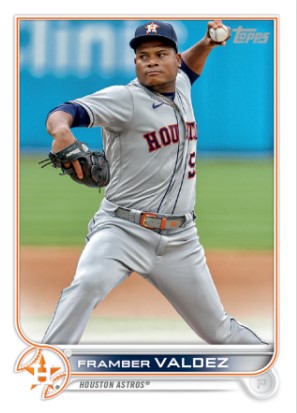
  • Have had the starting pitcher record each of the ten wins (Dallas Keuchel and Justin Verlander three each, Zack Greinke, Scott Feldman, Bud Norris and Framber Valdez).
  • Have outscored their opponents 44-13.
  • Scored five or more runs six times, while giving up as many as three runs just once.

A Fistful of Firsts

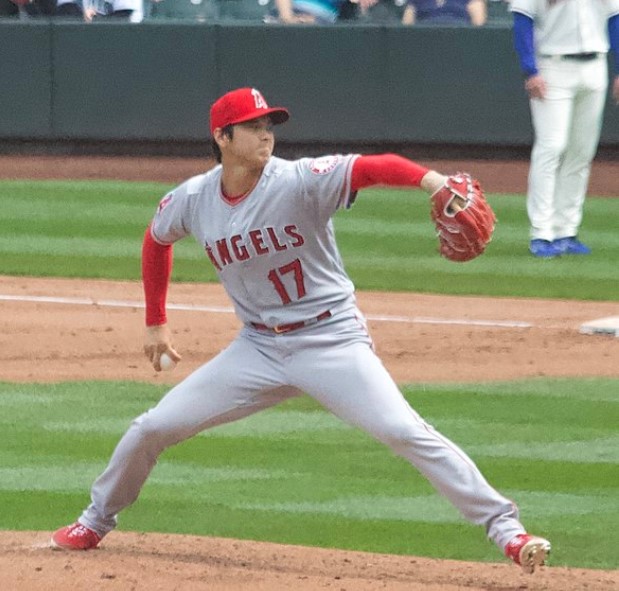
In the April 7 Angels’ game, Shohei Ohtani became the first player to throw his team’s first pitch of the season and also be in the batter’s  box  to take his team’s first pitch of the season – as he started on the mound and lead off at DH.  He also recorded his team’s first strikeout of the season fanning the first batter he faced  and made his team’s first out of the season, grounding our short-to-first on the first pitch he saw in that first at bat.

Seth Beer Lives Up to His Name

April 7 was National Beer Day – and guess  what? Diamondbacks’ DH Seth Beer (gotta love that baseball name) hit a walk-off home run to put the Diamondbacks past the Padres 4-2.  It was his second career homer and first career walk-off long ball.

Now, Few Opening Day musings from the past.

Williams & Johnson – Not a law firm, but the kings of Opening Day

As much as Baseball Roundtable loves the return of the national pastime, perhaps no one looked forward to Opening Day more than Ted Williams.  “Teddy Ballgame,” a .344 lifetime hitter, outdid himself on Opening Day.  Williams played in fourteen “openers” and was NEVER held hitless.  He  finished his career with a .449 Opening Day average (22 hits in 49 at bats), with 3 home runs, 8 doubles, 1 triple, 9 runs scored,  14 RBI and 11 walks.  His Opening Day on-base percentage was .550 and his season-opener slugging percentage was .837.

Photo by pingnews.com

The Washington Senators’ right-hander Walter Johnson also was always ready for an Opening Day assignment.  On his first-ever Opening Day start (April 14, 1910), the 22-year-old Johnson tossed a 3-0 one-hit shutout against the Philadelphia Athletics.  Note:  President William Howard Taft, on that day, became the first President to toss out the season’s ceremonial first pitch – caught by Johnson.  Sixteen years (and 13 Opening Day starts) later, a 38-year-old Johnson fulfilled his last Opening Day assignment with a 15-inning, complete-game, 1-0 win (6 hits, 3 walks, 9 strikeouts) over the Athletics.  Johnson holds the record for Opening Day pitching victories with nine (against five losses) and also threw a record seven Opening Day shutouts.

Not All Opening Day Memories Are Pleasant

Circumstances were clearly working against Ron Karkovice on March 31, 1996, when he set an MLB Opening Day record by striking out five times.

First, future Hall of Famer Randy Johnson (who retired with the second most strikeouts in MLB history) started on the mound for the Mariners – and he was on his game, whiffing 14 batters in seven innings (including Karkovice in the second, fourth and seventh).

Second, the White Sox could muster only two runs on four hits over the first nine innings – taking a slim 2-1 lead into the bottom of the ninth (at that point in the game, Karkovice had only a mundane three strikeouts to his credit – or debit – for the day).

Third, the Mariners tied the contest in the ninth, and the game went to 12 innings before the Mariners prevailed 3-2.  In those three extra innings, Karkovice struck out against Norm Charlton (tenth inning) and Edwin Hurtado (twelfth inning) to set the Opening Day record.

Of note – at least to BBRT – is the fact that, despite five strikeouts in five plate appearances, Karkovice did not leave a single runner on base.

Another Unpleasant – or at least painful –  Opening Day Memory

On April 9, 1990, Astros’ first baseman and clean-up hitter Glenn Davis (a 1989 All Star) opened the season in a bruising manner – tying an Opening Day (and MLB regular season) record for getting hit by a pitch in a game (three times). Davis came to the plate six times and never put the ball in play – but still made only one out.  For the game, Davis was hit by a pitch three times, walked twice (once intentionally) and struck out once. The Astros lost to the Reds 8-4 on Davis’ historic and painful day. The Opening Day action did help Davis lead the league in one category in 1990 (Hit by Pitch – eight).

Of note to the Roundtable, Davis finished Opening Day 1990 with a batting average of .000, but an on-base percentage of .833.

BASEBALL ROUNDTABLE 2022 PREDICTIONS

Baseball Roundtable would like to celebrate Opening Day 2022 with some predictions for the season ahead … and a few comments on the teams likely to be contenders.

—–National League (or what, “back in the day,” we called the Senior Circuit)—–

NL East

Braves                  94-68

Mets                     90-72

Phillies                  87-75

Marlins                 72-90

Nationals             72-90

Even missing Ronald Acuna, Hr. (ACL), who hopes to return in early -to mid-May, and having lost free-agent Freddie Freeman, the Braves have more than enough offense to repeat as AL East Champions.  They added Matt Olson (trade) to replace Freeman. Olson brings Gold Glove fielding skills and last season hit .271-39-111. He joins a lineup that includes plenty of offensive firepower. The Braves scored the most runs in the NL East last season, with only about a half-season (82 games) from Acuna. Max Fried (14-7, 3.04 ) will again lee the rotation, followed by veteran Charlie Morton (14-6, 3.34).   Then, to top it all off, they added free-agent closer Kenley Jansen to add depth – at the front – of the bullpen.,

Then there’s the Mets, with  a rotation that starts with Cy Young Award  candidates  Jacob deGrom and Max Scherzer.  Ouch!  deGrom likely to be out until late-May or early-June and Scherzer is starting the season with a tender hamstring. Fortunately, they Mets added free-agent Chris Bassitt (12-4, 3.15 with Oakland) – who will be in the number-two slot until deGrom is ready. The Mets bullpen is solid. Closer Edwin Diaz, while he may test your nerves at times, did convert 32 of 36 save opportunities a year ago; and Trevor May, Adam Ottavino, Seth Lugo and Joely Rodriguez can get the ball to him. The Mets  added some excitement on offense over the off-season and newcomer free-agent RF Starling Marte (.310-12-55, with 89 runs scored and 47 steals  for the Marlins and A’s) should get the fans up out of their seats. While the Mets offense does not have the “Names” you see in the Atlanta lineup, the sum of its parts is pretty good.  They will give the Braves a fight, but – surprisingly to me – it may be pitching that puts the Braves over the top.

The Phillies come  in poised to improve on 82 wins in 2021 – having upgraded  their bullpen and adding  a bit more lineup protection for Bryce Harper. The Phillies added a couple of solid bats in DH Kyle Schwarber and LF Nick Castellanos. Returning to the middle of the lineup are MVP candidates’  RF Bryce Harper (.309-35-84.,with 13 steals last season) – who could be even better with Castellanos batting behind him.  Ultimately, the offense is solid – with four potential 30+ home run bats (Harper, Schwarber, Castellanos and Rhys Hoskins) leading the charge. The defense may betray the Philllies at times, but the offense will be there. The rotation has notable potential. Zach Wheeler (14-10, 2.68) and Aaron Nola (9-9, 4.63 in an off year), followed by  Kyle Gibson; Zach Elfin; and Ranger Suarez.  Southpaw Suarez may be the emerging gem.  He was 8-5, 1.36 in 39 game last year (12 starts). The Philllies need help in the bullpen and they went out and got it. – signing free agents Corey Knebel  (2.45, with three saves, in 27 games for the Dodgers – and with a 39-save season on his resume); Jeurys Familia and Brad Hand.  It should be a scramble at the top of the East.

NL Central

Brewers               95-57

Cardinals              88-74

Cubs                      75-87

Reds                      73-92

Pirates                  61-101

The Brewers won 95 games last season – and that’s where they appear to be headed in 2022. Pitching – rotation and bullpen – will again be the driving force behind Milwaukee’s success. The Brewers’ staff led MLB in strikeouts last season  and put up MLB’s third-best ERA – and all the key arms are back. The rotation starts with three 2021 NL All Stars:  2021 Cy Young Award winner Corbin Burnes (11-5,  with a league-low 2.43 ERA and 12.6K/9); Brandon Woodruff (9-10, 2.58, 10.5K/9); and Freddy Peralta (10-5, 2.81, 12.2K/9). Adrian Houser and Eric Lauer round out what should again be a dominant rotation. The bullpen starts (or should I say ends) with one of the game’s elite closers – Josh Hader. Getting the ball to Hader are the likes of Devin Williams and Brad Boxberger.  As gaudy as the Brewers’ pitching number were, their other offensive stats were middling – sixth in the NL in runs scored; eighth in home runs and last in average.  I’m not seeing great improvement ahead.  RF Hunter Renfroe, SS Willy Adames and DH Andrew McCutchen are key  elements – and the Brew Crew could use a bounce back from 2018 MVP Christian Yelich. Ultimate, the Brewers pitching will carry them to a repeat at the top of the Central.  It wouldn’t surprise me to see the Brewers make a deal for another bat for the stretch run and post-season.

The Cardinals finished five games back of the Brewers in 2021, and they did not make any off-season moves that convince me they will close the gap. With the new universal DH, they brought back free-agent fan favorite (42-year-old) Albert Pujols, but this is not the Pujols of old (.236, with 17 home runs in 2021). The Redbirds added Corey Dickerson ( .271-6-29 in 109 games for the Blue Jays & Marlins).  The infield will give opponents fits in more ways than one.  Not only  does the Cardinals infield put up notable firepower, they have Gold Gloves at  1B, 2B and 3B. Third baseman Nolan Arenado hit .255-34-105; 1B  Paul Goldschmidt  hit .294-31-99; and 2B Tommy Edman hit 11 homers and stole 30 bases.  LF Tyler O’Neill brings a big bat to the plate, along with  Gold Glove defense.   CF Harrison Bader (another 2021 Gold Glover) and RF Dylan Carlson  round out the outfield – and can contribute double figure in home runs  each. Yadier Molina nine-time Gold Glover will handle the catching, but at 39-years-old may need more breaks. Now, when you read about the offensive prowess and all those Gold Gloves,  you may wonder why I didn’t pick the Cardinals for the top spot in the East.  The fact is, this lineup is pretty much a carbon copy of 2022’s second-place squad. Moving on to the rotation,  40-year-old Adam Wainwright will lead the rotation (17-7, 3.05) and he just keep chugging along – tossing quality starts.  Number-one in waiting, Jack Flaherty unfortunately will open the season on the IL (shoulder). That is a significant blow to the Redbirds   Miles Mikolas, Steven Matz, Dakota Hudson and Jordan Hicks should round out the starting five. In the pen. last season, Alex Reyes was 10-8, 3.24 with 29 saves in 69 games – but he was 5-4, with 24 saves and a 1.89 ERA through July and  pitched to a .5.84 ERA from Augustforward. Giovanny Gallegos has secured  the  closer role (with 11 saves in September) .

While the Cubs could make some noise, to me it looks like a two-team race in the NL Central.

NL West

Dodgers               102-60

Padres                  90-72

Giants                   88-74

Rockies                 70-92

Diamondbacks  61-101

The Dodgers, with four former MVPs in the lineup, should coast home in the NL West.  I say this despite the fact that the Giants  won 107 games (to the Dodgers 106) in 2021. The Dodgers can put forward a lineup you could reasonably expect to have eight of the nine hitters punch 25 or more home runs – led by RF newcomer 1B Freddie Freeman, DH Max Muncy, RF Mookie Betts, CF Cody Bellinger, SS Trea Turner and C Will Smith.  There are no weak spots. The rotation is headed by former MVP Clayton Kershaw, 2021 20-game winner Julio Urias and 16-game winner Walker Buehler. The Dodger lost free-agent closer Kenley Jansen to free agency, but went out and traded for Craig Kimbrel .  Then you also have to factor in the Dodgers proven willingness to go out and get more help if they need it.

Losing Fernando Tatis, Jr. (for two-to-three months, fractured wrist) is a major blow to the Padres’ chances to challenge the Dodgers. Still, they’ve got a solid lineup with 3B Manny Machado, incoming DH Like Voit and RF Wil Myers and 1B Jake Cronenworth providing power. CF Trent Grisham is another exciting player at the top of the lineup. He punched 15 home runs and stole 13 bases  in 132 games a year ago – and could be a 20-20 threat. The lineup just doesn’t have the depth or power of the Dodgers. The Padres may have the second-best rotation in the Division, particularly if Yu Darvish and Blake Snell return to form. Joe Musgrove and newcomer Sean Manaea can also put up quality starts. A last minute trade with the Twins brought proven closer Taylor Rogers to bolster the bullpen. Still, when you look at the rosters,  you have to give the Dodger the edge.  But Padres fans have plenty to be happy about – and think they will be celebrating into the post-season.

Okay, the Giants surprised me a year ago.  I don’t expect it to happen again. I expect them to be in the hunt for a post-season spot – perhaps even finishing ahead of the Padres – but I do not expect them to finish ahead of the Dodgers again. They are going to feel the loss of C Buster Posey (retired) and staff ace Kevin Gausman (14-6, 2.81 in 33 starts). The offense will be led by  free agent newcomer LF Joc Pederson; RF Mike Yastrzemski;  SS Brandon Crawford and 1B Brandon Belt. What is a bit concerning is that Pederson is the youngest of the group at 30-years-old. The Giants did bolster the rotation with the addition of Carlos Rodon (a 13-game winner for the White Sox last year) and Alex Cobb (8-3, 3.76 for the Angels).  They join Logan Webb, Anthony DeSclafani and  Alex Woods in a very solid one through-five. Thirty-five-year-old Jake McGee (31 saves a year ago) may face a challenge for the closer role from Camilo Duvall (a 24-year-old with a high-90s fastball and a swing-and-miss slider). Doval, Tyler Rogers and Zack Littell man a bullpen that should be an asset.

NL AWARD WINNERS

MVP

  1. Trea Turner, Dodgers
  2. Juan Soto, Nationals
  3. Bryce Harper, Phillies
  4. Fernando Tatis, Jr. Padres
  5. Ronald Acuna, Jr. Braves

Cy Young Award

  1. Corbin Burnes, Brewers
  2. Walker Buehler, Dodgers
  3. Max Scherzer, Mets

Rookie of the Year

  1. O’Neil Cruz, Pirates
  2. Hunter Greene, Reds
  3. Seiya Suzuki, Cubs

A Few NL Players to Watch

Taijuan Walker, Mets.  Which Taijuan Walker will the Mets see? Last season, Walker was 7-3, 2.66 in the first half and 0-8, 7.13 in the second half.

Ranger Saurez, Philllies.  Saurez was 8-5, 1.36 last season – 3-2, 1.51 as a starter (12 starts) and 5-3, 1.12 in 27 relief appearances. (He didn’t make his first  start until August.)  It will be fun to see what he can do in a full-year starting role.

Nelson Cruz, Nationals. The ageless wonder, who will turn 42 this season, hit 32 home runs this past season and that his lowest total since 2013 (excluding the Covid-shortened 2020 season). He’s a professional hitter, a team leader and a joy to watch.  What can he do as he turns 42?

Seiya Suzuki, Cubs.  The 27-year-old comes over from Japan with legitimate power potential. His Japan Central League stats for the last three seasons are: .335-28-87; .300-25-75; .317-38-88.  It will be interesting to see how those his skills transfer to MLB.

Trea Turner, Dodgers.  One of the most exciting players in the game – .328-28-77, with 32 steals a year ago.

Reiver Sanmartin, Reds. The 25-year-old southpaw was 10-2, 3.32 at Double- and Triple-A last season, fanning 112 in 100 2/3 innings. He looked good in a couple of late season starts with the Reds.

—–American League/Senior Circuit—–


Blue Jays              95-67

Yankees               90-72

Rays                       89-73

Red Sox 8              6-76

Orioles                  59-103

The Blue Jays  won 91 games a year ago – and played only 36 games truly at home (in Toronto). The Jays  lost staff ace Robbie Ray, but free-agent pickups Kevin Gausman (14-6, 2.81 for the Giants in 2022) and Yusei Kikuchi (Mariners), plus  a full year of Jose Berrios should more than make up for it. The bullpen, led by Jordan Roman (23 saves, 2.13), Yimi Garcia, Tim Mayza and Adam Cimber is ready to save wins for the rotation. The Blue Jays have also  put together an offense led by  MVP candidate Vlad Guerrero, Jr., with lots of firepower from the like of SS Bo Bichette, RF Teoscar Hernandez, LF Lourdes Gurriel, Jr. and newcomer 3B Matt Chapman. They are poised to take the Eat.

The Yankees should be in the fight, but I do have some concerns with the pitching.  You can’t go wrong when you start your rotation  with Gerrit Cole (a perennial Cy Young candidate).  Following Cole are Luis Severino Jordan Montgomery, who could both present some injury concerns, as could Jameson Taillon. Still, if Severino and Montgomery are back – and they do appear to be  healthy again – the rotation should keep the Yankees in the race (and hold off the Rays.)  As usual, the Bronx Bombers will have plenty of firepower in the offense (RF Aaron Judge, DH Giancarlo Stanton, new 3B Josh Donaldson, 1B Anthony Rizzo) and plenty of heat in the bullpen (Aroldis Chapman, Jonathan Loaisiga, Chad Green and more).  The addition of SS Isiah Kiner-Falefa should help steady the defense.

The Rays always seem to surprise me, but they will  miss staff ace Tyler Glasnow (August Tommy John surgery) and  22-year-old righty Shane Baz (elbow surgery), who may be out for the first few weeks of the season. Southpaw Shane McClanahan (10-6, 3.43 in 25 starts a year ago) should start the season at the top of the rotation. Still the Rays will do their mix-and-match magic (on the mound and in the lineup) and should be in the hunt.  If the Yankee stumble, the Rays could move into second place. Ultimately, the Blue Jays, Yankees and Rays should all be in the pot-season.

AL Central

White Sox            94-68

Twins                    84-78

Tigers                    82-80

Indians                 81-81

Royals                   75-87

The White Sox lost All-Star free-agent Carlos Rodon (and his 13 wins) to the Giants, but they still have plenty of solid arms in the rotation – with Lucas Giolito; Lance Lynn and Dylan Cease, with the back of the rotation drawn  from Dallas Keuchel, Reynaldo Lopez and Michael Kopech.  Behind the rotation, the bullpen should be a major plus with Liam Hendriks, Aaron Bummer, Reynaldo Lopez – and improved  (Kendall Graveman) from a year ago. The offense, potent last season,  also has the potential to be improved, with full (healthy) seasons from outfielders Eloy Jimenez (.249-10-37 in 55 games) and Luis Robert (.338-13-43 in 68 games). Key offensive cast members include SS Tim Anderson (a premier leadoff hitter), 1B Jose Abreu and newcomer RF A.J. Pollock. The White Sox  led the AL Central in runs scored last season and gave up the fewest runs in the Division. They could easily repeat that performance.

Before the lockout ended, I probably would have put my hometown Twins in fourth place. However, some (unexpected) moves improved their prospects. Picking up Sonny Gray to head the rotation and (perhaps the top free agent on the market) Carlos Correa to play SS were major moves. The Twins have the offense to go head-to-head with the ChiSox (CF Byron Buxton, SS Correa, 2B Jorge Polanco, RF Max Kepler , 1B Miguel Sano). Buxton and Correa are Platinum Glove Winners up the middle. Chicago has a measurable edge on the mound. (The Twins rotations beyond Gray (Joe Ryan, Bailey Ober, Dylan Bundy, Chris Archer, Chris Paddock) may surprise, but it does not measure up to the White Sox. Plus ,the Twins traded their established closer (Taylor Rogers) to get Paddock, so they may be sorting out bullpen roles to start the season.   Second place for the Twins.

The Tigers are a team on the rise and, if the Twins falter, I could see a second-place finish.  However, I’m not convinced they are quite ready to challenge the White Sox and Twins. The Tigers did take a hit when top-prospect Riley Greene (.301-24-84,with 16 steals) suffered a fractured foot in Spring Training. Penciled in as Detroit’s CF, Greene is expected to be out for several weeks.

AL West

Astros                   94-68

Mariners              91-71

Angels                   85-77

Rangers                75-87

A’s                          70-92

The Astros lost SS Carlos Correa, SP Zack Greinke and reliever Kendall Graveman to free agency.  On the pitching side, Justin Verlander should be back from Tommy John surgery and they picked up free-agent reliever Hector Neris.   They will miss Correa’s glove and bat, but there is still more than enough here to win the AL West.  The offense will go through 2B Jose Altuve (.278-31-83 a year ago), DH Yordan Alvarez (33 homers and 104 RBI), underrated 24-year-old RF Kyle Tucker (.294-30-92, with 14 steals). A bounce back from 3B Alex Bregman would also be a plus – and I haven’t even mentioned LF Michael Brantley (.311 in 121 games). The rotation has Verlander, Framber Valdez (11-6, 3.14 in 22 starts), Joe Urquidy (8-3, 3.62 in 20 starts), Luis Garcia and Jake Odorizzi.  Ryan Pressley, Ryne Stanek and Hector Neris head up a solid pen.

The Mariners won 90 games a year ago – and just missed the post-season. This year, 90 wins should get them in – and they appear positioned to deliver those victories.  The Mariners made some moves to strengthen the team for 2022, the most important of which may be the singing of strikeout artist Robbie Ray (13-7, 2.84 with the Blue Jays last season) to head their rotation, which has some solid arms in Logan Gilbert, Marco Gonzalez and Chris Flexen. The bullpen proved to be a strength last season.  The question is can they repeat.   It looks like Drew Steckenrider (14 saves, 2.00 ERA) has won the closer job, but Paul Sewald, Diego Castillo and newcomer veteran Sergio Romo are all used to pitching big innings. The retirement of 3B Kyle Seager triggered some changes on offense, with a couple of new faces (via trade) in the lineup:  power-hitting 3B Eugenio Suarez (31 homers for the Reds, but just a .198 average a year ago) and OF Jesse Winder (.305, with 77 runs scored for the Reds.) RF Mitch Haniger (39 home runs ) is still in the middle of the lineup and 1B Ty France, along with youngsters LF Jarred Kelenic and CF Julio Rodriguez will be in the mix. The Mariners seem well-positioned to  again put 90 wins up on the board.

Despite 2021 MP Shohei Ohtani and perennial MVP candidate Mike Trout, I don’t see the Angels finishing higher than third place.  Still, there is some talent to watch. On offense, both Trout and Ohtani are capable of 40 or more home runs, 1B Jarred Walsh has 30-homer power and 3B Anthony Rendon and SS David Fletcher are solid players. Raisel Iglesias saved 34 games in 2021 and has a dependable supporting cast.  Ohtani may be both the best hitter and best starting  pitcher on the squad. The remainder of the starting five will be drawn from Reid Detmers, Noah Syndergaard, Jose Suarez, Michael Lorenzen and Patrick Sandoval. As the season opens, there are still questions to be answered there.

AL AWARD WINNERS

MVP

  1. Vlad Guerrero, Jr., Blue Jays
  2. Shohei Ohtani, Angels
  3. Luis Robert, White Sox
  4. Mike Trout, Angels

Cy Young Award

  1. Gerrit Cole, Yankees
  2. Shane Bieber, Indians
  3. Robbie Ray, Mariners

Rookie of the Year

  1. Bobby Witt, Jr., Royals
  2. Spencer Torkelson, Tigers

A Few AL Players to Watch

Vlad Guerrero, Jr. Blue Jays.  Just 23, Guerrero a “must-watch” Most Valuable Player candidate. – .311-48-111 a year ago, he should put up similar numbers in 2022.

Bobby Witt, Jr.  Royals. Witt seems ready to join the likes of Vlad Guerrero, Jr. and Bo Bichette as second-generation MLB stars.  Last year’s Minor league Player of the Year (.290-33-97, with 99 runs and 29 SB at Double-A and Triple-A), the 22-year-old is a must-watch Rookie of the Year Candidate.

Byron Buxton, Twins. A full season of Byron Buxton would be a thing of beauty. He’s capable of .300, with 30 homers, 30 steals and Platinum-Glove defense if he avoids injury (he’s only played 100+ games in one of seven seasons). Keep an eye on Buxton, especially when he closes in on the outfield walls.

Spencer Torkelson, Tigers. The Detroit 1B is  is a legitimate power hitter and Rookie of the Year candidate.

Grayson Rodriguez, Orioles.  Just 22-years-old, the 6’5” righthander may not get to Baltimore this season – but Baseball Roundtable hopes he does. At High-A and Double-A last season, he went 9-1, 2.36 in 23 starts, fanning 161 batters (just 27 walks) in 103 innings.

Shohei Ohtani, Angels.  Nothing needs to be said here  … triple-digit heat, 40-homer power and dangerous on the basepaths.

Primary Resources: Baseball-Reference.com; MLB.com

100Baseball Roundtable is on the Feedspot list of the Top 100 Baseball Blogs.  To see the full list, click here.

I tweet baseball @DavidBBRT

Follow/Like Baseball Roundtable’s Facebook Page here.  More baseball commentary; blog post notifications; PRIZES.

Member: Society for American Baseball Research (SABR); Negro Leagues Baseball Museum; The Baseball Reliquary. 


Minnesota Twins New Food for the 2022 Season (and a few from other ballparks)

Today (April 5), Baseball Roundtable again took part in what has become a new rite of spring for me – the Twins’ Annual Food and Beverage Preview. (Sadly, there was a two-year Covid-driven hiatus). Sponsored by the Minnesota Twins and Delaware North (the team’s exclusive food and beverage partner), this annual media event features a look at (and taste of) the upcoming season’s new Target Field food and beverage offerings. If I had to describe the event, it’s a bit like a State Fair Feast in a ball yard.

The Twins Just Keep Raising the Bar

When I first began attending MLB games, standard fare consisted of (not always piping-hot) hot dogs and (not always ice-cold) beer and soda.  For those wanting to step outside the box, there were peanuts, popcorn and Cracker Jack® and, if you were really adventurous, ice cream (usually frozen malt cups with a wooden spoon after taste), licorice ropes or cotton candy.  When pizza and burgers arrived on the scene, we all thought baseball’s culinary landscape was complete.   

The 2022 Target Field Food and Beverage Preview – like those that went before it –  brought home how wrong we were; and how committed the Twins are to continually raising the ballpark food and beverage bar.

_____________________________________

Concessions with Twin Cities Connections

The Twins and Delaware Food Service North are committed to bringing new concessions – with Twin Cities connections – to  Target Field. Yes, you can still get the ballpark “traditionals,” but you can also enjoy unique taste treats from local businesses.

“We are looking to give fans a true taste of the Minneapolis-St. Paul region and be certain we have something for everyone,” Delaware N0rth onsite general manager Pete Spike told our tasting group.

________________________________

Now, I have neither the space, nor the time, to touch on all the new food and beverage items that were unveiled this afternoon, but I would like to share a comment or two on some of the new food items my  taster/photographer (Bob King) and I found especially tasty, interesting or both. Also, at the end of this post, you will find descriptions of a handful of top new food items from other ballparks that I wish I could try.  First, a few of the new Target Field offerings.

Hot Italian Grinder … from Upcycle Foods … Available at “Truly on Deck”

This was the number-one rated new concession item for both Taster Bob and me.  Capicola,  mortadella, ham, salami and provolone – with lettuce, tomato, red onion and zesty mayo –  served on a fresh-baked pretzel bun (made with the spent grains that are a by-product of the beer-brewing process.)  Side note: Upcycle Foods focuses on reducing food waste by using ingredients that might otherwise end up in the waste stream.

Lot of cheese and tender/moist meats in this sandwich, with a dense and tasty bun that held together well.  Taster Bob noted  “A great way to do something nice for the world – and for your taste buds.”

__________

The Legacy Salad … From Roots for the Home Team … Near Section 101

Number-Two on Bob’s list. Three on mine. Brown rice, edamame, pickled vegetables, sugar snap peas, bok choy, chicken (optional) with a Korean chili-mango vinaigrette.  Crisp fresh ingredients, coupled with a chili-mango dressing that perfectly combined hot and sweet.  Bob noted, “I wouldn’t normally expect to order a salad at the ballpark, but this one I would.”  Side note: Roots for the Home Team focuses on serving the development of young people and serving youth-driven specialty salads with ingredients grown and harvested locally. A changing variety of youth-created and chef-mentored salads, usually at Target Field on weekends.

_________

Adobo Chicken Tacos … from La Tapatia … Near Section 109

Number-two on my list. Crisp, tasty Adobo Chicken Tacos, served street- or Cali-style in soft corn tortillas. A hand-held, authentic Mexican-street-food taste treat.

_________

Mac’s Hand-Battered Walleye Filet … from Mac’s Fish … Townball Tavern

Bob’s third favorite. Hand-battered walleye, with fries and a seal-salt and jalapeno-lime tartar sauce. Great walleye, properly breaded.  Bob and I agreed that the spicy tartar sauce made this dish.  It’s Minnesota, gotta luv walleye. 

______________________

Artisan Grilled Cheese … from the Food Building (Mpls.) …  “The Market” near Section 126

This sandwich uses locally produced St. James (Tomme-style) cheese and Blue Earth American Brie, perfectly melted on a thick and hearty artisan bread. If you are into the distinctive flavors of artisan cheeses, this is for you.  I loved it.  Side note: The Food Building is home to Red Table Meat Company; Baker’s Field Flour and Bread; and the Alemar Cheese Company.

__________


The 2022 Ballpark Bloody Mary – Hrbek’s Pub

Target Field is known for launching signature Bloody Marys – like The Brunch Bloody Mary, The Bigger Better Burger Bloody Mary, The Triple Sausage Sampler Bloody Mary and the College Daze Bloody Mary (there was a slice of pizza in that one).  This year. it’s The Ultimate Bloody Mary – featuring Cloverdale Bacon.  This one has bacon, an olive, cheese, a pepper, a beef stick and a generous pour.

The Summer Bowl … from Soul Bowl … Section 112

New Soul Bowl offerings include The Henry Sandwich (barbeque- braised beef, cole slaw, potato chips and potato roll); Summer Bowl (barbeque-braised beef Cajun corn and The Return of Mac and Cheese). I sampled the Summer Bowl – a great combination of complimentary flavors.

__________

Chicken Tikka … Hot Indian … Section 122

Two new items for Hot Indian: Chicken Tikka (seasoned yogurt-marinated chicken breast, simmered in creamy tomato curry, served with brown rice, crispy pappadum, cilantro and HI Slaw) and Vegan Channa Masala (chickpeas and Indian seasonings in a mild curry, served with brown rice, crispy pappadum and HI Slaw). You can never go wrong with Hot Indian. The Chicken Tikka was delicious – both crisp and moist –  and perfectly seasoned. A word to the wise. Go easy on the optional hot sauce.  It is hot (but also tasty).

_________

The Market … Grab-and-Go at Target Field

Inside Gate Six this season, you will find “The Market” – a new convenient grab-and-go concession experience (including a walk-in beer cooler).

Family-Friendly Prices

In Sections 133 and 327, you will again find stands offering family-friendly prices on such ballpark favorites as hots dogs, soft pretzels, popcorn, peanuts, fountain sodas and canned beer – all under $5.


—AROUND BASEBALL—

Now, lets take a look at some new food items at other stadiums.  Here you’ll find offerings ranging from a pulled pork sandwich topped with Reese’s (R) Peanut Butter Cups to a hot dog topped with pineapple and jalapenos to “Pickle Poutine.” (Not to mention the “Elvis Shake.”)  Thanks Aramark for the photos. 

Oakland Coliseum (A’s)

Flaming Hot Cheesesteak

Chopped steak, Flaming Hot Cheetos, chopped onions, and Cheez Whiz on a Hoagie. 

______________

Citizens Bank Park (Phillies)

PBJ Burger

 Special-blend Boardwalk Burger topped with peanut butter, jalapeño jelly, American cheese, and bacon on a brioche bun.

__________

Coors Field (Rockies)

Elvis Shake

Crème de banana, soft serve ice cream, peanut butter sauce, Cracker Jack,  candied bacon. 

__________

Fenway Park (Red Sox)

Jalapeño Cheetos Hot Dog

Kayem beef hot dog, semi-crushed Cheetos, nacho cheese, chopped bacon, jalapeños, and diced red onions.

___________________

Kauffman Stadium (Royals)

BBQ Reese’s Sandwich

Pulled pork, Sweet Baby Ray’s BBQ Sauce, REESE’S Peanut Butter Cups, and bacon bits. 

_________

T-Mobile Park (Mariners)

“Holy Moly” Loaded Chips

Crunchy Kettle Chips topped with pulled pork, white queso cheese sauce, drizzled BBQ sauce, citrus coleslaw, and green onions.

___________________

Minute Maid Park (Astros)

La Pina Dog

All beef hot dog, grilled and topped with fresh smoked pineapple, candied jalapeños, and teriyaki glaze. 

_________


PNC Park (Pirates)

Burgh Katsu

Cucumber kimchi, mini pierogies, bread fried ham, and hoisin aioli on a toasted roll. 

__________

Rogers Centre (Blue Jays)

Pickle Poutine

Fried pickle straws, peanut butter gravy, cheese curds, bacon bits, and fresh dill scallions. 

_________

Citi Field (Mets)

Lil’ Chicken & Waffles

Fried chicken, waffles, lemon honey, and maple syrup. 

__________


100Baseball Roundtable is on the Feedspot list of the Top 100 Baseball Blogs.  To see the full list, click here.

I tweet baseball @DavidBBRT

Follow/Like Baseball Roundtable’s Facebook Page here.  More baseball commentary; blog post notifications; PRIZES.

Member: Society for American Baseball Research (SABR); Negro Leagues Baseball Museum; The Baseball Reliquary. 


Baseball Roundtable 2022 American League Predictions (Guesses?)

Opening Day … A Gift Waiting to be Opened!

It’s getting close to Opening Day and it’s time for Baseball Roundtable to look ahead (and make predictions) for the 2022 season.  We’ll start with American League won-loss predictions,  move on to a look at some of the players (on each AL team) that BBRT will be watching in the coming months and wrap up with BBRT favorites for some key junior circuit awards.  A word of caution, these predictions are coming in late, due to the late movement of so many players (post-lockout). In fact, as I was editing this, I received notification on my smartphone that Sean Manaea had been traded from the A’s to the Padres. I did my best to keep up with all the movement, so here are my AL predictions (really informed guesses given my track record).

AL East

Blue Jays          95-67

Yankees           90-72

Rays                 89-73

Red Sox           86-76

Orioles            59-103

Blue Jays

The Blue Jays  won 91 games a year ago – and played only 36 games truly at home (in Toronto).  “Home Cooking” should help them be even better.

The Jays  lost staff ace (and strikeout artist) Robbie Ray, but free-agent pickups Kevin Gausman (14-6, 2.81 for the Giants in 2021) and Yusei Kikuchi, plus  a full year of Jose Berrios should more than make up for it. Add the emerging arm of Alek Manoah and you’ve got the basis of a solid rotation.

While the Blue Jays will miss Marcus Simeon’s 45 home runs and 102 RBI,  they still have plenty of firepower in  the likes of 1B Vlad Guerrero, Jr. (an MVP candidate); SS Bo Bichette; and outfielders Lourdes Gurriel Jr., Teoscar Hernandez and George Springer. Newcomer Matt Chapman adds plus defense at 3B and proven power (27 home runs last season).

Closer Jordan Romano, Tim Mayza, Adam Cimber. Julian Merryweather and Yimi Garcia lead a bullpen that could see some shifting roles as the season progresses.

Player To Watch

Vlad Guerrero, Jr., just 23, is a “must-watch” most valuable player candidate – .311-48-111 a year ago, he should put up similar numbers in 2022.

_______________________________________

Yankees

The Yankees should be in the fight, but I do have some concerns about the pitching.  You can’t go wrong when you start your rotation  with Gerrit Cole (a perennial Cy Young candidate).  Following Cole are Luis Severino and Jordan Montgomery, who could both present some injury concerns, as could Jameson Taillon. Still, if Severino and Montgomery are back – and they do appear to be  healthy again – the rotation should keep the Yankees in the race.  The Yankees’  bullpen will again be a plus, with the arms of Aroldis Chapman, Jonathan Loaisiga, Chad Green (and I could go on) shutting the door in the late  innings.  The addition of 3B Josh Donaldson and SS Isiah Kiner-Falefa brings solid offense and quality defense to the left side – and the move to 2B should help Gleyber Torres.  Then there are 1B Anthony Rizzo, outfielders Aaron Judge and Giancarlo Stanton to bring plenty of power (not to mention Joey Gallo, who needs to make more contact, but still produced 38 home runs a year ago).  Lots to like here.

Player(s) to Watch

Luis Severino looked solid in his most recent Spring Training outing.  The Yankees need him back in form if they are to challenge the Blue Jays. Nestor Cortes, Jr.  could also be interesting. The 27-year-old altered his pitch mix last season ( replacing his slider with a cutter and developing a softer slider) – and it seemed to work. He put up a 2.29 EERA in 19 2/3 relief innings and, when moved into the rotation, a 3.07 ERA in 14 starts.

________________________________________

Rays

The Rays always seem to surprise me, but they will  miss staff ace Tyler Glasnow (August Tommy John surgery) and  22-year-old righty Shane Baz (elbow surgery), who may be out for the first few weeks of the season. The Rays did sign free-agent Corey Kluber (5-3, 3.83 in 16 games with the Yankees), but he hasn’t shown the stuff that made him a Cy Young Candidate in the past. Southpaw Shane McClanahan (10-6, 3.43 in 25 starts a year ago) should start the season at the top of the rotation. The Rays will also look to  Drew Rasmussen,  Luis Patino and, very likely, versatile veteran Ryan Yarbrough to start games.

The bullpen  is where the Rays do their magic.  They combine quantity and quality with a plan that focuses not on specific roles, but on specific pitchers delivering outs in game-dictated situations.  Andrew Kittredge may be the closest thing to a closer – he led the team with eight saves a year ago.  There will also be  plenty of work for the likes of Matt Wisler (2-3, 2.15 for the Rays in 27 appearances after coming over from the Giants); Pete Fairbanks (3-6, 3.59, with five saves in 47 appearances); JT Chargois (5-1. 1.90 after coming over from the Mariners last season); J.P. Feyereisen; and free-agent signee Brooks Raley – and the list goes on.  What you can expect is to see plenty of arms getting plenty of work out of the pen. And, if history repeats itself, they will be effective.

On offense,  there is plenty of firepower. Last season OFs Randy Arozarena and Austin Meadows combined for 47 home runs and 175 RBI and 28 Brandon Lowe chipped in 39 dingers and 99 RBI.  SS Wander Franco is a rising star and the supporting cast includes Manuel Margot, super-defender Kevin Kiermaier in the outfield, Ji -Man Choi at 1B and  Mike Zunino behind the plate. The Rays will still have plenty of platoon-style options with Yandy Diaz, Taylor Walls, Vidal Brujan (the latter two still have to prove themselves on offense).

Player(s) to Watch

The entire bullpen. In 2021, the Rays had an MLB-record 14 pitchers record  saves. As whole, they got an MLB-leading 703 innings of work out of the pen and an MLB-high 58 victories from relievers. Will the strategy repeat?  If so, will it be as effective?

______________________________________

Red Sox

The Red Sox lost starter Eduardo Rodriguez to free agency and Chris Sale (for at least part of the season) to a rib cage stress fracture. They still have Nathan Eovaldi, who had a fine season last year, and Nick Pivetta. Tanner Houck, who went 1-5, but with a 3.52 ERA in 2021, should also be in the mix.  The Sox also  brought in some veterans to shore up the rotation (Rich Hill, Michael Wacha, James Paxton), but the pitching losses may be too much for the Sox to move up in the tough AL East.

Closer Matt Barnes had an up and down year in 2022 – a 2.61 ERA with 19 saves before the All Star break; 6.48 with five saves after the break. Gary Whitlock, 8-4, 1.96 in 46 games as a rookie in 2021 may eventually move into that role. Ryan Brasier and Darwinzon Hernandez should also see important innings.

Expect solid offense from  DH JD Martinez (28 home runs, 99 RBI in 2021), new 2B Trevor Story, 3B Rafael Devers (.279-38-113) and SS Xander Bogaerts.  The Red Sox scored an AL fourth-best 829 runs a year ago. Unfortunately, two of the three teams that outscored them are in the AL East.

A lot depends on when Chris Sale comes back – and how he comes back.

Player to Watch

Closer Matt Barnes.  Will he bounce back from a tough second-half in 2021?  If he does, it sets up the bullpen roles nicely.

______________________________________

Orioles

The Orioles pushed the AL’s second-fewest runs across the plate a year ago (only the Rangers scored fewer in the AL) and allowed MLB’s most runs.

The Orioles lost 110 games in 2021 and went through a quiet off-season.  It looks like another tough year for Baltimore fans – as rebuilding continues. Plenty of young players should  get a chance to prove themselves. Here’s what they can look forward to in Baltimore.  The rotation will be led by John Means (6-9, 2.62 a year ago) and free-agent signee Jordan Lyles (10-13, 5.15 for the Rangers). In the competition for the rest of the rotation are Bruce Zimmerman, Keegan Akin, Zac Lowther, Dean Kremer and Jorge Lopez.  In the pen, 2021 closer Cole Sulser (5-4, 2.70 with eight saves in 60 appearances should retain that role. Other likely bullpen arms include Tanner Scott, Dillon Tate and Joey Krehbiel. Lots of “tryouts” for the rotation and pen – not a good sign in the tough AL East.

On offense, there are a few players to watch. 25-year-old 1B Ryan Mountcastle popped 33 home runs, the most among MLB rookies a year ago. DH Trey Mancini’s comeback (colon cancer) story included a .255-21-71 season. CF Cedric Mullins joined the 30-30 club in 2021.   Mullins  hit .291, with 30 homers and 30 steals. You can expect to see the Orioles do some mix and match around the infield with Rougned Odor, Ramon Urias, Jorge Mateo, Kelvin Gutierrez and, perhaps, Chris Owings.

Player to Watch

Grayson Rodriguez. Just 22-years-old, the 6’5” righthander may not get to Baltimore this season – but Baseball Roundtable hopes he does. At High-A and Double-A last season, he went 9-1, 2.36 in 23 starts, fanning 161 batters (just 27 walks) in 103 innings.

_______________________________________

AL Central

White Sox        92-70

Twins               85-77

Tigers              82-80

Indians             81-81

Royals              75-87

White Sox

The White Sox lost All-Star free-agent Carlos Rodon (and his 13 wins) to the Giants, but they still have plenty of solid arms in the rotation – with Lucas Giolito (11-9, 3.53 a year ago); Lance Lynn 11-6, 2.69); Dylan Cease (13-7, 3.91).  The back of the rotation likely will be drawn  from Dallas Keuchel, Reynaldo Lopez and Michael Kopech.  Behind the rotation, the bullpen should be a major plus – and improved from a year ago. Liam Hendriks (8-2, 2.54 with 38 saves ) is back to close. One key to the improvement should be free-agent signee Kendall Graveman (5-1, 1.77 with ten saves for the Astros and Mariners).  Returnees Aaron Bummer and Reynaldo Lopez should also get some high-leverage appearances.

The offense, potent last season,  also has the potential to be improved, with full (healthy) seasons from outfielders Eloy Jimenez (.249-10-37 in 55 games) and Luis Robert (.338-13-43 in 68 games). SS Tim Anderson is a quality leadoff hitter and  1B Jose Abreu is also an offensive force. They also added RF AJ Pollock (.297, with 21 home runs in 117 games for the Dodgers) in a late trade. The White Sox  led the AL Central in runs scored last season and gave up the fewest runs in the Division. They could easily repeat that performance.,

Player(s) to Watch

A full season of Luis Robert and Eloy Jimenez would bring joy to the hearts of White Sox fans – think a combined  70 home runs and 200 RBI.

——————————————-

Twins

Before the lockout ended, I probably would have put my hometown Twins in fourth place. However, some (unexpected) moves improved their prospects. Picking up Sonny Gray to head the rotation and (perhaps the top free agent on the market) Carlos Correa to play SS were major moves.  Still the rotation of Gray, free-agent newcomer Dylan Bundy, Bailey Ober, Joe Ryan and late-signee Chris Archer does not seem ready to challenge the White Sox. They could really used Jose Berrios (traded last season) and Kent Maeda (lost to Tommy John surgery.).

The bullpen should be competitive with a healthy closer Taylor Rogers, along with  Tyler Duffy, Caleb Thielbar and Jorge Alcala, The Twins added some depth with veteran free-agent Joe Smith, who should be a positive influence on the bullpen staff.

A bright spot for that pitching staff will be the defense behind them.  Correa brings Gold Glove defense to shortstop, as does Byron Buxton (when healthy) to CF. Newcomer Geo Urshela has a plus glove at 3B, as does Max Kepler in right field.  Jorge Polanco should benefit full-time work at 2B.  There will be plenty of pop (as usual) in the lineup (even without Josh Donaldson, traded to the Yankees). 1B/DH Miguel Sano hit 30 homers in 135 games a year ago (but does need to cut down on the strikeouts); 2B Polanco hit .269-33-98; Byron Buxton has the potential to be a 30-30 player in a full season; and RF Max Kepler and SS Carlo Correa should each put 25 out of the park.  Overall, the Twin looks to be contenders on offense and defense.  I look for a trade to add another solid middle-of-the-rotation starting pitcher as the season progresses.

Player(s) to Watch

Byron Buxton and Joe Ryan.  A full season of Byron Buxton would be a thing of beauty. He’s capable of .300, with 30 homers, 30 steals and Platinum-Glove defense if he avoids injury (he’s only played 100+ games in one of seven seasons). Keep an eye on Buxton, especially when he closes in on the outfield walls.  I’ll also be watching right-hander Joe Ryan. He was 2-1, 4.05 in five starts for the Twins in 2022 and will get the Opening Day nod. In three minor-league seasons, Ryan was 15-8, 2.67.  A dozen wins from Ryan would give the Twins rotations a boost.

___________________________________

Detroit Tigers

The Tigers are a team on the rise.  They have added SS Javier Baez (.265-31-87 a year ago) to a lineup that includes LF Akil Baddoo and RF  Robbie Grossman at the top and Baez, 3B Jeimer Candelario (.271-16-67) and veteran DH Miguel Cabrera (.256-15-75) in the middle. 2B  Jonathan Schoop should also continue to provide 20-homer power in the middle infield. The Tigers did take a hit when top-prospect Riley Greene (.301-24-84,with 16 steals at Double- and Triple -A last season)  suffered a fractured foot in Spring Training. Penciled in as Detroit’s CF, Greene is expected to be out for several weeks.

On the mound, The Tigers added  Eduardo Rodriguez (13-8, 4.74 for Boston) and Michael Pineda (9-8, 3.62 for the Twins) to the rotation.  (Although Pineda, a late signee, will get a few starts at Triple-A early in the season.) The presence of these two veterans  should aid in the development of Casey Mize (7-9,  3.71) , Tarik Skubal (who set a Tigers’ rookie record with 164 whiffs lasts year) and Tyler Alexander.  All Star Closer Gregory Soto (18 saves a year ago) is back to anchor a bullpen that still needs some work.

Player to  Watch

1B Spencer Torkelson is a legitimate Rookie of the Year candidate. Torkelson worked his way up from High-A to Triple-A last season – and popped 30 home runs in 121 games.

_________________________________________

Guardians

With the Guardians is starts with the pitching. The Guardians boast a solid rotation headed by Shane Bieber who went 7-4, 3.17 in 16 starts a year ago (shoulder issues).  Bieber looks healthy going into the 2022 season and should give the Guardians an ace (and a Cy Young Award contender).  He could be the last Indians’ and first Guardians’ CYA honoree. Cal Quantrill, who stepped into the breach when Bieber went down, is a number-one in the making.  In 40 appearances (22 starts) a year ago, he went 8-3 2.89. There is quality down the rotation as well in Aaron Civale, Zach Plesac and Triston McKenzie.

In the bullpen Emmanuel Clase (24 saves and a 1.29 ERA) will close and the supporting cast can bring some heat. The issue is on offense, which appears a bit thin after 3B Jose Ramirez (.266-36-103) and DH Franmil Reyes (.254-30-85). Bats to watch are CF Myles Straw (.271, with 86 runs scored and 30 steals) and SS Amed Rosario (.285, with 77 runs scored and 13 steals) at the top of the lineup and 1B Bobby Bradley (16 home runs and 41 RBI in 74 games – but a .208 average).

Player to Watch

Cal Quantrill stepped up for Cleveland in 2022, 8-2, 3. 12 in 22 starts. (He didn’t make his first start util May 31).  He also went 0-1, 1.98 in 18 relief appearances. It will be fun to see what he can do with a full year in the rotation.

______________________________________

Royals

The Royals may not be quite ready to contend, but they are building for the future and have the resources to cause some consternation among the division leader. RF Whit Merrifield will give you all you want from a leadoff hitter (.277, ten home runs and 40 steals in 2022 – and a career .291 hitter).  In the middle of the lineup, you’ll find C Salvador Perez (.273-48-1211), LF Andrew Benintendi (.296-17-73) and  1B/DH Carlos Santana, who needs to rebound (at age 36) from an off year in 2021. Top prospect Bobby Witt Jr. (the 2021 Minor League Player of the Year) should be ready to contribute. Witt hit .290-33-97, with 29 steals in 124 games at Double- and Triple-A in 2021. The Royals can also expect some punch and speed from SS Aldaberto Mondesi and CF Michael Taylor. The return of veteran Zack Greinke (11-6, 4.16 for the Astros last year) should help in the development of the young arms that will round out the rotation – Brad Keller, Brady Singer, Kris Bubic, Carlos Hernandez. How these arm progress will determine how high the Royals can go and how quickly they can contend. Scott Barlow (16 saves, 2.42 in 2002), Josh Staumont and Domingo Tapia will be key arms in the pen.

Player to Watch

Bobby Witt, Jr. seems ready to join the likes of Vlad Guerrero, Jr. and Bo Bichette as second-generation MLB stars.  Last year’s Minor league Player of the Year (.290-33-97, with 99 runs and 29 SB at Double-A and Triple A), the 22-year-old is a must-watch Rookie of the Year Candidate.

AL West

Astros              94-68

Mariners         91-71

Angels             85-77

Rangers           75-87

A’s                   70-92

Astros

The Astros lost SS Carlos Correa, SP Zack Greinke and reliever Kendall Graveman to free agency.  On the pitching side, Justin Verlander should be back from Tommy John surgery and they picked up free-agent reliever Hector Neris.   They will miss Correa’s glove and bat, but there is still more than enough here to win the AL West.

The middle of the lineup will feature 3B Alex Bregman, DH Yordan Alvarez (.277-33-104 in 2021) and 1B Yuli Gurriel (.319 with 81 RBI) – plenty of punch there. At the top of the order are 2B Jose Altuve (271-31-83 a year ago) and LF Michael Brantley (.311 in 2021).  There’s also under-rated  RF Kyle Tucker, .294-30-92, and still improving.

Verlander is back to  bolster the  rotation, but he is 39, so time will tell. Framer Valdez may be the number-one starter (11-6, 3.14 in 22 starts in 2021).  Jose Urquidy (8-3, 3.62 in 20 starts), Jake Odorizzi and Luis Garcia will round out the rotation. Closer Ryan Pressley converted 26 of 28 save opportunities last season and Ryan Stanek, Hector Neris are reliable setup men.  Astros should finish atop the West.

Player to Watch

SS Jeremy Pena, son of former big leaguer Geronimo Pena, has been a solid hitter and a plus-defender wherever he has played. In 30 games at Triple-A Sugar Land last season, the 24-year-old hit .287-10-19, with five steals. In three minor-league seasons (182 games), he has a  .291-19-85 line, with 29 steals. He has some big shoes (Correa’s) to fill. It’ll be interesting to see how he develops.

____________________________________________

Mariners

The Mariners won 90 games a year ago – and just missed the post-season. This year, 90 wins should get them in – and they appear positioned to deliver those victories.

The Mariners made some moves to strengthen the team for 2022, the most important of which may be the signing of strikeout artist Robbie Ray (13-7, 2.84 with the Blue Jays last season) to head their rotation. Following Ray likely will be Marco Gonzales (10-6, 3.96); Chris Flexen (14-6, 3.61); Logan Gilbert and Matt Brash.

The bullpen proved to be a strength last season.  The question is can they repeat. Saves may again be split  Paul Sewalk (10 wins, 11 saves and a 3.06 ERA last season) and Drew Steckenrider (five wins, 14 saves, 2.00). If one of these emerges as the full-time ninth-inning guy, the other will get plenty of high leverage, late innings. Diego Castillo and veteran (39-year-old)  free-agent signees Sergio Romo are also in the set-up mix. Ken Giles, slated to e an important part of the pen, will start the season on the IL.

The retirement of 3B Kyle Seager triggered some changes on offense, with a couple of new faces (via trade) in the lineup:  power-hitting 3B Eugenio Suarez (31 homers for the Reds, but just a .198 average a year ago) and OF Jesse Winker (.305, with 77 runs scored for the Reds.). At the top of the order are returnees 2B Adam Frazier (.305, with 83 runs) and either Winker or 1B Ty France (.291-18-73). RF Mitch Haniger will be right in the middle of things, after his .253-39-100 season.  The offense could get a boost from prospect Jarred Kelenic. The 22-year-old struggled as a rookie (.181, with 14 home runs and 43 RBI in 93 games), but is 294-38-138 over 203 games in  three minor-league seasons. We can expect more from this 2018 first-round draft pick (Mets).  The Mariners seem well-positioned to  again put 90 wins up on the board.

Player(s) to Watch

Mitch Haniger is at the heart of the Seattle offense – .253-39-100. The Mariners  need him to keep on hitting. They could also use a return to health from 2020 Rookie of the Year Kyle Lewis, probably at DH, who hit .246-5-11 in just 36 games a year ago.  Finally, the energy of Sergio Romo is just fun to watch. 

——————————————————

Angels

Despite 2021 MVP Shohei Ohtani and perennial MVP candidate Mike Trout, I don’t see the Angels finishing higher than third place. As a hitter, Ohtani brings solid power and speed (46 home runs and 26 steals a year ago) to the lineup and Mike Trout is, well , Mike Trout – having him for a full-season means , .300-30-100. The middle of the lineup looks like 1B Jarred Walsh (,277-29-98), 3B  Anthony Rendon (who got  in only 58 games last season– but has 30-homer power if healthy); and C Max Stassi (.241, with 13 home runs.) The Angels are also hoping to see offensive progress from OFs Brandon Marsh (who can bring plus defense to CF) and Jo Adell.

The Angels lost a couple of veteran arms to Free agency (Alex Cobb and Dylan Bundy) and added free agents Mike Lorenzen (moving back to a starting role) and Noah Syndergaard (coming back from Tommy John Surgery). Shohei Ohtani and Pablo Sandoval (who may be ready for a breakout season)  seemed poised to deliver solid innings, but there are question marks in the rotation.  The bullpen looks set with returning closer Raisel Iglesias (34 saves, 2.57 in 2022), Mike Mayers and a handful of newcomers (free agents Ryan Tepera, Aaron Loop and Archie Bradley).  Just too many questions on offense and in the rotation.

Player to Watch

This is an easy one.  What better to watch then the “Shohei Ohtani Show.”  Triple-digit fastballs, 400-foot home runs and 25+ steals?

—————————————————–

Rangers

Hard to judge the Rangers this year. Consider the new faces in the lineup: 2B Marcus Semien (free agent); SS Corey Seager (FA); C Mitch Garver (trade); RF Kole Calhoun (FA); LF Brad Miller (FA). Notably, you can expect 20+ home runs from each of these newcomers. You can also expect considerable power from incumbent  1B Nathaniel Lowe (.264-18-72) and CF Adolis Garcia (.243-31-90).  The middle of the infield will deliver plenty of punch with 2B Semien (.265-45-115) and SS Seager (.306-16-57 in 95 games).  This team will score a lot of runs.

On the mound, the rotations will be led by free-agent signees Jon Gray (8-12, 4.59 with the Rockies.) and Martin Perez (7-8,  4.74 with the Red Sox). Both have shown better in the past. Gray, in particular, should benefit from getting away from Coors Field. There should be plenty of competitions for the remaining rotations spots, with the leaders appearing to be Dane Dunnings, Taylor Hearn and A.J. Alexy.  Joe Barlow, 11  saves and a 1.55 ERA in 2022,  should be the closer in a bullpen that will get plenty of work. They will miss Jonathan Hernandez and Jose LeClerc, both recovering from Tommy John surgery and not expected before late May or early June. Free agents Garrett Richards and Greg Holland will join Spencer Patton, Brett Martin and Josh Sborz in a busy bullpen.

The Rangers won’t lose 102 games again in 2022.  They may not have improved enough to make the post-season, but they will give their fans more to cheer about.

Player to Watch

Adolis Garcia had a great rookie season in 2021 –  .243, with 31 home runs and 16 steals.  He’s only 29-years-old, so it would be nice to watch him improve on those numbers.

_________________________________________

A’s

The fact that the A’s traded away a pair of Matts (Olson and Chapman)  who  gave the team Gold Glove defense and solid power at the comers for eight prospects (four each from the Blue Jays and Braves) is solid evidence the A’s are in a rebuilding mode. Two of those prospects, Cristian Pache and Kevin Smith seem likely to make the A’s lineup  at CF and 3B, respectively. In mid-March the A’s also traded away Chris Bassitt, the late blooming 32-year-old) righty who went 12-4, 3.15 in 27 starts.  The main piece in return was 27-year-old righty Adam Oller (9-4, 3.45 at double-A and Triple A in 2021.) Oller has yet to throw an inning in the majors, but is likely to start 2022 in the A’s rotation. Side note: As I finished up on this, it was announced that the A’s had traded number-two starter Sean Manaea (11-10, 3.91) to the Padres for a pair of prospects.

Frank Montas will head the rotation  (13-9, 3.37) – if he’s still around.  Among the competitors for other rotation spots are Cole Irvin, Daulton Jefferies  and Paul Blackburn.   The bullpen will be led by closer Lou Trevino, who notched 22 saves with a 3.18 ERA a year ago). A.J. Puk and Domingo Acevedo  should also get key innings.

Looking at the A’s offense, the middle of the lineup should include C Sean Murphy (17 home runs, but a .216 average in 2021);  LF Seth Brown (20 home runs, but a .214 average); and DH Jed Lowrie.245, with 14 home runs). 2B Tony Kemp and SS Elvis Andrus should be at the top of the lineup. The versatile Chad Pinder getting some playing time. It could be a long season, as Oakland rebuilds for the future.

Player to Watch

The trade of Sean Manaea seems to pave the way for Adam Oller to take a rotation spot, although he has been knocked around a bit in Spring Training. Last season, Oller was 9-4, 3.45 at Double-A and Triple-A.   Later in the season, you might also want to watch for another newcomer to the A’s system – J.T. Ginn. The 22-year-old was 5-5, 3.03 at A and High-A in 2021.  He may need a bit more seasoning, but the A’s look to be a team of opportunity for young pitchers.


—-American League Awards Predictions—–

MVP

  1. Vlad Guerrero, Jr. Blue Jays
  2. Shohei Ohtani, Angels
  3. Luis Robert, White Sox
  4. Mike Trout, Angels

Cy Young Award

  1. Gerrit Cole, Yankees
  2. Shane Bieber, Indians
  3. Robbie Ray, Mariners

Rookie of the Year

  1. Bobby Witt, Jr., Royals
  2. Spencer Torkelson, Tigers

Primary Resources: Baseball-Reference.com; MLB.com


100Baseball Roundtable is on the Feedspot list of the Top 100 Baseball Blogs.  To see the full list, click here.

I tweet baseball @DavidBBRT

Follow/Like Baseball Roundtable’s Facebook Page here.  More baseball commentary; blog post notifications; PRIZES.

Member: Society for American Baseball Research (SABR); Negro Leagues Baseball Museum; The Baseball Reliquary.