Baseball Roundtable Musings – Driven by the Guardians’ Wild Card Win

On Saturday (October 8), the Cleveland Guardians, with the youngest team in the major leagues this season, upset the favored Rays to move on the next round of the 2022 MLB post season. They did it with a 1-0, 15-inning win – in  game in which the two squads combined for just 11 hits (a combined .117 average), all but one of them singles.

Through 14 innings, it was the longest scoreless game in MLB post-season history and the contest prompted me to examine the path taken to the 1-0 final.  As is usual with Baseball Roundtable “one thing led to another” and I ended up looking at topics ranging from rookies with walk-off post-season dingers, to how Saturday’s game might have looked under regular-season rules to trivia tidbits related to intentional walks. So, while this post may, at times, seem like looking at a series of unrelated slides, there is an (admittedly thin) tying thread.

And, The Oscar Goes To …

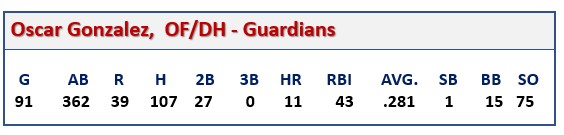
Fittingly, the winning blow for the youthful Guardians  – the only extra-base hit of the game – was a 15th-inning, leadoff, walk-off home run by 24-year-old rookie RF Oscar Gonzalez.  It made Gonzalez just the fourth rookie to record a walk-of home run in the post-season.

________________________________________

Post Season Walk-Off Home Runs by MLB Rookies

Alfonso Soriano, 2B, Yankees – 2001 AL Championship Series, Game Four

The 25-year-old Alfonso Soriano, batting ninth, came up in the bottom of the ninth (against the Mariners’ Kazuhiro Sasaki) with one on, one out and the game knotted one-to-one.  He then won the game by taking took a 1-0 pitch from Sasaki deep to right-center for a 3-1 Yankee win.

Soriano had gone .268-18-73, with 43 steals in his first full season in pinstripes. Still qualifying as a rookie, he had taken then field for the Yankees in 31 games over the previous two season.  Soriano went on to go .270-412-1,159 over 16 MLB seasons – and was a seven-time All Star.

Chris Burke, LF, Astros – 2005 NL Division Series, Game Four

Chris Burke’s walk-off put an end to an 18-inning contest between the Braves and Astros – a game that the 25-year old utility player didn’t even enter until the bottom of the tenth – when he pinch-ran for Lance Berkman and then stayed in the game in CF. (He moved to LF in the 13th frame). Burke came up in the bottom of the 18th inning with the scored tied at 6 -6.  With no one on and one out, he launched a game-winning, walk-off home run off Joey Devine.

During the 2005 season, Burke went .248-5-26 in 108 games. (He had appeared in 17 games for the Astros in 2004.)  Burke played in six MLB seasons (477 games), hitting .239-23-111. During his career he started 25 or more game at SS and 2B, and in each of the OF positions.

Kolten Wong, 2B Cardinals – 2014 NL Championship Series, Game Two

The 23-year-old Kolten Wong started Game Two of the 2014 NLCS at 2B, batting seventh. He led off the bottom of the ninth of a 4-4 game (versus the Giants), facing Sergio Romo.  Kolten’s solo shot (on an 0-1 pitch) ended the contest in favor of St. Louis. Wong, still active in 2022, has played in 10 MLB seasons, going .261-82-378. He has hit just .188 in 35 post-season games, but does have five post-season home runs.

Oscar Gonzalez. RF, Guardians – 2022 AL Wild Card Series, Game Two

The 24-year-old Oscar Gonzalez’ home run -as noted earlier – came in the bottom of the 15th inning of a scoreless tie between Hernandez’ Guardians and the Rays. It came on a 1-0 pitch from Corey Kluber.

In his rookie campaign, Gonzalez hit .296-11-43 in 91 games.

__________________________________________

After Saturday’s Guardians/Rays game, I saw a notable number of comments on Twitter and Facebook somewhat critical of the length of the game (particularly when it remained scoreless), with some indicating baseball may very well have wished they hadn’t suspended the ghost or placed runner rule for the post -season. I disagree with that train of  thought.  I am no fan of ghost runners. In fact, although  I keep a scorecard at all the games I attend, I quit scoring after the ninth frame, due to my belief that a runner who didn’t earn his spot on the bases has not earned a spot on my scorecard.

This consideration then led me to contemplate how different the Guardians/Rays game might have been with the ghost-runner rule in place. That took me back to a Dodgers/Pirates game that took place on August 25, 2021. Looking at that game, it seems to me that  if Saturdays’ game had been played under current regular-season rules, we may very well have been “treated” to more than a handful of intentional walks.

Let’s look back to August 25, 2021. The Dodgers won that contest 5-3 in 16-innings and, in the process, set a new MLB record for Intentional Walks in a game.  All those intentional free passes, notably, came after the ninth inning (which ended with the game tied 1-1) – likely an unintended (or at least unanticipated) consequence of the ghost-runner rule.  Side note: the Padres’ Manny Machado and Jake Cronenworth were intentionally walked back-to-back in the tenth and  thirteenth innings. Here’s the game’s Intentional Walking Path:

  • Bottom of the tenth – With Alex Vesia pitching and the Padres’ Ha-Seong Kim placed at second base, 1B Eric Hosmer grounded out, moving Kim to third base; then Tommy Pham was intentionally walked (likely to put the double play in play). The Dodgers escaped on a pop up and strikeout (2B Adam Frazier, C Victor Caratini).
  • Bottom of the eleventhCaratini was placed at second base. Phil Bickford then retired the first two Padres’  batters on a muffed sacrifice (CF Trent Grisham) and a strikeout (RF Fernando Tatis, Jr. ). With only the placed runner having any importance, 3B Manny Machado and SS Jake Cronenworth (the number-three and -four hitters in the lineup) were intentionally walked, bringing pitcher Joe Musgrove to the plate. The Dodgers escaped as Bickford fanned Musgrove.
  • Bottom of the twelfth – Cronenworth was placed at second base. Hosmer flied out against Justin Bruihl. Pham was intentionally walked setting up a force or double play possibility. The Dodgers escaped with a fly ball (Fraser) and ground out (Caratini).
  • Bottom of the thirteenthCaratini was placed at second base. Brusdar Graterol retired Grisham (ground out, with Caratini to third base) and Tatis, Jr. (strikeout). Machado and Cronenworth were again intentionally walked back-to-back. The Dodgers escaped as Graterol got pinch-hitter Ryan Weathers on a ground out.
  • After the Dodgers scored two in the top of the fifteenth (including ghost runner Chris Taylor), Padres’ ghost runner Caratini scored on a one-out Tatis. Jr. home run (off Corey Knebel) to tie the game. Machado then popped out and Cronenworth was intentionally walked, before Knebel fanned P  Daniel Camarena.
  • Top  of the sixteenth, the Dodgers scored two (including ghost runner 2B Justin Turner) on a home run by LF AJ Pollock.
  • Bottom of the sixteenth, Cronenworth was placed at second base. The Dodgers’ Shane Greene got the Padres in order (strikeout, Hosmer; strikeout,  Pham; ground out, Frazier). Dodgers win 5-3.

The Dodgers/Padres game, by the way, took 5 hours and 19 minutes, saw 19 pitchers strand 35 base runners, saw 47 players participate and involved ten pinch-hitting appearances.

You Be The Judge

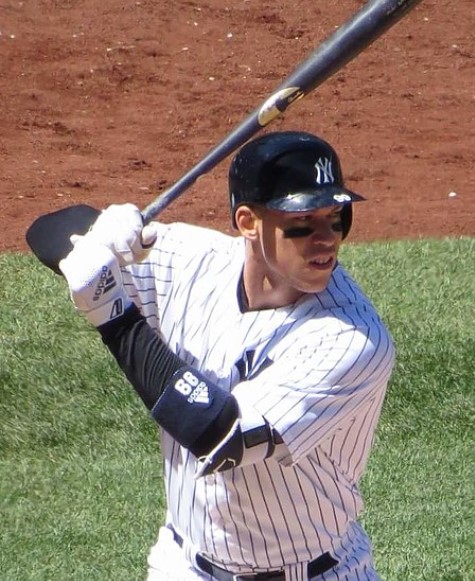
Photo: DR. Buddie, CC BY-SA 4.0 <https://creativecommons.org/licenses/by-sa/4.0>, via Wikimedia Commons

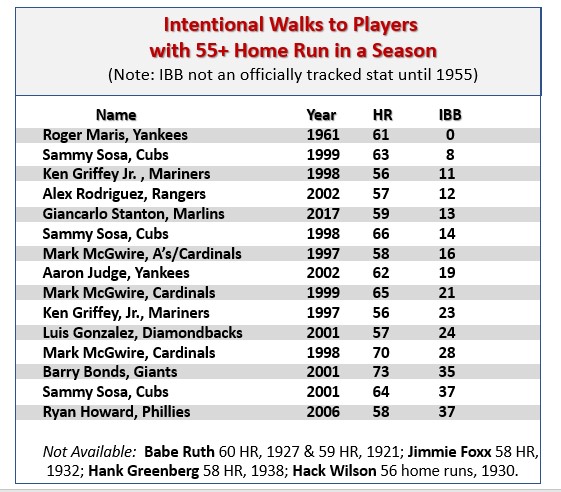
Now for some more of that “one thing leads to another.”  Contemplating  intentional passes. I checked to see how many intentional walks Aaron Judge was issued on his way to a new-single season  American League record 62 home runs this past  campaign.  The number was 19.  Why is that of interest?  Because, in 1961, when Roger Maris’ 61 home runs broke Babe Ruth’s record of 60 home runs in a season, Maris had zero intentional free passes.

Hmm?

In 1961, when Roger Maris was the AL MVP, hit a then-record 61 homers and drove in a league-leading 141 runs, he drew no free passes.  (Of course, Mickey Mantle often batted behind Maris.)

On May 2, 1962, Roger Maris –  on his way to a 33-homer, 100-RBI season, set an MLB record (since broken) by drawing four intentional walks in a single game (a 12-inning Yankee 2-1 win over the Angels). As the Yankees squeezed by the Angels 2-1 in 12 innings.  Maris drew five walks (four intentional) in six trips to the plate. 

Don’t Want Anything to Do with Dawson

Andre Dawson, Cubs, drew a single-game record five intentional passes in a 16-inning game (versus the Reds) on May 22, 1990.  Dawson came into the game with a .346-13-41 line on the season and had gone 8-for-16, with two home runs and nine RBI in his previous four games. As the marathon game went on, it became apparent Reds’ manager Lou Piniella wanted nothing to do with Dawson’s hot bat. Here’s how the Cubs’ RF and cleanup hitter’s day went:

  • First inning – With the score at 0-0, two out and a runner on third, Reds’ starter Tom Browning intentionally walked Dawson The next batter – LF Lloyd McClendon– was  retired to end the inning.
  • Fourth inning – Score still 0-0, Dawson led off with a ground out on a 0-2 pitch from Browning.
  • Sixth Inning – With the score still 0-0, one on and one out, Dawson lined out to left on an 0-2 pitch from Browning.
  • Eighth Inning – Still 0-0, Dawson came up with a runner on third and two-out and Browning intentionally walked him.   The next batter (McClendon) grounded out to end the frame.
  • Eleventh Inning – Still 0-0, Dawson came to bat with a runner on first and no outs. He singled off reliever Norm Charlton, sending the runner to second – but the Cubs failed to score.
  • Twelfth Inning – Still 0-0, Dawson faced Tim Birstsas with runners on first and second and two out. He was again intentional walked and the strategy again worked, as McClendon grounded out to end the inning.
  • Fourteenth Inning – With the game tied 1-1 (both teams scored in the thirteenth), Dawson came up with a runner on first and two out (against Scott Scudder). A wild pitch sent the runner to second and Dawson was intentionally walked. Dave Clark, pinch hitting for McClendon then struck out to end the inning.
  • Sixteenth Inning –  Scudder faced Dawson with runner on first and third and one out. Dawson was intentionally walked. Clark followed with a single to end the game.

Dawson finished the 1990 season with a .310-27-100 stat line – leading the league with 21 intentional passes.

Barry Bonds – King of the Intentional Walk

Notably, when you talk intentional walks, the conversation pretty much has to focus on Barry Bonds. (We need to keep in mind, however, that IBB’s did not become an official statistic until 1955.)   Bonds holds the records for:

  • IBB in a season – 120 with the Giants in 2004. Bonds, in fact, holds the top-three single-season spots. The first non-Barry on the list is the Giants’ Willie McCovey with 45. In 2004, Bonds also set the single-season mark for total walks with 232.

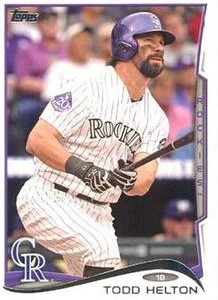
Only three players had as many total walks as Barry Bonds had intentional walks in 2004 – Bobby Abreu, Lance Berkman, and Todd Helton (127 each).

  • IBB in a career – Bonds recorded 688. Second place goes to the future Hall of Famer Albert Pujols of the Angels with 316.
  • Most seasons leading the league in IBB – 12.
  • Most IBBs in a nine-inning game – four, done twice by Bonds … May 1 and September 22, 2004. Although, IBB were not yet an official MLB statistic, the Indians’ Jeff Heath has been credited with drawing four intentional walks in a nine-inning game on July 14, 1941.

Barry Bonds hit .362 with 45 home runs and 101 RBI the year he drew an MLB record 120 intentional walks (2004). The season he hit 73 home runs (2001), he drew only 35 intentional free passes.

A Walk in the Park

A few other free-pass marks:

  • Most IBB in a season in the American League – 33 by Ted Williams in 1957 and John Olerud in 1993.
  • Most IBB to a rookie – 16 to Mariners’ OF Al Davis in 1984, when he hit ..284-27-116 and was the AL Rookie of the Year.
  • Most at bats in a season without an intentional walk … Jose Reyes, Mets, 696 in 2005.  In the AL. it’s the Twins’ Kirby Puckett, 691 in 1985.

______________________________________

WHAT SKIPPER? PUT HIM ON?  THERE’S NO PLACE TO PUT HIM?

On April 15, 2022, Rangers’ SS Corey Seager became just the seventh major leaguer documented to have been intentionally waked with the bases loaded.  It came in the fourth inning of a Rangers/Angels game (in Texas). At the time, the Rangers were leading 3-2 and had the bases loaded with one out – Austin Warren on the mound and Seager at the plate. Rangers’ manager Joe Maddon  chose to intentionally walk Seager – forcing in a run – and pitch to Mitch Garver, who drove in another tally with a sacrifice fly. (The Angels, by the way, ultimately won the game 9-6.)

After the contest , Maddon said he was just trying to avoid the “big blow.” And “stir the group up.”  Adding “I thought by just going out there and doing something like that, the team might respond.”

Six additional players have received documented intentional walks with the bases loaded: Abner Dalrymple (August 2, 1881); Nap Lajoie (May 23, 1901); Del Bissonette (May 2, 1928); Bill Nicholson (July 23, 1944); Barry (of course, he did) Bonds (May 28, 1998); and Josh Hamilton (August 17, 2008). For more detail and Baseball Roundtable’s rating of those based-loaded IBB’s click here.

Primary Resources: Baseball-Almanac.com; Baseball-Reference.com; MLB.com; Why did Joe Maddon walk Corey Seager intentionally with the bases loaded? Angels manager had his reasons, by Tom Gatto, Sporting News, April 16, 2022.


Baseball Roundtable … blogging baseball since 2012. 

100Baseball Roundtable is on the Feedspot list of the Top 100 Baseball Blogs.  To see the full list, click here.

I tweet (on X) baseball @DavidBaseballRT

Follow Baseball Roundtable’s Facebook Page here.  More baseball commentary; blog post notifications.

Member: Society for American Baseball Research (SABR); The Baseball Reliquary; The Negro Leagues Baseball Museum.

Baseball Roundtable September Wrap Up – Stats and Stories from the Past Month

September has rolled into October and that means it’s time for Baseball Roundtable’s final 2022 monthly wrap up  – a look at The Roundtable’s Players and Pitchers of the month, the Trot Index, September’s leaderboards and the stats and stories that caught Baseball Roundtable’s eye during September. And, there was plenty going on this past month.  Here are just a few attention-grabbers (at least for me):

  • Two players (Aaron Judge and Bo Bichette) hit over .400 for the month;
  • Mike Trout homered in seven straight games;
  • We saw 2022’s fifth and sixth triple plays and fifth, sixth and seventh “Immaculate Innings“;
  • MLB’s youngest team, the Guardians, responded to the pressure of a tight Division race by playing .700+ ball and walking away with the AL Central;
  • Albert Pujols hit his 700th career home run and Aaron Judge hit his 61st dinger of the seasons (tying the AL record);
  • We saw three balks committed during a single  batter’s plate appearance;
  • 32-yer-old Fernando Cruz made his MLB debut in his 16th professional season;
  • We witnessed MLB’s first All-Latino batting lineup – on Roberto Clemente Day;
  • The Yankees’ Gleyber Torres hit two home runs in one inning.
  • Shohei Ohtani played like – well, Shohei Ohtani, becoming the first player to hit 30+ home runs and fan 200+ batters in the same season.
  • We saw the fastest and slowest pitches of the season (by pitchers, position-players excluded) in the same game.

More on these and other stories as you read on.

Roundtable Note: Some of these records may change as Negro League statistics are more fully incorporated into MLB record books.

—–Baseball Roundtable Players and Pitchers of the Month—–

NATIONAL LEAGUE

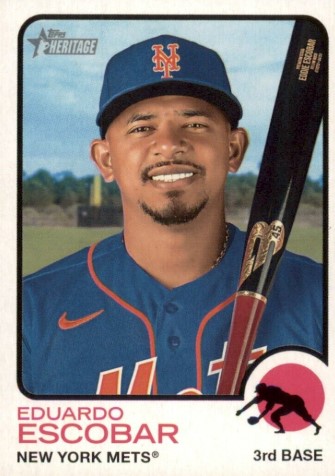
Player of the Month – Eduardo Esc0bar, 3B, Mets

Eduardo Escobar had a .340-8-24 month for the Mets, notching the NL’s third-most home runs, second-most RBI, second-most hits (33), sixth-most run scored (16) and third-highest average (among NL players with at least 60 September at bats). He authored a ten-game hitting streak (September 2-12), during which he hit .500 (18-for-36), with five homers, nine RBI and eight runs scored. He had ten multi-nit games. Over the course of the month, he raised his average from .218 to .242.

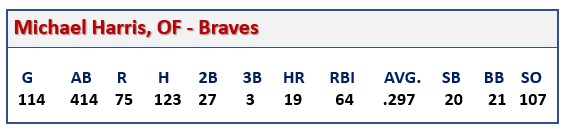
Honorable Mentions: Nationals’ 1B Joey Meneses – the 30-year-old MLB rookie put up a .315-6-18 line and led the NL with 34 September hits. Dodgers’ 1B Freddie Freeman recorded a .337-4-16 and led the NL with 22 runs scored.

Pitcher of the Month – Yu Darvish, RHP, Padres

Yu Darvish gets the nod as MLB’s only five–game winner in September. – going 5-1, 1.85 in six starts. He fanned 44 batters (fourth in the NL) in 39 September innings (third in the NL) and had the third-best WHIP (Walks and Hits Per Inning Pitched) among NL hurlers with at least 25 September innings.  He held batters to a .198 average over his six starts and walked just eight in 39 innings. On September 2, he held the tough Dodgers’ lineup to just two hits (no runs) over seven innings (two walks, nine strikeouts).

Honorable Mentions: The Dodgers’ Clayton Kershaw, who went 4-0 with a tidy 1.50 ERA in six starts. The Cardinals’ Jose Quintana, who only went 2-1, but whose 0.89 ERA was the best among NL pitchers with at least 25 September innings,

AMERICAN LEAGUE

Player of the Month – Aaron Judge, OF, Yankees

Photo by Keith Allison

This was almost too close to call, as Baseball Roundtable looked at both Aaron Judge and Blue Jays’ SS Bo Bichette. Consider:

  • Both hit over .400 for the month. Judge at .417 and Bichette at .403 – the top two September averages in MLB (among players with at least 60 st bats for the month).
  • Judge tied for the MLB lead in home runs (10); Bichette was ninth with seven.
  • Bichette led MLB in September RBI with 27 (to Judge’s 17), while Judge led MLB in runs scored with 26 (to Bichette’s 22).
  • Bichette led MLB with 48 hits for the month, Judge was sixth with 35, while Judge drew an MLB-highest 30 September walks to Bichette’s eight. Conversely, Judge fanned 26 times to 17 for Bichette.

So, why the thinnest of nods to Judge? He did all this while dealing with the pressures of chasing Roger Maris’ single-season American League home run record and inserting himself in the AL batting race (raising the possibility of a Triple Crown season).  Need more justification? Judge also led MLB qualifying batters in On-Base Percentage (.565) and Slugging Percentage (.869) – and by wide margins.

Honorable Mentions:  Bo Bichette, of course (see above). I also looked at a couple of Angels: RF Taylor Ward, who put up a .370-6-16 line and had 34 September hits (seventh in the AL) and Mike Trout, who went .301-10-20.

Pitcher of the Month – Alek Manoah, RHP Blue Jays

A second tough call this month. This time  between Alek Manoah and the Angels’ superstar Shohei Ohtani, who both went 4-0 (Manoah in six starts, Ohtani in five).

Manoah put up the MLB-best ERA among pitchers with at least 25 September innings at a minuscule 0.88. He was second in the AL in innings pitched (41), second in WHIP among pitchers with at least 25 September innings (0.85). He was eighth in strikeouts with 33. He gave up no more than two runs in any start (and that only once). The Blue Jays won five of his six starts and, in the one game the Jays lost, Manoah gave up just one run over six innings.

Honorable Mentions:  The Angels’ Shohei Ohtani, who went 4-0. 1.09 in five starts, with 37 strikeouts in 33 innings pitched and a 0.91 WHIP.  Guardian Shane Bieber, who went 4-1, 2.51 with 42 strikeouts (second in the AL) and 43 innings pitched (first).

________________________________

Surprise Player of the Month – Bryan De La Cruz, OF, Marlins

Bryan De La Cruz signed with the Astros as an International Free Agent – at the age of  16 – in 2013.  From 2014 through 2021, he worked his way up through the Astros’ system, reaching  Triple-A (Sugar Land Skeeters) in 2012 – where he hit .324-12-50 in 66 games before being traded to the Marlins in late July. The Marlins brought him right to the big-league roster and he  made his MLB debut on July 31, 2012. He hit .296-5-19 in 58 games for the Marlins and seemed set to be a fixture in the outfield for 2022.

De La Cruz got off to a rocky start in 2022, hitting just .205-7-21 in 90 games before being sent back down to the minors in mid-August – where the demotion appeared to wake up his bat.  De La Cruz was called back up when the rosters expanded in September – and went .375-5-17 in 20 September games. From September 18-28, he ran off a nine-game hitting streak, in which he hit .514 (18-for-35), with three home runs and 11 RBI.  For Baseball Roundtable, it was a surprising late-season turnaround.

Honorable Mention: Joey Meneses (1B/OF) made his debut for the Nationals in August – at age 30 and in his 12th professional season.  He hit .333-6-11 in 24 August games and followed up with a .330-7-22 September. Meneses was a .281 hitter in ten minor-league seasons – and also played in Mexico and Japan.

______________________________________________________

TROT INDEX … A REGULAR BBRT FEATURE

Through September  34.6 percent of the MLB season’s 176,344 plate appearances ended in a trot (back to the dugout, around the bases, to first base). We’re talking about strikeouts, home runs, walks, hit by pitch and catcher’s interference – all outcomes that are, basically, devoid of action on the base paths or in the field. Here’s the breakout: strikeouts (22.4%); walks (8.2%); home runs (2.9%); HBP (1.1%); catcher’s interference (less than 1%). Strikeouts, by the way, outnumbered base hits by an even 1,000 –  39,465 to 38,465.

The 34.6 percent figure is down from 2021’s full season 36.3 percent.  Other recent seasons: 2020 –  37.3 percent;  2019 – 36.2 percent; and 2018 – 34.8 percent.  By further comparison, in 1990, the Trot Index was 26.1 percent.  

__________________________________________

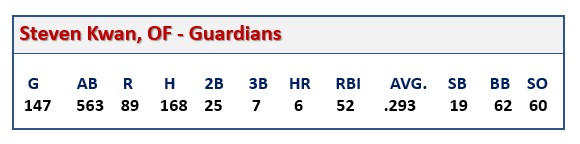
Among the notable developments in September was that the Guardians, with MLB’s youngest 2022 roster, did not fold under the pressure of a tight pennant race.  Instead, they played .700+ ball and turned a tight race into a walk-away. During the month, the Guardians  scored the AL’s third-most runs (behind only the Yankees and Blue Jays) and recorded the League’s second-lowest ERA (behind the Astros). Among the key contributors were 25-year-old LF Steven Kwan (.325 with 25 runs scored for the month); 24-year-old RF Oscar Gonzalez .298-6-20); 24-year-old 2B Andres Gimenez (.305 with 16 runs scored); 27-year-old RHP Shane Bieber (4-1, 2.51); 27-year-old RHP Cal Quantrill (3-0, 3.06); and 24-year-old closer Emmanuel Clase (10 saves).

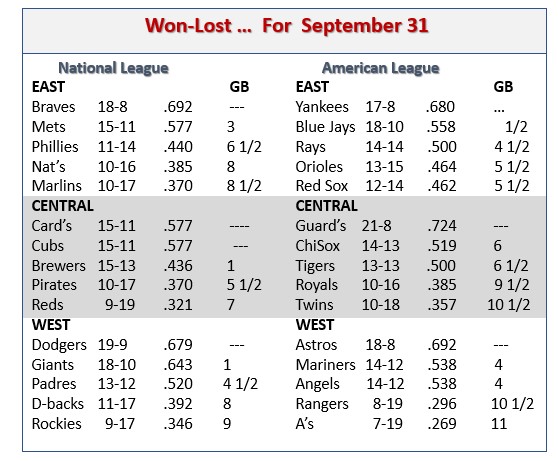
The Mets and Braves kept things interesting, with the Braves gaining three games on the Mets in September and  the two squads going into October tied for the Division lead. This is really the only race left to be decided.

The Dodgers continued to roll, scoring the NL’s most runs in September and putting up the league’s lowest ERA. On the season, they have scored MLB’s most runs 831 and given up MLB’s fewest tallies (497).  Full-year (through September ) team stat leaders later i this post.

——-Team  Statistical Leaders for September  ———-

RUNS SCORED

National League –  Dodgers (140); Mets (134); Giants (126)

American League – Blue Jays (145); Yankees (134): Guardians (131)

The Cubs scored the fewest runs in September (86); The lowest tally in the AL was the Tigers at 98.

AVERAGE

National League – Mets (.263); Nationals (.257); Phillies (.253)

American League – Blue Jays (.266); Guardians (.264); Red Sox (.260)

The lowest team average in September  belonged to the Reds  at .211.   

HOME RUNS

National League – Braves (43); Dodgers (37); Giants (33)

American League –  Yankees (39); Mariners (39); Astros (37); Angels (37)

The Rays had the fewest September home runs at 17. The only other team under 20 was the Cubs (19).

STOLEN BASES

National League – Diamondbacks (31); Pirates (22); Cubs (20)

American League – Guardians (31); Rangers (25); Yankees (20)

The Giants stole the fewest bags in September with four in eight attempts.  The Angels were 11-for-12 in steal attempts.

WALKS DRAWN

National League – Dodgers (103); Mets (98);  Brewers (88); Giants (88)

American League – Mariners (111); Red Sox (107); Blue Jays (97)

The Met led MLB in on-base percentage in September  at .349. The Red Sox led the AL at .348. In slugging percentage, the Braves were on top at .446, while the Blue Jays  led the AL at .441.

BATTER’S STRIKEOUTS

National League – Giants (282); Pirates (264); Brewers (259)

American League – Rangers (262); Twins (254); A’s (251)

Astros’ batters went down on strikes the fewest times in September  (174).

____________________________

Bonus Stat

The leaders in September hit by pitch were the Mets (23) and the Guardians (22). No other team had more than 15 HBP in the month. Angles’ batter were plunked the fewest times (4).

__________________________________

EARNED RUN AVERAGE

National League – Dodgers (2.65); Braves (2.88); Cubs (3.03)

American League – Astros (2.53); Guardians (2.75); White Sox (3.29)

One  team had an ERA at 5.00 or higher in September – the A’s at 6.22.

STRIKEOUTS

National League – Mets (281); Braves (266); Brewers (261)

American League – Astros (281); Guardians (267); White Sox (250)

FEWEST WALKS SURRENDERED

National League – Mets (64); Giants (71); Padres (73)

American League – Astros (66); Mariners (67); Rays (69)

The Guardians walked an MLB-stingiest 2.42 batters per nine frames in September. The Reds walked an MLB-high 4.10 batters per nine frames during the month.

SAVES

National League – Giants (12); Cubs (11); three with 8

American League – Guardians (15); Astros (9); Blue Jays (9)

STRIKEOUTS PER NINE INNINGS

National League – Mets (11.00); Braves (10.35); Brewers (9.50)

American League – Astros (10.60) Yankees (9.31); White Sox (9.23)

_____________________________
Bonus Stat

The Mets led MLB in September strikeout-to-walk ratio at 4.39.  The only other team over 4.00 was the Astros at 4.26.

________________________________

—–SEPTEMBER HIGHLIGHTS —–

Feel Good Tale

Fernando Cruz started his professional career as an infielder in the Royals organization as a 17-year-old in 2007 – hitting .210 in the Arizona Rookie League. On September 2, Cruz made his MLB debut (as a 32-year-old pitcher) for the Reds, coming on in relief (versus Colorado) and pitching a 1-2-3, two-strikeout inning.  He made 12 appearances in September, fanning 16 and putting up a 0.75 ERA.  On his long path to the majors, Cruz played for teams in the Arizona Rookie League, Appalachian League, Puerto Rican Winter League, Midwest League, Pioneer League, Pacific Coast League, Southern League, Carolina League, Canadian-American Association, Venezuelan Winter League, Mexican League, Dominican Winter League, Mexican Pacific Winter League and International League.

Unlucky 13.  Lucky Seven?

Photo by A.Rutledge

On September 13, Angels’ CF  Mike Trout went zero-for-three (with one walk), as the Angels lost to the Guardians 3-1 in Cleveland. I have a hunch at least a few Cleveland fans were hoping for more from Trout. Trout came into the game having hit a home run in seven straight games – one game shy- of the record shared by: Dale Long (May 19-28, 1956); Don Mattingly (July 8-18, 19877); Ken Griffey Jr. (July 20-28, 1993).

During his seven-game homer streak, Trout hit .393 (11-for-28), with seven home runs and 11 RBI. For more on home run streaks, click here.,

He Ain’t Heavy … He’s My Brother

On September 14, Adam Wainwright took the mound against the Brewers in St. Louis – and he saw a familiar face (mask?) behind the plate  in catcher Yadier Molina. It was the 325th time, the two were together as a regular-season starting battery, breaking the all-time MLB record of 324 such starts, held by Bill Freehan and Mickey Lolich.  It worked out pretty well, as the 41-year-old Wainwright picked up the win with five innings of eight-hit, one-run ball, while the 40-year-old Molina went one-for-four with an RBI. Side note: Molina was  the catcher for Wainwright’s first MLB start (April 6, 2006) –  a 4-2 Cardinals’ win over the Astros. Wainwright got the victory with seven one-run innings. By the way, when Wainwright and Molina have started together, the Cardinals are 213-112.

Celebrating Clemente Day

Although he said afterward it wasn’t an intentional  move, it certainly seemed an appropriate one.  On September 15 – Roberto Clemente Day – Tampa Bay Rays’ manager Kevin Cash sent an all-Latino lineup to the plate (Shane McClanahan was the starting pitcher).  The lineup – all wearing number 21 in honor of Roberto Clemente –  went like this:

Yandy Diaz – 3B (Cuba)

Randy Arozarena – RF (Cuba)

Wander Franco – SS (Dominican Republic)

Harold Ramirez – 1B (Columbia)

Manuel Margot – DH (Dominican Republic)

David Peralta – LF (Venezuela)

Isaac Paredes – 2B (Mexico)

Rene Pinto – C (Venezuela)

Jose Siri – CF (Dominican Republic)

How did it work out?  The Rays topped the Blue Jays 11-0, with three RBI apiece from Diaz and Margot.

For a look at MLB’s one and only All-Latino All Star Game, click here.

On Making Great Strides

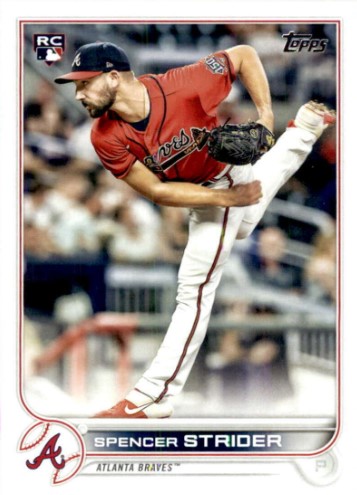
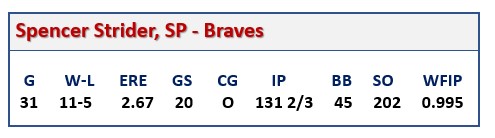
Braves’ 23-year-old rookie right-hander Spencer Strider took to the mound on September 18 with a 10-5, 2.72  record – not knowing he was about to make history. Strider went six innings in a 5-2 win over the Phillies, giving up one run on one hit and three walks – and, most important, fanning ten.
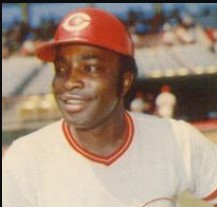
The eighth strikeout of the game came in the fourth inning, when he fanned three Phillies – and gave Strider 200 whiffs on the season  (and for his career). It also gave him 200 strikeouts in 130 MLB innings, making him the fastest ever to reach 200 MLB strikeouts– edging out Hall of Famer Randy Johnson, who reached 200 strikeouts in his first 130 2/3 innings.

Strider finished September with an 11-5, 2.67 record on the season – with 202 strikeouts in 131 2/3 innings pitched – relying primarily on a fastball that tops out in the triple-digits  and sharp slider. (Note: Striker is currently on the IL with a strained left oblique  muscle.)

Strider was a fourth-round draft pick (out of Clemson University) in 2020. In two college seasons, he was 5-2, 4.71 – with 89 strikeouts in 63 innings. In 2021, he was 3-7, 3.64 at four minor-league levels. He started the 2022 season in the Braves’ bullpen, putting up a 2.22 ERA, with 37 strikeouts in 24 1/3 innings (11 appearances) before being moved to the rotation – where he has gone 10-4, 2.77 fanning 165 in 107 1/3 innings (34 walks), while holding hitters to a .183 average.

Three for Two – or Maybe Two for Three

September saw the fourth and fifth triple plays of the 2022 season. On September 18, with the score knotted at 0-0 in the bottom of the third inning, Toronto starter Dean Kremer hit the Blue Jays’  DH and leadoff hitter George  Springer on a 2-2 pitch, then walked  1B Vlad Guerrero Jr. and gave up a single to SS Bo Bichette to load the bases. Third baseman Matt Chapman was up next and smashed a line drive to Orioles’ SS  George Mateo, who snatched it for the out and flipped to 2B Tarrin Vavra to double off Guerrero. Vavra then fired to first to “triple-off” Bichette and end the frame.  The Orioles went on to win the game 5-4.

On September 20, as the Rangers turned a triple play in an inning in which the Angels had already plated three runs (to take a 5-3 lead). Angels’ DH Shohei Ohtani led off with a single to right off the Rangers’ Dennis Santana. RF Taylor Ward then doubled Ohtani home and 3B Matt Duffy singled, with Ward moving to third.  That was all for Santana, with John King taking the mound. He gave up an RBI-single to 1B Mike Ford, followed by another RBI-single to LF Jo Adell – leaving Adell at first and Ford (replaced by pinch runner Magneuris Sierra) at second. C Max Stassi hit a sharp grounder to third for a triple play – 3B Josh Jung to 2B Marcus Semien to 1B Nathan Lowe. Still, the Angels left the inning with a 5-2 lead and won the game by that score.

A Throwback? Well Kind Of.

On September 18, as the Marlins topped the National 3-1 in Washington D.C., Marlins’  starter Sandy Alcantara threw his fifth complete game of the 2022 season. Eight days later (September 30), he closed out the month with his sixth 2022 complete game – a 1-0 loss to the Brewers.  Why does that make the highlights? Because, Alcantara has more complete games than any other team in the major leagues. (The Boston Red Sox are second to Alcantara with four complete games. For a recent post on Alcantara, click here.

For those Who Like To Know … 

Between May 14 and June 4 of 1968, the Dodgers’ Don Drysdale threw six consecutive complete-game shutouts.

The Whiff-N-Poof Song

On September 18, Mets’ pitchers tied the MLB record for strikeouts in a nine-inning game (20). It’s been done eight times – seven in the AL and once in the  NL.  The Mets’ “Whiff Team:”

  • Jacob deGrom – 13 strikeouts in five innings.
  • Seth Lugo – one strikeout in one inning.
  • Joely Rodriguez – five strikeouts in two innings.
  • Trevor May – One strikeout in one inning.

Taking Control of the Situation

In MLB history, there have been four instances when a single-pitcher recorded twenty strikeouts in a nine-inning game: Roger Clemens (twice); Kerry Wood; and Max Scherzer. Not a single walk was issued by any of those pitchers in their 20-whiff performances. Randy Johnson once fanned 20 batters in the first nine innings of an 11-inning game (he was relieved after nine). Johnson also did not walk a batter in his nine-inning stint.

It Took You Long Enough or more “#InBaseballWeCountEverything”

On Tuesday, September 20, the Yankees went into the bottom of the ninth innings trailing Pittsburgh 8-5. RF Aaron Judge opened the bottom of the ninth with a home run off reliever Wil Crowe to cut the margin to three. 1B Anthony Rizzo followed with a double, 2B Gleyber Torres walked and 3B Josh Donaldson singled, loading the bases. Then, Giancarlo Stanton hit a home run to deep left, plating four runs and giving the Yankees a 9-8 walk-off win.

The very next day – about 21 hours later – in the bottom of the first inning, the Yankees loaded the bases on a Judge double, Torres walk and Stanton walk) with two outs. Then LF  Oswaldo Cabrera hit a Grand Slam off Pirates’ starter Roansy Contreras. Why “counting everything?”

For the answer, we go back to July 6 – Yankees at Pirates. In the eighth  inning of that game (an eventual 16-0 Yankee win), Judge hit a grand Slam off Manny Banuelos. Then, one inning later, Aaron Hicks took Josh Van Meter deep to left center for another Grand Slam.

In true #InBaseballWeCountEverything fashion, the Yankees are now the only MLB team to hit Grand Slams in back-to-back innings twice in one season.

More Yankee Power

On September 21, the Yankees routed the Pirates 14-2, largely on the strength of an eight-run eighth inning.  That included a pair of home runs by 2B Gleyber Torres (his 22nd and 23rd of the season). Torres led off the frame with a homer to RF off the Pirates Miguel Yajure and, later in the frame, added a three-run blast  (with two outs) off Eric Stout.  That made Torres the 59th major leaguer to hit two home runs in an inning. A few other two-homer inning facts:

  • Fernando Tatis (Cardinals) is the only player to hit two Grand Slams in one inning. He did it on April 23, 1999. – in the third inning of a Redbirds’ 12-5 win over the Dodgers (in LA). Surprisingly, both Grand Slams came off the same pitcher – Dodgers’ starter Chan Ho Park. Yep, they left Park in to take the thrashing. Park, by the way, finished the season 2-10, with a 7.43 ERA.
  • Alex Rodriguez, Edwin Encarnacion, Andre Dawson, Jeff King and Willie McCovey are the only players to hit two home runs in an inning twice in their career.
  • Switch hitters Carlos Baerga, Mark Bellhorn and Kendrys Morales all hit home runs from both side of the plate in the same inning.

Baseball Roundtable FlashBack-to -Back

In the top of the first inning of a game (May 2, 2002) between the Mariners and White Sox (in Chicago),  White Sox’ starter Jon Rauch hit Mariners’  RF Ichiro Suzuki with the first pitch of the game.  Second baseman Bret Boone followed with a home run on the very next pitch, and  CF  Mike Cameron followed with another dinger on a 1-2 pitch.  The Mariners batted around and, by the time Boone came up for a second time that inning, held a 7-0 lead. 

In his second at bat of the frame, Boone homered again (another two-run shot), this time on a 1-2 pitch from Jim Parque. Next up was Cameron, who hit the first pitch he saw from Parque for another home run.  This remains the only time that two players have homered twice, back-to-back, in the same inning. The Mariners, by the way, won the contest 15-4.

Pujols – Padding the HOF Resume

Photo by Dirk DBQ

On September 23, Cardinals’  DH Albert Pujols went two-for-four, with two home runs and five RBI, as the Cardinals  topped the Dodgers 11-0 in LA. The long balls were number 699 and 700 of his career. Side note: Baseball-References’ home run log shows that Pujols has homered off a record 455 different pitchers, in 40 different MLB parks. For those who like to know such things, number 700 came in the top of the fourth on a 1-1 pitch from Phil Bickford.

At the end of September, Pujols was  in the top five all-time (in MLB)  in total bases (second); doubles (fifth); home runs (fourth); RBI (third);  extra-base hits (third) ; and  intentional bases on balls (second).  Start working on the plaque now.

Business As Usual

As usual, there is more Shohei Ohtani news.  On September 23, Ohtani won his 14th game of the season, going five innings (two earned runs) in a 4-2 Angels’ win against the Twins (in Minnesota). Along the way, he fanned seven Twins’ hitters, giving him 203 whiffs on the season – and making him the first player in MLB history with 30 or more home runs as a hitter and 200 or more strikeouts as a pitcher in the same season.

A Nice Round Number

On  September 23, Brewers’ Andrew McCutchen had a three-RBI game, as Milwaukee topped the Reds 5-3 in Cincinnati. The first of those three RBI was the 14-season MLB veteran’s 1,000th major league run driven in. While McCutchen has never driven in 100 runs in a season, the five-time All Star has collected 80 or more RBI in seven campaigns.  As of September 30, his career stat line was .277-287-1,002.

20-20 Vision

On September 25, Braves’ 26-year-old right-hander Kyle Wright became 2022’s first (still only) 20-game winner. The win came in a 5 1/3-innings (two earned runs, two hits, two walks, six whiffs) performance in a 6-3 Braves’ win over the Phillies in Philadelphia. Wright’s record at the end of September was 20-5, 3.18; with 171 strikeouts in 175 1/3 innings.  Coming into the 2022 season, Wright – a 2017 first-round draft choice out of Vanderbilt –  had a major-league record of 2-8, 6.56 in 50 game (43 starts), with 59 strikeouts in 70 innings pitched.  (He did have a 29-19, 3.47 record in four minor-league seasons.) Side Note: On October 1, Wright picked up his 21st 2022 win.

You Balkin’ To Me?  A Different Kind of RBI (Run Balked In)

On September 27, in the eighth inning of a Marlins-Mets game (in New York), Mets’ 1B Pete Alonso came to the plate with  two outs and Mets’ 2B Jeff McNeil on first base.  McNeil scored during Alonso’s at bat, but no RBI was awarded.  Had an RBI been assigned it could have gone to Mets’ pitcher Richard Bleier who – during Alonso’s plate appearance – was charged with three balks (sending McNeil, to second, third and, finally, home).  Hence an RBI – Run Balked In. (Bleier and Marlins’ skipper Don Mattingly would argue –  and did – so, maybe, the RBI should go to the umpires.) Bleier, by the way, had not committed a single balk to that point in his seven MLB seasons. The Marlins won the contest 6-4, but neither Bleier nor Mattingly were around to see it.  Both were ejected.

An Immaculate Month – and Season

September saw three  pitchers throw Immaculate Innings – bringing the total of nine-pitch/three-whiff 2022 innings to seven.  This month’s pitchers (and victims).

September 16, Bottom of the ninth  – Ryan  Helsley, Cardinals. Victims: The Reds’ SS Kyle Farmer, DH Jake Fraley and 1B Donovan Solano (all swinging). Three, four and five in the lineup.

September 22, Bottom of the Fifth  – Hayden Wesneski, Cubs. Victims: The Pirates’ CF Jack Suwinski (looking), 1B Zack Collins (looking) and C Jason Delay (swinging). Seven, eight and nine in the lineup.

September 27, Top of the Seventh – Enyel De Los Santos, Guardians. Victims: The Rays’  C Christian Bethancourt (swinging), CF Jose Siri (looking) and 2B Taylor Walls (swinging). Seven, eight and nine in the lineup.

The Fast and the Slow of It

On September 27, the Cardinals’ 27-year-old closer, Ryan Helsley scorched a 104.2-mile per hour fastball to the Brewers’ 1B Rowdy Tellez – recording the fastest pitch of the 2022 season (which Tellez hit for a ground out, shortstop to first.). It might have been a bit anticlimactic, however, as the pitch Helsley pushed off the top of the list was a 104.0 MPH fastball that he threw five days earlier (September 22) to Padres’ DH Josh Bell (Bell fouled it off).

In the September 27 game, Cardinals’ starter  Miles Mikolas did a kind of reverse Helsley – tossing a 60.2-mph curveball (in the fifth frame) to the Brewers’ CF Garrett Mitchell – setting the mark for the slowest pitch this season by a non-position player.

Helsley, by the way, finished September with a 9-1, 1.26 record -with 19 saves –  on the year – 94 whiffs in 64 1/3 innings.

Here Comes The Judge

On September 28, in the top of the seventh inning, with the Yankees and Blue Jays tied at 3. Yankees’ DH Aaron Judge hit a 3-2 pitch from the Blue Jays’ Tim Mayza to deep left – for a two-run home run.  It was his 61st of the year, tying Roger Maris for the all-time American League single-season record. To date, only three American League players have hit 60 or more home runs and, of course, they were all Yankees: Babe Ruth, Roger Maris and Judge.  Judge, by the way, had a bashing  September – going .417-10-17.

A Painful Way to Make The Record Books

In September, Mets batter were hit by a pitch 23 times. That brings their total for the season to 111 plunkings (a modern era – post 1900) record. Through September, the MLB team average for HBP was 66. The previous modern-era mark for team HBP belonged to the Reds at 105.  Again, for those who like to know such things: The 1889 Orioles hold the overall MLB record with 160 plunkings.

Here are the top Mets’ HBP contributors:

Mark Canha – 27 HBP.

Brandon Nimmo – 16

Starling Marte – 13

Pete Alonso – 12

Jeff McNeil – 11

Francisco Lindor – 10


——-Individual Statistical Leaders for September  2022———

AVERAGE (60 September at bats minimum)

National League – Bryan De La Cruz, Marlins (.375); Justin Turner, Dodgers (.342); Eduardo Escobar, Mets (.340)

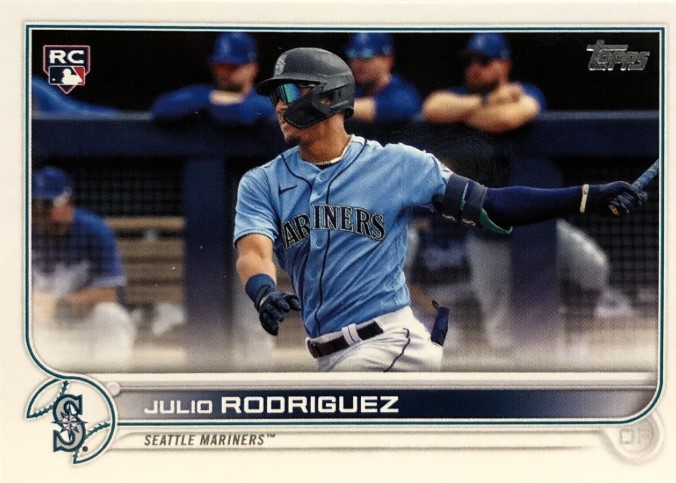
American League –  Aaron Judge, Yankees (.417); Bo Bichette, Blue Jays (.403); Julio Rodriguez, Mariners (.383)

The lowest September  average (among players with at least 60 at bats in the month)  belonged to Marlins JJ Bleday at .133 (10-for-75).

HOME RUNS

National League – Pete Alonso, Mets (9); Daulton Varsho, Diamondbacks (9; Eduardo Escobar, Mets (8)

American League – Aaron Judge, Yankees (10); Anthony Santander, Orioles (10); Mike Trout, Angeles (10)

The Yankees’ Aaron Judge  had the highest September slugging percentage (among players with at least 60  at bats) at .869.  The NL   leader was the Marlins’ Bryan De La Cruz at .734.

RUNS BATTED IN

National League – Pete Alonso, Mets (26); Eduardo Escobar, Mets (24); three with 19

American League –  Bo Bichette, Blue Jays (27); Eloy Jimenez, White Sox (23); Gleyber Torres, Yankees (23)

HITS

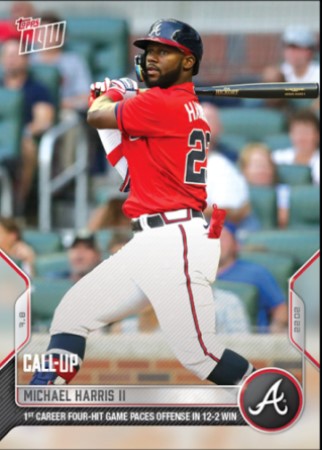
National League – Joey Meneses, Nationals (34); Eduardo Escobar, Mets (33); Michael Harris, Braves (33); Jeff McNeil, Mets (33)

American League –  Bo Bichette, Blue Jays (48); Steven Kwan, Guardians (39); Carlos Correa, Twins (38)

The Yankees’ Aaron Judge led MLB (players (with at least 60 September at bats) in on-base percentage at .565. The NL leader was the  Dodgers’ Freddie Freeman at .473.

DOUBLES

National League –  Willy Adames, Brewers (10); Mookie Betts, Dodgers (10); Garrett Cooper, Marlins (9)

American League –  Bo Bichette, Blue Jays (11); Randy Arozarena, Rays (10); Marcus Semien, Rangers (10)

TRIPLES

National League – Joc Pederson, Giants (3); nine with two

American League – Nine with two

The Blue Jays Bo Bichette led MLB in September extra-base hits with 19.  He had 11 double, one triple and seven home runs (29 singles).

 STOLEN BASES

National League –  Jake McCarthy, Diamondbacks (10); Jon Berti, Marlins (6); Daulton Varsho, Diamondbacks (6)

American League –Bubba Thompson, Rangers (10); Nate Eaton, Royals (9); Elvis Andrus, White Sox (8)

The White Sox’ Elvis Andrus had the most September steals without getting caught (8).

WALKS

National League – Freddie Freeman, Dodgers (23); Juan Soto, Padres (21); Brandon Nimmo, Mets (18)

American League – Aaron Judge, Yankees (30); Tristan Casas, Red Sox (18); J.P. Crawford, Mariners (18); Jose Ramirez, Guardians (18)

The Mets’ Jeff McNeil led in walks/strikeouts ratio (among batters with at least 60 September  at bats)  at 1.83 …11  walks versus 6  whiffs in 26 games.

BATTER’S STRIKEOUTS

National League – Oneil Cruz, Pirates (36); Willy Adames, Brewers (34); Michael Toglia, Rockies (34)

American League – Giancarlo Stanton, Yankees (37); Matt Chapman, Blue Jays (35); Dermis Garcia, A’s (34)

PITCHING VICTORIES

National League – Yu Darvish, Padres (5-1); Clayton Kershaw, Dodgers (4-0); Chris Bassitt, Mets (4-1); Logan Webb, Giants (4-1); Brandon Woodruff, Brewers (4-1)

American League – Shohei Ohtani, Angels (4-0); Alex Manoah, Blue Jays (4-0); Shane Bieber, Guardians (4-1)

The Marlins’ Steven Okert (0-4, 8.44); Rockies’ Chad Kohl (0-4, 7.76), and White Sox’ Johnny Cueto  (1-4, 5.20) tied for the most September losses.

 EARNED RUN AVERAGE (at least 25 September innings pitched)

National League –  Jose Quintana, Cardinals (0.89);Julio Urias, Dodgers (1.19); Clayton Kershaw, Dodgers (1.50)

American League – Alex Manoah, Blue Jays (0.88); Shohei Ohtani, Angels (1.09); Dylan Cease, White Sox (1.13)

Among pitchers with at least four September starts or 20 September  innings, the Phillies’ Kyle Gibson  had the highest ERA at 9.53 (24 earned runs in 22 2/3 innings in five starts).

STRIKEOUTS

National League – Brian Woodruff, Brewers (51 / 38 2/3 IP); Jacob deGrom, Mets (47 / 28 IP); Carlos Rodon, Giants (46 / 26 2/3 IP)

American League – Gerrit Cole, Yankees (44 / 30 IP); Shane Bieber, Guardians (42 / 43 IP); Logan Gilbert, Mariners (412 / 36 IP)

SAVES

National League – Camilo Doval, Giants (9); Kenley Jansen, Braves (8); Ryan Helsley, Cardinals (7)

American League – Emmanuel Clase, Guardians (10); Jordan Romero, Blue Jays (7); three with six

WHIP (Walks +  Hits per Inning Pitched – 25 innings minimum)

National League – Zac Gallen, Diamondbacks (0.69); Jose Quintana, Cardinals (0.76); Yu Darvish, Padres (0.79)

American League – Shane Bieber, Guardians (0.81); Alex Manoah, Blue Jays (0.88); Triston McKenzie, Guardians (0.89)

_____________________________________

——-Team  Statistical Leaders Through Sept 2022 ———-

RUNS SCORED … Average 673

National League – Dodgers (831); Braves (769); Mets (746)

American League – Yankees (786); Blue Jays (745); Astros (719)

The fewest  runs (through September) were scored by the Tigers – 529. The Marlins tallied the fewest runs in the NL at 561. Others under 600 were the A’s (547), Pirates (566) and Nationals (583).

AVERAGE  …  Average .243

National League – Dodgers (.258); Mets (.258); Rockies (.255)

American League – Blue Jays (.261); Red Sox (.258); White Sox (.257)

The lowest team average through September  belonged to the A’s at .216. The Pirates  were at the bottom of the NL at .221

HOME RUNS …  Average 169

National League – Braves (237); Brewers (213); Dodgers (207)

American League –  Yankees (244); Astros (209); Blue Jays  (193)

The Tigers  had the fewest home runs through September at 102. Surprisingly the AL Central Champion Guardians were second lowest at 124.  The Nationals were at the bottom of the NL at 131.

The Dodgers led MLB in slugging percentage through September at .445.  The Blue Jays led the AL at .429.  The average team slugging percentage was .395.

STOLEN BASES … Average 80

National League – Marlins (118); Cubs (106); Phillies (101)

American League – Rangers (126); Guardians (114); Royals (101)

The Twins stole the fewest sacks through September (37 in 54 attempts).   The Rockies were at the bottom of the NL with 43 in 63 attempts. 

WALKS DRAWN … Average 479

National League –   Dodgers (588); Padres (559); Brewers (555)

American League  Yankees (595); Astros (520); Twins (498)

The Dodgers  led MLB  in on-base percentage through September at .335. The Yankees led the AL  at .324.  The A’s had MLB’s lowest  OBP through September at .281.  

BATTER’S STRIKEOUTS … Average 1,316

National League – Pirates (1,469);  Braves (1,446); Giants (1,416)

American League – Angels (1,508);  Rangers (1,394); Tigers (1.362)

Guardians’ batters fanned the fewest times through September  (1,082).

EARNED RUN AVERAGE … Average 3.97

National League – Dodgers (2.78);  Braves (3.42); Mets (3.59)

American League – Astros (2.94); Yankees (3.33); Rays  (3.38)

Just one  team had  an ERA through August of 5.00  or higher – Rockies (5.12).

STRIKEOUTS … Average 1,316

National League – Mets (1,516); Braves (1,511); Brewers (1,478)

American League –  Astros (1,463); White Sox (1,407); Yankees (1,404)

The Mets averaged  an MLB-best 9.8 strikeouts per nine innings through September. The Astros averaged an AL-best 9.4.  Nine teams average at least nine  whiffs per nine innings.

FEWEST WALKS SURRENDERED… Average 479

National League  – Dodgers (397); Mets (421);Giants (427)

American League –  Rays (373); Blue Jays (415); Orioles (425); Guardians (425)

The Rays walked an MLB-lowest 2.4 batter per nine innings through September.  The Dodgers were best in the NL at 2.5.  The Reds and Royals walked an MLB-worst 3.8 batters per nine frames.

SAVES … Average 40

National League – Braves (52); Brewers (51); Padres (46)

American League – Astros (50);  Guardians (49); White Sox (46)

________________________________

Bonus Stats:

  • The Nationals gave up an MLB-high 231 home runs through September – an even 100 more than they hit. The Astros gave up an MLB-low 130.
  • There were 35 complete games through September. The Marlins had the most complete games at six.  Thirteen of the 30 MLB teams have yet to record a complete game.
  • There were 333 team shutouts through September (fifteen of those single-pitcher complete-game shutouts). The Mets had the most shutouts with 18.
  • The Mariners and Cardinals committed the fewest errors through September (47) and had the top fielding percentage at .989. The Pirates committed an MLB-high 115 fielding miscues through September, contributing to 75 unearned runs.   The Cardinals, in contrast, gave up just 32 unearned runs.
  • The Nationals grounded into the most double plays through September at 136, the Rangers grounded into the fewest twin killings at 79.
  • Rays’ pitchers had the best strikeout-to-walk ratio at 3.62 and the Dodgers had the best WHIP at 1.047.

______________________________________________

Primary Resources: Baseball-Reference.com; Baseball-Almanac.com; MLB.com


Baseball Roundtable … blogging baseball since 2012. 

100Baseball Roundtable is on the Feedspot list of the Top 100 Baseball Blogs.  To see the full list, click here.

I tweet (on X) baseball @DavidBaseballRT

Follow Baseball Roundtable’s Facebook Page here.  More baseball commentary; blog post notifications.

Member: Society for American Baseball Research (SABR); The Baseball Reliquary; The Negro Leagues Baseball Museum.

These Pitchers Took Control of the Situation

This post is another of those Baseball Roundtable “one thing leads to another” random musings.  With the Twins having faded from post-season contention, I found myself looking at some past Twins players. One thing led to another and I noted that a pair of Twins’ pitchers hold the MLB single-season records for fewest walks per nine innings and best strikeouts-to-walks ratio (post 1888).  This led me to look at the all-time leaders in those “very controlling” categories.

Note:  I used post-1888 numbers to reflect rules changes over time. In the late 1870s, it took nine balls outside the striking zone to earn a walk. In 1880, the figure was dropped to eight balls. It slid down to six in 1884; five in 1887; and the current four-ball rule came into play in 1889.

Let’s start with walks per nine-innings  (among qualifying pitchers).

Carlos Silva – Single-Season Fewest Walks Per Nine Innings

The single-season MLB record holder for fewest walks per nine innings (among qualifiers) is righty Carlos Silva, who walked just 0.43 batters per nine frames for the 2005 Twins.In 2005, Silva went 9-8, 3.44. He walked just nine batters in 188 1/3 innings (fanning 71) and two of those free passes were intentional. If you are looking for an obscure trivia questions, you might ask “How many right-handed batters did Silva walk in 2005? “ The answer would be one:   Tigers’ outfielder  Craig Monroe – and that walk, by the way,  was an intentional pass. In his 27 2005 starts, Silva averaged seven innings per start and never walked more than one batter in any contest.

Carlos Silva is the only pitcher – among  the top 25 in fewest walks per nine innings – whose record season came after the four-ball walk rule was introduced.

Silva pitched in nine MLB seasons (2002-2010 … Phillies, Twins, Mariners, Cubs), going 70-70, 4.68 in 180 starts and 136 relief appearances. He finished in his league’s top five  in fewest walks per nine innings four times.

Side note: Silva is seventh on the all-time single-season list, but all those ahead of him recorded their “controlling” seasons between 1876 and 1880, when it took either eight or nine balls to complete a free pass. The ultimate leader is George Zettlein of the 1876 Philadelphia Athletics at 0.23 walks per nine.  

______________________________________

Cy Young led the league in fewest walks per nine innings in 14 seasons

and in strikeout-to-walk ratio in 11. 

______________________________________

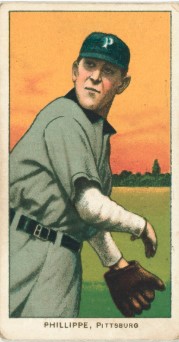
Deacon Phillippe – Fewest Career Walks Per Nine Innings (minimum 1,000 innings)

Righty Deacon Phillippe played in 13 MLB seasons (1899-1911 … Louisville Colonels, Pittsburgh Pirates). He waked just 363 batters over 2,607 1/3 innings pitched (1.25 walks per nine innings).

Phillippe’s career mark was 189-109, 2.59. He won 20 or more games in six seasons. He led is league in fewest walks per nine innings five times (finishing in the top five eight  times) and strikeout-per-walk ratio four times (top five seven times). His best season was 1903, when he went 25-9, 2.43 and completed 31 of 33 starts.

Side Note: Phillippe is 16th all-time in fewest walks per nine frames, but all those ahead of him spent all or the bulk of their careers pitching before the four-ball rule was put in place.  In first place on the full list is righty Candy Cummings, who pitched in six MLB  seasons (1872-77) and walked just 113 batters in 2,149 innings. Cummings, a Hall of Famer, went 145-94, 2.42 over those six campaigns. From 1872 through 1875, he went 124-72 (averaging 31 wins per season), 2.35, with 193 complete games in 198 starts.  

__________________________________________

In the “ stream of  “one thing leads to another” thought, I also look a look at pitches who appeared to best combine control with swing-and-miss stuff.  They weren’t the stingiest with walks, but had the combination of stuff and command to help themselves a lot more with strikeouts than they hurt themselves with free passes. Here, I found a few more recent moundsmen.

Phil Hughes – Best Single-Season Strikeout -to-Walk Ratio (among qualifiers)

Right-hander Phil Hughes is number-one all time in single-season strikeout-to-walk ratio – at 11.63 for the 2014 Twins. That season, Hughes went 16-10, 3.52, fanning 186 batters and walking just 16 (one intentionally) in 209 2/3 innings. Surprisingly, Hughes’ next best season in strikeout-to-walk ratio was only about half his 2014 ratio – 5.88 in 2015.

*Marco Gonzalez is still active. His stats are through September 25, 2022.

Hughes pitched in 12 MLB seasons (2007-2018 … Yankees, Twins, Padres). He went 88-79, 4.52. He was an All Star in 2010, when he went 18-8, 4.19 for the Yankees. He recorded three seasons of 16 or more victories. The 2014 season is the only one in which he finished in his league’s top five for fewest walks per nine innings, as well as his only top-five season in strikeout-to-walk ratio.

A Quick Turnaround

In the year Phil Hughes set the single-season strikeout-to-walk ratio record, he walked four batters in his first ten  innings pitched. He then went on to walk just 12 more batters over his next 199 2/3 innings. He did not walk a batter in 19 of 32 appearances and only twice walked more than one in a game.

_____________________________________

Chris Sale – Career Strikeout-to-Walk Ratio (minimum 1,000 innings pitched)

Southpaw Chris Sale (still active) leads the pack in career strikeout-to-walk ratio at 5.33.  In 1,678 1/3 innings pitched, he has fanned 2,064 batters and walked 387.

*Chris Sale, Jacob deGrom and Corey Kluber are active in the major leagues this season.

Their stats are through September 25.

Sale has pitched in 12 MLB seasons (2010-19, 2021-22 … White Sox, Red Sox). The seven-time All Star  and has led his league in strikeouts twice (top five five times), strikeouts per nine innings three times (four times in the top five) and strikeout-to-walk ratio once (five times in the top five). Sale has a 114-74, 3.03 record.

________________________________________

Another possible trivia question to fool your friends. Ask them to rank these pitchers in order of career walks per nine innings – fewest to most: Josh Tomlin, Brad Radke, Bret Saberhagen, Rick Reed, Greg Maddux. The ranking is in the order they are presented: Tomlin (1.29); Radke (1.63); Saberhagen (1.65); Reed (1.66); Maddux (1.80).

Primary Resource:  Baseball-Refeence.com.


Baseball Roundtable … blogging baseball since 2012. 

100Baseball Roundtable is on the Feedspot list of the Top 100 Baseball Blogs.  To see the full list, click here.

I tweet (on X) baseball @DavidBaseballRT

Follow Baseball Roundtable’s Facebook Page here.  More baseball commentary; blog post notifications.

Member: Society for American Baseball Research (SABR); The Baseball Reliquary; The Negro Leagues Baseball Museum.

Robin Roberts – 1950’s King of the Hill

By way of introduction to this post, I was born in 1947 – which means my formative years, as a baseball fan, were the 1950’s. I went to my first minor-league game in 1951, my first major-league game in 1953 (when the Braves moved to my home town of Milwaukee) and my first World Series game in 1957.  I played my first Little League game in 1955.

It wasn’t a bad time to start a life of fandom. There were players who debuted early in the decade and made their mark quickly – like Whitey Ford (MLB debut in 1950); Willie Mays (1951); Mickey Mantle and Eddie Mathews (1952); Ernie Banks (1953); Hank Aaron and Harmon Killebrew (1954); and Roberto Clemente (1955).  There also were more established stars like Stan Musial, Warren Spahn, Ted Williams, Duke Snider and Ralph Kiner.  (Not to mention the underrated Richie AshburnOh, I guess I did mention him. ) And, for a kid whose last name ended in “ski,” the likes of Ted Kluszewski and Bill Mazeroski.

Ralph Kiner won the NL home run crown as a rookie in 1946 and went on to lead the league in homers for each of the next six seasons.

I would like to dedicate this post to one of the hardball heroes of my youth – Robin Roberts, who was clearly one of the  (if not the) Kings of the Hill in the 1950’s.

Multi-Sport Athlete

Robin Roberts not only starred on the Michigan State University baseball team (tossing six shutouts in 1946), he was also a basketball standout was captain and leading scorer for the Michigan State basketball squad.

Photo: Bowman, Public domain via WikiCommons

While attending Michigan State, Roberts also pitched for the Twin City Trojans (Montpelier, Vermont) in the summer semi-pro Northern League. His performance at MSU and in the Northern League (he was 18-3 for the semi-pro squad in 1947) led to a contract with the Philllies’ organization and – after putting up a 9-1 record in 11 games for the  B-Level  Wilmington Blue Rocks – Roberts made his MLB debut, as a 21-year-old, on June 18, 1948.  In that game, he went eight strong innings (five hits and two earned runs) in a 2-0 loss to the Pirates. Over the 1948-49 seasons, he went 22-24, 3.50 (with 20 complete games in 51 starts).  Then, in 1950, it all fell into place, as Roberts put up a 20-11, 3.02 season, with 21 complete games in 39 starts and a league-leading five shutouts. It would start a string of six straight seasons of 20 or more wins – during which he would lead the league in wins four times, starts six times, complete games four times, innings pitched five times and strikeouts twice.

A Working Man’s Game

From 1950 through 1955, Robin Roberts recorded six consecutive seasons of more than 300 innings pitched.

How good was Robin Roberts in the 1950’s?  In the ten seasons from 1950 through 1959, Roberts:

  • Averaged just over 300 innings pitched per season (3011 2/3 innings pitched with six seasons over 300); (check)
  • Pitched 1,013 1/3 innings in the three seasons from 1952 through 1954;
  • Was second only to Warren Spahn in victories – 199 to Spahn’s 202;
  • Was second only to Early Wynn in strikeouts (1,516 to Wynn’s 1,544);
  • Led all MLB pitchers in complete games (237);
  • Had the lowest Walk + Hits Per Innings Pitched (WHIP) of all pitchers with at least 1,000 innings pitched (1.129);
  • Was a six-time 20-game winner and a seven-time All Star;
  • Led the league in wins four straight season (1952-55);
  • Led the league in games started six straight seasons (1950-55);
  • Led the league in complete games five straight seasons (1952-56);
  • Over the ten seasons, averaged 7.96 innings per start;
  • Over the ten seasons, had a .571 winning percentage, while the Phillies had a .496 winning percentage;
  • In 1952, averaged 8.8 innings per start.

In 1952, Robing\ Roberts went 28-7, with a 2.59 earned run average. In 37 starts he threw 30 complete games and threw less than eight innings in just four contests.

  • In 370 starts over the 1950’s, went at least seven innings in 301;
  • Completed 28 consecutive starts from August 28, 1952 through July 5, 1953 (with one relief appearance interrupting the string);
  • For those into the new stats, had the highest Win Above Replacement (WAR) among pitchers (for the decade) at 60.5.

Pitch Count.  We don’t Need NO Stinkin’ Pitch Count

On September 6, 1952, Robin Roberts threw a 17-inning complete game in a 7-6 win over the Boston Braves in Philadelphia (holding the Braves scoreless over the final nine frames). How did all that work affect his arm?  Five days later, he threw a complete game in a 3-2 win over the Cardinals.  In fact, in the 22 days after that 17-inning outing, Roberts threw five complete-games (all wins); giving up 12 earned runs over the 54 innings (2.40 earned run average).

Hall of Famer Roberts pitched 19 seasons in the major leagues (1948-66 … Phillies, Orioles, Astros, Cubs), going 286-245, 3.41. He threw 305 complete games in 609 starts. (50.8%). Over his career he averaged 7.5 innings per start.

Side note:  An argument can be made that the heavy workload in the first half of the 1950s eventually took a toll on Robert’s right arm. But you can also look at the fact that from 1956-66, he still pitched to a 3.78 earned run average.

How the Game Has Changed

The AL and NL 2012 Cy Young Award Winners (Robbie Ray and Corbin Burnes) made a combined 60 starts, with zero complete games.

Now to close, here’s a look at some of the category leaders from the years during which I formed my attachment to the National pastime.

Primary Resources: Baseball-Reference.com; The Baseball Maniac’s Almanac, Edited by Bert Randolph Sugar, with Ken Samuelson (Skyhorse Publishing); Spartan Legend Robin Roberts Passes Away, May 6, 2010, MSUSpartans.com.


Baseball Roundtable … blogging baseball since 2012. 

100Baseball Roundtable is on the Feedspot list of the Top 100 Baseball Blogs.  To see the full list, click here.

I tweet (on X) baseball @DavidBaseballRT

Follow Baseball Roundtable’s Facebook Page here.  More baseball commentary; blog post notifications.

Member: Society for American Baseball Research (SABR); The Baseball Reliquary; The Negro Leagues Baseball Museum.

The Sandy Alcantara/Babe Ruth Connection

In 1920, Babe Ruth dominated the home run category when it came to MLB statistics. Ruth launched 54 home runs that season, nearly three times the next highest t0tal (19 for the Saint Louis Browns’ George Sisler) and more than all but one of the remaining MLB teams (the Phillies hit 64 home runs as a team).

Yesterday (September 18), Marlins’ right-hander Sandy Alcantara tossed his fifth complete game of the 2022 season – running his record to 13-8, 2.37 and his league-leading innings pitched to 212 2/3.

The Babe Ruth connection? Alcantara’s dominance of the statistical category.  (Keep in mind, Baseball Roundtable “connections” reflect how I look at baseball statistics and may be stretched at times.) Alcantara’s five complete games are more than any other MLB team (the Red Sox, Astros, Phillies and Cardinals have three each … and half of MLB’s 30 teams have yet to record a complete game this season).  The only pitchers with more than one complete game so far this season are Alcantara, the Astros’ Framber Valdez (3) and the  Phillies’ Aaron Nola (2).

A few observations:

  • In addition to his five 2022 complete games, Alcantara completed nine shutout innings in a Marlins’ 10-inning, 2-1 loss to the Nationals on June 8.
  • The last time we saw an MLB pitcher log as many as five complete games in a season was 2017 (Corey Kluber, Indians).
  • Alcantara’s 212 2/3 innings pitched lead MLB by a notable margin (The Cardinals’ Miles Mikolas is second at 187 1/3).
  • Alcantara has averaged 7+ inning in his 30 2022 starts.
  • Alcantara tied for the 2019 NL complete-game lead with two complete games.
  • Thus far in the 2022 season, only 0.6 percent of starts have resulted in a complete game (as opposed to 16.7 percent of Alcantara’s starts.

Here’s a historic perspective on complete games (I chose not to use the shortened 2020 season). Note: This chart, previously published in Baseball Roundtable has been updated to include Negro League records from 1920-48, which have been added to the MLB record book.,

As you might expect, the chart shows a steady decline in complete games.

Now, a few Baseball Roundtable musings on complete games.  (Note: This is not presented as criticism, just a look at how the game has changed.)

It wasn’t until 1955 that we saw an AL/NL leader in complete games with less than 20 finished starts (Whitey Ford, Yankees, 18 CGs).  And, 1980 was the first year that a league leader notched less than 14 complete games.  The last time we saw 20 complete games in a season?  Fernando Valenzuela in 1986.  James Shields, in 2011, became the first pitcher to reach double-digits (11) in complete games in a dozen years – and earned a reputation as an iron man.

Jack Taylor and Will White – Finishing What They Started.

Between 1901 and 1906 (Cubs and Cardinals),  Jack Taylor threw a record 187 consecutive complete games (with 15 relief appearances interspersed).  Then there’s Will White (Cincinnati), who, in 1879, completed a single-season record 75 complete games (in 75 starts).  White went 43-31 that year, with a 1.99 ERA and 680 innings pitched.  For his career, White completed 394 of 401 starts. 

How different is today’s game?  In 2021, the MLB co-leaders in complete games (Adam Wainwright, German Marquez, and Zach Wheeler) each threw three complete games.   In September of 1908, Walter Johnson threw three complete-game shutouts in four days – and might have done it in three days, except for baseball’s sabbath laws.

Cy Young – Library of Congress photo.

The record for career complete games belongs to Cy Young at 749.  Young completed 91.9 percent of his starts. The active leader in career games is Adam Wainwright, with 28 in 387 starts (7.2%) over 17 seasons.   Babe Ruth, by the way (to continue the Babe Ruth connection), tossed 107 complete games in 147 career starts. 

As complete games have dropped, the numbers of pitchers used in each game have risen.  In the 1950’s, when I started watching major-league baseball, you were likely to see four pitchers per game (the average in 1950 was 2.01 pitchers per team/per game).  In 2021, you were more likely to see between eight and nine players take the mound in a game (the average was 4.44 pitcher per team/per game). Through September 18 of this season, the average is 4.29 pitchers per team/per game.  Note: Starting pitchers are included in the count.

Jim Devlin, A Complete-Game Machine

In 1877, Jim Devlin of the National League’s Louisville Grays started and completed all 61 of the team’s games– the only pitcher ever to pitch all of a team’s innings in a season.  This, by the way, came one season after he started all but the final game of the Grays’ season (a record 68 consecutive games pitched in) and finished 66 of them.  Devin logged a total of 1,181 innings. Side Note: Sadly, Devlin’s career was cut short when he was banned after the 1877 season, as the result of a game-fixing scandal. 

—–Baseball Roundtable’s Take on the Decline in Complete Games—–

So, why the dramatic decline in complete games?

Five-man Rotations … and. more recently “openers” and “bullpen games.”

In baseball’s early days, teams got by with two or three primary starters. Even in the 1960’s a four-man rotation was pretty common. As we moved into the 1970s, teams started moving to five-man pitching rotations.  Fewer starts, fewer opportunities for wins, complete games, innings pitched.   (Notably, swifter travel  – trains not planes – contributed somewhat to this.  In the days of train travel, more travel time meant more days between series and fewer pitchers were needed. )

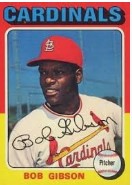
In 1968, when Bob Gibson went 22-9, 1.12 for the Cardinals, he tossed 28 complete games (13 shutouts) in 34 starts. 

 More recently, in a strategy first led by the Rays, teams are going to the use of relief pitchers as “openers,” sometimes followed by a primary pitcher and late-inning relievers – or even entire “bullpen” games, with a series of reliever each taking on one or two innings.

The “Quality” Start

In today’s game, six innings and three or fewer runs is a “Quality Start.”   Starting pitchers, as recently as the 1980’s, would have considered six innings pitched a day off.  The quality start has helped change the way fans (as well as managers and pitchers) look at starting pitchers’ performances. Pitchers simply are no longer  expected to finish what they start.  Consider this statistic. (Note: Negro League stats not yet incorporated.)

Average Innings Pitched Per Start

1920              7.4

1940             6.9

1960              6.4

1980              6.3

2000             5.9

2021              5.0

Through September 18 of this season, starters are averaging 5.2 innings pitched per start.

Brief Baseball Roundtable Rant

A quality start is defined as six innings pitched and three or fewer earned runs allowed. Through September 18, MLB’s average earned run average was 3.98. So, you can pitch below the league ERA average and earn a quality start.  

The Advent of the Save

Years ago, relief pitchers were mostly starters past their prime brought in to “mop up.”   In fact, the “save” was not even established as a statistic until 1969 (saves were awarded retroactively for seasons prior to 1969).  Today, relievers are more valued and respected then ever – which leads us to the next point – the rise of relief specialists.

The Rise of Relief Specialists

Today, not only does the manager look to the closer (primarily for the ninth inning), the bullpen also features key “set up” men, earmarked for the seventh or eighth innings.  And, not only do most teams have their seventh- and eighth-inning specialists, we also see “arms” in the bullpen ready for long- and middle-relief.  Recently, until the recent  change (requiring a pitcher to faced at least three batters or finish an inning), even one-batter (lefty or righty), specialists were stalwarts in MLB bullpens. No wonder managers are so quick with the hook.  They’ve got to keep that well-paid dollar bullpen happy.

The Dreaded Pitch Count

And, of course, there is the “pitch count,” considering the financial investment teams have in pitchers, the thinness of pitching staffs (we do, after all, now have thirty teams), pitchers are treated with great care, often held to pitch counts in the neighborhood of 100 – no matter how well they are throwing.  Pitchers simply are throwing less these days.

Phil Humber threw only one complete game in his eight-season MLB career – and it was a perfect game.  Why is it included in this pitch count section? He needed just 95 pitches to complete the outing. 

Strikeouts

The growing emphasis on strikeouts has also contributed to the decline in complete games (particularly when combined with pitch counts).  The fact is, it most often takes more pitches to rack up strikeouts than to pitch to weak contact.  (In most cases, it also requires an increased focus on velocity, also tougher on the arm.) Consider the record of Warren Spahn, who led the National League in complete games an MLB-record nine times, won 20 or more games in 13 seasons and led the league in strikeouts four times – yet averaged just 4.4 strikeouts per nine innings, never struck out 200 batters nor six batters per nine innings in a season.

Strikeouts Per Nine Innings

1900           2.4

1920            2.9

1940             3.7

1960             5.2

1980            4.8

2000             6.5

2021             8.9

Through September 18, the 2022 average is 8.5 whiffs per nine innings.

Sidebar – Innings Pitched Leaders

From 1950-59, Robin Roberts AVERAGED 301 innings pitched (and 23.7 complete games) per season.  And, if you pick any decade from 1900 through 1979, the average innings pitched for the league leaders was over or very near 300.  However, innings pitched have dropped significantly since Steve Carlton became the most recent pitcher to hurl 300 innings in (1980).  For the last decade, the average for league leaders has been shy of 250.  In 2021, Robbie Ray led the National League with 193.1 innings pitched.  

Here’s the chart of average innings pitched by league leaders (by decade) with major strike-shortened seasons deleted:

Decade                 Average Innings Pitched by League Leaders*

1909-09                                                350

1910-19                                                348

1920-29                                                318

1930-39                                                304

1940-49                                                305

1950-59                                                294

1960-69                                                303

1970-79                                                327

1980-89                                                279

1990-99                                                261

2000-09                                                244

2010-19                                                 231

*Negro Leagues with their short seasons not included.

______________________________

One final complete-game tidbit. Between My 14 and June 4, 1969, the Dodgers’ Don Drysdale pitched an MLB-record six consecutive complete-game shutouts,

________________________________

So, there are BBRT’s random musings about complete games.   I do kind of miss them, but that’s the way today’s game is played. Guess, I’ll have to take in a Sandy Alcantara start,

Primary Resources:  Baseball-Reference.com; MLB.com; Baseball-Almanac.com.

Baseball Roundtable … blogging baseball since 2012. 

100Baseball Roundtable is on the Feedspot list of the Top 100 Baseball Blogs.  To see the full list, click here.

I tweet (on X) baseball @DavidBaseballRT

Follow Baseball Roundtable’s Facebook Page here.  More baseball commentary; blog post notifications.

Member: Society for American Baseball Research (SABR); The Baseball Reliquary; The Negro Leagues Baseball Museum.


From Mackey to Mickey and Much More … A Look at MLB’s Switch-hitting Leaders

Who was the first switch-hitter not named Mickey Mantle to reach 40 home runs in a single MLB season?


On August 11, 1956, in the seventh inning of a Yankees’ 10-5 loss to the Orioles (in New York), Yankees’ CF Mickey Mantle took the Orioles’ Hal Brown deep to RF for a three-run home run – becoming the first MLB switch-hitter to reach 40 home runs in a season. Just over one month later (September 18, 1956), Mantle popped his fiftieth long ball of the campaign (off Billy Pierce in the eleventh inning of a 3-2 Yankees’ win in Chicago) – becoming the first switch- hitter to reach 50 home runs in a single season. (Mantle finished the year at .353-52-130; winning the Triple Crown.)

Mantle is still the only switch hitter to hit 50 home runs in a season. (He did it once again with 54 long balls in 1961). Mantle remained the only switch-hitter to reach 40 homers in a season for (appropriately) 40 years.  Since 1996, six switch-hitters have joined Mantle in the 40-home run club.

As noted above, the question leading into this post is “Who was the first switch-hitter not named Mickey Mantle to reach 40 home runs in a season?”

The answer is Mets’ catcher Todd Hundley, who hit his 40th round tripper of the 1996 season in the seventh inning of a Mets’ September 8 win over the Braves in Atlanta. (Side note: Another switch-hitter, the Braves’ Chipper Jones, in just his  second full MLB season, hit his 30th home run of the campaign in the same game. Jones, by the way, was at shortstop for that contest.)  It didn’t take long for a third switch-hitter to join the 40-homer club. Nineteen days after Hundley’s blast, the Padres’ switch-hitting 3B Ken Caminiti, hit his 40th long ball of the 1996 season.  Hundley finished the 1996 season at .259-41-112, achieving  would be his career high in home runs, RBI, runs scored (85), hits (149) and doubles (32).

Before we go on to look at some additional switch-hitting record holders, a little more about Todd Hundley. Hundley had some good baseball genes. He was the son of Randy Hundley, who played catcher  in 14 MLB seasons (1964-77) – and was a one-time All Star (1969 Cubs). The younger Hundley also played in 14 MLB seasons (1990-2003) and outdid his father with two All Star selections and a .234-202-599 stat line to his father’s .236-82-281.

Todd Hundley was a second-round draft pick (Mets) in 1987 (out of William Fremd High School). He made his major-league debut (as a 20-year-old) on May 18, 1990. Over his 14-season MLB career (1990-2003 … Mets, Dodgers, Cubs), he topped 20 home runs in four seasons and 100 RBI once. Hundley’s best MLB seasons were clearly 1996 and 1997. He followed his 1996 .259-41-112 stat line with .273-30-98 in 1997.

One – or 41 – for the Record Books

In 1996, when Todd Hundley hit 41 home runs, they were the most home runs in a season by a player in the catching position. Johnny Bench (who hit right-handed) had hit 45 in 1970, but six of those came when he was in the lineup as an outfielder and one as a first baseman.  Right-handed hitting Javy Lopez broke Hundley’s record in 2003 with 42 long balls as a catcher (43 overall), still the most home runs in a season while in the lineup as a catcher.  Right-handed hitting Salvador Perez hit 48 home runs in 2012 (the most for a player playing primarily as a catcher), but 15 of those came as a DH.

Now let’s get back to a look at switch-hitting leaders.

Note: Batting average leaders in 100+ game seasons: Tuck Turner, 1894 Philadelphia Phillies (National League), .418 (Turner played 82 of 132 games);  Tommy Tucker, 1889 Baltimore Orioles (American Association), .372; Roger Connor, 1885 New York Giants (National League), .371.  Mickey Mantle‘s .365 average for the 1957 Yankees is the highest average for a switch-hitter in a post-1900 season in which his team played 100 or more games.  

Biz Mackey – Career and Single-Season Batting Average

Photo: 1924_Negro_League_World_Series.jpg: J.E. Mille[r], K.C.derivative work: Delaywaves talk • contribs, Public domain, via Wikimedia Commons

Hall of Famer Biz Mackey was not only a great defensive catcher, but also a versatile fielder and  an offensive force. You’ll find his average at the top of the list for switch-hitters in both the single-season and career categories. Thank you, MLB for adding Negro League stats from 1920-1948 to the MLB  record books. Mackey played in 22 seasons (all in the Negro Leagues), suiting up at every defensive position (617 at C; 60 at 1B; 33 at 2B; 60 at 3B; 70 at SS; 145 in LF; 2 in CF; 22 in RF). He even took the mound seven times (three starts), albeit to a 7.52 ERA.  From 1920 through 1929, Mackey hit .348-45-454 in 582 games – never averaging below .312 in any season. He played in five East-West All Star Games and in 26 Negro Leagues post-season games (hitting .327).

Just Ask Another Hall of Fame Catcher How He Measured Up

“In my opinion, Biz Mackey was the mater of defense of all catchers,”

                         Hall of Famer Roy Campanella

                          (From Biz Mackey’s Baseball Hall of Fame Bio)

________________________________________

Mickey Mantle – Career and Single and Season Home Runs

Mickey Mantle is the power leader among MLB switch hitters. There have been just two seasons of 50 or more home runs by switch-hitters in MLB history and both belong to Mantle. There also have been just  11 seasons of 40 or more homers by switch-hitters in MLB history (including Mantle’s two 50-HR seasons) and Mantle has four of those.

He is, as expected, also at the top of the switch-knitting career home runs list.  Mantle played in 18 MLB seasons (1951-68), going .298-536-1,509. The Hall of Famer was an All Star in sixteen seasons, a three-time AL MVP and  a one-time Gold Glover. He led the league in home runs four times, runs scored five times, total bases three times; RBI once and batting average once. Over his career, Mantle hit 30 or more home runs in nine campaigns.

A Career Saved

When Mickey Mantle was 14-years-old, osteomyelitis (aggravated by a football injury) led doctors to recommend amputation of Mantle’s leg. His parents sought a second opinion and the condition was treated with heavy doses of penicillin – saving the leg and Mantle’s future in sports.

Mantle holds the World Series records for home runs (18), RBI (40); runs scored (42), total bases (123) and walks (43).

____________________________________

Mark Teixeira and Eddie Murray – Single-Season and Career RBI Leaders

Photo: Keith Allison, CC BY-SA 2.0 <https://creativecommons.org/licenses/by-sa/2.0>, via Wikimedia Commons

Mark Teixeira sent the mark for single-season RBI among switch hitters in 2005 – a season in which the Rangers’ first baseman played all 162 games and hit .301-43-144. Teixeira played in 14 MLB seasons (2003-2016 … Rangers, Braves, Angels, Yankees). He was a three-time All Star, hit 30+ home runs in nine season and drove in 100+ runs in eight. He finished with a.268-409-1,298 stat line. He also won five Gold Gloves.

Those Were the (College) Days My Friends

In three seasons at Georgia Tech (1999-2011), Mark Teixeira played in 140 games, hitting .409, with 36 home runs and 165 RBI. He was the fifth player chosen in the June 2001 MLB draft.

Teixeira and Nick Swisher share the record for the most times hitting a home run from both sides of the plate in a single game at 14.


Hall of Famer Eddie Murray tops all switch hitters in career RBI at 1,917 (in 21 MLB seasons – 1977-97 … Orioles, Dodgers, Mets, Indians, Angels). While he drove in 100 or more runs in six seasons, he only led the league in RBI once, with 78 in the strike-shortened 1981 season. The Hall of Famer and eight-time All Star is also one of just two switch-hitters to reach 500 career home runs. He hit 30 or more home runs in five seasons and 20 or more in another 11.  Murray was the 1977 AL Rookie of the Year, an All Star in eight seasons and a three-time Gold Glover at first base. Over his career, Murray hit 19 Grand Slam home runs, the most by any switch-hitter.

Eddie Murray holds the MLB career record for career sacrifice flies with 128.


Pete Rose and Willie Wilson – Single-Season and Career Base Hits

Pete Rose can be fond atop the switch-hitter leaderboard in single-season and career base hits. In fact, he leads all batters in MLB history in career safeties. Rose played 24 MLB seasons (1963-86 … Reds, Phillies). He is the MLB leader in games played (3,562); plate appearances (15,890); at bats (14,053); and hits (4,256).

Pete Rose was an All Star Game starter at five different positions: 1B, 2B, 3B, LF, RF.

Rose’s  final career line was .303-160-1,314, with 2,165 runs scored. He was a 17-time All Star and led the league in hits seven times (ten seasons of 200+ hits); runs four times; doubles five times; and batting average three times.

For the Love of the Game

“I’d walk through hell in a gasoline suit to play baseball.

                                                 Pete Rose

Tied with Rose atop the single-season leader in base hits in season (among switch-hitters) is Willie Wilson, who collected 230 safeties in 1980 (for the Royals), while putting up a .326-3-49 line with a league-topping 133 runs scored. Wilson played in 19 MLB seasons (1976-1994 … Royals, Cubs, A’s). The two-time All Star won one batting title, led the league in hits once, triples four times and stolen bases once. He retired with a .285-41-585 stat line, with 1,169 runs scored and 668 stolen bases. He stole 30 or more bases in 11 seasons (forty or more in seven of those seasons), with a high of 83 (in 95 attempts) in 1979.

A Surprise on the “Hit List”

Omar Vizquel recorded the fourth-most MLB base hits among switch hitters (44th All Time), with 2,807 safeties over 24 seasons (1989-2012 … Indians, Mariners, Giants, White Sox, Rangers, Blue Jays).  He hit .272 over 2,968 games – hitting .300 or better in just one season.

__________________________________________________

Other Switch-Hitter Leaders:

Runs Scored:  Season:  Max Carey, 1922 Pirates (140).    Career: Pete Rose (2,165)

Doubles: Season: Jose Ramirez, 2017 Indians (56). Career: Pete Rose (746)

Triples: Season: George Davis, 1893 Giants (27). Career: Roger Connor (293)

Total Bases: Jimmy Rollins, 2007 Phillies (380). Career: Pete Rose (5,752)

Primary Resources: Baseball-Reference.com; Baseball Almanac.com; The BaseballCube.com; Mickey Mantle SABR bio by James Lincoln Ray.


Baseball Roundtable – Blogging Baseball Since 2012. 

BASEBALL ROUNDTABLE ON THE TOP 100 BASEBALL BLOG LIST

100Baseball Roundtable is on the Feedspot list of the Top 100 Baseball Blogs.  To see the full list, click here.

I tweet (on X) baseball @DavidBaseballRT

Follow Baseball Roundtable’s Facebook Page here.  More baseball commentary; blog post notifications.

Member: Society for American Baseball Research (SABR); The Baseball Reliquary; The Negro Leagues Baseball Museum.

Mike Trout’s Seven Straight Games with a Long Ball – and Those Who Did Him One Better

The Thirteenth unlucky for Mike Trout … and Cleveland fans

Mike Trout .. . Hit long ball, round bases, high five repeat.
Photo by Keith Allison

Yesterday (September 13, 2022), Mike Trout went zero-for-three (one walk) as his Angels lost to the Guardians 3-1 in Cleveland. While I’m sure the Cleveland fans enjoyed the win, they did miss the chance to see a bit of MLB history. Trout’s zero-for-three ended a streak of seven straight games in which he had gone yard – leaving him one shy of the record consecutive games with a home  run. Surprisingly, during his hot streak, the Angels went 3-4 (outscoring their opponents just 33-28, with Trout driving home one-third of the Angels’ tallies).
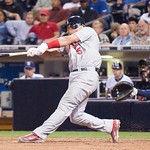
Trout’s offensive outburst should not be too much of a surprise.  A first-round (25th overall) 2009 draft pick out of Millville (NJ) Senior High, Trout made his MLB debut July 8, 2011 (at the age of 19).  In three minor-league seasons, the teenager had risen from rookie ball to Double-A, hitting a combined .338, with 22 home runs and 102 stolen bases in 266 games.

As high school senior,  Mike Trout hit .531 (81 at bats), with 18 home runs and 21 steals.

While he hit just .220 in 40 2011 games for the Angels, Trout became a regular in the Angels’ outfield in 2012, hitting .326-30-83, leading the league in runs scored (129) and steals (49) – and winning Rookie of the Year honors. To date, he has been a 10-time All Star (missing just 2020) and three-time AL MVP.  He had topped hit 30 or more home runs in seven seasons (35 so far this year), driven in 100+ runs three times, scored 100+ runs in seven campaigns, hit over .300 in six seasons and stolen 30 ore more bases three times. Even without the eighth consecutive games with a home run, he is building quite a Hall of Fame Legacy.
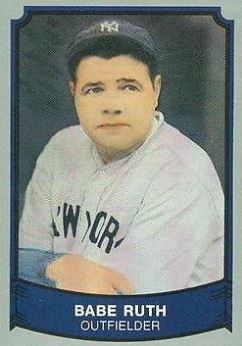
With that on the books, let’s take a look at the players who are on the short list of those with homers in eight consecutive games.  Dale Long, Don Mattingly and Ken Griffey, Jr. (Side note:  All thee began their professional careers as teenagers. Not really that important, but the kind of coincidence The Roundtable notices.)
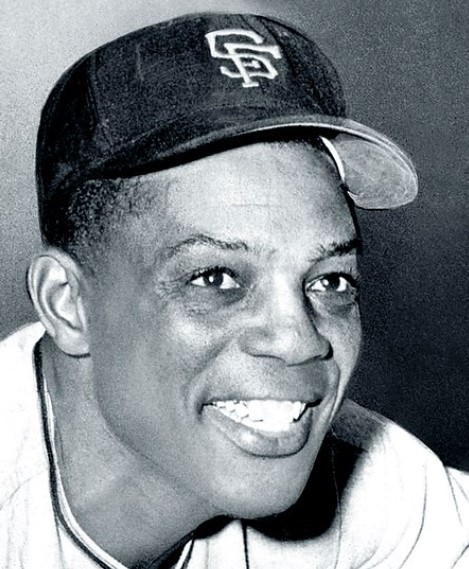
______________________________________________________

A brief interruption before we return to our regular programming.

Time here for a short rant about #HowTheGameHasChanged. Yesterday, I was at a Twins game and Twins’ rookie starter Joe Ryan coasted through the first seven innings with a no-hitter (versus the Royals). After seven frames, he had given up two walks, fanned nine, tossed 106 pitches and was enjoying a 6-0 lead.

My very clean scorecard during Kershaw’s outing and a very clean scoreboard during Ryan’s.

As the eighth opened, Twins’ Rocco Baldelli brought in rookie reliever Jovani Moran (to significant booing from the crowd). Now, I didn’t join in the chorus of displeasure, but (as a fan) I was not really happy with the decision. Still, we could at least hope for the Twins’ first-ever combined no-hitter (and by two rookies no less). Alas, it was not to be, as Moran lost the no-no with one out in the ninth – giving up two walks, followed by an RBI double to Bobby Witt, Jr. (Moran eventually gave up a another hit and a total of three runs in the inning.)

All of this took me back to a game I attended on April 13 – with the Twins facing the Dodgers at Target Field. Despite the fact that the Twins were down 3-0, there was plenty of drama on the field and plenty of excitement in the crowd – as many of us anticipated a chance to see Dodgers’ starter Clayton Kershaw try for MLB’s 24th-ever Perfect Game.  After seven innings (Does this timing sound familiar?), Kershaw had thrown just 80 pitches (53 strikes) and had fanned 13 batters – with only three balls had been hit out of the infield. He was cruising and it was a masterful performance to watch.

Like Ryan, Kershaw did not come out to pitch the eighth. Dodgers’ manager Dave Roberts instead put in Alex Vesia. The change was met with a chorus of boos, from Twins’ fans and a large contingent of Dodger Faithful seated behind the third base dugout.

Now, there’s never been a combined Perfect Game, so I had a bit of hope. One out and five pitches after Vesia took the mound, Twins’ catcher Gary Sanchez lined a single to right and the Perfect Game and even the no-hitter were gone. (The Twins, ultimately, lost 7-0 and Sanchez’ single was their only safety.)

Side note:  I later learned, via the Elias Sports Bureau, that only once before ( since 1900) has an MLB pitcher been pulled after the seventh inning with a Perfect Game intact.  Both times, Roberts was the manager.  (The first was on September 10, 2016, when he pulled Rich Hill – a reported finger issue –  after seven innings with Perfect Game intact against the Marlins (and the Dodgers up 5-0). Hill had thrown 89 pitches (62 strikes) and fanned nine. Hill was replaced by Joe Blanton and ten pitches and two outs later, Marlins’ LF Jeff Francoeur collected the first of two Miami hits in the game.

In both the Ryan and Kershaw  games, I found myself trying to imagine what would have happened in the same situation with the likes of  Jack Morris, Bob Gibson or Don Drysdale on the bump.  I understand managers looking ahead and trying to protect their pitchers, so I can’t be too critical.  But, as a fan, I can be disappointed when a pitcher is pulled with a late-inning no-hitter or perfect game intact.  I’ll resist starting the next sentence, “Back in the day ….”

_________________________________________________

Now, back to the three players who share the record for consecutive games with a home run at eight.

Dale Long … 1956 Pirates

Dale Long’s path to the big leagues was not an easy one. Signed, in 1944,  at age 18, after a stint in the Navy, Long  made his major-league debut on April 21, 1951 (after seven minor-league seasons … and 11 minor-league teams with four different franchises.). He was back in the minors by mid-season (after hitting .231-3-12 in 44 games for the Pirates and Browns).

He didn’t make its back to the MLB diamond until 1955, again with the Pirates. In his first season as a big-league regular, the lefty first basemen hit .291-16-79  and the led NL in triples with 13.

The following season – the year of his eight-game home run streak – Long made his only All Star team, hitting .263-27-91 in 148 games for Pittsburgh.  (The 27 long balls and 91 RBI would prove to be career highs.

Overall, long played ten MLB seasons (Pirates, Browns, Cubs, giants, Yankees, Senators,), hitting .267-132-467 in 1,013 games. He hit 20 or more homers in four season and .290 or better twice.

The Pirates went 7-1 during Long’s  home run streak, outscoring their opponents 44-22, with Long driving in 19 of the 44 runs.

______________________________________________

Don Mattingly, 1987 Yankees

Don Mattingly had his eight-game home run streak in 1987, in the midst of his fourth straight All Star campaign, third straight season of 30 or more home runs, fourth  straight season of 100+RBI and fourth straight season hitting .325+. He was, in fact, at the peak of his career. The previous three seasons, he had led the league in hits twice, doubles three times, RBI once, batting average once, total bases twice and slugging percentage once.

Mattingly was  19th round draft choice, out of Reitz Memorial High School. He had worked his way from Low-A to Triple-A over four seasons (1979-82), hitting .332 in 457 games. He had yet to develop his power stroke, however, with only 20 home runs on his resume.  He made his MLB debut, as a 21-year-old, for the Bronx Bombers on September 8, 1982 and earned a spot as a regular in the Yankee lineup by the following June. In 1984, his first full MLB season, the 23-year-old Mattingly was the AL batting champ – putting up a .343-23-110 line.  He went on to a 14-season MLB career (1982-95), all for the Yankees – hitting .307-222-1,099; was an All Star six straight seasons (1984-89); earned nine gold Gloves at first base; and was the 1985 AL MVP.

In 2020, Don Mattingly was the NL Manager of the Year – leading the Marlins to a 31-29 record – good for second place (NL East) in the COVID-shortened season.

Despite Mattingly’s eight-game output – 10 home runs and 21 RBI – the Yankees only went 5-3 in his streak. (They did outscore their opponents 55-36, but that included a 13-4 win over the Twins and a 12-3 victory over the Rangers.)


_____________________________________________

Ken Griffey, Jr., 1993 Mariners

Ken Griffey Jr. was signed, as a 17-year-old, in the first round (first overall) of the 1987 draft (Mariners).

Ken Griffey Jr. (Archbishop Moeller High School, Cincinnati) was the 1987 U.S. High School Baseball Player of the Year. 

As a 17-year-old, Griffey hit .313-14-40, with 13 steals at Low-A Bellingham (54 games). The following season, he hit .325-13-52, with 36 steals at A and Double-A (75 games.)

In 1989, at 19-years-old), Griffey was a regular in the Seattle outfield.  The rest is history.  He went on to a 22-season, Hall of Fame career – hitting .284-620-1,836, with 184 steals in 2,671 games. Griffey hit 40 or more home runs in seven seasons, with two seasons (1997-98) of 56 roundtrippers. He also collected 100 or more RBI eight times. He was a 13-time All Star, ten-time Gold Glover and the 1997 AL MVP (when he hit .304, and led the league with 56 home runs, 125 runs scored, 147 RBI and 398 total bases.

During Griffey’s 1993 home run streak, the Mariners won five of the eight games – outscoring their opponents by just four runs  52-48.


______________________________________________

Just a Little (Big, Really) Baseball Roundtable Long Ball Bonus

Most fans recognize 1968 as “The Year of the Pitcher.”  The overall MLB earned run average was 2.98; Bob Gibson put up a 1.12 ERA; Denny McLain won 31 games; only six qualifying MLB hitters hit .300 or better and Carl Yastrzemski won the AL batting title with a .301 average. Pitching was so dominant, MLB lowered the mound five inches for the 1969 season.

Yet, somehow – in the midst of all this pitching dominance – the Washington Senators’ big (6’8” – 260-lb.) OF/1B Frank Howard put together one of the most explosive offensive weeks in MLB history. From Sunday May 12 through Saturday May 18, in just 25 plate appearances (in six games), Howard banged out thirteen hits – including ten home runs and one double – and drew one walk (for a .542 average).  He also scored ten times and drove in 17 tallies. Side note: Surprisingly, the Senators went 3-3 over Howard’s streak.  Howard’s ten home runs remain MLB’s record for home runs in a week.  

Howard’s game lines during the streak looked like this:

  • May 12 … two-for-four, two runs scored, two RBI, two home runs.
  • May 14 … three-for-four, two runs scored, three RBI, two home runs.
  • May 15 … two-for-four, one run scored, two RBI, one double, one home run.
  • May 16 .… two-for-four, two runs scored, four RBI, two home runs.
  • May 17 … one-for-four, one run scored, two RBI, one home run.
  • May 18 … three-for-five, two runs scored, four RBI, two home runs.

Howard picked on some pretty good hurlers during his streak.  Three of the long balls came off the Tigers’ Mickey Lolich,  who went 17-9, 3.19 on the season and won three games in the 1968 World Series. Another pair of the record-setting round trippers came off “Sudden” Sam McDowell, who – while he only went 15-14 that season – put up a 1.81 earned run average and led the AL with 283 strikeouts.   Howard also showed he could “hit ‘em anywhere.” Only two of the ten long balls came at home – and his streak also included home runs in Boston, Cleveland and Detroit.

Howard came into the streak with a.300 average on the season (which he raised to .347 during the six games). Notably, he didn’t “come in hot,” he had  just three hits (.130 average) over his previous six games.

Primary Resources:  Baseball-Reference.com; MLB.com; Elias Sport Bureau.


Baseball Roundtable – Blogging Baseball Since 2012. 

BASEBALL ROUNDTABLE ON THE TOP 100 BASEBALL BLOG LIST

100Baseball Roundtable is on the Feedspot list of the Top 100 Baseball Blogs.  To see the full list, click here.

I tweet (on X) baseball @DavidBaseballRT

Follow Baseball Roundtable’s Facebook Page here.  More baseball commentary; blog post notifications.

Member: Society for American Baseball Research (SABR); The Baseball Reliquary; The Negro Leagues Baseball Museum.

A True Journeyman Officially Retires

Photo by Keith Allison

On Friday (September 9, 2022), righthander Edwin Jackson – who played for more major-league teams (14) than any other player – officially announced his retirement from the playing field.  The announcement came on his 39th birthday and on the 19th anniversary of his first appearance on a  major league-mound.

While Baseball Roundtable has written about Jackson’s travels before, this seems an appropriate to to again reflect on his career and, in The Roundtable’s “one things leads to another” tradition, also take a look at Jackson’s unexpected no-hitter, and a few other record-setting journeymen.

Jackson, who has not pitched in the major leagues since 2019, had a career record of 108-133, 4.78 in 412 MLB games (318 starts) over 17 seasons. In 1,960 innings pitched, he fanned 1,508 and walked 779.  Jackson was an All Star in 2009, when he went 13-9, 3.62 in 33 starts for the Tigers. In his MLB career, he won ten or more games in five seasons.  In six of his 17 MLB seasons, Jackson pitched for more than one major-league team.

Jackson’s record – year-by-year and team-by-team.

How did he do it?

2001

  • Drafted by the Dodgers in June.

2003

  • Debuted with the Dodgers on September 9.

2006

  • June 14 – Traded by the Dodgers to the Rays. (Jackson and Chuck Tiffany for Danys Baez and Lance Carter.)

2008

  • December 10 – Traded by the Rays to the Tigers. (Jackson for Matthew Joyce.)

2009

  • December 8 – Went from the Tigers to the Diamondbacks in a three-team trade. (The Tigers sent Curtis Granderson to the Yankees; the Yankees sent Phil Coke and Austin Jackson to the Tigers; the Yankees sent Ian Kennedy to the Diamondbacks. The Diamondbacks sent Max Scherzer and Daniel Schlereth to the Tigers. So, ultimately, the Tigers turned Jackson and Granderson into Coke, Austin Jackson, Scherzer and Schlereth.)

2010

  • July 30 – The Diamondbacks traded Jackson to the White Sox. (Jackson for David Holmberg and Daniel Hudson.)

2011

  • July 27 – Jackson was traded by the White Sox to the Blue Jays and (on the same day) from the Blue Jays to the Cardinals. (Jackson went to the Blue Jays – with Mark Teahen – for Jason Frasor and Zach Stewart. He then went to Cardinals – with Octavio Dotel, Corey Patterson and Marc Rzepczynski – for Trevor Miller, Colby Rasmus, Brian Tallet and P.J. Walters.)
  • October 30 – Granted free agency

2012

  • February 2 – Signed with the Nationals.
  • October 29 – Granted free agency.

2013

  • Signed with the Cubs.

2015

  • July 27 – Released by the Cubs.
  • August 14 – Signed with the Braves.
  • November 2 – Granted free agency.

2016

  • January 13 – Signed with the Marlins.
  • June 2 – Released by the Marlins.
  • June 29 – Signed with the Padres.
  • November 3 – Granted free agency.

2017

  • April 5 – Signed with the Orioles.
  • June 13 – Granted free agency.
  • June 16 – Signed with the Nationals.
  • November 2 – Granted free agency.

2018

  • January 11 – Signed with the Nationals.
  • June 1 – Released by the Nationals.
  • June 6 – Signed with the A’s.
  • October 29 – Granted free agency.

2019

  • April 11 – Signed with the A’s.
  • May 19 – Purchased from the A’s by the Blue Jays.
  • July 19 – Released by the Blue Jays.
  • July 0 Signed by the Tigers.
  • October 31 – Granted Free Agency.

2020

  • February 3 – Signed by the Diamondbacks.
  • May 22 – Released by the Diamondback.

While Jackson had not pitched in the major leagues since 2019, he was part of the U.S. Olympic baseball team that won the Silver Medal in 2012.

______________________________________________

Edwin Jackson’s Unlikely No-Hitter

On June 25, 2010, Edwin Jackson and his Diamondbacks were facing the Rays in Tampa Bay.  Jackson, in his eighth MLB season, was playing for his fourth MLB team. Ironically, he had been traded away from the Tigers after his only All Star campaign (2009, when he put up a 13-9, 3.62) record for the Bengals.  Jackson got off to a slow start for Arizona and came into the June 25, 2010, game with a 4-6 record and a 5.05 earned run average on the season.  That day in Tampa Bay, however, he was unhittable – and unscored upon. Still, despite the 1-0 final score, it wasn’t a classic gem of a no-no.

In his June 25, 2010 no-hitter,  Edwin Jackson threw 149 pitches (79 strikes) – acknowledged as the highest total ever in a no-hit game.

Here are just a few facts about Jackson’s no-hitter – one that no one saw coming, particularly after the first three frames.

  • Jackson started the game with an earned run average (on the season) north of 5.00.
  • Jackson went to a three-ball count on the first four batters he faced – walking two.
  • Jackson also walked two more in the second inning and walked the bases full with no one out in the third.
  • In the first three innings, Jackson threw 70 pitches.
  • For the game, Jackson walked eight and hit a batter – and the Rays left nine runners on base.
  • Over his nine innings, Jackson went to a three-ball count on 13 of the 36 batters he faced.
  • It was Jackson’s first – and, ultimately, only – complete game of the 2010 season.

Side note: Just five week after his no-hitter, Jackson was traded from the Diamondbacks to the White Sox.

________________________________________________

Now, now about a look at a few other MLB journeymen.

—–Most Teams Played for in a Season—–

In 2018, 32-year-old right-hander Oliver Drake set a new major-league mark by playing for five MLB teams in a single season (previously more than dozen players shared the record at four).

Drake began the season with the Brewers (where he finished the previous campaign).  After going 1-0, 6.39 in eleven appearances,  he was designated for assignment on May 2 and, on May 5, purchased from the Brewers by the Indians.

He was with the Tribe until the final week in May – going 0-0,with a 12.46 ERA in just four appearances – before again being designated for assignment.

May 31, he was selected off waivers by the Angels. Sixteen days (and 0-1, 10.13 record) later, he was again designated for assignment.  He went unclaimed and reported to the Angels’ Salt Lake City Triple-A affiliate – where he was pretty much lights out.  That earned him a trip back to Anaheim, where he added four more appearances, with an 0-0, 3.00 record – and was again designated for assignment.

He was picked up (off waivers) by the Blue Jays on July 26 and was there for just two appearances (giving up three runs in 1 2/3 innings) before again being designated for assignment.

On August 3, he was selected off waivers by the Twins – his fifth MLB team of the season – where he found a bit more success and stability. Pitching for his fifth MLB team of the year, Drake finished the season with Minnesota, getting in 19 games and posting a 2.21 ERA an fanning 22 batters in in 20 1/3 innings pitched.What did that get him?  In the off-season, he was again designate for assignment.

Oliver Drake finished the 2018 season with an 1-1 record, a 5.29 ERA and 51 strikeouts in 47 2/3 innings.

For his career, Drake has pitched in six MLB seasons (2015-20 … Orioles, Brewers, Indians, Twins, Angels, Blue Jays, Rays). Over those six campaigns, he has gone 10-10, 4.27, with five saves in 196 appearances.

__________________________________________________

—-Most MLB Teams Player for In a Single Day—–

Taking the Field for Two Teams in a Single Day

Three players share the record for the most MLB teams played for in a single day at two. The first two to accomplish this feat were Max Flack and Cliff Heathcote, who were traded for each other between games of a Memorial Day 1922 Cubs/Cardinals doubleheader. (Flack going from the Cubs to the Cardinals and Heathcote vice versa.) The two outfielders each suited up against their previous team for Game Two. Both went hitless in game one of the doubleheader and both collected hits for their new teams in the second game (Flack a single in four at bats, Heathcote a pair of singles in four trips to the plate).

Joel Youngblood tied the record for teams played for in a single day in 1982, adding a twist – he played for and recorded hits for two different teams in two different cities on the same day.  Let’s look at Youngblood’s unique achievement.

On August 4, 1982, Youngblood started his day as a member of the New York Mets, who were playing an afternoon game against the Cubs at Wrigley Field. Youngblood opened the game in center field, batting third.   After striking out in the first inning, Youngblood drove in two runs with a single in the top of the third. Youngblood was unexpectedly replaced in center field by Mookie Wilson in the bottom of the fourth – and told by Mets’ manager George Bamberger that he had been traded to the Expos (for a player to be named later).

The Expos were scheduled to play in Philadelphia that night, and Youngblood immediately set out to join his new team. He managed to catch a 6:05 p.m. flight to Philadelphia – eventually arriving at Veterans Stadium with the game in progress. To his surprise, there was an Expos uniform, with his name already sewn on the back, waiting for him.  The Expos wasted no time getting their newest player into the game. Manager Jim Fanning sent Youngblood into right field and the number-two spot in the batting order (replacing Jerry White) in the sixth inning. In the top of the seventh, Youngblood singled in his first Expos’ at bat.  Thus, Youngblood collected base hits for two different teams in two different cities in one day.

Youngblood’s feat is even more startling when you consider the pitchers he touched for his two safeties. In Chicago, it was future Hall of Famer Fergie Jenkins; while in Philadelphia, it was future Hall of Famer Steve Carlton.

—-Most MLB Teams Played for  by a Position  Player —–

Matt Stairs moved around the diamond in his MLB career, primarily as an outfielder, first baseman, DH and pinch hitter.  He also moved from team to team, suiting up for position-player record 12 MLB teams (Expos, Red Sox, A’s, Cubs, Pirates, Royals, Rangers, Tigers, Blue Jays, Phillies, Padres and Nationals) in 19 MLB seasons (1992-93, 1995-2011).  In 2006, he suited up for the Royals, Rangers and Tigers – going a combined .247-13-51 in 117 games). His career stat line was .262-265-899 in 1,895 games.  His best season was either 1998, when he went .294-26-106 in 149 games for the A’s; or 1999, when he went .258-38-102 in 146 games for the Oakland squad.  Stairs hit 20 or more home runs in six seasons.

Matt Stairs holds the MLB record for career pinch-hit homers with 23. 

Primary Resources: Baseball-Reference.com; MLB.com; Baseball-Almanac.com

Baseball Roundtable – Blogging Baseball Since 2012. 

BASEBALL ROUNDTABLE ON THE TOP 100 BASEBALL BLOG LIST

100Baseball Roundtable is on the Feedspot list of the Top 100 Baseball Blogs.  To see the full list, click here.

I tweet (on X) baseball @DavidBaseballRT

Follow Baseball Roundtable’s Facebook Page here.  More baseball commentary; blog post notifications.

Member: Society for American Baseball Research (SABR); The Baseball Reliquary; The Negro Leagues Baseball Museum.

Some Doubleheader Musings … I do miss those Sunday Twin Bills

Yesterday (September 4) marked the anniversary of the day in 1928 when the Boston Braves began an MLB-record streak of  nine consecutive doubleheaders (over as 12-day span). Pretty sure we’ll never see that again.  I was going to commemorate that anniversary with a post on doubleheaders, but I had to delay that for a day because I was taking part (as a spectator) in a doubleheader of my own yesterday – taking in the number-four ranked University of Minnesota (volleyball) Gophers’ victory over number-13 Florida and the Triple-A Saint Paul Saints loss to Omaha.  So, I’ll revisit some doubleheader trivia a day late.

Note: Some of these records/lists may change as the Negro League records from  1920-48 are further documented and incorporated into MLB records. 

18 Games in 12 Days

The 1928 Boston Braves played a record nine consecutive doubleheaders over a 12-day span (September 4-15). During the streak, they swept one doubleheader, were swept six times and split two – for a four win-fourteen loss record.  Notably,  six players played every inning of those games (RF  Lance Richbourg; LF Eddie Brown; 1B George Sisler; 2B Rogers Hornsby; 3B Les Bell; SS Doc Farrell). The team used eight different starting pitchers during the 18-game stretch – none more often than Bob Smith, who started four contests (including both ends of one doubleheader).

The stretch of twin bills may have been taxing on the hurlers’ arms. The Braves got just five complete games during the span (27.8 percent of the starts) – well below the MLB average for the year of 50.7 percent and short of the Braves’ average for the rest of the season  (36.2 percent). Smith’s record may be indicative of that wear and tear. In his first start of the stretch (September 5), he tossed a complete-game two-hitter as Boston topped Brooklyn 7-1. On September 10, he tossed a second complete game, a seven-hitter, as Boston lost to the Giants 4-1.  Then on September 14, he failed to make it out of the first inning of the first game against the Giants, giving up four runs without recording an out.  Undeterred, the Braves sent him back out to start the second game of the twin bill – in which he gave up  five runs (three earned) in 6 1/3 innings – taking his second loss of the day.  Side note:  Smith recovered from that tough two-loss day. He had three more starts that season, pitching 31 1/3 innings in those games (1-2, 2.87). He finished the season 13-17, 3.87 for a Braves team that went 50-103.

Nearly 60 percent doubleheaders … Now, that’s a Tough Schedule

The 1945 Boston Braves played an MLB-record 46 doubleheaders. Let’s put that in perspective – 59.7 percent of the games they played that season were part of doubleheaders. How did they do?  They won 42 of those games, lost 48 and tied two.  Basically, they played .466 ball in twin bills, a bit better than their .403 winning percentage on days when they played just one game.  By the way, just so you don’t think those 46 doubleheaders were a one-off event, the 1943 White Sox hold the AL record for doubleheaders in a season at 44.

Let’s Play …. Three?

While, there have been three occasions in which major-league teams have played three games in a single day, research by Society for American Baseball Research (SABR) member Bill Nowlin indicates there has been only one “true”  (read single-admission) triple header.  That came on October 2, 1920, with the 80-69 Reds facing the 77-73 Pirates at Pittsburgh’s Forbes Field.  With four contests left in the season, the previous two Pirates-Reds games cancelled due to weather and third place (and a World Series’ share) at stake, the teams faced off in a one-day, three-game  series starting at noon. Long story short, the Reds won the first two games (13-4 and 7-3), while the Pirates took the final game 6-0 (called – darkness – after six innings).

Only five players played in all three games (making them all, of course, single-day MLB record holders). They were the Reds’ Morrie Rath (2B-RF) and Pat Duncan (LF) and the Pirates’ Cotton Tierney (2B-SS), Clyde Barnhart (3B) and Fred Nicholson (PH-RF-LF).

The two other instances of three-games-in-a-day matchups have occurred – on September 1, 1890 (Brooklyn Bridegrooms versus Pittsburgh Innocents) and September 7, 1896 (Baltimore Orioles versus Louisville Colonels). In both of those, the first contest was a separate-admission morning game, with a second admission required for the afternoon doubleheader.

Putting Up Crooked Numbers

The record for runs scored in a doubleheader – both teams – is 54.  It has been done twice.  On August 21, 1894,the National League Boston Beaneaters swept a doubleheader from the Cincinnati Reds by score of 18-3 and 25-8. Then, on Independence Day in 1939, there were lots of fireworks on the field in Philadelphia, as the Red Sox topped the Athletics 17-7 and 18-12.

Well, That Didn’t Take Long

The fewest runs scored in a doubleheader? It may surprise you (because it’s not two.)   The answer is one.  On September 4, 1902, the Pittsburgh Pirates and Boston Beaneaters matched up in a doubleheader in Boston. Game One went to Boston 1-0 (in one hour and twenty minutes). Game Two ended in a nine-inning 0-0 tie (one hour and 30 minutes).

A Hero’s Performance

Ted Williams, the fighter pilot, was a true hero – earning the Presidential Medal of Freedom and  three Air Medals, among other decorations. Teddy Ballgame demonstrated a different kind of bravery in a doubleheader on September 28, 1941.  It was the final day of the season and William was hitting .3995 – which, when rounded, would make him the first Al or NL .400 hitter since 1930. Offered the chance to sit it out and sit on the .400 average, Williams declined. Williams went four-for five in Game One of the twin bill, helping Boston top the Athletics in Philadelphia 12-11, (He had three singles, a home run, two runs scored and two RBI. ) He now had a .404 average and another chance to rest on his laurels, Instead, he went out and produce  a two-for-three second games (in a 7-1 Red Sox loss) finishing the season at .406.

A Good Day’s Work

On September 26, 1908, Cubs’ righty Ed Reulbach started both games of a doubleheader against Brooklyn (Superbas).  He went the distance in both contests, giving up just nine hits – and no runs –  over the 18 innings.  Reulbach is the only MLB pitcher ever to record two complete-game shutouts in a single day. The final scores were 3-0 and 6-0.

Another Good Day’s Work – and Baseball Roundtable’s Favorite “Coincidence”

On May 2, 1954, Cardinals’ right fielder Stan Musial hit five home runs in doubleheader (versus the Giants in Saint Louis). Sitting in the stands that day was eight-year-old Nate Colbert who – On August 1, 1972 – would become just the second player ever to hit five home runs in a twin bill. Colbert was playing first base for the Padres, who were taking on the Braves in Atlanta. In his five-homer twin bill, Colbert set the record for RBI in a doubleheader (13). The Cardinals, by the way, split their doubleheader on Musial’s big day, beating the Giants 10-6 in Game One and losing the second game 9-7. The Padres swept the Braves (9-0 and 11-7) on Colbert’s record-tying day.

I Call Trade-Zees

On May 30, 1922, the Cardinals and Cubs matched up in a Memorial Day doubleheader in Chicago. The Cubs took Game One by a 4-1 score – with one of the four tallies driven in by RF Max Flack. Playing CF for the Cardinals was Cliff Heathcote, who went zero-for-three.  In Game Two,  Heathcote and Flack were both starting in the garden – but for the teams they had opposed in Game One.  Traded between games, Flack started in RF, leading off, for the  Cardinals, while Heathcote started in RF, batting fifth for the Cubs. The Cubs won this one 3-1, with Heathcote going two-for-four.  Flack went one-for-four for his new team.

Don’t Worry – I Got This

In August of 1903, the Giants’ Joe McGinnity started  both games of a doubleheader three times – August 1, Augusts 8 and August 31.  In those starts, he picked up six complete-game victories – giving up a total of 10 runs in the six contests. By the way, the Giants played 11 doubleheaders that month. Surprisingly, on the August days when he pitched only one game (another six starts), McGinnity went 1-5 and gave up 28 runs. For the season, he was 31-20, 2.43, with 44 complete games in 48 starts.  No wonder his nickname was “Iron Joe.”

Way Too Much Overtime

On May 31, 1964, Mets fans faced a long day of suffering.  Not only did the New Yorkers lose both ends of a doubleheader to the San Francisco Giants – it took them a doubleheader-record 32 innings (9 hours and 52 minutes) to do it. The Giants won game one 5-3 in a brisk 2:29.  The second game, however, went 23 innings (7:23), with the Giants winning 8-6.   This is the longest doubleheader by innings and the longest in time –  without a weather delay.

On July 2, 1993, the Padres and Phillies split a twin bill in Philadelphia that kept the fans (who stayed on) in the park for more than 12 hours. Consider the patience needed.  The first game was delayed one hour and ten minutes before the first pitch; another one hour and 56 minutes in the fourth inning; and two hours and 48 minutes in the sixth. The teams began play at 4:35 p.m. on Friday, July 2 and wrapped up at 4:40 a.m. Saturday – a doubleheader record 12 hours and five minutes.

Nine-for-Nine

Nine players have a record collected nine hits in a doubleheader. Here’s the list.

Lee Thomas, Angels …. September 5, 1961

Lee Thomas collected his nine hits as the Angels were swept  in a doubleheader by the Athletics  (in Kansas City) – losing Game One by 7-3 score and Game Two 13-12.  Thomas (playing right field  and batting second) went five-for-five in the first game (four singles and a double) without scoring or driving in a run. He had half of the Angels’ ten hits. Thomas was more productive in Game Two, going  four-for-six – with three home runs, three runs scored and eight RBI. He took the field in right field batting second in that contest. The Athletics won the game on a two-run walk-off home runs by CF Bobby Del Greco with two outs in the bottom of the ninth.

Thomas played eight MLB seasons (1961-68 … Yankees, Angels, Red Sox, Braves, Cubs, Astros). He went .255-106-428 in 1,027 games., His best season was as an Angel in 1962, when he was an AL All Star and hit .290-26-104 (all career highs).

Pete Runnels, Red Sox …. August 30, 1960

Pete Runnels was on his way to the 1960 AL batting championship when he had his nine-hit doubleheader on August 30 – as the Red Sox swept the Tigers (in Boston), winning the first game 5-4 (15  innings) and taking  the night cap 3-2 (10 innings). Runnels, started Game One batting seventh and playing 2B (he later moved to first base). He went six-for-seven, with one double, one RBI and one run scored. Three of his hits came in extra innings and his RBI double with one out in the fifteenth frame was a walk-off game winner. Runnels was at 2B batting sixth in Game Two and went 3-4 with two doubles and one run scored.

Runnels finished the 1960 season with a .320-2-35 stat line (80 runs scored) – winning the first of two career batting titles. (He won again with a .326 average for the Red Sox in 1962), The three-time All Star played 14 MLB seasons (1951-64), hitting .291-49-630 in 1,799 games.

Roundtable Extra – More #OneThingLeadsToAnother”

I interrupt this list to once again show how, when Baseball Roundtable begins looking at one thing, it often lead to another. As I was looking at players who had a record nine hits in a doubleheader, I (of course) came across the record for hits in a nine-inning game (seven) shared by Wilbert Robinson (who is on this list) and Rennie Stennett.  I also came across another nine-hit record. On July, 10, 1932, as the Athletics topped the Indians in 18 innings, Indians’ SS Johnny Burnett set a record with nine hits in a game (of any length). Ironically, the 18 innings played match up with the innings in most doubleheaders. Burnett went 9-for-11, with two doubles, four runs scored and two RBI. 

Burnett, a utility player, played nine MLB seasons (1927-35) – eight for the Indians and one for the Browns. His final stat line was .284-9-213 in 588 games. He played 100 or more games at 2B, SS and 3B; but only twice topped 100 games in a season. 

George Case, Senators … July 4, 1940

George Case had a big day for the Senators on Independence Day 1940 – lashing out nine hits as the Senators swept a doubleheader from the Philadelphia Athletics 5-1 and 9-5. Case went four-for-five in Game One, with a triple and a run scored. He did even better in Game Two – five-for-five, with a double, two runs scored  and two RBI. Surprisingly, despite all those times on base, Case (a CF known for his speed) did not steal a  base in the twin bill. (He would lead the AL with 35 steals that seasons, one of six stolen base titles he would earn.)

Case was a three-time All Star who played 11 MLB seasons (1937-47 … all but his 1946 season with the Senators). He hit .282-21-377 (785 runs scored and 349 steals) in 1,226 games.

Bill Terry, Giants…. June 18, 1929

Bill Terry’s Giants managed to lose both ends of a double header to the Robins (Dodgers) in Brooklyn – despite a nine-for-ten day by Terry. The Giants lost Game One 8-7 and dropped Game Two 7-6. In Game One, Terry – playing first base and batting fifth – went five-for-five, with a home run, run scored and three RBI. In Game Two, he went four-for-five (all singles) with two RBI.

Hall of Famer Terry should be no surprise on this list. He was a career .341 hitter over 14 MLB seasons (1923-36), all with the Giants. He had 154 career home runs, 1,078 RBI and 1,120 runs scored. He hit over .300 in 11 seasons, hitting .350 or better four times (a high of .401 when he won the 1930 batting title).

Freddie Lindstrom, Giants …  June 25, 1928

Freddie Lindstrom’s nine-hit twin bill came as the Giants topped the Athletics 12-4 and 8-2 in Philadelphia. Lindstrom, batting third and playing third base, went five-for-six (all singles), with three runs scored and three RBI in Game One and four-for-five (three singles and a double), with one run and one RBI in Game Two.

A Hall of Famer, Lindstrom hit .358 and led the league with 231 hits in 1928. He played in 13 MLB seasons (1924-36 … Giants, Pirates, Cubs, Dodgers) and hit .311-103-779 in 1,438 games.

Ray Morehart, White Sox … August 31, 1926

Ray Morehart may be the least known player on this list. He picked up nine hits as his White Sox played  a doubleheader with the Tigers (in Detroit), winning Game One 19-2 and losing Game Two 7-6. Morehart, batting second and playing second base, went five-for-six with a double, a stolen base, a hit-by-pitch , two runs scored and six RBI in Game One. He came back to go four-for-four, with a double, a walk, one run and two RBI in Game Two.  So, for the day, he reached bases 11 times in 12 plate appearances. Why is he a surprise?  Morehart played in just three MLB seasons (1924, 1926-27 … White Sox, Yankees), going .269-1-47 in-177 games.  His claim to fame may be playing in 73 games for the 1927 Yankees (considered by many to be the best team of all time). Then, of course, there was the 1926 doubleheader.

Joe Kelly, Baltimore Orioles … September 3, 1894

Joe  Kelly celebrated Labor Day 1894 with nine hits in a doubleheader – as his  Baltimore Orioles topped the Cleveland Spiders 13-2 and 16-3. In the second game of that twin bill, he laced four doubles off none other than Cy Young. In that 1894 season, the 22-year-old outfielder hit  .393-6-11, with 46 steals. Kelly, a Hall of Famer, played 17 MLB seasons (1891-1906, 1908) and hit .317-65-1,194.

Wilbert Robinson, Baltimore Orioles… June 10, 1892

Wilbert Robinson collected nine hits in a doubleheader, as his Orioles topped the St. Louis Browns 25-4 and 9-3.  While Robinson still shares the record for hits in a doubleheader, he is better known for a record he set in the first game of the twin bill – seven hits in a nine-inning game. That record has been matched just once in MLB history, by the Pirates’ Rennie Stennett in a 22-0 Pittsburgh win over the Cubs (in Chicago) on September 16, 1975. Robinson also drove in a then-record 11 runs in the first game of his nine-hit doubleheader – a record that stood until September 16, 1924, when Jim Bottomley drove in 12 runs in a Cardinals’ 17-3 win over the Brooklyn Robins in Brooklyn. (Another Cardinal, Mark Whiten, matched Bottomley’s 12 RBI on September 7, 1993, in a 15-2 Cards win over the Reds in Cincinnati.)

Robinson, who went on to become a Hall of Fame Manger, played 17 MLB seasons (1886-1902), hitting .273-18-722 in 1,371 games.

Fred Carroll, Pittsburgh Alleghenies … July 5, 1886

Fred Carroll collected nine hits in a doubleheader as his Alleghenies swept the Baltimore Orioles 15-1 and 13-2 in Pittsburgh. The 21-year-old Carroll hit .288-5-64 for the American Association (major league ) that season. He enjoyed an eight season MLB career – going .284-26-366 in 754 games (C-OF-1B).

Primary Resources:  Baseball-Reference.com; Baseball-Almanac.com; MLB.com; Joe Kelly, SABR Biography by Jimmy Keenan; Seven Hits in Seven Tries for Wilbert Robinson, SABR, by Jimmy Keenan; This Week in Pittsburgh Sports History, July 5, 2017, by Charles Dietch; The Last Triple Header, by A.D. Suehsdorf, SABR Research Journals Archive.

BASEBALL ROUNDTABLE

BLOGGING BASEBALL SINCE 2012


BASEBALL ROUNDTABLE ON THE TOP 100 BASEBALL BLOG LIST

100Baseball Roundtable is on the Feedspot list of the Top 100 Baseball Blogs.  To see the full list, click here.

I tweet (on X) baseball @DavidBaseballRT

Follow Baseball Roundtable’s Facebook Page here.  More baseball commentary; blog post notifications.

Member: Society for American Baseball Research (SABR); The Baseball Reliquary; The Negro Leagues Baseball Museum.


Baseball Roundtable August Wrap – An Ultimate Slam, A Triple Play, A “Maddux” and More

It’s September 1, and regular readers of this blog know it’s time for Baseball Roundtable’s look at the standings, stats and stories that captured The Roundtable’s attention over the previous month, as well Baseball Roundtable’s Players and Pitchers of the Month (August) and the ongoing Trot Index.

Here’s just a teaser of the things that caught Baseball Roundtable’s eye in August:

  • The Nationals got their first win from a starting pitcher since July 6;
  • The Twins turned their second triple play of the season;
  • The Rangers’ Adolis Garcia had a 21-game hitting streak;
  • Mariners’ rookie pitcher George Kirby started a game and didn’t throw a called ball until his 25th pitch;
  • The Yankees’ Josh Donaldson hit an”Ultimate Grand Slam;”
  • The Angels’ Pablo Sandoval channeled “The Professor” and threw a “Maddux;”
  • Shohei Ohtani became the first MLB player to hit at least 30 home runs and collect at least ten pitching victories in the same season;
  • 42-year-old Albert Pujols put up a .361-8-17 stat line in 23 games;
  • The Phillies had a game in which they put up 18 runs on 22 hits – without a single home run;
  • The Cardinals hit the most home runs in August and gave up the fewest round trippers;
  • The Angels, who hit the AL’s fewest home runs in July, led the AL in August round trippers.

You’ll find more on all this – and more – as you read through this post. Not into stats? Skip ahead to the Highlights Section. 

That Makes Sense

The Dodgers Guardians and Rays all put up earned run averages under 3.00 for August – and went a combined 56-26.  The Rockies, Red Sox and Nationals all put up earned run averages 0f 5.00+ – and went 31-52 for the month. 

_______________________________________

—-August Players and Pitchers of the Month—-

National League

Player of the Month – (Tie) Paul Goldschmidt, 1B, Cardinals & Nolan Arenado, 3B, Cardinals. Let’s look at these two Redbirds.

It’s no wonder the Cardinals went 22-7 in August (and moved to the top of the NL Central). The team boasted three solid candidates for NL Player of the Month:  Nolan Arenado; Paul Goldschmidt; and Albert Pujols.  Baseball Roundtable thinks it’s appropriate that Arenado and Goldschmidt share the recognition. Let’s look at the August offensive contributions of this this pair of corner infielders, who both also have multiple Gold Gloves on their resumes.

  • Arenado had the edge in August average – .364 to Goldschmidt’s .343. They were, respectively, second and fifth in the NL among players with at least 60 August at bats. (Pujols, by the way, was third at .361)
  • Goldschmidt and Arenado each hit nine August home runs – tying for the major-league lead. (Pujols had eight.)
  • Arenado led MLB with 29 August RBI, Goldschmidt was third with 27.
  • Goldschmidt’s 25 August runs were second in the NL; Arenado scored 19 times.
  • Arenado’s 39 hits were third in the NL, while Goldschmidt’s 35 August safeties were seventh
  • Goldschmidt’s .448 on-base percentage topped NL hitters with at least 60 August at bats. Arenado was at .410. On the other hand, Arenado’s slugging percentage for August was .729 (second only to Pujols’ .803 among NL players with at least 60 August at bats), while Goldschmidt was fourth at .667.

Goldschmidt had nine multi-hit games (five three-hit contests) and eight multi-RBI games (including a five-RBI contest in an 8-3 win over the Cubs on August 25. In a four-game stretch from August 17-20, he went 11 -for-17 (plus two walks), with two home runs and eight RBI.

Arenado had ten multi-hit games. He had eight multi-RBI contests – and only once went two consecutive games without a hit.

Honorable Mentions: The Cardinals’ 1B/DH Albert Pujols – at age 42 – had a tremendous month (as he climbed up the All-Time offensive charts. He put up a .361-8-17 line in 23 games. Mets’ 2B Jeff McNeil also deserves mention. His .385 average was the highest among NL players with at least 60 August at bats (he had 109) and  his 42 hits tied for the MLB August lead. McNeil had two home runs, 11 RBI and 14 runs scored for the month,  Finally, a shout out to Mookie Betts of the Dodgers for his .330-9-17 month, which include an MLB-best 30 runs scored and five steals in five attempts.

Pitcher of the month – Zac Gallen, RHP Phillies

Zac Gallen went 5-0 (the only National Leaguer with five August wins), with a minuscule 0.68 earned run average in six starts (the lowest ERA among MLB pitchers with at least 25 August innings). His 40  innings pitched were second in MLB and his 44 strikeouts third . In four of his five wins, he went at least seven innings without surrendering a run. He put up a 0.75 WHIP and held hitters to a .154 average.

Zac Gallen ended August with an active steak of 34 1/3 consecutive scoreless innings.


Honorable Mentions: The Mets’ Jacob deGrom, who was also in the running, led MLB in August strikeouts with 55 (in 36 1/3 innings) putting up a 4-1, 1.98 record.  I also considered Tony Gonsolin, RHP, Dodgers. He put up a 4-0, 0.76 line in four August starts.The fact that he threw just 23 2/3 innings (20 strikeouts) was the difference maker.   And, I looked at  Dodgers’ southpaw Julio Urias, who went 4-1, 0.90 in five starts.

Baseball Roundtable Extra – August’s Mr. No-Decision

Cubs’ southpaw Justine Steele put up a nifty 0.96 ERA in five August starts – with 39 strikeouts (eight walks) in 28 innings. And, while the Cubs eventually won four of those five games, Steele did not pick up a single win. (All five were no-decisions).  

____________________________________

American League

Player of the Month – Alex Bregman, 3B, Astros

Photo: D. Benjamin Miller, Public domain, via Wikimedia Commons

Alex Bregman hit .362 for the month (fourth in the AL among players with at least 60 at bats) with seven homers (tied for fourth in the AL) and 22 RBI (tied for third.) He also scored a league-leading 27 August runs and drew 17 walks to just ten whiffs (giving him a .452 on-base percentage (third among AL players with 60 or more August at bats).  Bergman’s month included ten multi-hit games – including a four-hit, two-home run, six-RBI game (against the White Sox) on August 21.

Honorable Mentions: Rangers’ 1B Nathaniel Lowe’s .389 average led all MLB hitters (with at least 60 August at bats), his seven August home runs tied for fourth in the AL, and his 21 RBI were seventh. He led the league with 42 August hits. For Baseball Roundtable, the difference (that gave Bregman the edge) was that Lowe walked  ten times times and fanned 21; versus Bregman’s 17 walks and ten whiffs.  (Bregman also had the edge in both on-base percentage and slugging percentage.)


Pitcher of the Month – Framber Valdez, LHP, Astros

Framber Valdez was just the only AL pitcher to win five games this August (and one of just two in MLB). Valdez went 5-0 2.04 in five starts. He went at least seven innings in four of his five starts and fanned 33 batters in 35 1/3 innings. Valdez ended August with a 14-4, 2.63 record on the season.

Honorable Mentions: The Guardians’  Shane Bieber went 3-1, 1.62 in five starts, fanning 35 and walking just four in 33 1/3 innings. He put up a 0.90 WHIP, fifth among AL pitches with at least 25 August innings. He pitched  at least seven innings in three of his five starts and, in his one loss, he gave up just one earned run in 6 1/3 frames.  Drew Rasmussen of the Rays had the best August WHIP (0.67) among AL pitchers with at least 25 innings pitched, while going 3-1, 1.59, walking just four and fanning 29 in 28 1/3 innings.

Baseball Roundtable Extra – Life Is Just Not Fair

The White Sox’ Lucas Giolito went 4-2 in six August starts – despite a 5.68 earned run average.  The Yankees’ Gerrit Cole went 1-4, despite a 3.20 ERA. 

_____________________________________________

Surprise Player of the Month – Mariners RHP George Kirby

Mariners’ 24-years-old rookie righty George Kirby – who made his MLB debut in May – came into August with an MLB career record of  2-3, 3.56 (but with just 11 walks, versus 73 strikeouts in 73 1/3 innings pitched).  In August, he turned it up a notch. In four starts, he went 4-0, 2.15, with just three walks and 34 strikeouts in 29 1/3 innings. (You’ll find more on this 2022 surprise in the Highlights section.)


______________________________________________________

TROT INDEX … A REGULAR BBRT FEATURE

Through August, 34.4 percent of the MLB season’s 146,364 plate appearances ended in a trot (back to the dugout, around the bases, to first base). We’re talking about strikeouts, home runs, walks, hit by pitch and catcher’s interference – all outcomes that are, basically, devoid of action on the base paths or in the field. Here’s the breakout: strikeouts (22.3%); walks (8.2%); home runs (2.8%); HBP (1.1%); catcher’s interference (less than 1%). Personally, I’d like more action in the field of play.

The 34.4 percent figure is down slightly from 2021’s full season 36.3 percent.  2020’s 37.3 percent;  2019’s 36.2 percent and 2018’s 34.8 percent.  By further comparison, in 1990, the Trot Index was 26.1 percent.  

_________________________________________________

The Dodgers went 21-7 and  were hitting on all cylinders.  Their 2.29 earned run average for the month was easily the best in MLB and they were second in runs scored (to the Cardinals).  A few tidbits:

  • They didn’t loses their first August game until the 14th;
  • In August,  they held opponents to two or fewer runs 13 times and scored eight or more runs 12 times;
  • They had eight players with 12 or more August RBI and  six with 13 or more runs scored;
  • Key starters Julio Urias and Tony Gonsolin went a combined  8-1, 0.83.

Now, we hear a lot about the Dodgers’ (22-game winners in August) potent lineup (Mookie Betts, Freddie Freeman, Trea Turner and more) and their lights-out starting rotation.  But what caught Baseball Roundtable’s attention was the work of a group of lessor-known (except for one) relievers, who each appeared in a dozen August games.  Together they pitched 46 innings and went a combined 3-0, with two saves and a 0.78 ERA, Their names and August records? Evan Phillips (0-0, 0.00 ERA and one save in 11 2/3 innings); Alex Vesia (0-0, 0.00 in 11 innings); Chris Martin (3-0, one save, 1.59 in 11 1/3 innings); and the better-known David Price (2-0, 1.50 in 12 innings.)

The Cardinals also won 22 August games. Despite the NL’s fifth-best earned run average, their hitting is what stood out. They led MLB in August  runs scored, home runs, average, RBI, total bases, on-base percentage and slugging percentage. The Cardinals had five players with at least 50 at bats hit over .335 in August; three players among the top four NL August home run hitters; and two of the top three in RBI (three Cardinals drove in 20 or more runs in August). For more on the Cardinals’ offense, check the August NL Players of the Month section.  Jordan M0ntgomery may have been the Redbirds’ mound surprise of the month – going 4-0, 1.76 in five starts. Closer Ryan Helsley picked up four wins and three saves (2.45 ERA in nine appearances). The other 14 wins were split among nine pitchers.

——Team  Statistical Leaders for August  2022 ———-

RUNS SCORED

National League – Cardinals (173); Dodgers (165); Braves (160)

American League – Astros (132); Rays (130);  Rangers (124); Mariners (124)

The fewest August  runs were scored by the Marlins – 62. The A’s tallied the fewest runs in the AL at 89.

AVERAGE

National League – Cardinals (.281); Dodgers (.273); Phillies (.273)

American League –White Sox (.270); Red Sox (.268); Astros (.265);

The lowest team average for August  belonged to the Marlins   at .196.

Notably, the top seven MLB teams in August run production were from the National League. 

HOME RUNS

National League – Cardinals (51); Brewers (41); Dodgers (40)

American League –  Angels (40); Mariners (39); Rangers (33)

Bonus Stats

  • The Angels had the fewest home runs for July  at 15 – then led the AL in long balls in August with 40.
  • The fewest August home runs belonged to the Tigers, just 13.  
  • The Cardinals led MLB in August slugging percentage at .503 – the only team over .500. The Astros  led the AL at .411. 

STOLEN BASES

National League – Marlins (25); Phillies (24); Diamondbacks (22)

American League – Royals (23); Guardians (21); Rangers (21)

The White Sox  stole the fewest sacks in August  – two (in six attempts).

WALKS DRAWN

National League –   Padres (120); Cardinals (109); Brewers (106)

American League – Twins (96);  Mariners (95); Rays (94)

The Cardinals  led MLB  in on-base percentage for August at .361. The White Sox led the AL at .334.

BATTER’S STRIKEOUTS

National League – Cubs (263); Reds (261); Braves (257)

American League – Angels (279); Tigers (270); Red Sox (252)

Bonus Stats

  • The Cardinals  led MLB in total bases in August with 504. By contrast, the Marlins were 30th, with 287 total bases for the month.
  • The Red Sox grounded into an MLB-high 33 double plays in August; the Marlins hit into an MLB-low 11.
  • Five of the thirty teams did not put down a single successful sacrifice bunt in August. The Diamondbacks led in successful sacrifice bunts with ten.

Earned Run Average

National League – Dodgers (2.29); Braves (3.27); Mets (3.41)

American League – Guardians (2.80); Rays (2.85); Astros (3.00)

Three  teams had August ERAs of 5.00  or higher– Rockies (5.70); Red Sox (5.36); Nationals (5.00). 

STRIKEOUTS

National League – Mets (275); Braves (262): Dodgers (254)

American League – Twins (265); Astros (262); Guardians (256)

Bonus Stats

  • The Astros averaged an MLB-best 9.47 strikeouts per nine innings in August.  The Braves had the highest ratio in the AL at 9.42.
  • The Rays walked a stringiest 1.96 batters per nine frames in August. The Padres were best in the NL at 2.27.
  • The Pirates walked an MLB-highest 3.99 per nine innings for the month.
  • The Rays has MLB’s best strikeouts-to-walks ratio in August at 4.70. The Padres led the NL at 3.94.

SAVES

National League – Cubs (10); Phillies (9); three with 8

American League – White Sox (10); Astros (10); Orioles (9); Red Sox (9)

The Pirates recorded just three saves in seven August opportunities. The Cubs,  despite leading MLB in August saves, also flubbed the most save opportunities (10 saves in 20 save opportunities). 

WALKS AND HITS PER INNING PITCHED (WHIP)

National League – Dodgers (0.94); Braves (1.18); Mets (1.20);  Brewers (1.20)

American League –  Guardians (0.99); Rays (1.06); Yankees (1.10)

Bonus Stats

  • The Dodgers held opposing batters to an MLB-lowest .183 average (the only team to hold opposing hitters under .200)
  • The Nationals  and Cubs gave up an MLB-high 45 home runs in August; the Cardinals gave up an MLB-low 19 dingers. (Notably, the Cardinals hit the most August homers at 51.)
  • There were only nine complete games pitched in August: three by the Phillies (two for Aaron Nola, Noah Syndergaard) and one each by the White Sox (Johnny Cueto), Angels (Patrick Sandoval), Marlins (Sandy Alcantara), Cardinals (Jordan Montgomery) and Nationals (Paolo Espino).  
  • The Marlins staff shutout their opponents an MLB-high five times in August.

______________________________________

—-August 2022 Highlights—-

Lucky Seven? Maybe Not So Much.

On August 4, the Angels became just the sixth team to homer seven times in a loss – as they hammered seven solo home runs in an 8-7 loss to the A’s.  It was also reported that it was the first time (at least since 1900) that a team hit seven solo home runs – without scoring any other runs in the game. The dingers belonged to:

  • First Inning – DH Shohei Ohtani
  • Second Inning – C Kurt Suzuki
  • Third Inning – RF Taylor Ward
  • Fourth Inning – LF Jo Adell
  • Sixth Inning – 1B Jared Walsh
  • Seventh Inning – Ohtani
  • Ninth Inning – CF Mickey Moniak

More of the Shohei Show

Photo: hj_west from USA, CC BY-SA 2.0 <https://creativecommons.org/licenses/by-sa/2.0>, via Wikimedia Commons

As usual, the Baseball Roundtable monthly update includes a tidbit about Shohei Ohtani – the Angels’ two-way star. In the Angels’ August 9 game against the A’s in Oakland, Ohtani started on the mound and in the lineup (batting second) at designated hitter.

Ohtani pitched six scoreless innings (four hits, three walks, five strikeouts) for his tenth win of the season.  He also went two-for-three, with his 25th home run.  That pitching victory made Ohtani just the fourth  MLB player to hit at least ten home runs and record at least ten pitching victories in the same season. The only others?  Babe Ruth, for the Red Sox,  back in 1918  (13-7, with 11 long balls)  and two Negro League stars – Ed Riles (11-6, with 11 home runs) for the 1927 Detroit Stars and Bullet Rogan (14-8, with 15 home runs) for the Kansas City Monarchs in 1922.  Ohtani ended August at 11-8, 2.67, with 176 strikeouts in 128 innings on the mound and .260-30-82 on 469 at bats.

Shohei Ohtani hit his 30th home run of the 2022 season in an August 31 Angels’ 3-2 win over the Yankees. Coupled with his 11  pitching wins (thus far this season) that made him the first MLB player ever to earn at least ten pitching victories and hit at least 30 home runs in a season, 

Field of Dreams

On August 11, the Cubs and Reds played the second annual MLB at Field of Dreams Game in the MLB-built ballpark, in a cornfield outside of Dyersville, Iowa.  The Cubs prevailed 4-2, but this one (although it counted) was more about nostalgia and atmosphere than the outcome. The highlights – other than the locale – were probably Ken Griffey, Sr. and Ken Griffey Jr. walking out of the cornfield to “have a catch” and  the pregame ceremonies that included Hall of Famers Billy Williams, Andre Dawson, Fergie Jenkins, Ryne Sandberg, Lee Smith, Johnny Bench, Ken Griffey, Jr. and Barry Larkin.

Nelson Cruz Putting Up a Nice Round Number

On August 13, as the Nationals  topped the Padres 4-3 in Washington, 42-year-old Nelson Cruz went two-for-three, with a walk and a run scored.  His second hit of the night, an eighth-inning single, marked his 2,000th MLB safety.

Pete Alonso also Putting Up Some Round Numbers

Photo by slgckgc

On August 19, as the Mets topped the Philllies 7-2 in Philadelphia, Pete Alonso drove in the first run of the game on a fielder’s choice in the first inning– notching his 100th RBI of the season. Then, in his next at bat (third inning), he added another round number hitting a two run home run for his 30th round tripper of the year. The 2019 home run leader as a rookie (with a rookie-record 53 home runs) finished August with a .271-31-105 line on the season.


So Close and Yet …

On August 14, the Drew Rasmussen pitched a gem – taking a perfect game into the ninth inning in just his 30th major-league start (67th MLB appearance in three seasons).  Rasmussen reached the ninth inning (against the Orioles in Tampa) having retired the first  24 Orioles to come to the plate on a total of 79 pitches (56 strikes). Six Orioles had gone down on strikes.

In the top of the eighth, Rasmussen retired the Orioles on two ground outs and a strikeout, but needed 16 pitches to record the three outs (the most pitches he had thrown in any inning of the game).  Over the first seven innings, he needed more than ten pitches to the retire the Birds in just one frame (12 in the second). Despite striking out, Orioles’ 2B Rougned Odor made Rasmussen work – with an eight-pitch at bat in the eighth (the longest Orioles’ at bat of the contest).

Orioles’ SS Jorge Mateo, who came into the game hitting .231, put an end t0 the suspense by hitting Rasmussen’s first pitch in the ninth for a double to left. Rasmussen, still working toward his first MLB complete game and first MLB shutout, then got PH Terrin Vavra on a ground out (second-to-first), with Mateo moving to third. Next up was CF Brett Phillips. With the count 1-2, Rasmussen tossed a wild pitch for ball two, with Mateo scoring from third.  Two pitches later, Phillips swung and missed (for strike three) on another wild pitch, but gained first base. That ended Rasmussen’s day.  After eight perfect frames, no perfecto, no no-hitter, no shutout, no complete game – but his seventh win (four losses) on the season. For more on perfect games lost late (with two outs in the ninth or later), click here.

Rasmussen, by the way, went 3-1, 1.57 in six August starts – running his 2022 record to 9-4, 2.70. It looks like a solid future ahead.

Baseball Roundtable Extra – Space Cowboys Launch a Big Inning

On August 19, the Triple-A Sugar Land Space Cowboys faced off against the Oklahoma City Dodgers. The game was tied 4-4 in the bottom of the sixth  inning, when the Space Cowboys scored 17 runs on  ten hits, nine walks and one hit-by-pitch.  Eight of the nine Space Cowboy hitters reached base two or more times in the frame. The inning lasted just two minutes shy of an hour. 

Note: The MLB record for runs scored in an inning is 18, set by the Chicago White Stockings in the seventh inning of 26-6 win  against the Detroit Wolverines on September 6, 1883. In the seventh inning of that game, the White Stockings launched 18 hits and had three players get an MLB-record three hits in an inning –  Tom Burns (two doubles and a home run); Fred Pfeffer (a double and two singles); and Ned Williamson (a double and two singles). For more on players with three-hit innings, click here.

Patrick Sandoval Channels the Master

On August 19, Angels’ southpaw Patrick Sandoval channeled Professor Greg Maddux – tossing what MLB has come to term “A Maddux” – a complete-game shutout in less than 100 pitches. It was Sandoval’s first career complete-game (four seasons, 50 starts).   After the game, Sandoval joked that  “Usually, I’m like through four innings on 97.” In the 1-0 win, over the Tigers in Detroit, Sandoval gave up just four hits and no walks, while fanning nine. Of his 97 pitches, 73 were strikes. Notably, nine of those pitches came in a single at bat – Tigers’ CF Riley Greene grounded out  second-to-first to end a nine-pitch at bat for then final out in the sixth inning. It as the only three-ball count in Sandoval’s outing. Sandoval closed August with  5-9, 3.02 record on the season.

Donaldson Posts Ultimate Grand Slam

On August 17, Yankees’ DH Josh Donaldson joined the ranks of the MLB players who have launched an “Ultimate Grand Slam” – a Grand Slam, Walk-Off Home Run with their team down by three runs. Note: This list may change as the Negro League records from 1920-48 are fully documented and incorporated into the MLB records.

Donaldson’s blast came in the bottom of the  tenth inning, with his Yankees trailing the division-rival Rays 7-4. The Rays had plated three runs in the top of the inning (placed runner, two walks and a double) off New York closer Aroldis Chapman to set up the need for the four-run shot.  The Yankees opened the bottom of the inning with RF Aaron Judge placed at second base and Jalen Beeks on the mound for the Rays.   New York 2B Gleyber Torres greeted Beeks (on an 0-1 pitch) with a single to right, with Judge moving to third. 1B Anthony Rizzo then walked on four pitches, loading the sacks  for Donaldson, who hit a Grand Slam, Walk-off home run down the right field line.

Donaldson is no surprise on this list.  He’s a long-standing legitimate power threat.  The dinger was the four-time All Star’s 12th home run of the season and 263rd regular season long ball of his career. It was also his seventh career Grand slam and eighth career walk-off home run.

Below is a list of the AL/NL players who have poked an Ultimate Grand Slam since 1900. There are some expected names (like Donaldson, Travis Hafner, Adam Dunn, Babe Ruth and Roberto Clemente), and some surprises (like David Bote, Brian Bogusevic and Danny Kravitz). Note: Baseball-Almanac.c0m also credits Roger Connor of the 1881 Troy Trojans with a UGS.

Prince Albert Passes Stan the Man

Photo by Dirk DBQ

Albert Pujols, in  what he has announced will be his final season as a player, proved he can still handle the dog days of August– putting up a .361-8-17 line in 23 August  games for the Cardinals. During August, Pujols passed Stan Musial for second all-time in total bases. As the month ended, he stood among the top-five all time in games played (fifth); total bases (second); doubles (fifth); home runs (fifth); RBI (third); extra-base hits (third), and intentional walks (second). His career stat line was 296-694-2,191 at the close of August.

Another Notch in Pujols’ Belt

On August 29, in the third inning of a Cardinals 13-4 win over the Reds (in Cincinatti), Redbirds’ 1B Albert Pujols hit his 15th home run of the season – a two-run shot off he Reds’ Ross Detwiler.  In another of those #InBaseballWeCountEverything moments, it marked the MLB-record 450th pitcher Pujols has taken deep in his 22-season MLB career. 

Not a Path to the Majors You Could Bank On

In 2019, southpaw Nate Fisher had his best college season (7-3, 3.27) – in his senior year with the University of Nebraska. Surely, the scouts would come calling.  Fisher, however, went undrafted and signed a minor-league deal with the Mariners. In 2019, he went 0-2, 4.10 in 12 games (six starts) at Low-A.  Then, when COVID resulted in cancellation of the 2020 season and Fisher was released by the Mariners in May, the 24-year-old took a position as a commercial lending analyst at a bank in Omaha. But his baseball dream was not  yet over.

In June of 2021, he signed another minor-league deal with the Mariners and put up a 3-0, 2.89 line  in 21 games –  working his way from rookie ball to High-A to Double-A to Triple-A. .   He became a free agent that November  and signed another minor-league deal (Mets) that same month.  He went 1-3, 3.38 at Double- and Triple-A before an August call up to the Mets – who were facing an injury-depleted pitching staff and a heavy schedule.

On August 21, Fisher came on in the fifth inning of a game in which the Mets trailed the Phillies 7-4. He  pitched three scoreless (one hit, two walks, one whiff) innings and left with the game tied 7-7. (The Mets eventually own 10-9). Just as a stint in banking interrupted his baseball career, his MLB debut was also interrupted 45-minute rain delay after his first inning of work.  What lies ahead for the pitcher/banker? Hard to say, the day after his MLB debut, he was designated for assignment. Somehow, I expect he will persevere and Baseball Roundtable opes (and expects) to see him back in an MLB uniform.

Little League Classic – Big Success

On August 21, the Red Sox and Orioles traveled to Williamsport, Pennsylvania to play in the fifth Little League Classic – a game played (in the minor-league home of the Williamsport Crosscutters) in conjunction with the Little League World Series. This year’s game was won by the Orioles 5-3, but the real  highlight was the interaction between the Little Leaguers and their big-league counterparts – autographs, selfies, high-fives, fist bumps, impromptu games of catch between major leaguers and little leaguers, the sharing of big and little baseball stories and, of course, the cardboard sliding down the hill beyond the center field fence of Lamade (Little League) Field.  As is usual for this great event – a good time was had by all.  Of all the “events” MLB has created recently to boost the game (think Field of Dreams Game and Players Weekend), the Little League Classic is by far my favorite.

Three IS a Crowd

On August 22, the Twins turned their second triple play of 2022. (There have been four triple-killings this season). It came in the top of the fourth inning of a Twins 2-1 loss to the Rangers.  At the time, the game was scoreless and Twins’ starter Sonny Gray had given up a single to 2B Marcus Semien, followed by a four-pitch walk to SS Corey Seager. The next batter, 1B Nathaniel Lowe, lined the first pitch he saw from Gray to Twins’ 1B Jose Miranda. The runners were moving on the hot smash and Miranda tagged first to double off Seager) and tossed to shortstop Carlos Correa, who stepped on the second base bag to retire Semien.

Three for Two

The Twins remain the only team to turn two triple plays in one game. They  came on July 17, 1990, in a 1-0 Twins’ loss to the Red Sox in Boston. Both triple plays (in the fourth and eighth innings) were the most  traditional of triple plays – ground ball  third base (Gary Gaetti, steps on bag); relay to  second (Al Newman); relay to  to first (Kent Hrbek).

More #InBaseballWeCountEverything

On August 24, Mariners’ 24-year-old rookie right-hander George Kirby started against the Nationals in Seattle.  And, he got off to  quite a “start.”  Kirby opened the game by throwing 24 straight strikes (before his first called ball). According to STATS, that represents a record number of strikes to start off a game (at least since the initiation of pitch tracking in 1988). Kirby did not throw a called ball until he was facing his eleventh batter – with two out in the bottom of the third.  Over that span, he fanned three batters, and gave up five singles and one run. While the Mariners eventually lost the game 3-1, Kirby had a solid outing – seven innings (eight hits, one run, no walks and nine strikeouts). He threw 85 pitches (69 for strikes).

Kirby, a first round pick in the 2019 MLB draft (out of  Elon University), has a well-earned reputation as a strike thrower. In 30 minor-league outings, he went 7-4, 2.26 and walked just 21 batters in 117 1/3 innings (139 strikeouts). Thus far in 2022, his MLB record is 5-3, 3.32, with just 13 walks (102 whiffs) in 97 2/3 innings.

Baseball Roundtable Extra … Bartolo Colon Goes on the Record on Strike(s)

On April 18, 2012, the Oakland A’s Bartolo Colon started on the mound against Ervin Santana and the Angels.  During one stretch of that game, won by A’s 6-0, Colon threw 38 consecutive strikes.  (The longest such streak since pitch-by-pitch data began being accurately tracked in 1988.) Were all 38 offerings in the strike zone? Perhaps not, but all those pitches that were outside the zone were close enough that the batters offered at them.

Overall, the streak lasted from the second pitch of the fifth inning until the seventh pitch of the eight frame.  Surprisingly, Colon struck out just two batters during the streak.  He also gave up two hits during the streak of strikes. A few notes:

  • 35 of the 38 pitches were fastballs (two change ups and one slider).
  • There was only one swing and miss (17 strikes looking).
  • There were ten foul fouls and ten balls put in play.

Another Mariners’ Shining Rookie

On August 24, Mariners’ 21-year-old rookie CF Julio Rodriguez popped his 20th home run of the season (the only Seattle score in a 3-1 loss to the Nationals). Matched up with his 23 stolen bases, Rodriguez became just the fourth AL/NL rookie to notch a 20-20 season. The others are: Mitchell Page, 1977 A’s (21 home runs/42 steals); Marty Cordova, 1985 Twins (24 HR/20 SB); Ellis Burks, 1987 Red Sox (20 HR/27 SB).  Rodriguez ended August with a .266-21-65, 23 stolen bases stat line.

More Old Guys Rule

Being and “old guy” myself, I always enjoy it when some of MLB’s most veteran players make the highlights (like Nelson Cruz, Justin Verlander, Albert Pujols and Adam Wainwright). Well, you can add Rich Hill to that list. On August 27, the 42-year-old southpaw – in his 18th MLB season – picked up his sixth win of 2022 (6-5, 4.32) – going seven scoreless innings (three hits, one walk and 11 strikeouts) in a Rays 5-1 win over the Red Sox at Fenway Park.  In the process, he became the first Red Sox pitcher in his 40’s to record at least 11 whiffs in a game.

They Call Him the Streak

From August 3 through August 27, Rangers’ outfielder Adolis Garcia put up a 21- game hitting streak – going 30-for-95 (.316), with three home runs and 16 RBI.

Decisions… Decisions

On August 27, Nationals’ starting pitcher Patrick Corbin pitched six solid innings (four hits, two runs – one earned – one walk and five strikeouts) and picked up the win as the Nationals topped the Reds in Washington D.C. It was Corbin’s fifth win against 17 losses. Why does it make the Highlights? It was the first win by a Nationals’starting pitcher since July 6;  an MLB-record 43 consecutive games without a win from a starter. Over that time, the Nationals’ starters went 0-26.  Here’s a breakdown. (Note: decisions and earned run averages are only as starters, an asterisk indicates the pitcher also had relief appearances during the streak.

  • Patrick Corbin … 0-7, 9.82 in eight starts
  • Anibel Sanchez – 0-5, 5.72 in eight starts
  • Paolo Espino … 0-4, 5.53 in nine starts
  • Erik Fedde … 0-3, 7.50 in four starts
  • Josiah Gray … 0-3, 6.94 in seven starts
  • Cory Abbott* … 0-2, 5.78 in four starts
  • Joan Adon* … 0-1, 9.00 in one start
  • Cade Cavalli… 0-1, 14.54 in one start

Who got that July 6 win?  That was Josiah Gray, who fanned 11 batters in six innings (four hits, two earned runs, one walk) in a 3-2 win over the Phillies.

Soon to Join the 60’s Club

On August 29, the Yankees’ Aaron Judge, in a 4-3 New York loss to the Angels, rapped his 50th home run of the 2022 season – making him one of just two Yankees to have multiple 50-homer seasons (the others – Babe Ruth and Mickey Mantle are fairly well known) – and putting him in good position to join Ruth and Roger Maris as the only Yankees with 60-homer campaigns.  Here are your players with at least one 60 or more homer seasons: Barry Bonds (73 in 2001); Mark McGwire (70 in 1998, 65 in 1999); Sammy Sosa (66 in 1998, 64 in 2001, 63 in 1999); Roger Maris (61 in 1961); Babe Ruth 60 in 1927). Note: Judge ended August with 51 home runs on the season.

Jhoan Duran – On Fire

On August 29, Twins 24-year-old rookie reliever  Jhoan Duran – known for his 103 mph+ fastball – unleashed  100.8 MPH “splinker” (his combination of a splitter/sinker) – reported by STATCAST to be the first documented 100-MPH+  “offspeed” pitch of the pitch-tracking era.  Duran, by the way, pitched the seventh inning of the game – a Twins 4-2 win over the Red Sox – retiring the heart of the Boston batting order on two strikeouts and a ground out. On the season, the rookie is 2-3, 1.91 with six saves and 73 strikeouts in 56 2/3 innings.

Probably Won’t See That Again

On August 31, the Phillies closed out the month with a bang – collecting 22 hits and scoring 18 runs – in an  18-2 win over the Diamondbacks,.  We may see 18 runs again, but these 18 tallies came without the benefit of a single home run. A few other notes:

  • Nine Phillies had multi-hit games;
  • Ten Phillies drove in at least one run;
  • Ten Phillies scored at least one run;

_______________________________________

——-Individual Statistical Leaders for August 2022——

AVERAGE (60 August  at bats minimum)

National League – Jeff McNeil, Mets (.385); Nolan Arenado, Cardinals (.364); Albert Pujols, Cardinals (.361)

American League –  Nathaniel Lowe, Rangers (.389); Eloy Jimenez, White Sox (.371);  Alex Bregman Astros (.362)

The lowest August  average (among players with at least 60 at bats in the month)  belonged to the Guardians’ Myles Straw at .093 (7-for-75).

HOME RUNS

National League – Paul Goldschmidt, Cardinals (9); Nolan Arenado, Cardinals (8); Mookie Betts, Dodgers (9)

American League – Aaron Judge, Yankees (9); Eugenio Saurez, Mariners (9); Shohei Ohtani (8)

The Cardinals’ Albert Pujols had the highest August  slugging percentage (among players with at least 60  at bats) at .803.  The AL  leader was the Astros’ Alex Bregman at .681.

RUNS BATTED IN

National League – Nolan Arenado, Cardinals (29);  Manny Machado, Padres (28); Paul Goldschmidt, Cardinals (27)

American League –  Randy Arozarena, Rays (23); Eugenio Suarez (23); four with 22

HITS

National League – Jeff McNeil, Mets (42); Manny Machado, Padres (40); Nolan Arenado, Cardinals (39)

American League –  Nathaniel Lowe, Rangers (42); Jose Abreu, White Sox (37); Eloy Jimenez, White Sox (36)

The White Sox’ Eloy Jimenez led MLB (players (with at least 60 August at bats) in on-base percentage at .461. The NL leader was the  Cardinals’ Paul Goldschmidt at  at .448.

DOUBLES

National League –  Manny Machado, Padres (14); Jeff McNeil, Mets (13);  Nolan Arenado, Cardinals (12); Michael Harris, Braves (12)

American League –  Alex Verdugo, Red Sox (12); Jose Altuve, Astros (12); Yandy Diaz, Rays (10)

TRIPLES

National League – Lars Nootbaar, Cardinals (3); J.T. Realmuto, Phillies (3); six with two

American League – Shohei Ohtani, Angels (3); Magneuris Sierra, Angels (3); six with two

The Dodgers’ Mookie Betts and Cardinals’ Nolan Arenado tied for the MLB lead in August extra-base hits with 21 each.  

STOLEN BASES

National League –  Jake McCarthy, Diamondbacks (8); Starling Marte, Mets (6); Josh Rojas, Diamondbacks (6)

American League –Bubba Thompson, Rangers (8); Andres Gimenez, Guardians (7); Adolis Garcia, Rangers (7); Cedric Mullins, Orioles (7); Randy Arozarena, Rays (7)

The Diamondbacks’ Jake McCarthy and Rangers’ Bubba Thompson was eight-for-eight in August steal attempts.

WALKS

National League – Juan Soto, Padres (25); Lars Nootbaar, Cardinals, (23); Paul Goldschmidt, Cardinals  (19)

American League – Aaron Judge, Yankees (25); Adley Rutschman, Orioles (22); Carlos Correa, Twins (18)

The Padres’ Juan Soto led in walks/strikeouts ratio (among batters with at least 60 August  at bats)  at 1.92 … 25  walks versus 13 whiffs in 24 games.

BATTER’S STRIKEOUTS

National League – Jose Barrero, Reds (41); Oneil Cruz, Pirates (41); Dansby Swanson, Braves (35); Kyle Schwarber, Phillies (35)

American League – Riley Greene, Tigers (41); Matt Chapman, Blue Jays (35); Adolis Garcia, Rangers (35)

PITCHING VICTORIES

National League – Zac Gallen, Diamondbacks (5-0); Chris Bassitt, Mets (4-0); Tony Gonsolin, Dodgers (4-0): Ryan Hensley, Cardinals (4-0); Jordan Montgomery , Cardinals (4-0); Julio Urias, Dodgers (4-1); Kyle Wright, Braves (4-10; Jacob deGrom, Mets (4-1)

American League – Framber Valdez, Astros (5-0); George Kirby, Mariners (4-0); Cal Quantrill, Guardians (4-0); Michael Wacha, Red Sox (4-0);  Lucas Giolito, White Sox (4-2); Marco Gonzalez Mariners (4-2)

 EARNED RUN AVERAGE (at least 25 innings pitched)

National League –  Zac Gallen, Diamondbacks (0.61); Drew Smyly, Cubs (0.90); Julio Urias, Dodgers (0.90)

American League – Patrick Sandoval, Angels (1.39); Drew Rasmussen, Rays (1.57); Shane Bieber, Guardians (1.62)

Among pitchers with at least four August starts or 20 August innings, the Diamondback s’ Madison Bumgarner  had the highest ERA at 9.23 (27 earned runs in 26 1/3 innings in five starts).

STRIKEOUTS

National League – Jacob deGrom, Mets (55 / 36 1/3 innings); Blake Snell, Padres (46 / 32 innings); Zac Gallen, Diamondbacks (44 / 40 innings); Max Scherzer, Mets (44 / 40 2/3 innings)

American League – Triston McKenzie, Guardians (43 / 38 2.3 IP); Lance Lynn, White Sox (42 / 36 2/3 IP); Kevin Gausman, Blue Jays (42 / 36 2/3 innings); Gerrit Cole, Yankees (42 / 39 1/3 IP)

SAVES

National League – Daniel Bard, Rockies (6); Edwin Diaz, Mets (6); Kenley Jansen, Braves (6)

American League – Lam Hendriks, White Sox (9); Felix Bautista,Orioles (7); Emmanuel Clase, Guardians (7)

WHIP (Walks +  Hits per Inning Pitched – 25 innings minimum)

National League – Jacob deGrom, Mets (0.55); Zac Gallen, Diamondbacks (0.75); Freddy Peralta, Brewers (0.81)

American League – Drew Rasmussen, Rays (0.67); Cal Quantrill, Guardians (0.76); Justin Verlander, Astros (0.79)

__________________________________

If the season ended August 31, the post-season teams would be:

National League: Dodgers, Mets, Cardinals   Wild Cards: Braves, Phillies, Padres

American League: Astros, Yankees, Guardians   Wild Cards: Rays, Mariners, Blue Jays

—–Statistical Leaders Through August 2022 ———-

RUNS SCORED … Average 561

National League – Dodgers (691); Braves (646); Cardinals (644)

American League – Yankees (652); Blue Jays (600); Astros (593)

The fewest  runs (through August) were scored by the Tigers – 431. The Pirates tallied the fewest runs in the NL at 463.

AVERAGE  …  Average .243

National League – Dodgers (.261); Rockies (.261); Cardinals (.258)

American League – Blue Jays (.260); White Sox (.260); Red Sox (.258)

The lowest team average through August  belonged to the A’s at .215. The Pirates  were at the bottom of the NL at .220.

HOME RUNS …  Average 139

National League – Braves (194); Brewers (181); Dodgers (170)

American League –  Yankees (205); Astros (172); Rangers  (159)

The Tigers  had the fewest home runs through August  at 76 … the only team under 100 dingers.

The Dodgers led MLB in slugging percentage through July at .449.  The Blue Jays led the AL at .426.  The average tam sluggiung percentage was .395.

STOLEN BASES … Average 66

National League – Marlins (108); Phillies (86); Cubs (86)

American League – Rangers (101); Royals (85) ; Guardians (83)

The Twins stole the fewest sacks through August (27 in 42 attempts).   The Rockies were at the bottom of the NL with 36 in 52 attempts.  The White Sox stole 41 bases through August and were caught just eight times.

WALKS DRAWN … Average 399

National League –   Dodgers (485); Padres (476); Brewers (467)

American League  Yankees (500); Mariners (464); Astros (439)

The Dodgers  led MLB  in on-base percentage through August at .337. The Yankees led the AL  at .323.  The A’s had MLB’s lowest  OBP through August at .280.  

BATTER’S STRIKEOUTS … Average 1,086

National League – Braves (1,211); Pirates (1,205); Reds (1,145); Cubs (1,157)

American League – Angels (1,264);  Tigers (1,140); Rays (1,134)

Guardians’ batters fanned the fewest times through August  (887).

Earned Run Average … Average 3.98

National League – Dodgers (2.82); Mets (3.51); Braves (3.53)

American League – Astros (3.03); Yankees (3.31); Rays  (3.32)

Two teams had  ERAs through August of 5.00  or higher – Nationals (5.11) and  Rockies (5.05).

STRIKEOUTS … Average 1,086

National League – Braves (1,245); Mets (1,235); Brewers (1,217)

American League –  Astros (1,182); Yankees (1,172); White Sox (1,157)

The Braves, Mets and Brewers averaged an MLB-best 9.5 strikeouts per nine innings through August. The Astros averaged an AL-best 9.2. Eight teams average at least nine  whiffs per nine innings.

FEWEST WALKS SURRENDERED… Average 399

National League  – Dodgers (320); Giants (356); Mets (357)

American League –  Rays (304); Blue Jays (342); Yankees (342)

The Rays walked an MLB-lowest 2.4 batter per nine innings through August.  The Dodgers were best in the NL at 2.5.  The Royals walked an MLB-worst 3.9 batters per nine frames.

SAVES … Average 33

National League – Braves (44); Brewers (43);  Padres (42)

American League – Astros (41); White Sox (39); Yankees (38);

Bonus Stats:

  • The Nationals gave up an MLB-high 195 home runs through August. By contrast, the Astros and Giants gave up an MLB-low 111.
  • There were 26 complete games through August. The Marlins had the most complete games at four.  Sixteen of the 30 MLB teams have yet to record a complete game.
  • There have been 275 team shutouts (ten of those single-pitcher complete game shutouts). The Mets have the most shutouts with 17.
  • The Mariners committed the fewest errors through August (47) and had the top fielding percentage at .990. The Pirates committed an MLB-high 95 fielding miscues through August. 

Primary Resources: Baseball-Reference.com; ESPN.com; MLB.com


100Baseball Roundtable is on the Feedspot list of the Top 100 Baseball Blogs.  To see the full list, click here.

I tweet baseball @DavidBaseballRT

Follow/Like Baseball Roundtable’s Facebook Page here.  More baseball commentary; blog post notifications.

Member: Society for American Baseball Research (SABR); The Baseball Reliquary; The Negro Leagues Baseball Museum.

Baseball Roundtable, blogging baseball since 2012.