Move Over DiMaggio and Puig – Hurricane Hazle Is Here

Cuban defector Yasiel Puig created quite a stir in MLB, hitting at a .436 pace over his first MLB month (26 games), with seven home runs and 16 RBI.  Even BBRT succumbed to Puig-O-Mania (see post of July 2), joining in the rush to compare Puig’s first month with that of Joe DiMaggio (.381-4-28 in 26 games).

All of this, plus the influx of new, young stars in the 2013 All Star game, got BBRT to thinking about one of the heroes of my youth.  It was late July 1957, I was ten-years-old and a baseball (and Milwaukee Braves) fanatic.  The Braves were in a tight pennant race with the Cardinals, Dodgers and Reds.  Milwaukee’s chances, however, seemed to be dimming as center fielder and lead-off man Billy Bruton went on the disabled list in mid-July with a season-ending knee injury.  The Braves looked to patch together an outfield, calling on Andy Pafko and calling up 26-year-old outfielder Bob “Hurricane’ Hazlewho was hitting .279, with 12 homers and 58 RBI at Triple A Wichita.  (Hazle, who began his minor league career at age 19, had a .287 minor league career batting average, with 66 home runs in seven seasons and 771 games, when called up to the Braves.)

Hazle got into his first game on July 29, when he went to the plate (as a pinch hitter) and dropped down a sacrifice bunt in the fifth inning of a 9-8 Braves’ win over the Giants.  At the time, the Braves stood at 57-41, tied with the Cardinals for first place and 1 ½ games ahead of the Dodgers – but Hazle’s status and the Braves’ fortunes were about to change.  Hazle got his first start in the Braves’ outfield two days later (going one-for-four with a double and an RBI) and thirty days and 20 games played after that, he marked the one month anniversary of his first Braves’ plate appearance by boasting a .507 average, 33 hits, four home runs and  22 RBI.  In the 18 games Hazle started in the first 30 days after his initial plate appearance, Milwaukee went 14-4.  That included four wins and two losses against the rival Cardinals, in which Hazle hit .478 with one home run and eight RBI.

Hazle played a total 41 games for the Braves in 1957, hitting .403, with 54 hits, 26 runs scored, twelve doubles, six home runs and 27 RBI.  He also walked 18 times, four intentionally.  And the Braves, tied for first when Hazle played in his first game, ended up finishing eight games ahead of the Cardinals (and went on to win the 1957 World Series).  The Braves had a .582 winning percentage when Hazle first took the field for them that season – and played .679 ball the rest of the way.  Hazle finished fourth in the 1957 Rookie of the Year balloting, despite playing in only 41 games.

Eddie Mathews, third baseman (and future Hall of Famer) on the `57 Braves, summed up Hazle’s pennant drive performance in his book Eddie Mathews and the National Pastime, writing “What can you say about Hurricane Hazle?  He came up to the Braves at the end of July, and for the rest of the year nobody could get him out.  I’ve never seen a guy as hot as he was – ever. He was something else to behold … I don’t know what happens to suddenly make a minor league ballplayer into Babe Ruth, but Hazle was right out of ‘The Twilight Zone.’”

Note: Hazle’s first month with the Braves does differ a bit from DiMaggio and Puig.  Hazle, still a rookie, had garnered 13 at bats (three hits) with the Cincinnati Reds after a late 1955 call-up.

Just as a hurricane blows over, however, Hazle’s gale-force MLB career was short lived.  Hazle was hit in the head by a pitch during Spring Training in 1958, suffered an ankle injury early in the season and, on May 7, was hit in the  head again – this time by a pitch from the Cardinals’ Larry Jackson.  Hazle was hospitalized for about a week.  He returned to action, but was hitting only .179 on May 24, when he was traded (cash and a player to be named later) to the Tigers.  The move came as the Braves’ Billy Bruton was cleared for a return to the active roster.

Hazle hit .241, with two homers and five RBI in 43 games for the Tigers.  He was sent to the minors (AAA) in 1959 and played in Charleston, Birmingham and Little Rock in 1959-60.  He hit .266, with four homers and 41 RBI at Triple A in 1959 and .291-9-57 at Double A in 1960 before retiring from baseball in April 1961.

In his brief (110 games) MLB career, Hazle hit .310, with nine home runs and 37 RBI.  For a couple of months at the end of the 1957 season, however, Hurricane Hazle stormed through National League pitching with success seldom seen from a rookie – or a veteran. In the process, he energized the Braves, changed the pennant race and helped bring Milwaukee its first NL and World Series Champion.  Not a bad legacy for someone who logged only 110 MLB games.

MLB Changing Of The Guard – Players We’ll All Love to Watch

The finals of yesterday’s All Star Celebration Home Run Derby featured two second-year major leaguers – with the A’s Yeonis Cespedes topping the Nationals’ Bryce Harper.  The fact that the two finalists have a combined 405 major league games and 73 career home runs to their credit underscores a positive trend – the emergence of a cadre of young, talented players who promise an exciting, new post-steroids (hopefully) era and aura for our national past time.   Although BBRT often likes to reflect on baseball’s past glories, in this post, I’d like to take at some emerging young “stars” that BBRT looks forward to watching in the future.  I’ve arbitrarily defined young as 24-years-old and under, and will start with a look at a few 2013 All Stars who meet the criteria.

Bryce Harper … An Exciting Future

Bryce Harper, Nationals’ outfielder, age 20.

Harper, the 2012 NL Rookie of the Year, is already on his second All Star team.  He’s had some injury problems this season (58 games played), but still stands at .264, with 13 home runs, 29 RBI and six stolen bases.  In 2012, as a 19-year-old, Harper (6’2”, 230 lbs.) hit .270, with 22 home runs, 59 RBI and 18 stolen bases.

Mike Trout, Angels’ outfielder, age 21.

Trout made his debut in July of 2011 (at age 19).  In 2012, his first full MLB season, he won AL Rookie of the Year honors and made his first All Star team.  He finished the season, with a .326 average, 30 home runs, 83 RBI, while leading the AL in runs scored (129) and stolen bases (49).  Trout (6’2”, 230 lbs.) is again on the AL All Star squad, with 2013 stats that include a .322 average, 15 home runs, 59 RBI, 65 runs scored and 21 steals.

Manny Machado, Orioles’ third base, age 21.

Machado debuted with the Orioles in early August 2012, going .262-7-26 in 51 games.  The 6’2”, 185-pound, 2013 All Star continues to show good power, leading the AL in doubles (39) at the All Star break – along with a .310 average, 7 homers and 45 RBI.  It will be interesting to see if Machado can maintain his pace.  In 219 minor league games, he hit .263, with 23 home runs and 114 RBI.

Jean Segura, Brewers’ rising star.

Jean Segura, Brewers’ shortstop, age 23.

Segura made his MLB debut last July 24 and hit just .259, with no homers, 14 RBI and seven steals in 45 games. A .313 hitter (with 139 steals) in 399 minor league games, Segura came into his own at the major league level this year, earning an All Star berth by leading the NL in hits (121) at the break.  The 5’10”, 200-pounder’s 2013 line is:  .325, 11 homers, 36 RBI, 54 runs and 27 steals in 92 games.

Pat Corbin, Diamondbacks’ LHP, age 23.

Corbin made his MLB debut last April and went 6-8, 2.54 in 2012.  A 2013 All Star, Corbin stands at 11-1, 2.35 with 109 strikeouts in 130 1/3 innings pitched.  Corbin’s (6’2”, 185-pounds) minor league stats (80 games, 79 starts) are 31-16, 3.78 with 404 strikeouts in 430 2/3 innings.

Matt Harvey, Met’s’ ace.

Matt Harvey, Mets RHP, age 24.

The 6’4”, 225-pound starter made his MLB debut in 2012, going 3-5, 2.73 with 156 strikeouts in 135 2/3 innings.  This season, Harvey earned his way onto the All Star squad with a 7-2 record, a 2.35 ERA and an NL-leading 147 strikeouts in 130 innings pitched.


There are also some pretty exciting “under-25ers,” who did not make the 2013 All Star Game – but deserve watching going forward.

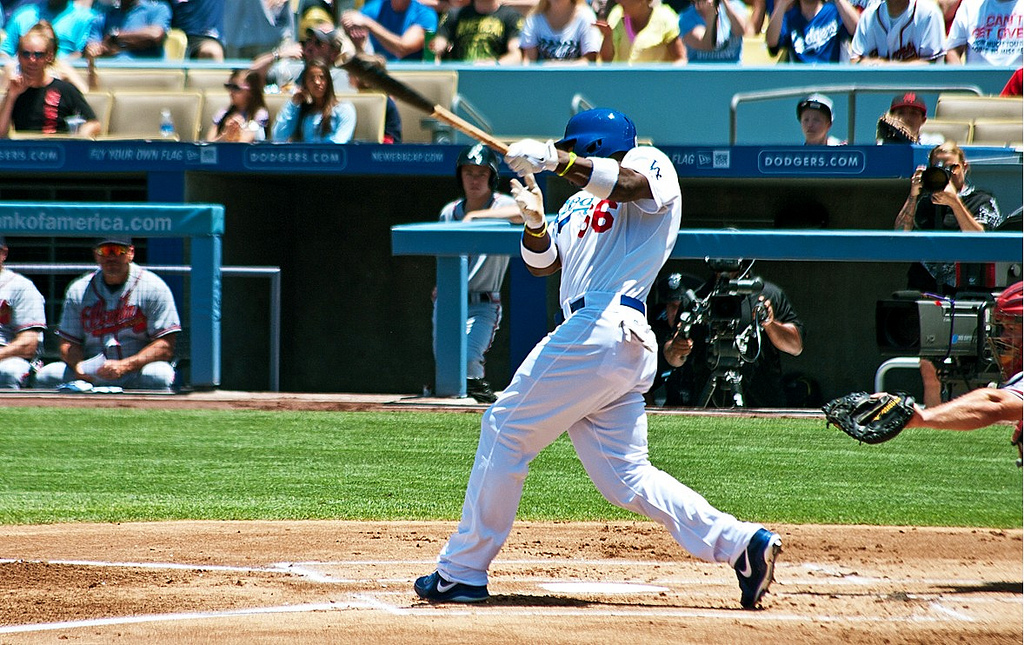
Yasiel Puig, Dodgers’ outfielder, age 22.

Puig, who defected from Cuba in 2012, came up to the Dodgers on June 3.  In 38 games, Puig (6’3”, 240-pounds) has hit .391, with 8 home runs, 19 RBI and 5 steals.

Shelby Miller, Cardinals’ RHP, age 22.

The (6’3”, 215-pound) rookie – just six appearances in 2012 – has posted a 9-6 record with a .2.92 ERA, 29 walks and 112 strikeouts in 18 starts.   In 78 minor league starts, Miller went 29-21, 3.73 and struck out 472 batters in 383 2/3 innings.

Jose Altuve, Astros’ second baseman, age 23.

At 23, Altuve is in his third major league season (called up in July 2011).  The 5’5” 175-pound infielder was an All Star in 2012, when he hit .290, with seven homers, 37 RBI, 80 runs scored and 33 steals.  He remains a steady and solid performer in 2013, with a .280 average, three homers, 28 RBI, 37 runs and 21 steals in 86 games.

There’s a look at some of the “under-25” players that should be exciting to watch in the future.  Now, let’s briefly touch on a few players who fell just outside the “under-25” limitation, but also reflect baseball’s “changing of the guard.”

Aroldis Chapman – “bringing” excitement at 104 mph.

Aroldis Chapman, Red’s closer, age 25.

At 25, and in his fourth MLB season and second All Star game, Chapman (of the 104 mph fastball) took a 3-3 record, with a 2.79 ERA, 21 saves and 64 strikeouts in 38 2/3 innings into the break.  In 2012, his first full year as closer, he notched 38 saves, with a 1.51 ERA and 122 strikeouts in 71 2/3 innings.

Paul Goldschmidt, Diamondbacks’ first baseman, age 25.

A 2013 All Star, Goldschmidt seems to just keep getting better.  As a rookie, in 2011, he hit .250, with eight homers and 26 RBI in 48 games.  In 2012, he played 145 games, with a .286-20-82 line (and 18 steals).  This season, he is hitting .313 and already has 21 home runs and an NL-leading 77 RBI, along with nine stolen bases.

Pedro Alvarez, Pirates’ third baseman, age 26.

Another 2013 All Star, at 26 Alvarez is in his fourth MLB season. A .240 career hitter, Alvarez has shown tape-measure power.  In 2012, he finished with 30 home runs and 85 RBI.  At the break this year, he stands at 24 homers and 62 RBI.

Lance Lynn, Cardinals’ RHP, age 26.

Lynn made the All Star as a rookie in 2012, when he went 18-7, 3.78.  Through the break in 2013, he is 11-4, 4.00.

Buster Posey, Giants’ catcher, age 26.

Hard to think of Posey as one of the up and coming youngsters, but – despite being in his fifth MLB season – he is only 26 (and already a Rookie of the Year, NL MVP, batting champ and two-time All Star).  At the break, Posey (a .316 hitter in 398 MLB games) sits at .325-13-56.

Chris Davis, Orioles’ first baseman, age 27.

A 2013 All Star, Davis makes this list at age 27 because he only became a player to watch in 2012.  In his first four MLB seasons, Davis averaged 74 games, a .251 batting average, 11 home runs and 34 RBI.  In 2012, he broke out with .270-33-85 and, this year, he went into the All Star break leading all of baseball with 37 home runs, boasted a .315 average and was second only to Miguel Cabrera with 93 RBI.

So, there are some of the “youngsters” BBRT thinks will make for some pretty good baseball over the next five to ten years.  There are others, of course (feel free to make suggestions in the comments), but these are a few that stand out for me.

BBRT tips its cap to the comeback (and then some) of Jason Grilli.

One final player, BBRT will be keeping an eye on is Pirates’ closer Jason Grilli, who seems to have found himself at age 36 (actually at age 34, but I’ll get to that).  In his first 11 MLB seasons, Grilli had five saves and an ERA north of 4.00.  The 2013 All Star, this year has an NL-leading 29 saves, 1.99 ERA, nine walks and 63 strikeouts in 40 2/3 innings.

Grilli’s is an interesting and inspiring story.  He made his major league debut in 2000 (Florida Marlins) and between 2000 and 2009 spent time with the Marlins, White Sox, Tigers and Rockies.  He suffered a severe knee injury during Spring Training 2010 (with the Indians), missed the entire season and ultimately filed for free agency.  In January 2011, Grilli signed a minor league contract with the Philadelphia Phillies and pitched well at Triple A before being released on July 20 (and signing a minor league deal with the Pirates the very next day).  Since joining the Pirates, Grilli has pitched 135 games, with a 2.52 ERA and 190 strikeouts in 132 innings.   BBRT will be watching for the Pirates to break their 20-year string losing seasons and make it to the playoffs – behind a league-leading performance in saves by Grilli.

For The Record – At The Break

Just a few days ago, Tigers’ third baseman Miguel Cabrera made headlines as the first MLB player to record 30 home runs and 90 RBIs by the All Star break – making him the sole member of an exclusive, if somewhat arbitrary, MLB “club.”  I use the term arbitrary because, while 30/90 are nice round numbers, neither are pre-All Star break records. More on that later, but BBRT can report that, thanks to a four-RBI performance on Sunday, Orioles’ first sacker Chris Davis – the main obstacle to a repeat Triple Crown by Cabrera – has doubled the size of the pre-All Star 30/90 club.

As we head into the break Cabrera stands at .365, with 30 home runs and 95 RBI – leading MLB in average and RBI and second (to Davis) in home runs.  Notably, Cabrera’s numbers are up in all three categories over those at the break in last year’s Triple Crown season (.324-18-71 at the 86-game mark).  Davis goes into the break at .316, with 37 home runs (leading MLB) and 93 RBI (second only to Cabrera).

Now about those AS break records. Davis’ 37 home runs are second to Barry Bonds, who had 39 HRs at the 2001 break.  Also at 37 homers at the break are Mark McGwire in 1998 and Reggie Jackson in 1969. (For a complete look at the 30-homers at-the-break club, see BBRT’s post of July 7, just add Cabrera to the list).


Hank Greenberg – 103 RBI at the break.

The record for RBI at the break is 103, by the Tigers’ Hank Greenberg in 1935 (at the 76-game mark).  Greenberg finished the season at 170 RBI.  The Tiger, the first to carry the nickname “Hammerin’ Hank,” was an RBI machine, leading the AL four times in his 13 MLB seasons and topping 130 in a season five times, with high of 183 in 1937.  In his peak years (1936-40), Greenberg averaged better than an RBI per game (777 RBI in 759 games).  The only other player to top 100 RBI at the break was Juan Gonzalez of the Rangers, who had 101 at the 1998 All Star break (87 games in), finishing the season at 157.  Gonzalez only led the league once in his 17 seasons, but did top 130 RBI four times.

Also making waves at the break is 41-year-old Mariners’ outfielder Raul Ibanez, who goes into the break at .267, with 24 home runs and 56 RBI – with the HR and RBI totals at the break the highest ever for a forty-plus player.  Ibanez is fast closing in on Ted Williams’ record of 29 homers in a full season for a player after his fortieth birthday. In his final season (1960), at age 41, Williams hit 29 homers in 113 games. Ibanez, who was an All Star only once (2009, when he hit a career-high 34 homers for the Phillies), is not on the All Star team.  He has 295 home runs to date, in an 18-year MLB career.

Another “oldie-but-goodie” who will be at the All Star Game is Yankee closer Mariano Rivera.  The 43-year-old Rivera has an MLB record 638 saves.  This season he has 30 saves and a 1.83 ERA – the saves represent his highest total ever at the break.  Rivera, in his final season, is going out in style. The record for saves at the AS break, by the way, belongs to Francisco Rodriguez, who had 35 saves for the Angels at the break in 2008 – on his way to an MLB record 62-save season.  In his peak four seasons (2005-2008), Rodriguez ran up 194 saves.  John Smoltz is close behind (and holds the NL record for saves at the break) with 34 saves for the Braves at the 2003 All Star break.  Smoltz, a full-time reliever for only three of his 22 seasons, recorded 144 saves from 2002-2004.  For you trivia buffs, Smoltz and Dennis Eckersley are the only two MLB pitchers to record seasons of 20 or more wins as a starter and 50 or more saves as a reliever.  This season, Jim Johnson of the Orioles is the saves leader at the break with 33 saves to go with a 2-7 record and a 3.71 ERA.

Rickey Henderson – 84 steals at the break.

A couple of other All Star break facts.  Rickey Henderson holds the record for stolen bases at the break.  In 1982, while with the A’s and on the way to an MLB single season record 130 steals, Henderson had 84 stolen bags at the break.   This year’s stolen base leader at the break is the Red Sox’ Jacoby Ellsbury with 36.

When it comes to wins at the AS break, your leader is the White Sox’ Wilbur Wood, who had 18 wins at the break in 1973. (He also had 14 losses, was not selected for the All Star Team and finished the season 24-20.)

Wilbur Wood 18 wins and the break and not an All Star selection.

The most wins for a pitcher who made the All Star team is 17 by the A’s Vida Blue (17-3 at the 1971 break) and the Tigers’ Mickey Lolich (17-6 at the 1972 break).  Blue finished 24-8 on the year, while Lolich ended up 22-14.  This year’s wins leaders at the break are Tampa Bay’s Matt Moore (13-3) and the Tigers’ Max Scherzer (13-1).

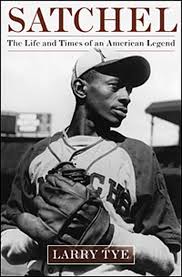
Stan Musial – An American Life


STAN MUSIAL – An American Life

By George Vecsey

2011

Ballantine Books. $26 (paperback $16)


Stan Musial – An American Life provides ample evidence that “nice guys can finish first,” but, perhaps, won’t be remembered as long (or revered as much) as their more controversial counterparts.  In 1999, Major League Baseball launched a fan vote to select the top twenty-five players of the twentieth century.  Saint Louis Cardinals’ outfielder/first baseman Stan Musial – a 20-time All Star, seven-time batting champ, three-time MVP and more – did not make the top twenty-five (in fact, he did not even make the top ten outfielders).

What were Musial’s credentials? It starts with a 22-year MLB career with the aforementioned 20 All Star selections, three MVP Awards and seven batting titles.  He also “finished first” in the NL in games played nine times; hits six times; runs five times; doubles eight times; triples five times; RBI twice; and total bases six times.  He ended his career with 3,630 hits and a .331 career average. He collected 1,377 extra base hits (475 home runs), and struck out only 696 times – never striking out 50 times in a season, and topping forty strikeouts only three times.

So, why didn’t the fan vote place Stan Musial among the top twenty-five?  What made him in this instance (unlike such peers as Joe DiMaggio and Ted Williams) forgettable?

Most speculate it’s because Stan Musial’s “story” was less compelling than his statistics.  He was substance without flash, competence without controversy, results without razzle-dazzle.  Musial was married to his high school sweetheart for more than 70 years, was never tossed out of a game, was an astute businessman who did not squander his money, never forgot his Catholic and Polish-American roots,and consistently avoided confrontation and controversy.  In short, while he was long on professionalism, he was deemed to be short on personality.

Fortunately, Baseball Commissioner Bud Selig had anticipated there would be “oversights” in the 1999 fan vote and had established a knowledgeable committee to add five players to the All–Century Team.  Their first addition was Stan Musial (followed by Christy Mathewson, Warren Spahn, Honus Wagner and Lefty Grove).

Notably, Musial remained true to form in handling the fans’ slight.  When reminded of how he was added to the All-Century Team, Musial (as always) took the high road.  “I wasn’t upset.  Not really.  There are 100 million fans, and only three million of them voted.  It’s what the fans wanted, and I’m happy to be here.  It’s human nature to look at your own generation.  It’s hard to analyze what happened fifty-sixty years ago.”

In Stan Musial –An American Life, New York Times sports columnist and best-selling author George Vecsey gives us a deeper look at Stan Musial.  It’s not your usual baseball biography – filled with on-field conflict and off-field controversy.  As you might expect, Musial comes off in the book as more interesting than exciting – and, in fact, the tales from Musial’s off-field life seem more compelling than what takes place on the field.  (BBRT would have liked to have seen a bit more on Musial’s on-field play and passion in the book.)

Still, readers will find plenty of anecdotes they will want to share. In the process, you will also gain some insight into the many individuals – some celebrities/some night – that became part of Musial’s life story.  Here are a few snippets that BBRT found interesting.

It’s pretty common knowledge that Musial started out as a pitcher and moved to outfield full-time after an arm injury.  What is less known is how well Musial did throw.  In his final season on the mound, playing for Daytona Beach (Class D) in 1940, Musial went 18-5, 2.62 with 223 innings pitched, 19 complete games and 176 strikeouts.  The minor league team carried only a 14-man rosters, so pitchers often found themselves in the outfield, where young Musial hit .311 in 113 games (and injured his arm diving for a ball).

Stan Musial was given his nickname Stan “THE MAN” not by Cardinals’ fans, but rather by Brooklyn Dodgers’ fans – out of respect for the way he manhandled Brooklyn pitching over the years.

Musial never forget his Polish and Catholic roots, making multiple trips to Poland; meeting with Nobel Prize winner Lech Walesa and even enjoying dinner and a small group private mass at the Vatican with Pope John Paul II (in 1988).   One of Musial’s travel mates on the trip described the Hall of Famer’s approach to the Pope as like “an altar boy in awe of the Pontiff.”

Musial was s staunch Democratic, hitting the presidential campaign trail for John Kennedy in 1960 as part of a group that included: Byron White (former football player and later Supreme Court Justice); James A. Michener (who became a close and long-time friend and traveling companion of Musial); Arthur Schlesinger; Ethel Kennedy; Joan Kennedy; actor Jeff Chandler; and actress Angie Dickinson. (Musial was also a George McGovern supporter in 1972).

Musial was a horrible poker player, a not-so-good magician and a decent harmonica player (who often, serenaded fans with “Take Me Out to the Ball Game.”

Musial trimmed his eyelashes to help him see the ball better.

Musial, always accommodating to the fans, began carrying autographed photos of himself to hand out, an idea he picked up during lunch with actor John Wayne.

Musial was always ready to model his unique corkscrew stance – even in later years, when he used his cane as a bat.

In presenting a mostly positive (openly admiring) picture of Stan the Man, Vecsey does not gloss over all criticism –  acknowledging Musial’s apparent avoidance of controversy and confrontation, particularly as it related to racial issues (or even general players’ rights) within baseball. Vecsey notes that some players, while seeing Musial as an inherently just man, felt he could have taken a stronger stance in relation to the issues facing baseball in his playing days.  As the Cardinals’ Curt Flood put it: “We admired Musial as an athlete. We liked him as a man. There was no conscious harm to him. He was just unfathomably naïve.”

Ultimately, Stan Musial – An American Life is an appropriate tribute to Stan the Man – a confident, gracious individual, who never forgot his humble roots and who choose quiet efficiency and inner optimism over controversy and the potential pitfalls of the limelight.

BBRT feels privileged to have seen Musial play – and to have felt the tension and anticipation that rippled across the stands when he went into his unique corkscrew stance.  BBRT wishes that tension could have emerged from the pages of Stan Musial – but, ultimately, the book reflects the inner character of its subject.  It’s a good read, especially if your interest is in the “man” and not just the ballplayer.

BBRT’s favorite anecdote from the book?  One of Musial’s team mates is reported to have told Stan that he felt so good, “I feel like going four-for-four today.”  To which Musial quickly replied, “Hell, I feel like that every day.”  And, as the statistics tell us,  justifiably so.

30 Homers Before the Break – Here’s the “Club of Clubbers”

Chris Davis in the “Club of Clubbers” 30 or more homers at the break.

In 2012, the Orioles’ Chris Davis, at age 26, had a career year – finishing with a .270 average and a career-high 33 home runs and 85 RBI.  In 2013, the 6’ 3”, 230-pound first baseman is hitting .324 and has already matched his 33 round trippers and 85 RBI of the 2012 season – with a week of games to go before the All Star break.  Here’s some background on the “30-HR before the break” club and Davis’ targets for the coming week.

First, only six players have hit more than 33 homers before the break – led by Barry Bonds 39 in 2007, when he finished with all-time MLB high of 73 dingers for the Giants.

Reggie Jackson and Mark McGwire are next with 37 pre-All Star Game homers.  Jackson for the A’s in 1969 (he finished with 47) and McGwire for the Cardinals in 1998 (finishing with 70).  Ken Griffey, Jr. of the Mariners had 35 at the break in 1998 (finishing with 56), as did Louis Gonzalez of the Diamondbacks in 2001 (ending the season with 57 homers).  Frank Howard of Senators reached 34 homers by the 1969 All Star break (finishing with 48).  We can expect Davis to move up this list over the coming week, although Bonds’ 39 seems out of reach.

Overall, 30 or more home runs before the All Star break has been achieved 34 times, by 26 different players, in MLB history (including Davis this year.)  Mark McGwire has done it most often – in 1987, 1997, 1998, and 2000.  The only others to reach the thirty mark at break time more than once are Ken Griffey, Jr. (three times); and Willie Stargell, Sammy Sosa and Barry Bonds (twice each).   Perhaps, the most surprising member of this “club of clubbers” is the Orioles’ Brady Anderson – who had 30 HRs at the break in 1996, on his way to a 50-homer season.  In his 15-year career, Anderson totaled 210 homers and his second-highest season total was 24.

McGwire is the only player to reach the 30 homer-mark before the break in both leagues (as well as for more than one team).  He achieved the feat with the A’s in in 1987 and 1997 and the Cardinals in 1998 and 2000.  McGwire holds some other distinctions among members of this club. He is the only player to be traded during a season in which he reached the 30-homer level by the break.  In 1997, McGwire had 33 homers at the All Star break and hit one more for the A’s before they traded him (July 31) to the Cardinals (where he went on to hit 24 more home runs).  McGwire is also the only rookie to reach 30 homers by the All Star break, with 33 in 1987, when the 23-year-old A’s rookie hit 49 and captured Rookie of the Year honors.

By decade, the 1950’s saw 30 homers reached before the break once; the 1960’s – five times; the 1970’s – four times; the 1980’s – three times; the 1990’s – 12 times; 2000-2009 – seven times; 2010-13 – twice.  1998 was the single most prolific year for “thirty-before-the break,” with the Cardinals’ McGwire going into the break with 37 HRs, the Mariners’ Griffey, Jr. at 35; the Cubs’ Sammy Sosa at 30; and the Padres Greg Vaughn at 30.

Here’s the full list of players with 30 or more homers at the break, with season-ending total in parenthesis.

39 HRs … Barry Bonds, Giants, 2001 (73)

37 … Reggie Jackson, A’s, 1969 (47)

37 … Mark McGwire, Cardinals, 1998 (70)

35 … Luis Gonzalez, Diamond backs, 2001 (57)

35 … Ken Griffey Jr., Mariners, 1998 (56)

34 … Frank Howard,   Senators, 1969 (48)

33 and counting, Chris Davis, Orioles, 2013

33 … Roger Maris, Yankees, 1961 (61)

33 … Sammy Sosa, Cubs, 1998 (66)

33 … Ken Griffey Jr., Mariners, 1994 (40)

33 … Matt Williams, Giants, 1994 (43)

33 … Mark McGwire, A’s, 1987 (49)

32 … Albert Pujols, Cardinals, 2009 (47)

32 … Sammy Sosa, Cubs, 1999 (63)

32 … Frank Thomas, White Sox, 1994 (38)

31 … Jose Bautista, Blue Jays, 2011 (43)

31 … David Ortiz, Red Sox, 2006 (54)

31… Jose Canseco, Devil Rays, 1999 (34)

31 … Mark McGwire, A’s & Cardinals, 1997 (58)

31 … Kevin Mitchell, Giants, 1989 (47)

31 … Mike Schmidt, Phillies, 1979 (45)

31 … Willie Mays, Giants, 1954 (41)

30 … Alex Rodriguez   , Yankees, 2007 (54)

30 … Jim Thome, White Sox, 2006 (42)

30 … Barry Bonds, Giants, 2003 (45)

30 … Mark McGwire, Cardinals, 2000 (32)

30 … Greg Vaughn, Padres, 1998 (50)

30 … Ken Griffey Jr., Mariners, 1997 (56)

30 … Brady Anderson, Orioles, 1996 (50)

30 … Dave Kingman, Mets, 1976 (37)

30 … Willie Stargell, Pirates     30, 1973 (44)

30 … Willie Stargell, Pirates, 1971 (48)

30 … Willie McCovey, Giants, 1969 (45)

30 … Harmon Killebrew, Twins, 1964 (49)

Some No-Hitter Facts and Figures

Homer Bailey – who threw 2012’s last no hitter – throws 2013’s first.

Reds’ right-hander Homer Bailey (“Homer” – unfortunate name for a pitcher) threw MLB’s first no-hitter Tuesday (July 2) night, as well as the last no-hitter of the 2012 season (September 28, 2012).  Pitching in Cincinnati’s  very hitter-friendly Great American Ballpark, Bailey shutdown the Giants 3-0 on 109 pitchers, walking just one, striking out nine. (Bailey took a perfect game into to the seventh.)  It was MLB’s 280th recognized no-hitter, and Bailey became just the 31st pitcher to throw multiple no-hitters.  A list of those hurlers follows, but first a few no-hitter factoids.

Consecutive no-hitters:  Two – by Johnny Vander Meer of the Reds, as he shut down the Boston Braves 3-0 on June 11, 1938 and the Brooklyn Dodgers 6-0 on June 15, 1938.

Two no-hitters in one season:  Johnny Vander Meer, Reds, 1938; Allie Reynolds, Yankees, 1951; Virgil Trucks, Tigers, 1952; Nolan Ryan, Angels, 1973; Roy Halladay, Phillies, 2010 (one in post-season).

Pitchers who have thrown a no-hitter in both the AL and NL Cy Young (Cleveland Spiders/NL and Boston Americans and Red Sox/AL);  Jim Bunning (Detroit Tigers/Philadelphia Phillies); Hideo Nomo (LA Dodgers/Boston Red Sox); Randy Johnson (Seattle Mariners/Arizona Diamondbacks); Nolan Ryan (Houston Astros/California Angels/Texas Rangers).

Opening Day no-hitters:  On April 16, 1940, the Indians’ Bob Feller threw the only Opening Day no-hitter, topping the White Sox 1-0 at Comiskey.

World Series no-hitter: Yankee Don Larsen’s October 8, 1956, perfect game against the Dodgers in game six of the ’56 Series is the only World Series no-hitter.  Roy Halladay threw the only other post season no-hitter to date, as he topped the Reds in game one of the 2010 NL Division Series (October 6, 2010).

Most pitchers used in a combined no-hitter:  Six.  On June 11, 2003,  Roy Oswalt started for the Astros against the Yankees, but aggravated a groin injury in the second inning (having not given up a hit).  Oswalt was followed to the mound by Pete Munro, Kirk Sarloos, Brad Lidge, Octoavio Dotel and Billy Wagner – and the six hurlers combined to no-hit the “Bombers” 8-0.

Pitchers who hit homers while pitching a no-hitter:  On June 23, 1971 Rick Wise of the Phillies went two-for-four, with two homers and three RBI, while no-hitting the Reds 4-0 in Cincinnati.  Wise is the only hurler to go deep twice while tossing a no-hit game.  And this was no easy no-no.  It was against the “Big Red Machine,” with a lineup featuring such hitters as Pete Rose, George Foster, Johnny Bench, Tony Perez, Lee May. Other pitchers to homer (once) in the midst of a no-hit game are the Indians’  Wes Ferrell, in a April 29, 1931, 9-0 no-hit win over the Saint Louis Browns and the Tigers’ Earl Wilson, in a June 26, 1962, no-hitter victory over the Angels.

Most walks in a no-hitterEleven by Blue Moon Odom and Francisco Barrios, as the White Sox topped the A’s (Odom was with the White Sox by then) 2-1 on July 28, 1976.  Odom lasted just five innings.  He was relieved – holding a 2-1 lead – after walking the lead-off hitter in the bottom of the sixth (and going 1-0 on the next batter).  Francisco Barrios came on and finished the game, allowing no hits, but walking two more in four innings of work.

Most walks in a no-hitter by one pitcher: Ten by Steve Barber in a combined no hitter.  Barber took a no-hitter, albeit with seven walks, and a 1-0 lead into the top of the ninth as his Orioles played the Tigers in Detroit on April 30, 1967.  Barber walked the first two batters in the final inning. Then a sacrifice move them to second and third.  A wild pitch followed, plating the tying run.  Barber walked the next hitter, and was relieved by Stu Miller.  Miller finished up the no-hitter, but the go ahead run scored on an error, giving the Tigers a 2-1 win without the benefit of a hit.   The Reds’ Jim Maloney also walked ten (and struck out twelve)  in no-hitting the Cubs 3-0 in ten innings on August 19, 1965.

Most walks in a nine-inning “solo” no hitter by one pitcher:  Nine by A.J. Burnett as his Marlins topped the Cubs 3-0 on May 12, 2001.  Burnett also hit one batter and threw one wild pitch.

Most no-hitters thrown under the influence of LSD:  One by Dock Ellis, see post of June 12, 2013.

Now here’s your multiple no-hitter list:


Seven no-hitters
:   Nolan Ryan

Four:  Sandy Koufax

Three:  Larry Corcoran, Bob Feller, Cy Young

Two:  Homer Bailey, Mark Buehrle, Jim Bunning, Carl Erskine, Bob Forsch, Pud Galvin, Roy Halladay, Ken Holtzman, Randy Johnson, Addie Joss, Dutch Leonard, Jim Maloney, Christy Mathewson, Hideo Noma, Alllie Reynolds, Frank Smith, Warren Spahn, Bill Stoneman, Virgil Trucks, Johnny Vander Meer,  Justin Verlander, Ed Walsh, Don Wilson

For more on no-hitters, see BBRT 2012 posts of  Sept. 29, August 16, July 15 and June 9. 


Yasiel Puig – 2013 Surprise? Well, kinda.

Another month of the MLB season in the books and it’s time for BBRT to again look at a few of 2013’s surprises and disappointments.  In past end-of-the-month posts, I’ve covered such surprises as Brewers’ shortstop Juan Segura (still hitting .326 as June closed), Matt Harvey’s great start (and he closed June at 7-1 with a NL-low 2.00 ERA); Clay Bucholz’ sub-2.00 ERA for Boston; Carlos Gomez’ new found offense with Milwaukee and the performance of the Pirates, Red Sox and A’s.   We’ve also looked at a few disappointments like R.A. Dickey, Josh Hamilton, David Price and the Blue Jays, Angels, Dodgers and Nationals.  In this post, I’ll try not to repeat those past observations and shed some light on a few new surprises that have emerged.

Yasil Puig – surprisingly good!

The number one surprise on most lists is the Dodgers 22-year-old Cuban outfielder Yasiel Puig.  No one is surprised that he’s been good since his June 3 call up, but what is surprising is just how good.  Puig has put up some impressive numbers including a .436 average in his first MLB month (26 games).  But should we be that surprised?  This is the player who, in 2012, hit .400 in nine games in the Rookie league, .327 in 14 games at High A, then hit .526 in Spring Training, followed by a .313 average with eight homers and 26 RBI at Double A before his call-up.

There’s been a lot of talk about Puig’s 44 hits (in his first MLB month) being second only to Joe DiMaggio’s 48 hits as a rookie in May of 1936.  Here’s an in-depth comparison of the first month of action for Yasil and Joe.


Size:  Puig – 6’3”, 245 lbs.; DiMaggio – 6’2”, 193 lbs.

Age:  Puig – 22: DiMaggio – 21

Games Played:  Both – 26

At bats:  Puig – 101; DiMaggio – 126

Hits: Puig – 44; DiMaggio – 48

Averagre:  Puig – 436; DiMaggio -.381

Runs: Puig – 19; DiMaggio – 30

RBI: Puig – 16; DiMaggio – 28

Doubles: Puig – 5; DiMaggio – 15

Triples: Puig – 1; DiMaggio – 4

Home Runs:  Puig – 7; DiMaggio 4.

Two surprising stat lines for a first month’s work in the majors.

The two teams with the best won-loss records for the month of June are a bit of a surprise, the Pirates and the Blue Jays both ran up 17-9 records for the month.  However, that leaves the disappointing Blue Jays still in last place in the AL East (after a dismal start), while the surprising Pirates ended June leading the NL Central and with the most wins (51) of any MLB team.  It looks like they might surprise us with their first winning season in 21 years. Go Buccos!

The NL West standings are a surprise, with Arizona leading the pack, followed by Colorado, San Diego, San Francisco and Los Angeles.  Most projections saw a near reversal of that order – but as the month closed only 4 games separated the five NL West teams, so we can expect some change.

On the morning of July 1, the very “streaky” Cleveland Indians gave their fans a surprise – sitting atop the NL Central (tied with the Tigers).  Later that day, a Detroit loss put the Indians in sole possession of the Division lead.  How the Indians will fare in the second half remains to be seen, but their surprising success thus far helps identify the Tigers – with their power hitting and power pitching making them prohibitive pre-season Central Division favorite – a 2013 disappointment through June.  (BBRT still expect the Tigers to take the Central).

Michael Cuddyer of the Rockies has also been a 2013 surprise, finishing June on 27-game hitting streak (during which he has averaged .372).  Cuddyer – a career .274 hitter – was hitting .344 with 14 home runs and 48 RBI as June came to a close.

Forty-three-year-old Yankee closer Mariano Rivera continues to surprise on his “farewell tour,” with 26 saves and a 1.55 ERA as June came to a “close.”  Perhaps more unexpected is the performance of forty-year-old Oakland starter Bartolo Colon.  Now in his 16th season, Colon is 11-2 with a 2.79 ERA.

It also a bit surprising to see three catchers hitting .320 or better at the end of June, but not so much when they are Yadier Molina (.345), Buster Posey (.322) and Joe Mauer (.320).

Then there is the ongoing American League Miguel Cabrera/Chris Davis “show.”  As of June 30, Cabrera has the AL’s number one average (.373), followed by Davis (.332); Davis is the AL home run leader (31), with Cabrera number-two (25).  Cabrera leads the AL in RBI at 82, with Davis in the two spot at 80.  The pair also rank 1 & 2 in runs scored, slugging percentage, on-base percentage and total bases.  As it stands, Cabrera is actually improving on his 2012 Triple Crown season, but may not capture the TC this year, while Davis is exceeding 2012 “career year” of .270-33-85.

The Diamondbacks’ Pat Corbin has also surprised, going 9-0, 2.22 through June.  Corbin’s performance is a big reason the Diamondbacks sit atop the tight NL West (at the end of June, Corbin was the only Arizona starting pitcher with a winning record).  First baseman Paul Goldschmidt, building off a solid 2012 was the surprise NL RBI leader as of June 30, with a .305-19-67 line.  No other Diamondback had more than 27 RBI or 7 homers.

So, there’s a look at a few 2013 MLB surprises through June.  More to come as the season progresses.

Scherzer – Twelve and Oh, A Long Way To Go


Scherzer — 12 and O and a long way to go.

The Tigers’ Max Scherzer last night became the first hurler since Roger Clemens (in 1986) to start a season 12-0.  He is also the first Tiger to accomplish that feat.  Scherzer now stands at 12-0, 3.10 ERA with 131 strikeouts (second in the AL to Yu Darvish) in 110 innings. And, how about that Tiger pitching?  As a whole, the staff is leading MLB with 736 strikeouts,  averaging 9.33 per nine innings.  Among the starters, Scherzer is at 10.69 K’s per nine, Justin Verlander at 10.21 and Anibel Sanchez at 11.13.

The next consecutive win targets for Mad Max? 

The AL record for wins to start a season is shared by Cleveland’s Johnny Allen and Baltimore’s Dave McNally – who each ran off 15 wins before their first lost.  Allen accomplished his streak in 1937 (ending the season 15-1, 2.55), while McNally’s streak came in 1969, when he went 20-7, 3.22.

The NL and MLB records for consecutive victories to start a campaign belong to Hall of Famer Rube Marquard, who ran off 19 wins for the New York Giant before his first 1912 loss.  Marquard led the NL in wins that year at 26, while losing 11 and posting a 2.57 ERA.

How about total wins before the All Star break?  Out of reach.  In 1973, White Sox knuckleballer Wilbur Wood notched a record 18 victories by the break – and didn’t make the All Star team.  (He also had 14 losses on the way to a 24-20, 3.46 record).  His 24 wins led the AL, and he was saved from leading the league in losses by team mate Stan Bahnsen, who went 18-21.  For Wood, by the way, it was the third in a string of four straight twenty-win seasons (1971-74).

For you trivia buffs, the last hurler to league his league in wins and losses in the same season was Hall of Famer Phil Niekro, who went 21-20, 3.39 for the Braves in 1979.   Phil tied for the lead in wins with none other than his brother Joe, who went 21-11, 3.00 for the Astros. The Niekro brothers are the answer to the trivia query “What two brothers have the most MLB wins?”  Phil (318) and Joe (221) combined for 539 MLB victories. (Hall of Famer Phil, notably, led the NL in losses four straight seasons, 1977-80, going 71-76 in that span.  He pitched 24 seasons (until age 48) and went 318-274, 3.35.

Toby Harrah – He Could Have Left His Glove in the Dugout

Shortstops are in the news in MLB these days – as some “difference makers” at the position are rejoining line ups in need.

Hanley Ramirez is back with the Dodgers and, after a slow start, has gone 12-for-26, with two doubles, three home runs, six runs scored and eight RBI in his past eight games.

Jose Reyes is expected to return to the Blue Jays line up this week, having missed most of the season with a severe ankle sprain.  How much will he boost the resurging Jays?  Reyes, a league batting champ as recently as 2011 and a .292 career hitter, hit .395 with one home run, five RBI and five steals (in 10 games) before his injury.

Yankee captain Derek Jeter has begun taking fielding and batting practice and is expected back – to provide offense and leadership – after the All Star break.

Then there are those difference makers going the other way.  Like the Rockies’ Troy Tulowitzki, who recent went on the DL with a broken rib – and was hitting .347, with 16 homers and 51 RBI.

Anyway, all this media coverage surrounding the off-the-field status of shortstops led BBRT to recall a day when a particular MLB shortstop had a truly different kind of on-the-field day.


Toby Harrah – didn’t need the glove for the June 25, 1976 doubleheader – made good use of the bat though.

On this day, June 25, in 1976, Texas Rangers’ shortstop Toby Harrah played every inning of both games of a double header without ever getting a fielding chance.  Not that the ball wasn’t hit around the infield.  In game one, an 8-4 Rangers’ win over the White Sox, there were eleven infield put outs (not counting the catchers’ six putouts on strikeouts) and eight infield assists. (Second baseman Lenny Randle was most active with one putout and five assists.)  In game two, a 14-9 Rangers’ loss, there were fourteen infield put outs, twelve infield assists and three infield errors.  (Second baseman Lenny Randle was again the most active infielder with two putouts, six assists and two errors.)

On the other end of the spectrum, the most chances ever for a shortstop in a doubleheader is 25; the most in a nine-inning contests is 15 and the most in an extra-inning game is 21.

What Harrah didn’t have a chance to do with the glove, he made up for at the plate.  Apparently well rested due to inactivity in the field, Harrah finished the doubleheader with six hits in eight at bats, two home runs, two runs scored, seven RBI (five in the game one win) and one stolen base. 

For trivia buffs, by the way, Harrah and Bump wills remain the only ML player to hit back-to-back inside-the-park home runs.  It happened in the seventh inning of an 8-2 Rangers’ victory at Yankee Stadium on August 27, 1977.   (The Rangers hit a total of five homers in that game.)

Three Hits In An Inning – A Rare Batting Feat

Gene Stephens first American Leaguer to collect three hits in one inning.

Sixty year ago today (June 18, 1953) Boston Red Sox left fielder Gene Stephens – a 20-year-old rookie (only 21 games the year before) – became the first American Leaguer to collect three hits in a single inning.  In the seventh inning of the Red Sox’ 23-3 win over the Tigers (at Boston), Stephens went single-double-single as the Sox plated 17 runs.  Stephens scored twice and drove in three runs that inning.  The three hits were his only safeties of the game, in which Boston collected 27 hits, as he finished three-four-six with three runs, three RBI and one walk.

Stephens’ breakout inning was remarkable in that he finished the season hitting just .205 in 78 games.  Stephen, a career .240 hitter lasted twelve seasons as a backup outfielder, playing in 964 games.  For one inning, he was truly unstoppable.

The only other AL player to collect three hits an inning also took the field for the Red Sox.  Center fielder and lead-off hitter Johnny Damon, on June 27, 2003, nearly hit for the cycle collecting a double (he later scored), a triple (two RBI and he later scored) and an RBI single, as Boston ran up a 14-run first inning against Florida (in Boston).  The game ended 25-8, with the Red Sox racking up 28 hits.    Damon came to the plate four more times in the contest, but didn’t complete the cycle – collecting two more singles.  His day went five-for-seven, with three runs scored and three RBI.  Damon hit .284 over 18 MLB seasons (1995-2012), with 2,769 hits in 2,490 games.

Three players have collected three hits in an inning in the National League – all before 1900 and ALL IN THE SAME INNING OF THE SAME GAME.   It came as the Chicago White Stockings (who later became the Cubs) scored 18 runs in the seventh inning of a 26-6 win over the Detroit Wolverines.  In the seventh inning of that that game the White Stockings’ Tom Burns collected two doubles and a home run, Fred Pfeffer smacked a double and two singles, and Ned Williamson rapped a double and two singles.  It was the final game of a three-game series in Chicago, with the White Stockings winning the first two by scores of 13-1 and 14-1.  For the season, Burns hit .294 (later finishing a 13-year MLB career at .266); Williamson hit .276 (later finishing a 13-year MLB career at .255); and Pfeffer hit .235 (later wrapping up a 16-year MLB career at .256.)

BBRT also gives a shout out and congratulations to Woodside (CA) High School Junior Brad Degnan who not only collected three hits in one inning , but rapped three homers in one inning.  It was in the 19-run first inning of Woodside’s 24-6 win over Westmoor High on April 18, 2013.  Brad, by the way, wears lucky number 13.