Beating Injuries and the Odds – Albers and Ziegler, a Lot in Common

My Minnesota Twins (BBRT hails from Minnesota) are currently excited about 27-year-old rookie lefthander Andrew Albers, who has started his major league career with 17 1/3 scoreless innings pitched (two starts, two wins, one complete game shutout, six hits, one walk, four strikeouts).   Albers, in fact, might have two complete game whitewashes to his credit, except Twins skipper Ron Gardenhire thought he was tiring and pulled him from his last start with one down and two runners on (single, walk) in the ninth.

Gardenhire didn’t prove to be much of a prognosticator before Albers took the mound yesterday for his second start, noting that “If he goes out and tries to duplicate what he did before, he’ll get in trouble.”  Albers not only duplicated his first start, he took it to the next level, in a 102-pitch, 3-0 win over the Indians.

The publicity surrounding Albers’ start got BBRT to thinking about the MLB record holder for scoreless innings at the start of a career – current Diamondbacks’ reliever Brad Ziegler, who came up with the A’s in 2008 and pitched 39 major league innings before being touched for a run.  Albers and Zeigler, it turns out, have a lot in common – including college stardom, significant injuries, being released by the MLB team that originally signed them, stints in independent league ball, making the best of second chances and PERSEVERANCE.  Note:  It’s stories like these that help fuel BBRT’s love of the game.

Albers, who was a standout hurler at the University of Kentucky, was drafted in the tenth round (Padres) of the 2008 draft, and made five appearances in the 2008 Arizona Rookie League.  He injured his pitching elbow during 2009 Spring Training and missed the entire season (and was released by the Padres) after Tommy John surgery.  In 2010, Albers pitched (and pitched well … 3-0, 17 saves, 1.40 ERA) for the Québec Capitales of the independent Can-Am Association.  After a 2011 tryout, the Twins signed Albers to a minor league contract.  He went on to put up a 24-10 record, with a 2.91 ERA over the past three minor league seasons, 11-5 with a 2.86 ERA in 22 Triple A starts this year.


Brad Ziegler, despite two skull fractures, he is giving HITTERS headaches.

Brad Ziegler, despite two skull fractures, he is giving HITTERS headaches.

Ziegler, like Albers, was a standout pitcher in college, setting Southwest Missouri State (now Missouri State) records for starts, wins and strikeouts.  He was drafted by the Phillies in the 20th round of the 2003 MLB draft.  Ziegler, however, threw only six minor-league innings, before being sidelined by shoulder tendinitis.  Like Albers, Zeigler was released by his first MLB organization (just before the start of the 2004 season) and ended up pitching in the independent leagues (Schaumburg Flyers of the Northern League) – where his performance (four starts, three wins, 1.50 ERA) earned him a spot in the Oakland A’s organization.  (Oakland had originally drafted Zeigler in 2002, but he elected to return for his senior year at MSU.)

Zeigler pitched well at Oakland’s Modest0 (High A) club in 2004, going 9-2, 3.90, as Modesto made the playoffs. Then, while pitching in the playoffs, injury struck again – in the form of a line drive that fractured Ziegler’s skull.  Zeigler, however, recovered and pushed.   From 2005 until his call up in 2008, he moved steadily up the A’s minor league ladder.

It was during this time, actually in 2007, that the A’s asked Ziegler to try more of a sidearm approach – and Ziegler went 12-3, 2.41 as a reliever (Double A and Triple A) in 2007.   He continued to refine his new delivery in 2008 and was 2-0, 0.37 ERA in 19 appearances at Triple A Sacramento, when the A’s called him up in late May. (Note: If all of Ziegler trials weren’t enough, he also suffered a second skull fracture in January of 2008, the result of a deflected throw at a youth baseball camp.)

In his first MLB game, Ziegler pitched one-third of an inning (giving up a single) in an 8-4 loss to Texas.  Twenty-eight appearances, and 38 2/3 innings pitched, later, Ziegler still had not given up an earned run.  In those 39 innings, he gave up just 21 hits, while walking 11 and striking out 18 – and, as of August 8, earned the A’s closer role.

Ziegler’s streak came in the ninth inning of an August 14th game against the Tampa Bay Rays.  After pitching a 1-2-3 eighth, Ziegler gave up a run on a single by Akinori Iwamura and a double by B.J. Upton (the first extra base hit Ziegler had allowed).  Ziegler ended the season with 47 games pitched, a 3-0 record, 11 saves and a 1.06 ERA.  He remains active today, pitching for the Arizona Diamondbacks, where he has a 6-1 record, with seven saves and a 2.19 ERA.

Zeigler and Albers, persevering, despite the odds.

Chin Music – A Darn Good Read

Chin1Chin Music

by Lee Edelstein

SELA House, 2012

$14.95

“Chin Music” author Lee Edelstein describes himself as a retired entrepreneur who finally has time to write.  After reading Chin Music, I wish Edelstein had found time to combine his passion for prose and the national pastime sooner.  He brings readers an inspiring story and an endearing cast of characters that are easy to read and easy to like.

Chin Music is more than just a baseball book, it’s a book about life – about tragedy, triumph and the importance of relationships.  It has mystery, history, action and even romance.   Baseball – from the Yankees of the mid-1920s, to the world of sports memorabilia, to the ball fields of today – is the thread that weaves it all together.

The story centers around Ryan Buck, a talented and tormented high school athlete. He has survived a devastating car crash that took his father’s life and his brother Michael’s left leg.  Yet Ryan, suffering survivor’s guilt that has spurred recurring nightmares and blocked memories of the accident, may be the most damaged of all.  Ryan is just beginning to find some release on the baseball diamond (exceptional speed and glove, strong arm, but alternately magnificent and miserable at the plate), when a mystery from generations past sends ripples through the Buck family’s lives and Ryan’s future.

The roots of that mystery lie in Saint Petersburg, Florida, and the 1926 New York Yankees’ Spring Training Camp.  Early in the book, Edelstein takes us back to that time and geography.  He sets the scene skillfully (and believably), working the vernacular of the day and historically accurate set points into his prose.

Chin Music’s early flashbacks prove not just essential to the story, but also informative and entertaining.  They are, in the words of the day: copacetic; the berries; or even the cat’s pajamas.   Readers meet Ryan’s great-great grandmother Zel, one of St. Petersburg’s first lady barbers (which male residents found quite revolutionary).  Zel is relegated primarily to cutting children’s hair – until Babe Ruth drops into Spud’s Barber Shop and chooses “the dame” for his daily shave and bi-weekly haircut.  As the relationship between Zel and The Babe develops, Edelstein also provides plenty of entertaining insight into the times.  Zel’s weekly budget, for example, includes nine-dollars a week boarding house rent (which covers her room, five suppers and one brunch) and seventy-cents a day for “breakfast, lunch, a Dr. Pepper, an occasional picture show, and miscellaneous items like toiletries and the chocolate candy she craves.”

Without giving away the story, the relationship between Zel and The Babe eventually involves trips to the ball park, a game-used bat and hat, a yellow flapper dress, Rum and Dr. Pepper, a few of the Babe’s hair clippings, the Sultan of Swat’s penchant for cigars, and Zel’s treasured personal journal.

From 1926 Spring Training, the story moves to the 21st century, with Ryan’s mother Susan facing the prospect of selling some of the Buck family’s Babe Ruth memorabilia (to meet Michael’s ongoing medical expenses) which has been passed down through the generations.    This brings Susan together with retired memorabilia collector/seller Sam Frank, who sums up his relationship with baseball early on, stating “Baseball is a part of me.  It’s a place I keep going back to.”   Soon, the Buck household also becomes a place Sam keeps going back to and, as he becomes closer to the family, he sees not only the potential of the Babe Ruth items to bring considerable value at auction, but also the potential of young Ryan on the ball field.

There is, of course, the need to authenticate the Babe Ruth memorabilia and to do that Susan and Sam must rely on Zel’s journal – the pages of which surface a mystery that has plagued (even divided) the Buck family for generations.  Resolution of that mystery, Sam discovers, has the potential to change the Buck family’s lives not just for now, but for generations to come.  Solving that mystery, ultimately, changes not only the Buck family, but baseball itself.

If you are looking for page-after-page of inning-by-inning baseball action, detailed accounts of bad locker room behavior, or obscure statistics like Wins Above Replacement (WAR) or Fielding Independent Pitching (FIP), Chin Music may not be the book for you.  However, if you are looking for a solid, well-written story that blends tragedy, redemption, mystery and even romance – all with a baseball hook – Chin Music is a darn good read.  BBRT recommends it – not just for baseball fans, but for anyone who likes an inspiring and entertaining tale.   Chin Music available at  http://amzn.com/dp/0988343401


Baseball Haiku

PEDs have muddied up the record books.

PEDs have muddied up the record books.

P-E-D scandal

Puts asterisk in my heart

Marks tainted records


More Baseball Haiku from BBRT on Twitter  @DavidBBRT     #BBHaiku

Tom Cheney’s Remarkable 21-Strikeout Performance

Cheney, sent 21 Orioles down swinging and looking, in a record-setting performance.

Cheney, sent 21 Orioles down swinging and looking, in a record-setting performance.

As Yu Darvish notched 14 strikeouts in seven innings yesterday, BBRT observed a lot of online chatter about his chance to reach the twenty-strikeouts in a game record of Kerry Wood and Roger Clemens. Woods and Clemens did indeed strikeout 20 batters in a nine-inning game (as did Randy Johnson in the first nine-innings – before being relieved – of an 11-inning contest).  What I didn’t read was much recognition for a slight (5’11”, 170-pound) righthander named Tom Cheney, who struck out a record 21 hitters in a single (extra inning) major league game – a 16-inning contest between the Washington Senators and Baltimore Orioles (in Baltimore) on September 12, 1962.  So, BBRT will use this post to give Cheney his “props.”

The 27-year-old Cheney began the night with a 5-8 record on the season (and a 9-18 career record).  He didn’t strike out anyone in the first inning, and had only one strikeout after two, but players later said his curveball was electric and he had total control of his fastball.  The result?  After sixteen innings,  Cheney had a complete game, 2-1 win, and a new strikeout record.

His line looked like this.

IP        H    R    ER     BB    SO

16      10    1       1        4      21

The scoreboard looked like this:

Wash.  100 000 000 000 000 1      2  10  0

Balt.    000 000 100 000 000 0      1   10 2

Cheney threw 228 pitches.

Four players fanned three times each:  Second baseman Marv Breeding; Pitcher Dick Hall; Center fielder Dave Nicholson; Right Fielder Russ Snyder.

The losing pitcher was Dick Hall, who tossed 8 1/3 innings in relief.

The game was won on a home run in the top of the 16th by Senators’ first sacker Bud Zipfel, who also drove in the Senators first-inning run (on a groundout) and went three-for-seven in the game.  The 16th inning homer was the tenth and final home run of Zipfel’s two-year, 118-game major league career (.220-10-39).

The final out was a called strike out of pinch hitter Dick Williams (yes, the Dick Williams who went on to a long career as a major league manager.).  Williams, by the way, had a 13-year (1,023-game) MLB career as a player – in which he hit .260, with 70 homers and 331 RBI.

Cheney finished the year at 7-9, 3.17, and went 19-29, 3.77 for his eight year MLB career (1957-66).

Inning by inning strikeouts for Cheney looked like this:

1st  –  0

2nd  – 1

3rd  –  3

4th  –  1

5th  –  3

6th  –  1

7th –   0

8th –   2

9th  –  2

10th – 2

11th – 2

12th – 0

13th – 0

14th – 2

15th – 1

16th – 1

2013 MLB Season through July – Points of Interest

Another month in and it’s time for BBRT to again review some 2013 MLB surprises and disappointments.  A couple of these are, of course, repetitive – as some surprises (the Pirates) appear poised to stay the course and a few disappointments (the Blue Jays)  continue to flounder.  BBRT won’t touch on all the surprises, but here’s an overview of a few things that have caught my attention through July.

NL East


Braves enjoying big lead.

Braves enjoying big lead.

Braves’ big lead in the East.  It’s a bit of surprise that the Braves are walking away with the Division – an 11-game lead as we go into the dog days (of August).  But it’s not because the Braves are surprisingly good, it’s because the rest of the division, including the division favorites – the Washington Nationals – are surprisingly bad.  In fact, the second place Nationals end August four games under .500. Overall, the Braves stand 18 games over .500, while the rest of the division is 34 games under.

Nationals’ offense.  For the preseason favorite Nationals, the culprit is a disappointing offense, which has outscored only Miami in the NL – the Nats were fifth in the NL in runs in 2012.  Lack of run support has also meant that Stephen Strasburg stands at a disappointing 5-9 in his much anticipated “no-shutdown” season, despite a 3.04 ERA.  (Strasburg was 15-6, 3.16 in 2012.)

Chris Johnson. As far as the division-leading Braves (NL’s third best in NL in runs, leading in HRs) go, the biggest surprise may be 28-year-old third baseman Chris Johnson, a .289 career hitter, leading the NL in average at .342 (six homers, 37 RBI).

B.J. Upton.  The Braves also have one of the division’s major disappointments in B.J. Upton (of the five-year, $75.2 million contract), who stands at .177-8-20, with seven steals, after 2012’s .246 – 28 HR – 79 RBI – 31 steal season with Tampa Bay.

 NL Central

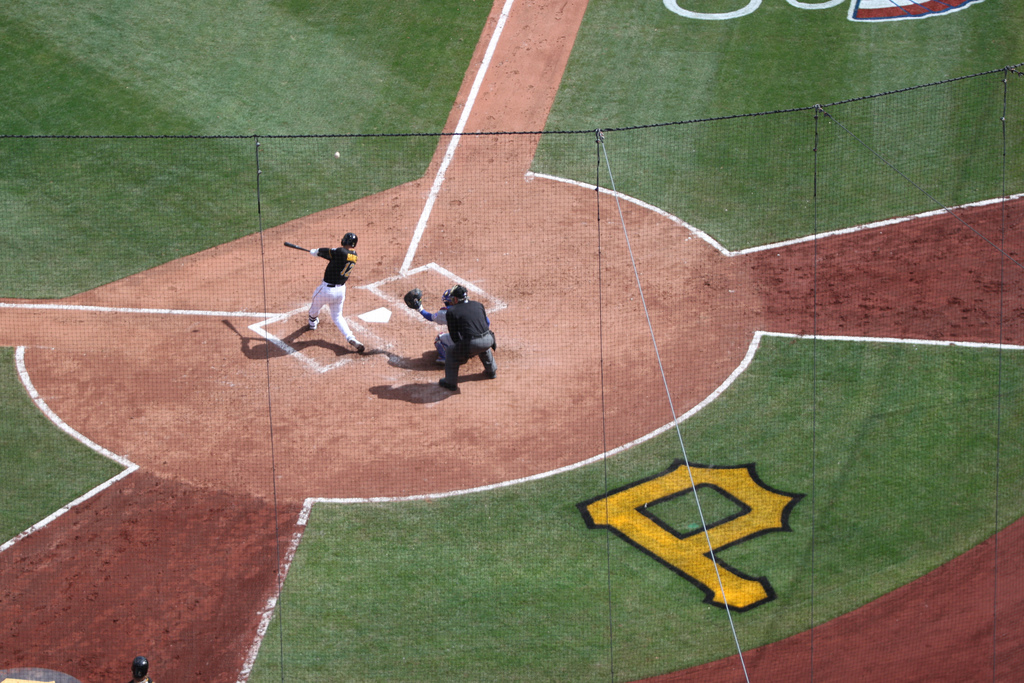
Pirates’ best record in MLB.  I guess it shouldn’t be a surprise anymore that the Pirates – who last had a winning season in 1992 – continue to play very good baseball.  Pittsburgh really surprised with the recent surge past the Cardinals.   At 65-42 (.607), Pittsburgh closed July with the best record in MLB.

BBRT will watch the Pirates closely.  On August 8 of last season, the Bucs were 16 games over .500 (63-47) – and finished the year 79-83.  In 2011, the Pirates were 53-47 on July 25, and finished at 72-90.  BBRT expects the Pirates to top .500 (and make the playoffs) this year, but it ain’t over ‘til it’s over in Pittsburgh.

Francisco Liriano.  The Pirates are doing it with pitching and the biggest surprise there is Francisco Liriano, whom the Twins and White Sox gave up on.  Liriano is leading the Pirates with 11 wins (four losses), boasts a 2.16 ERA and has rung up 100 strikeouts in 95 2/3 innings – despite not making his first start until May 11.  This is the same (well, not really) Liriano whose ERA has been north of 5.00 in three of the past four seasons (34-45 record since 2009).

Ed Mujica, Jean Segura, Carlos Gomez Ryan Braun.  A few other surprises in the Division:  The Cardinals’ 29-year-old unexpected closer Ed Mujica (with 2 saves in his previous seven seasons) has 30 saves and a 2.01 ERA; the hitting of the Brewers’ 23-year-old shortstop Jean Segura (.317-12-41) and outfielder Carlos Gomez (.301-17-52, despite a seven-season career average of .255); and Ryan Braun’s suspension (Nah, we all saw that coming).

NL West


Puig boosting Dodgers.

Puig boosting Dodgers.

Dodgers’ resurgence.  The surprise in the NL West is that the Dodgers are no longer one of MLB major disappointments – thanks in great part to the call up of 22-year-old outfielder Yasiel Puig (.364-10-23, with 36 runs in 50 games); the return of veteran shortstop Hanley Ramirez (.374-11-35, with 36 runs in 51 games) and the resurgence of Zack Greinke (3-1, 2.61 in July).   LA, by playing .760 ball in July (19-6), not only climbed back into the race, but went from last place at the end of June to first place at the end of July.

Disappointing reigning World Series winners.  The West’s major disappointment is the last-place Giants (2012 World Series winners in a sweep over the Tigers).  Pitching, supposedly a San Francisco strength, has been disappointing – 12th in the NL in ERA, despite standing second in strikeouts.Matt Cain has, perhaps, fallen the shortest of expectations, standing at 6-6, 4.79 – after 2012’s 16-5, 2.79.  His 2013 ERA is more than a full fun higher than his career (nine season) mark of 3.39.  Two-time Cy Young Award winner Ted Lincecum’s 5-11, 4.61 is an improvement over last season (10-15. 5.18), but nowhere near his previous form.

Michael Cuddyer’s bat.  Michael Cuddyer continues to be another West Division surprise.  The Rockies’ outfielder – a lifetime .275 hitter – posted a .329-17-62 line through July (hitting.356 at home and .304 on the road).

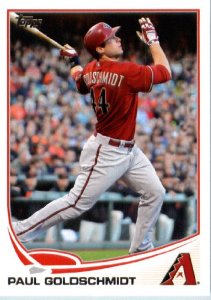
Paul Goldschmidt’s 86 RBI and Pat Corbin’s 12 wins. Another pleasant West Division surprise is the Diamondbacks’ first baseman Paul Goldschmidt leading the NL with 86 RBI, to go with 24 homers and a .303 average.  In his third MLB season, the 25-year-old Goldschmidt continued to trend upward.  Arizona lefthander Pat Corbin, in just his second MLB season, is also a surprise at 12-2, 2.24.

AL East

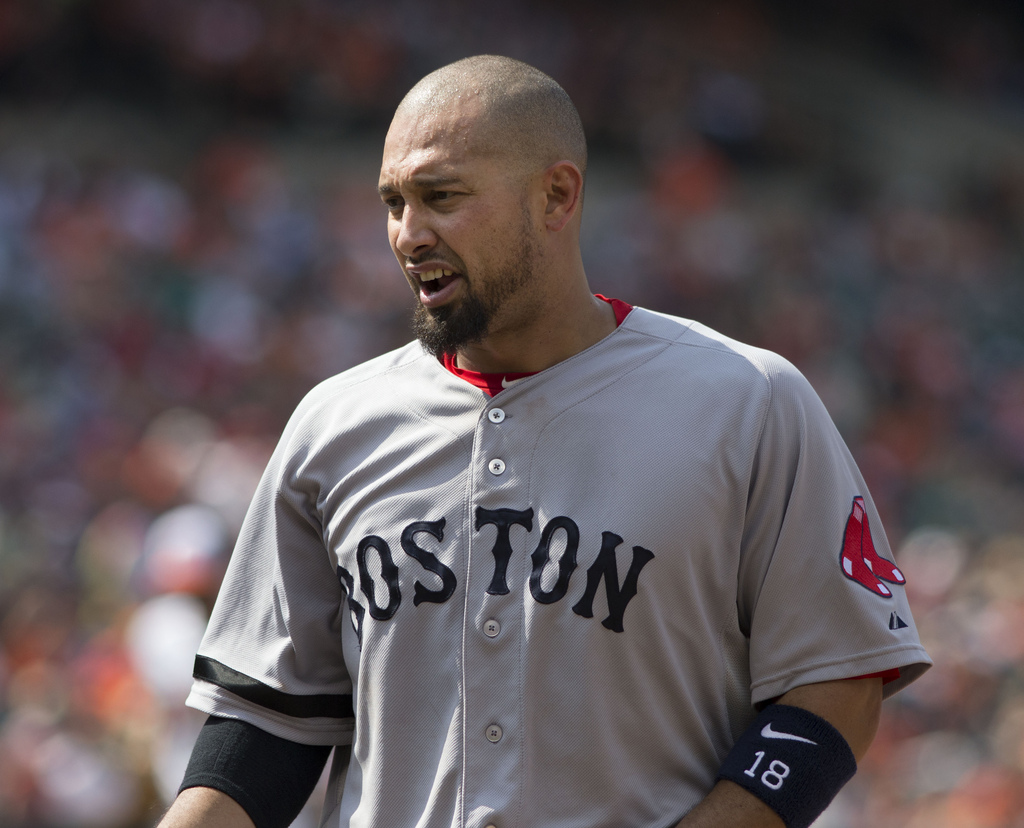
Boston leading the East.  Boston finishing July in first place in the AL East is a bit of a surprise; most analysts predicted a third place finish behind Toronto and Tampa Bay.  Boston leads the division in runs scored and is second in the AL to Detroit in that category.


Bib Papi. Big smile. Big bat.

Bib Papi. Big smile. Big bat.

Koji Uehara abnd David Ortiz.  A couple of “veterans” are the Red  Sox’ two biggest surprise.  Since taking over at closer (from Andrew Bailey) in late June, thirty-eight-year-old right-hander Koji Uehara has appeared in 18 games (eight saves, two blown saves, two wins), throwing 19 1/3 innings, logging 28 strikeouts against just one walk, and allowing just one earned run.  Just a year younger than Uehara, DH David Ortiz’ was boasting a .324-20-68 line as of July 31.

Yankees over .500, bullpen bearing the load.  The fact that the Yankees – despite age, injuries and controversy (read A-Rod) are still over .500 (56-51) – is a surprise.  The bullpen has helped keep the Yankees in the hunt (their offense ranks 12th in the AL runs scored and 14th in average and HRs – and only Hiroki Kuroda has an ERA under 4.00 among starting pitchers). The pen, led by the ageless Mariano Rivera (34 saves, 1.60 ERA) and set up man Dave Robertson (4-1, 1.83) has also gotten strong performances from Preston Clairborne, Boone Logan and Shawn Kelley.

The Blue Jays and R.A. Dickey.   Toronto, the preseason division favorite, is the biggest disappointment, facing a 14-game deficit in the AL East race.  The starting pitching is the biggest disappointment for Jays’ fans.  Last year’s NL Cy Young winner R.A. Dickey (20-6, 2.73 for the Mets), a key off-season addition, stands at 8-11, 4.66.

Chris Davis.  No longer a total surprise, but still a bit surprising is Orioles’ first baseman Chris Davis – closing out July with a .304 average, an MLB-leading 38 homers and an MLB-leading (tied with Miguel Cabrera) 99 RBI.  Davis is probably all that stands between Cabrera and a Triple Crown repeat.

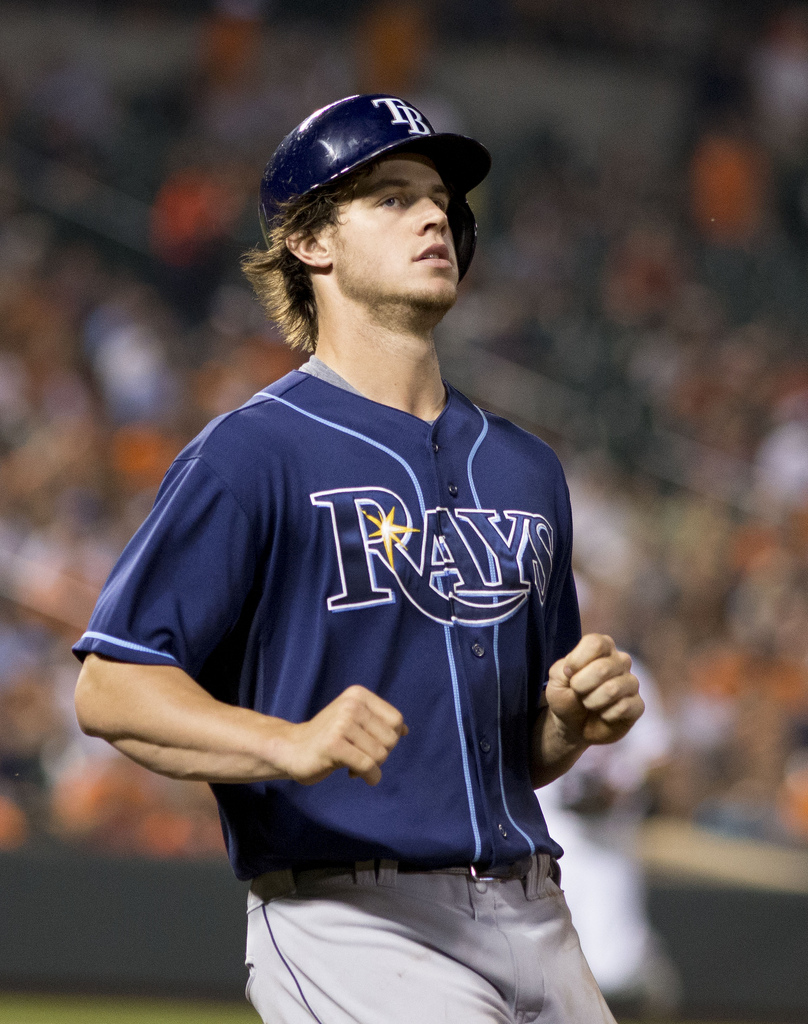
 Wil Myers.  Twenty-two-year-old Tampa Bay call up Wil Myers is also a surprise, not for how well he is doing (.331-7-27 in his first 36 games), but rather for how soon he was called up.

AL Central

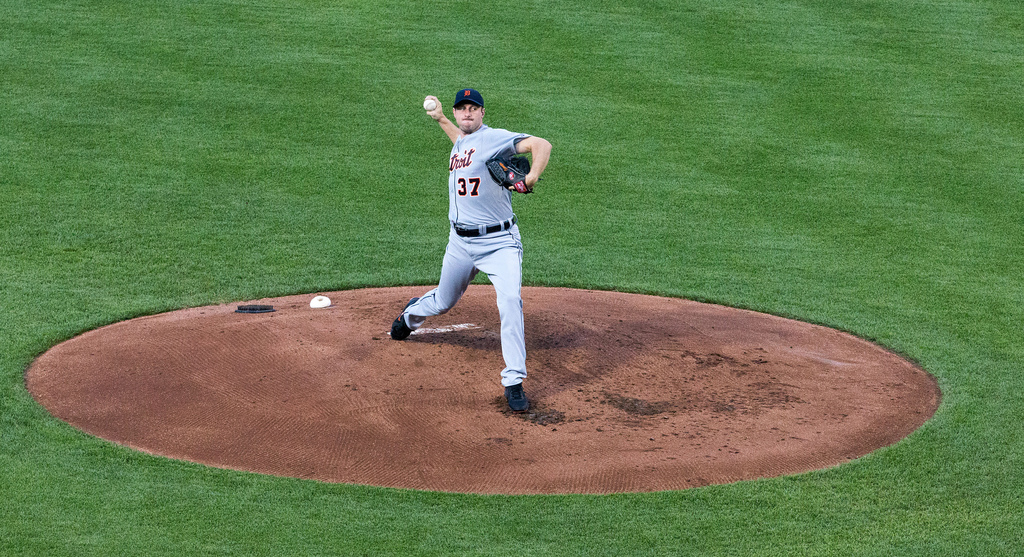
Scherzer leading Tigers to top.  Detroit is on top, followed by Cleveland. No surprise there – or anywhere else in the Central standings.  What may be a bit of surprise is that Detroit’s power pitching (fourth-best AL ERA and a league-leading 932 strikeouts in 957 2/3 innings pitched) is not being led by preseason Cy Young favorite Justin Verlander (11-8, 3.88, 138 strikeouts in 143 2/3 innings).  Max Scherzer, with two less starts than Verlander (21 vs. 23), has thrown an identical 143 2/3 innings, but surpasses Verlander in wins (leading MLB at 15-1), ERA (3.01) and strikeouts (164).

Torii Hunter.  Not to be outdone by the Red Sox in terms of contribution from veterans, 38-year-old Torii Hunter continues to wield a hot bat.  Hunter, has been a reliable source of offense (and defense), but did not reach .300 for the first 15 years of his MLB career, went .313-16-92 for the Angels in 2012) and stands at .316-11-53 for Detroit this year.

AL West

Oakland at top, Angels 14 out. Oakland at the top, and the free-spending Angels 14 games out and ten games under .500 constitutes a mild surprise and a major disappointment, respectively.

Hamilton and Pujols.  The Angels clearly expected more from Josh Hamilton (.226-16-50) after his .285-43-128 for Texas in 2012.  Same for Albert Pujols, who stands at .258-17-64.

A’s infield bats.  Oakland, on the other hand is getting surprisingly positive results from its infielders: third baseman Josh Donaldson (.297-16-43); shortstop Jed Lowrie (.293-8-43) and second baseman Eric Sogard (.273-2-19).

Bartolo Colon strong at 40. On the mound, the most notable surprise is the A’s 40-year-old Bartolo Colon (14-3, 2.50).

Iwakuma and Ibanez in Seattle.  Seattle’s had a couple of surprises this far.  Right hander Hisashi Iwakuma is 10-4, with a solid 2.76 ERA; while 41-year-old Raul Ibanez finished July at .252-24-57, within striking distance of the record of 29 home runs in a season for a player after reaching age forty.

So, there are some BBRT observations on the season through July.  Looks like a fun run to October, with plenty more surprises – and certainly a few disappointments – in store. 

Wow! Unprecedented Power Display!

Gotta watch this six-year-old Little Leaguer – five at bats, five first pitch home runs.
Move over Babe Ruth, there is a new Sultan of Swat on the rise.

Old Guys Rule – Franco is Their King

Jason Giambi - historic walk off homer.

Jason Giambi – historic walk off homer.

Jason Giambi of the Cleveland Indian yesterday punched his 436th career home run in dramatic fashion.  It was a ninth-inning, pinch-hit, walk-off homer that gave the Indian a 3-2 win over the visiting Chicago White Sox.  It also made Giambi, in his 19th major league season, the oldest player to hit a walk-off homer; at 42 years, 202 days.  The record had been held by Hank Aaron, who hit a walk-off in 1976 at 42 years, 157 days of age. It was Giambi’s 7 homer of the season, to go with a .194 average and 24 RBI.

Giambi might hold the only home run record not in the pocket of the ageless wonder – Julio Franco.  Franco is the oldest player to homer in a MLB game.   He turned the trick just shy of his 49th birthday (48 years, 254 days), hitting a two-run shot off Arizona’s Randy Johnson as Franco’s Mets topped the Diamondbacks 5-3.  (Franco started at first base in that game and went two-for-three.)  Franco is also the oldest player to hit a grand slam (46 years, 308 days) – connecting as a pinch hitter for the Atlanta Braves in a 7-2 win over the Marlins on June 27, 2005.  He’s the oldest player to record a multi-homer game, belting a pair of homers on June 18, 2005 (age 46 years, 299 days), as his Atlanta Braves topped the Reds at Great American Ball Park.  Franco started at first base and went two-for-four with two homers and three RBI.  And, finally, he’s also the oldest player to hit a pinch hit home run, in the eighth inning of a Mets’ 7-2 win over the Padres at San Diego (April 20, 2006 – 47 years, 240 days old).  Note:  Only 25 MLB home runs have been hit by players 45 or older – and 20 of those belong to Franco. 

Julio Franco - Old Guys rule and he is their king!

Julio Franco – Old Guys rule and he is their king!

In this post, BBRT would also like to reflect on another Julio Franco record – the oldest player ever put in as a pinch runner (47 year, 340 days).   It came on July 29, 2006, when the Mets’ first baseman and cleanup hitter Carlos Delgado was hit by a pitch in the top of the third inning in the New Yorkers’ 11-3 win at Atlanta.  Franco came in as a pinch runner (stayed in at first base, going two-for-three) and promptly stole second base, going to third on an errant throw.  Wow?  The old guy still had wheels.  (he’s the second-oldest player to steal a base, but that’s for another post.)

Now, here’s BBRT’s blatant pitch – Julio Franco for the BB Hall of Fame.  Let’s look at his career.  Franco came to the big leagues in 1982 at age 23.  From 1982 to 1994, he played primarily as a middle infielder and DH for the Phillies, Indians, Rangers and White Sox – making three All Star teams (MVP of the 1990 All Star game) and leading the league in hitting .341 for the Rangers in 1991 (went he collected 201 hits, 15 homers, 78 RBI, 108 runs scored and 36 steals.). In 1994, when the remainder of the season was lost to a strike, Franco was in the midst of his best season.  After 112 games, he was hitting .319, with 138 hits, 20 home runs, 98 RBI, 72 runs scored, and eight steals.

Franco was determined to stay active and signed to play in Japan with the Pacific League Chiba Lotte Marines In the 1995 Japanese season, Franco hit .306 and won the league’s equivalent of the Gold Glove at first base. Franco returned to MLB in 1996, joining the Cleveland Indians and going .322-14-76 in 112 games. In August 1997, the Indians released Franco –who was hitting .284-3-25 at the time, and he finished the season with the Brewers by hitting .241 in 14 games with Milwaukee.

In 1998, at age 39, Franco was back in Japan playing for Chiba Lotte. Then in 1999, he celebrated his fortieth year by hitting for a .423 average in the Mexican League and getting one more MLB late season at bat with the Marlins.

As he moved into his forties, Franco was far from finished as a player. He played in South Korea in 2000 (age 41) and then was back in the Mexican League in 2001 (Angelopolis Tigers), where stellar play earned him a spot on the Atlanta Braves roster.  From 2001 to 2007, the ageless wonder – professional hitter and pretty darn good first sacker – played for the Braves and Mets.  He finally retired from the field in 2008, while playing for the Tigres de Quintana Roo of the Mexican League (where he hit .250 in 36 games.)

Why the Hall of Fame?  In addition to the accomplishments above, in 23 MLB seasons, Franco hit .298, with 2,586 hits, a .298 average, 173 homers, 1,285 runs, 1,194 RBI and 281 stolen bases. He also collected 618 minor league (U.S) hits, 316 in the Mexican League, 286 in Japan, 267 in the Dominican Winter League and 156 in South Korea.  Clearly, Julio Franco is a player whose skills were evident across time and geography and whose contributions and character deserve HOF consideration.

Follow me on Twitter @DavidBBRT

Twitter – Something New for BBRT

twitterBBRT is giving Twitter a try.  Follow @DavidBBRT.   I’ll be tweeting baseball haiku, trivia questions and answers, comments on plays/players of the day and random thoughts.  Here’s an example – my first two haiku tweets.


Six to four to three

Graceful end to the inning

American ballet

                         and

Braun admits “mistake”

More names, shame, soon to follow

Game will survive


Ted Williams – Voice for Hall of Fame Integration

The other day, Willie Mays hit his five-hundred-and-twenty-second home run. He has gone past me, and he’s pushing, and I say to him, “Go get ’em, Willie.” Baseball gives every American boy a chance to excel. Not just to be as good as someone else, but to be better. This is the nature of man and the name of the game. I hope that one day Satchel Paige and Josh Gibson will be voted into the Hall of Fame as symbols of the great Negro players who are not here only because they weren’t given the chance.”

           Ted Williams’ Basesball Hall of Fame Induction speech

           July 25, 1966

Ted Williams urged Negro Leaguers join him in the Hall of Fame.

It was 47 years ago today that Ted Williams surprised the audience at his Baseball Hall of Fame induction by urging the inclusion of Negro League players in the Hall of Fame.  His sincere, vocal, publicly voiced vote of support is credited with providing an important first foot in the (HOF) door for Negro League stars.  The impact of Williams’ groundbreaking comments is held in such esteem that the speech is among the exhibits at the Negro League Baseball Museum.

Five years later (1971,), the Hall of Fame created a special committee to consider players who had been at least 10-year veterans of the Negro Leagues and were ineligible for regular Hall election. The special committee was dissolved in 1977 and action on Negro Leaguers was transferred to the Hall of Fame’s’ Veterans Committee.

It is likely no coincidence that Satchel Paige, specifically mentioned in Williams’ induction speech and often referred to by Williams as “the greatest pitcher in baseball,” was inducted in the first year Negro Leaguers were considered – nor that, in 1972, Josh Gibson (also mentioned in Williams’ speech) joined Paige in the Hall (along with Buck Leonard).

Note:  In addition to Williams’ support, the 1970 publication of Robert Peterson’s “Only the Ball was White” is credited with keeping the pressure on the Hall of Fame. 

Satchel Paige was the first Negro Leaguer to make the trip to Cooperstown.

Victory for Negro Leaguers (and baseball in BBRT’s estimation) did not come easy.  The initial plan was for a “separate-but-equal” display, along the lines of the Ford C. Frick Award for baseball broadcasters.  This approach, however, came under considerable criticism, with Satchel Paige himself saying he would accept no less than induction into the mainstream Hall of Fame.  As a result of the firestorm, Negro League players were admitted on the same basis as their Major League peers.

Here are a few additional Negro League/Baseball Hall of Fame/Ted Williams factoids:

– Ted Williams’ Boston Red Sox were the last team to integrate, with infielder Pumpsie Green joining the Sox on July 21, 1959.

– Former Negro Leaguers – who also played in MLB – elected on the traditional HOF ballots include: Hank Aaron, Ernie Banks, Roy Campanella, Larry Doby, Willie Mays, and Jackie Robinson.

– Effa Manley, co-owner  and business manager of the Newark Eagles in the Negro National League, was the first woman elected to the Baseball Hall of Fame.

– Hank Aaron was the last Negro league player to play as a regular in Major League Baseball.

– Minnie Miñoso was the last Negro league player to play in a Major League game, appearing in two games for the 1980 Chicago White Sox.

– Buck O’Neil was the last former Negro league player to appear in a professional game at any level when he made two appearances (drawing two intentional walks one for each team) in the Northern League All-Star Game in 2006.  O’Neil, 94-years-old at the time, started the game as a member of the Fargo-Moorhead RedHawks and led off the top of the first for the league’s West All Stars.  He drew an intentional walk, was removed for a pinch runner and was quickly “traded” to the Kansas City T-Bones, which enabled O’Neil to lead off the bottom of the first for the East (drawing a second intentional pass).  O’Neil was the second oldest player to appear in a professional baseball game.  On June 19, 1999, another former Negro League star – 96-year-old Ted “Double Duty” Radcliffe – started on the mound for the Northern League’s Schaumburg Flyers (against the Fargo-Moorhead RedHawks) and threw one pitch (a ball).

– In 1993,Ted Williams (with his son John Henry Williams) launched the Ted Williams (baseball) Card Company.’  Publicity surrounding the launch pointed out that Williams had a hand in selecting the players and compiling the back-of-the-card comments.   The set consisted primarily of retired All Stars, great hitters and Negro League stars).    At the time, Williams commented, “I am especially proud that through our Barrier Breakers subset we can pay tribute to the greats of the Negro Leagues.”

Here’s your list of Negro Leaguers selected to the Hall of Fame (not including former Negro Leaguers elected on the regular ballot).

Satchel Paige (1971)

Josh Gibson (1972)

Buck Leonard (1972)

Monte Irvin (1973)

Cool Papa Bell (1974)

Judy Johnson (1975)

Oscar Charleston (1976)

Martin Dihigo (1977)

Pop Lloyd (1977)

Rube Foster (1981)

Ray Dandridge (1987)

Leon Day (1995)

Bill Foster (1996)

Willie Wells  (1997)

Bullet Rogan (1998)

Joe Williams (1999)

Turkey Stearnes  (2000)

Hilton Smith, Hilton (2001)

Ray Brown (2006)

Willard Brown (2006)

Andy Cooper (2006)

Frank Grant (2006)

Pete Hill  (2006)

Biz Mackey (2006)

Effa Manley (2006)

Jose Mendez (2006)

Alex Pompez  (2006)

Cum Posey (2006)

Luis Santop (2006)

Mule Suttles (2006)

Ben Taylor (2006)

Cristobal Torriente (2006)

Sol White (2006)

J.L. Wilkinson (2006)

Jud Wilson (2006)

Note:  The significant induction of the Negro Leaguers in 2006 followed up an extensive study and special election (by a 12-person Special Committee on Negro Leagues chaired by former Commissioner Faye Vincent).


One Shot At Forever – A True and Truly Entertaining Tale

One Shot At Forever

A Small Town, An Unlikely Coach, And A Magical Baseball Season


By Chris Ballard


Hyperion Books, 2012, $14.99


One Shot At Forever is appropriately subtitled:  A Small Town, An Unlikely Coach, And A Magical Baseball Season.  If you didn’t know it was true, the tale told in this spirited (and thoroughly enjoyable) book by Sports Illustrated senior writer Chris Ballard would be unbelievable – instead, it is unforgettable.  BBRT thinks readers – and not just baseball fans – will find One Shot At Forever easy to read, hard to put down and  impossible to forget.

Like most classic sports tales, it’s a story of overcoming great adversity.  But it’s much more than that, it’s also an extraordinary story about relationships, rebellion and loyalty – for Macon, Illinois, is no ordinary community, their coach is no ordinary coach and their team is no ordinary team.  And, Ballard captures it all in compelling prose that pulls you along through the action that takes place on the field and off.

Overcoming adversity?  The Macon high baseball team – the Ironmen – makes its improbable way all the way to the 1971 Illinois State Championship game.  In that pursuit, Macon faces schools with enrollments not just ten, but as much twenty, times Macon High’s 250 students.  And, the budget and equipment – and even administrative support – disparities are just as large.  (This was back in 1971, before Illinois high school tournaments placed schools in various classes by size.)

The community?  Macon is a town of about 1,200  – conservative, rural and (as Ballard puts it) stuck in the Eisenhower era. and facing not only a drought that threatens the local economy, but an emerging social era that troubles many residents (antiwar protests,  the 18-year-old vote, the founding of Greenpeace, hippies, communes.)

The coach?  Lynn Sweet ( coach and English teacher) is not exactly a fit with Macon’s attitudes and values. His long hair, fu Manchu mustache and progressive approach to life, learning and baseball earn him comparisons with Frank Zappa, an unkempt Beatle, Abbie Hoffman in a ball suit and, by one sportswriter “a pinch of bad Mexican hombre, a fun-loving Joe Pepitone and a collegiate peacenik.”  Further, in attempts to oust him (as teacher and coach) at more than one school board meeting, community members label sweet everything from hippie to peacenik to a communist.

The team?  I don’t want to spoil the reader’s fun, so here are just a few snapshots of what makes the Macon Ironmen of 1970-71 different (and establishes them as Coach Sweet’s team).  Due to a limited budget, they wear well worn, mismatched uniforms from three different Macon High eras; as they arrive at games, they can usually be heard singing “Yellow Submarine” on the bus; a number of players choose to wear peace symbols on their hats (which do not disguise their ever-lengthening hair); and they take pregame warm-ups to the sounds of the rock opera “Jesus Christ Superstar” blaring from a boom box on the sidelines.  Getting the picture?  And, remember, this is a true story.

Coach Sweet is the protagonist of One Shot at Forever and his approach to authority – and life in general – is established early.  The day (in 1965) he is hired to teach English at Macon High (his first teaching job), the principal warns Sweet “There are three taverns in town and, as teachers, we don’t drink in them.  To set a good example, you understand.”  Sweet nods in understanding and then manages to sample the cold brew at Cole’s Tavern, Claire’s Place and the Nite Owl all in that same afternoon.

Sweet’s approach to authority and convention extend into the classroom, where he quickly replaces traditional desks with round tables and chairs (better exchange of ideas); decorates the walls with posters of the Rolling Stones, Grace Slick and Bob Dylan; scraps the traditional grammar books, announces unconventional assignments (like having the youngsters write their own obituaries) and develops  a reading list that for many Macon parents seems a bit too progressive (or even subversive).  He even sets up a barbeque grill outside his class, so students can join him in grilling over lunch.  As a teacher, Sweet, proves to be a polarizing force (key members of the administration and many parents are suspicious of his methods, while some parents are pleased that their children are learning, while having fun).  This class room controversy is just a foreshadowing of what is to come on the baseball diamond.

Sweet’s turn to coach the baseball team (he will be their third coach in three years) comes in 1970.  On the day of their first practice under their new coach, only fourteen players show up (by contrast, one of the teams they will eventually play in the 1971 state tournament has more than 400 freshman show up for annual team tryouts.). Looking over the team, a couple of facts became clear, “Those that weren’t small were scrawny.  And those that weren’t scrawny were small.”

Given the turnout, Sweet makes a quick judgment. “I’ve got good news, boys, you’ve all made the team.”  He also outlines his approach to coaching: few, if any, rules; practice is optional; no wind sprints, punishments or speeches; steal when you want; and decide among yourselves who will play where.  (It should be noted that Sweet, while without previous coaching experience, is not without baseball acumen.  He is a long time fan of the Cubs and played baseball on military bases as a boy and on a local semipro team while in college.)

Coach Sweet soon finds that this team of farm boys (as the team develops under Sweet, they are alternately referred to as hippies or hicks) are smooth and talented.  They have been neighbors, school mates and team mates all their lives and they play well together.  All they need, in Sweet’s view is “Someone to believe in them.”  And as the season(s), and the book progress, we learn about the strengths, weaknesses and motivations that each player brings to the Ironmen, as well as how Sweet works to build and protect their sometimes fragile teenage egos.  Sweet’s belief in, and genuine affection for his team (and their true commitment to each other, their school and town), are what carries the Macon Ironmen to success in the face significant odds.

BBRT won’t give away the whole story, it is just too much fun to read, but here are just a few examples of the adversity the Ironmen must face:
– After a successful 1970 season, the team is dropped from the playoffs due to a roster technicality (while no culprit is ever identified, some believed was deliberate sabotage).

– Sweet is fired as coach before the 1971 season, rehired as parents and players protest.

– Devoid of budget and low on equipment, the team usually has no more than four or five bats (this in in the age of wooden bats).  In one playoff game, against a talented, big school fast-baller, the team has three bats break.  Down to just one bat, the principal and student equipment manager rush (during the game) to a local hardware store to purchase four more bats.  As the Ironmen await more equipment, Sweet has each upcoming hitter return the lone bat to the equipment bag and then rummage around in the bag (as if searching for the right stick), so as not to alert the opposition to their predicament.

– Steve “Shark’ Shartzer, the team’s best player and most energizing field leader, is forced to play the final games of the 1971 Illinois State Tournament with a well-taped broken hand.

The Ironmen’s remarkable run is well-documented, with each player – expertly handled by Coach Sweet – making unique contributions to the team’s success along the way.  Ballard manages to give us a meaningful look not just into the players’ performance, but their personalities as individuals and, maybe even more important, their role in shaping the personality of the Ironmen as a team.

In the final section of the book, Ballard returns to Macon four decades after that magical season and visits with the coach and players, providing further evidence of how much they all mean to each other and to the community and how that “magical season” had a lasting impact on their lives.  Even this part of the book offers insight and inspiration, as the later life activities range from Sweet’s turning his land into a wildlife refuge under a state program called “Acres for Wildlife” to Ironmen outfielder Brian Snitker’s rise to third base coach for the Atlanta Braves.

One Shot at Forever is an entertaining and inspiring read.  The story and its telling (in Ballard’s prose) have joyous momentum.  Notably, that momentum continues.  Ballard’s story of Coach Sweet and the Macon Ironmen originally appeared as a Sport Illustrated article (The Magical Season of the Macon Ironmen, June 2010 issue), it surged forward as Ballard’s 2012 book and has continued its momentum with Legendary Entertainment (which gave us the Jackie Robinson film “42”) purchasing the movie rights.

BBRT’s advice – buy the book, see the movie, enjoy and share the story (and the stories within the story).