Baseball Bloggers Alliance – 2014 Award Ballot

After each season, members of the Baseball Bloggers Alliance (an organization of 200+ bloggers dedicated to the national pastime) vote on a series of awards for each league.  Those recognitions include:

  • Willie Mays Award (top rookie)
  • Walter Johnson Award (top starting pitcher)
  • Stan Musial Award (top player)
  • Goose Gossage Award (top relief pitcher)
  • Connie Mack Award (top manager)

BBRT will provide a link to the BBA site once all the winners are announced (later this month).  In this post, I’d like to share BBRT’s votes, as well as some background on my selections and those that were “close” to getting BBRT’s vote.  Your comments on the BBRT selections are welcomed.


William Mays Award (top rookie)


American League

BBRT vote:  Matt Shoemaker.

Contenders: 2. Jose Abreu   3. Yordano Ventura   4. Masahiro Tanaka

matt-shoemakerThank you Matt Shoemaker – for closing out the year in a way that both: a) prevents me from having to split my AL rookie vote; and b) enables me to vote for a player who more closely fits my personal definition of an MLB “rookie.”

While the smart money may be on Jose Abreu as the AL’s top rookie, BBRT’s vote goes to Angels’ RHP Matt Shoemaker. Undrafted out of college, Shoemaker ran up a 50-42, 4.52 record in seven minor league seasons. He worked his way up to an MLB “cuppa coffee” in 2013 (one game, five scoreless innings), before sticking with the Angels this season.  The 27-year-old, bearded rookie turned in a 16-4 record, with a 3.04 ERA (20 starts, seven relief appearances), with 24 walks and 124 strikeouts in 136 innings. Shoemaker moved passed Abreu on the BBRT ballot thanks to his performance under the pressure of the pennant race.  From August 1 to season’s end, Shoemaker went 8-1, with a 1.66 ERA.

Among the contenders was another 27-year-old – but less traditional – “rookie,” who is a veteran of eight seasons in Cuba (and a former Cuban League MVP). White Sox rookie first baseman Jose Abreu finished in the American League’s top five with a .317 batting average (third-best), 36 homers (third), 107 RBI (fourth), .581 slugging percentage (first), and .383 on-base percentage (fifth).

Additional contenders for BBRT’s vote included:  Kansas City right-handed starter Yordano Ventura, who put together a 14-10, 3.20 season for the play-off Royals and a was key player in the Royals’ drive to the post-season (4-1, 2.41 in six September starts); and a second less traditional rookie, New York right-hander Masahiro Tanaka, who joined the Yankees after six seasons as a star in Japan (including a 24-0, 1.24 record in 2013) and finished an injury-interrupted season at 13-5, 2.77 with 151 strikeouts (versus just 21 walks) in 163 1/3 innings.


National League

BBRT vote:  Jacob deGrom

Contenders: 2. Ender Inciarte      3. Billy Hamilton

It’s a tougher call, with less spectacular rookie performances to choose from, in the NL.  BBRT’s vote goes to the Mets’ Jacob deGrom. The 26-year-old southpaw – who ran up a 21-11, 3.62 record in four minor league seasons – went 9-6, with a solid 2.69 ERA in 22 MLB starts.  DeGrom also missed a lot of bats, fanning 144 in 140 1/3 innings.

Finishing close, but behind deGrom in BBRT’s ballot considerations were: Arizona outfielder Ender Inciarte, who hit .278 with four home runs, 27 RBI, 54 runs scored and 19 steals (22 attempts) in 118 games; and Reds’ outfielder-speedster Billy Hamilton. Hamilton, who swiped 56 bases and scored 72 runs for the Reds.


Walter Johnson Award (top pitcher)


American League 

BBRT vote: Phil Hughes

Contenders: 2. Corey Kluber     3. Felix Hernandez

I expect to get some flack here, but my first-place goes to Twins’ righty Phil Hughes Why?  First, Hughes won 16 games for a team that went 70-92. Only three players in the AL won more games than Hughes (they each had 18 victories), and all three (Max Scherzer, Corey Kluber, Jered Weaver) pitched for teams with winning records.  Hughes, who went 16-10, 3.52, also set a new MLB record for strikeouts to walks ratio (11.63) and recorded the fewest walks ever for any hurler to reach 200 innings pitched in a season.  In 209 2/3 innings, Hughes fanned 186, while walking just 16.

The smart money goes on one of BBRT’s contenders – Indians’ righty Corey Kluber (18-9, 2.44).  Kluber was a strikeout machine, finishing with 269 K’s in 235 2/3 innings (just two strikeouts behind AL leader David Price). He also finished among the leaders in ERA (third), complete games (second, tie) and innings pitched (third).  Just behind Kluber, in BBRT’s estimation, was Seattle’s Felix Hernandez, the AL ERA leader at 2.14 (to go with a 15-6 won-lost record and 248 strikeouts in 236 innings pitched).


National League

BBRT vote: Clayton Kershaw (duh)

(Distant)  Contenders: 2 (tie). Adam Wainwright     2 (tie). Johnny Cueto
.

.

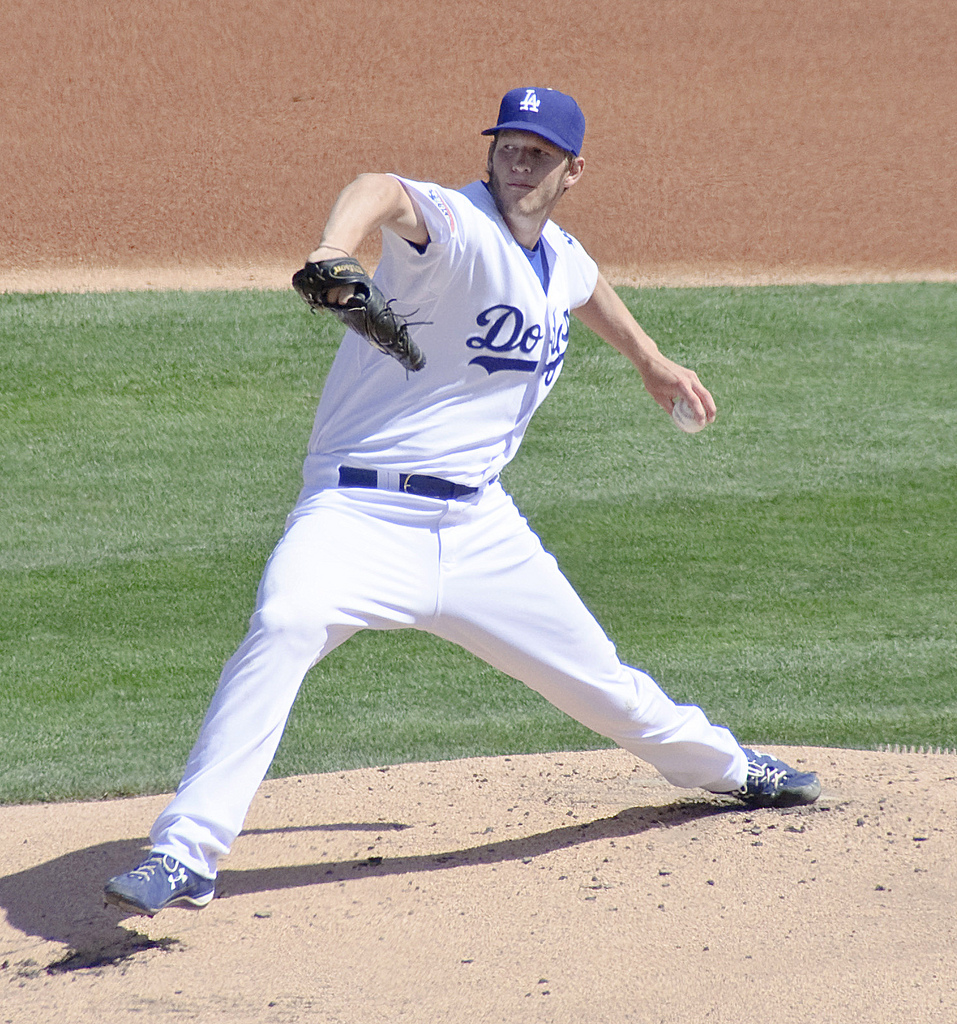
BBRT’s NL Walter Johnson Award vote goes (of course) to Dodgers’ southpaw Clayton Kershaw.  Not much explanation needed here.  Kershaw missed a month of starts and still led the NL in wins (21 against just 3 losses), ERA (1.77 – his fourth consecutive ERA title) and complete games (6), while also finishing third in strikeouts (239 in 198 1/3 innings).

BBRT sees a runner-up tie between the Cardinals’ Adam Wainwright and the Reds’ Johnny Cueto.  These two right-handed starters tied for second in wins (both at 20-9), finished two and three (behind Kershaw) in the NL in ERA and complete games, as well as one and two in the NL in innings pitched. In addition, Cueto tied the Nats’ Stephen Strasburg for the NL strikeout title (242), while Wainwright tied for the league lead in shutouts (three).


The Stan Musial Award (top player)

Note: In past award announcements, the Baseball Bloggers Alliance has referred to this award as recognizing the top or “premier” player in each league (as opposed to the Most Valuable Player). Makes this vote easier and less controversial.


American League

BBRT vote: Mike Trout

Contenders: 2. Jose Altuve     3. Miguel Cabrera

Mike TroutBBRT’s vote for the Stan Musial Award in the AL goes to the Angels’ Mike Trout. Pretty simple. How can you not vote for the player who led the league in runs scored AND runs batted in, while also flashing Gold Glove defensive skills.  Trout, who hit .287, finished in the top five in the AL in runs scored (115, first), RBI (111, first), home runs (36, third), slugging percentage (.561, third), walks (83, fourth) and triples (nine, third). He also added 16 steals in 18 tries. The only concern?  Trout also led the AL in strikeouts with 184.

Running behind Trout in BBRT’s considerations were: the Houston Astros’ five-foot-six second baseman Jose Altuve – like Trout a “plus” fielder, Altuve also was the spark at the top of the Astros’ lineup, leading all of MLB in batting average (.341) and base hits (225), wile also topping the AL in stolen bases; and Tigers’ first baseman Miguel Cabrera, with another solid season (.313, average, 25 home runs, 101 runs scored, 109 runs batted in).


National League

BBRT vote: Andrew McCutchen

Contender: 2. Giancarlo Stanton

With no one player dominating the statistics, the call on the NL’s premier player is a tough one.  BBRT  casts its vote for Pirates’ center fielder Andrew McCutchen (making my Stan Musial Award selections a center field sweep). Like Trout, Mccutchen takes Gold Glove skills into the outfield.  He also combines speed and power, finishing 2014 (146 games) with a .314 average, 25 home runs, 83 RBI and 18 steals (in 21 attempts). McCutchen also led the NL in on base percentage at .410.

Finishing just behind McCutchen is Marlins’right fielder Giancarlo Stanton, the NL leader in home runs (37), slugging percentage (.555) and total bases (299). Stanton, who hit .288, also drove in 105 runs (second in the NL) and had the second-best on-base percentage in the league (.395).


Goose Gossage Award (top reliever)


American League

BBRT Vote: Greg Holland

Contender: 2. Fernando Rodney

BBRT’s vote for the AL Goose Gossage Award goes to the Royals’ Greg Holland, who went 1-3, with 46 saves, a 1.44 ERA and 90 strikeouts in 62 1/3 innings pitched.

Right behind Holland is the Mariners’ Fernando Rodney, who tallied an MLB-leading 48 saves. Despite the leadership in saves, Rodney was less dominating then Holland, going 1-6, 2.85 with 76 whiffs in 66 1/3 innings.


National League

BBRT vote: Craig Kimbrel

Contenders: 2. Kanley Jansen     3. Aroldis Chapman

craig kimbrelIn the NL, BBRT likes Braves’ closer, right-hander Craig Kimbrel, for the Goose Gossage Award. Kimbrel, who led the NL in saves for the fourth-consecutive year,  finished 0-3, 1.61 with 47 saves and 95 strikeouts in 61 2/3 innings.  Over the past four seasons, Kimbrel has averaged just over 46 saves per year.

Based on strikeouts, walks and earned run average (always leery of closers with ERA’s over 3.00), others who merited BBRT’s consideration were: the Dodgers’ Kanley Jansen (2-3, 2.76, 44 saves, 101 strikeouts and 19 walks in 65 1/3 innings); and Reds’ closer Aroldis Chapman (0-3, 2.00, 36 saves, 106 strikeouts and 24 walks in 54 innings).   There is one more “vote”… an honorable mention, actually … for Colorado closer LaTroy Hawkins, just for the fact that he is still getting the job done (4-3, 3.31, 23 saves in 26 opportunities) at age 41.


Connie Mack Award (top manager)


American League

BBRT vote:  Buck Showwalter

Contender:  2. Ned Yost

New York Yankees at Baltimore Orioles April 23,  2011BBRT sees the AL’s top manager as the Orioles’ Buck Showalter, who brought the Orioles home with a 12-game lead over the second-place Yankees.  Not only were the Orioles not found on too many analysts’ pre-season East Division champion predictions, Showalter had to manage around injuries to key players (Matt Weiters and Manny Machado), as well the sub-par season and later suspension for 2013 star Chris Davis.

BBRT also gave serious consideration to Ned Yost, who brought the Royals back to the post-season after a 29-year absence – despite being the only team in baseball with less than 100 home runs on the season. The Royals won under Yost with defense and speed (the fewest home runs, but the most stolen bases) – a formula that puts additional pressure on the manager (manufacturing runs with singles, steals, the hit-and-run).


National League

BBRT vote: Bruce Bochy

Contender:  2. Matt Williams

BBRT’s vote for NL Connie Mack Award goes to Bruce Bochy of the Giants, who led the squad to an 88-74 record (and Wild Card spot), despite the difficulties facing Matt Cain and Tim Lincecum and injuries to Brandon Belt and Angel Pagan.  Counting on youngsters like Joe Panik and Andrew Susac, Bochy kept a winning attitude on the San Francisco team.

Just behind Bochy is Matt Williams of the Nationals, who won 96 games and finished a whopping 17 games ahead of their nemesis (the Braves).  Like Bochy, Williams managed through significant loss of time to injuries (catcher Wilson Ramos, outfielder/face-of-the franchise Bryce Harper and third baseman Ryan Zimmerman).

Keep watching BBRT for the final results of the Baseball Bloggers Alliance balloting.


I tweet baseball @DavidBBRT

Baseball Reliquary and Whittier College Join to Establish “Institute for Baseball Studies”

The Board of Directors of the Baseball Reliquary, Inc. recently announced that the organization has entered into an agreement with Whittier College administrators and faculty members to create the Institute for Baseball Studies, the first humanities-based research center of its kind associated with a college or university in the United States.

The Institute will be located on the third floor of the Mendenhall Building, Whittier College’s central administration facility (13406 E. Philadelphia St., Room 310B, Whittier, CA 90608).  The Baseball Reliquary is a Pasadena-based nonprofit, educational organization dedicated to fostering an appreciation of American art and culture through the prism of baseball history and to exploring the national pastime’s unparalleled creative possibilities.  It is currently projected that the Institute for Baseball Studies will open in the fall of 2014.  An announcement regarding a grand opening celebration will be forthcoming. For more on the Baseball Reliquary click here.

Terry Cannon, Executive Director of the Baseball Reliquary and Joe Price, Whitter College Genevieve S. Connick Professor of Religious Studies.

Terry Cannon, Executive Director of the Baseball Reliquary and Joe Price, Whitter College Genevieve S. Connick Professor of Religious Studies.

The Baseball Reliquary’s research collection will form the centerpiece of the Institute for Baseball Studies, which has been established to foster an intellectual community for creating and supporting interdisciplinary research and studies related to the cultural significance of baseball in American history.  Joseph L. Price, Genevieve S. Connick Professor of Religious Studies at Whittier College, and Terry Cannon, Executive Director of the Baseball Reliquary, will serve as co-Directors of the Institute for Baseball Studies.  Charles Adams, Professor of English at Whittier College, and Mike McBride, Professor of Political Science at Whittier College, will serve as Associate Directors.  An Advisory Board will soon be announced.

The Baseball Reliquary’s research collection includes books and periodicals, the papers of distinguished baseball historians and journalists, and a variety of materials that will support multifaceted and interdisciplinary studies at Whittier College, and will prompt the exchange of ideas, the development of research initiatives, and the creation of public symposia and programs highlighting baseball’s significance in American culture.  To supplement this collection of research materials, Whittier College professors Adams, McBride, and Price will be donating their archive of nearly 1000 baseball books to create an impressive resource for baseball studies.  The Institute for Baseball Studies will be accessible to students, scholars, and the general public.

In addition to books, photographs, and paper ephemera, the Institute for Baseball Studies will serve as the repository for the following collections:

  • Author and historian Paul Dickson’s research materials and correspondence related to three of his major manuscripts: The Dickson Baseball Dictionary; The Joy of Keeping Score: How Scoring the Game Has Influenced  and Enhanced the History of Baseball; and Bill Veeck: Baseball’s Greatest Maverick.  Published originally in 1989, The Dickson Baseball Dictionary ranks as the most authoritative and comprehensive guide to baseball terminology ever compiled.  Now available in its third edition, the book was awarded the 1989 Macmillan-SABR Award for Baseball Research and has been hailed as “a staggering piece of scholarship” by the Wall Street Journal.
  • The Tony Salin Research Collection, which includes photographs and reference materials from the late baseball author and historian, who dedicated much of his life to the study of unsung ballplayers and forgotten aspects of baseball history.  Included in this collection are research materials for his book, Baseball’s Forgotten Heroes: One Fan’s Search for the Game’s Most Interesting Overlooked Players, highlighting baseball icons such as Pete Gray, Chuck Connors, Bill Lange, Buzz Arlett, and Frenchy Bordagaray.
  • Author and historian Tim Wendel’s research files for his books Summer of ’68: The Season that Changed Baseball—and America—Forever and High Heat: The Secret History of the Fastball and the Improbable Search for the Fastest Pitcher of All Time.  Wendel, who teaches writing at The Johns Hopkins University, was a founding editor of USA Today Baseball Weekly.
  • The Henry Goldich Collection, an archive of Los Angeles Dodgers programs, scorecards, and ephemera dating from 1961 through the early 1970s.
  • The Baseball Reliquary’s organizational history and documentation from its founding in 1996 to the present, including news releases, flyers, miscellaneous clippings, catalogs and correspondence.  Included are extensive files for its Shrine of the Eternals, the Baseball Reliquary’s alternative hall of fame, including all of the original ballots submitted by Baseball Reliquary members since annual voting began in 1999.

The Institute for Baseball Studies is supported, in part, by a POET Internship provided by Whittier College and by a grant to the Baseball Reliquary from the Los Angeles County Board of Supervisors through the Los Angeles County Arts Commission.

Longest Winning Streak – 29 Games to Celebrate Independence

Cooperstown - home to 1987 Salt Lake City Trappers memorabilia.

Cooperstown – home to 1987 Salt Lake City Trappers memorabilia.

When the Single A (Rookie) Pioneer League Salt Lake City Trappers topped the Pocatello Giants 12-6 on June 25, 1987, no one – including the Trappers themselves – could have predicted it would be more than a month before they would taste defeat.  The Trappers would, in fact, go on to win a total of 29 consecutive games – in a winning streak that ran from June 25 through July 26 and remains the longest unbeaten streak in professional baseball.

The Trappers – an independent team in a rookie league that featured teams affiliated with the Reds, Dodgers, Brewers, Blue Jays, Braves and Giants – were made up of players who went undrafted or unsigned by baseball’s major league franchises.  Despite the fact that major league franchises had the inside track on signing the best players (deeper pockets, advanced scouting, more opportunity) and in spite of the support from their major league parent clubs enjoyed by most of the Trappers’ competition, the Salt Lake City team enjoyed considerable  success and, in 1987,  were on their way to a third consecutive Pioneer League championship.

The team stocked its roster through relatively open tryouts, but there seemed to be an emphasis on former college players who felt they had something to prove to the MLB franchises that had “rejected” them in the draft or during the signing period.  (Some argued that the Trappers, despite going unsigned, were older and more experienced than many of their developing competitors.  However, the team’s average age was only about eight months older than the overall Pioneer League average.) While 13 members of the 1987 Trappers’ squad eventually signed with major league organizations, none made it to the major leagues.

During the 29-game winning streak, the Trappers outscored the opposition 255-122.  The streak included 15 road and 14 home games, three extra-inning contests, four one-run victories and a doubleheader sweep.  Notably, the Trappers went on to record a 49-21 season, finish first in their division and beat the Helena Brewers in the League Championship Series.

The Trappers relied on their bats to carry the day, scoring the most runs in the eight-team league (543, with their nearest rival – the Helena Brewers – trailing by 92), while giving up the fifth-most runs.  The Trappers’ .320 team batting average led the Pioneer League, while their 4.65 team ERA was fourth (the Great Falls Dodgers had the league’s lowest ERA at 3.48).

Here’s a bit of background on some of the 1987 Trappers’ key players:

Adam Casillas (OF) … Casillas played in 60 of the Trappers’ 70 games in 1987, putting up a .385-1-44 (avg.-HR-RBI) line. Signed by Reds after playing with the Trappers (also later played in Royals’ system and the Mexican League), Casillas had the longest professional career among the 1987 Trappers. In nine minor league seasons, he got as high as AAA. He hit over .300 in five seasons, including .307 for the AAA Omaha Royals (89 games) in 1992.  Notably, his minor-league resume includes three batting titles:  1989, Midwest League – .327 for the Cedar Rapids Reds; 1990, Southern League – .336 for the Chattanooga Lookouts; 1994, Mexican League – .367 for Monterrey Industriales.  In 4,109 minor league at bats, Casillas struck out only 190 times.

Frank Colston (1B) … Hit .397-1-46 in 52 games for the 1987 Trappers. Signed by the Mariners, Colston lasted two seasons, never playing above Class A. He hit .209 in 67 games for the Wausau Timbers (Mariners’ affiliate) in the Midwest League in 1988. He finished his pro playing career in 1989 with the unaffiliated Miami Miracle.  Colston played college ball (1985-86) for Louisiana Tech, where he was an All Southland Conference player both seasons and was later selected to the 1980’s Southland Conference All Decade Team.  He went .352-20-98 in 105 games for Louisiana Tech.

Jim Ferguson (SS) … Hit .327-3-40, while holding down SS position in 65 games for the 1987 Trappers. Ferguson then signed with the Cardinals, where he reached High A, hitting .251, with one homer and 30 RBIs in 126 games (1989) for A-Level Savannah Cardinals. His  last professional season was 1990.  Ferguson was an All New England player for University of New Haven (1983-86).

Eddie Citronelli (OF-C) … Citronelli hit .303-10-57 in 67 games for 1987 Trappers, in what was his only professional season.

Mike Malinak (OF) … Malinak played 69 games for the 1987 Trappers, hitting .321-12-57 (the 12 home runs led the league). Signed by the Reds, Malinak hit .232-17-66 in two seasons in their system, both for the Class A Cedar Rapids Reds (Midwest League).His last pro season was 1989.  Before joining the Trappers, Malinak had been a star for Baylor University and his career record for hits was broken in 1996.

Mathis Huff (OF) … Huff hit a Pioneer League-leading .417 (48 games) for the 1987 Trappers, with 7 home runs and 37 RBI. The six-foot-seven, Samoan-born Huff played one more season – for the unaffiliated Miami Miracle (A level), hitting .239-4-31.

Kent Hetrick (RHP) … Hetrick went 9-2, 4.84 for 1987 Trappers (26 walks/63 strikeouts in 70 2/3 innings). Signed by the Reds, Hetrick played two seasons in their system, getting as high as the AA El Paso Diablos of the Texas League.   Hetrick went 11-14, 3.71 in those two seasons in the Reds’ system.

Tim Peters (RHP) … Reliever Peters appeared in 38 of the 1987 Trappers’ 70 games, going 9-3, 2.10 with 11 saves (29 walks/83 strikeouts in 87 innings). Signed by the Expos (also played in Indians’ system), Peters went 11-9, 2.15 with 37 saves in three seasons with MLB affiliates.  1990 was his final professional season.

Michael Humphrey (RHP) … In 1987, went 5-2, 3.29 for the Trappers (after a 5-3, 4.17, Trapper season in 1986).  1987 was his last pro season. Humphrey played his college ball at Indiana University, leading the team in victories (10) in 1985 and still holding the IU career record for complete games (22 …1982-85).

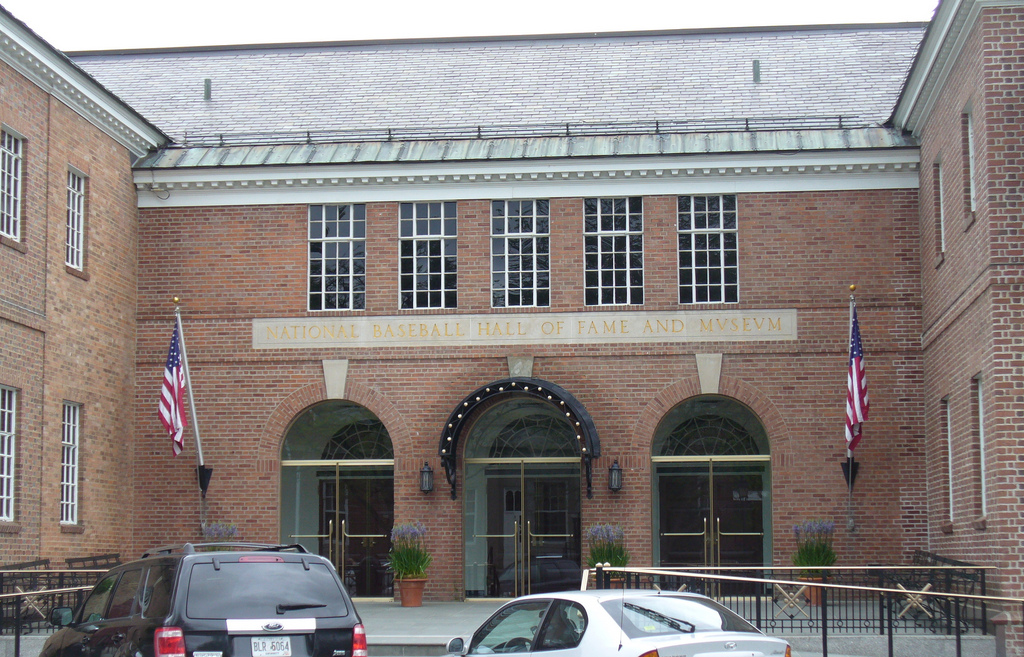
While the players from the 1987 Salt Lake City Trappers may not have made it all the way to the show, they did make it to the Baseball Hall of Fame – which includes memorabilia from that 1987 29-game winning streak.


I tweet baseball @DavidBBRT

30-30 Club … Bobby and Barry “Bonding” at the Top

With approximately 30 games left in the 2014 season (give or take a game or two depending on the team), it appears 2014 will not see any new members of the 30-30 (HRs-SBs) Club.  At this point, the player with the best chance at 30-30 is the Brewers’ Carlos Gomez (.286, with 21 home runs and 28 steals). Only one other player is even at the 20-20 mark – Twins’ second baseman Brian Dozier (.236, with 20 homers and 20 steals).  MLB’s last 30-30 seasons were achieved in 2012 by Brewers’ outfielder Ryan Braun and Angels’ outfielder Mike Trout.

Here are few facts about the 30-30 club.

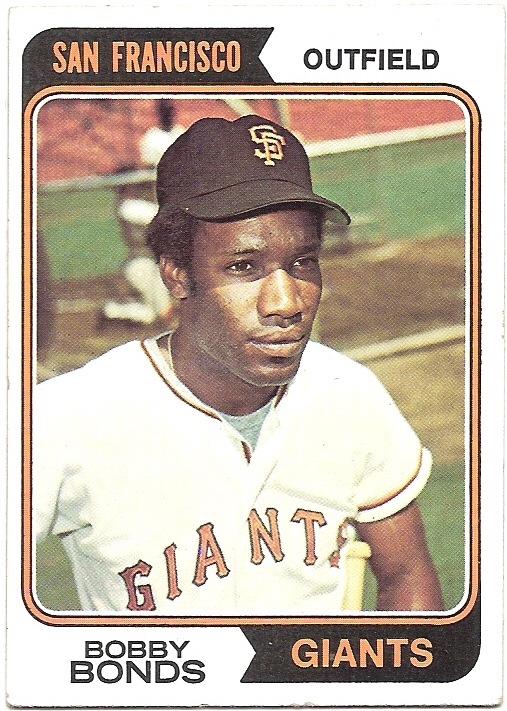
Bobby Bonds notched an MLB-record five 30-30 seasons - matched only by his son Barry.

Bobby Bonds notched an MLB-record five 30-30 seasons – matched only by his son Barry.

In MLB history, there have been sixty 30-30 seasons – achieved by 38 players (13 players have recorded multiple 30-30 seasons).  Of those 38 Club members, 26 have been outfielders, four have been shortstops, three second baseman, three third baseman, two first baseman and zero catchers.  This count is not precise, as Alfonso Soriano is counted among the second baseman, although he achieved 30-30 as both a second baseman (three times) and as an outfielder (once). In addition, Joe Carter is listed among first baseman – having played the majority of his 1987 30-30 season at that position (84 games), while also logging 62 games in the outfield.

The 30-30 Club includes 26 right-handed hitters, eight who hit from the left side and four switch hitters.  

Saint Louis Browns’ left-handed hitting outfielder Ken Williams became the first-ever member of the 30-30 Club in 1922 (at age 32, in his seventh MLB season), when he hit .332 with 39 home runs and 37 steals – while also leading the AL in RBI with 155 (still the most RBI ever in a 30-30 campaign). Williams struck out only 31 times that season, which remains the lowest strikeout total ever in a 30-30 season.

In 1956, New York Giants’ center fielder Willie Mays became the second member of the 30-30 Club (.296, with 36 homers and 40 steals) and the first right-handed hitter to have a 30-30 season.  Mays also became the first player to log consecutive 30-30 seasons – with a .333, 35-home run, 38-steal campaign in 1957.  The current record for consecutive 30-30 seasons is three (Barry Bonds, 1995, 1996, 1997).  Other players with two consecutive 30-30 seasons are: Ron Gant (1990, 1991), Vladimir Guerrero (2001, 2002), Alfonso Soriano (2002, 2003 and 2005, 2006) and Ryan Braun (2011, 2012).

Bobby Bonds broke into the 30-30 Club in 1969, his first full major league season (he had been called up by the Giants in late June of 1968). In 1969, Bonds put up 32 homers, 45 steals and a .259 average.  Bonds went on to set the record of five 30-30 seasons (1969, 1973, 1975, 1977, 1978).  The record was later tied by his son, Barry Bonds, who notched 30-30 seasons in 1990, 1992, 1995, 1996 and 1997. Currently active, Alfonso Soriano has four 30-30 campaigns (2002, 2003, 2005, 2006).  Next on the list with three 30-30 seasons is Howard Johnson (1987, 1989 and 1991).

Bobby Bonds also achieved 30-30 seasons with more different teams than any other player: The Giants (1969 & 1973), the Yankees (1975), the Angels (1977) and the White Sox/Rangers (1978). In the process, he became the first player to log a 30-30 season in both the NL and the AL (later to be joined by his son Barry and Alfonso Soriano with that distinction), as well as the first player to log a 30-30 campaign while playing with two teams. In 2004, Carlos Beltran became the first player to log a 30-30 season while playing in both leagues (69 games with the Royals and 90 with the Astros).

In 1970, Tommy Harper recorded MLB’s sixth 30-30 season and the first by a non-outfielder (Harper played 128 games at third base, 22 at second and 13 in the outfield).

The first season to see more than one 30-30 player was 1987, when Joe Carter, Eric Davis, Howard Johnson and Daryl Strawberry all reached the milestone. Johnson and Strawberry, both with the Mets, also became the first teammates to achieve 30-30 status in the same season.  Ellis Burks and Dante Bichette of the 1996 Colorado Rockies are the only other teammates to put together 30-30 seasons in the same campaign.  Four remains the single-season high for 30-30 players, accomplished in: 1996 (Dante Bichette, Ellis Burks, Eric Davis, Barry Larkin); 1997 (Jeff Bagwell, Barry Bonds, Raul Mondesi, Larry Walker) and 2011 (Ryan Braun, Jacob Ellsbury, Matt Kemp, Ian Kinsler).

Jose Canseco - first member of the 40-40 Club.

Jose Canseco – first member of the 40-40 Club.

In 1988, Oakland A’s outfielder Jose Canseco started a new, even more exclusive, club – the 40-40 Club – when he hit .307, with 42 homers and 40 steals.  Giants’ outfielder Barry Bonds joined Canseco at 40-40 in 1996, with a .306 season, featuring 42 home runs and 40 steals. Alex Rodriguez (then handling shortstop for the Seattle Mariners) went 40-40 in 1998 (.310, with 42 homers and 46 stolen bases).  The most recent member of the 40-40 club is Alfonso Soriano (Washington Nationals, outfielder), who hit .277, with 46 home runs and 41 steals in 2006. Notably, Soriano earlier joined the 30-30 club as a second baseman (2002, 2003, 2005).  Note: In 2011, Dodgers’ outfield Matt Kemp made a run at the 40-40 club, finishing with 40 steals and 39 home runs.

In 1996, Barry Larkin become the first shortstop to log a 30-30 season, with a .298, 33-home run, 36-steal year.  (Note:  Howard Johnson, primarily a third baseman, did play 30+ games at shortstop in both his 1987 and 1989 30-30 seasons.)

Before we get to a list of 30-30 seasons, here are a few more factoids:

  •  Fewest at bats in a 30-30 season:  437 – Barry Bonds (1992)
  •  Highest average in a 30-30 season: .366 – Larry Walker (1997)
  • Lowest average in a 30-30 season: .251 – Ron Gant (1991)
  • Most HRs in a 30-30 season: 49 – Larry Walker (1997)
  • Most steals in a 30-30 season: 52 – Barry Bonds (1990)
  • Most RBI in a 30-30 season: 155 – Ken Williams (1922)
  • Fewest RBI in a 30-30 season: 67 – Hanley Ramirez (2008)
  • Most runs scored in a 30-30 season: 143 – Larry Walker (1997), Jeff Bagwell (1999)
  • Fewest runs scored in a 30-30 season: 83 – Joe Carter (1987)
  • Most strikeouts in a 30-30 season: 187 – Bobby Bonds 1969), Preston Wilson (2000)
  • Fewest strikeouts in a 30-30 season: 31 – Ken Williams (1922)


The 30–30 Club – 40-40 seasons in red

Year                 Name                                       HR       SB

1922                Ken Williams,   Browns             39        37

1956                Willie Mays, Giants                   36        40

1957                Willie Mays, Giants                   35        38

1963                Hank Aaron, Braves                 44        31

1969                Bobby Bonds, Giants               32        45

1970                Tommy Harper, Brewers          31        38

1973                Bobby Bonds, Giants               39        43

1975                Bobby Bonds, Yankees            32        30

1977                Bobby Bonds, Angels               37        41

1978                Bobby Bonds, CWS/Texas        31        43

1983                Dale Murphy, Braves                36        30

1987                Joe Carter, Indians                   32        31

1987                Eric Davis, Reds                       37        50

1987                Howard Johnson, Mets             36        32

1987                Darryl Strawberry, Mets           39        36

1988                José Canseco, A’s                    42        40

1989                Howard Johnson, Mets             36        41

1990                Barry Bonds, Pirates                 33        52

1990                Ron Gant, Braves                     32        33

1991                Ron Gant, Braves                     32        34

1991                Howard Johnson, Mets             38        30

1992                Barry Bonds, Pirates                 34        39

1993                Sammy Sosa, Cubs                  33        36

1995                Barry Bonds, Giants                 33        31

1995                Sammy Sosa, Cubs                  36        34

1996                Dante Bichette, Rockies           31        31

1996                Barry Bonds, Giants                 42        40

1996                Ellis Burks, Rockies                  40        32

1996                Barry Larkin, Reds                   33        36

1997                Jeff Bagwell, Astros                  43        31

1997                Barry Bonds, Giants                 40        37

1997                Raúl Mondesí,  Dodgers           30        32

1997                Larry Walker, Rockies              49        33

1998                Shawn Green, Blue Jays           35        35

1998                Alex Rodriguez, Mariners         42        46

1999                Jeff Bagwell, Astros                  42        30

1999                Raúl Mondesí, Dodgers            33        36

2000                Preston Wilson, Marlins            31        36

2001                Bobby Abreu, Phillies               31        36

2001                José Cruz, Jr., Blue Jays          34        32

2001                Vladimir Guerrero, Expos         34        37

2002                Vladimir Guerrero, Expos         39        40

2002                Alfonso Soriano, Yankees        39        41

2003                Alfonso Soriano, Yankees        38        35

2004                Bobby Abreu, Phillies               30        40

2004                Carlos Beltrán, KC/Hous          38        42

2005                Alfonso Soriano, Rangers         36        30

2006                Alfonso Soriano, Nationals       46        41

2007                David Wright, Mets                  30        34

2007                Jimmy Rollins, Phillies              30        41

2007                Brandon Phillips, Reds             30        32

2008                Grady Sizemore, Indians           33        38

2008                Hanley Ramírez, Marlins           33        35

2009                Ian Kinsler, Rangers                 31        30

2011                Matt Kemp, Dodgers                 39        40

2011                Ryan Braun, Brewers                33        33

2011                Jacoby Ellsbury, Red Sox         32        39

2011                Ian Kinsler, Rangers                 32        30

2012                Ryan Braun, Brewers                41        30

2012                Mike Trout, Angels                   30        49


I tweet baseball  @DavidBBRT

Hall of Very Good Announces 2014 Inductees

hOVGThe Hall of Very Good (HOVG) – a fine baseball blog that appeals to BBRT’s taste for the game and its history – recently announced its 2014 inductees: Luis Tiant, Tony Oliva and the San Diego Chicken. The trio joins 2012 HOVG inductee Tommy John and 2013 inductees Dale Murphy and Steve Blass.  (I had the chance to chat with both Oliva and Tiant at the 2014 All Star Fan Fest. They are great ambassadors for the game.)  BBRT readers should enjoy the full story on the 2014 HOVG inductees and you can find it here.  And, while you’re at the HOVG blog, take a look at some of the other posts.  I think you’ll find them entertaining and informative.

I tweet baseball @DavidBBRT.

BBRT’s Favorite (sm)All Stars

Undersized until a teenage growth spurt (when I was twelve-years-old, I was usually guessed for eight or nine) brought me up to average size, I have always had a special place for the major league’s smaller (or smallest) players. This affinity for (sm)All Stars was fueled in part by my Dad’s 5’ 1” stature.  In our household, we always rooted for the little guy.

Jose Altuve

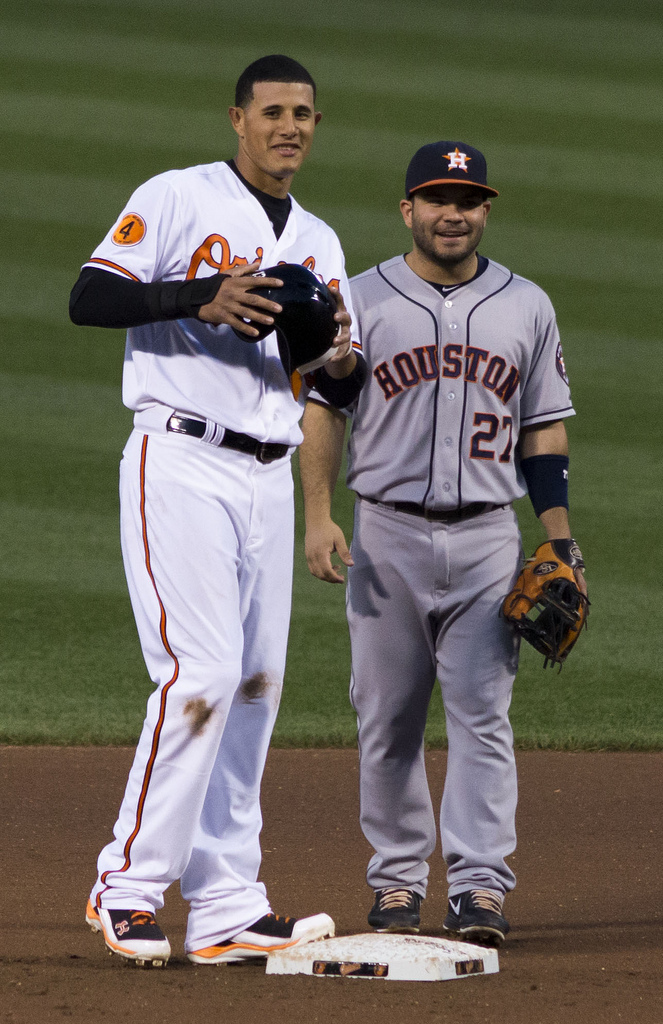
Jose Altuve - Houston's (sm)All Star -  alongside Manny Machado.

Jose Altuve – Houston’s (sm)All Star – alongside Manny Machado.

Being nothing if not consistent, BBRT’s favorite 2014 All Star is MLB’s smallest player – 5’ 5”, 175 lb. Houston Astros’ second basemen Jose Altuve.  Altuve, a sparkling fielder, came into the All Star break leading all of baseball in base hits (130), number-three in average (.335, second in the AL), number-two  in stolen bases (41, leading the AL, with only three caught stealing). The shortest player in the major leagues, Altuve has inspired a new unofficial unit of measure to document how far a home run has traveled (a 400-foot home run travels 73.8 Altuves).  See the website at www.howmanyaltuves.com for an Altuve calculator.

Altuve, overlooked by many teams because of his size, was signed by the Houston Astros as an undrafted free agent in 2006. Right from the start, he showed solid defense, a quick bat and speed on the base paths. After rapping .343 in the Venezuelan League in 2007, Altuve came to the U.S. and proceeded to hit .284-.302-.301 in three minor league seasons (2008-10), while also showing “plus” defensive skills.

Then in 2011, Altuve had a breakout season.  He started the year at High-A Lancaster, hitting .408 with five home runs, 38 runs, 34 RBI and 19 stolen bases in just 52 games.  That performance earned him a promotion to AA Corpus Christi, where he hit .361 with five home runs, 21 runs, 25 RBI and five stolen bases in another 35 games. His next stop was Houston (in July) and he finished up the season with 57 major league games, a .276 average and seven steals in ten attempts  – and that was just the beginning. In 2012, Altuve hit .297 (with 33 steals), earning his first All Star berth.  He came back with .283 and 35 steals in 2013 – before his sterling start to 2014.

Now, at just 24-years-old, the diminutive Altuve has made two All Star teams and his cleats are in the Baseball Hall of Fame – honoring a late-June streak during which notched multiple stolen bases in four consecutive games. Altuve was just the third player since 1900 to achieve that feat and the first in 97 years.

For Trivia buffs, on May 1, 2012, when Altuve faced New York Mets’ 6’ 11” reliever Jon Rauch (MLB’s tallest player ever), the 18″ height difference between hitter and pitcher was reported to be the second largest ever – exceeded only by the 25-inch difference between 3’ 7” Eddie Gaedel (sent to the plate on August 19, 1951 by the St. Louis Browns in a Bill Veeck publicity stunt) and Detroit Tigers’six-foot tall pitcher Bob Cain.

Bobby Shantz

SHnrtzAltuve, however, is not BBRT’s favorite (sm)All-Star. That recognition goes to a player my dad often  referred as “Little Bobby Shantz.”   The 5′ 6″, 139-pound southpaw side-arming hurler was not an imposing figure on the mound.  He was, however a three-time All Star who, in 1952, went 24-7, 2.48 for the fourth-place Philadelphia Athletics – leading the AL  in wins and winning percentage and capturing the MVP award (making Shantz the smallest-ever MVP winner – the lightest and tied with Phil Rizzuto for the shortest).

In his 16-season MLB career, Shantz moved between starter and reliever (171 starts and 366 relief appearances) and went 119-99, with a 3.38 ERA. He pitched for the Philadelphia/Kansas City Athletics (1949–1956), New York Yankees (1957–1960), Pittsburgh Pirates (1961), Houston Colt .45’s (1962), St. Louis Cardinals (1962–1964), Chicago Cubs (1964) and Philadelphia Phillies (1964). In 1957, he helped the Yankees finish atop the AL, going 11-5 and leading the AL in ERA at 2.45 (21 starts and nine relief appearances).

An agile athlete, Shantz also won eight consecutive Gold Glove Awards (American League, 1957–60; National League, 1961–64).  In our household “Little Bobby Shantz” was always a favorite (sm)All Star, who held out hope for the little guy.


I tweet baseball @DavidBBRT

BBRT June Review

With July upon us, it’s time for BBRT’s monthly reflection on the MLB season to date.  Let’s start with a look at who stands where.   If the season were to end today, the play- off teams would be:

AMERICAN LEAGUE

Division Leaders: Blue Jays, Tigers and A’s – no change since May 31.

Wild Cards: Angels and Mariners – as of May 31, the WC leaders were the Angels and Yankees. The Mariners moved passed the Yankees into the WC spot thanks to an 18-10 June (while the Yankees went 12-15).

NATIONAL LEAGUE

Division Leaders: Braves, Brewers and Dodgers – The Braves and Brewers held their spots, while the Dodgers moved from 7 ½ games out to the West Division lead (posting a 19-10 June record, while the Giants went 10-17).

Wild Cards: The Giants and Nationals. A June slump dropped the Giants from the division lead to a WC spot, while the Nationals’ 18-11 June enabled them to overtake the Cardinals (15-13 for the month). *Note: You can find the complete standings through June 30 and each team’s June record at end of this post.

Teamwork

Lots to celebrate in Oakland

Lots to celebrate in Oakland

June’s Hottest Teams The AL’s hottest teams in June came primarily from the West Division:  the Oakland A’s had the best June record in all of MLB (17-8/.654), which was bad news for the Seattle Mariners (18-10/.643 and Los Angeles Angels (15-10/.600), who also played .600 ball for the month.  The only other AL team to top .600 for June was the Royals, who finished the month at 17-10/.630. The AL East, which boasts three of the AL’s top five opening day payrolls, faded during June, with only the Baltimore  Orioles playing above .500 (16-12/.571) for the month.  Texas had the AL’s worst June record at 9-17/.346.

In the NL, the Brewers, Dodgers and Reds tied for the best June results (18-10/.643). The Central Division – home to the Brewers and Reds – was MLB’s toughest; with every team finishing above .500 and the Pirates joining Milwaukee and Cincinnati above .600 (17-10/.630).  The only other NL team above .600 in June was the Nationals, who finished at 17-11/.607. The NL’s worst June Swoon?  The Rockies at 8-20/.286.

Rays’ Hurlers Team Up to Break Single Month Strikeout Record

The Tampa Bay Rays’ pitchers were missing bats in June – recording 287 whiffs (in 259 innings), the most ever for any MLB team in a single month (the Cubs had held the record – 286 – set in August of 2002).  For the month, nine members of the Ray’s staff averaged at least one strikeout per inning. Contributing for the Rays:

  • Starters:  David Price (54 Ks/39 2/3 IP); Erik Bedard (34 Ks/31 IP); Jake Ordozzi (34 Ks/30 IP); Chris Archer (31 Ks/37 IP); Alex Cobb (29 Ks/33 2/3 IP); Alex Colome (3Ks/5 2/3 IP).
  • Relievers: Brad Boxberger (23 Ks/13 1/3 IP); Jake McGee (16 Ks/11 2/3 IP); Grant Balfour (15 Ks/12 1/3 IP); Joel Peralta (15 Ks/11 IP); Cesar Ramos (12 Ks/12 IP); Kirby Yates (12 Ks/9  2/3 IP); Juan Oviedo (8 Ks/11 IP); Josh Lueke (1K/1 IP).

The Rays, by the way, took the record chase right down to the wire. Brad Boxberger notched the record-breaking strikeout (versus Ichiro Suzuki) in the bottom of the twelfth inning of a June 30 4-3 win over the Yankees.  It was Boxberger’s only whiff in two innings of work that game.

Playing .600 Ball for the Season

Through June, only two teams are playing .600 or better baseball – the Oakland A’s (51-31/.622) and the “no-longer-surprising” Milwaukee Brewers (51-33/.607).  The AL Rays and NL Diamondbacks are tied for the worst record in MLB (35-49/.417).

If you’re talking bang-for-the-buck, the A’s are baseball’s biggest bargain – boasting MLB’s best record (as well as the most runs scored at 422 and third-fewest runs given up at 288), with the fourth-lowest opening day payroll (in the AL, only the Astros have a lower payroll than the A’s).

2014's biggest disappointment?

2014’s biggest disappointment?

Perhaps the biggest disappointment – in terms of payroll versus performance are the last-place Phillies (36-46), with MLB’s third-highest (and the NL’s second-highest) opening day payroll and the fourth-place Red Sox (38-45) with MLB’s fifth-highest (AL’s third-highest) opening day payroll.


Other Team Notes

  • The Colorado Rockies, with a 36-47 record, have scored the second most runs in MLB this season (418).  They have, however, also given up the most runs (436). Gotta love that mountain air.
  • Only two teams have reached 100 home runs through June, and they are both in the AL East (Toronto 108, Baltimore 100).  Colorado leads the NL with 98 round trippers.  The Jays boast six players in double digits for long balls: Edwin Encarnacion (25), Jose Bautista (15), Brett Lawrie (12), Juan Francisco (12), Melky Cabrera (11), Colby Rasmus (11).
  • The Dodgers, led by Dee Gordon with 40 steals, top MLB in that category with 81 through June.  Houston, led by Jose Altuve with 37 thefts, leads the AL with 70 steals.  Both league leaders are second basemen.  The A’s lead the major leagues in stolen base proficiency at 84 percent (48 steals in 57 attempts), followed closely by the NL Nationals at 83 percent (44 for 53).
  • Washington lays claim to MLB’s lowest team ERA through June at 3.07. Oakland has the AL’s lowest mark at 3.19.  Key contributors  for the Nationals include starters Jordan Zimmerman (6-4/2.95), Tanner Roark (7-5/2.98) and Doug Fister (6-2/2.83). The bullpen has also pitched in, featuring a  quartet of hurlers with at least 25 innings pitched and an ERA of 2.00 or less: Drew Storen (1.03/26 1/3 IP); Rafael Soriano (1.09/33 IP); Aaron Barrett (1.93/28 IP); and Tyler Clippard (2.00/36 IP).  The A’s boast two starters with ERAs under 3.00 – Scott Kazmir (9-3/2.61) and Jesse Chavez (6-4/2.98) – and a trio of workhorse relievers (127 2/3 IP among them): Daniel Otero (2.10/51 1/3 IP); Francisco Abad (2.20/32  2/3IP); and Lucas Gregerson (2.27/43 2/3 IP).


Individual Achievements


 Clayton Kershaw – A Remarkable Month

The Dodgers’ Clayton Kershaw had a remarkable June, leading MLB in wins (6-0), ERA (0.82), strikeouts (61 K’s in 44 innings) – and even tossing a no-hitter.  Kershaw’s outings for the month:

Date                                        IP          H        R         BB       SO

June 2 – CHW (5-2 win)          8          4          2          0          9

June 8 – @COL (6-1 win)        5          3          1          0          9

June 13 – ARZ (4-3 win)          7          8          1          1          7

June 18 – COL (8-0 win)          9          0          0          0          15

June 24 – @KC (2-0 win)         8          6          0          1          9

June 29 – STL (6-0 win)         7          5          0          2          13

Dodgers' ace dominated in June.

Dodgers’ ace dominated in June.

On June 18th, Kershaw put the exclamation point on his blazing June, tossing the second no-hitter of the season in an 8-0 win over the Rockies.  It was also the second 2014 no-hitter by a Dodgers’ pitcher (Josh Beckett no-hit the Phillies on May 25), and the 22nd in Dodger franchise history (the most of any franchise).  The only base runner in the no-no was Drew Stubbs – safe on an error by LA shortstop Hanley Ramirez.

Kershaw struck out a career-best 15 batters in the no-hitter – tying the record for strikeouts in a no-hitter by a southpaw.  (Lefty Warren Spahn, tossing his first no-hitter on September 16, 1960 – at age 39 – struck out 15 and walked two in beating the Phillies 4-0.)  Only right-hander Nolan Ryan logged more strikeouts in a no-hitter (17 in 1973 and 16 in 1991). Kershaw’s 15 Ks were also the most ever in a no-hitter with no walks.

Another West Coast No-No

Just seven days after Kershaw’s no-hitter, the Giants’ Tim Lincecum no-hit the Padres in San Francisco.  Lincecum walked just one (Padres’ third baseman Chase Headley, with one out in the second inning) and struck out six in the 4-0 victory. Lincecum became only the second pitcher to throw two no-hitters versus the same team. (He no-hit the Padres on July 18, 2013 – walking four and striking out 13 in a 9-0 win.)  The other hurler with multiple no-hitters against the same team is the Cleveland Naps’ Addie Joss, who no-hit the White Sox on October 2, 1908 and April 20, 1910. (Both no hitters were 1-0 wins, with the 1908 no-no being a perfect game.) Lincecum also became just the 27th pitcher to toss multiple no-hitters; a list led by Nolan Ryan with seven no-hit performances.

Jose Altuve Leads the MLB June Hit Parade

Altuve topped .400 in June and flashed some leather.

Altuve topped .400 in June and flashed some leather.

Houston Astros’ 2B Jose Altuve raked MLB pitching in June, compiling a .411 average for the month (39 for 45) and moving into the AL batting lead with a season mark of .344.

Over in the NL, Troy Tulowitzki continued to hold his batting lead at .353 – after posting a June average of .354.

A look at the home/away splits of the two batting leaders is interesting.  Altuve’s numbers are relatively balanced.  Through June 30, he hit .347 at home and .341 on the road.  Tulowitzki clearly prefers home cooking –and the Rocky Mountain air – with his numbers through June showing .447 at home and .266 on the road.

June and Season Home Run/RBI Leaders

White Sox rookie 1B Jose Abreu led all of MLB with 10 June home runs, while putting up a .313-10-22 line.  Next on the June power list was Baltimore CF Adam Jones with nine June homers (.348-9-20).

Over in the NL, Phillies’ RF Marlon Byrd, Pirates’ CF Andrew McCutchen and Reds’ 3B Todd Frazier each notched eight June home runs.

Abreu’s ten June home runs moved him into a three-way tie for the AL and MLB lead at 25 homers on the season.  The other co-leaders are Baltimore LF Nelson Cruz (.281-25-66) and Toronto 1B Edwin Encarnacion (.278-25-65).  The NL leader in round trippers (through June) is Miami RF Giancarlo Stanton with 21 (.313-21-60).

Two NLers sit atop the RBI list for June with 25 runs plated during the month: Rockies’ 1B Justin Morneau (.327-3-25) and Pirates’ CF Andrew McCutchen (.343-8-25).  Leaders on the season (through June) are Baltimore LF Nelson Cruz with 66 driven in (.281-25-66) in the AL and Miami RF Giancarlo Stanton in the NL (.313-21-60).

June and Season Pitching Leaders

As noted earlier, the Dodgers’ Clayton Kershaw dominated in the month of June, recording MLB’s most wins (6-0), most strikeouts (61) and lowest ERA (0.82).  In the AL, June saw seven pitchers tie with four wins for the month, with the Orioles’ Bud Norris and the Angels’ Garrett Richards managing their four victories without a loss. Richards also took the June ERA crown at 1.05, while the Rangers’ Yu Darvish led in strikeouts with 57 in 43 innings.

For the season, the Yankees’ Masahiro Tanaka leads the AL and MLB in wins (11-3); while the Reds’ Alfredo Simon (10-3) , Cardinal’s Adam Wainwright (10-4) and Dodgers’ Zack Greinke (10-4) share the NL lead.  MLB’s lowest ERA goes to the Red’s Johnny Cueto at 1.88, while Tanaka has the lowest AL ERA at 2.10. Strikeout leaders through June are Tampa Bay’s David Price in the AL (144 in 124 innings pitched) and, in the NL, the Nationals’ Steven Strasburg (123 in 104 2/3 innings).

 Oddities

Trending – Pitchers as Pinch Hitters

Just a few more reasons why BBRT hates the DH – and a further argument against the “pitchers can’t hit” point of view. On June 16th, the Cubs and Marlins went into the 13th inning at Miami tied 4-4.  With two outs in the top of the inning and the Cubs’ LF Junior Lake on first – after a single – Cubs’ reliever Carlos Villaneuva was slated to bat.  Cubs’ manager Rick Renteria, running short of players, called upon pitcher Travis Wood (a .250 hitter) as a pinch-hitter. Wood delivered a double down the left field line to score Lake with what proved to be the winning run.

Just six days later, in the American League (which benefits on offense from the DH), a pitcher was again called upon to save a game (at the plate, not on the mound) in extra innings.  With the Oakland A’s down 7-6 to the Red Sox with two outs in the bottom of the tenth, A’s manager Bob Melvin called upon pitcher (closer) Sean Doolittle to pinch hit for pitcher Fernando Abad.  Unlike Wood, Doolittle did not come through, making the final out on a ground out to second.

Pitchers coming off the bench to hit in late innings – trending?  On May 27, with Milwaukee and Baltimore tied at six with two out in the bottom of the tenth, the Orioles intentionally walked Brewers’ 1B Mark Reynolds to get to pitcher Francisco Rodriguez.  Milwaukee manager Ron Roenicke went to the bench for a pinch hitter – pitcher Yovani Gallardo – who proceeded to lash a game-winning, walk-off, RBI double to deep left center.

Trending – Walk-Off Grand Slams

On June 30, Tigers’ LF Rajai Davis hit a walk-off grand slam as Detroit topped Oakland 5-4 at Comerica Park.  It was the second walk-off grand slam in June and the fifth of the season (the single-season record for MLB is eight).  Here are 2014’s other walk-off, four-run blasts: April 5, by Mets’ 1B Ike Davis, as New York topped the Reds 6-3; April 18, by the Marlin’s RF Giancarlo Stanton, as Miami bested Seattle 8-4; April 25, by White Sox’ 1B Jose Abreu, as the Sox beat Tampa Bay 9-6; June 19, by Indians’ DH Nick Swisher, as Cleveland topped the Angels 5-3.

The nice thing about walk-off grand slams – they all come in front of the home town fans.

One-hitter Leads to a Loss

On June 4, Pittsburgh Pirates’ starter Francisco Liriano and a trio of relievers threw a one-hitter against the Padres in San Diego.  The only Padre hit was a first-inning bunt single by number-two hitter, SS Evereth Cabrera.  The Padres, in fact, didn’t get a ball out of the infield until the final out of the eighth inning.  Still, the Padres managed to defeat the Pirates and Liriano 3-2.

How did they do it?  How about with a total of nine walks, one hit batsman and one Pirate error?

The scoring went like this.  In the first inning, Liriano walked lead-off hitter RF Chris Denorfria, who stole second base and then took third on Cabrera’s  bunt base hit. Denorfia then scored on a short sacrifice fly, handled by Pirates’ 2B Josh Harrison.  Liriano then hit 3B Chase Headley with a pitch, moving Cabrera to second. Padres’ 1B Tommy Medica next hit a slow hopper to Liriano, who threw to 2B Josh Harrison for the force. Harrison attempted to complete the double play, throwing wildly to first, with Cabrera scoring on the error.

The third San Diego run came in the bottom of the fourth. Medica led off with a walk, Liriano struck out CF Cameron Maybin and got Ike Davis on a soft grounder back to the mound – with Medica moving to second.  Liriano then intentionally walked 2B Jace Peterson to bring up P Ian Kennedy – who also walked, loading the bases.  Liriano walked Denorfia to force in the final run of the game. The Pirates scored their two runs on seven hits, including four singles, a double, a triple and a McCutchen home run.

Just Like Little League – Moving Those Pitchers Around

On June 9, with the Astros up 4-3 on the Diamondbacks (in Arizona), Houston left-handed reliever Tony Sipp came on to start the bottom of the seventh inning and retired Arizona, giving up just one walk. Sipp came back out for the eighth and opened the inning by fanning left-handed hitting Diamondbacks’ RF Gerardo Parra. This brought right-handed, power hitting 1B Paul Goldschmidt to the plate. Houston manager Bo Porter brought in right-handed reliever Jerome Williams to face Goldschmidt, but with left-handed hitting C Miguel Montero on deck, he didn’t want to give up a favorable lefty-lefty match up. So, Porter sent Sipp to right field, moved RF Alex Pressley to left field and pulled LF Robbie Grossman. The best laid plans don’t always go as expected – Williams walked Goldschmidt.  Then Porter got back into the act, returning Sipp to the mound (to face lefty Montero, whom he fanned), moving Presley from left field back to right field and bringing in Marwan Gonzalez to play left.  After Sipp fanned Montero, he was replaced on the mound by Kyle Farnsworth, who struck out Diamondbacks’ 3B Martin Prado to end the inning.  The P-RF-P move apparently paid off, as the Astros held on to win.

Just six days later, it was nearly déjà vu all over again. This time, the Astros were at home, trailing Tampa Bay 4-3 in the eighth. Sipp came on to relieve Jerome Williams (with one run in and runners on second and third with one out).  Sipp got left-handed hitter RF Kevin Kiermaier on a fielder’s choice (2B-C).  Then with right-handed power-hitting 3B Evan Longoria coming up, Porter brought in righty Josh Zeid to pitch, moving Sipp to left field and pulling LF Robbie Grossman. Sipp returned to the mound in the top of the ninth, with Presley taking left field, and sandwiched a fly out and a strikeout around a single before again being relieved by Farnsworth, who fanned pinch hitter Sean Rodriguez to end the inning.  Seeing a pattern here?

Brotherly Love can be Powerful

On June 24, B.J. and Justin Upton tied an MLB record when the brothers both homered for the Braves in a 3-2 win over the Astros. It was the fourth time they homered in the same game as teammates – tying Vladimir and Wilton Guerrero and Jason and Jeremy Giambi for that distinction.  It looks like they’ll have plenty of time as Braves’ teammates to take sole possession of the record – and they may need it.

Last season, the Upton brothers roared out of the gate – homering in three of the first 20 games they played together. Then, however, there was a 217-game, 14-month, dry spell.  Hopefully, the wait for the fifth game in which they go deep as teammates will not be as long.  

Standings as of June 30

AL EAST

TEAM                W        L          PCT     GB       (June)

Toronto            45        39        .536                 (12-15)

Baltimore          43        39        .537     1.0       (16-12)

NY Yankees     41        40        .506     4.5       (12-15)

Boston             38        45        .458     6.5       (12-16)

Tampa Bay      36        49        .424     9.5       (13-16)

AL CENTRAL

Detroit              45        34        .570                 (14-13)

Kansas City      43        39        .491     3.5       (17-10)

Cleveland         39        43        .473     7.5       (13-13)

Chicago WS     39        44        .470     6.5       (11-18)

Minnesota        26        30        .464     8.0       (12-16)

AL WEST

Oakland           51        31        .622                 (17-9)

LA Angels        45        35        .563     5.0       (15-10)

Seattle             45        38        .542     6.5       (18-10)

Texas               37        45        .451   14.0       (9-17)

Houston           36        48        .429   16.0       (12-13)


NL EAST

Atlanta             45        38        .542                 (15-13)

Washington      44        38        .519     0.5       (17-11)

Miami               39        43        .476     5.5       (11-16)

NY Mets           37        46        .446     8.0       (11-17)

Philadelphia    36        46        .439     8.5       (12-17)

NL CENTRAL

Milwaukee         51        33        .607                 (18-10)

St. Louis           44        39        .530     6.5       (14-13)

Cincinnati         43        39        .524     7.0       (18-10)

Pittsburgh        42        40        .453     8.0       (17-10)

Chicago Cubs  35        46        .365     14.5     (15-13)

NL WEST

LA Dodgers     48        37        .565                 (18-10)

San Francisco  46        36        .519     0.5       (10-16)

Colorado          36        47        .434   11.0       (8-20)

San Diego        36        47        .455   11.0       (10-17)

Arizona            35        49        .404   12.5       (12-14)


I tweet baseball @DavidBBRT

Baseball Lore – Teenager Girl Strikes Out Ruth and Gehrig, Using “Drop” Learned from Dazzy Vance

On April 2, 1931, 17-year-old Chattanooga Lookouts’ hurler Virne Beatrice “Jackie” Mitchell Gilbert (the second woman to sign a professional baseball contract*) walked to the mound with no outs, one run in and Yankee shortstop Lyn Lary on first base – in the first inning of an exhibition game against the vaunted New York Yankees.  Watching the petite 5’5” lefthander’s sidearm warm-up pitches (primarily sinkers) was the next scheduled batter – Babe Ruth. On deck was Ruth’s partner in power, Lou Gehrig.

That Jackie Mitchell should be in this spot was a surprise to some, but not all.  Mitchell was a skilled athlete, adept in both basketball and baseball.  Her father, Joseph Mitchell, began schooling her in the basics of baseball almost as soon as she could walk.  The finer points of pitching, in particular how to throw the sinker or drop ball, were passed on to Jackie at a very young age by her next door neighbor – future Baseball Hall of Famer Dazzy Vance.

By the time Mitchell was 17, she was playing for a traveling basketball team in the fall and winter and a women’s baseball team in the spring and summer.   Joe Engel, president of the Southern Association’s (AA) Chattanooga Lookouts, apparently liked what he saw and, on March 28, 1931, signed Mitchell to a Lookouts’ contract for the upcoming season.  Just five days after signing that contract, Mitchell walked to the mound, before a roaring crowd estimated at 4,000 – to face the great Babe Ruth.

The March 31, 1931, Chattanooga News wrote this about Mitchell just two days before her appearance.

“She uses an odd, side-armed delivery, and puts both speed and curve on the ball. Her greatest asset, however, is control. She can place the ball where she pleases, and her knack at guessing the weakness of a batter is uncanny.”

Mitchell – using a deceptive side-arm delivery and her trademark “drop ball” – started Ruth off with ball one.  Ruth then swung and missed at the next two pitches (prompting the Bambino to ask the umpire to inspect the ball). Ruth took Mitchell’s fourth offering for a called third strike on the outside corner – tossing his bat to the ground and stomping back to the dugout.  Unlike Ruth, Gehrig was in no mood to “take” any pitches and wound up swinging and missing at three straight “drops.”   Mitchell then walked Tony Lazzeri and her first (and what proved to be final) appearance for the Lookouts was done.  A few days later, Baseball Commissioner Kenesaw Mountain Landis reportedly voided Mitchell’s contract, on the grounds that baseball was too strenuous for women.

Note: Although Mitchell’s historic appearance, and the fact that this was an exhibition game, minimize the importance of the outcome, the Yankees won the contest 14-4.

Mitchell continued to play baseball, joining a number of amateur squads and popular “barnstorming” baseball teams. She spent four years (1933-37) with the barnstorming House of David team, which once again gave her the opportunity to face major leaguers.  On September 12, 1933, Mitchell was the starting pitcher in a House of David 8-6 victory over the St. Louis Cardinals at Sportsman’s Park.  Mitchell left baseball in 1937 and declined an offer to come out of retirement to join the All-American Girls Professional Baseball League in 1943.

There was some controversy after Mitchell’s historic appearance against the Yankees, with critics theorizing it was a publicity stunt cooked up by Engel and agreed to by Ruth and Gehrig. They cite Engel’s reputation for promotion, Mitchell’s signing just days before the contest, and the fact that the game was originally scheduled for April Fools’ Day (but delayed due to rain).  If Ruth and Gehrig were “in on it,” they never said so, and others assert that the rumors of their involvement surfaced to protect male egos; and that Ruth and Gehrig were fooled by Mitchell’s unusual delivery and the significant drop of her sinker. Mitchell later said the only agreement with the Yankees was that they would that they would try to avoid hitting line drives straight up the middle (back to the mound). Whatever side you come down on, it’s a great story – and Jackie Mitchell is a great charactor –  from the history of our national pastime.  BBRT says: Like Tug McGraw, “Ya Gotta Believe!”

*In 1898. Elizabeth Stroud (under the name Lizzie Arlington) played (pitched) in a game for the Reading Coal Heavers of the Class B Atlantic league.


Below: L-R: Lou Gehrig, Babe Ruth and Jackie Mitchell before the Lookouts/Yankee contest. 


Happy Real Opening Day!! Entertainment – and a rant.

Baseball RoundTable’s “Happy Opening Day” gift to all BBRT fans.  Actually, it’s a re-gift from 2012, but this comedy  bit – at least for me – never gets old.  


No that you’ve had some fun, here’s BBRT’s rant.  This year, we’ve had Opening Continent (Australia); Opening Night (San Diego) and now, finally, Opening Day. Whew! Having one team (LA Dodgers) play 3 games, while 27 of the 30 MLB teams have played zero, makes as much sense as the three or four ceremonial “first” pitches we so often see. Maybe, I’m old school (certainly the “old” part), but I miss the days when the NL opener was always in Cincy, the AL in Washington D.C. and everyone else opened on Day 2. Oh, yeah, and there was just one first pitch and no “wave.”

Regardless, it’s great to have baseball and box scores (not to mention hot dogs, scorecards, Twins caps and 6-4-3 double plays) back. I’ll be at the Twins’ home opener April 7.  Hope all BBRT followers make their home openers.


I tweet baseball  @DavidBBRT

BBRT’s Spring is Officially Here!

Spring is here!

Spring is here!

Spring is now officially here for BBRT.  Last year, it began with a Yankees’ Spring Training game. See that post (Link Here).  This year, it began at yesterday’s Mets/Nationals contest, at the Nationals’ Space Coast Stadium (Viera, Florida).  While the score is of little impact (Mets won 7-5), the game had all BBRT has come to expect from Spring Training.

There was, of course, the very messy scorecard – The Nationals used 25 players (seven pitchers), while the Mets used 20 (just four pitchers).  It was, however, still my first completed scorecard of 2014.

Like many spring games, it started out pretty “clean.”  It was just 2-1 (in favor of the Nats) after seven innings – with a two-team total of 8 hits and two walks.  And, like so many Spring Training contests, it got a little “loose” at the end – a total of nine runs on eight walks and seven hits in the final two frames.

Still, it was baseball in the sun – 63 degrees at game time, low seventies by the late innings.  And, the price was right, right field box seats (row 5) for $22.  And, as always, there was plenty to see and talk about – a controversial infield fly call in the seventh, fan conversation surrounding the use of designated hitters in a game involving two NL teams, hot dog vendors in short supply and spectators wondering why the umps were wearing jackets.

Bryce Harper look strong this spring.

Bryce Harper looks strong this spring.

For BBRT, there was the first witnessed double play of the season (my season doesn’t really start until I see a twin killing).  In top of the third, Nats’ third baseman Zach Walters made a nice backhanded grab, threw to second baseman Jeff Kobernus, who completed the play with a throw to first baseman Adam LaRoche. I got to see former Twins Denard Span (we still miss him in Minnesota) lead off for the Nats with a double, steal third and score on a ground out by Bryce Harper. LaRoche, Span, Harper, names we’ll hear a lot more about during the regular season.

There were a pair of unlikely hitting stars.  The only home run of the game (a three-run shot in the eighth inning) came off the bat of Nationals’ first baseman Brock Peterson, who had replaced Adam LaRoche in the top of the inning.  The 30-year-old Peterson had a mid-season call-up with the Cardinals last season (after a decade of minor league and independent ball). Peterson, who hit .296, with 25 homers and 86 RBI in 122 Triple A games last year, went just 2-for-26 with 11 strikeouts for the Cardinals in 2013 (and was released after the season).  Trying to win a roster spot with the Nationals, the 1B is 7-for-18 (.389) with one home run and six RBI this spring.

The other player with three RBIs in the game was Mets’ right fielder Kirk Nieuwenhuis (gotta love the name on the back of the uniform).  Known as a fine defensive outfielder, Nieuwenhuis hit just .236 in 138 games for the Mets over the past two seasons.  He’s having a decent Spring Training (.304-1-7 in 10 games) – but is trying to retain a spot in a crowded Mets’ outfield.  In this game, he earned his three RBI with a bases loaded walk in the eighth inning and the game-winning two-run single in the ninth (breaking a 5-5 tie).

The feathered fan is high on Spring Training baseball.

This feathered fan is high on Spring Training baseball.

The winning pitcher?  Met’s righty Jacob deGrom, who arrived in the “winner’s circle” via a blown save, 1 1/3 innings pitched, with two hits, two walks, one earned run and one strikeout. (He came on with two outs and two on in the eighth and gave up Brock Peterson’s three-run, game-tying shot. ) deGrom who has yet to pitch at the MLB level is 1-0, 1.23 ERA this spring – giving up one run on four hits, with three walks and seven strikeouts in 7 1/3 innings.

Also got to see a “prospect” BBRT is high on (see my prospect post here) – Mets 6’6” right hander Noah Syndergaard, a rookie being counted on for the 2014 rotation.  Syndergaard was a little shaky, but did show good stuff – fanning five in 3 2/3 innings. He has ten Ks in 8 2/3 spring innings and last season struck out 11.5 per nine innings at AA.

A different kind of wave from the Nationals' bullpen.

A different kind of wave from the Nationals’ bullpen.

A few other observations from this first game.  1) I completed my usually ball park Bloody Mary test.  On the plus, they pour the vodka and let you add the mix and condiments (olives, celery, peppers, pickles, various hot sauces, salt, pepper.) On the negative – $12 price tag and the cup was simply identified as “Bloody Mary” – no team logo to make it a free souvenir. The Wisconsin Timber Rattlers Bloody Mary bar is still the best I’ve come across (see it here ). 2)  A seagull nesting atop a light pole provided a particular Florida flavor to the game. 3) The Nat’s bullpen provided a friendly kind of wave and retrieved foul balls for young fans. 4) My first ball park hot dog of the year, with fried peppers and onions, was delicious (I was at a ball game, after all) and priced right at just $6; making up for the $12 Bloody Mary.


Ahhh!  Spring is here!