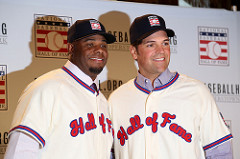
Photo by apardavila 
Today, Ken Griffey Jr. and Mike Piazza were officially inducted into the Baseball Hall of Fame – and, as expected, much was made of their respective places at the farthest ends of the MLB draft spectrum. Let’s get that “trending” fact out of the way right off the bat. Griffey is the earliest draft pick – in fact, the first-ever “first overall” pick (1987) elected to the HOF – while Piazza is the latest draft pick ever elected (the 1,390th player picked in the 1988 draft). BBRT did comment on Griffey and Piazza at that time of their election (January), and today seems like an appropriate day to again look back on the careers that earned them their spots in Baseball’s Hall of Fame. (I’ll also look ahead, briefly, at some of the 2017 “favorites.” ) Today, baseball honored a fleet centerfielder with an MLB pedigree and a grinding backstop, who got little love in the draft – a pair who, ultimately, were selected to a combined 25 All Star teams.
As long as I have fun playing, the stats will take care of themselves.
Ken Griffey, Jr.
The stats did, indeed, take care of themselves for Ken Griffey, Jr. – even after he retired. Not only was Griffey the “first-ever, first overall” draft pick elected to the Hall, he was a first-ballot electee and was named on an all-time record 99.3 percent of the ballots.
Griffey was considered a potential star right from the start – thanks to his sweet swing and baseball genes. Young Ken – actually George Kenneth Griffey, Jr. – was the son Ken Griffey, Sr.; a three-time All Star outfielder who was still active in 1989 (in his 17th of 19 Major League seasons), when Griffey, Jr. made his MLB debut at age 19.
“The Kid” (also known as “The Natural”) went on to play 22 seasons (1989-2010 … Mariners, Reds and White Sox), putting up some undeniably Hall of Fame numbers. His 2,781 hits earned him a .284 lifetime average and his 630 home runs are sixth all time. Griffey also collected 1,836 RBI; ten Gold Gloves; 13 All Star selections; and an AL MVP Award (1997). He led his league in home runs four times (with a high of 56 in 1997 and 1998); drove in 100+ runs eight times (leading the AL with a high a 147 in 1997); scored 100 or more runs six times (leading the AL with 125 in 1997); and hit over .300 eight times. Griffey is also tied for the most consecutive MLB games hitting a home run (eight, with Don Mattingly and Dale Long) and he and his father Ken Griffey, Sr. are the only father-son combination to hit back-to-back homers in major league history.
Ken Griffey, Jr.’s Best Season: In 1997, Griffey was selected the AL MVP after a season in which he played in 157 games and led the league in home runs (56), runs scored (125), RBI (147), total bases (393), slugging percentage (.646) and intentional walks (23), while also hitting .304, stealing 15 bases in 19 attempts and winning a Gold Glove.
Nobody wanted me. Scouts told me to go to school, to forget baseball. Coaches said, “You’re never going to make it.” I appreciated their honesty, because I think when someone tells you something you may not like, you have to use that as fuel for motivation.
Mike Piazza
As much as Ken Griffey Jr. was considered a natural, Mike Piazza was considered a long-shot … not for the Hall of Fame, but for a spot on a big league roster. Piazza was the 1,390th pick of the 1988 draft (62nd round), and the story has it that he was drafted by the Dodgers as a favor to Dodger manager Tommy Lasorda, who was a long-time friend of Piazza’s father. It worked out pretty well. Piazza was in the major by 1992, was the NL Rookie of the Year in 1993 and, in 16 major league seasons (1992-2007), put up: a .308 career average; 427 home runs (an MLB-record 396 as a catcher); 12 All Star Selections; and ten Silver Slugger Awards as the best hitter at his position (most ever by a catcher). Over his career, he collected 2,127 hits; 1,335 RBI; and scored 1,048 runs. Piazza topped 30 home runs in nine seasons, with a high of 40 in 1997 and 1999. He also topped 100 RBI six times – and was the first MLB catcher to collect 200 hits in a season (201 in 1997).
Mike Piazza’s Best Season: In 1997, the Dodgers’ backstop hit .362, with 201 hits, 104 runs, 40 HR, 124 RBI.
_________________________________
Griffey and Piazza – Similarities
As different as their careers were: Griffey and Piazza did have some similarities. For example, both doubled to center in their first MLB at bats, both were replaced by pinch runners in their final MLB games, both made their first All Star teams in their second seasons and both had (arguably) their best seasons in 1997.
First At Bat Doubles
Griffey played his first major league game on April 3, 1989 – and it was a one-run affair, as Griffey’s Mariners lost to the A’s in Oakland by a score of 3-2. The 19-year-old started in CF (batting second) and went one-for-three with a walk. In his first at bat (and first plate appearance), Griffey doubled to center on an 0-1 pitch from Oakland’s Dave Stewart.
Piazza played his first major league game on September 1, 1992 – and (like Griffey’s first game) it was a one-run contest. Piazza’s Dodgers beat the Cubs 5-4 (13 innings) in Chicago. Like Griffey, the 23-year-old Piazza doubled to center in his first official MLB at bat (off Cubs’ starter Mike Harkey in the fourth). It was not, however, Piazza’a first plate appearance. Starting at catcher and batting sixth, Piazza’s first plate appearance was a five-pitch walk off Harkey in the top of the second. For the game, Piazza went three-for-three (plus the walk), but neither scored nor drove in a run.
Last Game – Lifted for Pinch Runners
Griffey played his final MLB game on May 31, 2010 – another one-run affair, with Griffey’s Mariners losing to the Twins 5-4 in Seattle. In his last MLB at bat, Griffey (then 40) pinch hit for Mariners’ catcher Rob Johnson in the bottom of the ninth with the Mariners trailing 5-4 and Seattle shortstop Josh Wilson on first base. Griffey grounded to shortstop (on an 0-1 pitch from Twins’ reliever Jon Rauch) and reached first on a fielder’s choice (the Twins forcing Wilson at second). In his last MLB appearance, Griffey was replaced by a pinch runner (Michael Saunders)..
Piazza’s final at bat came on September 30, 2007 – and, yes, it also was a one-run game, with Piazza’s Athletics topping the Angels 3-2 in Oakland. Piazza (then 39) started the game at DH batting fifth. He went 1-for-4, getting a single to right on a 1-0 pitch from Angels’ reliever Chris Bootcheck leading off the ninth inning of a 2-2 game. It was Piazza’s final major league at bat and, like Griffey, in that final appearance, he was lifted for a pinch runner (Shannon Stewart, who scored the game-winning run).
A few other similarities:
- Both Griffey and Piazza made their first All Star team in their second major league season – Griffey in 1990, Piazza in 1993.
- Both Griffey and Piazza were All Star Game MVPs – Griffey in 1992, Piazza in 1996.
- Griffey and Piazza each had six post-season home runs – Griffey in 18 games, Piazza in 32.
_____________________________
2017 Hall of Fame Ballot
Finally, looking ahead to the 2017 HOF Ballot. Here are a few BBRT observations:
BBRT sees three eturnees with a good chance for election:
Trevor Hoffman (Relief Pitcher, 1993-2010 )
Hoffman returns for his second time on the ballot. He got 67.3 percent (of the required 75 percent) this past election and (in BBRT’s opinion) deserved better. BBRT sees Hoffman making it in his second try.
Hoffman is one of only two relievers to reach 600 saves (601) – trailing only Mariano Rivera (652). Hoffman and Rivera, in fact, are the only closers to reach 500 saves. (Note: Hoffman was also the first pitcher to reach the 500- and 600-save mark.) Hoffman led the NL in saves twice and reached 30 or more saves 14 times (with a high of 53 in 1998). He had a career record of 61-75, with a 2.87 ERA over 1,089 1/3 innings in 1,035 games – averaging 9.4 strikeouts per nine innings. Hoffman pitched for the Marlins (1993), Padres (1993-2008) and Brewers (2009-10).
Trevor Hoffman’s best season: In 1998, Hoffman went 4-2 for the San Diego Padres, with a NL-leading 53 saves (in 54 opportunities). He put up a 1.48 ERA and fanned 86 batters in 73 innings.
Tim Raines (Outfield, 1979-2001)
Raines returns for his tenth year on the ballot. After getting 69.8 percent last year, Raines should make it in 2017.
Raines hit .294 over his 23-season MLB career, collecting 2,605 hits, 1,571 runs scored, 170 home runs, 980 RBI and 808 stolen bases (fifth all time). He was a seven-time All Star; led the NL in stolen bases four consecutive years (1981-84); had a streak of six seasons with at least 70 steals; won the NL batting title in 1986 with a .334 average; led the league in runs scored twice and doubles once. In 34 post-season games, he hit .270 with one home run, six RBI, 18 runs scored and three steals. Raines played for the Expos (1979-1990 and 2001)), White Sox (1991-1995), Yankees (1996-1998), A’s (1999), Orioles (2001) and Marlins (2002).
Tim Raines’ best season: Despite his 1986 batting title (.334 average), BBRT thinks Raines top season was 1983 (Expos) – 156 games, 179 hits, .298 average, league-leading 133 runs scored, 11 homers, 71 RBI, league-leading 90 steals.
Jeff Bagwell (First Base, 1991-2005)
Bagwell returns for his seventh time on the ballot, after receiving 71.6 percent in the most recent vote.
In his 15-year MLB career, Bagwell collected 2,314 hits; smashed 449 home runs; stole 202 bases; and put up a .297 average. He also earned a Rookie of the Year Award (1991); a Most Valuable Player Award (1994); one Gold Glove; and four All Star selections. He twice recorded seasons of 40 or more homers and 30 or more steals. Bagwell drove in 100 or more runs in eight seasons, leading the league with 116 RBI in 1994 and reaching a high of 135 in 1997. He also led the NL in runs scored three times, with a high of 152 in 2000. His .297 career average was bolstered by six seasons over .300. Bagwell’s chances are hurt a bit by the fact that first base has been manned by so many power hitters over time. Bagwell, who played his entire career with the Houston Astros, stands a good chance of reaching the 75 percent threshhool in 2017. However, the presence of Hoffman and Raines (in his tenth season on the ballot) may hurt his chances.
Jeff Bagwell’s best season: In 1994, Bagwell earned the NL MVP Award with a season in which he hit .368, with 39 home runs, scored a NL-leading 104 runs, led the league with 116 RBU, stole 15 bases (in 19 attempts) – and won a Gold Glove.
________________________________
New to the Hall of fame Ballot
There are a handful of first-timers on the ballot, who may get a significant number of votes, but BBRT thinks will fall victim to the first-ballot prejudice.
Ivan Rodriguez (C – 1991-2011)
Ivan Rodriguez played 21 MLB seasons (Rangers Marlins, Tigers, Yankees, Astros, Nationals), putting up 2,844 hits, a .296 average, 311 home runs and 1,332 RBI. He was a 14-time All Star, 13-time Gold Glove Winner and won the AL MVP Award in 1999. If any of the first-timers on the ballot captured the necessary votes, it’s likely to be I-Rod – with his combination of leather (13 Gold Gloves) and lumber (seven Silver Slugger Awards).
Manny Ramirez (OF – 1993-2011)
Manny Ramirez played 19 MLB seasons (Indians, Red Sox, Dodgers, White Sox, Rays), collecting 2,574 hits, a .312 batting average, 555 home runs and 1,.831 RBI. Ramirez was a 12-time All Star and led the AL in average (2002), home runs (2004) and RBI (1999) once each. Ramirez won nine Silver Slugger Awards, including eight consecutive (1999-2006), hit .285 with 29 home runs in 111 post season games and was the 2004 World Series MVP. Ramirez clearly put up HOF-caliber numbers, but my guess is that voters will remember “Manny being Manny” and make him wait a year or two.
Vladimir Guerrero (OF – 1996-2011)
In a 16-year MLB career (Expos, Angels, Rangers, Orioles) Vladimir Guerrora hit a solid .318 (13 seasons of .300 or better), smacked 449 home runs (a high of 44 in 2000), drove in 1,496 runs (10 seasons of 100+) and stole 181 bases (with a high of 40 in 2002.) Guerrero was the AL MVP in 2004 (when he hit .337, with 39 home runs and a 126 RBI). He was a nine–time All Star and eight-time Silver Slugger Award winner. Still his stats may fall short of the voters proven reluctance to elect “first-timers” on the ballot to the Hall.
A very ealry prediction – BBRT’s Best Best for 2017 HOF Election: Trevor Hoffman, Tim Raines and Ivan Rodriguez.
I tweet baseball @DavidBBRT
Member: Society for American Baseball Research (SABR); The Baseball Reliquary; Baseball Bloggers Alliance.
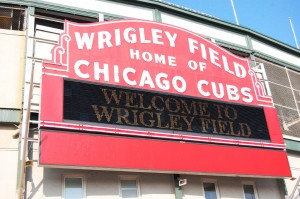
 Ballpark Tours, based out of Saint Paul, Minnesota, is offering a trio of trips – that can take you everywhere from Chattanooga to Chicago to Havana – in 2016. If you are looking for a unique baseball experience, it’s time to sign up for the bus (or plane).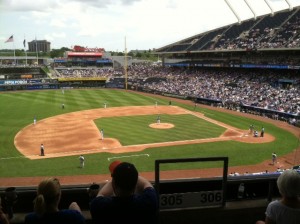
 Another great Ballpark Tours trip to Cuba. You’ll enjoy nine days in Cuba, five cities, three great hotels, Baseball People to People Events – and more.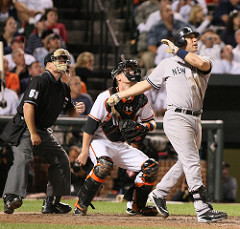
 Well, April is behind us and – if you are from Minnesota, you are banking on the old “April showers bring May flowers” adage, because it’s been plenty wet here. April not only brought showers to Minnesota, but also plenty of action to major league baseball – from the Dodgers opening the season with three straight shutouts to a no-hitter by the Cubs’ Jake Arietta (his second) to Rockies’ rookie Trevor Story’s ten April home runs (tying the MLB rookie record) to A.J. Pierzynski becoming just the ninth catcher to reach 2,000 hits. It was an eventful month – and it’s time for BBRT’s traditional look at the past month of the MLB season. I hope you enjoy this look back at April – and come across a highlight or two you may have missed. (Note: April is always the easiest month to “wrap,” since monthly and year-to-date leaders are the same.) Before we get into detailed highlights and statistics, here are a few quick observations.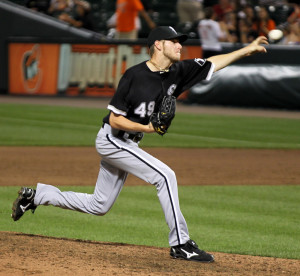
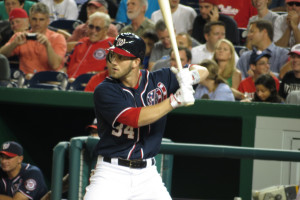
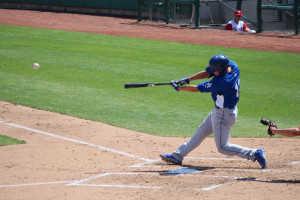 Seager, now 21-years-old, was a First Round pick in the 2012 MLB draft (out of Northwest Cabarrus High School in Concord, NH). Currently rated MLB’s number-one prospect by MLBPipeline.com, Seager showed his potential as an 18-year-old, hitting .309-9-33, with eight steals in 46 games with the Ogden Raptors of the Pioneer League (Rookie level). The 6’4”, 215-lb. left-handed hitter made his way to the Dodgers last September – and put up a .337-4-17 stat line in 27 games. (Up to that point of the season, Seager had hit .293-18-76 in 125 games at AA and AAA.) Seager should be the Dodgers starting shortstop in 2016 – and it should be fun to see what he can do in a full season.
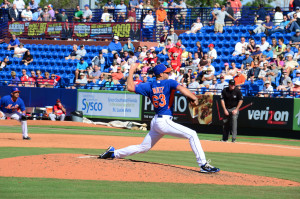 The Mets know how to find young pitchers who can miss bats, and MLBPipeline.com’s 2016 number-15 prospect Steven Matz is a good example of that expertise – as well as of the Met’s patience. The 24-year-old, 6’2”, 200-lb. hurler was drafted by the Mets in the second round (number 72 overall) of the 2009 MLB draft (out of Ward Melville High School, East Setauket, NY). The youngster had Tommy John surgery (2010) before he threw his first professional pitch, and in fact, didn’t make his professional (minor league) debut until 2012. He’s clearly made up for lost time. In 2012, he went 2-1, 1.55 ERA, with 34 K’s in 29 innings at Rookie-level Kingsport of the Appalachian League. By the time the Mets called him up in June of 2015, Matz had a 25-20 minor league record, with a miserly 2.25 ERA and 393 strikeouts in 380 2/3 innings. He also had a mid-90s fastball with movement, an effective change-up and an improving curveball. The result? In six 2016 starts for the Mets, Matz went 4-0, 2.27 with 34 strikeouts (10 walks) in 35 2/3 innings. (To top it off, he started three games in the post-season for NY and, while he was 0-1, pitched well (3.68 ERA). It will be fun (well, maybe not for hitters) to watch a full year of Matz in the Mets’ rotation.
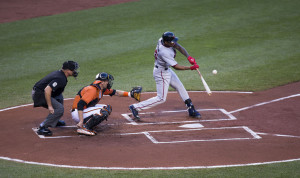 The number-two prospect on MLBPipeline.com’s 2016 list, Byron Buxton was the second overall pick in the 2012 MLB draft (out of Appling County High School in Baxley GA). The 22-year-old, 6’2”, 190 lb. Buxton is considered a five-tool player, combing speed, power and on-the-field discipline – and has held a place among MLB’s top-ten prospects since his signing. He was the 2013 Baseball America Minor League Player of the Year, when he hit .334, with 19 doubles, 18 triples, 12 home runs, 109 runs scored, 77 RBI and 55 steals in 125 game at A and High A. Buxton made his MLB debut for the Twins last June, but his playing time and performance suffered due to a thumb injury. His stat line for the Twins was .209-2-6, with two steals in 46 games. It will be interesting to see if Buxton can turn in at full season at his full potential for the Twins in 2016.