Holliday Takes A Walk in the Park – Five Times


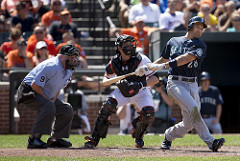
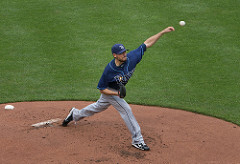
Yesterday (April 9, 2017), the Baltimore Orioles’ apparently decided to give New York Yankees’ Designated Hitter Matt Holliday a holiday – at least from hitting.  Holliday came to the plate five times and walked five times.  For the day, Holliday was zero-for-zero with zero runs scored and zero RBI – despite being on base five times in five plate appearances.  It was truly a Holliday “walk-in-the-park.”  Oh yes, the Bombers won 7-3.

Here’s how Holliday’s day went.

  • With two out in the top of the first Wade Miley walked Holliday – and then picked him off first for the final out.
  • With one out and Brett Gardner (who had walked) on first in the top of the third, Miley again walked Holliday, but pitched out of the jam. Baltimore up 1-0.
  • In the top of the fifth, with two outs and Aaron Hicks on second, Miley again walked Holliday – and, again, pitched out of the jam (getting Chris Carter on a groundout to shortstop).
  • With one out and no one on in the top of the seventh, the Orioles now up 3-2 and Tyler Wilson pitching, the Orioles brought in Mychal Givens to pitch to Holliday. Givens walked Holliday and then gave up a single to Chris Carter.  Givens, however, worked out of the difficulties, retiring Starlin Castro on a pop up and Chase Headley on an infield liner.
  • In the top of the ninth – game tied 3-3 – Darren O’Day came on to pitch to Holliday (leading off the inning). Surprise! Holliday walked – and was replaced by pinch-runner Jacob Ellsbury (who later scored the go ahead run.)

The Yanks scored four runs in the ninth, delivering the Orioles their first loss of the season.

Holliday’s five free passes, by the way, tied the Yankees’ record for a game, but fell one short of the MLB record of six.  The Red Sox’ Jimmie Foxx (June 16, 1938) and Walt Wilmot of the Chicago Colts (August 22, 1891) share the MLB record for a nine-inning contest. More recently, three players have drawn six walks in an extra- inning contest:  Bryce Harper, Nationals (in a 13-inning game versus the Cubs on May 8, 2016); Jeff Bagwell, Astros (in a 16-inning contest versus the Marlins on August 20, 1999); and Andre Thorton, Indians (in a 16-inning game versus the Orioles on May 2, 1984).

A few other bases on ball tidbits:

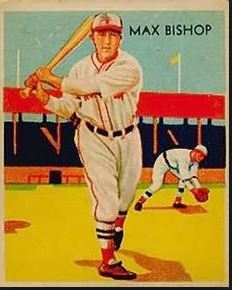
  • Only twice has an MLB player totaled eight free passes in a doubleheader. (Remember those?)  Max Bishop did it for the Philadelphia Athletics (playing 2B and leading off versus the Yankees) on May 21, 1930 and again on July 8, 1934 (playing against the Athletics; at 2B and leading off for the Red Sox).
Max "Camera Eye" Bishop

Max “Camera Eye” Bishop

Max Bishop – whose nickname was appropriately “Camera Eye” – drew 1,153 walks in 1,338 MLB games (over 12 seasons). While he led his league in walks only once (128 in 1929), Bishop topped 100 free passes in seven seasons. Bishop averaged one walk every five plate appearances for his career – helping translate a .271 batting average into a .423 on base percentage.  The only player with a higher percentage of walks per plate appearance than Bishop is Ted Williams.  Note: BBRT found a discrepancy in searching out Bishop’s walk totals.  Sources differ on his overall total (1,153 or 1,156), due to disagreement on his 1928 total – some sources list it as 97 walks, others as 100. I am continuing to dig into this, as the three walk difference in 1928 does make a difference.  With them, Bishop has eight straight 100 or more walk seasons, giving him a share of the MLB record.
  • The MLB career leaders for walks drawn is Barry Bonds, with 2,558 (in 22 seasons). Bonds also holds the single-season record at 232 (in 2004) and, in fact, the top three season totals. Bonds also holds the records for consecutive seasons leading his league (five – 2000-2004); total seasons leading his league (12 – 1992, 1994-97, 2000-04, 2006-07); and total seasons of 100 or more walks (14).
  • The most consecutive walks received by a hitter is seven. Notably, in the NL, all three players to accomplish this played for the Giants: Mel Ott (June 16-18, 1943); Eddie Stanky (August 28-29, 1950); and Barry Bonds (September 14-26, 2004).  In the AL, it was Billy Rogell (Tigers – August 17-19, 1938) and Jose Canseco (A’s – August 4-5, 1992).

WHICH OF THESE IS NOT LIKE THE OTHER ONES?

Only four players have drawn 2,000+ career walks: Barry Bonds (2,558); Rickey Henderson ((2,190); Babe Ruth (2,062); and Ted Williams (2,012).  Of these Rickey Henderson is the outlier – the only right-handed hitter and the only one of the four with less than 500 home runs (297).

I tweet baseball @David BBRT


You can also follow me at the Baseball Roundtable FaceBook page – click here to go the the page – and Follow and/or Like. 


Member:  Society for American Baseball Research (SABR); The Baseball Reliquary; Negro Leagues Baseball Museum; Baseball Bloggers Alliance.
Highest Attendance Ever at a Game Between MLB Teams

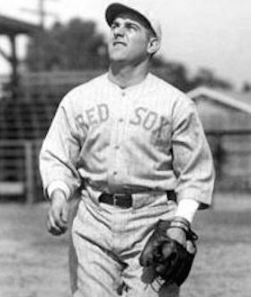
On this day (March 29) in 2008, a record 115,300 baseball fans attended an exhibition game between the Los Angeles Dodgers and Boston Red Sox at the  Los Angeles Memorial Coliseum.  (Still the largest crowd for a game between two MLB teams). The game, which raised more than $1 million for the Dodgers’ “Think Cure!” cancer research charity, celebrated the fiftieth anniversary of the Dodgers’ 1958 move from Brooklyn to LA.  The Dodgers played in the Coliseum from 1958 to 1961. (Dodger Stadium at Chavez Ravine opened in 1962.)

Note: While the newly transferred LA Dodgers awaited the 1962 completion of Dodger Stadium, they had a trio of potential sites for regular season games: LA’s Wrigley Field (most famous as the site of the Home Run Derby television series); the Rose Bowl; and the Coliseum.

The site of the March 29, 2008 game (and the Dodgers’ first four Los Angeles seasons), the Coliseum was originally built in 1923 primarily as a football stadium (also hosted Olympic events in 1932 and 1984).   The oval-shaped Coliseum proved difficult to transform into a baseball park.  The Dodgers ended up with: a VERY short left field porch (250-feet down the line, topped with a 40-foot-high screen);  320-feet to the left-center alley;  425-feet to center; a VERY deep 440-feet to right center; a right-field fence angling sharply to a  300-foot right field line.  BBRT note: For the 2008 exhibition game, left field – adorned with a sixty-foot-high fence –  was just 201 feet from the batters’ box.

By the way, for those who are interested in such things, the Red Sox won that March 29, 2008 game 7-4. Tim Wakefield started and threw five shutout innings, supported by a pair of Kevins – catcher Kevin Cash hit a three-run homer and first baseman Kevin Youkilis hit a two-run shot. For the Dodgers, Esteban Loiaza took the loss (five runs, two earned, in three innings) and first baseman James Loney hit a solo shot.

I tweet baseball @DavidBBRT

Follow and Like Baseball Roundtable on Facebook for more on the national pastime.

Member: Society for American Baseball Research  (SABR); The Baseball Reliquary; The Negro Leagues Baseball Museum; Baseball Bloggers Alliance. 

Baseball Stocking Stuffers – Gene Rye, John Schuerholz and Mickey Mantle

Follow on Twitter @DavidBBRT for notification of new posts.

Happy Holidays to all!  To kick of the season, BBRT is providing an alternative to the usual in-depth posts found here. Instead I am posting are a trio of stocking stuffers focusing on the most powerful one-inning display of batsmanship ever (Gene Rye); the Today’s Game Era Hall of Fame ballot (John Schuerholz, Bud Selig); and my favorite comic book (Mickey Mantle).

ONE POWERFUL INNING

Gene Rye. Photo: Society for American Baseball Research.

Gene Rye. Photo: Society for American Baseball Research.

Boston Red Sox outfielder Gene Rye came by his nickname naturally – the 5’ 6”, 165-pounder was known around baseball as “Half Pint.”  However, for one inning of one game, this small-of-stature ballplayer carried professional baseball’s biggest and most powerful bat.  On August 6, 1930, playing for the Class A Texas League Waco Cubs (against the Beaumont Exporters), Rye became the first (and still only) professional ballplayer to hit three home runs in a single inning.

It came about in the bottom of the eighth inning – which opened with Waco trailing Beaumont 6-2 and Rye leading off.  The left-handed swinging Rye took Gerald Mallet deep to left for a solo round tripper.  That blast sparked the Waco offense and the team batted around – bringing Rye to the plate for a second time in the frame, now facing reliever Walter Newman with Waco up 9-6 and two men on base. Rye upped the lead to 12-6, this time pulling the ball over the right field fence.   Beaumont may have decided the game was out of reach because Newman was still on the mound when Rye came up for a third time in the inning – with the bases loaded. In his third at bat of the inning, Rye again pulled the ball over the right field wall for a Grand Slam. By the time the inning was over, Waco had scored 18 runs and held at 20-6 lead. (They would eventually win 20-7.)  Gene “Half Pint” Rye (whose real name was Eugene Mercantelli) had set the professional records for home runs (3), total bases (12) and RBI (8) in an inning.  Rye still holds all three records – although the RBI record for an inning has since been tied by:  Ken Myers of the Class C (Sunset League) Las Vegas Wranglers on May 2, 1947; Armando Flores of the 1952 Class B (Gulf Coast League) Laredo Apaches on June 25, 1953; Lance Junker of the Class A (California League) Redwood Pioneers on June 30, 1983; and, at the Major League level, Fernando Tatis of the Cardinals on April 23, 1999.  All four of these players tied the single-inning RBI mark by virtue of two Grand Slams in the inning.

Rye, who began his professional baseball career in 1925 (at age 18), had been on the rise when he fashioned his record-setting inning. In 1928, he hit .289 with 12 home runs for Winston-Salem in the Class C Piedmont League. In 1929, he moved up to the Class A Waco squad and  hit .284, with 19 round trippers.  In 1930 – the season of his three-homer inning – the 24-year-old Rye hit .367 with 26 home runs.

Not surprisingly, Rye’s emerging power attracted interest at baseball’s highest level.  In 1930, Half-Pint Rye found himself playing for the Boston Red Sox. However, a broken wrist in Spring Training limited his effectiveness and he played in only 17 games (.179 average with no home runs and one RBI) before being sent to the minors in June. He played in the minors until 1936, but never made it back to the major leagues.

BBRT note:  In his big inning, Rye nearly hit for the “Home Run Cycle” – a solo, two-run, three-run and Grand Slam homer.  Only once player – Tyrone Horne – had his for the Home Run cycle in a single game.  You can read that story here.

BBRT on the Today’s Game Era Hall of Fame Ballot

John Schuerholz - unanimous selection on BB HOF Today's Game ballot. Photo by The SABR Office

John Schuerholz – unanimous selection on BB HOF Today’s Game ballot. Photo by The SABR Office

BBRT was two-for-three in predicting electees on the Today’s Game Era Hall of Fame ballot.  BBRT predicted three of the ten candidates would get the necessary 75 percent support: Executives John Schuerholz and Bud Selig, and manager Lou Piniella. Schuerholz and Selig made it. Piniella finished third in the voting, but received only seven of the 12 votes necessary. You can read BBRT’s take on the entire list of candidates here. 

As far as the results. Schuerholz – with his fine work with the Royals and (especially) the Braves was an easy pick.  Like many “old-schoolers,” I had reservations about Selig (especially given how his contraction talked affected Minnesota), but MLB did flourish (and work through some tough challenges) during his tenure as commissioner.  I also thought Piniella’ 23 managerial seasons, 1,835 wins and three Manager of the Year Awards should have earned him at least 75 percent support. (Piniella has the 14th most managerial wins in MLB history. Thirteen of the 14 managers ahead of him are in the Hall of Fame – as well as a host of those who trail him.  Looking to recent history, for example, Piniella has 236 more wins than Tommy Lasorda, 264 more than Dick Williams, and 355 more than Earl Weaver.

Note: For BBRT’s take on the traditional BBWAA player HOF ballot (results announced next month), click here.

My Favorite Comic Book

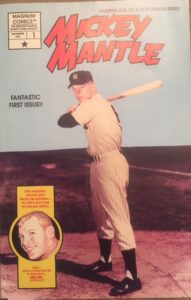
mantlec1Twenty-five years ago this month (December 1991), Magnum Comics released the first issue of Mickey Mantle Comics – dedicated to exploring the life (in comic book form) of this Yankee icon. The comic book also included a section on the Boston Braves’ “Super-Sub” Sibby Sisti, as well as Mantle and Sisti commemorative post cards. On its inside back cover, Magnum Comics previewed upcoming issues on Brooks Robinson and Duke Snider.mantle2


I tweet baseball @ DavidBBRT

Member: Society for American Baseball Research (SABR); The Baseball Reliquary; Baseball Bloggers Alliance.

World Series Game Three Wrap Up A Little Late

Baseball Roundtable Game Three Wrap Up will be posted early- to mid-afternoon.  Have to attend the Society for American Baseball Research (SABR) Halsey Hall Chapter Meeting (9 a.m.-lunch). Will be posting on Terry Francona’s ability to consistently “pull the right lever,” key moments in Game Three, Cleveland’s bullpen, wild fans in Cleveland and Chicago,  Jose Altuve’s Player of the Year Award, the Cubs’ last World Series Championship (Ty Cobb on one side and Tinker-to Evers-to Chance on the other). Stop in at BBRT before the game.  

2016 World Series – Game One Observations

Game One of the 2016 World Series is in the  books – a 6-0 Cleveland win.  There were expected (Corey Kluber) and unexpected (Roberto Perez) heroes, a notable turning point (seventh inning), 24 strikeouts (15 recorded by Cleveland pitchers) and three players who started the Series with three-hit games (Ben Zobrist, Francisco Lindor and Jose Ramirez).

How meaningful will this Indians win be?  That remains to be seen, but since the best-of -seven format came into play, Game One Winners have a 109-60 edge in World Championships.  Still, with Jake Arrieta and Kyle Hendricks on tap for the next two games, I like the Cubs’ chances.

Here are a few random observations from Game One.

A is for Apple. B is for Bat. … K is for Kluber – an Expected Hero

Corey Kluber photo

Photo by apardavila

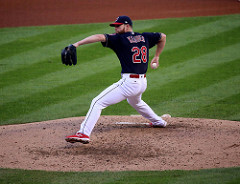
Corey Kluber, who started on the mound for the Indians, was an expected hero.  The 2014 Cy Young Award winner was the staff ace in 2016, going 18-9, 3.14 and fanning 227 batters in 215 innings. He set the tone from the start, fanning eight over the first three innings (a WS record for the first three frames) and whiffing nine (versus four hits and no walks) over six shutout innings.  Andrew Miller and Cody Allen added six more strikeouts to wrap up the 6-0 shutout.  A couple of observations: Kluber threw just 88 pitches, which opens options for how he is used (three starts or two starts and a relief appearance) later in the Series.  ALCS MVP Andrew Miller threw 46 pitches in relief, which may limit how he is used in Game Two.

Core Kluber’s outing works to magnify Bob Gibson’s dominance when he fanned a World Series single-game record of 17 – as his Cardinals topped the Tigers 4-0 in Game One of the 1968 WS. Gibson threw three complete games in that Series (1.67 ERA), fanning 35 in 27 innings.

An Unexpected Hero

Number-nine hitter Cleveland catcher Roberto Perez  – who hit .183, with just three home runs in 61 games in the regular season and was hitting just .174 in the post season –  was hardly considered a likely offensive hero.   All he did was belt two home runs in four at bats and drive in four of the Indians’ six runs.

Before Roberto Perez’ two-home run inaugural World Series game, the only other catcher to homer twice in his first WS game was the Oakland A’s Gene Tenace in 1972.  Tenace, who had hit .225 with five home runs in 82 regular season games and was hitting .059 in the post season (ALCS), went on to hit .348 in the WS, with a Series-leading eight hits, five runs, four home runs and nine RBI. The A’s topped the Red in seven games, despite being outscored 21-16. Tenace was the WS MVP.

Turning Point

Some may say the turning point came when Corey Kluber took the mound.  For my money, it came in the top of the seventh when Cubs’ LF Ben Zobrist opened the inning with a single off Kluber – followed by a walk to DH Kyle Schwarber and a single to 2B Javier Baez (both given up by Andrew Miller, who had replaced Kluber), loading the bases with no outs.   Miller went on to retire pinch hitter Wilson Contreras on a short fly (runners holding) to center and SS Addison Russell and C David  Ross on swinging strikeouts. The Cubs failed to score after loading the sacks with no outs.  Game. Set. Match.  Kudos to manager Terry Francona to sticking to his pitching plan in that tense inning.

It’s Not Always Power

While four of the Indians’ tallies came on home runs (Roberto Perez with two), the other two runs scored on a bases-loaded infield single (3B Jose Ramirez) and a bases-loaded hit-by-pitch (LF Brandon Guyer).  That Guyer should “take on for the team” should be no surprise. Guyer led the American League in HBP with 31 this past season (in just 101 games). Guyer was also the AL HBP leader in 2015, with 24.

 A Perfect World Series 9-0

Terry Francona photo

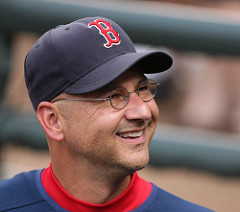
Terry Francona – plenty to smile about. Photo by Keith Allison

Indians’ Manager Terry Francona is piloting his third World Series and has yet to lose a Fall Classic game.  In 2004, his Red Sox swept the Cardinals and in 2007 his Boston squad topped the Rockies 4-0. Now, if only the TV commentators would stop referring to him as “Tito.”  Yes, I know it’s his nickname, but my mind always seems to revert to his dad –  John Patsy “Tito” Francona – whom I saw play often in his 15-seeason (1956-70) career as an MLB OF/1B.  Terry, by the way, was an MLB OF/1B from 1981-90.


While Terry Francona s’ streak of managing nine World Series wining games (still active) without a loss is an MLB record, the record for consecutive  World Series game wins managed belongs to Joe Torre at 14 (1996 – Games Three-through-Six versus Braves; 1998 – four-game sweep versus Padres; 1999 – four-game sweep versus Braves; 2000 – Games One and Two versus Mets.  

Hope from Rehab

Cubs’ DH Kyle Schwarber, out with an injury since early April, was activated for the World Series.  Schwarber who had knee surgery in mid-April was not expected back this season.  He surprised a lot of people yesterday, picking up a double and a walk in four plate appearances. In 2015, as a rookie, Schwarber hit .246, with 16 home runs and 43 RBI in 69 games and then hit five home runs in nine post-season contests.   The Cubs are hoping his power has an impact in the 2016 Series.


I tweet baseball @DavidBBRT

Member: Society for American Baseball Research (SABR); The Baseball Reliquary; Baseball Bloggers Alliance.

Another Dose of Dozier – and Some Historic Perspective

Brian Dozier photo

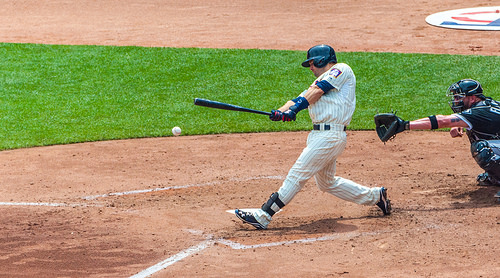
Brian Dozier – bringing 40-HR power to the Twins lineup. Photo by rtclauss

My Twins (BBRT is Minnesota-based) have not given me a lot to write about this year (a 53-91 season record will do that).  That is, not until Monday night. In the third inning of the Twins’ September 12, 2016 contest against the Tigers, Minnesota 2B Brian Dozier launched a solo home run off Tigers’ starter Daniel Norris to tie the game 1-1 (the Twins eventually lost 4-2).  It was Dozier’s 40th home run of the season and made him the first American Leaguer to reach 40 home runs while playing primarily second base (Yankees’ 2B Alfonso Soriano hit 39 HR’s in 2002). BBRT note:  38 of Dozier’s homers have come while playing second base, with two coming as DH.

The solo shot to left field also made Dozier just the second Twin and third player in franchise history to reach the 40-homer mark. Harmon Killebrew, who reached 40 or more round trippers in seven seasons was the last Twin to hit 40 (41 in 1970) and holds the franchise record of 49 in a season (1964 and 1969). BBRT note: Killebrew reached 40 while playing primarily at: 3B (1959); 1B (1967); LF (1962-63-64); and splitting time between 1B/3B (1961-1969). The only other Senator/Twin to reach 40 was OF/1B Roy Sievers (42 in 1957).  Dozier ended Monday’s game trailing AL (and MLB) HR leader Mark Trumbo (Orioles) by just one in the HR race. (The last Twin to lead the league in HR’s was Killebrew in 1969. The last second baseman to win a HR title was the Cubs’ Ryan Sandberg, with 40 home runs in 1990. The last 2B to win the AL HR crown – tie – was the Angels’ Bobby Grich, with 22 HR’s in the strike-shortened 1981 season).

Dozier is now just three homers shy of the most ever hit by a player taking the field primarily at second base – Davey Johnson of the Braves in 1973.  Looking exclusively at HR’s while in the lineup at 2B (remember, Dozier has 38 of those),  Davey Johnson (again, 1973) and the Cardinals’ Rogers Hornsby (1922) share the record at 42.  Jeff Kent (Blue Jays, Mets, Indians, Giants,  Astros, Dodgers) holds the record for career home runs hit while playing second base at 351 (out of 377 total home runs, the MLB high for players playing primarily at 2B). Kent hit a career-high 37 home runs for the Giants in 2002 – and had 12 seasons of 20 or more round trippers. Dozier now stands at 115 career (MLB) round trippers.  Dozier is also closing in on 100 RBI, with 94 for the season.  The single-season record for second baseman belongs to Hornsby (152 in 1922).

Rogers Hornsby’s 1922 season for the Cardinals is the best in MLB history for a second sacker. He  led the league in batting average (.401); home runs (42); RBI (152); hits (250); runs (141); doubles (46); total bases 450) – and threw in 14 triples and 17 stolen bases.

Dozier’s power is a bit of a surprise.  The 29-year-old’s previous MLB high for a season is 28 home runs (2015) and he never reach double figures in a minor league campaign. His HR totals, however, have increased in each of his five major league campaigns – and he has established himself as a legitimate power threat.  Perhaps more surprising about where Dozier stands now is how he started the 2016 season.  Dozier hit just .191 with three home runs in April. As of June 5, Dozier’s average stood at .206, with just six home runs and 22 RBI. Since that time (through September 12), Dozier’s line is .316-34-72.  At the close of Monday’s games, Dozier’s season stat line was .277-40-94.


I tweet baseball @DavidBBRT

Member: Society for American Baseball Research (SABR); The Baseball Reliqaury; Baseball Bloggers Alliance.

Photo by rtclauss

The Day Raul Ibanez “Did Not” Hit Into A Triple Play

We’ve already seen six triple plays in the Major Leagues this year, which led me to consider the unique circumstances that can lead to a triple-killing.  Well, it just so happens that today (September 2) is the tenth anniversary of one of the most unique triple plays ever – one in which the bat never made contact with the ball.

Raul Ibanez Mariners photo

Photo by Keith Allison

On September 6, 2006, the Tampa Bay Devil Rays were taking on the Seattle Mariners (in Tampa) – when Seattle LF/cleanup hitter Raul Ibanez did (uniquely) not hit into a triple play.  Yet, by not hitting, Ibanez set a triple play in motion.

It happened in the top of the first, with J.P. Howell pitching for the Devils Rays (as they were known then). Seattle’s speedy CF Ichiro Suzuki led off with an infield single. 2B Jose Lopez followed with a walk and then 3B Adrian Beltre singled; bringing home Suzuki and sending Lopez to third.  That set the stage.

Runners on first and third, no one out and LF Raul Ibanez at the plate.  Ibanez worked the count full and then took a third strike. Beltre was off with the pitch and gunned down – catcher Dioner Navarro to shortstop Ben Zobrist.  Meanwhile, Lopez attempted to score from third on the play at second – and was thrown out – Zobrist back to Navarro.  So, there it was a 2-6-2 triple play, with the bat never touching the ball.  Ibanez had truly not hit into a triple play. Ultimately, the Mariners won the game 4-3, with the winning run (carried by Ibanez) scoring on a more traditional sacrifice fly in the top of the eighth.

As an aside, the Devil Rays were no strangers to unique triple plays in 2006.  Earlier in the season, in the second inning of a June 11, 2006 game against the Royals in Kansas City, Tampa Bay was the victim of an unusual triple-killing.  DH Jonny Gomes led off the inning with a home run against Royals’ righty Scott Elarton. Then 3B Aubrey Huff walked and CF Rocco Baldelli singled – sending Huff to third.  The stage was set for RF Russell Branyan – runners on first and third and no one out. (Sound familiar?)

Branyan flied out to Royals’ CF David DeJesus, who made a nice catch in shallow center.  Huff went home, apparently scoring, as DeJesus’ throw sailed well over catcher Paul Bako’s head. Baldelli attempted to take second on the wild throw, but was thrown out by pitcher Elarton, who was alertly backing up the play at the plate.  Royals’ SS Angel Berroa took the throw and tagged out Baldelli. He then threw to 3B Mark Teahen, with the Royals asserting that Huff had left the base early.  The umpires agreed and the Royals had an 8-1-6-5 triple play. Tampa Bay won the game 8-2.

I tweet baseball @DavidBBRT

Member: Society for American Baseball Research (SABR); The Baseball Reliquary; Baseball Bloggers Alliance.

Moore Loses No-Hitter with Two Out in the Ninth – How About Losing a Perfect Game at that Late Juncture

Matt Moore photo

Matt Moore, moved from Tampa Bay to San Francisco for the stretch drive, notched a near no-no yesterday. Photo by Keith Allison

Yesterday, August 25, Matt Moore picked up his first win since his trade to the San Francisco Giants – giving up just one hit (a single to Dodgers’ shortstop Corey Seager) in  8 2/3 innings (no runs, one hit, three walks, seven strikeouts.)

Despite the masterful performance and the 4-0  win over the rival Dodgers, there was a tinge of disappointment to the game.  You see, Seager’s hit (on Corey Seager Bobblehead Night) came with two-outs in the bottom of the ninth – spoiling Moore’s no hit bid.

Losing a no-hitter with two outs in the ninth is truly disappointing, but what about the ultimate let-down – losing a perfect game with two outs in the ninth? Appropriately, this has occured fouteen times in MLB history.  To read the stories of those “oh-so-close-to-perfection” outings click here.

I tweet baseball @DavidBBRT

Member: Society for American Baseball Research (SABR); The Baseball Reliquary; Baseball Bloggers Alliance. 

David Dahl – It’s Raining Records

REdAt 9:00 a.m. on Friday, August 12, 32 baseball fans – myself included – set out on Ballpark Tours Bleacher Bums XXXIV – a trip designed to take us to ten baseball games, in seven cities in ten days.  From Peoria (IL) to Memphis (TN) to Nashville (TN) to Chattanooga (TN) to Marion (IL) to Kansas City (MO) to Des Moines (IA), we would be taking in professional baseball at many levels (Independent, A, AA, AAA and Major League).
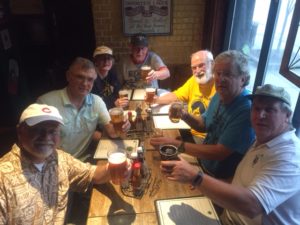
It was a fine rolling start, featuring some typical Ballpark Tours’ hoopla including the distribution of our tour t-shirts, a baseball  book exchange, a Bloody Mary Bar at the back of the bus (open at 11:15 a.m.) and snacks (cheese, meats, crackers) to accompany the morning beverages. As lunch time came around, we stopped for a rest-area picnic, where tour participants broke out fare from chicken-salad pocket breads to smoked whitefish and double butter brie to sushi.

As we re-boarded and burned up the miles with baseball stories and memories from past Ballpark Tours’ trips, we also received copies of this trip’s Trivia Kwiz and forms for a contest to guess the number of major league runs scored during the upcoming weekend. Wow, apparently there is homework on this trip – but it’s baseball homework.

Shortly after the lunch stop, the unrelenting rain started and, when we pulled into Peoria (a six-hour bus ride), we found our first game had been postponed – just the second rainout in Ballpark Tours’ 34-year history. Undaunted, groups set out from the hotel – the very nice Staybridge Inn and Suites (my room had a queen bed, coach and coffee table, desk, refrigerator, microwave, stove and even an icemaker and dishwasher). Our destination(s)?  Local restaurants and pubs, on foot or via hotel shuttle.

PubLibation and laughter (as well as supper) were the order of the evening.  The group I joined headed to Ulrich’s Rebellion Room – a nearby Irish-style pub.  Despite the rain, and some disappointment with the cancelled game (and missed fireworks and lost bobbleheads), there were plenty of smiles, laughter and toasts to our national pastime. And, imagine, the response, when the group learned the pub didn’t close until 4:00 a.m. and the kitchen was open until 3:00. That’s hospitality.
I actually headed back to the hotel a little early, which gave me a chance to tune in to coverage of the day’s major league contests.  Of particular interest was the Rockies/Phillies game and the performance of Colorado’s rookie outfielder David Dahl.

David Dahl – For the Record

I kept an eye on Rockies’ rookie left fielder David Dahl Friday evening. Thursday, Dahl hit in his 17th straight game (in what was just his 17th major league game) – tying the MLB record for the longest hitting streak to begin a career.

Dahl, who had a chance to claim the record (at 18 games) all to himself, went zero-for-four in the Rockies’ 10-6  loss to the Phillies on Friday – striking out three times. Ironically, one of the strikeouts helped a Phillies’ rookie tie another record. Dahl led off the second inning against Phillies’ starter Jake Thompson and fanned on a curveball in the dirt, a wild pitch that also eluded catcher Cameron Rupp. Dahl reached first on the WP; Rockies; RF Gerarado Parra followed with a single; and catcher Nick Hundley was safe on an error (scoring Dahl). Thompson then struck out 1B Ben Paulsen, SS Daniel Descalso and P Jon Gray – to notch an MLB record-tying four strikeouts in an inning.

But, back to Dahl.  The 22-year-old rookie collected 24 hits in 70 at bats (.358) during his streak – including one double, three triples and three home runs.  Over the 17 games, he drove in ten runs and scored 17. Dahl moved up from AA Hartford to AAA Albuquerque before his call up, hitting .314 with 18 home runs, 61 RBI and 17 steals in a combined 92 games. Dahl was selected – out of Mountain High School in Birmingham, Alabama – in the first round of the 2013 MLB draft (10th overall). He carried a .310 average with 47 home runs and 74 stolen bases over five minor league seasons (367 games).  .

Dahl tied the record of Chuck Aleno,  3B for the Reds, who was called up May 15 1941. During his 17-game streak, Aleno hit .389 (28 for 72), with two doubles, two triples, nine RBI and 12 runs scored.  Aleno finished the year at .289-1-18 in 54 games, the most he would ever play in an MLB season, When he was called up, the 24-year-old Aleno was in his fifth professional season and was hitting .348 (19 games) for the AA Indianapolis Indians of the American Association. Aleno played 17 seasons of professional ball, part of four in the majors. His MLB career line was .209-2-34 in 118 games.

It’s back on the bus tomorrow with, hopefully some game action, Memphis Redbirds, to report.


I tweet baseball @DavidBBRT

Member: Society for American Baseball Research (SABR); The Baseball Reliquary; Baseball Bloggers Alliance.

July MLB Wrap – Brewers Steal 38 Bags, Orioles 1 … And More

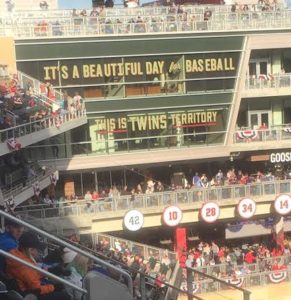
dayBBRT finished the month of July in appropriate fashion – at Target Field on a sunny Sunday afternoon (Vintage Bobblehead Day), watching the Twins top the White Sox 6-4 (behind a double and two home runs by Brian Dozier and six solid innings from starter Ervin Santana).  BBRT Note:  Ervin Santana was born Johan Ramon Santana – a named he used until 2003 (when he was a minor leaguer in the Angels system). At that time, he decided he would change to Ervin avoid confusion with Twins’ pitcher Johan Alexander Santana.  The next year, the other Johan Santana – with the Twins – won his first of two Cy Young Awards. 
The Sunday outing put me in the proper mood to spend the evening and this a.m. working on the traditional monthly update – but this month will be a little different. I thought I’d start by commenting briefly on  my day at the ball park – complete with background music  – to set the mood.

The game wasn’t the most cleanly played, with the Twins prevailing despite four errors. However, three home runs (two by DH Dozier and one by 1B Kennys Vargas) were enough to carry the day. Between them, Dozier and Vargas went five-for-six, with a double and three home runs, two walks, five runs scored and five RBI.  Home team fans went home happy.

Couple perfect weather, a victory, hot dogs, cold beer, bobbleheads, an accurate scorecard, mu daughter at the park with me, and live music from the rock “supergroup” The Baseball Project – which has released three albums of baseball themed rock – and it was (as usual) a great day at the ballpark.   Here’s a sample of the band’s work – rock ‘n roll and baseball, a great combination. You might want to check out their albums/CD’s – Volume 1: Frozen Ropes and Dying Quails; Volume 2; High and Inside; and 3rd.


Now, let’s get to BBRT’s traditional monthly wrap up – odd occurrences, off-the-wall observations, awards and, of course, stats (plenty of stats).  July 2016 was, as  usual, a month with plenty to see.  For example, fans witnessed:

  • The Saint Louis Cardinals optimizing their bench – putting up an MLB-best pinch-hit batting average of .351 (53 hits in 151 pinch-hit at bats).
  • The  Brewers stealing 38 bases over the course of thje month … while the Orioles stole ONE.
  • Nine of the top ten bases stealers for the month coming from the NL – and the only AL player to crack the top ten (Twins’ SS Eduardo Nunez) going to the NL (traded to the Giants).
  • The often offense-deprived Padres tying an NL record by homering in 25 consecutive games – with the leading contributor being 27-year-old rookie infielder Ryan Schimpf – who made his MLB debut in mid-June – and whose nine July home runs tied for most in MLB.  Schimpf, by the way, had hit .355, with 15 homers in 51 games at AAA El Paso before his call up. 
  • Reds’ 1B Joey Votto hitting .413 for the month – the only .400-hitter among players with at least 100 plate appearances.
  • The Angels’ Hector Santiago starting six games and going 6-0, 1.78 … and then being traded to the Twins just before the deadline.
  • The White Sox tying the MLB record for triples play in a season (three) – with plenty of season left to top that mark.
  • The Dodgers issuing 11 intentional walks … The Royals ZERO.

More on these events and others coming up.  We’ll leadoff, however, with BBRT’s July recognitions.

BASEBALL ROUNDTABLE MONTHLY HONORS

AL Player of the Month:  Albert Pujols DH, Angels

Pujols delivered a solid month of  July – .297-6-31.  He was, in fact, the only player to deliver 30 RBI for the month (no one else drove in more than 23.)  Pujols’ nearest competition for AL honors came from Astros’ second baseman Jose Altuve – who continues to lead the AL in batting average after a .354-5-16 July.  Can’t ignore those RBI, however. Pujols drove in 31 in just 26 games.

NL Player of the Month – Tie: Daniel Murphy, 2B Nationals/Trevor Story, SS, Rockies

Murphy continues to march toward the NL batting title – turning in a .346 July average (fourth  among National Leaguers with at least 50 plate appearances for the month).  The Nationals’ second-sacker also led the NL in RBI for July with 23, hit a league-leading 11 doubles and launched six round trippers. Right there with Murphy was Rockies’ rookie SS Trevor Story.  Story hit .288 for July, drove in 22 runs (second-best in the NL), rapped eight home runs (also the NL’s second-best total) and tied for the lead in runs scored (20).

AL Pitcher of the Month – Hector Santiago, LHP, Angels

In July, the Angels went 6-0 in games started by Hector Santiago and 9-11 in the games he didn’t start. The simple fact is, Santiago started six games for the Angels in July – and delivered six victories (MLB’s only six-game winner for the month) and a 1.78 ERA. Santiago pitched 35 1/3 innings, striking out 34 batters and giving up just 26 hits.  The kink in his armor may be the 21 walks.  He is the AL pitcher of the month for going a perfect six-for-six.  (Getting traded to the Twins didn’t hurt his BBRT standing either.

NL Pitcher of the Month – Stephen Strasburg, RHP, Nationals

Strasburg started five games for the Nationals in July and put up a 4-1 record with a 2.08 ERA. Only Anthony DeSclafani of the Reds matched his win total (4-0, but with a 3.82 ERA). Strasburg also fanned 37 batters (fifth-highest in the NL) in 34 2/3 innings.

AL Team of the Month – Toronto Blue Jays

Easy call here, the Blue Jays had baseball’s best July record at 16-8. In the process, they reorded the AL’s best team ERA at 3.37, and scored the AL’s fourth-most runs.  For the month, the Blue Jays outscored their opponents 135-89. Leading the way on offense for Toronto were: 3B Josh Donaldson (.316-6-21 for the month); SS Troy Tulowitzki (.308-6-21); and DH Edwin Encarnacion (.284-7-19). On the mound, J.A. Happ went 4-0, 1.44, Aaron Sanchez went 3-0, 1.59 and Jason Grilli delivered three wins (versus one loss) and four holds in ten appearances (1.80 ERA).

NL Team of the Month – Saint Louis Cardinals

This was a close call among the Cardinals (16-11 in July); Marlins (16-10); and the Dodgers (15-9).  The edge went to the Cardinals for their ability to overcome injuries to such key players such as Matt Carpenter, Jhonny Peralta, Brandon Moss, Kevin Siegrist and Trevor Rosenthal. Despite these setbacks, the Redbirds led the NL in runs scored for the month (127). Key contributors were SS Aledmys Diaz, who  hit.299, with four homers and 17 RBI; RF Stephen Piscotty, with a .277-5-19 line; and  2B Jedd Gyorko (.301 average, with 7 HRs and 14 RBI).  The p;itching was less effective, giving up the sixth most runs in the NL.  Still, Adam Wainwright went 3-0, 1.77; Carlos Martinez provided three wins (one loss) and a 3.48 ERA; and Seung Hwan Oh saved seven games. Notably, the Cardinals also made the most of their bench.  In July, Redbird pinch hitters went 53-for-151, for a .351 average.

For the month, four teams – two in each league – picked up 16 wins.  The Blue Jays (16-8) and Tigers (16-10) in the AL;  and the Marlins (16-10) and the Cardinals (16-11) in the AL. Only three teams won less than ten games during July: the Royals (7-19); D-backs (7-17) and Rays (9-16). Notably, the D-backs and Royals (tied for the least wins) were two of three teams with ERA’s over 5.00 for the month.

On the season, the Cubs (despite a sub-.500 July) are the only team with a winning percentage of .600 or better (.63-41, .606), while Braves (.37-68, .352) and Twins (40-64, .385) are the only teams under .400 as of July 31.

IF THE SEASON ENDED, JULY 31

American League

Division Leaders: Indians, Orioles, Rangers.  Wild Cards: Blue Jays; Red Sox.

The tightest Al race is in the East, where the Orioles, Blue Jays and Red Sox are separated by just 1 ½ games. Detroit, after a 16-10 July, is only a game behind Boston in the wild Card race.

National League

Division Leaders: Nationals. Cubs, Giants.  Wild Cards: Dodgers, Malrins.

The West is the closest NL Division, with the Giants holding a 2-game lead over the Dodgers. The Cardinals – after posting the NL’s best July record – are just a game behind in the Wild card race, but still 7 ½  behind the Cubs in the Central Dicvision. 

FULL MLB STANDINGS – AND JULY WON-LOST  RECORDS ARE PROVIDED AT THE END OF THIS POST.

____________________________________________________

STATS ROUND ONE

Before commenting on some of the month’s unusual happenings, let’s look at the team and individual stat leaders FOR THE MONTH of July. 


— TEAM BATTING LEADERS FOR JULY  —

BATTING AVERAGE

AL … Angels – .292; Red Sox – .291; Twins – .269

NL … Dodgers – .277;  Marlins – .277; Dodgers – .271; Reds – .258

RUNS SCORED

AL … Angels – 152; Twins – 144; Red Sox – 140

NL … Cardinals – 127; Dodgers – 126; Marlins – 120

No one scored fewer runs in July than the Royals (86), who also hit an MLB-low .226 for the month. Over in the NL, The Giants scored the fewest runs with 90. Only three teams scored fewer than 90 runs in July and, despite the DH, all were in the AL (Royals, White Sox, Orioles).

HOME RUNS

AL … Red Sox 40; Rangers 39; Tigers – 35

NL … Padres – 40; Cardinals – 37; Mets – 35

STOLEN BASES

AL … Twins – 19; Astros – 15; Royals – 14

NL … Brewers – 38; Nationals – 28; Padres -27; Reds -27

The Orioles stole only one base in July (in two attempts). In the NL, the Cardinals had the fewest steals at 8.

— TEAM PITCHING LEADERS FOR JULY —

ERA

AL … Blue Jays – 3.37; Tigers – 3.52; Yankees – 3.60

NL  … Nationals – 3.01; Brewers – 3.18; Marlins – 3.29

Three teams had ERA’s over 5.00 for the month: D-backs – 5.83; Rangers – 5.52; Royals – 5.27.

STRIKEOUTS

AL … Astros – 229; Yankees – 219; Blue Jays – 215

NL … Dodgers – 253; Cubs – 228; ; Mets – 228; Marlins – 228

SAVES

AL … Orioles – 9; Tigers 9; four with 8

NL … Pirates 10-; Mets – 10; four  with 8

__________________________________________________

Now,  how about a look at the individual leaders for the month.

 — INDIVIDUAL BATTING LEADERS FOR THE MONTH OF JULY —

BATTING AVERAGE – MINIMUM 100 PLATE APPEARANCES

AL … Andrelton Simmons, SS, Angels – .375; Mookie Betts, RF, Red Sox – .368;  Jose Altuve, 2B, Astos – .354

NL …, Joey Votto, 1B, Reds – .413; Martin Prado, 3B, Marlins – .351; Corey Seager, SS, Dodgers – .347

HOME RUNS 

AL … Mike Napoli, 1B, Indians – 8; Max Kepler, RF, Twins – 8; six with 7

NL … Ryan Schimpf, 2B, Padres – 9; Jay Bruce.RF, Reds – 9; Yasmani Grandal, C, Dodgers – 8; Trevor Story, SS, Rockies – 8

RBI

AL … Albert Pujols, DH, Angels – 31; Max Kepler, RF, Twins – 23; David Ortiz, DH, Red Sox – 22

NL … Daniel Murphy, 2B, Nationals – 23; Trevor Story, SS, Rockies – 22; Addisson Russell, SS, Cubs – 22

RUNS SCORED

AL … Mike Trout, CF, Angels – 26; Josh Donaldson, 3B, Blue Jays – 21; Jason  Kipnis, 2B, Indians  21

NL … Joey Votto,1B, Reds – 20; Trevor Story, SS, Rockies – 20; Kris Bryant, 3B, Cubs – 20

STOLEN BASES

AL … Eduardo Nunez, SS, Twins – 10 (now with Giants); Mike Trout, CF, Angels – 6; Two with five

NL … Billy Hamilton, CF, Reds – 16; Starling Marte, LF Pirates – 15; JonathanVillar, SS, Brewers – 12

The lowest July batting average, minimum 100 plate appearance, was turned in by the Orioles’ Chris Davis (.153/13-for-85). The most strikeouts for the month went to the Twins’ Miguel San0, with 39 in 95 at bats. 

—PITCHING LEADERS FOR JULY—

ERA – MINIMUM 20 INNINGS PITCHED

AL  J.A. Happ, Blue Jays – 1.44; Aaron Sanchez, Blue Jays – 1.59; Justin Verlander, Tigers – 1.69

NL … Kyle Hendriks, Cubs – 1.07; Max Scherzer, nationals – 1.32; Junoir Guerra, Brewers – 1.59

WINS

AL … Hector Santiago, Angels – 6-0, 1.78; Rick Porcello, Red sox – 5-0, 2.57; Justin Verlander, Tigers – 4-0, 1.69

NL … Stephen Strasburg, Nationals – 4-1, 2.08; Anthony Desclafani, Reds – 4-0, 3.82

STRIKEOUTS

AL … Justin Verlander, Tigers – 48 (42 2/3 IP); Lance McCullers, Astros – 44 (30 1/3 IP); J.A. Happ, Blue Jays – 42 (31 1.3 IP)

NL … Jose Fernandez, Marlins – 46 (32 IP); Madison Bumgarner, Giants – 44 (36 IP); Robbie Ray, D-backs – 43 (28 2/3 IP)

SAVES

AL … Zach Britton, Orioles – 9; three with 7

NL … Jeurys Familia, Mets – 10; Mark Melancon, Pirates – 8; Kenley Jansen, Dodgers – 8

___________________________________________

IT HAPPENED THAT WAY – SOMWE JULY HIGHLIGHTS


Fourth of July Fireworks – A Day Early

Yankee 1B Mark Teixeira lit up the sky in the Yankees’ 6-3 win over the Padres on July 3 – swatting his sixth and seventh home runs of the season. They were also Teixeira’s 400th  and 401st round trippers, making him one of just five switch-hitters to reach 400 long balls: Mickey Mantle-536; Eddie Murray-504; Chipper Jone-468; Carlos Beltran – 413, still active.

When Two Just Won’t Do

On July 8, the Chicago White Sox turned their record-tying third triple play of the 2016 season (in an 11-8 home loss to the Braves).   Lots of time left for the White Sox to break a multi-team tie and stand alone with four triple-killings in a season. This one was scored 6-3 – and gives Chicago an unusual scoring trifecta.  Their first triple play of the season went 9-3-2-6-1-4, while the second was scored 5-4-3. This does appear to be the year for rally-squashing triple killings. There have already been five: three by the White Sox and one each by the Brewers and Nationals.

Old Guys Rule

Carlos Beltran photo

Photo by Keith Allison

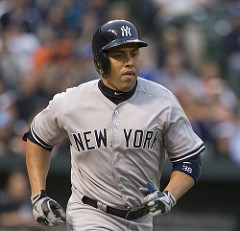
When you’re my age, you just haver to root for the “veteran” players.  Well, 39-year-old Carlos Beltran of the Yankees  (like Big Papi in Boston) is giving us old guys plenty to root for. On July 15, Beltran drove in his 57th and 58th runs of the season, becoming only the fourth switch hitter in MLB history to reach 1,500 RBI (Mickey Mantle, Eddie Murray, Chipper Jones.) Earlier in the season, Beltran joined another elite switch-hitter club, becoming one of four switch hitters to reach 400 home runs (Mantle, Murray, Jones) – a group since joined by fellow Yankee  Mark Teixeira.   Through July, Beltran is hitting .304-22-64.  Beltran was dealt to the Rangers before the trading deadline.

Can’t Win ‘Em All, But You Can Try

Steven Strasburg was looking pretty unbeatable when he took the mound against the Dodgers (in Washington) on July 21.  After all, he was 13-0, 2.51 on the season – and hadn’t picked up a loss since September 9, 2015 – through a total of 21 starts and 16 victories.  The Dodgers’ Justin Turner put an end to that streak, reaching Strasburg for two home runs as LA handed him the loss in a 6-3 contest.

Take ‘Em Deep

On July 21, the Rockies sent Mark Reynolds up to pinch hit for reliever Adam Ottavino to lead off the seventh inning (with Colorado up 3-1).  Reynolds delivered with his tenth home run of the season – a 484-foot blast to left-center, the second-longest dinger of the year (according to both Statcast and ESPN Home Run Tracker).  Here are this year’s three longest home runs according to those two stats agencies.

STATCAST

  1. Nomar Mazara – Rangers – 491 feet (May 25)
  2. Mark Reynolds – Rockies – 484 feet (July 21)
  3. Giancarlo Stanton – Malrins – 475 feet ((May 6, 2016)

ESPN HR Tracker

  1. Giancarlo Stanton – Marlins – 490 feet (May 6, 2016)
  2. Mark Reynolds – Rockies – 486 feet (July 21)
  3. Carlos Gonzales – Rockies – 475 feet (July 10)

The Story Continues

On July 23, Rockies rookie shortstop Trevor Story launched two home runs in an 8-4 win over the Braves at Coors Field. In the process, he tied and then broke the NL record for home runs by a rookie shortstop – previously set at 24 by Troy Tulowitzki, while with the Rockies in 2007. Story ended July .272-27-72.

Life Begins at “30”

The Orioles’ Mark Trumbo, on July 23, became the first player to reach 30 home runs in the 2016 season. It marked Trumbo’s third 30-home campaign in seven MLB seasons – and he is well on his way to topping his career high mark of 34 (for the 2013 Angels). The Orioles acquired Trumbo from the Mariners in an off-season trade – and he began paying almost immediate dividends. On April 15, for example, he became the first Oriole to hit two home runs in the same inning. In his seven MLB seasons, the 1B/OF/DH has played for the Angels, Diamondbacks, Mariners and Orioles. 

 Home Run  Happy Padres

On July 27, the Padres homered in their 25th consecutive game, tying the NL mark and coming within two of the 2002 Rangers’ record. (After an off day, the streak ended on July 29, as the Reds shut out the Padres 6-0.)   San Diego’s power surge would have flamed out before reaching the NL record without Rookie LF Alex Dickerson’s bat.  Dickerson launched San Diego’s only home runs in game 22, 23 and 24 (and one of three Padres’ round trippers in game 25) – which also made him just the first Padres’ rookie to go deep in four straight contests.  Dickerson, who ended July hitting .286-6-17 on the season (32 games) – and has a .309 average over six minor league campaigns – is looking like the real deal in the Padres’ OF.  The Padres, by the way, went 11-14 in their 25-game HR streak; during which they went deep 42 times. Another San Diego rookie, 2B Ryan Schimpf, contributed nine long balls – the most in MLB in July.

Round and Round We Go

On July 30, the Phillies has a truly “wild” eighth inning – sending all nine batters to the plate, without collecting a single base hit, breaking open a 5-3 game (Phillies leading the Braves in Atlanta).  It went like this: PH Tyler Goeddel walked; SS Freddy Galvis attempted a sacrifice, but Goeddel was forced and second and Galvis reached on the fielder’s choice; PH Taylor Featherstone walked; there was a double steal, moving Galvis and Featherstone to second and third; 2B Cesar Hernandez was intentionally walked (loading the bases); CF Odubel Herrera walked, forcing in Galvis; 3B Maikel Franco was safe on an error by Braves’ 3B Adonis Garcia (scoring Featherstone and Hernandez); 1B Ryan Howard was safe on an error by Braves’ SS Erick Aybar  (again loading the bases); RF Aaron Altherr was hit by a pitch, forcing in Herrera; and, finally, catcher Cameron Rupp hit  into a double  play. Damage: Four runs on zero hits, four walks, a hit batsman and two errors.

Strangest inning ever?  Nope.  On April 22, 1959, the White Sox scored 11 runs in an inning, while collecting only one base it (a single).  You can get all the details here, but how about a spoiler? The White Sox’ Nellie Fox drew two bases-loaded walks in the inning.

 A Pinch-Hit, Walk-off Walk

On July 29, the Twins and White Sox engaged in a tight pitching duel at Target Field. In fact, in the bottom of the twelfth inning the score was knotted at 1-1 –  and the two teams had produced only 14 hits.  It was fitting, in a way, that the winning run would score without the benefit of a hit – and the winning RBI would come on a pinch-hit walk.  It went like this.  Twins’ pinch hitter Eddie Rosario led off and was hit by a pitch. Catcher Juan Centeno sacrificed him to second. CF Byron Buxton walked – putting runners on first and second. Second baseman Brian Dozier walked – loading the bases. Joe Mauer came on to pinch hit and drew a walk on a 3-1 pitch, forcing in the winning run. A true “walk-off” win.

_________________________________

— YEAR-TO-DATE STATS  THROUGH JULY 31 — 

INDIVIDUAL BATTINGLEADERS

BATTING AVERAGE

AL … Jose Altuve, 2B, Astros – .356; Xander Bogaerts, SS, Red Sox – .329; Yunel Escorbar, 3B, Angels – .322

NL … Daniel Murphy, 2b, Nationals – .350; Wilson Ramos, C, Nationals – .327; Martin Prado, 3B, Marlins – .324

HOME RUNS

AL … Mark Trumbo, RF,Orioles – 30; Todd Frazier, 3B/1B, White Sox – 29; Edwin Encarnacion, DH, Blue Jays – 28

NL … Trevor Story, SS, Rockies – 27; Nolan Arenado, 3B, Rockies – 26; Kris Bryant, 3B, Cubs – 26

RBI

AL … Edwin Encarnacion,DH, Blue Jays – 89; David Ortiz, DH, Red Sox – 85; Albert Pujols, DH, Angels – 81

NL … Jay Bruce, RF, Reds – 80; Anthony Rizzo, 1B, Cubs – 79; Nolan Arenado, 3B, Rockies – 79

RUNS SCORED

AL … Josh Donaldson, 3B, Blue Jays – 87; Ian Kinsler, 2B, Tigers – 84; two with 82

NL … Kris Bryant, 3B, Cubs – 82; Nolan Arenado, 3B, Rockies – 71; two with 68

STOLEN BASES

AL … Eduardo Nunez, SS, Twins – 27  (now  with Giants); Jose Altuve, 2B Astros – 25; Rajai Davis, CF, Indians – 25

NL … Jonathan Villar, SS, Brewers – 38; Starling Marte, LF, Pirates – 36; Billy Hamilton, CF- Reds – 35

WALKS DRAWN

AL – Mike Trout, CF, Angels – 71; Josh Donaldson, 3B, Blue Jayrs – 70; Carlos Santana, DH, Indians – 59

NL … Bryce Harper, RF, Nationals – 80; Joey Votto, 1B, Reds – 77; Paul Goldschmidt, 1B, D-backs – 72

No player has struck out more often throgh July 31 than Orioles’ 1B Chris Davis, who leads the AL with 144 whiffs. Anothr 1B named Chris, Chris Carter of the Brewers, tops the NL with 136 whiffs. Notably, the two have put up similar numbers in average (Davis – .222/Carter – .217); home runs (Davis – 22/Carter 24); and RBI (both 59).


— INDIVIDUAL PITCHING LEADERS THROUGH JULY– 

WINS

AL … Rick Porcello, Red Sox – 14-2, 3.47;  Chris Tillman, Orioles – 14-3, 3.46; J.A. Happ, Blue Jays – 14-3, 3.16; Chris Sale, White Sox -14-4, 3.17

NL … Stephen Strasburg, Nationals – 14-1, 2.68; Johnny Cueto, Giants – 13-3, 2.63; Jake Arrieta, Cubs – 12-5, 2.75; Jose Fernandez, Marlins -12-5, 2.79

ERA

AL … Aaron Sanchez, Toronto – 2.71; Cole Hamels, Rangers – 2.84; Joe Quintana, White Sox – 2.89

NL … Clayton Kershaw, Dodgers – 1.79; Madison Bumgarner, Giants – 2.09; Kyle Hendriks, Cubs – 2.39

STRIKEOUTS

AL … Justin  Verlander, Tigers – 155; Chris Archer, Rays – 155; David Price, Red Sox – 151

NL … Max Scherzer, Nationals – 187; Joe Fernandez, Marlins – 184; Madison Bumgarner, Giants – 170

SAVES

AL ... Zach Britton, Orioles – 32; Francisco Rodriguez, Tigers – 29; three with 25

NL … Jeurys Familia, Mets – 37; A.J. Ramos – Marlins – 31; Kenley Jansen, Dodgers – 31

Among pitchers with at least 100 innings pitched, the A’s Sonny Gray has the highest ERA at 5.84. In the NL, it is the Giants Jake Peavy at 5.47.

________________________________________

— FINALLY, TEAM STATS THRUGH JULY —

BATTING AVERAGE

AL … Red Sox – .287; Angels – .269; Tigers – .267

NL … Marlins – .272; Rockies – 269; D-backs – .263

RUNS SCORED

AL… Red Sox – 574; Blue Jays – 518; Indians & Rangers – 505

NL … Rockies – 536; Cardinals – 533; Cubs – 529

The Braves have scored the fewest runs in MLB (360), while the lowest total in the AL belongs to the Royals at 404.

HOME RUNS

AL … Orioles – 154; Blue Jays – 149; Mariners – 146

NL … Cardinals – 143; Nationals – 139; Mets – 133

STOLEN BASES

AL … Astros – 78; Indians – 72; Twins – 70

NL … Brewers – 105; Padres – 87; Reds – 83

The Orioles have swiped the fewest bags (13), while the Cardinal trail the rest of the NL with 26.

— PITCHING LEADERS THROUGH JULY–

ERA

AL …  Indians – 3.59; Blue Jays – 3.83; Astros – 3.88

NL … Nationals –  3.25; Cubs –  3.25; Mets – 3.35

The worst team ERA in MLB belongs to the Reds at 5.16 (the only team over 5.00), while the Twins have the worse ERA in the AL at 4.82.

STRIKEOUTS

AL … Yankees – 908; Astros – 881; Indians – 872

NL … Dodgers – 997; Nationals – 982; Cubs – 923

SAVES

AL … Orioles – 36; Rangers – 36; Tigers – 32

NL … Mets – 38; Marlins – 37; Pirates – 34

The White Sox lead MLB with 20 blown saves, followed by the Giants with 18. The Reds, however, have the worse save percentage (51.4%), earning 18 saves and  accumulating 17 blown saves.

__________________________________________________

MLB Standings as of July 31 p.m.  (July records in parenthesis)

                          W-L     PCT    GB    (July W-L)

AL EAST

Orioles             59-45     .567     …         (12-14)

Blue Jays         59-46     .562      0.5       (16-8)

Red Sox           57-46     .553      1.5        (15-10)

Yankees           52-52     .500      7.0       (13-13)

Rays                42-61     .408     16.5       (9-16)

AL CENTRAL

Indians             60-42     .567     …          (12-12)

Tigers               57-48     .562      4.5        (16-10)

White Sox         51-54     .480     10.5        (11-15)

Royals              49-55     .471     12.0        (7-19)

Twins                40-64     .385     21.0       (15-11)

AL WEST

Rangers             62-44     .585     …           (11-15)

Astros                55-49     .529      6.0         (13-12)

Mariners             52-51     .505      8.5         (12-12)

Angels                47-58     .448     14.5        (15-11)

A’s                     47-58     .448     14.5         (12-14)

___________________

NL EAST

Nationals             61-44      .581      …          (13-12)

Marlins                57-48     .543      4.0          (16-10)

Mets                    54-50     .519      6.5         (12-13)

Phillies                 48-59     .449     14.0        (13-13)

Braves                 37-68     .352     24.0         (10-16)

NL CENTRAL

Cubs                      63-41     .606     …           (12-14)

Cardinals                56-49     .533      7.5         (16-11)

Pirates                    52-51     .505     10.5       (14-10)

Brewers                   47-56     .456     15.5       (12-13)

Reds                       42-62     .404     21.0        (13-11)

NL WEST

Giants                      61-44     .581     …           (11-13)

Dodgers                   59-46     .562      2.0         (15-9)

Rockies                   52-53     .495      9.0         (15-12)

Padres                     45-60     .429     16.0         (12-14)

D-backs                   43-62     .410     18.0          (7-17)


I tweet Baseball @DavidBBRT

Member: Society for American Baseball Research (SABR); The Baseball Reliquary; Baseball Bloggers Alliance