It’s MLB Speculation Season – To Warm Up, a Look at Six of MLB’s Worst Trades

Well, sadly, the baseball seasons is over – congratulations Astros!  We will soon be in the trading season (we are already in the speculation season).  With that in mind, Baseball Roundtable would like to dedicate this post to what BBRT sees as the half dozen worst MLB trades of all time (or, if you look at it from the other side, the six best).  Surprisingly (or maybe not), five of the six involved future Hall of Famers.


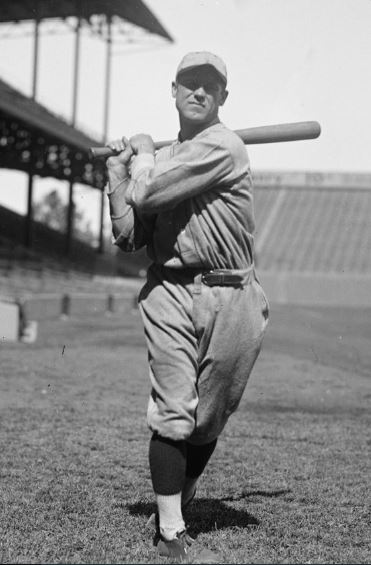
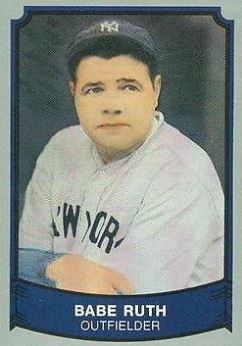
  1. Babe Ruth from the Red Sox to the Yankees (January 1920) – for $125,000 and a $300,000 loan (reportedly to fund a Broadway show)

RuthOkay, so technically this was a sale and not a trade.  It’s still has to be here as the worst front-office move ever.

The Red Sox were moving a player who had gone 89-46 with a 2.19 ERA over six seasons in Boston. As a pitcher, Ruth was a two-time twenty-plus game winner and had led the AL in ERA, games started, complete games and shutouts once each. Not only that, he had led the American League in home runs in his last two seasons (1918-19) with the Red Sox; while going 22-12 on the mound.  His last year with Boston, Ruth hit .322 and led the AL in runs (103), RBI (113) and set a new single-season home run record (29). The final straw? Ruth was just 25-years-old.

The Red Sox sale ranks at the top because it involved the “biggest name” in the game – and the Red Sox were fully aware of what they had (and what they were giving up) and received no on-the field return.

In Ruth’s first season as a Yankee (1920), he hit .376 and obliterated his own single-season HR record with 54 long balls – out-homering every other team in the AL (the Red Sox logged 22 round trippers without Ruth) and all but one team in the NL. That season, Ruth also led the AL in runs (158); RBI (135); and walks (150).

For their $125,000, the Yankees ended up getting 15 seasons of “Ruthian” production – a .349 average, 659 (of his 714) home runs, 1,978 RBI. During his NY tenure, the Babe won ten home run titles, four times led the league in RBI, seven times topped the AL in runs scored and picked up the 1923 MVP Award.  Ruth was inducted into the Baseball Hall of Fame as part of the 1936 inaugural class. As the number-one bad front-office move, this one’s a no-doubter.

_________________________________________________________________________________

  1. Christy Mathewson from the Reds to the Giants (December 1990) … for Amos Rusie

MathewsonChristy Mathewson got off to an unusual start – and was almost the Giants’ Hall of Famer that got away. In 1900, as a 19-year-old, Mathewson was tearing up the Class D Virginia-Carolina League running up a 20-2 record by mid-July.  The New York Giants noticed, signing him and bringing the teenager up to the big club. For the Giants, Mathewson went 0-3, with a 5.08 ERA – leading the New York club to send him back to Norfolk (asking for their money back).   The Reds picked up Mathewson in the off season for $100 and –  here comes the trade – sent him back to the Giants for veteran hurler Amos Rusie.  The rest, as they say, is history.

Mathewson pitched 16 more seasons for the Giants and ended up winning 372 games (188 losses) with a 2.13 ERA for New York. (He added one win, ironically, for the Reds in his last season (1916). Mathewson won 20 or more games in a season 13 times (30+ four times), led the league in ERA five times, in strikeouts five times and in shutouts four times. The Big six was inducted into the Baseball Hall of Fame in 1936.

The Christy Mathewson for Amos Rusie trade ranks right up there with the Babe Ruth sale. After all, Mathewson won 372 games for his new team, while Rusie went 0-1, 8.59 for his career after the trade (he had 246 MLB wins before the transaction). The Ruth trade gets an edge because, the move came at a time when The Babe was “peaking,” while the Mathewson/Rusie deal involved a player with potential for one the down side of a Hall of Fame career.

What did the Reds get in return?  Rusie – known as The Hoosier Thunderbolt – was a nine-season MLB veteran with 246 MLB wins (174 losses) under his belt at the time of the trade. He had won 20 or more games in all seven of his seasons with the Giants (30+ four times), had led the NL in strikeouts five times and would eventually be elected to the Hall of Fame. However, Rusie (who had suffered an arm injury in 1898) had been out of baseball for two years.  Attempting a comeback, he pitched just three games for Cincinnati – going 0-1, 8.59 – before retiring. Overall, the Giants came out 372 wins to the good on this transaction – number-two on BBRT’s worse trade list.

__________________________________________________________________

  1. Nolan Ryan from the Mets to Angels (December 1971) – for Jim Fregosi

RyanOkay, so maybe the Mets didn’t know what they had in Ryan. After all, he was 10-14, 3.97 the year before the trade – and Fregosi was a six-time All Star shortstop. Still, Fregosi was coming off a season when he had hit just .233-5-33 in 107 games.  What adds insult to injury on this move is that – in order to get Fregosi – the Mets also sent the Angels pitching prospect Don Rose, catcher Frank Estrada, as well as outfielder Leroy Stanton.  (Rose went 1-4, 4.22 for the Angels in 1972 and 1-4, 4.14 in three MLB seasons; Estrada had two major league at bats with the Mets in 1971 and never played in the majors again, and Stanton played five seasons for the Angels – hitting .247, with 47 home runs, 242 RBI and 35 stolen bases, numbers which exceeded Fregosi’s production for the Mets.)

Nolan Ryan had zero All Star selections before the trade and eight after the trade. Jim Fregosi was a six-time All Star before the trade and did not make another All Star squad.

Ryan, who had gone 29-38, 3.58 in five Mets’ seasons, blossomed with the Angels.  In his first year in California (1972), he was an AL All Star – going 19-16, 2.28 and leading the league in strikeouts with 329 and shutouts with nine. He spent eight seasons with the Angels, and was a five-time All Star and two-time 20-game winner during that period.  He logged 138 of his ultimate 324 MLB wins in an Angels’ uniform. (His line with the Angels was 138-121, 3.07.) He also led the AL in strikeouts seven times in his eight Angels’ seasons, topping 300 whiffs five times. Ryan notched 2,416 of his MLB-record 5,714 strikeouts and four of his record seven no-hitters as an Angel. He achieved free agency after the 1979 season and left the Angels for the Astros. But clearly, the Halos got plenty of mileage out of this ultimately Hall of Famer (inducted 1999) after the Fregosi trade.

How did the Mets’ fare? Fregosi faced some injury issues and, in his first year as a Met (primarily playing 3B), hit .232-5-32 in 101 games – remarkably similar to his previous season with the Angels. He was on the same track in 1973, hitting .234-0-11 in 45 Mets’ contests before being sold to the Rangers on July 11 of that season.  Fregosi finished an 18-season MLB career in 1978 with a career .265 average, 151 home runs and 706 RBI.

________________________________________________________________________

  1. Lou Brock (along with Jack Spring and Paul Toth) from the Cubs to the Cardinals (June 1964) – for Ernie Broglio, Bobby Shantz and Doug Clemens

BrockFirst a look at the two principal in the trade – Lou Brock and Ernie Broglio.

The 25-year-old Brock was in his fourth season with the Cubs at the time of the trade – and was hitting .251, with two home runs, 14 RBI and ten stolen bases (52 games). The previous year, he appeared to have broken out, going .315-14-58 (with 43 steals for the Cubs). Still his .251 average seemed more in line with his .263 and .258 averages in his first two Cubs’ campaigns.

Broglio was a veteran pitcher – at age 28, in his sixth major league season. He had been a 21-game winner in 1960 and an 18-game winner the season before the trade (18-8, 2.99 for the Cardinals in 1963). At the time of the trade, he was 3-5, 3.50 in 11 starts.

Brock went on to play 16 seasons (including 1964) with the Cardinals, hitting a healthy .297, with 149 home runs and 900 RBI. He also swiped 938 bases – leading the league in steals eight times, with a high of 118 in 1974. He was a six-time All Star for Saint Louis and was inducted into the Baseball Hall of Fame in 1985. Broglio was with the Cubs until 1966, winning just seven games (losing 19) with a 5.40 ERA.  Clearly, advantage Cardinals.

In 1968, 29-year-old Lou Brock in the fifth of 16 seasons with the Cardinals, led the NL with 46 doubles, 14 triples and 62 stolen bases. In 1968, 32-year-old Ernie Broglio was out of the major league. Following the trade for Brock, he won just seven more MLB games (19 losses).

But what about the others in the trade?

Going with Brock to the Cardinals were southpaw Jack Spring (a journeyman who had started the season with the Angels and was 0-0, 6.00 with the Cubs) and RHP Paul Toth (in his third, and final MLB season), who was 0-2, 8.44 at the time of the trade.  Spring pitched in just two games for the Cardinals in 1963 (three innings). His final MLB season was 1965 (1-2, 3.74 for the Indians) – and he was 12-5, 3.74 for seven teams in eight MLB seasons. Toth did not pitch in the majors again after the trade and finished his MLB career at 9-12, 3.80 in three seasons.

Along with Broglio, the Cardinals sent veteran (38-year-old) southpaw Bobby Shantz – a former MVP, for the Philadelphia Athletics in 1952. Shantz was winding down his career as a reliever and was 1-3, 3.12 at the time of the transaction. Also included in the deal was outfielder Doug Clemens hitting .205-1-9 at the time of the deal. Shantz went 0-1, 5.56 for the Cubs (20 games) before being sold to the Phillies in mid-August. He went 1-1, 2.25 for the Phillies and retired after the 1964 season. Clemens did pay some dividends. After the trade, he hit .279, with two home runs and 12 RBI in 54 games for the Cubs.  He then hit .221-4-26 in 128 games in 1965. He was traded to the Phillies for Wes Covington before the 1966 season. Covington got in just nine games for the Cubs before he was released. Clearly, this was a “Two-B” trade – Brock for Broglio – and if the Cubs had seen what was to be, they would probably have hung on to Brock.

____________________________________________________________________

  1. Dennis Eckersley from the Cubs to the A’s (April 1987) – for David Wilder, Brian Guinn, Mark Leonette

EckThis was a trade that was made to look awfully good, thanks to the insight of the coaching staff.  After the 1986 season, the future of the 31-year-old Eckersley seemed questionable. In 1986, the former 20-game winner (20-8, 1978) –  in his twelfth MLB season and third season with the Cubs – faced a bout with shoulder tendinitis and put up a disappointing 6-11 record, with  a 4.67 ERA. The Cubs showed little patience, but perhaps they should have. Eckersley’s career MLB record at the time was 151-128, 3.67 (376 games/359 starts) and he’d been a respectable 11-7, 3.08 in 1985. Even in 1986, he had pitched 200+ innings, given up the fewest walks per nine innings among NL starters and put up a 3.19 strikeouts-to-walks ratio. Regardless, Eckersley was sent off to Oakland in a trade for three minor leaguers: outfielder Dave Wilder (who hit .301 at AA in 1986); SS/2B Brian Guinn (.277-5-64 at AA/AAA in 1986); and RHP Mark Leonette (6-4, 3.78 at AA in 1986).  The return on “Eck” wasn’t exactly overwhelming – none of the three ever played in the major leagues.

Initially, Eckersley’s role in Oakland was not overly promising. He was relegated to the bullpen, although he did get two starts in May – pitching 11 2/3 innings, giving up nine runs and taking two losses. Then, an arm injury to Oakland’s Jay Howell left an opening for a closer – and the A’s staff saw potential in the Eckersley combination of grit and control.  They moved him into the closer’s role – and Eckersley’s career we revitalized at age 32. Eckersley saved 16 games in the last half of 1987 – and never looked back.  He led the AL in saves with 45 in 1988.

Dennis Eckersley’s 320 saves gave Oakland a pretty good return on three minor leaguers who did not play in the majors.

Eckersely pitched for the A’s from 1987 through 1995, notching 320 saves, a 2.74 ERA and 658 strikeouts (versus just 92 walks) in 637 innings.  He was an All Star four times with Oakland. In 1992, he went 7-1, with a league-leading 51 saves and a 1.91 ERA – winning both the Cy Young Award and AL MVP honors. In February of 1996, the A’s traded Eckersley to the Cardinals for reliever Steve Montgomery – a bad trade of their own, since Montgomery pitched  in just 12 games for the A’s (1996-97), going 1-1 with an ERA north of 9.00, while Eckersley saved 66 games in the next two seasons for the Cardinals

Eckersley retired in 1998, with a career record of 197-171, with 390 saves and a 3.50 ERA. That earned him induction into the Baseball Hall of Fame (2004).

____________________________________________________________________

  1. George Foster from the Giants to the Reds (May 1971) – for Frank Duffy and Vern Geishert

fosterHere’s a trade the paid great dividends, thanks in part to the patience of the Cincinnati Reds’ organization.

George Foster came up with the Giants for the proverbial “cup of coffee” in 1969 (as a 20-year-old) and 1971 – getting into 18 games and hitting .333, with one home run and four RBI. (In 1970, he was .308-8-66 in 114 games as Triple A.) Foster started slowly for the Giants in 1971 – hitting .267, with three home runs and eight RBI in 36 games before being traded to the Reds in May. In 104 games for the Reds that season, he hit .234 with 10 home runs, 50 RBI and seven steals. In 1972, Foster played just 59 games for the Reds – going .200-2-12.  He split the following year between Cincinnati and the Triple A Indianapolis Indians – where he started to show a little pop (15 home runs in 134 games at AAA).  In 1974, Foster was still developing, going .264-7-41 in 106 games for the Reds.  It was in 1975 that the patience of the Reds – and this trade – began to pay off. From 1975-81, Foster was an All Star five times, hitting .297, with 221 home runs and 749 RBI over that span. In those seven seasons, he led the league in home runs twice (a high of 52 in 1977), RBI three times and runs scored once.  He was an integral part of the Big Red Machine – and won the NL MVP Award in 1977 (.320-52-149).

Hard to fault the Giants for not seeing Foster’s full potential. He didn’t make his first All Star team until his sixth season with the Reds. From 1971-74, Foster’s first four campiagns with the Reds, he played in 286 games for Cincinnati, hitting .247, with 23 home runs and 143 RBI. In 1977 alone, he topped his 1971-74 Reds’ totals in hits, runs scored, home runs and RBI. (1971: .320-59-149, with 197 hits and 124 runs scored.)

The return for the Giants? Frank Duffy had just 19 games in the MLB (for the Reds) at the time of the trade, with a .185 average.  He played in just 21 games for the Giants in 1971, hitting 179. After the season, Duffy was part of another major trade, getting sent to the Indians (along with Gaylord Perry) for veteran pitcher Sam McDowell. McDowell pitched part of two season for the Giants, going 11-10, 4.36. Geishert was a right-headed pitcher who had seen action for the Angels in 11 games in 1969 (1-1. 4.65). He did not appear in the major leagues again.  Side note: Duffy actually went on to a ten-year MLB career (six years with the Indians) as a slick-fielding shortstop (he hit just .232 in 915 MLB games)

Primary resources: Society for American Baseball Research; Baseball-Almanac.com; Baseball-Reference.com


I tweet baseball @DavidBBRT

Follow/Like the Baseball Roundtable Facebook page here.  More baseball commentary, blog post notifications and prizes. (Next week, BBRT is giving away Clemens and Torre bobbleheads.

Member: Society for American Baseball Research (SABR); The Baseball Reliquary; The Negro Leagues Baseball Museum

A Unique Place in MLB History – Well, That Didn’t Last Long

With the post-season nearly at a close, it’s time for the next Baseball Roundtable Facebook (fan) Page Bobblehead Giveaway – as well as a bit of MLB trivia to pass the time until tonight’s Game Five first pitch.  Note:  So far this season, BBRT has given away Derek Jeter, Mariano Rivera, Harmon Killebrew and Miguel Sano “bobblers.” Check the end of this post for the next pair of giveaways.

At the conclusion of the 2008 MLB season, there had been 241 instances of MLB switch hitters bashing home runs from both sides of the plate in the same game. Yet, in more than 130 years of MLB history (1876-2008), no player had ever accomplished the feat on Opening Day.

The "one and only" - at least for an inning - Felipe Lopez.

The “one and only” – at least for an inning – Felipe Lopez.

Then, on Opening Day (April 6) 2009, as the Diamondbacks faced off against the Rockies in Arizona, Diamondbacks’ second baseman and leadoff hitter Felipe Lopez opened the bottom of the first with a home run to left (hit left-handed) on a 1-1 pitch off right-handed Rockies’ starter Aaron Cook – starting Lopez’ season with a bang and giving the D-backs an early 1-0 lead.

In the bottom of the fourth, Lopez found himself again leading off an inning – this time with Arizona trailing 6-4.  Lopez was facing southpaw reliever Glendon Rusch. Batting from the right-side, Lopez took a 1-0 Rusch offering deep to center field, becoming the first MLB player to homer from both sides of the plate on Opening Day – a feat more than 100 seasons in the making.

How long did Lopez hold his unique position in the MLB record books? Final Answer – just one inning. In the bottom of the third, the D-backs’ switch-hitting first baseman Tony Clark had hammered a two-run homer to right-center off Cook. Then, in the bottom of the fifth, Clark (like Lopez) came up against lefty Rusch – with the bases empty, one out and the score knotted at seven apiece. Clark took Rusch out of the park to center (a 1-1 pitch), joining Lopez as one of just TWO players to homer from both sides of the plate in an Opening Day game.  Somewhat ironically, Lopez and Clark would hit a combined total of only 13 home runs in 2009 – and, by the end of July, neither player would be on the Diamondbacks’ roster – Lopez traded to the Brewers and Clark released. (Oh yes, the D-backs won that Opening day contest 9-8.)

Note: Lopez ended the 2009 season with a .310-9-57 stat line; while Clark finished the year at .182-4-11. 

Yasmani grandal photo

Photo by apardavila

For those who track such things, a third player has since belted home runs from both sides of the plate on Opening Day. On April 3 of this season, as the Dodgers opened the season by trouncing the Padres 14-3, LA catcher Yasmani Grandal hit a solo home run (left-handed) off Padres’ starter Jhoulys Chacin in the bottom of the third and a solo shot (right-handed) off southpaw Jose Torres in the eighth. Grandal ended the season at .247-22-58.  It was the third time Grandal homered from both sides of the plate in a game in his career.


Some additi0nal facts about hitting home runs from both sides of the plate:

  • The first recorded instance of an MLB player homering from both sides of the plate in one game goes to Philadelphia Athletics’ outfielder Wally Schange in an Athletics’ 8-2 victory over the Yankees on September 8, 1916.
  • Mark Teixeira and Nick Swisher share the record for most games with home runs from both sides of the plate at 14.
  • Nine players achieved the feat of homering from both sides of the plate in a game in 2017 – with the Indians’ Jose Ramirtez and Carlos Santana accomplishing the feat a combined five times:   Freddy Galvis (Phillies); Marwin Gonzalez (Astros); Yasmani Grandal (Dodgers);  Aaron Hicks (Yankees); Francisco Lindor (Indians); Kendrys Morales (Blue Jays); Jorge Polanco (Twins); Jose Ramirez (Indians), three times; Carlos Santana (Indians) twice.
  • The record for hitting home runs from both sides of the plate in a game in a season is four – Ken Caminiti (Padres, 1996).
  • Three players have hit home runs from both sides of the plate in a single inning: Carlos Baerga (Indians – April 8, 1993); Mark Bellhorn (Cubs – August 29, 2002); Kendrys Morales (Angels – July 30, 2012).
  • 1996 saw an MLB-record 15 instances of a player homering from the both sides of the plate in a game:  Roberto Alomar (Orioles) twice; Ken Caminiti (Padres) four times; Raul Casanova (Tigers) twice; Chili Davis (Angels); Todd Hundley (Mets) twice; Melvin Nieves (Tigers); Ruben Sierra (Yankees);  J.T. Snow (Angels); Bernie Williams (Yankees).
  • Two players have homered from both sides of the plate in a game with five different teams: Carlos Beltran (Mets, Cardinals, Royals, Astros, Yankees); Nick Swisher (A’s, Yankees, White Sox, Indians, Braves).

Primary Resources: Baseball-Reference.com; Baseball-Almanac.com; ESPN.com; Society for American Baseball Research.

NIck Swisher photo

NICK SWISHER … ironic name for a player who earned a spot in the record books on the basis of home run power.  Photo by Keith Allison

                                        BASEBALL ROUNDTABLE FACEBOOK BOBBLEHEAD GIVEAWAY

TorreIt’s time for another BBRT Facebook bobblehead giveaway.  So far this season, we’ve given away bobbleheads of Derek Jeter, Mariano Rivera, Harmon Killebrew and Miguel Sano.  This time it’s the Hormel/Land O Lakes bobbleheads of Roger Clemens and Joe Torre.  We’ll select a random winner from those who Follow/Like the Baseball Roundtable Facebook page … click here to reach the page.  The drawing will take place shortly after the World Series concludes.


I tweet baseball@DavidBBRT

Follow/Like the Baseball Roundtable Facebook Page, here.

Member: Society for American Baseball Research (SABR); The Baseball Reliquary; The Negro Leagues Baseball Museum.

Ten (perhaps) “Unbreakable” MLB Records

On Wednesday night, the Dodgers and Astro combined to set a new World Series record for home runs in a game – eight. Given the current state of baseball (hard-throwing/free-swinging), the fact that the Astros and Dodgers hit a combined 479 regular-season homers and Minute Maid Park’s 315-foot left-field “porch – that record should last until at least 10 p.m. tonight.

In honor of Wednesday’s record-setting performance, Baseball Roundtable would like to look at what BBRT sees as ten of the most unbreakable MLB records. There were a couple of criteria I used to narrow the list.  I focused on the post-1900 era. This meant that Cy Young’s 511 career victories (clearly out of reach) did not make the cut (ten of Young’s 22 MLB season came before 1900), nor did Old Hoss Radbourn’s 59 wins in 1884.  I also eliminated records that had already been achieved more than once – dropping such marks as twenty strikeouts in a nine-inning game (Max Scherzer, Kerry Wood, Roger Clemens twice) or the record seven base hits in a single game (Wilbert Robinson and Rennie Stennett).  So here, in no particular order, are BBRT’s “unbreakables.”

Fifty-three seasons as a major league manager – Connie Mack (Cornelius Alexander McGillicuddy). More than five decades as a manager, no one is ever going to top that.  Note: Fifty of those 53 seasons came after 1900.  By the same vein, Mack’s 3,731 wins are nearly 1,000 more than the second-best (John McGraw – 2,763). Similarly, Mack’s 3,948 managerial losses are also the all-time high. Mack managed the Pirates (1894-1896), Athletics (1901-1950). In his career, he won nine league pennants and five World Series Championships.  Mack was also an MLB player (C/1B/OF) from 1886-1896, putting up a .244-5-265 stat line.

208 1/3 innings pitched in relief in a single season … Mike Marshall.  There’s a slight chance that some rubber-armed hurler may someday reach Marshall’s 1974 MLB record of 106 appearances (particularly one of those specialists brought in to, say, get one left-handed hitter out).  However, given how pitchers are used today, 208 innings out of the pen in a single season likely will never be topped.  Heck, most starters don’t even reach 200 innings these days.  That 1974 season, Marshall went 15-12, 2.42, with 21 saves for the Dodgers.  Marshall also holds the AL record for mound appearances in a season with 90 for the Twins in 1979. Marshall played 14 MLB seasons, going 97-112, 188 saves, 3.14 in 724 games (24 starts).

120 Intentional Walks in a Season, 688 Intentional Walks in a career … Barry Bonds.  Okay, I’m not going to touch the controversy surrounding Barry Bond’s 73 home runs in a season or 762 career round trippers – but his dominance of the Intentional Walk category is monumental.   First there is Bonds’ record of 120 intentional walks in a season (2004). That season, only three players drew more total walks than Bonds drew intentional walks (Todd Helton, Lance Berkman and Bobby Abreu each drew 127 walks) – and second to Bonds’ 120 intentional passes were Jim Thome’s 26.  Further, Bonds holds the top three single-season IBB marks – and no other player has ever drawn more than 45 intentional passes in a campaign (Willie McCovey – 45 in 1969). The year Bonds drew 120 IBB, he hit .362, with 45 home runs and 101 RBI in 147 games. He also drew a record 232 total walks that season. Further, Bonds’ 688 career intentional passes are more than twice as many as the number-two player – Albert Pujols (still active) at 307.  Both these marks seem unbreakable from this vantage point.

110 career shutouts … Walter Johnson. Johnson, who pitched 21 seasons (1907-27) for the Washington Senators, tossed a record 110 shutouts in compiling a 417-279 record – leading the AL in shutouts seven times.  Second on the career shutouts list is Grover Cleveland Alexander with 90.  In today’s game, a starting pitcher can have a successful career without reaching 110 complete games – much less 110 complete-game, shutouts. (The current active leader in career shutouts is Clayton Kershaw with 15.)   Johnson’s record will stand. For those who like to know such things: Johnson led his league in strikeouts 12 times, complete games six times; wins six times; ERA five times and won a pair of MVP Awards. In 1913, he went 36-7 (leading MLB in wins and winning percentage, while also topping both leagues with a 1.14 ERA, 29 complete games, 11 shutouts, 346 innings pitched and 243 strikeouts.

Five consecutive Rookie of the Year Award winners … Los Angeles Dodgers. The Dodgers can lay claim to a record streak of five consecutive NL Rookies of the Year Award winners:  1B Eric Karros (1992); C Mike Piazza (1993); OF Raul Mondesi (1994); P Hideo Nomo (1995); P Todd Hollandsworth (1996). I just don’t think we’ll ever see that kind of streak again.

.424 single-season batting average … Rogers Hornsby In 1924, Cardinals’ 2B Rogers Hornsby won the NL batting title with an MLB single-season record .424 average. (Interestingly, he finished second in the NL MVP voting to Dodgers’ pitcher Dazzy Vance, who went 28-6, 2.16.) In 1924, Hornsby led the NL in average, hits (227), runs scored (121), doubles (43), walks (89) and total bases (373). Hornsby hit over .400 three times in his 23-season (1915-37) MLB career – and retired with a .358 average.  From here, .400 looks pretty safe – and .424 even safer.

Carl Yastrzemski photo

Photo by highflyer16

.301 average for a batting title winner – Carl Yastrzemski. In 1968 – the now famous (or infamous) Year of the Pitcher – Red Sox’ OF Carl Yastrzemski won the American League batting title with a .301 average. It remains the lowest average ever for a league leader. Second place in the AL went to the A’s Danny Cater at .290.  (Pete Rose led the AL at .335.) It was, by the way, Yaz’ third batting title (.321 in 1963 and .326 in 1967). Yaz played 23 seasons for the Red Sox, hitting .285, with 452 home runs and 1,844 RBI. He won the Triple Crown and AL MVP Award in 1967; was an All Star in 18 seasons; and picked up six Gold Gloves. I doubt we will ever see another season in which the AL or NL is led by an average the barely tops .300.

41 victories in a season (post-1900)… Jack Chesbro. In 1904, the thirty-year-old Chesbro (in his sixth MLB season) went 41-12, with a 1.82 ERA and 48 complete games in 51 starts for the New York HIghlanders (Yankees). Chesbro pitched 11 MLB seasons, going 198-132, 2.69 – topping twenty wins five times. Since 1900, only one other pitcher has won at least 40 games in a season – Ed Walsh of the White Sox, who went 40-15 in 1908. Denny McLain of the Tigers is, of course, the last 30-game winner at 31-6 in 1968.

Two Grand Slam home runs in the same inning, hit by the same batter against the same pitcher … Fernando Tatis and Chan Ho Park.  On April 23, 1999 – as the Cardinals faced the Dodgers – Cardinals’ 3B (and, appropriately, cleanup hitter) Fernando Tatis came up to the plate in the third inning versus Dodgers’ starter Chan Ho Park.  The Cardinals were down 2-0, with the bases loaded and no outs.  Tatis rapped a 2-0 pitch to deep left for a Grand Slam home run. When the lineup came around again in the same inning, Park was (surprisingly) still on the mound and Tatis found himself at the plate with the bases again loaded (and two out). This time, Tatis belted a 3-2 pitch for a second Grand Slam.  Two Grand Slams by a player in one inning is probably achievement enough for this “unbreakable” list (it’s only been done this one time); but add the provision that both four-run dingers came off the same pitcher and it truly looks unbreakable.  The Cardinals won the contest 12-5 – on the strength of the 11-run third frame.

43-inches tall, MLB’s shortest player – Eddie Gaedel.  It may have been a Bill Veeck publicity stunt, but 3’ 7” – 65-pounds Eddie Gaedel is in the record books for his April 19, 1951 plate appearance (for the Saint Louis Browns) versus the Detroit Tigers. Gaedel, as expected, drew a walk and was immediately replaced by pinch runner Jim Delsing.


I tweet baseball @DavidBBRT

Follow/Like Baseball Roundtable Facebook page here.  More baseball commentary, blog post notification, prizes.

Member: Society for American Baseball Research; The Baseball Reliquary; The Negro Leagues Baseball Museum.

Baseball Roundtable Rookie Doubleheader – 2017 All Rookie Team & and All-Time Rookie Seasons

Baseball Roundtable loves (and misses)  doubleheaders.  So, here is a doubleheader for readers – BBRT’s 2017 All-Rookie Team and a “baker’s dozen” of what BBRT sees as the best/most interesting rookie campaigns of all time.

The 2017 season was the Year of the Strikeout and the Year of the Home Run, with MLB setting new single-season records for both.  It was also the Year of the Rookie with both the American League and National League rookie home run records falling (and the new record holders both playing in the post season – which gives me a nice segue for this post, which focuses on rookies present and past.).

2017 saw a new MLB record for home runs in a season – 6,105 (topping the previous record of 5,693 set in 2000). MLB pitchers also fanned a record 40,105 batters (exceeding last season’s 38,892).

The rookie-season (player) records for home runs and whiffs supported this increasingly free-swinging/hard-throwing trend. Yankees’ rookie Aaron Judge set new MLB rookie records for both home runs (52) and strikeouts (208).

Photo by Keith Allison

Photo by Keith Allison

Yankees’ 25-year-old right fielder Aaron Judge set the new American League and MLB rookie-season home run record at 52, breaking the A’s Mark McGwire’s record of 49 (set in 1987) and also set a new rookie strikeout record at 208 (erasing the Cubs’ Kris Bryant’s 2015 mark of 199).

Over in the National League, Dodgers’ 22-year-old rookie 1B/OF Cody Bellinger set a new NL rookie home run record at 39 (besting the 38 hit by the Braves’ Wally Berger in 1930 and the Reds’ Frank Robinson in 1956).  In this post, BBRT will name its 2017 All-Rookie Team, and then touch on some of the greatest rookie season of all time.


—–GAME ONE … BASEBALL ROUNDTABLE’S 2017 ALL ROOKIE SQUAD—–

C – Manny Pina, Brewers … (107 games) .279-9-43

The oldest player on the 2017 All-Rookie Squad, the 30-year-old backstop saw MLB action in 2011, 2012 and 2016 (a total of 38 games), but retained his rookie status for 2017. The “journeyman” (793 games in 12 minor league seasons and 164 games in seven seasons in the Venezuelan Winter League) has been best known for his defensive skills. His career minor league average is .262, and he averaged .273 in his Venezuelan tenure). He did show some pop in 2016 (.329-5-43 in 63 games at Triple A Colorado Springs).

Pina saw the most action of any MLB rookie backstop (107 games), played plus defense and put up a solid .279-9-43 line in his first full season at the MLB level.

1B – Cody Bellinger, Dodgers … (132 games) .267-39-97

While the 21-year-old Bellinger hit only .267, he was second among rookies in both round trippers (39 – a new NL rookie record) and RBI (97).  He also tossed in ten steals, and played steady defense at both first base and in left field to earn his spot on the BBRT All-Rookie Team. After playing two seasons at the Rookie level (2013-14), Bellinger unleashed his power as a 19-year-old at High-A Rancho Cucamonga in 2015 – .264-30-103 in 128 games. He followed up with .271-26-71 at Double A/Triple A in 2016. When called up this season, Bellinger was hitting .343, with five home runs in 18 games at Oklahoma City.  Looks like that .267-39-97 line is one the Dodgers can count on long term.

By the way, on this team, if Bellinger was to be used in the outfield, 25-year-old Orioles’ rookie first-sacker Trey Mancini would get the nod at first base. Mancini put up a .293 average, with 24 home runs and 78 RBI. Signed out of Notre Dame (eighth round of the 2013 MLB Draft), Mancini hit .306, with 54 home runs and 275 RBI in 483 games over four minor league campaigns.

2B – Ian Happ, Cubs … (115 games) .253-24-68

Ian Happ photo

Photo by Keith Allison

Okay, things were a little thin at the keystone sack, so I’m putting in a rookie who was truly a utility player in 2017.  The Cubs’ 22-year-old Ian Happ started 41 games in center field; 28 games at second base; 11 games in left field; eight games in right field; and one at third base. Not only was he versatile in the field, he is also a switch hitter – with power. Happ put up a .253 average, with 24 home runs (eight steals) and 68 RBI in 115 games after being called up from Triple A in mid-May. At Triple A, Happ had a .298-9-25 line in 26 games. A first-round pick (ninth overall) in the 2015 MLB draft, Happ recorded a .275 average, with 33 homers and 28 stolen bases in 227 minor league games. Happ played college ball at the University of Cincinnati, where he was the 2015 American Athletic Conference Player of the Year.

3B – Rafael Devers, Red Sox … (58 games) .284-10-30

rafael devers photo

Photo by Keith Allison

The 20-year-old Devers got a late start, making his MLB debut July 25, but he made up ground fast. In 58 games for Boston, Devers hit .284, with ten home runs, 30 RBI and 34 runs scored. Signed out of the Dominican Republic at age 16, Devers has four professional seasons under his belt. In 399 minor league games – most as a teenager – Devers hit .296 – with 49 home runs, 258 RBI and 26 stolen bases.  When called up, he had put up a ..311-20-60 line in 86 games at Double A/Triple A.

SS – Paul DeJong, Cardinals … (108 games) .285-25-65

The 24-year-old St. Louis rookie has moved around the infield in his career – spending time at 2B, 3B and SS – and, in fact, he initially seemed destined for the hot corner. DeJong may have settled in at SS with the Cardinals in 2017, starting 85 games at short and 19 at second base. Notably, despite the position carousel, his offense has never suffered. DeJong hit .316-9-41 in 66 games at Rookie and A-Level in 2015; .260-22-73 in 132 games at Double A in 2016; and was hitting .299, with 13 home runs and 34 RBI in 48 games at Triple A before making it to the big club in 2017. With the Cardinals, the 38th Round 2014 MLB Draft pick put together a solid .285-25-65 2017 season (108 games), continuing to show good power for a middle infielder. DeJong was the NL Rookie of the Month in July, when he hit .298, with eight home runs and 16 RBI in 26 games.

Outfield – Aaron Judge, Yankees … (155 games) .284-52-114

Easy call here, with the 25-year-old Judge blasting a new MLB rookie record 52 home runs.  Despite 208 strikeouts (another rookie record), Judge hit .284, with 52 home runs, 114 RBI’s (tops among 2017 rookies), an AL-leading 128 runs (also tops among 2017 rookies).  Judge, a first–round selection in the 2013 MLB draft (number 32 overall), was selected AL Rookie of the month in April, May, June and September. Judge was drafted out of California State University Fresno, where he was All Conference in all three of his seasons. In three minor league campaigns, Judge hit .278-56-215 in 348 games.

Outfield – Andrew Benintendi, Red Sox … (151 games).271-20-90

Andrew Benintendi photo

Photo by apardavila

The 22-year-old Benintendi did a little bit of everything for the Red Sox: steady .271 average, a touch of power (20 home runs and 90 RBI, both in the top four among rookies this season) and speed (leading all 2017 rookies with 20 stolen bases).  He also scored 84 runs and drew the second-most walks among rookies (70). He topped it off with solid defense, leading all AL left fielders in outfield assists with eleven.

Benintendi was a first-round (seventh overall) pick in the 2015 MLB Draft – out of the University of Arkansas.  At Arkansas, he was the 2015 SEC Player of the Year, Baseball America College Player of the Year and recipient of both the Dick Howser Trophy and Golden Spikes Award.  That season, he led the Southeast Conference in batting average (.380) and home runs (19). Benintendi saw his first major league action after an August 2016 call-up, hitting .295, with two home runs and 14 RBI in 34 games.

Outfield – Jose Martinez, Cardinals … (106 games) .309-14-46

Jose Martinez is the “feel good’ story of this All-Rookie Team. The 29-year-old Martinez was signed out of Venezuela (as a teenager) in 2006. Before making his MLB debut in September of 2016, Martinez had played early 900 games with 11 different minor league teams (as well as more than 200 games in the Venezuelan Winter League). He played in the White Sox’, Braves’, Royals’ and Cardinals’ systems and, as recently as 2014, with the Frontier League (Independent) Rockford Aviators. Why his path to the major was such a long one is somewhat puzzling. In 2015, for example, he hit .384 in 98 games at Triple A Omaha and still didn’t get the call. In fact, over those many minor league games, Martinez put up a .294 average.  Martinez finally got the call in September 2016 –and hit .438 in 12 late-season contests.  This past season, he hit .309, with 14 home runs and 46 RBI – making it a pleasure to add him to the BBRT All-Rookie Squad.

Starting Pitcher – German Marquez, Rockies … (29 starts) 11-7, 4.39

The 22-year-old Marquez led (tied) all rookies with 11 victories (seven losses) and, while the 4.39 ERA was a little high, he did pitch for the Rockies. Marquez started 29 games, threw a 162 innings and led all 2017 rookies with 147 strikeouts. In 2016, Marquez went a combined 11-6, 3.13 a Double A/Triple A. Marquez was signed out of Venezuela in 2011.

White Sox’ 23-year-old righty Lucas Gioloto might have captured this spot with a few more starts.  He put up a nifty 2.38 ERA in seven starts (3-3 record), and fanned 34 batters in 45 1/3 innings.

Reliever – John Brebbia, Cardinals … (50 appearances) 0-0, 2.44

John Brebbia photo

Photo by buzbeto

Tough call here, but I’m going with the bat-missing arm of 27-year-old Cardinals’ right-hander John Brebbia,  Brebbia got into 50 games and fanned 51 batters (just 11 walks) in 51 2/3 innings, while  putting up a stingy 2.44 ERA. Like Jose Martinez, Brebbia’s is a story of perseverance.

Selected in the 30th round of the 2011 MLB Draft by the Yankees,  he was released by New York in December of 2013 – after a season in which he went 0-5, 4.06 at A and High A.  Brebbia played the 2014-15 seasons in the American Association (Independent league), with the Sioux Falls Canaries and Laredo Lemur, respectively. In those two campaigns, he went 10-4. with a 2.15 ERA and 20 saves in 85 appearances. He fanned 155 batters in 129 2/3 innings.  That earned him a spot in the Diamondbacks’ system. Arizona, however, gave Brebbia up in the Rule 5 Draft (Cardinals) before he pitched in the D-backs’ system. In 2016, Brebbia went 5-5, 5.03 at Double A/Triple A before getting off to a solid start at Triple A in 2017 (1-1, 1.69 in fifteen appearance) and earning his call up.

So, there BBRT’s picks for the 2017 All-Rookie Team.  Now how about some of the top rookie seasons of All Time.

—–GAME TWO … BBRT PICKS FOR BEST/MOST INTERESTING

ROOKIE SEASONS EVER … 

Here a baker’s dozen of rookie seasons that BBRT finds either remarkable, interesting … or both.

  1. Shoeless Joe Jackson – Indians, 1911 … .408-7-83

The 23-year-old Indians’ outfielder had been called up for the proverbial MLB “cup of coffee” in 1908, 1909 and 1910, but had seen action in only 30 games – retaining his rookie status. After a 1910 season that saw Jackson hit .354 in 136 games for the Class A New Orleans Pelicans and then .387 in 20 contests for the Indians, Jackson had cemented a spot with the 1911 AL Indians’ squad.

What did he do to earn the top spot on this BBRT list? In 147 games, he hit .408, with 233 hits, 126 runs scored, 45 doubles, 19 triples, seven home runs, 83 RBI and 41 stolen bases.   Jackson’s .408 remains the 15th-highest average in any MLB season ever and the sixth-highest since 1900.  In 1911,  Jackson was second in MLB in batting average (to Ty Cobb’s .420) and one of only two players to hit .400; first in on base percentage (.468); second (to Cobb) in slugging percentage at .590; second in runs scored (again to Cobb); second in hits (Cobb); second in doubles (Cobb); and second in total bases with 337 (Cobb, 367). He finished fourth in the MVP voting.

If it took Ty Cobb in his prime to outhit you in your rookie season, you’ve earned the top spot on this list.

Jackson – caught up in the Black Sox scandal of 1919 – went on to a 13-year career in which he  averaged .356, three times led the AL in triples, twice led the AL in hits, twice topped the league in total bases and racked up single seasons leading the AL in doubles, on-base percentage and slugging percentage. By the way, Jackson hit .375 in that infamous 1919 World Series.

  1. Fred Lynn, Red Sox, 1975 … .331-21-105/ROY & MVP

LynnHow can you not have Red Sox flycatcher Fred Lynn near the top of this list? He was the first player to win Rookie of the Year and a Most Valuable Player Award in the same season. It was 1975, but Lynn had shown his promise the season before. Called up from the Triple A Pawtucket Red Sox (where he hit .282-21-68 in 124 games), Lynn closed out the 1974 season hitting .419 in 15 games for Boston.  In 1975, he hit .331 (second in the AL), with 21 home runs, 105 RBI and an AL-leading 103 runs scored.  – and he won a Gold Glove for his defensive play in center field.

The first player to win Rookie of the Year and be his league’s Most Valuable Player in the same season belongs in the top five. Some may argue this placing. But that MVP Award tells you just what a force Lynn was.

Lynn went on to a 17-season career with a stat line of .283-306-1,111 and four Gold Gloves.

  1. Grover Cleveland Alexander, Phillies, 1911 … 28-13, 2.57

After going a combined 44-19, with a 1.66 ERA in two minor league seasons – D-Level Galesburg Boosters in 1909 and B-Level Syracuse Stars in 1910 (where he went 29-11) – Grover Cleveland “Pete” Alexander made the Phillies’ major league squad in 1911. In his rookie season, Alexander went 28-11, with a 2.57 ERA and finished third in the National League MVP race. (The 28 wins are still the post-1900 record for a rookie.) Here’s what the 24-year-old rookie right-hander accomplished: 28 wins (led NL, tied for MLB lead); 31 complete games (led NL, third in MLB); seven shutouts (led MLB); 227 strikeouts (second in NL, fourth in MLB); 37 games started (second in NL, third in MLB). 6.99 hits per nine innings (lowest in NL, second-lowest in MLB).

Twenty-eight wins as a rookie hurler (post-1900 rookie record) and a third-place finish in the MVP race – got to be in the top five on this list.

Alexander went on to a 20-season Hall of Fame career – 373 wins (208 losses); a 2.56 career ERA; 2,198 strikeouts.  He led the NL in wins six times; ERA five times; complete games six times; shutouts 7 times; and strikeouts six times.

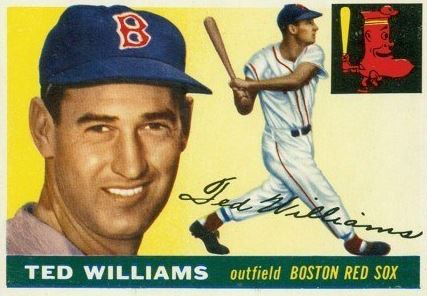
  1. Ted Williams, Red Sox, 1939 … .327-31-145

Teddy Ball game broke into the big leagues in 1939 – a 20-year-old rookie. It was his fourth professional season and, in three minor league campaigns, his average had gone from .271 to .291 to .366. In 1939, Williams hit .327, banged out 31 home runs, led all of MLB with 145 RBI and scored 131 times. He finished seventh in the AL in batting average; fifth in hits (185); first in total bases (344); second in doubles (44); fifth in triples (11); and third in home runs (31). The Splendid Splinter finished fourth in the MVP voting in his rookie campaign.

Pretty much everything Teddy Ballgame did was impressive. So, why not his rookie numbers and ranking on this list? Might have inched up a spot or two just for being Ted Williams. 

Williams went on to a Hall of Fame career that included: six batting titles; four home run crowns; six seasons leading the league in runs scored; and four seasons at the top of the RBI list. In 19 MLB seasons, Williams also put up an MLB career-best .482 on-base percentage – leading the AL in that category 12 times.

  1. Fernando Valenzuela, Dodgers, 1981 … 13-7, 2.48/ROY & CYA

ValenzuelaValenzuela went just 13-7 in 1981 – but, remember that was a strike season and no pitcher won more than 14 games.  In fact, Valenzuela’s 13-7, 2.48 ERA record earned him Rookie of the Year and Cy Young Award honors, as well as a top-five finish in the MVP voting. The 20-year-old rookie also led the league in starts (25), complete games (11), shutouts (8) innings pitched (192 1/3) and strikeouts (180).  Valenzuela went on to a 17-season career (173-153, 3.54).

Rookie of the Year and the Cy Young Award at age 20 is enough to place this high – and he gets extra points for the fervor that was Fernando-mania.


  1. Albert Pujols, Cardinals, 2001 … .329-37-130/ROY

At the ripe young age of 21, Pujols put up the first in a string of remarkable seasons –  earning the 2001 Rookie of the Year Award and a fourth-place finish in the MVP balloting. Pujols hit .329, with 37 home runs, 130 RBI and 112 runs scored.  Over the first ten seasons of his career, he topped a .300 average, 30 home runs and 100 RBI every season.

Pujols scores points for making a .300-30-100 season seem a bit mundane – right from his rookie season.  He also gets extra credit for versatility. In his rookie season, Pujols started 53 games at 3B; 38 in LF; 33 in RF; 31 at 1B; and 2 at DH.

As of the end of the 2017 season, Pujols’ stat line is .305-614-1,918.  He has led his league in runs scored five times, home runs twice, RBI once and average once. As a rookie, he got a Hall of Fame career off to a great start

  1. Aaron Judge Yankees, 2017 … .284-52-114

We’ve already talked about the 25-year-old Judge and his.284-52-114 season (with a league-leading 128 runs and a surprising nine stolen bases). Who knows where “Da Judge” will go in the future.  A good sign is Judge’s bounce back after a tough August this past season (.185 average with just three home runs) to hit .311, with 15 homers in September/October.

The all-time rookie record for home runs has got to earn a top-ten finish.

  1. Mark McGwire, A’s 1987 … .289-49-118/ROY

McGwire’s original call up was not an eye-opener (18 games in 1986, with a .189-3-9 stat line.) But he made good on his promise in his first full season – going .289-49-118 for the A’s as a 23-year-old in 1987; and setting a rookie HR record that stood for three decades.  McGwire went on to a 16-season MLB career in which he hit .263, with 583 long balls and 1,414 RBI. McGwire led his league in home runs four times (a high of 70 in 1998) and in RBI once (147 in 1999).

The rookie numbers of Mark McGwire and Aaron Judge look remarkably similar. They should be placed close together on this list.

  1. Russ Ford, Yankees, 1910 … 26-6, 1.65

Unlike many of the players on this list, after a spectacular rookie season, right-handed hurler Russ Ford did not go on to a long and illustrious MLB career. Before making the New York Highlanders (Yankees) roster in 1910, Ford did get a somewhat disastrous “cup of major league coffee” in 1909 – one game, three innings pitched, four hits, four walks, three hit batsmen, three earned runs, two strikeouts.

Still a rookie in 1910, the 27-year-old righty went 26-6 with a 1.65 ERA. The 26 wins remains the American League rookie-season record. In his initial full campaign, Ford was second in the AL in wins (26); second in winning percentage (.813); seventh in ERA (1.65); fourth in strikeouts (209); fifth in games started (33); fourth in complete games (29); second in shutouts (8); allowed the fewest hits per nine innings (5.89), and had the second-lowest Walks and Hits per Innings Pitched (0.88).  On a Highlanders’ team that finished second with an 88-63 record, Ford led the team in virtually every positive pitching category.

Have to give a solid spot to the holder of the AL victory record for rookie pitchers.

Ford followed that rookie season with a 22-11, 2.27 record in 1911, but then led the AL in losses (13-21, 3.55) in 1912 and lost 18 games (versus 12 wins) in 1913. He jumped to Buffalo of the Federal League in 1914, going 21-6, 1.82 … and 5-9, 4.52 in 1915. Historians report that Ford’s career was cut short (he did not pitch in the majors after 1915) with the banning of his signature pitch – the well-scuffed “emery ball.”  His final MLB line, over seven seasons, was 99-71, 2.59.

  1. Dale Alexander, 1929, Tigers … .343-25-137

AlexDale Alexander is one of two “Oh my, what could have been!” stories on this list. Alexander broke in at first base with the Tigers in 1929 – after six minor league seasons in which he hit .333 (in 2,924 at bats). The year before he made the Tigers’ squad, Alexander hit .380-31-144 with 15 stolen bases at Toronto of the Double A International League.  As an MLB rookie, Alexander played in all 155 Tigers’ games, hitting .343 (tenth in the league), leading the league with 215 base hits, blasting 25 home runs (fifth in the AL) and driving in 137 runs (third).

A durable player, Alexander again played in every Tigers’ game in 1930, this time hitting .326-20-135.  He went on to a .325 average (just three home runs) in 1931 and .367-8-60 (and an AL batting title) in 1932 (a season which included a trade to the Red Sox). Over his first four full seasons, Alexander averaged .338.

In a five-season MLB career – cut short by a truly unexpected injury/health catastrophe – Alexander hit .331, with 61 home runs, 459 RBI and 20 stolen bases.  His lost potential deserves recognition among the top ten rookie seasons.

In May of 1933, Alexander suffered a knee injury and was subjected to a new deep-heat treatment. Unfortunately, Alexander was left in the “diathermy” machine too long and suffered third-degree burns to his leg. Initially, there was concern that he might actually lose the leg, but amputation was avoided. However, the burned and scarred leg did not fully recover, limiting Alexander’s mobility and marking 1933 as his final MLB season. (He did continue to play in the minor until 1942).

  1. Mike Trout, Angels, 2012 … .326-30-83/ROY

Mike Trout joined the 30-30 club in his first full MLB season (at the age of 20) – going .326-30-83, with a league-leading 49 stolen bases. He also led the league in runs scored with 149. That performance earned him Rookie of the Year honors and a second-place finish in the AL MVP voting. (Note: Trout hit .220 in a 40-game call up in 2011.)

Mike Trout gets extra credit for consistency. In his first six full MLB seasons, he finished lower than second in the MVP voting only once (2017, when injuries limited him to 114 games) – capturing the award in 2014 and 2016.  I would certainly not argue with those who would place his rookie season a few spots higher on this list.  Trout’s consistent performance may have me taking those rookie numbers for granted. 

In six full MLB seasons, Trout has led the AL in runs scored four times, RBI once, stolen bases once, walks twice, on base percentage twice, slugging percentage twice and total bases once.  His current career stat line: .306-201-569, with 165 stolen bases.

  1. Tony Oliva, Twins 1964 … .323-32-94/ROY

OlivaThe 25-year-old Oliva won the AL batting crown in his rookie season with .323 average. He also led the AL in hits (217), runs scored (109), doubles (43) and total bases (374). Despite being hampered by knee injuries in the latter part of his career, Tonu-O went on to 15 MLB seasons that included three batting crowns, five seasons leading the league in hits and four seasons topping the AL in doubles.  Oliva’s career stat line: .304-220-947.

Extra credit to Tony Oliva for following up his rookie batting title by becoming the only player to win a batting title in his first two full seasons (.323 in 1963, .321 in 1964). He also led the league in base hits his first three full seasons.


13.  Mark Fidrych, Tigers, 1976 …19-9, 2.34/ROY

FidrychAt 21, Mark “The Bird” Fidrych took baseball – and, in particular, Detroit baseball –  by storm. Statiscally, he went 19-9, with a league-low 2.34 ERA and a league-high 24 complete games.  His performance won him Rookie of the Year honors and second place in the Cy Young Award balloting. His 19 wins were third in the AL – keeping in mind that he opened the year in the bullpen and didn’t get his first start until May 15.  He went on to throw complete games in his 11 of his first 12 starts.


Fidrych makes this list as much for his antics on the mound – and popularity with the fans – as for his stellar rookie numbers. How can you not recognize a season in which a team draws more than twice as many fans at home for a specific pitchers’s starts?  In 1976, the Tigers’ average home attendance on a non-Fidrych start days was 13,843; while the team averaged 33,649 when The Bird started on the Detroit home mound. Some might have put Dwight Gooden in this spot, but all those complete games outweighed the strikeouts for me. 

In Spring Training 1977, Fidrych injured his knee, but recovered and got off to a good start that season. Going into July, Fidrych was 6-2, with a 1.83 ERA and seven complete games in eight starts.  Then, in a July 4 start against the Orioles, he felt something wrong in that valuable right wing (giving up six runs in 5 2/3 innings). He tried a couple more outings (a total of seven runs in 6 1/3 innings) before shutting down. He really never was the same again – eventually having shoulder surgery – and won only four more MLB games after July 1977.  Some think the knee injury may have led him to alter his delivery, while others point to the workload of all those complete games.  Either way, like Dale Alexander’s, this is an “Oh my, what might have been!” kind of story.   The Bird’s final stat line: 29-19, 3.10.

VERY SPECIAL RECOGNITION

Ichiro Suzuki, Mariners, 2001 … .350-8-69/ROY & MVP

IchiroOkay, I know Ichiro Suzuki should probably be on this list – probably right up there around Ted Williams and Fred Lynn. After all, as a 27-year-old MLB rookie, he led the AL with a .350 average and 242 hits – and added a league-leading 56 stolen bases and a Gold Glove. It’s just that those nine seasons in Japan (.353 average and seven batting championships) make it hard from me to figure out where to place him with more traditional rookies.

Still, like Elvis, Cher and Madonna, Ichiro is a star that needs only one name.  After a spectacular rookie season in MLB, Ichiro just kept on hitting.  He amassed  200+ hits in each of his first ten MLB seasons, leading the league in safeties seven times – and picked up a pair of batting titles along the way.  He was also a Gold Glover in each of his first ten seasons. To date, Ichiro has a .312 MLB average, 3,080 hits, 117 home runs, 780 RBI, 1,415 runs scored.  And let’s not forget those 1,278 hits in Japan.  The man is a hitting machine – and earns special recognition for a spectacular MLB rookie season.

Primary sources: Society for American Baseball Research (SABR); Baseball-reference.com; MLB.com; Baseball-Almanac.com

I tweet baseball @DavidBBRT

LikeFollow the Baseball Roundtable Facebook page here.

Member: Society for American Baseball Research (SABR); The Baseball Reliquary; The Negro Leagues Baseball Museum.

Willie Mays and George Brett – They Won a Couple of Close Ones

WILLIE MAYS COMES BACK – HIS 1954 BATTING TITLE

WillieOn this day (September 26) in 1954, Willie Mays won his first (only) batting title – and it was quite a comeback.  The Say Hey Kid was coming back from missing the 1953 season (military service) and – on that September day – he was also focused on coming back from third place in the batting race.

The Giants, who were headed for the World Series, were taking on the Phillies in Philadelphia. As the game got underway, Giants’ RF Don Mueller was hitting .34258; the Dodgers’ CF Duke Snider (starting against the Pirates in Brooklyn) was just .00007 behind at .34251; and Mays was third at .34224.

That day, the Dodgers’ starting pitcher, 23-year-old rookie southpaw Karl Spooner, was appearing in just his second MLB game.  In his first outing (September 22), he had thrown a complete-game shutout against the Giants. He picked up a 3-0 win, giving up just three hits and three walks – while fanning fifteen. Spooner built on that performance against the Pirates, again notching a complete game shutout (1-0), this time allowing four hits and three walks and fanning a dozen. The Pirates’ Jake Thies (3-8 on the year) was nearly as good, also pitching a four-hit complete game, giving up a single run on a Gil Hodges’ round tripper. Thies’ performance (the best of his two-season MLB career) cost Snider his chance at the batting title, as the future Hall of Famer went zero-for-three and dropped to .341.  Side note: Spooner suffered a shoulder injury in 1955 Spring Training and pitched in only two Major League seasons (1954-55), going 10-6, 3.09.

Meanwhile, the Giants were facing a tough pitcher in 23-game winner Robin Roberts.  Mueller got off to a good start with a single in the first inning, but he didn’t get another hit until the tenth (the Giants won in eleven). Mueller ended two-for-six, dropping his average to .342.  Mays touched Roberts (who pitched a complete game) for a single in the second, a groundout to second in the fourth, a triple in the seventh, a double in the eighth and an intentional walk in the tenth.  His three-for-four game pushed his average up to .345 – as Mays moved from third place to first on the leader board.

The anniversary of Mays’ batting title (and the close race described above) caused me to reflect on another very close batting race. This one took place in 1976 – and that’s what this post is really about.

Minnesota fans (I am a Minnesota fan, see my smile this year) may recall the 1976 AL batting race which carried right into the contenders’ final game (October 3) and final inning – with the three leading candidates playing in the same ballpark.

BrettReally, the stage had been set when the final regular season series opened two days before.  At that time, Royals’ DH Hal McRae was leading the AL with a .333 average, followed by Royals’ 3B George Brett at .328 and Twins’ 1B (already a five-time batting champion) Rod Carew at .325.

McRae took a zero-for-four that day (October 1) – as the Twins won 4-3 – and the batting race tightened up. Brett went three-for-three and pulled within .00005 of McRae – .33073 to .33078. Carew went two-for-four to move to .327 (no extra digits necessary).  Of interest here is that, despite the loss, the Royals were able to celebrate a division title that evening – thanks to an Oakland loss. The title-clinching opened the door for Carew to get back into the race.

The following day, the Twins again won (3-2) and – with Brett and McRae (and a number of other Royals’ regulars) on the bench – Carew reinserted himself into the final leg of the dash for the batting crown, going three-for-four and raising his average to .32945.

Here’s how things unfolded, with all three contenders on the same field for the final regular season game.

At game time, as noted earlier, Royals’ DH Hal McRae was leading the race at .33078, Royals’ 3B George Brett stood at .33073 and Twins’ 1B Rod Carew was third at .32945.

In the top of the first, Carew walked – and the leaderboard went unchanged.

In the bottom of the first, Brett (batting third) lined to short for the final out of the inning. His averaged dropped to .33022, giving just a bit more breathing room to McRae.

McRae, however, led off the bottom of the second and the Royals’ DH and cleanup hitter flied out to center and dropped to second in the race.  (McRae had more than 100 fewer at bats than Brett, so each out, or hit, made more of a difference.)  The race now stood at: Brett – .33022; McRae – .33015; Carew – .32945.

Carew lost more ground in his next at bat, by grounding out to shortstop in the top of the third.  His average slipped to .32890.

Brett added to his lead in the bottom of the fourth, with a double to right.  Now it was: Brett (.33126); McRae (.33015); Carew (.32890). But, McRae wasn’t done. He followed McRae’s double with a single to center of his own – raising his average to .33143 and retaking the lead.

Carew seemed to slip out of the competition in the top of the fifth, grounding out to second and dropping to .32836.  However, he got another at bat before Brett or McRae – and doubled to left (top of the seventh), putting the leaderboard at: McRae – .33143; Brett – .33126; Carew – .32947.

In the bottom of the seventh, Brett opened with a double to briefly retake the lead at .33230.  McRae, however, followed with an RBI single to go back in front. The leaderboard after seven innings: McRae – .33270; Brett – .33230; Carew – .32947.

The final inning of the final game and this thing wasn’t over yet – although Carew’s chances were. He singled in the top of the ninth, raising his average to .33057. But, even if Brett made an out in the bottom of the inning, the Royals’ 3B would finish at .33178.  Brett, however, did not make an out.  In the bottom of the ninth, he circled the bases on an inside-the-park home run that fell in front of and then bounced past Twins’ left fielder Steve Brye. (More on that in a minute.)  That put Brett in the batting lead at .33333. McRae, who was coming to the plate, still had a shot. A base hit would give McRae a .33397 average and the batting title, an out would put him at .33207, and  a non-at bat (walk, hit-by-pitch, sacrifice) would keep him at .33270 (still second to Brett). McRae needed a hit, but grounded out to shortstop.  The final tally – you can look it up – was Brett – .333; McRae – 332; Carew – .331. In one of the closest races ever – and one with a finish that quickly became controversial.

There were those in the stands – including McRae – that felt that Brye gave up on the Brett inside-the-park home run. McRae even felt that Twins’ Manager Gene Mauch had ordered Brye to misplay Brett fly ball, raising the possibility of racial motivation. In fact, after his ninth-inning groundout, McCrae made a one-finger gesture toward the Twins dugout, which led a bench-emptying confrontation.  Brye’s response was that he had been playing too deep and had simply misjudged the ball.  In the end, the first of three Brett batting titles was won in a tight race, in the last inning of the regular season, with a bit of a twist at the end – a twist that still stirs up some interesting conversation in Kansas City and Minnesota.

I tweet baseball @DavidBBRT

Follow/Like Baseball Roundtable’s Facebook page here.

Member:  Society for American Baseball Research (SABR); The Baseball Reliquary; The Negro Leagues Baseball Museum; Baseball Bloggers Alliance.

Gary Ward – A Cycling Record (or two)

I always like it when I have the opportunity to reflect on a hometown Twins’ accomplishment – and this is one of those days.

WardOn September 18, 1980, as the Twins faced off against the Brewers in the first game of a doubleheader, a 26-year-old rookie named Gary Ward was leading off and starting in left field for Minnesota. A September call-up, it was Ward’s fourth game of the season for the Twins and just the 14th MLB game of his professional career. (Ward had played in ten games for the Twins at the end of the 1979 season and was hitting .282, with 13 home runs, 66 RBI and 26 steals at Triple A when he got the 1980 call to the big club.) Little did Ward know, he was about to earn his way into the MLB record books that day.

In the top of the first inning, Ward double to center off Brewers’ starter Mike Caldwell. In the top of the third, with the Twins trailing 7-1, the 6’2”, 195-pound Ward singled to left – again off Caldwell. In the top of the fifth, he homered to center off Cardwell (Ward’s first major league round tripper) – cutting the lead to 7-2. In the seventh, he rapped a run-scoring triple to right field off reliever Reggie Cleveland, cutting the deficit to two runs (7-5) – and, of course, completing the cycle.  Notably, Ward had shown his ability to use the entire field – double and homer to center, triple to right and single to left.   In his final at bat, Ward lined out to short. His line for the day? Four-for-five with two runs scored and two RBI. The Twins, by the way, lost 9-8 on a walk-off home run by Milwaukee CF/clean-up hitter Gorman Thomas.

In completing his cycle, Ward immediately “wrote” one entry into the MLB record books and set the foundation for a second.

First, Ward set the record (which still stands) for the fewest MLB games played when recording a cycle (14). The Giants’ Fred Lewis came close to Ward’s record when he hit for the cycle in his 16th MLB game (May 13, 2007) – still the NL record for earliest cycle.

Second, Ward laid the foundation for the only (thus far) father-son combination to hit for the cycle. On May 26, 2004, Gary Ward’s son Daryle – playing 1B and batting third for the Pirates as they took on the Cardinals in St. Louis – hit for the cycle.  In that 11-8 Pirates victory Daryle Ward went four-for-six with three runs scored and six RBI.

For more on MLB’s cycles, click here.

SKIPPING A GENERATION

While, Gary and Daryle Ward are the only father-son combination to hit for the cycle, there is another “relatively” rare family cycle link.  Pirates’ RF Gus Bell and Phillies’ 3B David Bell are the only grandfather-grandson combination to achieve that feat (June 4, 1951 and June 28, 2004, respectively)

Here’s a bit more on the Twins’ Gary Ward. In that 1981 call-up, he hit .463, with one home runs and ten RBI in 13 games. Over five seasons as a Twin, Ward hit .285-51-219, with 26 steals (417 games). Over a 12-season MLB career (Twins, Rangers, Yankees, Tigers), Ward hit .276-130-597, with 83 steals (and 41 triples). The two-time All Star’s best season was 1982, when he hit .289, with 28 home runs and 91 RBI in 162 games for Minnesota. His son Daryle played 11 seasons in the majors (Astros, Cubs, Pirates, Dodgers, Nationals – 1998-2008). Daryle, playing outfield and first base, hit .263, with 90 home runs and 379 RBI over his career. His best campaign was 2002, with the Astros, when he hit .276-12-72 in 136 games.

GOING DEEP – THREE GENERATIONS DEEP

In this post, BBRT noted that Gus and David Bell are the only grandfather-grandson combination to hit for the cycle. The Bell family did have a chance to go three-deep in the cycle, as Gus’ son (and David’s father) Buddy Bell also played in the major leagues.

Here’s a list of three-generation major league families.

COLEMAN FAMILY

First Generation:

Joseph Patrick Coleman, pitcher … (MLB 1942-1955 … 52-76, 4.36)

Second Generation:

Joseph Howard Coleman, pitcher … (MLB 1965-79 … 142-135, 3.70)

Third Generation:

Casey Coleman, pitcher … (MLB 2010-12, 2014 … 8-13, 5.72)

_____________________________

BOONE FAMILY

First Generation:

Ray Boone, 3B-SS-1B … (MLB 1948-60 … .275, 151 HR, 737 RBI)

Second Generation:

Bob Boone, catcher … (MLB 1972-90 … .254, 105 HR, 826 RBI)

Third Generation:

Bret Boone, 2B … (MLB 1992-2005 … .266, 252 HR, 1,021 RBI)

Aaron Boone, 3B-1B … (MLB 1997-2009 … .263, 126 HR, 555 RBI)

_________________________________

BELL FAMILY

First Generation:

Gus Bell, Outfield … (MLB 1950-64 … .281, 206 HR, 942 RBI)

Second Generation:

Buddy Bell, 3B … (MLB 1972-89 … .279, 201 HR, 1,106 RBI)

Third Generation:

David Bell, 3B-2B … (MLB 1995-2006 … .257, 123 HR, 589 RBI)

Mike Bell, 3B … (MLB 2000 … .222, 2 HR, 4 RBI)

______________________________________

HAIRSTON FAMILY

First Generation:

Sammy Hairston, catcher … (MLB 1951 … .400, 0 HR, 1 RBI)

Second Generation:

Jerry Hairston, Outfield… (MLB 1973-89 … .258, 30 HR, 205 RBI)

Third Generation:

Jerry Hairston, Jr., 2B-3B-OF-SS … (MLB 1998-2013 … .257, 70 HR, 420 RBI)

Scott Hairston, Outfield … (MLB 2004-14 … .242, 106 HR, 313 RBI)


Coming soon, the results of BBRT’s first fan survey.  You can take the survey here.

Spoiler Alert from early returns: Beer and hot dogs are still number one; respondents are fine with instant replay, not so with waving a batter to first base on an intentional walk; double plays are more popular than strikeouts; and respondents would rather be in the stands for a perfect game than a four-homer game.


I tweet baseball @DavidBBRT

Follow/Like the Baseball Roundtable Facebook Page here.

Member: Society for American Baseball Research (SABR); The Baseball Reliquary; the Negro Leagues Baseball Museum; Baseball Bloggers Alliance.

The RH Factor – Phillies’ Rhys Hoskins is for Real

“We can’t put guys in the seats, can we now?”

                               Miami Marlins’ manager Don Mattingly …

                                 on defending against Rhys Hoskins.

HoskinsPhillies’ rookie Rhys Hoskins is the RH Factor in the middle of the Philadelphia line-up – putting up a .310-17-37 stat line since his MLB debut on August 10.  In yesterday’s contest – an 8-1 Phillies win over the Marlins in Philadelphia – the 6’5”, 24-year-old 1B/OF went two-for-two, with two runs scored and three RBI. He notched a two-run home run, a run-scoring sacrifice fly, a single and drew a walk in four plate appearances.  The home run was his 17th of the season and, like most of his long balls, carried a little history over the fence.  Coming in just his 33rd MLB game, it made Hoskins the fastest player to reach 17 career round trippers. And, it wasn’t even close – the next quickest to 17 career long balls in the big leagues was Boston Brave Wally Berger at 42 games in 1930.   Then again, Hoskins seems to be getting to all the long-ball marks at breakneck speed.  As the chart below shows, he has been the fastest to reach every career home run mark from nine to 17 (with more to come). Side Note: In other news … only Zeke Bonura, Joe DiMaggio and Ted Williams got to 37 career RBI in as few games as Hoskins. Not bad company.)

RHYS HOSKINS IS THE FASTEST PLAYER TO REACH …

          Nine Home Runs … 16 games

         Ten Home Runs … 17 games

         Eleven Home Runs … 18 games

         Twelve Home Runs …24 games

         Thirteen Home Runs … 29 games

         Fourteen Home Runs … 30 games

         Fifteen Home Runs … 32 games

         Sixteen Home Runs … 32 games

         Seventeen Home Runs … 33 games

So, where did the rookie “phenom” come from?  Let’s take a look.  (Oh, and just so you don’t think BBRT climbed aboard the Hoskins’ bandwagon a little late, the RH Factor was featured in a September 1 post – the August Wrap Up.)

First, I think it’s fair to say, the scouts didn’t see this coming – and that goes for pro and college scouts.  In 2011, when Hoskins graduated from Jesuit High School in Carmichael, California – where he played baseball, football and basketball – he apparently wasn’t on anyone’s radar. (In his senior season, he hit .304, with three home runs and 22 RBI.) Not only did Hoskins go undrafted by the pros, he received only one college scholarship offer – California State University at Sacramento.

Coming out of high school, Rhys Hoskins wasn’t on the scouts’ radar.

Hoskins made the most of his three years as a Sacramento State Hornet: First Team Freshman All-American (Baseball America & Louisville Slugger) and Western Athletic Conference Freshman of the Year (.353-10-53); a .283-3-37 sophomore season; Western Athletic Conference Player of the Year as a Junior (.319-12-53).   That performance earned him $349,700 as the Phillies’ selection in the fifth round (142nd overall) of the 2014 MLB Draft.  Note: Hoskins was also a three-time Academic All-WAC honoree.

Hoskins began his professional career with the short-season (New York-Penn League), Williamsport Crosscutters, where hit just .237, but showed budding power with nine home runs and 40 RBI in 70 games. In 2015, Hoskins hit a combined .319-17-90 at Class A and High-A. In 2016, he really broke out – earning Eastern League (Double A) Rookie of the Year honors with a .281-38-111 season (135 games) for the Reading Fightin’ Phils. That $350,000 investment was looking pretty good by then.

2017 – THE YEAR OF THE RH FACTOR

Then came 2017, and Hoskins’ blazing start with the Triple A Lehigh Valley IronPigs – .284-29-91 line in 115 games (International League MVP and Rookie of the Year). Just as important, he showed solid plate discipline, drawing 64 walks (versus 75 strikeouts). That earned Hoskins an August call up to the big club – where the burn did not exactly continue (at least nor right away).

In his first major league at bat (August 10), Hoskins struck out looking versus the Mets’ Jacob deGrom. His next trip to the plate, he hit into a 4-6-3 double play.  And in his final plate appearance of the day, he drew a six-pitch walk. After four games, things did not look much better. Hoskins was one-for-sixteen (.077), with one run scored and one RBI.

In Hoskins’ fifth game (August 14), things began to get interesting, as he went two-for-four with a pair of home runs.  Since that time (29 games between August 14 and September 13), Hoskins has hit .340, with 17 home runs, 36 RBI and 30 runs scored.  He also put up nearly identical numbers for walks (21) and strikeouts (22) over those 29 games. (He has 24 walks and 26 strikeouts overall.)  That combination of power and patience is why so many are convinced Hoskins is the real deal.

In  a clutch situation. a walk may be the best way to “de-fence” Rhys Hoskins.

And, just to top it off his hot start at the plate, young Mr. Hoskins – on August 27 –  made a sliding, shoestring catch to start a 7-4-3 triple play.

CAN RHYS HOSKINS WIN THE ROOKIE OF THE YEAR AWARD?

Can a player who debuts in August capture the Rookie of the Year Award?  There is a (close) precedent. In 1959, San Francisco Giants’ rookie first baseman Willie McCovey made his MLB debut on July 30.  The future Hall of Famer captured NL rookie of the year honors despite playing in only 52 games.  McCovey put a .354-13-38 stat line that season.  Hoskins, who made his MLB debut on August 10, should surpass McCovey  in all offensive categories except average.  He’s could win this thing.  His biggest obstacle may be another 1B/OF –  Dodgers’ rookie Cody Bellinger , .272-37-86 through 116 games, who looks to break the NL rookie season home run record this campaign. Still, Hoskins should pick up his share of votes.

I tweet baseball @DavidBBRT

Follow/Like the Baseball Roundtable Facebook Page here.  More baseball commentary, blog post notifications and PRIZES.

Member: Society for American Baseball Research (SABR); The Baseball Reliqauary; The Negro Leagues Baseball Museum; Baseball Bloggers Alliance

Another Episode of How the Game Has Changed

Jerry Koosman ... 20-game winner for the Mets and the Twins.

Jerry Koosman … 20-game winner for the Mets and the Twins.

On this date (September 12) in 1969, the Mets – on their way to a World Series title – were in Pittsburgh for a doubleheader against the Pirates. Both games ended 1-0 in favor of the New Yorkers – and in both contests, the winning pitcher also drove in the only run.

In Game One, the Mets’ Jerry Koosman went the distance, giving up just three hits and three walks, while fanning four. He also drove in the winning (and only) tally with a single to right field off Pirates’ starter Bob Moose in the top of the fifth inning. It was Koosman’s fourteenth win of the season (versus nine losses).

In Game Two, the Mets’ Don Cardwell picked up his seventh win (versus nine losses), giving up just four hits over eight innings, while walking one and fanning three. (Tug McGraw pitched the ninth for his 12th save.) In the top of the second, Cardwell drove in the game’s only run with a single to left-center off Pirates’ starter Dock Ellis.

Now, you still see the occasional doubleheader, shutout and pitchers’ game-winning RBI (that final occurence more often in the NL, of course).  However, this game did cause me to reflect on “how the game has changed” over the years.  (Also, it gave me a chance to feature a Minnesota “favorite son,” Jerry Koosman – a career 222-game winner, who starred for the Mets and also was a 20-game winner for the Twins.) Here are just a few observations spurred by the anniversary of the New York/Pittsburgh double-dip.  Special note:  These are just observations, not judgements.

  • It was a doubleheader. (Don’t see many of those anymore.)

In 1969, MLB teams played 176 doubleheaders. Thus far, in 2017, there have been 29 doubleheaders (mostly split). Side note: The Boston Braves played a record 46 doubleheaders in 1945 and a record nine consecutive doubleheaders between September 4 and September 15, 1928 (18 games in 12 days). 

USED TO LOVE THOSE SUNDAY DOUBLE HEADERS

I always loved those Sunday two-for-one doubleheaders.  Of the 176 doubleheaders in 1969, 71 were Sunday twin bills. Over the course of the 1969 season, there were only three Sundays that didn’t feature at least one MLB doubleheader.

  • Total playing time for the TWO 1969 games was four hours and 21 minutes.

The QUICKEST two MLB games from yesterday (September 11) took a combined 5 hours and 37 minutes.

THE LONG AND SHORT OF IT

In 1969, the average MLB game took 2 hours and 32 minutes.  In 2017 (through September 11), the average is 3 hours and 9 minutes.

  • The Mets and Pirates used a total of seven pitchers (and remember no DH) in that 1969 double-dip.

THE MORE THE MERRIER?

In 1969, fans could expect to see an average of 5.2 pitchers per game (both teams).  In 2017 (through September 11), that average is about three pitchers higher (8.3).

  • The starting pitchers in the Mets/Pirates twin bill were on the mound for 33 of the 36 innings.
  • The two winning pitchers fanned just seven batters in 17 innings. (The losing hurlers – Dock Ellis and Bob Moose – fanned 21 in 16 frames.

FANNNING FOR THE FANS?

In 1969, a fan could expect to see an average of 11.6 strikeouts per game (both teams).  In 2017 (as of September 11), that average is up to 16.7.

  • Jerry Koosman’s complete game shutout in the first game of the DH was his 13th complete game of the season – and his fourth complete-game shutout.

Koosman ended the season with 16 complete games and six shutouts and finished tied for ninth in the NL in compete games (Bob Gibson led with 28) and tied for fourth in shutouts (Juan Marichal led with eight). This season, as of  September 11, Erwin Santana of the Twins leads all of MLB in complete games with five and shutouts with three. Only Santana and Corey Kluber have more than two complete games and only Santana, Kluber and the Cardinals’ Carlos Martinez have more than one shutout.

  • There were, of course, no home runs in the doubleheader.

FANS DIG THE LONG BALL?

In 1969, MLB teams averaged approximately 1.6 home runs per game (both teams).  In 2017 (as of September 11) that average is 2.5. While that is only about one extra long ball per game, it is an increase of 57.5 percent.  

Again, just observations, no judgements.  Plus, a chance for younger fans to get a feel for how the game has changed over the years.

I tweet baseball @DavidBBRT

Follow/Like the Baseball Roundtable Facebook page, here.  Blog post notifications, additional baseball commentary and PRIZES.

Member: Society y for American Baseball Research (SABR); The Baseball Reliquary; the Negro Leagues Baseball Museum; Baseball Bloggers Alliance.

MLB Players Weekend – A Four-Star Production

http://Embed from Getty Images

Let me start by admitting I can be a bit “old school” when it comes to the national pastime. I am:

  • Not fond of the DH (and believe it ought to stand for the disappearing DoubleHeader;
  • Prefer high socks to pajama pants;
  • Oppose waving a batter to first on an intentional walk;
  • Would take a well-turned double play over a pair of strikeouts and a triple over a 450-foot home run;
  • Would rather have a spirited debate than wait for a challenge decision;
  • Am more interested in how far a baseball travelled than its exit velocity and angle;
  • Like to see pitchers and hitters adjust to an umpire’s stike zone;
  • Would always choose outdoor over indoor baseball.

You get the idea.

However, I was pleased by the color, excitement and sense of “play” brought to the game by the MLB Players Weekend – more colorful uniforms and caps; personalized socks, bats and batting gloves: the MLB Players Weekend logo (from Little League to the “Bigs.”); tribute patches; nicknames on the backs of uniforms; and charity connections. All of this, I believe created more excitement, particularly for young fans and reminded us all that it’s still a game.   That, I believe, is  a good thing for baseball.

My favorite part of the promotion was the (player-chosen) nicknames on the uniforms.  There were some great ones: Josh Donaldson – Bringer of Rain;  Kendall Graveman – Digger (my nickname in my playing days); Robert Osuna – No Panic; Aaron Judge – All Rise; Chih-Wei Hu – Who?; Dustin Pedroia – Laser Show; Kenley Jansen – Kenleyfornia; Trevor Bauer – Bauer Outage; Ian Kinsler – Bootsie (Is that good for an infielder?); Yasiel Puig – Wild Horse.  And then, of course, there were those who used already well-established nicknames, like: Moose Moustakas; Mad-Bum Bumgarrner; Joey Bats Bautista; Miggy Cabrera.   Others, like Jason Motte (J Motte) used their first initial and last name and still other used just their first name (Matt Kemp; Koji Euhara; Homer Baily (still an unfortunate name for a pitcher).

Finally, there were those business-as-usual players who simply used their last name. In this post, I’d like to provide a list of my favorite nickname from each team, as well as suggestions for a few of the players who chose not to choose a nickname for the weekend.

MY FAVORITE PLAYERS WEEKEND NICKNAMES

     Arizona Diamondbacks – Chris Herrmann – Herm the Worm

     Atlanta Braves – Brandon Phillips – Dat Dude

     Baltimore Orioles – Manny Machado – Mr. Miami

     Boston Red Sox – Brock Holt – Brock Star

     Chicago Cubs – Justin Grimm – Reaper

     Chicago White Sox – Yoan Moncada – Yo Yo

     Cincinnati Reds – Michael Lorenzen – Zen Master

     Colorado Rockies – Charlie Blackmon – Chuck Nazty

     Cleveland Indians – Carlos Santana – Slamtana

     Detroit Tigers – Mike Mahtook – Night Hawk

     Houston Astros – Carlos Correa – Showrrea

     Kansas City Royals – Brandon Mauer – Mauer Power

     Los Angeles Angels – Albert Pujols – The Machine

     Los Angeles Dodgers – Curtis Granderson – Grandyman

     Miami Marlins – Jarlin Garcia – Jarlin the Marlin

     Milwaukee Brewers – Josh Hader – Haderade

     Minnesota Twins – Max Kepler – Rozycki

     New York Mets – Noah Syndergaard – Thor

     New York Yankees – Todd Frazier – Toddfather

     Oakland A’s – Chris Smith – Rock N Fire

     Philadelphia Phillies – Tommy Joseph – Tojo

     Pittsburgh Pirates – Gerritt Cole – Cole Train

     St. Louis Cardinals – Carlos Martinez – Tsunami

     San Diego Padres – Chase d’Arnaud – Cheetah

     San Francisco Giants – Pablo Sandoval – Panda

     Seattle Mariners – Nelson Cruz – Boomstick

     Tampa Bay Rays – Steve Cishek – Speedpass

     Texas Rangers – A.J. Griffin – Sweet Lettuce

     Toronto Blue Jays – Josh Donaldson – Bringer of Rain

     Washington Nationals – Bryce Harper – Big Kid

There were plenty of players who stayed “old school” and just went with their last names on thier uniform backs. Here are suggestions for next year for just a few of those:

Brett Gardner, Yankees – Old School (Gardner said he was “not a big fan” of the loosening of uniform rules)

Corey Gearrin, Giants – Gear Daddy

Zack Greinke, Diamondbacks – Grain-Man

Marco Gonzales, Cardinals – Polo

Mitch Haniger, Mariners – Handyman

Greg Holland, Rockies – Dutch Master

Scott Kazmir, Dodgers – Great Scott

Dallas Keuchel, Astros – Big K

Josh Lindblom, Pirartes – Kim Chee (Played in Korea)

Mike Minor, Royals – M & M’s

Gift Ngoepe – Gift is great on its own

Pat Neshek, Rockies – Collector (Memorabilia and autograph collector)

Dovydas Neverauskas – Scrabble

Daniel Nava, Phillies – Not Nova (See below)

Aaron Nola – Not Nava (See above)

Paulo Orlando, Royals – Three Bags Full (first three MLB hits were triples)

Cameron Perkins, Phillies – Pancakes

Ryan Schimpf – Etouffe

Corey Seager, Dodgers – Kyle’s Brother ()nly fair, Kyle used Corey’s Brother)

Tony Sipp, Astros – Big Gulp

Seth Smith, Diamondbacks – Little Eli (Backed up Eli Manning at Ole Miss)

George Springer, Astros – Slinky (The ultimate spring)

Matt Szczur,Padres – Scissors

Mark Trumbo, Diamondbacks – 76

Scott Van Slyke, Reds – Family Business (son of former major leaguer Andy Van Slyke)

All in all a great weekend for MLB and the fans. Looking forward to next year.


I tweet baseball @DavidBBRT


Follow/Like Baseball Roundtable’s Facebook page here. Baseball commentary, blog post notificatins, PRIZES.

Member: Society for American Baseball Research (SABR); The Baseball Reliquary; The Negro Leagues Baseball Museum; Baseball Bloggers Alliance.

“Whiff”-le” Ball – Judge’s Record and a Look at the Other Side

Thirty-two MLB hitters have already struck out more times this season than Joe Sewell did in his  14-season (1920-33), 1,903-game major league career.

Aaron Judge baseball photo

Photo by apardavila

Yankees’ rookie phenom Aaron Judge – as most fans know – has set a new single-season  major league record for consecutive games with a strike out (for non-pitchers) at 37 (July 8 – August 20); topping Adam Dunn’s 2012 record of 32. (Judge’s streak ended yesterday.)  Judge also broke pitcher Bill Stoneman’s overall single-single season (1971) record for consecutive games played with a strikeout (35) and tied Stoneman’s record for consecutive games played with strikeout (over more than one season) of 37.


THE OTHER SIDE OF THE COIN

SewellIn 1929, Indians’ 3B Joe Sewell played an MLB (modern) record 115 consecutive games without striking out (May 19-September 19).  During his 115-game streak, Sewell racked up 436 at bats and 143 hits (.328), with 27 doubles, two triples, seven HR and 56 RBI.   On the season, Sewell fanned just four times in 578 at bats – and it wasn’t even his best campaign in terms of at bats/per whiff.   That would be 1932, when Sewell struck out just three times in 503 at bats.  For his career, Sewell fanned 114 times in 7,132 at bats – or once each 62.6 at bats. That puts Sewell second on the career list (among players who played after 1900) to Wee Willie Keeler, who fanned just once every 63.2 at bats in 19 MLB seasons (1892-1910).


Judge stopped his streak the hard way (at least for a free swinger) – with patience at the plate.  He came to the plate four times and recorded a single and three walks. Judge was pulled from the contest in the top of the seventh inning (pinch-hitter Jacob Ellsbury) with the Bronx Bombers up 11-1. During the whiff streak, Judge hit .176 (23-for-131), with eight home runs, 16 runs scored, 14 RBI, 31 walks and 63 strikeouts.  Before, we get too critical, however, let’s keep in mind that Judge (season-to-date) is hitting .284, with an AL-leading 37 home runs, 81 RBI, a league-leading 93 runs scored and a league-high 93 walks. Suddenly, those strikeouts (Judge has 167 on the season, second only to the Twins’ Miguel Sano at 170) don’t seem so important.

Woulda – Coulda – Shoulda

Aaron Judge’s best chance to end his record-setting consecutive games with a strikeout streak early may have come in Minnesota on July 19 (Whiff Game Number Nine), when his only plate appearance came as a pinch hitter with one out in the top of the ninth and the Yankees down 6-1. Twins’ reliever Trevor Hildenberger fanned Judge on three pitches (two fouls and a swinging strike).

The year Adam Dunn set the previous position player record for consecutive games with a strikeout (2012), he hit .204, with 41 home runs and 96 RBI (and, like Judge, was selected to the All Star team). During his 32-game whiff streak, Dunn hit .243 (27-for-111), with 10 home runs, 25 RBI, 19 runs scored, 25 walks and 47 strikeouts.   That season, Dunn struck out 222 times, one short of Mark Reynolds’ 2009 record.

ROLLING A 200

Five hitters have fanned 200 or more times in a season.  Mark Reynolds (Diamondbacks) was the first, with 204 strikeouts in 2008 … and also leads the pack with three such seasons (consecutively).

Mark Reynolds, D-backs, 2009                       223

Adam Dunn, White Sox, 2012*                        222

Chris Davis, Orioles, 2016                                 219

Chris Carter, Astros, 2013                                 212

Mark Reynolds, D-backs, 2010                        211

Chris Davis, Orioles, 2015                                  208

Chris Carter, Brewers, 2016                              206

Drew Stubbs, Reds, 2011                                     205

Mark Reynolds, D-backs, 2008                        204


I tweet baseball @DavidBBRT

Follow/Like the Baseball Roundtable Facebook page here.  Baseball commentary, blog post notifications, PRIZES.

Member: Society for American Baseball Research (SABR); The Baseball Reliquary; The Negro Leagues Baseball Museum; Baseball Bloggers Association.