BASEBALL ROUNDTABLE TRIVIA TEASER
Can you name the two MLB players who hit for the cycle in the same season they recorded a 30-30 (HR-SB) campaign Hint: One of the two has rolled a perfect (300) game in the Professional Bowling Association World Series of Bowling and hit a home run in the MLB World Series.
TRIVIA TEASER ANSWER
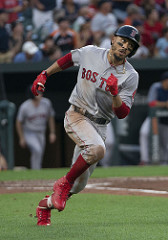
Ian Kinsler (2009) and Mookie Betts (2018) are the only two major leaguers to record a 30-30 campaign and hit for the cycle in the same season. Betts has also bowled three sanctioned 300 games, including one in the 2017 PBA World Series of Bowling qualifying round – and hit a home run in the final game of the 2018 MLB World Series.
 In 2018, two major leaguers achieved 30-30 (HR-SB) seasons – Mookie Betts of the Red Sox and Jose Ramirez of the Indians. That brings the total number of players to achieve a 30-30 campaign to thirty-nine. Those thirty-nine players have produced a total of 62 30-30 campaigns.
As you consider the membership of the 30-30 Club, you’ll see lots of familiar names – from Hank Aaron and William Mays to Alex Rodriguez and Jeff Bagwell to Mike Trout and Mookie Betts. You’ll also find some surprises – like Tommy Harper and Brandon Phillips. And, of course, the father-son combination of Bobby and Barry Bonds dominate the roster.
This post will look at each of member of the 30-30 Club in detail, but first a few bits of 30-30 trivia.
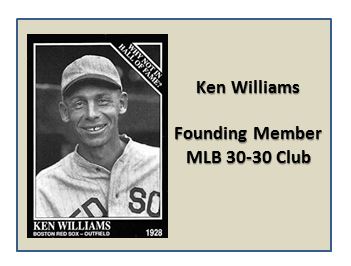
- The first player to achieve a 30-30 season was Ken Williams of the 1922 Saint Louis Browns.
- Only two players have recorded five 30-30 seasons and it must be in the genes. They are Bobby Bonds (father) and Barry Bonds (son).
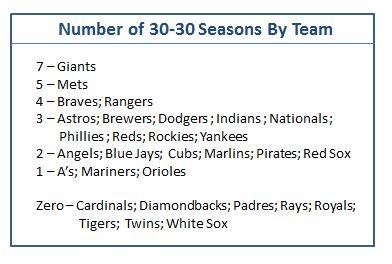
- Bobby Bonds and Alfonso Soriano are the only players to have a 30-30 season in both leagues. Bonds for the (Giants 1969, 1973), Yankees (1975), Angels (1977), White Sox/Rangers (1978). Soriano for the Yankees (2002, 2003), Rangers (2005) and Nationals (2006).
- Bobby Bonds and Carlos Beltran are the only players to play for two teams in a 30-30 season and Beltran is the only player to complete a 30-30 MLB season while playing in both leagues. Bonds (White Sox and Rangers in 1978) – Beltran (Royals and the then NL Astros in 2004).
- The first switch hitter to record a 30-30 season was the Mets’ Howard Johnson in 1987.
- The most 30-30 campaigns in any one season is four – and that has been done four times (1987-1996-1997-2011).
- The only player to record three consecutive 30-30 seasons is Barry Bonds (1995-96-97). Six players have recorded back-to-back 30-30 seasons: Willie Mays (1956-57); Bobby Bonds (1977-78); Ron Gant (1990-91); Vlad Guerrero (2001-02); Alfonso Soriano (2002-03 & 2005-06); and Ryan Braun (2011-12).
- Nine players have recorded a 30-30 season AND hit for the cycle in their MLB careers. Eric Davis; Alex Rodriguez; Dante Bichette; Jeff Bagwell; Vlad Guerrero; Ian Kinsler; Mike Trout; Matt Kemp; and Mookie Betts.
- In 1988, the A’s Jose Canseco became MLB’s first 40-40 player – hitting 42 home runs and swiping 40 bags. Since then, there have been three more 40-40 campaigns: Barry Bonds (42-40 in 1996), Alex Rodriguez (42-46 in 1998) and Alfonso Soriano (46-41 in 2006).
- Mike Trout is the youngest player ever to join the 30-30 Club, having his 30-30 season in 2012 at age 20 – and he is also the only player to join the club in his rookie season.
- Only two teams have had two 30-30 players in the same season – the 1987 Mets (Howard Johnson and Darryl Strawberry) and the 1996 Rockies (Dante Bichette and Ellis Burks).
A few other “factoids.”
- There have been just four 40-40 seasons: Jose Canseco (A’s, 1988); Barry Bonds (Giants, 1996); Alex Rodriguez (Mariners, 1998); and Alfonso Soriano (Nationals, 2006).
- There have been only two 30-50 (30 homers-50 steals) seasons: Eric Davis (Reds, 1987); Barry Bonds (Pirates, 1990).
- The most home runs ever hit in a 30-steal campaign is 49, by Larry Walker (Rockies, 1997).
- In the 62 30-30 seasons, the player achieving the milestone has been an All Star selection 43 times. (70.5 percent – There were no All Star selection in 1922.)
- In 17 of the 62 30-30 seasons, the achieving player has also won a Gold Glove.
JUST HOW HARD IS IT TO GET TO 30-30?
Among the 40 players with at least one 30-30 season, three joined the “Club” in the only season in which they reached either 30 home runs or 30 steals (although one of those players, Jose Ramirez is still active). Another fourteen members of the 30-30 Club reached 30 steals just once and five reached 30 home runs just one time in their careers.
- In six of the 62 30-30 seasons, the player has gotten exactly 30 home runs; while, in nine, the player has stolen exactly 30 bases. No player has ever hit 30-30 “on the nose.” The Rangers’ Ian Kinsler came closest in 3008, with 31 home runs and 30 steals.
- In 26 of the 62 30-30 seasons, the player has hit .300 or better, with Larry Walker‘s (Rockies) .366 in 1997 being the highest average. The lowest average ever for a 30-30 player belong to Ron Gant of the Braves at .251 (1991).
- Eight of the 62 30-30 season have featured 200 or more base hits, topped by Alex Rodriguez; 213 hits for the Mariners in 1998. Fewest hits in a 30-30 season? That would be 139, by Eric Davis of the Reds in 1987.
- How about RBI? Ken Williams, the first 30-30 Club member (Browns, 1922), set the bar high at 155 runs plated in his 30-30 campaign. It has yet to be matched. There is a tie for the fewest RBI in a 30-30 season (67) – Raul Mondesi (Dodgers, 1990) and Hanley Ramirez (Marlins 2008).
- Runs scored? The 30-30 player has scored at least 100 runs in 51 of the 62 campaigns. The high of 143 is shared by Larry Walker (Rockies, 1997) and Jeff Bagwell (Astros, 1999). The fewest runs scored in a 30-30 season is 74 by Ron Gant (Braves, 1991).
- A couple of more trivia bits. The most doubles in a 30-30 season goes to the Yankees’ Alfonso Soriano with 51 in 2002. Two players have actually reached 20 triples in a 30-30 season: Willie Mays of the Giants in 1957 and Jimmy Rollins of the Phillies fifty years later.
Running the Table
30-30 … MVP … All Star … Gold Glove … Silver Slugger
Just four players have achieved a 30-30 campaign, been an All Star, won a Gold Glove and earned a Silver Slugger Award all in the same season: Dale Murphy (Braves, 1983); Barry Bonds (Pirates, 1990 & Pirates, 1992); Larry Walker (Rockies 1997); Mookie Betts (Red Sox, 2018).
Jimmy Rollins is a unique outlier in this group. In his 2007, 30-30 season, he won a Gold Glove and Silver Slugger at the shortstop position and was the National League MVP – but did not make the All Star team.
Now a look at each member of the 30-30 Club – chronologically based on the season they joined.
______________________________________________________________
MLB’S 30-30 CLUB
Ken Williams, OF, Saint Louis Browns (LH) … 39 home runs/37 stolen bases in 1922
The left-handed hitting Ken Williams was in his seventh MLB season (age 32) when he became the first member of MLB’s 30-30 club. It was a banner year for the 6-foot, 170-pound fly chaser, as he notched what would be his career highs in games (153), runs (128), home runs (39), RBI (155) and total bases (367) for the second-place (93-61) Browns. Williams led the AL in homers, RBI and total bases.

Williams played 14 MLB seasons (1915-16, with the Reds; 1918-27 with the Browns; 1928-29 with the Red Sox). He collected 1,552 hits (.319 average), with 196 home runs and 154 stolen bases. He hit 30 or more home runs only once (twenty-plus an additional three times) and stole at least 30 bases only once (reaching 20 an additional two times).
Ken Williams was the first American Leaguer to hit two home runs in one inning – August 7, 1922, in the sixth inning of a Saint Louis Browns 16-1 win over the Senators.
—————————————
Willie Mays, OF. Giants (RH) …
36 home runs/40 stolen bases in 1956
35 home runs/38 stolen bases in 1957
The “Say Hey Kid,” in 1956, became the first right-handed hitter and first National Leaguer to join the 30-30 club. The following year, Mays became the first player to have multiple (and consecutive) 30-30 seasons. In both 1956 and 1957, Mays led the NL in steals (he would also lead in the category in 1958 and 1959) and, in 1956, he also had 26 doubles and 20 triples to go with his 35 home runs. 38 steals – making Mays just the second member of the 20-20-20-20 Club (doubles-triples-home runs-stolen bases). The first was the Cubs’ Wildfire Schulte (1911). Mays and Schulte were joined in the 20-20-20-20 Club in 2007 by the Tigers’ Curtis Granderson and Phillies’ Jimmy Rollins. Rollins and Mays are the only player whose 20-20-20-20 seasons also included 30 HRs and 30 SBs.
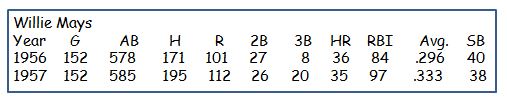
It’s no surprise to find Mays in the 30-30 Club. In 22 MLB seasons, Mays led his league in home runs four times (topping thirty 11 times, with a high a 52 in 1965) and led his league in steals four times (stealing thirty or more three times, with a high of 40 in 1956). He also was the league leader in triples three times, total bases three times, runs twice, hits once and batting average once. In addition, he earned Rookie of the Year honors, a pair of NL MVP Awards and a dozen Gold Glove recognitions. Mays played for the Giants (1951-52, 1954-72) and Mets (1972-73). He collected 3,283 hits (.302 average), 660 home runs, 1,903 RBI and 338 stolen bases.
Willie Mays hit 51 home runs as a 24-year-old in 1955 and 52 long balls as a 34-year-old in 1965 – the longest time ever between two MLB 50-HR seasons.
——————————————-
Hank Aaron, OF, Braves (RH) … 44 home runs/31 stolen bases in 1963
In 1963, Aaron hit an NL leading 44 home runs and swiped 31 bases (the only 30-steal season in his MLB career – although he did top 20 steals in five additional campaigns). That season, Aaron led the league in home runs (44), runs (121), RBI (130) and total bases (370) – while hitting .319. In his 23-season MLB career Aaron hit thirty or more home runs in 15 campaigns (forty or more eight times).

In his 23-season MLB career, Aaron led his league in total bases eight times, home runs four times, doubles four times, RBI four times, batting average twice, runs three times and hits twice. He captured one MVP Award and earned three God Gloves.
Aaron retired with 3,771 hits (.305 average), 755 home runs, 2,297 RBI, 2,174 runs scored and 240 stolen bases. He played for the Braves (1954-74) and Brewers (1975-76).
Hank Aaron, who played in the major leagues from 1954 through 1976, was the last former Negro Leagues player on a major league roster.
—————————————————-
Bobby Bonds, OF, Giants, Yankees, Angels …
32 home runs/45 steals for the Giants in 1969
39 home runs/43 steals for the Giants in 1973
32 home runs/30 steals for the Yankees in 1975
37 home runs/41 steals for the Angels in 1977
31 home runs/43 steals for the White Sox in 1978
In the ten MLB seasons from 1969 to 1978, outfield Bobby Bonds wrote the record book for 30-30 seasons. He achieved a record five such campaigns (a record tied later by – wait for it – his son Barry). He also became the first player with a 30-30 season for more than one team; the first player with a 30-30 season in both the National and American Leagues; and the first player to go 30-30 while playing for two teams in the same season. Notably, Bonds also had his first 30-30 season in his first full MLB season (at age 23); although he had played 81 MLB games the year before, so did not qualify as a rookie. In 1978, when he played for the White Sox and Rangers, Bonds hit 29 of his 31 long balls for Texas and swiped 33 of his 43 bases for Texas. (He was traded by the White Sox to the Rangers in mid-May for Rusty Torres and Claudell Washington.)
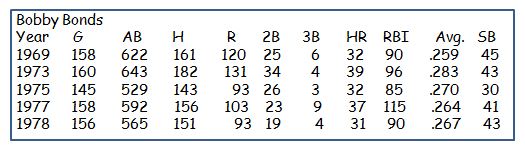
While never leading his league in home runs or stolen bases, Bonds (in 14 MLB seasons) hit 30 or more home runs in a season six times and stole 30 or more bases ten times (40 or more seven times). He led his league in runs scored twice, total bases once and earned three Gold Gloves. Bonds finished his career with 1,886 hits (.268 average), 332 home runs, 1,024 RBI, 1,258 runs scored and 461 stolen bases. He played for the Giants (1968-74); Yankees (1975); Angels (1976-77); White Sox (1978); Rangers (1978); Indians (1979); Cardinals (1980); and Cubs (1981).
Bobby Bonds played his first seven MLB seasons with one team – the Giants. Over his final seven MLB season, he put on the uniform of seven different teams.
—————————————————-
Tommy Harper, 3B/2B/OF, Brewers (RH)… 31 home runs/38 stolen bases in 1970
Tommy Harper is one of the biggest surprises on this list. In 1970, the American League Brewers’ (former Seattle Pilots) first season, the 29-year-old Harper reached what would be career highs in games (154), hits (179), doubles (35), home runs (31), RBI (82) and batting average (.296). His 30-30 season was the only time Harper topped 17 round trippers in his 15-season MLB career. He did, however, lead his league in stolen bases twice (with a high of 73 in 1969), topping 30 steals in four campaigns. He also led the NL in runs scored in 1965 (Reds) with 126. In his 30-30 season, Harper started 128 games at 3B, 22 at 2B and 13 in the outfield.

Harper accumulated 1,609 MLB hits (.257 average), 146 home runs, 972 runs, 567 RBI and 408 steals. He played for the Reds (1962-67); Indians (1968); Pilots (1969); Brewers (1970-71); Red Sox (1972-74); Angels (1975); A’s (1975); and Orioles (1976).
Tommy Harper was the first player ever to come to bat for the short-lived Seattle Pilots. He doubled – becoming the first Pilot player to record an MLB hit and scored the team’s first run (on a home run by Mike Hegan).
—————————————————————
Dale Murphy, OF/1B/C, Braves (RH) …. 36 home runs/30 stolen bases in 1983
Thirty home runs was no big challenge for Dale Murphy, he topped in thirty round trippers in six of his 18 MLB seasons (a high of 44 in 1987) and twice led the NL in long balls. His 30-30 season in 1983, however, was the only time he reached 30 steals and in only one other campaign did he reach 20 thefts.

In 18 MLB seasons, Murphy collected 2,111 hits (.265 average), hit 398 home runs, had 1,266 RBI, scored 1,197 runs and stole 161 bases. He led his league in games played four times (1982-85), home runs once, RBI twice, total bases once and runs scored once. He also earned five Gold Gloves. Between September 26, 1981 and July 8, 1986, Murphy played in 740 consecutive games, MLB’s 13th longest streak. Murphy played for the Braves (1976-90); Phillies (1990-922); and Rockies (1993).
In his 1983 30-30 season, Murphy won his second consecutive National League MVP Award – one of only 13 players to win consecutive MVP honors.
——————————————————————–
Joe Carter, OF/1B Indians (RH) … 32 home runs/31 stolen bases in 1987
In 1987, the Indians’ Joe Carter made the 30-30 Club – a distinction he missed by a whisker the previous year, when he smacked 29 home runs and stole 29 bases. In 1987, Carter hit just .264 (down from .302 in 1986), but rapped 32 home runs and stole 31 bags. It would be his only season of 30 or more steals (he did steal twenty or more in six seasons) and one of six seasons in which he reached 30 home runs.

In a 16-year MLB career, Carter – a five-time All Star – played for the Cubs (1983); Indians (1984-89); Padres (1990); Blue Jays (1991-97); Orioles (1998); and Giants (1998). He collected 2,184 hits (.259 average), 396 home runs, 1,445 RBI, 1,170 runs scored and 231 stolen bases.
Joe Carter, playing for Wichita State University, was the Sporting News College Player of the Year in 1981. That season, in 69 games played, Carter hit .411, with 24 home runs, 88 runs scored, 120 RBI and 24 stolen bases (25 attempts).
——————————————————————-
Eric Davis, OF, Reds, 1987 (RH) … 37 home runs and 50 stolen bases in 1987
Eric Davis was a speed and power guy, six times reaching at least 20 home runs (topping thirty twice) and seven times topping 20 steals. Although he never led his league in steals, he stole a high of 80 bases in 1986. (The Cardinals’ Vince Coleman stole 107.) In his 1987 campaign, Davis hit .293, with 37 home runs, 120 runs scored, 100 RBI and fifty stolen bases. In 17 MLB seasons, Davis collected 1,430 hits (.269 average), scored 1,430 runs, drove in 934, hit 282 round trippers and swiped 349 bases. Davis played for the Reds (1984-91, 1996); Dodgers (1992-93); Tigers (1993-94); Orioles (1997-98); Cardinals (1999-2000); and Giants (2001). He was a two-time All Star and three-time Gold Glover.
Eric Davis and Barry Bonds are the only players to steal at least 50 bases in their 30-30 season.
—————————————————————————–
Howard Johnson, 3B/SS/OF, Mets (SH) …
36 home runs/32 steals for the 1987 Mets
36 home runs/41 steals for the 1989 Mets
38 home runs/30 steals for the 1991 Mets
Howard Johnson had just three seasons of 30+ home runs – and he reached at least 30 stolen bases in all of them (he had four seasons of 30 or more steals). In his three 30-30 campaigns, Johnson led the NL in runs scored once (1989), home runs once (1991) and RBI once (1991). In those three 30-30 campaigns, he hit 74 long balls left handed (1,084 at bats) and 36 homers right handed (605 at bats).
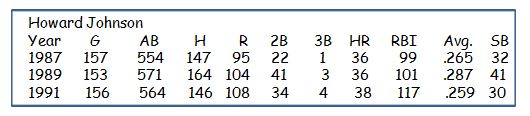
Johnson played 14 MLB seasons: Tigers (1982-84); Mets (1985-93); Rockies (1994); and Cubs (1995). He amassed 1,229 hits (.249 average); 228 home runs, 760 runs scored, 760 RBI and 231 stolen bases. He was a two-time All Star.
Howard Johnson started his professional career as a pitcher (Tigers’ system), but was quickly converted to shortstop and then to third base. In his MB career, he played 1,032 games at 3B, 273 at shortstop and 221 in the outfield.
————————————————————————-
Darryl Strawberry, OF, Mets (LH), 1987 … 39 home runs/36 stolen bases
Darryl Strawberry was in his fifth MLB season when he put up a 30-30 campaign for the Mets. While he topped 25 stolen bases in five seasons (1984-88), 1987 was the only season he reached 30 steals. Strawberry hit 30 or more home runs in three seasons, 20 or more in six. In 1988, Strawberry came within a whisker of back-to-back 30-30 seasons, leading the NL with 39 home runs and stealing 29 bases.

Strawberry was an eight-time All Star. In a 17-season MLB career, he had 1,401 hits, 335 home runs, an even 1,000 RBI, 898 runs scored and 221 steals. He topped 100 RBI three times and 100 runs scored twice. He played for the Mets (1983-1990); Dodgers (1991-93); Giants (1994); and Yankees 1995-99).
Darryl strawberry was the 1983 NL rookie of the Year (Mets), when he hit .257, with 26 home runs, 74 RBI and 19 stolen bases in 122 games.
————————————————————————-
Jose Canseco, OF/DH, A’s (RH) 1988 … 42 home runs/40 stolen bases
In 1988, the A’s Jose Canseco achieved a 30-30 season and more. That year, Canseco became the first 40-40 player – launching an AL-best 42 home runs and stealing 40 bases. For the year, he hit .307, led the AL with 124 RBI and won the league MVP Award. It was Canseco’s only season with at least 30 steals (he did top 25 two additional times) and one of eight seasons in which he topped 30 home runs.

In 17 seasons, the five-time All Star collected 1,877 hits (.266 average), 462 home runs, 1,407 RBI, 1,186 runs scored and 200 steals. He led his league in home runs twice.
Jose Canseco was the 19865 AL Rookie of the Year. The 20-year-old hit just .240 in 157 games, but hit 33 home runs and drove in 117 tallies.
——————————————————————————
Barry Bonds, OF, Pirates & Giants …
33 home runs/52 stolen bases for the Pirates in 1990
34 home runs/39 stolen bases for the Pirates in 1992
33 home runs/31 stolen bases for the Giants in 1995
42 home runs/40 stolen bases for the Giants in 1996
40 home runs/37 stolen bases for the Giants in 1997
Barry Bonds is one of only two MLB players to record five 30-30 campaigns – and the other is his father Bobby Bonds. In his 22-season career, Bonds had 14 seasons of at least 30 home runs and nine seasons of at least 30 stolen bases. He was the NL MVP in his first two 30-30 seasons (he was the NL MVP a total of seven times).
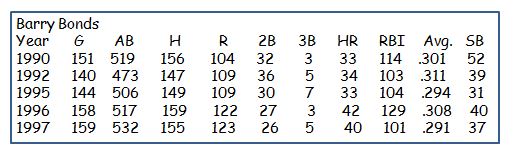
In his career, Bonds led the NL in runs once, home runs twice, batting average twice, RBI once, walks 12 times and intentional walks 12 times. He was an All Star selection 14 times and an eight-time Gold Glover. Bonds collected 2,935 hits (.298 average), hit 762 home runs, drove in 1,996 runs, scored, 2,227 and swiped 514 bases.
In 2004, Barry Bonds drew a record 120 intentional walks. He also drew the second-most intentional walks in a season (68 in 2002) and third-most (61 in 2003). Fourth on the list is Willie McCovey, with 45 intentional passes in 1969.
——————————————————————-
Ron Gant, OF, Braves (RH) …
32 home runs/33 steals in 1990
32 home runs/34 steals in 1991
Ron Gant put together back-to-back 30-30 seasons for the Braves in 1990-91. In his 16-season MLB career, Gant hit 30 or more home runs four times and stole 30 or more bases in three seasons.

Gant’s career stat line includes 1,651 hits (.256 average), 321 home runs, 1,008 RBI, 1,080 runs scored and 243 stolen bases. He was a two-time All Star. Gant played for the Braves (1987-1993); Reds (1995); Cardinals (1996-98); Phillies (1999-2000); Angels (2000); Rockies (2001); A’s (2001, 2003); Padres (2002).
In 1994, Ron broke his leg in a dirt-bike accident and missed the entire 1995 season. He came back with the Reds in 1995 and made the NL All Star Team – finishing the season at .276-29-88, with 23 stolen bases in 199 games.
—————————————————————————
Sammy Sosa, OF, Cubs (RH) …
33 home runs/36 stolen bases in 1993
36 home runs/34 stolen bases in 1995
Sammy Sosa recorded a total of three seasons of 30 or more steals in his MLB career – and two of those coincided with campaigns of 30 or more home runs. Overall, Sosa had 11 seasons with 30+ round trippers.

In his 18-season career, Sosa collected 2,408 hits (.273 average), hit 609 home runs and amassed 1,667 RBI. He also scored 1,475 runs and stole 234 bases. Sosa was a seven-time All Star, the 1998 NL MVP and led the league in runs three times, total bases three times, home runs twice and RBI twice. Sosa played for the Rangers (1989, 2007); White Sox (1989-1991); Cubs 1992-2004); and Orioles (2005). In the five seasons from 1998 to 2002, Sosa averaged just over 58 runs per season.
Sammy Sosa is the only MLB player to hit at least sixty home runs in a season three times (66 in 1998; 63 in 1999; 64 in 2001) and yet did not lead his league in home runs in any of those seasons.
—————————————————————————–
Dante Bichette, OF, Rockies (RH) … 31 home runs/31 stolen bases in 1996
Dante Bichette had just one season of at least thirty stolen bases – and it coincided with one of his three seasons of at least 30 home runs.

In 14 MLB seasons, Bichette was an All Star four times, led the NL in hits twice, home runs once, RBI once and total bases once. He played for the Angels (1988-90); Brewers (1991-92); Rockies (1993-1999); Reds (2000); and Red Sox (2000-01). He collected 1,906 hits, hit 274 home runs, drove in 1,141, scored 934 times and stole 152 bases.
Dante Bichette hit the first home run in Colorado Rockies history. It was off the Mets’ Brett Saberhagen on April 7, 1993 – the only run in a 6-1 Rockies loss in New York.
————————————————————————–
Ellis Burks, OF, Rockies (RH) … 40 home runs/32 stolen bases in 1996
Ellis Burks had just one season of at least 30 steals – which happened to line up with his one season of at least 40 home runs (he did have another three seasons of 30 or more long balls). In his 30-30 season, Burks led the league in runs scored (142) and total bases (392) and topped 200 base hits (211, .344 average).

In his 18-season MLB career, Burks had 2,107 hits (.291 average), 352 home runs, 1,253 runs scored, 1,206 RBI and 181 steals. Burks played for the Red Sox (1987-92, 2004); White Sox (1993); Rockies (1994-98); Giants (1998-2000); and Indians (2001-03); Burks was a two-time All Star and one-time Gold Glover.
In 1996, Ellis Burks and Dante Bichette both achieved 30-30 seasons for the Rockies. The only other teammates to put up 30-30 campaigns in the same season are Howard Johnson and Darryl Strawberry of the 1987 Mets.
——————————————————————————
Barry Larkin, SS, Reds (RH) … 33 home runs and 36 stolen bases in 1996
Barry Larkin found the fountain of power in 1996 – bopping a career-high 33 home runs (he only reached 20 round trippers in one other season). He also swiped 36 bases, earning his spot in the 30-30 club. That season, Larkin also notched what would be his career highs in RBI (89), runs scored (117), walks (96) and total bases (293).

In his 19-season MLB career – all with the Reds – Larkin was a 12-time All Star and three-time Gold Glover. Larkin collected 2,340 hits over his career, with 198 home runs, 960 RBI, 1,328 runs scored and 379 stolen bases.
Barry Larkin was the 1995 NL MVP, when he hit .319, with 15 home runs, 66 RBI, 98 runs scored. He also swiped 51 bases (in 56 attempts) and won a Gold glove – leading the Reds to the NL Central Division crown. Although his 1996 season was arguably better, the Reds finished third (81-81) and dropped to 12th in the MVP balloting.
————————————————————————–
Jeff Bagwell, 1B , Astros (RH) …
43 home runs/31 stolen bases in 1997
42 home runs/30 stolen bases in 1999
Jeff Bagwell – one of the Astros’ “Killer Bees” (Bagwell, Craig Biggio, Lance Berkman) of the 1990s, put together a pair of 30/30 seasons, each time topping 40 home runs. Notably, while Bagwell hit 30 or more home runs in nine seasons, he only reached 30 steals twice. In 1997, Bagwell hit .286, with 43 home runs and 41 steals. Two years later, he hit .304, with 42 home runs and 30 steals. In that 1999 campaign, he led the NL in runs with 143, while also drawing a league-topping 140 walks.

In 15 MLB seasons, Jeff Bagwell collected 2,314 hits (.297 average) and amassed 449 home runs, 1,529 RBI, 1,517 runs scored and 202 stolen bases. He was the 1991 NL Rookie of the Year, 1994 NL MVP and a four-time All Star. He also earned a Gold Glove in 1994. He led the NL in runs three times and RBI once. In his 1994 MVP season, Bagwell hit .268, with a league-leading 104 runs scored, an NL-best 116 RBI – as well as 39 home runs and a league-topping 300 total bases.
Jeff Bagwell is the only MLB player to achieve six consecutive seasons (1996-2001) of 30 home runs, 100 RBI, 100 runs scored and 100 walks. During that span he hit .301, with 236 home runs, 754 RBI, 765 runs scored, 121 steals and 733 walks. That makes his season average in that period .301, 39 home runs, 126 RBI, 128 runs scored, 20 stolen bases and 12 walks. A Killer Bee, indeed.
————————————————————————-
Raul Mondesi, OF, Dodgers (RH) …
30 home runs and 32 stolen bases in 1997
33 home runs/36 stolen bases in 1999
Raul Mondesi had multiple opportunities to join the 30-30 Club – recording three seasons of 30 or more stolen bases to go along with three seasons of 30 or more home runs. He matched 30’s up twice – in 1997 and 1999. In 1997, he hit .310 with 30 long balls, 87 RBI and 32 steals (47 attempts). Two years later, despite hitting .253, he had his second 30-30 campaign, with 33 home runs, a career-high 99 RBI and 36 steals in 45 tries.

In his 13-year MLB career, Mondesi had 1,589 hits (.273 average), 909 runs scored, 860 RBI, 271 home runs and 229 steals. He was the NL Rookie of the Year as a 23-year old in 1994, when he hit .306-16-56 in 112 games. He was an All Star once (1995) and a Gold Glover twice. He never scored or drove in 100 runs in a season, but came close – scoring 98 runs in a season twice and driving in 99 in 1999.
Raul Mondesi was the first Dodger to have a 30-30 season.
—————————————————————————-
Larry Walker, OF, Rockies (LH) … 49 home runs/33 stolen bases in 1997
Larry Walker had just one 30+ stolen base season in his 17-year MLB career – and he smacked 49 home runs in that same campaign. It was 1997, and Walker hit .366, with an NL-leading 49 home runs, 130 RBI, 143 runs scored, 33 steals and a league-leading 409 total bases. That season, he set his career highs in games, at bats, hits, runs, doubles, home runs, RBI and total bases. That offense – and a Gold Glove – earned him MVP honors in his 30-30 season.

Walker collected 2,160 career hits (.313 average), 383 home runs, 1,311 RBI, 1,355 runs scored and 230 stolen bases. He won three batting crowns, led his league in doubles once, home runs once and total bases once. He also picked up seven Gold Gloves and was an All Star five times.
In the three season from 1997 to 1999, Larry Walker averaged .369 – putting up averages of .366, .363 and .379. Hitter-friendly Coors Field played a role, as Walker hit .397 at home over those seasons. But he was no slouch on the road (.314).
———————————————————————
Shawn Green, OF, Blue Jays (LH) … 35 home runs/35 stolen bases in 1998
Shawn Green had just one season of 30 or more steals – 35 for the Blue Jays in 1998. That same year he also rapped 35 home runs. In fact, between 1998 and 2002, Green’s home runs totals (for the Blue Jays and Dodgers) were 35, 42, 24 and 49. The two-time All Star improved nearly across the board in the season following his 30-30 campaign – improving his average from .278 to .309; hits from 175 to 190; doubles from 33 to a league-leading 45; homers from 35 to 42; RBI from 100 to 123; runs scored from 106 to 134; and total bases from 321 to a league-topping 361. His stolen bases, however, dropped from 35 to 20.

In his career, Green topped 100 runs scored in four seasons, had 100 or more RBI in four seasons, hit 40+ doubles in three seasons and 40+ home runs in three seasons. Green played for the Blue Jays (1993-1999); Dodgers (2000-2006), and Mets (2006-07. He collected 2,003 hits, hit 328 home runs, drove in 1,070 runs, scored 1,129 and stole 162 bases.
Shawn Green holds the MLB record for most total bases in a single game. On May 23, 2002 – as the Dodgers topped the Brewers 16-3 in Milwaukee – Green hit four home runs, a double and a single in six at bats. He scored six times, drove in seven runs and set a new MLB record (that still stands) of 19 total bases in a game.
—————————————————————————-
Alex Rodriguez, SS, Mariners (RH) … 42 home runs/46 stolen bases in 1998
You might have expected to see A-Rod on this list more than once, but Rodriguez had only one season of thirty or more steals (46 in 1998, when he was playing shortstop for Seattle.) He also banged out 40 home runs that year, becoming just the third member of the 40-40 Club (Jose Canseco and Barry Bonds preceded Rodriguez, Alfonso Soriano would follow). In his 40-40 year, Rodriguez hit .310 and led the AL in hits with 213. His 42-HR season was one of 15 in which he would hit at least 30 long balls (he had five seasons in the 40‘s and three in the 50’s).

In his 22-season MLB career, A-Rod collected 3,115 hits, smacked 696 home runs, drove in 2,086 tallies, scored 2,021 times and swiped 329 bases. He played for the Mariners (1994-2000): Rangers (2001-2003); Yankees (2004-2013, 2015-16). He was a 14-time All Star, three-time MVP and two-time Gold Glover. Rodriguez led his league in runs five times, home runs five times, total bases four times, RBI twice, hits once, doubles once and batting average once.
Alex Rodriguez’ 25 major league Grand Slam home runs are the MLB record.
—————————————————————————–
Preston Wilson, OF, Marlins, (RH) … 31 home runs/36 steals in 2000
In 2000, the Marlins’ Preston Wilson hit 31 home runs, stole 36 bases and drove in 121 runs. Not bad for a 25-year-old in his second full MLB season. It would be his only 30-steal campaign, although he did reach 20 steals in each of the next two seasons. He topped 30 home runs once more – in 2003, when (as a Rockie) he hit 36 long balls, drove in an NL-best 141 runs and made his only All Star team.

In a 10-season MLB career, Wilson collected 1,055 hits (.264 average), scored 573 runs, hit 189 home runs, drove in 668 and swiped 124 bags. Wilson played for the Mets (1998); Marlins (1998-2002); Rockies (2003-05); Nationals (2005); Astros (2006); and Cardinals (2006-07).
Preston Wilson was the Baseball America 1992 High School Player of the Year – and was the ninth overall pick in the 1992 June MLB draft.
——————————————————————————–
Bobby Abreu, OF, Phillies (LH) …
31 home runs/36 stolen bases in 2001
30 home runs/40 stolen basses in 2004
Bobby Abreu picked up his first 30-30 season in 2001 – at age 27 – in his sixth MLB season. He earned a second 30-30 stat line three seasons later. Abreu was a true power-speed guy. He had six seasons of 30 or more steals, with a high of 40 in his 2004 30-30 campaign. He reached 30 home runs in just his two 30-30 seasons, but swiped 20 or more bases in 12 campaigns. He was a two-time All Star and won a Gold Glove in 2005.

In 18 MLB seasons, Abreu rang up 2,470 hits (.291 average), 288 home runs, 1,363 RBI, 1,453 runs scored and 400 stolen bases. He led the NL in triples once and doubles once. His 50 doubles in 2002 are tied for the 78th most in any MLB season. Abreu hit .300 or better in six seasons, drove in 100 or more runs eight times and scored 100 or more runs eight times. Abreu played for the Astros (1996-97); Phillies (1998-2006); Yankees (2006-08); Angels (2009-12); Dodgers (2012); and Mets (2014).
Bobby Abreu was a disciplined hitter who drew 1,476 walks – 20th all-time. He drew 100 or more free passes in eight consecutive seasons (1999-2006).
—————————————————————————-
Jose Cruz, Jr., OF, Blue Jays (SH) …. 34 home runs/32 steals in 2001
In his 2001 30-30 campaign, Jose Cruz, Jr. reached what would prove to be career highs in hits, batting average, runs, doubles, home runs, RBI and stolen bases. His 32 steals that season represented the only year in which he stole more than 15. He topped 30 home runs twice.

In his 12-season MLB career, Cruz had 1,167 hits (.247 average), 204 home runs, 624 RBI, 713 runs scored and 113 stolen bases. He played for the Mariners (1997); Blue Jays (1997-2002); Giants (2003); Rays (2004); Diamondbacks (2005); Red Sox (2005); Dodgers (2005-06); Padres (2007); and Astros (2008).
Jose Cruz Jr. brought good genes to his MLB career. His father, Jose Cruz, Sr., hit .284 over 19 major league seasons. In addition, his uncles, Hector and Tommy Cruz, had MLB careers of nine and two season, respectively.
—————————————————————————–
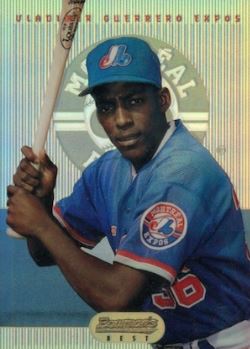
Vlad Guerrero, OF, Expos (RH) …
34 home runs/37 stolen bases in 2001
39 home runs/40 stolen bases in 2002
In 2002, as he completed his second consecutive 30-30 season, Vlad Guerrero just missed joining the elite 40-40 club – racking up 39 home runs and 40 steals. Notably, 2001 and 2002 were the only seasons in which Guerrero stole more than 15 bases – notching 77 steals in those two years and just 104 in his additional 14 MLB campaigns. He did top 30 home runs in eight seasons, with a high of 44 in 2000.

In his 16-season MLB career, Guerrero hit .300 or better 13 times, drove in 100 or more runs ten times and scored 100+ runs six times. He also had three 200-hit seasons, leading the NL with 206 hits for the Expos in 2002. He was an All Star in eight seasons. Guerrero played for the Expos (1996-2003); Angels (2004-2009); Rangers (2010); and Orioles (2011). His career stats include 2,590 hits (.318 average), 449 home runs, 1,496 RBI, 1,328 runs scored and 181 steals.
Vlad Guerrero was the American League MVP (Angels) in 2004, when he hit .337, with 39 home runs, 126 RBI, a league-leading 124 runs scored and a league-best 366 total bases.
————————————————————————-
Alfonso Soriano, OF/2B, Yankees, Rangers, Nationals (RH) …
39 home runs/41 stolen bases in 2002 for the Yankees
38 home runs/35 stolen bases in 2003 for the Yankees
36 home runs/39 stolen bases in 2005 for the Rangers
46 home runs/41 stolen bases in 2006 for the Nationals
In 2002 (age 26), in just his second full MLB season, Alfonso Soriano of the Yankees joined the 30-30 club and nearly became a member of the 40-40 fraternity – hitting 39 home runs to go with 41 stolen bases. Four seasons later (2006), he cracked the 40-40 barrier, hitting 46 home runs and stealing 40 bases for the Nationals. In between, he notched another pair of 30-30 campaigns. His first 30-30 campaign may have been the most impressive, as Soriano led the AL in at bats, runs, hits and steals; while hitting.300 and driving in 100+ runs – finishing third in AL MVP balloting.
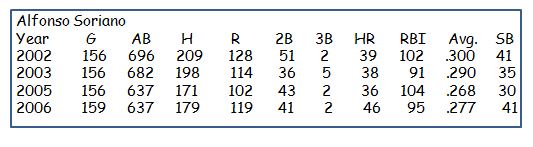
In his 16-season MLB career, Soriano was an All Star seven times (2002-08), stole 30 or more bases five times (40+ three times), launched 30 or more homers in a season seven times, drove in 100+ runs four times and scored 100+ four times. He collected 2,095 hits (.270 average), 412 home runs, drove in 1,159 runs, scored 1,152 times and swiped 289 bases. Soriano played for the Yankees (1999-2003, 2013-14); Rangers (2004-2005); Nationals (2006); and Cubs (2007-13).
Not known for his patience at the plate, in his first 30-30 season, Soriano walked just 23 times, while striking out 157 – but still managed to hit .300. He upped his walks and reduced his whiffs over time, ending with 496 walks and 1,803 strikeouts.
——————————————————————————–
Carlos Beltran, OF, Royals/Astros (SH) … 38 home runs and 42 stolen bases in 2004
Carlos Beltran retired as a player (at age 40) after the 2017 season. His 30-30 campaign came way back in 2004 – in a season that saw him traded from the Royals to the Astros in late June. Beltran played 69 games for the American League Royals and 90 games for the then National League Astros – and is the only player to play in both leagues in a 30-30 season. He hit 15 home runs and stole 14 bases for Kansas City and rapped 23 round trippers and stole 28 bases for Houston. Beltran put up four seasons of 30 or more home runs (a high of 41 in 2006) and four seasons of 30 or more steals (a high of 42 in 2004).

In his 20 MLB seasons, Beltran was an All Star nine times and a three-time Gold Glover. He collected 2,725 hits (.279 average), hit 435 home runs (fourth-most among switch hitters), drove in 1,587 tallies, scored 1,582 runs and stole 312 bases. Beltran is one of only four players with 400 home runs and 300 stolen bases – and the only switch hitter.
In his rookie season (1999), the 22-year-old Carlos Beltran hit .293, with 22 home runs, 108 RBI, 112 runs scored and 27 stolen bases for the Royals – capturing AL Rookie of the Year honors.
———————————————————————————-
David Wright, 3B, Mets (RH) … 30 home runs/34 stolen bases in 2007
David Wright was a force for the Mets – bringing power and speed, as well as solid defense at the hot corner (a two-time Gold Glover). While he only topped 30 home runs in a season twice and stole 30 or more bases just once, Wright had five season of 25 or more homers and three seasons of 20 or more steals. In his 30-30 campaign, he reached what would be his career highs in hits, doubles, and batting average – and added a Gold Glove for Good measure.

In his 14 MLB seasons, Wright was a seven-time All Star. He hit over .300 in seven seasons, topped 100 RBI in five and scored 100+ runs twice. Overall, he amassed 1,777 hits (.296 career average), 242 home runs, 970 RBI, 949 runs scored and 196 stolen bases. Wright played his entire career for the Mets.
David Wright hit the first Mets’ round tripper in Citi Field history on April 13, 2009. It was, however, the third official home run in Citi Field. Padres’ leadoff hitter Jody Gerut inaugurated the ballpark with a home run to right to lead off the top of the first and San Diego 1B Adrian Gonzalez belted a solo shot in the top of the fifth. Wright hit the Mets’ first dinger, a three-run blast that tied the game at 5-5 in the bottom of the fifth. (The Mets eventually lost 6-5.)
—————————————————————————————–
Jimmy Rollins, SS, Phillies (SH) … 30 home runs/41 steals in 2007
Phillies’ SS Jimmy Rollins made the most of his 2007 30-30 season – translating it into an NL MVP Award. That season Rollins led the league in games, at bats, runs scored and triples, while hitting .296 and earning a Gold Glove on defense. He also reached what would-be his career highs in games, at bats, hits, runs, triples, home runs, RBI and full-season batting average. It was Rollins’ only 30-home run season, but one of ten in which he stole 30 or more bases (a high of 47 in 2008).

In a 17-season MLB career, Rollins led the league in triples four times, stolen bases once and runs scored once. He collected 2,455 hits (.264 average), hit 231 home runs, drove in 936, scored 1,421 times and stole 470 bases (46th all-time). Rollins was a three-time All-star and four-time Gold Glover. He played for the Phillies (2000-2014); Dodgers (2015); and White Sox (2016).
In a portent of things to come, Jimmy Rollins’ first MLB hit was a triple. He would go on to hit 155 MLB triples, leading the NL four times and hitting ten or more three-baggers in five seasons.
—————————————————————————–
Brandon Phillips, 2B, Reds (RH) … 30 home runs/32 stolen bases in 2007
Brandon Phillips smacked 30 home runs and stole 32 bases in 2007, the only season in which he reached either 30 round trippers or 30 steals. In 17 MLB seasons (Phillips was still active in 2018), Phillips has been an All Star three times and won four Gold Gloves. He has reached at least 100 runs scored twice and 100+ RBI once. Phillips has also stole 15 or more bases in seven seasons and hit 15 or more dingers in eight.

Phillips has recorded 2,029 base hits (.275 average), 211 home runs, 951 RBI, 1,005 runs scored and 209 stolen bases. He has played for the Indians (2002-2005); Reds (2006-2017); Braves (2017); Dodgers (2017); and Red Sox (2018).
In 2018, Brandon Phillips became the first player to wear number zero for the Red Sox.
———————————————————————————-
Grady Sizemore, OF , Indians (LH) … 33 home runs/38 stolen bases in 2008
In 2008, Grady Sizemore hit 33 home runs and swiped 38 bases for the Indian – also earning a spot on the AL All Star team and a Gold Glove for his defensive play in center field. Overall, Sizemore was a three-time All Star and two-time Gold Glover. He topped 30 home runs once (four seasons of 20 or more) and reached 30+ steals twice (four season of 20 or more).

A series of injuries – beginning with elbow issues (that required surgery in 2009) and followed by knee and back surgeries – curtailed Sizemore’s career. Between 2009 and 2015, he played in 100 games in a season only once – missing the entire 2012 and 2013 seasons. In the four seasons between 2005 and 2008, he averaged 160 games per season, with an average stat line of .281-27-81, and 29 steals. In his first four full seasons, he led the AL in games played twice, runs scored once and doubles once; was an All Star three times; and a Gold Glover twice. He also hit 32 triples in that time, reaching 11 twice. From 2009-2015 (excluding 2012-13), he averaged just 84 games a season with an average stat line of .238-8-34, five steals.
In ten MLB seasons (1,101 games), Sizemore collected 1,098 hits (.265 average), hit 150 home runs, drove in 518, scored 66o times and stole 143 bases. Sizemore played for the Indians (2004-2011); Red Sox (2014); Phillies (2014-15); and Rays (2015).
During his MLB career, Grady Sizemore had abdominal, elbow, knee and back surgeries.
————————————————————————————-
Hanley Ramirez, SS, Marlins (RH) … 33 home runs/35 stolen bases in 2008
In 2008, Marlins’ 24-year-old shortstop Hanley Ramirez made his first All Star team and joined the 30-30 Club in just his third full MLB season. Ramirez hit .301, led the NL in runs scored with 125, hit 33 home runs and a stole 35 bases. It is one of just two 30-homer seasons for Ramirez (still active after 14 MLB seasons) and one of four 30+ stolen base seasons. (Ramirez stole 51 bases in the 2006 and 2007 seasons.)

Through 2018, Ramirez had 1,825 MLB hits (.290 average), 269 home runs, 909 RBI, 1,045 runs scored and 281 stolen bases. He has been an All Star three times, won the 2009 NL batting title with a .342 average and was the NL Rookie of the Year in 2006.
Ramirez has scored 100+ runs in two seasons, driven in 100+ in two seasons, topped 200 hits once, hit .300 or better five times. He has played for the Red Sox (2005, 2015-18); Marlins (2006-12); and Dodgers (2012-14).
Hanley Ramirez has been a strong post-season performer. In 20 post season games, he has 27 hits (.380 average), one home run, 14 RBI, nine runs scored, two stolen bases and seven walks. His post-season on base percentage is .450.
———————————————————————-
Ian Kinsler, 2B, Rangers (RH) …
31 home runs/31 stolen bases in 2009
32 home runs/30 stolen bases in 2011
Ian Kinsler, still active, has put up a pair of 30-30 campaigns in 13 MLB seasons. Interestingly, the power has seemed to come at the expense of the batting average. In 2009, Kinsler smoked 31 home runs and stole 31 bases. His home runs were up from 18 the previous year, but the batting average was down to .253 (from .319 the previous season). In 2010, Kinsler average was up to .286, but he hit only nine homers in 103 games. Then in 2011, his averaged slipped to .255, but he popped 32 homers and stole 30 bags. Notably, he made the AL All Star team in 2008 and 2010, but not in his 2009 and 2011 30-30 seasons. The 2009 and 2011 seasons were the only ones in which Kinsler reached 30 home runs or 30 steals. He does have five seasons of 20 or more homers and five seasons of 20 or more steals.

Kinsler is a four-time All Star and two-time Gold Glover. To date, he has 1,943 MLB hits (.271 average), 248 home runs, 887 RBI, 1,215 runs scored and 241 stolen bases. He has scored 100 or more runs in six seasons and drove in a career high 92 runs in 2014. Kinsler has played for the Rangers (2006-2013); Tigers (2014-2017); Angels (2018); and Red Sox (2018).
On April 15, 2009, Ian Kinsler went six-for-six as his Rangers topped the Orioles 19-6 in Texas. Kinsler scored six times and drove in four runs. More important, he hit for the cycle, collecting two singles, two doubles, one triple and one home run. That game – and his season totals – made Kinsler the first player to have a 30-30 campaign and hit for the cycle in the same season. (He was joined in that achievement by the Red Sox Mookie Betts in 2018.)
—————————————————————————————-
Matt Kemp, OF , Dodgers (RH) … 39 home run/49 stolen bases in 2011
Oh so, close. When Matt Kemp joined the 30-30 Club in 2011, he was so close to becoming part of the even more elite 40-40 fraternity. With 39 home runs and 40 steals on the season, he was just one long ball shy of the mark. In that 2011 season, Kemp led the NL home runs, runs scored (115) and RBI (126). In addition, he led the NL in total bases (353) and picked up his second Gold Glove for his play in centerfield. Kemp has stolen 30 or more bases three times and topped 30 home runs twice. He finished second in the MVP balloting to the Brewers’ Ryan Braun – despite outdistancing Braun in games played, at bats, runs, hits, home runs, RBI and stolen bases. Braun did top Kemp in batting average .332 to .324.

Kemp, still active, played his 13th MLB season in 2018 – and put up a respectable .290-21-85 line for the Dodgers (but did not steal a base – how times have changed). Thus far, in his career, Kemp has collected 1,768 hits (.286 average), hit 280 home runs, drove in 1,005, scored 928 runs and stolen 183 bases. He has been all All Star three times, including 2018. Kemp has played for the Dodgers (2006-2014, 2018); Padres (2015-16); and Braves (2016-17).
On October 23, 2018 – in the top of second innings of Game One – Matt Kemp became the 35th player in MLB history to hit a home run in his first World Series at bat. It was a solo shot off Red sox’ ace Chris Sale. In the bottom of the seventh, Kemp was joined on that list by the Red Sox’ Eduardo Nunez, who hit a three-run homer in his first WS at bat (as a pinch hitter).
It was just the third time two players have hit a home run in their first World Series at bat in the same game. The other two instances were in Game One of the 1988 Series (Mickey Hatcher, Dodgers and Jose Canseco, A’s) and Game One in 2002 (Barry Bonds, Giants and Troy Glaus, Angels).
————————————————————————————–
Ryan Braun, OF, Brewers, (RH) …
33 home runs/33 stolen bases in 2011
41 home runs/30 stolen bases in 2012
Ryan Braun put together back-to-back 30-30 campaigns in 2011-12 – winning the NL MVP Award in 2011. Those two years represent Braun’s only two seasona with 30 or more steals, mixed in with five seasons of 30 or more home runs. The still active Braun, however, has reached double-digits in steals in 11 of his 12 MLB seasons – and in every season in which he played at least 100 games. In his 2012 30-30 season, he led the NL in runs scored and home runs.

Through his first 12 MLB seasons, Braun has recorded 1,802 base hits (.299 average), 322 home runs, 1,053 RBI, 996 runs and 204 steals. He has topped 100 RBI in five seasons and 100 runs scored in four seasons. He has hit over .300 six times and led the NL in hits once (203 hits in 2009). He is a six-time All Star.
Ryan Braun was offered a baseball scholarship by Stanford University (among other schools), but chose to attend the University of Miami on a full academic scholarship. Among the recognitions he received for his play at Miami were National Freshman of the Year (2003) and Atlantic Coast Conference Player for the Year (2005). In 2005, he played in 58 games for Miami, hitting .388, with 18 home runs, 76 RBI and 20 stolen bases.
—————————————————————————————-
Jacob Ellsbury, OF, Red Sox (LH) … 32 home runs/39 stolen bases in 2011.
Jacoby Ellsbury surprised a lot of people with his power in 2011 – notching his only season (thus far) of 30+ home runs. 2011 is one of only two seasons in which Ellsbury reached double-digits in round trippers (he had 16 in 2014). The 39 steals that completed his 30-30 campaign were no surprise, however. He had already recorded campaigns of 50 and 70 stolen bases. (He would later add season of 52 and 39 steals.) In 2011, Ellsbury reached his full-season career highs in runs, hits, average, doubles, home runs, RBI and total bases. He also picked up his only Gold Glove.

The still active Ellsbury (although he missed the 2018 season with a hip injury that required surgery) has played 11 MLB seasons. He currently has 1,376 hits (.284 average), 104 home runs, 512 RBI, 749 runs scored and 343 steals. He has led his league in stolen bases three times, triples once and total bases once. His only All Star appearance was in his 2011 season (his 30-30 campaign). Ellsbury has played for the Red Sox (2007-13) and Yankees (2014-17).
On May 20, 2009, Jacoby Ellsbury tied the MLB record for most putouts for an outfielder in a nine inning game – with 12, as the Red Sox topped the Blue Jays 8-3 in Boston. Ellsbury, playing center field had two putouts in each of the first four innings, one in the fifth and all three in the sixth – and none in the final three frames.
Others with 12 putouts in a nine-inning contest are Earl Clark of the Braves (May 10, 1929) and Lyman Bostock of the Twins (May 25, 1977). Of interest (maybe), all three were playing centerfield and all three 12 putout games came in the month of May.
—————————————————————————————–
Mike Trout, OF, Angels (RH) … 30 home runs/49 stolen bases in 2012
Mike Trout – still active – got his 30-30 season out of the way early, joining the club at age 20 and in his first full MLB season. That season, the AL Rookie of the Year led the league in runs scored (129) and steals (49), while hitting .326 with 30 home runs. In his first eight MLB seasons (seven full seasons), Trout has hit 30 or more home runs five times and stolen 30 or more bases three times. Another 30-30 campaign may well be on the Horizon.

Trout, about to enter his age-27 season, already has earned Rookie of the Year recognition, two Most Valuable Player Awards (2014 and 2016), led the AL in runs scored four times, RBI once, stolen bases once, walks twice and total bases once. The seven-time All Star has five seasons of 100+ runs scored and two seasons of 100 or more RBI.
Through 2018, Trout has 1,187 hits (.307 average), 240 home runs, 648 RBI, 793 runs scored and 189 stolen bases.
In his seven full MLB seasons, Mike Trout has finished first or second in the AL MVP voting six times. (In 2017, he finished fourth.)
————————————————————————————————-
Jose Ramirez, 3B/2B, Indians, (SH) … 39 home runs/34 stolen bases in 2018
Jose Ramirez – still active – notched his 30-30 campaign in his sixth MLB season (at age 25). In 2018, he reached new career highs in home runs, stolen bases, RBI and runs scored. 2018 was the first season he reached with 30+ HR or 30+ SB.

A two-time All Star, Ramirez led the league in doubles (56) in 2017. He has hit .300+ in two full season, scored 100+ runs twice and driven in 100+ once. Thus far, he had collected 653 hits (.285 average), hit 87 home runs, driven in 308, scored 383 times and stolen 93 bases.
Since making the big leagues, Jose Ramirez has started 327 games at 3B, 199 at second base, 100 at SS, 49 in LF and 4 at DH.
—————————————————————————–
Mookie Betts, OF, Red Sox (RH) … 32 home runs/30 stolen bases in 2018
Mookie Betts put up a 30-30 season in 2018 – the frosting on the cake was a batting title, a Gold Glove and the AL MPV Award. (Betts also led the AL in run scored with 129.) In just his fifth MLB season, the still active Betts set new career highs in runs, doubles, home runs, average and stsolen bases. It was Betts’ first season of at least thirty steals and his second with 30 or more home runs.

Betts is a three-time All Star and three-time Gold Glover. He has topped 100 runs scored in three of his four full MLB seasons, driven in 100- twice, topped 30 home runs twice and stolen 30 bases once (three times 25 or more). Thus far in his career he has 789 hits (.303 average), 111 home runs, 390 RBI, 478 runs scored and 110 stolen bases.
On July 2, 2017 Mookie Betts drove in eight runs while manning the leadoff spot in the Red Sox lineup – tieing the MLB record for RBI in a game by a leadoff hitter. Sharing that record with Betts are: Augie Bergamo, Cardinals ( July 4, 1945); Bill Glynn, Indians (July 5, 1954); Jim Northrup, Tigers (July 11, 1973); and Ronnie Belliard, Rockies (September 23, 2003).
Primary Resources: Baseball-Reference.com; MLB.com; Baseball-Almanac.com
BASEBALL ROUNDTABLE MAKES TOP 100 BASEBALL BLOG LIST
 Baseball Roundtable has made the Feedspot list of the Top 1oo Baseball Blogs. To see the full list, click here.
I tweet baseball @DavidBBRT
Follow/Like Baseball Roundtable’s Facebook Page here. More baseball commentary; blog post notifications; PRIZES.
Member: Society for American Baseball Research (SABR); The Baseball Reliquary; The Negro Leagues Baseball Museum.