BBRT’s Top-Three First MLB Mound Appearances

KionghamYesterday, April 29, Pirates’ 26-year-old rookie Nick Kingham – who had his professional career interrupted by Tommy John Surgery (2015) – made his first MLB appearance.  He made it a memorable one.

The 6’5”, 225-pound right-hander, called up from Triple A the day before, retired the first 20 MLB batters he ever faced – fanning nine of them.  That’s right; Kingham was “perfect” through the first 6 2/3 innings of his major league career.  The perfect game was broken up on a groundball single by Cardinals’ SS Paul DeJong with two outs in the seventh. Kingham got LF/cleanup hitter Marcell Ozuna on a ground out to third base to end the inning.  The rookie righty was then replaced on the mound by Michael Feliz. For his inaugural game, Kingham got the win, throwing seven innings, giving up just one hit and no runs and fanning nine.  He threw 98 pitches, 72 for strikes.

One of the best first pitching appearances ever – and given that segue – here are Baseball Roundtable’s choices for the three best first pitching appearances of all time.

  1. Charles “Bumpus” Jones, Reds … October 15, 1892

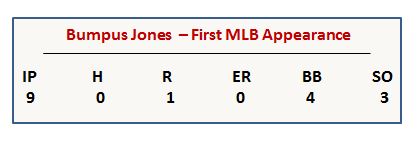
Bumpus Jones – we do need more nicknames in MLB today – made his MLB debut for the Reds (versus the Pirates) on the final day of the 1892 season.  (Coincidentally, it was also the final MLB game to be played with the pitching box just fifty feet from home plate.) Jones appeared to have first-game jitters, walking the first two Pirate batters, then benefitting from a double play (with the second out made at the plate) and getting out of the inning without giving up a hit or a run.

Jones issued another free pass in the second, but the Reds turned another twin killing behind him. He didn’t fare quite as well in the third. After another walk and a stolen base, Jones made a wild throw on a play at first base that let in an unearned run.  After that, the rookie settled down and did not allow a base runner over the final six frames – earning a 7-1 victory.  In the process he became the first – and still only – MLB pitcher to throw a no-hitter in his first MLB game.

It may have been the change in the pitching distance, but Jones did not live up to that first-game promise. He appeared in only seven more major league games (for the Reds and Giants in 1893) and had a career record of two wins, four losses and a 7.99 earned run average. Still, his status as the only pitcher to throw a no-hitter in his MLB debut outs Jones in the number one position on this brief list.
Jones

  1. Karl Spooner, Dodgers … September 22, 1954
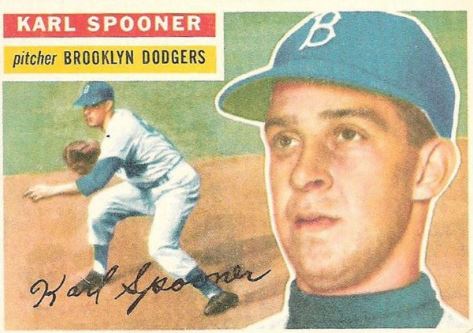
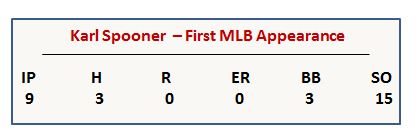
spooner2Karl Spooner truly looked like he was going to be a “pitching phenom” for the Brooklyn Dodgers. In 1954, Spooner went 21-9, 3.14 at Fort Worth (Double A Texas League), fanning 262 batters in 238 innings – despite missing a month of the season with a knee injury.  That performance earned him a call up to the “show” and a start against the league-leading (and already pennant-clinching) rival New York  Giants. How did he do?  Spooner went the full nine innings, gave up just three hits and no runs – and set the record for strikeouts in an inaugural game by fanning 15 Giants. Not only that, the 6’, 185-pound, 23-year-old -year-old southpaw got one more start that season (September 26 against the Pirates) and notched a second complete-game shutout, this time fanning a dozen.  So, after 18 MLB innings, he had given up just ten hits and six walks, no runs, and fanned 27.
spoonr

Unfortunately, Spooner suffered a shoulder injury in Spring Trailing the following year – finishing his first (and last) full MLB season with an 8-6, 3.65 record in 29 appearances (14 starts). He made 28 minor league appearances between 1956 and 1958, but never returned to the majors.

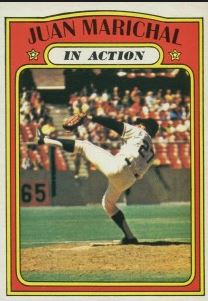
  1. Juan Marichal, Giants … July 19, 1960

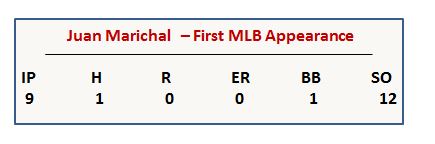
Marichal2On July 19, 1960, 22-year-old Juan Marichal made his first MLB appearance – as his San Francisco Giants faced off against the Philadelphia Phillies. The high-kicking right-hander – whose minor league record (three seasons) was 50-26, with a 2.35 ERA and 575 strikeouts in 655 innings – quickly made it clear he would not be going back to the minors.

In that first MLB appearance, Marichal went the distance – tossing a one-hit shutout, walking just one batter and fanning a dozen.  Unlike the first two pitchers on this list, Marichal did live up to his early potential – earning 243 MLB victories over 16 seasons, nine All-Star Selections and a spot in the Baseball Hall of Fame.
 

Marichal

Primary Resources:  Society for American Baseball Research; Baseball-Reference.com


I tweet baseball @DavidBBRT

Follow/Like the Baseball Roundtable Facebook page here.

Member:  Society for American Baseball Research; The Baseball Reliquary; The Negro Leagues Baseball Museum.
Today, MLB in Puerto Rico Brings Back the Life, Times and Mysterious Death of Hiram Bithorn

Sandy Alomar (Jr. & Sr.), Roberto Alomar, Carlos Baerga, Carlos Beltrán, José Berríos, Orlando Cepeda, Roberto Clemente, Carlos Correa, Carlos Delgado, Francisco Lindor, Javy López, Felix Mantilla (Lamela), Edgar Martínez, Yadier Molina, José Morales, José Pagán, Juan Pizarro, Iván Rodríguez, Eddie Rosario.   Those are just a few of the more than 200 Puerto Ricans who have played Major League Baseball.  BUT, BEFORE, THEM ALL CAME PUERTO RICO’S FIRST MAJOR LEAGUER – HIRAM BITHORN.

Now, you may wonder why Baseball Roundtable is focusing this post on Hiram Bithorn, particularly since I have touched upon his historic MLB “first” in the past.  A confluence of factors contributed to this decision – a perfect storm, if you will.

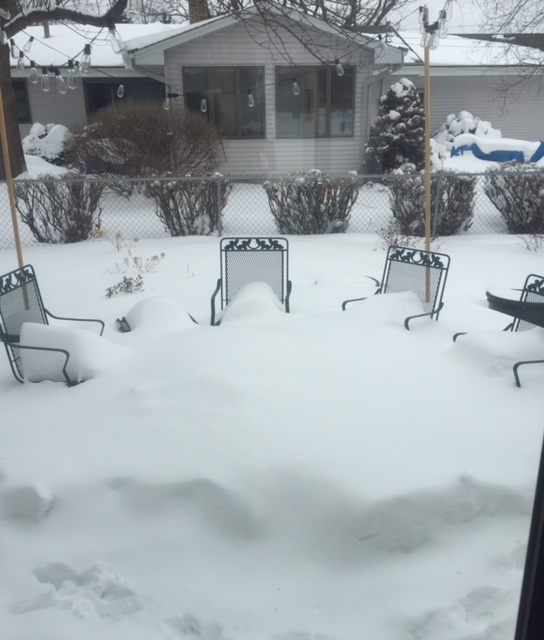
My patio TODAY ... where I should be grilling steaks and listening to the Twins on the radio. Thankfully, they are playing in Puerto Rico.

My patio TODAY … where I should be grilling steaks and listening to the Twins on the radio. Thankfully, they are playing in Puerto Rico.


First, here in Minnesota, we are starving for spring weather – and for baseball.  Hit by an historic snowstorm this weekend, we have seen the past three Twins’ home games snowed out.  Yes, an April weekend without Twins’ baseball – a shock to the system. We look out our windows now and we see not the green grass upon which the national pastime is played, but 10+ inches of cold, white snow.

Second, thankfully, our Twins are playing the Cleveland Indians in Puerto Rico – where the temperature is expected to reach the mid-80’s and the passion for baseball runs even higher.

Third, the Twins and Indians will be playing in sold out – standing room only –Hiram Bithorn Stadium.

In anticipation of this event – and the return of baseball-watching for Minnesota fans (even if it is just on television) – BBRT would like to present an updated look at Puerto Rican hero Hiram Bithorn.

THE LIFE, TIMES AND MYSTERIOUS DEATH OF HIRAM BITHORN

Hiram_Bithorn_Stadium_2Today and tomorrow, the Twins and Indians will be playing in Estadio Hiram Bithorn – Puerto Rico’s largest baseball stadium (18,000 capacity – with a reported 39,000 tickets sold for the two-game set). The ballpark is home to the Santurce Crabbers of the Puerto Rico Baseball League.  The ballpark is no stranger to major league ball.  Hiram Bithorn Stadium also hosted the opening game of the 2001 Major League season (Texas Rangers vs. Toronto Blue Jays); 44 Montreal Expos home games in the 2003/04 seasons; and, in 2010, a Florida Marlins/New York Mets three-game series.

The ballpark is, as noted earlier, named after Hirzam Bithorn – whose major-league career has made him hero in his country and to the Puerto Rican players who followed him to the big league diamonds.   So, with the Twins/Indians tilt coming up, let’s take a look at the short baseball career and life of “Hi” Bithorn – who died under mysterious circumstances in Mexico at the age of 35.

Bithorn was born March 18, 1916 in Santurce, Puerto Rico.  As he grew up, Bithorn proved a talented athlete.  In 1935, the 19-year-old, 6’ 1” 200-pound Bithorn played in the Central American and Caribbean Games on Puerto Rico’s Silver Medal-winning volleyball team and Bronze Medal-winning basketball team.  Bithorn’s game, however, was baseball – and he was already making a name for himself on the mound,  drawing crowds wherever he unleashed his high leg kick, blazing fastball and effective curve. Note: While Latino players already had appeared in the major leagues, it has been reported that most Puerto Ricans were considered to be too “dark” for the still “all-white” major leagues. The Puerto-Rican born Bithorn, of mixed descent – primarily listed as Dutch and Spanish – was light-skinned and also spoke English.

A rising star on the ball fields of his native country, Bithorn got a chance to show his stuff to a broader audience in 1936, when the Negro League’s Newark Eagles traveled to Puerto Rico for an exhibition series against MLB’s Cincinnati Reds. The Eagles prepared for the Reds’ matchup by playing against local teams – and Bithorn performed well against them.  Well enough that when one of their top moundsmen, Leon Day, went down with an illness, the Eagles recruited Bithorn to fill in on their squad.  On March 1, 1936 – pitching for the Newark Eagles – Bithorn (then just 20-year-old) faced the National League Cincinnati Reds.  He held the Reds to one run over the first seven frames, but had to be relieved when he ran into trouble in the eighth.  Still, Newark won the game and Bithorn made enough of an impression that the 1937 season saw him pitching in the Yankees’ farm system.

He went 16-9 in his first season (with the Norfolk Tars of the Class B Piedmont League) and started 1937 with ten wins against just one loss at Norfolk, before being promoted to Binghamton Triplets of the Class A NY/Penn League – where he won seven more games (against eight losses).

Bithorn continued his move toward the major leagues, playing with Oakland Oaks and Hollywood Stars of the then AA Pacific Coast League, where his best season was 1941, when he went 17-15, 3.59 with 16 complete games and two shutouts for the Stars (while also hitting .286 in 77 at bats).

During his stint in the Pacific Coast League Hiram Bithorn picked up the nickname “The Tropical Hurricane.”

HIRAM BITHORNUnfortunately, for Bithorn, the Yankees were loaded with talent and the big leagues seemed far away – until the Cubs acquired him from the Bronx Bombers in the fall of 1941.  On April 15, 1942, Bithorn became the first Puerto Rican to appear in a major league game, pitching two scoreless innings in relief (no-hits, one walk, no strikeouts) for the Cubs against Cardinals in Saint Louis.  He ended the season 9-14, with two saves, a 3.68 ERA and nine complete games in sixteen starts (Bithorn also made 22 relief appearances) for the sixth-place Cubs.

While playing professional ball in the United States, Bithorn would return to Puerto Rico to play in the Winter League for the San Juan Senators – who made the 22-year-old Bithorn the team’s manager during the 1938 season.

In 1942, Bithorn showed his full potential.  With the Cubs finishing fifth (74-79), Bithorn went 18-12, 2.60, with 19 complete games (30 starts) and a league-leading seven shutouts.  For the season, Bithorn, in fact, finished in the NL’s top ten in wins, winning percentage, earned run average, WHIP, innings pitched, strikeouts, complete games and shutouts. Clearly, Bithorn was on his way – until World War II intervened and Bithorn lost two MLB seasons to military service.

BASEBALL ROUNDTABLE ALL-TIME PUERTO-RICAN MLB SQUAD

                                      C – Iván Rodríguez

                                     1B – Orlando Cepeda

                                     2B – Roberto Alomar

                                     3B – Edgar Martínez

                                     SS – Francisco Lindor

                                    LF – Carlos Beltrán

                                   CF – Bernie Williams

                                    RF – Roberto Clemente

                                    DH – Carlos Delgado

                                     SP – Javier Vázquez

                                    RP – Roberto Hernández

Bithorn was discharged from the service in September of 1945 and pitched for San Juan in the Puerto Rican championships the following February, where he suffered a hand injury during a play at the plate. As a result, he reported late for Cubs’ Spring Training.  Bithorn reportedly had gained about 20 pounds, was having arm problems and didn’t seem to have the same “stuff” as he displayed in that successful 1943 season.   The then 30-year-old finished the 1946 season 6-5, 3.84 in 26 games (seven starts). He was sold to the Pirates in January 1947 and selected on waivers (from the Pirates) by the White Sox before the 1947 season opened. He pitched just two innings in relief for the White Sox – picking up what was to be his last major league win.

CATCHER COUNTRY …

Here are just a few of the major-league catchers from Puerto Rico: Iván Rodríguez; Jorge Posada; Yadier Molina; Sandy Alomar, Jr.; Benjie Molina; Geovany Soto. Martín Maldanado; Christian Vazquez; Héctor Ortiz; Héctor Villaneuva; Orlando Mercado.

After his release, Bithorn underwent surgery and missed the 1948 season. He attempted a comeback in 1949, going 4-3 in 13 games at AA Nashville and Oklahoma City. He did not make it back to the major leagues and finished with a MLB line of 34-31, with 5 saves and a 3.16 ERA in 105 games. In his four MLB seasons, Bithorn completed 30 of 53 starts, with eight shutouts.

AN UNTIMELY DEATH

In December of 1952, at the age of 35, Bithorn was shot to death by a police officer under mysterious circumstances in El Mante, Mexico. Various reports indicate the date of his death as anywhere from December 27, 1951 to January 1, 1952.  They indicate Bithorn was on his way to visit his mother Mexico (some reports also say he was considering a comeback in the Mexican League).   Initial reports said Bithorn had been trying to sell his car when Ambrosio Castillo Cano of the El Mante police force questioned Bithorn and found him unable to produce the paperwork required of such a sale.   Cano reported that, at some time during the questioning, Bithorn became violent and he was forced to shoot him. (Bithorn died a few hours later of a gunshot wound to the stomach).   Cano also reportedly said Bithorn admitted to being part of a “communist cell.”   The details of the incident remain mysterious, but after an investigation, Cano was indicted and sentenced to eight years in the state prison for Bithorn’s homicide.

In 1962, Bithorn’s status as Puerto Rico’s first major-leaguer was honored with the naming of Hiram Bithorn Stadium.

Primary Resources: Society for American Baseball Research; Baseball-Reference.com; Early Latino Ballplayers in the United States, Nick Wilson, 2005).

I tweet Baseball @DavidBBRT

Follow/Like the Baseball Roundtable Facebook page here.

Member: Society for American Baseball Research; The Baseball Reliquary; The Negro Leagues Baseball Museum.

STANTON’S FIVE-K CONTESTS – A SIGN OF THE TIMES

StantonThe Yankees’ Giancarlo Stanton’s two five-strikeout games this season are a sign of the times in major league baseball – a time of hard-throwing pitchers and free-swinging hitters.  This post is meant, by the way, not as a judgment – but rather as an observation of how the game has changed and a look at some of the related statistics that caught my eye. Spoiler Alert: This post will appeal most to fellow stat freaks.

Let’s look at a few tell-tale signs of the current homer- and strikeout-heavy era.

THE PLATINUM SOMBRERO

The record for a batter’s strikeouts in a game is five – an accomplishment(?) which earns the mythical “Platinum Sombrero.” As most of you know, Giancarlo Stanton has already had two five-strikeout games this season – and it’s still April. (His five-whiff contests came on April 3 and April 8.)   How rare is that?  In MLB history, only one other player has two five-whiff games in their career.  That distinction goes Toronto Blue Jays’ outfielder Alex Rios, who had five-strikeout games on July 29, 2006 and June 4, 2009.

Overall, there have been 68 five-strikeout games (by 66 players). Here are the documented five-strikeout games totals by decade. Pay particular attention to the numbers since 2000.

—–TOTAL FIVE-STRIKEOUT GAMES BY BATTERS—–

1871-79           1

1880-89           1

1900-09           0

1910-19           0

1920-29           0

1930-39           4

1940-49           1

1950-59           1

1960-69           6

1970-79           9

1980-89           6

1990-99           8

2000-09           17

2010-18           14

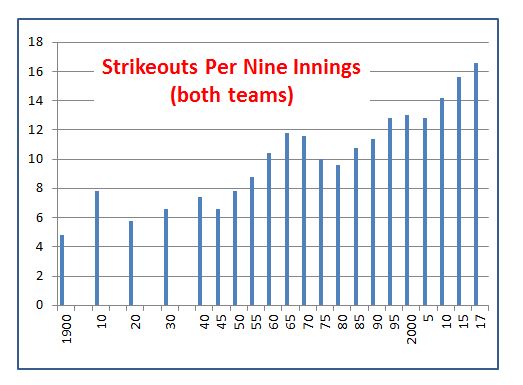
There is no doubt strikeouts are on the rise.  In fact, MLB has set a new strikeout record in each of the past ten seasons.  In 2017, fans saw an average of 16.6 strikeouts every nine-innings. Here’s the chart.

SO9

Looking a bit further, in 2017, 140 MLB players struck out at 100 or more times (Aaron Judge topped MLB with 208 whiffs.). Here’s an historic look.

     —–MLB PLAYERS WITH 100+ STRIKEOUTS IN A SEASON—–

                    Year                            Number of Players

1910                                        0

1920                                        0

1930                                        0

1940                                        1

1950                                        2

1960                                        7

1970                                       27

1980                                       11

1990                                       37

2000                                       58

2010                                       88

2017                                       140

There are those, of course, who maintain the increased K’s are the price you pay for increased HR’s.  And, the chart below would seem to support that. In 2017, we saw the first MLB season with more than 6,000 MLB home runs.  A more accurate measure would be home runs per game – and 2017 was a record year there as well.

HR Per Game chart

But there is other evidence to consider.

DO YOU HAVE TO PAY FOR LONG BALLS WITH STRIKEOUTS?

MLB’s three most prolific home run hitters – Barry Bonds, Hank Aaron and Babe Ruth – had one season of more than 100 strikeouts (in a combined 67 MLB campaigns) among them. That came in Bonds’ rookie season (1986), when he fanned 102 times. (In the spirit of “how the game has changed,” we should keep in mind that, while Ruth never fanned more than 93 times in a season, he did lead the league in whiffs five times. Neither Aaron nor Bonds – the other two 700+ HR players ever led the league in K’s.)

In 2017, Aaron Judge and Giancarlo Stanton (now Yankee teammates) hit a combined 111 home runs – and fanned a combined 371 times.  In 1961, Yankee teammates Roger Maris and Mickey Mantle hit a combined 115 home runs – but fanned nearly 200 fewer times (179).

A prime example of the potential to combine power and plate discipline would be Ted Kluszewski, who put together three consecutive seasons of 40 or more home runs with 40 or fewer strikeouts. Note: In 2017, five players hit 40 or more home runs. Of these, J.D. Martinez (45 homer runs) had the fewest whiff at 128. 

PLAYERS WITH 40 OR MORE HOME RUNS AND 40 OR FEWER STRIKEOUTS

Mel Ott, 1929 – .328-42-151, with 38 strikeouts,

Lou Gehrig, 1934 – .363-49-165, with 31 strikeouts

Joe DiMaggio, 1937 – .346-46-167, with 37 strikeouts

Johnny Mize, 1948 – .289-40-125, with 37 strikeouts

Ted Kluszewski, 1953 – .316-40-108, with 34 strikeouts

Ted Kluszewski, 1954 – .326-49-141, with 35 strikeouts

Ted Kluszewski, 1955 – .314-47-40. with 40 strikeouts

A UNIQUE 50-HOMER CAMPAIGN

Johnny Mize is the only player to record a season of 50 or more home runs and 50 or fewer strikeouts.  In 1947, Mize hit .302-51-138, with just 42 whiffs. 

One final reflection.  MLB has seen a total of ten player seasons of 200 or more strikeouts (a total of six players) – and all have occured since 2008.  In fact, 45 of the top 51 batter-strikout seasons have occured since 2000 – and the top 25 strikeout seasons (by a batter) have all occured since 2004 (18 of those 25 since 2010).

As the 2018 season unfolds, we can continue to expect high strikeout and home run totals.  Pitchers are throwing harder, relief pitching is as – if not more – dominant than ever and batters seem to be increasing focused on going deep.  As I write this post, MLB teams are averaging just over two home runs (combined) per game and a combined 17.3 strikeouts per nine frames – and that’s  despite some pretty frigid weather across much of baseball.   We’ve also see this trend reflected in an increasing interest in statistics like pitch velocity, spin rate and swinging strike percentage, as well as batted ball exit velocity and launch angle. Good for the game?  Don’t know.  Only time will tell.  (Although I, admittedly, prefer more action on the base paths and in the field – and less trotting around the bases or back to the dugout.)

By the way, if you are interested in a look at how BBRT readers see today’s game – with opinions on everything from the length (time) of games, the designated hitter, record-breaking performances they would like to witness, favorite ballpark concessions and even Hall of Fame controversies, click here.

I tweet baseball @DavidBBRT

Follow/Like the Baseball Roundtable Facebook page here.

Member:  The Society for American Baseball Research; The Baseball Reliquary; The Negro Leagues Baseball Museum.

Walter Johnson – Best Pitcher Ever?

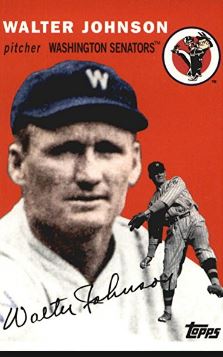
WalterBaseball Roundtable makes a case – on the BBRT Facebook page – for Walter Johnson as MLB’s best pitcher ever – and recounts such tales as the Othani-inspired stat fact that – at age 37 – Johnson had a 20-win/20 RBI (107 at bats) season and the story of Johnson’s remarkable 1913 start, when he carried a 0.17 earned run average into mid-May.  Click here to see that top BBRT Facebook story.

A Bruising Way to Start a Season – and other Hit-By-Pitch Tales

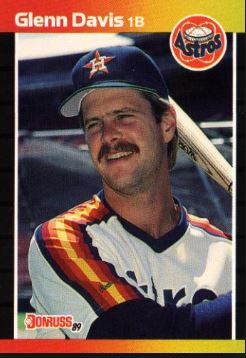
Glenn DavisOn this date (April 9) in 1990, Houston Astros’ first baseman and cleanup hitter Glenn Davis got his season off to a bruising start.  It was Opening Day – Yes, they opened the season as late as April 9 back then. – and the Astros were hosting the Reds.  Davis came to the plate six times and it appears the Reds wanted little to do with him.  Here’s how his day went:

– Bottom of the second inning – Hit by pitch (Tom Browning)

– Third inning – Hit by pitch (Browning)

– Fifth inning – Five-pitch walk (Tim Layana)

– Seventh inning – Strikeout on three pitches (Norm Charlton)

– Ninth inning – Intentional walk (Rob Dibble)

– Eleventh inning – Hit by pitch (Randy Myers)

Astros’ first baseman Glenn Davis set an Opening Day record and tied an overall MLB record by getting hit by a pitch three times in a single game. He was the 11th MLB player to be hit three times in a contest – a number that has since risen to 28.  He is still the only three-time Opening Day victim.  Davis, by the way, led the NL in HBP that season with eight.

__________

We interrupt this post for a special announcement. BBRT recently unveiled its 2018 Baseball Roundtable John Paciorek Award honoree – recognizing players who had short, but signficant, major league careers.  For that story, and links to past winners, click here.  Now, back to our regularly scheduled post.

__________

IS THAT ALL YOU’VE GOT?   I’M STANDING RIGHT HERE!

Seven players share the record for getting hit by a pitch in a single inning – TWICE.

  • Reds’ pitcher Willard Smith – April 26, 1959 … Third inning by Milwaukee Braves’ pitchers Lew Burdette and Bob Rush.
  • Mets’ LF Frank Thomas – April 29, 1962 … Fourth inning by the Phillies’ Art Mahaffey and Frank Sullivan.
  • Rockies’ 1B Andres Galarraga – July 12, 1996 … Seventh inning by the Padres’ Bryce Florie and Willie Blair.
  • Orioles’ CF Brady Anderson – May 23, 1999 … First inning, both times by the Rangers’ Mike Morgan.
  • Giants’ RF Jose Guillen – September 23, 2010 … Second inning, both times by the Cubs’ Ryan Dempster.
  • Cubs’ CF David DeJesus – June 18, 2012 … Seventh inning by the White Sox’ Will Ohman and Hector Santiago.
  • A’s LF Brandon Moss – April 25, 2014 … Ninth inning by the Astros’ Josh Fields and Anthony Bass.

Takng One for Team

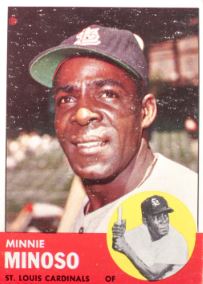
MinnieNobody led his league in being hit by a pitch more times than  Minnie Minoso, who topped the American League in “plunkings” ten times in a 17-season MLB career (12 seasons of 100 or more games played). The seven-time All Star lead the AL in hit by pitch in 1951, 1952-54 and 1956-61.


ALL TIME HIT-BY-PITCH RECORDS

Career – Top Five

Hughie Jennings – 287

Craig Biggio – 285

Tommy Tucker – 272

Don Baylor – 267

Jason Kendall – 254


Single Season – Top Five

Hughie Jennings – 51 (1896)

Ron Hunt – 50 (1971)

Hughie Jennings – 46 (1897)

Hughie Jennings – 46 (1898)

Dan McGann -39 (1896)

Southpaw Phil Knell, pitching for the American Association Columbus Solons, holds the all-time MLB single-season record for hit batsmen – plunking 54 hitters in 462 innings in 1891. Knell went 28-27, 2.92 that year and led the AA in shutouts with five.

Right-hander Gus Weyhing – who pitched in the American Association 1887-89 and 1891); the Players League (1890) and the National League (1892-1896 and 1898-1901) holds the all-time major-league career record for hit batsmen with 277.  Notably, he led his league in HBP in only two of his 14 MLB seasons – the first two. In his first three campaigns, Weyhing hit 113 batters, 41  percent of his career total. In those first three seasons, he also threw 142 of his career 240 wild pitches (59 percent of his career total).

Since 1900, there have been eight seasons in which a batter had been hit by a pitch 30 or more times – and, in just one of those campaigns, two batters reached the 30+ mark.

1910 – Steve Evans, Cardinals … 31 HBP

1972 – Ron Hunt, Expos … 50 HBP

1986 – Don Baylor, Red Sox … 35 HBP

1997 – Craig Biggio, Astros … 34 HBP

1997 – Jason Kendall, Pirates … 31 HBP

1998 – Jason Kendall, Pirates … 31 HBP

2004 – Craig Wilson, Pirates … 30 HBP

2015 – Anthony Rizzo, Cubs … 30 HBP

2016 – Brandon Guyer, Indians/Rays … 31 HBP

HuntRon Hunt led his league in Hit By Pitch in an MLB record seven straight seasons … 1968-74.

I tweet baseball @DavidBBRT


Like/Follow the Baseball Roundtable Facebook page here.

Member: Society for American Baseball Research; The Baseball Reliquary; The Negro Leagues Baseball Museum.
Players With Three or More Batting Titles – A Rare Breed

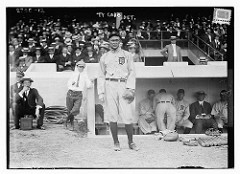
Ty Cobb photo

Ty Cobb earned an MLB record 12 batting crowns.   Photo by The Library of Congress

In this post, Baseball Roundtable is going to take a look at some facts about MLB players who have won at least three batting titles. There are only twenty-five of them and, as you might guess, they make up a pretty good “Who’s Who” of baseball.  There’s a full list at the end of this post, but here’s a few tidbits of trivia about this group.


Special thanks to reader Jeff Gordon for spotting a pair of errors (since corrected), particularly the original omission of Paul Waner. Corrections have been made.  Since this post was first published, Negro Leagues records from 1920-48 have also been added to the MLB record books.  I have added three-time Negro Leagues batting champions to the listing. 

  • The active players with at least a trio of batting crowns are: Miguel Cabrera (4); Jose Altuve (3); Joe Mauer (3). (Note: as of 2023, Mauer no longer active).
  • Since 1900, there are only four retired players with three or more batting titles who are not in the Hall of FameBill Madlock (4); Tony Oliva (3); Pete Rose (3); Larry Walker (3). Pre-1900 three-time batting leaders not in the Hall are Ross Barnes (3) and Pete Browning (3).  Note: As of 2023, Oliva is in the HOF.)
  • Only three players with three or more batting titles did not win at least two consecutive batting crownsGeorge Brett; Pete Browning; Harry Heilmann. Long hot streaks pay off.

PLAYERS WITH THREE OR MORE BATTING CROWNS …

                                  WITHOUT TWO CONSECUTIVE TITLES

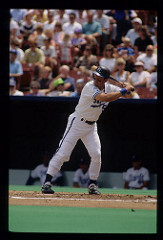
George Brett photo

George Brett won three batting titles – each one in a different decade.  Photo by MissouriStateArchives

Twenty-two of the twenty-five players with three of more batting titles won at least two consecutive titles at least once in their careers.  Here are the three who didn’t.

The Tigers’ Harry Heilmann was especially effective in odd-numbered seasons, leading the American League in batting in each of the odd-numbered years (four) between 1921 and 1928.

The Royals’ George Brett won his first AL batting crown in 1976 and then seemed to wait for the decade to turnover to top his league again – winning titles in 1980 and 1990.  It makes him the only player to win a batting crown in three different decades.

Pete Browning won his three titles without ever leading the American or National League.  He topped the American Association in 1882 and 1885 with the Louisville Colonels and led the Players’ League in 1890 with the Cleveland Infants. Since the Player’s National League of Professional Baseball Clubs lasted just one season, Browning is its only batting champion.  (Side note:  An MLB Committee designated the Players’ League as official major league in 1968.)

  • The Tiger’s Ty Cobb leads the American League and all MLBers with 12 batting titles and also captured the most consecutive titles at nine.
  • The Padres’ Tony Gwynn and the Pirates’ Honus  Wagner share the National League top spot with eight titles. Hornsby’s six consecutive titles top the NL.

WHAT’S A GUY GOTTA DO?

Despite ten consecutive seasons of 200+ hits (2001-2010, leading the league seven times), Ichiro Suzuki won only two batting titles.

  • Players with three or more batting titles and a Triple Crown (AVG.-HR-RBI) are: Ted Williams (two Triple Crowns); Rogers Hornsby (two Triple Crowns); Miguel Cabrera; Ty Cobb; Nap Lajoie; Carl Yazstremski.
  • Only five players have won a batting title in their rookie MLB campaign and three of them are on this list – Ross Barnes, Pete Browning and Tony Oliva. (The other to rookie batting leaders are Abner Dalrymple and Ichiro Suzuki.) Oliva is the only player to win the batting crown in both his rookie and sophomore seasons.

—–FULL LIST OF MLB PLAYERS WITH THREE OR MORE BATTING TITLES —–

Twelve Titles

Ty Cobb … 1907-08-09-10-11-12-13-14;-15; 1917-18-19

Eight Titles

Tony Gwynn … 1984; 1987-88-89; 1994-95-96-97

Honus Wagner … 1900; 1903-04; 1906-07-08-09; 1911

Seven Titles

Rod Carew … 1969; 1972-73-74-75; 1977-78

Stan Musial … 1943; 1946; 1948; 1950-51-52; 1957

Rogers Hornsby … 1920-21-22-23-24-25; 1928

Six Titles

Ted Williams … 1941-42; 1947-48; 1957-58

Five Titles

Wade Boggs … 1983; 1985-86-87-88

Dan Brouthers … 1882-83; 1889; 1891-92

Four Titles

Miguel Cabrera … 2011-12-13; 2015

Bill Madlock … 1975-76; 1981; 1983

Roberto Clemente … 1961; 1964-65; 1967

Harry Heilmann … 1921; 1923; 1925; 1927

Cap Anson … 1879; 1881; 1887-88

Three Titles

Jose Altuve – 2014; 2016-2017 (still active)

Joe Mauer … 2006; 2008-09 (still active)

Larry Walker … 1998-99; 2001

George Brett  … 1976; 1980; 1990

Pete Rose … 1968-69; 1973

Carl Yastrzemski … 1963; 1967-68.

Tony Oliva … 1964-65; 1971

Paul Waner ... 1927, 1934, 1936

Monte Irvin … 1940, 1941, 1946 (Negro National League II)

Josh Gibson … 1936, 1937, 1939 (Negro National League II)

Oscar Charleston … 1921, 1924, 1925 (one Negro National League, two Eastern Colored League)

Nap Lajoie … 1901; 1903-04

Jesse Burkett … 1895-96; 1901

Pete Browning … 1882; 1885; 1890 (Two American Association, one Players’ League)

Ross Barnes … 1872-73; 1876 (Two National Association)


I tweet baseball @DavidBBRT

Follow/Like the Baseball Roundtable Facebook page here.

Member: Society for American Baseball Research; The Baseball Reliquary; The Negro Leagues Baseball Museum.

Winter Musings – Pitchers with Two Complete-Game Wins in a Day

Just some musing from the BBRT “We can be pretty sure that’ll never happen again” file.

On August 29, 1926, Cleveland Indians’ right-hander Emil “Dutch” Levsen had one remarkable day on the mound:

  • He started both games of a doubleheader against the Red Sox;
  • He went the full nine-innings in both contests;
  • He won both games – by scores of 6-1 and 5-1 – tossing two four-hitters;
  • He did it all without striking out a single Boston batter.

DutchDutch Levsen was the last pitcher to record two complete-game victories in a doubleheader – a feat which has been accomplished 52 times (by a total of 42 pitchers) in MLB history. (National League – 35 times/26 pitchers; American League – nine times/nine pitchers; American Association – five times/four pitchers; Players League – three times/three pitchers).

It’s not likely we’ll see anything like Levsen’s performance again.  Let’s face it, we now seldom see:  1) Doubleheaders (particularly single-admission twin bills); 2) Complete games (2017 saw a total of 59 MLB compete games – 1.97 per team);  3) Games in which a team does not record a single strikeout (2017 saw 8.25 strikeouts per team/per game); and, of course, teams sending the same pitcher out to start both ends of a double dip.

Unfortunately, for Levsen, there are indications that tossing both ends of a doubleheader was not such a great idea. The rookie righty (he had been in just 11 games in three previous call-ups) ended that August 28 twin bill with a record of 14-11 and a 2.96 earned run average. He made five more starts that season – picking up two wins and two losses, but also pitching to a 6.21 ERA. His final line on the 1926 campaign was 16-13, 3.41.  Levsen pitched two more seasons for the Indians, going 3-10, 5.47.

Someone has to be first …

The first MLB pitcher to earn two complete-game victories in a single day was William “Candy” Cummings of the National League’s Hartford Dark Blues. Cummings picked up a pair of complete-game wins against the Cincinnati Reds on September 9, 1876. The Hall of Famer – credited with inventing the curveball –  went 145-94, with a 2.42 ERA in six MLB seasons. 

Researching Levsen’s unique doubleheader accomplishment, led me deeper into twin bill history (much like examining MLB’s only all .400-hitting outfield … click here for that post … led me to a look at MLB’s .300-hitting teams … click here for that post.)  Here’s bit of what I discovered about hurlers who earned two complete-game wins in a single day.

___________________________

FEWEST RUNS GIVEN UP BY A PITCHER THROWING

TWO COMPLETE GAMES WINS IN A SINGLE DAY … ZERO

Ed Reulbach - two shutouts in one day.

Ed Reulbach – two shutouts in one day.

On September 26, 1908, Chicago Cubs’ right-handed hurler Ed Reulbach started both games of a doubleheader (versus Brooklyn).   Reulbach won both games of that twin bill, went the distance in both contests AND did not give up a single run.  He remains the only MLB pitcher to throw two complete game SHUTOUTS on the same day.

The Cubs were involved in a heated pennant race and the pitching staff was reportedly growing arm weary.  So, Cubs’ player-manager Frank Chance called on Reulbach to toe the rubber in both contests against the Brooklyn Superbas (Dodgers). The high-kicking right-hander responded by shutting down the Brooklyn squad 5-0 in game one and 3-0 in game two – giving up just eight hits in 18 innings on the day.  The extra work didn’t seem to bother Reulbach, as he came back after four days rest to shut out the Reds in his next start.  Just how critical were Reulbach’s two September 26 wins? The Cubs won the 1908 pennant with a 99-55 record – just one game ahead of both the Pirates and the Giants.

We interrupt this story for …

On July 4, 1882, there were plenty of fireworks as Pud Galvin of the National League Buffalo Bisons picked up a pair complete game wins versus the Worcester Ruby Legs – by scores of 9-5 and 18-8.  The 13 runs Galvin surrendered remain the most ever by a pitcher notching a pair of complete games wins in a single day.

Reulbach’s accomplishment should not have been a surprise.  “Big Ed” was on the way to a 24-7, 2.03 season in which he would lead the NL in winning percentage for the third consecutive year.  Reulbach’s final major league tally, over 13 seasons, was 182 wins, 106 losses and a 2.28 ERA. (Over his first four seasons, Reulbach went 78-29, with a 1.70 ERA.)

Now, that’s a bad day at the office … 

While Ed Reulbach managed to toss a pair of shutouts when starting both ends of a doubleheader (see story above). Elon “Chief” Hogsett may have had the worst day ever for a pitcher starting both ends of a double dip. It came on August 18, 1936 – with his St. Louis Browns facing the Detroit Tigers in St. Louis  (Note:  The 32-year-old southpaw had started the season with the Tigers and had been traded to the Browns – after seven seasons with Detroit – in late April.)  The southpaw submariner started Game One of the doubleheader by giving up six straight hits (one out was recorded on the base paths) before being pulled from a game Browns eventually won 10-7.  

Browns’ manager Rogers Hornsby sent Hogsett out to start the second game and he fared even worse in that tilt, giving up five hits and five runs and, again, recording only one out.  His line for the day:  2/3 of an inning pitched, ten hits, nine earned runs and one loss.  Hogsett, who came into the day 10-10 on the year with a 5.64 ERA, finished the day at 10-11, 6.12.   Hogsett pitched in 11 major league seasons, going 63-87, 5.05 ERA – starting 114 games and relieving in 116.

MOST TIMES DELIVERING TWO COMPLETE GAME VICTORIES

IN A SINGLE DAY – THREE

Portrait of Joe McGinnity, baseball playerJoe “Iron Man” McGinnity earned his nickname because of his off-season work in an iron foundry, but it was also a pretty apt descriptor of his presence on the mound.  McGinnity started both ends of a doubleheader an MLB record five times in his career, and three times in a single month.  Notably, in August 1903, McGinnity not only started both ends of a doubleheader three times, he also won all six games and completed all six.

Pitching for the New York Giants on August 1, 1903, McGinnity won the first game of a doubleheader against the Braves 4-1 and came back to win the second game 5-2. Just a week later (August 8), he repeated the feat, beating Brooklyn by scores of 6-1 and 4-3. Then, on August 31, he topped the Phillies 4-1 and 9-2.  McGinnity finished the season 31-20, 2.43 and recorded 246 wins, 142 losses and a 2.66 ERA in ten MLB seasons. The Hall of Famer led his league in wins five times, winning percentage twice and earned run average once. A workhorse, he also led the National League in games pitched six times.
TwoTwoTwo

PITCHERS WHO WORKED OVERTIME IN WINNING

TWO COMPLETE GAMES IN A DOUBLEHEADER

On July 12, 2017, Pud Galvin of the Buffalo Bisons threw a pair of complete games as Buffalo swept the Troy Trojans by scores of 4-3 and 5-4, with the second game going 12 innings – giving Galvin the high-water mark for most innings pitched in achieving complete games victories in both ends of a twin bill. Others to include an extra inning game in single-handedly completing a doubleheader sweep on the mound are:

  • Jack Stivetts, whose Boston Beaneaters – on September 5, 1892 – topped the Louisville Colonels 2-1 (11 innings) in Game One and 5-2 (nine innings) in Game Two;
  • Detroit Tigers’ hurler Ed Summers, who – on September 25, 1908 – topped the Philadelphia Athletics 10-5 in Game One and 1-0 in Game Two (ten innings). Summers, by the way, was in his rookie season and went 24-12, 1.64 on the year, with 301 innings pitched.

Put me in coach, I’m ready to play …

woodKnuckleballer Wilbur Wood is the last pitcher to start both ends of a twin bill – although that was not the original plan.

On July 20, 1973, Wood started the first game of a double header for the White Sox (against the Yankees).  He got off to a good start, whiffing Yankee lead-off hitter 2B Horace Clarke on a wicked knuckler. Unfortunately, the pitch also fooled catcher Ed Hermann and Clarke reached first on a passed ball – which proved the highlight of Wood’s game.  In order, he followed up with: a walk to RF Matty Alou; a two-run double to LF Ron White; a run-scoring single to CF Bobby Murcer; an RBI single to catcher Thurmon Munson; a run-scoring single to 3B Graig Nettles; and an early exit in an eventual 12-2 loss.

Given Wood’s short stint on the mound and the lack of stress placed on a knuckleballer’s arm, White Sox’ manager Chuck Tanner sent Wood back to the mound to start game two. The results were marginally better.  Wood lasted 4 1/3 innings, giving up seven hits and five runs, earning his second loss of the day as the Yankees triumphed 7-0.  Workhorse Wood, by the way, ended the 1973 season with 24 wins and 20 losses, the last American Leaguer to win and lose 20 games in the same season (Phil Niekro did it in the NL in 1979).

FEWEST STARTING PITCHERS IN A DOUBLEHEADER – TWO

When the Boston Braves and Philadelphia Phillies faced off in a double header on August 12, 1921, they collaborated to make MLB history – with both teams sending the same starting pitcher to the mound in both games for the only time ever.  George Smith was the Phillies’ double-starter, while Jack Scott did the honors for the Braves. Scott was the losing hurler in both games, while Smith tossed a 12-hit shutout to win Game Two.  (Both pitchers were knocked out of game one by the third inning, Scott taking the loss, Smith getting a no-decision.) Smith, by the way, was on course for a 4-20, 4.76 season, while Scott would finish the year 15-13, 3.70.  Both hurlers had career records under .500.

__________________________

LEAST LIKELY TO PICK UP TWO COMPLETE-GAME WINS IN A DAY

HIBELLThe last National Leaguer to earn a pair of complete-game wins in a single day was the St. Louis Cardinals’ Herman “Hi” Bell, who, on July 19, 1924, stymied the Boston Braves 6-1 and 2-1 – giving up just six hits over his 18 innings. Bell, a 26-year-old rookie, had just one career win and two complete games going into the doubleheader.  Further, he picked up only one more win and one more complete game the rest of the season – finishing at 3-8, 4.92. In eight MLB seasons, Bell went 32-34, 3.69 with 14 complete games in 47 starts.


Hmmm?  The mystery of Babe Ruth’s Pitching Doubleheader

While Babe Ruth isn’t on the list of pitchers who picked up two complete-game victories in a day, he is on record as having once started both games of a twin bill on the mound – under somewhat mysterious circumstances.

It happened on July 11, 1916, when Ruth was on his way to a 23-12 record and league-low 1.74 earned run average for the Red Sox. Red Sox’ manager Bill Carrigan had Ruth on the mound to start the first game (against the White Sox). Ruth pitched to just one batter, and was then relieved by Rube Foster, who finished the 5-3 Boston win.

In the bottom of the first inning, Dave Danforth started on the mound for the White Sox.  Like Ruth, he pitched to just one batter before Chicago manager Clarence “Pants” Rowland brought in Jim Scott, who got knocked around for four runs in 2 2/3 innings. (The White Sox used six pitchers in the game.)  Two starting pitchers, each earmarked to face just one batter – who knows what kind of mind games the managers were playing?

Ruth then started the second game of the double dip, going the distance to top the White Sox 3-1 on a six-hitter.  White Sox second-game starter Mellie Wolfgang also went the distance in Game Two.


Primary Resources: Baseball-Reference.com; Baseball-Almanac.com. Society for American Baseball Research.

I tweet baseball @DavidBBRT

Follow/Like Baseball Roundtable’s Facebook page here.

Member:  Society for American Baseball Research; The Baseball Reliquary; The Negro Leagues Baseball Museum.
Billy Goodman – No Position? No Problem!

goodmanThroughout most of his MLB career, Billy Goodman was a player without a position.  In 1950, for example, Goodman (with the Red Sox) played 45 games in left field, 27 at third base, 21 at first base, five at second base and one at shortstop (12 as a pinch hitter). Okay, a good utility man is not that unusual.  In 1950, however, Goodman became the first (and still only) true utility player to capture a league batting title. Goodman played in 110 games and raked at a .354 pace (150 hits, 91 runs scored, four home runs, 68 RBI – second place in the AL MVP voting).  It didn’t seem to matter where he played or where in the lineup he batted, Goodman just continued to hit. In fact, if you exclude positions on defense or in the lineup in which he played just one game, 1950 saw him hit .300 or better wherever he played and wherever he batted.

GoodChartABilly Goodman set the stage for his major league utility role early in life – reportedly playing all nine positions over the course of his high school career.  (Note: I prefer to call it his MLB versatility role.) His versatility as an athlete went beyond the baseball field, as he was also top player on his high school basketball and football squads.

Billy Goodman averaged a nice, round .300 over a 16-season MLB career.

Once he began his professional career, there was little double that Goodman was going to hit for average. In 1944, as an 18-year-old – playing at High A for the Atlanta Crackers of the Southern Association, the 5’11’, 165-pound (he wasn’t going to be a power hitter) Goodman got into 137 games and hit a healthy .336 (the league batting average was .279). After a year off for military service, Goodman was back at Atlanta (now Double A) hitting .389 in 86 games.

Then, in 1947, he started slowly (as a part-timer with the Red Sox), before going down to Triple A Louisville, where he hit .340 in 89 games. He was back in Boston, full-time, in 1948 – where he eventually took over the first base position and hit .310 as a rookie.  Despite his steady bat, Goodman seem to be constantly challenged for playing time (usually by hitters with more power), but thanks to his versatility, he also seemed to consistently “work” his way into the lineup. One thing was for sure, with Goodman around the Red Sox had little to worry about when it came to slumps or injuries – they could just slot Goodman into the position of need and count on him to handle the glove and bat with high professional skill.

In his 16-season MLB career, Goodman played for the Red Sox (1947-57). Orioles (1957), White Sox (1958-61) and Astros (1962).  He appeared in 623 games at second base, 407 at first base, 330 at third base, 69 in left field, 42 in right field, seven at shortstop and 227 times as a pinch hitter. He hit over .300 five times and over .290 eleven times (ten times in the eleven seasons in which he played at least 100 games). He was a two-time All Star. His final line was 1,623 games played, 1,691 hits (.300 average), 807 runs scored, 591 RBI, 19 home runs and 37 stolen bases.

GodochartB

Following his 1962 season with the Astros, Goodman served as player-manager of the Class A Durham Bulls – where (in 1963-64) he managed/co-managed the team to second- and fifth-place finishes, while playing in 114 games and hitting .345.  After that he held a number of scouting, instructional and minor league managing roles (until retirement from baseball in 1977).  He passed away in 1984 (cancer) –  at the age of 58.

Primary Resources:  Society for American Baseball Research; Baseball-Refeence.com


I tweet baseball @DavidBBRT

Follow/Like the Baseball Roundtable Facebook page here.

Member: Society for American Baseball Research; The Baseball Reliquary; The Negro Leagues Baseball Museum.
Ballpark Tours for 2018 – Get On Board for Baseball Adventure

BPTLOGOBallpark Tours (BPT) based out of Saint Paul, Minnesota, has been offering baseball fans busloads of hardball fun since 1982.  The tour group, which grew out of the “Save the Met” (outdoor stadium) organization, has taken groups of fans on baseball “treks” of three-to-ten days, ranging as far north as Duluth, as far south as Chattanooga, as far west as Colorado,  as far east as New York City – and simply “as far away” as Cuba. More details later in this  post, but for 2018,  BRT is offering a pair excursions:


  • A six-day trip (June 28-July 2) that includes a trio of games at Chicago’s Wrigley Field, as well as minor league tilts in Davenport, Iowa and Geneva, Illinois.
  • A ten-day trip that includes three games at Denver’s Coors Field, two games at Kansas City’s Kauffman Stadium and a pair of minor league contests in Omaha, Nebraska.

DenverA Ballpark Tours trip (I’ve been on 29 of them) is the perfect way to enjoy the national pastime – good times with good friends (old and new) who share a passion for baseball, fun and adventure.  Note:  this is an unsolicited endorsement. As Baseball Roundtable has noted in the past “Once you get on the Ballpark Tours bus, every mile is a memory.”   You also get a chance to create new memories inside and outside the ballpark – great baseball and, as always, Ballpark Tours stays in equally great downtown hotels – close to the action and attractions – and schedules time to enjoy the  local food, arts and entertainment.  To get the flavor of a BPT trek, you can browse reports from past trips by clicking here.

Now, here’s a brief rundown of the 2018 Ballpark Tours offerings, for more info and sign-up, click – link.

ROCKY MOUNTAIN HIGH REDUX – AUGUST 3-12.

Coors field photo

Photo by Max and Dee

My personal choice … seven games in three cities in ten days – and the opportunity to enjoy plenty of blues, brews and baseball with a typical Ballpark Tours crew.  I was on the original Denver BPT trek and, let me assure you, Coors Field and downtown Denver are well worth the trip.  (Lower Downtown is 28 square blocks of restaurants, clubs, bars and brew pubs.) And, you’ll get to see the Pirates and Rockies in the launching pad that is Coors Field. Free-time in Denver? Choose from among the likes of the Denver Botanic Gardens, Denver Art Museum, as well as – more to my taste – a variety of brewery and distillery tours.

Satchel Paige pitches to Martin Dihigo, with Josh Gibson catching - on the Field of Legends at the Negro Leagues Baseball Museum.
Satchel Paige pitches to Martin Dihigo, with Josh Gibson catching – on the Field of Legends at the Negro Leagues Baseball Museum.

In Kansas City, there is the Cards/Royals I-70 rivalry. And, what’s your free-time pleasure?  The Negro Leagues Baseball Museum is a must-see if you haven’t already been there – and there’s a great blues and barbeque place practically across the street.  In addition, you can choose from among the likes of the Nelson-Atkins Museum of Art, the Arabia Steamboat Museum or the Airline History Museum. More sedentary?  How about the Boulevard Brewing Company?  More adventurous?  Kansas City has the Swope Park Zip Line and (this is not a misprint) indoor sky-diving.

And, of course, there is Omaha – featuring the Salt Lake Bees and Omaha Storm Chasers.  From my last BPT trip to Omaha, I fondly remember the foods, fun and shopping in the Old Market area. (Spent a great deal of time, a bit of change, there.)

Time to explore all this? Four nights in Denver, three in Kansas City and two in Omaha.

All in all, a great trip.  A chance to create some unique memories that stretch from the bus to the ballpark and from the Negro Leagues Baseball Museum to Omaha’s Old Market.  And, I understand, the tour master is exploring the opportunities for some adventures as we cross Nebraska.

I am not gonna miss this one.

___________________________________________________

WINDY CITY HIATUS … BLEACHER BUMS XXXVI … JUNE 28 – JULY 2

The Kane County Cougars and Quad City Bandits, as well as three Twins/Cubs tilts in Wrigley Field – AND four nights at Chicago’s fabulous Palmer House Hilton.

bWrigleyThis a bit like the Cadillac – or probably Tesla – of baseball tours. Great baseball wrapped up in a package that includes: Wrigleyville; Chicago’s diverse opportunities for dining; the chance to take in lots of live music (with an emphasis on blues), comedy and theater; museums ranging from The Art Institute of Chicago to the Shedd Aquarium to the Museum of Science and Industry (my personal favorite).  Plus, of course, the usual BPT comradery and hoopla.  Do the Windy City and Twins/Cubs baseball in style!


Again here’s a link to your opportunity (to sign up) for a great baseball excursion – click here. 

More photos from past trips:

5 ballpark7bbq8singbptprogfild

5 scoreboard

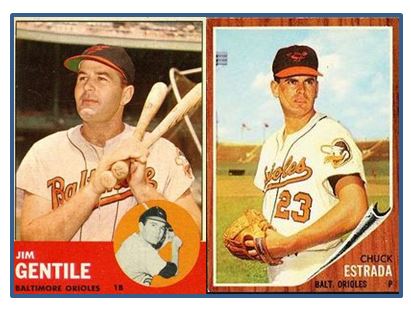
The Unique and Grand Relationship Between Jim Gentile and Chuck Estrada

GentileEstradaIn 1961 – with Yankee sluggers Mickey Mantle and Roger Maris dominating headlines in their chase of Babe Ruth’s record 60 home runs in a season – Jim Gentile of the Orioles quietly put up quite a season of his own. Gentile hit .302, with 46 home runs and a league-topping 141 RBI.  He also tied the MLB record and set a new AL mark (both since broken) for Grand Slams in a season with five bases-loaded long balls. In addition, he tied an MLB record with two Grand Slams in a game – May 9.  (The current record for Grand Slams in a season is six, reached by the Yankees’ Don Mattingly in 1987 and the Indians’ Travis Hafner in 2006.)

Orioles’ pitcher Chuck Estrada was the sole beneficiary of Gentile’s 1961 offensive outburst – every one of Gentile’s record-tying five four-run blasts was hit in a game started by Estrada (who, as you would expect, picked up a victory in all four contests).  Notably, Gentile hit only one other Grand Slam in his career (June 26, 1960) and – you guessed it – the starting and winning pitcher in that contest was Chuck Estrada.  Gentile went three-for-five in that game (a 9-2 Orioles’ win), with two home runs and seven RBI. So for Gentile, six career Grand Slams – all in games Chuck Estrada started and won.

In 1961, Gentile was pretty much an offensive juggernaut when paired with Estrada.  He played in 29 of Estrada’s 31 starts.  In those 29 games, he hit .356, with 15 home runs and 47 RBI. How potent is that?  Gentile played in 148 games in 1961, If he had hit in the other 119, like he did in the 29 Estrada starts he played in, he would have bashed 77 home runs and driven in 240.  Gentile played in all 15 of Estrada’s victories that season (and in eight of his nine losses). The Orioles scored 88 runs in Estrada’s 15 wins, with Gentile driving in 36 percent of those tallies. (Estrada went 15-9, 3.69.)

For those of you who like a little more – Don’t baseball fans always want that next fact or stat? – here’s some background. Gentile was in the majors with the Dodgers (1957-58), Orioles (1960-63), A’s (1964-65), Astros (1965-66) and Indians (1966). In nine MLB campaigns, he was an All Star in three seasons (1960-61-62) and 1961 was his best year. His career stat line was .260-179-549. That’s 1961 season saw Gentile reach his all-time career highs in nearly every offensive category.  It was the only season in which he reached a .300 batting average, 100 or more RBI and 40 or more home runs (he had a total of five seasons of at least 20 homers – including the 46 in 1961 and 33 in 1962).

Estrada’s best season was his rookie year (1960) with the Orioles, when the 22-year-0ld led the AL with 18 wins (11 losses and a 3.58 ERA). He finished second in the AL rookie of the Year balloting to his Orioles’ teammate, shortstop Ron Hansen, who hit .255, with 22 home runs and 86 RBI.  Estrada was an All Star in just one season – his rookie campaign –  in a career that saw him win 50 and lose 44, with a 4.04 ERA. He pitched for the Orioles (1960-64), Cubs (1966) and Mets (1967).

MORE GRAND SLAM FACTOIDS.

In 1987, Yankees’ first baseman Don Mattingly came to the plate with the bases loaded 21 times – picking up two singles, a double, six home runs and a pair of sacrifice flies. In those 19 plate appearances, he hit .474 and drove in 33 runs. Bases-loaded situations accounted for just 3.3 percent of his plate appearances that season, but 4.8 percent of his base hits, 20 percent of his home runs and 26 percent of his RBI.

Of even greater note, Mattingly’s six 1987 Grand Slams were a single-season MLB record (since tied) and Mattingly – despite a 14-season career that included 163 bases-loaded plate appearances – did not hit another Grand Slam before or after those record-setting six.

 Twins’ first baseman Rich Reese holds a share of the MLB career record for pinch-hit Grand Slams at three. Those three bases-loaded round trippers were the only Grand Slams of his ten-season MLB career – which included 210 pinch-hitting appearances out of a total of 2,224 plate appearances.

BBRT unofficial Baseball Halll of Fame Fan Ballot

Don’t forget to vote in Baseball Roundtable’s unofficial Fan Hall of Fame Ballot. Just click here to access the ballot. When final BBWAA voting is announced Baseball Roundtable will feature a comparison of fan votes versus writer tallies.

Primary resources: MLB.com; Baseball-Almanac.com; Baseball-Reference.com

I tweet baseball @DavidBBRT

Like/Follow the Baseball Roundtable Facebook page here.

Member: Society for American Baseball Research; The Baseball Reliquary; The Negro Leagues Baseball Museum.