Newcomb Loses No-Hit Bid With Two Outs in the Ninth – Joins a Pretty Big Club


There have been (at least) 67 MLB no-hitters lost with two outs the ninth inning.

*Note:  Five of these were in games tied in the ninth, so the no-it bid did not end with two outs in the final inning.

newkYesterday (July 29, 2018), Braves’ southpaw Sean Newcomb, went into the top of the ninth inning having fanned eight and allowed just one Dodgers’ base runner – on a sixth inning, five-pitch walk to Dodgers’ RF Yasiel Puig. Newcomb was just three outs away from his tenth victory of the season, his very first MLB complete game, a shutout and, of course, a no-hitter.  Note: For a look at pitchers whose first complete game was a no-hitter, click here.  He would get only one of those rewards.

Newcomb started the ninth on a roll, getting LA second baseman Logan Forsythe to fly out to left in a two-pitch at bat. Things then got a little tougher, as it took nine pitches to get the next batter (1B Cody Bellinger) on a fly to short right. At this point, Newcomb, one out away from a complete-game, no-hit shutout had tossed 128 pitches. Next up was leadoff hitter/SS Chris Taylor.  On a 2-2 count, Taylor shot a mid-90s fastball from Newcomb into the hole between third and short to end both the no-hit bid and Newcomb’s outing (Dan Winkler came on in relief). Winkler got the final two outs, but gave up a run-scoring single (run charged to Newcomb) to 3B Manny Machado.

Now, losing a no-hitter with two outs in the ninth may seem an unusual occurrence, but it’s really not.  In fact, there have been (at least) 67 no-hitters lost in the ninth – 13 of them perfect games. (These are instances BBRT has been able to document.)

A total of 13 perfect games have been lost with two outs in the ninth inning – although three of those ended as no-hitters.

Here are a few other stories about no-hitters lost with two down in the final frame.

It’s Tough being You … Especially in a Year that ends in “13.”

The number 13 keep coming up as you look at lost no-hitters and perfect games. In 2013, two guys names “Yu” actually lost perfect games with two-outs in the final frame.
.

.

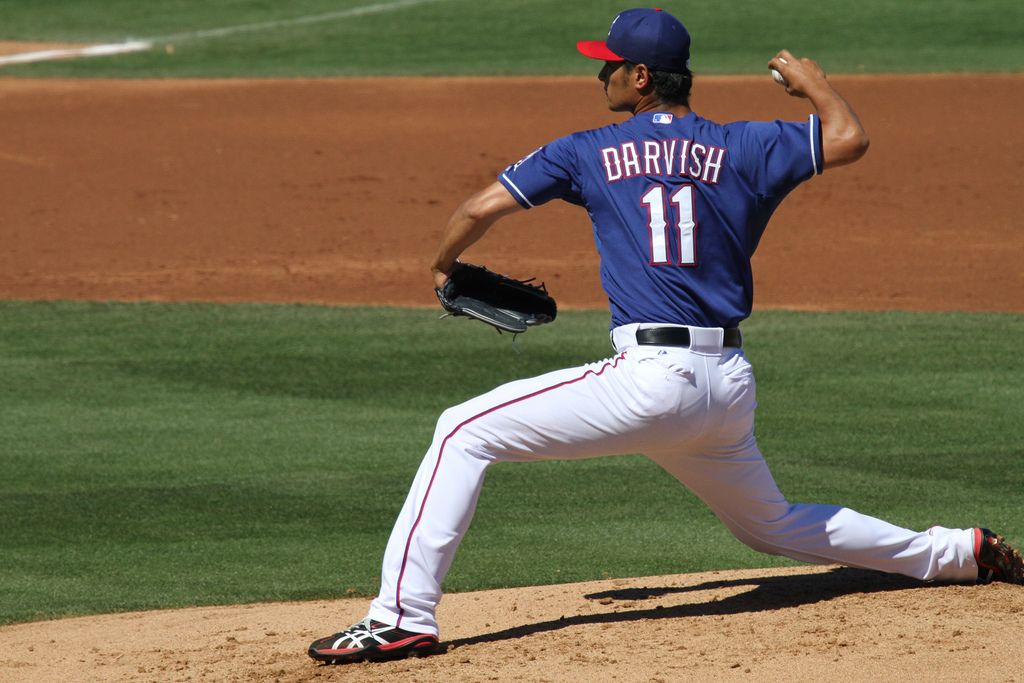
April 2,2013, the Rangers’ Yu Darvish went into the ninth inning of a game against Houston with a 7-0 lead and a perfect game in progress. He started the inning in fine form, getting DH Jason Castro and catcher Carlos Corporan on ground outs (to SS and 2B, respectively).  Then Astros’ shortstop Marwin Gonzalez hit the first pitch in his at bat (and Darvish’s 111th pitch) up the middle for a ground ball single.  With that safety, Darvish’s day was done, as Rangers’ Skipper Ron Washington brought in Michael Kirkman to close it out (which he did with a single and a strikeout).

On September 6, 2013, the San Francisco Giants’ Yusmeiro (Yu) Petit joined the unlucky “almost perfect” rotation. With two out in the ninth, Petit – with a 3-0 lead over the Diamondbacks – had retired all 26 batters he had faced, fanning seven.  The Diamondbacks sent up pinch hitter Eric Chavez, who worked the count full. Then, just one strike away from a perfect game, Petit gave up a single to right field.  Petit retired the next hitter CF A.J. Pollock on a grounder to third – settling for a one-hit shutout.

The Consolation Prize -Perfect Games that Became No-Hitters

Of the  thirteen perfect games broken up with two outs in the ninth inning, three did end up as no-hitters.

On July 4, 1908, New York Giants’ hurler Hook Wiltse (who would win 139 games in 12 MLB seasons), retired the first 26 Phillies before hitting Philadelphia pitcher George McQuillan with a pitch on a 2-2 count.  It was a scoreless game through nine, and Wiltse went on to pitch a hitless tenth (preserving the no-hitter) as the Giants won 1-0.

On September 2, 1972, Milt Pappas of the Cubs had an 8-0 lead over the Padres – and a perfect game in progress – as San Diego batted in the top of the ninth.  After retiring the first two batters, Pappas walked pinch hitter Larry Stahl on a 3-2 pitch.  Pappas retired the next hitter, so while he lost the perfect game, he did save the no-hitter.

On June 20, 2015, Nationals’ right-hander Max Scherzer came within one out – within one strike actually – of pitching a “perfecto.” He entered the top of the ninth with a 6-0 lead over the Pittsburgh Pirates – having retired the first 24 batters, striking out 10.  In the ninth, Scherzer retired the first two batters (RF Gregory Polanco on a pop out to the catcher and SS Jordy Mercer on a liner to center) and then worked the 27th hitter (pinch hitter Jose Tabata) to a 2-2 count.  Tabata fouled off three 2-2 pitches before Scherzer lost the perfect game in perhaps the most painful way (in more ways than one) possible – by hitting Tabata with a pitch (a breaking ball to the elbow).  Scherzer then got Pirates’ second baseman Josh Harrison on a fly ball to left, completing the no-hitter.


Another Unlucky 13 – 12 Perfect Innings for the loss

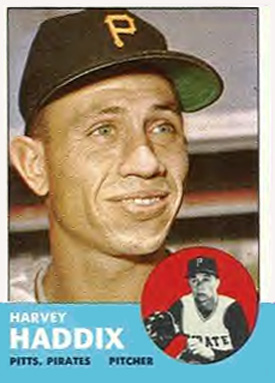
For a real hard luck story, consider the Pittsburgh Pirates’ Harvey Haddix, who took a perfect game into the 13th inning – AND LOST.

HaddixOn May 26, 1959, Haddix took the mound against the power-laden Milwaukee Braves (who had won the National League pennant the previous two seasons and came into the game again leading the league).  Haddix retired the first 36 hitters in order – fanning eight, carrying a perfect game into the bottom of the 13th. A 20-game winner in 1953, the 33-year-old Haddix had come into the game 4-2, with a 2.67 ERA in seven starts – and had thrown complete games in his two previous outings. (He would end up 12-12, 3.13 on the year.)

Unfortunately, the Braves’ Lew Burdette, despite giving up 12 hits and fanning only two, had held the Pirates scoreless. (Like Haddix, Burdette had not issued a single free pass.) Milwaukee 2B Felix Mantilla led off the 13th by reaching on error by Pirates’ third baseman Don Hoak. Slugging 3B Eddie Mathews bunted Mantilla over to second, which led to an intentional walk to RF Hank Aaron, bringing up 1B Joe Adcock.

Adcock rapped a 1-0 pitch over the right field fence for what appeared to be a three-run home run.  However, the Braves, in celebrating the tension-filled victory, forgot how to run the bases. Adcock passed Aaron between second and third and, after some deliberation, Adcock was called out – ultimately changing his three-run homer to a one-run double. So, despite 12 perfect innings, Haddix lost the no-hitter, the shutout and the game itself.  But he did etch his name forever into baseball lore; and countless trivia quizzes.
No-Hitter Lost with Two Out in Ninth in the World Series

Only one of the no-hitters lost with two outs in the ninth came in post season play.  On October 3, 1947, Yankees’ right-hander Bill Bevens was on the verge of World Series history.  Bevens went into the ninth with a 2-1 lead over the Dodgers and had yet to yield a hit (the Dodgers had scored one run in the fifth inning on two walks, a sacrifice bunt and a fielder’s choice). Bevens sandwiched a fly out and foul out around a walk to Dodgers’ center fielder Cal Furillo (Bevens’ ninth walk of the game), and so was just one out from a World Series win and no-hitter.  That’s when the wheels came off. The dangerous Pete Reiser was sent in to pinch hit for pitcher Hugh CaseyAl Gionfriddo, pinch-running for Furillo, stole second and Reiser was walked intentionally – putting runners on first and second with two outs, the Yankees still with a one-run lead, the no-hitter intact and Cookie Lavagetto pinch hitting for Eddie Stanky (Eddie Miksis was also brought in to run for Reiser). Lavagetto doubled to right on Bevens’ second pitch, both runners scored and Bevens lost the no-hitter and the game.

Dave Steib’s Hard Luck – Three No-Hitters Lost with Two Outs in the Ninth

Two In Consecutive Starts

Dave Stieb photo

Photo by Bobolink

The Blue Jays’ Dave Stieb took the mound on September 24 and September 30, 1988 (consecutive starts) against the Indian and Orioles, respectively, and produced the same result. In both games, he lost a no-hitter with two outs in the ninth (and a two-ball/two-strike count on the batter). Stieb did get two complete-game shutouts, 1-0 over the Indians and 4-0 over the Orioles. The games were his final two starts of the season, so he had the entire off-season to contemplate his bad luck. 

The following season (on August 4, 1989), Stieb found himself again on the brink, this time taking a perfect game in the ninth inning, holding a 2-0 over the Yankees.  He started the inning as though ready to make history, striking out pinch hitters Hal Morris and Ken Phelps on nine pitches.  Then the number-nine hitter, center fielder Luis Polonia, broke up the “perfecto” and no-hitter with a double to left.  Second baseman Steve Sax followed with a run-scoring single, before left fielder Polonia grounded out to end the game. Stieb did finally get his no-hitter on September 2, 1990.
Perfect Game Lost on a Bad Call
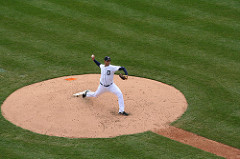
Photo by Kevin.Ward

Photo by Kevin.Ward

Perhaps the most heartbreaking “no-hitter breakup” took place on June 2, 2010, when Detroit Tigers’ righty Armando Galarraga found himself on the mound in the top of the ninth 26 outs into a perfect game (three strikeouts).  The Tigers had a 3-0 lead and Galarraga was facing Indians’ second baseman Jason Donald. Galarraga induced Donald to ground to right side of the infield and first-sacker Miguel Cabrera moved to his right to make a fine play, spinning and throwing to Galarraga covering first (who clearly beat Donald to the bag). Umpire Jim Joyce called Donald safe, a mistake he admitted and apologized for after the game. (Talk about a bad time for a bad call.) The official scorekeeper gave Donald and infield single, ending both the perfect game and the no-hitter. Galarraga retired the next batter – CF Trevor Crowe – on a groundout. Joyce’s call, despite the post-game mea culpa, stood, and Galarraga joined the list of pitchers losing a perfect game with two outs in the ninth.

Primary Resources:  Baseball-reference.com; Society for American Basebal Research; MLB.com

LIKE/FOLLOW Baseball Roundtable’s Facebook page here.

Member:  Society for American Baseball Research (SABR); The Baseball Reliquary; The Negro Leagues Baseball Museum
I tweet baseball @DavidBBRT

It Can Get a Little Uggla Out There

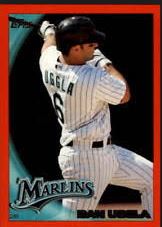
UgglaIn thus date (July 15) ten years ago (2008), Marlins’ All Star second baseman Dan Uggla had a tough day at the ballpark 0 in front of a pretty large audience.

It was during the 2008 MLB All Star Game, played in front of 55,632 fans at Yankee Stadium.  Uggla came into the All Star break with a first-half average of .286, with 23 home runs, 59 RBI and 58 runs scored. He entered the game – won by the American League 4-3 in 15 innings – in the bottom of the sixth inning, replacing starter Chase Utley at second base.  During his nine-innnig stint, Uggla came to bat four times, going down on strikes (swinging) three times and hitting into a short-to-second-to first double play. In four at bats, Uggla accounted for five outs – and saw just 13 pitches (11 for strikes). In the field, Uggla (who had made just six errors in 81 regular-season games), had seven chances, putting up one putout, three assists and an All Star Game-record three errors.

On September 28, 2008, Dan Uggla hit the last home run ever at Shea Stadium. It came in the eighth inning of a 4-2 Marlins win over the Mets. 

A tough day at the office … but still, it was the MLB All Star Game.

In a ten MLB seasons (2006-15 – Marlins, Braves, Giants and Nationals), Uggla was a three-time All Star and hit .241, with 235 home runs, 706 RBI, 759 runs scored. He topped 30 home runs  five times (consecutively, 2007-11), and drove in at least 90 runs in four season.  His best campaign was 2010 (Marlins) – when he hit .287, with 33 home runs, 105 RBI and 100 runs scored.

Dan Uggla first MLB stolen base was a theft of home in the sixth inning of a April 21, 2006 Marlins 4-3 win over the Phillies.Uggla stole a total of 26 bases in ten MLB seasons. 

I tweet baseball @DavidBBRT

Follow/Like the Baseball Roundtable Facebook page here.

Member: The Society for American Baseball Research; The Baseball Reliquary; The Negro Leagues Basehall Museum. 

A Little Baseball Irony – Roger-Maris Style

Baseball Roundtable always likes a little irony, so …

In two successive seasons, Roger Maris set the record for the most home runs by a player who received NO intentional walks in a season – and the MOST intentional walks received in a single game (since broken). 

rOGER mARIS photo

Photo by rchdj10

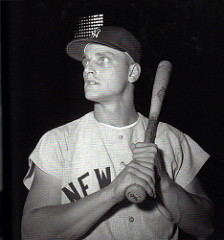
During the 1961 season, Yankees’ RF Roger Maris – in the process of winning his second consecutive MVP Award and setting a (since-broken) record for home runs (61) in a season – did not draw a single intentional walk.  This despite leading the AL in home runs (61), RBI (141) and runs scored (132), with a .269 average.  The following season, dropping to a .256-33-100 line, Maris received eleven intentional free passes and an AL-record (since tied) four IBB in a single game (a May 22, 12-inning, 2-1 Yankees’ win over the Angels.)  In six plate appearances in that game, Maris drew five walks (again, four intentional) and flew out to center (in the second inning).  His day went like this:

  • Second inning – fly out to center  leading off against Dean Chance.
  • Fourth inning – walked by Dean Chance with one out and no one on. (Angels were leading 1-0. Yankees did not score.)
  • Sixth inning – Intentional walk from Chance with runners on second and third and no outs. (Yankees tied the game 1-0 in the inning).
  • Eighth inning – Intentional walk from Ryne Duren with a runner on second and one out. (Two fly outs followed the IBB, keeping the score at 1-1.)
  • Tenth inning – Intentional walk from Jack Spring with a runner on second and two out. (A fly out after the IBB kept the game tied 101.)
  • Twelfth inning – Intentional walk with a runner on third and one out. (A second IBB, this on to Hector Lopez, loaded the bases. The winning run then scored on an Elston Howard sacrifice fly to right.)

Maris’ AL record for intentional walks in a game was tied by the Red Sox Manny Ramirez in an 18-inning, 4-3 Boston win over Detroit on June 5, 2001.

The current record for intentional walks in a single game belongs to the Cubs’ Andre Dawson who drew five intentional passes in an 18-inning, 2-1 Cubs win over the Reds on May 22, 1990. Barry Bonds is the only player to draw four intentional walks in a nine-inning game – and he did it twice in one season (May 1 and September 22, 2004.

________________________________

BREAKING A TIE, IRONICALLY, COULD MEAN LOSING A RECORD …

                                                                       and more “In baseball, we track everything.”

More recent irony:   Yesterday, YankeeS’ catcher Kyle Higashioka collected just his third MLB hit – making him 3-for-34 (.088 average) in 34 MLB at bats.  The long ball tied Higashioka with the Cardinals’ Keith McDonald for the most hits in a career by a player whose every MLB base rap cleared the fences.  (McDonald had nine total MLB at bats and collected three hits, all home runs.)  To learn more about McDonald, click here.

Of course, when Higashioka collects his next safety, the record will again be solely in McDonald’s hands (unless of course, Higashioka’s next hit is a home run.)  Even if Hagashioka hits a fourth round trippers for his next hit, McDonald will get the record back as soon as the Yankee rookie hits anything but a dinger.

_______________________________________________

A FINAL THOUGHT  ….

The final score of the game in which Roger Maris hit his then record-breaking 61st home run (October 1, 1961) was 1-0 … a Yankee win over the rival Boston Red Sox. The homer came off Red Sox starter Tracy Stallard.  (The Yankee starter was the similary named Bill Stafford … don’t know why that caught my eye.) BBRT found a touch of irony and/or coincidence in the facts that:

  • the 61-HR season came in 1961;
  • that a fellow Yankee broke Ruth’s record;
  • the long ball came in the final game of the regular season and the 161st game Maris played that campaign;
  • Maris’ homer accounted for the only scoring in the contest; and 
  • the historic homer came against the rival Red Sox.  


I tweet baseball @DavidBBRT


Follow/Like the Baseball Roundtable Facebook page here.


Member: The Society for American Baseball Research; The Baseball Reliquary; The Negro Leagues Baseball Museum
Rube Marquard Starts the Season 19-0.

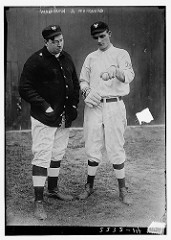
On this date (July 3) in 1912, Giants’ southpaw Rube Marquard (seen passing out some pitching tips in the photo) pitched a gem in the first game of a doubleheader against the rival Brooklyn Dodgers.  Marquard went the distance in the 2-1 victory, often pitching out of trouble (he gave up nine hits and three walks – but just the one tally).

For a look at current MLB action, click here for Baseball Roundtable’s Wrap Up of June 2018 MLB highlights.

The game wasn’t significant in the standings (the Dodger were 25-30, the Giants 53-11), but it was notable historically.  It ran Marquard’s season record to 19-0 … and his record of 19 victories without a loss from the start of a season still stands.

Those 19 wins came over a span of 21 mound appearances. During the streak, Marquard threw 160 1/3 innings, giving up just 138 hits and 29 earned runs (1.63 earned run average). He fanned 99 and walked 39. The 21 games included 18 starts (16 complete games) and three relief appearances.  He won all 18 starts and picked up one win in a June 19 relief appearance of 2 1/3 innings. Marquard’s streak was broken on July 8, when he gave up six runs (five earned) in six innings in a 7-2 loss at Saint Louis. He then lost two more games before getting back on the winning track. On the season, the future Hall of Famer went 26-11 (leading the NL in wins), 2.57.

Carl Hubbell holds the record for most consecutive wins over multiple seasons, fashioning a 24-game victory streak from July 17, 1936 through May 27, 1937. Over his streak, Hubbell appeared in 27 games (22 starts), threw 19 complete games.  He pitched 207 1/3 innings and gave up 42 earned runs (1.82 ERA).


I tweet baseball @DavidBBRT.

Follow/Like the Baseball Roundtable Facebook Page here.

Member: Society for American Baseball Research; The Baseball Reliquary; The Negro Leagues Baseball Museum
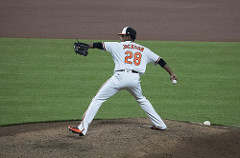
Edwin Jackson’s Well-Traveled Career – and (somewhat) Unexpected No-Hitter

Edwin Jackson baseball photo

Photo by Keith Allison

Yesterday (June 25, 2018), 34-year-old right-hander Edwin Jackson started on the mound for the Oakland A’s in Detroit. Jackson pitched well, giving up just six hits and one run over six innings, while fanning seven – and he made a bit of history along the way.  In his sixteenth major league season, Jackson was playing for his thirteenth team – tying Octavio Dotel for the most MLB teams played for in a career. Jackson’s collection of uniforms includes: The Dodgers, Rays, Tigers, Diamondbacks, White Sox, Cardinals, Nationals, Cubs, Braves, Marlins, Padres, Orioles and A’s.

In Their Many Travels, Their Paths Did Briefly Cross

Edwin Jackson and Octavio Dotel – MLB’s most traveled players – were on the same team during the second half of the 2011 season. It came about thanks to some unusual transactions. On July 27 of that season, Jackson (then with the White Sox) was traded to the Toronto Blue Jays (along with Mark Teahen) for Jason Fraser and Zack Stewart – joining Octavio Dotel (kind of) on the Toronto roster.  The two, however,  never played together for the Blue Jays.   On that same day, they were traded together (along with Corey Patterson and Marc Rzepczynski) from the Jays to the St. Louis Cardinals (where Jackson and Dotel became teammates). Gong to the Jays were Colby Rasmus,Trevor Miller, Brian Tallet and P.J. Walters. Jackson and Dotel were both granted free agency after the 2011 season. Jackson signed with the Natoinals for 2012, Dotel with the Tigers.

While BBRT acknowledges Jackson’s longevity and piece of the “most MLB teams played for” record, I’m actually more interested in a game Jackson pitched on a different June 25. On June 25, 2010, Jackson pitched one of the most unlikely no-hitters ever twirled.

Jackson and his Diamondbacks were facing the Rays in Tampa Bay.  Jackson, in his eighth MLB season, was already playing for his fourth MLB team. Ironically, he had been traded away from the Tigers after his only All Star campaign (2009, when he put up a 13-9, 3.62) record for the Bengals.

Jackson got off to a slow start for Arizona and came into the June 25, 2010, game with a 4-6 record and a 5.05 earned run average on the season.  That day in Tampa Bay, however, he was unhittable – and unscored upon. Still, despite the 1-0 final score, it wasn’t a classic gem of a no-no.

In his June 25, 2010 no-hitter,  Edwin Jackson threw 149 pitches (79 strikes) – acknowledged as the highest total ever in a no-hit game.

Here are just a few facts about Jackson no-hitter – one that no one saw coming, particularly after the first three frames.

  • Jackson started the game with an earned run average (on the season) north of 5.00.
  • Jackson went to a three-ball count on the first four batters he faced – walking two.
  • Jackson also walked two more in the second inning and walked the bases full with no one out in the third.
  • In the first three innings, Jackson threw 70 pitches.

Jackson’s no-hitter stat line of nine innings  pitched, zero runs, eight walks, one hit batter and six strikeouts is identical to the no-hitter – reportedly pitched while high on LSD – fashioned by the Pirates’ Dock Ellis in a 2-0 win over the Padres on June 12, 1970.

  • For the game, Jackson walked eight and hit a batter – and the Rays left nine runners on base.
  • Over his nine innings, Jackson went to a three-ball count on 13 of the 36 batters he faced.
  • It was Jackson’s first – and, ultimately, only – complete game of the 2010 season.

Side note: Just five week after his no-hitter, Jackson was traded from the Diamondbacks to the White Sox.

The record for walks allowed in nine-inning no-hitter is nine, by the Marlins’ A.J. Burnett in a 3-0 no-hit win over the Padres on May 12, 2001.   Jim Maloney did walk ten in a no-hitter (August 19, 1965), but he tossed ten no-hit frames as his Reds topped the Cubs 1-0.


Primary Resource: Baseball-Reference.com


I tweet baseball @DavidBBRT

Follow/Like the Baseball Roundtable Facebook page here.

Member: Society for American Baseball Research; The Baseball Reliquary; The Negro Leagues Baseball Museum.

Pennock, Blyleven and Morgan … A Longevity List

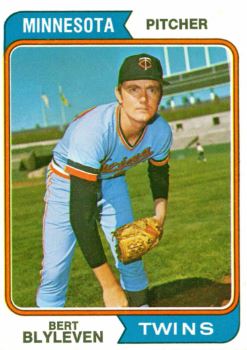
BlylevenMay 30, it turns out, is a (somewhat) historic day for Twins fans.  On that date in 1992, 41-year-old Bert Blyleven (who would eventually enter the Baseball Hall of Fame under the bill of a Twins’ cap) toed the rubber for the California Angels (versus the Cleveland Indians).  The right-hander, noted for one of the best curveballs in MLB history, threw seven innings of scoreless ball (three hits, two walks, seven strikeouts) and got the win as California prevailed 3-1.

Why did this catch BBRT’s eye?  First, I’m a big Blyleven fan. Second, Bert’s presence on the mound marked an unexpected comeback of sorts – he had missed the 1991 season recovering from rotator cuff surgery (and was 41, after all). Third, it was the first win of his final MLB season.  But most important, it made Blyleven just the second pitcher to notch MLB victories as a teenager AND after age 40. (A third has since joined the list, but more on that later).


Pitchers with Victories as a Teenager and After Turning Forty

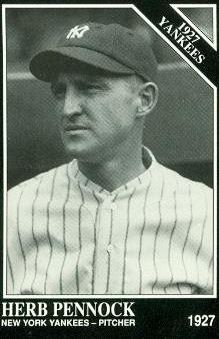
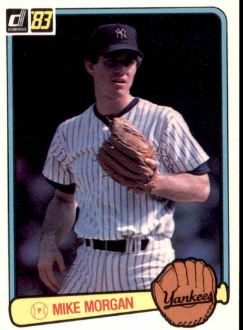
Herb Pennock  … Bert Blyleven … Mike Morgan

Bert Blyleven

The “Dutchmaster’s” first MLB win, by the way, came in a Twins’ uniform, when the 19-year-old Blyleven made his MLB debut (June 5, 1970) against the Washington Senators (in D.C.). Young Bert went seven innings in that game, giving up one run on five hits and a walk, and fanning seven in a tight 2-1 Minnesota win. It was, of course, the first win of his first MLB season.  Blyleven picked up nine more MLB wins before his 20th birthday (10-9, 3.18).

We’ve already looked at Blyleven’s first win after turning forty (first two paragraphs of this post) – which was the first tinw of his final MLB season.  He did pick up seven more victories that campaign.

Blyleven’s Hall of Fame career covered 22 seasons (Twins, Rangers, Pirates, Indians, Angels) – 287 victories (250 losses); a 3.31 earned run average; 242 complete games; 60 shutouts; and 3,701 strikeouts. He was a two-time All Star and a 20-game winner in 1973.

Herb Pennock

PennockThe first pitcher to earn MLB victories as a teenager and a 40-year-old was another Hall of Famer – Herb Pennock – whose career spanned from 1912 to 1934 (missing 1918 for military service). The southpaw’s first win came in the second game of a twin bill on June 28, 1912 – as his Philadelphia Athletics topped Washington 5-4 in ten innings. The 18-year-old Pennock came on in relief – pitching a scoreless ninth and tenth – for the victory. Pennock added two more victories (as a teenager) in 1913 – giving him a record of 3-3, 4.75 before his twentieth birthday.

Pennock’s first win as a 40-year-old (he had two) came on May 20, 1934 – again in relief – as his Red Sox bested the White Sox 1-0. Pennock went 3 1/3 scoreless innings in that one, giving up one hit and one walk. The future Hall of Famer played 22 MLB seasons, going 241-162, 3.60 (37 saves), with 249 (410 starts) complete games and 37 shutouts.  He was a two-time twenty game winner.


Mike Morgan

MorganThe third pitcher to notch wins as a teenager and after age 40 was Mike Morgan – who, as a 18-year-old, was pushed out onto the major league mound by Oakland A’s owner Charlie Finley on June 11, 1978; less than a week after the A’s made the high schooler the fourth overall pick in the 1978 MLB draft.  Despite going the distance in his debut (nine innings, three runs-two earned, five walks and no strikeouts), the teenager did not pick up the win.  He got the loss as the A’s dropped a 3-0 decision to the Orioles.  Morgan had to wait until July 29, 1979 for his first MLB win. On that day, the 19-year-old right hander picked up a 2-1 complete game win over the Seattle Mariners (three hits, one run, four walks and one strikeout).  Morgan added a second win in his very next start (again over Seattle), but his overall record as a teenager was 2-13, 6.12. Morgan spent 1980 and 1981 in the minors before returning to the major leagues with the Yankees in 1982.

The victory that made Morgan a member of the under-twenty/over-forty winning pitchers’ club came on April 19, 2000. Morgan came into that game in the top of the eighth inning with his Diamondbacks tied at seven with the Rockies. He pitched a 1-2-3 inning and the Diamondbacks scored in the bottom of the frame to give Morgan the win (with relief in the ninth from Greg Swindell and Byung-Hyun Kim). Morgan added four more wins in 2000, one in 2001 and one in 2002.

For his 22-season career (A’s, Yankees, Blue Jays, Mariners, Orioles, Dodgers, Cubs, Cardinals, Reds, Twins, Rangers, Diamondbacks), Morgan was 141-186, 4.23 (8 saves) – appearing in 597 games (411 starts) with 46 complete games and 1,403 strikeouts.

FINAL TIDBIT – JUST IN CASE YOU ARE INTRESTED

Players with home runs as a teenager and after turning forty: Ty Cobb, Rusty Staub, Gary Sheffield, Alex Rodriguez.

Primary Resources: Baseball-Reference.com; Society for American Baseball Research


I tweet baseball @DavidBBRT

Follow/Like Baseball Roundtable’s Facebook page here. Blog post notifications, additional baseball commentary, prizes.  

Member: Society for American Baseball Research; The Baseball Reliquary; The Negro Leagues Baseball Museum
Youth Will Be Served – 2018’s Youngest Major Leaguers

Until May 20, the surprising Atlanta Braves seem to have a lock on MLB’s youth movement. As of May 19, the Braves had the first-, second- and third-youngest players to appear in the majors in 2018. The Braves, in fact, had the only 2018 major leaguers born after January 1, 1997.  (More on that in a few paragraphs.  First a look at the “newest youngest” player in the “show.”)

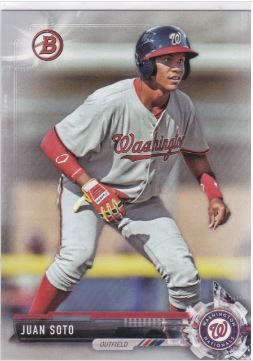
sotoOn May 20, 19-year-old Juan Soto (born October 25, 1998) made his MLB debut for the Washington Nationals – as a pinch hitter in the eighth inning of a 7-2 loss to the Dodgers; fanning on a 1-2 pitch.  Not an auspicious first at bat, but the 6’1”, 185-pound left-handed hitter made up for it the very next day – starting (batting sixth) in left field against the Padres. In his first at bat in that contest, Soto took the Padres’ starter Robbie Erin deep for a three-run home run. Soto finished the game two-for-four with two runs scored and three RBI.  And, as long as we’re on the topic of youth movements – the last player (before Soto) to hit an MLB long ball as a teenager?  Soto’s teammate Bryce Harper.

Soto’s solid day at the dish should come as no surprise.  Since signing as a 17-year-old in 2016, he has “raked” at every level he’s played. In 2016, he hit .361-5-31 with five steals  in 45 games for the Rookie-level Gulf Coast League Nationals, before being promoted to A-level Auburn, where he hit .429 in six games.  Injury slowed his progress in 2017, but he still hit .320 in nine games back with the Gulf Coast League Nationals and .360-4-14 for the Class A Hagerstown Suns.

Soto started this season back at Hagerstown, where he hit .373 with five homers in 16 games and was promoted to the High-A Potomac Nationals of the Carolina League – where he continued to mash (.371, with seven home runs, in 15 games). From there it was on to the Double A Harrisburg Senators, where he hit .323 with two homers in eight games. All of this resulted in a well-earned call up to the injury-riddled Nationals.

Now, about those Braves.  When the season opened, Braves’ second baseman Ozzie Albies (born January 7, 1997) was 2018’s youngest major leaguer.  He lost that status on April 25, when Braves’ OF Ronald Acuna (born December 18, 1997) took over as MLB’s youngest current player – dropping Albies to second place.  Then, on May 1 , Braves’ pitcher Mike Soroka (born August 4, 1997) made his MLB debut, becoming the season’s second-youngest MLB-er, dropping Albies to third.  (Acuna, Soroka and Albies, of course, all dropped a spot when Soto was called up.)

These are the only players born after January 1, 1997 in the majors today.  Next on the list is the American League’s youngest player – Angel’s pitcher Jaime Barria (born July 18, 1996).

So, how are these youngsters doing?  We already know about Soto, let’s take a look at the others among the youngest five. (All stats as of close of play May 21.)

  1. Ronald Acuna, Jr., OF, Atlanta Braves B: December 18, 1997

The 6’, 180-pound right-handed hitting outfielder made his MLB debut on April 25 (and was, at the time, the 2018 season’s youngest MLB player).  Acuna, who signed with the Braves as a 17-year-old in 2015 hit 269-4-18, with 16 steals, in rookie ball that season.  He followed that with a .312-4-19 stat line at Rookie-level and Single A in 2016. The real breakout came in  2017.  After a 2017 season in which he moved from the Class A Florida Fire Frogs to the Double A Mississippi Braves to the Tripe A Gwinnett Braves – Acuna was named the Minor League Player of the Year by USA today and Baseball America.   His combined stat line for 2017 was .325-21-82, with 44 stolen bases, in 139 games.  Acuna had a solid 2018 Spring Training (.432-4-11 in 16 games, but started the season in the minors (reportedly due to a contract control/time of service issue.) Since his call up, he has hit .253 (24-for-95), with four home runs and 11 RBI in 24 games.

The youngest player to homer in an MLB game is the Brooklyn Dodgers’ SS tommy Brown, who went yard on August 20, 1945 at the age of 17 years-and 257 days. His long ball was the Brooklyn team’s only run in an 11-1 loss to the Pirates.

  1. Mike Soroka, RHP, Atlanta Braves B: August 4, 1997

Mike Soroka was drafted (as a 17-year-old) by the Braves (28th overall) in the 2015 draft.  The 6’5”, 225-pound righty pitched in the Rookie-level Appalachian and Gulf Coast Leagues in 2015, going 0-2, but putting up a 3.18 ERA and 37 whiffs in 34 innings. In 2016, he moved up to Class A (Rome Braves, South Atlantic League), where he went 9-9, 3.02, with 125 strikeouts in 143 innings. He took another step up in 2017, going 11-8, 2.75, with 125 strikeouts in 153 2/3 innings at Double A.  He started this season at Triple A Gwinnett and was 2-0, 1.99 when he received the call to Atlanta.

He was called up to the big club on May 1 and, that same night, pitched six innings against the Mets – picking up his first MLB win (six innings pitched, six hits, one run, no walks and five strikeouts).  Since his call up, Soroka is 1-1, 3.68 in three starts – fanning 15 and walking just four in 14 2/2 innings.

The youngest player to appear in an MLB game – and the youngest to pitch in an MLB game – was southpaw Joe Nuxhall, who pitched two-thirds of an inning for the Cincinnatti Reds on June 10, 1944 at the age of 15 years-and 316 days.  (There was a shortage of pro players – World War II – and Nuxhall at 15-years-old was north of 6’ tall, close to 200 pounds and had been playing semi-pro ball.) He did not appear in another MLB game until 1952, but did have a 16-season MLB career (135-117, 3.90). It is believed – records are sketchy – that the youngest pitcher to win an MLB game was Willie McGill, who went 11-9, 4.12  for the Cleveland Infants of the Players  League in 1890 – as a 16-year-old.

  1. Ozzie Albies, 2B, Atlanta Braves B: January 7, 1997

Albies actually made his MLB debut on August 1 of last year. That makes him the seasoned veteran of this group. Still just 20-years-old, he is in his second MLB season – and looking like an All Star. The 5’8”, 165-pound right-handed hitting infielder was signed (as a shortstop) by the Braves in 2014.  His first professional season, he put in time with the Rookie-level Gulf Coast League and Danville Braves – going a combined .364-1-19, with 22 steals, in 57 games. In 2016, Albies started the season at Double A (Mississippi Braves) and hit .321-4-33, with 21 steals, in 82 games before being promoted to Triple A Gwinnett. He struggled a bit (learning a new position) and put up a .248-2-20 line, with nine steals, in 56 games.   In 2017, he started the season at Gwinnett and showed his ability to make the adjustment – going .285-9-41, with 21 steals, in 97 games before his August 1 call up to Atlanta. He got in 57 games at the major league level and hit .286-6-28 with eight stolen bases.

So far this season, Albies is hitting .281-13-33 with six steals. His 42 runs scored leads the NL; his 13 home runs are second; his 33 RBIs fourth; his 56 hits third; and his 15 doubles second.

  1. Jamie Barria, RHP, Kos Angeles Angels B: July 18, 1996

Jaime Barria – unlike the others on this list – was not born after January 1, 1997.  However, he deserved recognition as the youngest player in the American League (and fifth youngest to play in MLB this year). The 6’1”, 210-pound righty made his MLB debut April 11.

Barria was just 16-years-old when he signed with the Angels out of Panama in 2013. He started out in the 2013 Dominican Summer League, where he went 0-1, 10.80 in four games as a 16-year-old.  The following season, still just 17, his line was 4-4, 3.03 and he fanned 55 batters in 59 1/3 innings. In Rookie-level ball (2015), he went 5-4, 4.02 – as he continued steady movement upward. 2016 saw Barrie with the Burlington Bees of the A-level Midwest League, where he went 8-6, 3.85 and fanned 78 in 117 innings.  His breakout came in 2017 (still, keep in mind, just 20-years-old), when he pitched at High-A, AA and AAA – going a combined 7-9, but with a stingy 2.80 ERA and 117 whiffs in 141 2/2 innings.

Barria won his first MLB start (April 11), topping the Rangers 7-2.  Barria went five innings in that game giving up three hits, a walk and one earned run, while fanning three.  He was back down in the minors  briefly, before a second start on April  22.  He has now made 5 starts and has a 3-1, 2.13 record. .

Rookie Jaimie Barria had an epic confrontation Giants’ veteran Brandon Belt on April 22.  The at bat took 21 pitches and included 16 consecutive foul balls – before ending in a fly out.  The 21-pitch at bat is generally accepted as MLB’s longest ever (although early records are not complete.)

Primary resouces:  Baseball-reference.com; MLB.com; Society for American Baseball Research

I tweet baseball @DavidBBRT

Follow/Like the Baseball Roundtable Facebook page here.

Member: Society for American Baseball Research; The Baseball Reliquary; The Negro Leagues Baseball Museum
CORRECTION – PLEASE NOTE

CORRECTION – PLEASE NOTE

In yesterday’s post – on The Baseball Reliquary’s Shrine of the Eternals – the 2018 Induction Ceremony date should be July 22.  That is now corrected in the post. 

Twin Killings – They Can Be Murder on the Offense

The ballet of the double play ... a beautiful thing. Photo by roy.luck

The ballet of the double play … a beautiful thing.
Photo by roy.luck

If you follow Baseball Roundtable – and I hope you do – you know that I am particularly appreciative of the on-the-diamond ballet of a 4-6-3 or 6-4-3 double play.  With that in mind, I wish I had been in the Astrodome back on this day (May 4) in 1969 – when the Astros turned a record seven double plays, while topping the Giants 3-1. Seven twin-killings by a team in nine-innings, that’s a record that still stands.  Here’s how it went:

  • In the top of the first inning, the Giants had one run in, the bases loaded and just one out – and had knocked Houston starter Denny Lemaster out of the game – when reliever Dooley Womack (love that name) got Giants’ left fielder Jim Ray Hart to ground into a 6-4-3 (SS Denis Menke to 2B Joe Morgan to 1B Curt Belfary) double play to end the inning.
  • In the third inning, with the game tied 1-1, the Giants threatened again, with runners on first and second with one out; when Womack  induced a groundball (C Dick Dietz batting) 5-4-3 (3B Doug Rader to 2B Menke to 1B Blefary) twin killing – again ending the inning.
  • The top of the fourth started with a Jim Ray Hart single off Womack, followed by the Astros’ second groundball 6-4-3 double play. The inning ended when the next Giants’ hitter (SS Hal Lanier) grounded out second-to-first.
  • The top of the fifth looked a lot like the top of the fourth – with one less exchange of the baseball. Giants’ P Juan Marichal opened with a single off Womack. Next up was Giants’ RF Frank Johnson, who grounded into a second-to-first twin killing. The inning ended when the next batter,  2B Ron Hunt, grounded out third to first.
  • In the top of the seventh (after a 1-2-3 sixth by Womack), the Giants (now down 2-1) put two men on with one out – and the Astros brought Fred Gladding to the mound. The Giants let Marichal hit for himself –and he grounded into a 6-3 double play to end the threat.
  • In the top of the eighth, now down 3-1, the Giants opened with a single (off Gladding) by pinch hitter Bob Burda. Gladding then got Ron Hunt to ground into a tougher 3-6 double play, before getting CF Willie Mays on a 6-3 groundout.
  • Finally, in the ninth, with Giants’ runners on first and third and one out, Gladding appropriately ended the game by getting 3B Bobby Etheridge to hit into a 4-6-3 double play.

A couple of notes:  1) Despite only four strikeouts by Giants’ batters, Houston outfielders recorded only one put out on the afternoon – which included 18 infield assists by the Astros.  2) The Giants turned one double play in the game, when 1B Jack Haittt speared a line drive by the Astros’ Gary Geiger and doubled Curt Blefary off first.

Lots of Multiple Killings – and Still No Wins

The record for turning double plays in game by both teams is ten – in a 6-4 Red Sox home win over the Twins on July 18, 1990. Six of those were turned by the Twins – four by the Red Sox.  That double play record came just one game after the Twins became the first (and still only) team to turn two triple plays in a single game.  On July 17, the Twins turned a pair of groundball, around-the-horn (3B Gary Gaetti to 2B Al Newman to 1B Kent Hrbek) triple plays in a 1-0 loss to the Red Sox.

A couple of other bits of twin-killing trivia.

  • The 1990 Red Sox hold the team record for GIDP in a season at 174, as well as a share of the AL single-game record six (which has been done 14 times in the AL, four by Boston). The only other AL team to achieve this negative record more than once is the Blue jay (twice).
  • Albert Pujols (still active) holds the individual career GIDP record at 365); while the single season record belongs to the Red Sox’ Jim Rice at 36.
  • Miguel Tejada holds the record for the most seasons leading his league in GIDP at five (2004-05-06 with the Orioles and 2008-09 with the Astros).
  • The record for most GIDP in a game is four, shared by the Tigers’ Goose Goslin, Tigers’ Victor Martinez and Mets’ Joe Torre.

ONE OF EACH PERSUASION

Only three MLB batters have played in more than 150 games in a season without grounding into a double play – one lefty (Dick McAuliffe, Tigers – 1968); one righty (Craig Biggio, Astros – 1997); and one switch-hitter (Augie Galan, Cubs – 1968).

Primary Resources: Baseball-Reference.com; Baseball-Almanac.com; MLB.com

I tweet baseball @DavidBBRT

Follow/Like the Baseball Roundtable Facebook page here.

Member: Society for American Baseball Research; The Baseball ReliquAry; The Negro Leagues Baseball Museum.

2018 Negro Leagues Baseball Museum “Hall of Game” Honorees Announced

HOGSeventy-seven MLB seasons – 24 All Star selections – 7 Gold Gloves – 5 Stolen Base Titles – 3 Home Run Crowns – 3 Twenty-Win Seasons – 2 Rookie of the Year Awards – One MVP Award.  Those are the considerable – and well-earned – credential of the Negro Leagues Baseball Museum (NLBM) 2018 “Hall of Game” class.

_________________________________________

On May 1, the Negro Leagues Baseball Museum (NLBM) announced the lineup for its Fifth Annual Hall of Game inductions:

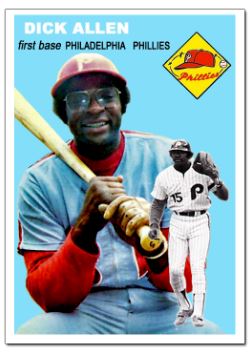
  • Power-hitting Dick Allen – a two-time league HR champion and 1972 American League MVP.
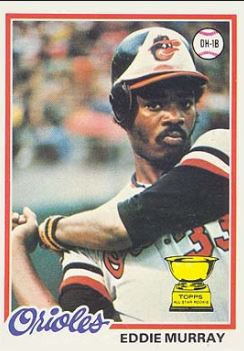
  • Eddie Murray – one of the greatest switch-hitters in MLB history, with more than 3,000 base hits and 500+ MLB home runs.
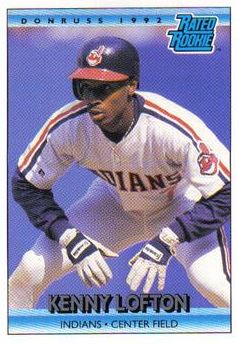
  • Speedster Kenny Lofton – who not only led the American League in stolen bases five straight seasons, but also earned four consecutive Gold Gloves in center field.
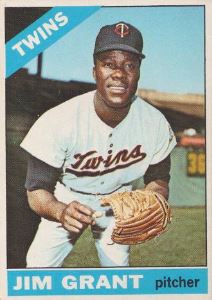
  • Jim Mudcat Grant– owner of 145 major league victories and the first Black pitcher to win 20 games in the American League, as well as the first Black hurler to win a World Series game for an AL team.
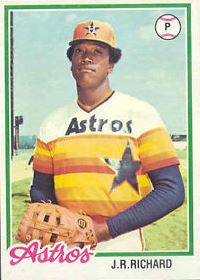
  • Fireballer J.R. Richard – whose career was cut short (10 seasons) by a stroke, but who can still look back on a twenty-win season, 74 wins over a four-span and two consecutive 300+ strikeout campaigns.

This group will join previous honorees (listed alphabetically): Lou Brock; Orlando Cepeda; Roberto Clemente; Andre Dawson; Ricky Henderson; Fergie Jenkins; Joe Morgan; Tony Oliva; Al Oliver; Tony Perez; Tim Raines; Lee Smith; Ozzie Smith; Louis Tiant, Jr.; Maury Wills; and Dave Winfield. Ceremonies are scheduled for 8:00 p.m., June 9 at the Gem Theatre, 1615 18th Street, Kansas City, Missouri.

NEGRO LEAGUES BASEBALL MUSEUM HALL OF GAME

The NLBM established its Hall of Game in 2014 to recognize MLB greats “who competed with the same passion, determination, skill and flair exhibited by the heroes of the Negro Leagues.”

Now, let’s take a look at the 2018 Hall of Game class.

Dick Allen – MLB career, 1963-1977

aLLENDick Allen made a name for himself early in his career. In his first full MLB season (1964 –  after a 10-game call up in 1963), the 22-year-old Allen played in all 162 Phillies’ games (at third base) – hitting .318, with 201 hits, 29 home runs and 91 RBI.  He also led the league in triples (13) and runs scored (125).  That performance earned him the 1964 NL Rookie of the Year Award (and a seventh-place finish in the MVP balloting.) The 5’11”, 187-pound Allen went on to live up to that early promise.

In four minor league seasons, Dick Allen hit .306 with 82 home runs and 342 RBI (in 482 games). When he was called up to the Phillies in September of 1963, Allen was hitting .289-33-97 for the International League (AAA) Arkansas Travelers.

Playing for the Phillies, Cardinals, Dodgers. White Sox and A’s, Allen led his league in slugging percentage three times, on-base percentage twice, home runs twice, as well as in RBI and total bases once each.  In 1972, playing with the White Sox, Allen earned the  AL MVP award, hitting .308 and leading the AL in home runs (37), RBI (113), walks (99), on-base percentage (.422) and slugging percentage (.603).

For his MLB career, the seven-time All Star hit .292 (1,848 hits), with 351 home runs, 1,099 runs scored and 1,119 RBI.

Dick Allen collected 79 triples over his MLB career – and had one stretch of four consecutive seasons of ten or more three-baggers.

Jim “Mudcat” Grant – MLB career 1958-71

gRANTIn 1965, while with the Minnesota Twins, Jim Mudcat Grant became first Black pitcher to have a twenty-win season in the American League – as his 21-7 campaign led the Twins to the American League pennant.  Grant led the American League in wins (21), winning percentage (.750) and shutouts (6), while putting up a 3.30 ERA and fanning 142 battersin 270 1/3 innings.

He followed that performance with a pair of victories (versus the Dodgers) in the 1965 World Series – becoming the first Black pitcher to win a World Series game for an American League club.

In a clutch performance in Game Six of the 1965 Fall Classic, Jim “Mudcat” Grant not only earned a complete-game, six-hit, 5-1 victory, but also cracked a sixth-inning, three-run home run to put the game out of reach.

During his career, Grant appeared in 571 MLB games (293) starts, picking up 145 wins (119 losses) and 54 saves, while pitching to a 3.63 earned run average. He fanned 1,267 batters in 2,442 MLB innings. He was a two-time America League All Star (1963 & 1965) was named The Sporting News Pitcher of the Year in 1965.  Grant pitched for the Indians, Twins, Expos, Cardinals, Pirates and A’s.

Jim “Mudcat” Grant was the starting pitcher for the Montreal Expos in their first-ever official MLB game.

Following his retirement from the playing field, Grant dedicated himself to promoting the rich history of Blacks in baseball. In 2006, he released released his book The Black Aces, Baseball’s Only Black Twenty-Game Winners – which included a chapter on each of MLB’s Black twenty-game winners and also featured a number of Negro League players Grant felt would have been twenty-game winners had they been allowed to pitch in MLB.

Kenny Lofton – MLB career 1991-2007

lOFTONAfter five minor league seasons during which he hit .300 and stole 168 bases (363 games), Kenny Lofton came to the major leagues ready to run. Lofton joined the Houston Astros in a brief late-season call up in 1991 (20 games, .203 average). Then, in the off-season, the 5’11”, 190-pound outfielder was traded by the Astros to the Indians (along with infielder Dave Rhode) for pitcher Willie Blair and catcher Ed Taubensee– a trade the  appropriately, paid off for the Indians “very fast.”

In his first full MLB season (1992), the new Cleveland center fielder hit .285, with five home runs, 42 RBI, 96 runs scored and a league-topping 66 stolen bases.  Lofton would not relinquish that stolen base title until 1997 – running up totals of 66, 70, 60, 54 and 75 steals between 1992-96.

Kenny Lofton finished second to the Brewers’ Pat Listach (SS/2B/CF) in the 1992 AL Rookie of the Year balloting. You could hardly have slipped the proverbial “piece of paper” between the stats of the two players.  Listach played in 149 games, Lofton 148.  Listach hit .290 with 168 hits, Lofton .285 with 164 safeties. Lofton hit five home runs and stole 66 bases to Listach’s one home run and 54 steals. Lofton scored 96 runs to Listach’s 93, but Listach drove in 47 to Lofton’s 42.  Lofton collected 68 walks to 55 for Listach, and fanned just 54 times to Listach’s 124.

During his career, Lofton played for the Astros (1991), Indians (1992-2001 & 2007); White Sox (2002); Giants (2002); Pirates (2003); Cubs (2003); Yankees (2004); Phillies (2005); Dodgers (2006); Rangers (2007).

In his final MLB season (2007), at age 40, Lofton hit .296 and stole 23 bases in 136 games.

In his career, Lofton earned six All-Star appearances (1994-99) and four Gold Glove Awards (1993-1996). His final regular season stat line: 2,103 games played, .299 average, 2,428 hits, 383 doubles, 116 triples, 130 home runs, 1,528 runs scored, 781 RBI and 622 stolen bases (15th all-time). He hit over .300 in seven campaigns and topped 50 stolen bases in six seasons.  He also played in 95 post-season games, hitting .247-7-34, with 34 stolen bases in 40 attempts.

Eddie Murray – MLB career 1977-97

MLB Players with 500 home runs AND 3,000 hits. Hank Aaron, Willie Mays, Eddie Murray, Rafael Palmeiro and Alex Rodriguez.

mURRAYWhen you are one of just five MLB players to hit 500 home runs and collect 3,000 hits – you are something special.  When you are the only switch-hitter in the club, you also know you will be included in any conversation about the “the greatest switch hitters of all time.” That’stheEddie Murray legacy.

First baseman/DH Eddie Murray spent 21 years in the major leagues – primarily with the Baltimore Orioles (1977-88 and 1996).  He also took the field for the Dodgers, Mets, Indians, Angels and Dodgers. While his career included just one home run title and one RBI crown, Murray was as steadily excellent as they come.  In his first ten MLB seasons, he earned seven All Star selections (he garnered eight overall), three Gold Glove Awards and 1977 AL Rookie of the Year honors.

Eddie Murray drew 222 career intentional walks – tenth all time – leading his league three times.

In a 21-season MLB career, Murray hit 25 or more home runs 12 times, collected 100 or more RBI six times and hit .300 or better seven times. It  all added  up to 3,026 games played (sixth all-time), a .287 average,  3,255 hits (12th), 504 home  runs (27th), 1,627 runs scored (41st) and 1,917 RBI (11th).

Eddie Murray was a first-ballot inductee into the Baseball Hall of Fame in 2003.

J.R. Richard – MLB Career 1971-80

rICHRDFlamethrower J.R. Richard’s career was cut short by a stroke in 1980. By that time, the big (6’8”, 220-pounts) right-hander had made a name for himself as one of the most feared pitchers in MLB.

When the 21-year-old Richard was called up to the Astros in September of 1971, he was 12-7, 2.45 with 202 strikeouts in 173 innings at Triple A. He made four starts tat month, going 3-1, 3.43 and fanning 29 in 21 innings.

In his very first MLB start – September 5, 1971 – J.R. Richard beat the Giants 5-3, throwing a complete-game seven-hitter and fanning a record-tying (for a first MLB appearance) 15 batters.

Richard was up-and-down (minors/major) until 1975 – as he worked to master control and command of his electric “stuff.”  He had his first full MLB season in 1975, going 12-10, 4.39 – and fanning 176 in 203 innings. (He also led the NL in walks with 138) and wild pitches with 20). The following season, he lived up to his full promise, winning 20 games (15 losses), lowering his earned run average to 2.75 and fanning 214 batters in 291 innings.  But, the best was yet to come.

Richard won 18 games in each of the next three seasons, put up earned run averages of 2.97, 3.11 and a league-best 2.71 (1979). In 1978 and 1979, he also topped the NL in strikeouts, with 303 and 313, respectively.

Richard looked to be getting even better in 1980.  He was 10-4, with a 1.90 ERA and 119 strikeouts in 113 2/3 innings before suffering a career-ending stroke on July 30.   For his career, Richard was 107-71 – a .601 winning percentage – with a 3.15 ERA and 1,493 strikeouts in 1,606 innings pitched. He gave up just 6.87 hits per nine innings – three times posting the league’s lowest hits-per-nine figure.

J.R. Richard’s career 6.87 hits allowed per nine innings is the fifth-lowest among pitchers with at least 1,000 MLB innings – trailing only Nolan Ryan, Clayton Kershaw, Sandy Koufax and Sid Fernandez.

________________________________________________

In announcing the 2018 Hall of Game honorees, Negro Leagues Baseball Museum President Bob Kendrick said, “Each of these players was a phenomenal athlete who achieved remarkable stats and records. Buck O’Neil once said of the Negro Leagues that fans couldn’t go to the concession stands because they were afraid they’d miss something they’d never seen before. That’s how these guys played. Fans couldn’t take their eyes off them because they might miss an incredible play. This year’s honorees embody that wonderful Negro Leagues spirit, and we are delighted to welcome as our fifth induction class of our Hall of Game.”

In addition to the Hall of Game inductions, the NLBM will be presenting the Jackie Robinson Lifetime Achievement Award for “career excellence in the face of adversity” to the award namesake’s daughter, Sharon Robinson – who serves as an educational consultant for Major League Baseball and manages Breaking Barriers: In Sports, In Life, a baseball-themed national character education curriculum that helps empower students to face obstacles in their lives.

“There’s no one we would rather honor on this special anniversary year than Sharon Robinson,” Kendrick said. “She’s been a phenomenal voice and champion for diversity in sports and is carrying on her father’s legacy in a powerful and effective way.”

THE NEGRO LEAGUES BASEBALL MUSEUM

Satchel Paige pitches to Martin Dihigo, with Josh Gibson catching - on the Field of Legends at the Negro Leagues Baseball Museum.

Satchel Paige pitches to Martin Dihigo, with Josh Gibson catching – on the Field of Legends at the Negro Leagues Baseball Museum.

The Negro Leagues Baseball Museum is the world’s only museum dedicated to preserving and illuminating the rich history of black baseball. The museum, built in conjunction with the adjacent American Jazz Museum at the famous 18th & Vine Jazz District, has become an iconic piece of Kansas City’s social and entertainment culture. The NLBM is a privately funded, 501c3 not-for-profit organization incorporated in 1990. The museum’s inception brought together the vision of a group of Kansas City business leaders, historians and former baseball players, headed by the legendary John “Buck” O‘Neil. For more information, visit www.nlbm.com, and follow the Negro Leagues Baseball Museum on Twitter @nlbmprez
HY-VEE – Hall of Game Presenting Sponsor

Hy-Vee, Inc. has been the presenting sponsor for the Hall of Game awards since their inception. Hy-Vee is an employee-owned corporation operating more than 245 retail stores across eight Midwestern states with sales of $10 billion annually. Hy-Vee ranks in the Top 10 Most Trusted Brands and has been named one of America’s Top 5 favorite grocery stores. For additional information, visit www.hyvee.com.

Primary Resoures:  Negro Leagues Baseball Mueum; Society for American Baseball Research; Baseball-Reference.com; MLB.com

I tweet baseball @DavidBBRT

Follow/Like the Baseball Roundtable Facebook page here. 

Member: Society for American Baseball Research; The Baseball Reliquary; The Negro Leagues Baseball Museum