BBRT Looks Ahead to the 2018 Fall Classic

Okay, it’s on to the Fall Classic – and it should be a good matchup, with two storied franchises that both boast deep and versatile lineups and solid pitching staffs.  It’s going to be a tough call.  However, before I get into Baseball Roundtable’s predictions – and I haven’t been all that accurate this post season, I had the Astros/Dodgers pegged for the matchup – and also swung and missed on the Cbus/Rockies Wild Card game – I’d like to share a brief “old school” rant.

Subterfuge or Strategy? An “Old-School” Rant.

Despite being Milwaukee-born, I was rooting for the Dodgers to take the NL Championship Series. My allegiance swung over to the West Coast in Game Five.  Now, while I’m a bit old school, I still have no major problem with the recent development of the “bullpen game” – when you have an “opener” from the bullpen start the contest and then go to either a “primary pitcher” or  a “committee” approach.  That is, I have no problem with it when used as a strategy for “getting outs.”  I do, however, take issue with the Brewers’ announcing southpaw Wade Miley as the starter in Game Five, then pulling him after one batter and going to right-hander Brandon Woodruff (with Miley planned as the Game Six starter). That seemed more like subterfuge than strategy to me.

Enough of my rant.  Here’s BBRT’s prediction for (and a few comments on) the upcoming World Series.  In addition, some thoughts on a handful of “things to watch for” – like the implications of the Dodgers drawing the most walks in the post-season thus far and the Red Sox giving up the most free passes.  I’d really like to take the coward’s way out and just say whichever team wins Game One (particularly if it’s a Chris Sale/Clayton Kershaw matchup) will win the title in seven games.  It really looks that close to me.  However, that would, indeed, be the coward’s path to prediction.  So, I am going to pick the Red Sox to win Game One – and the World Series in seven games.  BBRT gives the edge to the Red Sox due to home field advantage, the more likelihood of putting up crooked numbers and the fact that the Red Sox (particularly the rotation and bullpen) should be better rested – particularly given the fact that, as this is written, the Dodgers still haven’t announced their Game One starter.

Let’s look a little deeper.

THE LINE UPS

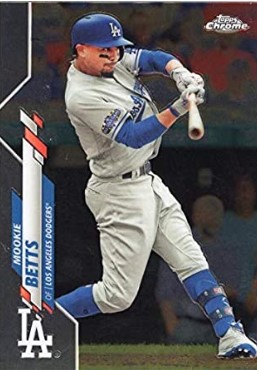
Mookie Betts brings speech and power. Photo by Keith Allison

Mookie Betts brings speech and power.
Photo by Keith Allison

These are two pretty evenly matched teams – which both generate a lot of offense and show enough depth for considerable lineup versatility. The Dodgers launched an NL-best 235 home runs (while hitting .250 at a team).  The Red Sox show slightly less power (despite the DH) with 208 long balls, but did put up a .268 regular-season average and an MLB-tops 876 runs scored. (The Dodgers led the NL with 804 tallies).  In the post season, that relationship of power and average has held.  The Dodgers have 13 home runs and 43 runs scored in 11 games; while the Red Sox have scored 56 runs (in just nine games). The BoSox have hit .253 to the Dodgers .218, but trail in  long balls 13-9.  The Red Sox’ ability to put runners on the base paths (an MLB-best .339 on base percentage in the regular season and a .341 OBP in the post season – secondly only to the Astros’ .369 – may make them more likely to put up a big inning.  The Dodgers are not far behind, with a regular-season OBP of .333 and a post-season mark of .324.  Thus far in the post-season, the Red Sox have put up seven innings of three or more runs (in nine games) and the Dodgers have put up five such frames in eleven games. So, the Red Sox appear a bit more likely to put up a “big inning.”

A HANDFUL OF THINGS TO WATCH FOR – NUMBER ONE

Who will run the bases?  During the regular season, the Red Sox showed more of a propensity to create a little disruption on the base paths – stealing 125 bags to the Dodgers 75. In the post-season, however, the Dodgers have swiped 13 bases (11 games) to the Red Sox’ five (nine games). Will the Red Sox turn Mookie Betts (30 steals in 36 attempts), Andrew Benintendi (21 for 24 in steal attempts) and Jackie Bradley, Jr. (17 for 18) loose? (In addition, Ian Kinsler – picked up by the Sox at the trade deadline – had 16 steals on the season, including seven in ten attempts for the BoSox.)  And will the Dodgers, who were led in the regular season by Yasiel Puig’s 15 steals in 20 attempts, continue their aggressive post-season base running?  (Cody Bellinger, who swiped 14 bags in the regular season, has four stolen bases in this post-season).  Another thing to keep an eye on is the Red Sox’ propensity for taking the extra base and testing opposing outfielders.

Yasiel Puig brings excitement to the Dodgers' lineup. Photo by apardavila

Yasiel Puig brings excitement to the Dodgers’ lineup.
Photo by apardavila

The Dodgers have eight players who hit at least 20 regular-season home runs – 1B Matt Muncy (.263-35-79), who spent notable time at 1B, 2B and 3B); 1B/CF Cody Bellinger (.260-25-76); OF  Joc Pederson (.248-25-56); C Yasmani Grandal (.241-24-68); OF Yasiel Puig (.267-23-63); 2B/SS/OF Enrique Hernandez (.256-21-52); OF Matt Kemp (.290-21-85) – and mid-season pickups SS Manny Machado (who hit .297-37-104 for the Orioles and Dodgers combined) and versatile corner infielder David Freese (.296-11-51 for the Pirates and the Dodgers), who could be an important asset against the Red Sox southpaws.  The presence of Freese, Brian Dozier and Chris Taylor gives the LA squad some options both in terms of the lineup and bench moves.

You could say almost the same things about the Red Sox. While they have only four players with 20+ home runs, they have legitimate MVP candidates in RF Mookie Betts (.346-32-80, with 30 steals) and DH J.D. Martinez (.330-43-130). In addition, SS Xander Bogaerts gave the BoSox 23 home runs and drove in 103 (with a .288 average). There is also LF Andrew Benintendi (.290-16-87, 21 steals) and CF Jackie Bradley Jr., who drove in nine runs in the five-game AL Championship Series.  Like the Dodgers, the Red Sox have depth and versatility with 1B Mitch Moreland (.245-15-68); 3B Rafael Devers (.240-21-66); utility man Brock Holt (.277-7-46, with seven steals in 109 games); and trade deadline pickups 2B Ian Kinsler (.240-14-48, with 16 steals) and 1B/OF Steve Pearce (.384-11-42 in 76 games).

Overall, I see a slight edge in the lineup for Boston.

A HANDFUL OF THINGS TO WATCH FOR – NUMBER TWO

Think about this – the Dodgers have drawn more free passes this post season than any other team (50 in eleven games), while the Red Sox’ staff has given up more walks than any other team (40).  Note; The Dodgers also drew more regular season walks (647) than any other team in MLB; while the 512 walks given up by Boston pitchers was in the middle of the pack (number 17).

The Dodgers go deep in counts and are more than willing to take a walk – running up pitch counts early and putting additional stress on starters and the bullpen.  Over a seven-game series, that stress could add up – and create some problems for Boston.

THE ROTATIONS

When it comes to starting pitching it looks like:

  • The Red Sox’ Chris Sale (12-4, 2.11); David Price (16-7, 3.58). Rick Porcello (17-7, 4.28); and Nathan Eovaldi (6-7, 3.81).
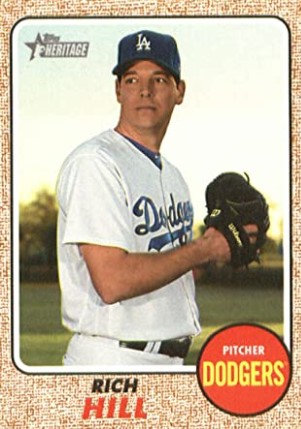
  • The Dodgers’ Clayton Kershaw (9-5, 2.73); Walker Buehler (8-5, 2.62); Hyun-Jin Ryu (7-3, 1.97); and Rich Hill (11-5, 3.66).

Over the course of the season, Dodgers’ starters put up a 3.19 earned run average (second only to the Astros’ 3.16), while Boston’s starters’ ERA was eighth in MLB at 3.77.  A couple of factors to consider here. How much will the extra rest mean for Boston and will Chris Sale bounce back from his stomach problems? From a starting rotation standpoint, it looks pretty even.  BBRT, on first glance, would give a slight edge to Sale and Price over Kershaw and whomever emerges at the number-two spot for LA (likely Ryu) – based primarily on the number of high-stress pitches tossed in this post season.  On the other side fo the coin, there are Sale’s recent health problems and Price’s less than stellar post-season record.  You might keep an eye on Dodgers’ rookie Walker Buehler, wisely being held for a “home start,” who was akey member of the rortation after being called up from Triple A.   Ultimately, a toss-up.

A HANDFULL OF THINGS TO WATCH FOR – NUMBER THREE

Who will start Game One for the Dodgers, who used ace Clayton Kershaw to close out Game Seven against the Brewers? It has not been announced as I put this post together.  BBRT is rooting for a Sale/Kershaw battle, but no matter who takes the mound for the Dodgers, Game One will be critical for both sides. Update: Since this was first posted, LA has announced Kershaw as the Game One starter – that add to the importance of this game and makes it a must-watch.

THE BULLPENS

The regular-season bullpen earned run averages for the Dodgers and Red Sox were identical (3.72) and the innings pitched by the relief staff were very close (587 1/3 for the Red Sox and 581 1/3 for the Dodgers).  In fact, almost all the bullpen stats were parallel. The Red Sox’ pen fanned 628 batters, just three more than the Dodgers – and batters hit .235 against the Red Sox’ pen and .231 against the Dodgers’ relievers. If there is a potential issue, it is walks (remember, we’ve already seen how patient the Dodgers’ hitters can be), where the Red Sox’ relievers gave up 245 walks to 199 for the LA pen.

I see an edge for the Dodgers’ pen, despite their extra post-season workload.

A HANDFUL OF THINGS TO WATCH FOR – NUMBER FOUR

Which starters will end up taking the mound in relief? Already this post season, the Dodgers’ Clayton Kershaw and Rich Hill and the Red Sox’ Chris Sale, David Price and Rick Porcello have all been called on for relief duty.  How many times members of the rotation are called in from the pen may say a lot about how this World Series is going.

The Dodgers’ are led by closer Kenley Jansen (1-5, 3.01,38 saves, 3.01), who has been a bit homer-prone (13 in 71 2/3 innings this season); Pedro Baez (4-3, 2.88); Scott Alexander (2-1, 3.69) and (probably for middle innings) transitioned starter Kenta Maeda.   The Red Sox look to Craig Kimbrel (5-1, 2.74, 42 saves) to close out and expect to see innings from Matt Barnes (6-4, 3.65) and Ryan Brasier (3-0, 1.60); among others.

These two bullpens look pretty even, but you can give an edge to LA based on a post-season bullpen ERA of 1.30 to the Red Sox’ 3.62.

A HANDFUL OF THINGS TO WATCH FOR – NUMBER FIVE

Could we see Red Sox’ RF Mookie Betts at the two-bag? The Red Sox lose the DH spot when they play in LA and there is talk that RF Mookie Betts could move into 2B in order to put J.D. Martinez’ glove in the outfield – and, of more impotance, his very potent bat in the lineup. Not such a far-fetched idea.

Betts, a Gold Glove outfielder, is a superb athlete, who started more than 200 games at 2B in the minor leagues (and started 14 games at 2B in his rookie MLB season).  Watch for that development. Should the Red Sox make the move, it will be interesting to see the impact defensively – and how it balances against Martinez’ impact offensively. If it were me – and this is why I am writing a blog and not managing a team – I would use Betts at 2B, unless I had left Boston with a two-games to none lead. Then I’d keep him in RF until LA pulled within one game.  

So, there you have BBRT’s observations on the upcoming series.  It will be close – perhaps determined by whether Boston defends home field advantage in Game One. It may also come down to star power.  Who will lead their team to a championship – Manny Machado or Mookie Betts.  Or who will prove to be the ace that shuts down one of these two offenses – Clayton Kershaw or Chris Sale? Or maybe someone come out of the blue to surprise us all and prove to be the Series MVP? (After all, the World Series MVP list includes such names as Pat Borders, Scott Brosius, Rick Dempsey and Ray Knight. )  If I had to predict a surprise World Series MVP for this year, I’d go with Dodgers’ 1B David Freese to win his second career WS MVP (he won it with the Cardinals in 2011) or Red Sox’ 3B Eduardo Nunez to power some key hits and make a couple of notable defensive “saves.”  Ultimately, though, BBRT sees the Red Sox in seven, solid pitching from both Sale and Price (who turns around his post-season reputation) and an WS MVP Award for either Mookie Betts or Andrew Benintendi.  However, I would not place any kind of bet on any of those predictions.

BASEBALL ROUNDTABLE MAKES TOP 100 BASEBALL BLOG LIST

100Baseball Roundtable has made the Feedspot list of the Top 1oo Baseball Blogs.  To see the full list, click here.


Primary Resources; Baseball Reference.com; ESPN.com


I tweet baseball @DavidBBRT.

Follow/Like the Baseball Roundtable Facebook page here.

Member: Society for American Baseball Research; The Baseball Reliquary; The Negro Leagues Baseball Museum.
MLB’s Only All-Hispanic All Star Game … and a look at Latino MLB greats.

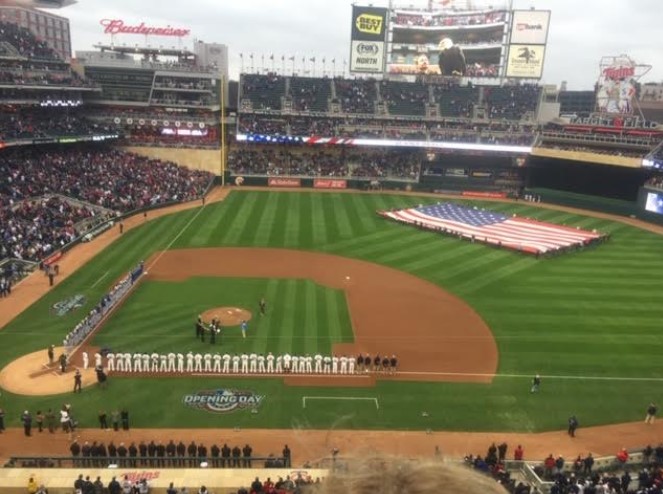
On this date (October 12) 55 years ago (1963), MLB hosted it first (and only) Hispanic All-Star Game – which, coincidentally, was also the last major league contest ever played at New York’s Polo Grounds (the Mets  moved to Shea the next season).   In this post, Baseball Roundtable will:

  • Reflect on the 1963 Hispanic All Star Game;
  • Review the All-Time Latino All-Star Team named by MLB in 2012 (based on a survey of baseball experts), as well as the Latino Legends team selected by the fans in 2005.
  • Share a few of BBRT’s All-Time Latino MLB selections (and comment on potential future additions to that roll).

Side note:  Throughout the reporting related to these “All Time” squads, the terms Hispanic and Latino are used relativley interchangeably. So, BBRT will follow suit. 

THE 1963 MLB HISPANIC ALL STAR GAME

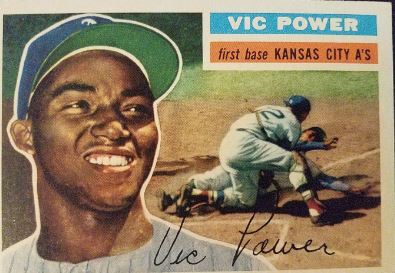
Vic Power was selected as the top Hispanic MLB Playeer in 1963.

Vic Power was selected as the top Latino MLB Playeer in 1963.

The 1963 MLB Hispanic All Star Game drew a rather meager crowd of 14,235 to see such stars as Juan Marichal, Roberto Clemente, Luis Aparicio, Tony Oliva, Minnie Minoso, Felipe Alou, Orlando Cepeda and Vic Power.  In pre-game ceremonies, Vic Power was honored as the number-one Latino player; Juan Marichal as the top Latino pitcher; and Orlando Cepeda as the most popular Latino player.  Here’s the box score for the contest, won the by National Leaguers by a 5-2 score.


AL       000  000   0002      2   7   2

NL       100   301   00x      5   9   2


AL                       AB       H         R          RBI

L. Aparicio SS         4          0          0          0

V. Power 1B             3          0          0          0

J. Becquer 1B           1          0          0          0

T. Oliva RF               5          0          2          1

H. Lopez LF             2          0          1          0

M. Minoso LF            2         0           0         0

J. Azcue C                4          0          0          0

R. Majias CF            3          0          1          0

F. Mantilla 3B           4          0          0          0

Z. Versalles 2B         4          1          1          0

P. Ramos P                2         0          1          0

D. Segui P                  2          1          1          0

NL

L. Cardenas SS-2B    4        0          0          0

F. Alou LF                   4       0          1          1

O. Cepeda 1B             3          1          1          0

R. Amaro 1B               1          0          0          0

T. Gonzalez CF           3          2          2          0

R. Clemente RF          2          0          0          0

A. McBean P               1          0          1          1

J. Pignatano C            1          0          0          0

E. Bauta P                   0          0          0          0

J. Javier 2B                 2          1          2          1

C. Fernandez 3B        2          0          0          0

C. Baragan C               3         0          0          0

J. Marichal P               1          0          0          0

M. Mota RF                 2          0          2          2

2B – Oliva; 3B – McBean; SB – Taylor, Javiar, Aparicio

Pitching

AL                                        IP       H        R        ER     BB      SO

P. Ramos (L)                        5           6          4          4          1          4

D. Segui                               3           3          1          1          1           1

NL

J. Marichal                            4          2          0          0          0          6

A. McBean (W)                     4          3          0          0          2          4

E. Bauta                                1          2          2          2          1          0


—–ALL TIME LATINO ALL STARS (2012) AND LATINO LEGENDS (2005)—–

Now, let’s look at the All-Time Latino All-Star team of 2012, with the 2005 Latino Legends team selected by the fans.

                                            2012                                            2005

Catcher                        Ivan Rodriguez                         Ivan Rodriguez

First Base                     Albert Pujols                            Albert Pujols

Second Base                Roberto Alomar                      Rod Carew

Third Base                    Alex Rodriguez                       Edgar Martinez

Shortstop                     Louis Aparicio                          Alex Rodriguez

Outfield                        Roberto Clemente                  Roberto Clemente

Outfield                        Ted Williams                           Manny Ramirez

Outfield                        Reggie Jackson                      Vlad Guerrero

Designated Hitter         Edgar Martinez

RH Pitcher                   Juan Marichal                         Juan Marichal/Pedro Martinez

LH Pitcher                    Fernando Valenzuela              Pedro Martinez

Closer                          Mariano Rivera                         Mariano Rivera

Manager                       Felipe Alou

You can form your own opinions – and even put together your own all-Latino team.  Here, for what they are worth, are BBRT’s comments on the 2005 and 2012 selections, as well as on current players who may very well prove to be future “Latino Legends.”

Catcher – Hall of Famer Ivan Rodriguez is a clear choice and was the backstop on both the 2005 and 2012 teams.  Hard to argue with 13 Gold Gloves, 14 All-Star selections, a league MVP Award, 2,844 hits, a .296 career average, 311 home runs and more than 1,300 runs scored and RBI.

In today’s game, the Cardinals’ Yadier Molino deserves mention – 15 MLB seasons, eight Gold Gloves, nine All Star Selections and a .282 average, with 146 home runs and 859 RBI.

First BaseAlbert Pujols made both the 2005 and 2012 lists and the stats tell the story.  Having just completed his 18th MLB season, Pujols has 3,082 hits, a career .302 average, 633 home runs, 1,982 RBI,  a Rookie of the Year Award, three MVP Awards and ten All-Star Selections.  Orlando Cepeda and Rafael Palmeiro are the closest competitors, but Pujols belongs on top.

AlomarSecond Base – Wow, two Hall of Famers here – Roberto Alomar (2012 list) and Rod Carew (2005).  A tough one.  Carew clearly leads the “Awards Race” – Rookie of the Year, an MVP Award, seven batting titles, 18 All-Star selections in 19 seasons.  Still, BBRT would go with Alomar.  While Carew leads Alomar in hits (3,053 to 2,724) and career average (.328 to .300), Alomar (a 12-time All Star) leads Rapid Rodney in runs scored (1,508 to 1,424), RBI (1,134 to 1,015), home runs (210 to 92) and stolen bases (474 to 353).  The clincher, however, comes not at the plate or on the base paths – Alomar leads in Gold Gloves 10 to 0.

If you were selecting an All Time Latino/Hispanic team today, the Astros’ Jose Altuve would be right up there at 2B with Roberto Alomar and Rod Carew. After eight MLB seasons, the 28-year-old Altuve already has an MVP Award and three batting titles – as well as six All Star selections, two stolen base titles, a .316 career average, four 200+ hit seasons and a Gold Glove.

Third Base – Interesting results here.  The 2012 team has Alex Rodriguez (who made one of the Latino All Star lists as a shortstop and one as a third baseman) and the 2005 team has Edgar Martinez (who made one list as a DH and one as a third baseman).  BBRT is taking the easy way out and going with A-Rod at the hot corner (and, as you will see later, Martinez at DH).  Rodriguez was a 14-time All Star, three-time MVP, five-time league home run leader and one-time batting champion.  If that’s not enough, he tallied 3,115 hits, 696 home runs, 2,086 RBI, 2,021 runs, 329 stolen bases and a .295 career average.

The Rangers’ Adrian Beltre should draw support for future All-Latino teams – thanks to his superior combination of leather and lumber.  Beltre ended his 2018 season with five Gold Gloves, 3,166 hits, 477 home runs, 1,707 RBI, 1.,524 runs scored 121 steals and a .286 average.

Also on the horizon is Rockies’ 3B Nolan Arenado (born in California, but of Cuban/Puerto Rican descent). In six MLB seasons, the 27-year-old has won five gold gloves, is a four-time All Star, led the NL in home runs three times and in RBI twice.  His current career average is .291, with 186 home runs and 616 RBI.

The Yankees’ 23-year-old Miguel Adujar still has a lot to prove – but a rookie season line of .297-27-92 show the potential to join the ranks of all-time Hispanic players.

Shortstop – Placing A-Rod at third base on BBRT’s All-Latino team paves the way for BBRT’s shortstop pick – Louis Aparicio (from the 2012 list).   Although not blessed with a powerful bat (.262 career average with 83 home runs), Aparicio led the AL in stolen basis nine times (and totaled 506 stolen bases), scored 1,335 runs, earned 10 All-Star selections and captured nine Gold Gloves.  Fortunately, I could place A-Rod at third and give this slick-fielding speedster his due.

Most likely to give Luis Aparicio competition (for All-Time Latino shortstop) on future lists is the Indians’ Francisco Lindor. The 24-year-old, a four-season MLB “veteran,” already has three All Star selections and a Gold Glove. Over those four seasons, he has hit .288, with 98 home runs (71 in the past two campaigns), 310 RBI and 71 steals.

Outfield – I have to start with Roberto Clemente (on both the 2005 and 2012 lists): 12-time All Star; 12-time Gold Glover;  four-time batting champ and one-time NL MVP; who collected 3,000 hits, 240 home runs, 1,416 runs scored and 1,305 RBI.

Next is the less obvious pick – Ted Williams (2012 list).  How does Ted make the all-Latino list? Very simply, his mother was Mexican.  Williams needs no justification, but here a partial list:  17 All-Star selections; six batting titles; two MVP Awards; four home run titles;  two Triple Crowns; a .344 career average;  521 home runs; 1,798 runs scored; and 1,839 RBI.  No doubt, Teddy Ballgame is in.

vladBBRT’s final choice in the outfield reflects a combination of logic and sentiment.  First, BBRT eliminated controversial choices, particularly any possible PED issues.  BBRT also considered attitude and how the player contributed to the reputation of the game.  That led to agreement with the fans’ 2005 choice Vlad Guerrero – nine-time All Star, League MVP, 449 home runs, 1,496 RBI, 1,328 runs scored, 181 stolen bases.   There were plenty of choices here, all falling behind for one reason or another – Manny Ramirez, Juan Gonzalez, Reggie Jackson, Sammy Sosa and Minnie Minoso – to name just a few.  BBRT also had a soft spot for Tony Oliva – an eight-time All-Star and three-time batting champ (his home run, runs scored and RBI totals just didn’t match up with Vlad).


Among today’s outfield “stars,” the Yankees’ Giancarlo Stanton is gaining ground. In nine seasons, the 28-year-old has been an All Star four times, won the 2017 NL MVP Award, captured a pair of home run titles and one RBI crown. He already has 305 home runs and 772 RBI on his resume – but the .268 career average may keep him on the bench with the All-Time Latino team.

Looking to the longer-term future, the Braves’ 20-year-old rookie Ronald Acuna, Jr. (.293-26-64, 16 steals in 111 games) and Nationals’ 19-year-old freshman Juan Soto (.292-22-70 in 116 games) are off to good starts.

DH – I needed a spot for Edgar Martinez.  He’s a seven-time All-Star, two-time batting champ, who retired with 2,247 hits, a .312 average, 309 home runs, 1,219 runs scored and 1,261 RBI – most accumulated at DH.

If BBRT was filling out a new All-Latino list  (rather than reflecting on the 2005 and 2012 selections), I’d go with David Ortiz who, in 20 seaons, made ten All Star teams, hitting .286, with 541 home runs and 1,768 RBI – and became a true Boston hero.

Right-Handed Starter – Tough contest, and while the 2012 experts went for Juan Marichal, BBRT is selecting Pedro Martinez (who made it on the 2005 squad along with Marichal).  Here’s the case: While Marichal leads Martinez in wins 243 to 219, Martinez holds the edge in winning percentage .687 to .631.  Then there is earned run average – Marichal holds a slight edge 2.89 to 2.93, but measured against their peers, Martinez led his league in ERA five times to just once for Marichal. Marichal did have six twenty-win seasons to just two for Martinez, but Pedro captured three Cy Young Awards to one for Juan. Marichal also hold a big lead in complete games 244 to 46, but led the league in complete games twice to Martinez’ once.   Martinez enjoys a big league in strikeouts 3,154 to 2,303, leading his league three times to none for Marichal.  Tough to compare pitchers from different eras, but for BBRT – when compared to his peers – Martinez was more dominant than Marichal.  So, Pedro gets a VERY SLIGHT edge.

In addition to Pedro Martinez and Juan Marichal, BBRT would give consideration to:  Bartolo Colon (247-188, 4.12) – how can you ignore a player known as “Big Sexy”, who also has four All Star selections, two twenty-win seasons and a Cy Young Award; Dennis Martinez (245-193, 3.70 in 22 MLB seasons), a four-time All Star; and Luis Tiant (229-172, 3.30), a four-time twenty-game winner.

Among the current crop of hurlers who could work their way up the  rankings are the Indians’ Carlos Carrasco (17-10, 3.38 last season), who has three 200+ strikeout seasons in the past four campaigns; 23-year-old German Marquez of the Rockies, who went 14-11, 3.77 with 230 whiffs in 196 innings in 2018; and two-time All Star, 26-year-old, Cardinal Carlos Martinez (54-38, 3.37).

Finally, you have to recognize the Marlins’ Jose Fernandez, who was well on his way to a spot near the top of this list before his untimely death in 2016 (at age 23). In his final season, Fernandez went 16-8, 2.86, with 253 strikeouts in 182 1/3 innings.

Left-Handed Starter – For lefties, Fernando-mania (Fernando Valenzuela) reigns on both lists … although the statistics are far less gaudy than a handful of other Latino lefties. This six-time All Star rang up a 173-153 career record with one Cy Young Award; a 3.54 ERA; one-time league leadership in wins; three-time leadership in complete games; one-time leadership in shutouts; and  2,074 strikeouts (one strikeout crown) – to go along with a personality that brought new life to and spurred greater Latino interest in West Coast baseball.

If BBRT was making the selection from a blank slate, I’d have gone with Hall of Famer Lefty Gomez (189-102, 3.34 over 14 seasons), a seven-time All Star, four-time twenty-game winner (led the AL in wins  twice), two-time AL ERA leader, three-time league leader in shutouts and three-time league leader in strikeouts.

Closer – All you need to say is Mariano Rivera and “case closed.”  Rivera racked up a major league record 652 saves to go with an 82-60 record and 2.21 ERA, leading the AL in saves three times and earning 13 All-Star selections.  As a closer, he was as close to a sure thing as you can get.

There are a couple of “up-and-comers: in the All-Latino closer category; 23-year-old Roberto Osuna of the Astros, who already has 116 saves (10-15, 2.78 with 272 strikeouts in 245 2/3 innings) and Yankees’ flamethrower Aroldis Chapman (30-24, 2.24, 236 saves in nine seasons), with 798 punch outs in 478 2/3 innings.  However, it’s a long way to 600 saves, so Rivera’s spot looks pretty darn secure.

BBRT welcomes your comments on these choices, or other nominees to rank among the greatest Latino players of all time.


I tweet baseball @DavidBBRT

Follow/Like the Baseball Roundtable Facebook page here.

Member: Society for America Baseball Research; The Baseball Reliquary; The Negro Leagues Baseball Museum.
Baseball Roundtable 2018 Division Series Predictions

Well, the Wild Card round is over, and Baseball Roundtable was one-for-two on two on prediction – whiffed on the Rockies, got the fat part of the bat on the Yankees. Time now to look at the Division Series.  Again, you really can’t take these to the bank, but you may at least find these observation interesting.

NATIONAL LEAGUE DIVISION SERIES

Brewers over the Rockies

Christian Yelich ... driving the Brewers' success. Photo by hueytaxi

Christian Yelich … driving the Brewers’ success.
Photo by hueytaxi

These are two potent offenses – playing in a couple of hitters’ parks. The Brewers come in led by RF Christian Yelich (.326-36-110 and 22 steals); 1B Jesus Aguilar (.274-35-108); and CF Lorenzo Cain (.308, with ten home runs, 90 runs scored and 22 steals). The Rockies counter with 3B Nolan Arenado (.297-38-100, with 104 runs); SS Trevor Story (.291-37-108, with 22 steals); and Charlie Blackmon (.291-29-70 and 119 runs).

The Rockies may be a bit road-weary, having played three of the past four day in three different time zones – including 13 grueling innings versus the Cubs on Tuesday. The Brewers last played in Monday’s Tiebreaker against the Cub.

Pitching-wise, the Rox’ top two starters are Kyle Freeland 17-7, 2.85 and German Marquez (14-11, 3.77) – and each will get just one start in the NLDS. Young (23-year-old) righty Antonio Senzatela (6-6, 4.38) will get the first-game start for Colorado; likely to be followed by southpaw Tyler Anderson (7-9, 4.55) – with Freeland and Marquez slated for Games Four and Five in Colorado. The Brewers are slated to go with an “opener” for the Division Series opener – and, for this old schooler, that a little scary.  Jhoulys Chacin (15-8, 3.50), Wade Miley (5-2, 2.57) and Gio Gonzalez (7-11, 4.57) are likely starters going forward.  Starting pitching looks to be pretty much a “wash.”

Gio Gonzalez could be a difference maker.  He was 7-11, 4.57 with the Nationals, but 3-0, 2.13 in five starts after coming over to the Brew Crew.

On the Rockies’ side of the ledger, you can’t overlook 24-year-old, left-handed swinging outfielder David Dahl, who went .287-9-27 in 24 September contests and .273-16-48 in 77 games on the season.   

I’d give the Brewers’ bullpen an edge in depth (Corey Knebel, Josh Hader, Jeremy Jeffress and Joakim Soria versus Wade Davis, Adam Ottavino, Seunghwan Oh and Scott Oberg) – although both pens bring some quality arms.

Ultimately, BBRT see the Brewers a little deeper on offense (Ryan Braun/Travis Shaw) and in the pen.  Couple that with the fact that the Rockies had the roughest path (travel and competition-wise) to this round and BBRT gives the edge to the Brewers.  Plus, I just don’t think the red-hot Christian Yelich will let them lose this series.  Lots of scoring, but the Brewers prevail.

Dodgers over Braves

Hyun-Jin Ryu photo

Hyun-Jin RyuPhoto      by Keith Allison

The Dodgers out-homered the Braves by 60 and outscored them by 45 – and still the difference-maker in this matchup is likely to be pitching. The Dodgers’ rotation of Clayton Kershaw (9-5, 2.73); Rich Hill (11-5, 3.66); Walker Buehler (8-5, 2.62); and Hyun-Jin Ryu (7-3, 1.97) was part of the reason LA had the NL’s lowest team ERA. The Braves counter with Mike Foltynewicz (13-10, 2.85); Julio Teheran (9-9, 3.94); Sean Newcomb (12-9, 3.90); and Anibel Sanchez (7-6, 2.83) – but it’s clearly edge Dodgers.  For the Braves to have a chance, Foltynewicz has to be on top of his game (and win a pair of starts).  Note: Hyun-Jin Ryu will start Game One for LA.

Both bullpens can be effective, but Dodger’ closer Kenley Jansen (38 saves, 3.01 earned run average) has been a bit homer-prone (13 in 71 2/3 innings this season).   Other key bullpen arms for LA include: transitioned starter Kenta Maeda, Alex Wood and Pedro Baez. The Braves look to Arodys Vizcaino to close out games – with a supporting cast that includes A.J. Minter, Jonny Vebters and Brad Bach.

Dodgers’ reliever Pedro Baez is one to watch in this series. From August 13 to the season’s end, he gave up just one earned run in 19 appearances (19 1/3 IP) for a 0.47 ERA

The line-up sees the Braves with a nice mix of veterans (1B Freddie Freeman at .309-23-98 and OF Nick Markakis at .297-14-93) and talented youngsters (20-year-old 2B Ozzie Albies at .261-24-72, 14 steals; 20-year-old Ronald Acuna Jr. at .293-26-64; and 24-year-old 3B Johan Camargo at .272-19-76).

A key to this series may be how the Braves’ youngsters – Ronald Acuna, Jr., Ozzie Albies and Johan Camargo handle the post-season pressure.

The Dodgers bring a more veteran crew with eight players launching 20+home runs each and such “names” as SS Manny Machado (.297-37-107 for the Orioles and Dodgers), Matt Kemp (.291-21-85), CF Cody Bellinger (.260-25-76) and the mercurial RF Yasiel Puig (.267-23-63, with 15 steals.

Keep an eye on the Dodgers’ 1B Matt Muncy, who had a career year at .263-35-79.

The Braves made the post-season perhaps a year earlier than expected and – coming up against the Dodgers – BBRT see it as a “wait until next year” finish.

AMERICAN LEAGUE DIVISION SERIES

Astros over Indians

Justin Verlander Astros photo

Justin Verlander … 290K. Photo by Keith Allison

Probably the toughest division Series to call.  Who would have thought that the first team in MLB history to have four 200-strikeout pitchers in the same season (Indians’ Corey Kluber … 20-7, 2.89, 222K; Mike Clevinger … 13-8. 3.02, 207K; Carlos Cararasco … 17-10, 3.38, 231K; and Trevor Bauer … 12-6, 2.21, 22K ) could be at a disadvantage in starting pitching?  But the Astros offer up Justin Verlander (16-9, 3.07, 290K); Gerrit Cole (15-5, 2.88, 276K);  Dallas Keuchel, 12-11, 3.74);  and Charles Morton (15-3, 3.13, 201K). That Astros’ quartet helped Houston notch MLB’s lowest starting staff ERA (3.16) and highest strikeouts per nine innings (10.37).

In the bullpen, both teams throw out some quality arms. Andrew Miller, Cody Allen, Brad Hand and Oliver Perez for Cleveland and Roberto Osuna Hector Rondon, and Ryan Pressly for the Astros. On the season, the Astros had a 3.03 bullpen ERA, the Indians’ 4.60.  Trevor Bauer (12-6, 2.21 with 221 strikeouts in 175 1/3 innings will be in the bullpen for (at least the start of) this Series.  He could prove an interesting weapon.

The Indians went 91-71 and ran away with the AL Central. However, they ran up a 49-27 record against the weak Central – and were two games under .500 (42-44) against everyone else.

Offensively, it’s a good match up.  The Indians, led by SS Francisco Lindor (.277-38-92, with 25 steals) and 3B Jose Ramirez (.270-39-195, 34 steals) put up 818 runs and hit 216 round trippers.  The Astros had a more balanced offense and finished with 797 runs and 227 homers.  Among the key Houston contributors were 2B Jose Altuve (.316-13-61, 17 steals); 3B Alex Bergman (.281-31-103, 10 steals); and 1B Yuli Gurriel (.282-13-85).

Game One Will Set the Tone

The first game of this Series will feature two former Cy Young Award winners (and 2018 CYA candidates) facing off.  For the Indians, it will be Corey Kluber and for the Astros it will be Justin Verlander. Given the matchups we are likely to see, getting that first-game win may be critical.

Ultimately, BBRT thinks the Astros’ edge in pitching – and more balanced offense – will carry the day.

Red Sox over Yankees

Chris Sale Red Sox photo

Chris Sale … BoSox key. Photo by Keith Allison

Will good pitchings top good hitting? BBRT is betting on it. The Yankees blasted an MLB-record 267 home run this year – and I’m still betting Boston veterans Chris Sale (12-4, 2.11) and David Price (16-7, 3.58) can lead Boston to a win in this Series. Additional starts will come from among Rick Porcello (17-7, 4.28); Nathan Eovaldi (6-7, 3.81); and Eduardo Rodriguez (13-5, 3.82).  The Yankees counter with Luis Severino (19-8, 3.39); Masahiro Tanaka (12-6, 3.75); J.A. Happ (7-0, 2.69 with the Bombers); and possibly C.C. Sabathia (9-7, 3.64).


A Couple of Potential Difference Makers

Two trade-deadline pickups could be difference makers for the Yankees. Starter J.A. Happ, who came over from Toronto, was 17-6, 3.65 on the season – but 7-0, 2.69 for the Yankees.  (He will likely get two starts if needed.) 1B Luke Voit, acquired from the Cardinals (he played just eight 2018 games for the Redbirds), was .333-14-33 in 39 games for the Yankees.

The Yankees have an edge in the pen (a 3.38 bullpen ERA to the Red Sox’ 3.72 and 11.4 strikeouts per nine relief innings to the Red Sox’ 9.62). Among the keys to the Yanks’ pen are Aroldis Chapman, Dellin Betances and Zach Britton, while the Red Sox look to Craig Kimbrel, Matt Barnes and Joe Kelly.

The Yankees had one the most powerful and most balanced attacks in baseball, getting at least 20 home runs from each of the slots (1-9) in the lineup.

On offense, the Yankees have a lot of balance with some key contributors being DH Giancarlo Stanton (.266-38-100); 1B Luke Voit (.33-14-33 in 39 games with New York); and RF Aaron Judge (.278-27-67 in 112 games). The Red Sox counter with the likes of DH J.D. Martinez (.330-43-139); RF Mookie Betts (.346-32-80); and SS Xander Bogaerts (.288-23-103).

Red Sox Difference Makers

A couple of veteran names that don’t get called out often enough (they are competing with Mookie Betts and J.D.martinez for the Red Sox spotlight) could make a difference in this Series. If either 1B Mitch Moreland (.245-15-68) or 2B Ian Kinsler (.240-14-48, with 16 steals) gets hot, they could really lengthen the Red Sox’ offense.

In reality, despite all those Yankee homers, there two offenses are pretty even. The Red Sox put up an MLB-best 876 runs in 2018; the Yankees were second at 851.  Ultimately, I am going with pitching and betting that Sale and Price and carry the day.  Still, given the long-standing rivalry and the make-up of these two squads, this should be an explosive and competitive series.

The Story Will be…

The story of this series will be written by Chris Sale in Game One.   He has to shut down the Yankees’ offense in Fenway.  If not, it could prove a long and disappointing Series for Boston fans – and a bad prediction by BBRT.

________________________________

I’ll have more on the NLCS as the next post-season round approaches, but here’s BBRT’s look forward.

NLCS

Dodgers over Brewers … The Dodgers just have too much offense and pitching for the Brewers to handle.

ALCS

Astros over Red Sox … The Astros may be the best – and most balanced – team (offensively and on the mound) in baseball.


World Series – Astros over Dodgers.

Wow! A great one.  However, BBRT see the Astros pitching shutting down the Dodgers and World Series MVP is likely to be Verlander or Altuve.


I tweet Baseball @DavidBBRT.

Follow/Like the Baseball Roundtable Facebook page here.

Member: Society for American Baseball Research; The Baseball Reliquary; The Negro Leagues Baseball Museum.

Johnny Allen – and an underrated/under-recognized/near-perfect season

Here’s just a little something from BBRT to contemplate while waiting for tonight’s Yankees/A’s contest.  And it has, appropriately, a bit of a Bronx Bomber hook. It’s about a little recognized and underrated hurler named Johnny Allen.

In the thirty days from September 3 to October 3, 1937, Indians hurler Johnny Allen started and completed eight games winning seven (losing one).  During that span, he also made one relief appearance (no decision).

 Over the 1937 season and first half of 1938, Allen went 27-2, 2.82 – completing 24 of 36 starts.

AllenOn this date (October 3) in 1937, Cleveland right-hander Johnny Allen (who originally came up with the Yankees) was starting for the Indians (against the Tigers) in Detroit.  Since September 3, he had thrown one 2 1/3-inning relief stint (no decision) and started seven games. He had completed and won all seven of those starts, throwing 63 innings and giving up just 14 earned runs.  On the season, he was a perfect 15-0 (despite missing about a month-and-a-half with appendicitis) and carried a 2.62 earned run average. Going for his eighth win in 30 days (September 3 – October 3), Allen was in a position to record the most wins ever in an undefeated MLB season.

It was not to be, however, but through no fault of Allen.  The righty – known for a lively fastball and solid curve – went the distance that day, giving up a second-inning run on a double by Tigers’ RF Pete Fox and a single by 1B Hank Greenberg. It was the only run he would give up in a complete game – his eighth in 30 days – five-hitter. (Side Note: In an article for the Society for American Baseball Research, author Jon Weeks reports that the single actually was a grounder muffed by Cleveland 3B Odell Hale and Allen had to be restrained twice “when he tried to assault the error-prone third-sacker.”  Baseball-Reference.com has the grounder scored as a base hit.)

Unfortunately, Tigers’ southpaw Jack Wade – who came into the game at 6-10 on the season, with a 5.64 earned run average, pitched the game of his career. He tossed a nine-inning, one-hit shutout – topping Allen 1-0 and putting the Indians’ hurler’s season mark at 15-1. How surprising was Wade’s performance? His MLB career record (eight seasons) ended at 27-40, 5.00.

Getting back to the underrated and under-recognized Allen – he came up to the majors in 1932, after going 21-9 in the International League (Toronto and Jersey City) the year before.

As a 27-year-old MLB rookie, Allen went 17-4, 3.70 and led the AL in winning percentage at .810. In four seasons with New York his record was 50-19, 3.79 – before attitude (anger) issues contributed to a trade to Cleveland in December of 1935

Hall of Fame outfielder Al Simmons (.334 career average) once said, “The pitcher who gave me the most trouble was Johnny Allen … He threw hard and with a side arm.  He was particularly tough with men on base. 

                                                            (Article by Jimmy Jemail, August 8, 1955, Sports Illustrated.)

 Allen flourished in Cleveland, going 20-10, 3.44 in the 1936 season, following that with his 15-1 record in 1937. He started 1938 in the same near-perfect fashion and was 12-1, with a 2.98 ERA at the All Star Break.   Then, injury struck (some say something went awry in his shoulder during his All Star appearance, others say he slipped in the shower).  After the break, Allen was 2-7, 6.29 – and, over the next six seasons, he won only 43 games (37 losses). He finished with a career mark of 142-75, 3.75. Before the 1938 injury he was 97-31, 3.44 – afterward 45-44, 4.20.

Johnny Allen pitched three innings in the 1938 All Star Game – giving up two hits and one run and fanning three (Leo Durocher, Billy Herman, Mel Ott).

Allen’s temper was a consistent matter of concern (part of the reason he suited up for five different teams in his 13 MLB seasons) –  to the point of a fine and suspension for attacking an umpire in 1942.  Ironically, after retiring as a player, Allen became a minor league umpire – even rising to Umpire-In-Chief in the Carolina League.

Primary sources: Baseball-Reference.com; Society for American Baseball Research.  

I tweet baseball @DavidBBRT

Follow/Like the Baseball Roundtable Facebook page here.

Member: Society for American Baseball Research; The Baseball Reliquary; The Negro Leagues Baseball Museum.
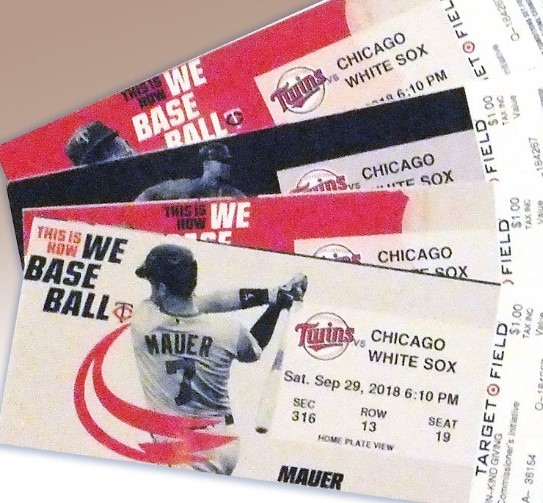
Joe Mauer’s Final Game

For BBRT’s Minnesota readers … no explanation necessary. Had to add the question mark!

Mauer

New York Yankees – Kings of the 100-Win Campaigns … and other 100-win tidbits

Yankee Stadium ... 100-win seasons live here. Photo by Steven Pisano

Yankee Stadium … 100-win seasons live here.
Photo by Steven Pisano

Yesterday, (September 30, 2018), the Yankees picked up their 100th win of the season becoming the third American League team to reach 100 victories this year (Red Sox – 107 wins/Astros 102, with one game to go).   It was both the Yankees’ 20th 100-win season (extending their own recrord)and the first time we have seen three 100-win teams in one league.

We have seen three 100-win teams in a single season in the past (just n in the same league).


  • 1942: Cardinals (106-48); Dodgers (104-50 wins); Yankees (103-51)
  • 1977: Royals (102-60); Yankees (100-62); Phillies (101-61)
  • 1998: Braves (106-56). Astros-NL (102-60); Yankees (114-48)
  • 2002: Yankees (103-58); A’s (103-59); Braves (101-59)
  • 2003: Braves (101-61); Giants (101-61); Yankees (101-61)
  • 2107: Indians (102-60); Astros-AL (101-61); Dodgers (104-58).

So, looking at the seven seasons (including 2018) in which there have been three 100-win teams, the Yankees have been involved six times; Braves three times; and Astros three times.

____________________________________________

100-WINS- NO REWARD

What really struck BBRT were those eight instances when an MLB team notched 100 wins – and still didn’t get a whiff of the post-season. As yon might expect, they all occurred before the 1994 establishment of the Wild Card system. Let’s look at those:

  • 1909 Chicago Cubs – 104-49 … finished second, 6 ½ games behind the Pirates
  • 1942 Brooklyn Dodgers – 104-50 … finished second, two games behind the Cardinals
  • 1954 Yankees – 103-51 … finished second, eight games back of the Indians
  • 1961 Tigers – 101-61… finished second, eight games behind the Yankees
  • 1962 Dodgers – 102-63 … finished second, one game back of the Giants
  • 1980 Orioles – 100-62 …finished second, three games behind the Yankees
  • 1993 giants – 103-58 … finished second, one game behind the Braves

______________________________________________________

In MLB history, 105 teams have put together seasons of at least 100 wins.

  • No franchise has had more 100- win seasons than the Yankees with 20 (including 2018) … the only other franchise with at least ten 100-win campaigns is the Athletics (10).
  • The National League leader is the Cardinals at nine.
  • The Astros are the only franchise to deliver a 100-win season in both the American and National Leagues.
  • Teams which have never had a 100-win season are the Rays; Blue Jays; Rangers; Brewers; Nationals; Marlins; Rockies; and Padres.

 Three Straight 100-win Seasons

There have been just five runs of three-straight 100-win seasons in MLB history.

Philadelphia Athletics

  • 1929 (104-46)
  • 1930 (102-52)
  • 1931 (102-52)

Saint Louis Cardinals

  • 1942 (106-48)
  • 1943 (105-49)
  • 1944 (105-49)

Baltimore Orioles

  • 1969 (109-53)
  • 1970 (108-54)
  • 1971 (101-57)

Atlanta Braves

  • 1997 (101-61)
  • 1998 (106-56_
  • 1999 (103-59)

New York Yankees

  • 2002 (103-58)
  • 2003 (101-61)
  • 2004 (101-61)


I tweet baseball @DavidBBRT

 Follow/Like the Baseball Roundtable Facebook page here.

 Member:  Society for American Baseball Research; The Baseball Reliquary; The Negro Leagues Baseball Museum

Scherzer Rolls a 300 – Joins an Elite Pitching Fraternity

Max Scherzer photo

Photo by Keith Allison

Tonight (September 25, 2018), three-time Cy Young Award winner Max Scherzer became the 40th pitcher in major league history – and just the 17th since 1900 – to reach 300 strikeouts in a season. Scherzer ran his 2018 total to 300 by fanning ten Marlins in seven innings (five hits, one earned run and no walks) as the Nationals won 9-4. On the season, Scherzer is now 18-7, 2.53 with 300 strikeouts in 220 2/3 innings pitched. Scherzer fanned one batter each in the first, third, fifth and sixth innings and two each in the second, fourth and seventh.  His tenth victim of the game and 300th of the season was Marlins’ LF Austin Dean for the second out in the seventh.

Here, in honor of Scherzer’s feat, are a few 300-strikeout tidbits.

  • 41 MLB pitchers have turned in 67 seasons of 300 or more strikeouts – 31 of those before 1900.
  • 1884 saw a record 15 pitchers notch at least 300 strikeouts – since then, there have never been more than five in any single season (1886). Since 1900, there has never been more than two 300 strikeout pitchers in any season.
  • Currently active pitches with 300-strikeout seasons, in addition to Scherzer, are: Chris Sale (308 in 2017) and Clayton Kershaw (301 in 2015).

The Exclusive 500 Club

Only one MLB pitcher has ever fanned 500 batters in a season – and that was Matt Kilroy, who whiffed 513 batters in 583 innings as a 20-year-old rookie with the 1884 American Association Baltimore Orioles. Of course, it was a different game back then.

In 1884, Kilroy started 68 of the Orioles 139 games (49 percent) – and completed 66 of them. (That season, American Association starting pitchers finished an average of 96 percent of their starts.) Despite five shutouts and a 3.37 earned run average (the league ERA was 3.44), Kilroy finished 29-34 for the last-place (46-85) Orioles.

While Matt Kilroy is the only major league pitcher to ever reach 500 strikeouts in a season, five more have reached 400. 400K

  • There were no 300-strikeout campaigns  between 1912 (Walter Johnson – 303) and 1946 (Bob Feller – 348).
  • Rube Waddell’s 349 strikeouts in 1904 stood as the post-1900 record for 61 years (Sandy Koufax – 382 in 1965). Koufax’ record held for just eight seasons (Nolan Ryan – 383 in 1973, still the post-1900 MLB record). Koufax still holds the NL post-1900 record for whiffs in a season.
  • The only team to boast two 300+ strikeout pitchers in the same season is the 2002 Diamondbacks – Randy Johnson (334) and Curt Schilling (316).
  • The decade of the ‘70s (1970-79) saw 11 seasons of 300 or more whiffs by a pitcher – the most in any decade post-1900.
  • From 1900 through 1962, there were a total of just five 300 or more strikeout campaigns.

Post 1900 K

Primary Resources: Baseball-Reference.com; MLB.com.

I tweet baseball @DavidBBRT

Follow/Like the Baseball Roundtable Facebook page here.

Member: Society for American Baseball Research; The Baseball Reliquary; The Negro Leagues Baseball Museum.
A Look at The Past (and not so bright future) of Complete-Game Shutouts

Cy Young - Library of Congress photo.

Cy Young – Library of Congress photo.

On this date (September 22) in 1911, right-hander Cy Young won his 511th and final major league regular-season game. It was, fittingly, a complete-game shutout – a 1-0 Boston Rustlers win over the Pittsburgh Pirates. It brought Young’s career record to 511-313, and he should have quit while he was ahead.  The 44-year-old Young, in his 22nd MLB season, was 7-6 on the on the 1911 season at the time. Young pitched just three more games that season – going 0-3 and giving up 21 runs in 22 2/3 innings.

That final win – again, a complete-game shutout – led Baseball Roundtable to look at the past (and likely dismal future) of complete-game white-washings.  As Idid that, I learned that Young was one of just 26 pitchers in MLB history to notch double-digit  shutouts in a season.


Trivia Teaser – Who was the last pitcher to log double-digit complete-game shutouts in a season?

That would be southpaw John Tudor of the Cardinals – back in 1985.  That season, Tudor went 21-8, with a 1.93 earned run average for the Redbirds.  He tossed 14 complete games in 36 starts, and ten of those complete-game outings were shutouts. It was the only season Tudor’s 12-campaign MLB career in which he threw more than two shutouts. (He had a career total of 16 CG shutouts.) Tudor finished his career at 117-72, 3.12, with 50 complete games in 263 starts.

The last American Leaguer to throw at least ten shutouts in a season was Orioles’ right-hander (and Hall of Famer) Jim Palmer in 1975. That season, Palmer went 23-11, 2.09 and tossed 25 complete games in 38 starts. Palmer’s career line was 268-152, 2.86 with 211 complete games and 53 shutouts in 521 starts.

There have been 28 instances of pitchers logging ten or more shutouts in a season – and 26 pitchers have accomplished the feat.  Only two have logged ten or more shutouts in a season more than once:  The Phillies’ Grover Cleveland (Pete) Alexander (12 shutouts in 1915 and an MLB-record 16 shutouts in 1916) and the White Sox’ Ed Walsh (10 shutouts in 1906 and 11 whitewashings in 1908).

How Likely Are We to See Ten Shutouts in a Season in Today’s Game?

Since the 2000 season, only one pitcher has thrown at least ten complete games in a season (James Shields of the Rays with 11 in 2011) – much less ten shutouts.

In 2017, the most shutouts by any pitcher was three (Corey Kluber, Indians and Ervin Santana, Twins) and the most complete games was five (same two pitchers). As this post is written no pitcher has more than two complete games or more than one CG shutout in the 2018 season.

A few more shutout tidbits.

  • Walter Johnson (Senators … 1907-1927) holds the career shutout record with 110. No one else has more than 90.
  • The record for shutouts in a season is 16 shared by Grover Cleveland (Pete) Alexander (Phillies, 1916) and George Bradley (Saint Louis Brown Stockings, 1876).

Babe Ruth shares the AL record for shutouts in a season by a southpaw at nine (Red Sox, 1916). Yankee Ron Guidry also threw nine shutouts (1978).

  • Walter Johnson, who drew the Opening Day assignment in 14 seasons, threw a record seven Opening Day shutouts.
  • On August 10, 1944 The Braves’ Red Barrett shutout the Red 2-0 – throwing only 58 pitches (the fewest pitches ever – not just in a shutout, but in a nine-inning complete game of any score.) Barrett pitched a two-hitter with zero walks and zero strikeouts.
  • Don Drysdale of the Dodgers tossed a record six consecutive complete-game shutouts between May 14, 1856 and June 4, 1968.

Playing the Lead Role

In 2008, C.C. Sabathia led the AL, NL and MLB in shutouts. He started the season with the Cleveland Indians and was 6-8, 3.83 with three complete games and two shutouts before being traded to the NL Milwaukee Brewers on July 7. With the Brewers, Sabathia went 11-2 with seven complete games and three shutouts.  His two AL shutouts tied for the American League lead, while he three whitewashings tied for the NL lead.     

______________________________________________________________

Pitchers with Ten or More Shutouts in a Season

George  Bradley, 1876  St. Louis Brown Stockings (NL)  ….. 16

Pud Galvin, 1884, Buffalo Bisons   (NL) ….. 12

Charles  “Old Hoss” Radbourn, 1884 Providence Grays (NL) ….. 11

Jim McCormick, 1884 (two teams) ….. 10

John Clarkson, 1885 Chicago White Stockings (NL) …..  10

Ed Morris, 1886 Pittsburgh Alleghenys  (AA) ….. 12

Dave Foutz, 1886 Saint Louis Browns (AA) ….. 11

Tommy Bond, 1879 Boston Red Stockings (NL) ….. 11

Christy Mathewson, 1908 Giants  (NL) ….. 11

Cy Young, 1904 Boston Americans (AL) ….. 10

Ed Walsh, 1906 White Sox (AL) ….. 10

Ed Walsh, 1908 White Sox (AL) ….. 11

Jack Combs, 1910 Athletics  (AL) ….. 13

Smokey Joe Wood, 1912 Red Sox (AL) ….. 10

Walter Johnson, 1913 Senators (AL) ….. 11

Grover Cleveland Alexander, 1915 Phillies (NL) ….. 12

Grover Cleveland Alexander, 1916 Phillies (NL) ….. 16

Dave Davenport, 1915 St. Louis Terriers (FL) …..10

Carl Hubbell, 1933 Giants (NL) ….. 10

Mort Cooper, 1942 Cardinals (NL) ….. 10

Bob Feller, 1946 Indians (AL) ….. 10

Bob Lemon, 1948 Indians (AL) ….. 10

Sandy Koufax, 1963 Dodgers (NL) ….. 11

Dean Chance, 1964 Angels (AL) ….. 11

Juan Marichal, 1965 Giants (NL) ….. 10

Bob Gibson, 1968 Cardinals (NL) ….. 13

Jim Palmer, 1975 Orioles (AL) ….. 10

John Tudor, 1985 Cardinals (NL) … 10

Primary Resouces: MLB.com; Baseball-reference.com; Baseball-Almanac.com

I tweet baseball @David BBRT

Like/Follow the Baseball Roundtable Facebook page here.  

Member: Society for American Baseball Research; The Baseball Reliquary; The Negro Leagues Baseball Museum.
 

Christian Yelich Red(s) Hot … Records His Second Cycle of the Season

Yesterday (September 17, 2018), Brewers’ left fielder Christian Yelich hit for the cycle (single, double, triple, home run in the same game), as the brew crew topped the Reds’ 8-0 in Milwaukee. It was his second cycle of the 2018 season – and both came against the Reds. (The first cycle was on August 29 at the Great American Ball Park.) In yesterday’s contest, Yelich went four-for-four, with one run scored and four RBI.) He singled in the first inning, doubled in the third, hit a home run (with one on) in the fifth and got the most-often elusive triple in the sixth.

Two cycles in a season is a rare accomplishment indeed. In fact, Yelich is only the fifth major leaguer to accomplish that feat.  The others are:

  • Aaron Hill (Diamondbacks, 2012);
  • Babe Herman (Dodgers 1931);
  • Tip O’Neill (St. Louis Browns, American Association 1887): and
  • John Reilly (Cincinnati Red Stockings, American Association, 1883).

Here are a few other cycle tidbits that yo may find of interest.

The Yellow Jersey of Cycles

On June 18, 2000, the Rockies’ Mike Lansing completed the cycle in just four innings – making his the quickest cycle in MLB history – and earning him the “yellow jersey” of baseball cyclists.  Notably, Lansing was consistently behind in the counts and three of his four hits came with two strikes.

Lansing, hitting second in the order, hit an RBI triple to right in the first inning (getting the most difficult leg of the cycle out of the way ) on a 1-2 pitch, added a two-run home run (0-1 pitch) in the bottom of the second, hit a two-run double (2-2 pitch) in the bottom of the third (as the Rockies scored nine times to take a 14-1 lead), and then completed the cycle with a single (another 1-2 offering) to right in the fourth. Lansing then struck out in the sixth, before being lifted for a pinch-hitter in the eighth.

Quickest Cycle Ever … A Career Perspective

Minnesota Twins’ outfielder Gary Ward hit for the cycle in just his 14th MLB game (September 18, 1980 against the Brewers) – the earliest in an MLB career anyone has ever accomplished the feat.

Triple Your Pleasure – Triple Your Fun

Four players have hit for the cycle a record three times: Adrian Beltre (Mariners-2008, Rangers-2012 and 2015); Bob Meusel (Yankees-1921, 1922 and 1928); Babe Herman (Brooklyn Robins-1931 twice and Cubs-1933); John Reilly (Red Stockings-1883 twice and Reds 1890).

Gotta Love the Texas – and More of “We Track Pretty Much Everything in Baseball”

Adrian Beltre’s record-tying three cycles – although hit for two different teams – all took place at the Texas Rangers’ home park (Globe Life Park in Arlington).  He cycled there twice for the hometown Rangers and once for the visiting Mariners, making him the only player to hit for the cycle in the same stadium for two different teams.

Shortest Time Between Cycles

John Reilly (Reds) and Tip O‘Neill (St. Louis Brown Stockings, American Association) had the shortest time between cycles at just seven days. Reilly’s came on September 12 and September 19, 1883. O’Neill’s came on April 30 and May 7, 1887.

It’s Been a Hard Day’s Night

The Expos’ Tim Foli is the only player to start a cycle one day and complete it the next. On April 21, 1976, Foli collected a single, double and triple in a contest against the Cubbies that was suspended (pre-Wrigley lights) in the top of the seventh due to darkness. When play resumed the following day, Foli added an eighth-inning home run. (The Expos prevailed 12-6.)

Patience is a Virtue

The longest time between cycles for a player with multiple cycles goes to the Royals’ George Brett (May 28, 1979 and July 25, 1990) at 11-years-58 days.

Something Old … Someting New

The youngest MLB player ever to hit for the cycle is the NY Giants’ Mel Ott (age 20, cycle on May 16, 1929).

The oldest player to hit for the cycle is The Angels’ Dave Winfield (age 39, cycle on June 24, 1991).

Like Father … Like Son

When Twins outfielder Gary Ward hit for the cycle in just his 14th MLB game (September 18, 1980), he not only recorded the earliest (in terms of MLB games played) cycle ever, he also set the stage for an event that would add to the “rare and unique” nature of his cycle nearly a quarter-century later.   On May 26, 2004, Ward’s son Daryle Ward – playing 1B and batting third for the Pirates as they took on the Cardinals in St. Louis – also hit for the cycle. Gary and Daryle Ward are the only father-son combination (to date) to hit for the cycle.

Sharing the Wealth

Three players have hit for the cycle in both the NL and AL: Bob Watson (NL Astros-1977 and AL Red Sox-1979); John Olerud (NL Mets-1997 and AL Mariners-2001); Michael Cuddyer (AL Twins-2009 and NL Rockies-2014).

Qoute the Raven, “Nevermore”

The Marlins are the only MLB team to never have a batter record a cycle.

A Most Unique Way to Record A Cycle

Photo: Library of Congress

Photo: Library of Congress


The Yankees’ 1B Lou Gehrig (kind of) earned a cycle by being tossed out at the plate.  On June 25, 1934, as New York topped Chicago 13-2  at Yankee Stadium, Gehrig hit two-run home run in the first inning; a  single in the third; and a double in the sixth. Gehrig came up needing just the triple for the cycle in the seventh and hit a smash to deep center (scoring Yankees’ CF Ben Chapman). Gehrig wasn’t satisfied with a three-bagger and was thrown out at home (8-6-2) trying for an inside-the-park home run – thus getting credit for the triple he needed for a cycle.

It Skips A Generation

Pirates’ RF Gus Bell and Phillies’ 3B David Bell are the only grandfather-grandson combination to hit for the cycle (June 4, 1951 and June 28, 2004, respectively).

The Home Run Cycle

Only once in professional baseball has a player hit for the “Home Run Cycle” – solo, two-run, three-run and GrandSlam homers in the same game.  Read that story here.

Primary Resources: Society for American Baseball Research; Baseball-Reference.com; MLB.com; Baseball-Almanac.com


I tweet baseball @DavidBBRT

Follow/Like Baseball Roundtyable’s Facebook page here.

Member: Society for American Baseball Research; The Baseball Reliquary; The Negro Leagues Baseball Museum

George Sisler … Babe Ruth Lite?

This is a tale of two left-handed pitchers named George who also both proved they could handle the bat pretty well.

On this date (September 17 in 1916) a 23-year-old southpaw pitcher – in just his second MLB season – took the mound for the Saint Louis Browns against future Hall of Famer Walter Johnson (Washington Senators). On the surface, it seemed a mismatch.

Johnson was in his tenth major league season – with a career record of 231-145, and a 1.64 career earned run average.  He had already led the AL in strikeouts five times (including the four previous seasons) and in victories the three previous seasons.  At that point in the 1916 season, he was 25-17, with a 1.84 earned run average – on his way the leading the AL in wins, complete games, innings pitched and strikeouts.

Johnson’s mound opponent had gone 4-4. 2.83 as a rookie in 1915 (with 15 mound appearances and six complete games in eight starts. He came into the game against Johnson with 0-1 record on the year – his one pitching appearance being a 1-0 complete-game loss.

Further, Johnson had solid motivation to top his opponent.  The previous season, in a matchup against the same left-hander, Johnson had been bested 2-1 in a pitching duel that saw both hurlers go the distance.  Johnson gave up two runs on six hits, the rookie allowed one run on six safeties.

On that September 2016 afternoon, Johnson again was outpitched – despite giving up just one run (unearned) on four hits, while walking two and fanning eight. His opponent, like Johnson, went the distance – pitching a six-hit, two-walk, six-strikeout, shutout. It would, ironically, be his last pitching victory.  (Johnson, however, would go on to 166 more wins.)  It would not, however, be his last major league game. In fact, the Browns’ starting pitcher would go on to play 13 more seasons, earning his own spot in the Hall of Fame – with his bat and glove, rather than his pitching arm.
Photo: Library of Congress.
Photo: Library of Congress.

Who was that southpaw who won both his matchups against Walter Johnson – giving up just one run in 18 innings?  Future Hall of Famer George Sisler, who – like another hitter who came up as a pitcher (Babe Ruth) – would prove master batsman. Playing primarily at first base (where he earned a reputation as an excellent fielder),  Sisler collected 2,812 MLB hits, put up a career .340 average, won two batting titles (hitting .407 in 1920 and .420 in 1922), led the AL in stolen bases four times, triples twice, base hits twice (his 257 hits in 1920 would stand as the MLB record until 2004) and runs scored once. Sisler hit over .300 in 13 of his 15 MLB seasons, topping .350 five times. He stole a total of 375 bases, with a high of 51 in 1922. He also had 100+ RBI in four campaigns, 100 or more runs in four seasons and 200+ hits in six seasons.

Overshadowed by the Babe

In 1920, when George Sisler set a then MLB record with 257 hits (and led the AL with a .407 average), he also set a career high with 19 home runes.  He was overshadowed by another former left-handed pitcher named George (George Herman “Babe” Ruth) who hit “only” .376, but shattered the MLB home run record with an unheard of 54 round trippers (breaking his own record of 29).

That season, Sisler finished second to Ruth in home runs (54-19); runs (158-137) and RBI (135-122), but did top the Babe in total bases (399-388).

Like Ruth, Sisler would occasionally take a turn on the mound later in his career (twice in 1918 and once each season in 1920, 1925, 1926 and 1928). His career pitching line in 24 games (12 starts) was 5-6, 2.35, with nine complete games and one shutout.

The Sisler – Rickey Connection

Branch Rickey and George Sisler are both in the Baseball Hall of Fame, but their connections run much deeper.

  • Sisler’s college coach (at the University of Michigan) was Branch Rickey.
  • Sisler’s first MLB manager (with the 1915 Saint Louis Browns) was Branch Rickey.
  • In World War I, Sisler served in a chemical warfare training unit commanded by Branch Rickey.
  • From 1942 through 1950, Sisler worked as a scout (he reportedly scouted Jackie Robinson) and player development coach for the Dodgers (under Branch Rickey).
  • In 1952, when Branch Rickey joined the Pirates’ organization, he hired Sisler as a roving coach.

Sisler was both an excellent athlete and student. In high school, he excelled in his studies and played baseball (pitcher), basketball (forward) and football (end). He attended college at the University of Michigan, where he graduated with a degree in Mechanical Engineering and was a two-time baseball All-American.   In 2010, Sisler was elected to the College Baseball Hall of Fame.

Cassius Clay Connection

George Sisler was the son of Mary Whipple and Cassius Clay Sisler.

When he joined the Saint Louis Browns in 1915, Sisler’s manager Branch Rickey – who had witnessed his college pitching and batting prowess (Sisler hit over .400 in his college baseball career) – began working him out at first base and in the outfield.   The results, as noted earlier, were spectacular.

Baseball Genes

Two of George Sisler’s three sons made it to the major leagues as players, while the third served as a minor league executive.

  • Dick Sisler hit .276 in eight seasons (799 games – Cardinals, Phillies, Reds) as an MLB outfielder/first baseman and went on to manage the Cincinnati Reds (1964-65) and later serve as a coach with the Cardinals,  Padres, and Mets.
  • Dave Sisler pitched in seven MLB seasons (Red Sox, Tigers, Senators, Reds) going 38-44, 4.33 with 28 saves (247 games, 59 starts).
  • George Sisler, Jr. was a general manager for several minor league teams and served as the President of the International League for a decade (1966-76).

Primary resources: Society for American Baseball Research; The Sizzler: George Sisler, Baseball Forgotten Giant (Rick Huhn, University of Missouri, 2004); Baseball Hall of Fame; Baseball-Reference.com


I tweet baseball @DavidBBRT

Like/Follow the Baseball Roundtable Facebook page here.

Member: Society for American Baseball Research; The Baseball Reliquary; The Negro League’s Baseball Museum.