“Pitching for the Cycle” – Ervin Santana

santanaWe’ve all heard about hitting for the cycle (single, double, triple and home run in one game), but how about pitching for the cycle?  Not really a thing; but it could be.  Especially, if you defined pitching for the cycle (giving up a single, double, triple and home run) not just in one game, not just in one inning, not just to four consecutive batters – but to the first four batter you ever faced in a major league game.

Enter Ervin Santana. On this date (May 17) in 2005, Santana made his major league debut – starting for the Angels against the Indians (in Cleveland). The 22-year-old righty had earned his call up with a 5-1. 2.31 record at Double A (Arkansas Travelers). The first batter he faced in the major leagues was Indians’ CF Grady Sizemore, who tripled  to deep CF; next was LF Coco Crisp, who doubled down the RF line (scoring Sizemore, but was thrown out trying to stretch the two-bagger into a triple; then came DH Travis Hafner,  who singled to CF; the next hitter was Ben Broussard, who   launched a two-run home run to right.  At this point, Santana has faced four batters in his major league career and had given up three runs.  More important (at least to Baseball Roundtable), on his first ten MLB pitches, he had “pitched for the cycle” – surrendering a single, double, triple and home run.   He did retire the next two batters on a pop fly and a strikeout, but the damage was done.  Santana went four innings in the game, taking the loss and giving up eight hits, three walks and six runs, while fanning one. His next start went better. On May 23, he shutout the White Sox (in Chicago), going the full nine frames and giving up just five hits and one walk, while fanning seven. He ended that rookie season with a 12-8, 4.65 record.

HOME-RUN CYCLE

If you’d like to read about the only professional player to hit for the “home-run cycle” (solo, two-run, three-run and Grand Slam home run in one game), click here.

Santana, still active in 2019, has gone 149-127, 4.09 in 15 major-league seasons (Angels, Twins, Royals, Braves, White Sox). He has won 15+ games in four seasons and was an All Star in 2008 for the Angels (16-7, 3.49) and, in 2017, for the Twins (16-8, 3.28).

The Name Game

Ervin Santana’s given name is Johan Ramon Santana. MLB, however, already had a Johan Santana, so (in 2003) the Santana in this post decided to go by the name Ervin (by the time Ervin Santana reached the major leagues, Johan Santana #1 had a Cy Young Award on his resume).

Primary resource:  Baseball-Reference.com.

BASEBALL ROUNDTABLE ON THE TOP 100 BASEBALL BLOG LIST

100Baseball Roundtable is on the Feedspot list of the Top 100 Baseball Blogs.  To see the full list, click here.

I tweet baseball @DavidBBRT

Follow/Like Baseball Roundtable’s Facebook Page here.  More baseball commentary; blog post notifications; PRIZES.

Member: Society for American Baseball Research (SABR); The Baseball Reliquary; The Negro Leagues Baseball Museum.

Award Season – Baseball Roundtable’s Look at ROY, MVP and CYA Finalists

Well, the MLB award season is about to move into full swing.  With that in mind, Baseball Roundtable would like to share some predictions and preferences for Rookie of the Year, Most Valuable Player and Cy Young Awards.  So let’s get started.

ROOKIE OF THE YEAR

National League …

Pete Alonso photo

Photo by slgckgc

Okay, this is an easy one.  The Mets’ Pete Alonso, at 6’3”, 240-pounds, looks like a power hitter.  And, the 24-year-old lived up to that visual promise.  What did he do as a rookie?

  • Led all of MLB in home runs with 53 (setting a new MLB rookie season record in the process).
  • Drove in 120 runs, third in the NL.
  • Scored 103 runs (ninth in the NL).
  • Generated 348 total bases (second in the NL).
  • Made his first All Star team and won the All Star Game Home Run Derby.

He did all this while playing in 161 games (second in the NL) and hitting .260, with a .583 slugging percentage (second in the NL).  Game. Set. Match.

The fact is, Alonso simply outdistanced (how many feet of home runs did he hit?) the Braves’ 22-year-old righty Mike Soroka, who went 13-4, 2.68, and Padres’ Fernando Tatis, Jr.  (.317-22-53, with 16 steals). The 20-year-old Tatis – also an outstanding fielder and skilled base runner – was an early ROY favorite and would have given Alonso a run for the honor if back issues had not limited him to 84 games.

BBRT Prediction: Pete Alonso.

BBRT Selection: Pete Alonso.

American League …

AlvArwezThe Astros’ Yordan Alvarez – like the Mets’ rookie Pete Alonso – is a big man who plays big.  The 6’5”, 225-pound, left-handed hitter put u p a .313 average, with 27 home runs and 78 RBI in just 87 games (he made his MLB debut in early June). His .314 average was second among AL rookies with at least 200 at bats. (The Twins’ Luis Arreaz hit .334). Alvarez’ 27 home runs trailed only the White Sox’ Eloy Jimenez’ 31. (Jimenez played in 35 more games.) And, Alvarez’ 78 RBI trailed Jimenez by one. The only drawback to Alvarez’ spot among the finalists is that he started 74 of his 83 games at DH. If he captures the Rookie of the Year award, he will be the first primarily DH to do so.

National League ROY finalist Brandon Lowe appeared in the starting Rays’ stating lineup at @B, 1B, RF, LF and DH. 

The other finalists were the Rays’ 25-year-old Brandon Lowe, who hit .270-17-51 in 82 games (and get extra points for versatility) and the Orioles’ 26-year-old southpaw John Means,  who went 12-11, 3.60 for the Orioles.

BBRT Prediction: Yordan Alvarez. 

BBRT Selection:  Yordan Alvarez.

_________________________________________________

Most Valuable Player

National League

Cody Bellinger photo

Photo by IDSportsPhoto

This is definitely a three-way race – and any of the three finalists could come away with the honors.  Brewers’ RF Christian Yelich, the 2018 NL MVP tied for the batting title – hitting .329. He also bashed 44 home runs (fourth in the NL); drove in 97 runs; scored 100 runs; and led the NL in both on-base percentage (.429) and slugging percentage (.671). Still, he played in only 130 games – missing most of September due to a knee injury.

The Dodgers’ Cody Bellinger drew an MLB leading 21 intentional walks in 2019. 

Anthony Rendon photo

Photo by Lorie Shaull

Then there is the Dodgers’ RF/1B Cody Bellinger – who put up a .305 average, with 47 home runs (third in the NL), 351 total bases (first in the NL), 115 RBI (seventh); and 121 runs scored (second). Clearly, his offense helped drive the Dodgers.  In his favor are both his plus defense and speed (15 stolen bases).  Bellinger also had a solid walks-to-whiffs ratio (95 BB/108 K).

The Nationals’ Anthony Rendon led the NL in RBI generated when hitting with two out and runners in scoring position (37). Rendon hit .362-6-37 in those clutch situations. 

Finally, we have Nationals’ 3B Anthony Rendon, who hit .319 (third in the NL), with 34 home runs, tallied an NL-leading 126 RBI and scored 117 runs (third in the NL). In addition, Rendon was fourth among NL third sackers in putouts, third in assists and third in double plays. Like Bellinger, Rendon also was solid in the walks-to-strikeouts department (80 BB/86 K).

BBRT: Prediction: Cody Bellinger.

BBRT Selection:  Anthony Rendon.  (I lean toward Rendon because of the “valuable” role he played in the Nationals’ rebound from a 19-31 start to the season.)

American League … 

If the award were for the Best Player, BBRT would see Mike Trout winning hands down. Despite missing the last half of September (foot injury), Trout – always an MVP candidate – had one of his best seasons ever.  He hit a healthy .291, with 45 homers (second in the AL), 104 RBI (ninth), 110 runs scored (sixth) and 11 stolen bases.  He also led the AL in both on-base percentage (.438) and slugging percentage (.645) and had 110 walks (second in the AL) and 120 strikeouts.

The Astros’ Alex Bregman was the only MLB player with enough at bats to qualify for the  batting title to have more walks than strikeouts in 2019. 

Next up is Astros’ 3B Alex Bregman who hit .296, with 41 home runs (second in the AL), 112 RBI (fifth); and 122 runs scored (fourth). Bregman also had 119 walks (first in the AL) versus only 83 strikeouts. He was second in on-base percentage at .423 (to Trout’s .438) and third in slugging percentage (.592). One key to Bregman’s candidacy is his willingness to fill in at shortstop for the Astros when Carlos Correa was down.  On the season, Bregman started 91 games at 3B and 59 at SS.


Of the three American League MVP finalists, A’s shortstop Marcus Semien had the most total bases (343, second in the AL) and the most extra-base hits (83, third in the AL). 

Finally, there is the A’s shortstop Marcus Semien – a stabilizing influence in the field and in the lineup.  Semien played in all 162 games.  On defense, he led all AL shortstops in assists, double plays and fielding percentage, and was second in putouts.  At the plate, he had an outstanding year – going .285-33-92, with ten steals and 123 runs scored (third in the AL). Semien finished second in total bases (343). He also finished third in the league in doubles (43) and fifth in triples (7).

BBRT Prediction: Mike Trout. (In his seven full seasons, Trout has won two MVP Awards, finished second four times and fourth once.  I think the voters are going to reward that ongoing excellence.)

BBRT Selection:  Alex Bregman.  (These are three deserving candidates.  For me, the value Bregman delivered filling at SS, gives him a slight edge.)

__________________________________________________

CY Young Award

National League

Jacob deGrom photo

Photo by slgckgc

Jacob deGrom won the 2018 Cy Young Award with 10-9 record (in 32 starts), an MLB-low 1.70 earned run average and 269 strikeouts (second in the NL) in 217 innings (second in the NL),  This season, he put up similar numbers: an 11-8 record (32 starts); a 2.43 earned run average (second in the NL); and an NL-leading 255 whiffs in 204 innings pitched (third in the NL).  DeGrom also finished second in the league in Walks and Hits Per Nine Innings (WHIP) at 0.971, fourth in K’s per nine innings (11.25) and fourth in strikeouts-versus-walks ratio (5.80).

When the Mets’ Jason deGrom won the 2018 Cy Young Award with a 10-9 record, it was the fewest wins ever by a staring pitcher who captured the CYA. 

Max Scherzer is also a finalist for NL CYA.   The three-time Cy Young Award winner went 11-7 in 27 starts, with a 2.92 earned run average (sixth in the NL) and 243 strikeouts (third) in 172 1/3 innings.  He finished first in the league in strikeouts per nine innings (12.69); fourth in WHIP (1.027); and first in strikeouts-versus-walks ratio (7.36).

The third finalist is the Dodgers’ Hyun-Jin Ryu, who went 14-5, with an NL and MLB-lowest 2.32 earned run average in 29 starts. Ryu is not in the same league deGrom and Scherzer when it comes to strikeouts (163 in 182 2/3 innings, but his strikeouts-to-walks ratio (6.79) was second only to Scherzer in the senior circuit and his WHIP of 1.01 placed him third in the league.

Three finalists, with a combined total of just 36 wins, guess you need to go deeper into the numbers.

BBRT: Prediction:  Jacob deGrom (His leadership in strikeouts and WHIP give him a slight edge, as does the fact that he is the only one of three finalists to each 200 innings pitched.)

BBRT Selection:  Jacob deGrom.

American League … 

While the NL CYA finalists won only 36 games combined, the three AL finalists put up 57 victories – and, the AL finalists lineup includes the only two twenty-game winners from the past season.

The Astros’ Justin Verlander led all of MLB with 21 victories (just six losses). His 2.58 earned run average was second in the AL; his Walks and Hits per Nine Innings (WHIP) was first in the AL and MLB at 0.83; He fanned an even 300 batters in 223 innings (leading the AL in innings pitched), while walking just 42 (for an AL-best 7.14 strikeouts-to-walks ratio.  In any other year, this might have been a cakewalk for Verlander.

In 2019, Justin Verlander threw a no-hitter against the Blue Jays (September 1). It was his third career no-hitter – making him just the sixth pitcher in MLB history to throw three or more no-hit games. Verlander walked one and fanned 14 in the game. 

But wait.  The Astros’ Gerrit Cole notched twenty wins (five losses); put up the junior circuit’s lowest ERA at 2.50 and led the league (and all of MLB) with 326 strikeouts (in 212 1/3 innings). His WHIP (0.90) was second only to Verlander in MLB and he led the way in whiffs per nine innings at 13.81 (the only qualifying pitcher to top 13.00).  In strikeouts-to-walks ratio, Cole (at 6.79) finished second to Verlander in the AL.

Also, in the race is the Rays’ Charlie Morton who went 16-6, 3.05, with 240 strikeouts in 194 2/3 innings.  A solid year, but it’s tough to compete with two twenty-game winners, who both notched at least 300 strikeouts and sported ERA’s under 2.60.

The Astros’ Gerrit Cole did not lose a game after May 22 – going 16-0, 1.78 in 22 starts. 

BBRT Prediction: Justin Verlander.  (Wow, you could hardly slip a piece of paper between the Justine Verlander and Gerrit Cole stat sheets. BBRT thinks the voters will look at the one extra win, the no-hitter and leadership in innings pitched as tiebreakers and go with Verlander. Had Verlander fallen one short of 300K, this one might have swung to Gerrit Cole.)

BBRT Pick:  Gerrit Cole. (Hedging my bet, I’m going to go with Cole.  Yes, one less win, but also one less loss (giving him a nice round .800 winning percentage to Verlander’s .778). Then there are the 13+ whiffs per nine and MLB-tops 326 strikeouts.)

Primary Resources: Baseball-Reference.com; MLB.com

BASEBALL ROUNDTABLE ON THE TOP 100 BASEBALL BLOG LIST

100Baseball Roundtable is on the Feedspot list of the Top 100 Baseball Blogs.  To see the full list, click here.

I tweet baseball @DavidBBRT

Follow/Like Baseball Roundtable’s Facebook Page here.  More baseball commentary; blog post notifications; PRIZES.

Member: Society for American Baseball Research (SABR); The Baseball Reliquary; The Negro Leagues Baseball Museum.
Leather and Lumber Equation: Gold Glove + Silver Slugger = Heavy Metal

Regular readers of BBRT know that I have a particular fondness for players that bring “lumber and leather” to their game. With that in mind, this post will focus on players who have captured what BBRT thinks of as “MLB’s Heavy Metal Doubleheader” – winning a Silver Slugger and Gold Glove in the same season.  You have to admire those players who can earn recognition as be named the best at their positions both defensively and offensively.

Note: The Hillerich and Bradsby Silver Slugger Awards were first presented in 1980 (the Rawlings Gold Glove Awards were launched in 1957), so the list of double winners is relatively recent (at least as defined by someone who went to their first World Series game the year the Gold Glove Awards were initiated).

In 2019, four players earned both a Gold Glove and a Silver Slugger:

  • Phillies’ catcher J.T. Realmuto;
  • Red Sox’ RF Mookie Betts;
  • Dodgers’ RF Cody Bellinger; and
  • Diamondbacks’ pitcher Zack Greinke.

Let’s take a quick look at how they earned their gold and silver – and add some “Heavy Metal” trivia. along the way.

Phillies, C,  J.T. Realmuto

Realmuto photo

Photo by IDSportsPhoto

In his sixth MLB season (five as a regular), Realmuto picked up his second Silver Slugger (2018 & 2019) and first Gold Glove Award. On offense, Realmuto hit .275, with 25 home runs, 83 RBI and 94 runs scored.  In games he played as a catcher, Realmuto topped NL backstops in hits (144), runs batted in (79) and stolen bases (9).  He also finished in the top five among NL catchers in average and home runs (he hit 23 of his home runs while in the catcher’s spot and one each as a DH and one as a pinch hitter).   On defense, he led NL catchers in Defensive WAR at 1.9 and threw out an MLB-best 43 base runners – leading the NL with a 46.3 percent caught stealing rate.  He also led NL catchers in double plays and finished among the NL’s top five catchers in pitch “framing.”

Mookie Betts, RF, Red Sox

This is Betts’ second straight season of combined Gold Glove/Silver Slugger excellence – making him the 26th MLB player with consecutive “Heavy Metal” seasons.  It was Betts’ third Silver Slugger Award and fourth Gold Glove (in six MLB seasons; five of 100 or more games).  On offense, Betts hit .295, with 40 doubles, five triples and 29 home runs. He also had 80 RBI, 97 walks and his 135 runs scored led all of major league baseball.  On defense, the far-ranging right fielder was first among AL rightfielders in fielding percentage (.996) and second among AL rightfielders in both putouts (274) and assists (8). When you add in his games in centerfield, Betts led all AL outfielders in putouts (320) and was third in assists (10).  His 15 Defensive Runs Saved trailed only the Yankees’ Aaron Judge and Dodgers’ Cody Bellinger among MLB rightfielders.

HM Consec

Cody Bellinger, RF, Dodgers

Cody Bellinger photo

Photo by IDSportsPhoto

In 2019, Dodgers’ RF Cody Bellinger – in his third MLB season – picked up his first Gold Glove and Single Slugger Awards. (Bellinger started 102 games in RF, 28 at 1B and 21 in CF). Offensively, Bellinger hit .305 (ninth in the NL), with 47 home runs (third in the NL), 115 RBI (seventh in the NL), 121 runs scored (second in the NL) and 15 stolen bases (in 20 attempts).   He led the NL in total bases (351) and his NL-topping 21 intentional walks indicate the respect he earned at the plate.  In the field, his 10 outfield assists as a rightfielder were second in the league and his .990 fielding percentage led all NL righfielders, as did his 19 Defensive Runs Saved.


Zack Greinke, P, Diamondbacks/Astros

Zack Greinke Astros photo

Photo by IDSportsPhoto

Greinke, in his 16th MLB season, picked up his sixth Gold Glove (consecutive) and second Silver Slugger Award.  Traded by the Diamondbacks to the Astros (in the AL, with its DH, but don’t get me started on that) at the July trade deadline, Greinke did enough damage with his bat early to earn a Silver Slugger. He got only two at bats with Houston (hitting one double).  His overall stat line for the season was 14-for-56 (.280), with four doubles, one triple, three home runs and eight RBI.  Although switching leagues put him out of the running for AL or NL defensive leadership, his 68 total chances topped all MLB pitchers, as did his 33 putouts and 34 assists (tying the Braves’ Max Fried). Greinke made only one error, for a .985 fielding percentage.

Zack Greinke (2019 – Diamondbacks Astros) and Mike Hampton (2003 Braves) are the only pitchers to win a Gold Glove and a Silver Slugger in the same season.

–A FEW ADDITIONAL BITS OF SAME-SEASON SILVER SLUGGER AND GOLD GLOVER TRIVIA–

  • The Chicago White Sox are the only team to never have a player capture a Silver Slugger Award and Gold Glove in the same season.
  • The fewest GG/SS combo winners in a single season (since 1980) is one – Dodgers’ 1B Adrian Gonzalez in 2014.
  • The most players to achieve the GG/SS combo in a season is nine – back in 1984: Lance Parrish, C, Tigers; Keith Hernandez, 1B, Mets; Eddie Murray, 1B, Orioles; Ryne Sandberg, 2B, Cubs; Lou Whitaker, 2B, Tigers; Mike Schmidt, 3B, Phillies; Buddy Bell, 3B, Rangers; Dave Winfield, OF, Yankees; Dale Murphy, OF, Braves.
  • Roberto Alomar (2B) is the only player to win the single-season Gold Glove/Silver Slugger combo with three different teams (Blue Jays-1992; Orioles-1996; Indians-1999, 2000)
  • Scott Rolen (3B) and Zack Greinke are the only player to win the SS/GG combo in a season in which they played for two different teams. In 2002, Rolen was traded from the Phillies to the Cardinals on July 29. He played 100 games for the Phillies and 55 for the Cardinals in what would be his only SS/GG combo season.  For Greinke’s particulars see the paragraphs on Greinke above.
  • Adrian Gonzalez (1B) and Matt Williams (3B) are the only players to capture a SS/GG single-season combination in both the AL and NL. Gonzalez – Dodgers-2014; Red Sox-2011. Williams – Indians-1997; Giants-1993-1994.
  • The only team to have three SS/GG winners in the same season is the 1993 Giants (Robby Thompson (2B), Matt Williams (3B), Barry Bonds (OF).

__________________________________________________________________

Now, we’ve look at 2018’s “Heavy Metal Doubleheader” winners. Here’s a look back at those who have won both awards in the same season in the past.  Since 1980, the combination of a Gold Glove/Silver Slugger has been achieved in a season 194 times by 104 different players.  Here are a couple of list that might be of interest.  (Since the Silver Slugger is awarded to three outfielders annually regardless of their position (LF, CF, RF), GG/SS combo lists in this post does not break outfielders out by position.)

—Full List of Same-Year Gold Glove/Silver Slugger Winners by Season—

2019

J.T. Realmuto, C, Phillies; Mookie Betts, RF, Red Sox; Cody Bellinger, RF, Dodgers; Zack Greinke, P, D-backs/Astros

2018

Nolan Arenado, 3B, Rockies; Mookie Betts, OF, Red Sox; Nick Markakis, OF, Braves’ Salvador Perez, C, Royals

2017

Nolan Arenado, 3B, Rockies; Paul Goldschmidt, 1B, Diamondbacks; Eric Hosmer, 1B, Royals; Marcell Ozuna, OF, Marlins

2016

Nolan Arenado, 3B, Rockies; Mookie Betts, Of, Red Sox; Salvador Perez, C, Royals; Anthony Rizzo, 1B, Cubs

2015

Jose Altuve, 2B, Astros; Paul Goldschmidt, 1B, Diamondbacks; Dee Gordon, 2B, Marlins; Nolan Arenado, 3B, Rockies; Brandon Crawford, SS, Giants.

2014

Adrian Gonzalez, 1B, Dodgers

2013

Yadier Molina, C, Cardinals; Paul Goldschmidt, 1B, Diamondbacks; J.J. Hardy, SS, Orioles; Adam Jones, OF, Orioles

2012

Adam LaRoche, 1B, Nationals; Robinson Cano, 2B, Yankees; Chase Headley, 3B, Padres; Andrew McCutchen, OF, Pirates

2011

Adrian Gonzalez, 1B, Red Sox; Brandon Phillips, 2B, Reds; Adrian Beltre, 3B, Rangers; Troy Tulowitzki, SS, Rockies; Jacob Ellsbury, OF, Red Sox; Matt Kemp, OF, Dodgers

2010

Joe Mauer, C, Twins; Albert Pujols, 1B, Cardinals; Robinson Cano, 2B, Yankees; Troy Tulowitzki, SS, Rockies; Carl Crawford, OF, Rays; Carlos Gonzalez, OF, Rockies

2009

Joe Mauer, C, Twins; Mark Tiexiera, 1B, Yankees; Ryan Zimmerman, 3B, Nationals’ Derek Jeter, SS, Yankees’ Matt Kemp, OF, Dodgers; Ichiro Suzuki, OF, Mariners; Torii Hunter, OF, Angels

2008

Joe Mauer, C, Twins’ Dustin Pedroia, 2B, Red Sox; David Wright, 3B, Mets; Grady Sizemore, OF, Indians

2007

Russell Martin, C, Dodgers; Placido Polanco, 2B, Tigers; David Wright, 3B, Mets; Jimmy Rollins, SS, Phillies; Carlos Beltran, OF, Mets; Ichiro Suzuki, OF, Mariners

2006

Derek Jeter, SS, Yankees; Carlos Beltran, OF, Mets

2005

Jason Varitek, C, Red Sox; Mark Tiexierea, 1B, Rangers; Derrek Lee, 1B, Cubs; Andruw Jones, OF, Braves

2004

Ivan Rodriguez, C, Tigers; Jim Edmonds, OF, Cardinals

2003

Brett Boone, 2B, Mariners; Edgar Renteria, SS, Cardinals; Alex Rodriguez, SS, Rangers; Mike Hampton, P, Braves

2002

Todd Helton, 1B, Rockies; Scott Rolen, 3B, Cardinals/Phillies; Eric Chavez, 3B, A’s; Edgar Renteria, SS, Cardinals; Alex Rodriguez, SS, Rangers

2001

Todd Helton, 1B, Rockies; Ichiro Suzuki, OF, Mariners

2000

Roberto Alomar, 2B, Indians; Darin Erstad, OF, Angels

1999

Ivan Rodriguez, C, Rangers; Robert Alomar, 2B, Indians; Larry Walker, OF, Rockies; Ken Griffey, Jr., OF, Mariners; Shawn Green, OF, Blue Jays

1998

Ivan Rodriguez, C, Rangers; Rafael Palmeiro, 1B, Rangers; Ken Griffey, Jr. OF, Mariners

1997

Ivan Rodriguez, C, Rangers; Craig Biggio, 2B, Astros; Chuck Knoblauch, 2B, Twins; Matt Williams, 3B, Indians; Larry Walker, OF, Rockies; Barry Bonds, OF, Giants; Ken Griffey, Jr, OF, Mariners

1996

Ivan Rodriguez, C, Rangers; Roberto Alomar, 2B, Orioles; Ken Caminiti, 3B, Padres; Barry Larkin, SS, Reds; Barry Bonds, OF, Giants; Ken Griffey, Jr. OF, Mariners

1995

Ivan Rodriguez, C, Rangers; Craig, Biggio, 2B, Astros; Barry Larkin, SS, Reds

1994

Ivan Rodriguez, C, Rangers; Jeff Bagwell, 1B, Astros; Craig Biggio, 2B, Astros; Matt Williams, 3B, Giants; Wade Boggs, 3B, Yankees; Barry Bonds, OF, Giants; Ken Griffey, Jr., OF, Mariners

1993

Robby Thompson, 2B, Giants; Matt Williams, 3B, Giants; Jay Bell, SS, Pirates; Barry Bonds, OF, Giants; Ken Griffey, Jr, OF, Mariners

1992

Roberto Alomar, 2B, Blue Jays; Larry Walker, OF, Expos; Andy Van Slyke, OF, Pirates; Barry Bonds, OF, Pirates; Kirby Puckett, OF, Twins

1991

Will Clark, 1B, Giants; Ryne Sandberg, 2B, Cubs; Cal Ripken, Jr., SS, Orioles; Barry Bonds, OF, Pirates’ Ken Griffey, Jr., OF, Mariners

1990

Benito Santiago, C, Padres; Ryne Sandberg, 2B, Cubs; Kelly Gruber, 3B, Blue Jays; Barry Bonds, OF, Pirates; Ellis Burks, OF, Red Sox

1989

Ryne Sandberg, 2B, Cubs; Eric Davis, OF, Reds; Kirby Puckett, OF, Twins; Tony Gwynn, OF, Padres

1988

Benito Santiago, C, Padres; Ryne Sandberg, 2B, Cubs; Andy Van Slyke, OF, Pirates; Kirby Puckett, OF, Twins

1987

Don Mattingly, 1B, Yankees; Ozzie Smith, SS, Cardinals; Tony Gwynn, OF, Padres; Eric Davis, OF, Reds; Kirby Puckett, OF, Twins; Andre Dawson, OF, Cubs

1986

Don Mattingly, 1B, Yankees; Frank White, 2B, Royals; Mike Schmidt, 3B, Phillies; Tony Gwynn, OF, Padres; Kirby Puckett, OF, Twins

1985

Don Mattingly, 1B, Yankees; Ryne Sandberg, 2B, Cubs; Lou Whitaker, 2B, Tigers; Tim Wallach, 3B, Expos; George Brett, 3B, Royals; Willie McGee, OF, Cardinals; Dale Murphy, OF, Braves; Dave Winfield, OF, Yankees

1984

Lance Parrish, C, Tigers; Keith Hernandez, 1B, Mets; Eddie Murray, 1B, Orioles; Ryne Sandberg, 2B, Cubs; Lou Whitaker, 2B, Tigers; Mike Schmidt, 3B, Phillies; Buddy Bell, 3B, Rangers; Dave Winfield, OF, Yankees; Dale Murphy, OF, Braves

1983

Lance Parrish, C, Tigers; Eddie Murray, 1B, Orioles; Lou Whitaker, 2B, Tigers; Mike Schmidt, 3B, Phillies; Dale Murphy, OF, Braves; Dave Winfield, OF, Yankees; Andre Dawson, OF, Expos

1982

Gary Carter, C, Expos; Mike Schmidt, 3B, Phillies; Robin Yount, SS, Brewers; Dale Murphy, OF, Braves; Dave Winfield, OF, Yankees

1981

Gary Carter, C, Expos; Manny Trillo, 2B, Phillies; Mike Schmidt, 3B, Phillies; Andre Dawson, OF, Expos; Rickey Henderson, OF, A’s; Dwight Evans, OF, Red Sox; Dusty Baker, OF, Dodgers

1980

Keith Hernandez, 1B, Cardinals; Cecil Cooper, 1B, Brewers; Andre Dawson, OF, Expos; Willie Wilson, OF, Royals

____________________________________________

Your Same-Season, Gold Glove/Silver Slugger combo winners listed alphabetically:

Alomar, Roberto … 1992; 1996; 1999; 2000

Altuve, Jose … 2015

Arenado, Nolan … 2015; 2016; 2017; 2018

Baker, Dusty … 1981

Bagwell, Jeff … 1994

Bell, Buddy … 1984

Bell, Jay (SS) … 1993

Cody Bellinger … 2019

Beltre, Adrian (3B) … 2011

Beltran, Carlos (OF) … 2006; 2007

Biggio, Craig (2B) … 1994; 1995; 1997

Betts, Mookie (OF) … 2016; 2018, 2019

Boggs, Wade (3B) … 1994

Bonds, Barry … 1990; 1991; 1992; 1993; 1994; 1996; 1997

Boone, Brett … 2003

Brett, George … 1985

Burks, Ellis … 1990

Caminiti, Ken … 1996

Cano, Robinson … 2010; 2012

Carter, Gary … 1981; 1982

Chavez, Eric … 2002

Clark, Will … 1991

Cooper, Cecil …1980

Crawford, Brandon … 2015

Crawford, Carl … 2010

Dawson, Andre … 1980; 1981; 1983; 1987

Davis, Eric … 1987; 1989

Edmonds, Jim … 2004

Ellsbury, Jacob … 2011

Erstad, Darin … 2000

Evans, Dwight … 1981

Goldschmidt, Paul … 2013; 2015; 2017

Gonzalez, Adrian … 2011; 2014

Gonzalez, Carlos … 2010

Gordon, Dee … 2015

Green, Shawn … 1999

Zack Greinke … 2019

Griffey, Ken Jr. … 1991; 1993; 1994; 1996; 1997; 1998; 1999

Gruber, Kelly … 1990

Gwynn, Tony … 1986; 1987; 1989

Hampton, Mike … 2003

Hardy, J.J. … 2013

Headley, Chase … 2012

Helton, Todd … 2002

Henderson, Rickey … 1981

Hernandez, Keith … 1980; 1984

Eric Hosmer … 2017

Hunter, Torii … 2009

Jeter, Derek … 2006; 2009

Jones, Adam … 2013

Jones, Andruw … 2005

Kemp, Matt … 2009; 2011

Knoblauch, Chuck … 1997

Larkin, Barry … 1995; 1996

LaRoche, Adam … 2012

Lee, Derrek … 2005

Markakis, Nick … 2018

Martin, Russell … 2008

Mattingly, Don … 1985; 1986; 1987

Mauer, Joe … 2008; 2009; 2010

McCutchen, Andrew … 2012

McGee, Willie … 1985

Molina, Yadier … 2013

Murphy, Dale … 1982; 1983; 1984; 1985

Murray, Eddie … 1983; 1984

Marcell Ozuna … 2017

Polanco, Placido … 2007

Palmeiro, Rafael … 1998

Parrish, Lance … 1983; 1984

Pedroia, Dustin … 2008

Salvador, Perez … 2016; 2018

Phillips, Brandon … 2011

Puckett, Kirby … 1986; 1987; 1988; 1989; 1992

Pujols, Albert … 2010

J.T. Realmuto … 2019

Renteria, Edgar … 2002

Ripken, Cal, Jr. … 1991

Anthony Rizzo … 2016

Rodriguez, Alex … 2002; 2003

Rodriguez, Ivan … 1994; 1995; 1996; 1997; 1998; 1999; 2004

Rolen, Scott … 2002

Rollins, Jimmy … 2007

Sandberg, Ryne … 1984; 1985; 1988; 1989; 1990; 1991

Santiago, Benito … 1988; 1990

Schmidt, Mike … 1981; 1982; 1983; 1984; 1986

Sizemore, Grady … 2008

Smith, Ozzie … 1987

Suzuki, Ichiro … 2001; 2007; 2009

Thompson, Robby … 1993

Tiexiera, Mark … 2005, 2009

Trillo, Manny … 1981

Tulowitzki, Troy … 2010; 2011

Van Slyke, Andy … 1988; 1992

Varitek, Jason … 2005

Walker, Larry … 1992; 1997; 1999

Wallach, Tim … 1985

White, Frank … 1986

Whitaker, Lou … 1983; 1984; 1985

Williams, Matt … 1993; 1994; 1997

Wilson, Willie … 1980

Winfield, Dave … 1982; 1983; 1984; 1985

Wright, David … 2007; 2008

Yount, Robin … 1982

Ryan Zimmerman … 2009

_____________________________________________

— 2019 SILVER SLUGGER WINNERS —

American League

C – Mitch Garver, Twins

1B – Carlos Santana, Indians

2B – DJ LeMahieu, Yankees

3B – Alex Bregman, Astros

SS – Xander Bogaerts, Red Sox

OF – Mookie Betts, Red Sox

OF – Mike Trout, Angels

OF – George Springer, Astros

DH – Nelson Cruz, Twins

National League

C – J.T. Realmuto, Marlins

1B – Freddie Freeman, Braves

2B – Ozzie Albies, Braves

3B – Anthony Rendon, Nationals

SS – Trevor Story, Rockies

OF – Christian Yelich, Brewers

OF – Cody Bellinger, Dodgers

OF – Ronald Acuna, Jr., Braves

P – Zack Greinke, Diamondbacks

____________________________________________________________

— 2019 DEFENSIVE AWARDS — 

2019 Fidling

.Primary resources:  MLB.com; Baseball-Reference.com; ESPN.com; FanGraphs.com

BASEBALL ROUNDTABLE ON THE TOP 100 BASEBALL BLOG LIST

100Baseball Roundtable is on the Feedspot list of the Top 100 Baseball Blogs.  To see the full list, click here.

I tweet baseball @DavidBBRT

Follow/Like Baseball Roundtable’s Facebook Page here.  More baseball commentary; blog post notifications; PRIZES.

Member: Society for American Baseball Research (SABR); The Baseball Reliquary; The Negro Leagues Baseball Museum.
 

Ballpark Tours’ Kentucky Bourbon Tour – Day Eight

DAY EIGHT – WE FOUND PITCHING, FIREWORKS AND A ROCKIN’ BAND – BUT NO BLOODY MARYS

Our baseball adventure continues with a trip to Indianapolis to see the Indianapolis Indians (a Pirates affiliate) take on the Pawtucket Red So.  We’ll look at the game later in this post, but first a quick quiz and a few comments on our trip to Indy.  For a look at Days One and Two of the tour, click here.  Days Three and Four, here.  Days Five and Six, here.  Day Seven, here.  Days Nine & Ten, click here.

Side note: Writing this on a moving bus as my battery winds down. Please excuse any typos.

Rowdie

QUICK QUIZ – WHO/WHAT IS ROWDIE?

Rowdie the Indianapolis Indians’ mascot may very well be having a species-identity crisis.  Our group of BPT trekkers made a few guesses with the most common being rat (or rodent of some sort) and possum,  What’s your guess?  Answer at the end of this post.


We left Louisville at about 11 a.m., after enjoying the (free) breakfast buffet at out Holiday Inn Suites and Express.  On the way, we made a stop at the Huber Family Orchard, Vineyard and Winery. A family operation that boasted a winery, distillery, fruits and vegetables, restaurant/bar, ice cream shop and (for Bob) even souvenirs.  We enjoyed outdoor dining, wine and spirits tasting, homemade ice cream and freshly picked fruit (“Let’s share a quart” took on a new Ballpark Tours meeting meaning when applied to strawberries.)

Huberf

GAME TIME … YOU MEAN THE INDIANS HAVE NOTHING TO TO WITH THE INDIAN$?

IndyseatsNext it was on to Indianapolis, where the Indianapolis Indians (a Pirates affiliate) were taking on a familiar group – the Pawtucket Red Sox.  On this overcast, slightly drizzly night, we once again had great seats – just beyond third base overlooking the bullpen.

Victory Field has a roomy, walk-around concourse, a view of Lucas Oil Stadium (home of the Indianapolis Colts – oh, those pesky naming rights) beyond right-center field; a very clear, easy-to-read video scoreboard; and banners hanging throughout the concourse area honoring past Indianapolis players (like Harmon Killebrew, Roger Maris and Herb Score).

We did see a more crisply played game, with Pawtucket prevailing 4-2. Indiana scored first, as lead off hitter RF Cole Tucker tripled to left and 2B Jake Elmore immediately followed with a double to center. After two outs, CF Jason Martin, singled to center scoring Elmore, but was retired on a bang-bang play at second base (throw by RF Gorkys Hernandez).   Starting pitcher Kyle Hart then settled down and tossed six scoreless frames. The Red Sox were held scoreless by Indians’ starter Eduardo Vera until the fourth, when they manufactured a run on a single by CF Rusney Castillo, a double by 1B Josh Ockimey and a sacrifice fly by LF Cole Sturgeon. It would be the only run given up by Vera in six innings of work. The only other scoring came in the top of the seventh, after Vera had been relieved by Chris Stratton – and the Red Sox put across three runs (one earned) on a walk, a single, a double and an error. A few observations:

  • Scouting reports indicated both starters (Hart and Vera) are contact pitchers. They went a combined 13 innings with zero walks and ten strike outs.
  • After seeing double-digit walks as commonplace, there were only two walks total in this game.
  • We saw, much to BBRT’s pleasure, four double plays – a 2-6 strike ’em out – thrown ’em out; a 4-3 (on a grounder to second); a 5-4-3; and a 6-3 (grounder to shortstop).
  • A crowd of 13, 702 was on hand – and into the contest; not to mention the fireworks (lots of kids in the stands).

INduyfwFriday Night Fireworks contributed to the size of the crowd – and made for nice post-game entertainment.


Refillable popcorn, with vodka lemonade.

Refillable popcorn, with vodka lemonade.

The food fell a bit short of Louisville (but, then again, Louisville was exceptional). The breaded pork loin sandwich ($9.50) was well received). I had the foot-long grilled (way better than steam or boiled) hot dog with fried and raw onions and jalapenos ($7). But the real hit may have been the baseball-themed, refillable (no charge) containers of popcorn ($8).

Grilled foot-long, pictured resting upon BBRT mandatory scorecard.

Grilled foot-long, pictured resting upon BBRT’s mandatory scorecard.


IndydsrinksIf you are waiting for the usual BBRT Bloody Mary review.  Bad news!  No Bloody Marys at this ball park.  Not that they don’t have them, they were totally out of Bloody Mary mix.  Since I asked for one pre-game, I assume Bloody Marys are not a priority here.  They, however, have all the “fancy” (Tutti-Frutti, anyone) beverages promoted on this sign. What is this world coming to?  Next, we’ll have batters waived to first base on an intentional walk.  Oh, wait …


PLAYERS OF THE GAME – GOTTA BE THE STARTING PITCHERS (after what we’ve been seeing)

Kyle Hart, LHP, Pawtucket.  Hart went seven strong innings for the win, giving up just five hits and two earned runs, walking none and fanning five.  The 26-year-olds ran his record with Pawtucket to 3-1, 3.38 – with just four walks and 19 whiffs in 24 innings.  (He was also 3-6, 2.91 with Portland this season.) The 6’5″, 170-pound southpaw was a 19th-round pick (out of Indiana University) in the 2016 draft. In four NCAA seasons (interrupted by Tommy John surgery), he went 27-6, 2.76. In four minor league campaigns, he is 18-23, 2.94.

Eduardo Vera, RHP, Indianapolis. The 24-year-old Vera (6’2″, 195-pounds) pitch six solid innings – six hits, one run, no walks, five strikeouts; but got no decision (he left with a 2-1 lead). Vera signed (out of Mexico) as a 17-year-old in 2012. In seven minor league seasons, he’s gone 28-18, 3.67.

POST GAME … MUSIC AND LIBATIONS

bigdaddyThe post-game choice for trekkers was the Slippery Noodle Inn – Indiana’s oldest bar. Good food and drink and, more important, the Big Daddy Caddy Band; which played all kinds of music, tackled pretty much any request and rocked the house.


ROWDIE, THE INDIANS’ MASCOT IS A BEAR. REALLY, I’M NOT KIDDING.

More posts from the road to come.

BASEBALL ROUNDTABLE ON THE TOP 100 BASEBALL BLOG LIST

100Baseball Roundtable is on the Feedspot list of the Top 100 Baseball Blogs.  To see the full list, click here.

I tweet baseball @DavidBBRT

Follow/Like Baseball Roundtable’s Facebook Page here.  More baseball commentary; blog post notifications; PRIZES.

Member: Society for American Baseball Research (SABR); The Baseball Reliquary; The Negro Leagues Baseball Museum.
Grassroots Baseball – Where Legends Begin … A BBRT Review – Capturing Baseball Played for the Love of the Game


CoverGrassroots Baseball

Where Legends Begin

Photographs by Jean Fruth

Sports Publishing, 2019

$60.00

Home sweet home.  What makes baseball such an important part of our lives is that the game constantly pays tribute to where the heart is. After all, the only way to score runs is to leave home and then return.

                                                       From the foreword to Grassroots Baseball

If anyone can bring home the special passion that beats in the heart of our national pastime, it is photographer Jean Fruth – one of baseball’s preeminent photographers.  In her book, Grassroots Baseball … Where Legends Begin, she does just that – presenting more than 250 heart-touching images from amateur fields and ball parks across the United States and from baseball-loving communities around the globe.  You will be carried, visually, from the hot and dusty amateur ball fields of the Dominican Republic to the urban youth diamonds of New York City to the site of the Little League World Series in Williamsport to the colorful fields in Mexico upon which Caribbean Series is played – and plenty of places in between.  BBRT Note:  At the end of this post, you will find a BBRT interview with photograph Jean Fruth. 

Kiddofruth

Jean Fruth’s photographs tell an uplifting story about baseball in its purest form – played for the love of the game.  If you are a fan of the national pastime, you should have this book.

                                                                                 Baseball Roundtable

Fruth’s photos tell the story of growing up with baseball – in communities and circumstances ranging from places where home plate is a discarded license plate and baseball gloves are fashioned from old milk cartons to communities where youngsters can take advantage of batting cages and pitching machines.  But the real story here may be what the youngsters who play on these diverse fields and in these widely varying conditions have in common.  As you look at the faces of the young ballplayers in these photos, you will see grit, determination and concentration; elation and disappointment; quiet reflection and fierce competition; but mostly you will see wide-eyed joy – the joy of being on the ball field playing a game they all love.

The culture of Baseball is much more than what happens on the field.  Shooting action is wonderful, but what makes baseball special and photo-worthy is how the sport shapes the culture in which it is played, and how local culture reflects the sport. The stories you can tell through pictures are often a direct reflection of the places in which the game is being played.

                                                                                             Jean Fruth

How good is Jean Fruth’s art? How well does her lens capture the heart and soul of the game?  The list of those contributing the words that open and close the book and set the stage for each of its visual chapters tells that story.

Consider this lineup of contributors:

Introduction – Cal Ripken, Jr.

New York – Whitey Ford

Mexico – Fernando Valenzuela

Mobile, Alabama – Hank Aaron

Japan – Ichiro Suzuki

Cape Cod – Craig Biggio

Oakland – Rickey Henderson

Cuba – Tony Pérez

Williamsport, PA – Randy Johnson

Puerto Rico – Iván Rodríguez

Tampa, FL – Wade Boggs

Caribbean Series – Juan Marichal

Aberdeen, ML – Cap Ripken, Jr.

Curaçao – Hensley Meulens

Texas – Nolan Ryan

Afterward – Johnny Bench

And what stories they share!  Not so much about their accomplishments on the major-league level, but how they (like most of those pictured in the book) grew up with the game. I won’t share too much, but here are a few examples from their stories.

  • Whitey Ford’s earliest memories involved a broomstick bat, a pink rubber Spaldeen ball – and “fields” laid out on the streets of New York.
  • Hank Aaron was discovered playing semi-pro softball.
  • Ricky Henderson was born in the back of an Oldsmobile.

Randy Johnson – from Grassroots Baseball

“I remember my very first Little League practice. My parents were at work. My five brothers and sisters and I were raised to do things on our own, so I took myself to practice. There we so many people there that I just became confused and went home without playing. Fortunately, when I walked through the door my mom was there. She took me by the hand and made sure my life in baseball started that day … Thanks for getting me to practice, Mom.

FruthStadium

  • Valdimir Guerrero left school in the fifth grade to help take care of his brothers and sisters.Wade Boggs began playing Little League ball (age 5),hit bat was taller than he was. Oh yes, and he had 26 hits in his last 32 high school at bats.
  • Juan Marichal, while playing amateur ball, was one put in jail for six days (along with his teammates), after losing a doubleheader.

Iván Rodríguez– from Grassroots Baseball

I always had a good arm, even as a little kid. When I was nine-years-old, I set my youth league record for strikeouts and no-hitters. At a regional tournament in La Llanura, I hit three batters. My dad pulled me from the game and told me from then on I was going to be a catcher.

Actionfruth

By that enough about words – it’s Jean Fruth’s pictures that really tell the story.  And, it’s a great and uplifting story about baseball in its purest form.   Her photographs capture the colors and drama of the game – whether it’s played on dusty sandlots or in stadiums that hold 45,000; whether the game action unfolds under blue skies and bright sunshine or against the contrast of blue-black skies and bright ballpark lights; and whether that participants are youngsters in short and T-shirts or adolescents in full uniforms.   But mostly, again, Fruth’s photographs capture the joy of the game, as it can only be expressed when you are playing for the love of the game.  Again, if you are a fan of the game, you should have this book.

Maybe Ken Griffey, Jr. put it best, “Photography and baseball are both arts. Jean beautifully captures the youthfulness and charisma of the game of baseball.”

You can order Grassroots Baseball – Where Legends Begin (a signed copy for $55, including shipping and tax at www.grassrootsbaseball.com

Below is a brief biography and a Baseball Roundtable interview with Jean Fruth..

___________________________________________________

About Jean Fruth

FruthmugJean Fruth is one of baseball’s preeminent photographers.  A talented and creative portrait, studio and on-location photographer, she first turned her focus intensely on baseball covering the Giants and A’s for more than a decade. She then turned her attention to the National Baseball Hall of Fame & Museum, helping to build the museum’s profile and photo archive by contributing her work to the Hall over a three-year period. While shooting for the Hall of Fame, her year-round baseball calendar started with the Caribbean Series; moved on to Spring Training, the MLB regular season and post season; and, finally, to winter ball in Latin America.

Jean is a traveling photographer for La Vida Baseball and is honored to be recognized by Sony as one of its 41 Sony Artisans of Imagery, worldwide.

—–BASEBALL ROUNDTABLE INTERVIEW WITH JEAN FRUTH.—–

BBRT:  Your guest writers for each section provide readers with insight into how they developed their interest in baseball. Can you share some insight into how you first became interested in photography?  And, later, what drew you to focus – bad pun intended – on baseball?

Fruth:

I started with a portrait photography business that I owned with two women partners in Healdsburg, California.  This was in the pre-digital era, so we worked exclusively with film. We offered portraits in-studio and on-location. We worked with black-and-white film, had a darkroom and would print all of our own work.

While in the portrait business, I started coaching my son’s rookie ball and Little League teams and started shooting his games for posterity. I later sent images of the League’s All-Star games to the local paper and eventually they asked me to shoot high-school sports for them. I shot all sports, but mainly football and baseball.  My love for baseball photography started with my son and blossomed when I began shooting Oakland A’s and San Francisco Giants games – and then for the Baseball Hall of Fame.

BBRT:  Baseball has often been called the most literary of sports, worthy of all the words written about it. From your perspective what also makes it photo-worthy?

Fruth:

The culture of Baseball is much more than what happens on the field.  Shooting action is wonderful, but what makes baseball special and photo-worthy is how the sport shapes the culture in which it is played, and how local culture reflects the sport. The stories you can tell through pictures are often a direct reflection of the places in which the game is being played.

BBRT:  What do you try to capture when you are taking pictures of the game and those who play and watch it?

Fruth:

My goal is to tell stories.  With action photos I want to capture the athlete in peak moments: ball on bat; jumping high in the air against the wall making a catch; running with a helmet flying off; or making the tag at home on a close play. With those shots, ideally they also give a sense of place. Fenway Park has the Green Monster; Wrigley has the ivy; the ballpark in Pittsburgh is surrounded by beautiful bridges; and the Giants have the signature Coca-Cola bottle in left field.

For grassroots baseball, in the south, maybe there was a church in the background to include. In Texas, a billboard promoting barbecue. And then there are the stories. A father and son sitting in a dugout taking a breather from practice in the late afternoon sun.  In the Dominican Republic, maybe it’s a kid catching with one shin guard because equipment is hard to come by, or a training facility where players are pulling tires with a rope around their waist to strengthen legs and core, versus having access to a weight room.

BBRT: Is there anything you find especially unique about baseball – from a photographer’s perspective – versus other sports?

Fruth:

Baseball’s ties to community tend to run deep, because of the long connection the sport has in helping to shape culture and values. Those intrinsic links allow photographers to story-tell in more expansive and interesting ways that extend well beyond the ball field.

BBRT:  You have quite a lineup of players sharing their stories in the book.  How did you choose them?

Fruth:

The goal was to have a legend from each area tell his “grassroots story.”  There are so many wonderful legends from all of these areas.  Each legend was asked to participate for different reasons.  The wonderful part was that when the project was explained and they learned that focus was on kids and the grassroots game, everyone happily accepted my invitation. I already had relationships with many of the legends from photographing them and seeing them in ballparks over the years. 

Pudge Rodriguez was one of them. Because we knew each other well, he allowed me to join him when he returned home to Puerto Rico from the New York City press conference announcing that he would be inducted into the Hall of Fame.  I had the privilege of spending a week documenting his return, not only to his home town, but everywhere on the island that he was celebrated.

I had the wonderful opportunity to meet and take portraits of so many Hall of Famers including Craig Biggio, Hank Aaron, Whitey Ford, Tony Perez and their families during Hall of Fame Weekend, and develop relationships with them all.

BBRT:  Finally, any hints you’d give to all of us amateurs who occasionally try to capture a baseball scene?

Fruth:

Think about your backgrounds. Can you give your image a sense of place?

Think about your angle. Don’t shoot in the same old place each time. Everyone shoots from down first or third base lines.  Can you shoot from a different angle? There are lots of images to be made behind a fence. Can you put your lens against the fence around home plate? Try to capture the batter with the runner on third base taking a lead. Can you get the beautiful chalked lines in your shot “down the line?”  Can you get down at a low angle making your subject look heroic?  Or from up high with a bird’s-eye view?


For additional baseball book reviews, click here. 

BASEBALL ROUNDTABLE ON THE TOP 100 BASEBALL BLOG LIST

100Baseball Roundtable is on the Feedspot list of the Top 100 Baseball Blogs.  To see the full list, click here.

I tweet baseball @DavidBBRT

Follow/Like Baseball Roundtable’s Facebook Page here.  More baseball commentary; blog post notifications; PRIZES.

Member: Society for American Baseball Research (SABR); The Baseball Reliquary; The Negro Leagues Baseball Museum.
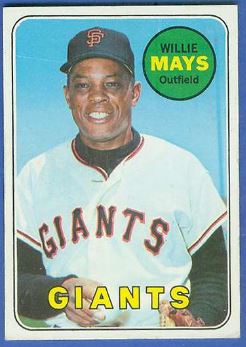
 

Edwin Jackson – Now MLB’s Most Traveled Player

Edwin Jackson photo

Photo by Keith Allison

When Edwin Jackson took the mound for the Blue Jays today, he pitched his way into the MLB record books – becoming the first player ever to take the field for 14 different MLB teams. (Jackson had been tied at 13 with Octavio Dotel).   In this post, we’ll look at Jackson’s path (and record) through 14 teams in 17 major league seasons, as well as the record holders for teams played for in a season and even in a single day,

Here’s Jackson’s record – team by team.

Jackson

How did he do it?

2001

  • Drafted by the Dodgers in June.

2003

  • Debuted with the Dodgers on September 9.

2006

  • June 14 – Traded by the Dodgers to the Rays. (Jackson and Chuck Tiffany for Danys Baez and Lance Carter.)

2008

  • December 10 – Traded by the Rays to the Tigers. (Jackson for Matthew Joyce.)

2009

  • December 8 – Went from the Tigers to the Diamondbacks in a three-team trade. (The Tigers sent Curtis Granderson to the Yankees; the Yankees sent Phil Coke and Austin Jackson to the Tigers; the Yankees sent Ian Kennedy to the Diamondbacks. The Diamondbacks sent Max Scherzer and Daniel Schlereth to the Tigers. So, ultimately, the Tigers turned Jackson and Granderson into Coke, Austin Jackson, Scherzer and Schlereth.)

2010

  • July 30 – The Diamondbacks traded Jackson to the White Sox. (Jackson for David Holmberg and Daniel Hudson.)

2011

  • July 27 – Jackson was traded by the White Sox to the Blue Jays and (on the same day) from the Blue Jays to the Cardinals. (Jackson went to the Blue Jays – with Mark Teahen – for Jason Frasor and Zach Stewart. He then went to Cardinals – with Octavio Dotel, Corey Patterson and Marc Rzepczynski – for Trevor Miller, Colby Rasmus, Brian Tallet and P.J. Walters.)
  • October 30 – Granted free agency

2012

  • February 2 – Signed with the Nationals.
  • October 29 – Granted free agency.

2013

  • Signed with the Cubs.

2015

  • July 27 – Released by the Cubs.
  • August 14 – Signed with the Braves.
  • November 2 – Granted free agency.

2016

  • January 13 – Signed with the Marlins.
  • June 2 – Released by the Marlins.
  • June 29 – Signed with the Padres.
  • November 3 – Granted free agency.

2017

  • April 5 – Signed with the Orioles.
  • June 13 – Granted free agency.
  • June 16 – Signed with the Nationals.
  • November 2 – Granted free agency.

2018

  • January 11 – Signed with the Nationals.
  • June 1 – Released by the Nationals.
  • June 6 – Signed with the A’s.
  • October 29 – Granted free agency.

2019

  • April 11 – Signed with the A’s.
  • May 19 – Purchased from the A’s by the Blue Jays.

________________________________________________

—–Most Teams Played for in a Season—–

In 2018, 32-year-old right-hander Oliver Drake set a new major-league mark by playing for five MLB teams in a single season (previously more than dozen players shared the record at four).

Drake began the season with the Brewers (where he finished the previous campaign),  After going 1-0, 6.39 in eleven appearances,  he was designated for assignment on May 2 and, on May 5, purchased from the Brewers by the Indians.

He was with Tribe until the final week in May – going   0-0,with a 12.46 ERA in just four appearances – before again being designated for assignment.

May 31, he was selected off waivers by the Angels. Sixteen days (and 0-1, 10.13 record), later he was again designated for assignment.  He went unclaimed and reported to the Angels’ Salt Lake City Triple-A affiliate – where he was pretty much lights out.  That earned him a trip back to Anaheim, where he added four more appearances, with an 0-0, 3.00 record – and was again designated for assignment.

He was picked up (off waivers) by the Blue Jays on July 26 and was there for just two appearances (giving up three runs in 1 2/3 innings) before again being designated for assignment.

On August 3, he was selected off waivers by the Twins – his fifth MLB team of the season – where he found a bit more success and stability. Pitching for his fifth MLB team of the year, Drake finished the season with Minnesota, getting in 19 games and posting a 2.21 ERA an fanning 22 batters in in 20 1/3 innings pitched.What did that get him?  In the off-season, he was again designate for assignment.

Oliver Drake finished the 2018 season with an 1-1 record, a 5.29 ERA and 51 strikeouts in 47 2/3 innings.

So, have things settled down? Drake was picked up by the Rays (waivers) on November 1, 2018; he was then designated again and picked up (waivers, November 26) by the Blue Jays; before being purchased by the Rays from the Jays on January 4, 2019).

Oliver Drake spent his first nine season in the Baltimore Orioles’ system. He was signed in the 43rd round of the 2008 Amateur Draft by the Orioles and made his MLB debut with the O’s in 2015. He also pitched for the Orioles in 2016  (and part of 2017). 

As of this writing Drake is pitching for the Durham Bulls (Rays Triple A affiliate), where he is 1-1, 3.05, with six saves in 16 appearances.

__________________________________________________

—-Most MLB Teams Player for In a Single Day—–

Taking the Field for Two Teams in a Single Day

Three players share the record for the most franchises played for in a single day at two. The first two to accomplish this feat were Max Flack and Cliff Heathcote, who were traded for each other between games of a Memorial Day 1922 Cubs/Cardinals doubleheader. The two outfielders each suited up against their previous team for Game Two. Both went hitless in game one of the doubleheader and both collected hits for their new teams in the second game (Flack a single in four at bats, Heathcote a pair of singles in four trips to the plate).

Joel Youngblood tied the record for teams played for in a single day in 1982, adding a twist – he played for and recorded hits for two different teams in two different cities on the same day.  Let’s look at Youngblood’s unique achievement.

On August 4, 1982, Youngblood started his day as a member of the New York Mets, who were playing an afternoon game against the Cubs at Wrigley Field. Youngblood opened the game in center field, batting third.   After striking out in the first inning, Youngblood drove in two runs with a single in the top of the third. Youngblood was unexpectedly replaced in center field by Mookie Wilson in the bottom of the fourth – and told by Mets’ manager George Bamberger that he had been traded to the Expos (for a player to be named later).

The Expos were scheduled to play in Philadelphia in Philadelphia that night, and Youngblood immediately set out to join his new team. He managed to catch a 6:05 p.m. flight to Philadelphia – eventually arriving at Veterans Stadium with the game in progress. To his surprise, there was an Expos uniform, with his name already sewn on the back, waiting for him.  The Expos wasted no time getting there newest player into the game. Manager Jim Fanning sent Youngblood into right field and the number-two spot in the batting order (replacing Jerry White) in the sixth inning. In the top of the seventh, Youngblood singled in his first Expos’ at bat.  Thus, Youngblood collected base hits for two different teams in two different cities in one day.

Youngblood’s feat is even more startling when you consider the pitchers he touched for his two safeties. In Chicago, it was future Hall of Famer Fergie Jenkins; while in Philadelphia, it was future Hall of Famer Steve Carlton.

MOST MLB TEAMS PLAYED FOR IN A SINGLE DAY

Max Flack – May 30, 1922: Cubs (RF); Cardinals (RF).

Cliff Heathcote – May 30, 1922: Cardinals (CF); Cubs (RF).

Joel Youngblood – August 4, 1982: Mets (CF); Expos (RF).

Primary Resources: MLB.com; Baseball-Reference.com

BASEBALL ROUNDTABLE ON THE TOP 100 BASEBALL BLOG LIST

100Baseball Roundtable is on the Feedspot list of the Top 100 Baseball Blogs.  To see the full list, click here.

I tweet baseball @DavidBBRT

Follow/Like Baseball Roundtable’s Facebook Page here.  More baseball commentary; blog post notifications; PRIZES.

Member: Society for American Baseball Research (SABR); The Baseball Reliquary; The Negro Leagues Baseball Museum.
Baseball Roundtable Opening Day Trivia Teaser … and More

Baseball Roundtable  Opening Day Trivia Teaser

Between 1972 and 1986, Steve Carlton started 14 of the 15 Phillies’ Opening Day games. Your question: Who was the pitcher who interrupted Carlton’s string?  Hint:  It happened in 1976, the pitcher was another lefty, a three-time 20-game winner, and had been an All Star the year before. Side note:  In his 14 Opening Day starts, Steve Carlton won three and lost nine – with a 4.30 earned run average, 29 walks and 66 strikeouts in 92 innings. 

Answer: Jim Kaat, who had a 25-season MLB career – with 283 wins (237 losses).  Kaat pitched for the Phillies from 1976-79, putting up a 27-30, 4.23 record. He spent 15 of his 20 seasons with the Senators/Twins. For those who may be wondering whether Carlton’s health played an issue in Kaat’s Opening Day start, Carlton started the second game of the season and went on to a 20-7 record in 35 starts. Side note:  Jim Kaat was not only a 283-game winner, but also a 16-time Gold Glover. 

intro

So, there’s a bit of Opening Day trivia for Opening Day 2019.   Well, it’s kind of Opening Day.  I, unfortunately, can’t forget that the Mariners and A’s played the first 2019 regular-season game back on March 20th.  (See BBRT’s comments on that turn of events by clicking here.)  Still, let’s look at some Opening Day tidbit and targets you may find of interest.

OPENING DAY – THE SUN SHINES ON THE PITCHERS

Come on, Tom Terrific – Let’s get this party started.

Sticking with the theme of our question, no pitcher started more Opening Day games than Hall of Famer Tom Seaver (16). Seaver opened for Mets eleven times, the Reds three times and for the White Sox twice.

Black Jack – Or “They call him the streak.”

Hall of Famer Jack Morris holds the record for the most consecutive Opening Day starts at 14 (eleven for the Tigers, one for the Twins and two for the Blue Jays).  Another Hall of Famer, Robin Roberts, holds the record for the most consecutive Opening Day starts for the same team at 12 – for the Phillies from 1950-1961.

In the “back in the day” category, in the 1950’s (1950-59), Robin Roberts won 199 games and threw 3,011 2/3 innings – for an AVERAGE of 20 wins and 301 innings per season.

Opening Day Starts – Gimme five, bro!

Gaylord Perry was honored by the most teams with Opening Day starts. He started on Opening Day for an MLB-record five different teams (Giants, Indians, Rangers, Padres and Mariners).

An Opening Day No-Hitter – A truly ONE-derous feat.

On April 16, 1940, 21-year-old Bob Feller (already in his fifth MLB season) threw the first – and still only – Opening Day no-hitter in MLB history – topping the White Sox 1-0 in Chicago. It was the first no-hitter (of an eventual three) for Feller, who walked five and struck out eight. During the season, Feller would go on to lead the AL in wins (27), ERA (2.61), strikeouts (261), games pitched (43), games started (37), complete games (31), innings pitched (320 1/3) and shutouts (4).

The Longest Day – 15 Shutout Innings.

On April 13, 1926, the Senators’ Walter Johnson pitched a 15-inning, complete game shutout (six hits, three walks, nine strikeouts) as Washington topped the Philadelphia Athletics 1-0 in Washington.  The opposing starter, Eddie Rommel tossed the second-most innings in an Opening Day appearance – going 14 1/3, as Washington scored the winning run with one out in the 15th.  Johnson, by the way, was 38-years-old at the time.

Fifteen Strikeouts on Opening Day – Tossing the Hitters a Curve.

On April 18, 1960, Camilo Pascual (known for his sweeping curve ball) took the mound at Griffith Stadium for the Washington Senators (against the Boston Red Sox). In 1959, the Senators had finished in last place in the AL, but Pascual had gone 17-10, 2.64, and led the league with 17 complete games and six shutouts. As the Senators’ Opening Day starter in 1960, Pascual picked up right where he left off – tossing a complete game three-hitter, walking three and striking out a still Opening Day record 15 batters in a 10-1 win over the Red Sox.

U Can’t Touch This –  7-0 on Opening Day.

Jimmy Key holds the record for Opening Day wins without a loss at seven – and he did in the minimum seven starts (Blue Jays, Yankees and Orioles). In those seven wins, he threw 44 1/3 innings, with a 3.05 ERA.

_______________________________________

LET’S GIVE THE HITTERS SOME OPENING DAY LOVE.

Knock Three Times – Most Home Runs in an Opening Day Game.

Until last season (March 29, 2018 to be exact) only three players had hit three home runs in an Opening Day Game – all three on April 4.  Now the Opening Day record of three home runs is shared by Four players – the Blue Jays’ George Bell, Cubs’ Tuffy Rhodes, Tigers’ Dmitri Young and White Sox’ Matt Davidson.

On April 4, 1988, George Bell – batting clean-up and serving as the DH – became the first major leaguer to hit three home runs in an Opening Day game as his Blue Jays topped the Royals 5-3 in Kansas City. Bell’s power outburst was no surprise. He was coming off a 1987 season in which he hit 47 homers, drove in 134 runs and was the AL MVP. Bell went three-for-four with three runs scored and four RBI, hitting all three home runs off Royals’ starter Brett Saberhagen.

On a windy April 4, 1994, Karl “Tuffy” Rhodes (leading off and playing CF for the Cubs in Chicago) hit three solo shots off Mets’ starter Dwight Gooden. Rhodes also had a single and a walk in five plate appearances. Despite Rhodes’ record-tying performance, the Cubs lost to the visiting Mets 12-8. At the time, Rhodes had played 107 MLB games in four seasons – hitting a total of five home runs. His MLB career consisted of 225 games in six seasons, with a .224 average and just 13 round trippers (with a high of eight in 1994). Rhodes did go on to hit 474 home runs in eleven seasons in Japan.

On April 4, 2005 the Tigers’ Dmitri Young joined Bell and Rhodes on the list of batters with three home runs in an Opening Day game – as the Tigers topped the Royals 11-2 in Detroit. Young started at DH and went four-for-four with four runs and five RBI.  Young, an All Star in 2003 and 2007, hit a total of 21 home runs in 2005 – and 171 in 13 MLB seasons. He hit a career-high 29 round trippers in 2003.

On March 29, 2018, as the White Sox topped the Royals 14-7 in Kansas City, DH and (appropriately) clean-up hitter Matt Davidson opened the season with a three-homer, five-RBI game. He went 3-for-four with a walk, four runs scored and five RBI. Davidson went deep off three different pitchers: solo shots in the fourth and  fifth off Danny Duffy and Blaine Boyer and a three-run blast in the eighth off Brian Flynn. Davidson, in his fourth MLB season, went on to a .228-20-62 campaign.  In his 273 MLB games (as of the opening of the 2019 season), Davidson has just three multi-homer contests. and a total of 49 round trippers. 

Seven RBI in an Opener – Bringing the boys home, sweet home. 

Being a Twins’ fan, one of my favorite Opening Day records is seven RBI in Game One of the season – shared by the Twins’ Brant Alyea and the Cubs’ Corey Patterson.

On April 7, 1970 – in his very first game as a Twin – LF Brant Alyea drove in an Opening Day record seven runs as Minnesota topped the White Sox 12-0 in Chicago. Batting fifth, Alyea went four-for-four, with two home runs, two singles and two runs scored.  The game, it turned out, would foreshadow a strong April for Alyea.  In 17 April games, he hit .415, with seven runs, 23 RBI, four doubles and five home runs.

Thirty-three seasons later – on March 31, 2003 – Cubs’ CF Corey Patterson tied Alyea’s record. In a 15-2 win over the Mets in New York, Patterson, batting seventh, drove in seven runs, going four-for-six with two home runs and two runs scored.  Patterson, a career .252 hitter (12 seasons), was an Opening Day All Star. In seven Opening Day appearances, Patterson hit .440, with seven runs, 12 RBI and three home runs.

A Long Time Gone – A True Team Effort.

Only two teams have hit six home runs in a season opener:

1988 Mets: On April 4, 1988, the Mets opened the season with a 10-6 win over Les Expos in Montreal – behind home runs by: Darryl Strawberry and Kevin McReynolds (2 homers each); Kevin Elster; and Lenny Dykstra.

2018 White Sox: On March 29, 2018, the White Sox opened the season with a 14-7 win over the Royals in Kansas City.  The Sox got three home runs from Mark Davidson two from Tim Anderson; and one from Jose Abreu.  Hmmm? As easy as 1-2-3.

_______________________________________

HOW ABOUT SOME PAINFUL OPENING DAY MEMORIES?

Five Whiffs as a hitter – The Sultan of Swing.

On March 31, 1996, White Sox catcher Ron Karkovice set an MLB Opening Day record by striking out five times as Chicago lost 3-2 in Seattle.  Karkovice, however, may have been a victim of circumstance.

First, future Hall of Famer Randy Johnson started on the mound for the Mariners – striking out 14 in seven innings (including Karkovice three times).

Second, the White Sox could muster only two runs on four hits over the first nine innings – taking a slim 2-1 lead into the bottom of the ninth (at that point, Karkovice had fanned just three times).

Third, the Mariners tied the contest in the ninth, and the game went to 12 innings before the Mariners prevailed 3-2.  In those three extra innings, Karkovice struck out against Norm Charlton (tenth inning) and Edwin Hurtado (twelfth inning) to set the Opening Day record.

Eleven Walks on Opening Day – We’re gonna take a free ride.

On April 16, 1957, Cleveland southpaw Herb Score set the Opening Day record for pitcher’s walks, delivering eleven free passes to the visiting White Sox.  Despite Score’s wildness, it was a close contest, with Score going the distance in a 3-2, 11-inning loss. Score struck out ten and gave just seven hits and two earned runs – stranding 14 Chicago base runners.

The Target? – Not to be the target.

On April 9, 1990, the Astros’ first baseman and cleanup hitter Glenn Davis was hit by a pitch an Opening Day record three times. Davis came to the plate six times and never put the ball in play – but still made only one out.  Davis (who led the league in HBP that season with eight) was hit by a pitch three times, walked twice and struck out once as the Astros lost to the visiting Reds 8-4.

BBRT Note: Davis finished Opening Day with a batting average of .000, but an on-base percentage of .833.

___________________________________________

THE KINGS OF OPENING DAY – IN THE BATTER’S BOX AND ON THE MOUND

tED wILLIAMS photo

Photo by wild mercury

Perhaps no one looked forward to Opening Day more than Ted Williams – the king of the Opening Day batter’s box.  A career .344 hitter, Williams was even better on Opening Day.  Teddy Ballgame played in fourteen openers and was never held without a hit.  He compiled a .449 Opening Day average (22 hits in 49 at bats), with three home runs, eight doubles, one triple, nine runs scored, 14 RBI and eleven walks.  His Opening Day on-base percentage was .550 and his season-opener slugging percentage was .837.

The Washington Senators’ Walter Johnson can be crowned king of the Opening Day hill.  On his first-ever Opening Day start (April 14, 1910), the 22-year-old Johnson tossed a 3-0 one-hit shutout against the Philadelphia Athletics.  Sixteen years (and 13 Opening Day starts) later, a 38-year-old Johnson fulfilled his last Opening Day assignment with a 15-inning, complete-game, 1-0 win (6 hits, 3 walks, 9 strikeouts) over the A’s.  Johnson holds the record for Opening Day pitching victories with nine (against five losses) and also threw a record seven Opening Day shutouts.

AND FOR YOUR OPENING DAY VIEWING PLEASURE.

BECAUSE THIS KIND OF THING NEVER GETS OLD.

Primary Resources:  MLB.com; Baseball-Reference.com.

FOR LINKS TO BASEBALL ROUNDTABLE’S 2019 PENNANT RACE AND MAJOR AWARDS PREDICTIONS, CLICK HERE. 

BASEBALL ROUNDTABLE ON THE TOP 100 BASEBALL BLOG LIST

100Baseball Roundtable is on the Feedspot list of the Top 1oo Baseball Blogs.  To see the full list, click here.

I tweet baseball @DavidBBRT

Follow/Like Baseball Roundtable’s Facebook Page here.  More baseball commentary; blog post notifications; PRIZES.

Member: Society for American Baseball Research (SABR); The Baseball Reliquary; The Negro Leagues Baseball Museum.
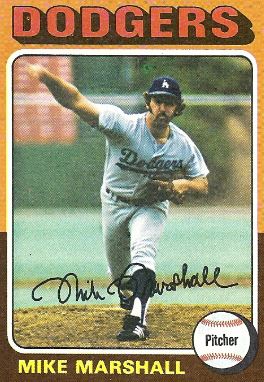
The Cowboy Who Helped the Dodgers Win the 1966 NL Pennant

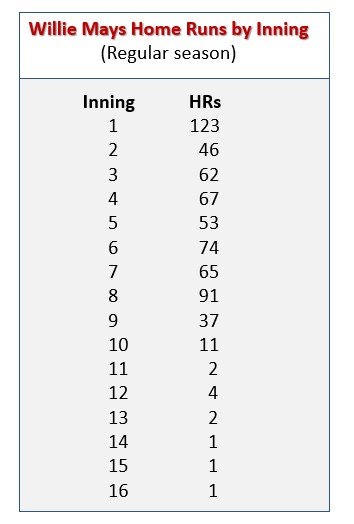
On this date (February 28) in 1966, Los Angeles Dodger pitchers Sandy Koufax and Don Drysdale began what it arguably the most notable holdout in MLB history. The pair refused to report to Spring Training unless the Dodgers signed them to a $1 million, three-year contract – with each receiving $167,000 annually. The hurlers also said neither would sign separately, the deal was to be a two-fer.  Remember, this was at a time when player bargaining rights were considerably restricted – a strong reserve clause, no free agency and no arbitration.  Further, Willie Mays was MLB’s highest-paid player at $125,000 annually and no pitcher had ever made a six-figure salary.

KoufaxNow, Koufax and Drysdale did have some bargaining power. The year before, the two had led the Dodger to the NL pennant and a World Series Championship. During the 1965 season, Koufax had gone 26-8, with a 2.04 earned run average and 382 strikeouts in 335 2/3 innings. The lefty had led the NL in wins, winning percentage, earned run average, complete games, innings pitched and strikeouts.  Drysdale, meanwhile, had gone 23-12, 2.77, with 210 whiffs in 308 1/3 innings – leading the NL in starts, finishing third in victories and placing in the top ten in nearly every pitching category.  Koufax had also won his second Cy Young Award and finished second to Willie Mays in the MVP voting.  The pair would not sign until March 30 – and only after a noted television cowboy (no not Gene Autry) had ridden in to help save the day. The haggling had gone back and forth and the pair of hurlers had even signed on to appear in a movie (with actor David Janssen) – with filming slated to start about a week before the season opener – to make clear their willingness to sit out the season. Reports indicate that Chuck Connors – star of the hit television series The Rifleman – played a key role setting up the late March meeting  between Buzzie Bavasi and Drysdale (at Nicola’s, a popular restaurant near Dodger Stadium) that led finally broke the impasse – with Koufax signing for $125,000 and Drysdale for $100,000.

What followed the signings was a combination of good news and bad news.

  • The Good News was that Koufax and Drysdale did help the Dodgers repeat as NL Champions. The Bad News was that Los Angeles lost the World Series to Baltimore in four games.
  • The Good News was that Koufax delivered a 27-9, 1.73 season. The Bad News was that Drysdale went 13-16, 3.42.
  • The Good News was that, in 1966, Koufax won his third Cy Young Award and led the league in wins (27), ERA (1.73), starts (41), complete games (27), shutouts (5), innings pitched (323) and strikeouts (317).  The Bad News was that, due to an arthritic elbow, that spectacular season would be Koufax’ last.  Note: Drysdale pitched for the Dodgers until 1969 – going 45-48, 2.92 over his final four seasons.
The Rifleman - 1958-63 - was one of televisions most popular westerns.

The Rifleman – 1958-63 – was one of televisions most popular westerns.

Now back to the television cowboy – Kevin Joseph “Chuck” Connors was much more than a TV sod buster. Yes, he was the as star of the successful TV western series The Rifleman and had roles in such classic movies as Old Yeller and television presentations like Roots (which earned him an Emmy nomination).

The 6’5” left-hander, however, also played first base for the Chicago Cubs (and made one pinch-hitting appearance for the Dodgers), took the courts as a forward and center for the Boston Celtics, and was drafted by the Chicago Bears.

Here are a few other Connors tidbits:

AS AN ACTOR

  • In 1959, Connors won a Golden Globe Award (Best Television Performer) for his work in The Rifleman.
  • Connors starred in four television series: The Rifleman; Arrest and Trial; Branded; and Cowboy in Africa.
  •  In 1984, Connors was honored with a “star” on Hollywood’s Walk of Fame.
  • Connors made guest appearances on television shows ranging from Gunsmoke to Spenser for Hire to the Sonny & Cher Comedy Hour.
  • Connors’ movie credits include such films as Pat and Mike; Old Yeller; Geronimo, Flipper; The Big Country; Solyent Green; and Airplane II.
  • Connors is a member of the Western Performers Hall of Fame of the National Cowboy and Western Heritage Museum.

AS AN ATHLETE

  • In a four-season span at AAA (1948-51), Connors’ batting averages were: .307; .319; .290 and .321.
  • In 1951, Connors hit .321, with 22 home runs and 77 RBI in just 98 games for the Triple A Los Angeles Angels.
  • Connors was known to turn cartwheels while circling the bases after a home run.\
  • Connors is credited with shattering the first NBA glass backboard ever, during a November 1946 Celtics’ pregame warm-up.

chuck


For the full story on Chuck Connors, click here.

Primary Resrouces:  Baseball-Reference.com; “Fifty years ago, Dodgers’ Sand Koufax and Don Drysdale engaged in a salary holdout that would change baseball forever” – Los Angeles Times, March 28, 20166;  OurChuckConnors.com; Society for American Baseball Research.

BASEBALL ROUNDTABLE ON THE TOP 100 BASEBALL BLOG LIST

100Baseball Roundtable is on the Feedspot list of the Top 1oo Baseball Blogs.  To see the full list, click here.

I tweet baseball @DavidBBRT

Follow/Like Baseball Roundtable’s Facebook Page here.  More baseball commentary; blog post notifications; PRIZES.

Member: Society for American Baseball Research (SABR); The Baseball Reliquary; The Negro Leagues Baseball Museum.
The Rule 5 Draft – A Hall of Famer; A Face that Couldn’t be Forgotten; A Flyin’ Hawaiian; and Even Joey Bats

This past Thursday, MLB held its 2018 Rule 5 Draft – and, while Rule 5 pickups can really only be e-value-ated sometime down the road, there were a handful (that would be five – four fingers and a thumb) names I found intriguing.  I’ll take a quick look at those players in this post, but spend more time reflecting on a handful (plus one) MLB Rule five Draft moves BBRT’s finds intriguing. Those include:

  • The “Pirating” of arguably the best player ever taken in the Rule 5 Draft;
  • A Hawaiian who didn’t start flyin’ until being exposed to the Rule 5 Draft twice;
  • How the Twins turned one Rule 5 pick (who never took the mound for them) into two Cy Young Awards AND CASH;
  • A Rule FIVE draftee who appeared on the roster of a record FIVE different teams (and at FIVE different positions) the season after he was drafted;
  • The “catch and release” of a player who was selected in the MLB Draft five times before signing, was later exposed to the Rule 5 Draft and went on to hit 400+ home runs; and
  • A Rule 5 draftee whose Face, name and arm the legendary Branch Rickey just could not resist.

But first a few interesting names from this year’s Rule 5 Draft.  (Note: Only certain players not protected on each club’s forty-man roster can be selected in the Rule 5 Draft – at a cost of $100,000.  The player must be kept on the selecting team’s roster for the entire upcoming season or offered back to the team from which they were selected for $50,000.)

Richie Martin, SS

The former 2015 first-round pick of the A’s was the first player taken in the draft (by the Orioles). The 23-year-old is best known for his defensive skills (soft hands/good arm), but last year the 5’11”/190-pound right-hander hit .300-6-42, with 25 stolen bases at Double A Midland and may be coming into his own at the plate. He has shown steady improvement in the batter’s box over the past three minor league seasons (.224-.266-.300). There are those who say his range may be better suited to second base.  The Orioles, who won only 47 games last season, are pretty thin in the middle infield, so Martin has a good chance to stick with the team.

Sam McWilliams, RHP

At 6’7”/190-pounds, McWilliams – taken by the Royals from the Rays with the second pick in the 2018 Rule 5 Draft – has the kind of size MLB teams like to see on the mound. The long and lean righty, however, still has a lot to prove. The 22-year-old is 23-26, 3.77 in five minor league seasons, with 305 strikeouts in 403 1/3 innings.

McWilliams is seen to have a considerable upside, with a low-90’s fastball, a slider and an improving changeup. He was drafted right out of high school by the Phillies (Round 8, 2014); traded to the Diamondbacks (for Jeremey Hellickson in November of 2015) and traded to the Rays (with Colin Poche for Steven Souza, Jr.) in May of 2018.  He may have found a landing place in the Royals’ bullpen. (Keep in mind the Royals finished at the bottom of the AL Central last season.)

Reed Garrett, RHP

Reed Garrett, plucked from the Rangers by the Tigers, brings a mid-90’s fastball and a hard slider to Detroit. In 2018, the 25-year-old righty pitched for the Frisco RoughRiders at Double A and the Round Rock Express at Triple A.  The 6’2”/210-pounder went a combined 4-1, 2.04 with 21 saves and 61 strikeouts in 61 2/3 innings.  Expect him to get a genuine opportunity to secure a spot the Bengal bullpen.

Joe Conner, INF

Like Sam McWilliams (two spots above), Joe Conner has already packed his bags a couple of times – traded from the Pirates (who drafted him in the first round of the 2014 MLB Draft) to the Braves and then sent on to the Dodgers last year. The Reds snatched Conner from the Dodgers in this year’s Rule 5 Draft. The 6’/205-pounder has shown versatility, last year playing first base, second base, third base and DH at Double A and Triple A. He also has shown some power – .299-17-55 in 106 minor league games in 2018. The 26-year-old has also played both corner outfield spots in the minors and could stick with the Reds as a utility player and bright-handed bat off the bench.

Brandon Brennan, RHP

Brandon Brennan moved from the Rockies to the Mariners in the Rule 5 Draft and, given the moves the Mariners have been making this off season, the 27-year-old could very well stick in the Settle pen. Brennan – drafted by the White Sox in the fourth round of the 2012 MLB draft – pitched in the White Sox system from 2012 through 2018. (He was signed by the Rockies recently as a free-agent). In 2018, Brennan went 5-4, 3.25 in 44 appearances at Double A – using a low- to mid-90s fastball, complemented by a slider and a changeup. The key to the Mariners’ interest, though, may have been his 79 strikeouts in 69 2/3 innings. He also pitched in the Mexican-Pacific Winter league this past year, putting up a 2.51 ERA in 12 appearances.

So, there are a few 2018 Rule 5 Draftee that caught BBRT’s eye.  Now let’s look at some of the more interesting Rule 5 selections from the past.

Roberto Clemente – Da Bums’ Big Blunder

ClementeOkay, this is probably the number-one story told whenever the history of the MLB Rule 5 Draft is being discussed. Roberto Clemente is arguably the best player ever picked up in the Rule 5 Draft – and clearly did more for the team that drafted him than another player.

Clemente signed with the Dodgers (out of Puerto Rico) at 19-years-old in February of 1954. The Dodgers apparently felt they could keep the unprotected bonus baby under the radar in the minors – limiting his playing time and, at times, even having him take batting practice with the pitchers, rather than the position players.

Roberto Clemente was the first Latin American player to earn a World Series Most Valuable Player Award.  It came in 1971, when he hit .414 against the Orioles.

Oops! The Dodgers’ strategy didn’t work. On November 22, 1954, Pittsburgh used a Rule 5 Draft pick to pirate Clemente away from the Dodgers. It was easily the most productive (from the Pirates’ point of view) and destructive (from the Dodgers’ perspective) Rule 5 transaction ever.

Clemente went on to play 18 MLB seasons – all with the Pirates – earning his way into the Hall of Fame. He was 12-time All Star, 12-time Gold Glover, four-time batting champion and the 1966 National League MVP.  Exactly what did the Pirates get (and the Dodgers lose)?  How about 3,000 MLB hits, a .317 career average, 440 doubles, 166 triples, 240 home runs, 1,305 RBI, 1,416 runs scored?

Clearly, for the Dodgers, Roberto Clemente is THE one that got away.

Shane Victorino – Prodigal Son Not Returned

VictorinoShane Victorino, who became known as “The Flyin’ Hawaiian” with the Phillies, started his professional career (like Roberto Clemente, above) in the Dodgers’ organization. And, with Victorino, the Dodgers had two bites at the apple.

Victorino – born in Wailuku, Hawaii – was selected by the Dodgers (as an 18-year-old) in the sixth round of the 1999 MLB Draft.  Victorino worked his way up in the Dodgers’ system – from Rookie ball to AA between 1999 and 2002.

Victorino was left unprotected and  picked (from the Dodgers) by the Padres in the 2002 Rule Five Draft.  He made his MLB debut with San Diego in April of 2003, but played just 36 games with the Padres and hit a meager .151. In late May, Victorino was returned to the Dodgers.

He played two more minor league seasons in the Dodgers’ system and – again unprotected – was selected by the Phillies in the 2004 Rule 5 Draft. (Note: In 2004, at AA and AAA, Victorino hit .289, with 19 home runs and 16 steals.)  Victorino didn’t make the Phillies major league squad out of Spring Training and was offered back to the Dodgers. This time, the Dodgers rejected the return and the Phillies were able to assign Victorino to their Triple A affiliate (Scranton/Wilkes Barre), where he really took off  –  hitting  .310-18-70 in 126 games and earning International League All Star and MVP recognitions.

On June 3, 2007, as the Phillies celebrated Shane Victorino Day (even flying Victorino’s father in from Hawaii for the game), “The Flyin’ Hawaiin” topped off the celebration with a ninth-inning, game-winning, walk-off home run.

The rest is history, the two-time Rule 5 draftee,  played eight seasons with the Phillies, hitting .279 with 88 home runs, 390 RBI and 179 stolen bases,. During his time in Philly, he led the NL in triples twice, won three Gold Gloves and was an All Star twice. He played a total of 12 MLB seasons and hit .275-108-489, with 731 runs scored, 231 steals and four Gold Gloves.

Johan Santana – Johan, we hardly knew ya!

santzanaIn 1999, Jared Camp was in his fifth professional season – taking the mound for the Cleveland Indians’ affiliates at the A Double A and Triple A levels.  He went combined 4-4, 2.81 and fanned 91 batters in 83 1/3 innings. That same season, 20-year-old Johan Santana went 8-8. 4.66 for the Astros’ Single A farm team – fanning 150 batters in 160 1/3 innings pitched.  Neither pitcher was protected going into the 1999 Rule 5 Draft – in which the Twins had the first pick and the Marlins the second.  And that’s where the fun begins.

The Twins took Camp with the first pick, while the Marlins took Johan Santana second.  The Twins immediately sent Camp to the Marlins for Santana and cash. Ultimately, Santana for Camp and cash proved a Rule 5 “draft-and-trade” steal for Minnesota.

On June 12, 2012, Johan Santana threw the first no-hitter in New York Mets’ history. 

Camp never pitched in the major leagues, while Santana went on to became a four-time All Star (three times as a Twin). He spent eight of his 12 MLB seasons with Minnesota – going 93-44 with a 3.22 ERA, recording the league’s lowest ERA twice, leading the league in wins once and strikeouts three times. In 2008, the former Rule Five pick was traded to the Mets (bringing the Twins Carlos Gomez, Philip Humber, Kevin Mulvey and Deolis Guerra).  He pitched four season for New York (46-34, 3.18) winning another ERA title.

Jose Bautista – Doesn’t Anybody Want This Guy? Or “Country Roads Take Me Home.”

JoeyBatsJose Bautista was signed by the Pirates in the 20th round of the 2000 MLB draft and, by 2003, had shown some promise in the minors (three seasons, 249 games, .287 average, 20 home runs, 110 RBI, 12 stolen bases).

In December 2003, an odyssey that began with the Rule 5 draft  would see Bautista become the first player to appear on five different MLB rosters in a single season – and end up back home with the same organization that originally lost him in the Rule 5 Draft. His season went like this:

  • December 15, 2003 … picked selected (from the Pirates) by the Orioles in the Rule 5 draft – opened the season with the Orioles;
  • June 3, 2004 … waived by the Orioles, picked up by the Rays;
  • June 28, 2004 … sold by the Rays to the Royals;
  • July 30, 2004 … traded by the Royals to the Mets;
  • July 30, 2004 … traded by the Mets to the Pirates.

In that post-Rule 5-Draft 2004 season, Bautista actually appeared on the field for four MB teams – Orioles (16 games); Devil Rays (12); Royals (13); and Pirates (23).  In addition, he appeared, briefly, on the Mets’ MLB roster.  He also appeared in MLB games at five different positions – third bases, left field, center field, right filed and DH.

In 2018, Jose Bautista became the first player to homer for three different teams in the same division in the same season – two round trippers for the Braves, nine for the Mets and two for the Phillies.  (Yes, Virginia, in baseball we track everything.)

Bautista ended his first MLB  season hitting .205, with no home runs and two RBI in 88 at bats.  To date, in 15 MLB seasons, Bautista (who has earned the nickname “Joey Bats”) has hit .247, with 344 home runs and 1,032 RBI. He’s a six-time All Star and led the AL in home runs in 2010 and 2011 (54 and 43 round trippers, respectively) with the Blue Jays.

Darrell Evans – Catch and Release

EvansIt took a long time for an MLB team to “catch” Darrell Evans. He was drafted five times (Cubs, Yankees, Tigers, Phillies, Athletics) before he finally signed with the A’s in 1967.  (Evans, at the time of those many MLB Draft selections, was starring in both baseball and basketball at Pasadena Junior College.) However, after just two minor league seasons (A’s system) and a shoulder injury, he was left unprotected and picked up by the Braves (1968 Rule 5 Draft). Here’s a look at Evan’s Draft record:

  • Picked by Cubs in 13th round of 1965 MLB draft – did not sign.
  • Picked by Yankees in 2nd round of the 1966 MLB Draft – did not sign.
  • Picked by Tigers in the 5th round of the 1966 (secondary) MLB Draft – did not sign,
  • Picked by Phillies in the 3rd round of the 1967 amateur draft – did not sign.
  • Signed by the Athletics out of the 7th round of the 1967 (secondary) MLB Draft.
  • Picked up by the Braves in the 1968 Rule 5 Draft.

Darrell Evans was the first player with a 40-home run season in both the NL and AL. He hit 41 for the Braves in 1973 and 40 for the Tigers in 1985.

Evans played with the Braves for nine seasons – hitting .246 with 131 home runs and 424 RBI, topping 20 home runs three times (a high of 41 in 1973). He went on to a 21-season MLB career, during which he hit .248, with 414 home runs and 1,354 RBI.

Elroy (Roy) Face – A Boyhood Hero Makes His Mark

faceRoy Face was signed by the Phillies (free agent) in 1949 (age 21) – and he got off to a pretty good start. Pitching for the Bradford Blue Wings of the Class D Pennsylvania-Ontario-New York (PONY) League, Face went 32-7, 2.88 (primarily as a starter) in 1949 and 1950.  Branch Rickey, at the time President/General Manager of the Dodgers, apparently like what he saw and snatched Face from the Phillies in the 1950 Minor League Draft.

In the Dodgers’ system, Face continued to thrive as a starter. In 1951 and 1952, he went a combined 37-20, 2.80.  After four minor league campaigns, Face had 69 wins, just 27 losses, with a 2.84 earned run average – and he had pitched 840 innings. Still, the Dodgers left Face unprotected in the December 1952 Rule 5 draft.  Branch Rickey, then General Manager of the Pirates, proved he could remember a “Face,” an arm and a name. At Rickey’s direction, the Pirates picked up Face in the Rule 5 Draft.

In 1959, Elroy Face went 18-1 in relief for the Pirates. His .947 winning percentages is the highest ever for a qualifying pitcher (at least one decision for every ten team games) and the most wins in relief ever in an MLB season. Face also had ten saves that campaign, when he pitched in 57 games and put up a 2.70 ERA in 93 1/3 innings.

Face went on to a 16-season (1953, 1955-69) MLB career (15 seasons with the Pirates) during which he became one of National League’s premier relievers. He was a three-time All Star, led the league in appearances twice and saves three  times. Face’s final stat line was 104-95, 3.48, with 848 appearances, 191 saves, and 877 strikeouts in 1,375 innings pitched.   Just 5’8” and 155 pounds, the diminutive Face was one of my boyhood heroes.

Primary Resources:  Baseball-Reference.com; MLB.com

BASEBALL ROUNDTABLE MAKES TOP 100 BASEBALL BLOG LIST

100Baseball Roundtable has made the Feedspot list of the Top 1oo Baseball Blogs.  To see the full list, click here.

I tweet baseball @DavidBBRT

Follow/Like Baseball Roundtable’s Facebook Page here.  More baseball commentary; blog post notifications; PRIZES.

Member: Society for American Baseball Research (SABR); The Baseball Reliquary; The Negro Leagues Baseball Museum.

BBRT Trivia Teaser – And A Look at the 39 Members of MLB’s 30-30 Club

BASEBALL ROUNDTABLE TRIVIA TEASER

Can you name the two MLB players who hit for the cycle in the same season they recorded a 30-30 (HR-SB) campaign  Hint: One of the two has rolled a perfect (300) game in the Professional Bowling Association World Series of Bowling and hit a home run in the MLB World Series.

TRIVIA TEASER ANSWER

Ian Kinsler (2009) and Mookie Betts (2018) are the only two major leaguers to record a 30-30 campaign and hit for the cycle in the same season.  Betts has also bowled three sanctioned 300 games, including one in the 2017 PBA World Series of Bowling qualifying round – and hit a home run in the final game of the 2018 MLB World Series.

William30ArtIn 2018, two major leaguers achieved 30-30 (HR-SB) seasons – Mookie Betts of the Red Sox and Jose Ramirez of the Indians.  That brings the total number of players to achieve a 30-30 campaign to thirty-nine.  Those thirty-nine players have produced a total of 62 30-30 campaigns.

As you consider the membership of the 30-30 Club, you’ll see lots of familiar names – from Hank Aaron and William Mays to Alex Rodriguez and Jeff Bagwell to Mike Trout and Mookie Betts.  You’ll also find some surprises – like Tommy Harper and Brandon Phillips.  And, of course, the father-son combination of Bobby and Barry Bonds dominate the roster.

This post will look at each of member of the 30-30 Club in detail, but first a few bits of 30-30  trivia.

  • The first player to achieve a 30-30 season was Ken Williams of the 1922 Saint Louis Browns.
  • Only two players have recorded five 30-30 seasons and it must be in the genes. They are Bobby Bonds (father) and Barry Bonds (son).
    30team
  • Bobby Bonds and Alfonso Soriano are the only players to have a 30-30 season in both leagues. Bonds for the (Giants 1969, 1973), Yankees (1975), Angels (1977), White Sox/Rangers (1978). Soriano for the Yankees (2002, 2003), Rangers (2005) and Nationals (2006).
  • Bobby Bonds and Carlos Beltran are the only players to play for two teams in a 30-30 season and Beltran is the only player to complete a 30-30 MLB season while playing in both leagues. Bonds (White Sox and Rangers in 1978) – Beltran (Royals and the then NL Astros in 2004).
  • The first switch hitter to record a 30-30 season was the Mets’ Howard Johnson in 1987.
  • The most 30-30 campaigns in any one season is four – and that has been done four times (1987-1996-1997-2011).
  • The only player to record three consecutive 30-30 seasons is Barry Bonds (1995-96-97). Six players have recorded back-to-back 30-30 seasons: Willie Mays (1956-57); Bobby Bonds (1977-78); Ron Gant (1990-91); Vlad Guerrero (2001-02); Alfonso Soriano (2002-03 & 2005-06); and Ryan Braun (2011-12).
  • Nine players have recorded a 30-30 season AND hit for the cycle in their MLB careers. Eric Davis; Alex Rodriguez; Dante Bichette; Jeff Bagwell; Vlad Guerrero; Ian Kinsler; Mike Trout; Matt Kemp; and Mookie Betts.
  • In 1988, the A’s Jose Canseco became MLB’s first 40-40 player – hitting 42 home runs and swiping 40 bags. Since then, there have been three more 40-40 campaigns: Barry Bonds (42-40 in 1996), Alex Rodriguez (42-46 in 1998) and Alfonso Soriano (46-41 in 2006).
  • Mike Trout is the youngest player ever to join the 30-30 Club, having his 30-30 season in 2012 at age 20 – and he is also the only player to join the club in his rookie season.
  • Only two teams have had two 30-30 players in the same season – the 1987 Mets (Howard Johnson and Darryl Strawberry) and the 1996 Rockies (Dante Bichette and Ellis Burks).

30 by position

A few other “factoids.”

  • There have been just four 40-40 seasons: Jose Canseco (A’s, 1988); Barry Bonds (Giants, 1996); Alex Rodriguez (Mariners, 1998); and Alfonso Soriano (Nationals, 2006).
  • There have been only two 30-50 (30 homers-50 steals) seasons: Eric Davis (Reds, 1987); Barry Bonds (Pirates, 1990).
  • The most home runs ever hit in a 30-steal campaign is 49, by Larry Walker (Rockies, 1997).
  • In the 62 30-30 seasons, the player achieving the milestone has been an All Star selection 43 times. (70.5 percent – There were no All Star selection in 1922.)
  • In 17 of the 62 30-30 seasons, the achieving player has also won a Gold Glove.

JUST HOW HARD IS IT TO GET TO 30-30?

Among the 40 players with at least one 30-30 season, three joined the “Club” in the only season in which they reached either 30 home runs or 30 steals (although one of those players, Jose Ramirez is still active). Another fourteen members of the 30-30 Club reached 30 steals just once and five reached 30 home runs just one time in their careers.

  • In six of the 62 30-30 seasons, the player has gotten exactly 30 home runs; while, in nine, the player has stolen exactly 30 bases. No player has ever hit 30-30 “on the nose.”  The Rangers’ Ian Kinsler came closest in 3008, with 31 home runs and 30 steals.
  • In 26 of the 62 30-30 seasons, the player has hit .300 or better, with Larry Walker‘s (Rockies) .366 in 1997 being the highest average. The lowest average ever for a 30-30 player belong to Ron Gant of the Braves at .251 (1991).
  • Eight of the 62 30-30 season have featured 200 or more base hits, topped by Alex Rodriguez; 213 hits for the Mariners in 1998. Fewest hits in a 30-30 season? That would be 139, by Eric Davis of the Reds in 1987.
  • How about RBI? Ken Williams, the first 30-30 Club member (Browns, 1922), set the bar high at 155 runs plated in his 30-30 campaign.  It has yet to be matched. There is a tie for the fewest RBI in a 30-30 season (67) – Raul Mondesi (Dodgers, 1990) and Hanley Ramirez (Marlins 2008).
  • Runs scored?  The 30-30 player has scored at least 100 runs in 51 of the 62 campaigns.  The high of 143 is shared by Larry Walker (Rockies, 1997) and Jeff Bagwell (Astros, 1999). The fewest runs scored in a 30-30 season is 74 by Ron Gant (Braves, 1991).
  • A couple of more trivia bits. The most doubles in a 30-30 season  goes to the Yankees’ Alfonso Soriano with 51 in 2002. Two players have actually reached 20 triples in a 30-30 season: Willie Mays of the Giants in 1957 and Jimmy Rollins of the Phillies fifty years later.

Running the Table

30-30 … MVP … All Star … Gold Glove … Silver Slugger

Just four players have achieved a 30-30 campaign, been an All Star, won a Gold Glove and earned a Silver Slugger Award all in the same season: Dale Murphy (Braves, 1983); Barry Bonds (Pirates, 1990 & Pirates, 1992); Larry Walker (Rockies 1997); Mookie Betts (Red Sox, 2018). 

Jimmy Rollins is a unique outlier in this group. In his 2007, 30-30 season, he won a Gold Glove and Silver Slugger at the shortstop position and was the National League MVP – but did not make the All Star team.

Now a look at each member of the 30-30 Club – chronologically based on the season they joined.

______________________________________________________________

MLB’S 30-30 CLUB

Ken Williams, OF, Saint Louis Browns (LH) … 39 home runs/37 stolen bases in 1922

The left-handed hitting Ken Williams was in his seventh MLB season (age 32) when he became the first member of MLB’s 30-30 club. It was a banner year for the 6-foot, 170-pound fly chaser, as he notched what would be his career highs in games (153), runs (128), home runs (39), RBI (155) and total bases (367) for the second-place (93-61) Browns. Williams led the AL in homers, RBI and total bases.

KWilliams30

Williams played 14 MLB seasons (1915-16, with the Reds; 1918-27 with the Browns; 1928-29 with the Red Sox).  He collected 1,552 hits (.319 average), with 196 home runs and 154 stolen bases. He hit 30 or more home runs only once (twenty-plus an additional three times) and stole at least 30 bases only once (reaching 20 an additional two times).

Ken Williams was the first American Leaguer to hit two home runs in one inning – August 7, 1922, in the sixth inning of a Saint Louis Browns 16-1 win over the Senators.

—————————————

Willie Mays, OF. Giants (RH) …

36 home runs/40 stolen bases in 1956

35 home runs/38 stolen bases in 1957

The “Say Hey Kid,” in 1956, became the first right-handed hitter and first National Leaguer to join the 30-30 club.  The following year, Mays became the first player to have multiple (and consecutive) 30-30 seasons.  In both 1956 and 1957, Mays led the NL in steals (he would also lead in the category in 1958 and 1959) and, in 1956, he also had 26 doubles and 20 triples to go with his 35 home runs. 38 steals – making Mays just the second member of the 20-20-20-20 Club (doubles-triples-home runs-stolen bases). The first was the Cubs’ Wildfire Schulte (1911).  Mays and Schulte were joined in the 20-20-20-20 Club in 2007 by the Tigers’ Curtis Granderson and Phillies’ Jimmy Rollins. Rollins and Mays are the only player whose 20-20-20-20 seasons also included 30 HRs and 30 SBs.

WillMays30

It’s no surprise to find Mays in the 30-30 Club.  In 22 MLB seasons, Mays led his league in home runs four times (topping thirty 11 times, with a high a 52 in 1965) and led his league in steals four times (stealing thirty or more three times, with a high of 40 in 1956). He also was the league leader in triples three times, total bases three times, runs twice, hits once and batting average once.  In addition, he earned Rookie of the Year honors, a pair of NL MVP Awards and a dozen Gold Glove recognitions. Mays played for the Giants (1951-52, 1954-72) and Mets (1972-73).  He collected 3,283 hits (.302 average), 660 home runs, 1,903 RBI and 338 stolen bases.

Willie Mays hit 51 home runs as a 24-year-old in 1955 and 52 long balls as a 34-year-old in 1965 – the longest time ever between two MLB 50-HR seasons.

——————————————-

Hank Aaron, OF, Braves (RH) … 44 home runs/31 stolen bases in 1963

In 1963, Aaron hit an NL leading 44 home runs and swiped 31 bases (the  only 30-steal season in his MLB career – although he did top 20 steals in five additional campaigns).  That season, Aaron led the league in home runs (44), runs (121), RBI (130) and total bases (370) – while hitting .319. In his 23-season MLB career Aaron hit thirty or more home runs in 15 campaigns (forty or more eight times).

Aaron30

In his 23-season MLB career, Aaron led his league in total bases eight times,  home runs four times, doubles four times, RBI four times, batting average twice,  runs three times and hits twice. He captured one MVP Award and earned three God Gloves.

Aaron retired with 3,771 hits (.305 average), 755 home runs, 2,297 RBI, 2,174 runs scored and 240 stolen bases.  He played for the Braves (1954-74) and Brewers (1975-76).

Hank Aaron, who played in the major leagues from 1954 through 1976, was the last former Negro Leagues player on a major league roster.

—————————————————-

Bobby Bonds, OF, Giants, Yankees, Angels …

32 home runs/45 steals for the Giants in 1969

39 home runs/43 steals for the Giants in 1973

32 home runs/30 steals for the Yankees in 1975

37 home runs/41 steals for the Angels in 1977

31 home runs/43 steals for the White Sox in 1978

In the ten MLB seasons from 1969 to 1978, outfield Bobby Bonds wrote the record book for 30-30 seasons. He achieved a record five such campaigns (a record tied later by – wait for it – his son Barry). He also became the first player with a 30-30 season for more than one team; the first player with a 30-30 season in both the National and American Leagues; and the first player to go 30-30 while playing for two teams in the same season. Notably, Bonds also had his first 30-30 season in his first full MLB season (at age 23); although he had played 81 MLB games the year before, so did not qualify as a rookie. In 1978, when he played for the White Sox and Rangers, Bonds hit 29 of his 31 long balls for Texas and swiped 33 of his 43 bases for Texas. (He was traded by the White Sox to the Rangers in mid-May for Rusty Torres and Claudell Washington.)

BobbyBonds30

While never leading his league in home runs or stolen bases, Bonds (in 14 MLB seasons) hit 30 or more home runs in a season six times and stole 30 or more bases ten times (40 or more seven times). He led his league in runs scored twice, total bases once and earned three Gold Gloves. Bonds finished his career with 1,886 hits (.268 average), 332 home runs, 1,024 RBI, 1,258 runs scored and 461 stolen bases.  He played for the Giants (1968-74); Yankees (1975); Angels (1976-77); White Sox (1978); Rangers (1978); Indians (1979); Cardinals (1980); and Cubs (1981).

Bobby Bonds played his first seven MLB seasons with one team – the Giants.  Over his final seven MLB season, he put on the uniform of seven different teams.

—————————————————-

Tommy Harper, 3B/2B/OF, Brewers (RH)… 31 home runs/38 stolen bases in 1970

Tommy Harper is one of the biggest surprises on this list. In 1970, the American League Brewers’ (former Seattle Pilots) first season, the 29-year-old Harper reached what would be career highs in games (154), hits (179), doubles (35), home runs (31), RBI (82) and batting average (.296). His 30-30 season was the only time Harper topped 17 round trippers in his 15-season MLB career. He did, however, lead his league in stolen bases twice (with a high of 73 in 1969), topping 30 steals in four campaigns. He also led the NL in runs scored in 1965 (Reds) with 126.  In his 30-30 season, Harper started 128 games at 3B, 22 at 2B and 13 in the outfield.

Harper30

Harper accumulated 1,609 MLB hits (.257 average), 146 home runs, 972 runs, 567 RBI and 408 steals.  He played for the Reds (1962-67); Indians (1968); Pilots (1969); Brewers (1970-71); Red Sox (1972-74); Angels (1975); A’s (1975); and Orioles (1976).

Tommy Harper was the first player ever to come to bat for the short-lived Seattle Pilots.  He doubled – becoming the first Pilot player to record an MLB hit and scored the team’s first run (on a home run by Mike Hegan).

—————————————————————

Dale Murphy, OF/1B/C, Braves (RH) …. 36 home runs/30 stolen bases in 1983

Thirty home runs was no big challenge for Dale Murphy, he topped in thirty round trippers in six of his 18 MLB seasons (a high of 44 in 1987) and twice led the NL in long balls.  His 30-30 season in 1983, however, was the only time he reached 30 steals and in only one other campaign did he reach 20 thefts.

MUrphy30

In 18 MLB seasons, Murphy collected 2,111 hits (.265 average), hit 398 home runs, had 1,266 RBI, scored 1,197 runs and stole 161 bases. He led his league in games played four times (1982-85), home runs once, RBI twice, total bases once and runs scored once. He also earned five Gold Gloves. Between September 26, 1981 and July 8, 1986, Murphy played in 740 consecutive games, MLB’s 13th longest streak.  Murphy played for the Braves (1976-90); Phillies (1990-922); and Rockies (1993).

In his 1983 30-30 season, Murphy won his second consecutive National League MVP Award – one of only 13 players to win consecutive MVP honors.

——————————————————————–

Joe Carter, OF/1B Indians (RH) … 32 home runs/31 stolen bases in 1987

In 1987, the Indians’ Joe Carter made the 30-30 Club – a distinction he missed by a whisker the previous year, when he smacked 29 home runs and stole 29 bases. In 1987, Carter hit just .264 (down from .302 in 1986), but rapped 32 home runs and stole 31 bags. It would be his only season of 30 or more steals (he did steal twenty or more in six seasons) and one of six seasons in which he reached 30 home runs.

Carter30

In a 16-year MLB career, Carter – a five-time All Star – played for the Cubs (1983); Indians (1984-89); Padres (1990); Blue Jays (1991-97); Orioles (1998); and Giants (1998). He collected 2,184 hits (.259 average), 396 home runs, 1,445 RBI, 1,170 runs scored and 231 stolen bases.

Joe Carter, playing for Wichita State University, was the Sporting News College Player of the Year in 1981.  That season, in 69 games played, Carter hit .411, with 24 home runs, 88 runs scored, 120 RBI and 24 stolen bases (25 attempts).

——————————————————————-

Eric Davis, OF, Reds, 1987 (RH) … 37 home runs and 50 stolen bases in 1987

Eric Davis was a speed and power guy, six times reaching at least 20 home runs (topping thirty twice) and seven times topping 20 steals.  Although he never led his league in steals, he stole a high of 80 bases in 1986. (The Cardinals’ Vince Coleman stole 107.)  In his 1987 campaign, Davis hit .293, with 37 home runs, 120 runs scored, 100 RBI and fifty stolen bases.Davis30In 17 MLB seasons, Davis collected 1,430 hits (.269 average), scored 1,430 runs, drove in 934, hit 282 round trippers and swiped 349 bases. Davis played for the Reds (1984-91, 1996); Dodgers (1992-93); Tigers (1993-94); Orioles (1997-98); Cardinals (1999-2000); and Giants (2001). He was a two-time All Star and three-time Gold Glover.

Eric Davis and Barry Bonds are the only players to steal at least 50 bases in their 30-30 season.

—————————————————————————–

Howard Johnson, 3B/SS/OF, Mets (SH) …

36 home runs/32 steals for the 1987 Mets

36 home runs/41 steals for the 1989 Mets

38 home runs/30 steals for the 1991 Mets

Howard Johnson had just three seasons of 30+ home runs – and he reached at least 30 stolen bases in all of them (he had four seasons of 30 or more steals). In his three 30-30 campaigns, Johnson led the NL in runs scored once (1989), home runs once (1991) and RBI once (1991). In those three 30-30 campaigns, he hit 74 long balls left handed (1,084 at bats) and 36 homers right handed (605 at bats).

HOJO30

Johnson played 14 MLB seasons: Tigers (1982-84); Mets (1985-93); Rockies (1994); and Cubs (1995). He amassed 1,229 hits (.249 average); 228 home runs, 760 runs scored, 760 RBI and 231 stolen bases. He was a two-time All Star.

Howard Johnson started his professional career as a pitcher (Tigers’ system), but was quickly converted to shortstop and then to third base. In his MB career, he played 1,032 games at 3B, 273 at shortstop and 221 in the outfield.

————————————————————————-

Darryl Strawberry, OF, Mets (LH), 1987 … 39 home runs/36 stolen bases

Darryl Strawberry was in his fifth MLB season when he put up a 30-30 campaign for the Mets. While he topped 25 stolen bases in five seasons (1984-88), 1987 was the only season he reached 30 steals. Strawberry hit 30 or more home runs in three seasons, 20 or more in six.  In 1988, Strawberry came within a whisker of back-to-back 30-30 seasons, leading the NL with 39 home runs and stealing 29 bases.

Strawberry30

Strawberry was an eight-time All Star. In a 17-season MLB career,  he had 1,401 hits, 335 home runs, an even 1,000 RBI, 898 runs scored and 221 steals. He topped 100 RBI three times and 100 runs scored twice.   He played for the Mets (1983-1990); Dodgers (1991-93); Giants (1994); and Yankees 1995-99).

Darryl strawberry was the 1983 NL rookie of the Year (Mets), when he hit .257, with 26 home runs, 74 RBI and 19 stolen bases in 122 games.

————————————————————————-

Jose Canseco, OF/DH, A’s (RH) 1988 … 42 home runs/40 stolen bases

In 1988, the A’s Jose Canseco achieved a 30-30 season and more.  That year, Canseco became the first 40-40 player – launching an AL-best 42 home runs and stealing 40 bases. For the year, he hit .307, led the AL with 124 RBI and won the league MVP Award.  It was Canseco’s only season with at least 30 steals (he did top 25 two additional times) and one of eight seasons in which he topped 30 home runs.

Canseco30

In 17 seasons, the five-time All Star collected 1,877 hits (.266 average), 462 home runs, 1,407 RBI, 1,186 runs scored and 200 steals. He led his league in home runs twice.

Jose Canseco was the 19865 AL Rookie of the Year.  The 20-year-old hit just .240 in 157 games, but hit 33 home runs and drove in 117 tallies.

——————————————————————————

Barry Bonds, OF, Pirates & Giants …

33 home runs/52 stolen bases for the Pirates in 1990

34 home runs/39 stolen bases for the Pirates in 1992

33 home runs/31 stolen bases for the Giants in 1995

42 home runs/40 stolen bases for the Giants in 1996

40 home runs/37 stolen bases for the Giants in 1997

Barry Bonds is one of only two MLB players to record five 30-30 campaigns – and the other is his father Bobby Bonds. In his 22-season career, Bonds had 14 seasons of at least 30 home runs and nine seasons of at least 30 stolen bases.  He was the NL MVP in his first two 30-30 seasons (he was the NL MVP a total of seven times).

BarryBnmds30

In his career, Bonds led the NL in runs once, home runs twice, batting average twice, RBI once, walks 12 times and intentional walks 12 times.  He was an All Star selection 14 times and an eight-time Gold Glover.  Bonds collected 2,935 hits (.298 average), hit 762 home runs, drove in 1,996 runs, scored, 2,227 and swiped 514 bases.

In 2004, Barry Bonds drew a record 120 intentional walks.  He also drew the second-most intentional walks in a season (68 in 2002) and third-most (61 in 2003). Fourth on the list is Willie McCovey, with 45 intentional passes in 1969.

——————————————————————-

Ron Gant, OF, Braves (RH) …

32 home runs/33 steals in 1990

32 home runs/34 steals in 1991

Ron Gant put together back-to-back 30-30 seasons for the Braves in 1990-91. In his 16-season MLB career, Gant hit 30 or more home runs four times and stole 30 or more bases in three seasons.

Gant30

Gant’s career stat line includes 1,651 hits (.256 average), 321 home runs, 1,008 RBI, 1,080 runs scored and 243 stolen bases. He was a two-time All Star.  Gant played for the Braves (1987-1993); Reds (1995); Cardinals (1996-98); Phillies (1999-2000); Angels (2000); Rockies (2001); A’s (2001, 2003); Padres (2002).

In 1994, Ron broke his leg in a dirt-bike accident and missed the entire 1995 season. He came back with the Reds in 1995 and made the NL All Star Team – finishing the season at .276-29-88, with 23 stolen bases in 199 games.

—————————————————————————

Sammy Sosa, OF, Cubs (RH) …

33 home runs/36 stolen bases in 1993

36 home runs/34 stolen bases in 1995

Sammy Sosa recorded a total of three seasons of 30 or more steals in his MLB career – and two of those coincided with campaigns of 30 or more home runs.  Overall, Sosa had 11 seasons with 30+ round trippers.

Sosa30

In his 18-season career, Sosa collected 2,408 hits (.273 average), hit 609 home runs and amassed 1,667 RBI. He also scored 1,475 runs and stole 234 bases. Sosa was a seven-time All Star, the 1998 NL MVP and led the league in runs three times, total bases three times, home runs twice and RBI twice. Sosa played for the Rangers (1989, 2007); White Sox (1989-1991); Cubs 1992-2004); and Orioles (2005).  In the five seasons from 1998 to 2002, Sosa averaged just over 58 runs per season.

Sammy Sosa is the only MLB player to hit at least  sixty home runs in a season three times (66 in 1998; 63 in 1999; 64 in 2001) and yet did not lead his league in home runs in any of those seasons.

—————————————————————————–

Dante Bichette, OF, Rockies (RH) … 31 home runs/31 stolen bases in 1996

Dante Bichette had just one season of at least thirty stolen bases – and it coincided with one of his three seasons of at least 30 home runs.

Bichette30

In 14 MLB seasons, Bichette was an All Star four times, led the NL in hits twice, home runs once, RBI once and total bases once.  He played for the Angels (1988-90); Brewers (1991-92); Rockies (1993-1999); Reds (2000); and Red Sox (2000-01).  He collected 1,906 hits, hit 274 home runs, drove in 1,141, scored 934 times and stole 152 bases.

Dante Bichette hit the first home run in Colorado Rockies history. It was off the Mets’ Brett Saberhagen on April 7, 1993 – the only run in a 6-1 Rockies loss in New York.

————————————————————————–

Ellis Burks, OF, Rockies (RH) … 40 home runs/32 stolen bases in 1996

Ellis Burks had just one season of at least 30 steals – which happened to line up with his one season of at least 40 home runs (he did have another three seasons of 30 or more long balls). In his 30-30 season, Burks led the league in runs scored (142) and total bases (392) and topped 200 base hits (211, .344 average).

Burks30

In his 18-season MLB career, Burks had 2,107 hits (.291 average), 352 home runs, 1,253 runs scored, 1,206 RBI and 181 steals.  Burks played for the Red Sox (1987-92, 2004); White Sox (1993); Rockies (1994-98); Giants (1998-2000); and Indians (2001-03); Burks was a two-time All Star and one-time Gold Glover.

In 1996, Ellis Burks and Dante Bichette both achieved 30-30 seasons for the Rockies. The only other teammates to put up 30-30 campaigns in the same season are Howard Johnson and Darryl Strawberry of the 1987 Mets.

——————————————————————————

Barry Larkin, SS, Reds (RH) … 33 home runs and 36 stolen bases in 1996

Barry Larkin found the fountain of power in 1996 – bopping a career-high 33 home runs (he only reached 20 round trippers in one other season). He also swiped 36 bases, earning his spot in the 30-30 club. That season, Larkin also notched what would be his career highs in RBI (89), runs scored (117), walks (96) and total bases (293).

Larkin30

In his 19-season MLB career – all with the Reds – Larkin was a 12-time All Star and three-time Gold Glover. Larkin collected 2,340 hits over his career, with 198 home runs, 960 RBI, 1,328 runs scored and 379 stolen bases.

Barry Larkin was the 1995 NL MVP, when he hit .319, with 15 home runs, 66 RBI, 98 runs scored. He also swiped 51 bases (in 56 attempts) and won a Gold glove – leading the Reds to the NL Central Division crown. Although his 1996 season was arguably better, the Reds finished third (81-81) and dropped to 12th in the MVP balloting.

————————————————————————–

Jeff Bagwell, 1B , Astros (RH) …

43 home runs/31 stolen bases in 1997

42 home runs/30 stolen bases in 1999

Jeff Bagwell – one of the Astros’ “Killer Bees” (Bagwell, Craig Biggio, Lance Berkman) of the 1990s, put together a pair of 30/30 seasons, each time topping 40 home runs. Notably, while Bagwell hit 30 or more home runs in nine seasons, he only reached 30 steals twice. In 1997, Bagwell hit .286, with 43 home runs and 41 steals. Two years later, he hit .304, with 42 home runs and 30 steals.  In that 1999 campaign, he led the NL in runs with 143, while also drawing a league-topping 140 walks.

Bagwell30

In 15 MLB seasons, Jeff Bagwell collected 2,314 hits (.297 average) and amassed 449 home runs, 1,529 RBI, 1,517 runs scored and 202 stolen bases. He was the 1991 NL Rookie of the Year, 1994 NL MVP and a four-time All Star. He also earned a Gold Glove in 1994. He led the NL in runs three times and RBI once.  In his 1994 MVP season, Bagwell hit .268, with a league-leading 104 runs scored, an NL-best 116 RBI – as well as 39 home runs and a league-topping 300 total bases.

Jeff Bagwell is the only MLB player to achieve six consecutive seasons (1996-2001) of 30 home runs, 100 RBI, 100 runs scored and 100 walks. During that span he hit .301, with 236 home runs, 754 RBI, 765 runs scored, 121 steals and 733 walks.  That makes his season average in that period  .301, 39 home runs, 126 RBI, 128 runs scored, 20 stolen bases and 12 walks.  A Killer Bee, indeed.

————————————————————————-

Raul Mondesi, OF, Dodgers (RH) …

30 home runs and 32 stolen bases in 1997

33 home runs/36 stolen bases in 1999

Raul Mondesi had multiple opportunities to join the 30-30 Club – recording three seasons of 30 or more stolen bases to go along with three seasons of 30 or more home runs. He matched 30’s up twice – in 1997 and 1999. In 1997, he hit .310 with 30 long balls, 87 RBI and 32 steals (47 attempts). Two years later, despite hitting .253, he had his second 30-30 campaign, with 33 home runs, a career-high 99 RBI and 36 steals in 45 tries.

Mondesi30

In his 13-year MLB career, Mondesi had 1,589 hits (.273 average), 909 runs scored, 860 RBI, 271 home runs and 229 steals. He was the NL Rookie of the Year as a 23-year old in 1994, when he hit .306-16-56 in 112 games. He was an All Star once (1995) and a Gold Glover twice. He never scored or drove in 100 runs in a season, but came close – scoring 98 runs in a season twice and driving in 99 in 1999.

Raul Mondesi was the first Dodger to have a 30-30 season.

—————————————————————————-

Larry Walker, OF, Rockies (LH) … 49 home runs/33 stolen bases in 1997

Larry Walker had just one 30+ stolen base season in his 17-year MLB career – and he smacked 49 home runs in that same campaign.  It was 1997, and Walker hit .366, with an NL-leading 49 home runs, 130 RBI, 143 runs scored, 33 steals and a league-leading 409 total bases.  That season, he set his career highs in games, at bats, hits, runs, doubles, home runs, RBI and total bases. That offense – and a Gold Glove – earned him MVP honors in his 30-30 season.

Walker30

Walker collected 2,160 career hits (.313 average), 383 home runs, 1,311 RBI, 1,355 runs scored and 230 stolen bases. He won three batting crowns, led his league in doubles once, home runs once and total bases once.  He also picked up seven Gold Gloves and was an All Star five times.

In the three season from 1997 to 1999, Larry Walker averaged .369 – putting up averages of .366, .363 and .379. Hitter-friendly Coors Field played a role, as Walker hit .397 at home over those seasons. But he was no slouch on the road (.314).

———————————————————————

Shawn Green, OF, Blue Jays (LH) … 35 home runs/35 stolen bases in 1998

Shawn Green had just one season of 30 or more steals – 35 for the Blue Jays in 1998. That same year he also rapped 35 home runs.  In fact, between 1998 and 2002, Green’s home runs totals (for the Blue Jays and Dodgers) were 35, 42, 24 and 49.  The two-time All Star improved nearly across the board in the season following his 30-30 campaign – improving his average from .278 to .309; hits from 175 to 190; doubles from 33 to a league-leading 45; homers from 35 to 42; RBI from 100 to 123; runs scored from 106 to 134; and total bases from 321 to a league-topping 361.  His stolen bases, however, dropped from 35 to 20.

Green30

In his career, Green topped 100 runs scored in four seasons, had 100 or more RBI in four seasons, hit 40+ doubles in three seasons and 40+ home runs in three seasons. Green played for the Blue Jays (1993-1999); Dodgers (2000-2006), and Mets (2006-07.  He collected 2,003 hits, hit 328 home runs, drove in  1,070 runs, scored 1,129 and stole 162 bases.

Shawn Green holds the MLB record for most total bases in a single game.  On May 23, 2002 – as the Dodgers topped the Brewers 16-3 in Milwaukee – Green hit four home runs, a double and a single in six at bats.  He scored six times, drove in seven runs and set a new MLB record (that still stands) of 19 total bases in a game.

—————————————————————————-

Alex Rodriguez, SS, Mariners (RH) … 42 home runs/46 stolen bases in 1998

You might have expected to see A-Rod on this list more than once, but Rodriguez had only one season of thirty or more steals (46 in 1998, when he was playing shortstop for Seattle.)  He also banged out 40 home runs that year, becoming just the third member of the 40-40 Club (Jose Canseco and Barry Bonds preceded Rodriguez, Alfonso Soriano would follow). In his 40-40 year, Rodriguez hit .310 and led the AL in hits with 213. His 42-HR season was one of 15 in which he would hit at least 30 long balls (he had five seasons in the 40‘s and three in the 50’s).

A-Rod30

In his 22-season MLB career, A-Rod collected 3,115 hits, smacked 696 home runs, drove in 2,086 tallies, scored 2,021 times and swiped 329 bases. He played for the Mariners (1994-2000): Rangers (2001-2003); Yankees (2004-2013, 2015-16). He was a 14-time All Star, three-time MVP and two-time Gold Glover. Rodriguez led his league in runs five times, home runs five times, total bases four times, RBI twice, hits once, doubles once and batting average once.

Alex Rodriguez’ 25 major league Grand Slam home runs are the MLB record.

—————————————————————————–

Preston Wilson, OF, Marlins, (RH) … 31 home runs/36 steals in 2000

In 2000, the Marlins’ Preston Wilson hit 31 home runs, stole 36 bases and drove in 121 runs. Not bad for a 25-year-old in his second full MLB season. It would be his only 30-steal campaign, although he did reach 20 steals in each of the next two seasons. He topped 30 home runs once more – in 2003, when (as a Rockie) he hit 36 long balls, drove in an NL-best 141 runs and made his only All Star team.

Wilson30

In a 10-season MLB career, Wilson collected 1,055 hits (.264 average), scored 573 runs, hit 189 home runs, drove in 668 and swiped 124 bags. Wilson played for the Mets (1998); Marlins (1998-2002); Rockies (2003-05); Nationals (2005); Astros (2006); and Cardinals (2006-07).

Preston Wilson was the Baseball America 1992 High School Player of the Year – and was the ninth overall pick in the 1992 June MLB draft.

——————————————————————————–

Bobby Abreu, OF, Phillies (LH) …

31 home runs/36 stolen bases in 2001

30 home runs/40 stolen basses in 2004

Bobby Abreu picked up his first 30-30 season in 2001 – at age 27 – in his sixth MLB season.  He earned a second 30-30 stat line three seasons later. Abreu was a true power-speed guy. He had six seasons of 30 or more steals, with a high of 40 in his 2004 30-30 campaign. He reached 30 home runs in just his two 30-30 seasons, but swiped 20 or more bases in 12 campaigns. He was a two-time All Star and won a Gold Glove in 2005.

Abreu30

In 18 MLB seasons, Abreu rang up 2,470 hits (.291 average), 288 home runs, 1,363 RBI, 1,453 runs scored and 400 stolen bases. He led the NL in triples once and doubles once.  His 50 doubles in 2002 are tied for the 78th most in any MLB season. Abreu hit .300 or better in six seasons, drove in 100 or more runs eight times and scored 100 or more runs eight times. Abreu played for the Astros (1996-97); Phillies (1998-2006); Yankees (2006-08); Angels (2009-12); Dodgers (2012); and Mets (2014).

Bobby Abreu was a disciplined hitter who drew 1,476 walks – 20th all-time. He drew 100 or more free passes in eight consecutive seasons (1999-2006).

—————————————————————————-

Jose Cruz, Jr., OF, Blue Jays (SH) …. 34 home runs/32 steals in 2001

In his 2001 30-30 campaign, Jose Cruz, Jr.  reached what would prove to be career highs in hits, batting average, runs, doubles, home runs, RBI and stolen bases. His 32 steals that season represented the only year in which he stole more than 15. He topped 30 home runs twice.

Cruz30

In his 12-season MLB career, Cruz had 1,167 hits (.247 average), 204 home runs, 624 RBI, 713 runs scored and 113 stolen bases.  He played for the Mariners (1997); Blue Jays (1997-2002); Giants (2003); Rays (2004); Diamondbacks (2005); Red Sox (2005); Dodgers (2005-06); Padres (2007); and Astros (2008).

Jose Cruz Jr. brought good genes to his MLB career.  His father, Jose Cruz, Sr., hit .284 over 19 major league seasons. In addition, his uncles, Hector and Tommy Cruz, had MLB careers of nine and two season, respectively.

—————————————————————————–

Vlad Guerrero, OF, Expos (RH) …

34 home runs/37 stolen bases in 2001

39 home runs/40 stolen bases in 2002

In 2002, as he completed his second consecutive 30-30 season, Vlad Guerrero just missed joining the elite 40-40 club – racking up 39 home runs and 40 steals. Notably, 2001 and 2002 were the only seasons in which Guerrero stole more than 15 bases – notching 77 steals in those two years and just 104 in his additional 14 MLB campaigns. He did top 30 home runs in eight seasons, with a high of 44 in 2000.

Vlad30

In his 16-season MLB career, Guerrero hit .300 or better 13 times, drove in 100 or more runs ten times  and scored 100+ runs six times. He also had three 200-hit seasons, leading the NL with 206 hits for the Expos in 2002. He was an All Star in eight seasons.  Guerrero played for the Expos (1996-2003); Angels (2004-2009); Rangers (2010); and Orioles (2011). His career stats include 2,590 hits (.318 average), 449 home runs, 1,496 RBI, 1,328 runs scored and 181 steals.

Vlad Guerrero was the American League MVP (Angels) in 2004, when he hit .337, with 39 home runs, 126 RBI, a league-leading 124 runs scored and a league-best 366 total bases.

————————————————————————-

Alfonso Soriano, OF/2B, Yankees, Rangers, Nationals (RH) …

39 home runs/41 stolen bases in 2002  for the Yankees

38 home runs/35 stolen bases in 2003 for the Yankees

36 home runs/39 stolen bases in 2005 for the Rangers

46 home runs/41 stolen bases in 2006 for the Nationals

In 2002 (age 26), in just his second full MLB season, Alfonso Soriano of the Yankees joined the 30-30 club and nearly became a member of the 40-40 fraternity – hitting 39 home runs to go with 41 stolen bases. Four seasons later (2006), he cracked the 40-40 barrier, hitting 46 home runs and stealing 40 bases for the Nationals. In between, he notched another pair of 30-30 campaigns. His first 30-30 campaign may have been the most impressive, as Soriano led the AL in at bats, runs, hits and steals; while hitting.300 and driving in 100+ runs – finishing third in AL MVP balloting.

Soriano30

In his 16-season MLB career, Soriano was an All Star seven times (2002-08), stole 30 or more bases five times (40+ three times), launched 30 or more homers in a season seven times, drove in 100+ runs four times and scored 100+ four times. He collected 2,095 hits (.270 average), 412 home runs, drove in 1,159 runs, scored 1,152 times and swiped 289 bases.  Soriano played for the Yankees (1999-2003, 2013-14); Rangers (2004-2005); Nationals (2006); and Cubs (2007-13).

Not known for his patience at the plate, in his first 30-30 season, Soriano walked just 23 times, while striking out 157 – but still managed to hit .300. He upped his walks and reduced his whiffs over time, ending with 496 walks and 1,803 strikeouts.

——————————————————————————–

Carlos Beltran, OF, Royals/Astros (SH) … 38 home runs and 42 stolen bases in 2004

Carlos Beltran retired as a player (at age 40) after the 2017 season. His 30-30 campaign came way back in 2004 – in a season that saw him traded from the Royals to the Astros in late June. Beltran played 69 games for the American League Royals and 90 games for the then National League Astros – and is the only player to play in both leagues in a 30-30 season. He hit 15 home runs and stole 14 bases for Kansas City and rapped 23 round trippers and stole 28 bases for Houston. Beltran put up four seasons of 30 or more home runs (a high of 41 in 2006) and four seasons of 30 or more steals (a high of 42 in 2004).

beltran30

In his 20 MLB seasons, Beltran was an All Star nine times and a three-time Gold Glover. He collected 2,725 hits (.279 average), hit 435 home runs (fourth-most among switch hitters), drove in 1,587 tallies, scored 1,582 runs and stole 312 bases.  Beltran is one of only four players with 400 home runs and 300 stolen bases – and the only switch hitter.

In his rookie season (1999), the 22-year-old Carlos Beltran hit .293, with 22 home runs, 108 RBI, 112 runs scored and 27 stolen bases for the Royals – capturing AL Rookie of the Year honors.

———————————————————————————-

David Wright, 3B, Mets (RH) … 30 home runs/34 stolen bases in 2007

David Wright was a force for the Mets – bringing power and speed, as well as solid defense at the hot corner (a two-time Gold Glover). While he only topped 30 home runs in a season twice and stole 30 or more bases just once, Wright had five season of 25 or more homers and three seasons of 20 or more steals. In his 30-30 campaign, he reached what would be his career highs in hits, doubles, and batting average – and added a Gold Glove for Good measure.

wright30

In his 14 MLB seasons, Wright was a seven-time All Star.  He hit over .300 in seven seasons, topped 100 RBI in five and scored 100+ runs twice. Overall, he amassed 1,777 hits (.296 career average), 242 home runs, 970 RBI, 949 runs scored and 196 stolen bases. Wright played his entire career for the Mets.

David Wright hit the first Mets’ round tripper in Citi Field history on April 13, 2009. It was, however, the third official home run in Citi Field. Padres’ leadoff hitter Jody Gerut inaugurated the ballpark with a home run to right to lead off the top of the first and San Diego 1B Adrian Gonzalez belted a solo shot in the top of the fifth. Wright hit the Mets’ first dinger, a three-run blast that tied the game at 5-5 in the bottom of the fifth. (The Mets eventually lost 6-5.)

—————————————————————————————–

Jimmy Rollins, SS, Phillies (SH) … 30 home runs/41 steals in 2007

Phillies’ SS Jimmy Rollins made the most of his 2007 30-30 season – translating it into an NL MVP Award.  That season Rollins led the league in games, at bats, runs scored and triples, while hitting .296 and earning a Gold Glove on defense. He also reached what would-be his career highs in games, at bats, hits, runs, triples, home runs, RBI and full-season batting average. It was Rollins’ only 30-home run season, but one of ten in which he stole 30 or more bases (a high of 47 in 2008).

Rollins30

In a 17-season MLB career, Rollins led the league in triples four times, stolen bases once and runs scored once.  He collected 2,455 hits (.264 average), hit 231 home runs, drove in 936, scored 1,421 times and stole 470 bases (46th all-time). Rollins was a three-time All-star and four-time Gold Glover. He played for the Phillies (2000-2014); Dodgers (2015); and White Sox (2016).

In a portent of things to come, Jimmy Rollins’ first MLB hit was a triple.  He would go on to hit 155 MLB triples, leading the NL four times and hitting ten or more three-baggers in five seasons.

—————————————————————————–

Brandon Phillips, 2B, Reds (RH) … 30 home runs/32 stolen bases in 2007

Brandon Phillips smacked 30 home runs and stole 32 bases in 2007, the only season in which he reached either 30 round trippers or 30 steals. In 17 MLB seasons (Phillips was still active in 2018), Phillips has been an All Star three times and won four Gold Gloves. He has reached at least 100 runs scored twice and 100+ RBI once. Phillips has also stole 15 or more bases in seven seasons and hit 15 or more dingers in eight.

Phillips30

Phillips has recorded 2,029 base hits (.275 average), 211 home runs, 951 RBI, 1,005 runs scored and 209 stolen bases. He has played for the Indians (2002-2005); Reds (2006-2017); Braves (2017); Dodgers (2017); and Red Sox (2018).

In 2018, Brandon Phillips became the first player to wear number zero for the Red Sox.

———————————————————————————-

Grady Sizemore, OF , Indians (LH)  … 33 home runs/38 stolen bases in 2008

In 2008, Grady Sizemore hit 33 home runs and swiped 38 bases for the Indian – also earning a spot on the AL All Star team and a Gold Glove for his defensive play in center field. Overall, Sizemore was a three-time All Star and two-time Gold Glover.  He topped 30 home runs once (four seasons of 20 or more) and reached 30+ steals twice (four season of 20 or more).

Sizemore30

A series of injuries – beginning with elbow issues (that required surgery in 2009) and  followed by knee and back surgeries – curtailed Sizemore’s career. Between 2009 and 2015, he played in 100 games in a season only once – missing the entire 2012 and 2013 seasons.  In the four seasons between 2005 and 2008, he averaged 160 games per season, with an average stat line of .281-27-81, and 29 steals. In his first four full seasons, he led the AL in games played twice, runs scored once and doubles once; was an All Star three times; and a Gold Glover twice.  He also hit 32 triples in that time, reaching 11 twice. From 2009-2015 (excluding 2012-13), he averaged just 84 games a season with an average stat line of .238-8-34, five steals.

In ten MLB seasons (1,101 games), Sizemore collected 1,098 hits (.265 average), hit 150 home runs, drove in 518, scored 66o times and stole 143 bases. Sizemore played for the Indians (2004-2011); Red Sox (2014); Phillies (2014-15); and Rays (2015).

During his MLB career, Grady Sizemore had abdominal, elbow, knee and back surgeries.

————————————————————————————-

Hanley Ramirez, SS, Marlins (RH) … 33 home runs/35 stolen bases in 2008

In 2008, Marlins’ 24-year-old shortstop Hanley Ramirez made his first All Star team and joined the 30-30 Club in just his third full MLB season.  Ramirez hit .301, led the NL in runs scored with 125, hit 33 home runs and a stole 35 bases. It is one of just two 30-homer seasons for Ramirez (still active after 14 MLB seasons) and one of four 30+ stolen base seasons. (Ramirez stole 51 bases in the 2006 and 2007 seasons.)

Ramirez30

Through 2018, Ramirez had 1,825 MLB hits (.290 average), 269 home runs, 909 RBI, 1,045 runs scored and 281 stolen bases.  He has been an All Star three times, won the 2009 NL batting title with a .342 average and was the NL Rookie of the Year in 2006.

Ramirez has scored 100+ runs in two seasons, driven in 100+ in two seasons, topped 200 hits once, hit .300 or better five times. He has played for the Red Sox (2005, 2015-18); Marlins (2006-12); and Dodgers (2012-14).

Hanley Ramirez has been a strong post-season performer.   In 20 post season games, he has 27 hits (.380 average), one home run, 14 RBI, nine runs scored, two stolen bases and seven walks. His post-season on base percentage is .450.

———————————————————————-

Ian Kinsler, 2B, Rangers (RH) …

31 home runs/31 stolen bases in 2009

32 home runs/30 stolen bases in 2011

Ian Kinsler, still active, has put up a pair of 30-30 campaigns in 13 MLB seasons. Interestingly, the power has seemed to come at the expense of the batting average. In 2009, Kinsler smoked 31 home runs and stole 31 bases.  His home runs were up from 18 the previous year, but the batting average was down to .253 (from .319 the previous season). In 2010, Kinsler average was up to .286, but he hit only nine homers in 103 games.  Then in 2011, his averaged slipped to .255, but he popped 32 homers and stole 30 bags.  Notably, he made the AL All Star team in 2008 and 2010, but not in his 2009 and 2011 30-30 seasons.  The 2009 and 2011 seasons were the only ones in which Kinsler reached 30 home runs or 30 steals. He does have five seasons of 20 or more homers and five seasons of 20 or more steals.

Kinsler30

Kinsler is a four-time All Star and two-time Gold Glover.  To date, he has 1,943 MLB hits (.271 average), 248 home runs, 887 RBI, 1,215 runs scored and 241 stolen bases. He has scored 100 or more runs in six seasons and drove in a career high 92 runs in 2014.  Kinsler has played for the Rangers (2006-2013); Tigers (2014-2017); Angels (2018); and Red Sox (2018).

On April 15, 2009, Ian Kinsler went six-for-six as his Rangers topped the Orioles 19-6 in Texas. Kinsler scored six times and drove in four runs.  More important, he hit for the cycle, collecting two singles, two doubles, one triple and one home run.  That game – and his season totals – made Kinsler the first player to have a 30-30 campaign and hit for the cycle in the same season.  (He was joined in that achievement by the Red Sox Mookie Betts in 2018.)

—————————————————————————————-

Matt Kemp, OF , Dodgers (RH) … 39 home run/49 stolen bases in 2011

Oh so, close.  When Matt Kemp joined the 30-30 Club in 2011, he was so close to becoming part of the even more elite 40-40 fraternity.  With 39 home runs and 40 steals on the season, he was just one long ball shy of the mark.  In that 2011 season, Kemp led the NL home runs, runs scored (115) and RBI (126). In addition, he led the NL in total bases (353) and picked up his second Gold Glove for his play in centerfield. Kemp has stolen 30 or more bases three times and topped 30 home runs twice. He finished second in the MVP balloting to the Brewers’ Ryan Braun – despite outdistancing Braun in games played, at bats, runs, hits, home runs, RBI and stolen bases. Braun did top Kemp in batting average .332 to .324.

Kemp30

Kemp, still active, played his 13th MLB season in 2018 – and put up a respectable .290-21-85 line for the Dodgers (but did not steal a base – how times have changed).  Thus far, in his career, Kemp has collected 1,768 hits (.286 average), hit 280 home runs, drove in 1,005, scored 928 runs and stolen 183 bases. He has been all All Star three times, including 2018. Kemp has played for the Dodgers (2006-2014, 2018); Padres (2015-16); and Braves (2016-17).

On October 23, 2018 – in the top of second innings of Game One – Matt Kemp became the 35th player in MLB history to hit a home run in his first World Series at bat.  It was a solo shot off Red sox’ ace Chris Sale.   In the bottom of the seventh, Kemp was joined on that list by the Red Sox’ Eduardo Nunez, who hit a three-run homer in his first WS at bat (as a pinch hitter).

It was just the third time two players have hit a home run in their first World Series at bat in the same game.  The other two instances were in Game One of the 1988 Series (Mickey Hatcher, Dodgers and Jose Canseco, A’s) and Game One in 2002 (Barry Bonds, Giants and Troy Glaus, Angels).

————————————————————————————–

Ryan Braun, OF, Brewers, (RH) …

33 home runs/33 stolen bases in 2011

41 home runs/30 stolen bases in 2012

Ryan Braun put together back-to-back 30-30 campaigns in 2011-12 – winning the NL MVP Award in 2011. Those two years represent Braun’s only two seasona with 30 or more steals, mixed in with five seasons of 30 or more home runs. The still active Braun, however, has reached double-digits in steals in 11 of his 12 MLB seasons – and in every season in which he played at least 100 games. In his 2012 30-30 season, he led the NL in runs scored and home runs.

Braun30

Through his first 12 MLB seasons, Braun has recorded 1,802 base hits (.299 average), 322 home runs, 1,053 RBI, 996 runs and 204 steals. He has topped 100 RBI in five seasons and 100 runs scored in four seasons.  He has hit over .300 six times and led the NL in hits once (203 hits in 2009).  He is a six-time All Star.

Ryan Braun was offered a baseball scholarship by Stanford University (among other schools), but chose to attend the University of Miami on a full academic scholarship. Among the recognitions he received for his play at Miami were National Freshman of the Year (2003) and Atlantic Coast Conference Player for the Year (2005). In 2005, he played in 58 games for Miami, hitting .388, with 18 home runs, 76 RBI and 20 stolen bases.

—————————————————————————————-

Jacob Ellsbury, OF, Red Sox (LH) … 32 home runs/39 stolen bases in 2011.

Jacoby Ellsbury surprised a lot of people with his power in 2011 – notching his only season (thus far) of 30+ home runs.   2011 is one of only two seasons in which Ellsbury reached double-digits in round trippers (he had 16 in 2014). The 39 steals that completed his 30-30 campaign were no surprise, however. He had already recorded campaigns of 50 and 70 stolen bases. (He would later add season of 52 and 39 steals.) In 2011, Ellsbury reached his full-season career highs in runs, hits, average, doubles, home runs, RBI and total bases.  He also picked up his only Gold Glove.

Ellsbury30

The still active Ellsbury (although he missed the 2018 season with a hip injury that required surgery) has played 11 MLB seasons.  He currently has 1,376 hits (.284 average), 104 home runs, 512 RBI, 749 runs scored and 343 steals. He has led his league in stolen bases three times, triples once and total bases once. His only All Star appearance was in his 2011 season (his 30-30 campaign).  Ellsbury has played for the Red Sox (2007-13) and Yankees (2014-17).

On May 20, 2009, Jacoby Ellsbury tied the MLB record for most putouts for an outfielder in a nine inning game – with 12, as the Red Sox topped the Blue Jays 8-3 in Boston.  Ellsbury, playing center field had two putouts in each of the first four innings, one in the fifth and all three in the sixth – and none in the final three frames.

Others with 12 putouts in a nine-inning contest are Earl Clark of the Braves (May 10, 1929) and Lyman Bostock of the Twins (May 25, 1977). Of interest (maybe),  all three were playing centerfield and all three 12 putout games came in the month of May.

—————————————————————————————–

Mike Trout, OF, Angels (RH) … 30 home runs/49 stolen bases in 2012

Mike Trout – still active – got his 30-30 season out of the way early, joining the club at age 20 and in his first full MLB season. That season, the AL Rookie of the Year led the league in runs scored (129) and steals (49), while hitting .326 with 30 home runs.  In his first eight MLB seasons (seven full seasons), Trout has hit 30 or more home runs five times and stolen 30 or more bases three times. Another 30-30 campaign may well be on the Horizon.

Trout30

Trout, about to enter his age-27 season, already has earned Rookie of the Year recognition, two Most Valuable Player Awards (2014 and 2016), led the AL in runs scored four times, RBI once, stolen bases once, walks twice and total bases once.  The seven-time All Star has five seasons of 100+ runs scored and two seasons of 100 or more RBI.

Through 2018, Trout has 1,187 hits (.307 average), 240 home runs, 648 RBI, 793 runs scored and 189 stolen bases.

In his seven full MLB seasons, Mike Trout has finished first or second  in the AL MVP voting six times. (In 2017, he finished fourth.)

————————————————————————————————-

Jose Ramirez, 3B/2B, Indians, (SH) … 39 home runs/34 stolen bases in 2018

Jose Ramirez – still active – notched his 30-30 campaign in his sixth MLB season (at age 25). In 2018, he reached new career highs in home runs, stolen bases, RBI and runs scored.  2018 was the first season he reached with 30+ HR or 30+ SB.

Ramire

A two-time All Star, Ramirez led the league in doubles (56) in 2017.  He has hit .300+ in two full season, scored 100+ runs twice and driven in 100+ once.  Thus far, he had collected 653 hits (.285 average), hit 87 home runs, driven in 308, scored 383 times and stolen 93 bases.

Since making the big leagues, Jose Ramirez has started 327 games at 3B, 199 at second base, 100 at SS, 49 in LF and 4 at DH.

—————————————————————————–

Mookie Betts, OF, Red Sox (RH) … 32 home runs/30 stolen bases in 2018

Mookie Betts put up a 30-30 season in 2018 – the frosting on the cake was a batting title, a Gold Glove and the AL MPV Award. (Betts also led the AL in run scored with 129.)  In just his fifth MLB season, the still active Betts set new career highs in runs, doubles, home runs, average and stsolen bases.  It was Betts’ first season of at least thirty steals and his second with 30 or more home runs.

Betts30

Betts is a three-time All Star and three-time Gold Glover. He has topped 100 runs scored in three of his four full MLB seasons, driven in 100- twice, topped 30 home runs twice and stolen 30 bases once (three times 25 or more).  Thus far in his career he has 789 hits (.303 average), 111 home runs, 390 RBI, 478 runs scored and 110 stolen bases.

On July 2, 2017 Mookie Betts drove in eight runs while manning the leadoff spot in the Red Sox lineup – tieing the MLB record for RBI in a game by a leadoff hitter.  Sharing that record with Betts are: Augie Bergamo, Cardinals ( July 4, 1945); Bill Glynn, Indians (July 5, 1954); Jim Northrup, Tigers (July 11, 1973); and Ronnie Belliard, Rockies (September 23, 2003). 

Primary Resources:  Baseball-Reference.com; MLB.com; Baseball-Almanac.com


BASEBALL ROUNDTABLE MAKES TOP 100 BASEBALL BLOG LIST

100Baseball Roundtable has made the Feedspot list of the Top 1oo Baseball Blogs.  To see the full list, click here.

I tweet baseball @DavidBBRT

Follow/Like Baseball Roundtable’s Facebook Page here.  More baseball commentary; blog post notifications; PRIZES.

Member: Society for American Baseball Research (SABR); The Baseball Reliquary; The Negro Leagues Baseball Museum.