From DiMaggio to Bouton to Berra to Gomez … Baseball Roundtable’s Favorite BB Quotes

57e0dc42485bac14f1dc8460962a3f7f1d37d8f852547840702f7bd49145_640_old-baseballBaseball players sometimes say things that are as timeless as the national pastime itself.  In this post, I’d like to share 25 of BBRT’s favorite baseball quotes (and a few bonus quotes). Some are profound, some are funny, some provide food for thought – but they all strike a chord with me.

  1. “There is always some kid (in stands) who might be seeing me for the first or last time. I owe him my best.”

Hall of Famer  Joe DiMaggio … a touch of class from a classy ballplayer and individual.

————————

  1. “I’d walk through hell in a gasoline suit to pay baseball.”

All-time hits leader Pete Rose … unbridled passion for the game.

——————–

  1. “I have discovered in twenty years of moving around a ball park, that the knowledge of the game is usually in inverse proportion to the price of the seats. “

Owner/Executive Bill Veeck … real fans are found in the cheap seats, with scorecards in their laps.

——————-

  1. “The best thing about baseball is you can do something about yesterday tomorrow.”

17-season MLB infielder Manny Trillo … the blessing sof the everyday grind of a “long season.”

——————–

  1. “You spend your whole life gripping a baseball and, in the end, it turns out it was the other way around all the time.”

 Pitcher/Author Jim Bouton … a look into his passion for our pastime.

——————

  1. Why do people sing “Take Me Out to the Ball Game,” when they are already there?

17-season MLB reliever Larry Anderson …plenty of time for deep thoughts in the bullpen.

——————–

BONUS QUOTE

“Chicks Dig the Long Ball” … Tom Glavine to Greg Maddux, 1999 Nike Commercial

  1. “If I had to hit all those singles like Pete (Rose), I’d wear a dress.”

Mickey Mantle, about Pete Rose … Mantle also preferred the long ball.

——————–

  1. “Cadillacs are down at the end of the bat.”

`               Hall of Famer and seven-time NL home run champion Ralph Kiner. (Kiner led the NL in HR in his first seven seasons — and was also credited with noting that “Singles hitters drive Fords, home run hitters drive Cadillacs.)

___________________

  1. “I don’t want to throw him (Jimmie Foxx) nothin’. Maybe he’ll get tired of waiting and leave.”

Hall of Famer Lefty Gomez telling HOF catcher bill Dickey how he’d like to pitch to HOF slugger Jimmie Foxx.

____________________

  1. “Trying to sneak a fastball past Hank Aaron is like trying to sneak sunrise past a rooster.”

Attributed in various places to Aaron teammate first baseman Joe Adcock and/or opposing pitcher Curt Simmons … being Milwaukee-born Aaron was one of my childhood heroes.

——————-

  1.  “When I hit the ball especially hard, I could smell the leather start to burn as it struck the wooden bat.”

Hall Famer Ted Williams … Wow! This one kind of blows me away. Apparently his nose was as good as his eyes.

——————–

  1. You always get a special kick on opening Day, no matter how many you go through. You look forward to it like a birthday party when you’re a kid. You think something wonderful is going to happen.

Hall of Famer Joe DiMaggio … how we all feel.

—————–

  1. Baseball is like church. Many attend, but few understand.

Hall of Famer Leo Durocher … he understood.

——————

  1. I’ve known three or four perfect swings in my time and this lad (Eddie Mathews) has one of them.

Hall of Famer Ty Cobb commenting on Eddie Mathews, early in Mathews’ Hall of Fame Career. (Mathews is my all-time favorite player, so I had to include a Mathews-related quote.)

BONUS QUOTES – RIP HALL OF FAMERS TOM SEAVER AND LOU BROCK

“The good players feel the kind of love for the game that they did when they were Little Leaguers.”

Tom Seaver

“Show me a guy who’s afraid to look bad and I’ll show you a guy you can beat every time.”

Lou Brock

  1. I could never play in New York. The first time I came into a game there, I got in the bullpen car and they told me to lock the doors.

Orioles’ pitcher Mike Flanagan … one tough town.

——————

  1. “Bob Gibson is the luckiest pitch I ever saw. He always pitched when the other team didn’t score any runs.”

Catcher Tim McCarver … he should know.

——————

BONUS QUOTE

“If a woman has to choose between catching a fly ball and saving an infant’s life, she will choose to save the infant’s life without even considering if there is a man on base.”

Dave Barry, comedian/author

  1. “There isn’t enough mustard in the world to cover Reggie Jackson.”

16-season MLB pitcher Darold Knowles … a Reggie teammate in the early ’70’s.

——————-

  1. “It helps if the hitter thinks you’re a little crazy. “

Hall of Famer Nolan Ryan … the MLB strikeout king’s outlook on intimidation.

——————–

  1. “I’m throwing as hard as I ever did, but the ball is just not getting there as fast.”

Lefty Gomez … AARPsters (like me) should relate this one.

——————–

  1. “Baseball players are smarter than football players. How many times to you see a baseball team penalized for too many men on the field?”

Jim Bouton … thanks, Jim, for putting my football-loving friends in their place.

——————–

  1. “It actually giggles at you as it goes by.”

19-season MLB outfielder Rick Monday, on Phil Niekro’s knuckleball … great description of the futility of facing a “floater.”

——————–

      22. “People ask me what I do when there is no baseball. I’ll tell you what I do. I stare out the window and wait for spring.”

Hall of Famer Rogers Hornsby …. don’t we all?

BONUS QUOTE

“Baseball fans love numbers.  They like to swirl them around in their mouths like Bordeaux wine.”

Author Pat Conroy

  1. “It’s so crowded nobody goes there anymore.”

Hall of Famer Yogi Berra on Toots Shor’s popular restaurant … Casey Stengel would get it.

——————–

  1. “He (Sparky Lyle) went from Cy Young to sayonara in a year.”

Yankee Craig Nettles on Hall of Famer Sparky Lyle, who won the Cy Young Award as a Yankee in 1977, was replaced as closer by Goose Gossage in 1978 and was traded to the Rangers before the 1979 season … nice word play.

——————–

  25. “The way to catch a knuckleball is to wait until it stops rolling and then pick it up.”

Six-season MLB catcher (and later a broadcaster, actor and humorist) Bob Uecker … you could fill a book with his self-deprecating remarks.

BONUS QUOTES

About My Favorite Player of All Time – Eddie Mathews … known for more than one kind of slugging. 

“If you ever wanted to pitch inside, you didn’t have to worry about (the batter) making it the mound with Eddie at third.”

Teammate Tony Cloninger

“I didn’t mind starting fight. Mathews was always there to finish them for me.”

Teammate Johnny Logan

“Eddie was a tough competitor and a touch guy. He didn’t back down from anybody.”

Teammate Warren Spahn

Then there is my favorite baseball quote of all … “Pitchers and catchers report.”

 

100Baseball Roundtable is on the Feedspot list of the Top 100 Baseball Blogs.  To see the full list, click here.

I tweet baseball @DavidBBRT

Follow/Like Baseball Roundtable’s Facebook Page here.  More baseball commentary; blog post notifications; PRIZES.

Member: Society for American Baseball Research (SABR); The Baseball Reliquary; The Negro Leagues Baseball Museum.
 

From Giolito’s No-No to a “Lead Off” Sacrifice Fly to the “Trot Index” … Baseball Roundtable’s August Wrap

It’s the first of the month (September) and that means it’s time  for Baseball Roundtable’s (previous) Monthly Wrap Up – a BBRT tradition that continues even in this unusual, truly up-and-down season.  Those familiar with BBRT know that the wrap up includes a host of stats and stories (from the previous month) that caught BBRT’s eye, BBRT’s Players/Pitchers of the Month and “Trot Index,” and MLB’s standings and leaders. (month and year-to-date).  Before, we get into the details, here are a few events that helped shape August 2020.

  • The Dodgers’ Mookie Betts had his sixth (and MLB record-tying) three-homer game.
  • The White Sox Lucas Giolito threw 2020’s first no-hitter.
  • We saw our first MLB extra-inning runner placements; and our first seven-inning doubleheader games.
  • Power proved ageless,as the MLB home run leaders at the close of play on August 31 were 21-year-old Fernando Tatis, Jr. (Padres), 29-year-old Luke Voit (Yankees) and 40-year-old Nelson Cruz (Twins) with 13 each.
  • We saw a “Lead Off” sacrifice fly.
  • The Tigers had a game in which they hit four home runs (and a single) before the first out was recorded.
  • The Dodgers set a new National League record for home runs in a calendar month (57); and puts up the only team ERA under  3.00.
  • The White Sox became just the tenth team to hit back-to-back-to-back-to back home runs.
  • The Braves’ Max Fried and Cubs Yu Darvish each went 5-0 for the month, with earned run averages under 1.50.
  • National shortstop Trea Turner hit .408 for the month.
  • A’s closer Liam Hendriks was lights out in August 2-0, 0.64 with nine saves in nine opportunities.
  • The Twins’ Miguel Sano struck out in 41 percent of his August plate appearances – and still hit .284-7-15 for the month.

You’ll find these stories and more in the highlights section later in this post.  But let’s start with a look at BBRT’s Players and Pitchers of the  Month for August.

—–BASEBALL ROUNDTABLE PLAYERS AND PITCHERS OF THE MONTH—–

AMERICAN LEAGUE

Player of the Month – Jose Abreu, 1B, White Sox

Jose Abreu mlb photo

Photo by rrescot

Jose Abreu led the surging White Sox to a 19-9 August, hitting .330, with 11 home runs (tied for first in MLB) and an MLB-topping 29 August RBI. August RBI. His 38 hits led the American League – and his .330 average was third in the junior circuit. Abreu was held without a hit in only five of 28 August games and ended the month on a 14-game hitting streak.

Honorable Mentions: The Angels’ Mike Trout tied Abreu for the most August home runs in MLB and finished just one RBI behind Abreu at 28.  His .263 average was the difference maker (although he was closer in on-base percentage – .359 to Abreu’s .374). Also high on my list were the Yankees’ Luke Voit (.326-11-21 for the month) and the White Sox’ Eloy Jimenez (.295-10-24).

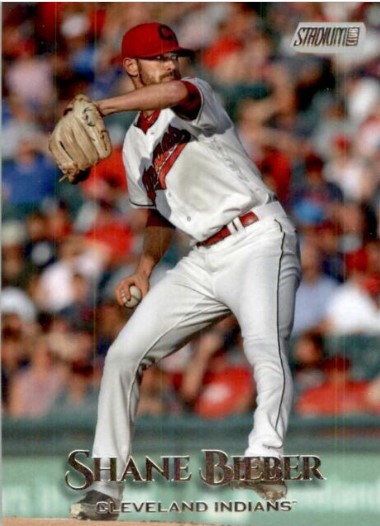
Pitcher of the Month (tie) … Shane Bieber,  Indians

BieberShane Bieber tied for the American League lead in August victories, going 4-0, 1.63 (the AL’s second-lowest August ERA).   Bieber fanned 57 batters in 38 2/3 August innings (six starts) tying Lucas Giolito for the most whiffs in MLB for the month. (Bieber averaged 13.3 strikeouts per nine innings for August.)  He fanned ten or more hitters in three of his August starts and had now fanned ten or more in five of eight 2020 starts. He currently has an MLB-leading six 2020 wins (tied with Yu Darvish and Max Fried) and an MLB-best 1.20 ERA.

Honorable Mention: At 6’6” and 245 pounds, Lucas Giolito looks big on the mound – and he lived up to that appearance in August.  Giolito went 3-1, 2.12 in his six August starts and, on August 25, threw a no-hitter (missing a perfect game by one walk), with 13 whiffs versus the Pirates. How close was he to Bieber?  Bieber’s one extra win and sub-2.00 ERA made the difference.  BBRT also considered the Blue Jays’ Hyun-Jin Ryu, who had the lowest earned run average among American League qualifiers at 1.29. Ryu never gave up more than one earned run in any of his five August starts. However, he, went only 2-0 and average just 5.6 innings per start.

NATIONAL LEAGUE

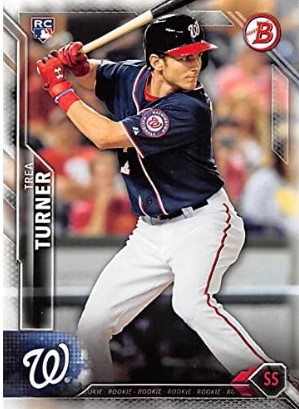
Player of the Month – (Tie) Fernando Tatis, Jr., SS, Padres; Trea Turner, SS, Nationals

TatisFernando Tatis Jr. raked at a .315 pace for August, tied for the MLB lead in home runs for the month with 11 and scored an MLB-high 29 runs.  He also drove in 22 runs (third-best in the NL) and even stole four bases.  The 21-year old had  eleven multi-hit games in August, homered in four straight games (August 5-9) and had a seven-RBI game (August 17).

TurnerWhile Tatis’ numbers were outstanding, BBRT could not ignore the MLB-best .408 average and 42 hits put up by the Nationals’ Trea Turner, who also had six long balls, 16 RBI and 26 runs scored.   For BBRT, a .400 average is also a “bright and shiny thing” that attracts my attention.  Turner ended August on a 16-game hitting streak.

Honorable Mentions:  BBRT also considered the Dodgers’ Mookie Betts (.315-10-21) and National League August RBI leader, Padre Manny Machado (.324-9-25).


National League Pitcher of the Month – Yu Darvish, Cubs

Yu Darvish photo

Photo by mikelachance816

Yu Darvish was one of just two  MLB pitchers with five wins (no losses) in August – and the only one to do it in five starts.   In addition, his 1.09 earned run average was the lowest among MLB qualifiers and his 40 strikeouts (in 33 innings pitched) were fourth in the National League. In his five August starts, Darvish never gave up more than one earned run in an outing – averaging 6.6 innings pitched per start.  A dominating month for the 6’5” righty, now in his eighth MLB season.  Darvish’s overall record for the season (through August 31) is 6-1, 1.47 with 52 strikeouts and just eight walks in 43 innings.

Honorable Mentions. BBRT also looked at the Braves’ Max Fried, MLB’s only other pitcher to earn five August wins.  Fried went 5-0, 1.35 in six starts, fanning 31 hitters in 33 1/3 innings – falling just a bit behind Darvish.  The Mets’ Jacob deGrom (2-1, 1.80 with 46 strikeouts in 30 innings) also deserves mention here, as does the Dodgers’ Clayton Kershaw, who went 4-1, 1.80 for the month.

__________________________________________

TROT INDEX … A REGULAR BBRT FEATURE

Through August, 37.4 percent of MLB’s 37,952 2020 plate appearances ended in a trot (back to the dugout, around the bases, to first base). We’re talking about strikeouts, home runs, walks, hit by pitch and catcher’s interference – all outcomes that are, basically, devoid of action on the base paths or in the field. Here’s the breakout: strikeouts (23.3%); walks (9.3%); home runs (3.5%); HBP (1.3%); catcher’s interference (less than 1%). Personally, I’d like more action in the field of play.

The 37.4 percent figure is up from 2019’s (full season) 36.2 percent and 2018’s 34.8 percent Trot Index.   

August wl

Above, you can see the won-loss records for August.  No surprise to the see the Dodgers at 21-7, they had the lowest team ERA in August, as well as the most home runs and runs scored. The Padres are surprising a lot of people in the National League. Never known as a offensive team, they combined youth and veteran presence (from Fernando Tatis, Jr. to Manny Machado) to deliver  the National League’s second-highest batting average, home runs and runs scored in August. (And they made some solid trade deadline moves., indicating they are serious about the 2020 post-season.)

Over in the American League, the White Sox may be the biggest surprise. They came on strong in August, topping the AL in August average, home runs and runs scored – driven by the bats of Jose Abreu, Eloy Jimenez, Luis Robert and Tim Anderson. Add the arms of Lucas Giolito and and Dallas Keuchel and they look to be in the race to stay.

You’ll find full current (through August 31) standings and statistics toward the end of this post, but here’s a look at hoe the post-season would look (under COVID Rules) if the season ended August 31.

Post-Season Qualifiers if the Season Ended August 31

American League:  Division Champions and Second-Place Teams: White Sox, Rays, A’s; Indians; Blue Jays; Astros.  “Wild Cards:” Yankees, Twins.

National League: Division Champions and Second-Place Teams: Cubs, Braves; Dodgers; Cardinals, Marlins; Padres; “Wild Cards:” Phillies, Rockies.


Now, some August stats – and then some August highlights. 

————-August 2020 Team Statistical Leaders August——————-

RUNS SCORED

National League – Dodgers (164); Padres (159);Phillies (153)

American League – White Sox (154); Rays (147); A’s (140)

Looking at runs scored per game (to factor out the differences in games played), the top scoring teams for August were  the Dodgers (5.86 runs per game), Phillies (5.67), White Sox (5.50), Padres (5.48) and Rays 5.25).  At the bottom of the list were the Reds (3.61); Rangers (3.88), Brewers (3.96); and Mariners (3.97).  Note:  Even runs per game is not a totally solid indicator, given the proliferation of seven-inning double head games. 

BATTING AVERAGE

National League – Nationals (.276); Padres (.271); Braves (.268)

American League – White Sox (.278); Orioles (.262); Tigers (.261)

The only teams hitting under .220 for August were the Cubs (.217). Brewers (.217) and Reds (.219).

ON-BASE PERCENTAGE

National League – Cardinals (.351); Mets (.350); Nationals (.344)

American League – Rays (.345); White Sox (.342);  Yankees (.338)

HOME RUNS

National League –  Dodgers (57); Padres (56); Reds (42)

American League – White Sox (54); Blue Jays (43); A’s (42)

Again, doing a bit to factor out the differences in games played, the Dodgers had the most powerful “at bats per home run” ratio at 16.33. Others averaging under 20 at bats per long ball were the Padres (17.36) and the White Sox (17.85). The Cardinals were at the other end of the spectrum – 42.53 at bats per August homer.  

WALKS

National League – Cubs (115); Mets (103); Reds (98)

American League – Indians (123); Rays (121); Angels (117)

STOLEN BASES

National League – Marlins (30); Phillies (19); Rockies (18)

American League – Mariners (29); Rangers (24); Royals (21)

BATTER’S STRIKEOUTS

National League – Brewers (271); Cubs (260); Marlins (256)

American League –  A’s (277); White Sox (261); Rays (261)

EARNED RUN AVERAGE

National League – Dodgers (2.98); Cardinals (3.60); Reds (4.02)

American League – Indians (3.09); White Sox (3.09); A’s (3.46)

The highest ERA for August belonged to the beleaguered Red Sox at 6.26. In the National League that “distinction” goes to the Nationals at 5.77. 

STRIKEOUTS

National League – Brewers (288); Reds (274); Padres (260)

American League – Indians (266); White Sox (261); Rays  (251)

Whiff-Masters

Strikeout totals were, of course, affected by games played (particularly with the COVID  and civil protest postponements), as well as by seven-inning doubleheader games.  So, let’s look at strikeouts per nine innings. Only three  teams fanned at least ten batters per nine frames: Reds (10.80); Brewers (10.52); Mets (10.18). The Indians led the AL, with 9.89 whiffs per nine frames. 

WALKS (fewest)

National League – Dodgers (69); Rockies (76); Cubs (77)

American League – Tigers (76): Indians (77);  Yankees (78)

The Dodgers’ staff show the greatest control with 2.51 walks per nine innings in August, while the Indians were best in the AL at 2.86. The Pirates’ staff walked an MLB-high 4.47 batters per nine innings in August. 

SAVES

National League – Marlins (10); Cubs (9); Rockies (9)

American League – Rays (13); A’s (11); Indians (10);

There were only nine complete games thrown in August – two by the Reds (both Trevor Bauer) and one each by the White Sox, Indians, Angels, Giants, Mariners, Cardinals and Rangers.

——-Individual Statistical Leaders for August ———-

AVERAGE (minimum 75 at bats)

National League – Trea Turner, Nationals (.408); Jesse Winker, Reds (.369); Paul Goldschmidt, Cardinals (.359)

American League – Jeimer Candelario, Tigers (.356); Yandy Diaz, Rays (.355); Jose Abreu, White Sox (.352)

The lowest August average (minimum 75 at bats) belonged to Mariners’ 2B Shed Long Jr. at .145 (12-for 83). 

HOME RUNS

National League – Fernando Tatis, Jr., Padres (11); Juan Soto, Nationals (11);  Jesse Winker, Reds (10); Cody Bellinger, Dodgers (10); Mookie Betts, Dodgers (10)

American League – Jose Abreu, White Sox (11); Mike Trout, Angels (11); Luke Voit, Yankees (11);  Eloy Jimenez, White Sox (10); Nelson Cruz, Twins (10)

RUNS BATTED IN

National League – Manny Machado, Padres (25); Juan Soto, Nationals (25); Fernando Tatis, Jr., Padres (24)

American League – Jose Abreu, White Sox (29); Mike Trout, Angels (28); Steve  Piscotty, A’s (26)

HITS

National League – Trea Turner, Nationals (42); Charlie  Blackmon, Rockies (38); Fernando Tatis, Jr., Padres (36); Manny Machado, Padres (36)

American League – Jose Abreu, White Sox (38); Hanser Alberto, Orioles (34); Eloy Jimenez, White Sox (33); David Fletcher, Angels (33)

DOUBLES

National League – Dominic  Smith, Mets (12); Nick Markakis, Braves (10); Christian  Walker, Diamondbacks (9); Freddie Freeman, Braves (9)

American League – Alex Verdugo, Red Sox (12)Anthony Santander, Orioles (11); Cesar Hernandez, Indians (10):

TRIPLES

National League – Ten with two

American League – Kyle Tucker, Astros (6); Jeimer Candelario, Tigers (3); six with two

STOLEN BASES

National League –  Jonathan Villar, Miami (9); Jon Berti, Marlins (8); Trevor Story, Rockies (6); Roman Quinn, Phillies (6)

American League – Jose  Ramirez, Indians (7); Adalberto Mondesi, Royals (7); Dylan Moore, Mariners (6); Whit Merrifield, Royals (6)

WALKS

National League – Brandon Nimmo, Mets (21); Ian Happ, Cubs (20); Bryce Harper, Phillies (20)

American League – Carlos  Santana, Indians (26); Cavan Biggio, Blue Jays (19); four with 18

The Cardinals’ Paul Goldschmidt led MLB in on-base percentage in August – at .512. He had nearly as many hits as walks – 23 hits and 20 walks in 21 games. Goldschmidt also had the best walks-per-strikeout ratio at 2.250 (20 walks versus 8 whiffs). 

BATTER’S STRIKEOUTS

National League – Keston  Hiura, Brewers (42); Javier Baez, Cubs (40); Ryan McMahon, Rockies (36); Trent Grisham, Padres (36);

American League – Miguel Sano, Twins (43); Jorge Soler. Royals (39);  Renato Nunez, Orioles (38)

The Twins’ Miguel Sano fanned in 41.3 percent of his August plate appearances (43 whiffs in 104 trips to the plate.)  Despite those numbers, he hit .284 -7-15 for the month. 

PITCHING VICTORIES

National League – Yu Darvish, Cubs (5-0); Max Fried, Braves (5-0); Clayton Kershaw, Dodgers (4-1); Zach Davies, Padres (4-2)

American League – Matt Foster, White Sox (4-0); Shane Bieber, Indians (4-0); Dylan Cease, White Sox (4-1); Randy Dobnak, Twins (4-1); Mike Fiers, A;s (4-1)

EARNED RUN AVERAGE (minimum 25 IP)

National League – Yu Darvish, Cubs (1.09); Max Fried, Braves (1.35); Jacob deGrom, Mets (1.80)

American League – Hyun-Jin Ryu, Blue Jays (1.29); Shane Bieber, Indians (1.63); Framber Valdez, Astros (1.89)

STRIKEOUTS

National League – Jacob deGrom, Mets (46/30 IP); Trevor Bauer, Reds (41/31 2/3 IP);  Aaron Nola, Phillies (41/30 2/3 IP)

American League – Shane Bieber, Indians (57/38 2/3 IP); Lucas Giolito, White Sox (57/39 IP); Gerrit Cole, Yankees (48/34 1/3 IP)

August’s leader in strikeouts per nine innings was the Mets’ Jacob deGrom at 13.80; followed by the Indians’ Shane Bieber at 13.27. 

COMPLETE GAMES

National League – Trevor Bauer, Reds (2); Tyler Anderson, Giants (1); Adam Wainwright, Cardinals (1)

American League – Aaron Civale, Indians (1); Dylan Bundy, Angels (1); Lance Lynn, Rangers (1); Lucas Giolito, White Sox (1); Marco Gonzales, Mariners (1)

Both of Trevor Bauer’s complete games were shutouts. 

INNINGS PITCHED

National League – Antonio Senzatela, Rockies (38 1/3); German Marquez, Rockies (36 1/3);  Zach Davies, Padres (36 1/3)

American League – Aaron Civale, Indians (40); Lance Lynn Rangers (39 1/3); Lucas Giolito, White Sox (39)

SAVES

National League – Kenley Jansen, Dodgers (8); Josh Hader, Brewers (7); Brad Kintzler, Marlins (6)

American League – Liam Hendriks, A’s (9); Brad Hand, Indians (8); five with six

——————————-August 2020 Highlights ———————–

150 Wins and counting

On August 5, Rick Porcello won his first game as a Met and picked up the 150th win of his 12-season MLB career – going seven innings and giving up just one run on five hits and no walks as the Mets top the Nationals 3-1.  That game was the bright spot this far this season for the 2016 American League Cy Young Award winner, who ended the month with a 2020 stat line  of 1-4, 6.00.

Walk, Don’t Run (until you have to)

Christian Yelich photo

Photo by IDSportsPhoto

August 6 was a unique day at the plate for Brewers’ LF Christian Yelich – with five
leisurely and one explosive plate appearance. He was able to casually stroll to first base in four plate appearances (walks in the first, third, sixth and eighth innings). He could also take his time walking back to the dugout after his ninth-inning strikeout.  In the only plate appearance that didn’t result in a “stroll,” it was full afterburner – as Yelich dashed out an inside-the-park home run in the fifth frame. It came as White Sox’ LF Eloy Jimenez made an attempt to catch a Yelich fly to left field and stumbled into the protective netting down the LF line.  As Jimenez struggled to right himself, Yelich circled the bases.  The Brewers, by the way, prevailed 8-3.

Four Homers Before the First Out

In recent seasons, home runs have been flying off MLB bats.  This August 8, the Tigers were out to continue the trend.  In a game against the Pirates (in Pittsburgh), the Bengals poked four home runs before the game’s first out was recorded  The top of the first inning started like this: SS Niko Goodrum, homer to left on a 1-0 pitch; 2B Jonathan Schoop, single to left on an 0-1 pitch; DH Miguel Cabrera, homer to left on an 0-2 pitch; 1B, C.J. Cron, homer to left-center on an 0-2 pitch; RF Jeimer Candelario, homer to left-center on the first pitch of his at bat.  So, starter Derek Holland – just 11 pitches into the game – had given up a single, four home runs and five runs. Holland’s line for the game (which the Tigers won 11-5) was five innings pitched, with nine runs allowed on 13 hits and one walk (six strikeouts.)

Blue Jays Take Wing(s) in Buffalo

It took a while for the Toronto Blue Jays to find a COVID-season home, but they ended up at Sahlen Field in Buffalo, New York.  They played their first “home” game in Buffalo on August 11 and the fans got their money’s worth.  (Oh, wait, there were no fans.)   At any rate, the Jays topped the Marlins in that first Buffalo game on a walk-off, run-scoring single by 3B Travis Shaw in the bottom of the tenth inning.  (Had there been fans, they would have gotten their money’s worth. )

100, That’s a Nice Round Number

On August 9, Lance Lynn of the Rangers (in his ninth MLB season) won his second game (against no losses) of the 2020 season.  More notably, it was his 100th career win.   Lynn gave up two runs on four hits and three walks (six strikeouts), as the Rangers topped the Angels 7-3.  Lynn got four  more August starts, running his 2020 record to 4-1, 1.93 and his career mark to 102-69, 3.53.  Lynn won 15 or more games in four of his first eight MLB campaigns.

Six-for-Three (not three-for-six)

On August 13, the Dodgers’ Mookie Betts tied an MLB all-time record by recording his sixth three-homer game, as the Dodgers manhandled the Pirates 11-2.  In the game, Betts was four-for-four, with three home runs, four runs scored and five RBI.  The only other players with six three-homer games are Johnny Mize and Sammy Sosa.  It’s a good bet that Betts will eventually have the three-dinger record all to himself.  For more on Betts’ accomplishment,click here.

1,000, Another Nice Round Number

On August 11, Dodgers’ 3B Justin Turner opened up the bottom of the second inning (of a 6-2 loss to the Padres) with a double to left off San Diego starter Garrett Richards.  It didn’t have an impact on the game, but it was Turner’s 1,000th career safety.

Another COVID Quirk … A Lead Off Sacrifice Fly – A Perfect Inning and a Loss

August 15, as the Angels and Dodgers squared off on the West Coast (Anaheim), the perfect storm led to the quintessential COVID-Era play – MLB’s first-ever leadoff sacrifice fly (Dang, I can’t unsee that). The game went into the tenth inning tied at five apiece.  In the top of the inning, with the Angels’ Kenyan Middleton taking over on the mound, Dodgers’ LF Chris Taylor (last out of the LA ninth) was placed (via “COVID Rules”) at second base.  With LA 3B Max Muncy leading off the inning, Taylor stole third on an 0-2 pitch that missed the plate.  On the next offering, Muncy lifted a fly ball to warning track in right field for a run-scoring, leadoff sacrifice fly that proved to be the game-winning run. Middleton then got PH Joc Pederson and C Austin Burnes on ground outs.  The Angels did not score in the bottom of the inning, so Middleton pitched a 1-2-3 ninth, yet was charged with the loss on a truly unearned (at least from a pitcher’s point of view) run.  Ouch!

Four-For-Four

On August 16. The 2020 Chicago White Sox became just the tenth MLB team to hit four consecutive home runs in an inning. The four four-base blasts came with two outs in the bottom of the fifth inning of a game against the Cardinals.  At the time, the White Sox were up by a 1-0 score.   White Sox’ 3B Yoan Moncada started it off with a three-run shot to right; next was a home run to right by C Yasmani Grandal, then a dinger to left field by 1B Jose Abreu and, finally, another home to right by LF Eloy Jimenez. At that point, Roel Ramirez (who gave up all four home runs) was replaced by Seth Elledge, who fanned DH Edwin Encarnacion for the final out of the inning.  Ramirez’ line for the game, won by the White Sox 7-2, was 2/3 inning pitched, six hits, one walk on strikeouts and six earned runs.

BBBB

Grand Slam-Diego

On August 20, the San Diego Padres’ became the first MLB to record a Grand Slam home run in four straight games.  The streak started with a Grand Slam by SS Fernando Tatis, Jr. in the top of the eighth inning of an August 17 14-4 Padres’ route of the Rangers. (Tatis also had a three-run homer in the seventh inning).  On August 18, as the Padres again topped the Rangers (this time by a 6-4 score), San Diego RF Wil Myers popped a first-inning Grand Slam.   The Padres continued to have the Rangers’ number, winning 6-3 on August 19 – behind a walk-off Grand Slam by 3B Manny Machado in the bottom of the tenth.  (This one aided by the rule placing a runner on second base to start each extra frame).  August 20th saw another Padres ‘extra-inning, walk off win over the Rangers (8-7 in ten innings).  In that game, 1B Eric Hosmer launched a fifth-inning Grand Slam.

A new opponent for the Padres ended the streak on August 21, as the Astros held the Padres without home run in San Diego’s 4-3 win at home.  San Diego was back at it again on August 22, with 2B Jake Croenworth popping a second-inning Grand Slam in a 13-2 Padres win over the Astros.

300 for Longo

On August 21, in a 6-2 win over the Diamondbacks, Giants’ third baseman Evan Longoria became the 150th major leaguer to reach 300 career home runs. Longoria’s blast, a two-run shot to left-center gave the Giants a two-run lead.  Longoria’s 300th long ball (his third HR of the season) came in the 34-year-old’s 13th MLB campaign. Longoria has hit 20 or more home runs in nine seasons, topping 30 four times.

Tigers Finally Growl at the Indians

On August 21, the Tigers topped the Indians 10-5 in Cleveland, ending a streak of 20 consecutive losses to the Tribe. For a deeper look into the 20-loss streak and the Orioles’ MLB-record 23 straight wins over the Royals, click here.

Quite a “Feet”

BertiOn August 25, Marlins’ CF/leadoff batter Jon Berti became the 44th MLB player to “steal for the cycle” – pilfering second, third and home all in the same inning. It came in the sixth inning of a 3-0 Marlins win over the Mets (part of a doubleheader sweep) – and represented the definition of a “manufactured” run.

Berti opened the inning (Marlins up 2-0) with a five-pitch walk off the Mets’ Jeurys Familia. He then stole second on the first pitch to DH Jesus Aguilar, who later lined out to center.  On the second pitch to the next batter (LF Corey Dickerson), Berti swiped third – where he was held when Dickerson grounded out second-to-first. Next up was 3B Brian Anderson and, with the count, 0-2, Berti swiped home.  Anderson was eventually hit by a pitch and 1B Lewin Diaz followed with a ground out to end the inning.  Berti ended the game zero-for-one with two walks, two runs scored and three stolen bases.

Ty Cobb and Honus Wagner share the career record for stealing second, third and home in one inning, having each done it four times.

Lucas “No-No” Giolito

Lucas Giolito photo

Photo by IDSportsPhoto

On August 25, Lucas Giolito tossed the first no-hitter of the 2020 season – shutting down the Pirates 4-0, with the only base runner being Pirates’ shortstop Erik Gonzalez, who drew a four-pitch walk to open the fourth inning. Giolito needed just 101 pitches (74 strikes) to complete the no-no, in which he fanned 13 batters. Going into the game, Giolito had a 2-2, 3.89 record and had averaged 5.8 innings pitched over six starts.  He ended August with a 3-2, 3.14 record on the season.

Pujols Climbs RBI List – To Where?

Albert Pujols photo

Photo by Dirk DBQ

In the top of the fifth inning of an August 24 game against the Astros, Albert Pujols found himself facing Framber Valdez with runners on first and third and two-out (with the Angels trailing 3-5). Pujols laced an 0-1 pitch to left to drive in Mike Trout from third.  While the run meant little in the Angels’ ultimate 11-4 loss, the RBI was a significant one for Pujols.  It was his 2, 087th career MLB RBI and moved him past Alex Rodriguez into sole possession of third place (or perhaps second place) on the all-time MLB RBI list (Hank Aaron is the all-time leader at 2,297 career runs driven in).

Why do I say second or third for Pujols? Well, RBI were not an official stat until 1920 – and the Elias Sports Bureau lists only Aaron, Pujols and Rodriguez as members of the 2,000 RBI Club.  Other sources, like Baseball Reference, have worked to attribute pre-1920 RBI retroactively and, as of August 24,  their list read:  Hank Aaron (2,297); Babe Ruth (2,214); Albert Pujols (2,087); Alex Rodriguez (2,086); Cap Anson (2,075).   Then, of course, there’s MLB.com which does not include Cap Anson and lists Babe Ruth at 2,013.  Note:  At month’s end Pujols had brought his RBI total up to 2,090.

No matter how you count them, Pujols has brought a lot of runs home over his career.

Another Streak Comes to an End

On August 26, Braves rookie Ian Anderson – making his major-league debut – pitched a gem.  Anderson went six innings, giving up just one run on one hit (a Luke Voit home run), while fanning six and walking two – as the Braves topped the Yankees 5-1.  Not only did, he pick up his first MLB victory, he became the first pitcher to best Cole since May 22, 2019 – breaking Cole’s streak of twenty regular-season winning decisions.  For more on Cole’s streak, click here.

Long Ball Outfield

On August 30, as the Cubs trounced the Reds 10-1, the Chicago squad became the first MLB team to get multi-homer games from all three starting outfielders in the same contest (more of #InBaseballWeTrackEverything).  The long balls came off the bats of LF Kyle Schwarber (a solo shot in the fourth inning and a Grand Slam in the ninth), CF Ian Happ (a two-run shot in the fifth and a solo homer in the seventh) and RF Jason Heyward (solo dingers in the fourth and sixth).  All ten Cubs runs scored on the six round trippers.

Happy Birthday Waino

Adam Wainwright photo

Photo by bk1bennett

Adam Wainwright celebrated his 39th birthday (August 30) in style.  The 6’7” righty, in his 15th MLB season, threw his first complete game since 2016, as his Cardinals topped the Indians 7-2 in Cleveland. Wainwright gave up two earned runs on four hits and two walks, while fanning nine – bringing his 2020 record to 3-0, 2.65.

I Get by With a Little Help from Designated Hitters

The Dodgers, with a little help from the expansion of the Designated hitter to the National League, set a new National League team record for home runs in a calendar month with 57 – seven of which were hit out of the DH slot.   The MLB record is 74, set by the Yankees in August 2019.

Move Over Babe and Mickey, Here Comes Gary

Gary Sanchez photo

Photo by BeGreen90

With the Yankees’ long history as the Bronx Bombers – written by players with names like Babe, Mickey, Joe, Roger and Aaron – it seemed doubtful there were any long-ball feats that had eluded the Yankee heritage. Oops, just a minute there.  On August 30, Gary Sanchez delivered the first-ever, pinch-hit, extra-inning Grand Slam home run in Yankee history.  Oh, to add to its uniqueness, it came in eighth inning of the second game of one of the COVID-era’s seven-inning doubleheader contests.


__________________________________________________


Standings Spet 1

——-Individual Statistical Leaders Year-To-Date (through August 31) ———-

AVERAGE (qualifying, 3.1 plate appearances per team game played)

National League – Trea Turner, Nationals (.377); Juan Soto, Nationals (.367); Charlie Blackmon, Rockies (.351)

American League – Tim Anderson, White Sox  (.330); Kyle Lewis, Mariners (.328); Hanser Alberto, Orioles (.321)

The lowest August average among qualifiers belonged to the A’s Matt Olson at .169 (21-for-124). 

HOME RUNS

National League – Fernando Tatis, Jr., Padres;  (13) Mookie Betts, Dodgers (11); Manny Machado, Padres (11); Juan Soto, Nationals (11)

American League – Nelson Cruz, Twins (13); Luke Voit, Yankees (13); Jose Abreu, White Sox (12); Teoscar Hernandez, Blue Jays (12);  Mike Trout, Angels (12)

The Royals’ Adalberto Mondesi had the most at bats through August 31  without a home run (129). The Royals’ SS had a .186 average, with 11 runs scored and two RBI in 35 games. 

RUNS BATTED IN

National League – Fernando Tatis, Jr., Padres (33); Manny Machado, Padres (30); Charlie Blackmon, Rockies (28)

American League – Jose Abreu, White Sox (32); Mike Trout, Angels (32); Anthony Santander, Orioles (29); Nelson Cruz, Twins (29); Kyle Tucker, Astros (29)

HITS

National League – Trea Turner, Nationals (49); Charlie  Blackmon, Rockies (47); Fernando Tatis, Jr. Padres (46)

American League – Jose Abreu, White Sox (45); David Fletcher, Angels (45); Hanser Alberto, Orioles (45)

DOUBLES

National League – Christian  Walker, Diamondbacks (13); Dominic  Smith, Mets (12); Freddie Freeman, Braves (11); Ketel Marte, D-backs (11); Mike Yastrzemski, Giants (11)

American League – Anthony Santander, Orioles (13); Hanser Alberto, Orioles (12); Willy Adames, Rays (12); Cesar Hernandez, Indians (12): Alex Verdugo, Red Sox (12)

Orioles’ LF Anthony Santander had the most extra-base hits through August 31 at 24; followed by Padres’ SS Fernando Tatis, Jr. at 23. 

TRIPLES

National League – Mike Yastrzemski, Giants (3); Jake Cronenworth, Padres (3); 12 with two

American League – Kyle Tucker, Astros (6); Jeimer Candelario, Tigers (3); 11 with two

Juan Soto of the Nationals led qualifiers in slugging percentage through August 31 at an even .800. Luke Voit of the Yankees led American League qualifiers at .709.  They were the only players above .700. 

STOLEN BASES

National League –  Jonathan Villar, Marlins (9); Jon Berti, Marlins (8); Trevor Story, Rockies (8)

American League – Jose  Ramirez, Indians (8); Adalberto Mondesi, Royals (8); Whit Merrifield, Royals (7)

Indians’ 3B Jose Ramirez had the most steals without being thrown out through August 31 at 8. 

WALKS

National League – Freddie Freeman, Braves (25); Bryce Harper, Phillies (24); Rhys Hoskins, Phillies (24); Mike Yastrzemski, Giants (24)

American League – Carlos  Santana, Indians (33); Anthony Rendon, Angels (25); Yandy Diaz, Rays (23)

The Phillies’ Bryce Harper drew the most intentional walks through August 31, with five. 

BATTER’S STRIKEOUTS

National League – Keston  Hiura, Brewers (48); Javier Baez, Cubs (47); Ryan McMahon, Rockies (46)

American League – Miguel Sano, Twins (51); Jorge Soler, Royals (50); Niko Goodrum, Tigers (49)

A’s 2B Tony La Stella had the best walks-to-strikeouts ratio through August 31 at 2.14 (15 walks/seven strikeouts).  Next was Cardinals’ 1B Paul Goldschmidt at 1.69 (22 walks/13 whiffs).  

PITCHING VICTORIES

National League – Max Fried, Braves (6-0); Yu Darvish, Cubs (6-1); Sony Gray, Reds (5-1); Zach Davies, Padres (5-2)

American League – Shane Bieber, Indians (6-0); Randy Dobnak, Twins (5-2); Dallas Keuchel, White Sox (5-2)

Five pitchers had lost five games through August: Luis Castillo, Reds (0-5, 4.10); Mike Minor, Rangers (0-5, 5.60); Trevor Williams, Pirates (1-5, 5.50); Luke Weaver, D-backs (1-5, 8.23); and German Marquez, Rockies (2-5, 4.88). 

EARNED RUN AVERAGE (minimum 30 IP)

National League – Yu Darvish, Cubs (1.47); Max Fried, Braves (1.60); Jacob deGrom, Mets (1.76)

American League – Shane Bieber, Indians (1.20); Lance Lynn, Rangers (1.93); Framber Valdez, Astros (2.35)

The Tigers’ Matt Boyd had the highest earned run average among pitchers with at least 30 innings pitched through August.  He was 1-4, 7.27 in seven starts (34 2/3 innings pitched).

STRIKEOUTS

National League – Jacob deGrom, Mets (58/41 IP); Sonny Gray, Reds (55/41 2/3 IP); Max Scherzer, Nationals (55/37 1/3 IP); Dinelson, Padres (51/38 1/3 IP)

American League – Shane Bieber, Indians (84/52 2/3 IP); Lucas Giolito, White Sox (66/48 2/3 IP);  Gerrit Cole, Yankees  (60/46 IP)

The leader in strikeouts per nine innings through August was the Indians’ Shame Bieber at 14.35.  The Nationals’ Max Scherzer topped the NL at 13.26. 

COMPLETE GAMES

National League – Trevor Bauer, Reds (2); Tyler Anderson, Giants (1); Kyle Hendricks, Cubs (1); Max Scherzer, Nationals (1); Adam Wainwright, Cardinals (1)

American League – Aaron Civale, Indians (1); Dylan Bundy, Angels (1); Lance Lynn, Rangers (1); Lucas Giolito, White Sox (1); Gerrit Cole, Yankees (1); Marco Gonzales, Mariners (1)

INNINGS PITCHED

National League – German Marquez, Rockies (48); Max Fried, Braves (45); Kyle Hendricks, Cubs (44);

American League – Shane Bieber, Indians (52 2/3); Lance Lynn Rangers (51 1/3); Lucas Giolito, White Sox (48 2/3)

SAVES

National League – Kenley Jansen, Dodgers (9); Josh Hader, Brewers (8); four with seven);

American League – Brad Hand, Indians (10); Liam Hendriks, A’s (10); Zack Britton, Yankees (9)

The Indians’ Brad Hand was a perfect 10-for-10 in save opportunities through August.

————-Team Statistical Leaders Through August 31——————-

RUNS SCORED – Team Average … 145

National League – Padres (211); Dodgers (204); Braves (175)

American League – Rays (188); White Sox (184); Astros (176)

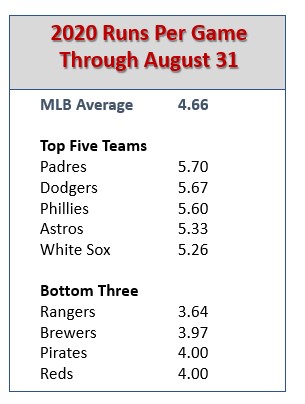
With Teams having played such a varying number of games – from the Cardinals 26 to 37 for the Padres and Mariners, the following chart probably better illustrates scoring.

RPG

BATTING AVERAGE – Team Average … .244

National League – Nationals (.270); Padres (.266); Mets (.264)

American League – White Sox (.270); Orioles (.259); Red Sox  (.257)

The lowest team batting average through August 31 was .212 for both the Brewers and  .212 the Rangers.

ON-BASE PERCENTAGE – Team Average … .322

National League – Mets (.348); Phillies (.343); Padres (.343)

American League – Rays (.340); Yankees (.336); White Sox (.333)

HOME RUNS – Team Average … 44

National League – Dodgers (68); Padres (67); Reds (54)

American League – White Sox (65); Blue Jays (54); Yankees (53)

The Cardinals hit the fewest home run (21), but also played the fewest games (26). By way of comparison, the MLB average was 1.31 home runs per game, the Cardinals’ average was 0.81.

SLUGGING PERCENTAGE – Team Average … .419

National League – Padres (.493); Dodgers (.471); Phillies (.465)

American League – White Sox (.485); Yankees (.449); Blue Jays (.443)

WALKS – Team Average … 117

National League – Cubs (142); Dodgers (134); Reds (134)

American League – Rays (158); Angels (154); Indians (152)

Crowding the Plate

No team got plunked (HBP) more than the Cubs, who had 29 batter reach base via the Hit-By-Pitch.   In the America League, the A’s led the way with 25 plunkings. The Rockies had the fewest hit batters (4), while the MLB team average was 16.  The Astros, popularly speculated as potential targets, suffered 14 hit batsmen (below the overall team average).  

STOLEN BASES – Team Average … 16

National League – Padres (31); Marlins (31); Rockies (21)

American League – Mariners (37); Rangers (29); Royals (24)

BATTER’S STRIKEOUTS – Team Average … 295

National League – Braves (335); Cubs (334);  Brewers (331)

American League – A’s (340); Rays (333); Mariners (311)

EARNED RUN AVERAGE – Team Average … 4.45

National League – Dodgers (2.76); Cardinals (3.59); Reds (4.18)

American League – Indians (2.87); A’s (3.51); Blue Jays (3.72)

The highest ERA through August belonged to the Red Sox at 6.04 – the only team north of six. 

STRIKEOUTS – Team Average … 295

National League –  Reds (367); Brewers (353); Padres (332)

American League – Indians (360); Rays (336); White Sox (314)

As noted earlier, Strikeout totals have been affected by games played (particularly with the COVID  and civil protest postponements), as well as by seven-inning doubleheader games.  So, let’s look at strikeouts per nine innings. Only three  teams fanned at least ten batters per nine frames: Reds (1.38); Brewers (10.61); Indians (10.32).

WALKS (Fewest) – Team Average … 117

National League – Cardinals (89); Phillies (94); Rockies (96)

American League – Indians (91); Yankees (94); Tigers (98)

No team walked fewer hitters per nine innings than the Indians at 2.61, also under three walks per nine frames were the Dodgers (2.73) and Rockies (2.78). No team issued more free passes per nine frames than the Pirates at 4.60.   

SAVES – Team Average … 8

National League – Rockies (11); Marlins (11); Dodgers (10); Cubs (10)

American League – Rays (15); Indians (14); A’s (13)

Primary Resources:  MLB.com; Baseball-Reference.com; MLB.com; ESPN.com; The Official Rules of Baseball Illustrated, by David Nemec, Sports Publishing, 2020


100Baseball Roundtable is on the Feedspot list of the Top 100 Baseball Blogs.  To see the full list, click here.

I tweet baseball @DavidBBRT

Follow/Like Baseball Roundtable’s Facebook Page here.  More baseball commentary; blog post notifications; PRIZES.

Member: Society for American Baseball Research (SABR); The Baseball Reliquary; The Negro Leagues Baseball Museum.
Baseball Roundtable’s Look at a Couple of MLB Streaks

Yesterday (August 21), the Tigers topped the Indians (in Cleveland) 10-5, despite trailing 5-0 after three innings. A series of five relievers held the Indians scoreless over the final six frames and the Tigers came back powered by home runs by 2B Jonathan Schoop, 3B Isaac Paredes and LF Victor Reyes.   The victory was especially sweet because it was Detroit’s first win over Cleveland since April 10, 2019 – a string of 20 consecutive losses, three short of the longest losing streak (or conversely, winning streak) by one team versus another since 1901 (Orioles over Royals, May 10, 1969-August 2, 1970).  Let’s take a closer look at those two streaks.

Orioles versus Royals – 23 games

Looking at the Orioles-Royals streak, the 1969-expansion Royals squad won it first contest against the Orioles – and then dropped the next 23 (11 games in 1969, 12 in 1970).  Not a total surprise, the Orioles were Division Champions in the two seasons of the streak, winning 217 games and losing just 107.  The Royals didn’t do too badly for an expansion squad – a pair of third-place finishes and a 134-190 record.  While the Orioles did outscore the Royals 131 to 67 during the run of victories, the matchup was not totally one-sided.  Among the 23 wins, eight were decided by one run and another seven by two runs.  The Orioles shut out the Royals twice during the streak – by scores of 5-0 each time.

Streak chart

Indians versus Tigers – 20 games

The bulk of the Indians ;streak versus the Tigers (17 of the 20 wins) came in 2019, when the Tigers went a dismal 47-115 and the Indians went 93-69. In the Indians’ streak, Cleveland outscored Detroit 128-43, shutout the Tigers six times (4-0, 8-0, 2-0, 8-0, 2-0. 7-0) and scored eight or more runs in eight games. There were just two one-run games and six two-run contests.

Primary Resources:  Baseball-Reference.com; Stathead.com; MLB.com

100Baseball Roundtable is on the Feedspot list of the Top 100 Baseball Blogs.  To see the full list, click here.

I tweet baseball @DavidBBRT

Follow/Like Baseball Roundtable’s Facebook Page here.  More baseball commentary; blog post notifications; PRIZES.

Member: Society for American Baseball Research (SABR); The Baseball Reliquary; The Negro Leagues Baseball Museum.

Who Says Pitchers Can’t Hit? Don’t Ask This “Guy.” Or These Other Guys.

With the universal Designated Hitter in effect this season – and some (sadly, from BBRT’s view) predicting it will remain in the National League after 2020, there are some things we are going to miss.  Okay, maybe most fans won’t miss futile swings by pitchers who just can’t handle a bat (although I do get a kick out of that sometimes).  I, for one, will miss good-hitting pitchers that deliver offense, hurlers that know how to lay down a bunt and, even more so, poor-hitting pitchers that surprise us by going on “rampages” at the plate.   This post is intended to explain what I’m talking about here (and is part of BBRT’s ongoing #WhyIHateTheDH” stream of thought.  So, let’s look at some at-the-plate thrills provided by pitches over the years.  The kind of performances we may not see in the future.

In the theme of Don’t Tell this Guy Pitchers Can’t Hit, let start with Guy Hecker.

Guy Hecker, Louisville, Colonels (American Association) … Only pitcher to win a batting title

HeckerOkay, it was a different game back in 1886, but Guy Hecker remains the only pitcher to win a batting title, the only pitcher to collect six hits in a game, the only pitcher to score seven runs in a game, the only hurler to collect 15 total bases in a contest and one of just two MLB pitchers to hit three home runs in a game.  Hecker won the American Association (considered a major league) batting crown in 1886 with a .341 average (117-for 343). Hecker appeared in 84 games that season (of 136 played by Louisville) and took the mound in 49 (57 percent) of them (48 starts/45 complete games).  He also took the field at first base and in the garden.  On August 15 of that season, in contest against the Baltimore Orioles, Hecker collected six hits (three singles and three home runs) and was safe on error once – scoring seven times in the 22-5 victory.  He also tossed a compete game.

Clearly, Guy Hecker earned his spot at the top of this post.

Guy Hecker still holds the overall (any position) major-league record for runs scored in a game at seven.

Hecker had a nine-season MLB career, going 175-146, 2.93 on the mound (four times winning 20+ games, with a high of 52 wins in 1884) and hit .283, with 19 home runs and 278 RBI in 705 games.

Mike Hampton …. Five Silver Slugger Awards

HamptonYou couldn’t do this post without including Mike Hampton, who won five Silver Slugger Awards as the National League’s best-hitting pitcher.  (The Silver Slugger Awards were established in 1980.) Hampton earned his handful of Silver Slugger recognitions in five consecutive seasons – from 1999 through 2003.  Notably, he won them with four different teams: Astros (1999); Mets (2000); Rockies (2001 & 2002); and Braves (2003). Now, we may never see another pitcher hoist a Silver Slugger Award. Note:  In 2003, Hampton was a leather and lumber – or heavy metal – guy, winning both a Silver Slugger and a Gold Glove. For more on players to win a Silver Slugger and Gold Glove in the same seasons, click here.

Hampton was two-time All Star during his 16-season (1993-2005, 2008-2010) MLB career. He retired with a 148-115, 4.06 record on the mound and a .246-16-79 batting line (423 games).  He hit over .300 in four seasons (a high of .344 in 2002).  His best campaign as a hitter was 2001, when he went .291-7-16 in 42 games for the Rockies.

Walk It Off, Jim

With pitchers not coming to the plate, we miss out not only on heavy-hitting performances (like Guy Hecker’s), but also on some pitchers’ at-the-plate oddities.  For example, Hall of Famer Jim Palmer is the only player (any position) ever to draw two bases-loaded walks in a single World Series Game. They came in the fourth and fifth innings of an Orioles’ 11-3 win over the Pirates on October 11, 1971. (Palmer walked only three times – versus 41 strikeouts – while hitting .196 during the regular season.)  Palmer was a career .174 hitter in the regular season and hit .086 in 20 post-season games.  Those two bases-loaded free passes were his only walks in 38 post-season plate appearances.   Palmer won 20 or more games in eight of his 19 MLB seasons.

Walter Johnson, Washington Senators … nine-game hitting streak, .433 season average (1925)

You can make a pretty good case for Hall of Famer Walter Johnson being the greatest pitcher of all time: 417 victories; 12 times leading the league in strikeouts; an MLB-record 110 shutouts … and I could go on and on.  But this post is about hitting, and the “Big Train” carried a pretty big bat.

Consider the 1925 season, when the 37-year-old Johnson went 20-7, 3.07 on the mound. At the plate, Johnson started the campaign by collecting at least one base hit in his first nine games (appearing in two of those contests as a pinch hitter). After those nine contests, Johnson was hitting a nice round .500 (13-for-26), with one double, one triple, one home run and nine RBI.  On the hill, he was 6-1, 1.77.  And Johnson didn’t slow down much as the season wore on.  He ended up with a .433 average (42-for-97), with three walks (.455 on-base percentage) and just six strikeouts.  He also had two home runs and 20 RBI in 36 games.   Johnson’s splits were pretty impressive as well. He hit .429 at home and .438 on the road and .529 versus right-handers and .414 versus lefties. He also hit .571 with runners in scoring position (12-for-21) and .500 with runners in scoring position and two out (four-for-eight.  Johnson was a career (21 seasons) .235 hitter, with 24 home runs and 255 RBI.

You’ve been “Catfished”

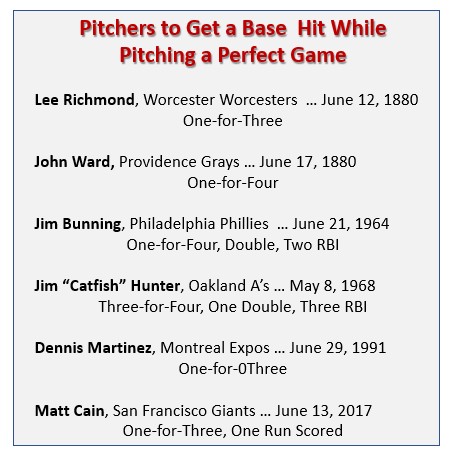
On May 8, 1968, Jim “Catfish” Hunter threw a perfect game against the Minnesota Twins – a 4-0 win in Oakland.  Not only did he dominate the Twins from the mound (11 whiffs in the perfect outing), he also roughed them up at the plate. Hunter had a double, two singles, and three RBI in the contest.  Note:  There have been 23 perfect games in MLB history, the pitchers twirling those gems have recorded at least one base hit in six of them. Hunter is the only one with more than one safety while pitching “perfecto.”

Don Newcombe. Dodgers … .359 average, seven home runs, 23 RBI (1955)

In 1955, the Dodgers’ Don Newcombe became a 20-game winner (20-5, 3.20) for the second time.  He also hit .300+ for the second of seven times (in ten seasons) he would reach that mark.

In 1956, Don Newcombe went 27-7, 3.06 on the mound – earning Cy Young AND MVP honors.

Newcombe got his 1955 season at the plate off to a good start. On April 14, in his first appearance of the campaign, he went two-for-four, with two runs, three RBI and two home runs – and he needed to succeed at the plate.  Newcombe got the win (10-8 over the Giants), despite giving up eight runs (five earned) in 7 1/3 innings. For the season, Newcombe hit .359 (42-for-117), with seven home runs and 23 RBI. Newk was used 23 times as a pinch-hitter that season, going 8-for-21 (.381) with two walks. For the season, he hit .353 with runners in scoring position.  For his career, Newcombe hit .271 (238-for-878) with 15 home runs and 108 RBI. On the bump, the four-time All Star was 149-90, 3.56.

Another Big Don

Don Newcombe was a solid hitting pitcher for the Dodgers – and so was another Big Don – Drysdale. In 1965, when the Dodgers faced the Twins in the World Series, the LA squad had only one hitter with at least 100 at bats and a .300 or better average.  That was Don Drysdale at an even .300 (39-for-130). In fact, the most at bats for any other Dodger that hit .300 or better that season was 13. Drysdale was seventh on the team in home runs (seven) and tenth in RBI (19).

Micah Owings, Diamondbacks … Four hits, two home runs, six RBI (August 18, 2007)

Micah Owings did not have the pitching stats of some of the hurlers in this post (six MLB seasons, 32-33, 4.86) – but he could rake. As a rookie, in 2007, Owings had quite a mid-August day against the Braves. He threw seven solid innings (three runs on seven hits, with no walks and seven whiffs.  At the plate, his day went like this: two-run double in the second inning; solo home run in the fourth; two-run home run in the sixth; RBI single in the seventh; line out in the eighth.  For the season, the 24-year-old rookie hit .333-4-15 in 60 at bats. For his career, Owings hit .283, with nine home runs and 35 RBI in 205 at bats.

A Wise Man Once Put It All TWOgether

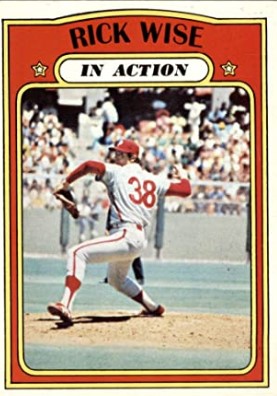
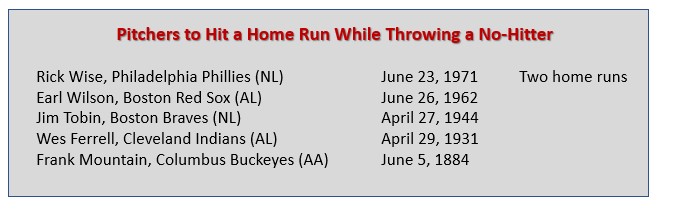
wiseOkay, Rick Wise was not a terror at the plate, sporting just a .195 average over 18 MLB seasons. He did, however, put it all together on June 23, 1971. Facing the Reds in Cincinnati, Wise tossed a no-hitter (one walk, three whiffs) in a Phillies’ 4-0 win. He also became the first (and still only) MLB hurler to hit two home runs while pitching a no-no.  Wise connected in the fifth (two-run) and eighth (solo) to complete a two-for-four day.  1971 was actually a solid year for Wise, who went 17-14, 2.88 and hit .237 with career highs in home runs (6), RBI (15) and runs scored (14) – in 39 games. In his pitching career, Wise went 188-181, 3.69 and won 15 or more games in six seasons.

Homer and No no

Wes Ferrell … 37 home runs as a pitcher, nine in one season

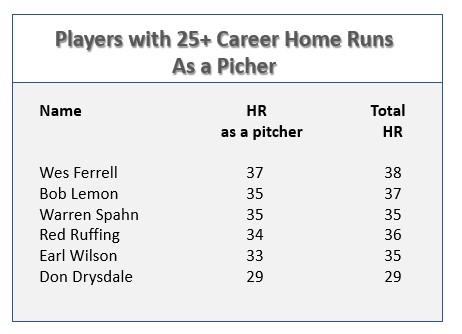
Wes Ferrell was a good (great?) hitting pitcher, holding the record for single-season home runs as pitcher (nine) and career home runs as a pitcher (37 out of 38 career long balls). His career (15 seasons, 1927-41) line was .280-38-208 in 548 games.  In 1931, Ferrell hit .319-9-30 in 48 games for the Indians – hitting .389-9-29 as a pitcher (he was also used as a pinch-hitter).  On the mound, he went 193-128, 4.04 – winning 20 or more games in six seasons.

25+

Two Grand Slams – One Grand Game

Braves’ right-hander Tony Cloninger got the Independence Day fireworks started early in 1966. On July 3 of that season, Cloninger became the first (and still only) pitcher – as well as the first National Leaguer (any position) – to hit two Grand Slam home runs in a game.  In the Braves 17-3 win over the Giants (in San Francisco), Cloninger hit a Grand Slam in the top of the first, added a second Grand Slam in the fourth and poked an RBI single in the eighth. He ended the day three-for-five, with an MLB one-game record (for pitchers) nine RBI. He also pitched a complete-game, seven-hitter.  That season, Cloninger hit .234, with five home runs and 23 RBI in 111 at bats. On the mound, he was 14-11, 4.12.

For his career (1961-72), Cloninger was 113-97, 4.07 on the mound and .292-11-67 at the plate.  Tony Cloninger’s best season on the hill was 1965, when he went 24-11, 3.29 (yet, somehow manage to lead the league in walks and wild pitches.) Side note: After retiring from MLB, Cloninger became a World-Class Slow-Pitch softball player. In 1978, playing for the United States Slow-pitch Softball Association Major Slow Pitch World Series Champion Howard & Carroll team, Cloninger was selected as the third baseman on the Series’ All World Team.  For more on Cloninger, click here.

Jim Tobin, Braves …. Three home runs in a game

The Boston Braves’ Jim Tobin shares the record (with Guy Hecker) for the most home runs in a game by a pitcher at three. In a May 13, 1942 game against the Cubs, Tobin flied out to deep right field in the third inning; homered to lead off the fifth; homered again to lead off the seventh; and hit a two-run home run with two outs in the eighth (to break a 4-4 tie in a game the Braves won 6-5).   On the mound, he earned the victory (a complete game – five runs, three earned, five hits and three walks) – as the Braves topped the Cubs 6-5.  Notably, the day before, Tobin was used as a pinch hitter in the eighth inning of a Braves’ 9-8 loss to the Cubs and delivered a two-run homer. So, he had homered four times in the space of five at bats.

Tobin went 105-112, 3.44 in nine MLB seasons (1937-45). As a hitter, he hit .230 (183-for-796, with 17 home runs and 102 RBI. He was used as pinch hitter more than 100 times.

Grandiose Post-Season Visions

Dave McNally – a three-time All Star – racked up a career 184-119, 3.24 record on the mound, winning 20 or more games in four of fourteen MLB seasons. He was also 7-4, 2.49 in 14 post-season appearances.  McNally was less effective at the plate, with a .133-9-43 regular-season stat line and a .148 post-season batting average.

In the 1970 post-season, however, McNally turned his bat into a weapon.  He went two-for-five with a double in an American League Championship start against the Twins – a complete-game 11-3 win.  He then went one-for-four in a World’s Series start against the Reds – his one hit being the first (and still only) World Series Grand Slam hit by a pitcher.

Madison Bumgarner, Giants … Active leading home runs by a pitcher (19), two home runs on Opening Day (2017)

On Opening Day (April 2) 2017, the Giants’ Madison Bumgarner shone on the mound and at the plate.  On the mound, he went seven innings (no decision) and gave up three runs on six hits, with no walks and eleven strikeouts.  At the plate, he was (arguably) even more effective – becoming the first (and still only) pitcher to hit two home runs in an Opening Day game.  His day as a hitter went like this:

  • Walk in the second inning (on a 3-2 pitch);
  • Solo home run leading off the fifth;
  • Solo home run with one out in the seventh;

While Madbum has just a. 177 career average (12 seasons), his 19 long balls are number-one among active pitchers.   His career stat line at the plate:  .177-19-62. On the mound, Bumgarner is 119-94, 3.16.  He is a four-time All Star and has four times won 15 or more games in a season.   Bumgarner signed (free agent) with the Diamondbacks before the 2020 season.

Terry Forster … .397 career average

Terry Forster didn’t show much power – no home runs in his 78 regular-season at bats – but he did put the bat on the ball.  In 16 MLB seasons (1971-86 … White Sox, Pirates, Dodgers, Braves, Angels), Forster went 31-for-78, putting up a nifty.397 average.   Five of his 31 hits went for extra bases – four doubles and a triple.  His best season as a hitter was 1972 (White Sox), when he was 10-for-19 (.526), all singles – with one run and three RBI. His final career line at the plate was .397-0-7.  On the mound, Forster went 54-65, 3.51, with 127 saves – leading the AL in saves with 24 in 1974. Forster saved 20+ games in three seasons and had an earned run average under 2.50 in five campaigns.  In 1978, for the Dodgers, he went 5-4, 1,93, with 22 saves, in 47 appearances. That season he hit .500 (four-for-eight), with a double and two RBI.

Terry Forster made it to the major leagues (White Sox) at the age of 19 – after appearing in just ten games in the minor leagues (Class A). 

Primary Resources: Stathead.com; Baseball-Almanac.com; “August 15, 1886: Guy Hecker: Hitting Pitcher,” Society for American Baseball Research, by Bob Bailey; “Wes Ferrell” bio, Society for American Baseball Research, by Mark Smith.

Primary Resources: Stathead.com; NationalPastime.com

100Baseball Roundtable is on the Feedspot list of the Top 100 Baseball Blogs.  To see the full list, click here.

I tweet baseball @DavidBBRT

Follow/Like Baseball Roundtable’s Facebook Page here.  More baseball commentary; blog post notifications; PRIZES.

Member: Society for American Baseball Research (SABR); The Baseball Reliquary; The Negro Leagues Baseball Museum.
Nolan Ryan Didn’t Do It – But Tyler Alexander Did … A Look at Strikeout Streaks

Nolan Ryan didn’t do it.  Walter Johnson didn’t do it (neither did Randy Johnson). Bob Gibson didn’t to it.  Christy Mathewson didn’t do it.  But Max Scherzer it …. And Tom Seaver did it one better.  And, now, Tyler Alexander had done.

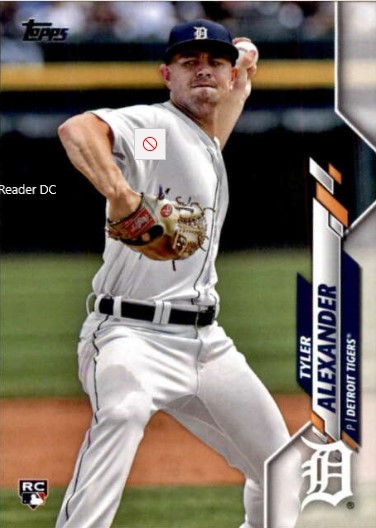
AlexYesterday (August 3, 2020), Tigers’ southpaw reliever Tyler Alexander did “it “– struck out at least nine batters in a row.  In the process, he set the MLB record for consecutive strikeouts by a relief pitcher and tied the American League record for consecutive strikeouts in a game. Alexander fanned the first nine Reds’ batters he faced in the initial game of Sunday’s Tigers/Reds twin bill.  He also came so-o-o-o very close to tying (or even breaking) the overall MLB record for consecutive strikeouts in a game (10 … held by Tom Seaver).

The 25-year-old Alexander, in his second MLB season, came on in the top of the third inning, with the Reds leading his Tigers 3-0. He relieved Tiger starter Rony Garcia after a Nick Castellanos’ home run to open the frame.  Alexander proceeded to fan the entire Reds’ lineup in order (on 39 pitches/29 strikes), getting five swinging and four looking. His victims and the counts: 2B Mike Moustakas (2-2); 3B Eugenio Suarez (0-2); DH Jesse Winker (0-2); CF Nick Senzel (1-2); 1B Josh VanMeter (0-2); SS Freddy Galvis (3-2); C Tucker Barnhardt (1-2); LF Shogo Akiyama (1-2); and RF Castellanos (2-2).

Remember, I said he came so very close to tying the overall record of ten straight whiffs?  Alexander was one pitch away from that tenth consecutive strikeout when he hit Moustakas with a pitch on a 1-2 count). Who knows, he might even had broken the record, since he fanned the next batter (Suarez) – on five pitches. What if he had snuck that third strike past Moustakas? After fanning Suarez, Alexander walked pinch hitter Matt Davidson (after pinch runner Travis Jankowski was out stealing) and was replaced on the mound by Carson Fulmer.  Alexander’s line for the day 3 2/3 IP, no hits, one walk, one HBP and ten strikeouts.   (He came into the game with 50 strikeouts in 57 2/3 innings (16 appearances/8 starts).

Tyler Anderson broke the record of consecutive strikeouts by a relief  pitcher– set at eight by Yankee Ron Davis (against the California Angels) on May 4, 1981.

We’ll look at those players with at least nine consecutive strikes out in this post, but first a look at the state of the game – from a strikeout perspective.

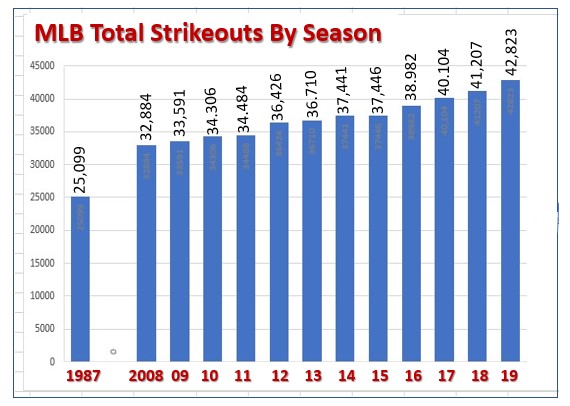
In  today’s throw-hard/swing-hard game, we should not be surprised when whiff records are tied or fall (earlier this season, the Indians’ Shame Bieber tied the MLB record for strikeouts in a pitchers’s first two starts of a season with 27). For that story, click here).   MLB has seen a new season record for total strikeouts every year since 2008.  Consider that 1987 was the first year MLB topped 25,000 strikeouts, Given, MLB has added four teams since then, but also has added 17,724 strikeouts in a season (2019) – going from 6.0 strikeouts per nine innings to 8.9.

K's Seasson

Now those players with nine (or ten) consecutive strikeouts in a game.

Ten Consecutive Strikeouts in a Game— standing all alone.

Tom Seaver, Mets   …  April 22, 1970.

Seaver started the game (versus the Padres) and seemed to get stronger in the late innings.  He went into the top of the sixth with a 2-1 lead, having given up just two hits, two walks and one run (a solo home run by Padres LF Al Ferrara), with nine strikeouts.  He got the first two batters on a foul pup up and a fly to right, fanned Ferrara to end the frame and went on to strike out the side in order in the seventh, eighth and ninth. Seaver, in the game, tied Steve Carlton for the most strikeouts in a nine-inning game at 19 (a record since broken).

Seaver, of course, is a Hall of Famer – an All Star in 12 seasons and a three-time Cy Young Award winner.  He led the league in strikeouts five times and retired (after 20 MLB seasons … 1967-86) with 3,640 strikeouts in 4,783 innings pitched.

Nine Consecutive Strikeouts in a Game (in addition to Tyler Alexander)

Mickey Welch, New York Gothams (NL) … August 28, 1884

Mickey Welch fanned the first nine batters he faced, as he earned a 10-2 win for his Gothams – over the Cleveland Blues on August 28, 1884. Welch fanned 14 in the contest.

Mickey Welch holes the record for the most consecutive whiffs to start a game.

Welch, a Hall of Famer, pitched 13 MLB seasons (1880-92), going 307-210, 2.71 and fanning 1,850 batters in 4,802 innings. He won 20 or more games in nine seasons (a high of 44 wins in 1885). Ah, it was a different game back then. He never led his league in strikeouts, although he did fan 345 batters in 1884.

Jake Peavy, Padres …. April 25, 2007, Padres

Jake Peavy started against the Diamondbacks (in Arizona) on April 25, 2007. He got the first two batters on a strikeout and ground out before giving up a pair of singles (but getting out of the inning with a runner tossed out a third base).  He then struck out the side in order in the second, third and fourth innings (eight swinging, one looking), before walking LF Eric Brynes on a 3-2 pitch to start the fifth (ending his streak at nine). Peavy ended up with a no-decision after going seven innings and giving just two hits and three walks (no runs), with 16 strikeouts.

Peavy was a three-time All Star in a 15-season MLB career (2002-16).  He went 152-126, 3.63, with 2,207 strikeouts in 2,377 innings pitched.  His best year was 2007, when he led the NL in wins (19 versus six losses), ERA (2.54) and strikeouts (240). He also led the league in whiffs in 2005 and struck out 200 or more batters in three consecutive seasons (2005-07).

Ricky Nolasco, Marlins … September 30, 2009

Rickey Nolasco’s 2009 season might not be considered an artistic success. Although he won 13 games (nine losses), he pitched to a 5.06 earned run average. Starting against the Braves (in Atlanta) on September 30, however, he brought his “A” game. He breezed through the first two innings, giving up just a single and then upped the ante – striking out the side in order in the third, fourth and fifth frames, before giving up a double to 1B Adam LaRoche to open the sixth. Nolasco got the win, going 7 2/3 innings (four hits, two runs, no earned runs, two walks and 16 strikeouts).

Nolasco pitched 12 MLB seasons (2006-17), going 114-118, 4.56, with 1,513 strikeouts in 1,887 2/3 innings. His high in strikeouts for a season was 195 in 2009.  His best season was 2008, when he went 15-8, 3.52 for the Marlins.

Aaron Harang, Dodgers …. April 13, 2012

Harang got out of the box quickly against the Padres on April 13, 2012. He gave up a leadoff single to Padres’ CF Cameron Maybin and then fanned the next nine Padres he faced (all swinging third strikes) – until Padres’ LF Will Venable led off the fourth with a home run. (All nine were swinging.)  Harang ended up with a no decision, giving up four runs on four hits and two walks in 6 1/3 innings, while fanning 13.

Harang pitched 14 MLB seasons, going 128-143, 4.26, with 1,842 strikeouts in 2,322 innings pitched. He led the NL in strikeouts (for the Reds) in 2006 with 216. That was his best season, as he also led the league in wins (16, with 11 losses), starts (35) and complete games (6).

Doug Fister, Tigers … September 27, 2012

Fister was cruising in his September 27, 29012 start against the Royals.  After three inning, he had given up no runs (a single and a HBP), had fanned one and haw thrown just 36 pitches.  In the fourth inning, he got the first two batters on ground outs, before fanning C Salvador Perez (looking) on an 0-2 pitch. He went on to fan the side in the fifth sixth, as well as the first two batters in the seventh before Perez broke the streak with a ground out short-to-first.  Things went a bit south in the eighth inning,  as Fister gave up three runs on two double and two singles before being relieved with two outs in the frame. H ended with a no decision, 7 2/3 IP, three runs (two earned), no walks and ten strikeouts. The Tigers did get the win, by a 5-4 score.

In his 10-season MLB career (2009-18) Fister went 83-92, with a 3.72 ERA and 970 strikeouts in 1,422 1/3 innings pitched.  His high in strikeouts was 159 in 2018, when he went 14-9, 3.67 in 32 starts (33 appearances). His best season was 2013, when he went 16-6, 2.41 for the Nationals, but fanned only 98 batters in 164 innings.

Max Scherzer, Nationals … October 3, 2015 

Like Tom Seaver’s, Max Scherzer’s strikeout steak was part of a double header (Game Two. in this case) and, also like Seaver, he seemed to get stronger as the game went on. Scherzer went into the bottom of the sixth (versus the Mets), having thrown five perfect innings with eight strikeouts. Mets ‘catcher Kevin Plawecki was safe on an error by third baseman Yunel Escobar to end the perfecto, but Scherzer go the next three hitters, including a strikeout of  RF Curtis Granderson to end the inning. Scherzer went on to strike out the side in the seventh and eighth innings and got the first two hitters’ on strikeouts in the ninth before Granderson broke up the streak with an infield pop out to end the game.  Scherzer end up with a no-hitter (his second of the season), 17 strikeouts and was just an error short of a perfect game. All nine whiffs in Scherzer’s streak were swinging punch outs.

At one point in the October 3 (second game) Nationals/Mets matchup, 11 consecutive batters went down on strikes. The Mets’ Hansel Robles fanned the last two hitters in the top of seventh, Scherzer fanned three consecutive Mets in the bottom of the seventh, the Mets Erik Goeddel fanned all three Nats he faced in the eighth, Scherzer again had a 1-2-3 strike out inning in the bottom of the eighth.

Max Scherzer is in his 13th MLB season. He is a seven-time All Star and three-time Cy Young Award winner. He has led the NL in strikeouts three times (a high of 300 in 2018) and fanned 200 or more batters in eight seasons. He has also led his league in wins four times, complete games four times and shutouts twice.

Max Scherzer seems to like the record books he share the record for strikeouts in a nine-inning game (20), as well as the record for no-hitters in a season (two). 

Primary Resources:  Stathead.com; Baseball-reference.com; MLB.com

100Baseball Roundtable is on the Feedspot list of the Top 100 Baseball Blogs.  To see the full list, click here.

I tweet baseball @DavidBBRT

Follow/Like Baseball Roundtable’s Facebook Page here.  More baseball commentary; blog post notifications; PRIZES.

Member: Society for American Baseball Research (SABR); The Baseball Reliquary; The Negro Leagues Baseball Museum.
COVID 19 AT THE BAT

Covid At the Bat
With Apologies to Ernest Lawrence Thayer

The outlook was brilliant for MLB that day,
COVID lurking near and only sixty games to play.
For several months, on fans, a deathlike silence sat.
There seemed little chance we’d see anyone come to bat.

Introduction and ceremonies seemed a little bland,
With nary a fan nor vendor, in the stands.
No joyous yell rumbled through the seats across the empty park.
No, score sheets lay in anxious laps, waiting to be marked.

Still, for some real baseball, each fan had an unscratched itch.
And we couldn’t wait for Fauci to throw out the first pitch.
Anticipation further grew, as Aaron Hicks slowly took his place,
Pondering mighty Max Scherzer, whom he was about to face.

As Hicks dug in the batter’s box, amid the piped-in cheers,
In living rooms across the land, the fans popped open beers.
And as the Nats’ Mad Max ground the ball into his mitt,
Hicks slowly waived his bat and prepared himself to hit.

And, then the red-stitched leather sphere came whizzing toward plate,
And, on our TV’s and devices, we all anticipated the pellet’s fate.
The pitch was quite a way outside, amply off the dish.
And Hicks thought “That ain’t my style,” and decided not to fish.

Hicks’ bat eventually did come round, cutting through the air,
Launching the horsehide on the ground, going not foul, but fair.
And with that rap, the season opened for all the fans – and me,
On a grounder that was recorded as an out from four to three.

Three batters later, with the new season’s first home run blow,
Giancarlo Stanton gave the Yankees a lead of two-to-oh.
Then Brett Gardner did some positive Scherzer pleasin’,
Finishing the very first frame with the first whiff of the season.

It continued with the Yankees, by 4-1, still winning,
Until the rain and lightning came in the top of the sixth inning.
With all the protocols it took to get the boys out on the field,
It seemed a shame this American game had to the weather yield.

Ah, but across this favored land, the sun is shining bright.
Fans are smiling, fans are shouting and everything seems right.
There are hits and runs, whiffs and walks and on-the-field fun.
Everything seems a little better, baseball season has begun.

Post Script:
Of course, on and off the field, things are not all rosy.
We’re missing some big names, like Markakis, Price and Posey.
And then there is the virus, that is still not in our past.
And, despite hope that springs eternal, we know this season may not last.

BaseballRoundtable.com

100Baseball Roundtable is on the Feedspot list of the Top 100 Baseball Blogs.  To see the full list, click here.

I tweet baseball @DavidBBRT

Follow/Like Baseball Roundtable’s Facebook Page here.  More baseball commentary; blog post notifications; PRIZES.

Member: Society for American Baseball Research (SABR); The Baseball Reliquary; The Negro Leagues Baseball Museum.
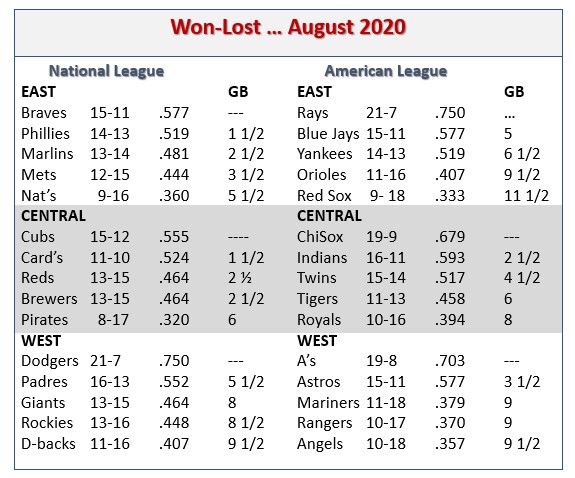
A Whole “Lotta” Strikeouts … 30 Whiffs in a Game

Old baseball equipment photoOn this date (July 15) in 1941, southpaw Clarence “Hooks” Lott took the mound for the Class D Paragould Browns (versus the Newport Dodgers) of the Northeast Arkansas League.  Little did he know he was in for a bit of somewhat-unsatisfying, but record-setting, overtime.

Overtime?  The 6’2”, 200-pound, 21-year-old lefty would pitch the entire contest – all 16 innings.

Somewhat unsatisfying? The game would end in a 1-1 tie – a “no decision” for the hard-working Lott.

Record-setting?  Lott would fan 30 batters – still the professional baseball record for whiffs by a pitcher in an extra-inning game.

Were all those whiffs a surprise? Not really, about a month earlier – June 18 – facing the Batesville Pilots, Lott had set the record for the most strikeouts in a nine-inning game (25).  That record stood until 1952, when Ron Necciai of the Bristol Twins fanned 27 – yes, 27 – in a 7-0 win over the Welch Minors (also Class D). For the BBRT story on Necciai’s game and career, click here.  Spoiler alert: Necciai, who fanned 109 batters in 43 innings at Bristol that season (before being promoted to Class B) earned only one major-League victory in his professional career.  Anyway, back to the Hooks Lott story.

Lott’s 1941 minor-league exploits did earn him a call up to the Saint Louis Browns in September of 1941, where gave up two runs on two hits and a walk in two innings (two appearances, no decisions). He also fanned one batter. Lott spend the 1942 season with the San Antonio Mission of the High-A Texas League, going 6-11, 4.26, before joining the Army in November of that year. He returned from military service in late 1945 – and started the 1946 season back in San Antonio.   To make a long story a bit shorter, Lott made it back to the majors in 1947, getting in 24 games (nine starts) and going 3-9, 7.00 – fanning 52 batters (walking 66) in 79 2/3 innings.  He was back in the minor leagues in 1947 and, though he pitched through the 1957 season, he never made it back to the major leagues (his final MLB stat line was 3-9, 7.05 – with 53 strikeouts and 67 walks in 81 2/3 innings).

Clarence Lott’s Moment(s) in the Major-League Sun

Clarence Lott threw two complete games at the major-league level. One was “especially” special.
On June 23, 1947, Lott (0-1, 16.20 for the St. Louis Browns) was claimed off waivers by the Giants.  He quickly took a train to Chicago (where the Giants were slated to play the Cubs) and, on the day after the trade, tossed a two-hit shutout (five walks/seven strikeouts) in an 11-0 win.

On July 27.  Again, against the Cubs, Lott went the distance in a 7-3 win, giving up just one earned run on eight hits and two walks (seven strikeouts).

Lott pitched in 17 minor league seasons, toiling for an equal number of minor league teams. His best minor-league seasons were 1951-53 with the Saint Petersburg Saints of the Class B Florida International League, where he went: 22-12, 2.00; 24-9; 1.83; and 15-6, 1;99.

Primary Resources:  Baseball-Reference.com; Stathead.com; “The time a pitcher struck out 30 batters in one game,” by Tim Hagerty, Sportingnew.com

100Baseball Roundtable is on the Feedspot list of the Top 100 Baseball Blogs.  To see the full list, click here.

I tweet baseball @DavidBBRT

Follow/Like Baseball Roundtable’s Facebook Page here.  More baseball commentary; blog post notifications; PRIZES.

Member: Society for American Baseball Research (SABR); The Baseball Reliquary; The Negro Leagues Baseball Museum.
Timing Isn’t Everything, But It Can Be Pretty Important … More Waiting for Baseball Musings

As Baseball Roundtable continues to wait (and hope) for the start of the MLB season, I continue to muse over past baseball events and occurrences – the stats and stories or our national pastime.  As I do that, it comes to me that timing, while not everything, can be pretty darn important: like Jim Thome’s MLB-record lucky thirteen walk-off home runs; Rick Wise’s hitting only 15 MLB home runs in 18 MLB seasons, but  hitting two of them in the same game in which he tossed a no-hitter; Bob Feller tossing a no-hitter on Opening Day; or Ted Williams’ home run in his last at bat.   These are all examples of pretty good timing, how about a look at some less well-timed accomplishments.

Twenty-five Wins and Not a Sniff of a Cy Young Award Vote

Since the Cy Young Award was established in 1956, MLB as seen 19 seasons of 25 or more wins by 15 different pitchers. In 13 of those campaigns, the pitcher accumulating those 25+ wins has gone home with the Cy Young Award.  In the area of bad timing, Juan Marichal can “boast” three of the six seasons in which a pitcher put up 25 or more wins and was not granted Cy Young Award honors. (By the way, Marichal and Sandy Koufax are the only two MLB hurlers with three seasons of 25 or more wins since 1956.)

MarichalHall of Famer Marichal (the only National Leaguer to win 25 or more games in a season without capturing the CYA) won 20+ games in six seasons during his 16-year MLB career. He, however, never won a Cy Young Award (and, in his three seasons of 25 or more wins, did not get a single CYA vote).

Other pitchers with 25-win seasons that did not earn them the CYA include: Jim Kaat (25-13,  in 1966 – CYA  Winner, Sandy Koufax, 27-9,  1.73); Mickey Lolich (25-14, 2.92  in 1971 – CYA winner, Vida Blue, 24-8, 1.82); Fergie Jenkins (25-12, 2.82 in 1974 –  CYA winner Catfish Hunter, 25-12 2.49).

.386-40-170 … and Leading the League in None of the Triple Crown Categories

KleinDepending on your source of information, there have either been seven seasons of 170 or more RBI, by five different players (Baseball-Reference.com) – or nine such seasons, by six different players (MLB.com).  Side note:  BBRT leans toward the Baseball-Refeence.com stats.  No matter which set of stats you use, however, one thing is consistent – Chuck (the Hoosier Hammer) Klein’s 1930 season of 170 RBI represents the only season of 170 or more RBI in which the player did not lead his league in runs batted in.  Klein had the misfortune of plating 170 tallies (for the Phillies) in the same season that Hack Wilson drove in his MLB-record 191 runs for the Cubs.

It was in fact, an ill-timed season for Klein all around.  He went .386-40-170 – and failed to lead his league in any of the three Triple Crown categories. There was, of course, Wilson’s 191 RBI.  Klein was also second to Wilson in home runs (Wilson had 56), In addition, the Giants’ Ralph Terry led the NL with a .401 average (Klein was third).  Hall of Famer Klein, by the way, had a 17-season MLB career (.320-300-1,201.)  He led his league in runs scored three times, hits twice, doubles twice, home runs four times, total bases four times, RBI twice and (surprise) stolen bases once.

Timing, Good or Bad?  Your Call.

Chuck Klein went .368-28-120 for the Phillies to win the National League Triple Crown in 1933,  but he didn’t get all the Triple Crown glory that season. In fact, he didn’t even get all the Triple Crown glory in his own city. In 1933, Jimmie Foxx of the Philadelphia Athletics also won the Triple Crown, leading the American League with  .356-48-163. It remains the only time both leagues boasted a Triple Crown winner.  Tough to share that glory, but there really isn’t a bad time to notch a Triple Crown.

Sixty-Times-Three Equals Zero

Sammy Sosa photo

Photo by Ryosuke Yagi

Major League Baseball has seen only eight seasons of 60 or more home runs and only Sammy Sosa has three such campaigns.  Yet, he did not win the league home run crown in any of them. In 1998, the Cubs’ Sosa hit 66 home runs, but lost the home run race to the Cardinals’ Mark McGwire, who became the first to reach 70 long balls; in 1999, Sosa had 63 bombs and again trailed  the Redbirds’ McGwire (65); and, in  2001, Sosa rapped 64 home runs, but lost the dinger race to the Giants’ Barry Bonds (73). Sosa remains the only player to hit 60 or more taters in a season and not win the home run crown. For his 18-season MLB career, Sosa hit .273-609-1,667. He won a pair of NL home runs crowns (50 in 2000 and 49 in 2002) and led the NL in runs scored three times, RBI twice and total bases three times.

So, Close … Yet so Far

In 1886, Thomas “Toad” Ramsey of the Louisville Colonels (American Association, considered a major league) went 38-27, 2.45 and struck out 499 batters – so close to that magic 500 number.  Thanks to some unfortunate timing, his 499 whiffs (second-most in major-league history) were not even enough to lead the league. That season, Matt Kilroy of the Baltimore Orioles went 29-34, 3.37 (leading the American Association in losses).  He also fanned an all-time major-league record 513 batters in 583 innings pitched.

1900 and Beyond, Seasons When 300 Was Not Enough

When we look at MLB from 1900 forward, we see that there have been 38 seasons of 300 or more strikeouts (19 different pitchers). Of those 38 seasons of 300 or more whiffs, there have been only four instances when a pitcher fanning 300 batters did not lead his league – and, in two of those, the pitcher did not even lead his own team. That could be considered a bit of bad timing.

300KVida Blue’s 300 strikeout season was both well- and ill-timed. It came as part of a 24-8, 1.82 season and helped him win the Cy Young and Most Valuable Player Awards.  It was also his only 300-strikeout campaign, but came in the same season that Mickey Lolich had his only 300+ strikeout campaign (and took the AL strikeout crown).

.400 Average?  Yeah, So What?

Hall of Famer Billy Hamilton (.344 career average, two batting titles, five stolen base crowns) hit .400 or better once in his career (.403 in 1894) – and it was not the best season to do it.  Not only did he not win the National League batting crown, he average was only fourth-best on his own team.  Note:  That season the overall National League Batting Average was .309 and Hamilton’s Phillies hit .350 as a team.

Phillies

Hamilton’s .400+ season came in the same campaign in which Boston’s Hugh Duffy had his only .400+ season – setting the all-time MLB record with a .440 average. Tuck Turner’s .418 is the highest average ever by a player to not capture the batting title.  In 1894, the Phillies finished fourth, despite their record four .400+ hitters.

Since 1900, the Cleveland Naps’ Shoeless Joe Jackson has the highest average without winning a batting title – with his .408 average in 1911 finishing second to Ty Cobb’s .420 for the Tigers.   It was Jackson’s only .400 or better season. Cobb had three .400+ campaigns.

The Cycle? We don’t Need No Stinkin’ Cycles

On June 3, 1932, as the Yankees topped the Philadelphia Athletics 20-13, New York third baseman Tony “Poosh ‘Em up”  Lazzeri hit for the cycle (single, double, triple home run in one game) – scoring three times and driving in six runs He had a pairs of singles in the five-for-six game. He became just the third player to hit for a natural cycle (1B, 2B, 3B, HR in that order) and the third to include a Grand Slam in his cycle.  Still he didn’t the attention nor press you might have expected.  The headiness went to Lazzeri’s teammate Lou Gehrig, who became just the third major leaguer to hit four home runs in a single contest (four-for-six, four runs, six RBI).

Stingy, but Not Stingy Enough

In 1910, Jack Coombs of the of the Philadelphia Athletics put up some startling numbers – a league-leading 31 wins (nine losses) and a minuscule 1.30 earned run average (the only time in his career, Coombs’ ERA would be south of 2.00).  Still, it wasn’t enough to get him the ERA crown. That season, the White Sox’ Ed Walsh – despite going 18-20 (his 20 losses leading the league) – pitched to a 1.27 ERA.  Coombs still holds the record for the lowest qualifying ERA for a player not taking the ERA title.

Can a One-Hitter Be Badly Timed?

Right-hander Bob Hendley – who went 48-52, 3.97 in a seven-year MLB career (Braves, Giants, Cubs, Mets) – threw arguably the best game of his career on September 9, 1965.  He could, however, have tossed the gem at a more opportune time.   That day, Hendley and his eighth-place Cubs faced off against the second-place (and eventual 1965 World Series winners) Los Angeles Dodgers and their “ace” Sandy Koufax in LA.

Hendley was on top his game. After eight innings, he had given up just one hit and one walk (versus three strikeouts). The only hit had been a harmless double by Dodgers’ LF Lou Johnson in the bottom of the seventh. Hendley had allowed just one run (unearned) in eight frames – and even that wasn’t his fault.  The pesky Johnson had led off the fifth with a walk; moved to second on a sacrifice by RF Ron Fairly; stole third; and then scored as Cubs’ catcher Chris Krug made a wild throw past third baseman Ron Santo.

Unfortunately, Hendley’s efforts weren’t nearly enough. Koufax, who came into the game already a 20-game winner (21-7), threw a perfect game – striking out 14 Cubs.  While his ill-timed one-hitter didn’t even get Hendley a win, it did earn him a piece of the record for playing/pitching in the MLB game with the fewest combined hits ever.

Baseball Roundtable Pick for Worst MLB “Timing” Ever

On June 2, 2010, Armando Galarraga of the Tigers was one out away from a perfect game (and baseball immortality). Galarraga had retied 26 consecutive Indian and held a comfortable 3-0 lead, He went to a 1-1 count on the 27th batter (Indians’ SS Jason Donald), who then hit a grounder to the right side. Tigers’ first basemen Miguel Cabrera backhanded the soft grounder and threw to Galarraga covering first.  Although the fans and Tigers’ player thought Donald was clearly out on the play (and replays later confirmed that observation), veteran umpire Jim Joyce (at this very untimely moment) missed the call and Donald was awarded an infield single – ending both the perfect game and no-hitter. To make a long story short, Galarraga retired the next batter on a ground out – notching his first career complete game. After the contest, Joyce admittedly to missing the call and apologized. Galarraga, by the way, pitched in six MLB campaigns (2007-12 … Rangers, Tigers, Diamondbacks and Astros (going 26-34, 4.78).  The near-perfect game was his only shutout and one of only two career complete games.  Jim Joyce retired as an MLB umpire after the 2016 season (MLB career 1987-2016).

It’s Miller Time – Sometimes, the Timing Does Work Out

It wouldn’t be fair to only look at ill-timed events, so here’s one for the positive side of the ledger.

John Allen Miller played just parts of two seasons in the major leagues (1966 and 1969, with the Yankees and Dodgers, respectively).  An outfielder/first baseman, he appeared in a total of 32 major league games, getting 61 at bats and just ten hits (.164 career average), two home runs and three RBI.  His two round trippers, however, were very well timed.  They came in Miller’s very first and very last MLB at bats – making him just one of two players in MLB history to homer in their first and final big league at bats. The other is Paul Gillespie – whose MLB career spanned three seasons during World War II (1942, 1944, 1945), all with the Cubs. Gillespie, a catcher, appeared in 89 games – hitting .283, with six home runs and 31 RBI; and went zero-for-six in the 1945 World Series.  For more on Miller, click here.

Primary Resources:   Baseball-Reference.com; Stathead.com; MLB.com; ESPN.com

100Baseball Roundtable is on the Feedspot list of the Top 100 Baseball Blogs.  To see the full list, click here.

I tweet baseball @DavidBBRT

Follow/Like Baseball Roundtable’s Facebook Page here.  More baseball commentary; blog post notifications; PRIZES.

Member: Society for American Baseball Research (SABR); The Baseball Reliquary; The Negro Leagues Baseball Museum.
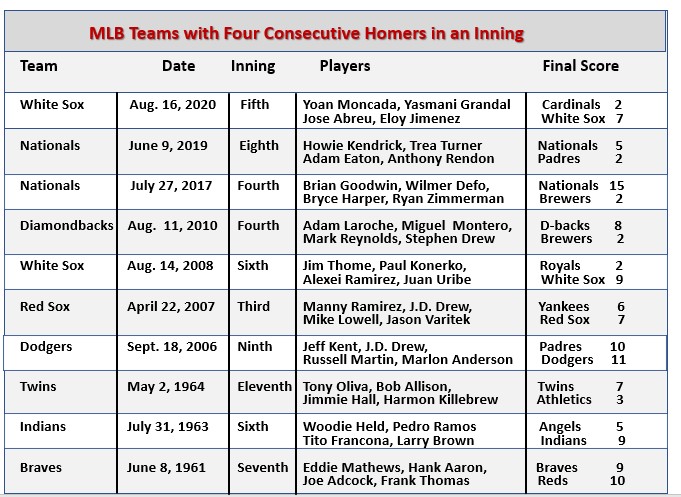
Billy Pierce … A Career Worth Reflecting On

On this date (June 27) in 1958, White Sox’ southpaw Billy Pierce, one of my childhood heroes, took the mound against the Washington Senators (in Chicago) – and pitched what may have been the best game of his career.  (Note:  I had many childhood heroes – most of whom wore spikes and carried a glove – but Pierce was a bit special. More on that later, I’m getting ahead of myself here.)

PiercePierce was 6-5, 3.21 at the time, while his mound opponent (right-hander Russ Kemmemer) was 4-5, 4.04.  Pierce, who had led the American League with 20 wins the year before (20-12, 3.26) was clearly “on his game” (the phrase “in the zone” was not yet on the scene) that day.  After eight innings, he held on to a 3-0 lead, had not allowed a single base runner. He had fanned seven batters and allowed just five balls out of the infield.   Senators ‘2B Ken Aspromonte led off the ninth and grounded out shortstop-to-first (Luis Aparicio-to-Ray Boone). Next up was catcher Steve Korcheck, who became Pierce’s eighth strikeout victim.  Pierce was just one out away from perfection and a spot in the MLB history books. Due up was Kemmemer, and Senators’ Manager Cookie Lavagetto looked to his bench, where he found 34-year-old Ed Fitz Gerald.  The veteran was in his 11th and next-to-last season and had been used primarily  as a pinch hitter (he served as a pinch hitter in 18 of the 23 games he appeared in so far that season). At the time, Fitz Gerald was hitting .313 (10-for-32, all singles).  Fitz Gerald lofted a first-pitch curve ball down the right field line that landed about 12 inches fair and ended Pierce’s bid for perfection.  Pierce then proceeded to fan CF and leadoff hitter Albie Pearson on three pitches to record a more mundane one-hit shutout.  (Pierce would throw four one-hitters in his MLB career.)

Now remember, I said Pierce was one of my special baseball heroes.  That’s because, as a youngster, I was a bit undersized (in 1958, I was eleven-years-old and often mistaken for seven or eight … an issue corrected by an age 12-13 growth spurt).  Pierce was also a bit undersized (for a major league pitcher) at 5’10’, 160-pounds.  Yet, he became a true power pitcher. Between 1952 and 1957, he finished in the top five in the American League in strikeouts every season (leading the league in 1953) and among the top five in strikeouts per nine innings in all but one campaign (leading the AL in 1953 and 1954).  But again, I’m getting ahead of myself.  Let me just say here, I truly believe Billy Pierce’s major-league accomplishments do not often get the attention they deserve.  Hence, this post.

Mr. Zero

Billy Pierce, did not look overpowering as a youngster (shy of 150 pounds as a high school senior), but he pitched beyond his stature. He threw so many shutouts for his Highland Park (Michigan) High School team that he became known as “Mr. Zero.”  He was selected to play in the first All American Boys Game (sponsored by Esquire Magazine and played at the Polo Grounds in New York City). Appropriately, Mr. Zero pitched six shutout innings and got both the victory and most-valuable player recognition as the East team triumphed.

The slight of build (but heavy in potential) Michigan high-school phenom signed with the Detroit Tigers at age 17 and found himself on a major-league mound at age 18 (MLB debut – June 1, 1945).  He showcased great stuff, but also some command issues. Pierce appeared in five Tigers’ games that season and gave up just six hits and two runs, while fanning ten in ten innings.  However, he also walked ten batters.  Pierce spent 1946 and 1947 in the minors with the Triple A Buffalo Bisons, where he also pitched in 1945. In 1946 and 1947, he went 17-12, 4.04, with 169 walks and 170 strikeouts in 207 innings.  Still, Pierce’s 14-8, 3.87 record at Triple A in 1947 earned him a return ticket to the Tigers in 1948 – but he pitched in only 22 games, putting up a 3-0 record, dampened by a 6.34 earned run average and 51 walks in 55 1/3 innings. In November of 1948, Detroit traded Pierce to the White Sox for catcher Aaron Robinson (the Tigers  also threw in $10,000). It would prove to be: Advantage- White Sox and Pierce.

His first two seasons in Chicago were not rosy, as Pierce went 19-31, 3.94 – fanning 213 and walking 249 in 391 innings.  In 1951, however, things changed.  Pierce developed better command over his pitches – fastball, curveball, change – and developed a slider.  The result was a 15-14, 3.03 record, with 113 whiffs and just 73 walks in 240 1/3 innings – and a dramatic change in Pierce’s career trajectory.

Over the next ten seasons with Chicago, Pierce went 152-107, 3.08 with 1,470 strikeouts and 730 walks in 2,299 2/3 innings.  He completed 142 oi 308 starts and notched 33 shutouts. During that span he made seven All Star teams, was a twenty-game winner twice (leading the league in win in 1957); led the AL in ERA in 1955 (1.97); three times led the league in complete games; and once the league in strikeouts.

After the 1961 season, coming off an 10-9, 3.80 record (and an All Star selection), Pierce found himself traded to the San Francisco Giants (along with Don Larsen) for Bob Farley, Eddie Fisher, Dom Zanni and Verle Tiefenthaler (who was a player to be named later in the deal).  The result?  Advantage – Giants and Pierce.

Billy Pierce – A Giant Among Giants

As the 1962 season closed with the Giants and Dodgers tied at 101-61, veteran lefty Billy Pierce (acquired by San Francisco in the off-season) was 15-6, 3.72 – and, perhaps most important, 11-0 at Candlestick Park.  Giants’ Manager Al Dark felt confident starting Pierce in the first game of a three-game tie-breaking playoff for the pennant (opening at Candlestick Park).  Pierce’s opponent  was another southpaw – Sandy Koufax (coming off a hand injury). Koufax was 14-6, 2.41 on the season (and in the process of winning his first of five straight ERA titles).  Fans looked forward to a pitchers’ duel – which did not materialize. The Giants knocked Koufax out of the game in the top of the second (with no outs) having already scored three runs on four hits (including home runs by Willie Mays and Jim Davenport). Pierce went on to pitch a complete-game, three-hit shutout (one walk and six strikeouts), giving the Giants the lead in the best-of-three playoff.

The Dodgers came back to win a squeaker (8-7) in Game Two.  Game Three saw the Dodgers match Johnny Podres against the Giants’ Juan Marichal, with neither pitcher figuring in the decision.  Los Angeles took an 4-2 lead into the top of the ninth inning, but the Giants scored four times to take the lead.  And, who did Dark call upon to save the win that put San Francisco into the World Series?  It was Game One playoff winner Billy Pierce, who set the Dodgers down in order to get the save. Note:  The Giants lost the 1962 World Series to the Yankees in seven games, with Pierce taking the loss in Game Three and winning Game Six.  He pitched 15 innings in the Series, giving up four earned runs on eight hits (2.40 ERA).

After helping the Giants get to the World Series with his 16-6 record (including a victory and a save in the three-game tie-breaking playoff with the Dodgers), Pierce pitched two more years for the Giants – going 6-11, 3.59, with 11 saves in 72 appearances (14 starts).  He retired after the 1964 season – at age 37 – with a career record of 211-169, 3.27, 193 complete games, 38 shutouts, 33 saves and 1,999 strikeouts in 3,306 2/3 innings pitched. As noted, he was a seven-time All Star, and led his league in victories, earned run average and strikeouts once each.

Pierce is also noted for his charitable efforts and served 46 years as a committee member of the Chicago Baseball Cancer Charities (20 years as its president).

Billy Pierce started on the mound for the AL All Star team in 1953, 1955 and 1956.

In a statement after Pierce’s death in 2015, Chicago White Sox owner Jerry Reinsdorf said “It was an absolute privilege to consider Billy a friend. He epitomized class, not just as a ballplayer on those great Go-Go White Sox teams of the 1950s, but as a gentleman and human being who devoted so much of his life to helping others.”

For me, Billy Pierce’s career is worth reflecting on.

Primary Resources: Baseball-Reference.com; Stathead.com; “Go-Go To Glory, The 1959 Chicago White.” Society for American Baseball Research, edited by Don Zminda, article by Rob Neyer. 


BASEBALL ROUNDTABLE ON THE TOP 100 BASEBALL BLOG LIST

100Baseball Roundtable is on the Feedspot list of the Top 100 Baseball Blogs.  To see the full list, click here.

I tweet baseball @DavidBBRT

Follow/Like Baseball Roundtable’s Facebook Page here.  More baseball commentary; blog post notifications; PRIZES.

Member: Society for American Baseball Research (SABR); The Baseball Reliquary; The Negro Leagues Baseball Museum.

Babe Birrer … A Very “Ruthian” Performance

A strong case can be made for George Herman “Babe” Ruth as the greatest ballplayer of all time – based on his prowess as a pitcher and a hitter. On the mound, he twice won more than twenty games in a season. At the plate he topped forty home runs in 11 campaigns. He won one league earned run average title and one batting title. He led his league in games started, complete games and shutouts once each and was the leader in home runs 12 times and RBI five times.

This post, however, is not about Babe Ruth, but rather about Werner Joseph “Babe: Birrer.  As regular BBRT readers know, BBRT has a keen interest in players who have short, but somehow memorable careers.  In this post, I’d like to take a look at a player who had a short career, just 56 games over three seasons – but had one “Ruthian” day at the ballpark.

BirrerThe player was Werner Birrer and the date was July 19, 1955 – when the 26-year-old rookie right-hander made just his 19th MLB appearance. The Tigers were playing the Orioles in Detroit and Birrer relieved Tiger starter Frank Lary in the top of the sixth inning with a runner on second, no outs and the Tigers leading 5-4. Birrer pitched out of the jam (strikeout, ground out, fly out) and preserved the lead.  He went on to pitch three more scoreless frames and the Tigers’ scored seven more times to win 12-4.  It was how six of those seven runs scored that earned Birrer the nickname “Babe.” Birrer came up in the bottom of the sixth (facing George Zuvernick) with runners on first and second and two outs. He launched a three-run home run to deep left field. He came up again in the bottom of the eighth inning (this time against Art Schallock) with runners on first and third and no outs.   The result?  Another three-run dinger to deep left.  Four scoreless innings on the mound and two three-run long balls in two at bats – a Ruthian day, indeed.  (Little did the rookie know those would be the only home runs and only RBI of his MLB career.)

Coming into the game, Birrer was 1-1, 4.63 on the mound (in 18 appearances) and was hitting just .143 (one-for-seven) with a double. He would finish the season at 4-3, 4.15 and with a .158 batting average (3-for-19).  On July 30 of that same season, Birrer tossed his only MLB complete game – giving up just two runs on ten hits and two walks (with one strikeout) as the Tigers topped the Red Sox 5-2 in Boston.

Birrer, ultimately played in three MLB seasons (1955-Tigers, 1956-Orioles, 1958-Dodgers). On the hill, he went 4-3, 4.36 in 56 appearances, completing one game in three starts. At the plate, he hit .259 (7-for-27).  Birrer who played in six minor-league seasons (1947-54 & 1955 (a gap due to military service) before being called up, played professionally until 1966 (primarily at the Triple-A level).

To close out, here are a few MLB “pitchers and the long ball” tidbits (all part of my #WhyIHateTheDH sentiments).

  • The Boston Braves Jim Tobin holds the record for the most home runs in a game by a pitcher at three. In a May 13, 1942 game against the Cubs, Tobin flied out to deep right field in the third inning; homered to lead off the fifth; homered again to lead off the seventh; and hit a two-run home run with two outs in the eighth (to break a 4-4 tie). Notably, the day before, Tobin was used as a pinch hitter in the eighth inning of a Braves’ 9-8 loss to the Cubs and delivered a two-run homer. So, he had homered four times in the space of five at bats.  On the mound, he earned the victory (a complete game – five runs, three earned, five hits and three walks) – as the Braves topped the Cubs 6-5.  Tobin, by the way, went 105-112, 3.44 in nine MLB seasons (1937-45). As a hitter, he hit .230 (183-for-796, with 17 home runs and 102 RBI. He was used as pinch hitter more than 100 times.  Side note: Guy Hecker of the American Association Louisville Colonels also hit three home runs in a game on August 18, 1886.
  • Just five pitchers have gone deep in a game in which they pitched a no-hitter – and Rick Wise is the only hurler to hit two long balls while pitching a no-no. Wise’s achievement came on June 23, 1971, as his Phillie topped the Reds 4-0 in Cincinnati. Wise gave up just one walk (three strikeouts) in his no-hitter – and he drove in three of the Phillies’ four runs with a two-run home run in the fifth inning and a solo shot in the eighth.  Others to homer while pitching a no-hitter include Frank Mountain (Columbus Buckeyes, American Association – June 5, 1884); Wes Ferrell (Cleveland Indians– April 29, 1931); Jim Tobin (Boston Braves – April 27, 1944); Earl Wilson (Boston Red Sox – June 26, 1962). For those who like the back story, Wise pitched in 18 MLB seasons (1964, 1966-82 … Phillies, Cardinals, Red Sox, Indians, Padres). He was a two-time All Star and wrapped up his career with a 188-181, 3.69 record (wining 15 or more games in six seasons).

The Day My Twins Were “Catfished”

Okay, this tidbit is not about pitchers and the long ball. Let me just note that, with no MLB baseball being played, my mind tends to wander.

On May 8, 1968, Catfish Hunter threw a perfect game against the Minnesota Twins – a 4-0 win in Oakland.  Not only did he dominate the Twins from the mound (11 whiffs in the perfect outing), he also roughed them up at the plate. Although he didn’t homer (like the players featured in this post), Hunter had a double, two singles, and three RBI I the contest.  Note:  There have been 23 perfect games in MLB history, the pitchers twirling those gems have recorded at least one base hit in six of them.

Perfcectpo

  • Wes Ferrell Holds the MLB record for most home runs in a season by a pitcher (9) and in a career by a pitcher (37). Side note: Ferrell also hit one home run as pinch hitter. In 1931, Ferrell went .319-9-30 in 48 games (40 as a pitcher). All nine of his home runs game in games in which he appeared on the mound. Ferrell played 15 MLB seasons (1927-41), was a two-time all Star, won 20 or more games in six seasons, led his league in complete games four times and innings pitched three times. He ended his career with a 193-128, 4.04 record. As a hitter, he went .280 (329-for-1176), with 38 home runs and 208 RBI.
  • Ken Brett is the only pitcher to homer in four straight starts. From June 9 to June 23, 1973, Brett started four games and won them all – tossing three complete games (and one of 7 1/3 innings) and putting up a 2.88 ERA, He also homered in each of those four contests (the only hits he had) – going 4-for-13 and driving in five runs. Brett had a 14-season MLB career (1967, 1969-81), going 83-85, 3.93.  At the plate, he hit .262 (91-for-347), with ten home runs and 44 RBI,
  • Braves’ right-hander Tony Cloninger got the Independence Day fireworks started early in 1966. On July 3 of that season, Cloninger became the first (and still only) pitcher – as well as the first National Leaguer (any position) – to hit two Grand Slam home runs in a game.  In the Braves 17-3 win over the Giants (in San Francisc0), Cloninger hit a Grand Slam in the top of the first, added a second Grand Slam in the fourth and poked an RBI single in the eighth. He ended the day three-for-five, with an MLB one-game record (for pitchers) nine RBI. He also pitched a complete-game, seven -hitter.  That season, Cloninger hit .234, with five home runs and 23 RBI in 111 at bats. On the mound, he was 14-11, 4.12.

Primary Resources:  Baseball-Reference.com; Stathead.com, MLB.com


BASEBALL ROUNDTABLE ON THE TOP 100 BASEBALL BLOG LIST

100Baseball Roundtable is on the Feedspot list of the Top 100 Baseball Blogs.  To see the full list, click here.

I tweet baseball @DavidBBRT

Follow/Like Baseball Roundtable’s Facebook Page here.  More baseball commentary; blog post notifications; PRIZES.

Member: Society for American Baseball Research (SABR); The Baseball Reliquary; The Negro Leagues Baseball Museum.