Fernando Valenzuela – A Free and Awesome Spirit

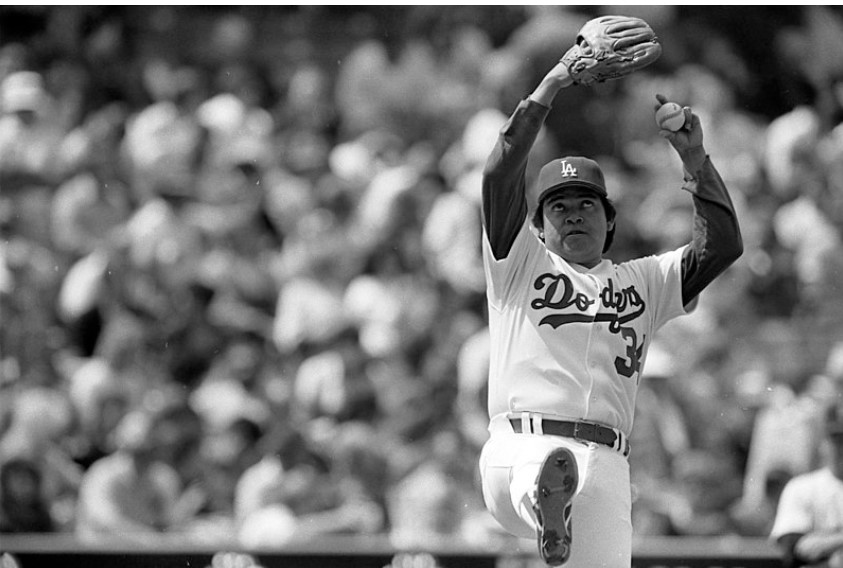
NOV. 1, 1960 – OCt.  22, 2024.Photo: Tony Barnard, Los Angeles Times, CC BY 4.0 <https://creativecommons.org/licenses/by/4.0>, via Wikimedia Commons

In honor of the late Fernando Valenzuela, who we lost much too soon (October 22), Baseball Roundtable is reposting this tribute to Valenezula which was posed here late April.

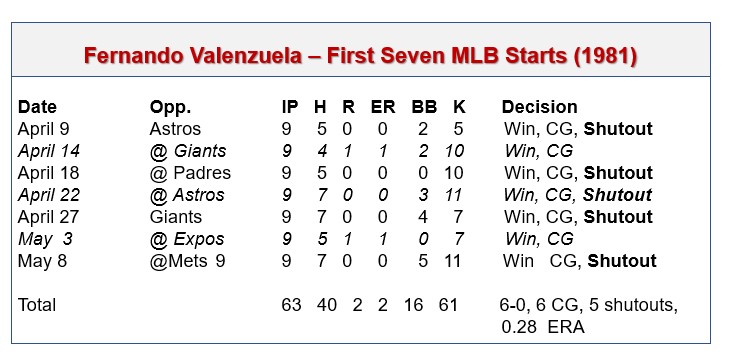
On this date (April 27) in 1981, a 20-year-old rookie southpaw for the Dodgers named Fernando Valenzuela threw his third consecutive shutout (and fourth in five starts), as his Dodgers topped the Giants 5-0 in LA before a raucous crowd of 49,478.

With that event in mind, I’d like to use this post to allow “geezers” like me to look back with nostalgia on the phenomenon that was “Fernandomania” and to let a new generation of fans get a better idea of the “wonder” that was Fernando Valenzuela’s  screwball.

Fernando Valenzuela is the only MLB player to win Rookie of the Year and the Cy Young Award in the same season.

In July of 1979, Valenzuela, then 18-years-old, was purchased by the Dodgers from the Yucatan Leones of the Mexican League.  Early on, teammate Bobby Castillo taught the youngster (who did not have an overpowering fastball) how to throw a screwball. It was a stroke of good fortune for Valenzuela and the Dodgers. Valenzuela quickly perfected the pitch and took it to new heights.  That screwball, in fact,  would earn Valenzuela a call up to the Dodgers by September of 1980.  As the 1980 MLB season closed out, Valenzuela made ten relief appearances for the Dodgers –  pitching  17 2/3 innings without giving up an earned run (walking five and fanning 16).

In 1981, as a 20-year-old with his rookie status still intact, Valenzuela not only made the season-opening Dodgers’ roster, but when the slated Opening Day starting pitcher Jerry Reuss suffered an injury warming up, manager Tommy Lasorda chose Valenzuela to start the opener.   He didn’t disappoint.  In his first MLB start, the Dodger rookie pitched a complete-game shutout (topping the Astros 2-0), with five hits, two walks and five strikeouts – and thus the foundation of Fernandomania was born.

Over his first five MLB starts, using his devastating screwball and unorthodox lineup, the likable youngster pitched  five complete games, four of them shutouts, while  walking 11 and fanning 43 in 45 innings. In his only non-shutout, Valenzuela gave up one run on four hits and two walks, while fanning ten. After five games, the 20-year-old was 5-0, with a 0.20 ERA and 43 whiffs in 45 innings.  In the process, the free-spirited Valenzuela captured not only the hearts and passion of the California Latino community, but the attention of fans across baseball.

At home, Valenzuela’s 1981 starts drew 48,431 fans, as compared to 40,912 for games he didn’t start  – an 18 percent increase.  Valenzuela’s road starts drew an average of 33,273 fans, while the Dodger road games he did not start drew 19,456.  I’ll do the math again.  That’s a 71 percent jump.

Eleven of Valenzuela’s 12 Dodger Stadium 1981 starts were sellouts.

Valenzuela brokered his devastating screwball into a 13-7, 2.48 record (in a strike-shortened 100-game season), finishing second in the NL in wins (13), first in innings pitched (192 1/3); first in strikeouts (180); first in games started (25); first in complete games (11); and first in shutouts (eight).  Valenzuela also won a Silver Slugger Award in 1981 (hitting .250 over 64 at bats).

Not only did the 20-year-old rookie make the 1981 NL All Star team, he was chosen to start the game.  Then he topped off the season by winning not only the NL Rookie of the Year Award, but also the league’s Cy Young Award.  He helped lead the Dodgers to the World Series and won Game Three, as the Dodger stopped the Yankees four games-to-two.

From 1981 through 1987, Valenzuela went 111-82, 3.11 for the Dodgers in the regular season and 5-1, 2.00 in the post season,  His career marks  (1980-91, 1993-97 … Dodgers, Angels, Orioles, Phillies, Padres, Cardinals) were: 173-153, 3.54 in the regular season and 5-1, 1.98 in the post season.

A few other Valenzuela tidbits:

  • On June 29, 1990, Valenzuela threw a no-hitter, as the Dodgers topped the Cardinals 6-0 in LA;
  • He won two Silver Slugger Awards and one Gold Glove;
  • He was a career .200 hitter, with ten home runs and 84 RBI in 936 at bats;
  • In 1990, he hit .304-1-11 in 69 at bats;
  • In 19 place appearances as a pinch hitter, Valenzuela hit .368;
  • He led the NL in wins once (21 in 1986);
  • He also led the league in complete games three times, and shutouts, innings pitched and strikeouts once each;
  • He was a six time All Star – consecutive years 1981-1986.

In the 1986 All Star Game, Fernando Valenzuela tied the record (set by Carl Hubbell) for consecutive strikeouts with five. Valenzuela’s victims were: Don Mattingly; Cal Ripken, Jr.; Jesse Barfield; Lou Whitaker; and Teddy Higuera.


Primary Resources: Baseball-Reference.com; Baseball-Almanac.com; How Fernando Drew Thousands of Extra Fans, by Mike Petriello, MLB.com, August 15, 2012; When 20-year-old Rookie Fernando Valenzuela Captivated LA and Major League Baseball, by Phil Sheridan, History Channel, September 8, 2021.


Baseball Roundtable – Blogging Baseball Since 2012.

100Baseball Roundtable is on the Feedspot list of the Top 100 Baseball Blogs.  To see the full list, click here.

Baseball Roundtable is also on the Anytime Baseball Supply Top 66 Baseball Sites list.  For the full list, click here

I tweet (on X) baseball @DavidBaseballRT

Follow Baseball Roundtable’s Facebook Page here.  More baseball commentary; blog post notifications; PRIZES.

Member: Society for American Baseball Research (SABR); Negro Leagues Baseball Museum; The Baseball Reliquary.

P 1068

BASEBALL ROUNDTABLE REVISITS WORLD SERIES TARGETS

With the  Dodgers and Yankees renewing an historic rivalry in the 2024 World Series, Baseball Roundtable will present its traditional post on World Series targets to shoot for (or to avoid).  I’ve worked to incorporate Negro League World Series records ( 1924-27, 1942-48) whenever possible (relying heavily on retrosheet.org and statehead.com).  You should keep in mind, those records are still  incomplete or, in some cases, not thoroughly documented. Note:  For a past post on World Series that Baseball Roundtable is particularly  of, click here. 

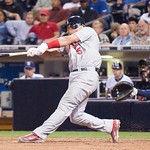
Albert Pujols – Possibly the Best World Series Game at the Plate … Ever

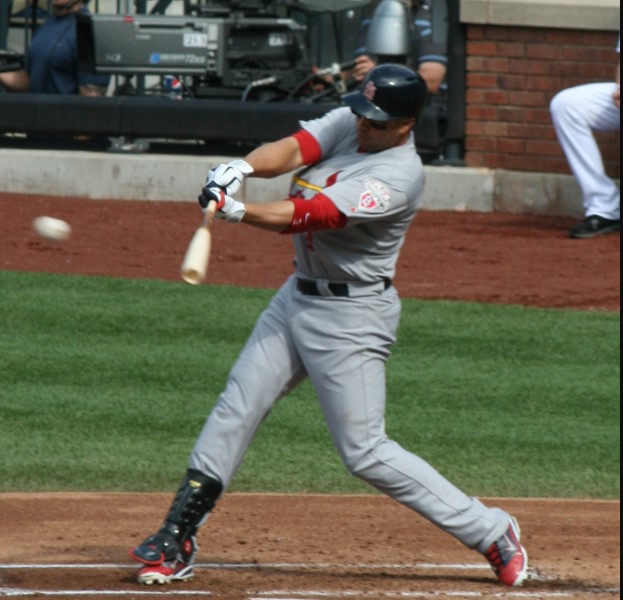
Photo by Dirk DBQ

On October 22, 2011 – in Game Three of the Cardinals/Rangers World Series matchup – Redbirds’ 1B Albert Pujols went five-for-six with four runs scored and six RBI.  In the process, he established a new (and still-standing) record for total bases in a World Series game (14) and also earned, and still holds, a share of the World Series’ single-game records for hits (5), runs scored (4), RBI (6) and home runs (3). Ironically, in the other six games, he went one-for-nineteen, with six walks, four runs scored and no RBI.

Now, let’s look at the Fall Classic record book.

SOME SINGLE-GAME WORLD SERIES MARKS TO SHOOT FOR (or avoid)

Home Runs in a World Series Game – Three

Babe Ruth, Reggie Jackson, Albert Pujols, Pablo Sandoval

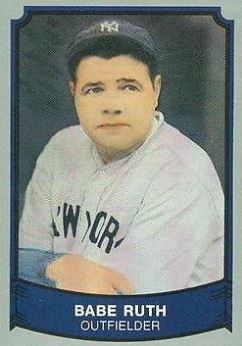
Babe Ruth … While three players have hit three home runs in a World Series game, the Yankees’ Babe Ruth is the only player to accomplish the feat twice – October 6, 1926 and October 9, 1928. In Game Four of the 1926 Series, as the Yankees topped the Cardinals 10-5, Ruth went three-for-four, with three home runs, two walks, four runs scored, four RBI and, of course, three dingers. The long-ball victims were Redbirds’ starter Flint Rhem (twice) and reliever Herman Bell. In Game Four of the 1928 World Series (a Yankees’ sweep over the Cardinals), Ruth went three-for-five with three solo home runs – two off Bill Sherdel and one off Grover ClevelandPete” Alexander.

—–

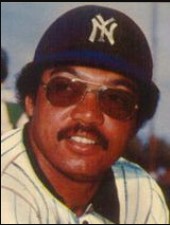
Reggie Jackson … The Yankees’ Reggie Jackson’s feat was unique in that he hit his three long balls (October 18, 1977) off three consecutive pitches offered up by three different pitchers. After drawing a walk to lead off the bottom of the second inning of Game Six (versus Dodgers’ starter Burt Hooton), Jackson hit the first pitch he saw from Hooton in the fourth inning for a two-run home run. He came up again in the fifth, facing Elias Sosa, and hit the first pitch in that at bat for another two-run homer. In his next at bat, leading off the eighth frame, Jackson hit the first pitch from Charlie Hough for a solo home run. A three-for-three day with four runs scored and five RBI.

—–

Albert Pujols … Albert Pujols hit his three home runs in Game Three of the 2011 World Series (versus the Rangers) in Texas – as part of a five-for-six day. He hit a three-run homer on a 1-1 pitch from Alexi Ogando in the top of the sixth; a two-run shot on the first pitch he saw from Mike Gonzalez in the seventh; and a solo shot homer on a 2-2 pitch from Darren Oliver in the ninth. Those six RBI – which tie for the World Series single-game record – were the only runs driven in by Pujols in the seven-game Series – won by the Redbirds four games-to-three.

—–

Pablo Sandoval … In Game One of the 2012 World Series (October 24), the Giants’ Pablo Sandoval  went four-for-four, with three home runs, three runs scored and four RBI. He homered in the first and third innings off the Tigers’ Justin Verlander and in the fifth off Al Alburquerque before adding a single off Jose Valverde in the seventh – as the Giants triumphed 8-3.

Pablo Sandoval hit just 12 home runs in 108 games during the 2012 season and only 153 in 14 MLB seasons. In the 2012 post-season, however, he hit six home runs in 18 games.

________________________________________________

Home Runs in a Single World Series – Five

Reggie Jackson, Chase Utley, George Springer

Hostess via tradingcarddb.com, Public domain, via Wikimedia Commonshoto:

Reggie Jackson … As noted above, Yankee RF Reggie Jackson had a three-home run game  in the sixth and final matchup of the 1977 World Series.  The Yankees won the game 8-4 and the Series four games-to-two. Jackson also went deep in the Yankees’ Game Four 4-2 win over the Dodgers (a solo shot off Rick Rhoden) and in  the Yankees’ 10-4 loss in Game Five (a solo homer off Don Sutton).   Over the final three games of the Series, Jackson went   seven-for-eleven, with a double, five home runs, eight runs scores and eight RBI.

Chase Utley … Utley’s Phillies lost the 2009 World Series (four games-to-two), but it wasn’t Utley’s fault, The Philly 2B led all players with five homers and tied the Yankees’ Hideki Matsui for the Series RBI lead with eight. He hit two solo homers in the Phillies’ Game One 6-1 win, had a home run and a double in a 7-4 Game Four loss; and had a second two-homer game as the Phillies took Game Five 8-6. (Utley drove in four of the eight runs).

George Springer … Astros’ CF and leadoff hitter George Springer hit .379, with five home runs and seven RBI as the Astros topped the Dodgers four games-to-three in the 2017 World Series. This was after a Game One in which he  came to the plate four times and fanned four times (on a total of 19 pitches). He went on to homer in Games Two, Four, Five, Six and Seven.

Bases – Just Add ‘Em Up

George Springer holds the record for total bases in a single World Series at 29.  In the 2017 World Series – as his Astros topped the Dodgers four games-to-three, Springer collected 11 nits in 29 at bats,  including three doubles and five home runs. 

___________

Base Hits in a World Series Game – Five

Paul Molitor, Albert Pujols

Paul Molitor … Brewers’ third baseman and leadoff hitter Paul Molitor – who hit .302 with 201 hits in the 1982 regular season – grounded out to second base leading off the 1982 World Series (Inning One, Game One, in St. Louis on October 12). It would be the only time he was retired in the game, as the Brewers triumphed 10-0. Molitor followed with a single in the second inning; an RBI-single in the fourth; a single in the sixth; a single in the eighth; and an RBI single in the ninth.

Taking It One Base at a Time

When the Brewers’ Paul Molitor hit .355 (11-for-31) in the 1982 World Series, every one his safeties was a single. The Brew Crew  lost the Series to the Cardinals four games-to-three.

—–

Albert Pujols … Cardinals’ first baseman Albert Pujols had his five-hit World-Series contest in Game Three (October 22) of the 2011 Series (in Texas). Like Molitor (above), Pujols grounded out in his first at bat – and then went on to record five straight hits. Unlike Molitor, his safeties were not all singles. He led off the fourth inning with a single (off Matt Harrison); led off the fifth with a single off Scott Feldman; popped a three-run home run off Alexi Ogando in the sixth; homered off Mike Gonzalez in the seventh; and homered off Darren Oliver (solo) in the ninth.  The Cardinals won the contest 16-7 and won the Series four game-to-three.

_______________________________

Base Hits in a Single World Series – Fifteen

Judy Johnson

Judy Johnson … The Hilldale Club’s 3B Judy Johnson rapped 15 hits in 44 at bats in the best-of-nine 1924 Negro Leagues World Series. (The Hilldale Club topped the Kansas City Monarchs five games -to-four (with one tie).  Johnson hit .341 for the Series with  five doubles, one triple, one home run and seven runs scored.

Side Note:  The record for base hits in a best-of-seven World Series is 13, shard by Bobby Richardson, Yankees (1964); Lou Brock, Cardinals (1968); and Marty Barrett , Red Sox, 1986). Each of those Series went the full seven games. 

___________________________________________________

Runs Batted in a World Series Game – Six

Bobby Richardson, Hideki Matsui, Albert Pujols, Addison Russell

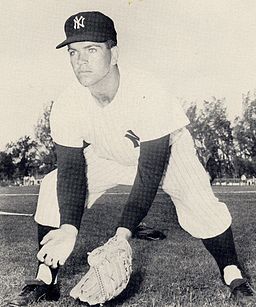
Bobby Richardson – added a surprising bat to a polished glove in the post season.

Bobby Richardson … In Game Three of the 1960 World Series (October 8), the Yankees trounced the Pirates 10-0. Despite a lineup that included the big bats of Mickey Mantle, Roger Maris, Yogi Berra, Bill Skowron and Elston Howard, little  5’9” second baseman Bobby Richardson  (a .252 hitter with just one home run and 26 RBI in 150 1960 regular-season games) did the most damage to the Pirates’ pitching staff.  His day included a Grand Slam home run in the first frame and a tw0-run single in the fourth (part of a two-for-five day). Richardson’s six RBI set a new MLB single-game World Series RBI record (since tied). How unlikely was the Richardson Grand Slam? In 12 MLB seasons (1,412 regular-season games), he had  just 34 home runs and one regular-season Grand Slam. Despite the Yankees losing the Series four games-to-three, Richardson, who drove in a World Series’ record 12 RBI in the seven games, was named the Series MVP – the only player from the l0sing team ever granted that honor.

——–

Hideki Matsui … In the final game of the 2009 World Series (Game Six on November 4), Yankee DH Hideki Matsui filled the DH role well – driving in six runs in the Yankees’ 7-3 win over the Phillies. His three-for-four day included a two-run home run (off Pedro Martinez) in the second inning; a two-run single off Martinez in the third; and a two-run double off J.A. Happ in the fifth. Matsui had quite a series, leading the Bronx Bombers in average (.615); home runs (3); and RBI (8) – and winning World Series MVP Honors. Matsui was coming off a .274-28-90 regular season.

Put Me In, Coach

In Hideki Matsui’s first  three seasons with the Yankees (2003-05), he played in every Yankee Game – going .297-70-330. Matsui joined the Yankees (and MLB) after playing ten seasons in Japan, where he hit .304-332-889.

—–

Albert Pujols … Yep, Albert Pujols is here again – thanks to his three-home run, six-RBI game in the 2011 World Series (Game Three, October 22). As noted earlier, in that 16-7 win, Pujols set the World Series single-game record for total bases and tied the World Series single-game records for hits (5), home runs (3), RBI (6) and runs scored (4).

—–

Addison Russell … The Cubs faced elimination for the second game in a row as they came into Game Six of the 2016 World  Series. (The opposing  Indians had won three of the first four games.) Cubs’ SS Addison Russell lashed a two-run double in the top of the first to put the Cubbies ahead 3-0 and, two innings later, smacked a Grand Slam to push the edge to 7-0. The Cubs eventually won 9-3 and ended  up taking the Series four games-to-three, with a ten-inning, 8-7 win in Game Seven. Russell hit just .222 for the Series, but drove in a Series-leading nine runs. Over a five-season MLB career, Russell hit .242-60-253 in 615 games. 2016 was his only All Star year and he reached career highs in runs (67), home runs (21) and RBI (95).

____________________________________________

RBI in a Single World Series – 12

Bobby Richardson … Yankees’ 2B Bobby Richardson drove in a record 12 runs (.367-1-12 for the Series), as the Yankees lost to the underdog Pittsburgh Pirates four games -to- three.  The Yankees lost the Series despite outscoring the Pirates 54-26 over the seven games. Again, (this deserves repeating), during the 1960 regular season, Richardson had driven in 26 runs in 150 games.

__________________________________

Runs Scored in a World Series Game – Four

Babe Ruth, Earle Combs, Frankie Crosetti, Enos Slaughter, Reggie Jackson, Kirby Puckett, Carney Lansford, Lenny Dykstra, Jeff Kent, Albert Pujols, Lance Berkman

This is a mark, I ‘d like to see broken, if only to end an 11-player tie.

______________________________________

Runs Scored in a Single World Series – Ten

Monte Irvin, Reggie Jackson, Paul Molitor

Monte Irvin … Newark Eagles’ SS Monte Irvin scored ten runs as his Newark Eagles topped the Kansas City Monarchs four games-to-three in the 1946 Negro League World Series. Irvin was pretty much unstoppable in the Series, going 12-for-26 (.462), with two, doubles, three homers, the ten runs scored and eight RBI.  Oh, and he also stole two bases.

—–

Reggie Jackson … Yankees’ RF Reggie Jackson Jackson  went .450-5-8 with ten runs scored as the Yankees bested the Dodgers four games-to-three in the 1977 World Series. Six of Jackson’s nine hits went for extra bases (five homers, one double).

—–

Paul Molitor … Blue Jays’ DH/1B Paul Molitor went 11-for-24 (.458) in the 1993 Worlds Series, won by the Blue Jays over the Phillies four games-to-two.    Molitor had one double, two triples, two homers and seven RBI in the six games.

_____________________________________________

Stolen Bases in a World Series Game – Three

Honus Wagner, Willie Davis, Lou Brock, B.J. Upton, Rajai Davis

Lou Brock … Lets’ just note here, that Lou Brock remains the only player to steal three bases in a World Series game twice in his career. The fleet Cardinals’ outfielder accomplished the feat against the Red Sox in Game Seven of the 1967 World Series (October 12) and in Game Three of the 1968 World Series (October 5) against the Tigers.

___________________________________________

Stolen Bases in a Single World  Series – Seven

Lou Brock

Lou Brock … Lou Brock, who stole 938 bases in his career (regular-season), is not just the only player to steal seven bases in a single World Series, he did it twice. In 1967, as his Cardinals lost to the Red Sox 4-3, and in 1968, as St. Louis topped the Tigers 4-3. Brock was seven-for-seven in steal attempts in 1967 and seven-for-nine in 1968. Notably, in those two World Series, Brock hit .414 (1967) and .464 (1968).

_____________________________________________

Intentional Walks in  World Series Game – Three

Rudy York, Barry Bonds, Albert Pujols, David Ortiz

Rudy York, Red Sox … October 11, 1946 –  Game Five of the Red Sox/Cardinals World Series.

Barry Bonds, Giants …   On October 23, 2002 – Game Four of the Angels/Giants World Series.

Albert Pujols, Cardinals … On October 24, 2011 – in Game Five of the Cardinals/Rangers World Series.

David Ortiz, Red Sox … On October 30, in Game Six of the Cardinals/Red Sox World Series.

__________________________________

Grounded into Double Plays in a World Series Game – Three

Willie Mays

PHOTO: New York World-Telegram and the Sun staff photographer, William C. Greene, Public domain, via Wikimedia Commons

Willie Mays … On October 8, 1951 – in Game Four of the Yankees/Giants World Series – Giants’ rookie CF Willie Mays came to bat four times and not only was held hitless, but grounded into a Series single-game record three double plays.

Baseball Roundtable Extra – Whiff and Poof

While 19 players have fanned four times in a World Series Game – including position players Josh Devore, Mickey Mantle, Joe Collins, Wayne Garrett, Devon White, Brad Hawpe, Ryan Howard, Pat Burrell, Mike Napoli, George Springer and Cody Bellinger:

  • Only pitcher George Pipgras has fanned five times in a World Series Game. The Yankee righthander did it in Game Three of the 1932 Cubs/Yankees World Series – whiffing in all five of his plate appearances. Pipgras, a career .163 hitter, did get the win in a 7-5 Yankee triumph.
  • Only Cody Bellinger has fanned four times in a World Series Game twice – and he did it in a span of five days. The Dodgers’ rookie 1B did it in Game Three of the 2017 Dodger/Astros World Series (October 27) – fanning four times in four at bats on fourteen pitches. He repeated the “feat” in Game Six (October 31) fanning four times in four plate appearances – this time on 24 pitches. The 21-year-old Bellinger was coming off an All Star and Rookie of the Year season in which he hit .267-39-97. In the Series he fanned World Series record 17 times in 29 plate appearances. 

______________________________________________

Doubles in a World Series Game – Four

Frank Isbell

Frank Isbell … In Game Five of the 1906 World Series (Cubs/White Sox), White Sox’ 2B Frank Isbell went four-for-five, rapping four doubles, as the White Sox topped the Cubs 8-6. Isbell scored three times and drove in two.  Isbell was not exactly a doubles machine.  In the 1906 regular season he hit just 18 doubles in 617 plate appearances.

________________________________________

Doubles in a Single World Series – Seven

Newt Allen

Newt Allen … Kansas City Monarchs’ 2B Newt Allen rapped seven doubles in the best-of-nine 1924 Negro League World Series, as his Monarchs topped the Hilldale Club five games-to- our (one tie). Allen collected 11 hits (39 at bats) in the Series and seven of them were doubles.  During the 1924 regular season, Allen hit just eight doubles in 73 games (298 at bats).

Side Note:  The most doubles in a best-of-seven World Series is six, by Tigers’ RF Pete Fox in the 1934 World Series. For the Series (Cardinals over Tigers four games-to-three), Fox went 8-for-28 (.286). 

___________________________________________

Triples in a World Series Game – Two

Tommy Leach, Patsy Dougherty, Dutch Reuther, Bobby Richardson, Tommy Davis, Mark Lemke

Tommy Leach, Pirates … Game One 1903 World Series (Pirates/Boston Americans). Notably, both three-baggers were hit off Cy Young.  Part of a four-for-five day.

—–

Patsy Dougherty, Boston Americans … Game Five 1903 World Series, part of a three-for-six, three-RBI day.

——

Dutch Reuther, Reds … Game One, 1919 World Series (Reds/White Sox). Reuther gets special mention as the only pitcher on the list. He collected two triples, a single and a walk in four plate appearances – and also pitched a one-run, six-hit, complete game as his Reds triumphed 9-1. Reuther was a solid-hitting pitcher, putting up a .258 average, with seven home runs and 111 RBI over 11 MLB seasons.

—–

Bobby Richardson, Yankees … Game Six 1960 World Series (Pirates/Yankees). The Yankee second-sacker went two-for-three with one run and three RBI in the game.

—–

Tommy Davis, Dodgers – Game Two, 1963 World Series (Dodgers/Yankees). The Dodgers’  CF went two-for-four, with one run and two RBI.

—–

Mark Lemke, Braves … Game Six, 1991 World Series (Braves/Twins). A two-for-three day with two runs and three RBI for the Braves’ 2B.

_______________________________

Triples in a Single World Series – Four

Tommy Leach

Tommy Leach … Pirates’ 3B Tommy Leach had four triples among his nine hits (in 33 at bats) in the 1903 best-of-nine World Series, won by the Boston Americans five games-to-three.

Now Let switch to the moundsmen.

Perfect Games in the World Series – One

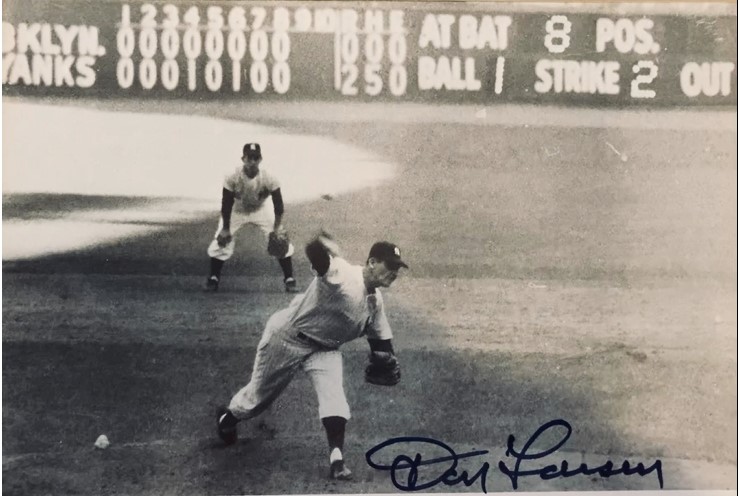
Don Larsen

Don Larsen, Yankees …. Game 6 1960 World Series (October 8). Don Larsen, coming off a 11-5, 2.36 season, pitched the World Series’ only Perfect Game – retiring all 27 Dodger batters on a total of 97 pitchers as the Yankees won 2-0. Larsen, who fanned seven, reached ball three on only one Dodger hitter (Dodgers’ shortstop Pee Wee Reese in the first inning). Dodgers’ pitcher Sal Maglie had the longest at bat versus Larsen – a seven-pitch at bat before fanning on a 2-2 pitch to end the sixth inning.

_______________________________

No-Hitter (not a Perfect Game) in a World Series – Two

Red Grier

Red Grier … Claude “Red”  Grier of the Atlantic City Bacharach Giants (Eastern Colored League) tossed a no-hitter versus the Chicago American Giants (Negro National League) in a 10-0 win in Game Three of the 1926 Negro League World Series. Grier walked six and fanned eight in the outing – and also collected three hits (a double and two singles) and a walk.

Red Farrell

Red Farrell …. Luther “Red’ Farrell of the Atlantic City Bacharach Giants tossed a seven-inning (game called on account of darkness) no-hitter in Game Four of the 1927 Negro League World Series – as Atlantic City topped the Chicago American Giants 3-2.  Luther gave up two unearned runs, walked five and fanned three.  (Atlantic City made four errors.)

____________________________________


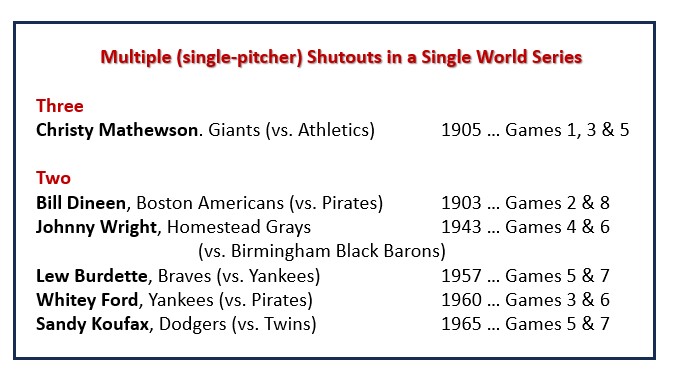
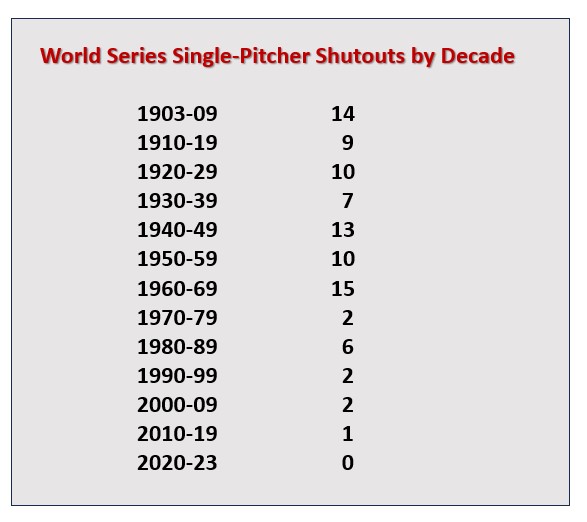
There have been more than 90 single-pitcher shutouts in World Series play, so let’s just look at the two narrower categories: Extra-Inning, Single-Pitcher Shutouts &  Multiple Shutouts in a Single World Series.

Extra-Inning World Series Shutouts

Johnny Markham Homestead Grays … In Game Seven of the 1943 Negro League World Series (the Series went eight games – one tie), Markham threw an eight-hit, 11-inning shutout (one walk and zero – yes, zero – strikeouts), as his Homestead Grays topped the Birmingham Black Barons 1-0. His mound opponent, Roy Partlow gave up ten hits (two walks/two whiffs) and one run in 10 2/3 innings.  Markham’s is the longest single-pitcher shutout in World Series history.

—–

Christy Mathewson, Giants … In Game Two of the 1913 World Series (Giants/Athletics), Christy Mathewson pitched a ten-inning, eight-hit, one-walk, five-strikeout shutout as his Giants won 3-0.  Mathewson himself drove in the game’s first run with a single off Athletics’ starter Eddie Plank. (The Giants scored three times in the top of the tenth.)

_____

Clem Labine, Dodgers … In Game Five of the 1956 World Series (Dodgers/Yankees), Clem Labine went ten innings and shutout the Yankees on four hits, two walks and five strikeouts. Bob Turley went the distance for the Yankees, giving up just one run on four hits, with eight walks and 11 whiffs.  Jackie Robinson drove in the only run of the game plating Jim Gilliam with a single with two outs in the bottom of the tenth.

_____

Jack Morris, Twins …  Jack Morris tossed a ten-inning, complete-game shutout as the Twins won Game Seven of the 1991 Series 1-0. Ironman Morris tossed 126 pitches in shutting out the Braves on seven hits, with two walks and eight whiffs.

Rest?  I’ve Got All Winter to Rest.

When Christy Mathewson threw three shutouts in the five-game 1905 World Series, he did it in a span of six days.  On October 9 (Game One), the New Y0rk Giants’ mounds giant shutout the Athletics 3-0 on four-hits. On October 12, still in Philadelphia, he whitewashed the A’s 9-0 on another four-hitter; Then, on October 14, he tossed a six-hit shutout in a 2-0 win that gave the Giants the Series four games to one. Notably, every game in the Series saw the winning pitcher go the distance in a shutout. 

A few tidbits for trivia buffs:

  • Lew Burette, at one point in the 1957 World Series, threw 24 straight scoreless innings versus a powerful (and favored) Yankee squad;
  • Sandy Koufax threw his second 1965 World Series shutouts on just two days rest;
  • In the 1960 World Series, the Pirates scored zero runs in Whitey Ford‘s two starts and 27 runs in the other five games.  The Yankees scored 22 runs in Ford’s two starts and 33 runs in the other five games;
  • Bill Dineen started four games in the best-of-nine 1903 World Series (which went eight games), completed them all and went and went 3-1, 2.06;
  • The Pirates’ Deacon Phillippe pitched a World Series record five complete games in the Series, going 3-2, 3.07.

Starting To Become Rare Air

The most recent single-pitcher World Series shutout was in Game Five of the 2014 World Series.  The Giants’ Madison Bumgarner  tossed a four-hitter as his Giants topped the Royals 5-0. He threw 117 pitches, walking none and fanning eight.  To illustrate how times have change:, the 1960’s saw 15 single-pitcher World Series shutouts. 

____________________________________________

Lowest Earned Run Average – Single World Series (minimum 18 innings pitched)  – 0.00

Christy Mathewson, Waite H0yte, Carl Hubbell, Whitey Ford

Photo by trialsanderrors

Christy Mathewson … Okay, this is a little repetitive, but it bears repeating. In the 1905 World Series, Giants’ righty Christy Mathewson put up a 0.00 earned run average over 27 innings . In fact, he threw three shutouts in six days.   So, three starts, 27 innings pitched, no runs, 13 hits, one walk and 18 whiffs.  (Keep in mind, in 1905, MLB pitchers average just 3.9 strikeouts per nine frames.)  That season, by the way, Mathewson went 31-9, 1.28 with 32 complete games and eight shutouts in 43 appearances (37 starts).

—–

Waite Hoyte … In 1921, 21-year-old Waite Hoyt  (after a 19-13, 3.09 season for the Yankees) was pegged to start Game Two of the World Series (on October 6 versus the rival Giants). Hoyte responded with a two-hit shutout (five walks and five strikeouts) in a 3-0 Yankee win.  Four days later (October 10), with the Series tied at two games apiece), he started again and threw a gutsy ten-hitter giving  up just one unearned run as the Yankees won 3-1. In that game, the Giants had runners on base in seven of the nine innings. Hoyte next pitched on October 13 – in the winner-take-all Game Seven and, despite giving up just one unearned run, took the loss in a 1-0 Giants win. In that one, Hoyte gave up six hits and four walks, while fanning seven. The only run scored in the top of the first inning, on an error by shortstop Roger Peckinpaugh.

——-

Carl Hubbell … Hubbell started two games for  the Giants, as they topped the Nationals in the 1933 World Series.  He put up a 0.00 ERA over 20 innings.  his efforts included  a complete game in a Giants’ 5-2 win in Game One (two unearned runs, five hits, two walks, ten strikeouts) and an 11-inning complete game in Game Four – one unearned run, eight hits, four walks, five strikeouts.

—–

Whitey Ford …  In the 1960 World Series (won by the Pirates over the Yankees in seven games), Whitey Ford pitched in two of the most lopsided shutouts in Series’ history, In Game Three, Ford pitched a four-hit (one walk/three strikeouts) shutout as New York prevailed 10-0. In Game Six, he again blanked the Pirates (seven hits, one walk, five whiffs), as the Yankees won 12-0.

In the 1960 World Series, the Yankees outhit the Pirates .338 to .256, outhomered them 10-4 4, and outscored them 55-27. The Pirates, however, won the Series four games to three. 

__________________________________________

Most Innings pitched in a World Series Game -14

Babe Ruth

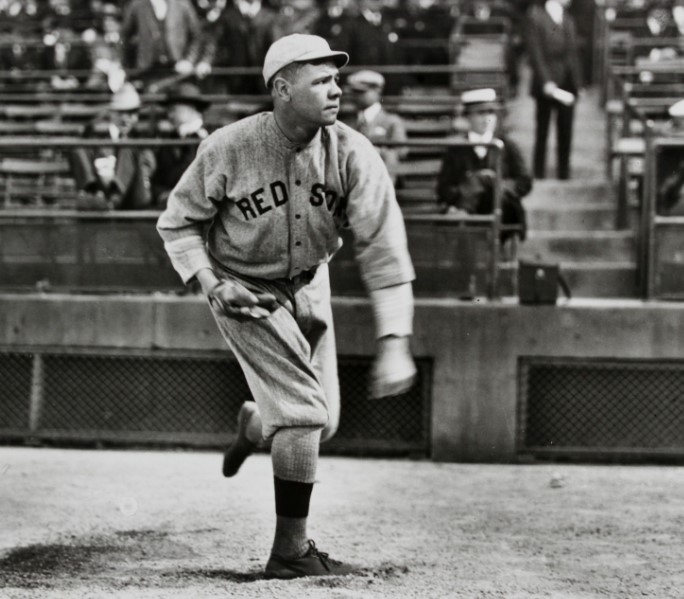
Babe Ruth … Babe Ruth pitched 14 innings for the Red Sox in a World Series complete-game, six-hit, 2-1 win ( over the Brooklyn Robins) on October 9, 1916. Ruth gave up just six hits (three walks/four strikeouts) over the 14 frames. He also picked up an RBI on a third-inning ground out.

________________________________________

The Deacon Phillippe Standard Setter

In the 1903 World Series (best-of-nine between the Boston Americans and Pittsburgh Pirates), the Pirates Deacon Phillippe set a host of World Series records – most games started (5), most complete games (5), most innings pitched (44). (The Series went eight games.)

——-

Most Strikeouts in a World Series Game – 17

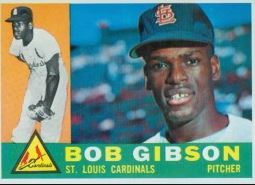
Bob Gibson

Bob Gibson … In the Opening Game of the 1968 World Series (October 8), the Cardinals’ Bob Gibson (facing the Tigers) struck out a World Series’ single-game record 17 hitters – getting each of the nine players in the Tigers’ starting lineup at least once. Gibson threw a five-hit shutout, as St. Louis won 4-0.

_____________________________

Most Strikeouts in a Single World Series

Bob Gibson

Bob Gibson ... As you might expect, Gibson holds the record for strikeouts in a single World Series (35 in 27 innings pitched in 1968). Gibson also holds the second spot on this list with 31 strikeouts in the 1964 Series (27 innings pitched) and is tied for the number-five spot  with 26 strikeouts in the 1967 World Series. At number-three is the Dodgers’ Sandy Koufax, with 29 strikeouts in 24 innings in 1965. Number four is the Boston Americans’ Bill Dineen, with 28 strikeouts in 35 innings in 1903.  Tied with Gibson for the five spot are the Atlantic City Bacharach Giants’ Claude “Red” Grier (26 strikeouts in 27 2/3 innings in the 1926 Negro league World Series) and the Diamondbacks’  Curt Schilling (26 strikeouts in 21 1/3 innings in 200).

_______________________________

Batters Hit-by-Pitch in a World Series Game   – Four

Lance McCullers,  Jr.

Lance McCullers, Jr.  … in Game Seven of the 2017 World Series (November 1), Lance McCullers of the Astros plunked four Dodgers in 2 1/3 innings. Surprisingly, despite giving up three hits and hitting four batters in 2 1/3 innings, McCullers did not surrender a run.

It went like this:

  • Bottom of the first – Astros up 2-0. Dodgers’ CF Chris Taylor opens with a double; McCullers fans SS Corey Seager on a 3-2 pitch; 3B Justin Turner is hit by a 1-2 pitch; 1B Cody Bellinger fans on a 1-2 pitch; RF Yasiel Puig is hit by a 3-1 pitch loading the bases. LF Joc Pederson grounds out on an 0-2 pitch to end the inning.
  • Second Inning – 2B Logan Forsythe leads off with a single to left (on a 1-0 pitch); C Austin Barnes grounds out, Forsythe moving to second; PH Enrique Hernandez is it by a 3-1 pitch; Taylor lines into a double play.
  • Third Inning – Seager singles to center on a 1-2 pitch; Turner is hit by an 0-0 pitch; Bellinger strikes out on a 2-2 pitch. Brad Peacock relieves McCullers and retires Puig and Pederson with no damage., The Astros go on to win the Game 5-1 and the Series four games-to-three.

________________________________

Strikeouts by A Reliever in a  World Series Game  – 11

Moe Drabowsky

Moe Drabowsky … In the Opening Game of the 1966 World Series (October 5) between the Orioles and Dodgers, Drabowsky came on in the bottom of the third inning with the Orioles up 4-1.  The Dodgers, however, had the bases loaded with one out (starter Dave McNally had walked RF Lou Johnson, LF Tommy Davis and 2B Jim Lefebvre in succession). Drabowsky got 1B Wes Parker on a strikeout; walked 2B Jim Gilliam to force in a run; and retired got C Johnny Roseboro on a foul pop up.

Drabowsky went on to fan the side in order in the fourth and fifth innings. Ultimately, he finished the game, pitching 6 2/3 frames – giving  up one hit and two walks and fanning 11, as the Orioles won 5-2. Those two runs would be the Dodgers only tallies in the four-game Series.  They lost the final three games by scores of 6-0, 1-0 and 1-0.

_____________________________________

Most Mound Appearances in a Single World Series

The record for pitching appearances in a single World Series in seven, shared by Darold Knowles (1973 A’s) – seven appearances, 6 1/3 innings, two saves and a o.oo ERA  – and Brandon Morrow (2017 Dodgers) – seven appearances, 5 1/3 innings pitched, and an 8.44 ERA. 

_____________________________________

Most Hits Allowed in a World Series Game – 16

Ray Brown

Ray Brown – The Homestead Grays’ Ray Brown  threw a complete-game in the 1942 Negro League World Series Game Three matchup with the Kansas City Monarchs.  The Monarch won the contest 9-6, with Brown giving up a Series-record 16 hits.

______________________________________

Most Home Runs Allowed in a World Series Game – 5

Lance McCullers, Jr.

In Game Three of the 2022 World Series, Astros’ starter Lance McCullers, Jr. gave up six hits in 4 1/3 innings pitched – and five of those hits ended up in the stands.  (He also fanned five batters.)  McCullers gave up a two-run shot to the Phillie’s DH Bryce Harper in the first; solo homers to both 3B Alec Bohm and CF Brandon Marsh in the second; and a two -run homer to LF Kyle Schwarber, as well as a solo shot to 1B Rhys Hoskins in the fifth.

____

Most Walks Allowed in a Word Series Game – Ten

Bill Bevens

Bill Bevens … On October 3, 1947, the Yankees’ Bill Bevens gave up just one hit (8 2/3 innings) in a 3-2 World Series loss to the Dodgers. Bevens, unfortunately, walked a World Series single-game record ten batters (one intentional), and free passes contributed to all the scoring.

____________________________________________

Most Runs Given Up in a World Series Game  – Ten

Brickyard Kennedy

Bill “Brickyard” Kennedy … Bill Kennedy gave up a World Series single-game record ten runs on October 7, 1903, as his Pirates lost to the Boston Americans (AL) 11-2. Kennedy was matched up in a scoreless duel with Cy Young through five innings, before giving up six runs – all unearned – on three hits and three errors in the sixth and another four runs (all earned) in the seventh.

_______________________________

Earned Runs Given Up – Eight

Grover Cleveland (Pete) Alexander, Ray Brown, Cotton Williams, Jay Witasick

Grover Cleveland Alexander … On October 5, 1928, Grover Cleveland  (Pete) Alexander (16-9, 3.36 in the regular season) lasted only 2 1/3 innings against the Yankees – giving up eight runs on six hits (one home run) and four walks, in a game the Yankees won 9-3. The 41-year-old Alexander, with 364 regular-season wins under his belt, pitched just five innings in the Series (a Yankee sweep), giving up 11 runs.

—–

Ray Brown … A little repetition here. The Homestead Grays’ Ray Brown  threw a complete-game  in the 1942 Negro League World Series Game Three matchup with the Kansas City Monarchs.  The Monarch won the contest 9-6, with Brown giving up a Series-record 16 hits, a total of nine runs of which eight were earned tying another Series record.

—–

Cotton Williams … In Game Three of the 1946 Negro League World Series (Newark Eagles versus Kansas City Monarchs), the Eagles’ Cotton Williams came on in relief to open the fifth inning (with the Eagles trailing 6-2).  Over the next 3 2/3 innings, he gave up 11 hits and nine runs – including a Series record-tying eight earned runs.

—–

Jay Witasick … On November 3, 2001 – in Game Six of the World Series –  Yankees’ reliever Jay Witasick came on in the third inning against the Diamondbacks, who already had roughed up starter Andy Pettitte for six runs (on seven hits and two walks) in just two innings. Witasick gave up a record-tying eight earned runs (plus one unearned) in 1 1/3 innings. While he gave up ten hits, Witasick walked none and recorded all four of his outs on strikeouts. Eight of the first nine batters Witasick faced collected base hits (six single and two doubles).

Most Saves in a Single World Series

John Wetteland

The Yankees’ John Wetteland appeared in five Game in the 1996 World Series – won by the Yankees (over the Braves) four games-to-two. Wetteland picked up four saves in 4 1/3 innings of work (four hits, one run, one walk, six strikeouts).

Primary Resources: Baseball-Reference.com; Retrosheet.org; Baseball-Almanac.com; The World Series (Dial Press/Sports Products, Inc.)

Baseball Roundtable – Blogging Baseball Since 2012.

100Baseball Roundtable is on the Feedspot list of the Top 100 Baseball Blogs.  To see the full list, click here.

Baseball Roundtable is also on the Anytime Baseball Supply Top 66 Baseball Sites list.  For the full list, click here

I tweet (on X) baseball @DavidBaseballRT

Follow/Like Baseball Roundtable’s Facebook Page here.  Find More baseball commentary; blog post notifications; PRIZES.

Member: Society for American Baseball Research (SABR); Negro Leagues Baseball Museum; The Baseball Reliquary.

P1067


Baseball Roundtable Trivia(l) Tidbit Tuesday … Making Contact in the Post Season

Time for another edition of Trivia(l) Tidbit Tuesday. I hope you are enjoying this weekly presentation of baseball occurrences that for some reason caught The Roundtable’s eye.  (I’m particularly fond of unexpected performances or statistical coincidences.) These won’t necessarily be momentous occurrences, just events, statistics or coincidences that grabbed my attention.  At times (for longer posts), I will redirect you to the Baseball Roundtable blog.

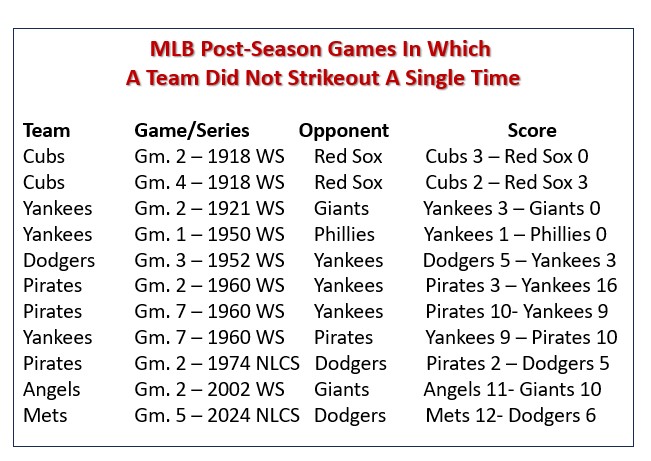
Now, much has been written about last Friday’s (October 18) Mets 12-6 National League Championship Series (NLCS) win over the Dodgers (in New York), with a lot of emphasis on the fact that not a single Mets’ batter struck out (in 44 plate appearances).  Overall, 14 Mets batters reached two strikes in their plate appearances, with four putting an 0-2 pitch in play and three putting a 1-2 pitch in play.  Note:  The attention does seem justified.  In the entire 2024 regular season, there was only one game in which a team did not suffer a single strikeout. That was the April 29 Dodgers versus Diamondbacks game – won by the Dodgers 8-4 and in which the Dodgers went strikeout-free.

The Mets 12 runs scored are the most in a post-season game by a team that didn’t strike out a single time. The fewest runs scored by a team that didn’t fan at least once in a postseason game is one – by the Yankees in Game One of the 1940 World Series – a game they won 1-0, as Vic Raschi outdueled Jim Konstanty.


As you have probably surmised, for this Edition of Trivia(l) Tidbit Tuesday, I have chosen to focus on post-season, no-strikeout contests. Turns out, there have been 11 no-strikeout games in the Modern Era post-season: Nine in the World Series and two in the National League Championship Series. The teams whose batters managed to avoid striking out won seven of those contests.  One of those contests really grabbed my attention.

Game Seven of the 1960 World Series (October 13, 1960) – one of the most iconic post-season games of all time (remembered historically for Bill Mazeroski’s walk-off homer in a a10-9 Pirates win) – is the only post-season contest in which neither team struck out even a single time. That game featured 24 hits, 19 runs, five homers, five walks, 77 plate appearances and zero strikeouts. Further:

  • 28 batters reached two strikes before putting the ball in play, 12 of those on an 0-2, or 1-2 count;
  • 10 batters hit the first pitch of their at bats, and another 23 put the ball in play on the second pitch of their at bats;
  • The average plate appearance in the game lasted 3.3 pitches.

Notably, the Pirates had also “enjoyed” a strikeout-free game versus the Yankees in Game Two.   Enjoyed is probably not a good word.  Despite not striking out a single time, in that game, the Pirates fell 16-3 to the Yankees.  The Bronx Bombers fanned 11 times, but also put up 19 hits including three doubles, a triple and two home runs (both by Mickey Mantle). The only other team to have two strikeout-free games on offense in a single post-season series was the 1918 Cubs (versus the Red Sox) – and like the Pirates they split those two games winning 3-1 in Game 2 and losing 3-2 in Game Four.

In the 1960 World Series, the Yankees outhit the Pirates .338 to .256; outhomered them 10 to 4;  outslugged them .528 to 355;  and outscored them 55 to 27.  (The Pirates fanned 26 times to the Yankees 40.) The Yankees won games by scores of 16-3, 10-0 and 12-0; the Pirates by scores of 6-4, 3-2, 5-2, 10-9.

Primary Resource:  Stathead.com.

Baseball Roundtable – Blogging Baseball Since 2012.

100Baseball Roundtable is on the Feedspot list of the Top 100 Baseball Blogs.  To see the full list, click here.

Baseball Roundtable is also on the Anytime Baseball Supply Top 66 Baseball Sites list.  For the full list, click here

I tweet (on X) baseball @DavidBaseballRT

Follow Baseball Roundtable’s Facebook Page here.  More baseball commentary; blog post notifications.

Member: Society for American Baseball Research (SABR); Negro Leagues Baseball Museum; The Baseball Reliquary. 

P1066

BASEBALL ROUNDTABLE TRIVIA(l) TIDBIT TUESDAY – Brother Versus Brother … A Fall Classic Tale

Time for another edition of Trivia(l) Tidbit Tuesday. I hope you are enjoying this weekly presentation of baseball occurrences that for some reason caught The Roundtable’s eye.  (I’m particularly fond of unexpected performances or statistical coincidences.) These won’t necessarily be momentous occurrences, just events, statistics or coincidences that grabbed my attention.  At times (for longer posts), I will redirect you to the full Baseball Roundtable blog.

With the post-season in full swing, I was drawn to a Words Series “coincidence” from Game Seven of the 1964 Fall Classic.  The opponents were two storied franchises – the Yankees and Cardinals. Scrolling through the starting lineups, I found a pair of brothers (one on each team): Clete Boyer (batting eighth for the Yankees) and Ken Boyer (at cleanup for the Cardinals).  Now, for what drew The Roundtable’s attention.

A First and Still Only – One of the Roundtable Unicorns

Clete Boyer (Yankees) and Ken Boyer (Cardinals) both homered in Game Seven of the 1964 World Series.  They are the first, and still only, brothers to go deep in the same World Series game.

The above distinction is a pretty good starter, but there is more:

  • Clete and Ken both started at third base for their respective teams;
  • They each homered in their final at bat of the game (Ken in the bottom of the seventh inning, Clete in the top of the ninth);
  • Both were solo home runs;
  • For both, it was their second career World Series home run; and, finally,
  • For both, the home run would mark their final career World Series plate appearance – it was a last chance coincidence.

A little more on the Boyers; Ken was the older of the pair (33-years-old to Clete’s 27.).  (Note: A third, older, brother, Cloyd Boyer also made it to the major-leagues, logging five MLB seasons (1949-52, 1955 … Cardinals, Athletics) as a pitcher.

Ken was a the most talented of the Boyers. He was All Star in seven seasons and five-time Gold Glover in his 15-season MLB career (1955-69 … Cardinals, Mets, White Sox, Dodgers). He was the 1964 NL Most Valuable Player, when he hit .295, with 24 home runs and a league-topping 119 RBI.  He hit 20 or more home runs in eight seasons (a high of 32 in 1960). His final stat line was a .287-282-1,141 (2,034 games).   His played his only World Series in 1964 (.222-2-6 in seven games).

Clete played in 16 MLB seasons (1955-57, 1959-71 … Athletics, Yankees, Braves). His final stat line was .242-162-654 (1,725 games) He won a Gold Glove with the Braves in 1969.  Clete played in five World Series (1960-64, all for the Yankees. In WS play, he went .233-2-11 in 27 games.

Cloyd, by the way, went 20-23, 4.73 in is five MLB campaigns.

Now, of course, with The Roundtable “one thing always seems to lead to another.” So, here are the other sets of brothers to both homer in a World Series games (just not in the same game or even same Series.).

Bob and Emil “Irish” Meusel

Bob Meusel, primarily an outfielder, played in six World Series (1921-23, 1926-28) all for the Yankees. He hit .225-1-17 in 34 WS games, his lone home run coming in Game Three of the 1928 World Series. Bob played in 11 MLB seasons (1920-30 … 1920-29 for the Yankees, 1930 for the Reds). He hit .309-156-1,071 in 1,407 games. In 1925, he hit .290 with a league-leading 33 home runs and a league-topping 134 RBI. He dove 100+ runs in five seasons.

Irish Meusel, also primarily an outfielder, played in four World Series (1921-24 … all for the Giants). He hit home runs in the 1921, 1922 and 1923 Fall Classics and finished with a career World Series stat line of .276-3-17 in 23 games. Like his brother, he played in 11 MLB seasons (1914 Nationals, 1918-26 Giants, 1927 Robins). He hit .310-106-819 in 1,289 MLB games – hitting over .300 in eight seasons and driving in 100+ runs in four (leading the league with 125 RBI in 1923).

Yuli Gurriel and Lourdes Gurriel, Jr.

Yuli Gurriel, primarily a first baseman, played in four World Series (2017, 2019, 2021-22 … all for the Astros). He homered in the 2017 World Series (twice) and the 2019 Fall Classic. His World Series stat line reads: .276-3-12 in 26 games. Still active in 2024, Yuli has played in nine MLB seasons (2016-2024 … Astros). His career stat line is .280-98-468 in 927 games. He won the 2021 AL batting title with a.319 average. His best season was 2019, when he  it .298 with a career-high 31 homers and a career-best 104 RBI.

Lourdes Gurriel, Jr., primarily an outfielder, has played in just one World series to date – for the Diamondbacks in 2023. He hit .333-1-5 in five games. Still active in 2024, Lourdes has played in seven MLB seasons (2018-24 … Blue Jays, Diamondbacks). His career line is .279-110-411 in 746 games. He was an All Star in 2023, when he it .261-24-82 for Arizona. He has hit 20 or more home runs in three seasons.

COMING SOON: World Series Targets Revisited.

Primary Resource:  Statehead.com


Baseball Roundtable – Blogging Baseball Since 2012.

100Baseball Roundtable is on the Feedspot list of the Top 100 Baseball Blogs.  To see the full list, click here.

Baseball Roundtable is also on the Anytime Baseball Supply Top 66 Baseball Sites list.  For the full list, click here

I tweet (on X) baseball @DavidBaseballRT

Follow Baseball Roundtable’s Facebook Page here.  More baseball commentary; blog post notifications.

Member: Society for American Baseball Research (SABR); Negro Leagues Baseball Museum; The Baseball Reliquary. 

P1065

Trivia(l) Tidbit Tuesday – Starting Your Career with a Bang … or a Home Run Triple Header

Time for another edition of Trivia(l) Tidbit Tuesday. I hope you are enjoying weekly presentation of baseball occurrences that for some reason caught The Roundtable’s eye.  (I’m particularly fond of unexpected performances or statistical coincidences.) These won’t necessarily be momentous occurrences, just events, statistics or coincidences that grabbed my attention.  This Tuesday, we’ll be looking a a few players who started their MLB careers by lining  a baseball over the fence and into the record books.

Hit ‘Em Where They Ain’t – Except the  Fans, Of Course

mCdLet’s start with Keith McDonald, who had a very short, but pretty sweet and unicorn designation-worthy MLB career.  McDonald’s MLB career stat line would include just eight games, 11 plate appearances (two walks), three hits in nine at bats (.333 average), three home runs, three runs scored and five RBI.

In the process of those eight games, McDonald became the only player with more than one MLB career hit, who can look back on major league career in which his every hit was a home run. He also became one of only two players – and the only National Leaguer – to homer in his first TWO major-league plate appearances.  

The Cardinals selected 21-year-old McDonald (out of Pepperdine University) in the 24th round of the 1994 draft. From 1994 to 1999, McDonald (a catcher, this will be important in a bit) worked his way up from Rookie ball to Triple-A.

He started the 2000 season at Triple-A (Memphis Redbirds). He was hitting .246, with one home run and 17 RBI in early July, when he was called up to replace Cardinals’ injured backup catcher Eli Marrero.

McDonald got his first taste of MLB action on July 4 (in St. Louis), pinch-hitting (for SS Edgar Renteria) in the bottom of the eighth inning – with the Cardinals ahead by a 13-3 score. After hitting just one home run in 177 at bats at Triple-A that season, McDonald sent a 2-2 pitch out of the park to left-center.

McDonald did not play in the Reds/Cardinals July 5 tilt, but On July 6, he started at catcher against the Reds, batting in the number-eight spot.  He got his first at bat in the bottom of the second, with the Cardinals trailing 3-2. He tied the game with a home run on a 1-0 pitch – becoming just the second MLB player ever to homer in their FIRST TWO plate appearances. (The other was St. Louis Browns’ LF Bob Nieman, who homered in his first two at MLB at plate appearances in his debut game – against the Red Sox in Fenway – on September 14, 1951.) By the way, McDonald went one-for-three in the July 6 game, adding a walk and another RBI.

McDonald’s next MLB appearance came on July 8. With the Cardinals hosting the Giants, McDonald replaced Matheny at catcher in the top of the ninth, with the Giants up 7-6. McDonald came to the plate in the bottom of the inning and drew a walk. He didn’t take the field again until July 13, when he again entered the game as a pinch hitter (this time in the top of the ninth with the Cardinals up 13-3 on the White Sox in Chicago).  He grounded out to second.  Two days later (July 15), still in Chicago, McDonald pinch hit again. This time, it came in the top of the ninth of a game in which the Cardinals trailed 15-5. McDonald popped a 3-1 pitch for a two-run home run. At this stage of his MLB career, he was three-for-six – with all three his hits leaving the yard.  McDonald got only one more major-league at bat that season, a ninth-inning, pinch-hit fly out against the Twins on July 15.

Then, as suddenly as it began, it was over. On July 21, McDonald was sent back down to Memphis, where he finished the season .263-5-30 in 83 games.  He appeared in just two more major-league games – in September of 2001 – going hitless in two at bats.   McDonald then spent the next five seasons at AAA; playing in the Cardinals’, Cubs’, Pirates’, Rangers’ and Yankees’ systems.  So, his final MLB stat line was .333-3-5 in eight games. His .333 average was result of three hits in nine careers at bats – again, all home runs.  For more on Keith McDonald, click here.

It’s Miller time

Little did Yankee rookie leftfielder John Miller know (when he made his debut on September 11, 1966) that his entire MLB career would include as many at bats as Yankee Roger Maris had home runs in 1961.  He also probably didn’t know he would bat his way into Yankee history in a way that could never be erased – becoming the first Yankee to homer in his first MLB at bat – as well as one of just two MLB players to homer in their first and last MLB at bats.

Miller made his MLB debut on September 11, 1966 – his fifth professional season – playing LF and batting seventh against Lee Stange and the Red Sox in Fenway.  Miller had gone  .294-16-59 at Double-A/Triple-A that season. In his first MLB at bat, in the bottom of the second inning, with a runner on first and two out, he hit a two-run home run to left.

That made Miller the first Yankee in history to go deep in his first MLB at bat.  He would hold the distinction of being the only Bronx Bomber to go deep in his first MLB at bat for four decades – 36 seasons, actually. (Marcus Thames would be next on June 10, 2002).

It would be a while before Miller went deep again – but it would be another historic long ball. Miller, in fact, would not get another home run or RBI until September 23, 1969 – in the final at bat of his MLB career.

In 1966, Miller would play in six games for the Yankees, going 2-for-23 with nine strikeouts (and, of course, that one home run and two RBI).   The following April, Miller was traded to the Dodgers. He spent 1967 and 1968 at Triple-A Spokane – putting up respectable numbers.  In 1969, he made it back to the big leagues, getting in 26 games (just 38 at bats) for the Dodgers. In the first 37 of those at bats, Miller collected seven hits (one double and six singles), scored twice, but did not collect an RBI.   Miller’s last at bat of the season (and what turn out to be the last at bat of his MLB career) came as a pinch hitter (September 23) in the eighth inning of a game at Cincinnati.  The Dodgers, trailing 6-2 sent Miller to the plate for pitcher Al McBean.  In that final MLB at bat, Miller stroked a solo home run off Reds’ starting pitcher Jim Merritt.

Just Aside

In the spirit of  “with Baseball Roundtable one thing always seems to lead to another,”  Al (Alvin O’Neal)  McBean (see paragraph immediately above)  was the winning pitcher in MLB’s only All-Hispanic All Star Game (played on October 12, 1963.  For more on that historic game, click here

That second homer made Miler one of two players in MLB history to homer in their first and final at bats. The other is Paul Gillespie – whose MLB career spanned three seasons during World War II (1942, 1944, 1945), all with the Cubs. Gillespie, a catcher, appeared in 89 games – hitting .283, with six home runs and 31 RBI; and went zero-for-six in the 1945 World Series.

Miller played in a total of just 32 major-league games, getting 61 at bats and just ten hits (.164 career average), two home runs and three RBI.  With that output, however, Miller earned a special place in the MLB record books

Miller did go on to play three seasons (1970-72) in Japan, hitting .249 with 72 home runs and 222 RBI in 382 games for the Chunichi Dragons.

The Long and Short of It

As noted earlier,  above three were 36 seasons between John Miller becoming the first Yankee to homer in his first at bat and Marcus Thames becoming the second.  That’s the “long” of it.  Now for the “short” of it.

On April 13, 2016, 24-year-old Tyler Austin made his MLB degut at 1B, batting seventh for the Yankees.  In his first MLB at bat (bottom of the second), he popped a 2-2 pitch from the Rays’ Matt Andriese to deep right for a two-run home run. How long did it take for the next Yankees rookie to hit a dinger in his first MLB at bat?  Just one hitter and four pitchers.  Next up was a rookie RF named Aaron Judge, who hit a 1-2 pitch from Andriese to deep center for a home run in his first MLB at bat.  Two rookies hitting first at bat home runs back-to-back – that’s still an MLB first and only.

Primary Resources:  Baseball-Reference.com and Baseball-Almanac.com

Baseball Roundtable – Blogging Baseball Since 2012.

100Baseball Roundtable is on the Feedspot list of the Top 100 Baseball Blogs.  To see the full list, click here.

Baseball Roundtable is also on the Anytime Baseball Supply Top 66 Baseball Sites list.  For the full list, click here

I tweet (on X) baseball @DavidBaseballRT

Follow Baseball Roundtable’s Facebook Page here.  More baseball commentary; blog post notifications.

Member: Society for American Baseball Research (SABR); Negro Leagues Baseball Museum; The Baseball Reliquary. 

P1064

Trivia(l) Tidbit Tuesday (rescheduled for Thursday) – Walking Your Way into the Record Books

Time for another edition of Trivia(l) Tidbit Tuesday (on Thursday this week because of the September Wrap Up post on Tuesday).  I hope you are enjoying weekly presentation of baseball occurrences that for some reason caught The Roundtable’s eye.  (I’m particularly fond of unexpected performances or statistical coincidences.) These won’t necessarily be momentous occurrences, just events, statistics or coincidences that grabbed my attention. This week – since it’s October 3 – we’ll look at the events of October 3, 1947.

Note: For the September wrap, click here.

Now, today’s Tidbit.

When Floyd Clifford (Bill) Bevens took the mound for the Yankees in Game Four of the 1948 World Series (October 3), it was not a World Series matchup for the ages.   Bevens was coming off a 7-13, 3.82 season for the Bronx Bombers, while his mound opponent was a rookie (Harry Taylor who had gone 10-5, 3.11). Both, however, would find their way into the record books – if in a negative fashion.

Let’s start with Taylor, since the 28-year-old righty wrote his name into MLB annals the fastest – in the top of the first inning.  Yankee 2B Stuffy Stirnweiss greeted Taylor abruptly, lacing his first pitch to left for a single.   RF Tommy Heinrich followed with a groundball single up the middle, sending Stirnweiss to second. C Yogi Berra reached on a fielder’s choice (with all runners safe due to an error by Dodgers’ SS Pee Wee Reese). CF Joe DiMaggio next drew a four-pitch walk, forcing in a run – and Taylor’s day was done. (Hal Gregg replaced him on the mound).  Fortunately for Taylor, Gregg retied 1B George McQuinn on a pop out the infield (runners holding) and then got Trivia(l) Tidbit Tuesday (rescheduled for Thursday) – Walking Your Way into the Record Books Billy Johnson to hit into a short-to second-to first double play ending the inning.

Taylor’s spot in the record book?  He became one of just four pitchers to start a World Series Game and not record a single out – joining the White Sox’ Reb Russell (Game Five, 1917); Cubs’ Charlie Root (Game Two, 1935); and Cubs’ Hank Borowy (Game Seven, 1945). The Dodgers’ Bob Welch (Game Four, 1981 World Series) has since “earned” a share of this record.

Taylor, by the way, pitched in six MLB seasons (1946-48, 1950-52 … Dodgers, Red Sox), going 19021, 4.10. 1947 was his best season.

Ouch!

For those who like to know such things, the Cubs’ Charlie Root holds the record for the most runs given up as a World Series starter without recording a single out. Notably, his outing also took place on October 3 (1935). In the bottom of the first inning of Game Two against the Tigers, Root gave up a single to CF Jo-Jo White; an RBI double to C Mickey Cochrane; an RBI single to 2B Charlie Gehringer; and a two-run home to 1B Hank Greenberg. Four hits, four runs on 18 pitches without recording an out. (Of course, three of the four batters he faced ended up in the Hall of Fame.)

Now let’s move on to Bevens’ record-setting and record-tying World Series’ performance of October 3, 1947. At the time, the record for walks surrendered by a pitcher in a World Series game was nine: Athletics’ Jack Coombs versus the Cubs in Game Two of the 1910 Series.  Coombs went the distance (eight hits, nine walks in a 9-3 win).

The record for the fewest hits given up by a starting pitcher in a complete game in a World Series was one: Cubs’ Ed Reulbach (Game Two, 1910, in a 7-1 win over the White Sox) and Cubs’ Claude Passeau (Game Three, 1945 in a 3-0 win over the Tigers).

On October 3, 1947, Bevens would set a new (still standing) mark for walks surrendered in a World Series game and also tie the record (which stood until Don Larsen’s 1956 perfect game) for fewest hits allowed in a World Series complete game.

In a sign of things to come, Bevens walked Dodgers’ 2B Eddie Stanky to open the game and, two outs later issued a free pass to RF Dixie Walker.  Bevens then walked one in the second inning; one in the third; two in the fifth; one in the sixth; one in the seventh. As they entered the bottom of the ninth, Bevens had issues free passes, but had given up just one run and had not yet surrendered a hit.

The ninth stared out just fine, as C Bruce Edwards lined out to left on a 2-0 pitch. Then, Bevens tied the World Series record, issuing his ninth walk, on a 3-1 pitch to CF Carl Furillo.  Bevens then retired 3B Spider Jorgenson on a foul pop out to first. Now, he was one out away from victory and one out away from MLB’s first World Series no-hitter. It was, however, not to be.  The managerial machines starting whirring as Dodger skipper Burt Shotton used a pair of pinch hitters and a pair of pinch runners to close out the frame.

Al Gionfriddo came in to run for Furillo and an injured and gimpy Pete Reiser pinch hit for Dodgers’ pitcher Hugh Casey.  Gionfriddo stole second on a 2-1 pitch to Reiser and, when Bevens went to 3-I on the always dangerous Reiser, Yankee manager Bucky Harris called for an intentional walk (giving Bevens sole possession of the World Series Walk record, which he still has). Eddie Miksis then was put in to pinch run for Reiser and Cookie Lavagetto pinch hit for Stanky. Lavagetto hit Bevens’ second offering for a two-run double – ending the no-hitter, winning the game and tagging Bevens with the loss.

Sidenote: Bevens’ ten-walk performance spared Dodger Rex Barney a spot in the record books.  The very next day, Barney started against the Yankees and walked nine batters in just 4 2/3 innings, in a Brooklyn 2-1 loss.

Bevens pitched in four MLB seasons (1944-48), all for the Yankees. He went 40-36, 3.08.

Primary Resource: Baseball-Reference.com

Baseball Roundtable – Blogging Baseball Since 2012.

100Baseball Roundtable is on the Feedspot list of the Top 100 Baseball Blogs.  To see the full list, click here.

Baseball Roundtable is also on the Anytime Baseball Supply Top 66 Baseball Sites list.  For the full list, click here

I tweet (on X) baseball @DavidBaseballRT

Follow Baseball Roundtable’s Facebook Page here.  More baseball commentary; blog post notifications.

Member: Society for American Baseball Research (SABR); Negro Leagues Baseball Museum; The Baseball Reliquary. 

P1063


September 2024 Wrap Up – from the New 50-50 Club to a No-Hitter to a New Standard for “Utility” Players – and Much More

It’s October 1, and that means it’s time for Baseball Roundtable September Wrap up – a look at the stats and stories that caught The Roundtable’s attention in September, as well as the Player and Pitcher of the Month, Trot Index and more.  Just a few of this month’s highlights that you will find in this post:

  • a “called shot” Grand Slam;
  • a combined no-hitter and a pair of no-no’s lost in the ninth;
  • 15 doses of leadoff mayhem;
  • the new 50-50 Club;
  • 20-20 before 21;
  • an immaculate inning;
  • a game-ending triple killing;
  • a new standard for defining a “utility” player;
  • and much more.

Read on for the stories and stats.

SIDE NOTE: Due to the need to get this out today, Trivia(l) Tidbit Tuesday is moved to Thursday this week.  So, let’s get on with it.

Baseball Roundtable Players and Pitchers of the Month – September 2024

NATIONAL LEAGUE

Player of the Month – Shohei Ohtani, DH, Dodgers

Okay, how can you not go with the player (even if he does not play in the field) who led the major leagues (looking at players with at least 50 at September at bats for percentage figures) in:

  • Home runs – 10 (tied):
  • Average – .393;
  • RBI – 32;
  • Runs scored (27);
  • Hits (42);
  • Stolen bases (16 – and without one caught stealing);
  • Total bases (79); and
  • Slugging percentage – .786.

In addition, Ohtani became MLB’s first 50-50 player (homers/stolen bases). His September also included a six-for-six game; a three-homer game; and a ten-RBI game – all in the same contest (September 19). And, he had thirteen multi-hit games in 26 games played.  This was a no-brainer.  (Lots more on Ohtani in the highlights sections).

Honorable Mentions:  Another DH here – the Phillies’ unconventional leadoff hitter Kyle Schwarber went .293-10-22, tying Ohtani for the MLB lead in September roundtrippers and finishing tied for second in September RBI.  Four of Schwarber’s ten September homers were leadoff home runs and he ended the season with single-season record of 15 leadoff dingers. (Schwarber is a career .230hitter, so that .293 September average was a nice bonus.) Now, I better get someone who plays in the field in here.  So, let’s give a nod to Diamondbacks’ 3B Eugenio Suarez, with a .347-9-18 September line, with 24 runs scored – third in the NL in homers, ninth in RBI; second in hits (35); second in runs scored.

Pitcher of the Month – Nick Martinez, RHP, Reds

This was a very close call between Nick Martinez and the Cub’s Shota Imanaga – a pair of 30-somethings who pitched to weak contact.  Martinez got the edge based on innings pitched and earned run average.  Martinez went 4-1 for the month (five starts) with a 0.83 earned run average, third in the NL among pitchers with at least 20 September innings.  His four wins tied for the NL lead and he should have had a fifth victory – his one loss for the month came in his final start (September 27), when he gave up just one run over eight innings in a complete-game loss to the Cubs.

Martinez’ s 32 2/3 innings were fifth-most in the NL and, and his 0.67 WHIP was second-lowest (among pitchers with at least 20 September innings). His .161 average against was third. He also fanned 30 batters, while walking just four. In his five September starts Martinez gave up just three earned runs, Martinez finished the season at 10-7, 3.10 in 42 games (16 starts).

Honorable Mentions: The Cubs Shota Imanaga went 4-0, 1.67 in four September starts, fanning 26 in 27 innings and walking just five.  He put up a stellar 0.85 WHIP and .184 average against. I also have to give a shout out to the Mets’ Jose Quintana (3-1, 0.72 in four starts, with a 0.84 WHIP and .176 average against); the Pirates’ Paul Skenes (3-1, 0.75 in five starts – with 34 strikeouts and just six walks in 24 innings.  (There were a lot of solid pitchers’ performances during the month like  Jameson Taillon, Cubs, 3-0, 0.84; Blake Snell 3-0, 1.00 with 31 strikeouts in 18 innings; and I could go on.

AMERICAN LEAGUE

Player of the Month – Julio Rodriguez, CF, Mariners

Mariners’ 23-year-old CF Julio Rodriguez had a great month, hitting .328 7-22, with six steals. He led the AL in September base hits (39) and placed second (tied) in the AL in homers; first in RBI and second (24) in runs scored.  Rodriguez collected at least one hit in 21 of 26 games played and had nine September multi-hit games. In the course of the month, he raised his 2024 average from .259 to .273.

Honorable Mentions: Rangers’ 22-year-old rookie LF Wyatt Langford led the AL in September home runs with eight – to along with a .300 average, a league-topping 25 September runs and 20 RBI (fifth- tied – in the AL). We’ll also give a nod to the A’s LF Brent Rooker, who put together a .320-6-21 September.  His 33 hits were third in the AL and his 21 RBI tied for second.

Pitcher of the Month – Ronel Blanco, RHP, Astros

Ronel Blanco went 4-0, 0.75 (five appearances/four starts) in September – tying for the AL lead in wins.  His 0.75 ERA was the lowest among AL pitcher with at least 20 September innings. Not only did he win each of his four starts, in his one relief appearance, he fanned five batters (one hit-one walk) in two innings.

Honorable Mentions: I’ve got to put the Royals’ lefty reliever Daniel Lynch in here. He went 2-0 in nine relief appearances and, in 17 1/3 innings, gave up just eight hits and zero earned runs (yep, 0.00 ERA), while walking five and fanning 22. (All this as the Royals were fighting for a playoff spot.)  Let’s also recognize a pitcher used in a non-traditional role.  Tigers’ rookie Brian Hurter pitched well under the pressure of the playoff run – serving normally as the second pitcher in those committee games, where the Tigers used an “opener.”  Hurter went 4-0, 1.59 in five appearances.  In those games, he came in in the second inning twice and the first, third and fourth innings once each.  Also, these were not instances where he had the advantage of coming in with a big lead to pick up a cheap win.  Three times, the game was tied, twice the Tigers were ahead by one.  He pitched a total of 22 2/3 innings (just over four innings per appearance), giving up four runs, walking just three and fanning 17.

SURPRISE PLAYER OF THE MONTH

Victor Robles, CF, Mariners

Victor Robles came into the 2024 with a .238 average over seven MLB seasons (516 games). He started the year with the Nationals and was hitting .120 (14 games) when he was released June 1.  The Mariners signed him on June 4. Then the fun began. Robles hit .316 in 15 games for Seattle in June and .375 in 18 July contests.  He slid to .244 in 22 August games, but came back with surprising .389 (28-for-72) in 22 September games. Although he didn’t show much power (ten doubles, no homers). He scored 21 runs, drove in 11 and stole 13 bases in 14 attempts.  A pleasant surprise for Seattle.

Honorable Mention: Rhett Lowder, RHP, Reds

Rhett Lowder made MLB debut for the Reds in the second game of a doubleheader against the Brewers on August 30.  It was a hard luck day for the 22-year-old rookie, who started the game and gave up just one run in four innings. He was relieved in the fifth down 1-0 – and took the loss in a game the Reds eventually dropped to the Brew Crew by a 14-0 score.

September went better for the rookie – a 2-1 record and a 1.01 earned run average in five starts.    Not a total surprise, Lowder was a first-round pick out of Wake Forest University in the 2023 MLB draft. He was 30-5, 3.29 in three seasons at Wake. Still, it is surprising that he rose so quickly to the majors – moving through High-A, Double-A and Triple-A (a combined 6-4, 3.64) before his callup. (A little extra note: In 2023 at Wake Forest, Lowder went 15-0, 1.87 in 22 starts, fanning 113 in 108 2/3 innings.)  So, he was “on the radar,” but the Roundtable was surprised to see him make his MLB mark so quickly.

________________________________________

THE TROT INDEX … A REGULAR BASEBALL ROUNDTABLE FEATURE

In 2024,  34.9% of the MLB season’s 182449  plate appearances ended in a trot (back to the dugout, around the bases, to first base). We’re talking about strikeouts, home runs, walks, hit by pitch and catcher’s interference – all outcomes that are, basically, devoid of action on the base paths or in the field. Here’s the breakout: strikeouts (22.6%); walks (8.2%); home runs (3.0%); HBP (1.1%); catcher’s interference (less than 1%). Strikeouts, by the way, outnumbered base hits 41,197 to 39,823. 

The 34.9% figure is down slightly from  from 35.7% for 2023. I also looked into full-year Trot Index figures for the years I have been a fan: 30.3% in 2010; 29.9% in 2000; 31.7% in 1990; 23.1% in 1980; 27.0% in 1970; 25.1% in 1960; and 22.8% in 1950.

________________________________________


A Tiger by the Tail

The surprise team of September was the Tigers, who put up September’s highest winning percentage at .680 (17-8) to leapfrog their way into a post-season berth.  They got some excellent mound work from Tarik Skubal, who went 2-0, 1.52 in four starts and closer Jason Foley, who saved nine games in ten opportunities.  In fact, the Tigers did an excellent job of managing their pitching staff. Brant Hurter, whose primary role was to follow the “opener” in ” committee” games, went 4-0 1.59 in five games (22 2/3 innings).  Sean Guenther got in 11 games (14 1/3 innings) and put up a 0.63 earned run average.  This stat may tell the story.  The Tigers had six pitchers who threw 13 or more September innings and put up ERAs under 1.60.  You want some names? In addition to those already mentioned:  Beau Brieske (12 games, 17 innings, 1.06 ERA); Tyler Holton (12 games, 17 innings, 1.06 ERA); Will Vest (11 games, 13 innings, 1.38 ERA) The Bengals’ offense was led by the garden crew: LF Riley Greene (.278-5-18);  CF Kerry Carpenter (.277-4-12); and RF Parker Meadows (.273-4-15). Overall, the Tigers’ held opponents to the third-fewest September runs in the AL, while scoring the sixth-most.

Three From The Central

The Guardians, Tigers and Royals (all in the 2024 post-season mix) all spent the 2023 post-season watching from home. In fact, they were all under.500 – a combined record of 210-276 and a combined 51 games behind the league-leading Twins. What a difference a year makes. 

A Stable of Stable Starters

The Padres at 16-8 (.667) had the best September winning percentage in the NL – and it started with the starters.  The rotation of Michael King, Joe Musgrove, Dylan Cease, Martin Perez and Yu Darvish started 23 of the Padres’ 24 games (each starting either four or five contests) – and put up a combined 10-4, 2.40 record.  And, the pitching was needed.  The Padres scored the  fourth-fewest September runs in the NL. Manny Machado (3B) was the leader on offense (.280-6-22) and 1B Luis Arreaz was a solid table-setter (.340 with 13 runs scored). The team also got nice contributions from RF Fernando Tatis, Jr. (.267-7-13) and CF Jackson Merrill (.309-4-13).

——-Team Statistical Leaders for September 2024 ———-

RUNS SCORED

National League – Dodgers (162); Diamondbacks (147); Phillies (128)

American League – Mariners (134); Yankees (126); Rangers (121)

The fewest runs in September were scored by the Royals (74). In the National League, it was the Nationals at 86.  

AVERAGE

National League – Dodgers (.279); Diamondbacks (.273); Marlins (.263)

American League – Astros (.268); Mariners (.264); Orioles (.246)

The lowest team average for September belonged to the Royals at .203. The lowest in the NL was the Pirates (.219).  

HOME RUNS

National League – Dodgers (46); Diamondbacks (41); Phillies (35); Giants (35)

American League – Mariners (33); Rangers (33); Guardians (31)

The Royals and Reds had the fewest September homers at 15.  The only other team under 20 was the Blue Jays at 16.

TOTAL BASES

National League – Dodgers (437); Diamondbacks (421); Phillies (388)

American League – Mariners (386); Astros (368); Rangers (349)

STOLEN BASES

National League – Brewers (43); Nationals (36); Dodgers (34)

American League – Mariners (29); Yankees (28); Rays (25)

The Twins stole the fewest sacks in September at three (in just four attempts).

WALKS DRAWN

National League –   Dodgers (104); Diamondbacks (99); Cubs (89); Braves (89)

American League – Yankees (116); Mariners (99); Tigers (92)

The Dodgers led MLB in September On-Base Percentage at .358. The Mariners led the AL at .347.

BATTER’S STRIKEOUTS

National League – Rockies (280); Marlins (254); Giants (253); Brewers (253)

American League – Angels (259); A’s (258); Red Sox (255)

Padres’ batters fanned the fewest times in September (172). The Astros fanned the fewest times in the AL at 182.

Bonus Stats

  • The Tigers have the fewest sacrifice bunts on the season at four, the Diamondbacks the most at 34.
  • Eight of the top team batting averages in September belonged to NL teams.
  • Mariners’ batters were hit by a pitch an MLB-leading 22 times in September. Padres’ and Brewers’ batters suffered the fewest HBP (3).
  • Year-to-date, the Mariners have suffered the most hit batsmen (116), the White Sox the fewest (43). The only other team with more than 100 batters HBP was the Twins (101).
  • The Tigers led MLB in September triples with seven. The Yankees were the only team with zero triples in September. The White Sox had the fewest triples this season (nine).

_______________________________________

EARNED RUN AVERAGE

National League – Braves (2.72); Padres (2.83); Mets (3.21)

American League – Guardians (2.19); Rays (2.77); Tigers (2.79)

The Diamondbacks had the highest September ERA at 5.34 – also north of 5.00 were the Rockies (5.18).

STRIKEOUTS

National League – Diamondbacks (269); Braves (269); Brewers (264)

American League – Twins (279); Yankees (259); Mariners (245); Rays (245)

The Diamondbacks averaged an MLB-best 10.56 strikeouts per nine innings in September. The Twins averaged an AL-best 10.35.  Fourteen teams average at least nine strikeouts per nine innings for the month.

FEWEST WALKS SURRENDERED

National League – Braves (65); Padres (67); Reds (69)

American League – Tigers (56); Mariners (59); Guardians (66)

The Tigers walked an MLB-lowest 2.20 batters per nine innings in September.  The White Sox walked an MLB-worst 4.31 batters per nine frames.  

SAVES

National League – Pirates (11); Padres (10); Reds (9); Cardinals (9)

American League – Tigers (13); Rays (9); Guardians (8); Astros (8); Rangers (8); Yankees (8)

The Blue Jays blew the most saves in September – converting just one  of nine opportunities.

Walks+ Hits/Innings Pitched (WHIP)

National League – Padres (1.05); Braves (1.06) ; Mets (1.08)

American League:  Mariners (1.01); Tigers (1.03); Guardians (1.05)

Bonus Stats:

  • The Angels gave up an MLB-high 39 home runs in September. The Guardians gave up an MLB-low 15 home runs.
  • The Padres held opponents to an MLB-low .203 average in September. The Rockies’ staff was touched for an MLB-high .275 average.
  • The Mariners’ strikeouts-to-walks ratio for September topped MLB at 4.15. The Rockies had MLB’s worst ratio at 1.89

—–September 2024 Highlights——

Take that Babe Ruth

Brewers’ 20-year-old rookie outfielder Jackson Chourio apparently knows how to call ‘em. On September 2 – according to Chourio’s teammates – in middle of the sixth inning, with the Brews up 5-3 over the Cardinals, Chourio told a handful of teammates that he was going to get an at bat with the bases loaded and was going to hit a Grand Slam.”  In the bottom of the sixth, Chourio did indeed come up with the sacks full and hit a 1-1 pitch from Riley O’Brien to deep LF for a Grand Slam. Chourio finished September  at .263-4-16. for the month and .275-21-79 for the season.  The Grand Slam, by the way, was Chourio’s second of the season, making him one of just eight players in the Modern Era with multiple Grand Slams before turning 21.  (Tony Conigliaro and Alex Rodriguez share the record at three.)

 The Three-Point Line

On September 2, Brewers’ SS Willy Adames gave the Brew Crew a jump start, with a three-run, first-inning homer – part of a Milwaukee 9-3 win over the Cardinals (in Sudsville). It was Adames’ 29th long ball of the year and carried some notable significance. It was Adames’ fifth straight game with a home run – matching the Brewers’ franchise record for consecutive games with a homer, as well as matching the MLB record for consecutive games with a homer by a shortstop. In that five-game span, Adames went .318 (7-for-22), with five homers, 11 RBI and seven runs scored.

That September 2 long ball also was Adames’ “lucky” 13th three-run homer of the season – tying Ken Griffey, Jr., for the most three-run homers in a season. Adames finished at .223-5-17 for September and .251-32-112 for the season.

Happy Birthday to Me

Mets’ southpaw David Peterson turned 29 on September 3 – and also turned in, perhaps, the best performance of his career. Peterson started on the mound against the Red Sox (in New York) that day and gave up just one run (six hits) over six innings, while fanning a career-high eleven batters.  Peterson, in his sixth MLB seasons finished 2024 at 10-3, 2.90 – logging his best season in terms of wins, ERA and innings pitched (121).

Young Gun(nar) Henderson

Photo: Maryland GovPics, CC BY 2.0 <https://creativecommons.org/licenses/by/2.0>, via Wikimedia Commons

On September 4, Orioles 23-year-old SS Gunnar Henderson (in just his third MLB season), set a new Orioles-franchise record for homers by a shortstop in a season. In an 8-1 loss to the White Sox in Baltimore, Henderson plated the Birds’ only run with a first inning home run. It was his 35th dinger of the season, enabling him to pass Cal Ripken, Jr. and Miguel Tejada into sole possession of the Orioles’ record for homers in a season by a SS. Henderson ended the season with a .281-37-92 stat line. (with 21 steals).  Ripken had his 34-homer Orioles’ season at age 30 in his 11th MLB campaign (1991), while Tejada reached 34 as an Oriole in 2004 (his age-30 and eighth MLB campaign).

Cubs’ Combined No-No

On September 4, Shota Imanaga took the mound for the Cubs at Wrigley Field going for his 12th win of the season (versus just three losses).  He was superb, going seven hitless, run-less innings (two walks, seven strikeouts.). Then (as we see all too often), he was pulled after seven innings and 95 pitches).  Relievers Nate Pearson and Porter Hodge pitched the final two frames and completed the no-hitter – the first Cubs’ no-hitter at Wrigley since 1972. Side note: I’m not a big fan of pitch counts. I am a big fan of one-pitcher no-hitters. Imanaga finished the season at 15-3, 2.91 in 29 starts.

Going Deep.  Wanna join me?

On September 9, as the Red Sox trounced the Orioles 12-3 in Fenway, Reds Sox’ RF Rob Refsnyder and DH Tyler O’Neill (the number three-and four hitters) hit back-to- back home runs in the third AND eighth innings.  Not a rare feat – it’s been done two dozen times since 1961, but still worth a highlight mention.

Now, This is an MLB Unicorn

On May 2, 2002, Mariners’ 2B Brett Boone and CF Mike Cameron (batting in the three- and four-holes) hit back-to-back homers twice – not just in the same game, but in the same inning.  It was in a ten-run first frame that was part of a Mariners’ 15-4 win over the White Sox in Chicago. Cameron added an exclamation point to the performance, by hitting an MLB record-tying four home runs in the game.

 Let’s Get This Party Started

Photo: Benjamin Miller, CC0, via Wikimedia Commons

On September 10, the Phillies unconventional leadoff hitter Kyle Schwarber started a Phillies’ 9-4 home victory over the Rays with a bang. He opened the game with a 437-foot leadoff homer on a 1-0 pitch from Rays’ starter Taj Bradley.  It was Schwarber’s 35th homer of the season – and his 14th leadoff long ball of the campaign.  That gave him sole possession of the MLB record for leadoff homers in a season. He had been tied with Alfonso Soriano (2003 Yankees) at 13. Schwarber added a 15th leadoff homer in a Phillies 6-3 loss to the Mets on September 21.  He finished the 2024 season at .248-38-104.

No-No.  No, You Don’t!

On September 11, Blue Jays’ right-hander Bowden Francis came into the ninth inning of a start against Mets with a 1-0 lead and a no-hitter intact.  He got Mets’ SS Francisco Lindor down 0-2 before Lindor hit a home run to right to break up the no-no. Chad Green was then called on to relieve Francis. (Note: Green and Mets’ reliever Genesis Cabrera  went on to give up five runs in a 6-2 Blue Jays’ loss).  Less than three weeks earlier (August 24), Francis had taken a no-hitter (and a 3-0 lead) against the Angels into the bottom of the ninth and lost the bid.  Angels’ LF Taylor Ward led off the ninth with a homer to left-center to break up that one.  Green came on to retire the next three batters and save the win for Francis. Trivia(l) Tidbit: Francis is just the fourth MLB pitcher to lose two no-hit bids in the ninth inning in one season – joining Ed Walsh (1906): Dave Stieb (1988); and Nolan Ryan (1989).

It’s Not My Birthday, But Let’s Celebrate

On September 12, Brewers’20-year-old rookie LF Jackson Chourio rapped a two-run homer in the eighth inning of the Brew Crew’s 3-0 win over the Giants in San Francisco.  It was Chourio’s 20th dinger of the season and, with his 20 stolen bases, made Chourio the first player to reach 20-20 in a season before his 21st birthday. (Side note: Mike Trout is the closest to Chourio, logging his 20th home run of a 20-20 season on his 21st birthday. (What a difference a day makes. Twenty-four little hours.)

Chourio, by the way, signed as an international free agent (out of Venezuela) with the Brewers on January 15, 2021. In three minor-league seasons, he hit .286-47-191, with 68 steals in 272 games.

Notably, there could be much more ahead for the youngster. Adjusting to the major leagues, Chourio was hitting just .210-5-16 as of June 1.  From June 1 forward, he hit .303-16-63.  As they say in gaming “Level Completed.”

A Nice Round Number

On September 13, the Padres’ Dylan Cease picked up his 13th win of 2024 – going six scoreless innings in a 5-0 win over the Giants in San Francisco.  The highlight? He fanned ten batters in those six frames and his third strikeout of the game (2B Donavan Walton leading off the bottom of the third) was the 1,000th strikeout of his MLB career.  It came in Cease’s sixth season, 154th appearance and 801st inning pitched.   Cease didn’t stay at 1,000 for long.  After fanning Walton, he whiffed RF Mike Yastrzemski and LF Heliot Ramos for a 1-2-3, three-strikeout frame.

Just Try to Get One By Me

The Marlins’ Luis Arreaz (the 2022 AL batting champ with the Twins and 2023 NL batting champ with the Marlins) struck out in his second plate appearance in a September 16 Padres 3-1 win over the Astros.  Why is that a highlight? Well, it was his first strikeout in September.  In fact, it was his first strikeout since his second at bat on August 10.  In between, put together a string of 141 plate appearances without a strikeout. (That streak included 32 strikeout-free games.)  In between the above noted strikeouts, Arreaz hit at a .387 pace.)

For those who like to know such things, Indians’ 3B Joe Sewell recorded the longest streak of MLB games without a strikeout – 115 in 1929. That season, Sewell fanned just four times in 152 games (672 plate appearances, 578 at bats). In 14 MLB seasons Sewell fanned just 114 times in 1,903 games.  Over his last nine seasons, he fanned just 48 times in 1,268 games.
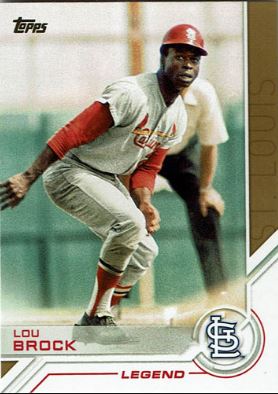
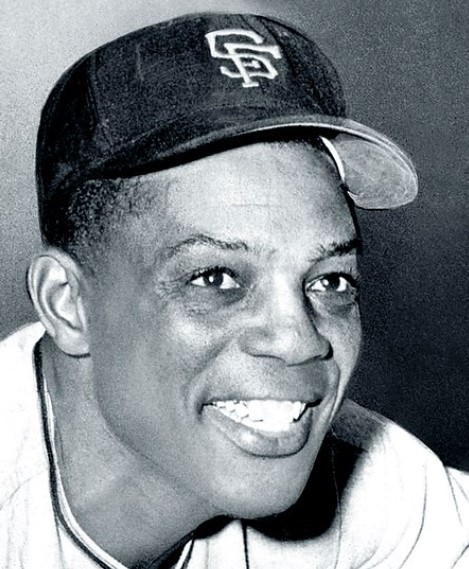
Three-peat

Padres’ 1B Luis Arreaz hit .340 in September to finish the 2024 season at .314 and capture the National League batting title. So, why is that mentioned here?  It was Arreaz’ third straight batting crown.  He won the AL title with the Twins in 2022 (.316). Traded to the Marlins, he won the NL title in 2023 (.354) – which made him the first person to win consecutive battle titles with one in each league.  Then, traded to the Padres, he won this year’s NL title (.314) making him the first person to win three straight batting titles with three different MLB teams. How do you spell unicorn?

30-30 Vision

Photo: Notorious4life (talk) (Uploads), CC0, via Wikimedia Commons

On September 17, as the Royals feel to the Tigers 3-1 in ten innings (in KC), Royals’ 24-year-old SS Bobby Witt, Jr. became what The Roundtable likes to call an MLB unicorn. In the bottom of the first inning of that game, Witt drew a seven-pitch walk and then, as 1B Salvador Perez fanned on 2-2 pitch from Casey Mize, Witt swiped second base.  It was Witt’s 30th stolen base of the season. At the time Witt already had 32 home runs in 2024, making him the first SS in MLB history to record multiple 30-30 seasons.  (In 2023, Witt hit .276-30-96, with 49 steals).  Witt hit .278-3-13, with four steals in September and a league-leading .332, with 32 homers, 109 RBI and 31 steals for the season.

Take That, Bro!  Or, Friday the 13th Ain’t So bad.

It can’t be easy following an older brother like four-time All Star Ronald Acuna, Jr. to the major leagues. But 22-year-old Luisangel Acuna (Ronald is 26-year-old), who found out he was being called up to the Mets late on the night of Friday September 13, didn’t seem phased.  In his first game, he went two-for-four (two singles). On September 17, Acuna the Younger (at SS for the Mets) collected his first MLB extra base hit (a third inning double), his first MLB RBI (plating Harrison Bader with that double) and his first MLB home run (an eighth-inning solo shot), as the Mets trounced the Nationals 10-1. It was part of a three-for-four, three-run, two-RBI Day. After five games in the Show, the younger Acuna was hitting .467 (seven-for-fifteen, with two home runs and four RBI.  He finished September at .308-3-6 in 14 games.

#InBaseballWeCountEverything

This season Padres’ rookie CF Jackson Merrill, Brewers’ rookie OF Jackson Chourio and Orioles’ rookie 2B Jackson Holliday hit 24, 21 and 5 home runs, respectively. Thanks to Anthony Castrovince (MLB.com) for relaying that there had previously been only one MLB homer by a player with the first name Jackson (Rockies’ rookie C Jackson Williams, 2014).

 More #InBaseballWeCountEverything

This season, the A’s rookie closer (righty) Mason Miller blazed his way to saves with a red-hot fastball. In the ninth inning of a September 17 A’s 4-3 win over the Cubs (in Chicago), Cubbies’ veteran LF and leadoff hitter Ian Happ turned one of Miller’s heaters around – hitting a home run off the video board in left field off a 103.2 mph fastball (on a 1-2 pitch). It was the fastest pitch hit for a home run since the pitch-tracking era began in 2008.  Miller finished 2-2, 2.49 with 28 saves on the season. Happ finished the season at .243-25-86. (The 25 home runs and 86 RBI were career highs for Happ).

An Immaculate Inning Makes for a Good Outing

On September 18, Rays’ 27-year-old righthander Ryan Pepiot threw 2024’s second Immaculate Inning (three up, three down, three strikeouts on nine pitches). It came in the fifth inning of the Rays’ 2-1 loss to the Red Sox (in Tampa). The whiff victims were Red Sox’ C Connor Wong, RF Wilyer Abreu and 1B Tristan Casas (the number-five, six and seven hitters in the lineup). The Rays trailed 1-0 at the time, and they were Pepiot’s eighth, ninth and tenth strikeouts (in five innings). Pepiot got a no-decision in the game, going six innings and giving up one run on two hits, while walking none and fanning 12. Pepiot finished 2024 with an 8-6, 3.64 record and 131 strikeouts in 121 innings.

For those who like to know such things, 2024’s previous Immaculate Inning was twirled by White Sox’ reliever Michael Kopech on July 10, when he came on in the bottom of ninth to save a 3-1 win versus the Twins.  His victims were DH Brooks Lee, RF Matt Wallner and PH Max Kepler.

Shohei Forms an Exclusive Club

On September 18, Shohei Ohtani formed an exclusive MLB Club, becoming the first player with at least 50 home runs and 50 stolen bases in the same season.  It came in a 20-4 Dodgers win over the Marlins – in which Ohtani went six-for-six, with three homers, two doubles, a single, two stolen bases, six RBI and four runs scored. For more on Ohtani’s big day, click here.

Travelin’ Man

On September 20, the Twins Willi Castro started at third base as the Twins faced off against the Red Sox in Boston. In the bottom of the 11th inning of that contest (won by the Twins 4-2 in 12 frames), Castro moved from 2B to 3B (pinch-hitting moves necessitated the change). So, why is that a highlight?  Well, it was Castro’s 25th appearance of the season at the hot corner – and made him the first MLB player to appear in at least 25 games at five different positions in a single season. As of September 20, Castro’s appearances looked like this: shortstop (56) games); second base (39); left field (29); center field (29); and third base (25). He ended the season with 56 appearances at SS, 40 at 2B, 34 in LF, 30 in RF, 27 at 3B and two at pitcher.  He appeared at multiple positions in the field in  28 games.

Thou Shalt Steal

On September 20, as the Reds toppled the Pirates 8-3 in Cincinnati, Reds’ 22-year-old SS Elly De La Cruz swiped his 65th base of 2024 (in 81 attempts). It was also his 100th steal in two MLB seasons – and gave him 100 swipes in 153 MLB games.  With this came some bragging rights:

  • De La Cruz became third MLB player in the Modern Era (post-1900) to steal at least 100 bases in their first two MLB seasons (joining Vince Coleman and Ricky Henderson).
  • De La Cruz also reached the combination of at least 100 steals and at least 100 extra base hits in fewer games (251) than any other Modern Era player (48 doubles, 15 triples and 23 home runs).

De La Cruz finished the season at .259-25-76, with 67 steals and 105 runs scored (and 218 strikeouts).

It’s Sho(hei) Time Again

On September 20th, as the Dodgers topped the Rockies 6-4 in LA, DH Shohei Ohtani notched his 52nd home run and 52nd stolen base of the season.  Of course, he had already established himself as the first member of the 50/50 club. This performance, however, game him the MLB record for the most times hitting a home run and stealing a base in the same game.  It was Ohtani’s 14th such contest of the 2024 season, breaking Ricky Henderson’s record (13 – set with the Yankees in 1986). By season’s end, Ohtani had extended the record to 16 games.,

Baseball Fans Do Like Round Numbers

On September 25, Rangers’ 2B and leadoff hitter Marcus Semien started the game off with a ground ball single to center off A’s starter Brady Basso.  It was the 1,500th hit of Semien’s MLB career and came in his 12th season and 1,498th career game.

Opening Up a Savings Account

On September 25, Cardinals’ closer Ryan Helsley came on in the bottom of the ninth inning, with the Redbirds up 5-2 (over the Rockies), a runner on first and one out. On his very first pitch, Helsley got Rockies’ RF Sam Hilliard to ground into a pitcher-to shortstop-to first double play. Helsley not only got an assist on the play, the one pitch save was his 48th save on the season – tying him with Trevor Rosenthal for the most saves in a season by a Redbird. (2015).  Helsley picked up  one more save over the remainder of the season – to finish  7-4, 2.04, with 49 saves for the campaign (and sole possession of the Cardinals’ single-season save rec0rd).

Double Your Pleasure, Triple Your Outs

On September 25, it looked like the Dodgers were about to snatch victory from the jaws of defeat.  They came into the bottom of the ninth down 4-1 to the rival Padres. Then, C Will Smith opened the final frame with a groundball single off Padres’ closer Robert Suarez. CF Tommy Edman followed with another groundball single, sending Smith to third base. 2B Enrique Hernandez then drove in Smith with a hard line drive single to center, with Edman stopping at second.

So, no outs, two on, one run in, LA SS Miguel Rojas at bat, the always dangerous DH Shohei Ohtani on deck and the crowd noisily anticipating a come-from-behind win.   Suarez, however, induced Rojas (on an 0-1 pitch) to ground to third baseman Manny Machado, who started a game-saving and game-ending third to second (Jake Cronenworth) to first (Donovan Solano) triple play.   (Just the second triple-killing of the season.)

Save the Last Dance for Me

On September 26, A’s 25-yer-old rookie righty T.J. Ginn made his eighth major-league appearance (sixth start). Going into the game, played in Oakland, Ginn was 0-1, 4.40. His mound opponent was the Rangers’ rookie righthander Kumar Rocker, in just his third MLB start, sporting an 0-1, 2.57 record.  Despite this somewhat less than compelling matchup, a crowd of 46,889 fans showed up at the Oakland Coliseum.  Why? It was the last game final game scheduled at the Coliseum for the departing Oakland A’s. The A’s will play their 2025-27 seasons in Sacramento, before a move to Las Vegas (anticipated for 2028).

Ginn pitched 5 1/3 innings in the A’ 3-2 win – giving up two runs on five hits, with two walks and two strikeouts. Thus, he is now the answer to the trivia question, “What rookie pitcher’s first MLB win was also the last A’s victory at the Oakland Coliseum?” Rocker, by the way, took the loss, giving up three tallies in 4 2/3 innings.  The A’s flame-throwing Mason Miller (another rookie) got the save with 1 1/3 innings of scoreless/hitless relief. There were no homers in the game. So, the final home run hit in the Coliseum belongs to Rangers’ Adolis Garcia, a two-run shot in the second inning (off Brady Basso) of the Rangers’ September 25 5-1 win.

The final A’s home run at the Coliseum came on September 6, 2024 –a two-run shot off the bat of  pinch hitter Seth Brown (part of an A ‘s 7-6, 13-inning win over the Tigers. In their final eight games in the Coliseum, the A’s gave up 11 home runs and hit zero.

For those who like to know such things, the A’s first home game in Oakland was played on April 17, 1968 (attendance: 50,164) – and the winning pitcher was the Orioles’ Dave McNally, who threw a complete-game, two-hitter in a 4-1 Baltimore win.  The first homer in that game came off the bat of the Orioles’ 1B Boog Powell (second inning).  The first A’s homer was launched in the sixth frame by CF Rick Monday. The following day, the A’s won their first home game at the Coliseum – a 4-3, 13-inning win over the O’s. The winning pitcher was Paul Lindblad, who pitched the final two frames.  A’s 2B John Donaldson drove in the winning run with a sacrifice fly, off losing pitcher Gene Brabender.

More Ohtani News

On September 26, Shohei Ohtani had another typical Shohei “day at the park.”  He went three-for-five with a double, two singles, a run scored and an RBI as the Dodgers topped the Padres 7-2 in LA. He also reached another single-season milestone, becoming just the 19th MLB player to reach 400 total bases in a single season.   Ohtani ended the season with 411 total bases, the 16th-highest total in an MLB season. Number one on the list is Babe Ruth at 457 in 1921.

The Lost Boys

On September 27, the White Sox lost to the Tigers 4-1 in Detroit.  The loss ran their record t0 39-121 (53 games out of first place), giving the ChiSox the record for the most losses in a season in the Modern (post-1900) Era.  The previous Modern Era record was 120 losses, by the 1962 Mets.  (Side note:  The all-time record belongs to the 1899 Cleveland Spiders of the National League, who went 20-134 and finished 84 games out of first place.)

The White Sox do deserve some kudos for putting off the inevitable.  The team reached 120 losses on September 22 – and then ran off three wins in a row (against the Angels) before setting the new record.

The White Sox finished the season at 41-121. By way of explanation.  The were last among all MLB teams in batting average (.221); home runs (133); and runs scored (507). They surrendered the third-most runs (813): had the third-highest team Earned Run Average (4.68); and gave up the fourth-most home runs (201).

Pass that Sombrero

On September 28, Aaron Judge took CF (batting third) in a Yankees home game against the Pirates. It was not the day he was looking for.

  • In the first inning, he struck out on a 1-2 pitch from Pirates’ phenom Paul Skenes;
  • In the fourth, he fanned on a 2-2 pitch from Mike Burrows;
  • In the sixth, he went down swinging on a 3-2 pitch from David Bednar;
  • In the eighth he looked at a third strike (on a 1-2 pitch) from Dennis Santana; and
  • In the ninth, fanned on a 3-2 pitch from Aroldis Chapman.

It was the third five-strikeout game in Judge’s career, tying him with Javier Baez for the most nine-inning five-strikeout games. Despite the off day, it was still one heck of a season for the Yankee bomber –  .322-58-144.

So Close and Yet So Far

Guardian’ third basemen Jose Ramirez suited up for Cleveland’s final game (September 29) of the regular season hitting .279, with 39 home runs, 188 RBI, 114 runs scored and 41 steals.  Look closely hitting at the number and you’ll see he had a chance to join the prestigious 40-40 (homers/steals) club.  He needed just one dinger in that final game to become just the seventh plyer to notch at least 40 dingers and forty swipes in a season.,  By the way, he also had 39 doubles, which gave him a chance to join the 40-40-40 club, the only member of which is Alfonso Soriano (2006).  Alas, it was not meant to be.  The game was cancelled due to weather and field conditions.

–INDIVIDUAL STAT LEADERS FOR SEPTEMBER —

BATTING AVERAGE (at least 50 September at bats)

American League: Victor Robles, Mariners (.389); Lenyn Sosa, White Sox (.373); Kyle Tucker, Astros (.365)

National League: Shohei Ohtani, Dodgers (.393); Jose Iglesias, Mets (.371); Brendan Donovan, Cardinals (.360)

The lowest September average among players with at least 50 at bats in the month belonged to the White Sox’ Miguel Vargas at .102 (6-for-59.)

HITS

American League: Julio Rodriguez, Mariners (39); Gleyber Torres, Yankees (34); Brent Rooker, A’s (33)

National League: Shohei Ohtani, Dodgers (42); Michael Harris, Braves (36); Jose Iglesias, Mets (36)

The Dodgers’ Shohei Ohtani led all MLBers in September extra-base hits with 19 – eight doubles, one triple and ten home runs.  

HOME RUNS

American League: Wyatt Langford, Rangers (8); six with seven

National League:  Shohei Ohtani, Dodgers (10); Kyle Schwarber, Phillies (10); Eugenio Suarez, Diamondbacks (9)

The Dodgers’ Shohei Ohtani led all players with at least 50 September at bats in slugging percentage at .766. The Astros’ Yordan Alvarez led the AL at .615.

RUNS BATTED IN

American League: Julio Rodriguez, Mariners (22); Adolis Garcia, Rangers (21); Aaron Judge, Yankees (21); Brent Rooker, A’s (21)

National League: Shohei Ohtani, Dodgers (32); Manny Machado, Padres (22); Kyle Schwarber, Phillies (22)

RUNS SCORED

American League:  Wyatt Langford, Rangers (25); Julio Rodriguez, Mariners (24); Victor Robles, Mariners (21)

National League: Shohei Ohtani, Dodgers (27); Eugenio Suarez, Diamondbacks, (24); Danby Swanson, Cubs (24)

DOUBLES

American League: Victor Robles, Mariners (10); Yainer Diaz, Astros (8); Jose Ramirez, Guardians (8), Connor Wong, Red Sox (80))

National League: Paul Goldschmidt, Cardinals (10); Bryce Harper, Phillies (9); Jackson Merrill, Padres (9); Jorge Soler, Braves (9)

TRIPLES

American League:  Christopher Morel, Rays (2); Jacob Wilson, A’s (2); many with one

National League: Xavier Edwards, Marlins (3); 12 with two

STOLEN BASES

American League: Victor Robles, Mariners (13), Jazz Chisholm, Jr., Yankees (12); Josh Lowe, Rays (8)

National League: Shohei Ohtani, Dodgers (16); Corbin Carroll, Diamondbacks (13); Brice Turang, Brewers (11); Dylan Crews, Nationals (11)

The Dodgers’ Shohei Ohtani stole the most September bases without getting caught (16).

BATTER’S STRIKEOUTS

American League:  Luis Robert, Jr., White Sox (38); Taylor Ward, Angels (34); Ben Rice, Yankees (30)

National League: James Wood, Nationals (37); Brandon Nimmo, Mets (34); five with 33

WALKS

American League:  Adolis Garcia, Rangers (35); Zack Gelof, A’s (34); Josh Lowe, Rays (34); Brent Rooker, A’s (34)

National League: Elly De La Cruz, Reds (44); Connor Norby, Marlins (39); Mark Vientos, Mets (38)

PITCHING VICTORIES

American League:   Ronel Blanco, Astros (4-0); Matt Festa, Rangers (4-0): Brent Hurter, Tigers (4-0); Geroge Kirby, Mariners (4-1)

National League:  Zac Gallen, Diamondbacks (4-0); Shota Imanaga, Cubs (4-0); Nick Martinez, Reds (4-1)

The Pirates’ Mitch Keller (0-4, 6.66), A’s JP Sears (0-4, 5.28); Royals’ Brady Singer (0-4, 5.67), Red Sox’ Kutter Crawford (1-4, 5.65) and Diamondbacks’ Eduardo Rodriguez (1-4, 5.02) tied for the most September losses.

EARNED RUN AVERAGE (minimum 20 September innings)

American League: Ronel Blanco, Astros (0.75); Cole Ragans, Royals (1.08); Corbin Burnes, Orioles (1.20)

National League: Jose Quintana, Mets (0.72); Paul Skenes, Pirates (0.75);  Nick Martinez, Reds (0.83)

The highest ERA among pitchers with at least 20 September innings or four September starts was 9.26 by the Astros’ Justin Verlander (2-2, 9.26 in five starts, 23 1/3 innings).

STRIKEOUTS

American League: Logan Gilbert, Mariners (48K / 37IP); Bailey Ober, Twins (44K / 36 2/3IP); Reid Detmers, Angels (39K / 24 1/3IP)

National League: Aaron Nola, Phillies (44K / 33IP); Zack Wheeler, Phillies (41K / 32 1/3IP); Brandon Pfaadt, Diamondbacks (40K / 27 IP)

WALKS + HITS/INNINGS PITCHED (at least 20 September innings)

American League: Shane Baz, Rays (0.69); Gerrit Cole, Yankees (0.72); Bowden Francis, Blue Jays (0.72)

National League: Jakob Junis, Reds (0.57); Nick Martinez, Reds (0.67); MacKenzie Gore, Nationals (0.80)

Among pitches with at least 20 innings, the Nationals’ Mackenzie Gore held batters to the lowest September average at .135.

SAVES

American League:  Jason Foley, Tigers (9); Kirby Yates, Rangers (8); Emmanuel Clase, Guardians (7)

National League:  Aroldis Chapman, Pirates (9); Ryan Helsley, Cardinals (7); Robert Suarez, Padres (7)

Kirby Yates of the Rangers saved the most games without a blown save in September  (eight). 

P:rimary Resources: Baseball-Reference.com; Baseball-Almanazc.com; MLB.com


Baseball Roundtable – Blogging Baseball Since 2012.

100Baseball Roundtable is on the Feedspot list of the Top 100 Baseball Blogs.  To see the full list, click here.

Baseball Roundtable is also on the Anytime Baseball Supply Top 66 Baseball Sites list.  For the full list, click here

I tweet (on X) baseball @DavidBaseballRT

Follow Baseball Roundtable’s Facebook Page here.  More baseball commentary; blog post notifications.

Member: Society for American Baseball Research (SABR); Negro Leagues Baseball Museum; The Baseball Reliquary. 

P1062

Trivia(l) Tidbit Tuesday – Eight Is Enough, RBI That Is!

Time for another edition of Trivia(l) Tidbit Tuesday. I hope you are enjoying weekly presentation of baseball occurrences that for some reason caught The Roundtable’s eye.  (I’m particularly fond of unexpected performances or statistical coincidences.) These won’t necessarily be momentous occurrences, just events, statistics or coincidences that grabbed my attention. To see past Trivia(l) Tidbits, type Trivia(l) into the search box on the right hand side of the page.

This week’s Trivia(l) Tidbit was inspired by Shohei Ohtani’s recent (September 19) ten-RBI game – which made him one of just 16 Modern Era (post-1900) players with a double-digit RBI contest, as well as one of just 17 Modern Era players with multiple games of eight or more RBI (why I picked eight as the magic number will become clear later). Note:  All the records in this post refer to the Modern Era.

I’ll Take a Dozen, Please

When you look at the Modern Era MLB-record 12-RBI games, you find just two – and both are Cardinals.

Jim Bottomley, 1B, Cardinals … September 16, 1924 … Cardinals 17-Dodgers 3 (in Brooklyn)

Photo: The New York Times, Public domain, via Wikimedia Commons

Bottomley, appropriately batting cleanup, enjoyed a six-for-six day, with a double, two home runs, three runs scored and, of course, those 12 RBI.  That season, Bottomley went .316-14-111 – notching the first of six consecutive seasons of 100+ RBI. A Hall of Famer, Bottomley played in 16 MLB seasons (1922-37…  Cardinals, Reds Browns). He led the NL in hits once, doubles twice, triples once, home runs once, RBI twice and total bases twice.  He was the 1928 NL MVP (Cardinals), when he hit .325-31-136, leading the NL in homers, RBI and triples (20).

Mark Whiten, CF, Cardinals … September 7, 1993 …. Cardinal 15-Reds 2 (in Cincinnati)

Whiten, hitting in the six -hole, went four-for-five with an MLB record-tying four home runs in the game. Whiten got off to a good start with a Grand Slam in the first inning.  After popping out in the third, he hit a three-run home run in the sixth, another three-run shot in the seventh and a two-run homer in the ninth. It was one of just two multi-homer games for Whiten in 1993 and one of just five in his career.  That season, Whiten hit .253-25-99. Whiten played in 11 MLB seasons (1990-2000 … Blue Jays, Indians, Cardinals, Red Sox, Phillies, Braves, Mariners, Yankees). His career stat line was .259-105- 423 in 939 games.  His 99 RBI in 1993 were a career high (his only season above 71), as were his 25 home runs. He had just two seasons of 20 or more homers.

Eleven is Heaven

When I moved on to 11-RBI games.  Two more players joined the list.

Phil Weintraub, 1B, Giants … April 30, 1944 … Giants 26-Dodgers 8 (in Brooklyn)

Weintraub, playing 1B and batting fifth, enjoyed a four-for-five day, just missing the cycle, with two doubles, a triple and a home run – to go along with, two walks, 11 RBI and five runs scored.

Phil Weintraub – at 36-years/201-days of age is the oldest player to record at least eight RBI in an MLB game.

That season, Weintraub hit .316-13-77 – notching career highs in  games played (104), home runs, RBI, hits (114) and runs scored (55). Weintraub played in seven MLB seasons (1933-35, 1937-38, 1944-45 … Giants, Reds, Phillies), hitting .295-32-207 in 444 games.

Tony Lazzeri, 2B, Yankees … May 24, 1936 …. Yankees 25-Atheltics 2 (in Philadelphia)

Lazzeri produced an 11-RBI game (four-for-five, with three homers, a triple, a walk and four runs scored batting out of the eight-hole in a Yankee lineup (remember pitchers batted back then) that included Joe DiMaggio, Lou Gehrig and Bill Dickey. That season, Lazzeri hit .287-14-109.

Tony Lazzeri holds the Yankee franchise record for RBI in a game.

Lazzeri was a solid RBI man for some powerful Yankee teams. He played for the Yankees from 1926-1937 and then for the Cubs, Dodgers and Giants in 1938-39. The Hall of Famer’s final stat line was .292-178-1,194. He had seven seasons of 100+ RBI and two of 100+ runs. He was a steady – if not spectacular – source of Yankee power, hitting double figures in home runs in seven seasons (reaching high of 18 in four campaigns). He hit .300 or better five times.

Shaking the Magic Eight Ball

Okay, now we’ll do a little skipping ahead.  When I dropped down to ten-RBI games – another dozen players joined the list – but still no player’s name appears more than once. Dropping to games of nine or more RBI brings us to 43 players – but still no repeats.

Ah, eight (or more)-RBI seems to be the magic number.  Common enough to give us a pretty good list, but rare enough to make looking at players with multiple eight-RBI games both manageable and significant.  There have been 163 player games of eight or more RBI in the Modern Era – and, here we find 17 players with multiple such games including three with three such contests.

A few bonus tidbits:

  • 91 of the 163 player games of eight or more RBI were recorded by a visiting player;
  • Of the 163 eight-RBI games, the player with the eight runs plated played for the losing squad just five times;
  • By position, eight RBI-or more games were accomplished by a player at 1B 34 times; RF 31 times; LF 22 times; 3B 21 times; C 14 times; SS ten times; 2B nine times; DH seven times and pitcher once.

Tony Cloninger of the Braves is the only pitcher to record a game of eight or more RBI, with nine RBI in a July 3, 1966, 17-3 Braves’ win over the Giants.  In that contest, he became the first National Leaguer (any position) to hit two Grand Slams in a game. He also pitched a seven-hit complete game.

Three Is (pretty darn good) Company

Here’s a look at the three Modern-Era players with three games with eight of more RBI.

Lou Gehrig, 1B, Yankees:

  • May 22, 1930 – eight RBI in a Yankees’ 20-13 win over the Athletics in Philadelphia;
  • July 31, 1930 – eight RBI in a Yankees’ 14-13 win at Boston;
  • September 9, 1932 – eight RBI in a Yankees’ 14-13 loss at Detroit.

Lou Gehrig (Yankees); Jason Bay (Pirates); Mike Epstein (Senators); Shohei Ohtani (Angels); and Lee Thomas (Angels) share the MLB Modern Era record for RBI in a loss.

Finding Gehrig on this list is no surprise, the Hall of Famer played in 17 MLB seasons (1923-39), all for the Yankees. His career stat line was .340-493-1,995. He led the AL in RBI five times and had 13 seasons of 100+ runs driven in (seven of 150 or more). A two-time MVP and seven-time All Star, Gehrig also led the AL in runs scored four times; hits once; doubles twice; total bases four times; and batting average once

Jimmie Foxx, 1B, Athletics and Red Sox:

  • July 10, 1932 – nine RBI in an 18-inning Athletics’ 18-17 win over the Indians in Cleveland;
  • August 14, 1933 – eight RBI in a 11-5 Athletics’ win over the Indians in Cleveland;
  • September 7, 1938 – eight RBI in a 11-4, five-inning Red Sox win over the Yankees (in Boston).

Jimmie Foxx holds the record for the shortest (five innings) and longest (18 innings) games in which which a player drove in at least eight runs.

Hall of Famer Jimmie Foxx played in 20 MLB seasons (1925-42, 1944-45 … Athletics, Red Sox, Cubs, Phillies). He was a nine-time All Star and three-time MVP.  His career stat line was .325-534-1,922.  Foxx led his league in home runs four times (topping 40 five times); RBI twice (topping 100 13 times); average two times; and total bases three times.

Dave Kingman, RF/LF/DH, Mets, Cubs, A’s:

  •  June 4, 1976 – eight RBI for the Mets in an 11-0 win over the Dodgers in Los Angeles;
  • May 14, 1978 – eight RBI for the Cubs in a 15-inning 10-0 win over the Dodgers in Los Angeles;
  • April 16, 1984 – eight RBI in an A’s 9-6 win over the Mariners in Seattle.

Dave Kingman is the only player to have a game of eight of more RBI for three different teams.

The free-swinging Kingman played in 16 MLB seasons (1971-86 … Giants, Mets, Padres, Angels, Yankees, Cubs, A’s). He hit .236-442-1,210 in 1,941 games. The three-time All Star twice led the league in home runs, seven times hitting 30 or more in a season.

Step Aside, I Got This

On September 2, 1996, Red Sox’ LF Mike Greenwell (batting eighth) set the record for the most runs driven in by a player in a game in which that player drove in all his teams runs. Greenwell drove in nine tallies in the Red Sox’ 9-8, ten-inning win over the Mariners in Seattle.

Here’s a list of the other MLB players with multiple games of eight or more RBI (each has two).

Jason Bay, Pirates – eight RBI in games on September 19, 2003 and July 2, 2004.

Mookie Betts, Red Sox – eight RBI in games on August 14, 2016 and July 2, 2017

Nelson Cruz, Rangers – eight RBI in games on July 22, 2011 and May 25, 2012.

Joe DiMaggio, Yankees – eight RBI in games on August 28, 1939 and August 13, 1940.

Nomar Garciaparra, Red Sox – ten RBI on May 10, 1999 and eight RBI on July 23, 2002.

Yasmani Grandal, White Sox/Dodgers – eight RBI for the Dodgers on May 7, 2015 eight RBI for the White Sox on August 27, 2021.

The youngest player with a game of eight or more RBI in a game is the Giants’ Travis Jackson (19 years-275 days).  The ribbies came in a Giants’ 14-4 win over the Reds (in Cincinnati) on August 4, 1923.  It was Travis’ first full MLB season (he played in three games for the Giants in 1922) and his 60th MLB game.

Gil Hodges, Dodgers – eight RBI on June 12, 1949 and nine RBI on August 31, 1950.

Jim Northrup, Tigers – eight RBI on June 24, 1968 and eight RBI on July 11, 1973.

Shohei Ohtani, Angels/Dodgers – eight RBI for the Angels on June 21, 22 and ten RBI for the Dodgers on September 19, 2024.

George Selkirk, Athletics – eight RBI on August 10, 1935 and eight RBI August 12, 1938.

Jim Spencer, White Sox – eight RBI on May 14, 1977 and eight RBI on July 2, 1977

Jim Spencer and Lou Gehrig, are the only MLB players with two games of eight or more RBI in one season.

Primary Resource: Baseball-Reference.com


Baseball Roundtable – Blogging Baseball Since 2012.

100Baseball Roundtable is on the Feedspot list of the Top 100 Baseball Blogs.  To see the full list, click here.

Baseball Roundtable is also on the Anytime Baseball Supply Top 66 Baseball Sites list.  For the full list, click here

I tweet (on X) baseball @DavidBaseballRT

Follow Baseball Roundtable’s Facebook Page here.  More baseball commentary; blog post notifications.

Member: Society for American Baseball Research (SABR); Negro Leagues Baseball Museum; The Baseball Reliquary. 

P1061

Ohtani’s 50-50 … and a Look Back at the First 40-40, 30-30 and 20-20 Seasons

Photo: All-Pro Reels from District of Columbia, USA, CC BY-SA 2.0 <https://creativecommons.org/licenses/by-sa/2.0>, via Wikimedia Commons

Two days ago (September 19), Dodgers’ DH Shohei Ohtani established himself as an MLB “unicorn” or perhaps simply as “The GOAT.” In a Dodgers’ 20-4 win over the Marlins, Ohtani became the first player in MLB history to collect 50 or more home runs and 50 or more stolen bases in a single season.  And, he did it in grand fashion. In the game,  he went six-for-six – with three home runs (49, 50, 51 on the season), two doubles, and a single.  He also scored four times, drove in ten runs and stole two bases (50 and 51 on the season).

What kind of day was that?

  • His six hits tied for the second-most ever in a nine-inning game;
  • His five extra-base hits tied for the most in a game of any length;
  • His ten RBI tied for the fifth-most in a nine-inning game; and
  • His 17 total bases tie for the 17th most in a nine-inning game.

OptaSTATS made an even stronger case, noting that since 1920 (when RBI became an official stat), Ohtani is the only player whose career has included all of these: a ten- (or more) RBI game; a six- (or more) hit game; a five- (or more) extra-base hit game; a three- (or more) home run game; and a multiple stolen base game. And, he did it all in one game!

And, let’s not forget, this is a player who, in 2022, went 15-9, 2.33 on the mound and fanned 219 batters in 166 innings. (That season, he went .273-34-95 at the plate, with 11 steals.)

But enough of Ohtani, there will be plenty more to write about him as his career goes on.  Let’s look at the first MLB 40-40, 30-30 and 20-20 seasons.

First 40-40 Season … Joe Cansec0, 1988 A’s.

In 1988, A’s 23-year-old RF Jose Canseco notched MLB’s first 40-40 season – going .307-42-124, with 120 runs and 40 stolen bases. He led the AL in home runs and RBI and earned the AL MVP Award. That season, Canseco set what would prove to be his career highs in runs; hits (187); RBI; steals; walks (78); average (.307); and total bases (347).

Conseco would be the only 40-40 player until 1996, when Barry Bonds joined ”the club.” Alex Rodriguez joined in 1998, Alfonso Soriano in 2006 and Ronald Acuna, Jr. in 2023.

To date, only six players have recorded a 40-40 season (including Ohtani this year) and no player has logged more than one 40-40 campaign.

In his 1988 40-40 season Canseco had two multi-home run games and three multi-stolen base games. Canseco’s power numbers may have been dimmed a bit by the Oakland Coliseum (not considered a hitters’ park). Canseco hit .313-16-59, with 19 steals in 79 home games and .301-26-65, with 21 steals on the road.

Over his career, Canseco had three 40+ home run seasons, but just the one 40-stolen base campaign. Canseco played in 17 MLB seasons (1985-2001 … A’s, Rangers, Red Sox, Blue Jays, Rays, Yankees, White Sox). He was a six-time All Star, twice led the league in home runs (hitting 30 or more eight times) and led the league in RBI once (driving in 100+ in six seasons).   His career stat line is .266-462-1,407, with 1,186 runs scored and 200 steals. He was the AL Rookie of the Year in 1986, when he hit .240-33-117.

First 30-30 Season … Ken Williams, Browns, 1922

Photo: Bain News Service, publisher, Public domain, via Wikimedia Commons

Browns’ outfielder Ken Williams was a MLB “unicorn” for more than three decades – from 1922 to 1956, he was the only player in MLB history to record a 30-home run/30-steal campaign. In 1922, Williams hit .332-39-155, with 37 steals and 128 runs scored for the Browns. The next player to run and hit his way into the 30-30 Club was William Mays in 1956.

In 1922, Williams set his career highs for runs; hits (198); home runs; RBI (155); steals; and total bases (367).  He led the AL in homers, RBI and total bases.

Unlike Canseco (above,  Williams had reasons to like “home cooking.” Sportsman’s Park in St. Louis was known as a hitters’ park (particularly for lefties – Williams hit from the port side). In his 30-30 season, Williams hit .373-32-102, with 18 steals at home and .290-7-56, with 18 steals on the road.  For his career, Williams hit .340 with 138 home runs in 589 games Sportsman’s Park and .304, with 58 long balls in 809 games at other MLB ballparks.

Williams played 14 MLB seasons (1915-16, 1918-29 … Reds, Browns, Red Sox), hitting .319-196-916, with 860 runs scored and 154 stolen bases. He had just one 30+-homer season and just one 30+-steal season. He hit .300 or better in ten seasons, drove in 100+ runs in four seasons and scored 100+ runs in three.

Ken Williams Tidbits 

In his 1922 30-30 season, Ken Williams became the first American Leaguer to hit three home runs in a game (April 22) and the first Modern Era player to hit 20 or more home runs in a season and have fewer strikeouts than homers. (37 homes/31 strikeouts). 

________________________________________________

To date, there have been 72 30-30 seasons (this includes the 40-40 and 50-50 campaigns), recorded by 47 different players.  Eleven of those seasons belong to the Bonds family (Bobby Bonds – six and Barry Bonds – five) … first- and second-most seasons of at least 30 homers and 30 steals.  This  season three players have already eclipsed the 30-30 mark: Ohtani;  the Guardians’ Jose Ramirez; and the Royals’ Bobby  Witt, Jr. The most players to reach the30-30 mark in any season is four (2023, 2011,1997,1996,1987.)   

__________________________________________


First 20-20 Season*

Okay, this one needs an asterisk.  Stolen bases first began being tracked in 1886. Prior to that season, there were four player seasons of twenty or more home runs (all in 1884): Cap Anson; Abner Dalrymple; Fred Pfeffer; and Ed Williamson.  All four of these players notched 20+ stolen base seasons once tracking began, so it is likely one of them may have turned in the first 20-20 season.  So, in this case we are looking at the first recorded 20-20 season.

Sam Thompson, Phillies, 1889

Photo: Tomlinson, Public domain, via Wikimedia Common

In 1899, Phillies’ RF Sam Thompson delivered the first recorded 20-20 season – going .296-20-111, with 116 runs scored and 24 steals. His 20 home runs led the NL.  It would be ten years before MLB’s next 20-20 season and from 1889 through 1950 there would be only nine player seasons of at least 20 home runs and at least 20 steals in MLB – five in the National League, two in the American League and two in the Negro National League.

Hall of Famer Thompson played in 15 MLB seasons (1885-1898 … Detroit Wolverines, Philadelphia Phillies, Detroit Tigers).  He hit .331-126-1,308, with 1,261 runs scored and 232 steals. Thompson won one batting title, led the league in RBI three times (eight seasons of at least 100 RBI), led the league in hits three times (three seasons of 200+ hits); doubles twice; triples once and total bases twice. He had just one season of 20 home runs, but seven seasons of 20 or more steals.


Primary Resource: Baseball-Reference.com


Baseball Roundtable – Blogging Baseball Since 2012.

100Baseball Roundtable is on the Feedspot list of the Top 100 Baseball Blogs.  To see the full list, click here.

Baseball Roundtable is also on the Anytime Baseball Supply Top 66 Baseball Sites list.  For the full list, click here

I tweet (on X) baseball @DavidBaseballRT

Follow Baseball Roundtable’s Facebook Page here.  More baseball commentary; blog post notifications.

Member: Society for American Baseball Research (SABR); Negro Leagues Baseball Museum; The Baseball Reliquary. 

P1060


Baseball Roundtable Trivia(l) Tidbit Tuesday … A Travelin’ Man, a Suitcase Saga and a Quartet of “Aces”

Welcome to another edition Trivia(l) Tidbit Tuesday, a weekly presentation of baseball occurrences that for some reason caught The Roundtable’s eye.  (I’m particularly fond of unexpected performances or statistical coincidences.) These won’t necessarily be momentous occurrences, just events, statistics or coincidences that grabbed my attention. This week, we are looking at a trio of  players who were really on the move – one homered for teams in all of MLB’s divisions in a single season; one who  took the hill for five MLB teams in one campaign; and one (whose exploits have bee n most often chronicled) hit safely against two future Hall of Famers for two teams in two different cities in a single day.  There will also, as is often the case, be a mid-course diversion – the exploration of a unique link between Randy Johnson, Greg Maddux, Max Scherzer and Clayton Kershaw.  To see previous Tidbits, type Trivia(l) in the search box on the right hand side of this page.

A Travelin’ Man

On this date (September 17) in 1977, Dave Kingman started his first game in a Yankee uniform (at DH, batting sixth).  In the top of the third inning, in his second at bat as a Yankee, Kingman smacked a two-run home run to deep LF – which became an immediate Trivia(l) Tidbit.  You see, by this point in the 1977 season, Kingman had homered nine times as a New York Met; 11 times as a San Diego Padre; and twice as a California Angel.  Adding the Yankee long ball meant that, in the 1977 season, Kingman had homered for teams in each of MLB’s divisions (at the time, there were just four Divisions) for the Mets in the NL East; the Padres in the NL West; the Angels in the AL West; and the Yankees in the AL East. Kingman ended the season at .221-26-78.

Kingman played in 16 MLB seasons (1971-86 … Giants, Mets, Padres, Angels, Yankees, Cubs, A’s).  He hit .236-442-1,210 in 1,941 games. The three-time All Star had seven seasons of 30 or more home runs and twice lead his league in roundtrippers.  His best season was with the Cubs in 1979, when he hit .288, led the NL with 48 home runs and drove in 115.

Getting back to the 1977 season, here is chronical of Kingman’s travels.

In 1977, Kingman:

  • began the season with the Mets;
  • was traded to the Padres (for LHP Paul Siebert and INF/OF Bobby Valentine) on June 15;
  • was selected (off waivers) by the Angels on September 6;
  • was traded by the Angels (for RHP Randy Stein and cash) on September 15;
  • was granted free agency November 2; and
  • signed with the Cubs on November 30.

Bonus Tidbit – I Digress

Here’s one I came across that is of little consequence, but which I did find interesting. As September opened in 2007, Los Angeles’ fans were looking forward toward a September 7 matchup featuring Dodgers’ 42-year-old RHP Greg Maddux (with 354 wins and four Cy Young Awards under his belt) and Arizona’s 44-year-old southpaw Randy Johnson (with 294 wins and five CYA on his resume). It did not happen. Johnson was scratched due to a sore shoulder and Dodgers’ manager Joe Torre shifted his rotation – reportedly to put a left-hander on the mound against the Diamondbacks.

What attracted The Roundtable’s attention was the two rookie pitchers who replaced Johnson and Maddux: 23-year-old RHP Max Scherzer for the Diamondbacks and 20-year-old LHP Clayton Kershaw for the Dodgers. It was Scherzer’s thirteenth MLB appearance (third start) and Kershaw’s eighteenth (all starts). Scherzer was 0-2, 2.65 and Kershaw was 3-5, 4.50. As I write this, Scherzer and Kershaw have combined for 428 wins and six Cy Young Awards – and both stand a good chance of Joining Johnson and Maddux in the Hall of Fame.

For those who like to know such things:  In that September 7, 2007 game, Scherzer lasted five innings, giving up five hits and three runs, walking one and fanning 11; while Kershaw went four frames giving up three runs on six hits and one walk, while fanning four.  Neither got a decision as the Dodgers prevailed 5-3,

Back to Our Original Topic – A Suitcase Saga

In 2018, 32-year-old right-hander Oliver Drake set a major-league mark by playing for five MLB teams in a single season.

Drake began the season with the Brewers (where he finished the previous campaign).  After going 1-0, 6.39 in eleven appearances, he was designated for assignment on May 2 and, on May 5, purchased from the Brewers by the Indians.

He was with the Tribe until the final week in May – going 0-0, with a 12.46 ERA in just four appearances – before again being designated for assignment.

May 31, he was selected off waivers by the Angels. Sixteen days (and an 0-1, 10.13 record) later, he was again designated for assignment.  He went unclaimed and reported to the Angels’ Salt Lake City Triple-A affiliate – where he was pretty much lights out.  That earned him a trip back to Anaheim, where he added four more appearances, with an 0-0, 3.00 record – and was again designated for assignment.

He was picked up (off waivers) by the Blue Jays on July 26 and was there for just two appearances (giving up three runs in 1 2/3 innings) before again being designated for assignment.

On August 3, he was selected off waivers by the Twins – his fifth MLB team of the season – where he found a bit more success and stability. Drake finished the season with Minnesota, getting in 19 games and posting a 2.21 earned run average and fanning 22 batters in in 20 1/3 innings pitched. What did that get him?  In the off-season, he was again designated for assignment.

Drake finished the 2018 season with an 1-1 record, a 5.29 ERA and 51 strikeouts in 47 2/3 innings.  Drake pitched in six MLB seasons (2015-20 … Orioles, Brewers, Indians, Twins, Angels, Blue Jays, Rays). Over those six campaigns, he went 10-10, 4.27, with five saves in 196 appearances.

Need Someone to Face a Hall of Famer – Hold My Suitcase

On August 4, 1982, outfielder Joel Youngblood made MLB history by becoming the only player to collect a base hit for two different major league teams in two different cities – on the same day. This is a story often told, but what piqued my interest is that those hits came off two future Hall of Famers – Steve Carlton and Fergie Jenkins.

Youngblood started the day with the Mets, playing an afternoon game against the Cubs at Wrigley Field. Youngblood opened the game in center field, batting third in the order.  After striking out in the first inning, Youngblood drove in two runs with a single off Fergie Jenkins in the top of the third – breaking a 1-1 tie. (The Mets would sine 7-4.)

Youngblood was then replaced in centerfield by Mookie Wilson in the bottom of the fourth – told by Mets’ manager George Bamberger that he had been traded to the Expos (for a player to be named later), who were scheduled to play in Philadelphia that night.

Youngblood immediately set out to join his new team – catching a 6:05 flight to Philadelphia – eventually arriving at Veterans Stadium with the game in progress. To his surprise, there was an Expos uniform, with his name already sewn on the back, waiting for him.  And, the Expos wasted no time getting their newest player into the game. Manager Jim Fanning sent Youngblood into right field and the number-two spot in the batting order (replacing Jerry White) in the sixth inning. In the top of the seventh, Youngblood singled off Steve Carlton, in his first Expos’ at bat.

Two hits, for two different teams, two different cities, against tow future Hall of Famers in one day – an historic accomplishment.

Youngblood, by the way, was a true utility player, manning every position except pitcher over his 14-season MLB career (right field – 455 games; left field – 237; third base – 218; second base – 173; center field 107; first base – 7; shortstop – 3; catcher – 1). In 1,408 games, he hit .265, with 80 home runs, 422 RBI and 60 stolen bases.  He made one All Star team (in an injury-plagued and strike-shortened 1981 season, when he hit .350 in 43 games for the Mets).  His best season was 1983, when he hit .292, with 17 homers and 53 RBI in 124 games (at four positions) for the San Francisco Giants.

Primary Resources: Baseball-Reference.com;  Baseball-Almanac.com; “D-backs’ Johnson Scratched From Start,” Washington Post, September 7, 2008.

Baseball Roundtable – Blogging Baseball Since 2012.

100Baseball Roundtable is on the Feedspot list of the Top 100 Baseball Blogs.  To see the full list, click here.

Baseball Roundtable is also on the Anytime Baseball Supply Top 66 Baseball Sites list.  For the full list, click here

I tweet (on X) baseball @DavidBaseballRT

Follow Baseball Roundtable’s Facebook Page here.  More baseball commentary; blog post notifications.

Member: Society for American Baseball Research (SABR); Negro Leagues Baseball Museum; The Baseball Reliquary. 

P1058