From Triple Plays to No-Hitters to Some True (Big) Fly Fishing … Baseball Roundtable’s September Wrap Up

MLB’s 2020 regular-season has come to an end and  it’s time for Baseball Roundtable’s traditional monthly wrap up:

  • A look at the previous (in this case, final) month of the season, and the stories and stats that caught BBRT’s eye;
  • September and final won-lost records;
  • BBRT’s Players and Pitchers of the month; and
  • BBRT’s “Trot Index”.

In this post, I’ll also share a few thoughts/predictions on the post-season.  Before we get into the details, here are a few events that helped shape September 2020 (more on these and other September “happenings” in the “Highlights” section).

  • Six National Leaguers shared the September lead in triples (2) – two were catchers (D-backs’ Daulton Varsho & Giants’ Joey Bart).
  • Everyone speculated the Astros might become HBP targets this season. Twenty-three Astros were plunked – slightly below the MLB average of 27. (The Cubbies “felt” 52 plunkings.)
  • Fly Fishing.  Mike Trout topped Tim Salmon‘s Angels’ franchise long-ball record.
  • The Rays put the first all-lefty MLB lineup on the field.
  • Alex Mills threw 2020’s second no-hitter – in his first MLB complete game.
  • Indians’ 3B Jose Ramirez led MLB (qualifiers) in September slugging percentage at .841 – 91 percentage points up on the NL leader and 174 points up on second-best in the NL.
  • Billy Hamilton made it home the easy way (home run) and the hard way (steal of home) … in the same game.
  • The Brewers turned MLB’s first 2020 triple play … on the final day of the regular season.
  • DJ LeMahieu became the first player to win a batting championship in both the NL and AL.
  • The top seven pitchers (and 12 of the top 15) in September strikeouts were National Leaguers.
  • Three pitchers were trusted with an MLB-high six starts in September … they went a combined 3-7, 4.92.

Again more on these and other September “stories” in the highlights section.  Before we get deeper into September and year-end stats, let’s look at BBRT’s Players and Pitchers of the Month.

—–PLAYERS AND PITCHERS OF THE MONTH (SEPTEMBER)—–

NATIONAL  LEAGUE

Player of the Month – Marcell Ozuna, OF/DH. Braves
Marcell Ozuna photo

Photo by hueytaxi

Marcell Ozuna was a dominant force for the Braves in September – and still barely edged out teammate Freddie Freeman for this honor. Looking at MLB stats for the month, Ozuna’s .394 average led MLB (Freeman was second at .375); Ozuna’s 33 RBI also led MLB (Freeman was second at 32). Ozuna’s ten home runs were second only to teammate Adam Duvall’s eleven and Ozuna’s 41 hits led MLB (Freeman was third at 36). In addition, Ozuna tied with Freeman for the NL’s top slugging percentage at .750.  For the month, Ozuna had a hit in 23 of 26 games -including ten multi-hit games. He opened the month (September 1) with a three-homer, six-RBI performance against the Red Sox.

Braves

Honorable Mentions: As noted above Freddie Freeman was in the running. In fact, he had a couple of things going for him: he spent more time on the field (rather than DH) than Ozuna; he struck out only 14 times to Ozuna’s 25.   Ultimately, the margin was razor thing between Freeman and Ozuna.  Also have to put in a good word for the Phillies’ 24-year-old rookie 3B Alec Bohm, whose 40 September hits were second only to Ozuna’s 41.  Bohm hit .367 for the month, with three home runs,16 RBI and 17 runs scored.

Pitcher of the Month – Corbin Burnes, RHP, Brewers
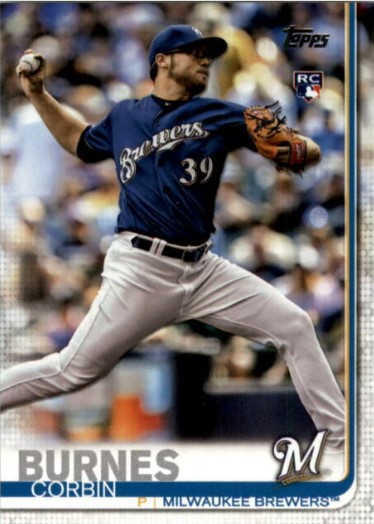
BurnesWhat can you say about Corbin Burnes?  He was pretty much lights out in September until suffering an oblique strain that knocked him out of his last start.  To that point in the month, he was 3-0, with a tiny 0.38 earned run average in four starts.  Even with that last start hiccup, Burnes finished with a September record of 3-1, with a 1.32 earned run average (second in the NL only to the Reds’ Trevor Bauer’s 1.29) and 42 strikeouts (only seven walks) in 27 1/3 innings. His 13.8 strikeouts per nine frames in September trailed only Jason deGrom and Shane Bieber in MLB – pretty good company.

Corbin Burnes has had an up-and-down MLB run. Called up to the Brewers in July of 2018. He appeared in 30 games for Milwaukee that season (all in relief) and went 7-0, 2.61. Then in 2019, he appeared in 32 games for the Brew Crew (four starts) and went 1-5, 8.82. This season, he appeared in 12 contests (nine starts) and went 4-1, 2.11.

Honorable Mentions: The Reds’ Trevor Bauer also deserves recognition, despite going just 2-2 for the month. Bauer pitched to a 1.29 earned run average and fanned 46 batters (second in MLB), with just six walks in 35 innings. Luis Castillo, also of the Red gets shout out for picking up four wins in five September starts (the only MLB pitcher with four September victories), with a 2.20 earned run average, one complete game and 37 strikeouts in 32 2/3 innings. Like Burnes, Castillo is a surprise in this competition. Going into the month, he was 0-5, with 4.10 earned run average.    Finally, there is hard-luck Padre Dinelson Lamet, who started five times, produced a 1.76 ERA and fanned 42 batters in 27 innings, but got only one win and four no-decisions (despite the fact that San Diego won all five of his September starts.

AMERICAN LEAGUE

Player of the Month – Jose Ramirez, Indians, 3B

RamJose Ramirez’ hit a robust .366 in September (second in the AL), with an AL-topping (and MLB’s second-best) ten home runs. Ramirez drove in 24 runs (fourth in the AL) and scored 18.  Ramirez also swiped two bases and had more walks (11) than strikeouts (10). Nineteen of Ramirez’ 30 hits went for extra bases and His .841 slugging percentage far outdistanced the pack (second best in MLB was .750).

Honorable Mentions: Ramirez inched out White Sox ‘1B Jose Abreu, who hit .320, drove in 28 September runs (first in the AL); scored 19 times (fifth in the AL); and popped seven home runs. Abreu’s 29 September hits were third in the AL and seventh in MLB.  Blue Jays’ outfielder Lourdes Gurriel, Jr. was also in the chase, after hitting an AL-best .368 in September, with seven home runs, 16 RBI and 19 runs scored.


Pitcher of the Month – Tie: Gerrit Cole, Yankees & Chris Bassitt, A’s
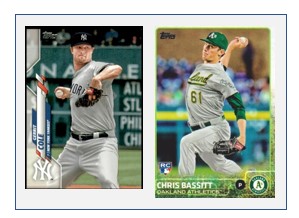
basscoleGerrit Cole came through for the Yankees in the stretch – going 3-1, giving up just three earned runs in 27 innings pitched (1.00 September ERA.) Cole’s 34 strikeouts were fourth-best in the AL – and he walked just five.  His September performance included a 6-0, complete game, two-hit shutout over the Orioles (seven innings). Chris Bassitt of the A’s went 3-0, 0.34 and gave up just one run in 26 2/3 September innings. (four starts). Bassitt fanned 25 batters (five walks) in 26 2/3 innings.  This was really a toss=up for me.

Honorable Mentions:  Can’t leave out the White Sox’ Dallas Keuchel, who may have only gotten one win in four starts, but pitched to a 0.45 earned run average. We should also recognize Indians’ closer Brad Hand, who picked up six September saves (in six opportunities) and two wins in eleven appearances, while putting up a 0.79 ERA and fanning 16 in 11 1/3 innings.

Surprise Player of the Month – Jared Walsh, Angels, 1B

WalshJared Walsh came into September 41 career MLB games on his resume – with a .173 average, one home run and five RBI. Further, in July and August of this season, he was zero-for-thirteen in ten games.  Then came September. Walsh got in 22 games and went 29-for-86 (.337), with four doubles, two triples, nine home runs and 26 RBI. Drafted in 39th round of the 2015 MLB draft (out of the Universality of Georgia), Walsh has been a two-way player. In 2019, he pitched in five games for the Halos, putting up a 1.80 earned run average with five strikeouts in five innings.


______________________________________________________

TROT INDEX … A REGULAR BBRT FEATURE

For 2020, 37.3 percent of MLB’s 66,506 2020 plate appearances ended in a trot (back to the dugout, around the bases, to first base). We’re talking about strikeouts, home runs, walks, hit by pitch and catcher’s interference – all outcomes that are, basically, devoid of action on the base paths or in the field. Here’s the breakout: strikeouts (23.4%); walks (9.1%); home runs (3.4%); HBP (1.2%); catcher’s interference (less than 1%). Personally, I’d like more action in the field of play.

The 37.4 percent figure is up from 2019’s (full season) 36.2 percent and 2018’s 34.8 percent Trot Index. 

_________________________________________________

You’ll find full standings and stats near the end of this post, but here are your Round One opponents and seeding.  Side note:  I see this as fine for this strange season (it did add interest), but I’m not a fan for the future. This year, for example; the Astros and Brewers made “the tournament” with sub-.500 records.  I prefer fewer teams and recognition (again next season) of the marathon that is an MLB season.

Rpouind One

Some minor predictions for Round One.  Predictions on late rounds coming soon.  Wanted to get this out before tomorrow’s games.

  • Rays over Blue Jays.  Rays’ pitching slows  Jays’ offense and not vice versa.
  • Yankees over Indians.  Yankees offense and Gerrit Cole should edge the Tribe.
  • Twins over Astros.  Twins 24-7 at home. Astros 9-23 on the road. Enough said.
  • White Sox over A’s.  Pretty even match up, but White Sox offense should prevail.
  • Dodgers over  Brewers.  Brewers seem over matched to me.
  • Padres over Cardinals.  Really a toss up, but home field helps and it feels like a Padres year to me.
  • Cubs over Marlins. Two run-of-the-mill offenses, but Cubs have a pitching edge.
  • Reds over Braves.  This is all about Reds pitching versus Braves offense. Betting that Bauer, Castillo and Gray can slow down Acuna, Ozuna and Freeman.  This is my long-shot prediction.

___________________________________________
t new

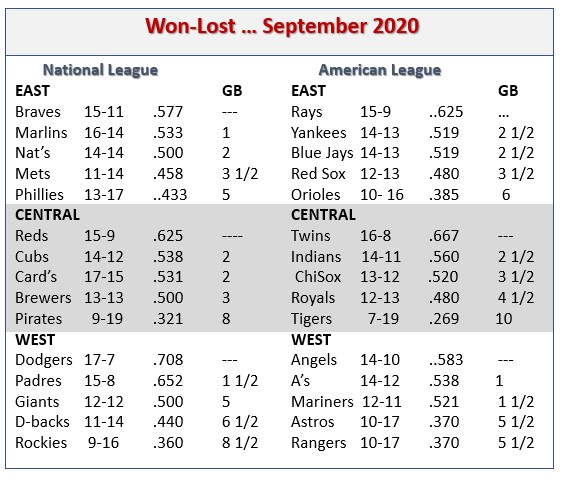
Among the hottest teams in September were the Dodgers (17-7), Twins (16-8), Padres (15-8) and Reds (16-9) … and they illustrated the value of pitching. All four squads registered among the six lowest September earned run averages. Notably, the 17-7 Dodgers also put up some solid offense. Their 145 September runs were third among the 30 MLB teams.  LA kind of had the best of both worlds. Meanwhile the Padres were 16th in scoring, the Twins 18th and the Reds 25th.  Clearly, pitching was of premium value. On the other end of the mound spectrum, , the Tigers (7-19) and Rockies (9-19) boasting two of the three worst September records, also recorded two of the three worst September ERA’s.

Looking for exceptions to prove the rule? The Blue Jays had September’s second worst ERA at 5.85, but overcame that with solid offense (fourth-most runs scored) to put up a 14-13 record and the Braves led MLB in September runs scored (173), helping overcome a 4.64 ERA (11th worst) to produce a 15-11 record.

————-September 2020 Team Statistical Leaders August——————-

RUNS SCORED

National League – Braves (173); Dodgers (145); Phillies (138)

American League – Yankees (153; Blue Jays (144); Red Sox (130)

The Pirates scored the fewest runs in September (91); while the Tigers were at the bottom of the American league at 97.  The only other team to score fewer than 100 September runs was the Mariners (98). For a bit of comparison, the Braves averaged 6.7 runs per game for the month, the Pirates averaged 3.3.

BATTING AVERAGE

National League – Mets (.284); Giants (.279);Braves (.277)

American League – Red Sox (.277); Angels (.270); Blue Jays (.264)

The Reds averaged an MLB-low .206 for the month.  The Mariners had the lowest average in the AL at .216. 

ON-BASE PERCENTAGE

National League – Braves (.372); Giants (.355); Mets (.349)

American League – Yankees (.348); Red Sox (.345); Angels (.345)

HOME RUNS

National League –  Braves (55); Dodgers (50); Mets (43)

American League – Twins (42); Yankees (41); Red Sox (38)

Doing a bit to factor out the differences in games (and innings) played, the Dodgers had the most powerful “at bats per home run” ratio at 16.44  The fewest at bats per long ball in the American League went to the Twins at 18.43.

WALKS

National League – Braves (126); Phillies (121);  Reds (105)

American League – Yankees (128); A’s (98); Blue Jays (91)

The Braves’ had the highest on-base percentage in August (.372).  The Yankees led the AL at .348.

STOLEN BASES

National League – Padres (24); Nationals (24); Rockies (21)

American League – Rays (31); Royals (25); Red Sox (20); Rangers (20)

The Mets stole the fewest bases during September – just four in nine attempts. (The Rays were also “caught stealing” five times during the month, but were successful 31 times.)

BATTER’S STRIKEOUTS

National League – Cardinals (282); Marlins (257); Phillies (254)

American League –  Rays (275); Rangers (268); Tigers (253)

EARNED RUN AVERAGE

National League – Padres (3.15); Reds (3.37); Cubs (3.38)

American League – Twins (3.28); Rays (3.32); Indians (3.89)

The highest ERA for September belonged to the Rockies at 5.42. In the American League that “high” (low?) mark went to the Blue Jays at 5.85.  Overall, eight of the 30 teams had ERAs north of 5.00. 

STRIKEOUTS

National League – Phillies (268); Cardinals (268); Brewers (261)

American League – Indians (261); Yankees (245); Astros (238)

Whiff-Masters

Six  teams fanned at least ten batters per nine frames in September: Brewers (10.78); Padres (10.64); Indians (10.58); Reds (10.45); Mets (10.29); Phillies (10.01).

WALKS (fewest)

National League – Dodgers (47); Padres (58); Brewers (66)

American League – Rays (60); Twins (61); A’s (63)

The Dodgers’ staff showed the greatest control with 1.96 walks per nine innings in September, while the Rays were best in the AL at 2.58. The Blue Jays’ staff walked an MLB-high 4.67 batters per nine innings over September. The Dodgers, by the way, also led in strikeouts per walk at 4.55. The Indians led the junior circuit at 3.95.  

SAVES

National League – Cardinals (8); Diamondbacks (7); Marlins (7)

American League – Blue Jays (9); Royals (8); Rays (8)

The Pirates had just two save (in nine save opportunities) for September. The only other teams successful in less than half their save opportunities were the Rangers (two-for-six);Tigers (four-for-nine); and Phillies (six-for-thirteen). 

——-Individual Statistical Leaders September ———-

AVERAGE (minimum 75 at bats)

National League – Marcell Ozuna, Braves (.394); Freddie Freeman, Braves (.375); Jeff McNeil, Mets (.356)

American League –  Lourdes Gurriel, Jr., Blue Jays (.368); Jose Ramirez, Indians (.366); Adalberto Mondesi,  Royals (.356)

The lowest August average (minimum 75 at bats) belonged to the Cubs’ Kyle Schwarber at .130 (10-for-77). The AL’s lowest could be found across town – the White Sox’ Luis Robert at .136 (11-for-81). 

HOME RUNS

National League – Adam Duvall, Braves (11); Marcell Ozuna, Braves (10); AJ Pollock, Dodgers (10)

American League – Jose Ramirez, Indians (10); George Springer, Astros (9); Jared Walsh, Angels (9); Luke Voit, Yankees (9)

No player had more at bats without a long ball in September than Rangers’ 2B Nick Solak (93).

RUNS BATTED IN

National League – Marcell Ozuna, Braves (33); Freddie Freeman, Braves (32);  Chris Taylor, Dodgers (23); Trea Turner, Nationals (23)

American League – Jose Abreu, White Sox (28); Jared Walsh, Angels (26); Luke Voit, Yankees (26)

HITS

National League – Marcell Ozuna, Braves (41); Alec Bohm, Phillies (40); Freddie Freeman, Braves (36)

American League – DJ LeMahieu, Yankees (36); Lourdes Gurriel, Jr., Blue Jays (35); Will Castro, Tigers (34)

DOUBLES

National League –  Freddie Freeman, Braves (12); Dominic Smith, Mets (9); Alex Dickerson, Giants (9)

American League – Eloy Jimenez, White Sox (9); Jose Ramirez, Indians (9); DJ LeMahieu, Yankees (9);  Cavan Biggio, Blue Jays (9)

TRIPLES

National League – Daulton Varsho, D-backs (2); Ke’Bryan Hays, Pirates (2); Asdrubal Cabrera, Nationals (2); Trea Turner, Nationals (2); Joey Bart, Giants (2); Trevor Story, Rockies (2)

American League – Cedric Mullins, Orioles (3); Yoan Moncada, White Sox (3); nine with two

The Indians’ Jose Ramirez led MLB in September slugging percentage at a robust .841. Second, and sharing the NL lead were the Braves’ Freddie Freeman and Marcell Ozuna far behind at .750. 

STOLEN BASES

National League –  Trea Turner, Nationals (9); Trevor Story, Rockies (7); three with six

American League – Adalberto Mondesi, Royals (16); Manual Margot, Rays (8); Leody Taveras, Rangers (7); Jonathan Villar, Blue Jays (70)

Trea Turner stole the most September bases without being caught (9). 

WALKS

National League – Juan Soto, Nationals (28); Christian Yelich, Brewers (26); Bryce Harper, Phillies (25)

American League – Aaron Hicks, Yankees(21); Cavan Biggio, Blue Jays (20); Mike Trout, Angels (18)

The Nationals’ Juan Soto had September’s highest on-base percentage (.533). No other player reached the .500 mark.

BATTER’S STRIKEOUTS

National League – Keston  Hiura, Brewers (37); Christian Yelich, Brewers (36); Paul DeJong, Cardinals (36)

American League – Miguel Sano, Twins (39); Evan White, Mariners (37); Matt Olson, A’s (36); Joey Gallo, Rangers (36)

PITCHING VICTORIES

National League – Luis Castillo, Reds (4-1); nine with three

American League – 12 with three

The Nationals’ Patrick Corbin led MLB in September losses, going 0-5, 5.64 in five starts. 

EARNED RUN AVERAGE (minimum 20 IP)

National League – Trevor Bauer, Reds (1.29); Corbin Burnes, Brewers (1.32); Kyle Hendricks, Cubs (1.45)

American League – Chris Bassitt, A’s (0.34); Dallas Keuchel, White Sox (0.45); Gerrit Cole, Yankees (1.00)

Eight pitchers with at least four September starts posted ERAs under 2.00. Of those, three notched just one win each: Dallas Keuchel, White Sox (1-0, 0.45); Dinelson Lamet, Padres (1-0, 1.76); Carlos Carrasco, Indians (1-1, 1.97). 

STRIKEOUTS

National League – Aaron Nola, Phillies (48/35 1/3 IP); Trevor Bauer, Reds (46/35 IP);  Jacob deGrom, Mets (46/27 IP)

American League – Shane Bieber, Indians (38/24 2/3 IP); Carlos Carrasco, Indians (37/32 IP); Framber Valdez, Astros (36/32 1/3 IP)

September’s leader in strikeouts per nine innings was the Mets’ Jacob deGrom at 15.33; followed by the Indians’ Shane Bieber (Indians) at 13,86.

INNINGS PITCHED

National League – Kyle Hendricks, Cubs (37 1/3); Aaron Nola, Phillies (35 1/3); Trevor Bauer, Reds (35)

American League – Zach Plesac, Indians (34 1/3); Jordan Lyles, Rangers (33 1/3); Lance Lynn Rangers (32 2/3)

The Phillies’ Aaron Nola was the only pitcher with two complete games in September. He also led MLB with six starts (tied with Kyle Freeland of the Rockies and Jon Lester of the Cubs).  Nola went 2-3, 3.57. 

SAVES

National League – Stefan Crichton, D-backs (5); Brandon Kintzler, Miami (5); Josh Hader, Brewers (5)

American League – Ryan Pressley, Astros (6); Matt Barnes, Red Sox (6); Brad Hand, Indians (6)

Jimmy Cordero of the White Sox and Mike Mayers of the Angels took the mound in the most September games (11 each). 

—–SEPTEMBER 2020 HIGHLIGHTS —-

Elvis Has Left the Building

On September 2, the Rangers’ Elvis Andrus hit his first home run of the 2020 season – off the Astros’ Ryan Pressley. Nice coincidence there.  Oh, and it was meaningful one, tying the game at four apiece in the top of the ninth. (The Rangers won 6-5 in ten innings.)  Truly, Elvis (off Pressley) left the building.

More COVID Weirdness … Home Away from Home

On September 5, the Angels swept a doubleheader from the Astros by the narrowest of margins … 10-9 and 7-6. While both games were played at Angels Stadium (before a crowd of zero), thanks to COVID scheduling, the Astros were the visiting team in Game One and the home squad quad in Game Two.

Trout Rounds the Bases with Number 300 … Takes Angels’ Franchise Lead (Something fishy there?)
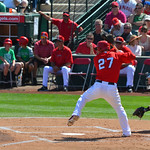
Mike Trout photo

Photo by A.Rutledge

On September 5, during the Angels “Home & Away” doubleheader against the Astros, Mike Trout hit a two-run homer in the third inning of game one (a 10-9 Angels win). Side note: As the two teams players to a 10-9 final, the game time temperature was an Angel Stadium 109 degrees. See what I did there?

Trout‘s long ball was his 300th career homer – a nice round number that also gave him sole possession of the Angels’ franchise mark.  (He had been tied with Tim Salmon at 299).

No need to Round Up, It’s 1,500

On September 9, as the Braves pummeled the Marlins 29-9 in Atlanta, Freddie Freeman popped a two-run home in the third inning – notching his 1,500th MLB hit.  The Braves 29-tally outburst set a post-1900 National League record and was one shy of the post-1900 MLB record of thirty runs in a game – set by the Rangers in 2007.  For more on high-scoring games and big innings, click here.

Baseball has its Up and Downs
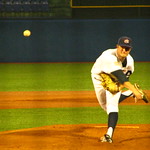
Gerrit Cole photo

Photo by boomer-44

The Yankees’ Gerrit Cole won his first four decisions in 2020 – giving him a 20-decision winning streak dating back to May of 2019.  Then, on August 28, the Braves broke the streak – topping Cole and the Bronx Bombers 5-1 in Atlanta. (Notably, the pitcher who finally bested Cole, Ian Anderson, was making his first MLB appearance.)

Cole went on to lose his next two starts (to the Rays and Orioles) In those three consecutive losses, he surrendered 14 runs (ten earned) in 16 innings. He righted the ship thereafter, winning his next three decisions to finish the season 7-3, 2.84.

For more on Cole’s streak and other hurlers who won 20 or more consecutive decisions, click here. 

We Do Like Round Numbers

Shane Bieber‘s 2020 season has been special – as he led all of MLB with  122 strikeouts (in 77 1/3 innings).  He added a complementary touch to this performance on September 12, when he fanned eight batters in seven frames – despite taking the loss (3-1 to the Twins). Bieber fanned Twins’ C Ryan Jeffers in the fifth inning for his sixth strikeout of the game. It also was his 100th whiff of the season.  He reached that round number in 62 2/3 innings – the fastest ever in a season by an MLB pitcher.  His pace edged out Max Scherzer, who reached the 100K mark in 63 innings in 2018.

Look at Life from Both Sides Now … Or Not

On September 11, the Rays (often hailed for the innovative pitching strategies) put together a unique offensive lineup. Facing Red Sox righty Andrew Triggs, the Rays started (reportedly for the first time in modern base baseball – since 1900 – history) an all left-handed batting lineup. It went like this: Austin Meadows LF; Joey Wendle SS; Brandon Lowe 2B; Ji-Man Choi 1B; Kevin Kiermaier CF; Yoshi Tsutsugo 3B; Nate Lowe DH; Brett Phillips RF; Michael Perez C.

Despite the fact that no one in the lineup had an average over ,259 (seven of the nine were under .230), the port-sided Rays bashed 12 hits on their way to an 11-1 win. DH Nate Lowe, who came into the game with just one-hit in 14 at bats (.071 on the season) and no RBI, led the way going three-for-four with two home runs and four RBI. The Red Sox kind of played into the Rays’ strategy, they used six pitchers in the contest – five of them right-handed.  Of note, is that fact that starter Triggs had actually looked pretty good against left handers (one-for-fourteen against him to that point in the season). Trigg left the contest after just one inning (neck issues). It should be noted that the Rays did score four of their runs off the only southpaw used by the Red Sox (Matt Hall) and that Hall (again the only southpaw used by the BoSox) took the loss.

No Run of the Mill(s) Start

MillsOn September 13, Cubs’ 28-year-old righty Alec Mills picked up his sixth major-league win (15th career start and 29th MLB appearance – in four season). To that point in his career, he was 5-4 with a 4.19 earned run average. So, what did he do on the unlucky 13th?  He threw the second 2020 no-hitter, shutting down the Brewers 12-0 in Milwaukee. In his nine-inning stint, Mills walked three and fanned five – throwing 114 pitches (74 for strikes). It was his first major-league complete game. Mills was a 22nd round draft pick (Royals) in 2012 – traded to the Cubs in 2017. In eight minor league seasons, he went 32-29, 3.69 – with one complete game in 115 starts.

That Yankee Offense Goes Pretty Deep

From September 15 through September 17, the New York Yankees – in sweeping the Toronto Blue Jays – bashed a total of 19 home runs.  That gave them a number of records including most home runs in a three-game series and most consecutive games with six or more home runs. Included in this run of long balls was a record-tying five home run inning (September 17).   For more detail on this power outburst (and other five-homer frames), click here.

Gerrit Cole and a Nice Round Number

On September 16, as the Yankees routed the Blue Jays 13-2 in New York, Gerrit Cole notched his 100th career victory – Cole went seven innings, giving up one run and three hits, while walking two and fanning eight. The win came in Cole’s 203rd career start (eighth MLB season) and ran Cole’s career record to 100-55, 3.20, with 1,423 strikeouts in 1,261 innings pitched.

Plesac’s Immaculate Inning

On September 18, Indians’ starter Zach Plesac pitched 7 2/3 innings of scoreless ball (five hits, one walk and eleven strikeouts) as the Tribe defeated the Tigers 1-0 in Detroit.  The highlight of Plesac’s fourth win of the season may have come in the second frame, when Plesac struck out Tigers’ LF Jorge Bonafacio, 2B Niko Goodrum and C Austine Romine on nine pitches – becoming the 93rd MLB pitcher to log an immaculate inning.

Immaculate InningsA few other immaculate Inning tidbits.

  • The Athletics’ Lefty Grove (1928) and Red Sox’ Chris Sale (2019) the only pitchers to throw two immaculate innings in one season.
  • Nolan Ryan (Mets & Angels) is the only pitcher to throw an Immaculate Innings in both the NL and AL.
  • The Royals’ Danny Jackson is the only pitcher to throw an Immaculate Inning in the World Series (Game 5, 1985).

Albert Pujols hit three home runs in September, giving him six on the season and 662 for his career – pulling him past William Mays (660) into fifth place all time. Next target for the 40-year-old Pujols? Alex Rodriguez (696).

Pulled While Throwing a No-Hitter … But No Surprise

On September 20, Dylan Cease started for the first-place Chicago White Sox against the Reds in Cincinnati. Cease came into the fourth inning having allowed no hits – and he did not give up a safety to any of the first three batters of the inning. Still, he was pulled, no-hitter intact.  But it was no surprise. Cease had a 1-2-3 first inning., In the second frame, he gave up two walks and hit a batter (but held the Reds scoreless). He gave up two more walks, but no runs, in the third – and then walked the first three hitters in the fourth, before being replaced by Ross Detwiler. Cease’s final line was three innings pitched, no hits, five walks, one hit batsman, five strikeouts and three earned runs.  Cease threw a total of 80 pitches – 43 balls and 37 strikes.  The White Sox lost the game 7-3 and, in the process, walked 11 and hit three Reds’ batters.

Another Round Number

On September 20, Twins’ outfielder Max Kepler popped his eighth home run of the 2020 season – and the 100th of his MLB career. Kepler, in his sixth MLB season, increased his home run total each season from 2015-2019 … zero in 2015 (just seven at bats); 17 in 2016; 19 in 2017; 20 in 2018; 36 in 2019.

Big Day for a Big Guy

On September 21, as the Blue Jays topped the Yankees 11-5 in Toronto, 21-year-old Blue Jays’ rookie catcher Alejandro Kirk had a big day at the plate. Kirk came into the hitting .200 (two-for-ten in five games).  In the September 21 contest, Kirk went four-for-four (his first MLB multi-hit game), scored three times, collected his first MLB extra base hit (a double) to lead off the fifth and added his first MLB home run and RBI (a solo shot leading off the seventh). Why the “Big Guy” in the headline.  Kirk looks more like and NFL player than an MLB player …  5’8″, 265-pounds.  The big guy has proven he can wield a big  bat.  In three minor league seasons (151 games), Kirk hit .315, with 17 home runs and 101 RBI.

Yadi’s Big Day – A Walk -Off Out of the Park

Yadiel Hernandez, a 32-year-old rookie for the Nationals, hit his first MLB home run on September 22 – and he made it count. It was a walk-off game-winner in the bottom of the eighth inning, in the second game of a double bill against the Phillies (in Washington D.C.). The 5’9′, 185-pound outfielder was signed by the Nationals after defecting from Cuba in 2015.  He was a .324 hitter in six seasons in the Cuban National Series. in 2019, Hernandez hit .323-33-90 in 126 games for the Triple A Fresno Grizzlies.

Another Yadi’s Landmark

In the vein of round numbers, on September 24, Cardinals’ catcher Yadier Molina –  a nine-time All Star, nine-time Gold Glover and .281 career hitter – slapped a single to shallow center in the seventh inning of the Cardinals’ 4-2 win over the Brewers.  It was Molina’s 2,000 MLB hit (in 17 seasons, all for the Cardinals).  The home town crowd would have gone wild.  If there had been one.

Put a Flight Attendants on the One

On September 25, as the Braves topped the Red Sox  8-7 (11 innings) in Atlanta, still rising star Ronald Acuna, Jr,  hit the longest home run (as measured by Statcast) of the 2020 season – a 495-footer off the Red Sox’ Chris Mazza to lead oft the bottom of the first.  It was the 22-year-old’s 14th home run of the short season. In 2019, Acuna went .280-41-101 in 156 games and lead the National League with 37 stolen bases.  Some of Acuna’s long-ball thunder may have been stolen on the 25th, as Braves’ 1B  Freddie Freeman ended the contest with a walk-off home run to open the bottom of the 11th inning. It was Freeman’s 13th of the campaign.

Two Paths to that First MLB Hit

On September 26, two members of the Angels collected their first MLB base hits – both in their first MLB at bats; and in back-to back at bats.  The similarities end there, as the pair took widely different paths to those first MLB safeties.  It happened with one out in the top of the third.  First, rookie second baseman Jahmai Jones single to center on the first MLB pitch he ever saw. Next up was rookie SS Elliot Sot0. Like Jones, it was Soto’s first MLB at bat.  Soto, singled to right on the second MLB pitch he ever saw.

Those different paths to first base? Jones, a second-round pick in the 2015 draft) made the majors at age 23, in his sixth professional season. Soto was a “touch” senior, making his MLB debut at age 31.  He was a 13th-round pick in the 2007 draft and was in his 11th pro season.

Double Your Pleasure, Double Your Fun
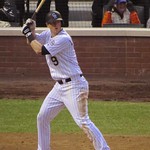
When the scorebooks closed on the Yankees’ September 27 5-0 loss to the Marlins, New York’s DJ LeMahieu had logged a pair of singles – to finish the 2020 regular season with a .364 average. That made LeMahieu, who won the National League batting crown (.348) with the Rockies in 2016, the American League’s 2020 batting leader.  It also made him the first player to win undisputed batting titles in both the AL and NL.

Saving the Best for Last

On the final day of the 2020 season (September 27), the Brewers turned 2020’s first triple play. It came in the bottom of the eighth of the Brew Crew’s 5-2 loss to the Cardinals.  It was a “natural” around-the-horn triple-killing.  The Cardinals’ Yadier Molina came up with runners on first and second. Molina grounded to Brewers’ third baseman Jace Peterson (who had made on error on the previous play to set up the triple play possibility). Peterson gloved the grounder and stepped on the bag for out number one and threw to second baseman Keston Huira for out number two. Huira then relayed the ball to first baseman Jedd Gyorko for the final out. One up, three down.

Power and Speed

On September 27,  the Cubs’ Billy Hamilton surprised a lot of people – perhaps even himself.  First, in the second inning of the Cubs’ game against the crosstown White Sox, Hamilton (after a walk and a single by Cameron Maybin) found himself on third base, one out and Maybin on first.  Maybin took a long lead and made a move toward second while pitcher Carlos Rodon still had the ball.  Rodon made a throw to first baseman Jose Abreu who threw to shortstop Tim Anderson covering  – and Hamilton broke for home. Hamilton beat the throw from Anderson to the plate with a head first slide.  Then in the fourth, Hamilton  surprised, perhaps even himself, by popping a home run to left-center – his first round tripper since August 29, 2018.  A steal of home and a home run – a surprising day.


Final Standings

——-Individual Statistical Leaders Final ———-

AVERAGE (qualifying, 3.1 plate appearances per team game played)

National League – Juan Soto, Nationals (.351); Freddie Freeman, Braves (.341); Marcell Ozuna, Braves (.338)

American League – DJ LeMahieu, Yankees (.364); Tim Anderson, White Sox (.322); David Fletcher, Angels (.319)

The lowest August average among qualifiers belonged to the Mariners’ Evan White at .176 (32-for-182). In the National League,  it was the Cubs’ Kyle Schwarber at .188 (38-for-191). Others falling below the Mendoza line (under .200) included:  Joey Gallo, Rangers (.181); Matt Olson, A’s (.195); Bryan Reynolds, Pirates (.189); Max Muncy, Dodgers (.192); Carlos Santana, Indians (.199)

HOME RUNS

National League – Marcell Ozuna, Braves (18); Fernando Tatis, Jr., Padres (17); Mookie Betts, Dodgers (16); Adam Duvall, Braves (16); Manny Machado, Padres (16); Kole Calhoun, Diamondbacks (16); Pete Alonso, Mets (16): AJ Pollock, Dodgers (17)

American League – Luke Voit, Yankees (22); Jose Abreu, White Sox (19);  Jose Ramirez, Indians (17); Mike Trout Angels (17)

Reds’ OF Shogo Akiyama had the most 2020 at bats without a home run (155). Akiyama hit .245, scoring 16 runs and driving in nine (in 54 games played). 

RUNS BATTED IN

National League – Marcell Ozuna, Braves (56); Freddie Freeman, Braves (53);  Manny Machado, Padres (47)

American League – Jose Abreu, White Sox (60); Luke Voit, Yankees (52); Mike Trout, Angels (46); Jose Ramirez, Indians (46)

HITS

National League – Trea Turner, Nationals (78); Marcel Ozuna, Braves (77); Freddie Freeman, Braves (73)

American League – Jose Abreu, White Sox (76); DJ LeMahieu, Yankees (71); Whit Merrifield, Royals (70)

DOUBLES

National League – Freddie Freeman, Braves (23); Dominic Smith, Mets (21); Christian Walker, D-backs (18)

American League – Cesar Hernandez, Indians (20): Jose Iglesias, Orioles (17); five with 16

 Freddie Freeman led MLB with 32 extra-base hits.  

TRIPLES

National League – Trevor Story, Rockies (4); Mike Yastrzemski, Giants (4); Trea Turner, Nationals (4)

American League – Kyle Tucker, Astros (6); six with three

Juan Soto of the Nationals led qualifiers in slugging percentage .695. Jose Abreu of the White Sox topped the AL at .617. 

STOLEN BASES

National League –  Trevor Story, Rockies (15); Roman Quinn, Phillies (12);  Trea Turner, Nationals, (12)

American League – Adalberto Mondesi, Royals (24); Manuel Margot, Rays (12); Dylan Moore, Mariners (12); Whit Merrifield, Royals (12)

Jonathan Villar stole the second most bases in MLB (16) – nine for the Marlins and seven for the Blue Jays.  

WALKS

National League – Bryce Harper, Phillies (49 ); Christian Yelich, Brewers (46); Freddie Freeman, Braves (45)

American League – Carlos  Santana, Indians (47); Cavan Biggio, Blue Jays (41); Aaron Hicks, Yankees (41)

The Nationals’ Juan Soto drew the most intentional walks with 12.  

BATTER’S STRIKEOUTS

National League – Keston  Hiura, Brewers (85); Christian Yelich, Brewers (76); Javier Baez, Cubs (75)

American League – Miguel Sano, Twins (90); Evan White, Mariners (84); Joey Gallo, Rangers (79)

A’s /Angels’ 2B Tommy La Stella had the best walks-to-strikeouts ratio at 2.25 (27 walks/12 strikeouts).  By comparison, MLB whiff leader Miguel Sano (Twins) recorded 90 whiffs and just 18 walks (205 plate appearances.)

PITCHING VICTORIES

National League – Yu Darvish, Cubs (8-3); Max Fried, Braves (7-0);  Zach Davies, Padres (7-4)

American League – Shane Bieber, Indians (8-1); Marco Gonzalez, Mariners (7-2); Gerrit Cole, Yankees (7-3)

The Diamondbacks’ Luke Weaver (1-9, 6.58) was the MLB leader in losses.

EARNED RUN AVERAGE (at least one inning pitched for reach team game played)

National League – Trevor Bauer, Reds (1.73); Yu Darvish, Cubs (2.01); Dinelson Lamet (2.09)

American League – Shane Bieber, Indians (1.63); Dallas Keuchel, White Sox (1.99): Chris Bassitt, A.s (2.29)

The Tigers’ Matt Boyd had the highest earned run average among pitchers with enough innings to qualify. He was 3-7, 6.71 in 12 starts. 

STRIKEOUTS

National League – Jacob deGrom, Mets (104/68 IP); Trevor Bauer, Reds (100/73 IP); Aaron Nola, Phillies (96/71 1/3 IP)

American League – Shane Bieber, Indians (122/77 1/3 IP); Lucas Giolito, White Sox (97/72 1/3 IP); Gerrit Cole, Yankees  (94/73 IP)

The leader in strikeouts per nine innings was the Indians’ Shame Bieber at 14.20.  The Mets’ Jacob deGrom topped the NL at 13.76.  

On the control side of the mound, the Cubs’ Kyle Hendricks walked the fewest batter per nine frames (0.89), with eight walks in 81 1/3 innings pitched. The only other qualifier under one walk per nine innings was the Mariners’ Marco Gonzalez at 0.90 (seven free passes n 69 2/3 innings). 

COMPLETE GAMES

National League – Trevor Bauer, Reds (2); Adam Wainwright, Cardinals (2): Aaron Nola, Phillies (2)

American League – Gerrit Cole, Yankees (2); many with one

INNINGS PITCHED

National League – German Marquez, Rockies (81 2/3); Kyle Hendricks, Cubs (81 1/3); Yu Darvish, Cubs (76)

American League – Lance Lynn Rangers (84); Shane Bieber, Indians (77 1/3);  Aaron Civale, Indians (74)

SAVES

National League – Josh Hader, Brewers (13); Brandon Kintzler, Marlins (12 ); Kenley Jansen, Dodgers (11); Mark Melancon, Braves (11)

American League – Brad Hand, Indians (16); Liam Hendriks, A’s (14); Alex Colome, White Sox (12); Ryan Pressley, Astros (12)

The Indians’ Brad Hand was a perfect 16-for-16 in save opportunities for the season.

————-Team Statistical Leaders Through August 31——————-

RUNS SCORED – Team Average … 278

National League – Dodgers (349); Braves (348); Padres (325)

American League – Yankees (315); White Sox (306); Blue Jays (302)

The Pirates and Rangers scored the fewest runs in 2020 – 219 and 224, respectively.  To add some perspective, The Dodgers scored an average of 5.82 runs per game – the Pirates 3.65.  

BATTING AVERAGE – Team Average …  .245

National League – Mets (.272); Braves (.268); Nationals (.263)

American League – Red Sox  (.265); White Sox (.261); Orioles (.258)

The lowest team batting average for the season was .212 for the Reds. The Ranger were at the bottom of the AL at .217.

ON-BASE PERCENTAGE – Team Average … .322

National League – Braves (.349); Mets (.348); Phillies (.342)

American League – Yankees (.342); Angels (.332); Red Sox (.330)

HOME RUNS – Team Average … 77

National League – Dodgers (118); Braves (103; Padres (95)

American League – White Sox (96); Yankees (94); Twins (91)

The Cardinals hit the fewest home runs (51) – averaging 0.87 per game. By comparison, the Dodgers averaged 1.97 per game. 

SLUGGING PERCENTAGE – Team Average … .418

National League – Dodgers (.483); Braves (.483);  Padres (.466)

American League – White Sox (.453); Yankees (.447); Red Sox (.445)

WALKS – Team Average … 203

National League – Braves (239); Reds (239); Phillies (229)

American League – Yankees (251); Rays (243); Angels (239); Indians (239)

Crowding the Plate

No team got plunked (HBP) more than the Cubs, who had 52 batters reach base via the Hit-By-Pitch.   In the America League, the A’s led the way with 39 plunkings. The Rockies had the fewest hit batters (10), while the MLB team average was 27.  

STOLEN BASES – Team Average … 29

National League – Padres (55); Marlins (51); Rockies (42)

American League – Mariners (50); Rangers (49); Royals (49)

The Twins stole the fewest bases (14) and made the fewest attempts (21). The average number of attempted steals was 39. 

BATTER’S STRIKEOUTS – Team Average … 520

National League – Brewers (582); Braves (573); Cubs (568)

American League – Rays (608); White Sox (571); Tigers (567)

EARNED RUN AVERAGE – Team Average … 4.44

National League – Dodgers (3.02); Reds (3.84); Padres (3.86)

American League – Indians (3.29); Rays (3.56); Twins (3.58)

The highest 2020 ERA belonged to the Tigers  at 5.63. The Rockies were the highest in the NL at 5.59.

STRIKEOUTS – Team Average … 520

National League –  Reds (615); Brewers (614); Mets (574)

American League – Indians (621); Rays (552); Red Sox (537)

As noted earlier, Strikeout totals have been affected by games played (particularly with the COVID  and civil protest postponements), as well as by seven-inning doubleheader games.  So, let’s look at strikeouts per nine innings. Only four  teams fanned at least ten batters per nine frames: Reds (11.o); Brewers (10.7); Indians (10.4); Mets (10.1).  The MLB average was 9.1.

WALKS (Fewest) – Team Average … 203

National League – Dodgers (145); Padres (170); Cubs (182)

American League – Indians (157); A’s (165); Rays (168)

No team walked fewer hitters per nine innings than the Dodgers at 2.4.  No team issued more free passes per nine frames than the Pirates at 4.4.   

SAVES – Team Average … 14

National League – Marlins (18); Cubs (16); Rockies (16)

American League – Rays (23); Indians (20); Royals (19)

Primary Resources:  MLB.com; Baseball-Reference.com; MLB.com; ESPN.com

100Baseball Roundtable is on the Feedspot list of the Top 100 Baseball Blogs.  To see the full list, click here.

I tweet baseball @DavidBBRT

Follow/Like Baseball Roundtable’s Facebook Page here.  More baseball commentary; blog post notifications; PRIZES.

Member: Society for American Baseball Research (SABR); The Baseball Reliquary; The Negro Leagues Baseball Museum.
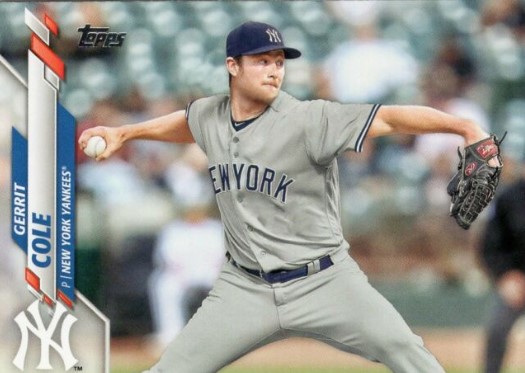
Gerrit Cole’s Winning Streak Halted at Twenty … Let’s Look at the 20+ “Streakers”

Gerrit Cole’s consecutive winning-decision streak stopped a twenty.

coleThe Braves topped the Yankees and Gerrit Cole yesterday (August 26) by a 5-1 score – behind the arm of rookie righty Ian Anderson (making his first MLB appearance) and the bats of Ronald Acuna Jr., Dansby Swanson and Marcell Ozuna (who all homered of Cole).  Anderson went six innings in his MLB debut, giving up just one run on one hit, while walking two and fanning six in the seven-inning contest. Cole gave up five runs on five hits over five innings.  He walked two and fanned nine.

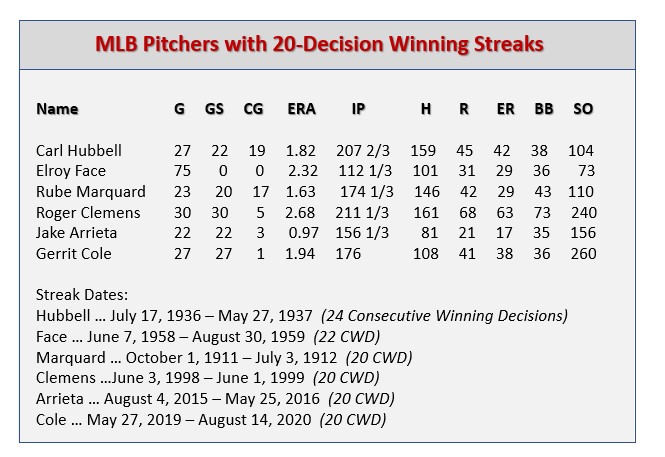
The loss was Cole first after twenty consecutive regular-season winning decisions.  With that in mind, let’s take a look at the pitchers with steaks of twenty of more consecutive  regular-season winning decisions. First a few trivia tidbits and the obligatory Baseball Roundtable chart.

  • Carl Hubbell’s streak included 19 complete games (the most of any of the streakers). He notched 21 wins as a starter and three as a reliever.  So, Hubbell holds the overall record for consecutive winning decisions at 23, as well as the record for pitchers in a starting role at 21.
  • Jake Arrieta’s 20-win streak included a pair of no-hitters. His 0.97 earned run average during his streak is the lowest in-streak earned run average of any of the pitchers on this list.
  • Roy Face is the only reliever to notch 20 consecutive positive decisions, obviously giving him the record for consecutive winning decisions in relief (22). He spread his victory streak over 75 appearances.  Face has 20 saves during his streak.
  • 19 of Rube Marquard’s 20 consecutive winning decision came in 1912, giving him the records for the most connective wining decisions within a single season and to start a season.
  • Gerrit Cole’s streak included only one complete game – and that was a five-inning (weather-shortened) performance on Opening Day (July 23) of this season.
  • Roger Clemens pitched for two teams during his streak – with 15 wins for the Blue Jays in 1998 and five for the Yankees in 1999.
  • After his 20 consecutive winning decisions, Rube Marquard went 0-3, 6.08 in his next three appearances (two starts).
  • In the first 13 wins his streak (August 4, 2015 – April 4, 2016), Jake Arrieta gave up just four earned runs in 95 1/3 innings pitched in 14 starts – a 0.38 earned runs average.
  • Gerrit Cole averaged 13.3 strikeouts per nine innings during his steak – the highest on the list. Next is Roger Clemens at 10.2 whiffs per nine.

Here are the stats put up by these streakers during their streaks – from the first victory to the final win recorded.  Stats from no decisions within the streak are counted, while those from a no decisions just before the first win or after the final win in the streak, but before the first loss, are  NOT counted.

streaks final 20

Primary Resources:  Baseball-Reference.com; Stathead.com; MLB.com

100Baseball Roundtable is on the Feedspot list of the Top 100 Baseball Blogs.  To see the full list, click here.

I tweet baseball @DavidBBRT

Follow/Like Baseball Roundtable’s Facebook Page here.  More baseball commentary; blog post notifications; PRIZES.

Member: Society for American Baseball Research (SABR); The Baseball Reliquary; The Negro Leagues Baseball Museum.

A Look at Shane Bieber’s Early-Season Strikeout “Streak” … and Those Who “Struck” Before Him.

BieberThere has been lots of talk about Shane Bieber’s great start to this unusual season – 5-0, 1.11 with 65 strikeouts.  In the theme of “In baseball, we count everything,” it has been noted that the 65 whiffs ties Bieber for the fourth-most strikeouts in the first six starts of a campaign (Elias Sports Bureau).   In this post, BBRT will take a look at the top five (in strikeouts in a season’s first six starts) – how they got there and what they did in their seventh starting assignment.  First a chart (BBRT loves charts) and then some commentary.


First Six

A few notes, on the performance of players on this list over those six starts:

  • Shane Bieber had the lowest ERA (1.11) and also the fewest innings pitched (40 2/3).
  • Nolan Ryan’s gave up the fewest hits (20 in 50 innings), but the most walks (30).
  • Pedro Martinez and Shane Bieber tied for the most wins (5), while Nolan Ryan had the fewest wins (2).

Some other notes:

  • Ryan is the only pitcher to finish his streak season with a losing record (10-13).
  • The only hurler on the list not to lead the league in strikeouts out after his blazing start was Pedro Martinez in 2001 – a season when a rotator cuff injury cost him a month of playing time. (We’ll see what Bieber does.)
  • None of the players on the list had a 20-win season in the year of their quick starts.
  • The three players Bieber is joining on this list are all in the top 15 in career strikeouts – Nolan Ryan (Number One); Pedro Martinez (13); Curt Schilling (15).
  • The most strikeouts in the seventh start for players on this list was Pedro Martinez, with 15 whiffs in his seventh start of 2000.  We, of course, have yet to see what Bieber does.

Now, let’s look at the list.

Nolan Ryan, Angels – 71 strikeouts in his first six starts of 1978

No surprise to find MLB’s career strikeout king at the top of this list.  Ryan is also the career leader in bases on balls – and his 30 walks over his first six 1978 starts also leads this list (more than twice as many as the runner-up).

Ryan had the fewest wins (during his first six starts) among our five leaders – going just 2-1, despite a nifty 1.62 ERA.  With a little help from his friends, he would have fared better.  He gave up zero runs in four of those six starts, yet his only victories came in a pair of complete-game shutouts.  The biggest disappointment probably came in an April 13 start against the Twins (in Minnesota). Ryan got a no-decision, despite pitching ten innings of shutout ball, giving up just four hits (four walks), while fanning 12.  The Angels did win the game 1-0 on a Joe Rudi walk-off home run in the bottom of the eleventh inning.

Ryan finished the season at 10-13, 3.72, leading the league in strikeouts (260) and walks (148) in 234 2/3 innings pitched.  Over  his career, Ryan would lead the league in strikeouts 11 times and walks eight times.

Nolan Ryan fanned just five batters in eight innings in his seventh 1978 start – taking the loss after giving up four runs on seven hits and six walks to the Indians.

__________________________________________

Pedro Martinez, Red Sox – 67 strikeouts in his first six starts of 2000

The only pitcher to appear twice in the top-five list, Martinez picked up five wins in his first six starts of 2000. He made it into the eighth inning in only one of those six starts (a complete-game in start number six). Ironically, the one complete game was his only loss in the streak – a 1-0 defeat at the hands of Tampa Bay in which Martinez gave up just six hits and one walk, while fanning 17.  His mound opponent that day was Steve Trachsel, who pitched a three-hit shutout, walking three and fanning 11.  In the first five games of the season, Martinez went seven innings four times and 7 1/3 once. He never gave up more than two earned runs in any of those contests.

Martinez finished the season at 18-6, with a league-best 1.74 earned run average and a league-leading 284 strikeouts in 217 innings. Winnings his third Cy Young Award.

In his seventh start of the 2000 season, Pedro Martinez continued his whiffing ways, shutting out the Orioles (9-0) on two hits, while walking none and fanning 15.

_____________________________________

Pedro Martinez, Red Sox – 66 strikeouts in his first six starts of 2001

Martinez went 3-0. 1.47 in his first six starts of 2001 (the Red Sox lost all three of his no-decisions). While he had no complete games in his run, he averaged just over seven innings a start. His best start in the string was an April 8 game against Tampa Bay, when he went eight innings, giving up just three hits and three walks, while fanning 16.  In his three no-decisions, Martinez pitched 21 innings and gave up five earned runs (fanning 25). Martinez, who missed a month of the season (rotator cuff), finished the year 7-3, 2.39, with 163 strikeouts in 116 2.3 innings.

In his seventh start of 2001, Martinez picked up a win against the A’s – pitching seven innings and giving up four hits, no walks and one run, while fanning six.

______________________________________________

Curt Schilling, Phillies – 65 strikeouts in his first six starts of 1998

Curt Schilling lost two of the six games in his early-season (1998) strikeout streak – giving up three earned runs in seven innings in each of those contests. He also picked up three wins – and could have had a fourth with just a little support. In his first start (March 31, versus the Mets), Schilling went eight innings, giving up just two hits, walking one and fanning nine. He left the game after the eighth frame, with the score knotted at zero.  The Mets eventually won 1-0 in fourteen innings.

Schilling finished the 1998 season at 15-14, 3.25 – leading the National league in complete games (15), innings pitched (268 2/3) and strikeouts (300).

In his seventh start of the 1998 campaign, Curt Schilling went seven innings versus the Astros, giving up five hits and two runs (one earned), while walking one and fanning 13. While he deserved better, he left the game trailing 2-1 and took the loss, as the Astros topped the Phillies 4-1.

___________________________________

Shane Bieber, Indians – 65 strikeouts in his first six starts of 2020

Shane Bieber’s first six starts of 2020 earned him five victories (tied for the most among the pitchers on this list) and a 1.11 earned run average (lowest among the players on this list).

Bieber pitched the fewest innings of any player on the list (40 2/3 in is six starts), three times tossing just six frames. His longest outing was an eight-inning stint against the Twins, when he gave up just three hits, walked none and fanned 13.  In four of his six outings, he held his opponents scoreless. Bieber’s only no-decision came against the White Sox on August 9, when he gave up three runs on four hits (two walks, eight whiffs) in six innings.  The big hits were home runs by Jose Abreu and James McCann. The Indians won the game 5-4 in ten innings.

Primary Resources:  Baseball-Reference.com; Stathead.com; MLB.com

100Baseball Roundtable is on the Feedspot list of the Top 100 Baseball Blogs.  To see the full list, click here.

I tweet baseball @DavidBBRT

Follow/Like Baseball Roundtable’s Facebook Page here.  More baseball commentary; blog post notifications; PRIZES.

Member: Society for American Baseball Research (SABR); The Baseball Reliquary; The Negro Leagues Baseball Museum.


Three Long Ball … You Can Bet(ts) On It … A Look at some Three-Homer Game Trivia

Mookie Betts photo

Photo by apardavila

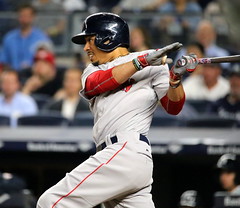
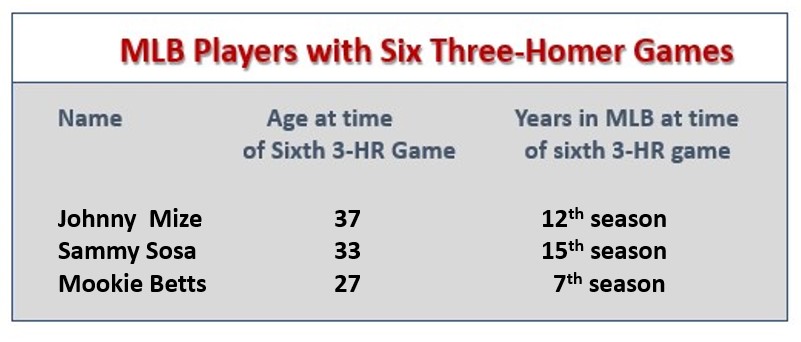
David Ortiz never did it in his 20-season, 541-home run career.  Hank Aaron (755 career home runs) accomplished the feat just once in 23 seasons, as did Frank Robinson (586 career home runs) in 21 seasons.  Heck, even Babe Ruth (714 career dingers) only did it twice in 22 campaigns.  And, these guys had nicknames like Big Papi, The Hammer, The Judge and The Sultan of Swat.  I’m talking about going deep three times in a game – and, yesterday (lucky August 13), Markus “Mookie” Betts hit three home runs in a game for the sixth time in his career – tying the major -league record for three-blast contests.

Betts had his sixth three-homer night out of the leadoff spot, as his Dodgers topped  the Padres 11-2 … and maybe there was a bit of retribution involved (he was hit by a pitch in his first plate appearance of the game). Overall, Betts was four-for-four (he also had an infield single), with four runs scored and five driven in.

As you can see in the chart below, Betts got to his sixth three-homer game much more quickly than either of his predecessors (Johnny Mize and Sammy Sosa).  It clearly seems like this is a record likely to fall.

sixf

Through Yesterday, Betts had a career average of .302 (in 813 games), with 146 home runs, 485 RBI, 627 runs scored and 127 stolen bases. He is a four-time All Star, the 2018 AL Most Valuable player (when he won the batting title at .346, hit 32 home runs, drove in 80 and scored a league-topping 129 times).  Overall, he scored 100+ runs in four of his first six seasons, drove in 100+ in two of those campaigns and hit.300+ twice.

Now, let take a look at some additional three-homer game tidbits.

  • While no teenager has recorded an MLB three-homer game, two twenty-year-olds have done it.  The Tigers’ Al Kaline (April 17, 1955) at 20 years-119 days and the Braves’ Eddie Mathews (September 27, 1952) at 20 years-350 days.
  • Stan Musial is the oldest player to go deep three times in a game. He had his second (and final) career three-homer game on July 8, 1962 at 41 years-229 days old. Here’s a chart of those 40 or over to hit three long balls in a single contest.

40+

  • The White Sox’ Merv Conn0rs (three-homer game on September 17, 1938) hit the fewest career home runs of any player with a three-HR contest – eight. Connors played just 52 games for the White Sox in two MLB seasons (1937-38) – going .279 (46-for-165), with eight home runs and 25 RBI. At the time of his three-homer game, he was playing in his 38th MLB game and had hit a total of three home runs in the previous 37.
  • Two father-son combos have each recorded three-homer games – Cecil Fielder (May 6 & June 6, 1990, April 16, 1996) and Prince Fielder (September 27, 2011) and Ken Griffey Sr. (July 22, 1986) and Ken Griffey Jr.  (May 24, 1996, April 25, 1997).
  • One grandfather-grandson combo has each recorded a three-homer game Carl Yastrzemski (May 19, 1976)  and grandson Mike Yastrzemski (August 16, 2019).

Knock Three Times – Three Home Runs on Opening Day

The Opening Day, single-game record of three home runs is shared by four players – the Blue Jays’ George Bell, Cubs’ Tuffy Rhodes, Tigers’ Dmitri Young and White Sox’ Matt Davidson.

On April 4, 1988, George Bell – batting clean-up and serving as the DH – became the first major leaguer to hit three home runs in an Opening Day game, as his Blue Jays topped the Royals 5-3 in Kansas City. Bell went three-for-four with three runs scored and four RBI, hitting all three home runs off Royals’ starter Brett Saberhagen.

On a windy April 4, 1994, Karl “Tuffy” Rhodes (leading off and playing CF for the Cubs in Chicago) hit three solo shots off Mets’ starter Dwight Gooden. Rhodes also had a single and a walk in five plate appearances. Despite Rhodes’ record-tying performance, the Cubs lost to the visiting Mets 12-8. At the time, Rhodes had played 107 MLB games in four seasons – hitting a total of five home runs. His MLB career consisted of 225 games in six seasons, with a .224 average and just 13 round trippers (with a high of eight in 1994). 

On April 4, 2005 the Tigers’ Dmitri Young joined Bell and Rhodes on the list of batters with three home runs in an Opening Day game – as the Tigers topped the Royals 11-2 in Detroit. Young started at DH and went four-for-four with four runs and five RBI.  Young, an All Star in 2003 and 2007, hit a total of 21 home runs in 2005 – and 171 in 13 MLB seasons. 

On March 29, 2018, as the White Sox topped the Royals 14-7 in Kansas City, DH and (appropriately) cleanup hitter Matt Davidson opened the season with a three-homer, five-RBI game. He went three-for-four with a walk, four runs scored and five RBI.  Davidson, in his fourth MLB season, went on to a .228-20-62 campaign.  In his 273 MLB games (2013, 1015-18), Davidson has just three multi-homer contests. and a total of 49 round trippers.

  • Babe Ruth is the only player to twice hit three-homers in a World Series game. Ruth accomplished the feat in the 1926 (Game Four) and 1928 (Game Four) Series.  Additional players with a three-HR World Series game include Reggie Jackson in the 1977 Series (Game Six); Albert Pujols in the 2011 Series (Game Three); and Pablo Sandoval in the 2012 Series (Game One).
  • Two pitchers have hit three home runs in a game.  On August 15, 1986, Guy Hecker of the American Association (considered a major league) Louisville Colonels collected three singles and three home runs in a 22-5 win over the Baltimore Orioles. In a May 13, 1942 game against the Cubs, the Boston Braves’ Jim Tobin flied out to deep right field in the third inning; homered to lead off the fifth; homered again to lead off the seventh; and hit a two-run home run with two outs in the eighth (to break a 4-4 tie in a game the Braves won 6-5).

Primary Resources:   Baseball-Reference.com; Baseball-Almanac.com; MLB.com


100Baseball Roundtable is on the Feedspot list of the Top 100 Baseball Blogs.  To see the full list, click here.

I tweet baseball @DavidBBRT

Follow/Like Baseball Roundtable’s Facebook Page here.  More baseball commentary; blog post notifications; PRIZES.

Member: Society for American Baseball Research (SABR); The Baseball Reliquary; The Negro Leagues Baseball Museum.
Nolan Ryan Didn’t Do It – But Tyler Alexander Did … A Look at Strikeout Streaks

Nolan Ryan didn’t do it.  Walter Johnson didn’t do it (neither did Randy Johnson). Bob Gibson didn’t to it.  Christy Mathewson didn’t do it.  But Max Scherzer it …. And Tom Seaver did it one better.  And, now, Tyler Alexander had done.

AlexYesterday (August 3, 2020), Tigers’ southpaw reliever Tyler Alexander did “it “– struck out at least nine batters in a row.  In the process, he set the MLB record for consecutive strikeouts by a relief pitcher and tied the American League record for consecutive strikeouts in a game. Alexander fanned the first nine Reds’ batters he faced in the initial game of Sunday’s Tigers/Reds twin bill.  He also came so-o-o-o very close to tying (or even breaking) the overall MLB record for consecutive strikeouts in a game (10 … held by Tom Seaver).

The 25-year-old Alexander, in his second MLB season, came on in the top of the third inning, with the Reds leading his Tigers 3-0. He relieved Tiger starter Rony Garcia after a Nick Castellanos’ home run to open the frame.  Alexander proceeded to fan the entire Reds’ lineup in order (on 39 pitches/29 strikes), getting five swinging and four looking. His victims and the counts: 2B Mike Moustakas (2-2); 3B Eugenio Suarez (0-2); DH Jesse Winker (0-2); CF Nick Senzel (1-2); 1B Josh VanMeter (0-2); SS Freddy Galvis (3-2); C Tucker Barnhardt (1-2); LF Shogo Akiyama (1-2); and RF Castellanos (2-2).

Remember, I said he came so very close to tying the overall record of ten straight whiffs?  Alexander was one pitch away from that tenth consecutive strikeout when he hit Moustakas with a pitch on a 1-2 count). Who knows, he might even had broken the record, since he fanned the next batter (Suarez) – on five pitches. What if he had snuck that third strike past Moustakas? After fanning Suarez, Alexander walked pinch hitter Matt Davidson (after pinch runner Travis Jankowski was out stealing) and was replaced on the mound by Carson Fulmer.  Alexander’s line for the day 3 2/3 IP, no hits, one walk, one HBP and ten strikeouts.   (He came into the game with 50 strikeouts in 57 2/3 innings (16 appearances/8 starts).

Tyler Anderson broke the record of consecutive strikeouts by a relief  pitcher– set at eight by Yankee Ron Davis (against the California Angels) on May 4, 1981.

We’ll look at those players with at least nine consecutive strikes out in this post, but first a look at the state of the game – from a strikeout perspective.

In  today’s throw-hard/swing-hard game, we should not be surprised when whiff records are tied or fall (earlier this season, the Indians’ Shame Bieber tied the MLB record for strikeouts in a pitchers’s first two starts of a season with 27). For that story, click here).   MLB has seen a new season record for total strikeouts every year since 2008.  Consider that 1987 was the first year MLB topped 25,000 strikeouts, Given, MLB has added four teams since then, but also has added 17,724 strikeouts in a season (2019) – going from 6.0 strikeouts per nine innings to 8.9.

K's Seasson

Now those players with nine (or ten) consecutive strikeouts in a game.

Ten Consecutive Strikeouts in a Game— standing all alone.

Tom Seaver, Mets   …  April 22, 1970.

Seaver started the game (versus the Padres) and seemed to get stronger in the late innings.  He went into the top of the sixth with a 2-1 lead, having given up just two hits, two walks and one run (a solo home run by Padres LF Al Ferrara), with nine strikeouts.  He got the first two batters on a foul pup up and a fly to right, fanned Ferrara to end the frame and went on to strike out the side in order in the seventh, eighth and ninth. Seaver, in the game, tied Steve Carlton for the most strikeouts in a nine-inning game at 19 (a record since broken).

Seaver, of course, is a Hall of Famer – an All Star in 12 seasons and a three-time Cy Young Award winner.  He led the league in strikeouts five times and retired (after 20 MLB seasons … 1967-86) with 3,640 strikeouts in 4,783 innings pitched.

Nine Consecutive Strikeouts in a Game (in addition to Tyler Alexander)

Mickey Welch, New York Gothams (NL) … August 28, 1884

Mickey Welch fanned the first nine batters he faced, as he earned a 10-2 win for his Gothams – over the Cleveland Blues on August 28, 1884. Welch fanned 14 in the contest.

Mickey Welch holes the record for the most consecutive whiffs to start a game.

Welch, a Hall of Famer, pitched 13 MLB seasons (1880-92), going 307-210, 2.71 and fanning 1,850 batters in 4,802 innings. He won 20 or more games in nine seasons (a high of 44 wins in 1885). Ah, it was a different game back then. He never led his league in strikeouts, although he did fan 345 batters in 1884.

Jake Peavy, Padres …. April 25, 2007, Padres

Jake Peavy started against the Diamondbacks (in Arizona) on April 25, 2007. He got the first two batters on a strikeout and ground out before giving up a pair of singles (but getting out of the inning with a runner tossed out a third base).  He then struck out the side in order in the second, third and fourth innings (eight swinging, one looking), before walking LF Eric Brynes on a 3-2 pitch to start the fifth (ending his streak at nine). Peavy ended up with a no-decision after going seven innings and giving just two hits and three walks (no runs), with 16 strikeouts.

Peavy was a three-time All Star in a 15-season MLB career (2002-16).  He went 152-126, 3.63, with 2,207 strikeouts in 2,377 innings pitched.  His best year was 2007, when he led the NL in wins (19 versus six losses), ERA (2.54) and strikeouts (240). He also led the league in whiffs in 2005 and struck out 200 or more batters in three consecutive seasons (2005-07).

Ricky Nolasco, Marlins … September 30, 2009

Rickey Nolasco’s 2009 season might not be considered an artistic success. Although he won 13 games (nine losses), he pitched to a 5.06 earned run average. Starting against the Braves (in Atlanta) on September 30, however, he brought his “A” game. He breezed through the first two innings, giving up just a single and then upped the ante – striking out the side in order in the third, fourth and fifth frames, before giving up a double to 1B Adam LaRoche to open the sixth. Nolasco got the win, going 7 2/3 innings (four hits, two runs, no earned runs, two walks and 16 strikeouts).

Nolasco pitched 12 MLB seasons (2006-17), going 114-118, 4.56, with 1,513 strikeouts in 1,887 2/3 innings. His high in strikeouts for a season was 195 in 2009.  His best season was 2008, when he went 15-8, 3.52 for the Marlins.

Aaron Harang, Dodgers …. April 13, 2012

Harang got out of the box quickly against the Padres on April 13, 2012. He gave up a leadoff single to Padres’ CF Cameron Maybin and then fanned the next nine Padres he faced (all swinging third strikes) – until Padres’ LF Will Venable led off the fourth with a home run. (All nine were swinging.)  Harang ended up with a no decision, giving up four runs on four hits and two walks in 6 1/3 innings, while fanning 13.

Harang pitched 14 MLB seasons, going 128-143, 4.26, with 1,842 strikeouts in 2,322 innings pitched. He led the NL in strikeouts (for the Reds) in 2006 with 216. That was his best season, as he also led the league in wins (16, with 11 losses), starts (35) and complete games (6).

Doug Fister, Tigers … September 27, 2012

Fister was cruising in his September 27, 29012 start against the Royals.  After three inning, he had given up no runs (a single and a HBP), had fanned one and haw thrown just 36 pitches.  In the fourth inning, he got the first two batters on ground outs, before fanning C Salvador Perez (looking) on an 0-2 pitch. He went on to fan the side in the fifth sixth, as well as the first two batters in the seventh before Perez broke the streak with a ground out short-to-first.  Things went a bit south in the eighth inning,  as Fister gave up three runs on two double and two singles before being relieved with two outs in the frame. H ended with a no decision, 7 2/3 IP, three runs (two earned), no walks and ten strikeouts. The Tigers did get the win, by a 5-4 score.

In his 10-season MLB career (2009-18) Fister went 83-92, with a 3.72 ERA and 970 strikeouts in 1,422 1/3 innings pitched.  His high in strikeouts was 159 in 2018, when he went 14-9, 3.67 in 32 starts (33 appearances). His best season was 2013, when he went 16-6, 2.41 for the Nationals, but fanned only 98 batters in 164 innings.

Max Scherzer, Nationals … October 3, 2015 

Like Tom Seaver’s, Max Scherzer’s strikeout steak was part of a double header (Game Two. in this case) and, also like Seaver, he seemed to get stronger as the game went on. Scherzer went into the bottom of the sixth (versus the Mets), having thrown five perfect innings with eight strikeouts. Mets ‘catcher Kevin Plawecki was safe on an error by third baseman Yunel Escobar to end the perfecto, but Scherzer go the next three hitters, including a strikeout of  RF Curtis Granderson to end the inning. Scherzer went on to strike out the side in the seventh and eighth innings and got the first two hitters’ on strikeouts in the ninth before Granderson broke up the streak with an infield pop out to end the game.  Scherzer end up with a no-hitter (his second of the season), 17 strikeouts and was just an error short of a perfect game. All nine whiffs in Scherzer’s streak were swinging punch outs.

At one point in the October 3 (second game) Nationals/Mets matchup, 11 consecutive batters went down on strikes. The Mets’ Hansel Robles fanned the last two hitters in the top of seventh, Scherzer fanned three consecutive Mets in the bottom of the seventh, the Mets Erik Goeddel fanned all three Nats he faced in the eighth, Scherzer again had a 1-2-3 strike out inning in the bottom of the eighth.

Max Scherzer is in his 13th MLB season. He is a seven-time All Star and three-time Cy Young Award winner. He has led the NL in strikeouts three times (a high of 300 in 2018) and fanned 200 or more batters in eight seasons. He has also led his league in wins four times, complete games four times and shutouts twice.

Max Scherzer seems to like the record books he share the record for strikeouts in a nine-inning game (20), as well as the record for no-hitters in a season (two). 

Primary Resources:  Stathead.com; Baseball-reference.com; MLB.com

100Baseball Roundtable is on the Feedspot list of the Top 100 Baseball Blogs.  To see the full list, click here.

I tweet baseball @DavidBBRT

Follow/Like Baseball Roundtable’s Facebook Page here.  More baseball commentary; blog post notifications; PRIZES.

Member: Society for American Baseball Research (SABR); The Baseball Reliquary; The Negro Leagues Baseball Museum.
Baseball Roundtable July 2020 Wrap UP … From Bieber to Bard and More

It’s August first and that means we are starting into the second calendar month of a very non-traditional MLB season.  We are dealing with a July start, empty stands and “piped-in” fans, COVID postponements, extra innings starting with a runner placed at second base, expanded playoffs and even – “Say it ain’t so, Joe!” – upcoming seven-inning games in double headers. Wow.  A lot to take in.

Baseball Roundtable is going to stick with one of its traditions, however. The monthly wrap up.  It will be the usual mix of MLB stats and stories that caught my attention, along with selection of BBRT’s players and pitchers of the month.  Even though July was a short month (from a games-played perspective), there will be a Wrap Up (who knows when they might pull the plug on the season.)

Given the small sample size and disparities in games played (COVID game postponements limiting the Marlins and Phillies to three games each), BBRT statistical leaders may differ a bit from those on MLB lists.  For example, Marlins’ SS Miguel Rojas is listed as the MLB batting leader (.700 average), but he has just ten at bats.  BBRT’s leader board requires 20 at bats, so you will find Giants’ SS Donovan Solano at the top (.458 in 24 July at bats.)

So, let’s get to it.  First a few general observations.

  • As usual, pitchers appear to be ahead of hitters early on, with all of MLB averaging .233 and 45 hitters with at least 20 at bats hitting under .200 – including such “names” as George Springer, Kris Bryant, Cody Bellinger; Jose Altuve; and Ronald Acuna, Jr.
  • As Rod Serling would say, “For your consideration,” 2018 and 2019 National League batting champ Christian Yelich ended July with one hit (albeit a home run) in 27 at bats for a .037 average.
  • The 2020 season saw only 45 complete-games in 2,429 contests – one every 54 games.  Through July 31 this season, we’ve already seen three complete games in 104 contests – one every 35 games.
  • The Cardinals’ bullpen held opponents to a .100 average in July.
  • Shane Bieber Bieber fanned 27 batters in 14 July innings, putting up a 2-0 record and a 0.00 earned run average.
  • Nelson Cruz of the Twins has shown that “40 is the new 30,” leading MLB in RBI with 11 – and putting up a two-double, two-home run, seven-RBI game against the White Sox on July 26.
  • Nobody had more hits in July than Mariners’ CF Kyle Lewis (rookie status still intact), who collected 15 hits in eight games (.455 average).

More on all of this and more as you read on, but let’s get to the players and pitchers of the month.

___________________________________________________________

American League BBRT Player of the Month for July – Kyle Lewis, CF, Mariners

LewsiMariners’ 25-year-old rookie CF Kyle Lewis led all of MLB with 15 July base hits and his .455 average tied the Yankees’ D.J. LeMahieu for tops in the AL among batters with at least 20 at bats. Lewis also had two home runs and his eight RBI were second only to Nelson Cruz in the American League. Lewis, a first-round draft pick out of Mercer University in 2016, hit .268 in 18 games with the Mariners in 2019 (after hitting .263 in 122 games at Double A). Lewis, who leads the AL with 13 strikeouts, does need work on plate discipline.

Others considered:  BBRT also looked at the Twins’ Nelson Cruz (.333-3-11), but took into  consideration that seven of his MLB-best 11 July RBI came in one game. Red Sox’ catcher Christian Vazquez also deserve a shout out.  His four home runs tied for the MLB July lead and he added eight RBI and a .348 average.


_____________________________________

American League Pitcher of the Month for July – Shane Bieber, Indians

Shane Bieber. Latest Indians' CYA candidate.

Shane Bieber. One walk – 27 whiffs.

No contest here, as Indians’ right-hander Shane Bieber’s July was one for the record books. On Opening Day (July 24), he fanned 14 Royals in six shutout innings – coming within one of the MLB Opening Day record for whiffs. Then, six days later, he whiffed 13 Twins in eight shutout innings, tying the MLB record for strikeouts in the first two starts of a season.  For details on those records, click here. So, here’s Bieber’s line for July:  2-0, 0.00 ERA, 14 innings pitched, seven hits, just one walk and 27 strikeouts. Game. Set. Match.

Shane Bieber fanned at least one batter in every inning he pitched in July.

____________________________________________

National Player of the Month for July – Donovan Solano, 2B, Giants

Donovan Solano photo

Photo by mwlguide

Donovan Solano has been around for awhile. He signed as an International free agent with the Cardinals in 2005 and finally made it to the big leagues with the Marlins in 2012. He is now in his seventh MLB  season (serving primarily as a utility infielder). Over his first six MLB campaigns, he played in 451 games and put up a .269-13-122 stat line.  Since signing a minor-league contract with the Giants in December 2018, Solano has been on fire.  He hit .322 in 24 games at Triple A in 2019 and then .330 in 81 games after a call up to the Giants. This July, he has raked at an MLB-best .458 pace (11-for-24), with one home run and ten RBI (trailing only the 11 of the Braves’ Dansby Swanson and Twins’ Nelson Cruz).  While he has yet to draw a walk this season, he has fanned only three times in 24 at bats.  He puts the ball in play.

Others considered:  Braves’ SS Dansby Swanson hit .387, with two home runs and an MLB-best 11 RBI in July. The swing factor here (pun intended) was his 12 strikeouts to Solano’s three (Swanson drew just one walk). Also, Salano’s .458 average was a bright and shiny thing.

__________________________________________

National League Pitcher of the Month – Sonny Gray, Reds

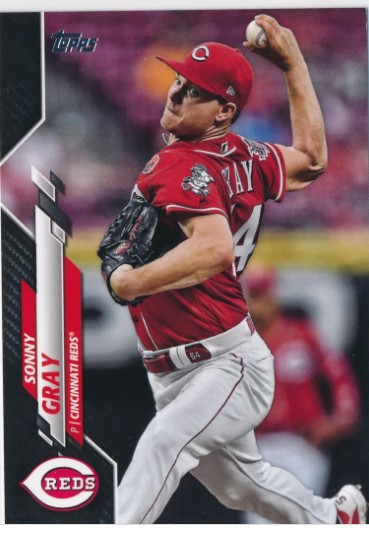
GraySonny Gray put up the lowest ERA in the NL (0.71 in 12 2/3 innings pitched).  He won both his starts, giving up just four hits and three walks. He also fanned 20 batters (second in the NL to Max Scherzer’s 21) and held hitters to an NL-best .098 average. A nice start for the veteran (in his eighth MLB season) and two-time All Star.

Others considered: Kyle Hendricks of the Cubs got a brief look-see after throwing the season’s first complete-game shutout (a three-hitter against the Brewers) in his first start of the season. He pitched his way out of the competition by giving up six runs in his second start. Max Scherzer’s NL-high 21 July strikeouts also merited some attention, but he went 0-1, 2.84 to Gray’s 2-0, 0.71.  It was Gray all the way.

__________________________________________

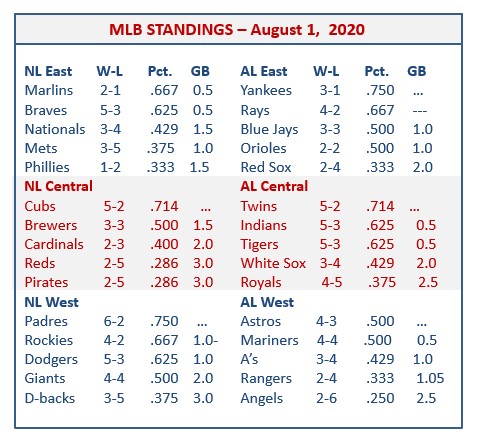
Now, here are your standing as of end of play July 31.  Too early for any analysis, let the numbers speak for themselves.  If I had to pick a “surprise” this early, I guess it would be the Padres leading the NL West – and sitting atop all of MLB in July runs scored.  They seem to be doing it with a pretty balanced attack – six players with five or more RBI: SS Fernando Tatis, Jr. (9); 1B Eric Hosmer (7); LF Tommy Pham (7); and five each from 3B Manny Machado, CF Trent Grisham, and RF Wil Myers.  They also have six players with five or more runs scored and four players with two home runs.  The Padres also put their speed to good use, getting stolen bases from six players – with their 14 July steals leading MLB by a wide margin. Your other division leaders (excluding the three games-played Marlins) are pretty much as expected.

Standing

—-LEAGUE LEADERS – TEAMS —–

(as of end of play July 31, 2020)

RUNS SCORED … MLB Team Average – 32

AL: Astros (42); Mariners (41); Angels (46)

NL:  Padres (52); Braves (46); Cubs (44)

Runs Per Game

Given the small sample – and range in the number of games played – it is important to note that your runs per game leaders were the Padres in the NL (6.50) and the Astros in the AL (6.00).  One additional team averaged six or more runs per game in July – Cubs (6.29)  

The Rangers scored an MLB-low 13 runs in five July games – and had the lowest R/G (2.60).

BATTING AVERAGE … MLB Team Average – .233    (To qualify for BBRT leaderboard, minimum five games played.)

AL: Red Sox (.264); Mariners (.262); Astros (.249)

NL: Mets (.266); Giants (.257); Cubs (.254)

The Team Mendoza Line

Four teams were hitting below .200 as July play closed: Pirates (.177); Rangers (.180); A’s (.194); Brewers (.198).

HOME RUNS … MLB Team Average – 8

AL: Tigers (15); Twins (12); Angels (12); White Sox (11); Blue Jays (11)

NL: Reds (12); Cubs (12); Dodgers (11); Padres (11)

Who Digs the Long Ball?

The Diamondbacks were power-starved, with just two home runs over their first eight games.

STOLEN BASES … MLB Team Average – 3

AL: Mariners (8); Astros (6); Rangers (5); Blue Jays (5)

NL: Padres (14); Mets (5)

Slow Ride. Take It Easy.

Six teams had stolen only one base through July – Red Sox, White Sox, Indians, Marlins, Brewers, Cardinals.

BATTERS’ STRIKEOUTS … MLB Team Average – 62

AL: Tigers (90); Mariners (79); Royals (75)

NL: Braves (93); Mets (75); Padres (75)

Making Contact

Phillies hitters (only three games) fanned an MLB-fewest 18 times as of end of play July 31.  Among teams with at least five games played, the Cardinals and Orioles had the fewest whiffs (44). 

WALKS DRAWN … MLB Average – 25

AL: Angels (37); Rays (37); Astros (35)

NL: Padres (40; Dodgers (37); Reds (36)

Ouch!

Who crowds the plate?  The Cubs led MLB in hit-by-pitch through July 31 at 12 (the MLB team average was 4). 

____________________________________

EARNED RUN AVERAGE … MLB Average – 4.26

AL:  Indians (2.13); Blue Jays (3.29); Twins (3.34)

NL:  Dodgers (2.04): Nationals (2.69); Rockies (2.72)

He Shoots! He Scores!

Mariners’ hurlers had a rough July with an MLB-worst 6.49 ERA.  Over in the NL, the Phillies were at the bottom at 5.67.

The Indians had the lowest ERA among starting staff in July at 2.18.  The Rockies were the surprise leaders in the NL at 2.46.

STRIKEOUTS … MLB Average – 62

AL:  Indians (94); Rays (85); Angels (72)

NL: Reds (93); Diamondbacks (82);Mets (72); Padres (72)

Inning-by-Inning

The Reds also led all of MLB in strikeouts per nine innings at 13.5– finishing July with ten or more whiffs per nine frames were: Indians (11.8); Brewers (11.0); Rays (10.9); and Rangers 10.8; Diamondbacks (10.0)

SAVES … MLB Average – 2

AL: Tigers (4); Indians (4); Twins (3); Mariners (3)

NL: Braves (3); six with two

Firemen

The Cardinals had the lowest bullpen ERA at 0.98, while the A’s pen had the lowest AL ERA at 1.91.

FEWEST WALKS SURRENDERED … MLB Average – 25

AL: Indians (14); Yankees (16); A’s (19)

NL: Cardinals (9); Phillies (10/three games)); Nationals (19); Marlins (19/three games); Reds (19)

Stingy with those Free Passes

Looking at walks per nine innings, the Indians posted the best ratio at 1.3. The only other team with less than two walks per nine frames was the Cardinals at 1.9.

The Diamondbacks’ staff walked the most batters – 44 in 8 games (5.8 per nine innings).  The Marlins who played just three games, walked an MLB-worst 6.6 batters per contest.

__________________________________________

Now a few individual highlights.

Late Opener – Kiki is all Four It

Dodgers’ 2B Enrique “Kiki” Hernandez got his season off to a running start.  In the Dodgers July 23 opener (at home) against the Giants, Hernandez – a .243 career hitter (starting his seventh MLB season) – went four-for-five, with a home runs, two runs scored and five RBI. It was Hernandez’ first MLB four-hit game, as well as his first five-RBI game.  The Dodgers, by the way, prevailed 8-1.

Round. Round. Get Around. I Get Around.

In his MLB career, Kiki Hernandez has played every position except catcher.  As the 2020 season opened, he had started 126 games in CF, 110 at 2B, 57 in LF, 54 at SS, 32 in RF, 14 at 3B, 11 at 1B and two at DH. He also made on appearance on the mound, 1/3 inning of scoreless relief.

Kepler Goes Deep – In a Hurry

Max Kepler photo

Photo by IDSportsPhoto

Twins’ RF Max Kepler took White Sox starter Luis Giolito yard on the very first pitch of the game – as the Twins and White Sox opened their 2020 seasons in Chicago.    In the very next inning, on a 2-2 count – Kepler went deep again.  Two innings into the season and two home runs, not a bad start. The wins won the game 10-5.

The only two players to homer in the first two innings of their team’s season are Kepler and the Angels’ Ted Kluszewski (1961). Kluszewski two blasts were extra special, they came not only in the teams first game of the season, but also the first game in franchise history – a 7-2 win at Baltimore. Side note:  They came off pitchers with similar names:  Milt Pappas in the first inning and John Papa in the second.

Home Plate is Off Limits

Kyle Hendricks photo

Photo by apardavila

On July 24, as the Cub and Brewers opened the season at Wrigley, Cubs starter Kyle Hendricks threw a complete-game, three-hit shutout (The Cubs won 3-0).  In the game – the first Opening Day complete-game shutout since 2013 (Clayton Kershaw) – Hendricks fanned nine and didn’t walk a batter. Surprisingly, in this age of throw-hard/swing-hard baseball, not a one of Hendricks’ 103 pitches reached 90 M.p.h.

Number-Nine. Number-Nine.  Number-Nine.

Ironically (?), all three hits off Hendricks belonged to the Brewers’ number-nine hitter, SS Orlando Arcia.

Leaving No Doubt

That Angels and Athletics battled to a 3-3 tie after nine innings in Oakland.  That opened the door to MLB’s first extra inning under the new rule, starting extra innings with a runner placed on second base. (A rule many feel puts the legitimacy of victory in doubt.). In the top of the tenth, the Angels’ Shohei Ohtani (the last out in the ninth) was placed a second, but erased on a rundown between second and third (as PH Jared Walsh reached first one fielder choice).  To make a long inning short, the Angels ended up loading the bases, but did not score.

In the bottom of the inning, A’s SS Marcus Semien (last out of the A’s ninth) was placed on second. Angels’ reliever Hansel Robles then hit Ramon Laureano with a pitch, struck out Matt Chapman; wild pitched Semien and Laureano to third and second; and walked Khris Davis.  That loaded them up with one out for Matt Olson, who hit the fist pitch from Robles over the CF fence for a walk-off Grand Slam – making the win a no-doubter, despite the 2020 extra-inning rule.

Worth Waiting For

BardOn July 25, 35-year-old Rockies’ right-hander Daniel Bard took the mound for the first time since April 27, 2013 – a period of seven years, two months and 28 days. Bard was a first-round selection (out of the University of North Carolina) by the Red Sox, sporting a fastball that topped out at at 100+ MPH and was regularly in the mid- to high-90s.  He also used a slider and change up. In 2008, Bard was 5-1, 1.51, with seven saves and 107 strikeouts (versus 30 walks) in 46 appearances (77 2/3 innings) at Double A and Triple A.

In his first season with the Red Sox (2009), Bard went 2-2, 3.65 with 63 whiffs (22 walks) in 46 appearances.  Then, in 2010 and 2011, he made 70 or more appearances for Boston each season.  After three MLB campaigns, Bard had 5 wins (13 losses), with a solid 2.88 ERA in 192 appearance – 213 strikeouts and 76 walks in 197 innings.

One for the Record Books

In 2011, Bard threw a Red Sox-record 25 consecutive scoreless innings (25 appearances from May 27 through July 31).

Then in 2012, the Red Sox attempted to convert Bard to a starter and the wheels seem to come off – and Bard lost command of his pitches.  He went 5-6, 6.22 in 17 games, walking 43, hitting eight batters and fanning 38 in 59 1/3 innings for Boston. Sent to  Triple A, he did not fare any better (3-2, 7.03 with 29 walks and 32 strikeouts in 32 innings).  After that season, Bard pitched only one more MLB inning before retiring in October of 2017. But he didn’t give up and, in 2020, announced he was going to make a comeback.  He did some throwing for scouts and, in February, signed a minor-league deal with the Rockies.  He was added to the 40-man roster in mid-July and on July 25, came into the game with two outs in the fifth inning and his Rockies leading the Ranger 2-0.   Bard went 1 1/3 innings (two hits/one whiff) and, since starter Jon Gray has not gone five innings, Bard picked up the win – his first MLB victory in more than seven years.  Notably, Bard threw 20 of 25 pitches for strikes.

You Can’t Win ‘Em All

Three games (and four days) into the strange 2020 season and there was not a single undefeated team.  The last time that happened?  1954 (when there were only 16 teams). The deepest MLB ever got into a season with at least one team boasting a perfect record? In games, that would be thirteen – with the 1982 Braves (first loss on the season’s 18th day) and the 1987 Brewers (first loss on 16th day of the season) getting off to 13-0 starts .

Off to a Good Start

On July 27, Reds’ rookie catcher Tyler Stephenson – who had come into the game in  the top of the seventh inning with the Reds down to the Cubs 7-1 – stepped to the plate for the first time in his MLB career in the bottom of the frame and popped a 1-0 pitch (off reliever Duane Underwood Jr.) 420-feet over the CF fence (making the score 8-2 at the time). Stephenson finished the game two-for-two, with a walk, two runs scored and two RBI. For those who track such things, Stephenson was the 123rd player to homer in his first MLB at bat (this number includes players from the old American Association).

An Even Better Start

Bob Nieman of the 1951 Browns and Keith McDonald of the 2000 Cardinals are the only players to homer in their first TWO MLB at bats. For more on McDonald’s career (he had only three MLB hits – and they were all home runs – click here.

A Lead-Off Two-Run Homer … Never Saw that Before

New rules, new results! On July 29, as the Dodgers topped the Astros 4-2 in 13 innings at Minute Maid Park, the Dodgers’ Edwin Rios became the first MLB player to lead off an inning with a two-run home run. Rios had come into the game as a pinch-hitter to open the 11th inning (striking out). He then stayed on as DH.  In the top of the 13th, as per 2020 rules, with the scored tied at 2-2, the Dodgers started the frame with Enrique “Kiki” Hernandez placed at second.  Rios, the first batter of the inning, then took reliever Cy Sneed deep for a two-run, lead-off homer that proved to be the game winner.

Rollin’ a 300

On July 29, as the Angels faced the Mariners in Anaheim, the Halos’ LF Justin Upton was sitting at 299 career home runs.   In the sixth inning, he got the landmark 300th long ball – a three-run shot off the Mariners’ Brian Shaw.   Despite Upton’s blast, the Angels lost the game 10-7.  As of July 1, Upton (in his 14th MLB season, had a career line of .265-300-941. He is a four-time All Star and has hit 30 or more home runs in four season and stolen 20 or more bases twice.

Back-To-Back, Bro’

 On April 23, in the second game of a Braves’ doubleheader against the Rockies (in Colorado), Justin Upton and his brother Melvin were playing LF and CF, respectively.  They were also batting second and third in the order. In the top of the fifth inning of that game, they became only the second set of brother to go deep back-to-back in an MLB game.  The only other brothers to accomplish the feat are the Pirates’ Lloyd and Paul Waner in 1938. 

The Call it the Streak

On July 30, on the back of a ninth-inning, three-run home run by Aaron Judge, the Yankees topped the Orioles 8-6. It was the Bombers 18th consecutive win over the Orioles – dating back to April 4 of last season. Over those 18 games, the Yankees outscored the Orioles 153-75.  Even sadder for the Birds, it was the Yankees 17th straight win at Camden Yards. The Yankees last lost in Baltimore was on July 10, 2018.

________________________________________

The Individual July Stats Leaders

One qualifying point here.  For percentage stats – like average, slugging percentage, on-base percentage I am listing only those hitters with at least 20 July at bats. The Marlins, of course, had a number of games suspended due to the COVID outbreak.  That limited SS Miguel Rojas to just ten at bats. In those ten at bats he hit .700, with a 1.300 slugging percentage and .750 on-base percentage … which leads MLB. Rojas, however, does not qualify for BBRT’s leaderboard.

BATTING AVERAGE – minimum 20 at bats

AL:  D.J. LeMahieu, Yankees (.455); Kyle Lewis, Mariners (.455); Hanser Alberto Orioles (.440)

NL: Donovan Solano, Giants (.458); Mike Yastrzemski, Giants (.414); Dansby Swanson, Braves (.387)

A Big O-Fer

The most at bats through July 31 without a it is 21 – Hunter Pence, Giants.  

BASE HITS

AL: Kyle Lewis, Mariners (15); Jose Ramirez, Indians (12); David Fletcher, Angels (12)

NL: Mike Yastrzemski, Giants (12); Dansby Swanson, Braves (12); three with 11

HOME RUNS

AL: Christian Vazquez, Red Sox (4); Teoscar Hernandez, Blue Jays (4); seven with three

NL: Colin Moran, Pirates (4); Anthony Rizzo, Cubs (3); Trevor Story, Rockies (3); Corey Seager, Dodgers (3); Max Muncy, Dodgers (3)

The Total Picture

The Blue Jays’ Teoscar Hernandez, Tigers’ JaCoby Jones and Giants’ Mike Yastrzemski share the lead in total bases this July at 23.

RUNS BATTED IN

AL: Nelson Cruz, Twins (11); four with 8

NL: Dansby Swanson, Braves (11); Donovan Solano, Giants (10); Fernando Tatis, Jr., Padres (9)

OBP – SLG  WOW!

Among hitters with at least 20 at bats, Indians’ Joe Ramirez led MLB in on-base percentage at .529 and JaCoby Jones of the Tigers had the highest slugging percentage at .885.

RUNS SCORED

AL: J.P Crawford, Mariners (9); Nelson Cruz, Twins (8); six with seven

NL: Trent Grisham, Padres (9); Freddie Freeman, Braves (8); Mike Yastrzemski, Giants (8)

STOLEN BASES

AL: Ten with two

NL: Tommy Pham, Padres (5); Fernando Tatis, Jr., Padres (3); three with two

BATTER’S STRIKEOUTS

AL:  Niko Goodman, Tigers (13); Kyle Lewis, Mariners (13); Evan White, Mariners (13)

NL: Ronald Acuna, Jr., Braves (17); Yeonis Cespedes, Mets (13); Christian Yelich, Brewers (12); Dansby Swanson, Braves (12); Fernando Tatis, Jr. Padres (12)

No Whiff Zone

The Angels Andrelton Simmons has the most at bats without a whiff at 16,

WALKS DRAWN

AL:  Yandy Diaz, Rays (9); Carlos Santana, Indians (7); Domingo Santana, Indians (7); Anthony Rendon, Angels (7); J.P. Crawford. Mariners (7); Andrew Benintendi, Red Sox (7)

NL: Eric Sogard. Brewers (7); Freddie Freeman, Braves (7); Marcell Ozuna, Braves (7); Chris Taylor, Dodgers (7); Mike Yastrzemski, Giants (7); Rhys Hoskins, Phillies (7)

That Hurts!

The Cubs Anthony Rizzo is available for target practice. He has been hit by a pitch six times already this season. There’s a three-way tie for second place at three plunkings.

_______________________________________

PITCHING VICTORIES

AL:  Gerrit Cole, Yankees (2-0), Burch Smith, A’s (2-0); Dallas Keuchel, White Sox (2-0); Shane Bieber, Indians (2-0); Brandon Bielak, Astros (2-0)

NL:  Sonny Gray, Reds (2-0); Adam Kolarek, Dodgers (2-0); Ross Stripling, Dodgers (2-0)

EARNED RUN AVERAGE (Minimum seven innings pitched)

AL: Shane Bieber, Indians (0.00/14 IP); Lance Lynn, Rangers (0.00/12 IP); Zach Plesac, Indians (0.00/8 IP)

NL:  Sonny Gray, Reds (0.71); Zack Wheeler, Phillies (1.29/7 IP); German Marquez, Rockies (1.54/11 2/3 IP)

Take It on Home, Boys

Rick Porcello of the Mets gave up the most runs in July, surrendering 11 runs (nine earned) over two starts (six innings pitched).

STRIKEOUTS

AL:  Shane Bieber, Indians (27 – 14 IP); Lance Lynn Rangers (17/12 IP); Dylan Bundy, Angels (15/12 2/3 IP)

NL: Max Scherzer, Nationals (21/12 2/3 IP); Sonny Gray, Reds (20-12 2/3 IP); Luis Castillo, Reds (17/12 IP)

K-Men

Shane Bieber and Max Scherzer stand atop the list of strikeouts per nine innings – at 17.4 and 14.9. respectively.

SAVES

AL:  Joe Jimenez, Tigers (4); seven with two

NL: Wade Davis, Rockies (2); Trevor Gott, Giants (2); Mark Melancon, Braves (2); Drew Pomeranz, Padres (2); Archie Bradley, D-backs (2)

One Bad Outing Doesn’t Spoil the Whole Darn Barrel

Wade Davis of the Rockies has two save, despite a 16.88 earned run average in three appearances. Brad Hand of the Indians has two saves, despite a 15.43 earned run average in three appearances.

GAMES PITCHED

AL: Scott Barlow, Royals (5); Buck Farmer, Tigers (5); Greg Holland Royals (5); Evan Marshal, White Sox (5)

NL: Drew Pomeranz, Padres (5); Tanner Rainey, Nationals (5); Tyler Rogers, Giants (5)

I like to Finish What I Start

We saw three complete games in July – one each y the Yankees Gerrit Cole, Cubs Kyle Hendriks and National Matt Scherzer.


Primary Resources: Baseball-Reference.com; Stathead.com; Baseball-Almanac.com; MLB.com; ESPN.com

100Baseball Roundtable is on the Feedspot list of the Top 100 Baseball Blogs.  To see the full list, click here.

I tweet baseball @DavidBBRT

Follow/Like Baseball Roundtable’s Facebook Page here.  More baseball commentary; blog post notifications; PRIZES.

Member: Society for American Baseball Research (SABR); The Baseball Reliquary; The Negro Leagues Baseball Museum.

Bieber’s 27 (2020) Strikeouts Special … Spooner’s 27 (1954) Whiffs Even More So

spoonsIndians’ right-hander Shane Bieber tied a major-league record and set a new American-League standard last night (July 30, 2020), when he fanned his 13th batter in an eight-inning, three-hit, no run performance against the Minnesota Twins.  (The Indians won 2-0.) It gave Bieber 27 strikeouts in his first two outings of the seasons. (Bieber fanned 14 Royals in a six-inning scoreless stint on July 24 – a game the Indians also won by a 2-0 score.  On the season, Bieber is now 2-0, with a 0.00 earned run average and 27 strikeouts in 14 innings pitched (seven hits and one walk).

Shane Bieber has struck out at least one batter in every inning he has pitched this season.

So, whose records did Bieber tie and break?  First, he broke a lesser-known record, held by a more widely known pitcher.  That would be the American League mark of 25 strikeouts in the first two appearance of a season – held by Hall of Famer Nolan Ryan. Ryan set that mark back in April of 1978 (when he was with the Angels) – fanning 13 A’s in a six-inning, no-run, two hit, four walk outing on April 8 and following it up by fanning 12 Twins in a ten-inning, no-run, four-hit, four-walk outing on April 13.  Despite, Ryan’s stellar pitching, the A’s split the two games – losing 4-2 to the A’s and dropping the Twins 1-0 in 11 frames.  Ryan did not get a decision in either contest.

Now, for the MLB record Bieber tied (perhaps a better-known record by a lesser-known hurler) – the one that really gets Baseball Roundtable’s attention.  That is the MLB record of 27 whiffs in a pitcher’s first two mound appearance of a season. That one belongs to the Dodgers’ Karl Spooner and is even more “magical” than Bieber’s recent feat.  Why?  Because Sponger not only set the record for the most strikeouts in a pitcher’s first two appearance of the season, he did it in the first two appearances in his MLB career.

Spooner truly looked like he was going to be a “pitching phenom” for the Brooklyn Dodgers. In 1954, Spooner went 21-9, 3.14 at Fort Worth (Double A Texas League), fanning 262 batters in 238 innings – despite missing a month of the season with a knee injury.  That performance earned him a late-season call up to the “show” and a September 22 start against the league-leading (and already pennant-clinching) rival New York Giants. How did he do?  Spooner went the full nine innings, gave up just three hits and no runs – and set the record for strikeouts in an rookie’s inaugural game by fanning 15 Giants. That earned the 6’, 185-pound, 23-year-old -year-old southpaw a second start (September 26 against the Pirates).  He notched a second complete-game shutout, this time fanning a dozen Pirates.   So, after 18 MLB innings, he had given up just ten hits and six walks, thrown two complete-game shutouts and fanned 27.

For more on great first-game-ever pitching performances click here. 

Unfortunately, Spooner suffered a shoulder injury in Spring Trailing the following year – finishing his first (and last) full MLB season with an 8-6, 3.65 record in 29 appearances (14 starts). He made 28 minor league appearances between 1956 and 1958, but never returned to the majors.

The 25-year-old Bieber, by the way, is in his third MLB season. He was an All Star in 2019, when he went 15-6, 3.28 and led the AL in complete games (3) and shutout (2). His career record stands at 28-13, 3.57, with 404 strikeouts in 343 innings.

Primary resources: Stathead.com; Baseball-Reference.com; Elias Sports Bureau.

100Baseball Roundtable is on the Feedspot list of the Top 100 Baseball Blogs.  To see the full list, click here.

I tweet baseball @DavidBBRT

Follow/Like Baseball Roundtable’s Facebook Page here.  More baseball commentary; blog post notifications; PRIZES.

Member: Society for American Baseball Research (SABR); The Baseball Reliquary; The Negro Leagues Baseball Museum.
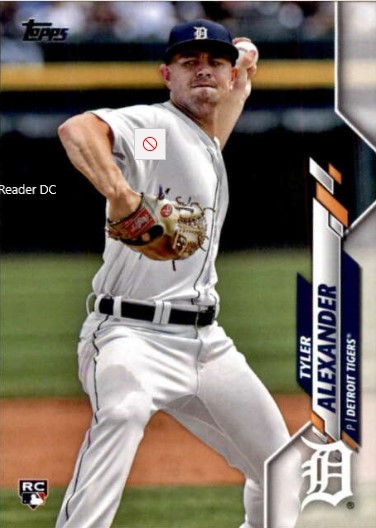
From Both Sides Now – Going Yard from Both Sides in a Single Game

Leury Garcia photo

Photo by rchdj10

Yesterday (July 25, 2020), Chicago White Sox’ 2B Leury Garcia went deep twice against the Twins, as the White bounced Minnesota 10-3, behind a five-home barrage. Garcia – batting in the nine-hole – went three-for-four in the game, with two runs scored and four RBI.  Side note:  It’s nice to write about something that happened this season for a change. 

What made Garcia’s game a bit special in BBRT’s view is that the switch hitter homered from both sides of the plate. He hit a solo shot left-handed to lead off the fifth (off Zack Littell) and added a three-run home run – right-handed – with two outs in the seventh off Devin Smeltzer.  It was only the second two-homer game for Garcia (in his eighth MLB season), who has a .257-25-123 stat line in 464 MLB games.

Now, homering from both sides of the plate is not as rare an occurrence as you might think.  It’s been done in the regular season a total of 341 times, and by 118 different different players. Still, it a feat the deserve recognition.   And, now, here are a few more “From Both Sides Now” tidbits:

  • The first player to homer from both sides of the plate in the same game was Wally Schange of the Philadelphia Athletics on September 8, 1916.
  • The career regular-season record for homering from both sides of the plate in the same game is 14 – shared by Mark Teixeira and Nick Swisher. Leaders among players homering from both side of the plate in the same game:

____________________________________________________________________

Both sidews

In 2019, two Diamondbacks homered from both sides of the plate in three games each: Ketel Marte (April 5, April 24, May 3) and Eduardo Escobar (June 10, July 17 and August 3.

_________________________________________________________________________

Players to Homer from Both Sides of the Plate in Ten or More Games

Mark Teixeira – 14 times

Nick Swisher – 14

Carlos Beltran – 12

Chili Davis – 11

Eddie Murray – 11

Tony Clark- 10

Ken Caminiti – 10

Mickey Mantle – 10

  • Only three players have hit home runs from both sides of the plate in the same inning: Carlos Baerga, Indians (April 9, 1993); Mark Bellhorn, Cubs (August 29, 2002); Kendrys Morales, Angels (July 30, 2012).
  • In 1996, the Padres’ Ken Caminiti hit a home run from both sides of the plate in the same game a record four times in a single season – three times in the month of August alone. Note: Caminiti also achieved the feat three times in a single month in September of 1995.

_____________________________________________________________

No team has had more instances of a player hitting long balls from both sides of the plate in a game than the Yankees – 56 times.  Here are the perpetrators:

Mickey Mantle (10 time)

Mark Teixeira (9)

Bernie Williams (8)

Jorge Posada (8)

Roy White (5)

Nick Swisher (5)

Tom Tresh (3)

Aaron Hicks (2)

Roy Smalley

Ruben Sierra

Tony Clark

Melky Cabrera

Carlos Beltran

Neil Walker

_____________________________________________________________________

BIG BOMBS IN THE BIG APPLE

From 1955-1965, a game in which a player homered from both sides of the plate occurred in the AL 14 times, with 13 of those being Yankees (Mickey Mantle 10, Tom Tresh 3).

The only non-Yankee to achieve the feat in the AL during that time span was the Red Sox’ Pumpsie Green (August 15, 1961). Green hit a total of just 13 home runs in his five-season MLB career.  BBRT Note: Green achieved historic significance as the first African-American player for the Boston Red Sox – the last MLB team to break the color line (1959). In the 1955-65 time span, there were only three NL games which saw a player homer from both sides of the plate – two by the Cubs’ Ellis Burton, one by the Dodgers’ Maury Wills.

  • Carlos Beltran and Nick Swisher share the record for hitting a home run from both side sof the plate in a single game for the most teams at five:  Beltran – Mets, Cardinals, Royals, Astros, Yankees; Swisher – A’s, Yankees, White Sox, Indians, Braves.

Only three players have homered from both sides of the plate in a post-season game.

Bernie Williams, Yankees       ALDS Game Three (October 6, 1995

Bernie Williams, Yankees       ALDS Game Four (October 5, 1996)

Chipper Jones, Braves             NLDS Game Four (October 4, 2003)

Milton Bradley, A’s                ALCS Game Two (October 10, 2006)

Primary Resources:  Baseball-Reference.com; Stathead.com; Baseball-Almanac.com

100Baseball Roundtable is on the Feedspot list of the Top 100 Baseball Blogs.  To see the full list, click here.

I tweet baseball @DavidBBRT

Follow/Like Baseball Roundtable’s Facebook Page here.  More baseball commentary; blog post notifications; PRIZES.

Member: Society for American Baseball Research (SABR); The Baseball Reliquary; The Negro Leagues Baseball Museum.
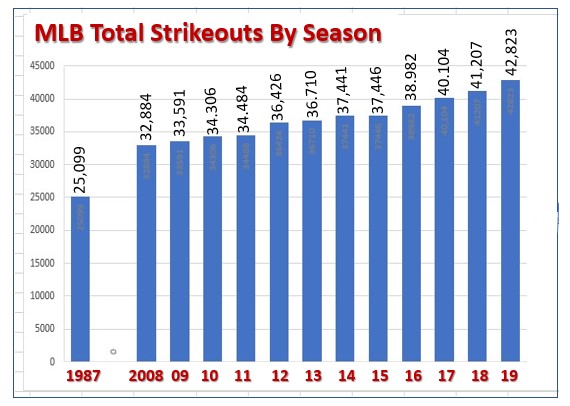
 

The Baseball Reliquary Shrine of the Eternals Ballot – A Baseball Diversion While “Sheltering at Home”

There is no joy in Mudville – Major League baseball is in timeout.

With the major league baseball season suspended as we respond to the COVID-19 pandemic, fans of the national pastime are searching for hardball-related diversions.   We’re watching “classic” ball games from the past, cueing up baseball movies, revisiting our baseball card and memorabilia collections, playing dice- and computer-based baseball games, reading (even re-reading) countless baseball books and challenging others (online) with increasingly obscure baseball trivia.  Heck, even old “Pitch Backs” are being pulled out of the back of the garage and Wiffle (c) Balls are flying in rec (wreck?) rooms.

ReliquaryNewWhere am I going with this? Early this week, another rite of spring brought baseball back to my home.  I received my annual Baseball Reliquary Shrine of the Eternals ballot; which means I can spend some joyous time pondering the character and characters that helped shape the history of our grand game (as presented in the always informative and creative biographies included with the ballot).

I’ll take a look at my choices from this year’s ballot in a bit, but first – for those not familiar with The Baseball Reliquary – a little background.


The Baseball Reliquary is an organization of fans dedicated to the free-spirited celebration of the human side of baseball’s history and heritage.

Reliquary (rel′ə kwer′ē)

Noun- a container or shrine in which sacred relics are kept and displayed for veneration.

While its “home” is in Pasadena, California, The Reliquary is not just a place.  The Reliquary really resides in the hearts of its founders, members, contributors and honorees – who all are important parts of the organization’s joyful (often irreverent, but always well-informed and fan-centric) celebration of all things baseball.  This celebration is fueled through The Reliquary’s Shrine of the Eternals, collection of historic artifacts, exhibitions and collaboration with the Whittier College Institute for Baseball Studies.

Let’s look at each of these.

The Shrine of the Eternals is the Reliquary’s best-known element and its honorees include (among others) a one-armed major league outfielder, a pitcher who once threw a no-hitter while high on LSD, a team owner who sent a midget to the plate, a man in a chicken suit, a member of Major League Baseball’s 3,000-hit club, a manager who won eight World Championships, a cartoon character who pitched his team to more than 1,000 losses, more than one best-selling author, a statistical wizard and even the sports editor of the Daily Worker (American Communist Party newspaper). The honorees are each unique in their roles in – and contributions to –   the national pastime, but they all share the distinction of having made a significant impact on the game.  Note: Each year, The Reliquary also recognizes distinguished service to baseball by a fan (The Hilda Award) and contributions to the preservation of baseball history (The Tony Salin Award).  

The Baseball Reliquary’s Collection of what BBRT would term “art-ifacts” is as diverse as its roster of Shrine honorees.  The collection includes (but is “oh-so not limited” to) the Walter O’Malley Tortilla, the Roger Bresnahan Potato, the Eddie Gaedel Jock Strap,  a Babe Ruth cigar, a Mother Teresa autographed baseball (a whole case actually), a heat-twisted 45-rpm record from the White Sox’ ill-fated Disco Demolition Night; and a  San Diego Chicken game-worn costume.

The Baseball Reliquary’s Exhibits have have covered such varied topics as Latino and Black baseball history, baseball in foreign policy, baseball literature and art, a celebration of baseball cards, and even the self-defining “Lasordapalooza.”

The Whittier (CA) College Institute for Baseball Studies is the first humanities-based baseball research center associated with a U.S. college or university, The Institute houses the Baseball Reliquary’s baseball-related research collection – books, periodicals and papers from distinguished authors, historians and journalists. It is open to students, scholars and the general public.

Why Not Join Now

As we now contemplate even more time with no action on the diamonds, I think joining The Baseball Reliquary would be a gem of an idea for all fans.    If you are interested, click here for BBRT’s full (and FUN) story of the history behind The Baseball Reliquary (You can skip the first few paragraphs, which mirror this post, and jump down to the text below the Reliquary logo.) Or, if you’ve already decided to consider membership, visit the Reliquary website at http://www.baseballreliquary.org.  


—–THE SHRINE OF THE ETERNALS 2020 VOTING—–

Now, on to the Shrine of the Eternals. Before I share my ballot, here’s what the Reliquary has to say about this honor.

“Similar in concept to the National Baseball Hall of Fame, the Shrine of the Eternals differs philosophically in that statistical accomplishment is not the principal criterion for election. The Baseball Reliquary believes that the election of individuals on merits other than statistics and playing ability will offer the opportunity for a deeper understanding and appreciation of baseball than has heretofore been provided by “Halls of Fame” in the more traditional and conservative institutions.

“Criteria for election shall be: the distinctiveness of play (good or bad); the uniqueness of character and personality; and the imprint that the individual has made on the baseball landscape. Electees, both on and off the diamond, shall have been responsible for developing baseball in one or more of the following ways: through athletic and/or business achievements; in terms of its larger cultural and sociological impact as a mass entertainment; and as an arena for the human imagination.”

Each year, the Baseball Reliquary submits a list of candidates to its members and the top three vote-getters are honored.  Reliquarians can vote for up to nine nominees.

Here’s a look at those who are getting my vote this year.

—–BASEBALL ROUNDTABLE’S 2020 SHRINE OF THE ETERNALS BALLOT—

Luke Easter (1915-79) … Sixth year on the ballot.

balloot“Luscious” Luke Easter was one of the most prodigious home run hitters of all time. His titanic blasts were known as “Easter Eggs.” Among his notables, Easter:

  • Was the first player to a homer into the farthest reaches of center field in the Polo Grounds;
  • Hit the longest home run in the history of old Cleveland Municipal Stadium – clearing the distant right field scoreboard; and
  • Was the first player to hit a drive over the CF scoreboard in Buffalo’s Offerman Stadium (at age 42), proving it was no fluke by hitting the second drive to ever to clear the scoreboard just a month later.

Easter began his baseball career in 1937, as an OF/1B and cleanup hitter for the St. Louis Titanium Giants (a company team) – and didn’t play his final game until 27 years later.  Everything about the 6’4”, 240-pound Easter was big – his stature, his bat, his love of the game, his love of life, his relationship with teammates and the fans and, later, even his Buick.

While he began showing his prowess at the plate in the late 1930’s, he really began carving his name into baseball history after getting out of the military in 1943.

In 1945, he starred with the barnstorming Cincinnati Crescents (for whom he hit the Polo Grounds home run noted above).

In 1947, he joined the Homestead Grays, where he hit .311, with 10 home runs in 219 at bats.  Research by Society for American Baseball Research Member Justin Murphy indicates Easter followed that up by hitting .363 for the Grays and tying teammate Buck Leonard for the Negro National League (NNL) lead in home runs (13) – helping the Grays to the NNL World Series Championship.

In 1949, Easter signed with the Cleveland Indians and made his major league debut on August 1 of that season – at age 34 – just the eleventh black player in the major leagues. While he hit only .222 in 54 games for the Indians, due in part to an injured knee, Easter showed his (already long-proven) power by going .363-25-92 in 80 games at Triple A San Diego.

Then, in 1950, he hit .280-28-107 in 141 games for the Indians – earning recognition from the Sporting News as the AL’s Most Outstanding Player.  In 1951, he went .270-27-103 for the Tribe and, in 1952, .263-31-97. Age and injuries were already taking their toll, however, and on May 4, 1954, the 38-year-old Easter played his final MLB game – ending his MLB career with a .274-93-340 line in 491 games.

Ah, but Luscious Luke was not done. He played on in the minor leagues until 1964 – putting up four seasons of 30 or more home runs and 100+ RBI – earning his way into the International League Hall of Fame.

Over his career, Easter also played winter ball in Puerto Rico, Venezuela, Mexico and Hawaii. A Winter-League star, Easter hit .402 for Mayaguez in the Puerto Rican League in 1948-49 (winning league MVP honors); led the Mexican Pacific Coast League (for Hermosillo) in homers in 1954-55; and lead the Puerto Rican Winter League in homers in 1955-56 and 1956-57.

Easter, later serving as a Union Steward for TRW in Ohio, was murdered during a payroll robbery in 1979.

Why did Luke Easter get my vote? Consider that non-other than Bill James rated him the second-best Negro Leagues’ first baseman of all time (behind only Buck Leonard) and Al Rosen (a teammate of Easter on the Indians, as well as a four-time All Star, two-time AL home run leader, 1953 American League MVP and 1989 National Executive of the Year) maintained, “Had Luke come up to the big leagues as a young man, there’s no telling what numbers he would have had.”

Easter comes up big on the BBRT “Shrine” ballot.

____________________________

Rube Foster (1879-1930) …. Twenty-second year on the ballot.

Andrew “Rube” Foster was an outstanding hurler, confined – by history – to pitching primarily for Black teams. He was a star on such squads as the Chicago Union Giants, Cuban X-Giants and Philadelphia Giants. Just how good was Foster on the mound? Records are sketchy, but the Baseball Hall of Fame reports that, in 1902, Foster ran off a streak of 44 straight victories and the Negro League Baseball Museum credits Foster with a 54-1 record that season.

Rube Foster’s tireless efforts earned him the unofficial title of “The Father of Black Baseball.”

Foster’s contributions to the national pastime, however, went beyond the mound. In 1911, he partnered with John Schorling (son-in-law of Charles Comiskey) to establish the Chicago American (Black) Giants. Under Foster’s leadership, the Giants became Black baseball’s most dominant team.

But Foster wasn’t done yet.  In 1920, he was a key player (cited by many as THE key player) in the founding of the Negro National League.  As the league flourished, Foster wore many hats. He served not only as the league’s president and treasurer, but also was the owner and manager of the Chicago American Giants – winning the NNL’s first three pennants.  By 1926, his demanding schedule had taken a toll and Foster suffered a nervous breakdown. He never fully recovered and passed away prematurely in 1930. Fans might enjoy Larry Lester’s book “Rube Foster in His Time: On the Field and in the Papers with Black Baseball’s Greatest Visionary.”

Rube Foster was elected to the National Baseball Hall of Fame in 1981.

__________________________________________________________

Julio Franco (1958 –) … Second year on the ballot.

If you believe “Old Guys Rule” – Julio Franco should be your king. 

As Rod Serling often said:  For your consideration: Only 25 Major League home runs have been hit by players who had passed their 45th birthday – and Julio Franco hit 20 of them.

Franco is also the oldest player to homer in an MLB game. Franco went deep at age 48 years, 254 days, hitting a two-run shot off Arizona’s Randy Johnson as Franco’s Mets topped the Diamondbacks 5-3 on April 26, 2006). In that same game, Franco also became the second-oldest MLB player to steal base – and, thus, the oldest player to homer and steal a base in the same game.

Franco is also the:

  • Oldest player to hit a grand slam (46 years, 308 days) – connecting as a pinch hitter for the Atlanta Braves in a 7-2 win over the Marlins on June 27, 2005;
  • Oldest player to record a multi-homer game, belting a pair of homers on June 18, 2005 (age 46 years, 299 days), as his Atlanta Braves topped the Reds at Great American Ball Park. Franco started at first base and went two-for-four with two homers and three RBI;
  • Oldest player to hit a pinch-hit home run, in the eighth inning of a Mets’ 7-2 win over the Padres at San Diego (April 20, 2006 – 47 years, 240 days);
  • Oldest player to steal two bases in a game (and in an inning) – (June 16, 3005 – 46 years, 297 days)’ and
  • Oldest player to be put into a game as a pinch runner (July 29, 2006 – 47 years, 340 days) … he delivered, promptly stealing second base, going to third on an errant throw.

From 1982 to 1994, Franco played primarily as a middle infielder and DH for the Phillies, Indians, Rangers and White Sox – making three All Star teams (MVP of the 1990 All Star Game), earning five Silver Slugger Awards and leading the American League in hitting at .341 for the Rangers in 1991. In that 1991 campaign, Franco collected 201 hits, 15 homers, 78 RBI, 108 runs scored and 36 steals in 45 attempts. At season’s end, he had hit .300+ in five of the previous six seasons – the lone exception being .296 in 1990.

In 1994, when the remainder of the MLB season was lost to a strike, Franco was in the midst of possibly his best campaign.  After 112 games, he was hitting .319, with 138 hits, 20 home runs, 98 RBI, 72 runs scored, and eight steals.  Franco was determined to keep swinging the bat and signed to play in Japan with the Pacific League Chiba Lotte Marines.  In the 1995 Japanese season, Franco hit .306 and won the Pacific League’s equivalent of the Gold Glove at first base.

Franco returned to MLB in 1996, joining the Cleveland Indians, hitting .322-14-76 in 112 games. In August of the following season, the Indians released Franco – who was hitting .284-3-25 at the time. He finished the 1997 campaign with the Brewers, hitting .241 in 14 games with Milwaukee.

In 1998, at age 39, Franco was back in Japan playing for Chiba Lotte; where he hit .290, with 18 home runs and 77 RBI in 131 games. Then in 1999, he celebrated turning 40 (when most ballplayers are retired or coaching) by hitting for a .423 average in the Mexican League and getting one late-season MLB at bat with Tampa Bay.

As he moved into his forties, Franco was far from finished as a player. He played in South Korea in 2000 (age 41), hitting .327-22-110.  In 2001, the well-traveled batsman was back in the Mexican League (Mexico City Tigers), where stellar play (a .437 average in 110 games) earned him a spot on the Atlanta Braves’ roster in September. Franco hit .300, with three home runs and 11 RBI over the final 5 ½ weeks of the MLB season.

From 2001 to 2007, the ageless wonder – professional hitter and pretty darn good first sacker – played for the Braves and Mets.  From 2001 through 2006 – ages 42 to 47 – Franco averaged .290 over 581 games.  He hit .222 in 55 games in his final MLB season – 2007 with the Mets and Braves.

Even at 49, Franco was not done battering baseballs. In 2008, he could be found at first base with the Tigres de Quintana Roo of the Mexican League (where he hit .250 in 36 games). That season, Franco – after 23 Major League seasons and 30 years after his first professional baseball game – announced his retirement as a player.

Oops? Not so fast. In 2014, at the age of 55, he appeared in seven games for the Fort Worth Cats of the independent United League – going six for 27.   Then in 2015, Franco was signed as player-manager of the Ishikawa Million Stars of the Japanese independent Baseball Challenge League (identified as a semi-pro league).

In 23 MLB seasons, Franco hit .298, with 2,586 hits, 173 homers, 1,285 runs, 1,194 RBI and 281 stolen bases. He also collected 618 minor league (U.S) hits, 316 in the Mexican League, 286 in Japan, 267 in the Dominican Winter League and 156 in South Korea and six in independent ball (U.S.).

Forever young, Mr. Franco – baseball’s Energizer Bunny – got my vote.

_____________________________________________________

Mamie “Peanut” Johnson (1935 – 2017) … Seventh year on the ballot.

Mamie Johnson was one of three females to play for the Indianapolis Clowns during the declining days of the Negro Leagues (and the only woman ever to pitch in the Negro Leagues).  Johnson took the mound to the Clowns for three seasons (1953-55), running up a 33-8 record.  Her exploits are chronicled in the children’s book “A Strong Right Arm: The Story of Mamie ‘Peanut’ Johnson,” by Michelle Y. Green.

________________________________


Mike Marshall (1943 –  ) … Fifteenth year on the ballot.

I should probably say Doctor Mike Marshall, since this former major league reliever (14 seasons … 1967, 1969-81) earned three college degrees, including a Ph.D. in Kinesiology from Michigan State University. Kinesiology is the study of muscle movement and Marshall used his knowledge to develop his own exercise program focused on minimizing stress, reducing injury and accelerating recovery time.  While his unorthodox methods, advanced education and outspoken approach often had him at odds with baseball’s traditionalists (and may be part of the reason he pitched for nine teams in 14 seasons), they did get the job done.

The fact is, we never saw a closer quite like Mike Marshall before he came along – and we’re not likely to see one like him again. In 1974, as a Dodger, he put up the grand-daddy of all relief seasons – setting the single-season MLB records for appearances with 106 and innings pitched in relief at 208 1/3. He finished the campaign 15-12, with a league-topping 21 saves and a 2.42 ERA.  That season, Marshall was called on to go more than one inning in 74 games (68.5 percent of the time) and he toiled three or more innings 22 times. He also relieved in 13 consecutive regular-season games – an MLB record later tied (1986) by the Rangers’ Dale Mohorcic. His efforts won him the 1974 Cy Young Award and recognition as The Sporting News NL Pitcher of the Year.

Marshall led his league in games pitched four times and saves three times – finishing 97-112, 3.14 with 188 saves.

A true “fireman” from an era when closers came in to put out fires and stayed on the mound to ensure they were no flare ups, Marshall gets my vote for the Shrine.

______________________________________

Pete Reiser (1919-1981) … Eighth year on the ballot.

Combine Willie Mays’ skill set (younger folks, think Mike Trout) with Pete Rose’s hustle and on-field abandon and you have Pete Reiser. In his first full MLB season (CF, Dodgers, 1941), a 22-year-old Reiser dazzled defensively and led the NL in runs scored (117), doubles (39), triples (17), batting average (.343), total bases (299), Slugging Percentage (.558) and hit by pitch (11) – tossing in 14 home runs and 76 RBI for good measure. He was an All Star and finished second in the National League MVP balloting.  Unfortunately, unpadded outfield walls, helmet-less at bats (the fiery Reiser was a frequent bean ball target) and aggressiveness on the base paths (Reiser twice led the NL in stolen bases and holds the NL record for steals of home in a season at seven) took their toll.

In his ten-season career, Reiser endured five skull fractures, a brain injury, a dislocated shoulder and a damaged knee.  He was carted off the field 11 times during his career (six times unconscious) and once actually given last rites at the stadium – and he played on. The three-time All Star retired as a player with a .295 career average, playing in 861 games over ten seasons. No telling what he might have done with padded outfield walls and batting helmets.  Pete Reiser was a true – and talented – gamer. For more on Reiser, try “Pete Reiser: The Rough and Tumble Career of the Perfect Ballplayer,” by Sidney Jacobson.

For a combination of pure talent and reckless abandon – Pete Reiser gets my vote.

__________________________________________

Bing Russell (1926-2003) … Fifth year on the ballot.

Nate Oliver “Bing Russell” is probably best known to the general populace as Deputy Clem Foster in the TV series Bonanza.  His TV and film credits, in fact, run long and deep.  He was cast in the film The Magnificent Seven and had guest roles in such television series as Wagon Train, Johnny Ringo, The Rifleman and The Big Valley.  And he was more than just a cowboy, he was also seen in television roles in series ranging from The Rockford Files to The Twilight Zone to The Monkees.

For baseball fans, Russel’s greatest role may have been as owner of the Portland Mavericks – an independent entry into Northwest League.  Shepherding the only independent team in the league, Russell took a group of ballplayers described in his Shrine of the Eternals nomination as “misfits, reprobates, hangers-on and washouts” and turned them into winners and the toast of the town – much to the chagrin of baseball’s organized franchises.

It all came about after organized ball moved the struggling Triple A Portland Beavers out of the city after the 1972 season. Russell led a move to establish the Class C Portland Mavericks (as an independent franchise) in the city.  As an owner, Russell’s focus was fun – and perhaps a bit of rebellion.  He had no ties to any MLB franchise, banned corporate advertising in the ball park and filled his team from open tryouts.  (He also, eventually, hired professional baseball’s first female General Manager, as well as its first Asian-American General Manager.)

How’d all of this work out?  Well, major league baseball did not expect the ragtag Mavericks to do well against their “in-the-system” prospects. They underestimated the impact of  Russell’s focus and style – and the determination of his last-chance hopefuls.

In 1973, the Mavericks went 45-35 and finished first in the league’s South Division.

In 1974, they went 50-34 and finished second in the West Division – just two games behind the Dodgers’ Bellinger farm club.

In 1975, it was 42-35 and first place in the North Division.

In 1976, it was 40-32 and another North Division first-place finish.

In 1977, 44-22 and first place in the South Division. The Mavericks, that season, had the best record in the league, won their division by 22 games and drew 125,000 fans to 33 regular season home games (a minor-league short-season record).  Their average attendance was 3,788 fans per game.

Russell and his Mavericks had rekindled Portland passion for baseball with a combination of fun, irreverence and winning (Sounds like a Reliquary-friendly combo.) They had proven that an independent franchise could compete and win on the field and at the turnstiles. And, organized baseball took notice. They wanted the territory back and eventually – after some hard-fought legal battles – got it (although they had to pay Russell what was, at the time, by far the highest ever minor-league territorial rights payment; a victory for Russell and independent baseball).

So, in 1978, the Mavericks were dissolved and were replaced by the PCL Portland Beavers. By the way, the Beavers drew an average of just 1,397 per game. Oh, and Russell’s success was ultimately documented in the 2014 film “The Battered Bastards of Baseball.”  You should see it.

Three final fun facts about Russell and his life-long love affair with baseball.:

1) He grew up near the Yankees Spring Training Camp in St. Petersburg, Florida and – as youngster – became a kind of unofficial mascot for the team – mingling with the likes of Joe DiMaggio, Lefty Gomez and Lou Gehrig.  (Reportedly, Gehrig gave Russell the bat he used to hit his last major-league home run);

2) Later, pre-Mavericks, Russell created a number of detailed baseball training/instructional films; and

3) Bing Russell’s son, noted actor Kurt Russell, played four seasons of minor league baseball and his grandson Matt Franco played eight MLB seasons (Cubs, Mets, Braves).

For a life-long commitment to baseball, an attitude consistent with The Baseball Reliquary’s values  and a solid measure of success on the field and at the gate, Bing Russell gets my vote.

____________________________________

Justine Siegal (1975- ) … Second year on the ballot.

In 1988, a baseball coach told 13-year-old pitcher-third baseman Justine Siegal that she wasn’t wanted on his (boys) baseball team, that she should play softball instead. That denied opportunity to play the game she loved helped create a powerful gender-equity dynamo and, while there is still a long way to go, baseball is becoming the better for it.

Being from Minnesota, I take pride in the fact the Siegal earned a Bachelor’s Degree (Concentration: Leadership: Religion, Military and Baseball) from Northfield, Minnesota’s St. Olaf College. She went on to earn a Masters degree in Sport Studies from Kent State University and a Ph.D. in Sport and Exercise Psychology from Springfield (MA) College.  And through all of this, Siegal never lost her passion for – and focus on – baseball and generating opportunity for women (and girls) to take their place in the national pastime.

Consider:

  • In 1998, Siegal organized the Baseball for All Foundation focused on expanding opportunities for girls to “get in the game” of baseball (Baseball for All;
  • In 2002, she organized Sparks – the first all-girl baseball team to compete in a national boys’ tournament;
  • In 2008-10, she was an assistant coach of the Springfield College Baseball Team;
  • In 2009, she became the first female coach of a professional men’s baseball team, – the Brockton Rox of the independent Canadian-American Association of Professional baseball;
  • In 2011, she was the first woman to throw batting practice to a major league team (Cleveland Indians Spring Training);
  • In 2015. She was the first female hired for coaching duties with a major-league franchise (coaching in the Arizona Instructional a league for the Oakland A’s franchise); and
  • In 2016, she was brought on as Mental Skills coach for the Israel Team for the 2017 World Baseball Classic.

Siegal currently serves as Director of Sports Partnerships at the Center for the Study of Sport in Society at Northeastern University – a position she has held since 2011. For more on Siegal and the impact of her work, I’d suggest visiting the baseballforall.com website

When major league baseball sees its first female player, she will owe a tip of the cap to Justine Siegal. For her contributions to that eventuality, Siegal gets my vote.

_______________________________________

Rube Waddell (1876-1914) … Twenty-second year on the ballot.

Rube Waddell is almost universally recognized as the zaniest player in MLB history (that alone should earn him a spot in the Shrine).  Add the fact that he also was one of the best pitchers (at least when he was focused) in the game and Waddell seems a perfect fit for Reliquary honors.

Waddell was known to:

  • Leave a ball game to chase fire engines;
  • Miss a game he was scheduled to start because he was fishing or playing marbles with neighborhood kids;
  • Bring his outfielders in to sit on the grass and then proceed to fan the side;
  • Wrestle alligators in the off-season; and
  • Much too frequently do battle with owners and managers.

Waddell simply was more interested in the freedom to enjoy life and do things his way than in money or professional stability.  But, when Waddell was on his game, he was arguably the best pitcher of his time. The 6’1”, 195-lb. lefty led the AL in strikeouts six consecutive seasons (1902-1907) – by a wide margin.

In 1902, Waddell joined the Philadelphia Athletics in June – making his first start on June 26 (with just 86 games left in the season). Waddell proceeded to win 24 games (the league’s second-highest total) against seven losses, with a 2.05 ERA.  Despite his shortened season, he led the AL with 210 strikeouts, fifty more than the runner-up (none other than Cy Young).

In 1904, Waddell set a modern (post-1900) MLB record with 349 strikeouts that stood until 1965.  Waddell, elected to the National Baseball Hall of Fame in 1946, finished with a 193-143, 2.16 stat line – leading the AL in strikeouts six times, ERA twice, wins once and complete games once. For more on Waddell, BBRT suggests: “Rube Waddell: The Zany, Brilliant Life of a Strikeout Artist,” by Allan Howard Levy.

Honoring the zaniest player in history – a title it appears Waddell will hold into eternity – just seems right for the Shrine of the Eternals. Rube gets my vote.


Annotation 2020-04-08 211642

Primary Resources:  The Baseball Reliquary; Baseball-Reference.com; The Baseball Reliquary; The Society for American Baseball Research.

Coming in May – The Results of The Baseball Reliquary’s 2020 Shrine of the Eternals balloting – and a full list of past honorees.

BASEBALL ROUNDTABLE ON THE TOP 100 BASEBALL BLOG LIST

100Baseball Roundtable is on the Feedspot list of the Top 100 Baseball Blogs.  To see the full list, click here.

I tweet baseball @DavidBBRT

Follow/Like Baseball Roundtable’s Facebook Page here.  More baseball commentary; blog post notifications; PRIZES.

Member: Society for American Baseball Research (SABR); The Baseball Reliquary; The Negro Leagues Baseball Museum.
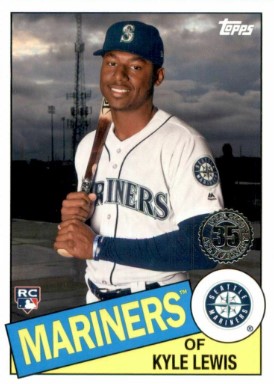
2020 Baseball Roundtable John Paciorek Award – Bert Shepard … Hero On and Off the Field

JPAFIn 2014, Baseball Roundtable launched the John Paciorek Award (JPA). The JPA recognizes players who have had short, often very short, major league careers, but whose accomplishments, nonetheless, deserve recognition.  Past winners have included a player whose every MLB hit (three in nine career at bats) was a home run;  a player who had only one MLB at bat, but earned  a World Series ring and a Purple Heart; a player who had just two home runs in 61 MLB at bats (for the vaunted Yankees and Dodgers), but whose “body of work” made him one of just two players in MLB history to homer in their first and final official appearances in a major league batter’s box; and more.  (Note: Information on John Paciorek’s career – the inspiration for the JPA – can be found at the end of this post. Paciorek’s day in the sun constitutes arguably the best one-game MLB career ever.)

For 2020, given the circumstances across our nation and around the globe. Baseball Roundtable decided to look for a major-league short-timer who exemplified heroism – and who exhibited courage, commitment, perseverance and high spirits in the face of adversity. Let me diverge for a moment here and thank today’s heroes – those who are (still) working to respond to our health care needs, keep us safe or make our lives as comfortable/normal as possible.  You know who I’m talking about: medical professionals and support staff; first responders (police, fire, paramedic); big rig drivers; shipping and delivery workers; postal employees; grocery store workers; public transit workers; restaurant staff.   I’m sure I missed some, but to all of those working hard for all of us, thank you for the risks you take and the services/comfort you provide. And, a thought for the day, let’s all say thank you to – and tip – these people whenever we can.

Now let’s take a look at this year’s John Paciorek Award winner – an individual who showed tremendous courage, commitment to duty, perseverance and endurance in the face of adversity – qualities we can all use right now. This year’s JPA honorees was a true hero both off and on the baseball diamond.

—-BASEBALL ROUNDTABLE 2020 JOHN PACIOREK AWARD HONOREE —-

BERT SHEPARD

Robert “Bert” Shepard was born and raised in western Indiana – a natural athlete who, during his high school years, played basketball and football, as well as semipro baseball (his high school did not have a baseball team). His dream? To become a professional baseball player. Little did he know that his pursuit of that dream would be interrupted by a global conflict.

In 1939, Shepard signed a minor-league deal with the White Sox.  Over the next four seasons (1939-42) he played for six minor-league teams, never rising above Class C. While he often showed good stuff, Shepard had control issues. In his best season, 1942 (by this time in the Cardinals’ system), Shepard went 9-13, 4.45 – but walked 122 batters in 172 innings.  With Shepard still working on his command, World War II came calling with a different kind of command.

In 1943, Shepard interrupted his baseball pursuits to enlist in the U.S. Army, where his natural athleticism helped him earn a commission as a P-38 Lightning fighter pilot. Stationed out of England, Shepard flew more than thirty combat missions. On May 21, 1944, a critical air attack on an airfield near Hamburg, Germany was in the works and, although he was not scheduled to take part, Shepard volunteered for the mission (which would prove to be 34th and final combat flight). On the return from the attack, Shepard’s plane was shot down and he was injured and captured.  His wounds required the amputation of his right leg below the knee.

While he was a Prisoner of War, a fellow prisoner (a Canadian medic) cobbled together an artificial lower leg for Shepard (out of scrap metal, wood and leather) and Shepard actually pitched in Stalag cricket matches using the makeshift prosthesis. After eight months as a P.O.W., Shepard was released as part of a prisoner exchange. Shortly after his return,  Shepard he began practicing with a local semipro team – noting that he was lucky his prosthesis was on his right leg, since (as a southpaw) it was his landing leg rather than his push-off limb.

Bert Shepard’s World War II heroism earned him the Distinguished Flying Cross,

Air Medal and Purple Heart.

Then came a lucky coincidence. Shepard, while being fitted for a new leg at Walter Reed Hospital, was fortunate enough to be visited by Undersecretary of War Robert Patterson – who just happened to be a baseball fan and friend of Washington Senators owner Clark Griffith. In his conversation with Patterson, Shepard mentioned his desire (and commitment), despite his injuries, to once again play professional baseball. Patterson relayed Shepard’s comments to Griffith, who brought the decorated veteran in for a tryout and signed him to serve as a coach and batting practice pitcher – and to take the mound in the occasional exhibition games (where Shepard acquitted himself well).  After an effective four-inning outing against the Dodgers in a July 1945 exhibition (raising funds for the War Relief effort), Shepard was added to the Senators’ active roster. Another step toward his major-league dream.

Bert Shepard made many visits to veterans hospitals, made a training film for amputees and was an inspiration for injured veterans – which may be exactly what Undersecretary of War Robert Patterson and Washington Senators owner Clark Griffith had in mind.

While Shepard was on the Senators’ active roster, the team was involved in a tight pennants race (the club would finish 1 ½ games behind the AL Champion Tigers) and manager Ossie Bluege was reluctant to use him in critical situations.

Then, on August 4, 1945, the opportunity to bring the war hero to the mound surfaced. It came with the Red Sox leading the Senators 14-2, with a runner on second and two outs in the top of the fourth. The Senators were in the second game of a double header, had already played twin bills on August, 1, 2, and 3 and were slated for another double dip on August 5.  The pitching staff was beleaguered and Shepard would prove to be just what the doctors ordered.

He came into a game  in which the BoSox bats were sizzling. They had already scored 12 runs (seven hits, six walks) in the inning, had a runner on second and clean-up hitter George “Catfish” Metkovich at the plate.  Shepard looked comfortable on the mound and pitched as well as he ever had (maybe even better). He struck out Metkovich to end the inning – and went on to finish the game – giving up just one run over 5 1/3 frames.

Shepard

It was to be Shepard’s sole MLB appearance – but it was a good one, ending in a career 1.69 ERA for the only one-legged pitcher in baseball history.  Shepard was released by the Senators on September 30, 1945, but retained his passion for the game.

In 1946, with major league players now returning from military service, Shepard did not make the Senators’ active roster, but was signed as a coach. Shepard’s competitive fires were still burning however, and he  asked to be sent down to the minors, where he could prove himself on the field. His control issues continued and his situation was complicated by additional surgery (to remove more of his leg) after the season. Shepard signed with the St. Louis Browns for 1947, but was released after a stint with the Elmira club of the Eastern League. Additional surgeries followed, but Shepard continued to play the game he loved – taking the minor-league mound as late as 1955, pitching in semi-pro leagues and managing in the minor leagues in 1949, 1952 and 1954.

After finally hanging up his baseball spikes, Shepard’s competitive spirit continued and he took up golf – winning the United States Amputee Gold Championship in 1968 and 1971/

Shepard passed away in 2008, at age 87.

Primary Resources:  Baseball-Reference.com; Bert Shepard Society for American Baseball Research biography, by Terry Bohn; Shot Down in the Prime  of Life: Bert Shepard, Who Pitched One Major League  Game With One leg, Searched  for years to Find Out Who Saved His Life,  by Chris Dufresne, Los Angeles Times, October 6, 1995; Valor  of Many Stripes, by Scott Baron, 2019. McFarland and Company; Bert Shepard, 87, Who Pitched in Majors After War Amputation Dies, by Richard Goldstein New York Times, June 20, 2008.


—- PAST JOHN PACIOREK AWARD HONOREES (with links) —-

2014 – Brian Scott Dallimore

In his first start (not his first game) for the 2004 Giants, Dallimore had two singles, a Grand Slam (his first MLB hit and only MLB home run), a walk and a hit by pitch.  For the full JPA take on Dallimore’s 27- game MLB career, click here.

2015 – Roy Gleason

Gleason played in just eight MLB games, had a double in his only MLB at bat – but also earned a World Series ring (1963) and a Purple Heart. Ultimately, he was the only ballplayer with MLB experience to serve on the front lines in Vietnam. For the full JPA take on Gleason, click here. Note: Gleason’s life is detailed in the book “Lost in the Sun – Roy Gleason’s Odyssey from the Outfield to the Battlefield.”

2016 – John Allen Miller

Miller played just 32 MLB games (during the 1966 and 1969), taking the field (at 1B/LF/3B/2B) for the Yankees and Dodgers. Miller collected ten hits in 61 MLB at bats (.164 average) and hit just two home runs – but he made those long balls count.  Miller made his MLB debut with the Yankees on September 11, 1966 and hit a two-run homer in his first big league at bat – making him (surprisingly) the first Yankee ever to homer in his first MLB at bat. (Little did Miller know he would not get another home run or RBI until the final at bat of his MLB career.)  Miller’s final at bat came as a Dodger (September 23, 1969) and he stroked a solo home run.  That narrow “body of work” made Miller one of just two players in MLB history to homer in their first and final official appearances in a major league batter’s box. For more on Miller, click here.

2017 – Chris Saenz

RHP Chris Saenz’ big day came on April 24, 2004 – when he was called up from Double A Huntsville (where he was 1-1, 3.86) to make a spot start against the Saint Louis Cardinals, whose powerful lineup included the likes of Albert Pujols, Scott Rolen, Jim Edmonds and Reggie Sanders.   The rookie went six innings, giving up just two hits, three walks and no runs, while fanning seven. There was some speculation (primarily among sportswriters and fans) that Saenz’ performance might earn him another start or two, but two days after his debut, he was on his way back to Huntsville.  Unfortunately, his minor league season included a September elbow injury that required Tommy John surgery and he never returned to the majors. Statistics before 1900 can be sketchy, but baseball-reference.com shows that Saenz is the only pitcher to complete a one-game MLB career of at least five innings pitched, without giving up a single run (earned or unearned). For more details on this JPA honoree, click here.

2018 – Keith McDonald

Keith McDonald’s MLB career (Cardinals 2000-2001) covered just eight games and 11 plate appearances (nine at bats) and three hits – but he made them count.  All of McDonald’s safeties were home runs – making him the only MLB player with more than one career hit who can look back on major league career in which his every hit was a home run.  McDonald is also one of only two players – and the only National Leaguer – to homer in his first two major league plate appearances.  For the full story, click here.

2019 – Harley Hisner

Harley Hisner’s MLB tenure encompassed the day of September 30, 1951. That’s when the 24-year-old righty faced the New York Yankees – and a lineup that included five future Hall of Famers: Mickey Mantle in RF; Joe DiMaggio in CF; Phil Rizzuto at SS; Johnny Mize at 1B; and Yogi Berra behind the plate. In is very first MLB inning, Hisner faced five batters, four of them future Hall of Famers, and gave up two singles and no runs.  His place in history? One of those singles was Joe DiMaggio’s last MLB safety. He faced Mickey Mantle four times in the game – walking him once, fanning him twice and getting him to hit into a double play.  Hisner’s final career stat was 0-1, 4.50, with six innings pitched, seven hits, three earned runs, four walks and three strikeouts. For more on Harley Hisner and his ongoing involvement in and love of the game (he went on to earn the Northeast Indiana Baseball Association Colin Lister Award for “dedication to the game of baseball and its historic legacy,” click here.


—-INSPIRATION FOR THE JPA—–

PaciorekYOungJohn Paciorek – signed out of Saint Ladislaus High School in Hamtramck, Michigan (where he had starred in football, basketball and baseball) – appeared in his first major league game on the final day of the 1963 season (September 29) at the age of 18.  The 6’ 1”, 200-pound outfielder had spent the 1963 season with Class A Modesto Colts. The Colts’ parent club, the Houston Colt .45s (that was the current Astros’ franchise name back then), was suffering through a difficult season. The team was 65-96 going into that final game.  Looking to the future, Houston had, in fact, fielded an all-rookie lineup (average age 19) on September 27. Youth was still being served two days later when John Paciorek started his first MLB game. The results were surprising – and worthy of recognition.

pACIOREKPlaying right field and batting seventh in a 13-4 win over the NY Mets, Paciorek ended up with three hits and two walks in five plate appearances, with four runs scored and three runs batted in.  Perhaps equally surprising is that it was not only Paciorek’s first major league appearance, it was to be his only MLB appearance.  Back pain the following spring, followed by surgery (he played 49 minor league games in 1964 and missed all of the 1965 season), put an end to his MLB playing days. (Paciorek did play in four more minor league seasons.)  Still, you will find John Paciorek in the Baseball Encyclopedia and his is arguably the greatest one-game MLB career ever.  Among one-gamers, he holds the record for times on base and runs scored, and shares the record for batting average, on base percentage and RBIs.

BooksPaciorek, by the way, went on to become a high school teacher and multi-sport coach and is the author of four books (Plato and Socrates – Baseball’s Wisest Fans; The Principles of Baseball: And All There Is To Know About Hitting; and If I Knew Then What I Know Now.  You also can enjoy Paciorek’s prose (and expertise) directly at his blog “Paciorek’s Principles of Perfect Practice” by clicking here. You can find out even more about Paciorek in Steven Wagner’s 2015 book “Perfect: The Rise and Fall of John Paciorek, Baseball’s Greatest One-Game Wonder.”  (See the review of “Perfect” by clicking here.)

If I only Knew

A final note. John Paciorek’s insight into the national pastime should come as no surprise. Paciorek comes from a true “baseball family.”  He was the first born of eight siblings and was followed to the big leagues by younger brothers Jim and Tom Paciorek.  (Like John, Jim’s MLB career was short – 48 games for the Brewers in 1987. Brother Tom, however, achieved a .282 average over an 18-season MLB career.


100Baseball Roundtable is on the Feedspot list of the Top 100 Baseball Blogs.  To see the full list, click here.

I tweet (on X) baseball @DavidBaseballRT

Follow/Like Baseball Roundtable’s Facebook Page here.  More baseball commentary; blog post notifications; PRIZES.

Member: Society for American Baseball Research (SABR); The Baseball Reliquary; The Negro Leagues Baseball Museum.