Baseball Roundtable April 2021 Wrap UP

The first month of MLB’s 2021 regular season has come to an end and it’s time for Baseball Roundtable’s traditional monthly wrap up:

  • A look at the April stories and stats that caught BBRT’s eye;
  • April won-lost records (future Wrap Ups will include the most recent month and year-to-date stats and standings);
  • BBRT’s Players and Pitchers of the Month; and
  • BBRT’s “Trot Index.”

Note: If you are more into stories than stats, you can scroll down to the “Highlights” section. 

Just Try to Sneak One past Nicky “Two-Strikes”

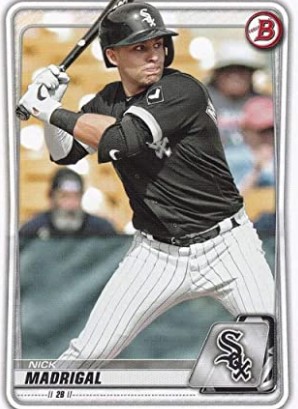
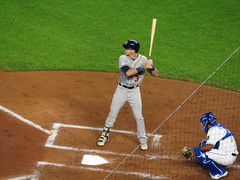
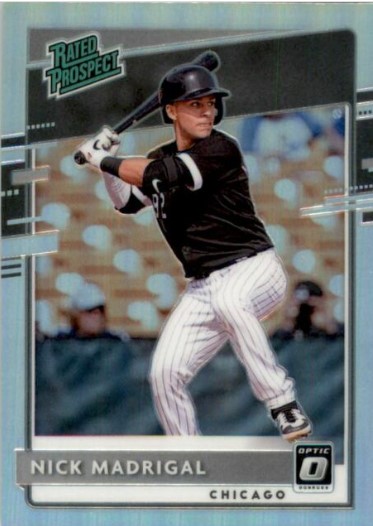
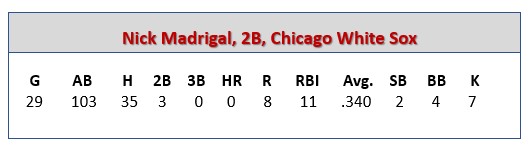
Two strikes?  No problem. This April, White Sox’ 2B Nick Madrigal hit hit .355 in at bats where he had two strikes on him – and, within that set of at bats, hit .364 on 0-2 counts.  Small sample size?  Yes, but consider that, in his two MLB seasons, Madrigal has hit .333 in 87 at bats which stretched to a two-strike count, has hit .529 (9-for-17) on 0-2 pitches and has hit .405 after falling behind 0-2 in an at bat (15-for-37). 

Before we get into the details, here are a few events that helped shape April 2021 in MLB (more on these and other April “happenings” in the “Highlights” section).  In April, we saw:

  • Two no-hitters (Carlos Rodon & Joe Musgrove);
  • A triple play (Reds);
  • Three three-homer games (J.D. Martinez, Ryan McMahon, Vlad Guerrero, Jr.);
  • A player (White Sox’ rookie Yermin Mercedes) start a season with a record eight straight hits;
  • A starting pitcher (Corbin Burnes) strikeout 49 batters without giving up even one walk; 
  • Angels’ two-way player Shohei Ohtani do something that hasn’t been done in 100 seasons – start a game on the mound when he was also leading MLB in home runs on the season.  (Last done by, of course, Babe Ruth – back in 1921.);
  • Two qualifying batters hit .400 for the month (Mike Trout and Yermin Mercedes) and a third (Byron Buxton) outhitting them both, but one plate appearance short of qualifying for the leader board;
  • Two qualifying pitchers (Jacob deGrom and Carlos Rodon) turning in April ERA’s under 1.00 and a third (Danny Duffy) turning in an even lower ERA than deGrom and Rodon, but falling one inning short of qualifying for the leader board;
  • One player (Joey Votto) notching his 300th career home run; 
  • One team (Tigers) averaging below .200 for the month;
  • One division, the NL East with no team over .500 – and the only team in the Division (Marlins) with a positive run differential was in last place at the end of April;
  • The Padres swiping 33 bases; the Mets just three;
  • Despite the DH taking pitchers’ whiffs out of the mix, we saw that the top three teams in batters’ strikeouts in April were all from the AL (Rangers, Tigers, Rays). 

Hmm.  How About Those Record Books?

There were 14 complete games recorded in April 2021 – six of them in seven-inning doubleheader contests.  Of the ten complete-game shutouts that went into the record books, four were part of seven-inning doubleheaders. 

Again, more on these and other April “stories” in the Highlights section.  Before we get deeper into April stats, let’s look at BBRT’s Players and Pitchers of the Month.

—–PLAYERS AND PITCHERS OF THE MONTH (SEPTEMBER)—–

NATIONAL  LEAGUE

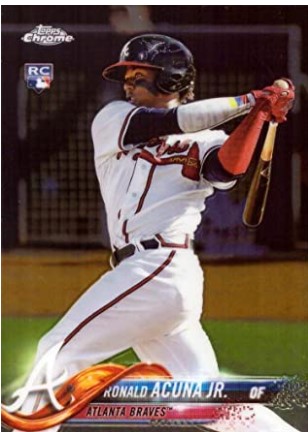
Player of the Month – Ronald Acuna Jr., OF, Braves
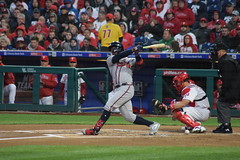
Ronald Acuna, Jr. – just 23-years-old – continues to make his presence known on the field.  His .341 April average was second among NL (qualifying) players, his eight home runs tied for tops in the NL (one behind the Red Sox’ J.D. Martinez overall), his 25 runs scored were the most in MLB and  his 18 RBI were seventh in the NL.  Add in his 15 walks and two HBP and his .443 on-base percentage was third among NL qualifying hitters. .  During the month, Acuna scored two or more runs in eight games. Acuna also stole three bases in April.

Honorable Mention(s): Jesse Winker of the Reds provided average and power with a .370-6-16 line, with his average leading NL qualifiers and his 30 hits tied for third in the NL.  BBRT also looked at the Dodgers’ Justin Turner, who put up a .330-6-20 stat line in April. 

Pitcher of the Month –Jacob deGrom,  LHP, Mets

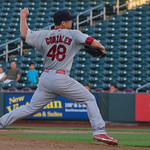
Photo by slgckgc

 Jacob deGrom, started five games in April, putting up (among qualifiers) an MLB-best 0.51 ERA,   and second-lowest WHIP (0.57), while fanning an NL-tops 59 batters in 35 innings (tying Nolan   Ryan’s record for the most whiffs in the first five starts of a season (1978).   In his five starts,   deGrom gave up   just 16 hits and only two earned runs (one earned run in each of his two   losses  – over 14 innings).  On April 23, he tossed a two-hit, 15-strikeout, complete-game shutout against the Nationals. 

Honorable Mention(s): Joe Musgrove of the Padres pitched to a 2-2 record, with a 1.24 ERA (second only to deGrom among NL qualifiers).  He also tossed the first no-hitter in Padres’ history and fanned 41 batters (five walks) in 29 innings.  The Brewers’ Corbin Burnes also deserves mention, after going 2-2 with a 1.53 ERA during the month, striking out 49 batters (without a single walk) in 29 1/3 innings.  Unfortunately, Burnes was on the Injured list when April closed, so we’ll have to wait to see how much farther he can take the streak. 

Life Just Isn’t Always Fair

While Jacob deGrom’s 0.51 April ERA resulted in a 2-2 record for the month, Steven Matz (Blue Jays) translated a 4.00 ERA into a 4-1 April record. 

AMERICAN LEAGUE

Player of the Month – Byron Buxton, OF, Twins
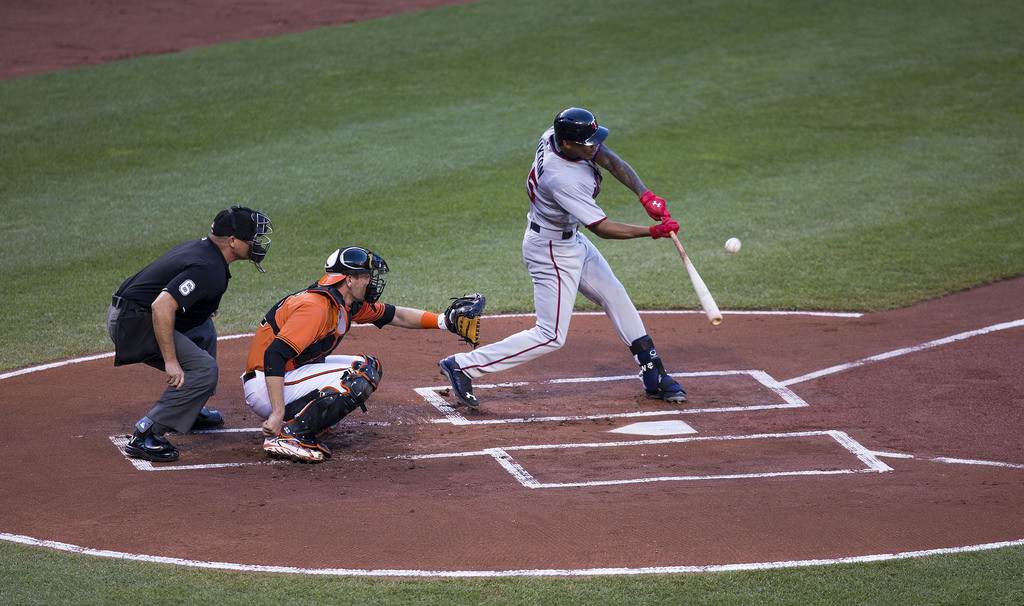
This was a tough decision, with an eight-time All Star and three-time MVP (Mike Trout), a rookie (Yermin Mercedes) and a often-injured, seven-season MLB veteran (Byron Buxton) having his best start ever all in the running.  All three offered one of those “bright and shiny things” that grab BBRT’s attention – a .400+ average (although Buxton fell one plate appearance short of qualifying for the leader board).  BBRT’s is going with Buxton, who put it all together in April with a .426 average, eight home runs (second in MLB only to J.D. Martinez’ nine), 14 RBI, 15 runs scored, three stolen bases, an .897 slugging percentage and Gold Glove caliber defense. Buxton was held hitless only twice in 18 games. He did it all. 

Honorable Mention(s): In April, Mike Trout played like – Well, like Mike Trout. In fact, he may be having the best April start in his already storied career. His .425 average was tops among MLB qualifiers and he added six home runs, 14 RBI and 18 runs scored (in 21 games). White Sox’ rookie Yermin Mercedes (.415-5-16) pretty much kept pace with Buxton and Trout at the plate, but serves primarily as a DH (which costs him a “point” or two).  You’ll find more on Mercedes in the Surprise Player of the Month recognition.  I also considered the Red Sox’ primary DH  J.D. Martinez, who hit .333-9-25.  Martinez’ nine April homers and 25 RBI each led all of MLB, his 33 hits were third and he had a three-homer game and ten multi-hit games.

Pitcher of the Month – Carlos Rodon, LHP, White Sox
Photo by rchdj10

 Going with White Sox’ starter Carlos Rodon, whose April was nothing short of remarkable. His   four victories (no losses) tied for the most in MLB.  His 0.72 ERA was  the lowest among Al   qualifiers and second only the Mets’ Jacob deGrom  He also fanned 36 batters in 25 innings and,   of course (another bright and shinny thing), threw a no-hitter. In addition, Rodon gave up a total   of seven hits in four starts and held hitters to a MLB-low (among qualifiers) .085 batting average.   His WHIP of 0.64 was the lowest among AL qualifiers. 

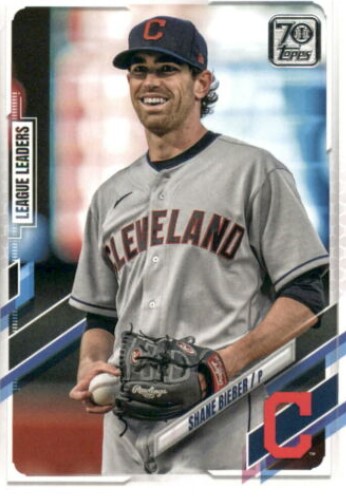
Honorable Mention(s); The Yankees’ Gerrit Cole was  4-1 in six starts, with a  1.43 ERA (second among AL qualifiers). In addition, Cole’s had 0.72 WHIP in April and his 62 strikeouts (in 37 2/3 innings) were (second only to Shane Bieber’s 68.  The Indians’ Shane Bieber finished the month with an MLB-leading 68 whiffs in 42 1/3 frames.  Still, he had two fewer wins (3-2) than Rodon; a higher ERA (2.76); and a higher WHIP (0.99).  Similarly, while the Royals’ Danny Duffy’s ERA was a minuscule 0.39, his WHIP of 1.04 was higher than Rodon’s, he pitched fewer innings (23 – one short of qualifying for the leader board ) and recorded only about half as many strikeouts (27).  Overall, Rodon – in BBRT’s view – had a slight edge over these three Honorable Mentions (and then, there’s that no-hitter).  

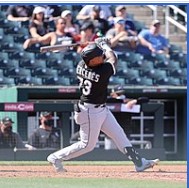
Surprise Player of the Month – Yermin Mercedes, DH, White Sox 
Soxsox14, CC BY-SA 4.0 <https://creativecommons.org/licenses/by-sa/4.0>, via
Wikimedia Commons

 A rookie as Player of the Month, in his first full month in the major leagues?  That would   be White Sox’ DH Yermin Mercedes, who came out of the gate smokin’ – becoming the   first MLB player in the modern era to collect a hit in each of his first eight plate   appearances of a season.  The 27-year-old Mercedes didn’t drop below .500 until his tenth   game of the season and finished the month at .415. His 34 hits tied for the most in MLB   this April and he also popped five home runs and drove in 16 tallies.  His month included   seven multi-hit games and he was held hitless in only three of 22 games played. 

Honorable Mention(s): Coming into the 2021 season, Orioles’ OF Cedric Mullins‘ career MLB average was .225 (115 MLB games over three seasons).  He ended this April tying for the MLB lead in base hits (34 in 26 games), with a .337 average. BBRT also wants to recognize Brewers’ catcher Omar Narvaez. The 29-year-old came into this season with a career .267 average and had hit just .176 in 40 games for the Brewers in 2020. This April, he put up a .368-3-11 line in 22 games.

How About a Surprise At Bat of the Month

On April 27, Brewers’ right-handed pitcher Adrian Houser started for the Brewers (against the Marlins in Milwaukee. He went 5 1/3 innings (three runs on five hits and one walk,with seven strikeouts) for the win.  But the surprise of the game came not when Houser was on the mound, but when he was at the plate.  He came into the game just 2-for-28 in his career with 21 strikeouts. In his first at bat of the game, on the first pitch he saw from Daniel Castano, Houser smacked his first MLB home run – a 418-foot blast to center.

______________________________________________________

TROT INDEX … A REGULAR BBRT FEATURE

In April 2021, 37.7 percent of the MLB season’s 28,326 plate appearances ended in a trot (back to the dugout, around the bases, to first base). We’re talking about strikeouts, home runs, walks, hit by pitch and catcher’s interference – all outcomes that are, basically, devoid of action on the base paths or in the field. Here’s the breakout: strikeouts (24.4%); walks (8.8%); home runs (3.1%); HBP (1.3%); catcher’s interference (less than 1%). Personally, I’d like more action in the field of play.

The 37.7 percent figure is up slightly from 2020’s (full season) 37.3 percent;  2019’s (full season) 36.2 percent and 2018’s 34.8 percent Trot Index. See a trend there? 

_________________________________________________
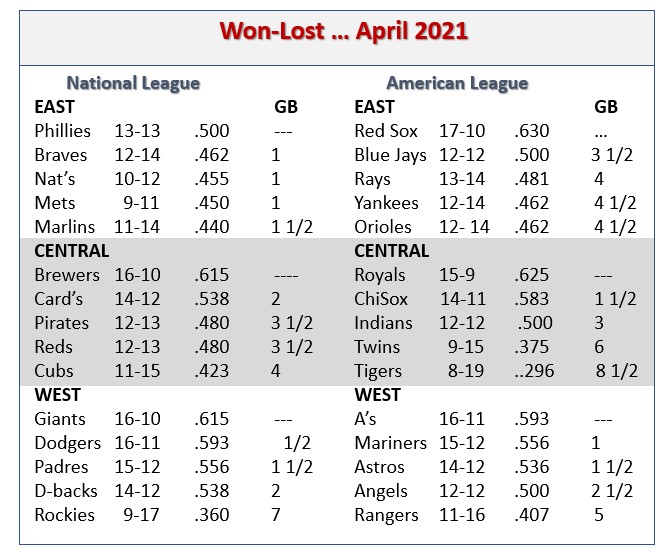
There were some surprises in April.  How about the Royals sitting atop the Al Central Division? How they got there adds to the surprise.  Consider that the Royals were outscored by opponents in April, while the second place White Sox has a plus-29 run differential. The Royals did it partly by going 6-1 in one-run games.  The team was led on offense by 2B Whit Merrifield (.274-3-15), 1B Carlos Santana (.247-6-20) and C Salvador Perez (.268-5-13). That trio was responsible for 14 of the team’s 22 home runs and 45 or the squad’s 99 RBI. Danny Duffy led the starting rotation (3-1, 0.39, 27 strikeouts in 23 innings).  Those one-run wins really reflect the handling of the bullpen – six different pitchers recorded saves during month.  At the other end of the AL Central Division, The Tigers were the only MLB team with a winning percentage under .300 (.296), as well as the only squad with a batting average under .200 (.199). 

Other AL surprises saw the Red Sox in first place in the NL East.  The Red Sox relied heavily on their offense – which recorded April’s third-highest team average, and scored the second-most runs  in the AL (trailing only the Astros). The BoSox’ offense was led by DH J.D. Martinez (.351-9-25) and 3B Rafael Devers (.293-7-21).  The BoSox were the only MLB team with two 20-RBI players in April. Among the table setters was OF Alex Verdugo (.300 with 19 runs scored). 

On the Road Again

The AL East-leading Red Sox were 8-8 at home and 9-2 on the road. 

Oakland stood atop the AL West, despite a negative-four run differential.  Houston, with the AL’s largest positive run differential (+31), ended April in third place – but trailed the A’;s by just 1 1/2 games.  Power played a role the A’s April success.  While Oakland had the AL’s fourth-worst April team batting average, they had the league’s third-most home runs and seventh-most runs scored.   Matt Olson led the team with seven April homers (.296-6-17) and the A’s had six additional hitters with at least three April  long balls.  

Talk About a Turn Around

The Oakland A’s lost seven of their first eight games this season – being outscored 59-19.  Then they turned it around, running up a 13-game winning streak in which they outscored the opposition 81-36 – while outhitting opponents .259 to .233, out-homering them 24 to 8 and putting up a 2.69 ERA to their opponents 6.31. 

Over in the National League, the West was “The Division of the Pitcher.” The Giants, Dodgers and Padres were in a tight race and those three were among only four MLB team’s with April earned run averages under 3.00.  The surprising Giants were in first place, and they have benefited from outstanding performance by their rotation.   Five of the six starters they have used have ERA’s under 2.50: Alex Wood – 1.50; Anthony DeSclafani – 1.50; Johnny Cueto (1.80); Kevin Gausman – 2.14; and Aaron Sanchez – 2.22. A revitalized Buster Posey (.361 with six homers in 17 games) has helped the attack – which features seven players with three or more April home runs. 

Over in the Central, the Brewers at 16-10 held sway through April – despite an injury-ravaged first month of the season. They entered May with a MLB-leading 14 players on the Injured List – not a category you really want to lead in. Like the West’s leaders, pitching is taking a key role. (The Brew Crew had NL’s lowest team batting average in April and scored the leagues’s fifth-fewest runs, but also gave up the third-fewest tallies.) Key contributors have been Corbin Burnes (2-2, 1.53); Brandon Woodruff (2-0, 1.55); Freddy Peralta (3-0-2.45) and, out of the bullpen, Josh Hader has notched five saves, sports a 0.93 ERA and has fanned 19 pf the 36 batter he has faced.

Run That By Me Again

No team in the National League played better than .500 ball in April – and the only NL East team with a positive run differential (the Marlins at +11) ended the month in last place. 

What can you say about the NL East?  It had no team over .500, was home to three of the of NL’s four lowest scoring teams and housed two of the NL’s most scored upon teams.  The Phillies, who sit atop the Division as of May 1, had a .500 record, were outscored through April by 15 runs, scored the NL’s third-fewest April runs and were in the middle of the pack (seventh) in April ERA. One bright spot,  It is MLB’s tightest division race, with just 1 1/2 games separating the five teams.  

————-April 2021  Team Statistical Leaders August——————-

RUNS SCORED. … MLB Average 108

National League – Diamondbacks (136); Reds (136); Dodgers (127)

American League –  Astros (131); Red Sox (129); White Sox (127)

The Mets scored the fewest runs in April (58); while the Tigers were at the bottom of the American league at 75.  The only other team to score fewer than 90 April runs was the Nationals (77). When you look at Runs Per Game in April, the Reds led at 5.44, while the Tigers were at the bottom at 2.78 (the only team under 3.00). Joining the Reds in scoring 5+ runs per game in April were the Diamondbacks (5.23); White Sox (5.08); and Astros (5.04).

BATTING AVERAGE … MLB Average .232

National League – Reds (.249);  Nationals (248); Diamondbacks (.237)

American League – White Sox (.265);  Angels (.262); Red Sox (.258)

The Tigers averaged an MLB-low .199 for the month.  The Brewers had the lowest average in the AL at .215. 

ON-BASE PERCENTAGE … MLB Average .309

National League – Dodgers (.340); Diamondbacks (.324); Braves (324)

American League – White Sox (.343); Red Sox (.325); Astros (.322)

Dodgers’ batters suffered through more HBP’s than any other team (23), followed by the Brewers (21). Rockies’ batters were plunked just three times  in April. 

HOME RUNS … MLB Average 29

National League –  Braves (38); Reds (38); Diamondbacks (36)

American League – Yankees (37); Blue Jays (35); A’s (33); Angels (33)

Despite the presence of the DH in the AL, NL teams held the top two spots in April home runs.  For those who like less “punch,” the Mets were at the bottom of the April HR list with just 15 homers.

WALKS DRAWN … MLB Average 84

National League – Dodgers (126); Padres (110);  Diamondbacks (106)

American League – Yankees (113); Rays (93); A’s (92)

The Padres hit into an MLB-high 29 double plays in April, the Royals into just ten 

STOLEN BASES …. MLB Average 12

National League – Padres (33); Marlins (18); Cubs (16); Phillies (16)

American League – Royals (22); Rangers (19); A’s (19)

I thought the pace was faster in the Big Apple.  The Mets stole the fewest stolen bases in April – just three in seven attempts.  The Yankees were next lowest – four steals in five April attempts.  

BATTER’S STRIKEOUTS … MLB Average 222

National League – Brewers (262); Cubs (260); Dodgers (259)

American League –  Rangers (285); Tigers (280); Rays (273)

Mets’ batter fanned the least often in April – 172 times.  

EARNED RUN AVERAGE … MLB Average 3.98

National League – Padres (2.87); Mets (2.90); Giants (2.95); Dodgers (2.98)

American League – Yankees (3.09); Blue Jays (3.42); Red Sox (3.55)

The highest ERA for April belonged to the Angels at 5.13. In the National League that “high” (low?) mark for April went to the Braves at 4.97. 

STRIKEOUTS … MLB Average 231

National League – Padres (304); Dodgers (270); Brewers (268)

American League – Yankees (276); Red Sox (257); White Sox (251)

Whiff-Masters

Seven teams fanned at least ten batters per nine frames in April, led by the Padres at 11.2. 

WALKS (fewest) …. MLB Average 84

National League – Mets (54); Dodgers (70); Phillies (72)

American League – Twins (64);  Blue Jays (66); Yankees (67)

The Dodgers and Yankees walked the fewest batters per nine innings (2.6).

SAVES … MLB Average 6

National League – Giants (11); Padres (11); Dodgers (9)

American League – Rays (9); Royals (9); Mariners (8); Indians (8)

The Mets had just two saves in April. 

——-Individual Statistical Leaders for April ———-

Note:  In stats for which MLB has set qualifying standards, a must have accummulated at least 3.1 plate appearances for each game his team has played and a pitcher’s innings pitched must be at least equal fo one inning for each game his team has played.

AVERAGE (qualifying hitters)

National League – Jessie Winker, Reds (.370); Ronald Acuna, Jr.,Braves (.341): Brandon Nimmo, Mets (.339)

American League –  Mike Trout, Angels (.425); Yermin Mercedes (.415); J.D. Martinez, Red Sox (.351)

The lowest August average (among qualifiers) belonged to the Reds’ Eugenio Suarez at .130 (12-for-92). Twenty-two qualifying hitters hit under .200 for the month. 

HOME RUNS

National League – Ronald Acuna, Jr., Braves (8); Rhys Hoskins, Phillies (8); Ryan McMahon, Rockies (8)

American League –  J.D. Martinez (9); Byron Buxton, Twins (8); Shohei Ohtani, Angels (8)

No player had more at bats without a long ball in April than Angels’ 2B David Fletcher (106). Fletcher, in fact, had only two extra-base hits in the month (out of 27 hits) – both doubles.

RUNS BATTED IN

National League – Jesus Aguilar, Marlins (22); David Peralta, Diamondbacks (22); Justin Turner, Dodgers (20); Javier Baez Dodgers (20) 

American League – J.D. Martinez, Red Sox (25);  Nate Lowe, Rangers (22); Rafael Devers, Red Sox (21): Javier Baez, Cubs (20)

HITS

National League – Eric Hosmer, Padres (31); Justin Turner, Dodgers (31); Ronald Acuna, Jr. Braves (30)

American League – Yermin Mercedes, White Sox (34); Cedric Mullins, Orioles (340; J.D. Martinez, Red Sox (33)

DOUBLES

National League –  Ozzie Albies, Braves (9); Kris Bryant,Cubs (9); Nolan Arenado, Cardinals (8)

American League – Michael Brantley, Astros (10); J.D. Martinez, Reds Sox (10); Xander Bogaerts, Red Sox (9); Cedric Mullins, Orioles (9); Luis Robert, White Sox (9); Kyle Seager, Mariners (9) 

TRIPLES

National League – David Peralta, Diamondbacks (4); Chris Owings, Rockies (3);  many with 2

American League – Akil Baddoo, Tigers (3); many with two

Mike Trout of the Angels led qualifying players in slugging percentage at .781, Ronald Acuna led NL qualifiers at .705.

STOLEN BASES

National League –  Jazz Chisholm, Jr., Marlins (7); seven with five.

American League – Ramon Laureano, A’s (8);  Whit Merrifield, Royals (8); Marcus Semien, Blue Jays (6)

Jazz Chisholm, Jr. of the Marlins had the most stolen bases without being caught in April (7).. 

WALKS

National League – Max Muncy, Dodgers (27); Freddie Freeman, Braves (19); Bryce Harper, Phillies (16); Asdrubal Cabrera (16); Anthony Rizzo,Cubs (16)

American League – Joey Gallo, Rangers (24); Vlad Guerrero, Jr., Blue Jays (20); Robbie Grossman, Tigers (18)

Mike Trout had the highest on-base percentage among qualifying hitters at  .523.  

BATTER’S STRIKEOUTS

National League – Eugenio Suarez, Reds (40); Rhys Hoskins, Phillies (37); Javier Baez, Cubs (36); 

American League – Joey Gallo, Rangers (40); Matt Chapman, A’s (37); Randy Arozarena, Rays (35); 

PITCHING VICTORIES

National League – Jack Flaherty, Cardinals (4-0); Clayton Kershaw, Dodgers (4-2)

American League – Aaron Civale, Indians (4-0); Carlos Rondon, White Sox (4-0); Eduardo Rodriguez, Red Sox (4-0); Gerrit Cole Yankees (4-1): Steven Matz, Blue Jays (4-1); Nathan Eovaldi, Red Sox (4-2)

The Cardinals’ Carlos Martinez, Indians’ Logan Allen  and Tigers’ Tarik Skubal led MLB in April  losses. Martinez went 1-4, 4.76; Skubal was 0-4, 6.14) and Allen was 1-4, 9.19. 

EARNED RUN AVERAGE (qualifiers, one inning pitched for each team game played)

National League – Jacob deGrom, Mets (0.51); Joe Musgrove, Padres (1.24); Trevor Rogers, Marlins (1.29)

American League – Carlos Rodon, White Sox (0.72); Gerrit Cole, Yankees (1.43); Tyler Glasnow, Rays (1.67)

STRIKEOUTS

National League – Jacob deGrom, Mets (59 / 35 IP); Trevor Bauer, Dodgers (52 / 40 IP); Colin Burnes (49 / 29 1/3 IP)

American League – Shane Bieber, Indians (68 / 41 1/3 IP); Gerrit Cole, Yankees (62 / 37 2/3 IP); Tyler Glasnow, Rays (56 / 37 2/3 IP)

SAVES

National League – Mark Melancon, Padres (9); Josh Hader, Brewers (7); Jake McGee, Giants (7)

American League – Matt Barnes, Red Sox (6); Diego Castillo, Rays (6); Cesar Valdez, Orioles (6)

Tyler Rogers (Giants), Tim Hill (Padres) and J.P. Feyereilsen (Brewers) made the moar mound appearances in April at 15. 

—–APRIL 2021 HIGHLIGHTS —-

Just a Walk in the Park
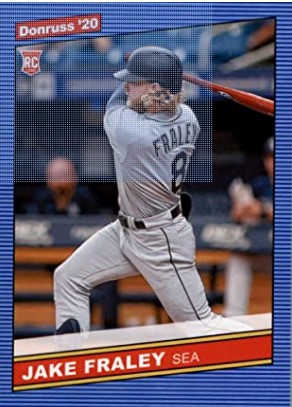
FraleyOn Opening Day (April 1), The Mariners went into the bottom of the tenth inning tied at seven with the Giants.  The Mariners had scored six in the bottom of the eighth to come back from a 6-1 deficit – and the Giants tied it in the top of the ninth.  As per the goofy (that’s an editorial comment) MLB rule, the Mariners’ 1B Evan White started the bottom of the tenth inning at second base. Reliever Jose Alvarez walked CF Taylor Trammel and 2B Dylan Moore to load the bases with no outs. He then walked LF Jake Fraley – to give Fraley and the Mariners a true walk-off win – with the wining run scored by the only player who not only didn’t draw a walk that inning, but never saw a pitch.. Fraley, by the way had five plate appearances that day, drawing three walks, being hit by a pitch and lining out.  End of day, batting average .000, on-base percentage .800 and a game-winning RBI.

Not A Bad Way to Start the Season
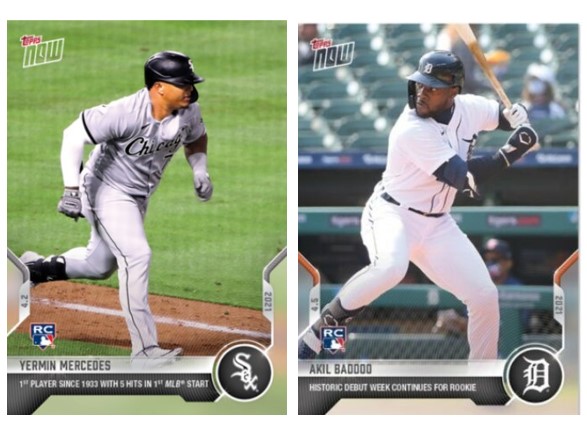
Merce4desOn April 4, Tigers’ 22-year-old rookie outfielder Akil Baddoo (a Rule Five pickup form the Twins) made his major league debut – and became just the 31st player in MLB history to hit a home run on the very first MLB pitch he ever saw (off Indians’ starter Aaron Civale) For more on that homer, click here.  Baddoo went one-for-three in the game, which the Tigers lost 9-3.  The very next day (April 5), Baddoo had a two-for-four game and hit his first MLB Grand Slam (as the Tigers lost to the Twins 15-6). The, on the very next day (April 6), Baddoo came on as a pinch runner in the eighth, stayed in the game and got a single at bat – producing his first-ever walk-off hit (an RBI single). as the Tigers topped the Twins 4-3 in ten frames.   Baddoo ended the month at .222-4-13.

The White Sox Yermin Mercedes had just one at bat (2020) coming into the 2021 season (a pinch hit round out.).  The 28-year-old, with an eight-season minor league average of .302, got his first MLB start on April 2 (at DH) and made the most of it.  His day?  It went like this: single; two-run single; single; single; two-run double.  A nice five-for-five on the day and season.  But he wasn’t done yet, he started at DH again on April 3 and went: solo home run; single, RBI double – before making his first out of the season on a fly ball to deep center.  Mercedes, according the the Elias Sports Bureau, is the first player in the modern era (post-1900) to being a season with base hits in his first eight at bats.  Mercedes finished April at ..415-5-16.
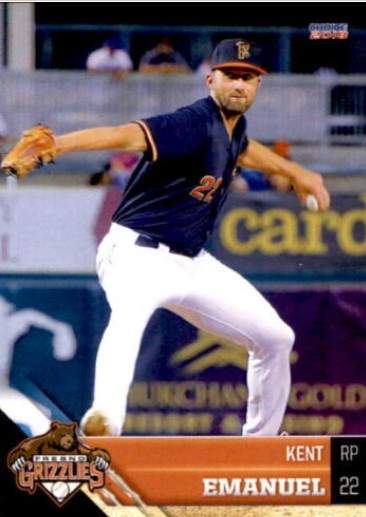
Kent Emanuel made his major-league debut for the Astro on April 25. The 28-year-old southpaw had toiled in the minor league since 2013 (after being drafted out of the University of North Carolina).  In seven minor-league campaigns he had gone 35-25, 4.77.  On April 25, he took a spot in the Astros’ bullpen hoping to make his MLB debut (he had been called up to the big club the day before).  He didn’t have to wait long.  Astros’ starter Jake Ordorizzi left after just one out and five pitches (forearm tightness) and Emanuel was heading to the mound. He acquitted himself well. Emanuel finished the game – tossing 8 2/3 innings of two-hit, two-run ball (no walks and five strikeouts) for the win.  In the process, he became just the fourth pitcher (according to STATS) in MLB history to pitch at least 8 2/3 innings of relief in their first MLB appearance.  (More proof of that “In baseball, we count everything.”)

Let Me Take Care of This

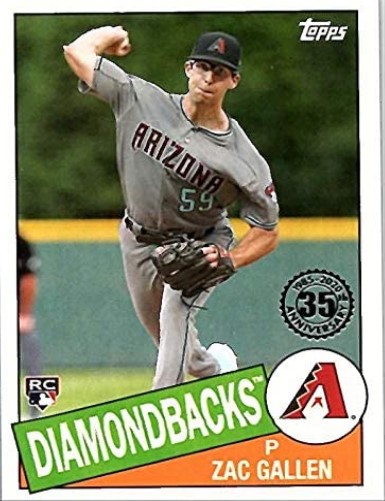
On April 6. 27-year-old right-hander Matt Peacock made his MLB debut for the Diamondbacks, coming on the eleventh inning of the Rockies/D-backs contest in Colorado. Peacock gave up two runs in his three innings of work – both unearned due to the rule starting each extra inning with a runner on second.  Still, he got the win in that first appearance – also contributing to the victory with his bat, singling and scoring as the Diamondbacks pushed across three runs in the top of the thirteenth (to earn a 10-8 win).

Three-for-Fourteen … In a Good Way
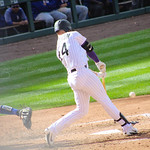
  On April 6, Rockies’ 3B Ryan McMahon collected three homers and a double (for 14 total   bases), scored three times and drove in four. The 14 total bases tied the Rockies’ single-game     record. Despite McMahon’s heroics, the Rockies lost 10-8 to the Diamondbacks in 13 innings.   McMahon hit a solo home run when given the green light on a 3-0 pitch from Luke Weaver in   the bottom of the second;  launched another solo shot (on a 1-1 pitch) off Weaver in the fourth   inning; and poked solo homer (on a 1-2 pitch) off reliever Alex Young in the seventh. He got   three more at bats in the game and produced a line out to second base, a ground out to   shortstop and an RBI double.

No Foolin’ … Two April No Hitters

April 2021 saw two MLB no-hitters – there has never been more than two no-hitters in April in any MLB season.  (There have been two April no-hitters in eight different seasons.)

On April 9, right-hander Joe Musgrove tossed the first no-hitter in San Diego Padres’ history (at the time, the Padres were the only MLB team to never have a pitcher toss a no-hit game). The only runner to reach base in the Padres’ 3-0 victory over the Rangers was Texas’ RF Joey Gallo, who was hit by a pitch in the fourth inning. Musgrove fanned ten batters in the 112-pitch outing. Musgrove was traded by the Pirates to the Padres this past January.

The second 2021 no-hitter was fashioned on April 14 by White Sox’ southpaw Carlos Rodon – who came within two outs of a perfect game as his White Sox topped the Indians 8-0 in Chicago.  Rodon – who fanned seven in the 114-pitch outing – hit Indians’ C Roberto Perez with a pitch (on a one ball-two strike count) with one out in the ninth inning.  It was the White Sox’ 20th no-hitter, the most by any American League team (three short of the Dodgers’ overall MLB mark).

Long and Short Tales

The San Diego Padres played their first official MLB game on April 8, 1969.  The team didn’t have a pitcher toss a no-hitter until Joe Musgrove’s April 9, 2021 gem – 52 seasons and 20,506 games (including that Opening Day contest) later.  The Montreal Expos, on the other hand, played their first official MLB game on the same day as the Padres (April 8, 1969) and waited only nine games (ten days – including Opening Day) until their first no-hitter (tossed by Bill Stoneman on April 17).

Two – N0 three – For the Road
https://creativecommons.org/licenses/by-sa/2.0/
Photo:: Sports Crazy on Flickr

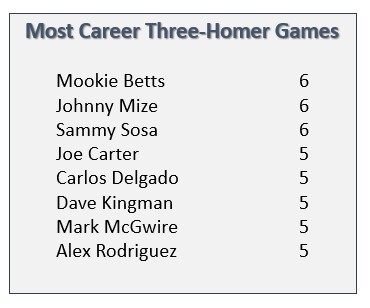
  On April 11 – as the Red Sox topped the Orioles 14-9 in Baltimore – Red Sox’ DH J.D. Martinez         notched 2021’s second three-homer game – with solo shots in the third, sixth and eighth innings.  It   was Martinez’ third three-homer contest – the previous two were for the Tigers and Diamondbacks.   In the process Martinez became one of just five players with three-homer games for three different   teams (Johnny Mize, Dave Kingman, Mark Teixeira and Alex Rodriguez).
ThreHomerGames

Baseball Roundtable (No) Hit Parade Extra

On April 11, fast-pitch hurler Hope Trautwein tossed a “perfect” perfect game – striking out all 21 batters she faced in The University of North Texas’ 3-0 win over The University of Arkansas-Pine Bluff. 

On the Move

On April 14, as the Twins topped Boston 4-3 in Minnesota, Luis Arreaz collected four hits (in five at bats) out of the leadoff spot.  In the game, Arreaz was consistently “on the move” – taking the field in left field and at both third base and second base.

A Long Time A’Coming

On April 17, 36-year-old middle infielder Sean Kazmar, Jr. appeared as a pinch-hitter for the Atlanta Braves in a 13-4 loss to the Cubs in Chicago.  It was a big moment for Kazmar – his last at bat in the major leagues had come on September 23, 2008 – 12-years, six-months and 25 days (and 1,106 minor-league games) ago.  Kazmar – signed by the Padres in 2004 MLB draft (out of the College of Southern Nevada) – appeared in 19 games for San Diego as a 23-year-old in the 2008 season (hitting .205-0-2). As of April 17, his pro career consisted of 20 MLB games and 1,670 minor league contests.  Kazmar was called up after an injury (HBP) to the Braves’ 2B Ozzie Albies.

The all-time record (post-1900), according to the Elias Sport Bureau, for time between MLB appearances belongs to pitcher Paul Schreiber, who went 22 years and two days between appearances for the 1923 Dodgers (September 2) and 1945 Yankees September 8).  Schreiber’s career included 301 minor-league pitching appearances and 12 in the majors.  He pitched a total of 20 1/3 MLB innings to a 0-0 record and a 3.98 ERA. Schreiber had retired as a player in 1932, and had gone on to a coaching (and batting practice pitching) role for the Yankees.  He was activated (as a player) by the Yankees in 1945 when the World War II depleted the Yankee pitching staff.

Just Try to Hit My Change

TortugoOn April 16, Twins’ utility man Willians “la Tortuga” Astudillo (primarily a catcher, but who has played every position except SS in his four-season MLB career) took the mound for the Minnesota Twins (down to the Angels 10-3) in the bottom of the eighth inning.  He pitched a clean (1-2-3) inning, retiring the Angles on just seven pitches. His fastball topped out at an unimpressive 72.5 mph, but the difference in speeds he delivered was solid.  His change up (we assume it was an intentional change up) was clocked at 46 mph – a true change from  his “heater.” Side note:  46 mph was the slowest Astudillo pitch measured. Reportedly, he tossed a couple of pitches too slow for Statcast to track.

Burnes Brings the Heat – and Applies It Right on the Spot
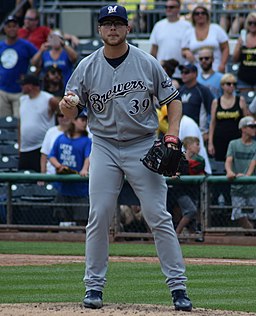
Photo: Ian D’Andrea on Flickr, CC BY-SA 2.0 <https://creativecommons.org/licenses/by-sa/2.0>, via Wikimedia Commons

 Brewers’ righty Corbin Burnes opened the 2021 season on a roll. Not only did he     fan 49 batters in his five April starts (29 1/3 innings).  He accomplished all those   whiffs without issuing a single base on balls. Burnes faced a total of 106 batters   without issuing a free pass – striking out 46.2 percent of those batsmen. According   to the Elias Sport Bureau, the previous record (for a starter) for strikeouts before       issuing a first walk of the season was 35 (Adam Wainwright, 2013).  Burnes finished   April with an 2-2  record, a 1.53 ERA and a microscopic  0.55 WHIP. He now holds   the record for strikeouts before the first walk of the season for a starting pitcher   and is within one whiff of reliever Kenley Jansen’s season-opening record for a   pitcher in any role.  Unfortunately, Burnes begins May on the IL. 

Three-for-One!

In the eighth inning of the Reds’ April 17 win against the Indians (in Cincinnati), Reds’ first baseman Joey Votto started the first triple play of the 2021 season – and it came at a most opportune time. The Reds were trailing 2-1 and the Indians were looking to extend the margin (runners on first and third and no outs).  Indians’ 1B Josh Naylor nailed (pun intended) a liner that Votto snatched on the fly. Votto then dove to the bag to double off Indians’ RF Franmil Reyes, who had been on first. Indians’ LF Eddie Rosario (on third), who mistakenly thought Votto made the catch after the ball hit the ground, had crossed the plate during the play at first and was on his way to the Indians’ dugout. Votto tossed to Reds’ 3B Max Schrock to complete the triple killing. The play held the score at 2-1 and the Reds went on to win 3-2 in ten innings.

Put Me in Coach

Between April 11 and April 22, the Giants started Curt Casali (signed as a free-agent this January) behind the plate five times – and all five contests resulted in zero tallies for the opponents.  According to the Elias Sports Bureau, that made Casali just one of five catchers to backstop shutouts in at least five consecutive starts.   Curt Casali started nine games behind the plate for the Giants this April.  In those contests, San Francisco is 8-1, with a 1.37 earned run average.  In games not started by Casali at catcher, the Giants are 8-8, with an ERA of 3.76.  For more on Casali’s streak, click here.

Whiff ‘N Poof
Photo by slgckgc 

 On April 18, the Indians’ Shane Bieber fanned 13 batters in eight innings as the Indians topped   the Reds 6-3 in Cincinnati, (Bieber gave up three runs on six hits and two walks.) In the process,   he tied the record for strikeouts in the first four starts of a season (Yes, as I’ve said before … In   baseball, we count everything)  fanning 48 batters in 29 1/3 innings. (Nolan Ryan fanned 48 in   his first four 1978 starts.)  Well, on April 23, the Mets’ Jacob deGrom pushed Ryan and Bieber off   the top of the record books. In a complete-game, two-hit shutout (over the Nationals) deGrom   fanned 15 batters – giving him 50 whiffs in his first four 2012 starts (29 innings).

It’s in The Genes

On April 23, 1999, Cardinals’ 3B Fernando Tatis set an MLB record by hitting two Grand Slams in one inning (the third) – as the Cardinals topped the Dodgers 12-5 in Los Angeles. (Most surprising to BBRT is that Chan Ho Park was in the game long enough to give up both blasts.) On April 23 of this season, Fernando Tatis, Jr. – SS for the Padres – hit a pair of homers (off Dodgers’ ace Clayton Kershaw). Although they were solo shots and not in the same inning, they did seem to reflect a family tradition.

A Four-by-Four

On April 23, the Rays’ Tyler Glasgow became the 88th pitcher to notch four strikeouts in an inning.  It’s been done 92 times – with the only Chuck Finley (three times), A.J. Burnett (twice) and Zack Greinke (twice) “accomplishing” the feat more than once. (There was one additional four-strikeout inning, but it involved two pitchers.  The Mets’ Jerry Blevins and Addison Reed combined for four whiffs in the ninth inning of a Mets game on April 17, 2016,.) Glasnow accomplished the feat in the top of the first inning of the Jays/Rays game. His victims were Cavan Biggio, Bo Bichette, Lourdes Gurriel, Jr. (who reached first after swinging at a wild pitch) and Danny Jansen. Despite the four whiffs, Glasnow had a tough inning – giving up four runs on four hits and a walk.  According to STATS, that tied the MLB record for most runs surrendered in a four-whiff frame (joining Doc White, Phillies, July 21, 1902). Glasnow settled down after the first inning, going six innings (five hits, two walks, five runs and ten strikeouts) – but taking the loss as the Blue Jays prevailed 5-3.

That’s a No-NO …. No, No, It Isn’t

On April 25, Madison Bumgarner (now of the Diamondbacks, that doesn’t seem right) tossed a complete game, no-hit shutout against the potent Braves’ lineup.  But wait, it was the second game of one of those seven-innings each doubleheaders – which meant is didn’t qualify under MLB rules as a no-hitter (has to be nine innings). So, despite facing the minimum number of hitters (in this case 21, one batter reached on an error but was erased on a double play), Bumgarner’s gem will not be listed among MLB no-no’s.  

Move Over Babe

On April 26, the Angels Shohie Ohtani started on the mound for the Angels (against the Rangers) – and batted second in the lineup.  On that day he also happened to be the MLB 2021 co-leader in home runs with seven.  The last time a pitcher started a game while leading MLB in long balls?  Babe Ruth on June 13, 1921 (according to the Elias Sports Bureau).  Ohtani, by the way, went two-for-three, with three runs scored and two RBI – and got the pitching victory, giving up four runs in five innings (three hits, two walks and nine strikeouts). 

Three-for-Three
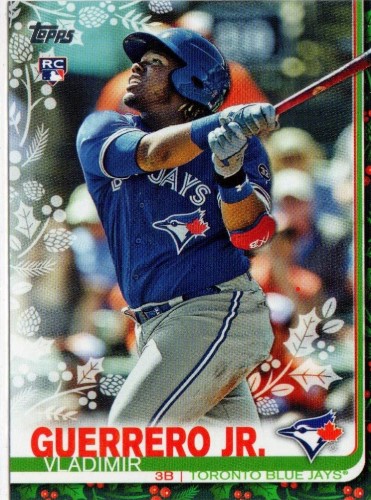
On April 27, Blue Jays ‘ 1B Vlad Guerrero, Jr. personally demolished the Washington Nationals – as the Blue Jays topped the Nats 9-5 in Toronto.  Guerrero enjoyed a three-homer, seven-RBI day – becoming the third player to have a three-homer day this April. Notably, the 22-year-old Guerrero did not “prey on the weak.”  After grounding into a double play to end the first inning, he hit a Grand Slam (on a 2-1 pitch) off Washington ace Max Scherzer in the bottom of the third; took Scherzer deep again (on a 3-2 pitch) leading off the fifth; and hit a two-run shot off Kyle Finnegan (on a 1-1 offering) in the seventh

The Three-Homer Tidbits

The youngest player ever to hit three homers in a game was the Tigers’ Al Kaline, who accomplished the feat on April 17, 1955 at the age of 20 years-119 days.  The oldest was Stan Musial (on July 8, 1962) at 41 years-229 days. 

Nice Round Numbers

On April 30,  as the Reds topped the Cubs 8-6 in Cincinnati, Reds’ 1B Joey Votto hit his fifth home run of the season and 300th of his career – a two-run shot in the bottom of the third inning  that gave the Reds their first lead.  Votto finished the game three-for-four, with one run scored and three RBI.  

Primary Resources:  MLB.com; Baseball-Reference.com; MLB.com; ESPN.com

Baseball Roundtable Disclaimer:  The MLB records referenced in this (and previous) posts have the potential to change as Major League Baseball recognizes and incorporates Negro League records from 1920-46 into the MLB record book.

100Baseball Roundtable is on the Feedspot list of the Top 100 Baseball Blogs.  To see the full list, click here.

I tweet baseball @DavidBBRT

Follow/Like Baseball Roundtable’s Facebook Page here.  More baseball commentary; blog post notifications; PRIZES.

Member: Society for American Baseball Research (SABR); The Baseball Reliquary; The Negro Leagues Baseball Museum.

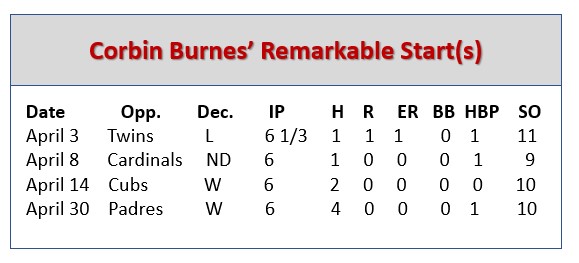
Burnes Brings the Heat … Corbin Burnes’ Remarkable 2021 Start(s)

BurnesIn his first four starts of 2021, the Brewers’ Corbin Burnes has fanned 40 batters in just 24 1/3 innings – on his way to a 2-1 record and a 0.37 earned run average.  In the process he set a record for the most strikeouts recorded (by a starter) from the opening of a season before issuing a walk.  (Yes, as I’ve said before, in baseball we count everything.) The previous record, according to Elias Sports Bureau was 35 whiffs before a walk (Adam Wainwright in 2013).

A few tidbits about Burnes remarkable start(s):

  • He has faced a total of 83 batters – fanning 48.2 percent.
  • Through his first four starts, he has thrown 67.7 percent of his pitches for strikes.
  • He has gone to a three-ball count on only ten batters – and fanned six of them (five looking). The other four produced plus two ground outs, a triple and a single.
  • While he hasn’t walked anyone, he has hit three batters.
  • The only run he has given up came in his first start (April 3), a home run to the Twins’ Byron Buxton. That lone run resulted in a loss, as his Brewers were shut out.
  • Coming into the 2021 season, Burnes had averaged 3.4 walks and 11.8 whiffs in three MLB campaigns (12-6, 4.48 in 146 2.3 innings pitched. 13 starts and 61 relief appearances.
  • As of this post, Burnes leads MLB in earned run average (0.37); WHIP (0.33); and his NL-leading forty strikeouts trail only the Indians’ Shane Bieber.

Burnes2


Primary Resource:  Baseball-Reference.com

Baseball Roundtable Disclaimer:  The MLB records referenced in this (and previous) posts have the potential to change as Major League Baseball recognizes and incorporates Negro League records from 1920-46 into the MLB record book.

Primary Resources: Baseball-Reference.com; Baseball-Almanac.com; MLB.com

100Baseball Roundtable is on the Feedspot list of the Top 100 Baseball Blogs.  To see the full list, click here.

I tweet baseball @DavidBBRT

Follow/Like Baseball Roundtable’s Facebook Page here.  More baseball commentary; blog post notifications; PRIZES.

Member: Society for American Baseball Research (SABR); The Baseball Reliquary; The Negro Leagues Baseball Museum.

 

2021 Baseball Roundtable John Paciorek Award … Henry Schmidt

JPAFIn 2014, Baseball Roundtable launched the John Paciorek Award (JPA). The JPA recognizes players who have had short, sometimes very short, major-league careers, but whose accomplishments, nonetheless, deserve recognition.  Past winners have included a player whose every MLB hit (three in nine career at bats) was a home run;  a player who had only one MLB at bat, but earned  a World Series ring and a Purple Heart; a player who had just two home runs in 61 MLB at bats (for the vaunted Yankees and Dodgers), but whose “body of work” made him one of just two players in MLB history to homer in their first and final official appearances in a major league batter’s box; a war hero who pitched in the majors on one leg; and more.  (Note: Information on John Paciorek’s career – the inspiration for the JPA – can be found at the end of this post. Paciorek’s day in the sun constitutes arguably the best one-game MLB career ever.)

For 2021, BBRT’s Paciorek Award goes to the only pitcher ever to win twenty or more games in his only major-league season.

—-BASEBALL ROUNDTABLE 2021 JOHN PACIOREK AWARD HONOREE —-

HENRY SCHMIDT

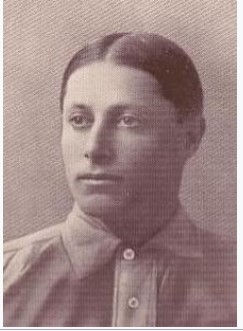
SchmidtpnotoHenry Martin Schmidt didn’t make it to the big leagues until eight seasons after his professional (minor-league) debut.  In fact, he was just two months shy of his 30th birthday, when he first took the major-league mound.   Why did it take so long?  Simple answer – location.  He had considerable difficulty “locating” his pitches (more on that in a bit).  While it took a long time for Schmidt to make it to the major leagues, it didn’t take him long to leave MLB. He lasted just one season.  Why was his MLB career so short? Simple answer – location.  He did not care for the geographic “location” of major league baseball.

So why is Henry Schmidt joining the Baseball Roundtable list of John Paciorek Award honorees?  Because, like many of  those recognized before him, Schmidt’s brief MLB career had some long-ranging statistical significance.

Henry Schmidt is the only pitcher in MLB history

who was a 20-game winner in his only major league season.

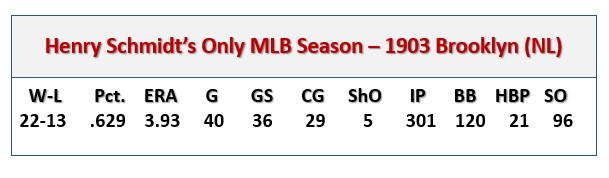
In Schmidt’s only MLB season, for the 1903 Brooklyn Superbas (Dodgers), Schmidt went 22-13, 3.83.  That season, Schmidt was fifth in the National League in wins, sixth in innings pitched (301), fourth in starts (36), tenth in complete games (29) and second in shutouts (five). Remember what I noted earlier about location?  While minor-league stats for the era are sometimes a bit sketchy, by all accounts Schmidt had considerable difficulty with pitch location – walking more batters than he struck out in every minor-league season leading up to his signing with Brooklyn.  And, that didn’t change at the MLB level, In his sole MLB season, Schmidt walked 120 and fanned 96. For the season, Schmidt was second in the NL in walks (120), first in hit batsmen (21) and sixth in wild pitches (8). (Side note: Schmidt’s 3.83 eared run average was slightly above the National League overall mark of 3.26.)   Schmidt, however, earned considerable respect as a gritty performer, known for pitching into – and out of – trouble.

SchmidtStat

Let’s take a look at how Schmidt got to the majors, as well as how he fared after he chose to leave.

Schmidt began his professional career, as a 20-year-old, in the independent Blue Grass League.  He bounced around the minors (Southern Association, Atlantic League, Western League) showing potential – 20-13. 1.32 at Class B Richmond in 1897), but also consistently walking more batters than he struck out.   Even in that 20-win Class B season, Schmidt walked 133 and hit 36 batters, while striking out 108.

Then, in 1902 came the season that paved the way for Schmidt’s move to the majors – as well as for his quick exit from that lofty status.  In 1901, after a not particularly satisfying minor-league stints with Kansas City and Denver, Schmidt headed west to join Oakland in the long-season California League – where he showed late-season promise.  That move to the West Coast seemed to spark Schmidt’s career. He re-signed with Oakland for 1902 and went 35-20 (Oakland played a 182-game schedule, winning 108 and capturing the league title).  At season’s end, Schmidt was much in demand, ultimately signing with the National League’s Brooklyn Superbas (Dodgers).

Schmidt got off to a blazing start in his rookie (and final) major league season. In his first five starts, he went 4-1 and threw three consecutive complete-game shutouts.  Typical of Schmidt, even in those three shutouts, he gave a total of 18 hits and 11 walks, hit two batters and fanned just four. His only loss in his first five decisions came in his second start, when he faced off against the Giants’ Christy Mathewson. Schmidt and Mathewson both went the distance, with Matty emerging on the positive end of a 2-1 score (it was tied 1-1 after eight frames). Schmidt suffered a bit of a mid-season slide and was 13-13 by mid-August, but then won his last nine decisions to finish as 22-13.  Schmidt pitched ten complete games in those final ten starts (one ended in a tie), including two shutouts.  (On the season, he had nine starts in which he walked five or more batters. and 17 starts in which he walked two of fewer batsmen. )

So, why wasn’t Schmidt, Brooklyn’s winningest pitcher in 1903, back with the club in 1904.  It was Schmidt’s choice. Brooklyn did offer Schmidt a contract for 1904, but he returned it unsigned, with a note stating “I do no like living in the East and will not report.”  Schmidt then signed multi-year contract with the Oakland Oaks of the Pacific Coast League.

Back on the West Coast, Schmidt failed to recapture his past glory. He went 26-28 in 1904 and, as he pitching went south, so reportedly did his temper.  He began to build a reputation for fiery combativeness both on and off the fields. According to a Society of American Baseball Research article by Bill Lamb, Schmidt’s dust-ups included a battle in which he nearly bit off two of his opponent’s fingers, disputes with team executives, legal action and an altercation over an unpaid bar bill, as well as an off-the-field scrape that ended in gun play.  By 1909, Schmidt had slipped from the A-level Pacific Coast League to the D-Level Carolina Association (that’s where the shooting incident occurred).  In 1909, he pitched for the Hutchinson Salt Packers in the Class D Kansas State League – and that’s the last playing season noted for Schmidt in baseball-reference.com. Schmidt passed away (complications from chronic myocarditis) in 1926 at age 52.

Despite his issues with “location,” Henry Schmidt is firmly located in the MLB record book as the only pitcher whose only MLB campaign resulted in a twenty-win season.

Primary Resources:  Baseball-Reference.com; “Henry Schmidt,” by Bill Lamb, Society for American Baseball Research; “The Ballplayers,” edited by Mark Shatzkin, Arbor-House, William Morrow, 1990.

—- PAST JOHN PACIOREK AWARD HONOREES (with links) —-

2014 – Brian Scott Dallimore

In his first start (not his first game) for the 2004 Giants, Dallimore had two singles, a Grand Slam (his first MLB hit and only MLB home run), a walk and a hit by pitch.  For the full JPA take on Dallimore’s 27- game MLB career, click here.

2015 – Roy Gleason

Gleason played in just eight MLB games, had a double in his only MLB at bat – but also earned a World Series ring (1963) and a Purple Heart. Ultimately, he was the only ballplayer with MLB experience to serve on the front lines in Vietnam. For the full JPA take on Gleason, click here. Note: Gleason’s life is detailed in the book “Lost in the Sun – Roy Gleason’s Odyssey from the Outfield to the Battlefield.”

2016 – John Allen Miller

Miller played just 32 MLB games (during the 1966 and 1969), taking the field (at 1B/LF/3B/2B) for the Yankees and Dodgers. Miller collected ten hits in 61 MLB at bats (.164 average) and hit just two home runs – but he made those long balls count.  Miller made his MLB debut with the Yankees on September 11, 1966 and hit a two-run homer in his first big league at bat – making him (surprisingly) the first Yankee ever to homer in his first MLB at bat. (Little did Miller know he would not get another home run or RBI until the final at bat of his MLB career.)  Miller’s final at bat came as a Dodger (September 23, 1969) and he stroked a solo home run.  That narrow “body of work” made Miller one of just two players in MLB history to homer in their first and final official appearances in a major league batter’s box. For more on Miller, click here.

2017 – Chris Saenz

RHP Chris Saenz’ big day came on April 24, 2004 – when he was called up from Double A Huntsville (where he was 1-1, 3.86) to make a spot start against the Saint Louis Cardinals, whose powerful lineup included the likes of Albert Pujols, Scott Rolen, Jim Edmonds and Reggie Sanders.   The rookie went six innings, giving up just two hits, three walks and no runs, while fanning seven. There was some speculation (primarily among sportswriters and fans) that Saenz’ performance might earn him another start or two, but two days after his debut, he was on his way back to Huntsville.  Unfortunately, his minor league season included a September elbow injury that required Tommy John surgery and he never returned to the majors. Statistics before 1900 can be sketchy, but baseball-reference.com shows that Saenz is the only pitcher to complete a one-game MLB career of at least five innings pitched, without giving up a single run (earned or unearned). For more details on this JPA honoree, click here.

2018 – Keith McDonald

Keith McDonald’s MLB career (Cardinals 2000-2001) covered just eight games and 11 plate appearances (nine at bats) and three hits – but he made them count.  All of McDonald’s safeties were home runs – making him the only MLB player with more than one career hit who can look back on major league career in which his every hit was a home run.  McDonald is also one of only two players – and the only National Leaguer – to homer in his first two major league plate appearances.  For the full story, click here.

2019 – Harley Hisner

Harley Hisner’s MLB tenure encompassed the day of September 30, 1951. That’s when the 24-year-old righty faced the New York Yankees – and a lineup that included five future Hall of Famers: Mickey Mantle in RF; Joe DiMaggio in CF; Phil Rizzuto at SS; Johnny Mize at 1B; and Yogi Berra behind the plate. In is very first MLB inning, Hisner faced five batters, four of them future Hall of Famers, and gave up two singles and no runs.  His place in history? One of those singles was Joe DiMaggio’s last MLB safety. He faced Mickey Mantle four times in the game – walking him once, fanning him twice and getting him to hit into a double play.  Hisner’s final career stat was 0-1, 4.50, with six innings pitched, seven hits, three earned runs, four walks and three strikeouts. For more on Harley Hisner and his ongoing involvement in and love of the game (he went on to earn the Northeast Indiana Baseball Association Colin Lister Award for “dedication to the game of baseball and its historic legacy,” click here.

2020 – Bert Shepard

Bert Shepard set aside his baseball mound dreams in 1943 – after four minor-league seasons – to enlist in the U.S. Army, where he became a P-38 Lightning fighter pilot. Shepard was shot down on his 34th combat mission and, while a prisoner of war, his wounds resulted in the amputation of his right leg below the knee.  Upon his release (a prisoner exchange), Shepard did not surrender his dreams and fought his way back to the major leagues. He made one major-league appearance (for the Washington Senators), pitching 5 1/3 innings of three-hit, one-run ball.  While Shepard’s MLB career consisted of that sole appearance, he did continue to pitch, coach and manage in minor leagues – and his story proved an inspiration for disabled veterans.  For the full Bert Shepard story, click here.

—-INSPIRATION FOR THE JPA—–

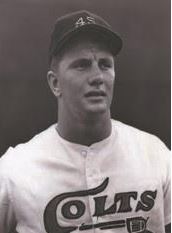
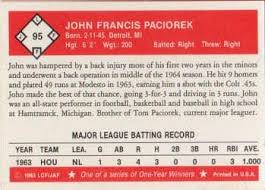
PaciorekYOungJohn Paciorek – signed out of Saint Ladislaus High School in Hamtramck, Michigan (where he had starred in football, basketball and baseball) – appeared in his first major league game on the final day of the 1963 season (September 29) at the age of 18.  The 6’ 1”, 200-pound outfielder had spent the 1963 season with Class A Modesto Colts. The Colts’ parent club, the Houston Colt .45s (that was the current Astros’ franchise name back then), was suffering through a difficult season. The team was 65-96 going into that final game.  Looking to the future, Houston had, in fact, fielded an all-rookie lineup (average age 19) on September 27. Youth was still being served two days later when John Paciorek started his first MLB game. The results were surprising – and worthy of recognition.

pACIOREKPlaying right field and batting seventh in a 13-4 win over the NY Mets, Paciorek ended up with three hits and two walks in five plate appearances, with four runs scored and three runs batted in.  Perhaps equally surprising is that it was not only Paciorek’s first major-league appearance, it was to be his only MLB appearance.  Back pain the following spring, followed by surgery (he played 49 minor league games in 1964 and missed all of the 1965 season), put an end to his MLB playing days. (Paciorek did play in four more minor-league seasons.)  Still, you will find John Paciorek in the Baseball Encyclopedia and his is arguably the greatest one-game MLB career ever.  Among one-gamers, he holds the record for times on base and runs scored, and shares the record for batting average, on base percentage and RBIs.

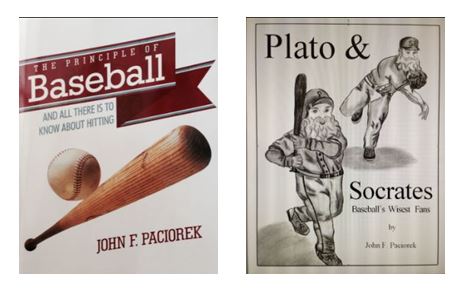
BooksPaciorek, by the way, went on to become a high school teacher and multi-sport coach and is the author of the books (Plato and Socrates – “Baseball’s Wisest Fans;”  “The Principles of Baseball: And All There Is To Know About Hitting;” and “If I Knew Then What I Know Now.” You also can enjoy Paciorek’s prose (and expertise) directly at his blog “Paciorek’s Principles of Perfect Practice” by clicking here. You can find out even more about Paciorek in Steven Wagner’s 2015 book “Perfect: The Rise and Fall of John Paciorek, Baseball’s Greatest One-Game Wonder.”  (See the review of “Perfect” by clicking here.)

If I only Knew

A final note. John Paciorek’s insight into the national pastime should come as no surprise. Paciorek comes from a true “baseball family.”  He was the first born of eight siblings and was followed to the big leagues by younger brothers Jim and Tom Paciorek.  (Like John, Jim’s MLB career was short – 48 games for the Brewers in 1987. Brother Tom, however, achieved a .282 average over an 18-season MLB career.

100Baseball Roundtable is on the Feedspot list of the Top 100 Baseball Blogs.  To see the full list, click here.

I tweet (on X) baseball @DavidBaseballRT

Follow/Like Baseball Roundtable’s Facebook Page here.  More baseball commentary; blog post notifications.

Member: Society for American Baseball Research (SABR); The Baseball Reliquary; The Negro Leagues Baseball Museum.
Baddoo off to a “Bad” Start – in a good way. Baseball Round Table Looks at First-Pitch-Ever Home Runs

Baseball photo

Photo by andrewmalone

Yesterday (April 4, 2021), Akil Baddoo, made his major league debut – playing  left field and batting in the nine-hole for the Tigers.  The 22-year-old rookie (a Rule Five draft pick taken from the Twins) came to the plate for the first time leading off in the bottom of the third inning – and he made the most of it.  On the very first MLB pitch he ever saw (out of the hand of Indians ‘starter Aaron Civale), Baddoo homered to left to give the Tigers a 3-1 lead. (Detroit would go on to lose the game 9-3 and Baddoo’s dinger would be one of only two Tigers’ hits.Baddo0’s long ball made him just the 31st major leaguer to go deep on his very first pitch.  In this post, I’d like to take a deeper look at those first-pitch home runs.  (A little teaser to begin with … eight of those 31 first-pitch ever homers (26 percent) were hit by pitchers.) So, let’s get on with it.

  • Homering on the first-ever MLB pitch has been accomplished 16 times in the American League and 15 times in the National League, with the feat accomplished by players from 18 of the 30 MLB franchises.
  • The Cardinals have the most first-ever-pitch home run hitters with four. The AL leader is the Blue Jays with three.
  • Of the 31 first-pitch-ever HRs, 20 were solo shots, six were two-run homers, three were three-run home runs and two were grand slams.
  • The two MLB players who have launched a Grand Slam on the first major league pitch they ever saw are Kevin Kouzmanoff for the Indians on September 2, 2006 and Daniel Nava for the Red Sox on June 12, 2010.
  • The first-ever first-pitch home run was hit on May 7, 1922, by Pirates’ RF Walter Mueller (a three-run shot). Mueller went two-for-five that day, with two runs and five RBI. He hit only two home runs in a four-year MLB career (121 games).
  • The first American Leaguer to homer on the first pitch he ever saw was Red Sox’ LHP Bill LeFevbre (June 10, 1938). While it was LeFebvre’s only MLB home run, he was a respectable hitter over his four-season MLB career (.276 average in 87 at bats). Unfortunately, on the mound, he posted a 5.03 ERA.

Gene Stechschulte – a 6’ 5”, 210-pound right-handed pitcher –  is the only MLB pitcher to homer on the first pitch he ever saw, while being used as a pinch-hitter.  Stechschulte’s homer (a two-run shot) came in the sixth inning of a Cardinals’ 17-4 loss to the Diamondbacks (April 17, 2001). It was only Stechschulte’s second professional at bat – and his second extra base hit.  He had one minor league at bat (in 204 games) collecting a double. In his MLB career, three seasons, 116 games (all in relief), Stechschulte came to bat just five times – collecting two hits (the initial home run and a single).

  • The most home runs hit the season the player hit his first-pitch HR is 14 by outfielder Chris Richard (first-pitch homer for the Cardinals on July 17, 2000). Richard hit 34 home runs in five MLB seasons,with a high of 15 for the Orioles in 2001.)
  • Eight of the 31 players to hit first-pitch-ever dingers were pitchers (that’s counting pitcher Gene Stechschulte, who was being used as a pinch hitter when he accomplished the feat for the Cardinals on April 17, 2001). The other hurlers: Bill LeFebvre (Red Sox); Don Rose (Angels); Esteban Yan (Rays); Clise Dudley (Brooklyn Robins); Jim Bullinger (Cubs); Adam Wainwright (Cardinals); Tommy Milone (Nationals).
  • By the position they were playing at the time, here is the first-pitch home run hitter count: pinch hitters (8); pitchers (7); left fielders (5); right fielders (3); first baseman (2); shortstops (2); designated hitters (2); second baseman (1); catchers (1).
  • Only two players hit a second round tripper in the same game in which they achieved their first-pitch HR. On July 23, 1964, A’s shortstop Bert Campaneris went three-for-four, with two homers, two runs and three RBI as his Kansas City Athletics topped the Twins 4-3 in eleven innings. On August 2, 2010, Blue Jays’ catcher J.P. Arencibia went four-for-five with two homers, a double, three runs and three RBI as the Blue Jays beat Tampa Bay 17-11. Arencibia is the only member of the first-pitch-ever HR club to also collect four hits in the same game.
  • Rays RHP Esteban Yan hit a long ball on the first pitch he ever saw in the big leagues (June 4, 2000). He went on to hit for a  1.000 average for his career – although he had only two at bats in 11 seasons (a single and that initial HR).
  • Just for run, Baddoo is my second-favorite name from among players with a first-pitch-ever home run.  Number one?  (Mark) Saccomanno.

Finally, the list:

Walter Mueller, RF, Pirates … May 7, 1922

Clise Dudley, P, Robins (Dodgers) … April 27, 1929

Eddie Morgan, PH, Cardinals … April 14, 1936

Bill LeFevbre, P, Red Sox … June 10, 1938

Clyde Vollmer, LF, Reds … May 31, 1942

George (Sam) Vico, 1B, Tigers … April 20, 1948

Chuck Tanner, PH, Braves … April 12, 1955

Bert Campaneris, SS, Athletics (KC) … July 23, 1964

Brant Alyea, PH, Senators … September 12, 1965

Don Rose, P, Angels … May 24, 1972

Al Woods, PH, Blue Jays … April 7, 1977

Jay Bell, 2B, Indians … September 29, 1986

Junior Felix, DH, Blue Jays … May 4, 1989

Jim Bullinger, P, Cubs … June 8 1992

Jay Gainer, 1B, Rockies … May 14, 1993

Esteban Yan, P, Rays … June 4, 2000

Chris Richard, LF, Cardinals … July 17, 2000

Gene Stechschulte, PH, Cardinals … April 17, 2001

Marcus Thames, RF, Yankees … June 10, 2002

Kaz Matsui, SS, Mets … April 6, 2004

Andy Phillips, PH, Yankees … September 26, 2004

Adam Wainwright, P, Cardinals … May 24, 2006

Kevin Kouzmanoff, DH, Indians …September 2, 2006

Mark Saccomanno, PH, Astros … September 8, 2008

Daniel Nava, LF, Red Sox … June 12, 2010

J.P. Arencibia, C, Blue Jays … August 7, 2010

Tommy Milone, P, Nationals … September 3, 2011

Starling Marte, LF, Pirates … July 26, 2012

Eddie Rosario, RF, Twins … May 6, 2015

Wilson Contreras, PH, Cubs … June 19, 2016

Akil Baddoo, Tigers ,,, April 4, 2021

Primary Resources: Baseball-Reference.com; Baseball-Almanac.com

100Baseball Roundtable is on the Feedspot list of the Top 100 Baseball Blogs.  To see the full list, click here.

I tweet baseball @DavidBBRT

Follow/Like Baseball Roundtable’s Facebook Page here.  More baseball commentary; blog post notifications.

Member: Society for American Baseball Research (SABR); Negro Leagues Baseball Museum; The Baseball Reliquary. 

Baseball Roundtable Looks at MLB’s Nine-Game Opening Day Win Streaks

Baseball offers so many chances for trivia questions – and Opening Day 2021 was no exception. The question would be: What American League Team has never lost an Opening Day game? The answer would be the Houston Astros, who have not lost an Opening Day Game since moving from the National League Central to the American League West in 2013.  They did lose their last NL opener 5-3 (to the Rockies) on April 6, 2012.

The Astros’ April 1, 2021 win tied them for the most consecutive MLB (modern era) Opening Day wins (nine) – with the St, Louis Browns (1937-45); New York Mets (1975-83); Cincinnati Reds (1983-91); and Seattle Mariners (2007-15).

V&K

A few tidbits.  In their streak, the Astros:

  • Have won five openers at home, four on the road.
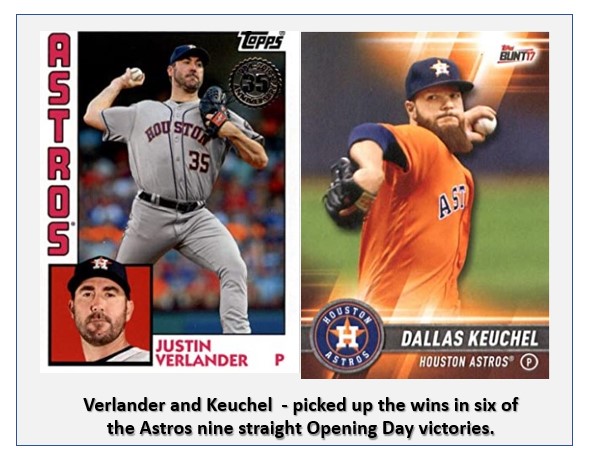
  • Have had the starting pitcher record each of the nine wins (Dallas Keuchel and Justin Verlander three each, Zack Greinke, Scott Feldman, Bud Norris.)
  • Have outscored their opponents 41-12, have hit .239 to the opponents’ .157.
  • Put up a 1.67 earned run average to the opponents’ 5.21
  • Scored five or more runs six times, while giving up as many as three runs just once.

A few other Opening Game win streak tidbits before we look at the highlights of each streak.

  • The St. Louis Browns outscored their opponents by the most runs during their nine-game streak, wining by a cumulative 35 tallies.
  • The Mets outscored their opponents by just 21 runs during their streak (the fewest of any of the streaks).
  • In the seasons comprising their nine-game Opening Day winning streak, the Mets finished under .500 seven times and in last place five times.
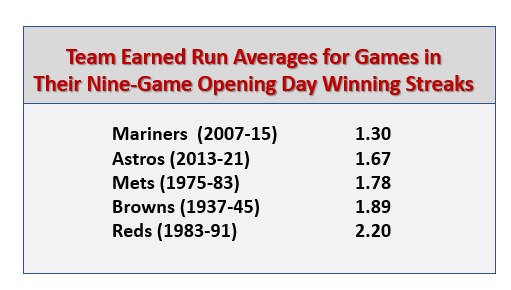
  • Pitching seems to key these opening Day win streaks, with none of the streaking teams recording an ERA over 2.20 over their nine wins.

ERA

  • The Reds had the best batting average over their streak at .303 and scored the most runs (60).
  • The Mariners had the lowest average during their streak at .223, the Mets scored the fewest runs (38).
  • No team finished over .500 more than five times in their nine-year streaks (although the Astros could make it six this season).

Now, here’s a year-by-year look at the highlights of those nine Opening Day winning streaks – from the most recent back.

_________________________________________________________

—–Astros (2013-21)—-

April 1, 2021 … Astros 8 – A’s 1 at Oakland

Zack Greinke pitched six scoreless frames for the Astros (for the win), and LF Michael Brantley has three hits – including a double and a home run. DH Yordan Alvarez drove in three runs, as the Astros coasted to an 8-1 win.

July 24, 2020 … Astro 8 – Mariners 2 in Houston

Justin Verlander started (and won) this one for the Astros, giving up three hits, a walk and two earned runs, with seven whiffs in six innings – leaving with an 8-2 lead.   LF Michael Brantley was the hitting star with two hits, a walk and three RBI in four plate appearances. His output included a three-run homer in the Astros’ five-run fifth inning.

March 28, 2019 … Astros 5 – Rays 1 at Tampa Bay

Justin Verlander got the start and the win – pitching seven innings and giving up three hits and one walk, while fanning nine. The Astros, who led five-to-one after five frames, got home runs from LF Michael Brantley (solo), CF George Springer (three-run) and 2B Jose Altuve (solo).

March 29, 2018 … Astros 4 – Rangers 1 at Texas

Justin Verlander started and got the win, tossing six scoreless innings (four hits, two walks, five strikeouts). The offense included solo home runs by RF George Springer and CF Jake Marisnick. Each team had just six hits.

April 3, 2017 … Astros 3 – Mariners 0 in Houston

Starter Dallas Keuchel got the win, throwing seven scoreless innings (two hits, two walks and four strikeouts), Relievers Luke Gregerson and Ken Giles each pitched a scoreless frame to close the Mariners out. CF George Springer and SS Carlos Correa each hit solo home runs and Correa drove in the Astros’ third run with a sacrifice fly. The Astros led 1-0 after the first – and that was enough.

April 5, 2016 … Astros 5 – Yankees 3 at New York

This was a squeaker by comparison to most games in the streak. The Yankees led 2-0 after two innings and the game was tied 2-2 after seven.  The Astros put up a three-spot in the eighth to pull away. SS Carlos Correa had two RBI, including a homer to tie the game at 2-2 in the sixth. 3B Luis Valbuena contributed a two-run single in the three-run eighth. Starter Dallas Keuchel got the win after pitching seven innings of two-run ball (three hits, four walks, five whiffs).

April 6, 2015 … Astros 2 – Indians 0 in Houston

Dallas Keuchel started and got the victory, with seven scoreless innings (three hits, three walks, four whiffs). Tony Sipp pitched the eighth and Luke Gregerson the ninth (for the save). The Astros got only three hits (all off Indians’ starter Corey Kluber, who went 7 1/3 innings). The Houston safeties included a sixth-inning RBI single by RF George Springer. CF Jake Marisnick drove in the second run with a sacrifice fly in the eighth.

April 1, 2014 … Astros 6 – Yankees 2 in Houston

Scott Feldman started for the Astros and picked up the victory with 6 2/3 scoreless innings (two hits, two walks, three strikeouts).  The Astros jumped out to a 6-0 lead after two frames – touching Yankee starter C.C. Sabathia for all six tallies, including a first-inning two-run homer by 1B Juan Guzman and a second-inning solo shot by RF L.J. Hoes.

March 31, 2013 … Astros 8 – Rangers 2 in Houston

Bud Norris started for the Astros in their first game after moving from the National League to the American League. He picked up the win after giving up five hits and two earned runs (three walks, five whiffs) in 5 2/3 innings.  Erik Bedard threw 3 1/3, one-hit, scoreless innings for a save.  (A 3 1/3-inning save, a rarity these days.) The big hit was a three-run home run by pinch-hitter Rick Ankiel (in the sixth) that gave the Astros a 7-2 lead..

The Astros streak remains alive. 

____________________________________________________________

—–Seattle Mariners (2007-15)—–

Felix Hernandez photo

Felix Hernandez – Six wins in the Mariners’ streak. Photo by Chase N.

In their nine-game Opening Day win streak, the Mariners outscored their opponents 43-13, outhit them .223 to .162 and out-homered them eight to four. The Mariners put up an earned run average of 1.30 to their opponents 3.60. In the nine wins, the Mariners never gave up more than three runs.

April 2, 2007 …  Mariners 4 – A’s 0 in Seattle

Each team collected four hits in this one, but the A’s made two errors to the Mariners’ one, which proved costly – as all four Mariners’ runs (scored in the sixth inning) were unearned.    The big blow in the game was a three-run home run by 1B Richie Sexson. Felix Hernandez pitched a gem for the win – eight scoreless innings, with three this, two walks and 12 strikeouts.

March 31, 2008 – … Mariners 5 – Rangers 2 in Seattle

The Rangers led 1-0 through five innings in this one, but the Mariners scored two in the sixth and three in the seventh. The big hit was a two-run double by 2B Jose Lopez in the seventh. Erik Bedard started for Seattle and gave up just one run in five frames.  Reliever Sean Green came on in the sixth and threw 1 2/3 scoreless innings for the win, while J.J. Putz got the save.

April 6, 2009 … Mariners 6 – Twins 1 at Minnesota

Felix Hernandez recorded another Opening Day win – going eight innings and giving up five hits, one run and three walks – with six strikeouts. 2B Jose Lopez, just as in 2008, had a big hit, a two-run single in the ninth (he had three RBI in the game).  The Mariners got home runs from RF Ken Griffey, Jr. (solo) and CF Franklin Gutierrez (two-run).

April 5, 2010 …. Mariners 5 – A’s 3 at Oakland

The Mariners scored in each of the first three frames and held the A’s scoreless until the sixth.  The A’s tied the game with one run in the sixth and two in the seventh, but the Mariners won it with two in the top of the ninth.  1B Casey Kotchman, who drove in four of the Mariners’ five runs, hit a two-run single in the top of the ninth for the winning edge. Felix Hernandez started for the Mariners and gave up three runs in 6 2/3 innings. Brandon League got the win with one inning of scoreless relief, with David Aardsma picking up the save.

April 1, 2011 …. Mariners 6 – A’s 2 at Oakland

The Mariners trailed 2-1 after five innings in this one, but scored two in the sixth and three in the seventh for the win. RF Ichiro Suzuki, 3B Chone Figgins and C Miguel Olivo each had two hits (six of the Mariner eight safeties) a run scored and an RBI in the game. Felix Hernandez threw a complete-game, five-hitter for the victory.

March 28, 2012 … Mariners 3 – A’s 1 (11 innings) at Tokyo (A’s home team)

This Tokyo Opener was a pitchers’ duel, tied at one-run apiece after 10 frames.  Then, the Mariners played a little NL-style ball to score in the eleventh. The inning opened with a double by SS Brendan Ryan, followed by a sacrifice (Ryan to third) by 3B Chone Figgins, an RBI single by 2B Dustin Ackley (who then stole second base) and an RBI single by RF Ichiro Suzuki (who was thrown out trying to stretch it into a double). Justin Smoak then popped out to end the inning. Brandon League then tossed a scoreless ninth to save the win for fellow reliever Tom Wilhelmsen.  (Felix Hernandez started and threw eight innings of one-run ball). Suzuki had four singles in five at bats and Ackley had a solo home run in addition to his eleventh-inning RBI single.

April 1, 2013 … Mariners 2 – A’s 0 at Oakland

Mariners’ starter Felix Hernandez went 7 2/3 scoreless innings in this one (three hits, one walk, eight strikeouts) for the win – with a save going to Tom Wilhelmsen. The only runs were scored in top of the fifth on a two-run single by CF and leadoff hitter Franklin Gutierrez.  The A’s had just five singles in the contest.

March 31, 2014 …. Mariners 10 – Angels 3 at Los Angeles

It might seem like this was finally an Opening Day with a little breathing room for the Mariners, but they actually trailed 3-2 after six innings – and were ahead by just 4-3 before plating six runs in the top of the ninth. The Mariners took the lead in the seventh inning on an RBI triple by C Mike Zunino, followed by CF Abraham Almonte’s RBI double. Justin Smoak added a three-run homer in the top of the ninth and Dusting Ackley hit a three-run triple in the same inning. Felix Hernandez got the win, giving up three runs (two earned) on four this and a walk in six frames.  He fanned 11 hitters.

April 6, 2015 … Marines 4 – Angels 1 in Seattle

Felix Hernandez picked up the win, tossing seven innings of one-run ball (two hits, one walk, ten strikeouts. Four Mariners’ hurlers took the last two innings, with Fernando Rodney getting the save. RF Seth Smith was the big gun on offense, with three hits (two doubles) and two RBI in three plate appearances. LF Dustin Ackley had a solo home run.

The Mariners lost their 2016 opener 3-2 at Texas.

__________________________________________________________

Cincinnati Reds (1983-91)

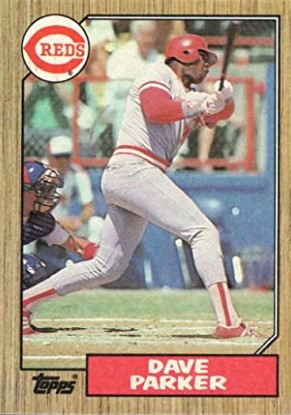
Dave Parker - Provided plenty of offense in the Reds' streak.

Dave Parker – Provided plenty of offense in the Reds’ streak.

In their nine-game Opening Day win streak, the Reds outscored their opponents 60-29, outhit them .303 to .206 and out-homered them 13 to 7. The Reds staff recorded a 2.20 earned run average  to their opponents’ 6.52.

April 4, 1983 … Reds 5 – Braves 4 in Cincinnati

The Reds scored the winning run in this one in the bottom of the eighth on an RBI single by SS Dave Concepcion, plating CF Eddie Milner who had singled with two outs and stolen second.  2B Ron Oester had a two-run homer for the Reds. LF Gary Redus had a solo homer. Mario Soto got the win, giving up four runs (two earned) on five hits and four walks, with five strikeouts over eight innings. Tom Hume pitched a scoreless ninth for the save.

April 2. 1984 … Reds 8 – Mets 1 in Cincinnati

The Reds jumped on the Mets early, leading 7-1 after two innings – thanks, in great part, to a second-inning, three-run home run by CF Eddie Milner. The Reds also got a solo homer from SS Dave Concepcion in the seventh, as well as two RBI from RF Dave Parker. Mario Soto started and went the distance for the Reds, giving up one run on seven hits, while walking one and fanning eight.

April 8, 1985 … Reds 4 – Expos 1 in Cincinnati

The Reds broke a scoreless tie with three runs in the fifth to salt this one away.  1B Pete rose contributed a two-run double and then was driven in by a Dave Parker (RF) single. Rose picked up a third RBI on a single in the seventh inning. Mario Soto picked up his third straight Opening Day win, pitching seven innings of one-run ball (four hits, two walks, five strikeouts). Carl Willis earned a two-inning save.

April 7, 1986 … Reds 7 – Phillies 4 in Cincinnati

Lots of scoring early in this one, with the Reds up 5-4 after just three innings. The Reds picked up 13 hits with three apiece from RF Dave Parker (one homer, two doubles, one RBI on the day) and C Bo Diaz (three singles, one RBI). CF Eric Davis had a three-run homer in the four-run second inning. Mario Soto picked up his fourth consecutive opening Day win, despite giving up four runs (one earned) in 5 2/3 innings, Ron Robinson picked up a 3 1/3-inning save (giving up just one hit).

April 6, 1987 … Reds 11 – Expos 5 in Cincinnati

The Expos jumped out to a 5-2 lead after three innings, but the Reds put up a nine-spot in the fourth to put this win in the books. The fourth inning featured seven hits (two home runs), two walks, three stolen bases and a wild pitch.  It went like this:  a lead-0ff walk to CF Eric Davis (who stole second); a one-out RBI single by C Bo Diaz; a two-run homer by 1B Terry Francona;  a walk to 2B Ron Oester; an RBI double by PH Paul O’Neill; an RBI single by LF Kal Daniels (followed by a steal of second); a two-run home run by SS Barry Larkin; a double  by RF Dave Parker; an RBI single by Davis (followed by a steal of second); a ground out; a wild pitch scoring Davis; and, finally, an inning-ending strikeout (Diaz). Bill Landrum got the win, tossing one inning in relief of starter Tom Browning, who gave up five tallies in three frames. The Reds got home runs from Davis, Francona and Larkin.

April 4, 1988 …. Reds 5 – Cardinals 4 in Cincinnati (12 innings)

A Kal Daniels (LF) walk-off RBI single in the twelfth inning won this one for the Reds, It was preceded by a walk, a sacrifice, a strikeout and a wild pitch.  The win went to Pat Perry, who pitched the top of the twelfth inning. Mario Soto started for the Reds and gave up four runs (three earned) in five innings, before a series of four relievers shut down the Redbirds for seven frames. Daniels, who also had a home run, had the only two RBI in the game for the Reds, as they also scored on a double play (with Daniels hitting) and twice on errors.

April 3, 1989 … Reds 6 – Dodgers 4 in Cincinnati

Starter Danny Jackson got the win, giving up four runs in five innings and leaving with a 6-4 lead.  Rob Dibble and John Franco held the Dodgers to one hit and no runs over the final four frames. RF Paul O’Neill went four-for-four, with a double, a home run (three-run) and four RBI.

April 9, 1990 … Reds 8 – Astros 4 at Houston (11 innings)

The Astros took a 4-2 lead after two innings in this game, but the Red scored one in the fifth and one in the sixth to tie it.  There was no additional scoring until the top of the eleventh, when the Reds pushed across four runs on: a leadoff walk to C Joe Oliver; a single by 1B Hal Morris; a bunt (moving the runners to second and third) by 2B Ron Oester; an intentional walk (loading the bases) to 3B Chris Sabo; a Billy Hatcher (LF) strikeout; a three-run triple by SS Barry Larkin; a run-scoring single by CF Eric Davis; and, finally, a foul pop out by RF Paul O’Neill. Mariano Duncan (2B) had a good day for the Reds, with a homer, single and three RBI in four at bats. Tom Browning started for the Reds, but lasted just four innings (four runs on five hits and a walk). Reliever Randy Myers, who tossed the final 1 2/3 innings got the win.

April 8, 1991 … Reds 6 – Astros 2 in Cincinnati

The Reds scored five in the bottom of the fourth (taking a 5-1 lead) to put this one out of reach. Tom Browning went 8 1/3 innings for the win (five hits, one walk, two strikeouts, two earned runs), while Rob Dibble got the save. Browning was also the offensive her0, driving in three of the Reds’ six runs with a bases-clearing double with two outs in the bottom of the fourth inning. (More #WhyIHateTheDH.) The Reds also got a solo home run from SS Barry Larkin.

The Reds lost their 1992 opener to the Padres (in Cincinnati) by a 4-3 score.

___________________________________________________________

New York Mets (1975-83)

The Mets outhit their opponents in only three of their nine consecutive Opening Day wins – and were outhit 70 to 64 over the nine games (.235 to .234).  Thanks to solid pitching (the Mets put up a 1.78 ERA to their opponents’ 4.21), the Mets outscored their opponents 38-17.

April 8, 1975 …. Mets 2 – Phillies 1 in New York

The Mets started their streak with a true pitcher’s duel – involving a pair of future Hall of Famers – as Tom Seaver topped the Phillies’ Steve Carlton 2-1.  Both pitchers tossed complete games.  Seaver gave up six hits and one run (two walks and nine strikeouts), while Carlton gave up two runs on just four hits (two walks, six strikeouts).  The Mets got a solo home run from RF Dave Kingman – and won the game (walk-off fashion) on an RBI single by 3B Joe Torre in the bottom of the ninth.

April 9, 1976 …. Mets 3 – Expos 2 in New York

The Mets were outhit 8-4 in their 1976 opener, but emerged with a 3-2 win behind seven innings of one-run ball from starter Tom Seaver (five hits, one walk, eight whiffs). The big hit came off the bats of SS Bud Harrelson (hitting eighth) – a two-run double in the fourth inning. Skip Lockwood pitched two innings (three hits, one run, three strikeouts) for the save.

April 7, 1977 … Mets 5 – Cubs 3 at Chicago

The Mets trailed in  this one – 2-0 after five innings, but launched a four-run rally in the sixth.  The rally started with a walk to Mets’ starting pitcher Tom Seaver and included a single by CF Lee Mazzilli, an RBI double by LF John Milner, an intentional walk to RF Dave Kingman, a run-scoring ground out by 1B Ed Kranepool and a two-run single by C John Stearns. Seaver got the win, giving up three runs (nine hits, one walk, seven strikeouts) in seven innings.  Skip Lockwood picked up a two-inning save.

April 7, 1978 … Mets 3 – Expos 1 in New York

Jerry Koosman drew the Opening Day assignment and tossed a one-run, complete game (eight hits, no walks, seven strikeouts).  The RBI went to RF Ken Henderson, CF Lee Mazzilli and 2B Doug Flynn.  This was the fourth straight Opening Day win in which the Mets were outhit by their opponent.

April 5, 1979 …. Mets 10 – Cubs 6 at Chicago

No pitchers’ duel this year, as the Mets scored ten runs on 13 hits (five runs in the seventh). Mets’ starter Craig Swan got the win – giving up three runs on nine hits over eight frames (no walks, three strikeouts). Richie Hebner (3B) had a home run, two doubles, a single and four RBI in five at bats to lead the offense.

April 10, 1980 … Met 5 – Cubs 2 in New York

This was a tight game (Mets up 1-0 through five innings) until New York busted loose for four runs in the bottom of the sixth (the Cubs had tied it at 1-1 in the top of the inning). Craig Swan started the opener for the second straight season and again picked up the win, going seven innings and giving up two runs on seven hits (one walk, three strikeouts).  Neil Allen got a two-inning save, retiring six in a row. Swan was also on of the hitting “stars” – driving in two runs and collecting two singles and a walk in three plate appearances. CF Jerry Morales also had two hits and two RBI.

April 9, 1981 …. Mets 2 – Cubs 0 in Chicago

Pat Zachry started and got the win (5 2/3 innings, six hits, no walks, four strikeouts), with help from relievers Tom Hausman and Neil Allen (who got a three-inning save).  The Cubs outhit the Mets seven-to-five, but the Mets got solo home runs from 1B Rusty Staub and CF Lee Mazzilli in the fourth inning.

April 8, 1981 … Mets 7 – Phillies 2

Randy Jones started and got the win – giving up just one run (unearned) over six innings (four hits, three walks and two strikeouts). The offensive star was 2B Bob Bailor, who had two doubles, a single and a walk in five plate appearances – driving in three runs and scoring two.

April 5, 1983 … Mets 2 – Phillies 0 in New York

Tom Seaver threw six, three-hit, scoreless innings (one walk, five strikeouts) for the win – and Doug Sisk earned a save with three scoreless frames (two hits, two walks, three strikeouts), There were a total of 11 hits in the game (six for the Mets) – all singles.  The RBI went to Mets’ RF Mike Howard and 2B Brian Giles.

The Mets lost their 1984 opener to the Reds by an 8-1 score.

_________________________________________________

St. Louis Browns (1937-45)

In their Opening Day win streak, the Browns outscored their opponents 52-17, outhit them .291 to .220 and out-homered them 5-3.  The Brown staff put up a 1.89 earned run average to the opponents’ 6.08. In the nine games, the Browns tossed two shutouts, gave up just one run five times, two runs once and 10 runs once (in the very first win in the streak).

April 21, 1937 … Browns 15 – White Sox 10 in St. Louis

Harlond Clift - A still-record( tied) five hits in an Opening Day game,.

Harlond Clift – A still-record( tied) five hits in an Opening Day game,.

The Browns led this one 15-4 after six innings and held on for the win. Starter Orel Hildebrand went the distance, giving up 17 hits and ten earned runs.  (How the game has changed). The Browns got solo home runs from 2B Rogers Hornsby (who had three hits and two RBI) and 3B Harlond Clift (who had five hits – still tied for the most ever in an Opening Day game.).  Lead-off hitter, SS Bill Knickerbocker had four hits and four RBI and even pitcher Hildebrand go into the act with a fifth-inning, two run double.

April 19, 1938 … Browns 6 – Indians 2 at Cleveland

The Browns led 5-1 after five innings, with Bobo Newsom going the distance in a gritty performance (just two runs on 11 hits and five walks, with five strikeouts). 3B George McQuinn had three hits (single, double, triple) and the RBI went to LF Mel Mazzera, CF Sam West, RF Beau Bell and 2B Don Heffner.

April 22, 1939 … Browns 5 – White Sox 1 at Chicago

Bobo Newsom went the distance for the Browns (seven hits, one walk, ten strikeouts) for the win. Browns’ 3B Harlan Clift had a solo home run and Clift and 2B Johnny Berardino had two RBI each.

April 16, 1940 … Browns 5 – Tigers 1 at Detroit

“Slick” Coffman pitched a complete-game, seven-hitter for the win (one run, three walks, five strikeouts). The game featured a home run by CF Wally Judnich, and two RBI each for RF Rip Radcliff and C Bob Swift. The losing pitcher in this one was Bobo Newsom, who had been the Opening Day winner for the Browns the year before.  Newsom was traded from the Browns to the Tigers in May of 1939.

April 16, 1941 … Browns 8 – Tigers 1 in St. Louis

This was a close contest – tied at 1-1 after 7 ½ innings – until the Browns erupted for seven runs in the bottom of the eighth.  Elden Auker pitched a complete-game, four-hitter for the Browns. LF Rip Radcliff and 1B George McQuinn had two RBI each. Browns’ 2B Johnny Lucadello punched out four hits in five at bats, but had just one run and no RBI.

April 14, 1942 … Browns 3 – White Sox 0 at Chicago.

This was a pitchers’ battle with just eight hits in the game and both starters going the distance. It was, in fact, a 1-0 game until the top of the ninth when the Browns pushed across a pair of insurance runs.  Bill Muncrief got the win, giving up just three hits, walking none and fanning four. The first run scored on a ground out by CF Chet Laabs in the top of the fourth. Then, in the top of the ninth, Laabs added an RBI double and scored on a single by RF Glenn McQuillen.

April 21, 1943 … Browns 3 – White Sox 0 in St. Louis

Al Hollingsworth went the distance (three hits, one walk, two strikeouts) for the Browns, who got three hits, one run and one RBI from SS Vern Stephens and two walks, a triple, a run scored and an RBI from LF Chet Laabs.

April 18, 1944 … Browns 2 – Tigers 1 at Detroit

The Browns scored in the first inning on two singles and a fielder’s choice – and the score stayed at 1-0 until the top of the ninth, when SS Vern Stephens led off with a solo home run.  It turns out the run was needed, as Pinky Higgins homered for the Tigers in the bottom of the final frame. Starter Jack Kramer went 8 2/3 innings (giving up one run) for the Browns. The Higgins’ homer, which came with two outs in the ninth was followed by a single, bringing in George Caster to pitch (and earn the save – awarded retroactively, of course).

April 17, 1945 … Browns 7 – Tigers 1 at Detroit

Sid Jakucki went the distance for St. Louis (six hits, one run, no walks, four whiffs), while SS Vern Stephens, RF Milt Byrnes and 1B George McQuinn – batting in the 4-5-6 holes – combined for seven of the Browns’ 11 hits and drove in five of the six tallies.

In 1946, the Browns lost their Opening Day game to the Tigers (in Detroit) by a 2-1 score.

Primary Resources:  Baseball-Reference.com; MLB.com

100Baseball Roundtable is on the Feedspot list of the Top 100 Baseball Blogs.  To see the full list, click here.

I tweet baseball @DavidBBRT

Follow/Like Baseball Roundtable’s Facebook Page here.  More baseball commentary; blog post notifications.

Member: Society for American Baseball Research (SABR); Negro Leagues Baseball Museum; The Baseball Reliquary. 

Baseball Roundtable 2021 National League Predictions and Watch List

We continue to close in on Opening Day – of a full major-league season.  With that in mind, Baseball Roundtable is presenting its 2020 “Watch List” – players from each team I am particularly interested in keeping an eye on in the coming season. In addition, I’m sharing my pennant race predictions, as well as a list of players I think will be among the finalists for key MLB awards.  This post focuses on the National League.  For the American League version, click here.

Let’s start with the pennant race predictions.

NL EAST

Braves   … 91-71

Mets …  88-76 Wild Card)

Nationals … 85-77

Phillies … 80-82

Marlins … 68-94

Everyone talks about the Dodgers’ potent lineup. In 2020, The Dodgers did lead the major leagues in runs scored at 349 – but the Braves were just one run (yes, one) behind. The Braves also led MLB in hits (556), were second in home runs (103 to the Dodgers’ 118) and second in average (.268 to the Mets’ .272).  And, they’ve brought the offense back, led by: NL MVP Freddie Freeman (1B); the power and speed of Ronald Acuna, Jr. (RF); Marcell Ozuna (LF); Ozzie Albies (2B); and I could go on. The re-signing of Ozuna (.338-18-56 last season) was key – providing protection for Freeman in the middle of the lineup. The Braves’ rotation will be headed by Max Fried (24-6 over the past two seasons) and 23-year-old Ian Anderson , who looked very good in his 2020 rookie campaign (3-2, 1.95 with 41 whiffs in 32 1/3 innings).  The Braves also brought in veterans Charlie Morton and Drew Smiley to bolster the rotation (and Mike Soroka should be back sooner rather than later).  There’s work to do in the bullpen, but the Braves should have enough to top the East.

The Mets made some serious moves in the off-season, adding power-hitting, Gold Glove SS Francisco Lindor, starter Carlos Carrasco, hard-throwing reliever Trevor May, C James McCann, starter Taijuan Walker and more). They are much improved – with a lineup that also features Pete Alonso (who hit 53 home runs as a rookie in 2019) at 1B, rising star Dominic Smith in LF and the solid bat of Michael Conforto in RF.  Carrasco (who will start the season on the IL) will join a rotation that brings back two-time Cy Young Award winner Jacob deGrom and veteran Marcus Stroman.  The Mets should make the post-season, but do not quite have the depth of the Braves.  For the Nationals, a rotation headed by Max Scherzer, Stephen Strasburg and Patrick Corbin is a good start (no pun intended) – and newcomer Brad hand should handle the closer’s role after leading the AL with 16 saves (for the Indians) in 2020.  The lineup also has some pop with RF Juan Soto (perhaps the most exciting young hitter in MLB), SS Trea Turner, new 1B Josh Bell and Kyle Schwarber (expected to rebound from 2020). Unfortunately, the Nationals are playing in a tough and competitive division. They could make the playoffs if all falls into place, but I don’t see them catching the Braves.  The Phillies have a potentially strong rotation (Aaron Nola, Zack Wheeler and Zach Elfin at the top, but need a big turnaround from their bullpen (tagged at a .315 pace by opponents a year ago).  Like the Phillies, the Marlins have some interesting pieces in the rotation – Sandy Alcantara, Elieser Hernandez and Sixto Sanchez should make some noise. I’m just not sure there enough offense to compete in this division.

NL CENTRAL

Brewers …  87-75

Cardinals … 85-77

Cubs … 83-81

Reds … 77-85

Pirates … 62-100

This was a tough call, depending on how things break out (including injuries and “rebounds.’ I could see the Cardinals or Brewers topping the Central.  I’m going with the Brewers based on a better combination of offense and pitching (although that assumes a bit of a rebound from Brewers’ batters (who hit only .223 a year ago).  The Brewers’ rotation will be headed by Brandon Woodruff, who went 3-5 a year ago, but deserved better (3.05 ERA and 11.1 whiffs versus just 2.2 walks per nine). In the two slot will be Corbin Burns – who went 4-1, 2.11 a year ago, with 13.3 strikeouts per nine. The rotation thins out after the top two, but newcomer Brett Anderson (free agent), a 12-year MLB veteran, should help. In 2021, with starters coming off a short season, the bullpen should expect to be busy – and the Brewers have one of the best relief staffs, headed by closer Josh Hader and set up man Devin Williams – who both fan about 15 batters per nine innings. On offense, the Brewers will be looking for LF Christian Yelich to return to MVP form, They’ve also added Kolten Wong (free agent), whose Gold Glove skills at 2B will improve the Brewers’ defense – and also allow Keston Hiura to shift over to first base, where his bat may come back to life (Huira hit .303-19-49 in 84 games in 2019, but .212-13-32, with a league-topping 85 whiffs in 2020). The Brew Crew offense should also be boosted by the return of CF Lorenzo Cain (who opted out early in 2020).  Newcomer (free agent) Travis Shaw at 3B can also plug in at 1B and 2B). Overall, the Brewers seem to have enough to win the Central – but it will take rebounds form the likes of Yelich, Cain and Huira, as well as continued solid performance out of the pen, to hold off the always tough Cardinals.

The Cardinals, who parlayed defense and pitching into a second-place finish a year ago (St. Louis scored the third-fewest runs in all of MLB last season and still managed to finish above 500).  In the off-season, they went out and traded for a 3B Nolan Arenado – improving both offense (Arenado is a three-time NL home run leader and two-time RBI leader) and defense (he’s won eight Gold Gloves in his eight MLB seasons). There is some concern with the starting rotation, with number-two starter Kwang Hyun Kim (back) and number-three Miles Mikolas (shoulder) not guaranteed for the opening of the season. Still, there’s Jack Flaherty, Adam Wainwright and Carlos Martinez – as well as a bullpen bolstered by the return of fireballer Jordan Hicks.  One thing the Cardinals could use is more offense from their defensively gifted outfield. Last season, the three outfielders expected to get most of the 2020 garden work (Tyler O’Neill, Harrison Bader and Dylan Carson) hit a combined .197). If they’re in a tight race, we may see the Cardinals make a move there. The Cubs won the Central Division in 2020 and still have some championship-caliber pieces in place (we’ll get to that in a minute). What’s missing for a repeat? How about Yu Darvish (trade), who was their best starter one year ago, as well as SP’s Jon Lester, Tyler Chatwood and Jose Quintana (all free agency). Also missing (free agency) will be closer Jeremy Jeffress and OF Kyle Schwarber.  Still, the rotation will be headed by veterans Kyle Hendricks, Jake Arrieta and Zach Davies – and SS Javier Baez, 1B Anthony Rizzo, 3B Kris Bryant, CF Ian Happ and C Wilson Contreras  will be in the lineup. Some players to watch, but I don’t think enough to get the Cubs to the post season. The Reds are going to miss Cy Young Award Winner Trevor Bauer, starter Anthony DeSclafani and reliever Archie Bradley. They now have Sonny Gray and Luis Castillo – both capable starters (3,70 and 3,21 ERAs in 2020, respectively) – at the top of the rotation, after that the rotation has some question marks.  The Reds also traded away closer Raisel Iglesias (72 saves over the past three seasons), but southpaw Amir Garrett has shown steady improvement and appears ready to move into the role (2.45 ERA and 26 whiffs in 18 1/3 inning last season).  The Reds’ lineup has some bright spots in the power bats of 1B Joey Votto, SS Eugenia Suarez, 3B Mike Moustakas, RF Nick Castellanos and OF Jesse Winker. Still, last season, the Reds produced the National League’s third-fewest runs and that does not look to improve.  As you might expect, there are few bright spots on a Pirates’ squad that scored the fewest runs in MLB in 2020 and gave up the NL’s sixth-most tallies – and was pretty quiet in the off-season. The offense, in fact, may have regressed with the trade of Josh Bell and the pitching took a step back with the trades of starters Jameson Taillon and Joe Musgrove. The Pirates will be looking for some offense from 2B Adam Frazier and young 3B Ke’Bryan Hayes.  An inexperienced Pirates’ pitching staff looks to be led by Mitch Keller (1-1, 2.91 last season, but with only 16 MLB starts under his belt, and “veteran” 28-year-old Steve Brault (12-15, 4.68 over five MLB seasons … 45 career starts).

NL WEST

Dodgers … 103-59

Padres … 96-66 (Wild Card)

Diamondbacks …  77-85

Giants … 74-88

Rockies … 63-99

The Dodgers, in 2020, won the most games in MLB (43-17), scored the most runs (349) hit the most home runs (118), gave up the second-fewest runs (213) and had the lowest earned run average (3.02).   And, they pretty much brought the whole squad back for 2021.  Then, to top if off, they added 2020 National League Cy Young Award Winner Trevor Bauer to the rotation.  The 2021 Dodgers sport a rotation with three former Cy Young Award winners (Trevor Bauer, Clayton Kershaw and David Price), a solid bullpen and a lineup featuring lots of star power (RF Mookie Betts, CF Cody Bellinger, 1B Max Muncy, SS Corey Seager) and no real “holes.”  The Dodgers have finished first in the NL West for eight consecutive seasons. The streak should continue.

Who can challenge the Dodgers in the West?  If anybody, it’s the much-improved San Diego Padres. The Padres had the third-best record in MLB in 2020, have solid lineup (including what many say is MLB’s best infield – emerging star Fernando Tatis, Jr. at SS, four-time All Star Manny Machado at 3B, four-time Gold Glover Eric Hosmer at first base, and switch-hitting Jake Cronenworth, who hit .285 as a 2020 rookie, at second.  Saving the best for last, the Padres added a pair of Cy Young Award candidates– Blake Snell and Yu Darvish – to the rotation (through trades).  They should challenge the Dodgers and capture a Wild Card spot. The Diamondbacks, Giants and Rockies are in – or should be in – rebuilding mode.  I give the Diamondbacks an edge in the race for third place.  Not a lot of star power there, but they have more balance than Colorado or San Francisco.  If Madison Bumgarner bounces back from a dismal 2020, they could have a solid top of the rotation with Zac Gallen and Merrill Kelly.  RF Kole Calhoun provides 30-homer power (but not much average), while LF David Peralta, CF Ketel Marte and 1B Christian Walker are steady performers at the plate.  Then there is SS Nick Ahmed ‘s Gold Glove skills at SS. Questions remain in the bullpen.  The Giants, Although they are aging a bit, have solid hitters in their lineup, led by rising star Mike Yastrzemski and a couple of “Brandons” with power (1B Belt/SS Crawford). The question is the pitching.  There’s not enough there to catch the pitching-rich Dodgers and Padres. With Kevin Gausman at the top of the rotation and some rebound by the likes of Johnny Cueto and Anthony DeSclafani, there might be enough for the Giants to catch the Diamondbacks, but I’m betting against it.  The Rockies without Nolan Arenado – just doesn’t seem right, does it? They do have some interesting pieces; German Marquez and Antonio Senzatela at the top of the rotation and the reborn Daniel Bard at closer – as well as Trevor Story at SS, Charlie Blackmon in RF and newcomer C.J. Cron at 1B.  Still, the pitching and power pools in Colorado seem a bit shallow to compete in the NL West – particularly the bullpen, which put up a 6.77 earned run average.

Now, let’s move on to  BBRT’s Team-by-Team National League Watch List.

——Baseball Roundtable 2021 National League Watch List ——

Arizona Diamondbacks – Nick Ahmed, Zac Gallen

Zac Gallen - Poised for a breakout season.

Zac Gallen – Poised for a breakout season.

It will be nice to see a full-campaign of Nick Ahmed at shortstop.  Ahmed was a Gold Glover in 2018 and 2019. Although he doesn’t deliver average, his bat should be good for 15 home runs; AND he will certainly flash plenty of leather.  Another bright spot worth watching in Arizona is 25-year-old right-handed starter Zac Gallen – who seems poised for a breakout season. He has a moving fastball, as well as a change, curveball and cutter. In two MLB seasons (2019-20), he is 6-8 in 27 starts … but has a nifty 2.78 earned run average and 178 strikeouts in 152 innings. In 2020, Gallen was 3-2, 2.75, which included six “no decisions” in which he went at least six innings and gave up two or fewer runs.

How About a Little Help from My Friends?

After eight starts in 2020, Zac Gallen had just one win (1-0), despite a 1.80 ERA, a .182 batting average against and 54 strikeouts in 50 innings.

Atlanta Braves – Max Fried, Ronald Acuna, Jr.

Ronald Acuna, Jr. - Fueling the Braves''offense.

Ronald Acuna, Jr. – Next 40-40 player?

There are a couple of players, BBRT will watch here. The first is right-handed starter Max Fried – to see if he can continue to translate his curveball into top of the rotation results.  In 2010, Fried went 7-0, 2.25 in eleven starts and gave up just two home runs in 56 innings.  This follows up a 2019 season in which he went 17-6, 4.02 (but did give up 21 long balls in 165 2/3 innings).  BBRT will be watching to see if Fried continues to rack up wins – and, whether he continues to keep the ball in the park like he did in 2020.  Just 27-years-old, he may be entering his prime.  BBRT will also be watching one of MLB’s true rising stars – 23-year-old Ronald Acuna, Jr. – who came just three stolen bases shy of a 40-40 season in 2019 (.280-41-101, with a NL-topping 37 steals).  In 2020’s short campaign, his average dropped to .250, but he did put up 14 home runs and eight steals in 45 games. He’s got the potential to be the major league’s next 40-40 player.

A Nice Walk in the Park

The Braves tied the Reds for the most walks (received) in the National League (239) in 2020. Three Braves were among the league’s top six in walks – Freddie Freeman (third with 45); Marcell Osuna and Ronald Acuna, Jr. (tied for sixth with 38). Bryce Harper of the Phillies led the league with 49 free passes.

Chicago Cubs … Javier Baez, Kyle Hendricks

Javier Baez Cubs photo

Javier Baez – Could be best of the Cubs. Photo by Minda Haas Kuhlmann

Javier Baez is the player to watch on this Cubs’ squad. The Cubs shortstop slumped at the plate last year, but still came home with a God Glove. Keep in mind that he was an All Star in 2018 and 2019, when he hit a combined .286-63-196.  (He hit just .203-8-24 in 2020). Baez should bounce back and be the most exciting player in the Cubbies’ lineup. Kyle Hendricks  doesn’t throw hard, but he pitches smart.  Last season he was 6-5, but put up a nifty 2.81 ERA in 12 starts. He struck out  7.1 batters per nine innings, but walked less than one (0.9 per nine frames). If you like to watch a pitcher “pitch,” Hendricks could be your guy. His four-seamer tops out at about 88 mph, but he has good command of that middle-of-the-road fastball, as well as of a sinker, change and curve.

Gone, but Not Forgotten

Yu Darvish, Tyler Chatwood, Jon Lester, Jeremy Jeffress – all Cubs a year ago, all with other teams in 2021 – recorded 17 of the Cubs 34 wins in 2020 and eight of the teams 16 saves.

Cincinnati Reds – Tyler Mahle, Nick Lodolo

Tyler Mahle - Slider made a difference.

Tyler Mahle – Slider made a difference.

Twenty-six-year-old righty starter Tyler Mahle added a slider to his repertoire last season (to go with a mid-90s fastball, splitter and change).  The addition seemed to work.  He went from 3-12, 5.14 in 2019 to 2-2, 3.59 in 2020 (with 60 strikeouts in 47 2/3 innings). BBRT will be interested in: 1) Seeing if hitters catch up to the new pitch mix; and 2) If Mahle can improve his command (he walked four batters per nine innings a year ago).    I’ll also be watching to see if the Reds’ 2019 top draft pick, southpaw pitcher Nick Lodolo is called up – or if he ever walks anyone.  In his lone minor-league season (2019), Lodolo pitched 18 1/3 innings, fanning 30 and walking none. Who knows, if the Reds fade early, the 23-year-old could see some major-league action.  Besides, a pitcher with three “O’s” in his name is a find.


One For “Ever”

In 2020, Trevor Bauer became the first member of the Reds to win the National League Cy Young Award.

Colorado Rockies – Daniel Bard, Trevor Story

Daniel Bard - Great comeback story.

Daniel Bard – Great comeback story.

The Colorado Rockies without the leather and lumber of Nolan Arenado to watch.  It just doesn’t seem right. When I watch the Rockies, I’ll have to get one of those “Old Guys Rule” hats.  Number-one on my Rox watch list is  35-year-old closer Daniel Bard.  Why my interest?  Bard first made it the majors in 2009 and was a serviceable reliever over his first three seasons (5-13, but with a 2.88 earned average and 213 whiffs in 197 innings).  Then, in 2012, the Red Sox decided to make him a starter – and the wheels came off. In his first 11 appearances of the season, he pitched 55 innings (5.24 ERA), walking 37, hitting eight batters and striking out 34. He was sent down to the minors in June, where he continued to struggle.  Bard came back up, in a relief role, in August and still could not find the plate (six more appearances, 4 1/3 innings, 18.69 ERA, six walks and four whiffs). To make a long story short, Bard pitched only one MLB inning in 2013 – and pitched in the minors until he retired as a player after the 2017 season.  Then came the short 2020 season – and opportunity.  He threw for Rockies’ scouts, was signed for 2020 and, after a seven-year absence, was back on a major-league mound picking up a win (1 1/3 scoreless innings in relief) on July 25. He went on to win the closer’s job, going 4-2, 3.65, with six saves in six opportunities – using a mid-90s fastball, a wicked slider and a change.  BBRT will be watching to see if this comeback tale continues.

I’ll also keep an eye on Trevor Story, the Rox power hitting shortstop – a threat to put up a 30 (HR)/ 30 (SB) season. In 2020, Story went .289-11-28 and led the NL in triples (4) and steals (15), I’ll be watching both Story’s storied performance, and whether the trade rumor that continue to swirl around him become reality.

High Mountain Irony

In 2020, the Rockies had the National League’s highest earned run average (5.59), Yet the Rox starters recorded 28 quality starts, second in the NL only to the Cubs 30.

Los Angeles Dodgers – The Dodgers’ Rotation, Mookie Betts

Clayton Kershaw - Three-time CYA winner part of Dodgers' vaunted rotation. Photo by SD Dirk

Clayton Kershaw – Three-time CYA winner part of Dodgers’ vaunted rotation. Photo by SD Dirk

The Dodger rotation had the NL’s lowest starters’ ERA in 2020 (3.29). Not only did the principals return, the Dodgers added the 2020 NL Cy Young Award winner to boot. So, who do you watch?  How about the entire starting rotation – which should include three former Cy Young Award winners: Clayton Kershaw, newcomer Trevor Bauer and David Price, as well as Walker Buehler (14-4, 3.26 in 2019) and probably Dustin May (3-1, 2.57) or Julio Arias (3-0, 3.27 a year ago). The most interesting to watch may be 2012 CYA winner Price, who opted out of the 2020 season. In his most recent season (2019), Price missed time with elbow tendinitis and wrist issues.   If you prefer to watch a position player, I’d go with RF Mookie Betts – who does it all – a .301 average over seven seasons, a good bet(ts) for 30 home runs, 80+ RBI and 20 stolen bases. (He’s also a five-time Gold Glover.)  Prefer to watch prospects? you may get a chance to see Baseball America’s 2019 Minor League Player of the Year Gavin Lux (.347-26-76 in 113 games at Double A and Triple A).  Note: Lux has been over-matched in two call ups to the Dodgers, but he’s just 23 – and we’ll be seeing him again.

Lots of No-Doubters

The Dodgers had MLB’s largest positive run differential in 2020 – outscoring opponents by 171 runs. The next best? The Padres and Braves at a plus 73.

Miami Marlins – Jon Berti, Sixto Sanchez

Sixto Sanchez - Young Pedro Martinez?

Sixto Sanchez – Young Pedro Martinez?

Jon Berti tops BBRT’s Marlins’ watch list.  Berti started 35 games last season: 17 at second base; seven in centerfield, seven in right field; two at third base and two at shortstop. I’ll be anxious to see what the Marlins have in mind for this speedster (he’s stolen 27 bases in 116 MLB games over three seasons). Young (22-years-old) right-hander Sixto Sanchez has drawn comparisons to a young Pedro Martinez. He brings a fastball that can reach triple digits, a hard (and moving) change and a plus breaking ball. In his 2019 rookie season, he went 3-2, 3.46 and fanned 33 in 39 innings. (Look for that whiff rate to go up as he develops).

Start ‘Em Young

In five minor league seasons, Sixto Sanchez has gone 23-18, 2.58 with 294 strikeouts in 335 1/3 innings. The amazing thing is, he had five minor-league seasons under hit belt by age 21. 

Milwaukee Brewers– Josh Hader & Devon Williams, Christian Yelich

Christian Yelich - Brewers need a rebound from 2018 MVP. Photo by IDSportsPhoto

Christian Yelich – Brewers need a rebound from 2018 MVP. Photo by IDSportsPhoto

If you like to see fireballers come out of the pen and dampen rallies, join BBRT in watching Brewers’ front line relievers – closer Josh Hader and 2020 NL Rookie of the Year Devon Williams.  In 2020, Hader led the NL in saves with 13 – going 1-2, 3.79 and fanning 31 batters in 19 innings. In four MLB seasons, he has a 2.54 ERA and has fanned 15.3 batter per nine frames.  That’s “lights out.” Rookie of the Year William worked in 22 games this past year – going 4-1, with a minuscule 0.33 (yes, that’s a zero in front of the decimal point) earned run average. Not only that, he fanned 53 batter in 27 innings – 14.8 per nine. I’ll also be watching Christian Yelich, who came to the Brewers from the Marlins (trade) in 2017 and immensely was the 2018 NL Most Valuable Player (.326-36-110) and then followed by finishing second in the 2019 MVP voting (.329-44-97), wining the batting title both years. Yelich slumped to .205 in 2020’s short and strange season, but I expect he’ll return to something closer to .300-30-100, with 15 steals in 2021 – giving the Brewers quite a boost.

Backing In

In 2020, the Brewers and the Astros (both at 29-31) became the first two MLB teams ever to make the playoffs with losing records.

New York Mets – Jacob deGrom, Francisco Lindor, Dominic Smith, Pete Alonso

Francisco Lindor - New force in Mets' lineup.Photo by Keith Allison

Francisco Lindor – New force in Mets’ lineup.Photo by Keith Allison

Lots of new faces (via trade and free agency) to watch in New York (SS Francisco Lindor, RHP Carlos Carrasco, C James McCann, RHP Trevor May – to name a few), BBRT starts its watch list with holdover Jacob deGrom – a two-time Cy Young Award winner and arguably the best pitcher in the National League. I’d like to see what he could do with a little better run support. (Over the past three seasons, deGrom has a 2.10 ERA and has fanned 628 batters in 489 innings. Yet, he’s only six games above. 500, at 25-19.) BBRT wants to watch him work and win. I’ll also be watching to see what newcomer Francisco Lindor means to the Mets’ lineup (and, of course, deGrom’s W-L line). The 27-year-old, four-time All Star brings a powerful bat and a pair of Gold Gloves to the Mets. And, he stays in the lineup – missing only 31 games in the past five seasons. Look for .280-30-100. BBRT is also interested in the continued development of outfielder Dominic Smith.  Smith (26-years-old) was .316-10-42 in 50 games a year ago. Then there’s 1B Pete Alonso, who hit 53 home runs as a 24-year-old rookie in 2019 and 16 in 2019’s short season (which translated to 43 in a 162-game slate). Lots t see in The Big Apple.

Why Stop at First?

Of Dominic Smith’s 56 hits in 2020, 32 were for extra bases (21 doubles, one triple, ten home runs). His .616 slugging percentage was tops on the Mets and fourth in the National League.

Philadelphia Phillies – Spencer Howard, Bryce Harper

Spencer Howard - Phillies' top prospect.

Spencer Howard – Phillies’ mound prospect.

BBRT’s Philadelphia watch list is topped by 24-year-old prospect Spencer Howard. Just 1-2, 5.92 (with shoulder issues) a year ago, he’s shown swing-and-miss stuff in the minors. In three minor-league seasons, he’s gone 13-10, 2.23 – but, more important, has averaged 12 strikeouts per nine innings (281 whiffs in 211 1/3 frames). I might also keep an eye on Bryce Harper, who is capable of an MVP-worthy season when he puts it all together. (In 2015, he was .330-42-99).)  We haven’t heard a lot about Harper recently, but it’s clear he gets plenty of respect at the plate.  He led the NL in walks last season (49) and has three times topped 100 free passes in a campaign. Hard to believe Harper – just 28-years-old, is entering his tenth MLB seasons.

Should I Make that Call?

The Phillies bullpen ERA of 7.06 was the highest in the majors.


Pittsburgh Pirates – Ke’Bryan Hayes

HaYESBBRT will be watching Pirates’ 23-year-old third baseman Ke’Bryan Hayes – a leading NL Rookie of the Year candidate (who hit .376-5-11 in 25 games in 2020). In five minor-league seasons, Hayes has hit .279-25-202, with 66 steals in 461 games.  The Pirates expect good things from Hayes – also a potential Gold Glover – who is having a great spring.

Nice Numbers, Kid

In 2020, Ke’Bryan Hayes hit .314 with two strikes, .308 with two outs, and .364 with runners in scoring position.

Saint Luis Cardinals – Nolan Arenado, Dylan Carson

Nolan Arenado - Bringing lumber AND leather to St. Louis. Photo by jenniferlinneaphotography

Nolan Arenado – Bringing lumber AND leather to St. Louis. Photo by jenniferlinneaphotography

Newcomer Nolan Arenado’s combination of leather and lumber is well worth a watch in St.Louis.  In eight seasons with the Rockies’, Arenado has won eight Gold Gloves and hit 235 home runs (five seasons of at least 37 round rippers and five seasons of 110 or more RBI.). It will be interesting to see what the move from Colorado will mean at the plate.  (Arenado was .322-136-461 at home and .263-99-299 away). Last season, the three outfielders expected to patrol the green in Saint Louis hit a combined .197-14-53 (playing in a combined 135 – of a potential 180 – games).  The Redbirds need more offense from the outfield and the best bet is number-one prospect 22-year-old Dylan Carson. In 2019, splitting time between Double-A and Triple-A, Carson hit .292, with 26 home runs and 68 RBI, 95 runs scored and 20 steals in 126 games.  Last season, Carson started slow (.162-1-5 in is first 23 games), was sent down to the alternative site for some work and came back to go .278-12-11 in his last dozen games. BBRT will be looking to see which Carson shows up in 2021.

Oops! Two that Got Away

It’s a bit ironic that the Cardinals are in need of some outfield offense, In January of 2020, they traded OF Randy Arozarena and OF/1B Jose Martinez to the Tampa Bay Rays for minor-league pitching prospects Matthew Liberatore and Edgardo Rodriguez and a supplemental second round draft choice. Arozarena went on to a .281-7-11 in 23 games for the Rays and then burned up the post season with a .377-10-14 line in 20 games (setting a record for the most home runs in a single post season.) Arozarena would look pretty good in a Redbirds’ uniform right now.

The Cardinals also let Of Marcell Ozuna slip away (via free agency) after the 2019 season.  All he did in 2020 was lead the National League in home runs (18) and RBI (56), while hitting .338.

San Diego Padres – Blake Snell, Yu Darvish, Fernando Tatis, Jr.

Fernando Tatis, Jr. - On everybody's watch list. Photo by KA Sports Photos

Fernando Tatis, Jr. – On everybody’s watch list. Photo by KA Sports Photos

Now, here’s a TEAM to watch in 2021.  The Padres made it clear they are focused on the post season – and a couple of off-season trades brought in a pair of very “watchable” starters – both potential Cy Young Award candidates.  BBRT will be watching to see the impact of Blake Snell and Yu Darvish on the balance in the West.  Snell won the AL CYA in 2018, with a 21-5, 1.89 record. Darvish has twice finished second in Cy Young voting (2013 and 2020).   Last season, Darvish went 8-3, 2.01 and fanned 93 hitters in 76 innings.  BBRT will also – along with most fans – be watching the development of SS Fernando Tatis, Jr.  The 22-year-old seems like more than a rising star – perhaps a comet. In his first 143 MLB games, he’s hit .301, with 39 home runs, 98 RBI and 27 steals.  Can’t wait to see what he can do in a full season.


Slamming “Around the Horn”

The Padres set an MLB record in 2020 by hitting Grand Slams in four straight games (and five in a streak of six games). On August 17, it was SS Fernando Tatis, Jr.; on August 18, RF Wil Myers; on August 19, 3B Manny Machado; on August 20, 1B Eric Hosmer. After the Padres went without a Grand Slam on August 21, 2B Jake Cronenworth hit a four-run dinger on August 22.  So, the infield went around the horn in Grand Slams in six days.  Tatis’ Slam seems like a “chip off the old block.” His dad, Fernando Tatis, Sr., is the only MLB player to ever hit two Grand Slams in one inning (April 23, 199).

San Francisco Giants – Mike Yastrzemski, Alex Dickerson

Mike Yastrtzemski - Pretty good genes. Photo by IDSportsPhoto

Mike Yastrzemski – Pretty good genes.
Photo by IDSportsPhoto

Lots of familiar names to watch in MLB this year (Biggio, Guerrero, Tatis, Bichette), you get the idea.  In San Francisco, it’s Yastrzemski.  RF Mike Yastrzemski was arguably the Giants’ best player on 2020, when he hit .297, with 14 doubles, four triples, 10 home runs and 35 RBI. He should be fun to watch in 2021. (In his first 161 MLB games – 2019-20 – the new “Yaz” has gone .297-31-90.)  I also may check in on OF Alex Dickerson, who came over from the Padres in a 2019 trade. He may be finding his stride. While he has a .273 career MLB average (four seasons), in 108 games since joining the Giants, he has hit .294, with 16 home runs and 53 RBI.

Is Thirty the new 25? Maybe in San Francisco

When you look at the Giants’ projected Opening Day lineup (assuming Kevin Gausman gets the start on the mound), only CF Mauricio Dubon is under 30 (the lineup averages just shy of 32 years of age).

Washington Nationals – Juan Soto, Stephen Strasburg

Juan Soto - Best of the Nationals. SotoPhoto by pdeonarain

Juan Soto – Best of the Nationals.
SotoPhoto by pdeonarain

Juan Soto. Juan Soto. Juan Soto.  The top three players on BBRT’s Nationals’ watch list. Just 22-years-old, Soto already has a NL batting championship on his resume (.351 in 2020), as well as a 30+ homer, 100+ runs scored and 100+ RBI season (.282-34-110, with 110 runs scored as a 20-year-old in 2019). Just have to watch this rising/shooting star scorch across the National League. BBRT will also be monitoring Stephen Strasburg recovering from carpel tunnel issues – double-digit winner in seven of the past nine seasons, he was 0-1, 10.80 in 2020.

Say Goodbye to that One

In 2020, Nationals’ pitchers gave up 94 home runs – the most in the National League. Nationals’ hitters poked 66 long balls – tenth-highest in the league.


—–2021 POTENTIAL NL AWARD WINNERS —–

Here are BBRT’s favorites for key NL Player Awards.

Most Valuable Player

  • 1) Ronald Acuna, Jr.; 2) Mookie Betts; 3) Fernando Tatis, Jr.; 4) Juan Soto.

Cy Young Award

  • 1) Jacob deGrom; 2) Max Scherzer; 3) Blake Snell

Rookie of the Year

  • 1) Ian Anderson; 2) Ke’Bryan Hayes; 3) Sixto Sanchez

Again, for BBRT’s 2021 American League predictions and watch list, click here.

Primary Resources:  Baseball-Reference.com; MLB.com

100Baseball Roundtable is on the Feedspot list of the Top 100 Baseball Blogs.  To see the full list, click here.

I tweet baseball @DavidBBRT

Follow/Like Baseball Roundtable’s Facebook Page here.  More baseball commentary; blog post notifications.

Member: Society for American Baseball Research (SABR); Negro Leagues Baseball Museum; The Baseball Reliquary. 


Baseball Roundtable 2012 AL Predictions … and Players to Watch

Okay, so Opening Day won't be quite the same. At least, it's on the way.

Okay, so Opening Day won’t be quite the same. At least, it’s on the way.

It’s getting close to Opening Day and it’s time for Baseball Roundtable to look ahead (and make predictions) for the 2021 season.  We’ll start with American League won-loss predictions,  move on to a look at some of the players (on each AL team) that BBRT will be watching in the coming months, and wrap up with BBRT favorites for some key junior circuit awards.  So, let’s get started.

Note:  For the National League predictions and Watch List, click here. 

AMERICAN LEAGUE EAST

Yankees …  98-61

Blue Jays … 87-75 (Wild Card)

Rays … 85-77

Red Sox  … 81-81

Orioles … 64-98

The Yankees have a deep and powerful lineup (they could have seven players with 25+ home runs), with plenty of quality replacements when needed. Plus, they have a solid rotation (particularly after adding Corey Kluber and Jameson Taillon) and a plus bullpen. The Bronx Bombers may get a stretch-run boost with the return of Luis Severino and Zack Britton.  They should top the AL East.

Now, smart money would put the Rays (last year’s AL World Series’ representative) in – at least – the second place/wild card spot. But I’m going out on a limb and picking the Blue Jays for second – based on an exciting young lineup, augmented by veteran acquisitions George Springer and Marcus Semien.  How their pitching holds up will tell the tale.  It is hard to go against the Rays who, year-after-year, seem to be able to translate defense, a solid (if, at times, unconventional) pitching strategy and equally strategic lineups into a wining record.  Still, I think the loss of Blake Snell and Charlie Morton at the top of the rotation may cost the Rays a spot in the standings. The Red Sox should be more competitive than a year ago – particularly if Chris Sale is back in form – but I don’t see them passing any of the top three. The Orioles seem to be in the early innings of a rebuilding project.

AMERICAN LEAGUE CENTRAL

Twins   … 91-72

White Sox   … 87-75 (Wild Card)

Indians … 84-78

Royals … 70-92

Tigers … 67-95

Maybe it’s because they are my “home team,” but I’m expecting the Twins to repeat as AL Central champs. However, it won’t be easy as the White Sox are coming on strong. The Twins still have one of the AL’s most powerful lineups and should be improved on defense with newcomer (four-time Gold Glover) Andrelton Simmons now at shortstop, Josh Donaldson back at third base and Jorge Polanco moving to second (and let’s not forget Gold Glover Byron Buxton in center). The rotation will be again headed by Kenta Maeda and Jose Berrios – and looks to include Michael Pineda, J.A. Happ and Randy Dobnak. (or Matt Shoemaker). A revamped bullpen looks solid.

Coming on fast are the White Sox with a deep batting order; a rotation headed by Lucas Giolito, Lance Lynn and Dallas Keuchel; and a bullpen featuring new (and elite) closer Liam Hendriks.  It’s going to be a dogfight at the top of the Central Division, but I expect the Twins experience to give them a slight edge.  Carlos Carrasco, Francisco Lindor and Carlos Santana are gone from the Indians and, despite a solid bullpen and a rotation headed by Shane Bieber, Zach Plesac and the emerging Triston McKenzie and the addition of slugger Eddie Rosario, the Indians are likely to finish behind both the Twins and White Sox. The Royals look to be improved with a lineup that includes professorial hitter Whitt Merrifield, slugger Jorge Soler and newcomer Carlos Santana.  They are also looking for a rebound from OF Andrew Benintendi (acquired via an off-season trade). The Tigers will have to wait from some of their young pitching prospects – Casey Mize, Tarik Skubal, Matt Manning and Franklin Perez to develop before moving up in the standings. I wouldn’t be surprised to see Mize and Skubal break camp with the Tigres.

AMERICAN LEAGUE WEST

Astros … 91-71

A’s … 86-76

Angels … 84-78

Mariners … 69-83

Rangers … 65-97

The Astros will miss George Springer (now with the Blue Jays) and Justin Verlander (Tommy John surgery), but still seem to have enough to win the West.  The lineup has some star power with Jose Altuve, Alex Bregman and Carlos Correa – not to mention Kyle Tucker and Yordan Alvarez. Jake Odorizzi is a nice addition to a rotation that also offers Zack Greinke, Cristian Javier, Framber Valdez, Lance McCullers and Jose Urquidy. Ryan Pressley heads a bullpen that will need to prove itself over the long season.  It looks like another division title for Houston, but they’ll have to hold off the pesky A’s.

Losing closer Liam Hendriks and shortstop Marcus Semien put a dent in the A’s playoff hopes, but there is still reason to expect them to be in contention. There is potential in the rotation (Mike Fiers, Scott Manaea, Frankie Montas, Jesus Luzardo, Chris Bassitt, A.J. Puk), as well as some power in the lineup (led by the double Matts – Olson and Chapman – who are also both superior defenders.  Still, there are questions in the bullpen and the lineup could use a bit more punch. The Angels should be improved, but there are still too many question in the starting rotation (which has had the second worse ERA in MLB in each of the past two seasons). The Mariners are on the cusp of making some noise, and are anxiously awaiting the arrive of such prospects as OFs Jarred Kelenic and Taylor Trammel, RHP Logan Gilbert and RHP Emerson Hancock.  In the meantime, enjoy the performance of southpaw Marco Gonzalez, 3B Kyle Seager and CF Kyle Lewis.  Finally, the Rangers appear to be in rebuilding mode, so we’re likely to see a handful of young players getting a chance to develop on the big league diamonds.


— BBRT 2021 AL Watch List —

Now, some players BBRT will be watching on each team.
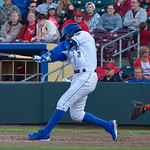
Baltimore Orioles – Trey Mancini, Ryan Mountcastle

Trey Mancini photo

Trey Mancini – Ready to lead Orioles’ offense. Photo by docjeffhyde
Trey Mancini missed the 2020 season missed the 2020 season due to a bout with colon cancer. His 2021 comeback is one of those “feel good” stories you just have to watch play out. In 2019, Mancini (DH/1B/OF) went .291-35-97.  BBRT will also follow the development of 24-year-old 1B/OF Ryan Mountcastle.  As a rookie in 2020, Mountcastle went .333-5-23 in 35 games. This followed a .312-25-83 2019 season at Triple A.  He looks ready to contributed to an Orioles’ offense and (since he only appeared in 35 games last season) should be in the running for Rookie of the Year.

Why You Need to Stay and Watch the Whole Game

On August 1, 2020 – thanks to MLB’s short-season, extra-inning rules – the Rays opened the top of the tenth inning of a 4-4 game against the Orioles with Ji-Man Choi on second base.  The first batter, Yoshi Tsutsugo flied out to Cedric Mullins in LF. Choi tried to advance to third, but was thrown out.  It was the first time in MLB history that the leadoff hitter in an inning hit into a double play. 

Boston Red Sox – Eduardo Rodriguez, Chris Sale

Bobby Dalbec - Adding power in Boston.

Bobby Dalbec – Adding power in Boston.

Southpaw starter Eduardo Rodriguez went 19-6, 3.81 in 2019 and then lost the 2020 season to COVID-related heart issues (myocarditis).   The Red Sox absolutely need Rodriguez to bounce back if they are to finish above .500.  BBRT will also be watching to see when Chris Sale (Tommy John surgery) returns to the mound (expected in late June or July).   BBRT is also interested in the development of Red Sox’ 25-tear-old 1B Bobby Dalbec, who hit eight home runs in just 23 games a year ago – and is having a strong spring (to date). In 2019, Dalbec his 27 round trippers in 135 games at Double-A and Triple-A.  If he can cut down on whiffs, he can add notable power to the BoSox lineup.

The Red Sox gave up 351 runs in 2020, the most in the American League.

Chicago White Sox – Nick Madrigal, Tim Anderson

Nick Madrigal - Young table setter in Chicago.

Nick Madrigal – Young table setter in Chicago.

Lots of big boppers to watch in the White Sox lineup (Jose Abreu, Eloy Jimenez, Luis Robert), but BBRT is going to be watching a couple of players more suited to be table setters.  2B Nick Madrigal (just 24-years-old this season), hit .340 as a rookie in 2020 – after hitting .311, with 35 steals in three minor-league stops (120 games) in 2019. He had shoulder surgery in the off season (October), and BBRT will be looking to see how he bounces back. I’ll Also be watching SS Tim Anderson, the 2019 AL batting champ (.335, with 18 long balls and 17 steals), who hit .322-10-21, with five steals in 49 games a year ago. One thing of interest with Anderson will be to monitor his splits against lefties and righties. Over his five  MLB seasons,  he has hit .323 against lefties and .265 against right-handers – and, last season, that was even more pronounced (.449 against lefties and .283 versus righties).  No matter, these two middle infielders should spend a lot of time creating problems for opponents.

In 2020. the White Sox led the American League in home runs with 96.  American League MVP Jose Abreu led the way on the ChiSox with 19, followed by Eloy Jimenez with 14.  Abreu also led the league in hits (76), RBI (60) and total bases (148). 

Cleveland Indians – Shane Bieber, Eddie Rosario

Shane Bieber - On everyone's CYA watch.

Shane Bieber – On everyone’s CYA watch.

How can you not get excited about watching Shane Bieber, last year’s AL Cy Young Award winner, who led all of MLB in wins (8), strikeouts (122 in 77 1/3 innings) and ERA (1.63)?  In his three MLB seasons, Bieber. Just 25-year-old, is 34-14, 3.32 with 499 whiffs in 406 1/3 innings pitched – and he seem to be getting better.  He’s on everyone ‘s Cy Young watch list.  With Francisco Lindor (trade) and Carlos Santana (free agency) gone, the Indians will be looking for some new sources of offense.  Being a Twins fan, I’ll be watching former Twin Eddie Rosario, who has shown 30-home run/100-RBI power in the past.

The Indians recorded the American League’s lowest team ERA in 2020 at 3.29. 

Detroit Tigers – Miguel Cabrera, Casey Mize

Miguel Cabrera photo

Miguel Cabrera – Adding to HOF credentials.  Photo by Kevin.Ward

Number one on my Tigers’ watch list is DH Miguel Cabrera – entering his 19th season just 134 hits shy of 3,000, 13 home runs short of 500.  It will fun to watch the four-time batting champion, two-time Most Valuable Player and 11-time All Star add these landmarks to his Hall of Fame credentials. On the other end of the spectrum, I’ll be watching the 2018 MLB Draft first overall pick – RHP Casey Mize.  A star at Auburn, Mize put up a 2.74 ERA with 120 strikeouts (and just 26 walks) in two minor-league seasons (2018-19). He got a brief, not so impressive, look-see in 2020 – going 0-3, 6.99 for the Tigers.  Still, Mize has a devastating splitter, mid-90s fastball, slider and curve. If he can bring the command he exhibited in college and the minor leagues to the Detroit mound, he should be a mainstay in the Tigers’ rotation.  He may not start the season in Detroit, but they need pitching, so you can expect to see him in the Motor City sooner rather than later.

From 2009-2016, Miguel Cabrera averaged .330, never hitting under .313 in a season. 

Houston Astros – Kyle Tucker, Jake Odorizzi, Jose Altuve

Kyle Tucker Astros photo

Kyle Tucker – Adding to the Astros’ offense.  Photo by Ken Lund

The Astros will open the season without ace starter Justin Verlander (Tommy John surgery), a well as without a big run-producing bat (George Springer, free agency). BBRT will be watching a couple of players the Astros hope will take up some of the slack.   OF Kyle Tucker (24-years-old) may be ready to blossom. In 58 2020 games for Houston, Tucker hit .268, with nine home runs and 42 RBI, while also stealing eight bases and leading MLB with six triples.  Oh, and he was also a Gold Glove finalist. It would be no surprise to see Tucker turn in a 25-homer, 80-RBI, 25-steal campaign. Free-agent Jake Odorizzi was signed to bolster the rotation. A 15-game winner with Twins in 2019, Odorizzi needs to bounce back from an injury-interrupted 2020 season, when he pitched only 13 2/2 innings.  For a little extra (watching credit), take a look at three-time batting champion Jose Altuve, who hit just .219-5-18 in 48 games last season. Those are not Altuve-like numbers (.311 career average), and the Astros are looking for a rebound from the 31-year-old in both the average and power departments.  Can’t wait to see what the mighty-mite has in the tank.

Ten pitchers made their major-league debuts with the Astros in 2020. 

Kansas City Royals – Whit Merrifield

Whit Merrifield photo

Whit Merrifield – Professional baseman.  Photo by Minda Haas Kuhlmann

Whit Merrifield is a professional hitter, an accomplished base runner and a versatile defender – as well as player who stays on the field.  He is, for BBRT, an “0ld-school” kind of guy, well worth watching day-in and day-out.  Consider, over the past three seasons, Merrifield has played in 380 of the Royals 384 gamers. Over that time, he has averaged .300 (486 hits) and stolen 77 bases – while leading the AL in hits twice and triples and steals once each. He’s also taken the field at second base, first base and all three outfield positions.

The Royals turned 62 double plays in 2020, tops in the American League. 

Los Angeles Angels – Mike Trout, Shohei Ohtani

Shohei Ohtani photo

Shohei – Something to watch on the mound and at the plate. Photo by shinya

How can you not watch three-time AL MVP Mike Trout, who’s never finished lower than fifth in the MVP voting in his ten MLB seasons?  Don’t expect any surprises – just a solid .300, 30-home run, 90 RBI campaign (or even a little better).  BBRT also will be watching 2018 AL Rookie of the Year Shohie Ohtani, who looks to be both in the starting rotation and seeing regular duty at DH.  You may recall, in his rookie season, Ohtani hit .285 with 22 home runs in 104 games AND went 4-2, 3.31 in ten starts on the mound. Ohtani is more than one year removed from Tommy John surgery and seems fully recovered from last year’s elbow/forearm strain.  I’ll be watching to see how far he can take this two-way approach (20 homer runs/10 mound victories?).

Angels’ Pitching Woes

You might want to monitor the entire Angels’ rotation, which turned din MLB’s second-worst earned run average in 2020 (5.52) – and that wasn’t a short-season fluke.  They also put up MLB’s second-worst ERA in 2019 (5.64, only the Rockies starters were worse).  They are hoping for a boost from Shohei Ohtani’s return to the mound, as well as from newcomer (free-agent) Jose Quintana (3.73 career ERA, over 254 appearances).

Minnesota Twins – Nelson Cruz, Byron Buxton, Alex Kiriloff

Nelson Cruz Twins photo

Nelson Cruz – Betting his age-41 seasons will be a thing of beauty.  Photo by andywitchger

In 2019, Twins’ DH Nelson Cruz (who turned forty on July 1) went .303-16-33 in 53 games. He recorded the American League’s seventh-highest average, fifth-most home runs, third-highest on-base percentage and fifth-highest slugging percentage.  BBRT will be watching to see what he can do in his age 41 season,

Others to watch in Minnesota include center fielder Byron Buxton – a multi-tool player whose all-out style of play has made him injury prone (he has played in at least 100 games in only one of six MLB seasons). Last season, Buxton hit 13 home runs in just 39 games.  Buxton is a Gold Glove outfielder, who – if he stays in the lineup – could easily put up 25 home runs and 25 steals.  The fact is, when he is on the field, he changes the game.  Let’s see if he can stay off the IL.  I’ll also be watching 23-year-old rookie OF Alex Kiriloff. Kiriloff has a .317 average, with 36 home runs over three minor-league seasons (279 games) and the Twins would like him to replace departed outfielder Eddie Rosario (.257-13-42 in 2020 and .276-32-109 in 2019). A .280-25-75 campaign from Kiriloff would do the trick.

The Twins have lost a record 18 consecutive post-season games. 

New York Yankees – Aaron Judge, Giancarlo Stanton, Luis Severino

Giancarlo stanton photo

Giancarlo Stant0n – big bat (when he’s) in the Yankee lineup.  Photo by IDSportsPhoto

Plenty to watch in the Yankee lineup (they could run seven 25+ home run hitters out there).  So, BBRT will be watching to see who is NOT in the lineup.  That includes:  RF slugger Aaron Judge – who has played in just 63 percent of the Yankees’ games over the past three years – and DH Giancarlo Stanton, who has appeared in just 52 percent of the Bomber’s games over that time.  (Consider, Judge – as a rookie – hit 52 home runs in 2017. He hasn’t hit more than 27 in a season since.  And Stanton, who hit 59 home runs as a Marlin in 2017 and 38 as a Yankee in 2018, has hit seven homers, while playing in just 41 games, over the past two seasons.) BBRT will also be watching to see when potential staff ace Luis Severino (a 19-game winner in 2019) returns from Tommy John surgery.

In 2020, the Yankees led the American League in run scored (315), walks (251) and on-base percentage (.342)

Oakland A’s – Trevor Rosenthal, Jake Diekman, Matt Olson, Matt Chapman

Matt Olson baseball photo

Matt Olson – Bringing leather and lumber to the A’s.  Photo by mwlguide

Over the past two seasons, Liam Hendriks has owned the ninth inning for the Oakland A’s. He appeared in 99 games, won seven (five losses), saved 39, put up a minuscule 1.79 ERA and fanned 161 batters in 110 1/3 innings. Hendriks is now going to come in from the pen for the White Sox (free agency) and the scramble is on to replace him at closer. BBRT will be watching to see who moves into the spot. Candidates seem to be free-agent signee Trevor Rosenthal (132 career saves/11 saves and a 1.90 ERA in 2020’s short season) and Jake Diekman (a 0.42 ERA in 21 appearances last season). Always worth watching are the A’s two Matts – Olson and Chapman – a pair of Gold Glover corner infielders (Olson 1B, Chapman 3B),  both proven capable of 30+ homer power (and keys to the A’s offense and defense).

Over the past three seasons Matt Olson and Matt Chapman have won four Gold Gloves and hit 149 home runs. 

Seattle Mariners – Marco Gonzales, Rafael Montero

Marco Gonzales baseball photo

Marco Gonzales – Mariners’; ace. Photo by Minda Haas Kuhlmann

Marco Gonzales will again be the ace of the Mariners’ staff. (He was 7-2, 3.10 in 2020). Gonzales is not overpowering (64 strikeouts in 69 2/3 innings), but he gets the job done (59 hits and just seven walks). He’s the guy you want on the mound if you’re headed to a Mariners’ game. BBRT will also be watching new closer Rafael Montero (trade with Rangers) to see if he’s the real deal. The 30-year-old Montero is a converted starter, who didn’t have a save in his first five MLB seasons and then saved eight games in eight opportunities in 2020. He’s got a high-90s fastball, a sinker and a change up (his 4.08 Era in 2020 is a bit concerning).  The closer role was a bit of a revolving door for the Mariners last season. If Montero grabs the role full-time it will help stabilize the Mariners’ bullpen.

The Mariners led the American  League in stolen bases last season with 50 and had five players with five or more steals.  

Tampa Bay Rays – Randy Arozarena, Rays’ Free-Agent Starters

Randy Arozarena - Post-seasons hero.

Randy Arozarena – Post-seasons hero.

Rays’ rookie OF Randy Arozarena set the post-season on fire – hitting .376, with ten home runs and 14 RBI in 29 games,  setting a record for the most home runs in a single year’s post season.  This performance, contrary to some observers, did not come out of nowhere.  Arozarena hit .281-7-11 in 23 games for the Diamondbacks in the regular season and .300 (6-for-20) in 19 games for the Cardinals in 2019.  (He was traded from the Cardinals to the Rays in January of 2020.)  The 2020 post-season, in fact, was not even Arozarena’s first post-season experience. He got in five post-season games for the Cardinals.   Further, Arozarena posted a .292 average in three minor-league seasons, including a .344-15-53 line in 92 (AA-AAA) games in 2019.  He looks like the real deal – and well worth watching.

BBRT will also be keeping an eye on Tampa Bay free-agent signees Rich Hill, Chris Archer, Collin McHugh and Michael Wacha.  The Rays, who lost their two top starting pitchers (Blake Snell by trade, Charlie Morton to free agency) are once again rebuilding their pitching staff and it will be interesting to see how the rotation fleshes out (which may determine if the Rays or Blue Jays make it to the playoffs).

On September 11, 2020, the Rays starting lineup against the Red Sox was: Austin Meadows, LF; Joey Wendle, SS; Brandon Lowe, 2B; Ji-Man Choi, 1B; Kevin Kiermaier, CF; Yoshi Tsutsugo, 3B; Nate Lowe, DH; Brett Phillips, RF; Michael Perez, C.  Uniquely, they were all left-handed hitters.  Oh, and the Rays’ starting pitcher was southpaw Blake Snell. Righty Andrew Triggs started for the BoSox and gave way (after one scoreless inning) to left-hander Matt Hall. Hall surrendered four runs in 2 1/3 innings and took the loss. 

Texas Rangers – Joey Gallo

JOey Gallo photo

Joey Gallo – Texas-sized power.  Photo by mikelachance816

Will Joey Gallo lead the league in home runs, strikeouts or both?  The a question is worth considering – and watching for the answer to. In the two full seasons, Gallo has played for the Rangers (at least 140 games), he hit .208, with 81 home runs AND 403 strikeouts. I’d love to see Gallo make more contact (that could lead to a 50-HR season).  Notably, the free-swinging Gallo has added another reason to put him on you watch list.  In 2020 the Ranger RF was a Gold Glover.

The Rangers’ 224 runs scored in 2020 were the fewest in the American League. They also had the leagues’s fewest hits (420), lowest batting average (.217) and fewest total bases (704).

Toronto Blue Jays – George Springer, Kirby Yates

George Springer baseball photo

Geroge Springer – Big Bat/Veteran presence. Photo by Stabbur’s Master

The Blue Jay have lots of emerging young players who deserve a look, many with familiar last names – SS Bo Bichette, 1B Vlad Guerrero, Jr., 3B Cavan Biggio.  BBRT, however, will be keeping an eye on a couple of newcomers.    The Jays made a big splash in the free-agent pool, led by the six-year, $150 million contract they gave to former Astro George Springer. Springer brings a proven bat to the middle of the Blue Jays’ lineup.  He averaged .270-35-93 for each 162 games over a seven season MLB career – and, in 2019, went .293-39-96. He also brings a veteran presence to this young squad – and the Blue Jays hope he can lead them to the post-season. The Blue Jays also brought in closer Kirby Yates (free agency). In 2019, Yates led the NL in saves (as a Padre) with 41, along with a 1,19 ERA and 101 strikeouts in 60 2/3 innings.   Bone chips in his elbow (requiring surgery) limited Yates to six appearance in 2020. The Blue Jays expect him to come back with a vengeance in 2012 – and so does BBRT.

Other Blue jays to put on your “bird watching” list include outfielder Teoscar Hernandez, who surprised in 2019 with a .289-16-34 season (50 games). Going into the season, Hernandez has a .237 average in 327 MLB games over four seasons. The Blue Jays would like to see the 2019 version. Also, keep an eye on top pitching prospect Nate Pearson with his triple-digit fastball and wicked 90-mph+ slider.  His emergence could bolster the Jay’s rotation.

In 2020, the Blue Jays had MLB youngest roster or position players and fifth-oldest roster of pitchers. 

— MAJOR AWARDS — 

Finally, predictions on BBRT favorites for  American League Awards.

Al MVP:  1. D.J. LeMahieu;  2) Matt Chapman, A’s; 3) Aaron Judge, Yankees; 4) Alex Bregman, Astros; 4) George Springer, Blue Jays

AL Cy Young: 1) Gerrit Cole, Yankees; 2) Shane Bieber, Indians; 3) Lucas Giolito, White Sox; 4) Tyler Glasnow, Rays

AL Rookie of the Year; Randy Arozarena, Rays; Casey Mize, Tigers; Alex Kiriloff, Twins; 4) Wander Franco, Rays

Primary Resources:  Baseball-Reference.com; MLB.com.

Coming Soon; BBRT’s National League Predictions/Watch List.


100Baseball Roundtable is on the Feedspot list of the Top 100 Baseball Blogs.  To see the full list, click here.

I tweet baseball @DavidBBRT

Follow/Like Baseball Roundtable’s Facebook Page here.  More baseball commentary; blog post notifications.

Member: Society for American Baseball Research (SABR); Negro Leagues Baseball Museum; The Baseball Reliquary. 

Early Returns for Baseball Roundtable’s (unofficial) Fan 2021 Hall of Fame Balloting

Photo by Keith Allison

Photo by Keith Allison

With 74 votes cast in the Baseball Roundtable (unofficial) fan 2021 Baseball Hall of Fame voting, no candidates are showing the 75 percent level of support necessary to achieve election into the Hall. Leading the way are: Omar Vizquel (with his eleven Gold Gloves and 2.877 hits); Todd Helton (with his .316 career average and 2000 NL batting crown); Jeff Kent (the 2006 NL MVP and all-time home run leader among second basement); Billy Wagner (with his 422 saves – sixth all-time); and Curt Schilling (with 216 career wins and 3,116 strikeouts.) This differs from early publicly released BBWAA ballots – which also see no candidates at 75 percent, but which have Barry Bonds, Roger Clemens and Curt Schilling leading the way. (Scott Rolen, Omar Vizquel and Todd Helton round out the top half dozen.)  Note: Totals as of 9:00 a.m., December 13.

Still Time to Vote in the BBRT Balloting

There is still time to cast your vote in the BBRT unofficial fan 2012 Hall of Fame balloting.  Click here to access the ballot and/or here for a post on BBRT’s predictions and preferences (as well as candidate bios). Note: The prediction post also includes a link to the ballot.

The BBRT ballot also asks reader which players (no longer eligible for the ballot) they think are most deserving of a spot in the Hall. Pete Rose currently leads the way with seven mentions. Followed by Dick Allen, Steve Garvey, Jim Kaat and Al Whitaker with three each.  Overall, 35 players have mentioned in the responses.

Here are the leading BBRT vote-getters thus far:

Omar Vizquel                     66.2%

Todd Helton                       58.1

Jeff Kent                            56.8

Billy Wagner                       56.8

Curt Schilling                      52.7

Barry Bonds                        46.9

Andy Pettitte                       37.8

Andruw Jones                     36.5

Bobby Abreu                       32.4

Scott Rolen                         31.1

Gary Sheffield                     31.1

Roger Clemens                  27.0

Torii Hunter                        25.7

Sammy Sosa                     24.3

Mark Buehrle                    20.3

Aramis Ramirez                 14.9

Manny Ramirez                 13.5

Shane Victoria                   13.5

Tim Hudson                        8.1

LaTroy Hawkins                 6.8

Barry Zito                            6.8

A.J. Burnett                        4.1

Michael Cuddyer                4.1

Nick Swisher                      4.1

Dan Haren                           –

Baseball Roundtable will post the final voting results, with a comparison to the Baseball Writers Association of America (BBWAA) final results once balloting is completed and announced. 


100Baseball Roundtable is on the Feedspot list of the Top 100 Baseball Blogs.  To see the full list, click here.

I tweet baseball @DavidBBRT

Follow/Like Baseball Roundtable’s Facebook Page here.  More baseball commentary; blog post notifications; PRIZES.

Member: Society for American Baseball Research (SABR); Negro Leagues Baseball Museum; The Baseball Reliquary. 

Baseball Roundtable Offers the Chance to Vote in BBRT’s Unofficial 2021 Baseball Hall of Fame Balloting

BBRT’s Baseball Hall of Fame 2020 Debate Season is officially open!  The Baseball Writers Association of America (BBWAA) 2021 Hall of Fame ballots were distributed yesterday and the results will be announced in January, with the honorees inducted on July 21. This year’s traditional ballot includes 14 holdovers from last year, along with 11 newcomers.

Skip the post (although I hope you will read on) and go right to the ballot, click here. 

In this post, BBRT will share:

  • Predictions on the 2021 BBWAA voting;
  • BBRT’s ballot (if I had one);
  • A deep look into all the candidates on the ballot;
  • A link to BBRT’s unofficial fan ballot – please take a few minutes to follow the link and cast your votes.

–PARTICIPATE IN BASEBALL ROUNDTABLE’S  2021 FANS’ HALL OF FAME BALLOT—

Baseball Roundtable is once again conducting an unofficial fan ballot – to cast your vote(s), click here.  Remember, you can vote for up to ten of the nominees for 2021 induction.  If you want to read through the nominees’ bios first, there is another link to the BBRT Fan Ballot following the bios (near the end of this post).  BBRT will be providing updates on the fan balloting, as well as a post-election comparison of fan votes as compared to the final BBWAA results.  Voting on the BBRT Fan Ballot will remain open until January 1, 2021.

Also, if you leave your email or Facebook address in the comments section at the end of the ballot, you will be entered in a bobblehead and baseball card “surprise-prize” drawing.

Ballot

Again, to cast your votes, click here

As you consider this year’s slate of candidates, BBRT would stress that all the players on the ballot – even those who remain for only one voting cycle – deserve recognition. To rise to the major leagues, last ten years and make it past the Hall of Fame Screening Committee is a significant accomplishment in itself.  In fact, the annual ballot release is a highlight for BBRT, as it provides a chance to acknowledge the accomplishments of all the candidates – not just the favorites for election.  For example, a review of the ballot gives us the opportunity to honor Mike Buehrle’s n0-hitter and perfect game; Bobby Abreu’s 400 stolen bases; Billy Wagner’s 400 saves; A.J.Burnett’s nine-walk no-hitter; Torii Hunter’s nine Gold Gloves; LaTroy Hawkins’ 1,042 games pitched; Barry Zito’s Cy Young season; and more.

Now on to the official 2021 Baseball Hall of Fame election process itself – and, then, a look at the players on the ballot for 2021.

BASEBALL HALL OF FAME ELIGIBILITY/CRITERIA FOR ELECTION

The basic rules for eligibility are that a player must have played at least ten seasons and be retired for at least five years. In addition, the player must be approved for the ballot by the Hall of Fame Screening Committee.

A player can remain on the ballot for up to ten years, but must receive at least five percent of the vote in the preceding year’s ballot to remain on the ballot.  Each voter can vote for up to ten candidates.  Election requires that a player be named on at least 75 percent of the ballots cast.

The criteria for election: “Voting shall be based upon the player’s record, playing ability, integrity, sportsmanship, character, and contributions to the team(s) on which the player played.”

A couple of preliminary comments.

  • This year’s ballot is not as crowded with strong newcomers as those  as we have seen in that recent years.  In the last five balloting sessions, for example, we have seen Derek  Jeter, Mariano Rivera, Roy Halladay, Chipper Jones, Jim Thome, Ivan Rodriguez and Ken Griffey Jr. all elected on their first ballots.
  • The 2021 ballot also includes no players in their final year of eligibility – a group that generally gains some additional momentum (and pulls votes from other nominees).
  • The PED-controversey is appears to still be having on impact on voting, with some key players gaining support in recent voting – but not at a pace that points to election.
  • The holdovers are players that at least 70 percent BBWAA voters found a reason not to support for 2020 election.(Curt Schilling had the highest percentage of votes  among those no elected at 70 percent.) In addition, there are no newcomers on the ballot who can boast those “Oh, yes, you’re in” statistical achievements.  No members of the 500- (or even 400-) home run club;  no members of  3,000-  (or even 2,500-) hit club; no members of the 3,000-strikeout club (and only pitcher with 2,500 whiffs); and no members of the 300 (or even 250) victories club.

In short, this year’s ballot has a lot of holdovers who are not sure things and a lot of very good  newcomers, but no shoe-ins.  It will be interesting to see how BBWAA voters view this year’s list (as well as hoe BBRT’s voters react). Now, let’s take a look at whom BBRT predicts will be elected by the BBWAA; how BBRT would vote if I had a ballot; and, along the way, the bios of these year’s candidates.

 —–LIKELY BASEBALL HALL OF FAME ELECTEES FOR 2021—–

BBRT’s Prediction for 2021 …

Last November, Baseball Roundtable released its 2020 BBWAA balloting predictions, projecting the election of Derek Jeter and Larry Walker – and predicting “dark horse” candidate Curt Schilling would fall closer to 70 percent than 75.  Jeter and Walker were elected and Schilling fell short (at 70 percent). Two years ago, BBRT projected the election of Mariano Rivera and Edgar Martinez and listed Mike Mussina and Roy Halladay as “dark horse” candidates with a chance to generate the needed 75 percent support.   It was a bit of a swing and miss (maybe a foul ball), as all four were elected.  Three years ago, BBRT predicted the election of Chipper Jones, Jim Thome, Vlad Guerrero and Trevor Hoffman (with Mike Mussina as a “dark horse” candidate). Jones, Thome, Guerrero and Hoffman made it, with Mussina garnering 64.5 percent (sixth-most).

For 2021, BBRT is not optimistic about the balloting.  I see just one truly likely candidate – Curt Schilling, who has seen his vote percentage increase by more than 5 percent in each of the past four years: 45.0 percent in 2017; 51.2 in 2018; 60.0 in 2019; and 70.0 last year. Another 5 percent-plus increase would put him over the top. Further, if you go back to 2018, when Schilling finished with the ninth-highest vote total, six of the eight players who finished ahead of him are now in the Hall of Fame (the exceptions being Barry Bonds and Roger Clemens).

I’d add one dark horse candidate.  Omar Vizquel (52.5 percent one year ago) – who should be helped by this year’s “slimmer” ballot – has a chance to gain some ground. However, it’s more likely he moves to about the 60-65 percent level percent this year.

Let’s move on to BBRT’s hypothetical – if I had one –  ballot and bios of the players I would vote for; followed by a look at the remainder of the 2021 candidates.

Side note: You will not find those caught up in the PED-controversy on my ballot. While I think the best of them will eventually be elected/inducted, if I had a ballot, I’d prefer they made the 75 percent without my vote.  Still, given their place in the history of the game, I’d probably break down and vote for the top players in this group when they reached their final year of eligibility.

So, here is BBRT’s Hall of Fame Ballot – again, if I had one – with the players listed in BBRT’s order of preference.

— PLAYERS WHO WOULD GET BBRT’S VOTE …

Jeff Kent – (Second Base/Third Base/First Base, 1992-2008) …  Eighth year on the ballot, 27.5 percent last year.

KentBBRT has long believed Jeff Kent is a deserving candidate, but he has not been getting much support from the writers.  Kent holds the all-time MLB record for home runs by a second baseman (351 of his 377 career round trippers were hit while in the lineup at second base). He has a healthy .290 career batting average; his 1,518 RBI are 54th all time; and his 560 doubles 30th.  His 984 extra base hits are 43rd all-time.

Kent was a five-time All Star and the 2000 NL MVP.  As primarily a middle infielder, he hit 20 or more home runs in 12 seasons (a high of 37 in 2007) and topped 100 RBI eight times. He hit .276, with nine home runs and 23 RBI in 49 post-season games.

Running with the Big Boys …

Jeff Kent has more career runs batted in (1,509 in 17 seasons) than such noted Hall of Famers (who played a comparable number of seasons) as Mickey Mantle (1,508 in 18 seasons), Billy Williams (1,475 in 18 seasons), Eddie Mathews 1,453 in 17 seasons), Duke Snider (1,333 in 18 seasons) and Orlando Cepeda (1,365 in 17 seasons). Not bad for a middle infielder.

Kent has the credentials, but BBRT has a hunch the writers may keep him on the bench – a couple of Gold Gloves, at this traditionally defense-oriented position, would have really helped his case.  Kent played for the Blue Jays (1992), Mets (1992-1996), Indians (1996), Giants (1997-2002), Astros (2003-2004) and Dodgers (2005-2008).

Jeff Kent’s Best Season: With the Giants in 2000, Kent put up these stats – 159 games; 196 hits; .334 average; 33 home runs; 125 RBI; 114 runs; 12 steals. His performance earned him the NL MVP Award.

Kent gets BBRT’s vote – and I believe the BBWAA’s support is overdue (but not forthcoming).  This is one HOF “snub” that somewhat confuses BBRT.

_________

Todd Helton – (First Base, 1997-2013) … Third year on the ballot, 29.2 percent last year.

HeltonTodd Helton moved from 16.5 percent of the vote to 29.2 percent between his first and second years on the ballot. He faced some pretty strong ballot competition in those first two years and this year’s lighter ballot should help boost his numbers.  I expect he might reach 40-45 percent). Still, he is hampered by the fact that he spent his entire 17-year career with the Rockies (playing half his games in hitter-friendly Coors field).  Helton, who put up a .316 career average, hit .345 at home and .287 on the road. Despite that home/road split, Helton’s body of work deserves HOF consideration.

Helton was a five-time All Star, three-time Gold Glover and four-time Silver Slugger. He hit over .300 in 12 seasons – and won the NL batting crown in 2000 with a .372 average. His 59 doubles that season are the seventh-most all-time. Helton drove in 100 or more runs in five seasons and scored in triple figures six times. His 1,335 walks (36th all-time) indicate the respect he earned at the plate.  Helton also ranks fifth in games played at first base, second in career assists at the position, 13th in putouts and third in double plays.

The Denver 400

Todd Helton is one of only 18 players to reach 400 or more total bases in a season – and one of only seven players to have multiple 400+ total base campaigns. He is also the only player to collect 100 extra-base hits in two consecutive seasons (2000-2001).

Todd Helton’s Best Season: In 2000, Helton won the NL batting crown with a .372 average – and also led the league in base hits (216), doubles (59), RBI (147), on-base percentage (.463), slugging percentage (.698) and total bases (405).  He also scored 138 runs and hit 42 home runs.

Helton will stay on the ballot and has a chance at entry into the HOF – he’s just not likely to overcome the Coors Field-bias in the short-term future.  He gets BBRT’s vote (as he has in the past).

__________

Omar Vizquel – (Shortstop/Third Base, 1989-2012) … Fourth year on the ballot, 52.6 percent last year.

Photo by Keith Allison

Photo by Keith Allison

Omar Vizquel got off to a good start toward a HOF plaque, grabbing 37 percent support on his first-ballot year, moving up to 42.8 percent in his second year and 52.6 percent last year.  Vizquel once again earns BBRT’s vote – and should make his way into the Hall of Fame over time.  When he does, it will be more with his glove (eleven Gold Gloves) than his bat.  However, voters should be mindful of the fact that he finished his 24-season MLB career just 123 hits short of that milestone 3,000 safeties.

Vizquel delivered premier defense to the Mariners (1989-1993), Indians (1994-2004), Giants (2005-2008), Rangers (2009), White Sox (2010-2011) and Blue Jays (2012). He was a three-time All Star – and put together a string of nine straight Gold Gloves at shortstop (1993-2001).

Sacrificing for the Team

Omar Vizquel led his league in sacrifice bunts four times.

In the field, Vizquel has the highest career fielding percentage (.9847) among shortstops with at least 500 games at the position.  Vizquel is also the all-time leader among shortstops in double plays (1,734), ranks third at the position for career assists and 11th in putouts. He shares the record (with Cal Ripken, Jr.) for the fewest errors by a shortstop in a season of at least 150 games played (three).  For those who are into advance metrics, Vizquel also had the highest career Defensive Wins Above Replacement (War) among shortstops at 44.2.

On offense, Vizquel put up a serviceable .272 career average, with 80 home runs, 951 RBI and 1,445 runs scored. The 1,445 runs put him in the top 100 players all-time (83rd); while his 2,877 hits put him in the top 50 (43rd and fourth all-time among switch-hitters). He also swiped 404 bases – topping twenty steals eight times (a high of 42 in 1999) – putting him at number-72 on the all-time list. Vizquel played in 57 post-season games, hitting .250-0-20.

Omar Vizquel’s Best Season: In 1999, with the Indians, Vizquel hit a surprising .333, with five home runs, 66 RBI, 112 runs scored and 42 stolen bases – and, of course, won a Gold Glove at shortstop.

Vizquel would get BBRT’s vote, but the BBWAA voters likely will make him wait a bit longer – showing a preference for a bit more offense.  He does have a chance, however, given that his 2,877 base hits are at the top of this class.

__________

Billy Wagner – (LHP 1995-2010) … Sixth year on the ballot, 31.7 percent last year.

WagnerBilly Wagner played for the Astros (1995-2003), Phillies (2004-2005), Mets (2006-2009), Red Sox (2009) and Braves (2010). Wagner was a seven-time All Star, who amassed 422 saves (sixth all-time) in a 16-season MLB career.  He had nine seasons of 30 or more saves; a career ERA of 2.31; 1,196 career strikeouts in 903 innings; and 47-40 won-lost record.

Whiff-and-Poof

In 1992, playing for Ferrum College, Billy Wagner set an NCAA record for strikeouts per nine innings in a season at 19.3.

Billy Wagner’s Best Season: In 2003, Wagner went 1-4, 1.78 for the Astros, saving 44 games and fanning 105 batters in 86 innings.

BBWAA voters have been very demanding of relievers (although the recent induction of Mariano Rivera and Trevor Hoffman may be a good sign – but they, of course, both had 600+ saves). It also helps that Lee Smith (478 saves) was elected by the Today’s Game Committee in 2019.  BBRT thinks Wagner belongs in the Hall (based on his 400+ saves) – and hopes that momentum continues to build.  Wagner has been gaining more support lately – 31.7 percent last year; 16.7 percent in 2019; 11.1 percent in 2018; 10.2 percent in 2017. He should gain more ground in this year’s ballot, but 75 percent is still a long way off.  I’d like to see Wagner at least jump past the 50 percent mark.  He gets my vote.

__________

Andy Pettitte – (LHP/Starter, 1995-2010, 2012-13) … Third year on the ballot, 11.3 percent last year.

Andy Pettitte - 19 career post-season wins.

Andy Pettitte – 19 career post-season wins.

I had to think for a while on this one (and will probably get some push back from readers), largely because a major part of Andy Pettitte’s HOF resume was achieved in the post-season and there was some PED-controversey surrounding Pettitte.  (Note: Pettitte admitted to using HGH while recovering from elbow surgery – a couple of years before the substance was banned.  He took responsibility and apologized.)

Pettitte holds the MLB post-season marks for most wins (19 … versus 11 losses), innings pitched (276 2/3), games started (44) and is fourth in strikeouts (183). His post-season accomplishments include a 3.81 career ERA and the 2001 American League Championship series MVP Award.

Pettitte, however, was no slouch in the regular season (Yankees – 1995-2003, 2007-2010, 2012-13) and Astros (2004-06).  He finished with 256 wins (153 losses) and a 3.85 ERA. Pettitte won 20 games in two seasons and 14 or more games 12 times – leading the AL with 21 wins in 1996. The three-time All Star struck out 2,448 batters (45th all-time) in 2,316 innings.

Ready, Willing and Able …

Andy Pettitte started 30 or more games in a season 12 times, leading his league three times (1997, 2006, 2007.)

Pettitte’s post-season numbers, plus 256 regular-season victories and the fact that he had 100+ more career wins than losses secure BBRT’s vote. He still has a long way to go with the BBWAA voters, however.

Andy Pettitte’s Best Season: In 1997, following a 21-8 campaign in 1996, Pettitte went 18-7, with a 2.88 ERA (fourth-best in the AL), leading the league in starts with 35, finishing third in innings pitched (240 1/3) and eighth in strikeouts (166).

__________

Bobby Abreu – (OF, 1996-2012, 2014) … Second Year on the ballot, 5.5 percent one year ago.

AbreuA solid .291 career hitter (2,470 base hits), Abreu hit .300 or better in six seasons. He hit 20 or more round trippers in 10 campaigns, stole 20 or more bases 12 times (a high of 40 in 2004), drove in 100 or more runs eight times and scored at least 100 runs eight times.   Abreu also walked 1,476 times – including 100 or more free passes in eight straight seasons (1999-2006).

In the Top 50 … 

Bobby Abreu’s 1,476 walks are 20th all-time; his 574 doubles are 25th; his putout as a RF are 12th; and his assists as a RF 28th. 

Abreu played for the Astros (1996-97, Phillies (1999-2006), Yankees (2006-2008), Angels (2009-1012), Dodgers (2012) and Mets (2014).

In 20 post-season games, Abreu went 19-for-67 (.284), with one home runs and nine RBI.

Bobby Abreu’s Best Season: In 2004, as a Phillie, Abreu hit .301, with 30 home runs and 40 steals. An All Star that season, he also drove in 105 runs and scored 118.

Abreu’s 400 steals are an HOF plus, as his 30-40 season in 2004 and his eight campaigns with 100 or more RBI.  Had he reached 300 home runs; it would have really boosted his status with the writers.  He’s also hurt by the fact that he only made two All Star teams in his 18 seasons.  Still, I have votes left and his body of work earns one of them.

__________

So, with BBRT’s unofficial ballot covered, let’s look at the remainder of candidates – in alphabetical order.  Note: Here you will find a host of players with solid (but perhaps not HOF-level) career numbers and accomplishments – as well as a few that remain on the sidelines for other reasons.

—–THE REST OF THE BALLOT—–

Barry Bonds – (Outfield, 1986-2007) … Ninth year on the ballot, 60.7 percent a year ago.

Barry Bonds played for the Pirates (1986-1992) and the Giants (1993-2007). There is no doubt about Bond’s credentials – .298 average, 2,935 hits, MLB-record 762 home runs, 1,996 RBI, MLB-record 2,558 walks. He was also a 14-time All Star; 12-time Silver Slugger Award winner; his league’s MVP a record seven times; and an eight-time Gold Glove winner.  In 2001, Bonds hit .328, with an MLB-record 73 home runs and 177 RBI.  He drove in 100 or more runs 12 times and also scored 100 or more runs in a dozen seasons.  And, I could go on and on.

Base Open?  Makes Sense to Me …

Barry Bonds drew an MLB-record 688 intentional walks in his career. Second place?  Albert Pujols, with 32. In 2004 alone, Bonds drew a record 120 intentional passes. He led his league in IBB 12 times.

Still, there are there is that pesky PED-controversey – an elephant in the room (and on the ballot) that I think will keep Bonds out of the Hall for at least another year. The dam may very well break and we will see some of the major stars now under a PED cloud take places in the Hall very soon.  BBRT is not ready to cast that vote yet – and I don’t think 75 percent of the BBWAA is either. We can expect Bonds back on the ballot next year.

Barry Bonds’ Best Season: In 2001, Bonds crushed an all-time record 73 home runs, while hitting .328, driving in 137 runs, scoring 129 – all while drawing 177 walks.

_________

Mark Buehrle – (LHP, 2000-15) …. First year on the ballot.

Mark Buehrle pitched in 15 MLB campaigns – White Sox (2000-11), Marlins (2012), Blue Jays (2013-15) – and threw 200 or more innings in all but his rookie and final seasons. Buehrle was a five-time All Star and put up a 214-160, 3.81 record, with 1,870 strikeouts in 3,283 1/3 innings. He twice led his league in starts and twice topped his league in innings pitched. He won ten or more games in 15 consecutive seasons and six times won 15 or more.  Buehrle also four Gold Glove Awards.

Near-Perfect and Perfect

Mark Buehrle’s HOF resume is bolstered by a no-hitter tossed on April 18, 2007 – when his White Sox topped the Rangers 7-0 and Buehrle faced the minimum 27 batters.  The only Texas’ base runner came on a fifth inning, one-out walk to Sammy Sosa, whom Buehrle then picked off first base.  Buehrle notched eight strikeouts in the game, which was so-o-o very close to a “perfecto.”

Buehrle got his perfect game two years later (July 23, m 2009), when he recorded a clean slate in a 5-0 ChiSox win over the Rays.  He fanned six in that one.

Mark Buehrle’s Best Season:  In 2005, Buehrle went 16-8, 3.12 for the White Sox.

If he had 250 wins to go with the no-hitter, perfect game and four Gold Gloves, Buehrle would have had my vote.  With just 214 wins, no Cy Young Award and no 20-win season, he’s short of what BBRT looks for in a first-ballot inductee.  I fully expect he will be back on the 2022 ballot.

__________

A.J. Burnett – (RHP, 1999-2915) … First year on the ballot. 

A.J. Burnett pitched for five teams in his 17 MLB seasons:  Marlins (1999-2005); Blue Jays (2006-08); Yankees (2009-11); Pirates (2012-13, 2015); Phillies (2014).  He went 165-157, with a 3.99 earned run average. He made one All Star squad, in his final season (at age 38). He finished that campaign at 9-7, 3.18, but was 7-3, 2.11 at the All Star break. Burnett led his league in games started twice and strikeouts once.  He won ten or more games in 11 of his 17 seasons.

One Wild No-No …

On May 12, 2001, A.J. Burnett pitched one of MLB’s wildest no-hitters.  While his Marlins topped the Padres 3-0, Burnett notched no-hit, no-run game that included nine walks, a hit batsman and a wild pitch. Burnett walked one in the first inning; two in the second; two in the third; walked one and hit one in the fourth; walked one in the seventh; and walked two more in the eighth. H fanned seven in the 129-pitch outing

A.J. Burnett’s Best Season:  In 2008, Burnett went 18-10, 4.07 for the Blue Jays and lead the AL with 231 strikeouts in 221 1/3 innings.

Eight games over .500 is just not enough to get BBRT’s vote – and likely will not keep Burnett on the ballot for 2022.

_________

Roger Clemens – (RHP, 1984-2007) … Ninth year on the ballot, 61.0 percent last year.

Roger Clemens pitched in 24 MLB seasons; for the Red Sox (1984-1996), Blue Jays (1997-1998), Yankees (1999-2003, 2007) and Astros (2004-2006).  Clemens has Hall-worthy stats:  354 wins (ninth all-time), 4,672 strikeouts (third all-time), an MLB-record seven Cy Young Awards and the 1986 AL MVP Award. The eleven-time All Star was a five-time 20-game winner (led the league in wins four times), seven-time ERA leader, five-time league leader in strikeouts and six-time leader in shutouts.  He won the AL pitching Triple Crown (Wins/ERA/Strikeouts) three times.  Clemens also has 12 post-season wins, with 173 strikeouts in 199 post-season innings.

Grab Some Bench, Buddy

Roger Clemens shares the record for strikeouts in a nine-inning game (20) with Kerry Wood and Max Scherzer. Clemens is the only pitcher to achieve 20 whiffs in a nine-inning game twice.

Roger Clemens’ Best Season: Lots to choose from here. Like 21-6, 1.93 in 1990 – or 1987, with a 20-9 record, 2.97 ERA, 18 complete games and seven shutouts.  I take 1986. Clemens went 24-4. 2.48 and won both the Cy Young (his first) and AL MVP Awards for the Red Sox.  He led the AL in wins, winning percentage (.857) and earned run average. He was fifth in innings pitched (254) and second in strikeouts (238).

Yes, he’s got the numbers (those listed and more), but the PED controversy seems to stand between him and the Hall. Don’t think the BBWAA is ready yet, but he’ll continue on the ballot – and will likely gain a bit of ground toward that 75 percent requirement.  This year could be the springboard toward a 2022 trip to the Hall.

________________

Michael Cuddyer – (RF/1B/3B, 2001-15) …. First Year on the ballot.

Michael Cuddyer spent his 15-season MLB career with the Twins (2001-11), Rockies (2012-14) and Mete (2015).  He was a two-time All Star and put up a .277-197-794 line in 1,536 games.  Cuddyer hit 20 or more home runs in four seasons (a high of 32 in 2009). He scored 100+ runs in one season and drove in 100+ in one campaign.  He won the National League batting title with a .331 average (Rockies) in 2013. Cuddyer hit well in the post season – .306-2-8 in 28 games.  (There are those who would like to attribute Cuddyer’s 2013 batting title to Coors Field, but while Cuddyer did hit.356 at home, he also hit a healthy .311 on the road that season.)

Two-for-One

In 2009, as a Twin, Michael Cuddyer hit for the cycle on May 22, 2009 and then on August 23 of that season hit two home runs in one inning (seventh) against the Royals, He’s the only MLB player to accomplish both feats in the same season.

Michael Cuddyer’s Best Season: In 2013, Cuddyer went .331-20-84, with ten stolen bases, for the Rockies.

A solid player and an all-around good guy (and a pretty good magician), but HOF stats are just not quite there.

__________

Dan Haren  – (RHP. 2003-15) … First year on the ballot.

Dan Haren’s 13 MLB seasons saw him pitch for the Cardinals (2003-04), A’s (2005-07), Diamondbacks (2008-10), Angels (2010-12), Nationals (2013), Dodgers (2014), Marlins (2015) and Cubs (2015). Haren went 153-131, 3.75 over his MLB career, fanning 2,013 batters in 2,419 2/3 innings. He was a three-time All Star and won 15 or more games in three seasons  and ten or more in eleven.  He started 30 or games in 11 seasons and had an ERA under 3.50 in five campaigns. Haren was 2-0, 3.26 in seven post-season appearances (two starts).

Got ‘em All …

Dan Haren is one of 19 pitchers to record at least one win versus all 30 major league teams.

Dan Haren’s Best Season: Haren’s best season was probably 2008, when he went 16-8, 3.33 for the Diamondbacks.

____________

LaTroy Hawkins – (RHP 1995-2015) … First Year on the ballot.

LaTroy Hawkins might be the least well-known two-decade major leaguer. Hawkins came up to the big leagues as a 22-year-old and finished his MLB playing career at age 42 – a pretty nice run. During that time, he pitched for the Twins (1995-2003), Cubs (2004-05), Giants (2005), Orioles (2006), Rockies (2007 & 2014-15), Yankees (2008), Astros (2008-09) Brewers (2010-11), Angels (2012), Mets (2013) and Blue Jays (2015). Hawkins began his MLB tenure as a starting pitcher – from 1995-99 – going 26-44, 6.16 in 99 games (98 starts). Hawkins moved to the bullpen in 2000 and found his niche. Between 2000 and 2015, he appeared in 943 games – all in relief – going 49-50, 3.30 with 127 saves. He had three seasons of 20+ saves.

Put Me in ,Coach …

LaTroy Hawkins in number-ten all time in games pitched (1,042).

LaTroy Hawkins’ Best Season: From BBRT’s perspective, Hawkins’ best season was either 2004 (Cubs), when he went 5-4, 2.63 with 25 saves or 2003, when he went 9-3, 1.86 with two saves for the Twins.

BBWAA voters (and BBRT) are hard on relievers – and it’s particularly tough if you’re not a closer.

_____________________________

Tim Hudson, – (RHP.  1999-2015) … First year on the ballot.

Tm Hudson pitched in 17 MLB seasons: A; s (1999-2004), Braves (2005-2013); and Giants (2014-15). He was a four-time All Star – making the All Star squad with the A’s, Braves and Giants.  Hudson’s career mark was 222-133, 3.49, with 2,080 strikeouts in 3, 126 2/3 innings pitched.  He won 15 or more games in a season eight times, leading the AL in wins with 20 in 2000, his second MLB season. He led his league in games started twice, nine times starting 30+ games, and in shutouts twice.

A Two-way Player …

In 1997, Tim Hudson played in 65 games for Auburn University.  As a pitcher he went 15-2, 2.97 and, as a hitter, he went .396-18-95. Appropriately, he was named SEC Player of the Year and was a consensus All American. (He was also named All-SEC at both pitcher and outfield.)

Tim Hudson’s Best Season:  In 2000, with the A’s,  Hudson went 20-6, 4.14, leading the AL in wins and winning percentage (.769).  Also, in the running is 2001, when he went 18-9, with a 34.37 ERA.

Nearly 100 more wins than losses and four All Star selections should garner enough support to keep Hudson on the ballot.

__________

Torii Hunter – (OF, 1997-2015) … First year on the ballot.

Torii Hunter played 19 MLB seasons, suiting up for the Twins (1997-2007, 2015), Angels (2008-12) and Tigers 2013-14). He was a five-time All Star, and nine-time Gold Glover. For his career, Hunter hit .277 (2,452 hits), with 353 home runs, 1,391 RBI, 1,296 runs scored and 195 stolen bases. He hit 20+ home runs in 11 seasons, drove in 100+ runs twice and stole 20+ bases in three campaigns. Hunter hit .274-4-20 in 48 post-season games. Hunter led his league in CF assists three times, CF putouts once and double plays turned out of CF four times. He also led his league’s right fielders in putouts, assists and double plays once each.

Spider-Man

Torii Hunter earned the nicknamed spider-man for his outstanding outfield play.

Torii Hunter’s Best Season:  In 2007 (Twins), Hunter hit .287, with 28 home runs, 107 RBI, 94 runs scored and 18 steals – although he can look back on at least four seasons with very similar numbers.

If I was going to add another player to my ballot, it would probably be Hunter. Nine Gold Gloves, five All Star selections and 353 home runs represent some pretty good credentials.  What may hurt Hunter is his consistency.  He could have used a couple of standout/spectacular/memorable seasons mixed in with all those very good campaigns that fans came to expect.

__________

Andruw Jones – (CF 1996-2012 )…. Fourth Year on the ballot, 19.4 percent last year.

Andruw Jones played for the Braves (1996-2007), Dodgers (2008), Rangers (2009), White Sox (2010) and Yankees (2011-2012). In a 17-season career – primarily patrolling centerfield – he won ten Gold Gloves (consecutively, 1998-2007). At the plate, he hit .254, with 434 home runs (47th all time), 1,289 RBI and 1,204 runs scored. He topped 25 home runs in ten seasons (six over thirty and a league-leading and career-high of 51 in 2005). He scored 100 or more runs four times, drove in 100+ five times and stole twenty or more bases in a season four times.  Jones appeared in 76 post-season games, hitting .273, with ten home runs and 34 RBI.

On the Big Stage ,,,

In the 1996 World Series, Andruw Jones – just 19-years-old – hit .400 (8-for-20) with two home runs and six RBI, becoming the youngest player to go yard in the Fall Classic.

Andrew Jones’ Best Season: In 2005, Jones hit only .263, but led the NL in home runs (51) and RBI (128) – finishing second in the MVP voting to Albert Pujols (.330-41-117).

Jones’ ten Gold Gloves work in his favor, but – over the long haul – that .254 average (he only hit .300 or better once and over .270 only four times) dampen his HOF chances.

____________________________

Aramis Ramirez – (3B ,1998-2915) …. First year on the ballot

Aramis Ramirez may be the most under-appreciated player joining the ballot this year. Ramirez played 18 major league seasons, hitting .283, with 386 home runs, 1,417 RBI and 1,098 runs scored.  He played for the Pirates (1998-2003), Cubs (2003-11) and Brewers (2012-2015).  The three-time All Star hit 20+ home runs in ten seasons, had 100+ RBI seven times and hit .300 or better six times.   In 2012, he led his league in doubles with 50.

Ouch.

Aramis Ramirez could have put up even more impressive numbers were it not for numerous injuries: quadriceps (2005), shoulder (2009), thumb (2010), knee (2013).

Aramis Ramirez’ Best Season: In 2004, with the Cubs, he hit .318-36-103, with 99 runs scored.

Trivia Tidbit …

In the 2003 National League Championship Series (Game Four), Aramis Ramirez hit the Cubs’ first-ever post-season Grand Slam.

I really wanted to vote for Ramirez. Like Torii Hunter, he needed a couple of spectacular seasons mixed in with all those “really good” campaigns.  Still, I think, he will get enough support to stay on the ballot.  Ramirez is one of those “bubble” guys.  Had he reached 400 homers and 1,500 RBI, I’d probably have checked his unofficial box.

__________

Manny Ramirez – (Outfield, 1993-2011) – Fifth year on the ballot, 28.2 percent last year.

Manny Ramirez played 19 MLB seasons, collecting 2,574 hits, a .312 batting average, 555 home runs (15th all-time) and 1,831 RBI (19th all-time). Ramirez was a 12-time All Star and led the AL in average (2002), home runs (2004) and RBI (1999) once each.  Ramirez won nine Silver Slugger Awards, including eight consecutive (1999-2006), hit .285 with 29 home runs in 111 post-season games and was the 2004 World Series MVP.  He hit 30 or more home runs in twelve seasons (five of 40+), scored 100 or more runs six times, hit .300 or better in 11 seasons and topped 100 RBI 12 times.

It’s Post Time …

Manny Ramirez’ 29 post-season home runs are first all-time, while his 78 post-season RBI rank second. In addition, he is the all-time post-season leader in walks (72, tied with Chipper Jones) and ranks third in post-season hits (117) and runs scored (67).

Ramirez clearly put up HOF-caliber numbers, but two PED-related suspensions continue to hurt his chances. Not this year, but he’ll be back for another shot. Still he’s got a long way to do. Ramirez played for the Indians (1993-2000), Red Sox (2001-2008), Dodgers 2009-2010) and Rays (2011).

Manny Ramirez’ Best Season: In 1999, with Cleveland, Ramirez hit .333, with 44 home runs and 165 RBI (14th most in a season all-time) in 140 games.

__________

Scott Rolen – (Third Base, 1996-2012) … Fourth year on the ballot, 35.3 percent last year.

Scott Rolen played for the Phillies (1996-2002), Cardinals (2002-2007), Blue Jays (2008-2009) and Reds (2009-2012). The seven-time All Star (including in two of his final three seasons) flashed leather and lumber, collecting eight Gold Gloves and rapping 316 home runs. He finished with a .281 average, 316 home runs, 1,287 RBI, 1,211 runs scored and 188 stolen bases. Rolen hit 25 or more home runs seven times, with a high of 34 in 2005.  He also put up five 100+ RBI seasons, scored 100+ runs in two campaigns and reached double digits in steals five times.

Off to a Good Start …

Scott Rolen was the NL Rookie of the Year in 1997 (.283-21-92, with 16 steals).

Scott Rolen’s Best Season: In 2004, with the Cardinals, Rolen hit career highs in average, home runs and RBI (.314-34-124) and won a Gold Glove.

Those Gold Gloves should keep Rolen on the ballot.   If only he had reached 200 steals or 400 home runs.

__________

Curt Schilling – (RHP, 1988-2007) … Ninth year on the ballot, 70.0 percent last year.

Curt Schilling pitched for the Orioles (1988-1990), Astros (1991), Phillies (1992-2000), Diamondbacks (2000-2003) and Red Sox (2004-2007).  Schilling was a six-time All Star, with 216 career wins (three seasons of 20 or more wins) over a 20-season MLB career. He recorded the 15th most career MLB strikeouts at 3,116 (three seasons of 300 or more whiffs), led his league in wins twice, complete games four times, innings pitched twice and strikeouts twice. He was also the 2001 World Series co-MVP – and has an impressive 11-2, 2.23 ERA post-season record (19 starts).

Putting the “K” in StriKeout …

Curt Schilling is one-half of one of only two tandems of teammates to strike out 300 batters in the same season. In 2002, Schilling fanned 316 batters for the Diamondbacks, while teammate Randy Johnson whiffed 324.  In 2019, Gerrit Cole (326) and Justin Verlander (300 K) joined this club.

Curt Schilling’s Best Season: In 2001, Schilling went 22-6 for the Diamondbacks (with a 2.98 ERA).  That year, he led the league in wins, starts (35), complete games (six), innings pitched (256 2/3).

It looks like Schilling will get in this year … he just needs a five-percent improvement.  For me he is on the cusp for the HOF – reaching 250 wins would help sway me (although Jim Kaat, with 283 wins and 16 Gold Gloves is still not in the HOF – a Minnesota gripe here).  However, Schilling’s outspoken views and the lack of a Cy Young Award have been working against his vote-getting capacity. (All these things play a factor in my holding my unofficial vote.)

__________

Gary Sheffield … (Outfield/Designated Hitter/Third Base/Shortstop, 1988-2009) … Seventh year on the ballot, 30.5 percent last year.

Gary Sheffield played for the Brewers (1988-1991), Padres (1992-1993), Marlins (1993-19998), Dodgers (1998-2001), Braves (2002-2003), Yankees (2004-2006), Tigers (2008) and Mets (2009).  Sheffield was a nine-time All Star (in 22 MLB seasons). He launched 509 career home runs (26th all time) and topped 30 home runs in a season eight times (a high of 43 in 2000). He also maintained a .292 career average (hit .300+ in eight seasons); and collected 1,676 RBI (30th all-time).  Sheffield won the 1992 NL batting title (.330); topped 100 RBI eight times; and scored 100 or more runs in a season seven times.

From the Spring to the Winter of a Baseball Life …

Gary Sheffield is one of only four players to hit MLB home runs as teenagers and in their 40’s. The others are Ty Cobb, Rusty Staub and Alex Rodriguez.

Gary Sheffield’s Best Season: In 1996 (Marlins), Sheffield hit .314, with 42 home runs, 120 RBI, 188 runs scored and 16 steals.

Sheffield has the offensive numbers, but defensive questions and the shadow of PEDs are likely to keep him on the outside looking in for now.  He did jump from 13.6 percent of the vote in two years ago to 30.5 percent last year – so that’s progress.  I don’t see as big a gain in this year’s balloting.

_______________

Sammy Sosa – (Outfield, 1989-2007) … Ninth year year on the ballot, 13.9 percent last year.

Sammy Sosa played for the Rangers (1989, 2007), White Sox (1989-1991), Cubs (1992-2004) and Orioles (2005).  Sosa hit 609 home runs (9th all-time) in 18 MLB seasons – winning two HR titles, topping sixty three times and also hitting 50 one year.  In the four seasons from 1998 to 2001, Sosa averaged 60 home runs and 149 RBI per season. His career numbers include a .273 average, 1,667 RBI (31st all-time), 1,475 runs scored and 234 stolen bases (a high of 36 steals in 1993). Sosa was the 1998 NL MVP (Cubs), led his league in home runs twice, runs scored three times and RBI twice.

Sixty Home Runs and All I Got was this Lousy T-Shirt …

Sammy Sosa has the most 60-home run seasons in MLB history with three – yet he did not lead the league in home runs in any of them. In 1998, he hit 66 home runs (Mark McGwire hit 70); in 1999, Sosa launched 63 (McGwire had 65); and, in 2001, he hit 64 (Barry Bonds hit 73).  Talk about unfortunate timing.

Sammy Sosa’s Best Season: In 1998 (Cubs), Sosa hit .308, with 66 home runs, a league-leading 158 RBI and a league-leading 134 runs scored – and even tossed in 18 stolen bases.

Why is the seven-time All Star not in the Hall?  The PED shadow continues to cloud his chances.

__________

Nick Swisher – (RF/1B, 2004-15) … First Year on the ballot.

I always thought “Swisher” was an unfortunate name for a hitter, but switch-hitter Nick Swisher overcame that moniker to hit .249-245-803, with 895 runs scored over 12 MLB seasons – A’s (2004-07), White Sox (2008), Yankees (2009-12), Indians (2013-15) and Braves (2015).  The one-time All Star hit 20 or more home runs in nine seasons, with a high of 35 in 2006.

Swisher’s Best Season: BBRT sees a pair of possibilities here.  In 2006, Swisher hit .254-35-95 for the A’s and in 2010 (his All Star season), he hit .288-29-89 for the Yankees.

Just one All Star selection is not enough for Hall voters.

__________

Shane Victorino – (OF, 2003, 2005-15) … First year on the ballot.

Known as the Flyin’ Hawaiian, primarily for his speed and defensive skills, Shane Victorino played 12 MLB seasons – Padres (2003), Phillies (2006-12), Red Sox (2013-15) and Angels (2015). Victorino was a two-time All Star and four-time Gold Glover.  During his career he led the NL in triples twice.  He scored 100+ runs in two seasons and stole 20+ bases in six (a high of 39 in 2012).  He also hit 10 or more home runs in seven seasons, with a high of 18 in 2010.

Shane Victorino’s Best Season: In 2009 (Phillies), Victorino hit .292, with 10 home runs, a league-leading 13 triples, 102 runs scored, 62 RBI and 25 steals.

Victorino needed either more offense or more Gold Gloves to gain significant HOF support.

_____________

Barry Zito – (LHP, 2000-13, 2015) ….First time on the ballot. 

Barry Zito, who won the 2002 AL Cy Young Award, was a true workhorse on the mound – four times leading his league in games started and starting 30+ games in 11 of his 15 MLB seasons.  Zito pitched for the A’s (2000-06, 2015) and Giants (2007-13).  Over his career, he went 165-143, 4.04, with 1,885 strikeouts in 2,576 2/3 innings pitched. He was a three-time All Star and won 14 or more games in six seasons (a league-leading high of 23 in 2002).

Barry Zito’s Best Season:  Easy one here.  In 2002 (A’s), Zito went 23-5, 2.75 and won the AL Cy Young Award.

Being just 22 games over .500 with an ERA slightly north of 4.00 is not enough to make the Hall.

________

BASEBALL ROUND TABLE EXTRA ….

Here’s a player who didn’t make it past the Hall of Famer Screening Committee, but whom I would like to have seen on the ballot (even if for just one year) – in honor of potential not realized.

Grady Sizemore – (CF 2004-2011 & 2014-15) …. Not on the ballot.

Surgery-requiring knee and back surgeries took a toll on the career of Grady Sizemore, who played ten MLB seasons – with the Indians (2005-2011), Red Sox (2014), Pirates (2014), Phillies (2014-15) and Rays 2015.  In his first five seasons (four full seasons), Sizemore was an All Star three times and went .279-111-349, with 117 steals in 682 games. Over his final five seasons, he went .238-39-169, with 26 stolen bases in 419 games.

Sizemore was a three-time Star and led his league in runs scored once and doubles once. He also won a pair of Gold Gloves. In his first five campaigns (and in his career), he hit 20+ home runs four times (30+ once), drove in 100+ run once, scored 100+  runs four times and stole 20+ bases in four seasons. Sizemore had a 30-30 season in 2008, hitting .268, with 33 home runs and 39 steals for the Indians. He also won his second Gold Glove that season.

Grady Sizemore’s Best Season: In 2006 (Indians), Sizemore hit .290, with 28 home runs, a league-leading 53 doubles, 11 triples, 76 RBI, a league-topping 134 runs scored and 22 stolen bases.

No, I wouldn’t have given him my vote, but I would like to have seen him on the ballot.

Again, to vote in Baseball Roundtable’s unofficial Fan Baseball Hall of Fame Ballot, click here.

Primary Resources: National Baseball Hall of Fame; Baseball-Reference.com; Baseball-Almanac.com

100Baseball Roundtable is on the Feedspot list of the Top 100 Baseball Blogs.  To see the full list, click here.

I tweet baseball @DavidBBRT

Follow/Like Baseball Roundtable’s Facebook Page here.  More baseball commentary; blog post notifications; PRIZES.

Member: Society for American Baseball Research (SABR); Negro Leagues Baseball Museum; The Baseball Reliquary. 


Baseball Roundtable’s 2020 All-Rookie Lineup

Early this week, we saw the announcement of MLB’s 2020 Jackie Robinson Rookies of the Year.  Congratulations to Mariners’ multi-tool CF Kyle Lewis (the unanimous AL choice) and Brewers’ lights-out reliever Devin Williams (the first reliever to win the ROY Award since Craig Kimbrel in 2011 and the first reliever ever to win ROY without recording a single save).  You’ll read more on these two players later in this post, as Baseball Roundtable presents its 2020 All-Rookie lineup.  Note:  If you would like a look at BBRT’s All-Time, All-Rookie of the Year lineup, click here after finishing this post. 


—-BASEBALL ROUNDTABLE 2020 ALL-ROOKIE LINEUP —-

Catcher – Sean Murphy, Oakland A’s

MurphypicSean Murphy was drafted by the A’s in the third round of the 2016 MLB draft (out of Wright State University, where he was a two-time All-Horizon League player). He showed solid defensive skills and hit .309-14-105 in 155 games at Wright State. Murphy got a taste of the majors in 2019 – hitting .245-4-8 in 20 games – and came into the 2020 season as the A’s number-three prospect. Retaining his rookie status in 2020, the 25-year-old hit .233 with seven home runs and 14 RBI in 43 games.  Murphy’s 27 hits, seven home runs, 14 RBI and 21 runs scored led all MLB rookie catchers. His seven home runs and 21 runs scored each ranked eighth among MLB rookies. The 26-year-old is also considered a potential Gold Glove defender.

MurphyC

First Base – Jared Walsh, Los Angeles Angels

WalshpicOkay, he’s not Shohei Ohtani, but Jared Walsh is another Angels’ two-way player. Walsh was drafted in the 39th round of the 2015 MLB draft (yes, the 39th round).  In his final season at the University of Georgia, Walsh hit .306, with three home runs and 22 RBI in 66 games and also put up a 5-2, 2.60 record in 14 mound appearances.

Walsh showed his power potential in 2019, when he hit .325-36-86 at Triple-A Sale Lake City – and put up a 1-0, 4.15 record in 13 mound appearance.  (In 2019, Walsh hit .203-1-5 in 31 games with the Angels; while also recording a 1.80 earned run average in five relief appearances.) In 2020, still retaining hie rookie status, Walsh hit .293-9-26 for the Halos – and struck out only 15 times in 108 plate appearances.  The 27-year-old Walsh is looking like an ongoing power source for the Angels, although his days on the mound may be numbered. (Walsh did not appear on the mound in 2020. ) Side note:  After making the Opening Day Roster, Walsh got off to a slow start.  In his July and August, he was zero-for-13 in ten games. Then in September he hit .337, with nine home runs and 26 RBI in 22 games.

SWalsh1B

Jared Walsh’s nine homers led all MLB rookie first sackers and were third overall among rookies – as were his 26 RBI.

2B – Nick Madrigal, Chicago White Sox

MadrigalpicNick Madrigal did not get the publicity of some of the other 2020 rookies (or even some of his young ChiSox teammates), but he had a rookie campaign worthy of recognition.

Madrigal was selected fourth overall in the 2018 MLB draft – after a stellar three seasons at Oregon State University. Over his three NCAA campaigns (151 games), he hit .361, with eight home runs, 103 RBI, 126 runs scored and 39 steals. In his first two minor-league seasons, Madrigal hit a combined .309-4-71, with 43 stolen bases.

While his 2020 MLB rookie campaign was interrupted by injury (separated shoulder), he hit .340 in 29 games, with four walks and just seven strikeouts.  At just 23-years-old, he appears to have a bright future as an MLB middle infielder  – with solid defensive skills and the ability to make contact at the plate.

Madrigal2B

 Nick Madrigal’s .340 average ranked third among 2020 rookies with at least 50 at bats. 

3B – (Tie) Alec Bohm, Philadelphia Phillies & Ke’Bryan Hayes, Pittsburgh Pirates

BohmpicklAlec Bohm.  Bohm surprisingly, was not drafted out of high school (Roncalli Catholic High School in Omaha, Nebraska), despite hitting over .500 as both a junior and senior. He went on to Wichita State University, where he was named a First-Team Freshman All-American after a .303-6-30 2017 season. I won’t go into the numbers, but Bohm was selected to the First-Team All-Missouri Valley Conference team as a sophomore and First-Team All-American as a Junior. He also starred in both the collegiate Coastal Plain League and Cape Cod League.

Bohm was the third-overall pick (Phillies) in the 2018 MLB draft and had two solid minor-league seasons (.293-21-97 in 165 games) before playing in 44 games for the Phillies in 2020. Bohm hit .338-4-23 in his first taste of the big leagues and certainly appears ready to stay.

Bohm3B

Alec Bohm’s 23 RBI were seventh among MLB 2020 rookies and led all rookie third sackers. His 24 runs scored topped all rookie third baseman and were sixth overall among 2020 rookies. 

HayespicKe’Bryan Hayes. When you look at Bohm’s credential,s you may wonder why there is a tie at third base. Well the Pirates’ Ke’Bryan Hayes’ .376 average topped all rookies with at least 50 at bats. Hayes was drafted 32nd overall in the 2015 MLB draft – right out of Concordia Lutheran High School (Tomball, Texas); choosing to decline a scholarship offer to the University of Tennessee.  (In his senior year in high school, Hayes hit .436, with 16 doubles, one triple, three home runs, 27 RBI and 12 stolen bases.)

N0 surprise that  the Pirates drafted him, not only did he show his potential on the field, he comes from good genes. Hayes is the son of Charlie Hayes, who enjoyed a 14-season MLB career (.262-144-740) and, in 1993, hit .305-25-98 for the Rockies, while leading the NL in doubles with 45.

Hayes3BKe’Bryan Hayes hit .279-25-202, with 66 steals in five minor-league seasons (461 games). He made his MLB debut September 1, 2020

The 23-year-old Ke’Bryan Hayes was held hitless in only four of 24 games in his rookie MLB season and finished the campaign on an eight-game hitting streak, during which he hit .516 (16-for-31) with four doubles and three home runs.

SS – Willi Castro. Detroit Tigers

Castro picThe Puerto Rican-born Willi Castro signed with the Indians as an international free agent in July of 2014 and was traded to the Tigers (for Leonys Martin and Kyle Dowdy) in late July, 2018. Castro made his MLB debut in August of 2019 (age 22) and hit .230-1-8 in 30 games.  He retained his rookie status in 2020, when he hit .349, with six home runs, 24 RBI, and 21 runs scored in 36 games – and also proved his versatility, primarily playing shortstop, but also appearing at third base and second base.  The Tigers seem confident that Castro’s at will keep him in the lineup somewhere.

CastroSS

Willi Castro’s .349 average was second among 2020 rookies with at least 50 at bats and his six home runs topped all rookie shortstops. His 24 RBI were fifth overall among rookies and tops among rookie shortstops,

LF – Nick Solak, Texas Rangers

solakNick Solak was signed by the Yankees in the second round of the 2016 MLB June draft (out of the University of Louisville). In three seasons at Louisville, Solak hit .346, with 10 home runs, 94 RBI and 36 steals in 159 games.   He was named a College Freshman All-American in 2014 and a College All-American in 2016.

He continued to show offensive firepower and speed in the minor leagues’ hitting .294, with 61 homers and 48 steals over four minor-league campaigns. (Note: Solak was traded from the Yankees to the Rays as part of a three-team trade in February of 2018 and then moved from the Rays to the Rangers in July of 2019.)  Solak made his MLB debut with the Rangers in August of 2019 and hit .293-5-17 over 33 games.  Retaining his rookie status, he earned a regular spot in the Rangers’ lineup for 2020 (appearing in 58 games), hitting .268 with two home runs, 23 RBI, 27 runs scored and seven steals. Solak started 23 games in LF, 13 in CF, 16 at 2B and 5 at DH.

Solal LF

Among 2020 MLB eligible rookies, Nick Solak finished first in base hits; fourth in doubles; fourth in runs scored; f0urth in stolen bases; and seventh in RBI.

CF – Kyle Lewis, Seattle Mariners

lewis picKyle Lewis was MLB’s unanimous choice for American League Rookie of the Year, but I’m pretty sure he took the honor in stride – Lewis has a lot of experience with recognition. As a freshman at Mercer University (2014), he hit .294-1-17 in 41 games.  Then in his sophomore season he was named Southern Conference Player of the Year, as well as co-winner of the Gregg Olson Award (college baseball Breakout Player of the Year), after going .367-17-56 n 54 games. He kept right on rolling as a junior, going .395-20-72 in 61 games – again being named Southwest Conference Player of the Year and also earning All-American honors, as well as Baseball America’s College Player of the Year, the American Association of Baseball Coaches Association Division 1 Player of the Year and the Golden Spikes Award.

All of this earned him the 11th overall selection in the 2016 MLB Draft.  By September 2019, he was in the major leagues – hitting .268 with six home runs and 13 RBI in 18 games for Mariners. For Seattle in 2020, Lewis played in 58 games, going .262, with 11 home runs, 37 runs scored and 28 RBI – and providing plus defense in CF.

LewsiCF

Kyle Lewis’ 11 home runs tied the White Sox’ Luis Robert for the most by a rookie in 2020. His 28 RBI were second only to Robert and his 37 runs scored led all MLB rookies.

RF – Austin Hays, Baltimore Orioles

Austin Hays played college ball at Seminole State College and Jacksonville University. In two seasons at Jacksonville (2015 and 2016), Hays hit .310-19-78, with 24 steals (110 games). After being drafted in the third round of the 2016 MLB draft, he played 38 2016 games with the A-Level Aberdeen Ironbirds, hitting .336-4-21, with four steals. Hays hit .329-32-95 at A and Double-A in 2017, earning a late-season call up to the Orioles, where he hit .217-1-8 in 20 games (as a 21-year-old).

Hays got off to a slow start at Double-A in 2017 and later was hampered by an ankle injury. He did not return to the major leagues until September of 2019, when he went .309-4-13 in 21 games for the Orioles.

In 2019, Hays played for the Low-A Aberdeen Ironbirds; High-A Frederick Keys; Double-A Bowie Baysox; Triple-A Norfolk Tides; and Baltimore Orioles.

In 2020, despite some time on the disabled list (broken rib on a hit-by-pitch), Hays hit .279-4-9, with 20 runs scored in 33 games for the Orioles.  In September, a healthy Hays played in 14 games for the Birds, hitting .377 with three home runs, four RBI and 12 runs scored.HaysRf

DH – Luis Robert, Chicago White Sox

RobeticlLuis Robert, who defected from Cuba in November of 2016, was considered a top (if not THE top) international prospect – and with good reason.  Playing in the tough Cuba Serie Nacional during the 2016-17 season, the 18-year-old Robert hit .401-12-40, with 11 steals in 53 games. Once signed by the White Sox (2017), Robert delivered on his promise – hitting .312-35-12, with 63 stolen bases in 200 minor-league games (three seasons). This performance earned Roberts the starting CF job for the ChiSox in 2020 and he delivered again.

Luis Robert tied another CF (the Mariners’Kyle Lewis) for rookie home runs in 2020 with 11. Robert’s 31 RBI led all rookies (Lewis was second) and his 33 runs scored were second only to Lewis 37.  In addition, Lewis’ nine steals led all 2020 rookies.  Lewis edged out Robert for the CF spot by virtue of a 29-point edge in batting average (.262 to .233).  So, in this lineup, when Lewis needs a break, I’d just switch him to DH and put Robert in CF. Side note: Robert fanned 73 times in 202 at bats in 2020 – as he cuts down on whiffs, we can expect some monster seasons.

SP – Tie  … Christian Javier, Houston Astros and Josh Fleming,  Tampa Bay Rays

Javierpic Christian Javier.   Astros’ right-hander Christian Javier signed with Houston as an international free agent (out of the Dominican Republic) – bringing a mid-90s fastball, solid slider and respectable curve to the fray. In his first pro (minor-league) season – as an 18-year-old – he went 4-0, 2.13 with 50 strikeouts in 42 1/3 innings pitched. As he moved up through the minors, he added an effective change to his repertoire. (In 2019, Javier fanned 170 batters in 113 2/3 innings with three minor league clubs.)  Over five minor-league seasons, Javier went 26-11, 2.22 with 512 whiffs in 377 innings.  With the Astros in 2020, he continued to establish his reputation for putting batters away, going 5-2, 3.48 and fanning 54 batters in 54 1/3 innings pitched.

JavioerSP

The Astros’ 23-year-old  right-hander Christian Javier was 5-2, 3.48 in 12 games/ten starts). Javier’s 54 1/3 innings pitched were fifth among MLB 2020 rookies and his 54 strikeouts were third.

flemingpicJosh Fleming.  Southpaw Josh Fleming was signed by the Rays in the fifth round of the 2017 MLB draft – out of Webster University, where he went 12-2, 1.28 with 165 strikeouts in 127 innings pitched (over two seasons).  In 2019, Josh Fleming was named MVP of the Double-A Montgomery Biscuits – after going 11-4, 3.31 in 21 games (17 starts).

For the Rays in 2020, the 24-year-old Fleming went 5-0, with a nifty 2.78 earned run average in seven games/five starts).  He also had a 3.6 strikeouts-to-walks ratio (seven walks and 25 whiffs in 32 ½ innings). He relies on a pitching low in the zone with a heavy sinker, cutter and change up.

Fleming

RP – Devin Williams, Milwaukee Brewers

williamspickNo ties here.  Righty Devin Williams – the NL Rookie of the Year – was clearly the most dominant rookie reliever in 2020. Williams had the lowest earned run average among rookies with at least ten innings pitched – a sparking 0.33. In 27 innings, he gave up just four runs – and only one earned – and fanned 53 batters (fourth-most among rookies); just one whiff shy of two per frame.  He kind of walks away with this one.

Williams signed with the Brewers out of Hazelwood (Missouri) West High School in the 2013 MLB draft (54th overall selection). In his final high-school season, William went 6-2, 1.15, allowing only 19 hits and fanning 101 batters in 55 innings.  In his first four pro season (minors), Williams went 15-24 ( 3 saves), 3.79 with 288 strikeouts in 287 1/3 innings pitched, He then missed the 2017 season (and pitched only 34 innings in 2018) after Tommy John surgery (torn ulnar collateral ligament). In 2018, he appeared fully recovered and, perhaps, stronger than ever – going 7-2, 2.36 in 31 minor-league appearances – fanning 82 batters in 57 innings (and earning a call up to the Brewers).  He got roughed up a bit in his MLB-debut season (5.93 ERA in 13 2/3 innings), but came back with a vengeance in 2020.

WilliamsRF

Devin Williams refers to his high-movement circle change as the “Airbender.” 

Primary Resources:  Baseball-Reference,.com; MLB.com

100Baseball Roundtable is on the Feedspot list of the Top 100 Baseball Blogs.  To see the full list, click here.

I tweet baseball @DavidBBRT

Follow/Like Baseball Roundtable’s Facebook Page here.  More baseball commentary; blog post notifications; PRIZES.

Member: Society for American Baseball Research (SABR); Negro Leagues Baseball Museum; The Baseball Reliquary.