Perfection – Competitive Pressure Never Hurts

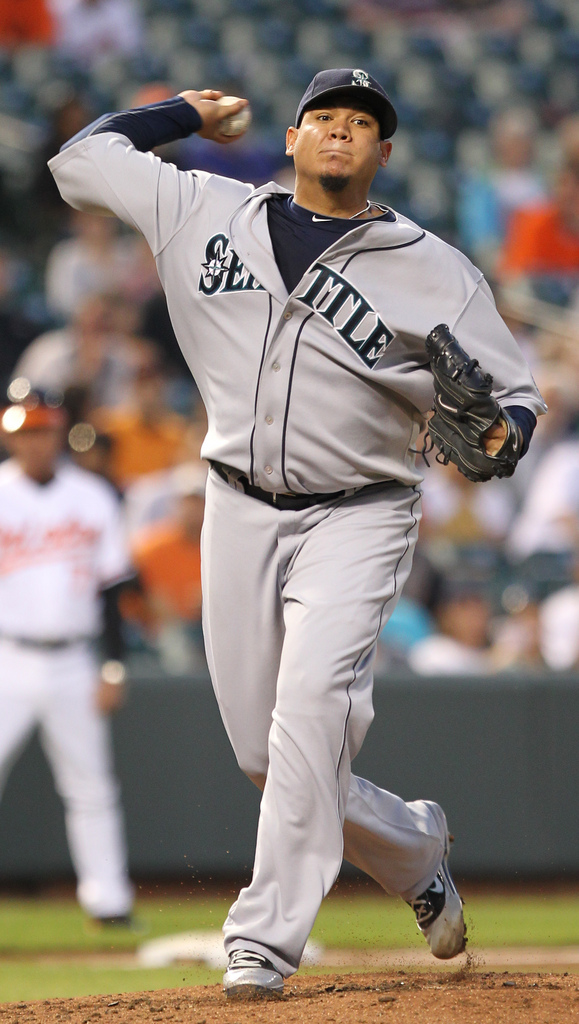
“King” Felix Hernandez last night tossed MLB’s third 2012 perfect game.

Here we go again … for the record-setting third time this season, we’re talking about a perfect game.  Last night, King Felix (Hernandez) threw a “perfecto” (break out the cigars and champagne once more) against the Tampa Bay Rays in a 1-0 win in Seattle.  Hernandez threw 113 pitches in his 12-strikeout performance – becoming the third major leaguer to toss a perfect game in 2012.  Hernandez was preceded in perfection on April 21 by the White Sox Phil Humber, who achieved perfection versus Seattle (at Seattle) 4-0 and the Giants’ Matt Cain, who threw his perfect nine innings in a 10-0 win over Houston at San Francisco.  Notably, these events make Seattle the first team to be on both the winning and losing sides of a perfect game in the same season and Matt Cain the winner in the most lopsided perfect game ever.

So, what’s it take to reach perfection (again, accomplished only 23 times in MLB history)?  From BBRT’s perspective great stuff, a bit of luck and plenty of pressure (not just the pressure that comes near the end of the performance, but pressure from the opposing hurler along the way.)  The fact is, the most common score of a perfect game is 1-0 (seven perfect outings have ended in that score) – and 1-0 and 2-0 contests make up nearly half the perfect outings (11 of the 23).  Here is the tally:  1-0 (seven perfect games); 4-0 (five); 2-0 (four); 3, 5 and 6-0 (two each); 10-0 (once).  Clearly, a close game can help keep the pitcher hurling toward perfect sharp.

For more on perfect games and no-hitters, see the posts of April 21, May 3, June 9, June 14 and July 15.  Wow, with all these post on mound gems, it does seem like the year of the pitcher doesn’t it?

The Brotherhood of Excellence – MLB’s Best Siblings

There are few perfect shapes … and this is one of them.

On Friday August 3, Justin and B.J. Upton became only the sixth pair of brothers in major league history to each achieve 100 home runs.  Justin reached the century mark with a solo shot in the second inning of Arizona’s 4-2 win at Philadelphia (his ninth round-tripper of the season).  B.J.’s 100th was also a solo homer, in the fourth inning of Tampa Bay’s 2-0 home victory over Baltimore.  Notably, it was the only time in MB history when two brothers hit a “milestone” home run on the same day.  And, in fact, on July 20th the Upton brothers each hit their 99th home run – Justin’s a two-run shot in the third inning of an Arizona 13-8 home win over Houston and B.J. with a solo homer in the sixth inning of a 4-3 win over Seattle.  Overall, the Upton’s have homered on the same day 13 times in their major league careers.

Other pairs of siblings who have reached the 100 homer mark include:  Joe and Vince DiMaggio (361 and 125 homers, respectively); Roberto (210) and Sandy (112) Alomar, Jr.; Ken (282) and Clete (162) Boyer; Brett (252) and Aaron (126) Boone; and Bob (156) and Emil “Irish” (106) Meusel.

The Uptons – at 200 combined home runs – have a ways to go to catch the sibling leaders:  Hank (755) and Tommie (13) Aaron at 768.

BBRT would like to use the Upton’s feat to comment on my picks for MLB’s best brother combinations ever.

1.  Paul and Lloyd Waner

This pair of outfielders spent 14 years of their careers as teammates on the Pittsburgh Pirates.  In 1927, the 21-year-old Lloyd averaged .355, with 223 hits and a league-leading 133 runs scored – only to be outdistanced by his 24-year-old brother Paul, who lead the league in batting average (.380), hits (237) and RBI (131).

In a 20-year career, Paul made the all-star team 4 times (the first all-star game came seven years after Paul made the major leagues), won three batting titles, lead the league in runs twice, hits twice, and RBI once.  His career line:  .333 average, 3,157 hits, 113 homers, 1,309 RBI and 1,627 runs.

In his 18-year major league run, Lloyd was a one-time all-star, led the league in hits once and runs once.  His final line: .316 average, 2,459 hits, 27 homers, 598 RBI and 1,201 runs.

Both Paul and Lloyd are members of the Baseball Hall of Fame.  (Paul elected in 1952, Lloyd by the Veterans Committee in 1967.)

2.  Gaylord and Jim Perry

These two pitching brothers – who combined for 529 victories, three Cy Young Awards and eight all-star selections – finish a close second to the Waners on the BBRT brothers list.  Consider 1970, when Gaylord led the NL in wins for the Giants, going 23-13 with a 3.20 ERA, while Jim led the AL in wins for the Twins, with a 24-12 record and a 3.04 ERA.

Gaylord, elected to the Hall of Fame in 1991, finished his career at 314-265, 3.11 – with two Cy Young Awards, and five all-star selections.  He was a five-time 20-game winner and topped the NL in wins three times.

Jim notched a 215-174 record, a 3.45 ERA, three all-star selections and one Cy Young Award.  He led the AL in victories twice.

 3.  Joe, Dom and Vince DiMaggio

Very close race for the third spot, but the DiMaggio’s get the edge since Joe and Dom lost three prime seasons each to World War II (deflating their career numbers).  Let’s look at these brother outfielders in order of prominence.

Joe – 13 major league seasons and 13 all-star selections (kinda tells the story).  The Yankee Clipper also won three Most Valuable Player Awards, two batting titles, one home run title and led the AL in RBI twice.  Joe ended up with a career .325 average, 2,214 hits, 361 home runs, 1,537 RBI and 1,390 runs.

Dom – played in the outfield for the Yankees’ top rival Boston Red Sox (and in the shadow of Brother Joe).  Dom held up his end of the brother tandem, with seven all-star selections in 11 big league seasons.   He twice led the league in runs scored, once in stolen bases.  Finished with a .298 average, 1,680 hits, 87 homers, 618 RBI, 1,046 runs.

Vince – the least stellar of the DiMaggio brothers, like Dom, Vince played for the Red Sox.  Only a .249 career hitter, Vince was known for his defensive excellence in the outfield.  He was a two-time all-star and finished with a .249 average, 125 homers, 584 RBI and 491 runs.

4.  Joe and Phil Niekro

These pitching brothers won 539 games in a combined 46 major league seasons.   In 1970, Joe and Phil tied for the NL lead in wins – Joe going 21-11 with a 3.00 ERA for the Astros and Phil going 21-20 (he also led the league in losses) with a 3.39 ERA for the Braves.

In a 24-year ML career, Phil won 318 games, while losing 274, with a 3.78 ERA.  He was a five-time all-star, two-time 20-game winner, led his league in ERA once and won five Gold Glove Awards.  Elected to the Hall of Fame in 1997, Phil also led the NL in games started, complete games, innings pitched and games lost four times each. In 1982, at age 43, he led the NL in winning percentage with a 17-4 (.810) record.

Joe finished his 22-year ML career with a 221-204 record and a 3.59 ERA.  He was a one-time all-star and two-time twenty-game winner.

5.  Sandy, Jr. and Roberto Alomar – Pedro and Ramon Martinez (tie)

The fifth and final spot on BBRT’s list of the major league’s best brother combinations proved the hardest to determine.  The candidates were:  Felipe, Matty and Jesus Alou; Dizzy and Daffy Dean; Pedro and Ramon Martinez; and Sandy, Jr. and Roberto Alomar.  A good case could be made for all four sets of brothers.  Here’s the evidence in support of Roberto and Sandy, Jr. Alomar and Pedro and Ramon Martinez – who tied for this final sport.

The Alomar Brothers

In Roberto’s 17-year career at second base, he earned 12 all-star selections, led the league in runs scored once, and captured ten gold Gloves.  Elected to the Hall of Fame in 2011, Roberto put up solid numbers to earn this spot:  a .300 average; 2,724 hits; 210 home runs; 1,134 RBI; 1,508 runs; and 474 stolen bases.

Sandy Jr.  enjoyed a 20-year ML career at the tough catcher position.  While his numbers were not as flashy as Roberto’s, Sandy was a Rookie of the Year, a six-time all-star and one-time Gold Glover.  His final numbers – .273 average; 1,236 hits; 112 home runs; 588 RBI; and 520 runs scored.

The Martinez Brothers

Pedro, the younger of the brothers, provides the sparkle in this pairing of hurlers, who won a combined 354 games and both had a career winning percentages north of .600.  Pedro notched 219 wins versus only 100 losses (.687 pct.) with a career 2.93 ERA.  The younger Martinez was an 8-time all-star, won three Cy Young Awards, was a two-time 20-game winner and lead his league in ERA five times, winning percentage three times, strikeouts three times and wins once.  In 1999, with Boston, he went 23-4 with a 2.07 ERA and 313 strikeouts.

Ramon had a 14-year ML career in which he went 135-88 (.605 winning percentage) with a 3.67 ERA.  He was a one-time all-star and one-time 20-game winner.  His best year was 1990, when he went 20-6, 2.92 for the Dodgers, with a league-leading 12 complete games – finishing second in the Cy Young voting to the Pirates’ Doug Drabek (22-6, 2.76).

All BBRT can say about all these siblings is “Oh brother, could they play the game.”  Drop in a comment, if you have additional brother combinations that you’d put up for consideration in the top five.

Doumit Homers from Both Sides – A Look at the Record Book

Ryan Doumit, on July 22, became the third Minnesota Twin to homer from both sides of the plate in one game – following in the footsteps of Roy Smalley (1986) and Chili Davis (1992).   He also became the fourth switch hitter to go deep from both sides of the plate this season (Mark Teixeira, Nick Swisher, Yasmani Grandal).  Doumit’s offensive accomplishment underscores the value the off-season pickup (signed to a two-year, $7 million extension recently) brings to the Twins.  He’s currently hitting .290 (third on the team), with ten homers (fourth on the Twins) and 46 RBI (second) and has played catcher, first base, outfield and designated hitter.  (A key factor here is Doumit’s ability to provide valuable “breathers” for Twins stars Joe Mauer and Justin Morneau.)

Doumit’s display of power from both sides of the plate prompted BBRT to take a look at the record book (when it comes to going yard from the both batter’s boxes in the same contest).  Turns out it’s not as rare as you might think.

It’s been accomplished   271 times (162 in the American League, 109 in the National League).

Mark Teixeira has homered from both sides of the plate in a record 13 games – contributing to a Yankee tradition.

Mark Teixeira holds the record for most times homering from both sides of the plate in the same game at 13, as well as the American League record of 11.  (He accomplished the feat eight times with the Yankees and three times with the Rangers in theALand twice with the NL Braves.)  Ken Caminiti holds the National League record at 10 – 7 times with the Padres, three with the Astros.

The Yankees hold the MLB franchise record  (and, of course, the AL record) for most times having a player homer from both sides of the plate in a game with 49 (30%) of the AL’s 162 occurrences.  The list of Yankees who have accomplished the feat is long and impressive:  Mickey Mantle; Tom Tresh; Roy White; Roy Smalley, Jr.; Bernie Williams; Ruben Sierra; Jorge Posada; Tony Clark; Melky Cabrera; Nick Swisher; and Mark Teixeira.

– Surprisingly, the NL franchise record holder is not an old, established franchise like the Yankees, but the much younger New York Mets – with 20 of the NL’s 109 occurrences.  The roster of Mets who have homered from both side of the plate in the same contest includes:   Lee Mazilli; Howard Johnson; Bobby Bonilla; Todd Hundley; Carl Everett; Tony Clark; Jose Reyes; and Carlos Beltran.

– A final tidbit, no pair of hitters has had more ambidextrous home run games while teammates than Mark Teixeira and Nick Swisher who, as Yankees since 2009, have accomplished the feat a combined 11 times (eight for Teixeira and three for Swisher.) Swisher by the way trails only Teixeira on the MLB total list – with 11 right-/left-handed homer games.  Also at 11 you’ll find Chili Davis and Eddie Murray

Cards Explode for 12 Runs in Lucky Seventh … Prompting a Look at the One-Inning Records

On June 21, 2012, the Saint Louis Cardinals pushed across 12 runs in the bottom of the seventh inning as they trounced the Chicago Cubs in St. Louis.  The final one-inning totals for the Cardinals – 12 runs on 10 hits (seven doubles, one triple, two singles) and three walks.  Interestingly, at least to BBRT, the seventh was the only inning in which the Cardinals (who have struggled offensively lately) scored.  The game was a 12-0 Saint Louis win) and the only inning in which the Redbirds notched more than one hit.  Now the Cards did tie an MLB record with seven doubles in one inning – but when it came to hits and runs they felt short of the single inning – or even the seventh inning – record.  The Cardinals also fell short of the most lopsided shutout win ever – a Providence Grays 28-0 victory over the Philadelphia Phillies on August 21, 1883.

Note:  Since 1900, there have been five shutout victories when the winning team scored twenty or more runs – most recently the Indians 22-0 win over the Yankees on August 31, 2004.  BBRT is still searching to see if 12-0 is the most lopsided score in which all of a game’s runs were scored in a single half inning. 

Now back to the Cards’ seventh inning.  Turns out both the AL and NL records for runs scored in an inning took place in the seventh inning of those games – and in both cases, Detroit was the victim.

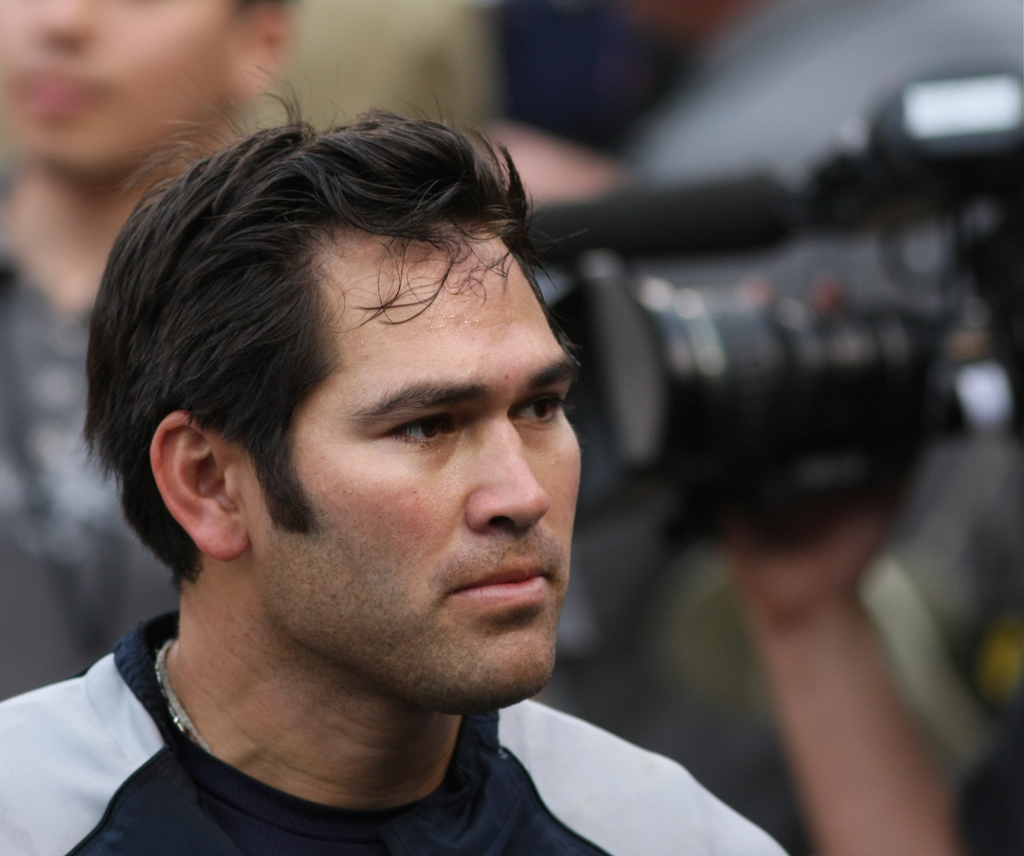
While with the Red Sox, Johnny Damon become one of only five major leaguers to notch three hits in one inning.

In the NL, the Chicago White Stockings (later to become the Cubs) scored an NL and MLB record 18 runs in the seventh inning of a 26-6 home win over the Detroit Wolverines.  In the inning, they tallied another MLB record 18 hits (10 singles, six doubles, one triple and one home run – amazingly, no walks).  Further, three Chicago batters (Tommy Burns, Fred Pfeffer, and Ned Williamson) each had three hits in the inning.  How significant is that?  In baseball history, three hits in an inning has been accomplished only five times (the last by Johnny Damon on June 27, 2003, in the first inning of a 25-8 Boston Red Sox win over the Florida Marlins, when the Sox scored 14 first-inning runs, including a MLB-record 10 runs before the first out.)

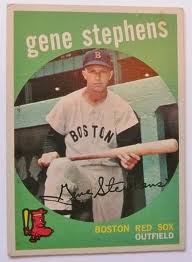
Gene Stephens, another three-hit inning performer for the BoSox.

In the AL, the one-inning scoring record was set in the seventh inning (lucky number seven for both leagues) of a June 18, 1953, 23-3 victory for the Boston Red Sox over the Detroit Tigers.  In their big inning, the Red Sox logged 14 hits (11 singles, 2 doubles and 1 home run) and six walks.  In this game, Boston leftfielder Gene Stephens notched three hits in the inning – his only hits in the game (3 for 6 with a walk.)

Hope you enjoyed this look back at MLB’s biggest innings.

All Star Break – Looking Back at Surprises, Disappointments, BBRT Preseason Predictions

Now that we’re at the All Star break, BBRT would like to take a look at the season so far – surprises, disappointments and how BBRT’s pre-season (mid-March) projections are holding up.

R.A. Dickey – Mets’ knuckleballer 2012’s biggest surprise.

First, MLB’s biggest surprise – this one is at the top of everybody’s list –  the Mets’s knuckleballer R.A. Dickey.  Dickey came into 2012 having never exceeded 11 wins in a season, with a 9-year record of 41-50, a career 4.33 ERA, a career average of 5.5 strikeouts per game, just 4 complete games and 1 shutout.  This season, Dickey leads the major leagues with 12 wins (versus only 1 loss), has a 2.40 ERA, is striking out 9.2 hitters per nine innings, has 3 complete games and 2 shutouts.

From a team perspective, BBRT is most surprised by the Baltimore Orioles, in second place in the tough AL East (no teams under .500 at the break) with a 45-40 record, despite being outscored 387 – 351, the third-worst run differential in the AL.  Notably, Tampa Bay (1/2 game behind the Orioles) is closing the gap and both Boston and Toronto are within striking distance of the O’s, so BBRT does not expect the surprising performance of the O’s (who haven’t had a winning record since 1997) to last.

Giants hope Lincecum rebounds from disappointing start.

Biggest disappointment?  BBRT gives the nod to the Giant’s Tim Lincecum – with a 3-10 record, a 6.42 ERA and league leadership in earned runs allowed (69) and wild pitches (10).  Lincecum came into the season with a 5-year career record of 69-41, a 2.98 ERA over 1,028 innings pitched, and two Cy Young Awards.   How far off his usual marks is the Giants’ ace?  In 2011, he gave up 66 earned runs in 217 innings.  In 2012, he’s already exceeded that total (giving up 69 earned runs) in only 96.2 innings.  In fact, Lincecum has already given up more earned runs through the break this year then in all but one of his previous 5 full seasons.  And, keep in mind, at 46-40,San Francisco is only ½ game out of first.

The most disappointing team goes to the Philadelphia Phillies – 37-50, in last place, 14 games out and losers of 9 of their last ten games before the break.  This a team picked to top the NL East by most analysts, as well as BBRT – coming off a 102-win season in 2011, five straight division titles and 9 consecutive winning seasons.  What happened?  Injury took a significant toll – Ryan Howard, Chase Utley, Roy Halladay, along with disappointing seasons by outfielder Shane Victorian and preseason potential Cy Young pick Cliff Lee.

Now, let’s go a little deeper in the areas of surprises, disappointments and BBRT’s mid-March predictions.

And, what a difference 80+ games can make.  Before the season opened, BBRT predicted competitors for the NY Cy Young were:  1) Cliff Lee (now 1-5, 3.98); 2), Roy Halladay (4-5, 3.98); 3) Cole Hamels (10-4, 3.20).  Oops!

So, let’s look at how things are going – and how BBRT did in March.   Surprises will be in green – disappointments in red.

AL East

BBRT’s predicted winner – the Yankees – have a firm hold on first place.  However, BBRT lists Michael Pineda as a disappointment.  BBRT saw Pineda (who has missed the entire season with injuries) as a key player in the Yankees’ dominance.  Ivan Nova’s 10-3, 3.92 record, however, is a surprise that offsets Pineda.

Baltimore in second place is a surprise, as BBRT predicted the Tampa Bay Rays would finished in the number-two spot (the Rays are in third, just a half-game out of second).   What does BBRT see ahead?  Yankees win it, followed by TampaBay, with Orioles dropping to fourth.

Another disappointment in the East is Boston’s Adrian Gonzalez – going from 2011’s .338, 27 HRs, 117 RBI season to .283-6-45 at the break.

AL Central

The White Sox, are the surprise here – thanks in great part to strong hitting from Paul Konerka and A.J. Pierzynski (who should have been all All-Star) and comeback seasons by Adam Dunn and Jake Peavy.

A notable individual surprise in the division is 23-year-old White Sox hurler Chris Sale, who hadn’t started a major league game previous to this season and now stands at 10-2, 2.19, with nearly a strikeout per inning.  With the positive addition of Kevin Youkilis, the Sox are in the race to stay.

The Tigers are a bit of a disappointment here, but not that big a one.  BBRT picked Detroit to lead from start to finish (behind Prince Fielder, Miguel Cabrera and Justin Verlander).  Early on, the Tigers showed some problems in the field, with their starting pitching and at the bottom of the lineup.  However, they are now 2 games over .500, just 3 1/2 back and won 7 of 10 before the break.  They will be in the hunt.

BBRT picked Cleveland to be a strong contender (second to the Tigers) and the Indians sit in second place at the break.  However, they will need to make a move or two or risk losing ground to the Tigers and Sox.  Final prediction – Sox hold off the Tigers, Indians drop to third.

AL West

Not much to surprise anyone here.  BBRT saw a dogfight between the Rangers and Angels and that seems to be where we are heading, with both teams boasting strong offenses and pitching staffs.  In March, BBRT saw the finish as Angels –Texas, with both teams making the playoffs.  Right now, they are flip-flopped and you can expect a competitive finish.

We have seen a notable disappointment in the division, in the form of Albert Pujols’ slow start.  Pujols has rebounded, but still is at just .268 (versus a .325 career average) with 14 HRs and 51 RBI.  That may be enough to help the Angels grab a wild card spot, but Pujols needs to pick it up if the Angels are going to catch the Rangers.  Year-end prediction – Rangers have just enough to hold off the Angels.

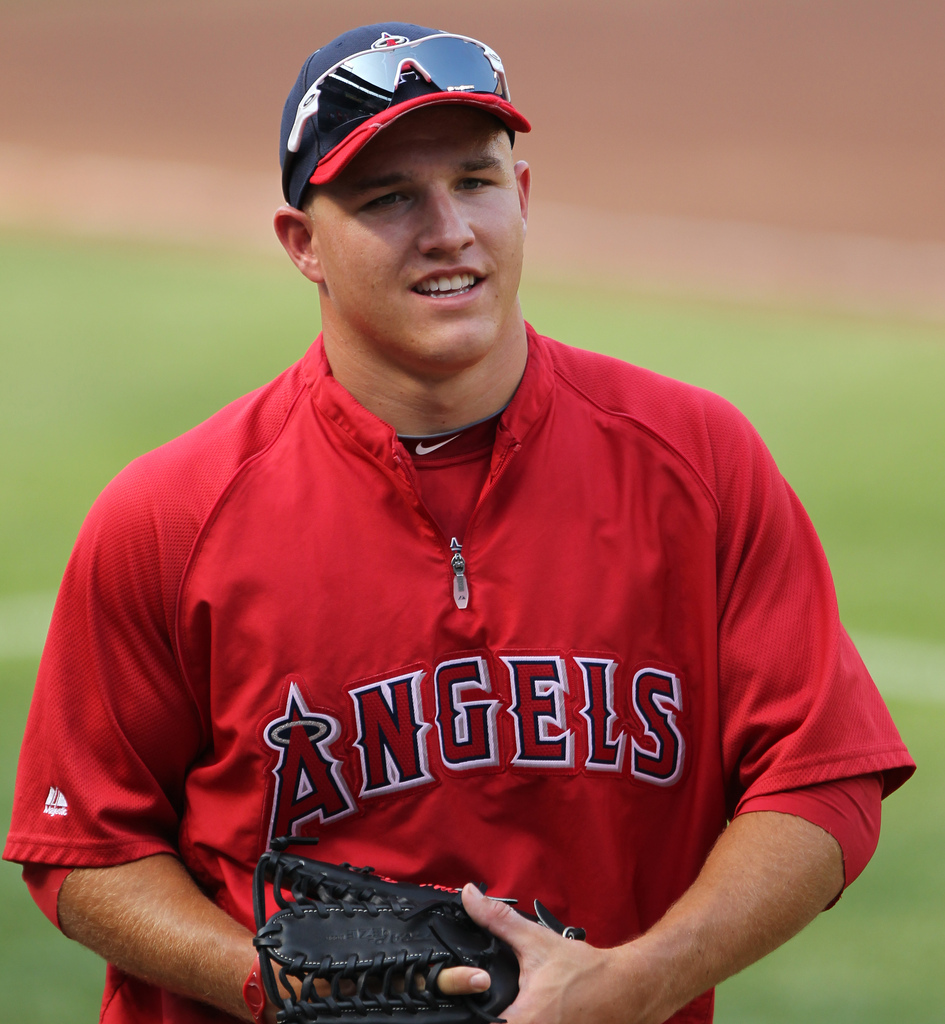
Mike Trout – potential ROY and MVP candidate?

A key surprise in this Division is young Mike Trout of the Angels at .341, 12 HRs, 40 RBI and 26 SBs – a potential combination ROY and MVP contender (only Fred Lynn and Ichiro Suzuki have won MVP and ROY in the same season).  Given Trout’s role in compensating for Pujols’ slow start, he has a chance.

NL East

The Washington Nationals have ridden a surprising starting pitching staff (Stephen Strasburg, Gio Gonzalez, Jordan Zimmerman and Edwin Jackson to a major-league best 3.20 ERA, a 49-34 record and a four-game East Division lead.  Add to that the energy infusion of young Bryce Harper and you have a season-long contender.  This is not a total surprise, BBRT’s preseason prediction saw Washington with a winning record and fighting for a playoff spot, with the Braves taking the division.

What BBRT did not expect was the collapse of the Phillies (see the disappointment at the start of this post) and shortfall of the Brewers (with particularly disappointing results from Rickie Weeks and Randy Wolf).  Season’s end?   BBRT sees the Nationals and Braves close all the way, with the Braves winning the Division and Nationals as a Wild Card.

NL Central

The big surprise here for many people is seeing Pittsburgh in first, a game up on the Reds and 2 ½ on the Cardinals – thanks to Andrew McCutchen’s MVP-caliber performance and the stalwart pitching of James McDonald and A.J. Burnett (both among 2012’s surprises).  McDonald came into the season at 18-20 with a career 4.04 ERA (but having shown some promise) and, at the 2012 break, is 9-3, 2.37.  Burnett is a “comeback” surprise.  He’s had some good years in the past, but for 2010-11, he was 21-26 with an ERA north of 5.00 both seasons.  In 2012, he stands at 10-2, 3.68.

Right now, trailing the Pirates closely are the Reds and Cards.  The Cardinals, in particular, have shown some grit – overcoming the loss of Pujols.  Yadier Molina, David Freese, Matt Holliday and Carlos Beltran have picked up the slack.  And, there is a surprise here.  Lance Lynn, the Cards’ 25-year-old Rookie of the Year Candidate stands at 11-4 with a 3.41 ERA.

What does BBRT expect for the second half?  First, as predicted in March, the Pirates notch their first winning season since 1992.  However, it won’t be enough to hold off the Cards and Reds.  BBRT will stick with its March prediction, the Cards take the Division, followed by the Reds.

NL West

A notable surprise here, the Dodgers went into the break in first place (just ½ game up on the Giants), despite losing Matt Kemp for 51 games.  Pitching has helped keep the Dodgers in the hunt, particularly Clayton Kershaw (who has pitched much better than his 6-5 record – with a 2.91 ERA) and the Dodgers’ “surprise” Chris Capauno (9-4, 2.91 this year; 11-12, 4.55 in 2011; but an 18-game winner for the Brewers in 2005).

The Giants in second matches BBRT’s March prediction, despite Tim Lincecum’s decline.  Contributing factors are strong seasons from Melky Cabrera, Buster Posey and Pablo Sandoval – more important, strong starting pitching from Ryan Vogelsong, Matt Cain, Madison Bumgarner and even a surprising resurgence (7 wins) from Barry Zito.

BBRT’s sees a disappointment in the West – the struggles of the Diamondbacks (BBRT’s March pick to win the Division).  The Diamondbacks have been helped by Paul Goldschmidt’s emergence as a Rookie of the Year candidate (.302, 12 HRs, 42 RBI), a solid season from Aaron Hill (.300, 11 HRs, 40 RBI) and what BBRT rates as a mild surprise, newcomer Jason Kubel’s .293, 15 HRs, 60 RBI performance going into the break.  The pitching has been adequate led by 25-year-old Wade Miley with 9 wins. The big disappointment forArizona?  Justin Upton, who – after last season’s .289, 31 HRs and 88 RBI – was expected to further mature and carry the offense.  This season, Upton stands at .273, 7 HRs and 37 RBI – respectable, but well below expectations.

Post All-Star break, BBRT sees the Giants winning the Division, with the Diamondbacks and Dodgers fighting for second – and Kemp’s return being just enough to keep the Dodgers ahead of the Diamondbacks.


Finally, BBRT’s Mid-Season Award Predictions:

AL MVP: 1) Robinson Cano (NYY); Josh Hamilton (TEX); Mike Trout (LAA).  BBRT’s preseason picks were:  Cano, Albert Pujols (LAA); Evan Longoria (TB).

NL MVP:  1) Joey Votto (CIN); 2) Andrew McCutchen (PITT); 3) Matt Kemp (LAD).  Preseason picks:  Justin Upton (AZ); Kemp; Votto.


AL Cy Young:  1) Jered Weaver (LAA); 2) Justin Verlander (DET); 3) David Price (TB).  Preseason picks were:  Weaver; Verlander; C.C. Sabathia (NYY); Price.

NL Cy Young: 1) R.A. Dickey (NYM); Gio Gonzalez (WASH);  Matt Cain (SF).   Preseason predictions:  Cliff Lee (PHIL), Roy Halladay (PHIL); Cole Hamels (PHIL). (Boy, did I miss this one.)


AL Rookie of the Year: Mike Trout (LAA); Yu Darvish (TEX).  Preseason picks:  Matt Moore TB); Jesus Montero (SEA).

NL Rookie of the Year:  1) Bryce Harper (WASH) ;  2) Lance Lynn (STL).  Preseason picks:  Bryce Harper; Julio Teheran (ATL).

So, there’s a look back and a few predictions forward.  Can’t wait to see what the rest of the season holds.

The All Stars – a B+, but still debatable.

The MLB All Star selections are in (minus the final five vote).  Overall, a pretty good job by the fans and managers, I’d rate the selections a B+ or A-.  That better than many years, but,  as always, there is some disapointment and debate.  Here are BBRT’s commentary on the”snubs” of 2012, as well as my vote for the final spot.

#1 SnubVoters select Pablo Sandoval (Giants) to start over David Wright (Mets) at third base.  Look at the numbers, Sandoval’s 45 games, .300 average, 6 HRs and 25 RBI are respectable – but put them up against Wright’s 76 games, .354 average, 9 HRs and 50 RBI and I know who my starter would be.

#2Voters select Mike Napoli (Rangers) to start at catcher for the AL.  Yes, Napoli hit 56 homers in 2010-11 and was a post-season star, but he’s not even close to my first choice.

Check out the numbers:

Totals as of June 1                           HR                   RBI                  Avg.

Mike Napoli                                        12                    30                    .235

Joe Mauer (Twins)                              4                    36                    .324

A.J. Pierzynski (White Sox)              14                    45                    .285

Matt Wieters   (Orioles)                    11                    38                    .249

My choice:  A.J., with Mauer and Wieters on the bench.

Encarnacion deserves to be at the 2012 All Star game.

#3 … No reserve spot for Edwin Encarnacion (Blue Jays) on the AL squad. Encarnacion’s rung up a .291 average, with 22 HRs and 55 RBI in 76 games.  Who would I drop?  At the reserve DH spot, the AL has Adam Dunn with 79 games, a .210 average, 24 HRs, and 58 RBI.  Some additional factors:  Encarnacion has 8 SBs to 0 for Dunn; 50 Runs to 44 for Dunn; and has struck out 54 times, compared to Dunn’s league-leading 126.  Dunn does lead Encarnacion in walks 64 to 32, but still trails in OBP .359 to .373 and Slg. Pct. .507 to .572.  Overall, I give Encarnacion the nod for the final DH spot behind David Ortiz (Red Sox) and Billy Butler (Royals).

#4Voters select Buster Posey (Giants) to start over Carlos Ruiz (Phillies) and Yadier Molina (Cardinals) at NL catcher.  Okay, we have a trio deserving backstops here, but the numbers swing in Ruiz’s favor and drop Posey to third.

Totals as of June 1                   HR                 RBI                 Avg.

Buster Posey                            10                    42                    .303

Carlos Ruiz                                11                    43                    .356

Yadier Molina                            13                    45                    .312.

#5  … Matt Kemp selected by the voters having played only 36 games played.

#6 …  A few I’d classify as truly deserving, even at the expense of other selections:

Aaron Hill (2B. – Diamondbacks)

Johnny Cueto (SP – Reds)

Austin Jackson (OF – Tigers)

Ernesto Frieri (RP – Angels)

Zack Grienke (S P- Brewers)

Jason Kipnis (2B – Indians)

Finally, my votes in the final five for each league.

First the NL, going with tradition here and voting for the Braves’ Chipper Jones to make a final All-Star appearance, honoring a 19-career which now stands at a .304 average, 460 HRs and 1,590 RBI.

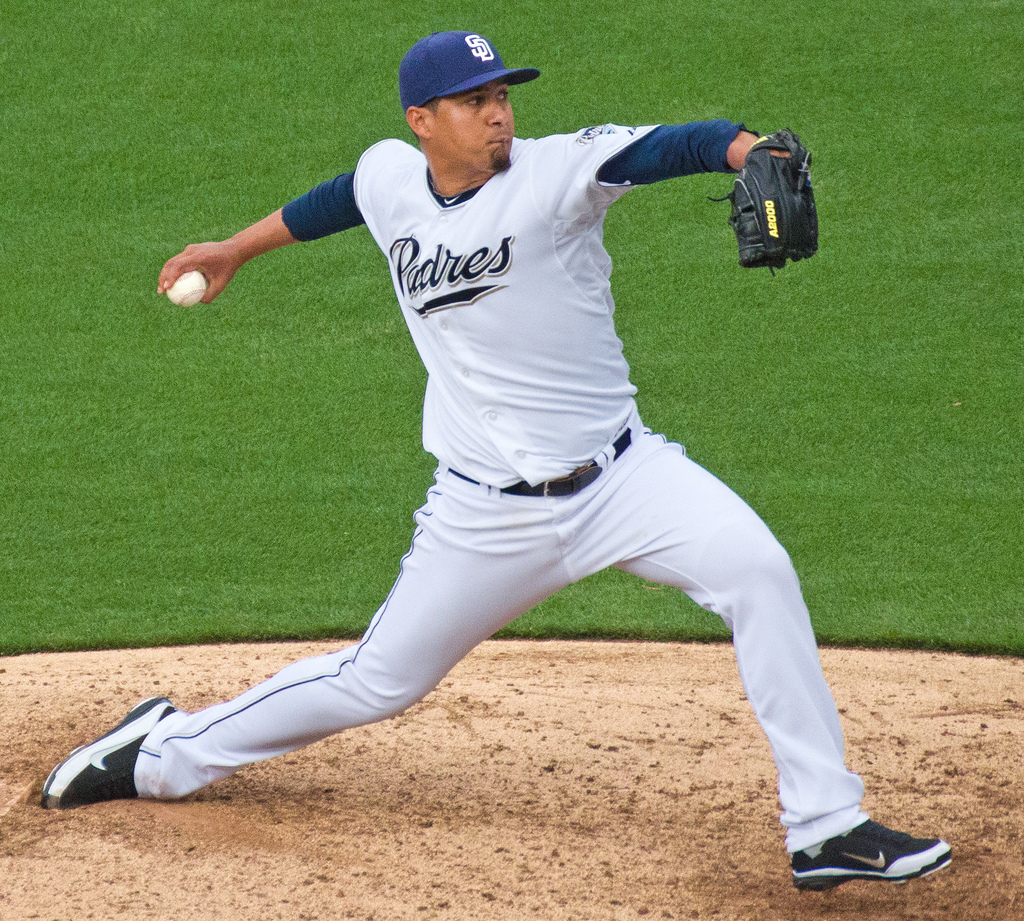
Frieri … my AL final five vote … wearing an Angels uniform, of course.

In the AL, going with the surprise  flame thrower – Angels closer Ernesto Frieri.  For the season (Padres and Angels), Frieri has pitched in 35 games, 36 innings, giving up only 16 hits, fanning 60 and notching a 0.75 ERA.  With the Angels, he’s pitched in 24 games (10 saves), totaled 24.1 innings, given up just 7 hits and no runs, and whiffed 42.  Fans need to see this guy pitch on the big stage.

Aaron Hill – Two Cycles a Rarity … Tyrone Horne “Homer Cycle” Even Rarer

On June 29, Aaron Hill – for the second time in 11 days – hit for the cycle (single, double, triple, home run in one game).  This made him the first player with a two-cycle season since 1931 (Babe Herman,Brooklyn) – and only the fourth in major league history (it was accomplished twice in the ML American Association of the 1880s (John Reilly, Cincinnati, 1883 and Tip O’Neill, St. Louis, 1887).

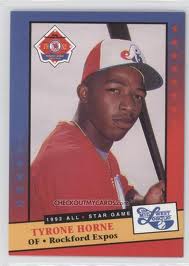
Two cycles in a season, a rare feat indeed.  Let’s look, however, at an even rarer feat – the “Home Run Cycle,” accomplished just once in all of professional baseball.   On July 27, 1998, Tyrone Horne of the Double-A Arkansas Travelers hit a solo home run, two-run homer, three-run homer and a grand slam in a 13-4 road victory over the San Antonio Mission.  The term “Home Run Cycle” was coined for Horne’s accomplishment – never done before and not duplicated since.

Although it was surprising, the feat was, perhaps, not totally unexpected.  Horne was in the midst of a stellar minor league season in which he would go .313 with 37 home runs, 140 RBI, 95 runs scored and even throw in 18 stolen bases.  And, right after the historic game, Horne headed off to the Texas League All-Star Game where, of course, he proceeded to win the Home Run Derby.  Horne, by the way, never made it to the major leagues – completing a 13-year (1,286 game) minor league career with a .288 average and 143 home runs.  The bat he used that historic day, however, has made it to the Baseball Hall of Fame in Cooperstown.

A final thought on hitting for the cycle.  Yankee third baseman Tony Lazzeri may have had the major league’s most overshadowed cycle.  On June 3, 1932 – in a 20-13 win over the Athletics – Lazzeri completed his cycle (1B, 2B, 3B, HR) with a grand slam.  On the same day, however, Lou Gehrig notched the American League’s first-ever four-homer game.   Oh yes, and if you’re interested, the career cycle record is three by the Yankees’ Bob Meusel.

Cain’s Perfect Game – Not So Surprising

So, here we are talking about a no-hitter AGAIN – see BBRT posts of May 3 and June 9 for more on baseball’s no-hit gems.  This time it’s the Giants’ Matt Cain and last night’s perfect game, a 10-0, 14-strikeout win over the Astros.

Perfect games are always surprising, although this one is less so than some others.  It was, after all, the fifth no-hitter and second perfect game already this season.  Second, Matt Cain was a pretty good candidate to toss a “perfecto” or at least a no-hitter.  Cain, who has a truly “nasty” four-pitch repertoire (four-seam fastball, curveball, slider and changeup – complemented by a less frequently used two-seamer) has taken no-hitters into the seventh inning five times in his career.  He has a 2.76 ERA since 2009, and has been touted for having “ace” stuff since he came to the major leagues in 2005.  He was also coming into last night’s game with a victory in each of his past six starts.

A long-time victim of poor run support – a 77-75 career record despite a 3.28 ERA, and 31 losses when he had given up three or fewer runs –  Cain had this moment in the sun (or, in this case, under the lights) coming.  BBRT says congrats Matt Cain, we knew you had it in you.

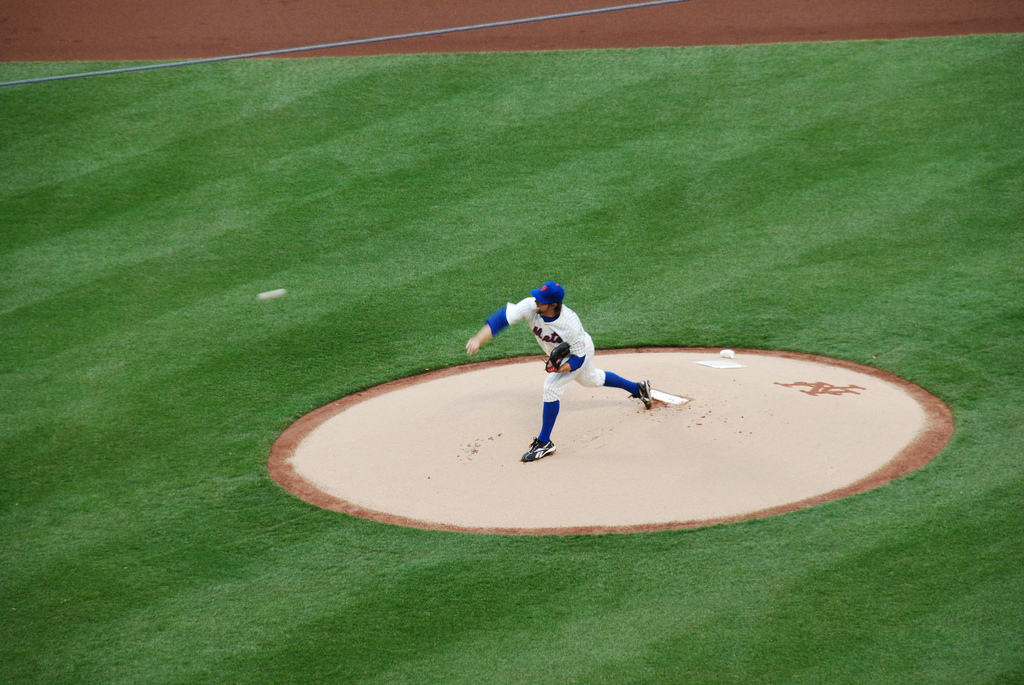
Now, if you want to talk about surprising pitching performances, how about Mets’ knuckleballer R.A. Dickey’s one-hit (of the infield variety), no-walk,  12-strikeout. complete game performance of last night.  This  makes Dickey – who came into the season with a 41-50 career record and an ERA north of 4.00 – 10-1, 2.20 ERA on the year, with 19 walks and 90 strikeouts in 90 innings.   His ten wins tie Dickey for the league lead with another surprising hurler – Lance Lynn, who last night went to 10-2 (2.42 ERA) for the Cardinals, striking out 12 in 7.1 innings of 3-hit, shutout ball.   On the season, Lynn has walked 27 and struck out 86 in 81.2 innings pitched.  The 25-year-old Lynn, who was slated to spend the year in the Redbird’s bullpen, was called into starting service due to injuries to Carpenter and Wainwright, and he’s made the most of it.

Matt Cain’s perfect fame – mildly surprising.  Dickey and Lynn leading the NL in victories, even more so.

R.A. Dickey’s 10 wins for the Mets. Now there’s a surprising performance.

A-Rod Grand Slam – Historic & Momentous

A-Rod continues his "trot" to the Hall of Fame.

On June 12, 2012, Alex Rodriguez continued his march to the Hall of Fame by stroking his 23rd “Grand Slam” home run.  It was an historic and momentous blast.  Historic because it tied A-Rod with Lou Gehrig for the all-time lead in career grand Slams.  Momentous because it tied a game the Yankees were trailing (4-0 to the Braves in the eighth) and led to a 6-4 win that kept the Yankees in sole possession of first place (one game ahead of the Orioles).

A-Rod acknowledged history and momentum.  “Lou Gehrig is not only one of the all-time greats, but he’s one of ours,” A-Rod said after the game.  “He was a Yankee.”  Noting the Yankees’ building momentum, he said, “I really felt it was a swing for the team.  I feel like everybody needed that hit and we’ve all been waiting for it.”

BBRT says congrats to A-Rod, and would like to share some Grand Slam trivia with it blog followers.

While A-Rod and Lou Gehrig top the career Grand Slam list with 23, they are joined in the top five positions (six actually, a tie for fifth) by Manny Ramirez (21), Eddie Murray (19), Willie McCovey (18 and the NL record holder), and Robin Ventura (18).

Another Yankee, Don Mattingly, set the current single season record in 1987 with six Grand Slams (tied by Travis Hafner of the Indians in 2006).  Notably, Mattingly’s six Grand Slams were the only base-loaded homers of his 14-year career.

Sticking with the Yankees, they are the only ML team to hit 3 grand slams in one game – coming on August 25, 2011 against the Oakland As at Yankee Stadium (Robinson Cano, 5th inning; Russell Martin-6th; Curtis Granderson-8th).  The Yankees, who trailed 7-1 after three innings, won the game 22-9.

The NL record for Grand Slams in a season is 5, held by Mr. Cub, Ernie Banks and former Cardinal Albert Pujols.

Four players have hit a Grand Slam in their very first major league at bat:  Bill Duggleby (Philadelphia, NL, 1898); Jeremy Hermida (Florida, 2005); Kevin Kouzmanoff (Cleveland, 2006); and Daniel Nava (Boston, 2010). Duggleby, Kouzmanoff and Nava all hit their Slams on the first pitch they ever saw in the majors.

In 1961, when the Orioles’ Jim Gentile hit a then record-tying 5 Grand Slams in a season,  Baltimore’s Chuck Estrada was the Orioles’ starting pitcher each time Gentile struck a four-run blow – winning all four games (On May 9, Gentile hit two Grand Slams in a game against the Twins at Minnesota).

Only 13 players have hit two grand slams in a game – and only once did the player accomplish this feat in his home park.  Nomar Garciaparra hit two Slams for the Red Sox at Fenway in a May 10, 1999, win over the Mariners.

Bill Mueller of the Red Sox is the only switch hitter to hit Grand Slams from both sides of the plate in the same game –  in the 7th and 8th innings of a 14-7 Red Sox win at Texas on July 29, 2003.

–  Atlanta Braves pitcher  Tony Cloninger  was the first National Leaguer to hit two Grand Slams in one game – a July 3, 1966,  17-3 complete game victory over the Giants at Candlestick.  He remains the only pitcher with a two-GS game.

Cardinals third baseman Fernando Tatis is the only player to hit two Grand Slams in the same inning – an 11-run third inning as the Cards beat the Dodgers 12-5 on April 23, 1999.   Dodgers’ starting pitcher Chan Ho Park gave up both grand slams (Why was he still in there?) becoming the answer to the question, Who is the only pitcher to give up two grand slams to the same batter in one inning?

Park’s inning went like this:

Single; Hit By Pitch; Single; Tatis Grand Slam; Ground Out; Home Run;  Walk; Walk; Safe on Fielder’s Choice (attempted sacrifice); Safe on Error; Single; Fly Out; Tatis’ Second Grand Slam; Call to Bull Pen; Pop Out.

Grand Slams – a grand part of the grand old game.

Combined No-Hitters – Historic Tidbits

As BBRT considers the concept of a six-pitcher no-hitter, it seems to be more of a statement of the hitters’ collective futility than of pitching quality.

Ernie Shore - while with the Red Sox - finished what the "Babe" started - MLB's first combined no-hitter.

Friday (June 8, 2012), the Seattle Mariners, tied a major league record by using six pitchers to complete a 1-0 no-hit winover the Dodgers in Seattle.  It was the tenth combined no-hitter in major league history, only the second inter-league combined no-hitter, and made Millwood (who left the game after six innings due to a groin injury) one of only three hurlers to start both an individual complete game no-hitter and a multi-pitcher no-hitter.  The others are Kent Mercker and Vida Blue.  As

When BBRT considers the concept of a six-pitcher no-hitter, it seems to be more of a statement of the hitters’ collective futility than of pitching quality.   More than a sustained no-hitter, the six-hurler no-hitter is a collection of good innings.  Still, combined no-hitters do make for interesting score cards and bits of baseball history.  Let’s take a look at past combined no-hitters and what made them unique.

The first-ever combined no-hitter may have been the strangest. It came on June 23, 1917, when Red Sox ace lefty Babe Ruth (Ruth had won 23 games in 1916 and was on his way to a 24-win season in 1917) started on the mound at Fenway, facing the Washington Senators.  Ruth walked the first batter of the game – Senators’ second baseman Ray Morgan – on four pitches.  The hot-headed Ruth quickly earned an ejection for arguing with the home plate umpire, and the Red Sox brought in ErnieShore(on just two-days rest).  Morgan was quickly thrown out stealing and Shore went on to retire the next 26 batters in order (two strikeouts) for a combined no-hitter that was close to a perfect game.

The next combined no-hitter didn’t occur until 50 years later – on April 30, 1967 – when Baltimore Orioles Steve Barber and Stu Miller combined to no-hit the Tigers in Baltimore.  This “gem” is most noted for the fact that it is the only combined no-hitter in which the team that was no-hit managed to get the win.  Barber went 8.2 innings, but walked ten (striking out three) in the 2-1 loss. Despite the walks, it looked pretty good for Barber going into the top of the ninth.  The Orioles had scored in the eighth to take a 1-0 lead.  The ninth went like this.  Barber walked Tiger first basemen Norm Cash to start the inning (Dick Tracewski ran for Cash); Barber then walked light-hitting shortstop Ray Oyler; Tiger pitcher Earl Wilson bunted the runners to second and third; Willie Horton fouled out pinch hitting for second baseman Dick McCauliffe; Jake Wood was brought in to run for Oyler; a Barber wild pitch with center fielder Mickey Stanley at the plate enabled Tracewski to score, tying the game; then Stanley walked and that was all for Barber.  Stu Miller came on and saw third baseman Don Wert safe on an error, with Wood scoring.  Then, finally, right fielder Al Kaline made the third out of the inning.  The Orioles went 1-2-3 in the bottom of the night and the no-hitter was completed – and lost.  The only other losing no hitter came on April 23, 1964, when Houston Colt .45s hurler Ken Johnson was beaten 1-0 by the Reds with an unearned ninth-inning run.  There have also been two eight-inning no-hitter losses (the home team did not bat in the bottom of the ninth), but MLB does not recognize these as official no- hitters.

September 28, 1975, saw the Oakland As’ Vida Blue, Glenn Abbott, Paul Lindblad and Rollie Fingers no-hit the Angels in a 5-0 win in Oakland.  The only tidbit here is that this no-hitter took place on the final day of the regular season – one of only two final day no-hitters (the other being Mike Witt’s 1984 perfect game against the Rangers at Arlington Stadium.)

On July 28, 1976, John “Blue Moon” Odom (pitching for the White Sox) combined with Francisco Barrios to no-hit Odom’s former team, the As. In a 2-1 victory in Oakland, Odom started and went just five innings, walking nine and striking out three. His ninth walk was the lead-off hitter in the sixth inning of a 1-1 tie, which earned Odom an early exit despite the fact that he had not given up a hit.  Barrios tossed the final four innings, giving up 2 walks and striking out two.  (The 11 walks in this game is the most given up in a no-hitter).

On April 11, 1990, Mark Langston started a combined no-hitter for the Angels, playing at home against the Mariners.  The Angels scored in the bottom of the seventh to take a 1-0 lead and Langston, who had thrown 99 pitches in this early-season start, was relieved by Mike Witt, who closed it out with 2 perfect innings (two strikeouts).  Of interest here is that it makes Witt the only hurler to throw a no-hitter as a starter and participate in a no-hitter as a reliever.  (As noted earlier, Witt threw a perfect game for the Angels against the Texas Rangers on September 30, 1984.)

July 13, 1991, the Orioles’ Bob Milacki, Mike Flanagan, Mark Williamson, and Greg Olson no-hit the As 2-0 … notable as one of two combined no-hitters that season.

September 11, 1991, Braves Kent Mercker, Mark Wohlers and Alejandro Pena no-hit the Padres 1-0 in the first National League combined no hitter.

The only extra inning, combined no-hitter came on June 12, 1997 – with the Pittsburgh Pirates downing the Houston Astros 3-0 in ten innings on a walk-off three-run homer by pinch-hitter Mark Smith.  The game was started by Francisco Cordova, who went nine innings with 2 walks and ten strikeouts (121 pitches).  Ricardo Rincon relieved in the tenth, walking one and striking out one.  As you would expect, Cordova’s nine innings are the most pitched by any one hurler in a combined no-no.

On June 11, 2003, Houston Astros’ starter Roy Oswalt aggravated a groin injury in the second inning of what went on to become a combined no-hit, 8-0 victory over the Yankees (at Yankee Stadium). Houston used six pitchers in that game, setting the record tied by the Mariners yesterday.  In addition, it was the first inter-league combined no-hitter.   For more on the Astros’ 2003 feat, see the BBRT May 3, 2012, post on Jered Weaver’ s no-hitter.

And that brings us up to the June 8 Mariners / Dodgers game.