Seaver and Cone – Good Timing in the Big Apple

Timing may not be everything, but it can really “be something special.” In this post, BBRT looks at a couple of very well timed pitching performances – Tom Seaver’s 19-strikeout effort in 1970 and David Cone’s 1999 perfect game.

April 22, 1970 – Shea Stadium – Tom Terrific for the Record


On April 22, 1970, before an Astros/Padres game at Shea Stadium, Mets’ starting pitcher (and future Hall of Famer) Tom Seaver was officially presented with his 1969 Cy Young Award (his first of three CYAs).  In 1969, Seaver’s third major league season, he had gone 25-7, with a 2.21 ERA and 208 strikeout in 273 1/3 innings pitched. BBRT note: Seaver would go on to win 311 MLB games (20 seasons) versus 205 losses, win twenty or more in a season five times, post a career 2.86 ERA and strike out 3,640 batters in 4,783 innings pitched. He would lead his league in wins three times, winning percentage once, ERA three times, strikeouts five times, complete games once and shutouts three times – while being selected to a dozen All Star squads (as well as 1967 NL Rookie of the Year).

On April 22, 1970, however, the timing was right for the 25-year-old right-hander not only to receive his 1969 Cy Young Award, but to prove the previous campaign was no fluke – and he did just that, in style.

It was Seaver’s fourth start of the young season and he came into the game with a 2-0 record, a 2.55 ERA and 18 strikeouts in 24 2/3 innings pitched. Opposing Seaver on the mound was Padres’ righty Mike Corkins – 0-1, with a 6.23 ERA.

The contest proved to be a true pitchers’ duel.  After five innings, the Met’s held a 2-1 lead (the eventual final score). Seaver had given up just two hits and one run (on a second-inning home run by Padres’ LF Al Ferrara). Seaver had fanned nine hitters in just five innings – but the best was yet to come.  Corkins, by the way, was also pitching a solid game – working his way into and out of trouble.  Through five innings, he had given up two runs on four hits and three walks (one intentional), while fanning two. (He would end up going seven innings and giving up just two runs.)

In the bottom of the sixth, Seaver got the first hitter on a foul pop up and the second (CF Cito Gaston) on a fly out to right.  That would be the last Padres’ hitter to put a ball in play.  Seaver recorded the third out in the sixth by fanning Al Ferrara (he of the second inning homer) on a called third strike. Seaver then went on to strike out the side in order in the seventh, eighth and ninth – with the final out and strikeout of the game being, appropriately, Ferrara.

So, on the day he was presented his Cy Young Award, Seaver got a win, threw a complete game two-hitter, tied the MLB nine-inning game strikeout record at 19 (later surpassed by Roger Clemens and Kerry Wood) and set the single-game consecutive strikeout record (which still stands) at ten.  Good timing, Tom Terrific.

July 18, 1999 – Yankee Stadium – David Cone’s “Perfect” Timing


On July 18, 1999, the New York Yankees held Yogi Berra Day.  As part of the pre-game festivities, the fans were treated to former Yankee Don Larsen throwing out the ceremonial first pitch to Berra – reuniting the battery for the most famous (and only World Series) perfect game ever pitched (October 8, 1956).  The 41,390 fans in attendance had no idea of the treat that was yet to come.

On the mound for the Yankees that day was right-hander David Cone, who came into the contest with a  9-4 record and a 2.86 ERA.  Opposing Cone was the Montreal Expos’ Javier Vazquez (2-4, 6.63).

The game started out routinely enough.  The Expos went down in order in the top of the first inning (strikeout, fly out, fly out). The Yankees went scoreless in the bottom of the inning (leadoff hitter Chuck Knoblauch hit by pitch, followed by a fly out and two infield ground outs). The Expos went quietly again in the second (strikeout, groundout, groundout), but the Yankees exploded for five runs in the bottom of the inning  – a frame which included home runs by LF Rickey Ledee and SS Derek Jeter.  After that it was clearly “game on” for Cone, as he struck out the side (in order) on 12 pitches in the top of the third.

The rest, as they say, is history.  The Yankees won 6-0 and Cone pitched a perfect game (still the only one in  an interleague contest) – on the day when Don Larsen (who tossed the only World Series perfecto) tossed out the first pitch.  Cone used just 88 pitches to record his 27 outs, throwing 68 for strikes (he fanned ten Expos).  Cone’s 88 pitches are the second-fewest ever in a perfect game (Addie Joss had a 74-pitch perfect outing in 1908.)

BBRT note:  Cone’s perfecto almost didn’t make it into the books – the game was delayed for 33 minutes by rain in the bottom of the third inning.

Cone ended the 1999 season – the 36-year-old’s 14th MLB campaign – 12-9, with a 3.44 ERA. His career stats were 194-126, 3.46, with 2,668 strikeouts in 2,898 2/3 innings pitched. In his career, he was a two-time 20-game winner, won the 1994 Cy Young Award (while with the Royals), led his league in wins once, winning percentage once and strikeouts twice. In 1992, he led MLB in strikeouts with 261, without leading either league (214 for the Mets, 47 for the Blue Jays). Cone was a five-time All Star.

Clearly, in 1999, he picked a “perfect” day to put it all together – with Berra and Larsen “in the building.”

I tweet baseball @DavidBBRT

Member: Society for American Baseball Research (SABR), The Baseball Reliquary, Baseball Bloggers Alliance.
The 500-HR Club – Fun Facts & Stats

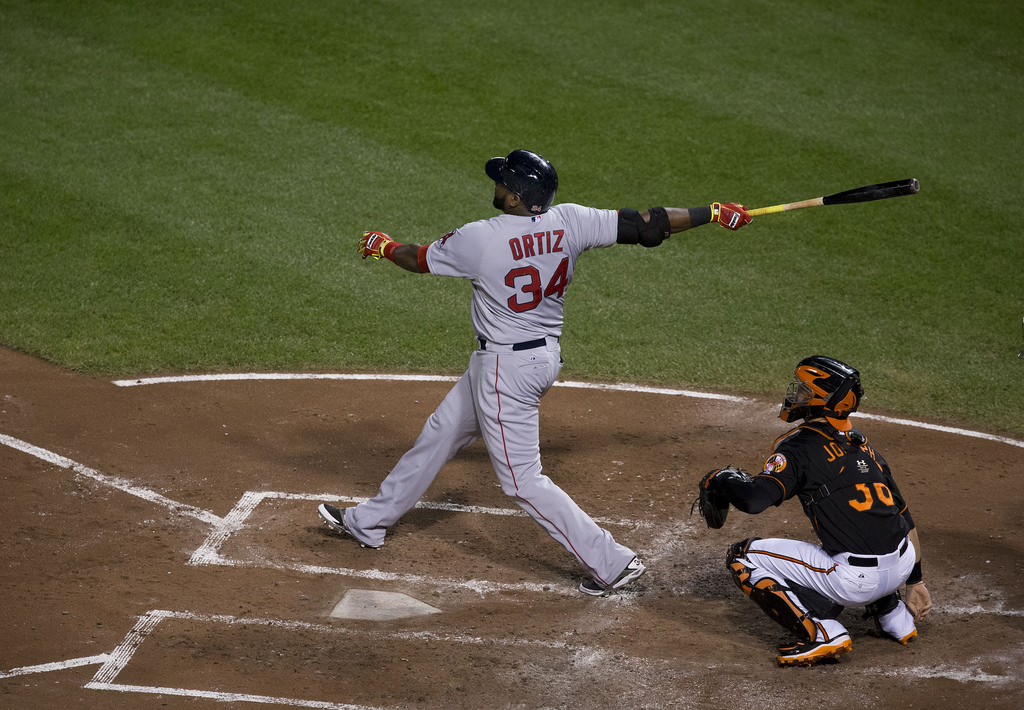
David Ortiz - newest member of 500-HR Club

David Ortiz – newest member of 500-HR Club

On September 3, 2015, Boston Red Sox DH David Ortiz became just the 27th MLB player to collect 500 home runs – leading off the fifth inning of a game at Tampa Bay with a 432-foot solo shot to right-center off the Rays’ Matt Moore. It was the 39-year-old Ortiz’ second home run of the game, making him one of just four players to collect number 500 in a multi-homer effort (joining Harmon Killebrew, Mark McGwire and Albert Pujols). Ortiz also had a three-run homer and a single in the game (before being lifted for a pinch runner in the seventh), and is one of just three players to collect three hits in their 500th home run game (joining Harmon Killebrew and Alex Rodriguez).  Ortiz’ landmark long ball got BBRT thinking about (and researching) the 500-HR Club and its elite membership.  Here’s are the highlights of what I found – followed by a brief look at each of the 500-HR Club’s 27 members – the day they hit number 500, their career stats and a few facts that make each of them unique.

  • Among the 500-HR Club’s 27 members, 15 hit right-handed, ten hit left- handed and two were switch-hitters.
  • The Club had only one member (Babe Ruth, who hit his 500th in 1929) until the 1940s. By decade here’s how many players reached the 500 mark: 1940s – 2; 1960s – 5; 1970s – 4; 1980s – 2; 1990s – 2; 2000s – 9; 2010-15 – 2.
  • The 500-HR Club members captured a total of 87 league HR titles, with Babe Ruth leading the way with twelve.
  • Rafael Palmeiro, Frank Thomas and Gary Sheffield are the only members to never lead their league in homers.
  • The 27 Club members were selected as All Stars in a cumulative 292 seasons. (Hank Aaron is at the top with 21 All Star seasons – Babe Ruth had the fewest at two, but the All Star Game wasn’t established until 1933, in the 20th of Ruth’s 22 MLB seasons).
  • Two-thirds (18) of the Club members won at least one league MVP Award, and they won a cumulative 39 MVP recognitions. (Barry Bonds is on top with seven, with three MVPs each for Jimmie Foxx, Mickey Mantle, Mike Schmidt, Alex Rodriguez, Albert Pujols.)
  • Ted Williams was the oldest upon reaching 500 HRs, at age 41 years, 291 days. (Remember, Williams lost nearly four full seasons to military service – WW II and Korea).
  • The youngest player to reach 500 HRs is Alex Rodriguez (32 years, 8 days).
  • Mark McGwire reached 500 home runs in the fewest at bats of any player – 5,487. The only other player to reach that mark in less than 6,000 at bats is Babe Ruth (5,801).
  • Eddie Murray took the most at bats to reach 500 dingers – 11,095.
  • Eddie Murray is the only member of the 500-HR Club to never hit 40 homers in a season (career-high of 33 in 1983).

LUMBER AND LEATHER

Basics for Baseball The 500-HR Club is not only about power hitting. Twenty-four of the 27 members of the 500-HR Club were active after the Rawlings Gold Glove Award was established – and more than half (13) were honored with a Gold Glove for their fielding.  Those 13 players earned a combined 57 Gold Gloves – led by Willie Mays with 12.  Here’s a list of players with 500 or more homers and at least three Gold Gloves.

                        Willie Mays … 12 GG

                        Mike Schmidt … 10

                        Ken Griffey, Jr. … 10

                        Barry Bonds … 8

                        Hank Aaron … 3

                        Eddie Murray … 3

                        Rafael Palmeiro … 3


  • First base was the most popular position at the time of the 500th – with nine players starting the landmark game at first. (Some, like Mickey Mantle, Eddie Mathews and Ernie Banks made their reputations at other spots – CF, 3B, SS.)
  • While no player has hit number 500 while at the second base or shortstop position, Mike Schmidt did move from 3B to shortstop in his 500th home run game. He started the game at 3B, hit number 500 in the top of the ninth and moved to shortstop in the bottom of the inning.
  • Five players hit their 500th from the Designated Hitter position.
  • Gary Sheffield is the only player to hit number 500 as a pinch-hitter.
  • Jim Thome is the only player whose 500th home run was a game-winning, walk-off blast.
  • Only four players nailed number 500 in a multi-homer game (Harmon Killebrew, Mark McGwire, Albert Pujols, David Ortiz.)
  • No one has ever hit a Grand Slam for HR number 500. Fifteen of the 27 historic dingers were solo shots; five were two-run homers; seven were worth three tallies.
  • Fourteen number 500s were hit in home games, 13 on the road.
  • The team that boasted the newest 500-HR Club member won the game 18 times (nine losses).
  • The season count at the time of the 500th HR achievement ranges from the 14th season (four players) to the 22nd (one). The 16th season seemed to be the charm, with the most players (eight) reaching 500 in their sixteenth campaign.
  • Ten of the 27 club members were either 34- or 35-years-old when they hit number 500.
  • Barry Bonds hit the most home runs in the season he reached 500 with 73 (.328-73-137). The fewest HRs in the season when a player reached 500 is tenGary Sheffield (.276-10-43) and Eddie Murray. (.357-10-34).
  • Barry Bonds is the only player to belong to the 500-HR Club and the 500-Stolen Base Club.
  • Babe Ruth is the only member of the 500-HR Club who is also a twenty-game winner as a pitcher – 23-12 in 1916, 24-13 in 1917.
  • Nine members of the 500-HR Club have career average of .300 or better: Ted Williams (.344); Babe Ruth (.342); Jimmie Foxx (.325); Manny Ramirez (.312); Albert Pujols (.312); Hank Aaron (.305); Mel Ott (.304); Willie Mays (.302); Frank Thomas (.301).

Now, here’s a closer look at the 500-HR Club members, in the order they joined.

1920s

Babe Ruth, New York Yankees – August 11, 1929

Babe Ruth hit his 500th long ball as his Yankees lost to the Cleveland Indians (in Cleveland). The 34-year-old Ruth started in RF that day, batting fourth.  He went two-for-four scoring twice – hitting a single and a solo home run.  Ruth was in his 16th MLB season.  He would play six more years in the majors.

Babe Ruth’s  stats in 1929:  .345-46-154 (the 46 HRs led the AL). Career stats: 342-714-2,214.  Ruth was a twelve-time league leader in HRs, who led AL with as few as 11 (1918) and as many as his career-high 60 (1927). He was a two-time All Star (the first AS game was in 1933) and one-time MVP.

Babe Ruth factoid: Babe Ruth is the only member of the 500-HR club who was also a twenty-game winner as a pitcher (23-12 in 1916 and 24-13 in 1917, both for the Red Sox).

1940s  

Jimmie Foxx,  Boston Red Sox – September 24, 1940

Foxx, who spent most of his 20-year major league career with the Athletics and Red Sox, was in his 16th season when he hit number 500. It came in a 16-8 Boston win at Philadelphia (first game of a doubleheader). The 32-year-old Foxx started at 1B (batting fourth). He went two-for-five in the game, lacing a single and a solo homer.  He ended the contest with two runs scored and one RBI. Foxx was a four-time league HR leader, with a high of 58 in 1932.

Jimmie Foxx’ 1940 stats: .297-36-119.  Career stats: .325-534-1,922. Fox was an All Star in nine seasons and a league MVP three times.

Jimmie Foxx factoid: Foxx won the Triple Crown as a Philadelphia Athletic in 1933 – going .356-48-163.  It was the only year that featured a Triple Crown  winner in both leagues – and both players played in Philadelphia.  The Phillies’ Chuck Klein won the NL Triple Crown at .368-28-120.

Mel Ott, New York Giants – August 1, 1945

Mel Ott, starting in RF and batting third, went two-for-four with a single and his 500th career home run (two runs scored, two RBI) – a solo shot – as the Giants topped the Braves 9-2 in New York. Ott, 36-years-old at the time, was in the 20th of 22 MLB seasons.  Ott was a six-time league HR leader, with a high of 42 in 1929.

Mel Ott’s 1945 stats: .308-21-79. Career stats: .304-511-1,860. Ott was an All Star in 11 of 22 seasons.

Mel Ott factoid:  Ott was the first NL player to reach 500 home runs.

1960s

Ted Williams, Boston Red Sox – June 17, 1960

Teddy Ballgame would have gotten to 500 a lot sooner if he hadn’t lost all or part of five seasons to military service (1943, 44, 45, 52, 53). As it was, he popped number 500 in his last (19th) season at age 41.  Williams hit his landmark shot against the Cleveland Indians (in Cleveland). The third-inning, two–run blast gave the Red Sox a 3-1 lead, and was the final scoring of the game.  Williams, who started in LF and batted third, went one-for-three with one run scored and two RBI. Williams was lifted for a pinch runner in the seventh.  Williams was a four-time league leader in HRs, and hit his career-high of 43 in 1949.

Ted Williams’ 1960 stats: .316-29-72.  Career stats: .344-521-1,839.  He was an All Star in 17 of his 19 seasons and a two-time AL MVP.

Ted Williams factoid: Ted Williams is one of only 45 players to homer in their final MLB at bat – and the only member of the 500 club to do so.

Willie Mays, SF Giants – September 13, 1965

The Say Hey Kid rapped home run number 500 against the Houston Astros (in Houston), as the Giants topped the Texas team 5-1. The solo shot was Mays’ 47th of the season, and he went one-for-four before being lifted in the bottom of the ninth. Mays started the game in CF, batting third.  The 500th dinger came in the 35-year-old Mays’ 14th season and he went on to play eight more  years in the majors. Mays was a four-time league leader in HRs, and hit a high of 52 in 1965.

Willie Mays’ 1965 stats: 317-52-112 (the 52 HRs lead the league). Career stats: 302-660-1,903.   Mays was an All Star in 20 seasons, and NL MVP twice.

Willie Mays factoid: Willie Mays flashed leather as well as lumber, winning 12 consecutive Gold Gloves (1957-68).

Mickey Mantle, New York Yankees – May 14. 1967

The 35-year-old Mantle was in his 17th  (and second to last) MLB season when he cracked his 500th home run (hitting left-handed) – as his Yankees topped the Orioles 6-5 in New York. Mantle started at 1B and batted third. His home run was a seventh-inning solo shot and he finished the game two-for-four (he also had a single), with two runs scored and one RBI.  Mantle was a four-time league HR leader, with a high of 54 HRs in 1961 (when Roger Maris led the AL with 61 HRs).

Mickey Mantle’s 1967 stats: .245-22-55.  Career stats: .298-536-1,509. Mantle was an All Star in 16 seasons and a three-time AL MVP.

Mickey Mantle factoid: Mantle hit 372 regular season home runs left-handed and 164 right-handed. 

Eddie Mathews, Houston Astros – July 14, 1967

35-year-old Eddie Mathews, who built a reputation as the Braves’ 3B, was starting at 1B for the Houston Astros (batting fifth) when he hit his 500th career long ball. It was a three-run shot in the Astros’ 8-6 victory over the Giants in San Francisco. Mathews also had a single in the game – going two-for-four with one run scored and three RBI. Number 500 came in Mathews’ 16th of 17 MLB seasons.  Mathews was a two-time league HR leader, and hit a career-high 47 dingers in 1953.

Eddie Mathews’ 1967 stats: .236-16-57. Career stats: .271-512-1,453. Mathews was an All Star in nine of his 17 seasons.

Eddie Mathews factoid:  Mathews was the only player to play for the Braves in Boston, Milwaukee and Atlanta.

Hank Aaron, Atlanta Braves – July 14, 1968

“The Hammer” hit his 500th as the Braves topped the Giants 4-2 in Atlanta.  Aaron started the game in RF, batting third and went two-for-three (three-run home run and single) in four at bats, scoring once and driving in three. Aaron’s was 34-years-old and in his 15th MLB season when he hit number 500. He played eight more seasons, finishing his career with the Milwaukee Brewers in 1976.  Aaron was a four-time league HR leader, and hit a career high 45 HRs in 1962.

Hank Aaron’s 1968 stats: 287-29-86.  Career stats: 305-755-2,297. Aaron was an All Star in 21 of his 23 seasons and the NL MVP in 1957.

Hank Aaron factoid: Hank Aaron and Braves’ 3B Eddie Mathews (another member of the 500-HR Club) hit more home runs while teammate (863) than any other pair of MLB teammates – edging the Babe Ruth/Lou Gehrig combination by four round trippers.

1970s

Ernie Banks, Chicago Cubs – May 12, 1970

Ernie Banks rapped his 500th home run, fittingly, in a Cubs’ victory (4-3 over the Braves) at Wrigley Field. Banks, the prototype power-hitting shortstop for most of his career was 39-years-old and playing 1B (batting sixth). His home run was a two-run shot and his only hit in the game (one-for-three, one run, two RBI). Banks led the NL in home runs twice, and hit a high of 47 in 1958. He was in his 18th of 19 MLB seasons when he hit number 500.

Ernie Banks’ 1970 stats: .252-12-44.  Career Stats: .275-512-1,636.  Banks was an All Star in 11 of 19 seasons and a two-time NL MVP.

Ernie Banks factoid(s): Banks was the first NL player to win back-to-back MVP Awards (1958-59) – despite playing for a losing Cubs’ team in both seasons. Despite earning his reputation as a shortstop, Banks played more games at 1B (1,259) than shortstop (1,125).

Harmon Killebrew, Twins – August 10, 1971

Harmon Killebrew drove in all the Twins’ runs in a 4-3 loss to the Orioles in Minnesota – banging out his 500th and 501st round trippers.  Batting third and playing first base, Killebrew hit number 500 (a solo shot) in the bottom of the first. He added a two-run shot in the sixth and a single in the eighth – finishing the game three-for-four with two runs scored and three RBI. The 35-year-old Killebrew was in his 18th (of 22) MLB seasons. Killebrew was a six-time league HR leader, and hit a career-high 49 round trippers in 1964.

Harmon Killebrew’s 1971 stats: .254-28-119. Career stats: .256-573-1,584.  Killebrew was an All Star in 11 seasons and the 1969 AL MVP.

Harmon Killebrew factoid: In 1968, Killebrew became the first player to be named an MLB All Star at three different positions in his career – 1B, 3B, LF.  (Pete Rose later surpassed “Killer,” playing 1B, 2B, 3B, LF and RF in All Star competition.)

Frank Robinson, Orioles – September 13, 1971

Frank Robinson started in RF (batting fourth) for the Orioles in the game that saw his 500th round tripper – a 9-1 win over the Tigers in Baltimore. The 36-year-old Robinson went two-for-four in the game (a three-run homer and a single), scoring twice and collecting three RBI.  Robinson was in his 16th of 21 MLB seasons.  Robinson won one league HR title, when he hit his career-high 49 HRs in 1966. That same season he won the AL Triple Crown and MVP Award.

Frank Robinson’s 1971 stats: 281-28-99.  Career stats: .294-586-1,812.  Robinson was an All Star in 12 seasons and a two-time MVP (once in each league).

Frank Robinson factoid: Frank Robinson captured just about every MLB award possible: NL Rookie of the Year (1956); NL MVP (1961): AL MVP (1966); World Series MVP (1966); All Star Game MVP (1971); AL Manager of the Year (1989). He was also a Triple Crown (Average-HRs-RBI) winner (1966) and Gold Glover (1958).

 Willie McCovey, San Francisco Giants – June 30, 1978

The forty-year-old McCovey hit number 500 in the second game of a doubleheader against the Braves in Atlanta.  McCovey went two-for-two (a double and a solo homer) before being lifted for a pinch runner in the fourth inning.  He started the game at 1B, batting cleanup. The Braves eventually won the game 10-9. McCovey scored once and drove in one.  Big Mac was a three-time league HR leader, and hit a high of 45 in 1969.  McCovey’s 500th came in his 20th of 22 MLB seasons.

Willie McCovey’s 1978 stats: .228-12-64.  Career stats: .270-521-1,555. McCovey was an All Star in six seasons and the 1969 NL MVP.

Willie McCovey factoid:  Despite playing only 52 games in his  rookie season (1959), McCovey won the Rookie of the Year Award (hitting .354 with 13 homers and 38 RBI in just 192 at bats).

1980s

Reggie Jackson, California Angels – September 17, 1984

Reggie Jackson hit his 500th HR in a 10-1 loss to the Royals in Anaheim. Jackson started at DH and batted sixth – going one-for-three with a solo home run, his 22nd round tripper of the season. The 38-year old Jackson was in his 18th season when he hit number 500. He played three more campaigns. Jackson was a four-time league HR leader, and hit a high of 47 in 1969.

Reggie Jackson’s 1984 stats: .223-25-81. Career stats: .263-563-1,702. Jackson was an All Star in 14 seasons and the 1973 AL MVP

Reggie Jackson factoid. Jackson holds the MLB record for strikeouts, 2,597.

Mike Schmidt, Phillies – April 18, 1987

Mike Schmidt notched his 500th round tripper in an 8-6 Phillies’ win over the Pirates (in Pittsburgh). The 37-year-old Schmidt started the game at 3B (batting cleanup) and finished at shortstop. His three-run home run in the top of the ninth gave the Phillies (who were trailing 6-5) their eventual two-run victory. Schmidt went one-for-four in the game, scoring twice and driving in three.  2008 was Schmidt’s 16th MLB season, and he went on to play two more years.  Schmidt was an eight-time league leader in home runs, and hit a high of 48 in 1980.

Mike Schmidt’s 1987 stats: .293-35-113. Career stats: .267-548-1,595. Schmidt was an All Star in 12 seasons and a three-time NL MVP.

Mike Schmidt factoid:  An eight-time NL home run leader, Mike Schmidt also won ten Gold Gloves – and won a Gold Glove in six of his HR-leading campaigns.

1990s

Eddie Murray, Baltimore Orioles – September 6, 1996

Switch-hitting Eddie Murray was DH-ing and batting second for the Orioles when he hit number 500 – a solo shot (in a one-for-four day) against the Tigers in a 5-4 home loss. It was fitting that Murray, who spent the best seasons of his 21-year MLB career with the Orioles hit it as an “O” in Baltimore – but that was not a sure thing.  The forty-year-old Murray has started the season with the Indians, but was traded to Baltimore on July 21 (for pitcher Kent Mercker).  Murray was in his 20th MLB season when he stroked number 500. Murray led league in home runs once (22 in the strike-shortened 1981 season), and hit career high 33 home runs in 1983.

Eddie Murray’s 1996 stats: .257-10-34.  Career stats: .287-504-1,917.  Murray was an All Star in eight seasons.

Eddie Murray factoid:  Murray is the only member of the 500-HR Club to never reach 40 homers in a season (high of 33).

Mark McGwire, Cardinals – August 5, 1999

On August 5, 1999, the Saint Louis Cardinals lost to Padres 10-3 in Saint Louis, but the home town fans did get to see Mark McGwire’s 500th (and 501st) MLB home run(s). Both were solo shots, number 500 in the third inning and 501 in the eighth. The 35-year-old McGwire started at 1B, batting third.  The two homers were his only hits in four at bats.  They were his 43rd and 44th of a season in which he would hit 65 round trippers – after pounding 70 in 1998.  HR number 500 came in McGwire’s 14th (of 16) MLB seasons. McGwire was a four-time league HR leader, with a high of 70 in 1998.

Mark McGwire’s 1999 stats: .278-65-147 (leading the league in home runs and RBI).  Career stats: .263-583-1,414. McGwire was an All Star in 12 seasons.

Mark McGwire factoid; No one reached 500 home runs in fewer at bats than McGwire (5,487).

2000’s

Barry Bonds. SF Giants – April 17, 2001

Bonds hit number 500 (a two-run shot) in a 3-2 win over the Dodgers in San Francisco.  Bonds started in LF, batting third. He went one-for-four that day, with one run and two RBI. It was the 36-year-old Bonds’ 16th MLB season – and he went on to play six more campaigns. His 500th was Bonds’ sixth home run in a season when he would hit an MLB-record 73 round trippers. Bonds was a two-time league HR leader, with a high of 73 (MLB single-season record) in 2001.

Barry Bonds’ 2001 stats: .328-73-137. Career stats: .298-762-1,996.  Bonds was an All Star in 13 seasons and the NL MVP a record seven times.

Barry Bonds factoid: Barry Bonds is the only player with 500+ home runs (762) and 500+ steals (514).

Sammy Sosa, Cubs – April 4, 2003

Sammy Sosa hit his 500th on the road, as his Cubs lost to the Reds 10-9.The solo shot was his only hit in four at bats (one run, one RBI). The 500th HR came in the 34-year-old Sosa’s 15th season and he played three more campaigns. Sosa played RF and batted third in the contest. Sosa twice led his league in HRs, and hit a career-high 66 in 1998.

Sammy Sosa’s 2003 stats: .279-40-103. Career stats: .273-609-1,667. Sosa was an All Star in seven seasons and the 1998 NL MVP.

Sammy Sosa factoid: Sosa three times topped 60 home runs in a season – but did not lead his league in any of those seasons.  Sosa hit 66 HR’s in 1998 (Mark McGwire hit 70). 63 in 1999 (McGwire hit 65) and 64 in 2001 (Barry Bonds hit 73.) Sosa did lead the NL in home runs in 2000 (50) and 2002 (49).

Rafael Palmeiro, Texas Rangers, May 11, 2003

The Rangers scored big at home on the day Rafael Palmeiro hit number 500 – topping the Indians 17-10. Palmeiro’s home run was a a three-run shot. Palmeiro, playing first base and hitting fourth, also had a double in his five at bats (two runs scored, three RBI).  Palmeiro was 38-years-old and in his 18th of 20 MLB seasons when he connected for number 500. He never led his league in HRs, and hit a high of 47 in 1999 and 2001.

Rafael Palmeiro’s 2003 stats: .260-38-112.  Career stats:  .288-569-1,835. Palmeiro was a four-time All Star.

Rafael Palmeiro factoid: Rafeal Palmeiro has the most career home runs of any player without a HR title to his credit.

Ken Griffey, Jr., Seattle Mariners – June 20, 2004

Ken Griffey, Jr. hit his 500th home run against the Cardinals – as his Reds topped the Redbirds 6-0 in Saint Louis. The 34-year-old Griffey started the game in CF, batting clean-up. He went one-for-three (solo home run), scoring one and driving in two. The 500th HR came in Griffey’s 16th MLB season, and he played a total of 22 years in the major leagues. Griffey was a four-time league HR leader, and hit a high of 56 in 1997 and 1998.

Ken Griffey, Jr.’s 2004 stats:.253-20-60. Career stats:  .284-630-1,836.  Griffey was an All Star in 13 seasons and the 1997 AL MVP.

Ken Griffey, Jr. factoid.  On September 14, 1990, the Seattle Mariners faced off against the Angels in Anaheim, with the Mariners’ Ken Griffey, Sr. in LF and Ken Griffey, Jr, in RF.  The father-son combination was batting two and three in the order.  In the first inning, they made history, becoming the only father-son combination to his back-to-back home runs in an MLB game.  A “by the way” piece of trivia.  The Griffey’s shared first name is George – George Kenneth Griffey, Sr. & Jr.

Frank Thomas, Toronto Blue Jays – June 28, 2007

The Big Hurt, who gained fame with the White Sox (winning consecutive AL MVP Awards in 1993-94), hit home run number 500 as a member of the Toronto Blue Jays.  It came in an 8-5 Toronto loss to the Twins in Minnesota. Thomas was the Jays’ DH in the game (batting fifth). The 39-year-old slugger (in his 18th of 19 MLB seasons) went two-for-four (double and three-run homer). Thomas never led his league in HRs, and hit a career-high 43 in 2000.

Frank Thomas’ 2007 stats: .277-26-95. Career stats: .301-521-1,704. Frank Thomas was an All Star in five seasons and a two-time AL MVP.

Frank Thomas factoid: Thomas is one of only three players with 500+ homers  to never lead his league in round trippers. Rafeal Palmeiro and Gary Sheffield are the others.

Alex Rodriguez, Yankees – August 4, 2007

Alex Rodriguez hit number 500 as the Yankees topped the Kansas City Royals 16-2 in New York.  The 32-year-old A-Rod started at 3B, hitting fourth.  He was three-for-four (two singles and a three-run homer) when he was replaced in the top of the eighth inning. His scored three and drove in three in the game.  The landmark round tripper came in Rodriguez’ 14th MLB season. He is still active in 2016. A-Rod has led his league in home runs five times, and hit a career-high 57 in 2002.

Alex Rodriguez’ 2007 stats: .314-54-156. Career stats (through 2015):  .297-687-2,055.  Rodriguez has been an All Star in 14 seasons and is a three-time AL MVP.

Alex Rodriguez factoid:  August 4 is a good day for A-Rod. On August 4, 2007, he became the youngest player to reach 500 home runs (32 years, 8 days). On August 4, 2010, he became the youngest to reach 600 home runs. (35 years 8 days).  

Jim Thome, White Sox – September 16, 2007

Jim Thome, starting at DH for the White Sox (in Chicago), hit number 500 in a 9-7 win over the Angels.  The 37-year-old Thome was in his 17th  season of a 22-year MLB career. Thome went one-for-five in the game (a two-run homer).  His 500th long ball may have been the most dramatic on this list – a walk-off two-run shot in the bottom of the ninth that capped a White Sox comeback from a 6-0 deficit. Thome won one league HR crown, and hit a high of 52 HRs in 2002.

Jim Thome’s 2007 stats: 275-35-96.  Career stats:  .276-612-1,699. Thome was an All Star in five seasons.

Jim Thome factoid; Jim Thome is one of only two players with two post-season Grand Slam homers (Shane Victorino is the other).

Manny Ramirez, Boston Red Sox  – May 31, 2008

The Red Sox were on the road (at Baltimore) when Manny Ramirez hit number 500 (in a 6-3 Red Sox’ victory). The 36-year-old Ramirez (he celebrated his birthday the day before) started in LF and went one for five (solo home run) with one run scored and one RBI. Ramirez was in his 16th of 19 MLB seasons at the time. Ramirez won one HR title, and had a high of 45 round trippers in 1998.

Manny Ramirez’ 2008 stats: .332-37-121. Career stats: .312-555-1,831. Ramirez was a 12-time All Star.

Manny Ramirez Factoid:  Ramirez is one of only two players to be traded in the same season he joined the 500-HR club  – going to the Dodgers in a three-way deal on July 31, 2008. (The other is Eddie Murray.) 

Gary Sheffield, New York Mets – April 17, 2009

Like Ted Williams, Sheffield launched home run number 500 in his final (22nd) MLB season. Sheffield was 40-years-old at the time and playing for the Mets (his eighth MLB team). Sheffield’s home run came as a pinch hitter in the bottom of the seventh inning in a Mets’ home game against the Brewers.  His solo shot tied the game (eventually won by the Mets) at four.  It was Sheffield’s first home run for the Mets. Sheffield never led his league in home runs. He hit a career high 43 in 2000.

Gary Sheffield’s 2009 stats: .276-10-43. Career stats: .292-509-1,676. Sheffield was an All Star in nine seasons.

Gary Sheffield factoid:  Sheffield is the only player to hit home run number 500 as a pinch hitter. A “by the way” piece of trivia.  Sheffield was released by the Tigers in March of 2009 – while sitting on 499 career homers – and signed by the Mets.  

2010s

Albert Pujols, Los Angeles Angels – April 22, 2014

At age 34, Albert Pujols – playing 1B and batting third – hit his 499th and 500th home runs as his Angels beat the Nationals 7-2 in Washington. He got started early, with a three-run shot in the first inning for number 499 and added a two-run homer in the fifth for the historic number 500. He ended the day two-for-four with two runs scored and five RBI.  Pujols has twice led his league in HRs, and hit a high of 49 in 2006.

Albert Pujols’ 2014 stats: .272-28-105. Career stats (through 2015): .312-560-1,698. Pujols has been an All Star ten times and is a three-time NL MVP.

Pujols’ factoid:  In his second season with the Cardinals (2002), Pujols played first base, third base, shortstop, left field, right field and DH.

David Ortiz, Boston Red Sox – September 12, 2015

Boston’s “Big Papi” David Ortiz hit his 500th career long ball against the Tampa Bay Rays – as his Red Sox topped the Rays 10-4 in Tampa. The 39-year-old (in his 19th MLB season) started at DH, batting sixth – and collected two home runs in the game (his 499th and 500th). Number 499 was a three-run shot in the first inning, while number 500 was a solo shot in the fifth.  Ortiz is a one-time league HR leader, and hit a career high 54 in 2006. Ortiz is still active in 2016.

David Ortiz’ 2015 stats: .273-37-108. Career stats (through 2015): .284-503-1,641. Ortiz has been an All Star in nine seasons.

David Ortiz’ factoid: David Ortiz has 446 homers as a DH (the most all-time at the position),


I tweet baseball @DavidBBRT

Member: Society for American Baseball Research, The Baseball Reliquary, Baseball Bloggers Alliance.
Two Grand Slams in an Inning – Almost Always A Win

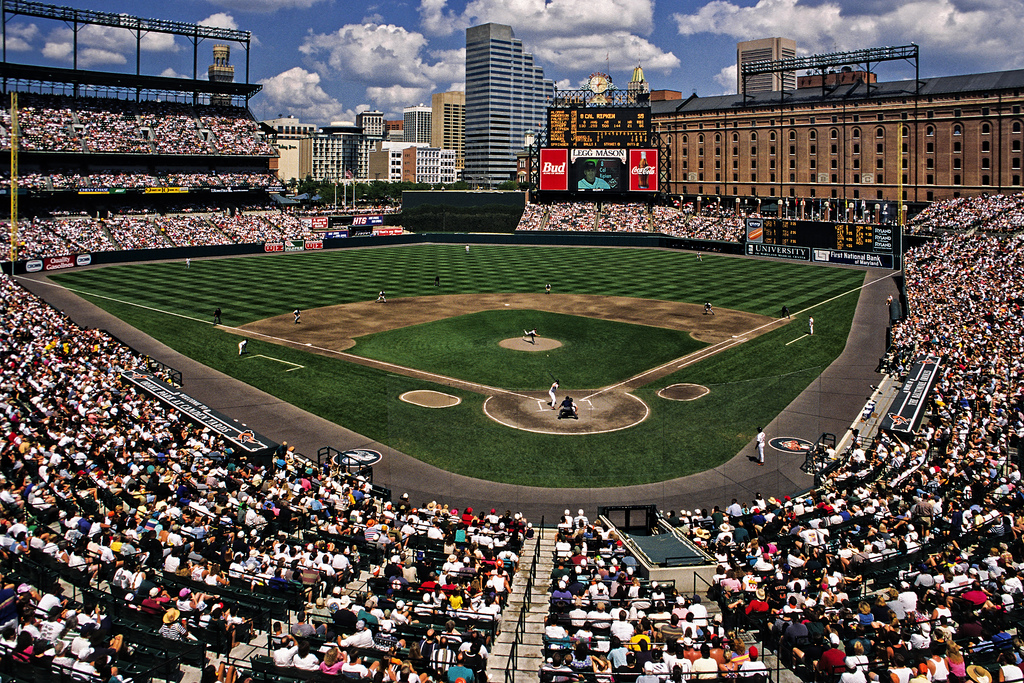
History made here yesterday as O's rap two Grad Slams in one inning - for second time.

History made here yesterday as O’s rap two Grad Slams in one inning – for second time.

Yesterday (September 11, 2015), in the eighth inning of a 14-8 win over Kansas City at Baltimore, the Orioles became the first team in MLB history to hit two grand slams in an inning twice. (Six other teams have accomplished the feat one time.)   The long ball hitters were an unlikely pair – LF Nolan Reimond and C Steve Clevenger.  It was the first-ever Grand Slam for each player.  Reimond has shown some power in the past, with a seven-season stat line of .250-48-152 (.239-4-13 in 44 games in 2015) and a season high of 15 home runs in his 2009 rookie season.  Clevenger is in his fifth MLB season (.227-3-39 in 136 total games.) The Grand Slam was his second home run in 2015 (18 games played).  The Orioles scored ten times in the eighth on six hits, a walk, a hit by pitch and an error.

In this post, BBRT will take a look at some facts from the eight two Grand Slam innings – and provide a few details on the first seven double-GS innings.

  • The Orioles are the only team to hit two Grand Slams in an inning twice – yesterday and on August 6, 1986.


  • The Orioles are the only team to hit two Grand Slams in an inning – and still lose.  (August 6, 1986 … a 13-11 loss to the Rangers.)


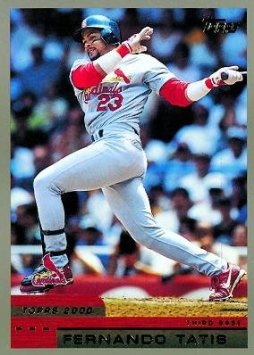
  • The Cardinals’ Fernando Tatis is the only player to hit two Grand Slams in an inning. (August 23, 1999). 


  • The Mets and Cubs are the only teams to both hit two Grand Slams in an inning and give up two Grand Slams in an inning.


  • Five of the eight Two-Grand Slam innings were achieved by the home team.


  • Eleven is the most popular number of runs scored in a two-GS inning – four times (nine runs twice and 13 and ten once each).


  • There has never been an extra inning with two Grand Slams.


  • There has been one instance of two Grand Slams in an inning in every inning (one-through-nine) except the seventh.


Now some details.

 August 16, 1890

The first team to have a two-Grand Slam inning was the 1890 Chicago Colts (Cubs), who accomplished feat while scoring 13 runs in the fifth inning of an 18-5 win over the Pirates at Chicago.  The home runs were hit by rookie catcher Malachi Kittridge, who ended the season at .201-3-35; had a career stat line of .219-17-391 in 16 seasons; and never topped three home runs in a campaign.  The other Grand Slam was hit by 3B Tom Burns, who had his best season (of 13 MLB campaigns) in 1890, going .277-5-86.  His career line was .266-39-683.

July 18, 1962

It would take 72 seasons before a second team achieved a two-grand-slam inning.  On July 18, 1962, the Minnesota Twins, playing Cleveland in Minnesota, got the game off to a running start with an 11-run first inning – featuring Grand Slams by two prominent sluggers: LF and future Hall of Famer Harmon Killebrew and RF Bob Allison.  Killebrew was on his way to an AL-leading 48-home run, 126-RBI season; while Allison would finish the season with 29 long balls and 102 RBI.  Final score: 14-3.

Killebrew’s career stat line (22 seasons) was .256-573-1,584 and he led the AL in home runs six times and RBI three times.  Allison topped 20 home runs six times in 13 MLB seasons, with a high of 35 in 1963.  His career stat line – .255-256-796.

 July 30, 1969

On July 30, 1969, the Astros went into the top of the ninth (of the first game of a double header) leading the home town New York Mets by the narrow margin of 5-3 – three outs, seven hits, four walks, one passed ball, 11 runs and two Grand Slams later it was a rout (final 16-3). Astros’ SS Denis (yes, one “n”) Menke and CF Jimmy Wynn (known as the Toy Cannon) provided the power.  Menke would finish the season .269-10-90 and would hit 101 homers in 13 MLB seasons.  Wynn would go .269-33-87 for the season. Over 15 MLB campaigns, the 5’ 10’, 160-pound outfielder would hit 291 home runs (20 or more eight times) and steal 225 bases.  Overall, it was a bad day for the Mets, who also dropped the second game – by an 11-5 score.

April 12, 1980

The Brewers jumped all over the Red Sox 18-1 in Milwaukee on August 12, 1980 – thanks in good part to a nine-run, two-Grand Slam bottom of the second. The dingers came off the bats of the Brewers’ corner infielders – 1B Cecil Cooper and 3B Don Money.  It was the first homer of the young season for Cooper the second for Money. Cooper would go on to hit .352 in 1980, swatting 25 homers and leading the AL with 122 RBI. His career stat line (17 seasons) would be .298-241-1,125. Money ended 1980 at .256-17-46 in just 86 games – and would hit 176 round trippers in 16 MLB seasons.

 August 6, 1986

In August of 1986, The Baltimore Orioles actually managed to hit two Grand Slams in one inning – in a losing cause.  Trailing the Rangers 6-0 going into the bottom fourth, the Orioles treated their home fans to a nine-run, two-Grand Slam inning.  They had plenty of help from the Rangers.  The inning went like this: walk; walk; walk; Grand Slam; single; walk; fly ball out; fly ball out; walk; error; Grand Slam; ground out. Despite the big inning, the Orioles lost the game 13-11, as the Rangers plated five runs in the second, one in the third, six in the eighth and one in the ninth. Notably, the Orioles got their 11 runs on just seven hits.

The fourth inning Grand Slams were delivered by DH Jim Dwyer and LF Larry Sheets. Dwyer finished the season with a .244 average, eight home runs and 31 RBI in 94 games (and hit 77 home runs in 18 MLB seasons). Sheets wrapped up 1986 with a .272 average, 18 home runs and 60 RBI (112 games) and then hit a career-high 31 long balls the following season.  He had a total of 94 home runs in eight MLB seasons.

April 23, 1999

Fernando Tatis - only player with two Grand Slams in one inning.

Fernando Tatis – only player with two Grand Slams in one inning.

The Cardinals’ 12-5 victory over the Dodgers (in LA) on April 23, 1999, was truly historic.  In that game’s 11-run top of the third, not only did the Cardinals hit two Grand slams, Cardinals’ 3B Fernando Tatis became the first (still only) player to hit two Grand Slams in one inning – both off  LA starter Chan Ho Park. They were Tatis’ fifth and sixth homers in the Cardinals’ first 15 games of the season – and gave him 19 RBI.  1999 was Tatis’ best MLB season (of 11) ever, He reached ultimate career highs in hits (160), average (.298), doubles (31),  home runs (34), RBI (107), runs scored (104) and SB (21). Tatis’ career line was .265-113-448.

July 16, 2006

The Mets topped the Cubs in Chicago on July 16, 2006, by a 13-7 score. Trailing 5-2 going into the top of the sixth, the Mets rallied to score 11 times – including eight runs on Grand Slams by CF Carlos Beltran and LF Cliff Floyd. The inning featured  eight hits (three HRs), three walks and an error.

The sixth inning Grand slam was Floyd’s ninth home run of the season and second of the game (he hit a solo shot the previous inning), while Beltran’s round tripper was his 26th of the year. Beltran finished 2006 at .275, with career highs in home runs (41) and RBI (116).  Going into the 2015 season (still active), Beltran had topped 20 home runs in 12 seasons and exceeded 100 RBI eight times.  As of this September 12, his 2015 stat line was .278-15-53.  Floyd hit .244, with 11 home runs and 44 RBI in 2006 and .278-233-865 in 17 MLB seasons.


I tweet baseball @DavidBBRT

The Dog Days – BBRT August Wrap

Edwin Encarnacion - got the Blue Jays going in August.

Edwin Encarnacion – got the Blue Jays going in August.

August Belonged to the Blue Jays

The Dog Days of August are behind us and, by pretty much any measure, the month belonged to the Toronto Blue Jays. The Jays won a major-league-best 21 games – against only six losses (a .778 percentage) – moving from third place in the AL East (6 games behind) at the end of July to first place (with a 1 1/2 game edge over the Yankees) at the end of August. In the process, they were totally dominant – scoring MLB’s most runs for the month (170) and giving up MLB’s fewest tallies (83).  Middle of the line-up offense was the key to the surge.  DH Edwin Encarnacion hit .407 in August with 11 home runs and 35 RBI – those totals ranked first, second and first in all of MLB.  Also contributing to the Blue Jays’ rush to first place were: 3B Josh Donaldson, who matched Encarnacion’s 11 homers and 35 RBI, while hitting .324 for the month; and RF Jose Bautista (.286-10-20).

The Blue Jays weren’t the only team to make a move in August. The Mets had MLB’s second-best record at 20-8 (.714), moving from second place in the NL East at the end of July (two games back) to first place (with a 6 ½ cushion over the Nationals).  Four teams recorded 19 wins in August – the Pirates at 19-8 and the Royals, Cardinals and surging Cubs (all at 19-9). Two teams played under .300 ball for the month – the Reds (8-21, .276) and Braves (8-20, .286). Over in the AL, the Angels had August’s worst results at 10-19 (.345)

If the Season Ended August 31 …   

Let’s start with a look at who is where.  Who would be in the playoffs if the season ended at the end of business on August 31?

  • AL … Division Champions: Blue Jays; Royals; Astros. Wild Cards: Yankees, Rangers. Note: The Twins are just one game behind the Rangers in the WC race.
  • NL … Division Champions: Mets; Cardinals; Dodgers. Wild Cards: Pirates, Cubs. Note: The closest to the Cubs in the WC race are the Giants – 5 ½ back.

 You will find full August 31 standings at the end of this post.  

A Few Team Observations

Home to the team holding 2015's best won-lost record.

Home to the team holding 2015’s best won-lost record.

As of the end of play on August 31, the Cardinals (.649), Royals (.615) and Pirates (.612) were the only teams playing .600 or better ball, while only the Phillies were playing under .400 ball (.395). The biggest Division edge belonged to the Royals with a 13-game lead over the Twins in the AL Central, while the closest race was in the AL East, where the Jays lead the Yankees by just 1 ½ games. While they didn’t have MLB’s worst won-loss record, the Reds were the furthest behind in any Division race – trailing the Cardinals by 30 ½ games (however, they were only one game behind the fourth-place Brewers).

A sampling of team stats through August:

  • The Blue Jays led all of MLB in runs scored with 720 – 90 ahead of the closest challenger (the Yankees at 630). The top scoring team in the AL was the Diamond backs at 588 runs. The Braves were MLB’s lowest-scoring team through August at just 475 tallies, while the Rays had the lowest AL total (489). MLB Average – 548 runs scored.
  • The Cardinals gave up the fewest runs through August (392), while the Rockies were the most generous (Thank you, Coors Field) at 682 runs. In the AL, the Astros allowed the fewest tallies at 469, while Detroit allowed the most opposing runners to reach the plate (640). MLB Average – 548 runs allowed.
  • Only Saint Louis had a team earned run average under three (2.65 through August 31), while only Colorado had a team ERA over five (5.10). MLB Average – 3.92
  • Toronto also led all of MLB in home runs through August at 184. The Dodgers lead the NL with 155. Least power? The Braves and Marlins were the only teams with less than 100 long balls, 83 and 97, respectively. Surprisingly, the Royals – with the AL’s best record – had the fewest home runs in the junior circuit at 102. The Royals were, however, sixth in the AL in runs scored (569) and second (trailing only the Tigers) in batting average (.270).  MLB Averages – 129 HRs, .254 average.
  • If you are looking for speed, Cincinnati is the place to go (Thanks, Billy Hamilton). The Reds led MLB with 116 steals through August, but the Diamondbacks were on their heels with 110. In the AL, Houston led in steals with 99. Meanwhile, no one stayed put on base more than the Orioles and Dodgers, with 36 and 39 steals, respectively, each. MLB Average – 69.
  • Laying off the bad pitch. No team drew more walks through August than the Blue Jays (448) – maybe it’s all the power. The Cubs drew the most free passes in the NL at 444. The Royals were the only team to draw fewer than 300 walks through August (295). Surprisingly, despite leading all of MLB in walks, the Blue Jays drew the fewest intentional passes through August (eight). The Cardinals led all of MLB with 43 intentional walks through August 31. MLB Averages – 370 walks, 26 intentional passes.
  • The Cubs led MLB in strikeouts (as hitters) at 1,208, while the Astros’ 1,158 led the AL. The Royals got the bat on the ball most consistently, with MLB’s lowest strikeout total through August at 741. MLB Average – 997.
  • When it comes to power pitching, the Indians’ staff led MLB in strikeouts with 1,163, with the Cubs atop the NL with 1,128. Twins’ pitchers have recorded the fewest whiffs, just 804.  MLB Average 997.

 Before getting into individual statistics for August and through August here are …

A FEW AUGUST HIGHLIGHTS

The Tri-Cycle Club

Adrian Beltre - hitting for the cycle can be habit-forming.

Adrian Beltre – hitting for the cycle can be habit-forming.

On August 3, Texas Rangers’ 3B Adrian Beltre – a four-time All Star, four-time Gold Glover and four-time Silver Slugger honoree – joined a very elite group of MLB hitters. As the Rangers topped the Astros 12-9 in Arlington, Beltre became just the fourth MLB player to hit for the cycle three times in his career (joining John Reilly, Babe Herman and Bob Meusel). Beltre didn’t keep the home town fans in suspense for long, completing his cycle in just five innings (triple in the first, double in the second, single in the third, home run in the fifth).

All three of Beltre’s cycles have come at Arlington (but not all for the Rangers). He hit for his first cycle on Sept. 1, 2008, against the Rangers (as a Mariner). His second cycle came as a Ranger on Aug. 24, 2012, against the Twins. For trivia buffs, Beltre is the only person to hit for the cycle in the same ball park for more than one team.

Making that First One Count

On August 12 and August 21, Mariners’ RHP Hisashi Iwakuma and Astros’ RHP Mike Fiers, respectively, each threw their first-ever MLB complete game. Iwakuma beat the Orioles 3-0 (in Seattle) and Fiers topped the Dodgers by the same score (in LA). The nine-inning outings were not only each player’s first complete game, they were the fourth and fifth no-hitters of the 2015 MLB season.

Going the Distance – In Style

On April 21, 2012, Philip Humber of the White Sox pitched his first MLB complete game – and did it in style – pitching a perfect game against the Mariners in Seattle. He threw 96 pitches in the perfecto – 67 for strikes – in which he fanned nine. The perfect game was the only complete game of Humber’s eight-year MLB career.

Number-Nine … Number-Nine … Number-Nine

No one likes to bat in that number-nine slot, but it was pretty good to Red Sox’ right fielder Jackie Bradley, Jr. on August 15.  Coming into the game hitting .203 with just two home runs (after hitting .198 with one home run in 127 games in 2014), Bradley went five-for-six, with three doubles, two home runs, five runs scored and seven RBI – as the Red Sox topped the Mariners 22-10 in Boston. Bradley’s five extra-base hits in a game were a Red Sox’ franchise record (and some pretty good hitters have graced the Fenway batter’s box).

How Do You Spell Relief?

On August 16, Oakland 1B Ike Davis took the mound for the second time this season.  Davis came on to open the bottom of the eighth with Oakland trailing Baltimore 18-2. Davis retired the first hitter he faced (number-two hitter CF Gerardo Parra) on a fly to left. Then, Orioles’ 3B Jimmy Paredes doubled.   That’s when it got interesting. The Orioles had moved starting DH Steve Clevenger to 1B when they brought in reliever Jason Garcia in the top of the eighth, thus losing the DH position.  That meant relief pitcher Jason Garcia would come to the plate, hitting in the clean-up spot (which had been occupied by starting 1B Chris Davis). So, here – in the DH-embracing American League – we had a position player pitching to a pitcher (batting clean-up). Garcia drew a four-pitch walk, after which Davis struck out Jonathan Schoop and got starting DH/now 1B Clevenger on a fly to left. Davis was the A’s most effective pitcher of the game, which saw the Orioles score 18 runs on 26 hits and three walks,

Davis may come by his penchant for taking the mound naturally.  He is the son of former MLB reliever Ron Davis – who notched 130 saves in 11 big league seasons.

I Think That One Cleared the Van Down by the River

On August 19, Tigers’ southpaw Daniel Norris was slated to start against the Cubs at Wrigley Field. It was his fourth appearance since being traded to the Tigers (by the Blue Jays) on July 30 – and his first in an NL park. Consequently, the day would mark Norris’s first-ever professional plate appearance.  The free-spirited (more on that in a minute) lefty gave a hint of things to come when he damaged the Cubs’ new right field video board with a long smash during batting practice. Then, during the game, he hit a two-run home run in his first major league plate appearance – the first Tiger hurler ever to do so. The Tigers, by the way, beat the Cubs 15-8, but Norris left after 4 1/3 innings due to an oblique strain.
Oh, about that free-spirit, this is the same Daniel Norris who – despite signing for a $2- million bonus – lived in a 1978 Volkswagen van behind a Wal-Mart in Spring Training.

August A Month For Rookies

According the Elias Sports Bureau, 56 rookies went deep in the month of August – hitting 155 home runs, the most ever hit by rookies in a single MLB month.  Leading the rookie home run parade were Twins’ 3B/DH Miguel Sano and Cubs’ C/OF Kyle Schwarber, who each hit nine August round trippers.  Sano went .278-9-26 for the month, while Schwarber went .221-9-24.

Cespedes Paying Dividends for Mets

On August 21, Yeonis Cespedes had a night to remember as his Mets topped the Rockies 14-9 in Colorado. Cespedes collected five hits in six at bats – including three home runs, a double and a single.  He also scored five times and drove in seven – and added a stolen base for good measure.  In the process, he missed a cycle (single, double, triple, homer in one game) by just the triple – and was just a three-run blast short of a “Home Run Cycle” (solo, two-run, three-run and Grand Slam homer all in the same game).  Cespedes hit a Grand Slam in the second inning, a solo shot in the fourth and a two-run homer in the sixth. For the story of professional baseball’s only Home Run Cycle, click here. Since the Mets traded for Cespedes on July 31, he has given them all they wanted and more. In 28 games as a Met, he has hit .275-8-23.

Double Your Pleasure … Double Your Fun

Cano - a doubles machine.

Cano – a doubles machine.

On August 25, Seattle 2B Robinson Cano banged his way into the MLB record books by taking second base on a bloop hit to left field. It was Cano’s 30th double of the season, making him the first MLB player to hit thirty or more doubles in each of his first 11 big league seasons. Cano’s historic two-bagger came with one out and no one on in the bottom of the seventh inning of the Mariners’ 6-5 home win over the A’s.  (The Mariners were leading 6-5 at the time, and Cano did not come around to score.)

In his first ten seasons, the six-time All Star, five-time Silver Slugger winner and two-time Gold Glover averaged 41 doubles per year (a low of 34 in his 2005 rookie and a high of 48 for the Yankees in 2009 and 2012).  Cano is now one of just six players – joining Stan Musial, Honus Wagner, Tris Speaker, Joe Medwick and Ed Delahanty – to collect 30 or more doubles in 11 straight seasons.

Ten Players Go Yard in One Game

On August 24), the Mets hit eight home runs while trouncing the Phillies 16-7 (in Philadelphia). The game featured a total of eleven round trippers (tying the NL record for combined long balls in a game).  The two teams also set a new MLB record for the most players hitting a home run in a game at ten – seven Mets and three Phillies. The eleven home runs were just one short of the MLB record for a game – accomplished twice, both times in a White Sox/Tigers contest. For more on the Mets/Phillies and other home run records, click here.

Arrieta’s No-No

On August 30, the Cubs’ Jake Arrieta threw a no-hitter in Los Angeles, beating the Dodgers 2-0. Arietta walked one and fanned twelve in the outing, throwing 80 of 11 pitches for strikes. Arrieta, by the way, finished his no-no in style, striking out the side in the ninth. It was the sixth no-hitter this season – one short of the modern record for an MLB season (seven in 1990, 1991, 2012).  There were eight no-hitters thrown in the 1884 American Association (considered a major league) season. The no-hitter was Arrieta’s sixth win in August and 17th on the season – MLB 2015 highs for August and through August.

_________________________________________________________

NOW IT’S … STAT TIME

Now, here are your Month-of-August and Through-August batting and pitching leaders:

 Month-of-August Batting Leaders

 A look at August’s batting leaders gives a pretty good indication as to why the Blue Jays finished with the month’s best won-lost record. As I noted earlier, the Jays’ 3B Josh Donaldson, RF Jose Bautista and DH Edwin Encarnacion made up the month’s most devastating offensive trio.  Encarnacion was clearly August’s top offensive performer – with a .407-11-35 line.

For August, three hitters with at least 75 plate appearances managed a .400 batting average; Encarnacion; Indians’ left fielder Michael Brantley (.406); and Indian’ 3B Lonnie Chisenhall (.403).   D-Backs CF A.J. Pollock led NL hitters with a .377 average for August.

August was a good month to be named “Khris” or” Chris” Davis – as both players reached 10 home runs and 20+ RBI for the month.  Brewers LF Khris went .228-10-24, while Orioles’ 1B Chris’ August line read .257-10-22.

Nobody apparently wanted anything to do with Reds’ slugging 1B Joey Votto. Votto led MLB with 38 walks in August – the Nationals’ Bryce Harper was second with just 24.

Here’s a look at the Month-of-August batting leaders.

AVERAGE (minimum 75 plate appearances)

AL

Edwin Encarnacion, DH , Blue Jays – .407

Michael Brantley, LF, Indians – .406

Lonnie Chisenhall, 3B, Indians – .403

NL

A.J. Pollock, CF, D-backs – .377

David Peralta, LF, D-backs – .375

Andrew Mccutchen, CF, Pirates – .348

HR

NL

Carlos Gonzalez, RF, Rockies – 10

Khris Davis, LF, Brewers – 10

Kyle Schwarber, C, Cubs – 9

AL

Nelson Cruz, RF, Seattle – 12

Edwin Encarnacion, DH, Mariners – 11

Josh Donaldson, 3B, Blue Jays – 11

RBI

AL

Edwin Encarnacion, DH Blue Jays – 35

Josh Donaldson, 3B, Blue Jays – 35

Miguel Sano, 3B, Twins – 26  

NL

Ryan Zimmerman, 1B, Nationals – 28

Matt Kemp, RF, Padres – 25

Khris Davis, LF, Brewers – 24

Kyle Schwarber, C/OF, Cubs – 24

RUNS SCORED

AL

Josh Donaldson, 3B, Blue Jays – 29

Jose Bautista, RF, Blue Jays – 26

Nelson Cruz, RF, Mariners – 24

NL

Kyle Schwarber, C/OF, Cubs – 26

A.J. Pollock, CF, D-backs – 24

Bryce Harper, RF, Nationals 24

STOLEN BASES

NL

Dee Gordon, 2B, Marlins – 11

A.J. Pollock, CF, D-backs – 10

Charlie Blackmon, CF, Rockies – 9

AL

Jose Altuve, 2B, Astros – 8

Lorenzo Cain, CF, Royals – 7

Four with Six

Month-of-July Pitching Leaders

Jake Arrieta was clearly the pitcher of the month in August with an MLB-leading six victories, an 0.43 ERA for the month (second only to the Mets’ Matt Harvey among pitchers with 20 or more innings) and a no-hitter in his last August outing. Boston’s Joe Kelly matched Arrieta’s six wins in the AL, going 6-0, 2.68. The Giants’ Madison Bumgarner was the only five game winner (5-0, 1.43).

The Importance of Run Support

The AL ERA leaders illustrated just how important run support can be. The Astros’ Scott Feldman, Indians’ Carlos Carrasco and Tigers’ Justin Verlander finished 1-2-3 in ERA for the month – and had a combined ERA of 1.44 in 13 starts. Yet each won only one game, and they totaled four losses.

WINS

AL

Joe Kelly, Red Sox – 6-0, 2.68 ERA

Seven with four victories.

NL

Jake Arrietta, Cubs – 6-0, 0.43

Madison Bumgarner, Giants – 5-0, 1.43

Three with four victories

ERA (minimum 20 innings pitched in the month)

AL

Scott Feldman, Astrsa – 1.33

Carlos Carrasco, Indians– 1.47

Justin Verlander, Tigers  – 1.50

NL

Matt Harvey, Mets – 0.33

Jake Arrieta, Cubs – 0.43

Michael Wacha, Cardinals – 1.13

STRIKEOUTS

AL

Chris Sale, White Sox – 52 (33 2/3 innings)

David Price, Blue Jays – 50 (43 1/3 IP)

Chris Archer, Rays – 50 (39 1/3 IP)

NL

Madison Bumgarner, Giants – 53 (37 2/3 innings)

Clayton Kershaw, Dodgers – 51 (45 IP)

Raisel Iglesias, Reds – 45 (39 2/3 IP)

SAVES

AL

Shawn Tolleson, Rangers – 10

Roberto Osuna, Blue Jays – 10

Brad Boxberger, Rays – 8

NL

Trevor Rosenthal, Cardinals – 11

Mark Melancon, Pirates – 10

Four with nine

________________________________________________________

MLB LEADERS THROUGH -AUGUST

Batting Leaders Through-August

BATTING AVERAGE

NL

Bryce Harper, RF, Nationals – .329

Dee Gordon, 2B, Marlins – .329

Paul Goldschmidt, 1B, D-backs – .325

AL

Miguel Cabrera, 1B, Tigers – .358

Michael Brantley, LF, Indians – .322

Jason Kipnis, 2B, Indians – .319

HR

AL

Nelson Cruz  RF, Mariners – 39

Josh Donaldson, 3B. Blue Jays – 36

Chris Davis, 1B, Orioles – 35

NL

Bryce Harper, RF, Nationals – 31

Carlos Gonzalez RF, Rockies – 31

Todd Frazier, 3B, Reds – 30

Nolan Arenado, 3B, Rockies – 30

RBI

NL

Paul Goldschmidt, 1B, D-backs – 96

Nolan Arenado, 3B, Rockies – 95

Andrew McCutchen, CF, Pirates – 85

AL

Josh Donaldson, 3B, Blue Jays – 108

Chris Davis, 1B, Orioles – 92

Edwin Encarnacion, 1B, Blue Jays – 91

RUNS

AL

Josh Donaldson, 3B. Blue Jays – 101

Brian Dozier, 2B, Twins – 90

Jose Bautista, RF, Blue Jays – 89

NL

Bryce Harper, CF, Nationals – 92

A.J. Pollock, CF, D-backs – 91

Dexter Fowler, CF, Cubs – 85

STOLEN BASES

NL

Billy Hamilton, CF, Reds  – 54

Dee Gordon, 2B, Marlins – 45

Charlie Blackmon, CF, Rockies – 36

AL

Jose Altuve, 2B, Astros – 35

Lorenzo Cain, CF, Royals – 26

Billy Burns, CF, A’s – 25

Ben Revere, LF, Blue Jays – 25

Pitching Leaders Through-August

WINS

NL

Kale Arrieta, Cubs – 17-6 (2.11)

Madison Bumgarner, Giants – 16-6 (2.97)

Michael Wacha, Cardinals – 15-4 (2.69)

Gerrit Cole, Pirates – 15-7 (2.44)

AL

Dallas Keuchel, Astros – 16-6 (2.24)

Felix Hernandez, Mariners – 15-8 (3.66)

Four with 14

ERA

NL

Zack Greinke, Dodgers – 1.61

Jake Arrieta, Cubs – 2.11

Clayton Kershaw, Dodgers – 2.24

AL

Sonny Gray, A’s – 2.13

Dallas Keuchel, Astros – 2.24

Scott Kazmir, Astros – 2.45

STRIKEOUTS

AL

Chris Sale, White Sox – 229 (171 1/3 IP)

Chris Archer, Rays – 223 (181 IP)

Corey Kluber, Indians – 219 (200 1/3 IP)

NL

Clayton Kershaw, Dodgers – 236 (185 IP)

Max Scherzer, Nationals – 209 (178 IP)

Madison Bumgarner, Giants – 192 (175 2/3 IP)

SAVES

AL

Brad Boxberger, Rays – 33 (37 opportunities)

Glen Perkins, Twins – 31 (33 opps)

Huston Street, Angels – 31 (35 opps)

NL

Mark Melancon, Pirates – 43 (45 opportunities)

Trevor Rosenthal, Cardinals – 42 (44 opps)

Jeurys Familia, Mets – 36 (41 opps)

______________________________________________

To close, here are the MLB standing as of August 31


AL East

Blue Jays        74-57   .565

Yankees          72-58   .554     1.5

Rays                65-66   .496     9.0

Orioles             63-68   .481     11.0

Red Sox           61-70   .466     13.0

AL Central

Royals            80-50   .615

Twins              67-63   .515     13.0

Indians           64-66   .492     16.0

White Sox       61-68   .473     18.5

Indians            48-54   .471     13.0

AL West

Astros              73-59   .553

Rangers           68-62   .523     4.0

Angels             65-66   .496     7.5

Mariners          61-71   .462     12.0

A’s                  58-74   .433     15.0


NL East

Mets               73-58   .557

Nationals          66-64   .508    6.5

Braves             54-77   .412    19.0

Marlins            53-79   .402     20.5

Phillies             52-80   .394     21.5

NL Central

Cardinals          85-46   .649

Pirates             79-50   .612     5.0

Cubs                74-56   .569     10.5

Brewers            55-75   .423     29.5

Reds                54-76   .415     30.5

NL West

Dodgers            73-57   .562

Giants              69-62   .527     4.5

Padres             64-67   .489     9.5

D-backs           63-68   .481     10.5

Rockies           53-76   .411     19.5

I tweet baseball @DavidBBRT

Little League Big Game Legends

Williamsport – where Little Leaguers Play Big Games


Spurred by ESPN’s excellent and ongoing coverage of the 2015 Little League World Series (LLWS), BBRT thought it would be appropriate to revisit some past “legendary” LLWS performances.  So, here’s my top three (although there are as many as a dozen great candidates).

1. Lloyd McClendon – 1971

How can you not put a player who earned the nickname “Legendary Lloyd” at the top of your Little League World Series legends list? Back in 1971, 12-year-old Lloyd McClendon (current manager of the Seattle Mariners) earned the title “Legendary Lloyd” for his LLWS performance for the Gary, Indiana team.  McClendon helped lead his team to the finals – the first all African-American team to make it to the final LLWS game.  He had ten plate appearances (three games) and swung the bat just five times.  Each of those swings produced a home run.  In all of his other trips to the batter’s box, Lloyd was intentionally walked.  Before the championship game, the opposing coach (Taiwan provided the opposition) reportedly vowed to challenge (and not intentionally walk) McClendon.  Lloyd, however, poled a three-run homer on the first pitch of his first bat – and then drew  intentional walks in his remaining plate appearances. The three tallies were the Gary team’s only runs of the contest, which McClendon started on the mound.  As a pitcher that day, Legendary Lloyd held the favored team from Taiwan to three runs, while striking out a dozen, over the first eight innings –  before the wheels came off and Taiwan captured the title in the ninth.

McClendon went on to attend Roosevelt High School in Gary (earning All State recognition and a baseball scholarship to Valparaiso University).  He earned All Conference (Indiana Collegiate Conference) honors for Valparaiso in 1979 and 1980 (with a .330 average and 18 home runs in his college career). McClendon was drafted by the Mets in 1980 (eighth round), made it to the majors in 1987 – and hit .244 with 35 home runs and 154 RBI over eight seasons (1987-94, with the Reds, Cubs, Pirates). His best year was 1989, when he went .286-12-40 for the Cubs, spending time at catcher, 3B, 1B and outfield. He made the post season three times (1989 Cubs, 1991-92 Pirates) and hit .625 (10-for-16) with one home run and four RBI in 11 NLCS games. He served as a Pirates’ coach (1997-2000) and manager (2001-05), Tigers’coach (2006-2013) and Mariners manager (2014-15).

2. Sean Burroughs – 1993

Little Leaguer Sean Burroughs had some big shoes to fill.  His father, Jeff Burroughs enjoyed a 16-season MLB career and was the 1974 AL MVP.  Sean, playing for Long Beach, California, made it to the finals in 1992 and 1993. The 1992 team lost the championship game to the Philippines, but was later declared the title winner after the Philippines team was found to have used ineligible players. It was in 1993 that Sean earned his spot on this list. Long Beach won the LLWS title in more traditional fashion that year; with Burroughs throwing a pair of no-hitters, fanning 32 batters, and going 9-16 (.562) at the plate, with three home runs and five RBI.  Burroughs was a 1998 first-round draft pick (ninth overall) by the Padres.  Burroughs was MVP of the 2000  Futures Game and the Pacific Coast League (AAA) Rookie of the Year in 2001, when he hit .322 in 104 games. Burroughs hit .278 in seven MLB seasons (2002-06, 2011-12; Padres, Diamondbacks, Twins) – primarily as a third baseman. His best season was 2003, when he hit .286 with seven home runs, 58 RBI and seven steal in 146 games for the Padres. He is currently on the roster of the Long Island Ducks of the independent Atlantic League.

3. Chin-Hsiung Hseih – 1996

Chin-Hsiung Hseih was a virtual hitting machine for Chinese Taipei (Taiwan) in 1996 – he went 12-for 17 (.706)  with LLWS record-highs in home runs (7), runs scored (13) and RBI (16) as his Tainan, Chinese Taipei team won the title.

Honorable mentions: Angel Macias, who pitched a perfect game for Monterrey, Mexico, in the 1957 championship game (making Monterrey the first non-U.S. team to win the title); Cody Webster, Kirkland, Washington, who shut out Taiwan 6-0 in the 1982 title game – stopping Taiwan’s streak of consecutive championships at five  – and also hit .500 for the series; and Kyle Carter, who earned four pitching victories (three complete games) as Columbus, Georgia, won the 2006 title.

Mets/Phillies; Ten Players Go Yard – and other Power Displays

David Wright - one of seven Mets to go deep yesterday.

David Wright – one of seven Mets to go deep yesterday.

Yesterday (August 24), as the Mets trounced the Phillies 16-7 (in Philadelphia), the two teams tied the NL record for combined home runs in a game at eleven – thanks in most part to the Mets’ franchise-high eight round trippers. In the process, the two teams set a new MLB record for the most players hitting a home run in a game at ten – seven Mets and (with “a little help from my friends”) three Phillies. The eleven home runs were just one short of the MLB record for a game – accomplished twice, both times in a White Sox/Tigers contest – more on that later.

Ryan Howard, hit the games first home run,

Ryan Howard, hit the games first home run,

The Mets/Phillies game featured home runs by the hitters in the one-through-seven spots in the Mets line-up – including two home runs by 2B Wilmer Flores and single shots by C Travis d’Arnaud, 1B Daniel Murphy, 3B David Wright, LF Yeonis Cespedes, CF Juan Lagares, and RF Michael Cuddyer. Chipping in one each on the Phillies’ side of the long-ball ledger were C Cameron Rupp, 1B Ryan Howard and RF Dominic Brown.


Two Twelve Home Run Games

There have been two MLB games featuring a record 12 home runs – May 28, 1995 (White Sox at Tigers) and July 2, 2002 (Tigers at White Sox).

The White Sox won the first of those games by a 14-12 score (after the Tigers had jumped out to an early 7-1 lead), despite being out-homered 7-5. Going yard for Chicago were C Ron Karkovice (two home runs), 1B Frank Thomas, 2B Ray Durham and SS Craig Grebeck. The losing Tigers got two home runs each from CF Chad Curtis, 1B Cecil Fielder and DH Kirk Gibson, as well as one round tripper from 2B Lou Whitaker.  It was quite a show for the fans. The Tigers were up 7-1 after two innings; still led 11-10 after six; saw the game tied 11-11 in the seventh; and fell behind by the final 14-12 score in the eighth.

On July 2, 2002, the two teams put on their own offensive fireworks display again – this time in Chicago. The White Sox again prevailed, topping the Tigers 17-9 – with the home runs even at six apiece. The Sox got two round trippers each from C Sandy Alomar and RF Magglio Ordonez and one each from CF Kenny Lofton and 3B Jose Valentin.  On the Tigers’ side, DH Dmitri Young hit a pair of long balls, while 2B Damion Easely, LF George Lombard, CF Wendell Magee and RF Robert Fick had one each.  For trivia buffs, the White Sox’ Frank Thomas and Ray Durham were the only players to appear in both games.

Home Run Hitters Seeing Red(s)

The fact that both twelve-homer games have featured the White Sox and Tigers is one of those baseball coincidences that appeal to BBRT. Here’s another.  Only five times has an MLB team hit five home runs in an inning.  Once in the American League (the Minnesota Twins on June 9, 1966) and four times in the National League.  If you are looking for a reason NL teams have achieved this power feat so many times, you have to look no further than Cincinnati.  Turns out that the Reds have been the victims of ALL FOUR five-homer NL innings (June 6, 1939 – by the Giants; June 2, 1949 – by the Phillies; August 23, 1961 – the Giants again; April 22, 2006 – by the Brewers).  For more details on these five-homer innings, click here.

Eight Players on One Team Go Deep

The Mets home run barrage fell one short of the record for the most different players on one team hitting a home run in a game.  That goes to the Reds, who had eight players go deep in a 22-3 win at Philadelphia on September 4, 1999. Homering for the Reds were C Ed Taubensee (twice), C Brian Johnson, 2B Pokey Reese, 3B Aaron Boone, 3B Mark Lewis, Greg Vaughn, CF Jeffrey Hammonds, RF Dmitri Young.

Blue Jays Clear the Fences Ten Times in One Game

As far as total home runs by one team in a game – that goes to the Toronto Blue Jays, who had ten players go yard in an 18-3 home win over the Orioles on September 14, 1987.  Catcher Ernie Whitt did the most damage with three home runs, 3B Rance Mulliniks and LF George Bell chipped in two apiece, DH Fred McGriff added one HR the Jays got two homers out of the CF spot (Lloyd Moseby and Rob Ducey).


I tweet baseball @DavidBBRT

Follow for notification of new blog posts.

Homer Hitting Hurlers or More of Why I Hate the DH

Bumgarner - Batting Practice Pays Off

Bumgarner – Batting Practice Pays Off

This past Sunday (August 16), San Francisco Giants’ lefthander Madison Bumgarner picked up his 14th win (against six losses) of the season, throwing a three-hit, complete-game shutout in a 5-0 win over the Washington Nationals. In the sterling effort, Bumgarner walked just one and struck out fourteen.  Of even more interest to BBRT was the fact that Bumgarner also collected a home run (his fourth of the season) and an RBI double in three at bats. The round tripper was Bumgarner’s tenth in seven major league seasons – his eighth since the start of the 2014 campaign.   Note: Bumgarner seems to have found his stroke in the past two seasons.  In 2009-13, he hit .138, with two home runs and 16 RBI.  In 2014-15, he is .258-8-22, and has even been used as a pinch hitter.)

On the same day that Bumgarner homered against the Nationals, another pitching “ace” proved his worth on the mound and in the batter’s box.  The Dodgers’ Zack Greinke picked up his 13th win of 2015, throwing seven innings of six-hit, one-run ball (one walk, eight whiffs) against the Reds – and  drove in the winning run (in a 2-1 game) with a home run ( his second of the season and sixth in his 12 MLB seasons) in the bottom of the fifth.

Daniel Norris – Livin’ in a Van Pays Off

Yesterday, as I was putting the final touches on this post, a new break came across my IPad. Tigers’s starting pitcher (former Blue Jays’ prospect) Daniel Norris had done two amazing things with the bat.  He had damaged one of Wrigley Field’s new outfield video boards in batting practice – and he had hit a two-run home run in his first major league plate appearance. By the way, this is the same Daniel Norris who lived in a van behind a Wal-Mart in Spring Training. (To read more about Norris – and his van –  in the pre-season BBRT 2015 MLB Rookie Watch List, click here.)  The Tigers, by the way, beat the Cubs 15-8, but Norris left after 4 1/3 innings pitched (four hits, one walk, three earned runs and six strikeouts) with an oblique strain. 

This display of punch at the plate by two ace pitchers (and a rookie) not only added further to BBRT’s often-voiced opposition to the Designated Hitter, but also got me thinking about the home run leaders among pitchers.

Here’s the list – and a little bit about the career leaders – followed by single season leaders and some special moments for pitchers as hitters.  The first number in the career leader list is each pitcher’s home runs, while in the pitcher position; it does not include home runs hit as a pinch hitter or while playing another position). In parenthesis, you will find their career total HRs.  BBRT Note: Primary sources for the career and single seasons lists: Baseball-Reference.com and Pitchers Dig the Long Ball (At Least When They Are Hitting), David Vincent, Spring 2012 Baseball Research Journal.


King of the HR-Hitting Hurlers

King of the HR-Hitting Hurlers

Career Home Runs by Pitchers – All Those with 30 or More

Note: Bold face indicates Hall of Fame member.

Wes Farrell                  37    (38)

Bob Lemon                 35    (37)

Warren Spahn             35

Red Ruffing                 34     (36)

Earl Wilson                   33     (35)


Wes Farrell

Farrell – a 6’ 1”, 195-pound right hander is the king of home run hitters among pitchers (while playing in the pitcher position). Farrell holds the career record at 37 and the MLB single season record for a pitcher at nine. Farrell’s MLB career spanned 15 seasons (1927-41), during which time he pitched for the Indians, Red Sox, Senators, Yankees, Dodgers and Braves.   His biggest year at the plate came for the 1931 Indians, when he hit .273 with nine home runs and 30 RBI in 48 games. That same season, he went 22-12, 3.75 on the mound. For his career, Farrell went 198-128 (a .601 winning percentage), with a 4.04 ERA, winning 20 or more games six times and leading his league in complete games four times.  As a hitter, he recorded a .280 average, with 38 home runs and 208 RBI. He hit nine home runs in a season once, seven in a season twice, collected 25 or more RBI in a season four times (with a high a 32 RBI with the 1935 Red Sox, when he went .347-7-32).

Wes Farrell Tidbit:  In 1931, the year Farrell hit his single-season record (for a pitcher) nine home runs, he also tossed a no-hitter (beating the St. Louis Browns 9-0, walking three and fanning eight). In that game, Farrell drove in four runs with a double and a home run in four at bats.

Bob Lemon

Tied Number-two in career home runs as a pitcher is another Cleveland Indian – Hall of Fame hurler Bob Lemon, who racked up 35 career round trippers as a pitcher and two more as a pinch-hitter. Lemon was a 6-foot, 180-pounder right hander (threw right, batted left).  Lemon played his entire career (1941-42; 1946-58) with Cleveland.  As a pitcher, he went 207-128, with a 3.23 ERA.  Lemon won 20 or more games seven times, topping the AL in victories in three seasons. His big year at the plate came in 1949, when he went .269-7-18 in 46 games. During his career, he achieved a season-high batting average of .321 (in 47 games in 1947) and 26 RBI (in 72 games in 1950). His career offensive numbers were .232-37-147 (13 seasons).

Bob Lemon Tidbit:  Although he never hit a home run as a position player, Lemon originally came up to the big leagues as a utility player – and was converted to a pitcher.  (He played 13 MLB games in CF, two at third base and one in right field.) Lemon was, in fact, the starting center fielder for the Indians on Opening Day in 1946 – as well as in Bob Feller’s April 30, 1946 no-hitter again the Yankees. (Makes a great trivia question – “What HOFer both threw a no-hitter and played center field in a no-hitter?”)


The Babe started as a pitcher - and a darn good one.

The Babe started as a pitcher – and a darn good one.  Twice topping twenty wins in a season.

Who Says Pitchers Can’t Hit – This Guy Started as a Pitcher

Warren Spahn

The winningest left-hander in MLB history (363 victories), Spahn is tied for the second most home runs as a pitcher with 35.  The six-foot, 172-pound southpaw pitched in the major leagues for 21 seasons (1941, 1946-65) primarily for the Braves (for the Mets and Giants in his final season). Spahn won twenty or more games 13 times, leading the NL in wins eight times, strikeouts four times and ERA three times.  He finished his career at 363-245, 3.09. As a hitter, he batted .194, with 35 home runs and 189 RBI.  His best year at the plate was 1958 when – at the age of 37 – he hit .333, with two homers and 15 RBI in 42 games. He also led the NL that season with 22 pitching victories, as his Braves made a second consecutive trip to the World Series.  Still Spahn never hit more than four home runs in a season and his spot near the of the career home run list is as much due to his longevity as hit batting prowess.

Warren Spahn Tidbit:   Spahn, as a pitcher, hit at least one home run in a record (for pitchers) 17 consecutive seasons.

Red Ruffing

Like most of the hurlers on this list, Ruffing enjoyed a long MLB career – 22 seasons (1924-37) with the Red Sox, Yankees and White Sox. Although he never topped four home runs in a season, his total of 34 as a pitcher earns a spot on the leader list.  As a pitcher, the 6’ 1”, 205-pound righty won 273 games (225 losses) with a 3.80 career ERA. He logged four consecutive 20-win seasons with the Yankees (totaling 82 wins and 33 losses) from 1936-39. Ruffing hit for average as well as a little power. He was a .269 career hitter (topping .300 eight times), with those 36 home runs and 273 RBI.

Red Ruffing Tidbit:  Ruffing was a post-season master, going 7-2, 2.68 in ten World Series starts (all with the Yankees) – tossing eight complete games in the process.

Earl Wilson

Earl Wilson pitched in 11 MLB seasons (Red Sox, Tigers, Padres), hitting 33 home runs from the pitcher’s position. On the mound, the 6’3”, 216-pound right hander won 121 games (versus 109 losses), with a 3.69 ERA.  His best season was for the Tiger in 1967, when he went 22-11, 3.27 – leading the AL in wins in his only twenty-victory campaign. At the plate, his best campaign was 1966, when he pitched for Boston and Detroit and hit .240, with seven home runs and 22 RBI.

Earl Wilson Tidbit:  On June 278, 1962, Wilson – starting for the Red Sox at home – no-hit the Angels 2-0. He was the first black pitcher to complete a no-hitter in the American League.  Wilson also hit a home run in that game and is one of only four pitchers to hit a home run while pitching a no-hitter.  (The others are Wes Farrell, Jim Tobin and Rick Wise).

A few other pitchers’ long ball moments.

Single Season Home Run Records by Pitcher – All with seven or more

Wes Farrell, Indians                9          1931

Jack Stivetts, Browns             7          1890

Wes Farrell, Indians                7          1933

Bob Lemon, Indians               7          1949

Don Newcombe, Dodgers       7          1955

Don Drysdale, Dodgers          7          1958, 1965

Earl Wilson, Red Sox/Tigers   7          1968

Mike Hampton, Rockies         7          2001

Pitcher with Two Grand Slams in a Single Game

Braves’ RHP Tony Cloninger started the Independence Day fireworks early in 1966.  On July 3 of that season, facing the Giants in San Francisco, Cloninger went the distance, holding the Giants to three runs for his ninth win of the year.  More significantly, he also went three-for-five, hit TWO Grand Slam homers and drove in nine runs (still the single-game record for a pitcher). (The Braves won 17-3.) Cloninger not only became the first- still only – pitcher to hit two grand slams in a game, he was also the first National League player to hit two grand slams in a game. Cloninger had a 12-year MB career, going 113-97, 4.07 on the mound (24-11 in 1965) and .192-11-67 at the plate – hitting five of his career 11 home runs in that 1966 season.

A No-Hitter and Two Home Runs

On June 23, 1971, the Phillies’ Rick Wise took the mound against the Reds in Cincinnati – and he had the right stuff, shutting down the Cincy 4-0, throwing a no-hitter (one walk, three strikeouts) for his eighth win of the season.  He also had the right stuff at the plate – hitting a pair of homers and driving in three runs.  He’s still the only MLB pitcher to hit two round trippers while tossing a no-hit game. In that 1971 season, Wise went 17-14, 2.88 on the mound (arguably his best season ever) and .237-6-15 at the plate.  He spent 18 season in the big leagues, going 188-181, 3.69 and .195-15-66. And, he was, of course, spectacular on June 23, 1971.

Three HRs in a Game – By the Pitcher

On May 13, 1942, the Boston Braves (then managed by Casey Stengel) took on the Chicago Cubs in Boston – with the Braves starting pitcher Jim Tobin taking the mound. The Braves won 6-5, with Tobin fashioning a complete game – five hits, three walks, three earned runs. More important historically, Tobin came to the plate four times and lashed three home runs (driving in four). Tobin is the only pitcher since 1900 to tally three long balls in a game. (Guy Hecker is credited with three HRs  in August 15, 1886 game for the Louisville Colonels of the then major league American Association.   Hecker started 48 games on the mound that season – and also played first base or outfield in another 39.) Tobin played in nine big league seasons (Pirates, Braves, Tigers) and put up a 105-112, 3.44 pitching line.  At the plate, he went .230-17-102. In that 1942 season, he hit a career high six homers – three on May 13. (He also lead NL pitchers in losses with 21 and complete games with 28, as Boston finished 30 games under .500.)

Ken Brett’s Streak

In June of 1973, Phillies’ pitcher Ken Brett hit a home run in four consecutive pitching starts (his only hit in each game and his only home runs of the season). Brett won all four games – giving up 11 earned runs in 34 1/3 innings and tossing three complete games. Brett’s MLB career lasted 14 seasons and his mound record was 85-85, 3.93.  At the plate, the brother of x time batting champion George Brett, went .262-10-44. The four r


What does all of this add up to?  More of “Why I hate the DH.”


I tweet baseball @DavidBBRT

70th Anniversary of Jimmie Foxx’ Pitching Victory

Today’s post is spurred the recent spate of position players taking the mound – plus today’s 70th anniversary of, perhaps, one of the most surprising pitching appearances ever by a position player (Hall of Fame slugger Jimmie “The Beast” Foxx).

A lot already has been written this year about position players taking the mound.  The appearance that grabbed BBRT’s attention took place on Sunday August 16, when we saw a position player (Oakland 1B Ike Davis) pitching to a pitcher (Baltimore reliever Jason Garcia) – and walking him. What made this especially unique is that it took place in the DH-embracing American League, in which pitchers seldom bat. It was, by the way, Davis’ second pitching appearance of the season (totaling two scoreless innings). Davis, of course, may come by his penchant for taking the mound naturally.  He is the son of former MLB reliever Ron Davis – who notched 130 saves in 11 big league seasons.  Still, this has been a big year for position players on the mound.

On June 16th and 17th alone , six position players took the mound – and two teams brought multiple position players on in relief.  The players: June 16 – Rays’ 2B Jake Elmore, Rays’ utility infielder Nick Franklin and Phillies’ 1B Jeff Francoeur; June 17 – Indians’ utility player Ryan Raburn, Indians’ OF David Murphy and Padres’ SS Alexi Amarista.

Still, position players taking a turn on the hill is nothing new (except maybe in this year’s numbers). Such renowned hitters as Ty Cobb, Ted Williams and Stan Musial all recorded brief stints on the mound (1, 1, and 2 career pitching appearances, respectively).  This brings me, finally, to today’s topic – a more unusual position player pitching appearance – by one of MLB’s most prolific sluggers.

JIMMIE FOXX STARTS ON THE HILL – AUGUST 19, 1945

On August 16, 1945, Philadelphia Phillies’ 37-year-old first baseman Jimmie Foxx – who had led his league in HRs four times, RBI three times, batting average twice and won a Triple Crown (1933) –  not only took the mound for the Phillies, he started the game.   It was the second game of a double header against the Reds) and Foxx went 6 2/3 innings for the win, giving up just four hits and two earned runs, while walking four and striking out five. Foxx, in his final MLB season, took the mound nine times (starting twice) that year – going 1-0, with a 1.59 ERA and 14 strikeouts in 22 2/3 innings.  Add in a previous (1939) one-inning pitching appearance for the Red Sox and the Hall of Fame slugger retired with a 1.52 ERA.  Foxx, known as “Double X” or “The Beast,” for his hitting prowess, apparently could be a bit of a beast on the mound as well. Foxx earned his weay into the BB HOF with a career .325 average (20 seasons), 534 home runs, 1,922 RBI and, of course, that flashy 1.52 ERA.

I tweet baseball @DavidBBRT.

Ballpark Tours 2015 – Winding Down

Welcome to the final post from BBRT’s annual Ballpark Tours baseball trek. This year’s trip (Bleacher Bums XXXIII … A Rock and Roll Adventure) took us to Schaumburg, IL (minor league), Chicago (Cubs/Giants), Cleveland (Twins/Indians), Detroit (Tigers/Red Sox) and back to Chicago (White Sox/Angels). For reports from earlier in the trip: Day One, click here. Day Two, click here. Day three, click here. Days Four and Five, click here.

Day Six – White Sox Rock Angels

At "The Cell" we sat in the lower deck, right field.  BBRT suggests lower deck seats at U.S. Cellular - it's where the action is.

At “The Cell” we sat in the lower deck, right field. BBRT suggests lower deck seats at U.S. Cellular – it’s where the action is.

Day Six saw us back in Chicago (Hotel Indigo again, see Day One) for a White Sox/Angels contest at U.S. Cellular Field – known by locals as “The Cell.”  Let me begin by saying you’ll find the Sox fans more serious than their Cubs’ counterparts, and you’ll also find far fewer “baseball tourists” at The Cell. (On the way there, I had a conversation with one Southside local who wondered why we wanted to go to a Sox game).

The game wasn’t particularly compelling – with the White Sox topping the Angel 8-2. It did have its moments though:


  • Sox’ RF Avasail Garcia, went two-for-four with two home runs (lighting up the A.S. Cellular scoreboard) and four RBI.
  • We broke a BPT 2015 trend, seeing only five pitchers – after seeing 45 pitchers in the first four major league games.
  • White Sox Cy Young candidate Chris Sale went 7 1/3 innings for the win (his tenth), giving up just two runs on five hits and two walks – with seven strikeouts.
  • I finally saw my 6-4-3 double play in the fifth inning, off the bat of Angels’ C Chris Iannetta. (Alexei Ramirez to Carlos Sanchez to Adam LaRoche).
  • Sox CF Adam Eaton made a great running catch in deep center field – off the bat of Albert Pujols.
Avasail Garcia lit up the sky and the scoreboard with a pair of home runs.

Avasail Garcia lit up the sky and the scoreboard with a pair of home runs.

BBRT Survey

BBRT conducted an on-the-bus survey regarding a handful (minus one) of baseball issues.  Given the venue in which the survey was taken, it’s safe to assume the respondents were all baseball fans with some knowledge of and passion for the game.  In general, the group supported the DH as is (AL only), doesn’t want to see Pete Rose in the Hall of Fame, is split on the use of a clock in MLB and supports challenges and replays as part of the game.  Here are the detailed results.

When asked if Pete Rose should continue to be banned from baseball:

Maintain the ban           57%

Lift the ban                  35%

No opinion                   8%

On-board opinions on the DH:

Keep as is – DH in AL, not in NL         48%

Eliminate DH (both leagues)                  22%

DH or no DH, just make both leagues the same 17%

Use DH in AL and NL                         13%

On the proposed rules on the use of a clock in baseball:

Support            48%

Oppose            44%

No opinion         8%

On MLB’s challenge and replay system:

Support            57% (13% stipulated only with adjustments)

Oppose            39%

No opinion       4%

U.S. Cellular Field

The Cell has a bit of a blue collar feel – not a lot of frills, but good sight lines (at least from the lower deck).  BBRT would recommend holding out for lower deck seats for a couple of reasons: 1) The Upper Deck is steep and high; 2) The Sox restrict the ability to move between decks and there is more going on (in terms of food and entertainment on the lower level).  A few other observations:

  • The White Sox three video boards (left, center and right field) provide plenty of information for fans. (I also found the left field – old school – video board enjoyable.  Basically, black and white (yellow, actually), it reminded of the Twins-O-Gram at old Met Stadium.
  • The White Sox are keeping pace with MLB’s trend toward the honoring of former greats, with the White Sox Legends Sculpture Plaza. In the concourse between Sections 100 and 164, you’ll find tributes to: Louis Aparicio; Harold Baines; Charles Comiskey; Carlton Fisk; Nellie Fox; Paul Konerko; Minnie Minoso; Billy Pierce; and Frank Thomas.
  • If you go to the ballpark not just for the game, but also for the food, US. Cellular is a little slice of heaven. You’ll want to make a trip around the concourse just to see what the offerings are. They range from sausages of every ethnicity (with plenty of tasty toppings) to Corn off the Cob (highly recommended by BBRT) to unique items like an Avocado/Bacon Grilled Cheese  sandwich with Tomato-Basil Bisque.  For sheer volume, the Nachos in a Helmet should keep you busy for the whole game.  Not only are the choices plentiful and tasty, U.S. Cellular has some of MLB’s most reasonable concession prices.
  • BBRT also recommends the two-tiered, open-air, right field Bullpen Sports Bar. A great place to enjoy a beverage and the game in the company of passionate baseball fans.

The Cell’s Bloody Mary

The Cell's Bloody Mary - appropriately spiced and priced.

The Cell’s Bloody Mary – appropriately spiced and priced.

U.S. Cellular’s Bloody Mary – purchased at the lower-level, right-field corner Infinity Zone Bar was the best and cheapest (at $8.25) of the trip.  Rather than just vodka and a prepared mix, this one included Worcestershire sauce and celery salt added by the bartender (and you did have a choice of levels of spice), a pair of olives, a lime wedge and a lemon wedge. Not quite as tangy as Detroit’s pickle-brine flavored mix, but appropriately spiced and priced.


The Trip Home

After the White Sox game, it was back on the bus for the trip back to Saint Paul.  Along the way, we made a stop at the Mihas Brewery (Monroe, WI) and Beer Memorabilia Museum – which has added a distillery since our last visit.  There was plenty of beer tastings, as well as the opportunity to sample spirits (tequila, rye, vodka and more). We had about a two-hour stop in the town of Monroe population about 10,000.  For most trekker the schedule went:  1) Taste a few of Minhas’ beers; 2) Lunch in nearby “downtown” Monroe (which has a surprising number of choices, from home-style cooking to deli sandwiches to barbeque to Mexican specialties). I was in a group that chose Poncho and Lefties Outlaw Grill; 3) Sample the spirits at the Minhas Distillery (I especially enjoyed the tequilas); and then back to the bus.

Wrapping Up – with a Brewery and a Distillery

sixlazynuttThe final few hours, were spent swapping stories from this year’s trip (and previous trips) in a bus filled with laughter.  We rolled back into Saint Paul by about 9:30 p.m. and the 2015 Ballpark Tours Bleacher Bums XXXIII trip ended in much the same way it started – with lots of hugs and handshakes.   The final touch – a round of applause for tour operator Julian Loscalzo – who once again delivered a memorable baseball (and social) experience.

A visit to the Minhas Distillery had us in high spirits for the ride home.

A visit to the Minhas Distillery had us in high spirits for the ride home.

The Babe would have approved.

The Babe would have approved of our Ballpark Tours journey.

Ballpark Tours Bleacher Bums XXIII - our rolling group traded miles for memories, and it was a good trade.

Ballpark Tours Bleacher Bums XXIII – our rolling group traded miles for memories, and it was a good trade.

Ball Park Tours 2015 – Day Four and Five – Cleveland to Detroit

Welcome to ongoing coverage of the Ballpark Tours 2015 … Bleacher Bums XXXIII … Rock N’Roll Adventure.  Looking at Day Four (last half) and Day Five in this post  For Day One. click here; Day Two, here; Day Three, here  I do apologize for any typos, editing on a moving bus.

 —— BPT Day Four – Cleveland ——

 The Game

Pre-game action included a fire in a nearby building. Indians' bats ptoved hotter.

Pre-game action included a fire in a nearby building. Indians’ bats ptoved hotter.

Day Four included a morning/afternoon visit to the Rock and Roll Hall of Fame (included in the Day Three report) before the Saturday night Twins/Indians contest, as well as a second consecutive night of Rock N’Blast post-game fireworks.  It turns out that FIREworks was the theme of the evening.  It started with a pre-game fire in a building near the ballpark; moved on to the Indians’ explosive offense; and finished with another round of what BPT trekkers agreed was best ballpark fireworks display the group has ever seen. (At least the best since the night before.)

On a baseball tour, the game – of course – is the thing.  So, let’s start there. The Indians shellacked the Twins 17-4 in a contest that wasn’t even that close. The Cleveland bats were so hot, in fact, the Indians did not even have to worry about their number-one key to the game – Stopping Torii Hunter.


Scoreboard old the story.  Today's Indians' strategy. Stop yesterday's hero -Torii Hunter.

Scoreboard old the story. Today’s Indians’ strategy. Stop yesterday’s hero -Torii Hunter.

(Hunter, the hero of Friday night’s Twins’ win was reported by the Indians’ PA announcer as having the most hits versus the Indians of any active player. Before Saturday’s first pitch, the Indians scoreboard posted “Stop the Hunter” as the number-one key to the game.)

Here are a few observations (clearly, not highlights).

  • The Indians collected 19 hits, including four doubles, a triple and two home runs (PH-RF Jerry Sands; CF Abraham Almonte). Twins hurlers also gave up eight walks, while fanning four. Indian pitchers walked three and whiffed 12. Betty White (Hot in Cleveland) probably could have scored for Cleveland Saturday night.
  • In keeping with the trend on this trip, we saw 35 players (19 Twins/16 Indians), including 11 pitchers. In the three MLB games on this trip so far, we have seen 35 pitchers take the mound (actually 34, Minnesota’s A.J. Achter appeared in both games in Cleveland). This is definitely not “crisp, clean” baseball.
  • The final Twin to take the mound did not come in from the bullpen. Shane Robinson came in from right field to record the final three outs for the Twins (bottom of the eighth inning).  A. J. Achter started the eighth and gave up three singles, a home run and a walk to the five batters he faced, before Twins’ manager Paul Molitor made the call to … right field (cell phone in Shane Robinson’s pocket?).  Robinson walked the first hitter he faced, then recorded a ground out to shortstop, fly out to center and a strikeout (Jerry Sands on a 64-mph knuckleball). Of the seven pitchers who toiled for the Twins, only Robinson and Kevin Jepsen did not give up at least one earned run.
  • The Twins did rap three home runs in the contest: Joe Mauer, Kurt Suzuki and Eddie Rosario,
  • It was Michael Brantley bobble head night – and he responded with three hits, two runs, one RBI and a stolen base. The star of the game, however, was Indians’ CF Abraham Almonte (acquired from the Padres on July 31). Starting his first game as an Indian, Almonte went four-for-five, with two doubles, a home run, three runs scored and two RBI.
  • To soothe Twins’ fans. Consider this – the Indians scored 26 runs in two games – and only got a split.  Conversely, the Twins gave up 26 runs in two games and still earned (earned may be too strong a word) a split.
  • Selective hearing? The PA announcer seemed to have a slightly unusual accent. Each time Indians’ catcher Roberto Perez came to the plate, I could have sworn he was introduced as “Rubber Toe Perez.”

Progressive Field

God seats. Game for Twins' fans - not so much.

God seats. Game for Twins’ fans – not so much.

I got to the game early to collect my Brantley bobble head (which I later gave to a youngster who hadn’t arrived early enough to grab one of the popular promos).  That gave me time to visit Heritage Park (right field corner), with its plaques of past Indians’ stars, as well as the Bob Feller display in the Terrace Club (second deck, left field corner). Both are well worth a visit, and will provide you with a sense of Cleveland’s long MLB history.

Our seats were in the upper deck between home plate and first base – great view of what turned out to be a less than great game. These seats were considerably less expensive ($29) than last night’s left-field, lower-level seats, but offered a better view of the scoreboards and game action. Pre-game entertainment included a live rock band on the concourse level (right field) and a building fire about a half block from the ballpark.

Cleveland knows how to do fireworks,

Cleveland knows how to do fireworks,

Then came the game (already described above) and, finally, the Rock N’Blast fireworks and laser display. As I noted yesterday, Cleveland knows how to do fireworks – and tying the display to the history of rock and roll made it “more Cleveland”  and a treat for nearly all the senses.

I shared my observations on Progressive Field and its Bloody Mary yesterday, so we’ll move on to Day Five and Detroit.


——Day Five Detroit—–

We departed Chicago for Detroit (Day Game versus Red Sox) at 9:15 a.m. and, apparently, a couple days in Cleveland were reinvigorating.  The “Back of the Bus” was in fine form. (Sorry, “front of the bus,” but loyalty is a virtue.)  Lots of baseball talk, the sharing of stories from past BPT tours and, of course, the classic rock sing-alongs.  On the way to the Motor City, we weren’t just rolling – we were rocking and rolling.  It was at this point that a new idea (stolen from Field of Dreams) was born:

Question: “Is this heaven?”

Answer: “No, it’s the back of the bus.”

We also had the announcement of the winner for Friday’s contest to guess how many total runs would be scored in MLB’s 15 games.  I missed by one – but that was good enough to earn a twenty-dollar bill.  (One trekker, who entered only the free, just for fun, competition actually hit the run total – 118 – right on the mark.)

The Game

I have a lot to say about Detroit’s Comerica Park, so I’ll keep game comments brief.  The Red Sox topped the home town Tigers 7-2 in a contest that was tight (3-2 Red Sox), until Boston broke loose for four runs in the top of the eighth – much to the disappointment of most of the crowd of 38,766. A few observations:

  • In the “It’s why we play the game” category – Boston was led by an unlikely hero. Number-nine hitter, CF Jackie Bradley, Jr., came into the game hitting just .121, with one home run and four RBI in 24 games. His output Sunday? Two-for-three – with a double, home run and five RBI.
  • A sign of the times: We reached double-digits in pitchers used for the fourth straight game. Contest-by-contest pitcher count for our major league games: 12, 12, 11, 10.
  • In the fourth inning, we were treated to a beautiful, full-tilt, back-to-the-infield, over-the-shoulder catch in deep center field by – you guessed it – improbably hitting hero, Red Sox CF Jackie Bradley, Jr.
  • The game featured just 13 hits, but – unfortunately – also eleven walks (only two of those eleven “walkers” came around to score).

Comerica Park

Count me, officially, as a fan of Comerica Park.  The park, which opened in 2000, seems to have something for fans of all ages – while also “displaying” a great respect for Detroit baseball history and tradition.

Comerica Park ...offers a unique baseball experience: lots to offer for fans of all ages.

Comerica Park …offers a unique baseball experience: lots to offer for fans of all ages.

First, our seats were in the lower deck, right field. Despite the distance, the sight lines were good and you still felt close to the action.  (If I had any complaint about the seating – and this seems true of most ballparks’ outfield seats – we seldom saw a vendor in our area.  This may not be an issue for most fans, but I prefer to remain in my seat, scoreboard at the ready, during the game.)

My suggestion for Detroit is that you get to the park early and walk the concourse.  You will not only find a diverse range of food choices (including, in-season, strawberry shortcake), but also solid evidence of Detroit status as a baseball city.  You will find displays of photos and memorabilia commemorating each decade of Detroit baseball throughout the concourse, as well as some of the most detail “legends” statues (Ty Cobb, Hal Newhauser, Charlie Gehringer, Hank Greenberg, Al Kaline, Willie Horton) beyond the left field fence.  These are some of the most detailed ballpark statues I have seen – and well worth the time to take in.

Detroit baseball history documented throughout the park.

Detroit baseball history documented throughout the park.


Detroit's legends beyond LF fence.

Detroit’s legends beyond LF fence.


Willie Horton – Detroit’s Home Town Hero

As I was looking at the Detroit Tigers’ legends statues at Comerica Park, I heard one fan (from out of town, I presume) questioning why Willie Horton was up there with the likes of Ty Cobb and Al Kaline.  That experience prompted me to share this story about Horton.  First, Horton is a Detroiter – moving to the city with his family at the age of nine and later starring at Detroit’s Northwestern High School.  A four-time MLB All Star, Horton was a star on the field for his home town Tigers. In 15 seasons with Detroit, he hit .276, with 262 home runs and 886 RBI … and he hit .304 in the 1968 World Series.  Horton, however, secured his status as a true home town hero (and Detroit legend) not on the field, but in the streets.

On July 23, 1967 – as the Tigers faced the Yankees in a Sunday afternoon double header (remember those) at home – race-related rioting, looting and arson was lighting up the city of Detroit’s streets (ultimately, there would be 43 fatalities, more than a thousand injured and more than 2,00 buildings destroyed).

After the close of baseball action, with smoke from burning areas of the city visible from the ballpark, players were warned to avoid certain neighborhoods, including the area where Horton had grown up.  Horton took the warning as a call to action, and followed his home town heart.  Still in uniform, Horton rushed to the streets of his old neighborhood, climbed on roof of his car (in an area later described in the media as a “like a war zone) and pleaded for calm.  Detroit has not forgotten that effort – or Horton’s still ongoing commitment to the city, his city.  And, there is more to that recognition than the Horton statue at Comerica Park. Every year, on October 18 (Horton’s birthday), per legislative  decree, the state of Michigan officially celebrates Willie Horton Day.

Two more Willie Horton facts: Horton is the youngest of 21 children in his family. Horton hit his first home run in Tiger Stadium at the age of just 16 – playing in a Detroit All City High School game.

  • Kids love the ferris wheel and tiger-themed carousel at Comerica.

    Kids love the Ferris wheel and tiger-themed carousel at Comerica.

    Plenty for the kids at Comerica, including a Tiger-theme carousel and a baseball Ferris wheel.

  • The Big Cat Court has some great food items – including (in-season) strawberry shortcake.
  • There are tigers – the striped cats – statues and images, in many art forms, almost everywhere you look, adding to the home town feel of the park.
  • Tiger fans are knowledgeable and loyal.
  • The Amsterdam 416 Bar, above the right field bleachers, is worth a visit.


Comerica Bloody Mary

Not a World Series Champ, but Comerica's Bloody Mary makes the first division.

Not a World Series Champ, but Comerica’s Bloody Mary makes the first division.

The Comerica Bloody Mary ($10) uses McClure Bloody Mary Mix – a Detroit product – developed by the McClure (family) pickle company as a use for its leftover pickle brine. It also contains a sharp combination of spices, tomato paste and fresh-pressed cucumber juice. At Comerica, the drink is topped with a stick of three olives and a pickle.  It is a first-division Bloody Mary, unique in its combination of pickle-brine tartness and peppery spice.  One of the most “refreshing” Bloody Mary’s I have enjoyed at a ball park.  It truly awakens the taste buds. One suggestion, add a dash of celery salt.


Kalamazoo

BPT trekkers have been known to occasionally enjoy a refreshing beverage (Okay, maybe more than one and maybe more than occasionally). )

BPT trekkers have been known to occasionally enjoy a refreshing beverage (Okay, maybe more than one and maybe more than occasionally). )

We bussed to Kalamazoo after the game and BPT delivered again.  The Radisson Plaza there proved a great hotel. Comfortable rooms, great bars and restaurants, outstanding breakfast buffet (try the Greek omelet). My evening meal was a pulled pork sandwich with bourbon and Sriracha BBQ sauce, smoked Gouda and jalapeno slaw – with truffle, which cheddar fries on the side. We really rough it on these BPT trips.

Next, back to Chicago (White Sox/Angels).


I tweet baseball @DavidBBRT.  Follow to get notifications of new blog posts.