When Carl Hubbell was truly “King”

http://Embed from Getty Images

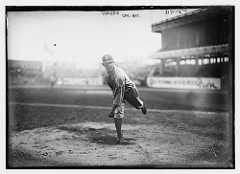
hubbellWhen it comes to winning streaks on the mound, King Carl Hubbell is baseball royalty.  On this date (July 17) in 1936, the Giants’ southpaw Carl Hubbell shut out the Pirates 6-0 to start an MLB-record of 24 consecutive wins. (The first win on the streak was on July 17, 1936 – the final win in the streak was on May 27, 1937 – Hubbell’s streak ended with a loss on May 31, 1937).

Here are a few stats from the screwball specialist’s streak:

  • It included 27 appearances – 22 starts.
  • Hubbell completed 19 of his 22 starts during the streak.
  • While his 22 starts included just two shutouts, he gave up two or fewer runs in 18 of those starts.
  • Of his 24 wins, three came in relief (under today’s rules, he would have been awarded two saves along the way).
  • He pitched a total of 207 2/3 innings and put up a 1.82 earned run average.
  • The streak included 16 wins at to close out Hubbell’s 1936 season and eight victories to open his 1937 campaign.
  • Hubbell finished the 1936 season at 26-6, 2.31 –leading the league in wins, winning percentage (.813) and capturing the NL MVP Award.
  • Hubbell finished 1937 at 22-8, 3.20 – leading the league in wins and winning percentage (.733), It was the last of five consecutive 20+ wins seasons for King Carl.
  • While Hubbell holds the record for consecutive victories overall, the record for consecutive wins in a single-season is 19, shared by another two New York Giants:  Tim Keefe (1988) and Rube Marquard. Marquard’s 19 consecutive wins is also the record for most consecutive victories at the start of a season (April 11-July 3, 1912.)

Hubbell finished his 16-season (1928-43) MLB career with 253 wins, 154 losses and a 2.98 ERA. He as a nine-time All Star, two-time NL MVP.

GETTING OFF TO A GOOD START

Giants’ lefty Rube Marquard started off the 1912 with a record 19 wins before his first loss (July 8). During the streak, Marquard made 21 mound appearances (18 starts), threw 16 complete games and put up a a 1.62 earned run average in 122 innings pitched. Marquard finished the season at 26-11, 2.57, leading the league in wins. Marquard finished an 18-season (1908-1925) with 201 wins (177 losses) and a 3.08 earned run average.  

—-OF SPECIAL INTEREST TO MINNESOTA READERS—-

GEKaatOn this date in 1969, Twins’ pitcher Jim Kaat – who had already won seven of his eventual 16 Gold Gloves – made three errors in a game against the White Sox. How rare an occasion was this? In 25 MLB seasons, Kaat would only make more than one error in a game twice (he had two errors in a game on June 9, 1964) and would exceed three errors in a season only four times. He would, by the way, get the win in his error-prone game (as the Twins topped the ChiSox 10-6 and also win the Gold Glove in 1969.   Side Note: In his career Kaat amassed not only 16 Gold Gloves,  but 287 victories (237 losses), a 3.45 earned run average, three season of 20+ wins (leading the league with 25 in 1966 (eight seasons of 15 or more wins and 15 seasons of double-digit wins).

Primary Resources: Baseball-Reference.com; NationalPastime.com

BASEBALL ROUNDTABLE ON THE TOP 100 BASEBALL BLOG LIST

100Baseball Roundtable is on the Feedspot list of the Top 100 Baseball Blogs.  To see the full list, click here.

I tweet baseball @DavidBBRT

Follow/Like Baseball Roundtable’s Facebook Page here.  More baseball commentary; blog post notifications; PRIZES.

Member: Society for American Baseball Research (SABR); The Baseball Reliquary; The Negro Leagues Baseball Museum.
Angels Honor Tyler Skaggs with Near-Perfect Game

http://Embed from Getty Images

Yesterday, the Los Angeles Angels  paid tribute to Angels’ pitcher Tyler Skaggs (photo above), who passed away unexpectedly – at age 27 – one July 1.  (It was the Angels’ first home game since Skaggs death.) All of the Angels’ player wore jerseys replicating Skaggs number-45 uniform and the pitcher was honored in a pre-game ceremony that included a video highlighting Skaggs’ career, a minute of silence and Skaggs’ mother Debbie throwing out the first pitch and the placement of the game-worn Skaggs jersey on the mound after the game.

The Angels then went out and honored Skaggs in the most appropriate way possible to recognize a pitcher – by holding the visiting Mariners’ hitless in a 13-0 Angels’ rout. Angels’ pitchers Taylor Cole and Felix Pena allowed only one base runner, a walk (off Pena) in the fifth inning, as the two Halo hurlers faced  only 28 Mariners’ batters. Cole pitched the first two innings (fanning two batters), while Pena fanned six over his seven frames.  It was MLB’s 13th combined no-hitter – and an appropriate tribute to a respected and well-liked competitor and teammate.  Let’s take a look at Skaggs’ career and then MLB’s previous twelve combine no-hitters.

Skaggs was selected by the Angels (our of Santa Monica High School) in the first round (40th overall) of the 2009 MLB draft – beginning his pro-career with the Arizona Angels (Arizona League) and Orem Owlz (Pioneer League). He pitched ten innings that season, walking two, fanning 13 and putting up a 1.80 ERA.   In 2010, he moved up to the Class A Midwest League Cedar Rapids Kernels, where he made the league All Star Team.  In July of that season, Skaggs was traded to the Arizona Diamondbacks, who kept him in the Midwest League (South Bend Silver Hawks). For the Midwest League season, Skaggs was 9-5, 3.29, with 25 walks and 102 strikeouts in 98 1/3 innings.

In 2011, Skaggs continued to move up, playing at both High A and Double A, as well as in the All-Star Future Game. His combined record was 9-6, 2.96, with 49 walks and 198 whiffs in 158 1/3 innings. Skaggs continued to progress in 2012, playing at Double A and Triple A, once playing in the All-Star Futures Game – and making his MLB debut.  His 2012 minor-league record was 9-6, 2.87, with 37 walks and 166 strikeouts in 122 1/3 inning.

In 2013, he was traded back to the Angels and spent time with the big club (as well as in the minors) in both 2013 and 2014 before an August 2014 injury that required Tommy John surgery (Skaggs missed the 2015 season). Skaggs returned to the Angels in 2016, starting 10 games; began the 2017 campaign with LA, but spent considerable time on the Disabled List (getting 16 starts); and had a total of 24 starts in an injury-limited 2018 season.  This  season, the lefty known for his curve ball was putting up solid numbers:  7-7 through 15 starts – leading the team in wins and strikeouts at the time of his passing.  Skaggs overall minor-league record was 36-31, with a 3.33 ERA. with 179 walks and 612 strikeouts in 554 2/3 innings.

Skaggs

Now for those other combined no-hitters:

The first-ever combine no-hitter took place on June 23, 1917 – with the Red Sox topping the Senators 4-0 in Boston. This game is special for several reasons: it was the first MLB combined no-hitter; Babe Ruth was involved;  it involved the most meager contribution by the starting pitcher (zero innings pitched); and, finally, it is arguably the most “perfect” combined no-hitter ever.  Like the Skaggs tribute no-no, this one featured only one base-runner for the losing squad, but in this case the victims sent only the minimum 27 batters to the plate.

Babe Ruth, at that time plying his trade as a left-handed starting pitcher for the Boston Red Sox, opened the game by walking Washington’s lead-off hitter Roy Morgan.  Ruth, and his catcher Pinch Thomas, took issue with umpire Brick Owens’ strike zone and, during the argument, Ruth made contact with the umpire (a glancing blow, it was reported).  The ultimate result of the confrontation was the ejection of both Ruth and Thomas (with Ruth earning a $100 fine and ten-game suspension).  Red Sox’ pitcher Ernie Shore was called in to replace Ruth and Sam Agnew took Thomas’ spot behind the plate. Morgan decided to test Agnew’s arm and was thrown out stealing, after which Shore retired the next 26 hitters in order – completing the first combined no-hitter and facing the minimum 27 batters.

_______________________

Given the past propensity for pitchers finishing what they started, MLB’s second combined no-hitter came 50 seasons and 70 no-hitters later – on April 30, 1967, with the Tigers defeating the Orioles 2-1 in Baltimore.  This combined no-hitter is unique because it was not a “no- no” (no hits – no runs), the team that threw the no-hitter lost (the only combined no-hitter loss) and it involved the briefest contribution by the relief staff (one pitcher/one-third inning pitched).

Orioles’ starter Steve Barber and was effectively wild, walking ten hitters and hitting two in 8 2/3 innings. The opposing hurler was Detroit’s Earl Wilson – who matched goose eggs with Barber for seven innings. In the eighth, Baltimore pushed across a run on three walks and a sacrifice fly (Wilson gave up only two hits and four walks in his eight innings of work) and victory was there if Barber could take it. He didn’t.  Barber walked Tiger 1B Norm Cash to start the ninth. He then walked SS Ray Oyler. Earl Wilson, a good-hitting pitcher, bunted the runners to second and third, before Barber got the second out of the inning, inducing PH Willie Horton to pop up to the catcher.  Now, just one out away from a 1-0, no-hit win, Barber uncorked a wild pitch that brought the tying run home. He then walked CF Mickey Stanley, ending his day on the mound. Stu Miller came in to get the final out, but not until an error allowed the go-ahead run to score.

_____________________________

Combined no-hitter number three came on September 28, 1975, with the A’s topping the Angels 5-0 in Oakland.  This game was unique in that it is one of only three no-hitters thrown on the final day of an MLB season – and it made starting pitcher Vida Blue the first hurler to take part in both a solo and combined no-hitter. (Blue had thrown a solo no-hitter on September 21, 1970.) Blue went five innings and was followed by Glenn Abbott (one inning), Paul Lindblad (one inning) and Rollie Fingers (2 innings). This was also the first time more than two pitchers were involved in a combined no-hitter.  Note: Blue has been joined by Kevin Millwood, Kent Mercker and Mike Witt as pitchers with both solo and combined no-hitters.)

_________________________________

The next combined no-hitter went back to the two-pitcher formula, as Blue Moon Odom (5 innings) and Francisco Barrios (4 innings) of the White Sox topped the A’s 2-1 in Oakland.  In the July 28, 1976 game, Blue walked five and gave up one run in his five frames, and Barrios added two walks in his four.

______________________________

Combined no-hitter number-five came on April 11, 1990 (again just two pitchers), with the Angels topping the Mariners 1-0 in Anaheim.  Mark Langston started the game and went seven, and Mike Witt (the only pitcher to throw a perfect game – September 30, 1984 – and take part in a combined no-hitter ) threw the final two.

____________________________

1991 saw seven MLB no-hitters including two combined no-nos. On July 13, the Orioles no-hit the A’s 2-0 in Oakland behind Bob Milacki (five innings), Mike Flanagan (one IP), Mark Williamson (one IP) and Gregg Olson (one IP). Then, on September 11, the Braves no-hit the Padres 1-0 in Atlanta, led by Kent Mercker (six innings), Mark Wohlers (two innings) and Alejandro Pena (one inning).

_______________________________

Combined no-hitter number eight came on July 12, 1997 – with the Pirates topping the Astros 3-0 in Pittsburgh.  It was unique in that it was the only extra-inning combined “no-no.” Francisco Cordova started and went nine hitless frames (two walks, ten whiffs) and Ricardo Rincon threw one hitless inning in relief (for the win).

_________________________________

The next combined no hitter was a record breaker – as the Astros used a record six pitchers (since tied) to no-hit the Yankees 8-0 in an inter-league game at Yankee Stadium (the last no-hitter at Old Yankee Stadium). Roy Oswalt started, but succumbed to a groin injury after just one completed inning. Joining in the no-hitter were: Pete Munro (2 2/3 IP); Kirk Saarlos (1 1/3 IP); Brad Lidge (2 IP); Octavio Dotel (1 IP); and Billy Wagner (1 IP). Notably, the no-hitter also broke up the Yankee’s record streak of 6,980 games without being held hitless. They had not been held without a safety since September 20, 1958.

______________________________

The very next combined no-hitter – another inter-league game – saw the six-pitcher record tied, as the Mariners topped the Dodgers 1-0 in Seattle. Kevin Millwood started that one (six innings), followed by Charlie Furbush (2/3 IP), Stephen Pryor (1/3 IP), Lucas Luetge (1/3 IP), Brandon League (2/3 IP) and Tom  Wilhemson (one IP).

________________________________

In combined no-hitter number 11 – September 1, 2014- the Phillies used four pitchers to no-hit the Braves 7-0 in Atlanta.  The pitchers involved were Cole Hamels, who started and went six innings (issuing five walks versus seven strikeouts); Jake Diekman (one inning, two strikeouts); Ken Giles (one inning, three strikeouts); and Jonathan Papelbon (one inning, no strikeouts).

_________________________________

On May 4, 2018 – the Dodgers no-hit the Padres 4-0 in a regular-season MLB game played in Monterrey Mexico – the twelfth combined no-hitter and the  first official MLB no-hitter ever thrown outside the United State or Canada.

It was the Dodgers’ MLB-best 23rd no-hitter and it came against the Padres the only MLB that has never had a no-hitter thrown in their cause.  Walker Buehler started for the Dodgers, and the 23-year-old – making just his third major league start (11th appearance) – went six innings (93 pitches), walking three and fanning eight.  He was followed by relievers Tony Cingrani (one inning, two walks, one whiff); Yimi Garcia (one inning, no walks, two strikeouts) and Adam Libertore (one inning, no walks, two strikeouts).  Buehler, by the way, also collected an unusual sixth inning single – as his groundball hit base runner Alex Verdugo between first and second, resulting in Verdugo being called out (for the final out of the inning) and Buehler being credited with a single. That single, of course, meant Buehler outhit the entire Padres’ lineup.

__________________________________

And, finally, there was yesterday’s combined no-hitter – a fitting tribute to Tyler Skaggs.

Primary Resources:  MLB.com; ESPN.com; Society for American Baseball Research.

BASEBALL ROUNDTABLE ON THE TOP 100 BASEBALL BLOG LIST

100Baseball Roundtable is on the Feedspot list of the Top 100 Baseball Blogs.  To see the full list, click here.

I tweet baseball @DavidBBRT

Follow/Like Baseball Roundtable’s Facebook Page here.  More baseball commentary; blog post notifications; PRIZES.

Member: Society for American Baseball Research (SABR); The Baseball Reliquary; The Negro Leagues Baseball Museum.
Eddie Rommel – Giving Up a Record 29 Hits; for the Win

RommelOn this date (July 10) in 1932, Philadelphia Athletics’ righty Edwin Americus (Eddie) Rommel (often terms the “father of the knuckleball”) earned his 171st and final major league victory – and it was hard-earned to be sure.

Rommel, at age 34 and in his 13th season with the Athletics, came on in relief of starter Lew Krausse in the bottom of the second, with the Athletics trailing 3-2.  Seventeen innings later, Rommel had his final MLB win, as the Athletic prevailed 18-17.   That win came after Rommel had surrendered 14 runs (13 earned) on nine walks, while also giving up a single-game recorded 29 hits. Notably, the Athletics had just finished a series in Philadelphia (against the White Sox) and were traveling to Cleveland for a one-game (make-up game) stand before playing in Philadelphia again on July 11.  In an apparent cost-saving move, they brought only two pitchers (Krausse and Rommel) to Cleveland. Rommel pitched in only five more MLB games (all in 1932) – going 0-2, 3.86 in those games and 1-2, 5.51 on the season.  He finished his MLB pitching career with a 171-119, 3.54 record in 501 appearances (249 starts – 145 complete games.)

If Rommel’s name sounds familiar, not only did he win 171 MLB games, he also  spent 22 years (1938-59) as a major league umpire – working a half dozen All Star games and two World Series.

In Eddie Rommel’s 29-hit final victory, Indians’  shortstop and number-two hitter Johnny Burnett collected a single-game MLB record nine hits (11 at bats), with eight of those safeties coming off Rommel.  Burnett had seven singles and two doubles, with four runs scored and two RBI.

The 29-outing was not indicative of Rommel’s skills on the mound.  In 1922, he led the American League in victories, despite pitching for an under-performing (or under-talented) Athletics team.  That season, Rommel went 27-13, 3.29, while the Athletics went 65-89.  Then, in 1925, Rommel again led the AL in wins with a 21-10, 3.69 record – pitching for an improved Athletics squad (88-64).

On Opening Day in 1926, Eddie Rommel was involved in what has become a legendary Opening Day match up. It came on April 13, with Rommel and his Athletics facing future Hall of Famer Walter Johnson and the Senators. The game ended in a 1-0 Senators win, with both Rommel and Johnson going the distance  Johnson’s effort – his final Opening Day start (at age 38) – gave him the longest Opening Day shutout ever.  Over his career, Johnson won a record nine Opening Day games (against five Opening Day losses) and tossed a record seven Opening Day shutouts.  Arguably, no one made Johnson work harder for an Opening Day win than Eddie Rommel.

Primary Resources: Baseball-Reference.com; Baseball-Almanac.com; “Eddie Rommel,” by Tim Deal, Society for American Baseball Research.

BASEBALL ROUNDTABLE ON THE TOP 100 BASEBALL BLOG LIST

100Baseball Roundtable is on the Feedspot list of the Top 100 Baseball Blogs.  To see the full list, click here.

I tweet baseball @DavidBBRT

Follow/Like Baseball Roundtable’s Facebook Page here.  More baseball commentary; blog post notifications; PRIZES.

Member: Society for American Baseball Research (SABR); The Baseball Reliquary; The Negro Leagues Baseball Museum.
A Few All Star Game Tidbits to Ponder While You Await the First Pitch

Tonight’s All Star Game is being played on the 73rd anniversary of what Baseball Roundtable would rate as the best offensive display (by a player) ever in an All Star Game match up.  That game was played on June 9, 1946 and the star batsman was Ted Williams – and the cherry on the top of the sundae is that the game was played on Williams’ Fenway Park home field.

http://Embed from Getty Images

Already a home-town hero, the “Splendid Splinter” added to his stature that day – to the joy of the fans and the chagrin of the four National League pitchers he would face.  Expectations, I should note, were pretty high.  Williams came into the game hitting .347, with 23 home runs, 82 runs scored and 71 RBI in 79 regular season games.  Compared to the day he was about to have that would look like a slump. Here’s how Williams’ day went.

  • In the first inning, batting third and facing the Cubs’ Claude Passeau, Williams drew a walk and then scored on a home run by the Yankees’ Charlie Keller.
  • In the bottom of the fourth, leading off against new NL hurler Kirby Higbe of the Dodgers, Williams homered to give the AL a 3-0 lead.
  • In the bottom of the fifth, with Higbe still in the game, Teddy Ballgame came up again – this time with one out the Senators’ Stan Spence on third and the Browns’ Vern Stephens on second.   This time, Williams delivered a run-scoring single.
  • In the bottom of the seventh, this time facing the Reds’ Ewell Blackwell with none on and two out, Williams singled again.
  • Finally, in the bottom of the eighth – facing the Pirates’ Rip Sewell and his Ephus pitch – with Stephens and the Browns’ Jack Kramer on base, William capped of his day with a three-run homer.

The AL squad prevailed by a 12-0 score – and Williams’ final tally was:  four-for-four, plus a walk, two home runs, four runs scored and five runs driven in.   In the process, Williams set or tied the following All Star Game single-game records:

  • Runs Scored (four – Williams still stands alone); total bases (ten – Williams stands alone);
  • Runs Batted In (five – later, 1954, tied by the Indians’ Al Rosen);
  • Base Hits (four – tying the Cardinals’ Ducky Medwick, 1937, and later matched by the Red Sox’ Carl Yastrzemski, 1970);
  • Home Runs (two – tying Pirates’ Arky Vaughn who did it in 1942; later tied by the Indians’ Al Rosen in 1954, Giants’ Willie McCovey in 1969, and Expos’ Gary Carter in 1981).

#HowThe(All Star)GameHasChanged

The 1967 All Star Game was won by the National League 2-1 in 15 innings (at the time, the longest All Star Game ever, matched by the 2008 All Star contest).  Here’s what you might find a little different from today’s game.  The following All Stars started the game and played the entire 15 innings. (Don’t think you’ll be seeing that again).

National League

  • Roberto Clemente, Pirates, RF
  • Hank Aaron, Braves, started in CF and finished in LF
  • Orlando Cepeda, Giants, 1B
  • Gene Alley, Pirates, SS

American League

  • Brooks Robinson, Orioles, 3B
  • Tony Oliva, Twins, Twins, CF
  • Harmon Killebrew, Twins, 1B
  • Tony Conigliaro, Red Sox, RF
  • Carl Yastrzemski, Red Sox, LF
  • Bill Freehan, Tigers, C

Side note: In the game, Roberto Clemente set the record for batter’s strikeouts in an All Star Game (four) – the record for a nine-inning game is three.

______________________________________

Best All Star Game Performance Ever – On the Mound

Carl Hubbell, New York Giants, 1934

hubbellBBRT should probably give a nod to an arguably best-ever All Star Game pitching performance here. I say arguably, since it’s a bit of a close call. BBRT, however, is going with the 1934 All Star Game performance of Giants’ southpaw Carl Hubbell. King Carl, on his way to a 21-win season (the second of five straight 20+ win campaigns), came into the game with a 12-5, 2.76 ERA regular-season stat line. Hubbell had struck out 58 hitters in 156 1/3 innings pitched to that point (it was, indeed, a difference game back then), but he was about to make the strikeout a much bigger part of his game.

The game was played on July 10, 1934 at New York’s Polo Grounds – with screwball-specialist Hubbell starting for the NL and Yankee Lefty Gomez starting for the AL.  Facing an AL line up stacked with some of the game’s greatest hitters, Hubbell got off to a rocky start, giving up a lead-off single to Detroit’s Charlie Gehringer, followed by a walk to the Senators’ Heinie Manusch. Then the fun began, as Hubbell set down five straight future Hall of Famers – all on strikeouts – the Yankees’ Babe Ruth, Yankees’ Lou Gehrig, and Athletics’ Jimmie Foxx to close out the first. Then the White Sox’ Al Simmons and Senators’ Joe Cronin to open the second.  Hubbell then gave up a single to Yankees’ Bill Dickey, before whiffing Lefty Gomez (who also made the Hall of Fame) to end the inning. After an uneventful third inning – two fly outs, a ground out and walk – Hubbell left the game credited with three scoreless innings, two hits, two walks and six strikeouts – all six future Hall of Famers (although Gomez made it as a pitcher – not a hitter).

Hubbell’s six strikeouts remain the All Star Game single-game record – tied in 1943 by the Reds’ Johnny Vander Meer (2 2/3 innings pitched); 1950 by the Giants’ Larry Jansen (5 innings pitched); and 1967 by the Cubs’ Fergie Jenkins (3 innings pitched). Given the place in history of Hubbell’s six victims, BBRT considers this the top (or at least most memorable) All Star Game mound performance.  Oh yes, the AL won the game 9-7, and how did those strike out victims fare When not facing Hubbell?  Against the rest of the NL All Star staff, they went seven-for-sixteen, with four doubles, five runs scored and three RBI.

Remember, I said it was a close call on this one.  The runner-up was the Yankees’ Lefty Gomez, who tossed an All Star Game-record six innings in 1935 – giving up just three hits and one run. (Another look at #HowThe(AllStar)GameHasChanged – the American League used just two pitchers in their 4-1 win, Gomez and the Indians’ Mel Harder.

____________________________________________________________

—-Some All Star Game Targets (and tidbits)—-

Here are a few All Star Game targets for today’s stars to shoot for this evening:

Innings pitched in a single AS Game: Yankees’ Lefty Gomez – 6 (1935) Won’t happen under today’s three innings limit, of course.

Strikeouts by a pitcher in a single AS Game – 6 by:  Carl Hubbell, Giants, 1934; Johnny Vander Meer, Reds, 1943; Larry Jansen, Giants, 1950; Fergie Jenkins, Cubs, 1967.

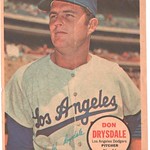
Don Drysdale is the only pitcher to start two MLB All Star Games in a single season – in 1959.

Doubles in a single AS Game: two, nine players (Most recently, the Brewers’ Jonathan LeCroy in 2014.  No surprise, LeCroy had a league-leading 53 doubles that season.)

Triples in a single AS Game: Rod Carew, Twins – 2 (1978) – leading off the first and third innings, both off the Giants’ Vida Blue.

Babe Ruth, appropriately, smacked the first-ever All Star Game home run.

Stolen Bases in a single AS Game: Two by five players. (Most recently, the Cubs’ Starlin Castro, 2011.)

Stolen bases in a single AS Game Inning: Roberto Alomar, Blue Jays, 1992.

A FEW ALL STAR GAME “FIRSTS” AND STILL “ONLYS”

First and only All Star Game Steal of Home ... 1934 AS game, fifth inning, two out, two on, NL trailing 8-6 – NL 3B Pie Traynor (Pirates)  notches the first (and still only) AS Game steal of home. (AL won game 9-7.

First and only All Star Game Grand Slam … 1983 All Star Game, third inning, bases loaded, two outs, AL leading 5-1, AL CF Fred Lynn hits first – and still only – AS Game Grand Slam. (AL wins 13-3)

First and only All Star Game Inside-the-Park Home Run … 2007 All Star Game, fifth inning, one on, one out, AL CF Ichiro Suzuki hits first – and still only – AS Game inside-the-park home run.

—–How about a few CAREER All Star Game records?—– 

AS Games Played: Willie Mays, Hank Aaron, Stan Musial – tied at 24.   Note: There is some confusion here since, in some years (1959-62), there were two All Star Games.  Aaron holds the record for seasons on an All Star Game team (21), and total All Star Game rosters made (25). Mays and Musial each played in 24 AS Games in 20 All Star seasons.

AS Game Hits: Willie Mays – 23

AS Game Doubles: Dave Winfield – 7

AS Game Triples: Willie Mays and Brooks Robinson – 3

AS Game Home Runs: Stan Musial – 6

AS Game RBI: Ted Williams – 12

AS Game Walks: Ted Williams – 11

AS Game Stolen Bases: Willie Mays – 6

All Star Game Runs Scored: Willie Mays – 20.

AS Game Pitcher Wins: Lefty Gomez – 3

AS Game Total Pitching Appearances: Roger Clemens – 10

AS Games Started (pitcher): Lefty Gomez, Robin Roberts, Don Drysdale – 5

AS Game Saves: Mariano Rivera – 4

AS Games Innings Pitched: Don Drysdale – 19 1/3

As Game Strikeouts: Don Drysdale – 19

Note: It’s hard to pick AS Game career leaders in such areas as ERA and batting average. (How many at bats or innings pitched do you use to qualify?) However, here are two BBRT nominations. If you use 20 at bats as a standard, your batting average leader is Charlie Gehringer at .500 (ten-for-twenty in six AS games, plus nine walks). If you use ten innings pitched as a qualifier, only Mel Harder can  boast a 0.00 ERA (13 innings).

ALL STAR GAME BOOKENDS

Star of the 19xx All Star Game.

Star of the 1998 All Star Game.

The highest scoring All Star Game ever took place in 1998 at (Where Else?) Coors Field – as the teams combined for 21 runs in a 13-8 American League win.  Side note: Thirteen is the highest run total ever up by an All Star squad, accomplished by The AL in 1983, 1992 and 1998.

The lowest scoring game (combined) took place in (When else?) in 1968 (The Year of the Pitcher) – as the NL topped the AL 1-0. with the only run scoring on a double play (no RBI in the contest). 

The largest margin of victory in an All Star Game is 12 runs. In 1946, the AL topped the NL 12-0 at Fenway Park. 

______________________________________________________

Finally, to wrap up, here’s a dozen AS Game firsts from 1933.

First Venue: Comiskey Park 1 (July 6, 1933).

First AS Game Attendance: 47,595

Final Score of First AS Game: AL 4 – NL -2

First Batter/Pitcher Match Up: NL 3B Pepper Martin (Cardinals) versus Lefty Gomez (Yankees). Gomez retired Martin on a grounder to shortstop.

First Starting Pitchers: AL, Lefty Gomez (Yankees) – NL, Bill Hallahan (Cardinals). Gomez got the first All Star win, Hallahan the first loss.

First Hit: Cardinals’ Chick Hafey (leading off second inning – off the Yankees’ Lefty Gomez). Hafey was starting in LF and batting fourth for the NL.

First Run Scored: AL starting 3B Jimmy Dykes (White Sox).

First RBI: AL starting pitcher Lefty Gomez (Yankees) – drove home Jimmy Dykes (White Sox), who had walked, with a single to center field. Take that, DH Rule.

First Double: Pie Traynor (Pirates), NL pinch hitter – top of seventh off Lefty Grove (Yankees).

First Triple: NL pitcher Lon Warneke (Cubs) – top of the sixth inning off Alvin Crowder (Senators). Take that again, DH Rule.

First Home Run: AL RF Babe Ruth (Yankees), two-run home run, bottom of the third, off Bill Hallahan (Cardinals). So, your first All Star Game double, triple and homer were hit by pitchers or former pitchers. 

First Stolen Base: Bottom of first, AL 2B Charlie Gehringer (Tigers).

First Strikeout: Final out, top of second. Pitcher – Lefty Gomez (Yankees). Hitter – NL SS Dick Bartell (Phillies).

Primary Resources: MLB.com; Baseball-Reference.com; Baseball-Almanac.com

BASEBALL ROUNDTABLE ON THE TOP 100 BASEBALL BLOG LIST

100Baseball Roundtable is on the Feedspot list of the Top 100 Baseball Blogs.  To see the full list, click here.

I tweet baseball @DavidBBRT

Follow/Like Baseball Roundtable’s Facebook Page here.  More baseball commentary; blog post notifications; PRIZES.

Member: Society for American Baseball Research (SABR); The Baseball Reliquary; The Negro Leagues Baseball Museum.

Yankees’ Long Ball Streak Ended at 31 – Appropriately by their Crosstown Rivals

The Yankees, who had homered in a record 31 consecutive games – every contest since May 26 – were the talk of the town in New York yesterday as they traveled crosstown to Citi Field to take on the Mets (before a crowd of 42, 150).  The Mets got the upper hand on their older-brother Bombers, handing the Yankees a 4-2 loss and keeping the ball in the park.  Four Mets’ hurlers – Zach Wheeler, Justin Wilson, Seth Lugo and Edwin Diaz – held the powerful, homer-happy Yankee squad to two runs on five singles and a double, while walking one and fanning ten. (Truth be told, I was kind of hoping the streak would stretch at least one day into a third month.)

So, here is BBRT’s final tale of the tape for the streak – May 26 through July 1.

  • Hit 57 home runs;
  • Averaged .282;
  • Won 20 and lost 11;
  • Outscored their opponents 195 to 164;
  • Had 14 different players go yard; eight of those at least four times.

Key contributors to the streak were:

  • DJ LeMahieu, who played in 30 of the game and hit .378, with eight home runs and 35 RBI;
  • Gary Sanchez, who put up a .252-8-23 line in 28 games; and
  • Gleyber Torres, .323-7-22 in 27 games.
 DJ LeMahieu Photo by jenniferlinneaphotography

DJ LeMahieu
Photo by jenniferlinneaphotography

Gary Sanchez photo

Gary Sanchez Photo by apardavila

Others homering for the Yankees in the streak were: Brett Gardner (5 HR); Aaron Hicks (5); Luke Voit (4); Gio Urshela (4); Cameron Maybin (4); Didi Gregorius (3); Edwin Encarnacion (3); Clint Frazier (2); Aaron Judge (2); Austin Romine; Giancarlo Stanton.

During the course of the streak, the Yankees had 14 games with one home run; 11 games with two; three games with three long balls; and three games with four.

ANOTHER HOMER-HAPPY TIDBIT – IT’S A BRAVES’ NEW WORLD

On this date (July 3, in 1969, Braves’ pitcher Tony Cloninger became the first National Leaguer (any position) to hit two Grand Slam home runs in a single game. He got the first GS in the top of the first inning (against the Giants in San Francisco), as Atlanta batted around and scored seven runs. The second came in top of the fourth and stretched the Braves lead to 13-0. For good measure, Cloninger added a run-scoring single in the eighth inning – for his ninth RBI in a 17-3 win. Oh yes, he also pitched a complete-game, seven-hitter.  Cloninger finished the 1966 season with a .234 average, five home runs and 23 RBI in 47 games. Now back to our regularly scheduled top.

The previous MLB team record for consecutive games with a home run belonged to the Texas Rangers’ – August 11 – September 9, 2002.

In that streak the Rangers:

  • Hit 55 home runs;
  • Averaged .306;
  • Went 17-10;
  • Outscored their opponents 177-144.

3 rangrers

That streak was driven by Alex Rodriguez, Rafael Palmeiro and Herbert Perry – who combined for 35 of the Rangers’ 55 round trippers.  Here’s a look at the sluggers who powered the Rangers’ surge:

  • SS Alex Rodriguez, who hit 16 home runs, drove in 33 runs and hit for a .333 average.
  • DH/1B Rafael Palmeiro, who hit ten home runs, drove in 18 and put up a .316 average.
  • 3B Herbert Perry, who launched nine round trippers, drove in 22 and hit .296.

Others going deep during the streak included: Ivan Rodriguez (6 HR); Todd Hollandsworth (4 HR); Carl Everett (3 HR); Todd Greene (2 HR); Mike Lamb (2 HR); Travis Hafner; Kevin Mench: and Michael Young.

There were ten games in which the Rangers’ hit only one home run. They hit two round tripper in 11 contests; three home runs in three games; four in one; and five in two.

Primary Resources: ESPN.com; MLB.com

BASEBALL ROUNDTABLE ON THE TOP 100 BASEBALL BLOG LIST

100Baseball Roundtable is on the Feedspot list of the Top 100 Baseball Blogs.  To see the full list, click here.

I tweet baseball @DavidBBRT

Follow/Like Baseball Roundtable’s Facebook Page here.  More baseball commentary; blog post notifications; PRIZES.

Member: Society for American Baseball Research (SABR); The Baseball Reliquary; The Negro Leagues Baseball Museum.
Baseball Roundtable June Wrap Up – From Trots to Tea Cups …and More

It’s July 1 and that means it’s time for Baseball Roundtable’s traditional previous month wrap up – touching on the statistics, standings and stories that caught BBRT’s eye over the previous month, along with the BBRT Players and Pitchers of the Month and the BBRT Trot index.  Here’s a bit of a spoiler –  a brief sampler of the kind of things you’ll read about – as always, if you last to the end of the post.  Among the things we saw in June:

  • One six-game winner (Max Scherzer) and one six-game loser (Aaron Sanchez).
  • One .400+ hitter (Charlie Blackmon).
  • A batter (Luke Voit) fanning 38 percent of the time, but still managing to hit .333 for the month.
  • A player (Charlie Blackmon) collecting a record 15 hits in a four-game series.
  • A record 13 home runs hit in a single game (Phillies/Diamondbacks).
  • Two cycles in two days (Shohei Ohtani & Jake Bauers).
  • A three-game hitting streak (Wilkin Castillo) that took just over ten years to complete.
  • A team (Yankees) homer in every game of the month – and then some.
  • A pitcher (Louis Castillo) leading MLB in walks for the month (with 20 in just 28 2/3 innings) and managing to go 2-2, with a tidy 2.83 earned run average. (He gave up just 16 hits in those 28+ frames).
  • A player (Freddie Freeman) drive in 33 runs in 28 games..

Oh yes, and if you read on, you’ll find out why the Yankees versus Red Sox in London was not my cup of tea.

If You aren’t  Familiar with …

JeffmacJeff McNeil, you probably will be soon.  The 27-year-old Met (who has played 2B, 3B, RF and LF this season) ended the month of June as MLB’s leading hitter – with a .348 average. It should be no surprise, McNeil – a 12th round draft pick in 2013 – has hit wherever he has played. In six minor league seasons, he put up a .311 average (.327 at Triple A; .315 at Double A and .296 at A/High A). 

In a July 2018 call up, he hit .329 with three  homers, 19 RBI and seven stolen bases in 63 games.  Thus far, in 2019, he is .348-6-34, with 37 runs scored three steals. Looks like he’s here to stay.


Now, on to …

—-BASEBALL ROUNDTABLE PLAYERS & PITCHERS OF THE MONTH—–

National League Player of the Month – Charlie Blackmon, RF, Rockies

Okay, I’ve admitted in the past that (as was often said of the zany, but talented, Rube Waddell) I can be distracted by bright and shiny things.  Well, in June, there were a couple of “bright and shiny” things that caught BBRT’s eye as I considered my National League Player of the Month.

They were the .412 June average (which led all qualifying hitters for June) put up by Rockies’s RF and lead off hitter Charlie Blackmon and the MLB-leading 33 June RBI recorded by Braves’ 1B Freddie Freeman. Blackmon’s .400+ average for the month – coupled with his ten home runs (MLB’s third-best), 25 RBI (sixth in MLB for June) and MLB-leading 30 runs scored took the day; but it was by a razor-thin margin.  For the month, Blackmon had MLB’s 38 hits (seven doubles, two triples, nine home runs). In his 22 games played (Blackmon missed the first six games of the month on the Injured List due to a right calf strain), Blackmon had 11 multi-hit games – at one point collecting 15 hits in a single four-game series. (See more on Blackmon’s multi-hit achievement in the “Highlights” section of this post.) As a side note: On June 29, Blackmon became the first left-handed hitter ever to go yard off Clayton Kershaw’s curve ball. (Another case of in baseball we track everything.)

Other contenders: Braves’ 1B Freddie Freeman, who went .322, with nine home runs, 24 runs scored and an MLB-high 33 RBI in June – helping the Braves surge to first place (the Braves started the month three games behind the Phillies and ended it with a 5 ½ game lead); Brewers’ RF Christian Yelich, who did a little bit (a lot, really) of everything – hitting .365 with power (eight home runs), driving in 18, scoring 20 and even swiping  eight bases in eight tries.

American League Player of the Month – DJ LeMahieu, 2B, Yankees

The Yankees, beset by injuries all season, needed players like DJ LeMahieu to step up – and step up he did.  In June, LeMahieu hit a robust .395 (second in MLB only to Charlie Blackmon’s .412), with six home runs, an AL-best 26 runs scored and an AL-high 29 RBI.  LeMahieu generated this offense while serving primarily as a lead off hitter and spending time at first base, second base and third base.

Other contenders: Blue Jay’s 2B Lourdes Gurriel, Jr., who hit .337 for June, bashed MLB’s third-most home runs (10), drove in 20 and scored 20;  Angels’ CF Mike Trout (isn’t he always on this list), who went .320-9-23 and scored 24 times.  Just a typical June for Trout.

_____________________________________________________

National League Pitcher of the Month – Max Scherzer, Nationals

Max Scherzer photo

Photo by apardavila

Easy call here. The three-time Cy Young Award winner got off to a slow start, going 2-5, 3.26 through May – but made up ground big time in June.  He was MLB’s only six-game winner in the month, going 6-0 (in six starts),  with a 1.00 ERA (five earned runs in 45 IP), just five walks and an MLB-high 68 June strikeouts. He average 7.5 innings per start and helped lead the Nationals to a 18-8 month.  His 1.00 ERA for the month was the lowest among pitchers with at least 25 innings on the mound.

Other contenders: The Rockies’ Jon Gray, who went 5-1, with a 2.65 ERA and 43 strikeouts in 37 1/3 innings (despite having four of his six June starts at Coors Field); Walker Buehler, Dodgers, who went 3-0 in five starts, with a 2.45 ERA and 46 strikeouts (versus just two walks) in 35 2/3 innings.

American League Pitcher of the Month – Lance Lynn, Rangers

LynnOkay, maybe I could have gone with big names and big swing-and-miss arms like Justin Verlander or Chris Sale, but (from BBRT’s perspective) the Rangers’ Lance Lynn put it all together in June.  Lynn tied for the AL lead in June wins – going 4-0 in six starts, with a respectable 2.90 earned run average.  He also fanned 48 batters in 40 1/3 innings, while walking only four.  (If only Lynn had pitched like this for my Twins.  He went 7-8, 5.10 in 20 starts for Minnesota last season.)

Other contenders: Luis Giolito, White Sox, who went 4-1, 2.50 and whiffed 46 batters in 36 innings (six starts); Mike Minor, Rangers, who went 3-0, 1.70 in five starts (30 strikeouts in 37 IP);

TROT INDEX … A REGULAR BBRT FEATURE

Through June,  36.0 percent of all MLB’s 96,145 2019 plate appearances ended in a trot (back to the dugout, around the bases, to first base). We’re talking about strikeouts, home runs, walks, hit by pitch and catcher’s interference – all outcomes that are, basically, devoid of action on the base paths or in the field. Here’s the breakout: strikeouts (22.7%); Walks (8.6%); home runs (3.6%); HBP (1.0%); Catcher’s Interference (less than 1%). Personally, I’d like more action in the field of play.

For the 2018 season, 34.8 percent of all MLB’s 185,139 plate appearances ended in a trot.  

________________________________________________

THE BEST OF TEAMS, THE WORST OF TEAMS

WonLost June

We did see some movement in the standings in July.  The Braves put up an MLB-best 20 June wins (versus just 8 losses) and went from  three games back of the Phillies on June 1 to 5 1/2 games up on Philadelphia on July 1.  Two other NL teams with solid June results were the Dodgers (18-10), who extended their lead in the West from 8 1/2 to 12 games – and the Nationals, who used an 18-8 month to move past the Mets (10-18) into third place in the East.  The NL Central Division had a “blah” month, with no team playing better than .500 ball.

The Braves offense fueled their 20 June wins, as they led MLB in runs scored (187) and home runs (56) for the month. Key contributors for the Braves were: Freddie Freeman (.322-9-33); Ozzie Albies (.317-6-22); Ronald Acuna, Jr. (.31-9-21); and Nick Markakis (.270-4-20).  The Dodgers rode MLB’s best pitching (MLB-lowest 3.08 ERA in June) to continued success.  Key mound work was provided by the likes of Rich Hill (3-0, 2.25), Walker Buehler (3-0, 3-0, 2.45), Clayton Kershaw (2-2, 2.93) and Hyun-Jin Ryu (1-1, 2.70). Their offense also contributed, scoring the NL’s fourth-most runs – led by the likes of Cody Bellinger (.272-7-15) and Max Muncy (.287-8-23)/

IF THE SEASON ENDED TODAY – YOUR PLAYOFF TEAMS WOULD BE …

AL:  Yankees; Twins; Astros.  Wild Cards: Rays; Rangers.

NL: Braves;  Dodgers; Cubs or Brewers. Wild Cards: Cubs or Brewers; Phillies or Rockies.  

YOU’LL FIND FULL STANDINGS – AS OF JULY 1 – NEAR THE END OF THIS POST.

Over in the junior circuit, the Rangers went 18-11, and gained two games on the Astros (but are still 6 1/2 back)(.  In the East, the Yankees went 17-9 and expanded their lead from 1.5 games over the Rays on June 1 to 7 games on July 1.  The Indians were the other AL team with 17 June wins (nine losses),  gaining 2 1/2 games on the Twins, but still eight back. The Yankees pounded their opponents into submission, leading the AL in runs scored (176) and homering in every June game. By contrast, the Bronx Bombers June earned run average (5.46) was the third-worst in the AL.  Lot of contributors to the Yankees’ surge. including: DJ LeMahieu (.395-6-29); Gleyber Torres (.333-5-17); Gary Sanchez (.255-6-21).  Overall, power up and down the Yankee lineup.

At the other end of won-lost spectrum, two teams failed to win even ten games in June – The Tigers (5-20) and the Orioles (6-20). Both of those squads had June earned run averages north of 5.00 and the Tigers also finished last in MLB in runs scored. The Orioles had the fourth-fewest runs scored in the AL – even after a pair of late-June games in which they outscored the Indians by a combined 26-0.

_______________________________________

—-LEAGUE LEADERS – TEAMS – MONTH OF JUNE —–

(Stats as of July  1, 2019, a.m.)

RUNS SCORED … MLB Team Average – 134

AL: Yankees (176); Red Sox (159); Mariners (153)

NL: Braves (187); Rockies (167); Padres (153)

The Tigers scored an MLB-low 82 runs in June, while the Cardinals and Reds were at the bottom of the NL with only 92 tallies.  

BATTING AVERAGE … MLB Team Average – .255

AL: Red Sox (.291); Yankees (.286); Twins (.266)

NL: Pirates (.288); Rockies (.280); Braves (.277)

The Cardinals were the only team to hit under .230 for the month – at .223.

HOME RUNS … MLB Team Average – 38

AL:  Twins (51); Blue Jays (48); Yankees (47); Mariners (47)

NL: Braves (56); Mets (48); Dodgers (47)

The Tigers  hit only 20 home runs in June, the fewest of any MLB team.

SLUGGING PERCENTAGE – MLB Team Average – .440

AL: Yankees (.499); Red Sox (.488); Indians (.479)

NL: Braves (.520); Dodgers (.479); Pirates (.478)

STOLEN BASES … MLB Team Average – 13

AL: Rangers (25); Royals (25); Indians (19)

NL: Cardinals (26); Brewers (18); Padres (18); D-backs (18); Nationals (18)

The White Sox, Yankees, Twins and Marlins each stole an MLB-low four bases in June – with the Twins having the worse success rate at 40 percent (four steals, six thrown out stealing). 

BATTERS’ STRIKEOUTS … MLB Team Average – 233

AL: Rangers (288); Mariners (273); Rays (273)

NL: Rockies (260); Marlins (253); three with 250

The Braves led MLB in June extra-base hits with 126, while the Cardinals were at the bottom of the list with only 62 extra-base knocks. Teams with at least 100 XBH for the month (after the Cardinals) were the: Red Sox (112); Dodgers (108); Pirates (107); A’s (106); Twins (104); and Rockies (100).

WALKS DRAWN … MLB Average – 84

AL: Mariners (120); Astros (107); Yankees (106)

NL: Brewers (103); Braves (100); Padres (98)

_______________________________________

EARNED RUN AVERAGE … MLB Average – 4.60

AL:  Rays (3.92); Twins (3.95); A’s (3.99)

NL:  Dodgers (3.08); Cardinals (3.65); Reds (3.78)

June was a tough month for pitching staffs, as ten teams put up earned run averages north of 5.00 – with the Orioles at the bottom (or top, depending how how you look at it) at 5.81. The Orioles were a close second at 5.80. Together, these teams produced 16 wins and 37 losses during June. 

BATTING AVERAGE AGAINST …  MLB Average – .256

AL: Indians (.231); Astros (.236); Rays (.239)

NL: Dodgers (.217); Reds (.223); Nationals (.228)

STRIKEOUTS … MLB Average – 223

AL:  Red Sox (304); Astros (282); Rangers (266)

NL: Brewers (257); Dodgers (256); Mets (254)

The Red Sox and Angels were the only teams to average ten or more strikeouts per nine innings – 10.80 and 10.01, respectively. A total of 11 teams averaged at least one K per frame for the month.

SAVES … MLB Average – 6

AL: Twins (9); Yankees (9); Royals (9)

NL: Braves (10); Nationals (10); Brewers (9)

The Reds had June’s best save percentage at 100 percent (six saves in six  opportunities).  

FEWEST WALKS SURRENDERED … MLB Average – 84

AL: Rangers (74); Yankees (75); three with 77

NL: Dodgers (60); Nationals (70);  Padres (74); Cardinals (74)

Only three mound staff surrendered 50 or more home runs in June: Astros (56); Phillies (54); Yankees (50). The A’s surrendered the fewest June long balls (27). 

___________________________________________

—–JUNE HIGHLIGHTS … THE STORIES —–

Sale’s Immaculate Innings – Keeping Company with Lefty Grove

cHRIS sALE RED SOX photo

Photo by Keith Allison

On June 5, Boston southpaw Chris Sale was truly dominant versus the Royals, picking up his second win of the season with a complete game, three-hit shutout.  In the contest, he did not yield a single walk and fanned a dozen.  In the eighth, he  tossed an “immaculate inning” – fanning the three batters he faced (Kelvin Gutierrez, Nicky Lopez and Martin Maldonado) on nine pitches. It was Sale’s second immaculate inning of the season (the first came May 8 against the Orioles), making him just the second major leaguer with two immaculate frames in a season.  The other was Lefty Grove in 1928.  As June closed, Sale’s record on the season was 3-7, 3.82 – and he had fanned 148 batters in 101 1/3 innings.

It’s Raining Baseballs

On June 9, the Nationals loaded up on the Padres in San Diego – bashing back – to back– to back – to back home runs in the eighth inning of a 5-2 win. All the long balls – which broke open a 1-1 contest –  came off reliever Craig Stammen. The homers were hit by PH Howie Kendrick, SS Trea Turner, RF Adam Eaton and 3B Anthony Rendon.  It was only the ninth time in MLB history that a team had cracked four consecutive home runs.

BBBB

On June 10it was raining baseballs again.  This time In Philadelphia – as the Diamondbacks and Phillies combined to hit an MLB record 13 home runs in a game. The teams got off to a rolling start, as the D-backs first three batters in the top of the first inning (CF Jarrod Dyson, SS Ketel Marte and LF David Peralta) homered off Phillies’ starter Jerad Eickhoff) and Phillies’ SS Jean Segura homered in the bottom of the frame off Taylor Clarke. Here are the homer hitters for the contest, won by the visiting D-backs 13-8:

Diamondbacks: Eduardo Escobar (2); Ildemaro Vargas (2); Alex Avila; Jarrod Dyson; Ketel Marte; David Peralta.

Phillies: Scott Kingery (2); Jean Segura; Rhys Hoskins; Jay Bruce.

That Was Fun, Let’s Do it Again

Before the Phillies-Diamondbacks 13-home run game on June 10, the previous record for combined home runs in a game was 12 – accomplished twice – both times by the Tigers/White Sox (once in each team’s home park) on May 28, 1995 and July 2, 2002.

Verlander Likes Swing Music- As Long as It’s Swing and Miss

On June 12, the Astros’ Justin Verlander was truly in the wing of things. – striking out a career high 15 batters in seven innings of work.  What may be of interest is that fact that all 15 were swinging strikeouts.  Still when, the Brewers swung and didn’t miss, they made it count. Verlander allowed only four hits (no walks) in his seven innings, but three of the four hits were homers (Ryan Braun – first inning; Yasmani Grandal – second inning; and Eric Thames – seventh inning). As a result, Verlander left with the game tied at three and the Astros eventually lost to the Brewers 6-3 in fourteen innings.  Back to the “in baseball we count everything” trend, MLB.com reported that Verlander is the first pitcher (since 1908) to record 15 strikeouts and give up at least three home runs in a game.

No, the Speed Game Does not Belong Exclusively to the NL

On June 14, the Rangers’ Elvis Andrus stole home with two outs in the top of the first inning of a game against the Reds.  It was Andrus’ second steal of home this season and the sixth of his career. It was the Rangers’ third steal of home this season – and second in June.  On June 9, Rangers’ 2B Rougned Odor stole home against the A’s. For those who are interested, the record for most steals of home in a season belongs to Ty Cobb (eight in 1912).  Cobb also holds the career record for steals of the plate (54).

As the month of June came to a close, four of the top five teams (on the season) in stolen bases were in the American League. The top five were the Royals (79); Rangers (65); Indians (58); Mariners (58); Cardinals (57).

Two Days – Two Cycles

cyclesIn June, two players hit for the cycle (single, double, triple and homer in one game) – the Angels’ Shohei Ohtani on June 13 and the Indians’ Jack Bauers on June 14.  Both, by the way, were in the DH spot for the game.

Ohtani’s cycle came in a 5-3 win over the Ray s in Tampa. He went 4-for-4, with two runs and three RBI, collecting a home run in the first; double in the third; triple in the fifth; and single in the seventh.  Bauers’ cycle came in a 13-4 win over the Tiger in Detroit. Bauer was 4-for-5, with two runs and four RBI. He had a double in the second; single and triple in the fourth; strikeout in the sixth; and the home run in the eighth.  For more on cycles, click here.

92 Runs in Four Days – Only in Colorado

From June 13 through June 16, the Padres and Rockies played a four-game series (in Colorado) in which the teams combined for a MLB four-game series record 92 runs (44 for the Padres and 48 for the Rockies) – and came away with two wins (and two losses) apiece.  The 92 runs broke the old four-game series record of 88 (Dodger and Phillies), which had stood since 1929.  The Rox/Padres combined for 131 hits, two short of the all-time record. (They also hit a combined 17 home runs.) The final scores, in order, were Rockies win 9-6; Padres win 16-12; Rockies win 14-8; Padres win 14-13.  In the series, Rockies’ OF Charlie Blackmon stroked 15 hits – an MLB record for a four-game set (see more on Blackmon in the next story in this post).

It’s Not Always About the Home Run

From June 13 through June 18 Rockies’ outfielder Charlie Blackmon recorded five straight games of at least three hits – falling one game short of the record set by the Royals’ George Brett in 1976 (May 8-13).  Blackmon began his streak with three consecutive four-hit games (June 13-14-15 versus the Padres) and add a pair of three-hit contests (June 16 versus the Padres and June 18 versus the D-backs). During the streak, Blackmon went 18-for-29 (.621), with ten singles, three doubles, one triple, four home runs, 11 runs scored and 10 RBI. Surprisingly, despite his hot bat, he did not walk once over the five games.  The streak raised his season batting average from .305 to .341.  Blackmon’s 18 hits, by the way, fell just one hit shy of the most hits in a five-game span –  set by Brooklyn’s Jimmy Johnston (June 25-30, 1923).

Yankees Homer Happy from May Right Into June

On June 25, the Yankees set a new MLB record – homering in their 28th consecutive contest (breaking a tie with the 2002 Rangers) – and wasted no time doing it.  DJ LeMahieu homered to lead off the bottom of the first inning in a 4-3 Yankee win over the Blue Jays. The Yankees put an exclamation point on the record by scoring all four of their runs on solo homers – LeMahieu, Aaron Judge, Gleyber Torres and Edwin Encarnacion.  The Yankees continued the homer happy streak, which began on Mays 26  right to the end of June – stretching the streak to 31 games.

Updating the tale of the tape, the Yankees, in their streak (through June 30):

  • Hit 57 home runs;
  • Averaged .282;
  • Won 20 and lost 11;
  • Outscored their opponents 195 to 164;
  • Had 14 different players go yard; eight of those at least four times.

Homering for the Yankees in the streak were Gary Sanchez (8 homers); DJ LeMahieu (8); Gleyber Torres (7); Brett Gardner (5); Aaron Hicks (5); Luke Voit (4); Gio Urshela (4); Cameron Maybin (4); Didi Gregorius (3); Edwin Encarnacion (3); Clint Frazier (2); Aaron Judge (2); Austin Romine; Giancarlo Stanton .

250 for C.C.

ccOn June 19, C.C. Sabathia picked up his fourth win of the season (4-4. 4.14 ERA). All those four may be lucky, as it was also Sabathia’s 250th MLB win. Sabathia went six innings in the game (leaving with a 6-1 lead), won by the Bombers 12-1 over Tampa Bay. He gave up three hits and one run, walking three and fanning seven. As June closed out Sabathia was 5-4, 4.04 on the season and 251-157, 3.71 for his career.

C.C.  Sabathia led the AL in victories in 2009 and 2010. 

Its’s Not Likely Even Ali Could have Stopped Scherzer

On June 19, Max Scherzer took the mound looking like he’d just dropped a heavyweight fight – black and swollen eye and broken nose.  His start, against the Phillies, came just a day after he fouled a batting practice bunt attempt off his face. How did he do? He threw seven shutout innings, giving u just four hits and two walks, while fanning ten – picking up the win as the Nationals topped the Phillies 2-0.

Weekends Belong to the Young

On Friday night, June 21, Dodgers’ 26-year-old rookie LF Matt Beaty got the weekend rolling with a walk-off, two-run homer in the bottom of the ninth (as the Dodgers topped Colorado 4-2).  It was Beaty’s second MLB round tripper. On Saturday, June 22, it was rookie CF Alex Verdugo’s turn – as he popped a walk-off, solo long ball in the bottom of the eleventh to give the Dodgers a 5-4 win over the Rox.  Note: the 23-year-old Verdugo in his third MLB season, still has his rookie status. Then, on Sunday, 24-year-old rookie Will Smith hit a three-run, walk-off dinger in the bottom of the ninth to put the Dodgers over the Rockies 6-3.  It was Smith’s seventh major league game and third MLB home run.

The string of finishes marked the first time in MLB history that rookie batters provided walk-off homer victories for their team in three consecutive games.   More proof that in baseball we track everything.

Hit Me With Your Best Shot

On June 22, Reds’ 2B Derek Dietrich got “nailed” by a 71-mph change up from Brewers’ reliever Alex Claudio – marking an MLB-record six HBP’s in a single series (of any length). Notably, Dietrich had tied an MLB record getting hit by three pitches (in a single game) on Friday (June 21).  More on this story, click here.

A FEEL GOOD STORY FOR JUNE – AND A TRIBUTE TO PERSISTENCE 

On June 22, 35-year-old Wilkin Castillo started at catcher for the Miami Marlins (versus the Phillies) and produced a two-run double in the seventh that helped the Marlins top the Phils 5-3.  It was Castillo’s first MLB game, first hit and first RBI in ten years and two days.  Castillo had last played in an MLB game on June 20, 2009, when (as a member of the Reds) he hit a pinch-hit, seventh-inning RBI-single versus the White Sox in a 10-8 Reds loss.  He tore his labrum and had to leave the game – and hadn’t played in an MLB game since.  (At the time of the injury, the 25-year-old Castillo had played in 22 MLB games – going 11-for-35, with two RBI.)

Since coming back from the 2009 injury (before his recent call up), Castillo played in more than 800 minor league, Dominican League, Mexican League and independent league ball games.  Side note: After his first game with the Marlins, Castillo could boast of a three-game major league hitting streak that spanned more than ten year (June 1, 2009 to June 22, 2019).   In his second game for Miami (June 25), he went zero-for-three, ending the streak.

More Homer Happy History

On June 22, Mets’ rookie first baseman Pete Alonso slugged his 26th home run of the season – setting a new NL record for home runs by a rookie before the All Star Game (set by Cody Bellinger in 2017).  (The MLB record of 33 belongs to Mark McGwire.) Alonso ended June with 28 round trippers – just a hot streak away from the overall pre-ASG rookie record – but with just a handful of games left before the break.  Beyond that is Bellinger’s NL rookie full season record of 39 and McGwire’s overall rookie record of 49 dingers.

Only One Chance to Make a First Impression

On June 25, an MLB-record was tied when five batters opened their team’s games with lead-off home runs.  Here’s look at the three times we’ve seen five lead-off long balls in a single MLB day.

Inning ONe HR

A Minor Shout Out

On June 26, the Rangers’ Mike Minor pitched his second complete game of the season – a one-run, five-hitter (two walks/seven whiffs) –  as the Rangers topped the Tigers 4-1 in Detroit. Why a shout out?  Because complete games have gone from the mundane to the sublime in major league baseball. Minor’s two complete games are enough to tie him with Zach Elfin (Phillies) and Lucas Giolito (White Sox) for the MLB lead. On the season, Minor is 8-4, 2.40.

STOP THE INSANITY PART ONE

It was reported this past month that MLB’s Executive Committee has given the Tampa Rays permission to explore the possibility of being a two-town team – splitting their season between Tampa and Montreal. Heck, they wouldn’t just be a two-city team, they’d be a two-country team.  Hats and jersey sales?  Stop the insanity.

Suitcase Simpson Step Aside

On June 28, 42-year-old Fernando Rodney pitched a clean, two-strikeout ninth in for the Nationals – picking up a save as Washington topped the Tigers 3-1. It was the record ninth MLB team for which Rodney had recorded a save.  Here’s a breakdown of his 326 MLB saves: Rays (85); Tigers (70); Mariners (64); Diamondbacks (39); Twins (25); Angels (17); Padres (17); Marlins (8); Nationals (1).

On Any Given Day

The Baltimore Orioles went into their June 28 game against the Cleveland Indians with the worst record in the major leagues (22-58) – and having given up the most 2019 runs in MLB and scored the fourth fewest.  They had reached double-digit in runs scored in just two times (12 each time), given up double-digit runs 16 times, shut out only one opponent and been shutout four times.

So, how did they fare against the second-place Indians? They topped the Indians 13-0 on Friday (June 28th) AND Saturday (June 29) – becoming the  first MLB team to win back-to-back shutouts while scoring at least 13 runs in each game.

STOP THE INSANITY – PART TWO

Tea Cup photo

Photo by 小卡

MLB scheduled a pair of mid-season contests in London (You all saw it, Yankees/Red Sox, June 29-30). My thoughts as the day(s) approached, shared over brews with baseball “buds,” were that the combination of disrupting the scheduling and routine for players, tiring travel, squeezing a baseball field into a football pitch and playing on temporary artificial turf  could result in baseball that more resembled pinball.  In addition, I had (still have) some concern regarding how this “overseas” series might affect the Yankees and Red Sox in the first few games after their return to the regular schedule.

Turns out, the enthusiastic crowds, in two games, saw 50 runs scored on 65 hits (nine home runs). It was, I believe, a marketing success.  I may be old school, but I’d still prefer to see these marketing efforts come in the form of exhibitions (as opposed to mid-season games “that count.”)  If exhibitions don’t meet MLB needs, I’d prefer to see the uniquely located games at the opening of the season, when I believe they would be less disruptive (but still showcase MLB abroad).  (That’s just my take, others I’ve talked to found the Yankees/Red Sox match up quite exciting.)  It remains to be seen what impact the London series will have on the Yankees and Red Sox. I am sure, however, that the fans (for the most part) went home both pleased and entertained.  It was just not my cup of tea.

—-INDIVIDUAL LEADERS For THE MONTH OF JUNE 2019—–

BATTING AVERAGE (at least 75 June at bats)

AL:  DJ LeMahieu, Yankees (.395); Eric Sogard, Blue Jays (.374); Hanser Alberto, Orioles (.354)

NL: Charlie Blackmon, Rockies (.412); Fernando Tatis, Jr., Padres (.383); Ketel Marte, D-backs (.374)

The lowest average among players with at least 75 June at bats belonged to the Cardinals’ Stephen Piscotty at .169 (14-for-83).

HITS

AL: DJ LeMahieu, Yankees (45); Elvis Andrus, Rangers (37); Whit Merrifield, Royals (36)

NL: Ronald Acuna, Jr. Braves (41); Charlie Blackmon, Rockies (40); Ketel Marte, D-backs (40)

When it came to extra-base hits, your June leader was the Braves’ Freddie Freeman with 20 … ten doubles, one triple  and nine round trippers.

HOME RUNS

AL: Edwin Encarnacion, Yankees (11); Lourdes Gurriel, Jr., Blue Jays (10); five with nine

NL: Manny Machado, Padres (11); Charlie Blackmon, Rockies (10); five with nine

RUNS BATTED IN

AL: DJ LeMahieu, Yankees (29); Nelson Cruz, Twins (24); Mike Trout, Angels (23)

NL: Freddie Freeman, Braves (33); David Dahl, Rockies (32); Manny Machado, Padres (29)

RUNS SCORED

AL: DJ LeMahieu, Yankees (26); Mike Trout, Angels (24); three with 22

NL: Charlie Blackmon, Rockies (30); Dansby Swanson, Braves (28); Ronald Acuna, Jr, Braves (28)

STOLEN BASES

AL: Alberto Mondesi, Royals (7); Mallex Smith, Mariners (7); three with six

NL: Trea Turner, Nationals (9); Christian Yelich, Brewers (8); Jarrod Dyson, D-backs (7)

BATTER’S STRIKEOUTS

AL:  Michael Chavis, Red Sox (45); Miguel Sano, Twins (39); Domingo Santana, Mariners (38)

NL: Austin Riley, Braves (37); Trea Turner, Nationals (35); two with 33

All or Nothing

The Yankees’ Luke Voit fanned 33 times in just 87 at bats (38 percent), yet still managed to hit .333 for the month (29-for-87), with three home runs and 12 RBI. 

WALKS

AL:  Dan Vogelbach, Mariners (23); Mookie Betts, Red Sox (23); Alex Bregman, Astros (22)

NL: Brandon Belt, Giants (24); Rhys Hoskins, Phillies (21); Max Muncy, Dodgers (19); Bryce Harper, Phillies (19)

Brandon Belt’s ability to draw walks resulted in a .387 on-base percentage for June, despite a .213 batting average.

ON-BASE PERCENTAGE (Minimum 75 June at bats)

AL: Luke Voit, Yankees (442); Mike Trout, Angels (.446); DJ LeMahieu, Yankees (.434)

NL: Fernando Tatis, Jr., Padres (.457); Charlie Blackmon, Rockies (.441); Bryan Reynolds, Pirates (.438)

_________________________________

PITCHING VICTORIES

AL: Mike Fiers, A’s (4-0); Lance Lynn, Rangers (4-0); Brandon Workman, Red Sox (4-0); Marcus Gonzales, Mariners (4-1); Lucas Giolito (4-1)

NL: Max Scherzer, Nationals (6-0); Jon Gray, Rockies (5-1); five with four

The Blue Jays’ Aaron Sanchez was the only pitcher to lose six games in June. Sanchez went 0-6, with a 12.00 ERA in six starts – giving up 44 hits and 19 walks (36 earned runs) in 27 innings.

EARNED RUN AVERAGE (minimum 25 May innings)

AL: Andrew Cashner, Orioles (1.44); Mike Minor, Rangers (1.70); Jesse Chavez, Rangers (1.73)

NL: Max Scherzer, Nationals (1.00); Cole Hamels, Cubs (1.22);  Dakota Hudson, Cardinals (2.25)

STRIKEOUTS

AL:  Justin Verlander, Astros (52 in 40 1/3 IP); Chris Sale, Red Sox (50 in 33 IP); Gerrit Cole, Astros (49 in 38 IP)

NL: Max Scherzer, Nationals (68 in 45 innings pitched); Jacob deGrom (51 in 40 IP); Robbie Ray, D-backs (47 in 36 IP).

Among pitchers with at least 25 innings pitched in June , Red Sox’ starter Chris Sale had the highest rate of strikeouts per nine innings at 13.64.  In the NL, the highest rate went to the Nationals Max Scherzer at 13.60. 

In the category of strikeouts-to-walks, Walker Buehler of the Dodgers led the way at 23 – with just two walks and 46 strikeouts in 36 2/3 innings. 

SAVES

AL:  Ian Kennedy, Royals (8); Brad Hand, Indians (8); Aroldis Chapman, Yankees (7); Alex Colome, White Sox (7)

NL: Will Smith, Giants (8); Sean Doolittle, Nationals (8); Josh Hader Brewers (7)

Standings July1

—-LEAGUE LEADERS – TEAMS – SEASON-TO-DATE —

(As of end of day, July 31, 2019)

RUNS SCORED … MLB Team Average – 401

AL: Yankees (476); Twins (474); Red Sox (463)

NL: Rockies (475); Braves (461); Dodgers (459)

Only two teams had scored fewer than 300 runs through June: Tigers (274) and Marlins (299).

BATTING AVERAGE … MLB Team Average – .251

AL: Twins (.270); Red Sox (.269); Astros (.267)

NL: Rockies (.269); Dodgers (.267); Pirates (.264); Braves (.264)

The Giants had the lowest team batting mark through June at .226 – and had just three players with at least 100 at bats hitting at least .250 (Pablo Sandoval at .284, Buster Posey at .251 and Kevin Pillar at .250).

HOME RUNS … MLB Team Average – 114

AL:  Twins (157); Mariners (150); Yankees (138)

NL: Brewers (141); Dodgers (139); Braves (132)

The Marlins and Tigers are the only teams with less than 75 round trippers through June, at 64 and 68, respectively.  Miami’s home run leader was 3B Brian Anderson with 11; the Tigers’ long ball leader also had just 11 round trippers (LF Brandon Dixon).  By contrast, the Twins had seven players with more than 11 home runs through June. 

SLUGGING PERCENTAGE … MLB Team Average – .430

AL: Twins (.496); Astros (.468); Yankees (.466)

NL: Dodgers (.473); Rockies (.462); Braves (.461)

The Twins finished June with a year-to-date slugging percentage of .496. The MLB season record is .491 (2003 Red Sox.)

STOLEN BASES … MLB Team Average – 40

AL:  Royals (79); Rangers (65); Mariners (58)

NL: Cardinals (57); Brewers (51); Nationals (59)

The Twins do not play the speed game.  While they lead MLB in home runs, they are last in stolen bases (through June) with just 20 (in 33 attempts).  

BATTERS’ STRIKEOUTS … MLB Team Average – 729

AL: Mariners (859); Rangers (828); Rays (799)

NL: Padres (808); Brewers (799); Rockies (795)

The Angels have fanned the fewest times at 565.  The only other team under 600 whiffs (under 648, actually) is the Astros (587 through June).

WALKS DRAWN … MLB Average – 275

AL: Mariners (336); Red Sox (327); Astros (316)

NL: Dodgers (332); Brewers (324); Cubs (324)

The least selective batters were found on the White Sox (197 walks) and Marlins (199).


When it comes to pinch hits, the Pirates lead the way with 38 pinch hits in 115 PH at bats for a .330 average. The Red Sox have the best pinch hitting batting average through June at .442 (19-for 43).

_______________________________________

EARNED RUN AVERAGE … MLB Average – 4.46

AL:  Rays (3.21); Astros (3.83); Twins (3.91)

NL:  Dodgers (3.41); Reds (3.69); Cubs (3.94)

The best starters’ ERA through June belonged to the Dodgers in the NL at 3.01, while the Rays had the best starting ERA in the AL at 3.06.

Bullpen ERAs saw the Rays best in the AL at 3.35 and the Reds lowest in the NL at 3.73.

The worst?  Nationals’ bullpen at 6.30 and Orioles’ starters at 5.50. The Orioles also had the worst overall ERA through June at 5.73.

BATTING AVERAGE AGAINST … MLB Average – .251

AL: Astros (.218); Rays (.222); Indians (.240)

NL: Dodgers (.226); Reds (.233); Marlins (.243)

STRIKEOUTS … MLB Average – 729

AL:  Red Sox (858); Astros (848); Rays (792)

NL: Brewers (788); Nationals (786); Mets (777)

The Red Sox remained the only team to average ten or more strikeouts per nine innings (10.12), while a total of nine teams averaged at least one K per frame through June.  

SAVES … MLB Average – 21

AL: Yankees (29); Twins (24); Indians (24)

NL: Padres (32); Dodgers (26); Brewers (25)

FEWEST WALKS SURRENDERED … MLB Average – 272

AL: Twins (229); Indians (234); Astros (235)

NL: Dodgers (188); Padres (212); Nationals (261)

No team has shut out the opposition more often (through June) than the Dodgers (10 shutouts).  The next best is eight (Indians). The Angels and Mariners have each recorded just one shutout through June.

The following teams have yet to record a complete game this season: Padres; Brewers; Twins; Braves; Cardinals; Tigers; Astros; Angels; Rays; D-backs, Royals; Orioles. The Phillies and Rangers each have an MLB-leading three complete games through June. 

Now let’s move on to the individual leaders through June. 

—-INDIVIDUAL LEADERS THROUGH JUNE 2019—–

BATTING AVERAGE (QUALIFIERS)

AL:  DJ LeMahieu, Yankees (.345); Rafael Devers, Red Sox (.322); Jorge Polanco, Twins (.320)

NL: Jeff McNeil, Mets (.348); Cody Bellinger, Dodgers (.346);  Charlie Blackmon, Rockies (.337)

The lowest average among qualifying players through June belonged to the Rangers Rougned Odor at .187 (46-for-246).

HITS

AL: DJ LeMahieu, Yankees (108); Whit Merrifield, Royals (106); Jorge Polanco, Twins (105)

NL: Freddie Freeman, Braves (104); Nolan Arenado, Rockies (103); Ketel Marte, D-backs (103)

When it comes to on-base percentage, your leaders through June are:

  • Mike Trout of the Angels (.452);
  • Cody Bellinger of the Dodgers (.442). 

Other players at .400 or better were: Christian Yelich, Brewers (.425); Jeff McNeil, Mets (.412); Carlos Santana, Indians (.411); Juan Soto, Nationals (.402)

 HOME RUNS

AL: Edwin Encarnacion, Mariners/Yankees (24); Gary Sanchez, Yankees (23); Mike Trout, Angels (22); Jorge Soler, Royals (22); Alex Bregman, Astros (22)

NL: Christian Yelich, Brewers (29); Pete Alonso, Mets (28); Cody Bellinger, Dodgers (27)

The player with the most 2019 at bats without going yard is the Marlins’  Miguel Rojas, who stands at .287-0-23 after 279 at bats.

RUNS BATTED IN

AL: Domingo Santana, Mariners (62); DJ LeMahieu, Yankees (61); Eddie Rosario, Twins (60); Jose Abreu, White Sox (60)

NL: Josh Bell, Pirates (70); Cody Bellinger, Dodgers (67); Freddie Freeman, Braves (65); Nolan Arenado, Rockies (65)

RUNS SCORED

AL: Mookie Betts, Red Sox (66); Mike Trout, Angels (63); Xander Bogaerts, Red Sox (63)

NL: Cody Bellinger, Dodgers (67); Charlie Blackmon, Rockies (65); Trevor Story, Rockies (65)

STOLEN BASES

AL:   Adalberto Mondesi, Royals (27); Mallex Smith, Mariners (21); Jose Ramirez, Indians (18)

NL: Jarrod Dyson, D-backs (19); Christian Yelich, Brewers (18); Trea Turner, Nationals (17)

Kolten Wong has the most 2019 stolen bases without being tossed out (14).  Whit Merrifield of the Royals leads in times caught stealing (seven in 18 attempts).

BATTER’S STRIKEOUTS

AL: Domingo Santana, Mariners (110); Jorge Soler, Royals (104); Brandon Lowe, Rays (103)

NL: Bryce Harper, Phillies (101); Javier Baez, Cubs (101); Wil Myers, Padres (99)

WALKS

AL:  Mike Trout, Angels (70); Mookie Betts, Red Sox (62); Alex Bregman, Astros (61)

NL: Rhys Hoskins, Phillies (61); Bryce Harper, Phillies (56); Cody Bellinger, Dodgers (52)

Nobody had drawn more intentional passes through June than the Phillies’ Maikel Franco (15).  This despite a .227 average (12 home runs).

PITCHING VICTORIES

AL: Lucas Giolito, White Sox (11-2); Justin Verlander, Astros (10-3); Jake Odorizzi, Twins (10-3); Lance Lynn, Rangers (10-4)

NL: Brian Woodruff, Brewers (10-2); Mike Soroka, Braves (9-1);  Hyun-Jin Ryu, Dodgers (9-2); Max Fried, Braves (9-3);  Zack Greinke, D-backs (9-3); Stephen Strasburg, Nationals (9-4); Jon Gray, Rockies (9-5)

No one has lost more games through June than the Blue Jays’ Aaron Sanchez (3-11, 6.31). What is a bit surprising is that Sanchez got off to a good start. He was 3-1, 2.32 at the end of April.

EARNED RUN AVERAGE (qualifying)

AL: Max Minor, Rangers (2.40); Charlie Morton, Rays (2.43); Frankie Montas, A’s (2.70)

NL: Hyun-Jin Ryu, Dodgers (1.83); Max Scherzer, Nationals (2.43); Luis Castillo, Reds (2.47)

Among qualifiers, the Astros’ Justin Verlander has held opposing hitters to the lowest average through June (.162). In the NL, the top dog in this category is the Reds’ Luis Castillo (.178). 

STRIKEOUTS

AL:  Gerrit Cole, Astros (161); Chris Sale, Red Sox (148); Justin Verlander, Astros (147)

NL: Max Scherzer, Nationals (170); Robbie Ray, D-backs (129); Jacob deGrom, Mets (128)

Only four qualifying pitchers average 12 or more strikeouts per nine innings through June:

  • Gerrit Cole, Astros (13.21);
  • Chris Sale, Red Sox (13.14);
  • Max Scherzer, Nationals (12.51); and
  • Blake Snell, Rays (12.39).  

SAVES

AL:  Aroldis Chapman, Yankees (23); Brad Hand, Indians (23); Shane Greene, Tigers (22)

NL: Kirby Yates, Padres (27); Kenley Jansen, Dodgers (23); Will Smith, Giants (21)

Primary Resources: MLB.com; ESPN.com; Baseball-Reference.com

BASEBALL ROUNDTABLE ON THE TOP 100 BASEBALL BLOG LIST

100Baseball Roundtable is on the Feedspot list of the Top 100 Baseball Blogs.  To see the full list, click here.

I tweet baseball @DavidBBRT

Follow/Like Baseball Roundtable’s Facebook Page here.  More baseball commentary; blog post notifications; PRIZES.

Member: Society for American Baseball Research (SABR); The Baseball Reliquary; The Negro Leagues Baseball Museum.
 

Johnnie B. (really) Good That Day – When Dusty Baker Ran His Way Into the Record Books.

On this date June 27 in 1984 Johnnie B. “Dusty” Baker had a really good day on the base paths – a day that was as unexpected as it was historic.

BakerBaker, at 35-years-old, was in his 17th major league season. He had 131 stolen bases on his MLB resume, but was no longer considered a base-stealing threat.  In fact, going into that day’s contest against the Reds, Baker had played in 38 (of the Giants’ 76) games on the season and had yet to even attempt a steal. In the third inning of that game, however, Baker gave the fans, his teammates and the Reds an historic surprise.

After hitting a run-scoring single off Red starter Frank Pastore (to put San Francisco up 4-0), Baker stole second base. 3B Joel Youngblood then grounded out short-to-first (for the second out of the inning), with Baker holding at second. After C Bob Brenly walked, Bob Owchinko came on to pitch and the Giants executed a double steal  (Baker swiping third and Brenly taking second). Then, with 2B Brad Wellman at the plate, Baker swiped home – bec0ming just the 36th player in MLB history to swipe second, third and home in one inning. (To date it has been accomplished 53 timers by 43 different players.)

For those who like to know such things, Baker went on to appear in a total of 100 games that season.  He attempted two more steals (caught once). So, for the 1984 season, Baker had a total of four stolen bases – three in one inning.  Baker played two more seasons (194 games), attempting four more steals (successful twice).  But on this date in 1984, he ran wild against the Reds.

In a 19-season MLB playing career, Baker hit .278 (1,981 hits), with 242 home runs (a high of 30 in 1977) and 1,013 RBI (a high of 99 in 1973). He also stole 137 bases, with a high of 24 in 1973. Since retiring as a player, he has managed in the major leagues 22 seasons (most recently in 2017) for the Giants, Cubs, Reds and Nationals.

A side note on how the game has changed. MLB saw 39 steals of second, third and home in one inning prior to 1940 – only 14 since them.

__________________________________________________

Players to Steal Second,  Third and Home in an Inning

More Than Once

     Ty Cobb (4X), Tigers                                          1909, 1911, 1912, 1924

     Honus Wagner (4X), Colonels, Pirates            1899, 1902, 1907. 1909

     Max Carey ( 2X), Pirates                                   1923, 1925

     Jackie Tavener (2X), Tigers                              1927, 1928

_________________________________________

     John McGraw, Orioles                                         1899

     Dave Fultz, Athletics                                             1902

     Bill Donovan, Tigers                                              1906

     Bill Coughlin, Tigers                                              1906

     Sherry Magee, Phillies                                          1906

     Hans Lobert, Reds                                                 1908

     Bill O’Hara, Giants                                                 1909

     Dode  Paskert, Reds                                              1910

     Bobby Byrne, Pirates                                            1911

     Joe Jackson, Indians                                            1912

     Eddie Collins, Athletics                                        1912

     Eddie Ainsmith, Senators                                    1913

     Ivey Wingo, Cardinals                                           1913

     Red Smith, Dodgers                                              1914

     Fritz Maisel, Yankees                                            1915

     Red Faber, White Sox                                            1915

     Danny Moeller, Senators                                       1915

     Wilbur Good, Cubs                                                1915

     Art Fletcher, Giants                                                1916

     Jimmy Johnston, Dodgers                                    1916

     Rogers Hornsby Cardinals                                    1917

     Greasy Neal, Reds                                                  1919

     Buck Weaver, White Sox                                        1919

     Braggo Roth, Senators                                          1920

     Kiki Cuyler, Pirates                                                1925

    Bob Meusel, Yankees                                             1927

     Harvey Hendrick, Dodgers                                   1928

    Don Kolloway, White Sox                                       1941

    Rod Carew, Twins                                                   1969

     Dave Nelson, Rangers                                           1974

     Pete Rose, Phillies                                                 1980

     Dusty Baker, Giants                                               1984

     Paul Molitor, Brewers                                            1987

     Devon White, Angels                                            1989

     Chris Stynes,  Royals                                           1996

     Eric Young, Rockies                                             1996

     Jayson Werth, Phillies                                          2009

     Dee Gordon, Dodgers                                           2011

     Wil Myers, Padres                                                  2017

     Kevin Pillar, Blue Jays                                          2018

     Mallex Smith, Mariners                                         2019

Primary Resources: Baseball-Reference.com; MLB.com; Baseball-Almanac.com

BASEBALL ROUNDTABLE ON THE TOP 100 BASEBALL BLOG LIST

100Baseball Roundtable is on the Feedspot list of the Top 100 Baseball Blogs.  To see the full list, click here.

I tweet baseball @DavidBBRT

Follow/Like Baseball Roundtable’s Facebook Page here.  More baseball commentary; blog post notifications; PRIZES.

Member: Society for American Baseball Research (SABR); The Baseball Reliquary; The Negro Leagues Baseball Museum.

Yankees Tie Record for Consecutive Games Going Yard – The Tale of the Tape

YANKEE HOMER STREAK UPDATE  – SINCE THIS POST WAS WRITTEN

On June 25, the Yankees set a new MLB record – homering in their 28th consecutive contest (breaking a tie with the 2002 Rangers) – and wasted no time doing it.  DJ LeMahieu homered to lead off the bottom of the first inning in a 4-3 Yankee win over the Blue Jays. The Yankees put an exclamation point on the record by scoring all four of their runs on solo homers – LeMahieu, Aaron Judge, Gleyber Torres and Edwin Encarnacion.

Updating the tale of the tape (see below).  The Yankees, in their streak:

  • Hit 51 home runs;
  • Averaged .269;
  • Won 17 and lost 11; 
  • Outscored their opponents 158 to 136;
  • Had 12 players hit HRs; eight contributing at least four long balls.

The top Yankee long-ball bashers during the streak were Gary Sanchez, who hit .269, with 8 home runs and 21 RBI; DJ LeMahieu, who put up a .348-7-26 line; and Gleyber Torres, who went .291-7-21.

Others homering for the Yankees in the streak were: Brett Gardner (4 HR); Luke Voit (4 HR); Gio Urshela (4 HR); Aaron Hicks (4 HR); Cameron Maybin (4 HR); Edwin Encarnacion (3 HR); Clint Frazier (2 HR); Didi Gregorius; Austin Romine; Giancarlo Stanton; Aaron Judge. 

Next streak update in the June wrap up – July 1. 


Want a good reason to watch the Yankees tonight?  How about their chance to set a new record for consecutive games with a home run?  Yesterday the Yankees tied the Texas Rangers for an MLB-high 27 straight games going deep (Yankees, May 26-June 24 … Rangers August 11-September 9, 2002).  So, who were the bashers for these record-bashing clubs and how do they compare?

To put you up-to-date, here’s the tale of the tape so far.

27 chaRTR

The Yankees have spread the wealth over their 27-game “HomerFest,” with no player hitting more than eight long balls during the streak, but eight players hitting at least four.  For the 2019 Yankees, the top HR hitters during the ongoing streak have been:

  • C Gary Sanchez with eight long balls, a .269 average and 21 RBI.
  • 2B/SS Gleyber Torres, who launched six long balls during the streak, averaging .291 and driving in 20 runs,
  • DJ LeMahieu, with six home runs, 25 RBI and a .348 average.
Gary Sanchez Yankees photo

GARY SANCHEZ   Photo by apardavila

Other going deep for the Yankees during the streak have been: Brett Gardner (4 HR); Luke Voit (4 HR); Gio Urshela (4 HR); Aaron Hicks (4 HR); Cameron Maybin ( 4 HR); Edwin Encarnacion (2 HR);  Clint Frazier (2 HR); Didi Gregorius; Austin Romine;  and Giancarlo Stanton.

The Rangers’ streak included not only more home runs, but a higher concentration of power. Alex Rodriguez, Rafael Palmeiro and Herbert Perry combined for 35 of the Rangers’ 55 round trippers.  Here’s a look at the sluggers who powered the Rangers’ surge.

  • SS Alex Rodriguez, who hit 16 home runs, drove in 33 runs and hit for a .333 average.
  • DH/1B Rafael Palmeiro, who hit ten home runs, drove in 18 and put up a .316 average.
  • 3B Herbert Perry, who launched nine round trippers, drove in 22 and hit .296.

arodOthers going deep during the streak included: Ivan Rodriguez (6 HR); Todd Hollandsworth (4 HR); Carl Everett (3 HR); Todd Greene (2 HR); Mike Lamb (2 HR); Travis Hafner; Kevin Mench: and Michael Young.

The Yankees have had ten games in their streak in which they hit only one dinger;  The streak savers were: Brett Gardner (3 times); Gary Sanchez (twice); DJ LeMahieu (twice); Luke Voit (twice); Gleyber Torres; Aaron Hicks; Didi Gregorius; and Cameron Maybin.

There were ten games in which the Rangers’ hit only one home run and the players who notched those single streak-continuing shots were: Herbert Perry (three times); Alex Rodriguez (twice); Ivan Rodriguez (twice); Kevin Mench; Todd Greene; and Todd Hollandsworth.

Primary Resource:  Baseball-Reference.com


BASEBALL ROUNDTABLE ON THE TOP 100 BASEBALL BLOG LIST

100Baseball Roundtable is on the Feedspot list of the Top 100 Baseball Blogs.  To see the full list, click here.

I tweet baseball @DavidBBRT

Follow/Like Baseball Roundtable’s Facebook Page here.  More baseball commentary; blog post notifications; PRIZES.

Member: Society for American Baseball Research (SABR); The Baseball Reliquary; The Negro Leagues Baseball Museum.

Derek Dietrich – and the Hits Just Keep on Coming

DerekReds’ second baseman Derek Dietrich, yesterday (Saturday, June 22) was hit by a 71-m.p.h. change-up thrown by Brewers’ pitcher Alex Claudio.  It was one in a half dozen recent “hits” for the left-handed batter, who set a new major-league record for most HBP taken in a single series – with six. (Taking one for the team appears to be part of Dietrich’s MLB repertoire.)

It all started Thursday night when Dietrich was hit by pitches from Jimmy Nelson (first inning; on an 0-2 pitch) and Matt Albers (ninth inning; on a 1-1 pitch), book-ending a one-for-three night.  (The Reds won 7-1 in a game that saw six HBP – three to each squad. Payback?)

Friday night, Dietrich – now playing left field – proved to be an even more popular target.   He was plunked an MLB single-game record-tying three times in five plate appearances.  He also had a walk and scored four runs (without ever putting the ball in play). He was hit in the first inning by Chase Anderson (0-1 pitch); again by Anderson in the third inning (1-2 pitch); and by Junior Guerra in the seventh (1-0 pitch).  The Reds won this one 11-7. There were four hit batters in the game.

Saturday was the final game of the series and, as noted earlier, Dietrich was hit one more time – for six HBP in a three-game set.

By the way, Dietrich getting pasted is not an unusual occurrence. As I write this, he’s been nailed an MLB-leading 15 times (hitting .234 with 18 home runs).  He has, in fact, been hit by a pitch 108 times in seven seasons (608 games), including an NL-topping 24 times for Miami in 2016.

Hit BY PITCH RECORDS

Career Highs

  • MLB  – Hugh Jennings (287)
  • NL – Craig Biggio (285)
  • AL – Don Baylor (267)

Single Season

  • NL – Hugh Jennings, Baltimore, 1896 (51)
  • AL – Don Baylor, Boston, 1986 (35)

Most Seasons Leading His League

  • Minnie Minoso, White Sox (10)

Most times hit in a game

  • Three (30 times by 26 different players). Only Reed Johnson of the Blue Jays was hit three times in a game three times in his career (once in 2005, twice in 2006).

Dietrich’s six HBP in a series led me to think about what’s happening in terms of hit-by-pitch, bases on balls and wild pitches in this “throw as hard as you can for as long as you can” era. For you stat freaks, here are a few tidbits.

First, we all know what happening with strikeouts in this era. They have been up for 13 consecutive seasons – from 30,644 in 2005 to 41, 2017 in 2018. As I key this post, we are on a pace to see 2019 whiffs increase to 42,344.

K10

So, how about those hit-by-pitch numbers?  Ouch. Hit batsmen have been up in three of the past five seasons – going from 1,652 in 2014 to 1,922 in 2018. This season, we are on a pace to top 2018 at 1,981.

The chart below, give you a look at Hit By Pitch per game over the course of MLB history.

HBPCHart

Then there are wild pitches, which have been up in each of the past five seasons – going from 1,696 n 2015 to 1,847 in 2018.  This season, we are on a pace to drop down t0 1,757.

WildPitches chart

Looking historically, the trend has skewed up – particularly in recent years. In 1920, the number of wild pitchers per team per game was 0.17 (it was the same in 1950).  In 1970, it was 0.32 (and the same in 1990). In 2005, it was actually down slightly to 0.30; while this past season, it was up to 0.38.

From BBRT’s viewpoint, it appears there clearly has been a sacrifice in control for the sake of velocity. (Thank goodness for batting helmets.)  Note:  This is an observation and speculation – I don’t really have the answers. Notably, as the chart below shows, walks per game have not followed a decidedly upward trend – which lead BBRT to speculate that once pitchers get to that three-ball count, they may actually take a little “something off the pitch” – adding control at the price of velocity.  For now, I’ll just file all of this under the general category of how the game has changed.

Walks chart

Primary Resources: MLB.com; Baseball-Reference.com; Baseball-Almanac.com

BASEBALL ROUNDTABLE ON THE TOP 100 BASEBALL BLOG LIST

100Baseball Roundtable is on the Feedspot list of the Top 100 Baseball Blogs.  To see the full list, click here.

I tweet baseball @DavidBBRT

Follow/Like Baseball Roundtable’s Facebook Page here.  More baseball commentary; blog post notifications; PRIZES.

Member: Society for American Baseball Research (SABR); The Baseball Reliquary; The Negro Leagues Baseball Museum.
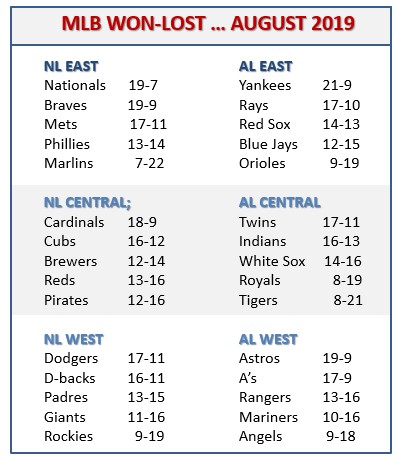
BBRT Declares June 18 & 19 Max Kepler Day(s)

Baseball Roundtable is declaring June 18th and 19th to be (semi) officially and in perpetuity Max Kepler Day(s) on this blog site. For those who are either not from Minnesota or  not sleep deprived this morning, here’s a brief explanation.

Yesterday (and today, really) the Twins topped the Boston Red Sox 4-3 in a 17-inning contest that took 5 hours and 45 minutes – with an opening pitch at 7:10 p.m. June 18 and a final, game-winning hit at approximately 12:55 a.m. June 19.  In between, here’s what Max Kepler did to earn this recognition.
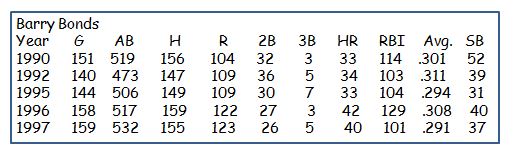

  • In the bottom of the eighth, with the Twins trailing 2-1, Kepler hit a game-tying single to right, plating Twins catcher Mitch Garver.
  • In the 13th, after a Mookie Betts home run in the top of the inning had put Boston up 3-2, Kepler homered to right-center (again tying the game).
  • In the bottom of the 17th, Kepler singled to right, driving in pinch runner Luis Arraez with the winning tally.

Not a bad night/early morning for a player who didn’t even start the game. (Kepler came on as a pinch hitter for Marwin Gonzalez in the sixth.) Kepler ended the night/morning with three hits and a walk in six plate appearance, with one run scored and three RBI.

Red Sox    000   100   100   000   100   00     3  17  0

Twins        000   100   010   000   100   01      4  15  1

A few tidbits:

  • It was the longest game (by innings, there is no clock in baseball) ever at Target Field.
  • The win enabled the Twins to avoid their first-ever three-game losing streak of this season.
  • A total of 39 players appeared in the game.
  • Eighteen pitchers took the mound – nine for each squad.
  • Eight players had eight plate appearances.
  • The Twins’ Eddie Rosario went four-for-eight, with three doubles, off three different pitchers.
  • The Red Sox outhit the Twins 17-15 and out-homered the Twins 2-1.
  • A total of 487 pitches were thrown.
  • Twins’ catcher Mitch Garver “went the distance.”
  • There were seven walks and 33 strikeouts.
  • Thirty runners were left on base (Twins 16 – Red Sox 14).
  • A lot of Minnesotans went to be late (or early in the a.m.), but happy.

I watched this one on television and have only one question.  Did they quit selling beer after the seventh inning.  If so, it was an extra long night at the ball park.

BASEBALL ROUNDTABLE ON THE TOP 100 BASEBALL BLOG LIST

100Baseball Roundtable is on the Feedspot list of the Top 100 Baseball Blogs.  To see the full list, click here.

I tweet baseball @DavidBBRT

Follow/Like Baseball Roundtable’s Facebook Page here.  More baseball commentary; blog post notifications; PRIZES.

Member: Society for American Baseball Research (SABR); The Baseball Reliquary; The Negro Leagues Baseball Museum.