Move Over Hugh “Losing Pitcher” Mulcahy – A Look at MLB’s “Lost” Records

The inspiration for this post – looking at some of MLB’s lost records – is Hugh “Losing Pitcher” Mulcahy. Here’s why.

MulcahyMulcahy “enjoyed” a nine-season major league career (1935-47, minus five WWII years), primarily for the Phillies. He was given the unfortunate nickname “Losing Pitcher” by Philadelphia sportswriters for the frequency “LP” appeared beside his name in box score. That moniker (as you will see as you read on) was overly critical.  Still, Mulcahy ran up a career record of 45-89, with a 4.49 ERA, leading the NL in losses twice, hits allowed once, earned runs allowed twice, walks allowed once, hit batsmen twice and wild pitches once.

So, why does BBRT say that nickname may have been overlay critical? Keep in mind that in his peak years (1937-1940 – when Mulcahy went 40-76; a .345 winning percentage), Mulcahy’s Phillies’ squads went 201-406 (.331 percentage).  Notably, he made one MLB All Star team – in 194o, when he led the NL with 22 losses (versus 13 wins), despite a respectable 3.60 ERA. (That season the MLB earned run average was 4.11.)

A Phillie in the Philippines

Hugh Mulcahy was the first MLB regular to be drafted for service in World War II. A National League All Star in 1940, Mulcahy was inducted on March 8, 1941. He served 53 months in the U.S. Army, including time in New Guinea and the Philippines, missing nearly five full seasons.  He was drafted at age 27, and missed what should have been his prime season. Returning to MLB in 1945, Mulcahy pitched in just 23 more MLB games (1945-47).

In this post, BBRT will take a look at some additional pitchers, who made a notable mark in the “lost” column.

Note:  For a post outlining BBRT’s Best and Worst Nickname lineups, click here.  Spoiler.  Lou Gehrig plays first base in both lineups based on a pair of nicknames he carried – “Biscuit Pants” and “Iron Man.” 

———————————————————-

Terry Felton – Most MLB Career Losses Without Ever Reaching the “W” Column (16)

FeltonTerry Felton was drafted right out of high school (by the Minnesota Twins) in the second round of the 1976 MLB draft. He began his professional career at age 18 and made his MLB debut on September 28, 1979 (as a 21-year old).  Before being called up, he had gone 26-34, 3.50 in four minor league campaigns.

Felton made just one appearance for the Twins in 1979 and it was promising – two innings pitched (versus the Brewers), six up, six down and one strikeout.  Felton opened the season with the Twins in 1980 and his first start (April 14) also showed promise.  He went a strong seven innings (six hits, three earned runs, one walk, three strikeouts) in a Twins ‘5-3 road win versus the Angels.  (Felton left the game with the Twins trailing 3-0. but Minnesota scored five runs over the last two inning for the victory.) Things started to unravel from there.  In his next three starts, Felton lasted a total of 9 2/3 innings, giving up 12 runs (eight earned), on 11 hits and seven walks, while fanning ten) – picking up his first three career losses.

Felton spent most of the rest of the season in the minors, appearing in just one more game for the Twins, giving up three runs in one inning of relief on May 2. He also appeared in just one game at the major-league level in 1981, giving up six earned runs in 1 1/3 innings. In those two seasons, he went 14-19, 4.09 for the AAA Toledo Mudhens.

In 1982, he stuck with the big club, appearing in 48 games (six starts); while he often showed “swing-and-miss” stuff, he had command issues (in 117 1/3 innings, he fanned 92 batters, but also walked 76 and hit four).  Felton also had a little trouble keeping the ball in the park, giving up 18 home runs.   He finished the season 0-13, with a 4.99 ERA (three saves). How much did his command issues affect his outcomes?  Hard to say, but American League hitters batted just .230 against him that season (as compared to an overall league average of .264).

Felton played two more minor-league seasons, but did not appear in the major league after 1982  His final MLB stat line: no wins, 16 losses, three saves and a 5.53 ERA in 55 appearances.

As you will see is often the case for the pitchers appearing in this post, the teams they played for had an impact on their (lack of) success. In Felton’s 0-16 season, for example, the Twins were a woeful 60-102 (5-43 in games in which Felton appeared).  Felton, by the way, was 0-7, 5.79 in ten career starts and 0-9, 5.40 in 45 relief appearances.

————————————————————-

Anthony Young – Most Consecutive MLB Losses Between Wins (27)

YoungFrom May 6, 1992 to July 24 1993, Mets’ righty Anthony Young lost a record 27 consecutive decisions.  There was a lot of (bad) luck involved in setting this dubious record.  Consider, for example, that his streak included a stretch in which he threw 23 2/3 scoreless innings (without picking up a win), as well as a game (loss number 26 on July 7, 1993) in which he retired 23 of the first 24 batters he faced.  With two outs in the bottom of the eighth (against the Padres), Young had allowed just one base runner (a single to lead off the game), while fanning seven.  At that point, however, the game was tied at zero and Young’s mound opponent (Andy Benes) was in the process of pitching a one-hit, complete-game shutout.  Young ultimately gave up a single and home run and ended up with a 2-0 loss (three hits, two runs, no walks, seven strikeouts over eight innings).

Just One Win Could Save Me

Anthony Young’s 27-decision losing streak included a stretch from July 7 through August 28,1992, when (as the Met’s closer) he pitched 23 2/3 consecutive scoreless innings and recorded 12 saves in 12 opportunities.

Now for some background.  The right-handed Young was selected in the 38th round of the 1987 MLB draft (by the Mets) out of the University of Houston (where he played football and baseball.)  He made his professional debut in 1987, at age 21 (A Level). In 1990, he had his best professional season, going 15-3, 1.65 in 23 starts at Double A.  The following season, he was 7-9, 3.73 in 25 starts at Triple A, earning an August call up to the Mets.

Young made his MLB debut on August 5, 1991 – pitching 2 1/3 innings of one-run relief in a Mets’ 7-2 loss to the Cubs.  He pitched in ten games for the Mets that season (eight starts) and put up a 2-5 record, with a 3.10 ERA.

In 1992, he started the season with the Mets and after five appearances (two starts), he was a solid 2-0, 3.26.  On May 6, he took his first loss of the season giving up five runs in six innings in a 5-3 loss to the Reds.  Little did he know that it would be 76 more appearances and 26 more losses before he would see a “W” next to his name again.

Young really didn’t pitch like an 0-27 hurler during the streak. (He put up a 4.36 ERA during the span.) You have to allow for the fact that he was pitching for a Mets’ team that went 72-90 in 1992 and 50-103 in 1993.  During Young’s 27-loss streak, the Mets went 90-144 (and Young saved 16 of those wins).

Bad Luck CAN be Better than No Luck at All

Ironically, it took a bit of bad luck to bring Young’s losing streak to end. In a July 28, 1993 game against the Marlins, Young was summoned to the mound to open the top of the ninth with the game knotted at three runs apiece.  The Marlins scratched out an unearned run to take a 4-3 lead (and put Young in line for a 28th consecutive losing decision).  However, the Mets came back with two in the bottom of the ninth to give Young (who had finished the top of the inning) the win.

During his streak, Young showed true balance – going 0-14 as a starter and 0-13 as a reliever. He did, however, put up a 3.51 ERA in 60 relief appearances, versus a 5.01 ERA in 17 starts. For his MLB career (1991-1996, Mets/Cubs/Astros), Young went 15-48, 3,89 in 181 appearances (51 starts). Notably, in 1993, when he went 1-16, his ERA was 3.77, compared to an overall National League ERA of 4.04. He clearly deserved better.

———————————————————-

Jack Nabors – Most Consecutive Losses in a Single Season (19)

Right-hander Jack Nabors made his debut on August 9, 1915 – at age 27 – with the Philadelphia Athletics.  He earned his call up with a 12-1 season at the D-Level Georgia-Alabama League (Talladega Tigers/Newman Coweta)– a stint which included a 13-inning, complete-game, no-hit, no-walk, 11-strikeout victory (two batters reached on errors). Things did not go well for Nabors at the MLB-level. He went 0-5, 5.50 in ten appearances for the lowly Athletics (who finished with a 43-109 record).

The following season started off better for Nabors. After three starts, he had a 1-1 record with a 1.42 earned run average – but he was still pitching for the inept Athletics (who would finish the season 36-117).  Little did Nabors know that his April 22, 1916 victory over the eventual 1916 World Series Champion Red Sox would be the only time he would notch a “W” in his MLB career.  After his win on April 22, Nabors would take the hill 37 more times in 1916 – going a 0-19.

The Sad Case of Jack Nabors

Consider this. In nine of his 20 losses in 1916, Jack Nabors pitched seven or more innings and gave up two or fewer earned runs.  Or this. In 15 of his 20 losses, the Athletics scored two or fewer runs in the game; being shutout I five of those contests. 

On the season, Nabors was 1-20, with a 3.47 earned run average – slightly better than the league ERA of 3.68.

In 1917, Nabors started the season with the Athletics, but was traded to Indianapolis of the Double-A American Association after just two appearances.  Indianapolis sent him on the Denver of the Single-A Western League, where his 9-17 record did include a no-hitter.  1918 saw him make brief appearances in with Indianapolis and with Sioux City of the Western League before enlisting in the U.S. Army. During his Army stint, he came down with the flu (influenza epidemic of 1918-19) and would never pitch again.  He died of tuberculosis in 1923 at the age of 35.

Nabors career MLB mark was 1-25, with a 3.97 earned run average in 52 games (37 starts).

______________________________________

John Coleman – Most Losses in a Season (48)

Library of Congress photo.

Library of Congress.

John Coleman was a 20-year-old rookie for the 1883 Philadelphia Quakers – a squad that finished the National League season with a dismal 17-81 record. Coleman started 61 of those games and appeared on the mound in 65 – going 12-48, with a 4.87 ERA.  He led the league in hits allowed (772), runs allowed (510) earned runs allowed (291) and home runs allowed (17) – while pitching 538 innings.  He also appeared in 31 games as an outfielder and one at second base. The game was indeed different then.

Like a Broken Record

John Coleman holds the MLB single-season record for runs allowed, earned runs allowed, hits allowed and losses – all set in 1883.

In 1884, Coleman started 21 games on the mound (relieving in three more) and went 5-17, 4.72. He also appeared in 51 games in the OF, and four at 1B. He played six more MLB seasons, primarily as an OF, appearing on the mound in just 18 more contests.  For his career, Coleman was 23-72, 4.68.  As a hitter, he was .257-7-29 in 629 games.

——————

Vic Willis – Most Losses in a Season Since 1900 (29)

Library of Congress .

Library of Congress .

When the 1905 season rolled around, Boston Beaneaters’ RHP Vic Willis was already a four-time 20-game winner. However, he had also led the NL in losses in 1905, going 18-25. 2.85 for a Boston team that went 55-98.  (Note: The NL ERA in 1904 was 2.73). It was more of the same for Willis in 1905, when he went 12-29, 3.21 (the league average ERA was 2.99) and the Beaneaters were 51-103 – finishing last in run scored (averaging just 3.0 runs per game – the league-topping Giants average 5.1 RPG).

Fate smiled on Willis the next season, as he was traded the Pittsburgh Pirate, where he went on to four consecutive 20-win seasons (a four-year record of 89-46, 2.08) forging his Hall of Fame resume.

Elected to the Baseball Hall of Fame in 1995 (Veteran’s Committee), Willis finished with a 13-season MLB record of 249-205, 2.63.  He was an eight-time 20-game winner, one-time ERA leader, two-time leader in complete games and one-time leader in strikeouts.

———————————————————–

Bobo Newsom, Pedro Ramos, Phil Niekro – Most Seasons Leading the League in Losses (4)

Bobo Newsom

Of the three MLB pitchers who led their leagues in losses four times, two did it while playing with with one team/franchise and in four consecutive seasons. The one who accomplished the feat first, however, spaced his four loss-leading seasons  over a span of 11 years and four different teams.  That was right-hander Bobo Newsom – a large, tough and colorful right-hander who lasted 20 MLB seasons, pitched for nine different teams and picked up 211 wins and 222 losses along the way.

Newsom

How much of a workhorse was Newsom?  He not only notched 433 decisions (211-222) on the major-league level, but had a 139-105 minor league record. Newsom took the mound as a professional every season from 1928 through 1953.

Newsom started his professional career in 1928 (as a 20-year-old). In his early minor-league campaigns, Newsom showed notable potential earning (very) brief call ups to the big leagues in 1929 and 1930 (Dodgers) and 1932 Cubs. In 1933, he really punched his ticket to the big leagues with a 30-11, 3.18 record for the LA Angels of the Pacific Coast League. In 1934, he was pitching for the Saint Louis Browns – going 16-20, 4.01 and leading the AL in losses for the first time.  (The Browns went 67-85 that season.) Still, he led the Browns in wins, earned run average, complete games, shutouts, innings pitched, strikeouts and (retroactively determined) even saves. The following season, Newsom started 0-6 for the Browns and was sold to the Washington Senators  in May.  He went 11-12 for the Senators (who finished 67-86) and his 18 losses again led the league.

Newsom went on to pitch a total of twenty seasons in the major leagues (for nine different franchises) – often suiting up for second-division squads. Still, when he had a solid team behind him, he showed what he could do. In 1940, for example, pitching for the first-place Tigers, Newsom went 21-5, with a 2.83 ERA. The very next season, as Detroit slumped to a fourth-place (75-79 season), Newsom went 12-20, 4.60 and led the AL in losses. He would top his league in the “L”column one more time.  In 1945, toiling for the last-place  Philadelphia Athletics, Newsom put up a 8-20, 3.29 record.

On the Big Stage

In the 1940 World Series, as his Tigers lost to the Reds four games to three, Bobo Newsom pitched three complete games, winning tw0.  He gave up just four runs over 26 innings (1.38 ERA) on 18 hits and four walks, while striking out 17.

Over his career, Bobo Newsom was a four-time All Star and three-time 20-game winner. He led his league in games started four times, complete games twice and innings pitched once. His career MLB record was 211-222, 3.96 with 600 appearances and 246 complete games in 483 starts.

———-

Pedro Ramos

Cuban-born Pedro Ramos led the American League in losses four consecutive seasons (1958-61 -… Senators Twins).  Over those four seasons, his teams finished a combined 88 games under .500.

Ramos

In 1959, Pedro Ramos made  his only All Star team.  That season, he was 9-7, 4.29 at the break. Ramos went 4-12, 3.95 over the second half and his 19 losses led the league. For his career, Ramos was 117-160, 4.08; posting a winning record in two of 15 campaigns.

Pedro Ramos’ Day(s) in the Sun

Pedro Ramos did find success as a reliever for the Yankees.  Traded from the Indians to the Yankees in September of 1964, Ramos notched one victory and eight saves for the Bombers in the stretch drive (13 appearances, 1.25 ERA) – helping New York hold off the White Sox (who finished just a game behind). Ramos went on to save 18 games for New York in 1965 and another 13 for the Yankees in 1966.

______________________________________________________________________

A Special for BBRT’s Minnesota Readers – a Different Kind of Last-to-First

When the Senators moved to Minnesota, Ramos did make a bit of  Senators/Twins’ history. On October 2, 1960, Ramos pitched the original Washington’s franchise’s last official game – going the distance in a 2-1 loss (four-hits, one earned run) to the Orioles in Baltimore.

On April 11, 1961 Ramos was the starting pitcher in the Twins’ first-ever MLB game. Opening against the Yankees in New York, Ramos started the franchise off on the right foot, pitching a three-hit, complete-game shutout in a 6-0 win.

______________________________________________________________

Phil Niekro

Future Hall of Famer Phil “Knucksie” Niekro finished his MLB career (1964-87) with 318 wins (274 losses) and a 3.35 ERA. The knuckleball specialist  started a lot of games and tossed a ton of innings. One particularly notable stretch included four consecutive seasons (1977-80), when he pitched for a Braves’ team that went a combined 277-368.  Niekro led the league in games started and losses all four years and in complete games and innings pitched in three of the four seasons (as well as in strikeouts once.)

Niekro

Niekro was a well-rounded athlete, playing  baseball basketball and football in high school – going 17-1 as a high school pitcher. He was signed by the Braves out of a tryout camp in July of 1958 and made is professional debut at Class D Wellsville in 1959 and reached the major leagues (as a Milwaukee Brave) in 1964.  In his first three seasons with the Braves, he was used primarily as a reliever (79 appearances/one start), going 6-6, 3.54 with eight saves.  In 1967, he finally got a shot at starting in the major leagues (he had been a starter in the minors), moving from the pen to the rotation in June. He tossed a two-hit, complete-game shutout in his first 1967 start (June 13). The rest is, well, history,  Niekro finished  the 1967 season at 11-9, with ten complete games in 20 starts.  His 1.87 ERA in 207 innings was the best among league qualifiers. He was on his way – starting 30 or more games in 18 of the next 19 seasons.

Every Coin has Two Sides

In 1979, Phil Niekro led the National League with 20 losses, but he also led the league in victories (21) – the most recent pitcher to lead his league in both categories in the same season.  As a further twist, Niekro actually tied for the NL lead in wins with his brother Joe, who was 21-11 for the Houston Astros.

In a 24-season MLB career, Niekro was an All Star five times, led his league in wins twice, wining percentage once, ERA once, games started four times, complete games four times, innings pitched four times and strikeouts once.  In true knuckler fashion, he also led the league in walks, wild pitches and hit batsmen three times each. He also won five Gold Gloves.

Primary Resources:  Baseball-Reference.comBaseball-Almanac.com; Jack Nabors, by Stephen V. Rice (SABR); Bobo, Newsom, by Ralph Berger (SABR).


Note:  BBRT published its 2020 American League Preview before the suspension of Spring Training and the upcoming MLB season (for that preview click here.) The National League Preview will be coming closer to the resumption of play.


100Baseball Roundtable is on the Feedspot list of the Top 100 Baseball Blogs.  To see the full list, click here.

I tweet baseball @DavidBBRT

Follow/Like Baseball Roundtable’s Facebook Page here.  More baseball commentary; blog post notifications; PRIZES.

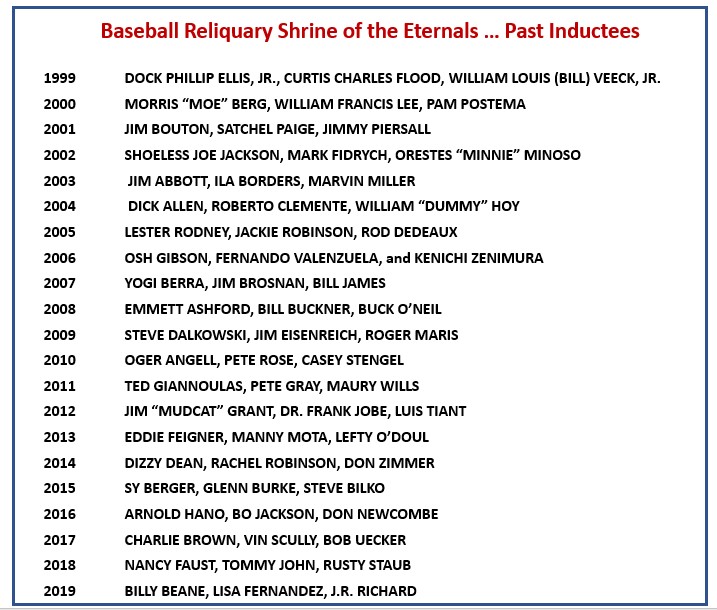
Member: Society for American Baseball Research (SABR); The Baseball Reliquary; The Negro Leagues Baseball Museum.


Baseball Roundtable 2020 AL Predictions

The 2020 MLB season is almost upon us -and it’s time for BBRT’s pre-season predictions.  Keep in mind, of course, that these prediction are not based on any inside information.  In essence, they represent informed speculation from one fan to another.  We’ll start with the American League – first, overall predictions and then team-by-team observations. The National League will be coming soon. Also, for a pre-season look at BBRT’s thoughts on “Why I Love Baseball,” click here.AL2020

—–AWARD WINNERS/CANDIDATES—–

Most Valuable Player

  1. Mike Trout, Angels … Always in the running.  The addition of Anthony Rendon to the Angels’ lineup should boost his numbers.
  2. Matt Chapman, A’s … Leather and lumber help A’s contend.
  3. Francisco Lindor, Indians … Power and speed at the SS position; key to the Indians’ offense.
  4. Gerrit Cole, Yankees … Could win 25 for the Bombers, impact enhanced by Severino health issues.
  5. Shohie Ohtani … If Angels contend and Ohtani gets at least 15 starts on the bump and 20 home runs at plate, he’ll get some votes.

Cy Young Award

  1. Gerrit Cole, Yankees … 20-25 wins, 250+ strikeouts well within reach.
  2. Shane Bieber, Indians … Fifteen wins a year ago and ready for a breakout season.
  3. Corey Kluber, Rangers … Two-time Cy Young winner ready to come back from a broken arm.
  4. Tyler Glasnow, Rays … Could be the ace of a tough Ray’s rotation.

Rookie of the Year

  1. Luis Robert, OF, White Sox … delivered a .328 average, with 32 home runs and 36 steals while going from High A to Double A to Triple A in 2019.
  2. Jesus Luzardo, LHP, A’s … Great stuff (98 M.P.H. fastball) and control … ready for the rotation. In 2019, walked 11 and fanned 73 in 55 innings (12 IP at the Major league level).
  3. Evan White, 1B, Mariners … .293-18-55 in 92 games at Double A last season, should get plenty of playing time with the Mariners.

Now, for a team-by-team look.

____________________________________________________________

AL EAST

FIRST PLACE – New York Yankees (95-67) …  Depth balances health concerns.

Aaron Judge photo

Aaron Judge – Yankee power source. Photo by apardavila

The Yankees claimed the prize of the free agent market – signing Gerrit Cole.  It’s a good thing, too, as they have lost Luis Severino for the 2010 season (Tommy John surgery).  As of this writing, they are also looking at issues with sluggers Giancarlo Stanton (calf) and Aaron Judge (shoulder).

The Yankees won 103 games in 2019 – despite losing an all-time MLB high of 2,776 games to injury – putting 30 different players on the IL for a total of 39 stints.  The depth that enabled them to sustain that 2019 performance should again carry them in 2020.

The rotation will be headed by Cy Young Award candidate Gerrit Cole and include veterans RH Masahiro Tanaka, LH J.A. Happ and LH James Paxton (expected to return in May).  All are proven double-digit winners.  Filling out the rotation are likely southpaw Jordan Montgomery and RH Jonathan Loaisiga.  Severino will be missed, but remember, the Yankees won 103 games a year ago, when Severino started only three games and Cole was not on the staff.

It can be habit forming …

The Yankees are currently in a streak of 27 consecutive winning seasons.

New York also has a lights-out bullpen, headed by closer Aroldis Chapman (37 saves, 2,21 ERA), Zack Britton and Adam Ottavino.

Then there is a deep and “bad” (in a good way) lineup that saw 14 players reach double-digits in home runs and led all of MLB in runs scored.  It looks like another winning season (they haven’t had a losing campaign since 1993) for the Bronx Bombers. Judge and Stanton will be power sources (once healthy), 2B D.J. LeMahieu is a professional hitter (.327-26-102), SS Glyber Torres powered 38 home runs and catcher Gary Sanchez hit 34.  The Bombers got 20+ long balls from 1B Luke Voit, 3B Gio Urshela and OF Brett Gardner (as well as 27 homers from Judge in 102 games).  While the Yankees wait for Judge and Stanton to return, Mike Tauchman and Clint Frazier are capable fill-ins (the pair hit a combined 25 home runs in 156 games).

Player BBRT will be watching: With the departure of Didi Gregorius, 23-year-old RH Gleyber Torres (who split his time between 2B and SS last season) will take over the SS position full-time.  Last season, at age 22, Torres went .278-38-90).  I may also keep an eye on Aaron Judge’s shoulder and on CF Brett Gardner, in his age 36 season, who showed unexpected power one year ago – .251 with career highs in home runs 28 and RBI 74.

——————————————

SECOND PLACE/WILD CARD – Tampa Bay Rays (90-72) … Quality pitching and stingy defense.

Tampa Bay continues to surprise, turning one of MLB’s lowest payrolls into a second straight season of at least 90-wins   BBRT expects they will do it again – counting heavily on pitching (quality and strategy) and defense.

Dee-fense.  Dee-fense.

In 2019, the Rays had the AL’s second-lowest earned run average and the third-most defensive runs saved.

Tyler Glasnow? CYA candidate?

Tyler Glasnow? CYA candidate?

In recent years, the Rays have leaned on the “opener” pitching strategy, but it looks like this year may see a more traditional approach – behind a strong top of the rotation. Veteran RH Charlie Morton, coming off his best season (16-6, 3.05) will head the rotation; followed by 2018 Cy Young Award winner southpaw Blake Snell; and then RH Tyler Glasnow (6-1, 1.78 in an injury shortened 2019 season).  The competition for the final two spots includes:  RH Yonny Chirinos (905, 3,85); LH Ryan Yarborough (11-6, 4.13); and LH Branden McKay.

In the pen, the Rays may go to a closer-by-committee strategy after trading away closer Emilio Page (4-2, 2.31, 20 saves in 66 appearances). The Rays, noted for their handling of the pitching staff, still have plenty of solid arms in the pen. The most interesting of which may be righty Nick Anderson, who went 5-4, 3.32 for the Marlins and Rays a year ago – fanning 110 batters and walking just 18 in 65 innings. He could take over the closing role. Among the other bullpen arms:  RH Diego Castillo (3.41 ERA in 65 games and 81 whiffs in 68 2/3 innings); RH Oliver Drake (3.21 in 50 games); and southpaws Colin Poche and Jose Alvarado.

The lineup could use some help.  Last season, the Rays finished in the middle of the AL (seventh) in runs scored. More significantly, their 769 total pales when compared to division rivals New York and Boston, who both topped 900 tallies.  They are looking for help from newcomer’s RF (RH) Hunter Renfroe (.216-33-64 for the Padres last season); 1B/DH Jose Martinez (.269-10-42 with the Cardinals); and (DH Yoshitomo Tsutsugo (a 28-year-old left-handed hitter, who averaged 35 home runs in Japan over the past two seasons).  Overall, the Rays have a versatile lineup and could benefit from a healthy year by 3B Yandy Diaz and 2B Brandon Lowe – who both lost significant time to injuries last season. There’s a lot of potential upside there in those two.

The Rays have proven their ability to maximize the pitching staff and, coupled with solid defense and a hopefully healthier lineup, should earn a Wild Card spot in 2019.  Catching the Yankees?  Not so much.

Player BBRT will be watching: 2018 AL Cy Young Award winner Blake Snell is coming off and injury-shortened (elbow surgery) 2019 season.  I’ll be watching to see if he’s fully back to form. In 2018, Snell was 21-5, 1.89.

———————————————————

THIRD PLACE – Boston Red Sox (83-79) … No Mookie, no post season

If the Red Sox’ third-place finish a year ago disappointed the Boston faithful, imagine how they will feel without fan-favorite and MVP-candidate Mookie Betts in the lineup.  I don’t think they can do any better without him, particularly considering that Alex Verdugo – the key player the Red Sox received in the trade – may not be ready for opening day (back issue). For those who are interested, Verdugo hit .294-12-44 in 106 games for the Dodgers in 2019 and was a .309 hitter over six minor league seasons.   Just 23, Verdugo has plenty of upside.

Rafael Devers. Should lead BoSox attach. Photo by DandreaPhotography

Rafael Devers. Should lead BoSox attach. Photo by DandreaPhotography

Just as troubling may be the loss (in the same trade) of veteran starter David Price – given Chris Sale’s elbow issues. From BBRT’s perspective the Red Sox seem to have a solid offense (even without Betts), led by the bats of SS Xander Bogaerts (.309-33-117); 3B Rafael Devers (.311-32-115 and an MVP in the making), and DH J.D. Martinez (.304-36-105).  The BoSox can also expect contributions from: LF Andrew Benintendi (coming off a down season); 1B Mitch Moreland (19 home runs in 91 games); and C Christian Vazquez (.273-23-72). Kevin Pillar will replace Betts in RF and, while he isn’t the same threat at the plate, he does bring a plus glove and some speed on the base paths.  Keep an eye on 2B Michael Chavis. He hit .254 with 18 home runs in 95 games as a rookie and can play all around the infield.  Even without Betts, there is plenty of offense in Boston.

No so lucky seven …

Boston’s staff ERA (4.70) was seventh in the AL in 2019.  Both of the teams they are likely to be chasing in the East – the Yankees and Rays – had lower earned run averages (4.31 and 3.65, respectively).

However, the rotation may not be ready – particularly with Sale not available to start the season – to challenge the Yankees or hold off the Rays.  Note:  The Red Sox did add Collin McHugh to the staff, but his late signing and past health issues make it seem likely he also will not be fully ready for Opening Day. If they are to contend, the Red Sox need lefty Chris Sale to comeback sooner rather than later.  They also need a rebound from RH Nathan Eovaldi, who went down with an elbow injury last April (that required surgery) and didn’t return to the mound until late July, and another solid year from southpaw Eduardo Rodriguez, Rodriguez established himself as a top of the rotation asset (19-6, 3.81, with 213 strikeouts in 203 1/3 innings).

In the pen, quality Closer Brandon Workman (10-1, 1.88, 104 whiffs in 71 2/3 innings) has a solid supporting staff behind (in front of, really) him – including strikeout machines RH Matt Barnes (110 K’s in 64 1/3 innings) and southpaw Darwinzon Hernandez (57 whiffs in 30 1/3 innings).

Player BBRT will be watching:  Darwinzon Hernandez. The 23-year-old southpaw fanned 57 batters in just 30 1/3 innings as a rookie last season (16.9 k’s per nine).  If he can cut down on his walks – 26 in those 30 innings – he could be a force out of the pen. He’s a work in progress, but should be interesting to watch. Side note:  In six minor league seasons, Hernandez has started 86 games (in 112 appearances). Possible switch back to that role if needed?

————————————————

FOURTH PLACE – Toronto Blue Jays (78-84) … It’s all in the genes

Over the past four seasons the Blue Jays’ win total has gone from 88 to 76 to 73 to 67.  They are looking for their young talent to reverse that trend – and it should happen.

The vision for Toronto 2020 improvement begins what should be a second generation of All Stars. Three of the first four spots in the batting order should go to SS Bo Bichette, 2B Cavan B Biggio and 3B Vlad Guerrero, Jr.  Bichette delivered a .311-11-21 line in 2019, with four steals in 46 games at SS – along with better than expected defense.  Bichette is only 22-years old and his minor league stats (.321-37-217, with 73 steals in 323 games) point to an eventual 20-home run/20-steal season). Guerrero, penciled into the cleanup spot, hit .272, with 15 home runs and 69 RBI in 123 games for the Blue Jays last season.  Just 21-years-old, look for more from Guerrero this year – a 25-30 home run campaign is a distinct possibility.  Another 2019 rookie with big league genes is 2B Cavan Biggio. At age 25, the Blue Jays expect improvement on his .234-16-48 season (with 14 steals in 100 games). His solid eye at the plate did lead to 71 walks and a .364 on-base percentage. He is a work in progress on both offense (needs to cut down on his 123 strikeouts) and defense – but, again, the Blue Jays expect improvement in his sophomore campaign.  Other key offensive contributors look to bed CF Teoscar Hernandez and LF Lourdes Gurriel Jr., who hit a combined 46 home runs in 209 games.  Expect growing pains but the offense should be better in 2020.

Hyun-Jin Ryu. Leading a rebuilt Blue Jays' rotation. Photo by IDSportsPhoto

Hyun-Jin Ryu. Leading a rebuilt Blue Jays’ rotation. Photo by IDSportsPhoto

Still, the optimism in Toronto stems from new mound additions. The Blue Jays’ starting ERA was north of 5.00 last season (5.25) and they revamped their rotation for 2020. The top three spots in the rotation should all to to newcomers – free agents Hyun-Jin Ryu (LH – 14-5, 2.32 with the Dodgers) and Tanner Roark (RH – 10-10, 3.35 with the Reds and A’s), along with trade acquisition Chase Anderson (RH – 8-4, 4.21 with the Brewers).  Other potential starters include veteran righty Matt Shoemaker (coming off a knee injury) and RH Trent Thornton.  Japanese import RH Shun Yamaguchi (a 16-game winner in Japan last season) could also be in the mix.

One for the books …

In 2019, Blue Jays’ rookie Bo Bichette set an MLB record by hitting at least one double in nine straight games. What make this all-time record even more impressive is that Bichette was only 11 games into his MLB career when he set. It.

In the pen, it all starts with closer Ken Giles. The dependable right went 2-3, 1.87 with 23 saves a year ago – fanning 83 batter in 53 innings.  However, more help is needed. Other likely relief arms include: RH Anthony Bass (claimed off waiver from Seattle); RH Wilmer Font, RH Rafael Dolis, RH Sam Gaviglio; and LH Thomas Pannone.  Yamaguchi could also be part of the bullpen, as well as a spot starter.

Overall, the Blue Jays should improve, but – given expected growing pains for a young lineup – are not likely to rise above fourth place.

Player(s) BBRT will be watching: Vlad Guerrero Jr. turned it up a notch in the second half of the season.  His first half numbers (61 games) were .249-8-25, while his second half was .293-7-44.  It will be interesting to see if he can carry his second-half bat over the full 2020 season.  (I’m also curious to see where RHP Shun Yamaguchi ends up.  In his final year in Japan (2019), he was 16-4, 2.78, with 194 strikeouts in 181 innings.  Could he be added in the Blue Jay’s rotation?

———————————————————

FIFTH PLACE – Orioles (60-102) …. Construction underway

The Orioles remain in a rebuilding mode and, while they have some exciting players, there are far from ready to move up in the standings – particular after trading away Dylan Bundy (who led the Orioles with 30 starts on the mound) and Jonathan Villar (who hit .274-24-73 at second base).

MeansNot much went right for the O’s last season – and they don’t look to have measurably improved.  Let’s start with a look at the starting pitching, which had the second-worst ERA in the AL last season (5.57). One sure candidate is southpaw John Means, an All Star and number-two finisher in last season’s AL Rookie of the Year balloting.  Means went 12-11, 3.60 on a team that went 54-108. RH Alex Cobb (3-2, 3.42 in just nine starts) is looking to comeback from hip and knee surgeries. Among the other candidates are: RH’s Asher Wojciechowski; Kohl Stewart; and Brandon Bailey. The Orioles used 18 starting pitchers last season and could approach that number again.

The O’s bullpen ERA (5.79) was the worst in all of major league baseball last season.  The pen put up an 18-32 record and converted only 27 of 53 save opportunities. Exactly how the bullpen lays out has yet to be seen – but among the key arms are RH Michael Givens (4.47 ERA in 58 games), southpaw Richard Bleier (3-0, 5.37 with four saves); and righty Hunter Harvey.  Harvey may have the most upside.


Book me on that flight …

Orioles’ pitchers gave up a major league record 305 home runs in 2019.

The Orioles have e some exciting young players in the lineup – just not enough of them. The offense should be led by RF Trey Mancini, LF Anthony Santander and DH Renato Hernandez. That trio hit 86 home run a year ago. Mancini (.291-35-97) is a rising star.

Player(s) BBRT will be watching:  Right-handed reliever Hunter Harvey (whose father Bryan Harvey racked up 177 MLB saves). The 25-year-old has a triple-digit heater and went 1-0, 1.42 in seven appearance last season.  He appears all the way back from 2016 Tommy John surgery.

I’m also interested to see what happens with 1B/DH Chris Davis. Owner of a .286-53-138 season in 2013, Davis has hit under the Mendoza line the past two seasons (.168 and .179).  He is, however, a two-time Al home run leader, hit 38 home runs as recently as 2016 and has looked good in Spring Training.

——————————————————-

AL CENTRAL

FIRST PLACE – Minnesota Twins (90-72) … Powerball at Target Field

What do DH Nelson Cruz, OF Max Kepler, 3B Miguel Sano, OF Eddie Rosario and C Mitch Garver have in common?  They all hit at least 30 home runs last season (led by Cruz’ 41) and they were all in the Twins’ lineup.  Five players with 30+ home runs on one team in the same season is an MLB record. Overall, the potent Twins’ lineup hit a record 307 home runs last season.  And, in the off season they added 3B Josh Donaldson – a four-time All Star who hit 37 long balls for the Braves last season.  Donaldson is also a plus defender at the hot corner, which will enable the Twins to move Miguel Sano over to first base.  Ultimately, the acquisition improved the Twins (who won 101 games a year ago) on both offense and defense.  And, let’s not forget 2B Luis Arreaz – a contact hitter who rapped .334 in 92 games, 2019 All Star SS Jorge Polanco and the versatile Marwin Gonzalez.

Kenta Maeda. Joins Twins' rotation. Photo by apardavila

Kenta Maeda. Joins Twins’ rotation. Photo by apardavila

The Twins ability to successfully defend their Central Division title was advanced even further by additions to the pitching staff (the Twin had the sixth-best ERA in the AL in 2019).  They retained key starters Jose Berrios and Jake Odorizzi (who combined for 29 victories last season) – and added Kenta Maeda (10-8, 4.04 for the Dodgers) and Homer Bailey (13-9, 4.57 for the Reds and A’s). RH Randy Dobnak, LH Kevin Smeltzer and veteran RH Jhoulys Chacin should compete for the fifth spot out of Spring Training.  Later, veterans RH Michael Pineda (PED-suspension until May) and LH Rich Hill (recovering from elbow surgery) may be ready to step in.

Wave it bye-bye … 

In 2019, the Twins became the first team to hit five or more home runs in 11 games in a season.

The Twins also bolstered the bullpen, bringing in veteran Tyler Clippard (2.90 in 53 games for the Indians last season).  Taylor Rogers (30 saves) will return to close.  Behind him are a host of returnees including Sergio Romo, Trevor May and Tyler Duffey.  The bullpen looks solid.

The Twins have clearly “covered all the bases” and should outdistance their Central Division competitions.

Player BBRT will be watching: CF Byron Buxton has worn the mantle of potential star for a few seasons – offering a combination of power, speed and Gold Glove caliber defense. If only he could stay healthy (in the last four seasons, he’s only reaches 100 games once). A year ago, he hit ten home runs and stole 14 bases in just 87 games.  If he can play a full season – 20 home runs and 20+ steals and a Gold Glove seem almost a given.

————————————————-

SECOND PLACE – White Sox (85-77) … Central Division’s “most improved”

Luis Robert. Poised to make a splash in CF.

Luis Robert. Poised to make a splash in CF.

The White Sox made it clear they are serious about contending with the off-season signing of C Yasmani Grandal, who led all MLB catchers in on-base percentage year ago (Brewers) and bopped 28 home runs; two-time All Star and 2015 Cy Young Award Winner Dallas Keuchel; and DH Edwin Encarnacion (who hit 34 home runs in 2019). They also added RF Nomar Mazara (.268-19-68) via the trade route.

The three new hitters join a lineup that includes power sources 1B Jose Abreu, and LF Eloy Jimenez (who each topped 30 home runs a year ago); 3B Yoan Moncada (.315-25-79); and surprise 2019 AL batting champ Tim Anderson (.335).  Oh yes, and there’s uber-prospect Luis Robert (a Rookie of the Year front runner) for CF.

Free swingers …

White Sox’ hitters took only 378 walks in 2019, lowest in the majors.  By contrast, they fanned 1,549 times – seventh-most.

Southpaw Keuchel should slot number-two in the rotation behind righty Lucas Giolito (who won 14 games for the ChiSox last season).  Also expected in the rotation are free agency signee veteran lefty Gio Gonzalez (3-2, 3.50 for the Brewers and a double-digit winner in nine of the last ten seasons).  RH’s Reynaldo Lopez and Dylan Cease are also in the mix.  Waiting in the wings is top prospect Michael Kopech, coming off 2018 Tommy John surgery.

The bullpen will be headed by reliable closer Alex Colome (30 saves in 33 opportunities a year ago), set up by newcomer RH Steve Cishek (2.95 ERA for the Cubs in 70 appearances) and southpaw Aaron Bummer. (2.13 ERA in 58 appearances.

Overall, the Pale Hose appear ready to move up in the standings, but seem to be a little short of dethroning the Twins.

Player BBRT will be watching: 22-year-old OF Luis Robert (signed out of Cuba in 2018) appears ready for the big leagues. Last season, he moved his way from High-A, to Double A to Triple A and hit a combined .328-32-92, with 36 steals.  He’s had a solid Spring Training so far and, if he travels north with the big club, could add a whole new dimension to the White Sox offense.

——————————————————

THIRD PLACE – Indians (83-79)

First, let’s be clear.  Those who say the Indians “faded” last year – finishing second to the Twins after leading the Central Division for three straight seasons – need to take another look.  Here are the Indians victory totals over the past four seasons (in chronological order): 91, 102, 91, 93.  The Indians chances to regain the Central crown regressed a bit going into 2020 (with the mid-season trades of Trevor Bauer and the post-season trade of two-time Cy Young Award winner Corey Kluber).

Shane Bieber. Latest Indians' CYA candidate.

Shane Bieber. Latest Indians’ CYA candidate.

Still, there is enough talent here to contend – if things go right.   The starting pitching will be led by righty Shane Bieber, who won 15 games last year, and the Indians are hoping for a bounce back from RH Carlos Carrasco, whose 2019 season was interrupted by treatment for leukemia.  Carrasco won 35 games over the 2017-18 seasons, but was 6-7, 5.29 last year. They also need a return to health from RH Mike Clevinger, a 13-game winner a year ago, who had meniscus surgery and may not be ready on Opening Day. Others looking to crack the rotation include Aaron Civale, Zach Plesac and Adam Plutko – three righties who all spent time in the minors last season – but who all performed well when called up (a combined 18-15, 3.55).

The bullpen will be led by southpaw Brad Hand 34 saves a year ago – and will be an effective change from a starting staff of all right-handers. And He will be supported by RH’s Nick Wittgen (2.81 in 55 appearances) and side-armer Adam Cimber.  The Indian are also hoping for good things from 22-year-old Emmanuel Case, acquired in the Kluber trade, who brings a triple-digit fastball to the fray.

Who’s your daddy?

The Indians won 18 of nineteen against the Tigers a year ago. Don’t see that happening again.

The Indians’ offense was middle-of-the-road a year ago (tied for seventh in the AL in runs scored) and looks to be relatively stable for 2020.   It will be led SS Francisco Lindor, the switch-hitting Lindor  hit .284, with 32 home run and 22 steals last season.  Speaking of switch-hitting. The entire Indians infield is made up a switch hitters – power sources 1B Carlos Santana and 3B Jose Ramirez at the corners (a combined 57 homers and 176 RBI) and newcomer 2B Carlos Hernandez (a solid contact hitter with some power). Roberto Perez is solid behind the plate defensively and at the plate offensively (24 home runs).  Filling out the lineup are a number of candidates in the OF – Oscar Mercado, Jordan Luplow, Delino DeShields and Domingo Santana and Jordan Luplow. Expected DH Franmil Reyes can also play in the garden.

Player BBRT will be watching: Young (24-years-old) OF/DH Franmil Reyes popped 37 home runs for the Padres and Indians a year ago (playing about two-thirds of his games in the Padres “not-so-hitter-friendly” park. A full year in Cleveland and, perhaps a more selective approach (46 walks and 156 strikeouts last season), could lead to some monster power numbers. In just 237 MLB games (two seasons), he mashed 53 long balls.

—————————————————–

FOURTH PLACE – Kansas City Royals (71-91) More of the same

Jorge Soler. 48 homere runs in 2019. Photo by Minda Haas Kuhlmann

Jorge Soler. 48 home runs in 2019. Photo by Minda Haas Kuhlmann

Four pieces of good news for Royals fans.  1) Six-time All Star catcher Salvador Perez is back; 2) DH/Of Jorge Soler (48 home runs) is back to hit cleanup (although, so are his league-leading 178 strikeouts); 3) OF/2B  Whit Merrifield and his 206 base hits, 16 home runs and 20 stolen bases returns to lead off; 4) The Tigers are in the Central Division.

The bad news:  The Royals have lost 207 games over the past two seasons – and 2020 looks like more of the same.

The rotation looks pretty much the same: LH Danny Duffy (7-6, 4.34), RH Brad Keller (7-14, 4.19), RH Jacob Junis (9-14, 5.24), LH Mike Montgomery (with competition for the fifth spot).  Those first four started 59 percent of the Royals’ games last season.

A man for all seasons ….

Royals’ closer Ian Kennedy is one of just five MLB pitchers to post 20-victory and 30-save seasons.

Ian Kennedy (converted starter) will once again serve as closer (30 saves, 3.41 ERA and 73 strikeouts in 63 1/3 innings), with support from RH Scott Barlow (4.22 in 61 appearances) and possibly veteran newcomers and former closers Trevor Rosenthal and Greg Holland.  LH Tim Hill is also in the bullpen mix (3.63 in 46 games), as is RH Josh Staumont (3.72 in 16 games).

Three for the road …

Only three AL players hit double digits in triples last season – and they were all royals.  Ten three-bagger each for Hunter Dozier, Adalberto Mondesi and Whit Merrifield.

We’ve already noted the importance of Perez, Soler and Merrifield to a lineup that was 14th in the AL in runs scored.  The rest of the starting nine looks to include: SS Adalberto Mondesi, RF Hunter Dozier, LF Alex Gordon, 3b Maikel Franco, 1B Ryan O’Hearn and 2B Nicky Lopez. Ultimately 2020 looks a lot like 2019 for the Royals. (O’Hearn and former Phillie Franco do offer some power potential at the corner infield spots.)

Player(s) BBRT is going to watch: The Royals are looking for continued progress from 24-year-old righty Brad Keller, who went 7-14 4.19 last season and is 16-20 3.68 over two MLB campaigns.  He’ll be worth a look.  So will prospect Brady Singer, who has looked good in Spring Training. The righthander went 12-5, 2.85 in 26 starts at High A and Double A last season.  The Royals need help and I expect Singer may be taking the major league mound early in 2020 (after some time at Triple A.)  Oh, and then there are veterans Trevor Rosenthal and Greg Holland vying for spots in the pen.  Between them they have five forty-save seasons on their resumes.  I’ll be watching to see if they stick.

 ——————————————————-

FIFTH PLACE – Detroit Tigers (63-99) … No offense taken

Miguel Cabrera. Faceo f the Tigers. Photo by GabboT

Miguel Cabrera. Faceo f the Tigers. Photo by GabboT

In 2019, the Tigers scored the fewest runs in MLB and gave up the third-most – and they did not dive deeply into the off-season market.  Put it this way, last season the Tigers scored 582 runs, while the Central Division-leading Twins scored 938 – and the Twins arguably, added more to their offense than the Tigers.  Another long season in Detroit.

The Tigers did add some pop with free agents 1B C.J. Cron and 2B Jonathan Schoop (both Twins one year ago). Cron’s 25 home runs last season would have led the Tigers and Schoop’s 23 would have been second on the team. The fact is, in 2019, no Tiger hit more than 15 home runs nor drove in more 59.  Things should e a little better in 2020.  Joining Cron and Schoop I the lineup are likely to be DH Miguel Cabrera (looking recapture some power at age 37 after a .282-12-59 season); OF’s Jacoby Jones, Christian Stewart and Victor Reyes; C Austine Romine, 3B Jeimer Candelaria; and SS Niko Goodrum. The 25-year-old Reyes may be the most interesting of those. Last season, the switch-hitting Reyes hit .304, with 3 home runs, 25 RBI and nine steals in 69 games.  Newcomer Cameron Maybin (.285 with 11 home runs for the Yankees in 2019) could earn some playing time.

A triple play …

The Tigers’ Miguel Cabrera is MLB’s most recent Triple Crown winner – .330 – 44-139 in 2012.

Southpaw Mathew Boyd (9-12, 4.56) is back to lead a starting rotation that includes only one pitcher to reach double-digit wins a year ago (free-agent signee Ivan Nova, who was 11-12 4.72 for the White Sox). Other likely candidates are Jordan Zimmerman, Spencer Turnbull and Daniel Norris. Michael Fulmer could provide some help if he returns (as expected) from 2018 Tommy John Surgery) in mid-2020. The 26-year-old ha a 3.81 average over 75 MLB starts.

In the bullpen, Joe Jimenez will close out games – a role he had filed since the trade of All Star closer Shane Greene last July.  Other in the pen should include workhorse RH Buck Farmer (3.72 ERA in 73 games); LH Gregory Soto; and RH Jose Cisnero (4.33 in 35 games).

Player BBRT will be watching:  Prospect Casey Mize could very well make the big club sometime this season. In two minor league campaigns, the 23-year-old righthander has gone 20-13, 2.96, with 120 strikeouts and just 26 walks in 123 innings, He’s knocking on the door – and the Tigers offer plenty of opportunity.

———————————————-

AL WEST

FIRST PLACE – Houston Astros (91-61) … The elephant in the room

The last three seasons, the Astros have won 101, 103 and 107 games.  I don’t expect them – given the departure of Gerrit Cole and Collin McHugh and Justin Verlander’s lat strain – to win in triple digits again.  The Astro need to hope Verlander’s issue really is “mild” and that he returns quickly.

Then there is the elephant in the room – the sign-stealing controversey. Some think that issue may adversely affect the Astros’ performance on the field.  I’m inclined to believe they will come into the season wanting to prove themselves – and, even with the pitching issues, there is enough talent on this squad to keep them atop the AL West.

Alex Bregman photo

Alex Bregman … MVP candidate. Photo by jimw7

The offense is nearly identical to one year ago with CF George Springer (.292-39-95) and 3B Alex Bregman (.296-41-112) at the top;  2B Jose Altuve  (.298-31-74), SS Carlos Correa (.279, with 21 homers in 75 games) and DH Yordan Alvarez (.313-27-78) in the middle; and LF Michael Brantley, RF Josh Reddick and C Mandy Maldonado holding down the 7-8-9 spots. Only the Yankees and Twins scored more runs than the Astros a year ago -and the Houston offense should continue to deliver in 2020.

The rotation will not be as strong – after the loss of free agent Gerrit Cole and his 20-5, 2.50 record (not to mention the 326 strikeouts) and 2019 Cy Young Award winner Justin Verlander opening the season on the IL. The Astros will be counting on RH Zack Greinke (18-5, 2.93.).  Some of the sting of Cole’s departure may be eased by the return of curve-balling RH Lance McCullers (coming back from Tommy John surgery). The back end of the rotation should include 25-year-old RH Jose Urquidy, who made his MLB debut last July and went 2-1, 3.95 in nine appearances (seven starts), walking just seem and fanning 40 in 41 innings.  Others competition for a spot could be righties Brad Peacock, Josh James and Rogelio Armenteros.  Cole will be missed.

From both sides now …

In 2019, Astros pitchers racked up the most strikeouts of any team (1,671), while Houston hitter fanned the fewest times (1,166).

The bullpen’s back and looks to again be a strength.  Roberto Osuna (38 saves) will close – and the Astros will get to him on the arms of RH’s Ryan Pressly (2.32 ERA in 55 games), Josh James (if he doesn’t crack the rotation), Joe Smith (1.88 in 28 games) and Chris Devenski (and others).  Last season, the Astros’ pen put up the third-best ERA in MLB and the fifth-best strikeouts per nine ratios.  The only criticism is that the pen is bit RH-heavy.

Player BBRT will be watching: 23-year-old, left-handed swinging outfielder/first baseman Kyle Tucker bashed 34 home runs in 125 games at Triple A last season – and then went .269-4-11, with five steals in 22 games with the Astros. (He was also on the post-season roster.) I’d like to see what he can do with more MLB playing time.

—————————————————

SECOND PLACE/WILD CARD – A’s (88-74) Nice balance 

Leather and Lumber in Oakland.

Leather and Lumber in Oakland.

The A’s surprised a lot of people with their 97 wins a year ago.  They can’t count on the element of surprise this season.  They can., however, count on a young and talented pitching staff and a solid defense.

Veteran righty Mike Fiers (15-4, 3.90 a year ago) will lead the staff, although we may see southpaw Sean Manaea (leading the league in percentage of vowels) emerge as the ace. Manaea returned from shoulder surgery late last season and went 4-0, 1.21 in five starts.  That’s a quality 1-2 punch at the top of the rotation. Beyond those two we find sound arms in RH Frankie Montas (9-2, 2.63 in 16 starts), and southpaws Jesus Luzaardo and A.J. Puk (both top prospects). The A’s rotation looks solid.

Liam Hendriks returns as closer (25 saves, 1.80 ERA a year ago) and is ably supported Yusmeiro Petit (2.71 ERA in 80, count ‘em 80, appearances).  The rest of the pen (Joakim Soria, Lou Trivino) needs to step up their game. Chris Bassitt should prove valuable as a versatile swing man (middle relief, set up man, starter) – particularly with the new three batter rule. Last season, Bassitt was 10-5, 3.81 in 28 games (25 starts).

Multiple choice ….

Power hitting Matt Canha give the A’s lineup flexibility.  In 2019, he started games at all three outfield positions, as well as 1B.

The A’s defense also look solid – led by 1B Matt Olson and 3B Matt Chapman (both with multiple Gold Gloves on their resumes) and dependable SS Mark Semien. Offensively, the punch comes from Olson and Chapman (who each hit 36 home runs and plated 91 a year ago) and OF’s Ramon Laureano (The A’s like those guys with lots of vowels), who hit .288, with 24 long balls, and Matt Canha (.273 with 28 home runs). Semien will be the table setter at the top (.285 average, .369 OBP in 2019). The A’s could surpass BBRT’s win expectation with a rebound form DH Khris Davis, who hit just .220 with 23 home runs last season – after three consecutive seasons of 40+ home runs and 100+ RBI. Just 32-years-old, he should have more left in the tank. The remaining the lineup spots look to go to Steve Piscotty (OF); Sean Murphy (C;) and Tony Kemp or Frank Barreto (2B).

Good D builds mound confidence …

In 2019, the A’s gave up an MB-fewest 34 unearned runs.

—————————————————-

THIRD PLACE – Los Angeles Angels (85-77) … Trout-Rendon to lead the way

Mike Trout ... Annual MVP contender. Photo by KA Sports Photos

Mike Trout … Annual MVP contender. Photo by KA Sports Photos

The Angels finally brought in high-octane protection for perennial MVP candidate CF Mike Trout. It came in the signing of 3B Anthony Rendon (.319-34-126 for the Nationals). The Trout-Rendon core is complemented by DH Shohei Ohtani (.286-18-52 in 106 games). 2B David Fletcher is a capable table setter at the to of the order (.290 and a team-leading 173 hits in 2019). The rest of the lineup looks to include defensive wiz Andrelton Simmons at shortstop, power hitting Justin Upton (looking to rebound from an off year in 2019); switch-hitting Brian Goodwin in RF; and Jason Castro/Max Stassi behind the plate.  It will be interesting to see how 1B develops, as it looks like Tommy La Stella (.295-16-44 in 80 games) is poised to take more playing time from future HOFer Albert Pujols (.245-23-93 in 131 games).    This is a quality offense, but does not have the depth of the division favorite Astros.

On the mound, the Angels’ fell short in the Gerrit Cole sweep stakes.  They did bring in right-handers Dylan Bundy (7-14, 4.79 for the Orioles) and Julio Teheran (10-11, 3.81 for the Braves).  They join Andrew Heaney (4-6, 4.91 in an injury-dampened 2019.)  They are also hoping to get more starts from RH Shohei Ohtani (who has the potential to be the staff ‘ace” (at least once a week), now recovered from Tommy John surgery). Other potential starters include: RH Griffin Canning, newcomer Matt Andriese (5-5, 4.71 for the Diamondbacks) and Patrick Sandoval.  There should be plenty of work to go around. In 2019, 19 different pitchers started games for the Angels. Bundy and Teheran should add some stability in the rotation, but it still is not enough to “win the West.”

Seeking stability …

Nineteen pitchers started on the mound for the Angels in 2019, fourteen of those getting at least five starts – led by Andrew Heaney’s 18 starts.  The Angels are looking for a more stable rotation in 2020.

Hansel Robles will lead the pen (23 saves in 27 opportunities). The reminder of the bullpen will again be righty-dominated, likely including: Ty Buttrey (3.98 ERA in 72 games), Keynan Middleton (1,17 in 11 games), Noe Ramírez (3.99 in 51 games) and Cam Bedrosian (3.23 in 59 games).

Player BBRT will be watching: Shohei Ohtani, recovered from Tommy John surgery, is ready to get back to being a two-way player. I’ll be watching to see how he balances is mound work with his DH duties. I see 10 victories and 20+ home runs as a possibility.

————————————–

FOURTH PLACE – Texas Rangers (80-82)… Kluber joins the klub

Corey Kluber photo

Corey Kluber to lead Rangers’ rotation. Photo by apardavila

The Rangers’ biggest off-season move was the trade for two-time Cy Young Award winner Corey Kluber.   It looks like a very positive move.  Keep in mind, however, Kluber Turns 34 in April and is coming off a broken arm that limited him to seven starts in 2019.  Still, he was a 20-game winner as recently as 2018 – and looks good to go for 2020. He will be the ace of the Rangers’ staff.  The Rangers further bolstered their rotation – they had the AL’s fourth-highest starting ERA in 2019 – by bringing in RH Kyle Gibson (13-7, 4.84 with Minnesota) and Jordan Lyles (12-8, 4.15 with Milwaukee and Pittsburgh). Add in holdovers southpaw Mike Minor and Lance Lynn (who won a combined 30 games for Texas a year ago) and you have a solid rotation.  In fact, starting pitching – a weakness a year ago, may be a strength for 2020.

Jose Leclerc returns at closer and needs to bounce back from a disappointing 2019 (his ERA went from 1.56 in 2018 to 4.33 in 2020). Still he has swing-and-miss heat, fanning 100 batters in 68 2/3 innings – and the Rangers expect a rebound. RH Rafael Montero brings similar tools to the set up role (36 whiffs in 29 innings). Among the other arms likely in the pen are likely to be RH Jesse Chavez, waiver-claim RH Nick Goody (3.54 in 39 games with the Indians), RH Jonathan Hernandez and southpaws Brett Martin and Joely Rodriguez.   Rodriguez could prove interesting. The 28-year-old spent the last two seasons in Japan, where he reportedly was hitting triple-digits with his fastball.  Last season, with the Chunichi Dragons, he posted a 1.64 ERA, with 77 strikeouts in 60 1/3 innings.

Singles? We don’t need no stinkin’ singles …

Joey Gallo reached 100 home runs before he reached 100 career singles.  On May 8 of last season, he hit his 100th dinger. At the time, he had just 93 singles.

The offense goes through RF Joey Gallo, who managed 22 home runs in just 70 games (oblique strain). Joining Gallo in the middle of the lineup will be newcomer Todd Frazier (3B), who hit 21 home runs for the Mets a year ago and switch-hitting CF Danny Santana.283-28-81, with 21 steaks. 37-year-old Shin-Soo Choo just keeps chugging along at leadoff (.265-24-61, with 15 steals).   That’s right 15 steals in his age 36 season, While the Rangers continue to show power potential, they need more consistent contact from several spots in the order. Last season, 2B Rougned Odor popped 30 home runs, but hit only .205; 1B Ronald Guzman hit 10 home runs in 87 games, but averaged just .219; and catcher Robinson Chirinos hit 17 home runs for the Astros, but hit just .238. The Rangers appear to have uncovered a gem in outfielder Willie Calhoun, who popped 21 home runs (.269 average) in just 83 games last season.  Unfortunately, the 25-year-old suffered a broken jaw (HBP) in Spring Training and will start the season on the IL.  That may open the door for versatile INF/OF Nick Solak. The 25-year-old hit .293, with five home runs in 33 games as a rookie.

Got a feelin’ for stealin’ … 

 No team stole more bases than the Ranger in 2019 (131 steals) – with five players reaching double-digits in swipes: Elvis Andrus (31); Delano DeShields (24); Danny Santana (21); Shin-Soo Choo (15); and Rougned Odor (11). In addition, theirs 77.5 percent success rate was the best in the AL. (Six NL teams were successful at least 80 percent of the time.)

The Rangers are improved over 2019. BBRT thinks, however, that – given a “short” bullpen and some potential holes in the lineup, a fourth-place finish is most likely.  However, this is a team going in the right direction.

Player BBRT will be watching: Joey Gallo has 50-home run power and, in an injury-shortened (left oblique strain/broken hamate bone) 2019 season, Gallo showed an improved ability to make contact.  After reaching 40 and 41 homers runs each of the two previous season – but hitting just .209 and .206, Gallo hit .253, with 22 home runs in just 70 games.  It will be interesting to see what a full season brings. (He does still have to cut down on his strikeouts – 114 whiffs in those 70 contests).

—————————————————

FIFTH PLACE – Mariners (67-95) … Another long year

The Mariners won only 68 games last season and one of their best players – Mitch Haniger – will start the season on the IL.  It could be another long year in Seattle.

One bullet dodged …

The Mariners dodged a bit of a bullet last season, as the pitching staff kept is ERA under 5.00 – at 4.99.  Looks like it could e more of the same in 2020.

Let’s start with the rotation. It will be led by southpaw Marco Gonzalez, 16-13, 3.99 a year ago – the only Mariner with double-digit wins in 2019. He was also one of only two Mariners with at least seven starts and an ERA under five a year ago. The other was Mike Leake, who was traded to the Diamondbacks in mid-season. At the time of his trade, Leake was 9-8, 4.27.  Behind Gonzalez, the rotation now looks like southpaws Yusei Kikuchi (6-11, 5.26); 23-year-old Justin Sheffield (0-1, 5.50 in eight games/seven starts); righthander Kendall Graveman (recovering from Tommy John surgery); newcomer RH Taijuan Walker (coming back from Tommy John surgery, but a nine-game winner for Arizona in 2017); and 23-year-old RH Justin Dunn (9-5, 3.55 at Double A in the Mets’ system).

Last season nine different pitcher recorded saves for the Mariners – led by Roenis Elias’ 14 saves, recorded before his trade to the Nationals in late July. Now, it appears closing duties will go to RH Matt Magill (3-2, 3.63 with five saves after coming over from the Twins in July and/or Sam Tuivailala (2.35 ERA in 23 games). Others in the competition for spots in the pen include: RH Yoshihisa Hirano (4.75 ERA in 62 games for the D-backs); Brandon Brennan (4.56 ERA in 44 games); and RH. Carl Edwards Jr. (8.47 ERA in 22 games for the Cubs and Padres, but effective for the Cubs from 2015-18).  I’d expect plenty of ongoing auditions for the bullpen during the course of the season.

Kyle Seager. Will lead Mariners offense. Photo by THE Laura Smith

Kyle Seager. Will lead Mariners offense. Photo by THE Laura Smith

The offense – in the absence of Mitch Haniger (.285-26-93 in 2018; .220-15-32 in an injury -shortened 2019) – will be led by veteran 3B Kyle Seager (.239-23-63) and DH Dan Vogelbach, who hit 30 home runs a year ago, but averaged only .208.  Catcher Tom Murphy should also hit in the middle of the line up (.273 with 18 long balls last season). At the top of the lineup 2B Shed Long Jr.  appears to be ready to take a full-time MLB job after going .263-5-15 in 42 games a year ago – although veteran Dee Gordon’s .276 with 22 steals should earn him playing time as well. CF Mallex Smith brings speed to the offense (46 steals), but hit only .227. Rounding out the lineup we can expect SS J.P. Crawford; RF Kyle Lewis; LF Jake Farley; and 1B Evan White.  White, who went .293-18-55 in 92 games as Double A last season, appears to have the most upside of that group.

Oops! My mistake …

The Mariners defense committed and MLB-highest 132 errors in 2019.


Player BBRT will be watching: Southpaw Yusei Kikuchi leveraged a 98-m.p.h fastball and a solid slider (plus a curve and change) to a 73-46, 2.77 record in eight seasons in the Japanese League. He signed with the Mariners after a 14-5, 3.04 record in Japan in 2018.  In his final three seasons in Japan, he won 42, lost just 18 and put up a 2.50 ERA with 501 strikeouts in 496 1/3 innings.   After a 6-11. 5.46 record in his first year in Seattle, the Mariners are hoping the 29-year-old will have further adjusted to stateside culture and level of competition, and be ready to deliver expected performance.  BBRT would like to see that as well, and will be watching his progress,

Primary resources:  MLB.com; Baseball-Reference.com; Fangraphs.com

100Baseball Roundtable is on the Feedspot list of the Top 100 Baseball Blogs.  To see the full list, click here.

I tweet baseball @DavidBBRT

Follow/Like Baseball Roundtable’s Facebook Page here.  More baseball commentary; blog post notifications; PRIZES.

Member: Society for American Baseball Research (SABR); The Baseball Reliquary; The Negro Leagues Baseball Museum.

Why I Love Baseball … at least ten reasons.

BBRT lists ten great reasons to love our great game. 


OD intros

1.  Baseball comes along every spring,  accompanied by sunshine and optimism.

Baseball is the harbinger of better times.  It signifies the end of winter (not a small thing if you’re from Minnesota) and the coming of spring – a season of rebirth, new life and abundant optimism.   Each season, you start with a clean slate.   Last year’s successes can still be savored, but last year’s failures can be set aside (although rival fans may try to refresh your memory), replaced by hope and anticipation.   On Opening Day, in our hearts, we can all be in contention.

People ask me what I do in winter, when there’s no baseball. 

I’ll tell you what I do.  I stare out the window and wait for spring.

 Honus Wagner, Hall of Famer

 2.  The pace of the game invites contemplation.

Between innings, between batters or pitchers, and even between pitches, baseball leaves us time to contemplate what just occurred, speculate on what might happen next and even share those thoughts with nearby spectators.  Baseball is indeed a thinking person’s game.

3.  Baseball is timeless and, ultimately, fair in the offering of opportunity.

The clock doesn’t run out.  There is no coin flip to determine who gets the ball first in sudden death overtime.  No matter what the score, your team gets its 27 outs and an equal opportunity to secure victory.  What could be more fair?   And then there is the prospect of endless “extra” innings, bonus baseball for FREE.

When I was young my heroes didn't wear capes or cowboy hat. They wore stirrups and baseball caps. Many still do.

When I was young my heroes didn’t wear capes or cowboy hat. They wore stirrups and baseball caps. Many still do.

4.  Plays and players are distinct (in space and time).

Baseball, while a game of inches, is also a game of considerable space.   The players are not gathered along an offensive line or elbow-to-elbow under a basket. They are widely spaced, each with his own area of responsibility and each acting (as part of a continuing play) in their own time frame.  (The first baseman can’t catch the ball, for example, until after the shortstop throws it.)   This enable fans to follow, understand  and analyze each play (maybe not always accurately) in detail.   And, baseball’s distinct spacing and timing makes it possible to see the game even when you are not there.  A lot of people grinned at President Gerald Ford’s comment that he “watched a lot of baseball on the radio.”  In my view, he was spot on.  You can see baseball on the radio – you can create a “visual” of the game in your mind with minimal description.    That’s why on summer nights, in parks, backyards and garages across the country, you’ll find radios tuned to the national pastime.

 5. The scorecard.

Can there be anything more satisfying than keeping an accurate scorecard at the ball park?  It serves so many purposes.  The keeping of a scorecard ensures your attention to the happenings on the field.

Boxscore photo

Photo by mwlguide

Maintaining the score card also makes you, in a way understandable only to fellow fans, more a part of the game.   That magical combination of names, numbers and symbols also enables you to go back and check the progress of the game at any time.  “Oh, Johnson’s up next.  He’s walked and grounded out twice.”  It’s also a conversation starter, when the fan in the row behind you asks, “How many strikeouts does Ryan have today?”   And, it leaves you (if you choose to keep it) with a permanent record of the game, allowing you to replay it in your mind (or share it with others) at will.  Ultimately, a well-kept score card enhances the game experience and offers a true post-game sense of accomplishment.

6.  The long season.

Baseball, so many have pointed out, is a marathon rather than a sprint.  It’s a long season with ample opportunity to prove yourself and lots of chances to redeem yourself.  For fans, the long season also represents a test of your passion for the game.  Endurance is part of the nature of the true baseball fan.  And, and in the end, the rigors of a 162-game season prove your mettle and that of your team.   Not only that, but like a true friend … baseball is there for you every day.

 7.  Baseball invites, encourages, even demands , conversation.

Reason number two hinted at the importance of conversation, noting that the pace of the game offers time to contemplate the action (past and future) and share those thoughts with others.   I love that about the game, but I also love the fact that whenever baseball fans gather, their passion comes out in conversation – and they find plenty to talk about:

  •  Statistics,  statistics, statistics.  Baseball and its fans will count anything.  Did you know that Yankee Jim Bouton’s hat flew off 37 times in his 2-1, complete-game victory over the Cardinals in game three of the 1964 World Series?  More seriously, statistics are part of a common language and shared passion that bring baseball fans together in spirited conversation.  As best-selling author Pat Conroy observed “Baseball fans love numbers.  They love to swirl them around in their mouths like Bordeaux wine.”  I agree, to the fan, statistics are intoxicating.
  • Stories, stories, stories.  Baseball and its fans celebrate the game’s history.  And, I’m not talking just about statistics.  I’m talking about the stories that give this great game color, character and characters.  Ty Cobb sharpening his spikes on the dugout steps, Babe Ruth’s called shot, Louis Tiant’s wind-up, Willie Mays’ basket catch, Dock Ellis’s LSD-fueled no-hitter.
  • Trivia, trivia, trivia.  This may fall close to the “stories, stories , stories” category, but fans cherish the trivia that surrounds our national pastime – whether that trivia is iconic or ironic.  For example,it’s ironic that the iconic Babe Ruth holds the best winning percentage against the Yankees of any pitcher with 15 or more decision against them (17-5, .773). And, it’s ironic that the more recent player to steal home twice in one game (Vic Power, August 14, 1958) did it in a season when he only stole a total of three bases).  Then there is the iconic performance of Ralph Kiner, who led the NL in home runs as a rookie in 1948 – and successfully defended that title in each of the next six seasons – the most consecutive home runs titles by any major leaguer ever.

Basically, I took a long time to say I love the fact that baseball fans will talk with passion about something that happened in today’s game, yesterday’s game, over time or even in a game that took place on May 30, 1894 (Bobby Lowe of the Boston Beaneaters records MLB’s first four-homer game).  And, as a bonus, all this conversation – all the statistics, stories and trivia – make the games, moments within the games and the characters of the game (heroes, goats and mere participants) as timeless as baseball itself.

 8.  The box score. 

Today's box score - a thing of beauty.

Today’s box score – a thing of beauty.

BBRT editor’s  mother used to refer to an accordion as “an orchestra in a box.”  That’s how I view the daily box score – the symphony of a game recorded in a space one-column wide by four inches deep.   Some would say the box score reduces the game to statistics, I would say it elevates the game to history.  What do you want to know about the contest?   Who played where, when?  At bats, hits, stolen bases, strikeouts, errors, caught stealing, time, attendance, even the umpires’ names?   It’s all there and more – so much information, captured for baseball fans in a compact and orderly space.  I am, of course, dating myself here, but during baseball season, the morning newspaper, through its box scores, is a treasure trove of information for baseball fans.

 9. The irony of a team game made up of individual performances.

While baseball and baseball fans live for individual statistics and, while the spacing of the players drives individual accountability, the game is, ironically, deeply dependent on the concept of “team.”

Consider the offense.  Unlike other sports , where you can deliver victory by giving the ball or puck – time and time again (particularly as the clock runs down) –  to your best runner, skater, receiver or shooter, in baseball, your line-up determines who will be “on the spot” and at the plate when the game is on the line.  It may be your .230-hitting second basemen, rather than your .320-hitting outfielder.  Yet, even as the team depends on the hitter, he is totally alone in his individual battle with the pitcher.  And, achieving individual statistics that signify exceptional performance also demands a sense of team.  You don’t score 100 runs without a team mate to drive you in (although the statistic remains your measure of performance) …  and, you don’t drive in 100 runs if no one gets on base in front of you.   And, can you think of any other sport that keeps track of – and honors – the team-oriented “sacrifice.”

On defense, the story is the same.  A ground ball pitcher, for example, needs a good infield behind him to optimize his statistical presence in the “win” column.  And the six-four-three double play requires masterful teamwork as well as individual performance –  duly recorded in the record books as an assist for the shortstop, a putout and an assist for the second baseman and a put out for the first baseman.  Then there is the outfield assist – a perfect throw from a right fielder to nail a runner at third earns an assist – even if the third baseman drops the ball and earns an error.  Two individual results (one good / one bad) highlighted, but without the necessary team work – a good play on both ends – a negative outcome in terms of the game.

Ultimately, baseball is a game of individual accomplishments that must be connected by the thread of “team” to produce a positive outcome.

10. Baseball’s assault on the senses.  (Indoor ballparks fall a bit short here).

The sight of a blue sky and bright sun above the ballpark or a full moon over a black sky above a well-lit stadium.  The feel of the warm sun or a crisp evening breeze.  The scent of freshly mowed grass or steaming hot dogs.  The taste of cold beer and peanuts.  The sound of the crack of the bat, the cheers (or moans) of the crowd, the musical pitch of the vendors.  Baseball assaults all the senses ―  in  a good way.

Now, I could go on and on, there are lots more reasons to love this game: its combination of conformity (all infields are laid out the same) and individualism (outfield configurations not so much); its contributions to culture (literature and movies); its strategy (hit-and-run, run-and-hit, sacrifice bunts, infield / outfield positioning, pitching changes, etc.); triples; the 6-4-3 double play; knuckleballs; and more.  But to protect myself – and BBRT’s readers – I’ve limited myself to ten.   I probably could have saved a lot of time and words  had I just started with this so-perfect comment from sportscaster Bryant Gumbel, “The other sports are just sports.  Baseball is love.”  That says it all.


100Baseball Roundtable is on the Feedspot list of the Top 100 Baseball Blogs.  To see the full list, click here.

I tweet baseball @DavidBBRT

Follow/Like Baseball Roundtable’s Facebook Page here.  More baseball commentary; blog post notifications; PRIZES.

Member: Society for American Baseball Research (SABR); The Baseball Reliquary; The Negro Leagues Baseball Museum.


Hit Or (more often) Miss … Some Memorable Performances

It’s hard to imagine a player putting up a career average of .170 and still managing to stay in the major leagues for 11 seasons, going 86 consecutive at bats without a hit or having a 10,000-strong fan club, despite an average below the Mendoza line.  Those are among the “accomplishments” of a hand full of hitters whose performance caught Baseball Roundtable’s attention.  Read on for their stories.

Bill Bergen – .170 career average over 11 MLB seasons

Bill bergenBill Bergen managed an eleven-season (947-game) career as a major league backstop.  He must have been doing something right behind the plate, because he had plenty of difficulty when at the plate. Over his MLB career, Bergen hit just .170 (516-for-3,028) – the lowest career average for any player with at least 2,500 MLB at bats.  In only one season – 1903 for the Cincinnati Reds – did Bergen hit at least .200 (.227 in 58 games that season).  Bergen also showed little power, with just two career home runs (45 doubles and 21 triples). Note: Over the span of Bergen’s MLB career, the overall MLB batting average was .253.

Bergen wrapped up is career (1901-03/Cincinnati; 1903-11/Brooklyn) with a .194 on-base percentage and a .201 slugging percentage.

In 1909, Bergen hit just .139 in 112 games.  That is the lowest average ever for a batter qualifying for the batting title.  (Note:  Bergen would not qualify under current rules – a minimum 3.1 plate appearances for each team game played.)

Defense! Defense!

Bill Bergen was a superior defensive backstop. He led NL catchers in fielding percentage twice and in assists in three seasons. His career 1,444 assists are ninth overall. For his career, he threw out 48 percent of attempted stealers, twice leading the NL in runners caught stealing.

______________________________________________

Chris Davis –  .168 average in 2018

Orioles’ 1B/DH Chris Davis’ .168 average in 2018 (79-for-470) was the lowest recorded by a qualifying batter (under current rules).  Davis, a noted power hitter, did pop 16 long balls and drive in 49 runs in his .168 campaign.  He also fanned 192 times in 522 plate appearance (about 37 percent of his PA’s).

Davis also holds the record for consecutive plate appearances (62) and at bats (54) without a hit (by a non-pitcher). That steak began with an 0-3 game on September 15, 2017 and stretched to April 13, 2019 – when Davis broke out with a three-for-five (two doubles/four RBI) game against the Red Sox in Boston.  Davis, notably, followed up is .168 average in 2018 with a .179 average (105 games) in 2019.

A Blast (or Blasts) From the Past

Chris Davis – a 6’3”, 230-pound power hitter, hit .286, with an AL-leading 53 home runs and 138 RBI for the Orioles in 2015.

In his 12 MLB seasons (Texas and Baltimore), Davis has hit .234, with 295 home runs and 779 RBI. In the four seasons between 2012-2015, he hit .256 with 159 home runs and 412 RBI – leading the AL in home runs twice and RBI once.  Primarily a 1B, he has also played some 3B, OF and DH. Davis has taken the mound twice in his MLB career – tossing three innings and giving up one run on four hits, while fanning three and walking one. Davis is expected back in the Orioles’ lineup (1B/DH) in 2020.

_____________________________________________________

John Gochnaur – Consistency is not always a virtue

John Gochnaur did not distinguish himself (as least in an enviable way) on the baseball diamond. In 1903 (his last of three MLB campaigns), the Cleveland Naps’ shortstop led all of MLB in errors with 98. Couple that with his .185 batting average (zero home runs and 48 RBI in 134 games) and you can see why 1903 was Gochnaur’s final MLB season.  What caught BBRT’s eye, in addition to his futility at the plate and in the field, was his consistency.   Gochnaur averaged .185 in 1902 (127 games) and again in 1903 (134 games) – his two American League campaigns. Notably as a rookie for Brooklyn (NL) in 1902, he went four-for-eleven, giving him an NL career average of .364, an AL career average of .185 and an overall average of 187 – no home runs and 87 RBI.

___________________________________________________

Bob Buhl … Zero for the season

In 1962, Cubs’ pitcher Bob Buhl established a single-season record for futility – going zero-for-seventy (he fanned 36 times, but did draw one walk, drive in one run and steal one base).  Notably, between September 1, 1961 and May 8, 1963, Buhl went 86 consecutive at bats without a safety. Buhl was a career .089 hitter (76-for-857, with zero home runs and 26 RBI). He also fanned 389 times in 953 plate appearances (40.8 percent).

On the mound, Buhl fared better.  In 15 seasons (Braves, Cubs, Phillies), Buhl went 166-132, 3.55 – winning 15 or more games in five campaigns. For the 1957 Word Series Champion Braves, Buhl went 18-7 (a league-leading .720 winning percentage), with a 2.74 ERA.

______________________________________________________

Roy Oyler – Biggest Fan Club ever for a .165 hitter

Roy Oyler only once got enough plate appearance to qualify for the batting title, but he did last six seasons in the major leagues (1965-1970 …. Detroit, Seattle, California), playing in 542 games and putting up a .175 average in 542 games (1,265 at bats). He even hit 15 home runs and drove in 86.  Oyler’s annual batting averages went like this:  .186 (82 games); .171 (71 games); .207 (148 games); .135 (111 games); .165 (106 games); and .083 (24 games).

Oyler, like many light hitters, did bring a good glove to the game, but that was not enough for the Tigers to protect him in the 1968 expansion draft and Oyler found himself with the Seattle Pilots in 1969 – where he hit just .165.  Still, a local disc Jockey – noting Oyler’s lack of offensive prowess – started an Oyler fan club called the “Soc It To Me .300 Club” – a play on the popular Rowan & Martin’s Laugh In phrase.  The letters were an acronym for “Slugger Oyler Can, In Time, Top Our Manager’s Estimate.” (He didn’t do that, however, as the .165 average illustrates.  Still, he did hit a career-high seven home runs that  season.)  The Oyler fan club grew to more than 10,000 members and the Pilots even had three Ray Oyler Nights at the ballpark. (The next season, by the way, Oyler was playing for the California Angels and the Pilots were the Milwaukee Brewers.)

Honorable Mention

In MLB history, there have been an unlucky thirteen campaigns in which a batter fanned more than 200 times. Mark Reynolds holds the record with 223 whiffs in 2009 and his three seasons of 200+ K’s (consecutively 2008-10) are also an MLB record. He was also the first batter to whiff 200 or more times in a season. In his three 200+ strikeout seasons, Reynolds hit .234, with 104 home runs and 284 RBI – while fanning in one of every 2.9 plate appearances. Reynolds also had two seasons in which he played least 100 games and hit under .200.  Reynolds put up a stat line of .236-298-871 in 13 MLB seasons (2007-19 … Diamondbacks, Orioles, Indians, Yankees, Brewers, Cardinals, Rockies, Nationals). Reynolds, a free agent, was released by the Rockies late last July.

Primary Resources: Baseball Reference.com; Baseball-Almanac.com; MLB.com; “Pilot Shortstop Ray Oyler played only one season in Seattle and batted .165. Why was he so popular?” Seattle Times, April 4, 2019 by Bill Reader.


100Baseball Roundtable is on the Feedspot list of the Top 100 Baseball Blogs.  To see the full list, click here.

I tweet baseball @DavidBBRT

Follow/Like Baseball Roundtable’s Facebook Page here.  More baseball commentary; blog post notifications; PRIZES.

Member: Society for American Baseball Research (SABR); The Baseball Reliquary; The Negro Leagues Baseball Museum.

Who’s Your Daddy? — Pedro Martinez Edition

Chicago Cubs’ 1B Micah Hoffpauir – a career .251 hitter over three MLB seasons – had as many hits and more than twice as many total bases in his one game against Hall of Famer Pedro Martinez as Hall of Famer (.312 career hitter) Edgar Martinez had in his entire career against Pedro (10 games).

The tale of those two batters will provide the segue into the Pedro Martinez chapter of Baseball Roundtable ongoing “Who’s your daddy?” series.

PedroCubs’ first baseman Micah Hoffpauir, who hit .251 over his three-season MLB career (162 games), only faced Pedro Martinez in one game (September 25, 2008). It came in Martinez’ second-to-last MLB season (age 36) and Hoffpauir’s rookie campaign (age 28). Hoffpauir homered off Martinez in the first inning (it was Hoffpauir’s first major-league dinger), slashed an RBI double off him in the third, and singled off him in the fifth.  Hoffpauir was to have a chance to complete a cycle against Martinez in the seventh inning, when he came up with two on and no outs, but Martinez was replaced by Met’s reliever Ricardo Rincon. Hoffpauir hit Ricon’s first pitch for a three-run home run.  Hoffpauir added a single off reliever Scott Schoeneweis in the eighth to complete a five-for-five, five RBI day – and the Cubs still lost 7-6.   Hoffpauir’s three-for-three day off Martinez gives him the most hits of any player never retired by the hard-throwing righty.

Then there are the Edgar/Pedro Martinez match ups.  Notably, after his 2015 election to the Baseball Hall of Fame, Pedro Martinez was asked to name the toughest hitter he ever faced.  His answer was two-time batting champ and future Hall of Famer (elected in 2019) Edgar Martinez. While Edgar Martinez was a superb hitter, his “toughest” label from Pedro was a bit of a surprise.  The two Martinez faced each other in 33 plate appearances (25 at bats) – and Pedro clearly came out on top.  Edgar collected just three hits (seven walks and one hit by pitch), for a .120 average, and fanned 11 times (one of every three plate appearances – one of every 2.3 at bats) against Pedro.  All three hits were singles and none of his hits or walks resulted in an RBI or run scored.   In all fairness, Pedro did say that Martinez always ran up the pitch count against him.   Still, Edgar Martinez did not make the BBRT Pedro Martinez “Who’s your daddy?” lineup.  Before I get into naming BBRT’s lineup of players who performed well against Martinez, here a little background on the topic.

Who’s Your Daddy?  (And, Why it’s about time we featured Pedro.)

On September 24, 2004, in the middle of a tight pennant race, the Yankees handed future Hall of Famer Pedro Martinez and the Boston Red Sox a tough 6-4 loss.  Martinez went 7 1/3 innings giving up nine hits and five earned runs.  The game came just five days after (in his previous start) Martinez had lasted just five frames against the Bronx Bombers (eight hits, eight earned runs) in a 16-7 loss.

After that second loss, Martinez candidly commented, “What can I say? I just tip my hat and call the Yankees my daddy.”  Little did he know that his comment – and a Yankee fans’ chant of “Who’s your daddy?” would follow him into future starts in New York (all the way to his final MLB start – against the Yankees for the Phillies – in Game Six of the 2009 World Series.)

The concept of “Who’s your daddy?” became the inspiration for Baseball Roundtable to take a look at the players who “had the number” of some of MLB’s premier pitchers.  I started with Nolan Ryan (see that post by clicking here) and the topic was well enough received I decided to continue the journey. I followed up with Sandy Koufax – click here for that one. Next I took a look at Bob Gibson – click here. And today, I’m appropriately looking at the pitcher who inspired these posts – Hall of Famer Pedro Martinez.  (And, I’ve since added Randy Johnson, click here.

BBRT Note:  Keep in mind, the pitchers included in the “Who’s your daddy?” series are among the “best in the business.” They are selected not because of the players who performed well against them, but rather because solid hitter performance when they were on the mound was the exception rather than the rule.

PedrpocareerF

Hall of Famer Pedro Martinez had an 18-season MLB career – going 219-100, with a 2.93 earned run average and 3,154 strikeouts in 2,827 innings.  Martinez was a two-time 20-game winner eight-time All Star and three-time Cy Young Award recipient.  He led his league in wins once, winning percentage three times, earned run average five times, strikeouts three times and complete games and shutouts once each.  He struck out 300+ batter in two seasons.

Extra Credit

When filling out this lineup, BBRT granted extra credit to players’ performance against Pedro Martinez in his peak years (1997 – 2003). During that seven-season span, Martinez won all three of his Cy Young Awards and went 118-36, with a 2.20 earned run average and 11.3 strikeouts per nine innings.  Of course, his other 11 season weren’t bad (101-64, 3,65 and 8.8 K/9),  just not as spectacular as those peak years.

————————- BBRT Top  Regular-Season Performers Versus Pedro Martinez —————

Note: For the most part the lineup was limited to players with at least 10 career regular-season at bats against Martinez.

Catcher – Mike Piazza (Six home runs and a .385 average in nine games versus Martinez)

If Baseball Roundtable was putting together a lineup to face Pedro Martinez, Hall of Famer Mike Piazza would be right in the middle of it.  Piazza, as a Dodger, homered in his first at bat off Pedro Martinez (August 24, 1994).  Twelve seasons later (August 9, 2006), as a Padre, he homered in his final at bat against Martinez.   Piazza hit a total of six career home runs in just nine games versus Martinez, the most of any batter. It was also the most home runs Piazza hit off any MLB pitcher (he also had six career long balls off Tom Glavine and Jason Schmidt.)

PedroPiaxxa

Mike Piazza was the 1,390th pick (62nd round) in the 1987 MLB draft.  That’s the latest draft pick ever to make it to the Baseball Hall of Fame.

Piazza hit .385 with a 1.115 slugging percentage against Pedro Martinez over his career.  In 2006, Piazza faced Martinez six times in four games and collected three hits – all home runs.  Piazza played for the Dodgers, Mets, A’s, Padres and Marlins over a 16-season MLB career.  He hit .308-427-1,335 – hitting .300 or better in nine campaigns, topping 100 RBI six times and hitting 30 or more home runs in nine seasons.  He was a 12-time All Star and the 1993 NL Rookie of the Year.

Mike Piazza’s 396 home runs as a catcher are the most home runs by a backstop in MLB history.

A shout out here goes to Marlins’ backstop Charles Johnson, who hit .357-2-4 in five career games versus Martinez and .375 (three-for-eight) with a triple and a home run against the Hall of Famer during Martinez’ peak years (1997-2003).

A Pretty Productive .183

Another catcher, Jorge Posada, struck out more times against Pedro Martinez than any other batter – (33 strikeouts in 60 regular-season at bats/69 plate appearances).  Still, despite only a .183 average against Martinez, Posada hit four home runs off him (tied for second-most off Martinez) and drove in 10 career runs off him (tied for the second-most RBI against Martinez). Posada hit .333, (4-for-12), with two doubles and two RBI in five post-season games versus Martinez.

————————————————————————

First Base – Gregg Jefferies (.469 average in 14 games versus Martinez)

Gregg Jefferies’ 15 regular-season hits against Martinez are the sixth most collected by any batter (and those ahead of Jefferies on this list each had between 49 and 86 at bats versus Martinez, as opposed to Jefferies’ 32 at bats).   Jefferies’ .469 career average against Martinez is the third highest among batters with at least 10 at bats against Pedro.

pedrojeff

Jefferies’ first four hits against Pedro (in his first nine at bats against him) went for a cycle (in this order) – triple, double, home run and a single (over six games).  He would get 11 more hits off Martinez over his career, but only one more extra base hit (a double).  Jefferies also struck out only once in 36 plate appearances versus Martinez.

Jefferies is one of those players who deserves a little more attention from the followers of the national pastime.  He enjoyed a 14-season MLB career (1987-2000 … Mets, Royals, Cardinals Phillies, Angels and Tigers), during which he averaged .289 (1,593 hits), with 126 home runs, 663 RBI and 196 steals. The two-time All Star put up a .342-16-83 stat line for the Cardinals in 1993 – adding 46 stolen bases and 89 runs scored.  Overall, he had four full seasons of a .300 or better average.  In the 1993-94 seasons, Jefferies hit a combined .335, with 28 home runs, 138 RBI, 141 runs scored and 58 steals (245 games).

Hitting for the Cycle

August 25, 1995, Gregg Jefferies had his best game in the majors – hitting for the cycle, scoring four times and driving in four as his Phillies topped the Dodgers 17-3.   

Greg Jefferies only home run off Pedro Martinez was a game-winner – a solo shot in the top of the tenth-inning of a Cardinals’ 3-2 win over Martinez’ Dodgers.  It was the only extra-inning home run Martinez gave up during his MLB career.

Greg Jefferies was the Baseball America Minor League Player of the Year in both 1986 and 1987. In 1986, playing at A and AA, he hit .353, with 16 home runs, 111 RBI and 57 steals in 125 games.  In 1987, at AA, he hit .367-20-101, with 26 steals in 134 games.

————————————————

Second Base – Carlos Baerga (.500 average/.938 slugging percentage in five games versus Martinez)

Carlos Baerga hit .500 versus Martinez for his career (eight-for-sixteen), with two doubles, one triple, one home runs and five RBI.

PedroBaerga

Extra Credit

Carlos Baerga gets extra credit for his 1997 performance against the mound master. That season Pedro Martinez won the NL Cy Young Award – going 17-8 for the Expos, with a league-low 1.90 ERA and .184 opponents’ batting average against.  Baerga faced Martinez ten times in three games that season, collecting seven hits (.700), including two doubles, one triple and one home run.

Carlos Baerga had a 14-season MLB career (1990-2005 … Indians, Mets, Padres, Red Sox, Diamondbacks, Nationals). The three-time All Star retired with a .291 average, 134 home runs and 774 RBI.    He had his best season in 1993, when he went .321-21-114, with 15 steals, for the Indians.

Howe Farr Did Those Shots Travel?  Or, “Steve’s your uncle.”

On April 8, 1993, Carlos Baerga became the first major leaguer to homer from both sides of the plate in the same inning. In came in the seventh inning of an Indians’ 15-5 win over the Yankees – a two-run shot off Steve Howe and a solo shot off Steve Farr.

————————————————————————————————-

No Kiddin’ Around

Hall of Famer Ken Griffey, Jr. had a little trouble with Martinez.  He faced Martinez 18 times (15 at bats) and collected just one hit (.067 average) and two walks (six whiffs).

———————————————————————————————–

Third Base – Enrique Wilson (.440 in 12 regular season games versus Martinez)

Enrique Wilson was a tough out for Martinez, collecting 11 hits in 25 at bats (.440 average).  In 2003, when Martinez went 14-4, with a league-low 2.22 earned run average for the Red Sox, Wilson faced him nine times and picked up seven hits (four doubles) and a walk – for a .887 average.  Batting against Martinez in the pitcher’s peak years (1997-2003), Wilson went 10-for-29 (.533 average).   Wilson’s 11 career regular-season hits versus Martinez are his most against any pitcher.   Martinez was tougher on Wilson in the post season, holding him to a lone single in eight post-season at bats.

PedroWilson

Wilson played nine seasons in the majors (1997-2005 … Indians, Yankees, Pirates, Cubs). He was a .244 hitter (555 games) and hit 22 home runs, while driving in 141 runs and scoring 155.

Who’s your daddy? … Indeed

In 2003, when the then-Yankee Wilson hit .887 versus Pedro Martinez, Wilson hit .189 against the rest of the AL. 

————————————————————

Shortstop – Jimmy Rollins   (.361 in 12 games versus Martinez)

Jimmy Rollins got off to a slow start against Martinez – with no hits and three strikeouts in his first five at bats against him.  He picked up the pace from there, going 13-for-31 (.419) for the remainder of his career (an overall .361-2-6 line against Martinez).

PedroRollins

Jimmy Rollins played 17 MLB seasons (2000-2016, Phillies, Dodgers, White Sox), hitting .264, with 231 home runs, 936 RBI, 1,421 runs scored and 470 steals in 2,275 games.  He was a three-time All Star, four-time Gold Glover and 2007 National League MVP (when he hit .296-30-94, scored a league-leading 139 runs, hit a league-topping 20 triples, stole 41 bases and won a Gold Glove).  Over his career, Rollins stole 30 or more bases in ten seasons, and topped 20 home runs four times. He led his league in games played once, plate appearances three times, at bats four time, runs scored once, triples four times (a high of 20 in 2007), and stolen bases once.

Captain, Oh Captain

Some may have preferred Yankee shortstop Derek Jeter in this spot. After all, he had 22 regular-season hits against Martinez … the most of any batter.  However, that translated into a regular-season line of .256-3-6 in 29 games.  Jeter did better against Martinez when the chips were down. In five post-season games against Martinez, he went 5-for-16 (.313), with two doubles, one home run and ten RBI.

——————————————————

OF – Marquis Grisssom (.565 average in 13 games against Martinez)

Marquis Grissom’s .565 average is the highest of any player with at least ten regular-season at bats versus Martinez.

PedroGrisson

Grissom played 17 MLB seasons (1989-2005 … Expos, Braves, Indians, Brewers, Dodgers, Giants) and put up a .272 career average, with 227 home runs, 967 RBI, 1,187 runs scored and 429 steals. He was a tw0-time All Star and twice led the NL in steals (76 SB in 199 and 78 in 1992). He was also a three-time Gold Glover.  Grissom’s best season was 1996 with the Braves, when he hit .308 (207 hits), with 23 home runs, 74 RBI, 106 runs scored and 28 steals. In his career, he hit .300 or better twice, scored 100+ runs twice, topped 50 steals three times and hit 20 or more home runs five times.

———————————————————–

OF – Luis Gonzalez (.388 average in 22 games versus Martinez)

Luis Gonzales collected 19 hits in 49 at bats (.388) against Martinez.  The only player with more career regular-season safeties versus Martinez was Derek Jeter (22 hits, but 37 more at bats). Gonzalez also had two home runs and seven RBI against Martinez. Notably, Gonzalez’ line versus Martinez in the pitcher’s peak (1997-2003) years was .444 (8-for-18)-1-4.

PedroGonzalex

Gonzalez had a 19-season MLB career (1990-2008 … Astros, Cubs, Tigers, Diamondbacks, Dodgers, Marlins). He played in 2,591 games and got an identical 2,591 hits (.283 average), with 354 home runs and 1,439 RBI. He was a five-time All Star and led the NL in hits (206) in 1999. He topped 20 home runs seven times (a high of 57 in 2001), had 100+ RBI in five seasons and hit .300 or better five times.

 Game. Set. Match. 

Luis Gonzalez got the game-winning hit the bottom of the ninth inning of Game Seven of the 2001 World Series – giving the Diamondbacks a 3-2 win and their only World Series Championship to date. Notably, the RBI single came off future Hall of Famer Mariano Rivera.   Rivera came into the game in the ninth with the Yankees up 2-1 and his inning went: Mark Grace – single; Damian Miller – safe on a Rivera error; Jay Bell – sacrifice bunt; Tony Womack – run-scoring, game-tying double; Craig Counsell – hit by pitch; Luis Gonzalez – game-winning single.  This outing was like the proverbial “exception that proved the rule.”  In 96 career post-season games, Rivera had an 8-1 record, 42 saves and a 0.70 earned run average. 

——————————————————————–

OF – Ryan Klesko (.344 with four home runs in 12 games versus Martinez)

This outfield spot saw a close race between Ryan Klesko and Jose Guillen (more on Guillen in a minute), but Klesko got the edge due to a bit more power and the fact that he hit .364 with two home runs against Martinez during the pitcher’s peak seasons.

PedroKlesk0

Overall, Ryan went .344, with four home runs and eight RBI versus Martinez. Only Mike Piazza hit more home runs versus Martinez and only five players had more career RBI against him.

Klesko enjoyed a 16-season MLB career (1992-2007 … Braves, Padres, Giants), during which he hit .279, with 278 home runs, drove in 987 tallies and stole 91 bases. He was an All Star in 2001, when he hit .286-30-113 for the Padres (and swiped 23 bags).

Honorable Mention

Jose Guillen deserves a mention here. During his career, he hit .388 (13-for-35), with two home runs and eight RBI in 15 regular-season games against Pedro Martinez. In two post-season games, he touched Martinez for three hits in six at bats, getting a pair of strikeouts and grounder to the mound in his other three at bats.

————————————————————–

Throwing in the Towles

Astros’ catcher J.R. Towles popped two home runs in a game against Martinez – and they were his only two career plate appearances against the Hall of Famer.  The long balls came on September 30, 2009, in a Houston 10-3 lost to the Phillies in Philadelphia.  Towles led off the second and fourth innings with home runs off Martinez, who was lifted for a pinch-hitter in the bottom of the fourth.  So, Towle’s career against Martinez was a 1.000 batting average, 1.000 on-base percentage and 4.000 slugging percentage.

——————————————————

Pitcher – Doug Drabek (Three-for-nine versus Martinez)

As you might expect, pitchers didn’t fare too well versus Pedro Martinez, so we’ll give this spot to Astros’ righty Doug Drabek, who homered (breaking a 2-2 tie) in his first at bat against Martinez (May 16, 1993) – and ended up going three-for-nine  (.333) with two RBI (and just one strikeout) in five regular-season games against Martinez.

Pedrodrabek

Drabek played 13 MLB seasons, going 155-134, 3.73 (398 games/397 starts). The one-time All Star (1994) had his best campaign in 1990, when he won 22 games (against just six losses), with a 2.76 ERA for the Pirates.  While he didn’t make the NL All Star squad that year, he was the NL Cy Young Award winner.  Drabek, by the way, was a .166 career hitter and had just two home runs in 716 at bats. In 1993, when he went yard against Martinez, Drabek hit .085 for the season.

Primary Resources: Baseball-Reference.com; MLB.com; ESPN.com; “Pedro Martinez Names the Hitter Who Gave Him the Hardest Time,” by David Stout, for Time Magazine, January 7. 2015.

100Baseball Roundtable is on the Feedspot list of the Top 100 Baseball Blogs.  To see the full list, click here.

I tweet (on X) baseball @DavidBaseballRT

Follow/Like Baseball Roundtable’s Facebook Page here.  More baseball commentary; blog post notifications; PRIZES.

Member: Society for American Baseball Research (SABR); The Baseball Reliquary; The Negro Leagues Baseball Museum.


BASEBALL ROUNDTABLE TRIVIA TEASER – JUST FILL IN THE BLANK

BASEBALL ROUNDTABLE TRIVIA TEASER

Fill  in the blank:

  —–Career-Low Opponents’ Batting Average (MLB.com listing)—–


                             Nolan Ryan                         .204

                             Sandy Koufax                     .205

                             Clayton Kershaw              .208

                              _______________       .212

                             Pedro Martinez                 .214

Hint:  I initially came up with this in the a.m. hours.

top

Baseball Roundtable Trivia Teaser Answer

The answer is Andy Messersmith (initials A.M. per the hint), who pitched to a .212 opponents’ batting average over twelve MLB seasons (2,230 1/3 innings pitched) for the Angels (1968-72), Dodgers (1973-75 & 1979), Braves (1976-77) and Yankees (1978).

Career BAA

Messersmith, a 6’1”, 200-pound righthander made it to the majors In July of 1968 (at age 22). He went on to become a four-time All Star, two-time 20-game winner and two-time Gold Glover.  He did all of this with a fastball with movement, hard overhand curve, solid slider and effective change up.   His final career stat line was 130-99, with a 2.86 earned run average and 1,625 strikeouts.  He led his league one season each in wins, games started, complete games, shutouts and innings pitched. He also gave up his league’s fewest hits per nine innings (among qualifiers) in three seasons.

Reserve Clause

Andy Messersmith is also noted for his role in successfully challenging (along with Dave McNally) MLB’s reserve clause, which led to the 1975 ruling by arbitrator Peter Seitz that player who played one year for their teams without a signed contract could become free agents at the end of that year (basically ending the acceptance of unilateral contract renewals as a way to “reserve” a player).

andyMessersmith’s best year was arguably 1975, when he went 19-14, with a 2.29 ERA (for the Dodgers) and led the NL in starts (40), complete games (19), shutouts (7) and innings pitched (321 2/3); while also earning a Gold Glove.  This followed a 1974 season during which he went 20-6, 2.59 and was the NL All Star Game starter.

For those not familiar with Messersmith’s history, he was a high school quarterback and pitcher (going 16-2 in his senior season), before receiving a full scholarship (baseball) to the University of California Berkeley (1963), where he earned All-NCAA District and second-team All American honors.   He was a first-round draft choice (12th overall) of the Angels in June of 1966 and was in the majors (with the Angels) by 1968 (when he went 4-2, 2.21 primarily as a reliever).  In 1969, he earned a spot in the Angels’ starting rotation (16-11, 2.52) and the rest is history. His career totals were diminished by a number of injuries:  1970 (ribs); 1972 (finger injury/surgery); 1977 (elbow/surgery); 1978 (shoulder).  When he was healthy, however, he was one of the best. Notably, Messersmith threw over 200 innings in six seasons, had an earned run average under 3.00 in seven campaigns and had at least ten complete game  seven times.

Just Watch Me.

For about a month-and-a half of the 1976 season, Ted Turner’s Atlanta Braves – perhaps foreshadowing the current MLB Players’ Weekend – wore nicknames above the numbers on their home jerseys.  For example, Biff Pocoroba wore “Poco” on his back, Dick Ruthven wore “Rufus”), Phil Niekro wore “Knucksie” and Jimmy Wynn wore “Cannon.”

The most interesting of these may have been Any Messersmith – a newcomer to the Braves that season – who (in an apparent publicity move) wore the nickname (which he had never used) “Channel” above his number 17.  (Channel 17 was where you would find Turner’s cable TV “Superstation WTCG.”) In a bit of Irony, NL President Charles Feeney (much better known by the nickname”Chub”) objected to this rather obvious bit of promotion and put an end to it, with Messersmith moving on “Bluto,” a nickname he had acquired while with the Dodgers.   Braves’ PR Director at the time, Bob Hope (No, not that Bob Hope) later said the nickname served its purpose, “We knew baseball would step in and stop it, but we would get lots of publicity.”

Sources:  Baseball-Refeence.com; MLB.com; “Uni Watch’s Friday Flashback: What in a nickname” by Paul Lucas fort ESPN.com, May 13, 2016; Andy Messersmith Society for American Baseball Research bio, by Eric Golanty.


100Baseball Roundtable is on the Feedspot list of the Top 100 Baseball Blogs.  To see the full list, click here.

I tweet baseball @DavidBBRT

Follow/Like Baseball Roundtable’s Facebook Page here.  More baseball commentary; blog post notifications; PRIZES.

Member: Society for American Baseball Research (SABR); The Baseball Reliquary; The Negro Leagues Baseball Museum.

Who’s Your Daddy? – Bob Gibson Edition

WORKS BOTH WAYS

Nobody collected more career base hits off Bob Gibson than Ron Fairly (48) – and Fairly also collected more base hits off Gibson than he did against any other pitcher.


Who’s Your Daddy?

On September 24, 2004, in the middle of a tight pennant race, the Yankees handed future Hall of Famer Pedro Martinez and the Boston Red Sox a tough 6-4 loss.  Martinez went 7 1/3 innings giving up nine hits and five earned runs.  The game came just five days after (in his previous start) Martinez had lasted just five frames against the Bronx Bombers (eight hits, eight earned runs) in a 16-7 loss.

After that second loss, Martinez candidly commented, “What can I say? I just tip my hat and call the Yankees my daddy.”  Little did he know that his comment – and a Yankee fans’ chant of “Who’s your daddy?” would follow him into future starts in New York (all the way to his final MLB start – against the Yankees for the Phillies – in Game Six of the 2009 World Series.)

The concept of “Who’s your daddy?” became the inspiration for Baseball Roundtable to take a look at the players who “had the number” of some of MLB’s premier pitchers.  I started with Nolan Ryan (see that post by clicking here) and the topic was well enough received I decided to continue the journey. I followed up with Sandy Koufax. Click here for that one.  And today, I’m taking a look at intimidating Hall of Fame righthander Bob Gibson. Note:  I’ve since added Pedro Martinez, click here – and Randy Johnson, click here. 


GibbyCardIn 1968 … baseball’s Year of the Pitcher – Future Hall of Famer Bob Gibson went 22-9 and gave up just 49 runs in 304 2/3 innings (an MLB-low 1.12 earned run average), with batters hitting just .184 against him.  He also logged a league-leading 268 strikeouts.  Still, Billy Williams managed a .333 average and .412 on base percentage against Gibson that campaign – with a double, two home runs and four RBI – in four games. He went five-for-fifteen with two walks and just one whiff.

Over his 17-season MLB career (1959-75), Gibson went 251-174, with a 2.91 ERA and 3,117 strikeouts in 3,884 1/3 innings pitched. He was an All Star in eight seasons, a twenty-game winner five times, a two-time Cy Young Award winner, the 1968 NL Most Valuable Player and the MVP in the 1964 and 1967 World Series.   In the 1968 World Series, Bob Gibson set the records for strikeouts in a World Series game (17) and strikeouts in a single World Series (27). In nine World Series starts (1964-67-68), Gibson went 7-2, 1.89 and tossed eight complete games.

Bob Gibson is the luckiest pitcher in the world. He is always pitching when the other team doesn’t score any runs.

                                                                                                           Tim McCarver

So, let’s take a look at the “Who’s Bob Gibson’s Daddy?” lineup. (at least ten at bats versus Gibson).  Here’s BBRT’s take on the players who fared the best against Gibson over his career.

Gibby cAreer f


Catcher – Dick Dietz (.389 average in 12 games versus Gibson)

The Giants’ Dick Dietz, who made his MLB debut in June of 1966 (and had just two seasons of 100+ games played … 1970-71), first faced Bob Gibson in the righthander’s spectacular 1968 season – and Dietz was not intimidated. In his first game against Gibson (May 28, 1968), Dietz went one-for-three and hit a game tying (1-1) solo home run in the sixth. (Gibson eventually got the win in a 3-1 Cardinals’ victory on a complete game four-hitter.) Dietz next faced Gibson on July 6 and delivered three walks and a single in four trips to the plate.  In his 12 career games against Gibson, Dietz had a.511 on-base percentage, reaching base via hit or walk in all 12 games.

GibbyDietx

Dick Dietz played in eight MLB seasons (1966-73 … Giants, Dodgers, Braves), putting up a .261-66-301 line in 646 games.  As noted earlier, he played more than 100 games in only two seasons, earning an All Star nod in 1971, when he hit .300, with 22 home runs, 107 RBI and 82 runs scored (all career highs).

——————————————————————————————-

First Base – Willie McCovey (seven home runs and 20 RBI in 46 games against Gibson)

Willie McCovey had a .290 average in 46 games against Gibson – with seven home runs (third most against Gibson) and 20 RBI (fifth most).

Gibby McCovery

McCovey played 22 MLB seasons (1959-1980 … Giants, Padres, A’s), hitting .271, with 521 home runs and 1,555 RBI. The Hall of Famer was a six-time All Star, three-time league home run leader and the 1969 NL Most Valuable Player.  Willie McCovey won the 1959 NL Rookie of the Year award despite playing only 52 games (called up by the Giants at the end of July). He hit .354 over those 52 games, with 13 home runs and 38 RBI.

4-for-4

In his very first MLB game, McCovey went four-for-four, with two singles and two triples, three runs scored and two RBI (all off future Hall of Famer Robin Roberts). He probably got some pretty good pitches to hit, batting between Willie Mays and Orlando Cepeda.

—————————————————————–

Second Base – Julio Gotay (.500 average vs. Gibson over three seasons)

gotayAstros’ 2B Julio Gotay – a bit of a surprise in this lineup – faced Gibson 17 times (16 at bats) between 1967 and 1969 (when Gibson went 55-29 with a 1.95 ERA) and collected eight hits (.500 average) and a walk.

GibbyGotay

Gotay was a career .260 hitter (389 games over ten MLB seasons … Cardinals, Pirate, Angels, Astros) and his eight hits against Gibson were the most he had against any MLB pitcher (he also had eight against Bob Shaw).  Gotay played more than 77 games in just one MLB season.  As a Cardinal, in 1962, he played in 127 contests and hit .255, with two home runs and 27 RBI.

————————————————————————

A Mays’ Zing

Willie Mays faced Bob Gibson 108 times (92 at bats) over his career and hit just .196 against him – with three home runs, nine RBI, 16 walks and 30 strikeouts (in 33 games). In 1969, Mays faced Gibson five times and never got the ball out of the infield (four strikeouts, a foul pop up to the catcher and a grounder to short.)

—————————————————————-

Third Base – Richie Hebner (.387 average with power vs. Gibson)

In 20 games (over seven seasons), Richie Hebner went 24-for-62 against Gibson (.387 average). He also popped five home runs, drove in seven and drew ten walks (versus eight whiffs). Hebner reached base safety (via walk or hit) in 19 of his 20 games versus Gibson. Note:  I also considered the Giants’ Dave Rader for this spot.  In 31 at bats against Gibson, Rader collected 15 hits (a .484 average), but only one RBI.  Hebner got the nod for doing more damage.

GibbyHebner

Hebner was a career .276 hitter (203 home runs/890 RBI) over 18 MLB seasons (Pirates, Mets, Tigers, Cubs). His best season was probably 1972, when he hit .300, with 19 home runs and 72 RBI for Pittsburgh.   The most home runs he hit off any pitcher was five (against Gibson and fellow Hall of Famer Fergie Jenkins).

Hebner Going Deep

Richie Hebner worked as a (pick and shovel) gravedigger at his family-owned cemetery in the off-season.

————————————————————————-

Shortstop – Tie: Tim Foli (.483 average in nine games against Gibson) & Don Kessinger (44 hits and a career .326 average versus Gibson)

In nine games over three seasons, Tim Foli collected 14 hits and two walks in 32 plate appearances against Gibson (.483 average and .516 on-base percentage).  Why does he only tie for this spot? He didn’t do much damage, just two extra-base hits (one double, one triple) and only two RBI.

GibbyFoli

Don Kessinger has to be mentioned here.  While he didn’t top .400 versus Gibson (like Foli), Kessinger did more damage (eight RBI) and maintained a .326 average versus Gibson over 39 games (135 at bats).  Kessinger had more than ten at bats against Gibson in seven seasons and hit .300 or better against him in five of those. His 44 hits against Gibson trail only Ron Fairly (48) and Billy Williams (45).

GibbyKessinger

Tim Foli had a 16-season MLB career (1970-85), hitting .251, with 25 home runs and 501 RBI (1,696 games … Expos, Mets, Pirates, Angels, Giants, Yankees).

Kessinger also played 16 MLB seasons (Cubs, Cardinals, White Sox), hitting .252, with 14 home runs, 899 runs scored, 527 RBI and 100 stolen bases.  He was a six-time All Star and  two-time Gold Glover.

All American Boy

Don Kessinger was an All American in both baseball and basketball for the University of Mississippi.

—————————————————————————

Outfield – Billy Williams (10 home runs in 52 games vs. Gibson)

BWilliamsNobody took Bob Gibson deep more often than the Cubs’ Billy Williams – who topped the list of home runs off Gibson with ten and RBI with 31. (It was also the most home runs and RBI Williams had against any pitcher.) How much respect did the big righthander show Williams? Williams also drew the most career walks (24) and career intentional passes (10) from Gibson (although surprisingly he was never hit by a Gibson pitch).  (Side note:  Williams’ 201 plate appearances were also the most he had against any hurler.)

GibbyWilliams

Taking One For The Team

Although Gibson was known for pitching inside, he only hit 102 batters in his career and never led his league in hit batsmen (although he did finish in the NL’s top five in HBP six times). Ironically, the two batters he hit most often in his career (six times each) were Ron Hunt and Roy McMillan (who hit .176 and .194 against Gibson, respectively.)

Hall of Famer Billy Williams had an 18-season MLB career (1959-1974 with the Cubs and 1975-76 with the A’s). The six-time All Star hit .290 (2,711 hits), with 426 home runs and 1,475 RBI.  He was the 1961 NL Rookie of the Year and the 1972 NL Batting Champ.

—————————————————————

Outfield – Ron Fairly (48 hits and a .302 average over 52 games against Gibson)

As noted at the top of this post, Ron Fairly’s 48 hits against Gibson are the most of any batter and his 24 RBI off Gibson trail only Billy Williams (31) and Hank Aaron (26).  In addition, Fairly drew 17 walks (versus 14 strikeouts) off Gibson.GibbyFairly

Ron Fairly played 21 MLB seasons (1958-1978 … Dodgers, Expos, Cardinals, A’s, Blue Jays, Angels). He had a .266 career average (1,913 hits in 2,442 games), with 215 home runs and 1,044 RBI. He made his first All Star team in his 16th MLB season (1973), when he hit .298-17-49 for the Expos.  He made his second and final All Star squad in 1977 – this time for the American League Toronto Blue Jays.  That season (his 20th MLB campaign), the 38-year-old hit .279, with a career high 19 home runs.

Ron Fairly’s best season against Bob Gibson came in 1971, when he faced Gibson 11 times and collected five hits (including one double and one home run) and two walks (.714 average and .727 one-base percentage).

——————————————————

Outfield – Al Oliver (.342 average in 20 games)

Al Oliver put the ball in play against Gibson.  In 78 plate appearances he fanned just three times, walked once and was hit by a pitch twice.  He collected 25 hits off Gibson (.342 average), with three doubles, one triple, four home runs and 14 RBI – and he didn’t collect his first hit off Gibson until his seventh at bat.

GibbyOlliver

Oliver played 18 MLB seasons (Pirates, Rangers, Expos, Giants, Phillies, Dodgers, Blue Jays) and hit .303, with 2,743 hits, 219 home runs and 1,326 RBI. Oliver hit .300 or better in 12 seasons. He was a seven-time All Star and won the 1982 NL batting title with a .331 average. He led his league in hits once, doubles twice and RBI once.

————————————————————

Honorable Mention – Willie Davis

Willie Davis deserves an honorable mention here.  In 39 games against Gibson, he hit .320 (40-for-125), with five doubles, three triples, four home runs and 21 RBI. In a game on August 17, 1970, the Dodger outfielder touched Gibson for two triples and a single in five at bats – as his Dodgers lost to the Cardinals 11-8. (Gibson got the win despite giving up 14 hits and eight earned runs in 8 1/3 innings. )

Davis had a 18-season MLB career, primarily with the Dodgers, hitting ..279 (2,561 hits), with 182 home runs, 1,053 RBI and 398 steals.  He was a two-time All Star and two-time Gold Glover (who, ironically, set a World Series record by committing three errors in a single inning – fifth inning, Game Two, 1966 WS). The 1966 WS was a rough one for Davis, he also went just one-for-sixteen (.063 average) as the Dodgers lost four straight to the Orioles scoring just one run. 

A trivia question you can use.  In the 1966 World Series the Dodgers scored just two runs against a tough Orioles’ pitching staff.  Those runs came in the second and third innings of Game One – on a solo home run and a bases-loaded walk.  Which pair of “Jims” collected the Dodgers’ two RBI? Jim Lefebvre on a solo home run leading off the second inning and Jim Gilliam on a bases-loaded free pass  in the second.

Bonus: Who were the three Orioles’ starting pitchers in the Series?  Dave McNally, Jim Palmer and Wally Bunker.  The Orioles used one reliever in the Series – Moe Drabowsky, who threw 6 2/3 scoreless frames to get the win in Game One. Games 2-3-4 were complete game shutouts by Bunker, Palmer and McNally (who started Game One).


Del Unser Had a Knack for Getting On

Outfielder Del Unser may have only been a career (1968-1982) .258 hitter (.319 on-base percentage), but he deserves notice for his work against Bob Gibson. In seven career games against Gibson, Under came to the plate 24 times and collected six hits and eight walks (versus just two whiffs) for a .375 average and .583 on base percentage. 

——————————————————

Pitcher – Bill Henry (Gibson never got him out)

One note here.  I waived the 10-at bat minimum for pitchers hitting against Gibson – which opened the door for the Reds’ Reliever Bill Henry, who faced Gibson in only one game (September 19, 1964) and went two-for-two, with a pair of singles.

GibbyHenryt

Bill Henry had a 16-season MLB career (primarily as a reliever).  He pitched in the majors from 1952 through 1955 and 1958 through 1969 (Reds, Giants, Red Sox, Cubs, Pirates, Astros.)  As a batter he hit .177 (36-for 203) and Gibson was one of only five pitchers that Henry collected more than one hit off of.) On the mound, Henry was 46-50, 3.26 with 90 saves in 527 appearances.

____________________________________________

A few more honorable mentions: The following players not in this lineup hit .350+ for their careers against Gibson: Denny Doyle (.464-1-3 in 28 at bats); Rico Carty (.389-0-10/54 at bats); Ralph Garr (.387-0-1/12 at bats); Dave Cash (.375-0-9/56 at bats); Don Hoak (.375-1-4/24 at bats); Willie Crawford (.370-2-5/46 at bats); Jerry Morales (.364-2-4/22 at bats); Don Blasingame (.357-0-5/28 at bats); Felix Milan (.355-0-9/76 at bats); Joe Adcock (.351-3-7 in 37 at bats).

A few other tidbits:

  • Hank Aaron hit only .215 against Gibson (but did knock eight home runs and pick up 26 RBI in 163 at bats);
  • Willie Stargell fanned more times against Gibson than any other player (41 whiffs in 131 at bats), but still hit .290-5-15 against him;
  • Bill Mazeroski only fanned six times in 99 at bats against Gibson, but collected just 14 hits (.141 average), with one home run and four RBI.
  • Darrell Evans had the most plate appearances and at bats (35 and 23) against Gibson without ever striking out, while hitting .261-3-5 with 11 walks.

Primary Resource:  Baseball-Reference.com

Still thinking about this year’s Baseball Hall of Fame voting?  To see how Baseball Roundtable’s fan vote compared to the BBWAA official voting, click here


100Baseball Roundtable is on the Feedspot list of the Top 100 Baseball Blogs.  To see the full list, click here.

I tweet (on X)baseball @DavidBaseballRT

Follow/Like Baseball Roundtable’s Facebook Page here.  More baseball commentary; blog post notifications; PRIZES.

Member: Society for American Baseball Research (SABR); The Baseball Reliquary; The Negro Leagues Baseball Museum.

The Hall of Fame Vote – A Look at How the BBRT Fan Vote Compared to the BBWAA Balloting

jeter wqalksThe official 2020 Baseball Writers Association of America (BBWAA) Hall of Fame balloting results are in (Or are they officially out?) and two players garnered the 75 percent supported needed for election – Derek Jeter (99.7 percent of the vote) and Larry Walker (76.6 percent). The same two players received at least 75 percent of the vote in Baseball Roundtable’s (BBRT) third annual (unofficial) fan ballot.  This post will take a look at both the BBWAA and BBRT results – the similarities and the differences.  At the end of the post, I’ll add some thoughts on voting patterns I have observed over the years.

A total of 131 BBRT fan readers cast ballots – and the overall results mirrored the BBWAA results.  The only two players garnering the necessary 75 percent in the fan vote were shoo-on, first-time-on-the ballot Derek Jeter (91.5 percent) and final-year-on the ballot Larry Walker (75.4 percent).  Finishing third in the BBWAA voting was Curt Schilling, who got more support from the writers (70 percent) than the fans (who placed Schilling fourth at 48.5 percent).

Eight players finished in the top ten in both the BBWAA and BBRT balloting: Jeter, Walker, Schilling, Roger Clemens, Barry Bonds, Omar Vizquel, Billy Wagner and Todd Helton.  Gary Sheffield and Scott Rolen rounded out the BBWAA top ten, while Jeff Kent and Andy Pettitte completed the BBRT top ten.

Side Note:  When balloting first opened, BBRT predicted that, in the BBWAA balloting, Jeter and Walker would get in and Schilling would fall just a bit short.  For that post, which included bios on all candidates and BBRT’s vote – if, of course, I had one – click here.

So, here’s the final tally, with some observations after the chart.

HOf chart 2 final

  • The fans were a bit tougher on the prospect of a unanimous vote for Derek Jeter, giving him 91.5% versus the writers’ 99.7%. More on that later.
  • Overall, the fans were a bit less demanding in their votes, with nine players getting 40% or higher, as compared to six at 40%+ in the writers’ balloting – and 12 players failing to get the 5% needed to stay on the ballot versus 17 dropping off the BBWAA ballot.
  • The biggest gainer on the BBRT fan ballot was Larry Walker, who jumped 23 percentage points). Others moving up by at least 15 percentage points were: Curt Schilling (+20.9); Billy Wagner (+19.0); and Todd Helton (+19.0). Sammy Sosa’s vote total took the biggest drop among fans – declining 8 percentage points from one year ago. Walker was also the top gainer in the BBWAA balloting, up 22 percentage points.  Others up at least 15 percentage points were: Scott Rolen (18.3); Gary Sheffield (16.9); and Billy Wagner (15.0).
  • The fan ballot continued to show a stronger bias against those touched by the PED-controversey. Just a couple of examples:

ClemensBpomds

  • Todd Helton saw the most notable difference between BBWAA and BBRT Fan support – getting 55.5% of the fan vote (third highest) and just 29.2% of the BBWAA vote (tenth.)
  • In addition to Todd Helton, those getting significantly more support from the fans than the writers were: Alfonso Soriano (20.8% in fan vote/1.5% in BBWAA vote); Andy Pettitte (31.5/11.3); and Jeff Kent (40.0/27.5).
  • Those getting notably more support from the writers than the fans were: Omar Vizquel (52.6% from the BBWAA/40.0% in the BBRT fan ballot) and Scott Rolen (35.5/25.4).

—-FAN OPINION WHO’S NOT IN THAT SHOULD BE—-

Seventy-nine survey respondents answered the question regarding which players not currently in the Hall of Fame should be there.  Overall, this group of respondents seemed to be a forgiving group – with the candidacy of three of the top four (in terms of mentions) bringing with them come controversy.  Tied for the most mentions at ten (12.6% of those answering the question) were Barry Bonds (with his MLB single-season and career home run record, seven league MVP Awards and PED-controversy) and Joe Jackson (with a .356 career average and the 1919 Black Sox scandal).  Also, in the top four, at fourth place with eight mentions, was all-time base hits leader Pete Rose (banned from baseball – gambling).

Sitting at number-three with nine mentions was southpaw pitcher Jim Kaat (with 283 victories and 16 Gold Gloves).

The top ten included: three players on this year’s ballot (two of whom were elected): Roger Clemens (seven mentions); Derek Jeter (seven); and Larry Walker (five).  Also, in the top ten were Twins’ three-time batting champion Tony Oliva (six); Tigers’ 19-season 2B Lou Whitaker (six), the 1978 AL Rookie of the Year and a four-time Gold Glover; and Dodgers’ 1B Gil Hodges (five), an eight-time All Star and three-time Gold Glover.

HOF Chart 2

A few interesting tidbits from these results. We also saw one mention each for:

  • Rap Dixon, a Negro League star outfielder, who (according to the Seamheads.com Negro Leagues Data Base) hit .326 over 11 seasons and is also reported to have hit .372 in 26 games versus major leaguers.
  • John Wesley Donaldson, a barnstorming African-American pitcher who, between 1911 and 1931, recorded a documented 406 wins and more than 5,000 strikeouts. You can learn more about Donaldson at johndonaldson.bravehost.com.

There was also one mention each for Ozzie Smith and Jack Morris, who are both already in the Hall of Fame and one for Charlie Brown (the losing-est pitcher in comic strip history).


Prize PackThe BBRT HOF Ballot Prize Pack went to Shawn H. of Washington – who will receive a 1990 Topps complete set; a Greg Maddux Donruss 1987 rookie card; a Joe Mauer bobblehead, commemorating his 2006 batting title; and a limited edition ball from the Tampa Bay “Devil Rays” inaugural game.


—–HALL OF FAME VOTING ‘CADRES” —–

Here’s a look at some Hall of Fame voting cadres, I have noticed over time.  This, by the way, is not a judgement on voter strategies, but rather just an observation on factors that appear to have had a current or past influence on voting patterns and vote totals.

The Anti-PED Cadre

This group declines to vote for those who appear to be tied into the PED controversy. There continues to be enough of these voters to effectively block a significant number of PED-associated candidates from election.  In recent years, this cadre has made its presence felt in both the BBWAA and BBRT balloting.  There does seem to be a slowly diminishing effect among BBWAA voters, but the impact on BBRT fan ballot total has been relatively stable.

The Small Hall Cadre

This cadre has focused on demanding the highest standards for election to the Hall of Fame – and has voted vote for very few (sometimes even zero) candidates.  This, by the way, is not a new approach. Back in 1988, for example, nine blank ballots were cast in the BBWAA voting. A Los Angeles Times article quoted New York Daily News reporter Phil Pepe (who sent in one of the nine blank ballots) as saying the Hall of Fame was “too crowded,” adding  “I think to go in alongside Ruth, DiMaggio, Williams, Aaron, Cy Young, you have to be the cream of the cream. The more you erode the standards, the more the standards will be eroded.”  This cadre has a notable impact on elections, since each ballot a player is not named on requires three ballots to counter that omission.

I should note that, in recent years, this particular voting strategy has been on the decline.  In the past seven elections a total of 26 players have been elected in the traditional BBWAA balloting. That’s two more than were elected in the previous 14 years (2000-2013).

BBHOF Decadse

The Unanimously Adverse Cadre

This cadre has been made up of voters who are opposed to (or uniquely demanding) of a unanimous selection to the Hall of Fame. The more recent logic appears to have been “If Babe Ruth, Stan Musial, Willie Mays Cy Young or (insert a legendary player of your choice) was not a unanimous selection, why should player “X” be?”  Mariano Rivera’s unanimous selection and Jeter’s close call seem to indicate this cadre’s days are behind us.  Still, even when this is only a cadre of one, it is effective. I won’t speculate on this year’s lone ballot omitting first-timer Derek Jeter, but the fact that we’ve had only one unanimous selection in HOF voting history is a pretty good indicator that this cadre has impacted voting over time.

The Ballot-Hierarchy Cadre

Over the years, members of this cadre have drawn a line between first-ballot and subsequent-ballot votes.

The Ballot Hierarchy was a “thing” for a long time.  In a 2013 column, ESPN’s Howard Bryant wrote: “I believe in the hierarchy of the ballot, that the first ballot is different than the second or the tenth, that there is a special prestige to a player being voted in the first time he is eligible.”  The question for BBRT is, “Do voters just withhold that first-, second- or other-ballot vote, or does it go to another candidate who meets the hierarchy test?”

I should add that this can be a two-edged sword.  While the ballot-hierarchy test may delay some players’ elections, it can also work in a player’s favor in the final years on the ballot – giving a particular boost in a player’s last year of eligibility.   For example, Larry Walker’s final five years on the ballot saw his vote percentages go (in order) – 15.5, 21.9, 34.1, 54.5 and 76.6.  His stats didn’t change over that time, but the clock on eligibility was ticking downward.

Side Note; There also appears to be a group of voters who combine “Ballot-Hierarchy” with “Anti-PED,” withholding votes from PED suspects until later years of eligibility.  We’ll soon see how that plays out.

The Strategist Cadre

Somewhat related to the “Ballot Hierarchy” group – at least in impact – this group reasons that certain players are sure bets to get the required 75 percent and chooses not to add to the sure-thing margin, instead casting that vote for a player they find deserving further down the ballot.  This approach may actually improve the chances of additional candidates. A subset of this group is those who note that certain players (in, for example, the 40 percent range), while NOT likely to reach 75 percent in a given year, ARE pretty much assured of adequate support to stay on the ballot. This subset withholds votes from those candidates and votes to protects those they would like to see on the ballot (but who are less “safe”).

The From-the-Heart Cadre

This group (which seemed to show up in the BBRT unofficial fan ballot more than in the BBWAA voting) casts votes for a specific player (or players) further “down the board” either as a “fan” statement or to ensure that player does not fall off the ballot (get less than five percent).

The Ten-Best Cadre

This group simply votes for whom they felt are the ten best players; regardless of the factors influencing any of the cadres already noted.  (Well, in some cases it is the eight or nine candidates they feel are deserving.)

So, there’s BBRT’s look at the 2020 HOF election, as well as some observations of current and past voting strategies.

Primary Resources:  Baseball-Reference.com; Baseball-Almanac.com; Blank Hall of Fame ballot serves as protest … January 14, 1988; Associated Press; Drawing a blank on a HOF ballot … January 9, 2013; Howard Bryant, ESPN Senior Writer; espn.com; My crowded Hall of Fame ballot, with no regard for the ‘sacred place’ … January 20, 2018; Ken Davidoff; New York Post (nypost.com);  Hall of Fame Roundtable: Should voters ‘game” the ballot to get more players in? … January 22, 2018; Matt Snyder; cbssports.com; It’s a Hall voter’s prerogative to change mind … January 25, 2018; Patrick Reusse; StarTribune.

100Baseball Roundtable is on the Feedspot list of the Top 100 Baseball Blogs.  To see the full list, click here.

I tweet baseball @DavidBBRT

Follow/Like Baseball Roundtable’s Facebook Page here.  More baseball commentary; blog post notifications; PRIZES.

Member: Society for American Baseball Research (SABR); The Baseball Reliquary; The Negro Leagues Baseball Museum.


Baseball Roundtable Trivia Teaser … From Fast Balls to Slow Pitch and Back Again

BASEBALL ROUNDTABLE TRIVIA TEASER

Can you name the major league pitcher who both won 20+ games in an MLB season and was (later) an All World Slow-Pitch Softball third baseman?  Hint:  His slow-pitch long-ball success should come as no surprise.


BBRT Trivia Teaser Answer

Right-hander Tony Cloninger, who won 24 games for the 1965 Milwaukee Braves and was selected to the All-World Team (third base) at the 1978 United States Slow-Pitch Softball Association World Series.

Cloninger’s MLB pitching career stretched from 1961-72 (Braves/Reds/Cardinals).  Over that span, he went 113-87, 4.07 and earned a reputation as a power pitcher who sometimes lost the plate.  His best season was 1965, when he went 24-11, 3.29 for the Milwaukee Braves (only Sandy Koufax won more games than Cloninger that season), striking out 211 batters in 279 innings (but also leading the NL in walks and wild pitches).

Some Cloninger trivia:

  • Cloninger started the very first regular-season Atlanta Braves game (April 12, 1966). He went all 13-innings in a Braves 3-2 loss (he gave up just one run over the first 12 frames) – allowing ten hits and three walks, while fanning a dozen.
  • Cloninger had six professional (minor league) wins before turning 18.
  • On June 15, 1963, Cloninger pitched an “immaculate inning” (nine pitches, three strikeouts) as his Braves topped the Phillies 5-3. It came in the eighth inning and the hitters were Tony Gonzalez, Clay Dalrymple and Ruben Amaro. Cloninger, who fanned eight batters in 4 2/3 innings of scoreless relief, got the win.
  • In 1966, Cloninger hit .234 (26-for-11) with five home runs, five doubles and 23 RBI in 47 games.

TEEING OFF FOR TWO

On July 3, 1966, Tony Cloninger became the first National Leaguer (any position) to hit two Grand Slams in a game – as his Braves topped the Giants 17-3 at Candlestick Park.  He remains the only pitcher to hit two Grand Slams in a single contest and his nine RBI in that game remain the single-game record (tied) by a pitcher.

Cloninger’s final season as an MLB pitcher was 1972, when he was 0-2, 5.19 in 17 relief appearances for the Cardinals.  The following year, he was playing the hot corner in slow-pitch softball tournaments for the vaunted Howard’s Furniture Team (Denver, North Carolina).  That season, Cloninger hit .634, with 34 home runs in 143 at bats.  Cloninger also played part-time for Howard’s in 1974 – hitting .615, with 13 home runs in 54 at bats.  In 1975, his first full season with the squad, Cloninger hit .572, with 90 home runs in 346 at bats.

In 1978, playing for the United States Slow-pitch Softball Association Major Slow Pitch World Series Champion Howard & Carroll team, Tony Cloninger was selected as the third baseman on the Series’ All World Team.

Jumping ahead, in 1988, Cloninger was back in professional baseball as a pitching coach for the Eastern League Albany Yankees and, by 1992, he was back in the major leagues as a bullpen coach for the New York Yankees.  He was with the Yankees from 1992 through 2001, then took over as  pitching coach for the Red Sox in 2002-03. In 2003, he was sidelined with a bout with cancer. He later returned to the Red Sox as a player development consultant – a position he held from more than a dozen years.  (Cloninger passed away on July 24, 2018).

Clearly the competitive spirit and the love of the game burned passionately in the heart of Tony Cloninger.

Primary Resources:  Baseball-Reference.com; Society for Americana Baseball Research; Baseball-Almanac.com; SoftballCenter.com; Softball History USA.

100Baseball Roundtable is on the Feedspot list of the Top 100 Baseball Blogs.  To see the full list, click here.

I tweet baseball @DavidBBRT

Follow/Like Baseball Roundtable’s Facebook Page here.  More baseball commentary; blog post notifications; PRIZES.

Member: Society for American Baseball Research (SABR); The Baseball Reliquary; The Negro Leagues Baseball Museum.

Baseball Roundtable Trivia Teaser – Keeping It All Inside

BASEBALL ROUNDTABLE TRIVIA TEASER

Name the Hall of Famer whose first-ever major league home run was an inside-the-parker – and whose first MLB Grand Slam was the major league’s (to this date) only inside-the-park, walk-off, four-run homer?


BBRT TRIVIA TEASER ANSWER:

Pirates’ OF Roberto Clemente’s first MLB home run came on April 15, 1955 (the 20-year-old’s third MLB game) – off New York Giants’ southpaw Gene Liddle. The fifth-inning four-bagger was a solo, inside-the park home run to left field – and also resulted in Clemente’s first major league run batted in.

On July 25 of the 1956 season, Clemente hit his first MLB Grand Slam – and it was also an inside-the-parker.  Clemente was batting against the Cubs’ Jim Brosnan in the bottom of the ninth with the Pirates trailing 8-5. There were no outs and Pittsburgh’s Hank Foiles, Bill Virdon and Dick Cole were on base.  Clemente drove a ball to deep left that hit near the light standard and skittered along the warning track to center.  All three runners scored and Clemente ran through the coach’s stop sign at third base, beating the relay (Solly Drake to Ernie Banks to Hobie Landrith) – putting an exciting, exclamation-mark finish on the game.

Over his 18-season MLB career, Clemente collected 3,000 hits (.317 average), 240 home runs and 1,305 RBI. He was an All Star in 12 seasons, a 12-time Gold Glover, four-time batting champion and the 1966 NL MVP.


This look at Roberto Clemente’s notable inside-the-park (ITP) round trippers provides a nice segue into a look at some ITP home run trivia.  So, let’s do it!


Jesse Burkett

Jesse Burkett holds the record for career ITP home runs with 55.  The left-handed hitting outfielder hit 75 total home runs over sixteen MLB seasons (1890-1905), with 55 of those being ITP.  Hall of Famer Burkett was a three-time batting champ, who topped .400 twice while with the NL Cleveland Spiders (.405 in 1895 and .410 in 1896). The AL career ITP home run record belongs to Ty Cobb (46), while the NL record goes to Tommy Leach (48).

———————————–

Sam Crawford

Sam Crawford holds the single-season record for inside-the-park home runs, with 12 ITP home runs (of his NL-leading 16 dingers for the Reds) in 1901. Fifty-one of Crawford’s 97 career home runs stayed in the park.

Tom McCreery

Tom McCreery holds the record for most ITP home runs in a game with three – for the NL Louisville Colonels on July 12, 1897.  The switch-hitting OF/1B hit a total of five home runs that season. In addition to McCreery, forty-five MLB players have hit two ITP home runs in a game, but only four have accomplished that feat more than once (twice each): Dan Brouthers, Jesse Burkett, Ed Delahanty and Roger Bresnahan.

—————————————-

Roger Bresnahan

Roger Bresnahan is the only player to hit two ITP home runs in a single game in both leagues – May 30, 1902, for the AL Baltimore Orioles and June 6, 1904, for the NL New York Giants. Bresnahan hit a 13 ITP home runs out of 26 dingers in a 17-season (1897-1915) MLB career.

——————————


Greg Gagne

The most recent player to hit two inside-the-park homers in a single game was Minnesota Twins’ shortstop Greg Gagne (October 4, 1986 versus the White Sox). It was one of only three two-homer games in Gagne’s career.

———————————————

Ty Cobb - once led the American League in home tuns without every clearing the fences. Photo by The Library of Congress

Ty Cobb – once led the American League in home runs without every clearing the fences. Photo by The Library of Congress

Ty Cobb

In 1909, the Tigers’ Ty Cobb won the AL Triple Crown with a .377 average, nine home runs and 107 RBI.  (He also led the league with 76 steals, 216 hits and 115 runs scored.) All nine of his league-topping home runs were of the inside-the-park variety. That’s significant on two fronts.  Nine is still the AL record for ITP home runs in a season and it made Cobb the only MLB player (post-1900) to lead his  league in home runs without ever hitting one over the fence.

Toby Harrah and Bump Wills

On August 28, 1977, in the seventh inning of a game against the Yankees in New York, the Rangers’ Toby Harrah and Bump Wills hit back-to-back, inside-the-park home runs off consecutive pitches from Yankees’ reliever Ken Clay. Harrah hit a three-run home run off  Clay and then, on the very next pitch, Bump Wills also circled the bases while his hit was in play. The only other instance of teammates hitting back-to-back ITP homers came on  June 23, 1946 when the Cubs’ Marv Rickert and Eddie Waitkus accomplished the feat off Nate Andrews of the New York Giants.

Toby Harrah is also knowns for being the only MLB shortstop to play all the innings of a doubleheader without ever getting a fielding chance (June 25, 1976 Wills’ ranger versus the White Sox). Apparently well-rested during his inning in the field, Harrah finished the doubleheader six-for-eight, with two home runs, seven RBI and a stolen base.

———————————————

Ed Delahanty

Ed Delahanty, playing first base for the Philadelphia Colts (Phillies) on July 13, 1896, earned a place in the record books by blasting a record-tying four home runs in a single game. To date, only 18 players have accomplished that feat. Delahanty’s four-homer day is unique in that two of his round trippers were inside-the-parkers.  He is the only one of the 18 members of the four-homer club to have ITP homers included in their one-game total. Twenty of Delahanty’s 101 MLB home runs (16-season MLB career) were of the inside-the-park variety.

————————————————-

Luke Stuart and Johnnie LeMaster

Luke Stuart(2B) of the St. Louis Browns and SS Johnie LeMaster of the San Francisco Giants are the only players to hit ITP home runs in their first MLB at bats (August 8, 1921 and September 2, 1975, respectively.)

—————————————

Pete Milne

Pete Milne had a brief MLB career (three seasons, 47 games, 65 plate appearances) with the Giants (1948-50). He hit only one home run in the majors, but it was a significant. It was the only pinch hit, inside-the park Grand Slam ever (April 27, 1949).

______________________________

Ichiro

Ichiro Suzuki hit the only inside-the-park home run in an All Star Game (2007).

—————————————-

Kyle Blanks

Padres’ rookie OF Kyle Banks hit an inside the park home run on August 18, 2009. The ball hit off the top of the centerfield wall and ricocheted along the warning path nearly to the RF corner.   What makes this one special?  At 6′ 6” and 285-pounds, Blanks became the heaviest player ever to it an ITP homer – beating the throw home with a head-first slide.


Primary Resources:  Baseball-Reference.com; Baseball-Almanac.com

Coming Soon:  A comparison of the BBWAA Hall of Fame Vote with BBRT’s Fan Hall of Fame Voting – and announcement of  the BBRT balloting prize winner.


BASEBALL ROUNDTABLE ON THE TOP 100 BASEBALL BLOG LIST

100Baseball Roundtable is on the Feedspot list of the Top 100 Baseball Blogs.  To see the full list, click here.
I tweet baseball @DavidBBRT

Follow/Like Baseball Roundtable’s Facebook Page here.  More baseball commentary; blog post notifications; PRIZES.

Member: Society for American Baseball Research (SABR); The Baseball Reliquary; The Negro Leagues Baseball Museum.