Baseball Roundtable 2021 National League Predictions and Watch List

We continue to close in on Opening Day – of a full major-league season.  With that in mind, Baseball Roundtable is presenting its 2020 “Watch List” – players from each team I am particularly interested in keeping an eye on in the coming season. In addition, I’m sharing my pennant race predictions, as well as a list of players I think will be among the finalists for key MLB awards.  This post focuses on the National League.  For the American League version, click here.

Let’s start with the pennant race predictions.

NL EAST

Braves   … 91-71

Mets …  88-76 Wild Card)

Nationals … 85-77

Phillies … 80-82

Marlins … 68-94

Everyone talks about the Dodgers’ potent lineup. In 2020, The Dodgers did lead the major leagues in runs scored at 349 – but the Braves were just one run (yes, one) behind. The Braves also led MLB in hits (556), were second in home runs (103 to the Dodgers’ 118) and second in average (.268 to the Mets’ .272).  And, they’ve brought the offense back, led by: NL MVP Freddie Freeman (1B); the power and speed of Ronald Acuna, Jr. (RF); Marcell Ozuna (LF); Ozzie Albies (2B); and I could go on. The re-signing of Ozuna (.338-18-56 last season) was key – providing protection for Freeman in the middle of the lineup. The Braves’ rotation will be headed by Max Fried (24-6 over the past two seasons) and 23-year-old Ian Anderson , who looked very good in his 2020 rookie campaign (3-2, 1.95 with 41 whiffs in 32 1/3 innings).  The Braves also brought in veterans Charlie Morton and Drew Smiley to bolster the rotation (and Mike Soroka should be back sooner rather than later).  There’s work to do in the bullpen, but the Braves should have enough to top the East.

The Mets made some serious moves in the off-season, adding power-hitting, Gold Glove SS Francisco Lindor, starter Carlos Carrasco, hard-throwing reliever Trevor May, C James McCann, starter Taijuan Walker and more). They are much improved – with a lineup that also features Pete Alonso (who hit 53 home runs as a rookie in 2019) at 1B, rising star Dominic Smith in LF and the solid bat of Michael Conforto in RF.  Carrasco (who will start the season on the IL) will join a rotation that brings back two-time Cy Young Award winner Jacob deGrom and veteran Marcus Stroman.  The Mets should make the post-season, but do not quite have the depth of the Braves.  For the Nationals, a rotation headed by Max Scherzer, Stephen Strasburg and Patrick Corbin is a good start (no pun intended) – and newcomer Brad hand should handle the closer’s role after leading the AL with 16 saves (for the Indians) in 2020.  The lineup also has some pop with RF Juan Soto (perhaps the most exciting young hitter in MLB), SS Trea Turner, new 1B Josh Bell and Kyle Schwarber (expected to rebound from 2020). Unfortunately, the Nationals are playing in a tough and competitive division. They could make the playoffs if all falls into place, but I don’t see them catching the Braves.  The Phillies have a potentially strong rotation (Aaron Nola, Zack Wheeler and Zach Elfin at the top, but need a big turnaround from their bullpen (tagged at a .315 pace by opponents a year ago).  Like the Phillies, the Marlins have some interesting pieces in the rotation – Sandy Alcantara, Elieser Hernandez and Sixto Sanchez should make some noise. I’m just not sure there enough offense to compete in this division.

NL CENTRAL

Brewers …  87-75

Cardinals … 85-77

Cubs … 83-81

Reds … 77-85

Pirates … 62-100

This was a tough call, depending on how things break out (including injuries and “rebounds.’ I could see the Cardinals or Brewers topping the Central.  I’m going with the Brewers based on a better combination of offense and pitching (although that assumes a bit of a rebound from Brewers’ batters (who hit only .223 a year ago).  The Brewers’ rotation will be headed by Brandon Woodruff, who went 3-5 a year ago, but deserved better (3.05 ERA and 11.1 whiffs versus just 2.2 walks per nine). In the two slot will be Corbin Burns – who went 4-1, 2.11 a year ago, with 13.3 strikeouts per nine. The rotation thins out after the top two, but newcomer Brett Anderson (free agent), a 12-year MLB veteran, should help. In 2021, with starters coming off a short season, the bullpen should expect to be busy – and the Brewers have one of the best relief staffs, headed by closer Josh Hader and set up man Devin Williams – who both fan about 15 batters per nine innings. On offense, the Brewers will be looking for LF Christian Yelich to return to MVP form, They’ve also added Kolten Wong (free agent), whose Gold Glove skills at 2B will improve the Brewers’ defense – and also allow Keston Hiura to shift over to first base, where his bat may come back to life (Huira hit .303-19-49 in 84 games in 2019, but .212-13-32, with a league-topping 85 whiffs in 2020). The Brew Crew offense should also be boosted by the return of CF Lorenzo Cain (who opted out early in 2020).  Newcomer (free agent) Travis Shaw at 3B can also plug in at 1B and 2B). Overall, the Brewers seem to have enough to win the Central – but it will take rebounds form the likes of Yelich, Cain and Huira, as well as continued solid performance out of the pen, to hold off the always tough Cardinals.

The Cardinals, who parlayed defense and pitching into a second-place finish a year ago (St. Louis scored the third-fewest runs in all of MLB last season and still managed to finish above 500).  In the off-season, they went out and traded for a 3B Nolan Arenado – improving both offense (Arenado is a three-time NL home run leader and two-time RBI leader) and defense (he’s won eight Gold Gloves in his eight MLB seasons). There is some concern with the starting rotation, with number-two starter Kwang Hyun Kim (back) and number-three Miles Mikolas (shoulder) not guaranteed for the opening of the season. Still, there’s Jack Flaherty, Adam Wainwright and Carlos Martinez – as well as a bullpen bolstered by the return of fireballer Jordan Hicks.  One thing the Cardinals could use is more offense from their defensively gifted outfield. Last season, the three outfielders expected to get most of the 2020 garden work (Tyler O’Neill, Harrison Bader and Dylan Carson) hit a combined .197). If they’re in a tight race, we may see the Cardinals make a move there. The Cubs won the Central Division in 2020 and still have some championship-caliber pieces in place (we’ll get to that in a minute). What’s missing for a repeat? How about Yu Darvish (trade), who was their best starter one year ago, as well as SP’s Jon Lester, Tyler Chatwood and Jose Quintana (all free agency). Also missing (free agency) will be closer Jeremy Jeffress and OF Kyle Schwarber.  Still, the rotation will be headed by veterans Kyle Hendricks, Jake Arrieta and Zach Davies – and SS Javier Baez, 1B Anthony Rizzo, 3B Kris Bryant, CF Ian Happ and C Wilson Contreras  will be in the lineup. Some players to watch, but I don’t think enough to get the Cubs to the post season. The Reds are going to miss Cy Young Award Winner Trevor Bauer, starter Anthony DeSclafani and reliever Archie Bradley. They now have Sonny Gray and Luis Castillo – both capable starters (3,70 and 3,21 ERAs in 2020, respectively) – at the top of the rotation, after that the rotation has some question marks.  The Reds also traded away closer Raisel Iglesias (72 saves over the past three seasons), but southpaw Amir Garrett has shown steady improvement and appears ready to move into the role (2.45 ERA and 26 whiffs in 18 1/3 inning last season).  The Reds’ lineup has some bright spots in the power bats of 1B Joey Votto, SS Eugenia Suarez, 3B Mike Moustakas, RF Nick Castellanos and OF Jesse Winker. Still, last season, the Reds produced the National League’s third-fewest runs and that does not look to improve.  As you might expect, there are few bright spots on a Pirates’ squad that scored the fewest runs in MLB in 2020 and gave up the NL’s sixth-most tallies – and was pretty quiet in the off-season. The offense, in fact, may have regressed with the trade of Josh Bell and the pitching took a step back with the trades of starters Jameson Taillon and Joe Musgrove. The Pirates will be looking for some offense from 2B Adam Frazier and young 3B Ke’Bryan Hayes.  An inexperienced Pirates’ pitching staff looks to be led by Mitch Keller (1-1, 2.91 last season, but with only 16 MLB starts under his belt, and “veteran” 28-year-old Steve Brault (12-15, 4.68 over five MLB seasons … 45 career starts).

NL WEST

Dodgers … 103-59

Padres … 96-66 (Wild Card)

Diamondbacks …  77-85

Giants … 74-88

Rockies … 63-99

The Dodgers, in 2020, won the most games in MLB (43-17), scored the most runs (349) hit the most home runs (118), gave up the second-fewest runs (213) and had the lowest earned run average (3.02).   And, they pretty much brought the whole squad back for 2021.  Then, to top if off, they added 2020 National League Cy Young Award Winner Trevor Bauer to the rotation.  The 2021 Dodgers sport a rotation with three former Cy Young Award winners (Trevor Bauer, Clayton Kershaw and David Price), a solid bullpen and a lineup featuring lots of star power (RF Mookie Betts, CF Cody Bellinger, 1B Max Muncy, SS Corey Seager) and no real “holes.”  The Dodgers have finished first in the NL West for eight consecutive seasons. The streak should continue.

Who can challenge the Dodgers in the West?  If anybody, it’s the much-improved San Diego Padres. The Padres had the third-best record in MLB in 2020, have solid lineup (including what many say is MLB’s best infield – emerging star Fernando Tatis, Jr. at SS, four-time All Star Manny Machado at 3B, four-time Gold Glover Eric Hosmer at first base, and switch-hitting Jake Cronenworth, who hit .285 as a 2020 rookie, at second.  Saving the best for last, the Padres added a pair of Cy Young Award candidates– Blake Snell and Yu Darvish – to the rotation (through trades).  They should challenge the Dodgers and capture a Wild Card spot. The Diamondbacks, Giants and Rockies are in – or should be in – rebuilding mode.  I give the Diamondbacks an edge in the race for third place.  Not a lot of star power there, but they have more balance than Colorado or San Francisco.  If Madison Bumgarner bounces back from a dismal 2020, they could have a solid top of the rotation with Zac Gallen and Merrill Kelly.  RF Kole Calhoun provides 30-homer power (but not much average), while LF David Peralta, CF Ketel Marte and 1B Christian Walker are steady performers at the plate.  Then there is SS Nick Ahmed ‘s Gold Glove skills at SS. Questions remain in the bullpen.  The Giants, Although they are aging a bit, have solid hitters in their lineup, led by rising star Mike Yastrzemski and a couple of “Brandons” with power (1B Belt/SS Crawford). The question is the pitching.  There’s not enough there to catch the pitching-rich Dodgers and Padres. With Kevin Gausman at the top of the rotation and some rebound by the likes of Johnny Cueto and Anthony DeSclafani, there might be enough for the Giants to catch the Diamondbacks, but I’m betting against it.  The Rockies without Nolan Arenado – just doesn’t seem right, does it? They do have some interesting pieces; German Marquez and Antonio Senzatela at the top of the rotation and the reborn Daniel Bard at closer – as well as Trevor Story at SS, Charlie Blackmon in RF and newcomer C.J. Cron at 1B.  Still, the pitching and power pools in Colorado seem a bit shallow to compete in the NL West – particularly the bullpen, which put up a 6.77 earned run average.

Now, let’s move on to  BBRT’s Team-by-Team National League Watch List.

——Baseball Roundtable 2021 National League Watch List ——

Arizona Diamondbacks – Nick Ahmed, Zac Gallen
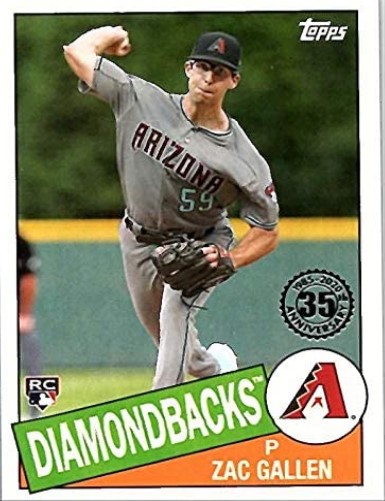
Zac Gallen - Poised for a breakout season.

Zac Gallen – Poised for a breakout season.

It will be nice to see a full-campaign of Nick Ahmed at shortstop.  Ahmed was a Gold Glover in 2018 and 2019. Although he doesn’t deliver average, his bat should be good for 15 home runs; AND he will certainly flash plenty of leather.  Another bright spot worth watching in Arizona is 25-year-old right-handed starter Zac Gallen – who seems poised for a breakout season. He has a moving fastball, as well as a change, curveball and cutter. In two MLB seasons (2019-20), he is 6-8 in 27 starts … but has a nifty 2.78 earned run average and 178 strikeouts in 152 innings. In 2020, Gallen was 3-2, 2.75, which included six “no decisions” in which he went at least six innings and gave up two or fewer runs.

How About a Little Help from My Friends?

After eight starts in 2020, Zac Gallen had just one win (1-0), despite a 1.80 ERA, a .182 batting average against and 54 strikeouts in 50 innings.

Atlanta Braves – Max Fried, Ronald Acuna, Jr.
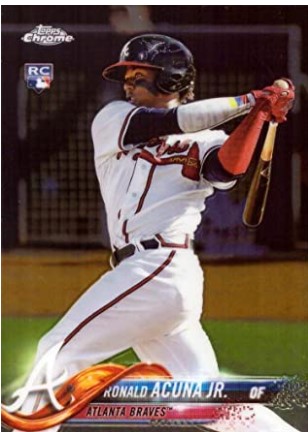
Ronald Acuna, Jr. - Fueling the Braves''offense.

Ronald Acuna, Jr. – Next 40-40 player?

There are a couple of players, BBRT will watch here. The first is right-handed starter Max Fried – to see if he can continue to translate his curveball into top of the rotation results.  In 2010, Fried went 7-0, 2.25 in eleven starts and gave up just two home runs in 56 innings.  This follows up a 2019 season in which he went 17-6, 4.02 (but did give up 21 long balls in 165 2/3 innings).  BBRT will be watching to see if Fried continues to rack up wins – and, whether he continues to keep the ball in the park like he did in 2020.  Just 27-years-old, he may be entering his prime.  BBRT will also be watching one of MLB’s true rising stars – 23-year-old Ronald Acuna, Jr. – who came just three stolen bases shy of a 40-40 season in 2019 (.280-41-101, with a NL-topping 37 steals).  In 2020’s short campaign, his average dropped to .250, but he did put up 14 home runs and eight steals in 45 games. He’s got the potential to be the major league’s next 40-40 player.

A Nice Walk in the Park

The Braves tied the Reds for the most walks (received) in the National League (239) in 2020. Three Braves were among the league’s top six in walks – Freddie Freeman (third with 45); Marcell Osuna and Ronald Acuna, Jr. (tied for sixth with 38). Bryce Harper of the Phillies led the league with 49 free passes.

Chicago Cubs … Javier Baez, Kyle Hendricks
Javier Baez Cubs photo

Javier Baez – Could be best of the Cubs. Photo by Minda Haas Kuhlmann

Javier Baez is the player to watch on this Cubs’ squad. The Cubs shortstop slumped at the plate last year, but still came home with a God Glove. Keep in mind that he was an All Star in 2018 and 2019, when he hit a combined .286-63-196.  (He hit just .203-8-24 in 2020). Baez should bounce back and be the most exciting player in the Cubbies’ lineup. Kyle Hendricks  doesn’t throw hard, but he pitches smart.  Last season he was 6-5, but put up a nifty 2.81 ERA in 12 starts. He struck out  7.1 batters per nine innings, but walked less than one (0.9 per nine frames). If you like to watch a pitcher “pitch,” Hendricks could be your guy. His four-seamer tops out at about 88 mph, but he has good command of that middle-of-the-road fastball, as well as of a sinker, change and curve.

Gone, but Not Forgotten

Yu Darvish, Tyler Chatwood, Jon Lester, Jeremy Jeffress – all Cubs a year ago, all with other teams in 2021 – recorded 17 of the Cubs 34 wins in 2020 and eight of the teams 16 saves.

Cincinnati Reds – Tyler Mahle, Nick Lodolo

Tyler Mahle - Slider made a difference.

Tyler Mahle – Slider made a difference.

Twenty-six-year-old righty starter Tyler Mahle added a slider to his repertoire last season (to go with a mid-90s fastball, splitter and change).  The addition seemed to work.  He went from 3-12, 5.14 in 2019 to 2-2, 3.59 in 2020 (with 60 strikeouts in 47 2/3 innings). BBRT will be interested in: 1) Seeing if hitters catch up to the new pitch mix; and 2) If Mahle can improve his command (he walked four batters per nine innings a year ago).    I’ll also be watching to see if the Reds’ 2019 top draft pick, southpaw pitcher Nick Lodolo is called up – or if he ever walks anyone.  In his lone minor-league season (2019), Lodolo pitched 18 1/3 innings, fanning 30 and walking none. Who knows, if the Reds fade early, the 23-year-old could see some major-league action.  Besides, a pitcher with three “O’s” in his name is a find.


One For “Ever”

In 2020, Trevor Bauer became the first member of the Reds to win the National League Cy Young Award.

Colorado Rockies – Daniel Bard, Trevor Story
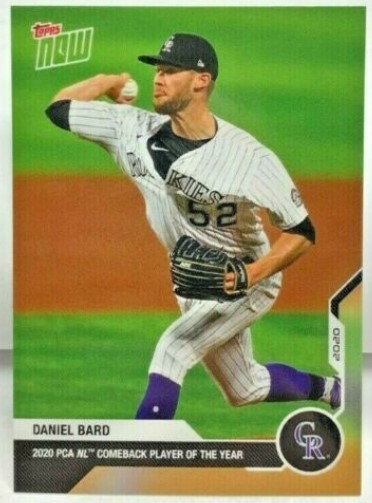
Daniel Bard - Great comeback story.

Daniel Bard – Great comeback story.

The Colorado Rockies without the leather and lumber of Nolan Arenado to watch.  It just doesn’t seem right. When I watch the Rockies, I’ll have to get one of those “Old Guys Rule” hats.  Number-one on my Rox watch list is  35-year-old closer Daniel Bard.  Why my interest?  Bard first made it the majors in 2009 and was a serviceable reliever over his first three seasons (5-13, but with a 2.88 earned average and 213 whiffs in 197 innings).  Then, in 2012, the Red Sox decided to make him a starter – and the wheels came off. In his first 11 appearances of the season, he pitched 55 innings (5.24 ERA), walking 37, hitting eight batters and striking out 34. He was sent down to the minors in June, where he continued to struggle.  Bard came back up, in a relief role, in August and still could not find the plate (six more appearances, 4 1/3 innings, 18.69 ERA, six walks and four whiffs). To make a long story short, Bard pitched only one MLB inning in 2013 – and pitched in the minors until he retired as a player after the 2017 season.  Then came the short 2020 season – and opportunity.  He threw for Rockies’ scouts, was signed for 2020 and, after a seven-year absence, was back on a major-league mound picking up a win (1 1/3 scoreless innings in relief) on July 25. He went on to win the closer’s job, going 4-2, 3.65, with six saves in six opportunities – using a mid-90s fastball, a wicked slider and a change.  BBRT will be watching to see if this comeback tale continues.

I’ll also keep an eye on Trevor Story, the Rox power hitting shortstop – a threat to put up a 30 (HR)/ 30 (SB) season. In 2020, Story went .289-11-28 and led the NL in triples (4) and steals (15), I’ll be watching both Story’s storied performance, and whether the trade rumor that continue to swirl around him become reality.

High Mountain Irony

In 2020, the Rockies had the National League’s highest earned run average (5.59), Yet the Rox starters recorded 28 quality starts, second in the NL only to the Cubs 30.

Los Angeles Dodgers – The Dodgers’ Rotation, Mookie Betts
Clayton Kershaw - Three-time CYA winner part of Dodgers' vaunted rotation. Photo by SD Dirk

Clayton Kershaw – Three-time CYA winner part of Dodgers’ vaunted rotation. Photo by SD Dirk

The Dodger rotation had the NL’s lowest starters’ ERA in 2020 (3.29). Not only did the principals return, the Dodgers added the 2020 NL Cy Young Award winner to boot. So, who do you watch?  How about the entire starting rotation – which should include three former Cy Young Award winners: Clayton Kershaw, newcomer Trevor Bauer and David Price, as well as Walker Buehler (14-4, 3.26 in 2019) and probably Dustin May (3-1, 2.57) or Julio Arias (3-0, 3.27 a year ago). The most interesting to watch may be 2012 CYA winner Price, who opted out of the 2020 season. In his most recent season (2019), Price missed time with elbow tendinitis and wrist issues.   If you prefer to watch a position player, I’d go with RF Mookie Betts – who does it all – a .301 average over seven seasons, a good bet(ts) for 30 home runs, 80+ RBI and 20 stolen bases. (He’s also a five-time Gold Glover.)  Prefer to watch prospects? you may get a chance to see Baseball America’s 2019 Minor League Player of the Year Gavin Lux (.347-26-76 in 113 games at Double A and Triple A).  Note: Lux has been over-matched in two call ups to the Dodgers, but he’s just 23 – and we’ll be seeing him again.

Lots of No-Doubters

The Dodgers had MLB’s largest positive run differential in 2020 – outscoring opponents by 171 runs. The next best? The Padres and Braves at a plus 73.

Miami Marlins – Jon Berti, Sixto Sanchez
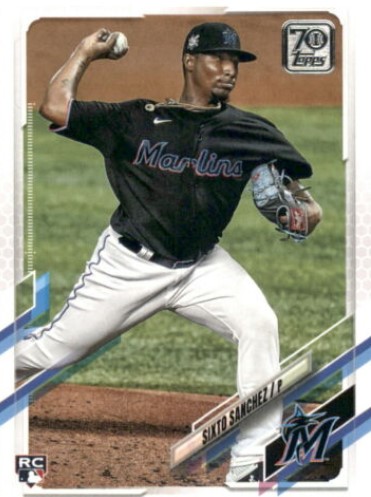
Sixto Sanchez - Young Pedro Martinez?

Sixto Sanchez – Young Pedro Martinez?

Jon Berti tops BBRT’s Marlins’ watch list.  Berti started 35 games last season: 17 at second base; seven in centerfield, seven in right field; two at third base and two at shortstop. I’ll be anxious to see what the Marlins have in mind for this speedster (he’s stolen 27 bases in 116 MLB games over three seasons). Young (22-years-old) right-hander Sixto Sanchez has drawn comparisons to a young Pedro Martinez. He brings a fastball that can reach triple digits, a hard (and moving) change and a plus breaking ball. In his 2019 rookie season, he went 3-2, 3.46 and fanned 33 in 39 innings. (Look for that whiff rate to go up as he develops).

Start ‘Em Young

In five minor league seasons, Sixto Sanchez has gone 23-18, 2.58 with 294 strikeouts in 335 1/3 innings. The amazing thing is, he had five minor-league seasons under hit belt by age 21. 

Milwaukee Brewers– Josh Hader & Devon Williams, Christian Yelich
Christian Yelich - Brewers need a rebound from 2018 MVP. Photo by IDSportsPhoto

Christian Yelich – Brewers need a rebound from 2018 MVP. Photo by IDSportsPhoto

If you like to see fireballers come out of the pen and dampen rallies, join BBRT in watching Brewers’ front line relievers – closer Josh Hader and 2020 NL Rookie of the Year Devon Williams.  In 2020, Hader led the NL in saves with 13 – going 1-2, 3.79 and fanning 31 batters in 19 innings. In four MLB seasons, he has a 2.54 ERA and has fanned 15.3 batter per nine frames.  That’s “lights out.” Rookie of the Year William worked in 22 games this past year – going 4-1, with a minuscule 0.33 (yes, that’s a zero in front of the decimal point) earned run average. Not only that, he fanned 53 batter in 27 innings – 14.8 per nine. I’ll also be watching Christian Yelich, who came to the Brewers from the Marlins (trade) in 2017 and immensely was the 2018 NL Most Valuable Player (.326-36-110) and then followed by finishing second in the 2019 MVP voting (.329-44-97), wining the batting title both years. Yelich slumped to .205 in 2020’s short and strange season, but I expect he’ll return to something closer to .300-30-100, with 15 steals in 2021 – giving the Brewers quite a boost.

Backing In

In 2020, the Brewers and the Astros (both at 29-31) became the first two MLB teams ever to make the playoffs with losing records.

New York Mets – Jacob deGrom, Francisco Lindor, Dominic Smith, Pete Alonso
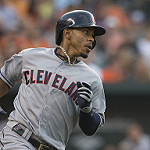
Francisco Lindor - New force in Mets' lineup.Photo by Keith Allison

Francisco Lindor – New force in Mets’ lineup.Photo by Keith Allison

Lots of new faces (via trade and free agency) to watch in New York (SS Francisco Lindor, RHP Carlos Carrasco, C James McCann, RHP Trevor May – to name a few), BBRT starts its watch list with holdover Jacob deGrom – a two-time Cy Young Award winner and arguably the best pitcher in the National League. I’d like to see what he could do with a little better run support. (Over the past three seasons, deGrom has a 2.10 ERA and has fanned 628 batters in 489 innings. Yet, he’s only six games above. 500, at 25-19.) BBRT wants to watch him work and win. I’ll also be watching to see what newcomer Francisco Lindor means to the Mets’ lineup (and, of course, deGrom’s W-L line). The 27-year-old, four-time All Star brings a powerful bat and a pair of Gold Gloves to the Mets. And, he stays in the lineup – missing only 31 games in the past five seasons. Look for .280-30-100. BBRT is also interested in the continued development of outfielder Dominic Smith.  Smith (26-years-old) was .316-10-42 in 50 games a year ago. Then there’s 1B Pete Alonso, who hit 53 home runs as a 24-year-old rookie in 2019 and 16 in 2019’s short season (which translated to 43 in a 162-game slate). Lots t see in The Big Apple.

Why Stop at First?

Of Dominic Smith’s 56 hits in 2020, 32 were for extra bases (21 doubles, one triple, ten home runs). His .616 slugging percentage was tops on the Mets and fourth in the National League.

Philadelphia Phillies – Spencer Howard, Bryce Harper
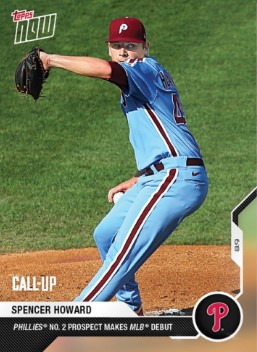
Spencer Howard - Phillies' top prospect.

Spencer Howard – Phillies’ mound prospect.

BBRT’s Philadelphia watch list is topped by 24-year-old prospect Spencer Howard. Just 1-2, 5.92 (with shoulder issues) a year ago, he’s shown swing-and-miss stuff in the minors. In three minor-league seasons, he’s gone 13-10, 2.23 – but, more important, has averaged 12 strikeouts per nine innings (281 whiffs in 211 1/3 frames). I might also keep an eye on Bryce Harper, who is capable of an MVP-worthy season when he puts it all together. (In 2015, he was .330-42-99).)  We haven’t heard a lot about Harper recently, but it’s clear he gets plenty of respect at the plate.  He led the NL in walks last season (49) and has three times topped 100 free passes in a campaign. Hard to believe Harper – just 28-years-old, is entering his tenth MLB seasons.

Should I Make that Call?

The Phillies bullpen ERA of 7.06 was the highest in the majors.


Pittsburgh Pirates – Ke’Bryan Hayes

HaYESBBRT will be watching Pirates’ 23-year-old third baseman Ke’Bryan Hayes – a leading NL Rookie of the Year candidate (who hit .376-5-11 in 25 games in 2020). In five minor-league seasons, Hayes has hit .279-25-202, with 66 steals in 461 games.  The Pirates expect good things from Hayes – also a potential Gold Glover – who is having a great spring.

Nice Numbers, Kid

In 2020, Ke’Bryan Hayes hit .314 with two strikes, .308 with two outs, and .364 with runners in scoring position.

Saint Luis Cardinals – Nolan Arenado, Dylan Carson
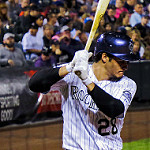
Nolan Arenado - Bringing lumber AND leather to St. Louis. Photo by jenniferlinneaphotography

Nolan Arenado – Bringing lumber AND leather to St. Louis. Photo by jenniferlinneaphotography

Newcomer Nolan Arenado’s combination of leather and lumber is well worth a watch in St.Louis.  In eight seasons with the Rockies’, Arenado has won eight Gold Gloves and hit 235 home runs (five seasons of at least 37 round rippers and five seasons of 110 or more RBI.). It will be interesting to see what the move from Colorado will mean at the plate.  (Arenado was .322-136-461 at home and .263-99-299 away). Last season, the three outfielders expected to patrol the green in Saint Louis hit a combined .197-14-53 (playing in a combined 135 – of a potential 180 – games).  The Redbirds need more offense from the outfield and the best bet is number-one prospect 22-year-old Dylan Carson. In 2019, splitting time between Double-A and Triple-A, Carson hit .292, with 26 home runs and 68 RBI, 95 runs scored and 20 steals in 126 games.  Last season, Carson started slow (.162-1-5 in is first 23 games), was sent down to the alternative site for some work and came back to go .278-12-11 in his last dozen games. BBRT will be looking to see which Carson shows up in 2021.

Oops! Two that Got Away

It’s a bit ironic that the Cardinals are in need of some outfield offense, In January of 2020, they traded OF Randy Arozarena and OF/1B Jose Martinez to the Tampa Bay Rays for minor-league pitching prospects Matthew Liberatore and Edgardo Rodriguez and a supplemental second round draft choice. Arozarena went on to a .281-7-11 in 23 games for the Rays and then burned up the post season with a .377-10-14 line in 20 games (setting a record for the most home runs in a single post season.) Arozarena would look pretty good in a Redbirds’ uniform right now.

The Cardinals also let Of Marcell Ozuna slip away (via free agency) after the 2019 season.  All he did in 2020 was lead the National League in home runs (18) and RBI (56), while hitting .338.

San Diego Padres – Blake Snell, Yu Darvish, Fernando Tatis, Jr.
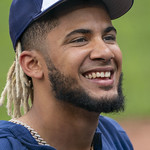
Fernando Tatis, Jr. - On everybody's watch list. Photo by KA Sports Photos

Fernando Tatis, Jr. – On everybody’s watch list. Photo by KA Sports Photos

Now, here’s a TEAM to watch in 2021.  The Padres made it clear they are focused on the post season – and a couple of off-season trades brought in a pair of very “watchable” starters – both potential Cy Young Award candidates.  BBRT will be watching to see the impact of Blake Snell and Yu Darvish on the balance in the West.  Snell won the AL CYA in 2018, with a 21-5, 1.89 record. Darvish has twice finished second in Cy Young voting (2013 and 2020).   Last season, Darvish went 8-3, 2.01 and fanned 93 hitters in 76 innings.  BBRT will also – along with most fans – be watching the development of SS Fernando Tatis, Jr.  The 22-year-old seems like more than a rising star – perhaps a comet. In his first 143 MLB games, he’s hit .301, with 39 home runs, 98 RBI and 27 steals.  Can’t wait to see what he can do in a full season.


Slamming “Around the Horn”

The Padres set an MLB record in 2020 by hitting Grand Slams in four straight games (and five in a streak of six games). On August 17, it was SS Fernando Tatis, Jr.; on August 18, RF Wil Myers; on August 19, 3B Manny Machado; on August 20, 1B Eric Hosmer. After the Padres went without a Grand Slam on August 21, 2B Jake Cronenworth hit a four-run dinger on August 22.  So, the infield went around the horn in Grand Slams in six days.  Tatis’ Slam seems like a “chip off the old block.” His dad, Fernando Tatis, Sr., is the only MLB player to ever hit two Grand Slams in one inning (April 23, 199).

San Francisco Giants – Mike Yastrzemski, Alex Dickerson

Mike Yastrtzemski - Pretty good genes. Photo by IDSportsPhoto

Mike Yastrzemski – Pretty good genes.
Photo by IDSportsPhoto

Lots of familiar names to watch in MLB this year (Biggio, Guerrero, Tatis, Bichette), you get the idea.  In San Francisco, it’s Yastrzemski.  RF Mike Yastrzemski was arguably the Giants’ best player on 2020, when he hit .297, with 14 doubles, four triples, 10 home runs and 35 RBI. He should be fun to watch in 2021. (In his first 161 MLB games – 2019-20 – the new “Yaz” has gone .297-31-90.)  I also may check in on OF Alex Dickerson, who came over from the Padres in a 2019 trade. He may be finding his stride. While he has a .273 career MLB average (four seasons), in 108 games since joining the Giants, he has hit .294, with 16 home runs and 53 RBI.

Is Thirty the new 25? Maybe in San Francisco

When you look at the Giants’ projected Opening Day lineup (assuming Kevin Gausman gets the start on the mound), only CF Mauricio Dubon is under 30 (the lineup averages just shy of 32 years of age).

Washington Nationals – Juan Soto, Stephen Strasburg
Juan Soto - Best of the Nationals. SotoPhoto by pdeonarain

Juan Soto – Best of the Nationals.
SotoPhoto by pdeonarain

Juan Soto. Juan Soto. Juan Soto.  The top three players on BBRT’s Nationals’ watch list. Just 22-years-old, Soto already has a NL batting championship on his resume (.351 in 2020), as well as a 30+ homer, 100+ runs scored and 100+ RBI season (.282-34-110, with 110 runs scored as a 20-year-old in 2019). Just have to watch this rising/shooting star scorch across the National League. BBRT will also be monitoring Stephen Strasburg recovering from carpel tunnel issues – double-digit winner in seven of the past nine seasons, he was 0-1, 10.80 in 2020.

Say Goodbye to that One

In 2020, Nationals’ pitchers gave up 94 home runs – the most in the National League. Nationals’ hitters poked 66 long balls – tenth-highest in the league.


—–2021 POTENTIAL NL AWARD WINNERS —–

Here are BBRT’s favorites for key NL Player Awards.

Most Valuable Player

  • 1) Ronald Acuna, Jr.; 2) Mookie Betts; 3) Fernando Tatis, Jr.; 4) Juan Soto.

Cy Young Award

  • 1) Jacob deGrom; 2) Max Scherzer; 3) Blake Snell

Rookie of the Year

  • 1) Ian Anderson; 2) Ke’Bryan Hayes; 3) Sixto Sanchez

Again, for BBRT’s 2021 American League predictions and watch list, click here.

Primary Resources:  Baseball-Reference.com; MLB.com

100Baseball Roundtable is on the Feedspot list of the Top 100 Baseball Blogs.  To see the full list, click here.

I tweet baseball @DavidBBRT

Follow/Like Baseball Roundtable’s Facebook Page here.  More baseball commentary; blog post notifications.

Member: Society for American Baseball Research (SABR); Negro Leagues Baseball Museum; The Baseball Reliquary. 
 

Baseball Roundtable 2012 AL Predictions … and Players to Watch

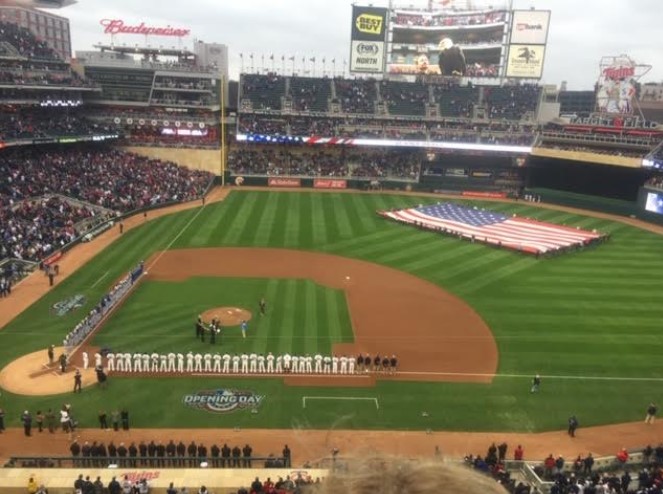
Okay, so Opening Day won't be quite the same. At least, it's on the way.

Okay, so Opening Day won’t be quite the same. At least, it’s on the way.

It’s getting close to Opening Day and it’s time for Baseball Roundtable to look ahead (and make predictions) for the 2021 season.  We’ll start with American League won-loss predictions,  move on to a look at some of the players (on each AL team) that BBRT will be watching in the coming months, and wrap up with BBRT favorites for some key junior circuit awards.  So, let’s get started.

Note:  For the National League predictions and Watch List, click here. 

AMERICAN LEAGUE EAST

Yankees …  98-61

Blue Jays … 87-75 (Wild Card)

Rays … 85-77

Red Sox  … 81-81

Orioles … 64-98

The Yankees have a deep and powerful lineup (they could have seven players with 25+ home runs), with plenty of quality replacements when needed. Plus, they have a solid rotation (particularly after adding Corey Kluber and Jameson Taillon) and a plus bullpen. The Bronx Bombers may get a stretch-run boost with the return of Luis Severino and Zack Britton.  They should top the AL East.

Now, smart money would put the Rays (last year’s AL World Series’ representative) in – at least – the second place/wild card spot. But I’m going out on a limb and picking the Blue Jays for second – based on an exciting young lineup, augmented by veteran acquisitions George Springer and Marcus Semien.  How their pitching holds up will tell the tale.  It is hard to go against the Rays who, year-after-year, seem to be able to translate defense, a solid (if, at times, unconventional) pitching strategy and equally strategic lineups into a wining record.  Still, I think the loss of Blake Snell and Charlie Morton at the top of the rotation may cost the Rays a spot in the standings. The Red Sox should be more competitive than a year ago – particularly if Chris Sale is back in form – but I don’t see them passing any of the top three. The Orioles seem to be in the early innings of a rebuilding project.

AMERICAN LEAGUE CENTRAL

Twins   … 91-72

White Sox   … 87-75 (Wild Card)

Indians … 84-78

Royals … 70-92

Tigers … 67-95

Maybe it’s because they are my “home team,” but I’m expecting the Twins to repeat as AL Central champs. However, it won’t be easy as the White Sox are coming on strong. The Twins still have one of the AL’s most powerful lineups and should be improved on defense with newcomer (four-time Gold Glover) Andrelton Simmons now at shortstop, Josh Donaldson back at third base and Jorge Polanco moving to second (and let’s not forget Gold Glover Byron Buxton in center). The rotation will be again headed by Kenta Maeda and Jose Berrios – and looks to include Michael Pineda, J.A. Happ and Randy Dobnak. (or Matt Shoemaker). A revamped bullpen looks solid.

Coming on fast are the White Sox with a deep batting order; a rotation headed by Lucas Giolito, Lance Lynn and Dallas Keuchel; and a bullpen featuring new (and elite) closer Liam Hendriks.  It’s going to be a dogfight at the top of the Central Division, but I expect the Twins experience to give them a slight edge.  Carlos Carrasco, Francisco Lindor and Carlos Santana are gone from the Indians and, despite a solid bullpen and a rotation headed by Shane Bieber, Zach Plesac and the emerging Triston McKenzie and the addition of slugger Eddie Rosario, the Indians are likely to finish behind both the Twins and White Sox. The Royals look to be improved with a lineup that includes professorial hitter Whitt Merrifield, slugger Jorge Soler and newcomer Carlos Santana.  They are also looking for a rebound from OF Andrew Benintendi (acquired via an off-season trade). The Tigers will have to wait from some of their young pitching prospects – Casey Mize, Tarik Skubal, Matt Manning and Franklin Perez to develop before moving up in the standings. I wouldn’t be surprised to see Mize and Skubal break camp with the Tigres.

AMERICAN LEAGUE WEST

Astros … 91-71

A’s … 86-76

Angels … 84-78

Mariners … 69-83

Rangers … 65-97

The Astros will miss George Springer (now with the Blue Jays) and Justin Verlander (Tommy John surgery), but still seem to have enough to win the West.  The lineup has some star power with Jose Altuve, Alex Bregman and Carlos Correa – not to mention Kyle Tucker and Yordan Alvarez. Jake Odorizzi is a nice addition to a rotation that also offers Zack Greinke, Cristian Javier, Framber Valdez, Lance McCullers and Jose Urquidy. Ryan Pressley heads a bullpen that will need to prove itself over the long season.  It looks like another division title for Houston, but they’ll have to hold off the pesky A’s.

Losing closer Liam Hendriks and shortstop Marcus Semien put a dent in the A’s playoff hopes, but there is still reason to expect them to be in contention. There is potential in the rotation (Mike Fiers, Scott Manaea, Frankie Montas, Jesus Luzardo, Chris Bassitt, A.J. Puk), as well as some power in the lineup (led by the double Matts – Olson and Chapman – who are also both superior defenders.  Still, there are questions in the bullpen and the lineup could use a bit more punch. The Angels should be improved, but there are still too many question in the starting rotation (which has had the second worse ERA in MLB in each of the past two seasons). The Mariners are on the cusp of making some noise, and are anxiously awaiting the arrive of such prospects as OFs Jarred Kelenic and Taylor Trammel, RHP Logan Gilbert and RHP Emerson Hancock.  In the meantime, enjoy the performance of southpaw Marco Gonzalez, 3B Kyle Seager and CF Kyle Lewis.  Finally, the Rangers appear to be in rebuilding mode, so we’re likely to see a handful of young players getting a chance to develop on the big league diamonds.


— BBRT 2021 AL Watch List —

Now, some players BBRT will be watching on each team.

Baltimore Orioles – Trey Mancini, Ryan Mountcastle

Trey Mancini photo

Trey Mancini – Ready to lead Orioles’ offense. Photo by docjeffhyde

Trey Mancini missed the 2020 season missed the 2020 season due to a bout with colon cancer. His 2021 comeback is one of those “feel good” stories you just have to watch play out. In 2019, Mancini (DH/1B/OF) went .291-35-97.  BBRT will also follow the development of 24-year-old 1B/OF Ryan Mountcastle.  As a rookie in 2020, Mountcastle went .333-5-23 in 35 games. This followed a .312-25-83 2019 season at Triple A.  He looks ready to contributed to an Orioles’ offense and (since he only appeared in 35 games last season) should be in the running for Rookie of the Year.

Why You Need to Stay and Watch the Whole Game

On August 1, 2020 – thanks to MLB’s short-season, extra-inning rules – the Rays opened the top of the tenth inning of a 4-4 game against the Orioles with Ji-Man Choi on second base.  The first batter, Yoshi Tsutsugo flied out to Cedric Mullins in LF. Choi tried to advance to third, but was thrown out.  It was the first time in MLB history that the leadoff hitter in an inning hit into a double play. 

Boston Red Sox – Eduardo Rodriguez, Chris Sale

Bobby Dalbec - Adding power in Boston.

Bobby Dalbec – Adding power in Boston.

Southpaw starter Eduardo Rodriguez went 19-6, 3.81 in 2019 and then lost the 2020 season to COVID-related heart issues (myocarditis).   The Red Sox absolutely need Rodriguez to bounce back if they are to finish above .500.  BBRT will also be watching to see when Chris Sale (Tommy John surgery) returns to the mound (expected in late June or July).   BBRT is also interested in the development of Red Sox’ 25-tear-old 1B Bobby Dalbec, who hit eight home runs in just 23 games a year ago – and is having a strong spring (to date). In 2019, Dalbec his 27 round trippers in 135 games at Double-A and Triple-A.  If he can cut down on whiffs, he can add notable power to the BoSox lineup.

The Red Sox gave up 351 runs in 2020, the most in the American League.

Chicago White Sox – Nick Madrigal, Tim Anderson

Nick Madrigal - Young table setter in Chicago.

Nick Madrigal – Young table setter in Chicago.

Lots of big boppers to watch in the White Sox lineup (Jose Abreu, Eloy Jimenez, Luis Robert), but BBRT is going to be watching a couple of players more suited to be table setters.  2B Nick Madrigal (just 24-years-old this season), hit .340 as a rookie in 2020 – after hitting .311, with 35 steals in three minor-league stops (120 games) in 2019. He had shoulder surgery in the off season (October), and BBRT will be looking to see how he bounces back. I’ll Also be watching SS Tim Anderson, the 2019 AL batting champ (.335, with 18 long balls and 17 steals), who hit .322-10-21, with five steals in 49 games a year ago. One thing of interest with Anderson will be to monitor his splits against lefties and righties. Over his five  MLB seasons,  he has hit .323 against lefties and .265 against right-handers – and, last season, that was even more pronounced (.449 against lefties and .283 versus righties).  No matter, these two middle infielders should spend a lot of time creating problems for opponents.

In 2020. the White Sox led the American League in home runs with 96.  American League MVP Jose Abreu led the way on the ChiSox with 19, followed by Eloy Jimenez with 14.  Abreu also led the league in hits (76), RBI (60) and total bases (148). 

Cleveland Indians – Shane Bieber, Eddie Rosario

Shane Bieber - On everyone's CYA watch.

Shane Bieber – On everyone’s CYA watch.

How can you not get excited about watching Shane Bieber, last year’s AL Cy Young Award winner, who led all of MLB in wins (8), strikeouts (122 in 77 1/3 innings) and ERA (1.63)?  In his three MLB seasons, Bieber. Just 25-year-old, is 34-14, 3.32 with 499 whiffs in 406 1/3 innings pitched – and he seem to be getting better.  He’s on everyone ‘s Cy Young watch list.  With Francisco Lindor (trade) and Carlos Santana (free agency) gone, the Indians will be looking for some new sources of offense.  Being a Twins fan, I’ll be watching former Twin Eddie Rosario, who has shown 30-home run/100-RBI power in the past.

The Indians recorded the American League’s lowest team ERA in 2020 at 3.29. 

Detroit Tigers – Miguel Cabrera, Casey Mize

Miguel Cabrera photo

Miguel Cabrera – Adding to HOF credentials.  Photo by Kevin.Ward

Number one on my Tigers’ watch list is DH Miguel Cabrera – entering his 19th season just 134 hits shy of 3,000, 13 home runs short of 500.  It will fun to watch the four-time batting champion, two-time Most Valuable Player and 11-time All Star add these landmarks to his Hall of Fame credentials. On the other end of the spectrum, I’ll be watching the 2018 MLB Draft first overall pick – RHP Casey Mize.  A star at Auburn, Mize put up a 2.74 ERA with 120 strikeouts (and just 26 walks) in two minor-league seasons (2018-19). He got a brief, not so impressive, look-see in 2020 – going 0-3, 6.99 for the Tigers.  Still, Mize has a devastating splitter, mid-90s fastball, slider and curve. If he can bring the command he exhibited in college and the minor leagues to the Detroit mound, he should be a mainstay in the Tigers’ rotation.  He may not start the season in Detroit, but they need pitching, so you can expect to see him in the Motor City sooner rather than later.

From 2009-2016, Miguel Cabrera averaged .330, never hitting under .313 in a season. 

Houston Astros – Kyle Tucker, Jake Odorizzi, Jose Altuve

Kyle Tucker Astros photo

Kyle Tucker – Adding to the Astros’ offense.  Photo by Ken Lund

The Astros will open the season without ace starter Justin Verlander (Tommy John surgery), a well as without a big run-producing bat (George Springer, free agency). BBRT will be watching a couple of players the Astros hope will take up some of the slack.   OF Kyle Tucker (24-years-old) may be ready to blossom. In 58 2020 games for Houston, Tucker hit .268, with nine home runs and 42 RBI, while also stealing eight bases and leading MLB with six triples.  Oh, and he was also a Gold Glove finalist. It would be no surprise to see Tucker turn in a 25-homer, 80-RBI, 25-steal campaign. Free-agent Jake Odorizzi was signed to bolster the rotation. A 15-game winner with Twins in 2019, Odorizzi needs to bounce back from an injury-interrupted 2020 season, when he pitched only 13 2/2 innings.  For a little extra (watching credit), take a look at three-time batting champion Jose Altuve, who hit just .219-5-18 in 48 games last season. Those are not Altuve-like numbers (.311 career average), and the Astros are looking for a rebound from the 31-year-old in both the average and power departments.  Can’t wait to see what the mighty-mite has in the tank.

Ten pitchers made their major-league debuts with the Astros in 2020. 

Kansas City Royals – Whit Merrifield

Whit Merrifield photo

Whit Merrifield – Professional baseman.  Photo by Minda Haas Kuhlmann

Whit Merrifield is a professional hitter, an accomplished base runner and a versatile defender – as well as player who stays on the field.  He is, for BBRT, an “0ld-school” kind of guy, well worth watching day-in and day-out.  Consider, over the past three seasons, Merrifield has played in 380 of the Royals 384 gamers. Over that time, he has averaged .300 (486 hits) and stolen 77 bases – while leading the AL in hits twice and triples and steals once each. He’s also taken the field at second base, first base and all three outfield positions.

The Royals turned 62 double plays in 2020, tops in the American League. 

Los Angeles Angels – Mike Trout, Shohei Ohtani

Shohei Ohtani photo

Shohei – Something to watch on the mound and at the plate. Photo by shinya

How can you not watch three-time AL MVP Mike Trout, who’s never finished lower than fifth in the MVP voting in his ten MLB seasons?  Don’t expect any surprises – just a solid .300, 30-home run, 90 RBI campaign (or even a little better).  BBRT also will be watching 2018 AL Rookie of the Year Shohie Ohtani, who looks to be both in the starting rotation and seeing regular duty at DH.  You may recall, in his rookie season, Ohtani hit .285 with 22 home runs in 104 games AND went 4-2, 3.31 in ten starts on the mound. Ohtani is more than one year removed from Tommy John surgery and seems fully recovered from last year’s elbow/forearm strain.  I’ll be watching to see how far he can take this two-way approach (20 homer runs/10 mound victories?).

Angels’ Pitching Woes

You might want to monitor the entire Angels’ rotation, which turned din MLB’s second-worst earned run average in 2020 (5.52) – and that wasn’t a short-season fluke.  They also put up MLB’s second-worst ERA in 2019 (5.64, only the Rockies starters were worse).  They are hoping for a boost from Shohei Ohtani’s return to the mound, as well as from newcomer (free-agent) Jose Quintana (3.73 career ERA, over 254 appearances).

Minnesota Twins – Nelson Cruz, Byron Buxton, Alex Kiriloff

Nelson Cruz Twins photo

Nelson Cruz – Betting his age-41 seasons will be a thing of beauty.  Photo by andywitchger

In 2019, Twins’ DH Nelson Cruz (who turned forty on July 1) went .303-16-33 in 53 games. He recorded the American League’s seventh-highest average, fifth-most home runs, third-highest on-base percentage and fifth-highest slugging percentage.  BBRT will be watching to see what he can do in his age 41 season,

Others to watch in Minnesota include center fielder Byron Buxton – a multi-tool player whose all-out style of play has made him injury prone (he has played in at least 100 games in only one of six MLB seasons). Last season, Buxton hit 13 home runs in just 39 games.  Buxton is a Gold Glove outfielder, who – if he stays in the lineup – could easily put up 25 home runs and 25 steals.  The fact is, when he is on the field, he changes the game.  Let’s see if he can stay off the IL.  I’ll also be watching 23-year-old rookie OF Alex Kiriloff. Kiriloff has a .317 average, with 36 home runs over three minor-league seasons (279 games) and the Twins would like him to replace departed outfielder Eddie Rosario (.257-13-42 in 2020 and .276-32-109 in 2019). A .280-25-75 campaign from Kiriloff would do the trick.

The Twins have lost a record 18 consecutive post-season games. 

New York Yankees – Aaron Judge, Giancarlo Stanton, Luis Severino

Giancarlo stanton photo

Giancarlo Stant0n – big bat (when he’s) in the Yankee lineup.  Photo by IDSportsPhoto

Plenty to watch in the Yankee lineup (they could run seven 25+ home run hitters out there).  So, BBRT will be watching to see who is NOT in the lineup.  That includes:  RF slugger Aaron Judge – who has played in just 63 percent of the Yankees’ games over the past three years – and DH Giancarlo Stanton, who has appeared in just 52 percent of the Bomber’s games over that time.  (Consider, Judge – as a rookie – hit 52 home runs in 2017. He hasn’t hit more than 27 in a season since.  And Stanton, who hit 59 home runs as a Marlin in 2017 and 38 as a Yankee in 2018, has hit seven homers, while playing in just 41 games, over the past two seasons.) BBRT will also be watching to see when potential staff ace Luis Severino (a 19-game winner in 2019) returns from Tommy John surgery.

In 2020, the Yankees led the American League in run scored (315), walks (251) and on-base percentage (.342)

Oakland A’s – Trevor Rosenthal, Jake Diekman, Matt Olson, Matt Chapman

Matt Olson baseball photo

Matt Olson – Bringing leather and lumber to the A’s.  Photo by mwlguide

Over the past two seasons, Liam Hendriks has owned the ninth inning for the Oakland A’s. He appeared in 99 games, won seven (five losses), saved 39, put up a minuscule 1.79 ERA and fanned 161 batters in 110 1/3 innings. Hendriks is now going to come in from the pen for the White Sox (free agency) and the scramble is on to replace him at closer. BBRT will be watching to see who moves into the spot. Candidates seem to be free-agent signee Trevor Rosenthal (132 career saves/11 saves and a 1.90 ERA in 2020’s short season) and Jake Diekman (a 0.42 ERA in 21 appearances last season). Always worth watching are the A’s two Matts – Olson and Chapman – a pair of Gold Glover corner infielders (Olson 1B, Chapman 3B),  both proven capable of 30+ homer power (and keys to the A’s offense and defense).

Over the past three seasons Matt Olson and Matt Chapman have won four Gold Gloves and hit 149 home runs. 

Seattle Mariners – Marco Gonzales, Rafael Montero

Marco Gonzales baseball photo

Marco Gonzales – Mariners’; ace. Photo by Minda Haas Kuhlmann

Marco Gonzales will again be the ace of the Mariners’ staff. (He was 7-2, 3.10 in 2020). Gonzales is not overpowering (64 strikeouts in 69 2/3 innings), but he gets the job done (59 hits and just seven walks). He’s the guy you want on the mound if you’re headed to a Mariners’ game. BBRT will also be watching new closer Rafael Montero (trade with Rangers) to see if he’s the real deal. The 30-year-old Montero is a converted starter, who didn’t have a save in his first five MLB seasons and then saved eight games in eight opportunities in 2020. He’s got a high-90s fastball, a sinker and a change up (his 4.08 Era in 2020 is a bit concerning).  The closer role was a bit of a revolving door for the Mariners last season. If Montero grabs the role full-time it will help stabilize the Mariners’ bullpen.

The Mariners led the American  League in stolen bases last season with 50 and had five players with five or more steals.  

Tampa Bay Rays – Randy Arozarena, Rays’ Free-Agent Starters

Randy Arozarena - Post-seasons hero.

Randy Arozarena – Post-seasons hero.

Rays’ rookie OF Randy Arozarena set the post-season on fire – hitting .376, with ten home runs and 14 RBI in 29 games,  setting a record for the most home runs in a single year’s post season.  This performance, contrary to some observers, did not come out of nowhere.  Arozarena hit .281-7-11 in 23 games for the Diamondbacks in the regular season and .300 (6-for-20) in 19 games for the Cardinals in 2019.  (He was traded from the Cardinals to the Rays in January of 2020.)  The 2020 post-season, in fact, was not even Arozarena’s first post-season experience. He got in five post-season games for the Cardinals.   Further, Arozarena posted a .292 average in three minor-league seasons, including a .344-15-53 line in 92 (AA-AAA) games in 2019.  He looks like the real deal – and well worth watching.

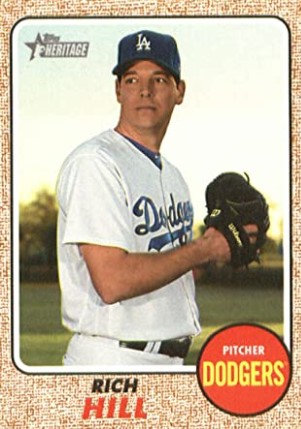
BBRT will also be keeping an eye on Tampa Bay free-agent signees Rich Hill, Chris Archer, Collin McHugh and Michael Wacha.  The Rays, who lost their two top starting pitchers (Blake Snell by trade, Charlie Morton to free agency) are once again rebuilding their pitching staff and it will be interesting to see how the rotation fleshes out (which may determine if the Rays or Blue Jays make it to the playoffs).

On September 11, 2020, the Rays starting lineup against the Red Sox was: Austin Meadows, LF; Joey Wendle, SS; Brandon Lowe, 2B; Ji-Man Choi, 1B; Kevin Kiermaier, CF; Yoshi Tsutsugo, 3B; Nate Lowe, DH; Brett Phillips, RF; Michael Perez, C.  Uniquely, they were all left-handed hitters.  Oh, and the Rays’ starting pitcher was southpaw Blake Snell. Righty Andrew Triggs started for the BoSox and gave way (after one scoreless inning) to left-hander Matt Hall. Hall surrendered four runs in 2 1/3 innings and took the loss. 

Texas Rangers – Joey Gallo

JOey Gallo photo

Joey Gallo – Texas-sized power.  Photo by mikelachance816

Will Joey Gallo lead the league in home runs, strikeouts or both?  The a question is worth considering – and watching for the answer to. In the two full seasons, Gallo has played for the Rangers (at least 140 games), he hit .208, with 81 home runs AND 403 strikeouts. I’d love to see Gallo make more contact (that could lead to a 50-HR season).  Notably, the free-swinging Gallo has added another reason to put him on you watch list.  In 2020 the Ranger RF was a Gold Glover.

The Rangers’ 224 runs scored in 2020 were the fewest in the American League. They also had the leagues’s fewest hits (420), lowest batting average (.217) and fewest total bases (704).

Toronto Blue Jays – George Springer, Kirby Yates

George Springer baseball photo

Geroge Springer – Big Bat/Veteran presence. Photo by Stabbur’s Master

The Blue Jay have lots of emerging young players who deserve a look, many with familiar last names – SS Bo Bichette, 1B Vlad Guerrero, Jr., 3B Cavan Biggio.  BBRT, however, will be keeping an eye on a couple of newcomers.    The Jays made a big splash in the free-agent pool, led by the six-year, $150 million contract they gave to former Astro George Springer. Springer brings a proven bat to the middle of the Blue Jays’ lineup.  He averaged .270-35-93 for each 162 games over a seven season MLB career – and, in 2019, went .293-39-96. He also brings a veteran presence to this young squad – and the Blue Jays hope he can lead them to the post-season. The Blue Jays also brought in closer Kirby Yates (free agency). In 2019, Yates led the NL in saves (as a Padre) with 41, along with a 1,19 ERA and 101 strikeouts in 60 2/3 innings.   Bone chips in his elbow (requiring surgery) limited Yates to six appearance in 2020. The Blue Jays expect him to come back with a vengeance in 2012 – and so does BBRT.

Other Blue jays to put on your “bird watching” list include outfielder Teoscar Hernandez, who surprised in 2019 with a .289-16-34 season (50 games). Going into the season, Hernandez has a .237 average in 327 MLB games over four seasons. The Blue Jays would like to see the 2019 version. Also, keep an eye on top pitching prospect Nate Pearson with his triple-digit fastball and wicked 90-mph+ slider.  His emergence could bolster the Jay’s rotation.

In 2020, the Blue Jays had MLB youngest roster or position players and fifth-oldest roster of pitchers. 

— MAJOR AWARDS — 

Finally, predictions on BBRT favorites for  American League Awards.

Al MVP:  1. D.J. LeMahieu;  2) Matt Chapman, A’s; 3) Aaron Judge, Yankees; 4) Alex Bregman, Astros; 4) George Springer, Blue Jays

AL Cy Young: 1) Gerrit Cole, Yankees; 2) Shane Bieber, Indians; 3) Lucas Giolito, White Sox; 4) Tyler Glasnow, Rays

AL Rookie of the Year; Randy Arozarena, Rays; Casey Mize, Tigers; Alex Kiriloff, Twins; 4) Wander Franco, Rays

Primary Resources:  Baseball-Reference.com; MLB.com.

Coming Soon; BBRT’s National League Predictions/Watch List.


100Baseball Roundtable is on the Feedspot list of the Top 100 Baseball Blogs.  To see the full list, click here.

I tweet baseball @DavidBBRT

Follow/Like Baseball Roundtable’s Facebook Page here.  More baseball commentary; blog post notifications.

Member: Society for American Baseball Research (SABR); Negro Leagues Baseball Museum; The Baseball Reliquary. 
Tom Glass’ Remarkable (and only) Win …. and a Look at Some of MLB’s “Backs-Against-The-Wall” Comebacks

Not Likely to See that Again

Right-hander Tom Glass left the mound after the eighth inning of his Athletics’ June 15, 1925 game against the Indians with his team down 15-4, but still came away with his only major -league victory.

Shibe Park ... Home of the Philadelphia Athletics. Photo by The Library of Congress

Shibe Park … Home of the Philadelphia Athletics.
Photo by The Library of Congress

Tom Glass had what can best be described as a brief major-league career.  It encompassed all of two appearances with the Philadelphia Athletics in 1925.  His final stat line was 1-0, 5.40, giving up nine hits and three earned runs in five major-league innings.  That one victory was memorable, however, coming in what Baseball Roundtable would judge as MLB’s greatest-ever, late-inning comeback. It came on June 15, 1925, with Glass’ Athletics taking on the Cleveland Indians in Philadelphia.  Glass came into the game in the top of the sixth, with the Athletics trailing 12-2. When he tossed his last pitch of the game (also his last pitch in the major leagues), he had given up three runs on seven hits over three innings – and the Athletics were facing a 15-4 deficit. And yet, Glass was about to pick up his one and only MLB victory – as the Athletics  were about to put together a 13-run eighth inning comeback. In the frame:

  • There were seven singles, a triple, a home run and three walks.
  • Ten different players crossed the plate.
  • In one stretch, ten straight batters reached base.
  • The Athletics used just one pinch hitter – Sammy Hale, who hit an RBI single, stole a base ans scored a run.
  • Al Simmons had two hits in the frame, a single and a three-run home run.

The inning went like this:

  • With Jake Miller pitching, Athletics’ SS Chick Galloway led off with a walk.
  • Pitcher Tom Glass flied out to right.
  • 2B Max Bishop walked.
  • 3B Jimmy Dykes hit a two-run triple to center.
  • By Speece replaced Miller the mound, and LF Bill Lamar greeted him with a run-scoring single.
  • CF Al Simmons singled, sending Lamar to third.
  • RF Frank Welch singled, scoring Lamar and sending Simmons to third.
  • C Charlie Berry (no, not Chuck Berry) singled, plating Simmons.
  • Carl Yowell replaced Speece and and walked Jim Poole, loading the bases.
  • Galloway got his second plate appearance of the inning and hit a two-run single.
  • George Uhle replaced Yowell on the hill and PH Sammy Hale (hitting for Glass) singled home Poole, with Galloway going to third.  (Hale then stole second).
  • Bishop hit a two-run single in his second plate appearance of the inning.
  • Dyke hit into a fielder’s choice (shortstop to second) and was replaced buy pinch runner Walt French (with the score now 15-14).
  • Lamar walked.
  • Simmons popped a three-run homer to give the Athletics a tw0-run lead.
  • Welch flied out to right to finally end the inning.

Rube Walberg then set the Indians down, giving up a lone single, in the ninth and the Athletics had their comeback win (and Glass his major-league victory). Glass was released by the Athletics one week later and never again took the mound in a major-league game.

IndiansA

Notably, the Athletics came back from a 12 run-deficit (15-3) going into the bottom of the seventh (tying the MLB record for the largest run-deficit ever “recovered from.”  The others to accomplish this feat?  On June 18, 1911, the Tigers trailed the White Sox 13-1 going into the bottom of fifth and came back for a 16-15 win.  On August 5, 2001, the Indians trailed the Mariners 14-2 after six innings and came back for a 15-14 win in 11 innings.  Still, the 1925 Athletics came back from a 12-run deficit later in the game than either the Tigers or the Indians – and being behind by 11 in the eighth (and making it all up .. and then some … in one inning) just adds to their edge in the BBRT  “comeback” rating. (While their backs weren’t against the wall in the eighth – they did have one more inning to bat if they needed it –  they were about as close to the wall as you can get.)

Baseball Roundtable would like to dedicate the remainder of this post to truly “backs-against-the-wall” MLB comebacks.  (This is just another example of BBRT’s research philosophy of “one thing least to another.”)   As I approached this post, I first had to define my criteria.   For me, backs-against-the-wall meant games in which the maximum deficit was in place in the ninth inning (or later).  Baseball-Reference.com showed 41 games in which the ultimate winning team was down by five or more runs in the ninth inning (and either won or tied the game in that frame) – and one contest in which that five-run deficit criteria was met in the bottom of the tenth. That seemed to be too many games for a single blog post, so I narrowed the field a bit more – going for games in which the winning team was down by five or more runs, with two outs and no one on base in the ninth (or an extra) inning.  I also added the stipulation that the team had to not just tie the game, but score the winning run in the comeback inning – and decided to focus on just the biggest comebacks under those circumstances (which proved to be overcoming a six-run deficit).  Now, I had a workable set.  Then, as I put this together, I decided to add one more game – the biggest comeback with two out in the bottom of the ninth, regardless of base runners.

___________________________________________

Biggest Comeback with Two Out and No One on Base in the Ninth Inning – Six-Run Deficit

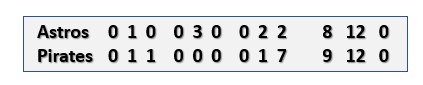
Bottom of the Ninth … Pirates, July 28,2001 … Fifteen Pitches/Seven Runs

Brian Giles photo

Brian Giles Grand Slam topped this comeback.  Photo by ewen and donabel

The biggest comeback with two outs and no one on in the bottom of the ninth belongs to the 2001 Pirates.  On July 28 of that season, the Pirates went into the bottom of the final frame trailing the Astros 8-2.   The Astros had racked up 12 hits – led by 3B Vinny Castillo’s three home runs (giving him 15 on the season).  The Pirates had just seven safeties and had not gone yard.

Michael Jackson (no, not that Michael Jackson), who had come on to pitch in the eighth (and set down the Pirates 1-2-3 ) was on the mound for the Astros. He retired 3B Aramis Ramirez and a fly to left and John Vander Wal on a fly to center – five up and five down in his appearance to this point. The Pirate were down six runs – and down to their last out.  Yet, just fifteen pitches later, they would be celebrating a victory.


Over the next ten pitches from Jackson:

  • 1B Kevin Young doubled on the first pitch he saw.
  • 2B Pat Meares homered on a 1-0 offering.
  • PH Adam Hzydu singled on the first pitch he saw.
  • CF Tike Redman walked on four pitches.
  • SS Jack Wilson hit an 0-1 pitch for an RBI single.

After this barrage, the  Astros brought in closer Billy Wagner.  But Wagner, who would save 39 games that season, could not save this one.  Here’s how his (five-pitch) outing went:

  •   C Jason Kendall was hit by a 1-1 pitch, loading the bases.
  • Pirates’ clean-up hitter Brian Giles smashed a game-winning Grand Slam home run (1-0 pitch). Notably, six of the final seven Pirates’ batters were hitting .250 or under at the close of the game. (Giles was the lone exception at .326).

AstrosPirates

Top of the Ninth … Cubs, June 29, 1952 … Church Can’t Close it Out on a Sunday

On Sunday, June 29, 1952, the Cubs were facing the Reds in a doubleheader in Cincinnati.  They had, appropriately, started Bubba Church on that Sunday.  The Reds seemed to have the first game in hand, taking an 8-2 lead into the top of the final inning. At this point, they had collected 15 hits to the Cubs’ six.   Church was on the hill for the Reds – looking for hit looking for his first win of the season. Despite the big lead, it was not to be.

Brief Break: One Rough “Comebacker” … One Gritty Comeback

ChurchPhillies’ rookie pitcher Emory “Bubba” Church  – somewhat famously – bounced back from a viscous line drive to the face off the bat of slugger Ted Kluszewski. On September 15, 1950, the Phillies hosted the Reds, with Church (8-4, 2.22) getting the start (in Philadelphia). Church took a 1-0 lead into the top of the third – although he wasn’t particularly sharp, having already surrendered two walks and two hits. With two outs in the third, he walked Johnny Wryostek bringing up Kluszewski, who lined a ball up the middle – and off Church’s face. The ball was hit hard enough that it caromed off Church’s head and into right field – on the fly.

Church spent eight days in the hospital and, just one day after his release, was back on the mound for the Phillies – going five innings in a 11-0 loss to the Dodgers. He got one more start that season, but lasted only 2/3 of an inning,  Still, it took one tough cookie to come back to the mound so soon after the Kluszewski smash. Note: Church came back to have his best season in 1951 (15-11, 3.53, with 15 complete games and four shutouts)

Trivia Tidbit: On May 25, 1951, Church was the first MLB pitcher to face highly touted Giants’ rookie Willie Mays – and he struck Mays out looking in the future Hall of Famer’s first MLB at bat. (Mays went 0-for-4 against Church that game.

The top of the ninth started out fine for Church, who got Cubs’ C Toby Atwell on a ground out and RF Bob Addis on a strikeout.  Then, just one out away from victory, his afternoon went south – like this:

  • 3B Bill Serena – double.
  • SS Roy Smalley – walk.
  • PH Gene Hermanski – single, scoring Serena, Smalley moving to third.
  • 2B Eddie Miksis, bunting, safe on error, with Smalley scoring and Hermanski gong to second.

The Cubs now brought in Frank Smith to pitch – and he didn’t stop the bleeding. Smith faced just two batters:

  • CF Hall Jeffcoat hit by a pitch, loading the bases.
  • 1B Dee Fondy – two-run single.
  • LF Hank Sauer – RBI double.

With the score now 8-7, the Reds brought Ken Raffensberger to the mound.

  • PH Bruce Edwards was gifted an Intentional Walk, loading the bases.
  • Johnny Pramesa (hitting for Addis who opened the inning) rapped a two-run single – (putting the Cubs up 9-8).
  • And, finally, Bill Serena popped out to third base to end the inning.

Dutch Leonard came on for the bottom of the ninth and gave up a lone walk, while holding the Reds Scoreless.

CubsRed

______________________________________________

Biggest Comeback Bottom of an Extra Inning with Two Out and N0 One on Base (five-run deficit) … Dodgers, September 27, 2011

Roberts' Grand Slam iced this win.

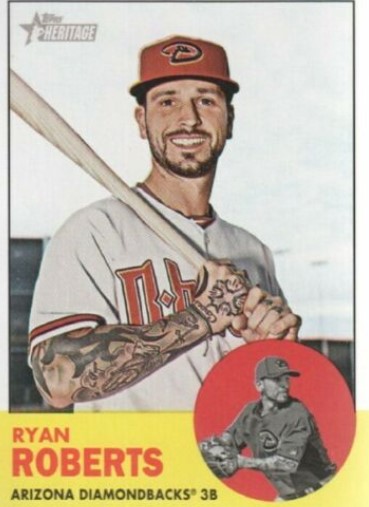
Roberts’ Grand Slam iced this win.

On the evening of September 27, 2011, the Dodgers faced off against the Diamondbacks (in Arizona) with Hiroki Kuroda on the mound for LA and Jarrod Parker starting for Arizona.  By the top of the seventh, both starting pitchers were gone – but neither had been roughed up.  In fact, after nine innings (and a dozen pitchers), the two teams were knotted at 1-1.

Then came the top of the tenth inning – and the bats seemed to wake up and leave the cave. The Diamondbacks brought in Micah Owings, their seventh pitcher of the contest.  Two singles, a double, a triple, a walk, one pitching change and three outs later, the Dodgers had a 6-1 lead (and, undoubtedly, a significant number of fans were headed for the exits).

The Dodgers brought in Blake Hawksworth, their seventh pitcher, and he quickly got the first two batters on a pair of weak ground outs.  However, the Dodgers were not to retire another batter.

  • RF Cole Gillespie hit a ground ball single.
  • Then Hawksworth got ahead of C Miguel Montero 0-2 (putting the D-backs down to their last strike – and still down five runs), but Montero hit the 0-2 offering for a groundball single through the hole between second and short – putting runners on first and third.
  • Montero scampered to second (no throw) on the first pitch to CF Chris Young, who ended up walking on four pitches, loading the bases.
  • John McDonald then pinch hit for Micah Owings and was safe on an error by 3B Aaron Miles.
  • The Dodgers had seen enough and brought in Javy Guerra to pitch to 2B Aaron Hill, who walked to force in a run.
  • Next up was 3B Ryan Roberts, who hit the first pitch he saw from Guerra for a game-winning, walk-off Grand Slam (his 19th and final round tripper of the season). So, after being down five runs, with two outs and no one on in the bottom of the tenth,  the Diamondbacks had come back for a 7-6 win.  On a bit of side note: The walk-off Grand Slam was the only Grand Slam of Ryan’s nine-season MLB career, during which he went .243-46-169 in 518 games.

DodgersD-back

_____________________________________________

Biggest Comeback with Two-out in the Bottom of the Ninth (no limit on base runners) … June 18, 1961 – Red Sox (down by seven)

On June 18, 1961, the Senators faced off against the Red Sox at Fenway and took a slim 7-5 lead into the top of the ninth.  The Senators then put cross five runs in the top of the final inning – fueled primarily by CF Willie Tasby’s Grand Slam.

Slams

Trivia Note: Senators CF Willie Tasby (.304 average coming into the game) was the only .300 hitter (position player) to appear in the game.  Senators’ reliever Marty Kutnya, who didn’t bat in the game, came in hitting .400 (four-for-ten) on the season. 

That set the stage for the greatest, two-out-in-the-ninth comeback ever. With Carl Mathias pitching, Red Sox’ 1B Vic Wertz opened the inning by grounding out pitcher-to -first; SS Don Buddin followed with a single to right.  Next, Bill Harrell pinch hit for pitcher Ted Wills and Mathias fanned him – putting the Red Sox down to their last out – still trailing 12-5. Now the fun begins:

  • 2B Chuck Schilling singled, sending Buddin to second.
  • LF Carroll Hardy drove in Buddin with a single to center.

A Brief Break from Our Story: Carroll Hardy and Ted Williams

Can anybody replace Ted Williams?  Carroll Hardy gained a degree of notoriety – and a spot in the Trivia Hall of Fame – on September 20, 1960, when he became the only player ever called upon to pinch hit for Ted Williams. (Williams had fouled ball off his foot and had to leave the game). Hardy, by the way, hit into a double play. Just over a week later (September 28), when Williams was called in from left field (in order to set the stage for a standing ovation as the Splendid Splinter left his final MLB game), Hardy replaced Williams in left. Thus, also becoming the final player ever to replace Williams in the field during an MLB game.  

  • CF Gary Geiger walked, loading the bases.
  • Dave Sisler came in to pitch and walked RF Jackie Jensen to force in a run.
  • 3B Frank Malzone walked to forced in a run.
  • C Jim Pagliaroni, hit a Grand Slam to deep left – tying the score.
  • Wertz walked in his second plate appearance of the inning.
  • Marty Kutnya replaced Sisler on the bump and gave up single to Buddin, putting runners on first an second.
  • Russ Nixon pinch hit for Harrell and singled in the winning run.

SenatorsSox

How the game had changed.  The 25-rum, 24-hit, contest took only two hours and 47 minutes to complete and only six pitchers took the mound.

__________________________________________________________

Primary Resources: Baseball-Reference.com; MLB.com; Society for American Baseball Research.

Interested in other “surprise endings” to ball games?  Click here. 

100Baseball Roundtable is on the Feedspot list of the Top 100 Baseball Blogs.  To see the full list, click here.

I tweet baseball @DavidBBRT

Follow/Like Baseball Roundtable’s Facebook Page here.  More baseball commentary; blog post notifications.

Member: Society for American Baseball Research (SABR); Negro Leagues Baseball Museum; The Baseball Reliquary. 

Walk-Off (or run-off – or swing-off) Endings that Caught Baseball Roundtable’s Eye

Here’s another of those Baseball Roundtable blog posts that illustrate how “one thing leads to another” when I start looking into a topi. I recently completed a post on “Pinch-Hit Ultimate Grand Slams” – walk-off Grand Slams when the pinch-hitter’s team needed all four runs to chalk up the victory.  (For that post, click here.) That research led me to look further into game-ending “walk-offs” of all kinds.  Here are a few that I found particularly unique, interesting or historic.

Truly the All-Time WALK-Off

We hear a lot about walk-off home runs, but the Dodgers – on July 2, 2019 – pulled off the ultimate Walkoff.  Los Angeles came into the bottom of the ninth trailing the Diamondbacks 4-3.  Arizona brought in closer Greg Holland, who quickly recorded the first two outs.  The Dodgers were now down to their last out, not knowing they were destined to mount a two-run, game-winning rally without putting the ball in play.

Dodgers’ LF Chris Taylor next faced Holland and put the Dodgers down to their last strike before drawing a full-count count walk. Then Russell Martin pinch hit for pitcher Yimi Garcia and drew a full-count walk. Next up was CF Alex Verdugo, who walked on five pitches.  Then came 1B Matt Beaty, who walked on four pitches – tying the game at three runs apiece.  At this point, the Diamondbacks brought T.J. McFarland to the mound, but the results were pretty much the same. RF Cody Bellinger walked on a 3-2 count, forcing in the winning run on a true walk-off walk.  The entire two-out, five-walk series took 28 pitches.  Game. Set. Match.

A Walk-Off … No, I Mean Run-Off, Victory

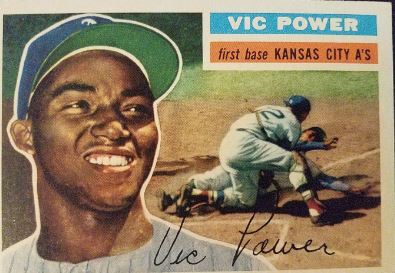
PowerOn this August 14, 1958, Vic Power became just the eleventh player in MLB history to steal home twice in one game – a feat that has not been accomplished since.  Not only that, his second steal of home came in the bottom of the tenth inning, giving Power’s Indians a 10-9 win over Detroit – a true run-off, walk-off.

Here’s how that tenth inning went. 1B Mickey Vernon grounded out (Frank Lary was on the mound).  Then, Power (playing third base that day) singled to right (his third hit of the day).  Catcher Russ Nixon followed with another single, Power moving to second.  LF Minnie Minoso grounded to short, with Power moving on to third, Nixon forced at second and Minoso reaching first on the fielder’s choice.  CF Larry Doby was intentionally walked, loading the bases and bringing RF Rocky Colavito (in the midst of a 41-home run, 113 RBI season and with three RBI on the day) to the dish. On the fourth pitch to the Indians’ slugger, Power – who had been scampering up and down the third base line – broke for the plate and ended the game on a “run-off” steal of home.  For more on MLB steals of home, click here.

Power, by the way, was not a very likely candidate to swipe home twice in a game.  Going into that August 14 tilt, he had exactly one stolen base on the season – and he did not steal another bag that season. In fact, in twelve MLB seasons, Power stole just 45 bases (and was caught 35 times).

Kind of a Brummer – in a Good Way

On August 22, 1982, Cardinals’ catcher Glenn Brummer produced a notable walk-/run-off win.  Brummer’s Cardinals were tied with the Giants in the bottom of the 12th inning, with two-outs and a 2-2 count on LF David Green (facing Gary Lavelle). On Lavelle’s fifth pitch to Green, Brummer broke for home, getting in safety (to win the game) on a head first slide. What makes this one memorable (at least to me) is that Brummer stole only four bases (and was thrown out eight times) in his five-season MLB career.

Holy Moses

A total of 35 MLB games have ended with a steal of home. Wally Moses is the only player to accomplish the feat twice – once against the White Sox and once for them.  On August 20, 1940, Moses’ tenth-inning steal of home gave his Philadelphia Athletics a 4-3 win over the White Sox.  Then, on July 7, 1943, his fourteenth-inning swipe of home plate gave his White Sox a 3-2 win over the Red Sox.

You’ll Never see that Again

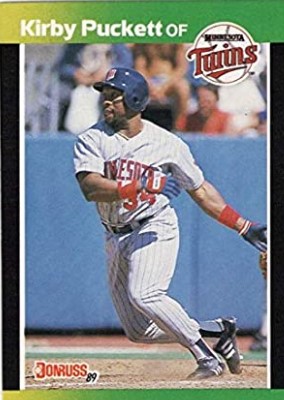
PuckettOn May 28, 1993, the Cleveland Indians scored a pair of runs in the top of the ninth to tie the Minnesota Twins at 6-6. With Ted Power pitching, Twins’ 2B Chuck Knoblauch opened the bottom of the ninth inning with a single to center.  That brought Eric Plunk in from the bullpen and he was greeted by a double to left (on a 1-2 pitch) by 1B Dave McCarty.  Knoblauch was held at third.  So, with runners on first and third, one out, the game on the line and the Twins’ best hitter (CF Kirby Puckett) coming up, the Indians decided to follow the traditional strategy – intentionally walking the future Hall of Famer to set up the double play.  Oops! Plunk’s first intentionally high-and-outside pitch got past catcher Junior Ortiz and Knoblauch scampered home with the winning run-off run.  With today’s “wave-em-to-first” intentional walk rule, we’ll never see this ending again.


I’ll Take a Pass on That

On August 15, 1970, with the Mets up on the Braves 2-1 and the Braves batting in the bottom of the ninth with one out and the bases loaded, Tom Seaver whiffed Atlanta catcher Blob Tillman. The ball, however, eluded Mets’ catcher Jerry Grote for a passed ball, allowing the tying run (Tony Gonzalez) to score from third base. Grote doubled down on the miscue with an errant throw to the plate, allowing Rico Carty – who had been at second base – to score the winning tally.  So, Atlanta fans got to witness a game-ending, game-winning strikeout. 

 Walking Off a No-No

hillOn August 23, 2017,  only an error by third baseman Logan Forsythe had kept him from tossing nine perfect innings against the Pirates.  After nine frames, he had given up no hits and no walks, while striking out ten (including Pittsburgh 2B Josh Harrison twice).  Unfortunately, over 9 ½ innings, Hills’ teammates did not put any runs up on the score board. Pirate’s starter Trevor Williams had given up no runs – on seven hits and four walks – over eight frames; reliever Felipe Vazquez had pitched a one-hit scoreless ninth; and Juan Nicasio had pitched a 1-2-3 top of the tenth.

Leading off the bottom of the tenth was Harrison (zero-for-three with two strikeouts in the game). Harrison hit a 2-1 pitch for a walk-off, game-winning home run to left – becoming the first player to end an extra-inning no-hitter with a walk-off long ball. (It was his 16th round tripper of the season.  (Lots of qualifiers there, but – as I’ve said before – in baseball we count everything.)  For past post on no-hitters lost late in the game, click here. 

Latest Walk Off Win Ever

The longest game ever to end in walk-off fashion took 25 innings, eight hours and six minutes and two days to complete.  It started on May 8, 1984, with the Brewers facing the White Sox at Comiskey – and seemed about to end twice before the 25th frame finale.

All in a Day’s Work

The longest game (in innings) took place on May 1, 1920 – as the Brooklyn Robins and Boston Braves played 26 innings (game called due to darkness) to a 1-1 tie. To show how the game has changed, the 26 frames were completed in just under four hours – and both starting pitchers (Joe Oeschger and Leon Cadore) went the distance. 

The Brewers/White Sox game was tied 1-1 going into the ninth. Brewers’ SS   Robin Yount opened the inning against Britt Burns with a double to left. After one out, he stole third and scored on a throwing error by catcher Carlton Fisk.  Then, Milwaukee 1B Ted Simmons singled, went to second on a Burns’ wild pitch and scored on a single by LF Ben Oglivie – giving the Brew Crew a two-run lead. In the bottom of the inning, White Sox’ LF Tom Paciorek led off against Rollie Fingers and was safe on an error. Fingers retired the next two batters and the Brewers were one out from the win.  However, Sox’ 2B Julio Cruz delivered an RBI double and CF Rudy Law followed with an RBI single – tying the game at three apiece.  That’s where the score stayed until the end of the seventeenth inning, when it was suspended due to curfew rules.

BrewSox

The game resumed on May 9 and stayed at 3-3 until the top of the 21st, when Oglivie popped a two-out, three-run home run off Ron Reed to give the Brewers a 6-3 edge.  Game over?  Not so fast! In the bottom of the 21st, Law reached on an error and scored on a single by catcher Carlton Fisk (off Chuck Porter).  Marc Hill (now in at 1B) then walked and,  after Dave Stegman (now in at DH) fanned, RF Harold Baines walked and Paciorek delivered a two-run single. That ended the scoring and kept the game knotted, now at 6-6.

There was no more scoring until one-out in the bottom of the 25th, when Baines homered off Porter – giving the win to “reliever” Tom Seaver, who pitched the top of the 25th.  It was the latest-ever MLB walk-off hit.

A few side notes: Carlton Fisk was behind the plate for the ChiSox for all 25 innings (He went three-for-eleven with a walk). Seven different players occupied the number-three spot in the White Sox batting order – although only five had a plate appearance.  Chuck Porter, who took the loss, pitched the final 7 1/3 inning for the Brewers.  For more on this contest some of MLB’s longest game, click here.

By The Numbers

In 1959, the Pirates racked up a single-season record 18 walk-off victories – despite finishing in fourth place, just two games over .500.  That same campaign, they also won a pair of doubleheaders in which they took both games in walk-off fashion.  They are one of five teams to accomplish that feat.

Here’s how they did it.

May 24 – Game One … 2-1 over Reds

The game was scoreless until the top of the ninth, when the Reds tallied once. The Pirates scored twice in the bottom of the inning, winning it on a two-out, walk-off, RBI double by PH Danny Kravitz.

May 24 – Game Two … 5-4 over the Reds

The Pirates scored twice in the bottom of the ninth to tie the game at 4-4. They won it in the tenth on a two-out, walk-off, RBI double by PH Smokey Burgess.

August 30 – Game One … 2-1 over Phillies

The Pirates won this one on a ninth-inning, two-out, RBI single by LF Bob Skinner.

August 30 – Game Two …. 7-6 over the Phillies

The Pirates were down 5-0 in this one at the end of six innings.  They scored one in the seventh; two in the eighth; and two (to tie the game) in the ninth. In the top of the tenth, the Phillies tallied once to take the lead, but the Pirate prevailed on a one-out, two-run double by 1B Dick Stuart in the bottom of the inning.

Side note:  1959 saw Pirates’ reliever Roy Face put up his historic 18-1 (.947 winning percentage, 10 save, 2.70 ERA) season. Nine of his wins came in the Pirates’ 18 walk-off victories.

WOwinmsseason

“Power”ful Book Ends

May 7, 1957, Vic Power’s Athletics were playing the Orioles in Kansas City.  Power led off the bottom of the first for the A’s – and hit a home run to left off starter Hal Brown – Power’s first long ball of the season. Fast forward to the bottom of the tenth, with the game tied at 2-2.  With one out – and Brown still on the mound – Power hit his second home run of the season (again to left field), giving the A’s a walk-off win and also making Power just the second player to hit a game opening and game-ending home run in the same contest – and he did it with his first two homers or the season.   (For more on players – before and after Power – to open and close a game with a long ball click here.)

LOWO

The Walk-Off Home Run Turned Double

One of the best (and most historic) games ever pitched ended in a walk-off win – but not for the team and pitcher you might expect.

HaddixOn May 26, 1959, Harvey Haddix took the mound against the power-laden Milwaukee Braves (who had won the National League pennant the previous two seasons and came into the game again leading the league).  Haddix retired the first 36 hitters in order – fanning eight, carrying a perfect game into the bottom of the 13th (the longest perfect outing ever).

Unfortunately, the Braves’ Lew Burdette, despite giving up 12 hits and fanning only two, had held the Pirates scoreless. (Like Haddix, Burdette had not issued a single free pass.) Milwaukee 2B Felix Mantilla led off the 13th by reaching on error by Pirates’ third baseman Don Hoak. Slugging 3B Eddie Mathews bunted Mantilla over to second, which led to an intentional walk to RF Hank Aaron, bringing up 1B Joe Adcock.  Adcock rapped a 1-0 pitch over the right field fence for what appeared to be a three-run walk-off home run.  However, the Braves, in celebrating the tension-filled victory, forgot how to run the bases. Adcock passed Aaron between second and third and, after some deliberation, Adcock was called out – ultimately changing his three-run homer to a one-run, walk-off double. So, despite 12 perfect innings, Haddix lost the no-hitter, the shutout and the game itself.  But he did etch his name forever into baseball lore; and countless trivia quizzes.

Taking One (or Two) For the Team

On September 15, 2020, the Cubs came up in the bottom of the ninth tied with the Indians at five runs apiece.  The Indians brought Oliver Perez in for the save and he retired the first batter – LF Ian Happ – on a fly out to RF. Next 3B Kris Bryant walked on a 3-2 pitch (in an eight-pitch at bat). Then, 1B Anthony Rizzo singled Bryant to third.  That brought on Nick Wittgren to face DH Wilson Contreras, who was hit by a 1-1 pitch – loading the bases.  On the very next pitch, PH Cameron Maybin was hit by a Wittgren pitch – leading to walk/hit-off 6-5 Cubs win.

Jim Thome holds the MLB career record for walk-off home runs at 13.

Inside-Out(side)

This post started with the research on pinch-hit “Ultimate Grand Slams” – walk-off Grand Slams hit when your team is down three runs.  In that research, I came across a couple of non-pinch Ultimate Slams that interested me – one inside the park and one that went out of the field of play.

ClementeThe first occurred on July 25, 1956.   The Pirates entered the bottom of the ninth of a game against the Cubs trailing 8-5. With Turk Lown on the mound for the Cubs, the Pirates loaded the bases on two walks and a single.  The Cubs then went to Jim Brosnan to face 21-year-old Roberto Clemente, who hit Brosnan’s first pitch over left fielder Jim King’s head. The line drive struck the fence, rebounding along the outfield warning track. The three base runners scampered home, tying the score.  As Clemente approached third base, coach Bobby Bragan was putting up the “stop” sign – which the speeding Clemente ignored – ultimately sliding home with the winning walk-/run-off tally in a 9-8 win. In the process, he became, and still is, the only player with a inside-the-park Ultimate Grand Slam. Clemente, by the way, is reported to have paid a $25 fine for running through the stop sign.,

Now for one that left the field of play.  Have to go with the well-known and historic Giants’ 5-4 win over Dodgers in the 1951 pennant-deciding playoff game. In that one, the Giants trailed 4-1 going into the bottom of the ninth. With Don Newcombe on the mound, the Giants started the ninth with a single by SS Al Dark, a single by RF Don Mueller, a foul pop out by LF Monte Irvin and run-scoring double by 1B Whitey LockmanRalph Branca came on to pitch and 3B Bobby Thomson hit his second pitch for a three-run, walk-off home run – and, of course, the Giants ticket to the World Series.

What a Way to Win a World Series

Okay, we all know about Bill Mazeroski’s tenth-inning, Game-Seven home run (off Ralph Terry) that gave the Pirates a walk-off 10-9 win and the 1960 World Series title.  Why is it here?  Because it gave the Pirates the Series’ despite the fact that, over the seven games, they were out hit by the Yankees; .338 to .256; 91 hits to 60; ten home runs to four – and were outscored 55 to 27. In the Series, the Pirates pitching staff put up a 7.11 ERA, to 3.54 for the Yankees.  For more detail on this exciting World Series, click here.

Primary Resources: Baseball-Reference.com; Baseball-Almanac.com; MLB.com

WE HAVE A WINNER!   BBRT’S LATEST PRIZE PACK.

Rick from Fargo, North Dakota is the winner of Baseball Roundtable’s latest prize pack.  (Watch BBRT posts for future drawings.)  Rick is receiving: 1) A complete 1984 Topps baseball card set; 2) a Twins 40th Anniversary Tony Oliva bobblehead; 3) an autographed 8 x 10 of Tony Oliva; 4) a Magnum Comics Mickey Mantle First Edition comic book (with commemorative Mantle card); and 5) a first edition copy of “Quotable Baseball Fanatics.” 


100Baseball Roundtable is on the Feedspot list of the Top 100 Baseball Blogs.  To see the full list, click here.

I tweet baseball @DavidBBRT

Follow/Like Baseball Roundtable’s Facebook Page here.  More baseball commentary; blog post notifications.

Member: Society for American Baseball Research (SABR); Negro Leagues Baseball Museum; The Baseball Reliquary. 
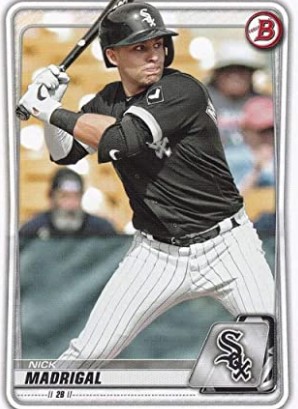
He’ll Do In A Pinch – Baseball Roundtable Goes Deep … into the Pinch-hitting Record Book

The Name Game 

PhilleyIn 1958, Dave Philley – of the  Philadelphia Phillies – ran off a string of eight consecutive pinch hits … still the most consecutive pinch hits in a single MLB season.   The streak started on September 9 and stretched through the Phillies’ final game of the season (September 28). In those eight pinch-hitting appearances, Philley collected five singles, two doubles and one home run – driving in nine runs.  Ironically, he started three games in right field during the streak – and went just one-for-twelve (a single), with one walk and one RBI.  In the 1958 season, Philley hit .409 as a pinch hitter (18-for-44, with five walks, five doubles, one home run and 11 RBI.  In non-pinch roles, he went 46-for-163 (.282), with six doubles, four triples, two home runs and 20 RBI.

Philley’s record of eight consecutive pinch hits in a season was tied by the Mets’ 39-year-old Rusty Staub in 1983. In a stretch from June 11 through June 26 that season, Staub went eight-for-eight as a pinch hitter – with two doubles, one home run and seven RBI. As a pinch hitter that season, Staub went 24-for-81, with three home runs, 25 RBI, 10 walks and just six strikeouts. (Staub’s 25 RBI give him a share of the MLB single-season pinch-RBI record – with Joe Cronin (Red Sox, 1943) and Jerry Lynch (Reds, 1981) In non-pinch roles, Staub went 10-for-34 (.294), with no homers and three RBI.  In the final three seasons of his 23-season MLB career, Staub was used primarily as a pinch batsman.  He appeared in 236 games – 223 as a pinch hitter. Staub, a six-time All Star , collected 2,716 career hits (.279), with 292 home runs and 1,466 RBI. As a pinch hitter, he was 99-for-358 (.277) with eight home runs, 92 RBI and 49 walks.

But, I‘ve digressed – back to Dave Philley. Other pinch-hitting records he also holds are the American League single-season record for pinch-hit at bats (72) and pinch hits (24).  Both set with the Orioles in 1961.  In his career, Philley hit 300 as a pinch hitter 92-for-307.

A Portent of Things to Come

BrownOn June 19, 1963, Tigers’ rookie Gates Brown had his first MLB at bat.  It came as a pinch hitter (against the Red Sox’ Bob Heffner), leading off the top of the fourth inning, with the Tigers down 4-1. (Brown was hitting for pitcher Don Mossi). It was a fairly inconsequential at bat (the Tigers lost 9-2), except for the fact that Brown joined the club of players delivering a pinch-hit homer in their first MLB at bat.  It also was a portent of things to come, as Brown went on to set (and still holds) the American League record for career pinch-hit at bats (414) pinch hits (107) and pinch-hit home runs (16).

The overall MLB records for career pinch-hit at bats (804) and pinch hits (212) belong to Lenny Harris.  In his 18-season MLB career (1988-2005). Harris delivered pinch hits for the Reds, Dodgers, Mets, Giants, Rockies, Diamondbacks, Brewers, Cubs and Marlins. 

One “Grand” Opening Salvo

On August 31, 2005, Marlins’ rookie Jeremy Hermida came to bat against Cardinals’ reliever Alberto Reyes with The Fish down 10-0.  It would seem a bit of a “no pressure” situation for a first trip to the plate – except that the bases were loaded (no outs). Hermida took a 1-1 fastball over the left field wall – becoming the first (and still  only)  player to hit a pinch-hit Grand Slam in their first plate appearance. To date, Hermida also is one of only four players to hit a Grand Slam in their first at bat.

PHHR1stAB

Put Me in Coach – I’m Ready to Hit

In 2017, 43-year-old Ichiro Suzuki was winding down a career that saw him record ten seasons of 200+ base hits.  At this point, he was with the Marlins and was an offensive weapon coming off the bench.  That season Ichiro appeared in 136 games – an MLB single-season record 109 as a pinch hitter.  He also logged a single-season record 100 pinch-hit at bats, collecting 27 hits for a .270 average.

Well, That’s Rich

ReeseRich Reese only hit 52 home runs in his 10-season MLB career (1964-73) – and just three of those were Grand Slams – but that performance still got him into the long-ball record books.  All three of Reese ‘s Grand Slam home runs were as a pinch hitter.  This puts him in a tie with Ben Broussard, Willie McCovey and Ron Northey for the most pinch-hit Grand Slams in a career.  Reese’s MLB career stretched from 1964-73 (all but part of the 1973 with the Twins). He hit .253-52-245 in 866 games. His best season was 1869, when he hit .322-16-69 in 132 games.

Seventh-Heaven … or Making those Long Balls Count

HansenIn 2000, Dodgers’ utility player Dave Hansen hit .289, with eight home runs and 26 RBI – but still the season was one for the record books.  Seven of Hansen’s eight long balls came in a pinch-hitting role, setting a new single-season record for pinch-hit home runs. Three of Hansen’s seven pinch-hit home runs came in the seventh inning, two in the eighth and two in the ninth and six of the seven either tied the game (four) or gave the Dodgers the lead (two). In each case, Hansen was hitting in the nine-hole – six times for the pitcher and once for a pinch-hitter (for the pitcher), who had been announced, but was pulled when the opposing manager made a pitching change.

In 2000, Hansen was in the tenth of his eventual 15 MLB seasons. That campaign, he had a total of 147 plate appearances (in 102 games), with 65 of those PA’s coming as a pinch hitter.  He went .273-7-14 in that role, adding ten walks for a .385 on-base percentage. In 82 non-pinch-hitting plate appearances, he hit ,303-1-12, with 16 walks (.439 OBP).

Hansen’s MLB career stretched from 1990 through 2005 (Dodger, Cubs, Padres, Mariners). He appeared in 1,230 games, starting just 341. He retired with a stat line of .260-35-222; .234-15-81 as a pinch hitter.  Hansen made appearances defensively at 3B, 1B, LF, SS and 2B.

Well, That Didn’t Last Long

Dave Hansen set a new MLB single-season record of eight pinch-hit home runs during the 2000 season.  However, his sole possession of that mark didn’t last long.  The very next season, a 24-year-old Pirate rookie 1B/C named Craig Wilson collected a pinch-hit home run for his very first major league hit (May 1 against the Giants). Wilson went on to collect six more pinch-hit round trippers (out of a total of 13 home runs) in his rookie season – tying Hansen’s all-time mark. Wilson finished the 2001 season with a stat line of .310-13-32 in 88 games. He appeared 43 times as a pinch-hitter, going .294 (10-for-34) with 11 RBI and seven walks in that role.  Wilson’s pinch-hit homers came in the fifth (one), sixth (two), seventh (one), eighth (two) and ninth (one) innings – four of the long balls gave the Pirates the lead and one was a walk-off homer.

Craig Wilson had a total of ten pinch hits in 2001, seven of them for home runs.

Wilson played seven MLB seasons (2001-2007 … Pirates, Yankees, Braves), hitting .262-99-292. As a pinch hitter, he hit .213-12-25, with 12 walks in 124 plate appearances. After hitting .310 as a rookie (88 games), he never reached .270 again.  His best season was 2004, when he hit .264-29-82 in 155 games for Pittsburgh.

________________________________________________________________________

—-Pinch Hitters with Ultimate (or even Ultra Ultimate) Grand Slams—-

Ah, the beauty of the “Ultimate Grand Slam” – a walk-off, game-winning Grand Slam coming when your team is down by three runs. And, for BBRT, there is the “Ultra” Ultimate Grand Slam – a walk-off Grand Slam with your squad down by three runs and down to it last out.  Let’s look at those spectacular long  balls and the players who hit them.   First, those that make the BBRT “Ultra” list … coming with two outs in the final frame.  There are three.

Carl Taylor, Cardinals, August 11, 1970

The Cardinals were trailing the Padres 10-6 going into the bottom of the ninth on that August 11 evening. Singles to three of the first four batters cut the margin to three tallies. Two batters later (a fielder’s choice and a walk) – with two out and the bases loaded – Carl Taylor was called upon to pinch hit for Cardinals’ pitcher Harry Parker.  His walk-off Grand Slam (off Ron Herbel) to deep left gave the Cardinals an 11-10 win.  It was the C/OF’s sixth and final home run of the 1970 season, in which he went .249-6-45. Taylor played six MLB seasons (1968-73), going .266-10-115.  After the game, Taylor told reporters it was his first Grand Slam ever “even in Little League.”)

________________________

A Tidy Set of Bookends

Carl Taylor’s “Ultra” Ultimate Grand Slam (for the Cardinals) was his last major league home run (despite playing three more MLB seasons). It came off Padres’ pitcher Ron Herbel. Coincidentally, Taylor also hit his first MLB home run off Herbel on May 25, 1969. At the time, Taylor was with the Pirates and Herbel with the Giants.

_____________________

Roger Freed, Cardinals, May 1, 1979

Roger Freed gets credit for the only extra inning Ultimate Grand Slam – and there’s a good chance a lot of the hometown crowd missed the big blow. The Astros and Cardinals were tied 3-3 at the end of nine and the Houston erupted for three runs in the top of the eleventh inning (No doubt, sending some St. Louis fans heading for the exits). The Redbirds, however, put together a single and two walks (interrupted by a pair of strikeouts) to load the bases for pinch hitter Roger Freed (hitting for LF Jerry Murphy). Freed then touched Joe Sambito for a two-out, walk-off game-winning Grand Slam for a 7-6 Cardinals’ victory.  It was one of only two home runs Freed would hit that season, when the 1B/OF put up a .258-2-8 stat line. Freed appeared in 34 games that season – 33 as a pinch hitter. (He started one game at 1B – his last in MLB- and went two-for-four with a double and toe RBI.)

Minor League MVP

Roger Freed was selected as the International League Most Valuable Player (.334-24-130 for the Rochester Red Wings) in 1970 and the American Association Most Valuable Player (.309-42-102 for the Denver Bears) in 1976. 

Freed played eight MLB seasons (1970-72, 1974, 1976-79), hitting .245-22-109 in 344 games. Despite the .245 career average, he hit for a .398 average (33-for-83 in 49 games) for the Cardinals in 1977. That season, he hit .395 (9-for-23) as a pinch-hitter. Freed was a career .269 hitter in the pinch.

Dave Bote, Cubs, August 12, 2018

On August 12, 2018, the Cubs came into the bottom of the ninth trailing the Washington Nationals 3-0 – having been handcuffed by Max Scherzer (three hits, one walk and 11 whiffs in seven innings) and Koda Glover (one hit in the eighth). The Nationals brought in Ryan Madson to pitch – and then things got a little wild.  Madson got 2B Ben Zobrist out on a grounder to first to open the inning, then gave up a single to RF Jason Heyward. He then hit CF Albert Almora on an 0-1 pitch, got LF Kyle Schwarber on a foul pop and hit C Wilson Contreras on a 2-2 pitch to load the bases. The Cubs brought in rookie infielder Dave Bote to pinch hit for pitcher Justin Wilson and, with a 2-2 count (the Cubs down to their last strike), Bote took a mid-90s fastball to deep center for an “Ultra” Ultimate Slam- giving the Cubs a walk-off 4-3 victory. At the time of his Ultimate Grand slam, Bote was hitting .329, with three home runs (including the Slam). He hit just .176, with three home runs the rest of the way – to finish the season at .239-6-33.

Bote, a utility infielder, has played three MLB seasons (2018-20), hitting .240-24-103.  As a pinch hitter, however, he has excelled. Through his first three seasons, Bote is .342-2-14, with six walks in 45 games as a pinch hitter (444 on-base percentage).

Now for the Ultimate Grand Slams that came with less than two out. 

Sammy Byrd, Reds, May 23, 1936

Sammy Byrd came up in the bottom of the ninth (pinch-hitting for pitcher Don Brennan) against the Pirates’ Cy Blanton with his Reds down 3-0, no outs and the bases loaded – and delivered a walk-off Grand Slam for a 4-3 win. (Byrd was the third pinch hitter used by the Reds that inning.) Byrd would hit only one more home run in his MLB career (1929-36), during which the outfielder put up a .274-38-220 stat line. As a pinch hitter, he went .284-2-24 in 115 games.

Jack Phillips, Pirates, July 8, 1950

Jack Phillips came to the plate in the bottom of the ninth (pinch hitting for pitcher Murry Dickson) against the Cardinals’ Harry Brecheen with his Pirates down 6-3, the bases loaded and one out. He homered to left-center to give the Pirates a 7-6 walk-off win. Phillips played nine MLB seasons (1947-52, 1955-57) – never appearing in more than 70 games in a campaign.  Observers did say Phillips had a brush with greatness, indicating his Ultimate Grand Slam tipped off the end of Stan Musial;s outstretched glove as it cleared the left field fence. Phillips, primarily a backup corner infielder, played a total of 343 MLB games, going .283-9-101.  In that 1953 season, Phillips played in 69 games, hitting .293-5-34. The home runs and RBI were career highs.

Brooks Conrad, Braves, May 20, 2010

Brooks Conrad’s pinch-hit Ultimate Grand Slam was part quite a remarkable Braves’ comeback. Atlanta entered the bottom of the ninth of its May 20, 2010 game against the Reds trailing by a 9-3 score.  With Mike Lincoln on the mound for Cincy, the Braves inning went like this: 1B Troy Glaus-single; LF Eric Hinske – single; SS Yunel Escobar – single (loading the bases); CF Nate McLouth – two-run single.  At this point, Nick Masset replaced Lincoln on the mound and quickly walked C David Ross.   Martin Prado (2B) then reached on an error, scoring Escobar and leaving the bases loaded and the Braves trailing by three.  Enter pitcher Arthur Rhodes, who fanned RF Jason Heyward on a 3-2 pitch. The Reds then brought in Francisco Cordero to face Conrad, who was hitting for pitcher Craig Kimbrel. On a 2-2  offering, Conrad delivered a long fly to left field that bounced off LF Laynce Nix’s glove and into the stands for an Ultimate Slam – topping a seven-run ninth inning rally and giving the Braves a 10-9 walk-off win.  (Notably, Conrad would deliver a second pinch-hit Grand Slam in the 2010 season – in the eighth inning of a July 24 game against the Marlins).

Conrad (a utility infielder) played 293 games in six MLB seasons (2008-2012, 2014). He averaged .200 over 460 at bats (164 of them as a pinch hitter), with 19 home runs and 73 RBI.  The 2010 season, when he notched those two pinch-hit Grand Slams, was his best in the majors – .250-8-33 (all career highs) in 103 games. Those two 2010 pinch-hit Grand Slam were the only Grand Slams of his career.

Brian Bogusevic, Astros, August 16, 2011

Brian Bogusevic (Do you have his baseball card?) came to the plate against the Cubs’ Carlos Marmol in the bottom of the ninth inning (August 16, 2011), with Bogusevic’s Astros trailing 5-2, with one out and the bases loaded. He was hitting for pitcher Aneury Rodriguez – and he delivered, popping a 2-2 pitch out of the park (left-center) for a 6-5 walk-off Astros’ win.  Bogusevic, an outfielder, played in five MLB seasons (2010-13, 2015). He hit .238-19-67 in 321 games. That Ultimate Slam was his only career Grand Slam. He had a solid season in the pinch in 2011, going 10-for-33 (.303) with one home run and five RBI. On the season, he was .287-4-15 in 87 games.

Mound Movement

Brian Bogusevic was the 24th overall pick in the 2005 MLB Draft (Astros) – as a pitcher. He went 14-21, 5.09 in four minor-league seasons before being converted to the outfield.  In three years at Tulane University (159 games), he was a two-way standout – going 25-11, 3.65 on the mound and .330-14-129 at the plate.

______________________________________________________________________

It Doesn’t Matter Who You Hit It For – as Long as You Hit It

No one had more pinch-hit home runs in a career than Matt Stairs – with 23. Stairs pinch-hit long balls for the A’s, Brewers, Pirates, Royals, Tigers, Blue Jays, Phillies and Padres. Stairs enjoyed a 19-season MLB career – going .262-265-899 in 1,895 games.

Smokey Just Smokin’ ‘Em

No player racked up more pinch-hit RBI than Forrest “Smokey” Burgess.  Over his 18 MLB seasons (1949, 1951-67 … Cubs, Phillies, Reds, Pirates, White Sox). Burgess drove in 146 runs in 589 appearances as a pinch-hitter (.285 average, 16 home runs). An All Star catcher in six seasons,Burgess played 1,691 career games, hitting .295, with 126 home runs and 673 RBI.

Smokey Burgess led National catchers in fielding percentage in three seasons.

Rack ‘Em Up Coach

In 1995, the Rockies’ Johnny Vander Wal came to the plate 85 times as a pinch hitter. He collected 28 hits (seven doubles, one triple and four home runs) and 12 walks (.389 average and .471 on-base percentage).  His 28 pinch-hit safeties are the MLB single-season record. Vander Wal played 14 MLB seasons (1991-2004), going 261-97-430. As a pinch hitter, he hit.236-17-95.  Of his 3,166 career plate appearances, 624 (19.7 percent) were as a pinch-hitter.

Don’t want anything to Do with That

In 1999, the Mets’ Matt Franco appeared in 122 games – 80 as a pinch hitter. In 25 percent of those pinch plate appearances, he drew a free pass (the MLB single-season record for a pinch batter).  This despite a .235 1999 batting average and a .237 average as a pinch hitter that season.   Franco played in eight MLB seasons (1995-2000, 2002-03). He hit .267-22-117 in 661 games. In 399 games as a pinch hitter, he hit .238-7-51.

A Better “Eye” Off the Bench?

In 1999, Matt Franco drew 20 free passes in 80 plate appearances as a pinch hitter and just eight walks in 81 plate appearances as  at bats in a non-pinch-hitting role.

That’s Clearly Above Average

Baseball-Almanac.com credits the Met’s Ed Kranepool with the highest-ever season pinch-hitting average (among players with at least 30 pinch at bats in the season).  In 1974, Kranepool hit .486 (17-for-35) – with three doubles, one triple and one home run – as a pinch hitter. For his career, Kranepool was .277-6-55 (.270 average) with 36 walks in 370 appearances as a pinch hitter. Kranepool played in 18 MLB seasons (1962-79), all with the Mets.  He hit .261-118-614 in 1,853 games.

Primary Resources:  Baseball-Reference.com; Baseball-Almanac.com; MLB.com.

100Baseball Roundtable is on the Feedspot list of the Top 100 Baseball Blogs.  To see the full list, click here.

I tweet baseball @DavidBBRT

Follow/Like Baseball Roundtable’s Facebook Page here.  More baseball commentary; blog post notifications.

Member: Society for American Baseball Research (SABR); Negro Leagues Baseball Museum; The Baseball Reliquary. 
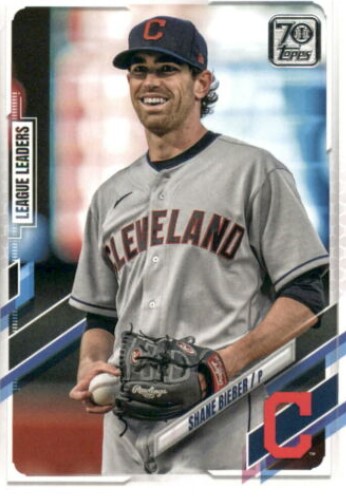
Baseball Roundtable “Who’s Your Daddy?” Series … Lefty Grove Edition

Tex Vache … Perfect Against Lefty Grove 

Boston Red Sox outfielder  Ernest Lewis “Tex” Vache faced Hall of Fame southpaw Lefty Grove just four times in his MLB career – but went four-for-four (three singles and a double) – the most hits against Grove of any player to put up a 1.000 batting average against him. 

Vache (who served on a U.S. Navy minesweeper in World War I and left the Navy in 1919) did not  make his professional (minor-league)  debut until age 31 and made his first MLB roster in 1925 (at age 35). Vache played just one MLB season, hitting .313-3-48 in 110 games for the Red Sox.   After the season,Vache was traded to the Tigers, who then sent him on to Fort Worth of the Texas League. (Vache eventually played the 1926 season with the Pacific Coast League Mission Bells, hitting .302 in 88 games).  He toiled in the minor leagues until 1929, but never appeared in the majors again (most often attributed to his age and fielding issues.) 

From Ted Vache’s one-season MLB career, we segue into the Lefty Grove Edition of  the Baseball Roundtable’s “Who’s Your Daddy?” series.

____________________________________________________

Who’s Your Daddy?  What’s it all about?

In this series, BBRT presents lineups of players who performed unexpectedly well against baseball’s top pitchers. (An explanation of the inspiration behind the Who’s Your Daddy? series can be found the end of this post.)  As always, I would stress that the pitchers included in the Who’s Your Daddy? series are among the “best in the business.”  They are selected not because of the players who performed well against them, but rather because success among hitters when they were on the mound was the exception rather than the rule.  We’ve looked at pitchers from a wide range of eras – from Bob Feller to Nolan Ryan to Max Scherzer.  We going even farther back in this post – to the players who seemed to be able to deal with the offerings of Hall of Famer Robert Moses “Lefty” Grove.

Before we get started on this edition, focusing on the Hall of Fame southpaw, here are links to the previous editions of this series:

  • Nolan Ryan, click here.
  • Sandy Koufax, click here. 
  • Pedro Martinez, click here.
  • Bob Gibson, click here
  • Randy Johnson, click here
  • Greg Maddux, click here. 
  • Justin Verlander, click here. 
  • Bob Feller, click here
  • Roger Clemens, click here
  • Max Scherzer, click here. 
  • Tom Seaver, click here.
  • Mariano Rivera, click here. 
  • Warren Spahn, click here. 

_____________________________

lefty Grove photo

Photo by rchdj10

Lefty Grove – considered by many to be the best left-handed pitcher of all time – was known for having a white-hot fastball and a red-hot temper.

Grove finished his 17-season (1925-41) MLB career with 300 wins and a .680 winning percentage (141 losses). The six-time All Star (remember, the first All Star Game took place in 1935) led the American League in wins four times, winning percentage five times, earned run average nine times, complete games three times, shutouts three times and strikeouts seven times.

Going deeper, Grove also led the league in WHIP five times, strikeouts per nine innings five times and strikeouts-to-walks ratio seven times. His nine ERA titles are the most all time.

I’ll Take Grove for the Win

Lefty Grove’s .680 winning percentage is the best among pitchers with 300 or more MLB victories.

Grove won 20 or more games in seven seasons and threw 20 or more complete games in nine campaigns. He was 4-2, 1.75 in eight World Series appearances (five starts).

MVP-MVP

Lefty Grove was the 1931 American League MVP, when he went 31-4, 2.06 for the Philadelphia Athletics – winning one of his two pitching Triple Crowns (Wins-ERA-Strikeouts). That season, he ran off a sixteen-decision winning streak (June 8-August 19), during which he started 14 games and relieved in four (two saves), He notched 13 complete games (with a 2.30 ERA in that span).  The streak was broken on August 23, when Grove lost a 1-0 complete game to Dick Coffman and the St. Louis Browns.  (Coffman pitched a three-hit shutout.) After that tough loss, Grove went on to win his next six decisions – during which he threw five complete games in six starts and notched an even stringier 1.61 ERA.

grove 2Grove did not get his first taste of organized ball until he was 19 (town ball), where he quickly earned a reputation for dispatching hitters via the strikeout, He was signed at the age of 20 by the Class D Martinsburg Mountaineers – and went 3-3, 1.68, with 60 strikeouts in 59 innings before the International League (Double-A) Baltimore Orioles came calling. That season, Grove went 12-2, 3.80 at Baltimore, where he stayed until 1924. (From 1920-24, he went 111-39, 2.90 in the minors.) Before the 1925 season, Grove was purchased from the Orioles by the Philadelphia Athletics for $100,600 (just under $1.5 million in today’s dollars) and started his MLB career in 1925.  The rest, as they say, is history.

Still, Grove didn’t dominate every hitter who stepped into the batter’s box.   There were these batmen:


Career HighsGove

Note on chart: Baseball-References indicates game logs before 1973 are not complete. In the chart above, game logs (versus Grove) are missing for Charlie Gehringer (four games); Hank Greenberg (two games); Fred Schulte (one game); and Billy Rogell (three games).  Throughout this post, I have noted instances of incomplete game logs. 

Now, let’s take a look at the Lefty Grove “Who’s Your Daddy?” position-by-position line up.

_____________________________________________________

Catcher – Rollie Hemsley (.353 average)

In 1938, a season in which Lefty Grove went 14-4 and had the American League’s lowest qualifying earned run average at 3.08, Indians’ catcher Rollie Hemsley faced him in just one game (June 27). At the time, Grove was 11-2 on the season with a 2.98 earned run average. Hemsley, batting in the eight-hole, came into the game hitting .215 on the season and had played in just 20 the team’s first 58 contests. In the course of the game, Hemsley would go four-for-four (a double and three singles), raising his average 46 points.  In the eight seasons he faced Grove, Hemsley hit .333 or better in four.

Hemsley

The Right Place at the Right Time

Rollie Hemsley caught Bob Feller’s (April 16, 1940) Opening Day no-hitter – the only Opening Day No-No in MLB history. That, of course, makes Hemsley the only MLB player to catch an Opening Day no-hitter. Hemsley also had two of the Indians’ six hits and drove in the game’s only run with a two-out, fourth-inning triple. Side note:  Hemsley did gain some notoriety as Feller’s “personal catcher.”

Hemsley played 19 major league seasons (1928-44 … missing 1945 due to military service). He suited up for the Pirates, Cubs, Reds, Browns, Indians, Yankees and Phillies. (Hemsley played in 100 or more games in just six of those 19 seasons.) He was a five-time All Star, with a final career stat line of .262-31-555. His best season was 1934, when he hit .309, with 31 doubles, seven triples, two home runs, 52 RBI and six steals for the Saint Louis Browns.  (The average, triples, RBI and steals were all career highs.)

Honorable Mention: Rick Ferrell, a career .281 hitter, hit .313, with one home run and ten RBI in 29 games versus Grove. Note: Two games (logs) versus Grove are missing from Ferrell’s totals.

_____________________________________________

First Base – Hank Greenberg (nine home runs, 33 RBI)

Hank Greenberg’s nine home runs versus Lefty Grove tied him for the most career long balls against the Hall of Fame southpaw.  The others with nine dingers against Grove are Yankee stars Babe Ruth and Lou Gehrig. Greenberg, however, faced Grove in 38 fewer games than Gehrig and 13 fewer games than Ruth. Greenberg’s 32 RBI versus Grove also trail only Gehrig (45) and Ruth (33).

Greeberg

As noted earlier, two games (logs) versus Grove are missing from Greenberg’s totals.

Tea (me up) – for Two…

Hank Greenberg is one of only six players with a season of 60 or more doubles.  Here they are: Earl Webb (1931 – 67 doubles); George Burns (1926 – 64 doubles); Joe Medwick (1936 – 64 doubles); Hank Greenberg (1934 – 63 doubles); Paul Waner (1932 – 62 doubles); Charlie Gehringer (1936 – 60 doubles).

Greenberg played 13 MLB seasons (1933-47, missing 1942-44 for military service). He played all but his final season with the Tigers … suiting up for the Pirates in 1947. The Hall of Famer was a career .313 hitter (.412 on-base percentage), with 331 home runs, 1,274 RBI and 1,046 runs scored.  Greenberg was a two-time AL Most Valuable Player and a four-time All Star. He led the American League in home runs four times (a high of 58 in 1938), RBI four times (topping 100 in seven seasons), doubles twice (topping 40 five times) and runs scored once (with 100+ in six seasons). His best season could be called for either 1937 (.337-40-184) or 1938 (.315-58-147). Take your pick.

All or Nothing

On September 21, 21, 1937, Hank Greenberg had a truly “all or nothing” game against Grove. He came to the plate five times versus the Hall of Fame southpaw and went: strikeout; strikeout;  two-run home run; three-run home run; strikeout.  (It was one of two multi-home games Greenberg had against Grove.)  Grove, by the way, went the distance in a 12-7 Red Sox win over Greenberg’s Tigers – giving up seven runs (four earned).

Honorable Mention: Lou Gehrig hit .306 against Grove over his career.  In addition, Gehrig’s nine home runs tied for the most career long balls versus Grove (with Babe Ruth and Hank Greenberg, pretty good company); his 45 RBI against Grove were the highest of any hitter; his twelve doubles third; his 66 hits second; and his 26 walks first. Still, Greenberg gets this spot in the lineup for having done his damage in far fewer games and plate appearances.  Consider:  Gehrig’s slugging percentage against Grove was .551 to Greenberg’s .632 and his .380 on-base percentage versus Grove trailed Greenberg’s .395).  In addition, Greenberg had more walks (18) than strikeouts (14) versus Grove, while Gehrig fanned 47 times (versus 26 walks) versus Lefty.

_________________________________________________

Second Base – Aaron Ward (.342 average/.409 on-base percentage.

Aaron Ward reached Lefty Grove for a .342 average and .409 on-base percentage in 17 games – getting off to a good start by collecting a bases-loaded walk and a three-run home run in his two plate appearances in his  first game against Grove (May 4, 1925 (Grove’s rookie campaign.)   In three seasons facing Grove, Ward (a .268 career hitter) put up averages of .313, .333 and .368.Ward

Note: One game (log) is missing from Ward’s totals versus Grove.

House the Ruth Built

It may have been “The House the Ruth Built,” but the first Yankee to collect a hit in the original  Yankee Stadium was second baseman Aaron Ward – a single to lead off the third inning. (The first hit, overall, was off the bat of Red Sox’ first baseman George Burns in the top of the second.  Side note: The Yankees, behind Bob Shawkey’s complete game, won 4-1 – and Babe Ruth hit the first home run in the new ballpark, a three-run shot in the bottom of the third inning.

Ward played 12 MLB seasons (1917-1928), the first ten with the Yankees and then one season each with the White Sox and Indians.  Known as one the best fielders of his era, Ward played in 1,059 games, hitting .268 with 50 home runs and 446 RBI. In 1923, he led AL second baseman in fielding percentage and assists and was second in both putouts and double plays.  He also led the league in assists in 1923 and was in the top-three AL second basemen in fielding percentage four times. His best offensive season was 1922, when he hit .284 with 10 home runs and 81 RBI.

_________________________________________

Third Base – Ken Keltner  (.419, three home runs)

Ken Keltner hit .419, with power, in nine games versus Grove. His batting average was the fifth-highest among players with at least 25 at bats versus Grove and his .871 slugging percentage was tops among that group.  Keltner had only one hit in his first seven at bats (first two games) versus Grove – and went 12-for-24 in his next seven contests against him.

Keltner

Keltner played 13 MLB seasons (1937-50, missing 1945 due to military service).  He played all but his final season with the Indians.  Keltner, a seven-time All Star and one of the slickest fielding third basemen of his time, was a career .276 hitter (1,526 games), with 163 home runs and 852 RBI. His best campaign was 1946, when he went ..297-31-119 (with career highs in home runs and RBI).  He twice topped 100 RBI and hit a high of .325 in 1939. Keltner led American League third basemen in double plays five times, assist four times, fielding percentage three times and putouts once.

The Culprit

Joe DiMaggio often referred to Keltner as “The Culprit.” On July 17. The Yankees were playing the Indians in Cleveland and DiMaggio was looking to extend his record-setting hitting streak to 57 games.  He went zero-for-three (with a walk) in that game and two of the three outs were the result of exceptional backhand grabs (and throws) on sharp ground balls down the third baseline – Keltner’s territory.  (DiMaggio, by the way, famously hit safely in his first sixteen games after the streak was halted.)

Honorable Mention: Ben Chapman suited up against Lefty Grove in 35 games between 1930 and 1940, picking up 33 hits in 100 at bats (.330), with six doubles, one triple, two home runs and 15 RBI.

____________________________________________

Shortstop Lyn Lary (.338 average)

Lyn Lary, a .269 career hitter over 12 MLB seasons, hit .338 in 30 games against Lefty Grove. He also drew ten walks against Grove, for a .414 career on-base percentage.Lary

Lary played 12 MLB seasons (1929-40), taking the field for the Yankees, Indians, Senators, Browns, Dodgers and Cardinals. He played 1,302 games, hitting .269 with 38 home runs, 526 RBI, 805 runs and 162 stolen bases. His best season was for the 1931 Yankees, when he .280, with 10 long balls, 107 RBI and 100 runs scored in 155 games.

One for the Bombers

Lyn Lary drove in 107 runs for the Yankees in 1931 – still the most RBI in a season ever for a Yankee shortstop. (Derek Jeter is second with 102 in 1999.) In his first three season in the major leagues – Yankees … 1929-31 – Lary hit .289-18-185 in 352 games.

Over his career, Lary scored 100 or more runs in three seasons, stole 20+ bases in four seasons (leading the AL with 37 steals in 1936) and hit .280 or higher in five campaigns.

Honorable Mention: Luke Appling (.324-0-14 in 39 games against Grove). Note: Two games (logs) are missing from Appling’s totals versus Grove.

_______________________________________________

Outfield – Harry Heilmann (33 hits – 11 for extra bases – and a .440 average)

Harry Heilmann hit .440 against Lefty Grove, second only to Tris Speaker’s .444 among hitters with at least 25 at bats against the Hall of Fame lefty. Heilmann also tied for the fifth-most regular season home runs versus Grove and had the second-highest on-base percentage and second-highest slugging percentage (again among those with at least 25 at bats versus Grove).  Heilmann drops to fourth in batting average and on-base percentage if you drop the qualifying at bats to twenty.  In the five seasons he faced Grove (1925-20), Heilmann hit under .400 against him only once (.278 in 1928) and hit .500 or better in three seasons.

Heilmann

Note: Three games (logs) are missing from Heilmann’s totals versus Grove.

Heilmann played 17 MLB season (1914, 1916-29 for the Tigers and 1930 and 1932 for the Reds). The Hall of Famer collected 2,660 hits for a .342 average – winning four batting titles along the way (and hitting a high of .403 in 1932.).  Heilmann’s  final line was .342-183-1,543. He led the AL in hits once (and topped 200 hits in four seasons); led the league in RBI once (with 100+ RBI eight times); topped the AL in doubles once (with 40 or more two-baggers in eight seasons); scored 100+ ruins in four seasons; stole 10+ bases in four; and recorded double digits in triples nine times.

Just Your Oddly AVERAGE Guy

In the seven seasons from 1921-1927, Harry Heilmann hit .380, with 104 home runs, 815 RBI and 727 runs scored. He won the American League batting title in each odd-numbered years during that span.

_______________________________________________

Outfield – Babe Ruth (Nine homers, .311 average)

Babe Ruth tied Lou Gehrig and Hank Greenberg for the most home runs against Lefty Grove (nine) and only Gehrig drove in more runs against Grove (45) than Ruth (33) – and Ruth put up this numbers in 25 fewer games and 97 fewer at bats against Grove than Gehrig. While Grove held Ruth below his .342 career average, the Bambino hit a respectable .311 versus Lefty. Ruth had a pair of multiple home run games against Grove.

Ruth

Ouch:

In 1933, Babe Ruth blasted off to a good start against Lefty Grove, homering in his first two at bats against him. He came to the plate against Grove 15 more times that season and collected just one hit (a single) and one walk, while fanning eight times and getting the ball out of the infield just twice (his lone single and a fly out to RF).  To be fair, Ruth did go eight-for-eighteen (.444) against Grove in 1926.

What can’t you say about the Babe?  He put up a .342-714-2,214 line, and recorded a record 12 home run crowns (11 seasons of 40 or more long balls); eight times led the league in runs scored (12 season of 100+); five times topped the league in RBI (11 season of 100+); led his league 11 time in walks; and captured one batting crown.

  • In 1920, Babe Ruth popped 54 home runs for the Yankees – more than any other TEAM in the American League.
  • Babe Ruth put up a 0.87 World Series earned run average, giving up just three runs in 31 WS innings pitched. His World Series batting average (in 41 games) was .326.
  • In 1918, Babe Ruth led the American league in home runs (11) and hit an even .300, while also gong 13-7, 2.22 and tossing 18 complete games (19 starts) as a pitcher.
  • Babe Ruth broke the all -time MLB Home run record in three straight seasons (1919-1920-1921).
  • Babe Ruth still holds the record for the longest mound outing in a World Series game – going 14 innings in a 2-1 complete-game win (for Boston) in the 1916 World Series.

Comparing Strong Left Arms

Babe Ruth’s pitching skills mirrored those of Lefty Grove.  Ruth was 94-46, for a .671 winning percentage, just shy of Grove’s .680.  Ruth completed 72.7 percent of his 147 starts, while Grove finished 65.2 percent of his 457 starting assignments.  Ruth did put up a 2.28 ERA to Groves’ 3.06 – but Ruth pitched primarily before the live ball ERA.  When you look at their earned run averages versus standards of their time, Grove has a bit of an edge.   Grove did hold a notable edge in strikeouts averaging 5.2 per nine innings to Ruth’s 3.6 whiffs per nine innings.  Note: Ruth was a two-time 20-game winner and topped the American league in ERA, complete games and shutouts once each (in just three seasons of more than 20 starts).

___________________________________________________

Outfield – Al Simmons (.436 average).

Al Simmons .436 average against Grove is the fifth-highest among hitters with at least 20 at bats versus Grove (if you set the bar at 25 at bats, he moves up to third.)  Among those with at least 20 at bats against Grove, Simmons’  .691 slugging percentage is the fourth-highest and his .466 on-base percentage ranks fifth. In addition, Simmons drove in 14 runs against Grove in just 17 games. Simmons faced Grove in six seasons (1933-38) and hit .357 or better versus Grove in all of those campaigns.  In 1936, he went .467 (seven-for-fifteen) versus Grove, with two home runs and six RBI in five contests.

Simmons

Note: Two games (logs) are missing from Simmons’ totals versus Grove.

Simmons played in 20 MLB seasons (1924-41, 1943-44), playing for the Athletics, White Sox, Senators, Braves, Red Sox and Reds.  He complied a .334 career average, hitting .300+ in 13 full seasons and winning a pair of batting titles (.381 in 1930 and .390 in 1931). The three-time All Star led the league in hits twice (collecting 200 or more safeties in six seasons), runs scored once (topping 100 runs in six seasons) and RBI once (topping 100 in 12 seasons). He had four seasons of 40+ doubles, seven season with double-digits in triples and three seasons of 30+ home runs. His best campaign was 1931, when he hit .381, with 36 home runs, 165 RBI and 152 runs scored in 138 games.  His career stat line was .334-307-1,828, with 1,507 runs scored.

That’s Right!

Al Simmons’ 253 base hits in 1925 are the most ever for a right-handed hitter and the fifth-most all-time behind lefty swingers Ichiro Suzuki (262 in 2004), George Sisler (257 in 1920),  Lefty O’Doul (254 in 1929) and Bill Terry 254 in 1930).

Honorable Mentions:  Honorable mentions in the outfield include: Tris Speaker, who hit .444-0-7 in eight games against Grove (and who needed more games or a bit more power to crack this lineup);  Joe DiMaggio (.361-2-10 in 22 games versus Grove); and Harry Rice (.324-3-15 in 29 games against Grove. Note: Three games (logs) are missing from Rice’s totals versus Grove.

Joe D Finds His Grove Groove

In 1939, when Lefty Grove went 15-4 with an AL-best 2.54 earned run average, Joe DiMaggio raked him for nine hits in five games (a nifty .692 average), with two doubles, one home run, two walks and just one whiff.  That season, the Yankee Clipper led the American League with a .381 average.

______________________________________________

Pitcher – Jimmie DeShong

Righty Jimmy DeShong (47-44, 5.08 in seven MLB seasons) found himself on the mound and at the plate against Lefty Grove just twice in his career.   He took the loss in both games – but, the career .198 hitter acquitted himself well at the plate, going three-for-six (all singles).  In DeShong’s best season (1936), he went 18-10, 4.63 for the Washington Senators.

DeShong

A Big Oh-Fer

Pitcher Red Faber set the record for futility against Lefty Grove. Faber faced Grove 16 times and drew one walk, while fanning 12 times (without getting a single hit.)  Two other players, Johnny Allen (pitcher) and Dick Bartell (shortstop) also managed to put up a .000 average in 16 plate appearances against Lefty. 

___________________________________

Who’s Your Daddy?  The Inspiration.

On September 24, 2004, in the middle of a tight pennant race, the Yankees handed future Hall of Famer Pedro Martinez and the Boston Red Sox a tough 6-4 loss.  Martinez went 7 1/3 innings giving up nine hits and five earned runs.  The game came just five days after (in his previous start) Martinez had lasted just five frames against the Bronx Bombers (eight hits, eight earned runs) in a 16-7 loss.

After that second loss, Martinez candidly commented, “What can I say? I just tip my hat and call the Yankees my daddy.”  Little did he know that his comment – and a Yankee fans’ chant of “Who’s your daddy?” would follow him into future starts in New York (all the way to his final MLB start – against the Yankees for the Phillies – in Game Six of the 2009 World Series.)

The concept of “Who’s your daddy?” became the inspiration for Baseball Roundtable to take a look at the players who “had the number” of some of MLB’s premier pitchers.  Again, you can find links to the previous “editions” of “Who’s Your Daddy?” near the top of this post. 

______________________________________________________

Primary Resource:  Baseball Reference.com; MLB.com; Baseball-Almanac.com; New England Historical Society.

100Baseball Roundtable is on the Feedspot list of the Top 100 Baseball Blogs.  To see the full list, click here.

I tweet baseball @DavidBaseballRT

Follow/Like Baseball Roundtable’s Facebook Page here.  More baseball commentary; blog post notifications; PRIZES.

Member: Society for American Baseball Research (SABR); Negro Leagues Baseball Museum; The Baseball Reliquary. 


Hall of Fame – BBWAA Compared to Baseball Roundtable Fan Vote

Photo by candyschwartz

Photo by candyschwartz

The official 2021 Baseball Writers Association of America (BBWAA) Hall of Fame balloting results are in – and for the first time since 2013, there were no electees.   The top five vote getters were Curt Schilling (71.1%), Barry Bonds (61.8%), Roger Clemens (61.0%), Scott Rolen (52.9%) and Omar Vizquel (49.1%).  That differs significantly from the unofficial ballots cast by 114 Baseball Roundtable readers.  While, like the BBWAA, the fan voters gave no player the needed 75 percent for election, the leading votegetter list differed significantly.  BBRT readers placed Omar Vizquel (66.7%), Todd Helton (55.5%), Billy Wagner (43.8%), Jeff Kent (52.6 %) and Curt Schilling (51.4%) in their top five.  Here’s a vote percentage comparison.

FullChartF

Blank Ballots

There was some online discussion over the past few days surrounding the blank ballots turned in by Ron Cook of the Pittsburgh Post-Gazette, who (in a column) cited an aversion to “cheapening the Hall” and consideration of the “character clause” among the reasons for his blank ballot. Nick Canepa of the San Diego Union-Tribune cited similar reasons (also in a column), indicating he saw no one the ballot in his “legitimacy range as ballotworthy” and that he was also influenced by the PED controversy. (“You have to be a dominant non-juicing stud to get my vote,” Canepa wrote.)  I expect those same reasons were behind the three blank ballots received in the BBRT fan voting. Notably, Cook and Canepa were not the only writers submitting a blank ballot. A record 14 blank ballots were submitted – that comes to 3.5 percent of the total, fairly comparable to the BBRT’s fan balloting level of 2.6 percent.

I found a couple of odd occurrences as I compared the BBWAA and BBRT vote counts.   In 2020, Omar Vizquel garnered considerably more support from the writers than he did in the BBRT fan ballot (52.6% from the BBWAA/40.0% in the BBRT fan ballot). This year, that turned around, with Vizquel jumping to 66.7 percent in the BBRT ballot, but dropping to 40.5% in the official BBWAA ballot. (Domestic abuse allegations, which Vizquel had denied, may have influenced some BBWAA votes. Those allegations garnered considerable media attention in mid-December, about halfway through the BBRT voting period.)

Then, there is Roger Clemens.  Clemens and Barry Bonds, as the chart below shows, have tracked fairly closely in recent BBWAA and BBRT balloting. That remained fairly consistent for the BBWAA this season, but on the BBRT unofficial fan ballot, Clemens dropped from 46.9% to 23.7%. I really can’t figure that one out.

BonClemensF1

Here are a few additional observations/comparisons:

  • While the fans were tougher on Schilling, Bonds and Clemens than the writers, they were more generous “down the ballot.” In the BBRT fan ballot, not a single player was shutout and only one player received less than 5 percent –  the figure needed to stay on the BBWAA official ballot. (See the “From the Heart Cadre” near the end of this post for a possible explanation.) The BBWAA balloting saw five players shutout and eight players below 5 percent.
  • The biggest gainer in the BBWAA voting was Scott Rolen, who made a 17.6 percentage point jump – from 35.3% to 52.9%. The biggest gainer on the Baseball Roundtable fan ballot was Omar Vizquel, who made a 26.7 percentage point leap from last year (40.0% to 66.7%). Other big gainers on the BBWAA ballot were: Todd Helton – up 15.7 pct. points (29.2 to 44.9); Billy Wagner – up 14.7 (31.7 to 46.4); Andruw Jones – up 14.5 (19.4 to 33.9); and Gary Sheffield – up 10.1 (30.5 to 40.6). Additional big gainers on the BBRT fan ballot were: Jeff Kent – up 12.6 (40.0 to 52.6); Billy Wagner – up 10.6 (43.8 to 54.4); and Bobby Abreu – up 10.0 (27.7 to 37.7).
  • Only two holdovers on the BBWAA ballot saw a decline in support – Omar Vizquel and Tim Hudson.  Three players saw a decline in support on the BBRT ballot – Roger Clemens, Barry Bonds and Manny Ramirez.
  • The first-timer receiving the most support on the BBWAA ballot was Mark Buehrle with 11.0%. On the BBRT fan ballot, that distinction went to Torii Hunter with 31.6%.  BBRT has a notable following among the Halsey Hall (MN) Chapter of the Society for American Baseball Research which may provide insight into Hunter’s popularity in the BBRT vote. On the BBWAA ballot, Hunter did get the second-most votes among first-timers (9.5%).
  • A few other notable differences: Roger Clemens ranked third on the BBWAA ballot, 14th on the BBRT ballot; Bobby Abreu ranked 16th on the BBWAA ballot, eighth by BBRT voters; Jeff Kent was ranked tenth by the BBWAA voters, fourth on the unofficial BBRT ballot.
  • In 2022, the following players (their 2021 voting percentages in parenthesis) will be in their final year on the ballot:  Roger Clemens (61.0%); Barry Bonds (60.7%); Sammy Sosa (13.9%).  Curt Schilling, who would be in his tenth and final year, has asked to be removed from the ballot.

Forty-five BBRT survey respondents answered the question regarding which players not currently in the Hall of Fame (and not on the ballot) should be in the Hall.  Jim Kaat led the way with six mentions (13.3%0, followed by Pete Rose with five. Below is the full list.

Hof should be

—-Hall of Fame Voting Cadre—-

I’ll finish up with a review  (yes, I’ve posted these before) of Hall of Fame voting cadres I have observed over the years.  This, by the way, is not a judgement on voter strategies, but rather just an observation on factors that appear to have had a current or past influence on voting patterns and vote totals.

The Anti-PED Cadre

This group declines to vote for those who appear to be tied into the PED controversy (whether verified or suspected). There continues to be enough of these voters to effectively block a significant number of PED-associated candidates from election.  In recent years, this cadre has made its presence felt in both the BBWAA and BBRT balloting.  There does seem to be a slowly diminishing effect among BBWAA voters, but the impact on BBRT fan ballot total has been relatively stable.

The Character Cadre

Closely tied to the PED-Cadre, this group looks to the Hall of Fame official voting guidelines that call for consideration not just of performance and contribution to the team, but also “integrity, sportsmanship, and character.” A player’s attitude, political views and lifestyle, do appear to impact a number of voters’ preferences.

The Small Hall Cadre

This cadre has focused on demanding particularly high standards for election to the Hall of Fame – and has voted vote for very few (sometimes even zero) candidates.  This, by the way, is not a new approach (despite this year’s record 14 blank ballot).  Back in 1988, for example, nine blank ballots were cast in the BBWAA voting. A Los Angeles Times article quoted New York Daily News reporter Phil Pepe (who sent in one of the nine blank ballots) as saying the Hall of Fame was “too crowded,” adding “I think to go in alongside Ruth, DiMaggio, Williams, Aaron, Cy Young, you have to be the cream of the cream. The more you erode the standards, the more the standards will be eroded.”  This year (as noted earlier in this post), Ron Cook mirrored those sentiments, saying his blank ballot reflected a belief that “The Hall should be only for the truly greats.”  (I should note that, in recent years, the “Small Hall” voting strategy seems to have been on the decline.)

The Unanimously Adverse Cadre

This cadre has been made up of voters who are opposed to (or uniquely demanding) of a unanimous selection to the Hall of Fame. The logic appears to have been “If Babe Ruth, Stan Musial, Willie Mays, Cy Young or (insert a legendary player of your choice) was not a unanimous selection, why should player “X” be?”  Mariano Rivera’s recent unanimous selection and Derek Jeter’s close call seem to indicate this cadre’s days may be behind us.  Still, even when this is only a cadre of one, it is effective.

The Ballot-Hierarchy Cadre

Over the years, members of this cadre have drawn a line between first-ballot and subsequent-ballot votes. The Ballot Hierarchy was a “thing” for a long time.  In a 2013 column, ESPN’s Howard Bryant wrote: “I believe in the hierarchy of the ballot, that the first ballot is different than the second or the tenth, that there is a special prestige to a player being voted in the first time he is eligible.”  The question for BBRT is, “Do voters just withhold that first-, second- or other-ballot vote, or does it go to another candidate who meets the hierarchy test?”

The Clock Is Ticking Cadre

This approach works to the benefit of players approaching their final year on the ballot.  For example, 2020 electee Larry Walker’s final five years on the ballot saw his vote percentages go (in order) – 15.5, 21.9, 34.1, 54.5 and 76.6.  His stats didn’t change over that time, but the clock on eligibility was ticking downward.

The Strategist Cadre

Somewhat related to the “Ballot Hierarchy” group – at least in impact – this group reasons that certain players are sure bets to get the required 75 percent and chooses not to add to the sure-thing margin, instead casting that vote for a player they find deserving further down the ballot.  This approach may actually improve the chances of additional candidates. A subset of this group is those who note that certain players (in, for example, the 40 percent range), while NOT likely to reach 75 percent in a given year, ARE pretty much assured of adequate support to stay on the ballot. This subset withholds votes from those candidates and votes to protects those they would like to see on the ballot (but who are less “safe”).

The From-the-Heart Cadre

This group (which seemed to show up in the BBRT unofficial fan ballot more than in the BBWAA voting) casts votes for a specific player (or players) further “down the board” either as a “fan” statement or to ensure that player does not fall off the ballot (get less than five percent).

The Ten-Best Cadre

This group simply votes for whom they felt are the ten best players; regardless of the factors influencing any of the cadres already noted.  (Well, in some cases it is the eight or nine candidates they feel are deserving.)

So, there’s BBRT’s look at the 2021 HOF election, as well as some observations of current and past voting strategies.

Coming Soon:  Who’s Your Daddy? Lefty Grove Edition.

Primary Resources:  Baseball-Reference.com; Baseball-Almanac.com; MLB.com; Why I’m Turning in a Blank Ballot, January 23, 2021,Ron Cook, Pittsburgh Post-Gazette; Bland baseball ballot: No deserving Hall of Fame Candidates this year, January 16, 2012, Nick Canepa, San Diego Union-Tribune;  Blank Hall of Fame ballot serves as protest ... January 14, 1988; Associated Press; Drawing a blank on a HOF ballot … January 9, 2013; Howard Bryant, ESPN Senior Writer; espn.com; My crowded Hall of Fame ballot, with no regard for the ‘sacred place’ … January 20, 2018; Ken Davidoff; New York Post (nypost.com);  Hall of Fame Roundtable: Should voters ‘game” the ballot to get more players in? … January 22, 2018; Matt Snyder; cbssports.com; It’s a Hall voter’s prerogative to change mind … January 25, 2018; Patrick Reusse; StarTribune.

100Baseball Roundtable is on the Feedspot list of the Top 100 Baseball Blogs.  To see the full list, click here.

I tweet baseball @DavidBBRT

Follow/Like Baseball Roundtable’s Facebook Page here.  More baseball commentary; blog post notifications; PRIZES.

Member: Society for American Baseball Research (SABR); Negro Leagues Baseball Museum; The Baseball Reliquary. 
Sam “Toothpick” Jones …Dangerously, and Effectively, Wild

Sam "Toothpick" Jones - the definition of "effectively wild."

Sam “Toothpick” Jones – the definition of “effectively wild.”

On May 12, 1955, Cubs’ right-hander Sam “Toothpick” Jones came into the top of the ninth of a game against the Pirates having given up no-hits, with four walks and three strikeouts. Despite the four free passes, he had faced only one more than the minimum number of hitters.  The Pirates’ number-five hitter, power-hitting first baseman Dale Long, had walked in all three of his plate appearances. In the second inning, Long was tossed out on an attempted steal; in the fifth he was the lead out in a short-to second-to first double play; and, in the eighth, he was doubled off first on a line drive to third.  The only other Pittsburgh base runner to that point was catcher Toby Atwell, who led off the third with a walk, but was stranded as Jones induced a pop out, strikeout and ground out.  Meanwhile, the Cubs had scored four runs on fifteen hits off the Pirates’ Nellie King and Vern Law.

With a 4-0 lead and the eight, nine and lead-off hitters scheduled to bat, Jones –ironically, you will see – seemed in control.  That would not last long. Jones started the inning by walking the number-eight hitter, second baseman Gene Freese.  The Pirates sent Preston Ward (hitting .152 at the time) up to hit for pitcher Vern Law and, during the at bat, a Jones’ wild pitch sent Freese to second.  The WP didn’t matter much, since Jones went on to walk Ward, bringing up lead-off hitter/center fielder Tom Saffell (zero-for-three on the day and zero-for-fifteen on the season).  Jones walked Saffell to load the bases with no outs.

Coming up?  The heart of the order.  Shortstop Dick Groat (a future batting champion and NL MVP, who would strike out only 26 times in 151 games that season); future Hall of Famer RF Roberto Clemente (who came into the game hitting .304); and left fielder/clean-up hitter Frank Thomas.  With the bases loaded and the no-hitter, shutout and even the game in jeopardy, Cubs’ manager Stan Hack made a trip to the mound. Apparently, whatever he said, struck a chord with Jones.  After the visit, Jones used just 11 more pitches to strike out Groat (looking), Clemente (swinging) and Thomas (looking) – putting the final touches on his no-hitter.

The final inning of Jones’ no-hitter – three walks and three strikeouts – was pretty indicative of Jones’ pitching style. Jones, would in fact, lead his league in strikeouts and walks in the same season three times – 1955, 56, 58.   The year of the no-no was Jones‘ first full MLB season (he had pitched in two games for the Indians in 1951 and 14 games for the Tribe in 1952). In 1955, Jones led the National League in walks (185 in 214 2/3 innings), strikeouts (198), hit batsmen (14) and losses (20 against 14 wins).  Let me do the math for you. During the season, Jones walked 6.5 batters and fanned 7.4 per nine innings.

BBK

One Thing Leads to Another …

Baseball Roundtable readers know that often, when I am researching one topic, I get drawn into another. In this case, I was working on a post on hitters who had Hall of Famer Warren Spahn’s “number.”  (See that post here). One of hitters was Stan Musial, who had the most career base hits off Spahn. In the process, I saw that Sam Jones had been particularly effective against Musial – holding the career .331 hitter to a .122 career average (6-for-49, with 11 strikeouts).  That prompted me to look a little deeper into the career of Sam “Toothpick” Jones.

Jones’ early professional experience was garnered with the Negro American League Cleveland Buckeyes – whom he signed with in 1947 after leaving the Army.  He also pitched in Panama and the Southern Minnesota League (semipro) before signing with the Indians.

As an Indians’ farmhand, Jones had a pair of solid minor league seasons (17-8, 2.71 for the Class A Wilkes-Barre Indians in 1950 and 16-13, 2.76 for the Triple A San Diego Padres in 1951). He then made his MLB debut with the Indians (in Detroit) on September 22, 1951.  During this period, Jones also pitched in the Puerto Rican Winter League – topping that circuit (1951-52 season) in strikeouts (146), while putting up a 13-5, 2.51 record.

A bit of Irony …

StanMusialSam Jones was truly Stan Musial’s nemesis, (as noted earlier) holding the Hall of Famer to a .122 career average over 49 at bats.  That was Musial’s lowest average against any pitcher he faced at least 15 times. Jones also fanned Musial him in one of very 4.5 at bats – compared to Musial’s career average of one whiff for every 15.8 at bats.  In a bit of irony, Jones and Musial were teammates on the Cardinals from 1957-58. (Jones had been part of a nine-player Cubs/Cardinals trade in December of 1956.)   At that point, “Stan the Man” was 1-for-14 against Jones.

On May 13, 1958, Musial was on the Redbirds’ bench as they took on the Cubs in Chicago. Musial was  not only sitting on the bench, he was sitting on 2,999 career hits and manager Fred Hutchinson wanted to give him the opportunity to collect the landmark safety the next day in St, Louis.  Starting on the mound that day was none other than Sam “Toothpick” Jones.  In the sixth inning, with the Cardinals trailing 3-1, a runner on second, one out and Jones due to hit, Hutchinson decided to act and put in Musial to pinch hit. Musial doubled, collecting his 3,000th hit while pinch-hitting for Jones (who would deny Musial plenty of hits over his career.)

Jones spent the early part of 1952 with the Indians (a 7.25 ERA and 37 walks in 36 innings before being sent down to Triple A Indianapolis).  He then spent the 1953 and 1954 seasons at Indianapolis (before being traded to the Cubs).  While he continued to have control issues, Jones did show significant potential. In 1954, he was 15-8, 3.75 at Triple A, throwing 12 complete games (31 starts) and four shutouts. In 199 innings, he walked 129 and fanned 178.

Warming Up in the Winter

Sam Jones pitched in the 1954-55 Puerto Rican Winter League season, leading the league in wins (14 versus four losses), ERA (1.77) and strikeouts (171). Side note: Tommy Lasorda finished third in the league in strikeouts that season with 86.   

Then came Jones’ first full MLB season (1955 Cubs), when, as noted, he led the league in walks and strikeouts – showing swing-and-miss stuff and miss-the-plate command.  He followed up with a 9-14, 3.91 season in 1956, again leading the league in walks and strikeouts. Following the 1956 season, the Cubs traded Jones to the Cardinals.  For the Redbirds in 1957, Jones pitched trough elbow issues (getting just 27 starts (to go 12-9, 3.60). In 1958, he got his full complement of starts and finished 14-13, 2.88 – and, for the third time in four years, led the league in both strikeouts and walks.

Shortly before the 1959 season opened, the Cardinals traded Jones to the Giants, where he continued to be dangerously – but even more effectively – wild. In 1959, he tied for the league-lead in wins (21 versus 15 losses), recorded the league;s lowest warned run average (2.83), finished second in strikeouts (209) and, true to form, led the league with 109 walks. He followed that up with an 18-14, 3.19 season in 1960.

In 1961, Jones went 8-8, 4.49 – and got only 17 starts in 37 appearances. The decline was enough for the Giants to leave him unprotected in the expansion draft and he was taken by the Colt .45’s, who traded him to Detroit.

Effectively Wild Even as an All Star

In his two All Star appearances, (1955, 1959) Sam Jones’ line was consistent with the term “effectively wild” – 2 2/3 innings pitched, one hit, one run (unearned), four walks, four strike outs, one hit by pitch.

During Spring Training 1962, Jones was diagnosed with cancer of the lymph nodes and subsequently underwent surgery and radiation treatments. Although Jones did go into remission, from 1962-64, he appeared in only 48 more MLB games, going 4-4, 4.12; but still striking out 87 batters in 102 2/3 innings. His last major-league appearance came on October 3, 1964 for the Orioles. He pitched 1 1/3 scoreless innings of relief, striking out one batter (the Tigers’ Gates Brown). Between 1963 and 1967, Jones also pitched in Triple A, as well as in Nicaragua and the Dominican Republic.  One wonders what Jones’ career would have looked like without that bout with cancer. (Jones died from cancer in 1971 at age 45.)

The Times They Are A’Changin’

With Major League Baseball designating Negro League records from 1920-1948 as major-league records – a couple of Sam Jones “landmarks” may bite the dust. On May 3, 1951, Jones came on in relief for the Indians (versus the Senators). His catcher was Quincy Trouppe – and, together, they formed the first all African-American major league battery.   In addition, Jones’ 1955 no-hitter was the first major -eague no-hitter by an African-Americana pitcher.  As noted, those records may soon be changing.

Jones pitched in MLB in all or parts of 12 seasons (1951-52, 1955-64), taking the mound for the Cleveland Indians, Chicago Cubs, St. Louis Cardinals, Detroit Tigers, San Francisco Giants and Baltimore Orioles. Jones finished his MLB career with 102 wins, 101 losses and a 3.59 ERA. He led the league in wins once, earned run average once, strikeouts three times, strikeouts pr nine innings pitched four times and walks four times.

Primary Resources:  Baseball-reference.com; Baseball-almanac.com; Beisbol101.com, January 24, 2020 Tom Van Heyning,

100Baseball Roundtable is on the Feedspot list of the Top 100 Baseball Blogs.  To see the full list, click here.

I tweet baseball @DavidBBRT

Follow/Like Baseball Roundtable’s Facebook Page here.  More baseball commentary; blog post notifications; PRIZES.

Member: Society for American Baseball Research (SABR); Negro Leagues Baseball Museum; The Baseball Reliquary. 
Baseball Roundtable … “Who’s Your Daddy?” … Warren Spahn Edition

Frank Ernaga – hit for the cycle in his first five at bats versus Warren Spahn

On May 24, 1957, Frank Ernaga – 26-year old outfielder for the Cubs – made his first major-league appearance. In his fifth professional season (in 1956, Ernaga had gone .273-18-97 for the Double A Tulsa Oilers), the rookie was facing future Hall of Famer Warren Spahn, coming off his seventh twenty-win season (and on his way to a 21-11, 2.69 year and the World Series in 1957). Ernaga was not overwhelmed.

In his first major-league plate appearance, Ernaga took Spahn deep – a second-inning solo home run to left field. Two innings later, he launched an RBI-triple to left center. Before Ernaga’s next at bat ,Spahn had been lifted for a pinch hitter.

Flash forward to September 20 – the next time Ernaga faced Spahn.  The southpaw got a measure of revenge, fanning Ernaga in the second inning. Ernaga faced Spahn again with two out in the fourth – and recorded an RBI single.  He came up again with two-out in the sixth and launched an RBI double to center. That was Ernaga’s last 1957 at bat versus Spahn.  At this point, he had faced the Braves’ ace lefty five times and recorded a single, double, triple and home run (.800 average) and four RBI.  Ernaga, by the way, would get only on more at bat versus Spahn in his career (a foul pop out in 1958).  In fact, Ernaga’s major-league career would encompass only two seasons (1957-58), 29 games and 43 at bats (.279-2-7). Spahn, of course, would become the MLB’s winnings left-hander and still be on the mound (at age 44) seven season after Ernaga’s final MLB plate appearance.

Thus, starts Baseball Roundtable’s “Who’s Your Daddy?” … Warren Spahn Edition.

____________________________________________________

Who’s Your Daddy?  What’s it all about?

SpahnxThat’s right, it’s time for the next edition of Baseball Roundtable’s  “Who’s Your Daddy?” series … focusing on some of  MLB’s premier pitchers – like Bob Feller, Bob Gibson, Sandy Koufax and Nolan Ryan, as well as contemporary hurlers like Justin Verlander and Max Scherzer.

In this series, BBRT presents lineups of players who performed unexpectedly well against baseball’s top pitchers. (An explanation of the inspiration behind the Who’s Your Daddy? series can be found the end of this post.)  As always, I would stress that the pitchers included in the Who’s Your Daddy? series are among the “best in the business.”  They are selected not because of the players who performed well against them, but rather because success among hitters when they were on the mound was the exception rather than the rule.

Before we get started on this edition – focusing on Hall of Famer Warren Spahn, here are links to the previous editions of this series:

  • Nolan Ryan, click here.
  • Sandy Koufax, click here. 
  • Pedro Martinez, click here.
  • Bob Gibson, click here
  • Randy Johnson, click here
  • Greg Maddux, click here. 
  • Justin Verlander, click here. 
  • Bob Feller, click here
  • Roger Clemens, click here
  • Max Scherzer, click here. 
  • Tom Seaver, click here.
  • Mariano Rivera, click here. 

____________________________________________

Now, let’s take a look at Warren Spahn and a lineup of players who fared pretty well against the legendary lefty.

Warren Spahn is the winningest southpaw in MLB history (363-245) and his 363 regular-season MLB victories are sixth-most all-time (had he not lost three prime years to military service, he would be higher on that list). Consider these Hall of Fame credentials. Spahn pitched 21 MLB seasons (1942-65 – missing 1943-45 for military service).  He was an All Star in 14 of those seasons and the NL Cy Young Award winner in 1957. Spahn led the NL in victories eight times and won 20 or more games in 13 seasons (going 23-7, 2.60 in 1963 – at the age of 42). He also led the NL in ERA three times, complete games nine times, shutouts four times and innings pitched four times. Despite never fanning 200 batters in a season, Spahn led the NL in strikeouts for four straight seasons (1949-52) – it was a different game back then.    Spahn threw a pair no-hitters – one at age 39 and one at age 40. Spahn’s final stat line was 363-245, 3.09, with 382 complete games (5,243 2/3 innings pitched), 63 shutouts, 1,434 walks and 2,583 strikeouts.

So who could handle this Hall of Famer’s stuff?

Spahn Charts

Note on chart: Baseball-References indicates game logs before 1973 are not complete. In the chart above, game logs (versus Spahn) are missing for Stan Musial (eight games); Del Ennis (six games); and Wes Westrum (two games). Throughout this post, I have noted instances of incomplete game logs. 


Here’s the lineup.

Catcher – Bob Scheffing  (.455 versus Spahn in 1947)

While the Spahn “Whose Your Daddy?” lineup reads a bit like a Hall of Fame primer (Mays, Musial, Clemente in the outfield, for example), little-known Bob Scheffing gets the start behind the plate.  Scheffing first faced Spahn on July 19, 1946 (Spahn’s first-season back in the majors after three years of military service).  Spahn was on his way to an 8-5, 2.94 record. The future Hall of Famer had a 4-0 lead with two outs and no one on in the bottom of the eighth, when the Cubs sent Scheffing up to pinch hit. Scheffing singled and scored the Cubs’ only run of the contest.

Scheffing went on to face Spahn a total of 26 times in 12 games over five seasons and hit a solid .360 against him.

ScheffNote: Two games (logs) versus Spahn are missing from Scheffing’s totals.

Scheffing played in eight major-league campaigns (like Spahn he missed three seasons due to military service) from 1941 to 1955.  He played for the Cubs, Reds and Cardinals. He appeared in a total of 517 games, hitting .263, with 20 home runs and 187 RBI. His best season was 1949, when he got into 102 games for the Cubs, going .300-5-45. His ten career RBI against Spahn are the second-most he garnered against any pitcher (he had 12 RBI versus Joe Hatten); his two home runs against Spahn are the most against any pitcher (he also had two against Hatten); and his nine hits against Spahn are the fourth-most he had against any pitcher.

Honorable Mention: Gus Triandos faced Warren Spahn 14 times in six games and went six-for-thirteen (.462), including a four-for-four game (all singles) on May 24, 1965 (when Triandos was with the Phillies and Spahn was with the Mets).  The fact that Triandos’ safeties all came in Spahn’s final two seasons clearly gives Scheffing the edge.

____________________________________________

First Base –  Orlando Cepeda (.344, with ten long balls)

Orlando Cepeda managed a .344 average against Spahn, despite striking out in one of every 5.4 plate appearances. His ten regular-season long balls are the fourth-most against Spahn and his .625 slugging percentage is the sixth-best among players with at least 25 at bats versus the lefty.

Off to a Good Start

Between July 17 and August 30, 1962, Cepeda started three games against Spahn and homered in his first at bat in each of them. 

Cepeda’s ten regular-season career home runs are the most he hit against any pitcher.  He reached that number against both Spahn and Spahn’s teammate Lew Burdette.

CepedaSpahn

Cepeda played 17 MLB seasons (1958-74 … Giants, Cardinals, Braves, A’s, Red Sox, Royals), hitting .297, with 379 home runs and 1,365 RBI. He was an 11-time All Star, the 1958 NL Rookie of the Year and the 1967 NL Most Valuable Player. Cepeda led his league in RBI twice (five times topping 100 RBI in a season) and home runs once (five times hitting 30+ home runs). He also hit.300 or better in ten campaigns).  BBRT rates his best season as 1961, when he went .311-46-142; leading the league (and reaching career highs) in home runs and RBI.

Honorable Mention: In 1961, when Warren Spahn went 21-13 with the NL’s lowest qualifying earned run average (3.02), Reds’ 1B Gordy Coleman faced Spahn 17 times and collected 10 hits, three walks, two home runs and five RBI (.714 average, .765 on-base percentage, 1.215 slugging percentage).  For his career (31 at bats) versus Spahn, Coleman hit .516-3-7.

_______________________________________________

Things Turned Around Pretty Fast

In his rookie season (1959), Willie McCovey faced Warren Spahn ten times and collected four hits and a walk (.444 average), with one home run.  Over the remainder of his career, McCovey faced Spahn 59 more times and collected just four more singles and one more walk – finishing with a .136 career average versus Spahn.

Second Base – Red Schoendienst (.313 average)

Warren Spahn was probably happy to have Red Schoendienst as a teammate from 1957 through 1960 (the Giants traded Schoendienst to the Braves on June 15, 1957 for Ray Crone, Danny O’Connell and Bobby Thomson). When he joined the Braves, Schoendienst had a .320 career average against Spahn (with 73 hits in 66 games). He had faced Spahn in one game in 1957 and had gone four-for-five.

Schoendienst faced Spahn only five times after leaving the Braves- and went zero-for-five – dropping his career average against the left-hander to .313.  Schoendienst’s 73 career safeties against Spahn are second only to Stan Musial. They are also the most hits Schoendienst had against any pitcher.  The redhead twice reached double digits in hits against Spahn in a season (ten hits in 1949 for a .435 average and ten hits in 1954 for a .345 average).

REDSpahn

Note: Eight games (logs) versus Spahn are missing from Schoendienst’s totals.

Schoendienst enjoyed a 19-season MLB career (1945-63 … Cardinals, Giants, Braves), during which he hit .289, with 84 home runs, 773 RBI and 1,223 runs scored.  The Hall of Famer was a ten-time All Star and hit .300 or better in nine seasons – reaching at least 190 hits four times. His best season was probably 1953, when he went .342-15-79, with 107 runs scored for the Cardinals – all career highs.  He led the NL in hits once (200 in 1957), doubles once (43 in 1950) and stolen bases once (26 as a rookie in 1945).

Honorable Mention: Pete Rose hit .531 in ten games (starting all ten at second base) versus Spahn (17-for-32), with two home runs and five RBI. While those stats are impressive, BBRT took into account that all Rose’s at bats were Spahn came after the southpaw’s 42nd birthday.

________________________________________________

Third Base … Ken Boyer (11 home runs in 51 games)

Cardinals’ third sacker Ken Boyer hit .301 in 51 games versus Spahn – more telling was his 11 career regular-season home runs off the Hall of Famer – the third-most of any batter (trailing only Willie Mays and Stan Musial). Boyer’s 27 RBIs are also the third-most against Spahn (again trailing only Mays and Musial) and his 50 hits are seventh. Boyer faced Spahn in 11 seasons and hit over .350 in four of them.

BoyerSpahn

Note: One  game (log) versus Spahn is missing from Boyer’s totals.

It’s in the Genes

Ken Boyer was one of three brothers (joined by Clete and Cloyd) to play in the major leagues.

Boyer played 15 MLB seasons (1955-69 … Cardinals, Mets, White Sox, Dodgers). He was a career .287 hitter, with 282 home runs, 1,141 RBI and 1,104 runs scored. He was a seven-time All Star, five-time Gold Glover and the 1964 National League MVP.  Boyer hit 20+ home runs in eight seasons and drove in 100+ runs twice (leading the NL with 119 RBI in 1964). He hit .300+ in five seasons, a high of .329 in 1961). His best season was was 1961, when he hit .329-24-95 and won a Gold Glove (although some might pick his 1964 MVP campaign; .295-24-199).

Honorable Mention: Don Hoak (Pirates) hit .345 (39-for-113) versus Spahn, with eight doubles, five home runs and 17 RBI.  While his average topped Boyer, the Cardinal gets the edge due to his power numbers (11 home runs versus five), 27 RBI versus 17. Still, I could have gone with Hoak or Boyer on this one and felt justified.  Note: One game (log) versus Spahn is missing from Hoak’s totals.

___________________________________________________


NOrNOte10=

Note: Eight games (logs) from versus Spahn from Musial and one from Ken Boyer are missing from the chart totals; 

Shortstop … Pee Wee Reese (two homers, 11 RBI, 23 walks)

Pee Wee Reese’s 38 hits are the 19th-most against Spahn – and the most by any shortstop.  Reese also showed a bit of punch off Spahn, with nine extra base hits.  In addition, Reese’s 23 career walks versus Spahn are third among all hitters and give him a solid .391 on-base percentage.

ReeseSpahn

Pee Wee Reese played 16 MLB seasons (1940-58 … all for the Dodgers) and, like Spahn, lost three seasons due to military service.  Reese was a ten-time All Star and led the league in runs scored, stolen bases and walks once each. His career line was .269-126-885, with 1,338 runs scored and 232 stolen bases.  Reese scored 100+ runs in two seasons, stole 20 or more bases in five and twice drew 100+ walks.

Take Your Base, Out of Respect, Pee Wee

Pee Wee Reese drew an NL-leading 29 intentional walks in 1947 – tied for 27th highest season total all-time.

Honorable Mention:  Maury Wills hit .339, in 19 games versus Spahn. That gaudy number attracted BBRT at first.  But digging deeper, I found reasons to relegate Wills to honorable mention.  Seven of his 21 hits versus the left-handed mound master came in 11 1965 at bats – when Spahn was 44-years-old and in his final MLB season. Going into that final season, Wills was hitting .275 against Spahn.   Also, Wills did not do a lot of damage with his 21 hits.  He had only three extra base hits, just one RBI, scored just five runs off those hits and recorded just one stolen base (four tries) while Spahn was on the mound.

_______________________________________________________

Outfield – Stan Musial (96 hits, 14 home runs, 45 RBI, .318 average)

Stan Musial, the only left-handed hitter in this lineup, played from 1941-1963 (missing one season due to military service), and Spahn played  from 1942-1965 (missing three seasons while in the military). As you might expect, these two warriors faced each other a lot of times (353 to be exact). Little wonder Stan the Man is first in hits, second in home runs and first in RBI against Spahn.  In 18 seasons versus Spahn, Musial hit .350 or better seven times. In seven games in 1948, he touched up Spahn for 19 hits and four walks in 23 plate appearances (.526 average/.609 on-base percentage).   From June 3, 1947 through September 22, 1948, Musial ran off an 11-game hitting streak versus Spahn in which he hit .500 (16-for-32) with a double, triple and four home runs.  Still, Spahn “held” Musial to a .318 average over 100 games – 13 points below Musial’s .331 career mark. StanSpahn

Note: Eight games (logs) versus Spahn are missing from Musial’s totals.

Musial played 22 seasons for the Cardinals and was an All Star in 20 of them. He was the National League Most Valuable player in three seasons.   And, Stan The Man was a “leader.” He led the NL in batting average seven times, doubles seven times, runs scored five times, hits five times, triples five times and RBI twice.  Musial had 200 or more hits in six seasons, 100+ runs ten times, 50 or more doubles three times, twenty triples twice, 30 or more home runs five times and 100+ RBI 10 times. He hit over .300 in 17 full seasons – .330 or better 13 times.

Side Note:  Those who follow Baseball Roundtable know how, when I begin to do research “one thing leads to another.” Working on this post, I found that Sam “Toothpick” Jones may have been Stan Musial’s greatest nemesis (holding him to six hits in 49 at bats – a .122 career average). Look for a post on Jones in the near future.

_____________________________________________

Outfield – Willie Mays (18 home runs)

No one hit more home runs off Warren Spahn than Willie Mays, who took the Hall of Fame lefty deep 18 times.  Next on the list is Stan Musial with 14 dingers, but in 79 more at bats. Mays took Spahn yard once in every 12.4 at bats during his career. Mays also had the second-most RBI versus Spahn (40), second-most walks (25) and third-most hits (68).  All this with a solid .305 average against Spahn. In 14 seasons versus Spahn, Mays hit .300+ eight times (.400 or better in five of those campaigns).  Mays’ 18 home runs against Spahn are the most he launched off any pitcher. Also among Mays’ top five long ball victims are Vernon Law (14), Don Drysdale (13), Lew Burdette (12)and Bob Buhl (11).

MaysSpahn

Nice Set of Bookends

As a rookie in 1951, Willie Mays homered in his first career plate appearance versus the Braves’ Warren Spahn (May 28). It was Mays’ fourth MLB game and his first major league hit. Fourteen seasons later (on April 25, 1965), in Spahn’s final season, Mays homered in his final plate appearance versus the lefty (then a New York Met.) In between, Mays took Spahn deep 16 more times, notching the most career regular-season home runs against him.

Willie Mays played 22 MLB seasons (1951-73, missing 1953 due to military service). He final stat line was .302 (3,283 hits) – 660-1,903, with 2,062 runs scored and 338 stolen bases. He was an All Star in 20 seasons, a 12-time Gold Glover, the 1951 NL Rookie of the Year and the League’s Most Valuable Player in 1954 and 1965.  Mays led the NL in runs scored twice (scoring 100+ runs in 12 seasons); hits once; triples three times; home runs four times (topping 40 dingers in six times); stolen bases four times: and batting average once (.345 in 1954). While he never led the league in RBI, he did drive in 100 or more runs in ten seasons.

________________________________________

Outfield – Roberto Clemente (.425 average)

Roberto Clemente hit .425 against Spahn during his career – raking at .400 or better against the lefty in eight of the 11 seasons he faced him. Like Willie Mays, Clemente foreshadowed his success again Spahn, homering in his first plate appearance against him (May 3, 1955). In his last game against Spahn (August 23, 1965), Clemente went three-for-three, with a triple and two RBI.

ClementeSpahn

Note: Note: Six games  (logs) versus Spahn are missing from Clemente’s totals.

It’s a Numbers Game

Warren Spahn and Roberto Clemente, who both wore number 21, were both inducted into the Baseball Hall of Fame in 1973

Clemente played 18 MLB seasons (1955-72), all for the Pirates. He was an All Star in 12 of those campaigns, a Gold Glover 12 times and the 1996 NL Most Valuable Player. Clemente was a four-time batting champion (hitting .300+ in 12 seasons – a high of .357 in 1967). He also led the NL in hits twice (getting 200+ hits in four seasons) and triples once. He scored 100 or more runs in three seasons and drove in 100+ in two.  His final line was .317 (3,000 hits)-240-1,305, with 1,416 runs scored.

A Truly “Grand” Slam

On July 25, 1956, Roberto Clemente came to the plate in the bottom of the ninth, with the bases load, no outs and his Pirates trailing the Chicago Cubs 8-5. He hit the first pitch from Jim Brosnan off the light standard in left field and, as Cubs’ LF Jim King chased down the ball, all three base runners AND Clemente circled the bases – giving Clemente what remains MLB’s only walk-off, inside-the-park Grand Slam.  (Further proof that “In baseball we count everything.)

Honorable Mention:  Got to give a shout out here to outfielder Wally Post – a career .266 hitter –  who hit .322, with ten home runs and 18 RBI in 49 games against Spahn – despite a slow start.  (In his first seven at bats against Spahn, Post was 0-for-7, with four strikeouts.) Post played 15 MLB seasons and went .266-210-699.

____________________________________________

Pitcher … Bob Rush (.417 average)

Bob Rush faced Warren Spahn 12 time in six games and handled himself pretty well – five hits (one double) for a .417 average. This performance comes as a bit of a surprise as Rush was a career .173 hitter.  Rush did, however have a solid year at the plate in 1952, when he hit .292 (28-for-96), with five doubles, a triple and 15 RBI. He did not face Spahn that season.

RushSoahn

In the six games he faced off against Spahn, Rush went 2-4, with a 5.01 earned run average, while Spahn went 4-2, with a 2.06 ERA.  For his career (1948-60), Rush went 125-152, with a 3.65 ERA.

_____________________________________________

Who’s Your Daddy?  The Inspiration.

On September 24, 2004, in the middle of a tight pennant race, the Yankees handed future Hall of Famer Pedro Martinez and the Boston Red Sox a tough 6-4 loss.  Martinez went 7 1/3 innings giving up nine hits and five earned runs.  The game came just five days after (in his previous start) Martinez had lasted just five frames against the Bronx Bombers (eight hits, eight earned runs) in a 16-7 loss.

After that second loss, Martinez candidly commented, “What can I say? I just tip my hat and call the Yankees my daddy.”  Little did he know that his comment – and a Yankee fans’ chant of “Who’s your daddy?” would follow him into future starts in New York (all the way to his final MLB start – against the Yankees for the Phillies – in Game Six of the 2009 World Series.)

The concept of “Who’s your daddy?” became the inspiration for Baseball Roundtable to take a look at the players who “had the number” of some of MLB’s premier pitchers.  Again, you can find links to the previous “editions” of “Who’s Your Daddy?” near the top of this post. 

______________________________________________________

Primary Resource:  Baseball Reference.com

100Baseball Roundtable is on the Feedspot list of the Top 100 Baseball Blogs.  To see the full list, click here.

I tweet baseball @DavidBaseballRT

Follow/Like Baseball Roundtable’s Facebook Page here.  More baseball commentary; blog post notifications; PRIZES.

Member: Society for American Baseball Research (SABR); Negro Leagues Baseball Museum; The Baseball Reliquary. 
Giving Johnny Vander Meer His Due


Kids are always chasing rainbows, but baseball is a world where you can catch them.

                                                           Johnny Vander Meer, Major League Southpaw

Johnny Vander Meer photo

Photo by rchdj10

Johnny Vander Meer did indeed catch some baseball rainbows.  Most memorably – or, at least, most historically – his tossing of two consecutive no-hitters for the Cincinnati Reds in 1938.  That still-unmatched feat is what Vander Meer is most known for.  That’s not surprising when you consider his career (13 seasons – 1937-43 & 1946-51 … Reds, Cubs, Indians) 119-121 record and the fact that he walked nearly as many hitters as he fanned. Still, early in his career, the hard-throwing southpaw was compared to another up and coming fireballer – future Hall of Famer Bob Feller.   Still, when Baseball Roundtable looked a little deeper, there was a lot more to Vander Meer’s career than those two no-hitters.  Here’s just a sampling.

  • Vander Meer’s two consecutive no-hitters came during a nine-decision winning streak that included eight complete games and three shutouts.

Vandy Streak

  • Vander Meer led the National League in total strikeouts and whiffs per nine innings pitched in three consecutive seasons (1941-43).
  • Vander Meer was the (first-ever) Sporting News Minor League Player of the Year in 1936 and the Sporting News Major League Player of the Year in 1938.

Making it Count

On September 18, 1940, Johnny Vander Meer not only pitched the Reds to a pennant-clinching victory, but also scored the winning run in the contest.  Vander Meer started the game and gave up three runs over 12 innings of work (eight hits, five walks, ten strikeouts). Leading off the top of the thirteenth inning, Vander Meer doubled to left, was sacrificed to third and then scored the winning run on a sacrifice fly. Reliever Joe Beggs pitched the bottom of the thirteenth to save Vander Meer’s win.

  • Vander Meer was a four-time All Star (1938, 1939, 1942, 1943).
  • Vander Meer shares the record for strikeouts in an All Star game (six) with Carl Hubbell, Larry Jansen and Fergie Jenkins.
  • Vander Meer pitched in three All Star games (1938, 1942, 1943),  walking one and fanning 11 hitters in 8 2/3 innings. He gave up just five hits and one run (unearned) in those three appearances

A Hard Day’s Night

Johnny Vander Meer was the Reds starting pitcher in the longest MLB game ending in a scoreless tie. On September 11, 1946, he started against the Dodgers and pitched 15 shutout innings (seven hits, two walks and 14 strikeouts). (Dodger starter Hal Gregg went ten scoreless frames.) The game went 19 innings and was called (darkness) with both teams still scoreless. Note: On April 15, 1968, the Mets and Astros were both scoreless through 23 innings, with the Astros winning 1-0 in the bottom of the 24th frame. That is the most innings both teams remained scoreless in an MLB tilt.

Here’s a little more of the Vander Meer story.
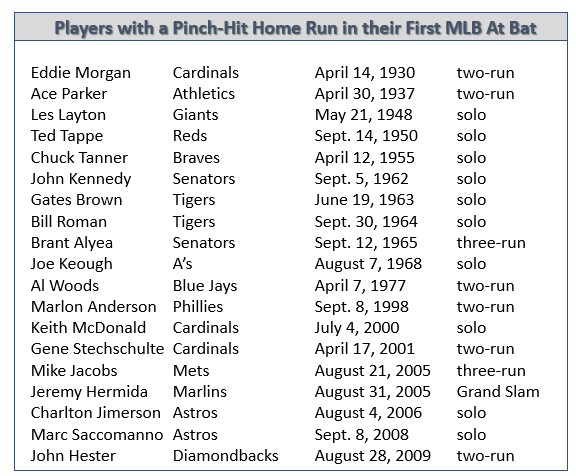
Vander Meer made his professional debut with the C-level Dayton Ducks as an 18-year-old in 1933 – going 11-10, 4.28, with 132 strikeouts in 183 innings. After a couple of less than stellar minor league seasons, he opened some eyes as The Sporting News 1936 Minor League Player of the Year – after a 19-6, 2.65 season with the Class-B Durham Bulls.  While, he had a powerful “swing and miss” fastball (Vander Meer fanned 295 batters in 214 innings), control was not his forte (he also walked 116).

On July 23, 1936, Johnny Vander Meer, pitching for the Durham Bulls, fanned 20 batters in a game against the Ashville Tourists.

Vander Meer’s 1936 performance earned him an invite to the Reds 1937 Spring Training camp and he went north with the team.  However, control issues still plagued him and he was sent down to the Double-A Syracuse Chiefs in July – after posting a 3-4, 4.22 record with 55 walks (40 whiffs) in 64 innings.  (He was called back up in September and ended the MLB season at 3-5, 3.84 with 69 walks and 52 strikeouts in 84 1/3 innings.)

Then came the 1938 season, when the 23-year-old seemed to find himself, going 15-10, 3.12 in 32 games (29 starts), fanning 125 batters in 225 1/3 innings (but still walking 103) – and, of course, tossing those consecutive no-hitters (June 11 versus the Bees and June 15 versus the Dodgers). For the season, Vander Meer’s 4.99 strikeouts per nine innings pitched were second in the National League (to Carl Hubbell); his 7.07 hits per nine innings pitched were the league low; and his 3.12 earned run average was tenth-best.  There was still work to do on his command, as his 104 walks were fourth-highest in the league.  Vander Meer also made his first All Star squad in 1938, started the game, threw three innings of no-run, one-hit ball and got the win.  After the season, he was the named the Sporting News Major League Player of the Year. 

After that sparkling 1938 season, Vander Meer appeared to be on his way. Those expectations were dashed in 1939, when illness and injury contributed to a 5-9, 4.67 record. He also got off to a slow start in 1940, being sent down to Double-A Indianapolis after four appearances (two starts) in which he pitched just 8 2/3 innings, fanning nine and walking 13, while putting up a 7.27 ERA.  He seemed to find himself at Indianapolis, going 6-4, 2.40, which earned him a September call up – during which he went 3-1, 2.97 (31 strikeouts and 28 walks in 39 1/3 innings) and pitched 12 shutout innings to get the win in the Reds’ pennant-clinching game.
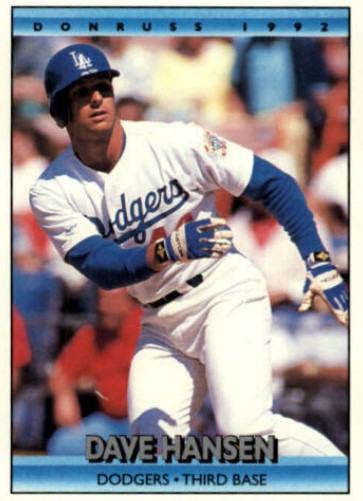
Vander Meer powered his way to a 16-13, 2.82 record in 1941; 18-12, 2.43 in 1942; and 15-16, 2.82 in 1943 – leading the NL in strikeouts all three seasons and making the  National League All Star team in 1942 and 1943. Still, control remained an issue, as Vander Meer led the league in walks in 1943, allowed the NL’s second-most walks in 1942 and the fourth-most in 1941.

What Could Have Been

Johnny Vander Meer deserved better than his 15-16 record in 1943. His losses included two complete games in which he gave up a single run; two complete games in which he gave up just two runs; and a complete game which he lost 3-2 in the twelfth inning.  

Vander Meer then missed the 1944 and 1945 seasons (military service) and, while he came back to pitch six more MLB campaigns (1946-51), he had trouble recapturing that 1941-43 fastball.  Over those final six seasons, he went 44-55, 3.93 (as compared to 75-66, 3.11 from 1937 to 1943).  Vander Meer’s final career line was 119-121, 3.44, with 1,294 strikeouts and 1,132 walks. He threw 131 complete games (286 starts) and thirty shutouts.  He was a four-time All Star and won 15 or more games in five seasons.  Overall, he was in the NL’s top ten in ERA four times; wins five times; fewest hits per nine innings six times; total strikeouts and strikeouts per nine innings seven times each; complete games five times; and shutouts eight times.

While he made his final MLB appearance on May 7, 1951 (Indians), Vander Meer continued to pitch in the minor leagues through 1955 and managed in the minors from 1953 through 1962.

Primary Resources: Baseball-Reference.com; National Baseball Hall of Fame; MLB.com; Baseball-Almanac.com

100Baseball Roundtable is on the Feedspot list of the Top 100 Baseball Blogs.  To see the full list, click here.

I tweet baseball @DavidBBRT

Follow/Like Baseball Roundtable’s Facebook Page here.  More baseball commentary; blog post notifications; PRIZES.

Member: Society for American Baseball Research (SABR); Negro Leagues Baseball Museum; The Baseball Reliquary.