Memorable Moments, Unexpected Stats and Notable Accomplishments from MLB’s All Star Games

As we approach the 2022 MLB All Star break, it seems appropriate to revisit past All Star Performances that Baseball Roundtable finds particularly memorable.  In this post, we will look at Baseball Roundtable’s “Fifteen Most Memorable All Star Game Moments,” as well as some All Star Game Trivia Tidbits,  quotes about the game from All Stars, some comparisons that show how the All Star Game has changed over the years and more.  The Top Fifteen Memorable Moments will be headlined in RED, the “extras” will be in BLUE or GREEN.    Note: These figures do not include the Negro Leagues East-West Games, as  that data is not yet fully compiled.  

ASG Memorable Moment Number One … Bill Freehan Behind the Plate for 15 Innings – 1967
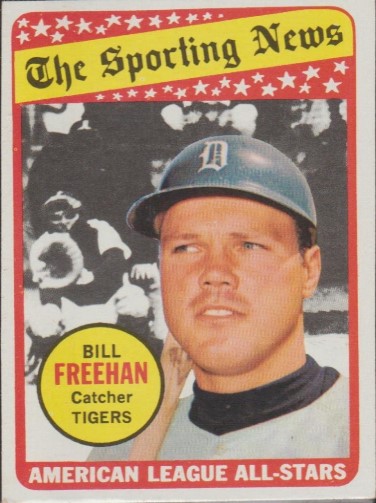
In 1967, when the National League topped the junior circuit 2-1 in 15 innings  (at the time, the longest All Star Game ever, later matched by the 2008 All Star contest), Bill Freehan was behind the plate for the AL for  all 15 innings – handling five different pitchers. and crouching behind 19 different batters (52 plate appearances).  By contrast, the National League used three different backstops.  That, for Baseball Roundtable, was a most impressive/memorable feat of stamina.  It was also a pretty bold move for AL manager Hank Bauer (Orioles), keeping the Detroit Tiger catcher in the crouch for 15 innings.   Got to wonder how Tigers” Skipper Mayo Smith felt about that.  By comparison, the NL squad used three catchers in the game.

For those who like to know such things, Freehan was indeed a workhorse that season – appearing in 155 of the Tigers’ 163 games – and spending time behind the plate in in 147. Freehan was an All Star in nine of his fifteen seasons (1961, 1963-76 … all with the Tigers).  The five-time Gold Glover  was behind the plate in 1,577 of 1,774 MLB games.  His final stat line was .262-200-758.

_____________________________________________

Ten Players Played All 15 Innings in the 1967 MLB All Star Game

American League

Bill Freehan, Tigers, C 

Brooks Robinson, Orioles, 3B

Tony Oliva, Twins, Twins, CF

Harmon Killebrew, Twins, 1B

Tony Conigliaro, Red Sox, RF

Carl Yastrzemski, Red Sox, LF

National League

Roberto Clemente, Pirates, RF

Hank Aaron, Braves, started in CF and finished in LF

Orlando Cepeda, Giants, 1B

Gene Alley, Pirates, SS

By comparison, in the 2022 All Star Game, the AL used 32 players and the NL used 30 – and  not a single player played the whole nine innings. 

_______________________________________

Roundtable ASG Extra … A Trivia Tidbit

When the American League won the 1942 All Star Game, they used an ASG record-low 11 players. All eight position players went the distance and the team used one pinch hitter and one relief pitcher. 

Here’s the AL lineup:

Lou Boudreau SS

Tommy Henrich RF

Ted Williams LF

Joe DiMaggio CF

Rudy York 1B

Joe Gordon 2B

Ken Keltner 3B

Birdie Tebbetts C

Spud Chandler P

Bob Johnson PH

Al Benton P

______________________________________________________

ASG Memorable Moments Number Two … The Splendid Splinter Shreds (splinters?) the All Star Record Books – 1946
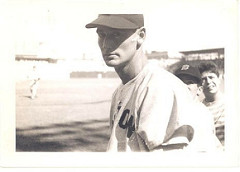
Photo by wild mercury

Ted Williams went the distance in the 1946 All Star game – played in front of the hometown fans at Fenway and – thanks to that full-game experience – wrote his way into the ASG records books. Williams came into the game hitting .347, with 23 home runs, 82 runs scored and 71 RBI in 79 regular-season games.  Compared to the day he was about to have that would look like a slump. Here’s how Williams’ day went.

In the first inning, batting third and facing the Cubs’ Claude Passeau, Williams drew a walk and then scored on a home run by Yankees’ RF Charlie Keller.

In the bottom of the fourth, leading off against new NL hurler Kirby Higbe of the Dodgers, Williams homered to give the AL a 3-0 lead.

In the bottom of the fifth, with Higbe still in the game, Teddy Ballgame came up again – this time with one out the Senators’ CF Stan Spence on third and the Browns’ SS Vern Stephens on second.   This time, Williams delivered a run-scoring single.

In the bottom of the seventh, facing the Reds’ Ewell Blackwell with none on and two out, Williams singled again.

Finally, in the bottom of the eighth – facing the Pirates’ Rip Sewell and his Ephus pitch – with Stephens and Browns’ P Jack Kramer on base, William capped off his day with a three-run homer.

The AL squad prevailed by a 12-0 score – and Williams’ final tally was:  four-for-four, plus a walk, two home runs, four runs scored and five runs driven in.   In the process, Williams set or tied the following All Star Game single-game records:

  • Runs Scored (four – Williams still stands alone);
  • Total bases (ten – Williams stands alone);
  • Runs Batted in (five – later, 1954, tied by the Indians’ Al Rosen);
  • Base Hits (four – tying the Cardinals’ Ducky Medwick, 1937, and later matched by the Red Sox’ Carl Yastrzemski, 1970);
  • Home Runs (two – tying Pirates’ Arky Vaughn, who did it in 1942; later tied by the Indians’ Al Rosen in 1954; Giants’ Willie McCovey in 1969; and Expos’ Gary Carter in 1981).

__________________________________________________________

ASG EXTRA – TEDDY SAID IT

“They invented the All Star Game for Willie Mays.”

                                                         Ted Williams, 19-time All Star

ASG Memorable Moment Number Three… Carl Hubbell Fans Six Future Hall of Famers … 1934
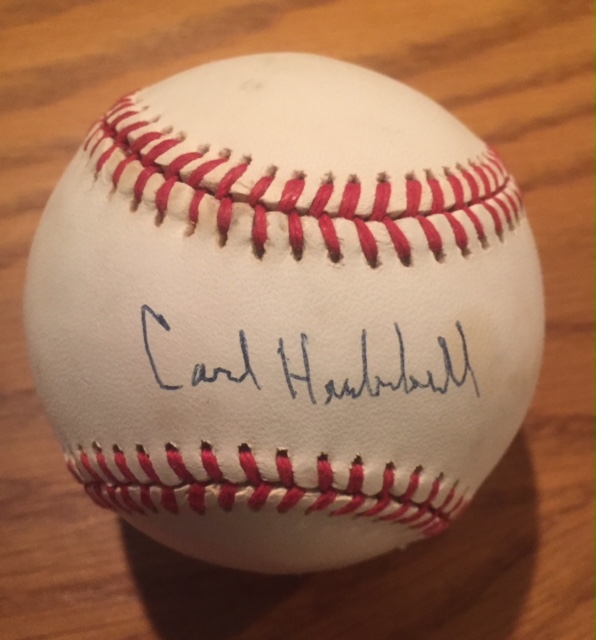
The record for strikeouts by a pitcher in an All Star Game is six – Carl Hubbell (1934); Johnny Vander Meer (1943); Larry Jansen (1950); Fergie Jenkins (1967).  Given today’s hard-throwing/free swinging brand of baseball, we may very well see that six-whiff record equaled or surpassed. But I doubt if anyone will match Hubbell’s 1934 feat of fanning six future Hall of Famers in the same All Star Game (five consecutively). King Carl, on his way to a 21-win season (the second of five straight 20+ win campaigns), came into the game with a 12-5, 2.76 ERA regular-season stat line. Hubbell had struck out 58 hitters in 156 1/3 innings pitched to that point (it was, indeed, a difference game back then), but he was about to make the strikeout a much bigger part of his game.

The game was played on July 10, 1934 at New York’s Polo Grounds – with screwball-specialist Hubbell starting for the NL and Yankee Lefty Gomez starting for the AL.  Facing an AL line up stacked with some of the game’s greatest hitters, Hubbell got off to a rocky start, giving up a lead-off single to Detroit 2B Charlie Gehringer, followed by a walk to Senators’ LF Heinie Manusch. Then the fun began, as Hubbell set down five straight future Hall of Famers – all on strikeouts – Yankees’ RF Babe Ruth, Yankees’ 1B Lou Gehrig, and Athletics’ 3B Jimmie Foxx to close out the first. Hubbell then fanned   White Sox’ CF Al Simmons and Senators’  SS Joe Cronin to open the second – giving him five straight strikeouts, all future HOFers. Hubbell then gave up a single to Yankees’ C Bill Dickey, before whiffing Yankees’ P Lefty Gomez (also a future Hall of Famer, although as a pitcher not a hitter) to end the inning. After an uneventful third inning – two fly outs, a ground out and walk – Hubbell left the game credited with three scoreless innings, two hits, two walks and six strikeouts.

Oh yes, the AL won the game 9-7, and Hubbell’s feat was amplified by how those HOF whiff victims fared over the rest of the game.  Against pitchers not named Hubbell, they went seven-for-sixteen, with four doubles, five runs scored and three RBI.

_____________________________________________________________

ASG EXTRA – KING CARL SAID IT

“There were 50,00 fans or more there, and they wanted to see the best you’ve got. There was an obligation to the people, as well as to ourselves, to go all out. “

                     Carl Hubbell, nine -time All Star, comment on the 1934 All Star Game  

_________________________________

The Year of the Pitcher, Indeed

Not a single run batted in was recorded  in the 1968 All Star Game (despite the presence of such future Hall of Fame batsmen as Henry Aaron, Willie Mays, Willie McCovey, Carl Yastrzemski, Mickey Mantle, Johnny Bench, Harmon Killebrew, Frank Howard and more).  The game’s only run scored in the bottom of the first inning. CF Willie Mays led off with a single to left (off Luis Tiant). Mays went to second on an errant pick-off attempt and to third on a wild pitch that was part of a walk to LF Curt Flood. 1B Willie McCovey then grounded into a 4-6-3 double play, with Mays scoring,  (No RBI is awarded on a double play.  The game ended by that 1-0 score, with the AL getting just three hits and the NL only five. A total of 12 pttchers gave up the eight hits,and six walks, while fanning 20. 

ASG Memorable Moment Number Four … Larry Jansen in relief – 1950

Larry Jansen – 1951 Bowman

Giants’ right-hander Larry Jansen came into the 1950 All Star Game with a 9-5, 2.98 record. He came on in the seventh inning, with his NL squad trailing 3-2, He turned in a truly memorable performance.  It went like this:

Seventh Inning

Tigers’ P Art Houtteman – Strikeout

Yankees’ SS  Phil Rizzuto – Pop Out (C)

Indians’ CF Larry Doby – Strikeout

Eighth Inning

Tigers’ 3B George Kell – Strikeout

Red Sox ‘ LF Ted Williams –  Strikeout

Athletics’ 1B Ferris Fain – Fly Out (SS)

Ninth Inning

Yankees’ RF Joe DiMaggio – Fly Out (CF)

Indians’ C Jim Hegan – Strikeout

Yankees’ 2B Jerry Coleman – Strikeout

Tenth Inning

Yankees’ P Allie Reynolds – Ground out (3B-1B)

Rizzuto – Fly Out (SS)

Doby – Single (CF)

Kell – Ground out (SS-2B)

Eleventh Inning

Red Sox’ LF Dom DiMaggio – Ground out (SS-1B)

Fain – Ground out (1B-P)

J. DiMaggio – Foul pop out (C)

There it was:

  • Five innings of relief (second-most innings ever pitched in an All Star Game);
  • Six strikeouts (tied for the most in an All Star Game);
  • No runs, just one hit and only two balls it out of the infield.

When Jansen left the game, the score was tied at three apiece, with the NL eventually winning 4-3 in 14 frames.  Jansen,by the way, pitched in nine MLB seasons, going 122-89, 3.58. He was a two-time All Star (1950-151) and led the NL in wins with 23 (23-11, 3.04) in 1951. He won 21 games (five losses, 3.16 ERA) as a 26-year-old rookie in 1947 – finishing second to Jackie Robinson in the Rookie of the Year Voting.

_______________________________________________

Ouch!

The 1950 All Star Game was made even more memorable by the fact that Ted William made a leaping, off-the-wall catch on a line drive by Ralph Kiner in the first inning.  Williams played through the pain (nine innings) and even drove in a run with a fifth-inning single off Don Newcombe.  The pain persisted  and, it turns out, William had fractured his elbow making that first-inning catch and didn’t play again until early September. 

_______________________________________

ASG Memorable Moments Number Five … Lefty Gomez’ Quality Start – 1935

MLB defines a quality start as one of six innings or more with three or fewer earned runs given up.  Now, you can argue (correctly, I believe) that 4.50 ERA may not constitute a quality start. Given today’s All Star Game expectation of one, two or at the very most three-inning pitching appearances, you can confidently say we will not see another quality start in the All Star Game. Historically, there has only been one.  The Yankees’ Lefty Gomez (a future Hall of Famer) tossed an All Star Game-record six innings in 1935 – giving up just three hits and one run. Also falling into the “We’ll never see that again” category – the American League used just two pitchers in their 4-1 win, Gomez and the Indians’ Mel Harder.

Gomez came into  the game 8-8, 2.83 on the season, with ten complete games in 15 starts.

By comparison, in the  2022 All Star Game, the two teams used 20 pitchers – and no hurler threw more than one inning.

____________________________________________________

 ASG EXTRA … A Pitcher starting two All Star Games in a Single Season

From 1959-1962, MLB featured two All Star Games each season. In 1959, Don Drysdale became the only pitcher to start two MLB All Star Games in a season.  On July 7, he started at Forbes Field and held the AL hitless – with four strikeouts – for three innings. (The NL won 5-4). On August 3, he started at the Los Angeles Coliseum and again went three innings, this time giving up three runs on four hits and three walks (fanning five).

____________________________________

ASG EXTRA – GARY SAID IT

“It’s (getting elected to the All Star Game) right  up there with lobster.”

                                          Gary Gaetti, tw0-time All Star

___________________________________

ASG Extra – Spreading It Around – Three Five Spots

Gary Sheffield and Moises Alou share the record for the most tams represented at the All Star game at five.  Sheffield: Padres, Marlins, Dodgers, Braves, Yankees.  Alou:  Expos, Marlins, Astros,Cubs, Giants.

Pete Rose played the most positions in All Star Game competition with five – first bases, second base, third base left field, right field. 

ASG Memorable Moments Number Six … Gary Carter’s Two-Homer Game – 1981

There have been only five multi-homer games (by a single player) in ASG history (all two-homer contests) and only Hall of Famer Expos’ C Gary Carter managed to hit two long balls in just three plate appearances (all the others took four or five) – and the dingers were key to the National Leagues’ 5-4 win (in Cleveland).

Carter started for the NL and popped out to first base in his first plate appearance (the top of the second in a scoreless game).  Carter next led off the top of the fifth with his NL squad trailing 1-0 – and tied the game with a solo shot to left off the first pitch he saw from the Angels’ Ken Forsch (who had just come into the game). Carter again found himself leading off in the seventh, against new pitcher Ron Davis of the Yankees (with the NL now trailing 4-2). Carter again wasted no time, hitting Davis’ first offering over the CF wall to cut the deficit to one.  His performance earned him ASG MVP honors. Carter came into the game with a .245-7-30 line on the season.  Over his 19-season career (1974-92 … Expos, Mets, Giants Dodgers), the Hall of Famer was a 11-time All Star.  He won three Gold Gloves and put up a ,262-324-1,225 offensive stat lie.

_________________________________________________

Players with Two Home Runs in an MLB All Star Game

Arky Vaughn, Pirates …. 1941 (four plate appearances)

Ted Williams, Red Sox …..1946 (five PA)

Al Rosen, Indians ….. 1954 (5 PA)

Willie McCovey, Giants ….. 1969 (4 PA)

Gary Carter, Expos …… 1981 (3 PA)


ASG EXTRA – DEREK  SAID IT

“Any player who says they don’t want to go to an All Star Game is lying to you.”

                                            Derek Jeter, 14-time All Star

ASG Memorable Moment Number Seven … Al Rosen’s Two Home Runs and Five RBI – 1954

In 1954, The Indians’ Al Rosen started at 1B for the AL All Star squad; coming into the game with a .313-14-59 record on the season (71 games  played). The AL prevailed 11-9, but it’s unlikely they would have won without Rosen’s bat. In the game, Rosen:

  • Had three hits (fourth-most in an All Star Game, tie);
  • Hit two home runs (tied for the most in an All Star Game);
  • Drove in five runs (tied for the most in an All Star Game);
  • Collected nine total bases (tied for second-most  in an All Star Game).

Here’s how his day went:

  • Strikeout to end the first inning (versus the Phillies’ Robin Roberts);
  • Three-run homer in the third inning (off Roberts) to break a 0-0 tie;
  • Two-run homer in the fifth (off the Giants’ Johnny Antonelli) to tie the game at 7-7;
  • Single (off the Braves’ Warren Spahn) in the sixth;
  • Walk (off the Braves’ Gene Conley in the eighth).

Rosen was a four-time All Star in his 10-season MLB career (1947-56, all Indians), going .285-192-717. From 1950 through 1953, he averaged .298, with 33 home runs and 117 RBI per season.

___________________________________________________

ASG Memorable Moment Number Eight … Ichiro Suzuki’s Home “RUN” – 2007

The Mariners’ Ichiro Suzuki started the 2007 All Star Game (in San Francisco) leading off (and playing CF) for the AL squad. He had a three-for-three day, won the game’s MVP Award and made a bit of history.

Suzuki singled (off the Padres’ Jake Peavy) to open the game and added a second single (off Ben Sheets of the Brewers) with two outs in the third. The plate appearance that got him on this list came in the fifth inning. Ichiro came up with one out, a runner on first and the AL trailing 1-0.  Suzuki stroked the first pitch he saw from the Padres’ Chris Young off the centerfield wall, it took a crazy carom and, before  the ball back into the infield, Suzuki had circled the bases, coasting into home plate with a 15-second, two-RUN home RUN – still the only inside-the-parker in All Star Game history.  Note: In his MLB career, Suzuki hit 117 regular season home runs and one post-season homer – none of which were inside-the-parkers. 

________________________________________________________

ASG Memorable Moment Number Nine … Johnny Vander Meer’s Six Whiffs – 1943

The Cardinals’ Mort Cooper started the 1943 All Star for the National League squad, but the Reds’ Johnny Vander Meer made the most memorable impression. He came on in relief of Cooper in the bottom of the third, with the AL up 4-1, a runner on third and one out. Vander Meer ended the threat by fanning Tigers’ 1B Rudy York and Browns’ CF Chet Laabs. Vander Meer then whiffed Senators’ C Jake Early to open the fourth before giving up a single to Red Sox’ 2B Bobby Doerr and then coming off the mound to field a bunt by Tigers’ pitcher Hall Newhouser and turning it into a pitcher-shortstop-second base (covering first) double play. Although Vander Meer gave up an unearned  run in the fifth (on  a single, a walk and an error), he also fanned three batters in the inning: Indians’ 3B Ken Keltner, Tigers’ LF Dick Wakefield and York for a second time.   In the process, Vander Meer tied the All Star Game record for strikeouts in a game (six). To date, four pitchers have fanned  six batters in an All Star Game and Vander Meer is the only one to do it in less than three innings pitched (2 2/3).

____________________________________

Pitchers to Fan Six batters in an All Star Game

1934 Carl Hubbell

1943 Johnny Vander Meer

1950 Larry Jansen

1967 Fergie Jenkins

____________________________________

ASG Extra – Let’s Get This Party Started

Pedro Martinez holds the record for the most consecutive strikeouts to start an All Star Game – at four.  The victims were Barry Larkin , Larry Walker, Sammy Sosa and Mark McGwire.

ASG Memorable Moment 10-11-12 (tie) … Ted Williams, Stan Musial, Johnny Callison – Walk – Off Home Runs – 1941, 1955, 1964

There have been just three All Star games ending in a walk-off home run.  We’ll call it a tie.
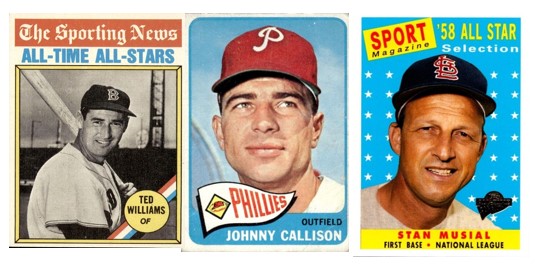
In 1941 (July 8), the NL All Stars were leading the AL squad 5-3 going into the bottom of the ninth. The AL had cut the lead to 5-4, when the Red Sox’ Ted Williams came up (against the Cubs’ Claude Passeau) with a pair of AL “Yankee Joes” on base (DiMaggio on first and Gordon on third. Williams popped a 2-1 pitch  for a walk-off, three-run home run and a 7-5 AL win.   Williams was two-for-four with four RBI in the game.

On July 12, 1955, the MLB All Star Game (being held in Milwaukee) went into the bottom of the twelfth inning knotted at five apiece. The Cardinals’ Stan Musial led off the bottom of the 12th with a solo, walk-off game winner  – deep into the right field seats – off the Red Sox’ Frank Sullivan (who had entered the game with two outs in the eighth inning).

On July 7,  1964, the AL went into the bottom of the ninth (at Shea Stadium) with a 4-3 lead over the NL squad. With the Red Sox’ Dick Radatz on the mound (he had come on in the seventh), Giants’ CF Willie Mays led off with a walk, stole second and scored the tying run on a single by fellow Giant 1B Orlando Cepeda (who was replaced by pinch runner Curt Flood of the Cardinals.) Radatz then got Cardinals’ 3B Ken Boyer on a pop out, intentionally walked Reds’ C Johnny Edwards and struck out pinch hitter Henry Aaron of the Braves. The Phillies’ Johnny Callison (who had entered the game in the fifth inning as a pinch hitter and then took over RF) put an end to the contest with a walk-off, three -run homer to right.

Now,  I’m sure all Roundtable readers know plenty about Hall of Famers Williams and Musial, so here’s a bit abut Johnny Callison.  Callison enjoyed a 16-season MLB carer (1958-73 … White Sox, Phillies, Cubs, Yankees).  He was a three-time All Star and had a career .264-226-840 stat line. He had four seasons of 20+ home runs, with a high of 32 in 1965) and twice led the NL in triples.

ASG Memorable Moment Number Thirteen – Rod Carew’s Two Triples – 1978

Photo: Public Domain via WikiCommons

A triple is a thing of excitement and beauty and – on July 11, 1978 – batsman Rod Carew provided both for All Star Game fans. Carew led off the game with a triple to left center off  the Giants’ Vida Blue and then repeated the feat with another triple off Blue leading off the third.  It remains the only two-triple game in All Star Game history. Carew scored after each of his three-baggers, but the American League still lost 7-3.  The Hall of Famer won seven batting titles in his 19-season MLB career (1967-85 … Twins, Angels). He was a All Star in 18 of his nineteen seasons – missing only in his age-39 final season, when he hit .280 in 127 games.  Carew’s final stat line was .328-92-1,05.

ASG Memorable Moments Number 14-15 … A Tie Among Performances that were more Unforgettable than Memorable

14-15 – Future Hall of Famer Tom Glavine Giving Up Seven Straight Hits -1992

Hall of Famer Tom Glavine started the 1992 All Star Game (he came in with a  13-3, 2.57 record). After retiring American League leadoff hitter Blue Jays’ 2B Robert Alomar on a grounder to second, he surrendered seven consecutive hits – all singles, by the way – to Red Sox ‘ 3B Wade Boggs,  Twins’ LF Kirby Puckett, Blue Jays’ RF Joe Carter, A’s 1B Mark McGwire, Orioles’ SS Cal Ripken Jr., Mariners’ CF Ken Griffey Jr. and Indians’ C Sandy Alomar – with the AL plating four runs.

In the process, Glavine set the (still) All Star Game record for hits allowed in an inning – seven.  Surprisingly, he finished the frame and came out for the second inning – giving up two more hits and another run before being pulled.  He set another record – most hits allowed in an All Star Game appearance at nine. I suppose it could happen, but I seriously doubt in manager would leave pitcher in for this kind of treatment any longer.

14-15 – Roberto Clemente’s Four Strikeouts in an All Star Game – 1967

In the 1967 All Star Game, future Hall of Famer Roberto Clemente fanned in four consecutive at bats against four different pitchers: the Twins’ Dean Chance (third inning); White Sox’ Gary Peters (sixth); Yankees’ Al Downing (ninth); A’s Catfish Hunter (eleventh). He also had a single in the first (Chance) and a ground out in the fourteenth (Hunter).  The four whiffs is an All Star Game single-game  record for batters. 

Roundtable ASG Extra

Atlee Hammaker, holds the record for the most runs surrendered in an All-star Appearance. In the 1983 All Star contest, he  gave up seven earned runs on six nits and a walk in just 2/3 of an inning. The big hit was a Fred Lynn Grand Slam – still the only bases-loaded blast in an All Star Game.  1983 was Hammaker only All Star selection in a 12-season MLB career. 

____________________________________________

—–A FEW CAREER ALL STAR GAME TIDBITS—— 

Youngest and Oldest MLB All Stars

The youngest and oldest All Stars ever were both pitchers: Dwight Gooden (19 years-seven month-24 Days) and Satchel Paige (47 years-seven days).

First and still only All Star Game Steal of Home … 1934 AS game, fifth inning, two out, two on, NL trailing 8-6, NL 3B Pie Traynor (Pirates) notched the first (and still only) AS Game steal of home. (AL won game 9-7.)

First and still only All Star Game Grand Slam … 1983 All Star Game, third inning, bases loaded, two outs, AL leading 5-1, AL CF Fred Lynn hit the first – and still only – All Star Game Grand Slam. (AL wins 13-3)

First All Star Game MVP … MLB began recognizing the All Star Game MVP in 1962 and the first winner was the Dodgers’ Maury Wills – who didn’t enter the game until the sixth inning (the Pirates’ Dick Groat started at SS) and only came to the plate once.  Wills came in as a pinch runner for Stan Musial, who had singled off the Twins’ Camilo Pascual to open the inning. Wills quickly stole second and scored the game’s first run on a single by Groat (whom Wills would replace at SS). Wills came to the plate  in the eighth, with his NL squad up 2-1. He led off the inning with a single (off the Indians’ Dick Donovan), advanced to third on a single by Giants’ 3B Jim Davenport and scored on a foul ball fly out off the bat of Giants’ RF Felipe Alou.

—ALL STAR GAME TARGETS—–

Most Hits in an All Star Game … Four – Joe Medwick (1937); Ted Williams (1946); Carl Yastrzemski (1970)

Most Doubles in an ASG … Two – Nine players (Most recently, the Brewers’ Jonathan LeCroy in 2014.  (No surprise, LeCroy had a league-leading 53 doubles that season.)

Most Triples in an ASG …  Two – Rod Carew (1978)

Most Home Runs in an ASG … Two – Arky Vaughn (1941); Ted Williams (1946); Al Rosen (1954); Willie McCovey (1969); Gary Carter (1981)

Most RBI in an ASG … Five – Ted Williams (1946); Al Rosen (1954)

Most Walks in an ASG … Three – Charlie Gehringer (1934); Phil Cavarretta (1944)

Most Stolen Bases in an ASG …  Two – Willie Mays (1963); Kelly Gruber (1990); Roberto Alomar (1992); Kenny Lofton (1996); Starlin Castro (2011)

Most Innings Pitched in an ASG …  Six –  Lefty Gomez (1935)

Most Strikeouts in an ASG … Six –  Carl Hubbell (1934); Johnny Vander Meer (1943); Larry Jansen (1950: Fergie Jenkins (1967)

Most Consecutive Strikeouts in an ASG …  Five – Carl Hubbell (1934); Fernando Valenzuela (1986)


—CAREER ALL STAR GAME RECORDS—–

AS Game Hits Willie Mays – 23

AS Game Doubles Dave Winfield – 7

AS Game Triples …Willie Mays and Brooks Robinson – 3

AS Game Home Runs … Stan Musial – 6

Stan Musial hit .317 in 24 All Star games with two doubles, six home runs,10 RBI, and 11 runs scored.

AS Game RBI… Ted Williams – 12

AS Game Walks …Ted Williams – 11

Ted Williams hit .304 in 19 All Star Games, with two doubles, one triple, four home runs, 12 RBI and a.439 on-base percentage. 

AS Game Stolen Bases … Willie Mays – 6

Willie Mays stole six ASG bases in seven attempts. The most ASG steals without being caught belong to Roberto Alomar and Kenny Lofton at five each. 

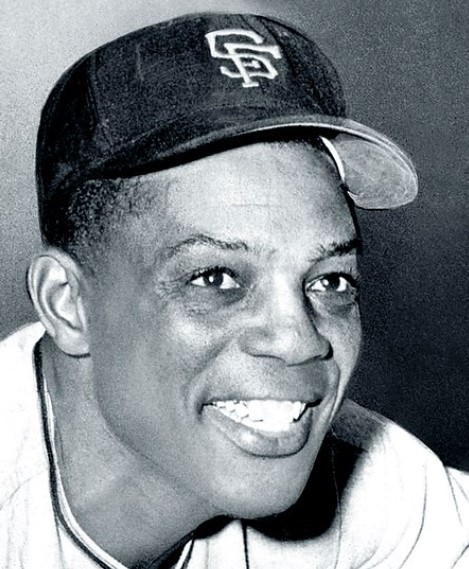
AS Game Runs Scored …Willie Mays – 20

PHOTO: New York World-Telegram and the Sun staff photographer, William C. Greene, Public domain, via Wikimedia Commons

Willie Mays hit .307 in 24 All Star games, with two doubles, three triples, three home runs, nine RBI, 20 runs scored and six stolen bases.
AS Game Pitcher Wins … Lefty Gomez – 3

AS Game Total Pitching Appearances … Roger Clemens – 10

AS Games Started (pitcher) … Lefty Gomez, Robin Roberts, Don Drysdale – 5

Lefty Gomez went 3-1, 2.50 in five All Star Game starts (18 innings pitched). 

AS Game Saves ... Mariano Rivera – 4

AS Games Innings Pitched … Don Drysdale – 19 1/3

Mel Harder has pitched the most All Star Game innings without surrendering an earned run (13).

AS Game Strikeouts … Don Drysdale – 19

Don Drysdale went 2-1, 1.40 in All Star games, fanning 19 batters in 19 1/3 innings (10 hits, four walks). 

_______________________________________________________

All Star Game Scoring Bookends

The highest scoring All Star Game ever took place in 1998 at (Where Else?) Coors Field – as the teams combined for 21 runs in a 13-8 American League win.  Side note: Thirteen is the highest run total ever up by an All Star squad, accomplished by The AL in 1983, 1992 and 1998.

The lowest scoring game (combined) took place in (When else?) in 1968 (The Year of the Pitcher) – as the NL topped the AL 1-0. with the only run scoring on a double play (no RBI in the contest).

_________________________________________________________

Finally, to wrap up, here’s a dozen AS Game firsts from 1933.

First Venue: Comiskey Park 1 (July 6, 1933).

First AS Game Attendance: 47,595

Final Score of First AS Game: AL 4 – NL -2

First Batter/Pitcher Match Up: NL 3B Pepper Martin (Cardinals) versus Lefty Gomez (Yankees). Gomez retired Martin on a grounder to shortstop.

First Starting Pitchers: AL, Lefty Gomez (Yankees) – NL, Bill Hallahan (Cardinals). Gomez got the first All Star win, Hallahan the first loss.

First Hit: Cardinals’ Chick Hafey (leading off second inning – off the Yankees’ Lefty Gomez). Hafey was starting in LF and batting fourth for the NL.

First Run Scored: AL starting 3B Jimmy Dykes (White Sox).

First RBI: AL starting pitcher Lefty Gomez (Yankees) – drove home Jimmy Dykes (White Sox), who had walked, with a single to center field. Take that, DH Rule.

First Double: Pie Traynor (Pirates), NL pinch hitter – top of seventh off Lefty Grove (Yankees).

First Triple: NL pitcher Lon Warneke (Cubs) – top of the sixth inning off Alvin Crowder (Senators). Take that again, DH Rule.

First Home Run: AL RF Babe Ruth (Yankees), two-run home run, bottom of the third, off Bill Hallahan (Cardinals). So, your first All Star Game double, triple and homer were hit by pitchers or former pitchers.

First Stolen Base: Bottom of first, AL 2B Charlie Gehringer (Tigers).

First Strikeout: Final out, top of second. Pitcher – Lefty Gomez (Yankees). Hitter – NL SS Dick Bartell (Phillies).

Primary Resources: Baseball-Reference.com; Baseball-Almanac.com


Baseball Roundtable – Blogging Baseball Since 2012.

100Baseball Roundtable is on the Feedspot list of the Top 100 Baseball Blogs.  To see the full list, click here.

Baseball Roundtable is also on the Anytime Baseball Supply Top 66 Baseball Sites list.  For the full list, click here

I tweet (on X) baseball @DavidBaseballRT

Follow/Like Baseball Roundtable’s Facebook Page here.  Find More baseball commentary; blog post notifications; PRIZES.

Member: Society for American Baseball Research (SABR); Negro Leagues Baseball Museum; The Baseball Reliquary.


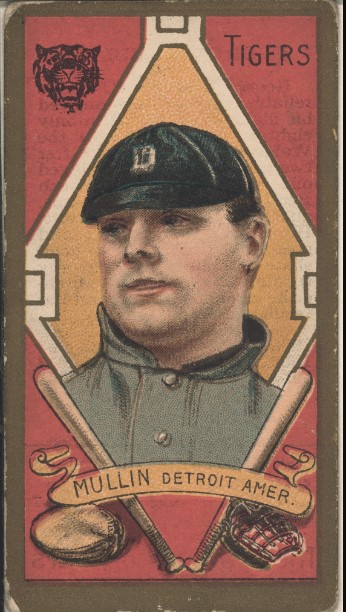
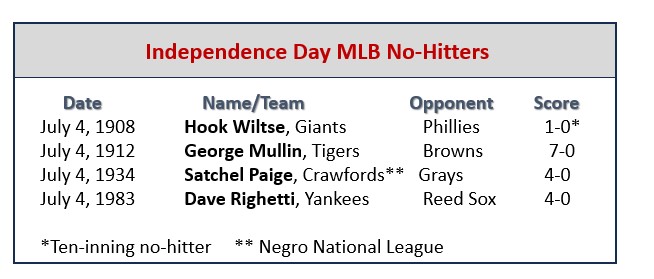
George Mullin Celebrates Independence Day – and His Birthday – with No-Hitter for the Books

George Mullin’s July 4, 1912 no-hitter was one for the books.  In shutting down the St. Louis Browns 7-0 (five hits and five walks), Mullin:

Photo: American Tobacco Company, sponsor, Public domain, via Wikimedia CommonsThrew just the second Independence Day no-hitter;

  • Tossed the Tigers’ first-ever no-hitter;
  • Pitched just the second MLB Independence Day no-hitter;
  • Became the first – and still only – MLB pitcher to throw a no-hitter on his birthday (Mullin was born on July 4, 1880);
  • Went three-four-four at the plate, with a double and an RBI.

Mullin had a 14-season MLB career (1902-15), pitching for the Detroit Tigers, Washington Senators, Indianapolis Hoosiers (Federal League) and Newark Pepper (FL).  He won twenty or more games in six seasons, including an American League-leading 29 (eight losses, 2.22 earned run average) in 1909. From 1905 through 1911, he averaged 21 wins and fifteen losses per season for the Tigers, with a 2.71 ERA. Over the same period, he averaged 308 innings pitched per season (Mullin pitched more than 300 innings in six seasons during his career). His career line was 228-196, 2.82 and he completed 353 of 428 starts,  He also pitched in seven World Series games (1907-08-09), going 3-3, 2.02 and completing all six of his World Series starts.

As a hitter, Mullin had a .262-3-139 line in 1,531 at bats. He hit .280 or better in four seasons, topping .300 twice (.325 in 1902 and .312 in 1914).

Primary Resource:  Baseball-Reference.com


Baseball Roundtable – Blogging Baseball Since 2012.

100Baseball Roundtable is on the Feedspot list of the Top 100 Baseball Blogs.  To see the full list, click here.

Baseball Roundtable is also on the Anytime Baseball Supply Top 66 Baseball Sites list.  For the full list, click here

I tweet (on X) baseball @DavidBaseballRT

Follow/Like Baseball Roundtable’s Facebook Page here.  Find More baseball commentary; blog post notifications; PRIZES.

Member: Society for American Baseball Research (SABR); Negro Leagues Baseball Museum; The Baseball Reliquary.


Baseball Roundtable June Wrap UP – June’s Top Stories, Stats, Players and More

It’s July 1 and time for Baseball Roundtable’s 2023 monthly Wrap Up (for June)  – a look at Baseball Roundtable’s Players and Pitchers of the Month, the Trot Index, the May leaderboards and the stats and stories that caught Baseball Roundtable’s eye during the past month. And, as always, there was plenty to revisit:

  • A Perfect Game;
  •  Two cycles;
  • A player chasing .400 and recording three five-for-five days in the month;
  •  A player hitting 15 home runs and striking out 37 batters;
  • A player getting a game-tying and game-winning hit in his MLB debut;
  • Two games in London;
  • One player getting his 300th homer, another his 2000th hit;
  • Two more complete-game shutouts;
  • One team hitting an NL-record (for any month) 61 homers;
  • One team hitting over .300 for the month – and another team’s pitching staff being hit for a .300+ average;
  • One team with an ERA north of 6.00; and
  • More.

Location, Location, Location

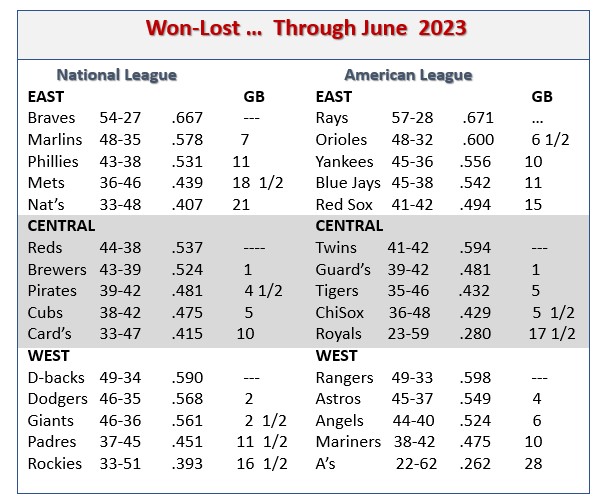
The Twins, located in the AL Central Division, ended June with a 41-42 record on the season and in first place.  The Red Sox, located in the AL East, ended June also at 41-42 – in last place 15 games out. 

You’ll find these and other stories from June in the Highlights Section, but first,  the Players and Pitchers of the Month.

——BB ROUNDTABLE PLAYERS AND PITCHERS OF THE MONTH——-

NATIONAL LEAGUE

Player of the Month – (Tie)  Luis Arreaz, 2B, Marlins & Ronald Acuna, Jr., RF, Braves

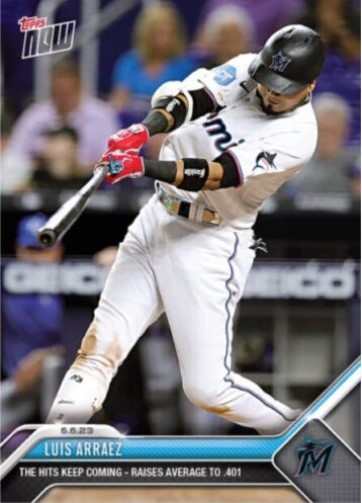
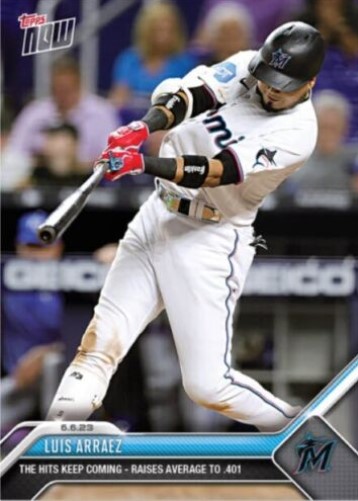
Baseball Roundtable is swayed by “bright and shiny things.”  One of those things is a.400 average.  So, enter he Marlins’ Luis Arreaz.  A .406 average for the month, an MLB-leading 43 hits (two homers/19 RB/17 runs scored). Arreaz notched 11 multi-hit games in June – including three five-for-five contests. The spray hitter is clearly a major factor in the Marlins’ surprising showing  thus far in 2023. As June ended, his average on the season was .390.

The Braves’ Ronald Acuna, Jr. continued his MVP-level performance with  a .356-9-22 month, finishing second in the NL in June in average (among players with at least 60 at bats); hits (37), homers, runs scored (26) and RBI (tied) – while also stealing an MLB-best 14 bases.

Honorable Mentions: Ketel Marte of the Diamondbacks.  Martel hit a solid .315 in June, poked  seven home runs, tied for the second-most NL June RBI with 22 and led MLB in June runs scored with 30. He gets extra credit for the fact that his walks (20) outpaced his whiffs (18). The Roundtable also give a shout out to  the Diamondbacks’ Corbin Carroll. The 22-year-old put up a .291-8-22 June, with eight steals in eight attempts.

Pitcher of the Month – (Tie)

Blake Snell, LHP, Padres & Eury Perez, RHP, Marlins

Blake Snell went 3-1, 0.87 in five June starts – while fanning an MLB high 53 batters in 31 innings. He whiffed ten or more batters in four of his five starts – and his month included victories over the Rays and Giants. He gave Just one home run in 31 innings. and held hitters to a .1214 average.

Twenty-year-old rookie Eury Perez made five June starts, went 3-0 and put up the lowest earned run average  – a minuscule 0.32 – among pitchers with at least 25 June innings. He gave up just 18 hits and one run  in 28 innings, holding hitters to a .178 average – with a little run support he could have been 5-0 (in his two no-decisions, the Marlins scored just one run.)

Honorable Mentions:  Taijuan Walker of the Phillies. Hard not to recognize the only MLB pitcher to notch five wins in June.  Walker went 5-1, with a 1.50 earned run average in six starts. Walker went six or more innings in four of his six starts and gave up more than one run only once.  Dodgers’ southpaw Clayton Kershaw,  went 4-0 in five June starts, with a 1.09 earned run average. Reds’ rookie Andrew Abbot also went 4-0, with a 1.21 ERA in five starts.

AMERICAN LEAGUE

Player of the Month – Shohei Ohtani, DH, Angels

Easy call here. Ohtani led MLB in June homers with 15 and RBI with 29. He also led American  Leaguers with at least 60 June at bats with a .394 average, In addition, he scored 27 runs (tops in the AL), had 41 hits (tops in the AL) and legged out three triples (tied for tops in the AL). Ohtani had ten multi-hit games during the month and ten multi-RBI games.  In addition (and this didn’t figure into his Player of the Month selection, he went 2-2, 3.26 on the mound, fanning 37 batters (fifth-best in the AL) in 30 1/3 innings (five starts). The man is playing in a league of his own.

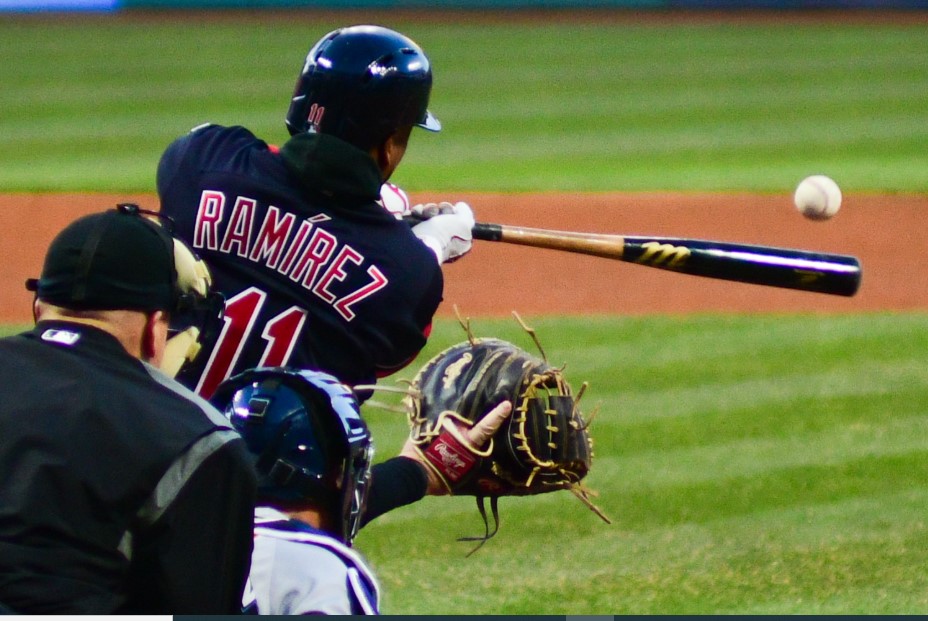
Honorable Mentions: Cleveland 3B Jose Ramirez hit .340 in June, with seven home runs (tied for third-best in the AL)  and 23 RBI (fourth-best). He also walked more often (23 times) than he struck out (13) and stole four bases in five tries. Rangers’ SS Corey Seager went .369-5-25 (with a league-topping 14 doubles) for the month.

Pitcher of the Month – Kevin Gausman, RHP, Blue Jays

The American League’s only four-game winner in June (4-1, 2.97 in six starts), Gausman went at least six innings in all but one of his starts and had three starts of ten or more strikeouts (11, 12 and 13).  Gausman fanned an AL-high 50 June batters (in 36 1/3 innings).

Honorable Mentions:  The Blue Jays’ Jordan Romano saved 12 games in 12 opportunities, putting up a 2.84 ERA and fanning 14 in 12 2/3 innings. The Red Sox’ James Paxton went 3-0, 1.74 in five starts and fanned 34 batters in 31 innings.

________________________________________________

Surprise of the Month – Josh Sborz, RHP, Rangers

The 29-year-old Sborz came into the season with a 5-4, 4.85 record over four seasons (2019-22) and 93 MLB appearances.  In April and May, he went  1-2, 4.76 (three holds, one blown save) for the Rangers. In June, he may have been the most valuable arm out of the Rangers’ pen.  In 10 games, he recorded three wins (no losses) and six holds (one blown save).  He put up a 0.55 earned run average, gave up just three hits, fanned 22 batters and walked just two in 16 1/3 innings – holding hitters to a 0.77 batting average.

Honorable Mentions: Reds’ 23-year-old rookie SS Matt McLain, who made his MLB debut May 15, hit .287 in June, with five homers,  20 runs scored and  19 RBI. (He does need to work on plate discipline – five walks and 33 whiffs – which makes the .287 average even surprising).

Location, Location, Location

Spencer Strider, located on the Braves’ staff, had a 5.46 June ERA, but went 4-0. in five starts  Johan Oviedo, put up a 3.23 ERA in June, but went 0-4 in five starts. 

_______________________________

TROT INDEX … A REGULAR BASEBALL ROUNDTABLE FEATURE

Through June 30,  35.5 percent of the MLB season’s 93,601 plate appearances ended in a trot (back to the dugout, around the bases, to first base). We’re talking about strikeouts, home runs, walks, hit by pitch and catcher’s interference – all outcomes that are, basically, devoid of action on the base paths or in the field. Here’s the breakout: strikeouts (22.7%); walks (8.6%); home runs (3.1%); HBP (1.1%); catcher’s interference (less than 1%). Strikeouts, by the way, outnumbered base hits 21, 142 – 20,598.

The 35.5 percent figure is up from 2022’s full season 34.6 percent.  Other recent seasons: 2021 – 36.3 percent; 2020 –  37.3 percent;  2019 – 36.2 percent; and 2018 – 34.8 percent.  By further comparison, in 1990, the Trot Index was 26.1 percent.  

__________________________________________

Notably, the top five W-L records in June belonged to NL teams – led by the Braves at 21-4. The Braves caught fire in June, leading MLB in home runs (61 – an NL team record for any month), batting average (.307) and run scored (175).  The value of that offense is reflected in the fact that their ERA was about in the middle of the NL (3.87 – tied for sixth).  Key June contributors were MVP candidate RF Ronald Acuna, Jr. at .356-9-22, with 14 steals;  2B Ozzie Albies (.278-7-20); 1B Matt Olson (.272-11-25) and LF Eddie Rosario (.325-9-22).  Overall, the Braves outscored their opponents 175-104 for the month.  Through the month, the Braves only once lost two in a row – and had winning streaks of 7, 8 and 6 games (still active).

The Phillies and Giants had strong months at 18-8, both balancing pitching and offense. The Giants enjoyed a 10-game winning streak (June 11-21), while the Phillies twice won six straight during the month (June 3-9 & June 13-18).

The Reds’ surprising(18-9) month of June was highlighted by a 12-game winning streak, during which they notched six one-run victories. Surprisingly, for a team with the third-most June wins, the Reds had  a 5.03 earned run average for the month (third-worst in the NL) and the NL’s sixth-best batting average. They did, however, have the NL’s second-most long balls.

No player on the Reds had more than six round trippers in  June. Ten Reds had at least three.

Youth was served on the Reds.  Among the key players were 23-year-old rookie SS/2B Matt McLain (.287-5-19); 21-year-old rookie SS/3B Elly De La Cruz (.307-3-12, with 20 runs scored and nine steals in 21 games); 25-year-old 1B Spencer Steer (rookie status still intact for 2023) at .270-5-20 for June; 25-year-old LF Will Benson (.350 in 22 games – in his second MLB season): and 24-year-old rookie pitcher Andrew Abbott ( 4-0, 1.21 in five starts).

Youth, Sweet Youth

The value of the Reds’ youngsters was illustrated on the final day of the month, when they became the  first MLB team (according to STATS ) to have one rookie hit a game-tying homer and another rookie hit a walk-off homer in extra innings in the same game(More of #InBaseballWeCountEverything.) As the Reds  topped the Padres 7-5,  Matt McLain it a game-tying two-run homer n the bottom of the tenth and Spencer Steer hit a game-winning two-run shot in the eleventh.  

Moving on to the AL, the big surprise might have been the Yankees scoring  the second fewest runs of any team during the month (88) and putting up the lowest batting average in the AL at .208.

Ten Yankees played 15 or more games in June – and seven of them hit under .200.

Meanwhile,  the Rays continued to look  solid with a  with a 16-10 record, best in the AL for June.  They did it with a nice balance of  the AL’s best ERA and second-most runs scored.

The Guardians made a bit of a move in the dismal NL Central (as of June 30, no team in the Central Division was over .500 on the season). The Guardians went 14-12 in June – on the strength of  of the AL’s fourth-best June ERA and fifth-most  runs scored. They did it with base-to-base baseball, notching only 21 home runs, third-fewest in the AL.  Key contributors were 3B Jose Ramirez (.330-7-23 in June) and  1B Josh Naylor (.370-2-18). The bullpen was critical as Cleveland starters  won only six of the team’s  14 games in June.  In June, no Cleveland pitcher won more than three games – and the 14 wins were divided among ten pitchers.

——-Team  Statistical Leaders for June  2023 ———-

RUNS SCORED

National League – Braves (175); Reds (153); Diamondbacks (144)

American League – Rangers (140); Rays (130); Angels (137)

The fewest runs in June were scored by the Royals – 83. The Cardinals tallied the fewest runs in the NL at 92. Others under 100 were the: Yankees (88); A’s (93); Nationals (95); Twins (95); White Sox (97). 

AVERAGE

National League – Braves (.307); Marlins (.267); Diamondbacks (.265)

American League – Guardians (.279); Rangers (.274); Rays (.260)

The lowest team average for June belonged to the Yankees (.208). The lowest in the NL was the Brewers (.219).

HOME RUNS

National League – Braves (61); Reds (42); Mets (36)

American League –  Angels (47); Rangers (42); Astros (38)

The Royals hit the fewest home runs in June, 17. The  Nationals were at the bottom of the NL at 21.

The Braves led MLB in slugging percentage for June at .572.  The Angels led the AL at .477. 

STOLEN BASES

National League – Reds (50); Phillies (29); Diamondbacks (28)

American League – Astros (31); A’s (30); Royals (28)

The Tigers stole the fewest sacks in June  – just six in eleven  attempts.   The Giants were at the bottom of the NL, with eight in ten attempts. 

WALKS DRAWN

National League –   Padres (106); Giants (103); Diamondbacks (102)

American League  Angels (105); Rangers (105); Astros (94)

The Braves led MLB in on-base percentage for June at .372. The Rangers led the AL  at .347.  The Yankees had MLB’s lowest OBP for June  at .273.  

BATTER’S STRIKEOUTS

National League – Rockies (273); Brewers (267);  Giants (245)

American League – Twins (275); Tigers (247); White Sox (243)

Nationals’ and Braves’ batters fanned the fewest times in June  (176).


Bonus Stats

  • Braves’ batters racked up the most total bases in June at 503.  The Yankees were at the bottom of MLB at 283.
  • The Padres led in sacrifice bunts for June with six. Seven teams recorded zero sacrifice bunts.

_______________________________________

Earned Run Average

National League – Phillies (3.05); Cubs (3.34); Marlins (3.43)

American League –  Rays (3.38); Yankees (3.48); White Sox (3.54)

The Rockies had the highest June ERA at 6.84.  Others over 5.00 were the: Royals (5.73); Cardinals (5.27); and Reds (5.03).

STRIKEOUTS

National League – Marlins (266); Phillies  (254); Braves (248)

American League –  White Sox (269); Blue Jays (263); Rays (256)

The White Sox  averaged  an MLB-best 10.47 strikeouts per nine innings in June. The Marlins averaged an NL-best 9.92.  Twelve teams averaged nine whiffs per nine or better.

FEWEST WALKS SURRENDERED

National League  – Marlins (54); Phillies (65); Giants (66)

American League – Blue Jays (56); Yankees (60); Twins (65)

The Marlins  walked an MLB-lowest 2.01 batters per nine innings in June.  The Rockies walked an MLB-worst 4.24 batters per nine frames.

SAVES

National League – Braves (13); Giants (13); Reds (12)

American League – Blue Jays (13); Angels (9); Yankees (9); A’s (9)

Bonus Stats:

  • The Rockies gave up an MLB-high 46 home runs in June– The  Giants gave up an MLB-low 19.
  • The Rays held opponents to an MLB-low .213 average in June; the Rockies’ staff was touched for an MLB-high .304 during the month.

 —–JUNE HIGHLIGHTS—–

Bringing the Heat

On June 2, as the Twins faced the Guardians in Minnesota, Twins’ closer Jhoan Duran picked up his eighth save. He went 1 1/3 innings, giving up one hit and one walk, while fanning three. Notably, after using 14 pitches to get out of an inherited jam in the eighth, he came back  to pitch a scoreless ninth.  (During the eighth, he came on with a runner on second, one out and the Twins up 1-0 and proceeded to sandwich a pair of strikeouts around an intentional walk.)

In his outing,  the 25-year-old flamethrower launched two pitches at 104+ MPH, one of them matching his own mark for the fastest pitch of the 2023 season – 104.6 mph. At the time, Duran was the only pitcher to reach 104 mph this season – and it was his fifth pitch at that velocity. (Since the, Jordan Hicks has reached the 104 mph mark once. Through June 30, Duran was 2-2, 1.45, with 11 saves and 423 strikeouts in 31 innings.

Give Me Five, Luis

On June 3, Marlins’ leadoff hitter and second baseman Luis Arreaz (acquired in an off-season trade with the Twins), became the first Marlin  to record five hits and five RBI in the same game – as the Marlins topped the A’s 12-1 in  Miami. Arreaz singled to lead off the bottom of the first; rapped an RBI single in the second; hit a three-run double in the third; had an RBI (ground rule) double in the fifth; and hit  a one-out double in the seventh.  It wasn’t Arreaz’ first foray into the Marlins’ record books. On April 11, he became the first Marlin ever to hit for the cycle (single, double, triple, homer in the same game).

As June  closed,  Arreaz, the 2022 AL batting champ, was leading the NL with a .390 average.

The Marlins’ Arreaz produced three five-hit games in the month of June (June 3, June 16, June 19) – making him just the fourth major leaguer to deliver three five-hit games in a month, joining: George Sisler, Browns, August 1921; Ty Cobb, Tigers, July 1922; Dave Winfield, Yankees, June 1984).

Celebrate a Win – With a Burger

On June 4, White Sox’ DH and number-two batter Jake Burger came up in the bottom on the ninth with the bases loaded, one out and his White Sox  tied 2-2 with the Tigers. Burger took a 1-0 pitch from Tigers’ closer Alex Lange to deep left center for a walk-off Grand Slam. It was Burger’s first MLB walk-off homer and first MLB Grand Slam.

Comeback Player of the Year? Seems Like It.

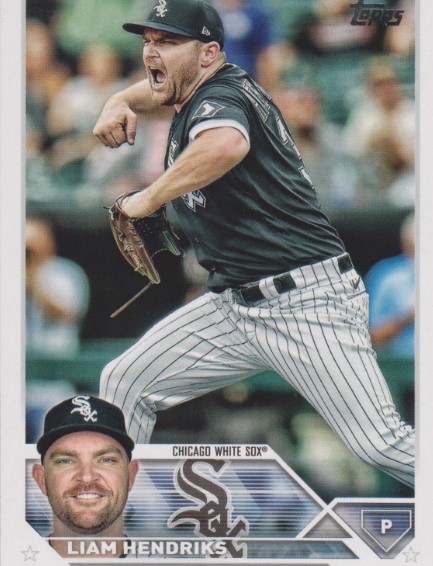
White Sox’ righty Liam Hendriks picked up the win in Chicago’s June  4 game against the Tigers – after pitching  a 1-2-3 top of the ninth (two strikeouts) to preserve a 2-2 tie.  The White Sox scored in the bottom of the inning to give him the victory. It was Hendriks’ first  decision since coming back from treatment for Stage Four non-Hodgkin’s lymphoma – and it came on National Cancer Survivors Day.

McClanahan a True Rays’ Ace

One June 5, Rays’ southpaw Shane McClanahan threw six one-run innings (five hits, two walks, five whiffs) as the Rays topped the Red Sox 4-1 in Boston.  In the process, McLanahan became NL’s first nine-game winner in 2023 – running his record to 9-1, 2.02.

McClanahan, who came into the 2023 season with a 22-4, 2.92 record, closed June with an 11-1, 2.53 record on the season.

1-2-3 … That’s How Easy It’s Gonna Be

Photo: Erik Drost, CC BY 2.0 <https://creativecommons.org/licenses/by/2.0>, via Wikimedia Commons

On June 8, as the Guardians topped the Red Sox 10-3 in Cleveland, Guardians’ 3B and cleanup hitter, Jose Ramirez truly “cleaned up.”  Ramirez homered in his first three at bats, notching his first-ever three-homer game and (with the second homer) his 200th MLB long ball.  And, there was more, Ramirez broke a 13-game homer-less streak and a zero-for-sixteen slump. Ramirez ended the game three-for-five with three runs scored and five RBI. He ended June at .295-13-52 on the season. Ramirez, in his eleventh MLB season, is a four-time All Star and has topped twenty home runs in five seasons (topping 30 twice); recorded 100+ RBI in three seasons; and has 20 or more  stolen bases in five campaigns.

100 Wins … Good for Yu 

On June 9, Yu Darvish won his fifth game of the season for the Padres (5-4, 4.30), as San Diego topped the Rockies 9-6 in Colorado. Darvish went  5 1/3 innings – four runs on five hits and four walks, with six whiffs.  It was also Darvish’s  100th MLB win.  Darvish – 16-8, 3.10 for the Padres a year ago –  finished June with a 5-6, 4.84 record on the season.

How About Those Early Returns?

Dodgers’ 24-year-old righty, rookie Bobby Miller, got his MLB career off to a pretty darn good start. Making his major league debut on May 23, Miller picked up three wins (no losses) and a 0.78 over his first four starts (May 23, May 29, June 4, June 10).  Things got a bit tougher in his next three starts, as Miller gave up 16 earned runs in 15 1/3 innings.  He finished June with a 4-1, 4.23 record on the season.

2,000 … That’s a Nice, Big, Round Number

On June 11, five -time All Star Andrew McCutchen, in his fifteenth MLB season, led off at DH for the Pirates (in Pittsburgh). McCutchen rapped a first-inning single off Carlos Carrasco for his 2,000th MLB safety. He went one-for-three (with a walk) in the game, won by the Pirates (over the Mets) 2-1.

As June closed, McCutchen’s was .287-10-28 on the season and  .277-297-1,030 for his career.

A (Bi)cycle Built for Two

We saw two cycles (single, double, triple, home run in the same game) in June.  First, on June 12, Phillies’ C J.T. Realmuto went four-for-four with a walk – as the Phillies lost to the Diamondbacks 9-8 in Arizona. Realmuto led off the second inning with a solo home run; hit a two-run triple in the third; singled in the fifth; walked in the seventh; and doubled to lead off the ninth. In another example of how #InBaseballWeCountEverything, Todd Zolecki at MLB.com reported that there have been 22 times in MLB history that a player has hit for a cycle, added a walk, had three RBI and three runs scored -and this was the first time that player’s team lost the game.

On June 23, the streaking Reds won their 12th straight game – squeaking by the Braves 11-10 in Cincinnati. In the contest, 39-year-old veteran Joey Votto hit a game-tying solo home run to lead off the fourth and a go-ahead three-run bomb in the fifth.  The 39-year-old veteran, however, was upstaged by 21-year-old rookie 3B Elly De La Cruz, who collected the Reds’ first cycle (single, double, triple, homer in one game) in 34 years.  De La Cruz, batting cleanup, doubled to lead off the second inning; hit a two-run homer in the third; had an RBI single in the fifth; and stroked a run-scoring triple in the sixth.  The cycle came in De La Cruz’ fifteenth MLB game. Only two players have recorded a cycle earlier in their MLB career (per the Elias Sports Bureau):  Cliff Heathcote of the 1918 Cardinals (sixth MLB game) and Gary Ward of the 1980 Twins (fourteenth ML:B game.)

FASTEST Cycle Ever

On June 18, 2000, Rockies’ second baseman Mike Lansing completed the fastest cycle ever in an MLB game.  As the Rockies topped the Diamondbacks in Colorado by a 19-2 score, Lansing, batting second, completed his cycle in just four frames:

  • A run-scoring triple in the first inning;
  • A two-run home run in the second;
  • A two-run double in the third;
  • A single in the fourth.

Lansing played nine years in the major leagues, hitting .271-84-440 in 1,110 games.

A Winning MLB Debut

On June 17, I was lucky enough to be in Kansas City (on a Ballpark Tours trip), as the Angels took on the Royals – and 24-year-old Samad Taylor made his MLB debut for the Royals, batting eighth and playing LF. Taylor, by the way, was hitting .304-6-37, with 34 steals in 62 games at Triple-A when called up.

In a game that saw the Angels jump out to a 9-2 lead by the top of the seventh, Taylor had grounded out in bottom of the second, flied out to right in the fifth, walked and scored in the seventh and walked and scored in the eighth. Ultimately, in his MLB debut, Taylor found himself  at the plate in the bottom of the ninth, with a runner on third,  one out and the scored knotted at nine apiece.  Taylor delivered his first major-league hit – and it was a walk-off (game-winning) single.

Rebuilding

The Royals’ starting offensive lineup on June 17  included six players in either their first or second MLB season.

A Tying and Winning MLB Debut

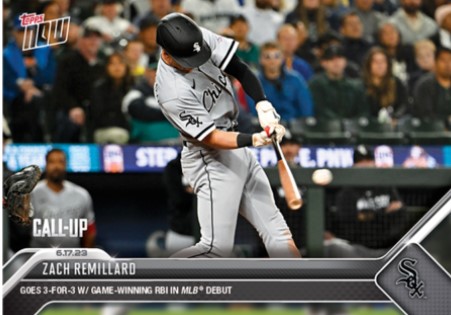
Twenty-nine-year-old Zach Remillard was in his seventh minor-league season when he finally got the call to the “Show” (with the White Sox). He made his major-league debut in a game against the Mariners (in Seattle) on June 17 – coming on in the fourth inning to replace starting shortstop Tim Anderson, who reported right shoulder soreness.  (Anderson went to the bench, starting second baseman Elvis Andrus went to SS and Remillard came in at 2B, batting in the number-two spot.)

It was one heck of a day for the rookie.

  • In his first plate appearance (top of the fifth), he walked on five pitches.
  • In the seventh, he beat out a bunt single.
  • In the ninth, he rapped an RBI single that tied the game at 3-3.
  • In the eleventh, he added another RBI single that proved the game winner (it gave the White Sox at 4-3 lead).

So, in his debut, Remillard reached base in all four plate appearances, went three-for-three and (according to MLB.com) became the first player since 1901 to drive in the tying and winning runs in his MLB debut.

So Darn Stingy.

In the month of June, Mariners’ righty Ge0rge Kirby walked only one batter in four starts (24 innings), while fanning 21. On the season, he’s walked just seven in 15 starts (94 innings,) while fanning 79 and going 6-7, 3.26. In two MLB seasons, the 25-year-old Kirby has walked just 29 and fanned 212 in 224 innings. 

A Bittersweet Record

On June 18, 12-season (2011-2015, 2017-23) MLB veteran Lance Lynn tied a White Sox franchise record and reached a career high by fanning 16 batters in a game. The outing came in Seattle and was bittersweet, since Lynn gave up three earned runs (in seven innings) and took the loss, as the Mariners topped the White Sox 5-1.  In the game, Lynn threw 114 pitches (71 strikes) and gave up just four hits and two walks.

On the season, through June, Lynn is 5-8, 6.47. Lynn is a two-time All Star (2012 and 2021), and has won 15 or more games in four seasons.  His career mark is 128-92, 3.68.

Lighting It Up

On June 20, the Cardinals’ Jordan Hicks – moved into the closer role the previous week – became just the second MLB pitcher to throw a pitch in excess of 104 mph this season, blazing a 104.3 mph sinker.  This heat came despite it being Hicks’ third consecutive day on the mound.  Hicks faced four batters in picking up the save in the 8-6 Cardinals’ win – and six of his pitches were 102 mph or better.  The 104.3 mph sinker was the fifth-fastest pitch in MLB this season. (The Twins’ Jhoan Duran holds the top four spots. Hicks had earned one-inning saves on both June 17 and  June 18.

A Long Ball in the Minors

On June 20, the Triple-A Salt Lake Bees’ outfielder Jo Adell mashed a 514-foot homer to left center field at Salt Lake City’s Smith Ballpark. It was his minor-league leading 20th homer of the season.

Buxton Goes Deep

Photo: Keith Allison on Flickr (Original version)  UCinternational (Crop), CC BY-SA 2.0 <https://creativecommons.org/licenses/by-sa/2.0>, via Wikimedia Commons

On June 22, in a 6-0 win over the Red Sox (in Minnesota), Twins’ DH Byron Buxton bashed a 466-foot home run in the first  inning and added a 465-foot shot in the third.  In more of #InBaseballWeCountEverything, Statcast reported that he is the first player in the Statcast era to hit multiple homers  of 460-feet or more in a single game and one of just five to hit multiple Statcast-measured 450-foot homers in a game (joining Austin Riley, Willson Contreras, Charlie Blackmon and Trevor Story).

The two long balls were Buxton’s 12th and 13th of the season.


I’m A Travelin’ Man … Been All Over the World

On June 24, MLB went international again – as the Cubs and Cardinals played a two-game series in London. In more of #InBaseballWeCountEverything, the Elias Sports Bureau reported that his start at first base made the Cardinals’ Paul Goldschmidt the first MLB player to play a regular-season game in five different countries (USA, Australia, Canada, Mexico and England).

For those who like to know such things, the two teams split the two games. Game 1: Cubs win 9-1. Game Two:  Cardinals win 7-5. The two games drew a total of 110,167 fans. (or at least curious onlookers.)

23-Zip … In the Fourth

On June 24, the Angels faced the Rockies in Colorado – and I expect more than a few fans left early.  After just four innings, the Angels had  collected 12 singles, five home runs, two doubles, four walks and one hit batsman – and led 23-0. The final was 25-1. In the game, four Angels had four or more RBI:  SS David Fletcher with five runs driven in and 2B Brandon Drury, 1B Hunter Renfroe and RF Mickey Moniak with four each.

Martinez Rolls a 300

On June 27, as the Dodgers topped the Rockies 5-0  in Colorado, Dodgers’ DH J.D. Martinez rapped his 17th and 18th homers of the 2023 season – a two-run shot in the third and a solo homer in the sixth. They were the  299th and 300th career round trippers for Martinez, now in his 13th MLB season. A five-time All Star, Martinez has eight seasons of 20 or more homers, a high of 45 in 2017. Ironically, in that 45-homer campaign, he was traded – from the Tigers to the Diamondbacks. That season, Ramirez went .305-16-39 in 57 games for the Tigers and .302-29-65 in 62 games for the Diamondbacks.  After helping the Diamondbacks reach the 2017 post-season, Martinez signed with the Boston Red Sox (as a free agent), where he he hit .330-43-130 in 2018 – and again found himself in the post-season.

Obligatory Ohtani Note

Photo by shinya

It wouldn’t be a monthly wrap up, without the obligatory Shohei Ohtani accomplishment.  On June 27, as the Angels topped the White (in LA), Ohtani started on the mound and picked up the win – going 6 1/3 one-run innings and fanning ten batters.  At the plate, Ohtani went three-for-three, with two home runs.  This outing made him just the sixth major leaguer to strikeout ten batters and hit two homers in a game since 1900. For the stories on all six, click here.

Shohei Ohtani’s three-hit game on June 27 was his fourth three-hit game as a starting pitcher this season.  It’s the most by any pitcher since Warren Spahn had five three-hit games with the Braves in 1958.

El Perfecto

Photo: Keith Allison from Hanover, MD, USA, CC BY-SA 2.0 <https://creativecommons.org/licenses/by-sa/2.0>, via Wikimedia Commons

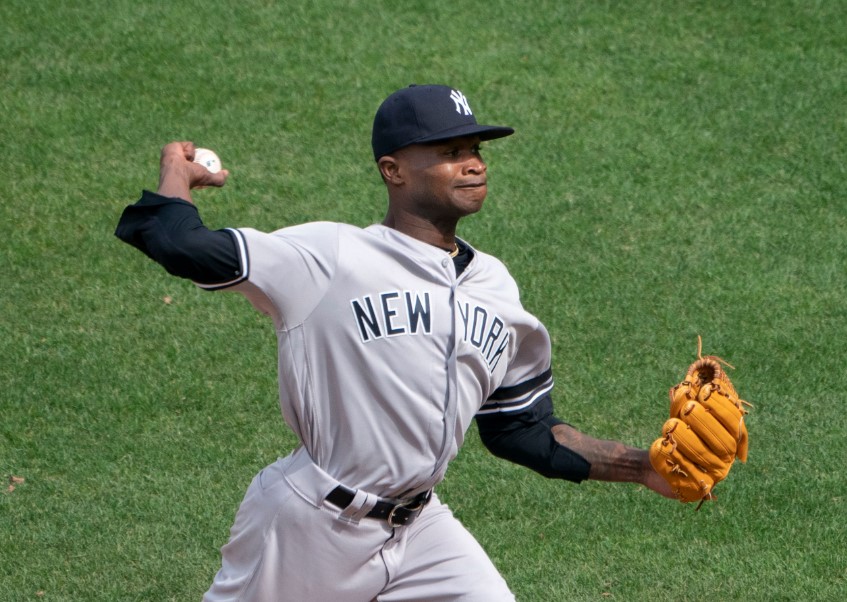
On June 28, Yankees right-hander Domingo German threw just the 24th perfect game in MLB history – as his Yankees topped the A’s 11-0 in Oakland.

  • German needed just 99 pitches (72 strikes) to record his 27 outs and he fanned nine along the way.
  • The Yankees won 11-0 and those 11 runs are the most ever scored by the winning team in a Perfect Game.

For more on German’s perfecto -and MLB’s 23 other Perfect Games, click here.


Shutouts Keep Coming

In addition to Domingo German’s  Perfect Game (see above),  the Twins’ Joe Ryan threw a complete-game shutout on June 22 – as the Twins topped the Red Sox 6-0.  Through June, there have been 11 single-pitcher shutouts in MLB. Through June of 2022, there had been just six single-pitcher shutouts.

Never Give Up!

Two of 2023’s surprise team are the Reds and Orioles, who would both be in the post-season if the season ended today.  Their June 28 matchup may provide a clue as to why.  When the two squads faced off in Baltimore on that day, they each could look back on an MLB-best 28 come-from-behind victories this season.  Well, true to form, the Reds jumped out to a 3-0 lead in the top of the first.  The Orioles came back in the bottom of the inning to take a 4-3 lead. In the top of thee second, the Reds came back to take a 6-3 lead. That grew to 7-3 by the top of the eighth. Then, the Orioles came back to tie it 7-7 in the bottom of the eighth and the Reds came back with four in the top of the tenth for the win – their 29th come-from-behind victory of 2023.

30-for-30

On June 30, the Reds scored three runs in the bottom of the eleventh inning to beat the Padres 7-5 – for their MLB-best 30th come-from-behind win.  

He Ain’t Heavy, He’s My Brother

On June 30, as the Angels faced the Diamondbacks (in Anaheim), David Fletcher started for the Angels at SS and his brother Dominic Fletcher started in LF for the Diamondbacks. Notably, it wasn’t the first time this season, they opposed each other on the professional baseball field.  The two had faced each other at Triple-A this year, with David playing for the Sale Lake Bees and Dominic for the Reno Aces. The Diamondback prevailed 6-2. David Fletcher went zero-for-two for the Angels ; Domincc Fletcher went one-for-four for the Diamondbacks.

——Individual Statistical Leaders for June 2023———

AVERAGE (minimum 60 June at bats)

National League – Luis Arreaz, Marlins (.406); Michael Harris II, Braves (.372); David Peralta, Dodgers (.365)

American League –  Shohei Ohtani, Angels (.394); Josh Naylor, Guardians (.370); Corey Seager, Rangers (.368);

The lowest June average (among players with at least 60 at bats in the month)  belonged to the Diamondbacks’ Pavin Smith  at .130 (9-for-69)

HOME RUNS

National League – Matt Olson, Braves (11); Ronald Acuna, Jr., Braves (9); Mookie Betts, Dodgers (9);  Eddie Rosario, Braves (9)

American League – Shohei Ohtani, Angels (15); Luis Robert, Jr., White Sox (11); four with seven

The Angels’ Shohei Ohtani had the highest June slugging percentage (at least 60 at bats) at .925.  The NL leader was the Braves’ Eddie Rosario at .711.

RUNS BATTED IN

National League – Matt Olson, Braves (25); five with 22

American League –  Shohei Ohtani, Angels (29); Corey Seager, Rangers (25); Alex Bregman, Astros (24)

HITS

National League – Luis Arreaz, Marlins (43); Ronald Acuna, Jr., Braves (37); three with 35

American League –  Shohei Ohtani, Angels (41); Corey Seager, Rangers (39); Josh Naylor, Guardians (37)

The Angels’ Shohei Ohtani led MLB (at least 60 June at bats) players in on-base percentage at .492. The NL  leader was the Pirates’ Andrew McCutchen at .462..

DOUBLES

National League –   Christian Walker, Diamondbacks (15); Fernando Tatis. Jr., Padres (12); Jeimer Candelario, Nationals (11)

American League – Corey Seager, Rangers (14); Alex Verdugo, Red Sox (10); Josh Naylor, Guardians (10)

TRIPLES

National League – Matt McLain, Reds (4); twelve with 2

American League –  Javier Baez, Tigers (3); Andres Gimenez, Royals (3); Alex Verdugo, Red Sox (3); Shohei Ohtani, Angels (3)

The Angels’ Shohei Ohtani led all hitters with 25 extra-base hits in June. The NL leader was Christian Walker of the Diamondbacks with 19. 

STOLEN BASES

National League –  Ronald Acuna, Jr., Braves (14); Trea Turner, Phillies (11); three with nine

American League – Esteury Ruiz, A’s (13); Maikel Garcia, Royals (9); Jarren Duran, Red Sox (8); Julio Rodriguez, Mariners (8)

The Phillies’ Trea Turner had the most June  teals without getting caught (11).

WALKS

National League – Juan Soto, Padres (23); Ketel Marte, Diamondbacks (20);Andrew McCutchen, Pirates (20)

American League –  Nathaniel Lowe, Rangers (21); Shohei Ohtani, Angels (21); Isaac Paredes, Rays (20)

The Rays’ Isaac Paredes led in walks/strikeouts ratio (among batters with at least 75 June plate appearances) at 1.3 … 20 walks versus 15 whiffs in 24 games.

BATTER’S STRIKEOUTS

National League – Kyle Schwarber, Phillies (37); Brandon Nimmo, Mets (35); three with 33

American League – Nick Pratto, Royals (42); Jake Burger, White Sox (38); Ryan Noda, A’s (38)

PITCHING VICTORIES

National League – Taijuan Walker, Phillies (5-1); Andrew Abbott, Reds (4-0); Clayton Kershaw, Dodgers (4-0); Joe Musgrove, Padres (4-0); Spencer Strider, Braves (4-0); Marcus Stroman, Cubs (4-1)

American League – Kevin Gausman, Blue Jays (4-1); thirteen with three

EARNED RUN AVERAGE (minimum 25 June innings pitched)

National League –  Eury Perez, Marlins (0.32); Blake Snell, Padres (0.87); Ranger Suarez, Phillies (1.08)

American League – Reid Detmers, Angels (2.05); Brayan Bello, Red Sox (2.14); Dylan Cease, White Sox (2.20)

Among pitchers with at least four June starts or 20  innings pitched, the Rockies’ Chase Anderson had the highest June ERA at 10.80 (30 earned runs in 25 innings in six starts).

STRIKEOUTS

National League – Blake Snell, Padres (53 K / 31 IP); Max Scherzer, Mets (46 K / 36 IP); Jesus Luzardo, Marlins (42 K / 35 2/3 IP)

American League – Kevin Gausman, Blue Jays (50 K / 36 1/3 IP); Pablo Lopez, Twins (45 K / 36 1/3 IP): Dylan Cease,  White Sox (42 K / 28 2/3 IP)

Among qualifying players, the Padres’ Blake Snell had the highest strikeout per nine innings ratio for June  at 15.39. The  White Sox’  Dylan Cease led the AL at 13.19.

SAVES

National League – Camilo Doval, Giants (10); Alexis Diaz, Reds (9);  Raisel Iglesias, Braves (8)

American League – Jordan Romero, Blue Jays (12); Felix Bautista, Orioles (7); Emmanuel Clase, Guardians (7); Carlos Estevez, Angels (7)

WHIP (Walks +  Hits per Inning Pitched – minimum 25 June innings)

National League – Blake Snell, Padres (0.68); Kyle Hendricks, Cubs (0.71);  Jesus Luzard0, Marlins (0.76)

American League – James Paxton, Rd Sox (0.77); Brayan Bello, Red Sox (0.86); Yusei Kikuchi, Blue Jays (0.87)

BONUS STATS

  • The Rockies’ Chase Anderson and Orioles’ Dean Kremer each gave up an MLB-high ten home runs in June.
  • Among player with at least 25 June innings pitched , the Padres’ Blake Snell held hitters to the lowest average (.124) – 13 hits in 31 innings.
  • The Twins’ Joe Ryan, Rangers’ Jon Gray and Yankees Domingo German  pitched the only June complete games.

________________________________

If the season ended today, the post-season would include:

American League: Rays; Rangers; Twins;  Wild Cards: Orioles, Yankees, Astros

National League: Braves, Diamondbacks, Reds.  Wild cards: Marlins, Dodgers, Giants.

Primary Resources:  Baseball-Reference.com; MLB.com; ESPN.com

Baseball Roundtable – Blogging Baseball Since 2012.

100Baseball Roundtable is on the Feedspot list of the Top 100 Baseball Blogs.  To see the full list, click here.

Baseball Roundtable is also on the Anytime Baseball Supply Top 66 Baseball Sites list.  For the full list, click here

I tweet (on X) baseball @DavidBaseballRT

Follow/Like Baseball Roundtable’s Facebook Page here.  Find More baseball commentary; blog post notifications; PRIZES.

Member: Society for American Baseball Research (SABR); Negro Leagues Baseball Museum; The Baseball Reliquary.
 

In Honor of Domingo German – Baseball Roundtable Revisits Perfect Game Facts and Fables

Photo: Keith Allison from Hanover, MD, USA, CC BY-SA 2.0 <https://creativecommons.org/licenses/by-sa/2.0>, via Wikimedia Commons

Yesterday (June 28, 2023), Yankees right-hander Domingo German threw just the 24th perfect game in NL/AL history – as his Yankees topped the A’s 11-0 in Oakland.  It was – as are all perfectos – a sparkling effort. In honor of German’s performance, Baseball Roundtable will take a revisit Perfect Game history in this post.  But first a few tidbits from German’s performance. Note:  While Baseball Roundtable was able to find multiple sources listing Negro Leagues no-hitters (The Negro Leagues from 1920-48 are now considered major league, I could not find a documented source for Negro Leagues perfect games.  I will continue the search.


  • German needed just 99 pitches (72 strikes) to record his 27 outs and he fanned nine along the way.
  • The Yankees won 11-0 and those 11 runs are the most ever scored by the winning team in a Perfect Game.
  • German went to a three-ball count on only two batters over the nine innings (3-2 on Ryan Noda in the sixth and Jonah Bride in the eighth).
  • In the high pressure bottom of the nine, German recorded  his three outs on just six pitches.
  • The Perfect Game was German’s first MLB complete game (in 85 starts).
  • German came into the game with a 4-5, 5.10 record on the season and had given up 15 earned runs in his previous two outings (5 1/3 combined innings).

 Perfect Games are all about zeros – and Domingo German is the first MLB pitcher to toss a perfect game while wearing the number zero.

German is in his sixth MLB season (2017-19 , 2012-23 … all with the Yankees). He has a 31-26, 4.40 record. His best season was 2019, when he went 18-4, 4.03 in 27 games (24 starts).

Now, to revisit at some no-hitter fact and fables.

The Score Can Be an Incentive

The most popular score of a perfect game is 1-0, with seven of the 24 perfect outings (29.2 percent) resulting in a 1-0 final score.  That’s not totally unexpected, but – as I examined MLB’s perfect pitching performances – I learned even more.  I was surprised to find out that in six of those seven 1-0 outcomes, that sole run scored by the winning squad was an unearned run.

  • 16 perfect games were pitched in the winning pitcher’s home park, only eight on the road. (Side note: When the Providence Grays’ John Montgomery Ward totally white-washed the Buffalo Bisons in Providence on June 17, 1880, Buffalo was the”home” team – at the time home team designation was determined by a coin toss.)
  • Sixteen perfect games belong to right-handers, eight to southpaws.
  • Fifteen AL hurlers and nine NL pitchers have fashioned “perfectos.”

FORESHADOWING?

Cy Young, who would toss a perfect game for Boston in 1904, pitched for the 1899 National League Saint Louis team known as the “Perfectos.”  They would become the Cardinals in 1900.

  • Thirteen perfect games have occurred in American League games, nine in National League contests, one in an inter-league tilt and one in the World Series.
  • David Cone of the Yankees threw the only perfect game in an inter-league contest, when he stopped the Expos 6-0 on July 18, 1999 at Yankee Stadium.
  • The largest crowd to witness a perfect game was for Don Larsen’s Yankee Stadium 1956 World Series’ performance against the Big Apple rival Dodgers – 65,519.  The smallest crowd was an estimated 1,800 for John Montgomery Ward’s June 17, 1880, 5-0 win for Providence over Buffalo.
  • The youngest pitcher to toss a perfect game was 20-year-old Providence righty John Ward (1880); the oldest was 40-year-old Diamondbacks’ southpaw Randy Johnson (2004).

A BIT OF BALANCE

There are those who question the validity of the two 1880 perfect games – Lee Richmond’s very first MLB perfect outing on June 12 and John Montgomery Wards’ just five days later.  The rules were different then – 45-foot pitching distance and eight balls to draw a walk.  However, that is balanced by the fact that pitchers couldn’t bring their arms above the shoulder in the windup and fielders were primarily glove-less. Consider that, in 1880, there were an average of 8.9 errors per game (both teams combined) and that of the 3,191 runs scored that season, 1,591  (49.9 percent) were unearned. Under those conditions, a perfect game was still quite the accomplishment.

  • Only two players under six-feet tall have pitched perfect games and they were the first two to accomplish it: Worcester’s Lee Richmond (5’10”) and Providence’s John Ward (5’9”).
  • The tallest player to pitch a perfect game was 6’ 10” Randy Johnson of the Diamondbacks, the heaviest 6’2”, 240-pound Mark Buehrle of the White Sox

GOOD TIMING

dAVID cONE BASEBALL photo

Photo by clare_and_ben

Yankee righty David Cone pitched a perfect game against the Expos on July 18, 1999 (a 6-0 New York win). To make it even more “perfect,” it was Yogi Berra Day and the ceremonial first pitch was thrown out by former Yankee Don Larsen – author of the only World Series perfect game.


  • The fewest pitches tossed in a perfect outing was 74 – by Addie Joss in his October 2, 1908 perfect outing, as he led his Cleveland Naps over the White Sox by a score of 1-0. As you might expect, his three strikeouts that day are also the fewest K’s in a perfect game.
  • The most pitches in a perfect game were the 125 thrown by Matt Cain as his Giants topped the Astros 10-0 in San Francisco.
  • The most strikeouts recorded in a perfect outing are 14 – Dodgers’ Sandy Koufax (September 9, 1965 versus the Cubs) and Giants’ Matt Cain (June 13, 2012 versus the Astros).

HE’LL DO IN A PINCH

aDDIE jOSS photo

Photo by guano

The Cleveland Naps’ Addie Joss had to retire three ninth-inning pinch-hitters to complete his October 2, 1908 perfect outing against the White Sox – Doc White (for Al Shaw), who grounded out short to first; Jiggs Donahue (for Lee Tannehill), who fanned swinging; and John Anderson (for Ed Walsh), who grounded out to third. The only other pitcher to face three pinch hitters in the course of a perfect game was the Phillies’ Jim Bunning. In his June 21, 1964 perfecto against the Mets, he faced one pinch batter in the sixth and two in the ninth. (The final two outs of the game saw Bunning facing pinch hitters George Altman and John Stephenson – who both struck out swinging.)

  • The quickest perfect game took place on May 5, 1904, as Cy Young and his Boston Americans topped the Philadelphia Athletics 3-0 (in Boston) in a reported 85 minutes. (Some reports list the game at 83 minutes, either way it is the quickest.)
  • The longest perfect game took two hours and forty minutes, as David Wells and the Yankees bested the Twins 4-0 in New York.

TWO GREAT PLAYS TO SAVE TWO GREAT GAMES

Here is BBRT’s take on the two top perfect game-saving plays.

In Lee Richmond’s MLB first-ever perfect game (1880) for Worcester, the Buffalo Bisons’ slow-afoot first baseman Bill Phillips appeared to break up the perfecto in the top of the fifth with a hard liner that found the grass in right field.  Worcester right fielder Alonzo Knight charged the ball, picked it up on the hop and fired to Providence first baseman Chub Sullivan to nip Phillips at first.  The perfect game was saved on a seldom seen 9-3 assist/putout.

Number-two. With Chicago’s Mark Buerhle having  eight perfect innings against the Rays under his belt (July 23, 2009), White Sox Manager Ozzie Guillen brought speedy outfielder DeWayne Wise in to play center field.  It immediately proved to be a “wise” move.  The first batter in the ninth, Rays’ RF Gabe Kapler, ripped a drive to deep left-center.  Wise, who had been playing shallow to avoid a bloop hit, took off.  He hit the center field wall hard, gloved hand extended above the fence (in home run territory) and snagged the drive.  After hitting the fence, the ball was jarred loose and Wise corralled it with his bare hand as he fell to the ground – saving the perfect outing.  Buehrle went on to retire the final two batters (strikeout/groundout to short) to complete the perfect game.  See the video of Wise’s catch below.

  • The White Sox, Dodgers  and Yankees franchises have been involved in the most perfect games – four each. (Note: The White Sox won three of their four; the Dodgers lost three of their four, the Yankees won all four.)
  • The Yankees have pitched the most perfect games – four.
  • The Rays and Dodgers have been the most frequent victims of perfect outings – three each.
  • Cleveland squads going by the names the Blues, Naps and Indians have been involved in perfect games.

COME ON – JOIN THE PARTY!

Twenty-three of the current thirty MLB franchises have been involved in perfect games (on either the winning or losing side). The following teams have never been on the field for a perfecto: American League – Royals and Orioles. National League – Cardinals, Pirates, Brewers, Rockies and Padres.

  • Nine of the 24 perfect game pitchers logged 200 or more major league wins, led (of course) by Cy Young’s 511.
  • The list of perfect game pitchers includes Hall of Famers: John Ward, Cy Young, Addie Joss, Jim Bunning, Sandy Koufax, Catfish Hunter, Randy Johnson and Roy Halladay.
  • Seven of the hurlers who caught fire on the mound and achieved perfection for a game had career won-lost records under .500.
  • Seven of the perfect hurlers have more than one no-hitter (including the perfect game) on their resumes: Sandy Koufax (4 no-hitters); Cy Young (3); and two each for Jim Bunning, Mark Buehrle, Randy Johnson, Addie Joss and Roy Halladay.
  • The perfect games tossed by David Cone (1999), Mark Buehrle (2009), Philip Humber (2012) and Domingo German (2023, still active). were the only complete games each threw in their perfecto season.

AVAILABLE ONE TIME – AND ONE TIME ONLY

Philip Humber threw just one complete game in his career - but it was "perfect."

Philip Humber threw just one complete game in his career – but it was “perfect.”

Phil Humber has the fewest career wins of any pitcher who has tossed a perfect game.  Humber finished an eight-season MLB career with a record of 16-31 and a 5.31 earned run average.  His perfect outing in 2012 was HIS ONLY COMPLETE GAME in 51 career starts. He finished the 2012 season at 5-5, 6.44 – notching the fewest wins and highest ERA ever for a pitcher in a season in which he reached perfection.


  • The most wins recorded by a pitcher in a season in which he threw a perfect game was 39John Montgomery Ward, 39-24, 1.74 in 188o.
  • The most losses in a season in which a pitcher tossed a perfect game was 32Lee Richmond, 32-32, 2.15 in 1880.
  • 2012 was a banner year for perfect games with three – the most ever in a season.

GETTING AN EARLY START ON HISTORY

Charlie Robertson, who threw his perfect game for the White Sox against the Tigers on April 201922, was rather unique among perfect game hurlers. He pitched his gem earlier in his career than any other perfect game pitcher – in just his fourth MLB start and fifth career game. (By comparison, Randy Johnson was in his 17th season and Cy Young seeking his 380th victory when they threw their perfect games.) Robertson is also the only pitcher to throw a perfect game – and also finish below .500 for every season of his career (eight campaigns – career record 49-80, 4.44). In addition, he is the only pitcher to throw a perfect game against a team that batted over .300, as a team. In 1922, the Ty Cobb-led Tigers hit .306  – with six .300+ hitters in the everyday lineup, led by Cobb’s .401.   (The Tigers were shut out only five times that season).

  • No pitcher did more to help his cause (offensively) in a perfect game than Jim “Catfish” Hunter. As he shut down the Twins 4-0 on May 8, 1968, Hunter went 3-4 (double and two singles) with three runs batted in – recording the most hits, total bases and RBI by a pitcher in game in which he was perfect on the mound.  (One more hit and he could have been perfect at the plate as well.)
  • Jim Bunning is the only pitcher to record a save in the outing immediately before his perfect game. Three days before his June 21, 1964 perfect game against the Mets, Bunning was brought in to get the last two outs in a 6-3 Phillies win over the Cubs.
  • David Cone (1999), Len Barker (1981) and Tom Browning (1988) all completed their perfect games without ever reaching ball three to any batter.
  • On September 16, 1988, Tom Browning almost became the first pitcher to start a perfect game on one day and finish it on another. The start of the game was delayed nearly 2 1/2 hours (starting just after ten p.m.) – and it wrapped up at about seven minutes to midnight.

———-MLB PERFECT GAMES LIST———

June 12, 1880 …. Lee Richmond, Worcester … Cleveland Blues 0 – at Worcester 1

Richmond’s 1880 record: 32-32, 2.15.  Career record: 75-100, 3.06.

June 17, 1880 … John Montgomery Ward, Providence Grays … Providence 5 – versus Buffalo Bisons 0

Wards’ 1880 record: 39-24, 1.74.  Career record: 164-103, 2.10.

May 5, 1904 … Cy Young, Boston Americans … Philadelphia A’s 0 – at Boston 3

Young’s 1904 record: 26-16, 1.97.  Career record: 511-316, 2.63

October 2, 1908 … Addie Joss, Cleveland Naps … Chicago White Sox 0 – at Cleveland 1

Joss’ 1908 record: 24-11, 1.16.  Career record: 160-97, 1.89.

April 30, 1922 … Charlie Robertson, Chicago White Sox … Chicago 2 – at Detroit Tigers 0

Robertson’s 1922 record: 14-15, 3.64. Career record: 49-80, 4.44.

October 8, 1956 … Don Larsen, New York Yankees … Brooklyn Dodgers 0 – at New York 2

Larsen’s 1956 record: 11-5, 3.26.  Career record: 81-91, 3.78.

June 21, 1964 … Jim Bunning, Philadelphia Phillies … Phillies 6 – at New York Mets 0

Bunning’s 1964 record: 19-8, 2.63. Career record: 222-184, 3.27.

September 9, 1965 … Sandy Koufax, Los Angeles Dodgers … Chicago Cubs 0 – at LA 1

Koufax’ 1965 record: 26-8, 2.04. Career record: 165-87, 2.76.

May 8, 1968 … Jim Hunter, Oakland A’s …. Minnesota Twins 0 – at Oakland 4

Hunter’s 1968 record: 13-13, 3.35. Career record: 224-166, 3.26.

May 15, 1981 … Len Barker, Cleveland Indians … Toronto Blue Jays 0 – at Cleveland 3

Barker’s 1981 record: 8-7, 3.91. Career record: 74-76, 4.34.

September 30, 1984 … Mike Witt, California Angels … California 1 – at Texas Rangers 0

Witt’s 1984 record: 15-11, 3.47. Career record: 117-116, 3.83.

September 16, 1988 … Tom Browning, Cincinnati Reds … LA Dodgers 0 – at Cincinnati 1

Browning’s 1988 record: 18-5, 3.41. Career record: 123-90, 3.94.

July 28, 1991 … Dennis Martinez, Montreal Expos … Montreal 2 – at LA Dodgers 0

Martinez’ 1991 record: 14-11, 2.39. Career record: 245-193, 3.70.

July 28, 1994 … Kenny Rogers, Texas Rangers … California Angels 0 – at Texas 4

Rogers’s 1994 record: 11-8, 2.46. Career record: 219-156, 4.27.

May 17, 1998 … David Wells, New York Yankees … Minnesota Twins 0 – at New York 4

Wells’ 1998 record: 18-4, 3.49.  Career record: 239-157, 4.13.

July 18, 1999 … David Cone, New York Yankees … Montreal Expos 0 – at New York 6

Cone’s 1999 record: 12-9, 3.44.  Career record: 194-126, 3.46.

May 18, 2004 … Randy Johnson, Arizona Diamondbacks … Arizona 2 – at Atlanta Braves 0

Johnson’s 2004 record: 16-14, 2.60. Career record: 303-166, 3.29.

July 23, 2009 … Mark Buehrle, Chicago White Sox … Tampa Bay Rays 0 – at Chicago 5

Buehrle’s 2009 record:  13-10, 3.84. Career record: 214-160, 3.18.

May 9, 2010 … Dallas Braden, Oakland A’s … Tampa Bay Rays 0 – at Oakland 4

Braden’s 2010 record: 11-14, 3.50. Career record: 26-36, 4.16.

May 29, 2010 … Roy Halladay, Philadelphia Phillies …. Phillies 1 – at Marlins 0

Halladay’s 2010 record: 21-10, 2.44.  Career record: 203-105, 3.38.

April 21, 2012 … Philip Humber, Chicago White Sox …. Chicago 4 – at Seattle Mariners 0

Humber’s 2012 record: 5-5, 6.44.  Career record: 16-23, 5.31.

June 13, 2012 … Matt Cain, San Francisco Giants … Houston Astros 0 – at San Francisco 10

Cain’s 2012 record: 16-5, 2.79, Career record: 104-118, 3.68 (through 2017).

August 15, 2012 … Felix Hernandez, Seattle Mariners …. Tampa Bay Rays 0 – at Seattle 1

Hernandez’ 2012 record: 13-9, 3.06.  Career record: 160-114, 3.20 (through 2017).

June 28, 2023 … Domingo German, Yankees …Oakland A’s 0 –  New York 11 -0 at Oakland

German’s current 2023 record: 5-5, 4.54.  Current Career Record: 31-26, 4.40.

Primary resources: Society for American Baseball Research; Baseball-Reference.com; MLB.com; Baseball-Almanac.com

Baseball Roundtable – Blogging Baseball Since 2012.

100Baseball Roundtable is on the Feedspot list of the Top 100 Baseball Blogs.  To see the full list, click here.

Baseball Roundtable is also on the Anytime Baseball Supply Top 66 Baseball Sites list.  For the full list, click here

I tweet (on X) baseball @DavidBaseballRT

Follow/Like Baseball Roundtable’s Facebook Page here.  Find More baseball commentary; blog post notifications; PRIZES.

Member: Society for American Baseball Research (SABR); Negro Leagues Baseball Museum; The Baseball Reliquary.
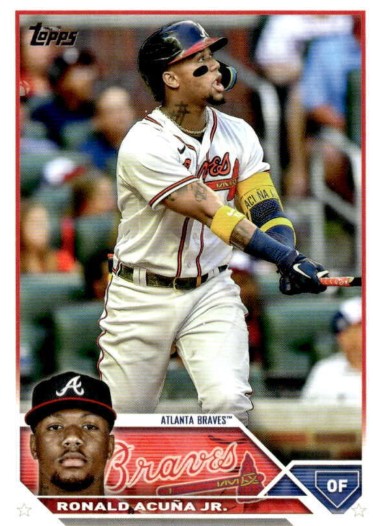


A Six-Pack of Hit ‘Em Out/Strike ‘Em Out

Yesterday (June 27, 2023), the Angels’ Shohei Ohtani started on the mound and, as usual, was in the lineup at Designated Hitter. Ohtani picked up the win – running his record to 7-3, 3.02 – going  6 1/3 innings and striking out ten batters.  At the plate he went three-for-three, with a walk and a pair of solo homers (his 27th and 28th of the season).  In the process, he became just the sixth MLB pitcher to record ten or more strikeouts and hit two home runs in a game.  Here’s the list.

Milt Pappas, Orioles … August 27, 1961

Pappas pitched two-hit shutout, fanning 11, as the Orioles beat the Twins 3-0 in Minnesota.  At the plate, Pappas went two-for-four with two  solo home runs.

Right-hander Pappas had a 17-season MLB career (1957-73 … Orioles, Reds, Braves, Cubs). He was a two-time All Star and won fifteen or more games in seven seasons. His final stat line was 209-164, 3.40. His best season was 1972, when he went 17-7, 2.77 for the Cubs. At the plate, Pappas went .123-20-67 in 1,073 at bats.

Pedro Ramos, Indians … July 31, 1963

As the Indians topped the Angels  Sox 9-5 in Cleveland, Ramos went 8 1/3 innings giving up 11 hits and five runs, while fanning 15.  At the plate , he was two-for-four, with two solo round trippers.

Right-hander Ramos pitched in 15 MLB seasons (1955-67, 1969-70 … Senators/Twins, Indians, Yankees, Phillies, Reds, new Senators). From 1958-61, he led the American League in losses every year – going a combined 49-75, 3.94 over the four seasons.  He also lead the league in starts in two of those campaigns. His final stat line was 117-160, 4.08. A switch-hitter, Ramos hit .155-15-56 in 703 at bats.

Rick Wise, Philllies … August 28, 1971

With his Phillies topping the Giants 7-3 in Philadelphia, Wise went the full nine innings, giving up eight hits and three runs and fanning 11.  At the plate, he was two-for-three with a solo homer and Grand Slam.

Wise pitched in 18 MLB seasons (1964, 1966-82 … Phillies, Cardinals, Red Sox, Indians, Padres). The two-time All Star won 15 or more games in six seasons, with a high of 19 with the 1975 Red Sox (19-12, 3.95).  At the plate, he went .195-15-66 in 668 at bats.  From 1967 through 1970, he hit .200 or better in four seasons, going .231-5-22.  In 1971, he hit .237, with six homers and 15 RBI in 39 games.

Two Blasts and a NO-NO

While he didn’t notch ten strikeouts, Rick Wise gets a special shout out for being the only MLB pitcher to hit two home runs in a game in which he also tossed a no-hitter. On June 23, 1971, Wise no-hit the Reds (in Cincinnati) as his Phillies won 4-0. Wise walked one and fanned three in his no-hitter and also drove in three runs with a pair of long balls. 

Madison Bumgarner, Giants … April 2, 2017

Photo by andyrusch

Photo by slgckgc

On Opening Day in 2017, Madison Bumgarner and the Giants beat the Diamondbacks 6-5 in Arizona.  Bumgarner got the win, pitching seven innings and giving up six hits and three runs, while fanning 11.  At the plate he went two-for -two, with two solo homers and a walk.  (Side note:  Zack Greinke started for the Diamondbacks, two years to the day before he would also notch a two-homer, ten-strikeout game.)

Bumgarner, still active in 2023 (currently a free agent), is in his 15th MLB season (2009-23 … Giants, Diamondbacks). The four-time All Star has won 15 or more games in four seasons and owns a career mark of 134-124, 3.47. His best season to date is 2015, when he went 18-9, 2,93 for the Giants.  As a hitter, Bumgarner has a .232-19-65 stat line in 633 at bats. In 2014, he hit .258-4-15 in 31 games.

Zack Greinke,  Diamondbacks … April 2, 2019

Exactly two years after  Madison Bumgarner pulled off the two-homer, ten-whiff combo against Greinke and the Diamondbacks, Greinke notched a similar game for himself.  As his Diamondbacks topped he Padres 8-5 in San Diego, Greinke got the win with six innings of three-run ball (three runs, ten whiffs). At the plate, he went two-for-four. With a solo homer and three-run shot.

Greinke has pitched in 20 MLB seasons (2004-2023 … Royals, Brewers, Dodgers, Diamondbacks, Astros). He has won 15 or more games in nine seasons. The five-time All Star’s and 2009 AL Cy Young Award winner’s  best season was 2015 ( 19-3 for the Dodgers, with a league-low 1.66 earned run average).  At the plate, Grienke has hit .225-9-34 in 521 at bats. In 2013, he hit .328 (15-for-58) for the Dodgers.  Greinke also has six Gold Gloves on his MLB resume.

Shohei Ohtani, Angels … June 27, 2023

As the Angels bested the White Sox 4-2 (in LA), Ohtani got the  win with 6 1/3 innings of four-hit, one-run ball – while fanning ten.  At the plate, he went three-for-three with two solo homers. (Note: Probably more two-homer/ten-whiff games in his future.)

Ohtani, a two-way star in Japan, signed with the Angels in December of  2017.  Since joining the Angels, he has gone 35-17, 2.97 on the mound with 568 strikeouts in 445 innings pitched. At the plate, he has gone .272-155-406 in 645 games.  Ohtani was the AL Rookie of the Year in 2018 and the league MVP in 2021. In his MVP season, Ohtani hit .257-46-100, stole 26 bases and led the AL with eight triples – also going 9-2, 3.18 on the mound (23 starts).

Primary resource:  Baseball-Reference.com

Baseball Roundtable – Blogging Baseball Since 2012.

100Baseball Roundtable is on the Feedspot list of the Top 100 Baseball Blogs.  To see the full list, click here.

Baseball Roundtable is also on the Anytime Baseball Supply Top 66 Baseball Sites list.  For the full list, click here

I tweet (on X) baseball @DavidBaseballRT

Follow/Like Baseball Roundtable’s Facebook Page here.  Find More baseball commentary; blog post notifications; PRIZES.

Member: Society for American Baseball Research (SABR); Negro Leagues Baseball Museum; The Baseball Reliquary.
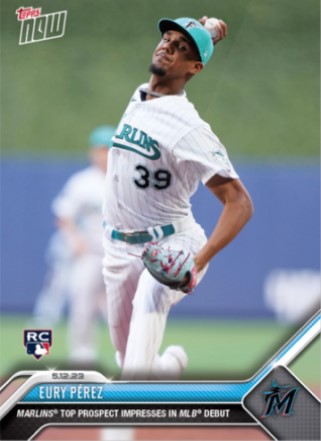


Twenty Years Ago – Red Sox Plate Ten Before Making An Out

On this date (June 27), twenty years ago, the Boston Red Sox set the MLB record for the most runs scored by a team in a game before making their first out.  The game was played in Fenway Park and the opponents were the Florida Marlins – who lost to the Red Sox 25-8 and gave up ten runs before retiring a single BoSox batter.

The inning went like this:

Carl Pavano, who came into the game with a 6-8, 4.21 record on the season, started for the Marlins.  To give you some idea of now potent this Red Sox lineup was, I put each player’s batting average entering the game in parenthesis after his name.

  • CF Johnny Damon (.255) – Doubles to right on a 2-2 pitch.
  • 2B Todd Walker (.302) – Singles to center (1-0 pitch), scoring Damon.
  • SS Nomar Garciaparra (.343) – Doubles to center (0-1 pitch), Walker goes to third.
  • LF Manny Ramirez (.314) – Hits a three-run homer to left (first pitch).
  • DH David Ortiz (.287) – Doubles to right (2-1 pitch).
  • 1B Kevin Millar (.316) – Singles to center on a 1-1 pitch, scoring Ortiz.

Miguel Tejera replaces Pavano on the mound. (Pavano has surrendered five runs on six hits, in just 22 pitches – and is responsible for Millar on first.) Tejera will see the Red Sox standing tough in the batter’s box. He will face just five batters, with three of those requiring at least eight pitches.

  • RF Trot Nixon (.305) – Greets Tejera with a first-pitch single to right, with Millar moving to second.
  • 3B Bill Mueller (.315) – Works Tejera for a nine-pitch walk, loading the bases.
  • C Jason Varitek (.279) – The number-nine hitter lines a single to center (2-2 pitch), scoring Millar and Nixon and sending Mueller to second.
  • Damon – Up for the second time in the inning, hits a 2-2 pitch, the ninth pitch of the at bat, for a triple to deep right, scoring Mueller and Varitek.
  • Walker – Gets his second single of the inning, a groundball single to left scoring Damon. It comes on the ninth pitch of the at bat, a 3-2 count).

Allen Levrault replaces Tejera, who has given up four hits and a walk on 32 pitches. Levrault slows the carnage. Getting Garciaparra on a foul pop up.  Ten runs have scored before this first out.

The Red Sox go on to score four more runs to take a 14-1 first-inning lead.

A few other tidbits:

  • Damon, who got three-fourths of the way to the cycle in the first inning (double, triple, single) will  collect two more hits  in his final four plate appearances.  They will both be singles and he will not  get the coveted cycle.
  • Six members of the Red Sox will collect at least three hits in the game.
  • Despite giving up five runs in five innings, Red Sox’ starter Byung-Hyun Kim will get the win.
  • The Red Sox will be eliminated by the Yankees in the American League Championship Series.  The Mariners will make it to the World Series, where they also will fall to the Yankees.

Primary Resource:  Baseball-Reference.com

Baseball Roundtable – Blogging Baseball Since 2012.

100Baseball Roundtable is on the Feedspot list of the Top 100 Baseball Blogs.  To see the full list, click here.

Baseball Roundtable is also on the Anytime Baseball Supply Top 66 Baseball Sites list.  For the full list, click here

I tweet (on X) baseball @DavidBaseballRT

Follow/Like Baseball Roundtable’s Facebook Page here.  Find More baseball commentary; blog post notifications; PRIZES.

Member: Society for American Baseball Research (SABR); Negro Leagues Baseball Museum; The Baseball Reliquary.
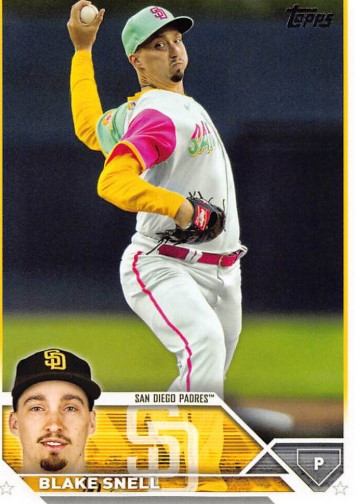
 

Jack Reed – One MLB Home Run, But He Made It Count

On this date – June 24 – in 1962, Yankee outfielder Jack Reed hit the only home run of his three-season MLB career.  Despite the long line of Yankee home run hitters – from Babe Ruth to Mickey Mantle and Roger Maris to Aaron Judge – Reed’s homer has a unique place in Bronx Bomber history.  Reed’s only career MLB homer,  a two-run shot (Roger Maris was on base), provided the winning margin in the longest game in Yankee history – a 9-7, 22-inning win over the Tigers (in Detroit).

Notably, Reed hadn’t even started the game that day.  He was, in fact, the third Yankee to man right field in the contest. Mickey Mantle started in RF (Roger Maris was in center). Joe Pepitone replaced Mantle  in the seventh inning. Phil Linz pinch hit for Pepitone in the thirteenth and Reed took over right field (Linz going to the bench) in bottom of the inning. For the game, Reed was one-for-four with a run scored and two RBI.  (Reed would collect only six RBI in 222 MLB games.

The fact that Reed did not start the game should be no surprise.  Reed made a career out of being a late-inning defensive replacement, pinch runner and occasional pinch hitter.  In fact, in 222 MLB games (1961-63), he  found himself in the starting lineup just 18 times and had a total of just 144 plate appearances,   His final MLB stat line was .233-1-6.

Jack Reed’s best MLB season was 1962, when he went .302-1-4, with two steals in 88 games.  (In 88 games, Reed had just 48 plate appearances.)

Often a late-inning replacement for Mickey Mantle on defense or on the base paths (Reed was Mantle’s replacement in 64 of his 222 MLB games), Reed was often referred to as “Mantle’s Legs” or “Mantle’s Caddie).”  During his career, Reed came in to replace not only Mantle, but also Yogi Berra, Roger Maris, Tom Tresh, Johnny Blanchard, Hector Lopez, Bob Cerv and Phil Linz.

Turning the Tables

On September 19, 1961, Jack Reed started in CF for the Yankees (versus the Orioles in Baltimore). In the top of the ninth, with the Yankees trailing 1-0, a runner on first and two out, Mantle replaced Reed (turnabout is fair play) at the plate (and struck out).

Here’s just a bit more background on Reed. Reed was a  versatile athlete in high school.  He won the Mississippi State Championship in the quarter-mile run and lettered in football, baseball, basketball and track. In college (University of Mississippi), he was a three-sport athlete – baseball, football, track & field.

Reed signed a contract with the Yankees at age 20 (1953). In 1954, he hit .287-5-49, with 18 steals in 99 Class-B Games.  In 1955, he moved up to Class-A and went .308-6-48, with 20 steals in 132 games. He then lost the 1956 and 1957 seasons to military service, before hitting .308-19-79, with 22 steals at Double-A in 1958.  He didn’t fare as well offensively at Triple-A (.262-7-36 in 1959; .240-4-25 in 1960; and .255-3-13 in 1961). However, he continued to show speed on the base paths and superior defense in the field, which earned him a spot on a Yankees’ roster filled with outfield options (at least in Casey Stengel’s managing system).

In the 1964 season Reed found himself back in the minors, as a player-coach with the Triple-A  Richmond Virginians. He went on to manage in the Yankee system from 1965 through 1967.

Primary References: Baseball-Reference.com; Jack Reed Society for American Baseball Research bio, by Thomas Van Hyning.


Baseball Roundtable – Blogging Baseball Since 2012.

100Baseball Roundtable is on the Feedspot list of the Top 100 Baseball Blogs.  To see the full list, click here.

Baseball Roundtable is also on the Anytime Baseball Supply Top 66 Baseball Sites list.  For the full list, click here

I tweet (on X) baseball @DavidBaseballRT

Follow/Like Baseball Roundtable’s Facebook Page here.  Find More baseball commentary; blog post notifications; PRIZES.

Member: Society for American Baseball Research (SABR); Negro Leagues Baseball Museum; The Baseball Reliquary.
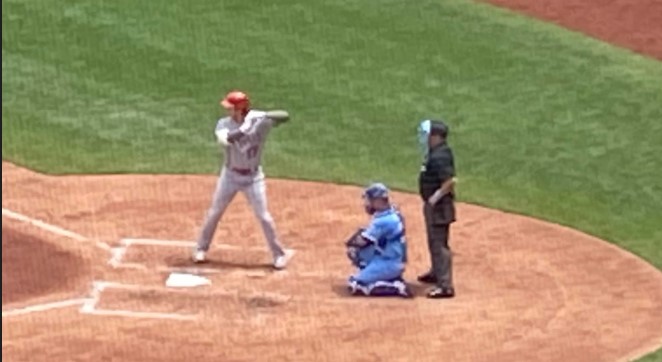
 

From the Road … Ballpark Tours Bleacher Bums XL -Thirsty Thursday, the Planet Venus and Our Last Ballgame.

Baseball Roundtable, reporting again from Bleacher Bums XL … The Tulsa Culture Tour, which began on June 16.  The  trip has  taken our busload of 32 baseball fans and friends to six ball games (major- and minor-leagues), in five cities, in four states in eight days.   Along the way, we’re taken in five cultural/historical sights; visited  a few breweries; partaken of seven free breakfasts, a dynamite free social  hour, three in-the-ballpark Happy Hours and a “Thirsty Thursday”; picked up a free bobblehead; seen fireworks above a ballpark and Venus in the night sky;  and enjoyed the camaraderie of fellow baseball fans and friends.  This post (Episode Five From the road) looks at Day Seven of our trip.  For Episode One of our journey, click here.  For Episode Two, click here. For Episode Three, click here.  For Episode  Four, click here.

Going forward, Baseball Roundtable will return to its normal slate of blogging topics.

Day 7 – June 22

We were off at 9:30 a.m. … headed for Kansas City, Kansas (after another free breakfast, of course), sadly contemplating  the last ball game on our journey.

Our first stop was The Blind Tiger Brewery and Restaurant in Topeka, where we feasted on the likes of craft beer, home-brewed root beer, pulled pork and prime rib sandwiches, soup, salads and what appeared to be the largest (and tastiest, stuffed fried mushrooms ever (see photo).


Then it was off to Kansas City, Kansas where our hotel (Country Inn and Suites) was just across the parking lot from Legends Field – Home of the Kansas City Monarchs.

Great seats once again, down the first base line.  Of special interest to our group were two key facts:

  • $3 sixteen-ounce domestic beers, as part of “Thirsty Thursday”;
  • Adult beverages were served (at the reduced price) until the top of the ninth.

Our game featured the independent American Association Kansas City Monarchs and Sioux City Explorers. The two teams had six former major leaguers on their rosters:

  • Keon Broxton (OF, Monarchs) …Pirates, Brewers, Mets, Orioles, Mariners (2015-19, 376 games).
  • Brandon Finnegan (P, Monarchs) … Royals/Reds (2014—18, 57 games).
  • Odubel Herrera (OF, Monarchs) … Phillies (2015-19, 2021-22; an All Star with the 2016 Philllies).
  • Chris Herrmann (C, Monarchs) … Twins, Diamondbacks, Mariners, A’s (1012-19, 370 games).
  • Luis Madero (P, Sioux City) … Marlins (2012, six games).
  • Patrick Weigel (P, Monarchs) … Atlanta Braves, 2020-21, four games).

Legends Field was a typical singled-deck minor-league park.  The concourse was spacious and there were plenty of concession stands. The Barbeque Project was among the most popular. The team (formerly the Kansas City T-Bones  – which in 2012 announced a marketing partnership  with the Negro Leagues Baseball Museum – had plenty of Kansas City Monarchs branded items available in the team store.  In addition, the team pays homage to the Negro Leagues with framed tributes to Negro League stars throughout the park.  Notably, the Satchel Paige Tribute was blocked by a vacant Lemonade Cart.  One of our group (Eileen, she of the on-the-bus Bloody Mary Bar) corrected that slight by moving the cart.  We did notice that it had later been moved back, but the gesture was appreciated.

The Monarchs lost the game 8-1 with the big hits being a two-run triple by SS Miguel Sierra and a two-run home run by DH Daniel Perez (both in the top of the sixth. Those runs brought the score to 5-0. The Monarchs countered with a solo home run by DH Justin Wylie in the bottom of the innings, which would be their only score of the night.  Sioux City iced the game with three unearned runs in the shakily played eighth.

The Star of the game was Topeka starting pitcher Trenton Toplikar, who went eight innings, giving up seven hits and just one run, while walking one and fanning 5.  Toplikar is now 1-0, 1.68 in three starts for Sioux City. The 27-year-old righty pitched four seasons in the San Francisco Giant system – 2018-22, climbing as high as Triple-A Sacramento.

A popular post-game spot was “Jazz – A Louisiana Kitchen … where members of the group enjoyed Cajun cooking  and Louisiana Soul Food, as well as a one-man jazz band  Side note: Pre-game, some tourers hit the nearby (walking distances) Legends Outlet Mall.


Finally, on the way back to the hotel, we were treated to a bit of a light show, as the plant Venus was visible. It’s a small spot in the photo, but was a bright object in the evening sky.

So, all that’s left now is the bus ride back to Saint Paul.  And, with that, Baseball Roundtable will end these reports from the road and return to  its usual (some would argue “unusual”) baseball topics.


Baseball Roundtable – Blogging Baseball Since 2012.

100Baseball Roundtable is on the Feedspot list of the Top 100 Baseball Blogs.  To see the full list, click here.

Baseball Roundtable is also on the Anytime Baseball Supply Top 66 Baseball Sites list.  For the full list, click here

I tweet (on X) baseball @DavidBaseballRT

Follow Baseball Roundtable’s Facebook Page here.  Find More baseball commentary; blog post notifications.

Member: Society for American Baseball Research (SABR); Negro Leagues Baseball Museum; The Baseball Reliquary.
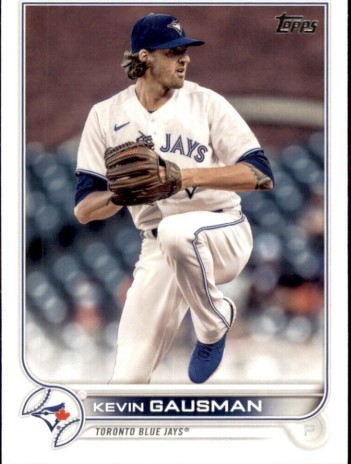
More From the Road … Bleacher Bums XL – More Museums, More Chandeliers, More Baseball, On-Board Hi-Jinx

Baseball Roundtable, reporting again from Bleacher Bums XL … The Tulsa Culture Tour, which began on June 16.  The  trip will ultimately  take our busload of 32 baseball fans and friends to six ball games (major- and minor-leagues), in five cities, in four states in eight days.   Along the way, we’re taking in a number of cultural/historical sights, visiting a few breweries and enjoying the camaraderie of fellow baseball fans and friends. Over the next few days, I will continue to blog from the trip to give you an idea of what a Ballpark Tours trip is like.  This post looks at Day Five.  For Episode One of our journey, click here.  For Episode Two, click here. For Episode Three, click here here.

Day 6 – June 21

It was on the bus by 10 a.m. after another free Holiday Inn breakfast – another big museum/history/culture and chandelier day.

The first stop was Tulsa’s Greenwood Rising Black Wall Street History Center, where one of the worst racially motivated mass acts of violence in U.S. history is documented and commemorated. Termed “The Tulsa Race Massacre,” the tragedy – which took place on May 31, 1921 – saw the destruction of one of the most vibrant and successful Black communities  in the nation.  (known as The Black Wall Street).  In a period  of 12-16 hours, more than 1,000 homes and businesses were destroyed and an estimated 150-300 lives lost.

In eye-opening and heart-wrenching displays, the stories of the event, its causes (both immediate and underlying), the immediate impact and aftermath,  and the irrepressible spirit and determined rebuilding of the Greenwood community are brought to light.


Our next stop, as we departed Tulsa, was the historic Church (recording ) Studio.    Established in what was originally (1915) Grace Methodist Episcopal Church, the building  was purchased by Leon Russell in 1972 and transformed into one of the most successful recording studios in the music industry (home of Shelter Records and the “Tulsa sound”)  – attracting such talent as Tom Petty, Jimmy Buffet, Eric Clapton, Stevie Wonder, Willie Nelson – and the list goes on and on.  Renovated and revived, it now includes a recording studio, musical archive and concert/event venue. Church Studio was designated a National Historic Landmark in 2017 – due to its significance in American musical culture.

Touring the studio, our group came upon two more unique chandeliers – this is now a four-chandelier trip (previously recognized chandeliers were at the Brickworks Brewery  and Woody Guthrie Center.

______________________________________

We reached Wichita about three hours before game time. The Drury Plaza Hotel proved very popular with our group – which was especially fond of the 5:30 “Kickback” social hour, which included three free adult beverages (won our hearts right there.)  The group was expecting light hors d’oeuvres to be served. What we fond was everything from the likes of Alfredo pasta, chicken, baked potatoes and  salad to nachos and hot dogs.  A good time was had by all, but I expect the Drury freebies cut into the ballpark concessions.

Then it was on the bus for Wichita … a long ride for some those who enjoyed Tulsa the most.

The Wichita Windsurge plays at  Riverfront Stadium, a beautiful park with simple (some say sleek) architecture, wide concourses, plenty of berm seating and ample  food and merchandise locations.

Say it ain’t so, Windsurge

One notable gripe.  The Windsurge do not offer a program or scorecard anywhere in the ballpark.  You can scan a code for the rosters, but – as Guest Services reported – “We don’t do scorecards.”  Well, some fans do.  At first, I worked to create my own scorecard in a notebook, but was fortunate to have Joe Bliven (see Episode Two) tear a sheet out of his custom scorebook for me,  Come on, Windsurge, a scorecard is part of the game.

Kudos to the Windsurge for the (free) on-site Wichita Baseball Museum, which got high marks from a number of our touring group.

The Windsurge dropped a 5-1 decision  to the NW Arkansas Travelers, despite  outhitting the Travelers 11-8. It seemed the Tulsa post-tornado power outages followed us to Wichita.  All eleven of the Windsurge hits were singles, The Travelers showed more pop, with  two home runs and a triple among their eight safeties.  Those extra base knocks were the key to Travelers’ scoring. The star of the game was Travelers’ RF Isiah Gillion, who rapped a two-run homer in the top of the sixth and a solo shot in the eighth.  His two-for-four outing gave Gilliam a .300-11-33 line for the season. The evening’s home run hero was appropriately wearing Henry Aaron’s number 44. Over on the Windsurge side, catcher Patrick Winkel had a three-for-five day – although all three safeties were harmless singles.

The winning pitcher, righty Shawn Semple, went five innings, pitching in and out of trouble. He gave up nine hits and a walk, but just one run (in the first inning) and did not have a single 1-2-3 inning. He was a strike-throwing machine, throwing 51 strikes in 73 pitches. Unlike yesterday’s game in Tulsa – where we saw 12 walks – only three free passes were issued in this one. The Windsurge had a chance to get back in the game in the bottom of the fourth, as SS Brooks Lee punched lined a two-out single to center with runners on first and second.  However, Arkansas CF Jonatan Clase made a great throw to the plate to nail the runner trying to score – ending the inning and the threat. That may have taken the wind out of Wichita’s sails, as the Windsurge got only one runner to second base over the remainder of the game.

JUST A LITTLE OBSERVATION. 

One more game- and one more post from the road – to go.

Baseball Roundtable – Blogging Baseball Since 2012.

100Baseball Roundtable is on the Feedspot list of the Top 100 Baseball Blogs.  To see the full list, click here.

Baseball Roundtable is also on the Anytime Baseball Supply Top 66 Baseball Sites list.  For the full list, click here

I tweet (on X) baseball @DavidBaseballRT

Follow/Like Baseball Roundtable’s Facebook Page here.  Find More baseball commentary; blog post notifications; PRIZES.

Member: Society for American Baseball Research (SABR); Negro Leagues Baseball Museum; The Baseball Reliquary.
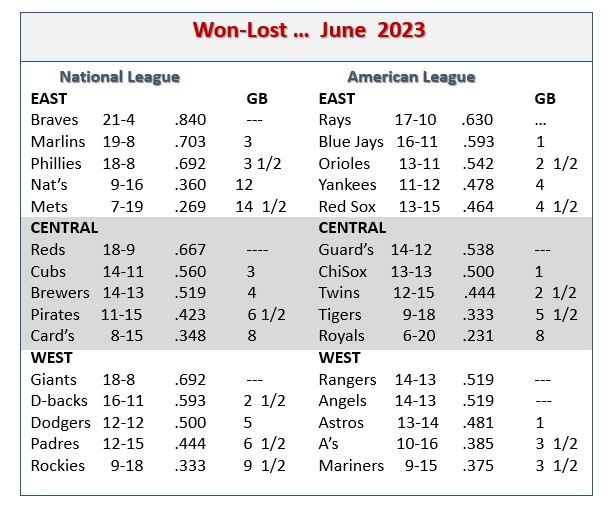


More From the Road – Bleacher Bums XL – Episode Three – Woody Guthrie, Bob Dylan. Baseball, Ramen, Rooftop Parking and More.

Baseball Roundtable, reporting again from Bleacher Bums XL … The Tulsa Culture Tour, which began on June 16.  The  trip will ultimately  take our busload of 32 baseball fans and friends to six ball games (major- and minor-leagues), in five cities, in four states in eight days.   Along the way, we’re taking in a number of cultural/historical sights, visiting a few breweries and enjoying the camaraderie of fellow baseball fans and friends. Over the next few days, I will continue to blog from the trip to give you an idea of what a Ballpark Tours trip is like.  This post looks at Day Five.  For Episode One of our journey, click here.  For Episode Two, click here.

Day Five – June 20

Here in Tulsa, we continue to hear about the aftermath of the weekend storms – businesses and homes without power; lots of stoplights not operating; cooling stations set up in public buildings and businesses that have power (and, therefore air conditioning) as temperatures near 100 degrees are forecast; free ice pickup stations; many gas stations closed or running out of fuel. Fortunately. our hotel (Holiday Inn Express and Suites, Greenwood) has power.

Speaking (writing, actually) of the hotel.  Another solid choice by the tourmaster.  We’re located in the historic Greenwood District, just one block from the ballpark and easy walking distance to a host of museums, historic sites and monuments, specialty shops, bars and eateries  – and, of course, there is that free Holiday Inn breakfast.  Side note:  A significant number of the local establishments are closed due to storm-related power outages.

This morning, our group visited the Woody Guthrie and Bob Dylan Centers – just two or three blocks from the hotel. Kudos again to the tourmaster, who got the museums (scheduled to be closed) to open especially for our group.

The tours featured great stories and history, great film/video; and great music.  At the Guthrie Center, our tour guide was the very animated “Sam.”  I’d guess he was a theater (or theatre for hoi polloi) major.  Before you complain about the missing “the,” in the Greek hoi polloi, hoi is “the.”  Sam really brought the Woody Guthrie story to life – in a very touching presentation.  (During his presentation, I think same patted, shook the hand of  or hugged nearly every member of our group.

If you read Episode Two, you know we found the perfect Man Cave chandelier in the Bricktown Brewery.  Well, we found another unique chandelier, see photo below, at the Woody Guthrie Center.

People went a variety of directions for lunch/early dinner.  Red Light Chicken seemed a popular choice, with its southern fried chicken, catfish, shrimp and more. I opted for the JINYA Ramen Bar and Spicy Shrimp Wonton Ramen (backed by a Pinot Noir).   I was not disappointed.


ONEOK Field proved to be a beautiful ballpark, with plenty to see – the Jackie Robinson mural in left field, the flaming oil derrick at the right field entrance and, of course, for our group, the Busch Scoreboard Bar – the largest outdoor bar in Oklahoma.   One of the first things we noticed is that this was the first ballpark on our trip with no metal detectors at the gates.

As usual, great seats – along the first base line, which were fortunately in the shade.  It was a blistering  hot day in Tulsa – even at our 7:05 p.m. game time.

Maybe it was the heat, or the small crowd or the quality of Double-A ball, but this matchup between the NW Arkansas Naturals and hometown Tulsa Drillers seemed to drag on a bit.  It also could have been the 12 walks (six by each team).  Although, we should have seen that coming.  Each starting  pitcher walked the first two batters they faced. In poker that would be a “tell.”

Adult beverages at Oklahoma’s largest outdoor bar.

The big blows in the 6-2 Naturals’ win were a two-run home run by DH and cleanup hitter Jorge Bonifacio (his fifteenth of the season) in the first inning  and a three-run shot  by number-five hitter – C Luca Tresh – in the fourth (his seventh long ball of the year). Those blasts gave the Naturals a 5-1 lead in the fourth and they coasted home to a win.

ONEOK Field’s Jacdkie Robinson mural.

Drillers starting pitcher Ben Casparius did seem to get a little fired up after giving up  three-run homer in the top of the fourth.  After starting the inning single-walk-home run, he fanned the next three batters. Casparius was promoted from High -A (where he was 4-0, 2.68 in eight starts) in late May. He is currently 0-2, 4.91 at Double-A.
 

Parking was apparently hard to come by near the ballpark … or maybe it was the tornadoes.

A few additional notes:

  • While it was Double-A ball, the Drillers offer a major-league program/scorecard. Small game-day magazine-style, listing all the players and numbers, short bios on the Drillers, info on all the teams in the Texas League and more. For free.
  • Happy Hour for one hour before the game – reduced prices on domestic beers and High Noon hard seltzers.
  • Value-priced tickets $8.19 for good seats.
  • The Drillers go with blue jerseys – and the vanilla soft serve ice cream is colored blue.
  • The bacon-flavored popcorn got good reviews.
  • We did see most of the ant1cipated game action; 12 hits (three home runs); 12 walks; 20 strikeouts; a pick-off; a 4-6-3 double play; two stolen bases; and seven pitching changes.

More to come from the road as our trip winds down.  Two games to go.


Baseball Roundtable – Blogging Baseball Since 2012.

100Baseball Roundtable is on the Feedspot list of the Top 100 Baseball Blogs.  To see the full list, click here.

Baseball Roundtable is also on the Anytime Baseball Supply Top 66 Baseball Sites list.  For the full list, click here

I tweet (on X) baseball @DavidBaseballRT

Follow/Like Baseball Roundtable’s Facebook Page here.  Find More baseball commentary; blog post notifications; PRIZES.

Member: Society for American Baseball Research (SABR); Negro Leagues Baseball Museum; The Baseball Reliquary.