MLB in May – The Astros, The Long Ball, Rocky Mountain Surprise

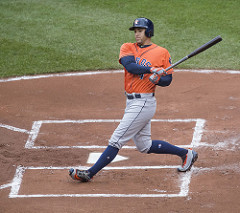
The Astros did a lot of celebrating in May. Photo by Keith Allison

The Astros did a lot of celebrating in May.
Photo by Keith Allison

It’s June 1, and that means it’s time for Baseball Roundtable’s second monthly wrap up of the 2017 season. We’ll be taking a look at leaders and losers (statistically – for May and season-to-date), as well as unique events and trends that caught BBRT’s attention.

Two things jumnp out when I reflect on May in the Major Leagues – the Houston Astros and the long ball.

 —- The Astros —-

First, the Astros. May was, indeed, their month. How dominate were the boys from Houston? In May, the Astros:

  • Went 22-7 – the only team to reach twenty wins and the only team to play .700+ball (.759).
  • Led all of MLB with 180 runs scored and gave up MLB’s sixth-fewest (and the AL’s second-fewest) runs at 113.
  • Had and MLB-best plus-67 run differential.
  • Led MLB in batting average (.280), base hits (281), and home runs (52, tied with the Rays) and total bases (502).
  • Led all of MLB in pitchers’ strikeouts (299) and had the AL’s lowest ERA (3.60).
  • Tied for the MLB lead in shutouts (3).
  • Led MLB in saves (11, tied with the Rays).

All in all, a good month if you were an Astro.

— The Long Ball — 

Major Leaguers mashed 1,060 home runs in May – the second-most of any month in MLB history.  The only month with more long balls was May of 2000 … and, of course, we have a special designation for that “era.”

Looking at the month, Minnesota’s Target Field was the site of the most May roundtrippers (66), while the Houston Astros and Tampa Bay Rays propelled the most baseballs out of the park (52 each). The Marlins’ Justin Bour did more for the near-record than any other player, going deep eleven times.  The A’s Yonder Alonso and Rays’ Logan Morrison also reach double digits in home runs during the month.

— A Few Additional Observations —

During May:

  • The Rockies Charlie Blackmon split up his extra base hits  pretty evenly: six doubles, six homers and an MLB-leading five triples. As of May 31, he leads MLB with eight three-baggers; no one else has more than four.
  • The Rangers ran off a season’s-best ten game winning streak – in which ten different pitchers recorded victories.
  • Joe Maddon notched his 1,000 career win; Albert Pujols his 599th home run.
  • We saw the second and third “immaculate innings” (three strikeouts  on nine pitches).
  • With eight saves in May, the Rockies’ Greg Holland is now 19-for-19 in 2017 save opportunities.
  • The Red Sox needed FOUR strikes in the ninth inning of a game against the Rangers to tie the record for K’s in a nine-inning contest – and they got them.

These events –  and more on the month and season – covered as you read on. 

_____________________________

First, a look at Baseball Roundtable’s Players and Pitchers of the Month for May.

—–BBRT PLAYERS/PITCHERS OF THE MONTH (MAY 2017)—–

AL Player of the Month – Carlos Correa, SS, Astros

Carlos Correa mlb photo

Photo by Keith Allison

Carlos Correa, the Astros’ 22-year-old SS (already in his third MLB season), had an outstanding month of May, putting up an MLB-best  .386  average, with 22 runs scored, an AL-leading 26 RBI and seven  home runs. The 2015 AL Rookie of the Year – one of the current crop of good young MLB shortstops – just seems to keep getting better (and he has a solid line up around him to help him on that journey). Coming in a close second was Blue Jays’ veteran RF Jose Bautista, who came off a terrible start (.178-1-7 in April) to go  .317-9-21 in May. Bautists also scored 23 runs, and even tossed in a pair fo stolen baes.  Others in the  running were:  Yankees’ LF Brett Gardner (.327-9-21) and  Astros’ LF Marwin Gonzalez (.382-7-22).

AL Pitcher of the Month – Lance McCullers, Astros

Houston righty Lance McCullers went 4-0 (six starts), but more importantly, notched a 0.99 ERA over 36 1/3 innings pitched (37 strikeouts, 21 hits, 10 walks).  In the running were: Twins’ RHP Erwin Santana (3-2, 2.57 in May) and Red Sox’ southpaw Chris Sale (5-0, 4.24, with an AL-high 58 May strikeouts in 40 1/3 innings pitched).

NL Player of the Month – Charlie Blackmon, CF, Rockies

Rockies’ CF Charlie Blackmon put it all together in May – .359 average, six home runs, 24 runs scored and 22 RBI, not to mention five triples and three steals in four attempts. The seven-season MLB veteran (with a .300 career average) is a good part of the reason Colorado is fighting for the lead in the AL West. Finishing close beind were: the Marlns’ 1B Justin Bour, who led MLB in May home runs with 11, adding a .344 average and 21 RBI; and the Reds’ Adam Duvall (.291, with seven homers and an MLB-leading 28 RBI.

NL Pitcher of the Month – Alex Wood, Dodgers

WoodDodger lefty Alex Wood got off to a rough start in May – giving up five runs (four earned) in five innigns against the Giants on May 2. Still, his Dodgers scored 13 runs for the southpaw and he got the win.  Things turned around after that. The 26-year-old Wood (in his fifth MLB season) reeled off four more wins in May (the only NL pitcher to notch five victories in the month) and did not give up a single earned run in his final four May starts. Wood went 5-0 in May, with a 1.27 ERA and 41 strikeouts (versus seven walks) in 28 1/3 innings.

Unfortunately, he ended the month on the disabled list with shoulder inflammation. Woods now stands 6-0, 1.69 on the season (10 appearances/eight starts). His best season was 2013 – 11-11, 2.78 with 170 strikeouts in 171 2/3 innings for the Braves. Others in the running: Stephen Strasburg, Nationals (4-0, 2.78, 43 strikeouts in 32 ½ innings) and Robbie Ray, Diamondbacks (3-2, 2.56, with 45 strikeouts in 38 2/3 innings).

ROCKIES’ SURPRISES – SOMETHING OLD/SOMETING NEW

A couple of Rockies players have surprised me this season – a 33-year-old veteran and a 22-year-old rookie.  Let’s start with the rookie – RHP Antonio Senzatela. Name not ring a bell?  Check the top of the MLB  leaderboard in wins. Zenzatela finished May at 7-2, 3.49.  In his sixth season in the Rockies’ system (in 2012, as a 17-year-old, he went 5-2, 0.72 in the Domincan Summer League), Senzatela made the jump from Double A to the big leagues. In five minor league seasons, he was 41-19, 2.45.

Now the veteran. In his eleventh MLB season, Mark Reynolds has played for the Diamondbacks, Orioles, Indians, Yankees, Brewers, Cardinals and, now, the Rockies. He’s been known as a low-average, but dependable, source of power.  (He also led his league in strikeouts four straight seasons – 2008-2011 – and holds the record for most whiff in a season at 223 in 2009). In his first nine seasons, Reynolds put up a .230 average, with 237 home runs and one strikeout for every 2.75 at bats. Colorado seems to agree with Reynolds – averaging .291 with one strikeout for every 3.64 at bats since joining the Rockies in 2016.  So far this season (through May 31), Reynolds stands at .308-13-44). 

___________________________________

TEAM PERFORMACE/STANDINGS

Now. lets check on team performance and standings. (More on individual stats later.) If the season ended at the close of play May 31, your playoff teams would be:

AL: Astros, Yankees, Twins or Indians. Wild Cards: Red Sox; Orioles, Twins or Indians.

The Astros have a comfortable 11-game lead in the AL West – where they not only have MLB’s best winning percentage AT .704, but are the only team in their division playing above .500 ball. The closest AL race is in the Central, where the Twins and Indians are tied atop the standings.

The Astros, as noted in the opening paragraphs, were the best team in the AL (all of MLB, really) in May – and expanded their division  lead from three games to eleven. The Blue Jays did make a surge in May, with the AL’s sscond-best record (18-10), thanks to a revival of the team’s power bats.  They still, however reside in last place in the East.  The Orioles, who led the East on May 1, slumped to 12-16 – and third place – in May. The Twins and Indians are tied at the top of the Central, despite each going just one game over .500 for the month.

NL: Nationals; Brewers; Dodgers.  Wild Cards: Rockies; Diamondbacks.

As of May 31, the NL West would put three teams into the post-season (Dodgers, Rockies and Diamondbacks) and they all have winning percentages of .600 or better.  In the NL East, Washington is coasting with an 9 1/2-game lead, and boasts the NL’s top winning percentage (33-19, .635).  The other two division are close, with one major surprise – the Brewers are leading the NL Central by 1 ½ games over the Cardinals, with the defending World Series Champion Cubs trailing by 2 ½.

The Dodgers –  behind solid pitching (May lowest-ERA at 2.94) and offense (an NL-leading 159 May runs) – had the NL’s best May recrord at 19-9, moving from third place to first.  They were, in effect, the NL verson of Astros-lite.  Tne surprising Rockies  and the Diamondback each won 17 games (12 and 11 losses, respectively) and sit just 1/2 game back.  The only other NL team with more than 15 May wins was the Nationals at 16-11.  They expanded their lead from 5 games to 9 1/2.  In the Central, the Brewers (15-12) and Cardinals (13-13), both moved passed the Cubs (12-15) in May.  The Phillies continued to flounder, with only six May wins (fewest in baseball) against 22 lossses.  Ouch.

FULL STANDINGs AND OVERALL AND MONTH-OF-MAY WON-LOST RECORDS

AT THE END OF THIS POST. 


_____________________________________

Now here are the stats that are behind May and season-to-date team performance.  If you are not a stat person, scroll ahead to the stories and events of the month. 

— TEAM BATTING LEADERS FOR THE MONTH OF MAY — 

RUNS SCORED (MLB average – 130)

NL: Dodgers – 159; Rockies – 157; Mets – 153

AL: Astros – 180; Red Sox – 159; Rays – 154

AVERAGE (MLB average – .254)

NL: Rockies – .278; Reds – .271; Marlins – .270

AL: Astros – .280; Red Sox – .269; Mariners – .267

HOME RUNS (MLB average – 35)

NL: D-backs – 43; Reds – 40; Cubs – 38

AL: Astros – 52; Rays – 52; Blue Jays – 49

STOLEN BASES (MLB average – 14)

NL: Reds – 34; Nationals – 19; Brewers – 18

AL: Angels – 30; Red Sox – 22; Rangers – 21

Three teams stole five or fewer bases in May: Cubs, three (in six attempts); Mets, four (in seven attempts); Orioles, five (in six attempts).

WALKS DRAWN (MLB average – 94)

NL: Cubs – 112; Dodgers – 110; Pirates – 102

AL: Rays – 120; Tigers 118; Red Sox – 116

THE OTHER SIDE OF THE COIN

Only three teams tallied fewer than 100 runs in May: Padres (88); Giants (96); Philies (99). At the bottom of the AL were the Indians (110). The Cubs had MLB’s lowest May batting average at .216; trailing in the AL were the Angels at .233.

MOST BATTERS’ STRIKEOUTS (MLB average – 231)

NL: Dodgers – 259; Padres – 249; D-backs – 244

AL: Rays – 319; Tigers- 270; Rangers – 261

FEWEST BATTERS STRIKEOUTS

NL: Mets – 197; Marlins – 209; Nationals – 212

AL: Blue Jays – 186; Astros – 189; Red Sox – 195

—TEAM PITCHING LEADERS FOR THE MONTH OF MAY—

EARNED RUN AVERAGE  (MLB average – 4.29)

NL:  Dodgers – 2.94; D-backs – 3.38; Cardinals – 3.47

AL: Astros – 3.60; Indians 3.82; Rays – 3.95

STRIKEOUTS (MLB average – 231)

NL: Cubs – 264; Dodgers – 261; Nationals – 256

AL: Astros – 299; Red Sox – 275; Indians – 268

SAVES

NL: Cardinals – 9; Giants 9; Rockies 9

AL: Astros – 11; Rays – 11; Royals 9;

THE OTHER SIDE OF THE COIN

Four teams had earned run averages over five for the month of May: Phillies (5.49); Twins (5.25); Reds (5.12); Mets (5.06).

YOU’LL FIND SEASON TO DATE STATS, AFTER THE STANDINGS AT THE END OF THIS POST. 

____________________________________________________

Some BBRT observations from May.

Streaking Over .500

On May 9, the Rangers were 13-20.  They broke out of a slump, however, with an 11-0 pounding of the Padres (at San Diego).  Texas went on to fashion the MLB’s longest winning streak so far this year – 10 games from May 9 through May 21. During the streak, they won two on the road and eight at home, outscoring opponents 64-27.  Notably, ten different pitchers picked up a victory each over the ten-win stretch.

On Sale Today – Double-Digit Whiffs

ChrisSaleFrom April 10 to May 19, Red Sox Southpaw Chris Sale made eight starts with ten or more strikeouts in each outing – tying a record he already shared with Pedro Martinez for consecutive games with double-digit K’s.  Here are the steak totals:

  • Pedro Martinez, Red Sox, August 19-September 27, 1999: 61 innings; 107 strikeouts; six wins (one loss); 1.18 ERA.
  • Chris Sale, White Sox, May 23-June 30, 2015: 60 innings; 97 strikeouts; three wins (three losses); 1.80 ERA.
  • Chris Sale, Red Sox, April 10-May 19, 2017: 58 2/3 innings; 88 strikeouts; four wins (two losses); 2.45 ERA.


A Different – More Positive – Five-for-Twenty

On May 25, The Boston Red Sox used five pitchers to tie the MLB record for strikeouts in a nine-inning game – notching 20 K’s in a 6-2 win over the Rangers. Starter Drew Pomeranz fanned 11 in six innings; Heath Hembree, two in two-thirds of an inning; Robby Scott, one in one-third inning; Matt Barnes, two in one inning; and Craig Kimbrell, four in one inning.

The Red Sox needed a four-whiff ninth inning to reach the record-tying 20 strikeouts in a nine-inning game. Closer Craig Kimbrel provided it. He came in with the Red Sox up on the Rangers 6-2 and promptly fanned Texas RF Nomar Mazara, who reached first on a wild pitch. Kimbrel then got C Jonathan Lucroy looking, DH Rougned Odor swinging and 1B Mike Napoli swinging.

This made Kimbrel just the fourth pitcher to throw a four-strikeout inning AND an “immaculate” inning (three K’s on nine pitches in their careers.  The others are: A.J. Burnett, Kenley Jansen, Felix Hernandez and Justin Masterson.

This was the sixth 20-strikeout, nine-inning contest in MLB history – four of which were completed by a single pitcher (Roger Clemens, Red Sox 1986 & 1996; Kerry Wood, Cubs, 1998; Max Scherzer, Nationals, 2016.)  The Dodgers also used five pitcherS in a 20-strikeout, nine-inning contest September 25, 2012 .  On May 8, Randy Johnson (D-backs) fanned 20 batters in nine innings, but left with the score tied 1-1. Five relievers added one strikeout as the D-backs topped the Reds 4-3 in eleven innings.

In Memorial … Started with the Phillies, Ended Up with the Senators

BunningOn May 26, baseball lost Hall of Famer Jim Bunning (complications from a stroke).  Bunning not only had a seventeen-season, HOF-worthy baseball career, but went on to become the only Hall of Famer to serve in Congress.  Bunning pitched in the major leagues from 1955 through 1972 (Tigers, Phillies, Dodgers, Pirates). After leaving baseball, Bunning, who had a degree in Economics from Xavier University, served as the U.S. Congressional Representative for Kentucky’s Fourth District from 1987-99 and as a U.S. Senator from Kentucky from 1999-2011.

I … thought that being able to throw a curveball never was a bad skill for a politician to have.”

      Jim Bunning, Baseball Hall of Famer/United States Senator

The 6’ 3” side-armer was known as an intimidating presence on the mound – once leading the NL in hit batters for four consecutive seasons (1964-67). He was a 20-game winner (20-8, 2.69 in 1957) and a four-time 19-game winner.  A few more Bunning baseball facts, he:

  • Was 224-187, with a 3.27 ERA and 2,855 strikeouts over his career;
  • Pitched a no-hitter with the Tigers (July 20, 1958);
  • Pitched a perfect game for the Phillies (June 21, 1964);
  • Was a nine-time All Star;
  • Led his league in wins once, strikeouts three times, and shutouts twice;
  • Threw an “immaculate” inning (nine pitches, three strikeouts) on August 2, 1959.

Another Immaculate Inning

On May 18, Dodgers’ closer Kenley Jansen closed the door on the Miami Marlins in the Dodgers’ 7-2 win.  Jansen threw the third “immaculate” inning (three strikeouts on the nine pitches) of the 2017 season. Jansen came on in the bottom of the eighth with the Dodgers up 5-2 and got the final out by fanning catcher J.T. Realmuto on five pitches (which would seem inefficient in the ninth). In the bottom of the frame Jansen beat out an infield single (more #WhyIHateTheDH), as the Dodgers up the lead to 7-2.

In the ninth, Jansen fanned 3B Derek Dieterich on three pitches (all looking); SS J.T. Riddle on three pitched (swinging, looking, looking) and pinch hitter Ichiro Suzuki on three pitches (looking, foul ball, swinging).  On April 17, the Reds’ reliever Drew Storen also threw an immaculate inning – while on May 14th, the Nationals’ Max Scherzeer accomplished the feat.

IMMACULATE INNINGS ON THE RISE

There have been 83 “immaculate” innings (three strikeouts on nine pitches) in MLB history –accomplished by 77 pitchers.  Sandy Koufax holds the MLB the record with three such frames. The emergence of fireballing relievers is reflected in the fact that 36 of the 83 occurrences have come since 2000. By contrast the 1950’s and 1960’s saw only 11.

More #WhyIHateTheDH … The Short and the Long of It

On May 18, the Blue Jays’ Marcus Stroman – who hardly ever gets a chance to step in the batter’s box – hit his first career home run.  It came in the fourth inning of Blue Jays 9-0 win over the Braves in Atlanta. (Stroman pitched 5 2/3 scoreless innings for the win.)  The home run was just the 5’8”, 180-pound Stroman’s second career hit (12 at bats) – both this season – a double and the home run.   The last Blue Jays’ pitcher to homer before Stroman was at the other end of the height spectrum – 6’9”, 240-pound  Mark Hendrickson – who went deep back in 2003.

A Grand Occasion

On May 16, Cubs manager Joe Maddon reached a significant milestone – notching his 1,000th career major league managerial win as his Cubs topped the Reds 9-5.  Maddon is a three-time Manager of the Year and, of course, broke the Cubs’ curse last season – with a 103-win campaign and a World Series Championship.

Slump-Breaking 101 – Do it in Style

Tigers’ outfield Tyler Collins knows how to break a slump. Going into the Tigers’ May 17 game against the Orioles, Collins was in a zero-for-thirty slump (his last hit had come on May 1). During the slump, his average had dropped from .304 to .216  On the 17th, he broke out in a big way – going three-for-four with two home runs, a double and four RBI (getting his average back up to .238). Unfortunately, that game looks like an outlier – Collins got only two more hits in May (29 at bats) and ended the month at an even .200.

THE NAME GAME

In 2013, Christian Arroyo  graduated from Hernando High School in Brooksville, Florida and was drafted by the San Francisco Giants. Eighteen year earlier another Arroy0 – Bronson Arroyo (no relation) graduated from Hernando High as was drafted by the Pittsburgh Pirates.  On May 5, the 21-year-old rookie Arroyo (Christian) was playing 3B and batting sixth for the Giants, while the now 40-year-old Arroyo (in his 16th MLB season) was on the mound for the Reds. The first time they faced each other, youth won the day, as Christian homered off Bronson. (It was Christian Arroyo’s only hit of the day. Bronson, however, could leave the contest with a smile – he got the win, as the Reds topped the Giants 13-3.)

On May 6, as the Dodgers faced off against the Padres, CLAYTON Kershaw was on the mound, throwing to battery mate AUSTIN Barnes. The Padres countered with CLAYTON Richard on the mound and AUSTIN Hedges behind the plate. Are those monikers really that popular?  Note: Clayton (the Kershaw one) got the win, while Clayton (the Richard one) took the loss, as the Dodgers triumphed 10-2. The Dodgers’ Austin (Barnes) also outperformed his counterpart Austin (Hedges) – going two-for-four to Hedges’ zero-for-three with a walk.

Finally, The Chicago White Sox have had occasion this season to start an outfield lineup of Avisail GARCIA, Leury GARCIA and Willy GARCIA – not related.

The Big Ouch

On May 29, the Twins went into the eighth inning with an 8-2 lead over the Houston Astros (in a battle of division leaders). According to the Elias Sports Bureau, the Astro were 0-659 in their history when trailing by six or more runs after six innings.  Make that 1-659, Houston scored 11 in the eighth and and three more in the ninth for a 16-8 win.

______________________________________

Now individual batting and pitching leaders for May.

MONTH OF MAY BATTING LEADERS

AVERAGE (minimum75 at bats)

NL: Charlie Blackmon, Rockies – .359; Matt Kemp, Braves – .357; Buster Posey, Giants – .344

AL: Carlos Correa, Astros – .386); Marwin Gonzalez, Astros – .382; Eric Hosmer, Royals – .367

HOME RUNS

NL: Justin Bour, Marlins- 11; Jake  Lamb, D-backs – 9; Cody Bellinger, Dodgers – 9

AL: Yonder Alonso, Oakland – 10; Logan Morrison, Rays – 10; four with nine

RBI

NL: Adam Duvall, Reds 28; Cody Bellinger, Dodgers – 27; Jake Lamb – D-backs – 24

AL: Carlos Correa, Astros – 26; four with 22

RUNS SCORED

NL: Billy Hamilton, Reds – 27; Michael Confroto, Mets – 25; Paul Goldschmidt, D-backs – 25

AL: Corey Dickerson, Rays – 27; four with 23

STOLEN BASES

NL: Billy Hamilton, Reds – 18; Dee Gordon, Marlins – 12; Trea Turner, Nationals – 9

AL: Camerin Maybin, Angels – 10; Elvis Andrus, Rangers – 7; five with six

WALKS

NL: Joey Votto, Reds – 28; Matt Carpenter, Cardinals – 19; Kris Bryant, Cubs – 19

AL: Mike Trout, Angels – 22; Camerin Maybin, Angels -21; two with 18

THE OTHER SIDE OF THE COIN

The lowest May average (minimum 50 at bats) goes to the Tigers’ Tyler Collins at .108 (7-for-65). In the NL, the Cubs’ Kyle Schwarber hit .120 in May (10-for 83).

The MLB leader in whiffs for May was the Orioles’ Chris Davis (46 strikeouts in 99 at bats), while the Dodgers’ Cody Bellinger  led the NL with 40 May strikeouts (106 at bats). Still, Davis put up a .222-8-16 line, while Bellinger was even more productive at .245-9-27.  I’d call these Dave “Kingman Country.”

—MAY INDIVIDUAL PITCHING LEADERS—

WINS

NL: Alex Wood, Dodgers – 5-0, 1.27; six with four wins

AL: Chris Sale, White Sox – 5-0, 4.24; four with four wins

EARNED RUN AVERAGE (minimum 25 innings)

NL:  Carlos Martinez, Cardinals  – 2.03; Zack Goldley, D-backs – 2.20; Max Scherzer, Nationals, 2.27

AL: Lance McCullers, Astros – 0.99; Michael Fulmer, Tigers – 2.19; Derek Holland. White Sox – 2.56

STRIKEOUTS

NL:  Max Scherzer, Nationals – 60 (43 2/3 IP); Jeff Samardzija, Giants – 49 (40 2/3 IP); Jacob deGrom, Mets – 48 (36 1/3 IP)

AL: Chris Sale, Red Sox – 58 (40 1/3 IP); Chris Archer, Rays – 58 (40 IP); two with 45

The May leader (among starters) in strikeouts per nine innings was Chris Archer of the Rays at 13.05, followed closely by the Dodgers Alex Wood at 13.02.

SAVES

NL: Greg Holland, Rockies – 8; Fernando Rodney, D-backs – 7; Jim Johnson, Braves – 7

AL: Alex Colome, Rays – 10; Kelvin Herrera, Royals – 9; three with eight

THE OTHER SIDE OF THE COIN

The highest May earned run averages (minimum 25 innings pitched) goes to the Phillies’ Zach Elfin and D-backs’ Pat Corbin – both at 9.00. (Corbin, however, went 2-2 on the month.) Dylan Covey of the White Sox came close in the AL at 8.87.

Individual stats through May follow the standing and team stats below.

StatsMay

____________________________________________

—TEAM OFFENSIVE STATS THROUGH MAY 31—

RUNS SCORED (MLB average – 239)

NL: Nationals – 286; Rockies – 276; Dodgers – 271

AL: Astros – 292; Yankees – 268; Rays – 265

ON THE OTHER SIDE OF THE COIN

Only three teams scored fewer than 200 runs through May 31: Royals (178); Giants (183); Padres (190). No surprise, those same three teams were at the bottom in terms of average as well: Padres (.221); Giants (.228); Royals (.231).

AVERAGE (MLB average – .251)

NL: Nationals – .275; Marlins – .265; Rockies – .264

AL: Astros – .277; Red Sox – .269; Yankees – .266

HOME RUNS (MLB average – 64)

NL: Nationals – 77; Brewers – 74; D-backs 74

AL: Rays – 83; Astros – 82; Yankees 76

The Rays led all of MLB with 83 home runs through May.  This free-swining group also topped MLB in strikeouts over that period at 577. The Brewers were next at 496.

The Red Sox and Giants were the only two teams to not reach 50 home runs through May 31 – sitting at 48 and 42, respectively.

WALKS DRAWN  (MLB average – 175)

NL: Dodgers – 209; Cubs – 208; Pirates  – 189

AL: Rays – 218; Tigers – 208; Twins – 205

STOLEN BASES (MLB average – 27)

NL: Reds – 57; D-backs – 48; Brewers – 43

AL: Angels – 43; Rangers – 43; Mariners – 34

The Rockies and Orioles stole the fewest sacks through May. The Orioles had 12 (in just 16 attempts) and the Rockies 12 (in 24 attempts.) The Rockies’ 50 percent success rate was MLB’s lowest, while their Reds led the way with an 82.6 percent success rate.


—TEAM PITCHING LEADERS THROUGH MAY 31—

EARNED RUN AVERAGE  (MLB average – 4.20)

NL: Dodgers – 3.20; D-backs – 3.59; Cardinals –  3.75

AL: Astros – 3.49; Yankees – 3.82; Rays – 3.83

STRIKEOUTS (MLB average – 433)

NL: D-backs – 506; Dodgers – 503; Cubs – 479

AL: Astros – 537; Red Sox – 504; Indians – 504

FEWEST WALKS (MLB – average – 239)

NL: Dodgers – 147; Pirates – 151; Nationals – 159

AL: Red Sox – 132; Indians – 146; Yankees – 150


THE OTHER SIDE OF THE COIN

The NL’s worst earned run average through May belonged to the Phillies (4.95); while the Tigers were at the bottom of the AL (4.70).

The six worst starting rotation ERA’s belonged to NL team, with the Phillies at the bottom (5.95). Cleveland was at the bottom of the AL (4.79).

Two teams had bullpen ERA’s of 5.00 or higher through May: Twins (5.33) and Rangers (5.00). The worst bullpen ERA in the NL belonged to the Nationals at 4.82.

__________________________________________

Now let’s looik at individual leaders.

—BATTING LEADERS THROUGH MAY 31—

AVERAGE (minimum 150 at bats)

NL: Ryan Zimmerman, Nationals – .368; Buster Posey, Giants – .348; Zach Cozart, Reds – .347.

AL: Jean Segura, Mariners – .344; Corey Dickerson, Rays- .341; Mike Trout, .337

HOME RUNS

NL: Scott Schebler, Reds – 16; Ryan Zimmerman, Nationals – 15; Bryce Harper, Nationals- 15; Justin Bour, Marlins – 15

AL: Aaron Judge, Yankees – 17; Mike Trout, Angels – 15; – Khris Davis, A’s – 16;  Joey Gallo, Rangers – 16

RBI

NL: Charlie Blackmon, Rockies – 46; Adam Duvall, Reds – 45; Jake Lamb, D-backs – 45

AL: Nelson Cruz, Mariners – 42; Miguel Sano, Twins – 39; Albert Pujols, Angels – 38

RUNS SCORED

NL: Paul Goldschmidt, D-backs – 46; Bruce Harper, Nationals – 44, Eric Thames, Brewers – 42

AL: Corey Dickerson, Rays – 40; Aaron Judge, Yankees – 40; George Springer Astros – 39

STOLEN BASES

NL: Billy Hamilton, Reds; – 28 Dee Gordon Marlins -16; Jose Pereza, Red – 14

AL: Jarrod Dyson, Mariners – 14; Cameron Maybin, Angels – 13; Lorenzo Cain, Royals – 12; Elvis Andrus, Rangers –  12

EXTRA STAT OF THE DAY

Through May, no hitter has been hit by more pitches than Cubs’ 1B Anthony Rizzo (12). In the AL, the leader is the Angels’ Martin Maldanado with eight. If you are interested, “Brawlin’ Bryce Harper has been plunked once.

WALKS

NL:  Joey Votto, Reds – 39; Paul Goldschmidt, D-backs – 39; Kris Bryant, Cubs – 35

AL: Mike Trout, Angels – 36*; Jose Bautista, Blue Jays – 31; Miguel Sano, Twins – 31

*Ten of Mike Trout’s 31 free passes have been intentinal – which leads all of MLB.

Your strikeout “kings” through May are: Orioles’ Chris Davis – 79 whiffs in 175 at bats to go with a .223-10-18 line; and (in the NL) Brewers’ Kedon Broxton – 67 strikeouts in 161 at bats to go with a .248-5-15 line.

—PITCHING LEADERS THROUGH MAY—

WINS

NL: Clayton Kershaw, Dodgers – 7-2, 2.37; Antonio Senzatel – 7-2, 3.49; four with six

AL: Dallas Keuchel, Astros – 8-0, 1.81; Erwin Santans,Twins – 7-2, 1.75; six with six

EARNED RUN AVERAGE (Minimum 50 innings)

NL: Mike Leake, Cardinals – 2.24; Clayton Kershaw, Dodgers – 2.37; Max Scherzer, Nationals – 2.56

AL: Erwin Santana, Twins – 1.75; Dallas Keuchel, Astros – 1.81; Derek Holland, White Sox – 2.37

STRIKEOUTS

NL: Max Scherzer, Nationals – 100 (77 1/3 IP); Jacob deGrom, Mets – 92 (68 IP); three  with 84

AL: Chris Sale, White Sox – 110 (78 IP); Chris Archer, Rays – 95 (79 1/3 IP); Marco Estrada, Blue Jays – 78 (68 2/3 IP)

SAVES

NL: Greg Holland, Rockies – 19; Fernando Rodney, D-backs – 13; Seung-Hwan Oh, 12

AL:  Craig Kimbrel, Red Sox – 15; Alex Colome, Rays – 15; two with 14

THE OTHER SIDE OF THE COIN

The worst ERA among pitchers with at least 50 innings pitched belongs to the Braves’ Bartolo Colon at 6.99. In the AL, the worst ERA  (again, at least 50 IP) goes to Baltimore’s Ubaldo Jimebnez at 6.66.

Among the sources for this post: ESPN.com; MLB.com; SABR; Baseball-Reference.com

FOLLOW/LIKE Baseball Roundtable’s Facebook page – lots of baseball talk, notification of new blog posts, great giveaways.  Click here.


I tweet baseball @DavidBBRT

Member: Society for American Baseball Research (SABR); The Baseball Reliquary; The Negro Leagues Baseball Museum; Baseball Bloggers Alliance. 

Tumbling Tommy was also Tom Terrific

Tommy Lasorda photo

Photo by SD Dirk

First let me send get well wishes to Hall of Fame Dodgers’ manager Tommy Lasorda ... now recovering aty home after hsi recent pacemaker replacement.  

Today seems an appropriate day to look at Lasorda’s (continuing) baseball career, since it was on this date (May 31) in 1948 that Lasorda – then a 20-year-old southpaw in the Phillies’ system – set a new profesional record for strkeouts in a game (25).  


TOMMY LASORDA SETS PRO BASEBALL STRIKEOUT RECORD

In a game on May 31, 1948, 20-year-old Tommy Lasorda took the mound for the Schenectady Blue Jays as they faced off against the Amsterdam Rugmakers of the Class C Can-Am League.  The youthful southpaw made history that day – fanning 25 Rugmaker hitters in a 15-inning complete-game victory.  Lasorda gave up 10 hits, 12 walks, one hit batter and five runs over the course of the game (pitch count estimated at just shy of 300). Oh, and he also drove in the winning run with a walk-off single. Lasorda held the record for strikeouts in a single professional game until 1952, when Ron Necciai fanned 27 hitters in a nine-inning contest.  Read about that one here.

Lasorda

A 5’10, 175-pound lefty, Lasorda did make it to the major league mound – 26 appearances for the Brooklyn Dodgers and Kansas City Athletics between 1954 and 1956.  And, he got there the hard way. As John Houseman would say “He earned it.” (Now, that’s a reference that dates me. Check the Academy Award winner’s Smith Barney commercials.)

While Lasorda’s major league record was 0-4, 6.48, with 56 walks and 37 strikeouts in 58 1/3 innings, his minor league performance earned him true prospect status.

In 14 minor league season, Lasorda went 136-104 overall – and 110-63 in 11 seasons at Triple A.

A few Lasorda minor league pitching factoids:


  • He pitched in 14 minor league seasons – eleven at Triple A.
  • His toiled in the Philies, Dodgers, Athletics and Yankees systems.
  • His best season was with the Triple A Montreal Royals (Dodgers) in 1958 (at age 30), when he went 18-6, with a 2.50 ERA – and was voted the International League’s Most Valuable Pitcher.
  • In a three-start stretch for the Schenectady Blue Jays of the Can-Am League (late May-early June 1948), Lasorda fanned 53 batters.
  • Lasorda also played winter ball in Cuba 1950-52 and 1958-60, with his best effort being 8-3, 1.89 in the 1958-59 season.
  • At Triple A, he also logged seasons of 17-8, 2.81 (1953); 14-5, 3.51 (1954); 14-5, 3.66 (1952) – all with Montreal. His career record with Montreal is 107-57.
  • His professional baseball career was  interrupted by a two-year stint in the military (1946-47).

Heart and Soul of the Dodgers

While Lasorda made his major league debut as a pitcher for the Brooklyn Dodgers, he was made to manage the Los Angeles Dodgers.  In all or parts of 21 seasons managing the team, he not only proved himself a winner on the ball field, but also proved he could more than hold his own in a city that treasured entertainment and celebrity.

Lasorda’s managerial career was one of tirades (reporters and umpires come to mind), tackles (the Phillie Phanatic) and tumbles (after being hit by Vlad Guerrero’s flying broken bat while coaching third base during the 2001 All Star Game). It was also a career in which he became friends – and held his own –with celebrities from Frank Sinatra to Ronald Reagan to Muhammad Ali.

When Vin Scully retired, much was made of his role as the “voice” of the Dodgers.  If Scully is the Dodgers voice, Lasorda is the team’s heart and soul.

                                                                                  Baseball Roundtable                                               

And, it has been a career in which Lasorda (who still holds a position in the Dodgers’ front office) –  in his own words –  “bled Dodge Blue.” As the Dodgers’ Manager (1976-96), Lasorda rang up 1,599 wins (1,439 losses); two world Championships (four World Series appearances); seven NL West titles; and two NL Manager of the year Awards (1983 and 1988).

There are three types of baseball players.  Thos who make it happen, those who watch it happen and those who wonder what happened. 

                                                                                  Tommy Lasorda

The fact is, Lasorda was successful as a manager at every level. After he retired as a player, Lasorda began his career with the Dodgers as a scout (1961-65). In 1966, he got his first managerial assignment with the Rookie League Pocatello Chiefs, before moving on to the Ogden Dodgers – a team he led to the Pioneer League title in 1966-67-68. In 1969, it was a move up to a managerial post with the Triple A Spokane Indians and Albuquerque Dukes (the transferred Spokane team), where he led the team to the Pacific Coast League title in two of four seasons (1970 and 1972) and never finished lower than third. In eight seasons as a minor league manager, Lasorda went 501-347, won five league championships and never finished lower than third place.

I walk into a clubhouse today and it’s like walking into the Mayo Clinic. We have four doctors, three therpists and five trainers. Back when I broke in, we had one trainer who carried a bottle of rubbing alchohol – and by the seventh inning, he’d already drunk it.

                                                               Tommy Lasorda

In 1973, Lasorda moved up to the big league club, as third base coach for manager Walter Alston – becoming manager when Alston retired in September of 1976. The rest, as they say is Hall of Fame-worthy history. Note: Since retiring as manager in 1996, Lasorda has served in number of executive capacities (Senior Vice President, Special Advisor) with the Dodger Organization.

CONSISTENCY IS …  A HALL MARK OF TOMMY LASORDA

In a March 2, 2017 LA Times column, Bill Plaschke pointed out that Tommy Lasorda has spent 68 of his 89 years as part of the Dodger organization; 67 years married to wife Jo; and 65 years living in the same Fullerton, California home. Add to that the fact that in his minor and major league managerial career (32 seasons), his team finished first 40.6 percent of the time and first or second 65.6 percent of the time – and you have a record of consisent loyalty and excellence. 

Tommy Lasorda is a member of the Baseball Hall of Fame, International League Hall of Fame, Canadian Baseball Hall of Fame and Pacific Coast League Hall of Fame.

Follow/Like Baseball Roundtable’s Facebook page, click here.  More baseball news, notificaiton of new blog posts and great giveaweays.

I tweet baseball @DavidBBRT

Member: Society for American Baseball Research (SABR); The Baseball Relilquary; The Negro Leagues Baseball Museum; Baseball Bloggers Alliance. 


Harvey Haddix – and Others Who Lost Perfect Games with Two Outs in the Ninth (or later)

HaddixOn this day (May 26) in 1959, Pirates’ southpaw Harvey Haddix found out just how unlucky “13” can be.  Haddix was ”perfect” against the powerhouse Braves (defending NL champions) for 12 innings – still the longest string of retired batters from the start of an MLB game.  The perfect game was lost on an error to open the 13th inning – and Haddix eventually lost the no-hitter, the shutout and the game.  On a side note, the Braves managed to turn a Joe Adcock three-run home run into a run-scoring double to claim 1-0 win.

In this post, Baseball Roundtable will look at Haddix’ gem, as well as all the other (near) perfect games that were lost with two outs in the ninth inning or later.

UNLUCKY 13th

12 PERFECT INNINGS – FOR THE LOSS

For a real hard luck story, consider the Pittsburgh Pirates’ Harvey Haddix, who took a perfect game into the 13th inning – AND LOST.

On May 26, 1959, Haddix took the mound against the power-laden Milwaukee Braves (who had won the National League pennant the previous two seasons and came into the game again leading the league).  Haddix retired the first 36 hitters in order – fanning eight, carrying a perfect game into the bottom of the 13th. A 20-game winner in 1953, the 33-year-old Haddix had come into the game 4-2, with a 2.67 ERA in seven starts – and had thrown complete games in his two previous outings. (He would end up 12-12, 3.13 on the year.)

Unfortunately, the Braves’ Lew Burdette, despite giving up 12 hits and fanning only two, had held the Pirates scoreless. (Like Haddix, Burdette had not issued a single free pass.) Milwaukee 2B Felix Mantilla led off the 13th by reaching on error by Pirates’ third baseman Don Hoak. Slugging 3B Eddie Mathews bunted Mantilla over to second, which led to an intentional walk to RF Hank Aaron, bringing up 1B Joe Adcock.

Adcock rapped a 1-0 pitch over the right field fence for what appeared to be a three-run home run.  However, the Braves, in celebrating the tension-filled victory, forgot how to run the bases. Adcock passed Aaron between second and third and, after some deliberation, Adcock was called out – ultimately changing his three-run homer to a one-run double. So, despite 12 perfect innings, Haddix lost the no-hitter, the shutout and the game itself.  But he did etch his name forever into baseball lore; and countless trivia quizzes.

Haddix spent 14 seasons (1952-65) in the major leagues (Cardinals, Phillies, Reds, Pirates, Orioles), going 136-113, 3.48.  His best seasons were with the Cardinals in 1953-54. In those two campaigns, Haddix put up lines of 20-9, 3.06 and 18-13, 3.57.  The 5’9”, 170-pounder was a three-time All Star and led the NL in shutouts (six) in 1953.

Now, let’s look at other games in which perfection was lost with two outs in the ninth or later – in reverse order.

Max Scherzer, Washington Nationals … June 20, 2015

Photo by Keith Allison

Photo by Keith Allison

Nationals’ right-hander and 2013 AL Cy Young Award winner Max Scherzer came within one out – within one strike actually – of a perfect outing on June 20, 2015. He entered the top of the ninth with a 6-0 lead over the Pittsburgh Pirates – having retired the first 24 batters, striking out ten.  In the ninth, Scherzer retired the first two batters (RF Gregory Polanco on a pop out to the catcher and SS Jordy Mercer on a liner to center) and then worked the 27th hitter (pinch hitter Jose Tabata) to a 2-2 count.  Tabata fouled off three 2-2 pitches before Scherzer lost the perfect game in perhaps the most painful way (in more ways than one) possible – by hitting Tabata with a pitch (a breaking ball to the elbow).  Scherzer then got Pirates’ second baseman Josh Harrison on a fly ball to left, completing the no-hitter – and earning a 6-0 victory.  Scherzer, by the way, was not the first pitcher to lose a perfect game by hitting the 27th batter (see the George Wiltse description below).

TWO NO HITTERS IN A SEASON

In 2015, Max Scherzer became just the fifth pitcher to throw two no-hitters in a regular season.  The list includes:

Johnny Vander Meer, Reds (June 11 and June 15, 1938) … the only pitcher with no-hitters in consecutive starts.

Allie Reynolds, Yankees (July 12 and September 28, 1951).

Virgil Trucks, Tigers (May 15 and August 25, 1949) … in a season in which Trucks won only five games (versus 19 losses). 

Nolan Ryan, Angels (May 15 and July 15, 1973) … two of his record career seven no-hitters.

Max Scherzer, Nationals (June 20 and October 3, 2015.)

An honorable mention to the Phillies’ Roy Halladay who threw a perfect game on May 29, 2010 and added a 2010 post-season no-hitter (October 6, 2010).

Scherzer, still active, is in his tenth major league season (Diamondbacks, Tigers, Nationals).  He is a four-time All Star, two-time twenty-game winner and two-time Cy Young Award winner (2013-2016). In 2015, he went 14-12, 2.79, but led the NL with four complete games and three shutouts.  His best season was with the Tigers in 2013, 21-3, 2.90.  As this post is written his career record is 129-72, 3.38 – with six complete games and four shutouts.

YU CAN’T ALWAYS GET WHAT YOU WANT

In 2013, two pitchers named Yu – Yu Darvish and Yu Petit lost perfect games with two outs in the ninth.

Yu Darvish, Rangers … April 2, 2013

Rangers’ Ace Yu Darvish, in his first start of the 2013 season (April 2), stifled the Houston Astros without a base runner for 8 2/3 innings – fanning 14. All he had to do to gain perfection was retire the Rangers’ number-nine hitter, light-hitting shortstop Marwin Gonzalez. Gonzalez hit Darvish’s first pitch up the middle – through Darvish’s legs – for a single. It was Darvish’s 111th pitch and he was relieved by Michael Kirkman, who finished off the 7-0 win. So, despite a sterling effort, Darvish was denied a perfect game, a no-hitter, a complete game and even a personal shutout.  He did get the win.  Darvish, still active, finished the 2003 season 13-9, 2.83. As this post is written, his career record is 51-32, 3.25 and he has two complete games and one shutout in 110 starts (2012-14, 2016-17).

Yusmeiro Petit, Giants … September 6, 2013

Yu can’t make this up.  On September 6, 2013, the San Francisco Giants’ Yusmeiro (Yu) Petit joined the unlucky “almost perfect” rotation. With two out in the ninth, Petit – with a 3-0 lead over the Diamondbacks – had retired all 26 batters he had faced, fanning seven.  The Diamondbacks sent up pinch hitter Eric Chavez, who worked the count full. Then, just one strike away from perfection, Petit gave up a single to right field.  Petit retired the next hitter CF A.J. Pollock on a grounder to third – settling for a one-hit shutout.  This made Petit the second pitcher name “Yu” to get within one out of a “perfecto” during the 2013 season.  Petit finished the season a 4-1, 3.86 (eight games, seven starts). Still active (2006-17), his MLB record as this post is written is 24-32, 4.47.

Armando Galarraga, Tigers … June 2, 2010.

Armando Galarraga photo

Armando Galarrago – bad time for a bad call. Photo by Kevin.Ward

Perhaps the most heartbreaking “no-hitter breakup” took place on June 2, 2010, when Detroit Tigers’ righty Armando Galarraga found himself on the mound in the top of the ninth 26 outs into a perfect game (three strikeouts).  The Tigers had a 3-0 lead and Galarraga was facing Indians’ second baseman Jason Donald. Galarraga induced Donald to ground to right side of the infield and first-sacker Miguel Cabrera moved to his right to make a fine play, spinning and throwing to Galarraga covering first (who clearly beat Donald to the bag). Umpire Jim Joyce called Donald safe, a mistake he admitted and apologized for after the game. (Talk about a bad time for a bad call.) The official scorekeeper gave Donald and infield single, ending both the perfect game and the no-hitter. Galarraga retired the next batter – CF Trevor Crowe – on a groundout. Joyce’s call, despite the post-game mea culpa, stood, and Galarraga joined the list of pitchers losing a perfect game with two outs in the ninth.

Galarraga had a five-season MLB career (2007-2012), going 26-34, 4.78 for the Rangers, Tigers, Diamondbacks and Astros. His near-perfect game was one of only two complete games in 91 career starts.

Mike Mussina, Yankees … September 2, 2001

Mike Mussina photo

Photo by Keith Allison

On September 2, 2001, the Yankees’ Mike Mussina squared off against the rival Red Sox at Fenway Park. After eight innings, Mussina and Red Sox starter David Cone were locked in a 0-0 duel. Mussina hadn’t allowed a base runner, striking out twelve. Cone had given up just four hits and three walks (fanning eight), while holding New York scoreless.  The Yankees pushed across a run in the top of the ninth on a single, an error and a double by 3B Enrique Wilson. Mussina, looking for his 14th victory of the campaign, went to work on his perfect game – notching a ground out (pinch hitter Troy O’Leary) and a strikeout (2B Lou Merloni) and taking pinch hitter Carl Everett to a 1-2 count before Everett singled to left. Mussina retired Trot Nixon for the final out, in a 1-0 one-hit win.

Mussina finished the season 17-11, 3.15. In an 18-season MLB career (1991-2008), Mussina went 270-153, 3.68 with 57 complete games and 23 shutouts. The five-time All Star won 17 or more games eight times and, ironically, had only one 20-win season – his last. As a 39-year-old, Mussina went 20-9, 3.37 for the Yankees in 2008. In the major leagues from 1991 to 2008, Mussina pitched for the Orioles and Yankees.

Brian Holman, Mariners … April 20, 1990

On April 20, 1990, the Mariners’ Brian Holman retired the first 26 hitters (six strikeouts), shutting down the defending World Champion Oakland A’s. Holman had a perfecto and a comfortable 6-0 lead with two outs in the bottom of the ninth, before giving up a first-pitch home run to pinch hitter Ken Phelps. It was, notably, Phelps only home run of the 1990 season and the last of his 123 career round trippers. Holman then struck out Rickey Henderson for the final out in a 6-1 Mariners’ win.  It was one of only two complete games in Holman’s four MLB seasons (37-45, 3.71). Holman finished the 1990 season 11-11, 4.03 – the only season he finished at .500 or better. He played for the Expos and Mariners (1988-91).

Dave Stieb, Blue Jays … August 4, 1989

On August 4, 1989, Blue Jays’ right-hander Dave Stieb took a 2-0 lead and a perfect game into the top of the ninth inning against the Yankees. Stieb started the inning as though ready to make history, fanning pinch hitters Hal Morris and Ken Phelps on nine pitches (his tenth and eleventh strikeouts of the game).  Then the number-nine hitter, center fielder Roberto Kelly, broke up the “perfecto” and the no-hitter with a double to left.  Second baseman Steve Sax followed with a run-scoring single, before left fielder Luis Polonia grounded out to end the game.  So, Stieb lost the perfect game, the no-hitter and the shutout – but did get the win. Stieb ended the season 17-8, 3.35 – one of six seasons in which the seven-time All Star logged 16 or more wins.  In a 16-season MLB career (1979-1992, 1998), Stieb went 176-137, 4.83 for the Blue Jays and (for one season) White Sox.

DAVE STIEB – SO CLOSE AND YET SO FAR

In 1988, Dave Stieb – who lost a perfect game with two outs in the ninth on August 4, 1989 – twice came within one strike of a no-hitter – and in consecutive starts. On September 24 (against the Indians) and September 30 (versus the Orioles), he lost no-hitters with two outs in the ninth inning and two strikes on the hitter (2 and 2 counts both times).  Stieb did get two complete-game shutouts, 1-0 over the Indians and 4-0 over the Orioles. The games were his final two starts of the 1988 season, so he had the entire off-season to contemplate his bad luck. Stieb did finally get his no-hitter – the first in Toronto Blue Jays’ history – a 3-0 win (four walks/nine strikeouts) over the Indians in Cleveland on September 2, 1990.

Ron Robinson, Reds … May 2, 1988

Reds’ right-hander Ron Robinson was one strike away from a perfect game on May 2, 1988. He had a 3-0 lead, two outs in the ninth, nary a base runner allowed (three strikeouts) and a 2-2 count on Expos’ pinch hitter Wallace Johnson – and then hung a curveball that Johnson hit for a single. Tim Raines followed with a two-run home run, and Red’s closer John Franco was brought in to get the final out.  So, on the verge of a perfect game (with two out and two strikes in the ninth), Robinson lost the no-hitter, the shutout and the complete game. (He did get the win.)

In his nine MLB seasons (1984-92 – Reds and Brewers), Robinson recorded eight complete games and two shutouts – and had a respectable 48-39 record, with a 3.63 ERA and 19 saves. His best season was 1990, split between the Reds and Brewers, when he went 14-7, 3.26 and notched three seven of his complete games and both of his career shutouts.

Milt Wilcox, Tigers … April 15, 1983

With two outs in the bottom of the ninth – in an early-season game (April 15, 1983) –  Tigers’ right-hander Milt Wilcox had yet to allow a White Sox hitter to reach base (and had struck out eight). Pinch hitter Jerry Hairston ended that with his first hit of the season – a clean single. Wilcox retired the next batter (CF Rudy Law) for a 6-0 (one-hitter) win. Wilcox finished the season 11-10, 3.97. He won 119 games (113 losses) in 18 MLB seasons (1970-75, 1977-86) with the Reds, Cubs, Tigers, Mariners. His career ERA was 4.07, with 73 complete games and 10 shutouts. Wilcox’ best season was 1984, when he went 17-8, 4.00.

Milt Pappas, Cubs … September 2, 1972

On September 2, 1972, the Cubs’ Milt Pappas held an 8-0 lead over the San Diego Padres – and had a perfect game going (with six strikeouts) as the Padres batted in the ninth.  After retiring the first two batters in the final frame, Pappas walked pinch hitter Larry Stahl on a very close 3-2 pitch.  Pappas then retired pinch hitter Garry Jestadt on a pop out to second base. So, while he lost the perfect game, he did save the no-hitter. Pappas – who went 209-164, 3.40 in 17 MLB seasons (1957-73) – had his best year in 1972, going 17-7, 2.77. It was the 33-year-old’s 16th MLB campaign (he retired after the 1973 season). The two-time All Star (1962 and 1965) spent time with the Orioles, Reds, Braves, and Cubs.

Billy Pierce, White Sox … June 27, 1958

White Sox’ lefty Billy Pierce was on a roll when he faced the Senators on June 27, 1958.  Despite a slow start to the season (his record was 6-5 on the year), Pierce was coming off back-to-back complete-game shutouts of the Red Sox and Orioles.  Pierce retired the first 26 hitters he faced (eight strikeouts) and then gave up a double to Senators’ pinch hitter Ed Fitz Gerald before striking out AL 1958 Rookie of the Year Albie Pearson to gain a 3-0 win. Pierce finished the season 17-11, 2.68.  He was a seven-time All Star and two-time twenty-game winner and won 211 games (versus 169 losses) with a 3.27 in 18 MLB seasons (1945, 1948-64). He threw 193 complete games and 38 shutouts.

Tommy Bridges, Tigers … August 5, 1932

On August 5, 1932, the Tigers’ Tommy Bridges was coasting along with a 13-0 lead, seven strikeouts and a perfect game with two outs in the ninth, when he gave up a single to Washington Senators’ pinch-hitter Dave Harris.  Bridges then got the final out for a 13-0 win. Bridges went 14-12, 3.36 that season, but hit his stride two years later – winning 20+ games in 1934, 1935 and 1936. The six-time All Star finished a 16-season MLB career (1930-43, 1945-46) with a 194-138, 3.57 record. He pitched 200 complete games and recorded 33 shutouts.

George Wiltse, New York Giants … July 4, 1908

It looked, for the longest time, like George Wiltse was going to have plenty to celebrate on Independence Day 1908. The Giants’ southpaw retired the first 26 Phillies before hitting Philadelphia pitcher George McQuillan with a pitch on a 2-2 count (after not getting the call on a very close pitch on his previous delivery – a call umpire Cy Rigler later admitted he missed).  Wilste retired the next batter. However, despite nine no-hit/no-run innings, he wasn’t done yet.  He and McQuillan were embroiled in a 0-0 duel.  Wiltse went on to pitch-a 1-2-3 tenth (preserving the no-hitter) and the Giants managed to push across a run to give Wiltse a 1-0, no-hit victory. Wilste is one of only three pitchers to date to complete a no-hitter of more than nine innings. Wilste finished the 1908 season 23-14, with a 2.34 ERA. He was also a twenty-game winner in 1909 (20-11, 2.00) and went 139-90, 2.47 in twelve MLB seasons.

NO-NO-NO

Three pitchers have completed an MLB record ten-inning no-hitter: George Wiltse, Giants (July 4, 1908); Fred Toney, Reds (May 2, 1917); and Jim Maloney, Reds (August 19, 1965).

LIKE/FOLLOW Baseball Roundtable’s Facebook Page.  Great bobblehead giveawys coming. Link here

I tweet baseball @ DavidBBRT

Member:  Society for American Baseball Research (SABR); The Baseball Reliquary; The Negro Leagues Baseball Museum; Baseball Bloggers Alliance. 

Nineteen Total Bases – Makes Other Hitters “Green” with Envy.

SGreenOn this date, 15 years ago (May 23, 2002), the Dodgers’ RF and number-three batter Shawn Green belted four home runs, a double and a single in six at bats – as LA topped the Brewers 16-3 in Milwaukee. Green’s offensive outburst gave him the major league record for total bases in a game (19) and made him just the 14th player to hit four home runs in an MLB contest (that number is now up to 16). A summary of Green’s record-setting day:

First inning – RBI double off Brewers’ starter Glendon Rusch (who would go on to give up eight runs in 1 2/3 innings pitched).

Second Inning – Three-run home run off Rusch (as Dodgers end the half-frame up 8-1).

Fourth inning – Solo home run off reliever Brian Mallette,

Fifth inning – Solo home run, again off Mallette.

Eighth inning – Single off Jose Cabrera.

Ninth inning – Solo home run off Cabrera (Dodgers’ Adrian Beltre, Green and Dave Hansen hit back-to-back-to-back HRs with two outs.

AdcockGreen ended the day six-for-six, with six runs scored and seven RBI.  He came into the game with .238-5-23 line on the season, left at .265-9-31.  Green’s 19 total bases broke the record of 18 – set by Milwaukee Braves’ 1B Joe Adcock on July 31, 1954, as the Braves topped the Dodgers 15-7 in Brooklyn. Adcock ended his day five-for-five (four home runs and a double) with five runs scored and seven RBI.  The only other player to collect 18 total bases in a game was Rangers’ CF Josh Hamilton, who holds the AL record. Like Adcock, Hamilton had four home runs and a double.  His output came on May 8, 2012 – as the Rangers topped the Orioles 10-3 in Baltimore. His line for the day was five-for-five, with four runs scored and eight RBI.

The 6’4”, 190-pound Green finished the 2002 season at .285-42-114 one of three seasons in a 15-season MLB career (Blue Jays, Dodgers, Diamondbacks, Mets) in which he topped 40 homers. His career line was .283-328-1,070. His best season was 2001, when he hit .297 with 49 home runs and 125 RBi for Dodgers.

MLB PLAYERS WITH FOUR HOME RUNS IN A GAME

Bobby Lowe, 2B, Boston (NL) … May 30, 1894

Ed Delahanty, 1B, Philadelphia (NL) … July 13, 1896

Lou Gehrig, 1B, New York (AL) … June 3, 1932

Chuck Klein, RF, Philadelphia (NL) … July 10, 1936

Pat Seerey, LF, Chicago (AL) … July 18, 1948

Gil Hodges, 1B, Brooklyn (NL) … August 31, 1950

Joe Adcock, 1B, Milwaukee (NL) … July 31, 1954

Rocky Colavito, RF, Cleveland (AL) … June 10, 1959

Willie Mays, CF, San Francisco (NL) … April 30, 1961

Mike Schmidt, 3B, Philadelphia (NL) … April 17, 1976

Bob Horner, 1B, Atlanta (NL) … July 6, 1986

Mark Whiten, RF, St. Louis (NL) … September 7, 1993

Mike Cameron, CF, Seattle (AL) … May 2, 2002

Shawn Green, RF, Los Angeles (NL) … May 23, 2002

Carlos Delgado, 1B, Toronto (AL) … September 25, 2003

Josh Hamilton, CF, Rangers (AL) … May 8, 2012

Some four home run game factoids:

  • Four-homer games have been accomplished ten times in the NL, six in the AL.
  • Shawn Green’s four-homer game (May 23, 2002) included an MLB-record 19 total bases.
  • Mark Whitens four-homer contest (Sept,. 7, 1993) included an MLB-record tying 12 RBI.
  • Two players have hit four home runs in a game in a losing cause: Ed Delahnaty (July 13, 1896) in a 9-8 Phillies loss to the Chicago Colts (Cubs) and Bob Horner (July 6, 1986) in a Braves’ 11-8 loss to the Expos.
  • Five left-handers, 10 right-handers and one switch hitter (Mark Whiten) have hit four homers in a game.
  • By position, four-homer games have been accomplished by six first baseman; four right fielders; three center fielders; one left fielder; one second baseman; and one third baseman.
  • Ten of the sixteen four-homer gamers never won a home run title. Mike Schmidt won the most with eight.
  • The most home runs hit in a season by a player with a four-HR game that campaign is 43 by Josh Hamilton (2012). The fewest home runs hit in a season in which the player had a four-homer game is 13 by Ed Delahanty (1896). The fewest in a post-1900 season in which a player hit four homers in a game goes to Joe Adcock with 23 (1954).
  • The fewest career home runs for a player with a four-homer game is 71 for Bobby Lowe; post-1900, it’s 105 for Mark Whiten.
  • The most career homers for a player with a four-homer game are 660 for Willie Mays.
  • Chuck Klein, Pat Seerey and Mike Schmidt’s four-homer games came in extra inning contests.


Follow/Like Baseball Roundtable’s Facebook Page – link here.  Bobblehead giveaways (Derek Jeter/Mariano Rivera) coming up at the end of the month.


I tweet baseball @DavidBBRT


Member: Society for American Baseball Research (SABR); The Baseball Reliquary; The Negro Leagues Baseball Museum; Baseball Bloggers Alliance.

The Most Produtive Strikeout Ever – Killer Fans, Twins Scamper

It was May 18, 1969 and the Twins were taking on the Tigers in Minnesota. In the third inning of that game, Twins’ slugger – and future Hall of Famer – Harmon Killebrew had what BBRT considers the most productive MLB strikeout ever. The Minnesota’s first baseman came to the plate with the Twins trailing 2-0 and runners on first and third with no one out.  The Killer struck out, yet during his at bat (without the aid of a passed ball, wild pitch, error, interference or balk), both runners scored, tying the game.   But, I’m getting ahead of myself.

Starting for the Tigers was 1968 World Series MVP Mickey Lolich. Lolich had gone 17-9, 3.19 in 1968 and then 3-0, 1.67 with three complete games in the World Series.  For the 1969 season, he was 3-1, 4.41, Opposing him on the mound that day was the Twins’ Dave Boswell (10-13, 3.32 in 1968 and 4-3, 2.68 on the 1969 season.)  These two are only bit players, however, in the story of the most productive strikeout ever.

Boswell had given up two runs on six hits over the first three innings, while the Twins had gone scoreless, despite three hits and a walk in their first two innings on offense.  Then came the historic bottom of the third.

TovarTwins LF and leadoff hitter Cesar Tovar started the inning with a single. Then, with 2B (and future Hall of Famer) Rod Carew at the plate, Lolich balked on an attempted pickoff – sending Tovar to second. As Carew worked a base on balls, Tovar stole third.  That brought up the Twins’ big RBI man, Killebrew.  Lolich did bear down and fan “The Killer,” but in the course of the at bat:

  • The Twins pulled a double steal, Tovar swiping home and Carew taking second;
  • Carew stole third;
  • Carew stole home, tying the game.

So, during Killebrew’s strikeout, the Twins advanced four bases and scored two runs – without the aid of a passed ball, wild pitch, balk (that occurred in Carew’s at bat), interference or error.  In the process, they also tied the record for steals of                                                            home in an inning.

CArewI’d like to say it was surprising to see that bat taken out of the hands of the Twins most vaunted run producer as Tovar and Carew scampered around the bases.  This, however, was the era of Billy (Martin) Ball in Twinsville. That season, Tovar stole 45 bases; Rod Carew stole 19 bases, included home seven times; and even Killebrew had a career-high eight steals (as well as leading the league with 49 home runs and 140 RBI).

I’d also like to say the Twins won this contest, but they fell to the Tigers by a score of 8-2. Lolich picked up his fifth win (a complete game), lowering his ERA to 3.30; while Boswell dropped to 4-4, 3.42.

In 1969, The Twins won the AL West (lost to the Orioles in the ALCS) with a 97-65 record. They led the AL in runs scored with 790 – and were fourth in both home runs (163) and stolen bases (115). On the mound, they had the third-best team ERA at 3.24.

And, of course, they had the most productive strikeout ever.

Follow/Like the Baseball Roundtable Facebook page – click here.  Baseball commentary, notifications of new blog posts and bobblehead giveaways. 

I tweet baseball @DavidBBRT


Member: Society for American Baseball Research (SABR); The Baseball Reliquary; The Negro Leagues Baseball Museum; Baseball Bloggers Alliance. 

A Look at Players with Two Extra-Inning HRs in a Game

Chris Davis Orioles photo

Photo by Keith Allison

Yesterday (May 16, 2017), Orioles’ 1B Chris Davis belted a pair of extra inning home runs (a solo shot in the 12th and a two-run blast in the 13th) – as the Orioles topped Detroit 13-11 in 13 innings. (Note: The Orioles tied the game at 8 with a run in the top of the ninth, both teams scored three times in the 12th and the O’s won it on Davis’ 13th inning shot.

In belting a pair of extra inning home runs, Davis joined an elite group of just nine players (whom we’ll take a look at later in this post) to accomplish this feat.  It takes some skill, but also a bit of luck – the opposing team has to match your team’s score in the first extra frame in which you go deep.  BBRT’s digging indicates only nine players have hit two extra-inning homers in a single game. Davis, by the way, finished the game three-for-five with three runs scored, four RBI, two home runs, a double and two walks.   Resources for this post included: Baseball-Reference.com; MLB.com; Nationalpastime.com.

Davis’ feat should not be a great surprise.  The blasts were his seven and eighth round trippers of the year and the 246th and 247th of his career (he is in his tenth season). He’s a proven long ball threat with two home run titles and a season-high of 53 home runs (2013.) Yesterday’s dingers, however, were only the fourth and fifth extra-inning home runs of his career.

We’ll take a look at all the players to homer twice in a game in extra innings, but first a bit of trivia:

  • The youngest player to hit two home runs in extra innings was also the first: 22-year-old Saint Louis Browns’ SS Vern Stephens – in his second full MLB season, on September 29, 1943,
  • The oldest to accomplish the feat was 35-year-old Mets’ CF Curtis Granderson, in his 13th MLB season, on September 17, 2016.
  • Only two players on the list can claim a home run championship in their careers: Vern Stephens and Chris Davis.
  • Only one player hit more than two home runs in the game in which they had two extra-inning long balls – the Reds’ Art Shamsky hit three home runs (August 12, 1966).
  • The latest (in innings) second extra-inning home in a game came in the 19th inning – the Indians’ Willie Kirkland homered in the 11th and 19th innings on June 14, 1963.
  • Five of the nine two extra-inning homer games ended with walk-off blasts.
  • Only one of the games saw the batter with two extra-inning homers end up on the losing side.
  • Four of the nine players to hit two extra-inning home runs in a single game did not start in that game – Matt Adams, John Mayberry Jr., Mike Young and Art Shamsky.

EXTRA INNING HOMERS – NOT THAT EASY TO COME BY.

Career home run leader Barry Bonds never hit two extra inning home runs in a game and, of his 762 regular season homers, only 11 came in extra innings. In 2001, only two of his single-season record 73 round trippers came in extra frames.

If you are more of a Hank Aaron fan, 14 of Aaron’s 755 home runs came in extra innings and – like Bonds – he did not have a game in which he hit two extra-inning long balls.

Finally, going back to the Sultan of Swat, sixteen of Babe Ruth 714 home runs came in overtime – and he also did not have a game in which he hit two long balls after the ninth inning. 

Now, let’s look at the other players who hit two long-balls in extra innings in a single game – in reverse order.

Curtis Granderson – New York Mets – September 17, 2016

Curtis Granderson Mets photo

Photo by slgckgc

Mets’ CF and cleanup hitter Curtis Granderson homered in the 11th and 12th innings (both solo shots, the second a walk-off), as the Mets topped the Twins 3-2 in New York. They were his 27th and 28th round trippers in a season in which he would hit 30 long balls. Granderson, still active, has four seasons of thirty or more homers under his belt (a high of 43 in 2012) and (as this is written) five of his 295 career home runs have come in extra innings.


Matt Adams – Cardinals – September 4 – 2013

Cardinals’ 1B Matt Adams, who didn’t start the game (entered in the fourth inning), hit solo home runs in the 14th and 16th innings as Cardinals topped the Reds 5-4 in Cincinnati. Adams went two-for-five with two runs scored and two RBI in the game. The home runs were his 10th and 11th of the year. (He would hit a career-high 17 that season).   Still active, as this is written, three of Adams’ 56 career home runs have come in extra innings.

John Mayberry, Jr. – Phillies – June 4, 2013

The Phillies’ John Mayberry Jr. entered the game as a pinch hitter in the seventh inning (striking out) and stayed in to play RF.  He later tied the game at three apiece with a solo home run in the bottom of the tenth and hit a walk-off Grand Slam (the only Grand Slam of his career) in the bottom of the 11th,  giving the Phillies a 7-3 victory over the Marlins. The home runs were the third and fourth of the season for Mayberry, who would hit 11 round trippers that season.  He would finish the game two-for-three with two runs scored and five RBI. Mayberry hit just 56 home runs in a seven-season MLB career (574 games). He hit just three extra-inning round trippers.

MikeYoung – Orioles – May 28, 1987

The Orioles’ Mike Young entered this game a pinch hitter in the bottom of the fifth (striking out) and stayed in at DH. He later hit a solo home run in the bottom of 10th and two-run shot in the 12th (the final homer a walk-off) as the Orioles topped the Angels 8-7 (the Angels had scored in the top of the 12th.).  They were Young’s first two round trippers of 16 that season. He finished the game three-for-four with two runs scored and three RBI.  Young hit a total of 72 home runs in eight MLB seasons (635 games), with a high of 28 in 1985. He hit a total of three extra inning homers.

Ralph Garr – Braves – May 17, 1971

Braves’ LF Ralph Garr went yard in the 10th and 12th innings (both solo shorts, the second a walk-off ) as the Braves topped the Mets 4-3 in Atlanta.  Garr went three-for-six in the game, with two runs scored and two RBI. The homers were his third and fourth of a season in which he would hit nine long balls. Garr hit 75 home runs, with a high of 12 in 1972, in 13 MLB seasons. He was also the 1974 NL batting champion (.353). His two extra-inning blasts on May 17, 1972 were the only two extra-inning home runs in his career.

Art Shamsky – Reds – August 12, 1966

ShamskyReds’ LF Art Shamsky, who came in to play LF in a double switch (top of the eighth inning) hit a solo homer to tie the game in the bottom of the 10th inning and a two-run shot to tie the game again in the bottom of the 12th.  It was a big day for Shamsky, who also hit a two-run shot in the eighth. Despite his heroics, the Reds lost to the Pirates 14-11 in Cincinnati. The extra-inning homers were Shamsky’s 14th and 15th home runs of a season in which he would hit a career-high 21. Shamsky finished the day three-for-three, with three runs and five RBI. Shamky would hit 68 home runs in eight MLB seasons (665 games) and three of those would come in extra innings.

Willie Kirkland – Indians – June 14, 1963

Cleveland RF Willie Kirkland tied the Indians/Senators contest (in Cleveland) at two apiece with an 11th inning solo homer (the game had been tied 1-1 since the sixth, and the Senators scored once in the top of the 11th).  Kirkland then won the contest with walk-off homer leading off the 19th – as the Indians beat the Senators 3-2 in the second game of a doubleheader. The home runs were the fourth and fifth of the season for Kirkland, who would hit 15 that year.  For the game, he went three-for-eight, with two runs and three RBI. Kirkland hit 148 home runs in nine MLB seasons (four seasons over 20, with a high of 27 in 1961). He had five career extra inning home runs.

Vern Stephens – Browns – September 29, 1943

StephensThe AL St. Louis Browns shortstop Vern Stephens became the first MLB player to hit two extra-inning homers in the game –  rapping solo homers in the 11th and 13th innings, as the Browns beat the Red Sox 4-3 at Fenwa.  They were the 21st and 22nd home runs of the season for the power-hitting (for the time) shortstop, who finished year with 22 round trippers and had six seasons of at least 20 dingers, with a high of 39 in 1949. He also led the AL in home runs in 1945 with 24. Stephens hit 247 career regular season homers, of which seven came in extra innings.


Follow’Like Baseball Roundtable’s Facebook page, click here.  Baseball commentary, notificaiton of new blog posts and bobblehead giveaways. 

I tweet baseball @DavidBBRT


Member: Society for American Baseball Research (SABR); The Baseball Reliquary; The Negro Leagues Baseball Museum; Baseball Bloggers Alliance. 

Baseball Roundtable Bobble Head Giveaways

BASEBALL ROUNDTABLE
JETER/RIVERA
BOBBLEHEAD GIVE AWAY
 
With the Yankees recently retiring Derek Jeter’s number, it seems a good time to launch Baseball Roundtable’s bobblehead giveaways – an effort designed to:
1) Reward those who follow Baseball Roundtable;
2) Build the audience for Baseball Roundtable’s new Facebook Page;
3) Clear out/downsize my bobblehead collection.
 
JeterMOThe first two bobblers to be given away are the pictured Yankees’ bobbleheads – Mariano Rivera and Derek Jeter – promotions sponsored by Hormel and Land O Lakes.
On May 30, BBRT will randomly draw from among those who Like/Follow the Baseball Roundtable Facebook page. (Click here to go to the BBRT FB, but read on first.) Those who continue to Like/Follow will stay in the running for future bobble head giveaways.
 
Giveaway Round Two, slated for four-to-six weeks after the first giveaway, will feature the old and new of Minnesota Twins’ power – Harmon Killebrew and Miguel Sano bobble heads.
 
Not only will you be in the running for ongoing giveaways, you will enjoy (I sincerely hope) the baseball news and views presented both on this page and on the Baseball Roundtable blog – baseballroundtable.com     Note: I do not sell items or ad space on by blog site; it is a labor of love (for the national pastime).
 
IMPORTANT DISCLAIMER: This promotion is in no way sponsored, endorsed or administered by, or associated with Facebook. If you win, you understand that you will be providing your information to the owner of this Facebook page and not to Facebook.
 Winner must authorize announcing the win. No personal info, just a statement like “Baseball Roundtable follower NAME/OR FB HANDLE is the winner of the Jeter/Rivera Bobbleheads giveaway.
 
Now, for a bit of BASEBALL TRIVIA to accompany this announcement – perhaps you can fool your friends.
  • In 2008, C.C. Sabathia became the only MLB pitcher to lead both leagues (and all of MLB) in shutouts in the same season. He started the season with the Cleveland Indians of the AL, and was traded to the then Milwaukee Brewers on July 7. His two complete game shutouts with Cleveland tied (with seven others) for the AL lead, while his three CG shutouts tied Milwaukee teammate Ben Sheets for the top spot in the NL.
  • A little how the game has changed. In 1963,the Braves’ Warren Spahn went 23-7, threw 22 complete games in 33 starts, averaged 7.86 innings pitched per start and had a game-high pitch count of 201. Oh yes, he was 42-years-old.
  • The last pitcher to top 300 innings pitched in a season was Steve Carlton of the Phillies in 1980 (304 innings pitched). From 1950 through 1959, another Phillie, Robin Roberts, AVERAGED 301 innings pitched per season.

I tweet baseball @DavidBBRT – give me a follow.


Member: Society for American Baseball Research (SABR); The Baseball Reliquary; The Negro Leagues Baseball Museum; Baseball Bloggers Alliance. 

2017 John Paciorek Award to Chris Saenz

JPA2In 2014, BRT launched its own baseball recognition – The John Paciorek Award (JPA). The JPA recognizes players who have had short, most often very short, major league careers, but whose accomplishments, nonetheless, deserve recognition.  (Note: Information on John Paciorek’s career – the inspiration for the JPA – can be found at the end of this post. Paciorek’s day in the sun constitutes arguably the best one-game MLB career ever.)

________________ 2017 JPA Winner – Chris Saenz _______________

SaenzThis year, BBRT honors right-handed pitcher Chris Saenz with the JPA – for making his one-game stint on the MLB pitcher’s mound truly memorable. Saenz’ big day came on April 24, 2004 and was made possible by a combination of an injury to Brewers’ starting pitcher Chris Capauno, an overworked Brewers’ bullpen and the fact that Saenz had started at Double A five days earlier, so a spot start for the Brewers would keep him on his pitching schedule. It was, in a way, the perfect storm for an unexpected MLB debut.

Saenz – a Brewers top-30 prospect in his fourth pro season – was called up from Double A Huntsville (where he was 1-1, 3.86) to make a spot start against the Saint Louis Cardinals, whose powerful lineup included the likes of Albert Pujols, Scott Rolen, Jim Edmonds and Reggie Sanders.  (The Cardinals would lead the NL in runs scored, batting average and finish second in home runs that season, while making it to the World Series.) Let’s look at how things went for Saenz, before we examine how the 6’3”, 200-pound righty worked his way to the mound that day – and the factors that made it his only MLB appearance.  

The first MLB batter Saenz faced was Cardinal second baseman Bo Hart and the Milwaukee pitcher got his MLB career of to a good start, fanning Hart (swinging) on three pitches. (No surprise there, Saenz consistently struck out more than a batter per inning in the minors.) Saenz then seemed to pick up a minor case of MLB-debut jitters, sandwiching a single and a pair of walks around a foul pop out, before getting Redbirds’ SS Edgar Renteria to fly out – ending a shaky, but scoreless, first big league inning.

When he came out for the second, Saenz seemed to have settled down and found his proverbial groove. He recorded a 1-2-3 second, with two strikeouts.  In the third, the only batter to reach was Pujols (hit by pitch) and Saenz picked up a fourth strikeout. The Cardinals went down in order in the fourth and fifth innings, with  Saenz notching two more strikeouts.  Pujols managed a single off Saenz in the sixth, but was the only base runner in the inning. Saenz walked Renteria (on a 3-2 pitch) to open the seventh – and his first day (and career) in the majors was done.

Not a bad day’s work (yes, it was a day game) for a raw rookie: six innings pitched, two hits, three walks, no runs and seven strikeouts.  For those who track such things, Bo Hart faced Saenz three times that day (first, third and fifth innings) and struck out swinging all three times.  Two was a lucky number for Saenz, as the Brewers scored two times (on two hits) in the first inning to ensure Saenz the win (Milwaukee 3 – St, Louis 1); Hart, Saenz’ most frequent strikeout victim was playing at the two-bag for the Cardinals; and the game was played in front of an announced attendance of 22,222 fans.

A ONE-OF-A-KIND …  SINGLE-GAME CAREER …  PERFORMANCE

While statistics before 1900 can be sketchy, baseball-reference.com shows that Saenz is the only pitcher to complete a one-game MLB career of at least five innings pitched, without giving up a single run (earned or unearned). Five pitchers before 1900 had one-game careers of at least five innings that resulted in a 0.00 ERA, but they all (Jack Keenan, Frank Kreeger, Clay Fauver, George Snyder and George Stultz) gave up unearned tallies in those efforts.

There was some speculation (primarily among sportswriter and fans) that Saenz’ performance might earn him another start or two, but two days after his debut, he was on his way back to Huntsville.  For the year at Huntsville, he went 5-5, 4.15 with 84 strikeouts in 84 2/3 innings. Unfortunately, his season included a September elbow injury that required Tommy John surgery and set his career back (eventually ending it.)

So, how did Saenz earn his day in the major leagues? He was signed by the Brewers (28th round of the 2001 Major League Draft) out of Pima Community College in Tucson Arizona.

Saenz started his pro career (at age 19) with the Pioneer (rookie) League Ogden Raptors.  He showed solid potential, appearing in 21 games (four starts) and going 3-1, 4.24 with 14 walks and 48 strikeouts in 46 2/3 innings.  His ability to fan at least a batter an inning would be a trademark of his professional career. In 2003, Saenz moved up to the Low A Beloit Snappers of the Midwest League – where he pitched 37 games (all in relief) and went 3-5, with eight saves and a respectable 3.51 ERA. He did walk 32 batters in 74 1/3 innings, but his 99 strikeouts (12 per nine innings) were impressive. The following season (2003) saw Saenz work primarily as a starter (26 starts in 27 appearances) mostly with the High A High Desert Mavericks of the California League – although he did get in one game with the Double A Huntsville Stars of the Southern League. Saenz went 9-9, 5.04, working on command issues (59 walks in 134 innings), but maintained his bat-missing stuff (142 strikeouts).

Then came 2004, his early season call up to the Brewers, his return to Huntsville and his Tommy John surgery.  After missing the 2005 and 2006 seasons, Saenz attempted a comeback,  signing with the Angels in 2007 and playing with the  Arkansas Travelers of the Double A Texas League – where things did not go well (1-7, with an 8.41 ERA and 31 walks versus 24 strikeouts in 46 innings). The Angels released Saenz and he finished the season with the Reno Silver Sox of the Independent Golden Baseball League, where he found more frustration – 0-4, 8.10 with 16 walks and 22 strikeouts in 26 2/3 innings.  Saenz gave it one last try in 2008, with the independent Northern League Schaumburg Flyers, where he went 1-1, 8.42, with 15 walks and 18 whiffs in 25 2/3 innings.  He retired from professional baseball at the age of 26.  Still, Saenz is one of the fortunate few to have their day in the major league sun – and to have proven on that day that he truly belonged.

________________________________________________________

PAST JOHN PACIOREK AWARD WINNERS:

2014 – Brian Scott Dallimore

In his first start (not his first game) for the 2004 Giants, Dallimore had two singles, a Grand Slam (his first MLB hit and only MLB home run), a walk and a hit by pitch.  For the full JPA take on Dallimore’s 27- game MLB career, click here.

2015 – Roy Gleason

Gleason played in just eight MLB games, had a double in his only MLB at bat – but also earned a World Series ring (1963) and a Purple Heart. Ultimately, he was the only ballplayer with MLB experience to serve on the front lines in Vietnam. For the full JPA take on Gleason, click here. Note: Gleason’s life is detailed in the book “Lost in the Sun – Roy Gleason’s Odyssey from the Outfield to the Battlefield.”

2016 – John Allen Miller

Miller played just 32 MLB games (during the 1966 and 1969), taking the field (at 1B/LF/3B/2B) for the Yankees and Dodgers. Miller collected ten hits in 61 MLB at bats (.164 average) and hit just two home runs – but he made those long balls count.  Miller made his MLB debut with the Yankees on September 11, 1966 and hit a two-run homer in his first big league at bat –  making him (surprisingly) the first Yankee ever to homer in his first MLB at bat. (Little did Miller know he would not get another home run or RBI until the final at bat of his MLB career.)  Miller’s final at bat came as a Dodger (September 23, 1969) and he stroked a solo home run.  That narrow “body of work” made Miller one of just two players in MLB history to homer in their first and final official appearances in a major league batter’s box. For more on Miller, click here.


INSPIRATION FOR THE JPA

pACIOREKJohn Paciorek – signed out of Saint Ladislaus High School in Hamtramck, Michigan (where he had starred in football, basketball and baseball) – appeared in his first major league game on the final day of the 1963 season (September 29) at the age of 18.  The 6’ 1”, 200-pound outfielder had spent the 1963 season with Class A Modesto Colts. The Colts’ parent club, the Houston Colt .45s (that was the current Astros’ franchise name back then), was suffering through a difficult season. The team was 65-96 going into that final game.  Looking to the future, Houston had, in fact, fielded an all-rookie lineup (average age 19) on September 27. Youth was still being served two days later when John Paciorek started his first MLB game. The results were surprising – and worthy of recognition.


paciorekPaciorek, by the way, went on to become a high school teacher and multi-sport coach and is the author of two books (Plato and Socrates – Baseball’s Wisest Fans and The Principles of Baseball: And All There Is To Know About Hitting.) You also can enjoy Paciorek’s prose (and expertise) directly at his blog “Paciorek’s Principles of Perfect Practice” by clicking here. You can find out even more about Paciorek in Steven Wagner’s 2015 book Perfect: The Rise and Fall of John Paciorek, Baseball’s Greatest One-Game Wonder.”  (See the review of “Perfect” by clicking here.)

A final note. John Paciorek’s insight into the national pastime should come as no surprise. Paciorek comes from a true “baseball family.”  He was the first born of eight siblings and was followed to the big leagues by younger brothers Jim and Tom Paciorek.  (Like John, Jim’s MLB career was short – 48 games for the Brewers in 1987. Brother Tom, however, achieved a .282 average over an 18-season MLB career.)


For more baseball – and notification of new blog posts – Follow and Like the Baseball Roundtable Facebook page; link here.  Also, bobblehead giveaways soon to come. 

I tweet (on X) baseball @DavidBaseballRT


Member: Society for American Baseball Research; The Baseball Reliquary; The Negro Leagues Baseball Museum; Baseball Bloggers Alliance.

Six Home Runs in One Game – A Good Day at the Ball Yard

McDougallOn this date (May 9) 1999, Florida State University second baseman Marshall McDougall had what is arguably the best day ever by college (Division I) baseball player.  We’re talking seven-for-seven, with six runs scored, 16 RBI and six home runs – setting a host of NCAA Division I single-game records.

The day started out routinely enough, as McDougall, batting in the number-two spot, singled to left in the top of the first (against Atlantic Coast Conference rival Maryland) and the inning ended with the scored tied at 2-2.  After that, it was all Florida State and nearly all Marshall McDougall.  The Seminoles won the contest 26-2, and McDougall’s remaining at bats went:


  • Second Inning – solo home run to left.
  • Fourth inning – three-run home run to center.
  • Sixth inning – two-run home run to left.
  • Seventh inning – three-run home run to center.
  • Eighth inning – Grand Slam home run to left.
  • Ninth inning – three-run home run to center.

McDougall, a junior in his first year with Florida State University (he played two years at Santa Fee Community College in Gainesville, FL), declined to take all the credit.  After the game he commented, “Luckily, we had people on base, so they couldn’t walk me. My teammates came through for me.”

In that game, McDougall not only hit for the “home run cycle” (solo, two-run, three-run and Grand Slame), he also set National Collegiate Athletic Association (NCAA) single-game records – which still stand – for home runs (6); RBI (16); and total bases in (25).  Not a bad day at the ball yard.

The fact is, McDougall didn’t have many bad days at the ball park in 1999. That season, McDougall was held hitless only eight times, while recording 20 games with three or more safeties.  His final line for the year – 71 games, with a .419 average, 28 home runs, 106 RBI, 104 runs scored and 22 stolen bases (in 25 attempts).  He also drew 39 walks and was hit by a pitch ten times, while striking out 46 times.  McDougall won the ACC Triple Crown and led all college players in RBI and base hits (126).

As you might expect, McDougall was an NCAA consensus All American – and made virtually every publication and organization’s All America squad. He was also the Atlantic Coast Conference Player of the Year, was a first–team selection to the NCAA All Tournament Team and voted the Most Outstanding Player of the 1999 College World Series (the Seminoles lost in the finals).

After his 1999 season at FSU, McDougall was selected by the Red Sox in the 26th round of the 1999 MLB Draft, but decided to play his final season at FSU.  This was already the third time McDougall had been an MLB draft selection.  (More on that later.) McDougall “slumped” a bit in his final college season –  .346-15-67, 82 runs and 14 steals in 72 games.  The Seminoles finished second in the ACC (15-9), 53-19 overall and third in Division I College World Series. The Oakland A’s took McDougall in the ninth round of the 2000 MLB draftand his professional career got underway.

Now, for those who are interested, let’s take a look at Marshall McDougall’s path to (and from) the major leagues – and reflect on just how challenging playing ball at the major league level can be; no matter what your past performance and future potential may look like.  

In high school (Valrico, FL), McDougall had already shown his promise as a second-team All-State player (selected by the White Sox in the 41st round of the 1996 MLB Draft). He chose instead to attend Santa Fe Community College, where again he was a second-team All-State selection (picked by the Yankees in 37th round of the 1997 draft). And once again, he declined to sign, instead moving on to Division I ball at Florida State University;  where, as you’ve already read, he carved out a spot in college baseball history.

After signing with the A’s, McDougall worked his way up to the AA Midland Rockhounds – where, in 2002,  he hit .303-9-56 in 84 games, before being traded to the Indians for Ricardo Rincon during the season. He suffered an injury after the trade and played only nine games in the Indians’ system (Double A and Low A). In December 2002, he was taken by the Rangers in the Rule 5 Minor League draft.

The 6′ 1″, 200-lb. McDougall showed solid potential in the Rangers’ system (at Double A and Triple A). In 2003, he hit .261-15-78 in 140 games; in 2004, .288-21-83 in 112 games; and, in 2005, he was hitting .341-11-64 (75 games) when he got the “call to the show.”   He joined the Rangers as a utility player and manned five positions for Texas (2B/3B/SS/RF/DH). Still, he got only 18 MLB  at bats in 18 games (three hits, three runs, one double, and ten strikeouts.)   Hampered by injury (wrist), McDougall later played in both the Dodgers’ and Padres’ systems, but never made it back to the major leagues.  Other stops along the way for McDougall have included both the Mexican and Chinese Leagues.  McDougall’s story clearly reflects how hard it is to get to the big leagues (he made it) and how challenging it is to stay there.  Still, he played the game at the highest level – and still holds a place (several places) in the college record books.

Follow/Like Baseball Roundtable’s Facebook page, click here.  More baseball commentary there, and bobblehead giveaways coming up.

Helpful sources for this post included MiLB.com; Baseball-Reference.com; and Nolefan.org

I tweet baseball @ David BBRT

Member: Society for American Baseball Research (SABR); The Baseball Reliquary; The Negro Leagues Baseball Museum; Baseball bloggers Alliance.
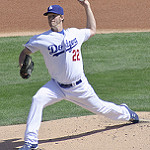
MLB Games – the Long(est) and Short(est) of It

Chasen Shreve Yankees photo

Chasen Shreve went the final three innings fanning five –  for the win as the Yankees topped the Cubs in 18 innings.  Photo by Keith Allison

It’s kind of appropriate that today (May 8, 2017), BBRT is looking back at yesterday’s Cubs/Yankees tilt – an 18-inning, six-hour and five-minute battle that will, ultimately, be most noted for the fact that the 15 pitchers who took the mound fanned an MLB single-game record 48 batters.  (FYI- The Yankees won it 5-4.)  The game fell well short of MLB’s longest in terms of time (which began on this date in 1984) or innings.  Later in this post, we’ll look at MLB’s longest and shortest games.  First, however, a few “factoids” from yesterday’s tilt.


  • Yankee pitchers fanned 26 hitters, Cubs’ hurlers whiffed 22. Strikeouts accounted for 44 percent of the total outs.
  • Two hitters accounted for 36 percent of the Yankee batters’ strikeouts – outfielder Aaron Hicks and third basemen Chase Headley each fanned a game-high four times (no other Yankee whiffed more than twice, while the Cubs had five players with three strikeouts).
  • A lot of bats were missed; there were 38 swinging strikeouts versus ten called.
  • The Cubs went into the bottom of the ninth down by three, but tied it up against Yankees’ star closer Aroldis Chapman on three singles, two walks, and a hit batter. There was no more scoring until the 18th.
  • The first ten batters in extra innings went down on strikes.
  • Both starting pitchers (Yankees’ Luis Severino and Cubs’ Jon Lester) went seven innings and notched nine strikeouts.
  • Three strikeout innings were notched by the Cubs’ Wade Davis (10th); Yankees’ Tyler Clippard (10th); Cubs’ Carl Edwards Jr. (11th); and Yankees’ Jonathan Holder (14th).
  • The Yankees left 22 runners on base, the Cubs stranded 30.

______________________________________________________

Now for the long and short of MLB games. 

LONGEST GAME (BY TIME)

May 8, 1984 – Brewers/White Sox – 8 hours and 6 minutes – with an asterisk*

Tom Seaver's only win in relief came in MLB longest-ever game (time-wise).

Tom Seaver’s only win in relief came in MLB longest-ever game (time-wise).

MLB’s longest-ever (time-wise) game started on May 8, 1984 and, like yesterday’s Yankees and Cubs contest, it was played in Chicago.  This time it was at (old) Comiskey and the home town White Sox prevailed 7-6 in 25-innings, taking a record-long eight hours and six minutes.  I do give and asterisk to this one – since it was not continuous play.  The game started at 7:30 p.m. and was suspended after seven innings (at 1:05 a.m.) due to the MLB curfew rule then in force.  It finished up the next day.

There were plenty of chances for this one to end earlier. The game was tied 1-1 going into the ninth, when the Brewers scored twice to take the lead. The White Sox came back with two of their own in the bottom of the inning – and the teams played on.  No one scored again until the top of the 21st, when the Brewers put up a three-spot.  The White Sox, however, scored three of their own in the bottom of the inning – and the teams played on. Finally, with one out in the bottom of the 25th White Sox’ RF Harold Baines hit a walk off home run (making it, of course, the latest walk-off long ball ever) against Chuck Porter (starting his eighth inning of relief) to win it for the ChiSox.  A few tidbits:

  • White Sox’ CF Rudy Law, C Carlton Fisk and 2B Julio Cruz, as well as Milwaukee DH Cecil Cooper each had 11 at bats in the game.
  • Chicago’s Dave Stegman, who came on as a pinch runner for DH Greg Luzinski in the 8th and stayed in to play LF, struck out a game-high five times in eight at bats.
  • The teams used a combined 14 pitchers (six for the Brewers, eight for the White Sox).
  • Two relievers went seven or more innings: losing pitcher Chuck Porter of the Brewers (7 1/3); Juan Agosta of the White Sox (7 innings).
  • The winning pitcher was future Hall of Famer Tom Seaver, who pitched the 25th inning for the ChiSox. It was Seaver’s only relief appearance of the season (one of just nine in his career) and his only career win in relief (he also had one save and two losses in that role).
  • Five future Hall of Famers played in the game: for the White Sox – catcher Carlton Fisk and winning pitcher Tom Seaver; for the Brewers – starting pitcher Don Sutton, SS Robin Yount and closer Rollie Fingers (who blew the save in the ninth).
  • Outside of Harold Baines’ walk-off home run, White Sox’ LF Tom Paciorek was (arguably) the hitting star of the game, going five-for-nine, with one run and three RBI (no one else had five safeties). LF Ben Ogilvie went two-for-ten for the Brewers, but added a home run and four RBI.

LONGEST GAME BY INNINGS – AND HOW THE GAME HAS CHANGED

On May 1, 1920, the Brooklyn Robins (Dodgers) and Boston Braves locked up in the longest MLB duel ever – by innings – playing to a 1-1 ties over 26 innings.  This one gets a special nod, since it is also the longest game in which both starting pitchers were on the mound for the entire game. (My, how the game has changed.)

Starting pitchers Leon Cadore of Brooklyn and Joe Oeschger of Boston each threw more than 300 pitches (analysts estimate Cadore at 345 and Oeschger at 319) in completing their 26-inning, record-setting starts. Cadore gave up 15 hits and five walks, while fanning seven; while Oeschger allowed only nine hits and four walks, while also striking out seven batters.   Oh, and here’s another sign of how the game has changed, the time of the 26-inning contest was only 3 hours and 50 minutes.  The Robins scored their lone tally in the fifth, the Braves in the sixth – followed by 20 innings of scoreless ball.

LONGEST CONTINUOUSLY PLAYED GAME (BY TIME)

Perry

BBRT give special recognition to the second-longest MLB game ever (by time) – and the longest in terms of continually play – The San Francisco Giants 8-6 win over the New York Mets on May 31, 1964.  This one took seven hours and 23 minutes – and was the second game of a doubleheader.

  • Each team used six pitchers in the contest.
  • Tom Sturdivant and Larry Bearnath of the Mets pitched in both games of the doubleheader – with Bearnath throwing seven scoreless innings after giving up one run in two innings in Game One of the Twin bill.
  • Galen Cisco, who took the loss for the Mets, pitched nine innings in relief (giving up two runs on five hits).
  • Gaylord Perry got the win for the Giants, tossing ten scoreless innings in relief (seven hits, one walk, nine strikeouts). Bob Hendley got the save.
  • Five Mets and three Giants notched ten at bats in the game.
  • Gil Garrido, Jim Davenport and Willie Mays also spent some time at SS for the Giants during the game.
  • The list of pinch hitters used by the Giants was pretty impressive: Duke Snider; Willie McCovey; Matty Alou; Del Crandall; Cap Peterson. Mets’ pinch hitters were not as well known: Jesse Gonder; George Altman; Dick Smith; Hawk Taylor; John Stephenson.
  • Four hitters collected four hits: Giants – RF Jesus Alou (four-for-ten, one run, two RBI) and C Tom Haller (four-for-ten, one run, one RBI); Mets- RF Joe Christopher (four-for-ten, two runs, three RBI and the game’s only homer) and 3B Charley Smith (four-for-nine, one RBI).
  • The Giants led 6-1 after three innings, but the Mets tied it with two in the sixth and three in the seventh. Then there was no scoring until the top of the 23rd.
  • Five future Hall of Famers played in the game for the Giants – Gaylord Perry, Willie Mays, Orlando Cepeda, Willie McCovey and Duke Snider.
  • The first game went just nine innings and two hours and 29 minutes. It does mean fans got nine hours and 52 minutes of baseball for the price of one ticket – which, by the way, is the longest MLB double header ever in terms of game time. (Note: The longest double header ever in terms to total time came on July 2, 1993.  The Padres and Phillies split a pair of games in Philadelphia. Game One: SD 5-2 over Philadelphia. Game Two: Philadelphia 6-5 over the Padres.  It took a total of 12 hours and five minutes, including two rain delays totalling 4 four hours and 44 minutes and a 25-minute break between games).


SHORTEST GAME EVER – NINE INNINGS IN 51 MINUTES

LIKE SPEED DATING

On September 28, 1919, the Phillies took on the Giants in New York, with Philadelphia’s Lee Meadows (12 wins and 19 losses) taking on New York’s Jesse Barnes (24-9).  The outcome was as expected, Giants 6 – Phillies 1. The game featured a total of 18 hits and three walks.  None of this is surprising.  What is surprising, however, is that it took just 51 minutes to play the entire nine innings.  Now, THAT is pace of game.

SHORTEST DOUBLEHEADER

The shortest doubleheader (game time) ever was completed in two hours and seven minutes of game time.  It was September 26, 1926 in Saint Louis – but did not involve the Cardinals.   In Game One, the Saint Louis Browns topped the Yankees 6-1 in 1 hours and 12 minutes.  The Browns also won Game Two, this time by a 6-2 score, in just 55 minutes.

Baseball-almanac.com, baseball-reference.com and the Society for American Baseball Research proved valuable resources for this post.

Follow/Like Baseball Roundtable’s Facebook page, link. There are some good bobblehead giveaways coming up. 

I tweet baseball @DavidBBRT

Member: Society for American Baseball Research (SABR); The Baseball Relilquary; The Negro Leagues Baseball Museum; Baseball Bloggers Alliance.