Gary Ward – A Cycling Record (or two)

I always like it when I have the opportunity to reflect on a hometown Twins’ accomplishment – and this is one of those days.

WardOn September 18, 1980, as the Twins faced off against the Brewers in the first game of a doubleheader, a 26-year-old rookie named Gary Ward was leading off and starting in left field for Minnesota. A September call-up, it was Ward’s fourth game of the season for the Twins and just the 14th MLB game of his professional career. (Ward had played in ten games for the Twins at the end of the 1979 season and was hitting .282, with 13 home runs, 66 RBI and 26 steals at Triple A when he got the 1980 call to the big club.) Little did Ward know, he was about to earn his way into the MLB record books that day.

In the top of the first inning, Ward double to center off Brewers’ starter Mike Caldwell. In the top of the third, with the Twins trailing 7-1, the 6’2”, 195-pound Ward singled to left – again off Caldwell. In the top of the fifth, he homered to center off Cardwell (Ward’s first major league round tripper) – cutting the lead to 7-2. In the seventh, he rapped a run-scoring triple to right field off reliever Reggie Cleveland, cutting the deficit to two runs (7-5) – and, of course, completing the cycle.  Notably, Ward had shown his ability to use the entire field – double and homer to center, triple to right and single to left.   In his final at bat, Ward lined out to short. His line for the day? Four-for-five with two runs scored and two RBI. The Twins, by the way, lost 9-8 on a walk-off home run by Milwaukee CF/clean-up hitter Gorman Thomas.

In completing his cycle, Ward immediately “wrote” one entry into the MLB record books and set the foundation for a second.

First, Ward set the record (which still stands) for the fewest MLB games played when recording a cycle (14). The Giants’ Fred Lewis came close to Ward’s record when he hit for the cycle in his 16th MLB game (May 13, 2007) – still the NL record for earliest cycle.

Second, Ward laid the foundation for the only (thus far) father-son combination to hit for the cycle. On May 26, 2004, Gary Ward’s son Daryle – playing 1B and batting third for the Pirates as they took on the Cardinals in St. Louis – hit for the cycle.  In that 11-8 Pirates victory Daryle Ward went four-for-six with three runs scored and six RBI.

For more on MLB’s cycles, click here.

SKIPPING A GENERATION

While, Gary and Daryle Ward are the only father-son combination to hit for the cycle, there is another “relatively” rare family cycle link.  Pirates’ RF Gus Bell and Phillies’ 3B David Bell are the only grandfather-grandson combination to achieve that feat (June 4, 1951 and June 28, 2004, respectively)

Here’s a bit more on the Twins’ Gary Ward. In that 1981 call-up, he hit .463, with one home runs and ten RBI in 13 games. Over five seasons as a Twin, Ward hit .285-51-219, with 26 steals (417 games). Over a 12-season MLB career (Twins, Rangers, Yankees, Tigers), Ward hit .276-130-597, with 83 steals (and 41 triples). The two-time All Star’s best season was 1982, when he hit .289, with 28 home runs and 91 RBI in 162 games for Minnesota. His son Daryle played 11 seasons in the majors (Astros, Cubs, Pirates, Dodgers, Nationals – 1998-2008). Daryle, playing outfield and first base, hit .263, with 90 home runs and 379 RBI over his career. His best campaign was 2002, with the Astros, when he hit .276-12-72 in 136 games.

GOING DEEP – THREE GENERATIONS DEEP

In this post, BBRT noted that Gus and David Bell are the only grandfather-grandson combination to hit for the cycle. The Bell family did have a chance to go three-deep in the cycle, as Gus’ son (and David’s father) Buddy Bell also played in the major leagues.

Here’s a list of three-generation major league families.

COLEMAN FAMILY

First Generation:

Joseph Patrick Coleman, pitcher … (MLB 1942-1955 … 52-76, 4.36)

Second Generation:

Joseph Howard Coleman, pitcher … (MLB 1965-79 … 142-135, 3.70)

Third Generation:

Casey Coleman, pitcher … (MLB 2010-12, 2014 … 8-13, 5.72)

_____________________________

BOONE FAMILY

First Generation:

Ray Boone, 3B-SS-1B … (MLB 1948-60 … .275, 151 HR, 737 RBI)

Second Generation:

Bob Boone, catcher … (MLB 1972-90 … .254, 105 HR, 826 RBI)

Third Generation:

Bret Boone, 2B … (MLB 1992-2005 … .266, 252 HR, 1,021 RBI)

Aaron Boone, 3B-1B … (MLB 1997-2009 … .263, 126 HR, 555 RBI)

_________________________________

BELL FAMILY

First Generation:

Gus Bell, Outfield … (MLB 1950-64 … .281, 206 HR, 942 RBI)

Second Generation:

Buddy Bell, 3B … (MLB 1972-89 … .279, 201 HR, 1,106 RBI)

Third Generation:

David Bell, 3B-2B … (MLB 1995-2006 … .257, 123 HR, 589 RBI)

Mike Bell, 3B … (MLB 2000 … .222, 2 HR, 4 RBI)

______________________________________

HAIRSTON FAMILY

First Generation:

Sammy Hairston, catcher … (MLB 1951 … .400, 0 HR, 1 RBI)

Second Generation:

Jerry Hairston, Outfield… (MLB 1973-89 … .258, 30 HR, 205 RBI)

Third Generation:

Jerry Hairston, Jr., 2B-3B-OF-SS … (MLB 1998-2013 … .257, 70 HR, 420 RBI)

Scott Hairston, Outfield … (MLB 2004-14 … .242, 106 HR, 313 RBI)


Coming soon, the results of BBRT’s first fan survey.  You can take the survey here.

Spoiler Alert from early returns: Beer and hot dogs are still number one; respondents are fine with instant replay, not so with waving a batter to first base on an intentional walk; double plays are more popular than strikeouts; and respondents would rather be in the stands for a perfect game than a four-homer game.


I tweet baseball @DavidBBRT

Follow/Like the Baseball Roundtable Facebook Page here.

Member: Society for American Baseball Research (SABR); The Baseball Reliquary; the Negro Leagues Baseball Museum; Baseball Bloggers Alliance.

The RH Factor – Phillies’ Rhys Hoskins is for Real

“We can’t put guys in the seats, can we now?”

                               Miami Marlins’ manager Don Mattingly …

                                 on defending against Rhys Hoskins.

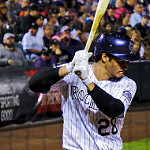
HoskinsPhillies’ rookie Rhys Hoskins is the RH Factor in the middle of the Philadelphia line-up – putting up a .310-17-37 stat line since his MLB debut on August 10.  In yesterday’s contest – an 8-1 Phillies win over the Marlins in Philadelphia – the 6’5”, 24-year-old 1B/OF went two-for-two, with two runs scored and three RBI. He notched a two-run home run, a run-scoring sacrifice fly, a single and drew a walk in four plate appearances.  The home run was his 17th of the season and, like most of his long balls, carried a little history over the fence.  Coming in just his 33rd MLB game, it made Hoskins the fastest player to reach 17 career round trippers. And, it wasn’t even close – the next quickest to 17 career long balls in the big leagues was Boston Brave Wally Berger at 42 games in 1930.   Then again, Hoskins seems to be getting to all the long-ball marks at breakneck speed.  As the chart below shows, he has been the fastest to reach every career home run mark from nine to 17 (with more to come). Side Note: In other news … only Zeke Bonura, Joe DiMaggio and Ted Williams got to 37 career RBI in as few games as Hoskins. Not bad company.)

RHYS HOSKINS IS THE FASTEST PLAYER TO REACH …

          Nine Home Runs … 16 games

         Ten Home Runs … 17 games

         Eleven Home Runs … 18 games

         Twelve Home Runs …24 games

         Thirteen Home Runs … 29 games

         Fourteen Home Runs … 30 games

         Fifteen Home Runs … 32 games

         Sixteen Home Runs … 32 games

         Seventeen Home Runs … 33 games

So, where did the rookie “phenom” come from?  Let’s take a look.  (Oh, and just so you don’t think BBRT climbed aboard the Hoskins’ bandwagon a little late, the RH Factor was featured in a September 1 post – the August Wrap Up.)

First, I think it’s fair to say, the scouts didn’t see this coming – and that goes for pro and college scouts.  In 2011, when Hoskins graduated from Jesuit High School in Carmichael, California – where he played baseball, football and basketball – he apparently wasn’t on anyone’s radar. (In his senior season, he hit .304, with three home runs and 22 RBI.) Not only did Hoskins go undrafted by the pros, he received only one college scholarship offer – California State University at Sacramento.

Coming out of high school, Rhys Hoskins wasn’t on the scouts’ radar.

Hoskins made the most of his three years as a Sacramento State Hornet: First Team Freshman All-American (Baseball America & Louisville Slugger) and Western Athletic Conference Freshman of the Year (.353-10-53); a .283-3-37 sophomore season; Western Athletic Conference Player of the Year as a Junior (.319-12-53).   That performance earned him $349,700 as the Phillies’ selection in the fifth round (142nd overall) of the 2014 MLB Draft.  Note: Hoskins was also a three-time Academic All-WAC honoree.

Hoskins began his professional career with the short-season (New York-Penn League), Williamsport Crosscutters, where hit just .237, but showed budding power with nine home runs and 40 RBI in 70 games. In 2015, Hoskins hit a combined .319-17-90 at Class A and High-A. In 2016, he really broke out – earning Eastern League (Double A) Rookie of the Year honors with a .281-38-111 season (135 games) for the Reading Fightin’ Phils. That $350,000 investment was looking pretty good by then.

2017 – THE YEAR OF THE RH FACTOR

Then came 2017, and Hoskins’ blazing start with the Triple A Lehigh Valley IronPigs – .284-29-91 line in 115 games (International League MVP and Rookie of the Year). Just as important, he showed solid plate discipline, drawing 64 walks (versus 75 strikeouts). That earned Hoskins an August call up to the big club – where the burn did not exactly continue (at least nor right away).

In his first major league at bat (August 10), Hoskins struck out looking versus the Mets’ Jacob deGrom. His next trip to the plate, he hit into a 4-6-3 double play.  And in his final plate appearance of the day, he drew a six-pitch walk. After four games, things did not look much better. Hoskins was one-for-sixteen (.077), with one run scored and one RBI.
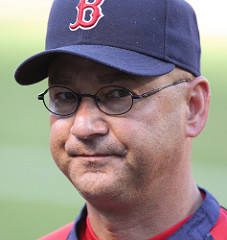
In Hoskins’ fifth game (August 14), things began to get interesting, as he went two-for-four with a pair of home runs.  Since that time (29 games between August 14 and September 13), Hoskins has hit .340, with 17 home runs, 36 RBI and 30 runs scored.  He also put up nearly identical numbers for walks (21) and strikeouts (22) over those 29 games. (He has 24 walks and 26 strikeouts overall.)  That combination of power and patience is why so many are convinced Hoskins is the real deal.

In  a clutch situation. a walk may be the best way to “de-fence” Rhys Hoskins.

And, just to top it off his hot start at the plate, young Mr. Hoskins – on August 27 –  made a sliding, shoestring catch to start a 7-4-3 triple play.

CAN RHYS HOSKINS WIN THE ROOKIE OF THE YEAR AWARD?

Can a player who debuts in August capture the Rookie of the Year Award?  There is a (close) precedent. In 1959, San Francisco Giants’ rookie first baseman Willie McCovey made his MLB debut on July 30.  The future Hall of Famer captured NL rookie of the year honors despite playing in only 52 games.  McCovey put a .354-13-38 stat line that season.  Hoskins, who made his MLB debut on August 10, should surpass McCovey  in all offensive categories except average.  He’s could win this thing.  His biggest obstacle may be another 1B/OF –  Dodgers’ rookie Cody Bellinger , .272-37-86 through 116 games, who looks to break the NL rookie season home run record this campaign. Still, Hoskins should pick up his share of votes.

I tweet baseball @DavidBBRT

Follow/Like the Baseball Roundtable Facebook Page here.  More baseball commentary, blog post notifications and PRIZES.

Member: Society for American Baseball Research (SABR); The Baseball Reliqauary; The Negro Leagues Baseball Museum; Baseball Bloggers Alliance

Another Episode of How the Game Has Changed

Jerry Koosman ... 20-game winner for the Mets and the Twins.

Jerry Koosman … 20-game winner for the Mets and the Twins.

On this date (September 12) in 1969, the Mets – on their way to a World Series title – were in Pittsburgh for a doubleheader against the Pirates. Both games ended 1-0 in favor of the New Yorkers – and in both contests, the winning pitcher also drove in the only run.

In Game One, the Mets’ Jerry Koosman went the distance, giving up just three hits and three walks, while fanning four. He also drove in the winning (and only) tally with a single to right field off Pirates’ starter Bob Moose in the top of the fifth inning. It was Koosman’s fourteenth win of the season (versus nine losses).

In Game Two, the Mets’ Don Cardwell picked up his seventh win (versus nine losses), giving up just four hits over eight innings, while walking one and fanning three. (Tug McGraw pitched the ninth for his 12th save.) In the top of the second, Cardwell drove in the game’s only run with a single to left-center off Pirates’ starter Dock Ellis.

Now, you still see the occasional doubleheader, shutout and pitchers’ game-winning RBI (that final occurence more often in the NL, of course).  However, this game did cause me to reflect on “how the game has changed” over the years.  (Also, it gave me a chance to feature a Minnesota “favorite son,” Jerry Koosman – a career 222-game winner, who starred for the Mets and also was a 20-game winner for the Twins.) Here are just a few observations spurred by the anniversary of the New York/Pittsburgh double-dip.  Special note:  These are just observations, not judgements.

  • It was a doubleheader. (Don’t see many of those anymore.)

In 1969, MLB teams played 176 doubleheaders. Thus far, in 2017, there have been 29 doubleheaders (mostly split). Side note: The Boston Braves played a record 46 doubleheaders in 1945 and a record nine consecutive doubleheaders between September 4 and September 15, 1928 (18 games in 12 days). 

USED TO LOVE THOSE SUNDAY DOUBLE HEADERS

I always loved those Sunday two-for-one doubleheaders.  Of the 176 doubleheaders in 1969, 71 were Sunday twin bills. Over the course of the 1969 season, there were only three Sundays that didn’t feature at least one MLB doubleheader.

  • Total playing time for the TWO 1969 games was four hours and 21 minutes.

The QUICKEST two MLB games from yesterday (September 11) took a combined 5 hours and 37 minutes.

THE LONG AND SHORT OF IT

In 1969, the average MLB game took 2 hours and 32 minutes.  In 2017 (through September 11), the average is 3 hours and 9 minutes.

  • The Mets and Pirates used a total of seven pitchers (and remember no DH) in that 1969 double-dip.

THE MORE THE MERRIER?

In 1969, fans could expect to see an average of 5.2 pitchers per game (both teams).  In 2017 (through September 11), that average is about three pitchers higher (8.3).

  • The starting pitchers in the Mets/Pirates twin bill were on the mound for 33 of the 36 innings.
  • The two winning pitchers fanned just seven batters in 17 innings. (The losing hurlers – Dock Ellis and Bob Moose – fanned 21 in 16 frames.

FANNNING FOR THE FANS?

In 1969, a fan could expect to see an average of 11.6 strikeouts per game (both teams).  In 2017 (as of September 11), that average is up to 16.7.

  • Jerry Koosman’s complete game shutout in the first game of the DH was his 13th complete game of the season – and his fourth complete-game shutout.

Koosman ended the season with 16 complete games and six shutouts and finished tied for ninth in the NL in compete games (Bob Gibson led with 28) and tied for fourth in shutouts (Juan Marichal led with eight). This season, as of  September 11, Erwin Santana of the Twins leads all of MLB in complete games with five and shutouts with three. Only Santana and Corey Kluber have more than two complete games and only Santana, Kluber and the Cardinals’ Carlos Martinez have more than one shutout.

  • There were, of course, no home runs in the doubleheader.

FANS DIG THE LONG BALL?

In 1969, MLB teams averaged approximately 1.6 home runs per game (both teams).  In 2017 (as of September 11) that average is 2.5. While that is only about one extra long ball per game, it is an increase of 57.5 percent.  

Again, just observations, no judgements.  Plus, a chance for younger fans to get a feel for how the game has changed over the years.

I tweet baseball @DavidBBRT

Follow/Like the Baseball Roundtable Facebook page, here.  Blog post notifications, additional baseball commentary and PRIZES.

Member: Society y for American Baseball Research (SABR); The Baseball Reliquary; the Negro Leagues Baseball Museum; Baseball Bloggers Alliance.

The Hits Just Keep On Coming – Four-HR and Five-XBH Days

FIVE EXTRA BASE HITS IN A GAME

On September 3, Indians’ 2B Jose Ramirez tied a an MLB record – with a little help from his “friends” – by collecting five extra-base hits in a single game. As the Indians topped the Tigers 11-1 in Detroit, Ramirez collected two home runs and three doubles.  A couple of interesting tidbits about those homers: 1) Ramirez hit one from each side of the plate (the third time he has accomplished that this year; 2) Both home runs were assisted by outfielders (hand/glove) before falling in for four-base hits.

His first home run, in the opening inning, was to left, where Tigers’ LF Mike Mahtook was ready to play the ball off the wall. Ramirez’ smash hit the top of the wall and bounced twice before rebounding toward the field. Mahtook jumped up, attempting to snag the ball with his bare hand – except, instead of cleaning snatching the horsehide, Mahtook bumped/bounced it over the fence.  Then in the sixth inning, Ramirez hit a long line drive to right field, where Tigers’ RF Alex Pressley jumped to make the catch, only to have the ball bounce off his glove, into the stands and back onto the field for another home run.  Ramirez ended the day five-for-five, with three runs scored and five driven in. As of September 4, he was .310-23-69 on the season (leading theleague in extra-base hits) – his fifth MLB campaign. The big day made Ramirez just the 13th player to record five extra-base hits in a game, the details on the other twelve are listed later in this post.

FOUR HOME RUNS IN A GAME

Then, the hits just kept on coming.  The very next day (September 4), The Diamondbacks’ J.D. Martinez tied another MLB slugging record – rapping four home runs in a single game, as his surging Diamondbacks dominated the Dodgers 13-0 in Los Angeles. The big day mde Martinez the 18th player in MLB history to accomplish that feat,  Here’s how Martinez’ day went:

  • A slow start, striking out swinging to lead off the second inning;
  • Two-run home run to left-center off starter Rich Hill in the top of the fourth;
  • Lead-off homer to right the top of the seventh off Pedro Baez;
  • Solo shot to center off Josh Fields in the eighth;
  • Two-run home run to left off Wilmer Font in the top of the ninth.

For the day, Martinez scored four times and drove in six runs. Martiinez was the second player to notch a four-homer game this seasson. The Reds’ Scotter Gennett was the first. For a look at all the four-home runs games that preceded Ramirez’ and some four-HR game trivia bits, click here.

________________________

Now, here is the list of MLB Players (besides Jose Ramirez) with five extra base hits in a game.

George Streif, Philadelphia Athletics, American Association – June 15, 1885

On June 25, 1885 – as the Brooklyn Grays topped the Philadelphia Athletics, 21-14 in Brooklyn, the Athletics’ 3B George Streif become the first documented MLB player to collect five extra base hits in a single game.  He rapped four triples and a double – for 14 total bases. 1885 was the final year of Streif’s MLB career (1879, 1882-85). Over his career, he hit .208, with five home runs. The 1885 season was his best – as he finished with a stat line of .274-0-27 in 44 games.

George Streif’s four triples on June 15, 1885, remain the MLB record for triples in a game.

George Gore, Chicago White Stockings, NL – July 9, 1885

The second MLB player to record five hits in a game – like the first – was also a George.   In a July 9, 1885 game against the Providence Grays, Cubs’ outfielder George Gore collected three doubles and two triples. The Cubs won, at home, 8-5. In 1885, Gore hit .313, with five home runs and 37 RBI. In a 14-season MLB career (1879-1892), he hit .301-46-618.  His best year was 1880, when he won then NL batting championship with a .360 average, and posted two home runs and 47 RBI in 77 games. That season, he also led the league in on-base percentage and slugging percentage. Gore hit over .300 eight times in his career and led the NL in runs scored twice and walks three times.

George Gore also owns a share of the record for stolen bases in a single game at seven (June 25, 1881).

Larry Twitchell, Cleveland Spiders, NL – August 15, 1889

On August 15, 1889, Larry Twitchell started in LF for the Cleveland Spiders (versus the Boston Beaneaters) in Boston. Twitchell would later pitch a scoreless inning in that 19-8 Cleveland victory, but his bat is what earned him attention that day. Twitchell went six-for-six (with a walk), rapping a double, three triples, a home run and a single. Twitchell collected three RBI and scored four times in the game. Twitchell hit .275, with four home runs (11 triples) and 95 RBI on the season – arguably the best performance in his nine-year MLB career (1886-94). Twitchell’s career stat line was .263-19-384.  For those who like to stump friends with trivia, Twitchell is the only player who also took the mound on a day he collected five extra-base hits.

Lou Boudreau, Cleveland Indians, AL – July 14, 1946

On July 14, 1946 – as the Indians lost to the Red Sox 11-10 –  Indians’ shortstop Lou Boudreau went five-for-five, collecting four doubles and a home run. Boudreau scored three runs and collected four RBI in the game. Boudreau, who went .295-68-789 over 15 MLB seasons (1938-52), hit .293, with six home runs (30 doubles) and 62 RBI in 1946. In 1947, he had his best season ever – going .355-18-106.

Joe Adcock, Milwaukee Braves, NL – July 31, 1954

On the final day of July in 1954 – as his Braves beat the Dodgers 15-7 – 1B Joe Adcock rapped four home runs (tying the single game record) and a double.  His 18 total bases set the MLB record for a single game (later broken). Adcock scored five times and drove in seven runs in the game.  Adcock had a 17-season MLB career in which he hit .277, with 336 home runs and drove in 1,122 runs. In 1954, he went .308-23-87. His best season was 1961, when he went .285-35-108.

Willie Stargell, Pittsburgh Pirates, NL – August 1, 1970

Stargell was the big bopper on the day the Pirates topped the Atlanta Braves 20-10 in Atlanta. Stargell, playing LF, went five-for-six with two home runs, and three doubles.  He scored five runs and drove in six. For the season, he hit .264, with 31 home runs and 85 RBI. Hardly a great campaign for a player who, over 21 MLB seasons (1962-82), would hit .282, with 475 home runs and 1,540 RBI – topping forty home runs twice and 100 RBI five times and earning 1979 NL MVP recognition with a .281-32-82 season.

Steve Garvey, Los Angeles Dodgers, NL – August 28, 1977

On August 28, 1977 Dodgers’ starter Don Sutton threw a neat six-hit, complete-game shutout, as the Dodgers pounded the Cardinals 11-0 in LA.  The big news, however, focused on the number five – as the Dodgers’ popular first baseman, Steve Garvey, went five-for-five, with five runs scored, five RBI and a MLB record-tying five extra-base hits.

Garvey launched two home runs and a trio of doubles on his big day. For the 1977 season, Garvey hit .297, with 33 home runs and 115 RBI.  Over his 19-season MLB (1969-87) career, Garvey was a ten-time All Star and four-time Gold Glove winner.  His best season was probably 1974, when he won the NL MVP Award with a .312-21-111 performance – although he notched better numbers in many categories along the way. For example, in 1977, he hit .297 with career highs in home runs (33) and RBI (115). Garvey also twice led the NL in hits and logged six seasons of 200 or more safeties.  His final career line was .294-272-1,308 (with 2,599 hits).

Shawn Green, Los Angeles Dodgers, NL – May 23, 2002

SGreenOn May 23, 2002, the Dodgers topped the Brewers 16-3 in Milwaukee – and RF Shawn Green topped the Dodgers with six hits in six at bats, six runs scored and seven RBI. Green’s output included an MLB record-tying four home runs, a double and a single. On the season, Green hit .285-42-114 and, over a 15-season MLB career, his line was .283-328-1,070. Green’s best season was 2001, when he hit .297, with 49 home runs and 125 RBI.  Overall, he topped 40 home runs three times and had 100 or more RBI four times.

On May 23, 2002, the Dodgers’ Shawn Green hit for 19 total bases – the MLB record for total bases in a game.

Kelly Shoppach, Cleveland Indians, AL – July 30, 2008

Despite catcher Kelly Shoppach’s five-extra base hit game, the Indians lost to the Tigers (in Cleveland) by a 14-12 score.  Shoppach went five-for-six with two home runs and three doubles – scoring four times and collecting three RBI. On the season, Shoppach hit .261, with 21 home runs and 55 RBI in 112 games (the most games he would play in any of his nine MLB seasons).  Shoppach put up career-high numbers nearly across-the-board in 2008 (games-112; hits-92; runs-67; doubles-27; home runs-21; RBI-55; average-.261). Over his MLB career (2005-12), he hit .223, with 70 home runs and 216 RBI.

Josh Hamilton, Texas Rangers, AL – May 8, 2012

Josh Hamilton was in CF, batting third for the Rangers as they took on the Orioles in Baltimore. He bashed four home runs (tying the MLB single-game record) and a double in five at bats – scoring four times and driving in eight, as the Rangers emerged victorious by a 10-3 score. Hamilton, the 2010 AL MVP, hit .285, with 43 home runs and 128 RBI in 2012. His best campaign was 2010, when he went .359-32-100. In a nine-year MLB career (2007-15), Hamilton put up a .290-200-701 line.

Jackie Bradley, Jr., Boston Red Sox, AL – August 15, 2015

In mid-August of 2015, Red Sox’ RF Jackie Bradley collected three doubles and a pair of home runs in six at bats, as his Red Sox pounded the Mariners 22-10 in Boston.  Bradley scored five times and plated seven tallies. Bradley finished the season at .249-10-43 in 74 games. As of September 4 of 2017, his fifth MLB season, Bradley had played 504 MLB games, putting up a .243-54-224 stat line.

Kris Bryant, Chicago Cubs, NL – June 27, 2016

On June 27, 2016 – as the Cubs topped the Reds 11-8 in Cincinnati – Cubbies’ starting third baseman Kris Bryant rapped three home runs and two doubles in five at bats (crossing the plate four times and driving in six runs). Bryant proved to be truly on the move – also playing right field and left field in the game.  It was the 24-year-old Bryant’s second MLB season and he finished at .292-39-102 (with an NL-leading 121 runs scored). His performance earned him the NL MVP award. As of September 4, 2017 – just Bryant’s third MLB season – his career line was .285-90-260.

Primary resources: Baseball-Reference.com; MLB.com; Society for Americana Baseball Research.

I tweet baseball @DavidBBRT

Like/Follow Baseball Roundtable’s Facebook page, here.  New blog post notifications, baseball commentary, PRIZES.

Member: Society for American Baseball Research (SABR); The Baseball Reliquary; The Negro Leagues Baseball Museum; Baseball Bloggers Alliance.

Little League Provides Major League Highlight in August

There were plenty of highlights in August – pennant races, a trio of Immaculate Innings, landmark home runs by rookies and veterans, near-perfect games, a team hitting over .300 for the month and more.  We will get into all that in this post – the traditional Baseball Roundtable monthly wrap of stats and stories – but from this vantage point, the highlight of the month was MLB’s first-ever Little League Classic.

http://Embed from Getty Images

On August 20, MLB held its first Little League Classic (in conjunction with the Little League World Series).  It included an MLB game between the Pirates and Cardinals played in a venerable minor league ballpark (91-year-old Bowman Field) across town (Williamsport, PA) from the Little League World Series. The 2,366-seat ballpark was packed for the event – primarily with Little Leaguers and their families.

The Pirates came away with a 6-3 victory and the star of the contest was Pirates’ 1B and cleanup hitter Josh Bell, who had a single, home run (his 21st of the season) and four RBI. The real winners, however, were in Little League uniforms, as the Pirates and Cardinals players, coaches and staff spent most of the pre-game day mingling with the youngsters – touring the facilities, answering questions, signing autographs, taking selfies and watching their games. (How cool when the guy watching you in a Matt Carpenter jersey IS Matt Carpenter.) Cardinals’ players Tommy Pham and Carlos Martinez even popped for snow cones for the kids seated near them (200 snow cones in all) as they watched the Little Leaguers compete.

Clearly, the players (both Little League and Major League) and fans all had a good – no make that GREAT – time and I hope MLB will make the Little League Classic an annual event. In another effort to add excitement for players and fans, August also saw the first-ever MLB Players Weekend – bringing a little color to the game and offering players a chance to express themselves in personalized socks, equipment and nicknames.  For BBRT’s take on that successful promotion, click here.

_________________________________________

Now, let’s get down to the traditinal monthly wrap up.  As usual, there will be plenty of stats AND plenty of stories.  We’ll look at the month of August first – and drop in the year-to-date (through August 31) standings and stastical leaders at the end of the post.  For those who are less statistically inclined, it’s pretty easy to skip over the stat-heavy sections and go right to the stories that caught Baseball Roundtable’s interest over the course of the month.  Along the way, you’ll also find BBRT’s Players and Pitchers of the Month and a look at August’s most successful teams.

BASEBALL ROUNDTABLE’S AUGUST PLAYER(S) AND PITCHER(S) OF THE MONTH

National League Player of the Month – Giancarlo Stanton, Marlins

Giancarlo Stanton photo

Photo by Corn Farmer

What can you say about the numbers Giancarlo Stanton put up in August?  He was a beast. The Marlins’ RF banged out an MLB-leading 18 home runs (tying Rudy York’s record for August – set in 1937 – and second in MLB history for any month, trailing only Sammy Sosa’s 20 home runs in June of 1998.) Stanton also led all of MLB in August RBI (37) and runs scored (28), while hitting .349.  Our August NL Player of the Month, ended August at .289-51-110 on the season.  Also in the running, but well behind Stanton, were Phillies’ rookie Rhys Hoskins – who made his MLB debut August 10 – and put together a .304-11-25 line for the month. More on RH in the stories section. The Diamondbacks’ Paul Goldschmidt also had an honor-worthy month – .330-11-31.  But, ultimately and easily, Stanton is the guy.

National League Pitcher of the Month – Corey Knebel Brewers

BBRT’s NL Pitcher of the Month is Brewers’ closer Corey Knebel, who went 13-f0r-13 in save opportunities, posted a 0.00 ERA and fanned 21 batters in 15 1/3 innnigs.  Knebel – saving 13 of the Brewers’ 15 August wins – kept the Brew Crew in the NL Central race.

The Cubs’ Jake Arrieta also drew consideration after an August record of 4-1, with a 1.21 ERA in six starts, as  did the Nationals’ Geo Gonzalez,who who went 4-1, 2.23 in five starts (but for a loss and five earned run in six innings on August 31, Gonzalez might have slipped past Knebel.

AL Player of the Month – Manny Machado, Orioles

Manny Machado photo

Photo by Keith Allison

Picking an AL Player of the Month was a bit more challenging than selecting Giancarlo Stanton for the NL recognition. Ultimately, BBRT selected Orioles’ 3B Manny Machado, who hit .341, led the AL in RBI (35) and tied for the league lead in August home runs (12) – while also continuing to deliver plus defense at the hot corner. One unusual stat from Machado’s August performance – despite his strong numbers, he only drew three walks over the entire  month (also only 11 strikeouts).

Running a very close second was Tim Beckham, who celebrated his move from the Rays to the O’s (and his new job as the Orioles’ shortstop) by leading MLB with 50 August hits and a .394 average. Beckham also led the AL in runs scored for August with 27 – and added six home runs and 19 RBI. Before joining the Orioles, Beckham’s 2017 line with the Rays was .259-12-36 in 87 games. Looks like crab cakes agree with him. I also looked at the Rangers’ ageless Adrian Beltre, who went .330-7-30 for the month (one of only five major leaguers to reach 30 RBI).

AL Pitcher of the Month – Corey Kluber, Indians

Corey Kluber photo

Photo by apardavila

Corey Kluber earned the honor by going 5-1, with a sub-2.00 ERA (1.96) in six starts. The Indians’ righty averaged 7 2/3 innings per start and fanned an MLB-leading  54 batters (against just six walks) in 46 innings.  In his six starts (including a pair of complete games), Kluber never gave up more than six hits and only once surrended more than two runs (three).  In his only loss, he gave up two runs on four hits  in 7 2/3 innnigs, while walking one and fanning 12.

Also in the runnig were the Orioles’ Dylan Bundy, who went 4-0, 2.00 in four starts, fanning 45 in 36 innings; the Indians’ Trevor Bauer (5-0, 2.31); and the Rays’ Alex Colome, ten-for-ten in save opportunities, with a 0.75 ERA for the month.

__________________________________________________

TEAM STATS – TWINS AND NATIONALS; MOST AUGUST WINS

We saw a bit of shifting in the standings in August.  First, nobody won more games (or even as many) as the Twins, who went 20-10 and moved into the second AL Wild Card spot. Ironically, Minnesota closed out July by losing six of their last seven and became sellers rather than buyers at the trade deadline (most notably dealing their All Star closer Brandon Kintzler). Then, in August, their young bats got hot and the Twin scored an AL-high 177 runs. Among the keys to the Twins’ resurgence were 24-year-old SS Jorge Polanco (.373-6-23 for the month); veteran (and former AL MVP) 1b Joe Mauer (.336-1-12); 23-year-old CF and defensive whiz Byron Buxton (.324-8-22); and 25-year-old LF Eddie Rosario (.307-9-25). Overall, the Twins hit .280 with 50 roundtrippers for August (both second only to Baltimore in the AL), and also logged the fifth-best staff ERA in the AL (3.78).

ROLLING A 300

In August, the Orioles hit .306 as a team – the only MLB squad to hit .300 or better.  They also led all of MLB with 57 August round trippers.  The only other team to reach 50 was the Twins. 

While the  Twins moved into a Wild Card spot, they didn’t gain much ground on the Central Division-leading Indians, who rode a pitching staff with the AL’s best August ERA (3.08), fewest walks and most strikeouts to a 19-win (versus nine losses) month. Leading the way for the Indians were Corey Kluber and Trevor Bauer – a combined 10-1, 2.11 for the month. Other AL teams hot during the dog days of August were the Red Sox (18-9), Angels (18-10) and Orioles (17-12).  At the other end of the spectrum were the White Sox (11-18); Tigers (11-17) and A’s (11-16). The Red Sox’ strong month enabled them to overtake (and build a 4 1/2 game lead over) the Yankees, who were in first place August 1, but faded with a 14-15 record for the month.

RUNS – WE DON’T COUNT THE STINKIN’ RUNS

Of the teams that would qualify for the playoffs as of August 31, only the Twins have a negative run-differential on the season – having scored 646 runs and given up 661 for a -15. The Dodgers have the largest postive run differential year-to-date at +209, while the Padres have the largest negative at -150.  (Ouch!)

The Nationals led the pack in the NL, with 18 wins (versus 11 losses) – driven by a pitching staff that turned in an NL -low ERA of 3.19 for the month. The names of the biggest contributors might surprise you. Gio Gonzalez was the staff leader at 4-1, 2.23 in five August starts and in the bullpen, trade-deadline newcomer Sean Doolittle chipped in nine saves and a 1.38 ERA. The offense wasn’t bad, tallying the NL’s fifth-most runs for the month, but it was really the pitching that enabled the Nats to expand their division lead by a game, despite the Marlins solid 17-12 August (led by Giancarlo Stanton’s .349-18-37 performance). The Dodgers lost their last five games in August, but still finished 17-10 – with a 16-game lead over the Diamondbacks. At the bottom of the NL’s August results were the Mets (10-20) and the Phillies (11-19).

As we go into September, the closest division races are in the NL Central, where the Cubs lead the Brewers by 3 1/2 and the AL East, where the Red Sox lead the Yankees by 4 1/2.  The team farthest out of first place is the Giants, 40 games out. The best race going may be for the two AL Wild Card spots – with a 3 1/2 game spread among the Yankees, Twins, Angels and Orioles.  FULL STANDINGS AND EACH TEAM’S AUGUST RECORD IN THE CHART NEAR THE END OF THE POST. 

IF THE SEASON ENDED AUGUST 31, YOUR PLAYOFF TEAMS WOULD BE …

NL: Dodgers, Nationals, Cubs.  Wild Cards: Diamondbacks, Rockies

AL: Indians; Astros; Red Sox; Wild Cards: Yankees, Twins  

__________________________________________

NOW FOR AUGUST TEAM STATISTICAL LEADERS

TEAM BATTING LEADERS FOR THE MONTH OF AUGUST

Runs Scored (MLB Average – 132)

NL: Cubs – 191; Reds – 165; Cardinals – 162

AL: Twins – 177; Orioles – 175; Rangers – 156

FEWEST TALLIES

No team scored fewer runs in August than the Rays, with just 94 – the only team with less than 100 tallies for the month. The Brewers trailed all NL teams with just 103 August runs. The Padres had the lowest team batting average for the month at just .225 (the NL average was .254); while the Rays put up the lowest average in the AL at .228 (leaguer average – .258).

Average (MLB Average – .256)

NL:  Cubs – .290; Cardinals – .280; Braves – .273

AL: Orioles – .306; Twins – .280; Rangers – .275

SLUGGING PERCENTAGE

The Orioles were the only team  with a slugging percentage above .500 for the month (.534 – more than 100 points above the MLB average for August), while three teams finished with slugging percentages under .400 (Pirates – .367; Padres – .381; Giants – .392).

Home Runs (MLB Average – 37)

NL: Reds -49; Cubs – 48; D-backs – 42

AL:  Orioles – 57; Twins – 50; Indians – 46

Stolen Bases (MLB Average – 15)

NL: Reds – 20; Nationals – 19; Padres & Brewers – 18

AL: Angels- 27; Red Sox – 25;  Twins – 22

 GOTCHA!

The only teams to swipe fewer than ten bases in August were the Pirates, Cardinals and Orfioles (nine each). Atlanta had the worst success rate – with 14 steals in 25 attempts (56 percent). Cleveland was successful a MLB-best 89 percent in August (17-for-19). 

Walks (MLB Average – 92)

NL: Reds – 141; Cardinals – 114; Cubs – 110

AL: Twins – 106; Red Sox – 104; Angels & Rangers – 103

FREE SWINGERS

When you talk about free swingers, look to the Brewers and Cubs, who each fanned an MLB-leading 274 times in August.  The White Sox led the AL with 265 . 

 TEAM PITCHING LEADERS FOR THE MONTH OF AUGUST

Earned Run Average (MLB average – 4.38)

NL: Nationals – 3.30; Dodgers – 3.60; Brewers – 3.72

AL: Indians – 3.08; Rays – 3.34; Angels – 3.62

Send Reinforcements. Quickly!

Seven teams had ERAs over 5.00 for August – topped by the Royals at 5.89. Then came the Tigers (5.69); White Sox (5.63); Reds (5.42); Phillies (5.40); and A’s (5.26); and Mariners (5.03). 

Fewest Runs Allowed (MLB average – 132)

NL: Dodgers – 97; Nationals – 98; Brewers – 111

AL: Indians – 87; Rays – 96; Angels – 110

Strikeouts (MLB Average – 230)

NL: Dodgers – 260; Cubs – 259; Mets – 255

AL: Indians – 290; Yankees – 268; Red Sox – 266

FATTENING UP THE OLD AVERAGES

Opponents hit a lusty .294 against Tiger pitching in August (MLB’s worst Batting Average Against). The Phillies’ staff was the most accommodating in the NL at .287.

Fewest Walks Allowed (MLB Average – 92)

NL: Dodgers – 71; Rockies – 75; Giants – 82

AL: Indians – 68; Twins – 70; Rays – 71

POWER AND PRECISION

The league leaders in August pitchers’ strikeouts – Dodgers and Indians – also each gave up the fewest walks in thier leagues. I guess they were not only throwing hard – but knew where the ball was going. 

Saves (MLB average – 8)

NL: Brewers – 14; D-backs – 13; three with 10

AL: Angels – 12; Mariners &  Rays – 11

Blown Saves

The Royals’ pen blew the most saves in August with six – and also had the lowest save percentage (40 percent).

Now on to the MLB August stats and stories.


_______________________________________

YOU’VE SEEN SOME (TEAM) STATS, HOW ABOUT A FEW AUGUST STORIES?

THE RH FACTOR

HoskinsThere were some “powerful” stories in August.  Number-one – at least from Baseball Roundtable’s vantage point – was the fast start of RH, Phillies’ rookie Rhys Hoskins. The 24-year-old rookie LF/1B made his debut August 10 (He was hitting .284, with 29 home runs and 91 RBI for the Triple A Lehigh Valley Iron Pigs.).In his first major league at bat, Hoskins struck out looking versus the Mets’ Jacob deGrom. His next trip to the plate, he hit into a 4-6-3 double play. And in his final plate appearance of the day, he drew a six-pitch walk. After four games, things did not look much better. Hoskins was one-for-sixteen (.077), with one run scored and one RBI.

In Hoskins’ fifth game (August 14), things began to get interesting, as he went two-for-four with a pair of home runs.  Then between, August 14 and 27, Hoskins went on a tear – 18-for-51 (.353) in 14 games, with 11 home runs and 23 RBI.   That gave Hoskins the record (we do track everything in baseball) for the fewest games played by a player reaching 11 home runs (18), as well as the fewest at bats to reach that number (64). Note: Hoskins was also the fastest to reach the nine- and ten-home run marks, but who’s counting. And,  just to top it off, young Mr. Hoskins – on August 27 –  made a sliding, shoestring catch to start a 7-4-3 triple play.

6 – 20- 25: CUBS LUCKY NUMBERS

On August 30, Cubs’ 22-year-old rookie Ian Happ (who, by the way, has played second base, third base and all three outfield positions this season) hit his 20th home run of 2017.  Nice job for a rookie – and he helped set an MLB record (another that falls into the “We count everything” category). With that homer, the Cubs became the first team with six players, age 25-or-under with 20 home runs.  The others are: Anthony Rizzo (31 HR this season); Kris Bryant (25); Kyle Schwarber (24); Wilson Contreras (21); Javier Baez (20).

FORTY-FOUR GOING ON THIRTY

Bartolo Colon - now a Twin - made a couple stops in New York on his way to topping all thirty franchises. Photo by Terry Foote

Bartolo Colon –
now a Twin –
made a couple stops in New York on his way to topping all thirty franchises.
Photo by Terry Foote

On August 20, the Twins (still in the Wild Card chase, looked to 44-year-old July pickup Bartolo Colon to win a big game (against the Diamondbacks) for Minnesota. Colon, in his twentieth MLB season, came through – going six innings (seven hits, two walks, four runs and six strikeouts) in 12-5 Twins win.  (The nine runs the Twins put on the board in the first inning certainly helped.) It was Colon’s third win in five decisions (with a 4.46 ERA in seven starts) since joining the Twins. Colon had been 2-8, 8.14 with the Braves at the time of the trade.

That’s not what made this contest special, however. Colon’s victory was his first against the Diamondbacks and made him the 18th pitcher to record a victory against all thirty current MLB franchises. On his way to completing the victory circuit, Colon (who ended August with 239 MLB wins) pitched for the Indians, Expos, White Sox, Angels, Athletics, Mets, Braves and Twins. Here is your list of pitchers who have carved a victory notch in their belt (a little Bartolo-pun there) against each of the thirty franchises: Al Leiter; Kevin Brown; Terry Mulholland, Curt Schilling; Woody Williams; Jamie Moyer; Randy Johnson; Barry Zito; A.J. Burnett; Javier Vazquez; Vincente Padilla; Derek Lowe; Dan Haren; Kyle Lohse; Tim Hudson; John Lackey; Max Scherzer; Bartolo Colon.   Colon, by the way, had a strong August – going 4-1, 3.40 for the month – and helping the Twins stay in the Wild Card hunt. 

21 – GOING PAST 30

On August 2, Dodgers’ 21-year-old rookie first baseman Cody Bellinger hit his 30th home run of the 2017 seasons (in a Dodgers 5-3 loss to the Braves). The long ball made Bellinger just the tenth NL rookie to reach the 30-HR mark. Bellinger ended the month of August 34 home runs on the season,well within striking distance of the NL rookie record of 38 (shared by the Braves’ Wally Berger, 1930 and the Reds’ Frank Robinson, 1956).  The overall record for rookies – 49 by the Mark McGwire of the A’s in 1987) seems out of reach.  Surprisingly, despite his 34 dingers, Bellinger does not lead MLB rookies in 2017 homeruns.  That honor goes to the Yankees’ Aaron Judge with 37 at the end of August.

A SHIFTY SITUATION

Dylan Bundy, suffered a shift-beating, no-hitter stopping buntsingle. Photo by Keith Allison

Dylan Bundy,
suffered a shift-beating, no-hitter stopping bunt single.
Photo by Keith Allison

On August 29, Dylan Bundy of the Orioles got the start against the Mariners – and came away with a complete-game, shutout victory (4-0). He almost came away with a whole lot more, however. With one out in the fourth inning, Bundy had allowed three base runners – one on an error and two on walks – and no hits. That brought up Mariners’ 3B Kyle Seager and brought on a defensive shift that moved Orioles’ 3B Manny Machado over to shortstop territory and left the hot corner vacant. Seager beat the shift with a bunt toward first base, logging the Mariners’ first hit.

Seager’s shift-beating bunt single would, ultimately, turn out to be the Mariners’ ONLY hit – as Bundy allowed only a safe-on-error and hit-by-pitch the rest of the way.  He finished with a one-hit, twelve-strikeout shutout.  For another August near no-hitter that caught my eye, read on after the sidebar box below.

WHERE WERE YOU WHEN THE SHIFT HIT THE FANS?

Probably in the stands.  In the 2017 edition of the “Bill James Handbook” (Acta Sports, Chicago Il), writer/researcher John Dewan reports that MLB teams used defensive shifts 2,350 times in 2011 – and 28,074 times in 2016.  (Note: I highly recommend the Bill James Handbook, lots of great info for fans.)

On August 23, Dodgers’ southpaw Rich Hill took a perfect game (versus the Pirates) into the ninth inning, only to lose the “perfecto” on an error by LA third baseman Logan Forsythe on a ball hit by the leadoff hitter in the ninth (Pittsburgh SS Jordy Mercer). Hill got the next three hitters to keep the shutout and no-hitter intact. Unfortunately, for Hill, Pirates’ hurlers Trevor Williams (eight innings) and Felipe Rivero (one inning) held the Dodgers scoreless. Juan Nicosia came on to pitch a clean tenth for Pittsburgh – setting the stage for heartbreak. Pirates’ 2B Josh Harrison led off the tenth with a walk-off home run.   Hill not only lost the perfect game, but also the no-hitter, shutout and the game itself.  His line in the loss: nine innings pitched, one hit, one run, ten strikeouts.  For more on perfect games lost late, click here.

ANOTHER IMMACULATE INNING

In the month of August, three pitchers threw Immaculate Innings (three strikeouts on nine pitches):

  • Dellin Betances, Yankees – August 2 versus Tigers (Jim Adduci, Justin Upton, Miguel Cabrera)
  • Jose Alvarado, Rays – August 4 versus Brewers (Travis Shaw, Jesus Aguilar, Herman Perez)
  • Rick Porcello, Red Sox – August 9 versus Rays (Trevor Plouffe, Wilson Ramos, Mallex Smith)

This brings 2017’s total Immaculate Innings to an MLB single-season record eight. For more on Immaculate Innnigs, click here.

I LIKE IKE
Okay, you have to be pretty old to remember the Presidential campaign slogan “I Like Ike,” but you don’t have to be very old to like Ike Davis, who once had a 32-homer season while playing 1B for the Mets.  Davis, who hit .239, with 81 home runs and 291 RBI in seven MLB seasons is working to  revitalize his career (at age 30) as a relief pitcher in the Dodgers’ system. Not a total surprise, Ike’s dad – Ron Davis – racked up 130 saves in 11 MLB seasons and young Ike pitched in relief for Arizona State. (It was the Ron Davis connection – he came in to close for my home town Twins to the tune of “Eye of the Tiger” – that captured my attention.)

In his first appearance in the Arizona Fall League, Davis pitched one inning – striking out the side. As August ended, Davis had thrown 5 2/3 Fall League innings without surrenduring an earned run (three hits, four walks, six strikeouts).  Side note: in 2015, Davis made two pitching appearances for the Oakland A’s, giving up one hit and one walk (no runs) and fanning one. (He also played 65 games at 1B.)

A LONG WAY FROM HOME

The Angels’ Albert Pujols hit five home runs in August, bringing his season total to 21. Like most of Pujols’ long flies these days, they were a bit historic.  They brought his career total 612– moving him past  Sammy Sosa (609) and giving Pujols the most MLB home runs of any foreign-born player.  They also enabled Pujols  to catch Jim Thome for seventh place all time on the HR list.  Pujols finished August at .232-21-83.  Next up – Ken Griffey Jr. 630.

COMPARING THE KIDS

Bryce Harper photo

Photo by Keith Allison

On August 7, as the Nationals topped the Marlins 3-2, Bryce Harper hit his 150th career round tripper – becoming only the 14th player to reach that milestone before reaching age 25. Harper, of course, is often compared to another young MLB Star – the Angels’ Mike Trout.  Trout also hit 150 long balls before 25.  In fact, Harper and Trout reached that milemarker at EXACTLY the same age – 24-year and 295-days.


RUN THAT BY ME AGAIN

The Ray’s 3B Evan Longoria opened August with a bang – an August first cycle. Longoria’s cycle included a two-run home run in the first inning; a run-scoring triple in the third; a fly out to second in the fifth; a single in the seventh.   Then with two out in the ninth, and needing a double to complete the cycle, he hit a liner down the left-field and turned on the after-burners.  The play ended in a head-first slide into second – and Longoria called out. After a review, however, the call was overturned and Longoria had run/slid his way into the record books – by way of the replay.

KNOW A GOOD RESEARCHER?

On August 29th, the Twins’ Jorge Polanco became just the fifth Twin to homer from both sides of the plate in a game (as the Twins topped the White Sox 6-4). That’s not what caught my eye, however (after all, it has been done more than 300 times – a record 14 by Mark Teixiera and Nick Swisher). What intrigued me was that, the following day, LF Ehire Adrianza became just the third Twin to hit a triple from both sides of the plate in a game (joining Polanco and Christian Guzman). If there are any great researchers out there who can answer this question, it could save me a lot of time.  How many times has that been done?

13 – LUCKY AND UNLUCKY

On August 19, the red-hot Dodgers topped the Tigers 3-0 in Detroit.  It was the Dodgers 13th interleague victory of the 2017 season – tying a record for consecutive interleague victories shared by the 2004 Tigers and 2006 Red Sox. The win was also the Dodgers sixth in a row and 13th (against just three losses) in August.  Thirteen, however, also marked the end of the streak. In the next game, a pair of Justins brought justice to Detroit – as the Tigers topped LA 6-1, with Justin Erlanger giving up just two hits, one  walk and one run (nine strikeouts) over eight innings and LF Justin Upton stroking a two-run home run.  Side note: Two key Justins (Upton and Verlander) were traded away by the Tigers in  September. 

SOUTHPAW TAKES NORTHERNMOST SPOT IN THE RECORD BOOKS

cC sABATHIA photo

Photo by Keith Allison

On August 19, Yankee veteran southpaw C.C. Sabathia picked up his tenth win of the seasons (10-5, 3.99) as the Yankees topped the rival Red Sox 4-3 in Boston. Sabathia went six innings and gave up four hits and two runs, walking one and fanning four.    His second strikeout of the game – Chris Young for the second out in the second inning –  gave Sabathia 2,680 AL strikeouts; setting a new record for AL lefthanders. (Mickey Lolich had held the record at 2,679). Sabathia, in his 17th MLB season ended the month 11-5, 3.70 on the season.  For his career (as of August 31), he is 234-146,  3.70 – with 2,822 strikeouts in 3,289 2/3 innings.


EDDIE MATHEWS, FRANK ROBINSON, MIKE TROUT – HITING ‘EM HARD AND HITTING ‘EM EARLY

On August 19, Mike Trout hit his 25th and 26th round trippers of the season as the Angels beat the Orioles 5-1 in Baltimore. In the process, Trout became just the third MLB player to have six seasons of 25 or more home runs before his age-26 season. He joined Hall of Famers Eddie Mathews and Frank Robinson with that distinction.  For the full story, click here.

SPEED KILLS – IN A GOOD WAY

bYRON bUXTON tWINS photo

Photo by Keith Allison

August was a big month for MLB’s speed merchants, as eight players recorded inside-the-park home runs – the most in a month in forty years. At the top of my list is Twins’ CF Byron Buxton (Disclaimer: I am from Minnesota, so I am a bit biased on this one.)  Statcast™  clocked Buxton circling the bases in 13.85 second on August 18 (in Minnesota versus the Diamondbacks), breaking his own Statcast™ record of 14.05 seconds set last October 2. Here’s your list of August I-T-P home runs.


August 7, Javier Baez, SS, Cubs (versus Giants).

August 12, David Peralta, LF, D-backs (versus Cubs)

August 17, Daniel Descalso, 2B, D-backs (versus Astros)

August 18, Byron Buxton, CF, Twins (versus D-backs)

August 18, Nicky Delmonico, DH, White Sox (versus Rangers)

August 19, Denard Span, CF, Giants (versus Phillies)

August 22, Nick Castellanos, 3B, Tigers (versus Yankees)

August 24, J.T. Realmuto, 1B, Marlins (versus Phillies)

ALL STAR ALL AROUND THE BASES

In 2007, Ichiro Suzuki became the first (and still only) player to hit an inside-the-park home run in the All Star Game. 

ANOTHER ANGLE ON SPEED

On August 16, Padres 1B Wil Meyers turned on the after-burners.  In the fourth inning of that game, with a runner on second and two out, Meyers broke up a scoreless game with a run-scoring single to left. Myers then stole second and, after catcher Austin Hedges walked, successfully stole third. Meyer topped off his inning successful stealing home on the front end of a double steal. It was just the 51st time in MLB history that a player stole second, third and home in one inning. Forty-one different players have stolen their way around the bases in an inning, with only four doing it more than once in their careers: Ty Cobb (four times); Honus Wagner (four times): Max Carey (twice); Jackie Tavener (twice).

“WHIFF “- EL BALL

Yankee rookie phenom Aaron Judge set a new single-season  major league record for consecutive games with a strike out by a position player at 37 (July 8 – August 20) topping Adam Dunn’s 2012 record of 32 (with the White Sox). Judge also broke pitcher Bill Stoneman’s overall single-single season (1971) record for consecutive games played with a strikeout (35) and tied Stoneman’s record for consecutive games played with strikeout of 37 over more than one seasons (set in 1971-72). For more on Judge’s streak, click here.

_____________________________________

SO MUCH FOR STORIES – NOW, AUGUST STATISTICES


—–INDIVIDUAL BATTING LEADERS FOR THE MONTH OF AUGUST—-

Average (minimum 50 at bats)

NL:  Charlie Blackmon, Rockies – .383; Jonathan Villar, Brewers – .364; Ender Inciarte, Braves – .362

AL: Avisail Garcia, White Sox – .423; Tim Beckman, Orioles – .394; Christian Vazquez, Red Sox – .385

Reverse Order

The lowest batting average for a player with at least 50 at bats in August was .113 – Adam Engel of the White Sox (9-for-80). In the NL, that dubious spot on the BA list went to Dominic Smith of the Mets at .164 (11-for-67).

Home Runs

NL: Giancarlo Stanton, Marlins – 18; Rhys Hoskins, Phillies & Paul Goldschmidt, D-backs – 11

AL: Josh Donaldson, Blue Jays, Gary Sanchez, Yankees & Manny Machado, Orioles – 12

RBI

NL: Giancarlo Stanton, Marlins – 37; Paul Goldschmidt, D-backs – 31; Anthony Rizzo, Cubs – 30

AL: Manny Machado, Orioles – 35; Adrian Beltre, Rangers – 30; Justin Upton, Tigers & Josh Donaldson, Blue Jays – 27

Runs Scored

NL: Giancarlo Stanton, Marlins – 28; Charlie Blackmon, Rockies – 27; Dee Gordon, Marlins – 26

AL: Tim Beckham, Orioles & Brian Dozier, Twins – 27; Mike Trout, Angels – 26

Stolen Bases

NL:  Billy Hamilton, Reds – 11; Dee Gordon, Marlins – 10; Starling Marte, Pirates – 7

AL: Rajai Davis, A’s, Whit Merrifield, Royals & Andrew Benitendi, Red Sox – 9

Walks

NL:  Joey Votto, Reds – 35; Eugene Suarez, Reds – 24; Matt Carpenter, Cardinals – 21

AL: Mike Trout, Angels – 27;  Aaron Judge, Yankees – 23; Edwin Encarnacion, Indians – 22

A SWING AND A MISS

Nobody fanned more in August than Yankee rookie Aaron Judge with 41 whiffs in 92 at bats. Over in the NL, the Phillies’ Nick Williams led the swing-and-miss parade with 37 strikeouts in 106 at bats.

—–INDIVIDUAL PITCHING LEADERS FOR THE MONTH OF AUGUST—–

Wins

NL:  Jake Arrieta, Cubs – 4-1, 1.21; Gio Gonzalez, Nationals – 4-1, 2.23; Jeff Samardzija, Giants – 4-1, 3.05; Zach Davies, Brewers, 4-2, 2.06; Pat Corbin, D-backs – 4-2, 2.52

AL:  Trevor Bauer,  Indians 5-0, 2.32; Corey Kluber, Indians – 5-1, 1.96; Rick Porcello, Red Sox – 5-1, 4.04; Martin Perez, Rangers – 5-1, 4.19

ERA (Minimum 25 June innings)

NL:  Jake Arrieta, Cubs – 1.21; Mike Montgomery, Cubs – 1.73; Zach Davies, Brewers – 2.06

AL:  Corey Kluber, Indians – 1.96; Dylan Bundy, Oriole – 2.00; Drew Pomeranz, Red Sox – 2.28

Ouch!

The worst ERA among pitchers with at least four starts or 15 innings pitched in August went to the Phillies’ Nick Pivetta, who put up a 11.57 ERA  and a 1-3 record in five August starts.  In the AL, given those parameters, the highest ERA goes to Ian Kennedy of the Royals (0-4, 9.57).  On the other side of the coin, the most innings pitched by a hurler with an August ERA of 0.00 was 15 1/3 by Brewers’ closer Corey Knebel. 

Strikeouts

NL: Jacob deGrom, Mets – 44 (39 IP); Patrick Corbin, D-backs – 42 (39 1/3 IP); two with 39

AL:  Corey Kluber, Indians – 54 (46 IP); Chris Sale, Red Sox – 53 (37 IP);  Justin Verlander, Tigers – 50 (42 IP)

Saves

NL:  Corey Knebel, Brewers – 13; Fernando Rodney, D-backs – 12; Brad Zeigler, Marlins & Sean Doolittle, Nationals – 9

AL: Edwin Diaz, Mariners & Alex Colome, Rays – 10; Robert Osuna, Blue Jays – 9

______________________________________________________

NOW, A LOOK AT THE STANDINGS AS OF (END OF DAY) AUGUST 31

AND THEN THE YEAR-TO-DATE (THROUGH AUGUST 31) TEAM AND INDIVIDUAL STATS

aUGUSTSTD

______________________________________________

NOW FOR ALL YOU STAT LOVERS, HERE WE GO.

—–TEAM BATTING LEADERS THROUGH AUGUST—–

Average (MLB Average – .255)

NL: Rockies – .273; Nationals – .272; Marlins – .265

AL: Astros – .284; Orioles – .268; Red Sox – .261

TALLY-HO

The Orioles have the top batting average with runners in scoring position through August at .303 (the only team over .300). The NL lead in average with runners in scoring position is shared by the Rockies and Nationals at .297.

Runs Scored: (MLB average – 621)

NL: Nationals – 704; Rockies – 681; Cubs – 675

AL: Astros – 735; Yankees – 689; Rangers – 672

 TALLY-NO!

The Padres have plated the fewest runs through August (509). At the bottom of the AL, you’ll find the White Sox at 567.

Toronto has the lowest batting average with runners in scoring position (through August) at .222. The Padres are at the bottom of the NL at .228. (MLB average – .260)

The Giants have proven the most power challenged with an MLB-low 104 home runs through August – 101 behind MLB leader Baltimore.  Boston has the fewest round trippers in the AL at 140.

Home Runs (MLB Average – 169)

NL: Mets & Cubs – 193; Brewers – 192

AL:  Orioles – 205; Rangers & Astros -204

 SWINGING ON THE AIR WAVES

Brewers’ batters are “hitting the air waves” this season, with 1,314 strikeouts through August. The AL leader is the Rays, with 1,287. 

Stolen Bases (MLB Average – 70)

NL: Brewers – 107; Reds – 103; Nationals – 88

AL: Angels – 115; Rangers – 102; Red Sox – 90

—–TEAM PITCHING LEADERS THROUGH AUGUST  —–

ERA (MLB average – 4.35)

NL: Dodgers – 3.20; D-backs – 3.64; Nationals – 3.89

AL: Indians –  3.57; Red Sox 3.71; Yankees – 3.81

HOW DO YOU SPELL RELIEF?

The Dodgers boast MLB’s best relief ERA through August at 2.90, but the Indians aren’t far behind at 3.01. The Tigers have the only bullpen ERA over 5.00 at 5.20.

The Dodgers’ staff also has the best starting rotation ERA at 3.38. Clevand is best in the AL at 3.87.  Each league’s worst starters’ ERA?  The Reds (5.87) and Orioles (5.59).

Fewest Runs Allowed (MLB average – 621)

NL: Dodgers – 447; D-backs –  543; Nationals – 557

AL: Indians – 496; Red Sox – 553; Yankees – 560

WILD AND CRAZY

Through August, no team’s staff has hit more batters than the Padres with 44 HBP.  The Astros top the AL with 43 HBP.  San Diego also tops the NL with 44 wild pitches, second in MLB to the A’s 48. The Giants’ staff goes easy on hitters – they are the only team with less than 20 HBP (18).  Most often victimized? Pirates’ hitters have been plunked an MLB-leading 75 times; while Nationals’ batters have spent the least time rubbing out pain – being hit just twenty times (no other team has suffered fewer than 30 HBP). 

Strikeouts (MLB average – 1,097)

NL: Dodgers – 1,251; D-backs – 1,225; Nationals – 1,189

AL: Astros – 1,315; Indians – 1,312; Red Sox – 1,273

Fewest Walks Allowed (MLB average – 434)

NL: Dodgers – 356; Cardinals – 399; Nationals & Pirates – 405

AL:  Indians – 349; Red Sox – 373; Angels – 391

Saves (MLB Average – 33)

NL: Brewers – 46; Dodgers – 43; Rockies – 41

AL: Rays – 46; Blue Jays – 38; Twins – 37

BONUS STAT – HAVE AN OUT ON US

The Oakland A’s have given away the most free outs (errors made) this season at 105. Over in the NL that dubious distinction goes to the Brewers at 97. (MLB average – 78 errors.) The Royals and Rockies have committed the fewest errors through August (59) – and share the best fielding percentage at .988

__________________________________

ENOUGH OF TEAM STATS, LET’S MOVE ON TO …

INDIVIDUAL STATISTICAL LEADERS THROUGH AUGUST 31

Batting Average

NL:  Charlie Blackmon, Rockies- .339; Justin Turner, Dodgers – .327; Bryce Harper, Nationals – .326

AL: Jose Altuve, Astros –  .355; Avisail, Garcia, White Sox – .324; Eric Hosmer, Royals – .318

EVERY COIN HAS TWO SIDES

The lowest average through August (minimum 250 at bats) belongs to the Rays’ Danny Espinosa at .164 (41-for-250).  The Cubs’ Kyle Schwarber has the NL’s bottom spot at .199 (72-for-362). Just five  players with at least 250 at bats are under the Mendoza line. In addition to Espinosa and Schwarber, that list includes the: Rangers’ Mike Napoli (.195); Rays’ Brad Miller (.196); Royals’ Alex Gordon (.199).    

Home Runs

NL: Giancarlo Stanton, Marlins – 51; Cody Bellinger, Dodgers & Joey Votto, Reds – 34

AL: Aaron Judge, Yankees – 37; Khris Davis, A’s, Joey Gallo, Rangers & Khris Davis, A’s – 36

LIKE FREE SWINGERS?

Three MLB players – all in the AL – have fanned at least 170 times this season: Aaron Judge, Yankees (176); Khris Davis, A’s (175); Miguel Sano, Twins (170). Note: Those three have been productive despite the whiffs, with a combined stat line of  .258-101-250.

RBI

NL: Nolan Arenado, Rockies – 111; Giancarlo Stanton, Marlins – 110; Paul Goldschmidt, D-backs – 109

AL: Nelson Cruz, Mariners – 101; Johnathon Schoop, Orioles – 100; Justin Upton, Tigers/Angels – 94

Runs Scored

NL: Charlie Blackmon, Rockies – 120; Giancarlo Stanton, Marlins – 103; Paul Goldschmidt, D-backs – 100

AL: Aaron Judge, Yankees – 99; George Springer, Astros – 92; Jose Altuve, Astros – 89

Stolen Bases

NL:  Billy Hamilton, Reds – 55; Dee Gordon, Marlins – 48; Trea Turner, Nationals – 37

AL: Cameron Maybin, Angels & Jose Altuve, Astros – 29; Rajai Davis, A’s & Jarrod Dyson, Mariners – 28

Walks

NL:  Joey Votto, Reds – 113; Matt Carpenter, Cardinals – 89; Paul Goldschmidt, D-backs – 85

AL: Aaron Judge, Yankees – 99; Edwin Encarnacion, Indians – 89; Jose Bautista, Blue Jays – 74.

JUST WAVE ‘EM OVER

No player has drawn more intentional walks this season then the D-backs’ Paul Goldschmidt  and Reds’ Joey Votto – each with 14. Mike Trout of the Angels leads the AL with 13.

—–PITCHING LEADERS THROUGH THE MONTH OF AUGUST—–

Wins

NL:   Zack Greinke, D-backs – 16-6, 3.08Zach Davies, Brewers – 16-7, 3.85; Clayton Kershaw, Dodgers – 15-2, 2.04

AL:  Chris Sale, Red Sox – 15-6, 2.77; four with 14

ERA (Minimum 125 innings)

NL:  Clayton Kershaw, Dodgers – 2.04; Max Scherzer, Nationals – 2.21; Gio Gonzalez, Nationals – 2.58

AL:  Corey Kluber, Indians – 2.63; Chris Sale, Red Sox – 2.77; Marcos Stroman, Blue Jays – 3.11

BANG ‘EM HIGH

The Mariners’ Ariel Miranda gave up the most home runs through August at 35 (150 1/3 IP). The NL leader is the Cubs’ John Lackey (32 in 141 IP). 

The highest opponents’ batting average  (at least 100 IP) belongs to the Twins’ (and Braves’) Bartolo Colon (.327). The only other pitchers with a Batting Average Against of .300+ are the Giants’ Matt Cain (.316); Tigers’ Jordan Zimmerman (.312); Padres’ Clayton Richard (.309);  Rangers’ Martin Perez (.304) and Twins’ Kyle Gibson (.303).

Strikeouts

NL: Max Scherzer, Nationals – 230 (167 1/3 IP); Jacob deGrom, Mets – 206 (178 2/3 IP); Zack Greinke, D-backs – 188 (172 1/3 IP)

AL: Chris Sale, Red Sox – 264 (185 1/3 IP); Chris Archer, Rays – 225 (179 1/3 IP); Corey Kluber, Indians – 215 (160 2/3 IP)

K’S PER NINE

Among pitchers with at least 100 innings pitched, the Red Sox’ Chris Sale has fanned an MLB-best 12.8 batters per nine innings through August. The NL leader is the Nationals’ Max Scherzer at 12.4. The only other pitcher to fan at least 12 per nine innings is the Indians’ Corey Kluber at 12.0.

Saves

NL:  Greg Holland Rockies – 36; Kenley Jansen, Dodgers – 35;  Fernando Rodney, D-backs – 34

AL: Alex Colome, Rays – 40; Robert Osuna, Blue Jays – 35; Craig Kimbrel Red Sox – 31

THE ONES THAT GOT AWAY

Jim Johnson of the Braves leads MLB in blown saves through August at nine (in 31 opportunities). The AL leader is the Blue Jays’ Robert Osuma with eight (43 opportunities).


Primary Resources: ESPN.com; MLB.com; Baseball-Reference.com; Baseball-Almanac.com; StarTribune.

I tweet baseball @DavidBBRT

Like/Follow the Baseball Roundtable Facebook page here. Additional baseball commentary blog post notifications and PRIZES. (So far this season, we’ve given away four bobbleheads – Derek Jeter, Mariano Rivera, Harmon Killibrew and Miguel Sano.  More to come.)

Member: Society for American Baseball Research (SABR); The Baseball Reliquary; The Negro Leagues Baseball Museum; Baseball Bloggers Alliance. 


Today’s Game … Free-Swinging/Hard-Throwing

There is no doubt today’s game is becoming both more hard-throwing and more-free swinging.  Earlier this month, I posted the chart below to show the rise of strikeouts per game over the years (more than double since 1950.   Now, below the chart, I offer some more evidence of the  nature of the new ball game.

kcHART

I’m working on a similar chart for home runs, but the trend appears to be similar. In 1950, fans saw an average of about 1.7 home runs per game (both teams combined) – 130 home runs per team over a 154-game season.  This season, fans have been seeing an average of just over 2.5 home runs per game – with MLB on a pace toward a season average of 205 home runs per team.

This free-swinging/hard-hitting trend shows up in other aspects of the game.  So far this August, we have seen seen three Immaculate Innings (three strikeouts on nine pitches) – bringing the total number of 2017 Immaculate Innings to an MLB single-season record eight – breaking the 2014 record of seven with more than a month to go.  (In fact, there have been only four SEASONS in MLB history with more Immaczulate Innings than we have seen so far this August – and that includes 2017.) Your 2017 Immaculate frames go to: Drew Storen, Reds (April 18); Craig Kimbrel, Red Sox (May 11); Max Scherzer, Nationals (May 15); Kenley Jansen, Dodgers (May 18); Carlos Carrasco, Indians, (July 7); Dellin Betances, Yankees (August 2); Jose Alvarado, Rays (August 4); Rick Porcello, Red Sox (August 9).   Notably, in MLB history, there has been only one other season with as many as five Immaculate Innings (1998) and of the 89 Immaculate innings recorded, 40 have taken place since 2000.  Here’s the list by decade;

                                    IMMACULATE INNINGS

                                   1880s – 1            1960s – 8

                                   1890s – 0           1970s – 8

                                    1900s – 1           1980s – 4

                                    1910s – 1            1990s – 18

                                    1920s – 5           2000s – 15

                                    1930s – 0           2010s – 25

                                    1940s – 0

                                     1950s – 3

A few other Immaculate Inning tidbits:

  • Only four pitchers have thrown multiple Immacualte Innings: Lefty Grove; Sandy Koufax; Nolan Ryan; Randy Johnson.

    Sandy Koufax logged a record three immaculate innings.

    Sandy Koufax logged a record three immaculate innings.

  • Only Sandy Koufax has three such innings – one each in 1962, 1963 and 1964.
  • Lefty Grove is the only pitcher to throw two immaculate innings in the same season (August 23 and September 27, 1928).
  • Nolan Ryan is the only pitcher to theow an Immacutalte Innings in both the Ameerican and National League (Mets, 1968 – Angels, 1972).
  • The only World Series Immaculate Inning belongs to the Royals’ Danny Jackson (Game 5 of the 1985 Series).
  • The only players to come right out of the box and fire an Immaculate Inning in the first frame are: Sandy Koufax (1962); Roger Clemens (1997); Pedro Martinez (2002); Rick Helling (2006); Rich Harden (2008).
  • There have been only two Immaculate Innings in extra innigs: Sloppy Thurston (12th inning, August 22, 1923); Juan Perez (10th inning, July 8, 2011.)
  • More Immaculate Innings have taken place in the ninth ining (20) than any other frame.

I tweet baseball @DavidBBRT

Like/Follow Baseball Roundtable’s Facebook page here.  Baseball commentary, blog post notifications, PRIZES.

Member: Society for American Baseball Research (SABR); The Baseball Reliquary; The Negro Leagues Baseball Museum; Baseball Bloggers Alliance.

MLB Players Weekend – A Four-Star Production

http://Embed from Getty Images

Let me start by admitting I can be a bit “old school” when it comes to the national pastime. I am:

  • Not fond of the DH (and believe it ought to stand for the disappearing DoubleHeader;
  • Prefer high socks to pajama pants;
  • Oppose waving a batter to first on an intentional walk;
  • Would take a well-turned double play over a pair of strikeouts and a triple over a 450-foot home run;
  • Would rather have a spirited debate than wait for a challenge decision;
  • Am more interested in how far a baseball travelled than its exit velocity and angle;
  • Like to see pitchers and hitters adjust to an umpire’s stike zone;
  • Would always choose outdoor over indoor baseball.

You get the idea.

However, I was pleased by the color, excitement and sense of “play” brought to the game by the MLB Players Weekend – more colorful uniforms and caps; personalized socks, bats and batting gloves: the MLB Players Weekend logo (from Little League to the “Bigs.”); tribute patches; nicknames on the backs of uniforms; and charity connections. All of this, I believe created more excitement, particularly for young fans and reminded us all that it’s still a game.   That, I believe, is  a good thing for baseball.

My favorite part of the promotion was the (player-chosen) nicknames on the uniforms.  There were some great ones: Josh Donaldson – Bringer of Rain;  Kendall Graveman – Digger (my nickname in my playing days); Robert Osuna – No Panic; Aaron Judge – All Rise; Chih-Wei Hu – Who?; Dustin Pedroia – Laser Show; Kenley Jansen – Kenleyfornia; Trevor Bauer – Bauer Outage; Ian Kinsler – Bootsie (Is that good for an infielder?); Yasiel Puig – Wild Horse.  And then, of course, there were those who used already well-established nicknames, like: Moose Moustakas; Mad-Bum Bumgarrner; Joey Bats Bautista; Miggy Cabrera.   Others, like Jason Motte (J Motte) used their first initial and last name and still other used just their first name (Matt Kemp; Koji Euhara; Homer Baily (still an unfortunate name for a pitcher).

Finally, there were those business-as-usual players who simply used their last name. In this post, I’d like to provide a list of my favorite nickname from each team, as well as suggestions for a few of the players who chose not to choose a nickname for the weekend.

MY FAVORITE PLAYERS WEEKEND NICKNAMES

     Arizona Diamondbacks – Chris Herrmann – Herm the Worm

     Atlanta Braves – Brandon Phillips – Dat Dude

     Baltimore Orioles – Manny Machado – Mr. Miami

     Boston Red Sox – Brock Holt – Brock Star

     Chicago Cubs – Justin Grimm – Reaper

     Chicago White Sox – Yoan Moncada – Yo Yo

     Cincinnati Reds – Michael Lorenzen – Zen Master

     Colorado Rockies – Charlie Blackmon – Chuck Nazty

     Cleveland Indians – Carlos Santana – Slamtana

     Detroit Tigers – Mike Mahtook – Night Hawk

     Houston Astros – Carlos Correa – Showrrea

     Kansas City Royals – Brandon Mauer – Mauer Power

     Los Angeles Angels – Albert Pujols – The Machine

     Los Angeles Dodgers – Curtis Granderson – Grandyman

     Miami Marlins – Jarlin Garcia – Jarlin the Marlin

     Milwaukee Brewers – Josh Hader – Haderade

     Minnesota Twins – Max Kepler – Rozycki

     New York Mets – Noah Syndergaard – Thor

     New York Yankees – Todd Frazier – Toddfather

     Oakland A’s – Chris Smith – Rock N Fire

     Philadelphia Phillies – Tommy Joseph – Tojo

     Pittsburgh Pirates – Gerritt Cole – Cole Train

     St. Louis Cardinals – Carlos Martinez – Tsunami

     San Diego Padres – Chase d’Arnaud – Cheetah

     San Francisco Giants – Pablo Sandoval – Panda

     Seattle Mariners – Nelson Cruz – Boomstick

     Tampa Bay Rays – Steve Cishek – Speedpass

     Texas Rangers – A.J. Griffin – Sweet Lettuce

     Toronto Blue Jays – Josh Donaldson – Bringer of Rain

     Washington Nationals – Bryce Harper – Big Kid

There were plenty of players who stayed “old school” and just went with their last names on thier uniform backs. Here are suggestions for next year for just a few of those:

Brett Gardner, Yankees – Old School (Gardner said he was “not a big fan” of the loosening of uniform rules)

Corey Gearrin, Giants – Gear Daddy

Zack Greinke, Diamondbacks – Grain-Man

Marco Gonzales, Cardinals – Polo

Mitch Haniger, Mariners – Handyman

Greg Holland, Rockies – Dutch Master

Scott Kazmir, Dodgers – Great Scott

Dallas Keuchel, Astros – Big K

Josh Lindblom, Pirartes – Kim Chee (Played in Korea)

Mike Minor, Royals – M & M’s

Gift Ngoepe – Gift is great on its own

Pat Neshek, Rockies – Collector (Memorabilia and autograph collector)

Dovydas Neverauskas – Scrabble

Daniel Nava, Phillies – Not Nova (See below)

Aaron Nola – Not Nava (See above)

Paulo Orlando, Royals – Three Bags Full (first three MLB hits were triples)

Cameron Perkins, Phillies – Pancakes

Ryan Schimpf – Etouffe

Corey Seager, Dodgers – Kyle’s Brother ()nly fair, Kyle used Corey’s Brother)

Tony Sipp, Astros – Big Gulp

Seth Smith, Diamondbacks – Little Eli (Backed up Eli Manning at Ole Miss)

George Springer, Astros – Slinky (The ultimate spring)

Matt Szczur,Padres – Scissors

Mark Trumbo, Diamondbacks – 76

Scott Van Slyke, Reds – Family Business (son of former major leaguer Andy Van Slyke)

All in all a great weekend for MLB and the fans. Looking forward to next year.


I tweet baseball @DavidBBRT


Follow/Like Baseball Roundtable’s Facebook page here. Baseball commentary, blog post notificatins, PRIZES.

Member: Society for American Baseball Research (SABR); The Baseball Reliquary; The Negro Leagues Baseball Museum; Baseball Bloggers Alliance.

“Whiff”-le” Ball – Judge’s Record and a Look at the Other Side

Thirty-two MLB hitters have already struck out more times this season than Joe Sewell did in his  14-season (1920-33), 1,903-game major league career.

Aaron Judge baseball photo

Photo by apardavila

Yankees’ rookie phenom Aaron Judge – as most fans know – has set a new single-season  major league record for consecutive games with a strike out (for non-pitchers) at 37 (July 8 – August 20); topping Adam Dunn’s 2012 record of 32. (Judge’s streak ended yesterday.)  Judge also broke pitcher Bill Stoneman’s overall single-single season (1971) record for consecutive games played with a strikeout (35) and tied Stoneman’s record for consecutive games played with strikeout (over more than one season) of 37.


THE OTHER SIDE OF THE COIN

SewellIn 1929, Indians’ 3B Joe Sewell played an MLB (modern) record 115 consecutive games without striking out (May 19-September 19).  During his 115-game streak, Sewell racked up 436 at bats and 143 hits (.328), with 27 doubles, two triples, seven HR and 56 RBI.   On the season, Sewell fanned just four times in 578 at bats – and it wasn’t even his best campaign in terms of at bats/per whiff.   That would be 1932, when Sewell struck out just three times in 503 at bats.  For his career, Sewell fanned 114 times in 7,132 at bats – or once each 62.6 at bats. That puts Sewell second on the career list (among players who played after 1900) to Wee Willie Keeler, who fanned just once every 63.2 at bats in 19 MLB seasons (1892-1910).


Judge stopped his streak the hard way (at least for a free swinger) – with patience at the plate.  He came to the plate four times and recorded a single and three walks. Judge was pulled from the contest in the top of the seventh inning (pinch-hitter Jacob Ellsbury) with the Bronx Bombers up 11-1. During the whiff streak, Judge hit .176 (23-for-131), with eight home runs, 16 runs scored, 14 RBI, 31 walks and 63 strikeouts.  Before, we get too critical, however, let’s keep in mind that Judge (season-to-date) is hitting .284, with an AL-leading 37 home runs, 81 RBI, a league-leading 93 runs scored and a league-high 93 walks. Suddenly, those strikeouts (Judge has 167 on the season, second only to the Twins’ Miguel Sano at 170) don’t seem so important.

Woulda – Coulda – Shoulda

Aaron Judge’s best chance to end his record-setting consecutive games with a strikeout streak early may have come in Minnesota on July 19 (Whiff Game Number Nine), when his only plate appearance came as a pinch hitter with one out in the top of the ninth and the Yankees down 6-1. Twins’ reliever Trevor Hildenberger fanned Judge on three pitches (two fouls and a swinging strike).

The year Adam Dunn set the previous position player record for consecutive games with a strikeout (2012), he hit .204, with 41 home runs and 96 RBI (and, like Judge, was selected to the All Star team). During his 32-game whiff streak, Dunn hit .243 (27-for-111), with 10 home runs, 25 RBI, 19 runs scored, 25 walks and 47 strikeouts.   That season, Dunn struck out 222 times, one short of Mark Reynolds’ 2009 record.

ROLLING A 200

Five hitters have fanned 200 or more times in a season.  Mark Reynolds (Diamondbacks) was the first, with 204 strikeouts in 2008 … and also leads the pack with three such seasons (consecutively).

Mark Reynolds, D-backs, 2009                       223

Adam Dunn, White Sox, 2012*                        222

Chris Davis, Orioles, 2016                                 219

Chris Carter, Astros, 2013                                 212

Mark Reynolds, D-backs, 2010                        211

Chris Davis, Orioles, 2015                                  208

Chris Carter, Brewers, 2016                              206

Drew Stubbs, Reds, 2011                                     205

Mark Reynolds, D-backs, 2008                        204


I tweet baseball @DavidBBRT

Follow/Like the Baseball Roundtable Facebook page here.  Baseball commentary, blog post notifications, PRIZES.

Member: Society for American Baseball Research (SABR); The Baseball Reliquary; The Negro Leagues Baseball Museum; Baseball Bloggers Association.

DH? We(s) Don’t Need No Stinkin’ DH!

Albers made his MLB debut with the Twins. Yesterday, he notched his first tjhree plate appearances with the Mariners - a single and TWO successfuy sacrifice buns.

Albers made his MLB debut with the Twins. Yesterday, he notched his first tjhree plate appearances –  with the Mariners – a single and TWO successful sacrifice buns.

Yesterday (August 21), 31-year-old southpaw Andrew Albers –  who has had an up and down professional career (150 minor league appearances and 19 major league appearances since 2008) – had a truly “up” day. Traded to the Mariners (for cash considerations) on August 11, Albers drew his second start of the season (his first time out for the Mariners, he gave up one run in five innings and got the victory in a 3-1 win over the Orioles). This time, he faced the Braves and – while he wasn’t as effective – picked up his second MB win of 2017. He again went five innings, this time giving up three earned runs as the Mariners won 6-5.  The two victories doubled his career total. Albers now stands at 4-5, 4.32 in 19 appearances (four starts) for the Twins, Blue Jays and Mariners. Note: Albers was 12-3, 2.61 at Triple A before the trade.

What made this a truly up day for Albers, however, was his performance at the plate.  In his first at bat – also his first MLB plate appearance – Albers collected an infield single and an RBI. He came up twice more in the game, each time successfully sacrificing a base runner from first to second.  Given the state of bunting I’ve seen recently, Albers deserves perhaps even greater kudos for the two sacrifices than for the infield single.  At any rate, he ended the game with his 1.000 batting average and his 2017 1.000 winning percentage intact.

WES FERRELL DIDN’T NEED NO STINKIN’ DH

FerrellReading about Albers feats in the batter’s box reminded me of how much I dislike the Designated Hitter – as well as what a solid batsman pitcher Wes Ferrell was. (No, I’m not old enough to have actually seen him play.) On today’s date (August 22) in 1934, Ferrell ran his season record to 12-2, with a ten-inning, two-run (one earned) complete game against the White Sox. Like Albers, Ferrell’s performance in the batter’s box may have exceeded his pitching accomplishments. Ferrell went three-for-four in the game, scoring two and driving in two.  And, he did it in spectacular fashion.  Trailing 2-1 in the bottom of the eighth (the game was at Fenway), Ferrell homered to tie the contest. Then, with two-out in the bottom of the tenth, the Red Sox’ right-hander went deep again to win the contest.  It was one of three walk-off home runs Ferrell would rap in his career – and one of five multi-homer games he would achieve.

Ferrell, in fact, holds the MLB record for home runs as a pitcher with 37 (he also had one as a pinch hitter), and his career line (548 games) was .280-38-208.  Ferrell logged some great years in there – on the mound and in the batter’s box.

In 1935, fort example, Ferrell led the AL in pitching victories, going 25-14, 3.52. He also topped the junior circuit in complete games (31) and innings pitched (322 1/3). At the plate, he hit a lusty .347, with seven home runs and 32 RBI in 150 at bats. He also had 21 walks against just 16 strikeouts.

A few other Farrell tidbits:

  • Ferrell topped twenty wins in each of his first four full MLB seasons (1929-32 … He did have a total of three appearances in 1927-28 call ups). In those first four full campaigns, he went 21-10, 3.60; 25-13, 3.31; 22-12, 3.75; 23-13. 3.66.
  • Ferrell had a total of six seasons of 20+ wins – and led the AL in complete games four times.
  • He was a two-time All Star.

SHOWING OFF ALL THE SKILLS

On April 29, 1931 Wes Ferrell of the Indians no-hit the St. Louis Browns 9-0 in Cleveland. Ferrell gave up three walks and fanned eight in the contest. He also rapped a two-run double and a two-run home run, finishing the day two-for-four with two runs scored and four RBI. On the season, Ferrell went 22-12, 3.75 with a league-leading 27 complete games, while also hitting .319, with nine home runs and 30 RBI in 116 at bats.

  • Farrell holds the single-season (nine) and career (37) records for home runs as a pitcher.
  • Farrell hit an MLB career-high .347 for the Red Sox in 1935.
  • Wes’ brother Rick Ferrell, a major league catcher for 18 seasons (.303-28-734).  is a member of the Baseball Hall of Fame. Wes and Rick were together on the Boston Red Sox from 1934-37.

NEVER A QUITTER …ALWAYS A HTTER

After his major league playing days were over, Ferrell continued to play minor league ball – primarily as an outfielder.  His best seasons as he closed out his professional career:

  • 1941 … Hitting .332 with 20 home runs for the Leaksville-Draper-Spray Triplets of the Bi-State (Class D) League;
  • 1942 … Hitting.361 with 31 home runs for the Lynchburg Senators of the Class C Virginia League;
  • 1948, at the age of 40, hitting .425, with 24 home runs in 104 games for the Marion Marauders of the Class D Western Carolina League.

Ferrell finally hung up his spikes as a player after the 1949 season, when he hit .298, with four homes in 50 games for Class B teams in Tampa and Greensboro.

Ferrell’s final pitching line was 193-128. 4.04.  It might have been even better if not for shoulder troubles that began in 1931 and limited is ability to use his “plus” fastball and the fact that he spent much of his career pitching for middle-of-pack teams. Still, retired with a .601 MLB winning percentage.

Primary Sources: Baseball-Reference.com; MLB.com; Society for American Baseball Research; Baseball-Almanac.com.


I tweet baseball @DavidBBRT

Follow/Like the Baseball Roundtable Facebook page here.  Baseball commentary, blog post notifications, PRIZES.

Member: Society for American Baseball Research (SABR); The Baseball Reliquary; The Negro Leagues Baseball Museum; Baseball Bloggers Alliance. 

Eddie Mathews, Frank Robinson, Mike Trout – Sharing a Long Ball Legacy (kinda)

Posting this a little late:  It was Twins’ Hall of Fame Day and the boys put up twelve tallies.

Mike Trout - Six Straight Seasons of 25 or more home runs. Photo by Keith Allison

Mike Trout –
Six Straight Seasons of 25 or more home runs.
Photo by Keith Allison

On Saturday (August 19), Angels’ center fielder Mike Trout bashed a pair of home runs (left-center and center field) as the Angels topped the Orioles 5-1 in Baltimore.  You’ve probably read plenty about how Trout became just the third MLB player to have six campaigns of 25 or more home runs before his “Age-26” season.   It should be clear by now that, in baseball, we not only keep track of pretty much everything – we also (with the advances in information technology) find unique ways to divide those statistics up to create new “first to…” or “just the third MLB player to …” categories.  For example, Trout was actually 26-years-old when he belted that qualifying 25th home run (giving him six 25+ home runs seasons before his “Age-26” season.  You see, a players’ baseball-age season is defined as the age the player is on July 1 of any specific season.  For example, Trout hit his season’s 25th home run in his Age-25 season, despite being 26 at the time. (He turned 26 on August 7, but was still 25 on July 1.)

Now, I have not made it a general practice to comment on this page on particularly unique records (think, most consecutive, two-hit games, by switch-hitters, batting left handed in June).  However, sometimes achievements come along that catch my eye or pique my interest.  In this case, Trout’s six seasons of 25 or more home runs before his Age-26 season drew me in because of the players he now shares that distinction with – Eddie Mathews (my all-time favorite player) and Frank Robinson (who holds a host of even more substantial honors). Further, while  Mathews and Robinson are both Hall of Famers, they seem an unusual pair to share a record – having “shared” one of the most renowned on-field dustups in MLB lore (more on that later).  So, let’s look at each of member of the “Six Seasons of 25 or More Home Runs before His Age-26 Season” Club – in the order they achieved the feat.

Eddie Mathews, Third Base, Boston/Milwaukee Braves (1952-57)

EddieMathews was the first member of this club – and he’s also the only one to complete his Age-25 season while still (real) age 25. (His birth date was October 31, 1931). Mathews made it to the Boston Braves in 1952 and hit .242, with 25 home runs and 58 RBI in 140 games. The following season, the Braves moved to Milwaukee and the 21-year-old Mathews came into his own – hitting .302, leading the NL with 47 home runs and driving in 135. Over the next four seasons, Mathews hit 40, 41, 37 and 32 home runs – completing the first-ever qualifying streak of six season of at least 25 home runs before age 26. Note: They didn’t really focus on this kind of thing back then, but Mathews ran off another five straight seasons of 25 or more round trippers. So, he also holds the record for seven consecutive seasons of 25 or more home runs before age 27, eight before age 28 and so on … right up to eleven before age 30. Who knows, maybe Mike Trout will keep Eddie’s name in the new for a while.

ONE OF THE GREATS TALKS ABOUT EDDIE MATHEWS

I’ve only known three or four perfect  swings in my time.  This lad has one of them.

                                                                                      Ty Cobb

Mathews played 17 major league seasons and hit .271, with 512 home runs and 1,453 RBI. He led the NL in home runs twice, hit 40 or more in a season four times and thirty or more another six times.  He was a nine-time All Star

STATISTICS OVER THE SIX SEASONS WITH 25 OR MORE HOME RUNS BEFORE AGE-26 SEASON

Eddie Mathews, Braves (1952-57) …       .281 average; 222 HRs; 586 RBI

Frank Robinson, Reds (1956-61) …          .302 average; 202 HRs; 573 RBI

Mike Trout, Angels (2011-2017)* …          .309 average; 194 HRs; 556 RBI

*As of August 19, 2017: Reasonable projection through season’s end: .311-202-580

Frank Robinson, Left Field/Center Field, Reds (1956-61)

FrankRobinson came to the Reds in 1956 as a 20-year-old rookie (he turned 21 August 31). He immediately went to work at a high level – tying the (since broken) rookie record for home runs with 38 – to go with a .290 average and 83 RBI. Robinson then ran off season home run totals of 29, 31, 36, 31 and 37 to complete the six seasons of 25+ home runs before his Age-26 campaign. He added one more season of 39 long balls, before falling to 21 dingers in 1963.

Robinson played 21 MLB seasons and was a 14-time All Star. His career average was .294, he slugged 586 home runs and drove in 1,812.  He also won nearly every MLB honor imaginable: Rookie of the Year (1956); NL MVP (1961); AL MVP (1966); AL Triple Crown (1966); World Series MVP (1966); All Star Game MVP (1971). Then he topped it off by becoming the first Black manager in the American League (Indians, 1975) and National League (Giants, 1982) and winning the AL Manager of the Year Award (1989).

THAT MAN DESERVES A STATUE … OR TWO … OR THREE

Photo by kowarski

Photo by kowarski

You’ll find bronze statues of Frank Robinson at Great America Ballpark (Reds); Oriole Ballpark at Camden Yards (Orioles): and Progressive Field (Indians) – all three teams have retired his number 20.


Mike Trout, Center Field, Angels (2011-17; 25+ HR streak (2012-17)

Unlike Eddie Mathews and Frank Robinson, Mike Trout didn’t start his Six Seasons of 25 or More Home Runs before  his Age-26 Season streak from his first day in the majors.  The Angels brought him up for 40 games as a 19-year-old (2011) and he hit .220-5-16.  Better things were on the way.  As a 20-year-old, he played in 139 games and hit .326, with 30 home runs, 83 RBI and a league-leading 49 stolen bases (in just 54 attempts). That earned Trout All Star honors and AL Rookie of the Year. He followed that with HR totals of 27, 36, 41. 29 and (as of August 19) 26.   For his career (to date), Trout is .309-194-556.

Barring injury, Trout seems destined to join Mathews and Robinson in the Hall of Fame.  In just five full seasons, he has won the AL Rookie of the Year Award and two AL MVP Awards (and has yet to finish lower than second in the AL MVP balloting). He’s also led the AL in runs scored four times, RBI once and stolen bases once.

A COUPLE OF SLUGGERS MEET ON THE DIAMOND

Eddie Mathews and Frank Robinson are not only both Hall of Famers and members of the 500 home run club; they were both known as gritty, rough-and-tumble, 110-percent ballplayers.  And, they proved it on August 15, 1960.

The Braves were playing a double header against the Reds in Cincinnati. In Game One Mathews was at third base, batting in the three-hole – ahead of Hank Aaron. Robinson was in left field, also batting third, with Reds’ right fielder Wally Post at cleanup.

With two outs and no one on in the seventh (and the Reds up 5-3) Robinson tried to stretch a double into a triple.  (There are conflicting reports about whether the ball was hit to the right side or left side. (Baseball Reference says LF, while Mathews, in his own book Eddie Mathews and the National Pastime, and Bob Buege in his book, The Milwaukee Braves – A Baseball Eulogy, says it went to the right side.  There is no disagreement, however, on the mayhem that followed.

Robinson slid hard into third, his arm hitting Mathews on the side of the head.  Mathews placed a heavy tag on the Reds’ runner – words were exchanged (very briefly) before blows were landed. (In his book, Mathews notes that “He (Robinson) was not a dirty player, but he could be rough.  Sometimes he was too aggressive.”    He also indicated he and Robinson had had run-ins before. (On a side note: Mathews himself was no stranger to being labeled aggressive). By all accounts, Mathews – who had a reputation for being both quick and good with his fists – got the better of the deal. He was relatively unmarked, but Robinson suffered a jammed thumb, bloody nose and badly swollen eye.  Later Braves’ Hall of Fame pitcher Warrant Spahn would say “Eddie hit him with three punched not even Muhammad Al could have stopped.”  Click here to see a photo from the press coverage.

In the end, Mathews was ejected and Robinson left the field holding a bloody towel to his face. Side note: Gus Bell came in to replace Robinson.  It was more complicated for the Braves. 2b Mel Roach moved to 3B; Hank Aaron moved from CF to 2B; and Al Spangler took over for Aaron in CF. Just a few names from the past for my fellow oldsters.

While Mathews may have won the battle, Robinson appeared to win the war.  The Reds won Game One 5-3. The gritty Robinson was back in left and batting cleanup – nose still bleeding occasionally and one eye nearly swollen shut – in Game Two. The Reds took that game as well, by a 4-0 score. Robinson led the way with a home run and a double and also robbed Mathews of an extra base hit with a fine fielding play.

—–EDDIE MATHEWS WAS INDEED A SLUGGER—–

What teammates had to say about Mathews:

“I didn’t mind starting fights. Mathews was always there to finish them for me.”

                                                                               Johnny Logan, Shortstop

“All I remember is that it was very comforting, not trying to hit anyone, but if you wanted to pitch inside, you didn’t have to worry about (the batter) making it to the mound with Eddie at third.”

                                                                              Tony Cloninger, Pitcher

Primary Sources: Basseball-Reference.com; MLB.com; Eddie Mathews and the National Pastime; Society For American Baseball Research (SABR).

I tweet baseball @DavidBBRT

Follow/Like the Baseball Roundtable Facebook page here. Baseball commentary; blog notification; and PRIZES!

Member: Society for American Baseball Research (SABR); The Baseball Reliquary; The Negro Leagues Baseball Museum; Baseball Bloggers Alliance.