Rockies Sign Oswalt – Last Repeat 20-Game Winner

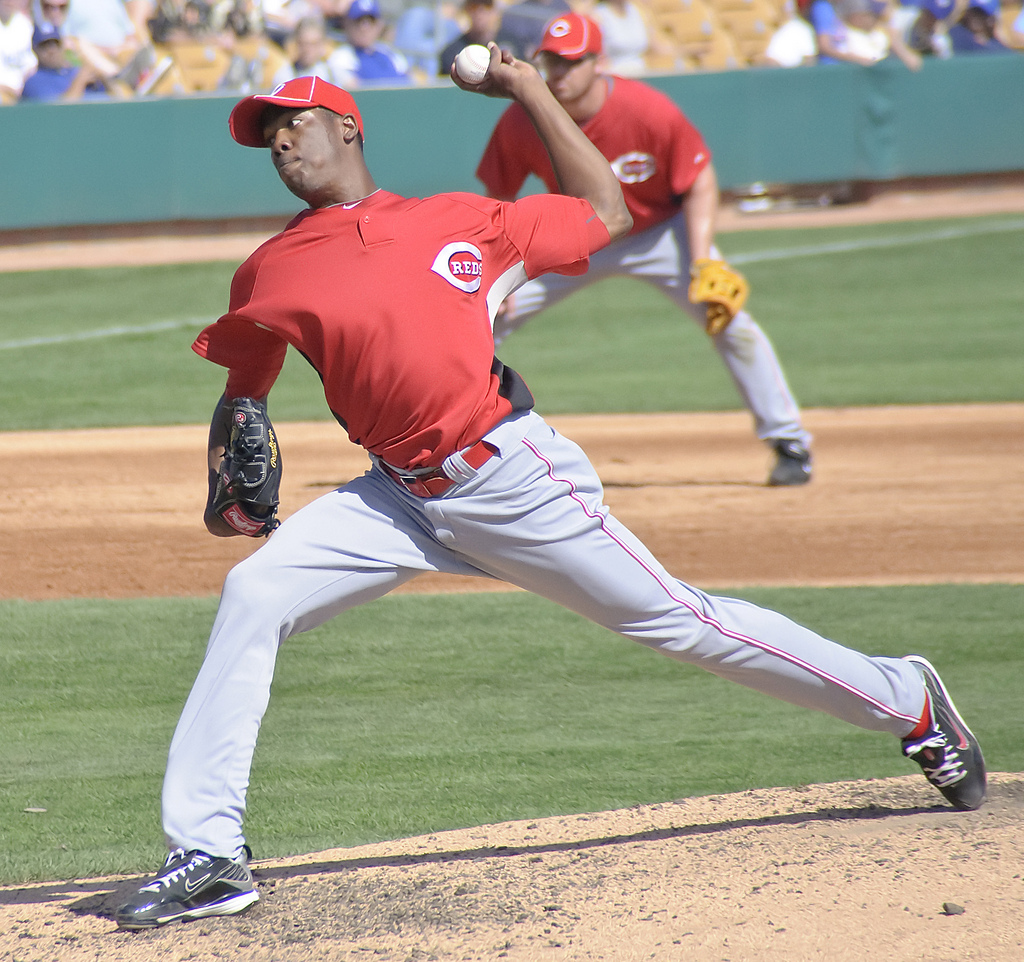
Roy Oswalt … last to win 20 games in consecutive seasons.

After what was described as an impressive throwing session the (currently) first place Colorado Rockies signed 35-year-old right-handed hurler Roy Oswalt to a minor league contract – a move BBRT sees as low risk with a potentially high reward. (I really wish my Twins had been willing to take this “chance.”)  While Oswalt struggled a bit with Texas last season (4-3, 5.80 ERA in 17 appearances/9 starts), his fastball reportedly remains in the 90+ range and 2012 did see him record 59 strikeouts in 59 innings, while walking only eleven.

In 12 MLB seasons, Oswalt has a .629 winning percentage (163-96), with 3.28 ERA.  If he can regain his form, he could pay dividends for the Rockies either as a starter (you can be pretty sure the Rockies will need some help along the way) or in long relief. 

In picking up the three-time All Star, the Rockies also gained the answer to a MLB trivia question.  (BBRT loves to mix a little history into today’s news.)  Oswalt is the answer to the query, “Who is the last major league hurler to win twenty games two seasons in a row?”  Yep, it was Oswalt – 20-10 in 2004 and 20-12 in 2005.  BBRT hopes to see Roy back in the NL sometime this season.

Here are a few other 20-game winner factoids.

– Most 20-win seasons MLBCy Young, as you might expect, racked up a record 15 20-win seasons (five of those were 30 or more), nine in the NL (Cleveland/St. Louis) and six in the AL (Boston).  Young led his league in wins five times, losses once and was a three-time 20-game loser.  In a 22-season career (1890-1911), he went 511-316, with a 2.63 ERA.

– Most 20-win seasons NL … The National League record for 20-win seasons is 13, shared by Christy Mathewson (New York Giants) and Warren Spahn (Boston/Milwaukee Braves).  Mathewson pitched 17 seasons (1900-1916), lead the NL in wins four times, had three straight seasons of thirty wins or more (1903-05) and finished at 373-188, 2.13.  Spahn pitched 22 seasons (1942-65, with three years lost to WWII service), led the NL in wins eight times, including four years in a row (1957-61). Spahn’s career numbers are 363-245, 3.09.

–  Most 20-win seasons AL … The American League record for 20-win seasons –  at 12 – belongs to the Washington Senators’ Walter Johnson.  Johnson pitched 21 seasons (1907-27), led the league in wins six times, including four straight (1913-16).  He finished his career at 417-279, 2.17.

– The oldest pitcher to win 20 games in a season … This honor belongs to Warren Spahn, who – at age 43 – went 23-7, 2.60, leading the NL in complete games with 22.

– The youngest 20-game winnerDwight Gooden of the 1985 Mets won his 20th game at the age of 20 years, 9 months and 9 days – edging out Bob Feller (who won 20 as a 20-year-old in 1939) by just shy of one month.  While it was Gooden’s only 20-win campaign, Feller went on to five more 20-victory seasons.  Notably, both Gooden and Feller led their league in strikeouts as 20-year-olds – and, in the previous season as 19-year-olds, both were 17-game winners and league strikeout leaders.  (Feller, at age 20, was in his fourth MLB season, Gooden in his second.)

A Few April Surprises

Here are a few April surprises – at least from BBRT’s point of view.  This post doesn’t touch on them all, there have been plenty.  For example, there is no commentary on Colorado’s first-place standing (at the end of April) in the NL West, Orioles’ first baseman Chris Davis’ .348–9–28 start, Roy Halladay’s early season difficulties, the Yankees’ unique triple play or the fact that the Tigers have three hurlers averaging better than a strikeout per inning. (Or for my fellow Twins fans, Carlos Gomez hitting .360 through April for the Brewers and Kevin Slowey with a 2.15 ERA, with six walks and 29 strikeouts in six starts for Miami.)

So, here are a handful of April “surprises’ that captured BBRT’s attention. 

Philip Humber … 6 losses by the end of April.

Phil Humber – yes, he of the April 21, 2012, perfect game – started the 2013 tying a different kind of unique record.  In the month of April, the Astros’ Humber started six games and ran up an 0-6 record (29 2/3 innings pitched, 7.58 ERA, 44 hits, 10 walks, five wild pitches).  The only other starting hurler to notch six April losses was the A’s Dave Stewart in 1984, a year in which he went 7-14.    Still BBRT is surprised to see a pitcher get six starts in a single month – to get a decision in every outing – and, of course, to lose them all.  Humber can take solace in the fact that just three seasons after his 0-6 opening month, Stewart started a string of four consecutive 20-win seasons.  Not likely for Humber, however, whose career ERA is north of five.


A surprising ten April saves for the equally surprising Bronx Bombers.

The Yankees … 16-10 in second place in the AL East.

The Yankees – without Derek Jeter, Alex Rodriguez, Curtis Granderson, from day one, and now Francisco Cervelli and Kevin Youkilis – are an early season surprise.  BBRT really thought age and injuries would quickly drag the Bronx Bombers toward the bottom of the division.  However, here they are in second place at the end of April, thanks to some individual surprises, particularly: Vernon Wells, who after two down years with the Angels, hit .300 with six home runs and 13 RBIs in April; and Travis Hafner, showing new life at age 36, sitting at .318-6-17.  (Maybe there is something to the aura of the pinstripes.) Not surprising, Robinson Cano leads the NY offense (.327-7-17).  On the mound, veterans Hiroki Kuroda, C.C. Sabathia and the ageless Andy Pettite (3-2, 2.86) and Mariano Rivera (10 saves, 1.74 ERA) lead the way.  Still, despite the early season surprise, BBRT sees a Yankee fade as we hit the dog days of August.


Adam Wainwright … 3 walks (one intentional) against 43 strikeouts in 44 innings.

The Cardinals Adam Wainwright ran up a 4-2 record with a 2.03 ERA through April.  Not surprising, he has true “ace” stuff.  Surprising to BBRT is that Wainwright notched 35 strikeouts before issuing his first walk of the season – and that’s a record.

Toronto Blue Jays … already 8 ½ out.

The Blue Jays made a statement in the offseason – no more “wait until next year,” 2013 is THE year.  They took advantage of the Marlins’ fire sale to add a quality lead off hitter and two proven starting pitchers: shortstop Jose Reyes and hurlers Mark Buehrle and Josh Johnson.  Then they did some wheeling and dealing with the Mets to acquire 2012 Cy Young Award winner R.A. Dickey.  In addition, they added Melky Cabrera to an offense that was welcoming back power hitters Edwin Encarnacion and a now-healthy Jose Bautista.   Pre-season polls tabbed the Blue Jays East Division favorites.

Ouch!  One month in and that Jays are at 10-17, 8 1/2 games behind division-leading Boston.  What happened?  It starts with Jose Reyes, who was hitting .395 with one home run, five runs scored, five RBI and five stolen bases after 10 games.  Then a severe ankle sprain put him on the disabled list for an expected three months.  Buehrle and Johnson are a combined 1-2, 6.57 in 9 starts; R.A. Dickey at 2-4, 4.50 and has looked more like the pitcher who went 41-50 from 2001-2011 than 2012’s 20-game winner; and PED-free Melky Cabrera is hitting just .250 with no home runs. Couple that with slow starts from just about the whole lineup and the Jays have dug a surprisingly deep hole.  BBRT does expect Josh Johnson to right his ship, but .500 seasons from Buehrle and Dickey would not surprise.


Game changer for the Braves!

Justin Upton … prestigious power display.

.298, 12 homers, 19 RBI in April.  Enough said.  Well, one more surprise, the average distance of those 12 dingers?  Each exceeded 400 feet, for an average of 423.5 feet. We all knew he’d be good for the Braves – just surprised that he’s this good this fast.

The Washington Nationals … popular pick to win the NL crown, now sitting at 13-14, a surprising 4 ½ games behind the Atlanta Braves.

The Nats’ problem appears to be a lack of offense.  Despite a blistering start by Bryce Harper .(344-9-18 through April), the Nationals finished the month 12th in the league in runs scored (96), 13th in batting average (.234) and sixth in home runs (27).  That lack of offense explains Stephen Strasburg’s surprising 1-4 record, despite a 3.13 ERA and 36 strikeouts in 37 innings pitched.  With their depth of pitching – and the fact the some early bullpen issues seem to be working themselves out – BBRT expects the Nationals to remain in the hunt (and make the playoffs).

Boston … the first-place Red Sox.

Boston ended the 2012 season in apparent disarray, discontent and, according to some sources, outright animosity – finishing last in the AL East at 69-93, 26 games out.   The goal for 2013 was to change the personality of the team – and that meant changing some personnel, from the manager (John Farrell replacing Bobby Valentine) on down.  On the field, the Sox avoided some of the big name opportunities, going for steady, solid performers with equally solid clubhouse reputations.  Among the additions that have paid dividends early:

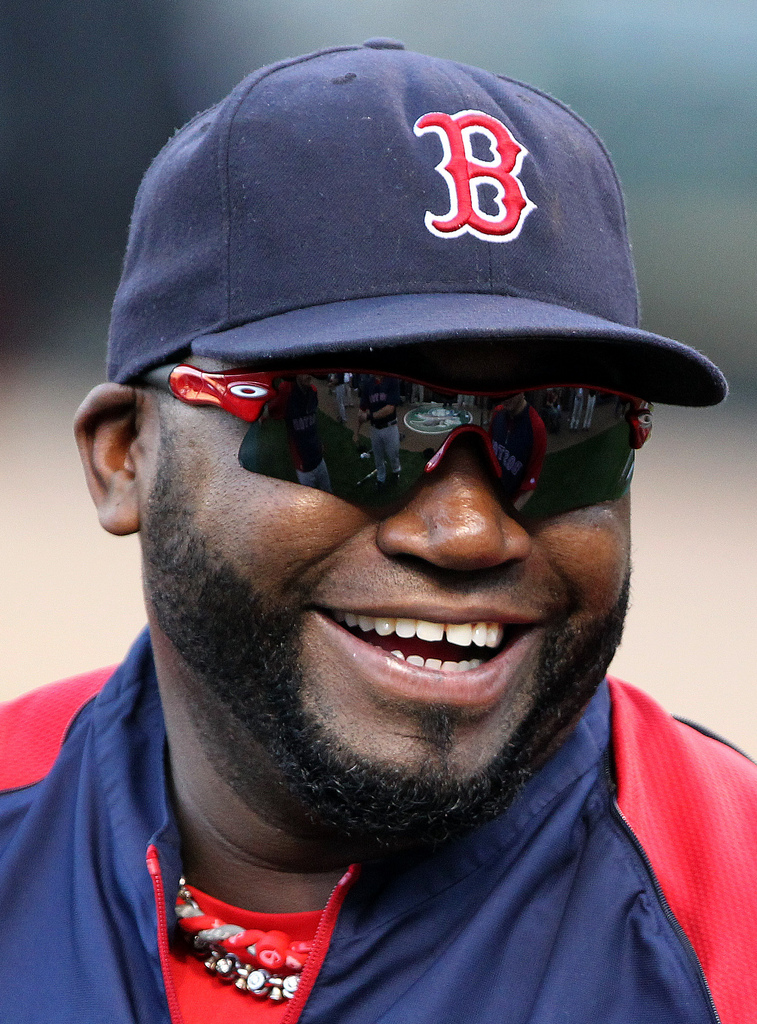
1B-DH-C Mike Napoli who has driven in 27 runs in his first 26 games; Shane Victorino, out with a back issue now, but sporting a .292 average over 19 games; and reliever Kuji Uehara, with a 1.69 ERA and seven holds in 12 games.  But, in reality, it’s been the core holdovers that have boosted the Sox – particularly strong performances from starters John Lester and Clay Bucholz (who went a combined 20-22 in 2012).  Through April the pair are 9-0 – Buchholz, 5-0, 1.19 ERA and Lester, 4-0, 3.11.  In addition, David Ortiz has come back with a vengeance hitting .500 (18 for 36) with three home runs and 15 RBI in his first nine games back in the lineup.  Then there is Dustin Pedroia, hitting at a .337 clip with 16 runs scored and 12 RBI.  It looks to BBRT that the surprising Red Sox will remain in the hunt in a tight AL East race.

Torii Hunter …  .370 in 23 games.

There was a popular TV commercial that used the line, “You’re not getting older, you’re getting better.”  That describes the surprising 37-year-old Torii Hunter, now patrolling right field for the (not surprising) first-place Detroit Tigers.  In 2012, Hunter surprised us all with a .313-16-92 season (with nine steals) for the Angels.  It was Hunter’s best average ever, and his fifth-highest RBI total in 16 seasons.  In 2013, Hunter is off to a .370-1-12 start.

The Angels (9-17) and Josh Hamilton (.204 average, 32 strikeouts in 108 at bats).

It shouldn’t really be a surprise, the Angels have already proven that you can go deep – and expensive – into the free agent market without guaranteeing the post season.  Still, when the Halos added Josh Hamilton to the Mike Trout, Albert Pujols, Mark Trumbo powerhouse, expectations were high (despite a somewhat iffy starting rotation minus Zack Greinke).  Both Hamilton and the Angels have surprised with their April futility.  Hamilton’s is hitting just .204, with 2 homers and 9 RBI going into May. Even with Hamilton’s slow start, the Angels rank in about the middle of the AL in offensive output.  The pitching, however, ranks 14th (based on ERA) out of 15 teams – and, with ace Jered Weaver on the DL, things don’t look promising.  Fact is, the Angels would have been better off spending some of the Hamilton money on pitching.  Will they bounce back? Doubtful, unless they come up with some arms.  Will Hamilton rebound.  Probably, but he’ll likely fall well short of 2012’s .285-43-128 (but .280-35-102 would not surprise).

Josh Donaldson (.314, 2 HR, 20 RBI) and the Oakland A’s (16-12).

The 27-year-old Oakland third baseman (a converted catcher) has progressed dramatically in the field and at the plate since winning the third base job (after injuries to Brandon Inge and Scott Sizemore) last season.  Still he came into the season with a .232 average in just 306 at bats in two seasons.  Now, he’s not only hitting over .300, he’s driven in 20 runs (sixth in the AL) as of May 1 – and he’s showing solid leather at third base.

The A’s surprise is a little more complicated.  BBRT expected the A’s young pitching (a record 54 wins from rookies a year ago) to falter a bit and, after notching the AL’s second-lowest ERA in 2012, the A’s ranked 12th through April.  On the other hand, they led the AL in runs scored – despite standing a surprising 9th in home runs and 10th in batting average. Over time, BBRT thinks the pitching will pick up, but the run scoring will tick down and the A’s will finish third this season.

Shin-Soo Choo … impervious to pain.

The Reds wanted a leadoff hitter – and they picked up a good one in Shin-Soo Choo (through April, .337 – four homers – 11 RBI – 20 runs scored – 17 walks.)  The surprise for BBRT is Choo has already been hit by a pitch 10 times.  Ouch!  That’s taking one – and then some – for the team.

Got any April surprises you’d like to share?  BBRT welcomes your comment?

How the Game Has Changed – May Day Anniversary

Today, is the anniversary of the longest game (by innings) in MLB history … line score below … a 26-inning, 1-1 tie (called on account of darkness) between the NL’s Brooklyn Robins and Boston Braves, played on May 1, 1920.  It’s also an anniversary that provides a pretty good indicator of how the game has changed over the years.  In this one, both starting pitchers went the distance.


May 1, 1920

Brooklyn              000 010 000 000 000 000 000 000 00           1   9   2

Boston                  000 001 000 000 000 000 000 000 00           1 15  2

Starting pitchers Leon Cadore of Brooklyn and Joe Oeschger of Boston (NL) each threw more than 300 pitches (analysts estimate Cardore at 345 and Oeschger at 319) in completing their 26-inning, record-setting starts. Cadore gave up 15 hits and five walks, while fanning 7; while Oeschger allowed only nine hit and four walks, while also striking out seven batters.   Oh, and here’s another sign of how the game has changed, the time of the 26-inning contest was only 3 hours and 50 minutes.

By way of comparison, there have been two 25-inning games in MLB history, with the Cardinals topping the Mets on September 11, 1974 and the White Sox besting the Brewers on May 8, 1984.  Those contests saw the use of 13 and 14 pitchers, respectively. The Cardinals win took 7 hours and 4 minutes to complete, while the White Sox took 8 hours and 6 minutes to defeat the Brewers.

Your Longevity Leaders – At The Plate & On The Mound

Gary Sheffield – a long ball longevity leader.

What major league players hit home runs both as teenagers and in their forties?  That’s a pretty popular trivia question – and the answer is Ty Cobb, Rusty Staub and Gary Sheffield.  More on those three later in this post, but first a look at an achievement of longevity that is just as rare:  Pitches who earned major league victories as teens and in their forties.  The three masters of mound tenure are Hall of Famers Herb Pennock and Bert Blyleven and, a less likely prospect, Mike Morgan.

Herb  Pennock logged his first win (as an 18-year old) with the Philadelphia Athletics in 1912 and the last of his 241 victories (at age 40) with the Red Sox in 1934.  In 22 MLB seasons, Pennock pitched for three teams and went 241-162, with a 3.60 ERA.  Pennock earned three wins as a teenager and two wins after his fortieth birthday.

Bert Blyleven earned his first MLB victory (at age 19) for the Minnesota Twins in 1970 and garnered his final win in 1992 (age 41) for the California Angels.  In between, in 22 seasons, he pitched for five teams, going 287-250 with a 3.31 ERA. Blyleven captured ten victories as a teenager and eight wins in his forties.

Mike Morgan – the non-Hall of Famer in this elite longevity trio – won his first game in 1979 (at age 19) for the Oakland A’s – after going 0-3 for the A’s as an 18-year-old the previous season.  He picked up his last MLB win in 2002 (at age 42) for the Arizona Diamondbacks.  Morgan pitched in 22 seasons – for 12 different teams.  His longevity is a bit surprising, since he finished above .500 in only 5 seasons – running up a career record of 141-186, with a 4.23 ERA. Morgan picked up two wins as a 19-year-old and seven at 40-plus.

Now back to those long-ball hitters.

Ty Cobb hit his first MLB homer as a member of the Tigers back in 1905 (at age 19) and the last of his roundtrippers for the Philadelphia Athletics (at age 41) in 1928.  He has the fewest home runs of any of this trio, with 117 – but is the only one to lead his league in long balls, with 9 in 1909.  Overall, he put in 24 seasons for two teams (22 with the Tigers) and, of course, captured a dozen batting titles.  Cobb hit two home runs as a teenager and six at age 40-plus.

Rusty Staub punched his first home run for Houston in 1963 at age 19 and his last (at age 41) for the Mets in 1985.  He played 23 seasons (for five different teams) and hit a total of 292 homers.  He hit six dingers before his twentieth birthday and two after his fortieth.

Gary Sheffield is the big bopper on this list, topping 500 homers in his 22-year, 8-team career.  He hit his first homer in 1988 (age 19) for the Milwaukee Brewers and his last in 2009 (age 40) for the Mets.  He finished with 509 homers, but never led the league.  (He did win a batting title, hitting .330 for the Padres in 1992.)  Sheffield popped four homers as a teen and ten as a forty-year-old

Brotherly Love – Uptons Go Back-to-Back

Upton brothers launched their own theory of relativity against the Rockies.

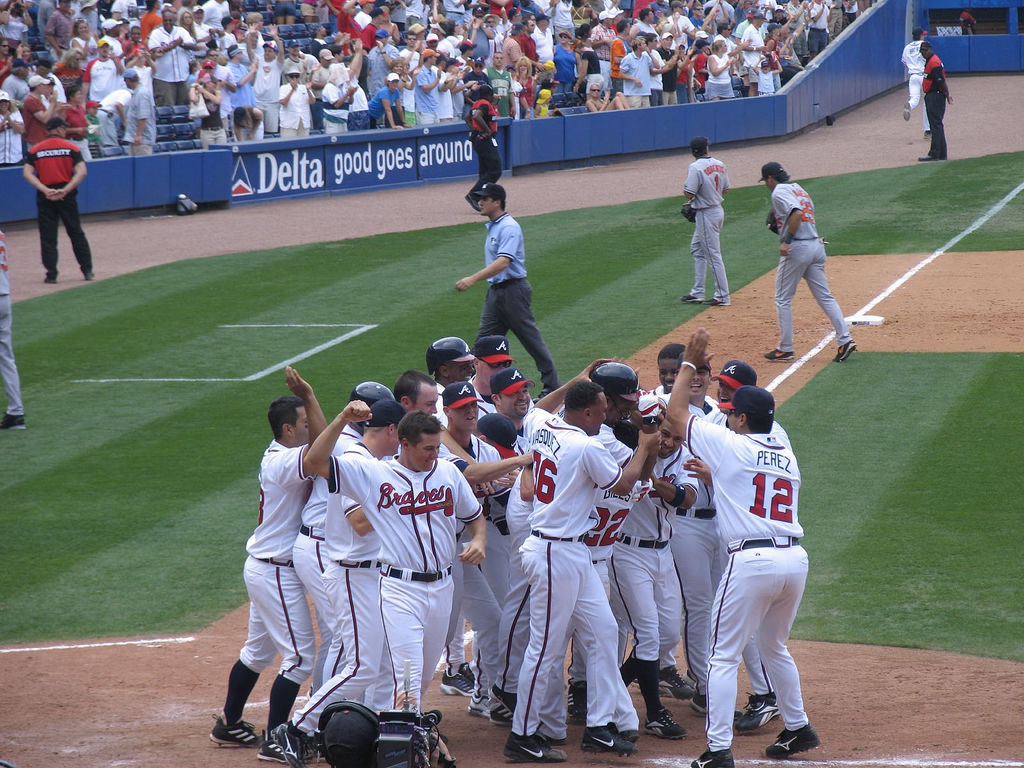
Yesterday (April 23, 2013), 21,724 fans attending the Colorado Rockies homes game against the red hot Atlanta Braves were treated to a baseball rarity, as brothers B.J. and Justin Upton cranked back-to-back homers in the fifth inning of the Braves’ 10-2 victory.

How rare are MLB back-to-back jacks by brothers?  The Uptons were only the second set of brothers to accomplish the feat – following Paul and Lloyd Waner (both Hall of Famers), who hit back-to-back dingers (also in the fifth inning) for the Pittsburgh Pirates in a 7-2 road win over the New York Giants on September 15, 1938.

For BBRT, the Upton’s accomplishment brought back memories of an even rarer long ball feat – back-to-back home runs by father/son major leaguers.  It happened in the first inning of a Seattle Mariners 7-5 loss to the California Angels on September 14, 1990 and the principals were, of course, Ken Griffey Senior and Junior.  (By the way, for you trivia buffs, the Griffeys’ shared first name is not Ken.  The pair are, in fact, George Kenneth Griffey, senior and junior.) The two remain not only the only father/son duo to hit back-to-back homers, but the only such pair to even homer in the same game.

This brings BBRT to another of those “in baseball we count everything” moments.  When it comes to the Upton’s’ accomplishment – and going beyond back-to-back dingers – brothers homering for the same team in the same game is itself a rare feat.  It’s been accomplished just 27 times in MLB history to date.   This is comparable in rarity to the pitching of a perfect game (23 times).

Here are the players:

Four times: 

Jason and Jeremy Giambi, A’s

Vlad and Wilton Guerrero, Expos

Three times:

Justin and B.J. Upton, Braves (they’ll be moving up this list)

Paul and Lloyd Waner, Pirates

Hank and Tommy Aaron, Braves (in Milwaukee)

Two times:

Tony and Billy Conigliaro, Red Sox

Cal, Jr. and Billy Ripken, Orioles

Adrian and Edgar Gonzalez, Padres

Once:

Felipe and Matty Alou, Giants

Matty and Jesus Alou, Giants (making Matty the only brother to hit homers in the same game with two different brothers)

Bengie and Jose Molina, Angels

Adam and Andy LaRoche, Pirates

By the way, if you are on one of Ballpark Tours trips (see ballparktours.net) this year, you can expect something from this post to be on the traditional K-Kwiz.  

“42” – See It, You’ll Like It

BBRT spent just over two hours yesterday afternoon immersed in “42” – the recently released feature film depicting Jackie Robinson’s breaking of major league baseball’s “color line” in 1947.  At the conclusion of the inspiring film, the theater audience broke into applause – a tribute to both the quality of film and (even more) to the real-life courage, dignity and perseverance of its primary characters:  Jackie Robinson (played by Chadwick Boseman), Dodgers’ owner Branch Rickey (Harrison Ford) and Rachel Robinson (Nicole Beharie). BBRT highly recommends “42” – and not just for baseball fans.

This is much more than a movie about our national pastime.  It’s also documents a watershed moment in American history and even presents a true story of love under pressure.   

It’s a tale of how the often surly, but clearly idealistic, Branch Rickey – played to perfection by Ford – chose Jackie Robinson as his partner in efforts to break baseball’s unwritten, but long understood, color line.  Robinson had not only the playing skills Rickey sought (he was a Negro League star), but the strength of character.  He had been a multi-sport athlete at UCLA and an Army Officer.  In Rickey’s (correct) judgment Robinson had the intellect to understand the importance of taking his place in history and the courage and discipline to face the challenges it presented.  In Rickey’s words “the guts not to fight back.” 

The little-known Boseman fills his role ably, he not only looks and moves like an athlete, he blends on-field strength and stoicism with off-field sensitivity and rage to give us a bit of insight into how difficult being “the first” must have been.  As the movie takes us from Robinson’s original signing through his first season in the major leagues, we see the depth of prejudicial abuse Robinson must face – the segregation of accommodations,  racial taunts from fans and opposing players, shunning by even his own teammates, even death threats directed toward Robinson and his family.  And, Robinson must deal with all of this while playing ball well enough to prove he (and those who would follow him) belong in the up-to-then “white” major leagues. 

How difficult was it for Robinson not to fight back?  This was a man who had been court-martialed (found not guilty) in the Army for refusing an order to move to the back of a bus.  Robinson, as history and “42” shows us, maintained his public composure and dignity under fire – with the support of Rickey and the unflinching affection and confidence of his wife Rachel.    

There are, throughout the movie, moments with “messages.”  In one scene, a young boy is enjoying the pastoral beauty of the ball park with his father – until Robinson takes the field.  The boy’s father begins to hurl a string of racist epithets at Robinson and the child looks dismayed for a moment and then energetically parrots his father’s racist venom.  On the other side of the issue, we find a scene where Rickey tells Robinson of seeing a playground ball game in which a young white boy at the plate is mimicking Robinson’s moves and stance – “a young white boy pretending to be a black man,” now that is progress.

Not only is the story inspiring – and true – the baseball action is well-played and the cars, clothes and ball parks and (unfortunately at times) the attitudes are period-perfect.  It can be a walk down memory lane or, for those too young to remember, an eye-opening look at life in the ’40s.

It is, most certainly, a great and important story – well told.  For BBRT, “42” was an afternoon well spent.  I encourage you to see this film – and, if you can’t take peanuts and Cracker Jack, enjoy some popcorn.

Jackie Robinson – Dodgers number 42 – 1947 Rookie of the Year

151 games – .297 – 12 HRs – 125 runs – 48 RBI – 29 stolen bases 

Musings – Triple Plays, “Basebrawls” and More

TRIPLE PLAYS

Robinson Cano … started yesterday’s six-throw triple play.

Yesterday, in a 5-2 win over the Orioles, the New York Yankees turned one of the most unusual triple plays in MLB history.  It took place in the eighth inning and went like this:

The Orioles’ Nick Markakis and Alexi Casilla started off the inning with singles against Yankee starter C.C. Sabathia – putting runners on first and second with no outs.   Manny Machado then hit a sharp one-hopper to second baseman Robinson Cano, who tossed to shortstop Jayson Nix to force Markakis for out number one; meanwhile, Casilla had headed toward third and was now in “no-man’s land” between the bases; Nix tossed to Yanks’ third baseman Kevin Youkilis to start a rundown that saw Youkilis throw to Nix and then Nix back to Youkilis who applied the tag; the hitter, Machado, looking to take advantage of the rundown, had rounded first and was now in his own “no-man’s land;” Youkilis threw to first baseman Lyle Overbay, cutting off Machado’s path of retreat; Overbay then fired to Cano, who tagged out Machado at second.

In the scorebooks, it went 4-6-5-6-5-3-4.

All of the subsequent triple play media talk reminded BBRT of the day in 1990 (July 17) when BBRT’s Twins became the only team to turn two triple plays in one game.   They came in the fourth and eighth innings of a game against the Red Sox and both were of the most traditional variety.  In the fourth, with the bases loaded, former Twin (then Boston right fielder) hit a ground ball to Twins’ third sacker Gary Gaetti, who stepped on the bag and threw to second baseman Al Newman (for out number two), who relayed to first baseman Kent Hrbek to complete the triple play.  In the eighth, with runners on first and second, Red Sox second baseman Jody Reed grounded to Gaetti at third, and the around-the-horn triple play was duplicated.  The Twins, despite the triple killings, lost the contest 1-0 on an unearned run.

Other triple play factoids of interest to BBRT”

–  Hall of Famer Brooks Robinson holds the MLB record for hitting into triple plays with four;

– In 1962, Mets’ catcher Joe Pignatano ended his six-year MLB playing career by hitting into a triple play in his final at bat;

–  Ron Wright, in April 2002, had a one-game MLB career as a Designated Hitter for the Seattle Mariners.  He garnered three at bats – striking out, hitting into a triple play and hitting into a double play.  Three at bats – six outs – one MLB career.

By the way, Wright was a “glass-half-full” kind of guy, who always referred to his one MLB game as “the best day of my professional life.” For more on Wright, who was a legitimate prospect, see BBRT’s post April 28, 2012 – when BBRT took a look at the best and worst one-game MLB careers.

BASEBRAWLS

A little rant here.  We are seeing lots of “noise” around the recent injury to Zach Greinke, when Carlos Quentin charged the mound after being hit by a pitch.  BBRT noted that almost every bit of sports coverage, in the first or second paragraph, notes that the Dodgers lost their “$147-million pitcher.”  Would we be seeing all this concern, and calls for rules changes and lengthy suspensions, if the injured hurler had been a journeyman middle reliever?  BBRT regrets the injury to Greinke, but sees a lot of over-reaction out there.


Joe Adcock, principal in one of baseball’s legendary confrontations.

All this mound-charging debate took BBRT back to July 17, 1956, when Giants’ pitcher Ruben Gomez beaned red-hot Milwaukee slugger (first baseman) Joe Adcock twice in one plate appearance.  In the second inning of a Giants’ 11-inning 8-6 win, Gomez hit Adcock (who had hit eight home runs in the past ten games) in the wrist with a pitch. 

As Adcock trotted to first, words were exchanged and the 6’4”, 210-pound slugger rushed the mound.  The 6’, 170-pound Gomez – who had already received a new ball from the umpire – selected his weapon, firing the horsehide at Adcock and hitting him (a second time) in the left thigh.  As players poured from the dugouts, Gomez, unlike Greinke, thought better of facing his larger and angrier opponent – taking flight into and through the Giants’ dugout, all the way to the locker room.  As reported in “The Milwaukee Braves – A Baseball Eulogy,” Adcock charged right into the Giants’ dugout in pursuit, but was restrained by New York players and coaches – who were joined by uniformed police officers trying to restore order.  Quick-thinking organist Jane Jarvis broke into an impromptu rendition of “The Star Spangled Banner,” which quelled the disturbance.  

When the game resumed, both Gomez and Adcock had been ejected and police officers were stationed (temporarily) in front of the Giants’ dugout.  (It has also been reported that Gomez had retrieved an ice pick from the clubhouse, but was disarmed and disuaded by teammates before he could return to the field.)  Associated Press reports indicated that, after the game, both Gomez and Adcock agreed the incident was best forgotten.  Hmm?  Advice for today’s Dodgers and Padres?

EARLY SEASON SURPRISES – ALTHOUGH TOO EARLY TO DRAW ANY CONCLUSIONS

– Red Sox and Yanks atop the AL East, Blue Jays in last place – although only 1 ½ games separate the pack.

– Kansas City leading the AL Central – and Detroit 5-5 after ten games.

– Oakland proving to be “real” at 9-2, loaded Angels starting at 2-8.

– Many-Snow-Ta weather – which really shouldn’t surprise Twins’ fans at all.

– Arizona atop the NL West (although the  favored Giants are only ½ game out).

NOT UNEXPECTED

– Atlanta and Washington atop NL East.

– St. Louis and Cincinnati heading up NL Central.


DH 40th Anniversary – A Walk In The Park

Not everyone in the lineup needs one of these – at least not in the AL.

Today, the American League marks the 40th Anniversary of the initial regular season use of the Designated Hitter – a day of celebration or chagrin, depending on your stance on the issue.   (Note:  BBRT is not a big fan of the DH, but I’ve ranted about that often enough.)

A bit of trivia for you baseball history buffs.  Ron Blomberg of the Yankees was the first player to officially come to the plate as a DH – as the Yanks faced off against the Boston Red Sox in Boston, on April 6, 1973.  On the hill for the Red Sox was Louis Tiant, coming off a 15-6 season (with a league-low 1.91 ERA) in 1972) and on his way to 20 wins in 1973.  Tiant, however, did not get off to a great start.  That first inning – and Blomberg’s historic plate appearance – went like this.  Yankee Second baseman Horace Clarke singled; center fielder Roy White struck out, with Clarke thrown out stealing; right fielder Matty Alou doubled; center fielder Bobby Murcer walked; third baseman Greg Nettles walked.  This brought up MLB’s first DH in an historic spot, bases loaded, two outs.  The result was a bit anticlimactic.  Blomberg walked to force in a run.

Tiant did settle down, earning a complete-game, 15-5 win.  As a DH, Blomberg added a single, going 1-for-3.  His counterpart DH on the Red Sox – Orlando Cepeda – did not fare as well.  Despite Boston’s 20-hit attack, Cepeda went 0-for-6, with two strikeouts.  Thus began the era of the American League DH – still alive forty years later – much to BBRT’s chagrin. 

Chris Davis on Pace for 648-RBI Season


Chris Davis – off to a record-setting and record-chasing start.

Orioles’ first baseman Chris Davis is making a lot of fantasy baseball owners – not to mention Orioles’ fans – happy.  He’s off to a blazing start.  After four games, including yesterday’s grand slam against BBRT’s beloved Twins, Davis is nine for 15 (.600 average), with four home runs and 16 RBI (more RBI than 25 of the thirty teams in MLB).

This is a truly record-setting pace.  Only three other players have started a season going deep in the first four games – Willie Mays (1971), Mark McGwire (1998), Nelson Cruz (2011).  No one has homered in the first five games of any season – so keep an eye on the Orioles/Twins today.  Davis also broke the RBI record for the first four games of a season – we do count everything in baseball, don’t we?  The previous record of 12 was shared by Dolph Camilli (1935), Mark McGwire (1998) and Charles Johnson (2000). 

Going forward, here are a few marks Davis can swing for: 

Most consecutive games with an RBI:  AL, 14 games, Tris Speaker, Philadelphia, 1928; NL & MLB, 17 games, Ray Grimes, Chicago (NL), 1922

Most RBI in April:  AL & MLB, 35, Juan Gonzalez, Texas, 1998

Most RBI any month:  NL & MLB, 61 RBI, Sam Thompson, Philadelphia, August 1894; AL, 53 RBI, Joe DiMaggio, New York, August 1939

Most consecutive games with a home run:  NL, AL & MLB, 8 games, Dale Long, Pittsburgh (NL), 1956; Don Mattingly, New York (AL), 1987; Ken Griffey, Jr., Seattle, 1993

Most HR in April: AL. NL & MLB, 14 HRs, Alex Rodriguez, New York (AL), 2007; Albert Pujols, St. Louis, 2000

Most HR any month:  NL & MLB, 20 HR, Sammy Sosa, Chicago, June 1998; AL, 18 HR, Rudy York, Detroit, 1937

Why We Go To The Ballpark – Volume II

Made it to my second game of the year – thanks Nick – and was reminded again (see post of April 12, 2012) of why we go to the ballpark.  Very simply, EVERY game offers something unique for the baseball fan.  Today, April 4, at Target Field (Minneapolis), was no exception.

“The Princess Bride – for a future power hitter?

Before we get into the game, it’s time for a little rant.  First, when it comes to scoreboards, sometimes less is more.  For example, did I really need to know that power-hitting Josh Willingham’s favorite movie as a kid was “The Princess Bride” – ironic choice for a future power hitter; that it’s possible to earn a degree in “Exercise Science;” or that a certain player would like to see Australia, while another “wishes he could sing?”  Note:  During the seventh-inning stretch, we all sing.   Let’s limit the scoreboard to baseball related minutia.

“Unique warm-up technique of Rick Porcello.

Okay, now to the game – starting with the pregame.  Here’s one of those “unique” opportunities.  Sitting in row four down the left field line, I had the opportunity to watch the Tigers’ Rick Porcello warm up.  He started with the regular, stand-up/wind-up, building speed and sizzle.  Then, with the pitching coach watching, he laid down a pad and threw (nearly as hard) kneeling on one knee.  (Made me think of Tim Conway’s short golfer routine).  It was the first time I’d seen this warm-ritual and I’d like to know what purpose that particular exercise serves.  (See photo.)

The game itself was great – starting with the temperature:  sunny and in the fifties, lots more conducive to baseball then Monday’s bone chilling home opener. (See post of April 1, 2013).

My Twins got off to a slow start, giving away two unearned runs in the first three innings.  They tied it in the bottom of the third with a two-run homer by the aforementioned Josh “Princess Bride-fan” Willingham and moved into the lead with a solo shot (into the wind and off the facing of the second deck in left field) by third baseman Trevor Plouffe, dutifully identified as a “Lion King” fan in his youth.  It stayed that way (tight 3-2 game) until the Twins broke it open with five runs in the bottom of the eighth. 

Among the happenings that helped make this game unique:  the Twins (effectively) used seven pitchers (six over the last 3 2/3 innings); while the Tigers (less effectively) used five hurlers (four over the last 2 2/3); Twins center fielder Aaron Hicks got his first major league hit (and RBI)  in the eighth inning, a two-run single; Twins pitcher Ryan Pressly made his first major league appearance in the ninth inning, giving up one hit and also notching his first-ever MLB strikeout (former Twins fan-favorite Torii Hunter).

The highlight for BBRT was the Tiger seventh.  In a 3-2 game, Twins reliever Josh Roenicke opened by walking number-nine hitter, shortstop Omar Infante and giving up a double to lead-off hitter, center fielder Austin Jackson.  Then with runners on second and third, Roenicke struck out right fielder Torii Hunter.  Twins’ manager Ron Gardenhire had Roenicke intentionally walk the always dangerous Miguel Cabrera (2012 Triple Crown winner), bringing up the also dangerous first basemen Prince Fielder (with the bases loaded and one out in a one-run game).  Gardenhire then brought in Tyler Robertson to face Fielder and the move paid off, as Robertson struck out Fielder.  This brought up DH Victor Martinez with the bases still full.  Gardenhire again went to the pen, bringing in Casey Fien, who got Martinez to pop out to second base – and a collective sigh of relief went through the crowd.  This kind of tension is what keeps us all coming back to the ball yard.

Like all of you, BBRT is looking forward to many more tension-filled movement over the next 7+ months.