BBRT’s 2014 Hall of Fame Selections/Predictions

baseball_hall_of_fame-300x225Baseball Hall of Fame Ballots are now in the hands of more than 600 voting members of the Baseball Writers Association of America. (The results will be announced January 8, 2014.)  Let’s hope the writers are less stingy with their support than one year ago, when none of the players on the ballot received the necessary 75 percent support. That seems unlikely this year, with two 300-game-winning hurlers, a member of the 500-homer/.300 average club and the all-time leading home run hitter among second baseman appearing on the ballot for the first time.

Looking at this year’s ballot – 36 players, 19 first-timers – the choices may be difficult, with each voter allowed to vote for a maximum of ten players.  We can expect some writers to hold back votes from players suspected of PED use (seems like a legitimate reason), others will hold back votes to make a statement on “what it takes to be a first-ballot” inductee (less legitimate, but understandable) and still others may send in blank ballots (for no apparent reason). In this column, I will focus on how BBRT would cast its ten votes (if BBRT had a ballot) and BBRT’s predictions for the actual outcome.  I’ll start with a “short” version of BBRT’s selections and predictions – and then go on to a more detailed explanation of the reasons for BBRT’s choices.

BBRT’s Hall of Fame Selections – if I had a vote – In Priority Order


Group One – Should Be No Doubt

1. Greg Maddux – 355 wins, four consecutive Cy Youngs, 18 Gold Gloves

2. Tom Glavine – 304 wins, two Cy Youngs, four Silver Sluggers

3. Frank Thomas – One of only eight members of 500-HR/.300 average club, two-time MVP

4. Craig Biggio – 3,060 hits, 1,884 runs scored, 291 HRs, 414 steals

Group Two – Debatable, But Clearly Deserve Support

5. Lee Smith – 478 saves, third all time

6. Jeff Kent – Most home runs by any second baseman, nine more RBI than Mickey Mantle, 2000 NL MVP

More Debatable, But Would Get BBRT’s Vote

7. Mike Piazza – .308 career average, most home runs by a catcher, 12-time All Star, benefit of the doubt on PEDs.

8. Jeff Bagwell – 449 HRs, 202 steals, 1,529 RBI, 1991 NL Rookie of the Year, 1994 NL MVP, twice recorded seasons of 40 or more HRs and 30 or more steals

9. Tim Raines – 808 stolen bases (fifth all time), 2,605 hits (.294 career average), 1,571 runs scored.

10. Jack Morris* – 254 wins, most wins in 1980s, “big game grit” LAST YEAR ON THE BALLOT (and I was at his 1991 World Series Game 7 10-inning shutut).

*If it wasn’t Morris’ last year on the ballot, Mike Mussina and his 270 wins would get this vote.

BBRT Predictions as to Whom the Baseball Writers Vote In


BBRT projects that the BBWAA, being notoriously stingy with their votes, will elect Greg Maddux, Tom Glavine, Frank Thomas and Craig Biggio from this “crowded with talent and newcomers” ballot.  Jack Morris has an outside chance of getting a “last year on the ballot” bump, but there continues to be enough debate on his “Hall-worthiness” to keep him on the outside.

Big names strongly connected with the PED issue, like Barry Bonds, Roger Clemens, Mark McGwire and Sammy Sosa are likely to remain on the sidelines, as emotions related to PED-use run high. Even hints of PED suspicion could cut into vote totals for other BBRT-supported candidates like Mike Piazza. Some analysts even speculate that Frank Thomas is in danger of falling short just because he is big and hit a lot of home runs (there isn’t even a hint of PEDs), couple that with first-ballot prejudice and he does face a challenge (BBRT thinks he will squeak in).

Mike Mussina is likely to denied because of Maddux’ and Glavine’s presence, and the view among some voters that first-ballot selection is reserved for the very few.  Jeff Kent is another likely first-ballot prejudice victim.

A few players who seem to be heading in the right direction in terms of support include Mike Piazza, Jeff Bagwell and Tim Raines.  Among the bigger names who may see support waning  – Lee Smith, Alan Trammel, Fred McGriff, Edgar Martinez.

A More Detailed Look at BBRT’s Selections from This Year’s HOF Ballot


Should Be Undebatable  Shoo-Ins

BBRT believe this first group of players all have a combination of milestone achievements and character that should make their 2014 Hall of Fame induction undebatable. (We know that won’t happen.)

Greg Maddux (RHP, 1986-2008 – first time on ballot)
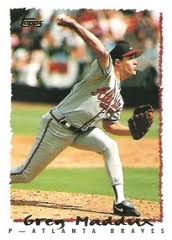
MadduxNicknamed “The Professor” for his studious demeanor and ability to take hitters “to school,” Greg Maddux brings to the ballot a 23-year career, 355 wins (#8 all-time) versus 228 losses, a 3.16 lifetime ERA, 3,371 strikeouts, four consecutive NL Cy Young Awards (1992-95) and an MLB-record 18 Gold Gloves.  During his four-year run as NL Cy Young Award winner, Maddux went 75-29, with a 1.98 ERA. Twice a 20-game winner, Maddux was an eight-time All Star, led the NL in wins three times, winning percentage twice, ERA four times (with a career best of 1.56 in 1994), complete games three times, shutouts five times and innings pitched five times.  He also notched a record 17 consecutive seasons of 15 or more victories.  Maddux made 35 post-season appearances (30 starts), going 11-14, with a 3.27 ERA.

Clearly, on statistics alone, Maddux crosses every “t” and dots every “i” in milestone achievements for Hall of Fame selection.  Maddux also played with game with a quiet, but confident, dignity – which, when coupled with his performance, makes him a deserving player not only for first-ballot selection, but to break the unanimous selection barrier.  (Although you can bet there will be some unexplainable holdouts.) Maddux pitched for the Chicago Cubs (1986-92; 2004-06), Atlanta Braves (1993-2003); Los Angeles Dodgers (2006, 2008); and San Diego Padres (2007-08.)

Greg Maddux’ best season: 1995 Atlanta Braves … 19-2 (league-leading wins), 1.63 ERA (league low), league-leading ten complete games, league-leading three shutouts, league-leading 209 2/3 innings pitched, and 23 walks versus 181 strikeouts.  Cy Young Award.

Tom Glavine (LHP, 1987-2008 – first time on ballot)
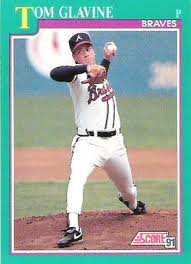
GlavioneLike Maddux, Glavine topped the milestone 300-win mark, going 305-203 (#21 all time in wins), with a 3.54 ERA in a 22-year MLB career.  Glavine was a ten-time All Star, two-time Cy Young Award winner (1991 and 1998).  He won twenty or more games five times, led the NL in victories five times, complete games once, shutouts once and games started six times. He also captured four Silver Slugger Awards as the NL’s top hitting pitcher.  Glavine made 35 post-season appearances, all starts, going 14-16, with a 3.30 ERA.

It would be fitting for Glavine and Maddux to go into the Hall together, not only did their careers overlap, but from 1993-2002 they were teammates and number-one and number-two starters for the Atlanta Braves.  During that time, Maddux went 178-77, while Glavine was 169-83. Glavine pitched for the Atlanta Braves (1987-2002, 2008) and New York Mets (2003-07).

Tom Glavine’s best season: 1998 Atlanta Braves …. League-leading 20 wins (versus 6 losses), 2.47 ERA.  Cy Young Award.

Frank Thomas (1B/DH, 1990-2008 – first time on the ballot)
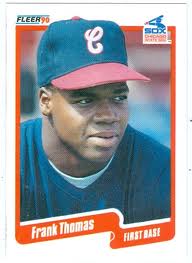
ThomasNicknamed “The Big Hurt” because of the damage the 6’ 5”, 240-pound slugger could do to a baseball, Frank Thomas (like Maddux and Glavine at the top of this list) put up some milestone numbers.  Most important, at least to BBRT, is his status as one of only eight players to date to amass 500 home runs with a .300+ career batting average. That list is pretty elite – Thomas, Babe Ruth, Jimmie Foxx, Mel Ott,  Ted Williams, Hank Aaron, Willie Mays, and Manny Ramirez.  BBRT note: Albert Pujols is sure to join this fraternity, now standing at 492 HRs and a .321 average; and Alex Rodriguez is on the cusp with a .299 average and 654 homers. Thomas’ Hall of Fame resume includes 521 homers (#18 all time), a .301 career average, 2,468 hits, 1,704 RBI (#22 all time), 1,494 runs and 1,667 walks (#10 all time). Thomas was a two-time AL MVP (1993 & 1994), five-time All Star and captured one HR and one batting title in his 19-year career.  He hit .224, with three homers and five RBI in 16 post-season games.  Thomas played for the Chicago White Sox (1990-2002), Oakland Athletics (2006, 2008) and Toronto Blue Jays (2007-09).

Thomas may lose a few votes among “alleged purists” for his time at DH – but BBRT believes the company he keeps as a member of the 500 HR, .300+ average club makes him a worthy first-ballot Hall of Fame electee.

Frank Thomas’ best season: 1996 Chicago White Sox… 141 games, 184 hits, .349 average, 40 home runs, 134 RBI, 110 runs, 109 walks, league-leading 26 intentional walks.

Craig Biggio (2B/C/OF, 1988-2007 – second time on the ballot)
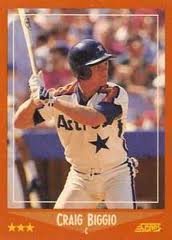
BiggioCraig Biggio – with his 3,060 career base hits (#21 all time) should have been elected last year.  In his 20 MLB seasons, Biggio scored 1,884 runs (15th all time), hit 291 home runs and stole 414 bases.  He was a seven-time All Star and a four-time Gold Glove winner, who spent notable time at second base, catcher and in the outfield.  He led the NL in runs twice, doubles three times, stolen bases once and hit-by-pitch five times.  His 668 doubles are the most ever by a right-handed hitter (and fifth all time) and he is one of only two players to collect 50 doubles and 50 stolen bases in the same season.  He holds the NL record for home runs to lead off a game (53) and for hit-by-pitch (285).  Biggio played his entire 18-year MLB career with the Houston Astros.

It’s a year late, but Biggio should win election this time around.

Craig Biggio’s best year:  1998 Houston Astros – 160 games,  .325 average , 210 hits, 123 runs, 20 HRs, 88 RBI, league-leading 51 doubles, 50 stolen bases.

Deserving Candidate Who Also Would Get BBRT’s Vote (If I had one)

This next group of candidates consists of players whose entrance into the Hall of Fame might prompt some discussion and debate – but when the discussion is done, BBRT is confident they should be seen as deserving of election.

Lee Smith (RHP, 1980-97 – 12th time on the  ballot)

Lee Smith’s 478 saves put him third on the all-time list (he was number-one when he retired after the 1997 season).  He recorded 13 consecutive seasons (in an 18-year career) of 25 or more saves, a 3.03 lifetime ERA and 1,251 strikeouts in 1,289 innings pitched; led his league in saves four times; and made seven All Star teams. Smith pitched for the Chicago Cubs (1980-87); Boston Red Sox (1988-90); St. Louis Cardinals (1990-93); New York Yankees (1993); Baltimore Orioles (1994); California Angels (1995-96); Cincinnati Reds (1996); Montreal Expos (1997).

With the third most saves all time, Smith gets BBRT’s vote.

Lee Smith’s best season:  1991, Cardinals – 6-3, 2.34 ERA, 47 saves, 73 innings pitched, 67 strikeouts.

Jeff Kent (2B/3B/1B, 1992-2008 – first year on the ballot)

Kent will probably be hurt by those writers who maintain you must be “extra” deserving to get a first-ballot vote, but BBRT believes Kent is a deserving candidate.  Kent holds the all-time MLB record for home runs by a second baseman (351 of his 377 career round trippers were hit while playing second base). He has a healthy .290 career batting average and his 1,518 RBI are 49th all time (for perspective, Kent drove in 9 more runs than Mickey Mantle). Kent was a five-time All Star, four-time Silver Slugger winner and 2000 NL MVP.  He hit .276, with nine home runs and 23 RBI in 49 post-season games.

Kent has the credentials, but BBRT has a hunch the writers will make him wait a year or two – a couple of Gold Gloves would have really helped his first-ballot case.

Jeff Kent’s best season: SF Giants, 2000:  159 games, 196 hits, .334 average, 33 home runs, 125 RBI, 114 runs, 12 steals. NL MVP.

More Debatable, But Would Still Get BBRT’s Vote

More debate is likely to swirl around this group.  They may be on the cusp when it comes to election (some for this year, some overall); but BBRT would use all ten votes.

Mike Piazza (C, 1992-2007 – Second year on the ballot)

Mike Piazza’s stat sheet includes a .308 career average, 427 home runs (a MLB record 396 as a catcher), a Rookie of the Year Award, 12 All Star Selections and ten Silver Slugger selections as the best hitter at his position. Over his career, he collected 2,127 hits, 1,335 RBI and scored 1,048 runs. He hit .242, with six home runs and 15 RBI in 32 post season games.

There are some PED rumblings surrounding Piazza’s candidacy that may cost him some votes, but BBRT gives Piazza the benefit of the doubt (and believes his comments and contrition).

Piazza’s best year: 1997, Dodgers – .362 avg., 201 hits, 104 runs, 40 HR, 124 RBI.

Jeff Bagwell (1B, 1991-2005 – 4th year on the ballot)

Jeff Bagwell earned Hall of Fame consideration with a 15-year career that included 2,314 hits, 449 home runs, 202 stolen bases and a .297 average – along with a Rookie of the Year Award, a Most Valuable Player Award, one gold Glove and four All Star selections.  He also twice recorded seasons of 40 or more homers and 30 or more steals. Bagwell chances are hurt a bit by the fact that first base has been manned by so many power hitters over time.  Bagwell played his entire career with the Houston Astros.

BBRT would vote for Bagwell, but doubts he will capture 75 percent of the vote in this very competitive year.

Bagwell’s best season:  2000, Astros – .310 average, 183 hits, 152 runs, 132 RBI, 47 home runs.

Tim Raines (OF, 1979-2001 – 7th time on the ballot.)

Tim Raines hit .294 over his 23-season MLB career, collecting 2,605 hits, 1,571 runs scored, 170 home runs, 980 RBI and 808 stolen bases (#5 all time).  Raines was a seven-time All Star, led the NL in stolen bases four consecutive years (1981-84) had a streak of six seasons with at least 70 steals, won the NL batting title in 1986 with a .334 average, led the league in runs scored twice and doubles once. In 34 post-season games, he hit .270 with one home run, six RBI, 18 runs scored and three steals.

More debatable than Piazza or Bagwell, but Raines would get BBRT’s vote.

Raines’ best season: BBRT did not select Raines’ 1986 batting title year, but rather his 1983 season with the Expos … 156 games, 179 hits, .298 average, league-leading 133 runs scored, 11 homers, 71 RBI, league-leading 90 steals.

Jack Morris (RHP, 1977-94 – 15th and final year on the ballot)

The fact that Morris is in his last year on the ballot (and earned 2/3 of the vote last year) should work in his favor. Morris went 254-189, with a career 3.90 ERA (that may hurt him).  He led the AL in wins twice, logged three 20+ win seasons was a five-time All Star. He won more games (162) than any other pitcher in the decade of the 1980s – finishing 22 wins ahead of Dave Steib (who won the second most at 140). In seven World Series starts, Morris went 4-2, 2.96 with three complete games (including a ten-inning shutout in game seven of the 1991 Series). He also went 3-2, 4.87, with two complete games in six ALCS starts). Morris pitched for the Detroit Tigers 1977-90); Minnesota Twins (1991);  Toronto Blue Jays (1992-93); and Cleveland Indians (1994).

BBRT sees Morris’ 254 wins as just enough, thinks Morris has waited long enough, and believes his big-game-grit is enough to put him over the top. Plus, I was at Game Seven in 1991 to witness his ten-inning shutout performance, so BBRT’s endorsement comes from the heart as well as the head.

Morris’ best season: 1986, Tigers – 21-8, 3.27 ERA, 15 complete games, six shutouts, 267 innings pitched, 223 strikeouts.

Final Thought On A Player Who Just Missed BBRT’s List


Mike Mussina (RHP, 1991-2008 – first year on the ballot)

It’s a tough year to be Mike Mussina and making your first appearance on the Hall of Fame Ballot.  “Pitchers’” votes are likely to go to the two 300+ win hurlers (Maddux and Glavine) who are also on the ballot for the first time, and you can expect Jack Morris to gain some momentum in his last year on the ballot.  The writers are likely to ask Mussina to wait, as would BBRT.  Mussina brings a 270-153 record and a career 3.68 ERA to the voting. While only a 20-game winner once (in his final season, at age 39), Mussina won 18 or 19 games five times, leading the AL with 19 wins in 1995. He was a five-time All Star and a six-time Gold Glove winner. While the lack of a Cy Young Award on his resume may hurt him, he finished his career 117 games over .500 – and every eligible pitcher who finished their careers 100 or more games over .500 has made it to the Hall. Look for his wait to be short.

BBRT invites your comments on the 2014 Hall of Fame election.

I tweet baseball @DavidBBRT

Satchel Paige – He Loved and Lived to Pitch

satch1On this day (September 25) in 1965, Leroy “Satchel” Paige got up out his rocking chair in the bullpen and took the mound for the Kansas City Athletics (against a tough Boston Red Sox line up) – making Paige (at a generally accepted 59 years, 2 months and 18 days of age) the oldest player  ever to appear in a major league game.  I say generally accepted since, like much of the Satchel Paige legend, his birth date (officially listed at July 7, 1906) is difficult to document.   There are a few facts about Paige, however, that will never be in doubt.  He loved and lived to pitch, he was one of the greatest, if not the greatest, hurlers to ever take the mound; and he was also one of baseball’s biggest and brightest personalities.

But,  back to September 25, 1965.  The 59-year-old Paige pitched three scoreless innings that day, striking  out one and giving up only one hit, a double to Red Sox left fielder Carl Yastrzemski.  That appearance that was just the cherry atop the Satchel Paige legend.

Right here, BBRT will add another “fact.”  The fact that Paige was unable to cross MLB’s color line until age 42 (in 1948, when Paige became MLB’s oldest-ever “rookie” and the first African-American to pitch in the American League) was MLB’s loss.

When Paige came to the major leagues the year after Jackie Robinson broke the game’s color line, he was already a hardball legend, having established his dominance – and his ability to fill stadiums –  in semipro ball, the Negro Leagues, Dominican League, Mexican League, Cuban League, Puerto Rican League and with a host of barnstorming teams.  Let’s use the anniversary of his record-breaking Kansas City appearance to reflect on Paige’s remarkable career.

Satch2Overall, it is estimated that Paige pitched more than 2,500 games between 1924 and his his last professional game on June 21, 1966, for the Peninsula Grays of the Carolina League – recording 2,000+ wins, 300 shutouts and more than 50 no-hitters.  Just how good was Paige?

Here’s what a few Baseball Hall of Famers had to say:

Dizzy Dean  … “My fastball looks like a change of pace alongside that little pistol bullet Satchel shoots up to the plate.”

Joe DiMaggio … Paige is “the fastest and best pitcher” I ever faced.

Hack Wilson … Paige’s heater “starts out like a baseball and when it gets to the plate, it looks like a marble.”

Bob Feller … “The best pitcher I ever saw.”

Ted Williams … “Satch was the greatest pitcher in baseball.”

In his prime, Paige’s fastball was reportedly measured (by the primitive technology of the day) at 103 mph.  As for control, in a 1953 article published in Colliers, author Richard Donovan shared a story of Paige placing a matchbox on a stick near home plate and then knocking it off on thirteen of twenty pitches.  That is the stuff of which legends are made.

Further, as a hurler-for-hire and perhaps baseball’s highest-paid gate attraction (Paige would pretty much take the mound for any team that could afford him), Satchel regularly pitched more than 100 games a year (and, at times, two in a day).

In 1948, Cleveland Indians owner Bill Veeck signed the 42-year-old Paige to a major league contract – in what some called a pure publicity stunt.  Sporting News writer J.G. Taylor Spink, in fact, asserted that “To bring in a pitching rookie of Paige’s age is to demean the standards of baseball.”  Paige, as he almost always did, got the last laugh, noting “I demeaned the big leagues considerable that year. I won six and lost one.”

Paige pitched in 21 games in 1948, with seven starts, three complete games, two shutouts, one save and a 2.48 ERA.  For his six-year MLB career (all after age 42), Paige went 28-31, 3.29 with 32 saves.  Did the over-40 Paige belong in the big leagues?  Here’s what Casey Stengel had to say, “If we don’t get ahead in the first six innings, the Browns bring in that damned old man, and we’re sunk.”

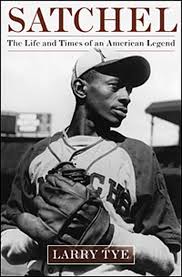
sATCH 3There isn’t room here to touch on all Paige’s “legendary” exploits (pitching 29 games in one month with only a single loss; pitching no-hitters in two cities on the same day; going 135-37 in three seasons with the Negro League’s Pittsburgh Crawfords; consistently defeating barnstorming teams that included major leaguers; winning three games in the 1942 Negro League World Series; and more). There’s not even space to detail all of his beloved pitches, to which he gave names like the Bat Dodger, Hurry-Up Ball, Four-Day Creeper, Long Tom, Smoke Ball, Midnight Rider and renowned Hesitation Pitch.  BBRT suggests you take the time to learn more about Satchel’s remarkable mound prowess. (Satchel Paige … The Life and Times of an American Legend by Larry Tye and Maybe I’ll Pitch Forever by Leroy Satchel Paige are good places to start.) In the meantime, here are some of philosopher Paige’s words to live by:


About Life

“Work like you don’t need the money. Love like you’ve never been hurt. Dance like nobody’s watching.”

“Age is a question of mind over matter. If you don’t mind, it doesn’t matter.”

“Ain’t no man can avoid being born average, but there ain’t no man got to be common.”

“Don’t look back. Something might be gaining on you.”

“You win a few. You lose a few. Some get rained out. But you got to dress for all of them.”

About Baseball

“I never threw an illegal pitch. The trouble is, once in a while I would toss one that ain’t never been seen by this generation.”

“Just take the ball and throw it where you want to. Throw strikes. Home plate don’t move.”

An MLB Record Twenty-Two Years Between MLB Mound Appearances

Paul Schreiber - back in the day.  Twenty-two years between MLB mound appearances - "For the Love of yhe Game."

Paul Schreiber – back in the day. Twenty-two years between MLB mound appearances – “For the Love of yhe Game.”

On this date (September 4) in 1945, right-hander Paul Schreiber took the mound for the New York Yankees (at Yankee Stadium) with the Bombers trailing the Detroit Tigers 10-0 in the top of the sixth inning.  Schreiber acquitted himself well, throwing 3 1/3  scoreless, hitless innings (two walks, one strikeout).  The 42-year-old Schreiber made his way into the MLB record books that day – notching the longest period of time between major league mound appearances – 22 years and 2 days. 

Schreiber’s most recent previous appearance in an MLB game had come on September 2, 1923, for the NL’s Brooklyn Robins (Dodgers).  In that game, the 20-year-old, 6’ 2”, 180-pound hurler, came in in the eighth inning of a game in which the Robins trailed the Phillies 11-3.  Schreiber gave up three walks and one earned run in two innings.  It was Schreiber’s 10th MLB appearance (nine in 1923 and one in 1922) – and he had a career 0-0 record with a 4.15 ERA in 16 innings pitched.  Little did he know that he wouldn’t take the mound in another MLB game for more than 20 years.

Here’s how it happened.  In 1924, Schreiber suffered an arm injury that pretty much ended his major league pitching career – but not his hopes nor his love of the game.  In the decade that followed he played minor league and semi-pro ball and, eventually, came back to the major leagues as a batting practice pitcher, coach and scout (until he retired in 1964).

Schreiber served as a batting practice pitcher and coach for the Yankees in the 1930s and 1940s (and later joined the Red Sox staff).  In 1945, with the season winding down, the Yankees well out of the race (67-59 record), and rosters depleted by World War II, the Bronx Bombers called coach Schreiber out of the bullpen.  In addition to that September 4 game (described earlier), Schreiber was given another “mop up” appearance on September 8, coming to the mound in the ninth inning of a game in which the Yankees trailed the Tigers 9-4.  In that outing, he gave up two runs on four hits.

Schreiber never did get that elusive major league win, but – thanks to circumstances and his love of the game – he did make the record books.  Just how did Paul Schreiber feel about the game? He is quoted in the March 1953 issue of Baseball Digest as saying, “The pitching mound during batting practice isn’t the safest place to be, but I wouldn’t trade places with the President of the United States.”   Amen to that!

“Tacks” Neuer – Five Not To Be Forgotten Weeks

"Tack" Neuer's MLHB career - short, but sweet.

“Tack” Neuer’s MLHB career – short, but sweet.

On this date (August 28) in 1907, a left-hander pitcher named John Stein Neuer made his debut for the American League New York Highlanders (Yankees) tossing a three-hit, complete game shutout (besting the Red Sox 1-0).  Over the next five weeks, Neuer pitched in six more games – starting five.  In those five starts – including his final starting assignment on October 3 – he tossed two more complete game shutouts.  His line for the season, 4-2, 2.17 ERA (the league ERA was 2.54), six starts, six complete games and three shutouts.  Surprisingly, this budding star never appeared in another MLB game – making him, analysts maintain, the only player to begin and end his career with a complete game shutout.

How forgettable was the meteoric career of John Neuer?  Even his nickname has been lost to the ages.  A search of available records will find Neuer listed as “Tex” Neuer, an unusual moniker for the Ohio-born, Pennsylvania-raised hurler. In other accounts, he is referred to as “Tacks” Neuer – more likely, since in the vernacular of the day, “Tacks” was used to refer to athletes noted for erratic behavior, a description that fit Neuer’s life and pitching styles.  At other times, Neuer is also referred to as “Izzy,” “Bugs” and “Nervy Neuer.”   BBRT believe “Tacks” to be most accurate, and it also appears the most commonly used to describe Neuer.

So, what happened to the career of John “Tacks” Neuer?

Neuer got his initial taste of professional baseball with Wilkes-Barre of the New York State League in 1905 at the (old for a pro-rookie) age of 28 – tossing a complete game shutout (against Syracuse) in his first start. In the minor leagues, Neuer often showed brilliance n the mound, but was also subject to bouts of wildness – a combination that kept teams interested, but also frustrated management enough to keep Neuer on the move.

In 1907, the Philadelphia Phillies signed the erratic southpaw, hoping to harness his potential.  Failing to develop his control during Spring Training, Neuer was sent back to the minors, where low control and high potential saw him travel from Trenton and Providence of the Eastern League to Savannah of the South Atlantic League (after receiving his unconditional release from the Phillies).

In Savannah, something seemed to click and on August 23 (after several stellar minor league starts), his contract was purchased by New York’s AL club.  This started John Neuer’s five-week MLB career – that opened and closed with a pair of three-hit shutouts.

In Spring Training 1908, Neuer decided that instead of working to refine the “stuff” that got him to the big leagues, he would work on some new (trick) pitches, including the knuckleball and the spitball.  The result was that Neuer’s control, never a given, completely deserted him and he started the season back in the minors (Newark) – where, in his first game, he walked nine and hit two.

Neuer bounced around minor league and semi-pro ball for a few years, continuing to show flashes of dominance, accompanied by a frustrating lack of consistency.  But after tossing three complete shutouts in six 1907 MLB starts, his career at the top of baseball’s ladder was over.  Still, BBRT envies the time “Tacks, Tex, Izzy, Bugs, Nervy” Neuer spent in the big leagues.  And, for today at least, John Neuer is unforgettable.

Baseball Haiku

PEDs have muddied up the record books.

PEDs have muddied up the record books.

P-E-D scandal

Puts asterisk in my heart

Marks tainted records


More Baseball Haiku from BBRT on Twitter  @DavidBBRT     #BBHaiku

Tom Cheney’s Remarkable 21-Strikeout Performance

Cheney, sent 21 Orioles down swinging and looking, in a record-setting performance.

Cheney, sent 21 Orioles down swinging and looking, in a record-setting performance.

As Yu Darvish notched 14 strikeouts in seven innings yesterday, BBRT observed a lot of online chatter about his chance to reach the twenty-strikeouts in a game record of Kerry Wood and Roger Clemens. Woods and Clemens did indeed strikeout 20 batters in a nine-inning game (as did Randy Johnson in the first nine-innings – before being relieved – of an 11-inning contest).  What I didn’t read was much recognition for a slight (5’11”, 170-pound) righthander named Tom Cheney, who struck out a record 21 hitters in a single (extra inning) major league game – a 16-inning contest between the Washington Senators and Baltimore Orioles (in Baltimore) on September 12, 1962.  So, BBRT will use this post to give Cheney his “props.”

The 27-year-old Cheney began the night with a 5-8 record on the season (and a 9-18 career record).  He didn’t strike out anyone in the first inning, and had only one strikeout after two, but players later said his curveball was electric and he had total control of his fastball.  The result?  After sixteen innings,  Cheney had a complete game, 2-1 win, and a new strikeout record.

His line looked like this.

IP        H    R    ER     BB    SO

16      10    1       1        4      21

The scoreboard looked like this:

Wash.  100 000 000 000 000 1      2  10  0

Balt.    000 000 100 000 000 0      1   10 2

Cheney threw 228 pitches.

Four players fanned three times each:  Second baseman Marv Breeding; Pitcher Dick Hall; Center fielder Dave Nicholson; Right Fielder Russ Snyder.

The losing pitcher was Dick Hall, who tossed 8 1/3 innings in relief.

The game was won on a home run in the top of the 16th by Senators’ first sacker Bud Zipfel, who also drove in the Senators first-inning run (on a groundout) and went three-for-seven in the game.  The 16th inning homer was the tenth and final home run of Zipfel’s two-year, 118-game major league career (.220-10-39).

The final out was a called strike out of pinch hitter Dick Williams (yes, the Dick Williams who went on to a long career as a major league manager.).  Williams, by the way, had a 13-year (1,023-game) MLB career as a player – in which he hit .260, with 70 homers and 331 RBI.

Cheney finished the year at 7-9, 3.17, and went 19-29, 3.77 for his eight year MLB career (1957-66).

Inning by inning strikeouts for Cheney looked like this:

1st  –  0

2nd  – 1

3rd  –  3

4th  –  1

5th  –  3

6th  –  1

7th –   0

8th –   2

9th  –  2

10th – 2

11th – 2

12th – 0

13th – 0

14th – 2

15th – 1

16th – 1

Twitter – Something New for BBRT

twitterBBRT is giving Twitter a try.  Follow @DavidBBRT.   I’ll be tweeting baseball haiku, trivia questions and answers, comments on plays/players of the day and random thoughts.  Here’s an example – my first two haiku tweets.


Six to four to three

Graceful end to the inning

American ballet

                         and

Braun admits “mistake”

More names, shame, soon to follow

Game will survive


Trout Cycle – More To Come?

Mike Trout – Big Day at the Plate.

Yesterday, May 21, 2013, Mike Trout of the Angels became the youngest American Leaguer (21-years-old) to hit for the cycle (Could this final wake up the lagging Angels).  He now has plenty of time ahead to reach the MLB records of two cycles in a season and three in a career.  In honor of Trout’s achievement, BBRT looks at some “cycling records.”

  •  Youngest major leaguer ever to hit for the cycle – The New York Giants’ Mel Ott – age 20 – on May 16, 1929.
  • Oldest major league to achieve the cycle – the Angels’ Dave Winfield – age 39 –  on June 24, 1991.
  • The record for cycles in a career is three, shared – appropriately – by three players:  Bob Meusel, Babe Herman and John Reilly,
  • Only four players have hit for the cycle twice in a season, including the Diamondbacks Aaron Hill just last year.  The others: Tip O’Neill, Babe Herman and John Reilly.
  • A “natural cycle” – single, double, triple, homer in order – has been achieved 14 times.


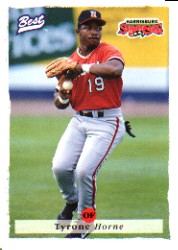
Finally, BBRT would like to revisit a one-time-only cycle event that we touched on in a posting last season. On July 27, 1998, Tyrone Horne of the Double-A Arkansas Travelers hit professional baseball’s only “home run cycle” – banging a solo home run, two-run homer, three-run homer and a grand slam in a single game (a 13-4 road victory over the San Antonio Mission.) 

Horne, at the time, was in the midst of a stellar minor league season in which he would go .313 with 37 home runs, 140 RBI, 95 runs scored and even throw in 18 stolen bases.  Immediately after the historic game, Horne headed off to the Texas League All-Star Game where he won the Home Run Derby.  Horne, by the way, never made it to the major leagues – completing a 13-year (1,286 game) minor league career with a .288 average and 143 home runs.  The bat he used that historic day, however, has made it to the Baseball Hall of Fame in Cooperstown.

Chilly Beginning to Twins Season

Baseball is back in Minnesota – “cooler” than ever.

BBRT was in the stands – on the very chilly third deck – for the Twins home opening 4-2 loss to the highly-compensated Justin Verlander and the Detroit Tigers.  BBRT survived a brisk wind and temps that my IPhone indicated dropped into the twenties during the game (other sources quoted the low at 34 degrees), but came close to not surviving the $8 price tag on a cup of vendor-delivered hot chocolate.  Among the keys to my enjoyment were long underwear, two pair of gloves, boots and earmuffs – all Opening Day firsts for BBRT. All around me I saw stadium (ballpark) blankets, hoodies, hats with earflaps – and, of course, truly “ice cold” beer.  And I could have sworn I saw a couple of hitters sporting mittens instead of batting gloves.

Still it was baseball and the well-bundled crowd enjoyed the atmosphere of Opening Day.  As for BBRT, I dutifully kept my scorecard up to date until my pen stopped  delivering ink in the eighth inning, when I retreated to the already crowded (Kent) Hrbek’s Pub to catch the final nine outs on the big screen (in a crowd that drew warmth from each other).

Overall, the 3 ½-hour game was less than cleanly played, as the players, at times, seemed to have trouble getting the feel of the ball (2 errors, three wild pitches). Twins fans did get to see a lot of new faces, including the starting pitcher (Vance Worley), who proved his Minnesota-worthiness by taking the mound in bare-armed short sleeves and new leadoff man Aaron Hicks (who helped justify Verlander’s new contract with three early strikeouts).  And, there were MVPs in abundance – Verlander, Miguel Cabrera (also last year’s Triple Crown winner), Joe Mauer (also a three-time batting champ) and Justin Morneau. And, there was the tension of a close game – the Twins left twelve men on base in a 2-run game and just couldn’t seem to get the big hit (or sacrifice fly).  Having twelve batters go down on strikes will do that to you.  For BBRT, the season was officially welcomed in the second inning, with the first (witnessed by me) 6-4-3 (Florimon to Dozier to Morneau) double play.  For BBRT, double plays are a thing of beauty.

In addition, the beer was cold, the hot dogs steaming (as was my breath), the ball stark white against green grass and blue sky, the crack of the bat as sharp as ever, the scorecard cheap and informative, the home team garb plentiful throughout the sellout crowd – and there was a full slate of games being reported on the scoreboard.

So, all in all, despite the cold, there was plenty to enjoy at Target Field.  Most important, however, baseball is back!  BBRT note: Also enjoyed a truly cold pre-game brew with Ballpark Tours operator Julian Loscalzo on Cuzzy’s Bar & Grill’s outdoor patio – a markedly Minnesotan way to precede the opener.  (See www.ballparktours.net for info on this year’s trips.)  Julian’s beloved Phillies opened in Atlanta, where it was reportedly in the 70s. 

Clayton Kershaw – a shutout and a homer on Opening Day. LET THE PITCHERS HIT!

While Julian may have envied the fans in Atlanta, I was envious of those in Los Angeles, who not only enjoyed the California warmth, but saw HOFer Sandy Koufax toss out the first pitch – and then enjoyed their Dodgers beating the long-time rival Giants 4-0, behind Clayton Kershaw’s complete-game shutout.  They also witnessed Kershaw becoming the first pitcher since Bob Lemon (in 1953) to hurl a shutout and hit a homer on Opening Day.  The result reminded me – one more time – of why I still oppose the DH.  A couple of other reasons:  On June 23, 1971, Phillies’ right-hander Rick Wise no-hit the Reds at Cincinnati 4-0 (one walk, three strikeouts) and also drove in three runs with a pair of homers (he would hit six dingers that year) – making him the only pitcher to hit two homers in a no-hit performance.  Another reason?  The first National Leaguer to hit two grand slams in a single game?  Atlanta Braves pitcher Tony Cloninger, in a July 3,  1966, 17-3 road win over the Giants.  Cloninger also added a single and had nine RBI in the contest.  So, I say, let the hurlers hit.

In a final Opening Day thought – since April 1 was this year’s official Opening DAY (versus March 31, Opening NIGHT) – BBRT offers a tribute to late MLB umpire John McSherry, who suffered a fatal heart attack while working the plate at the Cincinnati Reds’ home opener (against the Expos) on April 1, 1996.  Seven pitches into the contest, McSherry called a timeout and began to walk toward the Reds’ dugout before stumbling and falling.  McSherry, a 25-year MLB umpiring veteran, had been diagnosed with an irregular heartbeat and was scheduled to see a doctor the next day. It was reported that McSherry had cancelled an earlier appointment because he didn’t want to miss Opening Day.   McSherry was rushed to a hospital, where the 51-year-old was pronounced dead about an hour later.   (The game was postponed and played, from its beginning, the following day.)

Well-respected and well-liked, McSherry worked a dozen post-season series, including the 1977 and 1987 World Series, as well as the 1975, 1982 and 1991 All Star games. He was behind the plate for Larry Dierker’s July 9, 1976 no-hitter, as well as for the 1977 World Series contest in which Reggie Jackson belted three home runs. He was also behind the plate, doing what he loved on April 1, 1996.

AL Division Winners – 2013 Predictions


The next couple of posts will take a look at BBRT’s annual “predictions,” starting with the American League – where I expect quite a shakeup at the top, including a playoff scenario that does not include the Red Sox (new attitude, not as much talent) nor the Yankees (age and injuries catching up).  First the individual awards, then the Division Winners and Wild Cards

MVP – Evan Longoria

Longoria puts in a full season and leads the Rays to a Wild Card spot.  He edges out Mike Trout and Albert Pujols of the Angels (who suffer the fate of playing on a team with three potential MVP’s – Trout, Pujols, Hamilton) and Miguel Cabrera, who splits support with Justin Verlander and Prince  Fielder.  Supporting evidence?  In 2012, the Rays were 47-27 with Longoria in the lineup, 43-45 without him. 

Cy Young – Justin Verlander

Justin Verlander brings home the trophy, finishing in the top three in pretty much every pitching category.  His main competition comes from the Rangers’ Yu Darvish and the Angels’ Jered Weaver

Rookie of the Year – Jurickson Profar

In a close race, Rangers’ switch-hitting infielder Jurickson Profar’s combination of power, speed and defensive ability enables him to not only earn an early season spot in the everyday lineup, but also to squeak by Rays outfielder Wil Myers in the ROY race.

Now for the Division Winners:

WEST – Angels

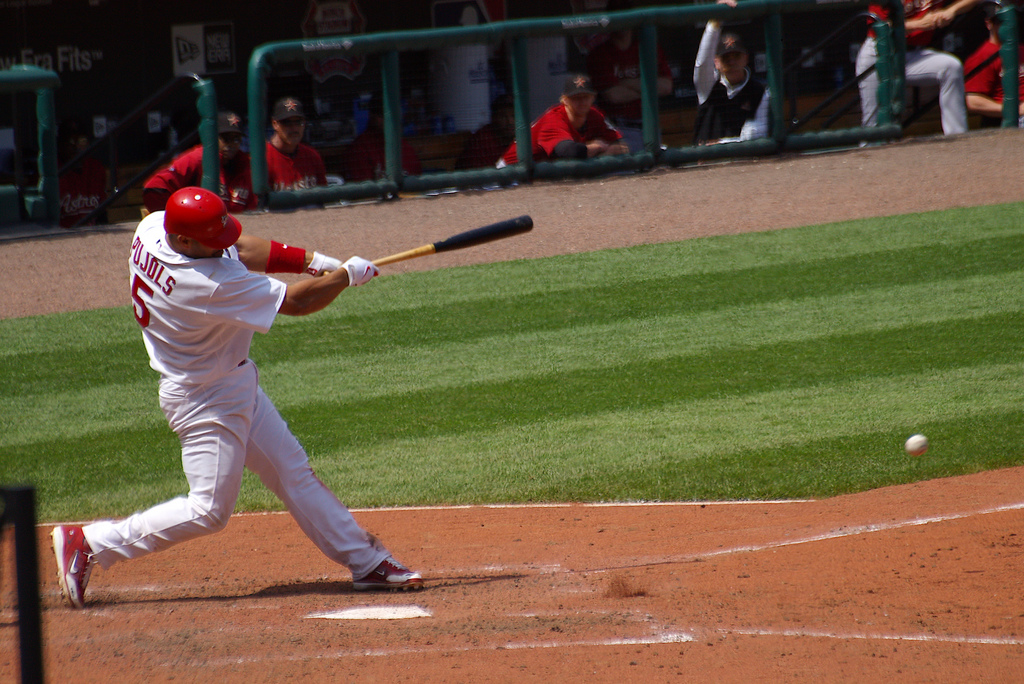
Albert Pujols will have even more help in the Angels lineup this season.

Once again, the Angels went big on the free agent market – adding Josh Hamilton to a line-up that already featured Albert Pujols, Mike Trout and Mark Trumbo.  Last season, that quartet put up 135 home runs and drove in 411 runners.  The Angels also have some speed, with Trout’s 49 steals, second baseman Kendricks’ 14 and shortstop Erick Aybar’s 20.  The starting pitching is solid at the top with Jered Weaver and C.J. Wilson, but it gets a bit thin at 3-5 (Jason Vargas, Tommy Hanson and Joe Blanton).  Of greater concerns is whether the relief corps goes deep enough with off-season acquisition Ryan Madson (tabbed as closer) recently suffering a setback in his Tommy John rehab.  Ernesto Frieri seems ready to fill that gap, having saved 23 games a year ago (80 strikeouts in 54 innings).  Still, BBRT thinks the offense will be enough to bring the Angels home in first place this  time.  The rest, in order of finish:

Rangers … Still plenty of offense (Adrian Beltre, Nelson Cruz, David Murphy, Elvis Andrus and Ian Kinsler) and pitching (Yu Darvish, Matt Harrison, Derek Holland and Joe Nathan.  But losing Josh Hamilton and missing out on Zach Grienke  will see them falling short.

A’s … Young pitching may keep them in the race, but not much offense after Yoenis Cespedes, Josh Reddick and Brandon Moss.

Mariners … Everything pretty thin after King Felix.

Astros … New league, same result.


EAST-Blue Jays

R.A. Dickey takes his knuckler … and Cy Young credentials … to the Blue Jays.

Used to be the off-season for the AL East was all about the Yankees and Red Sox making move and counter move in an effort to finish at the top.  Move over tradition – the Blue Jays are here.  There was the 12-player trade with the Marlins that brought Toronto the likes of shortstop Jose Reyes (considered to have had a bit of an off season in 2012, despite going .287, with 11 home runs and 40 steals); second baseman Emilio Bonifacio (30 steals in 2012); and a pair of solid starting pitchers in innings-eating lefty Mark Buehrle (13-13, 3.74) and Josh Johnson (8-14, but with a 3.81 ERA last season).  Then they added the NL Cy Young Award winner R.A. Dickey from the Mets.  Also new to the team is Melky Cabrera, out to prove his solid pre-suspension numbers for the Giants weren’t all PED-related.

These new cast members joined holdovers like righty Brandon Morrow (10-7, 2.96 in 21 starts); power-hitting Edwin Encarcion and Jose Bautista; and third-baseman Brett Lawrie (just 23), who went .273-11-48 in his first full season in the bigs.  The supporting cast looks just fine as well.  Catcher J.P. Arencibia contributed 18 roundtrippers and 56 RBI; and outfielder Colby Rasmus added 23 homers and 75 RBI.

The bullpen, led by Casey Janssen (1-1, 22 saves, 2.64 and 67 strikeouts in 64 innings), Sergio Santos and Darren Oliver may not have “star power,” but should be strong enough to help move the revamped Jays from last year’s 73 wins to 91 and first place in a very tight AL East.  The rest of the Division: 

Rays … Quality pitching and a full season of big banger Evan Longoria keeps them in the race, but they’re one bat short.

Yankees … Still a lot of talent on this squad, but age and injury  take their toll.

Red Sox … Clubhouse attitude should be vastly improved, product on the field just enough to climb out of the cellar.

Orioles … 2012 Cinderella team here’s the clock strike midnight.  No true ace on the pitching staff (Wei-Yin Chen led starters with 12 wins last year) and – despite balanced lineup, the Orioles comes back to reality.  Two things not likely to repeat:  a 29-9 record in one-run games and 51 saves from Jim Johnson (although 40 is a real possibility).  


AL CENTRAL – Tigers

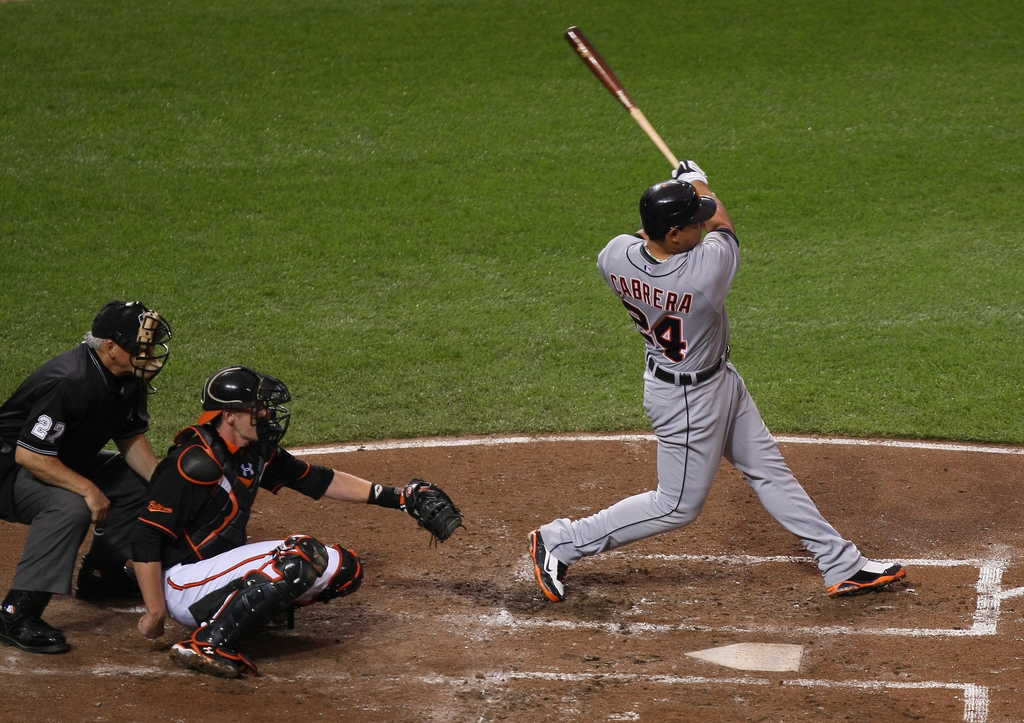
Miguel Cabrera will help power the Tigers back to the World Series.

Not much contention here.  Whether it’s power bats or power arms, the Tigers have what they need to take it all in the AL Central.  The offense is led (at the corners) by Triple Crown and MVP winner Miguel Cabrera (.327-44-139) and Price Fielder (.313-30-108), while the pitching staff boasts consistent Cy Young candidates Justin Verlander (17-8, 2.64) and Max Scherzer (16-7, 3.74) – who finished 1 & 2 in the AL strikeout race.

Offensively, the Tigers also expect solid contributions from centerfielder Austin Jackson in the leadoff spot (.300, with 103 runs, 16 home runs and 16 stolen bases a year ago.) They let post-season hero Delmon Young slip away in the off season, but added veteran outfielder Torii Hunter, who comes into the season at 37-years-old – but also off a .313-16-92 season with the Angels.  He should more than make up for Young’s loss at the plate, in the field and in the club house.  The Tiger are also excited about Andy Dirks and Avisail Garcia (27- and 22-years-old, respectively) – who both performed well in limited time last year. 

The coming season will also see the return of Victor Martinez (at DH), who missed all of last season (knee surgery).  In 2011, Martinez, with a lifetime .303 average over ten seasons, hit .330, with 12 home runs and 103 RBI.  A return to even near-form would be like adding a premier free agent.  At the bottom of the lineup, you’ll likely find steady shortstop Jhonny Peralta, catcher Alex Avila and second baseman Omar Infante, who will hold their own. 

Getting back to the starting rotation, 3-4-5 look to be Doug Fister, Anibel Sanchez and either Rick Porcello or Drew Smyly.  With the offense the Tigers bring to the plate, that rotation should be more than enough.

The only question mark is the relief staff.  The Tigers let closer Jose Valverde leave via free agency and the leading candidate to replace him appears to be 22-year-old flame-throwing rookie Bruce Rondon – who moved from A to AA to AAA a year ago, going a combined 2-1, 1.53 with 29 saves and 66 punch outs in 53 innings.  There’s plenty of experience in the rest of the pen, with Octovio Dotel, Joaquin Benoit and Phil Coke.  But, if Rondon falters, it wouldn’t be surprising to see the Tigers go out and get a bonafide ninth-inning hurler.

All in all, Detroit is a well-balanced squad that should easily win the Central – followed by:

White Sox … Solid starting pitching (Chris Sale, Jake Peavy, John Danks, Gavin Floyd) and some Punch in the lineup (Paul Konerko, Adam Dunn, Alex Rios and youngster Dayan Viciedo), plus off-season pickup (3B) Jeff Keppinger (.325 with the Rays last year) help keep the White Sox in the race.  Still the Sox have more questions (Danks’ recovery from surgery, Konerko’s age, can Flowers replace Pierzynski) and less talent up and down the roster than the Tigers.  

Royals … Took steps forward in the off-season, but after newcomers true “ace” James Shields and Wade Davis, the starting rotation lacks a record of consistency.  Still, a strong  bullpen and the bats of Alex Gordon, Billy Butler and Alcides Escobar should keep them at or near .500.  To go further, they need more from high-potentil corner  infielders Eric Hosmer and Mike Moustakas and a return to form at the back end of the rotation (Ervin Santana, Bruce Chen, Jeremy Guthrie).

Indians … The tribe made strides on offense with the addition of Nick Swisher and Micheal Bourn and they are strong up the middle with (c) Carlos Santana, (2B) Jason Kipnis, (SS) Asdrubal Cabrera and newly acquired speedy center fielder Drew Stubbs.  Questions remain at the corners and in the rotation – number-two looks like Ubaldo Jimenez (9-17, 5.4o last season).

Twins … The Twins’ off-season moves appear good for the future, but the outlook for 2013 is not as bright.  A revamped pitching staff  looks to include acquisitions Vance Worley, and Mike Pelfrey – both coming off surgery – as is holdover Scott Diamond, the Twins’ best 2012 starter.  Could be a lot of work for a solid bullpen, led by closer Glen Perkins. There is some potential in the lineup with former MVPs Justin Morneau and Joe Mauer, slugging outfielder Josh Willingham and steady Ryan Doumit.  Still, there are questions in the infield and center field (where the Twins traded away Denard Span and Ben Revere). But there is hope on the horizon, with prospects like pitchers Trevor May, Alex Meyer and Kyle Gibson (who could make the 2013 rotation) and infielder Miguel Sano in the wings.  

Wild Cards:  Rangers and Rays.

 AL Champion:  Tigers … Verlander and Scherzer provide the edge, as two offensive juggernauts (Angels/Tigers) face off. 

Coming soon … a look at the NL.