April Fool(ishness) … The Zany Start to Cleveland’s 1992 Home Season

A 24-Hour Turn Around … 20 hits for a Loss – No Hits for a Win

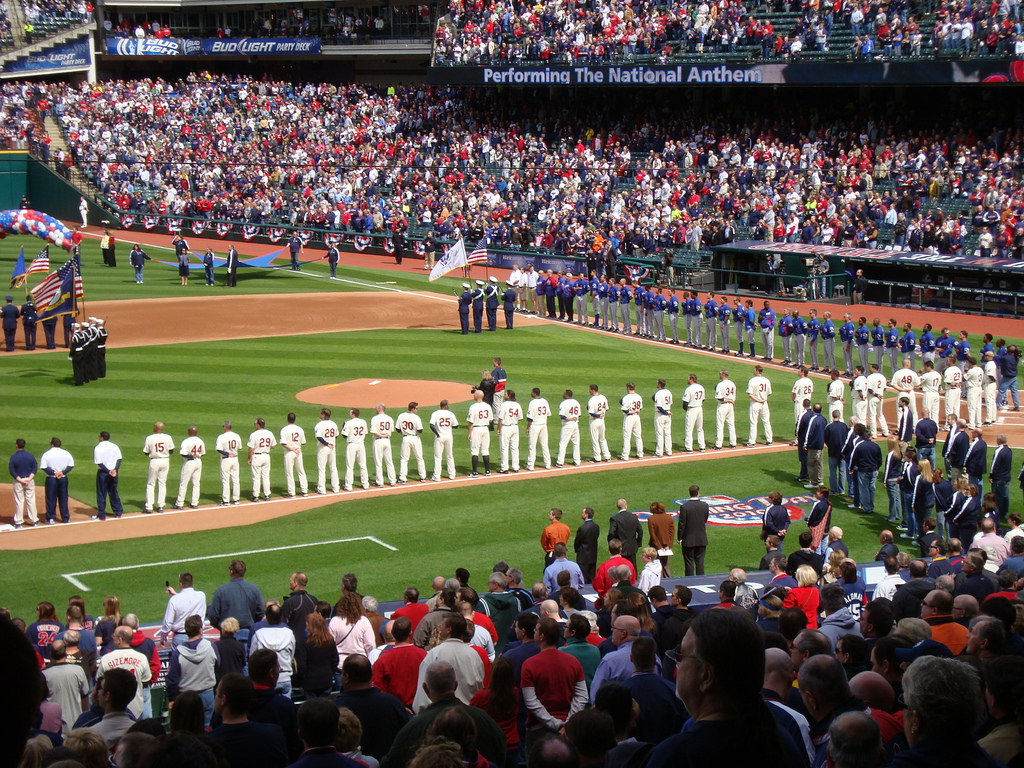
On this date (April 12) in 1992, the Cleveland failed to get a single hit against the Reed Sox in the opening game of a Sunday doubleheader (remember those?) – and yet came away with the win.  What makes this just a little zany is that the day before – the Indians’ 1992 home opener – the Indians collected 20 hits off the Red Sox’ pitching staff and lost.
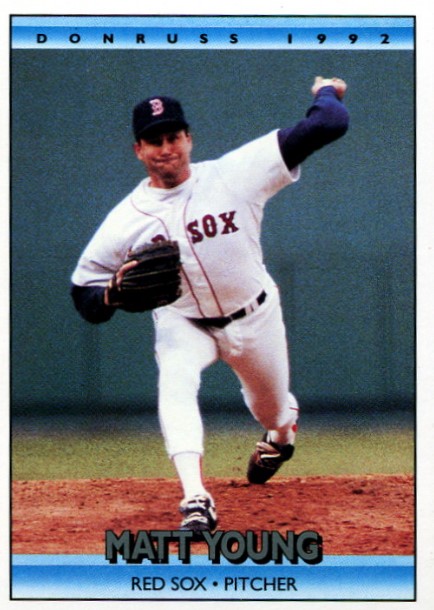
Matt Young ... Eight no-hit innings for the loss.

Matt Young … Eight no-hit innings for the loss.

Here’s how it all went down.  Let’s start with the April 12 victory.  Matt Young started for the Red Sox, while Charles Nagy took the mound for the Indians. Young pitched an eight-inning complete game – holding the Indians without a hit and fanning seven.

Unfortunately, Young walked seven – which led to two earned runs and a 2-1 Red Sox loss. In fact, the very first batter Young faced scored.  Cleveland CF Kenny Loft0n led off the bottom of the first with a four-pitch walk (a portent of things to come). While DH Glenallen Hill was at the plate (ultimately striking out), Lofton stole second and third. He then scored as Carlos Baerga was safe at first on an error by Red Sox SS Luis Rivera.  In the third inning, the Indians pushed across a second run as Young walked Mark Lewis and Lofton (again) on a total of nine pitches.  The Lofton was forced at second on a Hill ground out – sending Lewis to third. Lewis then scored on a grounder to short by Baerga.  Lofton, by the way, was a thorn in Young’s  side all afternoon. He walked again in the fifth inning – and, just like in the first frame, stole second and third – giving him three walks and four steals in the game.

The Red Sox only run came in the top of the fourth inning on a single by CF Ellis Burks, a walk to 1B Mo Vaughn and an RBI single by  SS Luis Rivera.  Winning pitcher Nagy went seven innings, gave up eight hits and one run, while walking four and fanning ten. Brad Arnsberg and Derek Lilliquist each tossed an inning of scoreless relief.

So, the Indians collected no hits, but still got a win.  This just a day after the Indians’ home opener, when they collected 20 hits (to the Red Sox’ 14) and suffered a 7-5 loss.  That one went 19 innings with the Red Sox winning on a two-run home run by SS Tim Naehring (one of only three homers he would hit that year). A few side notes, in this game:  14 pitchers were used; Carlos Baerga had six hits, but no RBI an just one run scored; Mo Vaughn, Jody Reed and Naehring homered for Boston; there were a total of 16 walks and 29 strikeouts.

Okay, so the Cleveland hoe season starts with a game in which the Indians smack 20 hits and take a loss, followed by a game in which no Cleveland batter this safety and they get a win.  What more could happen?  Well, in game two of that April 12 doubleheader, Roger Clemens held the Indians to just two singles s in a 3-0 Boston win. That gave the Indians the  MLB record for the fewest hits ever in a doubleheader – yet they still got a split.  Side note:  The Red Sox had nine hits in this game and, as with the Indians, they were all singles.

For a look at the last single-admission double header I ever was privileged to attend, as well as stories on MLB’s 32-inning doubleheader, the only pitcher to throw complete-game shutouts in both ends of the same twin bill, the team that played nine consecutive doubleheaders and more … click here.

100Baseball Roundtable is on the Feedspot list of the Top 100 Baseball Blogs.  To see the full list, click here.

I tweet baseball @DavidBBRT

Follow/Like Baseball Roundtable’s Facebook Page here.  More baseball commentary; blog post notifications; PRIZES.

Member: Society for American Baseball Research (SABR); The Baseball Reliquary; The Negro Leagues Baseball Museum.

 

Baseball Roundtable – So Great to be Back in the Ballpark

BallparkAh, back in the ballpark.  I attended my first MLB game since the October 7, 2019 Twins/Yankees Playoff Game – a contest I had to leave in the second inning due to an Atrial Fibrillation incident that sent me to a five-hour Emergency Room visit.  But, that’s a story for another day.  Today it’s the joy of being back in the ballpark.

A few observations about the day and season and then, in honor of the return of fans to MLB parks, a look back at one of my earliest Baseball Roundtable posts – “Why I Love Baseball.”

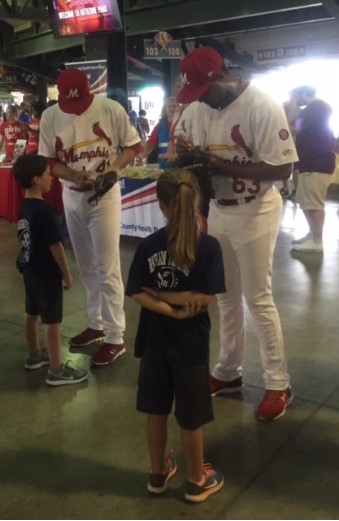
So, how about a look at yesterday’s game?  First, given COVID attendance limits (with seasons ticket holders getting preference) and the timing of my second Pfizer vaccine, I was not able to get to Opening Day this season.  It’s long been my strategy to make sure I get to Opening Day and the final day of the season (and others along the way, of course) – a strategy designed to guarantee me the fewest possible days without baseball in the off season.  I did miss the Opening Day “hoopla” – team intros, fireworks, celebrity National Anthem performance, flyovers and the like.  However, thanks to a good friend and fellow fan (Connie), I was able to score good seats for yesterday’s second Twins home game of the season.

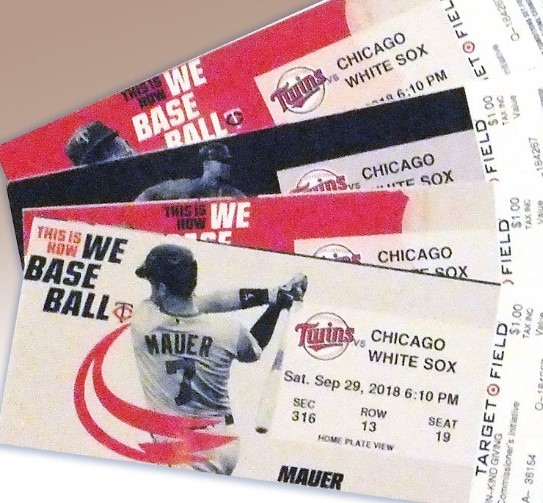
TixNow, we (I went with another good friend, Scott), arrived at the ballpark about an hour before game time.  My bad. I gauged my expected drive time and parking search by past experience (crowds of 35,000-40,000).  With COVID-era attendance of just under 10,000, getting to the park was a lot less time-consuming.  Getting through the gate with e-tickets on my phone was also a snap; just scan them and walk on in. It was convenient, but I have to admit, I miss the old stiff paper tickets – with their graphics and “memory value.”

Once in the park, I picked up the Twins free scorecard (Note: If you keep score and prefer to use you own scorebook, pick up a scorecard anyway.  It’s is a great way to have players’ names and numbers at your fingertips – and it’s FREE.)

Ballpark Hot dog photo

Nothing like a dog and a beer at the ballpark. Photo by permanently scatterbrained

On the way to my seat, I stopped for my first ball park sausage (a Polish), I like to get my snacking in before the game (and my score-keeping) starts.  Okay, it wasn’t a gourmet treat (and there are some of those at Target Field), but as Humphrey Bogart was once quoted “A hot dog at the ballpark beats roast beer at the Ritz.”  Side note:  1) Some sources quote Bogart as comparing “steak” at the Ritz to a dog at the game, but I found many more citing “roast beef.” 2) This quote may be expiring, you can get roast beef and/or steak at MLB parks these days. 3) I know I should have started the season with a hot dog, but when you name is Karpinski, you have to upgrade to a Polish.

It was a chilly day at Target Field although: 1) Mid- to high-40’s is not that chilly for Minnesotans. 2) The green grass, sound of the crowd and the game, smiling children (and adults) and live interactions were heartwarming enough to counteract the weather.

As for the game, my Twins lost 4-3 in ten innings.  I did, however, get to see a tight and exciting game; a two-run home run from the apparently ageless Nelson Cruz; my first 6-4-3 double play (the 6-4-3 and 4-6-3 twin killings are my favorite baseball plays); the speed of Byron Buxton turn what looked like a fairly routine ground out into an infield single, with an advance to second on a misguided, rushed throw to first; and three stolen bases.  On the other side of the coin, I also saw two of my least favorite current baseball rules come into play – the wave -‘em-to-first intentional walk and the opening of extra innings with a runner on second.

Rules

———————-Let’s Get This Party Started————————

Clearly, the baseball spirits are committed to making up for 2020’s short, strange and (for many fans) somewhat lost season.  Here were are just ten days into the new season and not only have we seen fans back in the ball park.  We’ve seen:

  • The season’ first no-hitter of the season (April 9 by the Padres’ Joe Musgrove) – which was also just one hit batsman away from a perfect game and the very first no-hitter in Padres’ history.
  • A rookie, Rule-Five Draft pick – Detroit ‘s Akil Baddoo – hit a home run on the very first MLB pitch he ever saw, smack his first Grand Slam and collect his first, walk-off game winning hit – all in his first three MLB games.
  • Another rookie, the White Sox Yermin Mercedes – collect eight hits (five singles, two doubles and a home runs) in his first eight at bats of the season. (He had one previous MLB at bat, a ground out, in 2020.) Just a few days later, in just his sixth game of the season and seventh MLB game, Mercedes thrilled fans with a 485-foot home run – the longest HR of the MLB season thus far.
  • Reds’ outfielder Tim Locastro stealing two bases in two tries – giving him 28 stolen bases in 28 career (2017-2012, 154 games) attempts; setting the record for the most consecutive stolen base attempts to start an MLB career.
  • Trey Mancini’s 427-foot home run (April 10) – not just his first long ball of the season, but his first since returning to the Orioles after a bout with Stage Three colon cancer.  (Mancini missed the 2020 season.)
  • The Angels’ pitcher/DH Shohei Ohtani starting on the mound on April 4 against the White Sox, throwing nine pitches of 100+ mph and fanning seven in 4 2/3 innings and popping a 451-foot home run ( his second dinger of the season) – to give himself a lead in the bottom of the first.

I could go on, but you get the idea.  Once again, baseball is giving fans the opportunity to see something special during every game.   So, Let’s enjoy.

And, with that, I’d like to open my season by revisiting  the ten reasons I love the national pastime.

———TEN REASONS I LOVE BASEBALL———

1.  Baseball comes along every spring – a new beginning – accompanied by sunshine and optimism.

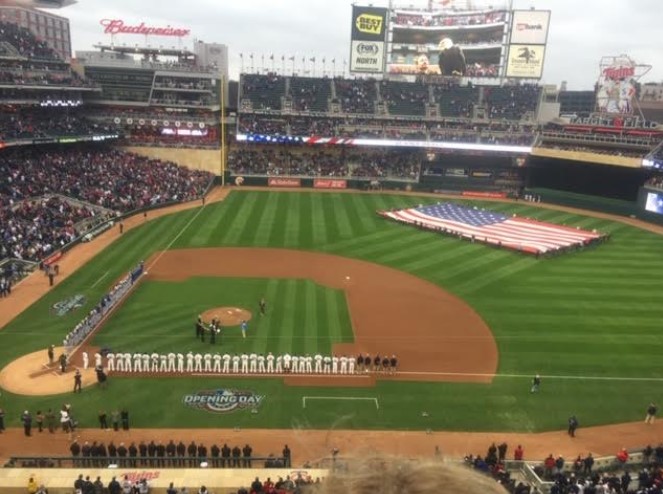
Opening Day ... A Gift Waiting to be Opened!

Opening Day … A Gift Waiting to be Opened!

Baseball is the harbinger of better times.  It signifies the end of winter (not a small thing if you’re from Minnesota) and the coming of spring – a season of rebirth, new life and abundant optimism.   Each season, you start with a clean slate.   Last year’s successes can still be savored, but last year’s failures can be set aside (although rival fans may try to refresh your memory), replaced by hope and anticipation.   On Opening Day, in our hearts, we can all be in contention.

People ask me what I do in winter, when there’s no baseball. 

I’ll tell you what I do.  I stare out the window and wait for spring.

 Honus Wagner, Hall of Famer

 2.  The pace of the game invites contemplation.

Between innings, between batters or pitchers, and even between pitches, baseball leaves us time to contemplate what just occurred, speculate on what might happen next and even share those thoughts with nearby spectators.  Baseball is indeed a thinking person’s game.

3.  Baseball is timeless and, ultimately, fair in the offering of opportunity.

The clock doesn’t run out.  There is no coin flip to determine who gets the ball first in sudden death overtime.  No matter what the score, your team gets its 27 outs and an equal opportunity to secure victory.  What could be more fair?   And then there is the prospect of endless “extra” innings, bonus baseball for FREE.

When I was young my heroes didn't wear capes or cowboy hat. They wore stirrups and baseball caps. Many still do.

When I was young my heroes didn’t wear capes or cowboy hat. They wore stirrups and baseball caps. Many still do.

4.  Plays and players are distinct (in space and time).

Baseball, while a game of inches, is also a game of considerable space.   The players are not gathered along an offensive line or elbow-to-elbow under a basket. They are widely spaced, each with his own area of responsibility and each acting (as part of a continuing play) in their own time frame.  (The first baseman can’t catch the ball, for example, until after the shortstop throws it.)   This enable fans to follow, understand  and analyze each play (maybe not always accurately) in detail.   And, baseball’s distinct spacing and timing makes it possible to see the game even when you are not there.  A lot of people grinned at President Gerald Ford’s comment that he “watched a lot of baseball on the radio.”  In my view, he was spot on.  You can see baseball on the radio – you can create a “visual” of the game in your mind with minimal description.    That’s why on summer nights, in parks, backyards and garages across the country, you’ll find radios tuned to the national pastime.

 5. The scorecard.

Can there be anything more satisfying than keeping an accurate scorecard at the ball park?  It serves so many purposes.  The keeping of a scorecard ensures your attention to the happenings on the field.

Boxscore photo

Photo by mwlguide

Maintaining the score card also makes you, in a way understandable only to fellow fans, more a part of the game.   That magical combination of names, numbers and symbols also enables you to go back and check the progress of the game at any time.  “Oh, Johnson’s up next.  He’s walked and grounded out twice.”  It’s also a conversation starter, when the fan in the row behind you asks, “How many strikeouts does Ryan have today?”   And, it leaves you (if you choose to keep it) with a permanent record of the game, allowing you to replay it in your mind (or share it with others) at will.  Ultimately, a well-kept score card enhances the game experience and offers a true post-game sense of accomplishment.

6.  The long season.

Baseball, so many have pointed out, is a marathon rather than a sprint.  It’s a long season with ample opportunity to prove yourself and lots of chances to redeem yourself.  For fans, the long season also represents a test of your passion for the game.  Endurance is part of the nature of the true baseball fan.  And, and in the end, the rigors of a 162-game season prove your mettle and that of your team.   Not only that, but like a true friend … baseball is there for you every day.

 7.  Baseball invites, encourages, even demands , conversation.

Reason number two hinted at the importance of conversation, noting that the pace of the game offers time to contemplate the action (past and future) and share those thoughts with others.   I love that about the game, but I also love the fact that whenever baseball fans gather, their passion comes out in conversation – and they find plenty to talk about:

  •  Statistics,  statistics, statistics.  Baseball and its fans will count anything.  Did you know that Yankee Jim Bouton’s hat flew off 37 times in his 2-1, complete-game victory over the Cardinals in game three of the 1964 World Series?  More seriously, statistics are part of a common language and shared passion that bring baseball fans together in spirited conversation.  As best-selling author Pat Conroy observed “Baseball fans love numbers.  They love to swirl them around in their mouths like Bordeaux wine.”  I agree, to the fan, statistics are intoxicating.
  • Stories, stories, stories.  Baseball and its fans celebrate the game’s history.  And, I’m not talking just about statistics.  I’m talking about the stories that give this great game color, character and characters.  Ty Cobb sharpening his spikes on the dugout steps, Babe Ruth’s called shot, Louis Tiant’s wind-up, Willie Mays’ basket catch, Dock Ellis’s LSD-fueled no-hitter.
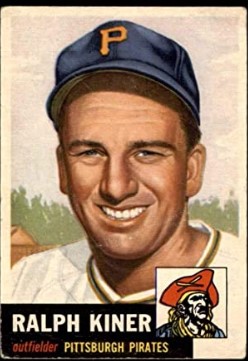
  • Trivia, trivia, trivia.  This may fall close to the “stories, stories , stories” category, but fans cherish the trivia that surrounds our national pastime – whether that trivia is iconic or ironic.  For example, it’s ironic that the iconic Babe Ruth holds the best winning percentage against the Yankees of any pitcher with 15 or more decision against them (17-5, .773). And, it’s ironic that the more recent player to steal home twice in one game (Vic Power, August 14, 1958) did it in a season when he only stole a total of three bases).  Then there is the iconic performance of Ralph Kiner, who led the NL in home runs as a rookie in 1948 – and successfully defended that title in each of the next six seasons – the most consecutive home runs titles by any major leaguer ever.

Basically, I took a long time to say I love the fact that baseball fans will talk with passion about something that happened in today’s game, yesterday’s game, over time or even in a game that took place on May 30, 1894 (Bobby Lowe of the Boston Beaneaters records MLB’s first four-homer game).  And, as a bonus, all this conversation – all the statistics, stories and trivia – make the games, moments within the games and the characters of the game (heroes, goats and mere participants) as timeless as baseball itself.

I am looking forward to the time when fans will be again be able  to again meet and trade baseball facts and opinions in close quarters. 

 8.  The box score. 

Today's box score - a thing of beauty.

Today’s box score – a thing of beauty.

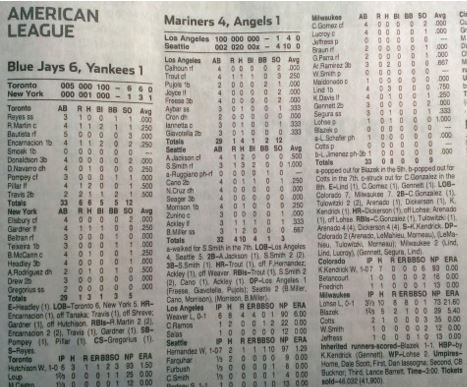
BBRT editor’s  mother used to refer to an accordion as “an orchestra in a box.”  That’s how I view the daily box score – the symphony of a game recorded in a space one-column wide by four inches deep.   Some would say the box score reduces the game to statistics, I would say it elevates the game to history.  What do you want to know about the contest?   Who played where, when?  At bats, hits, stolen bases, strikeouts, errors, caught stealing, time, attendance, even the umpires’ names?   It’s all there and more – so much information, captured for baseball fans in a compact and orderly space.  I am, of course, dating myself here, but during baseball season, the morning newspaper, through its box scores, is a treasure trove of information for baseball fans.  (In today’s game, baseball-reference.com provides all that information and more.)

 9. The irony of a team game made up of individual performances.

While baseball and baseball fans live for individual statistics and, while the spacing of the players drives individual accountability, the game is, ironically, deeply dependent on the concept of “team.”

Consider the offense.  Unlike other sports , where you can deliver victory by giving the ball or puck – time and time again (particularly as the clock runs down) –  to your best runner, skater, receiver or shooter, in baseball, your line-up determines who will be “on the spot” and at the plate when the game is on the line.  It may be your .230-hitting second basemen, rather than your .320-hitting outfielder.  Yet, even as the team depends on the hitter, he is totally alone in his individual battle with the pitcher.  And, achieving individual statistics that signify exceptional performance also demands a sense of team.  You don’t score 100 runs without a team mate to drive you in (although the statistic remains your measure of performance) …  and, you don’t drive in 100 runs if no one gets on base in front of you.   And, can you think of any other sport that keeps track of – and honors – the team-oriented “sacrifice.”

On defense, the story is the same.  A ground ball pitcher, for example, needs a good infield behind him to optimize his statistical presence in the “win” column.  And the six-four-three double play requires masterful teamwork as well as individual performance –  duly recorded in the record books as an assist for the shortstop, a putout and an assist for the second baseman and a put out for the first baseman.  Then there is the outfield assist – a perfect throw from a right fielder to nail a runner at third earns an assist – even if the third baseman drops the ball and earns an error.  Two individual results (one good / one bad) highlighted, but without the necessary team work – a good play on both ends – a negative outcome in terms of the game.

Ultimately, baseball is a game of individual accomplishments that must be connected by the thread of “team” to produce a positive outcome.

10. Baseball’s assault on the senses.  (Indoor ballparks fall a bit short here).

The sight of a blue sky and bright sun above the ballpark or a full moon over a black sky above a well-lit stadium.  The feel of the warm sun or a crisp evening breeze.  The scent of freshly mowed grass or steaming hot dogs.  The taste of cold beer and peanuts.  The sound of the crack of the bat, the cheers (or moans) of the crowd, the musical pitch of the vendors.  Even the taste of today’s ballpark gourmet offerings.

Baseball assaults all the senses ―  in  a good way.  

Now, I could go on and on, there are lots more reasons to love this game: its combination of conformity (all infields are laid out the same) and individualism (outfield configurations not so much); its contributions to culture (literature and movies); its strategy (hit-and-run, run-and-hit, sacrifice bunts, infield / outfield positioning, pitching changes, etc.); triples; the 6-4-3 double play; knuckleballs; and more.  But to protect myself – and BBRT’s readers – I’ve limited myself to ten.   I probably could have saved a lot of time and words  had I just started with this so-perfect comment from sportscaster Bryant Gumbel, “The other sports are just sports.  Baseball is love.”  That says it all.


100Baseball Roundtable is on the Feedspot list of the Top 100 Baseball Blogs.  To see the full list, click here.

I tweet baseball @DavidBBRT

Follow/Like Baseball Roundtable’s Facebook Page here.  More baseball commentary; blog post notifications; PRIZES.

Member: Society for American Baseball Research (SABR); The Baseball Reliquary; The Negro Leagues Baseball Museum.
Baseball Roundtable 2012 AL Predictions … and Players to Watch

Okay, so Opening Day won't be quite the same. At least, it's on the way.

Okay, so Opening Day won’t be quite the same. At least, it’s on the way.

It’s getting close to Opening Day and it’s time for Baseball Roundtable to look ahead (and make predictions) for the 2021 season.  We’ll start with American League won-loss predictions,  move on to a look at some of the players (on each AL team) that BBRT will be watching in the coming months, and wrap up with BBRT favorites for some key junior circuit awards.  So, let’s get started.

Note:  For the National League predictions and Watch List, click here. 

AMERICAN LEAGUE EAST

Yankees …  98-61

Blue Jays … 87-75 (Wild Card)

Rays … 85-77

Red Sox  … 81-81

Orioles … 64-98

The Yankees have a deep and powerful lineup (they could have seven players with 25+ home runs), with plenty of quality replacements when needed. Plus, they have a solid rotation (particularly after adding Corey Kluber and Jameson Taillon) and a plus bullpen. The Bronx Bombers may get a stretch-run boost with the return of Luis Severino and Zack Britton.  They should top the AL East.

Now, smart money would put the Rays (last year’s AL World Series’ representative) in – at least – the second place/wild card spot. But I’m going out on a limb and picking the Blue Jays for second – based on an exciting young lineup, augmented by veteran acquisitions George Springer and Marcus Semien.  How their pitching holds up will tell the tale.  It is hard to go against the Rays who, year-after-year, seem to be able to translate defense, a solid (if, at times, unconventional) pitching strategy and equally strategic lineups into a wining record.  Still, I think the loss of Blake Snell and Charlie Morton at the top of the rotation may cost the Rays a spot in the standings. The Red Sox should be more competitive than a year ago – particularly if Chris Sale is back in form – but I don’t see them passing any of the top three. The Orioles seem to be in the early innings of a rebuilding project.

AMERICAN LEAGUE CENTRAL

Twins   … 91-72

White Sox   … 87-75 (Wild Card)

Indians … 84-78

Royals … 70-92

Tigers … 67-95

Maybe it’s because they are my “home team,” but I’m expecting the Twins to repeat as AL Central champs. However, it won’t be easy as the White Sox are coming on strong. The Twins still have one of the AL’s most powerful lineups and should be improved on defense with newcomer (four-time Gold Glover) Andrelton Simmons now at shortstop, Josh Donaldson back at third base and Jorge Polanco moving to second (and let’s not forget Gold Glover Byron Buxton in center). The rotation will be again headed by Kenta Maeda and Jose Berrios – and looks to include Michael Pineda, J.A. Happ and Randy Dobnak. (or Matt Shoemaker). A revamped bullpen looks solid.

Coming on fast are the White Sox with a deep batting order; a rotation headed by Lucas Giolito, Lance Lynn and Dallas Keuchel; and a bullpen featuring new (and elite) closer Liam Hendriks.  It’s going to be a dogfight at the top of the Central Division, but I expect the Twins experience to give them a slight edge.  Carlos Carrasco, Francisco Lindor and Carlos Santana are gone from the Indians and, despite a solid bullpen and a rotation headed by Shane Bieber, Zach Plesac and the emerging Triston McKenzie and the addition of slugger Eddie Rosario, the Indians are likely to finish behind both the Twins and White Sox. The Royals look to be improved with a lineup that includes professorial hitter Whitt Merrifield, slugger Jorge Soler and newcomer Carlos Santana.  They are also looking for a rebound from OF Andrew Benintendi (acquired via an off-season trade). The Tigers will have to wait from some of their young pitching prospects – Casey Mize, Tarik Skubal, Matt Manning and Franklin Perez to develop before moving up in the standings. I wouldn’t be surprised to see Mize and Skubal break camp with the Tigres.

AMERICAN LEAGUE WEST

Astros … 91-71

A’s … 86-76

Angels … 84-78

Mariners … 69-83

Rangers … 65-97

The Astros will miss George Springer (now with the Blue Jays) and Justin Verlander (Tommy John surgery), but still seem to have enough to win the West.  The lineup has some star power with Jose Altuve, Alex Bregman and Carlos Correa – not to mention Kyle Tucker and Yordan Alvarez. Jake Odorizzi is a nice addition to a rotation that also offers Zack Greinke, Cristian Javier, Framber Valdez, Lance McCullers and Jose Urquidy. Ryan Pressley heads a bullpen that will need to prove itself over the long season.  It looks like another division title for Houston, but they’ll have to hold off the pesky A’s.

Losing closer Liam Hendriks and shortstop Marcus Semien put a dent in the A’s playoff hopes, but there is still reason to expect them to be in contention. There is potential in the rotation (Mike Fiers, Scott Manaea, Frankie Montas, Jesus Luzardo, Chris Bassitt, A.J. Puk), as well as some power in the lineup (led by the double Matts – Olson and Chapman – who are also both superior defenders.  Still, there are questions in the bullpen and the lineup could use a bit more punch. The Angels should be improved, but there are still too many question in the starting rotation (which has had the second worse ERA in MLB in each of the past two seasons). The Mariners are on the cusp of making some noise, and are anxiously awaiting the arrive of such prospects as OFs Jarred Kelenic and Taylor Trammel, RHP Logan Gilbert and RHP Emerson Hancock.  In the meantime, enjoy the performance of southpaw Marco Gonzalez, 3B Kyle Seager and CF Kyle Lewis.  Finally, the Rangers appear to be in rebuilding mode, so we’re likely to see a handful of young players getting a chance to develop on the big league diamonds.


— BBRT 2021 AL Watch List —

Now, some players BBRT will be watching on each team.

Baltimore Orioles – Trey Mancini, Ryan Mountcastle

Trey Mancini photo

Trey Mancini – Ready to lead Orioles’ offense. Photo by docjeffhyde

Trey Mancini missed the 2020 season missed the 2020 season due to a bout with colon cancer. His 2021 comeback is one of those “feel good” stories you just have to watch play out. In 2019, Mancini (DH/1B/OF) went .291-35-97.  BBRT will also follow the development of 24-year-old 1B/OF Ryan Mountcastle.  As a rookie in 2020, Mountcastle went .333-5-23 in 35 games. This followed a .312-25-83 2019 season at Triple A.  He looks ready to contributed to an Orioles’ offense and (since he only appeared in 35 games last season) should be in the running for Rookie of the Year.

Why You Need to Stay and Watch the Whole Game

On August 1, 2020 – thanks to MLB’s short-season, extra-inning rules – the Rays opened the top of the tenth inning of a 4-4 game against the Orioles with Ji-Man Choi on second base.  The first batter, Yoshi Tsutsugo flied out to Cedric Mullins in LF. Choi tried to advance to third, but was thrown out.  It was the first time in MLB history that the leadoff hitter in an inning hit into a double play. 

Boston Red Sox – Eduardo Rodriguez, Chris Sale

Bobby Dalbec - Adding power in Boston.

Bobby Dalbec – Adding power in Boston.

Southpaw starter Eduardo Rodriguez went 19-6, 3.81 in 2019 and then lost the 2020 season to COVID-related heart issues (myocarditis).   The Red Sox absolutely need Rodriguez to bounce back if they are to finish above .500.  BBRT will also be watching to see when Chris Sale (Tommy John surgery) returns to the mound (expected in late June or July).   BBRT is also interested in the development of Red Sox’ 25-tear-old 1B Bobby Dalbec, who hit eight home runs in just 23 games a year ago – and is having a strong spring (to date). In 2019, Dalbec his 27 round trippers in 135 games at Double-A and Triple-A.  If he can cut down on whiffs, he can add notable power to the BoSox lineup.

The Red Sox gave up 351 runs in 2020, the most in the American League.

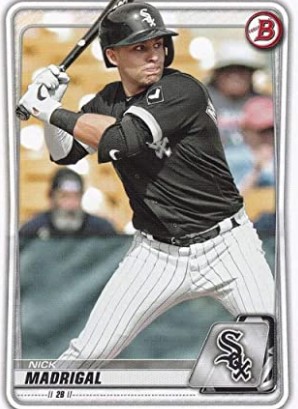
Chicago White Sox – Nick Madrigal, Tim Anderson

Nick Madrigal - Young table setter in Chicago.

Nick Madrigal – Young table setter in Chicago.

Lots of big boppers to watch in the White Sox lineup (Jose Abreu, Eloy Jimenez, Luis Robert), but BBRT is going to be watching a couple of players more suited to be table setters.  2B Nick Madrigal (just 24-years-old this season), hit .340 as a rookie in 2020 – after hitting .311, with 35 steals in three minor-league stops (120 games) in 2019. He had shoulder surgery in the off season (October), and BBRT will be looking to see how he bounces back. I’ll Also be watching SS Tim Anderson, the 2019 AL batting champ (.335, with 18 long balls and 17 steals), who hit .322-10-21, with five steals in 49 games a year ago. One thing of interest with Anderson will be to monitor his splits against lefties and righties. Over his five  MLB seasons,  he has hit .323 against lefties and .265 against right-handers – and, last season, that was even more pronounced (.449 against lefties and .283 versus righties).  No matter, these two middle infielders should spend a lot of time creating problems for opponents.

In 2020. the White Sox led the American League in home runs with 96.  American League MVP Jose Abreu led the way on the ChiSox with 19, followed by Eloy Jimenez with 14.  Abreu also led the league in hits (76), RBI (60) and total bases (148). 

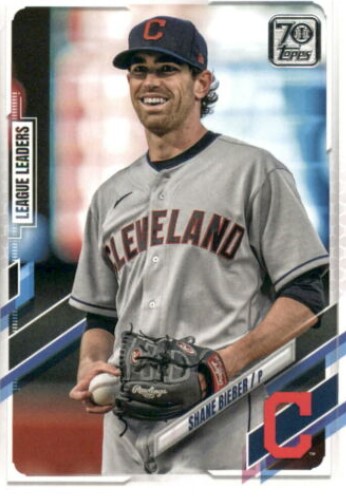
Cleveland Indians – Shane Bieber, Eddie Rosario

Shane Bieber - On everyone's CYA watch.

Shane Bieber – On everyone’s CYA watch.

How can you not get excited about watching Shane Bieber, last year’s AL Cy Young Award winner, who led all of MLB in wins (8), strikeouts (122 in 77 1/3 innings) and ERA (1.63)?  In his three MLB seasons, Bieber. Just 25-year-old, is 34-14, 3.32 with 499 whiffs in 406 1/3 innings pitched – and he seem to be getting better.  He’s on everyone ‘s Cy Young watch list.  With Francisco Lindor (trade) and Carlos Santana (free agency) gone, the Indians will be looking for some new sources of offense.  Being a Twins fan, I’ll be watching former Twin Eddie Rosario, who has shown 30-home run/100-RBI power in the past.

The Indians recorded the American League’s lowest team ERA in 2020 at 3.29. 

Detroit Tigers – Miguel Cabrera, Casey Mize

Miguel Cabrera photo

Miguel Cabrera – Adding to HOF credentials.  Photo by Kevin.Ward

Number one on my Tigers’ watch list is DH Miguel Cabrera – entering his 19th season just 134 hits shy of 3,000, 13 home runs short of 500.  It will fun to watch the four-time batting champion, two-time Most Valuable Player and 11-time All Star add these landmarks to his Hall of Fame credentials. On the other end of the spectrum, I’ll be watching the 2018 MLB Draft first overall pick – RHP Casey Mize.  A star at Auburn, Mize put up a 2.74 ERA with 120 strikeouts (and just 26 walks) in two minor-league seasons (2018-19). He got a brief, not so impressive, look-see in 2020 – going 0-3, 6.99 for the Tigers.  Still, Mize has a devastating splitter, mid-90s fastball, slider and curve. If he can bring the command he exhibited in college and the minor leagues to the Detroit mound, he should be a mainstay in the Tigers’ rotation.  He may not start the season in Detroit, but they need pitching, so you can expect to see him in the Motor City sooner rather than later.

From 2009-2016, Miguel Cabrera averaged .330, never hitting under .313 in a season. 

Houston Astros – Kyle Tucker, Jake Odorizzi, Jose Altuve

Kyle Tucker Astros photo

Kyle Tucker – Adding to the Astros’ offense.  Photo by Ken Lund

The Astros will open the season without ace starter Justin Verlander (Tommy John surgery), a well as without a big run-producing bat (George Springer, free agency). BBRT will be watching a couple of players the Astros hope will take up some of the slack.   OF Kyle Tucker (24-years-old) may be ready to blossom. In 58 2020 games for Houston, Tucker hit .268, with nine home runs and 42 RBI, while also stealing eight bases and leading MLB with six triples.  Oh, and he was also a Gold Glove finalist. It would be no surprise to see Tucker turn in a 25-homer, 80-RBI, 25-steal campaign. Free-agent Jake Odorizzi was signed to bolster the rotation. A 15-game winner with Twins in 2019, Odorizzi needs to bounce back from an injury-interrupted 2020 season, when he pitched only 13 2/2 innings.  For a little extra (watching credit), take a look at three-time batting champion Jose Altuve, who hit just .219-5-18 in 48 games last season. Those are not Altuve-like numbers (.311 career average), and the Astros are looking for a rebound from the 31-year-old in both the average and power departments.  Can’t wait to see what the mighty-mite has in the tank.

Ten pitchers made their major-league debuts with the Astros in 2020. 

Kansas City Royals – Whit Merrifield

Whit Merrifield photo

Whit Merrifield – Professional baseman.  Photo by Minda Haas Kuhlmann

Whit Merrifield is a professional hitter, an accomplished base runner and a versatile defender – as well as player who stays on the field.  He is, for BBRT, an “0ld-school” kind of guy, well worth watching day-in and day-out.  Consider, over the past three seasons, Merrifield has played in 380 of the Royals 384 gamers. Over that time, he has averaged .300 (486 hits) and stolen 77 bases – while leading the AL in hits twice and triples and steals once each. He’s also taken the field at second base, first base and all three outfield positions.

The Royals turned 62 double plays in 2020, tops in the American League. 

Los Angeles Angels – Mike Trout, Shohei Ohtani

Shohei Ohtani photo

Shohei – Something to watch on the mound and at the plate. Photo by shinya

How can you not watch three-time AL MVP Mike Trout, who’s never finished lower than fifth in the MVP voting in his ten MLB seasons?  Don’t expect any surprises – just a solid .300, 30-home run, 90 RBI campaign (or even a little better).  BBRT also will be watching 2018 AL Rookie of the Year Shohie Ohtani, who looks to be both in the starting rotation and seeing regular duty at DH.  You may recall, in his rookie season, Ohtani hit .285 with 22 home runs in 104 games AND went 4-2, 3.31 in ten starts on the mound. Ohtani is more than one year removed from Tommy John surgery and seems fully recovered from last year’s elbow/forearm strain.  I’ll be watching to see how far he can take this two-way approach (20 homer runs/10 mound victories?).

Angels’ Pitching Woes

You might want to monitor the entire Angels’ rotation, which turned din MLB’s second-worst earned run average in 2020 (5.52) – and that wasn’t a short-season fluke.  They also put up MLB’s second-worst ERA in 2019 (5.64, only the Rockies starters were worse).  They are hoping for a boost from Shohei Ohtani’s return to the mound, as well as from newcomer (free-agent) Jose Quintana (3.73 career ERA, over 254 appearances).

Minnesota Twins – Nelson Cruz, Byron Buxton, Alex Kiriloff

Nelson Cruz Twins photo

Nelson Cruz – Betting his age-41 seasons will be a thing of beauty.  Photo by andywitchger

In 2019, Twins’ DH Nelson Cruz (who turned forty on July 1) went .303-16-33 in 53 games. He recorded the American League’s seventh-highest average, fifth-most home runs, third-highest on-base percentage and fifth-highest slugging percentage.  BBRT will be watching to see what he can do in his age 41 season,

Others to watch in Minnesota include center fielder Byron Buxton – a multi-tool player whose all-out style of play has made him injury prone (he has played in at least 100 games in only one of six MLB seasons). Last season, Buxton hit 13 home runs in just 39 games.  Buxton is a Gold Glove outfielder, who – if he stays in the lineup – could easily put up 25 home runs and 25 steals.  The fact is, when he is on the field, he changes the game.  Let’s see if he can stay off the IL.  I’ll also be watching 23-year-old rookie OF Alex Kiriloff. Kiriloff has a .317 average, with 36 home runs over three minor-league seasons (279 games) and the Twins would like him to replace departed outfielder Eddie Rosario (.257-13-42 in 2020 and .276-32-109 in 2019). A .280-25-75 campaign from Kiriloff would do the trick.

The Twins have lost a record 18 consecutive post-season games. 

New York Yankees – Aaron Judge, Giancarlo Stanton, Luis Severino

Giancarlo stanton photo

Giancarlo Stant0n – big bat (when he’s) in the Yankee lineup.  Photo by IDSportsPhoto

Plenty to watch in the Yankee lineup (they could run seven 25+ home run hitters out there).  So, BBRT will be watching to see who is NOT in the lineup.  That includes:  RF slugger Aaron Judge – who has played in just 63 percent of the Yankees’ games over the past three years – and DH Giancarlo Stanton, who has appeared in just 52 percent of the Bomber’s games over that time.  (Consider, Judge – as a rookie – hit 52 home runs in 2017. He hasn’t hit more than 27 in a season since.  And Stanton, who hit 59 home runs as a Marlin in 2017 and 38 as a Yankee in 2018, has hit seven homers, while playing in just 41 games, over the past two seasons.) BBRT will also be watching to see when potential staff ace Luis Severino (a 19-game winner in 2019) returns from Tommy John surgery.

In 2020, the Yankees led the American League in run scored (315), walks (251) and on-base percentage (.342)

Oakland A’s – Trevor Rosenthal, Jake Diekman, Matt Olson, Matt Chapman

Matt Olson baseball photo

Matt Olson – Bringing leather and lumber to the A’s.  Photo by mwlguide

Over the past two seasons, Liam Hendriks has owned the ninth inning for the Oakland A’s. He appeared in 99 games, won seven (five losses), saved 39, put up a minuscule 1.79 ERA and fanned 161 batters in 110 1/3 innings. Hendriks is now going to come in from the pen for the White Sox (free agency) and the scramble is on to replace him at closer. BBRT will be watching to see who moves into the spot. Candidates seem to be free-agent signee Trevor Rosenthal (132 career saves/11 saves and a 1.90 ERA in 2020’s short season) and Jake Diekman (a 0.42 ERA in 21 appearances last season). Always worth watching are the A’s two Matts – Olson and Chapman – a pair of Gold Glover corner infielders (Olson 1B, Chapman 3B),  both proven capable of 30+ homer power (and keys to the A’s offense and defense).

Over the past three seasons Matt Olson and Matt Chapman have won four Gold Gloves and hit 149 home runs. 

Seattle Mariners – Marco Gonzales, Rafael Montero

Marco Gonzales baseball photo

Marco Gonzales – Mariners’; ace. Photo by Minda Haas Kuhlmann

Marco Gonzales will again be the ace of the Mariners’ staff. (He was 7-2, 3.10 in 2020). Gonzales is not overpowering (64 strikeouts in 69 2/3 innings), but he gets the job done (59 hits and just seven walks). He’s the guy you want on the mound if you’re headed to a Mariners’ game. BBRT will also be watching new closer Rafael Montero (trade with Rangers) to see if he’s the real deal. The 30-year-old Montero is a converted starter, who didn’t have a save in his first five MLB seasons and then saved eight games in eight opportunities in 2020. He’s got a high-90s fastball, a sinker and a change up (his 4.08 Era in 2020 is a bit concerning).  The closer role was a bit of a revolving door for the Mariners last season. If Montero grabs the role full-time it will help stabilize the Mariners’ bullpen.

The Mariners led the American  League in stolen bases last season with 50 and had five players with five or more steals.  

Tampa Bay Rays – Randy Arozarena, Rays’ Free-Agent Starters

Randy Arozarena - Post-seasons hero.

Randy Arozarena – Post-seasons hero.

Rays’ rookie OF Randy Arozarena set the post-season on fire – hitting .376, with ten home runs and 14 RBI in 29 games,  setting a record for the most home runs in a single year’s post season.  This performance, contrary to some observers, did not come out of nowhere.  Arozarena hit .281-7-11 in 23 games for the Diamondbacks in the regular season and .300 (6-for-20) in 19 games for the Cardinals in 2019.  (He was traded from the Cardinals to the Rays in January of 2020.)  The 2020 post-season, in fact, was not even Arozarena’s first post-season experience. He got in five post-season games for the Cardinals.   Further, Arozarena posted a .292 average in three minor-league seasons, including a .344-15-53 line in 92 (AA-AAA) games in 2019.  He looks like the real deal – and well worth watching.

BBRT will also be keeping an eye on Tampa Bay free-agent signees Rich Hill, Chris Archer, Collin McHugh and Michael Wacha.  The Rays, who lost their two top starting pitchers (Blake Snell by trade, Charlie Morton to free agency) are once again rebuilding their pitching staff and it will be interesting to see how the rotation fleshes out (which may determine if the Rays or Blue Jays make it to the playoffs).

On September 11, 2020, the Rays starting lineup against the Red Sox was: Austin Meadows, LF; Joey Wendle, SS; Brandon Lowe, 2B; Ji-Man Choi, 1B; Kevin Kiermaier, CF; Yoshi Tsutsugo, 3B; Nate Lowe, DH; Brett Phillips, RF; Michael Perez, C.  Uniquely, they were all left-handed hitters.  Oh, and the Rays’ starting pitcher was southpaw Blake Snell. Righty Andrew Triggs started for the BoSox and gave way (after one scoreless inning) to left-hander Matt Hall. Hall surrendered four runs in 2 1/3 innings and took the loss. 

Texas Rangers – Joey Gallo

JOey Gallo photo

Joey Gallo – Texas-sized power.  Photo by mikelachance816

Will Joey Gallo lead the league in home runs, strikeouts or both?  The a question is worth considering – and watching for the answer to. In the two full seasons, Gallo has played for the Rangers (at least 140 games), he hit .208, with 81 home runs AND 403 strikeouts. I’d love to see Gallo make more contact (that could lead to a 50-HR season).  Notably, the free-swinging Gallo has added another reason to put him on you watch list.  In 2020 the Ranger RF was a Gold Glover.

The Rangers’ 224 runs scored in 2020 were the fewest in the American League. They also had the leagues’s fewest hits (420), lowest batting average (.217) and fewest total bases (704).

Toronto Blue Jays – George Springer, Kirby Yates

George Springer baseball photo

Geroge Springer – Big Bat/Veteran presence. Photo by Stabbur’s Master

The Blue Jay have lots of emerging young players who deserve a look, many with familiar last names – SS Bo Bichette, 1B Vlad Guerrero, Jr., 3B Cavan Biggio.  BBRT, however, will be keeping an eye on a couple of newcomers.    The Jays made a big splash in the free-agent pool, led by the six-year, $150 million contract they gave to former Astro George Springer. Springer brings a proven bat to the middle of the Blue Jays’ lineup.  He averaged .270-35-93 for each 162 games over a seven season MLB career – and, in 2019, went .293-39-96. He also brings a veteran presence to this young squad – and the Blue Jays hope he can lead them to the post-season. The Blue Jays also brought in closer Kirby Yates (free agency). In 2019, Yates led the NL in saves (as a Padre) with 41, along with a 1,19 ERA and 101 strikeouts in 60 2/3 innings.   Bone chips in his elbow (requiring surgery) limited Yates to six appearance in 2020. The Blue Jays expect him to come back with a vengeance in 2012 – and so does BBRT.

Other Blue jays to put on your “bird watching” list include outfielder Teoscar Hernandez, who surprised in 2019 with a .289-16-34 season (50 games). Going into the season, Hernandez has a .237 average in 327 MLB games over four seasons. The Blue Jays would like to see the 2019 version. Also, keep an eye on top pitching prospect Nate Pearson with his triple-digit fastball and wicked 90-mph+ slider.  His emergence could bolster the Jay’s rotation.

In 2020, the Blue Jays had MLB youngest roster or position players and fifth-oldest roster of pitchers. 

— MAJOR AWARDS — 

Finally, predictions on BBRT favorites for  American League Awards.

Al MVP:  1. D.J. LeMahieu;  2) Matt Chapman, A’s; 3) Aaron Judge, Yankees; 4) Alex Bregman, Astros; 4) George Springer, Blue Jays

AL Cy Young: 1) Gerrit Cole, Yankees; 2) Shane Bieber, Indians; 3) Lucas Giolito, White Sox; 4) Tyler Glasnow, Rays

AL Rookie of the Year; Randy Arozarena, Rays; Casey Mize, Tigers; Alex Kiriloff, Twins; 4) Wander Franco, Rays

Primary Resources:  Baseball-Reference.com; MLB.com.

Coming Soon; BBRT’s National League Predictions/Watch List.


100Baseball Roundtable is on the Feedspot list of the Top 100 Baseball Blogs.  To see the full list, click here.

I tweet baseball @DavidBBRT

Follow/Like Baseball Roundtable’s Facebook Page here.  More baseball commentary; blog post notifications.

Member: Society for American Baseball Research (SABR); Negro Leagues Baseball Museum; The Baseball Reliquary. 

Walk-Off (or run-off – or swing-off) Endings that Caught Baseball Roundtable’s Eye

Here’s another of those Baseball Roundtable blog posts that illustrate how “one thing leads to another” when I start looking into a topi. I recently completed a post on “Pinch-Hit Ultimate Grand Slams” – walk-off Grand Slams when the pinch-hitter’s team needed all four runs to chalk up the victory.  (For that post, click here.) That research led me to look further into game-ending “walk-offs” of all kinds.  Here are a few that I found particularly unique, interesting or historic.

Truly the All-Time WALK-Off

We hear a lot about walk-off home runs, but the Dodgers – on July 2, 2019 – pulled off the ultimate Walkoff.  Los Angeles came into the bottom of the ninth trailing the Diamondbacks 4-3.  Arizona brought in closer Greg Holland, who quickly recorded the first two outs.  The Dodgers were now down to their last out, not knowing they were destined to mount a two-run, game-winning rally without putting the ball in play.

Dodgers’ LF Chris Taylor next faced Holland and put the Dodgers down to their last strike before drawing a full-count count walk. Then Russell Martin pinch hit for pitcher Yimi Garcia and drew a full-count walk. Next up was CF Alex Verdugo, who walked on five pitches.  Then came 1B Matt Beaty, who walked on four pitches – tying the game at three runs apiece.  At this point, the Diamondbacks brought T.J. McFarland to the mound, but the results were pretty much the same. RF Cody Bellinger walked on a 3-2 count, forcing in the winning run on a true walk-off walk.  The entire two-out, five-walk series took 28 pitches.  Game. Set. Match.

A Walk-Off … No, I Mean Run-Off, Victory

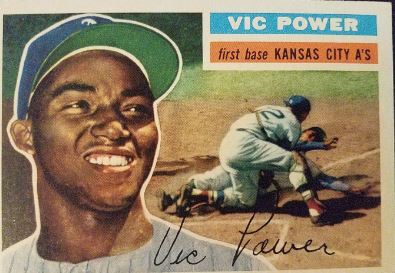
PowerOn this August 14, 1958, Vic Power became just the eleventh player in MLB history to steal home twice in one game – a feat that has not been accomplished since.  Not only that, his second steal of home came in the bottom of the tenth inning, giving Power’s Indians a 10-9 win over Detroit – a true run-off, walk-off.

Here’s how that tenth inning went. 1B Mickey Vernon grounded out (Frank Lary was on the mound).  Then, Power (playing third base that day) singled to right (his third hit of the day).  Catcher Russ Nixon followed with another single, Power moving to second.  LF Minnie Minoso grounded to short, with Power moving on to third, Nixon forced at second and Minoso reaching first on the fielder’s choice.  CF Larry Doby was intentionally walked, loading the bases and bringing RF Rocky Colavito (in the midst of a 41-home run, 113 RBI season and with three RBI on the day) to the dish. On the fourth pitch to the Indians’ slugger, Power – who had been scampering up and down the third base line – broke for the plate and ended the game on a “run-off” steal of home.  For more on MLB steals of home, click here.

Power, by the way, was not a very likely candidate to swipe home twice in a game.  Going into that August 14 tilt, he had exactly one stolen base on the season – and he did not steal another bag that season. In fact, in twelve MLB seasons, Power stole just 45 bases (and was caught 35 times).

Kind of a Brummer – in a Good Way

On August 22, 1982, Cardinals’ catcher Glenn Brummer produced a notable walk-/run-off win.  Brummer’s Cardinals were tied with the Giants in the bottom of the 12th inning, with two-outs and a 2-2 count on LF David Green (facing Gary Lavelle). On Lavelle’s fifth pitch to Green, Brummer broke for home, getting in safety (to win the game) on a head first slide. What makes this one memorable (at least to me) is that Brummer stole only four bases (and was thrown out eight times) in his five-season MLB career.

Holy Moses

A total of 35 MLB games have ended with a steal of home. Wally Moses is the only player to accomplish the feat twice – once against the White Sox and once for them.  On August 20, 1940, Moses’ tenth-inning steal of home gave his Philadelphia Athletics a 4-3 win over the White Sox.  Then, on July 7, 1943, his fourteenth-inning swipe of home plate gave his White Sox a 3-2 win over the Red Sox.

You’ll Never see that Again

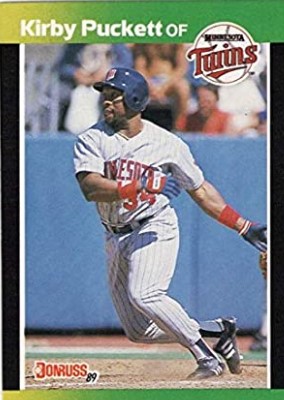
PuckettOn May 28, 1993, the Cleveland Indians scored a pair of runs in the top of the ninth to tie the Minnesota Twins at 6-6. With Ted Power pitching, Twins’ 2B Chuck Knoblauch opened the bottom of the ninth inning with a single to center.  That brought Eric Plunk in from the bullpen and he was greeted by a double to left (on a 1-2 pitch) by 1B Dave McCarty.  Knoblauch was held at third.  So, with runners on first and third, one out, the game on the line and the Twins’ best hitter (CF Kirby Puckett) coming up, the Indians decided to follow the traditional strategy – intentionally walking the future Hall of Famer to set up the double play.  Oops! Plunk’s first intentionally high-and-outside pitch got past catcher Junior Ortiz and Knoblauch scampered home with the winning run-off run.  With today’s “wave-em-to-first” intentional walk rule, we’ll never see this ending again.


I’ll Take a Pass on That

On August 15, 1970, with the Mets up on the Braves 2-1 and the Braves batting in the bottom of the ninth with one out and the bases loaded, Tom Seaver whiffed Atlanta catcher Blob Tillman. The ball, however, eluded Mets’ catcher Jerry Grote for a passed ball, allowing the tying run (Tony Gonzalez) to score from third base. Grote doubled down on the miscue with an errant throw to the plate, allowing Rico Carty – who had been at second base – to score the winning tally.  So, Atlanta fans got to witness a game-ending, game-winning strikeout. 

 Walking Off a No-No

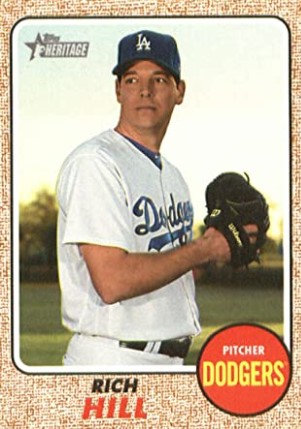
hillOn August 23, 2017,  only an error by third baseman Logan Forsythe had kept him from tossing nine perfect innings against the Pirates.  After nine frames, he had given up no hits and no walks, while striking out ten (including Pittsburgh 2B Josh Harrison twice).  Unfortunately, over 9 ½ innings, Hills’ teammates did not put any runs up on the score board. Pirate’s starter Trevor Williams had given up no runs – on seven hits and four walks – over eight frames; reliever Felipe Vazquez had pitched a one-hit scoreless ninth; and Juan Nicasio had pitched a 1-2-3 top of the tenth.

Leading off the bottom of the tenth was Harrison (zero-for-three with two strikeouts in the game). Harrison hit a 2-1 pitch for a walk-off, game-winning home run to left – becoming the first player to end an extra-inning no-hitter with a walk-off long ball. (It was his 16th round tripper of the season.  (Lots of qualifiers there, but – as I’ve said before – in baseball we count everything.)  For past post on no-hitters lost late in the game, click here. 

Latest Walk Off Win Ever

The longest game ever to end in walk-off fashion took 25 innings, eight hours and six minutes and two days to complete.  It started on May 8, 1984, with the Brewers facing the White Sox at Comiskey – and seemed about to end twice before the 25th frame finale.

All in a Day’s Work

The longest game (in innings) took place on May 1, 1920 – as the Brooklyn Robins and Boston Braves played 26 innings (game called due to darkness) to a 1-1 tie. To show how the game has changed, the 26 frames were completed in just under four hours – and both starting pitchers (Joe Oeschger and Leon Cadore) went the distance. 

The Brewers/White Sox game was tied 1-1 going into the ninth. Brewers’ SS   Robin Yount opened the inning against Britt Burns with a double to left. After one out, he stole third and scored on a throwing error by catcher Carlton Fisk.  Then, Milwaukee 1B Ted Simmons singled, went to second on a Burns’ wild pitch and scored on a single by LF Ben Oglivie – giving the Brew Crew a two-run lead. In the bottom of the inning, White Sox’ LF Tom Paciorek led off against Rollie Fingers and was safe on an error. Fingers retired the next two batters and the Brewers were one out from the win.  However, Sox’ 2B Julio Cruz delivered an RBI double and CF Rudy Law followed with an RBI single – tying the game at three apiece.  That’s where the score stayed until the end of the seventeenth inning, when it was suspended due to curfew rules.

BrewSox

The game resumed on May 9 and stayed at 3-3 until the top of the 21st, when Oglivie popped a two-out, three-run home run off Ron Reed to give the Brewers a 6-3 edge.  Game over?  Not so fast! In the bottom of the 21st, Law reached on an error and scored on a single by catcher Carlton Fisk (off Chuck Porter).  Marc Hill (now in at 1B) then walked and,  after Dave Stegman (now in at DH) fanned, RF Harold Baines walked and Paciorek delivered a two-run single. That ended the scoring and kept the game knotted, now at 6-6.

There was no more scoring until one-out in the bottom of the 25th, when Baines homered off Porter – giving the win to “reliever” Tom Seaver, who pitched the top of the 25th.  It was the latest-ever MLB walk-off hit.

A few side notes: Carlton Fisk was behind the plate for the ChiSox for all 25 innings (He went three-for-eleven with a walk). Seven different players occupied the number-three spot in the White Sox batting order – although only five had a plate appearance.  Chuck Porter, who took the loss, pitched the final 7 1/3 inning for the Brewers.  For more on this contest some of MLB’s longest game, click here.

By The Numbers

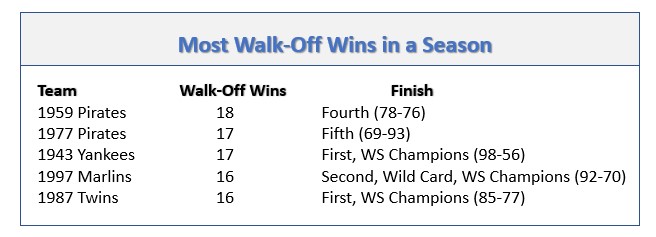
In 1959, the Pirates racked up a single-season record 18 walk-off victories – despite finishing in fourth place, just two games over .500.  That same campaign, they also won a pair of doubleheaders in which they took both games in walk-off fashion.  They are one of five teams to accomplish that feat.

Here’s how they did it.

May 24 – Game One … 2-1 over Reds

The game was scoreless until the top of the ninth, when the Reds tallied once. The Pirates scored twice in the bottom of the inning, winning it on a two-out, walk-off, RBI double by PH Danny Kravitz.

May 24 – Game Two … 5-4 over the Reds

The Pirates scored twice in the bottom of the ninth to tie the game at 4-4. They won it in the tenth on a two-out, walk-off, RBI double by PH Smokey Burgess.

August 30 – Game One … 2-1 over Phillies

The Pirates won this one on a ninth-inning, two-out, RBI single by LF Bob Skinner.

August 30 – Game Two …. 7-6 over the Phillies

The Pirates were down 5-0 in this one at the end of six innings.  They scored one in the seventh; two in the eighth; and two (to tie the game) in the ninth. In the top of the tenth, the Phillies tallied once to take the lead, but the Pirate prevailed on a one-out, two-run double by 1B Dick Stuart in the bottom of the inning.

Side note:  1959 saw Pirates’ reliever Roy Face put up his historic 18-1 (.947 winning percentage, 10 save, 2.70 ERA) season. Nine of his wins came in the Pirates’ 18 walk-off victories.

WOwinmsseason

“Power”ful Book Ends

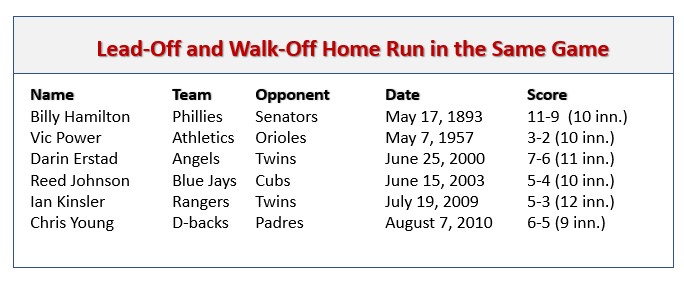
May 7, 1957, Vic Power’s Athletics were playing the Orioles in Kansas City.  Power led off the bottom of the first for the A’s – and hit a home run to left off starter Hal Brown – Power’s first long ball of the season. Fast forward to the bottom of the tenth, with the game tied at 2-2.  With one out – and Brown still on the mound – Power hit his second home run of the season (again to left field), giving the A’s a walk-off win and also making Power just the second player to hit a game opening and game-ending home run in the same contest – and he did it with his first two homers or the season.   (For more on players – before and after Power – to open and close a game with a long ball click here.)

LOWO

The Walk-Off Home Run Turned Double

One of the best (and most historic) games ever pitched ended in a walk-off win – but not for the team and pitcher you might expect.

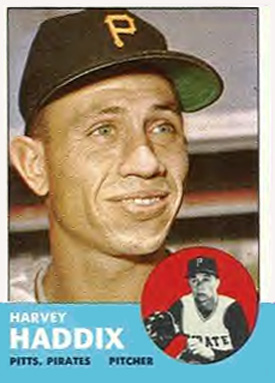
HaddixOn May 26, 1959, Harvey Haddix took the mound against the power-laden Milwaukee Braves (who had won the National League pennant the previous two seasons and came into the game again leading the league).  Haddix retired the first 36 hitters in order – fanning eight, carrying a perfect game into the bottom of the 13th (the longest perfect outing ever).

Unfortunately, the Braves’ Lew Burdette, despite giving up 12 hits and fanning only two, had held the Pirates scoreless. (Like Haddix, Burdette had not issued a single free pass.) Milwaukee 2B Felix Mantilla led off the 13th by reaching on error by Pirates’ third baseman Don Hoak. Slugging 3B Eddie Mathews bunted Mantilla over to second, which led to an intentional walk to RF Hank Aaron, bringing up 1B Joe Adcock.  Adcock rapped a 1-0 pitch over the right field fence for what appeared to be a three-run walk-off home run.  However, the Braves, in celebrating the tension-filled victory, forgot how to run the bases. Adcock passed Aaron between second and third and, after some deliberation, Adcock was called out – ultimately changing his three-run homer to a one-run, walk-off double. So, despite 12 perfect innings, Haddix lost the no-hitter, the shutout and the game itself.  But he did etch his name forever into baseball lore; and countless trivia quizzes.

Taking One (or Two) For the Team

On September 15, 2020, the Cubs came up in the bottom of the ninth tied with the Indians at five runs apiece.  The Indians brought Oliver Perez in for the save and he retired the first batter – LF Ian Happ – on a fly out to RF. Next 3B Kris Bryant walked on a 3-2 pitch (in an eight-pitch at bat). Then, 1B Anthony Rizzo singled Bryant to third.  That brought on Nick Wittgren to face DH Wilson Contreras, who was hit by a 1-1 pitch – loading the bases.  On the very next pitch, PH Cameron Maybin was hit by a Wittgren pitch – leading to walk/hit-off 6-5 Cubs win.

Jim Thome holds the MLB career record for walk-off home runs at 13.

Inside-Out(side)

This post started with the research on pinch-hit “Ultimate Grand Slams” – walk-off Grand Slams hit when your team is down three runs.  In that research, I came across a couple of non-pinch Ultimate Slams that interested me – one inside the park and one that went out of the field of play.

ClementeThe first occurred on July 25, 1956.   The Pirates entered the bottom of the ninth of a game against the Cubs trailing 8-5. With Turk Lown on the mound for the Cubs, the Pirates loaded the bases on two walks and a single.  The Cubs then went to Jim Brosnan to face 21-year-old Roberto Clemente, who hit Brosnan’s first pitch over left fielder Jim King’s head. The line drive struck the fence, rebounding along the outfield warning track. The three base runners scampered home, tying the score.  As Clemente approached third base, coach Bobby Bragan was putting up the “stop” sign – which the speeding Clemente ignored – ultimately sliding home with the winning walk-/run-off tally in a 9-8 win. In the process, he became, and still is, the only player with a inside-the-park Ultimate Grand Slam. Clemente, by the way, is reported to have paid a $25 fine for running through the stop sign.,

Now for one that left the field of play.  Have to go with the well-known and historic Giants’ 5-4 win over Dodgers in the 1951 pennant-deciding playoff game. In that one, the Giants trailed 4-1 going into the bottom of the ninth. With Don Newcombe on the mound, the Giants started the ninth with a single by SS Al Dark, a single by RF Don Mueller, a foul pop out by LF Monte Irvin and run-scoring double by 1B Whitey LockmanRalph Branca came on to pitch and 3B Bobby Thomson hit his second pitch for a three-run, walk-off home run – and, of course, the Giants ticket to the World Series.

What a Way to Win a World Series

Okay, we all know about Bill Mazeroski’s tenth-inning, Game-Seven home run (off Ralph Terry) that gave the Pirates a walk-off 10-9 win and the 1960 World Series title.  Why is it here?  Because it gave the Pirates the Series’ despite the fact that, over the seven games, they were out hit by the Yankees; .338 to .256; 91 hits to 60; ten home runs to four – and were outscored 55 to 27. In the Series, the Pirates pitching staff put up a 7.11 ERA, to 3.54 for the Yankees.  For more detail on this exciting World Series, click here.

Primary Resources: Baseball-Reference.com; Baseball-Almanac.com; MLB.com

WE HAVE A WINNER!   BBRT’S LATEST PRIZE PACK.

Rick from Fargo, North Dakota is the winner of Baseball Roundtable’s latest prize pack.  (Watch BBRT posts for future drawings.)  Rick is receiving: 1) A complete 1984 Topps baseball card set; 2) a Twins 40th Anniversary Tony Oliva bobblehead; 3) an autographed 8 x 10 of Tony Oliva; 4) a Magnum Comics Mickey Mantle First Edition comic book (with commemorative Mantle card); and 5) a first edition copy of “Quotable Baseball Fanatics.” 


100Baseball Roundtable is on the Feedspot list of the Top 100 Baseball Blogs.  To see the full list, click here.

I tweet baseball @DavidBBRT

Follow/Like Baseball Roundtable’s Facebook Page here.  More baseball commentary; blog post notifications.

Member: Society for American Baseball Research (SABR); Negro Leagues Baseball Museum; The Baseball Reliquary. 

Hall of Fame – BBWAA Compared to Baseball Roundtable Fan Vote

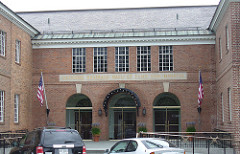
Photo by candyschwartz

Photo by candyschwartz

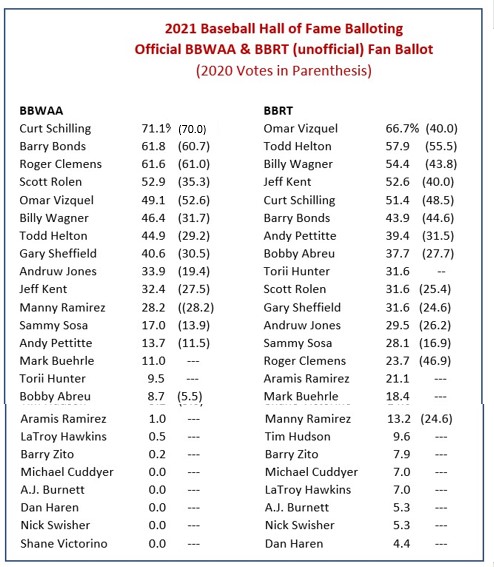
The official 2021 Baseball Writers Association of America (BBWAA) Hall of Fame balloting results are in – and for the first time since 2013, there were no electees.   The top five vote getters were Curt Schilling (71.1%), Barry Bonds (61.8%), Roger Clemens (61.0%), Scott Rolen (52.9%) and Omar Vizquel (49.1%).  That differs significantly from the unofficial ballots cast by 114 Baseball Roundtable readers.  While, like the BBWAA, the fan voters gave no player the needed 75 percent for election, the leading votegetter list differed significantly.  BBRT readers placed Omar Vizquel (66.7%), Todd Helton (55.5%), Billy Wagner (43.8%), Jeff Kent (52.6 %) and Curt Schilling (51.4%) in their top five.  Here’s a vote percentage comparison.

FullChartF

Blank Ballots

There was some online discussion over the past few days surrounding the blank ballots turned in by Ron Cook of the Pittsburgh Post-Gazette, who (in a column) cited an aversion to “cheapening the Hall” and consideration of the “character clause” among the reasons for his blank ballot. Nick Canepa of the San Diego Union-Tribune cited similar reasons (also in a column), indicating he saw no one the ballot in his “legitimacy range as ballotworthy” and that he was also influenced by the PED controversy. (“You have to be a dominant non-juicing stud to get my vote,” Canepa wrote.)  I expect those same reasons were behind the three blank ballots received in the BBRT fan voting. Notably, Cook and Canepa were not the only writers submitting a blank ballot. A record 14 blank ballots were submitted – that comes to 3.5 percent of the total, fairly comparable to the BBRT’s fan balloting level of 2.6 percent.

I found a couple of odd occurrences as I compared the BBWAA and BBRT vote counts.   In 2020, Omar Vizquel garnered considerably more support from the writers than he did in the BBRT fan ballot (52.6% from the BBWAA/40.0% in the BBRT fan ballot). This year, that turned around, with Vizquel jumping to 66.7 percent in the BBRT ballot, but dropping to 40.5% in the official BBWAA ballot. (Domestic abuse allegations, which Vizquel had denied, may have influenced some BBWAA votes. Those allegations garnered considerable media attention in mid-December, about halfway through the BBRT voting period.)

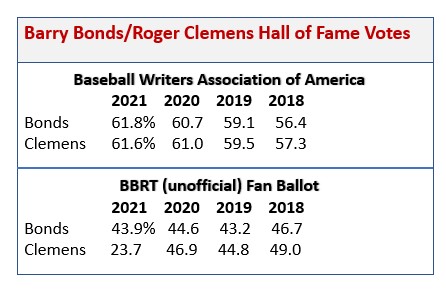
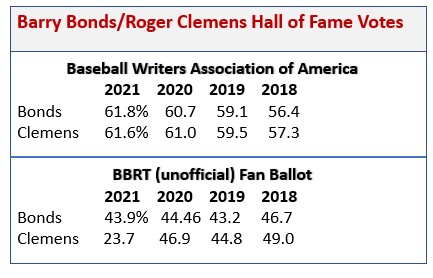
Then, there is Roger Clemens.  Clemens and Barry Bonds, as the chart below shows, have tracked fairly closely in recent BBWAA and BBRT balloting. That remained fairly consistent for the BBWAA this season, but on the BBRT unofficial fan ballot, Clemens dropped from 46.9% to 23.7%. I really can’t figure that one out.

BonClemensF1

Here are a few additional observations/comparisons:

  • While the fans were tougher on Schilling, Bonds and Clemens than the writers, they were more generous “down the ballot.” In the BBRT fan ballot, not a single player was shutout and only one player received less than 5 percent –  the figure needed to stay on the BBWAA official ballot. (See the “From the Heart Cadre” near the end of this post for a possible explanation.) The BBWAA balloting saw five players shutout and eight players below 5 percent.
  • The biggest gainer in the BBWAA voting was Scott Rolen, who made a 17.6 percentage point jump – from 35.3% to 52.9%. The biggest gainer on the Baseball Roundtable fan ballot was Omar Vizquel, who made a 26.7 percentage point leap from last year (40.0% to 66.7%). Other big gainers on the BBWAA ballot were: Todd Helton – up 15.7 pct. points (29.2 to 44.9); Billy Wagner – up 14.7 (31.7 to 46.4); Andruw Jones – up 14.5 (19.4 to 33.9); and Gary Sheffield – up 10.1 (30.5 to 40.6). Additional big gainers on the BBRT fan ballot were: Jeff Kent – up 12.6 (40.0 to 52.6); Billy Wagner – up 10.6 (43.8 to 54.4); and Bobby Abreu – up 10.0 (27.7 to 37.7).
  • Only two holdovers on the BBWAA ballot saw a decline in support – Omar Vizquel and Tim Hudson.  Three players saw a decline in support on the BBRT ballot – Roger Clemens, Barry Bonds and Manny Ramirez.
  • The first-timer receiving the most support on the BBWAA ballot was Mark Buehrle with 11.0%. On the BBRT fan ballot, that distinction went to Torii Hunter with 31.6%.  BBRT has a notable following among the Halsey Hall (MN) Chapter of the Society for American Baseball Research which may provide insight into Hunter’s popularity in the BBRT vote. On the BBWAA ballot, Hunter did get the second-most votes among first-timers (9.5%).
  • A few other notable differences: Roger Clemens ranked third on the BBWAA ballot, 14th on the BBRT ballot; Bobby Abreu ranked 16th on the BBWAA ballot, eighth by BBRT voters; Jeff Kent was ranked tenth by the BBWAA voters, fourth on the unofficial BBRT ballot.
  • In 2022, the following players (their 2021 voting percentages in parenthesis) will be in their final year on the ballot:  Roger Clemens (61.0%); Barry Bonds (60.7%); Sammy Sosa (13.9%).  Curt Schilling, who would be in his tenth and final year, has asked to be removed from the ballot.

Forty-five BBRT survey respondents answered the question regarding which players not currently in the Hall of Fame (and not on the ballot) should be in the Hall.  Jim Kaat led the way with six mentions (13.3%0, followed by Pete Rose with five. Below is the full list.

Hof should be

—-Hall of Fame Voting Cadre—-

I’ll finish up with a review  (yes, I’ve posted these before) of Hall of Fame voting cadres I have observed over the years.  This, by the way, is not a judgement on voter strategies, but rather just an observation on factors that appear to have had a current or past influence on voting patterns and vote totals.

The Anti-PED Cadre

This group declines to vote for those who appear to be tied into the PED controversy (whether verified or suspected). There continues to be enough of these voters to effectively block a significant number of PED-associated candidates from election.  In recent years, this cadre has made its presence felt in both the BBWAA and BBRT balloting.  There does seem to be a slowly diminishing effect among BBWAA voters, but the impact on BBRT fan ballot total has been relatively stable.

The Character Cadre

Closely tied to the PED-Cadre, this group looks to the Hall of Fame official voting guidelines that call for consideration not just of performance and contribution to the team, but also “integrity, sportsmanship, and character.” A player’s attitude, political views and lifestyle, do appear to impact a number of voters’ preferences.

The Small Hall Cadre

This cadre has focused on demanding particularly high standards for election to the Hall of Fame – and has voted vote for very few (sometimes even zero) candidates.  This, by the way, is not a new approach (despite this year’s record 14 blank ballot).  Back in 1988, for example, nine blank ballots were cast in the BBWAA voting. A Los Angeles Times article quoted New York Daily News reporter Phil Pepe (who sent in one of the nine blank ballots) as saying the Hall of Fame was “too crowded,” adding “I think to go in alongside Ruth, DiMaggio, Williams, Aaron, Cy Young, you have to be the cream of the cream. The more you erode the standards, the more the standards will be eroded.”  This year (as noted earlier in this post), Ron Cook mirrored those sentiments, saying his blank ballot reflected a belief that “The Hall should be only for the truly greats.”  (I should note that, in recent years, the “Small Hall” voting strategy seems to have been on the decline.)

The Unanimously Adverse Cadre

This cadre has been made up of voters who are opposed to (or uniquely demanding) of a unanimous selection to the Hall of Fame. The logic appears to have been “If Babe Ruth, Stan Musial, Willie Mays, Cy Young or (insert a legendary player of your choice) was not a unanimous selection, why should player “X” be?”  Mariano Rivera’s recent unanimous selection and Derek Jeter’s close call seem to indicate this cadre’s days may be behind us.  Still, even when this is only a cadre of one, it is effective.

The Ballot-Hierarchy Cadre

Over the years, members of this cadre have drawn a line between first-ballot and subsequent-ballot votes. The Ballot Hierarchy was a “thing” for a long time.  In a 2013 column, ESPN’s Howard Bryant wrote: “I believe in the hierarchy of the ballot, that the first ballot is different than the second or the tenth, that there is a special prestige to a player being voted in the first time he is eligible.”  The question for BBRT is, “Do voters just withhold that first-, second- or other-ballot vote, or does it go to another candidate who meets the hierarchy test?”

The Clock Is Ticking Cadre

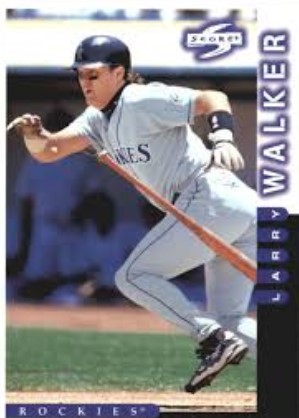
This approach works to the benefit of players approaching their final year on the ballot.  For example, 2020 electee Larry Walker’s final five years on the ballot saw his vote percentages go (in order) – 15.5, 21.9, 34.1, 54.5 and 76.6.  His stats didn’t change over that time, but the clock on eligibility was ticking downward.

The Strategist Cadre

Somewhat related to the “Ballot Hierarchy” group – at least in impact – this group reasons that certain players are sure bets to get the required 75 percent and chooses not to add to the sure-thing margin, instead casting that vote for a player they find deserving further down the ballot.  This approach may actually improve the chances of additional candidates. A subset of this group is those who note that certain players (in, for example, the 40 percent range), while NOT likely to reach 75 percent in a given year, ARE pretty much assured of adequate support to stay on the ballot. This subset withholds votes from those candidates and votes to protects those they would like to see on the ballot (but who are less “safe”).

The From-the-Heart Cadre

This group (which seemed to show up in the BBRT unofficial fan ballot more than in the BBWAA voting) casts votes for a specific player (or players) further “down the board” either as a “fan” statement or to ensure that player does not fall off the ballot (get less than five percent).

The Ten-Best Cadre

This group simply votes for whom they felt are the ten best players; regardless of the factors influencing any of the cadres already noted.  (Well, in some cases it is the eight or nine candidates they feel are deserving.)

So, there’s BBRT’s look at the 2021 HOF election, as well as some observations of current and past voting strategies.

Coming Soon:  Who’s Your Daddy? Lefty Grove Edition.

Primary Resources:  Baseball-Reference.com; Baseball-Almanac.com; MLB.com; Why I’m Turning in a Blank Ballot, January 23, 2021,Ron Cook, Pittsburgh Post-Gazette; Bland baseball ballot: No deserving Hall of Fame Candidates this year, January 16, 2012, Nick Canepa, San Diego Union-Tribune;  Blank Hall of Fame ballot serves as protest ... January 14, 1988; Associated Press; Drawing a blank on a HOF ballot … January 9, 2013; Howard Bryant, ESPN Senior Writer; espn.com; My crowded Hall of Fame ballot, with no regard for the ‘sacred place’ … January 20, 2018; Ken Davidoff; New York Post (nypost.com);  Hall of Fame Roundtable: Should voters ‘game” the ballot to get more players in? … January 22, 2018; Matt Snyder; cbssports.com; It’s a Hall voter’s prerogative to change mind … January 25, 2018; Patrick Reusse; StarTribune.

100Baseball Roundtable is on the Feedspot list of the Top 100 Baseball Blogs.  To see the full list, click here.

I tweet baseball @DavidBBRT

Follow/Like Baseball Roundtable’s Facebook Page here.  More baseball commentary; blog post notifications; PRIZES.

Member: Society for American Baseball Research (SABR); Negro Leagues Baseball Museum; The Baseball Reliquary. 

Baseball Roundtable … “Who’s Your Daddy?” … Warren Spahn Edition

Frank Ernaga – hit for the cycle in his first five at bats versus Warren Spahn

On May 24, 1957, Frank Ernaga – 26-year old outfielder for the Cubs – made his first major-league appearance. In his fifth professional season (in 1956, Ernaga had gone .273-18-97 for the Double A Tulsa Oilers), the rookie was facing future Hall of Famer Warren Spahn, coming off his seventh twenty-win season (and on his way to a 21-11, 2.69 year and the World Series in 1957). Ernaga was not overwhelmed.

In his first major-league plate appearance, Ernaga took Spahn deep – a second-inning solo home run to left field. Two innings later, he launched an RBI-triple to left center. Before Ernaga’s next at bat ,Spahn had been lifted for a pinch hitter.

Flash forward to September 20 – the next time Ernaga faced Spahn.  The southpaw got a measure of revenge, fanning Ernaga in the second inning. Ernaga faced Spahn again with two out in the fourth – and recorded an RBI single.  He came up again with two-out in the sixth and launched an RBI double to center. That was Ernaga’s last 1957 at bat versus Spahn.  At this point, he had faced the Braves’ ace lefty five times and recorded a single, double, triple and home run (.800 average) and four RBI.  Ernaga, by the way, would get only on more at bat versus Spahn in his career (a foul pop out in 1958).  In fact, Ernaga’s major-league career would encompass only two seasons (1957-58), 29 games and 43 at bats (.279-2-7). Spahn, of course, would become the MLB’s winnings left-hander and still be on the mound (at age 44) seven season after Ernaga’s final MLB plate appearance.

Thus, starts Baseball Roundtable’s “Who’s Your Daddy?” … Warren Spahn Edition.

____________________________________________________

Who’s Your Daddy?  What’s it all about?

SpahnxThat’s right, it’s time for the next edition of Baseball Roundtable’s  “Who’s Your Daddy?” series … focusing on some of  MLB’s premier pitchers – like Bob Feller, Bob Gibson, Sandy Koufax and Nolan Ryan, as well as contemporary hurlers like Justin Verlander and Max Scherzer.

In this series, BBRT presents lineups of players who performed unexpectedly well against baseball’s top pitchers. (An explanation of the inspiration behind the Who’s Your Daddy? series can be found the end of this post.)  As always, I would stress that the pitchers included in the Who’s Your Daddy? series are among the “best in the business.”  They are selected not because of the players who performed well against them, but rather because success among hitters when they were on the mound was the exception rather than the rule.

Before we get started on this edition – focusing on Hall of Famer Warren Spahn, here are links to the previous editions of this series:

  • Nolan Ryan, click here.
  • Sandy Koufax, click here. 
  • Pedro Martinez, click here.
  • Bob Gibson, click here
  • Randy Johnson, click here
  • Greg Maddux, click here. 
  • Justin Verlander, click here. 
  • Bob Feller, click here
  • Roger Clemens, click here
  • Max Scherzer, click here. 
  • Tom Seaver, click here.
  • Mariano Rivera, click here. 

____________________________________________

Now, let’s take a look at Warren Spahn and a lineup of players who fared pretty well against the legendary lefty.

Warren Spahn is the winningest southpaw in MLB history (363-245) and his 363 regular-season MLB victories are sixth-most all-time (had he not lost three prime years to military service, he would be higher on that list). Consider these Hall of Fame credentials. Spahn pitched 21 MLB seasons (1942-65 – missing 1943-45 for military service).  He was an All Star in 14 of those seasons and the NL Cy Young Award winner in 1957. Spahn led the NL in victories eight times and won 20 or more games in 13 seasons (going 23-7, 2.60 in 1963 – at the age of 42). He also led the NL in ERA three times, complete games nine times, shutouts four times and innings pitched four times. Despite never fanning 200 batters in a season, Spahn led the NL in strikeouts for four straight seasons (1949-52) – it was a different game back then.    Spahn threw a pair no-hitters – one at age 39 and one at age 40. Spahn’s final stat line was 363-245, 3.09, with 382 complete games (5,243 2/3 innings pitched), 63 shutouts, 1,434 walks and 2,583 strikeouts.

So who could handle this Hall of Famer’s stuff?

Spahn Charts

Note on chart: Baseball-References indicates game logs before 1973 are not complete. In the chart above, game logs (versus Spahn) are missing for Stan Musial (eight games); Del Ennis (six games); and Wes Westrum (two games). Throughout this post, I have noted instances of incomplete game logs. 


Here’s the lineup.

Catcher – Bob Scheffing  (.455 versus Spahn in 1947)

While the Spahn “Whose Your Daddy?” lineup reads a bit like a Hall of Fame primer (Mays, Musial, Clemente in the outfield, for example), little-known Bob Scheffing gets the start behind the plate.  Scheffing first faced Spahn on July 19, 1946 (Spahn’s first-season back in the majors after three years of military service).  Spahn was on his way to an 8-5, 2.94 record. The future Hall of Famer had a 4-0 lead with two outs and no one on in the bottom of the eighth, when the Cubs sent Scheffing up to pinch hit. Scheffing singled and scored the Cubs’ only run of the contest.

Scheffing went on to face Spahn a total of 26 times in 12 games over five seasons and hit a solid .360 against him.

ScheffNote: Two games (logs) versus Spahn are missing from Scheffing’s totals.

Scheffing played in eight major-league campaigns (like Spahn he missed three seasons due to military service) from 1941 to 1955.  He played for the Cubs, Reds and Cardinals. He appeared in a total of 517 games, hitting .263, with 20 home runs and 187 RBI. His best season was 1949, when he got into 102 games for the Cubs, going .300-5-45. His ten career RBI against Spahn are the second-most he garnered against any pitcher (he had 12 RBI versus Joe Hatten); his two home runs against Spahn are the most against any pitcher (he also had two against Hatten); and his nine hits against Spahn are the fourth-most he had against any pitcher.

Honorable Mention: Gus Triandos faced Warren Spahn 14 times in six games and went six-for-thirteen (.462), including a four-for-four game (all singles) on May 24, 1965 (when Triandos was with the Phillies and Spahn was with the Mets).  The fact that Triandos’ safeties all came in Spahn’s final two seasons clearly gives Scheffing the edge.

____________________________________________

First Base –  Orlando Cepeda (.344, with ten long balls)

Orlando Cepeda managed a .344 average against Spahn, despite striking out in one of every 5.4 plate appearances. His ten regular-season long balls are the fourth-most against Spahn and his .625 slugging percentage is the sixth-best among players with at least 25 at bats versus the lefty.

Off to a Good Start

Between July 17 and August 30, 1962, Cepeda started three games against Spahn and homered in his first at bat in each of them. 

Cepeda’s ten regular-season career home runs are the most he hit against any pitcher.  He reached that number against both Spahn and Spahn’s teammate Lew Burdette.

CepedaSpahn

Cepeda played 17 MLB seasons (1958-74 … Giants, Cardinals, Braves, A’s, Red Sox, Royals), hitting .297, with 379 home runs and 1,365 RBI. He was an 11-time All Star, the 1958 NL Rookie of the Year and the 1967 NL Most Valuable Player. Cepeda led his league in RBI twice (five times topping 100 RBI in a season) and home runs once (five times hitting 30+ home runs). He also hit.300 or better in ten campaigns).  BBRT rates his best season as 1961, when he went .311-46-142; leading the league (and reaching career highs) in home runs and RBI.

Honorable Mention: In 1961, when Warren Spahn went 21-13 with the NL’s lowest qualifying earned run average (3.02), Reds’ 1B Gordy Coleman faced Spahn 17 times and collected 10 hits, three walks, two home runs and five RBI (.714 average, .765 on-base percentage, 1.215 slugging percentage).  For his career (31 at bats) versus Spahn, Coleman hit .516-3-7.

_______________________________________________

Things Turned Around Pretty Fast

In his rookie season (1959), Willie McCovey faced Warren Spahn ten times and collected four hits and a walk (.444 average), with one home run.  Over the remainder of his career, McCovey faced Spahn 59 more times and collected just four more singles and one more walk – finishing with a .136 career average versus Spahn.

Second Base – Red Schoendienst (.313 average)

Warren Spahn was probably happy to have Red Schoendienst as a teammate from 1957 through 1960 (the Giants traded Schoendienst to the Braves on June 15, 1957 for Ray Crone, Danny O’Connell and Bobby Thomson). When he joined the Braves, Schoendienst had a .320 career average against Spahn (with 73 hits in 66 games). He had faced Spahn in one game in 1957 and had gone four-for-five.

Schoendienst faced Spahn only five times after leaving the Braves- and went zero-for-five – dropping his career average against the left-hander to .313.  Schoendienst’s 73 career safeties against Spahn are second only to Stan Musial. They are also the most hits Schoendienst had against any pitcher.  The redhead twice reached double digits in hits against Spahn in a season (ten hits in 1949 for a .435 average and ten hits in 1954 for a .345 average).

REDSpahn

Note: Eight games (logs) versus Spahn are missing from Schoendienst’s totals.

Schoendienst enjoyed a 19-season MLB career (1945-63 … Cardinals, Giants, Braves), during which he hit .289, with 84 home runs, 773 RBI and 1,223 runs scored.  The Hall of Famer was a ten-time All Star and hit .300 or better in nine seasons – reaching at least 190 hits four times. His best season was probably 1953, when he went .342-15-79, with 107 runs scored for the Cardinals – all career highs.  He led the NL in hits once (200 in 1957), doubles once (43 in 1950) and stolen bases once (26 as a rookie in 1945).

Honorable Mention: Pete Rose hit .531 in ten games (starting all ten at second base) versus Spahn (17-for-32), with two home runs and five RBI. While those stats are impressive, BBRT took into account that all Rose’s at bats were Spahn came after the southpaw’s 42nd birthday.

________________________________________________

Third Base … Ken Boyer (11 home runs in 51 games)

Cardinals’ third sacker Ken Boyer hit .301 in 51 games versus Spahn – more telling was his 11 career regular-season home runs off the Hall of Famer – the third-most of any batter (trailing only Willie Mays and Stan Musial). Boyer’s 27 RBIs are also the third-most against Spahn (again trailing only Mays and Musial) and his 50 hits are seventh. Boyer faced Spahn in 11 seasons and hit over .350 in four of them.

BoyerSpahn

Note: One  game (log) versus Spahn is missing from Boyer’s totals.

It’s in the Genes

Ken Boyer was one of three brothers (joined by Clete and Cloyd) to play in the major leagues.

Boyer played 15 MLB seasons (1955-69 … Cardinals, Mets, White Sox, Dodgers). He was a career .287 hitter, with 282 home runs, 1,141 RBI and 1,104 runs scored. He was a seven-time All Star, five-time Gold Glover and the 1964 National League MVP.  Boyer hit 20+ home runs in eight seasons and drove in 100+ runs twice (leading the NL with 119 RBI in 1964). He hit .300+ in five seasons, a high of .329 in 1961). His best season was was 1961, when he hit .329-24-95 and won a Gold Glove (although some might pick his 1964 MVP campaign; .295-24-199).

Honorable Mention: Don Hoak (Pirates) hit .345 (39-for-113) versus Spahn, with eight doubles, five home runs and 17 RBI.  While his average topped Boyer, the Cardinal gets the edge due to his power numbers (11 home runs versus five), 27 RBI versus 17. Still, I could have gone with Hoak or Boyer on this one and felt justified.  Note: One game (log) versus Spahn is missing from Hoak’s totals.

___________________________________________________


NOrNOte10=

Note: Eight games (logs) from versus Spahn from Musial and one from Ken Boyer are missing from the chart totals; 

Shortstop … Pee Wee Reese (two homers, 11 RBI, 23 walks)

Pee Wee Reese’s 38 hits are the 19th-most against Spahn – and the most by any shortstop.  Reese also showed a bit of punch off Spahn, with nine extra base hits.  In addition, Reese’s 23 career walks versus Spahn are third among all hitters and give him a solid .391 on-base percentage.

ReeseSpahn

Pee Wee Reese played 16 MLB seasons (1940-58 … all for the Dodgers) and, like Spahn, lost three seasons due to military service.  Reese was a ten-time All Star and led the league in runs scored, stolen bases and walks once each. His career line was .269-126-885, with 1,338 runs scored and 232 stolen bases.  Reese scored 100+ runs in two seasons, stole 20 or more bases in five and twice drew 100+ walks.

Take Your Base, Out of Respect, Pee Wee

Pee Wee Reese drew an NL-leading 29 intentional walks in 1947 – tied for 27th highest season total all-time.

Honorable Mention:  Maury Wills hit .339, in 19 games versus Spahn. That gaudy number attracted BBRT at first.  But digging deeper, I found reasons to relegate Wills to honorable mention.  Seven of his 21 hits versus the left-handed mound master came in 11 1965 at bats – when Spahn was 44-years-old and in his final MLB season. Going into that final season, Wills was hitting .275 against Spahn.   Also, Wills did not do a lot of damage with his 21 hits.  He had only three extra base hits, just one RBI, scored just five runs off those hits and recorded just one stolen base (four tries) while Spahn was on the mound.

_______________________________________________________

Outfield – Stan Musial (96 hits, 14 home runs, 45 RBI, .318 average)

Stan Musial, the only left-handed hitter in this lineup, played from 1941-1963 (missing one season due to military service), and Spahn played  from 1942-1965 (missing three seasons while in the military). As you might expect, these two warriors faced each other a lot of times (353 to be exact). Little wonder Stan the Man is first in hits, second in home runs and first in RBI against Spahn.  In 18 seasons versus Spahn, Musial hit .350 or better seven times. In seven games in 1948, he touched up Spahn for 19 hits and four walks in 23 plate appearances (.526 average/.609 on-base percentage).   From June 3, 1947 through September 22, 1948, Musial ran off an 11-game hitting streak versus Spahn in which he hit .500 (16-for-32) with a double, triple and four home runs.  Still, Spahn “held” Musial to a .318 average over 100 games – 13 points below Musial’s .331 career mark. StanSpahn

Note: Eight games (logs) versus Spahn are missing from Musial’s totals.

Musial played 22 seasons for the Cardinals and was an All Star in 20 of them. He was the National League Most Valuable player in three seasons.   And, Stan The Man was a “leader.” He led the NL in batting average seven times, doubles seven times, runs scored five times, hits five times, triples five times and RBI twice.  Musial had 200 or more hits in six seasons, 100+ runs ten times, 50 or more doubles three times, twenty triples twice, 30 or more home runs five times and 100+ RBI 10 times. He hit over .300 in 17 full seasons – .330 or better 13 times.

Side Note:  Those who follow Baseball Roundtable know how, when I begin to do research “one thing leads to another.” Working on this post, I found that Sam “Toothpick” Jones may have been Stan Musial’s greatest nemesis (holding him to six hits in 49 at bats – a .122 career average). Look for a post on Jones in the near future.

_____________________________________________

Outfield – Willie Mays (18 home runs)

No one hit more home runs off Warren Spahn than Willie Mays, who took the Hall of Fame lefty deep 18 times.  Next on the list is Stan Musial with 14 dingers, but in 79 more at bats. Mays took Spahn yard once in every 12.4 at bats during his career. Mays also had the second-most RBI versus Spahn (40), second-most walks (25) and third-most hits (68).  All this with a solid .305 average against Spahn. In 14 seasons versus Spahn, Mays hit .300+ eight times (.400 or better in five of those campaigns).  Mays’ 18 home runs against Spahn are the most he launched off any pitcher. Also among Mays’ top five long ball victims are Vernon Law (14), Don Drysdale (13), Lew Burdette (12)and Bob Buhl (11).

MaysSpahn

Nice Set of Bookends

As a rookie in 1951, Willie Mays homered in his first career plate appearance versus the Braves’ Warren Spahn (May 28). It was Mays’ fourth MLB game and his first major league hit. Fourteen seasons later (on April 25, 1965), in Spahn’s final season, Mays homered in his final plate appearance versus the lefty (then a New York Met.) In between, Mays took Spahn deep 16 more times, notching the most career regular-season home runs against him.

Willie Mays played 22 MLB seasons (1951-73, missing 1953 due to military service). He final stat line was .302 (3,283 hits) – 660-1,903, with 2,062 runs scored and 338 stolen bases. He was an All Star in 20 seasons, a 12-time Gold Glover, the 1951 NL Rookie of the Year and the League’s Most Valuable Player in 1954 and 1965.  Mays led the NL in runs scored twice (scoring 100+ runs in 12 seasons); hits once; triples three times; home runs four times (topping 40 dingers in six times); stolen bases four times: and batting average once (.345 in 1954). While he never led the league in RBI, he did drive in 100 or more runs in ten seasons.

________________________________________

Outfield – Roberto Clemente (.425 average)

Roberto Clemente hit .425 against Spahn during his career – raking at .400 or better against the lefty in eight of the 11 seasons he faced him. Like Willie Mays, Clemente foreshadowed his success again Spahn, homering in his first plate appearance against him (May 3, 1955). In his last game against Spahn (August 23, 1965), Clemente went three-for-three, with a triple and two RBI.

ClementeSpahn

Note: Note: Six games  (logs) versus Spahn are missing from Clemente’s totals.

It’s a Numbers Game

Warren Spahn and Roberto Clemente, who both wore number 21, were both inducted into the Baseball Hall of Fame in 1973

Clemente played 18 MLB seasons (1955-72), all for the Pirates. He was an All Star in 12 of those campaigns, a Gold Glover 12 times and the 1996 NL Most Valuable Player. Clemente was a four-time batting champion (hitting .300+ in 12 seasons – a high of .357 in 1967). He also led the NL in hits twice (getting 200+ hits in four seasons) and triples once. He scored 100 or more runs in three seasons and drove in 100+ in two.  His final line was .317 (3,000 hits)-240-1,305, with 1,416 runs scored.

A Truly “Grand” Slam

On July 25, 1956, Roberto Clemente came to the plate in the bottom of the ninth, with the bases load, no outs and his Pirates trailing the Chicago Cubs 8-5. He hit the first pitch from Jim Brosnan off the light standard in left field and, as Cubs’ LF Jim King chased down the ball, all three base runners AND Clemente circled the bases – giving Clemente what remains MLB’s only walk-off, inside-the-park Grand Slam.  (Further proof that “In baseball we count everything.)

Honorable Mention:  Got to give a shout out here to outfielder Wally Post – a career .266 hitter –  who hit .322, with ten home runs and 18 RBI in 49 games against Spahn – despite a slow start.  (In his first seven at bats against Spahn, Post was 0-for-7, with four strikeouts.) Post played 15 MLB seasons and went .266-210-699.

____________________________________________

Pitcher … Bob Rush (.417 average)

Bob Rush faced Warren Spahn 12 time in six games and handled himself pretty well – five hits (one double) for a .417 average. This performance comes as a bit of a surprise as Rush was a career .173 hitter.  Rush did, however have a solid year at the plate in 1952, when he hit .292 (28-for-96), with five doubles, a triple and 15 RBI. He did not face Spahn that season.

RushSoahn

In the six games he faced off against Spahn, Rush went 2-4, with a 5.01 earned run average, while Spahn went 4-2, with a 2.06 ERA.  For his career (1948-60), Rush went 125-152, with a 3.65 ERA.

_____________________________________________

Who’s Your Daddy?  The Inspiration.

On September 24, 2004, in the middle of a tight pennant race, the Yankees handed future Hall of Famer Pedro Martinez and the Boston Red Sox a tough 6-4 loss.  Martinez went 7 1/3 innings giving up nine hits and five earned runs.  The game came just five days after (in his previous start) Martinez had lasted just five frames against the Bronx Bombers (eight hits, eight earned runs) in a 16-7 loss.

After that second loss, Martinez candidly commented, “What can I say? I just tip my hat and call the Yankees my daddy.”  Little did he know that his comment – and a Yankee fans’ chant of “Who’s your daddy?” would follow him into future starts in New York (all the way to his final MLB start – against the Yankees for the Phillies – in Game Six of the 2009 World Series.)

The concept of “Who’s your daddy?” became the inspiration for Baseball Roundtable to take a look at the players who “had the number” of some of MLB’s premier pitchers.  Again, you can find links to the previous “editions” of “Who’s Your Daddy?” near the top of this post. 

______________________________________________________

Primary Resource:  Baseball Reference.com

100Baseball Roundtable is on the Feedspot list of the Top 100 Baseball Blogs.  To see the full list, click here.

I tweet baseball @DavidBaseballRT

Follow/Like Baseball Roundtable’s Facebook Page here.  More baseball commentary; blog post notifications; PRIZES.

Member: Society for American Baseball Research (SABR); Negro Leagues Baseball Museum; The Baseball Reliquary. 

BASEBALL ROUNDTABLE’S HALL OF FAME NICKNAME QUIZ – A LOCK DOWN DIVERSION

The Baseball Writers Association’s (BBWAA) official 2021 Hall of Fame balloting is open, so it seems like an appropriate time to offer up a Hall of Fame Nickname(s) quiz (particularly given that we are in “lock down.”)  Let’s see how you can do on these questions.  Once, you complete the quiz, here’s link to the answers  – answers here.

nicknames

  1. Give me the name of each of the following “bigger than life” Hall of Famers.

`               The Big Six … The Big Unit … The Big Cat … The Big Train … The Big Hurt

  1. There are a pair of hurlers in the Hall of Fame known more by their nicknames –  “Dizzy” and “Dazzy” – than their given names.  What are their real names (first and last)?
  1. The Waner Brothers were known as “Big Poison” and “Little Poison.” What first name goes with each nickname?

The Man and the Kid

Stan Musial was born on November 21, 1921 in Donora, Pennsylvania.  Ken Griffey Jr. was born on the same date (November 21) in 1969, also in Donora, Pennsylvania. The former became known as “The Man,” the latter as “The Kid.”

  1. Name the two Hall of Fame catchers known as ‘Pudge.”
  1. What is Ken Griffey, Hr.’s real first name?

From “The Iron Horse” to “Biscuit Pants” – Lou Gehrig’s Nickname Legacy

Lou Gehrig had a host of nicknames over his lifetime… The best of the lot was probably “The Iron Horse,” the worst “Biscuit Pants.”  Along the way there was also “Larrupin’ Lou” and even “Buster.” For Baseball Roundtable’s take on MLB best and worse nicknames, click here.

  1. What is Tom Seaver’s real first name?
  1. Which of these pitchers best known as “Lefty” notched the most MLB wins – Grove or Gomez?
  1. What was “Home Run: Baker’s first name?

Baseball Roundtable Fan Hall of Fame Ballot

Baseball Roundtable fan Hall of Fame balloting still open.  Want to vote in BBRT’s unofficial Hall of Fame fan ballot?  There’s still time, click here to go the ballot.   Click here for BBRT’s 2021 Hall of Fame preferences and predictions.

  1. Hall of Famer Kiki Cuyler’s middle name was Shirley, what was his given first name?
  1. What are the real first names of these famous mound “Rubes?”

Rube Waddell   &  Rube Marquard

  1. Give me the real first names of the following Hall of Famers.

Sparky Anderson

Cool Papa Bell

Yogi Berra

Bert Blyleven

Red Faber

Lefty Gomez

Lefty Grove

Chipper Jones

Satchel Paige

Pee Wee Reese

Red Ruffing

Red Schoendienst

Duke Snider

Casey Stengel

Mule Suttles

Turkey Stearnes

Pie Traynor

Hack Wilson

Cy Young


100Baseball Roundtable is on the Feedspot list of the Top 100 Baseball Blogs.  To see the full list, click here.

I tweet baseball @DavidBBRT

Follow/Like Baseball Roundtable’s Facebook Page here.  More baseball commentary; blog post notifications; PRIZES.

Member: Society for American Baseball Research (SABR); Negro Leagues Baseball Museum; The Baseball Reliquary. 

Baseball Roundtable Looks at Last- and First-Ballot BB HOF Electees

The Baseball Writers Association of America voting on Hall of Fame candidates for 2012 has begun – which seems to offer an appropriate segue to a post looking back at past balloting. In this case, there will be an emphasis on players who had to wait until their final year of eligibility to have their Hall of Fame ticket validated. (Although, we’ll briefly touch on those elected in their first appearance on the ballot.)  I’ll also provide a link to the BBRT (unofficial) Hall of Fame Ballot for 2021.

BASEBALL ROUNDTABLE’S 2021 BASEBALL HALL OF FAME (unofficial) FAN BALLOT

Baseball Roundtable is once again offering readers the opportunity to vote in BBRT’s (unofficial) Hall of Fame Fan Ballot (based on the 2021 BBWAA list of candidates).  To take a look at the players on the ballot, BBRT’s predictions and preferences and find a link to the fan ballot, click here.  To go directly to the fan ballot, click here.

Since 1936, 235 individual have been elected to the Baseball Hall of Fame as players, with 134 of those through the traditional Baseball Writers Association balloting (as opposed various Veterans, Negro Leagues or ERA Committees).  Of those 134 elected in the traditional BBWAA balloting, 57 have been first-ballot electees.  This number of course, includes the five players elected in the very first year of balloting (for 1936 induction) – Ty Cobb, Walter Johnson, Christy Mathewson, Babe Ruth and Honus Wagner. Since it was the first-ever Hall of Fame ballot, those five were all automatically  “first-ballot” electees.  Notably, there would not be another first-ballot electee until 1962, when Jackie Robinson and Bob Feller both achieved that status.  In the interim the BBWAA had elected 31 players to the Hall.

By Decade

Now, a lot has been written about those first-ballot Hall of Famers.  They, after all, should represent the acknowledged “best of the best.” In this post I would like to look in more depth at a rarer group, those players who had to wait until their final year of eligibility to celebrate election to the Hall of Fame.  There are only seven players in this group. In this post, Baseball Roundtable will take a look at the “patient seven,” ranking them in order or BBRT’s surprise that they had to wait that long.

As you read through the profiles of the last-chance electees, you will see some numbers that don’t seem to match up with current BBWAA voting rules. Under current rules, players first are eligible to appear on the Hall of Fame ballot five years after their retirement; players must have played in at least ten MLB seasons and may remain on the ballot only until reaching 15 years post-retirement; players must be approved for placement on the ballot by a Hall of Fame  Steering Committee; and players must receive at least 5 percent of  the vote to remain on the ballot for the following year.   Why the discrepancies? The rules have changed a lot over time.  For example, until 1945, there was no waiting period before a player could appear on the HOF ballot. Then from 1946-53, a player had to be retired at least one year before taking a spot on the ballot. In 1954, the current five-year (after retirement) waiting period was established. Similarly, there originally was no limit as to how long a player could remain on the ballot after retirement. In 1946, that was changed to 25 years after retirement; in 1956 it was changed to 30 years; in 1962 it was dropped to 20 years; and, in 2014, the present 15-year limit was adopted.  Over time, there also have been changes in the frequency of election; the use of a steering committee to pare the ballot; and even the use of a second round of “run-off” voting in years when no player got the needed support on the first ballot.

Now, here’s a look at the seven players who had to wait until their final year of ballot eligibility to be voted in by the writers – presented in order of BBRT’s surprise at the wait.

Joe Medwick, inducted 1968 … 84.8 percent support the year of his election.

DuckeyFrom 1962 to 2014, a player could remain on the Hall of Fame Ballot for up to twenty years after retirement – and it took all twenty for Joe “Ducky” Medwick to make his way into the Hall. He tops the Baseball Roundtable’s “surprised he had to wait so long” list – thanks to a career batting average of .324, 10 All Star selections, an MVP Award and a Triple Crown.

Medwick played 17 MLB seasons – Cardinals (1932-1940, 1947-48), Dodgers (1940-1943, 46), Giants (1943-45), Braves (1945). Medwick put up a .324 career average (2,471 hits), led the NL in batting average once (.374 in 1937), hits twice, doubles three times, triples once, home runs once, RBI three times, and total bases three times. He was the NL MVP in 1937, when he won the NL Triple Crown. His final MLB line was .324-205-1,383, with 1,198 runs scored.  He also hit .326 in 12 World Series gamers.

Wear that Crown Proudly

Joe “Ducky” Medwick is the National League’s last (most recent) Triple Crown (batting) winner – .374-31-154 for the 1937 Cardinals.

Ducky Medwick first appeared on the Hall of Fame Ballot in 1948 – and he got just one vote. Some attributed Medwick’s 20-year wait for his ticket to the Hall of Fame on the colorful and combative player’s often difficult relationship with sportswriters, opponents and sometimes even teammates.

Joe Medwick’s Baseball Hall of Fame balloting percentages: 1948 (0.8%); 1956 (16.1%); 1958 (18.8%); 1960 (14.1%); 1962 (21.2%); 1964 (64.7%); 1966 (61.5%); 1967 (72.6%); 1968 (84.8%). Note: I am not sure why Medwick garnered that one vote in 1948 and then did not appear in the voting again until 1956 – still looking into that.)

Joe “Ducky Medwick’s Best Season:  In 1938, Joe Medwick played in an NL-tops 156 games.  He led the league in hitting (.374), home runs (31), RBI (154), runs scored (111), hits (237), doubles (56) and total bases (406).

__________

Ralph Kiner, OF/1B, inducted 1975 …  75.4 percent support the year of election.

KinerHall of Fame voting rules require a player to appear in the major leagues ten seasons to appear on the ballot.  A back injury limited Kiner, who retired at age 32, to ten MLB campaigns on the button.

Kiner won (or tied for), the National League home run crown in his first seven seasons (1946-52) – and he remains the only player with seven consecutive home run crowns.  Kiner was also an All Star in six of his ten MLB seasons, led the league in games played twice, runs once, RBI once, walks three times, on-base percentage once, slugging percentage three times and total bases once.  He finished in the top ten in NL Most Valuable Player balloting four times.

A couple of factors may have slowed Kiner’s trip to the Hall: 1) His injury-shortened career kept him from reaching the kind of milestone numbers that quickly pushed the door to the Hall open (like 500 home runs); 2) He was on the ballot at a time when votes seemed at a premium (From 1960 through 1974, the BBWAA voted only 14 players into the Hall). Kiner was elected in his final year of eligibility (20 years post-retirement). In the year he was finally elected (1975), it took 272 votes to reach the Hall. Kiner beat that by just one – and was the only player elected by the BBWAA that year. He should not have had to wait that long.

Fifty, that’s a Nice Number

Ralph Kiner was the first National Leaguer to log two 50-HR seasons.

Kiner played for the Pirates (1946-53), Cubs (1953-54) and Indians (1955). He hit .279, with 369 home runs and 1.015 RBI in 1,472 games. He also drew 1,011 walks, while fanning 749 times.

Ralph Kiner’s Baseball Hall of Fame Voting Percentages: 1960 (1.1%); 1962 (3.1%); 1964 (15.4%); 1966 (24.5%); 1967 (42.5%); 1968 (41.7%); 1969 (40.3%); 1970 (55.7%); 1971 (58.9%); 1972 (59.3%);1973 (61.8%); 1974 (58.9%); 1975 (75.4%); Note:  From 1957-1965, the BBWAA balloting occurred every other year. Previous to 1979, there was no five percent requirement for a player to remain on the ballot.

Ralph Kiner’s Best Season:  In 1949, Ralph Kiner hit .310, with a league-leading 54 home runs and a league-topping 127 RBI. He also led the NL in walks (117) and slugging percentage (.658).

_____________

HOF low percentage

Larry Walker, 2020 inductee – 76.6 percent support the year of election

WalkerLarry Walker made a jump of more than 20 percentage points in his final year on the ballot.   It seems the the fact that Walker played nearly one-third of his MLB career in hitter-friendly Coors Field may have hurt his vote totals over time – he hit .383 for his career in Coors, .271 elsewhere.    I’m not much for punishing a player for taking full advantage of his home-field conditions. I believe the numbers and Walker’s status as a multi-tool player – three Silver Slugger Awards, seven Gold Gloves, 383 home runs and 230 stolen bases – indicate his election was both well-deserved and overdue.

Walker played for the Expos (1989-1994), Rockies (1995-2004) and Cardinals (2004-2005).  In his 17 MLB seasons, he recorded 2,160 hits, a .313 average and three batting titles.  Between 1997 and 2001, he hit .350 or better in four of five seasons. The five-time All Star (and 1997 NL MVP) hit 383 home runs (a high of 49 in 1997) and stole 230 bases (a high of 33 in 1997).  Walker hit just .230 in 28 post-season games, but did rack up seven home runs, 15 RBI and sixteen walks in those contests.

The 400 Club

In 1997, Larry Walker led the NL with 409 total bases – the 18th highest single-season total all-time. There have been only 29 seasons of 400 or more total bases (by 18 different players) in MLB history.  Babe Ruth hold the record with 457 total bases in 1921.

Larry Walker’s Hall of Fame Balloting Percentages: 2011 (20.3%); 2012 (22.9%); 2013 (21.6%); 2014 (10.2%); 2015 (11.8%); 2016 (15.5%); 2017 (21.9%); 2018 (34.1%); 2019 (54.5%); 2020 (76.6%).

Larry Walker’s Best Season:  In his 1997 NL MVP year (Rockies), Larry Walker hit .366, with a league-leading 49 home runs. He drove in 130 runs, scored 143, rapped 46 doubles, led the league in total bases at 409, topped the league in slugging percentage at .720 and even threw in 33 stolen bases and a Gold Glove.  That’s using all five tools.

__________

Jim Rice, inducted 2009 … 76.4 percent support the year of election.

RiceJim Rice got solid support as he waited for his election – collecting more than 50 percent of the vote in each of his last ten years on the ballot.  The eight-time All Star and 1978 American League MVP played 16 MLB seasons (1974-89), all with the Red Sox.

Rice was a three-time league home-run leader (topping 30 home runs in four seasons); twice lead the AL in RBI (topping 100 eight times); four-times lead the league in total bases; and hit over .300 in seven full seasons.   He finished his career with a .298 average, 382 home runs, and 1,451 RBI. In his ten peak seasons (1977-86), he averaged .305-30-109 per campaign.  It has been speculated that several factors contributed to Rice’s long wait for induction: 1) His was on the ballot with a number PED-suspects, competing with some inflated numbers and facing some skeptical voters; he was not known as a particularly strong fielder; and his stats took a bit a slide over this final three seasons (averaging just 100 games, .263, 10 home runs and 54 RBI over those campaigns.)

Jim Rice’s Hall of Fame Voting Percentages: 1995 (29.8%); 1996 (35.3%); 1997 (37.6%); 1998 (42.9%); 1999 (29.4%); 2000 (51.4%); 2001 (57.9%); 2002 (55.1%); 2003 (52.2%); 2004 (54.5%); 2005 (59.5%); 2006 (64.8%); 2007 (63.5%); 2008 (72.2%); 2009 (76.4%).

Jim Rice’s Best Season:  In his 1978 American League MVP season Jim Rice led the league in games (163), plate appearances (746); at bats (677); hits (213); triples (15); home runs (46); RBI (139); slugging percentage (.600); and total bases (408).  He hit .315 and scored 121 runs.

__________

Edgar Martinez, 2019 … 85.4 percent support in the year of election.

Photo by clare_and_ben

Photo by clare_and_ben

Edgar Martinez’ .312 career batting average points to him as a strong Hall of Fame candidate.  He was disadvantaged, however, by a long-running prejudice against designated hitters among voters (71.7 percent of Martinez’ MLB plate appearances came as a DH).   With that in mind, Martinez’s wait is less of a surprise to BBRT than some of the others on this list.  Martinez’ candidacy, in fact, looked to in jeopardy for a while. After topping 30 percent support in each of his first four years on the ballot, Martinez dropped below 30 percent for two ballots (2014-15). He then jumped to 43.4 percent in 2016 and steadily made the climb to election in 2019. BBRT would have put him in much sooner.

The fact is, Martinez clearly, and expertly, defined the DH role.  In an 18-season MLB career (all with the Mariners), Martinez was named to seven All Star teams; won a pair of batting titles (hitting a high of .356 in 1995); earned five Silver Slugger Awards; topped 100 RBI in six seasons (leading the league with 145 in 2000); and scored 100 or more runs five times (leading the league with 121 in 1995). He finished his career with a .312 average; 2,247 hits; 1,219 runs; 1,261 RBI; 309 home runs; and 514 doubles.

Martinez hit .571 in the 1995 AL Championship Series (12-for-21), with two home runs, six walks and 10 RBI in five games.  In 34 post-season games, he hit .266, with eight home runs and 24 RBI.

That’s Recognition Right There

In 2004, MLB renamed the Outstanding Designated Hitter Award “The Edgar Martinez Outstanding Designated Hitter Award.” That says a lot, right there.

Edgar Martinez’ Hall of Fame Voting Percentages: 2010 (36.1%); 2011 (32.9%); 2012 (36.5% );  2013 (35.9%); 2014 (25.2%); 2015 (27.0%); 2016 (43.4%); 2017 (58.6%); 2018 (70.4%); 2019 (85.4%).

Edgar Martinez’ Best Season: One of two here, in 1995, Martinez led the league in batting average (.356), runs scored (121) and doubles (52), adding 29 home runs and 113 RBI.  In 2005, Martinez put up a .324 average, 37 home runs, a league-leading 145 RBI and 100 runs scored.

____________

Tim Raines, 2017 … 86.05 percent support the year of election.

rainesTim Raines may have been a bit overlooked because he did not reach of those magic “markers” for Hall of Fame selection – like a .300 career average, 3,000 hits, 500 home runs. He also did not have an MVP Award on his resume; gained the most recognition early in his career (seven All Star selections in his first nine seasons, none in his final 14).  He also had some drug-related issues that may have swayed some voters. He was, however, one of the top leadoff hitters in baseball – a bit of a Rickey Henderson-lite.

Raines put up some impressive numbers in his 23 MLB seasons – a  .294 average, 2,605 hits, 1,571 runs scored (55th all time), 170 home runs, 980 RBI and 808 stolen bases (fifth all time). He was a seven-time All Star; led the NL in stolen bases four consecutive years (1981-84); had a streak of six seasons with at least 70 steals; won the NL batting title in 1986 with a .334 average; led the league in runs scored twice and doubles once.

Just How much of a threat was Raines on the bases?   Over 23 seasons, he averaged 35 steals a year (and that included six seasons in which he played in less than half his team’s games).  Over his MLB career – from age 19 to 42 – Raines averaged 52 stolen bases for every 162 games played. In 34 post-season games, The Rock hit .270 with one home run, six RBI, 18 runs scored and three steals. Raines played for the Expos (1979-1990 and 2001); White Sox (1991-1995); Yankees (1996-1998); A’s (1999); Orioles (2001); and Marlins (2002).

Good Genes

On October 4, 2001, the 42-year-old Raines started in left field for the Orioles, alongside his 22–year-old son Tim Raines, Jr. (CF).

Tim Raines’ Hall of Fame Voting Percentages: 2008 (24.3%); 2009 (22.6%); 2010 (30.4%); 2011 (37.5%); 2012 (48.7%); 2013 (52.2%); 2014 (46.1%); 2015 (55.0%); 2016 (69.8%); 2017 (86.0%)

Tim Raines’ Best Season:  Despite his 1986 batting title (.334 average), BBRT thinks Raines’ top season was 1983 (Expos) – 156 games, 179 hits, .298 average, league-leading 133 runs scored, 11 homers, 71 RBI, league-leading 90 steals.

_______________

Red Ruffing, 1967 … 86.9 percent support the year of election.

Red Ruffing photo

Photo by rchdj10

Not only did Red Ruffing have to wait until his fifteenth and final year of HOF ballot eligibility, he had to wait until a runoff vote to see his ticket to the HOF stamped.  In that final year of eligibility, Ruffing had received 72.6 percent of the vote in the BBWAA balloting (tied with Ducky Medwick). At the time (from 1960-68), HOF balloting rules called for a run off ballot (among the top 30 vote gets) if no one was elected on the original ballot.  Ruffing was elected in that run-off.

Red Ruffing won 273 MLB games – despite losing two seasons to military service (1943-44). Ruffing’s candidacy was dampened a bit by his 3.80 career earned run average (at the time the highest-ever for a HOF inductee, now second to Jack Morris’ 3,90) and a couple of seasons when he led the American League in losses (10-25 in 1928 and 9-22 in 1929).

Still he put in 22 MLB seasons, won 273 games (225 losses), was a twenty-game winner four times (leading the league in wins once) and was an All Star in six campaigns (1934 & 1938-42 with the Yankees). Ruffing also led the league in complete games once, shutouts once and strikeouts once.  He fanned 1,987 batters (and walked 1,541) in 4,344 innings pitched.  Had he not spent the 1943-44 season in the military, Ruffing likely would have recorded 300 MLB wins and made his way to Cooperstown much earlier.

Big Game Arm

Red Ruffing started ten World Series Games (all for the Yankees) and went 7-2, 2.63, with eight complete games.

Ruffing pitched for the Red Sox (1924-1930); Yankees (1930-42, 1945-46): and White Sox (1947).

Red Ruffing’s Hall of Fame Vote Percentages: 1948 (3.3%); 1949 (14.4%); 1950 (7.1%); 1951 (4.0%); 1952 (4.3%); 1953 (9.1%); 1954 (11.5%); 1955 (23.9%);  1956 (50.3%); 1958 (37.2%); 1960 (32.0%); 1962 (45.0%); 1964 (70.1% – lost in runoff to Luke Appling); 1966 (68.9%); 1967 (72.6% – runoff 86.9%).

A Trade … and a New Trajectory

Red Ruffing’s trade from the Red Sox to the Yankees in May of 1930 was a career turning point. At the time, he was 39-96, 4.61 in seven seasons for the Red Sox (0-3, 6.38 for Boston to that point in 1930).  Ruffing went 15-5, 4.14 for the remainder of the season in a Yankee uniform. He went on to pitch 15 seasons for New York, going 231-124, 3.47.

Red Ruffing’s Best Season: One of two here. In 1938, Red Ruffing led the American League in wins with 21 (seven losses), put up a 3.31 earned run average and completed 22 of 31 starts.  The very next season he duplicated his 21-7 record (but did not lead the league in wins), with a 2.93 ERA, another 22 complete games (28 starts) and a league–leading five shutouts.

Primary Resources:  Baseball-Reference.com; Baseball-Almanac.com; MLB.com.

Once again, to vote in BBRT’s (unofficial) 2012 Hall of Fame Fan Ballot, click here


100Baseball Roundtable is on the Feedspot list of the Top 100 Baseball Blogs.  To see the full list, click here.

I tweet baseball @DavidBBRT

Follow/Like Baseball Roundtable’s Facebook Page here.  More baseball commentary; blog post notifications; PRIZES.

Member: Society for American Baseball Research (SABR); Negro Leagues Baseball Museum; The Baseball Reliquary. 

Heavy Metal – Players Who Have Won a Gold Glove and a Silver Slugger in the Same Season

Regular readers of BBRT know that Baseball Roundtable has a particular fondness for players that bring “lumber and leather” to their game. This post (an annual BBRT tradition) will focus on players who have captured what BBRT thinks of as “MLB’s Heavy Metal Doubleheader” – winning a Silver Slugger and Gold Glove in the same season.  You have to admire those players who can earn recognition as the best at their positions both defensively and offensively.

Note: The Hillerich and Bradsby Silver Slugger Awards were first presented in 1980 (the Rawlings Gold Glove Awards were launched in 1957), so the list of double winners is relatively recent (at least as defined by someone who went to their first World Series game the year the Gold Glove Awards were initiated).

In 2020’s shortened season, only one player achieved “Heavy Metal” status, Dodgers’ rightfielder Mookie Betts. It was only the second time in Silver Slugger/Gold Glove history that only one MLB player earned both recognitions in the same campaign.  (The first was Dodgers’ first baseman Adrian Gonzalez n 2014.) In the 2019 season four players earned Gold Glove and Silver Slugger recognition: Betts in right field for the Red Sox; Phillies’ catcher J.T. Realmuto; Dodgers’ RF Cody Bellinger; and Diamondbacks’ pitcher Zack Greinke.

Let’s look at Mookie Betts’ 2020 Heavy Metal Season.

Mookie Betts, RF, Los Angeles Dodgers

Betts2On the offensive side, Betts’ hit .292-16-39, with 47 runs scored and ten steals in 55 games during his first year in a Dodgers uniform.  His 47 runs were fourth overall and first among outfielders in the National League. His 64 base hits were tenth in the NL; his 123 total bases seventh; his 16 home runs tied for third.  His performance at the plate earned him his fourth Silver Slugger Award in six full MLB seasons.

On defense, he topped  NL right fielders in putouts (113) and Defensive Runs Saved (11); leading in the range and positioning components of DRS among right fielders.  Betts also won the 2020 Fielding Bible Award for right fielders. It was Betts’ fifth consecutive Gold Glove and fourth Fielding Bible Award (the Awards were established in 2006), the most won by any rightfielder.


Change of Venue?  No Problem.

In. 2020 Mookie Betts joined Adrian Gonzalez (1B) and Matt Williams (3B) as the only players to capture a SS/GG single-season combination in both the AL and NL.  Betts accomplished the feat with the Red Sox in 2016-18-19 and, of course, with the Dodgers in 2020. Gonzalez achieved the combination with the Red Sox in 2011 and the Dodgers in 2014.  Williams did it with the  Indians in 1997 and  Giants in 1993-94.

HM Streak

–A FEW ADDITIONAL BITS OF SAME-SEASON SILVER SLUGGER AND GOLD GLOVER TRIVIA–

  • The Chicago White Sox are the only team to never have a player capture a Silver Slugger Award and Gold Glove in the same season.
  • The most players to achieve the GG/SS combo in a season is nine – back in 1984: Lance Parrish, C, Tigers; Keith Hernandez, 1B, Mets; Eddie Murray, 1B, Orioles; Ryne Sandberg, 2B, Cubs; Lou Whitaker, 2B, Tigers; Mike Schmidt, 3B, Phillies; Buddy Bell, 3B, Rangers; Dave Winfield, OF, Yankees; Dale Murphy, OF, Braves.
  • Roberto Alomar (2B) is the only player to win the single-season Gold Glove/Silver Slugger combo with three different teams (Blue Jays-1992; Orioles-1996; Indians-1999, 2000).
  • Scott Rolen (3B) and Zack Greinke are the only players to win the SS/GG combo in a season in which they played for two different teams. In 2002, Rolen was traded from the Phillies to the Cardinals on July 29. He played 100 games for the Phillies and 55 for the Cardinals in what would be his only SS/GG combo season.  Greinke did it in 2019, , when he started the season with the Diamondbacks and was traded to the Astros at the July deadline. Despite moving to the AL with its DH, Geinke’s .280-3-8 season was goo enough to earn him a Silver Slugger.
  • The only team to have three SS/GG winners in the same season is the 1993 Giants (Robby Thompson (2B), Matt Williams (3B), Barry Bonds (OF).

Zack Greinke (2019 Diamondbacks/Astros) and Mike Hampton (2003 Braves) are the only pitchers to win a Silver Slugger and Gold Glove in the same season. 

__________________________________________________________________

Now that we’ve looked at 2020’s “Heavy Metal Doubleheader” winner, here’s a look back at those who have won both awards in the same season in the past.  Since 1980, the combination of a Gold Glove/Silver Slugger has been achieved in a season 195 times by 104 different players – with 39 players accomplishing the feat more than once and 26 of those winning two or more consecutive SS/GG combinations.   Here are a couple of lists that might be of interest.  (Note: Since the Silver Slugger is awarded to three outfielders annually regardless of their position, the GG/SS combo lists in this post do not break outfielders out by position.)

—Full List of Same-Year Gold Glove/Silver Slugger Winners by Season—

2020

Mookie Betts,RF, Dodgers

2019

J.T. Realmuto, C, Phillies; Mookie Betts, RF, Red Sox; Cody Bellinger, RF, Dodgers; Zack Greinke, P, D-backs/Astros

2018

Nolan Arenado, 3B, Rockies; Mookie Betts, OF, Red Sox; Nick Markakis, OF, Braves; Salvador Perez, C, Royals

2017

Nolan Arenado, 3B, Rockies; Paul Goldschmidt, 1B, Diamondbacks; Eric Hosmer, 1B, Royals; Marcell Ozuna, OF, Marlins

2016

Nolan Arenado, 3B, Rockies; Mookie Betts, Of, Red Sox; Salvador Perez, C, Royals; Anthony Rizzo, 1B, Cubs

2015

Jose Altuve, 2B, Astros; Paul Goldschmidt, 1B, Diamondbacks; Dee Gordon, 2B, Marlins; Nolan Arenado, 3B, Rockies; Brandon Crawford, SS, Giants.

2014

Adrian Gonzalez, 1B, Dodgers

2013

Yadier Molina, C, Cardinals; Paul Goldschmidt, 1B, Diamondbacks; J.J. Hardy, SS, Orioles; Adam Jones, OF, Orioles

2012

Adam LaRoche, 1B, Nationals; Robinson Cano, 2B, Yankees; Chase Headley, 3B, Padres; Andrew McCutchen, OF, Pirates

2011

Adrian Gonzalez, 1B, Red Sox; Brandon Phillips, 2B, Reds; Adrian Beltre, 3B, Rangers; Troy Tulowitzki, SS, Rockies; Jacob Ellsbury, OF, Red Sox; Matt Kemp, OF, Dodgers

2010

Joe Mauer, C, Twins; Albert Pujols, 1B, Cardinals; Robinson Cano, 2B, Yankees; Troy Tulowitzki, SS, Rockies; Carl Crawford, OF, Rays; Carlos Gonzalez, OF, Rockies

2009

Joe Mauer, C, Twins; Mark Tiexiera, 1B, Yankees; Ryan Zimmerman, 3B, Nationals; Derek Jeter, SS, Yankees; Matt Kemp, OF, Dodgers; Ichiro Suzuki, OF, Mariners; Torii Hunter, OF, Angels

2008

Joe Mauer, C, Twins; Dustin Pedroia, 2B, Red Sox; David Wright, 3B, Mets; Grady Sizemore, OF, Indians

2007

Russell Martin, C, Dodgers; Placido Polanco, 2B, Tigers; David Wright, 3B, Mets; Jimmy Rollins, SS, Phillies; Carlos Beltran, OF, Mets; Ichiro Suzuki, OF, Mariners

2006

Derek Jeter, SS, Yankees; Carlos Beltran, OF, Mets

2005

Jason Varitek, C, Red Sox; Mark Tiexierea, 1B, Rangers; Derrek Lee, 1B, Cubs; Andruw Jones, OF, Braves

2004

Ivan Rodriguez, C, Tigers; Jim Edmonds, OF, Cardinals

2003

Brett Boone, 2B, Mariners; Edgar Renteria, SS, Cardinals; Alex Rodriguez, SS, Rangers; Mike Hampton, P, Braves

2002

Todd Helton, 1B, Rockies; Scott Rolen, 3B, Cardinals/Phillies; Eric Chavez, 3B, A’s; Edgar Renteria, SS, Cardinals; Alex Rodriguez, SS, Rangers

2001

Todd Helton, 1B, Rockies; Ichiro Suzuki, OF, Mariners

2000

Roberto Alomar, 2B, Indians; Darin Erstad, OF, Angels

1999

Ivan Rodriguez, C, Rangers; Robert Alomar, 2B, Indians; Larry Walker, OF, Rockies; Ken Griffey, Jr., OF, Mariners; Shawn Green, OF, Blue Jays

1998

Ivan Rodriguez, C, Rangers; Rafael Palmeiro, 1B, Rangers; Ken Griffey, Jr. OF, Mariners

1997

Ivan Rodriguez, C, Rangers; Craig Biggio, 2B, Astros; Chuck Knoblauch, 2B, Twins; Matt Williams, 3B, Indians; Larry Walker, OF, Rockies; Barry Bonds, OF, Giants; Ken Griffey, Jr, OF, Mariners

1996

Ivan Rodriguez, C, Rangers; Roberto Alomar, 2B, Orioles; Ken Caminiti, 3B, Padres; Barry Larkin, SS, Reds; Barry Bonds, OF, Giants; Ken Griffey, Jr. OF, Mariners

1995

Ivan Rodriguez, C, Rangers; Craig, Biggio, 2B, Astros; Barry Larkin, SS, Reds

1994

Ivan Rodriguez, C, Rangers; Jeff Bagwell, 1B, Astros; Craig Biggio, 2B, Astros; Matt Williams, 3B, Giants; Wade Boggs, 3B, Yankees; Barry Bonds, OF, Giants; Ken Griffey, Jr., OF, Mariners

1993

Robby Thompson, 2B, Giants; Matt Williams, 3B, Giants; Jay Bell, SS, Pirates; Barry Bonds, OF, Giants; Ken Griffey, Jr, OF, Mariners

1992

Roberto Alomar, 2B, Blue Jays; Larry Walker, OF, Expos; Andy Van Slyke, OF, Pirates; Barry Bonds, OF, Pirates; Kirby Puckett, OF, Twins

1991

Will Clark, 1B, Giants; Ryne Sandberg, 2B, Cubs; Cal Ripken, Jr., SS, Orioles; Barry Bonds, OF, Pirates’ Ken Griffey, Jr., OF, Mariners

1990

Benito Santiago, C, Padres; Ryne Sandberg, 2B, Cubs; Kelly Gruber, 3B, Blue Jays; Barry Bonds, OF, Pirates; Ellis Burks, OF, Red Sox

1989

Ryne Sandberg, 2B, Cubs; Eric Davis, OF, Reds; Kirby Puckett, OF, Twins; Tony Gwynn, OF, Padres

1988

Benito Santiago, C, Padres; Ryne Sandberg, 2B, Cubs; Andy Van Slyke, OF, Pirates; Kirby Puckett, OF, Twins

1987

Don Mattingly, 1B, Yankees; Ozzie Smith, SS, Cardinals; Tony Gwynn, OF, Padres; Eric Davis, OF, Reds; Kirby Puckett, OF, Twins; Andre Dawson, OF, Cubs

1986

Don Mattingly, 1B, Yankees; Frank White, 2B, Royals; Mike Schmidt, 3B, Phillies; Tony Gwynn, OF, Padres; Kirby Puckett, OF, Twins

1985

Don Mattingly, 1B, Yankees; Ryne Sandberg, 2B, Cubs; Lou Whitaker, 2B, Tigers; Tim Wallach, 3B, Expos; George Brett, 3B, Royals; Willie McGee, OF, Cardinals; Dale Murphy, OF, Braves; Dave Winfield, OF, Yankees

1984

Lance Parrish, C, Tigers; Keith Hernandez, 1B, Mets; Eddie Murray, 1B, Orioles; Ryne Sandberg, 2B, Cubs; Lou Whitaker, 2B, Tigers; Mike Schmidt, 3B, Phillies; Buddy Bell, 3B, Rangers; Dave Winfield, OF, Yankees; Dale Murphy, OF, Braves

1983

Lance Parrish, C, Tigers; Eddie Murray, 1B, Orioles; Lou Whitaker, 2B, Tigers; Mike Schmidt, 3B, Phillies; Dale Murphy, OF, Braves; Dave Winfield, OF, Yankees; Andre Dawson, OF, Expos

1982

Gary Carter, C, Expos; Mike Schmidt, 3B, Phillies; Robin Yount, SS, Brewers; Dale Murphy, OF, Braves; Dave Winfield, OF, Yankees

1981

Gary Carter, C, Expos; Manny Trillo, 2B, Phillies; Mike Schmidt, 3B, Phillies; Andre Dawson, OF, Expos; Rickey Henderson, OF, A’s; Dwight Evans, OF, Red Sox; Dusty Baker, OF, Dodgers

1980

Keith Hernandez, 1B, Cardinals; Cecil Cooper, 1B, Brewers; Andre Dawson, OF, Expos; Willie Wilson, OF, Royals

_________________________________________

If you want to look up your favorite player(s), here is:

Your Same-Season, Gold Glove/Silver Slugger combo winners listed alphabetically:

Alomar, Roberto … 1992; 1996; 1999; 2000

Altuve, Jose … 2015

Arenado, Nolan … 2015; 2016; 2017; 2018

Baker, Dusty … 1981

Bagwell, Jeff … 1994

Bell, Buddy … 1984

Bell, Jay (SS) … 1993

Cody Bellinger … 2019

Beltre, Adrian (3B) … 2011

Beltran, Carlos (OF) … 2006; 2007

Biggio, Craig (2B) … 1994; 1995; 1997

Betts, Mookie (OF) … 2016; 2018; 2019; 2020

Boggs, Wade (3B) … 1994

Bonds, Barry … 1990; 1991; 1992; 1993; 1994; 1996; 1997

Boone, Brett … 2003

Brett, George … 1985

Burks, Ellis … 1990

Caminiti, Ken … 1996

Cano, Robinson … 2010; 2012

Carter, Gary … 1981; 1982

Chavez, Eric … 2002

Clark, Will … 1991

Cooper, Cecil …1980

Crawford, Brandon … 2015

Crawford, Carl … 2010

Dawson, Andre … 1980; 1981; 1983; 1987

Davis, Eric … 1987; 1989

Edmonds, Jim … 2004

Ellsbury, Jacob … 2011

Erstad, Darin … 2000

Evans, Dwight … 1981

Goldschmidt, Paul … 2013; 2015; 2017

Gonzalez, Adrian … 2011; 2014

Gonzalez, Carlos … 2010

Gordon, Dee … 2015

Green, Shawn … 1999

Zack Greinke … 2019

Griffey, Ken Jr. … 1991; 1993; 1994; 1996; 1997; 1998; 1999

Gruber, Kelly … 1990

Gwynn, Tony … 1986; 1987; 1989

Hampton, Mike … 2003

Hardy, J.J. … 2013

Headley, Chase … 2012

Helton, Todd … 2002

Henderson, Rickey … 1981

Hernandez, Keith … 1980; 1984

Eric Hosmer … 2017

Hunter, Torii … 2009

Jeter, Derek … 2006; 2009

Jones, Adam … 2013

Jones, Andruw … 2005

Kemp, Matt … 2009; 2011

Knoblauch, Chuck … 1997

Larkin, Barry … 1995; 1996

LaRoche, Adam … 2012\

Lee, Derrek … 2005

Markakis, Nick … 2018

Martin, Russell … 2008\

Mattingly, Don … 1985; 1986; 1987

Mauer, Joe … 2008; 2009; 2010

McCutchen, Andrew … 2012

McGee, Willie … 1985

Molina, Yadier … 2013

Murphy, Dale … 1982; 1983; 1984; 1985

Murray, Eddie … 1983; 1984

Marcell Ozuna … 2017

Polanco, Placido … 2007

Palmeiro, Rafael … 1998

Parrish, Lance … 1983; 1984

Pedroia, Dustin … 2008

Salvador, Perez … 2016; 2018

Phillips, Brandon … 2011

Puckett, Kirby … 1986; 1987; 1988; 1989; 1992

Pujols, Albert … 2010

J.T. Realmuto … 2019

Renteria, Edgar … 2002

Ripken, Cal, Jr. … 1991

Anthony Rizzo … 2016

Rodriguez, Alex … 2002; 2003

Rodriguez, Ivan … 1994; 1995; 1996; 1997; 1998; 1999; 2004

Rolen, Scott … 2002

Rollins, Jimmy … 2007

Sandberg, Ryne … 1984; 1985; 1988; 1989; 1990; 1991

Santiago, Benito … 1988; 1990

Schmidt, Mike … 1981; 1982; 1983; 1984; 1986

Sizemore, Grady … 2008

Smith, Ozzie … 1987

Suzuki, Ichiro … 2001; 2007; 2009

Thompson, Robby … 1993

Tiexiera, Mark … 2005, 2009

Trillo, Manny … 1981

Tulowitzki, Troy … 2010; 2011

Van Slyke, Andy … 1988; 1992

Varitek, Jason … 2005

Walker, Larry … 1992; 1997; 1999

Wallach, Tim … 1985

White, Frank … 1986

Whitaker, Lou … 1983; 1984; 1985

Williams, Matt … 1993; 1994; 1997

Wilson, Willie … 1980\

Winfield, Dave … 1982; 1983; 1984; 1985

Wright, David … 2007; 2008

Yount, Robin … 1982

Ryan Zimmerman … 2009

Primary Resources:  Baseball-Reference,.com; MLB.com

100Baseball Roundtable is on the Feedspot list of the Top 100 Baseball Blogs.  To see the full list, click here.

I tweet baseball @DavidBBRT

Follow/Like Baseball Roundtable’s Facebook Page here.  More baseball commentary; blog post notifications; PRIZES.

Member: Society for American Baseball Research (SABR); Negro Leagues Baseball Museum; The Baseball Reliquary. 

MLB Division Series … Pop and Circumstance

The second round of the 2020 MLB post season (the Division Series) is behinds us.   And, circumstances seem to indicate it take a lot of “pop” to advance in this year.  During the Divisional Round, nearly half of all the runs tallied (49.7 percent) were brought across the plate via the home run. Looking at the BBRT Trot Index (plate appearances that result in a trot to first base or back to the dugout, rather than action on the field) further illustrates the importance power played in this round of the post season. While the percentage of overall plate appearances resulting in a “trot” were fairly level with the Wild Card Round, home runs were up from 2.8 percent to 4.7 percent.

Trot

I did a little better predicting this round, only missing on the Rays/Yankees outcome.  I gave the Yankees a slight edge, based on Gerrit Cole being available for two starts if needed.  That did happen and Cole did deliver a sterling performance.  The Rays’ pitching staff (and strategy) just proved more effective than I expected. At least in this round I didn’t underestimate the talent or motivation of the surging Astros.  The Braves over the Marlins and Dodgers over the Padres were pretty much everyone’s choices.  I’ll present my picks for the League Championship Series later in this post, but first a few comments on observations on the Divisional Championships.

When the Braves are Pitching, the Plate is a Lonely Place

Christy Mathewson photo

Christy Mathewson Photo by trialsanderrors

The Braves swept the Marlins in the Division Series by scores of 9-5, 2-0 and 7-0 – right after sweeping the Reds 1-0 and   5-0. This made the Braves only the second team in MLB history to to toss shutouts in four of the first five games in a single post-season. The only other squad to do it?  The 1905 New York Giants, who threw four shutouts in topping the Philadelphia Athletics four games-to-one in the World Series. The Giants got three complete-game shutouts from Christy Mathewson (3-0 in Game One; 9-0 in Game Three; and 2-0 in Game Five.). They also got a complete-Game shutout (1-0) from Joe McGinnity in Game Four.    Ironically, the only game the Giants lost was Game Two – and it was also a complete-game shutout, as Philadelphia won 3-0 behind Chief Bender.

How The Game Has Changed

In the entire five-game 1905 World Series the New York Giants made only one call to the bullpen – for one inning (Red Ames) in Game Two.  To illustrate how much the game has changed the Braves used eight pitchers in their first shutout of the 2020 post season; four in their second white-washing; five in their third shutout; and four in the fifth blanking.

The Braves squad gave up just five runs in 49 innings – a 0.92 ERA over their first five games in this post-season – after posting a 4.14 ERA (seventh-best in the NL) in the regular season.  In the first five games of the postseason, they’ve held opponents to a .169 average, while fanning 59 and walking nine.

The New York Giants gave up just three runs to the Philadelphia Athletics) in the five-game 1905 World Series. All three came in Game Two and all three were unearned – giving the Giants a 0.00 earned run average for the Series. Giants pitchers (they only used three in the entire Series) gave up just 24 hits in 45 innings (a .155 average for the Athletics), while walking five and fanning 25.

A Couple of Youngsters to Watch in the Post Season

American League – Randy Arozarena, Rays.  Picked up in a January trade with the Cardinals, the 25-year-old Cuban outfielder hit .281-7-11 in 23 games for the Rays in the regular season – missing the first five weeks of the campaign with COVID. He’s been on the ball this post season, hitting  .444-3-4. It shouldn’t be too much of a surprise, as Arozarena hit .344 in two minor-league stops last season and .300 in 20 at bats with the Cardinals.

National League – Ian Anderson, Braves. The 22-year-old rookie righty (third overall pick in the June 2016 draft) had just 32 1/3 major-league innings under his belt coming into the post-season – but they were good ones.  His 2020 record was 3-2, 1.95 with 41 strikeouts,  He’s proven that was no fluke this post season. Anderson has won two games for the Braves in the  post-season, pitching to a 0.00 earned run average and fanning 17 in 11 2/3 innings. In four minor-league seasons, he was 17-21, with a 2.91 ERA. 

Never Saw That One (two or three) Coming

On October 2, as the Rays evened their Series with the Yankees at a game apiece, the Rays set a new MLB post-season record for strikeouts in a nine-inning contest, as the Yankees went down on strikes 18 times. The Rays used four pitchers to set the record: starter Tyler Glasnow (10 K/5 IP); Diego Castillo (2 K/1 IP); Nick Anderson (4 K/2 IP); and Pete Fairbanks (2 K/1 IP).

Let Us Not Forget

When the Rays’ pitchers fanned 18 Yankees batters in a nine-inning post-season game (October 2), they bested a record shared by five teams.  Let’s not forget that, in one of those 17K contests, all 17 whiffs were recorded by a single pitcher.   In Game One of the 1968 World Series (versus the Tigers), Cardinals’ starter Bob Gibson threw a nine-inning, five-hit, complete-game  shutout, walking one, while recording 17 strikeouts. He fanned every member of the Tigers’ starting lineup at least once.

Also, let’s not forget that the Rays managed to erase themselves as “victims” in the record. books. In Game Two of the 2019 ALDS three Astros’ pitchers combined to fan 17 Rays hitters in a 3-1 win (15 of those whiffs by Gerrit Cole in 7 2/3 inning). That 17 whiffs is no longer a post-season record.

Dodger Stadium – The New Muscle Beach

CorreaThe Astros topped the A’s three games-to-one in their Division Series – played at Dodger Stadium. The Series was like a heavyweight matchup, with the two team trading powerful punches. Each team hit a Division Series record 12 home runs in the four games – which, of course, also gave them the combined Division Series’ record of 24 long balls. A total of 15 players homered in the four-game set – and Carlos Correa’s three round trippers gave him 15 career post-season dingers (in 56 games), second among shortstops to Derek Jeter (who notched 29 home runs in 158 post-season contests).
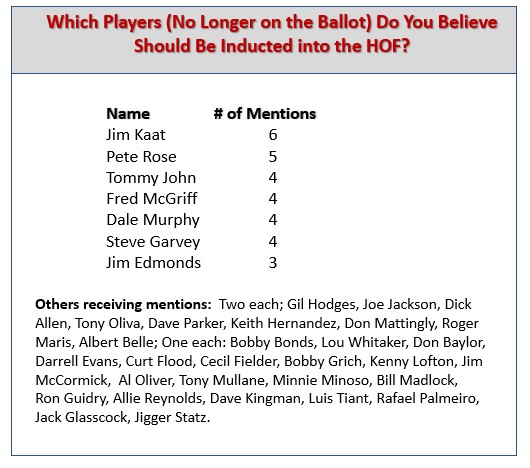
.500 – A Nice Round Number

Carlos Correa hit .500 (seven-for-fourteen), with three home runs and 11 RBI in the four-game ALDS He also drew for walks for an on-bae percentage of .611. Overall, the Astros his .322 in the Series.

No, Not that Will Smith

On October 8, as the Dodgers topped the Padres 12-3 and moved on the next round of the post-season, Dodger catcher Will Smith went five-for-six, with two doubles, one run scored and three RBI – becoming the ninth MLB player (and youngest ever at 25-years and 195-days old) to log a five-hit post-season game.  Notably, each of Smith ‘s hits came off a different pitcher. Smith doubled in the second off Adrian Morejon; struck out in the third against Craig Stammen; hit an RBI single off Tim Hill in the fourth; singled in the sixth off Matt Strahm; singled in the eighth off Drew Pomeranz; and hit a two-run double off Trevor Rosenthal in the ninth.  Smith, by the way, came into the game zero-for-eleven in the 2020 post-season.

5hit

Off to A Good Start

Giancarlo Stanton homered in the Yankees’ first five 2020 post-season games – becoming the first player to go deep in his team’s first five post-season contests in any season. Over those five games, Stanton hit .368 (seven for 19), with six home runs and 13 RBI.

Can’t Eve Count ‘Em on One Hand

The Rockies’ Daniel Murphy homered in a record six straight post-season games – from October 13, 2015 through October 21, 2015 (NLDS and NLCS).   During that stretch, Murphy went 13-25 (.520), with six home runs and nine RBI.  Murphy played in 14 post-season games that season, hitting .328, with seven homers and 11 RBI. During the regular season, he had hit ..281-14-73 in 130 games.

Eight Is Not Enough, But It Would Have Been Better

When the Braves knocked the Marlins out of the post-season, it was the Marlins first-ever post-season series loss – ending a streak of seven successful series.  The Marlins had been victorious in the 1997 NL Division Series (Giants); NL Championship Series (Braves); and World Series (Indians).  They also ran the table in 2003 – NL Division Series (Giants); NL Championship Series (Cubs); and World Series (Yankees). Then they topped the Cubs in the 2020 Wild Card Round before losing to Atlanta.  The seven straight post-season wins tied the Marlins for the third-longest such streak all-time (tied with the Yankees, who won the World Series in 1943, 1947, 1949, 1950, 1951, 1952 and 1953). Below are the three longest post-season series wining streaks ever.  Of note it that the Yankees’ eight series streak all represent World Series wins – and in those eight WS victories, they won 32 games and lost only four.

STREAKS

Now, for my Championship Series predictions.

Dodgers over Braves.  This should be a slugfest, but I give an edge to the Dodgers both offensively and on the mound. Still, there is a lot of offense on both sides and the key may very well be which team’s relief pitching holds up the best.  Really, this should be a great matchup and could go either way.

Rays over Astros.  I may be underestimating the Astros, but the Rays’ “stable” of hard throwers may finally slow down the Astros’ determined offense.  Plus, the Rays just seem to keep finding ways to win.  My only concern is how much strain the five-game set against the Yankees put on the Rays’ pitching staff (the Astros should be well-rested). I also look for the Rays’ speed to play a role in the final outcome of this series.

Snippets from the Leader Board

A few notes from the 2020 Post-Season Stat Board:

  • Of the remaining teams, the Astro lead in batting average (.281) and runs scored (40); while the Rays lead in home runs (14). Among remaining NL teams, the Dodgers lead in average (.258) and runs scored (30); while the Braves lead in home runs (7).
  • Of the remaining teams, the Braves lead in earned run average (0.92) and strikeouts (59).  In the AL, the leader among the remaining teams is the Rays (3.63 and 72 strikeouts).  The Braves’ ERA, by the way, is best among all post-season team.
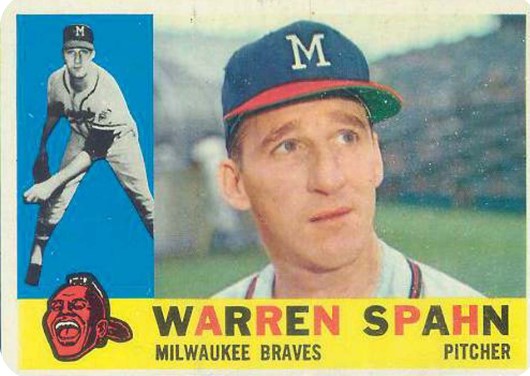
  • Despite their elimination, the Yankees’ Giancarlo Stanton was the most potent hitter of the first two rounds, leading in home runs (6) and RBI (13), while hitting .308.  The Astros’ Carlos Correa was close behind with four home runs and 12 RBI (plus a .500 average) – all three of Correa’s numbers are tops among players still in the post season.
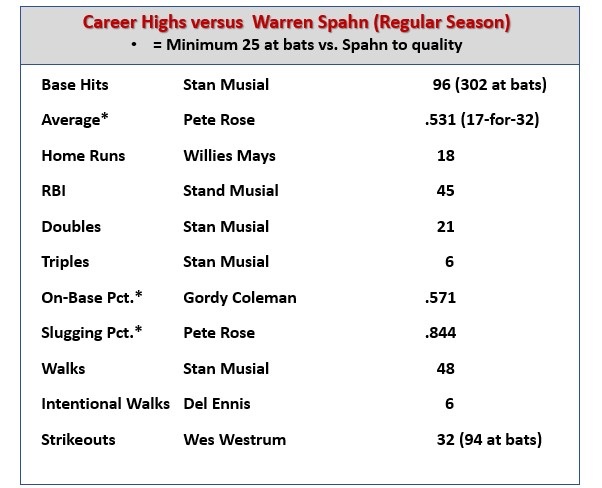
  • The Braves’ Ian Anderson has pitched the most innings this post-season without giving up an earned run (11 2/3).
  • The Yankees’ Gerrit Cole has fanned an MLB-highest 30 batters this post season (18 1/3 innings pitched).  The Rays’ Terry Glasnow is second with 20 strikeouts (in 13 1/3 innings).
  • Of the teams still in the hunt, Rays’ batters have fanned most often (69 times) this post season, followed by the Braves (63). The Dodgers, who have drawn the most walks among remaining teams (27), have fanned just 39 times. By comparison, the Braves have drawn 16 walks and the Rays 23.

Primary Resources: MLB.com; Baseball-Reference.com; Stathead.com; ESPN.com


100Baseball Roundtable is on the Feedspot list of the Top 100 Baseball Blogs.  To see the full list, click here.

I tweet baseball @DavidBBRT

Follow/Like Baseball Roundtable’s Facebook Page here.  More baseball commentary; blog post notifications; PRIZES.

Member: Society for American Baseball Research (SABR); The Baseball Reliquary; The Neg