Perfect Games Lost At the Last possible Moment – Two Outs in the Ninth (or later)

In recognition of the Rays’ Drew Rasmussen’s loss of a perfect game in the ninth inning (yesterday), Baseball Roundtable revisits perfect games lost at the last possible moment – with two outs in the ninth innings (or later).   But first a look at Rasmussen’s near-perfecto.

Drew Rasmussen pitched a gem – taking a perfect game into the ninth inning in just his 30th major-league start (67th MLB appearance in three seasons).  Rasmussen reached the ninth inning (against the Orioles in Tampa) having retired the first  24 Orioles to come to the plate on a total of 79 pitches (56 strikes). Six Orioles had gone down on strikes.

In the top of the eighth, Rasmussen had retired the Orioles on two ground outs and a strikeout, but had needed 16 pitches to record the three outs (the most pitches he had thrown in any inning of the game).  Over the first seven innings, he had needed more than ten pitches to the retire the Birds in just one frame (12 in the second). Despite striking out, Orioles’ 2B Rougned Odor had make Rasmussen work – with an eight-pitch at bat in the eighth (the longest Orioles’ at bat of the contest).

Orioles’ SS Jorge Mateo, who came into the game hitting .231, put an end t0 the suspense by hitting Rasmussen’s first pitch in the ninth for a double to left. Rasmussen, till working toward his first MLB complete game and first MLB shutout, then got PH Terrin Vavra on a ground out (second-to-first), with Mateo moving to third. Next up was Brett Phillips. With the count 1-2, Rasmussen tossed a wild pitch for ball two, with Mateo scoring form third.  Two pitches later, Phillips swung and missed (for strike three) on another wild pitch, but gained first base. And that ended Rasmussen’s day.  After eight perfect frames, no perfecto, no no-hitter, no shutout, no complete game – but his seventh win (four losses) on the season.

Now a look at Perfect Games lost with two outs in the ninth or latter – as ranked by Baseball Roundtable.

NUMBER ONE – I’m “Calling” This the Toughest Perfect Game “Missed” Ever …  or “So Close and Yet So Far.”

Armando Galarraga, Tigers … June 2, 2010
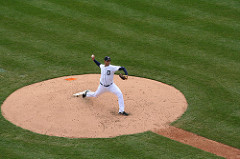
Photo by Kevin.Ward

Photo by Kevin.Ward

Perhaps the most heartbreaking “no-hitter breakup” took place on June 2, 2010, when Detroit Tigers’ righty Armando Galarraga found himself on the mound in the top of the ninth 26 outs into a perfect game (three strikeouts).  The Tigers led 3-0 and Galarraga was facing Indians’ second baseman Jason Donald. Galarraga induced Donald to ground to right side of the infield. Detroit first baseman Miguel Cabrera moved to his right to make a fine play, spinning and throwing to Galarraga covering first (who clearly beat Donald to the bag). Umpire Jim Joyce called Donald safe, a mistake he admitted and apologized for after the game. (Talk about a bad time for a bad call.)

The official scorekeeper gave Donald an infield single, ending both the perfect game and the no-hitter. Galarraga retired the next batter – CF Trevor Crowe – on a ground out. Joyce’s call, despite the post-game mea culpa, stood, and Galarraga, painfully, joined the list of pitchers losing a perfect game with two outs in the ninth.

Galarraga had a five-season MLB career (2007-2012), going 26-34, 4.78 for the Rangers, Tigers, Diamondbacks and Astros. His near-perfect game was one of only two complete games in 91 career starts.

_________________________________________

NUMBER TWO – Unlucky 13, Indeed … or “So Far and Yet So Close.”

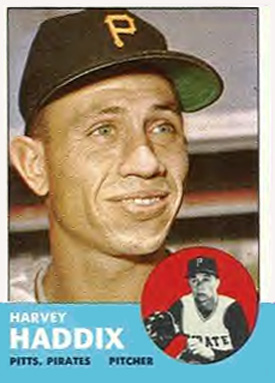
HaddixFor another hard-luck story involving near-perfection, consider the plight of Pittsburgh Pirates’ southpaw Harvey Haddix, who took a perfect game into the 13th inning – AND LOST.

On May 26, 1959, Haddix took the mound against the first-place and defending NL Champion Milwaukee Braves.  Haddix retired the first 36 hitters in order – fanning eight, carrying a perfect game into the bottom of the 13th. A 20-game winner in 1953, the 33-year-old Haddix had come into the game 4-2, with a 2.67 ERA in seven starts – and had thrown complete games in his two previous outings. (He would end up 12-12, 3.13 on the year.)

Unfortunately,  the Pirates’ lineup had given him no support. Braves’ righty Lew Burdette, despite giving up 12 hits and fanning only two, had held the Pirates scoreless. Milwaukee 2B Felix Mantilla led off the 13th by reaching on a throwing error by Pirates’ third baseman Don Hoak. Future Hall of Famer 3B Eddie Mathews bunted Mantilla over to second, which led to an intentional walk to another future Hall of Famer (RF Hank Aaron), bringing up 1B Joe Adcock.

Adcock launched a 1-0 pitch over the right field fence for what appeared to be a three-run home run.  However, the Braves, in celebrating the tension-filled victory, forgot how to run the bases. Adcock passed Aaron between second and third and, after some deliberation, Adcock was called out – ultimately changing his three-run homer to a one-run double. So, despite 12 perfect innings, Haddix lost the no-hitter, the shutout and the game itself.  But he did etch his name forever into baseball lore; and countless trivia quizzes. He still holds the record for the most consecutive hitters retired from the start of a game – and the second spot on this heartbreak, near-perfect list. 

Haddix spent 14 seasons (1952-65) in the major leagues (Cardinals, Phillies, Reds, Pirates, Orioles), going 136-113, 3.48.  His best seasons were with the Cardinals in 1953-54. In those two campaigns, Haddix put up lines of 20-9, 3.06 and 18-13, 3.57.  The 5’9”, 170-pounder was a three-time All Star and led the NL in shutouts (six) in 1953.
_____________________________________

NUMBER THREE – Not Just One Out, One Strike, Away.

Max Scherzer, Washington Nationals … June 20, 2015 
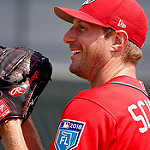
Photo by Corn Farmer

Photo by Corn Farmer

Washington Nationals’ right-hander Max Scherzer came within one out – within one strike actually – of a perfect outing on June 20, 2015. Missing by just one swing and miss – and having four chances to sneak that final strike by – earns him number-three on the hard-luck, near-perfect roster.

Scherzer entered the top of the ninth with a 6-0 lead over the Pittsburgh Pirates – having retired the first 24 batters, striking out ten.  In the ninth, Scherzer retired the first two batters (RF Gregory Polanco on a pop out to the catcher and SS Jordy Mercer on a liner to center) and then worked the 27th hitter (pinch hitter Jose Tabata) to a 2-2 count.  Tabata fouled off three 2-2 pitches before Scherzer lost the perfect game in perhaps the most painful way (in more ways than one) possible – by hitting Tabata with a pitch (a breaking ball to the elbow).  Scherzer then got Pirates’ second baseman Josh Harrison on a fly ball to left, completing the no-hitter – and earning a 6-0 victory.  Scherzer, by the way, was not the first pitcher to lose a perfect game by hitting the 27th batter (see George Wiltse, next in this post).

Scherzer, still active, is in his fifteenth major league season (Diamondbacks, Tigers, Nationals, Dodgers, Mets).  He is a eight-time All Star, two-time twenty-game winner and three-time Cy Young Award winner (2013, 2016, 2017). In 2015, he went 14-12, 2.79, but led the NL with four complete games and three shutouts.  As this post is written his career record is 198-99, 3.11 – with 12 complete games, five shutouts and two no-hitters.

______________________________________________________

NUMBER FOUR – Another Bad “Call” – Another “Missed” Perfecto – Another “Not Missed” Batter.

George “Hooks” Wiltse, New York Giants … July 4, 1908
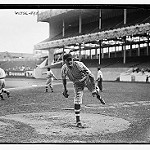
Giants’ southpaw curveballer George Wiltse – like Max  Scherzer (above) – got not just within one out, but within one strike, of perfection.  And, as in the Armando Galarrago near-perfect game, the umpire later admitted that Wiltse threw that strike, and had the out, he just didn’t get the call.

It looked, for the longest time, like Wiltse was going to have plenty to celebrate on Independence Day 1908. The Giants’ southpaw retired the first 26 Phillies before hitting Philadelphia pitcher George McQuillan with a pitch on a 2-2 count (after not getting the call on a very close pitch on his previous delivery – a call umpire Cy Rigler later admitted he missed).  Wiltse retired the next batter. However, despite nine no-hit/no-run innings, he wasn’t done yet.  He and McQuillan were embroiled in a 0-0 duel (like Harvey Haddix, Wiltse got little support in his near-perfecto).  Wiltse went on to pitch-a 1-2-3 tenth (preserving the no-hitter) and the Giants managed to push across a run to give Wiltse a 1-0, no-hit victory. Wiltse is one of only three pitchers to date to complete a no-hitter of more than nine innings. Wiltse finished the 1908 season 23-14, with a 2.34 ERA. He was also a twenty-game winner in 1909 (20-11, 2.00) and went 139-90, 2.47 in twelve MLB seasons.  He finishes a spot behind Scherzer’s two-strike hit batsman only because, even if he had gotten the strike out, the perfect game would not have been completed (since the game itself was not completed). Given his 1-2-3 tenth, however, that missed call cost him a perfect outing.

___________________________________________________

NUMBER FIVE – Another One-Strike-Away Performance

Mike Mussina, Yankees … September 2, 2001 
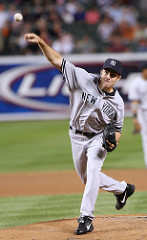
Photo by Keith Allison

Photo by Keith Allison

Fifth-place on the list goes to another one-strike-away, near-perfect performance. On September 2, 2001, the Yankees’ Mike Mussina squared off against the rival Red Sox at Fenway Park. After eight innings, Mussina and Red Sox starter David Cone were locked in a 0-0 duel. Mussina hadn’t allowed a base runner, striking out twelve. Cone had given up just four hits and three walks (fanning eight), while holding New York scoreless.  The Yankees pushed across a run in the top of the ninth on a single, an error and a double by 3B Enrique Wilson. Mussina, looking for his 14th victory of the campaign, went to work on his perfect game (which would have been the first ever at Fenway) – notching a ground out (pinch hitter Troy O’Leary) and a strikeout (2B Lou Merloni) and taking pinch hitter Carl Everett to a 1-2 count before Everett singled to left. Mussina retired Trot Nixon for the final out, in a 1-0 one-hit win.

Mussina finished the season 17-11, 3.15. In an 18-season MLB career (1991-2008), Mussina went 270-153, 3.68 with 57 complete games and 23 shutouts. The five-time All Star won 17 or more games eight times and, ironically, had only one 20-win season – his last. As a 39-year-old, Mussina went 20-9, 3.37 for the Yankees in 2008. In the major leagues from 1991 to 2008, Mussina pitched for the Orioles and Yankees.

_________________________________________________

NUMBER SIX

Dave Stieb, Blue Jays … August 4, 1989 … Worked Really Hard for a No-Hitter
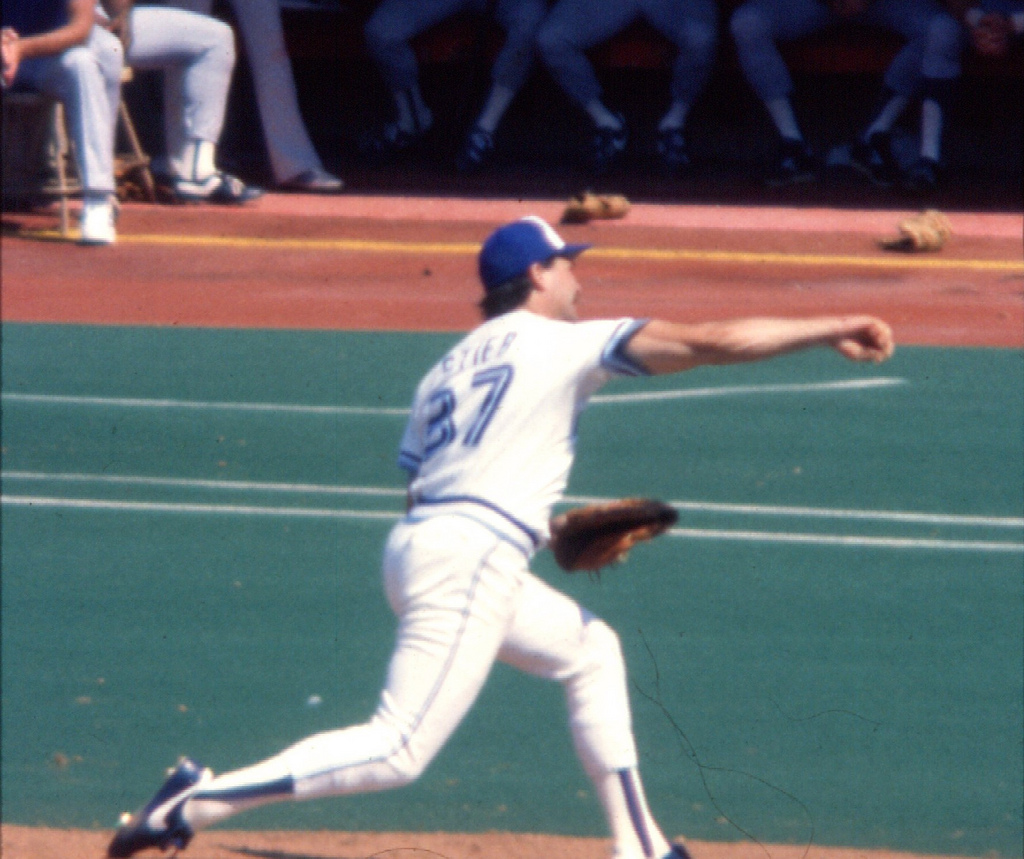
Dave StiebOn August 4, 1989, Blue Jays’ right-hander Dave Stieb took a 2-0 lead and a perfect game into the top of the ninth inning against the Yankees. Stieb started the inning as though ready to make history, fanning pinch hitters Hal Morris and Ken Phelps on nine pitches (his tenth and eleventh strikeouts of the game).  Then Stieb fell behind the number-nine hitter – CF Roberto Kelly – 2-0. Stieb had to throw a strike and Kelly knew it – and hit it. He broke up the perfect game and the no-hitter with a double to left.  Second baseman Steve Sax followed with a run-scoring single, before left fielder Luis Polonia grounded out to end the game.  So, Stieb lost the perfect game, the no-hitter and the shutout – but did get the win.

Stieb ended the season 17-8, 3.35 – one of six seasons in which the seven-time All Star logged 16 or more wins.  In a 16-season MLB career (1979-1992, 1998), Stieb went 176-137, 4.83 for the Blue Jays and (for one season) White Sox.   Stieb takes sixth-place on this list based not solely on that 1989 game – but also on the fact that it came after he lost two no-hitters (not perfect games) with two outs and two strikes on the batter the previous season. (See box below.)

ROUNDTABLE EXTRA:   DAVE STIEB – So, So-o-0 Close 

In 1988, Dave Stieb – who would lose a perfect game with two outs in the ninth on August 4, 1989 – twice came within one strike of a no-hitter – and in consecutive starts. On September 24, 1988 (against the Indians) and September 30. 1988 (versus the Orioles), he lost no-hitters with two outs in the ninth inning and two strikes on the hitter (2 and 2 counts both times).  Stieb did get two complete-game shutouts, 1-0 over the Indians and 4-0 over the Orioles. The games were his final two starts of the 1988 season, so he had the entire off-season to contemplate his bad luck. Stieb did finally get his no-hitter – the first in Toronto Blue Jays’ history – a 3-0 win (four walks/nine strikeouts) over the Indians in Cleveland on September 2, 1990.

___________________________________

NUMBER SEVEN – Unfortunately, A Walk In The Park.

Milt Pappas, Cubs … September 2, 1972

On September 2, 1972, the Cubs’ Milt Pappas held an 8-0 lead over the San Diego Padres – and had a perfect game going (with six strikeouts) as the Padres batted in the ninth.  After retiring the first two batters in the final frame, Pappas walked pinch hitter Larry Stahl on a very close 3-2 pitch.  Pappas then retired pinch hitter Garry Jestadt on a pop out to second base. So, while he lost the perfect game, he did save the no-hitter. Pappas – who went 209-164, 3.40 in 17 MLB seasons (1957-73) – had his best year in 1972, going 17-7, 2.77. It was the 33-year-old’s 16th MLB campaign (he retired after the 1973 season). The two-time All Star (1962 and 1965) spent time with the Orioles, Reds, Braves, and Cubs.

______________________________________________

NUMBER-EIGHT – Once Again, One Strike Away.

Ron Robinson, Reds … May 2, 1988

Reds’ right-hander Ron Robinson was one strike away from a perfect game on May 2, 1988. He had a 3-0 lead, two outs in the ninth, nary a base runner allowed (three strikeouts) and a 2-2 count on Expos’ pinch hitter Wallace Johnson – and then hung a curveball that Johnson hit for a single. Tim Raines followed with a two-run home run, and Red’s closer John Franco was brought in to get the final out.  So, on the verge of a perfect game (with two out and two strikes in the ninth), Robinson lost the no-hitter, the shutout and the complete game. (He did get the win.)

In his nine MLB seasons (1984-92 – Reds and Brewers), Robinson recorded eight complete games and two shutouts – and had a respectable 48-39 record, with a 3.63 ERA and 19 saves. His best season was 1990, split between the Reds and Brewers, when he went 14-7, 3.26 and notched three seven of his complete games and both of his career shutouts.

BASEBALL ROUNDTABLE  EXTRA … Perfect game lost on a strikeout.

On May 5, 2021, Orioles’ southpaw John Means pitched a no-hitter (12 strikeouts) in a 6-0 win over the Mariners in Seattle.  Means lost his chance for a perfect game on a strikeout. It came in the third inning (with one out) on a 1-2 pitch to Mariners’ LF and number-eight hitter Sam Haggerty. Haggerty swung (and missed) Means’ fourth offering of the plate appearance – in the dirt – for strike three. The wild pitch got by catcher Pedro Severino and Haggerty reached first base.  Haggerty was thrown on stealing on the next pitch (to Mariners’ SS J.P. Crawford) and proved to be Seattle’s only base runner of the game.  Means faced the minimum 27 batters, but missed the perfect game on “strike three” to Haggerty.  Means, who underwent Tommy John surgery this April,, is 20-24, 3,81 over five MLB seasons.  The no-hitter is his only complete game in 65 starts. 

_____________________________________________

NUMBERS NINE & TEN (tie) … Yu Can’t Always Get What You Want

Yu Darvish and Yusmeiro Petit

Ninth and tenth place tie – double Yu’s; and as much irony as heartbreak.  In 2013, two pitchers named Yu – Yu Darvish and Yu Petit lost perfect games with two outs in the ninth.  Those two share ninth place, just for the irony of having two “Yu’s” lose a perfect game with two outs in the ninth in the same season.

Yu Darvish, Rangers … April 2, 2013

In his first start of the 2013 season (April 2), Rangers’ Ace Yu Darvish stifled the Houston Astros without a base runner for 8 2/3 innings – fanning 14. All he had to do to gain perfection was retire the Rangers’ number-nine hitter, Marwin Gonzalez. (Gonzalez had hit .234 in 80 games as a rookie in 2012, and would hit .221 in 72 games in 2013.)

Gonzalez hit Darvish’s first pitch up the middle – through Darvish’s legs – for a single. It was Darvish’s 111th pitch and he was relieved by Michael Kirkman, who finished off the 7-0 win. So, despite a sterling effort, Darvish was denied a perfect game, a no-hitter, a complete game and even a personal shutout.  He did get the win.  Darvish, still active, finished the 2003 season 13-9, 2.83. As this post is written, his career record is 89-4, 3.55 and he has two complete games and one shutout in 234 starts (2012-14, 2016-22 … Rangers, Dodger, Cubs, Padres).

Yusmeiro “Yu” Petit, Giants … September 6, 2013

On September 6, 2013, the San Francisco Giants’ Yusmeiro (Yu) Petit joined the unlucky “almost perfect” rotation. With two out in the ninth, Petit – with a 3-0 lead over the Diamondbacks – had retired all 26 batters he had faced, fanning seven.  The Diamondbacks sent up pinch hitter Eric Chavez, who worked the count full. Then, just one strike away from perfection, Petit gave up a single to right field (that dropped just out of the reach of a diving Hunter Pence).  Petit retired the next hitter CF A.J. Pollock on a grounder to third – settling for a one-hit shutout.  This made Petit the second pitcher name “Yu” to get within one out of a “perfecto” during the 2013 season.  Petit finished the season a 4-1, 3.86 (eight games, seven starts). In 14 MLB seasons (2006-09, 2012-2012 … Marlins, Diamondbacks, Giants, Nationals, Angels, A’s), Petit is 50-44, 3.93 with 59 starts in 515 appearances. He has two complete games and one shutout.  Petit started the 2022 season in the Padres’ minor-league system.

______________________________________________

HONORABLE MENTIONS

THE REMAINING HURLERS WHO LOST NO-HITTERS WITH TWO OUTS IN THE NINTH INNING.

Brian Holman, Mariners … April 20, 1990

On April 20, 1990, the Mariners’ Brian Holman retired the first 26 hitters (six strikeouts), shutting down the defending World Champion Oakland A’s. Holman had a perfecto and a comfortable 6-0 lead with two outs in the bottom of the ninth, before giving up a first-pitch home run to pinch hitter Ken Phelps (and, of course, losing the perfect game, no-hitter and shutout).  It was Phelps only home run of the 1990 season and the last of his 123 career round trippers. Holman then struck out Rickey Henderson for the final out in a 6-1 Mariners’ win.  It was one of only two complete games in Holman’s four MLB seasons (37-45, 3.71). Holman finished the 1990 season 11-11, 4.03 – the only season he finished at .500 or better. He played for the Expos and Mariners (1988-91).

———-

Milt Wilcox, Tigers … April 15, 1983

With two outs in the bottom of the ninth – in an early-season game (April 15, 1983) –  Tigers’ right-hander Milt Wilcox had yet to allow a White Sox hitter to reach base (and had struck out eight). Pinch hitter Jerry Hairston ended that with his first hit of the season – a clean single. (As with the hit that broke up Brian Holman’s perfect game, Hairston’s came on the first pitch of his at bat.) Wilcox retired the next batter (CF Rudy Law) for a 6-0 (one-hitter) win. Wilcox finished the season 11-10, 3.97. He won 119 games (113 losses) in 18 MLB seasons (1970-75, 1977-86) with the Reds, Cubs, Tigers, Mariners. His career ERA was 4.07, with 73 complete games and 10 shutouts. Wilcox’ best season was 1984, when he went 17-8, 4.00.

———-

Billy Pierce, White Sox … June 27, 1958

White Sox’ lefty Billy Pierce was on a roll when he faced the Senators on June 27, 1958.  Despite a slow start to the season (his record was 6-5 on the year), Pierce was coming off back-to-back complete-game shutouts of the Red Sox and Orioles.  Pierce retired the first 26 hitters he faced (eight strikeouts) and then gave up a double to Senators’ pinch hitter Ed FitzGerald before striking out AL 1958 Rookie of the Year Albie Pearson to gain a 3-0 win (and his third consecutive,complete-game shutout).

Pierce finished the season 17-11, 2.68.  He was a seven-time All Star and two-time twenty-game winner and won 211 games (versus 169 losses) with a 3.27 in 18 MLB seasons (1945, 1948-64). He threw 193 complete games and 38 shutouts.

———-

Tommy Bridges, Tigers … August 5, 1932

On August 5, 1932, the Tigers’ Tommy Bridges was coasting along with a 13-0 lead, seven strikeouts and a perfect game with two outs in the ninth, when he gave up a single to Washington Senators’ pinch-hitter Dave Harris.  Bridges then got the final out for a 13-0 win. Bridges went 14-12, 3.36 that season, but hit his stride two years later – winning 20+ games in 1934, 1935 and 1936. The six-time All Star finished a 16-season MLB career (1930-43, 1945-46) with a 194-138, 3.57 record. He pitched 200 complete games and recorded 33 shutouts.

Primary Resources:  Baseball-Reference.com; Society for American Baseball Research; MLB.com.

 

100Baseball Roundtable is on the Feedspot list of the Top 100 Baseball Blogs.  To see the full list, click here.

I tweet baseball @DavidBaseballRT

Follow/Like Baseball Roundtable’s Facebook Page here.  More baseball commentary; blog post notifications; PRIZES.

Member: Society for American Baseball Research (SABR); The Baseball Reliquary; The Negro Leagues Baseball Museum.
 

Ed Linke- A “Heads Up” Start to an Unusual Double Play and a Head Start on his Best MLB Season

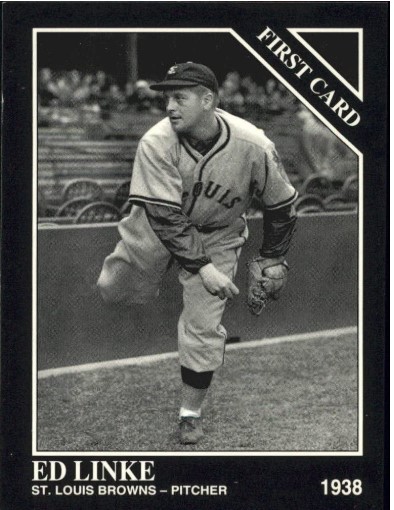
On this date (July 26) in 1935, Ed “Babe” Linke – in a truly “heads up” play – started one of the most unusual double plays in MLB history. Not only that, the play seemed to give him a head start (or jump start) to his best-ever MLB campaign.

That day, the 23-year-old started (in New York) on the mound for the Senators (fighting to stay out of last place)) versus the Yankees (trailing the first-place  Tigers by 1 1/2 games).  Linke came into the game 3-6, 7.60), while his mound opponent,  Johnny Broaca was 8-3, 3.15.     He had no idea he was soon to start a unique double play – with his head.

Linke was wild from the start, walking the bases loaded with one out  in the first frame (3B Red Rolfe, RF George Selkirk, 1B Lou Gehrig), but escaping without a Yankee run (striking out C Bill Dickey and getting SS Tony Lazzeri on a ground out.)  The Senators had tallied once in the top of the first and added a second run in the top of the second, so Linke was staked to a 2-0 lead as he took the mound in the bottom of the second inning.  Little did he know where his afternoon was headed.  If he had, he might have left the mound.

In the bottom of the second, with one out, Yankee lead-off hitter and left fielder Jesse Hill smashed a line drive off Linke’s forehead.  The ball hit the right-handed hurler with such force it ricocheted back to Senators’ catcher Jack Redmond, who caught it on the fly and fired to Senators’ shortstop Red Kress, catching a surprised Yankee base-runner (CF Ben Chapman) off the bag for a 1-2-6 double play – completed as Linke lay semi-conscious on the mound.  Linke was carried off the field on a stretcher and spent two days in the hospital before returning to the Senators – to begin the most successful pitching streak of his six-season MLB career. (He was back on the mound just eight days later.)

At the time of the beaning – including that game – Linke’s record on the season was 3-6, with a 7.41 ERA. (He would complete his MLB career at 22-22, 5.61.) However, for the remainder of 1935, after being felled by the Hill liner, Linke went 8-1, 3.18 in 11 starts and three relief appearances.  During that time, he also threw seven of his 13 career complete games – including a ten-inning, two-run (one earned) performance against the Indians on August 18 and a twelve-inning, three-run (two earned) outing against the Tigers on September 11.

Linke finished up the 1935 season 11-7, 5.01. (Note; Baseball-References lists Linke’s ERA at 5.01 in his career overview and 5.06 in his 1935 game logs.)  The following year,  he would go 1-5, 7.10; and would be out of the major leagues by age 27.) The knock on the noggin’ didn’t seem to hurt Linke’s batting eye either, Hitting .259 at the time of the injury, Linke finished the season at .294, with one home run and nine RBI.  Clearly, Linke got a head start on his best season on this date 87 years ago.

Primary Resources: Baseball-Reference.com; BaseballRulesAcademy.com; NationalPastime.com


100Baseball Roundtable is on the Feedspot list of the Top 100 Baseball Blogs.  To see the full list, click here.

I tweet baseball @DavidBaseballRT

Follow/Like Baseball Roundtable’s Facebook Page here.  More baseball commentary; blog post notifications; PRIZES.

Member: Society for American Baseball Research (SABR); The Baseball Reliquary; The Negro Leagues Baseball Museum.


The Blue Jays’ 28-5 Win Over the Red Sox … and the Messiest Scorecard(s) Ever

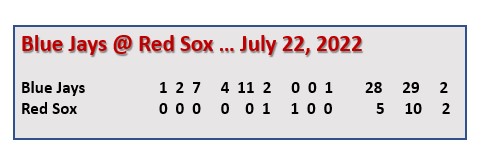
Yesterday (July 22, 2022), the Toronto Blue Jays topped the Boston Red Sox 28-5 before a near-capacity crowd at Fenway. Notably, Toronto had plated 25 runs (and held a 25-3 lead) through five innings.  At that point, I texted my adult daughter to tell her to check in on the game. Her first reply to me was “Insane. That scorecard must be messy.” Side note: My daughter has been keeping score at games since she was eight.

Well, as always, at Baseball Roundtable, one thing lead to another and I will dedicate the bulk of this post to the game I believe resulted in the messiest scorecard(s) ever. But first a few observations on yesterday’s Blue Jays/Red Sox tilt.

  • The Blue Jays scored 11 runs in the fifth inning … after the first two batters were retired. (Eight singles, two doubles, two walks after two outs).
  • Five of the ten hits in the fifth inning came with 0-2 or 1-2 counts on the batter.
  • Twelve of the Blue Jays’ 29 hits came with two strikes on the batter, nine with 1-2 or 0-2 counts.
  • Nineteen of the Blue Jays’ 28 runs scored with two outs.
  • The Blue Jays batted around twice (batting around is ten  hitters for me, but that’s a debate for another day) – forcing those keeping score to go to the next column on the scorecard.
  • The game feature an inside-the-park grand slam. (CF Raimel Tapia).
  • The Jays “book-ended” their RBIs, the number-one and number-nine hitters (CF Raimel Tapia and C Danny Jansen) had six RBI each and hit three of the five Blue Jays’ home runs. Coming into the contest, Tapia and Jansen  had a combined 11 home runs and 38 RBI in 98 combined games.
  • All nine members of the Toronto starting lineup collected multiple hits and scored multiple runs.
  • LF Lourdes Gurriel, Jr. had six hits, five RBI and three runs scored – collecting hits off five different Red Sox’ pitchers.
  • The Blue Jays were 15-for-26 (.577) with runners in scoring position.
  • The 28 runs were a Toronto franchise record, as were their 29 hits.

Now to that game I believe  would have produced the messiest scorecards – at least t, post-1900/  It  took place on August 25, 1922 – with  the Cubs topping  the Phillies 26-23 at Wrigley Field.  Why a messy scorecard?

  • The teams combined for modern-era records of 49 runs and 51 base hits.
  • There were also 21 walks (10 by Phillies’ pitchers/11 by Cubs’ moundsmen).
  • There were nine errors (four by the Phillies/five by the Cubs, accounting for 21 unearned runs.
  • Each team batting around twice (ten or more batters), forcing scorekeepers to move into the next scorecard column each time.
  • Thirty-three players appeared in the game. (The Cubs used two SS, two 2B, two C, five pitchers and two pinch hitters; the Philllies used two CF, two SS, two 1B, two C, two pitcher and one pinch-hitter.

You can see how all this would lead to a truly messy scorecard.

A few quirky tidbits.

First, how the game has changed:

  • The Phillies tallied their 23 runs without the benefit of a single home run – the Cubs had three long balls.
  • The Phillies used just two pitchers.
  • The two teams sent 125 batters to the plate – and only nine struck out.
  • The game took only three hours and one minute.

A few additional observations:

  • The Cubs jumped out to a 25-6 lead after just four innings, but had to hold on for the 26-23 win.
  • The teams scored 49 runs, but still managed to leave 25 runners on base.
  • The Phillies went 15-for-31 with runners in scoring position; the Cubs 14-for-24 … for a combined average with RISP of .527.
  • The teams scored a combined 23 two-out runs (12 Cubs, 11 Phillies).
  • Two Cubs – SS Charlie Hollocher and LF Hack Miller each drove in six tallies; no Phillie drove in more than three.
  • Nine Cubs scored multiple runs; no Cub scored just one.
  • Cub Turner Barber appeared as a pinch-hitter in the fourth inning and scored twice (without ever taking the field). He walked with one out in the inning, came up again (as the team batted around) and was safe on an error – scoring twice.
  • The Cubs’ CF Cliff Heathcote came into thegame hitting .256 and went five-for-five.

Primary Resource: Baseball-Reference.com


100Baseball Roundtable is on the Feedspot list of the Top 100 Baseball Blogs.  To see the full list, click here.

I tweet baseball @DavidBaseballRT

Follow/Like Baseball Roundtable’s Facebook Page here.  More baseball commentary; blog post notifications; PRIZES.

Member: Society for American Baseball Research (SABR); The Baseball Reliquary; The Negro Leagues Baseball Museum.


Astros Combine to No-Hit the Yankees … Again

Yesterday (June 25, 2022), the Houston Astros no-hit the New York Yankees – using three pitchers:

  • Starter Cristian Javier went seven innings, walking one and fanning 13 – while tossing 115 pitches.
  • Hector Norris pitched one frame, walking two and fanning none.
  • Closer Ryan Pressly picked up a save with one inning pitched, no walks and two whiffs.

The game was tied 0-0 after six innings, with Yankee starter Gerrit Cole having given up just three hits, while walking two and fanning six. He added two strikeouts in the seventh, but gave up a home run to Astros rookie 1B J.J. Matijevic, who came into the game hitting just .091 with one home run in 11 MLB at bats.  The Astros eventually own the contests 3-0.   A few other notes:

  • Every member of the New York starting lineup fanned at least once and five members of the potent Yankees’ lineup went down on strikes at least twice: Giancarlo Stanton (three whiffs) and Aaron Judge, Anthony Rizzo, Josh Donaldson and Aaron Hicks (twice each).
  • Only one Yankee got as far as second base in the contest.  (Aaron Hicks reached 3B in the eighth).
  • At one point, Javier retired 17 straight batters, with the string broken on a Josh Donaldson error.
  • Notably, it was the first time that Yankees had been no-hit since June 11, 2003, when the Astros set an MLB record (tied in 2012 by the Mariners) by using six hurlers to complete a no-hitter.

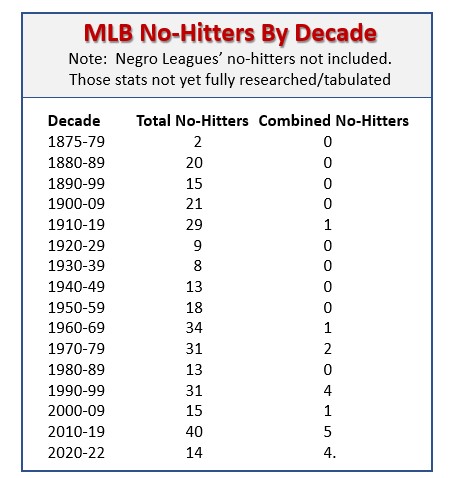
Given today’s pitch count limits and relief specialist, as you might expect, combined no-hitters are on the rise.  In MLB history there have been just 18 combined no hitters. Half of those have occurred since 2012 and fourteen of the eighteen  have been achieved since sine 1990.  Baseball-References.com notes Negro Leagues’ no-hitter stats have not yet been fully compiled/ integrated into MLB records. They are not included in this accounting. 

Now, let’s take  a look back at the previous 17 combined no hitters.  Baseball Roundtable has presented this list before, so if it’s still fresh in your mind, you can skip this portion of the post.,

The First-Ever Combined No-Hitter – Babe Ruth Didn’t Hang Around Long

This took place on June 23, 1917 – with the Red Sox topping the Senators 4-0 in Boston. This game is special for several reasons:

  • It was the first MLB combined no-hitter;
  • Babe Ruth started on the mound;
  • It involved the most meager contribution by the starting pitcher (zero innings pitched- one batter faced); and
  • It is arguably the most “perfect” combined no-hitter ever.

Babe Ruth, at that time plying his trade as a left-handed starting pitcher for the Boston Red Sox, opened the game by walking Washington’s lead-off hitter Roy Morgan.  Ruth, and his catcher Pinch Thomas, took issue with umpire Brick Owens’ strike zone and, during the argument, Ruth made contact with the umpire (a glancing blow, it was reported).  The ultimate result of the confrontation was the ejection of both Ruth and Thomas (with Ruth earning a $100 fine and ten-game suspension).  Red Sox’ pitcher Ernie Shore was called in to replace Ruth and Sam Agnew took Thomas’ spot behind the plate. Morgan decided to test Agnew’s arm and was thrown out stealing, after which Shore retired the next 26 hitters in order – completing the first combined no-hitter within the minimum 27 total batters.  Ruth, by the way, ended the season 24-13, with a 2.01 ERA and a league-leading 35 complete games in 38 starts.

_________________________________________

Second Combined No-Hitter – A Long Time A-comin’

Given the past propensity for pitchers finishing what they started, MLB’s second combined no-hitter came 50 seasons and 70 no-hitters later – on April 30, 1967, with the Tigers defeating the Orioles 2-1 in Baltimore.  This combined no-hitter is unique because:

  • It was not a shutout.
  • The team that threw the no-hitter lost (the only combined no-hitter loss); and
  • It involved the briefest contribution by the relief staff (one pitcher/one-third inning pitched).

Orioles’ starter Steve Barber was effectively wild, walking ten hitters and hitting two in 8 2/3 innings. The opposing hurler was Detroit’s Earl Wilson – who matched goose eggs with Barber for seven innings. In the eighth, Baltimore pushed across a run on three walks and a sacrifice fly (Wilson gave up only two hits and four walks in his eight innings of work) and victory was there if Barber could take it. He didn’t.  Barber walked Tigers’ 1B Norm Cash to start the ninth. He then walked SS Ray Oyler. Earl Wilson, a good-hitting pitcher, bunted the runners to second and third, before Barber got the second out of the inning, inducing PH Willie Horton to pop up to the catcher.  Now, just one out away from a 1-0, no-hit win, Barber uncorked a wild pitch that brought the tying run home. He then walked CF Mickey Stanley, ending his day on the mound. Stu Miller came in to get the final out, but not until an error allowed the go-ahead run to score.

________________________________________

Combined No-Hitter Number Three – Waiting Until the Last Possible Day

This no-hitter came on September 28, 1975, with the A’s topping the Angels 5-0 in Oakland.  This game was unique in that:

  • It is one of only three no-hitters thrown on the final day of an MLB season;
  • It made starting pitcher Vida Blue the first hurler to take part in both a solo and combined no-hitter. (Blue had thrown a solo no-hitter on September 21, 1970.); and
  • It was the first time more than two pitchers were involved in a combined no-hitter.

Blue went five innings  (two walks, two strikeouts) and was followed by Glenn Abbott (one inning,), Paul Lindblad (one inning, one whiff) and Rollie Fingers (two innings, two strikeouts). Note: Blue has been joined by Kevin Millwood, Kent Mercker and Mike Witt as pitchers with both solo and combined no-hitters.)

______________________________________

Combined No-Hitter Number Four – Tea for Two

The next combined no-hitter went back to the two-pitcher formula, as Blue Moon Odom (five innings, nine walks, three strikeouts) and Francisco Barrios (four innings, two walks, two strikeouts) of the White Sox topped the A’s 2-1 in Oakland.  In this July 28, 1976 game, Odom walked seven different players at least once in his five innings of work.

_____________________________________

Combined No-hitter Number Five –  At Witt’s End

MLB’s fifth combined no-hitter came on April 11, 1990 (again just two pitchers), with the Angels topping the Mariners 1-0 in Anaheim.  Mark Langston started the game and went seven (four walks, three strikeouts) and Mike Witt (the only pitcher to throw a perfect game – September 30, 1984 – and take part in a combined no-hitter ) threw the final two (two strikeouts.)

_______________________________________

1991 – The First “Year of the Combined No-Nos” (plural that is)

1991 saw seven MLB no-hitters, including two combined no-nos. On July 13, the Orioles no-hit the A’s 2-0 in Oakland behind Bob Milacki (who threw six no-hit innings – three walks/three whiffs) and was pulled after being hit by a Willie Wilson line drive. Mike Flanagan (one inning, one walk), Mark Williamson (one inning) and Gregg Olson (one inning, two strikeouts) finished up the no-no.

Then, on September 11, the Braves no-hit the Padres 1-0 in Atlanta, led by Kent Mercker (six innings, two walks, six strikeouts), Mark Wohlers (two innings) and Alejandro Pena (one inning).  Greg Harris, who started for the Padres, threw a complete-game seven-hitter.

_______________________________________

Combined No-Hitter Number Eight –  Working Overtime

Combined no-hitter number eight came on July 12, 1997 – with the Pirates topping the Astros 3-0 in Pittsburgh.  It was unique in that it is:

  • The only extra-inning combined “no-no;” and
  • Made Francisco Cordova the (still) only  pitcher to start a combined no-hitter by pitching nine full innings.

Francisco Cordova started and went nine hitless frames (two walks, ten whiffs) and Ricardo Rincon threw one hitless inning in relief (for the win).

__________________________________________

Combined No-Hitter Number Nine … Nearly the Whole Bullpen

The next combined no-hitter was a record breaker – as the then-National League Astros used a record six pitchers (since tied) to no-hit the Yankees 8-0 in an inter-league game at Yankee Stadium (the last no-hitter at Old Yankee Stadium). On June 11, 2003. Roy Oswalt started, but succumbed to a groin injury after just one completed inning (two strikeouts). Joining in the no-hitter were: Pete Munro (2 2/3 innings, three walks, two strikeouts ); Kirk Saarlos (1 1/3 innings, one strikeout); Brad Lidge (two innings, two strikeouts); Octavio Dotel (one inning, four strikeouts); and Billy Wagner (one inning, two whiffs).

Notably, the no-hitter also broke up the Yankee’s record streak of 6,980 games without being held hitless. They had not been held without a safety since September 20, 1958.  The five relievers combined for eight innings pitched, with three walks and 11 strikeouts.  The Houston Chronicle reported that the Yankees took the whitewashing well and that, when the Astros returned to the visiting clubhouse there was a bottle of champagne (courtesy of the Yankees) at each pitchers’ locker.

In the eighth inning of this game, Octavio Dotel recorded a four-whiff frame. He struck out Juan Rivera and Alfonso Soriano on three pitches each; fanned Derek Jeter on a 3-2 pitch only to see him awarded first base on catcher’s interference; and then got Jason Giambi on a 2-2 pitch.  All four were swinging strikeouts.

______________________________________________________

Combined No-Hitter Number Ten – Evening Up the Score

The very next combined no-hitter – another inter-league game – saw the six-pitcher record tied, as the Mariners topped the Dodgers 1-0 in Seattle on June 8, 2012.  In addition, the AL evened up the score in combined inter-league no-hitters at one apiece. Kevin Millwood started that one (six innings, one walk, six strikeouts), followed by Charlie Furbush (2/3 inning, one strikeout), Stephen Pryor (1/3 inning, two walks, one strikeout), Lucas Luetge (1/3 inning), Brandon League (2/3 inning, one strikeout) and Tom Wilhelmsen (one inning).

__________________________________________

Combined No-Hitter Number 11 – The Fab Four

On September 1, 2014, the Phillies used four pitchers to no-hit the Braves 7-0 in Atlanta.  The pitchers involved were Cole Hamels, who started and went six innings (issuing five walks versus seven strikeouts); Jake Diekman (one inning, two strikeouts); Ken Giles (one inning, three strikeouts); and Jonathan Papelbon (one inning, no strikeouts).

__________________________________

Combined No-Hitter Number 12 – On New Turf

This one took place on May 4, 2018, as the Dodgers no-hit the Padres 4-0 in a regular-season MLB game played in Monterrey, Mexico – the first official MLB no-hitter ever thrown outside the United State or Canada.

Right-hander Walker Buehler started for the Dodgers, and the 23-year-old – making just his third major-league start (11th appearance) – went six innings (93 pitches), walking three and fanning eight.  He was followed by relievers Tony Cingrani (one inning, two walks, one whiff); Yimi Garcia (one inning, no walks, two strikeouts) and Adam Libertore (one inning, no walks, two strikeouts).  Buehler, by the way, also collected an unusual sixth-inning single – as his groundball hit base runner Alex Verdugo between first and second, resulting in Verdugo being called out (for the final out of the inning) and Buehler being credited with a single. That single, of course, meant Buehler outhit the entire Padres’ lineup.

_________________________________________

Combined No-hitter number 13 – A Lucky Number

Thirteen was a lucky number for the Angels.  On July 12, 2019, their staff put together MLB’s 13th combined no-hitter and their offense scored 13 runs on 13 hits. Taylor Cole started the game (in the “opener” role) and pitched two clean frames with two strikeouts.  Felix Pena the came on for the Halos and went seven innings (one walk, six strikeouts).

_________________________________________

Combined No Hitter Number 14 – An Unlikely Starter

On August 3, 2019, four Astros’ pitcher no-hit the Mariners 9-0 in Houston. Starting pitcher Aaron Sanchez seemed an unlikely hurler to start off a no-no – he came into the game with a 3-14, 6.07 record in 23 starts (with batters hitting .290 against him – a .382 on-base percentage). Sanchez shut down the  Astros, walking two and fanning six over six no-hit innings, then giving way to Will Harris (one inning pitched, one walk); Joe Biagini (one inning pitched, one walk, one whiff); and Chris Devinski (one inning pitched, one strikeout).

It was, notably, the first appearance for the Astros for Sanchez and Biagini – both had been included in a Blue Jays/Astros trade on July 31 (Sanchez, Biagini and minor-leaguer Cal Stevenson for OF Derek Fisher).  Thanks to this effort, 2019 became just the second season with two combined no-hitters.

____________________________________

Combined No-Hitter Number 15 – Everyone Issued at least one Free pass

On June 24, 2021, the Chicago Cubs no-hit the Dodgers 4-0 in Los Angeles.  Zach Davies started for the Cubs and went six innings, walking five and fanning four. He was followed by Ryan Tepera (one inning, one walk); Andrew Chafin (one inning, one walk); and closer Craig Kimbrel (one inning, one walk, three strikeouts). That these three should close out a no-no is no surprise, coming into the game their earned run averages, respectively, were 2.02, 1.72 and 0.61.

More Proof of that “In Baseball, We Count Everything.” 

STATS, Inc. reported that this was the first no-hitter thrown against a lineup with three former MVP’s (Mookie Betts, Al Pujols, Cody Bellinger).

____________________________________

Combined No-Hitter Number 16 – You’ve Been Burned

On September 11, 2021, Brewers’ ace right-hander Corbin Burnes faced off against the Indians in Cleveland. Burnes tossed eight innings of no-hit ball, before yielding the mound to southpaw reliever Josh Hader, who finished off the no-hitter with a 1-2-3 ninth.  It was the ninth no-hitter of the 2021 season, breaking the MLB single-season record of eight (set back in 1884.)

Burnes tossed eight innings, walking one and fanning 14 – eleven swinging and three looking.  He went to a three-ball count on just five batters and four of those struck out (Cleveland CF Myles Straw walked on a 3-1 pitch to open the seventh inning –  the only Indians’ base runner in the game.  Hader came on in the ninth and retired the Indians on nine pitches (two strikeouts and a foul pop.)

Here are a few tidbits about the Burnes-Hader no-no.

  • The Indians became the first team to be no-hit three times in a single season.
  • Burnes became just the third pitcher in (American League / National League) to be pulled to open the ninth inning after eight hitless frames (Elias Sports Bureau).
  • It was the record seventh no-hitter thrown on the road in a season (an MLB single-season record – although 2021 already had the record at six).

____________________________________________

Combined No-Hitter Number 17 … 159 Pitches

On  April 29, 2022,  five Mets’ pitchers combined to no-hit the Phillies (in New York), as the Metropolitans triumphed 3-0. Tyler Megill started the game and went five innings (three walks, five whiffs), picking up the win. He as followed by Drew Smith, who faced five batters, walking one and fanning four); Joely Rodriguez (one inning pitched, two walks); Seth Lugo (2/3 of an inning); and Edwin Diaz, who fanned the side on 13 pitches in the ninth to save the game and the no-no.

  • It was just the second no-hitter (by the Mets) in Mets’ ‘history.
  • The five pitchers used was just one shy of the record for a no-hitter.
  • The Mets’ pitchers threw 159 pitches (98 strikes), the most pitches in a no-hitter since accurate pitch counts began in the late 1980s.
  • It was the 20th no-hitter tossed against the Phillies – tied for the most against any franchise in MLB history (per the Elias Sports Bureau).

Primary Resources: Baseball-Reference.com; Baseball-Almanac.com; Elias Sports Bureau


BASEBALL ROUNDTABLE ON THE TOP 100 BASEBALL BLOG LIST

100Baseball Roundtable is on the Feedspot list of the Top 1oo Baseball Blogs.  To see the full list, click here.

I tweet baseball @DavidBBRT

Follow/Like Baseball Roundtable’s Facebook Page here.  More baseball commentary; blog post notifications; PRIZES.

Member: Society for American Baseball Research (SABR); The Baseball Reliquary; The Negro Leagues Baseball Museum.
 

Baseball Roundtable Looks at Immaculate Innings

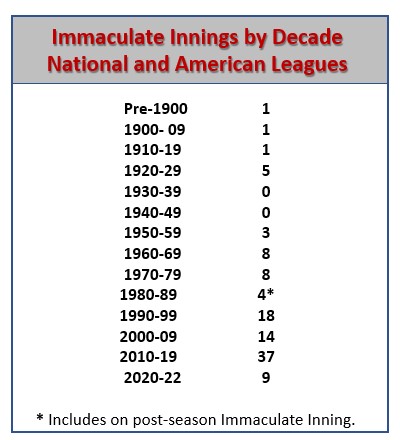
Yesterday (June 15, 2022), Astros’ moundsmen Luis Garcia and Phil Maton pitched their way into the record books. The two Houston hurlers each tossed an “Immaculate Inning” … an inning facing just three batters and fanning the side on nine pitches. In these days of relief specialists, 100-mph fastballs and free swingers looking for the long ball, an Immaculate Inning is far less rare than it used to be (there were none in the 1930s and 1940s).  It’s been accomplished more than 100 times.  Garcia and Maton, however, were part of the first game in which two pitchers each tossed an Immaculate Inning and, of course, also will go down as the first two teammates to toss an Immaculate Inning in the same game.

Garcia tossed his nine-pitch, three-whiff fame in the bottom of the second, while Maton achieved the feat in the bottom of the seventh. The Astros, by the way, won the game  (started by Garcia) 9-2 and four Houston pitchers notched a total of 14 strikeouts.

The double Immaculate Innings game was rendered even more unique by the fact that the same three Rangers’ batters were the strikeout victims in both innings – Rangers’ 1B Nathaniel Lowe, 2B Ezequiel Duran and 3B Brad Miller (the 6-7-8 hitters in the Texas lineup).

As always, with Baseball Roundtable, one things leads to another. So, let’s take a look at some Immaculate Innings tidbits.

Note:  The above chart is for the National and American Leagues.  Also, in researching for this post, I did find some discrepancies among trusted sources – and I have worked to resolve those wherever possible (relying on multiple sources for confirmation, checking box scores, etc.)

Immaculate Innings – What’s that?

Only two teams have never recorded an immaculate inning, and both can trace their roots back to Washington D.C.  The Washington Senators/Minnesota Twins and the Washington Senators/Texas Rangers.  The Dodgers, Astros, and Yankees lead MLB with nine Immaculate Innings each. Here are the pitchers who tossed Immaculate Innings for those leading teams:

Dodgers: Pat Ragan (1914); Dazzy Vance (1924); Sandy Koufax (1962, 1963, 1964); Todd Worrell (1995); Kenley Jansen (2017); Zac Rosscup (2018); Max Scherzer (2021).

Astros/Colt .45s: Bob Bruce (1964); Pete Harnisch (1991); Mike Magnante (1997); Randy Johnson (1998); Shane Reynolds (1999); Brandon Backe (2004); Will Harris (2019); Luis Garcia (2022); Phil Maton (2022).

Yankees: Al Downing (1967); Ron Guidry (1984); A.J. Burnett (2009); Ivan Nova (2013); Brandon McCarthy (2014); Dellin Betances (2017); Michael King (2021); Chad Green (2021); Nestor Cortes (2022).

The Third Time’s the Charm. 

While “Immaculate Innings” are indeed becoming less rare, multiple Immaculate Innings remain pretty unique. Only three  MLB pitchers have recorded three immaculate innings in a career – Sandy Koufax (all with the Dodgers); Chris Sale  (all with the Red Sox); and Max Scherzer (Nationals and Dodgers).

Three pitchers recorded two Immaculate Innings during their careers:   Lefty Grove – who did it for the Athletics; Nolan Ryan – Mets and Angels; and Randy Johnson – Astros (NL) and Diamondbacks.

Nolan Ryan is the only pitcher to throw an immaculate inning in both the AL and NL.  

Two pitchers have recorded two Immaculate Innings in one season: Lefty Grove Athletics (1928) and Chris Sale  (2019).

Immaculate on the Big Stage.

The only pitcher to throw a nine-pitch, three-strikeout inning in the World Series is the Royals’ Danny Jackson. On October 24, 1985, Jackson started Game Five of the Series against the Cardinals. He threw a complete-game, five-hitter in beating the Redbirds 6-1.  He walked three and struck out five, including 3B Terry Pendelton, C Tom Nieto and PH Brian Harper on nine pitches in the seventh inning. Jackson had gone 14-12, 3.42 in the regular season He had taken the loss in Game One of the Series, despite giving up only two runs (four hits, two walks, seven strikeouts) in seven innings. His Game-Five win pulled the Royals to 3-2. They eventually won the series four games to three.

Just Give Me a Little More time and I can Do it.

There have been only two immaculate innings tossed in an extra inning.

Sloppy Thurston for the White Sox, August 22, 1923 … Thurston, who came on in the 11th inning, threw an immaculate 12th before giving up a run in the 13th and taking the loss in a 3-2 Athletics victory.

Juan Perez, Phillies, July 8, 2011 … Perez came on (against the Braves) in the top of the tenth of a 2-2 game and fanned the side. The Phillies scored on a Raul Ibanez’ HR in the bottom of the inning to give Perez the win.

Nine pitches and Done for the Day.

Here’s a list of pitchers who have thrown an immaculate inning while facing only three batters in a game – in the ninth inning unless otherwise noted:

Jim Bunning, Tigers … August 2, 1959

Doug Jones, Brewers … September 23, 1977

Pedro Borbon, Reds … June 23, 1979

Jeff Montgomery, Royals … April 29, 1990

Stan Belinda, Royals … August 6, 1994

Todd Worrell, Dodgers … August 13, 1995

Ugueth Urbina, Expos … April 4, 2000

Jason Isringhausen, Cardinals …. April 13, 2002

Rafael Soriano, Rays … August 23, 2010

Juan Perez, Phillies, 10th inning … July 8, 2011

Steve Delabar, Blue Jays, 8th inning … July 30, 2013

Rex Brothers, Rockies, 8th inning… June 14, 2014

Sergio Casilla, Giants … May 7, 2015

Drew Storen, Reds … April 18, 2017

Zac Rosscup, Dodgers … August 19, 2018

Josh Hader, Brewers … March 30, 2019

Chris Martin, Braves, 7th inning … September 11, 2019

Will Harris, Astros, 8th inning … September 27, 2019

Kyle Finnegan, Nationals, 6th inning … May 5, 2021

Phil Maton, Astros, 7th inning …. June 15, 2022


Primary Resources:  Baseball-Reference.com; Baseball-Almanac.com; MLB.com

BASEBALL ROUNDTABLE ON THE TOP 100 BASEBALL BLOG LIST

100Baseball Roundtable is on the Feedspot list of the Top 1oo Baseball Blogs.  To see the full list, click here.

I tweet baseball @DavidBBRT

Follow/Like Baseball Roundtable’s Facebook Page here.  More baseball commentary; blog post notifications; PRIZES.

Member: Society for American Baseball Research (SABR); The Baseball Reliquary; The Negro Leagues Baseball Museum.
 

This Modern Era … Surrendering Six Homers in a Game

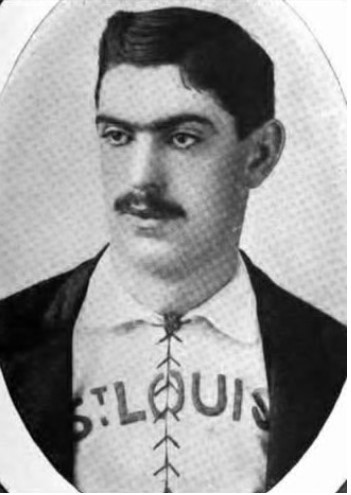
Charlie Sweeney” Public Domain via WikiCommons

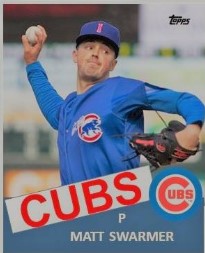
On this date (June 12) in 1886, the National League St. Louis Maroons’ righty Charlie Sweeney set an all-time MLB record by giving up seven home runs in a single game.  Sweeney gave up 21 hits (including the seven dingers) in a 14-7 loss to the Detroit Wolverines.  Why do I note that “accomplishment” here?  Because, just yesterday, Cubs’ 28-year-old rookie right-hander Matt Swarmer tied the modern (post-1900) MLB record by giving up six homers in an 8-0 loss to the Yankees in New York. More on that in a paragraph or two, but first let’s look at Sweeney. Notably, that season, Sweeney gave up just two more long balls in his other 10 starts (all complete games). On the season, he was 5-6, 4.16.

Sweeney pitched in the major leagues (National League, Union Association and American Association) from 1883-1887 and, in 1884, went a combined 41-15, 1.70 for the NL Providence Grays and Union Association Saint Louis Maroons. That season, he pitched 492 innings (53 complete games) and fanned 337 batters. It was the 21-year-old’s second major league season – he had gone 7-7, 3.13 in 20 games for Providence in 1883 – and there is evidence the heavy 1884 workload took a toll on Sweeney’s arm. (In his final three MLB seasons, Sweeney was 16-30, 4.24 and fanned just 120 in 392 frames). Sweeney is also reported to have had issues with adult beverage consumption and a hot temper.  (In later life, he had several brushes with the law triggered by violent confrontations.)  Notably, over his career, he surrendered just 24 home runs in 1,030 2/3 innings.

Now back to Swarmer. His six-homer game came in his third MLB start. He was 1-1, 1.50 going into the game, and had surrendered three long balls in 12 innings. In  the June 11 contest he gave up a:

  • solo homer to Yankee DH Aaron Judge on his second pitch of the game (Judge led off the bottom of the first);
  • solo home run to RF Giancarlo Stanton with one out in the fourth;
  • solo homer to 2B Gleyber Torres on the very next pitch;
  • solo shot to C Jose Trevino leading off the fifth;
  • solo long ball to Judge with one out in the fifth; and
  • solo shot to 1B Anthony Rizzo with two out in the fifth.

Swarmer pitched five innings and gave up six runs on seven hits, walking none and fanning four.  He became just the tenth pitcher since 1900 to give up six homers in a game and just the second to give up six solo shots in a single game.

Let’s briefly look at the rest of the list of six-homer pitching appearances. As you skim through these you may note that of the ten six-homer games in the modern era:

  • Only one pitcher became a six-homer victim in relief;
  • Three “victims” actually recorded victories in their games;
  • All the pitchers on the list are right-handers;
  • There are two complete games on the list;
  • One pitcher gave up six home runs in his only MLB start;
  • The shortest six-homer outing (tied) was 2 1/3 innings;
  • In three of the games, the opposing pitcher launched one of the long balls.

Larry Benton, RHP, Giants … May 12, 1930

The 34-year-old righty Benton was in his  eighth MLB season, when he started against the Cubs (in Chicago) and gave up nine hits, seven runs (six home runs) in a 6 2/3- inning stint. Notably, Benton, got the win despite giving up the six long balls. He took a 14-0 lead into the bottom of the fifth when he gave up a two-out solo home run to Cubs’ RF Cliff Heathcote.  In the sixth, Benton surrendered three-run shot to 2B Clyde Beck. In the seventh, he gave up  solo home runs to Heathcote; CF Hack Wilson and 1B Charlie Grimm, as well as a three-run blast to Beck (ending Benton’s day after 6 2/3 frames). Benton finished the season at 8-15, 5.50. For his 13 season MLB career, he was 128-128, 4.03 and gave up 0.4 home runs per nine innings. For the Giants in 1926, he went 25-6, 2.73 – leading the league in wins and complete games (28 in 36 starts).

Hollis “Sloppy” Thurston, RHP, Dodgers …  August 13, 1932

The 33-year-old Thurston was in the eighth of nine MLB season when he gave up six homers to the Giants in an 18-9 Dodgers’ road win. Despite the long balls, Thurston pitched a complete game – giving up eight earned runs on nine hits. (The Dodgers collected 24 hits and three home runs of their own.)

Thurston gave up consecutive, one-out, solo home runs to 1B Bill Terry, RF Mel Ott and CF Freddie Lindstrom in the fourth; a solo shot to Terry in the fifth; and solo shots to Terry and Ott with two outs in the ninth.

Thurston went 12-8, 4.06 on the season and 89-86, 4.24 in nine MLB campaigns. Over his career, he gave up 0.5 home runs per nine innings. In 1925, with the White Sox, he went 20-14, 3.80 and led the AL in complete games (28) and innings pitched 330.

Tommy Thomas, RHP, Browns …  June 27, 1936

Wow! Another six-homer complete game. Thomas went the distance for the Browns in a 10-6 loss to the Yankees (16 hits, six walks, two whiffs) in St. Louis. (The Browns did lead 4-1 after four innings).  The home runs included: a solo shot by Yankee P Red Ruffing leading off the third; a solo shot by SS Frankie  Crosetti leading off the fifth and a three-run home later in the inning by LF George Selkirk; solo home runs by RF Joe DiMaggio and 1B Lou Gehrig (the first two batters) in the seventh; a three-run dinger by Crosetti in the ninth.

Thomas went 11-9, 5.26 in 1936 and 117-128, 4.11 in 12 MLB seasons (1926-37). He  gave up 0.6 HR per nine innings over his career. His best season was 1927, when he went 19-16, 2.98 for the White Sox, leading the AL in 307 2/3 innings pitched.

Bill Kerksieck, RHP, Phillies … August 13, 1939

Kerksieck did not last long the big leagues, just one season, with an 0-2 record and a 7.18 ERA in 23 games (two starts). In his first-ever start, he lasted four innings (Phillies versus Giants in New York) and left after giving up seven runs on seven hits (six home runs among them) and four walks. He took the loss as the Phillies fell 11-2. Kerksieck gave up a solo homer to CF Frank Demaree with two outs in the first; a two-run shot to Demaree in the third; and solo shots to 1B Zeke Bonura, 2B Alex Kampouris, P Bill Lohrman and LF Jo-Jo Moore in the fourth (the last three consecutively).

Unique among these six-homer hurlers is the fact that Kerksieck pitched in a second game that day (the Phillies and Giants were playing a twin bill), relieving in the doubleheader’s second game and pitching one scoreless inning as the Phillies lost 6-2.

Kerksieck’s final career line was 0-2, 7.18 in 23 appearances (giving up 1.9 home runs per nine innings). He did pitch one complete game – a 6-1 loss to the Cubs on September 15, 1939 in which he gave up 14 hits in eight innings.

George Caster, RHP, Athletics …  September 24, 1940

Caster’s six-homer game came in a season (1940) when he led the AL with 19 losses (four wins and a 6.56 ERA). Caster has the distinction of tying for the fewest innings pitched while giving up six homers in a game – 2 1/3 frames. Caster came on in relief to open the fourth inning, with his Athletics down 5-3 to the Red Sox (in Philadelphia). That frame, he gave up a two-run home run to Ted Williams in the fourth and a solo shot to Joe Cronin in the fifth. Then in the fifth, the roof fell in.  (Well, there really weren’t any “roofed” ballparks at the time, so maybe the sky tumbled down.)  It went like this:

  • Triple CF Dom DiMaggio;
  • Sacrifice fly, scoring DiMaggio, by RF Doc Cramer;
  • Solo Homer, LF Ted Williams;
  • Solo Homer, 1B Jimmie Foxx;
  • Solo Homer, SS Joe Cronin;
  • Triple, 2B Bobby Doerr;
  • Two-run homer, 3B Jim Tabor;
  • Les McCrabb relievers Caster.

Caster pitched in 12 MLB seasons (1934-35, 1937-46), going 76-100. He twice led the AL in losses (1938 and 1940). He also had a league-topping 12 saves in 1944, when he went 4-4, 2.44 in 42 games (his best MLB season). He gave up 0.8 HR per nine innings over his career.

Tim Wakefield, RHP, Red Sox …. August 8, 2004

Wakefield lasted five innings in his August 8, 2004 start for the Red Sox (versus the Tigers in Detroit), Surprisingly, despite giving up six home runs in five innings, he left with a 10-7 lead and got credit for the ultimate 11-9 victory. Wakefield gave up a solo home runs to C Ivan Rodriguez with two outs in the bottom of the first; consecutive solo shots to RF Craig Monroe and 3B Eric Munson with one out in the second; solo home runs to Rodriguez and 1B  Carlos Pena in the third; and a solo shot to DH Dmitri Young in the fifth. Wakefield was in his 12th MLB season at the time of the six-homer game.  He finished the campaign at 12-10, 4.87 – and his career stat line was 200-180, 4.41. The one-time All Star gave up 1.2 home runs per game over his career.

R.A. Dickey, RHP, Rangers ….April 6, 2006

The 31-year-old Dickey pitched in just one MLB game in 2006 (he had 22 minor-league appearances/19 starts that season).  In fact, Dickey, who broke into professional baseball in 1997, spent at  least part of every season from 1997 through 2010 in the minor leagues – before pitching seven full MLB seasons (2011-17, Mets, Blue Jays, Braves) during which: he went 87-81 in 269 games (226 starts); led the league in starts three times; and won a Cy Young Award (2012 Mets). In his April 6, 2006, start (for the Rangers) versus the Tigers in Texas, he lasted 3 1/3 innings,  giving up seven runs on eight hits and one walk, while fanning one.  The six homers went: solo shot, 3B Brandon Inge leading off the top of the first; solo home run for RF Magglio Ordonez with two out in the first; solo homer by 1B  Chris Shelton leading off the second; solo homer by  Shelton (again) with one out in the fourth; two-run homer by CF Craig Monroe and solo homer by LF Marcus Thames also with one out in  in the fourth.

Dickey pitched in 15 MLB seasons and went 120-118, 4.04 in 400 appearances (300 starts). In 2012, when he won the NL Cy Young Award, he went 20-6, 2.73 and led the league in starts (33), complete games (5), shutouts (3), innings pitched (233 1/3) and strikeouts (230). He gave up 1.1 home runs per nine innings over his MLB career.

James Shields, RHP, Rays … August 7, 2010

Shields started for the Rays (against the Blue Jays in Toronto) on August 7, 2010. He lasted just four innings in a 17-11 slugfest won by the Blue Jays. Shields took the loss, giving up eight runs on nine hits and four walks, fanning two. The home  runs:  a two-run homer by C  J.P. Arencibia in the bottom of the second; a home run (on the first pitch) to DH Adam Lind leading off the second, followed in the inning by a home run by 2B Aaron Hill, a fly out and a home run by 3B Edwin Encarnacion; a home run by RF Jose Bautista leading off the fourth and a home run by Hill with two outs in the inning (both solos).

Shields pitched in 13 MLB seasons (2006-2018) and went 145-139, 4.01, giving up 1.2 home runs per nine innings.  In that 2010 season, he went 13-15, 5.18. In 2016, he tied for the MLB lead in losses with 19 and, in 2018 (his final season), he tied for the MLB lead with 16 losses. His best season was 2011, when he went 16-12, 2.82 for the Rays and was an All Star selection.

Michael Blazek, RHP, Brewers …  July 27, 2017

Blazek lasted just 2 1/3 innings (tied for the fewest among the games in this list) in his July 27, 2017 start for the Brewers (versus the Nationals in Washington D.C.). He gave up eight runs on seven hits and one walk (four whiffs) in a 15-2 Brewers’ loss. It was his only career MLB start.

He gave up just two runs over the first two innings (on a Bryce Harper home run in the first), but things unraveled in the bottom of the third:

  • P Max Scherzer walked;
  • CF Brian Goodwin homered;
  • SS Wilmer Difo homered;
  • RF Bryce Harper homered;
  • 1B Ryan Zimmerman homered;
  • 2B Daniel Murphy flied out;
  • 3B Anthony Rendon, homered;
  • Wily Peralta relieved Blazek.

Blazek pitched  five MLB seasons (2013, 2015-17, 2019) and went 8-6, 4.50 in 113 games (just one start). He gave up 1.4 HRs per nine innings. His best season was 2015, when he went 5-3, 2.43 for the Brewers in 45 appearances.

Primary Resource:  Baseball-Reference.com


BASEBALL ROUNDTABLE ON THE TOP 100 BASEBALL BLOG LIST

100Baseball Roundtable is on the Feedspot list of the Top 100 Baseball Blogs.  To see the full list, click here.

I tweet baseball @DavidBBRT

Follow/Like Baseball Roundtable’s Facebook Page here.  More baseball commentary; blog post notifications; PRIZES.

Member: Society for American Baseball Research (SABR); The Baseball Reliquary; The Negro Leagues Baseball Museum.
BASEBALL ROUNDTABLE – BLOGGING BASEBALL SINCE 2012


They’re Off and Running – The Tigers’ 35-5 start in 1984

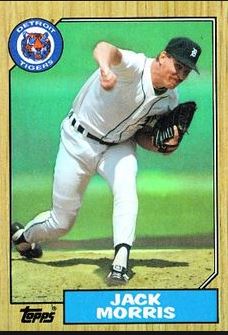
Jack Morris started against the Twins on Opening Day 1984, pitching seven one-run innings for the win.

Taking in this week’s Twins-Tigers series in Minnesota, I was taken back to Opening Day 1984 (remember,  for Baseball Roundtable, one thing always leads to another) – when I sat through an 8-1 Tigers’ (indoor) drubbing of the Twins at the Metrodome. Little did I know, I was witnessing the first game of the hottest start to a season in MLB history – a run that would extend to late May.  The Tigers would get out of the gate with thirty-five wins in their first forty games, never drop out of first place the entire season, finish 104-58, sweep the Royals in the American League Championship series  and top the Padres in the World Series four games-to-one.

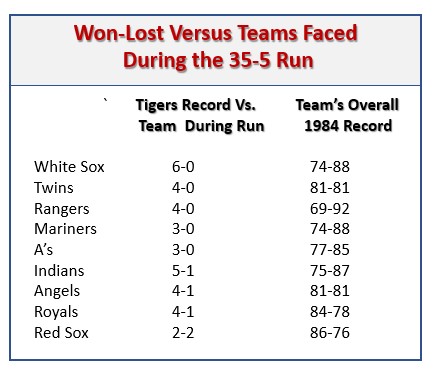
In that 35-5 early-season run, the Tigers:

  • Started the season with a nine-game winning streak ;
  • Won 16 of their first 17;
  • Won their first 17 road games (an MLB record);
  • Went 18-5 at home;
  • Went 9-2 in one-run games;
  • Were 2-1 in extra innings;
  • Won ten games by five or more runs; and
  • Produced five walk-off wins.

Over the forty games, the Tigers scored eight or more runs 11 times; and fewer than three runs seven times. The Tigers gave up more than three runs in just 14 contests, and won all but three three of those games.

During that 40-game stretch the Tigers:

  • Outscored their opponents 236-120;
  • Outhit them .299 to .214;
  • Out-homered them 40-29; and
  • Put up a 2.58 ERA to the opponents 5.65.

After those first forty games, the Tigers had an 8 1/2 game lead in the American League East.

A few highlights  of the streak:

  • On April 7, in the fifth game of the streak Jack Morris pitched a no-hitter against the White Sox (in Chicago), as the Tigers won 4-0. Morris started 11 games during the streak and the Tigers won all but one. Morris went 9-1, 1.97 with six complete games during the Detroit run. He finished the season 19-11, 3.60.

  • Closer Willie Hernandez, who would win the American League Cy Young and Most Valuable Player Awards, won one and saved seven games during the forty-game run. He finished the season 9-3, 1.92 with 32 saves, while leading the league in appearances with 80 – pitching more than one inning in 45 of those appearances.
  • Thirteen proved a lucky number for the Tigers. On Friday, April 13, they made an unusual one-game visit to the Red Sox – and scored 13 runs in topping the Sox 13-9. In that one, they plated eight runs in the first inning on four walks, three singles, two doubles and two Red Sox errors. Six Tigers collected RBI in that first frame.

  • During the 35-5 run, the Tigers got plenty of power “up the middle.” C Lance Parrish hit .286-7-25 during the run, SS Alan Trammell went .340-5-23 and CF Chet Lemon put up a .331-7-32 line.

Cuba Libre

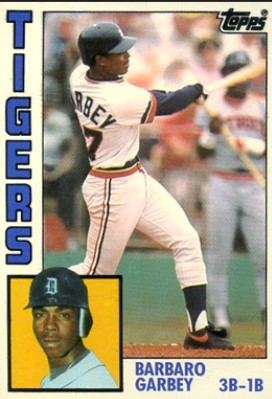
The biggest surprise during the Tigers’ early season run may have been the bat of rookie utility player (corner infielder)  Barbaro Garbey – who had left Cuba on a fishing boat in the 1980 “Freedom Flotilla.” The 27-year-old played in 29 games during the streak and hit .355-1-20.  Over a  sometimes troubled MLB career (1984-85, 1988), Garbey hit .267-11-86 in 226 games.


  • On April 24, the Tigers swept a double header in Detroit (versus the Twins )– winning two one-run ball games (6-5 and 4-3). In the first game, the Tigers trailed 5-3 in the bottom of the night, but plated three runs off Twins’ closer Ron Davis.
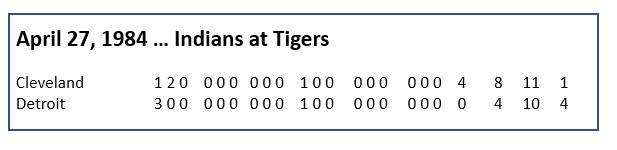
  • On April 27, the Tigers lost a heart breaker at home – and it took 19 innings and five hours and 44 minutes to do it.  The game (against the Indians) was tied 3-3 in the third.  The Tigers’ usually reliable Willie Hernandez (in his second inning of work) gave  up a single, sacrifice and walk to open the Indians’ tenth, before Aurelio Lopez was brought to the mound. Lopez’ inning went strikeout, wild pitch, walk (loading the bases), walk (forcing in a run), ground out. For the Tigers, Lou Whitaker opened the bottom of the tenth with a double, Alan Trammell singled him to third and he scored on a double play (Darrell Evans). The game then continued scoreless until the top of the 19th, when (with the help of three Detroit errors – two on sacrifice bunts), the Indians turned two hits into four runs.

  • On May 1, as the Tigers topped the Reds Sox 11-2 in Detroit, hitting stars of the early season run – 1B Barbaro Garbey and CF Chet Lemon – each drove in four runs.
  • On May 3, Jack Morris suffered his only loss of the 35-5 run, despite giving up just one run a nine-inning complete game against the Red Sox. Bob Ojeda shutout the Tigers and Boston RF Dwight Evans took Morris deep in the top of the eighth.
  • On May 8, the Tigers topped the Royals 5-2 in Kansas City, led by an eighth-inning Grand Slam by Alan Trammell (off Dan Quisenberry).
  • In a 10-1 win over the Mariners on May 16 (in Detroit) eight Tigers collected RBI: 2B Lou Whitaker, DH Alan Trammell; PH Johnny Grubb; 1B Barbaro Garbey; PH Dwight Lowry; LF Larry Herndon; RF Rusty Kuntz; 3B Marty Castillo.
  • The streak ended with a 7-3 loss to the Mariners (in Seattle).  The Mariners, in fact, swept the May 25-27 series by scores of 7-3, 9-5 and 6-1.

Primary Resource:  Baseball-Reference.com 


BASEBALL ROUNDTABLE ON THE TOP 100 BASEBALL BLOG LIST

100Baseball Roundtable is on the Feedspot list of the Top 100 Baseball Blogs.  To see the full list, click here.

I tweet baseball @DavidBBRT

Follow/Like Baseball Roundtable’s Facebook Page here.  More baseball commentary; blog post notifications; PRIZES.

Member: Society for American Baseball Research (SABR); The Baseball Reliquary; The Negro Leagues Baseball Museum.


Five Homers in an Inning … The Reds Have the (reverse) Record

Yesterday (May 17, 2022), the Astros exploded for an MLB record-tying five home runs in a single inning.  The outburst came in the second inning of a 13-4 Astros win over the Red Sox in Boston – and all five long balls came off Boston starter Nathan Eovaldi (who had retired the Astros on five pitches in a three-batter first inning). Eovaldi came into the inning with a 3.07 earned run average on the season (it was his eighth start). When the innings was over, is ERA was 6.01. The frame went like this:

  • LF Yordan Alvarez leads off with a home run to Left on a 2-1 pitch.
  • 1B Yuli Gurriel safe on an error by 1B.
  • RF Kyle Tucker takes an 0-1 pitch yard for a two-run home run to right.
  • SS Jeremy Pena, also picking on an 0-1 pitch, homers to left-center.
  • CF Jose Siri flies out to right-center.
  • C Martin Maldonado  singles.
  • 2B Jose Altuve doubles.
  • DH Michael Brantley homers to right (a three-run shot)  on a 1-1 pitch.
  • 3B Alex Bregman grounds out third-to-first.
  • Yordan Alvarez, in his second at bat of the inning, singles.
  • Yuli Gurriel (also in his second at bat of the inning) hits a two-run home run (on an 0-2) pitch) to left-center.

At this point, with nine runs across the plate in the inning, Eovaldi is replaced on the mound by Tyler Danish, who gets Tucker on a ground out to end the inning.

The Inning’s Home Run  Hitters: Yordan Alvarez; Kyle Tucker; Jeremy Pena; Michael Brantley; Yuli Gurriel

Final Score:  Astros 13 -Red Sox 4

Runs Scored in the Five-Homer Inning: 9

It marked the eighth time in AL/NL  history that a team has notched five home runs in a single inning.

Before we detail each of these homer-happy innings, here are a few tidbits about the five-homer frames:

  • The Cincinnati Reds have been the victims of four of the eight five-homer innings.
  • The home team has put on the power display six of the eight times.
  • Seventeen of the 40 home runs have come with two outs.
  • Pitchers have contributed (as hitters) HRs in two of the five five-homer innings.
  • One of the five-homer innings was kept alive by three fielding errors.
  • Four of the five five-homer innings have come in the fourth inning (three of the four against the Reds).
  • The five-homer innings have featured the scoring of 66 runs – the fewest at six, the most at 12.
  • Andy Seminick is the only player to homer twice in a team’s five-homer inning.
  • All five home runs were given up by a single pitcher twice.

Now, let’s take a closer look at those five-homer innings.

_____________________________________________

NATIONAL LEAGUE

June 6, 1939 … NY Giants versus Cincinnati Reds

Pitcher Manny Salvo hit an inside-the-park home run in Giants five-homer inning.

Pitcher Manny Salvo hit an inside-the-park home run in Giants five-homer inning.

The first-ever five-home run MLB inning took place in New York on June 6, 1930, as the sixth-place Giants (20-24 record) surprised the league-leading Reds (29-15) by a 17-3 score, plating all 17 runs in the first five innings.

The record-setting power display came in the bottom of the fourth inning, with the Giants already up 6-0.  Peaches Davis, who had relieved Johnny Vander Meer in the first inning (Vander Meer had given up six hits and three runs in 2/3 of an inning), retired Giants’ LF Jo Jo Moore and SS Billy Jurgess to start the inning. Then the wheels came off.  C Harry Danning laced a home run to center (his sixth). Clean-up hitter Mel Ott drew a walk, 1B Zeke Bonura singled and CF Frank Demaree hit the second home run of the inning (his second of the season).

Wesley Livengood (whose MLB career would consist of five appearances and a 9.53 ERA) then came on to relieve Davis. Livengood was not living so good, as he walked 3B Tony Lazzeri and then gave up a home run to 2B Burgess Whitehead (the first of only two he would it in 1939).  Giants’ pitcher Manny Salvo was up next. A weak hitter, Salvo surprised everyone in the ball park with the only home run of his five-season MLB career – an inside-the-park round tripper off the right field fence.  Next up was lead-off hitter J0 Jo Moore, who hit the fifth and final homer of the inning (and his second of the day).  Notably, all of this damage took place after the first two batters were retired.

The Inning’s Home Run Hitters: Harry Danning, Frank Demaree, Burgess Whitehead, Manny Salvo, Jo Jo Moore

Runs Scored in the Five-HR Inning: Eight

Final Score:  Giants 17 – Reds 3

A couple of Baseball Roundtable tidbits on this one:

  • You have to love the great baseball names of the two pitchers who were victimized: Peaches Davis and Wesley Livengood.
  • The number eight and nine hitters for the Giants – Burgess Whitehead and Manny Salvo, who both homered in the inning, hit a combined three home runs all season and a total of 18 long balls in a combined 14 seasons.

June 2, 1949… Philadelphia Phillies versus Cincinnati Reds

Andy Seminick hit two round trippers in the Phillies' five-homer inning.

Andy Seminick hit two round trippers in the Phillies’ five-homer inning.

Ten seasons passed before the next five-homer inning – and the victims were again the Reds.  This time, the bashing came off the bats of the Phillies (in Philadelphia).  It started out as a close game, with the Reds actually leading 3-2 after seven innings behind a strong performance by starting pitcher Ken Raffensberger (who would win 18 games that season). Things, however, went awry in the bottom of the eighth.

CF Del Ennis (the Phillies’ clean-up hitter) led off the inning with a home run (his 7th of the season), which was followed by C Andy Seminick’s second home run of the game – marking Raffensberger’s exit. Jess Dobernic came on in relief and retired RF Stan Hollmig on a liner to short before giving up a home run to 3B Willie Jones (his third of the year). Dobrenic then induced a soft fly ball out to second base by 2B Eddie Miller, bringing up P Schoolboy Rowe, who had relieved Philadelphia starter Curt Simmons in the top of the eighth.  Rowe promptly slammed a home run to left (the only home run of the year for the 39-year-old veteran, in his last MLB season). Kent Petersen came on in relief of Dobernic and seemed to pour gas on the flames:  walk to CF Richie Ashburn, double to SS Granny Hamner, 1B Eddie Waitkus safe on an error (Ashburn scores), an Ennis single to right (Hamner scores), and Seminick’s second home run of the inning (third of the game and seventh of the season). That was the end of the home runs, but the inning continued with the Phillies adding another run on a hit batsman and a triple.  Suddenly a 3-2 Reds lead was a 12-3 deficit.

The Inning’s Home Run Hitters; Del Ennis, Andy Seminick (2),  Willie Jones, Schoolboy Rowe

Runs Scored in Five-HR Inning: 10

Final Score:  Phillies 12 – Reds 3

A Baseball Roundtable tidbit:

  • Phillies’ catcher Andy Seminick, still the only player to hit two home runs in a team’s five-homer inning, hit 24 homers that season and 164 in 15 career seasons.

August 23, 1961 … San Francisco Giants versus Cincinnati Reds

Jim Davenport contributed a three-run inside-the-park homer to the Giants record-tying inning.

Jim Davenport contributed a three-run inside-the-park homer to the Giants record-tying inning.

Twelve seasons after five-home inning number two, it happened again – and for the third straight time, the Reds were the victims – and this time they were are home.  On August 23, 1961, another close game became a late inning route.  The Reds trailed the San Francisco Giants 2-0 after 8 innings with both starters (Juan Marichal for the Giants and Joey Jay for the Reds) still in the game.  A low-scoring game was no surprise. Marichal came into the contest with a 12-7 record for the third-place Giants, while Jay was 18-7 for the first-place Reds.

In the top of the ninth, the Giants broke the tightly contested game wide open.  1B Willie McCovey started the frame with a double off Jay and then scored on an error by Reds’ 2B Don Blasingame after CF Willie Mays popped out, LF Orlando Cepeda and RF Felipe Alou followed with a pair of deep home runs (to center and left, respectively). It was Cepeda’s 36th of the year and Alou’s 15th.  That brought Jim Brosnan in from the bullpen – and led to a fly ball out by C John Orsino, singles by SS Jose Pagan and Marichal, 2B Joey Amalfitano reaching on an error by Reds’ third baseman Gene Freese (Pagan scoring) and a three-run inside-the-park home run by 3B Jim Davenport (his 8th homer of the year).  McCovey then singled for his second hit of the inning, which brought on Bill Henry in relief. Henry gave up a two-run homer to Willie Mays (his 34th of the season), a single to Cepeda, and had Alou reach on Freese’s second error of the inning (and the Reds’ third miscue of the frame). John Orsino then took Henry deep (just his second of the year) before Pagan struck out to mercifully end the 12-run, ninth-inning uprising.

The Inning’s Home Run Hitters:  Orlando Cepeda, Felipe Alou, Jim Davenport, Willie Mays, John Orsino

Runs scored in the Five-Homer Inning: 12

Final Score:  Giants 14 – Reds  0

April 22, 2006 … Milwaukee Brewers versus Cincinnati Reds

Prince Fielder put the "cherry on top" (old school analogy) for the Brewers.

Prince Fielder put the “cherry on top” (old
school analogy) for the Brewers.

Home cookin’ – with a five homer dessert – was good to the Brewers when they hosted the Reds on April 22, 2006. Milwaukee pounded the visitors 11-0, racking up the fourth five-homer inning against the Reds’ franchise along the way.   The outburst came in the bottom of the fourth inning with starter Brandon Claussen still on the mound and the Reds trailing 3-0.

Milwaukee 3B Bill Hall (the number-six hitter) started it with a home run (his third of the young season). Then 2B Richie Weeks singled to left, scoring on C Damian Miller’s home run (his first of the year). That seemed to establish a (brief) HR-1B-HR pattern, as Brewers’ pitcher Dave Bush followed the Miller home run with a single and CF Brady Clark backed up the Bush single with his first home run of 2006. SS J.J. Hardy broke the pattern with a home run (his third of the year).  At this point, Claussen had faced six batters in the inning, giving up four home runs and two singles.  Chris Hammond came on in relief and provided just that, striking out the first two batters he faced (RF Geoff Jenkins and LF Carlos Lee).  Then Prince Fielder gave the Brewers a piece of the five-homer in one inning record, hitting his third dinger of the year. The carnage ended on a fly out to center by Hall.

The Inning’s Home Run  Hitters: Bill Hall, Damian Miller, Brady Clark, J.J. Hardy, Prince Fielder

Final Score:  Brewers 11 – Reds 0

Runs Scored in the Five-Homer Inning: 7

_________________________________________________

July 27, 2017 … Washington Nationals versus Milwaukee Brewers

This outburst came in the bottom of the third – with all the long balls hit off of Brewers’ starter Michael Blazek – who came into the game having given up no runs in four relief appearances (6 1/3 innings) on the season.  It would be the only start of Blazek’s five-season MLB career. (His career stat line would be 8-6, 4.50 in 113 appearances.)

Blazek started off the inning by walking Nationals’ pitcher Max Scherzer.  Then  CF Brian Goodwin hit a two-run home run; SS Wilmer Difo homered to right-center (his third long ball of just five that season); RF Bryce Harper homered to left-center, his second homer of the game and 27th of the season; 1B Ryan Zimmerman homered to left center (he would homer again the very next inning); 2B Daniel Murphy flied out; and 3B Anthony Rendon homered (his 21st of the season) to to left center.

At this point, Wily Peralta replaced  Blazek on the mound, giving up one run on two singles and a double  before a double play ended thee inning.  Note:  The Nationals scored seven runs that inning and then six more in a two-homer fourth.

The Inning’s Home Run  Hitters: Brian Goodwin; Wilmer Difo; Bryce Harper; Ryan Zimmerman; Anthony Rendon

Final Score:  Nationals 15 – Brewers 2

Runs Scored in the Five-Homer Inning: 7

_______________________________________________

AMERICAN LEAGUE

June 9, 1966 … Minnesota Twins versus Kansas City Athletics

Harmon Killibrew hit more home runs in the 1960s than any other player - powering the Twins to some big innings.

Harmon Killibrew hit more home runs in the 1960s than any other player – powering the Twins to some big innings (including their 1966 five-homer stanza).

The team that flashed all the power this day was the Minnesota Twins, but the game  (June 9, 1966 against Kansas City) didn’t start out all that well.

With the two teams facing off at Metropolitan Stadium (Bloomington, MN), the Athletics got off to a fast start, knocking out Twins’ ace Camilo Pascual in the top of the first. (Pascual lasted 2/3 of an inning, giving up four runs on three hits and a walk.) With Catfish Hunter on the mound, the Twins’ chances looked slim.

The Twins scored one in the fifth and two in the sixth (on a Harmon Killebrew home run) and then, trailing 4-3, broke the game open with five home runs in the seventh.   It started innocently enough with a Catfish Hunter walk to C Early Battey, followed by an infield fly out for 2B Bernie Allen. That brought pinch hitter (for the pitcher) Rich Rollins to the plate, and he hit the inning’s first homer (just the second of ten HRs Rollins would hit in 1966). Lead-off hitter SS Zoilo Versalles followed with his fifth homer of the year – and Paul Lindblad replaced Hunter on the mound. Lindblad got Twins’ LF Sandy Valdespino on a grounder to short, but then gave up consecutive round trippers to RF Tony Oliva (his 14th) and 1B Don Mincher (his 6th).  John Wyatt came in from the bullpen and quickly gave up a home run to 3B Harmon Killebrew (his second of the day and 11th of the year). Wyatt then surrendered a double to RF Jimmie Hall and Battey (in his second plate appearance of the inning) reached on an error before Bernie Allen ended the frame on a ground ball (catcher to first).

The Inning’s HR Hitters:  Rich Rollins, Zoilo Versalles, Tony Oliva, Don Mincher, Harmon Killebrew 

Runs Scored in the Five-Homer Inning: Six

Final Score:  Twins 9 – Athletics 4

Baseball Roundtable Tidbit:

  • Rich Rollins is the only pinch hitter to contribute a long ball to a five-homer inning.

____________________________________________

September 17, 2020 … Yankees versus Blue Jays

The Yankee outburst came in the fourth inning, with all five home runs coming off the Blue Jays’ Chase Anderson, who had relieved starter Julian Merryweather in the second inning.  3B Gio Urshela opened the inning lining out to center.  Then, RF Clint Frazier walked; C Gary Sanchez hit an RBI double; LF Brett Gardner then rapped a two-run home run (just his fifth of the season); 2B D.J. LeMahieu homered to right; 1B Luke Voit homered to right-center; CF Aaron Hicks fanned on three pitches; DH Giancarlo Stanton homered to center; and SS Gleyber Torres homered to left centers.  At this point, Wilmer Font replaced Anderson on the mounds, giving up a single to Urshela before retiring Frazier on a line out.  Side note:  The homers by Gardner; LeMahieu; Voit and Stanton were all first-pitch home runs.

The Inning’s Home Run  Hitters: Brett Gardner; DJ LeMahieu; Luke Voit; Giancarlo Stanton; and Gleyber Torres

Final Score: Yankees 10 – Blue Jays 7

Runs Scored in the Five-Homer Inning: 7

The Yankee’ five-home run innings was part of a 19-homer three-game series for the Bronx Bombers against  the Blue Jays.

Primary Resource: Baseball-Reference.com; Baseball-Almanac.com

BASEBALL ROUNDTABLE ON THE TOP 100 BASEBALL BLOG LIST

100Baseball Roundtable is on the Feedspot list of the Top 100 Baseball Blogs.  To see the full list, click here.

I tweet baseball @DavidBBRT

Follow/Like Baseball Roundtable’s Facebook Page here.  More baseball commentary; blog post notifications; PRIZES.

Member: Society for American Baseball Research (SABR); The Baseball Reliquary; The Negro Leagues Baseball Museum.
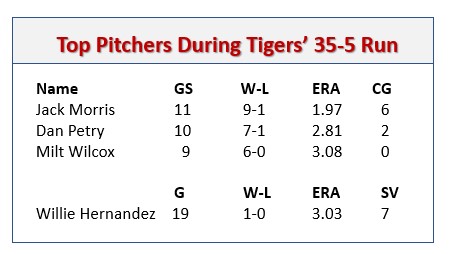


Winning a Game Without a Hit… A Handful Plus Oone.

Yesterday (May 15, 29022), the Pittsburgh Pirates  pulled out an improbably victory – topping the Reds 1-0, without notching a single base-hit. Going into the bottom of the eighth, Reds’ starter Hunter Greene had held the Pirates in check, giving up no hits, walking three and fanning nine. The Reds were also without a run, as Pittsburgh starter Jose Quintana had pitched seven innings, giving up just three hits and one walk (five strikeouts) and reliever Chris Stratton had pitched a one-hit, one-walk scoreless top of the eighth.

The Pirates scored in the bottom of the eighth, without a hit, in an inning that went like this:

  • RF Jack Suwinski grounded out to first base unassisted.
  • SS Rodolfo Castro walked.
  • C Michael Perez walked, Castro going to second base.

Art Warren replaced Hunter Greene, who had tossed 118 pitches, on the mound.

  • LF Ben Gamel walked, loading the bases.
  • 3B Ke’Bryan Hayes grounded into a fielder’s choice – second to shortstop, as Castro scored and Perez moved to third.
  • CF Bryan Reynolds popped out to shortstop to end the inning.

Pirates ‘Reliever Dave Bednar came on to pitch a 1-2-3 ninth and the Pirates had a win without a hit. Note: Because the Reds pitchers hurled just eight innings (the Pirates did not have to bat in the bottom of the ninth), this game does not go down as a no-hitter for the Reds.

Baseball-Reference.com shows just five other instances (since 1901) in which teams have won without the benefit of a single safety. Here they area:

April 23, 1964, Reds 1 – Colt .45’s 0

After eight innings this one was knotted 0-0. Reds’ starter Joe Nuxhall had given up five hits and one walk, while fanning four. The Astros’ Ken Johnson had been truly dominant.  Eight no-hit innings with two walks and nine whiffs.

Then, in the top of the ninth, this went down:

  • Reds’ 2B Pete Rose bunted in an attempt to both get the lead runner on and break up the no-hitter. Johnson fielded the bunt, but made a bad throw (error) to first, with Rose ending up at second base.
  • 3B Chico Ruiz, grounded out, Rose moving up to third.
  • CF Vada Pinson was safe on the Astros’ second miscue of the inning, this one by 2B Nellie Fox.
  • RF Frank Robinson flied out to left to end the inning.

Nuxhall  fanned two in a scoreless ninth, pitching around an error by Reds’ 1B Deron Johnson.

Johnson got credit for a complete-game, no-hitter – and is tagged with a loss. Johnson  pitched in 13 MLB seasons (1958-70 … Athletics, Astros,  Braves, Yankees, Cubs, Expos), going 91-106, 3.46.

Ken Johnson remains the only MLB pitcher to get saddled with the loss in an official, complete-game  no-hitter. 

—————–

April 30, 1967, Tiger 2 – Orioles 1

The Tigers were playing in Baltimore and, going into  the top of the ninth, Detroit trailed 1-0 with  Orioles’ starter Steve Barber having twirled  eight no-hit innings (seven walks and three strikeouts).  The Tigers’ Earl Wilson had given just one run on two hits and four walks (four strikeouts) over eight frames. The lone Orioles’ run, by the way  scored in an inning in which Baltimore did not get a hit –   three walks and a Luis Aparicio sacrifice fly in the bottom of the eighth. Barbers’ ninth inning went like this:

  • 1B Norm Cash walked, Dick Tracewski brought in to pinch run.
  • SS Roy Oyler walked.
  • P Earl Wilson, sacrifices (remember those), Tracewski going to third, Oyler to second. Jake Wood brought in to pinch run for Oyler.
  • PH Willie Horton popped out to the catcher.

At this point Barber still has a 1-0 lead and a no-hitter with two outs in the ninth.

  • With CF Mickey Stanley up, Barber threw a wild pitch, scoring Tracewski and sending Wood to third.
  • Stanley walked.

Stu Miller replaces Steve Barber on the mound.

  • 3B Don Wert hit a ground ball to SS  Aparicio, who threw to second for an inning-ending force. However, 2B Mark Belanger couldn’t handle the throw and the go-ahead run scored on his error. Note: Rookie Belanger (who would go on to win eight Gold Gloves at shortstop in his career) had been brought into the game in the top of the ninth.
  • RF Al Kaline grounded out to end the inning.

Fred Gladding replaces Earl Wilson  on the mound for Detroit and pitches a 1-2-3 ninth to save the win.

The Orioles record an official combined no-hitter, but also a loss.  Steve Barber pitched 15 MLB seasons (1960-74 … Orioles, Yankees, Pilots, Cubs, Braves, Angels, Giants), going 121-106, 3.36.  He was a two-time All Star and a 20-game winner  in 1963 – 20-13, 2.75 for the Orioles.

—————-

July 1, 1990. White Sox 4 -Yankees 0

Andy Hawkins managed to give up four runs in a complete-game, no-hit outing – but he had a little “help” from his friends.  It came in a game  played in Chicago and Hawkins’ mound opponent was southpaw Greg Hibbard. After seven  frames, the game was knotted at 0-0, and Hawkins had given up no hits, while walking two and fanning three. Hibbard had also tossed seven scoreless innings (four hits, no walks, four whiffs).

Barry Jones came to the mound for the ChiSox in the top of the eighth and held the Yankees without a run.  In the bottom of the eighth, the baseball Gods began to “mess with” Hawkins’ game.  Here’s how it went:

  • White Sox C Ron Karkovice popped out to 2B.
  • 2B Scott Fletcher popped out to 2B.
  • RF Sammy Sosa reached first on an error by Yankee third baseman Mike Blowers (a bobbled ground ball).
  • SS Ozzie Guillen walked on a 3-2 pitch.
  • CF Lance Johnson walked on four pitches, loading the bases with two out.

Sacks full, but shutout, no-hitter and the chance of a much-needed win still intact.

  • 3B Robin Ventura,  hit a playable fly ball to rookie Jim Leyritz in LF. The ball clanked off Leyritz’ glove for an error and all three runners scored (Ventura ended up on second).
  • DH Ivan Calderon hit a fly to RF that Jesse Barfield lost in the sun and dropped (another error) enabling the fourth run of the inning to score.
  • LF Dan Pasqua popped out to SS to end the inning.

The Yankees went scoreless off reliever Scott Radinsky in the top of the ninth, ending the game. At that moment, Andy Hawkins had a 4-0 loss – despite pitching a complete game, giving  up no hits (walking  five) and no earned runs.

It Was That Kind of Season

In Andy Hawkins’ next start, just five days after his July 1, 1990 no-hit loss, Hawkins carried a NO-HIT, shutout into the twelfth inning (against the Twins in New York).  Unfortunately, the Twins’ Allan Anderson and Juan Berenguer held the Bombers scoreless (despite ten hits).  The Twins got to Hawkins for two runs (two walk and two hits) in the twelfth and Rick Aguilera set down the Yankees without a run in the bottom of the inning. So, 11 no-hit innings for Hawkins and the end result was another loss.  That gave Hawkins a streak of 19 consecutive hitless innings over the two games – with two losses to show for it.

Andy Hawkins pitched in ten MLB seasons (1982-91 … Padres, Yankees, A’s). He went 84-91, 4.22.

—————

April 12, 1992, Indians 2 – Red Sox 1

The Indians jumped out front – without a hit – early in this one.

  • CF Kenny Lofton leads off the bottom of the first walking on four pitches form Red Sox’ starter Matt Young.
  • With DH Glenallen Hill at the plate, Lofton swipes second (on a 2-1 pitch).
  • As Hill fans on a 3-2 offering, Lofton steals third.
  • 2B Carlos Baerga hits a grounder to Red Sox’ SS Luis Rivera, whose errant throw allows Baerga to reach first, while Lofton crosses the plate.
  • LF Albert Belle flies out to right.
  • RF Mark Whiten flies out to right-center.

The Indians score again without a hit – in the bottom of the third.

  • Mark Lewis walks on four pitches.
  • Lofton walks on five pitches, sending Lewis to second.
  • Hill grounds to short, with the Red Sox getting the force at second. Hill is safe at first, Lewis moves to third.
  • With Baerga up, Hill steals second.
  • Baerga hits into a fielders’ choice, with Lewis scoring.
  • Belle strikes out.
  • Whiten grounds out second-to-first.

The Red Sox got one run back in the top of the fourth on a single by CF Ellis Burks, a walk  to 1B Mo Vaughn and an RBI single by SS Luis Rivera.

That was all the scoring in a game in which Matt Young threw eight no-hit innings (seven walks/six strikeouts), but still managed to give up two earned runs. Cleveland starter Charles Nagy gave up eight hits and one run (four walks/ten whiffs) in seven innings and relievers Brad Arnsberg and Derek Lilliquist held the Red Scoreless in the eighth and ninth.

Matt young pitched in 19 MLB seasons (1983-87, 1989-93 … Mariners, Dodgers, A’s, Red Sox, Indians). He went 55-95, 4.40.

————–

June 28, 2008, Dodgers 1 – Angels 0

This one was scoreless after 5 1/2 frames – Angels’ Jered Weaver versus Dodgers’ Chad Billingsley at Dodger Stadium.  The Dodgers broke the ice in the bottom of the fifth:

  • CF Matt Kemp reached on an error by P Weaver.
  • On an 0-1 pitch to 3B Blake DeWitt, Kemp stole second and made it to third on a bad throw by C Jeff Mathis.
  • DeWitt hit a sacrifice fly to deep right, scoring Kemp.
  • SS Angel Berroa flied out to center.
  • P Chad Billingsley walked.
  • LF Juan Pierre grounded out second-to-first to end the inning.

And that was all the scoring in this one. Weaver went six innings, gave up the one earned run, walking three and fanning six. Reliever Jose Arredondo then retired Dodgers in order in the seventh and eighth. For the Dodgers, Billingsley gave no runs on three hits (three walks, seven strikeouts) in seven innings – and relievers Jonathan Broxton and Takashi Soto held the Angels at Bay in the eighth in and ninth.

Jered Weaver itched in 12 MLB seasons (2006-17 … Angels, Padres). He went 150-98, 3.63, was a three-time All Star and won twenty games in 2012 (20-5, 2.81 for the Angels.

Primary Resource: Baseball-Reference.com

BASEBALL ROUNDTABLE ON THE TOP 100 BASEBALL BLOG LIST

100Baseball Roundtable is on the Feedspot list of the Top 100 Baseball Blogs.  To see the full list, click here.

I tweet baseball @DavidBBRT

Follow/Like Baseball Roundtable’s Facebook Page here.  More baseball commentary; blog post notifications; PRIZES.

Member: Society for American Baseball Research (SABR); The Baseball Reliquary; The Negro Leagues Baseball Museum.
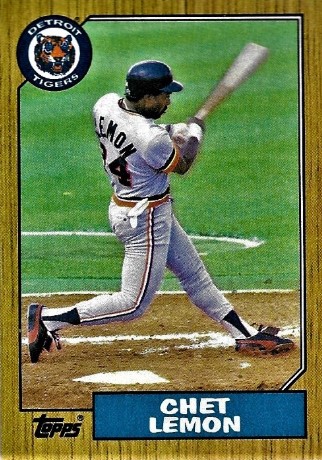


.


McDougall’s Big Day … One for the Record Books

On this day (May 9) in 1999, Florida State University 2B Marshall McDougall had a game that wrote his name into the NCAA record books.  As Florida State topped Maryland 26-2 in an Atlantic Coast Conference game, McDougall went seven-for-seven.   A pretty good day’s work.  Even more spectacular is the fact that  after a first inning single, McDougall launched six straight home runs: a solo shot in the second; a three-run homer in the fourth; a two-run home run in  the sixth; a three-run homer in the seventh; a Grand Slam in the eighth; and a third three-run shot in the ninth. That outburst gave McDougall the NCAA single-game records for home runs (6); RBI (16); and total bases (25).  You can hear the audio (from YouTube) below.

As surprising as it was, the big day fit right into McDougall’s performance for the season. McDougall, who played his first two college seasons at Santa Fe Community College (Gainesville, FL), came into that May 9 game hitting .405, with 17 home runs and 70 RB in 52 games.  Here are a few other tidbits from McDougall’s 1999 college season:

  • He hit .419 on the year – with 126 hits in 71 games;
  • His average went above .400 in the third game of the season and never dipped below .400 thereafter;
  • His season included a 33-game hitting streak, during which he went .437-13-48;
  • He recorded hits in 63 of f 71 games played, with 34 multi-hit games;
  • McDougall also stole 21 bases in 24 attempts.

A few other noteworthy tidbits from that 1999 season. McDougall was a consensus All-American; the Atlantic Coast Conference Player of the Year; and the 1999 College World Series “Most Outstanding Player.” He was also a finalist for the  Golden Spikes Award and National Collegiate Baseball Writers Association Dick Howser Player of the Year Award.    Note:  The 1999 Golden Spikes and Howser Awards were won by Jason Jennings of Baylor University – who went 13-2, 2.58 on the mound (22 games, 18 starts) and hit .386-17-68 in 65 games at the plate.

The following season, McDougall hit .346-15-67 for Florida State and was a selected (for the second consecutive year) to the ACC All-Conference Team.

For those who are interested, here’s a look at Marshall McDougall’s path to (and from) the major leagues – which gives us all reason to reflect on just how challenging playing ball at the major league level can be; no matter what your past performance and future potential may look like.  

In high school (Valrico, FL), McDougall had already shown his promise as a second-team All-State player (selected by the White Sox in the 41st round of the 1996 MLB Draft). He chose to attend Santa Fe Community College, where he played well enough to be picked by the Yankees in 37th round of the 1997 draft). Once again, he declined to sign, instead moving on to Division I ball at Florida State University;  where, as you’ve already read, he carved out a spot in college baseball history.

After his big 1999 season, McDougall was drafted again (26th round, Red Sox), but chose to play his senior college season.  He was then drafted again (2000, ninth round) and signed with the A’s organization.

After signing with the A’s, McDougall worked his way up to the AA Midland Rockhounds – where, in 2002,  he hit .303-9-56 in 84 games, before being traded to the Indians for Ricardo Rincon during the season. He suffered an injury after the trade and played only nine games in the Indians’ system (Double-A and Low-A). In December 2002, he was taken by the Rangers in the Rule 5 Minor League draft.

The 6′ 1″, 200-lb. McDougall showed solid potential in the Rangers’ system (at Double- and Triple-A). In 2003, he hit .261-15-78 in 140 games; in 2004, .288-21-83 in 112 games; and, in 2005, he was hitting .341-11-64 (75 games) when he got the “call to the show.”   He joined the Rangers as a utility player and manned five positions for Texas (2B/3B/SS/RF/DH). Still, he got only 18 MLB  at bats in 18 games (three hits, three runs, one double, and ten strikeouts.)   Hampered by injury (wrist), McDougall later played in both the Dodgers’ and Padres’ systems, but never made it back to the major leagues.  He also played in the Mexican League, Mexican Winter League and Chinese P{professional Baseball League. In his final professional season (at age 33), McDougall  hit .341,with ten home runs in 35 games  for the Reynosa Broncos of the Mexican League. McDougall’s story clearly reflects how hard it is to get to the big leagues (he made it) and how challenging it is to stay there.  Still, he played the game at the highest level – and still holds a place (several places) in the college record books.

Bonus Tidbit – Professional Baseball’s Only Home Run Cycle 

In the opening story of this post, you may have noted that Marshall McDougall’s six-homer game for Florida State University included a “home-run cycle ” – a solo, two-run, three-run and Grand Slam homer all by the same player in the same game.  That feat has been accomplished only once in professional baseball.  It’s a story I’ve shared before, but bears retelling – especially for those who may have missed the original post.

It happened on July 27,  1998. That day, (Roger) Tyrone Horne, playing for the Double-A Arkansas Travelers, became the only professional player (to date) to hit for the “Home Run Cycle” – bashing a solo, two-run, three-run and Grand Slam home run in a 13-4 win over the San Antonio Mission.  They were the only home runs in the game, in which Arkansas collected 13 hits.  Horne ended the day four-for-five, with four runs scored and ten RBI.

Horne hit three of his four dingers off San Antonia starter Pete Zamora – a two-run shot in the first inning, a Grand Slam in the second and a solo homer in the fifth. His final homer, a three-run long ball, came in the sixth off reliever Miguel Garcia.  Horne came up once more, with two on, in the eighth, but reliever Jeff Kubenka struck him out.

Horne’s feat was the highlight of an outstanding Double-A season, in which the 27-year-old outfielder would go .312 with 37 home runs, 139 RBI, 94 runs scored and even throw in 18 stolen bases in 123 games. His performance at Double-A earned Horne a call up to the AAA Memphis Redbirds at the end of the season, where ht hit .364 (four-for-eleven) in three games, with one double, one run scored and one RBI.  The 5’10”, 185-pounder showed not just power, but also good speed, throughout his minor-league career, racking up 185 steals in 13 seasons, hitting double digits in steals eight times and topping 20 twice.  He also hit double digits in home runs seven times, topping 20 twice.)

Appropriately, right after his historic “homer cycle” game, Horne headed off to the Texas League All-Star Game, where he proceeded to win the Home Run Derby.

Horne never made it to the major leagues – completing a 13-year (1,286 games; 1989-2001) minor-league career (in the Expos, Yankees, Mets, A’s, Marlins, Cardinals and Phillies systems) with a .288 average and 143 home runs.  The bat he used on his historic day with Arkansas, however, did make it to the Baseball Hall of Fame in Cooperstown.

Primary Resources: Baseball-Reference.com; TheBaseballCube.com; “Six Homers, 16 RBI for McDougall,” Bart Jansen, Associated Press, May 10, 1999; MiLB.com; and Nolefan.org.

BASEBALL ROUNDTABLE ON THE TOP 100 BASEBALL BLOG LIST

100Baseball Roundtable is on the Feedspot list of the Top 100 Baseball Blogs.  To see the full list, click here.

I tweet baseball @DavidBBRT

Follow/Like Baseball Roundtable’s Facebook Page here.  More baseball commentary; blog post notifications; PRIZES.

Member: Society for American Baseball Research (SABR); The Baseball Reliquary; The Negro Leagues Baseball Museum.