Baseball Roundtable Trivia(L) Tidbit Tuesday – A Record-Setting Long Ball Barrage

Once again, it’s time for Trivia(l) Tidbit Tuesday. I hope you are enjoying this weekly presentation of baseball occurrences that for some reason caught The Roundtable’s eye.  (I’m particularly fond of unexpected performances and statistical coincidences.) These won’t necessarily be momentous occurrences, just events, statistics or coincidences that grabbed my attention. I’m also drawn to baseball “unicorns,” those one-of-a-kind accomplishments or statistics. Today, we’re looking at a day for the long-ball record books.

On this date (June 10) in 2019, the number 13 proved lucky for the Diamondbacks, but unlucky for the Phillies and their fans.  That night, the Diamondbacks topped the first-place Phillies 13-8 (in Philadelphia), dropping the Phillies into a first-place tie with the Braves.

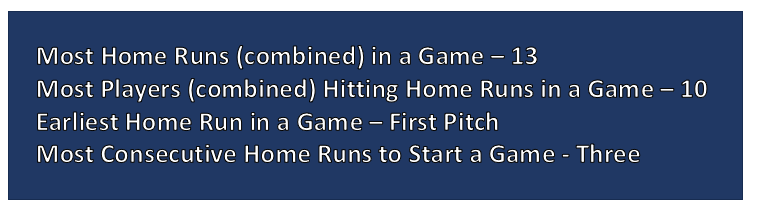
More important for this Tidbit, the two teams combined for still MLB single-game record 13 home runs.
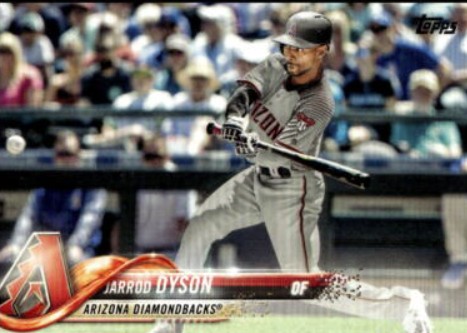
The Diamondbacks set the tone for the day right from the start. Diamondbacks’ leadoff hitter 2B Jarrod Dyson stroked the first pitch of the game (from Jerad Eickhoff) for a home run to deep right.  This, of course, tied a record for the earliest homer in an MLB game. The numbers-two and -three hitters (SS Ketel Marte and LF David Peralta) continued the barrage by homering off Eickhoff – tying the record for the most consecutive homers from the start of a game.

During the course of the game, an MLB-record ten players went deep (a record since tied).  For Arizona they were:  Dyson; Marte; Peralta; 3B Eduardo Escobar (two homers); C Alex Avila; and 2B Ildemaro Vargas (two homers). For Philadelphia, they were: SS Jean Segura; CF Scott Kingery (two homers);  1B Rhys Hoskins; and LF Jay Bruce.  The only other time ten players have gone deep in the same MLB game was April 29, 2023, as the Padres topped the Giants 16-11 in San Diego.  The long ball smashers in that one for the Padres were: DH Nelson Cruz; LF Juan Soto; SS Xander Bogaerts; RF Fernando Tatis, Jr.; 3B Manny Machado (two homers).  For the Giants, they were: SS Brandon Crawford; 1B LaMonte Wade, Jr.; LF Mitch Haniger; C Blake Sabol; and PH-2B David Villar.
 

A little “one thing always seems to lead to another,” Baseball Roundtable Tidbit: A little extra digging showed that, in that June 10, 2019 game, Phillies’ starter Jack Eickhoff tied an obscure record – the most home runs given up in a game in which every hit surrendered by that pitcher was a home run (five).  This could also be a #InBaseballWeCountEverything moment. To date, eight MLB pitchers share this record: Charlie Hough; Mat Latos; Colby Lewis; Ted Lilly; Denny McLain; Steve Stone; Nick Tropeano; and Eickhoff.

Primary Resources:  Stathead.com; Baseball-Almanac.com

Baseball Roundtable – Blogging Baseball Since 2012.

Baseball Roundtable is on the Feedspot list of the Top 100 Baseball Blogs. For the full list click here

I tweet (on X) baseball @DavidBaseballRT

Follow Baseball Roundtable’s Facebook Page here.  More baseball commentary; blog post notifications; PRIZES.

Member: Society for American Baseball Research (SABR); Negro Leagues Baseball Museum; The Baseball Reliquary.

P 1120
Baseball Roundtable Trivia(l) Tidbit Tuesday – It’s Been A Hard Day’s Night (and next day).

Once again, it’s time for Trivia(l) Tidbit Tuesday. I hope you are enjoying this weekly presentation of baseball occurrences that for some reason caught The Roundtable’s eye.  (I’m particularly fond of unexpected performances and statistical coincidences.) These won’t necessarily be momentous occurrences, just events, statistics or coincidences that grabbed my attention. I’m also drawn to baseball “unicorns,” those one-of-a-kind accomplishment or statistics. Today, we are looking at a unicorn … a once in MLB history feat that (with the new rules) is unlikely to ever be matched.

Photo by Keith Allison

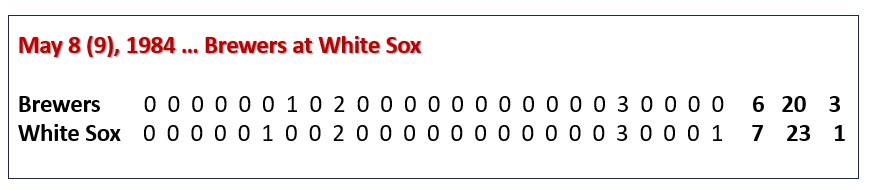
On May 8, 1984, Harold Baines started in RF as his White Sox faced off against the Brewers in Chicago.  A mere 25 hours and 42 minutes later, he would end the contest with the latest home run in MLB history – a 25th inning walk-off. (The game was suspended at 1:03 a.m. May 9 and resumed at 6:30 p.m. (May 9).

Notably, game seemed to be decided more than once. It was tied 1-1 going into the top of the ninth, when the Brewers scored twice off White Sox’ reliever Britt Burns to take the lead. Oops! The bottom of the ninth saw the White Sox tie the game with two tallies of their own.

No one scored between the ninth and the seventeenth innings (when the game was suspended). The goose eggs continued when play resumed, going on until the until the top of the 21st, when the Brewers put up a three-spot on a three-run homer off Ron Reed by Ben Oglivie – and the game again appeared to be over.   The White Sox, however, scored three of their own in the bottom of the inning.

Finally, with one out in the bottom of the 25th, Baines hit a walk-off home run (making it the latest long ball ever) against Chuck Porter (starting his eighth inning of relief) to win it for the ChiSox.

It was Baines’ second home run of the season. (He had come into the game with just one home run in 26 games.)  He went on to a .304-29-94 campaign. The 25th inning homer was one of just seven extra-inning home runs among Baines’ 384 career regular-season dingers.  Baines, a six-time All Star, played in 22 MLB seasons (1980-2001 … White Sox, Rangers, A’s, Orioles, Indians), going .289-384-1,628, with 1,299 runs scored.

A few tidbits:

  • White Sox’ CF Rudy Law, C Carlton Fisk and 2B Julio Cruz, as well as Milwaukee DH Cecil Cooper each had an MLB record-tying 11 at bats in the game. They had three, one and two hits, respectively.
  • Law, Fisk and Baines each had a record-tying 12 plate appearances. Law and Fisk each had one walk, Baines had two free passes.
  • The White used four first basemen: Greg Walker (started); Mike Squires replaced Walker in the top of the ninth; Marc Hill pinch hit for Squires in the 14th and stayed in at 1B; and, in the 22nd inning, Tom Paciorek, who had replaced Ron Kittle in LF in the top of the fourth inning, moved to 1B, replacing Hill.
  • Seven future Hall of Famers played in the game: for the White Sox – catcher Carlton Fisk and winning pitcher Tom Seaver; for the Brewers – starting pitcher Don Sutton, SS Robin Yount. 1B Ted Simmons (who made the Hall as a catcher), RF Harold Baines and closer Rollie Fingers (who blew the save in the ninth).
  • The eight hours and six minutes of playing time made this the longest game in MLB history. The 25 innings tied for the second longest in terms of innings.

Tom Terrific for the Win(s)

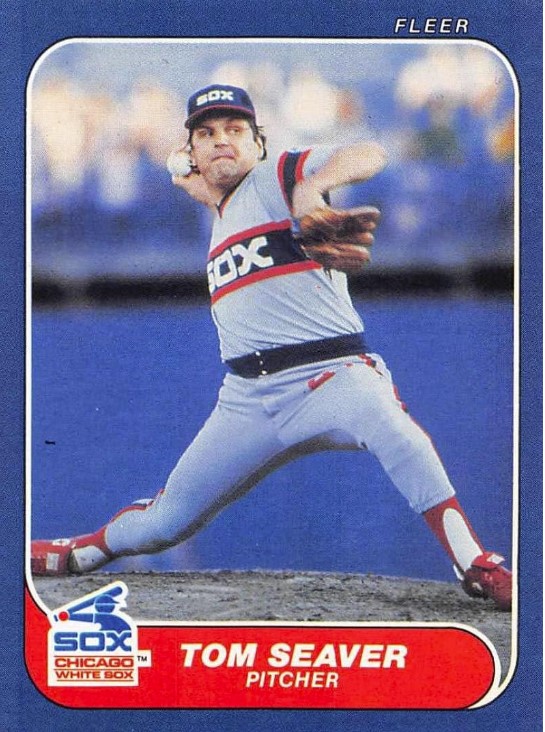
The winning pitcher in the longest-ever MLB game (by time, not innings) was future Hall of Famer Tom Seaver, who pitched the 25th inning for the ChiSox (on May 9). It was Seaver’s only relief appearance of the season (one of just nine in his career) and his only career win in relief (he also had one save and two losses in that role).

Seaver then started the regularly scheduled May 9 contest and went 8 1/3 innings (three hits, one walk, four earned runs) to pick up a victory as a starter. (White Sox won 5-4).

Bonus Tidbit

Before getting into the details of each of the instances above, here are a few tidbits.:

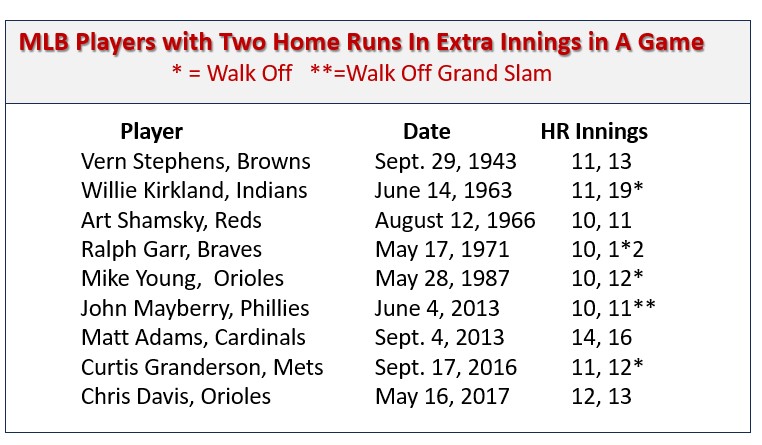
  • Only one of these players hit two extra-inning home runs in a losing cause – Art Shamsky;
  • Only one included a Grand Slam among his two homers – John Mayberry;
  • Four did not even start in the game in which they had two extra-inning homers – Shasky, Mayberry, Mike Young and Matt Adams;
  • One had a third homer in the game – Shamsky.

Here are the details.

Two disclaimers here. Given statistical accuracy and game formats, I am limiting myself to the Modern Era (post 1900) and not all Negro League game stats have been fully documented and incorporated into the MLB record book. (In 2020, the Negro Leagues from 1920-48 were designated major leagues.)

Vern Stephens – 247 career homers

Stephens drove in all four runs in the Browns 4-3 win over the Red Sox, His day went: a two-run single in the first inning for a 2-0 lead; a flyout to open the fourth, with the Browns up 2-1;  a groundout to end the sixth with the game tied 2-2; a solo homer to lead off the 11th and give the Browns a 3-2 lead  (the Red Sox tied the game in the bottom of the inning); a solo shot with one out in the 13th to provide the 4-3 winning score.

Willie Kirkland – 148 career homers

Kirkland went three-for-eight, with three RBI in an Indians 3-2 win over the Senators.

His day: RBI single in the bottom of the first; groundout to open the bottom of the fourth; strikeout with two on in the sixth; groundout with two on and two out in the eighth (with the game tied 1-1); solo homer to tie the game at 2-2 , leading off the eleventh; ground ball double play to end the thirteenth; ground ball double play for first two outs in sixteenth; leadoff homer in bottom of nineteenth to win the game 3-2.

Art Shamsky – 68 career homers

Shamsky didn’t enter the game until the eighth inning, with his Reds trailing the Pirates 7-6.  In three at bats, he hit a two-run homer in the bottom of the eighth to give the Reds an 8-7 lead; hit a solo homer with one out in the tenth to tie the game at nine; hit a two-out two- run homer in the eleventh to tie it at 11-11. Despite Shamsky’s three-for-three, three-homer, five-RBI day, the Reds lost in 13 innings by a 14-11 score.

Ralph Garr – 75 career homers

Garr’s homers were part of a three-for-six day in a Braves’ 4-3 win over the Mets in Atlanta. His day: one-out single in the first inning; groundout in the third, with the Braves trailing 2-1; groundout in the sixth (still 2-1); pop out in the eighth (still 2-1); solo home run in the tenth to tie the game at 3-3 (off Mets’ starter Tom Seaver, who was still in the game); solo home run with two outs in the twelfth for a 4-3 Braves win.

Mike Young – 72 career homers

Young entered this contest in the fifth inning, with his Orioles up 5-2 over the Angels; He: struck out to open the fifth; singled with two out in the seventh; led off the tenth inning with a solo home run to tie the game at six; after the Angle scored in the top of the twelfth, Young hit a two-run shot in the bottom of the frame to win it 8-7.

John Mayberry – 56 career homers

MLB’s second John Mayberry (son of the first John Mayberry) came on in the bottom of the seventh with his Phillies tied 2-2 with the Marlins. He fanned to end the inning (with a runner at second). He then: hit a solo homer to lead off the tenth and tie the game at 3-3 and hit a two-out Grand Slam in the bottom of the eleventh to secure a 7-3 win.

Matt Adams – 118 career homers

Adams entered this game in the fourth inning with his Cardinals tied with the Reds at 2-2.  He got his first at bat in the top of the sixth, with the game tied at three, a runner on first and two out – he grounded out to end the inning. Adams went on to strike out (with two on) to end the eighth (tied at 3-3); fly out with one on and one out in the eleventh (still 3-3); hit a solo homer to lead off the fourteenth and give the Cardinals a 4-3 lead (the Reds tied it in the bottom of the inning); and hit a solo homer in the sixteenth to provide the 5-4 winning score.

Curtis Granderson – 344 career homers

Granderson’s two homers were part of a two-for-six, two-RBI day, as hit Mets topped the Twins 3-2 in New York. His bat was pretty quiet until the extra frames: pop out in the first; strikeout in the fourth; groundout in the seventh; strikeout in the eighth.  Then, he homered (solo) to lead off the eleventh and tie the game at two and homered with two outs in the bottom of the twelfth to win it 3-2.

Chris Davis – 295 career homers

Davis’ two extra-inning homers were part of a three-for-five, four-RBI day as his Orioles topped the Tigers 13-11 in Detroit. Davis walked (and was stranded) opening the top of the second inning and hit a run-scoring double as the Orioles jumped out to a 7-1 lead in the top of the third.  He then struck out to open the fifth, with the score now 7-4; walked in the seventh (still 7-4); grounded out to end the top of ninth, with the score tied at eight; hit a solo homer leading off the twelfth to give the Orioles a 9-8 lead (the O’s scored two more times in the inning, but the Tigers came back with three runs on five hits to tie it in the bottom of the frame); hit a two-run home run in the top of the thirteenth to provide the 13-11 victory.

Primary Resources: Stathead.com; Basebsall-Almanac.com


Baseball Roundtable – Blogging Baseball Since 2012.

100Baseball Roundtable is on the Feedspot list of the Top 100 Baseball Blogs. For the full list click here

I tweet (on X) baseball @DavidBaseballRT

Follow Baseball Roundtable’s Facebook Page here.  More baseball commentary; blog post notifications; PRIZES.

Member: Society for American Baseball Research (SABR); Negro Leagues Baseball Museum; The Baseball Reliquary.

P 1100

Trivia(L) Tidbit Tuesday – Johnny Sain, Putting the Ball In Play

Welcome to another edition Trivia(l) Tidbit Tuesday, a weekly presentation of baseball occurrences that for some reason caught The Roundtable’s eye.  (I’m particularly fond of unexpected performances, statistical coincidences or unusual circumstances.) These won’t necessarily be momentous occurrences, just events, statistics or coincidences that caught my attention.

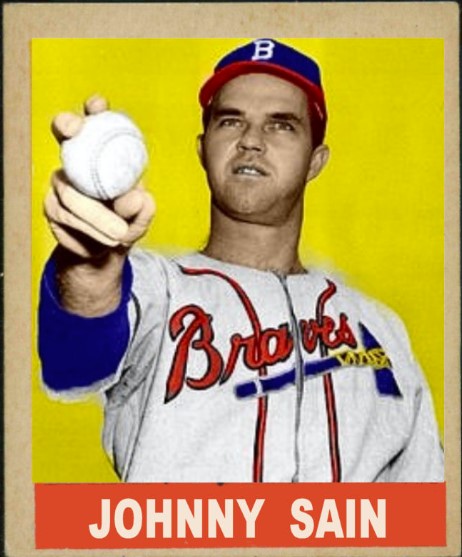
This week, I was drawn to the career of four-time twenty-game winner, righthander Johnny Sain (of “Spahn and Sain and Pray for Rain” fame). What grabbed my attention was not his pitching, but his ability to put the bat on the ball.  While, in the past, pitchers were often chided for their futility at the plate, Sain was a tough out.

__________________________________

Boston Braves’ pitcher Johnny Sain is the only MLB player in the Modern Era to rack up a season of more than 100 plate appearances without a single strikeout or walk.

____________________________________

Let’s get to the Sain saga.

In 1946, the Boston Braves’ righty was back in baseball after missing three seasons in the military. Sain got right down to business, putting up a 20-14, 2.21 season, with a league-leading 24 complete games in 34 starts. (Sain had made his MLB debut in 1942, primarily as a reliever.) Twenty wins in his first full season as a starter – pretty impressive.  But, again, not what caught The Roundtable’s eye.  That season, Sain came to the plate 104 times and did not strike out or walk once.  He hit .298-0-14 for the campaign – with 28 hits, (25 singles, two doubles, one triple). His 104 plate appearances included ten sacrifice bunts.

Walks aside, Sain also is one of only three players (in MLB’s modern era) to complete a season of 100 or more plate appearances without a single strikeout (the other two did take a few free passes).

Side note: The Roundtable uses the Modern Era since it is more consistent with baseball rules as we know them. For example, Al Spalding of the 1974 Boston Red Stockings holds the MLB record for plate appearances in a zero-whiff season at 365 … but, at that time, batters could call for a pitch in a certain location and the pitchers were expected to comply. It also wasn’t until 1901 in the National League and 1903 in the American League that foul balls counted as strikes.  As far as walks go, in baseball’s earliest days, there simply were no walks. Then, as various times , it took nine, eight, seven and six balls to garner a free pass  – until the current four-ball walk rule was implemented in 1889.  You get the idea.

So, here are your Modern ERA, zero-strikeout season leaders in plate appearances

Third Place … 104 Plate Appearances … Johnny Sain, RHP, Boston Braves

Since Sain prompted this Tidbit, we’ll start here.  As already noted, in 1946, he was a 20-game winner and came to the plate 104 times without striking out. In some ways, he may have done even better the plate in 1947, when he hit .346-0-18 in 118 plate appearances (and had the patience to draw three walks), while going 21-12, 3.52 on the mound. If you look at Sain’s first three MLB seasons (1942, 1946-47, he hit .294 in 252 plate appearances and struck out just twice.  He did not keep up that pace. In 11 MLB seasons (1942, 1946-55 … Braves, Yankees, Athletics) he hit .245-3-101 in 433 games.  Over his career, he struck out a total of 20 times (versus 24 walks) in the regular season, an average of one strikeout every 42.9 plate appearances. He had five seasons with at least 100 plate appearances and three or fewer strikeouts (0,1,2,3,3) On the mound, the three-time All Star went 139-116, 3.49 and four times won 20 or more games in a season (leading the NL with 24 wins in 1948).  He also led the league in complete games twice, saves once and innings pitched once.

Second Place… 108 Plate Appearances … Bill Rariden, C, 1920 Reds

Rariden actually achieved this rare feat in his final MLB season (at age 32). In 39 games, he hit .248-0-10 (five walks). Rariden played in 12 MLB seasons (1909-1920 … Doves/Braves, Federal League Hoosiers, Giants, Reds). He hit .237-7-275 in 982 games. He struck out 256 times in 3,316 place appearances – an average of once every 13 plate appearances (which makes his zero-whiff season a bit of a career outlier).

First Place … 234 Plate Appearances … Lloyd Waner, OF, 1941 Red, Pirates & Braves

Waner, at age 35 and in his 15th MLB season, got into 77 games in 1941, hitting .292-0-11 (drawing 12 walks). The 5’9”, 150-pound Waner played in 18 MLB seasons (1927-42, 1944-45 … Pirates, Braves, Reds, Phillies), hitting .316-27-598, with 1,201 runs scored in 1,993 games.  He averaged jus one whiff per 48.2 plate appearances over his career and had three seasons of 100 or more plate appearances and five or fewer strikeouts (0,5,5). He had nine seasons in which he played in at least 100 games and hit .300 or better. The Hall of Famer led the league in runs scored once (three times stopping 100 runs); hits once (four times topping 200 hits); and triples once.

Joe Sewell – The King of Contact

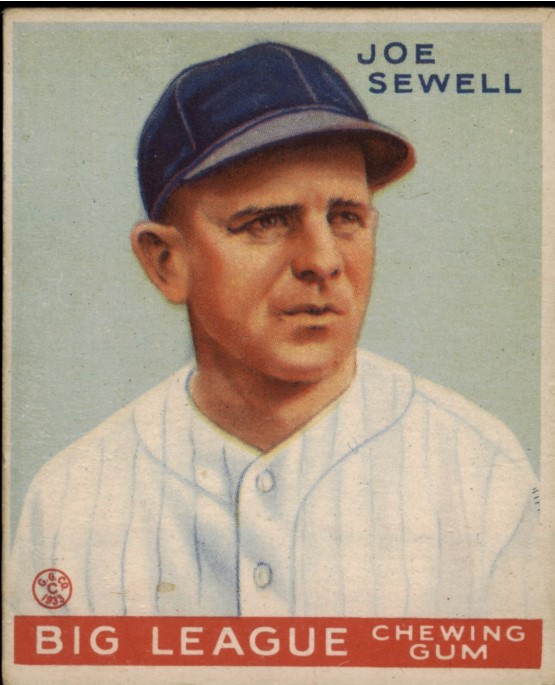
Joe Sewell is the undisputed “King 0f Contact. In his 14-season MLB career (1920-33 … Indians, Yankees), the 5’6”, 155-pound infielder struck just 114 times in 8,333 plate appearances (1,903 games) – once every 73.1 plate appearances. During the 1920 season, he set two records between the third inning of a game on May 17 and the sixth inning of a September 20 contest. During that span, he logged streaks of 521 plate appearances and 115 games without a strikeout. For his career, the Hall of Famer hit .312-49-1,054, hitting .300 or better in all but four seasons. In 1925, he fanned just four times in 699 plate appearances.


Primary Resource:  Baseball-Reference.com.


Baseball Roundtable – Blogging Baseball Since 2012.

100Baseball Roundtable is on the Feedspot list of the Top 100 Baseball Blogs.  To see the full list, click here.

Baseball Roundtable is also on the Anytime Baseball Supply Top 66 Baseball Sites list.  For the full list, click here

I tweet (on X) baseball @DavidBaseballRT

Follow Baseball Roundtable’s Facebook Page here.  More baseball commentary; blog post notifications.

Member: Society for American Baseball Research (SABR); Negro Leagues Baseball Museum; The Baseball Reliquary. 

P1048

Trivia(l) Tidbit Tuesday … When the Pitchers Ran the Show

Welcome to another edition Trivia(l) Tidbit Tuesday, a weekly presentation of baseball occurrences that for some reason caught The Roundtable’s eye.  (I’m particularly fond of unexpected performances ,statistical coincidences or unusual circumstances.) These won’t necessarily be momentous occurrences, just events, statistics or coincidences that caught my eye.

With the All Star Game tonight, this edition of Trivia(l) Tidbits Tuesday will focus on a time when the pitchers truly dominated the All Star Game.  To view earlier Trivia(l) Tidbit posts, type Trivia(l) in the search box on the  righthand side of the page.

If you look back at the 93 AL/NL All Star matchups, only ten times has the game featured three or fewer combined runs – and just four of those low-scoring affairs have gone extra innings.  What caught the Roundtable’s eye was that three of those ten lowest-scoring All Star Games took place in consecutive seasons (1966-67-68) and two of the four lowest-scoring extra-inning All-Star Games took place in that span.    And, not coincidentally, those three All Star games preceded the lowering of the mound and shrinking of the strike zone going into the 1969 season. (The 1969 All Star Game featured 12 runs (NL 9 – AL 3), 17 hits (three doubles and five home runs.)  Side note:  There were three Negro League All Star games featuring three or fewer runs between 1920 and 1948.

Here are some Trivia(l) Tidbits from the 1966-68 All Star Games:

  • In 1966, the National League prevailed 2-1 in ten innings;
  • In 1967, the National League again won 2-1, this time in fifteen innings;
  • In 1968, the National League won 1-0 in nine frames.

Over those three games (and 34 innings):

  • National League hitters averaged .181;
  • American League hitters averaged .149;
  • National League pitchers put up a 0.53 earned run average;
  • American League pitchers threw to a 1.11 earned run average.

Keep in mind, these were teams whose starting lineups featured the likes of Willie Mays, Hank Aaron, Roberto Clemente, Willie McCovey, Orlando Cepeda, Dick Allen, Al Kaline, Frank Robinson, Rod Carew, Harmon Killebrew and Tony Oliva. Aaron, in fact, played every inning of all three games and went two-for-thirteen, with two singles and a walk.

A few other highlights/lowlights:

  • There were only 12 hits in the ten-inning 1966 game, but (despite the pitchers’ dominance) only 11 strikeouts.
  • Brooks Robinson had three of the total of 12 hits in the 1966 game;
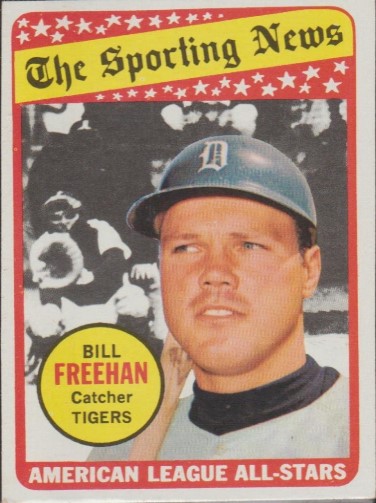
  • Bill Freehan caught all 15 innings for the AL in the 1967 game;
  • All three runs in the 1967 game scored on solo home runs. Tony Perez (off Catfish Hunter); Dick Allen (off Dean Chance) and Brooks Robinson (off Fergie Jenkins);
  • There was not a single earned run nor an RBI in the 1968 game.


1966 All Star Game

The National League triumphed 2-1, with a run in the tenth inning via a single by Tim McCarver, a sacrifice bunt by Ron Hunt and an RBI-single by Maury Wills (off Pete Richert).

  • The game featured just 12 total hits, six by each squad) – ten singles, one triple (Brooks Robinson) and one double (Roberto Clemente);
  • Brooks Robinson had three hits and scored the AL’s only run (on a wild pitch by Sandy Koufax);
  • Some notable 0h-fers included Hank Aaron (0-4), Willie McCovey (0-3, with a walk), Frank Robinson (0-4) and Tony Oliva (0-4).
  • Willie Mays, Roberto Clemente, Hank Aaron, Willie McCovey, Ron Santo, Frank Robinson, Tony Oliva, and Brooks Robinson all played the whole game;
  • AL pitchers were Denny McLain, Jim Kaat, Mel Stottlemyre, Sonny Siebert, Pete Richert,
  • NL Pitchers were Sandy Koufax; Jim Bunning; Juan Marichal; Gaylord Perry.

1967 All Star Game

The National League won 2-1 in a marathon 15 innings, scoring in the top of the fifteenth on a home run by Tony Perez (off Catfish Hunter). There were just 17 hits over the fifteen innings – nine by the NL, eight by the AL).

  • Carl Yastrzemski had three hits for the AL, a double and two singles;
  • Bill Freehan caught the whole 15 innings for the AL. Others who played the entire game were Roberto Clemente, Hank Aaron, Orlando Cepeda, Gene Alley, Brooks Robinson, Tony Oliva, Harmon Killebrew, Tony Conigliaro and Carl Yastrzemski;
  • Notable Oh-fers included: Willie Mays (0-4), Orlando Cepeda (0-6), Rod Carew (0-3), Harmon Killebrew (0-6), Tony Conigliaro (0-6), Bill Freehan (0-5);
  • NL pitchers were Juan Marichal, Fergie Jenkins, Bob Gibson, Chris Short, Mike Cueller, Don Drysdale and Tom Seaver;
  • AL pitchers were Dean Chance, Jim McGlothlin, Gary Peters; Al Downing and Catfish Hunter.

1968 All Star Game

The National League won 1-0, scoring one run in the bottom of the first. Willie Mays opened with a single (off Luis Tiant). Mays moved to second on an errant pick-off attempt, then went to third as Curt Flood walked (on a wild pitch) and scored as Willie McCovey hit into double-play (4-6-3).  And, that was it for the scoring.

  • There were no earned runs in the game;
  • Since the only tally scored on a double play, there were no RBIs awarded in the game;
  • There were just eight hits in the game (five by the NL);
  • There were 20 strikeouts (five by Tom Seaver, who faced eight batters in the seventh and eighth innings);
  • No batter had more than one hit;
  • Notable oh-fers included Rod Carew (0-3) and Willie McCovey (0-4);
  • Roberto Clemente, Hank Aaron and Orlando Cepeda played the whole game, as did Brooks Robinson and Tony Oliva.
  • AL pitchers were Luis Tiant, Blue Moon Odom, Denny McLain, Sam McDowell, Mel Stottlemyre, Tommy John.
  • NL pitchers were Don Drysdale, Juan Marichal, Steve Carlton, Tom Seaver, Ron Reed and Jerry Koosman.

A Two-Fer

Don Drysdale is the only MLB pitcher to start two All Star Games in the same season – with wildly different results.  (There were two All Star Games each year from 1959 through 1962.) On July 7, 1959, Drysdale started for the NL (in Pittsburgh)  and pitched three perfect  innings (four strikeouts) in a 5-4 National League win. Then, on August 3, 1959, he started for the National League in a 5-3 loss in Los Angeles. This time, he gave up three runs on four hits and three walks (five whiffs) in three innings. 

For a whole lot more on All Star Games, click here.

Primary Resource:  Baseball-Reference.com

Baseball Roundtable – Blogging Baseball Since 2012.

100Baseball Roundtable is on the Feedspot list of the Top 100 Baseball Blogs.  To see the full list, click here.

Baseball Roundtable is also on the Anytime Baseball Supply Top 66 Baseball Sites list.  For the full list, click here

I tweet (on X) baseball @DavidBaseballRT

Follow Baseball Roundtable’s Facebook Page here.  More baseball commentary; blog post notifications.

Member: Society for American Baseball Research (SABR); Negro Leagues Baseball Museum; The Baseball Reliquary. 

P1047

Trivia(l) Tidbit Tuesday – The Symmetry of MLB’s Shortest-Ever Game

Welcome to another edition of Baseball Roundtable’s Trivia(l) Tidbit Tuesday, a weekly presentation of baseball occurrences that for some reason caught The Roundtable’s eye.  (I’m particularly fond of unexpected performances or statistical coincidences.) These won’t necessarily be momentous occurrences, just events, statistics or coincidences that caught my interest. To view earlier Trivia(l) Tidbit posts, type Trivia(l) in the search box on the  righthand side of the page.

This week, we’re leading with a bit of statistical coincidence/symmetry related to MLB’s shortest-ever (by time) nine-inning game.  That would be the Giants’ 6-1 win over the Phillies (in New York) on September 28, 1919.  The game took a brief 51 minutes to complete. The statistical coincidence/symmetry?  Since the hometown Giants had the lead and did not have to bat in the bottom of the –ninth, there were 51 outs recorded.  Fifty-one outs in 51 minutes, making it one-out per minute – and making it easy to relate to exactly now fast the contest went.

Jesse Barnes … Photo: Yi Auctions, Public domain, via Wikimedia Commons

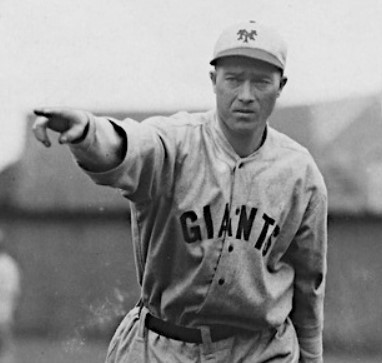
Also catching the Roundtable’s eye was the pitching matchup.  It featured the 1919 National League’s winningest and losingest hurlers.  The Giants’ Jesse Barnes came into the game at 24-9, leading the NL in wins and looking for a benchmark 25th win.  The Phillies’ Lee Meadows came into the game at 12-19, leading the NL in losses and looking to avoid a benchmark 20th loss.   (Barnes, of course, prevailed). Surprisingly, Meadows actually came into the game with the lower earned run average: 2.41 to Barnes’ 2.48.

Now, why the quick pace? It was the first game of a doubleheader on each team’s final day of the 1919 season – and neither team was headed for the post-season. The Giants were in second place at 87-53 and the Phillies in last at 47-90.  (Remember when just the league champions qualified for the post-season?)  The players were anxious to get the season over and head for home. Reports from the time indicted the two teams had a sort of gentlemen’s agreement to speed things up and get the season over with.

How fast was the pace?  Well consider, 8 ½ innings in 51 minutes. If each team rushed on and off the field in just 30 seconds between half innings (and it likely took longer), that would mean a playing time of 47 minutes or about Two minutes and 45 seconds each half inning. Taken a step further, 70 batters came to the plate in the game, again given just 30 seconds to change sides between innings, that would mean the average plate appearance lasted just 40.3 seconds. (Again, my 30 seconds between innings may be a bit low, so I consider these numbers at the lower end of the possible pace of the game.)

Sorry guys, but I gotta get my hits.

Despite the shortness of the game, there was time for every member of the Giants’ lineup, including pitcher Jesse Barnes, to collect least one base hit.

A few other facts about the contest:

  • Seven runs were scored;
  • There were 18 hits (13 for the Giants, five for the Phillies);
  • The Giants put runners on base in six of the eight innings in which they batted;
  • There were also three walks and three strikeouts;
  • There was only one double play an it was a time-consuming 6-5-6-3-4;
  • Each team used the minimum nine players.

Efficiency Expert

Giants’ starter used just 64 pitches to notch a complete game on September 28, 1919.  He faced 33 batters – that’s a stingy average of 1.9 pitches per batter. 

The point being that the game was not a low-it, low-run affair, there were plenty of baserunners.  (Side note: According to Baseball-Reference.com, the average time of a nine-inning game in 1919 was one hour-and-36 minutes.)

A Super Maddux?

On August 10, 1944, Braves’ righty Red Barrett shut down the Reds 2-0 on just two hits (no walks/no strikeouts) in Cincinnati.  He used just 58 pitchers to complete the game – the fewest pitches ever in an MLB nine-inning complete game.  

Now, how about the other end of the spectrum?

Longest Nine-Inning Game

The longest nine-inning MLB game on record took four hours-and-45 minutes. It was played August 18, 2006, and was the second game of a Fenway doubleheader. The Yankees topped the Red Sox 14-11.

That game featured:

  • 17 hits by each team;
  • Twelve pitchers (seven Yankees, five Red Sox);
  • Thirty-four players (19 Yankees, 15 Red Sox);
  • Three New York errors;
  • A combined 13 walks and 15 strikeouts.

FREE BASEBALL

Now, let’s look at extra innings.

The longest game (by time) * – May 8, 1984 …

Milwaukee Brewers versus Chicago White Sox

This one gets an asterisk – because it was not a “continuous” contest.

MLB’s longest-ever (time-wise) game started on May 8, 1984 and was played at (old) Comiskey, with the hometown White Sox prevailing 7-6 in 25 innings (tied for the second-most MLB innings) – in a record-long eight hours-an- six minutes of game time.  The game started at 7:30 p.m. and was suspended after 17 innings (at 1:05 a.m.) due to the American League curfew rule then in force.  Play was resume the following day.

Rollie Fingers’ blown save helped send this game into the record books.

There were plenty of chances for this one to end earlier. The game was tied 1-1 going into the top of the ninth, when the Brewers scored twice off-White Sox’ reliever Britt Burns to take the lead.  With a 2-0 lead, the Brewers brought in future Hall of Fame closer Rollie Fingers and the die seemed cast.  Oops! The bottom of the ninth saw the White Sox tie the game with two tallies of their own.

No one scored between the ninth and the seventeenth innings (when the game was suspended). The goose eggs continued when play resumed, going on until the until the top of the 21st, when the Brewers put up a three-spot on a three-run homer off Ron Reed by Ben Oglivie (scoring Cecil Cooper and 1B Ted Simmons) – and the game again appeared to be over.   The White Sox, however, scored three of their own in the bottom of the inning. and the game continued its march toward the record books.

Finally, with one out in the bottom of the 25th White Sox’ RF Harold Baines hit a walk-off home run (making it, of course, the latest walk-off long ball ever) against Chuck Porter (starting his eighth inning of relief) to win it for the ChiSox.  A few tidbits:

  • White Sox’ CF Rudy Law, C Carlton Fisk and 2B Julio Cruz, as well as Milwaukee DH Cecil Cooper each had an MLB record-tying 11 at bats in the game. They had three, one and two hits, respectively.
  • Rudy Law, Carlton Fisk and Harold Baines each had a record-tying 12 plate appearances. Law and Fisk each had one walk, Baines had two free passes.
  • Chicago’s Dave Stegman, who came on as a pinch runner for DH Greg Luzinski in the eighth inning and stayed in to play LF, struck out a game-high five times in eight at bats.
  • The teams used a combined 14 pitchers (six for the Brewers, eight for the White Sox).
  • Two relievers went seven or more innings: losing pitcher Chuck Porter of the Brewers (7 1/3); Juan Agosto of the White Sox (7 innings) – both logged more innings than their team’s starting pitcher.
  • The White used four first basemen: Greg Walker (started); Mike Squires replaced Walker in the top of the ninth; Marc Hill (pinch hit for Squires in the 14th and stayed in at 1B); in the 22nd inning, Tom Paciorek, who had replaced Ron Kittle in LF in the top of the fourth inning, moved to 1B, replacing Hill.

Tom Terrific for the Win(s)

The winning pitcher in the longest-ever MLB game (by time, not innings) was future Hall of Famer Tom Seaver, who pitched the 25th inning for the ChiSox (on May 9). It was Seaver’s only relief appearance of the season (one of just nine in his career) and his only career win in relief (he also had one save and two losses in that role).

Notably, Seaver then started the regularly scheduled May 9 contest and went 8 1/3 innings (three hits, one walk, four earned runs) to pick up a victory as a starter. (White Sox won 5-4).


____________________________


The Longest (by time) Continually  Played Game – May 31, 1964 …

San Francisco Giants versus New York Mets

The San Francisco Giants topped the New York Mets 8-6 in 23 innings on May 31, 1964 – and took seven hours and 23 minutes to do it.  Not only that, it was the second game of a doubleheader. It is the longest National League game (by time), MLB’s second-longest game (by time) and the longest continually played (by time) game. Remember, that Brewers/White Sox 25-inning, eight hours-plus game was suspended after the 17th frame.

Gaylord Perry tossed  ten scoreless innings in relief (seven hits. one walk, nine whiffs).

This one looked to be over early, as the Giants led 2-0 after just three batters had faced starter Bill Wakefield. LF Harvey Kuenn led off with a walk, RF Jesus Alou stroked a run-scoring double and CF Willie Mays hit a run-scoring single. The Mets came back with one-run in the second and  San Francisco added four more runs on six singles in the top of the third to take a 6-1 lead. The Mets plated two runs in the fifth (on a one-out single by RF Joe Christopher, a run-scoring triple by 1B Ed Kranepool and a two-out run-scoring single by 3B Charley Smith). They tied it in the seventh (Giants’ starter Bobby Bolin was still in the game) on a three-run homer by Christopher. That ended the scoring until the top of the 23rd inning, when the Giants launched a two-out rally against Galen Cisco: SS Jim Davenport, triple; 3B Cap Peterson, intentional walk; PH Del Crandall, run scoring double; RF Jesus Alou run-scoring single. Bob Hendley took the mound for the Giants in the bottom of the inning and retired the Mets in order (two strikeouts and a fly ball) to save the game for Gaylord Perry, who had tossed ten scoreless frames in relief.

Some tidbits:

  • Each team used six pitchers in the contest;
  • There were ten pinch hitters and one pinch runner used;
  • Tom Sturdivant and Larry Bearnath of the Mets pitched in both games of the doubleheader – with Bearnath throwing seven scoreless innings in the second game after giving up one run in two innings in Game One.
  • Galen Cisco, who took the loss for the Mets, pitched nine innings in relief (giving up two runs on five hits).
  • Gaylord Perry got the win for the Giants, tossing ten scoreless innings in relief (seven hits, one walk, nine strikeouts). That season Perry started 19 games and relieved in 25.
  • Gil Garrido, Jim Davenport and Willie Mays all spent some time at SS for the Giants during the game.

Quite A List

The list of pinch hitters used by the Giants was pretty impressive: Duke Snider; Willie McCovey; Matty Alou; Del Crandall; Cap Peterson. Mets’ pinch hitters were not as well known: Jesse Gonder; George Altman; Dick Smith; Hawk Taylor; John Stephenson

Primary Resources:  Baseball-Reference.com;  Baseball-Almanac.com; “Nine Innings in 51 Minutes: Major League Baseball’s Fastest Game Ever,” by Dave Caldwell, The Guardian.com, July 4, 2023; “September 28, 1919: Giants and Phillies Record 51 Outs in 51 Minutes, The Fastest Game in Major-League History” , by Larry DeFillipo, Society for American Baseball Research.

Baseball Roundtable – Blogging Baseball Since 2012.

100Baseball Roundtable is on the Feedspot list of the Top 100 Baseball Blogs.  To see the full list, click here.

Baseball Roundtable is also on the Anytime Baseball Supply Top 66 Baseball Sites list.  For the full list, click here

I tweet (on X) baseball @DavidBaseballRT

Follow Baseball Roundtable’s Facebook Page here.  More baseball commentary; blog post notifications.

Member: Society for American Baseball Research (SABR); Negro Leagues Baseball Museum; The Baseball Reliquary. 

P1046

Trivia(l) Tidbit Tuesday … R-E-S-P-E-C-T – Take Your Base Mr. Baker

Welcome to the fourth edition of Trivia(l) Tidbit Tuesday, a weekly (I hope) presentation of baseball occurrences that for some reason caught The Roundtable’s eye.  (I’m particularly fond of unexpected performances or statistical coincidences.) These won’t necessarily be momentous occurrences, just events, statistics or coincidences that caught my eye. Note: For Trivia(l) Tidbit One (brotherly 20-game winners), click here; for the second in the series (a tale of two Bob Millers), click here; For number three (Scot Rolen’s “lucky” break), click here.

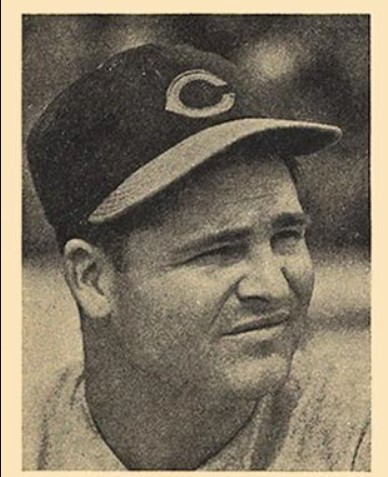
Today’s Trivia(l)Tidbit focuses on  a journeyman catcher named Bill Baker who – on September 28, 1943 – was (in a way) shown an unprecedented level of r-e-s-p-e-c-t at the plate. On that day, in the second game of a Pirates/Dodgers twin bill (in Pittsburgh), Baker tied the record for the most intentional walks gifted to a batter in a nine-inning game. Further, to get to the more trivial part of this tidbit, he also set the record for the most intentional walks in a game in which the player was issued a free pass in every plate appearance.

Photo: Cincinnati Reds – 1940 Team Issue, Public domain, via Wikimedia Commons

In that contest, Baker – who came into the game hitting .273-1-24 and had appeared in 61 of the Pirate’s 150 games – started at catcher and was batting in the eight-hole.  He came to the plate four times and was intentionally walked four times, as the Pirates prevailed 4-2 in nine innings (8 ½ really). Four intentional passes remains the record for a nine-inning game and the only other players to reach that mark are Barry Bonds (twice in 2004) and Jeff Heath (1941). Bonds and Heath, however, each needed five plate appearances to “earn” those four free trips to first base.

With the DH rule, it’s doubtful Baker’s record will fall (remember, he was batting in front of the pitcher). Here’s now game went:

  • Second inning – Pirates up 1-0, runners on two outs, runner on second: Intentional Walk from pitcher Curt Davis. Pirates’ pitcher Bill Brandt up next, grounds out to short.
  • Fourth inning – Pirates still up 1-0, one out, runners on second and third. Davis again intentionally walks Baker to get to Brandt. Brandt pops out to the catcher, leadoff hitter (SS Pete Coscaret) flied out to center.
  • Sixth inning – Pirates up 2-0, runner on second and one out. Davis again intentionally walks Baker. Brandt bunts and is safe on an error. Coscaret flies out to center; RF Johnny Barrett strikes out.
  • Eighth inning – Pirates up 3-2, one out, runner on second. Pitcher Les Webber intentionally walks Baker. PH Tommy O’Brien hits an RBI single (Rip Sewell comes in to pinch run for him); Coscaret flies out to center, Barrett walks to load the bases. Fritz Ostermueller relieves Webber and picks Sewell off first.

Baker, by the way, made his MLB debut in 1939, at the age of 29, after six minor-league seasons in which never hit lower than .292. He played in seven MLB seasons (1940-43, 1946, 1948-49 … Reds, Pirates, Cardinals) and hit .247-2-68 in 263 games. (He never played in more than 63 games in a season).

Now, as always for the Roundtable, when looking into an event or stat “one thing leads to another.” So here are a few more Trivia(l) Tidbits related to intentional walks.

For those who like to know such things:

  • The record for intentional passes in a game of any length is five – the Cubs’ Andre Dawson, in a 16-inning 2-1 win over the Reds on May 22, 1990. (Dawson had eight plate appearances).
  • As noted earlier, only three players (Bill Baker, Barry Bonds and Jeff Heath have been issued four intentional walks in a nine-inning game.
  • Five players have received four intentional walks in an extra-inning affair – Bonds, Garry Templeton, Manny Ramirez, Roger Maris, and Ted Kluszewski.

So, Baker finds himself in some pretty good company.

I couldn’t stop myself, so here’s a bit more.

Let’s Do A Power Walk

In MLB history, 56 players have collected 150 or more career intentional walks (topped, of course, by Barry Bonds 688, well head of number-two Albert Pujols at 316). Most of those were power hitters.  In fact, 51 of the 56 logged 240 or more career homers. How about those who did not reach 240 long balls?

  • The fewest home runs by a player with 150 or more career intentional walks is 117 by Ichiro Suzuki (he had 181 intentional walks).
  • The only other players with 150 or more intentional walks and fewer home runs than walks are: Wade Boggs, (180 IBB/118 HR); Tony Gwynn (203 IBB/135 HR); and Pete Rose (167 IBB/ 160 HR).

I’ll Take My Chances Facing This Guy

Roger Maris is the only player with 50 or more home runs in season without a single intentional walk.  It happened in 1961, when he hit 61 homers (it helps to hit in front of Mickey Mantle.) Next on this list is Marcus Semien, who hit 45 homers for the Blue Jays in 2021 without drawing a single intentional pass.  (Ironically, the only season Maris failed to draw a single IBB was his 61-homer campaign. In 1962, when he hit “only” 33 homers, he drew 11 intentional walks, four in one game.)

In 2004, when Barry Bonds drew a record 120 intentional walks, Jim Thome was second in MLB with 26 IBB. Further, only three players drew more total walks that season as Bonds had intentional walks (the Phillies’ Bobby Abreu, Astros’ Lance Berkman and Rockies’ Todd Helton – all with 127). Bonds, by the way drew 232 total walks that season 38.3% of his plate appearances).

Enough rambling, that’s it for this Trivia(l) Tidbit Tuesday.

Primary Resource: Baseball-Reference.com

Baseball Roundtable – Blogging Baseball Since 2012.

100Baseball Roundtable is on the Feedspot list of the Top 100 Baseball Blogs.  To see the full list, click here.

Baseball Roundtable is also on the Anytime Baseball Supply Top 66 Baseball Sites list.  For the full list, click here

I tweet (on X) baseball @DavidBaseballRT

Follow Baseball Roundtable’s Facebook Page here.  More baseball commentary; blog post notifications.

Member: Society for American Baseball Research (SABR); Negro Leagues Baseball Museum; The Baseball Reliquary. 

P1044


Trivia(l) Tidbit Tuesday … Could This Be the Original Lucky Break?

Welcome to the third edition of Trivia(l) Tidbit Tuesday, a weekly (I hope) presentation of baseball occurrences that for some reason caught The Roundtable’s eye.  (I’m particularly fond of unexpected performances or statistical coincidences.) These won’t necessarily be momentous occurrences, just events, statistics or coincidences that caught my eye.

This edition looks at an errant pitch and broken arm that may have proved to be a “lucky break” for the Phillies’ Scott Rolen – plus a couple of bonus Tidbits related to unanimous Rookies of the Year (the connection to Rolen will become clear) and, for those who want to read further, a look at MLB past unanimous Rookies of the year.

Note: For Trivia(l) Tidbit One (brotherly 20-game winners), click here; for the second in the series (a tale of two Bob Millers), click here.

Scott Rolen’s Lucky Break

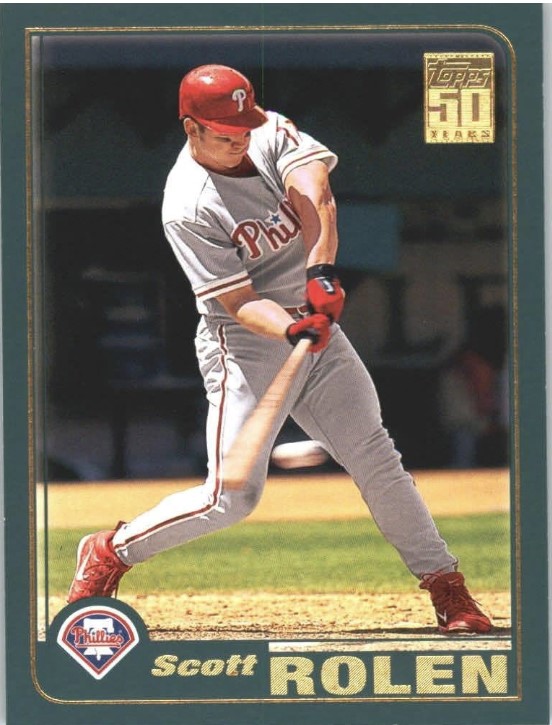
On September 7, 1996, Phillies rookie Scott Rolen (who had made his MLB debut on August 1) started at 3B for the Phillies, batting fifth. On the mound for the Cubs was right-hander Steve Trachsel. In the bottom of the third inning, Rolen was hit by an 0-1 pitch from Trachsel – breaking the Philadelphia third baseman’s right forearm.  (Rolen would leave the game in the top of the fourth and not take the field again in 1996.)

It was, in some ways, a lucky break.  At the time of the plunking, Rolen was in his 37th MLB game and making his 146th MLB plate appearance.  More important, he had 130 at bats on the season he was hitting .254-4-18 at the time – and hit-by-pitch does not count as an at bat.

By coincidence, 130 at bats is the exact maximum number of at bats you can have going into a season and still retain rookie status. Rolen entered the 1997 season, rookie status intact and went a more award-worthy .283-21-92, with 16 steals – and was unanimously selected as the National League Rookie of the Year.  It was, by the way, the only time Rolen was hit by a pitch in 1996, and one of eight HBP recorded by Trachsel in 205 innings that season. Rolen went on to a 17-season MLB career (1996-2012 … Phillies, Cardinals, Blue Jays, Reds. He hit .281-316-1,287 0ver his career, was a seven- time All Star and a eight-time Gold Glover.

 A Couple More Tidbits … Rookies Who Couldn’t Catch a Break

How about being league MVP as rookie – and still not being a unanimous Rookie of the Year Selection?  Well, it happened to Fred Lynn and Ichiro Suzuki.

Photo: Boston Red Sox via tradingcarddb.com, Public domain, via Wikimedia Commons

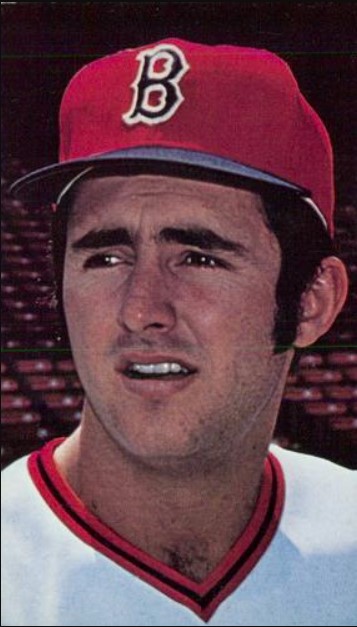
In 1975, the Red Sox’ Fred Lynn went .331-21-105, won a Gold Glove and led the American League in doubles (47) and runs scored (103). His efforts earned him MVP honors and 23 1/2 of 24 possible first-place votes for Rookie of the Year. That other one-half vote went to Lynn’s teammate and outfield partner Jim Rice, who went .309-22-102.

Photo: Jeffrey Hayes, CC BY 2.0 <https://creativecommons.org/licenses/by/2.0>, via Wikimedia Commons

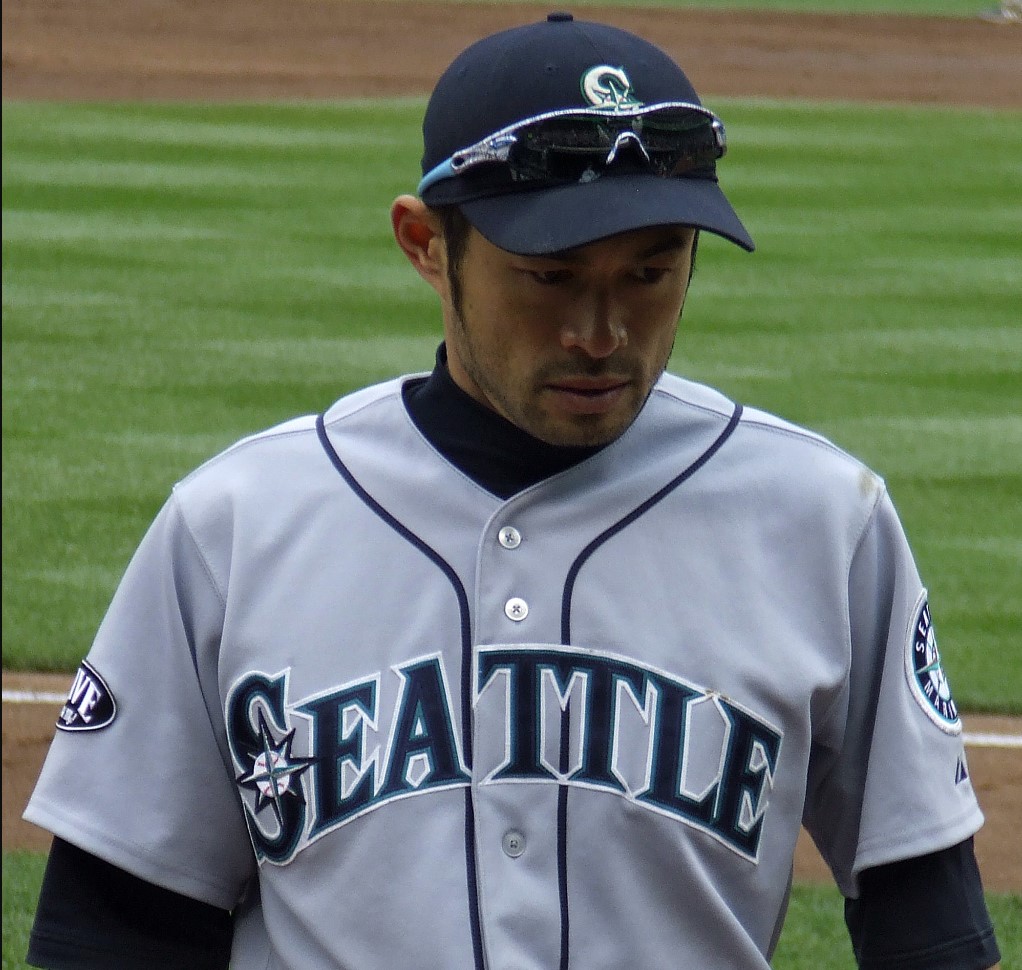
In 2001, The Mariners’ Ichiro Suzuki led that American Leaguer with a .350 average, 242 hits and 56 stolen bases.  He also hit eight home runs, drove in 69 runners, scored 127 times and won a Gold Glove. That performance earned him league MVP honors and twenty-three of twenty-four possible first-place votes for Rookie of the Year. The remaining vote went to Indians’ rookie C.C. Sabathia, who 17-5, 4.39 in 33 starts.

Photo: D. Benjamin Miller, CC0, via Wikimedia Commons

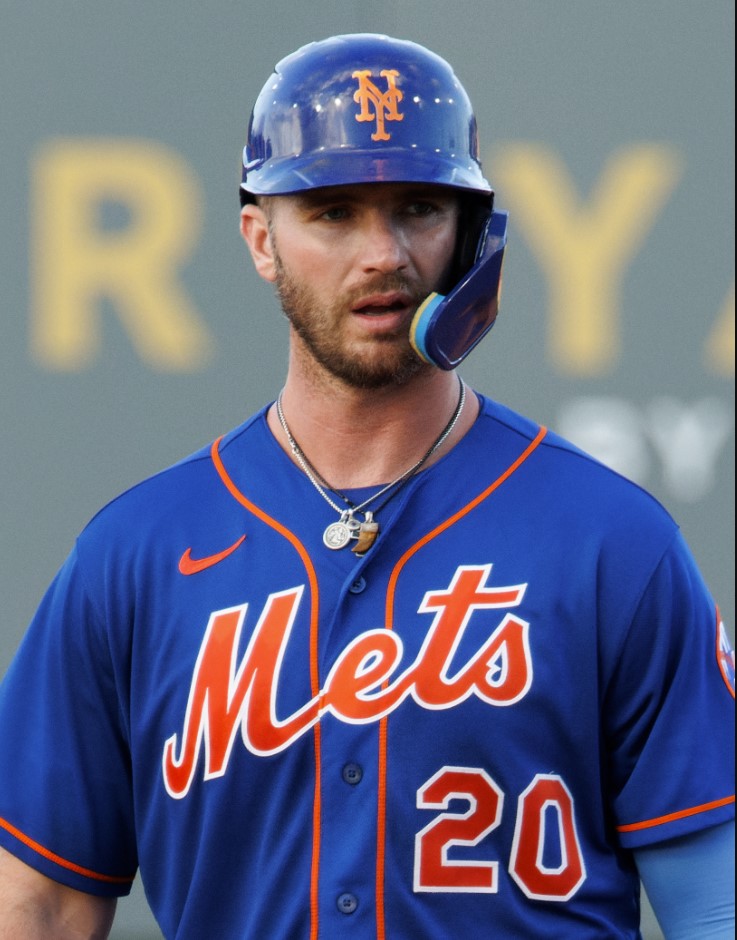
Here’s one more rookie-related Trivia(l) Tidbit. In 2019, Mets’ 1B Pete Alonso became the first player (since the Rookie of the Year Award was established in 1947) to break or tie the rookie home run record and not be a unanimous Rookie of the Year selection.  The Reds’ Frank Robinson tied the record (set by Braves’ Wally Berger in 1930) with 38 home runs as a rookie in 1956; the A’s Mark McGwire set a new rookie record with 48 home runs in 1987; and the Yankees’ Aaron Judge set a new rookie record with 52 round rippers in 2017.  All three were unanimous ROY selections. Alonso fell one vote short of unanimous, that tally going to Braves’ pitcher Michael Soroka, who went 13-4, 2.68 in 29 starts.

With those Tidbits out of the way, let’s take a look at MLB’s  unanimous Rookies of the Year.

2023

This past season (2023) marked the fifth time that both the National and American League Rookies of the Year were unanimous choices.

Gunnar Henderson, SS/3B, Orioles

In the American League, it was Orioles’ versatile Gunnar Henderson, who started 68 games at 3B and 64 at SS.  Henderson, signed out of high school in the second round of the 2019 MLB Draft, made his MLB debut as a 21-year-old on August 31, 2022 – after going .297-19-76, with 22 steals, in 112 games at Double-A and Triple-A. He got in 34 games with the Orioles that season and hit .259-4-18. With just 116 at bats, he retained rookie eligibility for 2023.

Last season, he hit .255-28-82, with ten steals for the O’s.

A Strong Finish Will Put You in the Minds of the Voters

At the end of May in 2023, Gunnar Henderson was hitting just .201-5-14, with two steals in 50 games.  The rest of they way (100 games), he went .276-23-68, with six stolen bases.

In 2023, Henderson ranked first among AL rookies in home runs (28), triples (9), RBI (82) and runs scored (100). He also rang up 13 Defensive Runs Saved between 3B and SS.

As this is posted, Henderson is having another solid season in 2024 – hitting .278-24-53, with 13 steals and an MLB-leading 66 runs scored.

Finishing second to Henderson in the 2023 ROY balloting was Guardians’ RHP Tanner Bibee. who went 10-4, 2.93 in 25 starts.

—-

Corbin Carroll, CF, Diamondbacks

Another youngster who debuted in 2022 (but retained his rookie status for 2023), Carroll was signed (out of high school) in the first round (16th overall) of the 2019 MLB Draft. In three minor-league seasons before his August 29, 2022 debut with the D-backs, he hit .310-28-87, with 70 steals (in 81 attempts) in 142 games.  In 32 games for Arizona in 2022, he hit .260-4-14, with two steals., He turned on the afterburners in his 2023 ROY season – finishing at .285-25-76, with 54 steals and 116 runs scored.  He also had 30 doubles and a league-leading ten triples.

Nice to be First

Corbin Carroll is the first major leaguer to record at least 20 home runs and 50 stolen bases in a rookie-eligible season.

As this is posted, Carroll is hitting .211-2-23, with 14 steals on the 2024 season. He is against leading the National League in triples with six.

Finishing second to Carroll in the 2023 NL ROY voting was Mets’ RHP Kodai Senga, who went 12-7, 2.98 in 29 starts.

2020

Kyle Lewis, CF, Mariners

Kyle Lewis was selected by the Mariners in the first round (11th overall) of the 2016 MLB Draft – out of Mercer University, where he hit .364-39-145 in 157 games over three seasons.  He made his MLB debut on September 10, 2019 and got in 18 games for Seattle that season (.268-6-13).  In his ROY season (2020), he hit .262-11-28 in 58 games (it was the Covid-shortened season). He led AL rookies in runs (37), walks (34), total bases (90) and home runs (11, tied). He was second among AL rookies in hits (54) and RBI (34).

Injuries (meniscus tear, concussion) limited Lewis’ appearances and performance in 2021-22. He appeared in just 54 games for the Mariners in those two seasons, hitting .215-8-16.     He was traded to the Diamondbacks in November of 2022 and had an up-and-down season. He hit just .157-1-2 in 16 games for the D-backs, but .371-17-80 in 63 games at Triple- A. He was released to free agency in November 2023.

Finishing second to Lewis in the ROY voting was White Sox OF Luis Robert, Jr., who hit .233-11-31 in 56 games.

 2019

Yordan Álvarez, DH. Astros

Yordan Álvarez – the 2019 American League Rookie of the Year – was the first-ever primarily Designated Hitter to capture that honor. (Of Álvarez’ 83 starts – in 87 games played – 74 were as a DH.)

Álvarez, who made his MLB debut June 9, 2019 (18 days before his 22nd birthday), hit .313, with 27 home runs and 78 RBI in just 87 games. This was after going .343-23-71 in 56 games for the Triple-A Round Rock Express.

The ROY Runner-up was John Means, a 27-year-old southpaw starter, who went 12-11, 3.62 for an Orioles team that finished 54 games under .500.

Now in his sixth season, as of this posting, Alvarez has a career stat line of .294-145-421 and is .288-16-41 on the season.   He is a two-time All Star, has topped 30 homers in three seasons.

2017

Cody Bellinger, OF/1B, Dodgers

Cody Bellinger joined the Dodgers as a 21-year-old rookie in 2017 and immediately went to work.  That season, Bellinger hit .267, with 39 home runs and 97 RBI in 132 games.  His 39 home runs were a new National League rookie record (since broken) and helped earn him a unanimous Rookie of the Year selection.  And, like many of our unanimous selections, Bellinger had plenty left in the tank.  He was the NL MVP in 2019, when he hit .305-47-115, for the Dodgers and won a Gold Glove. Now in his eighth MLB season, Bellinger has a career stat line of .259-187-553 as of this writing – and is .272-9-34 on the season.

Finishing second in the 2017 NL ROY voting was the Cardinals’ Paul DeJong, who went .285-25-65 in 108 games.

—–

Aaron Judge, OF, Yankees

In 2017, Aaron Judge became the first rookie ever to hit 50 or more home runs (52) – setting a rookie record (since broken). He also hit .284 with 114 RBI, a league-topping 128 runs scored and an AL-highest 127 walks.  (He also led the league in whiffs with 208).

Judge made his MLB debut on August 13th, 2016.  In his first at bat, he homered off Tampa Bay Rays’ pitcher Matt Andriese. Notably, Yankee 1B Tyler Austin – who hit one spot before Judge and was also getting his first MLB at bat – had also homered.  Trivia(l) Tidbit: This made Judge and Austin the first MLB teammates to hit home runs in their first MLB at bat in the same game (much less in their first at bats back-to back.)

In is ninth season, Judge has a .283-285-642 stat line.  The five-time All Star was the 2022 AL MVP, when he hit .311-62-131 – and led the AL in home runs, RBI, runs scored (133), walks (111), on-base percentage (.425), slugging percentage (.686) and total bases (391).  He is a six-time All-Star.  He is having a stellar 2024 – .300-28 70 – as of this posting.

The runner up in the 2017 AL Rookie of the Year race was the Red Sox’ Andrew Benintendi, who went .271-20-90 (with 20 steals (in 151 games).

Not Unanimous, but Certainly Memorable

Jackie Robinson, the first-ever Rookie of the Year Award winner (and the award now bears his name), was not a unanimous selection. In fact, he barely edged out Giants’ right-handed pitcher Larry Jansen for the honor (15 votes to 13).  Robinson hit .296-12-48, with 125 runs and league-topping 29 steals – in a season in which he faced the pressure of breaking MLB’s color line.  Jansen went 21-5,3.16 in his rookie season (his .808 winning percentage leading the league), with 20 complete games in 30 starts.

2016

 Corey Seager, SS, Dodgers

A first-round draft pick in the 2012 draft, Corey Seager made his MLB debut in 2015 and was the unanimous choice for NL Rookie of the Year in 2016.  As an 18-year-old, Seager hit .309, with eight home runs in 46 Rookie-League (2012) games.  And, Seager just kept getting better.  When he got his first call up (September 2015), he was in the midst of a .293-18-76 season at Double-A/Triple-A.  He acquitted himself well at the MLB-level, going .337-4-17 in 27 games for the Dodgers.

In his 2016 ROY campaign, Seager hit .308, with 26 home runs and 72 RBI, making the All-Star squad and finishing third in NL MVP balloting.

Trivia(l) Tidbit … Bash Brothers

Corey Seager and his brother Kyle Seager were the first siblings to hit 25 or more home runs in the same season.  Corey was .308-26-72 in 2016, while Kyle was .278-30-99 for the Mariners.

Seager is now playing in tenth MLB season and has a .289-184-579 stat line, with four All-Star selections.  Hi is .255-14-36 on the season as this is posted.

The runner up in the 2016 NL ROY voting was the Nationals’ Trea Turner, who went .342-13-40 in 73 games.

2015

Kris Bryant, 3B/OF, Cubs

As a 23-year-old rookie in 2015, Kris Bryant played in 151 games for the Cubs (he saw action in seven Cubs games in 2014), hitting .275, with 26 home runs – not only earning unanimous ROY honors, but also an All-Star selection. But there was more to come.  The following season, Bryant earned NL Most Valuable Player recognition, with a .292-39-102 season.

Bryant picked up a lot of hardware/accolades before making his Cubs debut. He was a USA Today (High School) All American in 2010; a College All-American in 2012 and 2013; winner of the Dick Howser Trophy and Golden Spikes Award in 2013; and the USA Today and Baseball America Minor League Player of the Year in 2014.  (In 2014, Bryant, then 22-years-old, hit .325, with 43 home runs and 110 RBI in 138 games at Double-A and Triple-A.)

Now in his tenth MLB season,  Bryant has a.274-184-542 career  stat line and is .186-2-10 on the season.  He is a four-time All Star and has topped 100 runs scored in three seasons, 100 RBI once and 30 home runs twice.

The Giants’ Matt Duffy finished second in the 2015 NL ROY balloting, after a .295-12-77 season.

2014

Jose Abreu, 1B, White Sox

Jose Abreu signed with the White Sox in October 2013 after (defecting from Cuba that August). He had already established himself as a star in Cuba – where he had played ten seasons. As a 27-year-old rookie with the White Sox in 2014, Abreu hit .317, with 36 home runs and 107 RBI – earning an All Star selection and leading the league in slugging percentage.

MVP… MVP

Jose Abreu was the Most Valuable Player in the Cuban Serie Nacional in the 2010-11 season – after hitting .453, with 33 home runs and 93 RBI in 66 games.

Still active, Abreu’s eleven-season MLB stat line is .283-263-960 – and he is .124-2-7 on the 2024 season.  He is a three-time All Star and, last season, led the AL with 123 RBI.  Abreu has driven in 100 or more runs in six seasons and punched 30 or more home runs in five campaigns

Angels’ pitcher Matt Shoemaker was the runner up to Abreu in the 2014 AL ROY voting, after going 16-4, 3.04 n 27 games (20 starts).

2012

Mike Trout, OF, Angels

While Mike Trout saw 40 games of MLB action as a 19-year-old in 2011 (.220-5-16), he retained his rookie status for the 2012 season.  He earned his unanimous selection as AL Rookie of the Year by going .326-30-83 in 139 games. He also led the AL in runs scored (129) and stolen bases (49).

30-30

In his rookie season, Mike Trout became the youngest MLB player ever to have a 30-30 season (30 home runs/30 stolen bases) – accomplishing it at age 20.   He hit 30 home runs and stole 49 bags.

In his 14th MLB season (as of this posting) Trout has hit .299, with 378 home runs, 954 RBI, 1,123 runs scored and 212 stolen bases. He is .220-10-14 on the 2024 season.  Trout is an eleven-time All Star and has won the AL Most Valuable Player Award three times (finishing second four times). He’s led the AL in runs scored four times (topping 100 in seven seasons) and RBI once (topping 100 three times). He’s also topped the junior circuit in walks three times, on-base percentage four times, slugging percentage four times and total bases once (stealing 30 or more in three seasons).

Finishing second in the 2013 AL Rookie of the Year voting was Oakland’s Yeonis Cespedes, who went .292-23-82 with 16 steals.

2011

Craig Kimbrel, Reliever, Braves

Craig Kimbrel, still active, was a 33rd-round draft pick (Braves) in 2007. He earned a look at the major-league level in 2010, going 4-0, 0.44 with one save in 21 games (40 strikeouts in 20 2/3 innings).  In 2011, he was the Braves’ full-time closer, leading the NL with 46 saves – the first in a string of four consecutive seasons as the NL saves leader.

Craig Kimbrel holds the rookie record for saves – at 46.

In his fifteenth MLB season, Kimbrel has gone 54-44, 2.41 with 433 saves (13th all-time) and 1,231 strikeouts in 784 2/3 innings pitched. He is currently 5-2, 2.63 with 16 saves in the 2024 season.  He is a nine-time All Star and has led his league in saves four times (topping 30 saves in eight seasons, reaching 40 or more five times, with a high of 50 saves in 2013).

The runner up for ROY in 2011 was Kimbrel’s teammate Freddie Freeman, who hit .282, with 21 home runs and 76 RBI in 157 games.

2001

Albert Pujols, OF/1B/3B, Cardinals

Drafted by the Cardinals in 1999 (at age 19), after just one year of college ball (Maple Woods Community College), Albert Pujols played just one minor-league season (.314-19-96 in 133 games at three levels) before earning a unanimous National League Rookie of the Year selection.

Trivia(l) Tidbit … Nice Start, Freshman

In his first-ever college baseball game, Albert Pujols hit a Grand Slam and turned an unassisted Triple Play.  He finished that freshman season with a .461 average and 22 home runs and 80 RBI.

Pujols played in 22 MLB seasons, hitting .296 (3,384 hits, 10th all-time) with 703 home runs (fourth all-time) and 2,218 RBI (second all-time).  He was an eleven-time All Star, two-time Gold Glover and three-time National League MVP. He led the league in runs scored five times (topping 100 ten times), home runs twice (reaching forty or more seven times) and RBI once (exceeding 100 in 14 times) and batting average once (topping .300 in ten seasons). A sign of respect, his 316 intentional walks are second only to Barry Bonds He topped .300, 30 home runs, 100 RBI in each of his first ten seasons. (Over those first ten campaigns, his season average was .331-41-123).

The runner up to Pujols for 2001 NL ROY was Astros’ pitcher Roy Oswalt (14-3, 2.73 in 28 appearances).

1997

Nomar Garciaparra, SS, Red Sox

Nomar Garciaparra, at age 23, was in his fourth pro season when he captured 1997 AL Rookie of the Year honors.  (Garciaparra had earned a late-season – 24 games played – call up in 1996).  In 1997, the 23-year-old played in 153 games for the BoSox, hitting .306, knocking 30 home runs, 44 doubles and a league-leading eleven triples.  He drove in 98 runs, scored 122 and earned his way onto the 1997 AL All Star squad.

Garciaparra went on to a 14-season MLB career in which he hit .313-229-936; was a six-time All Star; and won a pair of batting titles.  He hit .300+ in nine seasons, scored 100+ runs six times, and hit 30 or more homes runs twice and 50 or more doubles twice.

Isn’t That Grand

Nomar Garciaparra is one of just 13 players to hit two Grand Slams in a single game (May 10, 1999) – and the only player to achieve this feat in his home ball park.

The runner up to Garciaparra for Rookie of the Year was outfielder Jose Cruz, who split his season between Toronto and Seattle, playing in 104 games and hitting .248-26-68.

—–

 Scott Rolen, 3B, Phillies –  Hall of Fame

Scott Rolen made his debut with the Phillies (at age 21) on August 1, 1996.  He got in 37 games with the Phils that season (preserving his rookie status for 1997), hitting .254, with four home runs and 18 RBI.  Much better things were on the horizon. In his 1997, ROY season, Rolen played in 156 games, hitting .283, with 21 home runs, 92 RBI – and 16 stolen bases.

He went on to a 17-season MLB career, hitting .281, with 316 home runs, 1.287 RBI and 118 steals.  He was a seven-time All Star and eight-time Gold Glover at the hot corner. Rolen hit 20 or more home runs in 10 seasons (topping 30 three times) and drove in 100+ runs in five campaigns.

The runner up to Rolen for ROY was Marlins’ pitcher Livan Hernandez, who went 9-3, 3.18 in 17 starts.

1996

Derek Jeter, SS, Yankees, Hall of Fame

Derek Jeter was a first-round (sixth-overall) Yankee draft pick right out of high school (1992). He saw his first MLB action in 1995 (15 games as a September call up), before his unanimous selection as Rookie of the Year (as a 22-year-old) in 1996.   In that 1996 season, Jeter played in 157 games, hitting .314, with ten home runs, 78 RBI, 104 runs scored and 14 stolen bases.  He went on to a 20-season MLB career, during which he hit .310 (3,465 hits), with 269 round trippers, 1,311 RBI, 1,923 runs scored and 358 steals. He topped 200 hits in eight campaigns (leading the league twice), scored 100+ runs in 13 seasons (leading the league once), won five Gold Gloves and was an All Star 14 times.   He was also the 2000 World Series MVP (hitting .409 in five games) and 2000 All Star Game MVP.

White Sox’ pitcher James Baldwin was the runner-up to Jeter for ROY, after going 11-6, 4.42 in 28 starts for the Pale Hose.

1994

Raul Mondesi, OF, Dodgers

Raul Mondesi made a major-league impression before his 1994 season (when he was the unanimous selection for NL Rookie of the year).   Called up to the Dodgers the previous July, the then 22-year-old had hit .291 in 42 games and showed plus defense in the outfield. In his 1994 ROY season, Mondesi played in 112 games for the Dodgers, hitting .306, with 16 home runs, 56 RBI, 63 runs scored and 11 steals.

30-30 Vision

Raul Mondesi is one of only 13 players to have multiple 30-30 (30 home runs/30 stolen bases) seasons. In 1997, Mondesi hit .310, with 30 home runs and 32 steals for the Dodgers. In 1999, he hit .253, with 33 home runs and 36 steals, again for the Dodgers. 

Mondesi played 13-seasons in the major leagues, hitting .273, with 271 home runs, 860 RBI and 229 stolen bases. He was a one-time All Star and two-time Gold Glover.  He hit 30 or more home runs in three seasons and stole at least 30 bases in three seasons.

The runner up to Mondesi for the Rookie of the Year, was Astros’ reliever John Hudek, who went 0-2, 2.97 with 16 saves in 42 appearances.

1993

Tim Salmon, OF, Angels

While he did get a late season call up (August) in 1992, Tim Salmon still had his rookie status when he took a full-time spot in the Angels’ outfield in 1993.    In his full-season rookie campaign, the 24-year-old hit .283, with 31 home runs, 95 RBI and 93 runs scored. He enjoyed a 14-season MLB career, hitting .282, with 299 home runs and 1,016 RBI. Salmon – although never an All-Star Selection – hit 30 or more home runs in five seasons and drove in 100+ runs in three. In 1995, he went .330-34-105 in 143 games.

The runner up to Salmon was White Sox RHP Jason Bere who went 12-5, 3.47 in 22 starts.

Mike Piazza, C, Dodgers, Hal of Fame

Over his first three minor-league seasons, Mike Piazza hit .245, with 43 home runs and 150 RBI over 262 games.  Then, in 1991, the 23-year-old, put it all together – hitting .350-23-90 in 125 games at Double-A and Triple-A and earning a late season call up (.232-1-7 in 21 games) with the Dodgers.  In 1992, still considered a rookie, he was behind the plate for the Dodgers full time – and went .318-35-112 (making the NL All Star squad in the process).

Not Exactly Low-Hanging Fruit

Mike Piazza was the 1,390th pick of the 1989 MLB draft.

Mike Piazza went on to a 16-season Hall of Fame career – hitting .308, with 427 home runs and 1,335 RBI – and making an even dozen All Star teams. He topped 30 home runs in a season nine times (reaching 40 twice) and had 100 or more RBI in six campaigns.

Runner up to Piazza was Braves reliever Greg McMichael, who went 2-3, 2.06 with 19 saves in 74 appearances.

1990

Sandy Alomar, C, Indians

Sandy Alomar started out as a catcher in the Padres’ system.   Alomar, however, was blocked by 1987 unanimous Rookie of the Year and 1989 All Star catcher Benito Santiago (Alomar played in just eight games for the Padres in 1988-89). In December of 1989, the Padres traded Alomar (along with Carlos Baerga and Chris James) to the Indians for power-hitting Joe Carter.  Alomar got an opportunity to stick with Cleveland in 1990 – and he made the most of it.  He was a unanimous Rookie of the Year selection – hitting .290-9-66 in 132 games, making the All-Star team and winning a Gold Glove.  (Carter, by the way, hit .232-24-115 for the Padres in 1990 and was traded to the Blue Jays after the 1990 season.)

Alomar played 20 MLB seasons, hitting .273-112-588. He was a six-time All Star.

Yankees’ 1B Kevin Maas was the runner up to Alomar, going .252-21-41 in 79 games.

1987

Mark McGwire, 1B, A’s

Mark McGwire got the proverbial “cup of coffee” in the big leagues in 1986, hitting just .189 with three home runs in 18 games. This experience came after a late-season call up from Triple-A Tacoma, where he hit .318-13-59 in 78 games (he had also gone .303-10-53 in 55 games at Double-A).

The following season, with his rookie status still intact, the 23-year-old hit .289, mashed a then MLB rookie-record (and league-leading) 49 home runs and drove in 188 tallies. It was good start to a 16-season MLB career that would see him his .263, with 583 home runs, 1,414 RBI and 1,167 runs scored.  Over that career, McGwire was an All Star in 12 seasons, a four-time home run champion – and even won a Gold Glove (A’s – 1990). In 1998, McGwire broke Roger Maris’ single-season home run record (61), bashing 70 round trippers. (Barry Bonds broke McGwire’s record in 2001, with 73 long balls.)

Runner up to McGwire was the Royals’ INF/OF Kevin Seitzer, who hit .323-15-83, with 105 runs scored and a league-leading 207 hits in 161 games.

—–

Benito Santiago, C, Padres

Twenty-two-year-old Padres’ backstop Benito Santiago got off to a good start as the unanimous NL Rookie of the Year choice in 1987 – batting .300, with 18 home runs, 79 RBI and 12 stolen bases.  He went on to a 20-season MLB career, hitting .263, with 217 home runs and 91 steals.  He was a five-time All Star and a three-time Gold Glover.

They Call Him The Streak

From August 25 through October 2, 1987, Benito Santiago hit safely in 34 games – still the longest hitting streak ever by an MLB rookie.

Pirates’ RHP Mike Dunn was runner up to Santiago, after going 13-6, 3.03 in 23 starts.

 1985

Vince Coleman, OF, Cardinals

Vince Coleman came up to the Cardinals as a 23-year-old, in his fourth professional season. Over 328 minor-league games he had hit .286 – and swiped 289 bases.   He continued to show that speed as an MLB rookie, leading the National League with 110 steals in his 1986 ROY season. Coleman remains the only player to steal 100+ bases in his rookie season. He played in 151 games, hitting .267, with just one home run and 40 RBI – but scored 107 runs.

Coleman led the National League in steals in each of his first six MLB seasons (tying the NL record for consecutive seasons leading the league in that category.) He also pilfered 100+ bases in each of his first three seasons (1985-87), becoming one of only two MLB player to record three straight seasons of triple-digit steals. The other was Billy Hamilton (1889-91, Phillies).

Coleman played 13 MLB seasons, hitting .264, with 28 home runs, 346 RBI, 849 runs and 752 steals. He was a two-time All Star.

The runner up to Coleman for 1985 NL ROY was Reds’ LHP Tom Browning, who went 20-9, 3.55 in 38 starts.

1972

Carlton Fisk, C, Red Sox, Hall of Fame

Carlton Fisk was the unanimous choice for the American League Rookie of the Year in 1972 (the first-ever AL unanimous ROY). The 24-year-old backstop played in 131 games for the Red Sox hitting .293, with 22 home runs and 61 RBI, 74 runs scored and five stolen bases – while also capturing the AL Gold Glove at catcher.

In his rookie season, Carlton Fisk led the American League in triples (tied with Joe Rudi) with nine.

Fisk’s MLB career stretched for 24 seasons. He was an All Star in 11 of those seasons and finished with a .269 average, 376 home runs, 1,330 RBI, 1,276 runs scored and 128 stolen bases.

Note: Prior to 1970 voters could case a vote for just one player in each league for Rookie of the Year.  So, there are no runners-up to previous unanimous winners.

1959

Willie McCovey, 1B, Giants, Hall of Fame

Willie McCovey is a bit of a surprise on this list, as he was a unanimous selection for 1959 National League Rookie of the Year despite not making his MLB debut until July 30 of that season – and playing in just 52 Games for the Giants.  Still, he made the most of those games – hitting .354, with 13 home runs and 38 RBI. I also find it surprising the Giants waited until July to call him up to the “show.” He was already in his fifth professional season and was hitting .372-29-92 in 95 games) at Triple-A Phoenix at the time.

McCovey went on to a 22-season Hall of Fame MLB career. He was a six-time All Star and the 1969 NL MVP.  The three-time NL home run leader finished with a .270 average, 521 home runs and 1,555 RBI. He also went .310-2-6 in eight post-season games.

1956

Frank Robinson, OF, Reds, Hall of Fame

Frank Robinson started his Hall of Fame career with a bang. The unanimous choice for 1956 National League Rookie of the Year played in 152 games and hit .290, with 38 home runs (tying the MLB rookie record) and 83 RBI. The 20-year-old also led the NL in runs scored with 122 and hit-by-pitch with 20 (ouch). He went on to 21-season MLB career; was an All Star in 14 campaigns.  He finished with a career .294 average, 586 home runs, 1,812 RBI, 1,829 runs scored and 204 stolen bases.  He also was a Triple Crown winner, a two-time league MVP, a World Series MVP, an All-Star Game MVP and, after retiring as a player, honored as the American League Manager of the Year (1989, Orioles).

Primary Resources:  Baseball-Referencee.com; Baseball-Almanac.com

Baseball Roundtable – Blogging Baseball Since 2012.

100Baseball Roundtable is on the Feedspot list of the Top 100 Baseball Blogs.  To see the full list, click here.

Baseball Roundtable is also on the Anytime Baseball Supply Top 66 Baseball Sites list.  For the full list, click here

I tweet (on X) baseball @DavidBaseballRT

Follow Baseball Roundtable’s Facebook Page here.  More baseball commentary; blog post notifications.

Member: Society for American Baseball Research (SABR); Negro Leagues Baseball Museum; The Baseball Reliquary. 

P104s


Tuesday Trivia(l) Tidbits Edition Two … Just Ask Bob

Welcome to the second edition of Trivia(l) Tidbit Tuesday, a weekly (I hope) presentation of baseball occurrences that for some reason caught The Roundtable’s eye.  (I’m particularly fond of unexpected performances or statistical coincidences.) These won’t necessarily be momentous occurrences, just events, statistics or coincidences that caught my eye.

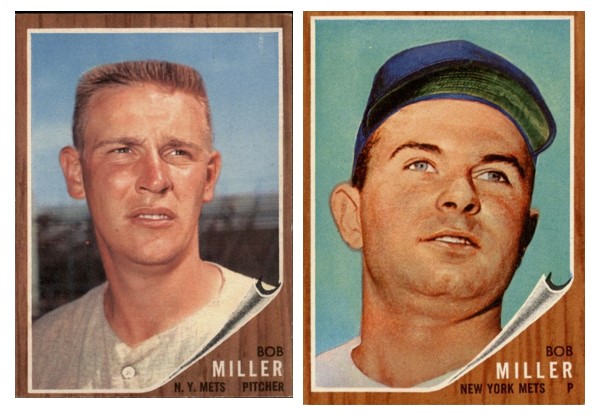
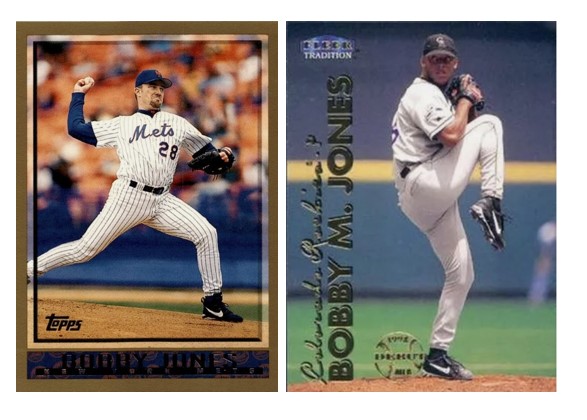
This edition looks at the time the Phillies’ Don Demeter hit two home runs in a game – off of two Mets’ pitchers named Bob Miller, who also happened to be roommates. Then the post moves on to a pair of Bobby Jones, who started on the mound against each other and (as usual with Baseball roundtable when I start looking into something, “one thing led to another”) a look at Hall of Famers whose careers overlapped with another MLB player with the same first and last name.  Some of you may want to skip that part of the post.  It is a little bit “in the weeds.”

He Ain’t Heavy, He’s My Brother

The first Edition of Trivia(l) Tidbit Tuesday focused on the year the Niekro Brothers – Joe and Phil – tied for the NL lead in victories. It went on to a look MLB’s pitching brothers who were also 20-game winners (the brothers Martinez, Perry, Niekro and Coveleski). For that post, click here.

On August 15, 1962, the Phillies topped the Mets 9-3 in the first game of a doubleheader at the Polo Grounds.  No big surprise there, as the Mets’ record going into the game was 30-88. What was more surprising was that Phillies’ outfielder Don Demeter hit his 19th and 20th home runs of the season in the game – off a right-handed and a left-handed “Bob Miller” … given name Robert Miller.

Not only that, the two Bob Millers were road roommates.  Southpaw Bob Gerald Miller reported that while he originally roomed (on the Mets) with Joe Pignatano, when calls came into the hotel for Mets’ hurler Bob Miller, confusion as to which room to connect often ensued. So, the two Bob Millers became roomies.  (Thanks to centerfieldmaz.com for this portion of this tidbit.) .  

Anyway, back to August 15, 1962 game. In the third inning, with the Phillies’ up 2-0, Demeter (who had started the game in left field and in the five-spot in the order) smacked a solo shot off starter (right-hander) Robert Lane Miller. Then in the ninth inning, Demeter – who had moved to center field in the seventh – hit a three-run homer (extending the Phillies’ lead to 9-2) off southpaw reliever Robert Gerald Miller. Two homers, in one game, off two Bob Millers, a right-hander and a port-sider.

Demeter, notably, was on the way to his best-ever major league season. In 1962 (his sixth of eleven MLB seasons), he achieved his career highs for average (.307), home runs (29), RBI (107), runs scored (85), hits (169) and doubles (24). The two Millers?  Starter Bob Miller went 1-12, 4.89 in 1962 (69-81, 3.37 with 52 saves in 17 MLB seasons). Reliever Bob Miller went 2-2, 7.08 in 1962, the last of his five MLB seasons (6-8, 4.72).

The Travelin’ Man

Robert Lane Miller played for ten MLB teams in his 17-season MLB career (1957, 1959-74). In two seasons, he played for three teams (1970 – Indians White Sox, Cubs and 1971 – Cubs, Padres, Pirates). He played on five League Champions, which included three World Series Champions.

On May 11, 1999, there was another coincidence involving two Roberts (Jones, this time), who both went by the nickname Bobby. The pair found themselves starting on the mound in the same game. Once again, the Mets were involved – and once again one lefty and one righty were the principals.

The contest was in Colorado and southpaw Bobby Jones (Robert Mitchell Jones) started on the mound for the Rockies, while righty Bobby Jones (Robert Joseph Jones) started for the Mets.  If you are looking for an MLB unicorn, it as the first time in the Modern Era (post-1900) that two pitchers with the same first and last name started against each other. The Rockies’ Bobby Jones got the better of the of it that day, giving up two runs in five innings for the win, while the Mets’ Bobby Jones took the loss (eight runs in 5 1/3 frames).

Hey, Let’s Get Together Again

The season after opposing each other on the mound in Colorado, the two Bobby Jones found themselves as teammates on the Mets and. In 2002, they were teammates on the Padres.  

The 1999 Rockies’ Bobby Jones pitched in six MLB seasons (1997-2000, 2002, 2004 … Rockies, Mets, Padres, Red Sox), going 14-21, 5.77; while the 1999 Mets’ Bobby Jones pitched in 10 MLB seasons (1993-2002 … Mets, Padres), going 89-83, 4.36.

Now, We Go Into The Weeds

Getting this far, remember – for Baseball Roundtable, one thing always leads to another – I thought about looking further into MLB players with the same name- particularly those with overlapping career years. But, whoa, this looked to be a daunting task.  Take the players with the last name Williams. I found at least two Bernies, three Bobs, three Williams, three Davids (first name David, but they went by Dave, Davey and David), two Earls, two Franks, two Freds, three Georges, two Harrys, two Jesses, two Josephs, four Johns (using John, Johnnie or Johnny), two Mathews, two Reginalds, two Thomases, two Roys, two Woodrows. Appropriately, there was only one Ted Williams,

So, I narrowed the search to Hall of Fame players who were not the only players with their first and last names to play in the majors. Still pretty daunting, so I reduced that to Hall of Fame Players who had careers that overlapped with those of other MLB players with the same first and last names. Now, we were getting to a more manageable group.  Side note: I did require the given names be the same.  For example, there were two Joe Morgans, but the Hall of Fame Joe Morgans’ given name was Joe. The Joe Morgan whose career overlapped that of the Hall of Famer had the  given name Joseph. You get the idea.

Let’s start this portion of the post with a trio of father/sone combinations that include a Hall of Famer.

George “Ken” (Kenneth) Griffey, Outfield

Number one on this list has to be a couple of guys named George – George Kenneth Griffey and George Kenneth Griffey, Junior … with, of course, Junior being the Hall of Famer. Their MLB careers overlapped in 1990-91. Note:  As we go forward, when it’s father and son combinations, for the sake of simplicity, I’ll used Junior and Senior to separate them.

It went like this. Griffey Junior signed with the Mariners (number one overall), out of high school, in the 1987 MLB Draft. At the time, Griffey Senior was with the Reds and in his 17th MLB season. After two stellar minor-league seasons (.320-27-92, with 49 steals in 129 games), Junior made his debut with the Mariners in 1989. In August of the following year, the 40-year-old Griffey Senior (hitting .206-1-8 for the Reds) was released. Fortunately, for baseball, he was quickly signed by the Mariners – and then the fun began.

On August 31, the Mariners lineup featured Griffey Senior batting second and playing left field and Griffey Junior batting third and playing center.  In the bottom of the first inning, the first time they batted in the same lineup, both Griffeys singled (against the Royals’ Storm Davis). The Mariners, by the way, prevailed by a 5-2 score.

Back-to-Back, Jack

As the Mariners took on the Angels in Anaheim. Ken Griffey, Senior was batting second and playing left field, while Ken Griffey, Junior was batting third and playing center.  In the first inning, Griffey Senior hit an 0-2 pitch from Kirk McCaskill for a two-run home run and Griffey Junior followed by taking McCaskill deep on a 3-0 pitch – making the Griffeys the first (and still only) MLB father-son combination to go deep back-to-back,

Long story short, Griffey Senior retired in 1990, after playing 19 seasons (1973-91). In 2,097 games, the three-time All Star hit .296-152-859, with 200 stolen bases. His career overlapped, in 1990-91, with Hall of Famer Griffey Junior – who played 22 MLB seasons (1989-2010 … Mariners, Reds, White Sox). In 2,671 games, he hit .284-630-1,836, with 1,662 runs and 184 steals. Junior was a four-time home run leader (seven times hitting 40 or more). Junior was a 13-time All Star, 10-time Gold Glover and 1997 Al MVP.

Willie (James) Wells, Shortstop/Third Base

Hall of famers Willie (James) Wells was the only Willie Wells in MLB for the first 17 of his 21-seasons (1924-39, 1942, 1945-48 … St. Louis Stars, Chicago American Giants, Detroit Wolves, Homestead Grays, Newark Eagles, New York Black Yankees, Baltimore Elite Giants, Cincinnati-Indianapolis Clowns, Memphis Red Sox. Then, in 1944, his son Willie (Brooks) Wells made his MLB debut.

A New First

In 1948, Hall of Famer Willie James Wells’ 21st and final MLB final season, he joined the Memphis Red Sox. Also on the team was his son Willie Brooks Wells, making them the first father and son to play together on a major league team.

Hall of Famer Willie Wells played in 1,039 games, going .330-140-873, with 932 runs and 160 steals. An eight-time All Star, he led his league in runs five times, hits three times, doubles three times, home runs three times, RBI two times and average once.,

The Younger Wells (an infielder like his father) played in five MLB seasons (1944-48 … Memphis Red Sox and Chicago American Giants). The younger Wells went .182-0-19 in 71 career games. games.

Timothy “Tim” Tim Raines, Outfield

Hall of Famer Tim Raines played 23 MLB seasons (1979-99, 2001-02 … Expos, White Sox, Yankees, Orioles, Marlins). His MLB career briefly overlapped that of another player with the same name – his son, Timothy Raines, Junior.

Raines Junior was signed by the Orioles, out of high school, in the sixth round of the 1998 MLB draft. He got his first taste of the major leagues in 2001, debuting on October 1 of that season. At the time, his father, Raines Senior – in his 22nd season – was a member of the Montreal Expos.  However, on October 3, the Expos sent Raines Senior to the Orioles in a trade (for future considerations). The pair of Tim Raines first appeared in a game together that day, Junior starting in CF and leading off, Senior appearing as a pinch hitter in the seventh inning.  The pair of Tim Raines started in the same lineup for the first time on October 4 (versus the Red Sox in Baltimore), Junior leading off and playing CF, Senior batting sixth and playing LF.  Raines Senior was granted free agency after the season and signed with the Marlins for 2002 (and what would be the 42-year-old’s final season). Raines Junior spent 2002 back in the minors – so the overlap in the career of the two Tim Raines was very brief.

Tim Raines Junior played in three ML:B seasons (2001, 2003-04) all for the Orioles., He got in 75 games, hitting .213-0-7, with ten steals. Tim Raines Senior played in 22 MLB seasons (2,502 games), hitting .294-170-980, with 808 steals and 1,571 runs scored. He was a seven-time All Star (consecutively 1981-87) and led the league in runs twice, doubles once, batting average once and steals four ties.

Pedro Martinez, Right-Handed Pitcher

From 1993 through 1997, there were two players named Pedro Martinez pitching in the major leagues. One, of course, was future Hall of Famer Pedro (Jaime) Martinez, whose MLB career went from 1992 through 2009 (Dodgers, Expos, Red Sox, Mets, Phillies).  The eight-time All Star and three-time Cy Young Award winner went 219-100, 2.93, led in the league in wins once, winning percentage three times, ERA five times, complete games once, shutouts once and strikeouts three times.

The other Pedro Martinez (no middle name listed, no relation to the Hall of Famer) was also a pitcher (southpaw). He played in the majors from 1993-1997 (Padres, Astros, Mets, Reds). In five seasons, he went 7-4, 3.97, with three saves in 122 appearances (just one start).

John “Jack” Morris, Right-Handed Pitcher

Right-hander and Hall of Famer John “Jack” Morris played in 18 MLB seasons (1973-94 … Tigers, Twins, Blue Jays Indians).  The other John Morris, a left-handed outfielder played in seven MLB seasons (1986-92 … Cardinals, Phillies Angels.

Hall of Famer Morris went 254-186, 3.99 over his career. A five-time All Star, he led the league in wins twice (three times winning 20 or more games in a season), complete games once, shutouts once, innings pitched once and strikeouts once.

Outfielder Morris played in 402 MLB games (Cardinals, Phillies, Angels), going .236-8-63.

James “Pud” Galvin. Right-Handed Pitcher

Hall of Fame hurler James “Pud”( Francis) Galvin pitched in 15 MLB seasons (1875, 1879-92 .. St. Louis Brown Stockings, Buffalo Bisons, Allegheny City, Pittsburgh Burghers, St. Louis Browns). He went 365-310, 2.85 in 705 appearances (688 starts/646 complete games). He won 20 or more games in ten seasons and twice won 46 games in a campaign. (It was a different game then – he never led his league in wins).

For one of Galvin’s 15 MLB seasons, there was another James Galvin in the major leagues and like “Pud” he did not go by James or Jim.  That was James “Lou” Louis Galvin, who pitched for the Union Association’s St. Paul White Caps briefly in 1884 – going 0-2, 2.88 in three games.

John Ward, Infielder, Right-Handed Pitcher

John (Montgomery) Ward played in 17 MLB seasons (1878-94 … Providence Grays, Giants, Brooklyn in the Players League and Brooklyn in the National League). He hit .275-26-869, scored 1,410 runs and stole more than 500 bases. He also went 164-103, 2.10 in 293 appearances as a pitcher (262 starts/245 complete games).

During HOFer John Ward’s MLB career, two other John Wards played in the major leagues, each with just one MLB game: Outfielder John E. Ward, who played one game for the 1884 Union Association’s Washington Nationals (one single in four at bats) and John T. Ward, who  for played for the Providence Grays in 1985, going 0-1, 4.50 in one mound appearance.

Primary Resource:  Baseball-Reference.com

Baseball Roundtable – Blogging Baseball Since 2012.

100Baseball Roundtable is on the Feedspot list of the Top 100 Baseball Blogs.  To see the full list, click here.

Baseball Roundtable is also on the Anytime Baseball Supply Top 66 Baseball Sites list.  For the full list, click here

I tweet (on X) baseball @DavidBaseballRT

Follow Baseball Roundtable’s Facebook Page here.  More baseball commentary; blog post notifications.

Member: Society for American Baseball Research (SABR); Negro Leagues Baseball Museum; The Baseball Reliquary. 

P1041


Baseball Roundtable 2023 Trivia Tidbit … Gotta Love Old Milwaukee County Stadium

Throughout the season, Baseball Roundtable will present Trivia Tidbits … in the form of a question.  If you are reading this, you most likely saw the questions on Facebook or Twitter and have followed the link to this answer.

Let’s review before we get to the answer itself. Many – if not most – fans know that Hall of Fame 3B Eddie Mathews is the only player to play for the Braves in Boston, Milwaukee and Atlanta.

Fewer, but still a good number of fans know that Hall of Fame pitcher Robin Roberts is only pitcher to record wins against the Boston, Milwaukee and Atlanta Braves.

Probably fewer fans know that Mathews played both major- and minor-league ball in Milwaukee and Atlanta. (Milwaukee Brewers and Atlanta Crackers. (He only played in three minor-league cities – all as a teenager. )

The answer to this Trivia Tidbit – like Mathews and Roberts – has ties to both Milwaukee and the Braves.

Before we get to the question, a few other pieces of info “for those who like to know such things.” Roberts, whose career record was 286-245, 3.41, was 34-30, 3.38 in starts against the Boston/Milwaukee/Atlanta Braves.  Mathews, whose career stat line was .271-512-1,453, was .323-11-30 in 56 games versus Roberts. As an 18- and 19-year-old, Mathews hit .287-38-135 in 183 gamers for the Double-A Atlanta Crackers (1950-51) and, as a 19-year-old, he hit .333-1-5 in 12 games for the Triple-A Milwaukee Brewers (1951).  As a 20-year-old, he was the regular third baseman for the major-league Boston Braves.

Now, today’s question.  On this date (April 12) in 1970, what player became the first of only three players to play for both the major-league Milwaukee Braves and Milwaukee Brewers?  Possibly helpful hint.  He also played for the Athletics in both Kansas City and Oakland.   Kudos if you get this one right.  Extra credit for getting all three names (One is really a “gimmee.” )

Answer.  Catcher Phil Roof, who played for the Milwaukee Braves in 1961 and 1964 (one game in each season).  And later, played for the Milwaukee Brewers in 1970 and 1971. (151 total games).

Roof played in 15 MLB seasons (1961, 1964-77), taking the field for the Braves, Angels, Indians, Athletics (Kansas City & Oakland), Brewers, Twins, White Sox and Blue Jays. Roof played 857 MLB games, hitting .215-43-210.  His best season was probably 1975, when he hit .302-7-21 in 63 games for the Twins. It was the only season in which he averaged higher than .241.

The other two players to play for both the major-league Milwaukee Braves and Brewers had somewhat stronger credentials.  Hank Aaron, who suited up for the Milwaukee Braves (1954-1965) and Milwaukee Brewers (1975-76) and Felipe Alou, who took the field for the Milwaukee Braves (1964-65) and Milwaukee Brewers (1974).

Primary Resources:  Baseball-Reference.com; MLB.com


Baseball Roundtable – Blogging Baseball Since 2012.

100Baseball Roundtable is on the Feedspot list of the Top 100 Baseball Blogs.  To see the full list, click here.

Baseball Roundtable is also on the Anytime Baseball Supply Top 66 Baseball Sites list.  For the full list, click here

I tweet (on X) baseball @DavidBaseballRT

Follow/Like Baseball Roundtable’s Facebook Page here.  More baseball commentary; blog post notifications; PRIZES.

Member: Society for American Baseball Research (SABR); Negro Leagues Baseball Museum; The Baseball Reliquary. 


Trivia Heroes – A Few Off the Wall Tidbits to Stump Your Baseball Friends

In this post, I’d like to share just a few oddball trivia tidbits I’ve come across over time.  It’s kind of a stream of consciousness post, going whatever direction the baseball winds (and my whims) take me.  (My mind does tend to wander in the off season.) The goal is to present a few tidbits that may offer you a chance to stump your baseball friends when you start to throw around trivia questions over an adult beverage or two (or on a Ballpark Tours bus ride).

Many Questions – One Answer

Jimmy Sheckard has become one of my trivia heroes.   Sheckard enjoyed a 17-season MLB career, during which time he became the answer to:

  • Who was the first MLB player to poke a walk-off hit in a World Series game?
  • Who was the first MLB player to lead the league in stolen bases and home runs in the same season?
  • Who was the first – and still only – player to hit inside-the-park Grand Slam home runs in consecutive games?
  • Who was one-half of the only pair of teammates to hit inside-the-park Grand Slams in the same game.?

In addition, Sheckard is the answer to:

  • Who holds the MLB single-season record for double plays started by an outfielder?
  • Who holds the MLB career mark for assists by a left fielder?

Any of these questions would make a pretty good trivial puzzler.  Wrap them altogether and you’ve got the makings of a true “trivia hero.”  I’ll provide a bit more on Sheckard – his career and his firsts – and then touch on a few additional trivia heroes.

Sheckard played in the majors from 1897 through 1913 (Brooklyn Bridegrooms/Superbas, Baltimore Orioles, Chicago Cubs, St. Louis Cardinals, Cincinnati Reds). He was known as a speedy, strong-armed outfielder.  During his career, he led the league in stolen bases twice (a high of 77 in 1899), home runs once, triples once (with eight seasons of ten or more), runs scored once (three season of 100+), walks twice, on-base percentage once and slugging percentage once. He also led in assists, putouts and double plays as a LF four times each. He is, as already noted, the career assist leader among left fielders (243)  and number-eight in assists for outfielders overall (307).

Sheckard, at times, showed the talent to be a real star on the diamond.  However, inconsistency, worked against him.   For example, he hit a career-high .354 in 1901, fell to .265 in 1902, jumped back to  .332 in 1903 and dropped to .239 in 1904.  Similarly, his nine home runs led the NL in 1903, but  he hit a total of nine home runs over the next six campaigns.  You get the idea.

So, what about those potential trivia stumpers?

Sheckard’s Chicago Cubs came into Game Four of the 1910 World Series (October 22) trailing the Athletics three games-to-none. To that point, they had been outscored 25-to-9.  Playing in Chicago, the Cubs were tied with the Athletics 3-3 going into the bottom of the tenth inning.of Game Four. With future Hall of Famer Charles “Chief” Bender on the hill for Philadelphia, Cubs’ SS  Joe Tinker led off the bottom of the inning with a pop out to shortstop, catcher Jimmy Archer followed with a double to left, a groundout by pitcher Mordecai Brown moved Archer to third and Sheckard singled to left bringing in Archer with the winning  – and notching the first-ever World Series walk-off hit. (Unfortunately, Sheckard’s heroics only staved off defeat for a day, as the Cubs lost Game Five and the series the next day.  They couldn’t blame Sheckard. In 21 plate appearances he was one base 12 times (seven walks, five hits) and scored five of the tam fifteen runs.

How about being the first to lead the league in home runs and stolen bases in the same season? In 1903, playing for Brooklyn, Sheckard led the NL in home runs with nine and steals with 67 (tied with Frank Chance).  His .332 average was seventh in the league, his 99 runs seventh, his 29 doubles seventh, 75 RBI eighth; and 75 walks fifth.

Those inside-the-park Grand Slams in consecutive days?  They came in a September 23, 1901 in a Brooklyn 25-6 win over Cincinnati and on September 24 in a  16-2 win (again Brooklyn over Cincinnati). In the two games, Sheckard was six-for-twelve, with four runs scored and ten RBI. In 1901, the 22-year-old Sheckard set career highs for average (.354), home runs (11), RBI (104). He also scored 116 runs and had a career-high 196 hits (in 133 games).  Notably, in that September 23 25-run outburst, Sheckard’s teammate Joe Kelly also hit an inside-the-park Grand Slam, marking the only time two teammates hit ITP Grand Slams in the same game. 

Let’s move on now to a few additional Baseball Roundtable Trivia Heroes.

This Yankee Shortstop Brought ‘Em Home

The New York Yankees have had a lot of great shortstops over time: Derek Jeter; Phil Rizzuto; Tom Tresh; Frank Crosetti to name just a few.  So, who is the answer to the question: “Who holds the New York Yankees Franchise record for RBI in a season by a shortstop?”

That would be Lyn Lary, who drove in 107 tallies for the 1931 Yankees – stat line .280-10-107, with 100 runs scored and 13 steals. Lary spent six of his 12 MLB season with the New Yorkers. Notably, 1931 was the only season in his career  in which he drove in more than 77 runs (one of only two in which he reached 60 RBI). In fact, his 107 RBI in 1931 represent just over 20 percent of his career total. In 12 MLB seasons (1929-40 … Yankees, Indians, Browns, Senators, Dodgers, Cardinals, Red Sox), Brown went .269-38-526. Side note: In 1931, the Yankees scored 1,067 runs  and had six player score 100 or more runs.  Want to change up the question? ”

You’ll Have to Earn Your Way On … The Old-Fashioned Way

Here’s another surprise.  How about looking at the question: “What qualifying pitcher has the lowest single-season walks per nine innings mark since the four-ball walk rule was instituted?” (Four balls became a walk in 1888, prior to that walks were – at varying times – nine, eight, six and five balls.)  The answer? Carlos Silva, who – as a Twin in 2005 – walked just nine batters (and one of those was intentional) in 188 1/3 innings – a stingy 0.430 walks per nine frames rate.

You could follow up this question with: “How many right-handed hitters did Carlos Silva walk in 2005?”  The answer is one – the Tigers’ Craig Monroe – and that was Silva’s one intentional walk.  So, not a single righty was able to “work him” for a walk all-season.  Monroe, by the way, drew only 40 walks in 623 plate appearance n 2005.   You might also be interested to know that Silva is the only pitcher – among the 25 best single-season walks per nine rates – whose landmark season came after the four-ball walk rule came into effect.

Silva pitched nine MLB seasons (2002-10 … Phillies, Twins, Mariners, Cubs) and went 70-70, 4.68. He walked 238 batters in 1,241 2/3 innings – 1.5 per nine frames – 2005 was his only season under 1,5 walks per nine.

Rookie Fever

How about this set of questions?

  • Who was the first pitcher to throw a shutout in a deciding seventh game of a World Series?
  • Who was the first rookie to start a deciding Game Seven of a World Series?
  • Who was the fist rookie to win three games in a single World Series?

The answer to all three?  Babe Adams.

Right-hander Charles “Babe” Adams came into the 1909 seasons having had brief  MLB “looks” in 1906-07 — no wins, three losses 7.96 in five games (so, his rookie status was intact.). Pitching in the minors in Louisville in 1908, he went 22-12. In 1909, he stuck with the Pirates, getting in 25 games (12 starts/seven complete games) and putting up a 12-3, 1.11 record.  Adams was far from the star of the Pirate  staff which included Howie Camnitz (25-6, 1.62), Vic Willis (22-11, 2.24) and Lefty Leifield (19-8, 2.37).  But manager Fred Clarke like liked Adam’s composure on  the mound, his strong finish to the season and how Adam’s  stuff  and style matched up against the Tigers.  So, Adams got the Game One start and the rest is history.

Adams earned complete-game wins in Games One and Five, giving up just four earned rust  Then came the deciding Game Seven.  (The World Series’ first-ever deciding seventh game. Adams again went the distance, shutting out the tigers on six hits (one walk and one whiff).  Thus, he pitched and won the first deciding Game Seven (as a rookie) and also became the first rookie to win three games in a best-of-seven World Series.

Adams pitched 19 MLB seasons (1906-07, 1909-16, 1918-26 … all but 1906 with the Pirates). He went 194-140, 2.76, twice was a 20-game winner, five times led the league in WHIP, four times allowed the fewest walks per nine innings (among qualifiers) and four time led   in strikeouts-to-walks ratio.

BONUS TRIVIA TIDBIT

Red Sox rookie Hugh Bedient has the unique distinction of being the  only rookie to start Game Eight of a best-of-seven World Series.  (Game Two of the 1912 Series ended in 6-6 tie after 11 innings due to darkness). Bedient, a 22-yer-old right-hander had gone 20-9, 2.92 in his rookie campaign.  In the World Series against the Giants, he tossed one scoreless inning of relief in Game Two’s 11-inning tie; one scoreless inning in relief in Game Three’s 2-1 Red Sox loss; and threw a complete-game in Boston’s Game Five 2-1 win.  He then started Game Eight (versus Christy Mathewson) and tossed seven scoreless  innings in a 3-2 Boston victory.  Bedient pitched just four MLB seasons, going 60-53, 3.08.

I Get By With a Little Help from My Friend

In 1961, the Orioles’ Jim Gentile tied an MLB record (since broken) for Grand Slams in a season (five). Who were the starting pitchers in the games in which Gentile launched a Grand Slam?  Two-word answer: Chuck Estrada. 

Here’s how it went.  In 1961 – with Yankee sluggers Mickey Mantle and Roger Maris dominating headlines in their chase of Babe Ruth’s record 60 home runs in a season – Jim Gentile of the Orioles quietly put up quite a season of his own. Gentile hit .302, with 46 home runs (including those five Grand Slams) and a league-topping 141 RBI.   In addition, he tied an MLB record with two Grand Slams in a game – May 9.

Orioles’ pitcher Chuck Estrada was the main beneficiary of Gentile’s 1961 offensive outburst – every one of Gentile’s record-tying five four-run blasts was hit in a game started by Estrada (who, as you would expect, picked up a victory in all four contests).  Notably, Gentile hit only one other Grand Slam in his career (June 26, 1960) and – you guessed it – the starting and winning pitcher in that contest was Chuck Estrada.

In 1961, Jim Gentile was pretty much an offensive juggernaut when paired with Chuck Estrada.  He played in 29 of Estrada’s 31 starts.  In those 29 games, he hit .356, with 15 home runs and 47 RBI. How potent is that?

For those of you who like a little more – Don’t baseball fans always want that next fact or stat? – here’s some background. Gentile was in the majors with the Dodgers (1957-58), Orioles (1960-63), A’s (1964-65), Astros (1965-66) and Indians (1966). In nine MLB campaigns, he was an All Star in three seasons (1960-61-62) and 1961 was his best year. His career stat line was .260-179-549. That’s 1961 season saw Gentile reach his all-time career highs in nearly every offensive category.  It was the only season in which he reached a .300 batting average, 100 or more RBI and 40 or more home runs (he had a total of five seasons of at least 20 homers – including the 46 in 1961 and 33 in 1962).

Estrada’s best season was his rookie year (1960) with the Orioles, when the 22-year-0ld led the AL with 18 wins (11 losses and a 3.58 ERA). He finished second in the AL Rookie of the Year balloting to his Orioles’ teammate, shortstop Ron Hansen, who hit .255, with 22 home runs and 86 RBI.  Estrada was an All Star in just one season – his rookie campaign –  in a career that saw him win 50 and lose 44, with a 4.04 ERA. He pitched for the Orioles (1960-64), Cubs (1966) and Mets (1967).

How to (Not) Play Your Way into the Record Book

Charles “Cap” Peterson’s name does not come up in a host of baseball discussions.  An outfielder, Peterson played in eight MLB seasons (1962-69 … Giants, Senators, Indians).  His career stat line was .230-19-122 and he played in 100 or more games just once. In 1967 (with the Senators), he set career highs in games (122), hits (97), home runs (8) and RBI (46).  On June 12 of that season, he tied an MLB record (for inactivity) and became part of the answer to the question: Who holds the record for the longest game played in the field without recording a single fielding chance (putout, assist, error)?  It’s a two-player answer.  Billy Bruton and Cap Peterson each managed to play a 22-inning game without recording a fielding chance – Bruton in CF for the Tigers on June 24, 1962 and Peterson in RF for the Senators on June 12, 1967.

Peterson’s “chance-less” game in the outfield came in a 22-inning win over the White Sox in Washington D.C.  Peterson was a bit more active at the plate in the contest going four-for-nine with two home runs, two runs scored and three RBI. It was the only multi-homer game of his career.   Bruton’s came in a 22-inning 9-7 loss to the Yankees (in Detroit). In his game, Bruton was two-for nine (with two walks) in 11 plate appearances, with two runs scored and a stolen base.  Bruton, by the way, played 12 MLB seasons (1953-64 … Braves, Tigers). He hit .273-94-545 in 1,610 games. He also stole 207 bases leading the NL in steals in each of his first three seasons.

 If I Could Pose an Off-the-Wall Trivia Question

If I could write a zany trivia question, it might read like this:  “What is the most times on base in a doubleheader by a shortstop who had zero fielding chances in that doubleheader?  The answer is eight.  On June 25, 1976 the Texas Rangers faced the Chicago White Sox in a doubleheader (in Texas). There was plenty of action in the field, as the Rangers won Game One 8-4 and lost Game Two 14-9.  Surprisingly, Rangers’ shortstop Toby Harrah, who played all 18-innings, did not record a single fielding chance (an MLB doubleheader first for shortstops).  I might add that it’s not like the ball was not being hit around the infield. In the two games, the Rangers’ three other  infielders (we’ll leave the catcher out of it since he get a putout on a strikeout) recorded 26 putouts, 14 assists and three errors.  In response to my question, at the plate, Harrah was six-for-eight, with two walks, two runs, eight RBI, two home runs and a stolen base. 

For those that like to know these things, the Rockies’ Trevor Story holds the record for the longest game without recording a fielding chance as a shortstop. On September 24, 2019 – as the Rockies beat the Giants 8-5 in 16 innings (in San Francisco), Story played all 16 innings without recording a putout, assist or error. 

Primary Resources:  Baseball-Reference.com; The ELIAS Book of Records, ELIAS Sports Bureau, 2021

____________________________________

100Baseball Roundtable is on the Feedspot list of the Top 100 Baseball Blogs.  To see the full list, click here.

I tweet baseball @DavidBBRT

Follow/Like Baseball Roundtable’s Facebook Page here.  More baseball commentary; blog post notifications; PRIZES.

Member: Society for American Baseball Research (SABR); Negro Leagues Baseball Museum; The Baseball Reliquary.