Ballpark Tours – 30th Anniversary

Ballpark Tours 30th Anniversary Trek Hits the Road

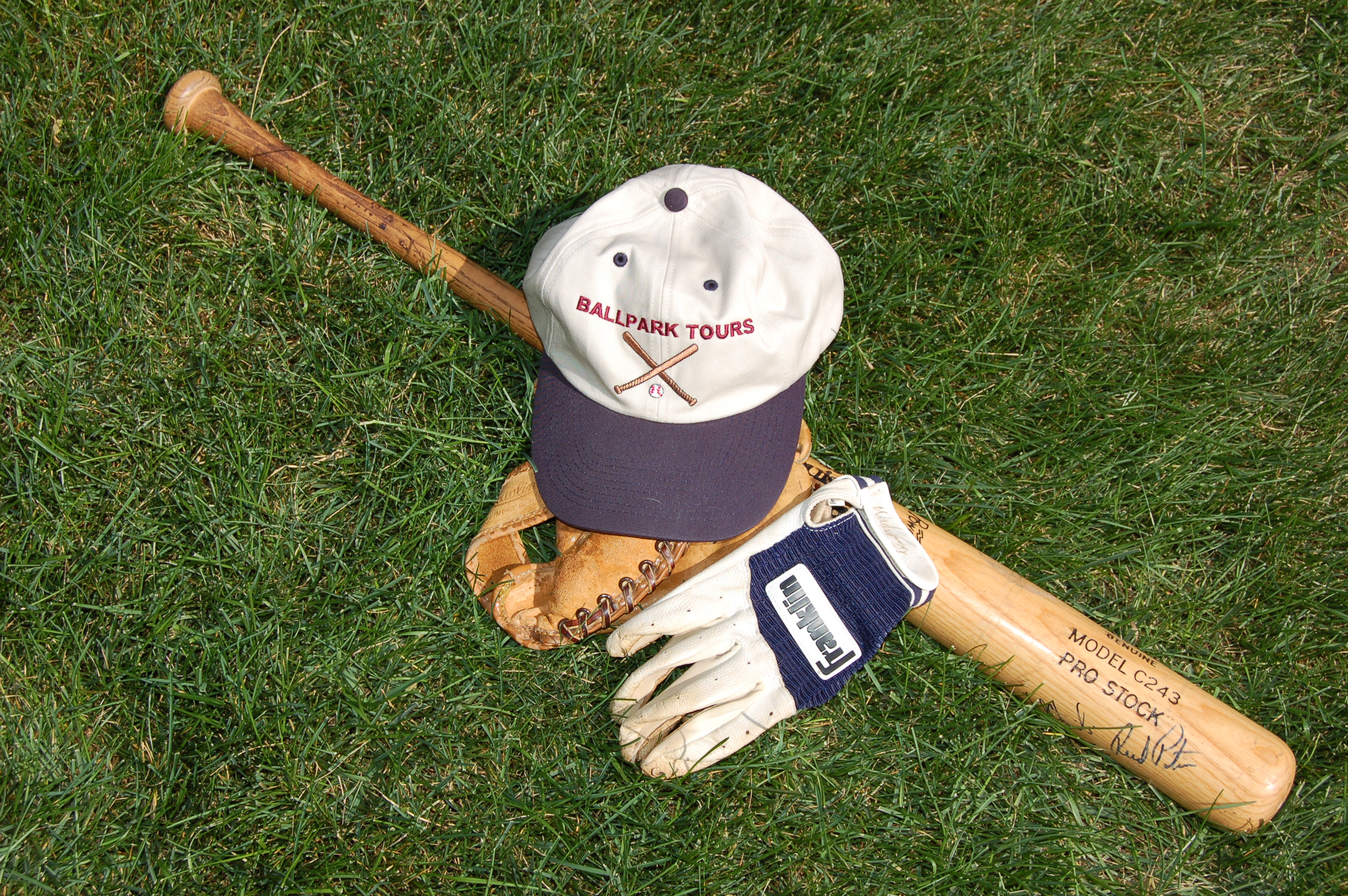
Tomorrow a.m. (Saturday, June 16), I’m off on Ballpark Tours 30th Anniversary Trek … 9 days of baseball and bus rides on what BBRT considers the premiere hard ball touring group.  Ballpark tours offers the perfect combination of structure and freedom to freelance.  “Trekkies” enjoy not just our national pastime, but also the tastes, sounds and culture of major and minor league cities.  In addition, there’s the unique “on-the-bus” baseball-saturated culture and camaraderie. I know in advance that “a good time will be had by all” – and there’s even a trivia competition and an awards ceremony.

This year’s schedule:

June 16 … Ceder Rapids Kernels at Kane County (IL) Cougars, with pre-game picnic.

June 17 … Louisville Slugger Factory and Museum Tour – Rochester Red Wings at Louisville (KY) Bats.

June 18 … Scranton/Wilkes-Barre Yankees at Louisville Bats.

June 19 … Minnesota Twins at Pittsburgh Pirates, with pre-game “Meet and Greet.”

June 20 … Twins at Pirates.

June 21 … Twins at Pirates.

June 22 … Minnesota Twins at Cincinnati Reds

June 23 … Milwaukee Brewer at Chicago White Sox

June 24 … Wisconsin Brewery Tour and home to Minnesota.


BBRT RANT: The Game Has Changed – Putting the Finish on the Start

Robin Roberts – averaged 300+ innings pitched for a decade.

Will any of today’s – or tomorrow’s – generation of major league pitchers garner 300 wins or complete 150 games?   Toss 20 complete games or pitch 300 innings in a single season?  Given the way the game is played today, any or all seem pretty unlikely.  It is, in many ways, a whole new ball game for pitchers – and it’s not the pitchers’ fault.  (Okay, it’s not that new … a lot of the change occurred  during my lifetime.)

Let’s look at some of the factors.

Five-man Rotations

As we moved into the 1970s, teams started moving from four-man to five-man pitching rotations.  Fewer starts, fewer opportunities for wins, complete games, innings pitched.   (Notably, swifter travel  – trains not planes – has contributed somewhat to this.  With more travel time meaning more days between games, fewer pitchers were needed .   The change, however, goes deeper than five-man rotations and time between starts.  Read on.)

The “Quality” Start

In today’s game, 6 innings and 3 or fewer runs is a quality start.   Starting pitchers, as recently as the 1980s, would have considered six innings pitched a day off.  Pitchers are no longer  expected to finish what they start.

The Advent of the Save

Years ago, relief pitchers were mostly starters past their prime brought in to “mop up.”   In fact, the “save” was not even established as a statistic until 1969 (saves were awarded retroactively for seasons prior to 1969).

The Rise of Relief Specialists

Today, not only does the manager look to the closer (primarily for the ninth inning), the bullpen also features key “set up” men, earmarked for the seventh or eighth inning.  And, not only do most teams have their seventh- and eighth-inning specialists, we also have people on the bench ready for long- and middle-relief.  No wonder managers are so quick with the hook.  They’ve got to keep that multi-million dollar bullpen happy.

The Dreaded Pitch Count

And, of course, there is the “pitch count,” considering the financial investment teams have in pitchers, the thinness of pitching staffs (we do, after all, now have thirty teams), pitchers are treated with great care, often held to pitch counts in the neighborhood of 100 – no matter how well they are throwing.

So, how significantly has all this changed the game?  Here’s some statistical evidence.

The Vanishing Complete Game

It wasn’t until 1955 that we saw a league leader in complete games with less than 20 finished starts (Whitey Ford, Yankees, 18 CGs).  And, 1980 was the first year that a league leader notched less than 14 complete games.  The last time, we saw 20 complete games in a season?  Fernando Valenzuela in 1986.  James Shields, in 2011, became the first pitcher to reach double-digits (11) in complete games in a dozen years – and earned a reputation as an iron man.

Roy Halladay is considered the current king of the complete game having led the AL in complete games in 2003, 2005, 2007, 2008, and 2009 – and led the NL in 2010 and 2011.  He did all of this without ever completing 10 games in a season In his career (as this blog is written), Halladay has started 363 games and completed 66 (18%).  By comparison, in 1975, the average percentage of complete games among all MLB starters (the good, bad and ugly) was 27%.   The 1975 CG leaders, Catfish Hunter and Andy Messersmith, ended up with career percentages of games finished to games started of 38% and 33%, respectively.  If we look at MLB complete game stats over time, we can be pretty sure we’ll never see numbers like those again.

– In 1900, 82.3% of games started were complete games;

– 1925 – 49.2%

– 1950 – 40.3%

–  1975 – 27.2%

–  2000 – 4.8%

– 2011 – 3.6%

We’ll also never see a pitching machine like Jack Taylor.  Between 1901 and 1906 (Cubs and Cardinals), Taylor threw a record 187 consecutive complete games; or Will White (Cincinnati), who in 1879 completed a single-season record 75 complete games (in 75 starts).  White went 43-31 that year, with a 1.99 ERA and 680 innings pitched.  For his career, White completed 394 of 401 starts.  Closer to today’s game, in 1968, Don Drysdale set a record by tossing six consecutive complete game shutouts

The Dwindling of Innings Pitched

Innings pitched?  Think about this.  From 1950-59, Robin Roberts AVERAGED 301 innings pitched per season.  And, if you pick any decade from 1900 through 1979, the average innings pitched for the league leaders was over or near 300.  However, innings pitched have dropped significantly since Steve Carlton became the most recent pitcher to hurl 300 innings in (1980).  For the last decade, the average for league leaders has been shy of 250.   (As you might expect, Will White of the 75 complete games single-season record also holds the single-season innings pitched record at 680.)

Here’s the chart of average innings pitched by league leaders (by decade) with major strike-shortened seasons deleted:

Decade                 Average Innings Pitched by League Leaders

1909-09                                                350

1910-19                                                348

1920-29                                                318

1930-39                                                304

1940-49                                                305

1950-59                                                294

1960-69                                                303

1970-79                                                327

1980-89                                                279

1990-99                                                261

2000-09                                                244

2010-11                                                247

Pitch Counts

You’ll also never see a game line-score like this one again.

 May 1, 1920

Brooklyn              000 010 000 000 000 000 000 000 00           1   9   2

Boston                  000 001 000 000 000 000 000 000 00           1 15  2

What’s so special about this line score?  Starting pitchers Leon Cadore of Brooklyn and Joe Oeschger of Boston (NL) both went the distance –  with the game called due to darkness after 26 innings.  Both starters threw more than 300 pitches (analysts estimate Cardore at 345 and Oeschger at 319). Oh, and here’s another factoid, the time of the 26-inning contest was only 3:50 minutes.

And, with that look at another way the game has changed, I’ll end this rant and just say,  I miss the days when hurlers were expected to finish what they started and when most games did NOT result in a parade of relief specialists.  But, I don’t blame the pitchers – the game has just changed.

Harper HBP + Harper Steals Home + Hamels HBP + No whining = Good “Old-Fashioned” Hardball

Ouch! Good old-fashioned hardball!

Phillies’ Hurler Cole Hamels gave Nationals’ phenom Bryce Harper an old-style welcome to the big leagues Sunday – drilling the 19-year-old outfielder with a 93-mph fastball (on his first pitch to the rookie) in the bottom of the first inning.  Harper handled it in what BBRT considers true major league fashion.  His didn’t charge the mound, he didn’t glare out at Hamels, he just dropped his bat and took first base.   He then went on to extract his revenge, moving to third on a Jayson Werth single and then taking a big lead and stealing home when Hamel attempted to pick Werth off first.

It all reminded BBRT of when MLB featured “good old-fashioned hardball” – a time when rookies were welcomed to the big leagues by spending time on their backsides in the batter’s box, when a home run by the hitter in front of you meant you were going to hit the dirt, and when a multi-homer game was usually rewarded with a baseball-sized bruise  (and they didn’t wear batting helmets … Yes, I’m that old.)

And, Sunday’s game got even more old school in the third inning when Nationals’ pitcher hit Jordan Zimmerman hit Hamels with a pitch.

After the game, Hamels confirmed his intentions, admitting he meant to hit Harper.  In his own words,  “I was trying to hit him. I’m not going to deny it. It’s something I grew up watching. That’s what happened. I’m just trying to continue the old baseball.”

As Hamels even more succinctly put it, “It’s just, ‘Welcome to the big leagues.”‘  It may cost Hamels (dollars and days off) when the NL reviews his remarks, but BBRT appreciates the honesty and the intent (Hamels indicated he was not trying to injure Harper and he did not go headhunting.)

Still, there will be those who are offended by Hamels action.  Interestingly Harper is not among them. After the game, about the worst thing Harper had to say about Hamels was that he’s a great pitcher – and reports are that he said it with a smile.  Hamels returned the compliment noting that he sees Harper as a player with a lot of talent and energy who’s “going to make a really good name for himself.”

As far as the revenge taken by the Nationals (although Zimmerman denied purposefully hitting Hamels), Hamels was willing to take as good as he gave, saying, “I think they understood the message and they threw it right back. That’s the way, and I respect it.”

Well, BBRT now has two new heroes … Hamels and Harper, who together brought some good old-fashioned hardball to the Phillies 9-3 win.

Why We Go To The Ball Park!

Attended my first game of the 2012 season yesterday – my Twins versus the Angels at Target Field – and was reminded once again of why we go to the ball park.

First completed scorecard of 2012 ... for more on how BBRT feels about an accurate scorecard, see number five in the Ten Reasons Why I Love Baseball post of March 28, 2012.

It all starts with the camaraderie.  My little group of 20-somethings  included: my daughter, who has been going to games and keeping the scorecard since she was nine-years-old (and has to get there early enough to get all the “snacking” out of the way before we get down to the serious business of watching the game); my son-in-law, who is new to this country (and baseball), a soccer fanatic, player and coach and, who after just two ML games, defended baseball as the national pastime – commenting that “There is so much drama in baseball”; and my co-worker, who still asserts that the Twins/Tigers 2009 “Game 163” matchup for the Al Central crown (which we attended together) represents the greatest day of his life.

There was also the crowd in our section, many keeping meticulous scorecards and debating such topics as whether the Twins should pitch to Pujols in the eighth inning of a one-run game and why Twins’ manager Ron Gardenhire didn’t replace Ryan Doumit (C-1B-OF-DH) with the speedier Ben Revere in right field in the ninth.  

Then there is the game itself.  For the diehard fan, there is something memorable at EVERY game and this one was no exception.

  • The winless (0-4) Twins beat the Angels (and their “ace” Jered Weaver), 6-5 – scoring as many runs in this game as they had in the previous 4.
  • There were plenty of lead changes.  The Angels took the first lead of the game 1-0 in the top of the fourth; The Twins took their first lead of the season (3-1) in the bottom of the inning; the Angels came back to lead 4-3 in the top of the fifth and added an insurance run in the top of the seventh; the Twins came back with three in the bottom of the seventh to take back the lead (6-5).
  • There was a “traditional” 407-foot home run by the Twins Josh Willingham and a 14-second, inside-the-park homer by Pete Bourjos of the Angels.
  • The winning and losing pitchers each faced only ONE BATTER; and the winner, Jeff Gray, threw only ONE PITCH, inducing a groundout to third by the speedy Bourjos.  (The losing hurler, Hisanori Takahashi, gave up a triple to Twins first baseman Chris Parmalee – who scored the winning run – on an 0-2 count.)
  • Albert Pujols was caught in a five-throw rundown between first and second.
  • With fans looking for the “semi-intentional” walk to Pujols in the eighth inning of a one-run ball game, Twins’ fireballer Glenn Perkins struck him out. 

Finally, the game is etched into history by my accurately kept scorecard (for more on how BBRT feels about an accurate scorecard see reason number Five in the Ten Reasons Why I Love Baseball post.  There a links to the post at the top the blog or on the right hand side).

All this and it’s only the fifth game of the season.  It’s going to be a great seven months.

BBRT Rant: Second Opener Kinda Like the First

One game Cardinals – Marlins Series!  WTH (What the heck?)

In BBRT’s March 30th post, I ranted about how officially opening the MLB season in Japan, only to have the teams (A’s / Mariners) come home and restart thier spring training schedule made no sense.   Yesterday, MLB opened its truly “home” season, with a one-game series between the Cardinals and new-look Marlins.  Yes, the Marlins have a new ballpark to show off, but why not a three-game series?  Maybe this is what they mean by “Moneyball.”

Jamie Moyer No. 2 Starter for Rockies – BBRT Celebrates

Jaime Moyer, at age 49, has earned the number-two slot in the Colorado Rockies’ starting   rotation.  BBRT sees this as a cause for celebration for all AARP-sters.  (See BBRT post of March 27 under Rants and Raves or News for more info on Moyer, his stuff and his career.)

Think about it!  On July 16, 1986, Moyer made his debut and earned his first ML victory, as Moyer’s Cubs beat the Steve Carlton and the Phillies 7-5 in Chicago.  Yes, that’s the same Steve Carlton who has been in the Baseball Hall of Fame for 18 years.  Moyer’s line:  6.1 innings pitched, 8 hits, 4 earned runs, 3 walks and 2 Ks.  Oh, and in 1986, gas was 93 cents a gallon and the Mets were baseball’s World Champions.

Moyer, who went 2-0 with a 2.77 era in four spring training appearances, is slated to start April 7 against the Astros (with one more spring tune-up).  If he wins, he’ll become the oldest pitcher to earn a ML victory.  BBRT is hoping he breaks the record many times over in 2012.

BBRT Rant: 2012 Opener Misses the Mark

BBRT Rant:  Season opener in Japan – thought good, execution less so.


Okay, let me start out by admitting I am “old school” when it comes to the opening of the MLB season.  I recall fondly the days when there were two leagues of 8 teams and, year after year, opening day featured two games – the NL in Cincinnati (honoring the first professional team) and the AL in Washington (honoring the national past time in the nation’s Capitol).   Day two then featured a full slate of games, anticipation was served, and the season was off and running.


Baseball Was Beautiful in Black and White

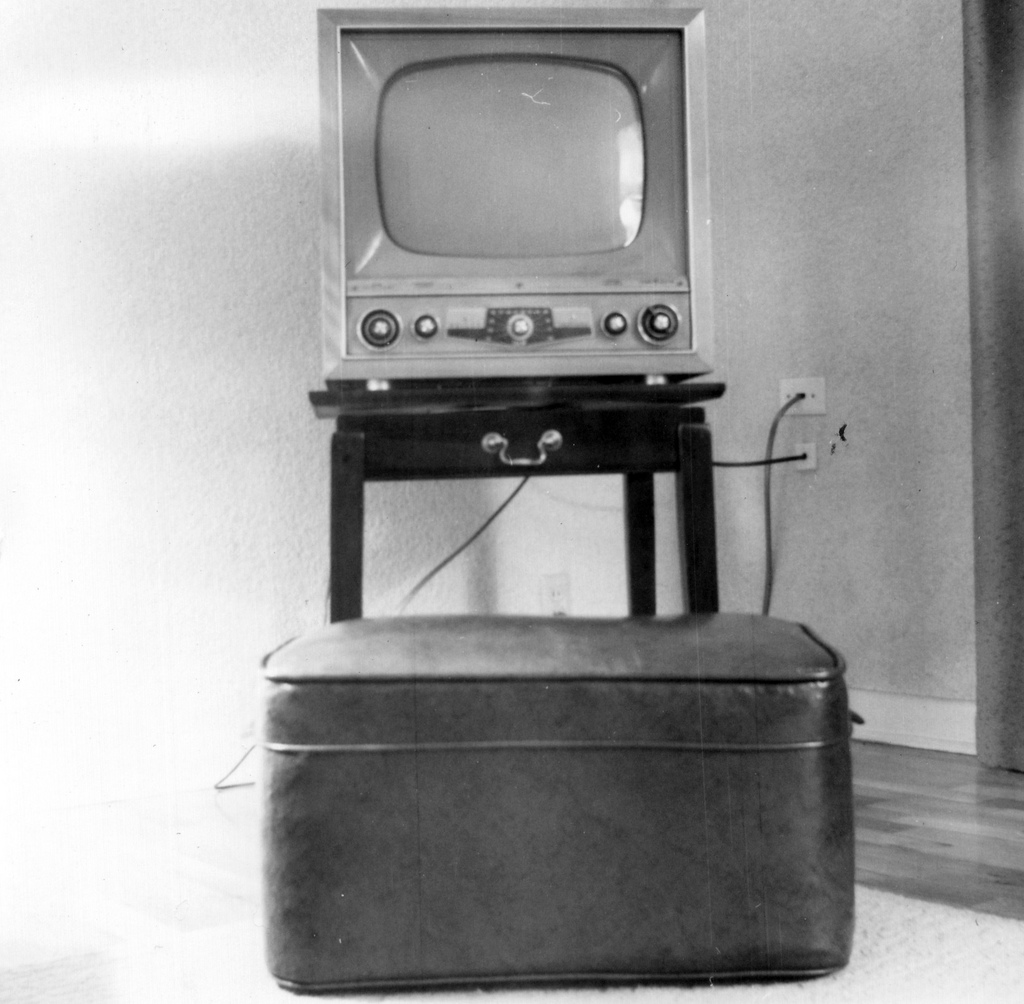
We’ve come a long way since thedays of 16 teams, the black and white “Game of the Week” on our big box, small screen televisions and the radio as our primary source of live major league coverage.  And, I appreciate the progress.   I can now get a baseball “fix,” live and in color, every day of the week – usually with multiple choices.  There is baseball news (and views) year-round and the internet makes the exchange of info and insight on our national past time both immediate and (usually) interesting.   More fans, in more cities, have access to major league baseball.  There are more players from more places – and we know more about them – than ever.

Still, somehow, on opening day, I yearn for tradition.  This year, as baseball continues to become increasingly international, MLB chose to have the Seattle Mariners and Oakland As open the regular season March 28 in Tokyo.  Turns out, there was nothing “regular” about it.

First, it was – at its foundation – a good idea: a tribute to Japan, its zealous fans, love of the game and increasing presence in MLB; a logical connection to the Mariners and their ownership; and a great gesture given the continued aftermath of the tsunami devastation.  By all accounts, in Japan, it was a great success.  Large enthusiastic crowds on arrival and at the games (which sold out in 8 hours); Ichiro jerseys everywhere (and four hits for the Japanese star in the opener); a visit to tsunami-ravaged Ishinomaki;  the honoring of a group of true heroes of that disaster; and even the Mariners’ Brendan Ryan’s successful marriage proposal.

The thought was good and, as an exhibition, the games would have been a great success.  But as the MLB’s season opener, the pitch was high and outside.  From a timing perspective, few American fans were up to watch or listen to game coverage (started at 5 a.m. in my time zone).   The games also interrupted (rather than signaled the end of) the exhibition season  –  spring training games continued and even the Mariners and As came back and played additional games that didn’t count.  So, other than some rather weird AL standings that will remain stagnant for a while, it hardly seems the season is underway.

Ultimately, the 2012 MLB season opener seemed like a non-event and I am anticipating the April 5 slate of games, my true season opener(s).

Thank you, Jamie Moyer – for bringing your heart to the game.

On March 22, Jamie Moyer, competing for a spot in the Rockies’ rotation, tossed four
perfect innings (with four strikeouts) against the San Francisco Giants.  No biggie, right?  What’s four perfect innings in one meaningless spring game?

Well, this one had considerable significance.  Moyer, 49, pitched his first game in the big leagues on June 16, 1986.  He sat out last season recovering from Tommy John surgery, did some work with ESPN, and then decided he had to give it one more try (at his age, you probably wouldn’t say “good ol’ college try”).

After the March 22 game, he had tossed 9 innings against major league teams this spring, with four hits, one run, no walks and seven strikeouts – using pinpoint control, a fast ball that doesn’t reach 80 mph and an assortment of off speed pitches to baffle hitters.

Will he win a spot in the rotation, competing with 20-somethings who benefit from Moyer’s pitching Ph.D. every time he takes the mound?  The jury’s still out as BBRT posts, but it’s looking good.  No matter what the outcome, the entire Rockies’ staff is learning a lot about changing speeds, changing locations and getting hitters off balance.

They are also learning a lot about heart and the satisfaction of doing something you love.

BBRT thanks Jamie Moyer for that lesson.  Jamie Moyer’s comeback should teach us all about the importance of following our passion, maintaining a positive attitude and never being afraid to try.  Officially, Jamie Moyer has left the mound a winner 267 times.  In reality, he’s a winner everyday – on and off the mound.

And, by the way, should he earn a roster spot and notch a victory, Moyer would become the oldest pitcher to ever win a major league game.  He also will add to a remarkable career. He has 24 major league seasons under his belt, 267 wins, two 20-win seasons,  more than 4,000 innings pitched, has been to the postseason four times (1997, 2001, 2007, 2008) and, heck, he’s even got 49 base hits. Wouldn’t it be great if number 50 was Moyer’s first home run – it is Colorado after all.

All of this from a pitcher who says his fastball was always below average.  Jamie Moyer has always pitched with his head – and his heart.  BBRT salutes his accomplishments, applauds his spirit and anticipates his first official 2012 start.

Difference makers? It could happen.

Pujols, Cano, Verlander, Tulo …  Easy to predict all of these will be impact players.  BBRT wants to look a little deeper at players we think may make a bigger difference than you might expect in 2012.

Matt Moore – SP –  Tampa Bay… This Strasberg-like phenom will help keepTampa in striking distance.  Potential Rookie of the Year could rack up 12-15 wins and 200 ks.

Mat Latos – SP – Cinc. … Strong second half of 2011 (after starting season on the DL) showed this potential ace is fully healthy.  Should benefit from the Reds offense after going 9-14 with the anemic Padres.  15-10 not too optimistic.  Key to Red’s ability to chase down Pujol-less Cardinals.

Daniel Hudson – SP – Arizona … Good bet to win 16 games, toss 200 innings and strikeout 200 for the D-backs, and they’ll need it to hold off SF.

Madison Bumgarner – SP – SF … Lincecom and Cain get most of the publicity, but this 22-year-old seems on the verge of a great season.  191 Ks versus 46 BBs last year.

Francisco Liriano – SP –Minn. … Looked strong in spring.  If he goes back to form of 2010, could help the Twins return to respectability.

Matt Garza –  SP –  Chicago (N) … 10-10 record in 2011 may put him under the radar, but Garza still has plenty left.   Keep in mind, he went 6-2 (2.45 ) in the second half of 2011 and, for the season,  he struck out 197 in 198 innings.  If Cubs are going nowhere, Garza may go somewhere (to a contender).

Julio Teheran , Shelby Miller, Drew Pomeranz – SPs – Atlanta, St. Louis, Colorado … Youngsters with great stuff sure to get to the “show” sometime in 2012, if they don’t start the season there.  Once up, they will make a difference.

Glen Perkins – RP –  Minnesota … Hard thrower stabilizes Twins’ end-game, and if Matt Capps falters, Perkins could slide into the closer role (which it is unlikely he will ever relinquish).

Nick Hundley, Jesus Montero – Cs – San Diego, Seattle … Two young “catchers of the future,” unfortunately playing where the opportunity to make a difference will be minimal – but look for strong seasons from both.

Eric Hosmer –1B – KC ….  Will build on his .293-19-78 of 2011.  Important power source for Royals.  And, hes only 22.

Ryan Rayburn – 2B –  Detroit … Showed nice pop for a middle infielder (14 HR in 121 games) last year.  Plus he can play all over the field.  Will find plenty of ABs as the Tigers defend the Central.

Dee Gordon – SS – LA (N) … Spray hitter with little power, but brings great speed.  Hit .304 with 24 stolen bases in 56 games with the Dodgers last year.  Will lead off and have an impact.   Could lead Kemp to the MVP.

Bryce Harper – OF –  Washington … Enough written already, look for him in the Nats’ lineup by June and to lead a surge to a .500 season.

Micheal Cuddyer –OF –  Colorado.  Steady power hitter will benefit from move away for Target Field to Colorado’s power-friendly air.  .280-30-100 a possibility.   Needs to perform and lead in the clubhouse if Colorado is to contend.

As the season unfolds, there will be plenty of surprises and these are just a handful of players BBRT thinks will make a bigger difference than you might expect

Rave – Goodbye Chipper

More smilin’ than stylin’

When Braves’ Chipper Jones announced his retirement after the 2012 season, baseball began saying goodbye to a great player – a fan favorite (unless you’re a Mets fan), who truly did “more smilin’ than stylin”.  Eighteen years with one team
 (and counting); 454 home runs; 1,500+ RBIs and runs scored; an MVP award; and the list goes on.  The only switch hitter to achieve a .300 career average and 300 roundtrippers, Chipper should walk into the Hall of Fame on his first ballot.

Humble to the end, even in announcing his retirement he sang the praises of others who played out their careers with one team – specifically Cal Ripken, Jr. and Tony Gwynn.  In Chipper’s words, “While I don’t consider myself in their realm, I’m awfully proud to say I’ve been a part of this organization for so long.”

Well, Chipper, you did things so right for so long, but on this one you’re wrong.  You are in the Ripken/Gwynn realm and BBRT looks forward to your induction into baseball’s ultimate “realm” – Cooperstown.