Bobbleheads to Boogie Boards … A Cornucopia of 2018 MLB Team Promotions

MLB’s regular season is closing in fast and, as is BBRT’s tradition, it’s time to take a look at the ballpark “extras” fans can expect – promotions, giveaways, theme nights, special events, ticket discounts and more.  Being from Minnesota, I will again put “extra” emphasis on the Twins; but I’ll share some information on my favorite giveaways from each team across MLB.  I’ll also spend more time on the “at-the-gate” promotions, and less on those “theme night” items that often require an extra-charge ticket.

This year’s team promotions range from bobbleheads to boogie boards to bottle opener sunglasses – and pretty much everything in between. You’ll find giveaways ranging from replica jerseys to duck calls, baseball caps to baseball bats and beer steins to back packs – there’s even a Bob Gibson commemorative pitching rubber and a Prince inflatable guitar.  The Special/Theme Events are equally varied, ranging from Star Wars Nights to Vegan Day.  So, let’s take a look at what’s happening on the promotions stage at Target Field and around major league baseball.

DISCLAIMER:  Keep in mind, promotional items, eligibility and schedules are subject to change without notice. In addition, some of the teams had not yet released their full schedule of events as this post “went to press.” For a complete list and up-to-date details regarding 2018 Twins promotions (including dates, numbers of items, activities and eligibility) click here.  For Twins Special/Theme Events, click here. For details on promotions and events across MLB, visit each team’s website.

Before we get into the details, BBRT would note that coming up with the annual selection of giveaways and promotions is the result of months of consideration, evaluation and brainstorming.

Twins Manager of Promotions and Marketing Mitch Retelny says the work on each season’s slate of promotional items and special events starts even before the previous season ends.

“In August and September the wheels start turning,  and we start getting the calendar for next year into shape,” Retelny said. “But, really, it’s a year-round process. We’re always on the lookout for a new ideas or opportunities that will connect with the fans.”

He added that there are two main focuses to the  process.
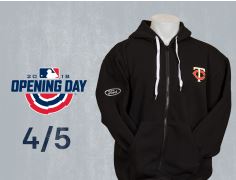
xxhoodie“Obviously, we look at whether we think the item will sell incremental tickets. Will it get people excited and get them to come out to the ballpark?” he explained.  “Second, we ask ourselves if it is an item people will use.  Will it get fans to wear our brand, inside and outside the ballpark, or (for non-wearables) will it be something they will hold onto?”

Retelny cited the Twins Opening Day hooded sweatshirt as a good example of a promotional item that “has not only made a connection with the fans, but also has been a great for getting our brand out in the Twin Cities early in the season. ”

________________________

BOBBLEHEADS REMAIN THE TOP MLB GIVEAWAY

The king of MLB giveaways remains the bobblehead.  This year, teams will hand out approximately three million bobbleheadS “at the gates.” (An exact count is difficult, as some teams list totals for giveaways as “all fans” or “as long as supplies last” and others have not released their full promotional calendars.)  BBRT would also note that the three-million estimate does not include bobbleheads to be distributed as part of theme nights that require special tickets.

DODGERS TO HAND OUT MORE THAN 400,000 BOBBLEHEADS

XXgIBSONIf bobbleheads are the royalty of ballpark giveaways, the Los Angeles Dodgers are the bobbing head kings.  This season, the Dodgers have scheduled eleven bobblehead at-the-gate giveaway – totaling an MLB-high 440,000 bobblers.

Kirk Gibson’s iconic 1988 World Series Game One, game-winning, walk-off home run is the subject of the Dodgers’ first 2018 bobblehead.

Bobbleheads are still the most popular giveway, Retelny said, but the approach is changing.

“It used to be, we just said we need to have four or five bobblehead nights and then worked to fill them in,” he continued “ Now, it’s not the number that drives the decision, but what makes sense – in terms of the team and fan base.”
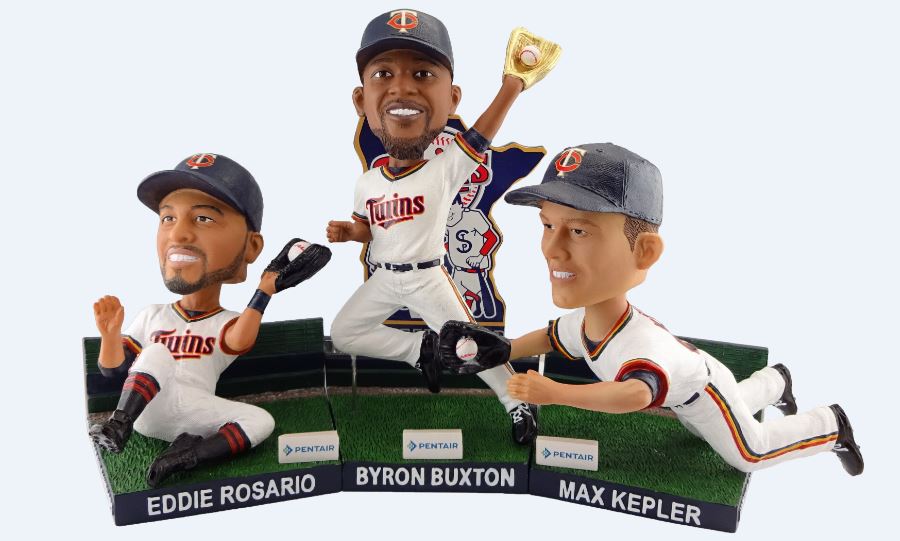
BuckEdMaxHe added that the Twins highly regarded outfield defense offered a bobblehead opportunity that made sense for 2018, and that the Twins wanted to do something unique with that opportunity.

“This year’s Nothing Falls But Raindrops bobbleheads feature Kepler, Buxton and Rosario –all on defense,” he said.  “It’s unique because, while each boblehead can stand alone, they are meant to be a set.  They fit together and interact with each other – also creating the full stadium outfield backdrop.”

It will be busy at the gates this season this season, with the Twins handing out:

  • 65,000 shirts/T-shirts;
  • 60,000 stocking caps;
  • 45,000 baseball caps;
  • 40,000 bobbleheads;
  • 30,00 hooded sweatshirts;
  • 30,000 magnetic schedules;
  • 20,000 tote bags;
  • 20,000 winter flap caps;
  • 10,000 inflatable guitars;
  • 5,000 commemorative pins;
  • 5,000 backpacks;
  • 5,000 pillow cases.

BBRT’S FIVE FAVORITE TWINS 2018 GIVEAWAYS

tchOODIE#1 – Twins Hooded Sweatshirt – Opening Day (April 5)/First 30,000 fans.

Now an Opening Day tradition – a practical way to wear the Twins colors, especially early in the season.

#2 – Nothing Falls But Raindrops Bobblehead Set – June 1, June 22, July 13/First 10,000.

A unique trio of interlocking bobbleheads (Max Kepler-June 1; Byron Buxton-June 22; Eddie Rosario-July 13) that, when put together, give you the Twins outfield trio and the Target Field outfield backdrop.

XXPIN3. Johan Santana Twins HOF Pin – August 3/First 5,000.

I collect stadium and ball park event pins (they take up a lost less room than hats or bobbleheads), so this is a great way for me to commemorate the Twins’ two-time Cy Young Award winner. Lots of shelf room? August 4 features a Santana bobblehead.

tcGUIRTAR4. Inflatable Prince Guitar … June 8/First 10,000 fans.

Unique – and uniquely Minnesotan (you won’t get this at any other MLB park) – this Twins giveaway honors the Minnesota Music icon.

XXTRAPPER5. T.C. Bear Trapper Cap … September 30/First 10,000 12-years-old or younger.

A fun item that the kids can wear all winter (and, as we Minnesotans all know, as September leaves, winter is just around the corner.

For a complete list of Twins giveaways and events, visit the Twins website – links in the Disclaimer box near the top of this post.

BBRT’S NUMBER-ONE 2018 BOBBLEHEAD – THE BABE … IN BOSTON

Babe Ruth started his career on the mound in Boston (with the Red Sox), built a legend as a New York Yankee and wrapped it up with one season back in Boston (with the Braves).  The Braves are celebrating the Bambino’s final season with a September 4, “Babe Ruth as a Boston Brave” bobblehead giveaway (first 20,000 fans).  That’s one I’d really like to have.

_________________________________________________

BBRT’S FAVORITE GIVEAWAY – TEAM BY TEAM

Note: as of this posting, not all teams had released a complete promotional schedule. 

Arizona Diamondbacks … Mother’s Day Tote… May 13/10,000.

xxDbacksTaking Mom to the ball park and she gets a tasteful tote! Wow, your shopping is done; and you’re at a ball game! Start planning now for this one.

Diamondbacks Bobbleheads: Archie Bradley (April 21); Star Wars Paul Solo (June 2); TBD (July 21, September 8).  All first 20,000 fans.

Atlanta Braves … Chipper Jones replica Hall of Fame Plaque … August 10/First 20,000.
xxBravesPicking up a replica of Chipper Jones’ Hall of Fame plaque will be a nice way to honor this long-time Braves star. Speaking of long-time stars, the Braves will celebrate Hank Aaron Weekend June 22-23  – watch for details on that one.

Braves Bobbleheads: Ender Inciarte (April 20); Blooper (April 22); Ozzie Albies Calrissian (May 4); Freddie Freeman (June 15); Chipper Jones (August 18); Babe Ruth (September 4); Mike Foltynewicz (September 15). All first 20,000 except Blooper, first 10,000 14 and under. 

Baltimore Orioles … Buck “Snow”-alter Snow Globe … June 28/First 25,000 15+.

The play on words is enough to ensure the “Buck” stops here in the BBRT favorites list – although if you are taking Mom for Mother’s Day, the May 13 Pashmina Scarf giveaway is looking good.

Orioles’ Bobbleaheads: Dylan Bundy (June 12); Trey Mancini (July 28).  Both first 25,000 age fifteen or over.

Boston Red Sox … Red Sox Socks … July 10/First 10,000 fans.

xxRedSoxWhat’s more appropriate than socks from the Sox?  Now, if they came with stirrups, that would be something quite special.

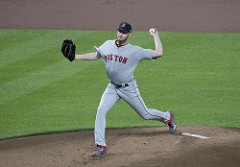
Red Sox Bobbleheads: Chris Sale (April 13);  Andrew Benintendi (May 25); Jackie Bradley Jr. (June 27); Xavier Bogaerts (July 31); Mookie Betts (September 14); Pedro (September 25).  All first 10,000.

Chicago Cubs …  Cubs Cap-Shaped Umbrella … May 22/First 10,000.

xxcubsWhat could be more appropriate for a rainy day at the ballpark than an umbrella shaped like a baseball cap?  Still, there is one more limited item I really, REALLY, find intriguing: the Cubs “Bottle Opener Sunglasses” given away on July 20 to the first 5,000 (21 and older) arriving for the Budweiser Bleachers.  Now, that is something I just have to have.

Cubs Bobbleheads: Wilson Contreras (May 11); Jason Heyward (June 18); Javier Baez (July 23); Kyle Hendricks (August 15); TBD (September 16).  All first 10,000 fans.

Chicago White Sox … 1983 Replica Road Jersey … June 2/First 20,000.

Harold Baines, Carlton Fisk, Greg Luzinski, Lamar Hoyt, Richard Dawson, five relievers with at least five saves, 99 wins and an AL West title. White Sox fans probably remember this jersey proudly – especially since the crosstown Cubs only won 71 games that season.

White Sox Bobbleheads: Hawk “Solo” (May 19); Jim Thome (August 11). Both for first 20,000.

Cincinnati Reds … Scooter Gennett Bobblehead … June 9/First 20,000.
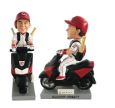
xxredsFew bobbleheads make it to both the BBRT bobbleheads list and as the featured item for a team.  However, when you are honoring a guy named “Scooter” for hitting four home runs and driving in ten runs in a single game, that item deserves recognition. And, if you put this “Scooter” on a scooter, it’s even better.

Reds Bobbleheads: Tucker Barnhart (April 14); Eugenio Suarez (May 5); Scooter Gennett (June 9); Rosie Red (June 30); Fan Vote (August 18).

Cleveland Indians … 1948 Replica Road Jersey …. September 1/First 12,500 fans.

The Indians are celebrating the 60th anniversary of their 1948 World Series Championship – a season in which they were better on the road (49-29) than at home (48-30), if only by the narrowest margin.  It’s appropriate then that part of the celebration include a replica of the road jerseys worn that season by such Indians’ greats as Lou Boudreau, Larry Doby, Bob Feller, Joe Gordon, Bob Lemon and even Satchel Paige (who went 6-1, 2.48 for the Indians at age 41).

Indians Bobbleheads:  Corey Kluber (May 28); Andrew Miller (June 16); Carlos Carrasco (July 12); Edwin Encarnacion (August 29).  Kluber first 15,000 fans, all others first 12,500.

Colorado Rockies … 25th Anniversary Throwback Replica Jersey … June 23/First 15,000.
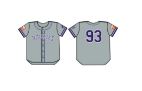
xxrockiesWay back in the Rockies’ Year One (1993), this jersey was worn by the likes of Andres Galarraga, Vinny Castilla, Dante Bichette, Charlie Hayes – and even future Marlins and Yankees manager Joe Girardi (who played for the Rockies from 1993 through 1995). Nice memento of the first  year of MLB in Denver.  Kids might be interested in the June 10 Junior Fire Marshall Helmet giveaway.

Rockies Bobbleheads: Charlie Blackmon (April 8); Nolan Arenado (July 14). Both first 20,000.

Detroit Tigers  … 1968 Replica Road Jersey … September 8/first 20,000.
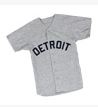
xxTigersOkay, to be fair, the 1968 replica jersey probably should not be number-one – that honor most likely belongs to the Negro Leagues Tribute Game Stars Hat (June 9) or the replica jerseys of the Tigers’ newest Hall of Famers – Jack Morris (August 12) and Alan Trammel (August 26).  But I’m going with the 1968 World Series Champion Tigers replica road jersey for sentimental reasons.  Hall of Famer Eddie Mathews is my all-time favorite player and he got his last major league at bat as a member of the Tigers in the ’68 World Series.  All I’d need to do is put a number seven (Mathews wore seven with the Tigers) on that jersey and I’d be good to go.

Tigers Bobbleheads: Al Kaline (May 26); Nick Castelanos (May 27); Bill Freehan (June 2); Willie Horton (July 7); Mickey Lolich (August 25).  All first 10,000 fans. 

xxAatrosHouston Astros – Replica World Series Trophy … April 6/First 10,000 fans

When you win the World Series, promotional opportunities abound – and the Astros are delivering with everything from replica World Series Championship rings to World Series Championship tote bags to a George Springer World Series MVP bobblehead.  BBRT’s favorite is a Replica World Series Championship Trophy (April 6), although that replica WS Championship ring (April 7) has some sparkle as well.

Astros’ Bobbleheads: George Springer (April 14): Jose Altuve (April 28); Justin Verlander (July 14); Alex Bregman (September 1).  All to the first 10,000 fans.

SALT IN THE WOUND?

Justin Verlander – acquired from the Tigers for a trio prospects in late August of last season (much to the dismay of Detroit fans) – went 5-0, 1.06 for Houston down the stretch and picked up four post-season wins. On July 14, the Astros will be handing out Justin Verlander K-Counter bobbleheads. Who’s in town that day?  The Tigers, course.

Kansas City Royals … Municipal Stadium Replica … April 14/First 10,000.
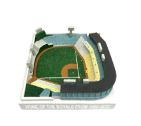
xxroyalsGetting a ballpark in a ballpark – you gotta like that.

Royals’ Bobbleheads: Sluggerrr (May 5); George Brett (May 19); Whit Merrifield (June 2); Jeff Montgomery (August 25). All first 20,000 fans.

Los Angeles Angels … “Albert Pujols Count Down to 3,000” action figure … April 6.
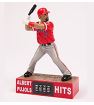
xxAngelsFuture Hall of Famer Albert Pujols is only 32 base knocks shy of 3,ooo – and lots of lucky Angel Stadium fans will have the opportunity to count down with him … on their very own Pujols Countdown to 3,000 action figure. 

Angels’ Bobbleheads: Andrelton Simmons (May 11); Shohei Ohtani (July 12); Vlad Guerrero (August 10).

Los Angeles Dodgers … Jackie Robinson Replica Jersey … April 15/First 40,000.

Jackie Robinson is legend (as is the Dodgers’ policy of having almost all promotional giveaways reach the first 40,000 fans). This jersey is a fitting tribute – and right at the top of the list of 2018 giveaways for any team. (For the kids, the pick might be the Junior Dodgers Fidget Spinners on May 27 – first 12,000 ticketed fans 14 and under.)

Dodgers Bobbleheads: Kirk Gibson (March 30); Cody Bellinger  (April 21); Corey Seager (May 22); Chris Taylor (May 30 ); Manny Mota (June 9); Kike Hernandez (June 26); TBD (July 14, July 31, August 14, August 22, September 18).

Miami Marlins … Billy the Marlin Pool Float … June 30/While supplies last.

Miami and floating a bright blue pool just seem to go together.

Marlins Bobbleheads: Superhero (July 1); Celebrity (July 29). Listed as while supplies last. 

Milwaukee Brewers … Mini Replica Bullpen Car … June 17/First 20,000.

xxBrewersBullpen cars take me back to my youth, when just about every team had one.  So, I can get hyped for this giveaway.  I’m sure there would be a place for it in my man-cave.

Brewers Bobbleheads:  Eric Thames (April 22); Travis Shaw (May 27); The Gauntlet (June 24); Lorenzo Cain (August 26). Listed for all fans.

New York Mets . .. Mets Cereal Bowl … September 9/First 15,000.

Why a cereal bowl for the list? Because it’s the only one I saw among MLB team giveaways – and a good breakfast is important. I might add that I am also interested in the HR Apple Figurine (June 23) – just because it’s in The Big Apple; and I also was wondering about the Yoenis Cespedes Shin Guard (July 8).

Mets Bobbleheads: Mr. Met – as Hans Solo (May 19); Jacob deGrom (July 7); Noah Syndergaard – as Thor (August 4); Jay Bruce (August 25).  All for first 25,000 fans.

New York Yankees … Didi Gregorius Bat Day … May 12/First 10,000 14-years-old and under.

Nostalgia!  I remember went “Bat Day” was THE day to be a kid and at the ballpark.  In New York, it is again.

Yankees Bobbleheads: David Wells (April 23); Aaron Judge – Jedi Warrior (May 4); Ron Guidry (June 14); C.C. Sabathia (July 27); Brett Gardner (August 31).  All first 18,000 fans; except Judge Jedi for the first 40,000.

Oakland Athletics … “2002 Streak” team t-shirt …. August 18/First 15,000. 

In 2002, when they finished with a 103-59 record, the A’s ran off a remarkable 20-game winning streak. What Oakland fan wouldn’t want a t-shirt commemorating that achievement?

A’s Bobbleheads: Black Panther (May 5); Sugar Skull (September 9).  Both first 15,000

Pittsburgh Pirates … Pirates Oktoberfest Stein … September 22/First 20,000.

Baseball and beer, what more can I say? Oh yeah, baseball and beer in October is especially nice. That’s when I’d put the Pirates Oktoberfest Stein to use.

Pirates Bobbleheads: Vintage (May 19); Sean Rodriguez (June 23); Josh Bell (July 14); The Hulk (July 29); Andy Van Slyke (August 4); Felipe Rivero (September 8). First 20,000 fans for all except The Hulk – limited to those 14-years-old and under,

Philadelphia Phillies … Phillies Headphones … April 27/Fans 15-years-old and older.

xxphilliesWe just needed something “tech-ee” on the list, and these Phillies Headphones looked pretty sharp. BBRT also recommends the John Kruk Batting Practice Pullover (June 10) as a more traditional giveaway grab.

Phillies Bobblehead: Brad Lidge (August 5).  Listed for all fans. 

Saint Louis Cardinals … (tie) Bob Gibson Pitching Rubber & Dizzy Dean Watch …. May 18 and August 19/Both first 30,000 age sixteen and over.
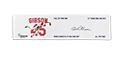
xxcardinalsTough choice here, the uniqueness of a pitching rubber (photo) commemorating Gibson’s historic 1968 season (given out May 18) or the more practical Dizzy Dean Watch (August 19). Can’t go wrong either way, why not go to both games? Oh, and there’s a pretty snazzy Rawlings Kids Baseball Glove for those 15 and under (May 20).

Cardinals Bobbleheads: Opening Day Card Parade Mystery Players (April 7); Dexter Fowler (April 21); Chris Carpenter (June 3); Carlos Martinez (June 30); Adam Wainwright (July 14); Mark McGwire (September 16). All first 30,000 age 16and over. 

San Diego Padres … Cub Busters T-Shirt … July 14/All fans.
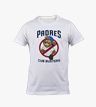
xxpadres2This item makes the list partially because it is  one of only two that actually mentions the competiition (both, interestingly, from California, see the SF Giants’ BBRT-featured giveaway). The “Cub Busters” T-Shirt will be handed out before a Cubs/Padres tilt on July 14.  If you are planning ahead, available sizes will be Youth L and Adult M, XL, 2XL.

Padres Bobbleheads: Tony Gwynn (May 10); Ken Caminiti (May 11); Trevor Hoffman (May 12); Greg Vaughn (May 13); Trevor Hoffman (June 30); Trevor Hoffman (July 28); All listed for all fans.  

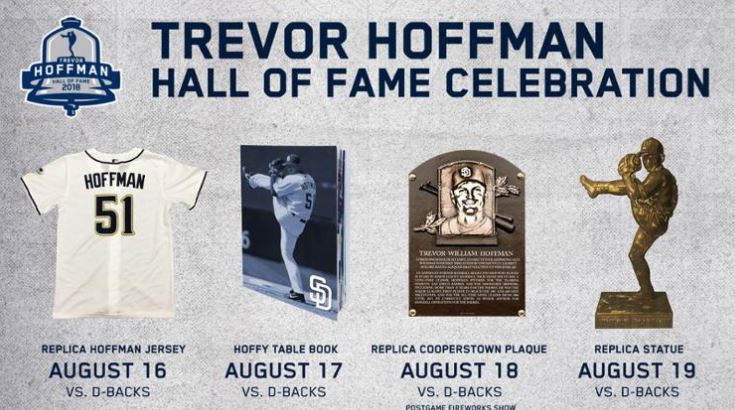
HOFFMAN HALL OF FAME HONORS

xxpadresThe Padres are showing their pride in new Hall of Famer Trevor Hoffman – with a total of eight Hoffman-focused giveaways:   ’98 Bobblehead (May 12); 500th Save Bobblehead (June 30);  #51 Retirement Bobblehead (July 28); #51 Flag (July 29); Replica Jersey (August 16); Hoffy Table Book (August 17); Replica Hall of Fame Plaque (August 18); Statue (August 19). 
San Francisco Giants … Giants/Dodgers Collectors Rivalry Pin … April 8/First 20,000.

xxGiantsThe Giants/Dodgers rivalry stretches from the 1890s to the present day and from the East Coast to the West Coast.  This Rivalry Pin celebrates the the last sixty years of that rivalry – one of the longest-standing and most fervent in baseball history. Throughout the season, the Giants will celebrate their 60th Anniversary in SF with logo items ranging from tote bags to backpacks to blankets.

Giants Bobbleheads:  Willie Mays (April 7); Willie McCovey (June 3); Buster Huggs (August 25). All first 35,000.

Seattle Mariners … Robinson Cano & Nelson Cruz Wine Stoppers … May 25/First 10,000 21+.

There’s no crying in baseball, but there is “wining,” as evidenced by BBRT’s favorite Mariners’ giveaways – Robinson Cano and Nelson Cruz Wine stoppers.

Mariners Bobbleheads: Robinson Cano (March 31); “Han” Seago (May 4); Felix Hernandez (May 19); James Paxton (July 1); Dee Gordon (July 21).  All first 20,000.

Tampa Bay Rays … Boogie Board … June 10/While supplies last; 14 and under.
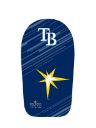
xxraysA real local flavor for youngsters 14-years-old and under, as the Rays hand out Boogie Boards. Want a Rays’ tank top to wear when you ride that board? Come back on July 22.

Rays Bobbleheads: Carl Crawford (April 14); Fred McGriff/Tino Martinez (June 9); Akinori Iwamura (August 4); Wade Boggs (August 25); Dan Johnson (September 29). All while supplies last. 

Toronto Blue Jays … Alomar, Molitor, Olerud Triple Bobblehead … August 11/First 20,000.

This history behind this bobblehead is what earned the top ranking. Back in 1993, three Toronto Blue Jays posted the top three American League averages – 1B John Olerud (.363), 2B Roberto Alomar (.326) and DH Paul Molitor (.322). And, they are together again on the Blue Jays’ August 11 Triple Bobblehead giveaway.  Oh yes, and the only other time three players finished 1-2-3 in the batting race was 1893, when the Philadelphia Phillies’ outfield of Billy Hamilton, (CF), Sam Thompson (RF) and Ed Delahanty (LF) finished with averages of .380 (Hamilton), .370 (Thompson) and .368 (Delahanty).

Blue Jays Bobbleheads: Justin Smoak (March 31); Marcus Stroman (June 6); J.A. Happ (July 2); Alomar-Molitor-Olerud (August 11);  All first 20,000.

Texas Rangers … Adrian Beltre 3,000 Hits Mini-Bat … April 20/First 15,000.

xxrangersThe Adrian Beltre Mini-Bat is a nice tribute to a sure future Hall of Famer who already has 3,048 hits, 462 home runs and 1,642 RBI.  BBRT … who likes statistics and print materials … also likes the fact that the Rangers are giving away 20,000 Ranger Yearbooks on June 26.

Rangers Bobbleheads: Adrian Beltre (March 31); Elvis Andrus (April 7); Joey “Hans” Gallo (May 26); Joey Gallo (June 9); Best Friends #1 – Adrian Beltre (June 16); Best Friends #2 – Elvis Andrus (July 21); Vlad Guerrero (August 4); Ted Williams – as a manager (August 5); Nomar Mazara (August 18); Robinos Chirinos (August 28); Rangers’ Captain (September 1).   All first 15,000.

The Rangers and Dodgers are each giving out a MLB-high eleven bobbleheads in 2018. (Free bobbleheads as opposed to Theme Night ticket bobbleheads.)

Washington Nationals … Kids Superhero Cape … May 20/First 10,000 12-years-old and under.

Just about every kid would like to be a superhero. This cape giveaway can give them a head start.

Nationals Bobbleheads: Sean Doolittle (April 13); Max Scherzer (May 4); Ryan Zimmerman (June 8); Bryce Harper (July 6); Anthony Rendon (August 3). All first 25,000.

_____________________________________________________________________

SPECIAL EVENTS/THEME NIGHTS – ALL THE RAGE

Who knows whom or what you might see at a MLB ballpark on a"theme day."

Who knows whom or what you might see at a MLB ballpark on a”theme day.”

Major League teams are also working to bring fans to the ballpark with special event or theme nights (which usually, but not always, involve a special … and specially priced … ticket package). These events are designed to enhance the fan experience; create a sense of community around a shared cause or concern, location or institution,  activity, vocation, or ethnicity; and, of course, sell tickets.  How popular are these special events?  As I put together this post in early March, not all the teams had completed or announced their full Special/Theme Event schedules – and I was still able to identify just over 500 such events across MLB. 

These events usually include a special experience (like wine or craft-beer tasting, a yoga class or a chance to attend a game with your dog) and/or an exclusive commemorative item (like a limited edition bobblehead, unique baseball cap or t-shirt, team-identified wine glass or beer stein).  Their focus is varied. Some are tied to pop culture (Star Wars Day, Jerry Garcia Night), others to baseball events (World Series anniversary celebrations), specific causes (cancer, autism, Alzheimer awareness), appreciation for specific groups (military, law enforcement, teachers), specific activities (needlework, yoga, youth baseball/softball), ethnic heritage … and the list goes on and on.  Note: In many cases, a portion of the cost of the ticket package is donated to a specific cause or group.

VEGAN NIGHT – AMONG THE MOST UNIQUE 2018 MLB THEME EVENTS 

The Pittsburgh Pirates (as of this writing) are the only MLB team holding a VEGAN NIGHT … when a special event ticket provides pre-game access to an exclusive vegan menu in the Pirates Picnic Park.  BBRT query: Is beer vegan? I hope so.

Running a close second were the Texas Rangers with two unique events:

  • Beltre the Giraffe’s Birthday (June 8) … Celebrating the first birthday of the Fort Worth Zoo’s giraffe Beltre, with a special Beltre the Giraffe Bobblehead
  • Last Chance Theme Night (September 21) … A second chance for those who may have missed a particularly coveted exclusive theme night commemorative. Buy a special ticket and pick up one of the leftover items from theme nights held throughout the season.

Here are a few observations from BBRT’s review of 2018 Special/Theme Events Calendars:

  • College Nights – usually involving a co-branded baseball cap are extremely popular. The Texas Rangers alone have slated events honoring thirteen colleges and universities.
  • Star Wars is the focus of at least 19 theme nights, making it an MLB pop culture All Star.
  • Allowing fans to bring their “best friend” (canine, that is) is most popular in Pittsburgh, where the Pirate have scheduled eleven occasions when you and your BFF (Best Furry Friend) can take in a ball game.
  • Firefight/Military/Law Enforcement Appreciation Days/Nights are also popular.
  • There also are a good number of events focused on wine- and beer-tasting, needle arts (Stitch N’ Pitch slated by five teams) and yoga.
  • Also of interest to BBRT were the Zubapaloozas (three teams); Grandparents Days (two teams); and World Wrestling Entertainment Night (one team).

______________________________________________________

Being from Minnesota, I’d also like to take a closer look at the:

TWINS SPECIAL EVENTS AND THEME NIGHTS

Here is a list of Theme Events and the promotional items that go with the special ticket.  In each  case, the event also includes, of course, a ticket to that day’s game.   For full  (and the most up-to-date) details, check out the Twins Theme Events schedule on the team website.  There is a link in the disclaimer box near the top of the post.

-University of Minnesota Night … April 27

Participants receive a co-themed Twins/U of M Cap; great for U of M students, staff and alumni. Goldy Gopher will also make an appearance – and a portion of each ticket package goes to the U of M Alumni Association.

-Minnesota Lynx Night … May 1

Celebrate the Lynx’ successful franchise with a co-branded Twins/Lynx cap. Lynx Mascot Prowl will be in the house – and a portion of each ticket package will go to support the Positive Coaching Alliance.

-Scrubs Night … May 16

The Twins salute area health care professionals with Twins hospital scrub pants – a nice complement to last year’s Scrubs Night scrubs top.

-Minnesota United Night … May 21

Soccer fans “Unite” at Target Field, and receive a co-branded Minnesota United/Twins scarf. PK Loon will be on hand.

BBRT TOP TWINS THEME NIGHT – STAR WARS – MAY 22

XXSTARWARSThe special gift for this one is a “Joe ‘Solo’ Mauer Millennium Falcon Bobblehead.”  Joe is sitting in the gunner bay in this unique bobblehead that features moving parts and sound.

-Wine, Women and Baseball … June 1, July 12, August 17.

Start your evening with a pre-game hospitality event at Loews Minneapolis Hotel – wine tasting, appetizers and desserts – and take home a Twins Leather Clutch Wristlet.

-SKOL Night … June 1

Proudly wear your new Vikings purple and gold SKOL/Twins cap. A portion of each special ticket package will go to support the University of Minnesota Children’s Hospital.

-Margaritaville Night … June 2

You’ll know it’s five o’clock somewhere when you wear your exclusive Margaritaville-inspired Twins Hawaiian shirt.

A PRINCE OF AN EVENT … JUNE 8

XXpRINCEPrince fans purchasing this special package will receive this co-themed Prince/Twins purple cap. Arrive among the first 10,000 fans at the gate and you can add an inflatable Prince Guitar.

-Faith Day … June 10

This day features a post-game program with live music from the Eagle Brook Church music team and testimonies by Brian Dozier, Kyle Gibson and other Twins.

-University of St. Thomas Night … June 20

Show your colors with a purple and gray Twins/St. Thomas cap. “Tommie” will make a Target Field appearance – and a portion of the package price will go to the St. Thomas Alumni Association.

University of North Dakota Night … July 6

Be true to your school with an exclusive UND/Twins cap – with a portion of each package price going to the UND alumni Association.

-Pride Night … July 9

This package includes an exclusive Minnesota Twins Pride Night cap – and a portion of each package will go to support One Heartland.

-South Dakota State University Night … July 12

Wear your new SDSU/Twins co-themed cap with pride – and a portion of the package price goes to the SDSU Alumni Association.

-College of Saint Benedict/St. John’s University Night … July 30

How about a three-themed hat – CSB/SJU and the Twins; with a portion of the package price supporting the CSB/SJU Alumni Association?

Cancer Awareness Night – August 14

XXCANCEROn Cancer Awareness Night, participating fans will be able to select a Twins cap in colors that reflect the cancer charity of their choice – and know that a portion of their package price will go to local non-profit organizations to support cancer awareness and research.

North Dakota State University Night … August 16

Top your Target field experience off with a co-themed NDSU/Twins cap – and have a portion of your package cost go to the NDSU Alumni Association.

-Twins Sportsmen’s Flannel Night … August 18

XXFLANNELWow, a ball game, a Joe Mauer Signature Flannel shirt AND a portion of the package price supports Pheasants Forever.  You’d have to hunt far and wide for a better ballpark deal.

-Yoga Night … September 8

This package includes a September 5 yoga class, your ticket (of course) to the September 8 Twins game and a special edition Twins Yoga Mat.

-Minnesota Wild Night …. September 12

Winter’s just around the corner and you may need the exclusive co-branded Minnesota Wild/Twins winter beanie that comes with the package,  Also a special; appearance by Nordy – and a portion of each package goes to support the Ronald McDonald House.

-Minnesota Timberwolves Night … September 25

Cheer on Crunch from under your Twins/Timberwolves co-branded cap – and know a portion of each package price goes to support the Positive Coaching Alliance.

-Love Your Melon Night … September 27

This package includes a Twins Love Your Melon knit beanie and a portion of each package goes to support Love Your Melon, a program focused on providing hats to children battling cancer.

-Zubapalooza  … September 28

Pretty self-explanatory (and popular), this package gets you into the ball game – and into your very own pair of stylish Twins Zubaz!

PRE-GAME HALL OF FAME CEREMONIES

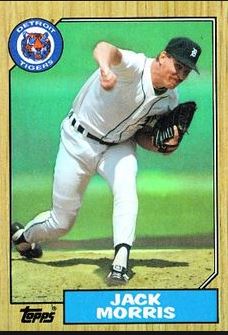
The Twins are also planning pre-game Hall of Fame Ceremonies for Jack Morris (August 18) and Jim Thome (August 25). 

_______________________________________________

DISCOUNTS AND MEAL DEALS

If you follow BBRT, you know how much I love a bargain.  For Twins Fans, here are a few of the bargains available at Target Field.

 TICKET DISCOUNTS …

FOR SENIORS

Treasure Island Resort & Casino Senior Days … All weekday day games.

Fans 55 and better receive a $5 discount on Field Box, Treasure Island Cove and Left Field Bleacher tickets for all weekday day games. Offer available by phone and in-person only. Tickets subject to availability. Not available for April 5.

FOR VETERANS AND ACTIVE MILITARY

Military Discount sponsored by FOX Sports North … Monday through Thursday.

Active military members or veterans with a valid ID can purchase up to four half-price Home Plate View tickets for every Monday through Thursday game.  Available at GovX.com or day of game at Target Field.  Visit twinsbaseball.com/military for accepted forms of ID. Not available April 5.

FOR STUDENTS

Student Day presented by Rasmussen College … Every Wednesday game.

Every Wednesday, Ballpark Access tickets are just $5 for students. Plus students can download a free Metro Transit ride pass.  Visit twinsbaseball.com/student to sign up to purchase tickets through the MLB Ballpark app and to download the free ride pass. Tickets are also available on the day of game at the Target Field Box Office beginning at 9 am. Limit one ticket per student with valid ID.

MEAL DEALS …

CUB FAMILY SECTION … with media partner FOX Sports North

Tickets in the alcohol-free family section include a FREE Schweigert™ hot dog and Pepsi — available at the Mill City Grill by Section 318.

KIDS DAY … presented by Gillette Children’s Specialty Healthcare – Every Sunday

On Sundays, Kids Meals are half price – just $4 – at the Hennepin Grille by Section 311 and Taste of Twins Territory by Section 124.  In addition, before the game, kids 12 and younger can play interactive games and get free autographs from a Twins player. Postgame, kids can run the bases.

U.S. BANK MEAL DEAL … Every Tuesday

Every Tuesday, when you purchase a U.S. Bank Home Run Porch View ticket, you receive a FREE Schweigert™ hot dog and Pepsi – at the Hennepin Grille by Section 232 and The Deck Section U, and at Taste of Twins Territory by Section 234.

SCHWEIGERT™ DOLLAR-A-DOG DAY … Every Wednesday.

At Wednesday games, hot dogs are just $1 – at the Hennepin Grille and Taste of Twins Territory concession stands.  Limit 20,000 per game; two per person

_______________________________________________________

FINALLY (WHEW!) …

BBRT’S 2018 FREE BOBBLEHEAD ALL STAR TEAM(S)

CURRENT

     C – Tucker Barnhardt

    1B – Freddie Freeman

     2B – Jose Altuve

     3B – Nolan Arenado

     SS- Andrelton Simmons

     OF – Bryce Harper, Mookie Betts, Charlie Blackmon

     DH – Aaron Judge

     P – Max Scherzer

ALL -TIME

     C – Bill Freehan

     1B – Willie McCovey

     2B – Roberto Alomar

     3B – Wade Boggs

     SS – Adrian Beltre (a little desperate here, but he did play 7 MLB games at SS)

     OF – Willie Mays, Vlad Guerrero, Tony Gwynn

     DH – George Brett

     SP – Babe Ruth (Hey, he was a pretty fair hurler – and I get his arm and his bat.)

I tweet baseball @DavidBBRT

Follow/Like the Baseball Roundtable Facebook page here

Member: Society for American Baseball Research; The Baseball Reliquary; The Negro Leagues Baseball Museum.
Baseball Roundtable Unofficial Fan Ballot – Hall of Fame A Tough Sell

The 2018 Baseball Hall of Fame electees (via the traditional Baseball Writers Association of America ballot) have been announced – and four players were selected for 2018 induction by the BBWAA – Chipper Jones, Jim Thome, Vlad Guerrero and Trevor Hoffman.   It was just the sixth time in HOF history that the traditional balloting has produced at least four inductees (four in 1939, 1947, 1955, 2015 and five in 1936, the Hall’s inaugural year).  These four 2018 electees will join Modern Era Committee selections Jack Morris and Alan Trammell during the July 29 Induction Ceremony.  Baseball Roundtable congratulates all six worthy inductees.

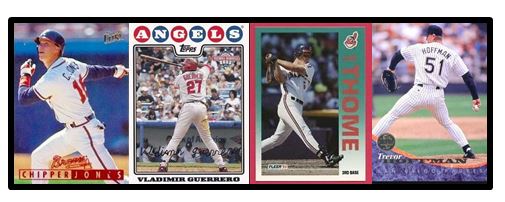
FiveHOF

BBRT NOVEMBER PREDICTIONS – ON THE MARK

In early November, Baseball Roundtable made its 2018 BBWAA Balloting predictions – projecting the election of Chipper Jones, Jim Thome, Vlad Guerrero and Trevor Hoffman.  For a complete look at the 2018 ballot, BBRT’s November predictions and how BBRT would have voted (if I had a ballot), click here.

As regular readers may recall, Baseball Roundtable conducted an unofficial fan BB HOF ballot in November/December – inviting voters from among BBRT readers and a handful of Facebook groups dedicated to  fans of the national pastime.

SPOILER ALERT: 

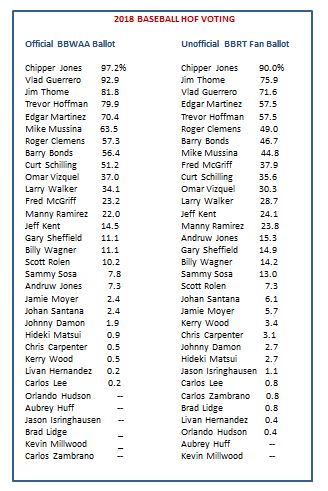
Voters in the BBRT unofficial fan ballot gave the necessary 75 percent support to just two candidates – Chipper Jones and Jim Thome. Notably, players further down the ballot got more support in the fan vote (than in the official BBWAA balloting), while PED suspects got a bit less support in the fan ballot.

The order of finish in the BBRT fan balloting was remarkably similar to the BBWAA.  The same five players finished in the top five positions.  However, Guerrero, Hoffman and Martinez all got consisderably less support.

Although the order was mixed, nine players were included in the first ten spots on both ballots – and fourteen players appeared among the first fifteen vote-getters on both tallies. The most notable variation was Fred McGriff, who finished ninth on the fan ballot (37.9%), but 12th (23.2%) in the BBWAA voting.

Again, the most significant difference between the BBWAA and BBRT fan ballots is that only two players (Jones and Thome) reached the necessary 75 percent for election to the Hall in the fan ballot, as opposed to four in the BBWAA voting.  Looking at the ballots, that variation can be partially explained by fans belonging to the “Voting-from-the-Heart” Cadre (an explanation of the voting cadres BBRT identified appears later in this post). This group of voters appears to be swayed at least partially by a home-town bias or loyalty to a favorite player.  This  seems evidenced by the fact that the BBWAA voting saw six players not receiving a single vote, while only two were shutout in the BBRT fan balloting. (Fourteen players failed to reach five percent on the BBWAA ballot, while twelve failed to reach that threshold in the unofficial fan ballot.)

We’ll look at the results in more detail, but here are a few high-level observations:

  • A total of 271 fan ballots were cast – but ten were eliminated because they included votes for more than the allowed ten players (as many as 21 on one ballot). There were 422 BBWAA voters
  • The average number of players voted for per ballot on the fan ballot was 7.9.  BBWAA voters used an average of 8.5 of their ten allowed votes.
  • 50 percent of the BBWAA voters used all ten avaliable votes; compared to 43 percent in the BBRT balloting.
  • Only one player – Chpper Jones – was checked on 90 percent of the fan  ballots. Both Jones and Vlad Guerrero topped 90 percent on the official BBWAA voting.
  • In the BBRT fan balloting, only five players reached at least 50 percent, while nine reached that level in the BBWAA voting.

HOfChart

___________________________________________

Now, how about a look at what BBRT observed as “VOTER CADRES.”

The ballots and comments (form fans and BBWAA members( pointed to a half dozen voter “cadres” impacting BBRT fan balloting, most of which were also reflected in the BBWAA balloting.  This is not a judgement on voter strategies, but rather just an observation on factors that appear to be influencing voting patterns and vote totals.

The Anti-PED Cadre

This group declines to vote for PED users or (depending on the strength of their opposition) those under various levels of suspicion. There continues to be enough of these voters to effectively block a significant number of PED-associated candidates from election.  Yet, there still is enough support to keep them on the ballot, reducing the numbr of available votes for other candidates. (A bit of a Catch-22 here.)  This cadre made its presence felt in both the BBWAA and BBRT balloting.

A FEW FAN COMMENTS ON PEDs

Here are a few comments from the BBRT unofficial fan ballot that shed some light on the depth and impact of this issue.

“I know baseball turned a blind eye in the steriod era, but I didn’t. Hammering Hank is the true home run king.”  Luke … CA

“I voted the steroid users in because the HOF needs to have the conversation. The Mitchell Report showed that GM’s knew who was using … they were complicit. I was an A’s season ticketholder, they marketed Bash Brothers inflatable arms!”    Bill … CA

“The ten-vote limit isn’t working. Voters who support PED-users take votes away from non-users on the ballot – and those who oppose PED-users keep suspected violators from being elected. Both sides lose.” Bob …  MN

The Small-Hall Cadre

This cadre focuses on  demanding the highest standards for election to the Hall of Fame – and tends to vote for very few (or even zero) candidates.  This, by the way, is not a new approach. Back in 1988, for example, nine blank ballots were cast in the BBWAA voting. A Los Angeles Times article quoted New York Daily News reporter Phil Pepe (who sent in one of the nine blank ballots) as saying the Hall of Fame was “too crowded,” adding  “I think to go in alongside Ruth, DiMaggio, Williams, Aaron, Cy Young, you have to be the cream of the cream. The more you erode the standards, the more the standards will be eroded.” (1)  This cadre has a notable impact on elections, since each ballot a player is not named on requires three ballots to counter that omission.

The Ballot-Hierarchy Cadre

Member of this cadre most often draw a line between first-ballot and subsequent-ballot votes, demanding far more to secure first-ballot entry. It is part of the reason that we have never seen a unanimous selection.  But the impact of the balloting does, in some cases, go further. In a column (after turning in a blank ballot in 2013), ESPN’s Howard Bryant wrote: “I believe in the hierarchy of the ballot, that the first ballot is different than the second or the tenth, that there is a special prestige to a player being voted in the first time he is eligible.” (2)   The question is,  “Do voters just withhold that first-, second- or other-ballot vote, or does it go to another candidate who meets the hierarchy test?”  There also appears to be a group of voters who combine “Ballot-Hierarchy” with “Anti-PED,” withholding votes from PED suspects until later years of eligibility.

The Strategist Cadre

Somewhat related to the “Ballot Hierarchy” group – at least in impact – this group reasons that certain players are sure bets to get the required 75 percent (like Chipper Jones this year) and chooses not to add to the sure-thing margin, but rather cast that vote for a player they find deserving further down the ballot.  This approach may actually improve the chances of additional electees (while also continuing to ensure we don’t see a unanimous selection). A subset of this group are those who note that certain players (in, for example, the 40 percent range), while NOT likely to reach 75 percent in a given year, ARE pretty much assured of adequate support to stay on the ballot. This subset witholds votes from those candidates and votes to protects those the would like to see on the ballot (but who are less “safe”).

The From-the-Heart Cadre

This group (which seemed to show up in the BBRT unofficial fan ballot) casts votes for a specific player (or players) further “down the board” either as a “fan” statement or to ensure that player does not fall off the ballot (get less than five percent).  This strategy may cost deserving candidates votes and delay/preclude their election. A Minnesota fan voting in the unofficial BBRT balloting, commented “I was a little concerned about Johan Santana, so I looked for some players I would support who seemed safe for a return and dropped one of those votes to Santana.”  Simiilarly, BBWAA voter Minnesota StarTribune sportswriter Patrick Ruesse indicated he voted for “Scott Rolen and Johan Santana to keep them on the ballot.” (5)

The Ten-Best Cadre

This group simply votes for whom they felt are the ten best players; regardless of the factors influencing any of the cadres already noted.  (Well, in some cases it is the eight or nine candidates they feel are deserving.) A few provided comments on who they would have added if they had one, two or three more votes. New York Post Sportswriter Ken Davidoff, who used all ten of his allotted votes, indicated he would have “included as many as five more” had he been allowed. (3)    CBS sportswriter Matt Snyder put it this way in a January 11 article, “I definitely want more than ten players from this ballot to make the Hall of Fame, but it feels wrong to game the ballot. My stance is to just vote for who I believe are the ten best candidates and let the chips fall where they may.” (4)

THE RULE

Voting shall be based on the player’s record, playing ability, integrity, sportsmanship, character and contributions to the team(s) the on which the player played. 

Footnotes:

(1) Blank Hall of Fame ballot serves as protest … January 14, 1988; Associated Press

(2) Drawing a blank on a HOF ballot … January 9, 2013; Howard Bryant, ESPN Senior Writer; espn.com

(3) My crowded Hall of Fame ballot, with no regard for the ‘sacred place’ … January 20, 2018; Ken Davidoff; New York Post (nypost.com)

(4) Hall of Fame Roundtable: Should voters ‘game” the ballot to get more players in? … January 22, 2018; Matt Snyder; cbssports.com

(5) It’s a Hall voter’s prerogative to change mind … January 25, 2018; Patrick Reusse; StarTribune

A COUPLE OF BOBBLEHEADS SOON TO BE ON THE WAY

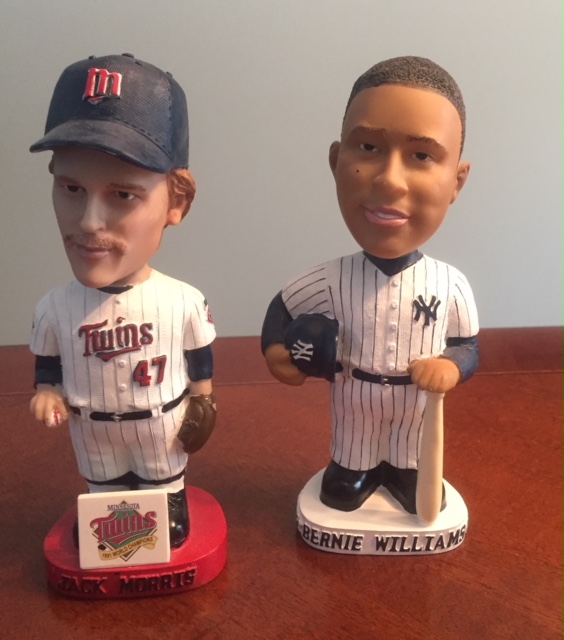
hofbhBaseball Roundtable conducted a random drawing from among those voting in the unofficial Hall of Fame fan ballot – and a follower from Georgia was selected to receive a pair of bobbleheads (Jack Morris and Bernie Williams).  They will be shipped out as soon as I hear back with shipping info. (If you are a Baseball Roundtable FB follower and are from Georgia, check your FB messages – it might be you.)


I tweet baseball @DavidBBRT

Follow/Like the Baseball Roundtable Facebook Page here.

Member:  The Society for American Baseball Research; the Baseball Reliquary; The Negro Leagues Baseball Museum.


Baseball Roundtable’s Deep Dive into the Hall of Fame Ballot


The MLB debate season is officially open!  The Baseball Writers Association of America (BBWAA) Hall of Fame ballots (for 2018 induction) are out and the season for discussion and debate is officially underway.  This year’s traditional ballot includes 14 holdovers from last year, along with 19 newcomers.

BallotPARTICIPATE IN BASEBALL ROUNDTABLE’S  FAN HALL OF FAME BALLOT

(Link in paragrpah below.)

Baseball Roundtable is interested in whom you – as fans – would vote into the Hall of Fame.  So, here’s a line to the Baseball Roundtable Fan HOF Ballot – click here.  Remember, you can vote for up to ten of the nominees for 2018 induction.  If you want to read through the nominees’ bios first, there is another link to the Fan Ballot at the end of this post. 

______________________________________________________________

BASEBALL HALL OF FAME ELIGIBILITY

The basic rules for eligibility are that a player must have played at least ten seasons and be retired for at least five years. In addition, the player must be approved for the ballot by the Hall of Fame Screening Committee.

A player can remain on the ballot for up to ten years, but must receive at least five percent of the vote in the preceding year’s ballot to remain on the ballot.  Each voter can vote for up to ten candidates.  Election requires that a player be named on at least 75 percent of the ballots cast.

In this post, we’ll take a look at how BBRT would vote – if I had a ballot – as well at whom BBRT expects the BBWAA to vote in.  Notably, BBRT tends to be less stingy then the BBWAA voters.  I’ll list a full roster of ten candidates (in order of my preference) who would receive my vote.

BASEBALL HALL OF FAME CRITERIA FOR ELECTION

“Voting shall be based upon the player’s record, playing ability, integrity, sportsmanship, character, and contributions to the team(s) on which the player played.”

—–LIKELY ELECTEES FOR 2018—–

BBRT anticipates that four players will be elected. Trevor Hoffman was very close last year (74 percent) and Vlad Guerrero topped 70 percent in his first year on the ballot. History would indicate those two will go over the top on this ballot. Of the newcomers, Chipper Jones looks like a sure bet and Jim Thome’s 600+ home runs should make him a first-ballot selection (although some voters may hold back “first-ballot” votes due to his extended role as a designated hitter.  In order, I expect these four to finish:

1) Chipper Jones;

2) Trevor Hoffman;

3) Vlad Guerrero;

4) Jim Thome.

Note: For BBRT’s take on the Modern Game Era Ballot, click here. 

My dark horse candidate for this year is Mike Mussina.

What follows is a look at all the players on the ballot – starting with the ten players BBRT would vote for (if I had voting rights). I would note that you will not find those caught up in the PED-controversy on my ballot. While I think they will eventually be elected/inducted, if I had a ballot, I’d prefer they made the 75 percent without my vote.  Still, given their place in the history of the game, I’d probably break down and vote for the best of the group when they reached their final year of eligibility.

So, here is BBRT’s Hall of Fame Ballot – again, if I had one – with the players listed in BBRT’s order of preference.

GROUP ONE – Should Be No Doubt, These Players Belong in the Hall Now

Trevor Hoffman (Closer, 1993-2010) – Third year on the ballot, 74.0 percent support last year.

The Hall of Fame should "save" a place for Hoffman in 2016.

The Hall of Fame should “save” a place for Hoffman in 2016.

In BBRT’s opinion, Trevor Hoffman should have been elected in his first year on the ballot. He is one of only two relievers in MLB history to reach 600 saves (601) – trailing only Mariano Rivera (652) all-time. Hoffman and Rivera, in fact, are the only closers to reach 500 saves. (Note: Hoffman was also the first pitcher to reach the 500- and 600-save mark.)

Hoffman led the NL in saves twice and reached 30 or more saves 14 times (with a high of 53 in 1998). He had a career record of 61-75, with a 2.87 ERA over 1,089 1/3 innings in 1,035 games – averaging 9.4 strikeouts per nine innings. Hoffman’s nine seasons of 40 or more saves is the MLB record (tied with Mariano Rivera). Hoffman pitched for the Marlins (1993), Padres (1993-2008) and Brewers (2009-10).  Hoffman appeared in 12 post-season games, going 1-2, 3.46 with four saves.

Hoffman’s 600 saves should be enough for the Hall – and, after coming so close last year, he should top the 75 percent mark in this year’s voting.

Trevor Hoffman made his final All Star team in 2009 – at the age of 41 –  in a season in which he recorded 37 saves and put up a 1.83 earned run average for the Brewers.

Trevor Hoffman’s best season: In 1998, Hoffman appeared in 66 games for the Padres, converting 53 of 54 save opportunities.  On the season, he was 4-2 with a 1.48 ERA, striking out 86 hitters in 73 innings, while walking just 21. He was selected to the NL All Star team, finished second in the Cy Young Award voting and seventh in the MVP race.

__________________________

Chipper Jones (Third Base, 1993, 1995-2012) – First year on the ballot.

cHIPPER jONES photo

Photo by Keith Allison

BBWAA voters are traditionally stingy with their votes for first-ballot players.  Jones, however, deserves to claim his spot in Cooperstown in his first year of eligibility – and I am convinced he’ll be making the trip.

Jones, a switch-hitter, played all 19 of his MLB seasons in a Braves’ uniform and put up some impressive numbers: a .303 lifetime average; 2,726 hits; 468 home runs; 1,623 RBI, 1,619 runs scored. His 1,623 RBI are the 34th all-time, the most ever for a third baseman and the second-most ever for a switch hitter. His 1,619 runs scored are 46th all-time and fifth-most for a switch hitter; while his 468 home runs are 33rd all-time and the third-most ever by a switch hitter.  Jones also drew 1,512 walks (versus 1,409 strikeouts) – 16th all-time and third among switch-hitters.

Chipper Jones hit .303 as a right-handed hitter and .304 when swinging from the left side – one of only two switch hitters with 5,000 or more at bats to top .300 from both sides of the plate.

Jones was an eight-time All Star, won the 2008 NL batting title with a .364 average and was the 1999 NL MVP. He hit 20 or more home runs in 14 seasons (six seasons of at least 30);  topped .300 in 10 full seasons; reached 100 or more RBI nine times; and scored 100 or more runs in eight campaigns.  Jones also played in 93 post-season games, hitting .287, with 13 home runs and 47 RBI.

Chipper Jones’ best season: In 1999, Jones hit .319, with 45 home runs, 110 RBI and 116 runs scored.  That performance earned him the NL MVP Award and Silver Slugger recognition. (Surprisingly, he was not on the 1999 NL All Star team. The Diamondback’s Matt William started and the third-base reserves were the Pirates’ Ed Sprague and the Padres’ Phil Nevin.)

Despite his gaudy numbers Jones is not likely to be a unanimous selection. Again, BBWAA voters are notoriously stingy with first ballot votes and seem adverse to the prospect of a unanimous selection – and they could point to the facts that Jones only once led the NL in one of the major offensive categories (his 2008 batting championship), won only two Silver Slugger Awards and has no Gold Gloves on his HOF resume.

________________________

Vlad Guerrero (Outfield/Designated Hitter, 1996-2011) – Second year on the ballot – 71.7 percent last year.

Vlad Guerrero photo

Photo by mwlguide

When your nickname is Vlad the Impaler, you better put up some solid offensive numbers – and Vlad Guerrero did. Guerrero was BBRT’s dark horse candidate for induction last year and he came very close. (Again, the BBWAA has a record for first-ballot stinginess.) He actually finished with a higher level of support than I anticipated, so I’m confident he will go over the top this year.

Guerrero put up a .318 career batting average (2,147 games over 16 seasons), hit 449 career home runs (including eight seasons of 30+ and a high of 44 for the 2000 Montreal Expos) and collected 1,496 career RBI.  A feared slugger, he also led his league in intentional walks five times. Guerrero had 13 seasons with a batting average of .300 or better (a high of .345 in 2000), 10 seasons of 100+ RBI, six seasons of 100+ runs scored and four campaigns of at least 200 hits.  Known (sometimes criticized) as a free swinger, Guerrero actually never struck out 100 times in a season.

Vlad Guerrero collected 1,375 hits in the AL and 1,215 hits in the NL.  Others with 1,000 or more safeties in both the AL and NL include: Alfonso Soriano, Dave Winfield, Frank Robinson, Fred McGriff, Carlos Lee and Orlando Cabrera.

Guerrero led his league in hits once, runs once and total bases twice, while making nine All Star squads, earning eight Silver Slugger Awards and the 2004 AL MVP Award.   Guerrero hit .263-2-20 in 44 post-season contests.  Guerrero played for the Expos (1966-2203); Angels (2004-2009); Rangers (2010); and Orioles (2011).

Vlad Guerrero’s best season: In 2002, Guerrero hit .336 for the Expos, leading the NL in hits (206), while bashing 39 home runs, stealing 40 bases, driving in 111, scoring 106 and drawing a career-high 84 walks (versus 70 strikeouts).  He also led the NL in total bases with 364.

__________________________

GROUP TWO – Should Get In On This Vote, But May Stir Some Debate

Jim Thome (First Base/Designated Hitter/Third Base, 1991-2012) – First year on the ballot.

Jim thome photo

Photo by Keith Allison

BBRT believes Jim Thome’s 612 home runs (eighth all-time) and 1,699 RBI (26th all-time) should merit automatic first-ballot election. Thome also ranks 41st all-time in total bases  Gentleman Jim had sixteen seasons of 20 or more home runs (reaching thirty or more 12 times, 40 or more six times and a high of 52 in 2002). He also topped 100 RBI nine times and 100 runs scored eight times.  Thome also ranks seventh all-time in walks (1,747) and 41st all-time in total bases.  In addition, he currently falls just outside the top fifty all-time in runs scored (1,583, good for 51st). He was an offensive force to be reckoned with. He played for the Indians (1991-2002, 2011); Phillies (2003-2005, 2012); White Sox (2009); Dodgers (2009); Twins (2010-2011); and Orioles (2012).  His final line was .276-612-1,699 in 2,543 games (22 seasons).

Thome was a five-time All Star, won the 2003 NL home run crown (47 for the Phillies) and led his league in walks three times.  While he hit only .211 in 71 post-season games, he slugged 17 home runs and drove in 37 runs in those contests.

Jim Thome is the current MLB record holder in regular-season walk-off home runs with 13.

Working against Thome as a first-ballot inductee will be the fact that he started 813 games (just over one-third of his career starts) at designated hitter. (Voters have shown a bit of prejudice against DH’s in the past.) In addition, despite his 612 round trippers, Thome has only one league home run crown on his HOF resume.

Still, Thome would get  BBRT vote, even as a first-ballot candidate.  I think he will get the 75 percent in this voting, but it may be closer than expected.

_______________________

Mike Mussina (Starting pitcher, 1991-2008) – Sixth year on the ballot 51.8 percent last year.

Photo by Keith Allison

Photo by Keith Allison

Mike Mussina built a 270-153 record, with a career 3.68 ERA and 2,813 strikeouts over 18 seasons. While only once a 20-game winner (in his final season, at age 39), Mussina won 18 or 19 games five times, leading the AL with 19 wins in 1995. In his first three full seasons in the major leagues (1992-94), Mussina put up a .700 or better winning percentage each year (.783, .700, .762). His record over that span – for the Orioles – was 48-16.

Mussina was a five-time All Star and a seven-time Gold Glove winner. He recorded a .650 or better winning percentage in nine seasons, with a career (and league-leading) high of .783 in 1992. Mussina ranks among the the top 25 pitchers all-time in strikeouts (20th) and strikeout-to-walk ratio (23rd). While the lack of a Cy Young Award on his resume may hurt him, he finished his career 117 games over .500 – and history says 100 or more wins than losses should be good for a ticket to the Hall. Mussina appeared in 23 post-season games, with a 7-8 record and a 3.42 ERA. He pitched for the Orioles (1991-2000) and Yankees (2000-2008).  Mussina went 7-8, 3.42 in 23 post-season games (21 starts).

Mussina deserves (and, BBRT believes, will eventually be awarded) a spot in Cooperstown, but is unlikely to close the gap between 51.8 percent and the necessary 75 percent in this year’s voting. A move to 62-65 percent would be an important step in the right direction.

On September 2, 2001, Mussina – pitching for the Yankees – retired the first 26 Red Sox batters he faced and came with one strike of a perfect game. Mussina had a 1-2 count on pinch-hitter Carl Everett before Everett blooped a single to left-center. Mussina ended up with a 1-0, one-hit shutout victory.

Mike Mussina’s best season:  Mussina may have saved his best for last.  In his final season (as a Yankee), at age 39, he recorded his first twenty-win campaign.  That year, Mussina went 20-9, 3.37 – and proved his durability by leading the AL in starts with 34, logging his 11th season of 200 or  more innings pitched and earning his fifth Gold Glove

_______________________

Omar Vizquel (Shortstop/Third Base, 1989-2012) – First year on the ballot.

Omar Vizquel photo

Photo by Keith Allison

Vizquel earns BBRT’s vote – and should earn his way into the Hall of Fame – more with his glove (eleven Gold Gloves) than his bat.  However, voters should be mindful of the fact that he finished his 24-season MLB career just 123 hits short of that milestone 3,000 safeties. Vizquel delivered premier defense to the Mariners (1989-1993); Indians (1994-2004); Giants (2005-2008); Rangers (2009); White Sox (2010-2011); and Blue Jays (2012).. He was a three-time All Star – and put together a string of nine straight Gold Gloves at shortstop (1993-2001).

Omar Vizquel led his league in sacrifice bunts four times.

In the field, Vizquel is the career fielding percentage leader (.9847) among shortstops with at least 500 games at the position. He is also the all-time leader among shortstops in double plays, ranks third at the position for career assists and 11th in putouts. He shares the record (with Cal Ripken, Jr.) for the fewest errors by a shortstop in a season in which he played at least 150 games (three errors).

On offense, Vizquel put up a .272 career average, with 80 home runs, 951 RBI and 1,445 runs scored. The 1,445 runs puts him in the top 100 players all-time (82nd); while his 2,877 hits puts him in the top 50 (43rd). He also swiped 404 bases – topping twenty steals eight times (a high of 42 in 1999) – putting him at number 71 on the all-time list. Vizquel played in 57 post-season games, hitting  .250-0-20.

Omar Vizquel’s best season: In 1999, with the Indians, Vizquel hit a surprising .333, with five home runs, 66 RBI, 112 runs scored and 42 stolen bases – and won a Gold Glove at shortstop.

Vizquel would get BBRT’s vote, but I fear the BBWAA voters will make him wait – showing a preference for a bit more offense.

GROUP THREE – Would Get BBRT’s Vote, But BBWAA Reservations Seem More Understandable

Jeff Kent (Second Base/Third Base/First Base, 1992-2008) –  Fifth  year on the ballot, 16.7 percent last year.

BBRT believes Jeff  Kent is a deserving candidate.  Kent holds the all-time MLB record for home runs by a second baseman (351 of his 377 career round trippers were hit while playing second base). He has a healthy .290 career batting average; his 1,518 RBI are 54th all time; and his 560 doubles 28th.

Jeff Kent has more career runs batted in than such noted Hall of Famers as Mickey Mantle, Billy Williams, Eddie Mathews, Duke Snider, Orlando Cepeda and more.

Kent was a five-time All Star and the 2000 NL MVP.  As primarily a middle infielder, he hit 20 or more home runs in 12 seasons (a high of 37 in 2007) and topped 100 RBI eight times. He hit .276, with nine home runs and 23 RBI in 49 post-season games. Kent has the credentials, but BBRT has a hunch the writers may keep him on the bench – a couple of Gold Gloves, at this traditionally defense-oriented position, would have really helped his case.  Kent played for the Blue Jays (1992); Mets (1992-1996); Indians (1996); Giants (1997-2002); Astros (2003-2004); and Dodgers (2005-2008).

Jeff Kent’s best season: With the Giants in 2000, Kent put up these stats:  159 games; 196 hits; .334 average; 33 home runs; 125 RBI; 114 runs; 12 steals. His performance earned him the NL MVP Award.

Jeff Kent gets BBRT vote – and I believe the BBWAA’s support is overdue.

_______________________

Edgar Martinez (Designated Hitter/Third Base, 1987-2004) – Ninth year on the ballot, 58.6  percent last year.

We’ve seen some prejudice against designated hitters in past voting, but Edgar Martinez clearly, and expertly, defined the DH role.  In an 18-season MLB career, Martinez was named to seven All Star teams; won a pair of batting titles (hitting a high of .356 in 1995); topped 100 RBI in six seasons (leading the league with 145 in 2000); and scored 100 or more runs five times (leading the league with 121 in 1995). He finished his career with a .312 average; 2,247 hits; 1,219 runs; 1,261 RBI; 309 home runs; and 514 doubles.  Martinez hit .571 in the 1995 AL Championship Series (12-for-21), with two home runs, six walks and 10 RBI in five games.  In 34 post-season games, he hit .266, with eight home runs and 24 RBI. Martinez played his entire career for the Mariners.

In 2004, MLB renamed the Outstanding Designated Hitter Award “The Edgar Martinez Outstanding Designated Hitter Award.” That says a lot, right there.

Edgar Martinez’ best season: One of two here, In 1995, Martinez led the league in batting average (.356), runs scored (121) and doubles (52 doubles), adding  29 home runs and 113 RBI.  In 2005, Martinez put up a .324 average, 37 home runs, a league-leading 145 RBI and 100 runs scored.

________________________

Larry Walker (Outfield, 1989-2005) – Eighth year on the ballot, 21.9 percent last year.

Walker played for the Expos (1989-1994); Rockies (1995-2004); and Cardinals (2004-2005).  Given BBRT’s admiration for “lumber AND leather,” Walker’s combination of three batting titles and seven Gold Gloves earns him my vote

Walker played 17 MLB seasons and retired with 2,160 hits, a .313 average and three batting titles.  Between 1997 and 2001, he hit .350 or better in four of five seasons. The five-time All Star (and 1997 NL MVP) hit 383 home runs (a high of 49 in 1997) and stole 230 bases (a high of 33 in 1997).  Walker hit just .230 in 28 post-season games, but did rack up seven home runs, 15 RBI and sixteen walks in those contests (a .350 on-base percentage). Walker’s years in hitter-friendly Colorado may be hurting his vote totals, but BBRT believes if you add his Gold Glove defense to his productive bat, you have a Hall of Famer. (Although an argument can be made based on his career home average of .348, versus an away average of .278.)

In 1997, Larry Walker led the NL with 409 total bases – the 18th highest single-season total all-time. (There have been only 29 seasons of 400 or more total bases in MLB history).

Larry Walker’s best season: In his 1997 NL MVP year (Rockies), Walker hit .366, with a league-leading 49 home runs. He drove in 130 runs, scored 143, rapped 46 doubles, led the league in total bases at 409, topped the league in slugging percentage at .720 and even threw in 33 stolen bases and a Gold Glove.

_______________________

Fred McGriff (First Base, 1986-2004)  – Ninth year on the ballot, 21.7 percent last year.

Fred McGriff  played for the Blue Jays (1986-1990); Padres (1991-1993); Braves (1993-1997); Devil Rays (1998-2001, 2004); Cubs (2001-2002); and Dodgers (2003).  McGriff  was five-time All Star, who bashed 493 career home runs (led his league twice, hit 30 or more  home runs in a season ten times); topped 100 RBI eight times (career total 1,550); and put up a  .284 career average over 19 seasons.  He ranks among MLB top 50 all-time in home runs, RBI, extra base hits and walks. McGriff was the 1994 All Star Game MVP. McGriff was also a solid post-season performer, going .303-10-37 in 50 post-season games.

Fred McGriff’s best season: In 1999. McGriff hit .318, with 34 home runs and 104 RBI for Tampa Bay.

McGriff is not likely to get in this time, despite his 493 round trippers (seven more certainly would have helped his case, as would a couple of 40+ HR seasons).  First base is a highly competitive spot when it comes to the HOF.  Still, BBRT believes McGriff’s status as a dependable run producer deserve Hall of Fame Recognition.

___________________________________________

THE REST OF THE BALLOT

So, there are BBRT’s ten choices.  Now, let’s look briefly at the remainder of the ballot – in alphabetical order – since just making it on the ballot deserves recognition. (Heck, just making it to the major leagues deserves recognition.)

Barry Bonds (Outfield, 1986-2007) – Sixth year on the ballot, 53.8 percent a year ago.

Barry Bonds played for the Pirates (1986-1992) and the Giants (1993-2007). There is no doubt about Bond’s credentials – .298 average, 2,935 hits, MLB-record 762 home runs, 1,996 RBI, MLB-record 2,558 walks. He was also a 14-time All Star, 12-time Silver Slugger Award winner, his league’s MVP a record seven times, and an eight-time Gold Glove winner.  In 2001, Bonds hit .328, with an MLB-record 73 home runs and 177 RBI.  He drove in 100 or more runs 12 times and also scored 100 or more runs in a dozen seasons.  And, I could go on and on.  Still, there are those PED’s – an elephant in the room that I think will keep Bonds out of the Hall for at least another year.  Eventually, the dam will break and we will see some of the major stars now under a PED cloud take places in the Hall.  BBRT is not ready to cast that vote yet – and I don’t think 75 percent of the BBWAA is either. We can expect Bonds back on the ballot next year (he may top 60 percent this year).

______________________

Chris Carpenter (Starting Pitcher, 1997-2002, 2004-2012) – First year on the ballot.

Chris Carpenter pitched for the Blue Jays (1997-2002) and Cardinals (2004-2012).  He put up a 144-94 record, with a 3.76 earned run average and 1,697 strikeouts in 2,219 1/3 innings pitched.  The three-time All Star’s best season was 2005, when he went 21-5, 2.83 for the Cardinals and led the NL with seven complete games – earning the NL Cy Young Award. During his career, Carpenter led his league in winning percentage once, earned run average once, games started twice complete games once, shutouts once and innings  pitched once. Couple that with his Cy Young Award and a sparkling 10-4, 3.00 record in 18 post-season starts and Carpenter should easily get enough support to stay on the ballot.

____________________________________

Roger Clemens (Starting Pitcher, 1984-2007) – Sixth time on the ballot, 54.1 perent last year.

Roger Clemens pitched for the Red Sox (1984-1996); Blue Jays (1997-1998); Yankees (1999-2003, 2007); and Astros (2004-2006).  Clemens has Hall-worthy stats:  354 wins (ninth all-time), 4,672 strikeouts, an MLB-record seven Cy Young Awards, 1986 AL MVP. Clemens was a five-time 20-game winner (led the league in wins four times), seven-time ERA leader, five-time league leader in strikeouts, and six-time leader in shutouts.  He won the AL pitching Triple Crown (Wins/ERA/Strikeouts) three  times. Clemens also has 12 post-season wins, with 173 strikeouts in 199 post-season innings. His best season was 1986, when he went 24-4. 2.48 and won both the Cy Young and AL MVP Awards for the Red Sox.  Yes, he’s got the numbers (those listed and more), but the PED controversy seems to stand between him and the Hall. Don’t think the BBWAA is ready yet, but he’ll continue on the ballot – and will likely gain on that 75 percent requirement.

_______________________

Johnny Damon (Outfield, 1995-2012) – First year on the ballot.

Johnny Damon played for the Royals (1995-2000); A’s (2001); Red Sox (2002-2005); Yankees (2006-2009); Tigers (2010); Rays (2011); and Indians (2012). The two-time All Star played in 18 MLB seasons, hitting .284 with 235 home runs, 1,139 RBI, 1,668 runs scored, 408 stolen bases and 2,769 hits.  Those numbers put Damon 54th all-time in hits, 32nd in runs scored and 67th in stolen bases. Damon topped .300 four times, exceeded twenty stolen bases in ten seasons (a league-leading 46 for the Royals in 2000), scored 100+ runs in ten seasons (nine consecutive from 1998-2006). His best season was 2000, when he hit  .327, with 214 hits, 42 doubles, ten triples, 16 home runs, 88 RBI, a league-topping 136 runs scored and an AL-best 46 stolen bases.  He hit.276, with a surprising ten home runs and 33 RBI in 59 post-season games (he also had 39 runs scored and 13 steals in the post-season). In addition, he was known as a positive force in the clubhouse.  Competition for Hall of Fame recognition is tough among outfielders. I expect Damon to stay on the ballot, but a first-year election is not likely.

_______________________

Livan Hernandez (Starting Pitcher, 1996-2012) – First year on the ballot.

Livan Hernandez pitched for the Marlins (1996-1999); Giants (1999-2002); Expos/Nationals (2003-2006, 2009-2011); Diamondbacks (2006-2007); Twins (2008); Rockies (2008); Mets (2009); Braves (2012); and Brewers (2012). He stepped into the spotlight in 1997 – at age 22 – capturing the Natoinal League Championship Series and World Series MVP Awards. In the NLCS, Hernandez – who had gone 9-3, 3.18 in 17 regular season starts for the Marlins – won a pair of games and put up a 0.84 ERA. He then won two games in the World Series, despite a 5.27 ERA.  In a total of 12 post-season appearances (ten starts), he went 7-3, 3.97.

During his career, Hernandez was a two-time All Star and put up a 178-177, 4.44 record. He was a league leader in starts and complete games twice each.  That 178-177 record, with only with only five seasons over .500 is not likely to keep him on the ballot.

_______________________

Orlando Hudson (Second Base, 2002-2012) – First time on the ballot.

Hudson played for the Blue Jays (2002-2005); Diamondbacks (2006-2008); Dodgers (2009); Twins (2010); Padres (2011-2012); and White Sox 2012. He was a two-time All Star and four-time Gold Glover, who finished an eleven-season MLB career with a .273-93-542 line.  His best season was 2007, when he went .294-10-63, with ten steals, in 139 games for the Diamondbacks. (He also picked up a Gold Glove that season.)  Hudson was the league leader in assists at second base three times, fielding percentage twice, putouts once and double plays once. Hudson played in 11 post-season contests (16 at bats) and collected five hits (.313), two home runs and three RBI. Probably a one-ballot only player, but a nice 11-season run.

______________________

Aubrey Huff  (First base/Third base/Outfield, 2000-2012) – First year on the ballot.

Huff played for the Devil Rays (2000-2006); Astros (2006); Orioles (2007-2009); Tigers (2009); and Giants (2010-2012). He finished his 12-season MLB career with a .278 average, 242 home runs, 904 RBI and 806 runs scored.  He hit over .300 three times, topped twenty home runs six times (with 30+ twice) and 100 RBI three times. His best season was 2003 when he hit .311, with 34 home runs and 107 RBI for Tampa Bay. He played in 25 post-season contests, hitting .246, with one home run and eight RBI. With no All Star appearances,there doesn’t seem to be enough here to keep him on the ballot.

_______________________

Jason Isringhausen (Closer, 1995-1997, 1999-2009, 2011-2012) – First year on the ballot.

Jason Isringhausen pitched for the Mets (1995-1997, 1999, 2011); A’s (1999-2001); Cardinals (2002-2008); Rays (2009); and Dodgers (2012).  The fact that Isringhausen is on this ballot is one of MLB’s feel-good stories. Isringhausen came up as a 22-year-old starting pitcher with the Mets in July of 1995. (His 1995 minor league record  – AA & AAA –  was 11-2, 1.97 in 18 starts.) He started 14 games for the Mets, going 9-2, 2.81 – and finished fourth in the Rookie of the Year balloting. (The Dodgers’ Hideo Nomo won the award on the basis of a 13-6, 2.54 record in 28 starts – with a league-leading three shutouts.) What followed that solid beginning for Isringhausen was a series of health problems (tuberculosis, a broken wrist and a series of arm surgeries that put him out of action from early in the 1997 season until 1999). When he returned (after initital attempts at starting), he reinvented  himself as an effective “closer.”

Ultimately, Isringhausen retired with a record of 51-55, a 3.54 ERA and 300 saves (26th  all-time). He made two All Star teams, topped 30 saves seven times (leading the NL with 47 saves in 2004) and fanned 830  batters in 1007 2/3 innings.  He appeared in 23 post-season games, going 1-1, 2.36 with 11 saves.  Isringhausen will get some (well-deserved) votes, probably (but not assuredly) enough to stay on the ballot.  Ultimate election in the traditional ballot seems unlikely, despite the 300 saves.  (Witness how the BBWAA voters treated Lee Smith and his 478 saves.)

________________________

Andruw Jones (Outfield, 1996-2012) – First time on the ballot.

Andruw Jones played for the Braves (1996-2007); Dodgers (2008); Rangers (2009); White Sox (2010); and Yankees (2011-2012). In a 17-season career – primarily patrolling centerfield – he won ten Gold Gloves (consecutively, 1998-2007). At the plate, he hit .254, with 434 home runs, 1,289 RBI and 1,204  runs scored. He topped 25 home runs in ten season (six over thirty and a league-leading and career-high of 51 in 2005). He scored 100 or more runs four times, drove in 100+ five times and stole twenty or more bases in a season four times. His best season was 2005, when he hit only .263, but led the NL in home runs (51) and RBI (128) – finishing second in the MVP voting to Albert Pujols (.330-41-117). Jones appeared in 76 post-season games, hitting .273, with ten home runs and 34 RBI. In the 1996 World Series – as a 19-year-old – he hit .400 (8-for-20) with two home runs and six RBI, becoming the youngest player to hit for the distance in the Fall Classic.

Jones’ ten Gold Gloves work in his favor, but – over the long haul – that .254 average (he only hit .300 or better once and over .270 only four times) will dampen hise HOF chances.

__________________________

Carlos Lee (First Base/Outfield, 1999-2012) – First year on the ballot.

Carlos Lee played for the White Sox (1999-2004); Brewers (2005-2006); Rangers (2006); Astros (2007-2012); and Marlins (2012). A three-time All Star, Lee hit .285, with 358 home runs and 1,363 RBI over 14 MLB seasons. He was as dependable as they come, playing in 150 or more games in 11 seasons (leading the league in games played twice.) While Lee never led his league in any major offensive category, he hit 20 or more home runs 12 times – hitting 30+ in a season five times. He also put up six 100+ RBI seasons and four seasons of 100 or more runs scored.  Twice led his league in assists by a left fielder. A solid career of  “very good+,” but short of HOF performance.

__________________________

Brad Lidge (Closer, 2002-2012) – First time on th ballot.

Brad Lidge played for the Astros (2002-2007); Phillies (208-2011); and Nationals (2012). Lidge ended his 11-season MLB career with a 26-32 won-lost record, a 3.54 ERA, 225 saves and 799 strikeouts in 603 1/3 innings (he could  miss some bats). He topped thirty saves four times and his best season was 2008, when he went 2-0, with 41 saves (in 41 opportunities), a 1.95 ERA and 92 strikeouts in 69 1/3 innings. Lidge was a solid post-season performer, appearing in 39 post-season games, going 2-4, 2.18 with 18 saves. Very nice career, but the body of work is just not enough to get himn inrto the Hall.

________________________

Hideki Matsui (Outfield/Designated Hitter, 2003-2012) – First time on the ballot.

Hideki Matsui played for the Yankees (2003-2009); Angels (2010); A’s (2011); and Rays (2012).  The Japanese star came  to the Yankees in 2003 – at age 29. He started with a bang, playing in every game over his first three seasons, making  two All Star squads and hitting .297, with 70 home runs, 330 RBI and 299 runs scored. He got off to a slow start in his  fourth season in New York – standing at  .261-5-19  after 32 games. In a game  in mid-May, he broke his wrist (requiring surgery) attempting to catch a short fly ball and was out until mid-September He came back strong, however, hitting .396 in September/October to finish the season at 302-8-29 in  51 games. In 2007, he went .285-25-103. Then, in 2008, knee problems limited him to 93 games – and he did not reach the 150-game mark in any of his final five seasons.  Ultimately, Matsui ended up  with a .282 averge, 175 home runs and 760 RBI. Matsui was the MVP of the 2009 World Series (with the Yankees), when he hit .615,  with three home runs and eight RBI in six games. In 56 post-season contests overall, he hit .312-10-39.  Had Matsui made his move to the majors earlier, he may very well hace put up HOF numbers. His ten-season stats, while solid, fall short.

_________________________

Kevin Millwood (Starting Pitcher, 1997-2012) – First year on the ballot.

Kevin Millwood pitched for the Braves (1997-2002); Phililes (2003-2004); Indians (2005); Rangers (2006-2009); Orioles (2010); Rockies (2011); and Mariners (2012). He finished his 16-season MLB career with a record of 169-152, 4.11 and led his league in ERA once, starts twice and shutouts once. His best season was with the Braves in 1991, when he went 18-8, with a 2.68 ERA and made his only All Star team. He also has a no-hitter on his resume (as a Phillie versus the Giants on April 27, 2003.) Millwood made nine post-season appearances (seven starts), going 3-3, 3.92. Don’t see enough here to keep Millwaood on the ballot.

______________________

Jamie Moyer (Starting pitcher, 1986-1991, 1993-2010, 2012) – First year on the ballot.

Jamie Moyer pitched for the Cubs (1986-1988); Rangers (1989-1991); Orioles (1993-1995); Red Sox (1996); Mariners (1996-2006); Phillies (2006-2010); and Rockies (2012).  Moyer pitched in 25 MLB seasons – ending his career with the Rockies at age 49 (2-5, 5.70 ERA), where he became the oldest pitcher ever to win an MLB game and the oldest major leaguer ever to drive in a run.  He retired  with 269 victories (209 losses) and a 4.25 earned run average.

Moyer was a twenty-game winner twice and his best season was 2003, when he went 21-7, 3.27 for Seattle and made his only All Star squad. he started eight post-season games, going 3-3, 4.14.  Longevity counts – but not enough to get Moyer into the Hall.

________________________

Manny Ramirez (Outfield, 1993-2011) – Second year on the ballot, 23.8 percent last year.

Manny Ramirez played 19 MLB seasons, collecting 2,574 hits, a  .312 batting average, 555 home runs (15th all-time) and 1,.831 RBI (19th all-time). Ramirez was a 12-time All Star and led the AL in average (2002), home runs (2004) and RBI (1999) once each.  Ramirez won nine Silver Slugger Awards, including eight consecutive (1999-2006), hit .285 with 29 home runs in 111 post season games and was the 2004 World Series MVP.  He hit 30 or more home runs in ten seasons (five of 40+) .  Ramirez played in 111 post-season games, going .285-29-78 – and was the MVP of the 2007 World Series (for Boston) after hitting .412 with one home run and four RBI in four games. His 28 post-season home runs are first all-time, while his 78 post-season RBI rank second. Ramirez clearly put up HOF-caliber numbers, but two PED-related suspensions will hurt his chances. Not this year, but he’ll be back for another shot.  Ramirez played for the Indians (1993-2000); Red Sox (2001-2008); Dodgers 2009-2010); and Rays (2011).

________________________

Scott Rolen (Third Base, 1996-2012) – First year on the ballot.

Scott Rolen played for the Phillies (1996-2002); Cardinals (2002-2007); Blue Jays (2008-2009); and Reds (2009-2012). The seven-time All Star (including in two of his final three seasons) flashed leather and lumber, collecting eight Gold Gloves and rapping 316 home runs. He finished with a .281 average, 316 home runs, 1,287 RBI, 1,211 runs scored and 188 stolen bases. Rolen hit 25 or more home runs seven times, with a high of 34 in 2005.  He also put up five 100+ RBI seasons, scored 100+ runs in two campaigns and reached double digits in steals five times. He was the NL Rookie of the Year in 1997 (.283-21-92,with 16 steals). Rolen hit .220,with five home runs and 12 RBI in 39 post-season games. Not a first-ballot inductee, but deserves to stay on the ballot for another round.

________________________

Johan Santana (Starting Pitcher, 2000-2010, 2012) – First year on the ballot.

Johan Santana pitched for the Twins (2000-2010) and Mets (2008-2010, 2012). Santaa had a blazing career, cut short by shoulder issues (requiring multiple surgeries). In 12 MLB seasons, Santana went 139-78, 3.20 with 1,988 strikeouts in 2,025 2/3 innings. He made pretty much every inning count. While he only won 20 games once, Santana was a two-time Cy Young Award winner, a four-time All Star and also picked up a Gold Glove. He led his league in wins once, earned run average three times, strikeouts three times, starts twice and innings pitched twice. While he had some great seasons, his best we probably 2006. That year, with the Twins, he led the AL in wins (19), ERA (2.77) and strikeouts (245) capturing the pitching Triple Crown (and the Cy Young Award). Santana was 1-3, 3.97 in 11 post-season appearances (five starts).  I would have loved to vote for him, byt 139 wins was just not enough to crack my top ten. I expect he will get enough support to stay on the ballot (better post-season numbers would  be a big help).

_______________________

Curt Schilling (Starting Pitcher , 1988-2007) – Sixth year on the ballot, 45.0 percent last year.

Curt Schilling pitched for the Orioles (1988-1990); Astros (1991); Phillies (1992-2000); Diamondbacks (2000-2003); and Red Sox (2004-2007).  Schilling is a six-time All Star, with 216 career wins (three seasons of 20 or more wins) over a 20-season MLB career. He recorded 3,116 strikeouts (three seasons of 300 or more whiffs), led his league in wins twice, complete games four times, innings pitched twice and strikeouts twice. He was also the 2001 World Series co-MVP – and has an impressive 11-2, 2.23 ERA post-season record (19 starts). He is on the cusp for the HOF. However, his outspoken views, Mike Mussina’s 270-win total (likely he will get in before Schilling) and the lack of a Cy Young Award may be working against Schilling’s vote-getting capacity. His best season was 2001, when he went 22-8 for the Diamondbacks (with a 2.98 ERA).  That year, he lead the league in wins, starts (5), complete games (6), innings pitched (256 2/3).  He’ll be back for another shot.

________________________

Gary Sheffield (Outfield/Designated Hitter/Third Base/Shortstop, 1988-2009) – Fourth year on the ballot, 13.3 percent last year.

Gary Sheffield played for the Brewers (1988-1991); Padres (1992-1993); Marlins (1993-19998); Dodgers (1998-2001); Braves (2002-2003); Yankees(2004-2006); Tigers (2008); and Mets (2009).  Sheffield is a nine-time All Star (in 22 MLB seasons) and five-time Silver Slugger Award winner. He launched 509 career home runs (topped 30 home runs in a season eight times , with a high of 43 in 2000); maintained a .292 career average (hit .300+ in eight seasons); and collected 1,676 RBI (28th all-time).  He also won the 1992 NL batting title (.330); topped 100 RBI eight times; and scored  100 or more runs in a season seven times. His best season was 1996 (Marlins), when he hit .314, with 42 home runs, 120 RBI, 188 runs scored and 16 steals.  Appeared in 44 post-season games, hitting .248, with six home runs and 19 RBI.  Sheffield has the offensive numbers, but defensive questions and the shadow of PEDs are likely to keep him on the outside looking in.  He should return to the ballot next year, but it’s not a guarantee.

_______________________

Sammy Sosa (Outfield, 1989-2007) – Sixth year on the ballot, 8.6 percent last year.

Sammy Sosa played for the Rangers (1989, 2007); White Sox (1989-1991); Cubs (1992-2004); and Orioles (2005).  Sosa hit 609 home runs (9th all-time) in 18 MLB seasons – winning two HR titles, topping sixty three times and also hitting 50 one year.  In the four seasons from 1998 to 2001, Sosa averaged 60 home runs and 149 RBI per season. His career numbers include a .273 average, 609 home runs, 1,667 RBI (29th all-time), 1,475 runs scored and 234 stolen bases (a high of 36 steals in 1993). Sosa was the 1998 NL MVP (Cubs), led his league in home runs twice, runs scored three times and RBI twice.    His best season was 1998 (Cubs), when he hit .308, with 66 home runs, a league-leading 158 RBI and a league-leading 134 runs scored – and even tossed in 18 stolen bases. He played in 15 post-season contests, hitting .245-2-7.  So, why is the seven-time All Star not in the Hall?  The PED shadow has dimmed his chances.

_________________________

Billy Wagner (Closer, 1995-2010) – Third year on the ballot, 10.2 percent last year.

Billy Wagner played for the Astros (1995-2003); Phillies (2004-2005); Mets (2006-2009); Red Sox (2009); and Braves (2010).Wagner is a seven-time All Star, who amassed 422 saves (fifth all-time) in a 16-season MLB career.  He had nine seasons of 30 or more saves; a career ERA of 2.31; 1,196 career strikeouts in 903 innings; and 47-40 won-lost record.  His best season was 2003, when he went 1-4, 1.78 for the Astros, saving 44 games and fanning 105 batters in 86 inings.  BBRT thinks he belongs in the Hall (based on his 400+ saves) – and hopes that momentum starts to build.   However, considering that Lee Smith – with his 478 saves – never reached 75 percent, the odds are not in Wagner’s favor.

_____________________________

Kerry Wood (Starting Pitcher/Reliever, 1998, 2000-2012) – First Year on the ballot.

Kerry Wood pitched for the Cubs (1998, 2000-2008, 2011-2012); Indians (2009-2010); and Yankees (2010). Wood’s career clearly had its ups and downs. He was the NL Rookie of the Year in 1998 – going 13-6, 3.40 with 233 strikeouts in 166 2/3 innings for the Cubs.  In just his fifth career start (May 6, 1998), the 20-year-old Wood threw a one-hit, zero-walk (one hit batter), 20-strikeout complete game shutout (versus the Astros) – setting a new rookie record for strikeouts in a game and tying the all-time MLB record for whiffs in a nine-inning game. However, all was not perfect.  Wood  missed the final month of the season with elbow issues  – ultimately having Tommy John surgery that would cost him the entire 1999 season.   During his MLB career (14 seasons in 15 years), Wood was on the disabled list 14 times.  Still, when working primarily as a starter (1998-2006),  he went 71-56, 3.68 – with 1,299 strikeouts in 1,128 2/3 innings. He had three seasons of 200+ strikeouts in that span, leading the NL with 266 whiffs in 2003 (his only All Star season as a starting pitcher).

Reponding to injuries, Wood reinvented himself as a reliever, and put up a 5-4, 3.26 record, with 34 saves and 84 strikeouts in 66 1/3 innings as the Cubs’ closer in 2008 (his only All Star season as a closer). As a reliever (2007-1012), Wood went 15-19, 3.65, with 63 saves and 283 strikeouts in 251 1/3 innings pitched.  Overall, Wood struck out 10.32 batters per nine innings for his career (1,582 strikeouts in 1,380 innings), with an 86-75 record, 63 saves and a 3.67 earned run average. In 15 post-season appearances (five starts), he went 2-2, 3.43 and fanned 45 batters in 44 2/3 innings. His rookie season was arguably his best. The only thing that kept Wood out of the Hall of Fame – given his stuff – was the health of his right arm.

_______________________

Carlos Zambrano (Starting Pitcher, 2001-2012) – First time on the ballot.

Carlos Zambrano pitched for the Cubs (2001-2011) and Marlins (2012). He was a three-time All-Star  and a three-time Silver Slugger Award Winner. In 12 MLB seasons, Zambrano went 132-91, 3.66.  He won 15 or more more games three times – leading the NL with 16 wins in 2006. He hit .238 over his career, including 24 home runs and 71 RBI. He hit a career-high .337 in 2008 and a career-high six home runs in 2006. His best season was 2004, when he went 16-8, with a career-best 2.75 ERA.  In five post-season starts, Zambrano went 0-2, 4.34.  Likely just one year on the ballot, but it is nice to see him recognized.

Want to vote in Baseball Roundtable’s Fan Ballot – click here.  For BBRT’s take on the Modern Game Committee nomines, click here.

Primary Resources: National Baseball Hall of Fame; Baseball-Reference.com; Society for American Baseball Research


I tweet baseball @DavidBBRT

Follow/Like Baseball Roundtable’s Facebook Page here.  More baseball commentary; blog post notifications; PRIZES.


Member: Society for American Baseball Research (SABR); The Baseball Reliquary; The Negro Leagues Baseball Museum.

Baseball Roundtable Looks at “Modern Game” Hall of Fame Ballot

Baseball Hall of Fame should make room for Harry Stovey in 2016. .

The Baseball Hall of Fame has released its Modern Baseball (Era) Committee Ballot – listing nine former players and one executive for consideration for the 2018 Hall of Fame Class.  The 16-member Modern Baseball Committee considers players and executives active between 1970-87.  This election is in addition to the traditional Baseball Writers Association of America (BBWAA) HOF balloting. Era Committee nominees must garner the votes of 12 (75 percent) of committee members for election. Each member of the committee may vote for up to four candidates.  The Modern Era candidates for 2018 induction are: Steve Garvey; Tommy John; Don Mattingly; Marvin Miller (executive); Jack Morris; Dale Murphy; Dave Parker; Ted Simmons; Luis Tiant; and Alan Trammel.

BACKGROUND ON HALL O F FAME VOTING

The Baseball Hall of Fame Era Committees …

Today’s Game (1988-present); Modern Baseball (1970-87); Golden Days (1950-69); Early Baseball (1871-1949).  Near-term voting years for each committee:

  • Today’s Game – 2017, 2019
  • Modern Baseball – 2018, 2020
  • Golden Days and Early Baseball – 2021

To be eligible for the ERA Committees’ ballots: Players must have played in at least ten MLB seasons and have been retired for at least 15 seasons; Managers and Umpires must have ten years in MLB and be retired for at least five seasons if under 65-years-old, six months if 65-or-over; Executives must be retired at least five years or at least 70-years-old. In addition, the nominees must no longer be eligible for the traditional Baseball Writers Association of America balloting (BBWAA).

Traditional BBWAA Hall of Fame Elections …

For the traditional BBWAA election, players must have played in at least ten MLB seasons and been retired (as a player) for at least five seasons. Players stay on the ballot up to ten years (formerly 15 years), but are dropped from the ballot after any election in which they receive less than five percent of the vote. (Eligible voters are active and honorary members of the BBWAA who have been active baseball writers for at least ten years and BBWAA members for a period beginning at least ten years prior to the current voting. Each elector may vote for up to ten individual on the ballot – and it takes 75 percent of the vote for election.)

Stated HOF Election Criteria …

“Voting shall be based upon the player’s record, playing ability, integrity, sportsmanship, character, and contributions to the team(s) on which the player played.”

In this post, Baseball Roundtable will take a look at all ten Modern Game candidates; comment on how BBRT would vote (if I had a ballot); and attempt to predict who the actual Modern Era Committee will select for 2018 Hall of Fame Induction. (I’ll present those comments and predictions in reverse order.)

Traditional BBWAA Hall of Fame Ballot voting is underway – and Baseball Roundtable is conducting an unofficial fan ballot. To reach about those candidates and cast your unofficial fan vote(s), click here. 

___________________________________________

MODERN ERA COMMITTEE PREDICTION

Baseball Roundtable predicts that this year’s successful nominees will be:  Marvin Miller; Jack Morris; and Ted Simmons.  (Further comments on why BBRT predicts those results are included in the remainder of this post.) I might add that we could see fewer nominees get the necessary 75 percent vote: 1) Voting tends to be conservative; 2) With only four votes, electors have to be selective – and multiple candidates with similar “credentials” could end up splitting vote totals.  There is one caveat.  If the Modeern Game Committee choose to honor the late Marvin Miller’s wished and not select him for inducation, I expect one of the following players will join Morris and Simmons:  1) Alan Trammel; 2) Tommy John; or 3) Steve Garvey.

________________________________________

IF BASEBALL ROUNDTABLE HAD A BALLOT

Let me say first, these were not easy choices.  There were half dozen nominees I could easily have voted for – but, playing by the rules, I limited myself to four selections. My preferences were based on the stated election criteria (see box above), which I divided into:  Game – actual stats and performance; Fame – awards and recognitions; and Character –  heart, conduct and contributions to both teams and the game itself.

Here are the four nominees I finally decided on:

  1. Ted Simmons, C/1B, 1968-1988 … Cardinals, Brewers, Braves

SimmonsMy first Modern Game vote (if I had one) would go to Ted Simmons.  To me this one is a no-brainer. What I find most puzzling is that in his first year on the traditional Hall of Fame ballot, Simmons got only 3.7 percent of the vote – dropping him from the BBWAA ballot after just one shot. (Player who gets less than five percent are dropped from the ballot.) I should add here that, in making this selection, I did take into consideration that Simmons played one of the game’s most challenging and wearing positions – and did it for 21 seasons.  Factors that drove my decision:

  • Simmons has more base hits (2,472) than any (primary) catcher in MLB history except Hall of Famer Ivan Rodriguez. That’s right. More hits than the likes of Johnny Bench, Yogi Berra, Mike Piazza, Carlton Fisk and Gary Carter (all Hall of Famers) or, going further back, more than Hall of Fame backstops Mickey Cochrane, Bill Dickey and Roger Bresnahan.
  • Simmons also has more career RBI (1,389) than any other primary catcher except Yogi Berra. Right again. More RBI than such backstops as Johnny Bench, Mike Piazza, Carlton Fisk, Ivan Rodriguez. Gary Carter, Bill Dickey and Mickey Cochrane.
  • Simmons also has more doubles (483) than any other primary catcher except Rodriguez.
  • He also ranks sixth all-time among catchers in runs scored (1,074) – sandwiched on the all-time list between Johnny Bench (1,091) and Mike Piazza (1,048) and is one of only ten catchers to cross the plate 1,000+ times (eight of the ten are already in the HOF).

Starting to see the logic behind my vote?

Ted Simmons had a 21-season (15 seasons of 100 or more games) major league career, primarily as a catcher.  He was with the Cardinals from 1968 to 1980, the Brewers from 1981 to 1985 and the Braves from 1986 to 1988.  He was an eight-time All Star (six times in the decade of the ‘70s) and finished his career with a .285 average, 248 home runs and 1,389 RBI in 2,456 games.  He hit over .300 in seven full-time seasons, recorded 20 or more home runs in six campaigns and had 100 or more RBI three times. His best season was with the Cardinals in 1975, when he hit .332 with 18 home runs and 100 RBI.  Although he was not a Gold Glove caliber defender, he was dependable enough to find himself behind the plate defensively in 1,771 games – 15th all-time and ahead of such stars as Johnny Bench, Yogi Berra, Mike Piazza and five other Hall of Fame backstops (Ivan Rodriguez leads the way with 2,427 defensive game at catcher).

All things considered, Ted Simmons would get Baseball Roundtable’s Modern Era vote and I am hopeful the Modern Era Committee will also see it that way.

____________________________________________

  1. Tommy John, LHP, 1963-89 … Indians, White Sox, Dodgers, Yankees, Angels, A’s

JohnTommy John pitched 26 years in the major leagues – and even had a ground-breaking (and game-changing) surgery named after him. During his time on the traditional ballot, John’s highest vote total was 31.7 percent.

John put up 288 victories (231 losses) and a 3.34 earned run average.  All solid numbers. However, there are pros and cons to John’s Hall of Fame candidacy. Let’s start with the pros:

  • John has 288 victories – that is 26th all-time among starting pitchers – and of the 25 pitches with more wins, all but two (Roger Clemens and Bobby Mathews) are in the Hall of Fame. Fact is, more than half the starting pitchers enshrined have fewer wins than John.
  • John won 20 or more games in a season three times and twice led the NL in winning percentage.
  • John’s 46 shutouts are also 26th all-time and all but one (Luis Tiant) of the pitchers with more shutouts than John is in the Hall – and, again, more than half of the pitchers in the Hall of Fame have fewer shutouts than John. He also led his league in shutouts three times.
  • John’s 4710 1/3 innings pitched are 20th all-time and he is one of just eight pitchers with 700 or more starts (his 700 starts are sixth all-time).
  • John’s 27 MLB seasons played are third in MLB history behind only Nolan Ryan (27 seasons … 1966-93) and Cap Anson (27 seasons …. 1871-97).
  • John retired with a .555 winning percentage, ahead of more than a dozen starting pitchers currently in the Hall of Fame.

There are also some cons:

  • John’s wins can be attributed to his longevity. As Baseball-Reference.com reports, his average full season record was 13-11 – which does seem to fall short of Hall-worthy.
  • Despite a respectable 2,245 career strikeouts, he fanned only 4.3 batters per nine innings – not exactly dominating.
  • He never won a Cy Young Award and was an All Star only four times in 26 seasons.

In my book, John also deserves Character credits for taking on the risk and leaning into the rehab of a new surgical procedure that had a long-term impact not just on his career (he won 164 games after the surgery), but on the game itself.

Ultimately, John was a good enough and dedicated to last 26 seasons in the major leagues – and put up 288 wins. Despite his low strikeouts per nine innings figure, he did what we look for pitcher to do – get outs and produce wins.

ONE FINAL THOUGHT ON TOMMY JOHN

HOF voters put Sandy Koufax in the Hall with just 165 wins – recognizing that injury shortened his career.  I think it’s time Tommy John and his 288 wins entered the HOF, recognizing that surgery – and a powerful work ethic – lengthened his career.  Side note: Tommy John had just one fewer victory after his historic surgery than Sandy Koufax had in his career.

______________________________________

  1. Jack Morris, RHP, 1977-1994 … Tigers, Twins, Blue Jays, Indians

MorrisJack Morris would also get my vote  – although I may be a bit biased, having been in the park for his 1991 World Series Game Seven, 1-0, complete-game, shutout victory. This is a close call, but Morris’ reputation for grit and determination – particularly in “big” games – gives him the Character points he needs to push him to a spot near the top of the BBRT ballot. (Morris, by the way, had the highest vote total on the traditional ballot among this year’s Modern Game nominees – 67.7 percent in 2013.  He doesn’t need much of a push.)

The right-hander pitched 18 seasons (for four different teams) and his consistent status as a staff “Ace” or at least staff “Leader” is reflected in his 14 Opening Day starts. (Note: I acknowledge Morris was not the winningest pitcher on his team in all 14 of those seasons, but being selected for Opening Day does carry some significance and, I believe,  earn both “Fame” and “Character” points.)  Morris’ final stat line was 254-186, with a 3.90 ERA (that ERA hurts his HOF chances), 2,478 strikeouts in 3,824 innings pitched and 175 complete games. He was an All Star five times, a three-time twenty-game winner (led his league in wins twice and also led in complete games, shutouts and innings pitched once each). Morris threw 200 or more innings in a season 11 times. His best season was 1983, when he went 20-13, 3.34, with 20 complete games (in 37 starts) and an AL-topping 293 2/3 innings pitched for the Tigers.

All of these factors put Morris on the “very good” list – but, perhaps just to the edge of the HOF list.  So, what puts him over the top for BBRT?  A couple of things.  First Morris, won more games in the decade of the 1980s (162) – 22 more than any other pitcher in MLB – and also pitched the most innings (2,433 2/3) in the decade. His 1,629 strikeouts in the ‘80s trailed only Nolan Ryan and Fernando Valenzuela. Then there is his performance on the big stage.  Morris pitched in three World Series and was dominant in two of them – going 2-0, 2.00 with two complete games for the Tigers in 1984; 2-0, 1.17 in three starts (one complete game) for the Twins in 1991 (including that Game Seven, ten-inning, complete-game shutout); and 0-2, 8.44 for the Blue Jays in 1992. Even with that 1992 debacle, his World Series line is 4-2, 2.97 – three complete games in seven starts.  Overall, Morris’ post-season record is 7-4, 3.80.

Ultimately, BBRT thinks Morris has just enough to earn that spot in the Hall.   (Besides, if Morris gets in, the door opens a little wider for one of my Minnesota favorites – Jim Kaat, with his 283 wins and 16 Gold Gloves.)

______________________________________

  1. Alan Trammell, SS, 1977-96 … Tigers

TrammelMy fourth and final vote required a little soul-searching – and moved me from my traditional “old school” approach to the ballot toward a view that also incorporates some of today’s “advanced” metrics. Note: In 2016, his last year on the traditional Hall of Fame ballot, Trammel garnered 40.9 percent support from the BBWAA.

Alan Trammel spent 19 of his 20 MLB seasons teamed up with Tigers’ 2B Lou Whitaker – making them the longest-running and most-prolific SS/2B double-play combination in MLB history. Trammel also was a six-time All Star, four-time Gold Glover and three-time Silver Slugger honoree.

Trammel does have solid numbers – particularly for a middle infielder – a .285 average over 20 seasons, 2,365 hits, 185 home runs and 1,003 RBI.  In addition, his HOF resume includes the 1984 World Series MVP Award (he hit .450 with two home runs and six RBI in five games). Trammel’s best campaign was 1987, when he hit .343, with 28 home runs, 105 RBI and 21 stolen bases. That season, Trammel finished in the top five in the AL in average, hits, runs scored and total bases.  Trammel’s case for the HOF does suffer a bit for having never led his league in any offensive category.

As I considered Trammel, I found a number of analysts and supporters who compared him to Hall of Famer Barry Larkin.  The two do have similar career stat lines – a pretty good measure of their Game.  However, the difference between Trammel and Larkin in the Fame department may explain why Trammel is not already in the Hall and Larkin is.  Larkin was selected to 12 All Star teams to Trammel’s six and collected nine Silver Sluggers to Trammel’s three. (Trammel did earn four Gold Gloves to Larkin’s three).   Larkin’s 1995 NL MVP Award also probably slightly outshines Trammel’s 1984 World Series MVP recognition.  In addition, while both players had two 20-20 (HR-SB) seasons, one of Larkin’s was a 30-30 campaign, which earns a few more Fame points. Given all this, I didn’t really buy into the Trammel/Larkin comparison.  However, I did think Trammel’s 20 years of solid production demanded further examination.

To complete my consideration, I went outside my comfort zone.  Now, those who follow Baseball Roundtable know I am both old and “old school.” I tend to lean toward traditional statistics like batting average, home runs, RBI, won-lost records, earned run average and strikeouts – and away from such markers as Fielding Independent Pitching (FIP) and Batting Average on Balls in Play (BIP). I am more interested in how far a home run traveled than its elevation angle and exit speed and more intrigued by fastball/curveball speed and the number of swings and misses than spin rate and perceived velocity.  In addition, I do not like the new “wave the batter to first” intentional walk, challenge/replay and designated hitter. (I am not totally old school.  I do think the current crop of young stars is the best MLB has seen in decades).  Now, there are some relative new stats that I do place stock in – like Wins Above Replacement (WAR) and Defensive Runs Saved (DRS) – and I went there to make my final decision on Trammel.  “Boom,” that put him over the top.

Trammel’s career Wins Above Replacement is 70.4 – compared to the average of 66.7 among Hall of Fame shortstops, eleventh all-time and sandwiched between Larkin’s 70.2 and certain future Hall of Famer Derek Jeter’s 71.8. That’s pretty good company.  When you look at WAR over the player’s peak seven seasons, Trammel looks just as good, seventh all-time among shortstops at 44.7 – compared to the average of 42.8 among Hall of Fame shortstops and ahead of such star-quality shortstops as Luke Appling, Barry Larkin, Derek Jeter, Pee Wee Reese and Phil Rizzuto.  Six of the seven shortstops ahead of Trammel by this measure are in the Hall of Fame (all except Alex Rodriguez).

Taking all of this together, Trammel would get my Modern Game vote – which I am sure will make me some friends among BBRT’s Detroit readers.

_________________________________________________________________

THE REMAINING CANDIDATES

Now, how about the other candidates?  Let’s go alphabetically.

Steve Garvey, 1B/3B, 1969-1987 … Dodgers/Padres

GarveySteve Garvey was one of my final six (as I worked my way toward the allowed four votes).  Garvey’s high point in the traditional balloting was 42.6 percent.

Garvey was selected to 10 All Star squads (eight in a row from 1974-81) and achieved 2,599 hits and a lifetime batting average of .294, despite playing in notorious “pitchers’ parks in Los Angeles and San Diego. He hit over .300 in seven full seasons, collected 200 or more hits in a campaign six times and 100 or more RBI five times.  The level of competition for recognition at his position is reflected by the fact that Garvey does not have a Silver Slugger Award on his resume (approximately half his career was played before the Silver Slugger was established).  Garvey had plenty of Game.

Garvey also scores well in the Fame department. He was the 1974 NL MVP, the NL Championship Series MVP twice (1978 & 1984) and put up a .338-11-31 line in 55 post-season contests.  In addition, he was a two-time All Star Game MVP (1974 & 1978).  He added a little frosting to the cake with four consecutive Gold Gloves (1974-77) and also holds the National League record for consecutive games played at 1,207.

After leaving the playing field, Garvey did face some “character” issues (read paternity suits) – which tarnished his All-American image and may have cost him votes over time. Also working against Garvey is his 272 career home runs from what is traditionally a power position.  Garvey, however, did hit 20+ home runs in a season five times, with a high of 33 in 1977. He had several campaigns in the .315-20-100 range, but I would probably rate his best as 1977, when he played in all 162 Dodgers’ games, hit.297, poled 33 home runs, drove in 115 and tossed in a Gold Glove and 19 stolen bases. (His career high in steals was 19 in 1976.)

Overall, Garvey may be on the edge of the Hall statistically – particularly when you look at career home runs and RBI.  For BBRT, his ten All Star selections and post-season performance move him up the list and should eventually earn him a Hall of Fame plaque. He would have been my fifth selection this year – but, of course, there is a four-vote limit. Garvey does have a chance this year and will clearly remain in the running.

STEVE GARVEY AND THE POST SEASON

For your consideration: Steve Garvey’s post-season batting averages:

  •  Five NL Division Series games -.368
  •  22 NL Championship Series games – .356;
  •  28 World Series games – .319.

_____________________________________________

Don Mattingly, 1B/OF, Yankees … 1982-1995

MattinglyDon Mattingly put up some very nice numbers in a 14-season MLB career – a .307 average, 2,153 hits, 222 home runs, 1,099 RBI. He also was a six-time All Star, nine-time Gold Glover, and the 1985 American League MVP. In addition, he led the AL in hits twice, doubles three times, total bases twice, RBI once and batting average once. So, why is he not in the Hall of Fame? In fact, why was his highest total on the traditional ballot less than 30 percent (29.2 percent)?

Mattingly played a position(s) noted for power and run production – and, due in great part to back issues, he did not put up the career home run and RBI totals that would have opened the doors to the Hall.  For example, after hitting .337, belting 119 home runs, driving in 483 runs and making four All Star teams in his first four full major league seasons, Mattingly hit .292, with only 99 home runs, 583 RBI and two All Star selections over his final eight campaigns. It seems unlikely Mattingly will get the Modern Game Committee nod.


____________________________________________________________

Marvin Miller, Executive

MillerThe late Marvin Miller (1917-2012) served as the Executive Director of the MLB Players Association from 1966-82 – negotiating the first collective bargaining agreement in professional sports and leading the MLB Players Association to a position as one of the most powerful labor organizations in the country.

Miller led the fight for free agency and arbitration and focused his efforts on enabling players to receive “market value” for their contributions –  dramatically altering the balance of power (or perhaps finally creating a balance of power) between owners and players.  This, ultimately, changed the shape of the game.  I do think Modern Game Committee voters may be ready to vote him in.  However, late in life, Miller requested not to be included on future Hall of Fame ballots (he had been rejected several times) – quoted as saying “I find myself unwilling to contemplate one more rigged Veterans Committee, whose members are handpicked to reach a particular outcome while  offering the pretese of a democratic vote. “

In not including this game-changing executive in my final four, I chose to recognize Miller’s wishes.


__________________________________________________

Dale Murphy, OF/1B/C, 1976-93 … Braves, Phillies, Rockies

MurphyDale Murphy is a seven-time All Star, five-time Gold Glover, four-time Silver Slugger honoree and a two-time National League MVP (1982-1983). Overall, Murphy played in 2,180 over 18 seasons, collected 2,111 hits, stroked 398 home runs, drove in 1,266 and stole 161 bases. He also led the NL in home runs twice, RBI twice, total bases once and runs scored once.  These all work in his favor as a candidate for a plaque in Cooperstown.

Working against Murphy, however, is a .265 lifetime average – with only two full seasons at .300 or better and four full campaigns under .250.  His highest total on the traditional BBWAA ballot was 23.2 percent.

Murphy’s career can be divided into two eras: 1) 1982-87 and; 2) the rest of his big league tenure. Murphy was truly a HOF-level player from 1982 to 1987: averaging .289, with 36 home runs, 105 RBI and 19 stolen bases per season and winning his two MVP awards, six of his seven all Star selections, all five of his Gold Gloves and all four of his Silver Slugger Awards during that span.  Now, let’s look at the rest of his career, eliminating those seasons in which he played less than 100 games at the MLB level (his first two and last two MLB seasons). In the remaining eight campaigns, Murphy averaged .247, with 22 home runs, 75 RBI and seven steals. With his .265 average, I believe Murphy would need the boost of at least one other career landmark – like 500 home runs or 1,500 RBI to move past the other position players on the Modern Game ballot.

_____________________________________________

Dave Parker, RF, 1973-1991… Pirates, Reds, A’s Brewers, Angels, Blue Jays

ParkerDave “The Cobra” Parker was a player who surely had Game – 19 major league seasons, 2,712 hits; .290 career average; 339 long balls, 1,493 RBI and 154 stolen bases.  His Game also included two NL batting titles, three Gold Gloves, three times leading his league in total bases, and an RBI title.  He also earned points on the Fame scale – seven All Star Selections, the 1978 National League MVP and the 1979 All Star game MVP Award.  Overall, Parker put up nine seasons of 20 or more home runs (three of those 30+); six qualifying seasons with an average of .300 or better; four seasons of 100+ RBI; three seasons of 100+ runs scored; and one campaign of 200 or more base hits.  His best season was 1978, when he won his second consecutive NL batting crown, with a .334 average, hit 30 home runs, drove in 117, scored 102 times, earned a Gold Glove and won the NL MVP Award.  Interestingly (at least to BBRT), none of those 1978 offensive numbers ended up being career highs for The Cobra. All that works in Parker’s favor. Yet, his highest vote total on the traditional ballot was 24.5 percent.

Parker scored negative points on the Character scale – drug-related issues (cocaine) that many believed affected his performance mid-career and put him on the stand (with immunity) in a 1985 federal drug trial.  (Parker and a number of other players ended up avoiding MLB suspension by agreeing to community service, ongoing drug tests and the contribution of 10 percent of their 1986 salaries to programs addressing drug abuse.) Parker also found himself facing legal action by the Pirates who claimed a combination of drug use and weight gain affected his ability to deliver promised performance.

BBRT note: Parker’s performance (and, in turn, his career numbers) were impaired by a series of injuries. In the early 1980’s, Parker had to deal with: knee issues (cartilage removal); a torn Achilles tendon; torn cartilage in his right wrist; and a ruptured ligament in his left thumb.

Despite the Character issues, Parker was my sixth finalist on my way to four votes. Parker’s drug use was not “performance-enhancing” and there is at least some precedence for “forgiveness.”   Hall of Fame Veterans Committee voters forgave Orlando Cepeda for his post-retirement conviction on drug possession charges, and he was inducted into the Hall in 1999.  Cepeda’s number were quite similar to Parker’s: MLB Seasons … Cepeda – 17, Parker – 19; Career Average … Cepeda -.297, Parker – .290; Hits … Parker –  2,712, Cepeda – 2,351; Home Runs … Cepeda – 379, Parker – 339; RBI … Parker – 1,493, Cepeda – 1,365; Runs … Parker – 1,272, Cepeda – 1,131;  Stolen Bases … Parker 154, Cepeda – 142. They each earned an NL MVP Award and Cepeda’s Rookie of the Year Award is probably balanced by Parker advantage in Gold Gloves.

While I would vote Parker in, I don’t believe the Modern Game Committee is ready to forgive and forget. (And, there is also that distinction that Parker’s legal troubles occurred while he was an active player. Cepeda’s issues arose after he retired.)

________________________________________________

Luis Tiant, RHP, 1964-82 … Indians, Twins, Red Sox, Yankees, Angels

TiantI loved to watch Luis Tiant pitch – that unique motion.  I also like to watch/listen to him off the field – that energetic personality and the ever-present cigar.  And, Tiant put up some pretty good numbers –  229 wins (172 losses) and a 3.30 earned run average. Tiant was a 20-game winner four times. He also led the league in earned run average twice – and spectacularly both times (1.60 in 1968 & 1.91 in 1972). In addition, he led his league in shutouts three times and his 49 career whitewashes are 21st in MLB history. With the Red Sox in 1975, Tiant was a post-season hero – pitching a complete-game, three-hit shutout against the A’s in the AL Championship Series and picking up two of the Red Sox three wins against the Reds in the World Series (a complete game shutout in Game One and a complete game 5-4 win in Game Four). Tiant’s best season was 1968, when he went 21-9, with a league-low 1.60 ERA.  Even then, for Tiant, it was a totally “right” season at the “wrong” time.  Denny McClain won the AL Cy Young Award (unanimous selection) with a 31-6, 1.96 mark and, over in the NL, Bob Gibson overshadowed Tiant’s sparkling ERA with a 1.12 earned run average of his own.

Ultimately, Tiant came up short in the traditional HOF balloting (a high of 30.9 percent) and comes up a bit short when the balloting limit for these Modern Game candidates is limited to four votes. Tiant never won a Cy Young Award and was selected to just three All Star teams.  I’m not saying a vote for Tiant would be a misplaced vote, but I believe he needed a handful more wins (say reaching 250) or a Cy Young Award to challenge Jack Morris and Tommy John on this ballot.  An attention-grabbing Game Seven World Series win – or a season or two of leading the league in wins or strikeouts also could have put him over the top. Very simply, with limited voting I expect Tiant will have to wait.

Primary sources: Society for American Baseball Research; Baseball-Reference.com; MLB.com; Baseball Hall of Fame

I tweet baseball @DavidBBRT

Follow/Like Baseball Roundtable’s Facebook page here.  More baseball commentary, blog post notifications, PRIZES.

Member: society for American Baseball Research; The Baseball Reliquary; the Negro Leagues Baseball Museum

BBRT Weighs in on MLB’s Major Awards Finalists

The 2017 MLB major awards finalist have been announced and here’s a look at who Baseball Roundtable thinks will come away with the hardware – as well as who BBRT would select (if I had a vote).

Coming Soon:  Baseball Roundtable’s look at the Modern Era Baseball Hall of Fame ballot – who I think will get in and who BBRT would vote for.  Spoiler Alert: My first vote would go to Ted Simmons.

Now to 2917’s MLB Awards.

MOST VALUABLE PLAYER

American League …

Finalists: Jose Altuve, 2B, Astros; Aaron Judge, RF, Yankees; Jose Ramirez, 3B, Indians

Prediction: Jose Altuve.  BBRT Pick: Jose Altuve

Jose Altuve photo

Photo by Keith Allison

“You’re killin’ me, Smalls.”  Okay, this one is “Bigs” (6’7”, 282-pound Aaron Judge) versus “Smalls” ( 5’6” 165-pound) Jose Altuve.   Caught in the middle is Indians’ third baseman Jose Ramirez, who had a heck of a season (.318-29-83), but simply fell into the small and large shadows of Altuve and Judge.

Judge finished up at .284, with (an AL-best and new MLB rookie record) 52 home runs and 114 RBI.  Added to his MVP resume are his league-leading numbers in both runs (128) and walks (127). Subtracting from his chances are a league-leading and rookie record 208 strikeouts and a .228 second-half average.

Altuve was the Astros’ spark plug, winning his third batting title in the last five years with a .346 average. He also topped the league in hits with 204 (his fourth straight 200-hit campaign), scored 112 runs, showed solid power for a middle infielder (24 home runs and 81 RBI), stole 32 bases in 38 tries and continued to provide “plus” defense.  From a consistency standpoint, Altuve hit .347 before the break and .344 after the break – and never had a month under .290.  Voters have been waiting to give “Smalls” his MVP due – and this is the year.

National League …

Finalists: Paul Goldschmidt, 1B, Diamondbacks; Giancarlo Stanton, OF, Marlins; Joey Votto, 1B, Reds

Prediction: Paul Goldschmidt: BBRT Pick: Paul Goldschmidt.

Paul Goldschmidt baseball photo

Photo by Keith Allison

Despite the fact that Joey Votto may have been more valuable to the Reds (.320-36-100) – witness his MLB-leadership in both walks (134) walks and intentional passes (20) – Paul Goldschmidt’s combination of leather (he won his third Gold glove in 2017), lumber (.297-36-120) and unusual speed for a first-sacker (18 stolen bases) gives him the edge over both Votto and Giancarlo Stanton (.281-59-132).

Still, Stanton’s MLB-topping 59 home runs and 132 RBI will sway some voters and this race could be closeer than you might expect.  The fact that both Votto’s Reds and Stanton’s Marlins finished below .500 will work in Goldschmidt’s favor.


________________________________________________________________

CY YOUNG AWARD

American League …

Finalists: Corey Kluber, Indians; Chris Sale, Red Sox; Luis Severino, Yankees

Prediction: Corey Kluber; BBRT Pick: Corey Kluber, Indians

Corey Kluber photo

Photo by apardavila

The Yankees’ 23-year-old righty Luis Severino picked an unfortunate year to find deliver on his potential – going from 3-8, 5.83 in 2016 to 14-6, 2.98 in 2017.  A solid season, but this is really a two-horse competition – and both were true “horses” for their successful squads.

BBRT’s leans toward the Indians’ Corey Kluber (the 2014 AL Cy Young Award winner), whose 18 wins tied for the MLB lead – and whose 2.25 ERA was the lowest among qualifiers. Kluber’s .818 winning percentage (four losses) led the AL (only the Dodgers Alex Wood at 16-3, .842 was better).  He was also second in the AL (third in MLB) in strikeouts (265 in 203 2/3 innings) and tied for the MB lead in complete games (five) and shutouts (three).  All in all, a CYA-worthy season.

Chris Sale’s MLB-leading 308 strikeouts (in just 214 1/3 innings pitched) and gaudy 12.9 strikeouts per nine innings will make this a tight race.  (On the season, Sale had 43 more whiffs than Kluber in just 10 2/3 more innings). Sale finished 17-8, with a 2.90 ERA (behind only Kluber in the AL and sixth in MLB). Working against Sale will be the fact that he tossed only one complete game (after leading the AL with six complete games in 2016) and Kluber’s MLB-low ERA.  (And, remember, back ssues kept Kluber out most of May.)  Clearly, this will be one of the closest votes in the awards season, but Kluber has the edge.

National League …

Finalists: Clayton Kershaw, Dodgers; Max Scherzer, Nationals; Steven Strasburg, Nationals.

Prediction: Clayton Kershaw.  BBRT Pick: Clayton Kershaw.

Photo by SD Dirk

Photo by SD Dirk

Clayton Kershaw – 18-4-2.31; Max Scherzer – 16-6, 2.51; Stephen Strasburg – 15-4, 2.52.  Okay, we need to narrow the field. Strasburg has the fewest wins and the (barely) highest ERA of the three finalists.   One down.

Kershaw tied for the MLB lead in wins (18) in four less starts then Scherzer, who had 16 victories. Then again, Scherzer led the NL in strikeouts at 268 (200 2/3 innings) to Kershaw’s 202 (in 175 innings).  Back at you … Kershaw’s 2.31 ERA led the NL and was second in MLB only to the Indians’ Corey Kluber (2.25). Return serve … Scherzer’s 12.0 strikeouts per nine innings tops Kershaw’s 10.4,

Okay, we’re getting deep into the stat lines now: Kershaw tops Scherzer in winning percentage .818 to .727. Scherzer edges Kershaw in WHIP 0.90 to 0.94. Kershaw had the better strikeouts to walks ratio at 6.7 to 4.9; while Scherzer pitched 200 2/3 innings to Kershaw’s 175.  And we could go on and on. Side note: Both players lost time to injury (late July to early August) – Kershaw to back issues and Scherzer to a neck problem.  So, that too is a “wash.” 

Ultimately, Kershaw put up two more victories in four fewer starts.  That and the fact that two Nationals are among the final three, should give Kershaw s slight edge, but a Scherzer win wouldn’t surprise me.

_________________________________________________________________________

ROOKIE OF THE YEAR

American League …

Finalists: Andrew Benintendi, LF, Red Sox; Arron Judge, RF, Yankees; Trey Mancini, LF, Orioles

Prediction: Aaron Judge  BBRT Pick:  Aaron Judge

Photo by Keith Allison

Photo by Keith Allison

Pre-season, BBRT really liked Andrew Benintendi for this award.  Like so many others, I did not see the Aaron Judge-ernaut coming.   No contest here: Aaron Judge hit  .284, with an AL-leading 128 runs scored, a new rookie record  (and league-leading) 52 home runs and 114 RBI. That peformance puts the AL ROY trophy in Judge’s back pocket.  Just to show how dominant (among rookies) Judge was, he led all MLB rookies in home runs, runs scored, RBI, walks, total bases, on base percentage and slugging percentage.

By the way, the other finalists had fine rookie campaigns, Trey Mancini went .293-24-78 for the Orioles and Benintendi put up a .271-20-90 line with twenty steals for the Red Sox.  But 2017 was easily “The Year of the Judge.”  But how would you like an all-rookie outfield of Mancini, Benintendi and Judge?


National League …

Finalists: Josh Bell, 1B, Pirates; Cody Bellinger, 1B, Dodgers; Paul DeJong, SS, Cardinals

Prediction: Cody Bellinger  BBRT: Pick: Cody Bellinger

The one should be closer than the AL ROY race, but Bellinger set an NL rookie-season home run record (39) – and his .267-39-97 line should bring him NL Rookie of the Year recognition. (Those 39 long balls would have gotten a lot more attention without Aaron Judge’s 52 rookie blasts in the AL). Bellinger led all NL rookies (and finished second to Judge among MLB rookies) in home runs, RBI and runs scored (87).  I did like Paul DeJong’s .285-25-65 in 108 games) from a middle-infield spot and Josh Bell also reached 26 home runs and 90 RBI, but you can’t ignore the new NL rookie home run record holder.


______________________________________________________________________

MANAGER OF THE YEAR

American League …

Finalists: Terry Francona, Indians; A.J. Hinch, Astros; Paul Molitor, Twins

Prediction: Terry Francona, Indians.  BBRT Pick: Paul Molitor, Twins

Terry Francona photo

Photo by Keith Allison

Francona’s Indians won an AL-best 102 games and set a new AL- record with a 22-game winning streak. That streak, the 100-plus wins, an MLB-leading +251 run differential and a Central Division title will likely bring the Manager of the Year Award to Terry Francona.  Still, you have to consider that  A.J. Hinch’s Astros had only one less victory – scored an MLB-best 896 runs and combined MLB’s second-best home run total (238) with major league’s fewest batter strikeouts (1,087). (By contrast, the Yankees led MLB with just three more home runs than the Astros, but racked up 299 more whiffs.) A close race, but BBRT thinks Francona will edge Hinch, with voters acknowledging that winning streak.

From BBRT’s perspective (remember, I am from Minnesota), the fact that Paul Molitor brought the Twins’ home in a Wild Card spot  (one of only five AL teams over .500), with a 26-game improvement in the W-L column is worthy of consideration.  When you further consider he brought the team to the post season even after the front office went from “buyers” to “sellers” at the trade deadline – and despite a suspect pitching staff (the Twins’ staff  ERA was the highest of any team that made the post season) and the loss of key offensive force Miguel Sano)  – my vote would go to the Twin’s skipper.

National League …

Finalists:  Bud Black, Rockies; Torey Lovullo, Diamondbacks; Dave Roberts, Dodgers

Prediction: Torey Lovullo, Diamondbacks  BBRT Pick: Torey Luvullo, Diamondbacks

Torey Lovullo photo

Photo by Keith Allison

This race features a trio of deserving candidates.  Roberts led the Dodgers to the best record in baseball this past season (104-58), finished 11 games up on the second-place Diamondbacks, logged the NL’s best run differential (+219) and MLB’s best team ERA  – despite missing ace Clayton Kershaw for a chunk of the season. Not only that, he did it in arguably MLB’s toughest division  (both NL Wild Cards came from the West).  Even all that may not be enough to gain him Manager of the Year.

Torey Lovullo, led the Diamondbacks to a 24-game improvement (69-93 to 93-60), thanks in a significant part to Paul Goldschmidt’s MVP-caliber season and the addition of J.D.Martinez’ hot bat. Lovullo and his staff also helped bring the Diamondbacks forward from 2016’s NL-worst 5.09 ERA to 2017’s NL second-best 3.66.

Bud Black is also a strong candidate, bringing the Rockies home in a Wild Card sport (87-65 – a 12-win improvement over 2016).  Black did it despite relying n on a startying rotation that featured a quartet of rookies (Kyle Freeland, German Marquez, Jeff Holman and Antonio Senzatela). Ultimately, however, this looks like a contest between Roberts and his West Division crown and Lovullo and his 24-game improvement.  I think voters will consider that the Dodgers were coming off a 2016 division title (with MLB’s largest Opening Day 2017 payroll), and give Manager of the Year to Lovullo’s in a very close contest.

Roy Halladay – Fierce Competitor, Tireless Worker, True Gentleman

Two-time Cy Young Award winner (2003 & 2010) Roy Halladay – known as a hard worker, gritty competitor and great teamate – died tragically in a small plane crash on November 7. Halladay was just 40-years-old. Halladay was an eight time All Star and three-time 20-game winner (in 16 MLB seasons). He twice led his league in wins (2003 for the Blue Jays and 2010 for the Phillies); topped his circuit in complete games seven times; and led his league in innings pitched and shutouts four times each.  Halladay pitched a perfect game on May 29, 2010 and a no-hitter in Game One of the 2010 National League Division Series. His final MLB line was 203-105, 3.38; with 2,117 strikeours (versus just 592 walks) in 2,749 1/3 innings.  Former Phillies’ GM Ruben Amaro Jr. may have best summed up the character of Roy Halladay when told ESPN: “He was the single most accountable, conscientious, hard-working, dedicated player, I’ve ever been around. He was the most competitive on the mound and yet the kindest, gentlest person off the mound that you could imagine.”  Halladay was a credit to the national pastime and will be greatly missed.


I tweet baseball @DavidBBRT

Follow/Like Baseball Roudtable’s Facebook page here. More baseball commentary, blog post notification and PRIZES!

Member: Society for American Baseball Research (SABR); The Baseball Reliquary; The Negro Leagues Baseball Museum.

Aaron Judge – the King of Swing – and some New York World Series Trivia

NEW YORK WORLD SERIES TRIVIA

Which New York center fielder – and future Hall of Famer – hit the first World Series home run in the original Yankee Stadium?

With the Yankees advancing to the AL Championship Series, I thought I’d focus this post on New York and the post season.  Particularly, Aaron Judge.  (And, of course, the trivia question at the top of this post – which will be answered later.)

Aaron Judge photo

Photo by Keith Allison

First, let me make it clear, this is not Judge bashing.  The fact is, Judge is a true baseball “basher” and without his MLB rookie-record 52 home runs (particularly those 15 September blasts), the Bronx Bombers would not have found themselves in the playoffs. His .284-52-114 season – with a league-leading 128 runs scored and 127 walks – will certainly earn him AL Rookie of the Year honors and maybe even MVP.

Still, Judge has established himself (at least for 2017) as the King of Swing, This season Judge not only set a new rookie record for home runs, but also set a new rookie mark for strikeouts with 208 whiffs.  Along the way, Judge also set a new record (for positions players) for consecutive games with at least one strikeout (37) – tying the overall mark belonging to pitcher Bill Stoneman.

Then, during the just-ended five-game AL Division Series against the Indians, Judge set a new record for whiffs in a post-season series with 16 – breaking the old mark of 13 (held by a handful of players; more on that later). In the series (won by the New York club three-games to two), Judge had 20 at bats, with just one hit – .050 average), four walks and, of course, the 16 strikeouts.  Of those 16 K’s, seven were looking and nine were swinging. Overall, in the five-game series, Judge was “credited” with 13 runners left on base.  Judge fanned six times on full-count offerings; seven times on a 2-2 pitches; twice on 1-2; and once on 0-2.

Wondering about the overall single-season post-season strikeout record?  That belongs to another Yankee – Alfonso Soriano.  In the 2003 post-season, Soriano played in 17 games (16-for-71) and fanned 26 times (six in the four-game ALDS; 11 in the seven-game ALCS and nine in the six-game World Series.

Now, for those who are interested in the previous record holders for strikeouts in a single post-season series (don’t worry, we’ll get to that trivia question), here they are:

—Sixteen K’s on the Big Stage—

Ryan Howard, Phillies, 2009 World Series

The mark of 13 strikeouts in a single post-season series was first reached by Phillie’ slugging 1B Ryan Howard. It came in the 2009 World Series, which the Phillies dropped to the Yankees four-games to two. In the six games, Howard went 4-for-23 (.174), with two walks, one home run, three RBI – and, of course, 13 strikeouts. On the season, Howard had gone .279-45-141 in 160 games.


—The 2013 AL Division Series – Two 13-strikeout “Performances”—

Austin Jackson, Tigers, 2013 ALDS

Tigers’ CF Austin Jackson picked up 20 at bats in the 2013 ALDS (won by Detroit three-games to two) – fanning 13 times, while getting two hits (.100 average), one walk and one RBI.  On the season, Jackson had gone .279-12-49 in 129 games.

Brandon Moss, A’s, 2013 ALDS

Sitting in the opposite dugout from Austin Jackson was A’s 1B/DH Brandon Moss – who matched Jackson whiff-for-whiff. In five games, Moss collected 18 at bats, two hits (.111 average) one home run, one RBI and three walks.  On the season, Moss went .256-30-87 in 145 games.

—Another World Series with 13 K’s—

Javier Baez, Cubs, 2016 World Series

As the Cubs beat the Indians four-games to three in 2016 World Series. 2B Javier had 30 at bats and five hits (.167 average) to go with one home run, one RBI and his 13 strikeouts. On the season, Baez went .273-23-75 in 145 games.

_______________________________________

Okay, now to that trivia question.

What New York center fielder – and future Hall of Famer –  hit the first World Series home run in the original Yankee Stadium?  

On October 10, 1923 New York Giants’ center fielder Casey Stengel hit the first-ever post-season home run in the original Yankee Stadium (and the first-ever nationally broadcast World Series home run) – with a ninth-inning, game-winning, inside-the-park round tripper that  gave the Giants a 5-4 win over the Yanks. Note: Stengel was in his 12th MLB season and had hit .339 in 75 games for the Giants during the regular campaign.

For my generation, the slightly eccentric Charles Dillon Stengel, whom we knew as “The Old Professor” (Okay, “slightly” eccentric is an understatement.), is forever linked to the Fall Classic.

StengelStengel made his World Series’ (and HOF) reputation as a manager – leading the New York Yankees to ten American League pennants and seven World Series Championships – with all that success coming in a span of 12 seasons (1949-60). The seven World Series titles ties Yankee skipper Joe McCarthy for the most by any manager – and Stengel is the only manager to capture five consecutive World Series titles (1949-53). Notably,  Stengel was let go by the Yankees after managing the Bronx Bombers to the 1960 AL pennant, but losing the World Series in seven games to the Pittsburgh Pirates. The WS loss came despite the Yankees outscoring the Pirates 55-27 over the seven games. For the full story of the exciting 1960 Fall Classic, click here.


I’ll never make the mistake of turning 70 again.

The 70-year-old Casey Stengel’s comment after being released by the Yankees after managing the team to the 1960 AL pennant and a seven-game loss in the World Series.  As a 70-year-old myself, I find this quote a bit close to home.

It should be noted that Stengel’s 12-season run of success with the Yankees was sandwiched in the middle of a 25-season managerial career (Dodgers, Bees/Braves, Yankees, Mets – in that order). Stengel’s overall managerial record was 1,905-1,842, and he had only one winning season outside that 12-year Yankee stretch (77-75 with the 1938 Boston Bees).

What is sometimes lost when considering Stengel’s MLB career is his record as a player – and those years also had World Series implications. Stengel played in three Fall Classics – hitting .393 with two home runs and four RBI in 12 games. In his final World Series as a player – with his New York Giants facing the Yankees – Stengel hit .417 (five-for-12 with four walks and no strikeouts), with two home runs, three runs scored and four RBI in six games. He led the Giants (who lost the Series four-games to two) in batting average, runs scored (tied) home runs and RBI. (The rest of the Giants’ squad hit .222 versus the Bombers’ pitching._

In 14 seasons as an MLB outfielder, Stengel hit .284with 60 home runs, 535 RBI and 131 stolen bases in 1,277 games. His best season was 1914, when Stengel hit .316 (led the NL in on-base percentage at .404), hit four home runs, drove in 60 and stole 19 bases.

Primary sources:  MLB.com; Baseball-Reference.com; Society for American Baseball Research.

I tweet baseball @DavidBBRT

Follow/Like Baseball Roundtable’s Facebook page here.

Member: Society for American Baseball research (SABR); The Baseball Reliquary; The Negro Leagues Baseball Museum.
BASEBALL ROUNDTABLE SEPTEMBER WRAP UP – PLAYOFF PREDICTIONS

The regular season is over and the focus is rightly on the playoffs – but, for BBRT, there is still a look back – the monthly wrap for September.  And September was a big month, featuring everything from the Indians 26-4 won-loss record (including October 1); the toppling of both the AL and NL rookie home run records (Aaron Judge/Cody Bellinger); one qualifying .400+ hitter for the month (J.D. Martinez);  the fifth player in MLB history to play all nine positions in a single game (Andrew Romine); an MLB record-tying four-homer game (J.D. Martinez, again); a new member welcomed to the 300-K club (Chris Sale).  Details on all of this in this post – along with BBRT’s predictions for the playoffs.

SEPTEMBER – A VERY TRIBAL MONTH

You can’t talk about September without leading off with the Cleveland Indians. No team was hotter, going 25-4 (and then tacking on an October 1 win). They did it by giving up the fewest September runs (67) in all of baseball, while scoring the second-most runs (164). Who led the way? How about an ERA of 2.17 for the month, with three starting pitchers that won five game each and all recorded ERA’s under 1.50 for the month: Corey Kluber (5-0, 0.84); Mike Clevenger (5-1, 0.99); Carlos Carrasco (5-0, 1.48).  Only the Yankees outscore the Indians in September (168-164) – as the tribe put up MLB’s highest team average (.283) and the fourth-most home runs (44). The offense was led by 3B Jose Ramirez (.393-9-21); DH Edwin Encarnacion (.320-7-29). and SS Francisco Lindor (..292-8-23).

Other teams with at least twenty wins since September 1 were the Astros (21-8) and Yankees (20-9). Over in the NL, the top winner over that period was the Cubs’ squad at 19-10.  All  of these teams are going into the playoff with positive momentum.

On the other side of the coin, the Tigers went 6-24 from September 1 to season’s end – and for those who like to explore the causes, the Bengal’s September ERA was 6.62 (the next worst in MLB was the Rangers at 5.79). The only other squad with less tha ten September/October 1 victories was the Orioles at 7-21.  While the Tigers’ gave  up the most runs in September, the Orioles downfall was offense. No team scored fewer runs in September than Baltimore, with only  83 tallies.  It was quite a let down for the Orioles, who scored MLB’s third-most runs in August (175).

Notably, MLB finished the 2017 season with three teams topping 100 victories – Dodgers (104-58); Indians (102-60); Astros (101-62) – just the sixth season in MLB history to see three teams top the century mark.  Another “100-related” development saw the Twins become the first team to lose 100 games one season (103 losses last year) and make the post-season the following year.

Normally, this is where BBRT would list current Division and Wild Card leaders.  Since we are at season’s end, I’ll instead share my views on the playoffs.  As usual, the full standings and last month’s team-by-team won-lost records are provided near the end of this post.

BASEBALL ROUNDTABLE PLAYOFF PREDICTIONS (GUESSES)

—-NATIONAL LEAGUE—

WILD CARD

Diamondbacks top Rockies … Have to go with Zack Greinke over Jon Gray – and J.D. Martinez and Paul Goldschmidt should provide all the offense Greinke needs. Also, Greinke is 13-1 at home this season …  hard to go against that home field advantage (particularly when the Rockies are away from Coors).  Still, the Rockies’ Charlie Blackmon and Nolan Arenado should make this interesting. Greinke, I believe, will be the difference maker.

NLDS

Dodgers top Diamondbacks … Despite a September slump (and a losing 2017 record versus the Snakes), BBRT expects LA to prevail in a well-fought series. Two good offenses (slight edge D-backs), but I like Clayton Kershaw, Rich Hill and Yu Darvish over Zack Greinke, Robbie Ray and Zack Godley – particularly since Greinke will be used in the Wild Card game.  Strikeout-artist Robbie Ray, however, could make a difference in this one. If he can fan double-digit Dodgers in each of two starts, the Diamodbacks could surprise, but I’ll stay with the Dodgers.

Nationals top Cubs … A pretty even matchup.  Offensively, the Cubs scored 822 runs this season, just three more than the Nationals. On the mound, the Nationals put up a 3.88 ERA to the Cubs’ 3.95.  I give the Nationals the edge on the mound, with starters Max Scherzer, Stephen Strasuburg and Gio Gonzalez all posting ERA’s under 3.00,  versus the Cubs’ Jake Arrieta (3.53), Kyle Hendricks (3.03) and Jon Lester (4.33). Before the trading deadline, the bullpen would have been the Nationals’ weak point, but they added some quality arms and it’s now a strength.  There is, however, a wild card (no pun intended) at play here – health concerns regarding the Nationals’  Max Scherzer and Bryce Harper. If those two are not able to play up to their standards, the Cubs could advance.  I’ll stick with the fellows from D.C., however.

NLCS

Dodgers over Nationals … I still like the Clayton Kershaw, Rich Hill, Yu Darvish combination – plus Alex Wood  for long relief or a needed start.  Just a slight edge to the Dodgers’ there. Two good bullpens face off; call it a stalemate.  Admittedly, Nationals’ offense is superior to the Dodgers, but at this point in the post-season, pitching depth is key.  I also expect Corey Seager, Justin Turner and Cody Bellinger to step up.  Give me the California boys.  (Side note:  Kershaw may be the difference-maker.  He has to stop a potent Washington attack – Daniel Murphy, Bryce Harper, Ryan Zimmerman, Anthony Rendon – for the Dodgers to win. it’s his time.)

—AMERICAN LEAGUE—

WILD CARD

Twins over Yankees …  (Okay, so I’m a “homer,” I like my Twins chances behind veteran Ervin Santana versus 23-year-old fireballer Luis Servino). Plus, the Twins should be real loose – few expect them to win; the pressure’s on the Bronx Bombers. Also very few of these Twins have suffered through the post-season eliminations that have been dealt to the Minnesota franchise by the New Yorkers.  In a three-game set, I’d go with the Yankees, but one game, heads-up, I’m gonna stick with (and hope for) the boys from Minnesota. (Besides, I have my ALDS ducats and want to use them.) I look for Santana to be up for a big-game start – and Byron Buxton and Brian Dozier to energize the Twins’ offense.  The Twins will miss power-hitter Miguel Sano, who does not look ready for MLB pitching yet, but they did make their Wild Card run with Sano on the DL.  (Side note:  Keys for the Twins may be to get to Servino early – the back half of the NY bullpen is lights out – and to consistently pitch around Aaron Judge.)

ALDS

Indians over Twins … The Indians’ behind Corey Kluber and Carlos Carrasco are just too tough.  Surprisingly, on offense the Tribe (led by Jose Ramirez, Francisco Lindor and Edwin Encarnacion) only outscored the Twins (led by Brian Dozier, Eddie Rosario and Joe Mauer) by three runs (818-815) over the course of the season.  The Indians have a notable edge in starting pitching and the pen – an MLB-lowest team ERA of 3.30 to the Twins’ 4.59.  The Twins were the first team to come from 100 losses to make it to the post season; but the Tribe just has too much on offense and the mound.  They earned their 102 wins – and they’ll earn a move to the next round.

Astros over Red Sox … Didn’t think I’d be saying this, but Justin Verlander may make the difference in a close series here. He’s looking like the pitcher Houston needed to add to Dallas Keuchel to make their vaunted – MLB-best – offense pay off.  The Astros led all of MLB in batting average, runs scored, doubles, base hits, on-base and slugging percentage – and were second to the Yankees in home runs. The Red Sox can counter with Chris Sale and Drew Pomeranz on the mound (I’d still take the Verlander/Keuchel combination at the one-two spots), but I don’t see the Boston offense (led by Mookie Betts, Andrew Benitendi and Mitch Moreland) putting enough runs on the board to match the Jose Altuve-, Carlos Correa-, George Springer-led Astros.  Consider, Houston had five players with at least 80 RBI, Boston had two.  Where’s Big Papi when you need him? My vote goes to the Astros.

ALCS

Indians over Astros … Two 100-win squads facing off – not much to choose from.  I just think the Tribe pitchers have a better chance of shutting down the Astros hitters than vice-versa.

—-WORLD SERIES—-

Indians over Dodgers …Finally, the Dodgers meet a team that can match them pitch-for-pitch (pitcher-for-pitcher). Couple that with a bit of an offensive edge for the Indians – and I like the Tribe. We could easily see a new record for total strikeouts in this Series.  I see some low-scoring games – and Francisco Lindor and CoreyKluber sharing the World Series MVP Award.

A final observation before we look at the BBRT September Players/Pitchers of the Month. MLB baseball just finished up a season that had a lot of trotting and sulking – trotting around the bases after a home run and sulking back to the dugout after a strikeout.

  • During the course of the season, MLB hitters smashed 6,105 home runs   – that’s 495 more than a year ago and 411 more than the previous season record (5,693) – set back in 2000 (the steroid-era).
  • MLB pitchers fanned 40,104 batters – the tenth consecutive season in which the record for K’s has fallen. What was the record when the streak began?  In 2008, MLB set a new season strikeout mark at 32,884 (breaking the 2001 mark of 32,404). We’re now more than 7,000 past that number.   


BASEBALL ROUNDTABLE PLAYERS/PITCHERS OF THE MONTH

AL PLAYER OF THE MONTH – Aaron Judge, Yankees

aARON jUDGE photo

Photo by Keith Allison

Aaron Judge, the Yankees’ big (6’7” – 282-pound) rookie RF came back from a tough August (.185 average, with just three home runs) to record his best month of the 2017 season.  Judge put up a .311 average for September and led the AL in home runs (15), RBI (32) and runs scored (29).  And while he struck out 32 times, he also walked a league-topping 28. His performance gave him the AL’s best numbers in on-base percentage (.463) and slugging percentage (.889). A truly dominating performance.  Judge’s big September enabled him to set a new MLB record for home runs by a rookie (52).  He finished at .284, with an AL-leading 52 home runs.  He drove in 114 and scored an AL-leading 128.

Also in the running, but well behind “Da Judge,” were Tigers’ 3B Nick Castellano (.368-7-25) and Indians’ DH Edwin Encarnacion (.320-7-29).

AL PITCHER OF THE MONTH – Corey Kluber, Indians

We had a bit of a race here, but Indians’ righty Corey Kluber edged out the competition.  Kluber was one of four AL pitchers to pick up five wins AND notch an ERA under 1.50 for the month.  Kluber was 5-1, with the league’s lowest ERA (0.84) and second-most strikeouts (50 to teammate Carlos Carrasco’s 51) – and Kluber walked only three batters in 43 innings. Kluber finished the season at 18-4, 2.25.

Other deserving AL moundsmen included: Carlos Carrasco, Indians (5-0, 1.48); another Indian, Mike Clevenger (5-1, 0.99); and former Tiger, now Astro, Justin Verlander (5-0, 1.06).

______________________________________________

NL PLAYER OF THE MONTH – J.D. Martinez, Diamondbacks

Diamondbacks’ RF J.D. Martinez, who came over from the Tigers in July, tore up the NL in September. Martinez led all of MLB with a .404 average, 16 home runs and 36 RBI for the month. Those numbers included an MLB record-tying four-homer game on September 4.  Martinez finished the season (Tigers/D-backs) at .303-45-104. 

Also on BBRT’s radar (but as in the Aaron Judge case, far off the pace for Player of the Month) were Nationals’ 1B Ryan Zimmerman (.329-7-20) and Rockies’ 3B Nolan Arenado, who went .333-7-19 and continued to provide Gold Glove Defense at the hot corner.

NL PITCHER OF THE MONTH – Stephen Strasburg, Nationals

Stephen Strasburg photo

Photo by dbking

Nationals’ right-hander Stephen Strasburg had a solid September, going 4-0, with a 0.83 ERA and 40 strikeouts in 32 2/3 innings. His was the lowest ERA among NL pitchers with at least 20 innings in September, his wins were second only to the Cubs’ Jon Lester (5-1, 4.18) and the 40 strikeouts tied for third.  Strasburg finished the regular season at 15-4, 2.52.

Also in the running were: the Diamondback’s Robbie Ray, who led the NL in September strikeouts (47 in 30 innings), while going 4-0, 2.40 and the Dodgers’ Rich Hill (3-2, 1.86 with 40 whiffs in 29 innings).


________________________________________________________________

NOW SOME STATS AND A LOOK AT SOME INDIVIDUAL PERFORMANCES FROM SEPTEMBER

——TEAM BATTING LEADERS FOR THE MONTH OF SEPTEMBER——

RUNS SCORED (MLB Average – 127)

NL: Marlins -151; Cubs – 146; D-backs – 143

AL: Yankees – 168; Indians  & Twins – 164

AVERAGE (MLB Average – .253)

NL:  Marlins – .279; Rockies – .270; Mets – .269

AL: Indians – .283; Royals – .279; Yankees – .273

DODGERS’ SEPTEMBER SLIDE

The Dodgers – despite finishing the season with an MLB-high 104 wins –  showed some weakness in September – with an MLB-low batting average of .223 for the month (and a 13-17 record since September 1). The Orioles were at the bottom of the AL at .224.

HOME RUNS (MLB Average – 33)

NL: D-backs – 42; Dodgers & Cardinals – 35

AL:  Yankees – 50; Mariners – 48; A’s – 46

JUST A TAD MORE PUNCH, PLEASE

The Pirates and Giants were the only teams with fewer than 25 round trippers in September, at 22 and 23, respectively.

STOLEN BASES (MLB Average – 14)

NL: Brewers -21; Mets -20; Cardinals & Marlins – 19

AL: White Sox – 22; Angels – 21; Yankees – 19

 STATION-TO-STATION

Five teams swiped fewer than ten bases in September:  The Orioles (3); A’s (4); Giants and Phillies (6); Blue Jays (7). The Royals haD the worst success rate (50 percent – 13 steals in 26 attempts); while the Yankees were the only team to reach 90 percent, with 19 steals in 21 attempts (90.5 percent).

 WALKS (MLB average – 90)

NL: Cubs -119; Brewers – 115; Cardinals – 113

AL: Yankees – 110; Indians – 103; A’s – 97

SWINGING AWAY

Nobody fanned more times in September than Rangers’ hitters – 277 whiffs. The Padres topped the NL at 269 (the MLB average for the month was 231). Only three teams recorded fewer than 200 batters’ strikeouts in September: Royals – 174; Indians – 180; Astros – 181.

—–TEAM PITCHING LEADERS FOR THE MONTH OF SEPTEMBER——

EARNED RUN AVERAGE (MLB average – 4.36)

NL: Pirates – 3.48; Nationals – 3.57; Brewers – 3.62

AL: Indians – 2.17; Yankees – 3.38; Blue Jays – 3.66

SIX RUNS A GAME – OUCH!

The Tigers had MLB’s worst September ERA at 6.62 – the only team at 6+. Five additional teams were over 5.00: Rangers – 5.79; Mets – 5.76; Marlins – 5.60; Orioles – 5.22; Padres – 5.22.

FEWEST RUNS ALLOWED (MLB average – 127)

NL: Pirates – 94; Brewers – 101; Nationals -104

AL: Indians – 67; Yankees – 98; Red Sox – 111

STRIKEOUTS (MLB Average – 231)

NL: Dodgers – 291; Cubs – 264; Nationals – 258

AL: Red Sox – 296; Yankees – 293; Indians – 288

FATTENING UP THE OLD AVERAGES

Opponents hit .313 against Tiger pitching in September.

SAVES (MLB average – 6)

NL: Nationals – 10; Philies – 9; Brewers – 8

AL: Royals – 11; Indians – 10; Astros – 10

______________________________________________________

NOW SOME INDIVIDUAL PERFORMANCES TO CONSIDER.

Rookie HR Records Erased … Can You Spell That Without Any R’s?

Aaron Judge photo

Photo by Keith Allison

We saw the rookie-season AL and NL records both go by the wayside this September. On Monday, September 25, as the Yankees swamped the Royals 11-3 in New York, 25-year-old Yankee rookie Aaron Judge blasted his 49th and 50th home runs of the 2017 season – eclipsing the old rookie home run mark of 49, set by Oakland A’s Mark McGwire thirty years ago. (McGwire went .289-49-118 that season.) The 6’7”, 282-pound right fielder went two-for-four in the game, collecting three RBI (bringing his season total to 108.)  BBRT has talked about the increasing incidence of either trotting around the bases (home runs) or trotting right back to the dugout (strikeouts) in the national pastime – and Judge’s spectacular rookie season reflects that. At the time of his 50th 2017 round tripper, he also had an MLB-leading 203 strikeouts, making him the first MLB player to hit at least 50 home runs and fan at least 200 times in a season. Judge finished the season hitting  .284, with a league-leading 52 home runs and 128 RBI. He also led the league in walks (127) and strikeouts (208).  (Aaron seems a pretty good first name for a home run champ, don’t you think?) Side note: In three minor-league seasons, Judge reached 20 home runs in only one campaign – and hit 56 round trippers in 348 minor league contests.

Dodgers’ 22-year-old rookie 1B/OF Cody Bellinger’s timing was just a little bit off.  He picked “The Year of the Judge” to break the NL rookie season HR record, bashing his 39th of the season on September 22 – as his Dodgers faced the rival Giants in LA. The record of 38 had been shared by the Braves’ Wally Berger (1930) and Reds’ Frank Robinson (1956). Bellinger went one-for-three, with three RBI in the 4-2 Dodger win. At games end, his stat line was .274-39-94.  Bellinger finished the season at .267-39-97.

J.D. Martinez – a FOUR-midable Per-FOUR-mance

Four is a good number for the Diamondbacks’ J.D. Martinez.  On September FOURth, Martinez became the second player to hit FOUR home runs in a game this season (the Reds’ Scooter Gennett did it on June 6) and only the 18th player in MLB history to accomplish that feat. Martinez got off to a slow start – striking out in his first at bat (second inning).  He went  on to hit a two-run homer off the Dodgers’ Rich Hill in the FOURth; a solo shot off Pedro Baez in the seventh; a solo homer off Josh Fields in the eighth; and a two-run home run off Wilmer Font in the ninth – joining the Dodgers’ Gil Hodges (1950) and Braves’ Joe Adcock (1954) as the only players to hit FOUR home runs off FOUR different pitchers in one game.   (Oh yes, and the D-backs won 13-0, with Martinez driving in six.) Martinez was traded from the rebuilding Tigers to the D-backs in mid-July for a trio of prospects.  It turned out to be a pretty good deal for Arizona.  In 57 games for Detroit, Martinez hit .305, with 16 home runs and 39 RBI.  In 62 games with the D-backs, he went  .302-29-65.

Got A Little Time on Your Hands?

On Monday, September 4 – that would be Labor Day – A’s and Angels’ pitchers got in plenty of work. In a game that took 11 innings and four hours and 38 minutes, fans got to see 20 runs (Angels won 11-9), 30 hits and nine walks.  They also got to sit through 18 pitching changes – with 20 total pitchers used: 12 by the Angels and eight by the A’s. As always, for those who are interested in such things, the record for pitchers used in a game is 24 – in a September 15, 2015, 5-4, 16-inning Rockies’ win over the Dodgers in LA; a night game that started at 7.10 p.m. Tuesday and ended after 12:30 a.m. Wednesday.  Thanks to September rosters, not only were 24 pitches used, but a record 58 total players appeared in the contest. What is surprising is that after six innings, each team had used just one pitcher. The game featured eleven pinch hitters and three pinch runners.

I Get By with a Little Help from My Friends

Jose Ramirez Indians photo

Photo by Keith Allison

On September 3, Indians’ 2B Jose Ramirez tied a an MLB record – with a little help from his “friends” – by collecting five extra-base hits in a single game. As the Indians topped the Tigers 11-1 in Detroit, Ramirez collected two home runs and three doubles.  A couple of interesting tidbits about those homers: 1) Ramirez hit one from each side of the plate (the third time he accomplished that this year); 2) Both home runs were assisted by outfielders (hand/glove) before falling in for four-base hits.

His first home run, in the opening inning, was to left, where Tigers’ LF Mike Mahtook was ready to play the ball off the wall. Ramirez’ smash hit the top of the wall and bounced twice before rebounding toward the field. Mahtook jumped up, attempting to snag the ball with his bare hand – and managed to bump/bounce the horsehide over the fence.  Then in the sixth inning, Ramirez hit a long line drive to right field, where Tigers’ RF Alex Presley jumped to make the catch, only to have the ball bounce off his glove, into the stands and back onto the field for another home run.  Ramirez ended the day five-for-five, with three runs scored and five driven in. The big day made Ramirez just the 13th player to record five extra-base hits in a game.

Hey, Mikey Likes It!

While the Royals still don’t have a 40-HR season by any player in team history, they came close this season, as 3B Mike Moustakas rapped 38 round trippers, topping Steve Balboni’s previous Royals’ record of 36, set in 1985. Moustakas finished the season at .272-38-85. He, at one time, looked like a pretty safe bet to reach 40, but poled only three home runs in September/October.

Touch ‘Em all Andrew Romine

Photo by GabboT

Photo by GabboT

On the final day of September, outgoing Tigers’ manager Brad Ausmus gave Tigers’ utlity player supreme Andrew Romine a chance to play his way into the MLB record books. As Detroit topped Minnesota 3-2, Romine became just the fifth player in MLB history to play all nine positions in a single game.  Romine was a well-deserving candidate for this achievement. Going into the game, his 2017 season had included: one game at pitcher; 21 games at 1B; 25 games at 2B; 22 game at 3B; nine games at SS; 17 games in LF; 23 games in CF; 10 games in RF.  Notably, the last player to play all nine positions in one game was also a Tiger suiting up against the Twins (Shane Halter – October 1, 2000). Others in the nine-position club: Bert Campaneris – Athletics – September 8, 1965); Cesar Tovar – Twins – September 22, 2968; Scott Sheldon – Rangers – September 6, 2000).

2017 – It’s All About the Long Ball

On September 12, the Twins used the long ball to power a 16-0 drubbing of the Padres in Minnesota.  The Twins’ home runs went like this:

First Inning – Brian Dozier (solo)

Second Inning – Jorge Polanco (two-run)

Third Inning – Jason Castro (two-run)

Fourth Inning – Eddie Rosario (two-run)

Fifth Inning – Jason Castro (solo)

Sixth Inning – Eduardo Escobar (solo)

Seventh Inning – Kennys Vargas (three-run)

The outburst made the Twins the first MLB team to homer in each of  the first seven innings of a game.

Yes, We Do Keep Track of Everything In Baseball

BBRT has long maintained we do keep track of everything in baseball. For example, in Game Three of the 1964 World Series, Yankee starter Jim Bouton – small cap, forceful follow-through – lost his hat a well-documented 37 times, a World Series record.  Oh. by the way, Bouton got the win – a complete game, six-hitter in which he gave up only one unearned run, as the Yankees triumphed 2-1.

Francisco lindor photo

Photo by Keith Allison

Now to 2017. On September 20, the Indians’ exciting young shortstop Francisco Lindor rapped his 31st home run of the season – setting a new record for most home runs in a season by a switch-hitting shortstop.  Previously Jimmy Rollins (Phillies, 2007) and Jose Valentin (White Sox, 2004) shared their record at 30.  Lindor extended the record, going .273-33-89 on the season.


Three-for-One

On September 8, the Tigers turned their first triple play since 2001 – as part of a 5-4 win over the Blue Jays.  It came in the sixth inning. With Kendrys Morales on first, Justin Smoak on second, one run already in, no outs and the speedy Kevin Pillar at the plate, Detroit’s 4-1 lead looked to be in jeopardy. According to Tigers’ 3B Jeimer Candelario, veteran 2B Ian Kinsler told him to “… be ready for the triple play” before the ball was hit. Pillar scorched a ball down the third base line to Candelario, who corralled it, stepped on the bag and threw to Kinsler covering second. Kinsler then relayed the ball to Efren Navarro at first to beat Pillar and complete the triple killing.  If you are interested in such things, the Society for American Baseball Research documents 716 triple plays in MLB history – seven in 2017.  The record for triple plays in a season is 19 (in 1890).  Post-1900, eleven is the top mark (1924, 1929, 1979).  The most triple plays turned by a team in a season is three (eleven times, most recently the 2016 White Sox).

The Minnesota Twins are the only team to turn two triple plays in a single game – a pair of around-the-horn (5-4-3 … Gary Gaetti to Al Newman to Kent Hrbek) triple killings in a 1-0 loss to the Red Sox  July 17, 1990.

Setting Sale for the 300-Club

Chris sale Red Sox photo

Photo by Keith Allison

On September 20, starter Chris Sale went eight innings for the Red Sox, as they topped the Orioles 9-0 in Baltimore. In the process Sale fanned 13 Orioles, making him just the 39th MLB pitcher overall and 16th since 1900 to reach the 300 mark in a season.  For the full story and more on 300+ strikeout seasons, click here.  Sale, by the way, finished the campaign with 308 strikeouts in 214 1/3 innings pitched.


Indians Run the Table

If it had been a game of billiards, the Indians would have run the table. The Indians did not lose a game in September until the 15th – capping a 22-game winning streak that stretched back to August 24. A few tidbits from the incredible run:

  • The Indians outscored their opponents 142-37 during the streak – a 4.8-run average margin of victory.
  • The Indians’ hit .306 during the streak, while the Tribe’s pitching staff put up a 1.58 ERA over the 22 contests.
  • During the streak, the Indians hit 41 home runs – four more than the TOTAL RUNS scored by the opposition.
  • It was the longest-ever winning streak in AL history (beating Oakland’s 20-gamer in 2002) – second longest in MLB history (the 1916 Giants had a 26-game unbeaten streak, which included a tie).
  • Their 15-0 start to September tied the record for the best start in any month in MLB history (June 1991 – Twins and September 1977 – Royals).

See Ball – Hit Ball

On September 19, Rockies’ CF Charlie Blackmon became the first player to reach 200 hits during the 2017 season – and it was just TWO much.  He reached two-hundred with a two-out, two-run, two-base hit in inning number two of the Rockies’ 4-3 loss to the Giants.  Blackmon ended the season with a line of .331-37-104 – and 213 hits.  He won the batting title and led the league in hits, triples (14) and runs scored (137). Other MLBers collecting 200 or more hits this season include: Jose Altuve, Astros – 204; Dee Gordon, Marlins – 201; Ender Inciarte, Braves – 201.

Riding the Cycle to Victory

On September 9, White Sox’ 1B Jose Abreu added a little excitement to an otherwise dismal White Sox season.  He was the catalyst in a 13-1 White Sox win over the Giants. Not only did Abreu go four-for-five with three runs and three RBI, he also hit for the cycle. He got the home run out of the way in the first inning (a solo shot); added a double in the bottom of the third; struck out in the fifth; singled in the seventh; and slashed a two-run triple in the eighth. It was just the sixth cycle in White Sox’ franchise history. Only the Blue Jays, Mariners, Rays, Marlins, Padres have fewer than six cycles – with the Marlins the only team to never record a batter’s cycle.

______________________________________________________________________________

STAT TIME

INDIVIDUAL LEADERS FOR SEPTEMBER

—-BATTING LEADERS FOR THE MONTH OF SEPTEMBER—–

AVERAGE (minimum 50 at bats)

NL:  J.D. Martinez, D-backs – .404; Carlos Gonzalez, Rockies – .377; Joe Panik, Giants – .375

AL: Jose Ramirez, Indians – .393; Josh Reddick, Astros – .391; Nick Costellanos, Tigers – .368

REVERSE ORDER

The lowest batting average for a player with at least 50 at bats in September was .118 – Matt Wieters of the Nationals (6-for-51). In the AL, that dubious spot on the BA list went to Guillermo Heredia of the Mariners at .143 (10-for-70).

HOME RUNS

NL: J.D. Martinez, D-backs – 16; Giancarlo Stanton, Marlins – 8; Domingo Santana, Brewers – 8

AL: Aaron Judge, Yankees – 15; Matt Olson, A’s – 13; Josh Donaldson, Blue Jays – 10

RBI

NL: J.D. Martinez, D-backs – 36; Rhys Hoskins, Phillies -23; three with 22

AL: Aaron Judge, Yankees – 32; Edwin Encarnacion, Indians – 29; three with 25

RUNS SCORED

NL: J.D. Martinez, D-backs – 26; Carlos Gonzalez, Rockies – 22; three with 20

AL: Aaron Judge, Yankees – 29; Brian Dozier, Twins – 28; Jose Altuve, Astros & Francisco Lindor, Indians – 23

STOLEN BASES

NL:  Dee Gordon, Marlins – 12; four with eight

AL:  Tim Anderson, White Sox – 9; Whit Merrifield, Royals 8; Mike Trout, Angels – 7

GOTCHA!

The Royals’ Whit Merrifield swiped eight bases in September, but he was caught an MLB-high  six times. Tim Anderson of the White Sox had the highest number of September steals without getting caught at nine.

WALKS

NL:  Rhys Hoskins, Phillies – 23; Joey Votto, Reds – 21; Neil Walker, Brewers – 21

AL: Aaron Judge, Yankees – 28; Mike Trout, Angels – 21; Jed Lawrie, A’s – 18

A SWING AND A MISS

Nobody fanned more in September than the Rangers’ Joey Gallo (39 in 91 at bats). Trevor Story of the Rockies led the NL with 34 whiffs (107 at bats).

—–PITCHING LEADERS FOR THE MONTH OF SEPTEMBER—–

WINS

NL:  Jon Lester, Cubs – 5-1, 4.18.; five with four wins

AL:  Corey Kluber, Indians – 5-0, 0.84; Justin Verlander, Astros – 5-0, 1.06; Carlos Carrasco, Indians – 5-0, 1.48; Mike Clevinger, Indians – 5-1, 0.99

ERA (Minimum 25 September innings)

NL:  Stephen Strasburg, Nationals – 0.83; Rich Hill, Dodgers – 1.86; Kyle Hendricks, Cubs – 2.01

AL:  Corey Kluber, Indians – 0.84; Mike Clevinger, Indians – 0.99; Jake Ordozzi, Rays – 1.03.

OUCH!

The worst ERA among pitchers with at least four starts or 15 innings pitched in August went to the  Padres’ Travis Wood at 13.80 (1-3 in four starts).

STRIKEOUTS

NL: Robbie Ray, D-backs – 47 (30 IP); Aaron Nola, Pirates – 43 (30 1/3 IP); Gerrit Cole, Pirates – 42 (36 IP)

AL: Carlos Carrasco, Indians – 51 (42 2/3 IP); Corey Kluber, Indians – 50 (43 IP); Chris Sale, Red Sox 44 (29 IP)

SAVES

NL:  Hector Neris, Phillies – 9; Sean Doolittle, Nationals & Corey Knebel, Brewers – 8

AL: Alex Colome, Rays; Cody Allen, Indians & Ken Giles, Astros – 7

THE ONES THAT GOT AWAY

Brad Zeigler had a tough September for the Marlins. In six appearances, he tossed five innings – to a 7.20 ERA. He recorded one save, two losses and an MLB-leading three blown saves for the month.

Among starters, the Orioles’ Wade Miley and Rays’ Chris Archer each lost an MLB-high five games in September. Miley was 0-5, 9.74, while Archer was 1-5, 7.48. 

_____________________________________________________________________

Now, let’s look at the full year. 

2017FINAL

—–YEAR-END TEAM STATS—–

—TEAM BATTING – FULL YEAR—

RUNS SCORED (MLB average – 753)

NL: Rockies – 824; Cubs – 822; Nationals – 819

AL: Astros – 896; Yankees – 858; Indians -818

SHORT END OF THE STICK

The Padres scored the fewest runs in all of baseball in 2017 (604). The Blue Jays finished at the bottom of the AL (693).

AVERAGE (MLB average – .255)

NL: Rockies – .273; Marlins – .267; Nationals – .266

AL: Astros – .282; Indians -.263; Yankees – .262

HOME RUNS (MLB average – 204)

NL: Brewers & Mets – 224; Cubs – 223

AL: Yankees – 241; Astros – 238; Rangers -237

McCOVEY COVE – NOT SO MUCH!

The Giants were the only team to hit fewer than 150 home runs in 2017 (128).

STOLEN BASES (MLB average – 84)

NL: Brewers – 128; Reds – 120; Nationals – 108

AL: Angels – 136; Rangers – 113; Red Sox – 106

STICKING CLOSE TO THE BAG

The Orioles swiped the fewest bags in 2017 at 32 – the only team under 50. The Rockies had the lowest success rate at 63.4 percent (59 steals in 93 attempts).

The Yankees had the best success rate – 80.4 percent (90-for-112) – the only team to reach the 80-percent mark.

BATTERS’ STRIKEOUTS (MLB average – 1,337)

NL: Brewers – 1,571; Padres – 1,499; Diamondbacks – 1,456

AL: Rays – 1,538; Rangers – 1,493; A’s – 1,491

MAKING CONTACT

The Astros (who led MLB in average and base hits) made contact most often – fanning an MLB-low 1,087 times.  The Indians, were the second-lowest at 1,153. The Braves fanned the fewest times in the NL at 1,184.

—-TEAM PITCHING – FULL YEAR—

EARNED RUN AVERAGE (MLB average – 4.35)

NL: Dodgers – 3.38; D-backs – 3.66; Nationals – 3.88

AL: Indians – 3.30; Red Sox – 3.70; Yankees – 3.72

HOW ABOUT THOSE SPLITS?

The Dodgers and Indians led their leagues in starters ERA – 3.39 and 3.52, respectively. The Orioles were at the bottom of the AL at 5.70, while the Reds held up the rest of the NL at 5.55.

Bullpen ERA leaders were the Indians in the AL  (2.89) and, of course, the Dodgers in the NL (3.38). Worst bullpen ERAs?  Tigers (5.63) and Mets (4.82). 

COMPLETE GAMES (MLB average – 2)

NL: Nationals, Cardinals, Giants – 3

AL: Indians – 7; Twins – 6; Red Sox – 5

FINISHING TOUCHES?

The White Sox, Braves and Rays combined for zero complete games. 

STRIKEOUTS (MLB average – 1,337)

NL: Dodgers – 1,549; D-backs – 1,482; Nationals – 1,457

AL: Indians – 1,614; Astros – 1,593; Red Sox – 1,580

HOW ABOUT THOSE INDIANS?

Cleveland hurlers not only led all of MLB in strikeouts, they also gave up the fewest walks (406 – compared to an MLB average of 528). 

SAVES (MLB average – 39)

NL: Brewers – 54; Dodgers – 51; Rockies – 47

AL: Rays – 53; Blue Jays and Astros – 45

______________________________________________

—-CLOSING IN ON THE END – INDIVIDUAL FULL YEAR LEADERS—-

—BATTING LEADERS—

AVERAGE

NL: Charlie Blackmon, Rockies – .331; Daniel Murphy, Nationals  & Justin Turner, Dodgers – .322

AL: Jose Altuve, Astros – .346; Avasail Garcia, White Sox – .330; two at .318

BASE HITS

NL: Charlie Blackmon, Rockies – 213; Dee Gordon, Marlins & Ender Inciarte, Braves – 201

AL: Jose Altuve, Astros – 204; Eric Hosmer, Royals – 192; Elvis Andrus, Rangers – 191

GOING FOR THREE

Charlie Blackmon of the Rockies led all of MLB with 14 triples (he had 14 steals). The Reds’ Billy Hamilton was second with 11 triples (he had 59 steals).  The only other player with double-digit triples was the Tigers’ Nick Costellanos with 10 (just four steals in nine attempts).

RUNS SCORED

NL: Charlie Blackmon, Rockies – 137; Giancarlo Stanton, Marlins – 123; Paul Goldschmidt, D-backs – 117

AL: Aaron Judge, Yankees – 128; Jose Altuve & George Springer, Astros – 112

HOME RUNS

NL: Giancarlo Stanton, Marlins -59; Cody Bellinger, Dodgers – 39; three with 37

AL: Aaron Judge, Yankees – 52; Khris Davis, A’s – 43; Joey Gallo, Rangers – 41

THE OLD SWITCHEROO

J.D. Martinez had the third-most home runs in MLB at 45, but did not make the league leader boards.  He hit 16 for the Tigers and switched leagues (trade) to hit  29 for the Diamondbacks. 

RBI

NL: Giancarlo Stanton, Marlins – 132; Nolan Arenado, Rockies – 130; Marcell Ozuna, Marlins – 124

AL: Nelson Cruz, Mariners – 119; Aaron Judge, Yankees – 114; Khris Davis, A’s – 110

YOUR KINGS OF SWING

The Yankees’ Aaron Judge led MLB in strikeouts with 208 – the only player to reach 200 in 2017 (also one of just two to reach 50 home runs). Trevor Story of the Rockies led the NL with 191 whiffs. 

STOLEN BASES

NL: Dee Gordon, Marlins – 60; Billy Hamilton, Reds – 59; Trea Turner, Nationals – 46

AL: Whit Merrifield, Royals – 34; Cameron Maybin, Angels/Astros – 33; Jose Altuve, Astros – 32

TWO FOR THE ROAD

Leading their leagues in grounding into double plays were: Albert Pujols, Angels – 26; Matt Kemp, Braves – 25. 

—-PITCHING LEADERS – FULL YEAR —- 

EARNED RUN AVERAGE

NL: Clayton Kershaw, Dodgers – 2.31; Max Scherzer, Nationals – 2.52; Stephen Strasburg, Nationals – 2.52

AL: Corey Kluber, Indians – 2.25; Chris Sale, Red Sox – 2.90; Luis Severino, Yankees – 2.98

WINS

NL:  Clayton Kershaw, Dodgers – 18-4, 2.31; Zack Greinke, D-backs – 17-7, 3.20; Zach Davies, Brewers – 17-9, 3.90

AL:  Corey Kluber, Indians – 18-4, 2.25; Carlos Carrasco, Indians – 18-6, 3.29; Jason Vargas, Royals – 18-11, 4.16

AN “L” OF A SEASON

The Red Sox’ Rick Porcello led MLB in 2017 losses – going 11-17, 4.65. 

STRIKEOUTS

NL: Max Scherzer, Nationals – 268; Jacob deGrom, Mets – 239; Robbie Ray, D-backs – 218

AL: Chris Sale, Red Sox – 308; Corey Kluber, Indians – 265; Chris Archer, Rays – 249

A GOOD MATCH(UP) FOR THE POST SEASON?

The Twins’ Ervin Santana and the Indians’ Corey Kluber shared the MLB lead in complete games (5) and shutouts (3).

SAVES

NL: Kenley Jansen, Dodgers & Greg Holland, Rockies – 41; two with 39

AL: Alex Colome, Rays – 47; Roberto Osuna, Blue Jays – 39; Craig Kimbrel, Red Sox – 35

WILD THING, YOU MAKE MY HEART SING

The Padres’ Jhoulys Chacin and Marlins’ Jose Urena tied for the MLB lead in hit batters with 14 each. On the victim side, the Cubs’ Anthony Rizzo took the most shots – hit by a ptich 24 times.  

And, there you have the Baseball Roundtable September (and end of regular season) Wrap Up.  Hope you all enjoyed the season – and are ready for playoff baseball.

Note: Key sources – MLB.com; ESPN.com; Baseball-Reference.com; Baseball-Almanac.com

FOR A LOOK AT BASEBALL ROUNDTABLE’S RECENT FAR-REACHING FAN SURVEY, CLICK HERE.

I tweet baseball @DavidBBRT

Follow/Like the Baseball Roundtable Facebook Page here.  More baseball commentary, blog post notifications, prizes.

Member:  Society for American Baseball Research (SABR); The Baseball Reliquary; The Negro Leagues Baseball Museum. 


BBRT Fan Survey – Topics From the Ballpark Experience to MLB Rules to the Hall of Fame

This post will focus on the results of Baseball Roundtable’s first-ever fan survey – a 26-question (primarily multiple choice) effort that covered topics from the ballpark and ball game experience to the worthiness of Hall of Fame candidates to MLB rules and how respondents would change the national pastime if they could.  The survey drew 141 responses – and I thank each of you for participating.  For those reading this post, you might enjoy comparing your opinions to those of fellow fans.  Clearly, there is food for thought here. (Many respondents came from groups like Baseball Fans of America, The Baseball Reliquary and the Society for American Baseball Research).

What BBRT found (in general) is that survey respondents:

  • Like a close game, played on a grass field, lit by sunlight;
  • Think 2 1/2 hours is about the right time for a nine-inning contest;
  • Prefer double plays to strikeouts;
  • Are most likely to enjoy a traditional beer and hot dog at the ballyard.
  • Have about a one-in-three likelihood of maintaining a scorecard;
  • Prefer bobbleheads above other giveaways;
  • Would put Joe Jackson in the Hall of Fame;
  • Are still likely to be hotly debating the Designated Hitter rule; and
  • If they could  change one thing about the national pastime, it would be to improve the pace of the game – most likely by reducing the number of (and  time allowed for) pitching changes.

Of course, the survey covered much more. I hope you enjoy the read. (Special shout out to Google Forms – great survey tool.)

—- THE BALL PARK … WHERE AND WHEN RESPONDENTS PREFER TO TAKE IN A GAME — 

Fans are headed out the ballpark – and what kind of atmosphere are they hoping for?  Baseball Roundtable Fan Survey respondents indicated they would (slightly) prefer a day game over a night game; have a significant preference for outdoor baseball (We Minnesotans can relate to that one); and overhwlemingly prefer natural grass to artificial turf.  Here are the details.

Day games were preferred over night games 39.7 percent to 21.3 percent – but it’s significant to note that 39 percent also said they had no preference, and that it would depend on their schedule.  (Darn work! They always expect you to show up.)

DayNight

Just over 70 percent of the respondents preferred an outdoor ballpark. Another 12 percent went for a retractable roof. (Best of both worlds? Perhaps.)ChartIndoorOutdoorNatural Grass – Oh Yeah!

Baseball Field Grass photoSlugger Dick (Richie) Allen once gave this evaluation of artifical turf, “If a horse won’t eat it, I won’t play on it.”  The Baseball Roundtable survey respondents feel pretty much the same way. Asked for their preference, an overhwelming 93.6 percent said “Natural Grass;” 5.7 percent had “No Major Preference;” and one lone respondent selected “Artificial Turf.” 

—- THE OLD BALL GAME—-

What kind of game did respondents want to see once they got to the ballyard?  Ideally, a competitive contest (slight edge to pitchers’ duels) of about 2 1/2 hours in length.   And, when it comes to action – despite today’s hard-throwing/free swinging trend toward more and more strikeouts and home runs (MLB is setting records for both this season) –  survey respondents far preferred to see double plays over double whiffs and and were evenly split on the merits of seeing consecutive home runs or consecutive triples.

What follows are the totals for this portion of the survey.

What did respondents see as the ideal length (in time, not innings) for a ballgame?  More than one-in-four respondents (28.5 percent) said 2 1/2 hours is just about right. Notably, a two-hour and 15-minute game was preferred by fewer (4.3 percent) than either a three-hour (8.5 percent) or a 2-hour and 45-minute matchup (8.5 percent).  About one-in-six would perfer to go back to the old “two-hours, give-or-take” ball game.  The big winner, however, was “Who cares, you’re at the ballpark” – at 38 percent. It appears fans may be spending less time looking at their watches (or cell phone clocks) than we think. (Many are, however, spending plenty of time on their smart phones. Nothing like a selfie or tweet at the ballpark, especially if you are in “hot” foul ball territory.)  Here are the answers to the fans’ take on the ideal length of a ball game.

  • Who cares, you’re at the ballpark … 38.0%
  • 2 1/2 hours … 28.4%
  • 2 hours … 17.7%
  • 3 hours … 8.5%
  • 2 hours, 45 minutes … 6.4%
  • 2 hours, 15 minutes … 4.3%

When it comes to choosing between a slugfest, pitchers’ duel or a crushing home team win, it appears just “being at the ballpark” may be rewarding enough for nearly 42 percent of the respondents.  Second in the category of what kind of game would fans prefer to see was a tight, low-scoring game at 36.9 percent, more than double the 15.6 percent who would opt for a slugfest.  A competitive game was the common denominator, as only 5.7 percent preferred a home team rout.

Prefer to see

Baseball Roundtable Fan Survey respondents leaned toward the National League style of basesball, with 49.6 percent preferring the NL style of play to 27 percent favoring that American League style and 23.4 percent having no preference.  Next survey, I believe I’ll ask for opinions on what separates the two styles. 

When it comes to long balls or speedy trips around the bases, respondents were pretty evenly split between the preference for seeing back-to-back home runs or back-to-back triples.  Ideal, I guess, would be back-to-back inside-the-park home runs.

ChartHR

Photo by roy.luck

Photo by roy.luck

In these posts, I often go on (maybe a little too long) on how a baseball game isn’t complete for me until I see a solid groundball double play. Hooray, I found some support among respondents.  When it came to choosing between seeing consecutive strikeouts on 95-mph heaters or a 6-4-3 double play; the double play far outdistanced the strikeouts.

  • Prefer to see a 6-4-3 double play … 61 percent
  • Prefer to see consecutive strikeouts on 95 mph-heaters … 22 percent
  • No Opinion … 17 percent


When it came to witnessing record-tying peerformances at the ballpark, respondents again relegated strikeouts to the back seat. As the two charts below indicate, with a chance to witness history at the ballyard, respondents would be most excited about a pitcher’s perfect game.  And, for the most part, hitter’s cycles, four-homer games and three-steal innings outdistanced such achievements as twenty-strikeout games, ten-consecutive strikeouts and Immaculate Innings.  Four-homer games, I am confident, would have fared better if not put in the same multiple choice query as perfect games.

Chart ccyle

Perfectochart

—BALLPARK FOOD AND DRINK—

I also asked about food and beverage choices, but with all there is at ballparks these days – I do a post on just the Twins’ “new” food and drink offerings each year – some may queston the validity of these questions.  The answers reflected the heart and history of the national pastime – beer and hot dogs at the ball park.

There still is nothing like a beer at the ballpark – the number-one beverage in the survey, even if you combine regular and diet soda into one category.  I was surprised by the nearly 20 percent who selected bottled water.  It’s a new day, I guess.  Those who follow this blog know I traditionally rate each ball park’s Bloody Mary, so I’m in the 3.6 percent “mixed drink” crowd.  A few of the write-ins included: iced tea; Frosty Malts (never thought of those as beverages – but there is nothing like the combination of chocolate, malt and a wooden spoon); and “My own reusable water bottle.”  My apologies to many for not including wine on the list … but I do not see a lot of wine at ball games, so the grape slipped under the radar.ChartBeverage

Photo by TheCulinaryGeek

Photo by TheCulinaryGeek

The survey indicated beer and hot dogs (or some form of portable sausage) remain a baseball tradition. Hot dogs (or sausages) were listed as a preferred food by 60 perent of the respondents. “Something New and Different” finished second at 12.9 percent.  Here’s the full results:

  • Hot Dogs/Sausage … 60%
  • Something New/Different … 12.9%
  • Peanuts … 11.4
  • Pizza … 4.3%

There were also a number of write-ins, including Cracker Jack, popcorn, nachos, ice cream sandwich, seeds, chicken tenders, “something healthy and inexpensive,” the very specific “beef sandwich at Yankee Stadium,” and “I sneak in my own food.” (Could be the same respondent as the reusable watter bottle.)  One thing for sure, no need for anyone to go hungry at a ball game. (No comment on prices here. Maybe in the next fan survey.)

—HOW ABOUT FREEBIES?—

Something free at the ball park? What’ll it be.  No surprise here, bobbleheads lead the way – the favorite of 34.1 percent of respondents.  Also finishing strong were: baseball caps and replica jerseys.  For me anything free is a bonus – kind of like (but not as good as) extra innings. Here are the responses:

cHARTBOBBLE

Among the write-ins were baseball card packs; visors; ice chest (that was a pretty specific response); something made in the USA; and “I don’t go for giveaways.”

KEEPING SCORE – ONE OF MY FAVORITE PARTS OF THE GAME

Baseball scorecard photo

Photo by Paul L Dineen

Okay, I admit I’m biased.  I love to keep score.  So, in fact, does my daughter, who’s been filling out scorecards at ball games since she was nine-years-old.  I used to love the looks of other fathers whose young sons were more interested in the mascot, graphics and games on the video board or cotton candy vendors than the game, while my daughter was dutifully noting every K, 6-4-3 or 2B on her scorecard.  We always had to arrive early, so we could finish our food and drink before it was time to fill out the lineup.  Now, I do lament that I see very view scorecards or scorebooks at the games anymore, but the survey was at least a bit heartening.  (Although you have to take into account the the respondents were drawn from followers of Baseball Roundtable and fellow members of groups like The Baseball Reliquary, Baseball Fans of America and SABR’s Halsey Hall Chapter.  So it’s a little skewed.)  However, at least among survey respondents, just over 30 percent said they “always” or “usually” kept score.  That warms my heart. 

Chartkeepscore

—THE HALL OF FAME … SHOULD THEY BE IN? —

Now, we’re moving into the more complex issues in the survey, starting with a question on whether respondents would  vote to put specific players in the Hall of Fame – specifically Joe Jackson, Pete Rose, Barry Bonds, Sammy Sosa and Roger Clemens. No need for commentary here, the votes speak on their own.  Only Jackson would get the 75 percent needed for election.

HOF chart

We also asked fans to: Name one player who isn’t in the Basebal;Hall of Fame who should be.

A total of 124 respondents wrote in an answer to this one –  coming up with 43 different names, ranging from Pete Rose to Marvin Miller to Johnny Kling.  Here are the top ten, with the total “mentions” in parenthesis. (Side note:  BBRT was surprised that neither 283-game winner Jim Kaat nor Trevor Hoffman and his 601 saves made the top ten.)

     1. Pete Rose (36)

     2. Barry Bonds (11)

     3. Alan Trammell (8)*

     4. Joe Jackson (7)

     5. Dick Allen (5)

     5. Edgar Martinez (5)

     6. Fred McGriff (3)

     6. Gile Hodgers (3)

     6. Dave Concepcion (3)

     6. Tony Oliva (3)

     6. Lou Whitaker (3)

     6. Dale Murphy (3)

     6. Mark McGwire (3)

* A surprise here. With Alan Trammell and Lou Whitaker most often mentioned in the same sentence, Trammell got more than twice as many “mentions” here as Whitaker.

—THE RULES  … OLD SCHOOL OR NEW—

Now, let’s move on to a look at some of MLB’s rules that seem to generate conversation – and at times controversey – among baseball fans. Depite being around for four decades, the DH rule continues to generate considerable debate and generated the widest split among respondents,with fairly equal numbers calling for no DH, the DH in both leagues and the current split. The two Wild Card system garnered the highest level of support (two-thirds of respondents liked it), while the new “wave the batter to first” intentional walk rule was opposed by more than 60 percent.  Here’s a look at the survey questions (and responses) related to a handful of MLB rules.

First, the Designated Hitter – part of the American League rules since 1973.  Still plenty of debate here, with 35.5 percent thinking the DH should be dropped altogether, 27.7 percent wanting to see the DH in both leagues and another 34 percent preferring the current situation.  Looks like we’ll be talking about this for some time yet.

ChartDH

When it comes to interleague play, we also saw a fairly strong split, leaning just a bit (51.4 percent) toward interleague action. Notably, respondents did volunteer a few suggestions for improving interleague play. Those included having each division’s teams play the same teams from the other league each season (to balance competition); having  every team play each team in the other league at least once each season; and limiting interleague action to one game on any given day. ChartInterl

The current two Wild Card system was a hit, liked by 66.7 percent of respondents and opposed by about one-in-four. Clearly, fans like the way the Wild Card opportunity keeps more teams “in the race” until late in the season.  Being a Twins’ fan, it worked for me this year – but I’d kind of like the Wild Card to be two-of-three, so we’d be guaranteed at least one home game out of it. Chart Wildcard

The new rule allowing a batter to be waved to first drew the most opposition in the fan survey, with just over 60 percent (62.1 percent) opposing it, while about one-third were “fine” with the new rule.  Personally, I don’t care much for it. I’ve seen enough go wrong (or right, depending on your vantage point) during the old-style intentional pass to want to see it played out.

ChartIBBThis next one surprised me, as 63.6 percent of respondents were fine with the current challenge/video replay system – and only 20 percent would prefer to get rid of it. You’ll notice the total in the chart below does not add up to 100 percent.  That because about 10 percent wrote in answers – for the most part indicating they were okay with the system if the process could be completed in a more timely (much more timely for most) manner.

Chartreplay—CHANGING THE OLD BALL GAME—

The survey drew 119 responses to the write-in question: “If you could change one thing about major league baseball, what would it be?”  As you can imagine, the responses covered a lot of ground – from having a baseball skills competition at the All Star game to dumping the new Intentional Walk rule to reining in the proliferation of statistics.  We’ll take a look at some of the most discussed issues or changes.

GETTING VERY SPECIFIC – ERRORS AND THE INFIELD FLY RULE

The most specific change recommended related to the Infield Fly Rule.  One repondent suggested that if a fielder (unintentionally) drops an infield fly, it should  be considered an error.  The ball should be declared dead, the batter awarded first and all runners advance.  The logic suggested was that “The defense should not be rewarded for an error.”

Speeding up the pace of the game was the issue that drew the most responses and the emphasis was on pitching and pitching changes in particular. (Twenty-three of the 119 responses related to mound/time issues.) A host of fans simply think the pace of the game would improve if we didn’t see so many pitching changes. Among the suggestions were:

  • Requiring a reliever to finish an inning or give up a run before being replaced;
  • Requiring each reliever to retire at least one batter; and
  • Reducing the size of pitching staffs.

The survey also saw multiple respondents suggresting that MLB:

  • Limit catcher visits to the mound;
  • Limit the number of times a pitcher can leave the mound; and
  • Better enforce the pitch clock (although there were a nearly equal number of calls to eliminate the pitch clock).

Batters were also the subject of suggestion – particularly:

  • Requiring a batter to stay in the batters’ box between pitches, except in cases of injury or game interruption (like a catcher or coach visit to the mound).

Respondents also wanted to reduce the time between innings or pitching changes – with many placing the blame on the need for TV commercial breaks.

As you might expect, the Designated Hitter rule came under fire with two main lines of thought – no surprise:

  • Elminate the DH (5 respondents);
  • Adopt the DH in both leagues (3 respondents).

There were also seven calls for lower prices (with a focus on ticket prices) and a handful of respondents who focused on September call-ups. The two lines of thought there were to either eliminate the September roster expansion or allow it in both April and September.

Here are a few others, BBRT found interesting: reduce interleague play; allow baserunners to initate a “challenge”; eliminate the challenge and replay; make the Wild Card playoff a best-of-three; install a laser system for foul balls and home runs; tougher drug penalties; have each team schedule one (single ticket) double header each month; more day games; demote umpires (back to the minors) the same way you demote/call-up players; eliminate the new “slide” and intentional walk rules.

—TOPICS FOR FUTURE SURVEYS—

Thanks to all who filled out this first Baseball Roundtable Fan Survey.  I plan more (shorter) surveys in the future and would like your input.  You can use the comments section to put forward topics you think  should be explored (or even to suggest I drop the survey idea).

Thanks agian to all who responded, to all who follow BBRT – and enjoy the post-season.

I tweet baseball @DavidBBRT.

Follow/Like Baseball Roundtable’s Facebook page here.  You’ll find additional baseball commentary, blog post notifications and prizes. 

Member:  Society for American Baseball Research (SABR); The Baseball Reliquary; The Negro Leagues Baseball Museum.
Three-Hundred Strikeout Pitchers – The Big Unit is Their King

Chris sale Red Sox photo

Photo by Keith Allison

On September 20, as the Red Sox topped the Orioles in Baltimore by a 9-0 score, Boston ace Chris Sale picked up his 17th win of the season (versus seven losses).  He went eight innings giving up four hits, no walks and fanning 13. The final whiff of the game (Ryan Flaherty for the third out in the bottom of the eighth inning) was Sale’s 300th strikeout of the season.  This made Sale just the 39th MLB pitcher overall – and just the 16th since 1900 – to record a 300-strikeout season.  It was also just the 66th season of 300 or more MLB strikeouts chalked up overall – and just the 35th since 1900.
This led Baseball Roundtable to take a look at the national pastime’s roster of 300-strikeout pitchers – and, one thing became clear, Randy “TheBig Unit” Johnson is their King – holding or sharing a host of 300K records (ranging from most 300K seasons to most consecutive 300K seasons to reaching 300K in the fewest stars in a season). Read on to learn about those marks and more.  TopSSKAs you can see, the chart above is divided into pre-1900 and since-1900 categories. There is good reason to look at the modern-day (versus the pre-1900) record.  The game was simply a lot different in its early days.  Consider the fact that of the 300+ strikeout seasons recorded since 1883, 15 (about 23 percent) took place in 1884. (At that time, the National League, American Association and Union Association were considered “major leagues.”) Since 1900, no season has seen more than two pitchers achieve 300 strikeouts.

A look at the 1884 MLB leader board give a solid indication of how much more likely a 300-strikeout season was in that era.  Charles “Old Hoss” Radbourn led all pitchers in starts with 73 (he completed them all) and innings pitched (678 2/3). In fact, it took 523 innings pitched just to make the top ten. It’s little wonder 1884 saw 15 hurlers reach the 300K mark.

                 300+ Strikeout Seasons by Decade:

                    1883-89 … 27             1940-49 … 1

                    1890-99 … 4               1950-59 … 0

                    1900-09 … 2               1960-69 … 4

                     1910-19 … 2               1970-79 … 11*

                    1920-29 … 0               1980-89 … 2

                     1930-39 … 0               1990-99 … 7**

                                                             2000-09 … 4

                                                             2010-17 … 2

*Let’s call this the Nolan Ryan era.

** The Randy Johnson era.

For fun, let’s take a look at some of the game’s strikeouts records.

  • Along the way to his 300 strikeouts, Chris Sale had one streak of eight consecutive games with ten or more strikeouts (April 10-May 19) – tying the MLB record (which he already shared with Pedro Martinez – Red Sox 1999). Sale also had an eight-game streak of ten or more whiffs for the White Sox in 2015.

Chris Sale’s 13-strikeout game of September 20th was his 18th  2017 game with 10 or more whiffs.  Wondering about the record for a single season?  It’s 23, accomplished once in the AL (Nolan Ryan – 1973) and three times in the NL (Randy Johnson – 1999, 2000, 2001).

  • Randy Johnson and Nolan Ryan share the record for the most 300+ strikeout seasons at six.
  • The only two pitchers to record a 300-strikeout season in both the American League and National League are: Randy Johnson (Diamondbacks and Mariners) and Pedro Martinez (Expos and Red Sox).
Randy Johnson photo

Photo by SD Dirk

Randy Johnson is the only player since 1900 to record a 300-strikeout season while playing for two teams in single season.  In 1998, Johnson started the season with the Seattle Mariners and was traded (right at the July 31 trade deadline) to the Houston Astros for Freddy Garcia, Carlos Guillen and a player to be named later (John Halama). At the time of the trade, the Big Unit was 9-10, 4.33 with Seattle – with 213 strikeouts in 160 innings. He helped the Astros win the NL Central Division title, starting 11 games and going 10-1, 1.28 – with 116 punch outs in 84 1/3 innings.  This also gives Johnson the distinction of the being the only hurler with a 300-strikeout season split between the AL and NL. Side note:  In 1884, four players recorded 300+ strikeout seasons, while splitting time among two teams.  If your interest runs that deep, see the list at the end of this post.)

  • Chris Sale reached his 300th strikeout in his 31st game of 2017. Randy Johnson of the Diamondbacks made it to the 300K mark the fastest – in 28 games in 2001. Johnson finished 2001 with 372 strikeouts in 35 games (34 starts) and 260 innings pitched.
  • Only twice has one team had two 300+ strikeout pitchers in the same season – and one of those needs an asterisk. In 2002, Randy Johnson (there’s his name again) and Curt Schilling of the Diamondbacks fanned 324 and 316 batters, respectively.  Back in 1884, Old Hoss Radbourn of the Providence Grays fanned 441.  His teammate Charlie Sweeney fanned 337 batters, but only 145 with Providence (the remaining 192 were with the Union Association St. Louis Maroons).
  • Randy Johnson holds the record for consecutive 300-strikeout seasons at five (1998-2002); all for the Diamondbacks. Others with consecutive 300-whiff campaigns: Nolan Ryan (1972-74 and 1976-77, Angels); Amos Rusie (1890-92, Giants); Curt Schilling (1997-98, Phillies); J.R. Richard (1978-79, Astros); Rube Waddell (1903-04, Athletics); Toad Ramsey (1886-87, Louisville of the American Association); John Clarkson (1885-86, Chicago of the National League); Tim Keefe (1883-84, NY Metropolitans of the American Association); Old Hoss Radbourn (1883-84, Providence Grays of the National League).
  • Larry McKeon was the youngest player ever to record a 300+ strikeout season – fanning 308 as an 18-year-old rookie with the American Association Indianapolis Hoosiers in 1884. McKeon, by the way, went 18-41 that season, with a 3.05 ERA (512 innings pitched). The next year, he fanned only 117 (290 innings), but improved to 20-13, 2.86.
  • Nolan Ryan is the oldest pitcher to ever record a 300+ strikeout season, fanning 301 batters for the Texas Rangers (1989) as a 42-year-old. He went 16-10 that year, with a 3.20 ERA (32 starts, 239 1/3 innings pitched).
  • Players who have recorded 300-strikeout campaigns with multiple teams include: Curt Schilling (Diamondbacks and Phillies); Pedro Martinez (Expos and Red Sox); Nolan Ryan (Angels and Rangers); Randy Johnson (Diamondbacks, Mariners); Tim Keefe (New York Giants of the NL and New York Metropolitans of the American Association); Ed Morris (Pittsburgh and Columbus of the American Association).

KILROY WAS HERE

Matt Kilroy holds the record for the strikeouts in a season – 513 in 1886, for the Baltimore Orioles of the American Association.  As a 20-year-old rookie, the 5’9”, 175-pound southpaw completed 66 of 68 starts, going 29-34 with a 3.37 ERA and 513 strikeouts in 583 innings pitched.  The following season (still with Baltimore), Kilroy went 46-19, 3.07 – but fanned only 217 batters in 589 1/3 innings. He pitched ten MLB seasons, going 141-133, 3.47.  The modern-era record belongs to Nolan Ryan who fanned 383 batters for the Angels in 1983.  Ryan went 21-16, 2.87 that season – and fanned his 383 batters in 326 innings.

  • In 1904, Rube Waddell fanned a then (post-1900) record 349 batters – a mark which stood until 1965, when the Dodgers’ Sandy Koufax fanned 382. Waddell held the AL season strikeout record until 1973, when Nolan Ryan fanned 383 for the Angels.   How good was Waddell?  When he fanned 349 in 1904, the next best total was 239. Elected to the to the National Baseball Hall of Fame in 1946, Waddell was considered one of the most talented and eccentric MLB players ever,  For more on Waddell, his baseball skills and his antics, BBRT suggests: Rube Waddell: The Zany, Brilliant Life of a Strikeout Artist, by Allan Howard Levy and Just a Big Kid: The Life and Times of Rube Waddell, by Paul Proia.

_____________________________________________________

Three-hundred (or more) Strikeouts in a Season – A (reverse) Chronological List

2017

Chris Sale                     Red Sox (AL)                          300

2015

Clayton Kershaw          Dodgers (NL)                          301

2002

Curt Schilling                Diamondbacks (NL)                316

Randy Johnson             Diamondbacks (NL)                334

2001

Randy Johnson             Diamondbacks (NL)                372

2000

Randy Johnson            Diamondbacks (NL)                 347

1999

Randy Johnson            Diamondbacks (AL)                 364

Pedro Martinez            Red Sox (AL)                            313

1998

Randy Johnson           Mariners (AL)/Astros (NL)         329

Curt Schilling               Phillies (NL)                               300

1997

Curt Schilling                Phillies (NL)                             319

Pedro Martinez             Expos (NL)                              305

1993

Randy Johnson             Mariners (AL)                          308

1989

Nolan Ryan                  Rangers (AL)                           301

1986

Mike Scott                     Astros (NL)                             306

1979

J.R. Richard                  Astros (NL)                             313

1978

J.R. Richard                  Astros (NL)                             303

1977

Nolan Ryan                  Angels (AL)                             341

1976

Nolan Ryan                  Angels (AL)                             327

1974

Nolan Ryan                  Angels (AL)                             367

1973

Nolan Ryan                  Angels (AL)                             383

1972

Nolan Ryan                  Angels (AL)                             329

Steve Carlton               Phillies (NL)                             310

1971

Mickey Lolich              Tigers (AL)                              308

Vida Blue                     A’s (AL)                                   301

1970

Sam McDowell            Indians (AL)                             304

1966

Sandy Koufax              Dodgers (NL)                          317

1965

Sandy Koufax              Dodgers (NL)                          382

Sam McDowell            Indians (AL)                             325

1963

Sandy Koufax              Dodgers (NL)                          306

1946

Bob Feller                    Indians (AL)                             348

1912

Walter Johnson           Senators (AL)                          303

1910

Walter Johnson           Senators (AL)                          313

1904

Rube Waddell              Athletics (AL)                           349

1903

Rube Waddell              Athletics (AL)                           302

1892

Bill Hutchinson             Chicago Colts (NL)                  314

Amos Rusie                  Giants (NL)                              304

1891

Amos Rusie                  Giants (NL)                              337

1890

Amos Rusie                  Giants (NL)                              341

1889

Mark Baldwin               Columbus Solons (AA)           368

1888

Tim Keefe                    Giants (NL)                              335

1887

Toad Ramsey               Louisville Colonels (AA)          355

1886

Matt Kilroy                   Balt. Orioles (AA)                      513

Toad Ramsey               Louisville Colonels (AA)           499

Ed Morris                     Pittsburgh Alleghenys (AA)       326

Lady Baldwin               Detroit Wolverines (NL)             323

John Clarkson              Chic. White Stockings (NL)       313

1885

John Clarkson              Chic. White Stockings (NL)      308

1884

Hugh Daily                   Chi./Pitt. (UA)                            483

Dupee Shaw                 Det. (NL)/Bost.(UA)                  451

Old Hoss Radbourn      Providence Grays  (NL)           441

Charlie Buffinton           Boston Beaneaters (NL)           417

Guy Hecker                  Louisville Colonels (AA)            385

Bill Sweeney                 Balt. Monumentals (UA)            374

Pud Galvin                    Buffalo Bisons (NL)                   369

Hardie Henderson         Baltimore Orioles (AA)             346

Mickey Welch                Giants (NL)                               345

Jim McCormick             Cleveland (NL)/Cinc. (UA)         343

Charlie Sweeney           Providence (NL)/St.L. (UA)       337

Tim Keefe                      NY Metropolitans (AA)              334

Tony Mullane                 Toledo Blue Stockings (AA)       325

Larry McKeon                Ind. Hoosiers ((AA)                    308

Ed Morris                       Columbus Buckeyes (AA)          302

1883

Tim Keefe                       NY Metropolitans (AA)               359

Jim Whitney                    Boston Beaneaters (NL)            345

Old Hoss Radbourn        Providence Grays (NL)             315


Primary Sources:  The ESPB Baseball Encyclopedia; Baseball-Reference.com; Baseball-Almanac.com


I tweet baseball @DavidBBRT

Follow/Like the Baseball Roundtable Facebook page here.

Member:  Society for American Baseball Research (SABR); The Baseball Reliquary; The Negro Leagues Baseball Museum; Baseball Bloggers Alliance.


A New Long Ball Record … Some Random Observations

Yesterday (September 19) was an historic day for MLB baseball. In the eighth inning of the Royals-Blue Jays game in Toronto, Kansas City left fielder Alex Gordon homered off Blue Jays’ reliever Ryan Tepera.  It was Gordon’s eighth long ball of the season.  It was also the 5,594th  home run of the 2017 MLB season, breaking the all-time, all-team season record of 5,693 set back in the 2000 (steroid-era) season. By the end of the day’s action, the new record was up to 5,707 – and we still have plenty of games to go.  This August saw another home run record fall.  August’s 1,119 home runs were the most of any month in MLB history – breaking the record of 1,101 set this June.  By the way, the August total represents 2.63 home runs per game (both teams), compared to the season average of 2.53 (through September 20).

Giancarlo Stanton leading MLB with 55 home runs. Photo by Corn Farmer

Giancarlo Stanton leading MLB with 55 home runs.
Photo by Corn Farmer

Contributors to this onslaught of long balls include veterans like the Marlins’ Giancarlo Stanton (with an MLB-leading 55 home runs, the first 50 round-tripper campaign since 2013) and Royals’ Mike Moustakas (whose 36 home runs have already tied the Royals’ franchise record for a season and are 14 more than his previous single-season high).  Rookies have also gotten into the show, with the Dodgers’ 21-year-old newcomer Cody Bellinger having already tied the NL rookie season record of 38 home runs and Yankees’ rookie (25-year-old) Aaron Judge standing at 44 home runs (five shy of Mark McGwire’s AL and MLB rookie record of 49).

The Marlins’ Giancarlo Stanton is holding up his end of the 2017 record-setting home run pace, not only leading all of MLB with 55 home runs, but also having the season’s best at bat-to-home run ratio at 10.0.  Also in the top five in fewest at bats per home run are: the Rangers’ Joey Gallo (10.9); Yankees’ Aaron Judge (11.6); Dodgers’ Cody Bellinger (11.7); and Rays’ Logan Morrison (13.3).

Then there are the Reds’ Scooter Gennett and Diamondbacks’ J.D. Martinez, who each blasted a record-tying four home runs in a single game – making 2017 only the second MLB season to see two four-dinger games (the Mariners’ Mike Cameron and Dodgers’ Shawn Green in 2002). There have been only 18 four-homer games in MLB history.

As of today, MLB has 110 players with at least 20 home runs on the season (58 in the AL/52 in the NL) – one short of last season’s MLB record.  Of the 110, 29 have at least 30 HRs and three have forty or more (J.D. Martinez 40, Aaron Judge 44, Giancarlo Stanton 55).

And, not every one of 2017’s record-setting long balls cleared the fences. There have been 18 inside-the-park home runs this year – including eight in the month of August alone (the most in any month in forty years.)

So, why this power surge?  Some speculate that the ball is juiced. However, MLB says says the baseballs have been tested and are within specifications.  There are, of course, other possible contributing factors.  Pitchers are throwing harder than ever and batters appear to be swinging harder (and freer) than ever.  Together, these factors are certainly contributing to the increase in long balls.  (Not saying they are the only factors, but the trend toward toward a hard-throwing/free-swinging game seems to be playing a role.)

TROTTING AROUND THE BASES OR WALKING BACK TO THE DUGOUT – IT’S A TREND

Take a look at the charts below, plotting average home runs (both teams) and strikeouts (both teams) over the years. It appears the game is more and more about either trotting around the bases or walking back to the dugout.  First, home runs (average per game, both teams combined):

HR Per Game chart

Now, average strikeouts per game (both teams combined).

SO9

A few K-related observations:

  •  As of September 20, 2017, seven MLB players have struck out 170 or more times.  In 2000, only two players struck out 170 or more times; in 1990 and 1980, one player reached that total in each season; there were A total of three seasons of 170 or more strikeouts in the entire decade of the 1960’s.
  • There have been nine seasons of 200 or more whiffs by a batter – all since 2008.
  • In 2009, Mark Reynolds led MLB with 223 strikeouts; in 1957 and 1958, Jim Lemon  led the AL with a total of 214 strikeouts (94 in 1957, 120 in 1958).
  • Babe Ruth never fanned more than 93 times in a season, but led his league in strikeouts five times.

Primary Sources:  ESPN.com; MLB.com; Baseball-Reference.com

TAKE THE BASEBALL ROUNDTABLE FAN SURVEY, HERE.

I tweet baseball @DavidBBRT

Follow/Like the Baseball Roundtable Facebook page here.  

Member:  Society for American Baseball Research (SABR); The Baseball Reliquary; The Negro Leagues Baseball Museum; Baseball Bloggers Alliance.