Plenty of Base Hits – Runs? Not So Much.

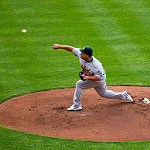
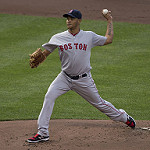
Eduardo rodriguez photo

Eduardo Rodriguez Photo by Keith Allison

Yesterday (May 20, 2-18), the Baltimore Orioles put on an offensive display (sort of) at Fenway Park, as they outhit the Red Sox 13-12 – and still lost by a 5-0 score.  What makes the outcome even more surprising is that the Red Sox’ shutout was not aided by a single double play. The Orioles left 14 runners on base.  In the game, the Orioles went 1-for-ten with runners in scoring position and  had at least one hit in every inning, as well as hits by nine of the ten O’s that batted in the contest. The Orioles’ offense went like this:


  • With one out in the first, CF Adam Jones collected a one-out, ground-ball  single off Boston starter Eduardo Rodriguez – followed by two fly-ball outs.
  • Orioles’ DH Mark Trumbo opened the second with a ground-ball single off Rodriguez – followed by two fly outs and an inning-ending strikeout.
  • 1B Trey Mancini singled to right off Rodriguez with one down in the third. Jones followed with another right-field single, moving Mancini to second. Rodriguez then got a pop up (infield fly rule) and a ground out to third.
  • In the fourth, 3B Danny Valencia reached on a one-out error by Red Sox’ 3B Rafael Devers; RF Joey Rickard reached on a fielder’s choice (Valencia out at second); C Andrew Susac singled to center, advancing Rickard to second; and LF Craig Gentry flied out to end the frame.
  • Rodriguez toughened up in the fifth inning – giving up just one single (Jones) and striking out three Orioles.
  • Rodriguez, who had given up six hits (all singles), was still on the mound in the sixth, which started with a Trumbo strikeout and then singles by Valencia and Rickard (Valencia to second). Rodriguez then got another strikeout, before Gentry singled to load the bases – bringing in reliever Heath Hembree, who ended the inning by inducing a Mancini fly out.
  • Hembree had an easy seventh, just a lone single by SS Manny Machado, two K’s and a pop up.
  • Bobby Poyner came on in the eighth for Boston and sandwiched two singles (Rickard and Gentry) between a lead-off ground out, third-hitter pop up and inning-closing ground out.
  • The ninth, with Brian Johnson on the mound, opened with the Orioles’ 13th hit and first extra-base knock – a double by LF Jace Peterson. Johnson then got ground out, fly out, strikeout to finish the whitewashing.

Eduardo Rodriguez got the win, his fourth of the season (4-1, 4.13).

It’s been ten seasons since a team collected 13 hits in a nine-inning contest without scoring. On August 25, 2008, the Dodgers collected 13 hits and lost to the Phillies (who had ten hits) by a 5-0 score. The Dodgers had two extra base hits (both doubles by CF Matt Kemp), also collected three walks, fanned ten times and hit into two double plays.  Los Angeles went 1-for-17 with runners in scoring position and left 14 runners on base.  The Phillies used three pitchers in the contest.

The last American League team to collect 13 hits, while failing to score (nine innings) was the Minnesota Twins – in a 1-0 loss to the Royals on August 31, 2005. The Twins’ offensive output included two doubles and two walks. Twins’ hitters fanned just five times and hit into three double plays. They were 0-for-10 with runners in scoring position and left ten on base. The Royals used three pitchers. The game’s lone run scored on a walk-off single by RF Emil Brown (just one of five Kansas City hits) with one out in the bottom of the ninth.  Brown’s hit followed a single by 2B Denny Hocking; an error by Twins’ 3B Terry Tiffee on a grounder by Royals’ LF Chip Ambres (sending Hocking to second); and a strikeout by DH Matt Stairs. 

For those who track such things, the Orioles’ unlucky thirteen is NOT the most hits by a team failing to score in a nine-inning game.  I did find two instances in which a team failed to score ove nine innings while collecting 14 safeties. Notably, to show how times have changed – both resulted in complete-game shutouts and both games were completed in 120 minutes or less.

On September 14, 1913, Cubs’ right-hander Larry Cheney tossed a 14-hit shutout against the Giants in Chicago – as his Cubs won 7-0 and collected 11 hits.  As with the Orioles yesterday, the Giants collected only one extra base hit (a double by C Chief Meyers.) It was the 20th win of the season for Cheney, who walked none and fanned four. The game lasted a crisp two hours even. Cheney (who led the NL with 26 wins in 1912) finished 1913 at 21-14, 2.57 (with 25 complete games and eleven saves).He was 116-100, 2.70 in nine MLB seasons.

On July 10, 1928. Washington Senators’ righty Milton Gason shutout the Cleveland Indians on 14 hits. Just as the Orioles outhit the Red Sox and the Giants outhit the Cubs, the Indians outhit the Senators 14-13 – but lost the contest 9-0.  The Indians also drew a pair of walks and had three extra base hits (two doubles and a triple) in their output.  Gaston went the distance in that contest (which lasted just 1 hour and 49 minutes), fanning just two and getting the benefit of two double plays.  Gaston would finish the 1928 season at 6-12, 5.51 and an 11-season MLB career at 97-164, 4.55 – leading the AL in losses in 1926 and 1930.

Primary resources:  Baseball-Refrence.com; MLB.com


I tweet baseball @DavidBBRT

Like/Follow the Baseball Roundtable Facebook page here.  We’re getting ready for another bobblehead giveaway.

Member:  Society for American Baseball Research; The Baseball Reliquary; The Negro Leagues Baseball Museum.
The Baseball Reliquary 2018 Shrine of the Eternals Electees – They Came to Play

ReliquaryNewOn May 3, Baseball Roundtable featured the 2018 Negro Leagues Baseball Museum’s 2018 Hall of Game honorees – Dick Allen; Eddie Murray; Jim “Mudcat” Grant; and J.R. Richard. (See that post here.) In this post, we will look at the recently announced 2018 electees to the Baseball Reliquary’s Shrine of the Eternals – which takes a more eclectic approach to the national pastime.  Let me add that I am proud to be a card-carrying member of both organizations.

I’ve asked a version of the following question on this page before, but it remains the best way to introduce the Baseball Reliquary and its Shrine of the Eternals.

What do the following have in common – a pitcher who once threw a no-hitter while high on LSD; a team owner who sent a midget to the plate; a man in a chicken suit; a member of Major League Baseball’s 3,000-hit club; a MLB catcher who one season led the National League in passed balls, despite starting only 59 games behind the plate; another backstop known as much for his malapropisms as his record 71 World Series base hits; an MLB manager who won eight World Championships; a one-armed outfielder; a one-handed  pitcher; a cartoon character who  managed and pitched his team to more than 1,000 losses (and just a handful of wins); a baseball card designer; a surgeon; a labor leader; a statistical wizard;  and more than one best-selling author?

These diverse individuals are all among the past electees to The Baseball Reliquary’s Shrine of the Eternals – an honor that recognizes individuals who have had impact on our national pastime that goes beyond statistics and touches upon the culture and character of the game.  In essence, the Shrine of the Eternals is our national pastime’s fan-focused Hall of Fame. (This year, you can add a crafty southpaw, a red-headed raker and a true player to the list)

The Baseball Reliquary this week announced its latest (2018) Shrine of the Eternals electees, who will be enshrined during ceremonies slated for 2:00 p.m., Sunday July 22nd, at the Donald R. Wright Auditorium, Pasadena Central Library, 285 E. Walnut Street, Pasadena, California.  If there is one thing this year’s honorees share, it’s a long tenure of excellence.  Together the three have played more than 80 combined seasons in major league ballparks.  Here are the electees:

Tommy JohnLed all nominees – named on 44 percent of the ballots.

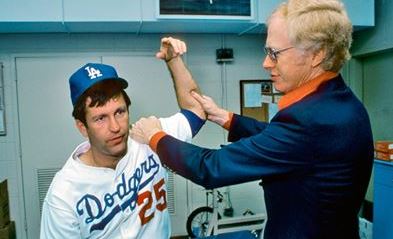
Southpaw Tommy John won 288 major league games in 26 MLB seasons (1963-89), 164 of those victories after undergoing the ground-breaking surgery that now bears his name – and which also earned surgeon Frank Jobe a spot in the Shrine of the Eternals in 2012.

Rusty Staub …

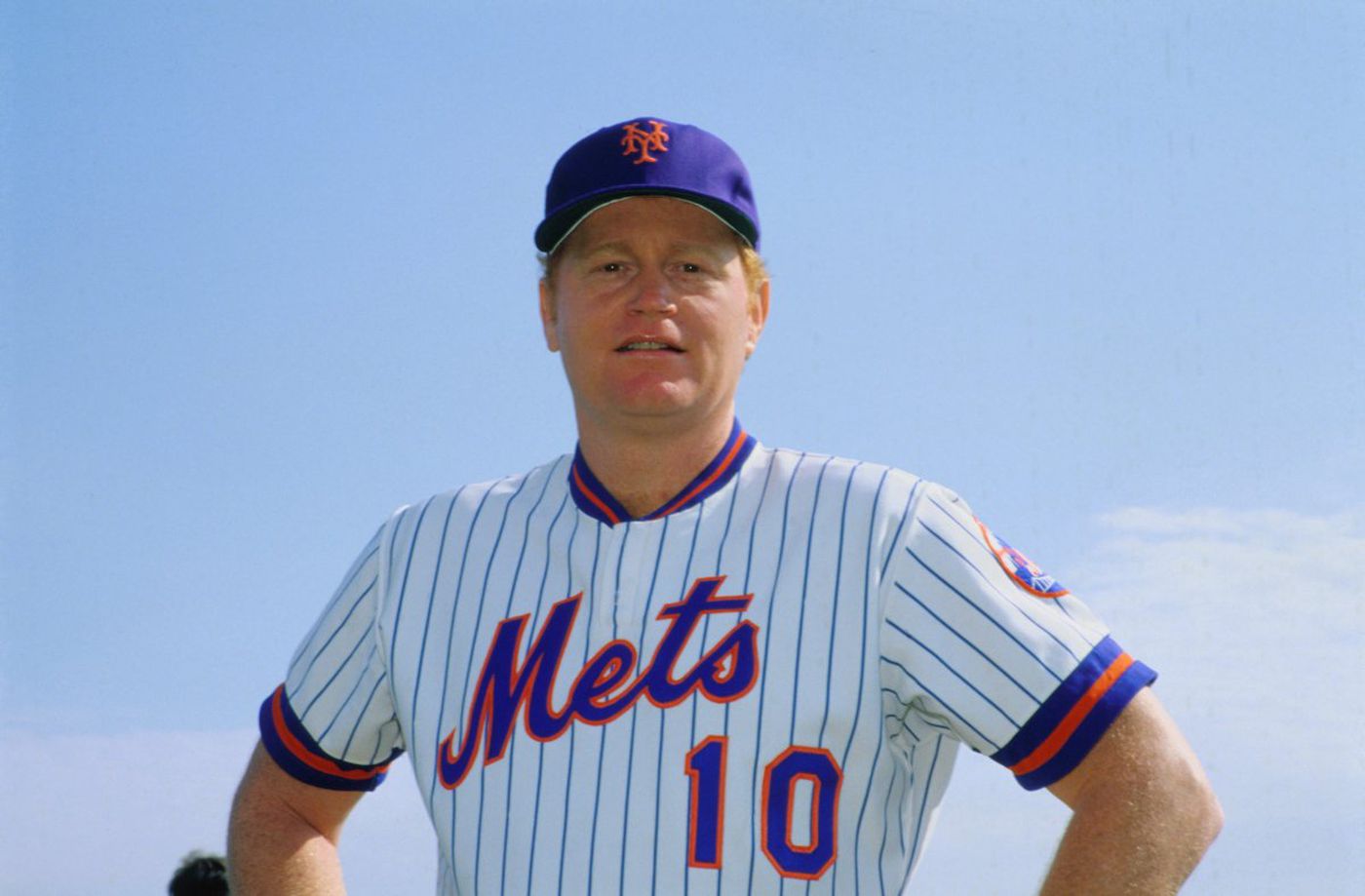
Daniel Joseph Staub’s red hair earned him the nickname Rusty and, in Montreal, the title Le Grand Orange. The first baseman/outfielder’s potent bat earned him a 23-season MLB career, six All Star selections and a special spot in the hearts of Expos’ and Mets’ fans.

Nancy Faust …

Nancy Faust played lively, relevant and witty organ music at sporting events for four decades (1970-2010) and was a fixture at Old Comiskey and New Comiskey (U.S. Cellular field) Parks.

Before taking a closer look at this year’s electees, the full roster of Shrine of the Eternals inductees and my own 2018 ballot, I’d like to provide a brief overview of both the Baseball Reliquary and its Shrine of the Eternals.

Spoiler Alert: Unabashed membership recommendation to follow.  If you are a baseball fan, I would highly recommend you consider membership in the Baseball Reliquary – a truly free-spirited (if somewhat eccentric) organization dedicated to celebrating the human side of baseball’s history and heritage.  The Baseball Reliquary is an open and fan-focused organization, committed to recognizing baseball’s place in American culture and to honoring the character and characters of the national pastime. It pursues that mission through its collection of artifacts, traveling exhibitions, ties to the Whittier College Institute for Baseball Studies and its own version of the Baseball Hall of Fame – the Baseball Reliquary Shrine of the Eternals.  For more on the Baseball Reliquary, and why you should become a member, click here.

Now, to the Shrine of the Eternals. Here’s what the Reliquary has to say about this honor.

The Baseball Reliquary Shrine of the Eternals

Similar in concept to the National Baseball Hall of Fame, the Shrine of the Eternals differs philosophically in that statistical accomplishment is not the principal criterion for election. The Baseball Reliquary believes that the election of individuals on merits other than statistics and playing ability will offer the opportunity for a deeper understanding and appreciation of baseball than has heretofore been provided by “Halls of Fame” in the more traditional and conservative institutions.

Criteria for election shall be: the distinctiveness of play (good or bad); the uniqueness of character and personality; and the imprint that the individual has made on the baseball landscape. Electees, both on and off the diamond, shall have been responsible for developing baseball in one or more of the following ways: through athletic and/or business achievements; in terms of its larger cultural and sociological impact as a mass entertainment; and as an arena for the human imagination.

Each year, the Baseball Reliquary submits a list of candidates to its members and the top three vote-getters are honored.  (Each member may vote for up to nine nominees.) With that background behind us, let’s take a look at the 2018 honorees.  After we look at this year’s electees, I’ll also comment on BBRT’s ballot – and the nominees I voted for who did not make the final three.   Note: voting percentages for all the 2018 candidates can be found at the end of this post. 

_____________________________________________________________

2018 SHRINE OF THE ETERNALS HONOREES


Tommy John – LHP … (1943 – * )

Tommy John ... Courtesy of The Bsseball Reliquary

Tommy John … Courtesy of The Bsseball Reliquary

Southpaw Tommy John signed with the Cleveland Indians right out of high school (Gerstmeyer High School in Terre Haute, Indiana), where he was already known for finesse, guile, heart, work ethic and about as good a high school curve ball as the scouts had ever seen. Note: John had not only gone 28-2 on the high school mound, the 6’3”, 185-pound lefty was also a highly-recruited basketball star.

John began his pro baseball career at age 18, showing his promise by going 10-4, 3.17 in 14 games (13 starts) for the Dubuque Packers of the Class D Midwest League. Just two seasons later – at age 20 – he would make his major league debut; called up to the Indians in September (John was 15-10 at Double A/Triple A). He went 0-2, 2.21 in six games – and, most likely, did not expect he would still be pitching in the major leagues a quarter of a century later.

From 1963-74 – pitching for the Indians, White Sox and Dodgers – John went 124-106, with a 2.97 ERA.  His reputation as a crafty and gutsy lefty is supported by the fact that he fanned just 1,273 batters in 2,165 2/3 innings. In 1973 and 1974, John seemed to be hitting his peak as a pitcher.  In 1973, he went 16-7 – with an NL-leading .696 winning percentage and a 3.10 ERA. In 1974, by mid-July, John was 13-3, with a 2.50 ERA.  (His .813 winning percentage would eventually lead all of MLB that season.)

Then, in the third inning of a July 17 start against the Montreal Expos – with the Dodgers leading 4-0 and John seemingly on his way to a 14th pre-All Star break win – disaster struck.  John heard and felt a pop in his left elbow, accompanied by a sudden loss of strength in his arm. It was originally thought that John’s dead arm – his throws could no longer even reach the plate – was the result of long-term stress and might respond to rest. When more than a month passed with no improvement, John learned that he had torn the ligament in his elbow – and the general consensus was that it was beyond repaid and he would never pitch again.

Dodgers’ physician Dr. Frank Jobe suggested a new surgical procedure – replacing the torn ligament with one from another part of his body (in this case, John’s right wrist). It was a procedure no pitcher had undergone and neither Jobe nor John new exactly what to expect. During a long and arduous post-surgery rehab (John missed the entire 1975 season), John showed the same grit and tenacity that had made him a winner on the mound – and the results exceeded expectations.

The development of what is now termed “Tommy John Surgery” helped Tommy John to 14 additional major league seasons (164 additional victories).  The surgery is now considered a routine procedure and has helped prolong the careers of a host of major leaguers. And, Dr. Jobe beat Tommy John to a spot in the Shrine of the Eternals by six years.

John came back in 1976 to go 10-10, 3.09 in 31 starts (207 innings). The rest, as they say, is history.  John, who had 124 wins and one All Star selection in 12 seasons before the surgery, earned another 164 victories and three more All Star selections in 14 seasons after the surgery. His post-surgery record included three 20-win seasons (a high of 22 wins in 1980). He also made all of his 14 post-season appearances post-surgery – compiling a 6-3, 2.64 post-season record.

John pitched until age 46 – racking up 288 wins (231 losses), a 3.34 earned run average, 162 complete games, 46 shutouts and 2,245 strikeouts in 4,710 1/3 innings pitched.  The left arm that in 1974 was thought to be damaged beyond repair, pitched more than 2,500 post-surgery innings.  BBRT says “Well-played, Tommy John” – and, of your election to the Shrine of the Eternals, “Well-earned.”

Rusty Staub – 1B/OF … (1944-2018)

Rusty Staub ... Courtesy of The Baseball Reliquary

Rusty Staub … Courtesy of The Baseball Reliquary

Rusty Staub was part of the expansion Houston Astros’ youth movements and played in 150 games for the Astros as a 19-year-old (1963). While he hit only .224-6-45 that season, there was plenty of major league baseball – 22 more seasons – in his future.

In a major-league career that stretched from 1963 to 1985 – and saw Staub don the uniforms of the Astros, Expos, Mets, Tigers and Rangers – the left-handed hitter was a six-time All Star (five seasons consecutively from 1967 through 1971). He hit .300 or better five times, topped 20 home runs four times and had 100+ RBI three times.  Staub joined the expansion Montreal Expos in 1960 and became the first star of the first MLB franchise located outside the United States. As an Expo from 1969 to 1971 (when he was traded to the Mets for Tim Foli, Mike Jorgensen and Ken Singleton), Staub was an All Star each season and put up a stat lines  of: .302-29-79; .274-30-94; and .311-19-97.  He scored 271 runs over that span. Staub was an instant fan favorite in Montreal, earning the nickname – thanks to his red hair and fan-friendly attitude (even working to learn the French language) – of Le Grande Orange.  His number 10 was the first number ever retired by the Expos’ franchise.

In 1962, 18-year-old Rusty Staub starred as a member of the Durham Bulls in the Class B Carolina League.  Staub led the league with 149 hits, batting .293, with 23 home runs, 93 and 115 runs scored in 140 games.

Over the course of his career, Staub played 23 MLB seasons and 2,951 games.  He put up a .279 average and collected 2,716 base hits, 499 doubles, 47 triples and 292 home runs.  He also scored 1,189 times and drove in 1,466 tallies.

Rusty Staub is the only MLB player to collect at least 500 base hits with four different teams – Mets, Astros, Expos, Tigers).

Staub was a fan favorite wherever he played, noted for a combination of strong baseball skills and personal character. The New York Mets (Staub played for the Mets from 1972 to 1975 and 1981 to 1985)) held Rusty Staub Day in 1986. He has been inducted into the Mets Hall of Fame; Louisiana Sports Hall of Fame; Texas Baseball Hall of Fame; and Canadian Baseball Hall of Fame.

Staub was also an acknowledged humanitarian. He established the New York Police and Fire Widows’ and Children’s Benefit Fund which, since 1986,  has raised over $150 million for families of policemen, firefighters, emergency service, and port authority officers killed in the line of duty. He also established The Rusty Staub Foundation which, since 1985, (working with Catholic Charities) has raised over $17 million in support of emergency food pantries. Staub died of a heart attack on March 29, 2018, at age 73.

Nancy Faust – Chicago Sports Scene Icon …  (1947 – *)

Nancy Faust may be the only person to play for the Chicago Bulls, Blackhawks and White Sox.

Nancy Faust - Courtesy of The Baseball Reliquary

Nancy Faust – Courtesy of The Baseball Reliquary

Nancy Faust is arguably the most noted  ball park organist of all time, entertaining White Sox fans with her musical talents and wit (in song selection) from 1970 to  2010.

A Chicago native, Faust began playing the organ as a youngster, under the tutelage of her mother, a professional musician. After earning a degree in psychology, Faust supported herself by playing at sporting events – while searching for a position in her chosen field.  That temporary avocation turned into a life-long vocation – and psychology’s loss was Chicago baseball’s gain.

In 1970, when the White Sox went looking for a successor to Comiskey Park organist Bob Creed, the 23-year-old Faust got the job. She was an immediate hit with the fans – for both her musical talent and wit. She added rock music and popular culture (musical lines from popular television ads or shows) to the traditional ball park musical fare.  For example, Faust is credited with being the first ball park organist to play snippets from the tune “Na, Na, Hey, Kiss Him Goodbye” when an opposing pitcher was vanquished from the field.  It also was her version of “Take Me Out to the Ball Game” that prompted  White Sox’ (and future Cubs’) announcer Harry Caray to begin leading the fans in a rousing version of the tune – a tradition he carried with him to the Cubs.

Faust’s reputation as the most notable organist in the game even earned her as story  in Sports Illustrated – where she was referred to as baseball’s “Most Valuable Organist.” Recognizing her tenure and contributions, the White Sox honored her before their September 18, 2010 game at U.S. Cellular Field – which was also Nancy Faust Bobblehead Night.

Welcome to the Shrine of the Eternals, Nancy Faust – Clearly, you came to play.

__________________________________________

2018  SHRINE OF THE ETERNALS BALLOTING

Tommy John – 44%

Rusty Staub – 29%

Nancy Faust – 26.5%


Bob Costas – 25.5%

Leo Durocher – 25%

Effa Manley – 25%

J.R. Richard – 25%

John Young – 24%

Denny McLain – 23.5%

Chet Brewer – 22.5%

Fred Merkle – 21%

Lisa Fernandez – 20%

Rube Foster – 20%

Bill White – 20%

Charles M. Conlon – 19.5%

Mamie Johnson – 19.5%

Octavius V. Catto – 18%

Pete Reiser – 18%

Jim Thorpe – 18%

Rube Waddell – 18%

Dr. Mike Marshall – 17.5%

John Thorn – 17.5%

Mike Veeck – 17.5%

Rocky Colavito – 16%

Ernie Harwell – 16%

Hideo Nomo – 16%

Bing Russell – 15.5%

Janet Marie Smith – 15.5%

Tug McGraw – 14.5%

Vic Power – 14.5%

Charlie Finley – 14%

Joe Pepitone – 14%

Shorty Perez – 14%

Charley Pride – 14%

Luke Easter – 13%

Ted Kluszewski – 13%

Dave Parker – 13%

Phil Pote – 13%

Annie Savoy – 13%

Chris Von der Ahe – 13%

Kurt Bevacqua – 12.5%

Bert Campaneris – 12.5%

Masanori Murakami – 12.5%

Mo’ne Davis – 11.5%

Doris Sams – 11.5%

Oscar Gamble – 8%

Jim Creighton – 4.5%

Lenny Randle – 3.5%

George Stovey – 3%

Adolfo Phillips – 0.5%

___________________________________________

BASEBALL ROUNDTABLE’S SHRING OF THE ETERNALS BALLOT

Now, here’s a look (in alphabetical order) at the 2018 candidates BBRT voted for who didn’t make the final three. (I did vote for Tommy John.)

Rube Foster (1879-1930)

Andrew “Rube” Foster was an outstanding hurler, confined – by history – to pitching primarily for Black teams; such squads as the Chicago Union Giants,  Cuban X-Giants and Philadelphia Giants. How good was Foster on the mound? Records are sketchy, but the  Baseball Hall of Fame reports that, in 1902, Foster  ran off a streak of 44 straight victories and the Negro League Baseball Museum credits Foster with a 54-1 record that season.

Rube Foster’s tireless efforts earned him the unofficial title of “The Father of Black Baseball.”

Foster’s contributions to the national pastime, however, went beyond the mound. In 1911, he partnered with John Schorling (son-in-law of Charles Comiskey) to establish the Chicago American (Black) Giants – who, under Foster’s leadership, became Black baseball’s most dominant team.. But Foster wasn’t done yet.  In 1920, he was a key player (cited by many as THE key player) in the founding of the Negro National League.  As the league flourished, Foster wore many hats. He served not only as the league’s president and treasurer, but also was the owner and manager of the Chicago American Giants – winning the NNL’s first three pennants.  By 1926, his demanding schedule had taken a toll and Foster suffered a nervous breakdown. He never fully recovered and passed away prematurely in 1930. Fans might enjoy Larry Lester’s book “Rube Foster in His Time: On the Field and in the Papers with Black Baseball’s Greatest Visionary.”

Rube Foster was elected to the National Baseball Hall of Fame in 1981.

________________________________

Mamie “Peanut” Johnson (1935 – 2017)

Mamie Johnson was one of three females to play for the Indianapolis Clowns during the declining days of the Negro Leagues (and the only woman ever to pitch in the Negro Leagues).  Johnson took the mound to the Clowns for three seasons (1953-55), running up a 33-8 record.  Her exploits are chronicled in the children’s book “A Strong Right Arm: The Story of Mamie ‘Peanut’ Johnson,” by Michelle Y. Green.

________________________

Ted Kluszewski (1924-1988)

I love to recognize players who do something we are not likely to see again. Therefore, I again cast a ballot for Ted “Big Klu” Kluszewski – perhaps the last of the true power hitters who also practiced exceptional plate discipline.  In 1954, for example, Big Klu hit .326, with 49 home runs and 141 RBI – a season made even more remarkable by the fact the Kluszewski struck out only 35 times (versus 78 walks). I doubt if we’ll ever see another player top 40 home runs without reaching 40 whiffs.  Kluszewski, in fact, had a streak of four seasons (1953-56) when he hit over .300, drove in 100+ runs, bashed 35+ home runs – and struck out no more than 40 times in any season.  In those four seasons, Kluszewski hit 171 home runs – and fanned 140 times. It should also be noted that Kluszewski led NL first baseman in fielding percentage every year from 1951 through 1955.  Unfortunately, a back injury in 1956 hampered his performance in the later years of his career (he played until 1961).

Ted Kluszewski is noted for adding a bit of style and flair to the game, making his own intimidating fashion statement. Klu complained that his uniform jersey was too tight for his large and powerful biceps. He went on to have the sleeves cut from his jersey – exposing his bare arms from the shoulder.  (This was considered a bold move at that very conforming time in the game’s history.)

Kluszewski only appeared in one post-season – hitting .391, with three homers and ten RBI in the 1958 World Series (for the White Sox).  True to his form – Big Klu did not strike out even once (25 plate appearance) in the Series.  For trivia buffs, left unprotected in the 1960 expansion draft, Kluszewski hit the first-ever home run for the expansion Angels (a two-run shot in the first inning of the Angels’ first game – April 11 versus the Orioles). He added a punctuation mark, by hitting the Angels’ second–ever home run (a three-run shot) the very next inning. The Angels won 7-2, and (of course) Kluszewski did not strikeout.

____________________________

Mike Marshall (1943 –  *)

I should probably say Doctor Mike Marshall, since this former major league reliever (14 seasons … 1967, 1969-81) earned three college degrees, including a Ph.D. in Kinesiology from Michigan State University. Kinesiology is the study of muscle movement and Marshall used his knowledge to develop his own exercise program focused on minimizing stress, reducing injury and accelerating recovery time.  While his unorthodox methods, advanced education and outspoken approach often had him at odds with baseball’s traditionalists (and may be part of the reason he pitched for nine teams in 14 seasons), they did get the job done.

The fact is, we never saw a closer quite like Mike Marshall before he came along – and we’re not likely to see one like him again. In 1974, as a Dodger, he put up the grand-daddy of all relief seasons – setting the single-season MLB records for appearances with 106 and innings pitched in relief at 208 1/3. He finished the campaign 15-12, with a league-topping 21 saves and a 2.42 ERA.  That season, Marshall was called on to go more than one inning in 74 games (68.5 percent of the time); and he toiled three or more innings 22 times. He also relieved in 13 consecutive regular-season games – an MLB record later tied (1986) by the Rangers’ Dale Mohorcic. His efforts won him the 1974 Cy Young Award and Sporting News NL pitcher of the year.

Marshall holds the MLB and NL record for games pitched in relief in a season (106 – Dodgers, 1974), as well as the AL record (89 in relief – Twins, 1979 – he also had one start that year).  The Blue Jays’ Mark Eichhorn tied Marshall’s AL record in 1987. Marshall led his league in games pitched four times and saves three times – finishing 97-112, 3.14 with 188 saves.

A true “fireman” from an era when closers came in to put out fires and stayed on the mound to ensure they were no flare ups, Marshall got my vote for the Shrine.

______________________________________

Pete Reiser (1919-1981)

Combine Willie Mays’ skill set (younger folks, think Mike Trout) with Pete Rose’s hustle and on-field abandon and you have Pete Reiser. In his first full MLB season (CF, Dodgers), a 22-year-old Reiser dazzled defensively and led the NL in runs scored (117), doubles (39), triples (17), batting average (.343), total bases (299) and hit by pitch (11) – tossing in 14 home runs and 76 RBI for good measure. Unfortunately, unpadded outfield walls, helmet-less at bats (the fiery Reiser was a frequent bean ball target) and aggressiveness on the base paths (Reiser twice led the NL in stolen bases and holds the NL record for steals of home in a season at seven) took their toll.

In his ten-season career, the switch-hitting Reiser endured five skull fractures, a brain injury, a dislocated shoulder and a damaged knee.  He was carted off the field 11 times during his career (six times unconscious) and once actually given last rites at the stadium – and he played on. The three-time All Star retired as a player with a .295 career average, playing in 861 games over ten seasons. No telling what he might have done with padded outfield walls and batting helmets.  Pete Reiser was a true – and talented – gamer. For more on Reiser, try “Pete Reiser: The Rough and Tumble Career of the Perfect Ballplayer,” by Sidney Jacobson.

____________________________________

Rube Waddell (1876-1914)

Rube Waddell is almost universally recognized as the zaniest player in MLB history – but he also was one of the best (at least when he was focused on the game). Waddell was known to: leave a ball game to chase fire engines; miss a game he was scheduled to start because he was fishing or playing marbles with neighborhood kids; bring his outfielders in to sit on the grass and then proceed to fan the side; wrestle alligators in the off-season; and (frequently) do battle with owners and managers.  Waddell simply was more interested in the freedom to enjoy life and do things his way than in money or professional stability.  But, when Waddell was on his game, he was arguably the best pitcher of his time. The 6’1”, 195-lb. lefty led the AL in strikeouts six consecutive seasons (1902-1907) – by a wide margin.

How good was Rube Waddell?  In 1902, he joined the Philadelphia Athletics in June – making his first start on June 26 (with just 86 games left in the season). Waddell proceeded to win 24 games (the league’s second-highest total) against seven losses, with a 2.05 ERA.  Despite his shortened season, he led the AL with 210 strikeouts, fifty more than the runner-up (none other than Cy Young).

In 1904, Waddell set a modern (post-1900) MLB record with 349 strikeouts that stood until 1965.  Waddell, elected to the National Baseball Hall of Fame in 1946, finished with a 193-143, 2.16 stat line – leading the AL in strikeouts six times, ERA twice, wins once and complete games once. For more on Waddell, BBRT suggests: “Rube Waddell: The Zany, Brilliant Life of a Strikeout Artist,” by Allan Howard Levy and “Just a Big Kid: The Life and Times of Rube Waddell,” by Paul Proia.

_____________________________________

Bill White (1934 – *)

Bill White broke into the major leagues in 1956, as a 22-year-old first baseman/outfielder with the New York Giants. He hit .256 in 138 games and showed a combination of speed and power – 22 home runs and 15 stolen bases. After missing the 1957 season (military service), he played in the major leagues from 1958 thought 1969 (Giants, Cardinals, Phillies). Over his 13 MLB seasons, he was an All Star in five seasons and won seven Gold Gloves (1960-66) at first base. He hit .286 for his career, with 1,706 hits, 843 runs, 202 home runs, 870 RBI and 103 stolen bases. White hit 20 or more home runs in seven seasons, topped .300 four times and drove in 100+ runs four times.

After leaving the playing field, White went on to become the first African-American doing MLB play-by-play broadcasting. His broadcasting career stretched from 1970 through 1988 – one year in Philadelphia and the remainder (1971-88) with the Yankees (radio and television). He also worked several World Series for CBS radio and Monday Night Baseball for ABC Television.

White was unanimously elected to succeed A. Bartlett Giamatti as President of the National League in 1989 – the first African-American to serve in that capacity. He held that position until 1994.

White’s on-field success in the early days of baseball’s integration, as well the advances he made both in the broadcast booth and executive offices served (and can continue to serve) as an inspiration and role model for the Black athletes (and executives) that followed him. He earned my vote for his impact on the “culture” of the game. For more on Bill White, go to his autobiography: “Uppity: My Untold Story of the Games People Play.”

_____________________________________

John Young (1949-2016)

A 6’3”, 210-pound, left-handed first baseman, John Young hit .325, with four home runs, 60 RBI and 26 stolen bases (in 29 attempts) in 99 games at Single A Lakeland (Tigers’ farm team) as a twenty-year-old (in 1969). The first-round draft choice (16th overall in the 1969 draft) looked like a player with great promise – and, in fact, enjoyed a big league cup of coffee with the Tigers in 1971 (two games, four at bats, two hits, one run, one RBI, one double). A wrist injury derailed his playing career, but didn’t dampen his love for the game and he went on to a long career as a scout.

It was during his scouting days that Young developed a concern for the decline of baseball among young people – particularly in the inner cities.  In response, Young came up with the concept for the RBI (Reviving Baseball in Inner Cities) program. Officially launched in 1989, the RBI program is now supported by all thirty MLB clubs and is active in approximately 200 communities.  Overall, MLB teams have donated more than $30 million to the program. (The program also includes educational and life skills components.) A few RBI alumni in the major leagues include: Carl Crawford, Justin Upton, CC Sabathia, James Loney, Manny Machado and Yovani Gallardo.  His good works on behalf of baseball’s future earned my vote.

_____________________________________

FULL ROSTER OF SHRINE OF THE ETERNALS INDUCTEES – INCLUDING 2018

Following is an alphabetical list of individuals who have been inducted into the Shrine of the Eternals between 1999 and 2017.  Year of induction in parenthesis.


Jim Abbott (2003)

Dick Allen (2004)

Roger Angell (2010)

Emmett Ashford (2008)

Moe Berg (2000)

Sy Berger (2015)

Yogi Berra (2007)

Steve Bilko (2015)

Ila Borders (2003)

Jim Bouton (2001)

Jim Brosnan (2007)

Charlie Brown (2017)

Bill Buckner (2008)

Glenn Burke (2015)

Roberto Clemente (2004)

Steve Dalkowski (2009)

Dizzy Dean (2014)

Rod Dedeaux (2005)

Jim Eisenreich (2009)

Dock Ellis (1999)

Nancy Faust (2018)

Eddie Feigner (2013)

Mark Fidrych (2002)

Curt Flood (1999)

Ted Giannoulas (2011)

Josh Gibson (2006)

Jim “Mudcat” Grant (2012)

Pete Gray (2011)

Arnold Hano (2016)

William “Dummy” Hoy (2004)

Bo Jackson (2016)

Shoeless Joe Jackson (2002)

Bill James (2007)

Dr. Frank Jobe (2012)

Tommy John (2018)

Bill “Spaceman” Lee (2000)

Roger Maris (2009)

Marvin Miller (2003)

Minnie Minoso (2002)

Manny Mota (2013)

Don Newcombe (2016)

Lefty O’Doul (2013)

Buck O’Neil (2008)

Satchel Paige (2001)

Jimmy Piersall (2001)

Pam Postema (2000)

Jackie Robinson (2005)

Rachel Robinson (2014)

Lester Rodney (2005)

Pete Rose (2010)

Vin Scully (2017)

Rusty Staub (2018)

Casey Stengel (2010)

Luis Tiant (2012)

Bob Uecker (2017)

Fernando Valenzuela (2006)

Bill Veeck, Jr. (1999)

Maury Wills (2011)

Kenichi Zenimura (2006)

Don Zimmer (2014)


Primary Resources:  The Baseball Reliquary; The Society for American Baseball Resarch; The Negro Leagues Museum; Baseball-Reference.com

I tweet baseball @DavidBBRT

Follow/Like Baseball Roundtable’s Facebook page here.

Member: Society for American Baseball Research; The Baseball Reliquary; The Negro Leagues Baseball Museum.
Baseball Roundtable April Wrap – Home Runs, Strikeouts and a Seven-Defender Double Play

HOW THE GAME HAS CHANGED …

On this date (May 1) in 1920, Brooklyn and Boston played to a 26-inning 1-1 tie. Both starting pitchers – Brooklyn’s Leon Cadore and Boston’s Joe Oeschger – went the distance.  For the full story, click here.

APRIL PLATE APPEARANCES, BRING MAY RANTS

May is upon us, and that means it’s time for Baseball Roundtable to look back at the previous month’s highlights and lowlights.  Before I get into the specificS, however, a brief comment (rant?) on the game as it’s played today. In that May 1, 1920 contest noted above, not only did we see no pitching changes, there were only 22 plate appearances that ended in a trot (back to the dugout, to first base or around the bases) – nine walks, 14 strikeouts, no home runs and no hit batsmen.  That’s 11.8 percent of the total plate appearances.  Through April of this season, 35.6 percent of all plate appearances have ended in a trot – 22.7 percent by strikeout, 10.1 percent with a walk or hit by pitch and 2.8 percent via the home run.

Of course, it’s not fair to compare to a single-game more than 95 years ago to today’s contests.  So, here are a few more recent figures:  In 1980, 26.1 percent of all MLB regular-season plate appearances ended in a trot (home run, strikeout, walk, HBP).  In 2000, it was 29.9 percent and, last season, it was 34.4 percent.   Not sure how most of you feel, but I would prefer a trend toward more – rather than less – action in the field and on the basepaths.  (BBRT invites your comments.)

———A LOOK BACK AT 2018 MARCH/APRIL———

Now, on to a look at March/April.  The 2018 MLB season started off with a BANG! In 2017, MLB saw a record 6,105 home runs.  On Opening Day, March 29, the Cubs’ 23-year-old center fielder Ian Happ hit the very first pitch of the 2018 season (thrown by the Marlins’ José Urena) for a home run. Later that day, White Sox’ DH Matt Davidson became just the fourth player in MLB history with a three-homer Opening Day game.  He joined George Bell (1988), Tuffy Rhodes (1994) and Dmitri Young (2005) in that limited membership club.

Over the course of March/April, MLB treated us to such sights as the A’s  Sean Manaea throwing 2018’s first no-hitter; Twins’ Joe Mauer collecting his 2,000 MLB base hit; Adrian Beltre passing Rod Carew as the all-time hits leader among Latin-American players; and much, much more.

There were plenty of notable acheivements and performances – but before we dive deep, let’s look at BBRT’s players and pitchers of the month.

________________________________________________

AL PLAYER OF THE MONTH … Didi Gregorius, SS, Yankees

Didi Gregorius photo

Photo by apardavila

Maybe it should be Didi Degre-Glorious! When you are a middle infielder, batting in the heart of a lineup that includes Giancarlo Stanton, Aaron Judge, and Gary Sanchez – and pretty much outpowering them all – you;’ve got a good thing going.   In March/April, Gregorius put up a .327-10-30 line – leading MLB in RBI and  home runs (10, tied with the Angels’ Mike Trout and Mariners’ Mitch Haniger).  His 24 runs scored tied for MLB’s third-best and  he drew 18 walks to just 16 strikeouts.

Other Contenders: Manny Machado , SS, Orioles … Machado slid over from 3B to SS and didn’t miss a beat. His .361 average going in to May leads all of MLB and he also has nine home runs, 22 RBI, 14 runs scored and is two-for-two in stolen bases. His 39 base hits are second only to the Astros’ hit machine Jose Altuve (41). Machado is giving beleaguered Orioles’ fans a reason to come to Camden Yards.  Jed Lowrie, 2B, A’s … Lawrie, who came into this season with a career (10-season) batting average of .261, has been Gregorius-lite.  Another middle infielder hitting in the heart of the lineup, L0wrie went into May with a .339-6-27 line.  Like Machado, he has 39 base hits.

AL PITCHER OF THE MONTH …  Sean Manaea, A’s

Sean Manaea, a 6’5″, 245-pound southpaw, was big on the mound in March/April – tossing 2018’s first no-hitter (against the then red hot Red Sox) and putting up the AL’s lowest earned run average (among qualifiers) at 1.03. In six starts, Manaea went 4-2, 1.03, with 37 strikeouts in 43 2/3 innings (just 20 hits and seven walks). He went at least seven innings in five of his six starts and never gave up more than two runs in an outing (one shutout, four games of one run, one game of two runs).

Other Contenders: Edwin Diaz, Mariners … With an MLB-leading 11 saves (in 11 opportunities) a 0.63 ERA and 27 strikeouts in 14 1/3 innings, the 24-year-old closer (who saved 34 games a year ago) earns a spot here. Justin Verlander, Astros … Verlander ended April 4-0, with a 1.36 ERA (second in the AL) and 48 strikeouts (third in the AL) in 39 2/3 innings.  Since coming to the Astros last August, Verlander’s regular-season record with Houston is 9-0, 1.22, with 91 whiffs in 73 2/3 innings (post-season; 4-1, 2.21).

NL PLAYER OF THE MONTH … (Tie) Javier Baez, 2B/SS, Cubs & Ozzie Albies, 2B, Braves

Middle infielders seem to be all the rage this season – and a couple of second baseman tied (at least in BBRT’s estimation) for BBRT NL Player of the Month.  Javier Baez,  the NL leader in RBI with 26 – who, this season, has already batted in every spot in the order except leadoff and cleanup – put up a .280-7-26 line in March/April, with 20 runs scored (ninth in the NL) and three steals.  Note: Javier has recorded the most games in the number-two and number eight spots in the lineup – ten and eight appearances, respectively. Baez, just 25-years-old, is in his fifth season with the Cubs and is coming off a .273-23-75, 10 stolen bases campaign in 2017.

Then there is Braves’ rookie Ozzie Albies … This 21-year-old MLB freshman is tied for the MLB lead in runs scored (29) and tied for the NL lead in home runs (9).  He also has 20 RBI and three steals. Really, you could hardly squeeze a piece of paper between the performances of Baez and Albies.

Other Contenders: Asdrubel Cabrera, SS, Mets … Another middle infielder off to a great start, the veteran Cabrera goes into May hitting .340, with five home runs, 17 RBI and 20 runs scored.  His 34 base hits ties him for the NL lead.  A.J. Pollock, OF, D-backs … The Diamondbacks’ center fielder has been doing it all. In March/April, he hit .291, with a NL-leading (tied) nine home runs; 24 RBI (third in the NL) and 20 runs scored. He also swiped six bags in eight attempts.

NL PITCHER OF THE MONTH … Max Scherzer, Nationals

Photo by apardavila

Photo by apardavila

Max Scherzer came into May as the only MLB pitcher with five victories (5-1) and an NL-topping 57 strikeouts (39 innings). In addition, his 1.62 ERA was the NL’s third-best. That was enough to make the three-time Cy Young Award winner the BBRT pitcher of the month.

Other Contenders: Patrick Corbin, D-backs … Corbin was hot on Scherzer’s trail with a 4-0, 2.25 line and 55 whiffs in 40 innings;  Johnny Cueto, Giants … I couldn’t leave off Johnny Cueto.  Yes, he has only 26 strikeouts (in 32 innings), but he finished March/April at 3-0 (in five starts) and his earned run average was an MLB-lowest 0.84 – just  three earned run in 32 innings. Cueto can’t help it if the Giants failed to score for him in two starts in which he pitched seven shutout before giving way to the pen.

______________________________________________

IF THE SEASON ENDED APRIL 30 … YOUR PLAYOFF TEAMS WOULD BE

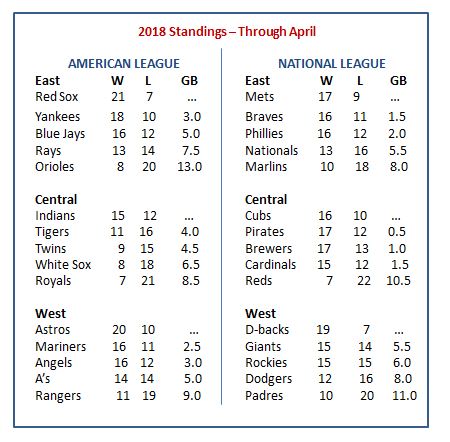
Note:  Full standings (as of April 30) can be found at the end of this post.

THE BOOKENDS

Only two teams played .700 or better ball through April – the Red Sox at .750 (21-7) and the Diamondbacks at .714 (20-8). The Astros were the only other team with 20 wins.

On the opposite side of the coin, three teams played under-.300 ball – the Reds at .241 (7-22);  Royals at .250 (7-21); and Orioles at .286 (8-20). 

Again, if the season ended April 30, your post-season participants …

American League:  Boston, Cleveland, Houston.  Wild Cards: New York, Seattle.

The most interesting race may be the Red Sox/Yankees – what a surprise. The Red Sox got off to a blazing 17-2 start before a no-hitter by the A’s Sean Manaea seem to take a bit of the wind out of their sails (they went 4-5 from the no-no on.) The Red Sox have excelled on both sides of the game – scoring the second-most runs through April (164) and and giving up the third-fewest (96).  The Yankees, on the other hand, while fourth in the AL in earned run average (3.62), in true Bronx-Bomber form, led the junior circuit in home runs (41), runs scored (164).  Houston clearly ran the best pitching out there – with a 2.54 ERA through April. The Astros have three of the four lowest American League earned run averages (among qualifying pitchers) through April – Justin Verlander (1.36); Charlie Morton (1.72); Gerrit Cole (1.73).

The worst division appears to be the AL Central – with only the Indians above .500.  Overall, the senior circuit’s Central Division’s record is 50-83.

APRIL SHOWERS BRING …

MLB set a new record for weather-related postponements before May 1, with 28.  The Twins were hardest hit and played a total of just 24 games between March 29 and April 30.  By comparison, the Astros, Rangers, Brewers, Rockies and Padres each played 30 contests. 

National League: New York, Chicago, Arizona.  Wild Cards: Atlanta  Pittsburgh.

In the NL, the most interesting race seems to be in the Central – where the Cardinals, Brewers, Pirates and Cubs are all over .500 and  separated by just 1 1/2 games.  Meanwhile, Arizona has built up the biggest lead in the NL – 5 1/2 games ahead of the second-place West Division Giants.  The Diamondbacks, in fact, won all nine series they completed in March/April. (Note: The Diamondbacks were the only NL team with a March/April ERA under 3.00.)

WHAT A DIFFERENCE …

No team outscored their opponents in March/April by more runs than the Astros (+64).  the only other team above +50 was the Red Sox (+63). The NL leader in this category was the D-backs (+39.) On the reverse side of the coin: The Royals ended April at -65.  The only other team with a negative run differntial worse than -50 was the Orioles (-54). The largest negative run differential in the NL went to the Marlins at -47.


—–LEAGUE LEADERS – TEAMS—–

RUNS SCORED … MLB Team Average – 125

AL: Yankees (164); Red Sox (159); Astros (149)

NL: Braves (151); Pirates (142); Cubs and Dodgers (133)

The Royals scored an MLB-low 95 runs in March/April. The Marlins were at the bottom of the NL with 96.  Other teams scoring fewer than 100 runs through April were the Twins and Orioles (both at 98). 

BATTING AVERAGE … MLB Team Average – .244

AL: Red Sox (.273); Rays (.266); A’s (.267); Yankees

NL: Braves (.268); Pirates (.258); Cubs (.252)

The Rockies and Orioles each hit an MLB-low .224 for March/April, The Marlins were at the bottom of the NL at .228. Surprisingly,  the AL Central-leading Indians had the AL’s second worst average at .227 and scored the fourth-fewest runs at 102. (They did have the AL’s third-best earned run average.)

HOME RUNS … MLB Team Average – 30

AL: Yankees (41); Blue Jays (40); Angels (38)

NL: Rockies (34) and Diamondbacks (34);  Cardinals (33)

The Marlins and Reds were the most power-starved clubs in March/April (20 homers each). The Royals hit just 22 in the AL.

STOLEN BASES … MLB Team Average – 14

AL: White Sox (25); Indians, Red Sox and Mariners (17)

NL: Nationals (31); Braves and Brewers (24)

The Cubs stole and A’s each stole only six bags in March/April (lowest MLB total); the Cubs in 11 attempts, the A’s in eight.  The Cubs had the worst stolen base percentage – 54.5 percent.

STRIKEOUTS … MLB Team Average -245

AL: Rangers (281); Orioles (274); Yankees (266)

NL: Padres (309); Phillies (279); Rockies (277)

WALKS DRAWN … MLB Average – 97

AL: Yankees (126); Astros (121); Blue Jays (107)

NL: Nationals (127); Phillies (125); Mets (111)

No team grounded into more double plays in March/April than the White Sox (29). The Blue Jays hit into an MLB-low 12 twin-killings. 

EARNED RUN AVERAGE … MLB Average – 4.12

AL:  Astros (2.54); Red Sox (3.34); Indians (3.59)

NL:  D-backs (2.96); Brewers (3.20); Cubs (3.33)

Four teams finished March/April with ERA’s over 5.00: Royals (5.33); Reds (5.32); Twins (5.29); White Sox (5.06).  No surprise, these same four teams were among the five squads with fewer than ten wins in that span. 

STRIKEOUTS … MLB Average – 245

AL:  Astros (316); Yankees (285); Red Sox (268)

NL: Dodgers (285); Nationals (284); ; D-backs (280)

WHO’S YOUR DADDY?

Cubs pitchers have combined to toss five shutouts through April – all five against the Milwaukee Brewers. The Cubbies record against the Brewers is 7-1, with a 1.01 earned run average. 

SAVES … MLB Average – 7

AL: Mariners (11); Red Sox (9); Angels (8)

NL: Diamondbacks (11); Mets and Rockies (10)

Arizona (11 saves) is the only team without a blown save this season.  The Dodgers have the worst save percentage (saves versus save opportunities) at 36.6 percent (four saves in 11 opportunities).

FEWEST WALKS SURRENDERED … MLB Average – 97

AL: Indians (63); A’s (67); Astros (75)

NL: D-backs (79); Mets (85); Dodgers (88)

The Astros went into May leading MLB with 10.55 strikeouts per nine innings.  Two additional teams finished March/April averaging 10+ strikeouts per nine: The Mets (10.06); and the Yankees (10.02). 

FEWEST ERRORS IN THE FIELD … MLB average – 17

AL: Astros and Red Sox (8); Angels (10)

NL: Diamondbacks (10); Rockies and Nationals (11)

The Yankees and Rangers led MLB in March/April errors with 25 each, with the Yankees having the lowest fielding percentage at .975. 

__________________________________________

—–LET’S TAKE A LOOK AT SOME  MARCH/APRIL HIGHLIGHTS—–

Back-to-Back, Jack!

On April 3, The Cardinals opened the game against the Brewers with back-to-back jacks (Dexter Fowler and Tommy Pham) on the game’s first three pitches. Then, with two outs in the bottom of the ninth inning, the Brewers (trailing 4-3) closed out the game with back-to-back home runs from Christian Yelich and Ryan Braun.  MLB.com reported it was the first time in MLB history a game opened and closed with back-to-back long balls.

This One’s Gone Platinum

StantonOn April 3 and April 8, the Yankees’ Giancarlo Stanton earned the Platinum Sombrero – recognition for fanning five times in a game. Quite a feat, when you consider that only one other player has notched two five-strikeout games in his career.  (That unfortunate was the Blue Jays’ Alex Rios – June 4, 2004 and July 29, 2006.)

Another One Bites the Dust  … April 3

Leading off the top of the second inning of the April 3 Rangers/A’s game, Texas 3B Adrian Beltre rapped a single to center off the A’s Kendall Graveman.  It was hit number 3,053 for Beltre, tying him with seven-time batting champion Rod Carew for the most hits ever by a player from Latin America. Beltre would pick up the tie-breaking hit on April 5 – a second inning double off the A’s Daniel Mengden.

Youth Not Wasted on the Young

On April 10, Blue Jays’ closer Roberto Osuna picked up his fifth save of the season as the Jays topped the Orioles 2-1 at Camden Yards. The save made Osuna – who became the Blue Jays’ closer at age 20 – the youngest player to reach the 100-save mark (23 years – 62 days), well ahead of the previous holder of that distinction (Francisco Rodriguez at 24-years – 246 days).

One is the Loneliest Number- Especially for the Padres

On April 12, the Giants toppled the Padres 7-0 on a combined one-hitter (Chris Stratton, seven innings/Derek Law, two innings). The one hit came early – in the bottom of the third.  The clean single to right field took any potential suspense out of the game, but it was still historic in its own way. The hit came off the bat of Padres’ left-handed pitcher Clayton Richard, who was pinch-hitting for the Padres’ starting pitcher Bryan Mitchell (who, in his three innings on the mound, had already given up four hits, five walks and three runs). What was historic?  Elias Sports reports that it marked the first time that a pinch-hitting pitcher got his team’s only hit. (Note: Richard did not take the mound in the contest.)  Just one more reason #WhyIHateTheDH.”

On April 20 – a day before the A’s Sean Manaea threw the first no-hitter of the 2018 season, the Padres’ Tyson Ross was working on a no-hitter for 7 2/3 innings.  Then with two-out in the eighth inning of a 1-1 ball game, Walker gave up his first hit of the day – a game-tying double to Diamondbacks’ pinch hitter Christian Walker.  The hit ended his no-no and his day on the mound.  Brad Hand got the last four outs in the one-hitter, and picked up the win after the Padres plated three runs in the top of the ninth.

Why report that as an April highlight?  Walker’s lone hit ensured the Padres remained the only team in MLB that has never recorded a no-hitter.

The Family Business

On April 9, during a Double A game between the Trenton Thunder and New Hampshire Fisher Cats – Vlad Guerrero, Jr. hit a home run off Jose Mesa Jr.  Now, I really feel old.

Home Town Glory … Say it is so, Joe.

JOe Mauer photo

Photo by Keith Allison

Twins’ first baseman (former catcher) Joe Mauer – a native of the Twin Cities – captured a little home town glory on April 12. The three-time batting champion (and 2009 AL MVP) collected his 2,000th MLB hit in front of the home town fans in the seventh inning of a 4-0 Twins win over the White Sox – making him just one of three players with 2,000 hits for the Twins (joining Rod Carew and Kirby Puckett).  The hit was a productive one – a two-run single up the middle.  While I chose Adele’s “Home Town Glory” to celebrate this April highlight, the Twins went with Prince’s “Party Like It’s 1999.


In Baseball We Count EVERYTHING

On April 9, as the Nationals topped the Braves 2-0 in Washington, Max Scherzer became only the second pitcher in MLB history to pitch a shutout, fan ten batters AND STEAL A BASE in the same game. The other?  Nolan Ryan.


Bartolo colon Rangers photo

Photo by Keith Allison

I’m Too Sexy – For this Game

Bartolo “Big Sexy” Colon gave Rangers’ fans a thrill on April 15, when the 44-year-old took a perfect game into the eighth inning – against the vaunted Astros’ offense. Unfortunately, a walk to Carlos Correa leading off the eighth ended the perfecto and a Josh Reddick double ended he no-hitter and Colon’s time on the mound – and his opportunity to become the oldest pitcher to complete an MLB no-hitter. True to form, Big Sexy relied on locating his fast(?)ball – with 83 fastballs out of 96 total pitches.  By the way, the Rangers won 3-1 in ten innings and, “I’m Too Sexy” was recorded by Right Said Fred in back in 1991 – when Colon was 18-years-old.

Knock Three Times – And Join a Pretty Elite Crowd

Remember the old Tony Orlando and Dawn classic “Knock Three Times” (on the ceiling if you want me)? Well on April 17, the Angels should have wanted no part of Red Sox’ RF Mookie Betts – who knocked three home runs against Halo’s pitching. Batting in the lead-off position, Betts opened the game (in Anaheim) with a solo shot to left-center off early-season sensation Shohei Ohtani.  He added another solo dinger – to left – off reliever Luke Bard in the third. Then – after a walk in the fifth – Betts led off the eighth with another round tripper, this one off Cam Bedrosian. Betts joined a pretty good Red Sox hitter – Ted Williams – as the only Sox’ players with three, three-HR games. For those who track such things, Johnny Mize and Sammy Sosa share the MLB career record for three homer games at six – and Betts is just 25-years-old (in his MLB fifth season). Note: BoSox topped the Angels 10-1.

Happy Birthday to You Two

On April 18, the Twins topped the  Indians in Puerto Rico (for the story on Hiram Bithorn stadium, click here) in a game that went 16 innings and five hours and 13 minutes.  How long was the game?  Twins’ 1B Joe Mauer and Twins’ reliever Zach Duke both started the game at age 34 and ended the contest at age 35.

An Inside Job

Carlos Martinez of the Cardinals is (apparently) not afraid to “go inside.” Martinez leads MLB pitchers (through April) in hit batsmen with 8 (next is Toronto’s Aaron Sanchez with six).  Still, Martinez is 2-1, with a 1.43 ERA and 40 strikeouts in 37 2/3 innings.  Martinez, by the way, is well down the leader board in wild pitchers, with just one – putting him at no higher than 86th.

A Seven-Player Double Play

On April 19, the Pirates turned – and the Phillies ran (not hit) into – a double play in which no hitter put the ball in play, seven of the Pirates’ nine defenders handled the horsehide and the final out was a tag of a baserunner by the left fielder.   The play started with a pick-off attempt and, on the scorecards, looked like this 1-3-4-2-5-8-7.  For those who don’t keep score, that pitcher-to first baseman-to second baseman-to catcher-to third baseman-to center fielder-to left fielder.  Too hard to explain, so just watch the video below.


2018’s First No Hitter

On April 21, the A’s Sean Manaea threw the first no-hitter of the 2018 season – and he did it in style.  Manaea no-hit the Boston Red Sox, who were 17-2 at the time and were leading MLB in runs scored (123) and batting average (.293). In the 3-0 win, Manaea walked just two and fanned ten.

Put Me In Coach …

Pablo Sandoval photo

Photo by Rob Shenk

Giants’ 3B Pablo Sandoval – in his eleventh season, took the mound for the first time on April 28 (against the rival Dodgers). The Giants were down 15-6 (the regular pitching staff had taken quite a “hit”).  Sandoval threw a 1-2-3 ninth (three ground outs) and tossed eight strikes in his 11 pitches.

Three weeks earlier, Mariners’ catcher Bryan Holaday and Rays’ 2B Daniel Robertson also drew late-game assignments – and responded equally well. Holaday’s mound appearance came in the top of the ninth inning with Seattle down 20-1 to the Phillies. Like Sandoval, Holaday “shut’em down,” getting three straight outs (including a strikeout of  Rhys Hoskins). He needed just 8 pitches (six strikes). Robertson came on in the bottom of the eighth inhis outing, with the home town Red Sox up 10-3. Robertson also tossed a 1-2-3 inning (three pop/fly outs), tossing seven strikes in eleven pitches. 

Other position players to pitch in April (less successfully) included: the Phillies’ Pedro Florimon; Twins’ Ryan LaMarre; Mariners’ Taylor Motter; Reds’ Cliff Pennington; and Brewers’ Herman Perez.  Overall, these “hurlers” tossed six innings and gave up five runs on four hits and three walks (three strikeouts) – and saved a few bullpen arms. 

Youth Will Be Served

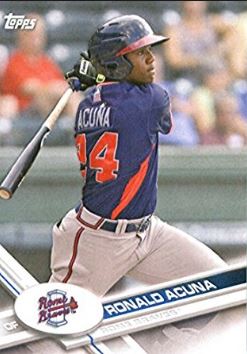
When the Braves called up 20-year-old Uber-Prospect Ronald Acuna in late April, 21-year-old Atlanta 2B Ozzie Albies moved from the youngest player in the majors to the second-youngest.  How excited are they in Atlanta about these two?  Albies got in 27 March/April  games – hit .293 and led the league hits (34), runs (29), doubles (12) and home runs (9). Oh, and  Acuna? In his first five games, the young outfielder hit .421 (8-for-22), with four doubles, a home run and four RBI.

—INDIVIDUAL LEADERS FOR MARCH/APRIL—

BATTING AVERAGE (qualifying hitters)

AL:  Manny Machado, Orioles (.361); Jose Altuve, Astros (.347); Mookie Betts (.344)

NL: Odubel Herrera, Phillies (.343); Tommy Pham, Cardinals (.341); Asdrubel Cabrera, Mets (.340)

The lowest average among players with at least 75 plate appearances belongs to the Blue Jays’ Randal Grichuk (.106 … 7-for-66). Note: Grichuk went on the DL in late April with a sprained knee. In the NL, surprisingly, the Cubs’ Anthony Rizzo has the lowest March/April average among players with 75 plate appearances at .149.

HOME RUNS

AL: Mike Trout, Angels (10); Didi Gregorius, Yankees (10); Mitch Haniger, Mariners (10)

NL: Charlie Blackmon, Rockies (9); Ozzie Albies, Braves (9); A.J. Pollock, D-backs (9)

Padres’ outfielder Jose Pirela had the most March/April at bats without a home run (123).

RUNS BATTED IN

AL: Didi Gregorius, Yankees (30); Jed L0wrie, A’s (27); Mitch Haniger, Mariners (27)

NL: Javier Baez, Cubs (26); Yeonis Cespedes, Mets (25); A.J. Pollock (24)

RUNS SCORED

AL: Mookie Betts, Red Sox (29); five with 24

NL: Ozzie Albies, Braves (29); Bryce Harper, Nationals (23); Charlie Blackmon, Rockies (22); Tommy Pham, Cardinals (22)

STOLEN BASES

AL: Dee Gordon, Mariners (10); Tim Anderson, White Sox (8); eight with five

NL: Ender Inciarte, Braves (13); Trea Turner, Nationals (12); Michael Taylor, Nationals (9)

Trea Turner and Michael Taylor of the Nationals are 2-3 in NL stolen bases (combined total of 21) – and neither has been caught stealing this season. 

BATTER’S STRIKEOUTS

AL:  Yoan Moncada, White Sox (47); Giancarlo Stanton, Yankees (43); Carlos Gomez, Rays (40)

NL: Yeonis Cespedes, Mets (43); Trevor Story, Rockies (38); Lewis Brinson, Marlins (37); Paul DeJong, Cardinals (37)

 Joe Mauer of the (my) Twins had MLB’s best ratio of walks-to-strikeouts at 2.09 (23 walks and 11 whiffs) among qualifying hitters. The NL leader was Bruce Harper at 1.81 (38 walks and 21 strikeouts).

WALKS DRAWN

AL:  Aaron Judge, Yankees (25); Joe Mauer, Twins (23); Mike Trout, Angels (20); Alex Bregman, Astros (20)

NL: Bryce Harper, Nationals (38); Rhys Hoskins, Phillies (24); Cesar Hernandez, Phillies (24)

In March/April, no one saw more pitches per plate appearance (among qualifying hitters) than the Cardinals’ Matt Carpenter (4.61).  The AL leader was the White Sox’ Matt Davidson (4.50). 

PITCHING VICTORIES

AL:  Twelve with four – Those at 4-0 are: Justin Verlander, Astros; Charlie Morton, Astros; Rick Porcello, Red Sox; Hector Valazquez, Red Sox

NL:  Max Scherzer, Nationals (5-1); five with four

Kendall Graveman of the A’s (optioned to Triple A April 26) had the most losses in March/April with an 0-5 record.

EARNED RUN AVERAGE (qualifying)

AL: Sean Manaea, A’s (1.03); Justin Verlander, Astros (1.36); Charlie Morton, Astros (1.72)

NL:  Johnny Cueto, Giants (0.84); Carlos Martinez, Cardinals (1.43); Max Scherzer, Nationals (1.62)

The highest ERA among pitchers with at least 20 March/April innings or four March/April start belongs to the Rangers’ Martin Perez at 9.67. Others that meet those criteria and logged ERA’s over 8.00 were: Kendall Graveman, A’s (8.89); Marcus Stroman, Blue Jays (8.88); Lance Lynn, Twins (8.37). 

STRIKEOUTS

AL:  Gerrit Cole, Astros (61 – 41 2/3 innings pitched);  J.A. Happ, Blue Jays (50 – 36 IP); Justin Verlander, Astros (48 – 39 2/3 IP)

NL: Max Scheerzer, Nationals (57 – 39 IP); Patrick Corbin, D-backs (55 – 40 IP); Jacob deGrom, Mets (48 – 39 1/3 IP)

Among pitchers with at least 20 inning pitched in March/April, D-backs’ starter Robbie Ray had the highest rate of strikeouts per nine innings at 14.64 (45 strikeouts in 27 2/3 innings). Note: Ray went on the Disabled List in late April – strained obliique.  If you drop the qualifying  down to 15 innings, Brewers’ reliever Josh Hader comes in at 19.50  – 39 whiffs in 18 frames. 

SAVES

AL:  Edwin Diaz, Mariners (11); Craig Kimbrel, Red Sox (7); Robert Osuna (7)

NL: Wade Davis, Rockies (10); Jeurys Familia, Mets (9); Brad Boxberger, D-backs (9)

INNINGS PITCHED

AL: Corey Kluber, Indians (45 1/3); Sean Manaea, A’s (43 2/3); Gerrit Cole, Astros (41 2/3)

NL: Patrick Corbin, Diamondbacks (40); Stephen Strasburg, Nationals (39 2/3); Jacob deGrom, Mets (39 1/3)

GAMES PITCHED

AL: Jose Alvarez, Angels (16); Alex Claudio, Rangers (16); Chris Martin (16)

NL: Bryan Shaw, Rockies (17); Sam Freeman, Braves (16); Dan Jennings, Brewers (16)

________________________________________

Stsandings

Primary Resources:  Baseball-reference.com; MLB.com; ESPN.com

I tweet baseball @ DavidBBRT

Follow/Like the Baseball Roundtable Facebook page here. 

Member:  Society for American Baseball Research; The Baseball Reliquary; The Negro Leagues Baseball Museum


The Joy of the Small Sample Size -MLB Stats that Caught My Eye

Photo by Keith Allison

Photo by Keith Allison

Now that we’ve reached Tax Day, Baseball Roundtable would like to take a look at a few MLB statistics – through April 15 – that you probably don’t see much of in regular baseball coverage.  Admittedly, we are looking at a pretty small sample size, but the box below illustrates the kind of early-season “numbers” that caught BBRT’s eye.

  • Rays’ righty Yonny Chirinos, as of April 15, had pitched more innings (14 1/3 innings in two starts and one relief appearance) without giving up a run this season than any other pitcher.
  • The Mets’ Jose Reyes had the most at bats (16) of any player who had yet to get a hit this season.
  • The Padres’ Jose Pirela has the most at bats (74) and the most hits (24) without a home runs this season.  The other players with at least 60 at bats without a long ball through April 15:  D-backs’ Ketel Marte; Reds’ Scooter Gennett; Marlins’ Starlin Castro; Astros’ Jose Altuve; Marlins’ Lewis Brinson.

Then, of couse, there are some team numbers that stand out.

THROUGH APRIL 15 …

  • The Angels have scored an MLB-best 103 runs in 16 games – the Royals have plated MLB-worst 39 in 13 contests.  No surprise, the Angels are 13-3, the Royals 3-10.
  • The Indians are averaging right on the Mendoza Line (.200) – as a team. Despite the lowest average in the majors, the Tribe is 8-6 on the season.
  • The Angels have hit more home runs (26) than the Royals (5), Tigers (5), Rays (7) and Marlins (8) COMBINED.
  • The Brewers blew an MLB-leading seven saves (in just 11 opportunities) – and are still playing .500 ball (8-8).  The Braves, meanwhile, have had only two save opportunities – and blew them both – but are 8-6 on the season.  

_______________________________________

Here’s a few other stats that caught my attention – all through April 15.

  • No player has grounded into more double plays than the Marlins’ Starlin Castro – seven times in 15 games. Still, Castro is hitting .295 over 61 bats.

GDP – Through April 15 …

Starlin Castro, Marins – 7; Stephen Piscotty, A’s – 5; Aaron Judge, Yankees – 5.

The Angels’ Albert Pujols led MLB in grounding into double plays in 2017 – with 26.  That was 0ne more than the NL leader, Matt Kemp of the Braves.

  • The Mets’ Yoenis Cespedes and Rockies’ Trevor Story are tied for the most strikeouts by a batter at 26 (in 58 and 62 at bats, respectively). Notably, both are hitting under .200 through April 15.

Most Strikeouts – Through April 15 …

Yeonis Cespedes, Mets – 26; Trevor Story, Rockies – 26; Drew Robinson, Yankees – 25; Giancarlo Stanton, Yankees  – 25; Paul DeJong, Cardinals – 25.

BBRT note:  Cespedes, despite leading in K’s and hitting just .190, has 12 RBI.  Robinson is the only one among these leaders who has fanned in more than half his at bats (25 whiffs in41 at bats).

The 2017 MLB strikeout leader was Yankee rookie Aaron Judge who, last season, set MLB rookie records in both strikeouts (208) and home runs (52).

  • No one has averaged more pitches seen per plate appearance so far this season than the Twins’ Miguel Sano (4.96) – who is hitting .250-3-8 in ten games.

Pitches Per Plate Appearance – Through April 15 …

Miguel Sano, Twins – 4.96; Jose Ramirez, Indians – 4.73; Matt Davidson, White Sox – 4.67; Todd Frazier, Mets – 4.57; Trevor Story, Rockies – 4.57

Curtis Granderson (Dodgers/Mets) saw the most pitches per plate appearance (among qualifiying hitters) in 2017 at 4.52. Overall, he hit .212-26-64 in 147 games.

  • The Cubs’ Javier Baez leads the major leagues in intentional walks this season with four, while the Nationals’ Bryce Harper – hitting ,300 with an MLB-best seven home runs – leads in overall walks with 20. 

Intentional Walks – Through April 15 …

Javier Baez, Cubs – 4; Freddie Freeman, Braves – 3; Jody Mercer, Pirates – 3; Michael Conforto, Mets – 3.

Total Walks – Through April 15 ….

Bryce Harper, Nationals – 20; Freddie Freeman, Braves – 17; Matt Carpenter, Cardinals – 14; Trea Turner, Nationals – 14.

The Reds’ Joey Votto led MLB with 20 intentional walks in 2017. He also led in total walks with 134. 

  • The Cubs’ Kris Bryant has already been hit by a pitch an MLB-leading five times.

Hit-By-Pitch – Through April 15 …

Kris Bryant, Cubs – 5; Martin Machado, Angels – 4; Robinson Chirinos, Rangers – 4; Jose Abreu, White Sox – 4.

Last season’s MLB hit-by-pitch leader was the Mets’ Anthony Rizzo with 24. The Rangers’ Carlos Gomez led the AL with 19.

  • Looking at players with at least 10 at bats with runners in scoring position – The Braves’ Dansby Swanson has the best RISP average at .615 (8-for-13).

Average with RISP – Through April, minimum 10 RISP at bats) … Dansby Swanson, Braves – .615 (8-for-13); Freddie Freeman, Braves – .600 (9-for-15); Jose Pirela, Padres – .571 (8-for-14).

Among players with at least 75 at bats with runners in scoring position in 2017, the Nationals’ Daniel Murphy had the highest average with RISP at .409 (47-for-115).

  • The Dodgers’ Chase Utley, Dodgers’ Kyle Farmer and Cubs’ Tommy La Stella share the lead in pinch hits with four reach. Utley got his in just five pinch-hit at bats, Farmer in six at bats and La Stella in eleven. 

The Marlins’ Ichiro Suzuki led all MLB players in pinch hits in 2017 with 27 (in 100 pinch-hit at bats). Looking at players with at least 20 pinch-hit at bats, The Cardinals’ Jose Martinez put up the highest pinch-highest average at .462 (12-for-26).

  • The Mariners’ Dee Gordon leads MLB in stolen bases through April 15 with seven – and also had the most stolen bases through April 15 with being caught. The leaders in caught stealing – all with three through April 15 – are the Padres’ Freddy Galvis (3 attempts); Rays’ Mallex Smith (five attempts); and Cardinals’ Tommy Pham (8 attempts).
  • Among pitchers with at least 15 innings pitched, the Astros’ Gerrit Cole has fanned the most batters per nine-inings at 15.43.

Strikeouts Per Innings – Through April 15 (minimum 15 innings pitched) …

Gerrit Cole, Astros – 15.93 (36 K/21 IP); Patrick Corbin, D-backs – 14.24  (29K/18 1/3 IP); Noah Sundergaard, Mets – 13.92 (33K/21 1/3IP).

In 2017, among pithchers with at least 100 innings pitched, Chris Sale led the way with 12.93 strikeouts per nine innings. Among pitchers with at least 40 innings pitched, the leader was the Red Sox’ Craig Kimbrel at 16.43 (126 K in 69 IP).

  • The Angels’ Garrett Richard leads MLB in walks allowed with 15 (20 innings pitched/24 strikeouts). Special mention goes to the Padres’ Bryan Mitchell, second in walks with 14, but in just 13 2/4 innings.

Most Walks Allowed – Through April 15 …

Garrett Richards, Angels – 15 (20 innings pitched/24 strikeouts); Bryan Mitchell, Padres – 14 (13 2/3 IP/3 K); Carlos Martinez Cardinals – 14 (25 2/3 IP/ 30 K).

  • The highest earned run average among pitchers with at least two starts in 2018 is 12.00 – A.J. Cole of the Nationals. Chris Tillman has an 11.91 ERA in three starts. At the other end of the spectrum, Yonny Chirinos of the Rays has two starts and one relief appearance and has yet to give up a run (14 1/3 innings).

The highest ERA among qualifyng pitchers (162 innings pitched) in 2017 was 5.52 (Matt Moore, Giants).  Note: Jordan Zimmerman had a 6.08 ERA in 29 starts – but only 160 innings pitched. 

Primary Resources: ESPN.com; MLB.com; Baseball-Reference.com.

I tweet baseball @DavidBBRT

Follow’Like the Baseball Roundtable Facebook page here.

Member: Society for American Baseball Research; The Baseball Reliquary; Negro Leagues Baseball Museum.


STANTON’S FIVE-K CONTESTS – A SIGN OF THE TIMES

StantonThe Yankees’ Giancarlo Stanton’s two five-strikeout games this season are a sign of the times in major league baseball – a time of hard-throwing pitchers and free-swinging hitters.  This post is meant, by the way, not as a judgment – but rather as an observation of how the game has changed and a look at some of the related statistics that caught my eye. Spoiler Alert: This post will appeal most to fellow stat freaks.

Let’s look at a few tell-tale signs of the current homer- and strikeout-heavy era.

THE PLATINUM SOMBRERO

The record for a batter’s strikeouts in a game is five – an accomplishment(?) which earns the mythical “Platinum Sombrero.” As most of you know, Giancarlo Stanton has already had two five-strikeout games this season – and it’s still April. (His five-whiff contests came on April 3 and April 8.)   How rare is that?  In MLB history, only one other player has two five-whiff games in their career.  That distinction goes Toronto Blue Jays’ outfielder Alex Rios, who had five-strikeout games on July 29, 2006 and June 4, 2009.

Overall, there have been 68 five-strikeout games (by 66 players). Here are the documented five-strikeout games totals by decade. Pay particular attention to the numbers since 2000.

—–TOTAL FIVE-STRIKEOUT GAMES BY BATTERS—–

1871-79           1

1880-89           1

1900-09           0

1910-19           0

1920-29           0

1930-39           4

1940-49           1

1950-59           1

1960-69           6

1970-79           9

1980-89           6

1990-99           8

2000-09           17

2010-18           14

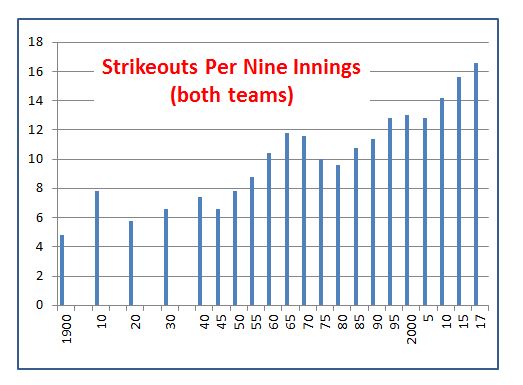
There is no doubt strikeouts are on the rise.  In fact, MLB has set a new strikeout record in each of the past ten seasons.  In 2017, fans saw an average of 16.6 strikeouts every nine-innings. Here’s the chart.

SO9

Looking a bit further, in 2017, 140 MLB players struck out at 100 or more times (Aaron Judge topped MLB with 208 whiffs.). Here’s an historic look.

     —–MLB PLAYERS WITH 100+ STRIKEOUTS IN A SEASON—–

                    Year                            Number of Players

1910                                        0

1920                                        0

1930                                        0

1940                                        1

1950                                        2

1960                                        7

1970                                       27

1980                                       11

1990                                       37

2000                                       58

2010                                       88

2017                                       140

There are those, of course, who maintain the increased K’s are the price you pay for increased HR’s.  And, the chart below would seem to support that. In 2017, we saw the first MLB season with more than 6,000 MLB home runs.  A more accurate measure would be home runs per game – and 2017 was a record year there as well.

HR Per Game chart

But there is other evidence to consider.

DO YOU HAVE TO PAY FOR LONG BALLS WITH STRIKEOUTS?

MLB’s three most prolific home run hitters – Barry Bonds, Hank Aaron and Babe Ruth – had one season of more than 100 strikeouts (in a combined 67 MLB campaigns) among them. That came in Bonds’ rookie season (1986), when he fanned 102 times. (In the spirit of “how the game has changed,” we should keep in mind that, while Ruth never fanned more than 93 times in a season, he did lead the league in whiffs five times. Neither Aaron nor Bonds – the other two 700+ HR players ever led the league in K’s.)

In 2017, Aaron Judge and Giancarlo Stanton (now Yankee teammates) hit a combined 111 home runs – and fanned a combined 371 times.  In 1961, Yankee teammates Roger Maris and Mickey Mantle hit a combined 115 home runs – but fanned nearly 200 fewer times (179).

A prime example of the potential to combine power and plate discipline would be Ted Kluszewski, who put together three consecutive seasons of 40 or more home runs with 40 or fewer strikeouts. Note: In 2017, five players hit 40 or more home runs. Of these, J.D. Martinez (45 homer runs) had the fewest whiff at 128. 

PLAYERS WITH 40 OR MORE HOME RUNS AND 40 OR FEWER STRIKEOUTS

Mel Ott, 1929 – .328-42-151, with 38 strikeouts,

Lou Gehrig, 1934 – .363-49-165, with 31 strikeouts

Joe DiMaggio, 1937 – .346-46-167, with 37 strikeouts

Johnny Mize, 1948 – .289-40-125, with 37 strikeouts

Ted Kluszewski, 1953 – .316-40-108, with 34 strikeouts

Ted Kluszewski, 1954 – .326-49-141, with 35 strikeouts

Ted Kluszewski, 1955 – .314-47-40. with 40 strikeouts

A UNIQUE 50-HOMER CAMPAIGN

Johnny Mize is the only player to record a season of 50 or more home runs and 50 or fewer strikeouts.  In 1947, Mize hit .302-51-138, with just 42 whiffs. 

One final reflection.  MLB has seen a total of ten player seasons of 200 or more strikeouts (a total of six players) – and all have occured since 2008.  In fact, 45 of the top 51 batter-strikout seasons have occured since 2000 – and the top 25 strikeout seasons (by a batter) have all occured since 2004 (18 of those 25 since 2010).

As the 2018 season unfolds, we can continue to expect high strikeout and home run totals.  Pitchers are throwing harder, relief pitching is as – if not more – dominant than ever and batters seem to be increasing focused on going deep.  As I write this post, MLB teams are averaging just over two home runs (combined) per game and a combined 17.3 strikeouts per nine frames – and that’s  despite some pretty frigid weather across much of baseball.   We’ve also see this trend reflected in an increasing interest in statistics like pitch velocity, spin rate and swinging strike percentage, as well as batted ball exit velocity and launch angle. Good for the game?  Don’t know.  Only time will tell.  (Although I, admittedly, prefer more action on the base paths and in the field – and less trotting around the bases or back to the dugout.)

By the way, if you are interested in a look at how BBRT readers see today’s game – with opinions on everything from the length (time) of games, the designated hitter, record-breaking performances they would like to witness, favorite ballpark concessions and even Hall of Fame controversies, click here.

I tweet baseball @DavidBBRT

Follow/Like the Baseball Roundtable Facebook page here.

Member:  The Society for American Baseball Research; The Baseball Reliquary; The Negro Leagues Baseball Museum.
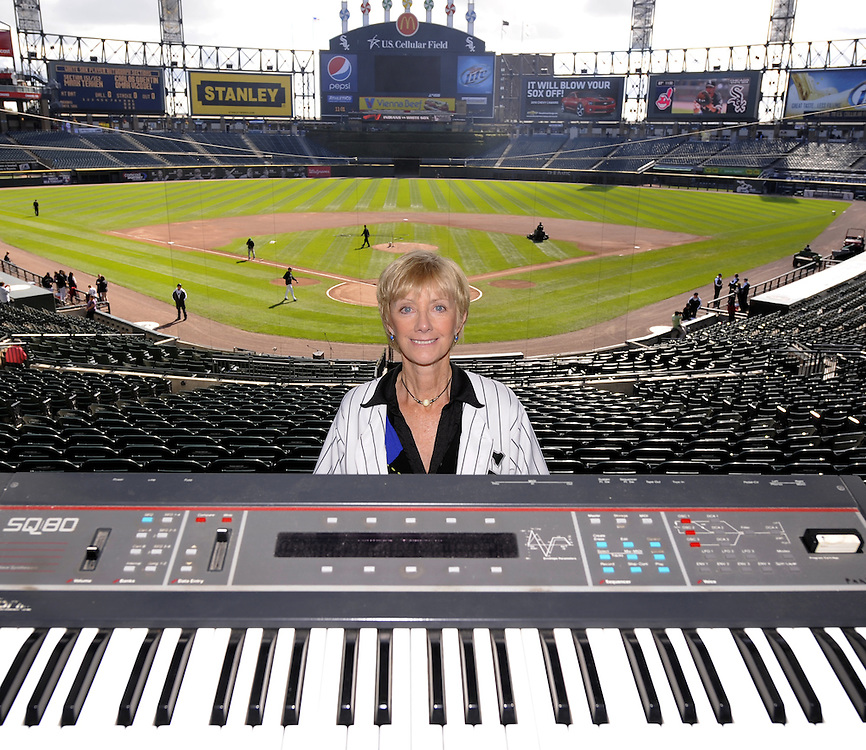
Keith McDonald – 2018 Paciorek Award Winner – Made a Career Out of Going Yard

JPAFIn 2014, Baseball Roundtable launched the John Paciorek Award (JPA). The JPA recognizes players who have had short, often very short, major league careers, but whose accomplishments, nonetheless, deserve recognition.  (Note: Information on John Paciorek’s career – the inspiration for the JPA – can be found at the end of this post. Paciorek’s day in the sun constitutes arguably the best one-game MLB career ever.)


________________ 2018 JPA Winner – Keith McDonald _______________

The fans are going to expect it every time, but it may be a long time before I hit another one.

                                                                   St. Louis Cardinals catcher Keith McDonald

                                                                   July 6, 2000

mCdKeith McDonald speculated on the timing of his next MLB home run shortly after the Cardinals/Reds contest during which he had become just the second player in history to homer in his first two major league at bats.  As it worked out, neither he nor the Redbirds’ fans, had to wait that long. His next MLB long ball came just nine days (July 15) and three plate appearances later – giving him three home runs in his first six MLB at bats (eight plateappearances, he also drew a pair of walks).

Just as McDonald had no idea of how short the span of time between career home runs number-two and number-three would be, he probably was equally in the dark as to how few at bats would fall between home run number-three and his final major league plate appearance – or  that his MLB career stat line would include just eight games, 11 plate appearances (two walks),  three hits in nine at bats (.333 average), three home runs, three runs scored and five RBI.  (That, for those more deeply into stats, is an MLB career on base percentage of .455 and a slugging percentage of 1.333.

Keith McDonald is the only MLB player with more than one career hit, who can look back on major-league tenure when his every hit was a home run. Note:  Since this post was written, two players (John Gant and Nolan Fontana) have had MLB careers with two hits, both home runs. )

I’m getting a little ahead of myself. Let’s look back on how Keith McDonald found his way into the MLB record book.

McDonald was a star athlete for Esperanza High School (Anaheim, California).  He was a three-year starter at quarterback – throwing for 31 touchdowns in his junior and senior seasons.  He also was a three-year player on the school baseball squad: a catcher as a sophomore; third baseman and relief pitcher as a junior; and first baseman and pitcher as a senior.  How good was he? In his senior season, McDonald hit .406 and put up a 1.90 ERA (4-0, with three saves).

Selected in the 18th round of the 1993 MLB Draft, McDonald chose instead to accept a scholarship to the University of Utah; where he would be able to play both football and baseball. Things didn’t work out at Utah, however, and – after a difficult period of adjustment, a “red shirt” season in football and a challenging year on the diamond – McDonald chose to return to California.  He transferred to Cypress College (Cypress, CA), where he combined his studies with a .353-8-37 line in 55 games (and threw out 34 of 62 base runners attempting to steal).  In 1994, it was on to Pepperdine University (Malibu, CA), where he hit .266, with seven home runs and 24 RBI in 48 games.

The St. Louis Cardinals selected the 6’2”, 215-pound, 21-year-old in the 24th round of the 1994 draft – and McDonald’s pro career was underway.  From 1994 to 1999, McDonald worked his way up through Rookie ball, A, High A, Double A and Triple A (Memphis Redbirds). His best seasons were 1998 (.318-7-22 in 58 games at Triple A) and 1999 (.304-7-41 in 88 games at Double A and Triple A combined).

As he started the 2000 season at Memphis, McDonald had little idea he was on the brink of MLB history. He was hitting .246, with one home run and 17 RBI for the Memphis squad as the season moved into July – and, more important, precisely when Cardinals’ backup catcher Eli Marrero injured his hand attempting to steal a base. On July 2, McDonald was called up to the big club to replace Marrero – a move McDonald has said even surprised him.

He got his first taste of MLB action on July 4, before an Independence Day crowd of 46,022 (in St, Louis). McDonald came to the plate as a pinch hitter (for SS Edgar Renteria) in the bottom of the eighth inning – with the Cardinals ahead by a 13-3 score.  It was a good opportunity to provide a rookie with a low-pressure first MLB at bat.  After hitting just one home run in 177 at bats at Triple A that season, McDonald sent a 2-2 pitch out of the park to left-center.  The blast made him the 79th players to homer in their first MLB at bat.

McDonald did not play in the Reds/Cardinals July 5, tilt, but On July 6 – this time before a crowd of 43,287 – McDonald started at catcher against the Reds, batting in the number-eight spot.  He got his first at bat in the bottom of the second, with the Cardinals trailing 3-2. He tied the game with a home run on a 1-0 pitch – becoming just the second MLB player ever to homer in their FIRST TWO plate appearances. He finished the day one-for-three with a walk and two RBI.

Keith McDonald is one of only two players – and the only National Leaguer – to homer in his first two major league plate appearances.

In McDonald’s next MLB game (July 8) – with the Cardinals hosting the Giants –  McDonald replaced Matheny at catcher in the top of the ninth, with the Giants up 7-6. McDonald came to the plate in the bottom of the inning and drew a walk. He didn’t take the field again until July 13, when he again entered the game as a pinch hitter (this time in the top of the ninth with the Cardinals up 13-3 on the White Sox in Chicago).  He grounded out to second.

Two days later (July 15), still in Chicago, McDonald pinch hit again. This time, it came in the top of the ninth of a game in which the Cardinals trailed 15-5. McDonald popped a 3-1 pitch for a two-run home run. (Attendance  40,681.) At this stage of his MLB career, he was three-for-six – with all three his hits leaving the yard and all before crowds in excess of 40,000.  Talk about coming through on the big stage. McDonald got only one more major league at bat that season, a ninth-inning, pinch-hit fly out against the Twins on July 15.

Keith McDonald’s three MLB hits, all home runs, were witnessed by crowds (announced attendance) totaling 129,990.

Then, as suddenly as it began, it was over. On July 21, McDonald was sent back down to Memphis, where he finished the season .263-5-30 in 83 games.  He appeared in just two more major league games – in September of 2001 – going hitless in two at bats.   McDonald then spent the next five seasons at AAA; playing in the Cardinals’, Cubs’, Pirates’, Rangers’ and Yankees’ systems.  He played a total of 13 minor league seasons, hitting .264, with 78 home runs and 418 RBI.

It was, however, that remarkable – short, but sweet –  run in in 2000 that caught BBRT’s eye and earned Mcdonald John Paciorek Award recognition.  Keith McDonalds’s major league career may have been short, but those three home runs must have been sweet.

________________________________________________________

PAST JOHN PACIOREK AWARD WINNERS:

2014 – Brian Scott Dallimore

In his first start (not his first game) for the 2004 Giants, Dallimore had two singles, a Grand Slam (his first MLB hit and only MLB home run), a walk and a hit by pitch.  For the full JPA take on Dallimore’s 27- game MLB career, click here.

2015 – Roy Gleason

Gleason played in just eight MLB games, had a double in his only MLB at bat – but also earned a World Series ring (1963) and a Purple Heart. Ultimately, he was the only ballplayer with MLB experience to serve on the front lines in Vietnam. For the full JPA take on Gleason, click here. Note: Gleason’s life is detailed in the book “Lost in the Sun – Roy Gleason’s Odyssey from the Outfield to the Battlefield.”

2016 – John Allen Miller

Miller played just 32 MLB games (during the 1966 and 1969), taking the field (at 1B/LF/3B/2B) for the Yankees and Dodgers. Miller collected ten hits in 61 MLB at bats (.164 average) and hit just two home runs – but he made those long balls count.  Miller made his MLB debut with the Yankees on September 11, 1966 and hit a two-run homer in his first big league at bat –  making him (surprisingly) the first Yankee ever to homer in his first MLB at bat. (Little did Miller know he would not get another home run or RBI until the final at bat of his MLB career.)  Miller’s final at bat came as a Dodger (September 23, 1969) and he stroked a solo home run.  That narrow “body of work” made Miller one of just two players in MLB history to homer in their first and final official appearances in a major league batter’s box. For more on Miller, click here.

2017 – Chris Saenz

RHP Chris Saenz’ big day came on April 24, 2004 – when he was called up from Double A Huntsville (where he was 1-1, 3.86) to make a spot start against the Saint Louis Cardinals, whose powerful lineup included the likes of Albert Pujols, Scott Rolen, Jim Edmonds and Reggie Sanders.   The rookie went six innings, giving up just two hits, three walks and no runs, while fanning seven. There was some speculation (primarily among sportswriters and fans) that Saenz’ performance might earn him another start or two, but two days after his debut, he was on his way back to Huntsville.  Unfortunately, his minor league season included a September elbow injury that required Tommy John surgery and he never returned to the majors. Statistics before 1900 can be sketchy, but baseball-reference.com shows that Saenz is the only pitcher to complete a one-game MLB career of at least five innings pitched, without giving up a single run (earned or unearned). For more details on this JPA honoree, click here.

—–INSPIRATION FOR THE JPA—-

John Paciorek – signed out of Saint Ladislaus High School in Hamtramck, Michigan (where he had starred in football, basketball and baseball) – appeared in his first major league game on the final day of the 1963 season (September 29) at the age of 18.  The 6’ 1”, 200-pound outfielder had spent the 1963 season with Class A Modesto Colts. The Colts’ parent club, the Houston Colt .45s (that was the current Astros’ franchise name back then), was suffering through a difficult season. The team was 65-96 going into that final game.  Looking to the future, Houston had, in fact, fielded an all-rookie lineup (average age 19) on September 27. Youth was still being served two days later when John Paciorek started his first MLB game. The results were surprising – and worthy of recognition.

pACIOREKPlaying right field and batting seventh in a 13-4 win over the NY Mets, Paciorek ended up with three hits and two walks in five plate appearances, with four runs scored and three runs batted in.  Perhaps equally surprising is that it was not only Paciorek’s first major league appearance, it was to be his only MLB appearance.  Back pain the following spring, followed by surgery (he played 49 minor league games in 1964 and missed all of the 1965 season), put an end to his MLB playing days. (Paciorek did play in four more minor league seasons.)  Still, you will find John Paciorek in the Baseball Encyclopedia and his is arguably the greatest one-game MLB career ever.  Among one-gamers, he holds the record for times on base and runs scored, and shares the record for batting average, on base percentage and RBIs.

paciorekPaciorek, by the way, went on to become a high school teacher and multi-sport coach and is the author of two books (Plato and Socrates – Baseball’s Wisest Fans and The Principles of Baseball: And All There Is To Know About Hitting.) You also can enjoy Paciorek’s prose (and expertise) directly at his blog “Paciorek’s Principles of Perfect Practice” by clicking here. You can find out even more about Paciorek in Steven Wagner’s 2015 book “Perfect: The Rise and Fall of John Paciorek, Baseball’s Greatest One-Game Wonder.”  (See the review of “Perfect” by clicking here.)

A final note. John Paciorek’s insight into the national pastime should come as no surprise. Paciorek comes from a true “baseball family.”  He was the first born of eight siblings and was followed to the big leagues by younger brothers Jim and Tom Paciorek.  (Like John, Jim’s MLB career was short – 48 games for the Brewers in 1987. Brother Tom, however, achieved a .282 average over an 18-season MLB career.)


Primary Resources:  Baseball-Reference.com; MCPower Surge, Los Angeles Times, July 9, 2000, Lon Eubanks; McDonald’s College Tour Stops Again, Los Angeles Times, July 8, 1993, Martin Henderson.


I tweet (on X) baseball @DavidBaseballRT

Follow/Like the Baseball Roundtable Facebook page here.

Member:  Society for American Baseball Research; The Baseball Reliquary; The Negro Leagues Baseball Museum.
The Eagle has Landed – Twins Home Opener and MLB first-week Musings


“People ask me what I do in winter when there’s no baseball. I’ll tell you what I do. I stare out the window and wait for spring.

                                      Baseball Hall of Famer Rogers Hornsby

As the Twins opened their 2018 home season, Minnesota fans were (like Rogers Hornby) still waiting for spring (weather), but they no longer were waiting for baseball.  It was “Game On” versus the visiting Seattle Mariners.

Despite the wintry conditions (the photo is of my backyard on Twins Home Opening Day), it was - indeed - a beautiful day for a ball game. As is every day.

Despite the wintry conditions (the photo is of my backyard on Twins’ Home Opening Day), it was – indeed – a beautiful day for a ball game. As is every day.

As I departed for the  game – with about 8-inches of snow on my front lawn and my snow blower seemingly still warm from the most recent major snow storm (about 48 hours ago) – I was appropriately suited up for Minnesota baseball (Long Johns under jeans; a flannel shirt under both a hoodie AND a leather jacket; one pair of socks under another; plus snow boots, ear muffs and ski gloves).

Once in the ballpark, as I made my way to my seat in 35-degree weather, the “magic” started to happen.  The grass was a bright emerald green (good work, grounds crew); the ball the starkest of whites; and, perhaps miraculously, the sun was shining out of a deep blue, relatively cloudless (and snowless) sky.  The crowd – bundled in an array of colorful winter outerwear, huddled under blankets (many baseball-themed) and even, in some cases, snuggled in sleeping bags – buzzed happily in anticipation.  There were also the other sounds of the game: the slap of ball against glove as players warmed up; the shouts of vendors (for everything from hot dogs and beer to hot chocolate and wild rice soup); upbeat music, interrupted by frequent welcoming announcements on the PA system; and, most important, fans talking BASEBALL.  And let’s not forget the sweet and savory smells as you passed by the many food stands (for more on Twins newest food and beverage offerings, click here.) We were ready.  Note:  Since this is Minnesota, I need to add that there were – as always in wintry weather – a scattered few of Minnesota’s boldest (and coldest) fans – outfitted in shorts, tennis shoes and T-shirts.

OpenerCoreboardThe Home Opener is a special day, particularly in Minnesota.  It’s a sign that we have survived the long, cold winter (even in years when it still seems to be hanging on). And, it’s a symbol of hope for a grand and sunny summer. Home Openers represent a day for optimism across the hardball landscape.  As the season opens, every team can aspire to be a contender, every rookie is a potential “phenom,” every fading veteran can be viewed as a potential “Comeback Player of the Year,” and every new face in the lineup or on the bench a welcome addition to YOUR team.

THE EAGLE HAS LANDED

Okay, enough sentiment.  How about the events of the day.  I’ve often written on these pages that one of the greatest things about baseball is that, once in the ballpark, you can almost always see something you’ve never seen before.  Well, that axiom was proven true even before yesterday’s game began.

As rap artist Dessa sang the national anthem, Challenger (an American Bald Eagle) was released from a perch in center field to soar majestically above the diamond while his handler waited on the pitcher’s mound.  The “soaring” was perfectly majestic.  The landing – not so much.

Mariners’ starting pitcher James Paxton was standing at attention in leftfield during the anthem, when Challenger decided to deviate from his expected route. The large, sharply beaked and taloned symbol of American might and democracy decided a more appropriate perch might be Paxton’s right shoulder.  Paxton, by the way, handled the situation with courage and calm – as you can see in the video above.

Paxton, or perhaps Challenger, got a significant round of applause after the incident.  For those of you who are interested, here are the most notable ovations of the afternoon.

TWINS 2018 HOME OPENER – MOST NOTABLE OVATIONS

–  90+-year-old World War II veteran Robert O’Connor, who raised the American flag during the Star Spangled Banner. (Note: O’Connor got a second ovation when he appeared on Kiss Cam later in the game.)

– The 2018 Olympic Gold Medal-winning US Men’s Curling Team, who rolled out the first pitch.

– Ichiro Suzuki, during the Mariners’ introductions.

– Twins’ players and staff during pre-game introductions – particularly manager Paul Molitor, coach Eddie Guardado and players Byron Buxton, Brian Dozier, Joe Mauer, and Miguel Sano.

– Former Twin (and AL MVP) Justin Morneau (when he appeared on the video board).

– Twins’ CF Byron Buxton after a leaping catch in deep right center in the fifth inning.

– Twins Miguel Sano, Mitch Garver and Eddie Rosario after their sixth-, seventh- and eighth-inning home runs.

– Twins’ 1B Joe Mauer and C Mitch Garver after Seattle 3B Kyle Seager grounded to Mauer with runners on first (Robinson Cano) and third (Jean Segura) and one out in the seventh inning (score tied 2-2). Mauer smartly fired home and Segura was trapped too far down the line. (Garver ran him down for the out.)

– Snow flakes, which began falling in the eighth (only after surviving the Metrodome would Minnesota fans applaud falling snow during a baseball game).

Miguel Sano ... made up for a run-scoring error in the first innig with a game-tying homem run in the sixth. Photo by Keith Allison

Miguel Sano … made up for a run-scoring error in the first innig with a game-tying homem run in the sixth.
Photo by Keith Allison

So, what about the game itself? First, let me say, it was a good contest, in spite of the weather – which likely contributed to the three errors, wild pitch and passed ball. The Twins trailed 2-0 after the first inning, when the Mariners scored on a pair of singles and an error by Twins’ 3B Miguel Sano.  The home team came  back on a game-tying homer two-run homer by (Sano) in the sixth, took the lead on a Mitch Garver home in the seventh and added an insurance run on a Eddie Rosario dinger in the eighth.

SOMETHING  OLD AND SOMETHING NEW

41-year-old Fernando Rodney, the Twins’”new” closer, picked up his first save of the season – the 301st of his career.  In the process, he became the oldest player to record a save for the Twins.

As the game progressed, we saw a lot of what we will, apparently, be seeing across MLB this year.  In the Twins’ Home Opener, we saw ten pitchers, 18 strikeouts and four of the six runs in the game scoring on home runs.  It clearly looks like 2018 will be another hard-throwing/free swinging season – when we see plenty of pitchers and plenty of batters trotting back to the dugout after fanning or trotting around the bases after a long ball.

THE FIRST SEVEN DAYS OF THE 2018 MLB SEASON

In the first seven days of this season (through April 4), MLB teams played 86 games and hit 194 home runs.  In addition, the first week of play saw 1,509 strikeouts. I did the math on those K’s. Over the course, of the week, that meant an average of 17 combined strikeouts every nine innings.

Opening Day (March 29) alone, in 13 games,  fans witnessed 133 pitchers taking the mound, 264 strikeouts and 33 homeruns – with 42 percent of the day’s tallies scoring on the long ball.  Math again – just over 10 pitchers, 20 strikeouts and 2 1/3 home runs per game.

AND THEY ARE OFF! SOME FIRST WEEK HOMER HIGHLGHTS

  • On March 29, the Cubs’ Ian Happ hit the very first pitch of the 2018 season for a home run – and the new season was off and trotting.
  • On March 29, White Sox DH Matt Davidson became just the fourth player in MLB history with a three-homer Opening Day game.
  • On March 29 and 30, the Giants topped the Dodgers 1-0. In each game, Giants; 2B Joe Panik provided the sole run via the long ball – the first time in MLB history that a batter had – on two consecutive days – driven a game’s only run via the home run.
  • On April 3, The Cardinals opened the game against the Brewers with back-to-back jacks (Dexter Fowler and Tommy Pham) on the game’s first three pitches. Then, with two outs in the bottom of the ninth inning, the Brewers (trailing 4-3) closed out the game with back-to-back home runs from Christian Yelich and  Ryan Bruan.  MLB.com reported it was the first time in MLB history a game opened and closed with back-to-back long balls.
  • On April 3, in the Yankees’ home Opener, SS Didi Gregorius – appropriately batting cleanup – ripped a pair of homers and drove in eight runs (setting a new RBI record for a home opener.)
  • On April 3, the Padres won their first game of the 2018 season (after four losses) behind a three-home run, five-RBI game from rookie 3B Christian Villaneuva.

GOING DEEP CAN BE HABIT FORMING

Through April 4, there had already been 14 multi-homer games: Who got ‘em? Here’s the list:  Tim Anderson; Tyler Austin; Charlie Blackmon; Wellington Castillo; Matt Davidson; Paul DeJong; Brian Dozier; Edwin Encarnacion; Didi Gregorius; Bryce Harper; Justin Smoak; Giancarlo Stanton; Christian Villanueva.

MORE ON THE TWINS HOME OPENER

OpenerIntrosIn the Twins’ opener, we saw some Twins-specific occurrences that we are likely to see plenty more of this season.

  • A Miguel Sano home run – I expect we will see at least 30 of those this campaign if he stays healthy.
  • Fernando Rodney putting a batter on (walk) and bringing the tying run to the plate before nailing down a save. (He has a reputation for outings that keep the manager and fans on edge – and, last season, had 39 saves, despite a 4.23 ERA.)
  • A leaping catch in center field by Byron Buxton – last year’s Gold and Platinum Glover will continue to be a running highlight reel in the outfield.
  • Newcomers Zach Duke, Addison Reed and Fernando Rodney in the late innings.

The Home  Opener also included a handful of important (to me) firsts.

  • The Twins’ first home win of 2018.
  • Mitch Garver’s first MLB home run.
  • My first completed scorecard.
  • My first “old school” ballpark hot dog – a tepid offering, served up by an in-the-stands vendor.
  • My first 6-4-3 double play of the season – a Twins’ twin-killing that snuffed a two-on, one-out Mariners’ threat in the fifth inning.  (As regular readers of BBRT know, I love 6-4-3 and 4-6-3 double plays.)

And that, my friends, is the BBRT take on the Twins’ Home Opener.

Thanks for reading.

Coming Soon, BBRT’s Fifth Annual  John Paciorek Award.

I tweet baseball @DavidBBRT

Follow/Like the Baseball Roundtable Facebook page here. 

Member:  Society for American Baseball Research; The Baseball Reliquary; The Negro Leagues Baseball Museum. 
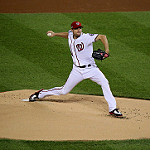
 

Twins Food and Beverage Preview … and a few food items from around MLB I’d like to try

Today (April 2), Baseball Roundtable again took part in what has become a new rite of spring for me – the Twins’ Ninth Annual Food and Beverage Preview. Sponsored by the Minnesota Twins and Delaware North Sportservice (the team’s exclusive food and beverage partner), this annual event features a look at (and taste of) the upcoming season’s new Target Field food and beverage offerings – and this year also featured the Bat and Barrel, a new “must-visit” facility within the ballpark.  If I had to describe the event, it’s a bit like the State Fair in winter.

The Twins Just Keep Raising the Bar

When I first began attending MLB games, standard fare consisted of (not always piping) hot dogs and (not always ice) cold beer and soda.  For those wanting to step outside the box, there were peanuts, popcorn and Cracker Jack® and, if you were really adventurous, ice cream (usually frozen malt cups with a possibly dangerous wooden spoon), licorice ropes or cotton candy.  When pizza and burgers arrived on the scene, we all thought baseball’s culinary landscape was complete.   

The 2018 Target Field Food and Beverage Preview again brought home how wrong we were – and how committed the Twins are to continually raising the ballpark food and beverage bar.

Now, I have neither the space, nor the time, to touch on all the new food and beverage items that were unveiled this afternoon. (They ranged from an Arabic Chicken Shawarma Wrap to The Impossible Burger to a Blue Cheese Crusted Tenderloin to a Prince-Inspired Purple Rain Salad.)  I would like to share a comment or two on some of the new food items my photographer (Bob King) and I found especially tasty, interesting or both. For the Twins’ concessions guide, which lists the full and most up-to-date (locations, prices could change) slate of concessions, locations and prices, click hereNote: As I write, the Twins have not yet posted this year’s guide.  I would expect it soon. Also, at the end of this post, you will find a description of a handful of top new food items from other ballparks that I would like to try.

THE OBLIGATORY TARGET FIELD BLOODY MARY

Photo: Bob King

Photo: Bob King

Those who read Baseball Roundtable regularly know I always review the Bloody Mary offerings when I take in a new ballpark.  Well, nobody does Bloody Mary’s like Target Field. Each year, Twins fans eagerly await Target Field’s newest Bloody Mary (offered at Hrbek’s Pub, near Section 114).

This year, it’s the “Brunch Bloody Mary” – served on Sundays only – featuring a bacon cheeseburger slider, breakfast sandwich (sausage, ham and cheese), sausage sampler, cheese cubes, pepperoncini, olives, celery, dill pickle spear and a beer chaser.  (Not yet priced.)  Word of caution – it’s a bit top heavy, so handle carefully. Note:  The Twins’ other signature Bloody Mary’s – like the Triple Sausage Sampler and Bigger Better Burger versions – will be available on game days throughout the week.


THE BAT & BARREL

Photo: Bob King

Photo: Bob King

The new Bat & Barrel food and beverage area was the highlight of the afternoon – whether your focus was food, beverage or atmosphere. Formerly the season ticket-holder Metropolitan Club, the Bat and Barrel is open to the public and features lot of big screen viewing; bar, tavern and lounge seating; plenty of beverage offerings; and a selection of entrées, small plates and quick-serve food items (showcasing local restaurants, breweries and distilleries).  You can also enjoy viewing a collection of Twins’ memorabilia while you “graze and guzzle.”  It’s well worth a visit while you’re at the ballpark.


Here are just a few favorites from the Bat & Barrel …

Pan Seared Barramundi  (Baja House)

Photo: Bob King

Photo: Bob King

A light fish, perfectly accompanied by tropical pico de gallo, pasilla mole, pumpkin seeds, citrus butter and guajillo sauce. Bob and I both rated this as one of our top three “tastes” of the day.


Blue Cheese Crusted Tenderloin (Murrays)

Photo: Bob King

Photo: Bob King

A 10-ounce tenderloin, wrapped in bacon and served with carmelized pears, grilled spring onion and a blackberry and port reduction.  The flavors complimented the tenderloin – which Bob described in this way:  “The steak was perfect, but then again, it was Murray’s.” (I told you the Twins were raising the bar).


Impossible Burger (Hell’s Kitchen)

Photo: Bob King

Photo: Bob King

This was the surprise of the day – a burger made entirely of plant-based ingredients that can satisfy even the most carnivorous eaters.  Now, “Bob the Photographer” is also “Bob the Grill Guy” (see bobthegrillguy.com).  He loves his barbeque, his steaks and his burgers.  I never thought anyone could sneak a non-meat burger by him.  But, he liked the Impossible Burger.  In his words, “I’d even order this on purpose.”  I thought it has a nice char-broiled flavor as well.  Got a vegetarian in your group?  You’re all set at the Bat & Barrel.


Tennessee Hot Chicken (Red Cow)

Photo" Bob King

Photo” Bob King

Now, it won’t send you running for a cold drink or turn your lips numb, but this crusted chicken sandwich has a nice little bite to it (served on hearty bread with blackstrap mayo and dill pickles).  They have a non-spiced “MN Nice” version, but I really don’t  think you need to be that cautious.  I really liked this  one.


Ballpark Bootlegger (Tatteresall Distilling)

Photo: Bob King

Photo: Bob King

There are plenty of beverage choices in the Bat & Barrel (You name it, I’m pretty sure the bartenders can make  it), but this gem really stood out.  It’s a combination of Tattersall Vodka, Lemon Crema, lemon juice and mint.  It’s tasty and refreshing, and that sprig of mint really adds something to the experience. (I picture this as a perfect mid-summer drink.) I’d be careful though, I have a hunch these could sneak up on you.


___________________________________________

Now, lets look at some other choice around the ballpark.

Garden Goodies – Good Food for a Good Cause

Photo: Bob King

Photo: Bob King

Look for the Roots for the HomeTeam’s  “Garden Goodies” stand near Gate 34.  (It was inside for the Food and Beverage Preview.) It’s open for weekend games and offers great food options supporting a great cause.   Roots for the Home Team partners with youth garden programs in the Twin Cities to give multicultural teens the opportunity to develop business and entrepreneurial skills – and the youngsters actually grow about 60-to-70  percent of the ingredients in their fresh offerings.  New for this year are a Prince-inspired Purple Rain Salad – blueberries, beets, purple cabbage, with a raspberry vinaigrette dressing and a Dreaming for the Veggie Soup.  Bob was particularly impressed by the Veggie Soup, He chose the “with chicken” option, which also included potatoes, carrots, corn, beans, squash and cilantro. His description was pretty simple – “Hearty and loaded with good taste.”

Arabic Chicken Shawarma (Holy Land … Section 107)

Photo: Bob King

Photo: Bob King

The Chicken Shawarma at the Holy Land booth was delicious, with the unique cumin and curry flavors standing out – and, in a wrap, true ballpark convenience. They also offer Gyro Wraps and Hummus with Pita Chips – which Bob thought would be a nice change of pace from nachos and cheese. (By the way, I did find several different spellings for shawarma.)


Za’tar Spiced Chicken Bowl (Andrew Zimmern’s Canteen … Section 114)

Photo: Bob King

Photo: Bob King

Mediterranean chicken served over jasmine rice, with roasted eggplant, herbed yogurt sauce, tomato-cucumber, crisp chickpeas. (Also available with braised beef ).  A rice-bowl version of the Zimmern popular Mediterranean skewers, these are flavored to perfection.  Also, if you don’t have the “Frozen Hot Chocolate” – white chocolate ice cream – you are missing a real treat.


Drafts at 34 (Near Gate 34)

Photo: Bob King

Photo: Bob King

A ballpark beer wall (How appropriate is that?) featuring 22 beers – many of them popular local brews –  on tap.


HOT DOGS – BRATS – POLISH SAUSAGE

SausageWhen Baseball Roundtable did its fan survey, the number-one ranked ballpark food item was a hot dog or sausage – maybe old school, but still a ballpark tradition (at least in my family). So, for all those “old schoolers” out there, here’s a picture from the Kramarczuk’s Ssusages location at the Food and Beverage Preview.

Note:  To see the full Baseball Roundtable Fan Survey, that looked at ballpark food and beverages, promotions and giveways, MLB rule changes, the Hall of Fame and the length and type of game fans preferred, click here


_________________________________________________

NOW A LOOK AT THE TOP FIVE (PLUS ONE) NEW FOOD FROM OTHER PARKS

THAT I’D LIKE TO TRY.


  1. Texas Rangers – Dilly Dog
Delaware North

Delaware North

Take a dill pickle, hollow it out, insert a hot dog.  Then dip the whole thing in batter and deep fry.  Now you’ve got a treat on a stick with its own bite.


2. Denver Rockies – Rocky Mountain Po’Boy

Aramark

Aramark

I’m headed to Coors Field with Ballpark Tours this summer, so this sandwich ranks high on my list. Now, if you don’t know what Rocky Mountain “Oysters” are, you may not be ready for this treat – a combination of that delicacy, on a Po’Boy roll – with garlic slaw, green chili ranch, pico de gallo, guacamole, and cotija cheese.


3. Dodgers – Cheeto-lote

Levy

Levy

I love Mexican roasted corn, so this one intrigues me.  It’s roased sweet corn, rubbed with lime mayo – and topped of with Flamin’ Hot Cheetos(R) dust, tajin seasoning and cotija cheese.


4.  Brewers – Johnsonville(R) Pierogies

Delaware North

Delaware North

I was born in Milwaukee’ I’m Polish (Karpinski may have given that away); and I’m a baseball fanatic.  It’s no wonder then that “Pierogies at the Park” would be high on my list.  This treat features potato- and cheese-filled Pierogies, with diced Polish sausage (Kielbasa, if you prefer) sauteed in onions and peppers and seasoned with a Parmesan-garlic sauce.


5. (Tie)  Mariners and Red Sox

Whenever you can get lobster at the ballpark, it’s a pretty darn good day.  So, here’s the tie for number-five  on my list.

Mariners – Lobster Roll

Safeco Field

Safeco Field

Simple, but tasty and rich (maybe, even elegant) – sweet lobster claw meet, dressed in garlic-celery aioli and served on a King’s Hawaiian(R) roll.


Red Sox – Lobster Poutine Stak

Aramark

Aramark

From my perspective this one has two things going for it – Lobster and it’s served in Fenway Park. Basically, we’re looking at steak fries, covered in sweet lobster meat, cheese curds, bisque and chives. Be still my heart … and taste buds.


I tweet baseball @DavidBBRT

Follow/Like the Baseball Roundtable Facebook page here.

Member: Society for American Baseball Research; The Baseball Reliquary; The Negro Leagues Baseball  Museum. 
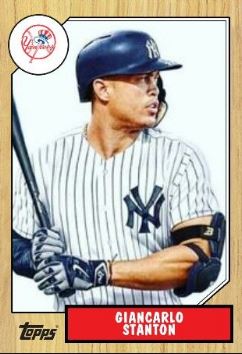


A Comment on Opening Day … and the AL Preview

The 2018 MLB season is upon us and it’s time (actually past time) for BBRT predictions.  (Last year’s preview was on the site by early March.) For more on why BBRT is running late this year, see the recent National League Preview by clicking here.  However, before taking a look forward at the American League a few comments on yesterday’s Opening Day.

AND IT WASN’T EVEN APRIL 4 …

DavidsonRegular readers know that BBRT often focuses on (some would say dwells upon) the fact that today’s game has become a hard-throwing/free-swinging affair – dominated by strikeouts and home runs.  If Opening Day is any indication, we are due for more of the same in 2018.  Yesterday’s 13 games featured 264 strikeouts and 33 long balls.

Oh, why the April 4 reference?  One highlight of Opening Day 2018 was White Sox DH Matt Davidson’s three-homer day (four runs scored and five RBI as Chicago topped Kansas City 14-7). It made Davidson just the fourth player to hit three dingers on Day One – and the three others all did it on April 4. The Blue’ Jays George Bell (April 4, 1988); Cubs’ Tuffy Rhodes (April 4, 1994); and Tigers’ Dmitri Young (April 4, 2005).

Other 2018 Opening Day “HR-K” highlights:

  • The Cubs’ Ian Happ hit the very first pitch of the season for a round tripper; Giancarlo Stanton hit a pair of homers in his first game as a Yankee; the White Sox hit six long balls off Royals’ pitchers.
  • The Mets’ Noah Syndegaard fanned ten in six inning against the Cardinals; the Twins’ Zach Duke joined the ranks of pitchers to fan four batters in an inning; last year’s AL strikeout king, Boston’s Chris Sale, whiffed nine in six innings of one-hit ball versus the Rays; and Cleveland’s Corey Kluber went the distance in a 2-1 loss to Seattle, fanning eight in eight innigs.

For those interested in such things, the record for batters fanned in an Opening Day game is 15 – by the Senators Camilo Pascual on April 18, 1960 – in a three-hit, complete-game, 10-1 win over the Red Sox.

Now let’s take a look at the American League for 2018. I might add that coming in with the preview as the season opens does create some interesting situations.  Since I’ve been working on these two posts: Greg Holland has signed with the Cardinals; the Royals’ five-time All Star catcher Salvador Perez has gone down with a luggage-related injury; the Rays, already planning on a four-man rotation, lost one of the four (Nathan Eovaldi) to elbow surgery; and Orioles’ manager Buck Showalter crossed me up by batting last year’s cleanup hitter Chris Davis – who has struck out more than 600 times in the past three seasons – in the leadoff spot on Opening Day.   Anyway, here are BBRT’s predicted AL standings and major award winners.  For those who want more, the post ends with a team-by-team evaluation.

A word of caution.  What follows are my own opinions and conjecture – not the result of any inside insight or info – and they were, for the most part, penned (keyboarded) before final rosters were released.  Also, I won’t be looking at the entire roster … primarily the lineup, rotation and key bullpen occupants.

________________________

BBRT AMERICAN LEAGUE PREDICTIONS (Playoff Teams in Bold).

EAST

New York Yankees

Boston Red Sox – Wild Card

Toronto Blue Jays

Baltimore Orioles

Tampa Bay Rays

CENTRAL

Cleveland Indians

Minnesota Twins – Wild Card

Chicago White Sox.

Kansas City Royals

Detroit Tigers

WEST

Houston Astros

Seattle Mariners

Los Angeles Angels

Oakland A’s

Texas Rangers

________________________

BBRT PREDICTED AMERICAN LEAGUE AWARD WINNERS

MOST VALUABLE PLAYER

Photo by apardavila

Photo by apardavila

Jose Altuve, 2B, Astros …. What can we expect from one of MLB’s best, shortest and most popular players?  The answer: 150+ games (he’s done it five years in a row); 200+  hits (four straight seasons); .310+ average (four straight seasons); 100+ runs (two straight seasons); 20+ home runs (two straight seasons); 80+ RBI (two straight seasons); 30+ stolen bases (six straight seasons). You get the idea. Last year, Altuve won his first MVP Award – along with his third batting title.  He hit .346 (with 204 hits), scored 112 runs, hit 24 home runs, drove in 81 and stole 32 bases in 38 tries.  It would surprise no one if he did it all again.  He will lead the Astros to another Division Title and should earn his second MVP.

Other Contenders: Carlos Correa, SS, Astros … The former 2017 All Star and 2015 Rookie of the Year is ready to help lead the Astros to another West Division title. I wouldn’t be surprised to see him best all his 2017 numbers (.315-24-84); Giancarlo Stanton, OF, Yankees … The presence of last year’s NL MVP makes the Yankees reminiscent of the Bronx Bombers of the past. He may not match last season’s .281-59-132, but he will do enough to be in the running for MVP.  Honorable Mention: You can’t talk AL MVP without mentioning Angels’ CF Mike Trout, who (in his six full MLB seasons) has finished second, second, first, second, first and fourth in the balloting. Expect Trout to be in the ..300-30-100, 20 steals “neighborhood.”

CY YOUNG AWARD

Photo by Keith Allison

Photo by Keith Allison

Chris Sale, LHP, Red Sox … Last year, Sale went 17-8, 2.90 and led the AL in innings pitched (214 1/3) and strikeouts (308) … and still finished second in the CYA vote. In an eight-season career, he’s 91-58, 2.98 and has fanned 10.5 batters per nine, while walking just 2.1. Sale is due.

Other Contenders: Corey Kluber, RHP, Indians … Last  year’s American League CYA winner (and 2014’s) is well equipped to defend his title. He was 18-4, 2.25, with 265 whiffs in 203 2/3 innings in 2017 and show no signs of letting up; David Price, LHP,  Red Sox … I just think the 31-year-old Price is going to deliver on his promise this year and put up numbers close to his 2012 National League CYA season.  Of course, pitching in the shadow of teammate Chris Sale may cost him votes and a sport in the top five.

ROOKIE OF THE YEAR

CalhounWillie Calhoun, OF, Rangers … Calhoun didn’t make the Rangers’ Opening Day roster, but I expect him back sooner rather than later. Just 22-years-old, Calhoun hit .300, with 31 home runs and 93 RBI at Triple A last season. He also handled himself well (.265-1-4) in a 13-game “look-see” with the Rangers.  He should not have to spend much time back at Triple A, particularly if the Rangers don’t contend.

Other Contenders: Shohei Ohtani, P/DH, Angels … Okay, gotta go with the hype, but after Spring Training, I’m not convinced the “Japanese Babe Ruth” will be in the running for Rookie of the Year. Still, if he can deliver even half of what’s expected, he needs to be on this list; Chance Sisco, C,  Orioles … First, what a great baseball name. Second, he hit .429 this spring. Third, he has a .311 average in five minor league seasons. Fourth, he’s got a good chance of at least sharing the catching duties in Baltimore. Fifth,  he’s well worth a “chance,” particularly once the Orioles fall out of contention.

Now, how about a team-by-team look ahead.

——————————-

AMERICAN LEAGUE EAST

  1. Yankees  94-68  (2017 …91-71)
gIANCARLO STANTON photo

Photo by Corn Farmer

Okay, the Yankees picked up the prize of the off-season – trading for masher Giancarlo Stanton (pictured).  This team now looks a lot the “Bronx Bombers” that used to terrorize the American League.  Not only that, there’s a nice blend of proven veterans and youngsters who have already shown (and should continue to grow into) their potential.  A year ago, without Stanton’s MVP-caliber performance, they barely lost the East to the Red Sox.  This year, it should belong to the Yankees.

A NEW ACE TAKES HOLD

The Yankees’ starting rotation, I believe, is underrated.  In the AL, only the Indians’ starting staff had a lower ERA (3.52 to the Yankees’ 3.98). The staff has a nice blend of youth and experience.  It starts with Luis Severino – the 24-year-old who finished third in the Cy Young voting after a 14-6, 2.98 season that included 230 strikeouts in 193 1/3 innings. There’s another emerging young talent at the far end of the rotation – 25-year-old Jordan Montgomery, who went 9-7, 3.88 in 29 starts (and put up a 2.57 ERA over 300 2/3 minor league innings).  Both these youngsters looked solid in Spring Training.

On the veteran side of the ledger, the Bombers have 2017 trading deadline pickup Sonny Gray (10-12, 3.55 for Oakland and New York). Gray, 28, is in his fifth MLB season and was an All Star in 2015. Then there is Masahiro Tanaka, in his fourth campaign with the Yankees (coming off  his worst season – 13-12, 4.74). Tanaka’s career MLB record is 52-28, 3.56 – and, even in last year’s somewhat disappointing season, he fanned 194 batters in 178 1/3 innings. Also in the rotation is the ageless CC Sabathia. Last season, at age 36, he put up a solid 14-5, 3.69 line. If any of these falter, New York has solid prospects like Chance Adams and Justus Sheffield waiting for an opportunity.

The bullpen is an area of strength for the NY squad, led by closer Aroldis Chapman and his 105 MPH heater. Also in the pen are Dellin Betances, David Robertson, Tommy Kahnle and Chad Green. All five of the aforementioned relievers had ERA’s under 3.00 and fanned more than 12 batters per nine innings.

POWER-POWER-POWER

The Yankees will mash – no doubt about it.  In the middle of the lineup are newcomer DH/OF Giancarlo Stanton (.281-59-132 for Miami); C Gary Sanchez (.278-33-90); and, very likely, SS Didi Gregorius (.287-25-87).  And we haven’t even mentioned RF Aaron Judge (expected to hit in the number-two hole), who set a new MLB rookie record with 52 home runs (.284 average, 114 RBI).  Notably, none of these lineup mainstays is over the age of 28.

Greg Bird was penciled in to provide power at 1B, but is out 6-8 weeks with an ankle injury. It looks likes veteran Neil Walker (.265-14-49 for the Mets and Brewers) will slide over from his usual second base position to hold down the one bag until Bird returns. With All Star 2B Starlin Castro gone in the Stanton trade and Walker moving over to first, that leaves 2B for 23-year-old rookie Tyler Wade – who had troubles in a 2017 call up, but hit .310 at Triple A last year and .286 this spring. This leaves leadoff hitter LF Brett Gardner – a 20/20 player last season (.264-21-63, with 23 steals); CF Aaron Hicks (.255-15-52 in 88 games); and newcomer 3B Brandon Drury (.267-13-63 for Arizona).

ALL-IN-ALL

Today’s game has, in many ways, become a contest of strikeouts and home runs.  This Yankee team is positioned to deliver both – and an East Division title.

PLAYER TO WATCH

Aaron Judge delivered 52 home runs in his rookie season. However,  he was .329-30-66 before the All Star break (in 84 games) and .228-22-48 post break (71 games). BBRT will be watching: 1) To see if the fall off is because pitchers adjusted; 2) What difference having Giancarlo Stanton behind him in the lineup will make (Judge walked 127 times last season).

  1. Red Sox 90-72 (2017 … 93-69)
David Price Red sox photo

Photo by apardavila

The AL East is going to be close, with long-time rivals Red Sox and Yankees evenly matched.  It may come down to the Red Sox and “four P’s” – the  Pitching of David Price (pictured), Rick Porcello and Drew Pomeranz.  If these three deliver, the Red Sox might just hold off the Yanks.

SALE AWAY WITH ME

The starting rotation, led by Chris Sale, is deep.  Sale went 17-8, 2.90 last season and fanned a whopping 308 batters in 214 1/3 innings.  He’s a Cy Young Award favorite.  He’ll be followed by a pair of pitchers who already have Cy Young Awards on their resumes – David Price and Rick Porcello. Price (a five-time All Star and 2012 CYA winner) faced elbow issues and went 6-3, 3.38 with 76 K’s in 74 2/3 innings last season.  He looked good out of the bullpen late in the season; had a solid spring; and was a 17-game winner for Boston in 2016.  He looks more than ready to deliver as expected.  Porcello, who won the 2016 Cy Young Award with a 22-4, 3.15, may pose a bigger question. Last season, Porcello struggled to an 11-17, 4.65 record – going from leading the AL in wins to leading the league in losses. If the 29-year-old can land somewhere in the middle of those numbers this season (say, 15 wins), the Red Sox might just outdistance the Yankees.

The final two rotation spots – to open the season – look to go to Hector Velazquez (3-1, 2.92) and Brian Johnson (2-0, 4.33).  However, the Red Sox hope for quick return to action from Drew Pomeranz (17-6, 3.32, with 174 whiffs in 173 2/3 innings), who is on the Disabled List with a “mild flexor strain.”

The bullpen will again be led by closer Craig Kimbrel – who put up 35 saves, a 1.43 ERA and 126 strikeouts in 69 innings a year ago.  The ninth inning is in good hands.  Others coming in out of the pen: Matt Barnes (3.88 in 70 appearances, 83 K’s in 69 2/3 innings); Joe Kelly (whose triple-digit heat delivered a 2.79 ERA and 52 whiffs in 58 innings); and Heath Hembree (3.63 with 70 K’s in 62 innings).  The Red Sox are also counting on help from 6’6″ Carson Smith, coming back from Tommy John surgery. In 2015, Smith pitched in 70 games for Seattle, with a 2.31 ERA 13 saves and 92 strikeouts in 70 innings.  He could provide a boost.  The bullpen (after Kimbrel) is not as flashy as the Yankees, but should be effective.

POWER OUTAGE

The Red Sox hit just 168 home runs in 2017 – the fewest in the American League and the fourth-fewest in MLB – with no Boston batter hitting more than 24 dingers.

The Red Sox worked to address a lineup power shortage by bringing in J.D. Martinez (OF/DH) – and he should help. Last season (Tigers and Diamondbacks), Martinez hit .303, with 45 home runs and 104 RBI.  Joining Martinez in the lineup are a handful of players who reached the 20-HR mark a year ago: 1B Hanley Ramirez (.242-23-62 in 133 games – and with a 30-HR season as recent as 2016); RF Mookie Betts (.264-24-102, with a 31-HR season in 2016); and LF Andrew Benintendi (.271-20-90 in his rookie campaign).

Up the middle, the Red Sox will feature Xander Bogaerts.  Bogaerts hit .273-10-62 with 15 steals last year.  The Red Sox would like to see him closer to his .294-21-89 of 2016.  With 2B Dustin Pedroia out for at least two month (knee surgery), Eduardo Nunez should take over the two-bag.  He hit .313-12-58, with 24 steals (Giants and Red Sox) and Pedroia should not be missed. CF looks like Jackie Bradley Jr. (.245-17-63); 3B goes to 21-year-old Rafael Devers, who showed his potential with a .284-10-30 line for the Sox in 58 games a year ago; and C to Christian Vazquez (.290-5-32).

ALL-IN-ALL

The Red Sox just seem to fall a bit short of the powerful Yankee lineup and bullpen.  What needs to happen for the Red Sox to top the East is for the three veteran “P’s” in the rotation (Price, Porcello and Pomeranz) and the three young “B’s” (Bogaerts, Betts and Benintendi) to deliver as expected.

PLAYER TO WATCH

Keep an eye on Rick Porcello, who went from the AL’s winningest pitcher in 2016 to the league’s loss leader in 2017.  Where on that scale he comes down may determine whether the Red Sox hold off the Yankees.

  1. Blue Jays 82-80  (2017 … 76-86)

The Blue Jays are not as bad as they looked a year ago – this is not a ten-games under .500 squad.  With better health (Aaron Sanchez/J.A. Happ/Troy Tulowitzki/Devon Travis), the Jays should once again move past the break-even spot on the W-L ledger.

 A HEALTHY ROTATION IS A HAPP(y) ROTATION

J.A. Happ, who missed more than a month with an elbow injury, should lead the mound staff.  Happ, who went 10-11, 3.53 last season, was a 20-game winner in 2016 (20-4, 3.18). The Jays need 15 wins out of a healthy Happ. Aaron Sanchez went to the Disabled List four times in 2017 (split nail/blisters) and finished 1-3, 4.25 in eight starts.  If healthy, the 25-year-old could be a solid number-two. In 2016, he was an All Star and went 15-2, 3.00 in thirty starts. To be competitive, the Jays must keep Sanchez on the mound. Also in the rotation are Marcus Stroman (13-9, 3.09), who gave the Jays 200+ innings for the second year in a row; veteran Marco Estrada (10-9, 4.98); and newcomer Jaime Garcia (5-10, 4.41 with the Braves, Twins and Yankees).  The health of Happ and Sanchez will be critical to Toronto’s success.

Young (23-years-old) Roberto Osuna (3.38 with 39 saves and 83 strikeouts in 64 innings) will be back to close out games. To get the ball from the starters to Osuna, the Jays have bolstered the pen.  Newcomers include:  Seung Hwan Oh (4.10 with 20 saves for the Cardinals); John Axford (6.43 ERA with the A’s, but 3.71 over nine MLB seasons); and Tyler Clippard (4.77 in 67 appearances with the Yankees, White Sox and Astros). Among the returnees are: Aaron Loup (2.64 in 33 games); Ryan Tepera 3.59 in 73 games); Danny Barnes (3.55 in 60 games). From this perspective, I’d place the Blue Jays’ pen in the middle of the AL relief hierarchy.  Not a match for New York or Boston.

Josh Donaldson photo

Photo by Terry Foote

HE’LL SMOAK A FEW BASEBALLS

The face of the offense (pictured) is 3B Josh Donaldson (.270-33-78), who delivers All Star numbers every year.  His protection in the lineup can be found at the other corner – 1B Justin Smoak. Smoak, a switch-hitter, had a breakthrough season at age 30 – going .270-38-90. His previous career highs were: average – .239; home runs – 20; RBI – 59.  The Jays need the new Smoak to show up again. Newcomer LF Curtis Granderson (.212-26-64 with the Mets and Dodgers) is likely to leadoff, followed by 2B Devon Travis. Travis played in only 50 games last season (knee) and hit .259-5-24.  He is, however, a .292 career hitter – three seasons, 213 games – and could move into the leadoff role.

Gone from the Blue Jays is long–time offensive threat, six-time All Star and fan-friendly Jose “Joey Bats” Bautista – still an unsigned free agent as this is being written. Bautista, who hit 288 home runs in ten seasons with Toronto (2008-2017) hit .203-23-65 in his last season with the  Jays.

The shortstop position should eventually go to Troy Tulowitzki (currently out with a bone spur). Tulo hit .249-7-26 in 66 games last season – but, if healthy, has 20-25 home run and 80-85 RBI power.  Until he’s ready, which may be some time in mid-season, it looks like Aledmys Diaz (.259-7-20 in 79 games with the Cardinals) will handle short. DH will provide some punch from Kendrys Morales (.250-28-85), as will RF, with newcomer Randall Grichuk (.238-22-59 with the Cardinals.)  The final two spots being to C Russell Martin (.221-13-35 in 91 games) and defensive wizard CF Kevin Pillar (.256-16-42, with 15 steals).

ALL-IN-ALL

The Blue Jay, just be getting healthy, should improve on last season’s sub-.500 record.   They still, however, are not likley to challenge the Yankees and Red Sox.

PLAYER TO WATCH

Aaron Sanchez, just 25-years-old, has a tremendous upside. Just look at 2016’s 15-2, 3.00 record. If the Jays can keep him healthy – particularly addressing blister issues – he can be a force in 2017.

  1. Orioles 81-81  (2017 … 75-87)
Dylan Bundy photo

Photo by Keith Allison

Only the Tigers had a higher staff ERA in the American League than the Orioles (4.97) – and Baltimore’s starting rotation had the worst ERA in all of baseball at 5.70.  They addressed that issue by bringing in Andre Cashner and Alex Cobb – from Texas and Tampa Bay – who both logged ERA’s under 4.00 last season.

Dylan Bundy (13-9, 4.24 in his second full MLB season and first full season as a starter) will be expected to lead the staff. Another full year of experience should make Bundy (pictured) even more effective. Andrew Cashner (11-11, 3.40 in 28 starts for Texas) should provide some help, as should another newcomer, Alex Cobb, who went 12-10, 3.66 in 29 starts for Tampa Bay.

Then there is the puzzling Kevin Gausman, who needs to develop some consistency.  This past season he was 5-7, 5.85 before the All Star break and a solid 6-5, 3.41 after. The Orioles hope that last-half success continues into 2018, but there is no guarantee.  Gausman followed a similar pattern in 2016 – 1-6, 4.15 before the break and 8-6, 3.10 after.  Those second-half surges keep creating hope for a full season of consistent performance. A full season of  “Second-Half Kevin” could boost the Orioles fortunes – and, maybe, even put them in contention for a Wild Card spot.  The Orioles are also looking for a bounce back from Chris Tillman, who suffered through a shoulder injury in 2017, going 1-7, 7.84 and pitching just 93 innings.  From 2012-2016, Tillman went 65-33, 3.81 and twice pitched 200 innings in a season.

While the rotation looks improved, the bullpen took a hit, in the form of closer Zach Britton’s ruptured Achilles tendon, suffered while working out in December. He will start the season on the 60-Day Disable List

How important is Zach Britton?  Between October 1, 2015 and August 21, 2017 – all with the Orioles – Britton converted an American League record 60 consecutive save opportunities.  The streak ended with a blown save on August 23.

Brandon Brach (3.18, 18 saves) should handle the closer role.  The Orioles will get the ball to him with a pretty effective bullpen group, including: Darren O’Day (3.43 with 76 strikeouts in 60 1/3 innings); Mychal Givens (2.75 with 88 K’s in 78 2/3 and projected as the Orioles’ next closer); Miguel Castro (3.53 in 39 games): and Richard Bleier (1.99 in 57 appearances).  Note: Castro could also be a candidate for the rotation, if anyone falters, down the road.  Last season, the Orioles had the AL’s sixth-best bullpen ERA.  They should be in that range again.

POWER UP THE MIDDLE

The middle of the lineup features a couple of unusual power sources (well, not so unusual in these days of strikeouts and long balls) – 2B Jonathan Schoop, who is not only skilled at turning the double play, but also contributed a .293-32-105 batting line; CF Adam Jones (.285-26-73), who has hit at least 25 long balls in every season since 2011; and SS Manny Machado (Yes, Machado is moving to short), who popped 33 homers and drove in 95 last year.  Note: Machado may bat second.

The Orioles stole an MLB-low 32 baseS last season. The next lowest was 53 by the Blue Jays, while the Angels led the way with 136 bags swiped.

1B  Chris Davis is another power source, but at a price – he’s hit 111 home runs over the past three campaigns, but also struck out 622 times. Last season, Davis went .215-26-61 in 128 games.  Joining Adam Jones in the OF will be Trey Mancini (.293-24-78 as a rookie) and veteran newcomer Colby Rasmus (.281-9-23 in 37 games for Tampa Bay), possibly platooning with Craig Gentry (.257-2-11 in 77 games).  Note: Mancini, prospect Anthony Santander and DH Mark Trumbo (out with a quad strain until mid-April) could also see time at 1B.

Tim Beckham (.278-22-62 with Tampa Bay and Baltimore) should play third base and lead off. Caleb Joseph and youngster Chance Sisco should share the backstop duties.  DH duties may fall to switch-hitting OF prospect Anthony Santander – at least until Mark Trumbo (.234-23-65) is ready.

Side note:  Manager Buck Showalter surprised BBRT by batting power-hitter and free-swinger Chris Davis in the leadoff spot on Opening Day.

ALL-IN-ALL

An improved rotation, a dependable bullpen and lineup with power (if not speed) should put the Orioles at or near .500.

PLAYER TO WATCH

I’d focus on Manny Machado on defense.  The three-time Gold Glover at third base is moving to shortstop – his natural position and where he says his “heart has been” all along. Machado has been compared to Brooks Robinson at 3B, will we now compare him to Cal Ripken Jr. at short.  (Ironically, Ripken made the opposite move – from shortstop to third base later in his career.)

  1. Rays 72-90  (2017 … 80-82)

When the Major League Baseball Players Association files a grievance against your team – asserting you are pocketing revenue sharing money instead of using it to improve the team – you know you have issues.  (To be fair, the Marlins, Pirates and A’s were also named in the grievance.)

So what DO the Rays look like for 2018?  No much like the team that won 80 games a year ago.  Gone are Evan Longoria (trade); Logan Morrison (free agency); Alex Cobb (free agency); Jake Odorizzi (trade); Stephen Souza, Jr. (trade); Corey Dickerson (trade); Tommy Hunter (free agency); Lucas Duda (free agency); Brad Boxberger (trade); and more. Read on to see who will take their roster spots.

FOUR-MAN ROTATION. OLD SCHOOL OR NEW BUDGET?

The rotataton gets off to a familiat start with returnee Chris Archer (10-12, 4.07), who has number-one stuff when he puts it all together.  Numbers two and three (formerly occupied by Cobb and Odorizzo) now go to the still developing 25-year-old Blake Snell (5-7, 4.04 last year – his second MLB season) and 24-year-old Jake Faria (5-4, 3.43 in his rookie season).  Note: I do think Snell may be ready for a breakout season.  Next up is Nathan Eovaldi (9-8, 4.76 for the Yankees – and recovering from a second Tommy John surgery). The fifth starter?  Oh yeah, the Rays appear to be ready to start the campaign with a four-man rotation. When the need a fifth starter is needed, Tampa Bay manager Kevin Cash says it’s going to be “a bullpen day.”  Is this “old school baseball” or “new budgeting finances?”  I’ll let you be the judge.

NOTE: Since these paragraphs were penned, Eovaldi has gone on the Disabled List (elbow) and the Rays are already looking to “TBD” as a potential starter.  In short, the rotation appears up in the air. Let’s hope TBD has a good fastball.

Gone are experienced bullpen arms like Brad Boxberger, Steve Cishek and Tommy Hunter. Alex Colome (3.24 with 47 saves last season) is back to close. After that, however, the pen (Remember, there will be “bullpen days.”) is a bit inexperienced. Some of the arms out there should include: Andrew Kitteridge (1.76 in 15 games) in his second MLB season; Chaz Roe (2.53 in 12 games with the Braves and Rays); and 22-year-old Joe Alvarado, who can reach triple-digits on the gun. .  The Rays did resign veteran Sergio Romo (3.56 in 55 games) and also have Matt Andriese (who went 5-5, 4.50 a year ago – primarily as a starter) for extended innings on bullpen days.

LOGAN’S RUN

The Rays will no doubt miss the 125 home runs contributed by 1B.DH Logan Morrison (38 HR); LF Corey Dickerson (27 HR); RF Steven Souza, Jr. (30 HR); and 3B Evan Longoria (20 HR). Remember this is a team that scored 48 percent of its runs on the long ballast year.  Let’s look at the lineup.

Kevin Kiermaier photo

Photo by Keith Allison

3B Matt Duffy (hampered by heel issues) hit .258-5-28 with eight steals in 91 games (Giants and Rays) last year. The 27-year-old is a .281 hitter in 274 career games and will likely leadoff. Returning CF Kevin Kiermaier (pictured), who can track pretty much anything out in the garden, has health issues.  He hit .276-15-39, with 16 steals in 98 games last year.  He’s played just 203 games over the past two seasons, but could be a 20/20 guy if healthy.  The power in the middle will have to come from RF Carlos Gomez (.255-17-51 in 105 games for Texas); 1B C.J. Cron (.248-16-56 in 100 games for the Angels); and returning C Wilson Ramos (.260-11-35 in 64 games). Filling out the order are: LF Denard Span (.272-12-43 with the Giants), who could also be a top of the order place setter; SS Andy Hechavarria (.261-8-30 in 97 games with the Marlins and Rays); and DH Brad Miller (.209-9-40 in 110 games).

ALL-IN-ALL

Pretty simply, the Rays do not have the mound or lineup resources to contend in the top-loaded East Division.  They also seem to be lacking in “names” that might excite the crowd despite the W-L record. It will be a long year in Tampa Bay.

 PLAYER TO WATCH

I like 24-year-old Mallex Smith, who can play all three OF spots, and hit .270-2-12, with 16 steals (81 games) as a rookie.  He hit .294, with 251 stolen bases in 446 minor league games and – if he gets the playing time (he should) – could add some speed and excitement to the Rays’ game. Also, put a “watch” on Christian Arroyo, a third base prospect acquired from the Giants in the Longoria trade.  The 22-year-old, who suffered a broken hand last season, hit .396 with four home runs and 16 RBI at Triple A last year (although he did have some trouble at the MLB level). He has hit .300 in 368 minor league games, is a versatile defender, hit over .300 this Spring Training and could take over third base for the Rays sooner rather than later.

CENTRAL DIVISION

  1. Indians 95-67 (2017 … 102-60)

The Indians are clearly ready to capture their third straight Central Division title – and they will do it with one of the best pitching staffs in MLB.

A few Indians’ 2017 pitching “factoids.”

  • The Indians had the best starting rotation ERA in the AL – 3.52
  • The Indians had the best bullpen ERA in the AL – 2.89
  • The Indians had the best overall ERA in MLB – 3.30
  • Indians’ pitchers led MLB in strikeouts – 1,614
  • Indians’ pitchers gave up the fewest home runs in MLB – 163

COREY STARTS – CODY RELIEVES

Corey Kluber photo

Photo by apardavila

Even with the possibility of Danny Salazar and his electric stuff missing Opening Day (shoulder), the Indians return a “lights out” rotation.  The “ace” is Corey Kluber (pictured), the two-time and defending Cy Young Award winner, who went 18-4, 2.25 and fanned 265 batters in 203 2/3 innings last year. Next up is Carlos Carrasco (18-6, 3.29), who fanned 226 batmen in 200 innings. And you go down the rotation with:  Trevor Bauer (17-9, 4.19 with 196 whiffs in 176 1/3 innings); Josh Tomlin (10-9, 4.98); and Mike Clevinger (12-6, 3.11). The Indians are hoping for an early return to the mound for Danny Salazar (rotator cuff). Salazar fanned 145 batters in 103 innings last season.

The Indians lost a couple of pieces from the bullpen in the offseason, specifically free-agent Bryan Shaw, who appeared in a league-leading 79 games (and fanned 73 batters in 76 2/3 innings) and  Joe Smith, who appeared in 59 games (Toronto and Cleveland) and fanned 71 in 54 innings.  Still, there is plenty left in the pen.

Cody Allen (2.94 with 30 saves and 92 strikeouts in 67 1/3 innings) returns to close things out.  Allen has saved at least 30 contests in each of the past three seasons. Andrew Miller (1.44 in 57 games) will be the setup man.  Other bullpen arms include: Dan Otero (2.85 in 52 games); Zach McAllister (2.61 in 50 games); and Nick Goody (2.80 in 56 games).  The Indians will miss Shaw, but there are plenty of quality relievers to pick up his innings.

STILL PLENTY OF OFFENSE – EVEN WITHOUT THE GUITAR … I MEAN BAT. … OF CARLOS SANTANA

The Tribe will miss 1B Carlos Santana’s bat (free agency), but did add Yonder Alonso (.266-28-67 with the A’s and Mariners). Beyond that, they pretty much return the offense responsible for putting up the third-most runs in the AL last season (behind only the Yankees and Astros).

It looks like SS Francisco Lindor will lead off.  He’s one of the most exciting young (23-years-old) players in baseball and put up a .273-33-89 line (with 15 steals) a year ago. More power will come from 3B Jose Ramirez (just 25, but in his fifth MLB season), who hit .318-29-83, with 17 steals – and could be a legitimate MVP candidate. Joining Ramirez and Alonso in the middle of the lineup is veteran DH/1B Edwin Encarnacion (.258-38-107).

2B Jason Kipnis can also contribute.  He was .232-12-35 with six steals in 90 games last season (shoulder/hamstring issues). Healthy, he is capable of 20+ home runs and 15+ steals and he has looked good this spring (.346-6-12 in 52 at bats).  He should take up some of the “Santana-Slack.” As of Opening Day, LF should be Tyler Naquin, with Michael Brantley starting on the DL.  Naquin played in just 19 games with the Indian a year ago (back, knee and performance issues), but he did hit .298 at Triple A). Naquin hit .296-14-43 in 116 games in his rookie season (2016) and has looked good this spring. Brandley Zimmer (.241-8-39, with 18 steals in 101 games) should start in center, with Lonnie Chisenhall (.288-12-53 in 82 games) in RF. Roberto Perez (.207-8-38 in 73 games) and Yan Gomes (.232-14-56 in 105 games) will handle the catching.  Plenty of offense – and a nice blend of power and speed.

ALL-IN-ALL

The Central Division once again belongs to the Indians – led by, arguably, the AL’S best pitching staff and a top-three offense.

PLAYER TO WATCH

2B Jason Kipnis, who suffered through an injury-dampened 2017, seems determined to reaffirm his position as a top middle infielder.

  1. Twins 89-73 (2017 … 85-77)

The Twins surprised a lot of people by winning 85 games last year –  a 26-victory improvement over 2016.  Then they surprised even more with an aggressive approach to the free-agent and trade market in the off season (Jake Odorizzi, Lance Lynn, Zach Duke, Addison Reed, Fernando Rodney, Logan Morrison).  They may not be ready to unseat the Indians atop the Central, but they are ready to improve on last season and, again, win a Wild Card spot.

 SHORING UP THE ROTATON

Despite the fact that staff “ace” Ervin Santana (16-8, 3.28) probably won’t join the rotation until late April or early May (finger surgery), the Twins’ rotation looks stronger than one year ago. It now includes: 23-year-old Jose Berrios (14-8, 3.89 last year, but with considerable upside still to be realized);  newcomer (via trade) Jake Odorizzi (10-8, 4.14 for the Rays), who should benefit from the Twins’ defense; newcomer free-agent Lance Lynn (11-8, 3.43 for the Cardinals); and Kirk Gibson (12-10, 5.07 for the Twins, but 7-3, 3.76 after the All Star break). If the Twins need a fifth starter before Santana returns, they have some solid arms waiting in the wings (Adalberto Mejia and Stephen Gonsalves come to mind.)

The Twins also improved the bullpen, adding  41-year-old Fernando Rodney (4.23 with 39 saves for the Diamondbacks). If Rodney doesn’t work out, another newcomer – Addison Reed (.2.84 with 19 saves for the Mets and Red Sox) – has solid closer experience. Reed, who has 125 career saves, fanned 76 in 76 innings a year ago. And, there are more new faces in the pen: veteran Zach Duke (3.93 in 27 appearances for the Cardinals) and Rule 5 pickup Tyler Kinley (Marlins), who hits triple-digits on the radar gun. Other bullpen names could include: Trevor Hildenberger (3.21 in 37 games); Ryan Pressley (4.70 in 57 games); and youngster Gabriel Moya, who gave up just one run in Spring Training, while fanning 12 in 12 innings.  When it comes to the pen, the Twins appear “good to go.”

THIRTY-EIGHT HOME RUNS – AT A BARGAIN PRICE

Logan Morrison photo

Photo by Keith Allison

The Twins bolstered their already productive lineup (one of just four AL teams to top 800 runs in 2017) by adding the productive bat of DH/1B Logan Morrison (pictured). The free agent, who signed a one-year deal for $6.5 million (plus incentives), hit .246, with 38 home runs and 85 RBI for the Rays last season and will slot right into the middle of the Twins’ lineup.  Flanking Morrison will be 3B Miguel Sano (.264-28-77 in 114 games), who seems fully recovered from a 2017 leg injury) and LF Eddie Rosario (.290-27-78). The Twins also get plenty of power from the leadoff spot, manned by 2B Brian Dozier (.271-34-93), who has hit 76 home runs and driven in 192 over the past two seasons.

CF will be held by super-defender and Gold- and Platinum-Glover Byron Buxton – still coming into his own as an offensive force. Last season, Buxton went .253-16-51, with 29 steals – but he was .300-11-35 after the All Star break.  He has the potential to deliver 20 home runs and 40 bases. The lineup is rounded out with 1B Joe Mauer (.305-7-71), a three-time batting champ; RF Max Kepler (.243-19-69 and still developing offensively); SS Eduardo Escobar (.254-21-73), who replaces the suspended Jorge Polanco; and C Jason Castro (.242-10-47).

ALL IN-ALL

The Twins have a solid – if not spectacular – rotation that should keep them in games; an improved bullpen; and a balanced lineup that should again be among the top scoring AL teams (and which still has plenty of upside among its young hitters.)  They are ready to challenge the Indians in the Central – and should at least capture another Wild Card spot.

 PLAYER TO WATCH

Byron Buxton has been officially pronounced the fastest player in major league baseball.  He is worth watching for his Gold Glove defense and – if he continues to develop – could deliver some exciting offense (Say, .285-20-90, with 45 steals).  He creates a lot of excitement every time he takes the field

  1. White Sox 74-88 (2017 … 66-96)

The White Sox, like most of the Central Division, are in a rebuilding mode.   However, while most “predictors” are putting the Sox down for  fifth place in the Division, BBRT expects a bit more from Chicago – not contention, but a chance to pull into third place … thanks to a couple of key additions in Joakim Soria and Wellington Castillo, as well as some up-and-coming youngsters.

IMPROVED PITCHING, ESPECIALLY IN THE PEN

While most will point to James Shields (5-7, 5.23) as leading the rotation, BBRT leans towards Lucas Giolito (3-3. 2.38 in 7 starts).  Let’s look at the top two in this rotation.  While Shields – a consistent double-digit winner from 2007-2015 – finished with just five wins and an ERA north of 5.00 in 2017, the veteran made some adjustments and went 3-2, 3.94 in five September starts, fanning 30 in 32 innings. The real key, however, may be Giolito, who went 3-3, 2.48 for the Sox – and has looked solid this spring (2.04 ERA and 17 whiffs in 17 2/3 innings). Others in the rotation include: 24-year-old Reynaldo Lopez (3-3, 4.72 in eight starts); 24-year-old Carson Fulmer (3-1, 3.86 in seven games/five starts); and veteran Miguel Gonzalez (8-13, 4.62 for the White Sox and Rangers). The rotation might get some help from Carlos Rodon, expected to miss the first month of the season (shoulder surgery).

The White Sox made a solid move in picking up Joakim Soria (pictured) to close (or serve as a key set up man). Soria has 204 career saves and, last season, went 3.70 in 59 games for the Royals. After Soria, the Sox have Juan Minaya, who saved nine games in ten opportunities at the end of 2017, and could step in if Soria falters.  Nate Jones should also be a key member of the pen – while elbow problems held him to just 11 appearances in 2017, he put up a 2.29 ERA in 71 appearances in 2016 (80 strikeouts in 70 2/3 innings). He looked solid in spring. Among the other bullpen arms are: Luis Avilan (2.93 in 61 appearances for the Dodgers); Gregory Infante (3.13 in 52 games); and Danny Farquhar (4.20 in 52 appearances). Overall, the bullpen seems to offer some fairly positive options.

Catcher Wellington Castillo should bat somewhere in the middle of the Sox lineup, after a .282-20-53 season (96 games) for the Orioles. He’ll get help from 1B Jose Abreu (.305-33-102), who has driven in at least 100 runs in each of his four MLB seasons. The Sox are hoping Nicky Delmonico can provide some protection in the lineup, after the 25-year-old went .262-9-23 in his rookie season (43 games). Other key offensive contributors will be 2B Yoan Moncada (.231-8-22 in 54 games and one of MLB’s top prospects); RF Avasail Garcia.(330-18-80), one of the game’s rising stars; and SS Tim Anderson (.257-17-56), who hit .276 after the break.   Rounding out the lineup:  DH Matt Davidson (.220-26-68); 3B Yolmer Sanchez (.267-12-59), who also flashed Gold Glove defense; and CF Adam Engel, who has flashy defensive skills, but has not shown the ability to hit major legume pitching.  It looks like Engel has earned an early season nod, with a strong spring (.383-4-10 in 47 at bats).

ALL-IN-ALL

The White Sox, like the Royals and Tigers behind them, need help on the mound. The Sox, however, have a young and talented line up that may mature enough over the course of the season to bring them into third place.

PLAYER TO WATCH

CF Adam Engel was a strikeout machine last season (117 K’s in 97 games – to go with a .166 average). He looked very good this spring – average and power.  Let’s see if he can keep it up once the season opens.

  1. Royals 71-91 (2017 … 80-82)

The Royals lost 1B Eric Hosmer and CF Lorenzo Cain to free agency. How the players they acquired to fill those spots – Lucas Duda and Jon Jay – work out may very well determine how close to .500 they finish.  And, a .500 finish looks optimistic.

ROTATION NEEDS A LITTLE BOUNCE

Danny Duffy (9-10, 3.81) will lead the rotation – but the Royals have to find a way to keep him healthy and get him to 30 starts.  (Duffy had Tommy John surgery in 2012 and was on the Disabled List twice in 2017.)  Also in the rotation are veterans Ian Kennedy (5-13, 5.38) and Jason Hammel (8-13, 5.29) – both of whom underperformed a year ago.  The Royals need a bounce back from these two. Kennedy has a career 4.08 ERA, Hammel – 4.51.  Jakob Junis (25-years-old) looked good in his first MLB exposure last season, going 9-3, 4.30 in 20 games/16 starts. In the absence of Nate Karns, recovering from thoracic outlet surgery, Eric Skoglund will likely join the rotation – or serve a long role in the bullpen – after a solid spring.

Kelvin Herrerra (4.25 with 26 saves) will close – fronted by a combination that could include of Blaine Boyer (4.34 in 32 appearances with the Red Sox); Brandon Maurer (6.52 in 68 games with the Padres and Royals); Justin Grimm (5.53 in 50 games with the Cubs); Wily Peralta (7.85 in 19 games with the Brewers); Brad Keller; and Brian Flynn. The Royals need a few of these bullpen resources to step up and (just as they need in the rotation) to bounce back.

MOOSE IS BACK

Mike Moustakas photo

Photo by Keith Allison

The Royals re-signed 3B Mike Moustakas (pictured) and he will again be a primary power source after a career-best .272-38-85 season. Also hitting in the middle will be newcomer 1B Lucas Duda, who hit .217-30-64 with the Mets and Rays. The cleanup spot may actually go to C Salvador Perez, who hit 27 home runs, to go with a .268 average and 80 RBI.

Note: Since this writing, Salvador Perez has gone down (4-6 weeks) with a luggage-related injury – taking a key bat out of the Royals’ lineup. Drew Butera (.227-3-14 in 74 games) may be the primary catcher until Perez returns.

New LF Jon Jay (.296-2-34 for the Mets ) replaces Lorenzo Cain (who delivered more power and speed a year ago).  Joining Jay in the OF will be returning Alex Gordon (CF), a Gold Glover who has regressed on offense (.208-9-45 in 2017) since signing a multi-year deal after the 2015 season. In RF, the Royals are hoping for a rebound from Jorge Soler, who hit just .144 in 35 games with the Royals last year (but .267 with 24 home runs in 74 games at Triple A).  Soler showed promise while with the Cubs, and did hit six long balls in Spring Training this year. Paul Orlando should also get some OF time.  He got in only 39 games last season (broken leg), but did hit.302  in 128 games in 2016 and .387 this spring.

Mike Moussakas hit a Royals’ club record 38 home runs in 2017.  That’s right! The Royals have NEVER had a 40-home run season.

Whit Merrifield is set at second base – and a spot near the top of the order – after a .288-19-78 campaign (with 34 stolen bases) in 2017.  He may be the spark that sets the Royals offense in motion. Filling out the batting order is likely to be SS Alcides Escorbar (.250-6-54) and DH candidates Cheslor Cuthbert (.231-2-18 in 58 games) and Jorge Bonifacio (.255-17-40 in 113 games).  Both had solid springs and can take a turn in the OF.

ALL IN ALL

This team may have more of a chance to challenge 100 losses than to challenge for the Central Division crown. The offense could end up middle of the pack, but the pitching just doesn’t seem to be there.

PLAYER TO WATCH

Kelvin Herrerra was a top of the line setup man for both Greg Holland and Wade Davis when the Royals were on top of their game (in 2015, his ERA was 1.41 over 70 innings), but he struggled a bit in the closer role last season.  It will be interesting to see how he delivers in the ninth inning this year – particularly since the Royals parted with the most likely challenger/backup closer in Joakim Soria (204 career saves) in a trade for prospects.

  1. Tigers 69-94 (2017 … 64-98)

The Tigers scored 735 runs last season and gave up 894 … and they simply didn’t do enough to close that gap.

LOOKING FOR SOME COMEBACK CANDIDATES

Michael Fulmer had the best season among expected Tiger starters last year – 10-12, 3.83. He’s the 2016 AL Rookie of the Year (11-7, 3.06) and a 2017 All Star. He’s pretty much the one starter Detroit can count on. Like the Royals, the Tigers are hoping for a rebound from many of the principals in their rotation, including: Jordan Zimmerman (9-13, 6.08, but with a 3.76 career ERA); newcomer Francisco Liriano (6-7, 5.66 for the Blue Jays and Astros); Matt Boyd (6-11, 5.27, but 6-5, 4.53 in 2016); and Daniel Norris (5-8, 5.31, but 12-12, 4.35 in 54 career appearances/45 starts).  BBRT would say that Zimmerman and Liriano have the best chances for a rebound. Free-agent signee Mike Fiers (8-10, 5.22) will likely open the season on the Disabled List (back).

Francisco Liriano could teach the Tiger staff something about comebacks and rebounds. Liriano was the AL Comeback Player of the Year in 2010 and the NL Comeback Player of the Year in 2013.  He needs to do it again, after signing with the Tigers in February,  coming off a 6-7, 5.66 season).

There weren’t many bullpen bright spots, but one of those was closer Shane Greene, who stepped into the role after closer Justin Wilson was traded to the White Sox. Greene ended the season with a 2.66 ERA and 13 saves, fanning 73 in 67 2/3 innings. Helping fill out the pen: Alex Wilson (4.50 in 66 appearances); Daniel Stump (3.82 in 55 appearances); Joe Jimenez (12.32 in 24 games, but 1.38 in 27 minor league appearances): and Drew VerHagen (5.77 in 24 appearances).

SPEAKING OF COMEBACKS

Miguel Cabrera photo

Photo by Keith Allison

As much as the Tigers would like to see some comeback performances on the mound, they would love to see one in the batter’s box – from 11-time All Star, two-time MVP and 2012 Triple Crown Winner 1B Miguel Cabrera (pictured). Hampered by back and groin issues, Cabrera hit .249-16-60 in 130 games – just one year after a .316-38-108 campaign.  The Tigers need the 35-year-old (in April) to bounce back big time. Others in the center of the lineup include a pair of potent veterans: RF Nick Costellanos (.272-26-101) and DH Victor Martinez (.255-10-47 in 107 games, but capable of a 25-30 homer season and coming off a strong Spring Training). Castellanos in RF is an interesting case. The former 3B was displaced by 24-year-old prospect Jeimer Candelario, who hit .330 in 27 games for the Tigers after coming over from the Cubs.  Newcomer Leonys Martin looks set for CF and could leadoff – and the Tigers will be looking for him to use his speed. They are hoping they got the .247 hitter with 44 stolen bases (Mariners) of two years ago, and not last season’s .172 variety (Mariners and Cubs). Martin hit .316 and stole four bases this spring. So far, so good.

Looking deeper into the lineup, catching will be handled by James McCann, who adds some punch to the lineup (.253-13-49).  Just 27, he should be part of the Tigers’ rebuilding. Mike Mahtook (.276-12-38) should hold down left field and bat somewhere near the top of the order.  We’ll see Jose Iglesias (SS) and Dixon Machado (2B) up the middle.  Iglesias was .255-6-54 last season, while Machado – a sparkling defender – was .259-1-11 in 73 games.

ALL IN ALL

With all but the Indians and Twins in the Central seeming to be in rebuilding mode, the Tigers have a chance to sneak into third place – provided two members of their starting rotation can rebound (most likely Jordan Zimmerman and Francisco Liriano).

PLAYER TO WATCH

Joe Jimenez could be a surprise in the Tigers’ pen. He got knocked around pretty good in last year’s MLB call up (12.32 ERA in 19 innings).  The 23-year-old, however, has a 1.56 ERA over 167 1/3 minor league innings, with 56 saves and 241 strikeouts. This spring he fanned 15 batters in nine innings (3.00 ERA).

WEST

  1. Astros 102-60 (2017 … 101-61)

A team wins 101 games and you look for an improvement.  Okay, just one game, but the Astros look that good. It’s hard to find a weakness in this squad. From 5’6” Jose Altuve to 6’5” Justin Verlander, this team is loaded with quality players who can be counted on to deliver.

VERLANDER FOR THE WIN

Justin Verlander came over from Detroit and gave the staff the leader they needed. He started and won five games in five starts during the stretch run and was the ALC MVP.  He finished the season (Detroit and Houston) at 15-8, 3.36 with 219 strikeouts in 206 innings. He is the real deal – and a legitimate 2018 Cy Young candidate. The number-two spot in the rotation goes to 2015 Cy Young Award winner Dallas Keuchel (14-5, 2.90); followed by Lance McCullers (7-4. 4.25 in 22 starts); newcomer Gerrit Cole (12-12, 4.26 with the Pirates); and Charlie Morton (14-7, 3.62.) Okay, this is not quite the Indians’ rotation, but given the offensive firepower that the Astros can put up, it’s plenty to secure the division.

The Astros bullpen will miss set up man Luke Gregerson, but the pen was not the team’s strength in 2017.  The Astros’ rotation put up a 4.03 ERA (third best in the AL), while the bullpen ERA was 4.27, the league’s ninth best.

Back to close will be Ken Giles, who saved 34 games and put up a 2.30 ERA in 62 2/3 innings (83 strikeouts). Among those getting the ball to him will be steady Chris Devenski (2.68 in 62 games and 100 whiffs in 80 2/3 innings) and Will Harris (2.98 in 46 games).  The Astros have also added Joe Smith (3.33 in 59 games for the Blue Jays and Indians) and hard-throwing Hector Rondon (4.24 in 61 games for the Cubs).

 RIGHT UP THE MIDDLE

Photo by roy.luck

Photo by roy.luck

When looking at the Astros’ lineup, let’s start right up the middle – of the field and in the lineup. Defending MVP (pictured) 2B Jose Altuve (.346-24-81, 32 stolen bases) – who has won three batting titles and led the league in hits four years in a row – makes this lineup go. Turningg the double play with Altuve and sharing the middle of the lineup is SS Carlos Correa (.315-24-84).

But wait there’s more – way more. In the OF, the Astros have leadoff hitter George Springer (.283-34-84 in CF); Josh Reddick (.314-13-82) is in RF; and, probably, some combination (at least to start the season) of Jake Marisnik (.243-16-35) and Derek Fisher (.212-5-17 in 53 games) in left.  At 1B, versatile Marwin Gonzalez (.303-23-90) may get the early nod (due to Yuli Gurriel’s suspension). Once Gurriel is back, Gonzalez will likely take a corner OF spot – but he can play all over the diamond. At the other corner is 23-year-old 3B Alex Bregman (.284-19-77, with 17 steals in his first full MLB season). Behind the plate are veterans Brian McCann (.241-18-62) and Evan Gattis (.263-12-55), who will also see time at DH. Last year, the Astros led all of MLB in runs scored with 896.  I’m betting they do it again.

ALL-IN-ALL

The best offense in baseball paired with a pitching staff in the top one-third means the Astros walk home with another division title and play deep into October.

 PLAYER TO WATCH

Lots of choices here, but I’m going with Marwin Gonzalez – just to see where he is playing on any given day.  Last year, Gonzalez went a solid .303-23-90 in 134 games – starting 38 games in LF, 33 at SS, 20 at 1B, 15 at 3B, and 14 at 2B.  THAT is versatility.  Fantasy pick, anyone?

  1. Mariners 82-80 (2017 … 78-84)

The Mariners, with just a little luck –and a lot of health – could challenge for a Wild Card spot. A revived King Felix could lead the way.

 JUST ENOUGH PITCING FOR SECOND PLACE

Felix hernandez photo

Photo by Matt McGee

Like most of the teams chasing the Astros, Seattle needs pitching.  And, one of the first things the Mariners need is for former “ace” Felix Hernandez (pictured) to come back from last year’s shoulder issues (6-5, 4.36 in 16 starts). A healthy Hernandez, even if not as effective as in his prime, would be a boost to Seattle’s chances to finish above .500. Hernandez has looked healthy and dead serious this spring. Those are good signs.

The number-two spot in the rotation goes to James Paxton (12-5, 2.98, 156 strikeouts in 136 innings). Paxton, in BBRT’s opinion, is be ready for a breakout season. Again, health is of concern. Paxton spent two stints on the Disabled List last season.

The rotation fills out with Mike Leake (10-13 3.92 in 2017, but 3-1, 2.53 in five starts for the Mariners after coming over from the Cardinals); Marco Gonzales (1-1, 6.08 for St. Louis and Seattle); and Erasmo Ramirez (5-6, 4.39 with the Rays and Mariners).  Gonzalez had a particularly strong spring, putting up a 2.08 ERA in 26 innings (21 strikeouts).

In the pen, 24-year-old Edwin Diaz is back to close, after saving 34 games last year (3,27 ERA and 89 strikeouts in 66 innings). The Mariners added hard-throwing veteran Juan Nicasio (2.61 in 76 games) to bolster the pen and take the ball in key late-inning spots.  Among the other arms out there are: Nick Vincent (3.20 in 69 games); Mark Rzepczynski (4.02vin 64 games); and James Pazos (3.86 in 59 games).

 SOMETHING OLD – SOMETHING NEW … IN THE LINEUP

The Mariners, seventh in scoring in the AL last season, traded for a couple of interesting (and effective) bats. Right at the top of the lineup, you’ll find newcomer Dee Gordon (.308-2-33, with 201 hits, 114 runs scored and 60 steals for the Marlins last season). Gordon gives the Mariners a premier leadoff hitter and should spark an already solid offense.  It will be interesting to see how Gordon handles the switch from 2B to CF.  (He hit .309 in 19 Spring Training games). Another newcomer, Ryon Healy (.271-25-78 for Oakland) will play 1B and hit in the bottom third.

Now, for the old. We’ll see plenty of power in the middle of the lineup from veteran, 37-year-old, DH Nelson Cruz (.288-39-119); 35-year-old 2B Robinson Cano (.280-23-97); and 30-year-old 3B Kyle Seager (.249-27-88).  The rest of the lineup includes: SS Jean Segura (number-two hole), who hit .300-11-45, with 22 steals; RF Mitch Haninger (.282-16-47 in 96 games – with plenty of upside); and catcher Mike  Zunino, who had a breakout .251-25-64 season. Left field could be interesting, with time possibly split between Seattle icon 44-year-old Ichiro Suzuki, coming off a .255-3-20 season for Miami, and Guillermo Heredia (.249-6-24).

ALL IN ALL

The Mariners have plenty of offense and, if the pitching stays healthy, enough on the mound to hold off the Angels, A’s and Rangers for second place.  The Astros, however, remain out of reach. A Wild Card also seems unlikely, but sneaking over .500 is a realistic expectation.

PLAYER TO WATCH

Dee Gordon deserves your attention – both to see how he responds to CF and also to watch how he can “spark” a lineup.

  1. Angels 81-81 (2017 …. 80-82)

Will Shohei Ohtani – a two-way superstar in Japan – deliver for the Angels?  How that question is answered may have a lot to do with how close the Angels finish to the Astros (they are not likely to catch them) and a Wild Card spot (there is a chance).

PLENTY OF REASONS TO CROSS YOUR FINGERS

The Angels really need Garret Richards – who has fought a knee injury and arm ailments since a 15-victory, 200-inning 2016 season – to make a comeback. Richards has made just a dozen starts over the past two seasons, but did look healthy in Spring Training.  Fingers crossed in LA.

Shohei Ohtani (with a 42-15, 2.52 record and 624 strikeouts in 543 innings in five Japanese seasons) will also be in the rotation. Ohtani was roughed up to two spring starts (nine runs in 2 2/3 innings), but observers say he showed improvement late in Spring Training and he’ll get the start in the Angels’ fourth game of the season.  Again, fingers crossed in LA.  Note: We may see Ohtani at the plate before we see him on the mound.  More on that later.

Also taking the mound to start for the Halos will be: Tyler Skaggs (2-6, 4.55), who had Tommy John surgery in 2014 and also was limited (by health issues) to 16 starts last season; Matt Shoemaker (6-3, 4.52), a 16-game winner in 2014, who made just  14 starts in 2017 (forearm surgery); and J.C. Ramirez (11-10, 4.15 in 27 appearance/24 starts), who suffered an elbow injury late last season.  The Angels are also hoping for good news on Andrew Heaney, who seems likely to start the season on the Disabled List (elbow) – but hopes to be ready in early April.  The Angels clearly need Ohtani to come around and at least two-or-three of their potential rotation mainstays to stay healthy. Lot of finger crosssing here.

Eight different players saved games for the Angels in 2017. Still only three American League teams logged more saves than the Angels 43 and their bullpen ERA was the league’s fourth best.

Blake Parker (2.54, eight saves, 86 strikeouts in 67 1/3 innings) looks to open the season as the Angels’ closer. Given the team’s 2017 experience, expect him to be on a short leash. The Angels also have Cam Bedrosian (4.43 with 11 saves and 53 K’s in 44 2/3 innings) and newcomer Jim Johnson (22 saves for Atlanta last season, but a 5.56 ERA) should Parker falter. Among the other bullpen arms: Kenyan Middleton (3.86 in 64 games); Jose Alvarez (3.88 on 64 games); and Blake Wood (5.45 in 72 appearances). I would be surprised if the pen matches last year’s performance.

TROUT… FISHING FOR ANOTHER MVP 

mIKE tROUT photo

Photo by Keith Allison

The Angels offense starts with one of the games brightest stars, CF Mike Trout (pictured). A torn thumb ligament cost Trout playing time last year, but he still put up a .306-33-72 line, with 22 steals, in just 114 games. How good is Mike? Last season the two-time MVP finished fourth in the MVP balloting, the first time in his six full MLB season that he has finished lower than second.

Providing additional punch in the lineup DH/1B Albert Pujols (.241-23-101), LF Justin Upton (.273-35-109, with 14 steals for the Tigers and Angels); and RF Kole Calhoun (.244-19-71), The Angels added a leadoff hitter with speed and pop in Ian Kinsler (.236-22-52, with 90 runs scored and 14 steals with Detroit). At 3B, it’s another of those fingers-crossed situations.  In December, the Angels signed free-agent Zack Cozart – an All Star shortstop with the Reds.  They are moving Cozart and his healthy bat (.297-24-63) over to third base after he’s spent seven seasons as a major league shortstop.  Filling out what looks to be a strong – and improved – lineup are top defender Andrelton Simmons (.278-14-69, with 19 steals) at shortstop and Martin Maldonado (.221-14-38) behind the plate.  The DH slot could be interesting, with time there for Pujols; Luis Valbuena (.199-22-65), who can also play 1B; and even Ohtani, who  hit .286, with 48 home runs in 403 games in Japan, and has voiced a desire to take on the role of designated hitter on occasion.

ALL-IN-ALL

The Angels’ offense looks sound and the defense is solid, but there seem to be too many health questions surrounding the rotation and too many questions regarding relief roles for the team to contend.  And, after all, they are chasing the Astros.

 PLAYER TO WATCH

Shohei Ohtani is often referred to as the “Japanese Babe Ruth” – that rare combination of pitcher and slugger. Scouts say he has wicked stuff – and he put up a 42-15, 2.52 record in five seasons in Japan.  His best year on the mound was 2015, when – as a 20-year-old – he went 15-5, 2.24 and fanned 196 hitters in 160 2.3 inning.

As a hitter, Ohtani put up a .286-48-166 line in 403 games.  His best season at the plate? A .332 average, with 22 home runs and 67 RBI in 2016.  Now the 23-year-old is in the major leagues.  He was treated pretty roughly this spring – a .125 batting average and a 27.00 earned run average – but he came north (well, west actually) with the Angels.  It will be interesting to see how the Angels use him – and whether he lives up to some very high expectations

                     4. A’s 79-83 (2017 … 75-87)

The A’s are developing some nice young players, but they need more experience – and, perhaps, a mound “ace” – to move up in the standings.

THE DAY BELONGS TO THE YOUNG

The A’s are sending a host of young pitchers to the mound – led by Kendall Graveman and Sean Manaea. Manaea started 29 games in his second MLB season and went a respectable 12-10, 4.37. Graveman, who may have the most upside, got only 19 starts (shoulder), but was 6-4, 4.19). There’s plenty of competition for the remaining spots, but it looks like Daniel Mengden (3-2, 3.14 in seven starts); Andrew Triggs (5-6, 4.27 in 12 starts); and Daniel Gossett (4-11, 6.11 in 18 starts).  But don’t be surprised if other developing starters get auditions over the course of the year.

That relatively inexperienced rotation probably means lots of work for the bullpen, and the A’s did work to strengthen the relief corps.  Blake Treinen (3.93 with 16 saves on the season) put up a 2.13 ERA, with 13 saves in 16 opportunities after coming over in a traded with the Nationals. In the off-season, the A’s added veteran Yusmeiro Petit (2.76 with 101 whiffs in 91 1.3 innings for the Angels) and second-year man Emilio Pagan  (3.22 in 34 games with the Mariners).  These two will play key roles.   Also in the pen will be Chris Hatcher (4.22 in 49 games for the Dodgers and A’s), Liam Hendriks (4.22 in 70 games) and Santiago Casilla (4.27 in 63 games).

GOING TO THE MATT(S)

The Athletics will be looking for offense from a pair of 24-year-old Matt(s):  1B Matt Olson (.259-24-45 in just 59 games) and 3B Matt Chapman (.234-14-40 in 84 games). The A’s would like to see these two hold down the corner spots for the long term.

Khris Davis photo

Photo by Keith Allison

Khris Davis (pictured) will be back at DH (and cleanup).  He provides consistent power (a .247 average, 85 home runs and 212 RBI over the past two seasons), but strikes out a lot (361 times over the past two campaigns).  As long as he continues to bash 40 long balls and drive in 100 runs a season, the A’s will take the whiffs. The table setters should be LF Matt Joyce (.243-25-68) and SS Marcus Semien (.240-10-40 in 85 games). Veteran Jed Lowrie  (.277-14-69) will provide a steady presence at 2B, as will newcomer C Jonathan Lucroy (.265-6-40 for Texas and Colorado). Lucroy is coming off a disappointing season, but has shown 15-20 homer power. Joining Joyce in the OF is Stephen Piscotty (LF), who went .235-9-39  for St.Louis last season, but was .273-22-85 in 2016. Finally – and here’s something I would not have expected to ever write – there may very well be Boog Powell in CF.  No relation to the 1970 AL MVP Boog Powell, this young “Boog” (25-years-old) hit .282 in 52 games with the Mariners and A’s a year ago.

ALL IN ALL

The A’s do not have a staff ace, and while they improved their bullpen (particularly with the Petit signing), the pitching is too uncertain to place them any higher than fourth here. Similarly, they have some nice young position players developing at the MLB level (and in the system), but the offense (while in the middle of the pack) is not ready to challenge the top tier.

PLAYER TO WATCH

Maybe it’s a name thing, but I want to watch prospect Boog Powell in CF. The 25-year-old hit .321-3-10 for Oakland (39 games) after coming over from Seattle last year. – and has a .305 average over 419 minor league games

                      5. Rangers 78-84 (2017 … 78-84)

A lack of pitching, particularly starting pitching, seems to be the common denominator of all the teams chasing the Astro in the West – and the Rangers are no exception.

RANGERS NEED MOORE ON THE MOUND

Cole Hamels will be expected to lead the rotation.  The veteran is coming off a disapointing 11-6, 4.20 seasons (24 starts). The Rangers would like a return to the 15-5, 3.32 pitcher of 2016. Texas is also looking for “more” from a couple of newcomers: Matt Moore (6-15, 5.52  for the Giants, but 13-12, 4.08 in 2017) and Mike Minor, who had a good year out of the Royals’ pen (2.55 ERA in 65 appearances).  Minor will get a chance to start for the Rangers – and was 13-9, 3.21 as a starter (Braves) as recently as 2013. Minor is a bit of gamble, having missed the 2015 and 2016 seasons with shoulder issues – but he did look good in relief for the Royals last season and, if he doesn’t work out as a starter could be a plus in the bullpen.

Also in the rotation are Doug Fister (5-9, 4.88 with Boston, but a 12-game winner with the Astros in 2016) and Martin Perez (13-12, 4.82), expected to return in early April (recovering from a broken elbow).  There is some potential in the rotation, but things have to go right.  Hamels, Moore and Perez appear to be key.

The Rangers’ had the second-worst bullpen ERA in the American League last season (4.76 – only the Tigers were worse at a dismal 5.63). In addition, Rangers’ relievers converted only 58 percent of their save opportunities, tied with the A’s and Tigers for the lowest conversion rate in the league.

The Rangers’ bullpen may face challenges again in 2018.  With the opener approaching, the Rangers were still looking for their closer.  Among the leading candidates:  Alex Claudio (2.50 with 11 saves a year ago); Matt Bush (3.78 with 10 saves); and Jeff  Diekman (2.53 in 11 games). Also in the pen, we could see Keone Kela (2.79 in 39 games) and Jose Leclerc (3.94 in 47 games),  It’s difficult to get a read on the Rangers’ pen when the roles are not exactly well-defined. Let’s just say, they need to find a way to improve over last season.

FOLLOWING IN IN SOME GOOD FOOTSTEPS

The lineup starts at the top with speedy leadoff man CF Delino DeShields, who  hit .269-6-22, with 29 steals last season. The two-spot llkely goes to 1B Joey Gallo (.209-41-80). If Gallo (pictured) can cut down on his strikeouts – 196 last season – he could develop into a middle-of-the-lineup monster. In the middle of the infield, there are: 20-20 guy SS Elvis Andrus (.297-20-88, with 25 steals); 3B Adrian Beltre (.312-17-71 in 94 games); and RF Nomar Mazara (.253-20-101). The rest looks like DH Sin-Soo Choo (.261-22-78); C Robinson Chirinos (.255-17-38 in 88 games); 2B Rougned Odor .203-30-74); and LF Ryan Rua (.217-3-12 in 63 games),

ALL IN ALL

The Rangers will score runs (they were fifth in the AL last season), drive the ball out of the park (third in the AL in home runs), but also kill some rallies with strikeouts (Ranger batters whiffed 1,493 times last season, second only to the Rays).  More plate discipline from key player would mean more wins – but not enough to overcome questions about the pitching. Too many pitchers need to bounce back – and there is too much bullpen uncertainty – to look for Texas to move up.


I tweet baseball @DavidBBRT

Follow/Like the Baseball Roundtable Facebook page here. 

Member: Society for American Baseball Research; The Baseball Reliquary; The Negro Leagues Baseball Museum. 
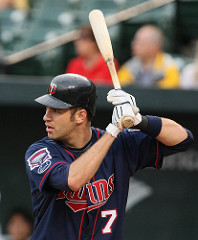
BBRT … 2018 National League Preview

The season is almost upon us and it’s time for some BBRT predictions. I know I’m a little late to the game this season. (Last year’s preview was on the site by early March.) That’s what happens when you take a March vacation – and don’t follow up on your intention to do some blogging on the way.  (Then again, I did get to ride plenty of roller coasters; explore some unique caverns; tour the San Antonio River Walk; see Fredericksburg, Texas’ historic “Sunday Houses;” ride a zip line; take in a Pat Benatar concert at Austin City Limits Live; visit a few funky blues bars; and enjoy plenty of good food and drink.)

So, let’s start with the National League – the “Senior Circuit” after all – with a look at BBRT’s predicted standing and award winners.  For those who want more, the post ends with a team-by-team evaluation.  Keep in mind, these are just my own opinoins and conjecture – not the result of any inside insight or info.

Note:  The American League will be coming soon.

BBRT NATIONAL LEAGUE PREDICTIONS (Playoff Teams in Bold).

EAST

Washington Nationals

Philadelphia Phillies

New York Mets

Atlanta Braves

Miami Marlins

CENTRAL

Chicago Cubs

Saint Louis Cardinals – Wild Card

Milwaukee Brewers

Pittsburgh Pirates

Cincinnati Reds

WEST

Los Angeles Dodgers

Arizona Diamondbacks – Wild Card

Colorado Rockies

San Francisco Giants

San Diego Padres

BBRT PREDICTED AWARD WINNERS

MVP

Bryce Harper photo

Photo by Keith Allison

Bryce Harper, OF, Nationals … Just 25-years-old and already in his sixth season (and a four-time All Star), Harper is ready to lead the Nationals to another East Division crown.  When he was the NL MVP in 2015, he showed us what he is capable of: .330 average, 42 home runs, 99 RBI, 118 runs scored.  He’s primed for another season at that level.

Other Contenders:  Nolan Arenado, 3B, Rockies … An RBI machine (three straight seasons of at least 130 driven in), a guaranteed Gold Glover (five straight, every year he’s been in the big leagues) and a proven power source (120 home runs over the past three campaigns); Paul Goldschmidt, 1B, Diamondbacks … Like Arenado, a lumber AND leather guy, went .297-36-120- last season, picked up his third Gold Glove and even stole 18 bases. He is the face of the D-backs franchise.

CY YOUNG

Clayton Kershaw photo

Photo by bryce_edwards

Clayton Kershaw, Dodgers … Okay easy pick here. He already has three CYA’s and last season (despite missing a month), went 18-4, took the ERA crown (2.31) and fanned 202 batters in just 175 innings. If he’s healthy, he’s the favorite.

Other Contenders: Max Scherzer, Nationals … Last year’s NL CYA winner, Scherzer (who also won an AL Cy Young Award in 2013) is the most likely challenger to Kershaw. Last season, Scherzer went 16-6, 2.51 with a league-leading 268 whiffs in 200 2/3 innings. Noah Syndergaard, Mets … My dark horse candidate, Syndegaard, in 2016 – at age 23 – put together a 14-9, 2.60 season, with 218 strikeouts in 183 2/3 innings. In 2017, “Thor” missed most of the season with a partial right lat tear (1-2, 2.97 in seven starts).  He’s looked fully recovered this spring (1.35 ERA and 23 K’s in 20 innings at this writing). If he stays healthy, he should be in the CYA mix.

ROOKIE OF THE YEAR

AcunaRonald Acuna, OF, Braves … This kid – just 20-years-old – can flat out play. In 2017 (playing at A, AA and AAA), he hit a combined .325-21-82, with 44 steals. Then he raked at a .325 pace in the Arizona Fall League. This Spring Training?  More of the same – .432, with four homers and 11 RBI in 44 at bats. The Braves will start him in the minors, but most expect him to be called up early in the season.

Other Contenders:  Lewis Brinson, OF, Marlins … Brinson, acquired from the Brewers, ripped Triple A pitching for a .331-13-48 line (76 games) in 2017 – tossing in 11 steals. And, while he hit just .106 in a brief trial with the Brewers last season, he was hitting .328 in 58 Spring Training at bats as this was written. Given the Marlins’ situation, the 23-year-old should get plenty of playing time. Alex Reyes, RHP, Cardinals … Not due back until May (elbow surgery), Reyes is my long shot for Rookie of the Year. He’s got electric stuff (4-1, 1.57, with 52 strikeouts in 46 innings for the Cardinals in 2016 – and a 3.50 ERA and 449 K’s in 334 1/3 minor league innings). If he makes it back in May and contributes to the Cardinals’ fight for a post-season berth (in the bullpen or the rotation), he could garner support for ROY.

Now, if you are a glutton for punishment, here’s a team-by-tam look at the National League

___________________________________________________________

—–NATIONAL LEAGUE EAST—–

  1. Washington Nationals … 99-63 (2017 … 97-65)

The Nationals topped the NL East by 20 games a year ago and pretty much stood pat. At this point, the only significant move has been to add 1B Matt Adams (.274-20-65 for the Cardinals and Braves) and the dropping of OF Jayson Werth (who will be in his age 39 season and, over the past three campaigns, has played in just 301 games, hitting .233 with 43 HR’s and 140 RBI).

The Nationals dominated the East a year ago – scoring the AL East’s most runs (819, third-best in the NL) and giving up the division’s fewest tallies (672, third-fewest in the NL).

STARTERS RULE

Max Scherzer photo

Photo by Keith Allison

The team will again be led by its sterling rotation (no NL team got more innings out of their starters last season than the Nats) led by three-time Cy Young Award winner (pictured) Max Scherzer (16-6, 2.51 ERA last season) – followed up by a surging Stephen Strasburg (15-4, 2.52); Gio Gonzalez (15-9, 2.96); and Tanner Roark (13-11, 4.67). The fifth starter is likely to be A.J. Cole (3-5, 3.81 in eleven 2017 MLB appearances).

The Nationals bullpen finished 11th in earned run average, but don’t let that fool you. For the first half of the 2017 season, the Nationals had the National League’s (and major league’s) worst bullpen ERA at 5.20. In the second half, the relief staff’s ERA was the third-best in the NL at 3.54. In July, the Nationals acquired Ryan Madson and Sean Doolittle from Oakland and Brandon Kintzler from Minnesota.  All three will be back (with Doolittle closing), so the late innings looked locked up for Washington.

HARPER’S BAZARR

The most interesting new face in the Nationals lineup may be LF (and expected leadoff) hitter0 Adam Eaton – whom the Nationals picked up in a 2016 off-season trade – and then lost to a knee injury for nearly all of 2017. In his last full season (White Sox) Eaton hit .284 (his career average) with 14 home runs and 14 stolen bases – he should add to a solid Washington offense – and he can go get ’em in the outfield. The middle of the lineup belongs to potential MVP candidate RF Bryce Harper (.319-29-87); 3B Anthony Rendon (.301-25-100); and 2B Daniel Murphy (.322-23-93) – although Murphy may not be ready for opening day (knee).  First baseman Ryan Zimmerman should grab a spot at 3-4-5 in the lineup, after going .303-36-108 a year ago. No matter how it shakes out, the three through six spots will deliver plenty of punch. CF Michael Taylor – whose emergence as an offensive force made Werth expendable – should generate excitement at the bottom of the lineup.  The National’s projected starting centerfielder hit .271, with 19 home runs and 17 steals in 118 games last season. Then there is Trea Turner at shortstop, who brings speed to the batting order in the number-two-hole (.284, with 11 home runs and 46 steals).

ALL-IN-ALL

There just isn’t anyone in the NL East ready to challenge the Nationals; they should again coast into firsts place.

 PLAYER TO WATCH

Bryce Harper is in his “walk” year.  It will be interesting to see how this young star (he is still only 25, despite his six major league seasons) responds to the pressure.  If he stays healthy, BBRT wouldn’t be surprised to see Harper finish north of .300-30-100 in all three categories.  But, keep in mind, since 2012, he’s average just 128 games a campaign.

  1. Philadelphia Phillies 80-82 … (2017 … 66-96)

More than a dozen Phillies made their major league debuts last season – and indications are that the Phillies are moving in the right direction.  The Phillies were 29-58 before the All Star Break – and 37-38 after.   Then, this off season, the Phillies announced their intentions to move up in the standings by adding veterans like 1B Carlos Santana, starting pitcher Jake Arrieta and relievers Pat Neshek and Tommy Hunter. Things are definitely looking up in Philly.

On offense, the Phillies put up 4.77 runs per game after the All Star break – compared to 3.82 before.

YOUTH WILL BE SERVED

Righty Aaron Nola is only 24, but he already has 60 major league starts under his belt and looks like a true number-one.  Nola went 12-11, 3.54 in 2017 – and fanned 184 batters in 168 innings. The pressure was reduced a bit on Nola with the signing of veteran Jake Arrieta (14-10, 3.53 for the Cubs last season).  Jared Eickhoff and Vince Valasquez, who have both faced the injury bug, should take spots in the middle of the rotation (although Eickhoff may not be ready until May).  There are a number of additional lively arms vying for spots in a rotation that is starting to show promise. Among the more prominent candidates are Nick Pivetta (who fanned 144 batters in 133 MLB innings last season, but put up a 6.02 ERA); Ben Lively (4-7, 4.26 in 15 starts/7-5 3.15 at Triple A); and Zack Eflin.

The bullpen was bolstered in the offseason with the signing of free-agent (veteran) set-up men Pat Neshek and Tommy Hunter.  (Neshek is an interesting case. He started 2017 with the Phillies, was traded to the contending Rockies – for three prospects – in July, and resigned with Philadelphia for 2018.)  In 2017, Neshek went a combined 5-3, 1.59 in 71 appearances, while Hunter went 3-5, 2.61 in 61 appearances for the Rays (64 strikeouts in 58 2/3 innings). Those two should set up closer Hector Neris, who saved 26 games last year.  Among a handful of additional solid bullpen arms are Luis Garcia and Hoby Milner – who both put up sub-3.00 ERA’s.

NO, NOT THAT CARLOS SANTANA

Carlos santana baseball photo

Photo by mwlguide

The Phillies showed they were serious about advancing in the standings when they gave free-agent first baseman (pictured) Carlos Santana (.259-23-79 with the Indians) $60 million over three years. Santana – a veteran and disciplined hitter with a career .249 average, but a .365 on-base percentage – should not only add to the Phillies’ offense, but should also be a positive influence on the team’s young hitters.

Right at the center of that lineup is 24-year-old natural first baseman Rhys Hoskins (who seems destined to remain in left field given the Santana acquisition). Hoskins hit .284 with 29 home runs in 115 games at Triple A last year – earning an early August call up.  And, he just kept hitting – going .259-18-48 in just 50 games with the Phils. Joining Hoskins in the outfield and flanking him in the lineup will be 26-year-old CF Odubel Herrera (.281-14-56) and 24-year-old RF Nick Williams (.288-12-55 in 83 games in his rookie campaign).  The “old man” in the outfield mix is versatile 27-year-old Aaron Altherr, who can play all three OF positions, went .272-19-65 in 107 games last season and should see ample playing time.

Keeping with the “under-30” theme, the top of the order will feature 27-year-old 2B Cesar Hernandez – a switch hitter who knows how to get on base.  Last season, he hit .294 (on-base percentage .373), scored 85 runs and swiped 15 bases. Then there’s 25-year-old Maikel Franco at third base – who popped 24 home runs, but is still short on plate discipline. Shortstop is being handed to 23-year-old rookie prospect (23 MLB games last season) J.P. Crawford and my money is on hot prospect 24-year-old Jorge Alfaro to win the backstop spot. Alfaro hit .318 in 107 at bats with the Phillies last season, but needs to work on his defense.

ALL-IN-ALL

This is going to be a young and exciting Phillies’ squad.  They may just need another year of seasoning or another reliable starting pitcher to contend for a Wild Card spot.  Keep an eye on the Phils.  If they are in contention in July, you may see them move for some pitching help.

PLAYER TO WATCH

BBRT will be watching to see if top prospect 2B Scott Kingery (second base) moves up to the Phillies and into the lineup. The 23-year-old raked at a .392 pace, with four home runs and four steals this spring. Last season, Kingery hit .304 with 26 home runs and 29 steals at Double A and Triple A.  It will be hard to keep him in the minors for long, and may give the Phillies some trading options as they look to add starting pitching. The Phillies are expected to give Kingery some work at other positions in order to create more playing opportunities for the rising talent.

  1. New York Mets … 73-89… (2017 …70-92)

What the Mets need to improve on last year’s record is a health – in the rotation, the bullpen and lineup.  BBRT is projecting New York for third, based on the strength of the pitching staff.  If the rotation falters, the Braves could sneak by. 

“THOR” COULD BE THE DIFFERENCE.

Syndergaard photo

Photo by slgckgc

On the mound, it all starts with Jacob deGrom, whose 31 starts and 201 1/3 innings (15-10, 3.53 ERA) led the staff. No other Met started more than 22 games or pitched more than 119 innings.  The Mets are also counting on Noah “Thor” Syndergaard (pictured) and his triple-digit heat; but Syndergaard missed most of last season with a torn lat muscle (1-2, 2.97 in seven starts). In a healthy 2016, the southpaw flamethrower went 14-9, 2.60.  The Mets need him to get back there and he’s looked good in Spring Training. Among the favorites to win rotation spots are Steve Matz, Matt Harvey and Seth Lugo.  The trio is has shown talent in the past, but last season made a combined total of 51 starts and put up ERA’s of 6.08, 6.70 and 4.71.  Ouch! All three have shown better stuff.  If two of them can stay healthy and revert to past form, they could be double-digit winners.

The bullpen also has its health issues, as closer Jeurys Familia – who saved 51 games in 2016 – missed considerable time last season (due to suspension and injury). He did save six games in seven opportunities – and the Mets are hoping to have him back for the ninth inning on a regular basis.  The Mets will also be looking for good things from A.J. Ramos, who saved 20 games last season (Marlins and Mets) and newcomer Anthony Swarzak, who put up a 2.33 in 70 appearances for the Brewers and White Sox.

NO MORE MISTER WRIGHT

The Mets offense used to run through veteran 3B David Wright, but (due to back issues and rotator cuff surgery) that is now a primarily a sweet memory. Between 2005 and 2010, David Wright averaged 156 games per season.  Since 2015, he’s played a total of 75 games (none in 2017). Wright likely will start the season on the Disabled List.

The Mets brought in a veteran presence for the hot corner and middle of the lineup in free-agent Todd Frazier (.213-27-76 for the White Sox and Yankees). Most of the offensive force will come from the outfield, led by LF Yeonis Cespedes – again, health allowing.  Cespedes hit .280-31-86 for the Mets in 2016.  Last season, he hit .292, but hamstring problems limited him to 81 games (17 home runs and 42 RBI).  Joining him in the garden are likely to be Jay Bruce (.254-36-101 for the Mets and Indians) and speedy defender Juan Legares in center.  Here again, health issues are shaping the picture.  Bruce appears to be holding down RF until the return of Michael Conforto (shoulder surgery), who showed solid offensive potential last season (.279-27-68 in 109 games). Over at 1B, prospect Dominic Smith, who hit .303 over his past three minor league seasons, hit only .198 in 49 games with the Mets (although he did pop nine home runs.) The Mets picked up veteran Adrian Gonzalez as an insurance policy at the one-bag (and he looks to be the starter on Opening Day) – and Wilmer Flores (.271-18-52 in 110 games last season) could also fill in there.  At 2B, Asdrubal Cabrera has shown some pop (.280 average, 37 home runs over the past two seasons); while SS Amed Rosario (only 22) still has a lot to prove.  Catcher Travis d’Arnaud delivered 16 home runs in 112 games last season.

ALL-IN-ALL

There is potential to improve, but there are just too many health concerns – on the mound and in the lineup. Still with good health and a little luck, the Mets pitching could make them contenders for a Wild Card spot.

PLAYER TO WATCH

Noah Syndergaard has “staff ace” stuff.  If he can stay healthy, he is capable of putting up 15+ wins. The Mets ability to even compete for a Wild Card spot depends on Syndergaard’s 100-mph fastball.

                4.   Atlanta Braves 72-90 … (2017 …72-90)

Okay, the Braves have been “rebuilding” for a few years now – and BBRT thinks they may still be a year or two of “seasoning” away from contending for the post season.

TRADING FOR VETERAN MOUND PRESENCE

On the mound, the Braves (in the Matt Kemp trade) added a couple of veteran starters: Brandon McCarthy (6-4, 3.98, 16 starts) and Scott Kazmir (10-6, 4.56) to push and mentor Atlanta’s promising young arms.  (Note: Kazmir was released late in Spring Training.)  The staff will again be led by Julio Teheran (11-13, 4.49 last season, but with a 3.59 ERA in 165 MLB appearances).  He should return to a sub 4.00 ERA. Mike Foltynewicz (10-13, 4.79), Sean Newcomb (4-9, 4.32) and  newcomers McCarthy and Anibel Sanchez (3-7, 6.41 for the Tigers) should round out the rotation to start the season, but prospect Luiz Gohara (who has fanned 375 batters in 328 1/3 minor league innings may be ready to take a spot in May (recovering from an ankle injury). Given this rotation, it would not be surprising to see some in-season changes.

With closer Jim Johnson gone, the ninth inning goes to Arodys Vizcaino (24 saves over the past two seasons). After that, look for the Braves to try to match up as best they can with: Jose Ramirez (3.19 ERA in 69 appearances); A.J. Minter (3.00 in 16 appearances); Dan Winkler (2.51 in 16 appearances); Pete Moylan (3.49 in 79 appearances for the Royals); and Sam Freeman (2.55 in 58 appearances).  If the roles can be defined, the bullpen may stabilize, but for now, it seems to be a bit of a question mark.

DO THE FREDDIE

Freddie Freeman photo

Photo by Thomson20192

First baseman Freddie Freeman (pictured) put up a .307-28-71 season in 2017 – despite missing more than a month with a broken wrist.  Healthy, he can consistently put up .300-30-100 numbers (or better). The other sure thing on the offensive side is rock solid leadoff hitter/CF and Gold Glover Ender Inciarte (.304-11-57, with 22 steals);

After that, it’s really all about the future. In the infield, youngster Ozzie Albies (.286-6-28, with 8 steals in 57 games); SS Dansby Swanson (.232-6-51 in 144 games); and 3B Johan Carmargo (.299-4-27 in 82 games) are being counted on (although Carmago may start the season on the Disable List with back issues). In the outfield, Lane Adams (.275-5-20 in 85 games), veteran Mike Markakis (.275-8-76 in 160 games) and Preston Tucker (who came over from Houston) can be expected to hold down the corners until top prospect Ronald Acuna (a .310 average in three minor league seasons) is ready – and that appears to be sooner rather than later. Tyler Flowers and Kurt Suzuki will continue to man the backstop spot.  There is potential in this lineup, but also (almost certainly) some growing pains along the way for young players.

ALL-IN-ALL

The Braves need a lot of youngsters to step up if they are going to move up.  They are going in the right direction, but it’s not quite time.

 PLAYER TO WATCH

As I put this together, Braves’ 20-year-old OF prospect Ronald Acuna Jr. is hitting .432, with four home runs, 11 RBI and four stesls in Spring Training – and is slated to start the season at Triple A.  If the Braves don’t bring him up before April 13, they save an extra year of contract control.  Look for Acuna to make a splash in Atlanta by May.

  1. Miami Marlins 66-96 …. (2017 … 77-85)

The Marlins are in “rebuild mode” – and it doesn’t look pretty. Gone is the entire outfield of Giancarlo Stanton, Marcell Ozuna and Christian Yelich. Also missing is 2B Dee Gordon.  The Marlins got a host of prospects and an All Star 2B (Starlin Castro) in return – and signed well-traveled free-agent Of Cameron Maybin – but it looks like a long season in Miami.

PITCHING FREE-FOR-ALL

Not sure who will lead the rotation, with expected Opening Day starter Dan Straily (10-9, 4.26 in 33 starts) beginning the season on the Disabled List.  The top choice appears to be Jose Urena (14-7, 3.82, 28 starts). Behind Urena is Odrisamer Despaigne (try to spell that real fast), who went 2-3, 4.01 last season. After that it looks like some combination drawn from Adam Conley, Dillon Peters, Sandy Alcantara, Jacob Turner and Caleb Smith will hold down the for until veterans Straily and Wei-Yin Chen are ready to take the mound.

Veteran Brad Ziegler will be back to close – after a 2017 season when he saved 10 games in 16 opportunities and recorded a 4.79 ERA.  Ziegler was pitching through a rib injury last season and the Marlins are hoping for a comeback season. Going into the 2017 season, Ziegler had a career (nine seasons) 2.44 ERA.

 THE REPLACEMENTS

Stanton-Ozuna-and Yelich are gone.  Who is manning the outfield in 2018? Let’s start with the return to the Marlins of free-agent Cameron Maybin. Maybin was with the Marlins from 2008-2010 – and since that time he has been with the Padres, Braves, Tigers, Angels, Astros and now back to the Marlins.  He is tentatively slated for the leadoff spot – and, last season, he hit .228-10-35.  On the plus side, he did steal 33 bases in 114 games. Joining Maybin will be 23-year-old prospect CF Lewis Brinson, who came over from Milwaukee and hit.331 at Triple A last season; and LF Derek Dietrich, who hit .249-13-53 a year ago. This group is not going to replace the Stanton-Ozuna-Yelich stat line of .292-114-337. Last season, Maybin, Dieterich and Brinson went .257-38-139 – and that’s if you include Brinson’s minor league numbers.

Starlin castro photo

Photo by Corn Farmer

On a more positive note, there is a pair of solid bats in the middle of the line-up. 2B Starlin Castro (pictured) was .300-16-63 with the Yankees and 1B Justin Bour was .289-25-83 for Miami.  J.T. Realmuto is solid behind the plate (but fighting back issues), while Miguel Rojas (who hit .290 in 90 games last year) is likely to be at shortstop. The Marlins will start the season without 3B Martin Prado (who played only 37 games in an injury-hampered 2017 season, and is still rehabbing a knee). Prado is a career .291 hitter, who posted a .305 average, with eight home runs and 75 RBI for the Fish in 2016. Starting the campaign at the hot corner expect 24-year-old Brian Anderson, who has shown good power in the minors (52 home runs in 446 games) and had a solid spring.

ALL-IN-ALL

A long season for Marlins’ fans; who should see a lot of new faces as the campaign “wears on.”

PLAYER TO WATCH

I’d keep an eye on the likes of Dan Straily and Brad Ziegler.  If they do well, watch for some trade activity at deadline time.


——NATIONAL LEAGUE CENTRAL—–


  1. Chicago Cubs (93-69) … (2017 … 92-70)

The Cubs lost some good players over the off season – Jake Arrieta, Wade Davis and Hector Rondon right at the top of the list.  But it doesn’t appear they’ll miss a beat, having added the likes of Yu Darvish, Brandon Morrow, Steve Cishek and Tyler Chatwood to the fold.

IT’S ONLY YU

Yu Darvish photo

Photo by Keith Allison

The Cubs rotation could be better than a year ago, thanks to the acquisitions of Yu Darvish (pictured) and Tyler Chatwood.  The staff will be led by holdover Jon Lester (13-8, 4.33 and a 19-gme winner in 2016). Two and three will be change-up master Kyle Hendricks (7-5, 3.03 in 24 starts; and 16-8, 2.13 in 2016) and free-agent signee Darvish (10-12, 3.86 with the Rangers and Dodgers). The final two rotation spots should feature Jose Quintana and Tyler Chatwood – two more quality arms.  And, should any of these falter, southpaw Mike Montgomery (7-8, 3.38) is ready to step in.  This is a potent rotation

Out in the pen, newcomer Brandon Morrow will step in as closer, replacing Wade Davis (who saved 32 games in 33 opportunities).  Morrow has the stuff (near triple-digit heat and a wicked slider), now we will see if he has the mentality. Morrow has 18 saves in 11 MLB seasons.   The Cubs have plenty more power in the pen in the likes of Pedro Strop and Carl Edwards, Jr. – who fanned a combined 159 batters in 126 2/3 innings.  And there is more behind this duo, including Steve Cishek and Justin Wilson. The bullpen looks ready to defense the Central title.

 CAN’T CATCH(er) UP WITH THIS

When your catcher can bat cleanup and put up a .276-21-74 season – at age 24 – you know there’s something special going on. Lots of youth and lots of power in the Cubs’ lineup.  Spotting into the 3-4-5 holes are catcher Wilson Contreras; 1B Anthony Rizzo (.273-32-109 and an MVP candidate); and LF Kyle Schwarber (who hit only .211, but poked 30 home runs in 129 games). The Cubs can count on more power from 3B Kris Bryant (.295-29-73) – one of the best young power hitters in the game.

Setting the table (in leadoff) for these sluggers will be CF Albert Almora Jr., who hit .298 in his first full MLB season. Sharing those duties will be Ian Happ (.253-24-68 – also in his first MLB season). Rounding out the lineup are SS Addison Russell, RF (defensive wiz) Jayson Heyward; and 2B Javier Baez.   What may be scary for the rest of the division is that Rizzo – at just 28-years-old – is the oldest member of this lineup and, of course, its veteran leader,

ALL IN ALL

The Cubs are well-positioned to once again lead the NL Central.  And, with so many young stars, they should continue to get better with experience.

PLAYER TO WATCH

BBRT is anxious to see what Tyler Chatwood can do now that he has escaped Coors Field. In 2017, Chatwood was 3-8, 6.01 at Coors and 5-7, 3.49 on the road.

  1. Saint Louis Cardinals 85-77 … (2017 83-79)

In December, the Cardinals traded four prospects to get a number-four hitter – and they got a good one in former Marlins’ outfielder (LF) Marcell Ozuna.  Ozuna’s bat (.312-37-124) may be just what the Cardinals need to get past the Brewers and maybe even challenge the Cubs.  His presence in the middle of that lineup should make the hitters around him all the better (more on that later).

COUNTING ON A COMEBACK

The Cardinals’ rotation will look little different this season, with Mike Leake gone via trade and Lance Lynn gone via free agency.  At the top of the rotation is 26-year-old righty Carlos Martinez – 12-11, 3.64 last year, but who could easily have won 16 games.  (In 2015-2016, Martinez went 30-16, 3.02.) Martinez fanned 217 batters in 205 innings. The number two and three spots will go to Michael Wacha (12-9, 4.13) and Adam Wainwright (12-5, 5.11) – although Wainwright suffered a hamstring pull late in Spring Training. The Cardinals need a comeback from the veteran Wainright, who has a career 3.29 ERA and won 92 games between 2009 and 2015. St. Louis fans can relish the fact, until mansring pull, “Waino”  looked good this spring.  Luke Weaver (7-2, 3.88, 10 starts) and Miles Mikolas will also be in the rotation; with rookie Jack Flaherty filling in until Wainwright is ready.  Of course, all of this could change when top prospect Alex Reyes returns from elbow surgery in May. Reyes may need some bullpen work to get stretched out, but he could be a valuable addition.

In the pen, newcomer Luke Gregerson (on the Disabled List – hamstring) is set to replace Seung-hwan Oh at closer. Gregerson has had his ups and downs in the closer’s role in the past – but did save 31 games in 36 opportunities as recently as 2015 (Astros). In Gregerson’s absence, it may closer-by-committee, although Bud Norris did save 19 games for the Angels last season. (Greg Holland sighting, anyone?) Others in the pen include: Tyler Lyons (2.83 with 68 strikeouts in 54 innings); Matt Bowman (3.99, 46 K’s in 58 2/3IP): newcomer Dominic Leone (2.56 with 81 whiffs in 7- 1/3 IP for Toronto); and John Brebbia (2.44 with 51K’s in 51 2.3 IP). If Gregerson is back soon, the pen should be fine. (There is always the prospect of using Alex Reyes in the pen – he misses a lot of bats – when he returns in May.) Again, Greg Holland sighting, anyone.

 PLENTY OF PROVEN BATS

There are plenty of proven bats in the lineup. We’ve already talked about Ozuna.  He will be flanked by 1B Matt Carpenter (.241-23-109), who has topped 20 home runs in each of the past three seasons) and 3B Jedd Gyorko (.272-20-67 in 125 games last season). Setting the table will be veteran RF Dexter Fowler (.264-18-64 in 118 games) and CF Tommy Pham (pictured), who had a breakout season in 2017 (.306-23-73, with 25 steals in 128 games). Other key members of the lineup include: 2B Kolten Wong (.285-4-42); SS Paul DeJong (.285-25-65 as a rookie); and steady veteran and All Star backstop Yadier Molina (.273-18-82). 

ALL-IN-ALL

The Cardinals have a well- balanced squad that, if healthy, should be in the hunt for a Wild Card spot. The rotation is sound and there are professional hitters across the lineup.  Their level of success may depend on how Gregerson recovers – and responds to the closers role.

PLAYER TO WATCH

Alex Reyes, just 23-years-old, is a top mound prospect. In 2016, he was 4-1, 1.57 with 52 strikeouts in 46 innings (12 appearances, five starts) after being called up as the pennant races heated up in August.  He should be back in May and could bolster the rotation or the pen,

  1. Brewers 85-77 … (2017 … 86-76)

The Brewers mean business! The Brew Crew surprised a lot of people by finishing second, ten games over .500, last season.  Then they surprised even more people by going out and getting Christian Yelich, Lorenzo Cain and Jhoulys Chacin in the off season.  Okay, they’re not ready to knock the Cubs off their perch, but they are ready to battle the Cardinals for second place in the Central.

CHASE IN FOR “THE CHASE”

AndersonZach Davies was Milwaukee’s “Ace” last season, turning his best campaign ever at 17-9, 3.90 – and he’s back. Right there with him is Chase Anderson 12-4, 2.74 (in a season interrupted by an oblique strain). Then there’s Jimmy Nelson, who went 12-6, 3.49 in 29 starts before being sidelined by September shoulder surgery (which will cost him a good portion of the 2018 campaign). The Brewers did respond to Nelson’s loss, signing veteran Jhoulys Chacin, who went 13-10, 3.89 for the Padres in 2017. He should bridge the gap. The four and five spots appear to belong to Brent Suter (3-2, 3,42, 14 starts) and Junior Guerra (1-4, 5.12 in 14 starts). If any of these falters, Brandon Woodruff (2-3, 4.81 in eight starts) is in the wings).  From this vantage point, it appears the Brewers need one or two of the young pitchers to step up, if they are going to keep pace with the Cardinals.

Corey Knebel and his 39 saves (1.78 ERA, 126 whiffs in 76 innings) is back to lock down the ninth inning. Other key bullpen components: Josh Hader (2.08 ERA in 35 appearances); Jacob Barnes (4.00 ERA in 73 games, 80 strikeouts in 72 innings) and Matt Albers (1.62, with 63 K’s in 61 innings for the Nationals).

SOMETHING NEW AT THE TOP OF THE ORDER

It looks like the Brewers will trot out two of their new acquisitions right at the top of the lineup, with LF Christian Yelich (.282-18-81, 16 stolen bases with Miami) and CF Lorenzo Cain (.300-15-49, 26 steals with Kansas City) likely to hit 1-2.

In 2017, the Brewers led the NL in stolen bases with 128 and tied for the lead in home runs with 224.  

The middle of the lineup belongs to 3B Travis Shaw (.273-31-101, with 10 steals); some combination of Eric Thames (31 home runs) and Ryan Braun (17 home runs in 104 games) at 1B; and 25-year-old RF Domingo Santana (a breakout .278-30-80).  The middle of the infield and the bottom of the lineup go to 23-year-old SS Orlando Arcia (who surprised in his first full season, going  .278, with 15 home runs and 14 steals – along with plus defense); with 2B looking like a battle between  Jonathan Villar (.241, with 11 home runs and 23 steals) and Eric Sogard (.273-3-18). All should get plenty of playing time as both Sogard and Villar can spot in at second, third and short.  Behind the plate duties should be led by Manny Pina (.279-9-43).

ALL-IN-ALL

If the pitching can deliver, the Brewers could hold off the Cardinals. The Brew Crew has a nice young lineup with power and speed – as well as just enough veteran presence to ease the pressure on the youngsters.  We might even see the Brew Crew make a move for pitching somewhere down the line. (They do appear to have an OF surplus.)

PLAYER TO WATCH

BBRT will be keeping an eye on Chase Anderson, who went 12-4, with a 2.74 ERA, for the surprising Brewers last season – despite missing seven weeks of with a left oblique strain (an injury he suffered not while pitching, but while swinging the bat).  Last season, was the thirty-year-old’s fourth in the major leagues.  It was also his first with an ERA under 4.00 – which most analysts say reflects an improved curveball and the addition of about four miles per hour of giddy-up to his fastball. If the 30-year-old righty can repeat – or even come close – the Brewers could have a new staff ace.

  1. Pirates 75-87 (2017 … 76-86)

Gone are staff “Ace” Gerrit Cole and offensive leader Andrew  McCutchen – which leaves the Pirates with? A fourth-place finish.

TAILLON TO LEAD THE ROTATION

The Pirates would like Jameson Taillon to lead the rotation (now that Gerrit Cole is gone). Taillon has shown potential (13-11, 3.98 in 43 starts for the Pirates over the past two seasons – with 210 K’s in 237 2/3 innings). Ivan Nova (11-14, 4.14 in 31 starts) will continue to provide a veteran presence at the front end of the rotation. The Pirates are also looking to the young arms of 25-year-old Joe Musgrove (acquired in the Cole trade), who was 7-8, 4.77 for the Astros last season – and 25-year-old Chad Kuhl (8-11, 4.35 in 31 starts). Notably, Taillon, Musgrove and Kuhl are all in just their third MLB seasons.  Another 25-year-old (in just his second MLB season) – Trevor Williams – will round out the rotation. Williams was 7-9, 4.07 for the Pirates last season. Williams could surprise. He put up a 3.10 ERA, over 424 1/3 minor league campaigns.

The bullpen is led by closer Felipe Rivero, who took over from Tony Watson in June – and flourished. Rivero saved 21 games in 23 opportunities, turned in a 1.67 ERA and fanned 88 batters in 75 1.3 innings. Michael Feliz (also acquired in the Cole trade); George Kontos; Troy Glasnow; Kyle Crick and last year’s International League Pitcher of the Year Steve Brault are among the pitchers who may fill out the pen.


Josh Bell Pirates photo

Photo by Keith Allison

THIS “BELL” TOLLS FOR THEE

The face of the Pirates’ 2017 lineup plays first base and bats cleanup. Josh Bell (pictured) finished third in the NL Rookie of the Year balloting after a .255-26-90 line (159 games) in 2017.  He must lead the way in 2018. The club should benefit from a full season of CF Starling Marte, who hit .275-7-31, with 21 stolen bases in just 77 games last season (PED-related suspension). Marte is a career .288 hitter (six seasons), who has hit as many as 19 home runs and stolen as many as 47 bases in a campaign). Also in the heart of the lineup will be RF Gregory Polanco (.251-11-35 in 108 games) – a considerable talent who is still looking for consistency at the MLB level. Second baseman Josh Harrison is a steady bat at the top of the order (.281 career average) and will bat ahead of number-two hitter, newcomer LF Corey Dickerson – a proven hitter who put up a .282-27-62 line in 2017 (Tampa Bay). Rounding out the lineup will be C Francis Cervelli, SS Jody Mercer and another new face in 3B Colin Moran (see player to watch below).

The Pirates finished 13th in the NL in runs scored in 2017 – and they didn’t add much firepower in the off season.

ALL-IN-ALL

The Pirates don’t have the horses to make a run at the playoff this season, but if the young arms they are developing start to deliver (and the offense picks up the pace a bit) they could finish near .500.

PLAYER TO WATCH

Keep an eye on 3B Colin Moran (acquired in the Gerrit Cole trade). Last season, the 25-year-old hit .301, with 18 home runs and 65 RBI in 82 minor league games (79 at Triple A) – before going 4-for-11 with a triple and a home run in a late-season call up (Astros). The Pirates would like him to take hold of the third base position.

  1. Cincinnati Reds 67-95 (2017… 72-90)

Could it really be all about pitching?  Ask the Reds, who used 16 starting pitchers last season. Those starters put up the NL’s worst starting pitching ERA at 5.55 and no starter delivered more than seven wins. Overall, the Reds gave up an NL-leading 248 home runs and posted an NL-worst 5.17 ERA.  Now to be sure, health was a major issue – no Reds’ hurler started more than 21 games and only two (Tim Adelman and Scott Feldman) recorded at least 20 starts. There is, indeed, work to do in Cincinnati.

In 2017 the Reds scored 761 runs – seventh-best in the NL … but they gave up an NL-worst 869.

 A SOMEWHAT UNFORUNATE NAME FOR A PITCHER

Anticipated staff leader, veteran Homer Bailey – who had elbow surgery in February 2017 – didn’t make his first start lasy season until June 24 and went 6-9, 6.43 in 18 starts. (Bailey last notched double-digit wins and at least 25 starts in 2013).   The fact is, last season, the Reds’ Rotation was beset with injury issues.  But, on the bright side, that gave some of the youngsters a chance to gain some experience – and there is some potential there. Here’s a list of potential rotation regulars for 2018.

Anthony DeSclafani (27-years-old) went 9-5, 3.28 in 20 2016 starts – then missed the 2017 season with an elbow injury. DeSclafani, now dealing with a strained left oblique and is expected to being the season on the Disabled list.

Luis Castillo (25-years-old), who made his MLB debut last June, could be a bright light for the Reds after going 3-7, 3.12 in 15 starts and fanning 98 batters in 89 1/3 innings.

Twenty-four-year-old Sal Romano went 5-8, 4.45 in 16 starts, fanning 73 in 87 innings.

Tyler Mahle (23-years-old) went 1-2, 2.70 in four starts after an August call up.  (He had gone 10-7, 2.06 at Double A and Triple A.)

Brandon Finnegan (24-years-old) went 1-1, 4.15 in just four starts (shoulder injury).  In 2016, he went 10-11, 3.98 in 31 starts (172 innings) for the Reds.

The bullpen will be led by closer Raisel Iglesias and, if the starters and set up men can get him a lead, he’ll protect it.  Last season, Iglesias saved 28 games in 30 opportunities, put up a 2.49 ERA and fanned 92 batters in 76 innings.  After Iglesias, things thin out a bit in the pen. Wendy Peralta was a bright spot, putting up a 3.76 ERA in 69 appearances as a rookie. Others in the pen include Mike Lorenzen (currently inactive due to a muscle strain); Kevin Shackelford (4.70 in 26 appearances); and newcomers Jared Hughes (3.02 in 67 appearances with the Brewers) and David Hernandez (3.11 in 64 appearances with the Angels and Diamondbacks).

THE REDS WILL SCORE

Joey Votto photo

Photo by Keith Allison

When your offense starts with (pictured) 1B Joey Votto (.320-36-100, with 134 walks and only 83 strikeouts), you can’t complain. The Reds, in fact, will have three players in their lineup who hit thirty or more round trippers and another two who topped 25.   Joining Votto in the middle of the lineup will once again be 2B Scooter Gennett (.295-27-97) and LF Adam Duvall (.249-31-99).  And, there is more power from RF Scott Schleber (.233-30-67) and 3B Eugenio Suarez. Right at the top of the order is CF Billy Hamilton, who stole 59 bases a year ago – but absolutely needs to improve on his .299 on base percentage.  Zack Cozart (.297-24-63) who left via free agency will be replaced at short by Jose Peraza (.259-5-37, with 23 steals) and Tucker Barnhart (.270-7-44) returns at catcher.

ALL-IN-ALL

The Reds have a solid offense, but – unless the young pitchers continue to develop – the Reds will need a lot of runs to keep the Cincy on the right side of the W-L ledger.

 —-NATIONAL LEAGUE WEST—-

  1. Dodgers 95-69 (2017 … 104-58)

The “names” gone from the Dodgers look significant: Yu Darvish; Curtis Granderson; Scott Kazmir; Adrian Gonzalez. But the fact is, the team that delivered 104 wins last season basically returns “all its letterman.”

IT ALL STARTS ON THE BUMP

The Dodgers’ rotation (even without rent-a-pitcher Yu Darvish) is solid – starting with (pictured) Clayton Kershaw, one of the best pitchers in MLB (history). The three-time Cy Young Award winner went 18-4, 2.31 with 202 strikeouts – despite missing the entire month of August with back issues. He is money in the bank, In LA, it’s Kershaw “and the rest of the staff.”  The “rest of” includes plenty of quality arms: 27-year-old Alex Wood (16-3, 2.72 with 151 whiffs in 152 1/3 innings); 29-year-old Kent Maeda (13-6, 4.22  with 140 K’s in 134 1/3 innings – and a 16-game winner as a rookie in 2016); 38-year-old veteran Rich Hill (12-8, 3.32 with 166 strikeouts in 135 2/3 IP); and 30-year-old Hyun-Jin Ryu (5-9, 3.77 in 24 starts).  In the NL, only the Nationals (and possibly the Diamondbacks) can put a similar quintet on the starting mound.

Last season, Dodger starters put up an MLB-best 3.39 ERA … 

and NL-best 3.5-to-1.0 strikeout-to-walk ratio.

The Dodgers’ bullpen begins with the NL’s top closer, Kenley Jansen (41 saves in 42 opportunities and a 1.32 ERA, as well as 109 strikeouts in 68 1/3 innings pitched). Getting the ball to Jansen will be the solid arms of veteran Josh Fields (2.84 ERA in 57 appearances); Tony Cingrani (4.22 in 47 games); newcomer Scott Alexander (2.48 in 58 games); and Pedro Baez (2.95 in 66 games).

Kenley Jansen struck out 51 batters before giving up his first walk last season (an MLB record).

BELLINGER AND SEAGER KEY THE OFFENSE

The Dodgers will miss 3B Justin Turner  (.322-21-71), who was slated for the number-three spot in the order. (He’s out with a broken wrist.) Still there is plenty of punch (and plenty of youth – and room to grow) in this lineup. Filling in the three-four-five holes are likely to be: 22-year-old 1B Cody Bellinger (who, last season, set a new NL rookie home run record with 39 long balls – .267 average, 97 RBI); RF Yasiel Puig (27-years-old), who went .263-28-74); and returning prodigal son LF Matt Kemp (.276-19-64 in 115 games for the Braves). The 33-year-old Kemp has had a solid spring and looks ready to contribute to LA’s offense.  Another young player (23-years-old) who will slot in the top half of the order is SS Corey Seager (.295-22-77 in 2017 and .308-26-72 in his 2016 rookie campaign).  Leading off will be CF Chris Taylor (.288-21-72, with 17 steals) – a capable table setter.  The rest of the likely lineup:  2B Enrique Hernandez (.215-11-37); 3B Logan Forsythe (.224-6-36); C Austin Barnes (.289-8-38).

ALL-IN-ALL

The Dodgers pretty much return the team that won 104 games a year ago (minus Justin Turner, but with – perhaps – a full year of Clayton Kershaw). It might be tough to again win 100+ games, but 95 victories will earn them another division crown.

PLAYER TO WATCH

Veteran Logan Forsythe is likely to hold down third base until Justin Turner (broken wrist) returns. Last season, hampered by injuries, Forsythe hit just .224-6-36 in 119 games.  However, in 2015-16 (with Tampa Bay), he averaged .273-19-60) per campaign.  That is the production LA is looking for.

  1. Arizona Diamondbacks 88-74 (2017 … 93-69)

In the NL, only the Dodgers boasted a better team ERA than the D-backs (3.38 to 3.66), so this race may come down to mound work – and it should be close. The D-backs improved by 24 games (over 2016) last season and, while that improvement may not carry over, there is enough here to earn the D-backs a Wild Card spot and, if things break right, even unseat the Dodgers at the top of the division.

THE NAMES MAY NOT BE AS BIG – BUT THE ARMS ARE AS STRONG

zACK gREINKE photo

Photo by Keith Allison

The names in the D-backs rotation may not be, collectively, as well recognized as the Dodgers’ five starters – but, overall, the staff looks just as good.  It starts with 2009 Cy Young Award winner (pictured) Zack Greinke, who went 17-7, 3.20 last season, with 215 strikeouts in 202 1/3 innings. Then there is 26-year-old Robbie Ray, who really elevated his game last season – 15-5, 2.89 with 218 strikeouts in just 162 innings (just over 12 K’s per nine – that’s missing bats).  The remainder of the rotation should be Taijuan Walker (9-9, 3.48); Pat Corbin (14-13, 4.03); and Zack Godley (8-9, 3.37).  It will, again, be one of the best in the NL.

Among the losses for the Diamondbacks was closer Fernando Rodney (who saved 39 games for the Snakes last season) – and we may see some continued mix-and-match in that role.  Key among the relievers are: returnee Archie Bradley (25-years-old), who went 3-3, 1.73 (but had difficulty in save situations); and newcomers Brad Boxberger (4-4, 3.38 in 30 games with Tampa Bay) and Yoshihisa Hirano (who had 29 saves in Japan a year ago). My money is on Boxberger, who saved 47 games for Tampa Bay in 2015.  Bradley and Hirano would then slide into set up roles, with the bullpen rounded out with Andrew Chafin (3.51 ERA in 71 games) and Randall Delgado (3.59 in 26 games).  The D-backs do need to sort out bullpen roles, but there are some quality arms from which to choose.

PANNING FOR GOLD(schmidt) IN ARIZONA

In 2017, Arizona got a big boost from mid-season acquisition J.D. Martinez, who hit .302-29-65 in 62 games for Arizona and a totaled 45 home runs and 104 RBI for the season (57 games with the Tigers). Martinez signed with the Red Sox and, unfortunately, Steven Souza Jr. (.239-30-78, with 16 steals for Tampa Bay) – who was set to replace Martinez in the Garden – will start the season on the Disabled List. Replacing Martinez (well, at least filing that third OF spot until Souza returns) now falls to another newcomer, Jarrod Dyson (.251-5-30, with 28 steals in 111 games for the Mariners).  Martinez will be missed, but there is still plenty of offense in Arizona.

The Diamondbacks tied an MLB record in 2017 – having ten players reach double-digits in home runs.

The face and force of the offense is MVP candidate Paul Goldschmidt – who, literally, does it all. Goldschmidt had a typical “Goldy” season in 2017 – .297-36-120, with 18 steals and a Gold Glove. Goldschmidt gets protection in the lineup from 3B Jake Lamb (.248-30-105). Table setters for these two will be a pair of veteran, professional hitters: CF/Leadoff hitter A.J. Pollock (.266-14-49, with 20 steals) and LF David Peralta (.293-14-57, with eight stolen bases). The rest of the lineup will include: Newcomer C Alex Avila, who hit .264-14-40 for the Tigers and Cubs last year; 2B Ketel Marte (.260-5-18 in 73 games); and SS Nick Ahmed (.251-6-21 in 53 games.) Also in the infield and outfield mix is versatile Chris Owings (.268-12-51, with 12 steals in 97 games).

ALL-IN-ALL

The D-backs match up pretty well on the mound with the Dodgers, but a bit of a shallow lineup (in comparison to the Dodgers) is likely to keep them chasing LA.

  1. Rockies 83-79  (2017 … 87-75)

The Rockies may benefit from last year’s misfortune, when key members of the rotation (Jon Gray, Tyler Anderson and Chad Bettis) all spent time on the Disabled list, and rookie hurlers made more than 90 starts for the Rocks.

A MORE EXPERIENCED ROTATION

Jon Gray (10-4, 3.67 in 20 starts) will lead the rotation. He is fully recovered from a left foot stress fracture and continues to rack up more than a strikeout per inning. Tyler Anderson had a solid 2017 campaign (6-6, 4.81) and 23-year-old German Marquez went 11-7, 4.39 and fanned 147 hitters in 162 innings. There are also Kyle Freeland (11-11, 4.10); Chad Bettis (2-4, 5.05 in a cancer-abbreviated 2017 season … but 14-8, 4.79 in 2016). Also in the mix is 23-year-old Antonio Senzatela (10-5, 4.68 as a rookie).

Greg Holland saved 41 games for the Rockies last year, but he is gone (still unsigned as I write this) – replaced by Wade Davis (2.30 ERA and 32 saves in 33 opportunities for the Cubs).  The Rockies’ pen should not miss a beat in the ninth. Getting the ball to Davis, we can expect (among others): Bryan Shaw (3.52 in 79 games); Jake McGee (3.61 in 62 games); and Mike Dunn (4.47 in 68 games).

Overall, the pitching staff is not a match for the Dodgers or Giants, but it should be improved from a year ago, thanks to the return of Gray, Bettis and Anderson and the additional experience acquired by youngsters like Marquez and Senzatela.

 AS YOU MIGHT EXPECT … OFFENSE IS ROCKY MOUNTAIN HIGH

Nobody scored more runs in the NL than the Rockies last season (824 to the Cubs 822) and plenty of offense is back for 2018.   Now, I am a bit biased (being a long-time third baseman – amateur), but for me it all starts with 3B Nolan Arenado (pictured), a Gold Glover who went .309-37-130 last season and now had three consecutive seasons of 130 or more RBI. Providing support in the middle of the lineup are RF Carlos Gonzalez (.262-14-57) and plus-defender SS Trevor Story (.239-24-82, but still developing as a hitter.) At the top of the order is NL batting champ CF Charlie Blackmon (.331-37-104, 14 steals), who set a new record for RBI batting leadoff last season. (Although there has been some of moving him to the middle of the order.) At 2B, there’s another top of the order guy, Gold Glover and 2016 NL batting champ DJ LeMahieu (.310-8-64). In left, we will see Ian Desmond (.274-7-40 in 95 games), who is looking for a return to 20-homer form.  There is also Gerardo Parra (.309-10-71), recovering from a hand injury, who could move into a corner OF spot when he is ready. At that time, Desmond or Gonzalez likely would head to the bench or a platoon.  Finally, newcomer Chris Ianetta (.254-17-43) in 89 games for Arizona) should handle most of the catching duties – and reach the 20+ homer level playing half his games at Coors.
ALL-IN-ALL

Given potential questions about the starting rotation, there just may not be enough here to bring the Rockies a second straight Wild Card spot; but that offense will create plenty of excitement.  If Marquez, Anderson and Freeland continue to develop, however, the Rockies could be in the chase.

  1. Giants 79-83 (2017 … 64-98)
Madison bumgarner photo

Photo by slgckgc

A year ago, the Giants’ season went south in April – when staff “Ace” Madison Bumgarner  (pictured) separated his shoulder in a dirt bike accident.  This year, the negative turn may have come late in Spring Training, as Bumgarner suffered a broken finger on his pitching hand (line drive) that may keep him off the mound for up to two months. This came just a few days after Giants’ number-two starter Jeff Samardzija (who ate up 207 2/3 innings last season) found out he could miss up to a month with a pectoral strain.

Thus are the best laid plans of mice and men rent asunder. The Giants, through trade and free-agency, had worked to come back from 2017’s disastrous 98-loss season.  New additions to bolster the offense included: 3B Evan Longoria, RF Andrew McCutchen and CF Austin Jackson. On the pitching side, the Giants added starter Derek Holland and reliever Tony Watson. Now, those changes may not be enough to offset the loss of MadBum and Samardzija,

WHERE DO WE GO FROM HERE?

Who leads the staff now?  Without some last minute moves, it looks like veteran John Cueto (8-8, 4.52 a year ago and 122-83, 3.33 career) may have to step into that role. Ty Blach (8-12, 4.78) will also be counted on, as will Chris Stratton, who went 4-4, 3.68 in 13 games for the Giants last year. Going deeper into the rotation, we are probably looking at Holland (7-14, 6.20 for the White Sox) and rookie Tyler Beede (6-7, 4.79 at Triple A).

The bullpen, which may see plenty of work, is led by Mark Melancon, who saved 11 games in 16 opportunities for the Giants last year, but saved 98 games in 2015-16 (Pirates/Nationals). Melancon had surgery late in the 2017 season and hopes to return to form. Others playing key roles include: Sam Dyson, Hunter Strickland and Tony Watson.  The pen also could benefit from the anticipated May return of Will Smith (Tommy John surgery).

THERE IS SOME OFFENSE

The acquisition of Evan Longoria (.261-20-86 and a Gold Glove) boosts the Giants on offense and defense.  The team is confident Longoria can improve on all those numbers (he was .273-36-98 in 2016) and provide a steady veteran presence. (Longoria has played at least 156 games in each of the past five seasons.) Longoria is likely to bat cleanup, while another newcomer, RF Andrew McCutchen, will be leading off.  “Cutch” was .279-28-88, with 11 steals for the Pirates last year – and, as with Longoria, the Giants are hoping a change of scenery spices up those numbers.  (He’s a .291 career hitter.) Like Longoria, you can expect McCutchen in the lineup every day. He’s played at least 153 games in seven of the past eight seasons.

Not a single Giant hit 20 home runs in 2017. Newcomers Evan Longoria and Andrew McCutchen were brought in to address that power shortage.

The face of the franchise is C Buster Posey (.320-12-67) who will continue to be in the middle of the lineup, as will 1B Brandon Belt (.241-18-51 in 104 games).  Other contributors will be 2B Joe Panik (.288-10-53); SS Brandon Crawford (.253-14-77); and LF Hunter Pence (.260-13-67).  In CF, I expect to see Austin Jackson (.318-7-35 for the Indians), but he is being challenged by prospect Steven Duggar. The 23-year-old made it from Rookie ball all the way to Triple A in 2017.  Notably, Longoria, Crawford and Panik all have Gold Gloves on their resumes.

ALL-IN-ALL

The Giants should improve on offense (they scored the second fewest runs in the NL last season) and the defense should be sound. However, there just is not enough to contend – particularly given the losses at the top of the pitching rotation.  It looks like another long year in San Francisco.

PLAYER TO WATCH

It’ll be interesting to see if the Giants’ belief that a change of scenery will result in improved seasons for Evan Longoria and Andrew McCutchen.

  1. PADRES  77-85 (2017 … 73-89)

The Padres are rebuilding (while mixing in some veteran presence) and – given the strength of the NL West – fans should be content to enjoy watching prospects develop.  San Diego is not ready to contend, but they are moving in the right direction.

A LEARNING CURVE

A young pitching staff probably cannot expect much support – the Padres scored an MLB-low 604 runs a year ago.  Veteran Clayton Richard (8-15, 4.79) will lead the staff (by example) and, hopefully, the youngsters will pick up on his work ethic and mound savvy. The brightest of the new mound bulbs is 25-year-old Dinelson Lamet – 7-8, 4.57 in 21 rookie-season starts, with 139 whiffs in 114 1/3 innings. However, as BBRT pens this, Lamet is dealing with an elbow injury and his status for the early season is uncertain. Other likely members of the rotation include: 24-year-old Luis Perdomo (8-11, 4.67); 26-year-old prospect Bryan Mitchell (acquired from the Yankees); and Tyson Ross (3-3, 7.71 with Texas … but with 3.91 ERA in eight MLB seasons).  It wouldn’t be surprising, however, to see prospects such as Cal Quantrill, Jacob Nix, Joey Lucchesi and Eric Lauer getting a shot sometime during the season.

The bullpen will be topped by closer Brad Hand who saved 21 games, put up a 2.16 ERA and fanned 104 batters in 79 1/3 innings. After that, the relief staff includes: Kirby Yates (3.97 in 62 appearances); Craig Stammen (3.14 in 60 appearances); Phil Maton (4.19 in 46 games); and Buddy Baumann (2.55 in 23 games).

PATIENCE IS A VIRTUE

Eric Hosmer photo

Photo by Keith Allison

The middle of the lineup belongs to (pictured) 1B Eric Hosmer (.318-25-94 with Kansas City) – bringing a steady bat, a Gold Glove and a veteran presence (and mentorship); LF Joe Pirela (.288-10-40 in 83 games); and former Padre 3B Chase Headley (.273-12-61 with the Yankees).The key to the Padres offense, however, may be Wil Myers – moving to the OF to accommodate Hosmer.  Myers hit .243-30-74, with 20 steals – after a .259-28-94, 28-steal season in 2016.  Myers is expected to hit in the two- or three-hole. Leading off will be another exciting youngster – 23-year-old Manuel Margot (.263-13-39, 17 steals in his rookie campaign). Also in the OF mix is Hunter Renfroe, who hit .231, but with 26 long balls, as a rookie.  Filling out the lineup are likely to be 2B Carlo Asuaje (.270-4-21 in 89 games as a rookie); SS Freddie Galvis (.255-12-61 with the Phillies); and C Austin Hedges (.214-18-55.)   Padre fans are also hoping to see promising young SS Fernando Tatis, Jr. in San Diego soon.  I would not be surprised to see some new, young faces in the Padres’ lineup by mid-season.

ALL IN ALL

The Padres are rebuilding and mixing in a bit of a veteran presence with emerging young talent. Expect continued change and some new faces along the way, as the team builds toward contention.  They should improve in the W-L column this year, just not enough to climb out of the basement.

PLAYER TO WATCH

If Dinelson Lamet comes back from elbow issues, he’s worth watching. In 298 minor league innings (four seasons), he put up a 2.99 ERA and fanned 336 batters. Then in 21 MLB starts with the Padres last year, he went 7-8, 4.57 and whiffed 139 batters in 114 1/3 innings.

Coming soon:  A look at the American League.


I tweet baseball @DavidBBRT

Follow/Like the Baseball Roundtable Facebook page here.

Member: Society for American Baseball Research; The Baseball Reliquary; The Negro Leagues Baseball Museum.