A True Journeyman Officially Retires

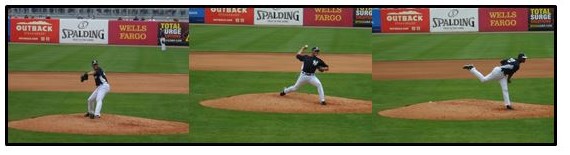
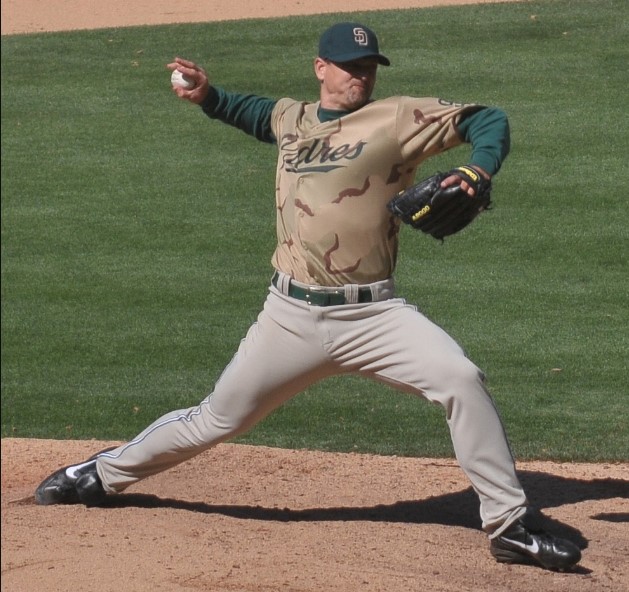
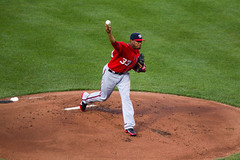
Photo by Keith Allison

On Friday (September 9, 2022), righthander Edwin Jackson – who played for more major-league teams (14) than any other player – officially announced his retirement from the playing field.  The announcement came on his 39th birthday and on the 19th anniversary of his first appearance on a  major league-mound.

While Baseball Roundtable has written about Jackson’s travels before, this seems an appropriate to to again reflect on his career and, in The Roundtable’s “one things leads to another” tradition, also take a look at Jackson’s unexpected no-hitter, and a few other record-setting journeymen.

Jackson, who has not pitched in the major leagues since 2019, had a career record of 108-133, 4.78 in 412 MLB games (318 starts) over 17 seasons. In 1,960 innings pitched, he fanned 1,508 and walked 779.  Jackson was an All Star in 2009, when he went 13-9, 3.62 in 33 starts for the Tigers. In his MLB career, he won ten or more games in five seasons.  In six of his 17 MLB seasons, Jackson pitched for more than one major-league team.

Jackson’s record – year-by-year and team-by-team.

How did he do it?

2001

  • Drafted by the Dodgers in June.

2003

  • Debuted with the Dodgers on September 9.

2006

  • June 14 – Traded by the Dodgers to the Rays. (Jackson and Chuck Tiffany for Danys Baez and Lance Carter.)

2008

  • December 10 – Traded by the Rays to the Tigers. (Jackson for Matthew Joyce.)

2009

  • December 8 – Went from the Tigers to the Diamondbacks in a three-team trade. (The Tigers sent Curtis Granderson to the Yankees; the Yankees sent Phil Coke and Austin Jackson to the Tigers; the Yankees sent Ian Kennedy to the Diamondbacks. The Diamondbacks sent Max Scherzer and Daniel Schlereth to the Tigers. So, ultimately, the Tigers turned Jackson and Granderson into Coke, Austin Jackson, Scherzer and Schlereth.)

2010

  • July 30 – The Diamondbacks traded Jackson to the White Sox. (Jackson for David Holmberg and Daniel Hudson.)

2011

  • July 27 – Jackson was traded by the White Sox to the Blue Jays and (on the same day) from the Blue Jays to the Cardinals. (Jackson went to the Blue Jays – with Mark Teahen – for Jason Frasor and Zach Stewart. He then went to Cardinals – with Octavio Dotel, Corey Patterson and Marc Rzepczynski – for Trevor Miller, Colby Rasmus, Brian Tallet and P.J. Walters.)
  • October 30 – Granted free agency

2012

  • February 2 – Signed with the Nationals.
  • October 29 – Granted free agency.

2013

  • Signed with the Cubs.

2015

  • July 27 – Released by the Cubs.
  • August 14 – Signed with the Braves.
  • November 2 – Granted free agency.

2016

  • January 13 – Signed with the Marlins.
  • June 2 – Released by the Marlins.
  • June 29 – Signed with the Padres.
  • November 3 – Granted free agency.

2017

  • April 5 – Signed with the Orioles.
  • June 13 – Granted free agency.
  • June 16 – Signed with the Nationals.
  • November 2 – Granted free agency.

2018

  • January 11 – Signed with the Nationals.
  • June 1 – Released by the Nationals.
  • June 6 – Signed with the A’s.
  • October 29 – Granted free agency.

2019

  • April 11 – Signed with the A’s.
  • May 19 – Purchased from the A’s by the Blue Jays.
  • July 19 – Released by the Blue Jays.
  • July 0 Signed by the Tigers.
  • October 31 – Granted Free Agency.

2020

  • February 3 – Signed by the Diamondbacks.
  • May 22 – Released by the Diamondback.

While Jackson had not pitched in the major leagues since 2019, he was part of the U.S. Olympic baseball team that won the Silver Medal in 2012.

______________________________________________

Edwin Jackson’s Unlikely No-Hitter

On June 25, 2010, Edwin Jackson and his Diamondbacks were facing the Rays in Tampa Bay.  Jackson, in his eighth MLB season, was playing for his fourth MLB team. Ironically, he had been traded away from the Tigers after his only All Star campaign (2009, when he put up a 13-9, 3.62) record for the Bengals.  Jackson got off to a slow start for Arizona and came into the June 25, 2010, game with a 4-6 record and a 5.05 earned run average on the season.  That day in Tampa Bay, however, he was unhittable – and unscored upon. Still, despite the 1-0 final score, it wasn’t a classic gem of a no-no.

In his June 25, 2010 no-hitter,  Edwin Jackson threw 149 pitches (79 strikes) – acknowledged as the highest total ever in a no-hit game.

Here are just a few facts about Jackson’s no-hitter – one that no one saw coming, particularly after the first three frames.

  • Jackson started the game with an earned run average (on the season) north of 5.00.
  • Jackson went to a three-ball count on the first four batters he faced – walking two.
  • Jackson also walked two more in the second inning and walked the bases full with no one out in the third.
  • In the first three innings, Jackson threw 70 pitches.
  • For the game, Jackson walked eight and hit a batter – and the Rays left nine runners on base.
  • Over his nine innings, Jackson went to a three-ball count on 13 of the 36 batters he faced.
  • It was Jackson’s first – and, ultimately, only – complete game of the 2010 season.

Side note: Just five week after his no-hitter, Jackson was traded from the Diamondbacks to the White Sox.

________________________________________________

Now, now about a look at a few other MLB journeymen.

—–Most Teams Played for in a Season—–

In 2018, 32-year-old right-hander Oliver Drake set a new major-league mark by playing for five MLB teams in a single season (previously more than dozen players shared the record at four).

Drake began the season with the Brewers (where he finished the previous campaign).  After going 1-0, 6.39 in eleven appearances,  he was designated for assignment on May 2 and, on May 5, purchased from the Brewers by the Indians.

He was with the Tribe until the final week in May – going 0-0,with a 12.46 ERA in just four appearances – before again being designated for assignment.

May 31, he was selected off waivers by the Angels. Sixteen days (and 0-1, 10.13 record) later, he was again designated for assignment.  He went unclaimed and reported to the Angels’ Salt Lake City Triple-A affiliate – where he was pretty much lights out.  That earned him a trip back to Anaheim, where he added four more appearances, with an 0-0, 3.00 record – and was again designated for assignment.

He was picked up (off waivers) by the Blue Jays on July 26 and was there for just two appearances (giving up three runs in 1 2/3 innings) before again being designated for assignment.

On August 3, he was selected off waivers by the Twins – his fifth MLB team of the season – where he found a bit more success and stability. Pitching for his fifth MLB team of the year, Drake finished the season with Minnesota, getting in 19 games and posting a 2.21 ERA an fanning 22 batters in in 20 1/3 innings pitched.What did that get him?  In the off-season, he was again designate for assignment.

Oliver Drake finished the 2018 season with an 1-1 record, a 5.29 ERA and 51 strikeouts in 47 2/3 innings.

For his career, Drake has pitched in six MLB seasons (2015-20 … Orioles, Brewers, Indians, Twins, Angels, Blue Jays, Rays). Over those six campaigns, he has gone 10-10, 4.27, with five saves in 196 appearances.

__________________________________________________

—-Most MLB Teams Player for In a Single Day—–

Taking the Field for Two Teams in a Single Day

Three players share the record for the most MLB teams played for in a single day at two. The first two to accomplish this feat were Max Flack and Cliff Heathcote, who were traded for each other between games of a Memorial Day 1922 Cubs/Cardinals doubleheader. (Flack going from the Cubs to the Cardinals and Heathcote vice versa.) The two outfielders each suited up against their previous team for Game Two. Both went hitless in game one of the doubleheader and both collected hits for their new teams in the second game (Flack a single in four at bats, Heathcote a pair of singles in four trips to the plate).

Joel Youngblood tied the record for teams played for in a single day in 1982, adding a twist – he played for and recorded hits for two different teams in two different cities on the same day.  Let’s look at Youngblood’s unique achievement.

On August 4, 1982, Youngblood started his day as a member of the New York Mets, who were playing an afternoon game against the Cubs at Wrigley Field. Youngblood opened the game in center field, batting third.   After striking out in the first inning, Youngblood drove in two runs with a single in the top of the third. Youngblood was unexpectedly replaced in center field by Mookie Wilson in the bottom of the fourth – and told by Mets’ manager George Bamberger that he had been traded to the Expos (for a player to be named later).

The Expos were scheduled to play in Philadelphia that night, and Youngblood immediately set out to join his new team. He managed to catch a 6:05 p.m. flight to Philadelphia – eventually arriving at Veterans Stadium with the game in progress. To his surprise, there was an Expos uniform, with his name already sewn on the back, waiting for him.  The Expos wasted no time getting their newest player into the game. Manager Jim Fanning sent Youngblood into right field and the number-two spot in the batting order (replacing Jerry White) in the sixth inning. In the top of the seventh, Youngblood singled in his first Expos’ at bat.  Thus, Youngblood collected base hits for two different teams in two different cities in one day.

Youngblood’s feat is even more startling when you consider the pitchers he touched for his two safeties. In Chicago, it was future Hall of Famer Fergie Jenkins; while in Philadelphia, it was future Hall of Famer Steve Carlton.

—-Most MLB Teams Played for  by a Position  Player —–

Matt Stairs moved around the diamond in his MLB career, primarily as an outfielder, first baseman, DH and pinch hitter.  He also moved from team to team, suiting up for position-player record 12 MLB teams (Expos, Red Sox, A’s, Cubs, Pirates, Royals, Rangers, Tigers, Blue Jays, Phillies, Padres and Nationals) in 19 MLB seasons (1992-93, 1995-2011).  In 2006, he suited up for the Royals, Rangers and Tigers – going a combined .247-13-51 in 117 games). His career stat line was .262-265-899 in 1,895 games.  His best season was either 1998, when he went .294-26-106 in 149 games for the A’s; or 1999, when he went .258-38-102 in 146 games for the Oakland squad.  Stairs hit 20 or more home runs in six seasons.

Matt Stairs holds the MLB record for career pinch-hit homers with 23. 

Primary Resources: Baseball-Reference.com; MLB.com; Baseball-Almanac.com

Baseball Roundtable – Blogging Baseball Since 2012. 

BASEBALL ROUNDTABLE ON THE TOP 100 BASEBALL BLOG LIST

100Baseball Roundtable is on the Feedspot list of the Top 100 Baseball Blogs.  To see the full list, click here.

I tweet (on X) baseball @DavidBaseballRT

Follow Baseball Roundtable’s Facebook Page here.  More baseball commentary; blog post notifications.

Member: Society for American Baseball Research (SABR); The Baseball Reliquary; The Negro Leagues Baseball Museum.
13 … A Pretty Lucky Number for Harry Hedgpeth

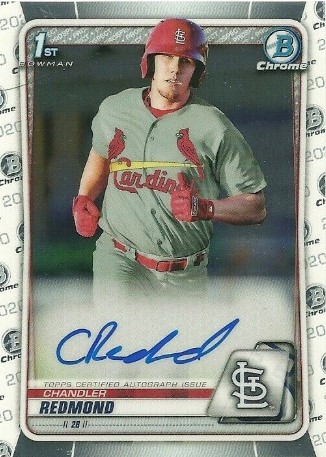
Earlier this week (August 10 to be exact), second baseman Chandler Redmond of the Double-A Springfield Cardinals became just the second player in baseball history to hit for the “Home Run Cycle” – a solo, two-run, three-run and Grand Slam  home run all in the same game. More on that in just a bit, but (spoiler alert), this is one of those Baseball Roundtable posts when I start researching a baseball and “one thing seems to lead to another.”

Redmond’s offensive outburst seemed unlikely to me.  He was a 32nd round pick (965 overall) in the 2019 draft, hit just .267 (but with 50 home runs) in four college seasons (Gardner-Webb of the Big South Conference) and was hitting .228 (with 13 home runs) for Springfield at the time. Well, that started me thinking about (and looking into) other unexpected (and at least somewhat extraordinary) minor-league accomplishments.  Boom!  Among others, I found one that occurred on this date (August 13) in 1913.

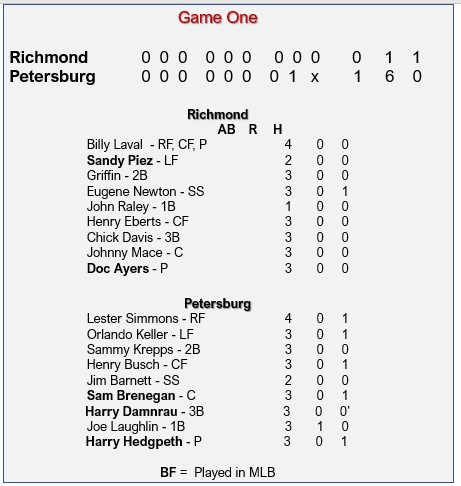
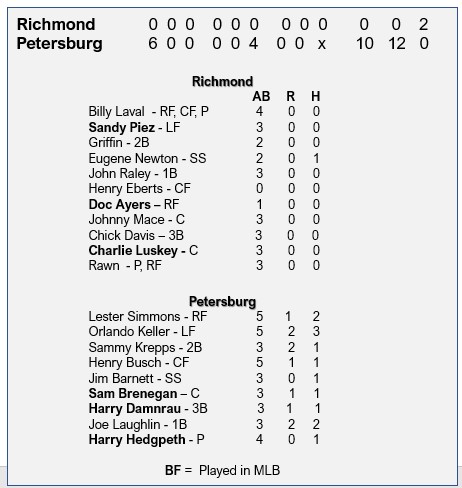
On that day, 24-year-old southpaw Harry Hedgpeth of the Petersburg Goobers of the Class-C  Virginia League blanked the Richmond Colts  twice‚ by scores of 1–0 and 10–0‚ both games going nine innings. He gave up only one hit in the opener and improved on that in Game two, tossing a no hitter.

Hedgpeth’s opponent in the first game was the ace of the Richmond staff, 22-year-old righty Yancey Wyatt “Doc” Ayers – on his way to a 29-8 season (and coming off a 25-12 season for the Colts in 1912). Ayers gave up just six hits and fanned 13, while Hedgpeth (himself on the way to a 21-10 season) gave up just one hit and one walk, while fanning six. The only hit was a single by Richmond SS and cleanup hitter Eugene Newton.

The Goobers jumped out to a 6-0 lead in the first inning of Game Two and Hedgpeth again went the distance giving up no-hits and two walks, while fanning two. The closest any major leaguer has come to Hedgpeth’s big day is the time the Cubs’ “Big Ed” Reulbach became the first (and still only) only major leaguer to throw two complete-game shutouts on the same day. It came on September 26, 1908, as Reulbach and the Cubs topped the Brooklyn Superbas 5-0 and  3-0.  Reulbach gave up eight hits in his 18 frames of work.

Here, recreated as accurately as I can, are the box scores from Hedgpeth’s one-hit doubleheader sweep (first names can be a problem in some old minor-league accountings).

New reports at the time indicated Clark Griffith of the Washington Senators had purchased both first game starters;  and Ayers and Hedgpeth both pitched in Washington that season. Hedgpeth got into a game for the Senators on the final day of the 1913 season, pitching one scoreless inning.  It was his only MLB appearance.  A shoulder injury the following spring apparently dampened his chances for an MLB career.  Ayers went on to pitch in nine MLB seasons, going 64-78, 2.84.

Yancey “Doc” Ayers started for the Washington Senators in the June 23, 1917 game (versus the Red Sox) in which Babe Ruth and Ernie Shore pitched MLB’s first combined no-hitter. Ruth walked the first batter and then was ejected for accosting the umpire. Ernie Shore came on in relief and, after the base runner was caught stealing, retired the next 26 batters in order – as the Rd Sox won 4-0.

Now, back to Redmond’s Home Run Cycle. Notably, at least for the Roundtable, Redmond tied the record of another Cardinals’ farmhand – Tyrone Horne, who hit for the Home Run Cycle on July 27, 1998 – as his Double-A Arkansas Travelers topped the San Antonio Missions of the Texas League 13-4.  (For the complete story on Horne’s big day, click here.)

Redmond’s big game came as the Springfield Cardinals topped the Amarillo Sod Poodles 21-4.  He hit his four history-tying round trippers in a four-inning stretch off four different pitchers.  His day went like this:

First Inning – RBI single off Slade Cecconi;

Third Inning – Strikeout (Cecconi);

Fifth Inning – Two-run home runs off Brent Teller;

Sixth Inning – Grand Slam off Josh Green;

Seventh Inning – Solo homer off Justin Lewis;

Eighth Inning – Three-run home run off Austin Pope.

—–Other Eye -Catching Minor-League Stats—–

N0w, here are a a half dozen other professional (minor-league) baseball achievements that have caught The Roundtable’s eye.

  • Outfielder Joe Wilhoit hit in a professional-baseball record 69 straight games in 1919, while with the  Wichita Jobbers of the Class-A Western League. His streak included 50 multi-hit games and a .515 average. He finished the season hitting .422 for Wichita, collecting 222 hits in 128 games. Wilhoit played in four MLB seasons, hitting .257-3-74.  For the full Wilhoit story, click here.
  • Outfielder Bob Crues drove in a professional-baseball record 254 runs (in 140 games) for the Class-C Amarillo Gold Sox in 1948; while hitting .404 with 69 home runs. Crues played in 11 minor-league seasons, but never made it to the major leagues.
  • Twenty-year-old righty Ron Necciai pitched a no- hitter for the Class-Bristol Twins (Appalachian League) in 1952 – and struck out a professional-baseball record 27 batters in the game.   Necciai played in just one MLB season (1952), going 1-6, 7.08 for the Pirates.  For the full Necciai story, click here.
  • Buzz Arlett, P-OF-1B, is often described as the minor-league Babe Ruth.  He started his minor-league career as a pitcher and racked up 99 wins in his first five seasons. Arm issues forced him from the mound and into the outfield. He went on to hit .313 with 432 home runs over 19 minor-league seasons – hitting  30 or more home runs in eight  seasons and hitting better than .300 in 14.  Arlett played in just one MLB campaign, hitting .313-18-72 for the 1931 Phillies. For the full Arlett story, click here.
  • Walter “Smoke” Justis went 25-17 for the Class-D Ohio State League Lancaster Links in 1908 – and he threw four no-hitters during the campaign. Justis won 20 or more games in three minor-league seasons. He appeared in just two major-league games, giving up three runs on four hits and six walks in 3 /13 innings.
  • Speaking of stats, Arnold “Jigger” Statz recorded 11 professional seasons of at last 200 hits – the final ten of those in the minor leagues. He had 209 hits (.319 average) for the Cubs in 1923. Then, between 1926 and 1938, he had ten more 200+ hit seasons for the Pacific Coast League Los Angeles Angels.  Statz retired, (at age 44) after the 1942 season, with 4,093 professional hits – 3,356 in the minor-leagues, 737 in the majors.  (His totals were, of course, helped by the PCL’s long season of the time.)  Side note: Ichiro Suzuki also had 11 200-hit seasons, ten in the U.S. major leagues, one in the Japan Pacific League. 

Primary Resources: Baseball-Reference.com; National Pastime.com; MLB.com; Richmond News Leader, October 15, 1925 (via VirginiaChronical.com); The Day Book (Chicago newspaper) , Volume 2, Number 281, August 25, 1913 (via the Illinois Digital Newspaper Collection); other sources cited in links.


100Baseball Roundtable is on the Feedspot list of the Top 100 Baseball Blogs.  To see the full list, click here.

I tweet baseball @DavidBaseballRT

Follow/Like Baseball Roundtable’s Facebook Page here.  More baseball commentary; blog post notifications; PRIZES.

Member: Society for American Baseball Research (SABR); The Baseball Reliquary; The Negro Leagues Baseball Museum.


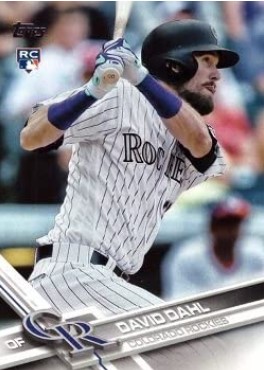
David Dahl … A Baseball Roundtable “What If?”

On this date (August 11) in 2016, Rockies’ 22-year-old rookie LF David Dahl started in the cleanup spot and went one-for-four with one run scored and one RBI, as the Rockies topped the Rangers 12-9 (in Texas). Dahl’s hit, a first-inning single had a little extra meaning for the rookie.  It extended his career-opening hitting streak to 17 games, tying him  with the 1941 Reds’ Chuck Aleno for the longest hitting streak ever from the beginning of an MLB  career.

The very next night (August 12), Dahl “missed” his chance to capture the record for himself (at 18 games), going zero-for-four with three swing- and-miss strikeouts.   Side note: I happened to be at that game, as part of a Ballpark Tours’ trip and was rooting for Dahl to capture sole possession of the mark.

Dahl collected 24 hits in 70 at bats (.358) during his career-opening streak – including one double, three triples and three home runs.  Over the 17 games, he drove in ten runs and scored 17. His streak included two three-hit games and three two-hit contests.

Dahl was selected – out of Mountain High School in Birmingham, Alabama – in the first round of the 2013 MLB draft (10th overall). Before hitting “the show,” he carried a .310 average with 47 home runs and 74 stolen bases over five minor-league seasons (367 games). In 2016, Dahl had moved up from Double-A Hartford to Triple-A Albuquerque before his call up, hitting .314 with 18 home runs, 61 RBI and 17 steals in a combined 92 games. Dahl finished the 2016 MLB season with a .315-7-25 line over 63 games.  His career was clearly on a sharp upward trajectory, despite some early setbacks.

Dahl’s rise to the major came despite a significant 2015 injury, suffered in an outfield collision while playing for the Double-A New Britain Rock Cats. Dahl suffered a spleen laceration and eventually had the spleen removed.

After his 2016 MLB debut season, the injury bug continued to bite Dahl. He suffered a stress factors (ribs) in 2017 Spring Training and eventually was shut down for the entire season.  Dahl, however, was back on track with the Rockies in 2018, hitting .273-16-48 in 77 games.  Then came a broken foot in 2018, an ankle injury (that shortened an MLB All Star season) in 2019 and shoulder surgery in 2020.   In five MLB seasons (2016, 2018-21 … Rockies, Rangers), Dahl hit .272-42-160 in 327 games.  The Roundtable wonders “What If David Dahl had stayed healthy?” 

David Dahl  was an All Star in 2019, hitting .302-15-61 in 100 games.

Dahl 17-game career-opening streak tied the record of Chuck Aleno,  3B for the Reds, who was called up May 15 1941. During his 17-game streak, Aleno hit .389 (28 for 72), with two doubles, two triples, nine RBI and 12 runs scored.  He started his streak with four multi-hit games and the streak included 11 two-hit games.  Aleno finished the year at .289-1-18 in 54 games, the most he would ever play in an MLB season.  (After his torrid 17-game start, Aleno played in just 101 more MLB games, hitting just .163, with two home runs and 25 RBI.)

When he was called up, the 24-year-old Aleno was in his fifth professional season and was hitting .348 (19 games) for the Double-A  Indianapolis Indians of the American Association. Aleno played 17 seasons of professional ball, parts of four in the majors. His MLB career line was .209-2-34 in 118 games. I

Primary Resources:  Baseball-Reference.com; Colorado Rockies Non-tender Oft-injured OF David Dahl, December 1, 2020, Associated Press  (via ESPN.com); Rockies’ Outfielder David Dahl’s Latest Injury is a High Right Ankle Sprain, August 4, 2019, Jack Etkin (via Forbes.com).


100Baseball Roundtable is on the Feedspot list of the Top 100 Baseball Blogs.  To see the full list, click here.

I tweet baseball @DavidBaseballRT

Follow/Like Baseball Roundtable’s Facebook Page here.  More baseball commentary; blog post notifications; PRIZES.

Member: Society for American Baseball Research (SABR); The Baseball Reliquary; The Negro Leagues Baseball Museum.


Baseball Roundtable July Wrap … Here’s Comes the Judge

It’s the first day of a new month and that means it’s time for Baseball Roundtable’s Wrap Up of the previous month – the stats and stories that captured The Roundtable’s attention, as well as the Players and Pitchers of the Month, team and individual leader boards and, of course, the Trot Index.

This month’s Wrap Up could easily be termed The Aaron Judge Special Edition.  Judge not only led all of MLB in July home runs, RBI and run scored, he set a new AL record for home runs before August 1, and tied the Yankee franchise records for home runs before the All Star break (tying Roger Maris) and for walk-off  home runs in a season (tying Mickey Mantle). You’ll find all the details in the Highlights Section of this Wrap Up. But Judge wasn’t the only story of July 22. We also saw:

  • A rookie became  just the third pitcher to throw a no-hitter and an Immaculate Inning in the same season;
  • Another rookie going deep on his first MLB swing of the bat;
  • The first team to launch back-to-back-to-back-to back home runs in the first inning;
  • The first-ever centerfield-to-third base triple play;
  • 2022’s fifth cycle;
  • Two players hit their career 200th home runs and one pitcher notch his 100th victory;
  • The Orioles put up the Al East’s best won-lost record;
  • The Blue Jays explode for 28 runs versus the Red Sox;
  • Three players with at least 60 July at bats hit .400 or better and three pitchers with at least 20 July innings pitched put up ERAs under 1.00.
  • And more.

You’ll find the stories in the Highlights Section.

First, though, let’;s look at Baseball Roundtable’s Players and Pitchers of the Month for July 2022.

_____________________________________________

Baseball Roundtable Players and Pitchers of the Month – July 2022

National League

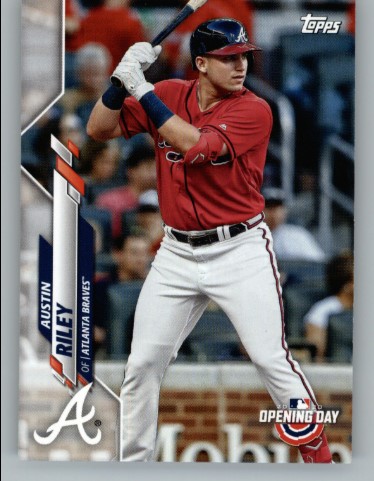
Player of the Month – Austin Riley, 3B Braves

Braves’  25-year-old 3B Austin Riley came into July hitting .257 and entered August at .301 – thanks to a .423-11-25 month. Riley’s July included an 18-game hitting streak (July 5-26), during which he hit .444, with eight home runs, 16 RBI and 16 runs scored. (The streak included 11 multi-hit games.)  His .423 July average was second in the MLB among players with at least 60 July at bats, as were his 11  home runs and 25 RBI (tied with teammate Matt Olson). His 44 July base hits led all of MLB, as did his .885 slugging percentage.

Honorable Mentions:  Another 25-year-old, Phillies’ 3B Alec Bohm hit .434-3-14 in 20 games. That .434 average was the highest in MLB for players with at least 60 July at bats. Bohm went without a hit in only two of his 20 July games. During a 14-game hitting streak (July 8-29), he hit a torrid .471.  Dodgers’ 1B Freddie Freeman did MLB veterans proud, going  .388-6-19 in 26 July games.  His 38 July base hits were second in the NL.

Pitcher of the Month – Merrill Kelly RHP, Diamondbacks.

Photo: Barry Stahl on Flickr, CC BY 2.0 <https://creativecommons.org/licenses/by/2.0>, via Wikimedia Commonshoto:

Merrill Kelly went 4-0, with a 1.31 ERA in six July starts, putting up a stingy 0.77 WHIP (lowest in the NL among pitchers with at least 20 July  innings  pitched) and fanning  33 batters (versus just eight walks) in  an MLB-highest 41 1/3 July innings.  The 33-year-old, who came into 2022 with a 23-27, 4.27 MLB record over three seasons, ended July 10-5, 2.87 on the year. He gave up two or fewer runs in each of his six July starts. For the month, he allowed just five earned runs in his 41+ innings of work.

Honorable Mentions:  Mets’ righty Max Scherzer went just 1-1 for July, but  put up a 1.39 ERA and tied for second in the NL in July strikeouts with 45 (just four walks) in 32 1/3 innings. Edwin Diaz, RHP, Mets, was seven-for-seven in July save opportunities, with  a 0.00 ERA and  25 strikeouts (one walk ) in 11 1/3 innings.

______________________________________________

American League

Player of the Month  – Aaron Judge, OF, Yankees

Photo: DR. Buddie, CC BY-SA 4.0 <https://creativecommons.org/licenses/by-sa/4.0>, via Wikimedia Commons

Aaron Judge hit .333 for July with an MLB-best 13 home runs, as well as an MLB-tops 32 July RBI and an MLB-leading  25 runs scored. In addition, he stole five bases in five attempts. Judge had ten multi-hit, three multi-home run and eight multi-RBI games in July. He was also one of just three players with at least 60 at bats to put up an .800+ slugging percentage (.806).

Honorable Mentions: For most of the month, Yankee OF/DH Matt Carpenter was running neck-and-neck for this Roundtable recognition (a late-July power explosion by Judge closed the deal). Still, the 36-year-old veteran Carpenter deserves recognition for coming up big when the Yankees needed it. His 23 July RBI were second in the AL to Judge and he also delivered nine home runs (second in the AL to Judge) and a .356 July average.  Now a .400 average is a “bright and shiny thing” that tends to attract The Roundtable’s attention. So ,I have to give a shout out to Rays’ 1B Harold Ramirez (.400-1-10 in 16 games).

Pitcher of the Month – Dylan Cease, RHP, White Sox

Dylan Cease’s strikeout ratio for July was 10.1 per nine innings – his lowest for any month this season (11.5 in April, 13.6 in May and 14.8 in June).  Still, it was his best season of the month in terms of wins and  second-best in terms of ERA). Cease, 5-1, was the only MLB five-game winner in July.  His 0.76 ERA was the MLB’s lowest among pitchers with at least 20 July innings pitched.  He fanned 40 batters in 35 2/3 innings. In his six starts, he never gave up more than one earned run.

Honorable Mentions: The ageless wonder – Astros RHP, Justin Verlander – went 4-0, 1.01 in four July starts, fanning 32 batters in 26 2/3 innings (five walks). Cole Irvin, LHP, A’s, went 4-1, 1.85 for the A’s.  Notably, Irvin’s five starts including three  games against the Astros and one against the Blue Jays  – a pretty demanding set of assignments.  Despite facing these challenging lineups (and the fact that he fanned just 22 batters in 34 innings), Irvin’s WHIP for July was 0.65 – best in MLB among pitchers with at least 20 July innings.

_______________________________________

Surprise of the Month  – Tie: Ramon Urias, IF , Orioles & Jose Miranda, 1B/3B Twins

Ramon Urias was originally signed by the Rangers in 2010, as a 16-year-old international free agent out of out of Mexico. From 2011 through 2020, he played in the Rangers, Cardinals and Orioles minor-league systems, as well as in the Mexican Leagues.  In February 2020, Urias was selected off waivers (by the Orioles from the Cardinals) and he made his major-league debut in his tenth professional season (August 20, 2020), hitting .360-1-3 in ten games for the Orioles.  (Urias had gone .262-10-55 at  at High-A, Double-A and Triple-A in 2019). In 2021, Urias played in 85 games for Baltimore and hit .279-7-38. This season, he it .225-6-18 for the Birds through June, before turning in a surprising July – a .329-5-18 line, as the O’s made a July surge.  While he played primarily 3B in July, he also took the field at 2B and SS.

Twins’ 24-year-old rookie Jose Miranda came into July hitting .240-5-20 for the season (and his MLB career … 44 games).  In July, Miranda turned it up a notch (or more), going .353-5-19 in 20 July games. Miranda, signed by the Twins in the second round of the 2016 MLB Draft may have been a bit less of a surprise than Urias.  In 2021, he hit .344-30-94 in 127 games at Double- and Triple-A and was named the Twins Minor League Player of the Year.

Honorable Mentions: Braves’ 23-year-old rookie righthander Spencer Strider surprised me not by his success, but by how quickly his “stuff” has proven dominant – particularly since he missed the 2019 season recovering from Tommy John surgery.  Strider was selected by the Braves in the fourth round of the 2020 MLB draft – out of Clemson University, where he was 5-2, 4.71 over two seasons – fanning 89 batters in 63 innings. In 2021, he worked his way  from A-Level ball to High-A, Double-A and Triple-A before making his MLB debut with the Braves in October ( 2 1/3 innings in two appearances). Strider  (whose fastball averages in the high-90’s) started this season in the Braves’ bullpen. In fact, he didn’t get his first start until May 30 – when he lasted 4 /13 innings, giving up five runs (three earned) on four hits and two walks.  He went 2-1, 2.70 in five starts for the Braves in July, opening some eyes (even further) by fanning 41 batters in just 26 2/3 innings. Also mentioned as a surprise is the entire Baltimore Orioles team – more on that a bit later in this post.

______________________________________________________

TROT INDEX … A REGULAR BBRT FEATURE

Through July, 34.5 percent of the MLB season’s 114,855 plate appearances ended in a trot (back to the dugout, around the bases, to first base). We’re talking about strikeouts, home runs, walks, hit by pitch and catcher’s interference – all outcomes that are, basically, devoid of action on the base paths or in the field. Here’s the breakout: strikeouts (22.3%); walks (8.2%); home runs (2.8%); HBP (1.1%); catcher’s interference (less than 1%). Personally, I’d like more action in the field of play.

The 34.5 percent figure is down slightly from 2021’s full season 36.3 percent.  2020’s 37.3 percent;  2019’s 36.2 percent and 2018’s 34.8 percent.  By further comparison, in 1990, the Trot Index was 26.1 percent.  

_________________________________________________

When you look at July’s winningest teams, you see some expected squads – the Dodgers (21-5), Astros (19-9); Braves (18-8); and Mets (17-8). I’d like to devote a few paragraphs to a couple of teams among July’s top winners who would have to be noted as “surprises.”

Let’s start with the Orioles, who:

  • This June had their first winning month (14-12) since August of 2017;
  • In the past five years, have finished last in the East four times and second-to-last once; and
  • Last season finished 58 games under .500 and 48 games out of first place.

In July, the Orioles put up the best record in the Al East (16-9), raised their season record to 51-51 and moved to within three games of a Wild Card spot. The O’s were led on offense by 3B Ramon Urias (.329-5-18 for July); RF Anthony Santander (.316-5-17); and CF Cedric Mullins (.250-2-14, with six steals and 14 runs scored). On the mound, 12 different pitchers recorded July wins, led by Jordan Lyles (3-1, 3.58 in six starts) and Spencer Watkins (2-0, 2.35 in four starts), as well as some solid bullpen work. (Bryan Baker (2.45 ERA in 12 appearances); Felix Bautista (2.03 in 13 games);  Cionel Perez (1.46 in 13 appearances); Joey Krehbiel (1.54 in 11 appearances); and six saves by Jorge Lopez (despite a 4.76 ERA for the month).  The Orioles’ 3,61 ERA was the AL’s third-best for July.

Orioles’ July Win Streak

From July 1 through July 13, the Orioles surprised fans with a ten-game winning streak – going from nine games under.500 to one game over. The double-digit streak included five one-run wins, three walk-offs and victories notched by eight different Orioles’ pitchers. During the streak, they outscored opponents 52-30, outhit them .266 t0 .220 (but were out-homered 9-8). Over the streak, the Orioles’ pitching staff put up a 2.93 ERA to their opponents 4.80 and fanned 9.1 batters per nine innings to their opponents’ 8.1.

The Seattle Mariners also made a big move in July, leading the AL West with a .720 winning percentage – CF Julio Rodriguez led the offense (.267-5-18) and, while the averages weren’t strong, the Mariners got run production out of C Cal Raleigh (.224-4-14); 3B Eugenio Suarez (.218-3-14); and 1B Carlos Santana (.179-5-12). SS J.P. Crawford (.275 with 13 runs scored) and LF Sam Haggerty (.292, with 10 tallies) also chipped in.  Like the Orioles, the Mariners benefited from solid pitching, especially out of the pen: Ryan Borucki (2-0, 0.96 in nine games); Diego Castillo (2-0, 1.04 in nine games); Erik Swanson (2-0, 1.69 in 12 games); Matthew Festa (2-0, 3.12 in nine games); Matt Brash (1-0, 2.45 in seven games). That’s nine of those July wins (against no losses), right there.   Chris Flexen led the starters at 3-0, 1.95 in five starts.  The Mariners’ 3.22 July ERA was the AL’s lowest.

Mariners’ Big Streak

From July 2 through July 17, the Seattle Mariners ran off a 14-game winning streak.   During the streak, the Mariners outscored their opponents 70-34, outhit them .257 to .228 and out-homered them 21-to-11. The pitching really carried the streak, however, putting up a 2.07 ERA (to the opponents’ 4.46) over the 14 games; giving up two runs or fewer in nine games. Seven of the 14 wins were by one run and eight of the victories came on the road.  The streak ended with the Mariners dropping three straight to the Astros (July 22-24) in Seattle.

——Team  Statistical Leaders for July  2022 ———-

RUNS SCORED

National League – Dodgers (147); Diamondbacks (126); Brewers (125)

American League – Yankees (167); Astros (139); Rangers (135)

The fewest July runs were scored by the Angels – just 71. The Nationals  tallied the fewest runs in the NL at 78.

AVERAGE

National League – Dodgers  (.275); Rockies (.260); Brewers (.256)

American League – Blue Jays (.288);  Guardians (.269); Royals (.269)

The lowest team average for July belonged to the Angels at .199.

HOME RUNS

National League – Braves (42); Dodgers (36); Brewers (35)

American League –  Yankees (50); Astros (43); A’s (36)

The Angels  had the fewest home runs for July  at 15.

The Dodgers led MLB in July slugging percentage at .482.  The Yankees led the AL at .479.

STOLEN BASES

National League – Marlins (26); Braves (21); Cubs (18); Brewers (18)

American League – Yankees (22); Angels (21); Royals (20)

The Twins and Reds stole the fewest sacks in July – three each (the Twins in six attempts, the Reds in nine).  The Giants were 14-for-14 in steal attempts.

WALKS DRAWN

National League –   Dodgers (102); Giants (98); Brewers (97)

American League – Yankees (116); Rays (95); Astros (95)

The Dodgers  led MLB  in on-base percentage for July at .358. The Yankees led the NL  at .356.  

BATTER’S STRIKEOUTS

National League – Pirates (260); Reds (259); Giants (251)

American League – Red Sox (265); Rangers (262); Rays (251)

Bonus Stats

  • The Yankees led MLB in total bases in July with 440 . By contrast, the Angels were 30th, with 234 total bases in July.
  • The Reds led in July hit-by-pitch, with 22 Reds’ batters plunked.  The Phillies and Diamondbacks each had just three “victims” each.
  • Five of the thirty teams did not put down a single successful sacrifice bunt in July. The Diamondbacks, Guardians and Mets led in sacrifice bunts with five each.

Earned Run Average

National League – Mets (2.48); Cubs (2.87); Dodgers (2.94); Braves (2.95)

American League – Mariners (3.22); Astros (3.25); Orioles (3.61)

Three teams had July ERAs of 5.00  or higher– Red Sox  (6.30); Twins (5.30); Nationals (5.27)

STRIKEOUTS

National League – Mets (259); Marlins (247); Brewers (247)

American League – Astros (282); Yankees (249); Angels (236)

The Brewers averaged an MLB-best 10.28 strikeouts per nine innings in July. Also at 10+ were the Angels (10.24); Mets (10.21); and Astros (10.19).

FEWEST WALKS SURRENDERED

National League  –  Dodgers (56); Mets (62); Phillies (64); Cardinals (64)

American League –  Rays (59); Blue Jays (62); Orioles (65); A’s (65)

The Dodgers walked a stringiest 2.16 batters per nine frames in July.  The Red Sox walked an MLB’s highest 4.20 per nine innings for the month.

SAVES

National League – Marlins (10); Braves (10); Dodgers (10)

American League – Mariners (10); Orioles (9); A’s (9)

The Angels recorded just one save in July (just two  opportunities). They did win only six of 24  games.

WALKS AND HITS PER INNING PITCHED (WHIP)

National League – Dodgers (1.03); Mets (1.05); Phillies (1.11)

American League – Astros (1.07); A’s (1.13); Blue Jays (1.17)

Bonus Stats

  • The Mets were the only team to fan at least four times as many batters as they walked in July – 4.18 K/BB.
  • The Nationals gave up an MLB-high 42 home runs in July; the Giants gave up an MLB-low 18 dingers.
  • There were only four complete games pitched in July. One each for the Guardians (Shane Bieber); Astros (Framber Valdez); Giants (Carlos Rodon); and Cardinals (Adam Wainwright).

—–July 2022 Highlights—–

Nolan Arenado Does a Little RE-Cycling

Nolan Arenado got July off with a bang, providing some notable fireworks in the Cardinals’ July 1 5-3 loss to the Phillies in Philadelphia. In the game, Arenado hit for 2022’s fifth cycle (single, double, triple and home run in the same game). It was the second cycle of Arenado’s career, making him  the 29th modern-era American or National League player to hit for multiple cycles. The feat leaves Arenado one short of the all-time record for career cycles (three) shared by Christian Yelich, Trea Turner, Adrian Beltre, Babe Herman and Bob Meusel.

In the game, Arenado:

  • Got the triple out of the way in the top of the first inning (off Bailey Falter);
  • Added the home run (a two-run shot) off Falter in the third;
  • Hit a leadoff double (off Nick Nelson) in the sixth; and
  • Singled off Seranthony Dominguez in the eighth.

On the day, Arenado was four-for-four, with one run scored and three RBI.

2022 Cycles

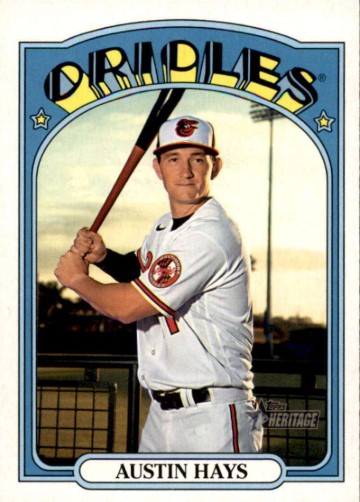
The 2022 season has seen “cycles” by the Brewers’ Christian Yelich (May 11); Mets’ Eduardo Escobar (June 6); Angels’ Jared Walsh (June 11); Orioles’ Austin Hayes (June 22); Cardinals’ Nolan Arenado (July 1).

Three is a Crowd – a Good Crowd

On July 1 (in the same contest as Nolan Arenado’s’ cycle – reported above), Phillies’ rookie DH/1B Darick Hall hit his third home run of the season (he made his MLB debut June 29). It was made notable by the fact that it was also his third career base hit (coming in his third MLB game) and made Hall just the second Phillies’ player whose first three hits  were long balls. The other was outfielder Ed Sanicki in 1949, whose three homers came in his first five games. Sanicki, by the way, played in just 20 MLB games (in the 1949 & 1951 seasons), going .294-3-8. He had five MLB hits (one single, one double and three home runs).

Hall collected his first no-homer MLB safety (a single) on July 3.  At the close of July, his stat line was .244-5-11 in 24 games.  Hall has shown consistent power in the minor leagues. He was .269-20-67 in 72 games at Triple-A this season and has hit 188 home runs in 631 minor-league games – .250 minor-league average.

A Handful of Homers

Pirates’ infielder Rodolfo Castro is the only player whose first FIVE MLB safeties were home runs. He accomplished the feat in 2021, going .238 (5-for-21), with five long balls in his first nine MLB games.  He collected his first non-homer hit  (a double) in his 11th MLB game (July 3, 2021). Side note: Keith McDonald is the only player with more than one MLB hit (three), whose every MLB hit was a home run.  For more on McDonald, click here. 

Come on Let’s Get this Party Started

On July 2, the Cardinals looked to be getting off to a slow start.  In the top of the first, in Philadelphia, the first two batters (SS Tommy Edman and LF Brandon Donovan) were retired on seven pitches. (Kyle Gibson was on the mound for the Philllies). Then Redbirds’ 1B Paul Goldschmidt singled – followed by consecutive home runs off the bats of 3B Nolan Arenado, 2B Nolan Gorman, DH Juan Yepez and CF Dylan Carlson.  After the four blasts, RF Lars Nootbaar flied out to end the five-run inning). It was the just the 11th time an MLB team has hit four consecutive home runs in an inning and the first time it happened in the first frame. The Cardinals rode that five-run first inning outburst to a 7-6 win. (It took another Arenado home run in the ninth to seal the deal.)

Jeremy Pena Provides the Thunder, Pitching Staff Throw in the Lightning

Astros’ rookie shortstop Jeremy Pena has some big shoes to fill (Carlos Correa’s to be exact) and, on July 3, he more than filled the bill. Pena went four-five, with two home runs, two runs scored and three RBI – as the Astros topped the Angels 4-2 in Houston.  The icing the cake was that the second Pena blast was a two-run, walk-off homer in the bottom of the ninth.

The pitching staff, however, stole the show – tying an MLB nine-inning, single-game record  by fanning 20 Angels. STATS also reported that the Angels became the first team in MLB history to fan 48 batters in a three-game series that did not include extra innings. In the July 3 game, starter Framber Valdez fanned nine batters in six innings, Hector Norris and Rafael Montero each fanned two in one inning of work apiece and closer Ryan Pressly fanned three in a 1-2-3 ninth.  Four Astros’ pitchers fanned 12 Angels in a 9-1 win July 2 and three Houston hurlers fanned 16 in an 8-1 win on the first.

As for Pena, the rookie’s doing a solid job in Correa’s stead –  .252-15-38, with six steals at the end of July.

Giving a Double  – no Triple – Take

In their July 4, 6-3 win over the White Sox in Chicago, the Twins’ turned a unique 8-5 (centerfield to third base) triple play. By unique, I mean that, according the Society for American Baseball Research triple play data base, it is the only 8-5 triple play in MLB history.  Here’s how it went down.

The White Sox opened the inning with a ground rule double by 1B Jose Abreu (off reliever Griffin Jax). Jax then hit RF Gavin Sheets with a pitch and allowed a run-scoring single to 3B Yoan Moncada – leaving Sheets at second and Moncada at first with no outs and the game tied at two apiece. The ChiSox then brought in Adam Engel to pinch run for Sheets at second.  Sox LF  A.J. Pollock next hit an 0-2 Jax offering for what looked like a double to  to deep right center – only platinum glove CF Byron Buxton ran it down and made the catch at the wall (out number one). Buxton spun and threw  to the  infield, where Engel and Moncada were running hard. It what may have been a bit of good fortune, Buxton’s throw sailed over the heads of the cutoff man and to the glove of third baseman Gio Urshela, waiting between second and third. As Urshela caught the ball, Moncada (who had been on first) was headed toward third and Urshela made an easy tag for out number two. Engel (who had started on second) had passed Urshela and was rounding third. Urshela ran the ball to second base – tagging the bag for out number three.

Turn Two – or Three

The Twins remain the only team to turn two triple plays in a single game – a July 17, 1990 1-0 loss to the Red Sox.  Those triple killings were both around the horn (third-to second-to first … Gary Gaetti-to Al Newman-to Kent Hrbek) and occurred in the fourth and eighth innings

The very next day, the Twins tied an AL record by turning six double plays in a 4-3 win over the Red Sox.  In that game , the Red Sox also turned four double plays – giving the Twins/Red Sox the MLB record for combined twin killings in a game. 

More #InBaseballWeCountEverthing

According the STATS, the July 4 Brewers/Cubs (in Milwaukee) game was the first in MLB history  to feature  a player’s first career home run; an inside-the-park home run; AND A walk-off home run.

Cubs’ Rookie CF Nelson Valazquez gave Chicago a 1-0 lead in the top of the third inning with his first career home run. It came in his 14th Career game and 32nd career at bat.

Cubs’ Rookie RF Seiya Suzuki tied the game a two apiece with an inside-the park home run with one out in the  top of the ninth (off Brewers’ closer Josh Hader). It was his fifth home run and first inside-the-parker.

Brewers ‘1B Victor Caratini topped off the game with a three-run, walk-off homer run in with two out in the bottom of the tenth. It was his seventh of the season and 29th of his six-season  MLB career.

Robbie (maybe) Didn’t See This One Coming

In the eighth inning of the White Sox July 10 win over the Tigers in Chicago, Detroit LF Robbie Grossman appeared to temporarily lose a fly ball in the sun and had it bounce off his glove for a two-base  error.  An error, no big deal, right?  Well, it was kind of a big deal, it was Grossman’s first miscue in the field since June 13, 2018 – a span of 440 games  and the longest error-free streak by a position player in MLB history. The error, by the way, would have been the third out of the inning in a 2-2 tied game. After the miscue, the White Sox added an intentional walk and a pair of singles for two unearned runs and a 4-2 win.

Albert Pujols Continues to Climb the Charts

Photo by Dirk DBQ

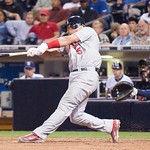
On July 11, as the Cardinals topped the Phillies in St. Louis, Albert Pujols touched Phillies’ starter Aaron Nola for an inning-opening double in the seventh (and came around to score on a home run by LF Corey Dickerson).  When Pujols got his hit, the Cardinals were already up 3-1 and it was his only hit in the game.  Still, it had a lot of meaning.  It was Pujols 1,378th career extra base hit, enabling him to pass perhaps the most famous Cardinal of all –  Stan “The Man” Musial – into third place on the all-time career extra-base hit list. Pujols, who finished July with 1,382 career XBH, trails only Hank Aaron (1,477) and Barry Bonds 1,440.) At the end of July, Pujols was third all-time in XBH, third in RBI (2,174); third in total bases (6,110); and fifth in home runs (686).

Move Over Roger

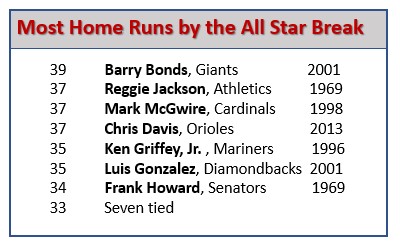
On July 16, Yankee Aaron Judge hit his third and fourth homers of the month, as the Yankees topped the Red Sox 14-1 in New York. Even more significantly, they were  32nd and 33rd homers of the season – tying him with Roger Maris for the most home runs before the All Star break by a Yankee. It also tied him for eighth all-time in homers by the break. (Keep in mind, the first All Star Game – and thus the first “break” – did not take place until 1933.) More on Judge after the All Star Break (below).

___________________________________

Baseball Roundtable All Star Break

Plenty has been written about the 2022 All Star Game, in which the American League emerged as 3-2 victors on the strength of a fourth-inning, two-run home run by Yankee LF Giancarlo Stanton, followed immediately by a solo blast from Twins’ CF Byron Buxton.

Baseball Roundtable, with that in mind, will just take a quick look at the game’s Baseball Roundtable Trot Index – percent of plate appearances that end with a batter’s “trot” (back to the dugout, to first base or around the bases).  These are basically plate appearances that produce no action on the field.  For  the game’s 73 plate appearance, The Baseball Roundtable Trot Index was 43.8 percent. It breaks out like this: strikeouts – 30.1%; walks – 6.8%; home runs – 4.1%; hit by pitch  – 2.7%; . (Percentage total differs slightly due to rounding.) If such things interest you, fans also saw 62 players, including 20 pitchers. 

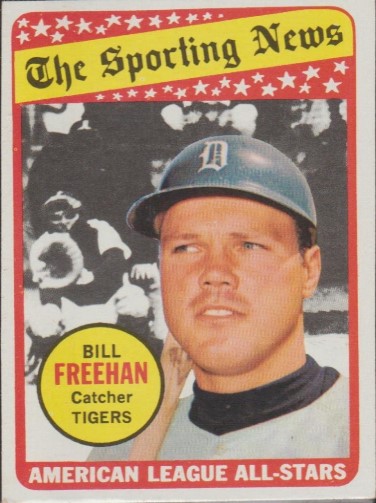
For some unique tidbits from All Star games past (like the time, 1942, when the American League used just 11 players in a nine-inning All Star Game or when, in 1967, Bill Freehan caught all 15 innings of an All Star game, click here.

___________________________________________

Judge Continues His Assault Post All Star Break

After the All Star break, Aaron Judge hit a robust .405, with nine home runs and 21 RBI in 11 games. That gave him 13 home runs for the month and 42 on the season. That 42nd home run – in  Yankees 8-2 win over the Royals on July 30 –  made Judge just one of two players to reach 200 career round trippers in less than 700 games. Judge got there in 671 games, trailing only Ryan Howard (658 games). Others in the top five include: Ralph Kiner (706 games); Juan Gonzalez (766); Harmon Killebrew  and Albert Belle (tied at 769).

Judge also passed Yankee legend Babe Ruth for the most home runs by a Yankees before August 1 (Ruth had 41 as of July 31, 1928). Stathead indicates Judge’s 42 home runs before August 1 are an American League record and trail only Mark McGwire (45 for the Cardinals in 1998) and Barry Bonds (45 for the Giants in 2001) for the MLB-high.

Blue Jays Explode Against the Red Sox

On July 22, the Blue Jays exploded for 28 runs (on 29 hits) against the Red Sox – winning by a 28-5 score. In the game, every member of the Blue Jays’ starting lineup collected multiple hits and scored multiple runs. For a more in-depth look at the contest, click here.

Betts Gets Number 200

On  July 23, Dodgers’ RF Mookie Betts hit his 22nd home run of the season, as the Dodgers beat the Giants 4-2 in LA. The blast was also Betts 200th career home run.

More #InBaseballWeCountEverything

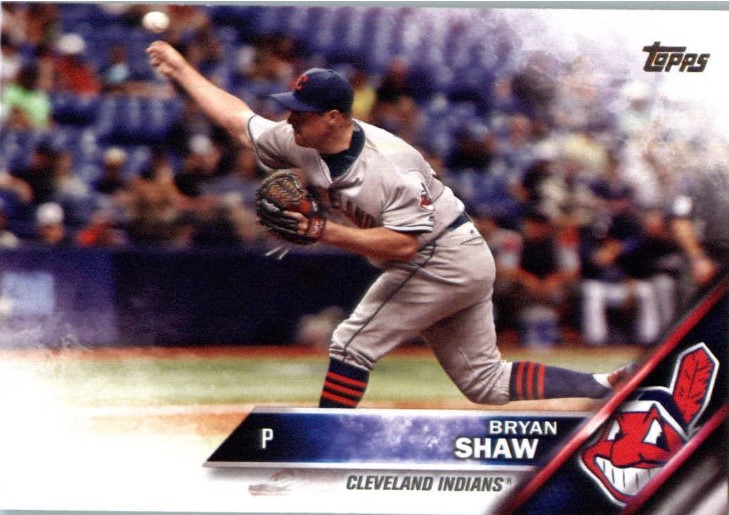
34-year-old Bryan Shaw of the Guardians has been spending his summers in a major-league clubhouse for 12 seasons (2011-2022 … Diamondbacks, Indians, Rockies, Mariners). And, until this July 26, he started every game in the bullpen.  On that day, after 732 relief appearances, he made his first MLB start (against the Red Sox in Boston).

Why is this in the Highlights Section?  It gave Shaw the most relief appearance ever at the beginning of a career before making a start. (Keep in mind, you have to make at least one career start to qualify.) Shaw went 2 1/3 innings, giving up two runs on three hits and a walk, while fanning two.  Cleveland won 8-3 and Shaw got a no-decision. Shaw was relieved by 25-year-old righty Nick Sandlin, who has made 61 relief appearances without a start.

If Shaw’s name sounds a bit familiar, it should. In his first 11 MLB season, he led the AL in appearances four time.

Is Forty, the New Thirty?

On July 27, the Cardinals topped the Blue Jays on the strength of a three-run home run by 42-year-old Albert Pujols (part of a three-for-four games) and a one-run, seven-inning, eight-strikeout performance by 40-year-old starter Adam Wainwright.

He wasn’t Throwing Junk Out There

I’ve always though Homer Bailey was an unfortunate name for an MLB pitcher, in the same way Steve Swisher is not ideal for a hitter.  Well, add Angels’ 26-year-old rookie righthander Janson Junk to that list. On July 27, Junk made his second MLB appearance of 2022 (and sixth career MLB appearance). Junk started against the Royals and went five innings (four hits, one walk, eight strikeouts) in picking up his first MLB victory. Oh, one of my favorite baseball names? How about the Diamondbacks’ Seth Beer?

More  Judgments (or Judge moments)

On July 28, Yankee OF Aaron Judge rapped his 39th home run of  the 2022 season.   It came with one out in the bottom of the ninth inning and gave the Bronx Bombers a 1-0 win over the Royals. It was Judge’s third walk-off home run of the season, tying Mickey Mantle (1959) for the franchise record for walk-off long balls in a  single campaign.

Sho-Time Again

It wouldn’t be a 2022 Roundtable Highlights Section without a nod to Shohei Ohtani. The Angels’ two-way star. On July 28, as the Angels lost to the Rangers 2-0 in LA, Shohei gave up two runs on eight hits over six innings – while fanning 11 and walking none. While it was a loss, it was also the sixth consecutive game in which Ohtani fanned 10 or more batters – leaving him to enter August one game shy of the franchise record for consecutive games with double-digit strikeouts,  Who owns that record?  None other than Nolan Ryan. Not bad company. Since June 22, Ohtani has made six starts on the mound, going  4-2, 2.08 and fanning 68 batters (eight walks) in 39 innings.

Old Guys Continue to Rule

Okay, let get this right up front, Houston righty Justin Verlander is 39-years-old, missed the 2021 season recovering from Tommy John surgery and pitched only one game in 2020. So, how’s he doing.  On July 29, he became the 2022 season’s first 14-game winner, going 7 2/3 innings  and giving up one run on five hits (with five  strikeouts), as the Astros topped Seattle 11-1. That victory ran Verlander’s record to 14-3, with a 1.81 ERA and 122 strikeouts in 124 innings.  Verlander has won his last six starts, putting up a .086 ERA over 41 2/3 innings (on out shy of seven innings per start).

100 – That a nice Round Number

On July 30, Mets’ right-hander Carlos Carrasco threw 7 2/3 innings of shutout ball, as New York topped the Marlins in Miami. It ran Carrasco’s season record to 11-4, 3.79 – and was his 100th MLB victory. Carrasco is 100-82, 3.86 over 13 MLB seasons. His best season was 2017, when he went 18-6, 3.29 for the Indians, leading the AL in victories and finishing fourth in the Cy Young Award balloting.

Three’s Company – Pretty Good Company!

In the second inning of the Angels’ matchup with the Rangers (in Texas) – with the score knotted at 1-1 – Angels’ rookie starter Reid Detmers was slated to face 3B Ezequiel Duran, RF Kole Calhoun and 2B Charlie Culberson (the numbers 6-7-8 batters in the lineup). He dispatched the trio on nine pitches – all strikes – to record an Immaculate Inning (three strikeouts on nine pitches, to produce a 1-2-3 inning).

It was the fourth Immaculate Inning this season, but this one was extra special.    Detmers, you may recall, threw a no-hitter against the Rays back on May 10 (a 12-0 Angels win). Adding the Immaculate Inning made Detmers the first rookie and only the third pitcher in MLB history to throw a no-hitter and an Immaculate Inning in the same season.  The others?    Sandy Koufax (1962, 1963, 1963) and Mike Fiers (2015).

Nice Start, Rook!

On July 31, as the Dodgers faced the Rockies in Colorado, James Outman made is MLB debut in RF for the Dodgers.  The 25-year-old rookie, batting ninth came up against Rockies’ starter German Marquez in the top of third, with one on and no outs and the game tied at 0-0. Outman did not make an out, Man! After taking two pitches for a 1-1 count, Outman took his first major-league swing and popped a home run to right-center.  He finished his first MLB game three-for-four, with two runs scored, three RBI, a double and a homer.

——-Individual Statistical Leaders for July  2022———

AVERAGE (60 July  at bats minimum)

National League – Alec Bohm, Phillies (.434); Austin Riley, Braves (.423); Freddie Freeman, Dodgers (.388)

American League –  Harold Ramirez, Rays (.400); Lourdes Gurriel, Jr., Blue Jays (.382); Matt Carpenter, Yankees (.356)

The lowest July average (among players with at least 60 at bats in the month)  belonged to the Phillies’ Didi Gregorius at .116 (8-for-69).

HOME RUNS

National League – Austin Riley, Braves (11); Kyle Schwarber, Phillies (10); Matt Olson, Braves (9)

American League –  Aaron Judge, Yankees  (13);  Matt Carpenter, Yankees (9); Matt Chapman, Blue Jays (9)

The Braves’ Austin Riley had the highest July slugging percentage (among players with at least 60  at bats) at .885.  The AL  leader was the Yankees’ Matt Carpenter  at .822. 

RUNS BATTED IN

National League –Matt Olson, Braves (25); Austin Riley, Braves (25); Freddie Freeman, Dodgers (19); Brandon Drury, Reds (19)

American League –  Aaron Judge, Yankees (32); Matt Carpenter, Yankees (23); Matt Chapman, Blue Jays (22)

HITS

National League – Austin Riley, Braves (44); Freddie Freeman, Dodgers (38); Trea Turner, Dodgers (35)

American League –  Steven Kwan, Guardians (38); Jose Abreu, White Sox (36); Vlad Guerrero, Jr., Blue Jays (35)

The Nationals’ Juan Soto  led MLB (players (with at least 60 July at bats) in on-base percentage at .495. The AL leader was the Yankees’ D.J. LeMahieu at .462.

DOUBLES

National League –  Austin Riley, Braves (15); Freddie Freeman, Dodgers (11); Trea Turner, Dodgers (9): Randal Grichuk, Rockies (9)

American League –  Yandy Diaz, Rays (11); Leody Taveras, Rangers(10); Vlad Guerrero, Jr., Blue Jays (10)

TRIPLES

National League – Gavin Lux, Dodgers (3); five with 2

American League – Jorge Mateo, Orioles (3); four with 2

The Braves’ Austin Riley  led MLB in July extra-base hits with 26.  He had 18 singles, 15 doubles and 11 home runs.

 STOLEN BASES

National League –  Ronald Acuna, Braves (9); Michael Harris, Braves (7); Jon Berti, Marlins (6); Jonathon Davis, Brewers (6); Josh Rojas, Diamondbacks (6)

American League – Bobby Witt, Royals (8); Marcus Semien, Rangers (7); Cedric Mullins, Orioles (6)

The Braves’ Michael Harris stole the most bases without being caught in July at seven. 

WALKS

National League – Juan Soto, Nationals (25); Christian Yelich, Brewers (18); Christian Walker, D-backs (15); Daniel Vogelbach, Mets (15)

American League – DJ LeMahieu, Yankees (20): Jorge Polanco, Twins (20); three with 17

BATTER’S STRIKEOUTS

National League – Kyle Schwarber, Phillies (37); Matt Olson, Braves (36); Ian Happ, Cubs (33)

American League – Kole Calhoun, Rangers (42); Riley Greene, Tigers (39); Adolis Garcia, Rangers (36)

PITCHING VICTORIES

National League – Merrill Kelly, Diamondbacks (4-0); Reiver Sanmartin (4-0), Julio Urias, Dodgers (4-0); Kyle Wright, Braves (4-0)

American League – Dylan Cease, White Sox (5-1); Justin Verlander, Astros (4-0); Cole Irvin, A’s (4-1); Corey Kluber, Rays (4-2)

The Angels’ Patrick Sandoval had the most losses in July (0-5, 6.20 in fie starts).  

 EARNED RUN AVERAGE (at least 20 innings pitched)

National League –  Marcus Stroman, Cubs (0.89);   Carlos Carrasco, Mets (0.90); Tyler Anderson, Dodgers (1.11.)

American League – Dylan Cease, White Sox (0.76); Justin Verlander, Astros (1.01); Reid Detmers, Angels (1.13)

Among pitchers with at least four July starts or 20 July innings, the Red Sox’ Nick Pivetta had the highest ERA at 9.38 (25 earned runs in 24 innings.)

STRIKEOUTS

National League – Carlos Rodon, Giants (53/37 IP); Max Scherzer, Mets (45/32 1/3 IP); Yu Darvish, Padres (45/34 IP)

American League – Gerrit Cole, Yankees (51/38 IP); Shohei Ohtani, Angels (44/22 1/3 IP); Brady Singer, Royals (42/30 2/3 IP); Jose Berrios, Blue Jays (42/36 IP)

SAVES

National League – Tanner Scott, Marlins (7); Daniel Bard, Rockies (7); Edwin Diaz, Mets (7)

American League – Jordan Romero, Blue Jays (7); Scott Barlow, Royals (6); Jorge Lopez, Orioles (6); Lou Trivino, A’s (6)

Edwin Diaz of the Mets went seven-for-seven in save opportunities and put up a 0.00 July ERA. Also going seven-for-seven were the Blue Jays’ Jordan Romano (0.84 ERA) and Rockies’ Daniel Bard (1.00 ERA).

WHIP (Walks +  Hits per Inning Pitched – 20 innings minimum)

National League –Merrill Kelly, Diamondbacks (0.77); Braxton Garrett, Marlins (0.80); Clayton Kershaw, Dodgers (0.80); Alex Wood, Giants (0.80)

American League – Cole Irvin, A’s (0.65); Shane McClanahan, Rays (0.82); Triston McKenzie, Guardians (0.83)

BONUS STATS

  • The Nationals Josiah Gray gave up the most homer in July – nine in 26 2/3 IP.
  • Among pitchers with 20 July innings, the Braves’ Spencer Strider held opponents to the lowest July batting average (.158 )

_______________________________________________


If the season ended July 31, the post-season teams would be:

National League: Dodgers, Mets, Brewers   Wild Cards: Braves, Padres, Phillies

American League:   Yankees, Astros, Twins   Wild Cards:  Blue Jays, Mariners, Rays


——-Team  Statistical Leaders Through July   2022 ———-

RUNS SCORED

National League – Dodgers (526); Braves (486); Phillies (476)

American League – Yankees (551); Blue Jays (495); Red Sox (468)

The fewest  runs (through July) were scored by the Tigers – 331. The Pirates tallied the fewest runs in the NL at 363.

AVERAGE

National League – Rockies (.261); Dodgers (.258); Mets (.256)

American League – Blue Jays (.265); White Sox (.257); Red Sox (.255)

The lowest team average through June  belonged to the A’s at .215. The Pirates  were at the bottom of the NL at .219,

HOME RUNS

National League – Braves (158); Brewers (140); Phillies (131)

American League –  Yankees (177); Astros (146); Blue Jays (132)

The Tigers  had the fewest home runs through June  at 63.  The Nationals  trailed the rest of the NL at 79.

The Yankees led MLB in slugging percentage through July at .444.  The Dodgers led the NL at .442.

STOLEN BASES

National League – Marlins (83); Cardinals (67); Cubs (66)

American League – Rangers (80); Yankees (68); Orioles (62)

The Twins stole the fewest sacks through July (16 in 29 attempts).  The Rockies were at the bottom of the NL with 27 in 40 attempts.  The White Sox stole 39 bases through July and were caught just four times.

WALKS DRAWN

National League –   Dodgers (389); Giants (372); Brewers (361)

American League – Yankees (408); Mariners (369); Astros (359)

The Dodgers  led MLB  in on-base percentage through  July at .336. The Yankees led the AL  at .331.  The A’s had MLB’s lowest  OBP through July at .275.  

BATTER’S STRIKEOUTS

National League – Pirates (955); Braves (954); Brewers (899)

American League – Angels (985);  Rays (903); Orioles (898)

Guardians’ batters fanned the fewest times through  July (707).

EARNED RUN AVERAGE  

National League – Dodgers (2.97); Mets (3.54); Braves (3.60)

American League – Astros (3.04); Yankees (3.19); Rays (3.45)

Two teams had  ERAs through June of 5.00  or higher – Nationals (5.14); Reds (5.12). 

STRIKEOUTS

National League – Braves (983); Brewers (970); Mets (960)

American League – Yankees (952);  Astros (920); White Sox (915)

The Brewers  averaged an MLB-best 9.64 strikeouts per nine innings through  July. The White Sox averaged an AL-best 9.09. Eight teams average 9+ whiffs per nine innings.

FEWEST WALKS SURRENDERED

National League  – Dodgers (249); Giants (282); Mets (286)

American League –  Rays (251); Blue Jays (267); Yankees (268)

The Rays and Dodgers each walked an MLB-lowest 2.49 batter per nine innings through July.

SAVES

National League – Brewers (37); Braves (36); Padres (35)

American League – Yankees (34); Astros (31); Blue Jays (30)

Bonus Stats:

  • The Nationals gave up an MLB-high 150 home runs through July. By contrast, the Giants gave up an MLB-low 82 homers through July.
  • There have been just 17 complete games through July; the Red Sox lead the category with three. Eighteen of the 30 MLB teams have yet to record a complete game.
  • The Mariners committed the fewest errors through July (35) and had the top fielding percentage at .990.  The Pirates committed an MLB-high 73 fielding miscues through July.


Baseball Roundtable Note: Some of the MLB records noted in this post have the potential to change as Major League Baseball recognizes and further incorporates Negro League records from 1920-48. 

Primary Resources: Baseball-Reference.com; Baseball-Almanac.com; MLB.com


100Baseball Roundtable is on the Feedspot list of the Top 100 Baseball Blogs.  To see the full list, click here.

I tweet baseball @DavidBaseballRT

Follow/Like Baseball Roundtable’s Facebook Page here.  More baseball commentary; blog post notifications; PRIZES.

Member: Society for American Baseball Research (SABR); The Baseball Reliquary; The Negro Leagues Baseball Museum.


Baseball Roundtable’s Ten Most Memorable MLB All Star Game Performances …. and more

As we enter the 2022 MLB All Star break, it seem appropriate to revisit past All Star Performances that Baseball Roundtable finds particularly memorable.  Note: These figures do not include the Negro Leagues East-West Games, as  that date is not yet fully compiled.  

Number One … Bill Freehan Behind the Plate for 15 Innings – 1967

In 1967, when the National League topped the junior circuit 2-1 in 15 innings  (at the time, the longest All Star Game ever, later matched by the 2008 All Star contest), Bill Freehan was behind the plate for the AL for  all 15 innings – handling five different pitchers. and crouching behind 19 different batters (52 plate appearances).  By contrast, the National League used three different backstops.  That, for Baseball Roundtable, was a most impressive/memorable feat of stamina.  It was also a pretty bold move for AL manager Hank Bauer (Orioles), keeping the Detroit Tiger catcher in the crouch for 15 innings.   Got to wonder how Tigers” Skipper Mayo Smith felt about that.

For those who like to know such things, Freehan was indeed a workhorse that season – appearing in 155` of the Tigers’ 163 games – and spending time behind the plate in in 147.

_____________________________________________

Ten Players Played All 15 Innings in the 1967 MLB All Star Game

American League

Bill Freehan, Tigers, C 

Brooks Robinson, Orioles, 3B

Tony Oliva, Twins, Twins, CF

Harmon Killebrew, Twins, 1B

Tony Conigliaro, Red Sox, RF

Carl Yastrzemski, Red Sox, LF

National League

Roberto Clemente, Pirates, RF

Hank Aaron, Braves, started in CF and finished in LF

Orlando Cepeda, Giants, 1B

Gene Alley, Pirates, SS

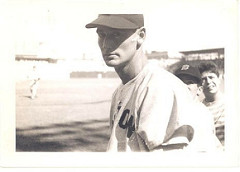
Number Two … The Splendid Splinter Shreds (splinters?) the All Star Record Books – 1946

Photo by wild mercury

Ted Williams went the distance in the 1946 All Star game – played in front of the home-town fans at  Fenway and – thanks to that full-game experience – wrote his way into the ASG records books. Williams came into the game hitting .347, with 23 home runs, 82 runs scored and 71 RBI in 79 regular-season games.  Compared to the day he was about to have that would look like a slump. Here’s how Williams’ day went.

In the first inning, batting third and facing the Cubs’ Claude Passeau, Williams drew a walk and then scored on a home run by Yankees’ RF Charlie Keller.

In the bottom of the fourth, leading off against new NL hurler Kirby Higbe of the Dodgers, Williams homered to give the AL a 3-0 lead.

In the bottom of the fifth, with Higbe still in the game, Teddy Ballgame came up again – this time with one out the Senators’ CF Stan Spence on third and the Browns’ SS Vern Stephens on second.   This time, Williams delivered a run-scoring single.

In the bottom of the seventh, facing the Reds’ Ewell Blackwell with none on and two out, Williams singled again.

Finally, in the bottom of the eighth – facing the Pirates’ Rip Sewell and his Ephus pitch – with Stephens and Browns’ P Jack Kramer on base, William capped off his day with a three-run homer.

The AL squad prevailed by a 12-0 score – and Williams’ final tally was:  four-for-four, plus a walk, two home runs, four runs scored and five runs driven in.   In the process, Williams set or tied the following All Star Game single-game records:

  • Runs Scored (four – Williams still stands alone);
  • Total bases (ten – Williams stands alone);
  • Runs Batted in (five – later, 1954, tied by the Indians’ Al Rosen);
  • Base Hits (four – tying the Cardinals’ Ducky Medwick, 1937, and later matched by the Red Sox’ Carl Yastrzemski, 1970);
  • Home Runs (two – tying Pirates’ Arky Vaughn, who did it in 1942; later tied by the Indians’ Al Rosen in 1954; Giants’ Willie McCovey in 1969; and Expos’ Gary Carter in 1981).

__________________________________________________________

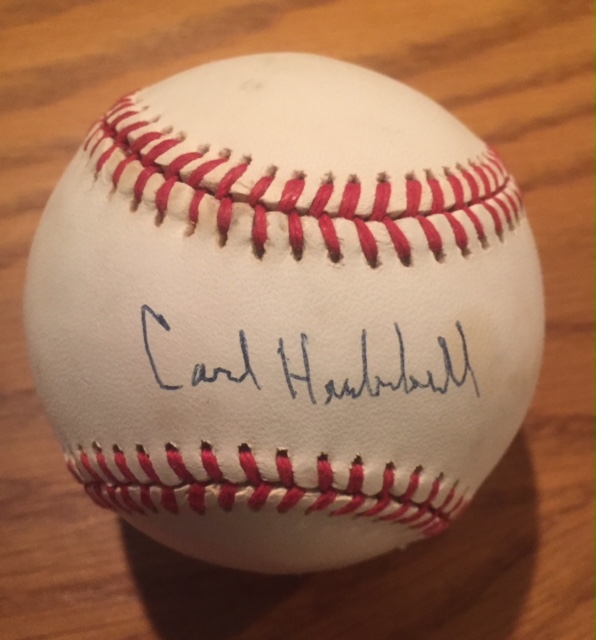
Number Three… Carl Hubbell Fans Six Future Hall of Famers … 1934

The record for strikeouts by a pitcher in an All Star Game is six – Carl Hubbell (1934); Johnny Vander Meer (1943); Larry Jansen (1950); Fergie Jenkins (1967).  Given today’s hard-throwing/free swinging brand of baseball, we may very well see that six-whiff record equaled or surpassed. But I doubt if anyone will match Hubbell ‘s 1934 feat of fanning six future Hall of Famers in the same All Star Game. King Carl, on his way to a 21-win season (the second of five straight 20+ win campaigns), came into the game with a 12-5, 2.76 ERA regular-season stat line. Hubbell had struck out 58 hitters in 156 1/3 innings pitched to that point (it was, indeed, a difference game back then), but he was about to make the strikeout a much bigger part of his game.

The game was played on July 10, 1934 at New York’s Polo Grounds – with screwball-specialist Hubbell starting for the NL and Yankee Lefty Gomez starting for the AL.  Facing an AL line up stacked with some of the game’s greatest hitters, Hubbell got off to a rocky start, giving up a lead-off single to Detroit 2B Charlie Gehringer, followed by a walk to Senators’ LF Heinie Manusch. Then the fun began, as Hubbell set down five straight future Hall of Famers – all on strikeouts – Yankees’ RF Babe Ruth, Yankees’ 1B Lou Gehrig, and Athletics’ 3B Jimmie Foxx to close out the first. Hubbell then fanned   White Sox’ CF Al Simmons and Senators’  SS Joe Cronin to open the second – giving him five straight strikeouts, all future HOFers. Hubbell then gave up a single to Yankees’ C Bill Dickey, before whiffing Yankees’ P Lefty Gomez (also a future Hall of Famer, although as a pitcher not a hitter) to end the inning. After an uneventful third inning – two fly outs, a ground out and walk – Hubbell left the game credited with three scoreless innings, two hits, two walks and six strikeouts.

Oh yes, the AL won the game 9-7, and Hubbell’s feat was amplified by how those HOF whiff victims fared over the rest of the game.  Against pitchers not named Hubbell, they went seven-for-sixteen, with four doubles, five runs scored and three RBI.

_____________________________________________________________

Number Four … Larry Jansen in relief – 1950

Larry Jansen – 1951 Bowman

Giants’ right-hander Larry Jansen came into the 1950 All Star Game with a 9-5, 2.98 record. He came on in the seventh inning, with his NL squad trailing 3-2, He turned in a truly memorable performance.  It went like this:

Seventh Inning

Tigers’ P Art Houtteman – Strikeout

Yankees’ SS  Phil Rizzuto – Pop Out (C)

Indians’ CF Larry Doby – Strikeout

Eighth Inning

Tigers’ 3B George Kell – Strikeout

Red Sox ‘ LF Ted Williams –  Strikeout

Athletics’ 1B Ferris Fain – Fly Out (SS)

Ninth Inning

Yankees’ RF Joe DiMaggio – Fly Out (CF)

Indians’ C Jim Hegan – Strikeout

Yankees’ 2B Jerry Coleman – Strikeout

Tenth Inning

Yankees’ P Allie Reynolds – Ground out (3B-1B)

Rizzuto – Fly Out (SS)

Doby – Single (CF)

Kell – Ground out (SS-2B)

Eleventh Inning

Red Sox’ LF Dom DiMaggio – Ground out (SS-1B)

Fain – Ground out (1B-P)

J. DiMaggio – Foul pop out (C)

There it was:

  • Five innings of relief (second-most innings ever pitched in an All Star Game);
  • Six strikeouts (tied for the most in an All Star Game);
  • No runs, just one hit and only two balls it out of the infield.

When Jansen left the game, the score was tied at three apiece, with the NL eventually winning 4-3 in 14 frames.  Jansen,by the way, pitched in nine MLB seasons, going 122-89, 3.58. He was a two-time All Star (1950-151) and led the NL in wins with 23 (23-11, 3.04) in 1951. He won 21 games (five losses, 3.16 ERA) as a 26-year-old rookie in 1947 – finishing second to Jackie Robinson in the Rookie of the Year Voting.

_______________________________________________

Ouch!

The 1950 All Star Game was made even more memorable by the fact that Ted William made a leaping, off-the-wall catch on a line drive by Ralph Kiner in the first inning.  Williams played through the pain (nine innings) and even drove in a run with a fifth-inning single off Don Newcombe.  The pain persisted  and, it turns out, William had fractured his elbow making that first-inning catch and didn’t play again until early September. 

Number Five … Lefty Gomez’ Quality Start – 1935

MLB defines a quality start as one of six innings or more with three or fewer earned runs given up.  Now, you can argue (correctly, I believe) that 4.50 ERA may not constitute a quality start. Given today’s All Star Game expectation of  one, two or at the very most three-inning pitching appearances, you can confidently say we will not see another quality start in the All Star Game. Historically, there has only been one.  The Yankees’ Lefty Gomez (a future Hall of Famer) tossed an All Star Game-record six innings in 1935 – giving up just three hits and one run. Also falling into the “We’ll never see that again” category – the American League used just two pitchers in their 4-1 win, Gomez and the Indians’ Mel Harder.

Gomez came into  the game 8-8, 2.83 on the season, with ten complete games in 15 starts.


____________________________________________________

Baseball Roundtable ASG EXTRA … A Pitcher starting two All Star Games in a Single Season

From 1959-1962, MLB featured two All Star Games each season. In 1959, Don Drysdale became the only pitcher to start two MLB All Star Games in a season.  On July 7, he started at Forbes Field and held the AL hitless – with four strikeouts – for three innings. (The NL won 5-4). On August 3, he started at the Los Angeles Coliseum and again went three innings, this time giving up three runs on four hits and three walks (fanning five).

Number Six … Gary Carter’s Two-Homer Game – 1981

There have been only five multi-homer games (by a single player) in ASG history (all two-homer contests) and only Hall of Famer Expos’ C Gary Carter managed to hit two long balls in just three plate appearances (all the others took four or five) – and the dingers were key to the National Leagues’ 5-4 win (in Cleveland).

Carter started for the NL and popped out to first base in his first plate appearance (the top of the second in a scoreless game).  Carter next led off the top of the fifth with his NL squad trailing 1-0 – and tied the game with a solo shot to left off the first pitch he saw from the Angels’ Ken Forsch (who had just come into the game). Carter again found himself leading off in the seventh, against new pitcher Ron Davis of the Yankees (with the NL now trailing 4-2). Carter again wasted no time, hitting Davis’ first offering over the CF wall to cut the deficit to one.  His performance earned him ASG MVP honors. Carter came into the game with a .245-7-30 line on the season.

-_________________________________________________

Players with Two Home Runs in an MLB All Star Game

Arky Vaughn, Pirates …. 1941 (four plate appearances)

Ted Williams, Red Sox …..1946 (five PA)

Al Rosen, Indians ….. 1954 (5 PA)

Willie McCovey, Giants ….. 1969 (4 PA)

Gary Carter, Expos …… 1981 (3 PA)


Number Seven … Al Rosen’s Two Home Runs and Five RBI – 1954

In 1954, The Indians’ Al Rosen started at 1B for the AL All Star squad; coming into the game with a .313-14-59 record on the season (71 games  played). The AL prevailed 11-9, but it’s unlikely they would have won without Rosen’s bat. In the game, Rosen:

  • Had three hits (fourth-most in an All Star Game, tied with many);
  • Hit two home runs (tied for the most in an All Star Game);
  • Drove in five runs (tied for the most inn an All Star Game);
  • Collected nine total bases (tied for second-most  in an All Star Game).

Here’s how his day went:

  • Strikeout to end the first inning (versus the Phillies’ Robin Roberts);
  • Three-run homer in the third inning (off Roberts) to break a 0-0 tie;
  • Two-run homer in the fifth (off the Giants’ Johnny Antonelli) to tie the game at 7-7;
  • Single (off the Braves’ Warren Spahn) in the sixth;
  • Walk (off the Braves’ Gene Conley in the eighth).

Rosen was a four-time All Star in his 10-season MLB career (1947-56, all Indians), going .285-192-717. From 1950 through 1953, he averaged .298, with 33 home runs and 117 RBI per season.

___________________________________________________

Number Eight … Ichiro Suzuki’s Home “RUN” – 2007

The Mariners’ Ichiro Suzuki started the 2007 All Star Game (in San Francisco) leading off (and playing CF) for the AL squad. He had a three-for-three day, won the game’s MVP Award and made a bit of history.

Suzuki singled (off the Padres’ Jake Peavy) to open the game and added a second single (off Ben Sheets of the Brewers) with two outs in the third. The plate appearance that got him on this list came in the fifth inning. Ichiro came up with one out, a runner on first and the AL trailing 1-0.  Suzuki stroked the first pitch he saw from the Padres’ Chris Young off the centerfield wall, it took a crazy carom and, before  the ball back into the infield, Suzuki had circled the bases, coasting into home plate with a 15-second, two-RUN home RUN – still the only inside-the-parker in All Star Game history.  Note: In his MLB career, Suzuki hit 117 regular season home runs and one post-season homer – none of which were inside-the-parkers. 

________________________________________________________

Number Nine … Johnny Vander Meer’s Six Whiffs – 1943

The Cardinals’ Mort Cooper started the 1943 All Star for the National League squad, but the Reds’ Johnny Vander Meer made the most memorable impression. He came on in relief of Cooper in the bottom of the third, with the AL up 4-1, a runner on third and one out. Vander Meer ended the threat by fanning Tigers’ 1B Rudy York and Browns’ CF Chet Laabs. Vander Meer then whiffed Senators’ C Jake Early to open the fourth before giving up a single to Red Sox’ 2B Bobby Doerr and then coming off the mound to field a bunt by Tigers’ pitcher Hall Newhouser and turning it into a pitcher-shortstop-second base (covering first) double play. Although Vander Meer gave up an unearned  run in the fifth (on  a single, a walk and an error), he also fanned three batters in the inning: Indians’ 3B Ken Keltner, Tigers’ LF Dick Wakefield and York for a second time.   In the process, Vander Meer tied the All Star Game record for strikeouts in a game (six). To date, four pitchers have fanned  six batters in an All Star Game and Vander Meer is the only one to do it in less than three innings pitched (2 2/3).

____________________________________


Roundtable ASG Extra … One Team Using Only Eleven Players

When the American League won the 1942 All Star Game, they used an ASG record-low 11 players. All eight position players went the distance and the team used one pinch hitter and one relief pitcher.

Here’s the lineup:

Lou Boudreau SS

Tommy Henrich RF

Ted Williams LF

Joe DiMaggio CF

Rudy York 1B

Joe Gordon 2B

Ken Keltner 3B

Birdie Tebbetts C

Spud Chandler P

Bob Johnson PH

Al Benton P

By comparison, ion 2021, the NL used 30 players in the All Star Game, while the AL used 29. 


Number Ten … A Tie Among Performances that were more Unforgettable than Memorable

10 – Future Hall of Famer Tom Glavine Giving Up Seven Straight Hits -1992

Hall of Famer Tom Glavine started the 1992 All Star Game (he came in with a  13-3, 2.57 record). After retiring American League leadoff hitter Blue Jays’ 2B Robert Alomar on a grounder to second, he surrendered seven consecutive hits – all singles, by the way – to Red Sox ‘ 3B Wade Boggs,  Twins’ LF Kirby Puckett, Blue Jays’ RF Joe Carter, A’s 1B Mark McGwire, Orioles’ SS Cal Ripken Jr., Mariners’ CF Ken Griffey Jr. and Indians’ C Sandy Alomar – with the AL plating four runs.

In the process, Glavine set the (still) All Star Game record for hits allowed in an inning – seven.  Surprisingly, he finished the frame and came out for the second inning – giving up two more hits and another run before being pulled.  He set another record – most hits allowed in an All Star Game appearance at nine. I suppose it could happen, but I seriously doubt in manager would leave pitcher in for this kind of treatment any longer.

Roundtable ASG Extra

Atlee Hammaker, holds the record for the most runs surrendered in an All-star Appearance. In the 1983 All Star contest, he  gave up seven earned runs on six nits and a walk in just 2/3 of an inning. The big hit was a Fred Lynn Grand Slam – still the only bases-loaded blast in an All Star Game.  1983 was Hammaker only All Star selection in a 12-season MLB career. 

10 – Roberto Clemente’s Four Strikeouts in an All Star Game – 1967

In the 1967 All Star Game, future Hall of Famer Roberto Clemente fanned in four consecutive at bats against four different pitchers: the Twins’ Dean Chance (third inning); White Sox’ Gary Peters (sixth); Yankees’ Al Downing (ninth); A’s Catfish Hunter (eleventh). He also had a single in the first (Chance) and a ground out in the fourteenth (Hunter).  The four whiffs is an All Star Game single-game  record for batters. 

____________________________________________

—–A FEW CAREER ALL STAR GAME TIDBITS—— 

Youngest and Oldest MLB All Stars

The youngest and oldest All Stars ever were both pitchers: Dwight Gooden (19 years-seven month-24 Days) and Satchel Paige (47 years-seven days).

First and still only All Star Game Steal of Home … 1934 AS game, fifth inning, two out, two on, NL trailing 8-6, NL 3B Pie Traynor (Pirates) notched the first (and still only) AS Game steal of home. (AL won game 9-7.)

First and still only All Star Game Grand Slam … 1983 All Star Game, third inning, bases loaded, two outs, AL leading 5-1, AL CF Fred Lynn hit the first – and still only – AS Game Grand Slam. (AL wins 13-3)

First and still only two-triple All Star Game … 1978 ASG, Rod Carew, Twins, tripled leading off the first and third innings, both off the Giants’ Vida Blue.

—ALL STAR GAME TARGETS—–

Most Hits in an All Star Game … Four – Joe Medwick (1937); Ted Williams (1946); Carl Yastrzemski (1970)

Most Doubles in an ASG … Two – Nine players (Most recently, the Brewers’ Jonathan LeCroy in 2014.  (No surprise, LeCroy had a league-leading 53 doubles that season.)

Most Triples in an ASG …  Two – Rod Carew (1978)

Most Home Runs in an ASG … Two – Arky Vaughn (1941); Ted Williams (1946); Al Rosen (1954); Willie McCovey (1969); Gary Carter (1981)

Most RBI in an ASG … Five – Ted Williams (1946); Al Rosen (1954)

Most Walks in an ASG … Three – Charlie Gehringer (1934); Phil Cavarretta (1944)

Most Stolen Bases in an ASG …  Two – Willie Mays (1963); Kelly Gruber (1990); Roberto Alomar (1992); Kenny Lofton (1996); Starlin Castro (2011)

Most Innings Pitched in an ASG …  Six –  Lefty Gomez (1935)

Most Strikeouts in an ASG … Six –  Carl Hubbell (1934); Johnny Vander Meer (1943); Larry Jansen (1950: Fergie Jenkins (1967)

Most Consecutive Strikeouts in an ASG …  Five – Carl Hubbell (1934); Fernando Valenzuela (1986)


—CAREER ALL STAR GAME RECORDS—–

AS Game Hits Willie Mays – 23

AS Game Doubles Dave Winfield – 7

Gary Sheffield and Moises Alou were selected All Stars while with the most teams at five.     Sheffield – Padres, Marlins, Dodgers, Braves and Yankees; Alou – Expos, Marlins, Astros, Cubs and Giants.

AS Game Triples …Willie Mays and Brooks Robinson – 3

AS Game Home Runs … Stan Musial – 6

Stan Musial hit .317 in 24 All Star games with two doubles, six home runs,10 RBI, and 11 runs scored.

AS Game RBI… Ted Williams – 12

AS Game Walks …Ted Williams – 11

Ted Williams hit .304 in 19 All Star Games, with two doubles, one triple, four home runs, 12 RBI and a.439 on-base percentage. 

AS Game Stolen Bases … Willie Mays – 6

Willie Mays stole six ASG bases in seven attempts. The most ASG steals without being caught belong to Roberto Alomar and Kenny Lofton at five each. 

The Most Positions Played (career) in All Star Games … Pete Rose – 5 (1B, 2B, 3B, LF RF)

AS Game Runs Scored …Willie Mays – 20

PHOTO: New York World-Telegram and the Sun staff photographer, William C. Greene, Public domain, via Wikimedia Commons

Willie Mays hit .307 in 24 All Star games, with two doubles, three triples, three home runs, nine RBI, 20 runs scored and six stolen bases.

AS Game Pitcher Wins … Lefty Gomez – 3

AS Game Total Pitching Appearances … Roger Clemens – 10

AS Games Started (pitcher) … Lefty Gomez, Robin Roberts, Don Drysdale – 5

Lefty Gomez went 3-1, 2.50 in five All Star Game starts (18 innings pitched). 

AS Game Saves ... Mariano Rivera – 4

AS Games Innings Pitched … Don Drysdale – 19 1/3

AS Game Strikeouts … Don Drysdale – 19

Don Drysdale went 2-1, 1.40 in All Star games, fanning 19 batters in 19 1/3 innings (10 hits, four walks). 

_______________________________________________________

All Star Game Scoring Bookends

The highest scoring All Star Game ever took place in 1998 at (Where Else?) Coors Field – as the teams combined for 21 runs in a 13-8 American League win.  Side note: Thirteen is the highest run total ever up by an All Star squad, accomplished by The AL in 1983, 1992 and 1998.

The lowest scoring game (combined) took place in (When else?) in 1968 (The Year of the Pitcher) – as the NL topped the AL 1-0. with the only run scoring on a double play (no RBI in the contest).

_________________________________________________________

Finally, to wrap up, here’s a dozen AS Game firsts from 1933.

First Venue: Comiskey Park 1 (July 6, 1933).

First AS Game Attendance: 47,595

Final Score of First AS Game: AL 4 – NL -2

First Batter/Pitcher Match Up: NL 3B Pepper Martin (Cardinals) versus Lefty Gomez (Yankees). Gomez retired Martin on a grounder to shortstop.

First Starting Pitchers: AL, Lefty Gomez (Yankees) – NL, Bill Hallahan (Cardinals). Gomez got the first All Star win, Hallahan the first loss.

First Hit: Cardinals’ Chick Hafey (leading off second inning – off the Yankees’ Lefty Gomez). Hafey was starting in LF and batting fourth for the NL.

First Run Scored: AL starting 3B Jimmy Dykes (White Sox).

First RBI: AL starting pitcher Lefty Gomez (Yankees) – drove home Jimmy Dykes (White Sox), who had walked, with a single to center field. Take that, DH Rule.

First Double: Pie Traynor (Pirates), NL pinch hitter – top of seventh off Lefty Grove (Yankees).

First Triple: NL pitcher Lon Warneke (Cubs) – top of the sixth inning off Alvin Crowder (Senators). Take that again, DH Rule.

First Home Run: AL RF Babe Ruth (Yankees), two-run home run, bottom of the third, off Bill Hallahan (Cardinals). So, your first All Star Game double, triple and homer were hit by pitchers or former pitchers.

First Stolen Base: Bottom of first, AL 2B Charlie Gehringer (Tigers).

First Strikeout: Final out, top of second. Pitcher – Lefty Gomez (Yankees). Hitter – NL SS Dick Bartell (Phillies).

Primary Resources: Baseball-Reference.com; Baseball-Almanac.com


100Baseball Roundtable is on the Feedspot list of the Top 100 Baseball Blogs.  To see the full list, click here.

I tweet baseball @DavidBaseballRT

Follow/Like Baseball Roundtable’s Facebook Page here.  More baseball commentary; blog post notifications; PRIZES.

Member: Society for American Baseball Research (SABR); The Baseball Reliquary; The Negro Leagues Baseball Museum.
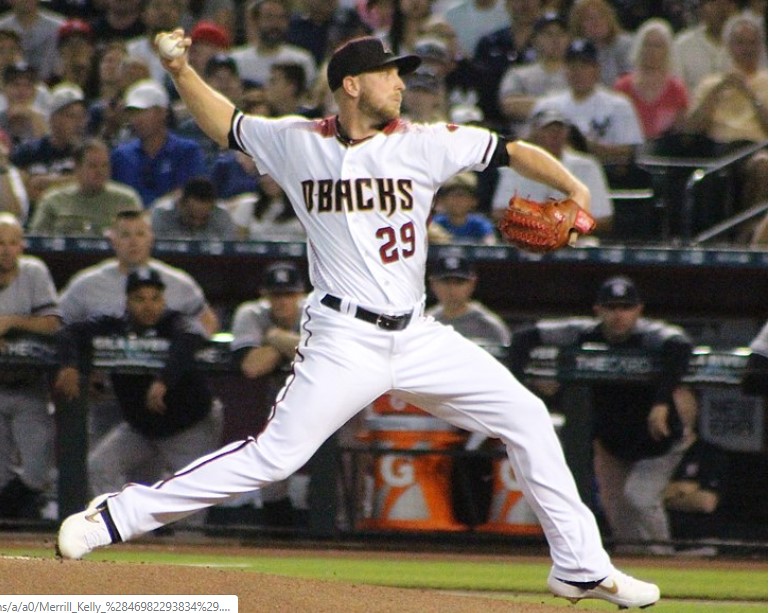


No-Whiff No-Hitters and a Bit More

As regular readers have often seen here, when Baseball Roundtable looks into a topic,  “one thing often leaders to another.”  Surprise! It happened again.

Photo: American Tobacco Company, Public domain, via Wikimedia Commons

This post started out as a brief look at the three MLB pitchers who have thrown a no-hitter without striking out a single batter. The first of those was thrown by Earl Hamilton –  a 20-year-old,  5’8”, 160-pound southpaw with an unorthodox  delivery and a particularly effective curveball.   More on that game in a few paragraphs, but first a look at a game that drew my interest as I looked  into Hamilton’s career.  (That’s the “another” in this post.)  Of note, this game took place on this date (July 16) in 1920.

That day, Hamilton (in his tenth MLB season), started a game for the Pirates (versus the Giants) in Pittsburgh.  Hamilton came into the game  with a 3-4, 3.41 record, while his mound opponent (Rube Benton) was 3-10, 4.14.

After 16 innings, the contest was knotted at 0-0; and both starting pitchers were still in the game. Hamilton had given up eight hits and three walks in his 16 innings of work. Benton had surrendered seven hits and two walks.

Then came the top of the seventeenth when, as the old saying goes, “the wheels came off.” Hamilton, after sixteen shutouts innings, gave up hits to the first five batters in the 17th (and to seven of the first eight) – surrendering seven runs in one-third of an inning.

Hamilton’s 17th inning went like this: 2B Larry Doyle, single; C Frank Snyder, single; P Rube Benton, RBI single; LF George Burns, RBI single; RF Vern Spencer, groundball, runner forced at home; 3B Frankie Frisch, three-run triple; 1B Highpockets Kelly, RBI triple.  Hamilton was then relieved by Walter Cooper, who gave up a run-scoring triple to CF Lee King before getting the final two outs. Note: Hamilton came into the game with a 3.41 earned run average on the year, lowered it to 2.91 over the first 16 innings and then saw it go back to 3.48 after the one-third inning he pitched in the seventeenth.

Now, back to or regularly scheduled programming –  Hamilton’s no-strikeout, no-hitter. That came on August 30, 1912 in Hamilton’s second MLB season (for the St. Louis Browns). He went nine innings (against the Tigers) and gave up just two walks (with, of course, no whiffs). The Browns won 5-1, with the Tigers’ only tally scored by Ty Cobb (who had walked) with the aid of a Browns’ error and some daring base running by Cobb.

Earl Hamilton’s August 30, 1912, no-hitter was not only the first no-hitter in which the no-hit pitcher did not record a strikeout, it was also the first no-hitter eve for the St, Louis Browns/Baltimore Orioles franchise.

Hamilton pitched in 14 MLB seasons (1911-24 … Browns, Tigers, Pirates, Phillies). He went 115-147, 3,16 and had just two winning seasons (1913 and 1922).

The next zero-strikeout no-hitter was thrown by “Sad” Sam Jones (Yankees) on September 4, 1923 – against the Athletics in Philadelphia. Jones gave up just one walk in the outing, which was won by the Yankees 2-0. He allowed only two base runners (one reached on an error), as he recorded his 17th win of the season. He would go 21-8, 2.63 that season (and would fan just 2.5 batters per nine innings).

Jones pitched in 22 MLB seasons (1914-35 … Indians, Red Sox, Yankees, Browns, Senators, White Sox) – putting up a 229-217, 3.84 record. He twice won 20+ games in a campaign and once led the AL im shutouts (5 in 1921).

Cubs’ southpaw Ken Holtzman pitched a no-whiff no-hitter on August 19, 1969 (against the Braves at Wrigley Field). Facing a tough lineup that included the likes of Hank Aaron, Felipe Alou, Orlando Cepeda and Rico Carty, Holtzman surrendered just three walks over the nine frames (LF Carty, C Bob Didier, SS Gil Garrido), without a single runner reaching second base. The Cubs’ only scoring came on a  on a three-run, first-inning  home run by 3B Ron Santo.

Ken Holtzman’s no-strikeout no-hitter on August 19, 1960 was the only game that season in which Holtzman did not record a strikeout.  In his very next start (after the no-no), Holtzman fanned ten batters in a 11-5 win over Houston.

Holtzman’s no-hitter marked his 14th win in a season in which he would go 17-13, 3.58. Holtzman pitched in 15 MLB seasons (1965-79 … Cubs, A’s, Orioles, Yankees). He went 174-150, 3.49, He was a 20-game winner in 1973 (21-13, 2.97 for the A’s) and six time won 17 or more games in a season.

Ken Holtzman threw a second no-hitter on June 3, 1971 (for the Cubs against the Reds in Cincinnati). That one was a 1-0 win in which he walked four and fanned six.

Primary Resources: Baseball-Reference.com; Baseball-Almanac.com

Coming Soon: Revisiting Baseball Roundtable’s Favorite All Star Game performances. 


BASEBALL ROUNDTABLE ON THE TOP 100 BASEBALL BLOG LIST

100Baseball Roundtable is on the Feedspot list of the Top 1oo Baseball Blogs.  To see the full list, click here.

I tweet baseball @DavidBBRT

Follow/Like Baseball Roundtable’s Facebook Page here.  More baseball commentary; blog post notifications; PRIZES.

Member: Society for American Baseball Research (SABR); The Baseball Reliquary; The Negro Leagues Baseball Museum.
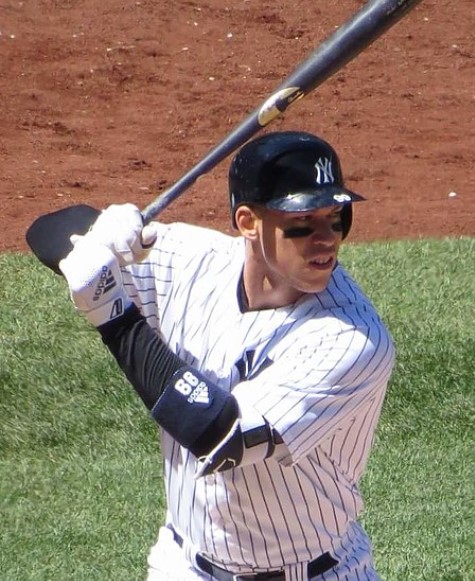
 

Baseball Roundtable Looks at Pitchers with 1,000+ MLB Appearances

Playing in 1,000 MLB games is a major accomplishment.  Pitching in 1,000 MLB games is not only a major accomplishment, but a rare one as well.  In fact, only 16 pitchers in MLB history have made 1,000 or more MLB appearances.  Baseball Roundtable would like to use this post to look at the careers of those 16 mound veterans.  Here’s just a few facts you can pick up along the way.  Among the 1,000+ game hurlers:

  • Jesse Orosco and Dennis Eckersley pitched in the most MLB seasons (24); while Kent Tekulve labored in the fewest (16);
  • LaTroy Hawkins pitched for the most MLB teams (11); Mariano Rivera for just one;
  • Mariano Rivera had the lowest career earned run average (2.21); Jose Mesa the highest (4.36);
  • Trevor Hoffman had the highest strikeout ratio (9.4 per nine innings); Kent Tekulve the lowest (4.9);
  • Dennis Eckersley had the most wins (197); complete games (100); starts (361); and the fifth-most saves (390);
  • H0yt Wilhelm got the  latest start on his journey to 1,000+ games pitched, making his MLB debut less than 100 days shy of his thirtieth birthday (of course, he did pitch until he was just 15 days shy of his fiftieth birthday);
  • Four of the 16 1,000+ game pitchers did not start a single MLB game (John Franco, Mike Timlin, Kent Tekulve; Trevor Hoffman).

And, you’ll find out some less stats-oriented facts, like:

  • Hoyt Wilhelm earned a Purple Heart and Two Bronze stars at the Battle of the Bulge;
  • Trevor Hoffman started his professional career as a shortstop;
  • Dennis Eckersley was an All Star as a starter and a closer;
  • Hoyt Wilhelm qualified for and won an ERA title as a starter and a reliever;
  • After 1991 surgery for blood clots in his arm, doctors gave Roberto Hernandez no better than a 50-50 chance to return to the mound. He not only pitched in the major leagues that season, but for the each of the next 16.

Read on, for fall this and more.  First a chart and then brief bios of the principals.


  1. Jesse Orosco, LHP … 1,252 MLB Mound Appearances … Nine MLB Teams

Photo: Barry Colla Photography, Public domain, via Wikimedia Commons

Jesse Orosco spent 24 seasons in an MLB uniform … tied for the most among 1,000+ appearance pitchers and  for 11th all-time, all positions.

California-born, Orosco was selected (out of Santa Barbara City College) by  the Twins in the second round of the 1978 MLB Draft. In 1978, in rookie ball, the 22-year-old established his credentials as a relief specialist –  posting a 1.12 ERA in 20 relief outings.  Before the 1979 season, he was included in a trade (to the Mets) that brought Jerry Koosman to Minnesota.  Orosco split 1979 between the Mets and their Triple-A Tidewater Tides (where he went 4-4, 3.89 in 16 appearances/15 starts). While he spent part of 1981 with the Mets (0-1, 1.56, one save in eight relief appearances), he wasn’t a full-time major leaguer until 1982 (at age 25). He went on to pitch at the MLB level until age 46 (2003) – taking the mound for the Mets, Orioles, Dodgers, Indians, Brewers, Twins, Cardinals, Padres and Yankees.

In  his 24 MLB seasons, Orosco made 1,248 appearances out of the bullpen and four starts. He finished with an 87-80 record, a 3.16 earned run average and 144 saves (averaging 8.2 strikeouts per nine innings). The two-time All Star’s best season was 1983 (Mets), when he went 13-7. 1.47 with 17 saves (in 62 appearances and finished third in the NL Cy Young Award balloting.  He followed up in 1985 with a 10-6, 2.59 record and a career-high 31 saves. In the 17 seasons from 1982-99, Orosco averaged 62.6 appearances a year.

Tea for Two

On July 3, 1983, Jesse Orosco earned the win in both games of a Mets’ doubleheader against the Pirates. In the first game,  he pitched four scoreless frames as the Mets topped the Pirates 7-6 in 12 innings. He came back to pitch the final frame of the second game, as the Mets won 1-0, again in 12 frames.

Orosco pitched in 24 post-season games, going 3-1, 4.15 with two saves. In the 1986 National League Championship Series – won by the Mets (over the Astros) – Orosco appeared in four games and picked up three wins. In Game Three, he came on in the eighth with the Mets down 5-1 and pitched two scoreless innings as the Mets came back to score two in the bottom of the ninth to win it. In Game Five, Orosco came on in the eleventh inning of 1-1 tie, again pitching two scoreless frames, with the Mets scoring in the bottom of the twelfth to win the contest. In the clinching Game Six – won by the Mets 7-6 in 16 innings – Orosco pitched three innings. He came on in the bottom of the fourteenth with the Mets up 4-3, but gave up a home run to Billy Hatcher to blow the save.  He gave up two more tallies in the bottom of the sixteenth, but the Mets had scored three in the top of the inning to give the Mets the win.

————————————————————-

  1. Mike Stanton, LHP … 1,178 MLB Mound Appearances … Eight Teams

Mike Stanton was a 13th round  pick in the 1987 MLB Draft (by the Braves), out of Alvin Junior College. He made his MLB debut on August 24, 1989 (22-years-old) – pitching a scoreless ninth inning as the Braves lost to the Cardinals 4-1 in Atlanta. Stanton pitched in the majors (until age 40) from 1989-2007, toiling for the Braves, Yankees, Red  Sox, Mets, Nationals, Giants, Rangers and Reds over those 19 seasons. His final stat line was 68-63, 3.92 (7.2 strikeouts per nine innings) – and his 84 saves are the fewest, by far, of any pitcher on the 1000+ appearance list. (Twenty-seven of Stanton’s 84 saves came for the 1993 Braves). His best season was 1997, when he went 3-1, 2.57 with three saves in 50 appearances for the Yankees. He was a one-time All Star (2002 Yankees – 9-4, 2.58 in 76 appearances).

Once in a Lifetime Opportunity

Mike Stanton made one start in his MLB career. On May  9, 1999, he made a spot start for the Yankees (against the Mariners). He pitched four scoreless innings (two hits, one walk and three whiffs) and left with a 4-0 lead (but did not qualify for the win).

Stanton pitched in 80 or more games three times in his career (1996, 2004 and 2006), the last time in his age-39 season.  While he never led the league in appearances, he was in the top-five six times.

Mike Stanton  made 53 post-season MLB pitching appearances, going 5-2, 2.10 with one save.

————————————————-

  1. John Franco, LHP … 1,119 MLB Mound Appearances … Three Teams

John Franco was a fifth-round draft pick (1981, Dodgers), out of St. John’s University, where he had gone 5-1, 2.22 in his junior year (1981). He was traded to the Reds in 1983 and made his MLB debut April 24, 1983 (at age 23). He went on to pitch in 21 MLB seasons (1984-2001, 2003-2005 … Reds, Mets, Astros) – retiring as an Astro as age 44.

Franco put up a 90-87, 2.89 record, with 424 saves. He never started a major-league game, but did finish 774 of them. Franco was a four-time All Star (all in the five-year span from 1986 through 1990) and three times led the NL in saves, notching 30 or more saves in eight seasons. Over his career, the southpaw  averaged 7.0 strikeouts per nine innings.

Franco’s best season was 1988, when he went 6-6, 1.57 with a league-leading 39 saves in an also NL-leading 61 appearances for the Reds. He went 2-0, 1.88 with one save in 15 post-season appearances.

You Can Look It Up

John Franco’s 424 saves are the MLB record for a southpaw.

————————————————————————

  1. Mariano Rivera. RHP … 1,115 MLB Mound Appearances… One Team

Photo: Baseball Roundtable

Hall of Famer and all-time MLB saves leader Mariano Rivera was signed (out of Panama) by the Yankees for a $2,000 bonus in 1990. It proved to be money well spent. Rivera made it to the Yankees’ roster (as a 25-year-old) in 1995 – although his role as a premier closer was not yet defined.  That first MLB season he appeared in 19 games – starting ten of them.   He wasn’t particularly effective, going 3-3, 5.94 as a starter and 2-0, 4.24 as a reliever.

Change Can Be Very, Very Good

Mariano Rivera’s first eight MLB appearances were as a starting pitcher.

Still, he had shown chops in the minor leagues, with a  27-18, 2.36  record over six minor-league seasons (102 games, 67 starts). Late in 1995, he moved to the bullpen full-time and, in 1997, he became the Yankees’ closer – and the rest is history.

Rivera pitched in 19 MLB seasons (1995-2013), all for the Yankees. He went 82-60, 2.21 with 652 saves. The right-hander was a 13-time All Star and 15 times had 30 or more saves (topping 40 in nine seasons, with a high of 53 in 2004), leading the league three times.  He recorded an ERA  under 2.00 in 11 campaigns.  In his final season, at age 44, Rivera went 6-2, 2.11, with 44 saves.  He averaged 8.2 whiffs per nine innings in his career.

Rivera also pitched in 96 post-season games and, in 141 innings, put up a 0.70 earned run average and an 8-1, 42-save record.

Lots to choose from, but Baseball Roundtable would pick 2004 as Rivera’s best season.  He went 4-2, 1.94 with a league-leading 53 saves in a league-topping 69 appearances.

———————————————————

  1. Dennis Eckersley. RHP … 1,071 MLB Mound Appearances … Five Teams

Hall of Famer Dennis Eckersley is the unicorn on this list. Consider these facts:

  • His 1,071 appearances included 361 starts;
  • He recorded 390 saves and 100 complete games;
  • He recorded a season of 50+ saves and a 20-win season;
  • He had a season during which he appeared in 50 games, but threw just 39 2/3 innings … and one in which he appeared in 35 games and tossed 268 1/3 innings.
  • He pitched a complete-game no-hitter (May 30, 1977).

The right-hander was drafted by the Indians in the third round of the 1972 draft (out of Washington High School in Fremont,  California). In 1974, after a 14-3, 3.40 season as a starter at Triple-A, the 20-year-old made the Indians’ roster, going 13-7, 2.60 as a rookie (34 games, 24 starts, six complete games, two shutouts).  From 1975 through 1986, working primarily as a starter (Indians, Red Sox, Cubs), Eckersley went 151-128, 3.67 (with 100 complete games and 20 shutouts).

In April of 1987, Eckersley was traded from the Cubs to the Athletics and when A’s closer Jay Howell was injured, manager Tony LaRussa turned to Eckersley to fill the closer’s role. It turned out to be a fortuitous decision. From 1987-1998 (A’s, Cardinals, Red Sox), Eckersley appeared in 695 games (just two starts) and went 46-43, 2.96 with 387 saves.

Nice Set of Bookends

Dennis Eckersley was an All Star as a starting pitcher (twice) and as a closer (four times).  

Eckersley led the league in saves twice and had 30 or more saves in eight seasons (a high of 51 in 1992). His final stat line was 197-191, 3.50, with 390 saves. He fanned 6.6 batters per nine innings over his career.

Eckersley’s best season was 1992, when he went 7-1, 1.91 for the A’s, with a league-leading 51 saves in an also league-leading 65 appearances,  earning the AL Cy Young and MVP Awards.

As a starter, his best season was 1978, when he went 20-8, 2.99 and threw 16 complete games in 33 starts.

Eckersley appeared in 28 post-season games, going 1-3, 3.00 with 15 saves. He was the MVP of the 1988 American League Championship Series, when he saved all four A’s wins over the Red Sox.

—————————————————————–

  1. Hoyt Wilhelm, RHP …. 1,070 MLB Mound Appearances … Nine Teams

Photo: Public Domain via WikiCommons

Hoyt Wilhelm didn’t make his first MLB appearance until he was just 98 days shy of his 30th birthday – and the right-handed knuckleballer pitched until just 15 days shy of his 50th birthday.  He managed to not only “float”  his way through 21 MLB seasons, but also into the Hall of Fame.

Wilhelm made his professional debut as a 19-year-old with the Independent Class-D Mooresville Moors in 1942 – going 10-3, 4.25.  He then lost three years of playing  time serving in the U.S. Army.

A Hero On and Off the Field

Hoyt Wilhelm earned earning a Purple Heart and two Bronze Starts at the Battle of the Bulge.

After returning from the military, Wilhelm rejoined the Moors. Seasons of 21-8, 2.47 in 1946 and 20-7, 3.38 in 1947, earned him a shot in the Giants’ system, where he made it to the major leagues for the 1952 season.

As a rookie , the 29-year-old Wilhelm went 15-3 for the Giants , leading the NL in winning percentage (.833), earned run average (2.43, with his 159 1/3 innings in relief qualifying for the title) and games pitched (71). He also notched 11 saves.  He finished second in the NL Rookie of the Year balloting  and fourth in the MVP voting.

________________________________________

Side note: 1952 NL Rookie of the years winner Joe Black and runner-up Wilhelm had pretty comparable seasons:

  • Black with 15-4, with 15 saves, while Wilhelm went 15-3 with 11 saves.
  • Wilhelm won the ERA title at 2.43, Black’s ERA was 2.15 (but he was 11 2/3 innings shy of qualifying.
  • Wilhelm appeared in 71 games, Black in 56.

____________________________________________

Wilhelm pitched in the majors from 1952-1972 (Giants, Cardinals, Indians, Orioles, White Sox, Angels, Braves, Cubs, Dodgers),  going 143-122, 2.52 with 228 saves. Wilhelm fanned 6.4 batters per nine innings. He was an All Star in five seasons and a league-leader in ERA and winning percentage twice each. In the five years from 1964 through 1968, Wilhelm recorded a 1.74 ERA over 539 1/3 innings.

A Two-Way Pitcher

Hoyt Wilhelm won the NL ERA title in 1952 as a reliever and won the AL ERA title in 1959 as a starter.

Wilhelm’s 1,871 inning pitched in relief are the MLB record, as are his 124 career wins in relief.

—————————————————————

  1. Dan Plesac, LHP …1,064 MLB Mound Appearances … Six Teams

Dan Plesac was a first-round selection (Brewers) in the 1983 MLB Draft –  out of North Caroline State University. Primarily a starter in the minors (in three minor-league seasons, he made 62 appearances, all but one in a starting role), the Brewers converted the left-hander to a bullpen role after he made the MLB squad in 1986. In his  rookie MLB season, Plesac went 10-7, 2.97 with 14 saves in 51 appearances. Plesac recorded 124 of his 158 saves in his first five MLB seasons.

He pitched in 18 seasons (1986-2003 … Brewers, Cubs, Pirates, Blue Jays, Diamondbacks, Phillies), going 65-71, 3.64 with 158 saves, fanning 8.7 batters per nine innings. Plesac was a three-time All Star (1987-88-89)  and twice recorded 30 or more saves in a season. Plesac spent most of his career as a left-handed relief specialist, eight times he pitched in 60 or more games in a campaign.

————————————————————-

  1. Mike Timlin, RHP … 1,058 MLB Mound Appearances … Six Teams

Mike Timlin was a fifth-round draft pick (Blue Jays, 1987),  out of Southwestern University. He made his MLB debut with the Blue Jays in April of 1991 – after a 8-4, 1.53, 30-save season at High-A and Double-A in 1990.

In his inaugural MLB season, Plesac  went 11-6, 3.16 with three saves in 63 games (three starts). Timlin went on to pitch in 18 MLB seasons (1991-2008 … Blue Jays, Mariners, Orioles, Cardinals, Phillies, Red Sox). He had four starts among his 1,058 appearances – going 1-2, 3.32 at a starter. Timlin saved 10 or more games in seven seasons, with a high of 31 saves for the 1996 Blue Jays. In 2005, at the age of 38, he led the AL with 81 appearances – going 7-3, 2.24 with 13 saves for the Red Sox. Over his career Timlin,  was 75-73, 3.63, with 141 saves. He fanned 6.5 batter per nine innings. Timlin appeared in 46 post-season games, going 0-3, 4.26, with one save.   In the 2003-06 seasons (his age-37 to age-40 seasons), Timlin averaged 74.3 appearances per campaign.

Post-Season Thrills

Timlin played on four World Series Champion teams – 1992 Blue Jays, 1993 Blue Jays; 2004 Red Sox; and 2007 Red Sox.

———————————————————-

  1. Kent Tekulve, RHP …1.050 MLB Mound Appearances … Three Teams

Photo: George Gojkovich, Public domain, via Wikimedia Commons

Submariner Kent Tekulve was a true workhorse on the mound – leading the NL in appearances in four seasons  – and reaching 90 or more appearances three times.

Tekulve played for Marietta College, where the was named to the All-Ohio conferences second team in his senior year. Tekulve, however, went undrafted and was later signed out or a Pirates’ tryout camp.  In his first pro season (1969), at Low-A Geneva, the 22-year-old righty was used primarily as a starter and went 6-2, 1.70 in nine games (seven starts, six complete games and two shutouts). The next season, he moved up to Double-A Sherbrooke, where he was converted to a reliever and began to refine his sidearm delivery. From 1971 through 1974, Tekulve went 32-16, 2.57 with 38 saves, while working his way up to Triple-A.

Tekulve made his MLB debut on May 20, 1974, but spent the bulk of the season at Triple-A, where he went 6-3, 2.25, with seven saves (he had a 6.00 ERA in eight appearances for the Pirates). He finally made the majors to stay in June of 1975, and went on to log a 16-season MLB career (1974-89 … Pirates, Phillies, Reds). From 1977 through 1984, Tekulve averaged 77 appearances a season – leading the league in games pitched three times in that span.

Celebrating 40

In 1987, at age 40, Kent Tekulve led the NL  in appearances (for the Phillies) with 90, pitching 105 innings in relief and putting up a 3.09 ERA.

Over his MLB career, Tekulve was 94-90, 2.85, with 184 saves. He fanned  4.9 batters per nine innings.

——————————————————-

  1. LaTroy Hawkins, RHP … 1,042 MLB Mound Appearances … 11 Teams

LaTroy Hawkins was drafted out of West Side High School (Gary , Indiana) by the Twins in the seventh round of the MLB 1991 draft. He opened his career as a starter and from 1991-1996, he made 99 minor-league appearances (96 starts), moving from rookie ball to Triple-A and going 40-17, 2.96. The 22-year-old Hawkins made his MLB debut on April 29, 1995 in a start against Baltimore and gave up seven earned runs in just 1 2/3 innings. By mid-May he was back at Triple-A, where he went 9-7, 3.55 in 22 starts, earning a return to the Twins in September. On the season, his MLB line ended at 2-3, 8.67.

From 1996-99, Hawkins  pitched in 93 games for the Twins (92 starts) and went 24-41, 6.03.  (At this time, his career record, after five MLB seasons was 26-44, 6.16).  In 2000., the Twins moved Hawkins  to the bullpen and he showed notable improvement, going 2-5, 3.89 with 14 saves in 66 games. He made 943 MLB appearances, over 16 more seasons, without another start. Hawkins’ final record, after 21 seasons (Twins, Rockies, Cubs, Astros, Brewers, Mets, Giants, Angels, Yankees, Orioles, Blue Jays) was 75-94, 4.31.  He fanned 6.0 batters per nine innings over his MLB career.

A Travelin’ Man

After spending his first nine MLB seasons with the Twins, LaTroy Hawkins pitched for 10 different MLB teams over the next 12 seasons.  His 11 MLB teams pitched for is the  most of any of the 1,000+ game pitchers in this post.

Hawkins’ best season was with the 2004 Cubs, when he went 5-4, 2.63 with 25 saves in 77 appearances.  Hawkins also pitched in 22 post-season games, gong 1-1, 6.75.

———————————————————

  1. Trevor Hoffman, RHP … 1,035 MLB Mound Appearances … Three Teams

Photo: Djh57, CC BY 3.0 <https://creativecommons.org/licenses/by/3.0>, via Wikimedia Commons

Hall of Famer Trevor Hoffman’s 601 saves are second only to Mariano Rivera in MLB. While he did start 12 games in 94 minor-league appearances, Hoffman never made at start at the major-league level. Hoffman was an eleventh-round pick (Reds), out of the University of Arizona, in the 1989 MLB draft.

Let’s Change Things Up a Bit

Trevor Hoffman was originally signed as a shortstop and, in his first two minor-league seasons, played 122 games at short and 41 at 3B.  The Reds , however, were more impressed with his arm than his bat and, in 1991, he was moved to the mound – where he showed good promise (based on a mid-90s fastball.)

In 1992, Hoffman was taken by the newly minted Marlins with the eighth pick in expansion draft. He started the 1993 season with Florida and was 2-2, 3.28, with two saves and 26 whiffs in 35 2/3 innings, before being traded (in mid-June) to the Padres in a multi-player deal that brought Rich Rodriguez and Gary Sheffield to Florida.  It was a trade that initially did not “sit well” with Padres’ fans, but certainly proved a solid move over the years.

Hoffman went on to pitch for the Padres through the 2008 season; after which the 41-year-old signed as a free agent with the Brewers (where he became an All Star for the seventh time in his career).

Hoffman pitched 18 MLB seasons (1993-2010 … Marlins, Padres, Brewers) going 61-75, 2.87 with 601 saves. He led the NL in saves twice and topped 40 saves in nine seasons. He averaged 9.4 whiffs per nine innings over his career.

Hoffman’s best  season was for the 1998 Padres, when he went 4-2, 1.48 with a league-leading (and career high) 53 saves – finishing second in the Cy Young Award voting to Tom Glavine.

Let’s Change Things Up Again

Trevor Hoffman, known for his mid-90s fastball, suffered a shoulder injury before the 1995 season (he had surgery after the season) and had to find and refine new weapons to get hitters out .  He put the effort in his change up – and it became a devastating out pitch.

After eight straight seasons of 30+ saves, Hoffman missed most of the 2003 season recovering from shoulder surgery. He came back as good as ever, recording six consecutive seasons of 30+ saves after the layoff. (The first four of those were 40+ save campaigns).

Hoffman pitched in 12 post-season games, going 1-2, 3.46 with four saves.

—————————————————————–

  1. Jose Mesa, RHP …. 1,022 MLB Mound Appearances … Eight Teams

Joe  Mesa was signed out of the Dominican Republic as a 15-year-old in 1981 by the Toronto Blue Jays. (Mesa had tried out as an outfielder, but the Blue Jays were impressed enough with his arm to sign him as a pitching prospect.) In 1982 (as a 16-year-old) Mesa made his professional debut in the Gulf Coast (Rookie) League, going 6-4, 2.70 with six complete games and three shutouts in 12 starts (13 total appearances). From 1982-87, he went 48-52, 4.68 in the Blue Jays’ minor-league system, primarily as a starter (142 starts in 156 appearances).

In September of 1987 (at age 21), Mesa was traded to the Orioles, and he made his MLB debut on September 20, starting against the Red Sox in Fenway and giving up three runs  in six innings (no  decision).  He ended the season 1-3, 6.03 for the Orioles (six appearances five starts) – and spent the bulk of the next three seasons in the minors, where his progress was hampered by a pair of elbow surgeries.

From 1987 through 1993, Mesa ran up a 27-40, 5.03 MLB record (Orioles, Indians) with 95 starts in 98 appearances –  gaining a reputation as a hard-thrower (mid- to high-90s) who needed to harness his control.  Then, in 1994, the Indians moved Mesa and his fastball to the bullpen and his career path changed dramatically.  Working primarily in middle relief, Mesa went 7-5, 3.82 with two saves for Cleveland in 1994.  Then in 1995, he was all All Star closer – going 3-0, 1.13 with an AL-leading 46 saves (in 62 appearances) – finishing second in the AL Cy Young Award voting.

From 1994 until his retirement after the 2007 season (at age 41), Mesa pitched for the Indians, Giants, Mariners, Phillies, Pirates, Rockies and Tigers – appearing in another 924 games (all in relief and going 53-69, 3.97 with 321 saves). As noted, he led the league in saves in 1995 and had four seasons of 40+ saves. He finished his career 80-109, 4.36, with 321 saves. Mesa also pitched in 27 post season games, going 3-1, 5.14 with six saves.  He fanned 6.0 batters per nine frames over his MLB career.

———————————————————-

  1.  (Actually a tied for 12th) Lee Smith, RHP … 1,022 appearances … Eight Teams

Hall of Famer Lee Smith was signed by the Cubs in the second round of the 1975 MLB Draft (out of Caster, Iowa, High School). He began his professional career as a 17-year-old – going 3-5, 2.32 in ten starts in the Rookie-Level Gulf Coast League. Like many of the pitchers on this list, he started out as a starting pitcher.  From 1975-1978, he made 92 appearances (minor-league) of which 71 were starts. He displayed a lights-out fastball, but a lack of command. This led to a decision to move Smith to the bullpen – a move he originally resisted, but one that turned out to put him on the path to the Hall of Fame.

Pitching out of the pen, Smith earned his way to the Cubs’ staff by September of 1980 and, by 1983, was an All Star closer for Chicago – leading the NL with 56 appearances and 29 saves (and putting up a 1.65 ERA in 103 1/3 relief innings). Smith went on to pitch at the MLB level until 1997 (Cubs, Cardinals, Red Sox, Angels, Expos, Reds, Yankees, Orioles). He made just six starts in 1,022 appearances. Smith was a seven-time All Star, led the NL in saves three times and the AL once – and saved 30 or more games in 11 seasons (four times exceeding forty saves). His final MLB stat line was 71-92, 3.03, with 478 saves (third all-time). He fanned 8.7 batters per nine innings over his MLB career.

Smith’s  best season was 1991 (Cardinals), when he went 6-3, 2.64, with a league-leading 47 saves.  That season, he finished second in the Cy Young balloting  (to Tom Glavine) and eighth in the MVP voting. In his six MLB starts, Lee Smith was 0-5, 4.62.

—————————————————–

  1. Roberto Hernandez, RHP … 1,010 MLB Mound Appearances … Ten Teams

Roberto Hernandez was a first-round pick (Angels) in the 1986 MLB Draft. From 1986-1992, pitching in the Angels’ and  White Sox’ minor-league systems, Hernandez went 34-41, 3.92 in 107 appearances (106 starts).

The Comeback Kid

Roberto Hernandez’ 1991 season was interrupted by surgery for blood clots in his pitching arm (for which doctors gave him no better than a 50-50 chance of ever returning to the pitching ranks). Hernandez , however, made a remarkable recovery and a 6-2, 2.58 record in 12 minor-league starts earned him a September call up to the White Sox – where he made his MLB debut on September 2 – getting a win over the Royals and going  seven one-hit/one-run innings. Hernandez got bounced around in his next two 1991 starts and was moved to the bullpen. Little did he know, he would never start again, but would pitch for 16 more MLB seasons.

Hernandez pitched in the majors from 1991-2007 (White Sox, Devil Rays, Royals, Mets, Pirates, Giants, Phillies, Braves, Dodgers, Indians). He was a two-time All Star and recorded 30 or more saves in six seasons. His best season was 1996 (White Sox), when he went 6-5, 1.91, with 38 saves in a league-leading 61 appearances.  His final stat line was 67-71, 3.45, with 326 saves. He pitched in 11 post-season games, going 0-1, 3.12, with one save.

—————————————————

15. Michael Jackson, RHP …. 1005 MLB Mound Appearances … Eight Teams

Michael Jackson was a Philllies’ second-round pick in the 1984 MLB Draft (out of Hill College in Hillsboro, Texas).

A Pretty Good Start

As a 19-year-old professional rookie, with the 1984 Class-A Spartanburg Suns, Michael Jackson went 7-2, 2.68 on the mound (14 starts) and .368-0-7 at the plate (7-for-19, with three doubles.

Jackson made his MLB debut with the Phillies in August of 1986. He went on to pitch in 17 MLB seasons (1986-2004 … missing 2000  and 2003), taking the mound for the Mariners, Giants, Indians, Phillies, Twins, Reds, Astros and White Sox.  His final MLB  stat line was 62-67, 3.42, with 142 saves. His best season was 1998 (Indians), when he went 1-1, 1.55, with 40 saves in 69 appearances. He made a total of nine MLB starts, going 1-4, 6.68. (His ERA as a reliever, in 998 appearances, was 3.33. ) He fanned 7.6 batters per nine innings over his MLB career.

16. Rich Gossage, RHP … 1,002 Mound Appearances …. Nine Teams

Hall of Famer Rich “Goose” Gossage was selected by the White Sox in the ninth round of the 1970 MLB Draft (out of Wasson High School in Colorado Springs).  As an 18-year-old (1970),  he went 0-3 4.94 in Rookie and A-Level ball.  The following year, Gossage showed his true potential, going 18-2, 1.83 in 25 games (24 starts, 15 complete games and seven shutouts) for the A-Level Appleton Foxes.

By 1972 (at age 20), Gossage was pitching for  the White Sox – going 7-1, 4.28 (with two saves) in 36 games (one start).  Over his first four MLB seasons (1972-75), Gossage went 20-19, 3.72, with 29 saves in 157 games (eight starts). He was an All Star for the White Sox in 1975, when he went 9-8, 1.84 and led the AL with 26 saves. In 1976, Gossage made the AL All Star squad again, this time as a starting pitcher.  The White Sox had brought in Paul Richards to manage the squad and he moved Gossage into a starting role. Gossage  was 5-7, 2.91 at the All Star break, but slumped to 4-10, 5.08 in the second half. Notably, he tossed 15 complete games in 29 starts for a woeful (64-97) Chicago team.

After the 1977 season, Gossage was traded to the Pirates, where, he was again an All Star, going 11-9, 1.62, with 26 saves in 72 appearances (no starts).  From 1977 through his final season (1994), Gossage made 601 appearances without a start – picking up 95 wins and 280 saves.

Gossage’s final MLB stat line 124-107, 3.01, with 310 saves.  He pitched in 22 MLB seasons (Yankees, White Sox, Padres, A’s, Giants, Rangers, Pirates, Cubs, Mariners). Gossage was a nine-time All Star and led the league in saves three times. He fanned 7.5 batters per nine innings over his MLB career.  He also pitched in 19 post-season games, going 2.1, 2.87, with eight saves.

Primary Resources:  Baseball-Reference.com; Baseball Almanac.com; SABR Bios on Hoyt Wilhelm (by Mark Armour), Trevor Hoffman (by Max Mannis) and  Roberto Hernandez (by Mark Merullo and Alan Cohen).


BASEBALL ROUNDTABLE ON THE TOP 100 BASEBALL BLOG LIST

100Baseball Roundtable is on the Feedspot list of the Top 1oo Baseball Blogs.  To see the full list, click here.

I tweet baseball @DavidBBRT

Follow/Like Baseball Roundtable’s Facebook Page here.  More baseball commentary; blog post notifications; PRIZES.

Member: Society for American Baseball Research (SABR); The Baseball Reliquary; The Negro Leagues Baseball Museum.
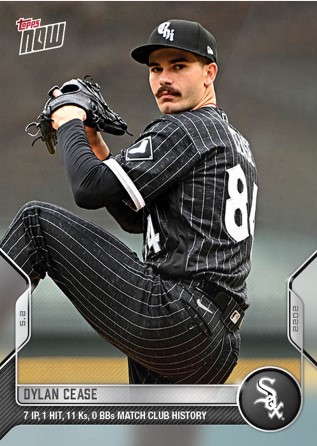


Baseball Roundtable June Wrap Up … Immaculate Innings, Three-Homer Games, Cycles, a No-Hitter and More

It’s July first and that means it’s time for Baseball Roundtable’s June Wrap Up – a look at the stats and stories that grabbed The Roundtable’s attention in over the previous month; Baseball Roundtable’s Pitchers and Players of the Month; the Trot Index; and more.

And, there was plenty going on in June:

  • Three cycles and a no-hitter;
  • Two Immaculate Innings in one game;
  • Three Pirates logging three-homer games;
  • One player (Yordan Alvarez), hitting over .400 for the month;
  • A new MLB team record for home runs in June;
  • Two managers named Joe let go;
  • A catcher in June’s NL top three in stolen bases;
  • Three teams playing .700+ ball for the month; and
  • More.

Read on for the stats and stories, but first Baseball Roundtable’s Players and Pitchers of the Month –   starting with a special recognition.

Special Recognition …. It’s Sho(hei) Time

Before, we get into the Players and Pitchers of the Month, Baseball Roundtable needs to give special recognition to Shohei Ohtani. He may not have been the best hitter or best pitcher of the month for June, but he was the best hitter and pitcher in any month in my lifetime.

On the mound, Ohtani went 4-1, 1.52 in five starts – fanning 38 batters in 29 2/3 innings. On June 22, he set a career game high in strikeouts, fanning 13 Royals in an eight-inning, two-hit, no-run performance.  He ended the month with an active 21 2/3-inning scoreless streak.  At the plate, Ohtani hit .298, with six home runs and 17 RBI in 26 games.  His month included an 11-game hitting streak (June 4-16) during which he hit .372 and a career-high eight-RBI game on on June 21 (against the Royals).

Something to Think About … A Royal Bashing

On June 21, Shohei Ohtani hit two home runs and drove in eight runs in a game against the Royals. The very next day, he took the mound against those same Royals and fanned 13 in an eight-inning scoreless outing. 


—–Baseball Roundtable Players and Pitchers of the Month—–

NATIONAL LEAGUE

Player of the Month – Kyle Schwarber, LF, Phillies

Kyle Schwarber put up a .272-12-27 month of June, leading the NL in June RBI and  all of MLB in June home runs and runs scored (27).  Schwarber also drew 19 walks (second in the NL) and put up the NL’s second-best slugging percentage (among qualifiers) at .695. Schwarber had eight multi-RBI games in June and  scored multiple runs in seven contests.

Honorable Mentions:  Braves’ SS Dansby Swanson had a solid month (.330-7-19) – led the NL in June safeties (37) and was in the NL top ten in average, home runs, RBI and runs scored and stole three bases in three tries.. Cardinals’ 1B Paul Goldschmidt hit .323 for the month. his eight home runs were third in the NL, his 22 RBI fourth and his 25 runs scored fourth.  Nationals’ 1B Josh Bell chopped in a (.358-7-18); and, finally, there is Padres’ 2B Jake Cronenworth, whose 24 June RBI were second in the NL, 24 runs scored fourth. Cronenworth hit  .315 with  four home runs.

Pitcher of the Month – Tony Gonsolin, RHP, Dodgers

Gonsolin went 4-0 in five June starts (one of just three NL pitchers with at least four June wins), putting up a sterling 1.24 ERA (lowest among NL pitchers with 25 or more June innings). The Dodgers won all five of Gonsolin’s starts, as he gave up just four runs in 29 innings pitched – walking seven and fanning 25. I might have been swayed slightly by Gonsolin’s overall record  at the end of June 9-0, 1.58.

Honorable Mentions: LHP Carlos Rodon of the Giants went 2-0 in five starts, but deserved better.  His 1.25 ERA was the second-lowest among NL moundsmen with at least 25 June innings, his 41 strikeouts (in 36 innings) were third.  Sandy Alcantara of the Marlins put up a stingy 1.89 ERA in six starts – going 3-1 for the month.  He also led the NL in June innings (47 2/3) and was eleventh in strikeouts with 31 (just eight  walks). In his six June starts, he never went less than seven innings.

__________________________________

AMERICAN LEAGUE

Player of the Month – Yordan Alvarez, DH, Astros

Photo: Alvarez Flickr user thatlostdog–, CC BY 2.0 <https://creativecommons.org/licenses/by/2.0>, via Wikimedia Commons

Wow!  I’m also reluctant to pick a DH as Player of the Month, but I also cannot ignore Alvarez’ .418 average for the month (highest in MLB) and his MLB-leading 28 June RBI. His nine  home runs also put him in the AL top five. Alvarez  also scored 19 runs during the month,

Honorable Mentions: Blue Jays’ 1B  Vlad Guerrero, Jr. hit .283 for the month, with nine home runs, 22 RBI (third in the AL) and 22 runs scored (second); Blue Jays’ C Alejandro Kirk had a .341-7-18 June (more on Kirk in the Surprise Player of the Month section).

Pitcher of the Month – Shane McClanahan, LHP, Rays

McClanahan went 3-1, with a 1.36 earned run average in five June starts – fanning 42  (second in the AL) in 33 innings pitched (also second). He went at least six innings in all his starts and struck out at least seven each time out (a high of ten, in seven innings, against the Pirates in his final June appearance).

Honorable Mentions: Nick Pivetta, RHP, Red Sox went 4-1, 2.25 in six June starts. He pitched an AL-tops 40 innings during the month, fanning 40 batters; Emmanuel Clase, RHP, Guardians saved an MLB-high eleven games (in eleven opportunities) in June, giving up no runs on seven hits and no walks (16 whiffs) in 15 innings; Tyler Wells, RHP, Orioles. The Orioles put up a .500+ record in June, thanks in great part to Wells’ 4-0, 2.42 performance (over five starts). The Orioles won all five of those starts. In his final three starts of the month, Wells went 3-0, 1.13 and held opponents to a .158 average.  I would  still like to see a little more length from Wells (averaging just over five innings per starts in June, but he earned this spot.

Baseball Roundtable Extra

Not sure how to handle Dylan Cease of the White Sox, who put up a minuscule 0.33 earned run average in five June starts (just one earned run in 27 1/3 innings) and also led the league in June whiffs with 45. Still, he was charged with  nine unearned runs and pitched more than five frames in only two of his June starts.

_____________________________________________

Surprise Player(s) of the Month – Tie: Alejandro Kirk, C, Blue Jays & Michael Harris, CF, Braves

Okay, Alejandro Kirk is not a surprise to Blue Jays’ fans. They have been waiting for  the 23-year-old Kirk, in his second MLB season, to break out.  In four minor-league campaigns, he hit .318-19-114 in 165 games. Last season, a left hip flexor injury hampered his progress and he hit .242-8-24 in 60 games for Toronto. Listed at 5’8” and 245 pounds, Kirk has shown agility behind the plate and ability (and a good eye) at the plate. In June, he went .341-7-18 in 25 games (and his walks outnumbered his whiffs 13-to-11). On the season, he stands at .319-10-31.  Looks like the Jays will be enjoying  Kirk’s exciting brand of play for some time coming.

The Braves’ 21-year-old rookie CF Michael Harris is another player who is probably less of a surprise to home town fans then he is to Baseball Roundtable. Harris, who made his MLB debut May 28, was a .292 hitter over 197 minor-league games (three seasons). He hit just .154 (2-for-13) in four May games, but caught fire in June, goig .347-4-16 in 27 games. His 35 June base hit trailed only teammate Dansby Swanson in the NL.

______________________________________________________

TROT INDEX … A REGULAR BBRT FEATURE

Through June 2022, 34.5 percent of the MLB season’s 85,566 plate appearances ended in a trot (back to the dugout, around the bases, to first base). We’re talking about strikeouts, home runs, walks, hit by pitch and catcher’s interference – all outcomes that are, basically, devoid of action on the base paths or in the field. Here’s the breakout: strikeouts (22.2%); walks (8.3%); home runs (2.8%); HBP (1.1%); catcher’s interference (less than 1%). Personally, I’d like more action in the field of play.

The 34.5 percent figure is down slightly from 2021’s full season 36.3 percent.  2020’s 37.3 percent;  2019’s 36.2 percent and 2018’s 34.8 percent.  

_________________________________________________


A few observations about the three twenty win squads:

  • The Braves didn’t lose their first game in June until the 17th. In that 14-game in streak, they outscored their opponents 101-41; outhit them .292 to .207; out-homered them 34-11; and put up a 2.72 ERA to their opponents’ 6.80.  The Braves 20+ win month was led by SS Dansby Swanson (.330-7-19), the surprising rookie CF Michael Harris (.347-4-16) and C Travis D’Arnaud (.304-7-19); starter Kyle Wright (5-1, 3.52) and closer Kenley Jansen (eight saves).
  • The Yankees won 15 of their first sixteen game in June, outscoring their opponents 102-37.  They scored ten or more runs five times in the streak and shutout their opponents five times.  They did a lot of their June damage with power.  Their 58 June home runs were an MLB team record for the month, their 155 runs were second in MLB – despite  .235 average (21st in MLB).  Their 2.94 June ERA was the lowest in the majors – and the bullpen led the way. In June, the Yankee starters’ put up a 3.89 ERA, the bullpen ERA was 1.34.  Relievers Micheal King, Clay Holmes and Lucas Leutge made a combined 32 appearances in June and went 4-1, with nine saves and a 0.74 ERA.
  • Boston’s surge was built in a great on their pitching.. Their 3.02 June ERA was the third best in the MLB (and also third-best in their own division), while they were tenth in runs scored. In June, their starters went 16-1, led by Nick Pivetta (4-1, 2.25); Micheal Wacha (3-0. 3.03) ; Rich Hill (3-1, 3.00); and Josh Winckowski (3-0, 2.12). 3B Rafael Devers (.292-6-19) and LF Alex Verdugo (.337-3-19) were keys to the offense.

——-Team  Statistical Leaders for June  2022 ———-

RUNS SCORED

National League – Braves (155); Padres (153); Phillies (146)

American League – Blue Jays (170); Yankees (155); White Sox (137)

The fewest June  runs were scored by the A’s – just 75. The Mets tallied the fewest runs in the NL at 100.

AVERAGE

National League – Cubs (.273); Reds (.272); Braves (.267)

American League – Blue Jays (.285);  White Sox (.281) Red Sox (.267)

The lowest team average for June  belonged to the Diamondbacks at .206.

HOME RUNS

National League – Braves (54); Pirates (44); Phillies (43)

American League –  Yankees (58); Blue Jays (50); Twins (40)

The Tigers  had the fewest home runs for June  at 13. The only other team under 20 for the month was the Guardians at 16.

Toronto led MLB in June slugging percentage at .504.  The Braves led the NL at .449

STOLEN BASES

National League – Marlins (35); Dodgers (22); Phillies (20)

American League – Rangers (23); Guardians (21); Yankees (20); Mariners (20)

The Twins stole the fewest sacks in June   – just three.  The Dodgers  stole 22  bags and were caught only once.  The White Sox pilfered 12 sacks without being caught.

WALKS DRAWN

National League –   Phillies (100); Padres (95); Nationals (93))

American League – Yankees (122); Mariners (111); Astros (95)

The Blue Jays  led MLB  in on-base percentage for June at .353. The Cubs led the NL  at .342.

BATTER’S STRIKEOUTS

National League – Pirates (263); Giants (242); Braves (242)

American League – Angels (279); Mariners (256); Orioles (240)

Astros’ batters fanned the fewest times in June  (178).


Bonus Stat

The  Blue Jays led MLB in total bases in June at 503. By contrast, the A’s were 30th, with 286 total bases in June.

Earned Run Average

National League – Giants (3.37); Dodgers (3.39); Braves (3.53)

American League – Yankees (2.96); Rays (3.01); Red Sox (3.02)

Four teams had June  ERAs of 5.00  or higher– Cubs (5.96); Reds (5.68); A’s (5.25; Tigers (5.07)

STRIKEOUTS

National League – Braves (285); Cubs (252); Reds (240)

American League – White Sox (260); Yankees (254); Angels (249)

The Braves averaged an MLB-best 10.47 strikeouts per nine innings in June. The White Sox averaged an AL-best 9.63.

FEWEST WALKS SURRENDERED

National League  – Giants (56); Phillies (66); Dodgers (68)

American League –  Orioles (67); Rays (69); Red Sox 69)

The Giants walked a stringiest 2.19  batters per nine frames in June.  The Athletics walked an MLB’s highest 4.04 per nine innings for the month.

SAVES

National League – Braves (11); Brewers (8); Nationals (8)

American League – Guardians (12); Orioles (10); Yankees (10); Astros (1)

WALKS AND HITS PER INNING PITCHED (WHIP)

National League – Dodgers (1.12); Phillies (1.12); Braves (1.13); Giants (1.13)

American League – Yankees (1.04); Astros (1.07); Mariners (1.12)

Bonus Stat:

The Braves were the only team to fan at least four times as many batters as they walked in June – 4.07 K/BB.

–JUNE HIGHLIGHTS–

Walk(off) This Way!

The Yankees notched five walk-off wins in June, bringing their total walk-off victories for 2022 to ten.  The record for walk-off victories in a season is 18, by the 78-76 Pittsburgh Pirates. The Pirates had eight walk-off victories through June that season.

Yankees 2022 Walk-Off Victories

April 8, 6-5, 11 innings, over Boston … It all started on Opening Day with a Josh Donaldson (3B)  11th-inning RBI single.

April 23, 5-4, over the Guardians …. The Yankees came into the bottom of the ninth down 4-3, but got an RBI double from SS Isiah Kiner-Falefa and a walk-off RBI single from PH Gleyber Torres.

May 8, 2-1, over the Rangers … A ninth-inning solo home run by 2B Gleyber Torres sparked the win.

May 10, 6-5, over the Blue Jays … A three-run walk-off home run from CF Aaron Judge brought the Yankees back from a 5-3 ninth-inning deficit.

May 24, 7-6, over the Orioles (11 innings) … A walk-off RBI single from C Jose Trevino won this one.

June 5, 5-4, over the Tigers (10 innings) … The gift runner scored on a sacrifice fly by DH Josh Donaldson.

June 10, 2-1, over the Cubs (13 innings) … C Jose Trevino drove in the gift runner with a walk-off single.

June 16, 2-1, over the Rays … A ninth-inning solo home run from 1B Anthony Rizzo put the Yankees in the win column.

June 23, 7-6, over the Astros … The Yanks came into the bottom of the ninth down 6-3. A three-run home run (after two walks) by LF Aaron Hicks tied it and a walk-off RBI single by CF Aaron Judge secured the victory.

June 26, 6-3, over the Astros (10 innings) … CF Aaron Judge poked a three-run homer in the ninth.

Say It Ain’t So, Joe(s)!

On June 3, with the Phillies standing at 22-29, manager Joe Girardi became the first MLB manager  fired in 2022 – with bench coach Rob Thomson named interim manager,

Girardi, who  took over the Phillies with 60 games left in the 2020 season, had a 132-141 record at their helm.  He has a 1,120-936 record in 14 managerial seasons (Marlins, Yankees, Phillies), won the 2006 National League Manager of the Year Award and took the 2009 Yankees to the World Series Championship. Since Girardi left the Phillies, they have gone 15-6.

Just four days later, we saw the second managerial firing of the season, as the Angels let manager Joe Maddon go . (Third base coach Phil Nevin took over.) The Angels were 27-29 at the time – and on a 12-game losing streak. In 19 managerial seasons (Angels, Rays, Cubs), Maddon was 1,382-1,217.  He won the AL Manager of the Year Award in 2008 and 2011 and the NL Manager of the Year Award in 2015. He led the Cubs to the World Series Championship in 2016.  The Angles are 10-12 since Maddon left.

Hmmm! Didn’t know that rule.

In the ninth innings of a Dodgers/Mets clash (In Los Angeles) on June 5 – and LA trailing 9-4 – Dodgers’ skipper Dave Roberts sent utility player Zach McKinstry to the mound to open the inning.   Umpiring Crew Chief C.B. Buckner, however, nixed what would have been McKinstry’s first MLB mound appearance, citing an MLB rule that prohibits managers from using a position player as a pitcher in games in which they face a deficit of five runs or fewer. After some heated discussion, Roberts sent reliever Evan Phillips to the mound and he pitched a one-hit, two-whiff ninth. The Dodgers did not score in the bottom of the frame and lost 9-4.

So-o-o-o Close – I Just Hader to See That.

Photo: D. Benjamin Miller, Public domain, via Wikimedia Commons

When Brewers’ closer Josh Hader came to the mound June 7  to protect a 2-1 Milwaukee lead (over the Phillies), Brewers’ fans pretty much though it was game over.  After all, Hader had not given up a run in his last 40 appearances – tying Ryan Pressly’s record for consecutive scoreless outings (set with the Astros in 2018).   To this point in the season, Hader had made 19 appearances with 18 saves, no blown saves, not a single earned run, just four hits and six walks and 28 strikeouts in 17 2/3 innings.

Well, Phillies’ 3B Alec Bohm ended the scoreless innings  streak with a solo home run leading off the ninth and, two batters later, pinch hitter Max Vierling (hitting .170-0-4 at the time) took Hader deep to tag  him with the loss.

Save the Last Dance for Me

Josh Hader opened the 2022 season by recording a save in his first 18 appearances. That is the record for most consecutive appearances with a save to start a season (more #InBaseballWeCountEverything).  The previous record was 12 – held by Lee Smith (Orioles, 1994) and Jose Mesa (Pirates 2005).

Three Cycles in the Month – Six is Lucky Number.

On June 6 (that’s 06/06),  Mets’ 3B Eduardo Escobar hit the second cycle (single, double, triple, home run in the same game) of 2022 and the first of three cycles this June. In a four-for-five, three run, six-RBI game against the Padres (in San Diego), he hit a two-run single in the first inning; a double leading off the fourth; popped out to short in the fifth; hit a two-run home run in the eighth; added a two-run triple in the ninth.  The Mets won 11-5.

Six also played a role in the third cycle of them month, as Orioles’ leadoff hitter and CF Austin Hays hit for the cycle – in a game that was called after just six innings (rain). (The Orioles beat the Nationals 7-0 in Baltimore.) Hays went four-for-four, with three runs and three RBI. He singled to lead off the bottom of the first; hit a home run to lead off the Orioles’ third; tripled with two-out in the fourth; and rapped a two-run double in the sixth. For more on the quickest and slowest cycles ever, click here.

In between these two cycles – on June 11 – Angels’ 1B Jared Walsh hit for the cycle in a four-for-five, one-run, three-RBI game against the Mets (in Anaheim). Walsh started his day with a swinging strikeout in the first, but it was “all systems go” after that. He singled in the third; doubled in the fifth; homered to lead off the seventh; and lashed a two-run triple in the eight.  The Angels, by the way, triumphed 11-6.

Half Way There

There have been four cycles so far in 2022.  The most cycles in any MLB season is eight (2009): Orlando Hudson (Dodgers); Ian Kinsler (Rangers); Jason Kubel (Twins); Mike Cuddyer (Twins); Melky Cabrera (Yankees); Troy Tulowitzki (Rockies); Felix Pie (Orioles); B.J. Upton (Rays).

Party Likes It’s 2011!

Outfielder Charlie Blackmon made his MLB debut with the Rockies on June 7, 2011; flying out to center on the first MLB pitch he ever saw (off the Padres’ Tim Stauffer).  This June 7, he celebrated the 11th anniversary of his big -league debut by coming off the bench to hit a three-run pinch-hit home run (it gave the Rockies  a 5-3 lead) off the Giants’ Jose Alvarez. It was a noteworthy long ball – the 200th home run of Blackmon’s career. He finished June at .267-12-41 on the season and .299-203-672  on his career.

It’s Sho(hei) Time Again.

Shohei Ohtani just keeps showing up in these highlights – and for good reason(s).  On June 9, he proved one again to be a “stopper” on the mound and at the plate – as he played a key role in stopping an Angels’ 14-game losing streak (their last win had come on May 24). Shohei started on the mound and at DH (batting second). In the 5-2 Angels win (in Anaheim), he went two-for-four, with one home run (his 12th of the season) and two RBI and gave up just four hits (two walks) and one run in seven innings, while fanning six.

Here’s a few stats from the Angels 14-game skid:

  • They were outscored 85-40.
  • They hit .217 to the opponents’ .283 and were out-homered 19-9.
  • The lost eight at home and six on the road.
  • Seven of the losses were by one run.
  • They were shut out three times, including two 1-0 losses.
  • Their pitching staff put up a 6.75 ERA, to the opponents’ 2.69.

Twins Rake Yankee Ace Gerrit Cole … Still Lose.

On June 9, the Twins became just the sixth team to open a game with three straight home runs – and they did it against Yankee ace Gerrit Cole, who had never given up three home runs in any inning (much less consecutively).

Twin’ 1B Luis Arreaz opened the bottom of the first by taking a 2-2 pitch out of the park to deep RF; CF Byron Buxton then ripped the next Cole offering out of the park down the LF line; SS Carlos Correa then launched an 0-1 pitch in the left field stands.   Cole followed with a six-pitch walk to Jorge Polanco before settling down and fanning Max Kepler, Gary Sanchez and Trevor Larnach to end the inning.

The Twins continued their barrage off Cole in the second frame, scoring on a Buxton three-run homer to left. They added a seventh run on a Larnach homer to center in the third. Cole was pulled after 2 1/3 innings, trailing 7-3 and having surrendered five round trippers.  Still, the surging Yankees managed to take Cole off the hook, topping the Twins 10-7.

Wondering about the most home runs surrendered by a pitcher in a single game.  Click here.

Slow Ride … Take it Easy.

On June 12, as the Cubs were absorbing an 18-3 loss at the hands (bats) of the Yankees, Cubs’ 1B Frank  Schwindel made his second MLB mound appearance – pitching a two-hit, one-run ninth.  Why did he make these highlights?  The first pitch he threw in the inning was a 35.1 MPH (knuckleball?) to Yankees’ catcher Kyle Higashioka, who hit to deep left for his first dinger of the season.  It turned out to be the slowest pitch ever tracked by Statcast to be hit for a home run. Higashioka, by the way, came into the game hitting .148-0-5 on the season (88 at bats).  Schwindel made  three mound appearances in June, going 0-0, 18.00 (six earned runs in three innings pitched).

Like Father like Son.

On June 13,  Vlad Guerrero Jr. played his 403rd career MLB game – collecting three hits in five at bats including a home run.  At this point in his career, Guerrero Junior had 87 MLB home runs and a .363 on-base percentage.  After 403 games in his career, Vlad Guerrero Senior had an identical 87 long balls and a nearly identical .364 OBP.  Kind of like father-son combo Cecil and Prince Fielder each retiring with 319 career home runs.,

The Rangers Didn’t have a Prayer.

On June 15, Astros’ pitchers Luis Garcia and Phil Maton pitched their way into the record books. The two Houston hurlers each tossed an “Immaculate Inning” … an inning facing just three batters and fanning the side on nine pitches. It was the first-ever MLB game in which two pitchers each tossed an Immaculate Inning and, of course, also made them the first two teammates to toss an Immaculate Inning in the same game.

Garcia tossed his nine-pitch, three-whiff fame in the bottom of the second, while Maton achieved the feat in the bottom of the seventh. The Astros, by the way, won the game  (started by Garcia) 9-2 and four Houston pitchers notched a total of 14 strikeouts. Also of note is that Rangers Nathaniel Lowe, Ezequiel Duran and Brad Miller (the 6-7-8 hitters) were the victims in both Immaculate Innings – making them, of course, the first three players to be victims in two Immaculate frames in the same game.

For more on this game and Immaculate Innings, click here.

Riley Greene Starts MLB Career with a Bang.

Tigers’ 3B Riley Greene, Detroit’s first-round pick (fifth overall) in the 2019 MLB draft (out of Paul J. Hagerty High School in Florida) made it to the big leagues as a 21-year old – debuting on June 18 – in a Tigers 14-7 win over the Rangers (in Detroit).  In five plate appearances, Greene had two singles and two walks, scoring three runs,  He ended his first MLB month at .286-0-2 in 10 games. The top Detroit prospect hit .291-3-120 in three minor-league seasons (198 games).

Trout Carries Angels Against Mariners.

Fromm June 16 through June 19, the Angels faced off against the Mariners (in Seattle). In that five-game set, Angels’ CF Mike Trout went 6-for-20 (.300). More important, five of his six hits were home runs and, according to STATS, he became the first player to hit four game-winning home runs in a single series. (The Angels won four of the five games).

Happy Fathers’ Day, Dad.

On June 19 ( Fathers’ Day), Pirates’ rookie LF Jack Suwinski was proud to have his father Tim in the stands as the Pirates took on the Giants in Pittsburgh. The younger Suwinski did not disappoint – notching his first-ever three-homer game at any level, including a walk-off home run in the bottom of the ninth to give the Pirates a 4-3 win. For the day, the 23-year-old Suwinski was three-for-three (with a walk) with three runs scored and three RBI.

Old Guys (like me) Say Thank You, Justin Verlander.

Let’s face it, the Yankees are truly the beasts from the Bronx this year – finishing June with a 22-6 record on the month and 56021 for the season.  On June 24, 39-year-old Astros’ starter Justin Verlander faced off against the New Yorkers in Yankee Stadium – with the Yankees on a 15-game home win streak. The veteran right-hander was not intimated, pitching seven four hit, one run innings (three whiffs), as the Astros won 3-1. With the win the two-time Cy Young Award winner ran his age-39 season record to 9-3, 2.22.  Verlander picked up a tenth win on June 29, holding the Mets scoreless over wight innings.  Verlander’s been a true stopped for the Astros, going 6-0 in games he started after a Houston loss.

Astros Combine to No-Hit Yankees Again.

On June 25, Astros’ pitchers Cristian Javier, Hector Norris and Ryan Pressly combined to pitch a no-hitter against the Yankees in Yankee Stadium.  It was the third no-hitter and second combined no-hitter of the 2022 season. It was also the first time the Yankees had been held hitless since June 11. 2003, when the Astros (again) used a record six pitchers in no-hitting the Bronx Bombers.  For more on combined no-hitters, click here.

June  Feel Good Story

Mark Appel was the first overall pick (Astros)in the 2013 MLB draft – after a 10-4, 2.12 senior season at Stanford University. In four NCAA seasons, he had gone 28-14, with a 2.91 ERA and 372 strikeouts in 377 2/3 innings. In his junior and senior years, he went 20-6, 2.35, with 260 whiffs in 229 1/3 innings.  In 2012, he was named the National College Baseball Hall of Fame Pitcher of the Year. Big things seemed right on the horizon.

Nine years, 123 minor-league appearances, a pair of shoulder injuries, elbow surgery, a three-year retirement from baseball and and a two-season comeback later, the thirty-year-old righty  finally received the call to the big leagues (Philllies). At the time, he was 5-0, 1.61 as a reliever for the Triple-A Lehigh Valley Iron Pigs.  On June 29, Appel made his MLB debut and recorded his first big-league strikeout – pitching a scoreless ninth innings in a 4-1 Phillies loss to the Braves. A lesson in perseverance for us all. 

Now, That Was a  Pretty Kuhl Surprise.

Rockies’ 29-year-old right-hander Chad Kuhl came into his June 27 start against the Dodgers with 97 MLB starts on his MLB resume (over six seasons (Pirates/Rockies). He had a 29-35, 4.38 career MLB record, a career average of five innings per start, no complete games – and the deepest he had gone in any 2022 start was 6 1/3 innings.  He was starting for the last-place Rockies, against the first-place Dodgers. Kuhl came into the game 4-5, 3.95 on the season, while his mound opponent –  Tyler Anderson –  was 8-0, 3.00. To top it off, the game was being played in hitter-friendly Coors Field.

Well, Kuhl surprised a lot of people.  He threw his first-ever MLB complete game and his first-ever MLB shutout. He held the powerful Dodgers to just three hits (no walks, five whiffs). Kuhl faced just 29 hitters and only one Dodger got as far as second base as the Rockies triumphed 4-0. It’s one cool game that Chad Kuhl will never forget.

Baseball Roundtable Extra

Philip Humber threw just one complete game in eight MLB seasons (2006-13 … Mets, Twins, Royals, White Sox, Astros). It came on April 21, 2012 for the White Sox – against the Mariners in Seattle – and it was a nine-strikeout perfect game. Humber was an unlikely candidate for a perfecto, he retired with a 16-23, 5.31 record, 14-21, 5.20 as a starter.

Three Is Company

On June 30, Pirates’ catcher Martin Perez, who came into the game against the Reds with a .129-3-6 stat line, enjoyed a four-for-four day, with three runs scored, five RBI … and three home runs. It was his first-ever MLB multi-home run contest (in 184 games over five seasons). Perez hit a two-run homer in the fourth inning; another two-run shot in the sixth; and a solo home run in the eighth.  The Pirates needed all his fireworks, as they topped the Brewers 8-7 in Pittsburgh.

Perez’ offensive outburst came just one day after Pirate CF Bryan Reynolds had a three-homer game (with three runs scored and six RBI) in another 8-7 Pirates win (this one over the Nationals in Washingon D.C. It was Reynolds’ second multi-homer game in 421 MLB games over four seasons.

Earlier in the month , on June 19, Pirates’ LF Jack Suwinski also recorded a three-home game (three runs scored, three RBI), as the Pirates topped the Giants 4-3 in Pittsburgh. Like Perez, it was the rookie outfielder’s first multi-homer game.

Together, Suwinski, Reynolds and Perez made the Pirates the first MLB team to have three players notch three-homer games in the same month.

——-Individual Statistical Leaders for June 2022———

AVERAGE (75 June  at bats minimum)

National League – Garret Cooper, Marlins (.378); Josh Bell , Nationals (.358); Michael Harris, Braves (.347)

American League –  Yordan Alvarez, Astros (.418); Amed Rosario, Guardians (360); Lourdes Gurriel, Blue Jays (.355)

The lowest April  average (among players with at least 75 at bats in the month)  belonged to the Mariners Adam Frazier at .144 (13-for-90).

HOME RUNS

National League – Kyle Schwarber, Phillies (12); Pete Alonso, Mets (9); five with 8

American League –  Aaron Judge, Yankees  (11);  Anthony Rizzo, Yankees (10); Mike Trout, Angles (10)

The Astros’ Yordan Alvarez had the highest June  slugging percentage (among players with at least 75 at bats) at .835.  The NL  leader was the Nationals Josh Bell at .695.

RUNS BATTED IN

National League –Kyle Schwarber, Phillies (27); Jake Cronenworth, Padres (24); Luke Voit, Padres (23)

American League –  Yordan Alvarez, Astros (28); Austin Hays, Orioles (23); Vlad Guerrero, Jr., Blue Jays (22); Kyle Tucker, Astros (22)

Jake Cronenworth of the Padres and Brandon Nimmo of the Mets led MLB in being hit by a pitch in June, with six plunkings each.

HITS

National League – Dansby Swanson, Braves (37); Michael Harris, Braves (35); Trea Turner, Dodgers (35); Bryan Reynolds, Pirates (35)

American League –  Amed Rosario, Guardians (41); Jose Abreu, White Sox (37); Teoscar Hernandez, Blue Jays (35)

The Astros’ Yordan Alvarez led MLB (players (with at least 75 June at bats) in on-base percentage at .510. The NL leader was the Nationals Josh Bell at .447.

DOUBLES

National League –  Jake Cronenworth, Padres (12); Brandon Rogers, Rockies (10): Luke Voit, Padres (10)

American League –  Jose Ramirez, Guardians (14); Ryan Mountcastle, Orioles (11); Andy Rutschman, Orioles (10); Teoscar Hernandez, Blue Jays (10); Luke Voit, Padres (10)

TRIPLES

National League – Jose Azocar, Padres (3); Harrison Bader, Cardinals (3); Didi Gregorius, Phillies (3)

American League – Seven with two

The Orioles’ Ryan Mountcastle led MLB in June extra-base hits with 18.  He had 12 singles, 11 doubles and seven home runs.

STOLEN BASES

National League –  Jon Berti, Marlins (18); Tommy Edman, Cardinals (7); J.T. Realmuto, Phillies (6)

American League – Randy Arozarena, Rays (10): Dylan Moore, Mariners (7); five with six

The Marlins’ Jon Berti was 18-for-19 in steal attempts in June.

WALKS

National League – Juan Soto, Nationals (21); Kyle Schwarber, Phillies (19); Paul Goldschmidt, Cardinals (18); Connor Joe, Rockies (18)

American League – Jesse Winker, Mariners (23); DJ LeMahieu, Yankees (20): Shohei Ohtani, Angels (17); Yandy Diaz, Rays (17)

The Yankees’ Aaron Judge led MLB in June intentional walks with five.

BATTER’S STRIKEOUTS

National League – Christopher Morel, Cubs (42); Luke Voit, Padres (41); Mike Yastrzemski, Giants (36): Joe Suwinski, Pirates (36)

American League – Eugenio Suarez, Mariners (42); Brandon Marsh, Angels (38); Jorge Mateo, Orioles (32); Joey Gallo, Yankees (32)

PITCHING VICTORIES

National League – Kyle Wright, Braves (5-1); Tony Gonsolin, Dodgers (4-0); A.J. Minter, Braves (4-1)

American League – Jameson Taillon, Yankees (4-0); Tyler Wells, Orioles (4-0); Diego Castillo, Mariners (4-1); Logan Gilbert, Mariners (4-11); Alek Manoah, Blue Jays (4-1); Shohei Ohtani, Angels (4-1); Nick Pivetta, Red Sox (4-1); Ross Stripling, Blue Jays (4-1); Justin Verlander, Astros (4-1)

The Giants’ Madison Bumgarner led all pitches in June losses – going 1-5, 4.06 in six June starts. Just to show that life is not always fair, the Braves’ Ian Anderson went 3-2, with a 6.91 ERA.

EARNED RUN AVERAGE (at least 25 innings pitched)

National League –  Tony Gonsolin, Dodgers (1.24); Carlos Rodon, Giants (1.25); Sandy Alcantara. Marlins (1.89)

American League – Dylan Cease, White Sox (0.33); Dean Kremer, Orioles (1.29); Shane McClanahan, Rays (1.36)

Among pitchers with at least 25 May innings, the Reds’  Mike Minor had the highest May ERA at 7.71 – going 1-4 in five starts.

STRIKEOUTS

National League – Charlie Morton, Braves (45 – 30 2/3 IP); Aaron Nola, Philllies (43 – 43 IP); Corbin Burners, Brewers (41  – 28 2/3 IP); Carlos Rodon, Giants (41 – 36 IP)

American League – Dylan Cease, White Sox (45 – 27 1/3 IP ); Jon Gray, Rangers (44 – 37 2/3 IP); Shane McClanahan, Rays (42 – 33 IP); Shane Bieber, Guardians (42 – 37 1/3 IP)

By comparison to the above leaders, the Orioles’ Tyler Wells went 4-0, 2.42 in five June starts and fanned just 15 batters in 26 innings.

SAVES

National League – Kenley Jansen, Braves (8); Josh Hader, Brewers (6); Tanner Rainey, Nationals (6); Tanner Scott, Marlins (6)

American League – Emmanuel Clase, Guardians (11); Clay Holmes, Yankees (8); Ryan Pressly, Astros (8)

AL June saves leader Emmanuel Clase was 11-for-11 in save opportunities with a 0.00 ERA in 14 appearances.

WHIP (Walks +  Hits per Inning Pitched – 25 innings minimum)

National League – Tony Gonsolin, Dodgers (0.72); Mike Mikolas, Cardinals (0.79); Aaron Nola, Phillies (0.83)

American League – Shane McClanahan, Rays (0.70); Justin Verlander, Astros (0.83); Yu Darvish, Padres (0.84)

BONUS STAT

Among pitchers with 25 May innings , the Dodgers Tony Gonsolin held opponents to the lowest June batting average (.141 )

__________________________________________

Of the season ended June 30,the post-season teams would be:

American League: Yankees, Astros, Twins.  Wild Cards: Red Sox, Blue Jays Guardians.

Nationals League: Dodgers, Mets, Brewers;  Wild Cards: Padres, Braves; Cardinals


——-Team  Statistical Leaders Through June  2022 ———-

RUNS SCORED

National League – Dodgers (379); Cardinals (373); Phillies (370)

American League – Yankees (384); Red Sox (364); Blue Jays (361)

The fewest  runs (through June) were scored by the Tigers – 222. The Pirates tallied the fewest runs in the NL at 282.

AVERAGE

National League – Rockies (.261); Mets (.256); Nationals (.254); Cardinals (.254)

American League – Red Sox (.261); Blue Jays (.257); White Sox (.253)

The lowest team average through June  belonged to the A’s at  at .212. The Diamondbacks were at the bottom of the NL at .215,

HOME RUNS

National League – Braves (116); Brewers (105); Phillies (99)

American League –  Yankees (127); Astros (103); Blue Jays (101)

The Tigers  had the fewest home runs through June  at 42 – the only team under 50. The Nationals  trailed the rest of the NL at 61.

The Braves led MLB in slugging percentage through June   at .439  The Blue Jays led the AL at .435 .

STOLEN BASES

National League – Marlins (57); Cardinals (577); Dodgers (52)

American League – Rangers (62); Rays (53); Guardians (49)

The Twins stole the fewest sacks through June (13 in 23 attempts  The Rockies were at the bottom of the NL with 14 in 26 attempts.  The White Sox stole 35 bases through June and were caught just twice.

WALKS DRAWN

National League –   Dodgers (287); Padres (275); Giants (274)

American League – Yankees (292); Mariners (285); Astros (264)

The Dodgers  led MLB  in on-base percentage through  June at .328. The Red Sox led the AL  at .326.  The A’s had MLB’s lowest  OBP through June at .274.

BATTER’S STRIKEOUTS

National League –Braves (729); Pirates (695); Brewers (689)

American League – Angels (735);  Orioles (698); Mariners (667)

Guardians’ batters fanned the fewest times through  June  (509).

Earned Run Average

National League – Dodgers (2.98); Padres (3.48); Cardinals (3.77)

American League – Yankees (2.92); Astros (2.96); Rays (3.24)

Two teams had  ERAs through June of 5.00  or higher – Reds (5.51); Nationals (5.10).

STRIKEOUTS

National League – Braves (741); Brewers (723); Mets (701)

American League – Yankees (703); White Sox (700); Rays (656)

The Braves averaged an MLB-best 9.73 strikeouts per nine innings through  June. The White Sox averaged an AL-best 9.53.

FEWEST WALKS SURRENDERED

National League  – Giants (192); Dodgers (193); Mets (224)

American League –  Rays (192); Yankees (198); Blue Jays (205)

The Giants, Rays, Dodgers and Yankees each walked an MLB-lowest 2.6 batter per nine innings through June.

SAVES

National League – Brewers (31); Braves (26); Padres (26)

American League – Yankees (27); Astros (23); Blue Jays (23)

Bonus Stat

Only four pitching staffs gave up 100 or more home  runs through June: Nationals (108); Reds (107); Cubs (107); and Mariners (102). By contrast, the Giants and Astros gave up an MLB-low 64 homers through June.

______________________

 Second Bonus:

The Mariners and Padres committed the fewest errors through June (28) and also tied for the top fielding percentage at .990.  The Rockies committed an MLB-high 58 fielding miscues through June.  


Primary Resources: Baseball-Reference.com; MLB.com; Baseball-Almanac.com; Elias Sports Bureau


BASEBALL ROUNDTABLE ON THE TOP 100 BASEBALL BLOG LIST

100Baseball Roundtable is on the Feedspot list of the Top 1oo Baseball Blogs.  To see the full list, click here.

I tweet baseball @DavidBBRT

Follow/Like Baseball Roundtable’s Facebook Page here.  More baseball commentary; blog post notifications; PRIZES.

Member: Society for American Baseball Research (SABR); The Baseball Reliquary; The Negro Leagues Baseball Museum.
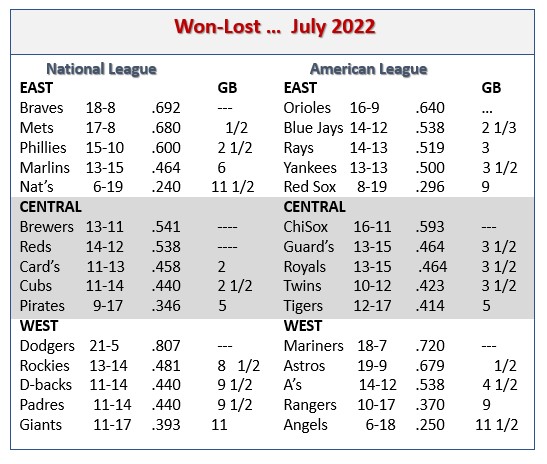


Not Even Mother Nature Can Stop Austin Hays … and other MLB Cycle Tidbits

In yesterday’s (June 22) Orioles/Nationals contest (at Camden Yards) – won by the Orioles 7-0 – Baltimore leadoff hitter and CF Austin Hays completed the fourth MLB cycle in 2022 and the third this month.  And, he did it in a game shortened to six innings by weather (one hour and 46 minutes of rain delays).

Hays singled and scored leading off the first inning; homered leading off the third; tripled in the fourth; and hit a two-run double in the sixth and final inning. Hays saw a total of nine pitches in his four at bats, ending the rainy evening four-for-four, with three runs, three RBI and ten total bases.  Not a bad night’s work.  The cycle balanced out Hays’ previous night’s performance, when he went zero-for-four with four strikeouts as the Orioles lost to the Nationals 3-0. On the season, Hays is .287-10-40.


Fastest Cycle Ever

Now, for those who like to know such things, Hays’ six-inning cycle is not the fastest ever,  The yellow Jersey for MLB cycles belongs to the Rockies’ Mike Lansing, who – on June 18, 2000 – completed a cycle in just four innings.   Notably, Lansing was consistently behind in the counts and three of his four hits came with two strikes.

Lansing, hitting second in the order, hit an RBI triple to right in the first inning (getting the most difficult leg of the cycle out of the way ) on a 1-2 pitch; added a two-run home run (0-1 pitch) in the bottom of the second; hit a two-run double (2-2 pitch) in the bottom of the third (as the Rockies scored nine times to take a 14-1 lead); and then completed the cycle with a single (another 1-2 offering) to right in the fourth. Lansing then struck out in the sixth, before being lifted for a pinch-hitter in the eighth. Lansing ended the day four-for-five, with three runs scored and five RBI, as the Rockies torched the Diamondbacks 19-2 in Denver.

In addition to his fastest-ever cycle, Lansing shares the record for the most home runs in an inning (two). On May 7, 1997, he hit a two-run and three-run homer in a 13-run sixth inning as the Expos topped the Giants 19-3 in San Francisco.  That was his best season in the majors, as he hit .281 and recorded his career highs in home runs (20), RBI (70) and doubles (45).

It’s Been a Hard Day’s Night … Longest Cycle Ever

foliThe Expos’ Tim Foli is the only player to start a cycle one day and complete it the next. On April 21, 1976, Foli collected a single, double and triple in a contest against the Cubbies that was suspended (pre-Wrigley lights) in the top of the seventh due to darkness. When play resumed the following day, Foli added an eighth-inning home run. (The Expos prevailed 12-6.)


Hot Damon … Nearly a Cycle … in the First Inning

One of my favorite stories to share focuses on the night Johnny Damon almost completed a cycle – in the first inning of a 25-8 Red Sox win over the Marlins.  On June 27, 2003, Damon was playing CF and leading off for the Red Sox – as they took on the Marlins in Boston.  In a start that brought Boston fans up out of their seats, Damon was three-fourths of the way to the cycle before the 14-run Boston first inning was over.  Damon’s performance also made him just one of five MLB players to collect three hits in an inning.   If this kind of fact interests you, each of the four other players to achieve a three-hit frame did it in the seventh inning of their contests.

Damon ended his game five-for-seven, with three runs scored, three RBI, a double, a triple and three singles.  He, unfortunately, did not get the cycle despite his fast start.

Primary Resources: Baseball-Reference.com; Baseball-Almanac.com.


BASEBALL ROUNDTABLE ON THE TOP 100 BASEBALL BLOG LIST

100Baseball Roundtable is on the Feedspot list of the Top 1oo Baseball Blogs.  To see the full list, click here.

I tweet baseball @DavidBBRT

Follow/Like Baseball Roundtable’s Facebook Page here.  More baseball commentary; blog post notifications; PRIZES.

Member: Society for American Baseball Research (SABR); The Baseball Reliquary; The Negro Leagues Baseball Museum.


Joe Wilhoit … One of Baseball’s Greatest Comebacks

Joe Wilhoit. Photo: Public Domain via WikiCommons

Today seems like an appropriate time to revisit one of professional baseball greatest comebacks.  In 1919, Wichita Jobbers’ outfielder Joe Wilhoit’s professional baseball career appeared to be “down and out.” In fact, it was a moral victory and, perhaps, a morale booster, when he beat out an infield single in the first inning of a game played on this date (June 14) in the 1919 Western League season.  Wilhoit, a former major leaguer who had appeared in the World Series just two years before, found himself playing in the low minor leagues (Class A) and struggling to hit his weight (the 6’ 2”, 175-pounder was hitting just .198 at the time).   Little did Wilhoit realize that his scratch hit would start a comeback that stretched all the way to the Boston Red Sox and the baseball record books.  But, I’m getting ahead of myself here.  Let’s take a look at Joe Wilhoit’s baseball journey.

Wilhoit, a “plus” outfield defender got a late start on his professional career (after attending DePaul University), but seemed destined to make the most of it.  In 1916, at age 30, he was signed by the National League Boston Braves after hitting a combined .323 in three minor-league seasons (394 games).

Note: Wilhoit did play semi-pro ball while at DePaul and “late start” may be a misnomer, as Wilhoit’s year of birth – listed as 1885 in the Baseball Encyclopedia – has been noted as being as late as 1891 in other sources.

On Opening Day 1916, Wilhoit found himself batting third and playing RF for the Boston club – going 0-for-3, but driving in a run on a sacrifice fly as the Braves won 5-1 over Brooklyn. Major-league pitching proved tough to handle for Wilhoit, who managed just four hits in 31 at bats in his first month in the big leagues.  He finished his rookie season hitting .230, with two homers, 28 RBI and 18 steals in 116 games.

The following year, Wilhoit truly “hit the road.”  He started the season with the Braves, hitting .274 in 54 games.  Then in late July, the Braves let him go (for the waiver price) to the Pirates, where he played in just nine games (getting two hits in 10 at bats) before moving on again (on August 5) in another waiver move, this time to the contending New York Giants.  Wilhoit seemed to finally find his stroke, finishing up the season by hitting .340 in 34 games (17-for-50) with the Giants.   He even got into two games in the World Series (as a pinch hitter) – lining into a double play in the eighth inning of Game Two and drawing a walk in the fifth inning of Game Six.  In 1918, however, he was unable to repeat his late 1917 magic and he got into just 64 games for the Giants, hitting .274, with no home runs and 15 RBI.

In 1919, the downward slide became steeper, as Wilhoit started the year with the Seattle Raniers of the Pacific Coast League, where he was hitting just .164 after 17 games. Next stop on the slide was Wichita of the Class-A Western League, where (as noted earlier in this post) Joe’s hitting woes continued – until that June 14, 1919, infield single.

From that moment forward, Joe Wilhoit embarked on an unbelievable – and still unmatched – hitting streak.  From June 14 to August 19, Wilhoit hit in a professional baseball record 69 consecutive games.   During the streak, Wilhoit had 50 multi-hit games, compiled a .515 batting average (153 for 297), and collected 37 extra base hits (four home runs, nine triples and 24 doubles).  Wilhoit ultimately led the Western League in batting average at .422 – collecting 222 hits in 128 games. Side note: Some sources indicate Wilhoit went 153-for-299 during the streak (a .512 average).  

The biggest mid-streak threat came in game 62 (the first game of an August 14 double header) at Omaha. Wilhoit was hitless after nine innings – and with the score tied 3-3 in the Omaha half of the ninth, the potential winning (and streak-ending) run was thrown out at the plate. Wilhoit, given new life, continued the streak in style, with a game-winning two-run home run in the 11th inning.

The streak finally ended (at 69 games) on August 20, with Wichita playing Tulsa in Wichita.  Wilhoit came to the plate four times and and recorded a strikeout, fly out and ground out, before drawing an unpopular walk in his final trip to the plate.  The home town fans reportedly gave Joe a long ovation and passed hats through the stands – collecting more than $600 for the popular outfielder (the average monthly pay in Class A at the time was around $200).

Wilhoit’s comeback earned him a return ticket  to the major leagues, where he went 6-for-18 (.333) with five walks in six games with the Boston Red Sox.  Despite the late season look, Wilhoit was back in the minors in 1920, hitting .300 at AA Toledo.  From there, it was three seasons at Salt Lake City of the Pacific Coast League – where he hit .339, .317 and .360, before retiring from baseball.  Wilhoit died of lung cancer in 1930.

Joe Wilhoit stats: Major Leagues – four seasons (283 games), .257-3-74, with 93 runs scored and 28 steals; Minor Leagues – eight seasons (1,101 games), .336, with 33 home runs and 26 steals.

To this day, the longest hitting streak  in baseball history belongs to a guy named Joe – and it’s not DiMaggio.

Primary Resources: Baseball-Reference.com; JoeWilhoit.com; “Where Have You Gone, Joe Wilhoit?”, by John Zant, Santa Barbara Independent, August 11, 2009; Joe Wilhoit bio, by Bob Rives, Society for American Baseball Research.


BASEBALL ROUNDTABLE ON THE TOP 100 BASEBALL BLOG LIST

100Baseball Roundtable is on the Feedspot list of the Top 100 Baseball Blogs.  To see the full list, click here.

I tweet baseball @DavidBBRT

Follow/Like Baseball Roundtable’s Facebook Page here.  More baseball commentary; blog post notifications; PRIZES.

Member: Society for American Baseball Research (SABR); The Baseball Reliquary; The Negro Leagues Baseball Museum.
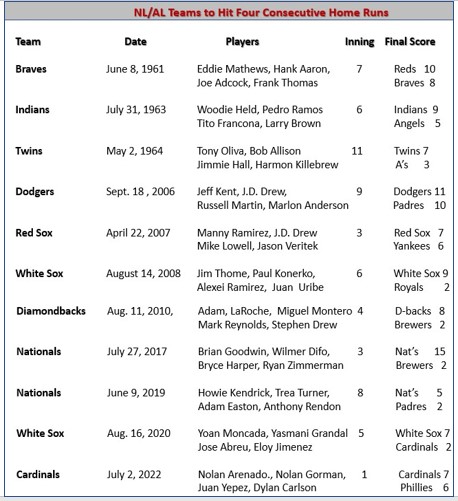
BASEBALL ROUNDTABLE – BLOGGING BASEBALL SINCE 2012