BBRT’s 2013 Top MLB Prospects

As we approach Spring Training, it’s time to look ahead to some of the prospects who could make a splash in the season ahead.   Here’s BBRT’s top ten, based not on the long term, but on the potential to have an impact in 2013.
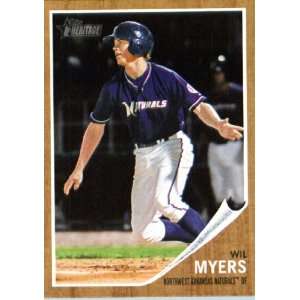
1.   Wil Myers, OF, Tampa Bay … 6’3”, 205 pounds, age 22

The power-hitting Myers should be in the Rays’ line up on opening day.  In 2012, in 124 games split at AA and AAA, Myers hit .314 with 37 homers and 105 RBI.  He’s hit at every level, with a .303 average over four minor league  seasons.

2. Shelby Miller, RHP, Saint Louis – 6’3”, 195 pounds, age 22

Don’t let Miller’s 11-10, 4.74 line at AAA fool you.  Over his last ten AAA starts, Miller went 7-2, 2.88, with 70 strikeout in 59 1/3 innings.  Then, in a late season call-up, he got in six games for the Cardinals, giving up just 2 runs and striking out 16 in 13 2/3 innings.  BBRT is confident the hard-throwing Miller is ready of a full year in the majors.

3.  Jurickson Profar,  SS,  Texas …  6’, 165 pounds, age 20

The young switch hitter (who got in 9 games with the Rangers last season) has shown power, speed and great defense minor league career – three-season totals: .276, 30 homers, 150 RBI, 47 steals.  The Rangers have Elvis Adrus and Ian Kinsler up the middle, but BBRT looks for Profar to get time in at SS and 2B (Kinsler to the OF?) during 2013.

4.  Dylan Bundy, RHP, Baltimore –  6’1”, 195 pounds, age 20

Bundy, who last season moved from class A to the majors (a pair of late season appearances for the Orioles) has been known to top 100 mph with his fastball,  In his first minor league season (2012), he pitched at three levels, going 9-3, 2.08 with 119 strikeouts in 103 2/3 innings pitched.  A solid – consistent – spring should be enough to keep him with the Orioles.  Otherwise, look for a mid-season call-up.  Also expect the Birds to be cautious with Bundy’s innings.

5. Oscar Taveras, OF, Saint Louis – 6’2”, 180 pounds, age 20

With plate discipline beyond his years, Taveras is another youngster to watch in spring.  Despite his young age, he has four minor league seasons under his belt, running up totals of .321, 40 homers, 243 RBI and 29 stolen bases.  Last season, he hit .386 in 78 games at Class A, and .321 (leading the Texas League) in 124 games at AA.  The only thing holding back Taveras may be the Cardinals’ wish to delay his free agency for a year.  BBRT expects to see him in St. Louis at some point during the season.

6. Trevor Bauer, RHP, Cleveland – 6’1”, 185 pounds, age 22

Great stuff, but some say he needs to harness his emotions and his command.  While his MLB debut with the Diamondbacks was a disappointing 1-2, 6.06 in four starts, he did strikeout 17 in 16 1/3 innings.  In two minor league seasons, Bauer has gone 13-4, 3.00 with 200 strikeouts in 156 innings.  BBRT is betting the move to Cleveland serves him well – and that he will crack the Indians rotation either out of spring or by the All Star break.

7. Avisail Garcia, OF, Detroit – 6’4”, 240 pounds, age 21

BBRT is higher on Garcia than some other observers.  Despite being only 21, Garcia has five minor league seasons under his belt (.281, 37 home runs, 242 RBI, 72 steals).  In 2012, he went .299-14-58 with 23 steals in 122 games at A/AA.  What is worrisome are his 95 strikeouts in 481 at bats.  What impresses BBRT is his late-season call up to the Tigers,  when he hit .319 (15 for 47) in 23 games – and followed it up by going .261 in 12 post-season contests.  Major league pitching seemed to handcuff his power a bit – his only extra base hit was a double in the post season – but Garcia showed considerable poise.  He may not be in the line-up every day, but BBRT expects him to be with the Tigers.

8. Billy Hamilton (OF) Cincinnatti – 6’1”, 160 pounds, age 22 Lot of folks – heads turned by Hamilton’s 155 stolen bases in 132 minor league games last season – rate him higher than BBRT.  He does have a strong track record (pun intended) with 320 steals in four minor league seasons – to go along with a .289 average, seven homers and 130 RBI.  No doubt, with his speed, Hamilton can be an MLB game-changer.  BBRT is cautioned by two things:  1) the need for more plate discipline (he struck out 113 times in 512 minor league at bats last year; 2) whether the outfield of Jay Bruce, Ryan Ludwick and Shin-Soo Choo offers the Reds the opportunity to keep Hamilton in the minors one more season to further develop his batting eye and plate discipline.

9.  Travis d’Arnaud (C) New York – 6’2”, 195 pounds, age 23
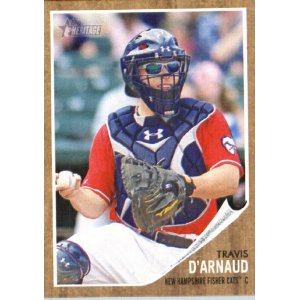
D’Arnaud appears to be a solid defensive catcher with a good bat, who came to the Mets in the R.A. Dickey trade.  In six minor league seasons, he hit .286, with 66 home runs and 289 RBI.  In the offense-heavy AAA Pacific Coast League last year, he rapped .333 with 16 home runs and 52 RBI.  A knee injury that shortened his 2012 season may be of some concern, but the Mets appear confident he’s healthy.  BBRT is betting the Mets will want to show a return sooner-rather-than-later from the Dickey trade, which means d’Arnaud makes the majors soon-rather-than-later.

10.  Take your pick, BBRT sees a trio of hurlers with potential for 2013.

Tyler Skaggs (LHP) Arizona, 6’3”, 195, age 21  

Taijuan Walker (RHP) Seattle – 6’4” 210 pounds, age 20

Gerrit Cole (RHP) Pittsburgh – 6’4”, 220 pounds, age 22

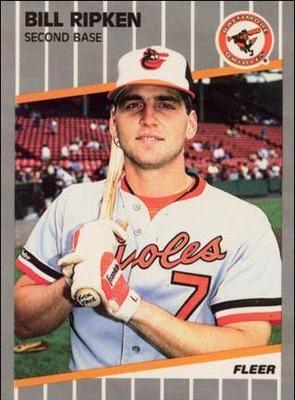
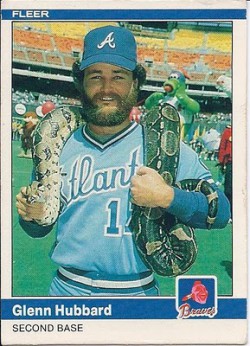
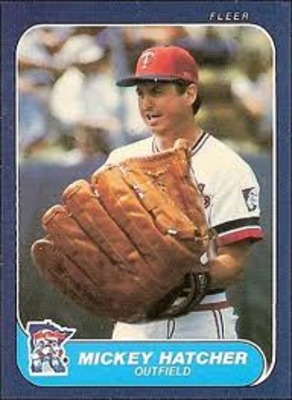
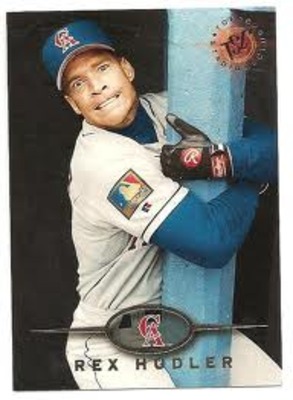
What Were They Thinking?


A DIFFERENT KIND OF BAD HAIR DAY!


BAD HAT DAY!


WORSE HAT DAY!


               BAD LANGUAGE DAY!                     (Read the end of the bat)


ISN’T OUR FANTASY LEAGUE USING A SNAKE DRAFT?


ALL WE NEED IS GLOVE … YA-TA-DA-TA-DA!


JUST FINISHED POLE DANCING 101!


HELLO! IS 1970 THERE?


IS THIS MY GOOD SIDE?          OOPS! STRIKE THREE!


YOUR COMMENT HERE ...


They Played Major League Baseball and …

Baseball players are not all one dimensional when it comes to sports.  For example, 305-game (and two-time Cy Young Award) winner Tom Glavine was drafted in the fourth round of the 1984 National Hockey League draft (by the Los Angeles Kings) — two rounds ahead of future National Hockey League Hall of Famer  Brett Hull.   (Glavine scored 232 points and had 111 goals as a high school hockey player).  Hall of Fame outfielder Dave Winfield was drafted coming out of college by the San Diego Padres (MLB); Atlantic Hawks (NBA); Utah Stars (ABA); and Minnesota Vikings (NFL).  Hall of Fame hurlers Bob Gibson and Fergie Jenkins share the distinction of having played for the Harlem Globetrotters.  And the list goes on.  In this post, BBRT would like to look at MLB players who also played another sport at the highest professional level.  Here are BBRT’s favorites in this category.


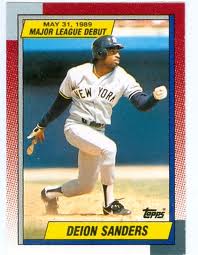
1. Deion Sanders (MLB/NFL)

With his nine-year MLB career and 14-year NFL career (all between 1989-2005), Sanders tops this list on the basis of some unique accomplishments:

Only person to play in the Super Bowl (for the victorious San Francisco 49ers, 1995, and the winning Dallas Cowboys, 1996) and the World Series (for the losing Atlanta Braves, 1992);

Only person to hit a major league home run and score an NFL touchdown in the same week;

Only person to suit up for an MLB and NFL game on the same day – on October 11, 1992, Sanders played for the Atlanta Falcons in an NFL day game against the Miami Dolphins and then flew to Pittsburgh to suit up for the Atlanta Braves’ League Championship Series game against the Pirates that night. (He did not, however, get into the game).

As a MLB player (1989-1995, 1997, 2001) for the New York Yankees, Atlanta Braves, Cincinnati Reds and San Francisco Giants, Sanders played in 641 regular season games, compiling a .263 average with 39 Home runs, 168 RBI and 186 stolen bases.  His best year was 1992, when he played in 97 games for the Braves – going .304, with a league-leading 14 triples, along with 8 home runs, 28 RBI, 54 runs scored and 26 stolen bases.  He followed that up with a great World Series, hitting .533 (8 for 17), with four runs scored, one RBI and five stolen bases.

During his NFL career, Sanders earned his way into the Football Hall of Fame  – intercepting  53 passes, returning nine for touchdowns;  returning 155 kickoffs for 3,523 yards and three TDs; returning 212 punts for 2,199 yards and six TDs; catching 60 passes for 784 yards and three TDs; and recovering four fumbles (one for a TD). He was an eight-time Pro-Bowler and the NFL’s 1994 Defensive Player of the Year.

Factoid:  Sanders, a Florida State University alum, is credited with bringing the “Tomahawk Chop” to the Braves’ fans.


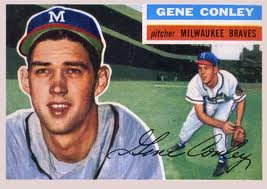
2. Gene Conley (MLB/NBA)

The 6’ 8” right-handed pitcher was edged out for the top spot on this list, only because Sanders made it into one professional Hall of Fame.  Conley excelled at baseball and basketball and holds the distinction of being the only person to play on an NBA Championship squad (Boston Celtics in 1959, 60 & 61) and a World Series Champion (Milwaukee Braves, 1957).

His MLB career spanned 11 seasons:  Boston Braves (1952); Milwaukee Braves (1954-58); Philadelphia Phillies (1959-60); Boston Red Sox (1961-63) – also earning him the distinction of being the only person to play for the Boston Braves, Red Sox and Celtics.

A right-handed hurler, Conley pitched in 276 games in his career (214 starts), winning 91 and losing 96 with a career 3.82 ERA.  He was a three-time All Star and the winning pitcher in the 1955 All Star Game.  His best year was 1954 when he went 14-9 with a 2.96 ERA.  He pitched in just one game in the 1957 World Series, giving up 2 runs in 1.2 innings of relief (the starts for Milwaukee went to Warren Spahn, Lew Burdette and Bob Buhl.)

Conley’s NBA career was as strong as his MLB run.   At forward and center  –  playing for the Boston Celtics (1952-61) and New York Knicks (1962-64) – he came off the bench to score 2,069 points, grab 2,212 rebounds and dish out 201 assists.  He averaged 16.5 minutes, 5.9 points and 6.3 rebounds per game.  In 33 playoff games, he averaged 14.6 minutes, 6.7 points and 5.1 rebounds.

Factoid:  In high school, Conley was All-State (Oklahoma) in baseball and basketball, as well as the state high jump champion.


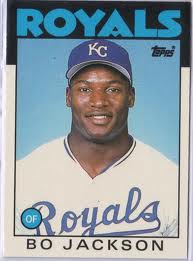
3. Bo Jackson (MLB/NFL)

Bo Jackson (6’1”, 227 lbs.) had an eight-season career as an MLB outfielder:  Kansas City Royals (1986-90); Chicago White Sox (1991, 1993); California Angels (1994) and played at running back for the Los Angeles Raiders for four seasons (1987-90).  In 1989, he was selected as a MLB All Star (and MVP of the 1989 All Star Game) and as an NFL Pro-Bowler.

His best year in MLB was 1989, when he hit .256, with 32 home runs, 105 RBI and 26 stolen bases for the Kansas City Royals.  That same year, he notched 950 yards rushing (5.5 yards per carry) and 4 rushing touchdowns for the Raiders.  That season he also caught nine passes for 69 yards.

In his MLB career, Jackson played in 694 games, hitting .250 with 141 home runs, 415 RBI and 82 stolen bases.

In his four seasons in the NFL, Jackson rushed for 2,782 yards (5.4 years per carry) and 16 touchdowns.  He also caught 40 passes for 352 yards and two touchdowns.

Factoid:  In the NFL, Jackson is most remembered for a 221-yard Monday Night Foot rushing performance (November 30, 1987) in his NFL rookie season.

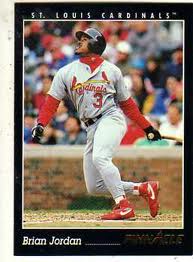
 4.  Brian Jordan (MLB/NFL)

Jordan patrolled considerable territory in his 15 seasons as an MLB outfielder (1992-2006) and three seasons as an NFL safety.  Jordan’s baseball career included time with the St. Louis Cardinals (1992-98); Atlanta Braves (1999-2001, 2005-06); LA Dodgers (2002-03); and Texas Rangers (2004).  He played in 1,456 games, hitting .282 with 184 home runs and 821 RBI.  He was an All Star in 1999, when he hit .282, with 23 home runs, 115 RBI and 13 stolen bases.

His brief NFL career, all with the Atlanta Falcons included 5 interceptions and 4 quarterback sacks in 36 games.

Factoid:  In June 1992, Jordan received a $1.7 million signing bonus as part of a new contract with the St. Louis Cardinals – contingent on Jordan giving up football.

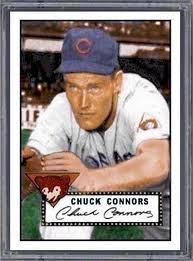
5.  Kevin “Chuck” Connors (MLB/NBA/Hollywood)

Six-foot-five with athletic skills and rugged good looks, Connors played for MLB’s Brooklyn Dodgers and Chicago Cubs and the NBA’s Boston Celtics (and was also drafted by the NFL Chicago Bears) before going on to play before even larger audiences as the star of the hit television series “The Rifleman.”   He makes this list on more on the basis of his acting career, which also included appearances in more than 40  movies, including a starring role in the now classic “Old Yeller,” and guest appearances on dozens of television shows.

His MLB career included one at bat with the Brooklyn Dodgers in 1949 and 66 games as a first baseman/pinch hitter for the Chicago Cubs in 1951.  He chalked up a .239 career average with 2 home runs and 18 RBIs.  In 1946-48, Connors played forward for the Boston Celtics, averaging 4.5 points per game in 53 games played.

In 1966, Connors reemerged on the baseball scene as an intermediary between the LA Dodgers and holdout pitchers Don Drysdale and Sandy Koufax.  The lefty-righty duo had gone a combined 49-20 for the 1965 World Champion Dodgers and decided to leverage their shared success, refusing to attend spring training and demanding a $1 million, three-year contract (split equally) – which would have made them the highest paid players in the game.  Connors is credited with helping end the month-long holdout, with Koufax signing for $125,000 and Drysdale for $110,000.

Factoid:  Connors also is credited with shattering the first professional backboard ever, during a November 1946 Celtics’ pregame warm-up.

Here are some others who reached the highest level in baseball and at least one other sport. No judgments here – alphabetical order.

Danny Ainge (NBA/MLB)

Ainge broke into the major leagues at age 20 (in 1979) with the Toronto Blue Jays.  He played just three seasons in the majors – 211 games, with a .220 average, 2 home runs and 37 RBI.  Primarily a second baseman, Ainge also saw time at third base, shortstop and all three outfield positions.  Notably, Ainge’s MLB career overlapped his college basketball career – Brigham University, 1977-81 – where he ran up average of 20.9 points, 4.6 assists and 4.6 rebounds per game and was the 1981 collegiate Basketball Player of the Year.

Ainge’s NBA career began at age 22 and stretched over 14 seasons (1981-95) with the Boston Celtics, Sacramento Kings, Portland Trailblazer and Phoenix Suns.  The 6’ 4”, 175-pound guard totaled 11,964 points, 1,133 steals, 4,199 assists, 2,769 rebounds.  His per game averages were 26.6 minutes, 11.5 points, 4.9 assists and 2.7 rebounds.  Ainge played in 193 NBA playoff games, averaging 26.1 minutes, 9.9 points, 3.4 assists and 2.3 rebounds.  He was a member of the Celtics 1984 and 1986 NBA Champion teams and a 1988 NBA All Star.

Factoid:  Ainge is the only athlete selected as a first team High School All-American in baseball, basketball and football.

Frank Baumholtz (MLB/BAA)

Frank Baumholtz enjoyed a ten-season MLB career (1947-49, 1951-57) as an outfielder with the Cincinnati Reds, Chicago Cubs and Philadelphia Phillies).  He played in 1,019 games, finishing with a .290 average, 25 home runs, 272 RBI, 450 runs scored and 20 stolen bases.  His best season was his 1947 rookie year, when he played in 151 games, led the league with 711 plate appearances and hit .289 with 5 home runs, 45 RBI and 96 runs scored.

Baumholtz played one season of professional basketball (1946-47), as a guard for the Cleveland Rebels of the Basketball Association of America, forerunner of the NBA. He appeared in 45 games, averaging 14.0 points per game.

Factoid:  Baumholtz was a first-team All American in basketball at Ohio University (1941) and his No. 54  jersey was the first ever retired by the school – on “Frank Baumholtz Day,” February 4, 1995.

Dave DeBusschere (NBA/MLB)

The best basketball player to ever play major league baseball,  DeBusschere played 12 seasons in the NBA (1962-74, Detroit Pistons and New York Knicks), was an eight-time NBA All Star, six-time NBA All-Defensive Player and played on the Knicks’ 1970 and 1973 NBA Championship teams.  DeBusschere is a member of the National Basketball Hall of Fame.  Over his career (875 games), the 6’6” forward/guard averaged 35.7 minutes, 16.1 points, 2.9 assists and 11 rebounds per game.

DeBusschere’s MLB career was considerably shorter than his stellar basketball tenure.  He joined the Chicago White Sox at age 22 in 1962 and pitched in the 1962 and 1963 seasons, logging 36 appearances (10 starts), a 3-4 record and a 2.90 ERA. His brief major league career did include one complete-game shutout.

Factoid:  In the 1964-1965 season, DeBusschere, just 24-years-old, was appointed player-coach of the Detroit Pistons.  From 1964-67, he coached the Pistons to a 79-143 record before going back to a player-only position.  He remains the youngest coach in NBA history

Dick Groat (MLB/NBA)

Groat had a 14-career as an MLB shortstop (1952, 1955-67) with the Pittsburgh Pirates, St. Louis Cardinals, Philadelphia Phillies and San Francisco Giants.  He was a five-time All Star and won the 1960 NL Most Valuable Player Award, while helping the Pirates earn the NL Crown (and World Series).  That season he and led the NL in batting at .325.  Groat was a career .286 hitter, with 2,138 hits, 39 home runs and 707 RBI.   He was on two World Series winners:  the 1960 Pirates and the 1964 Cardinals.

Groat also played one season (1952-53) for the NBA’s Fort Wayne Pistons, averaging 25.5 minutes, 11.9 points, 2.7 assists and 3.3 rebounds per game.

Factoid:  While at Duke University, Groat was a two-time All American in both baseball and basketball.  He was the first person selected to both the College Baseball and Basketball Halls of Fame.

Frank Grube (MLB/NFL)

Grube played catcher for the Chicago White Sox and St. Louis Browns (1931-36), getting into 394 games, but hitting only .154 with one home run and 107 RBI. His NFL career consisted of just one year – 11 games at end for the then NFL New Yankees.

Factoid:  Grube played basketball, baseball and football for Lafayette University – and while he never played football before attending college, Grube was an All-America end on Lafayette’s 1926 National Championship team.

George Halas (NFL/MLB)

While Football Hall of Famer George Halas may have been “Mr. Everything” in professional football for some six decades – player, coach, owner, promoter, innovator and pioneer – his MLB career was shorter and less noteworthy.  Halas played in 12 games (22 at bats, .091 average) as an outfielder for the 1919 Yankees.

During his a pro-football playing career (1919-1928), Halas played defensive end and wide receiver for the Hammond All Stars, Decator/Chicago Staleys and Chicago Bears.  A Bears’ owner from 1920 until his death in 1983, Halas coached the Chicago Bears (and their predecessor Staleys) for 40 seasons (1920-29, 1933-42, 1946-55. 1958-67).  Under his leadership, the Bears won nine Divisional titles, six NFL Championships and only six times finished with a losing record.  He is also credited with co-developing the T-formation.

Factoid:  Halas played basketball, football and baseball at the University of Illinois.

Steve Hamilton (MLB/NBA)

The 6’6” left-handed reliever enjoyed a 12-year (1961-72) career with the Cleveland Indians, Washington Senators, New York Yankees, Chicago White Sox, New York Giants and Chicago Cubs – going 40-31 with 42 saves and a career ERA of 3.05.

Hamilton also played two seasons as a forward for the NBA Minneapolis Lakers (1958-60) – averaging 13.3 minutes, 4.5 points and 3.4 rebounds in 82 games.

Factoid:  As his MLB career was winding down, Hamilton gained notoriety for his “folly-floater,” a slo-o-o-w, high-arcing pitch that would have looked more at home in a slow pitch softball game.


Carroll Hardy

Hardy was a multi-sport talent for the University of Colorado in the early 1950s, lettering in football, baseball and track – earning All-Conference honors in football and baseball.  Immediately out of college, Hardy signed on as a receiver with the NFL San Francisco 49ers.  In 1955, he caught 12 passes for 338 yards and four touchdowns, and returned three punts for  65 yards.  Hardy then chose to concentrate on baseball and played 8 seasons (1957-64, 1967) as a major league outfielder, getting into 433 games for the Indians, Red Sox, Astros and Twins.  His career average was .225, with 17 home runs and 113 RBI.

Factoid:  Hardy is the only player to pinch hit for Ted William, as well as the only player to pinch hit for Williams’ replacement, Carl Yastzremski.  He also hit his first MLB home run, while pinch hitting for Roger Maris.

Mark Hendrickson  (MLB/NBA)

Hendrickson, a 6’9” left-handed hurler, recorded 10 MLB seasons (328 appearances, 166 starts) with a 58-74 record and a 5.03 ERA.  Between, 2002-2011, he pitched for the Toronto Blue Jays, Tampa Bay Devil Rays, Los Angeles Dodgers and Baltimore Orioles.  His best MLB season was 2009, when he went 6-5 with a 4.37 ERA for the Orioles.

Hendrickson also played four seasons (1996-2000) as a power forward in the NBA for the Philadelphia 76ers, Sacramento Kings, New Jersey Nets and Cleveland Cavaliers.  In 114 games, he averaged 13.2 minutes, 3.3 points and 2.8 rebounds per game.

Factoid:  While playing for Washington State University, Hendrickson made the All Pac 10 Conference teams in both baseball and basketball.

Drew Henson (MLB/NFL)

The 6’5″, 225-pounder played quarterback for the Lions (2008), Cowboys (2004-05) and Vikings (2006).  He also appeared in 8 games for the 2002-03 Yankees going one for nine.  His NFL career consisted of just nine games played, and he completed a total of 11 of 20 passes with one TD and one interception.  Despite these less than sterling numbers, he can lay claim to both throwing and NFL Touchdown and collecting an MLB base hit.

Vic Janowicz (MLB/NFL)

Janciwics got in 22 games as a halfback for the Washington Redskins (1954-55), gaining 410 yards on 99 carries with 4 touchdowns.  He also played 83 games at catcher and third base for the Pittsburgh Pirates over the the 1953 and 1954 seasons – hitting .214 with 2 home runs and ten RBI.

Cotton Nash (MLB/NBA)

Nash had brief careers at the top level of pro basketball (NBA/ABA) and baseball (Chicago White Sox, Minnesota Twins).   In baseball, the OF/1B got in 13 games (White Sox, 1967 and Twins, 1969-70) with a .188 average and 2 RBI in 16 at bats.  In basketball,  the 6’5”, 215-pound Nash played forward for the LA Lakers and San Francisco Warriors  of the NBA and the Kentucky Colonels of the ABA between 1964-68.  He averaged 13.6 minutes, 5.6 points and 3.3 rebounds in 84 games.

Clarence “Ace” Parker (MLB/NFL)

Clarence Parker got his MLB career off with a bang, homering in his first at bat for the 1937 Philadelphia Athletics.  It was down hill from there, as Parket played in just 94 games in 1937 and 1938 (SS-3B-OF) hitting .179 with 2 home runs and 25 RBI.

Parker proved more adept at football, making the Hall of Fame as a multiple threat player.  Playing from 1937 to 1946 for Brooklyn, Boston and New York (and winning the NFL MVP Award in 1940), he completed 335 of 718 passing attempts for 30 touchdowns, rushed 498 times for 1,292 yards and 13 TDs, had 8 pass receptions for 229 yards and three TDs, returned 24 punts for 238 yards and one TD, returned five kickoffs for 98 yards, made 25 of 30 point-after-touchdown kicks (but only 1 of 5 field goal attempts) and punted 150 times for a 38.4 yard average.

Ron Reed (MLB/NBA)

The 6’6”, 217-pound, right-handed pitcher enjoyed a 19-year career as an MLB starter and reliever (Atlanta Braves, 1966-75; St. Louis Cardinals, 1975; Philadelphia Phillies, 1976-83; and Chicago White Sox, 1984).  Reed’s MLB career record was 146-140, 103 saves, a 3.46 ERA and 1,481 strikeouts in 2,477.2 innings pitched.  His best season was 1969, when he went 18-10, 3.47 in 33 starts for the Braves.

Reed also played forward for two seasons for the NBA Detroit Pistons (1965-66, 1966-67) averaging 18.9 minutes, 8.0 points and 6.4 rebounds per game.

Factoid: Reed is one of only eight MLB pitchers with 100 wins and 100 saves.

Dick Ricketts (MLB/NBA)

Ricketts, a 6’7”, 216-pound right hander, had just one MLB season, going 1-6 with a 5.82 ERA for the 1959 Saint Louis Cardinals.  He played  in the NBA from 1955-59, scoring 1,974 points and grabbing 1,337 rebounds – for a per game average of 26.8 minutes, 12.5 points, 8.5 rebounds and 2.8 assists.

Howie Schultz (MLB/NBA)

Schultz played major league baseball for six seasons (1943-48), spending time at first base with the Brooklyn Dodgers, Philadelphia Phillies and Cincinnati Reds.  He played 470 games, hitting .241, with 24 home runs and 208 RBI.

In 1949, the 6’6” Schultz switched to basketball, beginning a three-year stint as an NBA center/forward.  He played for the NBA’s Anderson Packers, Fort Wayne Pistons and Minneapolis Lakers, averaging 5.3 points per game.

BBRT’s Favorite World Series – 1960

Baseball … memories count!

My favorite World Series?  1960.

To understand why this is my favorite, it helps to set the stage.

The year was 1960. There were only 16 major league teams.  If you didn’t finish with ‘the best  record in your league, you didn’t go to the World Series.  No one had ever heard of the designated hitter, the wild card, WAR or even WHIP.   Home Run Derby was on TV – in black and white, with power hitters pairing off at Wrigley Field in Los Angeles.

Ted Williams finished his career with a home run in his last at bat and Brooks Robinson won his first Gold Glove. MLB held two All Star Games. The White Sox became the first team to put players’ names on uniforms.  Warren Spahn threw his first no-hitter at age 39 (and won a league-leading 21 games) and Juan Marichal threw a one-hitter in his major league debut at age 22.   Roger Maris won his first MVP Award in his first year as a Yankee (after being traded from the Kansas City Athletics).  The Pirates’ Dick Groat won the NL batting title and MVP Award.

Mickey Mantle led the AL in home runs, Roger Maris in RBIs, Pete Runnels led the league in hitting, and Minnie Minoso collected the most hits.   In the NL, Ernie Banks won the home run crown, Hank Aaron the RBI title and Willie Mays topped the senior circuit in hits.   Don Drysdale and Sandy Koufax finished one-two in the NL strikeout race, while Jim Bunning topped the AL.  Lindy McDaniel of the Cardinals set a new record with 26 saves, while the Tigers’ Frank Lary’s 15 complete games were the lowest ever to lead either league.

I was thirteen and an avid baseball fan.  The Game of the Week (in black and white), the radio – especially the radio – and an occasional trip to the ball park were my tickets to the national past time.

At the time, the Yankees were baseball’s dynasty.  Since my birth in 1947, the Bronx Bombers had been to 11 World Series (including the 1960 Series, yet to be played) and had won eight World Championships.  Fans from pretty much everywhere but New York had made Yankee-hating a tradition.  I was no exception.  Milwaukee-born, I was a steadfast Braves fan, still smarting from the Yankees’ 1958 World Series comeback, when they downed my Braves after trailing three games to one. The Yankees were in the 1960 Series – and I had an emotional interest  in seeing them lose.

Being of Polish descent,  I also took pride in the fact the great Stan Musial was Polish and wondered why Milwaukee-born Hall of Famer Al Simmons had changed his name from Al Symanski.  I was a fan of the sleeveless power hitter Ted Kluszewski, regretted that Tony Kubek (also of Polish descent) played for the Yankees, was rooting for the Pirates Bill Mazeroski, and wished that my heroes Eddie Mathews and Hank Aaron could boast of a little Polish ancestry.  I also was firm in my belief that Steve Dalkowski threw that fastest fastball ever … you can look it up.

Put all of this together and you can see why I looked to the 1960 World Series with excitement – and why I was rooting for the underdog Pirates.  The fact is, very few expected much of a Series and, instead, they got a great seesaw battle and a major upset.

The prognosticators predicted a Yankee win in five or six games.  They pointed out that the Yankees, with a 97-57 record (the Pirates were 95-59-1) came into the Series with the momentum of a 15-game, season-closing winning streak, while the Pirates lost four of their final seven.  They also lauded the Yankees’ post-season experience (in the decade of the 1950s, the Yankees played in eight World Series, winning six, while the Pirates hadn’t seen postseason play since 1927.) And, they heralded the Yankees power (the Yankees led the AL with a record 193 home runs and 746 runs scored, while the Pirates led the NL with 734 runs scored, but only 120 round trippers) – the Yankees’ game one starting lineup had belted 152 regular season homers to 98 for the Pirates’ starters.  When it came to mound work, things appeared more  balanced, maybe even a shade in favor of the Pirates.  While the Yankees’ 3.52 ERA was the lowest in the AL, the Pirates’ NL third-best ERA (at 3.49) slightly bettered the Bomber mark.  The Pirates did have the clear advantage in strikeouts (811-712) and fewest walks allowed (an NL low of 386 to an AL worst 609 for the Yankees). They also boasted the Cy Young Award winner in Vernon Law (20-9, 3.08), backed up by Bob Friend (18-12, 3.00), while no Yankee starter had topped 15 wins.  The top relievers for the two teams were Elroy Face, with 24 saves for Pittsburgh and Bobby Shantz, who saved 11 for the Yanks.

When the Series was over, Pirate pitching made the difference, but you could never tell from the stats line:

  • The Yankees scored a Series’ record 55 runs to 27 for the Pirates,
  • The Yankees collected a Series’ record 91 hits to 60 for the Pirates.
  • The Yankees hit a Series record .338 to .256 for the Pirates
  • The Yankees collected a Series’ record 27 extra base hits to 15 for the Pirates.
  • The Yankees out-homered the Pirates 10-4.
  • The Yankees’ pitchers put up a 3.54 ERA to 7.11 for the Pirates.
  • Bobby Richardson of the Yankees won the Series MVP award,  hitting .367 with a Series’ record 12 RBI.
  • The Yankees’ Whitey Ford was the Series’ most effective pitcher, throwing two complete game shutout in two starts.

Couple all of this with the fact that the Pirates won the series with a 10-9 victory in Game Seven – highlighted by a bottom of the ninth walk-off  home run by Bill Mazeroski – and you can see why this is BBRT’s favorite World Series.

Let’s look at it, game by game.

Game One (October 5, at Pittsburgh)

The Yankees’ power made itself felt in the first inning, as right-fielder Roger Maris punctuated his first-ever World Series at bat with a towering upper deck home run off  Pirate ace and 20-game winner Vernon Law.  The Pirates woke up the home crowd by coming right back with three runs in the bottom of the inning off Yankee starter (15-game winner) Art Ditmar, a Casey Stengel choice that surprised fans and sportswriters alike (Whitey Ford was the presumed Game One choice.)  Pirate center-fielder Bill Virdon led off with a walk, stole second and then went to third when nobody covered the base and Yogi Berra’s throw sailed into center field (error, shortstop Tony Kubek).  Then, NL batting champ Dick Groat (shortstop) doubled home Virdon, left fielder Bob Skinner singled home Groat (and promptly stole second, as the Pirates had decided to try and counter the Yankees’ power with speed and aggressive base running). First baseman Dick Stuart lined out to right and right fielder Roberto Clemente singled in Skinner – sending Ditmar to an early shower.  Jim Coates came in and got out of the inning with no more damage.

The Yanks seemed ready to bounce back in second, as Yogi Berra and first baseman Moose Skowron singled to open the inning.  Then Stengel made a managerial move that some saw as early-game panic.  He lifted (and embarrassed) starting third baseman Clete Boyer for pinch hitter Dale Long (who flied out to right).  Next, second sacker Bobby Richardson lined out to left and Berra was double off second (Bob Skinner to Bill Mazeroski) – threat and game pretty much over.

As the game went on, Law pitched in and out of trouble, giving up ten hits and a walk, but only two runs over seven innings.  The Yanks did scratch out a run in the top of the fourth (Maris scoring on a Skowron single), but the Pirates bounced right back with a two-run homer over the left field scoreboard by Mazeroski.   The Pirate second baseman scored another run in the bottom of the sixth (on a Bill Virdon double), and the 6-2 lead held until the top of the ninth, when the Yankees got a two-run pinch-hit homer from Elston Howard.  FINAL:  Pirates 6 – Yankees 4


Game 2 (October 2, at Pittsburgh)

The Pittsburgh “high” from Game One was matched – and then some – by the “low” of Game  Two, which opened with 18-game winner Bob Friend on the mound for the Pirates and nine-game winner Bob Turley hurling for the Yankees.  Given the match up and the first game results, hopes were high at Forbes Field.  The Pirates, however, were without starting left fielder (and perhaps their best left-handed hitter) Bob Skinner, who had injured his left hand in game one.  Pirate Manager Danny Murtaugh put right-handed hitting Geno Cimoli in left and, in an effort to add a left-handed bat, benched the Pirates’ leading home run hitter, first baseman Dick Stuart, in favor of Rocky Nelson. The line-up changes were pretty much forgotten by the end of the game.

The Yanks scored first, with two runs in the top of the third and one in the top of the fourth, with the Pirates getting one back in the bottom of the fourth to make it 3-1 Yanks. Then the roof fell in.  Murtaugh had pinch-hit for Friend in the fourth, so Freddie Green took the mound for the Pirates in the fifth.  The hard-throwing lefty walked the first batter he faced (shortstop Gil McDougald) and got right fielder Roger Maris to hit  into a fielder’s choice  before center fielder Mickey Mantle crushed a two-run homer to  right-center.  The Yankees added seven runs off three Pirate hurlers in the sixth in an inning that went:  Elston Howard – triple; Bobby Richardson – run-scoring double; Bob Turley – ground out to pitcher; Tony Kubek safe on an error; Gil McDougald – run-scoring single; Roger Maris – walk; Mickey Mantle – strikeout; Yogi Berra – two-run single; Moose Skowron – run-scoring single; Elston Howard – run-scoring single; Bobby Richardson – run-scoring single; Bob Turley – fly out (his second out of the inning).  It was quiet in Pittsburgh and got even quieter in the top of the seventh when Mantle made up for his sixth-inning strikeout with a 475-foot, three-run homer to right-center.  The Yanks added a meaningless tally in the top of the ninth, while the Pirates put up two runs in the bottom of the inning, finally getting to Turley.  Overall, the Yankees collected 19 hits and five walks off six Pittsburgh hurlers, while Turley managed to scatter 13 hits and three walks, giving up just three runs (two earned) in 8 1/3  innings (with Bobby Shantz getting the last two outs).

FINAL:  Yankees 16 – Pirates 3


Game Three ( October 3, at New York)

If the Pirates were shell-shocked in Game Two, they got no relief in Game Three.  After the Bucs went down quietly against Whitey Ford (12-9 in the regular season), Pirates’ starter Vinegar Bend Mizell (13-5) lasted only 1/3 of an inning, as the Yankees posted six runs in the bottom of the first, highlighted by a grand slam off the bat of Bobby Richardson, who had hit only one home run all season.  The only other Yankee scoring came in the four-run fourth, which included Mantle’s third homer of the series (a two-run shot) and a two-run single for Richardson, giving him Series’ record six RBI in the game.  Overall, the Yankees picked up 16 hits and four walks off six Pirate pitchers – while Ford threw a complete-game, four-hit, shutout.  The prognosticators saw all as once again right with the baseball world and the Yankee juggernaut.  Clouds, however, loomed on the horizon.

FINAL:  Yankees 10 – Pirates 0


Game Four (October 4, at New York)

Game Four featured Pirates’ Ace Vernon Law (winner of Game One) against Ralph Terry, who had gone 10-8 for the Yankees.  Another Bomber rout seemed possible as Terry started the game with a one-two-three first, including strikeouts of center fielder Bill Virdon and right fielder Roberto Clemente.  The Yankees opened the bottom of the first with a single by left fielder Bob Cerv and a double by shortstop Tony Kubek.  Runners on second and third, no outs and the big three of Roger Maris, Mickey Mantle and Yogi Berra slated to hit.  Law, however, got Maris on a fly out to short right, intentionally walked Mantle and got the usually clutch-hitting Berra to hit into a double play.  The Pirates had new life – and new spirit.

The Yankee power did emerge in the fourth, as the Bombers took a one-run lead on first baseman Moose Skowron’s homer to right.  The Pirates, however, came back with three in the top of the fifth as left fielder Geno Cimoli led off with a single; catcher Smoky Burgess was safe at first as Skowron threw too late to second trying for a force of Cimoli; third baseman Don Hoak popped out on an attempted sacrifice;  second baseman Bill Mazeroski popped out to first;  Law doubled in Cimoli; center fielder Bill Virdon singled home Burgess and Law; and shortstop Dick Groat popped out.  The three runs were all Law would need, as the Yankees managed only one more run off Law and reliever Elroy Face.

Final:  Pirates 3 – Yankees 2  … GAME ON!


Game 5 (October 10, at New York)

The experts already considered this an upset, the Pirates had guaranteed at least a six-game series.  Now Stengel, already criticized for not using World Series-seasoned Whitey Ford in Game One – enabling Game One, Four and Seven starts for the “Chairman of the Board” – faced another decision.  Should he stick with his original rotation and start Ditmar, who failed to make it out of the first inning in Game One?  Or go with impressive rookie Bill Stafford, who had gone 3-1 with a 2.25 in 11 games?  Stengel stuck with Ditmar, who faced off against 11-game winner Harvey Haddix (most famous for his record 12 2/3 perfect innings against the powerful Milwaukee Braves in a May 1959 loss).

Ditmar improved on his Game One performance, but only slightly, lasting 1 1/3 innings this time –  as the Pirates pushed across three runs in the top of the second.  It was all they would need as the Yankees scored only two runs (one in the second on a Tony Kubek ground out and another in the third on a towering homer into the right field upper deck by Roger Maris).  The Pirates scored one in the top of the third (on a double by Dick Groat and an RBI-single by Roberto Clemente and added an insurance run in the top of the ninth – a Don Hoak single plating Smoky Burgess.  Then it was back to Pittsburgh with the underdog Pirates  leading three games to two.  Bill Stafford, by the way, tossed 5 scoreless  innings (3 hits) in relief, resulting in even more criticism of Stengel’s pitching choices.

FINAL:  Pirates 5 – Yankees 2


Game 6 (October 12, at Pittsburgh)

Game Six created more pitching problems for Stengel, who it was reported had hoped to go into the game with a one-game lead and toss Bob Turley, saving Whitey Ford for a Game Seven if necessary.  Facing elimination,  however, Stengel handed the ball to Ford (on only three days rest).   Opposing Ford would be well-rested Bob Friend, the Game Two loser.

After Friend tossed a 1-2-3 first, Ford gave up a lead-off single to Bill Virdon, who was quickly erased on a double play.  Clemente followed with a sharp single to right, and a nervous Stengel got Bob Turley up in the bull pen. Ford, however, struck out first baseman/cleanup hitter Dick Stuart to end the inning.

As Ford set the Pirates down with just one hit in the second and third, the Yankee hitters went to work.  They scored one in the top of the second, as a Ford infield single plated Yogi Berra (who beat the throw to the plate) and added five runs in the top of the third, when they batched five hits and a hit batsman (highlighted by Bobby Richardson’s  two-run triple off the left-field scoreboard, which gave the Yankee second baseman a World Series’ record 11 RBI).

The Bronx Bombers added two more runs in the sixth, seventh and eighth innings, as they opened a commanding  lead.  Richardson was again at the center of the action, hitting his second triple of the game in the seventh (scoring catcher Johnny Blanchard and extending Richardson’s new RBI record).

Ford, meanwhile, was masterful – despite developing a blister on his pitching hand in the fifth inning.  He pitched his second complete-game shutout, allowing only seven singles and one walk, while striking out five. The Yanks tallied 12 runs, on 17 hits off six Pittsburgh hurlers.  With Ford’s second shutout came the outcry of second-guessers – who were now even more dissatisfied with Stengel’s pitching choices.  The Pirates would now get a third start out of ace Vernon Law, while Ford was on the bench with two shutouts.  Not surprisingly, the upcoming 1960 World Series Game Seven would be Stengel’s final contest as Yankee manager.

Final:  Yankees 12 – Pirates 0


Game 7 (October 13, at Pittsburgh)

Despite being outscored 46 to 17, out hit 78 to 49 and out homered 8 to 1 in the first six games, the Pirates were looking forward to a Game Seven and a chance to win the Series at home behind Vernon Law (winner of Games One and Four.)  The Yankees countered with Bob Turley, who, despite winning Game Two, had given up 13 hits and three walks in 8 1/3 innings.  The Pirates also had their top left-handed hitter, Bob Skinner (injured in Game One), back at the number-three spot  in the order, while the Yankees were missing Elston Howard (broken finger, Game Six).

This was the game that made took this World Series from good to great, so BBRT will look at it in more detail.

The Yanks went meekly in the top of the first inning (liner, popup, foul out), and the Pirates, homerless since Mazeroski’s blast in Game One, got a two-run homer from Rocky Nelson (whom Murtaugh chose to start at first base over regular Dick Stuart).

In second, Law set the heart of the Yankees down in order – Mantle, fly to center; Berra, grounder to third; Skowron, grounder to short.  In the bottom of the inning, Stengel appeared to put his managerial position in further jeopardy.  Smoky Burgess started the inning with a single and Stengel immediately pulled Turley in favor of the rookie Bill Stafford (who had stifled the Pirates for five innings in Game Five).  The move did not pay off.  Stafford walked third baseman Don Hoak and Mazeroski beat out a bunt single.  Law was now at the plate (the Pirates’s pitcher was two for four, with a double, run scored and RBI in Games One and Four).  Law hit back to Stafford for a pitcher-to home-to first double play, but center-fielder/lead-off hitter Bill Virdon followed with a two-run single and a 4-0 Pirates lead.

Law handcuffed the Yankees through four innings, giving up only two singles.  In the fifth,  Yankee first sacker Moose Skowron made the score 3-1 with a  lead-off homer just inside the right field foul pole.  Law did not let the roundtripper upset him, retiring Johnny Blanchard, Clete Boyer and Bobby Shantz (who came on to pitch for New York in the third) in order.

The Yankees closed the gap – and then some – in the top of the sixth.  The pesky Bobby Richardson (who already had nine hits in the series) led off with a single to center, and Tony Kubek followed with a walk.  With the Bombers appearing on the verge of a rally,  Murtaugh replaced Law (who, it turns out had been pitching on a sore ankle throughout the Series) with his top reliever Elroy Face.   Face got Roger Maris on a foul pop to Don Hoak at third base, but Mickey Mantle followed with a “seeing eye” single up the middle, scoring Richardson. Yogi Berra followed with a upper deck home run (like Skowron’s just inside the right field foul pole) to give New York a 5-4 lead in what was shaping up to be a Game Seven nail biter.

The veteran Bobby Shantz, meanwhile, was baffling the Pirates – giving up only a single and a walk from the third to the seventh innings.

In the top of the eighth, the Yankees seemed to dash the Pirates’ hopes – using a walk, two  singles and a double to produce two more runs and a 7-4 lead.   Notably, Stengel’s  pitching decisions again came into play.  He let Shantz bat with two out and runners at second and third (Boyer and Skowron) and a chance to extend the Yankee lead.  Shantz flied out and the living-room and press-box managers were quick to point out:  1) the lost scoring opportunity; 2) the fact that Stengel left Shantz in for a sixth inning of work, despite the fact that Shantz had not gone more than four innings in the regular season.

So, that was the situation as the game went into the bottom of the eighth – when the Pirates (and Forbes Field) proved they still has some life left in them.  Gino Cimoli pinch hit for Face and stroked a single to right-center field.  Shantz, who had already induced two double plays appeared to have worked his magic again, as Bill Virdon hit a hard ground ball right at shortstop Tony Kubek.  Just as Kubek was ready to field the ball and begin the sure double play, it appeared to hit a pebble (the Yankees had already been critical of the condition of the Forbes Field infield) and ricocheted into Kubek’s throat.  Kubek went down, gasping for air and spitting up blood, with his windpipe rapidly swelling (doctors on the scene at first thought an emergency tracheotomy might be necessary).  The end result?  Kubek sent to the hospital and replaced by Joe DeMaestri and the Pirates with two on and no outs, instead of none on and two outs.

Pirates’ shortstop Dick Groat took advantage of Kubek’s mishap and lined singled to left, scoring Cimoli.  Stengel came to the mound and replaced Shantz with right-hander Jim Coates (despite the fact that lefty Bill Skinner was coming to the plate).  The righty-lefty matchup made little difference, as Skinner sacrificed the runners up one base.  Next was Rocky Nelson, who flied out to medium right, with the Pirates choosing not to test Roger Maris’ arm.   So, two outs, two on and the Yankees still in front 7-5.   That brought up the Pirates’ best hitter, right-fielder Roberto Clemente, who had been held hitless in his first three at-bats. Coates made a good pitch, getting Clemente to hit a weak ground ball toward first.   A hustling Clemente beat both Coates and Skowron’s throw to the bag, while Virdon scored and Groat moved to third.  Now, 7-6 and the Pirates still had life.

That brought up backup catcher Hall Smith (who had come into the game in the eighth after Joe Christopher ran for starting catcher Smoky Burgess in the bottom of the seventh).   Smith took a 2-2 Coates’ pitch over the left-field wall for a 9-7 Pittsburgh lead.  The Pirates, with only one roundtripper in the first six games had homered twice for five runs in Game Seven.

To protect the lead  in the ninth (and with Elroy Face already out of the game), Pirate Manager Danny Murtaugh called on starter Bob Friend, who had lost Games Two and Six, giving up seven earned runs in six innings (and had pitched in relief only once all season).  Yankee lead off hitter Bobby Richardson started off the ninth with a single to left.  Veteran and former-Pirate Dale Long, pinch hitting for Joe DeMaestri (who had replaced the injured Kubek) singled to right and Friend was gone, replaced by Game Five starter Harvey Haddix.  Haddix got Roger Maris on a foul out, but Mickey Mantle drove in Richardson with a single to right center.   Yogi Berra followed with a ground ball down the first base line.  Rocky Nelson made a nice backhanded stop, but was out of position for a first-to second-to first, game-ending double play.   Nelson took the sure out, stepping on the first base bag and retiring Berra, while Gil McDougald (pinch running for Long) headed toward home.  It was at this point that Nelson realized Mantle had not run to second.  Mantle, sizing up the situation, was returning to first (with the force at second now off). It was an unorthodox base-running move, but as Mantle dove head first back to the bag (avoiding Nelson’s desperate attempt to tag him), McDougald scored the tying run.  Skowron then grounded out to Mazeroski (forcing Mantle) to end the inning in a 9-9 tie.

Mazeroski’s 1960 home run trot immortalized at PNC Park.

Stengel, like Murtaugh, was now using starters in relief, bringing Game Four-loser Ralph Terry in to pitch the ninth.  Number-eight hitter Bill Mazeroski led off the inning.  Terry’s first pitch was a high and inside fastball.  The second pitch, another fastball, was in the strike zone and Mazeroski deposited it over the 406-foot marker in left center.  Not sure the ball would carry out in the deep part of the park, Mazeroski ran full speed with his head down to first and toward second, before seeing the umpire making the circular home run signal.  Mazeroski removed his helmet, waving his way to home plate where his team mates awaited  the first player in major league history to end the World Series with a walk-off home run.

Trivia Tidbit:  The seventh game of the 1960 Series is the only World Series game in which neither team recorded a strikeout.

FINAL: Pirates 10 – Yankees 9; Pirates 4 games – Yankees 3 Games; MLB and its 1960 fans, the ultimate winners in BBRT’s favorite World Series.  

Ten BBRT “Hits” from the 2012 MLB Season

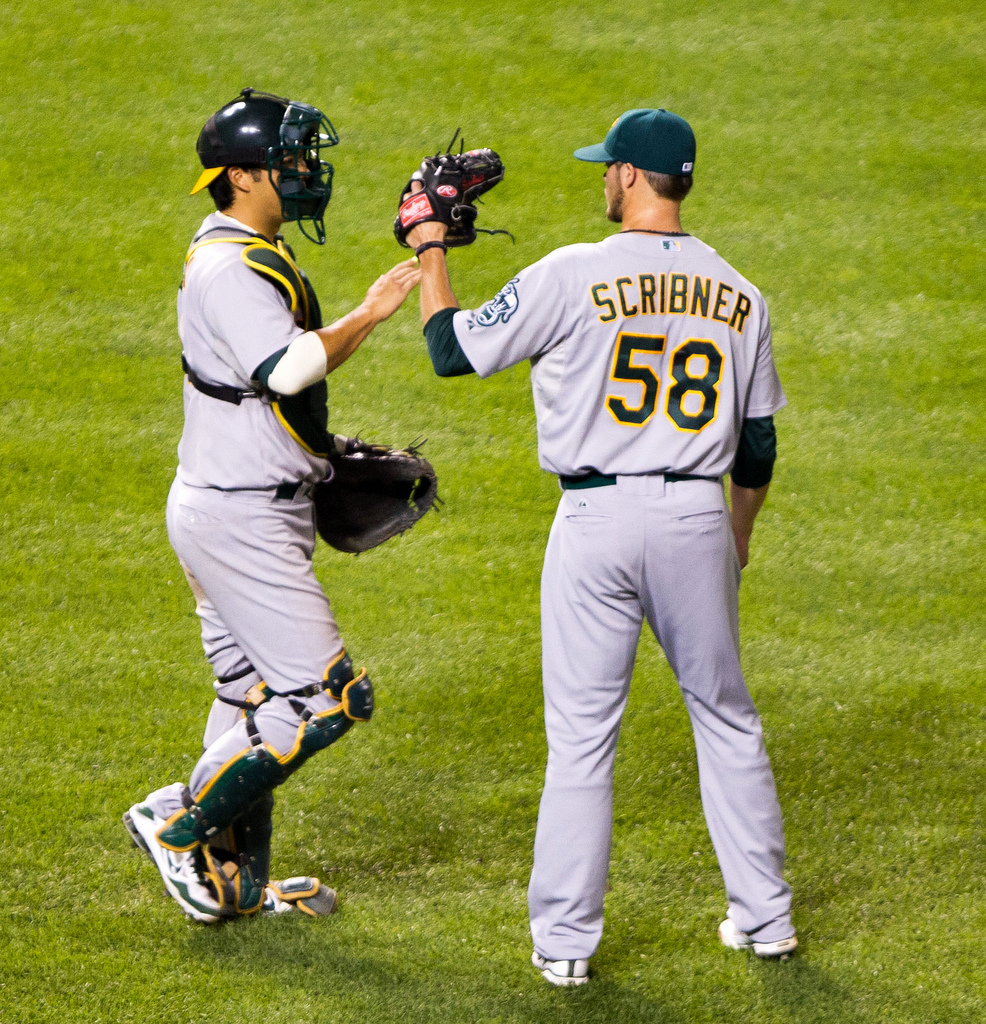
Evan Scribner was the winning pitcher in the A’s storybook finish – and AL West Title.

2012 was a remarkable season – and BBRT expects even more excitement in the post season.  Most readers may be too young to remember “Your Hit Parade,: an early TV show that featured the Top Ten music hits and a few “extras.”  Here are ten “hits” and a few extras that grabbed BBRT’s attention during the 2012 MLB regular season.

1.  The no-name, low-payroll Oakland A’s AL Western Division Championship.

The Oakland A’s started the 2012 season with the lowest payroll in the AL and second-lowest payroll in all of baseball ($55.3 million, with only the Padres lower), and with most analysts predicting a last-place finish in the AL West.   Yet, this no-name bunch – 13 games out of first on June 30 – completed a remarkable comeback with a dramatic final weekend sweep (and comeback from a 5-1 deficit in game 162) of the heavily favored Texas Rangers to grab the AL West title with a 94-68 record.  The heroes in that final contest included such “name” players as Evan Scribner, Derek Norris, Brandon Moss and Coco Crisp.

How improbable was this division championship? The A’s had no 100-RBI men; no .300 hitters; only one player with 30 or more homers (Josh Reddick, 32);  no-pitcher with more than 13 victories; only one pitcher with 30+ starts (Tommy Milone, 31); and no pitcher with 200 innings pitched. They had 54 wins from rookie pitchers, and started a rookie hurler in each of the last 14 games of the season.

Here is the list of A’s with at least 100 games played in 2012:  Brandon Moss, Coco Crisp; Josh Reddick; Chris Pennington; Yoenis Cespedes; Seth Smith; Jemile Weeks.

Oh, and by the way, the A’s had sole possession of first place on only one day all season – the day that counted.

For BBRT, the A’s story was number-one on the 2012 Hit Parade.

2.  Miguel Cabrera’s Triple Crown

Not accomplished since 1967 (the Red Sox Carl Yastrzemski), Cabrera’s Triple Crown included a .330 average, 44 homers and 139 RBI – a performance that led his Tigers to the AL Central crown.  His key challenges came from Josh Hamilton in home runs (who suffered a late season power slump) and a final rush from Curtis Granderson that brought him within one round tripper of Cabrera.  Cabrera also pushed aside batting average challenges from Joe Mauer and Mike Trout, with Miggy turning in a clutch four-hit performance in the Tigers’ October 1 Division Championship-clinching game.

3.  Mike Trout’s spectacular rookie season.

All the pre-season hype focused on Washington National’s phenom Bryce Harper.  Then on April 27th, the California Angels made a move that changed the playing field – calling up Mike Trout, a 20-year-old who was hitting a blistering .403, with one HR,  13 RBI and six stolen bases at Salt Lake City.  Despite missing a month of the MLB season, Trout, at 21, became the first rookie and youngest member of the 30-40 club (30 homers and 40 stolen bases), finishing with a line of .326; 30 HRs; 49 SBs; 129 runs; 83 RBI; and a good shot at a Gold Glove.  And, again, despite his late April call up, was only one stolen base from joining the elite 30-50 club, which includes only Eric Davis and Barry Bonds.  It was a marvel to witness – and think about how much more baseball Trout (and fans) have to look forward to in the seasons ahead.

Hit Parade Extra – Precognition or Coincidence?  We’ll take coincidence.  BBRT’s March 29th blog may have foreshadowed the current Cabrera versus Trout MVP discussions.  The blog was title “Triple Crown = MVP?  Not Always!” Visit that blog for more detail, but three players have been denied the MVP after winning the Triple Crown, one of them twice:  Lou Gehrig, in 1934, actually led both leagues in the Triple Crown categories and finished a distant fifth in MVP voting, while Ted Williams won the Triple Crown in 1942 and 1947 without being recognized as MVP and Chuck Klein had that distinction in 1933. For 2012, BBRT’s vote goes to Cabrera, since Trout’s solid season and strong supporting cast still could not bring the Angels a playoff spot. 

4.  Baltimore Orioles make playoffs for the first time since 1997.

Like the Oakland A’s, the Orioles came into the season as Division “also-rans.”  Yet they stayed in the hunt with the powerful Yankees until the final weekend – and earned a Wild Card spot.  Like the A’s, we are not looking at a group of established names.  The O’s did show power, with five 20+-HR players, led by Chris Davis (33) and Adam Jones (30).  However, they had no 100-RBI players (although Davis, Jones and Matt Wieters all topped 80) or .300 hitters.  The Orioles starters were led in wins by Wei-Yen Chen, the only hurler with more than 20 starts (12-11, 4.02) – but did benefit from Jim Johnson’s 51 saves.  Still, the Orioles played gritty, were fun to watch, and did bring home 93 wins.

5.  The Washington Nationals NL East Crown.

The Nationals are considered another surprise team in the playoffs by many (BBRT was among those predicting a playoff spot), but more surprising may be that they led the NL in wins (98) and how they did it –with the NL’s lowest ERA (3.33), even after shutting down Stephen Strasburg.  Staff leaders were Strasburg (15-8, 3.16) and Gio Gonzalez (21-8, 2.89), while seven pitchers logged saves, led by Tyler Clippard (32) and Henry Rodriguez (9).  A real interest grabber was what would happen once Strasburg left the rotation.  John Lannan filled in admirably.

Hit Parade Extra – What difference relief pitchers make.  The New York Mets led all of MLB in quality starts in 2012 (101) and yet finished with only 74 wins against 88 losses.  BBRT watched the self-destruction closely.

6. The Pittsburgh Pirates fall from grace.

BBRT predicted in March that the Pittsburgh Pirates would end 19-years of futility (under-.500 finishes) this season.  That looked like a pretty good bet on August 8, when the Pirates were 16 games over .500 at 63-47, just 2 ½ games behind the division-leading Reds.  In fact, just over a week later, the team sent out play-off ticket ordering instructions.  Well, from August 8 on, BBRT watched in dismay as the March prediction and the Pirate’s season went into free fall.  They played 20-games under .500 the rest of the way, finishing at 79-83 for their 20th consecutive losing season.  Ironically, the clinching 82nd loss came at home on Sunday, September 30 – the Pirates’ official Fan Appreciation Day.

7. Chipper Jones’ Final Season.

BBRT watched with interest (and respect) as the forty-year-old Chipper Jones went .287, 14 HR, 62 RBI in his final season, helping the Braves to a post-season slot.  The future Hall of Famer, always a pressure player, hit a single (as a pinch-hitter) in his final regular season at-bat.  Post-season to follow and BBRT hopes to see more of Chipper.

8.  Kris Medlen’s remarkable comeback.

Kris Medlen is a remarkable “find” for the Braves – a solid prospect lost for all of 2011 as he recovered from Tommy John surgery.  After the Braves moved him into the rotation on July 31 (after 38 relief appearances), he made 12 starts and went 9-0 with a 0.97 ERA.  For the year, he’s 10-1, 1.57.  But here’s what has grabbed BBRT’s attention.  Since 2010, the Braves have won 23 consecutive games started by Medlen, breaking a record shared by Hall of Famers Carl Hubbell and Whitey Ford.  As BBRT writes this post, Medlen is preparing to face the Cardinals in a Wild Card play-off game.

9. Melky Cabrera suspension and right decision.

BBRT was glad to see Melky Cabrera, baseball and the Giants do the right thing after Cabrera’s PED-related suspension, with Melky opting out of the batting race (see blog post of Sept. 22) and the Giants deciding not to activate him for the post season.   Notably, Melky’s “resignation” – with a .346 average – opened the door for the Giants’ Buster Posey (.336) to become only the fourth catcher to win a batting title.

10. Seven no-hitters and three perfect games.

Seems like BBRT has been posting about no-hitters and perfect games all season.  You can check them all out in posts of Sept. 29, August 16, July 12, June 14, June 9 and April 21.  Lots of no-hitter trivia and tidbits there.

 Hit Parade Extra – A Few Honorable Mentions:  Jamie Moyer becoming the oldest pitcher to win a major league game; the collapse of the Red Sox; the inability of the West Coast Dodgers and Angels to make the playoffs despite some aggressive signings and trades; R.A. Dickey’s remarkable season; the impact of the new Wild Card system; Yu Darvish; and my fantasy team – the KL Mundies – taking first place with 7200 total points, only 15 ahead of second place.

Any highlights to add – use the comments section, BBRT would love to hear your views on the 2012 season. 

Homer Bailey Tosses 7th 2012 No-Hitter … and other tidbits

Homer Bailey – ironic name for a hurler who tosses a no-hitter.

On Friday September 28, Homer Bailey (Homer, ironic name for a MLB pitcher, don’t you think?) of the Reds no-hit the Pittsburgh Pirates – MLB’s record-tying seventh no-hitter of the 2012 season Major League hurlers also notched seven no-hitters each in 1990 and 1991.  The Reds topped the Pirates 1-0, further strengthening BBRT’s belief that no-hitters and perfect games are most often borne of stiff competition.  (See BBRT post of August 16).

Of MLB’s 279 no-hitters to date, 1-0 represents the most common score of this uncommon accomplishment.  Forty-four no-hitters have featured only a single run, including the April 23, 1963 game, in which Houston’s Ken Johnson no-hit the Reds and lost 1-0.  Johnson’s game was one of only two no-hitter losses, the other a 2-1 defeat suffered by the Orioles on April 30, 1967 – when Steve Barber and Stu Miller combined to no-hit the Tigers.\

Here are a few additional no-hitter tidbits you might find of interest.

On September 9, 1965, Sandy Koufax tossed a perfect game against the Cubs, winning 1-0 in LA.  The win brought Koufax’ record to 22-7.  His mound opponent –  Bob Hendley (2-3) – deserved better, giving up only one unearned run on one hit.  The Dodgers, in fact, has only two base runners in the game.  The combined total of hits (1) and base runners (2) remains the lowest total for an MLB game.

On April 30 and May 1, 1969, the Houston Astros were in Cincinnati for a two-game series against the Reds – with both games producing no-hitters.  On April 30, the Reds’ Jim Maloney no-hit the Astros 10-0.  On May 1, the Astros’ Don Wilson returned the favor, setting down the Reds without a safety in a 4-0 win.  This is the only time an entire, multi-game series was comprised of no-hitters.

On May 3, 2011, the Twins’ Francisco Liriano no-hit the White Sox 1-0 – still the only complete game of his career.  Liriano’s ERA going into the contest was 9.13.

On June 25, 2010, Edwin Jackson of the Diamondbacks no-hit Tampa Bay (a 1-0 win), while walking eight and hitting one batter.  His 149 pitches thrown are the most ever in a no-no.  (A.J. Burnet holds the record for walks in a no-hitter, nine in a 3-0 Marlins win over the Padres on May 12, 2001).

The most lopsided no-hitter took place on August 4, 1884, when Pud Galvin of the NL Buffalo Bisons enjoyed an 18-0 win over the Detroit Wolverines.

For more no-hitter and perfect game factoids, see BBRT’s posts of August 16, July 12, June 14, June 9 and April 21.


Latino All Stars – and the First and Last Hispanic All-Star Game

Ivan Rodriguez would captain BBRT All-Latino, All-Star Team … and pretty much everyone else’s as well.

Last week, MLB released its 2012 All-Time Latino All-Star Team, based on a survey of baseball experts. In this post, BBRT will take a look at those selections – and how Ted Williams managed to be chosen as an All-Time Latino All-Star.  BBRT will also compare the 2012 selections with the results of a 2005 fan vote that produced a “Latino Legends” team.  But first, BBRT would like to take you on a nostalgia trip, back to the first (and only) Hispanic All-Star Game.  For trivia buffs, here’s one to ponder over an Irish brew.  Who was the winning pitcher in the only MLB Hispanic All-Star Game?  The answer:  Virgin Island-native Alvin O’Neal McBean.

The game was played at New York City’s Polo Grounds on October 12, 1963 – and was also the last game ever played at the Polo Grounds (the Mets moved to Shea the next season.)  It drew a rather meager crowd of 14,235 to see such Hispanic stars as Juan Marichal, Roberto Clemente, Louis Aparicio, Tony Oliva, Minnie Minoso, Felipe Alou, Orlando Cepeda and Vic Power.  In pre-game ceremonies, Vic Power was honored as the number-one Latino player; Juan Marichal as the top Latino pitcher; and Orlando Cepeda as the most popular Latino player.  Here’s the box score for the contest, won the by National Leaguers by a 5-2 score.


AL       000  000   0002      2   7   2

NL       100   301   00x      5   9   2

BF=Baseball Hall of Fame member


AL                                                       AB       H         R          RBI

L. Aparicio  SS                                   4          0          0          0

V. Power  1B                                       3          0          0          0

J. Becquer 1B                                     1          0          0          0

T. Oliva  RF                                         5          0          2          1

H. Lopez  LF                                       2          0          1          0

M. Minoso LF                                     2           0           0         0

J. Azcue  C                                          4          0          0          0

R. Majias  CF                                      3          0          1          0

F. Mantilla  3B                                    4          0          0          0

Z. Versalles  2B                                  4          1          1          0

P. Ramos P                                          2          0          1          0

D. Segui P                                            2          1          1          0


NL

L. Cardenas SS-2B                              4          0          0          0

F. Alou LF                                            4          0          1          1

O. Cepeda  1B                                   3          1          1          0

R. Amaro  1B                                       1          0          0          0

T. Gonzalez  CF                                   3          2          2          0

R. Clemente  RF                               2          0          0          0

A. McBean  P                                      1          0          1          1

J. Pignatano  C                                    1          0          0          0

E. Bauta  P                                           0          0          0          0

J. Javier  2B                                         2          1          2          1

C. Fernandez  3B                                 2          0          0          0

C. Baragan C                                       3          0          0          0

J. Marichal  P                                    1          0          0          0

M. Mota  RF                                        2          0          2          2


2B – Oliva; 3B – McBean; SB – Taylor, Javiar, Aparicio

Pitching

 AL                                           IP         H         R          ER       BB       SO

P. Ramos (L)                            5          6          4          4          1          4

D. Segui                                    3          3          1          1          1           1

NL

J. Marichal                             4          2          0          0          0          6

A.  McBean (W)                       4          3          0          0          2          4

E.  Bauta                                   1          2          2          2          1          0

Now, let’s look at recent all-Latino teams – comparing the expert-selected All-Time Latino All-Star team of 2012, with the 2005 Latino Legends team selected by the fans.

BF=Hall of Fame member

2012                                             2005

Catcher                        Ivan Rodriguez                         Ivan Rodriguez

First Base                     Albert Pujols                            Albert Pujols

Second Base                Roberto Alomar                  Rod Carew

Third Base                    Alex Rodriguez                       Edgar Martinez

Shortstop                     Louis Aparicio                      Alex Rodriguez

Outfield                        Roberto Clemente              Roberto Clemente

Outfield                        Ted Williams                       Manny Ramirez

Outfield                        Reggie Jackson                  Vlad Guerrero

RH Pitcher                   Juan Marichal                     Juan Marichal

Pedro Martinez

LH Pitcher                    Fernando Valenzuela             Fernando Valenzuela

Closer                          Mariano Rivera                         Mariano Rivera

Manager                       Felipe Alou

You can form your own opinions – and even put together your own all-Latino team.  Here, for what they are worth, are BBRT’s comments.  (Stats as of September 26, 2012.)

Catcher Ivan Rodriguez is a clear choice and was the backstop on both the 2005 and 2012 teams.  Hard to argue with 13 Gold Gloves,  14 All-Star selections, a league MVP Award, 2,844 hits, a .296 career average, 311 home runs and more than 1,300 runs scored and RBI.

First BaseAlbert Pujols again makes both lists and the stats tell the story.  In just his twelfth big league season, Pujols already has more 2,200 hits, a career .325 average, 475 home runs, 1,400+ RBI,  a Rookie of the Year Award, three MVP Awards and nine All-Star Selections.  Orlando Cepeda and Rafael Palmeiro are the closest competitors and Pujols will clearly surpass their career accomplishments before he is through (you can easily argue he is already there.)

Second Base – Wow, two Hall of Famers here – Roberto Alomar and Rod Carew.  A tough one.  Carew clearly leads the “Awards Race” – Rookie of the Year, an MVP Award, seven batting titles, 18 All-Star selections in 19 seasons.  Still, BBRT goes with Roberto Alomar.  While Carew leads Alomar in hits (3,053 to 2,724) and career average (.328 to .300), Alomar (a 12-time All Star) leads Rapid Rodney in runs scored (1,508 to 1,424), RBI (1,134 to 1,015), home runs (210 to 92) and stolen bases (474 to 353).  The clincher, however, comes not at the plate or on the base paths – Alomar leads in Gold Gloves 10 to 0.

Third Base – Interesting results here.  You have Alex Rodriguez (who made one of the Latino All-Star lists as a shortstop and one as a third baseman) and Edgar Martinez (who made one list as a DH and one as a third baseman).  BBRT is taking the easy way out and going with A-Rod at the hot corner (and, as you will see later) Martinez at DH.  As BBRT completes this post, Rodriguez is a 14-time All Star, three-time MVP, five-time league home run leader and one-time batting champion.  If that’s not enough, he’s already tallied 2,854 hits, 647 home runs, 1,949 RBI, 1,893 runs, 318 stolen bases and a .300 career average.  For the future, Adrian Beltre may push his way into consideration with his combination of oak and leather.

Shortstop – Placing A-Rod at third base on BBRT’s all-Latino team paves the way for BBRT’s shortstop pick – Louis Aparacio.  Although not blessed with a powerful bat (.262 career average with 83 home runs), Aparicio led the AL in stolen basis nine times (and totaled 506 stolen bases), scored 1,335 runs, earned 10 All-Star selections and captured nine Gold Gloves.  Fortunately, I could place A-Rod at third and give this slick-fielding speedster his due.

Outfield – Got to start with Roberto Clemente: 12-time All Star; 12-time Gold Glover;  four-time batting champ and one-time NL MVP; who collected 3,000 hits, 240 home runs, 1,416 runs scored and 1,305 RBI.

Next is the less obvious pick – Ted Williams.  How does Ted make the all-Latino list? Very simply, his mother was Mexican.  Williams needs no justification, but here a partial list:  17 All-Star selections; six batting titles; two MVP Awards; four home run titles;  two Triple Crowns; a .344 career average;  521 home runs; 1,798 runs scored; and 1,839 RBI.  No doubt, Teddy Ballgame is in.

BBRT’s final choice in the outfield reflects a combination of  logic and sentiment.  First, BBRT eliminated controversial choices, particularly any possible PED issues.  BBRT also considered attitude and how the player contributed to the reputation of the game.  That led to agreement with the fans’ 2005 choice Vlad Guerrero – nine-time All Star, League MVP, 449 home runs, 1,496 RBI, 1,328 runs scored, 181 stolen bases.   There were plenty of choices here, all falling behind for one reason or another – Manny (just being Manny) Ramirez; Juan Gonzalez; Reggie (Mr. October) Jackson; Sammy Sosa; and Minnie Minoso, to name just a few.  BBRT also had a soft spot for Tony Oliva – an 8-time All-Star and three-time batting champ (his home run, runs scored and RBI total just didn’t match up with Vlad).

DH – No contest, Edgar Martinez takes this one.  He’s a seven-time All-Star, two-time batting champ, who retired with 2,247 hits, a .312 average, 309 home runs, 1,219 runs scored and 1,261 RBI – most accumulated at DH.

Right-Handed Starter – Tough contest, and while the experts (and perhaps the popular vote) goes for Juan Marichal, BBRT is selecting Pedro Martinez.  Here’s the case: While Marichal leads Martinez in wins 243 to 219, Martinez holds the edge in winning percentage .687 to .631.  Then there is earned run average – Marichal holds a slight edge 2.89 to 2.93, but measured against their peers, Martinez led his league in ERA five times to just once for Marichal. Marichal did have six twenty-win seasons to just two for Martinez, but Pedro captured three Cy Young Awards to one for Juan. Marichal also hold a big lead in complete games 244 to 46, but led the league in complete games twice to Martinez’ once.   Martinez enjoys a big league in strikeouts 3,154 to 2,303, leading his league three times to none for Marichal.  Tough to compare pitchers from different eras, but for BBRT – when compared to his peers – Martinez was more dominant than Marichal.  So, Pedro gets a VERY SLIGHT edge.

Left-Handed Starter – For lefties, Fernando-mania reigns … although the statistics are far less gaudy than for our Latino lefties.   This six-time all-star rang up a 173-153 career record with one Cy Young Award; a 3.54 ERA; one-time league leadership in wins; three-time leadership in complete games; one-time leadership in shutouts; and  2,074 strikeouts (one strikeout crown) – to go along with a personality that brought new life to and spurred greater Latino interest in West Coast baseball.

Closer – All you need to say is Mariano Rivera and “case closed.”  Rivera racked up a  major league record 608 saves to go with a 76-58 record and 2.21 ERA, leading the AL in saves 3 times and earning 12 All-Star selections.  As a closer, he was as close to a sure thing as you can get.

BBRT welcomes your comments on these choices, or other nominees to rank among the greatest Latino players of all time.

Profar Joins the First At-Bat Home Run Club

Home runs look different, depending on your perspective.

On Sunday (September 23, 2012), Texas Rangers 19-year-old rookie Jurickson Profar became the 113th player, just the third teenager and the first Texas Ranger to homer in his first major league at bat. (This feat is much more common, by the way, than homering in your last at bat, done only 44 times.) Profar considered a top prospect hit .281 with 14 home runs,  62 RBI and 16 stolen bases in 126 games for the Double-A Frisco Roughriders before being called up.

So, did Profar ride into the spotlight with some of the games great long ball threats? Not so much.  How many of the game’s current top 50 career home run leaders (400 or more homers each) homered in their first MLB at-bat?  Zero.  The career home run leader among players homering in their first trip to the plate is Gary Gaetti with 360.  And, in fact, 23 of the 113 members of this club current stand at 1 career homer  – although a handful are still active and likely to add to their totals.

A few other first-at-bat homer factoids:

–  Twenty-eight rookies got off to the fastest start possible, homering on the first pitch they saw – most recently Starling Marte of the Pirates, July 26 of this season.

–  Four accomplished the ultimate first at-bat, starting their careers with a Grand Slam: Bill Duggelby (Phillies, 1898); Jeremy Hermida (Marlins, 2005); Kevin Kouzmanoff (Indians, 2006)l and Daniel Nava (Red Sox 2010).

– Two players combined “fast and ultimate” hitting Grand Slams on the first pitch they ever saw (Kouzmanoff and Nava.)

– Two had to work really hard, notching and inside-the-park home run on their first at bat:  Luke Stuart (Cardinals, 1921) and Johnnie Lemaster (Giants, 1975).

Two Homers in One Inning – Thoughts and Trivia

Adrian Beltre, long under-appreciated, has joined the “two-homers-in-one-inning” club.

On August 22, 2012, Adrian Beltre hit two home runs in the fourth inning of the Texas Rangers’ 12-3 victory over the Baltimore Orioles – becoming the 57th major leaguer to hit two dingers in one frame.

For BBRT, the feat brings to light how underappreciated Beltre has been for much of his career.  In his 15 seasons, Beltre has topped 20 home runs in a season ten times (only eight other third basemen can make that claim) and now has 332 home runs, 1,064 runs and 1,186 RBI to go with a .278 career batting average.  He’s also reached double digits in stolen bases six times and been awarded three gold gloves (though he deserved more.)  In 2004, he recorded an NL-leading 48 home runs, along with 121 RBI, 104 runs and a .334 batting average.

Despite these achievements, Beltre – who made it to the majors with the Dodgers in 1998 at age 19 – was not selected to his first All-Star team until 2010 (at age 31).  He repeated as an All Star in 2011 and 2012. Still only age 33, Beltre has a chance to put up career numbers that will place him among the games elite thirdsackers – and he is finally receiving appropriate recognition for his solid career.

So, there is my rave on Adrian Beltre, now a bit of two-home-run inning trivia, and then a list of the players who have gone yard twice in an inning.

Most notable on the list is the Cardinals’ Fernando Tatis who, on April 23, 1999, not only hit two homers in an inning – but hit two grand slams in one inning.  It was the 11-run third inning of the Cardinals 12-5 win over the Dodgers in LA.  Equally surprising to BBRT is the fact that Dodgers starter Chan Ho Park was on the mound for both grand slams (the second finally drove Park from the game).  Park’s inning went like this:  single – hit batsman – single – home run – ground out, first base to pitcher – home run – walk – walk – fielder’s choice – error by first baseman – single – fly out to right field – home run – relieved by Carlos Perez, who got the final out of the inning on a foul pop up.

On May, 2002, Brett Boone and Mike Cameron became the only two team mates to hit two home runs in one inning – and they did it in the same inning (a ten-run first in a 15-4 win over the White Sox) and they did it back-to-back.

Only three players have achieved two home runs an inning twice in their careers:  the Pirates’ Jeff King (April 8, 1995 and April, 30, 1996); the Giants’ Willie McCovey (April 12, 1973 and June 27, 1977); and the Expos’ Andre Dawson (June 30, 1978 and Sept. 24, 1985).

Also of note are the Indians’ Carlos Baerga (August 8, 1993), theCubs’ Mark Bellhorn (August 29, 2002) and the Angles Kendrys Morales (July 30, 2012) the only three players to homer from both sides of the plate in the same inning.  Finally, the Braves’ (Boston) Bobby Lowe (May 30, 1894) and Mariners’ Mike Cameron (May 2, 2002) each achieved a two-homer inning in the midst of a record  four-homer game.  Just 16 players, Lowe was the first, have hit four home runs in a single game.

Here is your two-homer inning list:

2012, August 22 … Adrian Beltre, Rangers

2012, July 30 … Kendry Morales, Angels

2011, Sept. 18 … Pablo Sandoval, Giants

2010, Sept. 23 … Juan Aribe, Giants

2009, August 23 … Michael Cuddyer, Twins

2008, August 12 … David Ortiz, Red Sox

2008, June 21 … Jim Edmonds, Cubs

2007, Sept. 5 … Alex Rodriguez, Yankees

2007, August 12 …  Magglio Ordonez

2007, May 7 … Benji Molina, Giants

2006, July 22 … Julio Lugo, Rays

2004, June 19 … Juan Rivera, Expos

2003, August 20 … Reggie Sanders, Pirates

2002, August 29 … Mark Bellhorn, Cubs

2002, August 9 … Aaron Boone, Reds

2002, July 26 … Carl Everett, Rangers

2002, July 23 … Nomar Garciaparra, Red Sox

2002, June 11 … Jared Sandberg, Rays

2002, May 2 … Mike Cameron, Mariners

2002, May 2 … Brett Boone, Mariners

2000, August 22 … Eric Karros, Dodgers

1999, April 23 … Fernando Tatis, Cardinals

1997, July 13 … Gary Sheffield, Marlins

1997, May 7 … Mike Lansing, Expos

1996, May 16 … Sammy Sosa, Cubs

1996, April 30 … Jeff King, Pirates

1996, Sept. 22 … Mark McGwire, As

1996, May 17 … Dave Nilsson, Brewers

1995, April 8 … Jeff King, Pirates

1994, June 24 … Jeff Bagwell, Astros

1993, Oct. 3 … Joe Carter, Blue Jays

1993, April 8 … Carlos Baerga, Indians

1990, August 27 … Ellis Burks, Red Sox

1989, July 27 … Dale Murphy, Braves

1985, Sept. 24 … Andre Dawson, Expos

1985, June 11 … Von Hayes, Phillies

1980, May 13 … Ray Knight, Reds

1978, July 30 …Andre Dawson, Expos

1977, June 30 … Cliff Johnson, Yankees

1977, June 27 … Willie McCovey, Giants

1974, April 29 … Lee May, Astros

1973, July 6 … John Boccabella, Expos

1973, April 12 … Willie McCovey, Giants

1966, April 30 … Rick Reichardt, Angels

1962, May 23 … Joe Pepitone, Yankees

1959, Sept. 4 … Jim Lemon, Senators

1955, April 17 … Al Kaline Tigers

1949, July 31 … Sid Gordon, Giants

1949, June 2 … Andy Seminick, Phillies

1936, June 24 … Joe DiMaggio, Yankees

1935, August 24 … Hank Leiber, Giants

1928, June 16 … Bill Regan, Red Sox

1925, July 1 … Hack Wilson, Giants

1922, August 7 … Kenny Williams, Browns

1894, June 6 … Jake Stenzel, Pirates

1894, June 30 … Bobby Lowe, Braves

1880, June 10 … Charly Jones, Braves

Triple Play Tidbits

The Minnesota Twins are the only team to turn two triple plays in one game – in the fourth and eighth innings of a July 17, 1990 loss (1-0) to the Boston Red Sox.

Yesterday (August 21, 2012), the Oakland As turned a triple play (third to second to first/Josh Donaldson to Adam Rosales to Chris Carter) in a 4-1 victory over the Minnesota Twins at Oakland.  It was the Athletics’ first triple play since May 29, 2000, and the third triple play in MLB this season.  The Dodgers turned one against the Padres on April 15 andTorontofollowed suit againstKansas Cityon April 20.  Here are a few triple play tidbits, you might find interesting.

– There have been a total of 690 triple plays in baseball history (1876-2012).

– Hall of Famer Brooks Robinson holds the record for hitting into the most triple plays (4) in his career.

–  NY Mets catcher Joe Pignatano holds the distinction of being the only player to end his career by hitting into a triple play in is last MLB at bat – September 30, 1962 against the Cubs.  (Note:  In his one-game/three-at-bat career, Ron Wright of the Seattle Mariners came close.  Wright stuck out looking in in his first at bat, hit into a triple play in his second, and hit into a double play in his third (and final major league) trip to the plate. You can see BBRT’s post of  April 28, 2012, for more details on Wright’s brief career.)

– The Minnesota Twins are the only team to turn 2 triple plays in one game – a 1-0 loss to the Red Sox on July 17, 1990.  Both triple plays were of the “natural” around-the-horn variety:  Gary Gaetti (3b) to Al Newman (2B) to Kent Hrbek (1b).

– The longest scorebook entry for a triple play goes to the Philadelphia Athletics.  In the seventh inning of a May 16, 1913, game against Cleveland they notched a triple play scored (putouts in red):  6-2-5-1-54-5-6-5-7 – one of only five MLB instances when the final put out of a triple play was recorded by an outfielder.

– There have been 15 unassisted triple plays in MLB history; 8 by shortstops; 5 by second basemen; 2 by first basemen

– The most likely position player to start a triple play is the shortstop (shortstops have started 149 of the 690 MLB triple plays), followed by:  third base (142); second base (135); first base (87); pitcher (74); catcher (33); center field (27); right field (22); left field (21).