The Baseball Reliquary – The Mardi Gras of Our National Pastime

The Baseball Reliquary is the Mardi Gras of our national pastime – a free-spirited celebration of the human side of baseball’s history and heritage. 

Reliquary  (rel′ə kwer′ē)

Noun- a container or shrine in which sacred relics are kept and displayed for veneration

How do I describe the Baseball Reliquary?  It’s really not a place.  While its “home” is in the state of California (Pasadena), the Reliquary really resides more in the heart of its founders, honorees and members – who take joy in celebrating the character and characters of our national pastime.  The Reliquary leads that joyful (often irreverent) celebration through its Shrine of the Eternals, its collection of historic artifacts, and its traveling exhibitions.

The Shrine of the Eternals is the Reliquary’s best-known element and its honorees include (among others) a one-armed major league outfielder, a pitcher who once threw a no-hitter while high on LSD, a team owner who sent a midget to the plate, a man in a chicken suit, a member of Major League Baseball’s 3,000-hit club, a manager who won eight World Championships, a noted surgeon, a labor leader, more than one best-selling author, a statistical wizard and even the sports editor of the Daily Worker (American Communist Party newspaper).The honorees are each unique in their role in – and contributions to –   the national pastime, but they all share the distinction of having made a significant impact on the game.

The Baseball Reliquary’s Collection of what BBRT would term “art-ifacts”is as diverse as its Shrine honorees.  The collection includes (but is “oh-so not limited” to) the Walter O’Malley Tortilla, the Roger Bresnahan Potato, the Eddie Gaedel Jock Strap,  a Babe Ruth cigar, a Mother Teresa autographed baseball (a whole case actually), a heat-twisted 45-rpm record from the White Sox’ ill-fated Disco Demolition Night, and a piece of flesh from Abner Doubleday’s inner thigh.

The Baseball Reliquary’s Traveling Exhibits have included baseball art, photography and literature; and have covered such varied topics as Latino baseball history, baseball in foreign policy, baseball literature and even the self-defining “Lasordapalooza.”

So, back to the question, “How would I describe the Baseball Reliquary?”  If I had to put it in 25 words or less, “The Baseball Reliquary is the Mardi Gras of our national pastime – a free-spirited celebration of the human side of baseball’s history and heritage.”

Do I have your attention?   If so, click here   https://baseballroundtable.com/the-baseball-reliquary/  for the full (and FUN) story of the Baseball Reliquary – and how you can become one of its card-carrying members.  (These first few paragraphs repeated for those who get to the full story via a different link.

BBR


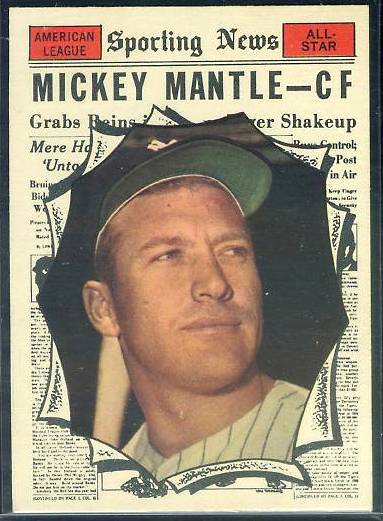
September 3, 1961 – Monumental Mantle

Mantle's two September 3, 1961 homers - for the ages.

Mantle’s two September 3, 1961 homers – for the ages.

On this date (September 3) in 1961, Mickey Mantle rapped a pair of home runs as the Yankees topped the Tigers 8-5 at Yankee Stadium.  They were Mantle’s 49th and 50th round trippers of the season – and they still carry considerable historic significance.

First, they made Mantle the only switch-hitter to reach 50-homers in a season – a distinction he still holds.

Second, since teammate Roger Maris had already reached 50 home runs (he had 53 at the time), Maris and Mantle became the first two teammates to reach 50 dingers in a seasons – a distinction they also continue to hold.

Third, the two homers were part of Mantle’s 1960 total of 54, which – when added to Maris’ 61 that year – give Maris/Mantle the record for the most home runs by teammates in a single season.

Fourth, they contribute to the Yankees’ record of having the most 50-homer players.  Babe Ruth, Mickey Mantle, Roger Maris and Alex Rodriguez also reach the mark while in pinstripes.

Looking for more 50-homer trivia fodder?

  • To date there have been forty-two 50-homer campaigns, put together by 26 different players.  (15 right-handed hitters, 10 left-handers and one switch hitter)
  • The first 50-homer season belongs, as you might expect, to Babe Ruth (54 homers in 1920).  Ruth topped 50 round trippers three more times 1921, 1927, 1928).
  • Hack Wilson, with 56 HRs in 1930, became the second member (and first NL member) of the 50-homer club. 
  • Only Sammy Sosa and Mark McGwire have matched Ruth’s four 50-homer seasons, with both players achieving their four “50s” in consecutive seasons (Sosa 1998-2001/McGwire 1996-99).
  • Willie Mays is the only player to hit 50 homers for the same franchise in two different cities – 51 HRs for the New York Giants in 1955 and 52 for the San Francisco Giants in 1965).
  • Willie Mays also holds the mark for seasons (11 including each 50-homer year) between 50-homer campaigns (as well, for the length of time between a first and last 50-homer season).
  • Mark McGwire is the only player to be traded in the course of a 50-homer season.  In 1997, McGwire finished July as an Oakland A, with 34 homers and 81 RBI.  On July 31, he was traded to the St. Louis Cardinals, where he played in 51 more games, rapping another 24 homers and driving in 42.
  • The 50-homer club boasts only one father/son combination:  Cecil Fielder (51 HRs for the Tigers in 1990) and Prince Fielder (50 HRs for the Brewers in 2007).
  • The youngest member of the 50-homer club is Prince Fielder (23), the oldest Barry Bonds (37).
  • Only three players have hit fifty homers for more than one team Jimmie Foxx (Philadelphia Athletics 1932, Boston Red Sox 1938); Mark McGwire (Oakland A’s 1996, Oakland A’s/St. Louis Cardinals 1997, St. Louis Cardinals 1998, 1999); Alex Rodriguez (Texas Rangers 2001, 2002 and New York Yankees 2007).  Of these, only McGwire has achieved the feat in both leagues.
  • In the seventy-six seasons since the first 50-homer season (1920-95), there were a total of nineteen 50-homer seasons. Between 1996-2012 (17 seasons) there were twenty-three 50-homer campaigns. And from 1997-2006 (ten seasons), there were eighteen 50-homer campaigns.

BBRT Late Season “Watch List”

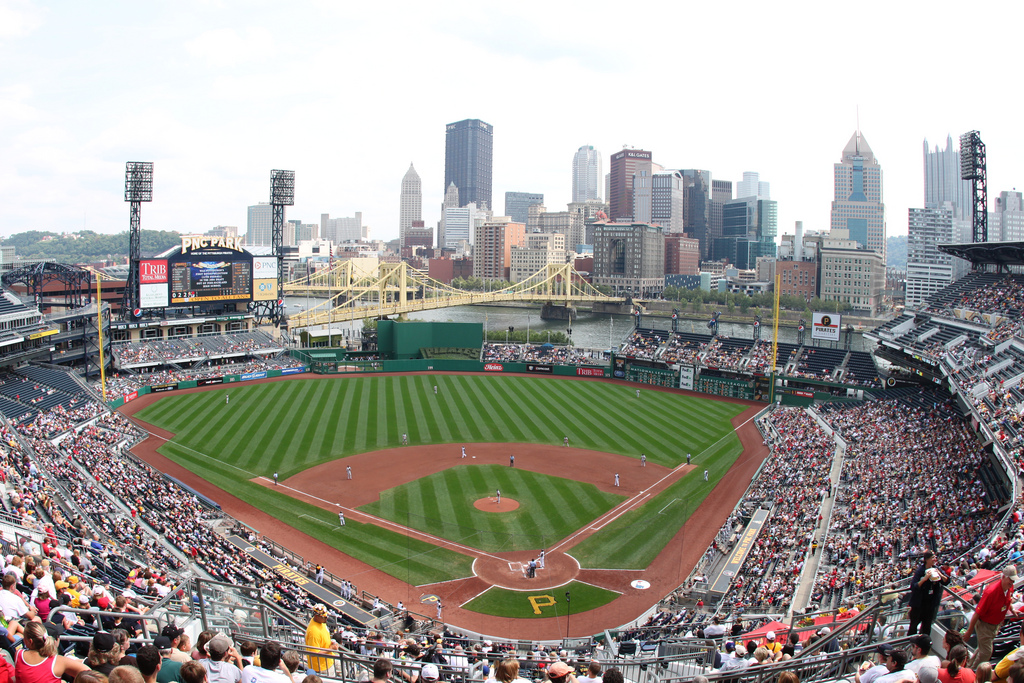
September baseball - exciting in Pittsburgh.

September baseball – exciting in Pittsburgh.

In the August 20th BBRT’s post, I commented on my late August/September “watch list” – like Max Scherzer’s chances to notch MLB’s best winning percentage ever; the NL Central, AL West and AL East races; the AL and NL Rookie of the Year competition; Cabrera’s Triple Crown repeat chances; and the Pirates’ quest to top .500 for the first time in twenty years.  As we close out August, and BBRT completes its traditional monthly “observations,” I’ll update a few of those items, as well as comment on some additional developments that are capturing BBRT’s late-season interest.  The list is not all-inclusive, just a few stories that provide some relief in a season when my Twins are not playing compelling baseball. (Stats as of end of August 31 games.)

NL MVP Race

BBRT is tracking the NL MVP race, where the leading candidate seems to be the Pirates’ outfielder Andrew McCutchen.  Cutch raised his MVP profile with a .384, 2 HR, 15 RBI, 6 SB) August.  For the season, McCutchen is .317-17-74, for a Pirates’ team that ranks tenth in the NL in runs scored.

There has been considerable MVP discussion surrounding Dodgers’ hurler Clayton Kershaw and his MLB-leading 1.72 ERA.  No doubt, Kershaw has put up great numbers (Cy Young territory).  Still he is only 13-8 on the season.  (Not necessarily his fault, Kershaw went 3-2 in August, despite a 1.01 ERA.)  Dodger Zach Grienke, despite a higher (2.86) ERA, stands at 13-3 for the Dodgers and went 5-0, 1.23 in August.  McCutchen, in BBRT’s estimation, has been more valuable to the Pirates than Kershaw to the Dodgers.  BBRT would, however, like to throw Francisco Liriano’s hat in the ring.  (See next section.)

Francisco Liriano – Comeback Player, CY Young, MVP?

BBRT is following the starts and stats of Pirates’ left hander Francisco Liriano – whom I consider a shoe-in for Comeback Player of the Year; as well as a dark horse candidate for the Cy Young and MVP Awards.  Here’s why.  Coming off a broken arm, Liriano didn’t make his first start until May 11.  He ended August at 15-6 (tied for the NL lead in wins), with a 2.57 ERA and 135 strikeouts in 133 innings.  Just as important, two of his four wins (against two losses) in August were in key games against the Pirates’ chief competition for the division title – the Cardinals.  In those two starts, Liriano threw 17 innings, giving up seven hits, striking out 12 (against 3 walks), and allowing just one earned run.  (Liriano has started three games against the Cards this year, winning all three and giving up just two earned runs in 24 innings.)

Notably, Liriano’s 2.57 ERA includes a disastrous August 9 game in Colorado, when he gave up ten earned runs in just 2 1/3 innings.  Without that start, Liriano’s ERA would be 1.93. Liriano’s performance is all the more important when you consider no other Pirates’ starter has reached double-digits in wins.

Strikeouts Chapter One – Yu Darvish’s Quest for 300

BBRT is keeping an eye on Yu Darvish’s run at 300 strikeouts for the season.  Darvish heads into September with 236 strikeouts in 174 innings (12.2 Ks per 9 IP).  The last 300-strikeout season was recorded by Arizona’s Randy Johnson in 2002, when he fanned 334 batters in 260 innings (11.6 per nine inning).  The last AL hurler to reach 300 strikeouts was Boston’s Pedro Martinez in 1999, when he fanned a remarkable 313 in just 213 1/3   innings (13.2 Ks per nine).  Darvish has a chance for 300+, but BBRT expects him to fall about 10-15 whiffs short.

Strikeouts Chapter Two – Twins and Astros

Speaking of strikeouts, according to the Elias Sports Bureau, Minnesota Twins’ hitters fanned 291 times in 30 August games – a new MLB record for whiffs in a month.  The Twin’s hitters are only 229 strikeouts shy of the AL season record (1,387 by the 2010 Oakland A’s), but will have to climb over the transplanted Houston Astros, who finished August with a season total of 1,273 strikeouts.  That AL mark should fall, and even the Diamondbacks’ MLB whiff record of 1,529 in 2010 is within the Astros’ reach.

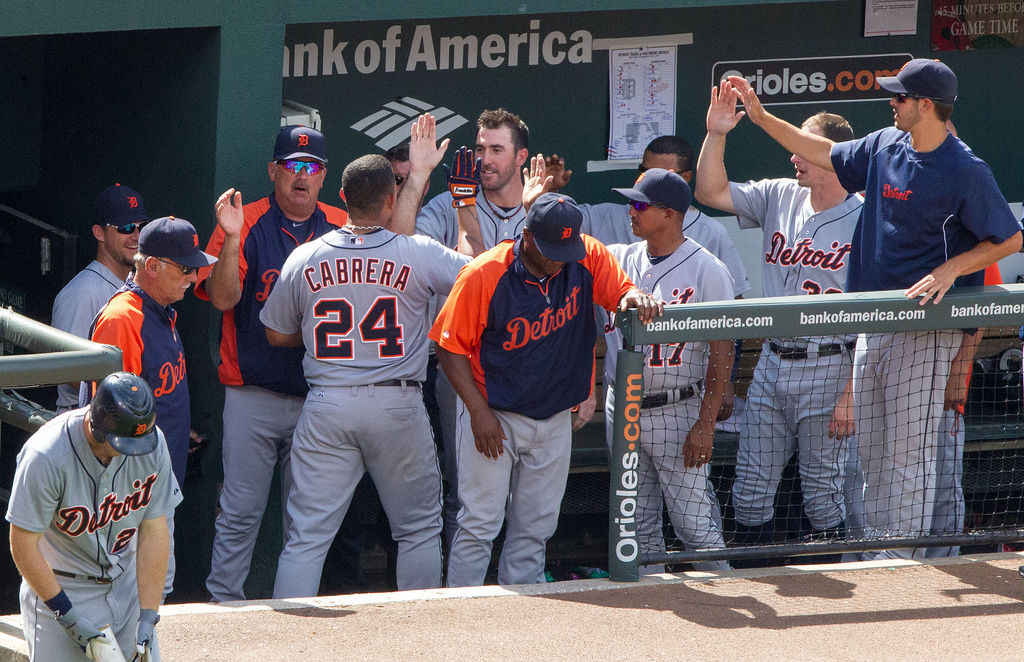
Continued excitement in the Motor City.

Continued excitement in the Motor City.

Update on Cabrera Triple Crown Repeat

Miguel Cabrera continues to hold a comfortable AL lead in batting average (.358) and RBI (130), and is working to chase down the Orioles’ Chris Davis in HRs.  Davis still leads Cabrera by four homers (47-43), but Miggy did gain ground in August, out homering Davis 11 to 9.  What adds interest are Cabrera’s ongoing injury (abdominal) issues.  With the division lead well in hand, it now appears the Tigers may give Cabrera a bit of rest to get him back to 100 percent for the post season.  In any case, MLB’s first-ever Triple Crown still looks like a long shot.

Scherzer and the Single-Season Winning Percentage Record

Max Scherzer remains on the “watch list,” still in a position to set a new single-season winning percentage record (15 decisions to qualify). Pittsburgh Pirates’ reliever Elroy Face holds the record at .947 (18-1 in 1959).  Scherzer, at 19-1, cannot afford even a single loss over the final weeks if he is to top Face’s mark.  This past week, we saw how quickly this chase can be put in jeopardy. In his August 29th start, Scherzer gave up eight hits and six runs (five earned) in five innings – leaving the game down 6-1 to the Oakland A’s.  The Tigers fought back and took him off the hook with a 7-6 win – topped by Torii Hunter’s ninth-inning, walk-off, three-run home run.  So, Scherzer still has a shot at the record, but he can’t afford another misstep (and may need a little luck).  BBRT will continue to follow Mad Max’s starts.

Dodgers Staying Hot?

BBRT is also following the Dodgers, who have bolted out to a 10½ game lead (over Arizona) in the NL West, thanks to a 23-6 August, following a 19-6 July.  Can the Dodgers stay this hot?  Worth keeping an eye on.

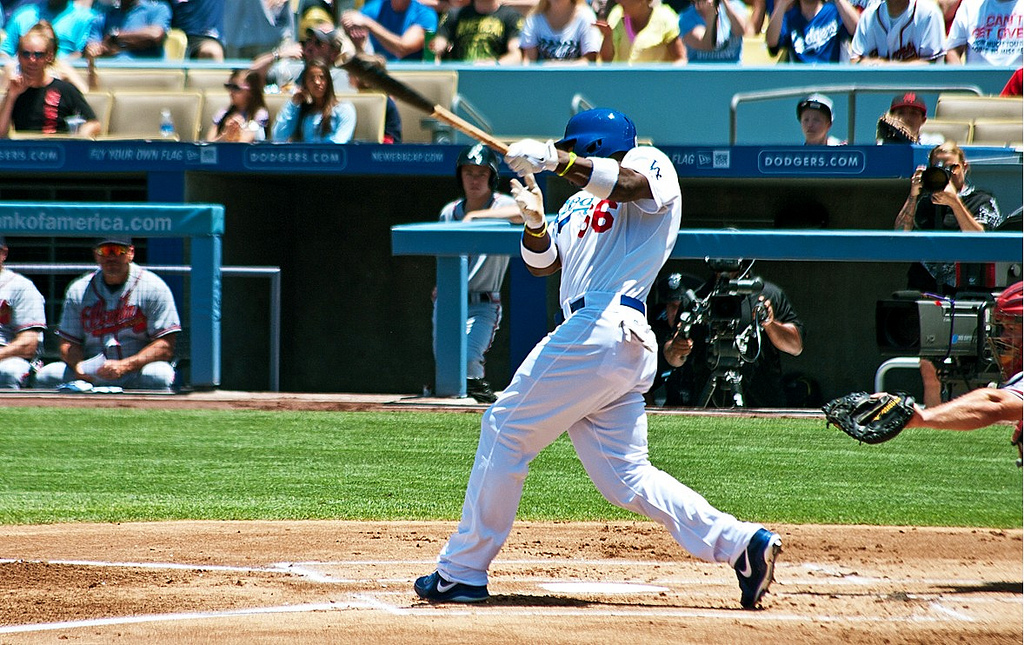
September Fun in Dodger Town,

September Fun in Dodger Town,

NL Rookie Race – Two Short Seasons

The NL Rookie of the Year race is interesting, with the leading candidates being one who started the season late and another who is likely to end the season early.  The late starter is Yasiel Puig, who has opened eyes with his energy and his attitude.  Puig started out strong after his June 3 call up.  He hit .436 with 7 homers, 16 RBI, 19 runs and 4 steals in that first month.  He came down to earth in July, going .287, 3 HRs, 7 RBI, 17 runs, 3 steals.  As the Dodgers heated up in August, so did Puig (or vice versa) – going .320 with 3 home runs, 8 RBI, 17 runs and 3 steals.  For the year, Puig has played in 78 games, with a line of .349-13-31, ten steals, and a host of outstanding defensive plays.

Puig’s main competition for ROY is the Marlins’ right-handed starter (21-year-old) Jose Fernandez (of the 98- mph fastball and knee-buckling curve).  Playing for the 49-85 Marlins, Fernandez is 10-6, with a 2.33 EA and 173 strikeouts (vs. 53 walks) in 158 2/3 innings.  Further, since a slow start (0-2, 4.50 in April), Fernandez has put up Kershaw-like numbers.  Since May 1, he is 10-4, with a 1.94 ERA. In August, Fernandez went 3-1, with a 1.15 ERA and 49 strikeouts in 39 innings.  That hot August separated Fernandez from another ROY candidate, the Cardinals’ Shelby Miller (12-9. 3.13 on the year), who went 2-2, 4.45 for the month.  However, it’s been reported that Fernandez will be shut down in the 170-175 inning range (two more starts), which could hurt his chances.  BBRT sees a race to the wire for Puig and Fernandez, with Puig holding the edge because he will remain in the lineup (and in the voters’ sites) through year-end.

AL Rookie of the Year

BBRT touched on the AL Rookie of the Year race in the August 20 post.  It appears 23-year-old Detroit shortstop Jose Iglesias (who started the season with Boston) is cementing his lead.  Iglesias hit a steady .294 in August and is at .320 with 2 home runs, 24 RBI and 36 runs scored on the year – while also being the expected defensive presence.  Tampa Bays’ Wil Myers (who played his first game June 18) carved out a spot in the ROY race in July when he put up a .324-4-18 line (after .296-3-9 in June). A slump in the second half of August (6-for-43) and his .209-2-12 for the month have hurt his ROY chances.  Still, he stands at .285-9-39 for the year and could climb back into the race with a solid September.  Edge: Iglesias.

Other Individual Races to Watch

Four hurlers are tied atop the NL leader board in wins and none of them are named Kershaw or HarveyFrancisco Liriano (Pirates), 15-6, 2.57; Jorge DeLaRosa (Rockies), 15-6, 3.33; Adam Wainwright (Cardinals), 15-8, 2.96; and Jordan Zimmerman (Nationals), 15-8, 3.33. Should be a fun run to the finish.

The NL batting title is also up for grabs – in a see-saw battle between the Braves Cliff Johnson (.331-10-58 at the end of August) and the Cardinals Yadier Molina (.328-10-60).

Division Races/Wild Card Updates

In mid-August, BBRT was looking at very close races in the AL West and East and NL Central.  Things have loosened up a bit in the AL East, with Boston holding a 4 ½ game lead over fading Tampa Bay (11-15 in August). Boston is sitting in a pretty good spot, but don’t count the Rays out yet.  They did go 21-5 in July and a strong September could put them back in the race.   Texas (after a 19-7 August) enjoys a two-game lead over the A’s. The Rangers and A’s should play some interesting baseball in September. (BBRT expects the Rangers to hang on).  The NL East is now the closest race in MLB, with the Pirates one game up on the Cardinals and 3½ ahead of the Reds.  It should be exciting as these three storied franchises battle it out in the weeks ahead.  All three teams should make the post-season, either as the division champion or in a Wild Card slot. (Could make for some riveting playoff  baseball.)

Looking at the other divisions, the Tigers (AL Central), Braves (NL East) and Dodgers (AL West) all have secure leads.  Washington did finally come to life, going 16-11 for August.  Atlanta, however, more than matched the Nats, going 20-7 and expanding their lead to 15 games.

The AL Wild Card leaders are now Oakland and Tampa Bay, with the Yankees 3 ½ out, the Orioles 4 back and Cleveland 4 ½.   BBRT does not anticipate much change there.  The Yankees could make a run if Tampa Bay continues to falter and Soriano .270-12-35 in 32 games since joining the Yanks continues to hit.

September baseball ahead – happy watching!!

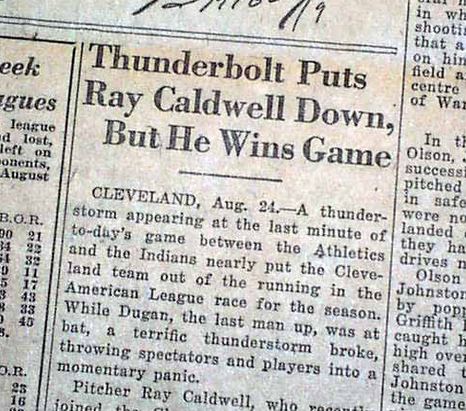
Ray Caldwell – Not Even A Lightning Bolt Could Drive Him From The Mound

CaldwellAnother BBRT look at how the game has changed – Ray Caldwell’s August 24, 1919 pitching performance, which saw the hard-nosed, hard-living hurler felled by a lightning strike only to “shake it off” and complete the game.

“Pitcher Ray Caldwell, who recently joined the Cleveland team, making his first appearance here was knocked down, but soon recovered and remained pitching.”

New York Tribune

August 25, 1919


As a ballplayer, Ray Caldwell was known as someone who played hard – on and off the field.  The 6’2”, 190-pound, right-hander was thought by many to be a potential team “ace” on the mound.  However, his career was derailed by ongoing arm troubles and a penchant for “living large.”  His days in MLB were marked with multiple team fines and suspensions related to alcohol and absenteeism.  As New York Yankees’ manager Miller Huggins described it, “Caldwell was one of the best pitchers that ever lived, but he was one of the characters that kept a manager in constant worry.”   Reflecting on Caldwell’s career, sportswriter Fred Lieb (credited with labeling Yankee Stadium “The House that Ruth Built” wrote (April 27, 1933, The Sporting News), “He was one of the playboys of his time. Caldwell loved baseball, but he loved the high lights better.”

[Ray Caldwell, New York AL, at Polo Grounds, NY (baseball)]  (LOC)Caldwell, like most pitchers of his day (MLB career 1910-21), like to finish what he started.  He, in fact, finished more than 70 percent of his starts (184 complete games in 259 starts).  Not only was it difficult for opposing hitters to drive him from the mound, even Mother Nature couldn’t get the best of him.

On August 24, 1919, Caldwell made his initial appearance for the Cleveland Indians (after being released by the Red Sox, with a 7-4 record and 3.94 ERA).  Cleveland manager Tris Speaker, in a tight pennant race with the White Sox, thought he could handle the problematic Caldwell, and it turned out he was right – Caldwell went 5-1, 1.71 in six starts down the stretch, including a September 10 no-hitter against the Yankees.  (He also hit .348, 8-for-23, with four doubles in his six starts for Cleveland.)  But let’s get back to that August 24 game.

Caldwell started his first game in Cleveland – against the lowly Philadelphia Athletics – and, despite threatening weather, was cruising along with a four-hitter and a 2-1 lead.  With two outs in the bottom of the ninth, Caldwell faced not only the A’s number-five hitter (shortstop Jumpin’ Joe Dugan), but also dark skies, rumbling thunder, occasional lightening and intermittent rain.  As witnesses reported, with Dugan at the plate, a lightning bolt blazed from the sky, struck the metal railing near the press box, traveled down the ball park railings, exited and crossed the infield (some say hitting him in the top of the  cap), dropping Caldwell as through he had been struck by a line drive.

The fans gasped, some panicked, and the umpires rushed to the mound, where Caldwell lay face up, arms outstretched. Caldwell first sat up, then got to his feet and shook his head to clear the cobwebs.  He then demanded the ball and retired Dugan on a grounder to third base on the very next pitch.

As noted, Caldwell finished 1919 strong for Cleveland and, in 1920, his 20-10, 3.86 season helped Cleveland capture the AL pennant.  By 1922, at the age of 33, however, Caldwell’s history of arm and disciplinary problems had brought his major league career to an end.  He kept playing, however, logging a dozen more minor league seasons – and despite two twenty-win minor league campaigns, never got a call back up.

Caldwell’s final MLB stats (Yankees, Red Sox, Indians)  included a 134-120 record and a 3.22 ERA.  In addition to his 20-win season with the Indians, he went 18-4, 1.94 for the 1914 Yankees and 19-16, and 2.89 for the 1915 New York AL club.  A superb athlete, Caldwell was also often used in the outfield, first base or as a pinch hitter. In 1918, Caldwell pitched in 24 games (21 starts) for the Yankees.  He also hit .291 in 169 at bats – playing in 65 games and taking the field at first base and in all three outfield positions (most often center field).  In 1915, his four home runs were ninth in the AL (Braggo Roth led the league with 7), despite Caldwell having 200 at bats fewer than anyone else in the top ten.  (League leader Roth hit his seven homers in 384 at bats; Caldwell hit his four homers in 155 at bats. )

Ray “Slim” Caldwell – not even a lightening bolt could drive him from the mound.

Developments BBRT Will Be Watching In August/September

The season is winding down fast for those of us here in Minnesota, but BBRT still has a “watch list” for the weeks ahead.  Here are a few developments that will hold my interest.

Can Max Scherzer ... 18-1 ... make history?

Can Max Scherzer … 18-1 … make history?

Can Max Scherzer break Pirate’s reliever Elroy Face’s MLB record for single-season winning percentage (minimum 15 decisions)?

Face went 18-1 (.947) in 57 appearances for the Pirates in 1959.  Scherzer stands at 18-1 (2.82 ERA) right now, so he needs at least one more win – and can’t afford a loss. The AL record (and record for a starter) sits with the Cleveland Indians Johnny Allen, who went 15-1 (.938) in 1937. BBRT expects Scherzer will pick up a loss in the final weeks.

Will Baltimore’s Chris Davis deny Miguel Cabrera repeat Triple Crown bid?

Cabrera at .360 seems a lock for the AL batting title and holds a five RBI edge over Davis (120-115).  Davis, however, holds a five-homer lead over Miggy (45-40) and has been matching Miggy HR-for-HR lately.  BBRT anticipates MLB will remain without a Triple Crown repeater. BBRT will also be watching to see if Davis can reach 61 home runs (the record Davis recognizes) for the season.  I expect he will fall short as the season wears on and pitchers pitch around him even more.

Who will win the AL Rookie of the Year?

A special look at slick-fielding Detroit SS Jose Iglesias, hitting .317 in 80 games.  If Iglesias could win the ROY, he would be the first player to capture the award in a season in which he was traded.  (The Tigers acquired Iglesias from Boston in July as insurance against the pending suspension of Johnny Peralta.)  Right now the main competition comes in the form of Kansas City outfielder Wil Myers, called up in mid-June and hitting .310-9-37, with five steals in 51 games.  While Iglesias had the early nod, his bat has cooled, while Myers’ stock is on the rise.  Should be a close race, but Myers power will likely swing the award his way.


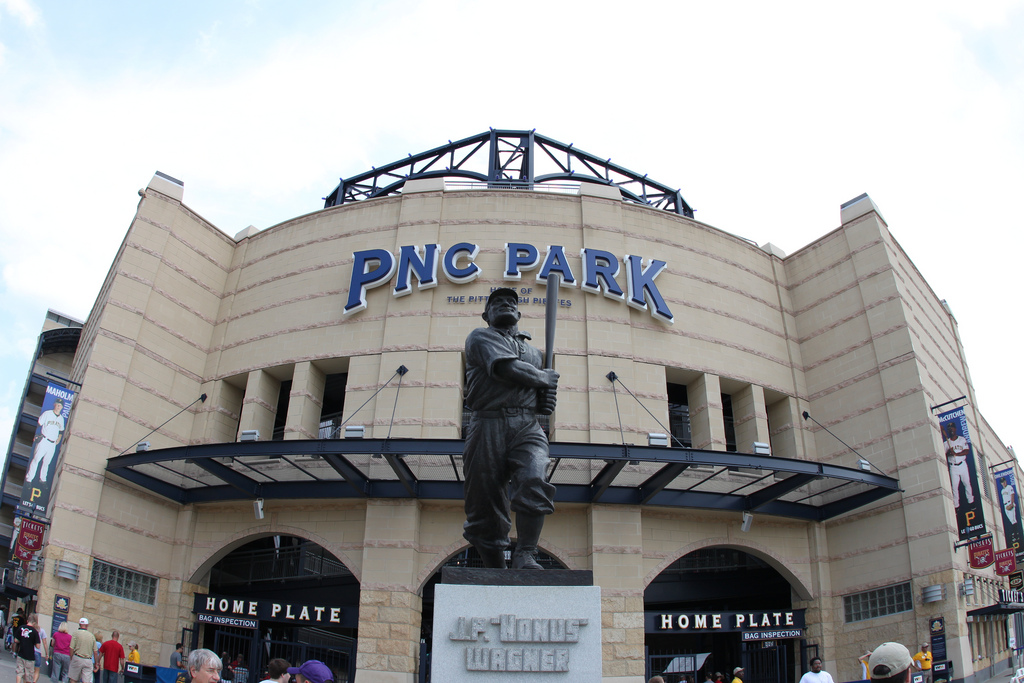
Post  season at PNC this year?

Post season at PNC this year?

Will the Pirates top .500?

After 20 consecutive non-winning seasons, the Pirates now stand at 73-51 and this should be the year they break the streak (despite the late-season slumps we saw over the past couple of years.) Within this “watch,” BBRT is paying attention to the resurgence of former Twin Francisco Liriano – a Pittsburgh reclamation project (coming off two consecutive seasons with an ERA north of 5.00 and an off-season broken arm). Liriano didn’t make his first 2013 appearance until May 11.  He now stands at 14-5, 2.53 with 126 strikeouts in 121 innings. (And, this includes a disastrous August 9 start at Colorado, when he gave up 10 earned in 2 1/3 innings – without that start, Liriano’s ERA would be 1.80). BBRT will be watching to see if Liriano, despite his late start, can crack the top five in NL Cy Young voting.

Who wins the NL Central? AL West? AL East?

Three exciting races to watch as we move through the dog days of August.  Pittsburgh leads the Cardinals by one game in a back and forth race; Texas has a half-game lead over Oakland; and Boston has a slim one-game margin over Tampa Bay. If  BBRT had to choose – Cardinals edge Pirates, Texas holds on against Oakland, and Boston fades a bit down the stretch and falls behind Tampa.  Should be lots of exciting baseball.

How do the remaining Red Sox/Yankees games play out?

New heat has been added to a long-time rivalry.  These two clubs will be at each other no matter what the standings.  (Does Dempster get another start against the Yanks?)  Should be exciting and controversial.

Can Puig - the rookie with the big number (66) - win the NL ROY?

Can Puig – the rookie with the big number (66) and big swing – win the NL ROY?

Who wins NL Rookie of the Year?

Unlike the AL, competition is deep.  Leading the pack may be Dodgers’ outfielder Yasiel Puig, as much for the new swagger he has brought to the now streaking Dodgers as for his results (.351-11-27 in 67 games).  But you can’t count out Miami’s 20-year-old sensation Jose Fernandez, with his 9-5 record, 2.41 ERA and 157 punch outs in 145 1/3 innings for the last-place Marlins.  Also in the running are hurlers Shelby Miller (11-8, 2.98, 145 strikeouts in 132 2/3 innings for the Cardinals) and the Dodgers’ Hyun-Jin Ryu (12-4, 2.95, with 126 strikeouts in 155 2/3 innings.)  Looking at the pitchers, Fernandez seems to have an edge.  Miller has given up seven runs (five earned) in 13 innings, since being hit in the elbow by a line drive on August 7 – although all appears okay; Ryu does not have the strikeout numbers of Miller or Fernandez; and Fernandez recently topped Ryu in a heads-up match-up.  More likely, however, the three pitchers split votes and Puig takes the award, despite not making his MLB debut until June 3. (There is a precedence, Willie McCovey won the 1959 NL ROY, despite not making his first appearance until July 30.  He then went .354-13-38 in 51 games).

Will Yadier Molina join the short list of catchers who have won batting titles?

Atlanta third-baseman Chris Johnson currently leads Molina .335 to .334.  If Molina wins, he will join Joe Mauer (three titles); Ernie Lombardi (two titles); Bubbles Hargrave; and Buster Posey among catchers with battling titles.  BBRT likes Molina’s chances, although with their big lead, Atlanta may rest Johnson down the stretch, keeping his bat fresh.  Should be a close one.

Will Clayton Kershaw keep ERA under 2.00 for streaking Dodgers?

Will Clayton Kershaw keep ERA under 2.00 for streaking Dodgers?

Will Clayton Kershaw finish with an ERA under 2.00?

Only two pitchers (ERA qualifiers) have turned in ERA’s under 2.00 since 2000. Roger Clemens (Astros) was the last to do it – 1.87 in 2005. In the AL, Pedro Martinez (Red Sox) posted a 1.74 ERA in 2000.  Martinez’ achievement was, perhaps, the most spectacular.  The second best ERA in the AL was 3.70 (Clemens, with the Yankees), giving Martinez the largest ERA edge ever at 1.96. Kershaw current stands at 12-7, 1.80, and had posted a 1.35 ERA in three August starts.  BBRT expects a sub-2.00 season.

There’s plenty more to keep and eye on, but these are a few stories of interest for BBRT.  Care to share what intrigues you as MLB moves toward October?

A Big Day For Little League – and the Cannon Street YMCA All Stars

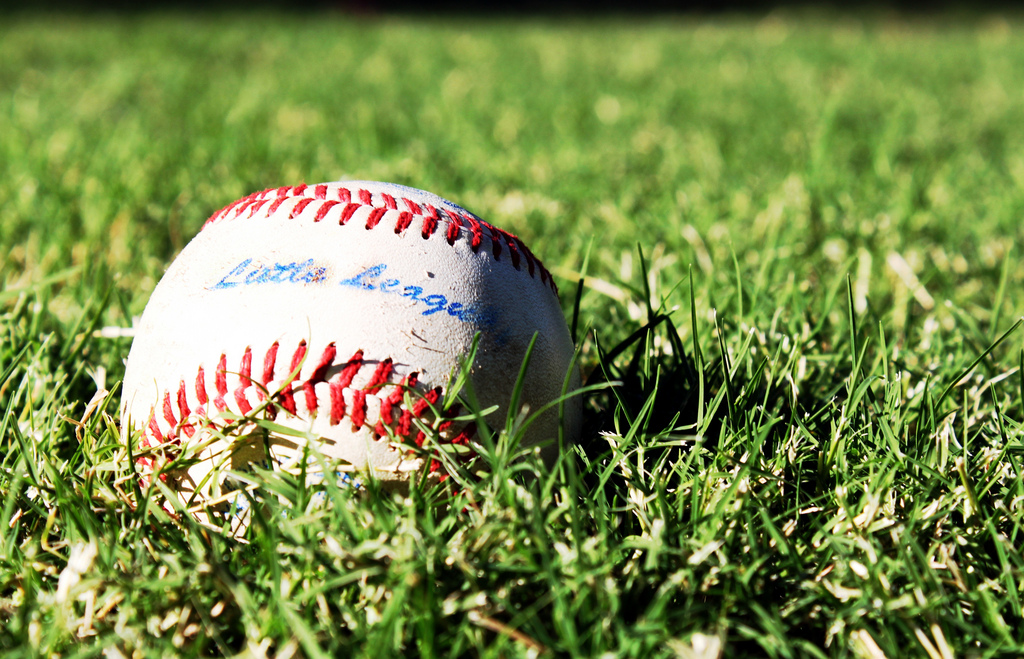
Little LeagueOn this day (August 16) in 2002, a group of Little Leaguers – all pushing 60-years-old – was honored at the Little League World Series.  They were a group that, as 11- and 12-year-olds, made the trip to Williamsport as a team, but never had the opportunity to play a game.  Still, this team – the 1955 Cannon Street YMCA All Stars (Charleston, South Carolina) – has been recognized for its contributions racial understanding and equality on and off the field.


Jackie Robinson may have broken Major League Baseball’s “color line” in 1947, but in 1955, there was still plenty of controversy surrounding integration – as evidenced by the events surrounding the 1955 Little League World Series.

In the summer of 1955, there were more than 62 chartered Little League programs in South Carolina.  All but one of those leagues – the Cannon Street YMCA Little League in Charleston – was made up entirely of white players.  As the season progressed, the Cannon Street League played its full schedule and then selected a team to represent the league in the tournament leading up to the Little League World Series.

You can learn more about  their season ...

You can learn more about their season …

Cannon Street’s All Star squad advanced in the tournament without losing a game – not because they overpowered the opposition, but because all of the teams representing South Carolina’s “white” Little League simply refused to play them.  Cannon Street won their city and state championship tournaments by forfeit.  Then, when championship teams from the seven other Southern Region states refused to play the Cannon Street team, Little League declared the squad the regional champion as well.  (The “white” leagues eventually went so far as to leave Little League and form a new association, Dixie Baseball for Boys.)

Little League, to its credit, held firm to its non-discrimination policy, rejected the South Carolina affiliate’s request for an all-white tournament and ruled that if a team refused to play against a duly franchised Little League, that team would not be allowed to participate in the Little League tournament. That left only one team standing in North Carolina – the Cannon Street squad. The next step should have been competing in the Little League Series – but here’s where rules overruled common sense.  Little League officials also held firm on a rule prohibiting teams from playing for the World Series title after advancing by forfeits.

The organization did, however, invite the Cannon Street team to Williamsport as guests.  The story has it that the team made the 750-mile trip to Williamsport in an old school bus that broke down a few times and even caught fire along the way.  Once in Williamsport, the team stayed in the dorms with other teams and took part in the festivities surrounding the World Series (even on-field warm-ups) – but were not allowed to play a game.

Notably, after their on-field warm-ups, the crowd in the stands (estimated at about 5,000) began a stadium-rattling chant of “Let them play! Let them play!”  (A shining moment for a crowd of Little League families.)  Clearly, the team may have not won a game in Williamsport, but they won quite a few hearts.  And, over the years, members of the team lived their lives and told their story with dignity – opening quite a few eyes (and hearts) as well.

Forty-seven-years later, members of that team were honored at the opening ceremonies of the 2002 Little League World Series.  At that ceremony, Little League president and CEO Stephen Keener told the crowd and the team,  “There is no way to right the wrong perpetrated on the boys of the Cannon Street YMCA Little League team, just as there is no way to right the wrongs perpetrated throughout history on people because of their skin color.  Little League will be honored to have the Cannon Street team with us as our special guests.”  A big day for Little League.

And there have been other accolades.

In 2006, the team was inducted into the Charleston Baseball Hall of Fame and, in 2012, the city of Charleston unveiled an historical marker honoring the players for their accomplishments and contributions on and off the field

Earlier this year, U.S. Senator Tim Scott (R-SC), read the following tribute into the Congressional Record:

In the heart of Charleston, SC, lies Cannon Street; it’s a modest street spanning just a few city blocks. However, within its history lies the story of what Dr. Creighton Hale, the former CEO of little league baseball, called “the most significant amateur team in baseball history.”

In 1955, the area surrounding this street was one of economic blight and social unease. In an effort to keep kids out of trouble and teach skills that only team sports can provide, the local YMCA organized four little league teams for the neighborhood kids. The Cannon Street YMCA All-Stars consisted of seventeen players: John Bailey, Charles Bradley, Vermont Brown, William Godfrey, Vernon Grey, Allen Jackson, Carl Johnson, John Mack, Leroy Major, David Middleton, Arthur Peoples, John Rivers, Norman Robinson, Maurice Singleton, Leroy Carter, George Gregory, and Augustus Holt. They were coached and founded by: Lee J. Bennett, Walter Burke, Rufus Dilligard, A.O. Graham, Robert Morrison, R.H. Penn, and Benjamin Singleton. The team would advance to the Charleston City Little League playoff games, but would never be given the opportunity to earn a spot in the Little League World Series. It was not because they were unworthy players or because they could not afford to go. The color of their skin stifled the dreams of these twelve-year-old boys.

The Charleston playoff games were boycotted in 1955 to preserve racial segregation. Because teams again refused to play against them, the Cannon Street All-Stars advanced past the state and regional playoffs. The National Little League invited the All-Stars to the Little League World Series as special guests; they could not compete for the title because technically they hadn’t played their way to the championships. They returned to Charleston, dismayed and disappointed.

As children, they embodied the very characteristics that organized sports aim to impart–teamwork, courage and respect. As adults they have worked in productive and valuable careers such as architecture, law enforcement and education. As they have grown older, they are now volunteers in their communities–giving back, yet again. While they never had the opportunity to compete, their story has demonstrated where we have come from as a nation.

Last month members of my staff had the opportunity to meet several of the original Cannon Street Little Leaguers who traveled to Washington, DC to be recognized at Nationals Stadium before the Nationals-Phillies game. Their story remains powerful more than 65 years later, and I know my staff will never forget having the opportunity to meet them.

Today, the neighborhood that encompasses Cannon Street has developed into an integral part of the Charleston education and science community. It is home to a number of colleges and universities and a world-class research hospital. The boys of the Cannon Street Little League Team are men who through their careers and service to the community have become assets to their neighborhoods. In spite of the adversity they encountered and the challenges they confronted, these young people illustrated to the world the absurdity of segregation and the hatred inherent in racism.

In the 55 years since they were excluded from competing to earn a spot at the Little League World Series in their own right, America has matured. I would like to believe that a handful of twelve-year-olds contributed to our maturity.

It is with great admiration that I share their story and my respect for these men with you, my colleagues.

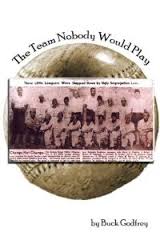
You can learn more about the Cannon Street YMCA All Stars in William Godfrey’s book, “The Team Nobody Would Play,” in the film “The Cannon Street Boys,” in Margo Theis Raven’s children’s book “Let Them Play” and in Carole Boston Weatherford children’s book “Champions on the Bench.”

Pete Rose – MLB’s Last Player-Manager

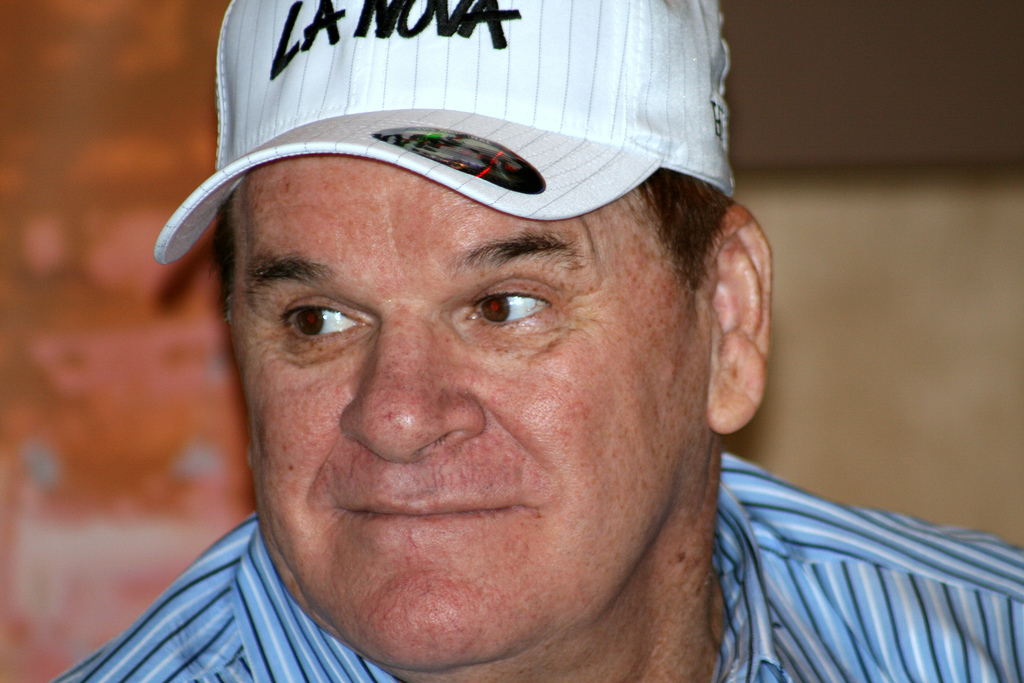
Pete Rose ... Time to give "Charlie Hustle" a Hall pass?  That's above BBRT's pay grade.

Pete Rose … Time to give “Charlie Hustle” a Hall pass? That’s above BBRT’s pay grade.

On this date (August 14) in 1984, Pete Rose was traded from the Montreal Expos to the Cincinnati Reds.  Rose, at the time, was hitting .259, with two homers and 23 RBI (in 95 games).  More important, the 43-year-old Rose had collected 4,069 base hits, just 122 shy of Ty Cobb’s recognized MLB record of 4,191.  The trade had other implications.  The Reds put Rose in place as player-manager, making him MLB’s last player-manager (to date).  The trade (back to his original team) seem to revitalize Rose, who hit .365 for the Reds, while playing in 26 of the team’s last 41 games. (As a manager, he led the team to 19 wins and 22 losses.)

On September 11, 1985, managing and playing first base for the Reds, Rose broke Ty Cobb’s all-time hits record with his 4,192nd safety. (Note:  There is some dispute over when Rose actually broke the record.  MLB.com lists Cobb’s hit total as 4,191, while independent research indicates two of his hits were double-counted – and baseballreference.com lists Cobb’s total at 4,189. Rose collected his 4,190th hit in a September 8, 1985, game.)

Rose collected his 4,256th and final hit off the Padre’s Goose Gossage on August 17, 1986. He managed the Reds from August 15, 1984 to August 24, 1989, posting a 426–388 record and four second-place finishes in the NL West.

Side note:  BBRT finds it a bit ironic, given his permanent placement on MLB’s ineligible list (related to gambling allegations) and subsequent tax-related charges, that Rose was traded from Montreal to Cincinnati for infielder Tom “Lawless.”

While Rose remains on MLB’s ineligible list, the record books still reflects “Charlie Hustle’s” remarkable 24-year-career – in which he set MLB records for (among other stats) games played, at bats and hits; had a record (shared) ten 200-hit seasons; was Rookie of the Year; won three batting titles and one MVP Award; earned two Gold Gloves; and made seventeen All Star appearances, playing at five different positions.

Disco Demolition Night – Great New Video on Baseball’s Wildest Promotion

Great new YouTube video on the Chicago White Sox’ Disco Demolition night – the brainchild of Mike Veeck (of baseball’s maverick Veeck family). The event – intended to put Disco in its place – was held on July 12, 1979, at Chicago’s Comiskey Park. Basically, a crate filled to with disco records (ah, the days of vinyl) was to be blown up on the field between games of a twi-night doubleheader (remember scheduled doubleheaders?) between the White Sox and the Tigers. The result was far from what the White Sox expected – ending with records flying everywhere, fans storming the field, the riot police being called in to restore order and the White Sox forfeiting game-two of the twin bill.

The very entertaining video tells the full story.  Just click the link below.

http://www.youtube.com/watch?v=GDaCimYs6N8&feature=youtu.be

Beating Injuries and the Odds – Albers and Ziegler, a Lot in Common

My Minnesota Twins (BBRT hails from Minnesota) are currently excited about 27-year-old rookie lefthander Andrew Albers, who has started his major league career with 17 1/3 scoreless innings pitched (two starts, two wins, one complete game shutout, six hits, one walk, four strikeouts).   Albers, in fact, might have two complete game whitewashes to his credit, except Twins skipper Ron Gardenhire thought he was tiring and pulled him from his last start with one down and two runners on (single, walk) in the ninth.

Gardenhire didn’t prove to be much of a prognosticator before Albers took the mound yesterday for his second start, noting that “If he goes out and tries to duplicate what he did before, he’ll get in trouble.”  Albers not only duplicated his first start, he took it to the next level, in a 102-pitch, 3-0 win over the Indians.

The publicity surrounding Albers’ start got BBRT to thinking about the MLB record holder for scoreless innings at the start of a career – current Diamondbacks’ reliever Brad Ziegler, who came up with the A’s in 2008 and pitched 39 major league innings before being touched for a run.  Albers and Zeigler, it turns out, have a lot in common – including college stardom, significant injuries, being released by the MLB team that originally signed them, stints in independent league ball, making the best of second chances and PERSEVERANCE.  Note:  It’s stories like these that help fuel BBRT’s love of the game.

Albers, who was a standout hurler at the University of Kentucky, was drafted in the tenth round (Padres) of the 2008 draft, and made five appearances in the 2008 Arizona Rookie League.  He injured his pitching elbow during 2009 Spring Training and missed the entire season (and was released by the Padres) after Tommy John surgery.  In 2010, Albers pitched (and pitched well … 3-0, 17 saves, 1.40 ERA) for the Québec Capitales of the independent Can-Am Association.  After a 2011 tryout, the Twins signed Albers to a minor league contract.  He went on to put up a 24-10 record, with a 2.91 ERA over the past three minor league seasons, 11-5 with a 2.86 ERA in 22 Triple A starts this year.


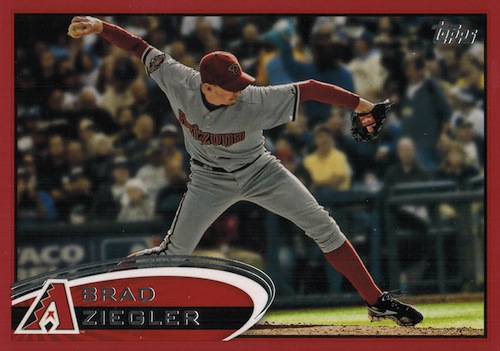
Brad Ziegler, despite two skull fractures, he is giving HITTERS headaches.

Brad Ziegler, despite two skull fractures, he is giving HITTERS headaches.

Ziegler, like Albers, was a standout pitcher in college, setting Southwest Missouri State (now Missouri State) records for starts, wins and strikeouts.  He was drafted by the Phillies in the 20th round of the 2003 MLB draft.  Ziegler, however, threw only six minor-league innings, before being sidelined by shoulder tendinitis.  Like Albers, Zeigler was released by his first MLB organization (just before the start of the 2004 season) and ended up pitching in the independent leagues (Schaumburg Flyers of the Northern League) – where his performance (four starts, three wins, 1.50 ERA) earned him a spot in the Oakland A’s organization.  (Oakland had originally drafted Zeigler in 2002, but he elected to return for his senior year at MSU.)

Zeigler pitched well at Oakland’s Modest0 (High A) club in 2004, going 9-2, 3.90, as Modesto made the playoffs. Then, while pitching in the playoffs, injury struck again – in the form of a line drive that fractured Ziegler’s skull.  Zeigler, however, recovered and pushed.   From 2005 until his call up in 2008, he moved steadily up the A’s minor league ladder.

It was during this time, actually in 2007, that the A’s asked Ziegler to try more of a sidearm approach – and Ziegler went 12-3, 2.41 as a reliever (Double A and Triple A) in 2007.   He continued to refine his new delivery in 2008 and was 2-0, 0.37 ERA in 19 appearances at Triple A Sacramento, when the A’s called him up in late May. (Note: If all of Ziegler trials weren’t enough, he also suffered a second skull fracture in January of 2008, the result of a deflected throw at a youth baseball camp.)

In his first MLB game, Ziegler pitched one-third of an inning (giving up a single) in an 8-4 loss to Texas.  Twenty-eight appearances, and 38 2/3 innings pitched, later, Ziegler still had not given up an earned run.  In those 39 innings, he gave up just 21 hits, while walking 11 and striking out 18 – and, as of August 8, earned the A’s closer role.

Ziegler’s streak came in the ninth inning of an August 14th game against the Tampa Bay Rays.  After pitching a 1-2-3 eighth, Ziegler gave up a run on a single by Akinori Iwamura and a double by B.J. Upton (the first extra base hit Ziegler had allowed).  Ziegler ended the season with 47 games pitched, a 3-0 record, 11 saves and a 1.06 ERA.  He remains active today, pitching for the Arizona Diamondbacks, where he has a 6-1 record, with seven saves and a 2.19 ERA.

Zeigler and Albers, persevering, despite the odds.

Wow! Unprecedented Power Display!

Gotta watch this six-year-old Little Leaguer – five at bats, five first pitch home runs.
Move over Babe Ruth, there is a new Sultan of Swat on the rise.