Ballpark Tours 2015 – Every Mile a Memory

This morning I departed on my annual Ballpark Tours’ (BPT) baseball trek, my 27th such journey.  Ballpark tours has taken me to major and minor league ball parks from Colorado to New York and pretty much all parts in between.  (Thank you, “tour master” Julian Loscalzo.) On this year’s trek, I’m joining 35 other baseball fans and fanatics for a week-long bus tour that is taking us to a minor league game in Schaumburg, IL (just outside of Chicago), as well as major league contests in Chicago (Cubs hosting Giants), Cleveland (Indians hosting our Twins), Detroit (Tigers hosting Red Sox), back to Chicago (White Sox entertaining the Angels) and then back to our home base of Saint Paul, MN (with a stop at a craft brewery in Wisconsin on the way home).

Before I begin my series of “reports from the road,” let me put in an unabashed plug.  For BBRT, there is no better baseball touring group than Ballpark Tours – just the right amount of chaos and discipline; comfortable transportation; great hotels; time in most cities to take in local culture, arts, food and nightlife (I’m planning on the Chicago’s Museum of Science and Industry and Cleveland’s Rock and Roll Hall of Fame on this trip); and, most important, the comradery – every year, without fail – of a great group of fun-loving baseball fans/friends.  How do others feel about Ballpark Tours?  On this trip, 35 of our 36 trekkers are repeat participants. How do I feel about BPT?  Hey, every morning for the next week I can get up knowing the most important item on my agenda is going to a ball game.  How can you beat that? For more on Ballpark Tours (and the upcoming Cuban trip), click here. 

I probably won’t post every day (we do have a busy schedule), but here’s first report from the tour.

DAY ONE

Scnuamburg tsnirtWe met our bus in Saint Paul’s Midway area at 9:30 a.m. Wednesday, August 5, and the parking lot was filled not just with our luggage, but also with hugs and handshakes, as old baseball- and tour-based friendships were renewed.   We loaded up quickly, with the rowdier trekkers heading for their seats at the back of the bus, and the less animated at the front (there is always a friendly competition between “the front of the bus” and the “back of the bus”).  The departure was toasted with coffee, juice, energy drinks (we’ll need them in the days ahead) – as well as an assortment of adult beverages.

The theme for this trip is Rock N’Roll Adventure (commemorative and complimentary T-shirts were handed out before we boarded the bus) and our theme would prove prophetic sooner than even I expected (but I don’t want to get ahead of myself).

As is Ballpark Tours’ tradition, early in the day, the K-Kwiz – a baseball trivia contest – was distributed and each trekker took the microphone and introduced themselves – usually with a baseball-related story. (Oh, and I shouldn’t forget, participants also described the books they each brought for the on-board baseball book exchange). It was during this phase that I began feeling like the Minnie Minoso of BPT – having been on BPT trips in four consecutive decades, beginning in the 1980s.  I should note here that Day One would feature other handouts – including a schedule of our games, hotels and arrival/departure times; a Ports-O-Call guide to restaurants, “watering holes,” museums, music, public transit, etc. in the cities we will visit; and entry forms for a contest based on predicting the total runs scored in MLB over the weekend. We will leave a paper trail.

You never know who'll show up on a Ballpark Tours trip.

You never know who’ll show up on a Ballpark Tours trip.

Around lunch time, we also had a visit from the “Assistant Pope” (aka Tom Smith) – who regaled the group with a laugh-provoking monologue worthy of a comedy club and then distributed assorted crackers, deli meats, cheeses and “sacred” eel pout (actually pickled herring) throughout the bus.  We lunched, pack your own, at a rest stop along the highway – with trekkers unveiling everything from deli sandwiches and beer to an elaborate picnic table buffet of baguettes, lox, assorted cheeses, stuffed olives and Napa Valley wine.

Then, it was back on the bus, when the Rock N’Roll Adventure began to rock.  Thanks to modern technology, the back of the bus began a long-lasting sing-along to 70’s rock – which included plenty of air guitar and dancing in the aisle of the bus. The moves being thrown down were a bit subdued given the limited space, but the singing was spirited (especially on Rolling Stones and Beatles numbers).
Great seats!

Great seats!

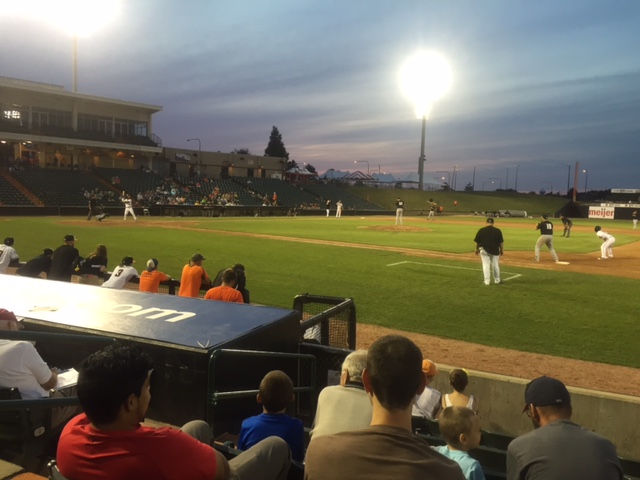
Of course, this is a baseball trip, and – we arrived in Schaumburg – for the Schaumburg Boomers/Southern Illinois Miners games.  The Boomers play in the independent Frontier League, so the names won’t be recognizable, but here are a few observations:

  • A nice park – I always like the old-style Red Brick – but it was empty (the over and under on fans was about 300 in a stadium that holds 7,365). It was almost like the tour group had a private showing.
  • The lighting, as in a number of minor league parks, was terrible (although only one fly ball – a foul pop-up was “lost” in the dark).
  • We had great seats, at the edge of the first base dugout – row six. (However, you could sit pretty much anywhere you wanted.)
  • The ball park was not kind to dead pull hitters – 355-feet down the left field line and 353-feet to the right field corner. One team representative informed me that the dimensions matched Wrigley Field because the mayor of Schaumburg “has a thing for the Cubs.”  Further digging showed deeper Cubs’ ties.  The stadium, which opened in 1999, is built on land purchased in the 1980s – reportedly as a potential site of a new home for the Cubs (the New Wrigley Field) if the team and the city of Chicago could not come to an agreement on night baseball.
  • Several small planes from the nearby Schaumberg Airport flew over the stadium during the game, seeming to clear the third-base-side light towers by about fifty-feet.
  • The team’s signature sandwich, the Schaumburger (a hamburger, topped with pulled pork and cole slaw for eight dollars) was both juicy and tasty. BBRT would recommend it.
  • There will be no Bloody Mary review for Schaumburg Boomers Stadium – the only adult beverage was beer.
  • There was general agreement among those of us keeping score sheets that the official scorekeeper had lost his or her red “error” pen – two or three errors were scored as base hits.

As for the game itself, Southern Illinois topped Schaumburg 4-1 in a fairly “quiet” contest – that’s what happens when you have 300 fans in the stands.  But there were a few highlights, at least from the BBRT point of view. Southern Illinois’ leadoff hitter CF Aaron Gates showed great speed, going three-for-four with a pair of well-placed bunt singles down the third base line. Schaumburg’s leadoff hitter 2B Mike Schulze also got on base three times – via three walks.  The stadium organ player was right on top of things, playing Fitz and the Tantrum’s song “The Walker” after Schulze’s last plate appearance. Schaumburg did turn a nifty third-second-first double play (TJ Bennett to Mike Schulze to Willi Martin) in the middle of Southern Illinois’ three-run third inning. (BBRT loves a good double play.) Southern Illinois’ starting pitcher Adam Lopez (who came into the game with a 1.88 ERA and 82 strikeouts in 76 1/3 innings) showed good stuff – giving up one run in six innings, with three hits, two walks and six strikeouts.

IndigoPost-game, we checked in to the Hotel Indigo, in Chicago’s Gold Coast neighborhood.  Another quality Ballpark Tours lodging choice. All in all, a great first day.


More on the tour in the days to come, including BBRT’s take on the changes to Wrigley Field – video screens, expanded bleachers, concourse/concession upgrades, etc.

I tweet baseball @DavidBBRT    (Note: Follow me on twitter for notification of new blog posts.)

All Star Game “Firsts” and “First and Only(s)”

With the 2015 MLB All Star Game just ahead, BBRT would like to devote another post to All Star game history.  This time, taking a look at the very first All Star Game – played at Chicago’s Comiskey Park on July 6, 1933 – and some of the “firsts” from that game.  In that initial All Star match-up – won  by the American League 4-2 – the starting lineups included eleven Hall of Famers (seven for the AL and four for the NL). There were another nine future HOFers on the bench (four for the NL, five for the AL). Both managers – John McGraw (NL) and Connie Mack (AL) were headed for the Hall, as were three of the four coaches. The stage was clearly set for some memorable, big-name All Star Game “firsts” – like Babe Ruth hitting the first AS Game round tripper.

Babe Ruth, appropriately, smacked the first-ever All Star Game home run. 

We’ll take a look at all the firsts from that first All Star gathering, but let me lead off with a curve ball, and take a look at some AS Game “first and only(s)” that did not take place in 1933.   Here are three baseball happenings that, to date, have happened just once in All Star competition.

  • Steal of Home: 1934 AS game, fifth inning, two out, two on, NL trailing 8-6 – NL 3B Pie Traynor (Pirates)  notches the first (and still only) AS Game steal of home. (AL won game 9-7.)
  • Grand Slam: 1983 All Star Game, third inning, bases loaded, two outs, AL leading 5-1, AL CF Fred Lynn hits first – and still only – AS Game Grand Slam. (AL wins 13-3).

Fred Lynn – Only ASG Grand Slam

  • Inside-the-Park Home Run: 2007 All Star Game, fifth inning, one on, one out, AL CF Ichiro Suzuki hits first – and still only – AS Game inside-the-park home run.

______________________________________________________

Now, here’s a dozen AS Game firsts from 1933.

  • First batter/pitcher matchup: NL 3B Pepper Martin (Cardinals) versus Lefty Gomez (Yankees). Gomez retired Martin on a grounder to shortstop.
  • First starting pitchers: AL, Lefty Gomez (Yankees) – NL, Bill Hallahan (Cardinals). Gomez got the first All Star win, Hallahan the first loss.
  • First hit: Cardinals’ Chick Hafey (leading off second inning – off the Yankees’ Lefty Gomez). Hafey was starting in LF and batting fourth for the NL.
  • First run scored: AL starting 3B Jimmy Dykes (White Sox).
  • First RBI: AL starting pitcher Lefty Gomez (Yankees) – drove home Jimmy Dykes (White Sox), who had walked, with a single to center field. Take that, DH Rule.
  • First double: Pie Traynor (Pirates), NL pinch hitter – top of seventh off Lefty Grove (Yankees).
  • First triple: NL pitcher Lon Warneke (Cubs) – top of the sixth inning off Alvin Crowder (Senators). Take that again, DH Rule.
  • First home run: AL RF Babe Ruth (Yankees), two-run home run, bottom of the third, off Bill Hallahan (Cardinals).
  • First walk: Bottom of first. Hitter – AL 2B Charlie Gehringer (Tigers). Pitcher – Bill Hallahan (Cardinals).
  • First stolen base: Bottom of first, AL 2B Charlie Gehringer (Tigers).
  • First strikeout: Final out, top of second. Pitcher – Lefty Gomez (Yankees). Hitter – NL SS Dick Bartell (Phillies).
  • First fielding error: Top of the fifth, AL 1B Lou Gehrig (Yankees).

Here’s hoping we see a record-setting performance at the 2015 All Star Game. From this viewpoint, the best All Star competition in any sport.

I tweet baseball @DavidBBRT

Best All Star Game Performances Ever – From the Batter’s Box and the Mound

With all the recent commentary surrounding the recent MLB All Star team voting and selections, BBRT thought it might be time to focus on a topic more likely to generate consensus – the best hitting and pitching performances ever in an All Star game, and some of the targets the players who take the field at Cincinnati’s Great American Ball Park on Tuesday July 14 can shoot for.  For a look at BBRT’s 2015 All Star ballot, click   here.

Now, I’s sure there are those that would maintain the selecting the greatest-ever All Star Game performances form the batter’s box and the pitching mound might be a matter for considerable debate. But, hear (read) me out and I believe we’ll be able to agree.

Best All Star Game Performance – from the Batter’s Box

Ted Williams, Boston Red Sox, 1946

http://

When home-town hero Ted Williams trotted out to left field at Fenway Park on July 9, 1946, Boston fans could not have imagined what kind of day The Splendid Splinter had in store for them – and for the four National League pitchers he would face that day.  Expectations, however, were pretty high.  Williams came into the game hitting .347, with 23 home runs, 82 runs scored and 71 RBI in 79 regular season games.  Compared to the day he was about to have that would look like a slump. Here’s how Williams’ day went.

In the first inning, batting third and facing the Cubs’ Claude Passeau, Williams drew a walk and then scored on a home run by the Yankees’ Charlie Keller.

In the bottom of the fourth, leading off against new NL hurler Kirby Higbe of the Dodgers, Williams homered to give the AL a 3-0 lead.

In the bottom of the fifth, with Higbe still in the game, Teddy Ballgame came up again – this time with one out  the Senators’ Stan Spence on third and the Browns’ Vern Stephens on second.   This time, Williams delivered a run-scoring single.

In the bottom of the seventh, this time facing the Reds’ Ewell Blackwell with none on and two out, Williams singled again.

Finally, in the bottom of the eighth – facing the Pirates’ Rip Sewell and his Ephus pitch – with Stephens and the Browns’ Jack Kramer on base, William capped of his day with a three-run homer.

The AL won 12-0 that’s day – and Williams’ final tally was:  four-for-four, plus a walk, two home runs, four runs scored and five runs driven in.   In the process, Williams set or tied the following All Star Game single-game records: runs scored (four – Williams still stands alone); total bases (ten – Williams stands alone); runs batted in (five – later, 1954, tied by the Indians’ Al Rosen); base hits (four – tying the Cardinals’ Ducky Medwick, 1937, and later matched by the Red Sox’ Carl Yastrzemski, 1970); home runs (two – tied, in 1954, by the Indians Al Rosen).

Want a topper to clinch this as the best-ever All Star Game hitting performance?  Williams was coming off three years away from big league pitching (1943-45), serving in the Marine Corps.


Best All Star Game Performance Ever – On the Mound

Carl Hubbell, New York Giants, 1934

http://

In just the second-ever All Star Game, Giants’ southpaw Carl Hubbell turned in a pitching performance for the ages – arguably the best ever in All Star competition.  Hubbell, on his way to a 21-win season (the second of five straight 20+ win campaigns) , came into the game with a 12-5, 2.76 ERA regular-season stat line. Hubell had struck out 58 hitters in 156 1/3 innings pitched to that point, but he was about to make the strikeout a much bigger part of his game.

The game was played on July 10, 1934 at New York’s Polo Grounds – with screwball-specialist Hubbell starting for the NL and Yankee Lefty Gomez starting for the AL.  Facing an AL line up stacked with some of the game’s greatest hitters, Hubbell got off to a rocky start, giving up a lead-off single to Detroit’s Charlie Gehringer, followed by a walk to the Senators Heinie Manusch. Then the fun began, as Hubbell set down five straight future Hall of Famers – all on strikeouts – the Yankees’ Babe Ruth, Yankees’ Lou Gehrig, and Atheletic’ Jimmie Foxx to close out the first. Then the White Sox’ Al Simmons and  Senators’ Joe Cronin to open the second.  Hubbell then gave up a single to Yankees’ Bill Dickey, before whiffing Lefty Gomez (who also made the Hall of Fame) to end the inning. After an uneventful third inning – two fly outs, a ground out and walk – Hubbell left the game credited with three scoreless innings, two hits, two walks and six strikeouts – all six future Hall of Famers (although Gomez made it as a pitcher).

Hubbell’s six strikeouts remain the All Star Game single-game record – tied in 1943 by the Reds’ Johnny Vander Meer (2 2/3 innings pitched); 1950 by the Giants’ Larry Jansen (5 innings pitched); and 1967 by the Cubs’ Fergie Jenkins (3 innings pitched). Given the place in history of Hubbell’s six victims, BBRT considers this top (or at least most memorable All Star Game mound performance.  Oh yes, the AL won the game 9-7, and how did those strike out victims fare When not facing Hubbell?  Against the rest of the NL All Star staff, they went seven-for-sixteen, with four doubles, five runs scored and three RBI.

_______________________________________________________________

Now here, with a much appreciated assist from the stat-packed baseballreference.com, are a few All Star targets for today’s stars to shoot for:

  • Innings pitched in a single AS Game: Yankees’ Lefty Gomez – 6 (1935)
  • At bats in a single AS Game: Willie Jones, Phillies – 7 (1950)
  • Doubles in a single AS Game: two, nine players (Most recently, the Brewers’ Jonathan LeCroy in 2014.  No surprise, LeCroy had a league-leading 53 doubles that season.)
  • Triples in a single AS Game: Rod Carew, Twins – 2 (1978) – leading off the first and third innings, both off the Giants’ Vida Blue.
  • Stolen Bases in a single AS game: Two by five players. (Most recently, the Cubs’ Starlin Castro, 2011.)

How about a few career records:

  • AS games played, career: Willie Mays, Hank Aaron, Stan Musial – 24.   Note: There is some confusion here since, in some years, there were two All Star games.  Aaron holds the record for seasons on an All Star game team (21), and total All Star Game rosters made (25). Mays and Musial each played in 24 AS Games in 20 All Star seasons.
  • AS Game hits, career: Willie Mays – 23
  • AS Game doubles, career: Dave Winfield – 7
  • AS Game triples, career: Willie Mays and Brooks Robinson – 3
  • AS Game home runs, career: Stan Musial – 6
  • AS Game RBI, career: Ted Williams – 12
  • AS Game walks, career: Ted Williams – 11
  • AS Game stolen bases, career: Willie Mays – 6
  • All Star Game runs scored, career: Willie Mays – 20.
  • AS Game wins  – Lefty Gomez – 3
  • AS Game appearances: Roger Clemens – 10
  • AS Games started: Lefty Gomez, Robin Roberts, Don Drysdale – 5
  • AS Game saves: Mariano Rivera – 4
  • AS Games innings pitched: Don Drysdale – 19 1/3
  • As Game strikeouts: Don Drysdale – 19

Note: It’s hard to pick AS Game career leaders in such areas as ERA and batting average. (How many at bats or innings pitched do you use to qualify?) However, here are two BBRT nominations. If you use 20 at bats as a standard, your batting average leader is Charlie Gehringer at .500 (ten-for-twenty in six AS games, plus nine walks). If you use ten innings pitched as a qualifier, only Mel Harder can  boast a 0.00 ERA (13 innings).

So, there a look at the All Star Game record book – hope you enjoy the game.


I tweet baseball @DavidBBRT


MLB June in Review

July is with us, and that means it’s time for BBRT’s traditional look back at the previous month in MLB. So, what happened in June? First, a few items that BBRT found of interest – and then the statistical review.

Albert Pujols led the AL in HRs and RBI in June.

Albert Pujols led the AL in HRs and RBI in June.

He’s b-a-a-ck!

One of June’s big stories was the resurgence of 35-year-old Angels’ slugger Albert Pujols, who hit .303 for the month and led the AL with 13 home runs and 26 RBI. (The Tigers’ J.D. Martinez tied Pujols for June runs driven in.)

He’s b-a-ack to back!

On June 19th, the Yankees’ Alex Rodriguez became the 29th player in MLB history to join the 3,000-hit club. The last player to join the 3K club? Yankee Derek Jeter back in 2011. A-Rod’s hit marked the first time back-to-back new members of the 3,000-hit club have come from the same team. A-Rod also became just the third player to go yard for his 3,000th hit.  The last one to do it?  You guessed it. Derek Jeter – so Rodriguez and Jeter are also the only players to hit back-to-back (in a way) homers for their 3,000th safeties.

He has arrived.

Mets’ rookie pitcher Steve Matz announced his arrival in the big leagues with authority. He made his first MLB start on June 28 – going 7 2/3 innings (2 earned runs) as the Mets topped the Reds 7-2. AND, Matz also went 3-for-3 at the plate, with four RBI. Take that, DH rule.

He was just here – and now he’s gone.

Reds’ CF Billy Hamilton didn’t stay anywhere very long in June – as the speedster swiped a MLB-leading 19 bases (caught three times), despite a .226 average. No one else was even close (Colorado’s Charlie Blackmon had the second most June steals at 11). Hamilton has an MLB-best forty steals through June 30.

He’s still hot.

The White Sox Chris Sale was a popular pre-season prediction for the AL Cy Young Award. Sale lived up to his billing in June, striking out an MLB-best 75 hitters in just 44 1/3 innings – going 2-2, 1.83 in six starts. In his final June outing (June 30), Sale fanned 12 hitters in eight innings and, in the process, joined Pedro Martinez as the only pitchers to strike out ten or more hitters in eight consecutive games. In his eight games, Sale pitched 60 innings, striking out 97 and walking just nine.

He’s almost perfect.

MLB witnessed two no-hitters in June: by the Phillies’ Chris Heston on June 9 and the Nationals’ Max Scherzer on June 20th.  There were a total of four base runners in the two games – and, ironically,  they all got on via hit-by-pitch.  (Scherzer’s with two outs in the ninth.) For more on Scherzer’s game click here – Heston’s game click here.

We’ll have more on June’s player performances later. Let’s first take a look at June’s most – and least – successful teams.

June’s Best and Worst Records

MLB's winningest team plays here/

MLB’s winningest team plays here/

Three teams won an MLB-best 18 games in June: The Toronto Blue Jays (18-9) and Baltimore Orioles (18-10) in the AL and the Saint Louis Cardinals (18-8 – MLB’s top June winning percentage at .692) in the NL. The Cardinals’ strong June enabled them to stretch their NL Central lead from six games to eight – and end the month as the only MLB team with 50 or more wins on the season (51-25).  Meanwhile, Baltimore’s hot month moved the Orioles from third place (at the end of May) to a tie with the Rays for the top spot in the tight AL East (four teams separated by just one game) at the end of June. The Blue Jays needed all of their 18 wins to stay within one game (fourth place) of the Orioles.

Looking at the fewest June victories, the Philadelphia Phillies continued to suffer through a dismal season, logging MLB’s worst June record at 8-19.  As June closed, the Phillies trailed the Nationals by 17 games in the NL East.  The Brewers faced the biggest deficit at the end of the month – having fallen 21 ½ games behind the Cardinals. Over in the AL, the White Sox brought up the rear with only 10 June wins (10-16). Their 33-42 season record left them with the AL’s biggest deficit. They finished June 11 ½ games behind the AL Central-leading Royals.

If the Season Ended …   

So who’s on top?  If the season ended on June 30, the MLB playoff teams would be:

  • AL … Division Champions: Orioles or Rays (playoff to break tie); Royals; Astros. Wild Cards: Loser of Orioles/Rays playoff; Minnesota. (Note: The Angels, Yankees, Blue Jays, Tigers and Rangers are all within 1 ½ games of a Wild Card slot.)
  • NL … Division Champions: Nationals; Cardinals; Dodgers. Wild Cards: Giants; Pirates.

You can see the full June 30 standings at the end of this post.


A Few More Items of Interest

Before we get into June and season-through-June leaders, let’s look at a few more items of interest from the past 30 days or so.

  • On June 26, Brewers’ pitcher Kyle Lohse faced off against his original MLB team, the Minnesota Twins. It wasn’t a great performance (four earned runs in six innings, six hits, one walk, two strikeouts), but it was good enough for the win. It was also good enough to make the 36-year-old Lohse – in his 15th MLB season –  one of just 14 pitchers to record a victory against all 30 major league franchises.
  • Prince Fielder joined his dad Cecil in the 300-club.

    Prince Fielder joined his dad Cecil in the 300-club.

    On June 26, Rangers’ 1B Prince Fielder hit his 12th home run of the season (in a 12-2 loss to the Blue Jays). Despite the outcome, it was an historic home run.  It was the 300th of Fielder’s career – and it enabled him to join his father Cecil Fielder (who hit 319 home runs in a 13-year MLB career) as only the second father-son tandem to both hit 300 round trippers.  The other?  Bobby and Barry Bonds.


  • Three is not always a crowd. On June 24, the Class A Batavia Muckdogs (off to an 0-5 start) reversed their fortunes. The Marlins’ affiliate sent Gabriel Castellanos (with had a 7-21, 5.15 career minor league record) to the mound against the Mahoning Valley Scrappers. Castellanos threw seven perfect innings, striking out twelve Mahoning Valley hitters, before giving way to reliever Brad Lilek, who struck out the side in the eighth. Lilek then passed the ball to Steven Farnworth, who pitched a perfect ninth (one strikeout) for the save – and to complete a 1-0, three-pitcher, perfect-game win.

_______________________________________________________________

STAT TIME

Here’s a few tidbits of information about June team performance:

  • The Oakland pitching staff put up the AL’s best June ERA at 3.06, while Yankees’ hurlers had the AL’s worse ERA for the month at 4.48.
  • In the NL, the Cardinals’ (2.33) and Pirates’ staffs (2.63) both had ERAs under 3.00, while the Rockies (5.39) and Phillies (5.36) both gave up more than five earned runs per contest.
  • Pitching counts. The Rockies topped the NL in runs scored for the month at 140, yet were five games under .500 (12-17) for June. The Cardinals, on the other hand, scored the tenth most runs in the NL (and 19th most in MLB) for June, but had the best June record in all of MLB.
  • Over in the AL, Toronto’s 18 wins were built on a combination of the league’s second-best ERA (3.17 to Oakland’s 3.06) and most June runs put on the board (156). In short, the Blue Jays were hot.
  • The long and short of June home runs. In the NL, the Dodgers hit a league-best 38 round trippers in June, while the Pirates hit the NL’s fewest long balls (13). In the AL, Houston continued to build success on power with a league-topping 45 June homers, while Seattle managed an AL-fewest 17.

Now, here are your month-of-June and through-June individual batting and pitching leaders:

Month of  June Batting Leaders

Average (minimum 75 plate appearances)

Miggy  put up MLB's highest June average.

Miggy put up MLB’s highest June average.

AL                                          

Miguel Cabrera, 1B, Tigers – .384

Manny Machado, 3B, Orioles – .365

Kevin Pillar, OF, Blue Jays – .365

NL

Troy Tulowitzki, SS, Rockies – .381

Bryce Harper, RF, Nationals – .370

Paul Goldschmidt, 1B, D-backs – .354

HRs

NL

Giancarlo Stanton, RF, Marlins – 12

Nolan Arenado, 3B, Colorado – 12

Todd Frazier, 3B, Reds – 9

AL

Albert Pujols, 1B, Angels – 13

J.D. Martinez, RF, Tigers – 11
Luis Valbeuna, 3B, Astros – 9

Mitch Moreland, 1B/DH, Texas – 9

RBI

Nolan Arenado's 33 June RBI led MLB.

Nolan Arenado’s 33 June RBI led MLB.

AL

Albert Pujols, 1B, Angels – 26

J.D. Martinez, RF, Tigers – 26

Mitch Moreland, 1B/DH, Texas – 25

NL

Nolan Arenado, 3B, Rockies – 33

Buster Posey, C, Giants – 27

Maikel Franco, 3B, Phillies – 24


Runs Scored

AL

Brett Gardner, CF, Yankees – 27

Albert Pujols, 1B, Angels – 23

NL

Nolan Arenado, 3B, Rockies – 24

Todd Frazier, 3B, Reds – 20

DJ LeMahieu, 2B, Rockies – 20

Charlie Blackmon, CF, Rockies – 20

Stolen Bases

NL

Billy Hamilton, CF, Reds –  19 (3 CS)

Charlie Blackmon, CF, Rockies – 11 (3 CS)

Ben Revere, LF, Phillies – 9 (1 CS)

AL

Billy Burns, CF, A’s – 7 (1 CS)

Five players with 6

Month-of-June Pitching Leaders

Wins

Four was the lucky number of victories in June, with 11 AL hurlers and 4 NL pitchers notching four wins. Of interest, at least to BBRT, is that the May ERAs for these four-game winners ranged from the 2.18 of the Cardinals’ Carlos Martinez to 5.54 for Charlie Morton of the Pirates. (Charles Tillman of the Orioles also won four games despite an ERA in excess of five – 5.13 – for the month).

ERA (minimum 20 innings pitched in the month)

AL

Yovani  Gallardo, June's lowest ERA.

Yovani Gallardo, June’s lowest ERA.

Yovani Gallardo, Rangers – 0.54

Erasmo Ramirez, Rays – 1.44

Mike Montgomery, Mariners – 1.62

NL

Jaime Garcia, Cardinals – 1.03

Lance Lynne, Cardinals – 1.09

Jacob DeGrom, Mets – 1.21


Strikeouts

AL

Chris Sale, White Sox – 75 (44 1/3 IP)

Chris Archer, Rays – 51 (41 IP)

Ubaldo Jiminez, Orioles – 42 (35 2/3 IP)

Dallas Keuchel,  Astros – 42 (42 2/3 IP)

NL

Clayton Kershaw, Dodgers – 57 (41 2/3 IP)

Madison Bumgarner, Giants – 49 (39 IP)

Max Scherzer, Nationals – 45 (38 2/3 IP)

Saves

AL

Greg Holland, Royals – 9

Zack Britton, Orioles – 9

Koji Uehara, Red Sox – 8

NL

Mark Melancon, Pirates – 11

Francisco Rosdriguez, Brewers – 9

Brad Zeigler, D-Backs – 9

Mark Melancon, Pirates – 8


And now the MLB Leaders Through June

Batting Average

NL

Paul Goldschmidt, 1B, D-backs – .354

Dee Gordon, 2B, Marlins – .351

Bryce Harper, RF, Nationals – .340

AL

Miguel Cabrera, 1B, Tigers – .349

Prince Fielder, 1B, Rangers – .347

Jason Kipnis, 2B, Indians – .346

HR

AL

Giancarlo Stanton - MLB home run leader.

Giancarlo Stanton – MLB home run leader.

Albert Pujols, 1B, Angels – 24

Mike Trout, CF, Angels – 20

J.D. Martinez, RF, Tigers – 20

NL

Giancarlo Stanton, RF, Marlins – 27

Todd Frazier, 3B, Reds – 25

Bryce Harper, RF, Nationals – 24


RBI

NL

Nolan Arenado, 3B, Rockies – 68

Giancarlo Stanton, RF Marlins – 67

Paul Goldschmidt, 1B, D-backs – 65

AL

Mark Teixeira, 1B, Yankees – 54

Miguel Cabrera, 1B, Tigers – 53

Stephen Vogt, C, A’s – 53

Runs

AL

Brian Dozier, 2B, Twins – 60

Brett Gardner, CF, Yankees – 58

Josh Donaldson, 3B, Blue Jays – 58

NL

Paul Goldschmidt, 1B, D-backs – 55

Todd Frazier, 3B, Reds – 54

Bryce Harper, CF, Nationals – 53

Stolen Bases

NL

Billy Hamilton, CF, Reds  – 40 (6 CS)

Dee Gordon, 2B, Marlins – 26 (11 CS)

Charlie Blackmon, CF, Rockies – 20 (7 CS)

AL

Jose Altuve, 2B, Astros – 21 (7 CS)

Billy Burns, CF, A’s – 16 (3 CS)

Brett Gardner, CF, Yankees – 15 ( CS)

Lorenzo Cain, CF, Royals – 15 (3 CS)

BBRT Note: The Padres’ LF Justin Upton has the most steals without getting caught (15).

Pitching Leaders Through June

Wins

NL

Gerrit Cole, Pirates – 11-3 (2.20)

Micheal Wacha, Cardinals – 10-3 (2.77)

Three with nine wins

AL

Dallas Keuchel, Astros – 10-3 (2.03)

Felix Hernandez, Mariners – 10-4 (3.05)

Four with nine wins

Strikeouts

AL

Chris Sale, White Sox – 141 (103 1/3 IP)

Chris Archer Rays – 133 (109 IP)

Corey Kluber, Indians – 127 (110 2/3 IP)

NL

Clayton Kershaw, Dodgers – 140 (107 IP)

Max Scherezer, Nationals – 130 (110 1/3 IP)

James Shields, Padres – 116 (97 2/3 IP)

Saves

AL

Glen Perkins, Twins – 25

Houston Street, Angels – 23

Zach Britton, Orioles – 22

NL

Mark Melancon, Pirates – 24

Drew Storen, Nationals – 23

Trevor Rosenthal, Cardinals – 23


______________________________________________

Finally, MLB standing as of June 30


AL East

Orioles             41-36   .532

Rays                 41-36   .532

Yankees           41-37   .526     0.5

Blue Jays          41-38   .519    1.0

Red Sox           36-43   .456     6.0

AL Central

Royals              44-30   .595

Twins               41-36   .532     4.5

Tigers               39-37   .513     6.0

Indians             25-41   .461     10.0

White Sox        33-42   .440     11.5

AL West

Astros              46-34   .575

Angels              41-37   .526     4.0

Rangers            40-38   .513     5.0

Mariners            35-42   .455     9.5

A’s                    35-45   .438     11.0


NL East

Nationals          43-34   .558

Mets                40-38   .513    3.5

Braves              26-41   .468    7.0

Marlins            32-46   .410     11.5

Phillies              27-52   .342     17.0

NL Central

Cardinals          51-25   .671

Pirates              43-33   .566     8.0

Cubs                40-35   .533     10.5

Reds                35-41   .461     16.0

Brewers           31-48   .392      21.5

NL West

Dodgers           44-35   .557

Giants              42-36   .538     1.5

D-Backs           37-40   .481     6.0

Padres              37-42   .468     7.0

Rockies            34-43   .442     9.0

I tweet baseball @David BBRT


Almost Perfect – Heartbreaking Stories From the Ninth Inning

_MG_2010Last night (June 20), Nationals’ right-hander and 2013 AL Cy Young Award winner Max Scherzer came within one out – within one strike actually – of pitching the 24th perfect game in major league history. He entered the top of the ninth with a 6-0 lead over the Pittsburgh Pirates – having retired the first 24 batters, striking out 10.  In the ninth, Scherzer retired the first two batters (RF Gregory Polanco on a pop out to the catcher and SS Jordy Mercer on a liner to center) and then worked the 27th hitter (pinch hitter Jose Tabata) to a 2-2 count.  Tabata fouled off three 2-2 pitches before Scherzer lost the perfect game in perhaps the most painful way (in more ways than one) possible – by hitting Tabata with a pitch (a breaking ball to the elbow).  Scherzer then got Pirates’ second baseman Josh Harrison on a fly ball to left, completing the no-hitter.

Scherzer the Third Pitcher to Lose a Perfect Game on the 27th Batter – But Still Record a No-Hitter

Surprisingly, Scherzer is not the first pitcher to lose a perfect game by plunking the 27th batter (on a 2-2 count) of the contest.  On July 4, 1908, New York Giants’ southpaw Hooks Wiltse retired the first 26 Phillies before hitting Philadelphia pitcher George McQuillan with a pitch on a 2-2 count.  There was a little more pressure on Wiltse – and he had to work a little harder to preserve the no-hitter.  The Giants/Phils game was a scoreless tie through nine innings, and Wiltse went on to pitch a hitless tenth (preserving the no-hitter) as the Giants won 1-0.  Wiltse finished the 1908 season 23-14, with a 2.34 ERA.

The only other pitcher to lose a perfect game on the 27th batter and still record the no-hitter was Milt Pappas of the Cubs. On September 2, 1972, Pappas and the Cubs held an 8-0 lead over the Padres – and Pappas had a perfect game going as the Padres batted in the ninth.  After retiring the first two batters, Pappas walked pinch hitter Larry Stahl on a 3-2 pitch (Yes, he too was within one strike of perfection).  Pappas retired the next hitter. So, while he lost the perfect game, he did save the no-hitter. Pappas, who recorded 209 MLB wins (versus 164 losses) in 17 seasons, had his best year in 1972, going 17-7, 2.77.


Ten Pitchers (actually 11 with the update at the end of this post) Who Lost a Perfect Game and the No-Hitter with Two Outs in the Ninth

In MLB history, thirteen (fourteen with the update) potential perfect games (including the three already noted) have been lost with two outs in the ninth inning.  Here’s a look at the additional games, with a little extra detail on those that were “a little extra painful.”

Armando Galarraga, Tigers

Perhaps the most heartbreaking of these instances occurred on June 2, 2010, when Detroit Tigers’ righty Armando Galarraga found himself on the mound in the top of the ninth 26 outs into a perfect game – holding a 3-0 lead and facing Indians’ second baseman Jason Donald. Galarraga induced Donald to ground to right side of the infield (Galarraga had just three strikeouts in the game) and first-sacker Miguel Cabrera moved to his right to make a fine play, spinning and throwing to Galarraga covering first (who clearly beat Donald to the bag). Umpire Jim Joyce called Donald safe, a mistake he admitted and apologized for after the game. Galarraga retired the next batter– CF Trevor Crowe – on a groundout. Joyce’s call, despite the post-game mea culpa, stood, and Galarraga joined the list of pitchers losing a perfect game on the 27th batter.

Dave Stieb, Blue Jays

Dave Stieb, flirted with history multiple times.,

Dave Stieb, flirted with history multiple times.,

On August 4, 1989, the Blue Jays Dave Stieb took a 2-0 lead and a perfect game into the ninth inning against the Yankees. Stieb started the inning as though ready to make history, striking out pinch hitters Hal Morris and Ken Phelps on nine pitches.  Then the number-nine hitter, center fielder Roberto Kelly, broke up the “perfecto” and the no-hitter with a double to left.  Second baseman Steve Sax followed with a run-scoring single, before left fielder Polonia grounded out to end the game.  So, Stieb lost the perfect game, the no-hitter and the shutout – but did get the win.

This one was especially painful because, just one season year earlier, Stieb had been on the mound one strike away from a no-hitter twice (in consecutive starts) – producing nearly identical, disappointing results. On September 24 (against the Indians) and September 30 (versus the Orioles), he lost no-hitters with two outs in the ninth inning and two strikes on the hitter (2 and 2 counts both times).  Stieb did get two complete-game shutouts, 1-0 over the Indians and 4-0 over the Orioles. The games were his final two starts of the 1988 season, so he had the entire off-season to contemplate his bad luck.

Stieb finally recorded a no-hitter on September 2, 1990.  Stieb, by the way, was a seven-time All Star, who won 176 games in 16 seasons.

Ron Robinson, Reds

Reds’ right-hander Ron Robinson was one strike away from a perfect game on May 2, 1988. He had a 3-0 lead, two outs in the ninth, nary a base run allowed and a 2-2 count on Expos’ pinch hitter Wallace Johnson – and then hung a curveball that Johnson hit for a single. Tim Raines followed with a two-run home run, and Red’s closer Joh Franco was brought in to get the final out.  So, on the verge of a perfect game (with two out and two strikes in the ninth), Robinson lost the no-hitter, the shutout and the complete game. In his nine MLB seasons, Robinson recorded just eight complete games and two shutouts – but had a respectable 48-39 record, with a 3.63 ERA and 19 saves.

Here are the other pitchers who lost perfect games with two outs in the ninth:

Tommy Bridges, Tigers

On August 5, 1932, the Tigers’ Tommy Bridges gave up a single to Washington Senators’ pinch-hitter Dave Harris after retiring the first 26 batters.  Bridges then got the final out for a 13-0 win. Bridges went 194-138, 3.57 with 200 complete games in 16 MLB seasons.

Billy Pierce, White Sox

On June 27, 1958, the White Sox’ Billy Pierce retired the first 26 hitters he faced and then gave up a double to Washington Senators’ pinch hitter Ed Fitz Gerald before striking out AL 1958 Rookie of the Year Albie Pearson to gain a 3-0 win. Pierce, a southpaw, was a seven-time All Star and two-time twenty-game winner. He won 211 games in 18 MLB seasons.

Milt Wilcox, Tigers

With two outs in the bottom of the ninth – in an early season game (April 15, 1983) – the Tigers’ Milt Wilcox had yet to allow a White Sox hitter to reach base (and had struck out eight). Pinch hitter Jerry Hairston ended that with his first hit of the season – a clean single. Wilcox retired the next batter (CF Rudy Law) for a 6-0 (one-hitter) win. Wilcox won 119 games (113 losses) in 18 MLB seasons.

Brian Holman, Mariners

One April 20, 1990, the Mariners’ Brian Holman retired the first 26 hitters, shutting down the defending World Champion Oakland A’s, before giving up a first-pitch home run to pinch hitter Ken Phelps. It was, notably, Phelps only home run of the 1990 season and the last of his 123 career round trippers. Holman then struck out Rickey Henderson for the final out in a 6-1 Mariners’ win.  It was one of only two complete games in Holman’s four MLB seasons (37-45, 3.71).

Mike Mussina, Yankees

Mike Mussina, notched 270 MLB wins.

Mike Mussina notched 270 MLB wins.

On September 2, 2001, the Yankees’ Mike Mussina squared off against the rival Red Sox at Fenway Park. After eight innings, Mussina and Red Sox starter David Cone were locked in a 0-0 duel. Mussina was hadn’t allowed a base runner, striking out twelve. Cone had given up just four hits and three walks (fanning eight), while holding New York scoreless.  The Yankees pushed across a run in the top of the ninth and Mussina went to work on his perfect game – notching a ground out (pinch hitter Troy O’Leary) and a strikeout (2B Lou Merloni) and taking pinch hitter Carl Everett to a 1-2 count before Everett singled to left. Mussina retired Trot Nixon for the final out, in a 1-0 one-hit win.

Yu Darvish, Rangers

On April 2, 2013, Rangers’ Ace Yu Darvish stifled the Astros without a baser runner for 8 2/3 innings – fanning 14. All he had to do to gain perfection was retire the Rangers’ number-nine hitter, light-hitting shortstop Marwin Gonzalez. Gonzalez hit Darvish’s first pitch up the middle – through Darvish’s legs – for a single. It was Darvish’s 111th pitch and he was relieved by Michael Kirkman, who finished off the 7-0 win.

So, there are your pitches who got within one out of perfection, but couldn’t quite close the deal. Now, I’d like to add two honorable mentions.  A no-hitter truly “lost” with two outs in ninth inning of a World Series’ game and a perfect game lost in the 13th inning.

Bill Bevens – A Near Fall Classic No-Hitter

On October 3, 1947, Yankees’ right-hander Bill Bevens was on the verge of World Series’ history.  Bevens went into the ninth with a 2-1 lead over the Dodgers and had yet to yield a hit (the Dodgers had scored one run in the fifth inning on two walks, a sacrifice bunt and a fielder’s choice). Bevens sandwiched a fly out and foul out around a walk to Dodgers’ center fielder Cal Furillo (Bevens’ ninth walk of the game) and was just one out from a World Series’ win and no-hitter.  That’s when the wheels came off. The dangerous Pete Reiser was sent in to pinch hit for pitcher Hugh Casey.  Al Gionfriddo, pinch-running for Furillo, stole second and Reiser was walked intentionally – putting runners on first and second with two outs, the Yankees still with a one-run lead, the no-hitter intact and Cookie Lavagetto pinch hitting for Eddie Stanky (Eddie Miksis was also brought in to run for Reiser). Lavagetto doubled to right on Bevens’ second pitch, both runners scored and Bevens lost the no-hitter and the game.

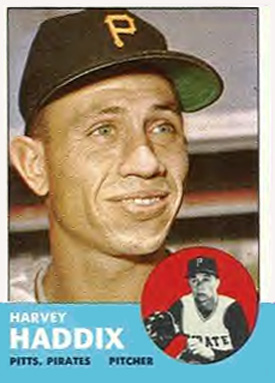
Harvey Haddix – 12 Perfect Innings – For the Loss

HaddixFor a real hard luck story, there’s the Pittsburgh Pirates’ Harvey Haddix (who is not even on the “lost a perfect game or no-hitter in the bottom of the ninth” list).  On May 26, 1959, Haddix took the mound against the powerhouse Milwaukee Braves (who had won the National League pennant the previous two seasons and came into the game again leading the league).  Haddix retired the first 36 hitters in order, carrying a perfect game into the bottom of the 13th.

Unfortunately, the Braves’ Lew Burdette, despite giving up 12 hits and fanning only two, had held the Pirates scoreless. Felix Mantilla led off the 13th by reaching on error by Pirates’ third baseman Don Hoak. Slugger Eddie Mathews bunted Mantilla over to second, which led to an intentional walk to Hank Aaron, bringing up Joe Adcock. Adcock rapped a 1-0 pitch over the right field fence for what appeared to be a three-run home run.  However, the Braves, in celebrating the tension-filled victory, forgot how to run the bases. Adcock passed Aaron between second and third and, after some deliberation, Adcock was called out – changing his three-run homer to a one-run double. So, despite 12 perfect innings, Haddix lost the no-hitter, the shutout and the game itself.  But he did etch his name forever into baseball lore.


BBRT UPDATE (events since this was first posted.)

One September 6, 2013, the San Francisco Giants’ Yusmeiro Petit joined the unlucky “almost perfect” rotation. With two out in the ninth, Petit – with a 3-0 lead over the Diamondbacks – had retired all 26 batters he had faced, fanning seven.  The  Diamondbacks sent up pinch hitter Eric Chavez, who worked the count full. Then, just one strike away from perfection, Petit gave up a single to right field.  Petit retired the next hitter CF/leadoff hitter A.J. Pollock on a grounder to third – settling for a one-hit shutout.  This made Petit the second pitcher name “Yu” to get within one out of a “perfecto” during the 2013 season.  (See Yu Darvish above.)

I tweet baseball @ DavidBBRT

Raley Field – Home of the Sacramento River Cats

This Tuesday (June 16), another ballpark was added to BBRT’s list of “Baseball Venues Visited.”  This time it was Raley Field in West Sacramento, California – home of the Triple A, Pacific Coast League (PCL), San Francisco Giants-affiliated Sacramento River Cats.  The third-place (Pacific North Division) River Cats were taking on the division-leading Fresno Grizzlies (a Houston Astros’ farm team).  As always (well, at least, almost always), there was something special to see during the game.  I’ll get to that, but first a few observations on the Raley Field and the Triple A experience.

When you get to Raley Field the first thing that strikes you is the large parking areas that adjoins the stadium and the fact that parking is free.  No, that is not a misprint; River Cats’ fans enjoy free parking.

Raley Field and Sacramento's Tower Bridge.

Raley Field and Sacramento’s Tower Bridge.

Once in the ballpark, you’ll notice a similarity to Pittsburgh’s PNC Park.  Considered one of MLB’s finest ballparks, PNC offers a picturesque view of the golden/yellow Roberto Clemente (Sixth Street) Bridge, which crosses the Allegheny River beyond the outfield wall.  Adding to the vista is a view of the downtown Pittsburgh skyline. At Raley Field, the view beyond the ballpark’s outfield perimeter includes the golden/yellow Sacramento Tower Bridge – a vertical lift bridge across the Sacramento River.  The bridge, which opened in 1935, is on the National Register of Historic Places – and it’s a beauty.  Fans also enjoy a view of the downtown Sacramento skyline beyond the bridge.

The stadium opened in May of 2000, the first season of the current Sacramento River Cats’ franchise (the relocated Vancouver Canadians).  Raley Field has approximately 10,600 permanent seats, and plenty of room for additional fans on the berms beyond the outfield fences. The team has averaged better than 8,000 fans per game in every year of its existence and the River Cats have led the PCL in attendance in 13 of their 15 full seasons in Sacramento (2000-2014).

Overall, Raley Field is picturesque and fan-friendly – ample concourses, plenty of traditional and unique food choices, reasonably-priced seats (for the most part), baseball just one level shy of the majors and some of the friendliest staff and vendors I have run across. More on the Raley field ambiance in a bit, but first a look at Monday’s game and the Triple A experience. Note: If  could improve on thing, it might be the on-field lighting – an issue at many minor league ballparks.

The very first pitch of the game, which I attended with my son-in-law Amir, illustrated the range of experience and talent you can expect at Triple A – where you will find a combination of rising prospects, rehabbing major leaguers of varying skill levels and players (both former major leaguers and career minor leaguers) looking for one more shot at “the show.”

RaleyPeavyIn Monday’s game, the first pitch was thrown by the Sacramento River Cats’ Jake Peavy – on a rehab assignment (back strain) from the parent San Francisco Giants.  The 6’ 1”, 195 pound, 34-year-old Peavy (you’ll see why all that data is important in just a minute) is a former Cy Young Award winner and three-time MLB All Star, with all or parts of 14 major league seasons and 139 major league victories under his belt.

Peavy’s first pitch was taken by Fresno second basemen Tony Kemp – 23-years-old, 5’ 6” and 160 pounds – just two years removed from Vanderbilt University, where he was the 2013 SEC Player of the Year, a 2013 Baseball America All American and on the 2013 SEC Academic Honor Roll.  Kemp, taken in the fifth round of the June 2013 MLB draft, came into the contest having compiled a .313 average in 263 minor league games (for five different teams in the Astro’s system).  The baseball distance between Peavy and Kemp, who started the game just 60’ 6” apart, is part of the beauty of minor league ball – especially at the AAA level.

The game itself was fairly-well played – a 3-1 victory for visiting Fresno, with each team collecting five hits – and Sacramento making the only error.  Peavy took the loss, but took a positive step toward a return to the Giants’ rotation. He got in trouble with two walks and a two-run double in the first inning, but then settled down and gave up just four more hits and one run over the next six frames.  Peavy’s final line was seven innings pitched, five hits, three earned runs, two walks and five strikeouts. In 20 1/3 rehab innings, he has walked six and fanned 20.

kempThe star of the game – who also ensured there was something special to see – was Kemp. The diminutive second baseman walked to lead off the game, stole second and scored the first run. Then in the bottom of the fourth, with the River Cats having scored once (making it a 2-1 game) and having a runner on first with one out, Kemp turned a nifty pivot on a 6-4-3 double play (faithful readers know how much BBRT loves 6-4-3 and 4-6-3 double killings). Finally, Kemp led off the top of the fifth by scoring the game’s final run – crushing a ball off the center field wall and dashing around the bases for an inside-the-park home run after the center fielder took a slight stumble. The kid can fly – but that seems to be a patern for Astros’ second sackers (see the sidebar below).

The Houston Astros’ boast the smallest player currently active at the major league level – 5’6”, 165-pound second baseman Jose Altuve. How good is the 25-year-old Venezuelan? In 2014, he led the AL in average (.341), base hits (225) and stolen bases (56).  Well, the Astros may be cornering the market on small, speedy second sackers. Listed at 5’6” and 160 pounds (165 pounds by some sources), Tony Kemp currently plays second base  (and some outfield) for the Astros’ top farm club – the Fresno Grizzlies.  How good can the 23-year-old be? As of June 16, he was hitting .364 with five steals in seven games at Triple A – after hitting.358, with 15 steals in 50 games at AA Corpus Christi. In 2014, Kemp (taken by Houston in the fifth round of the June 2013 draft) hit .316 with 41 steals at High A and Double A.  No matter how you measure them, Altuve and Kemp appear to be real “keepers.”

Now, just a bit more on Raley Field and Monday’s game.

  • Check out the clock/timer above the Coors Light sign - annoying.

    Check out the clock/timer above the Coors Light sign – annoying.

    The new pitch clocks (and pace of game rules) were in force – being introduced at the AA and AAA levels to allow any glitches to be worked out before implementation at the major league level. That means clocks counting down between innings and pitches – one large digital timer above the centerfield wall and one on the wall near each dugout.  Allowable time – two minutes and twenty-five seconds between innings and pitching changes, twenty seconds between pitches. BBRT’s appraisal – distracting and annoying, but I am more than a bit old school.

  • We had great seats – just beyond third base, practically close enough to pick the third-sacker’s back pocket – for just $18 each.
  • Some great food choices – just a few examples include: a Fajita Chicken Rice Bowl; Chili Cheese Fries; Pulled Pork (barbeque) Sandwich (I had this and added onions and horseradish for a sweet and spicy treat); Hawaiian Melt Panini; and even Garden Salads. All in addition to tradition ballpark fare. (We were there on dollar hot dog night.) Note: Several fans swore by the “Loaded Fries” – French fries, nacho cheese, bacon, sour cream and chives.
  • I’d also suggest a visit to the Beer Garden (in the left field corner). You’ll find a host of great “gourmet” beer choices, mixed drinks, sliders and lots of great baseball comradery.
  • The Inside Pitch – The River Cats’ magazine – with scorecard inside is FREE.
  • The River Cats had a between inning pop fly catching contest, where a youngster had a chance to win – a free hair cut?
  • Attendance at the game was a bit low (6,214 – and that seemed a generous count). The reason became a bit more obvious in the seventh inning, when the loudest cheer of the game went up after the scoreboard announced the Golden State Warrior’s 105-97 NBA title-clinching win. Apparently, quite a few stayed home to watch that one on TV. (And, it was a Tuesday night.)
  • I spent some time rooting for Fresno starting (and winning) pitcher Asher Wojceichowski (want to see that name on a jersey – and I am a Karpinski).

RaleyBloodyFinally, BBRT likes to review Bloody Marys at all the ballparks I visit. Raley Field’s wasn’t bad – and, in terms of relative value, was worth the $8.  I received a generous pour of vodka and, although a standard Bloody Mary mix was used, the bartender “custom-spiced” it.  Plenty of bite, but a little short on condiments (two olives and a lime slice) as compared to some other ballparks that add such items as celery sticks, pickle spears, peppers, beef sticks and even bacon.  Still, a satisfying Bloody Mary – and great with pulled pork.

So, there’s a look at my night at Raley Field – all in all, pretty darn enjoyable.

I tweet baseball @DavidBBRT

Congrats Chris Heston – and Some Rookie No Hitter Observations

HestonCongratulation to Giants’ right-hander Chris Heston, who yesterday (June 9) threw a no-hitter as San Francisco topped the Mets 5-0 at New York’s Citi Field.  Heston fanned eleven, while allowing only three base runners – all on hit-by-pitch.  It was the first no-hitter of 2015 and the 288th no-hitter in MLB history.  Heston also collected two hits and drove in two runs in the game – just another reason BBRT hates the DH.

The 27-year-old rookie tossed the no-no in just his 13th major league start (15th appearance) and, according to STATS is the 35th MLB rookie to toss a complete game no-hitter. Notably, with Heston’s gem, the Giants became just the second team ever to record no-hitters in four consecutive seasons – Matt Cain (2012), Tim Lincecum (2013 and 2014). The only other team to record no-hitters in four consecutive seasons was, appropriately, the Giants’ archrival, the Los Angeles Dodgers.  The Dodgers were less democratic than the Giants, however, with all four no hitters credited to southpaw Hall of Famer Sandy Koufax.

A few other rookie no-hitter bits of trivia:

  • Only one MLB pitcher has thrown a no-hitter in his first-ever appearance. That would be righty Charles Leander “Bumpus” Jones. Pitching for the Reds, Jones no-hit the Pirates (7-1 final score) in his very first appearance – October 15, 1892 – the final day of the 1892 season. Jones came back to pitch for the Reds and Giants during the 1893 season, but went 1-4 with a 10.19 ERA. He never returned to major leagues, but did pitch in the minors until 1900.  (Note: When Jones tossed his no-hitter, the pitching distance was 50-feet.  The current 60’ 6” distance was adopted in 1893.)
  • The very first pitcher to throw a no-hitter in his first start was southpaw Ted Breitenstein of the Saint Louis Browns, who no-hit the Louisville Colonels of the then major league American Association on October 4, 1891 (like Jones, his chance came on the final day of the season). It was Breitenstein’s sixth appearance.  Breitenstein lasted longer in the big leagues than Jones, logging 160 wins, 170 losses and a 4.03 ERA between 1891 and 1901.  He led the NL in ERA once and complete games twice in his career, while also topping 20 wins in three different seasons (and losing 30 once). Like Jones, Breitenstein tossed his no-hitter when the pitching distance was 50-feet.
  • HollomanThe only MLB pitcher to toss a no-hitter in his first start (his fourth appearance) at the current pitching distance was Saint Louis Browns’ right-hander Alva (Bobo) Holloman, who held the Philadelphia Athletic without a safety on May 1, 1953 (6-0 final). A 30-year-old rookie, 1953 was Holloman’s only MLB season, his no-hitter was his only major league complete game and his two singles that day his only major league hits. He ended the season 3-7, with a 5.23 ERA. Holloman pitched for five different minor league teams in 1954, his last season on the field.

A “by-the-way” for BBRT’s Minnesota readers, yesterday’s hero (Heston) does have some tenuous Minnesota ties. He was initially drafted (out of community college) by the Twins in the 47th round of the 2007 draft, but choose not to sign.  He also declined to sign with the Nationals (29th round in 2008), before agreeing to terms with the Giants (12th round, 2009). Heston had a 46-45 record (3.56 ERA) in six minor league seasons.  He was slated to open the 2015 season at Triple A Sacramento until Matt Cain went on the Disabled List.  Heston is now 6-4 on the season, with a 3.77 ERA.

A No-Hitter – Lost in More Ways than One

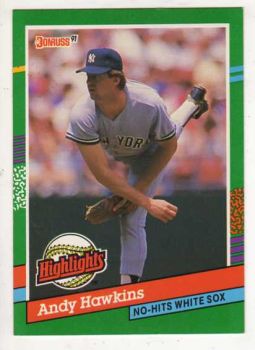
HawkinsNobody ever took a worse beating in a complete game without giving up a hit than the Yankees’ Andy Hawkins, who allowed no hits in a complete game against the Chicago White Sox on July 1, 1990 – and still ended up on the wrong end of a 4-0 score (and eventually even lost his place in the record books, but more on that later.)

The 1990 contest went into the bottom of the eighth tied 0-0, with the Yankees having managed just four hits – all singles – off two White Sox hurlers.  In the meantime,  Hawkins had held Chicago hitless and scoreless through seven innings – giving up just three walks.  He got the first two outs in the eighth before Sammy Sosa reached base on an error by New York third baseman Mike Blowers. Sosa stole second and Chicago’s Ozzie Guillen and Lance Johnson both walked, loading the bases. Then an error by New York LF Jim Leyritz – on what appeared to be an easy fly ball hit by Robin Ventura cleared the bases (and left Ventura at second). DH Ivan Calderon then reached on adropped fly ball by RF Jesse Barfield NY’s third error of the inning), allowing the fourth run of the inning to score. Hawkins then got the final out (Dan Pasqua) on an infield pop-up-. The Yankees failed to score in the top on the ninth and Hawkins got a loss – despite not giving up a hit (or an earned run).  Hawkins’ final line, 8 IP, 0 hits, 4 Runs, 0 ER, 5 walks, 3 strikeouts and a loss.

MLB added insult to injury the following year, when the MLB Committee for Statistical Accuracy officially defined a no-hitter as a game “when a pitcher (or pitchers) allows no hits during the entire course of a game, which consists of at least nine innings.”  Since Chicago was leading – and did not bat in the bottom of the ninth – Hawkins’ no-hitter – despite being a complete game – was erased.  So, he not only lost the game – he ultimately lost his no-hitter as well. Ouch!

The double loss was indicative of Hawkins’ 1990 season, when he went 5-12, 5.37.  For his career (10 seasons – Padres, Yankees, A’s), Hawkins went 84-91, 4.22. His best year was 1985, when he went 18-8, 3.15 for the Padres.

I tweet baseball @DavidBBRT

A Bad Day at the Ballpark … Zero-for-Ten

Bad day at the office?  Probably not as discouraging as the day LA Dodger center fielder John Shelby had on this date (June 3) in 1989.  On that day, Shelby not only had to work overtime, away from home in a losing cause – his Dodgers lost to the hometown Houston Astros 5-4 in 22 innings (7 hours and 14 minutes) – he also tied the MLB record for the most at bats without a hit in a single game.

ShelbyShelby, a switch-hitting outfielder, started the contest in center field, batting sixth. He came to the plate ten times, faced six different pitchers and contributed four outfield fly outs, one infield popup, two swinging strikeouts and three ground outs (one a fielder’s choice, when the Astros chose to force the runner at second, but did not turn a double play).  For the day, a neat zero-for-ten … tying the MLB record for most at bats without a hit in the game.

BBRT Note: Shelby’s truly “off-day” tied the record for futility set by the Mets’ Wayne Garrett on September 11, 1974 – when he went zero-for-ten in a Mets’ 25-innning 3-2 loss to the Cardinals. Garrett’s performance could be judged slightly less futile, since he did draw a walk in the first inning, before running up is “O-for” day.

Shelby started the game hitting just .163 on the season (his averaged dropped to .153 by game’s end) and had gone hitless in his previous 16 at bats.  He also found some bad luck on the bases. Remember that fielder’s choice that put Shelby on first?  It came in the third inning and Shelby (who eventually advanced to third base) was thrown out catcher-to-pitcher trying to score on a wild pitch. Had he scored, perhaps extra innings would have been avoided and, of course, he would have missed his chance at the record book.

For those who like more background – as I know many BBRT readers do – Shelby ended the 1989 season with a .183 average, one home run and 12 RBI in 108 games. Over his eleven-year MLB career (Orioles, Dodgers, Tigers), Shelby hit .239, with 70 home runs, 313 RBI and 98 stolen bases.  His best year was 1987, when he hit .277, with 21 home runs, 69 RBI and 16 steals in 120 games for the Dodgers.

A few additional facts about the game:

  • The Saturday night game ended at 2:50 Sunday morning.
  • The two teams were back on the field 10 hours and 45 minutes later, for a Sunday afternoon 1:35 start – a game which was won by the Astros 7-6 in 13 innings.
  • The losing pitcher in the 22-inning game was the Dodgers’ Jeff Hamilton, who started the game at third base.
  • The winning run was driven in by Astros’ shortstop Rafael Ramirez – on a line drive to right field that tipped the glove of first baseman (pitcher) Fernando Valenzuela. (In the 21st inning, Dodgers’ manager Tommy Lasorda moved 3B Jeff Hamilton to pitcher and first baseman Eddie Murray to third base, bringing in pitcher Valenzuela to play first.)
  • The two teams used a total of 44 players.
  • The two teams went scoreless for 15 consecutive innings – the seventh through the 21st.

I tweet baseball @DavidBBRT

Roy Gleason – From the Ballfield to the Battlefield

JP AwardIn 2014, BRT launched its own baseball award – The John Paciorek Award – or JPA (which could stand for “Played Just Abit.”)  The JPA recognizes players who have had short, maybe very short, major league careers, but whose accomplishments, nonetheless, deserve recognition.  Just as the emergence of these players on the MLB scene was often unexpected, the JPA is awarded on no specific timetable.  BBRT, in fact, most often uncovers these brief, but bright, stars when researching some unrelated baseball topic.

(Note: Information on  John Paciorek’s career – the inspiration for the JPA – can be found at the end of this post.)

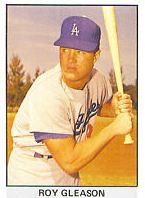
GleasonNow the timetable for these recognitions may not be specific, but that does not preclude the presentations from being “time appropriate.”  With that in mind, BBRT’s second JPA is being presented on this Memorial Day to Roy Gleason whose achievements include eight MLB appearances (Dodgers 1963), a career MLB batting average of 1.000, a World Series ring (more on that later) and a Purple Heart (earned in Vietnam). 

Roy Gleason was a top-rated prospect right out of high school, recruited (for the Boston Red Sox) by the likes of Ted Williams. A big (6’5”, 220-pound), speedy, switch-hitting outfielder, Gleason had his heart set on taking the field for the Los Angeles Dodgers. At least briefly, he lived the dream – signing with the Dodgers and making his major league debut at the age of 20, in just his second professional season (1963). He first appeared in a Dodgers game as a pinch runner on September 3 and, as the season wound down, got into seven games in that capacity – scoring two runs, but never coming to the plate.

Then, on September 28, 1963 – in the eighth inning of a game against the Phillies, Gleason was called on to pinch hit for LA pitcher Phil Ortego (the Dodgers were trailing 12-2 at the time). That first MLB at bat would prove to be Gleason’s only MLB plate appearance and he made the most of it – lining a 1-0 fastball off the Phillies’ Dennis Bennett for a standup double to left (and scoring later in the inning). Thus, Gleason ended his first MLB season – and his MLB career – with a 1.000 batting average, 1.000 on base percentage and 2.000 slugging percentage. And, although Gleason was not on the post-season roster, the Dodgers went on to win the 1963 World Series, earning Gleason a coveted World Championship ring.

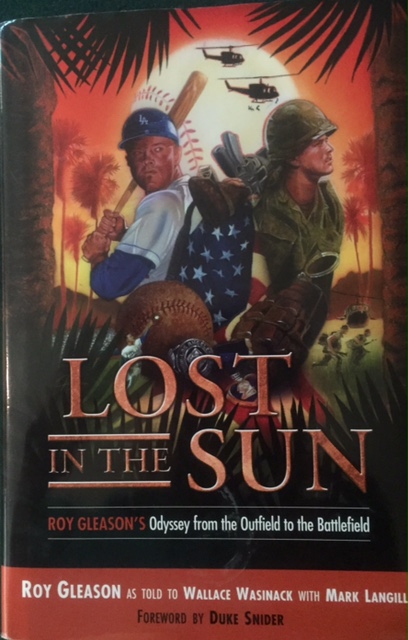
Gleason spent the next three seasons back in the minors – where he hit only .213, but showed a combination of power and speed with 44 home runs and 21 stolen bases. Gleason was maturing as a player and a return to the majors seemed on the horizon after he earned an invite to the Dodgers’ 1967 major league Spring Training camp. Gleason, however, received another invite that spring – a draft notice. That invite, as noted in Gleason’s book “Lost in the Sun” (by Roy Gleason as told to Wallace Wasinack and Mark Langill) took the young outfielder on an “Odyssey from the Outfield to the Battle Field.”

gleasonbookBBRT recommends Lost In The Sun – Roy Gleason’s Odyssey from the Outfield to the Battlefield. It’s moving story of dream chasing, perseverance, reluctant heroism, fear , survivor’s guilt, and the inside of major league negotiations (methods and motives) – with a helping of history, politics and cultural commentary thrown in.


Gleason, it turns out, was the only baseball player with major league experience on his resume to serve on the front lines in Vietnam. In Vietnam, Gleason earned his Sergeant’s stripes, as well as a Purple Heart (suffering leg and wrist wounds when his squad came under attack on July 24, 1968).  By his own admission, a reluctant hero (aren’t those the most heroic), Gleason nonetheless distinguished himself.  A few lines from his citation note that, after being wounded, Gleason “refused medical attention and continued to perform his duties as squad leader until all his wounded men had been evacuated.”  In his book Lost in the Sun, Gleason, describes the moments after he was wounded, “As I rolled on my belly to return fire, I didn’t have time to think about the reason I was there. Why am I fighting to the death – an enemy I didn’t even know – in a world far removed from the small mid-American town of LaGrange, Illinois. The sight of the blood-soaked mud was now the scene, and God … how I missed the lush green baseball fields I’d played on in America.”

Gleason was ultimately airlifted out of the combat area on an Army helicopter – and left behind was his foot locker and his 1963 World Championship ring, but not his major league dreams.

After recovering from his wounds and enduring extensive rehab, Gleason attempted a comeback – performing well in 1969 Spring Training before being returned to the minors. A truck accident (Gleason was working construction between the 1970 and 1971 seasons), however, resulted in an arm (rotator cuff) injury that ended his pursuit of major league career.

As a baseball fan and a veteran myself, I am honored to be able to recognize Roy Gleason for his service and his bright and shining major league moment in this Memorial Day post.

On September 20, 2003, the Dodgers held a special ceremony honoring Gleason before their game against the Giants.  Roy’s military and athletic accomplishments were recognized in a brief video and Gleason threw out the ceremonial first pitch.  Then came the surprise of the day, as Dodger Manager Jim Tracy stepped forward to present the ballfield phenom and battlefield hero with a replacement 1963 World Series ring.  Says Gleason, “I was in shock when he when he handed me the World Series ring, and it remains one of the most incredible instants in my life. I felt like I was finally back to where I always wanted to be – I felt lke I was 20-years-old again.”

By the way, remember I said BBRT often uncovers the stories of brief, but brilliant, baseball “stars” while researching other baseball stories.  Well, Roy Gleason’s name (and story) came up while I was looking into the career of former Dodgers’ (1949) and Cubs’ (1951) first baseman Chuck Connors – who gained fame as an actor (particularly as the star of the popular TV series The Rifleman. (For more on Connors, click here.)  Turns out, Gleason appeared with Connors in a 1966 episode of the TV Series “Branded.” Gleason’s television credits also included appearances in Batman and No Time for Sergeants.

Previous JPA Winners:

2014 – Brian Dallimore, San Francisco Giants infielder. Had a short (two-season/games played) MLB career.  In his first MLB start (as a 30-year-old rookie), Dallimore was on base five times in five plate appearances, had two singles and a home run (grand slam, for his first MLB hit) in three at bats, scored three runs and drove in four. For the full story, click here. 


Inspiration for the JPA

John Paciorek – signed out of Saint Ladislaus High School in Hamtramck, Michigan (where he had starred in football, basketball and baseball) – appeared in his first major league game on the final day of the 1963 season (September 29) at the age of 18.  The 6’ 1”, 200-pound outfielder had spent the 1963 season with Class A Modesto Colts. The Colts’ parent club, the Houston Colt .45s (that was the current Astros’ franchise name back then) was suffering through a difficult season – they were 65-96 going into that final game.  Looking to the future, Houston had, in fact, fielded and all-rookie lineup (average age 19) on September 27. Youth was still being served two days later when John Paciorek started his first MLB game. The results were surprising – and worthy of recognition.

Playing right field and batting seventh in a 13-4 win over the NY Mets, Paciorek ended up with three hits and two walks in five plate appearances, with four runs scored and three runs batted in.  Perhaps equally surprising is that it was not only Paciorek’s first major league appearance, it was his only MLB appearance.  Back pain the following spring, followed by surgery (he played 49 minor league games in 1964 and missed all of the 1965 season) put an end to his MLB playing days. (He did play in four more minor league seasons.)  Still, you will find John Paciorek in the Baseball Encyclopedia and his is arguably the greatest one-game MLB career ever.  Among one-gamers, he holds the record for times on base and runs scored, and shares the record for batting average, on base percentage and RBIs.  

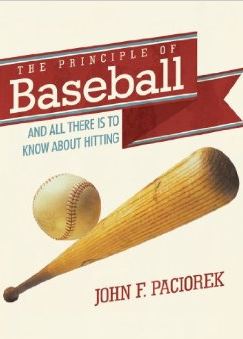
paciorekPaciorek, by the way, went on to become a high school teacher and multi-sport coach, and the author of two books (Plato and Socrates – Baseball’s Wisest Fans and The Principles of Baseball: And All There Is To Know About Hitting.) You also can enjoy Paciorek’s prose (and expertise)  directly at his highly recommended blog “Paciorek’s Principles of Perfect Practice” by clicking here. 

A final note. John Paciorek’s insight into the national pastime should come as no surprise. Paciorek comes from a true “baseball family.”  He was the first born of eight siblings and was followed to the big leagues by younger brothers Jim and Tom Paciorek.  (Like John, Jim’s MLB career was short – 48 games for the Brewers in 1987. Brother Tom, however, achieved a .282 average over an 18-season – 1,392 game – MLB career.) 

I tweet (on X) baseball @DavidBseballRT

Paul Konerko – He Came to Play!

Paul Konerko - ChiSox captain was one tough dude - especially against the Twins.

Paul Konerko – ChiSox captain was one tough dude – especially against the Twins.

Yesterday (May 23, 2015), the Chicago White Sox (appropriately) retired first baseman Paul Konerko’s jersey number. Being from Minnesota, I remember the six-time All Star and long-time (2006-14) ChiSox captain as a real Twins’ killer. And, there is evidence to support that observation. In 257 games versus the Twins, Konerko hit 50 (of his 439) home runs (his most against any team), while putting up a .286 average and driving in 136 runs. Konerko also hit 22 home runs against the Twins as a visitor (his highest “away” total) and six against Twins starter Brad Radke (tied for his highest total against any pitcher). It also seemed that Konerko, time and time again, came through with big hits in clutch situations against Minnesota.

Around the league, Konerko is remembered as a quality player, who gave it his all and “came to play” every day.  One of my fondest memories of the “Big Guy” (6’2”, 220 pounds) centers on his toughness.  Here are my personal top-three Konerko moments.

1. Ouch! Bang! Now, We’re Even!

On September 16, 2010, the Twins were visiting Chicago. Carl Pavano, arguably the Twins’ ace with 17 wins, was on the mound and Konerko was playing first base and batting clean-up for the Sox. In the first inning, with one on and two out, Konerko took a Pavano fastball to the face (just below the nose).  (At the time, Konerko was ten-for-twenty seven lifetime –  with two home runs against Pavano.) Konerko went down – stayed down for a while – and then was helped to his feet by the Sox trainer. Despite protests from the manager and trainer, Konerko refused to leave the game. In the top of the second, White Sox starter Mark Buehrle extracted revenge, with Twins 1B Michael Cuddyer paying the price.  The retribution, however, was not complete. In his very next at bat, Konerko hit the first pitch from Pavano 395 feet into the left field seats. That’s payback.


2.  Back-to-Back Memorable Jacks

On April 13, 200, with the White Sox at Detroit, RF Jermaine Dye led off the second inning by ripping a 2-1 pitch from Tiger starter Zach Miner for a home run to left center.  Next up was Konerko, playing first base and sixth, who worked the count full and then took Miner deep to left – for a 2-0 Chicago lead.  Back-to-Back “jacks” aren’t that rare, but these were.  It was the milestone 300th home run for both Dye and Konerko.  The White Sox went on to win 10-6 and Konerko went four-for-five with two runs scored and four RBI.

3.   Classy Farewell.

On September 3, 2014, before his last game ever in Minnesota, the Twins showed their class by honoring their retiring nemesis with a video tribute, a large bottle of fine wine (2005 Ladera Cabernet Sauvignon – in recognition of how Konerko helped lead the White Sox to the 2005 World Championship) and a $10,000 donation to one of Konerko’s favorite organizations – Children’s Home and Aid. The Twins tipped their caps to Konerko again yesterday – as they all came to the field for the entire tribute (and jersey retirement) held in Chicago.

Congrats to an MLBer who came to play!


I tweet baseball @DavidBBRT