BASEBALL ROUNDTABLE – RESULTS FROM MID-SEASON MLB RULES SURVEY

Back in March, when MLB announced a number of rules changes for 2023 (along with making the placed runner at second base in extra innings permanent), Baseball Roundtable asked readers for their opinions on MLB’s actions (118 readers responded). At the All Star Break, with fans having just over a half season to judge the new rules, The Roundtable repeated the survey (101 readers responded).

The All Star Break survey also included an open-ended question, asking readers what they felt were the most pressing issues facing MLB today.  (Forty-nine of the respondents answered that question and – spoiler alert, this post will cover those responses in detail later) – the cost of attending a game and the predominance of the “three true outcomes” (strikeouts, home runs and walks) led the way.

As noted, we’ll take a look at those open-ended responses later. Let’s get back to the new rules. The reader survey results indicate that, in practice, the new rules have gained fans among the fans.

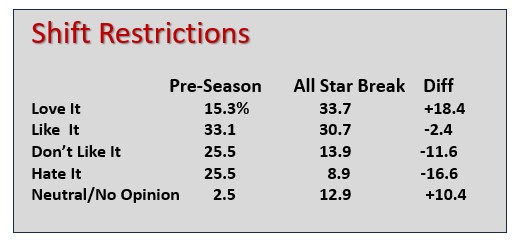
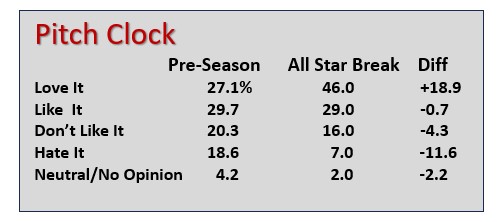
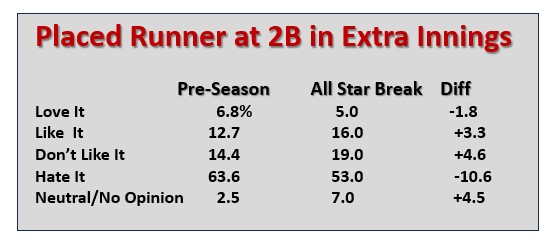
For example, while just over half of the pre-season survey respondents (51%) said they Did Not Like or Hated the restriction on infield shifts – at the All-Star Break, that figure was down to 23.5%.  Similarly, in the pre-season survey, 56.8% said they Liked or Loved the idea of a pitch clock.  After seeing it in action, at the All-Star Break that group was up to 75%. The (now permanent) extra-inning placed runner at second base did not fare as well, with those who Don’t Like or Hate the rule dropping just slightly – from 78% percent to 72%. But, I’m getting ahead of myself.  Let’s look at the questions and responses.  Note: Due to rounding percentages do not always total 100%.

INFIELD SHIFT RESTRICTIONS

Two infielders must be on each side of second base and within the boundaries of the infield as a pitch is thrown.  Also, infielders may not switch sides during a given inning (you can’t move your best infielder to the opposite side of the second base bag for a specific hitter).  Side note:  A team may still choose to bring an outfielder into the infield as a fifth infielder. Penalty:  A Ball is called.

Big gains were seen in the support for the restrictions on infield shifts. While the pre-season split was fairly even (51% in the Dislike It/Hate It groups and 48.4% in Like It/Love It), at the All Star Break, the Like It/Love It cadre was up to 64.4%, while the Don’t Like It/Hate It groups were down to 22.8%
Baseball Roundtable Take:  Originally, I was in favor a modified version of this rule – putting the new restrictions in place, but allowing managers to use an exaggerated shift a limited number of times (two or three) per game. (Making using the shift a strategic decision.) I do like the way that new rule has affected game play, so put me in the convert group.

PITCH CLOCK

This change put in place a 30-second time limit between each batter, 15-second pitch clock with bases empty (pitcher must deliver the ball within 15-seconds of receiving it), 20 seconds with runner(s) on base.  Also, batters must be in the batter’s box and ready by the time there are eight-seconds left on pitch clock.  Note: With runners on base, the timer resets if the pitcher steps off the rubber or attempts a pickoff (these are  “disengagements), with a limit of two disengagements per plate appearance (more on that later). The timer is also reset  if a baserunner advances  during a plate appearance. In addition,  batters are allowed one time out during a plate appearance.  Penalties: Pitcher violation – called Ball; Batter violation – called Strike.

Wow, the percentage of  respondents saying they Hated the idea of a pitch clock dropped from 18.6% in the pre-season survey to 7.0% in the All Star Break survey.  At the same time, the Love It group jumped from 27.1% to 46%.  Overall, this one looks like a winner, with the Love It/Like It cadres at the All Star Break standing as 75%.
Baseball Roundtable Take:  Clearly, fans appreciate the quicker pace of the game under the new rules. It does create a challenge for those of us who maintain a scorecard.  (I took a stopwatch to a couple of  games and found that if you took a seven-minute break – starting with the final out of a half inning – to go to the concession stands or restroom  – you could count on missing 3-4 batters before you got back to your seat.  Still, it seems to be working (even better than I expected), the fans like it and the players adjusted quickly, so I’m on board.  What I would like to see is a return of vendors to the stands (my hometown Twins do not have vendors in aisles), to reduce the potential for missing plays.

DISENGAGEMENT RULE

Pitchers are allowed just two “disengagements” (pick-off attempts, fake pick-offs, stepping off the rubber, defensive time out) per plate appearance – with the disengagement count reset if a runner advances a base within the plate appearance. No penalty on a third pick-off  attempt if it produces an out. Penalty: If a pitcher steps off or attempts a pick-off a third time, it is treated as a Balk (runners advance) – unless the pick-off is successful (an out is recorded), then there is no penalty.

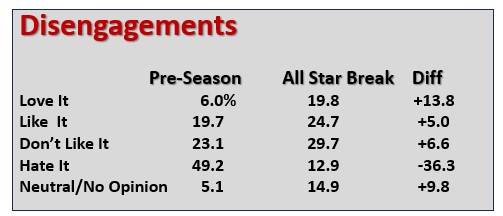
Lots of opposition (pre-season) here, with the Don’t Like/Hate It groups at 72.3%. That opposition was down to  42.6%t at the All Star Break. Still, lots of room for debate on this one. At the All Star Break, the Like It/Love It and Don’t Like It/Hate it groups were fairly evenly split, 44.5% and 42.6%, respectively.
Baseball Roundtable Take: I’m not a big fan of limiting pick-off attempts.  I like the pitcher-base runner “cat and mouse” game – and consider pick-off plays to be on-field  “action.”  I do appreciate the third pick-off not being a violation if an out is recorded (which prevents runners from taking extraordinary leads after the allowed two disengagements).  I, personally, would like to see MLB disengage itself from this rule.

RUNNER PLACED AT SECOND BASE IN EXTRA INNINGS

Still unpopular – but now “permanent.”  In the pre-season survey 75% of respondents said they Disliked or Hated this rule.  At All Star Break, that figure was  down only slightly –  to 70.2%.  Not a lot of movement and still plenty of disgruntled fans.
Baseball Roundtable Take:  Totally agree with the bulk of  survey respondents.  To me, this rule change is a step too far. My stance is that  “earned” runners, not “gift” runners, should decide a ball game.  Yes, it does seem to be  shortening extra-inning contests (I’m not convinced that’s a good thing). However, it also changes the basic structure and strategy of the game, not to mention skewing statistics. Heck, a relief pitcher can get tagged with a loss without allowing a baserunner (bunt and sacrifice fly) and a batter can make an out to end an inning and be credited with a run scored in the next inning – without making a plate appearance.

RESTRICTIONS ON POSITION PLAYER PITCHING APPEARANCES

Last season, position players could only be brought in to pitch in extra innings or if the player’s team was trailing by at least six runs. In 2023, position player can be brought in to pitch in extra innings or if the player’s team is trailing by at least eight runs (at any time) or ahead by at least ten runs in the ninth inning.

The Don’t Like It /Hate it group was down from 53.4% pre-season to 27.7% at the All-Star break. Notably, the biggest part of that jump came in a move to the Neutral/No Opinion group (up from 28.8% to 46.5%).
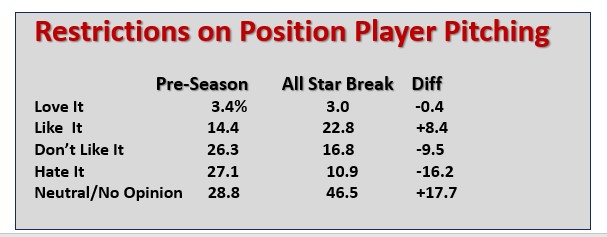
Baseball Roundtable Take:  Very close to a distinction without a difference.

WAVE ‘EM-TO-FIRST INTENTIONAL WALK

Okay, I threw this one in there (get the pun) just because I don’t like this  rule. The last time I surveyed readers on this one was in 2022 and the split was 48.0% Like and 41.2% Dislike.  It hasn’t changed much, it’s now 46.5% Like to 40.6% Dislike.
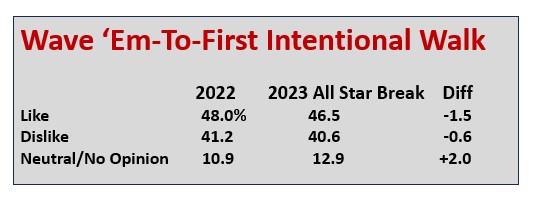
Baseball Roundtable Take:  I still don’t like it, but it’s not a big deal.

INCREASED BASE SIZES

MLB bases are up to 18 x 18 inches – from 15 x 15 inches. I was actually surprised by the number of responders to the pre-season survey who voiced opinions on this one (only 35% answered Neutral/No Opinion).  Apparently, once in action, fewer fans noticed a difference – as the Neutral/No Opinion percentage was up  to 45.5% at the All Star Break. The gain in “neutrality” came among those who initially were opposed to the change.
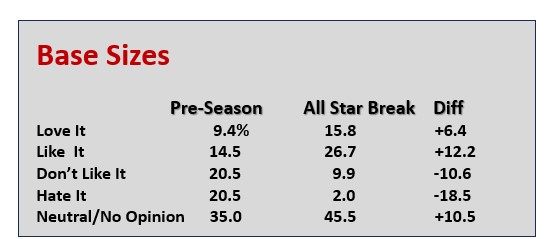
Baseball Roundtable Take:  If you consider this a safety issue, giving fielders and runners more space to operate in, I’m on board.  If the argument is that it increases action on the base paths, my answer is “Yawn.” Baseball may be a game of inches, but I don’t think these few inches make much of a difference.  (For the running game, the disengagement rule will have much more of an impact.)

ELECTRONIC  BALL/STRIKE CALLS

MLB has been talking about an electric strike zone and a few options seems to be on the table.  Here are how those options fared with the fans.

35.6% … Have umpires continue to make the call, but allow a specific number of ball/strike challenges per game. The umpire would the refer to the electronic system to resolve the challenge.  (Successful challenges would not count against the limit.)

29.7%  … Leave things the way they are. Let the umps make the call.

28.7%Have all ball/strike calls made electronically and relayed to the home plate umpire.

5.9%Neutral/No Opinion.

Baseball Roundtable Take: Not a fan of this potential  change.  I do like to watch those pitchers with the skills to “expand” the strike zone. Still, if it comes to this, I can live with it. I do miss the days, however, when the philosophy was that – whether at the plate or on the basses – the umpires’ “calls” would even out.  I just hate to see MLB take more and more of the human factor out of the game.  Plus, if we ever get to an all-electronic umpiring system, where will all the in-game “great debates” come from?

—-MLB’S MOST PRESSING ISSUES – OPEN-ENDED QUESTION—-

Forty-nine respondents answer the open-ended question “What do you, as a fan, see as the most important issue(s) facing major league baseball today?”

The clear leaders, in terms of times mentioned, were the cost of going to a game and a desire to see for more balls in play (too many strikeouts/too many “True Outcomes” … K/BB/HR).

Here are the issues that came up on more than one survey.

Cost of Going to a Game … 14 Responses

Too Many Strikeouts/Too Many ”True Outcomes” (K/BB/HR) …. 12 Responses

Too Many Rules Changes … Seven Responses

Local TV Blackouts … Seven Responses

Competitive Imbalance Among Teams … Five Responses

Balancing “Tradition” with the Need to Respond to Today’s Reduced Attentions Spans/Tech Options  … Four Responses

Inaccurate Ball/Strike Calls … Three Responses

Revenue Disparity Among Teams … Three Responses

Player Salaries … Two Responses

Too Many Pitching Changes … Two Responses

Need to Expand/Realign — Two Responses

Here a few answers that Baseball Roundtable found particularly interesting:

“Economics. Small-market teams can’t compete because local-market TV income is exponentially smaller than a well-managed large market rights package. Make all media income distributed between the teams and institute a minimum total player salary structure to go along with the soft salary cap (with graduated penalties when exceeded). The teams have  to cooperate in getting a viable product on the field, or else only the rich market teams can survive.

_________________________

“Relocation and expansion. The question of too many teams making the playoffs that it makes the regular season mute to some degree”

__________________________________

“MLB getting into bed with big gambling is a Faustian Bargain and an existential threat. It is not a matter of IF but WHEN there will be a major scandal that will harm MLB’s version of the game. MLB needs to drop all ties with gambling companies, fantasy sports, etc. They told us for a hundred years that gambling and baseball don’t mix and now it’s all good in the hood, because they are making tons of $$$ from gambling. Not only that, MLB has made and its customers potential marks for the gambling operators.”

 ——————————-

I think the most important issues are around diversity and inclusion. Too few Black managers – a legacy of systemic racism. Not enough acceptance of LGBTQ+ players, coaches, and staff (no major league players has come out), even with Pride Nights at all levels. I would also like to see women playing, not just coaching, and managing at the major league level.

So, there you have it.  Thanks to all those who responded, as well as to those who are reading the results.


Baseball Roundtable – Blogging Baseball Since 2012.

100Baseball Roundtable is on the Feedspot list of the Top 100 Baseball Blogs.  To see the full list, click here.

Baseball Roundtable is also on the Anytime Baseball Supply Top 66 Baseball Sites list.  For the full list, click here

I tweet (on X) baseball @DavidBaseballRT

Follow/Like Baseball Roundtable’s Facebook Page here.  Find More baseball commentary; blog post notifications; PRIZES.

Member: Society for American Baseball Research (SABR); Negro Leagues Baseball Museum; The Baseball Reliquary.


Memorable Moments, Unexpected Stats and Notable Accomplishments from MLB’s All Star Games

As we approach the 2022 MLB All Star break, it seems appropriate to revisit past All Star Performances that Baseball Roundtable finds particularly memorable.  In this post, we will look at Baseball Roundtable’s “Fifteen Most Memorable All Star Game Moments,” as well as some All Star Game Trivia Tidbits,  quotes about the game from All Stars, some comparisons that show how the All Star Game has changed over the years and more.  The Top Fifteen Memorable Moments will be headlined in RED, the “extras” will be in BLUE or GREEN.    Note: These figures do not include the Negro Leagues East-West Games, as  that data is not yet fully compiled.  

ASG Memorable Moment Number One … Bill Freehan Behind the Plate for 15 Innings – 1967

In 1967, when the National League topped the junior circuit 2-1 in 15 innings  (at the time, the longest All Star Game ever, later matched by the 2008 All Star contest), Bill Freehan was behind the plate for the AL for  all 15 innings – handling five different pitchers. and crouching behind 19 different batters (52 plate appearances).  By contrast, the National League used three different backstops.  That, for Baseball Roundtable, was a most impressive/memorable feat of stamina.  It was also a pretty bold move for AL manager Hank Bauer (Orioles), keeping the Detroit Tiger catcher in the crouch for 15 innings.   Got to wonder how Tigers” Skipper Mayo Smith felt about that.  By comparison, the NL squad used three catchers in the game.

For those who like to know such things, Freehan was indeed a workhorse that season – appearing in 155 of the Tigers’ 163 games – and spending time behind the plate in in 147. Freehan was an All Star in nine of his fifteen seasons (1961, 1963-76 … all with the Tigers).  The five-time Gold Glover  was behind the plate in 1,577 of 1,774 MLB games.  His final stat line was .262-200-758.

_____________________________________________

Ten Players Played All 15 Innings in the 1967 MLB All Star Game

American League

Bill Freehan, Tigers, C 

Brooks Robinson, Orioles, 3B

Tony Oliva, Twins, Twins, CF

Harmon Killebrew, Twins, 1B

Tony Conigliaro, Red Sox, RF

Carl Yastrzemski, Red Sox, LF

National League

Roberto Clemente, Pirates, RF

Hank Aaron, Braves, started in CF and finished in LF

Orlando Cepeda, Giants, 1B

Gene Alley, Pirates, SS

By comparison, in the 2022 All Star Game, the AL used 32 players and the NL used 30 – and  not a single player played the whole nine innings. 

_______________________________________

Roundtable ASG Extra … A Trivia Tidbit

When the American League won the 1942 All Star Game, they used an ASG record-low 11 players. All eight position players went the distance and the team used one pinch hitter and one relief pitcher. 

Here’s the AL lineup:

Lou Boudreau SS

Tommy Henrich RF

Ted Williams LF

Joe DiMaggio CF

Rudy York 1B

Joe Gordon 2B

Ken Keltner 3B

Birdie Tebbetts C

Spud Chandler P

Bob Johnson PH

Al Benton P

______________________________________________________

ASG Memorable Moments Number Two … The Splendid Splinter Shreds (splinters?) the All Star Record Books – 1946

Photo by wild mercury

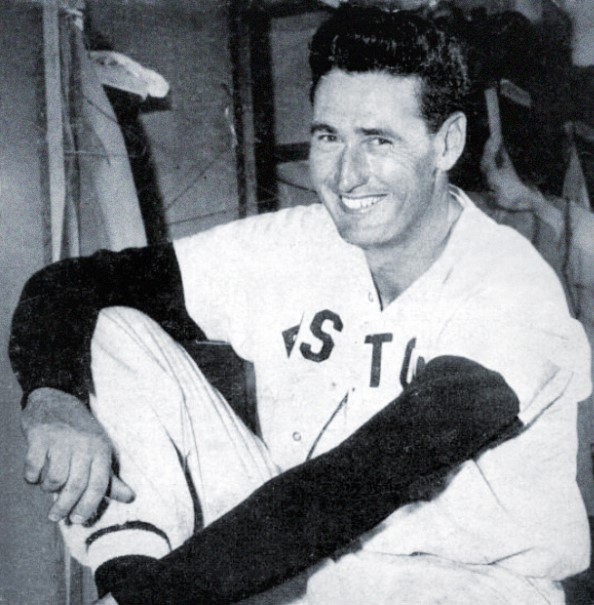
Ted Williams went the distance in the 1946 All Star game – played in front of the hometown fans at Fenway and – thanks to that full-game experience – wrote his way into the ASG records books. Williams came into the game hitting .347, with 23 home runs, 82 runs scored and 71 RBI in 79 regular-season games.  Compared to the day he was about to have that would look like a slump. Here’s how Williams’ day went.

In the first inning, batting third and facing the Cubs’ Claude Passeau, Williams drew a walk and then scored on a home run by Yankees’ RF Charlie Keller.

In the bottom of the fourth, leading off against new NL hurler Kirby Higbe of the Dodgers, Williams homered to give the AL a 3-0 lead.

In the bottom of the fifth, with Higbe still in the game, Teddy Ballgame came up again – this time with one out the Senators’ CF Stan Spence on third and the Browns’ SS Vern Stephens on second.   This time, Williams delivered a run-scoring single.

In the bottom of the seventh, facing the Reds’ Ewell Blackwell with none on and two out, Williams singled again.

Finally, in the bottom of the eighth – facing the Pirates’ Rip Sewell and his Ephus pitch – with Stephens and Browns’ P Jack Kramer on base, William capped off his day with a three-run homer.

The AL squad prevailed by a 12-0 score – and Williams’ final tally was:  four-for-four, plus a walk, two home runs, four runs scored and five runs driven in.   In the process, Williams set or tied the following All Star Game single-game records:

  • Runs Scored (four – Williams still stands alone);
  • Total bases (ten – Williams stands alone);
  • Runs Batted in (five – later, 1954, tied by the Indians’ Al Rosen);
  • Base Hits (four – tying the Cardinals’ Ducky Medwick, 1937, and later matched by the Red Sox’ Carl Yastrzemski, 1970);
  • Home Runs (two – tying Pirates’ Arky Vaughn, who did it in 1942; later tied by the Indians’ Al Rosen in 1954; Giants’ Willie McCovey in 1969; and Expos’ Gary Carter in 1981).

__________________________________________________________

ASG EXTRA – TEDDY SAID IT

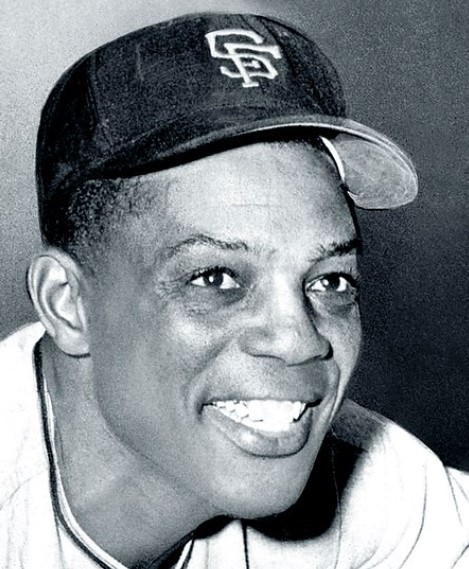
“They invented the All Star Game for Willie Mays.”

                                                         Ted Williams, 19-time All Star

ASG Memorable Moment Number Three… Carl Hubbell Fans Six Future Hall of Famers … 1934

The record for strikeouts by a pitcher in an All Star Game is six – Carl Hubbell (1934); Johnny Vander Meer (1943); Larry Jansen (1950); Fergie Jenkins (1967).  Given today’s hard-throwing/free swinging brand of baseball, we may very well see that six-whiff record equaled or surpassed. But I doubt if anyone will match Hubbell’s 1934 feat of fanning six future Hall of Famers in the same All Star Game (five consecutively). King Carl, on his way to a 21-win season (the second of five straight 20+ win campaigns), came into the game with a 12-5, 2.76 ERA regular-season stat line. Hubbell had struck out 58 hitters in 156 1/3 innings pitched to that point (it was, indeed, a difference game back then), but he was about to make the strikeout a much bigger part of his game.

The game was played on July 10, 1934 at New York’s Polo Grounds – with screwball-specialist Hubbell starting for the NL and Yankee Lefty Gomez starting for the AL.  Facing an AL line up stacked with some of the game’s greatest hitters, Hubbell got off to a rocky start, giving up a lead-off single to Detroit 2B Charlie Gehringer, followed by a walk to Senators’ LF Heinie Manusch. Then the fun began, as Hubbell set down five straight future Hall of Famers – all on strikeouts – Yankees’ RF Babe Ruth, Yankees’ 1B Lou Gehrig, and Athletics’ 3B Jimmie Foxx to close out the first. Hubbell then fanned   White Sox’ CF Al Simmons and Senators’  SS Joe Cronin to open the second – giving him five straight strikeouts, all future HOFers. Hubbell then gave up a single to Yankees’ C Bill Dickey, before whiffing Yankees’ P Lefty Gomez (also a future Hall of Famer, although as a pitcher not a hitter) to end the inning. After an uneventful third inning – two fly outs, a ground out and walk – Hubbell left the game credited with three scoreless innings, two hits, two walks and six strikeouts.

Oh yes, the AL won the game 9-7, and Hubbell’s feat was amplified by how those HOF whiff victims fared over the rest of the game.  Against pitchers not named Hubbell, they went seven-for-sixteen, with four doubles, five runs scored and three RBI.

_____________________________________________________________

ASG EXTRA – KING CARL SAID IT

“There were 50,00 fans or more there, and they wanted to see the best you’ve got. There was an obligation to the people, as well as to ourselves, to go all out. “

                     Carl Hubbell, nine -time All Star, comment on the 1934 All Star Game  

_________________________________

The Year of the Pitcher, Indeed

Not a single run batted in was recorded  in the 1968 All Star Game (despite the presence of such future Hall of Fame batsmen as Henry Aaron, Willie Mays, Willie McCovey, Carl Yastrzemski, Mickey Mantle, Johnny Bench, Harmon Killebrew, Frank Howard and more).  The game’s only run scored in the bottom of the first inning. CF Willie Mays led off with a single to left (off Luis Tiant). Mays went to second on an errant pick-off attempt and to third on a wild pitch that was part of a walk to LF Curt Flood. 1B Willie McCovey then grounded into a 4-6-3 double play, with Mays scoring,  (No RBI is awarded on a double play.  The game ended by that 1-0 score, with the AL getting just three hits and the NL only five. A total of 12 pttchers gave up the eight hits,and six walks, while fanning 20. 

ASG Memorable Moment Number Four … Larry Jansen in relief – 1950

Larry Jansen – 1951 Bowman

Giants’ right-hander Larry Jansen came into the 1950 All Star Game with a 9-5, 2.98 record. He came on in the seventh inning, with his NL squad trailing 3-2, He turned in a truly memorable performance.  It went like this:

Seventh Inning

Tigers’ P Art Houtteman – Strikeout

Yankees’ SS  Phil Rizzuto – Pop Out (C)

Indians’ CF Larry Doby – Strikeout

Eighth Inning

Tigers’ 3B George Kell – Strikeout

Red Sox ‘ LF Ted Williams –  Strikeout

Athletics’ 1B Ferris Fain – Fly Out (SS)

Ninth Inning

Yankees’ RF Joe DiMaggio – Fly Out (CF)

Indians’ C Jim Hegan – Strikeout

Yankees’ 2B Jerry Coleman – Strikeout

Tenth Inning

Yankees’ P Allie Reynolds – Ground out (3B-1B)

Rizzuto – Fly Out (SS)

Doby – Single (CF)

Kell – Ground out (SS-2B)

Eleventh Inning

Red Sox’ LF Dom DiMaggio – Ground out (SS-1B)

Fain – Ground out (1B-P)

J. DiMaggio – Foul pop out (C)

There it was:

  • Five innings of relief (second-most innings ever pitched in an All Star Game);
  • Six strikeouts (tied for the most in an All Star Game);
  • No runs, just one hit and only two balls it out of the infield.

When Jansen left the game, the score was tied at three apiece, with the NL eventually winning 4-3 in 14 frames.  Jansen,by the way, pitched in nine MLB seasons, going 122-89, 3.58. He was a two-time All Star (1950-151) and led the NL in wins with 23 (23-11, 3.04) in 1951. He won 21 games (five losses, 3.16 ERA) as a 26-year-old rookie in 1947 – finishing second to Jackie Robinson in the Rookie of the Year Voting.

_______________________________________________

Ouch!

The 1950 All Star Game was made even more memorable by the fact that Ted William made a leaping, off-the-wall catch on a line drive by Ralph Kiner in the first inning.  Williams played through the pain (nine innings) and even drove in a run with a fifth-inning single off Don Newcombe.  The pain persisted  and, it turns out, William had fractured his elbow making that first-inning catch and didn’t play again until early September. 

_______________________________________

ASG Memorable Moments Number Five … Lefty Gomez’ Quality Start – 1935

MLB defines a quality start as one of six innings or more with three or fewer earned runs given up.  Now, you can argue (correctly, I believe) that 4.50 ERA may not constitute a quality start. Given today’s All Star Game expectation of one, two or at the very most three-inning pitching appearances, you can confidently say we will not see another quality start in the All Star Game. Historically, there has only been one.  The Yankees’ Lefty Gomez (a future Hall of Famer) tossed an All Star Game-record six innings in 1935 – giving up just three hits and one run. Also falling into the “We’ll never see that again” category – the American League used just two pitchers in their 4-1 win, Gomez and the Indians’ Mel Harder.

Gomez came into  the game 8-8, 2.83 on the season, with ten complete games in 15 starts.

By comparison, in the  2022 All Star Game, the two teams used 20 pitchers – and no hurler threw more than one inning.

____________________________________________________

 ASG EXTRA … A Pitcher starting two All Star Games in a Single Season

From 1959-1962, MLB featured two All Star Games each season. In 1959, Don Drysdale became the only pitcher to start two MLB All Star Games in a season.  On July 7, he started at Forbes Field and held the AL hitless – with four strikeouts – for three innings. (The NL won 5-4). On August 3, he started at the Los Angeles Coliseum and again went three innings, this time giving up three runs on four hits and three walks (fanning five).

____________________________________

ASG EXTRA – GARY SAID IT

“It’s (getting elected to the All Star Game) right  up there with lobster.”

                                          Gary Gaetti, tw0-time All Star

___________________________________

ASG Extra – Spreading It Around – Three Five Spots

Gary Sheffield and Moises Alou share the record for the most tams represented at the All Star game at five.  Sheffield: Padres, Marlins, Dodgers, Braves, Yankees.  Alou:  Expos, Marlins, Astros,Cubs, Giants.

Pete Rose played the most positions in All Star Game competition with five – first bases, second base, third base left field, right field. 

ASG Memorable Moments Number Six … Gary Carter’s Two-Homer Game – 1981

There have been only five multi-homer games (by a single player) in ASG history (all two-homer contests) and only Hall of Famer Expos’ C Gary Carter managed to hit two long balls in just three plate appearances (all the others took four or five) – and the dingers were key to the National Leagues’ 5-4 win (in Cleveland).

Carter started for the NL and popped out to first base in his first plate appearance (the top of the second in a scoreless game).  Carter next led off the top of the fifth with his NL squad trailing 1-0 – and tied the game with a solo shot to left off the first pitch he saw from the Angels’ Ken Forsch (who had just come into the game). Carter again found himself leading off in the seventh, against new pitcher Ron Davis of the Yankees (with the NL now trailing 4-2). Carter again wasted no time, hitting Davis’ first offering over the CF wall to cut the deficit to one.  His performance earned him ASG MVP honors. Carter came into the game with a .245-7-30 line on the season.  Over his 19-season career (1974-92 … Expos, Mets, Giants Dodgers), the Hall of Famer was a 11-time All Star.  He won three Gold Gloves and put up a ,262-324-1,225 offensive stat lie.

_________________________________________________

Players with Two Home Runs in an MLB All Star Game

Arky Vaughn, Pirates …. 1941 (four plate appearances)

Ted Williams, Red Sox …..1946 (five PA)

Al Rosen, Indians ….. 1954 (5 PA)

Willie McCovey, Giants ….. 1969 (4 PA)

Gary Carter, Expos …… 1981 (3 PA)


ASG EXTRA – DEREK  SAID IT

“Any player who says they don’t want to go to an All Star Game is lying to you.”

                                            Derek Jeter, 14-time All Star

ASG Memorable Moment Number Seven … Al Rosen’s Two Home Runs and Five RBI – 1954

In 1954, The Indians’ Al Rosen started at 1B for the AL All Star squad; coming into the game with a .313-14-59 record on the season (71 games  played). The AL prevailed 11-9, but it’s unlikely they would have won without Rosen’s bat. In the game, Rosen:

  • Had three hits (fourth-most in an All Star Game, tie);
  • Hit two home runs (tied for the most in an All Star Game);
  • Drove in five runs (tied for the most in an All Star Game);
  • Collected nine total bases (tied for second-most  in an All Star Game).

Here’s how his day went:

  • Strikeout to end the first inning (versus the Phillies’ Robin Roberts);
  • Three-run homer in the third inning (off Roberts) to break a 0-0 tie;
  • Two-run homer in the fifth (off the Giants’ Johnny Antonelli) to tie the game at 7-7;
  • Single (off the Braves’ Warren Spahn) in the sixth;
  • Walk (off the Braves’ Gene Conley in the eighth).

Rosen was a four-time All Star in his 10-season MLB career (1947-56, all Indians), going .285-192-717. From 1950 through 1953, he averaged .298, with 33 home runs and 117 RBI per season.

___________________________________________________

ASG Memorable Moment Number Eight … Ichiro Suzuki’s Home “RUN” – 2007

The Mariners’ Ichiro Suzuki started the 2007 All Star Game (in San Francisco) leading off (and playing CF) for the AL squad. He had a three-for-three day, won the game’s MVP Award and made a bit of history.

Suzuki singled (off the Padres’ Jake Peavy) to open the game and added a second single (off Ben Sheets of the Brewers) with two outs in the third. The plate appearance that got him on this list came in the fifth inning. Ichiro came up with one out, a runner on first and the AL trailing 1-0.  Suzuki stroked the first pitch he saw from the Padres’ Chris Young off the centerfield wall, it took a crazy carom and, before  the ball back into the infield, Suzuki had circled the bases, coasting into home plate with a 15-second, two-RUN home RUN – still the only inside-the-parker in All Star Game history.  Note: In his MLB career, Suzuki hit 117 regular season home runs and one post-season homer – none of which were inside-the-parkers. 

________________________________________________________

ASG Memorable Moment Number Nine … Johnny Vander Meer’s Six Whiffs – 1943

The Cardinals’ Mort Cooper started the 1943 All Star for the National League squad, but the Reds’ Johnny Vander Meer made the most memorable impression. He came on in relief of Cooper in the bottom of the third, with the AL up 4-1, a runner on third and one out. Vander Meer ended the threat by fanning Tigers’ 1B Rudy York and Browns’ CF Chet Laabs. Vander Meer then whiffed Senators’ C Jake Early to open the fourth before giving up a single to Red Sox’ 2B Bobby Doerr and then coming off the mound to field a bunt by Tigers’ pitcher Hall Newhouser and turning it into a pitcher-shortstop-second base (covering first) double play. Although Vander Meer gave up an unearned  run in the fifth (on  a single, a walk and an error), he also fanned three batters in the inning: Indians’ 3B Ken Keltner, Tigers’ LF Dick Wakefield and York for a second time.   In the process, Vander Meer tied the All Star Game record for strikeouts in a game (six). To date, four pitchers have fanned  six batters in an All Star Game and Vander Meer is the only one to do it in less than three innings pitched (2 2/3).

____________________________________

Pitchers to Fan Six batters in an All Star Game

1934 Carl Hubbell

1943 Johnny Vander Meer

1950 Larry Jansen

1967 Fergie Jenkins

____________________________________

ASG Extra – Let’s Get This Party Started

Pedro Martinez holds the record for the most consecutive strikeouts to start an All Star Game – at four.  The victims were Barry Larkin , Larry Walker, Sammy Sosa and Mark McGwire.

ASG Memorable Moment 10-11-12 (tie) … Ted Williams, Stan Musial, Johnny Callison – Walk – Off Home Runs – 1941, 1955, 1964

There have been just three All Star games ending in a walk-off home run.  We’ll call it a tie.

In 1941 (July 8), the NL All Stars were leading the AL squad 5-3 going into the bottom of the ninth. The AL had cut the lead to 5-4, when the Red Sox’ Ted Williams came up (against the Cubs’ Claude Passeau) with a pair of AL “Yankee Joes” on base (DiMaggio on first and Gordon on third. Williams popped a 2-1 pitch  for a walk-off, three-run home run and a 7-5 AL win.   Williams was two-for-four with four RBI in the game.

On July 12, 1955, the MLB All Star Game (being held in Milwaukee) went into the bottom of the twelfth inning knotted at five apiece. The Cardinals’ Stan Musial led off the bottom of the 12th with a solo, walk-off game winner  – deep into the right field seats – off the Red Sox’ Frank Sullivan (who had entered the game with two outs in the eighth inning).

On July 7,  1964, the AL went into the bottom of the ninth (at Shea Stadium) with a 4-3 lead over the NL squad. With the Red Sox’ Dick Radatz on the mound (he had come on in the seventh), Giants’ CF Willie Mays led off with a walk, stole second and scored the tying run on a single by fellow Giant 1B Orlando Cepeda (who was replaced by pinch runner Curt Flood of the Cardinals.) Radatz then got Cardinals’ 3B Ken Boyer on a pop out, intentionally walked Reds’ C Johnny Edwards and struck out pinch hitter Henry Aaron of the Braves. The Phillies’ Johnny Callison (who had entered the game in the fifth inning as a pinch hitter and then took over RF) put an end to the contest with a walk-off, three -run homer to right.

Now,  I’m sure all Roundtable readers know plenty about Hall of Famers Williams and Musial, so here’s a bit abut Johnny Callison.  Callison enjoyed a 16-season MLB carer (1958-73 … White Sox, Phillies, Cubs, Yankees).  He was a three-time All Star and had a career .264-226-840 stat line. He had four seasons of 20+ home runs, with a high of 32 in 1965) and twice led the NL in triples.

ASG Memorable Moment Number Thirteen – Rod Carew’s Two Triples – 1978

Photo: Public Domain via WikiCommons

A triple is a thing of excitement and beauty and – on July 11, 1978 – batsman Rod Carew provided both for All Star Game fans. Carew led off the game with a triple to left center off  the Giants’ Vida Blue and then repeated the feat with another triple off Blue leading off the third.  It remains the only two-triple game in All Star Game history. Carew scored after each of his three-baggers, but the American League still lost 7-3.  The Hall of Famer won seven batting titles in his 19-season MLB career (1967-85 … Twins, Angels). He was a All Star in 18 of his nineteen seasons – missing only in his age-39 final season, when he hit .280 in 127 games.  Carew’s final stat line was .328-92-1,05.

ASG Memorable Moments Number 14-15 … A Tie Among Performances that were more Unforgettable than Memorable

14-15 – Future Hall of Famer Tom Glavine Giving Up Seven Straight Hits -1992

Hall of Famer Tom Glavine started the 1992 All Star Game (he came in with a  13-3, 2.57 record). After retiring American League leadoff hitter Blue Jays’ 2B Robert Alomar on a grounder to second, he surrendered seven consecutive hits – all singles, by the way – to Red Sox ‘ 3B Wade Boggs,  Twins’ LF Kirby Puckett, Blue Jays’ RF Joe Carter, A’s 1B Mark McGwire, Orioles’ SS Cal Ripken Jr., Mariners’ CF Ken Griffey Jr. and Indians’ C Sandy Alomar – with the AL plating four runs.

In the process, Glavine set the (still) All Star Game record for hits allowed in an inning – seven.  Surprisingly, he finished the frame and came out for the second inning – giving up two more hits and another run before being pulled.  He set another record – most hits allowed in an All Star Game appearance at nine. I suppose it could happen, but I seriously doubt in manager would leave pitcher in for this kind of treatment any longer.

14-15 – Roberto Clemente’s Four Strikeouts in an All Star Game – 1967

In the 1967 All Star Game, future Hall of Famer Roberto Clemente fanned in four consecutive at bats against four different pitchers: the Twins’ Dean Chance (third inning); White Sox’ Gary Peters (sixth); Yankees’ Al Downing (ninth); A’s Catfish Hunter (eleventh). He also had a single in the first (Chance) and a ground out in the fourteenth (Hunter).  The four whiffs is an All Star Game single-game  record for batters. 

Roundtable ASG Extra

Atlee Hammaker, holds the record for the most runs surrendered in an All-star Appearance. In the 1983 All Star contest, he  gave up seven earned runs on six nits and a walk in just 2/3 of an inning. The big hit was a Fred Lynn Grand Slam – still the only bases-loaded blast in an All Star Game.  1983 was Hammaker only All Star selection in a 12-season MLB career. 

____________________________________________

—–A FEW CAREER ALL STAR GAME TIDBITS—— 

Youngest and Oldest MLB All Stars

The youngest and oldest All Stars ever were both pitchers: Dwight Gooden (19 years-seven month-24 Days) and Satchel Paige (47 years-seven days).

First and still only All Star Game Steal of Home … 1934 AS game, fifth inning, two out, two on, NL trailing 8-6, NL 3B Pie Traynor (Pirates) notched the first (and still only) AS Game steal of home. (AL won game 9-7.)

First and still only All Star Game Grand Slam … 1983 All Star Game, third inning, bases loaded, two outs, AL leading 5-1, AL CF Fred Lynn hit the first – and still only – All Star Game Grand Slam. (AL wins 13-3)

First All Star Game MVP … MLB began recognizing the All Star Game MVP in 1962 and the first winner was the Dodgers’ Maury Wills – who didn’t enter the game until the sixth inning (the Pirates’ Dick Groat started at SS) and only came to the plate once.  Wills came in as a pinch runner for Stan Musial, who had singled off the Twins’ Camilo Pascual to open the inning. Wills quickly stole second and scored the game’s first run on a single by Groat (whom Wills would replace at SS). Wills came to the plate  in the eighth, with his NL squad up 2-1. He led off the inning with a single (off the Indians’ Dick Donovan), advanced to third on a single by Giants’ 3B Jim Davenport and scored on a foul ball fly out off the bat of Giants’ RF Felipe Alou.

—ALL STAR GAME TARGETS—–

Most Hits in an All Star Game … Four – Joe Medwick (1937); Ted Williams (1946); Carl Yastrzemski (1970)

Most Doubles in an ASG … Two – Nine players (Most recently, the Brewers’ Jonathan LeCroy in 2014.  (No surprise, LeCroy had a league-leading 53 doubles that season.)

Most Triples in an ASG …  Two – Rod Carew (1978)

Most Home Runs in an ASG … Two – Arky Vaughn (1941); Ted Williams (1946); Al Rosen (1954); Willie McCovey (1969); Gary Carter (1981)

Most RBI in an ASG … Five – Ted Williams (1946); Al Rosen (1954)

Most Walks in an ASG … Three – Charlie Gehringer (1934); Phil Cavarretta (1944)

Most Stolen Bases in an ASG …  Two – Willie Mays (1963); Kelly Gruber (1990); Roberto Alomar (1992); Kenny Lofton (1996); Starlin Castro (2011)

Most Innings Pitched in an ASG …  Six –  Lefty Gomez (1935)

Most Strikeouts in an ASG … Six –  Carl Hubbell (1934); Johnny Vander Meer (1943); Larry Jansen (1950: Fergie Jenkins (1967)

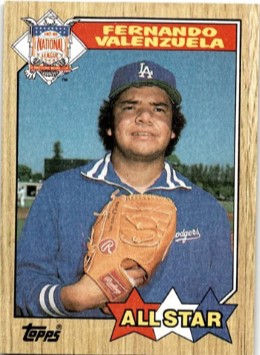
Most Consecutive Strikeouts in an ASG …  Five – Carl Hubbell (1934); Fernando Valenzuela (1986)


—CAREER ALL STAR GAME RECORDS—–

AS Game Hits Willie Mays – 23

AS Game Doubles Dave Winfield – 7

AS Game Triples …Willie Mays and Brooks Robinson – 3

AS Game Home Runs … Stan Musial – 6

Stan Musial hit .317 in 24 All Star games with two doubles, six home runs,10 RBI, and 11 runs scored.

AS Game RBI… Ted Williams – 12

AS Game Walks …Ted Williams – 11

Ted Williams hit .304 in 19 All Star Games, with two doubles, one triple, four home runs, 12 RBI and a.439 on-base percentage. 

AS Game Stolen Bases … Willie Mays – 6

Willie Mays stole six ASG bases in seven attempts. The most ASG steals without being caught belong to Roberto Alomar and Kenny Lofton at five each. 

AS Game Runs Scored …Willie Mays – 20

PHOTO: New York World-Telegram and the Sun staff photographer, William C. Greene, Public domain, via Wikimedia Commons

Willie Mays hit .307 in 24 All Star games, with two doubles, three triples, three home runs, nine RBI, 20 runs scored and six stolen bases.

AS Game Pitcher Wins … Lefty Gomez – 3

AS Game Total Pitching Appearances … Roger Clemens – 10

AS Games Started (pitcher) … Lefty Gomez, Robin Roberts, Don Drysdale – 5

Lefty Gomez went 3-1, 2.50 in five All Star Game starts (18 innings pitched). 

AS Game Saves ... Mariano Rivera – 4

AS Games Innings Pitched … Don Drysdale – 19 1/3

Mel Harder has pitched the most All Star Game innings without surrendering an earned run (13).

AS Game Strikeouts … Don Drysdale – 19

Don Drysdale went 2-1, 1.40 in All Star games, fanning 19 batters in 19 1/3 innings (10 hits, four walks). 

_______________________________________________________

All Star Game Scoring Bookends

The highest scoring All Star Game ever took place in 1998 at (Where Else?) Coors Field – as the teams combined for 21 runs in a 13-8 American League win.  Side note: Thirteen is the highest run total ever up by an All Star squad, accomplished by The AL in 1983, 1992 and 1998.

The lowest scoring game (combined) took place in (When else?) in 1968 (The Year of the Pitcher) – as the NL topped the AL 1-0. with the only run scoring on a double play (no RBI in the contest).

_________________________________________________________

Finally, to wrap up, here’s a dozen AS Game firsts from 1933.

First Venue: Comiskey Park 1 (July 6, 1933).

First AS Game Attendance: 47,595

Final Score of First AS Game: AL 4 – NL -2

First Batter/Pitcher Match Up: NL 3B Pepper Martin (Cardinals) versus Lefty Gomez (Yankees). Gomez retired Martin on a grounder to shortstop.

First Starting Pitchers: AL, Lefty Gomez (Yankees) – NL, Bill Hallahan (Cardinals). Gomez got the first All Star win, Hallahan the first loss.

First Hit: Cardinals’ Chick Hafey (leading off second inning – off the Yankees’ Lefty Gomez). Hafey was starting in LF and batting fourth for the NL.

First Run Scored: AL starting 3B Jimmy Dykes (White Sox).

First RBI: AL starting pitcher Lefty Gomez (Yankees) – drove home Jimmy Dykes (White Sox), who had walked, with a single to center field. Take that, DH Rule.

First Double: Pie Traynor (Pirates), NL pinch hitter – top of seventh off Lefty Grove (Yankees).

First Triple: NL pitcher Lon Warneke (Cubs) – top of the sixth inning off Alvin Crowder (Senators). Take that again, DH Rule.

First Home Run: AL RF Babe Ruth (Yankees), two-run home run, bottom of the third, off Bill Hallahan (Cardinals). So, your first All Star Game double, triple and homer were hit by pitchers or former pitchers.

First Stolen Base: Bottom of first, AL 2B Charlie Gehringer (Tigers).

First Strikeout: Final out, top of second. Pitcher – Lefty Gomez (Yankees). Hitter – NL SS Dick Bartell (Phillies).

Primary Resources: Baseball-Reference.com; Baseball-Almanac.com


Baseball Roundtable – Blogging Baseball Since 2012.

100Baseball Roundtable is on the Feedspot list of the Top 100 Baseball Blogs.  To see the full list, click here.

Baseball Roundtable is also on the Anytime Baseball Supply Top 66 Baseball Sites list.  For the full list, click here

I tweet (on X) baseball @DavidBaseballRT

Follow/Like Baseball Roundtable’s Facebook Page here.  Find More baseball commentary; blog post notifications; PRIZES.

Member: Society for American Baseball Research (SABR); Negro Leagues Baseball Museum; The Baseball Reliquary.
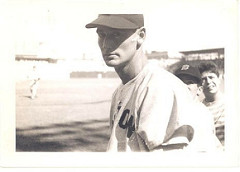


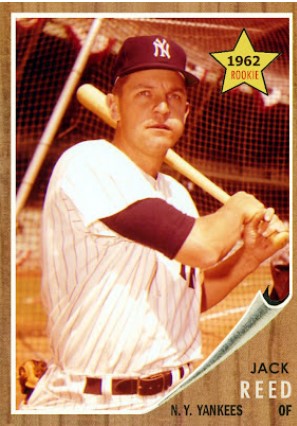
Jack Reed – One MLB Home Run, But He Made It Count

On this date – June 24 – in 1962, Yankee outfielder Jack Reed hit the only home run of his three-season MLB career.  Despite the long line of Yankee home run hitters – from Babe Ruth to Mickey Mantle and Roger Maris to Aaron Judge – Reed’s homer has a unique place in Bronx Bomber history.  Reed’s only career MLB homer,  a two-run shot (Roger Maris was on base), provided the winning margin in the longest game in Yankee history – a 9-7, 22-inning win over the Tigers (in Detroit).

Notably, Reed hadn’t even started the game that day.  He was, in fact, the third Yankee to man right field in the contest. Mickey Mantle started in RF (Roger Maris was in center). Joe Pepitone replaced Mantle  in the seventh inning. Phil Linz pinch hit for Pepitone in the thirteenth and Reed took over right field (Linz going to the bench) in bottom of the inning. For the game, Reed was one-for-four with a run scored and two RBI.  (Reed would collect only six RBI in 222 MLB games.

The fact that Reed did not start the game should be no surprise.  Reed made a career out of being a late-inning defensive replacement, pinch runner and occasional pinch hitter.  In fact, in 222 MLB games (1961-63), he  found himself in the starting lineup just 18 times and had a total of just 144 plate appearances,   His final MLB stat line was .233-1-6.

Jack Reed’s best MLB season was 1962, when he went .302-1-4, with two steals in 88 games.  (In 88 games, Reed had just 48 plate appearances.)

Often a late-inning replacement for Mickey Mantle on defense or on the base paths (Reed was Mantle’s replacement in 64 of his 222 MLB games), Reed was often referred to as “Mantle’s Legs” or “Mantle’s Caddie).”  During his career, Reed came in to replace not only Mantle, but also Yogi Berra, Roger Maris, Tom Tresh, Johnny Blanchard, Hector Lopez, Bob Cerv and Phil Linz.

Turning the Tables

On September 19, 1961, Jack Reed started in CF for the Yankees (versus the Orioles in Baltimore). In the top of the ninth, with the Yankees trailing 1-0, a runner on first and two out, Mantle replaced Reed (turnabout is fair play) at the plate (and struck out).

Here’s just a bit more background on Reed. Reed was a  versatile athlete in high school.  He won the Mississippi State Championship in the quarter-mile run and lettered in football, baseball, basketball and track. In college (University of Mississippi), he was a three-sport athlete – baseball, football, track & field.

Reed signed a contract with the Yankees at age 20 (1953). In 1954, he hit .287-5-49, with 18 steals in 99 Class-B Games.  In 1955, he moved up to Class-A and went .308-6-48, with 20 steals in 132 games. He then lost the 1956 and 1957 seasons to military service, before hitting .308-19-79, with 22 steals at Double-A in 1958.  He didn’t fare as well offensively at Triple-A (.262-7-36 in 1959; .240-4-25 in 1960; and .255-3-13 in 1961). However, he continued to show speed on the base paths and superior defense in the field, which earned him a spot on a Yankees’ roster filled with outfield options (at least in Casey Stengel’s managing system).

In the 1964 season Reed found himself back in the minors, as a player-coach with the Triple-A  Richmond Virginians. He went on to manage in the Yankee system from 1965 through 1967.

Primary References: Baseball-Reference.com; Jack Reed Society for American Baseball Research bio, by Thomas Van Hyning.


Baseball Roundtable – Blogging Baseball Since 2012.

100Baseball Roundtable is on the Feedspot list of the Top 100 Baseball Blogs.  To see the full list, click here.

Baseball Roundtable is also on the Anytime Baseball Supply Top 66 Baseball Sites list.  For the full list, click here

I tweet (on X) baseball @DavidBaseballRT

Follow/Like Baseball Roundtable’s Facebook Page here.  Find More baseball commentary; blog post notifications; PRIZES.

Member: Society for American Baseball Research (SABR); Negro Leagues Baseball Museum; The Baseball Reliquary.


Baseball Roundtable May Wrap Up … Stats, Stories, Roundtable Players/Pitchers of the Month, Trot Index and More

It’s June 1 and time for Baseball Roundtable’s 2023 monthly Wrap Up (for May)  – a look at Baseball Roundtable’s Players and Pitchers of the Month, the Trot Index, the May leaderboards and the stats and stories that caught Baseball Roundtable’s eye during the past month. And, there was plenty going on in May:

  • Not one, but two, pitchers joining the 400-career-saves club;
  • 2023’s second cycle (single-double-triple-homer in one game);
  • One pitcher completing another kind of cycle, joining the “club” of hurlers with at least one  career win against each of the thirty MLB teams;
  • The completion of a third kind of cycle, one player joining the “club” of hitters with at least one career home run against each of the thirty MLB teams;
  • Two Immaculate Innings;
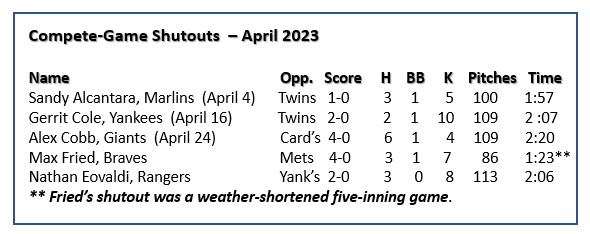
  • Four more complete-game shutouts (Is this becoming a thing?);
  • One player hitting .400 for the month;
  • A 300th home run and a 2,000th strikeout (not by the same player nor in the same game);
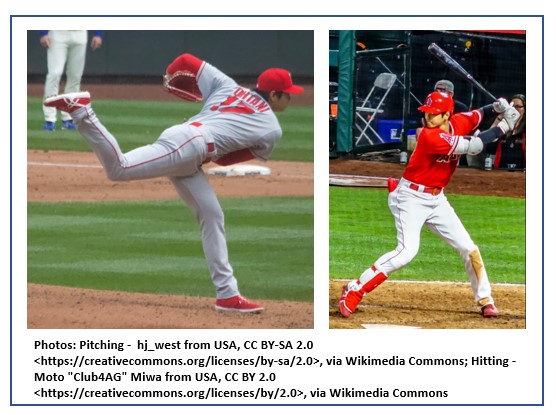
  • A 456-foot home run by a pitcher (Okay, it was Shohei Ohtani, but it still counts).

For these stories and more, read on.

BASEBALL ROUNDTABLE

PLAYERS AND PITCHERS OF THE MONTH … MAY 2023

National League

Player of the Month  – Freddie Freeman, 1B, Dodgers

Photo: dougandme

The Dodgers’ Freddie Freeman led all MLB players (with at least 75 May at bats) in average at  a nice round  .400.  In addition, he was first in MLB in May RBI with 26, runs scored with base hits with 46.  Freeman’s on-base percentage of .462 was third  MLB players with at least 75 May at bats and  hit .722 slugging percentage was second (first in the NL)x.   Freeman ended May with a still-active 20-game hitting streak streak, during which he has hit .457-5-21. Freeman had 16 multi-hit games in May.  Oh and Freeman stole four bases in four tries.  This was a pretty easy choice.  Freeman finished May at .346-10-35 on the season.

Honorable Mention:  You have to acknowledge the power surge of Marlins’ DH Jorge Soler, who  led the NL and tied for the MLB lead with 12 May home runs, to go with a .271 average and an MLB second-best 25 RBI.  From May 23 through May 27, Soler homered in five straight games, going  .391-5-8). He homered in 11 of his 25 games played  during the month.  Dodgers’ DH J.D. Martinez had a  nice month at .311-8-24.

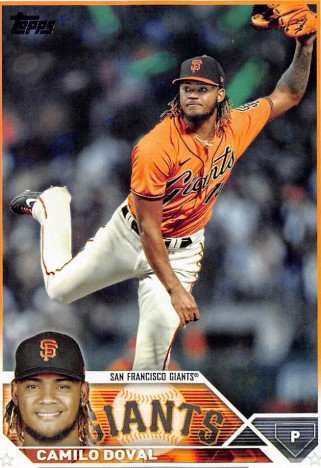
Pitcher of the Month … (tie) Michael Wacha, RHP, Padres & Camilo Doval, RHP, Giants

Padres’ starter Michael Wacha went 3-0 in May in five starts.  More to the point, in 32 innings pitched, he gave up just three earned runs (a stingy 0.84 ERA – lowest among MLB pitchers with at least 25 May innings).  Wacha held hitters to a .147 May average and a 0.72 WHIP. Wacha’s best start was on May 21, when he went seven scoreless frames versus the Royals – giving up just one hit and one walk, while fanning 11.  Wacha finished May with a 5-1, 3.45 record on the season.

Have to also recognize a reliever here. The Giants’ Camilo Doval, appeared in 14 May games and notched 11 saves in 11 save opportunities. He put up a 1.32 ERA and fanned 23 batters (just four walks) in 13 2/3 innings.  Doval finished May  1-2, 2,19, with a NL-leading 14 saves on the season.

Honorable Mention: Merrill Kelly, RHP, Diamondbacks went 4-0, 2.59 in five May starts – fanning 39 (seven walks) in 31 1/3 innings.  The Giants’ Logan Webb went 3-0, 1.30 in five May starts, fanning 33 in 34 2/3 innings). In his two no-decisions, Webb gave up just one run over 13 innings.

American League

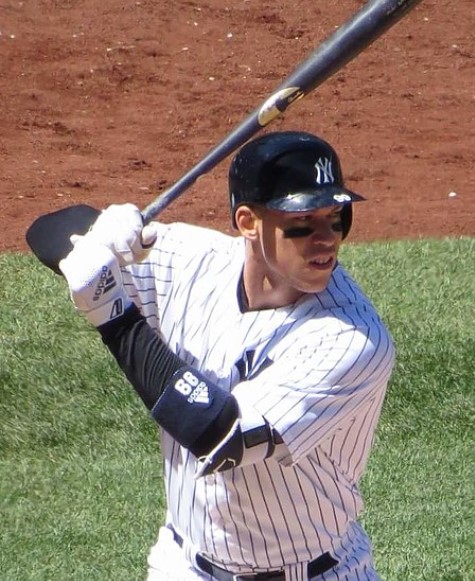
Player of the Month … Aaron Judge, RF, Yankees

Photo: DR. Buddie, CC BY-SA 4.0 <https://creativecommons.org/licenses/by-sa/4.0>, via Wikimedia Commons

The Yankee’s Aaron Judge led MLB (tied) in May home runs with 12 and in was second in RBI (first in the AL) with 25. Put this with his .342 average and 23 runs scored (tied for first in the AL) and you’ve got Player of the Month numbers. He also had a solid walks-to-strikeout ratio for a power hitter (20 walks, 25 whiffs), giving him a .474 on-base  percentage (tops among hitter with at least 75 May at bats). And he accomplished all this despite not playing his first May game until May 9 (hip injury).  Judge finished May with a .298-18-39  line on the season.

Honorable Mentions; Bo Bichette, SS, Blue Jays, led the AL with 42 May base hits (only Freddie Freeman and Bichette reached the 40-hit mark for May) – going .350-5-20, with 15 runs scored.  Great output for a middle infielder. The Guardians’  1B Josh Naylor tied Aaron Judge tor the AL-high May RBI, putting up a .293-5-25 month. The A’s CF Esteury Ruiz deserves a nod here for leading the majors in stolen bases in May – with 17. He he hit .282-1-13 for the month).

Pitcher of the Month – Nathan Eovaldi, RHP, Rangers

Texas’ Nathan Eovaldi was 4-0, in May with an AL-lowest (among pitchers with at least 25 May innings) earned run average of 0.96.  Eovaldi’s month included a one-run complete game and he went at least seven innings in four of his five starts.  He walked nine and fanned 31 in 37 2/3 May innings. Eovaldi finished May with a 7-2, 2.42 record on the season.

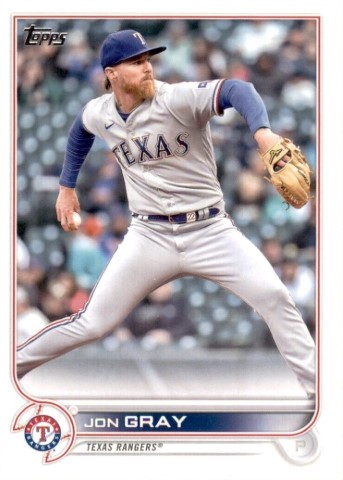
Honorable Mentions; The Rangers’ Jon Gray went 4-0, 1.95 in five May starts (Texas also won his no-decision start) – fanning 29 batters (with just six walks) in 32 1/3 innings pitched.  He went at eat seven innings in three of his five outings and gave up more than one earned run only once;.The Astros’ Christian Javier was 4-0, 2.40 in five starts.

________________________________________________

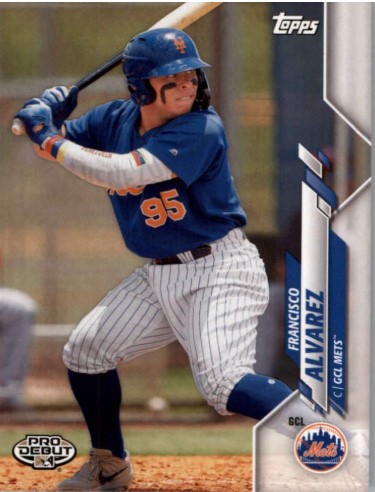
MLB Surprise Player of the month – Francisco Alvarez, C Mets

The Mets 21-year-old catcher  had  .292-7-17 month (22 games) – after hitting just .194 in 12 April Mets’ games and .167 in a five late-season 2022 contests (and .273 over 257 minor-league games in four seasons).  He enjoyed an eight-game hitting streak (May 16-28), during which he hit .400-5-13.

Honorable Mention: The Cubs’ 23-year-old CF Christopher Morel’s career seem to mushroom (sorry, couldn’t resist) after his May call up. In 19 May games, Morel hit .282-9-15.  His performance included homering in five straight games (May 17-23), when he hit .421-5-6. Now, surprise may be a strong word here – as Morel clearly earned his call up – going .330-11-31 in 29 2023 games with the Iowa Cubs.  Still, you can look back at his .235-16-47 in 113 Cubs (MLB) games in 2022 and rank his fast MLB start as, at least, somewhat unexpected.

________________________________

TROT INDEX … A REGULAR BASEBALL ROUNDTABLE FEATURE

Through May 31  35.6 percent of the MLB season’s 63,553 plate appearances ended in a trot (back to the dugout, around the bases, to first base). We’re talking about strikeouts, home runs, walks, hit by pitch and catcher’s interference – all outcomes that are, basically, devoid of action on the base paths or in the field. Here’s the breakout: strikeouts (22.7%); walks (8.8%); home runs (3.1%); HBP (1.1%); catcher’s interference (less than 1%). Strikeouts, by the way, outnumbered base hits 14,423 – 1,4047.

The 35.6 percent figure is up from 2022’s full season 34.6 percent.  Other recent seasons: 2021 – 36.3 percent; 2020 –  37.3 percent;  2019 – 36.2 percent; and 2018 – 34.8 percent.  By further comparison, in 1990, the Trot Index was 26.1 percent.  

__________________________________________

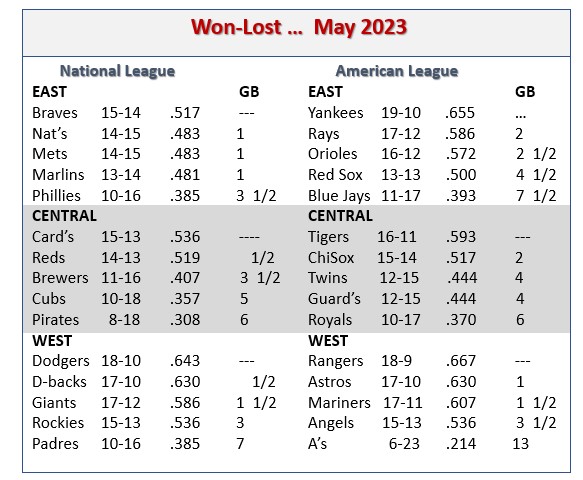
The Yankees gained a it of ground on the Rays by putting up May’s most victories  (19-10), despite getting just six wins from their starting pitchers. (The Yankees are awaiting the return of Carlos Rodon and Luis Severino to the rotation.) They powered their way to victory, leading MLB with 53 May home runs and finishing second in the AL in runs scored with 157.  The offense was led by:  RF Aaron Judge (.342-120-25 in May … see Player of the Month); 1B Anthony Rizzo (.327-6-19); 2B Gleyber Torres (.286-5-15); and CF Harrison Bader (.267-6-19). Rookie SS Anthony Volpe added six home runs and 16 RBI in May, despite a .174 average and 37 whiffs (five walks) in May.

Yankee ace Gerrit Cole  who went 5-0, 1.11 in April,slipped to 1-0, 5.18 in May. Reliever Clay Holmes led the Yankees in wins in May (3-1, 2.63 in 15 games … 13 2/3 innings). 

On the other end of the AL spectrum were the Oakland A’s , who won only six games in May (23 losses) and are on a pace for a 34-win season. The A’s put up  May’s worst team earned run average (5.54) and most runs surrendered, as well as MLB’s lowest batting average (.208) and second-fewest run scored.

In May, the A’s were outscored  165-to-87.

The AL’s biggest surprise in May may have been the Texas Rangers – who put up an 18-89 record and an AL-leading 168 runs scored.There simply seemed to be no weak spot in the Rangers’ lineup.  Consider this  infield: 1B Nathaniel Lowe (.297-1-12, with 20 runs scored); 2B Marcus Semien (.323-3-21, with 23 runs scored); SS Corey Seager (.291 with four home runs and 19 RBI in just 13 games);  3B Josh Jung  (.318-6-16, with 22 runs scored).  On the mound, the Rangers  were led by starters Nathan Eovaldi (4-0, 0.96) and Jon Gray (4-0, 1.95.).

In the NL  West, the Dodgers went 18-9 to claim the Division lead. And, like the Rangers in the AL, the offense led the way.  (Are we seeing a new trend here?) The Dodgers ERA of 4.61 was tenth in the NL, while their 173 May runs scored led all of MLB and their 49 home runs for the month trailed only the Yankees (53) and the Braves (51).  1B Freddie Freeman (see Player of the Month) led the way at .400-6-26), but he had plenty of help: DH J.D. Martinez (.311-8-24); C Will Smith (.318-5-17); RF Mookie Betts (.269-9-22). Overall, their lineup included seven players with four or more May homers and six with 15 or more May RBI.

Spreading Out the Load

Twelve Dodgers’pitches recorded wins in May (ony Tony Gonsolin … 3-1 in six starts had more than two) and and the team’s seven saves were divided among three relievers. 

The Diamondbacks came close to keeping pace with the Dodgers – going 17-10, as did the Giants at 17-12.   The Giants (2.39) and Diamondbacks (3.85) boasted the NL’s second – and third-best earned run average in May. The Padres, with MLB’s lowest May ERA – at just 3.20 – surprisingly, went 10-16. The did, however, score the NL’s sixth fewest runs (103).

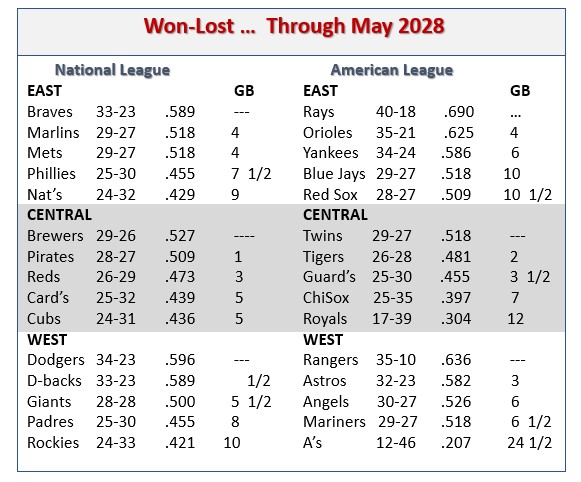
Year-to-date (through May 31) standings ans further comments can be found at the end of this post.

——-Team  Statistical Leaders for May 2023 ———-

RUNS SCORED

National League – Dodgers (173); Cardinals (150); Braves (144)

American League – Rangers (168); Yankees (157); Rays (145)

The fewest  runs in May  were scored by the Pirates  – 85. The A’s tallied the fewest runs in the AL at 87. Others under 100 were the Brewers and Guardians (97 each).

AVERAGE

National League – Nationals (.275); Rockies (.271); Marlins (.268)

American League – Rangers (.286); Blue Jays (.274); Red Sox (.272)

The lowest team averages for May belonged to the A’s (.208) and Padres (.212).

HOME RUNS

National League – Braves (51); Dodgers (49); Cardinals (44)

American League –  Yankees (53); Rays (42); Angels (39)

The Guardians had the fewest home runs in May  at 16. The Pirates  were at the bottom of the NL at 19.

The Dodgers led MLB in slugging percentage for May at .487.  The Yankees led the AL at .463. 

The A’s had the lowest May slugging percentage – sounding like a broken record here – at .331.

STOLEN BASES

National League – Reds (28); Padres (27); Brewers (26)

American League – Rays (52); A’s (25): Blue Jays (23)

The Astros stole the fewest sacks in May  – just nine  in 14 attempts..   The Rockies were at the bottom of the NL with 13 in 17 attempts. 

WALKS DRAWN

National League –   Padres (120); Cubs (115); Dodgers (115)

American League  Twins (115): Tigers (106); Rays (103)

The Rangers led MLB  in on-base percentage for May  at .341. The Dodgers led the NL  at .340.  The A’s had MLB’s lowest  OBP for May at .287.  

BATTER’S STRIKEOUTS

National League – Cubs (2682; Giants (260); Reds (244)

American League – Twins (299); Athletics (264); Mariners (262)

Guardians  batters fanned the fewest times in May  (183).

 Bonus Stats

Dodgers’ batter racked up the most total bases in May at 473.  The Pirates were at the bottom of MLB at 303.

_______________________________________

Earned Run Average

National League – Padres (3.20); Giants (3.39); Diamondbacks (3.85)

American League –  Astros (3.09); Guardians (3.28); Twins (3.38)

The Athletics had the highest May ERA at 5.54.  The only other team over 5.00 was the Rockies at 5.13.

STRIKEOUTS

National League – Braves (276); Marlins (267); Dodgers (211)

American League –  Astros (272); Twins (267); Mariners (257)

The Astros averaged  an MLB-best 10.29 strikeouts per nine innings in May. The Marlins averaged an NL-best 9.96. Seven teams averaged 9.00 or better

FEWEST WALKS SURRENDERED

National League  – Phillies (75); Padres (78); Cubs (78)

American League – Mariners (54); Tigers (68); Guardians (72)

The Mariners walked an MLB-lowest 1.94 batter per nine innings in May .  The Royals walked an MLB-worst 4.60 batters per nine frames.

SAVES

National League – Giants (14); Reds (11); Nationals (10)

American League – Rays (112; Yankees (10); Guardians (9); Orioles (9)

Bonus Stats:

  • The Athletics gave up an MLB-high 49 home runs in May  – The Padres gave up an MLB-low 21.
  • The White Sox held opponent to an MLB-low .220 average in May; the Rockies staff was touched for an MLB-high .280 during the month.

 _____________________________

MAY 2023 HIGHLIGHTS

Sho-Time Again …  Make Room for Me, Babe

Okay, it seems like you can’t have a monthly wrap up without  a Shohei Ohtani story.  On May 3, Ohtani  fanned 13 batters (in five innings)  in the Angels’ 6-4 win over the Cardinal in St. Louis.  Ohtani gave up four earned runs in five innings and did not get the decision.  Still, history was made, as that 13th strikeout (Cardinals’ 3B Nolan Arenado) to close out the fifth inning gave Ohtani 500 career MLB strikeouts – enabling him to join Babe Ruth as the only MLB players to accrue 500 career strikeouts as pitchers sand 100 or more home runs as hitters.

Good New Bad News

Good News. On May 3, Padres SS Xander Bogaerts came into a game against the Reds (in San Diego) with a season-opening  30-game streak of getting on base.   In the fifth inning, it looked like more good news, as Bogaerts – with Padres’ LF Juan Soto on first –  stroked an apparent single to right. Reds’ RF Stuart Fairchild dove for the ball, but did not make the catch – it short-hopped into his glove.

Now the bad news. Soto (who had walked) mistakenly thought the ball had been caught and headed back to first (where Bogaerts was already perched). Fairchild tossed to second for the force-out – negating the hit and resulting in a Fielder’s Choice (which does not extend an on-base streak). More bad news. Bogaerts ended the game zero-for-five – also ending his streak. Good news:  The Padre did win  7-1.

During his streak , Bogaerts went 34-for-112 (.304), with 15 walks and two hit by pitches.,

Rafael Devers and Number 150… or “Good Company”

On May 4, as the Red Sox topped the Blue Jays  in Boston 11-5, Boston 3B Rafael Devers hit his 11th home run of the season (appropriately off Zach Pop).  The two-run shot came in the bottom of the eighth inning.  It was the 150th round tripper of Devers’ career (2017-2023 … all with the Red Sox.) In another #InBaseballWeCountEverything moment, it was noted that Devers hit the long ball in his 721st Red Sox contest – making him the third-fastest to 150 in Red Sox history (Ted Williams – 664 games; Jim Rice -711).

2023’s First Immaculate Inning

On Thursday, May 4, the Pirates’ Colin Holderman threw 2023’s first Immaculate Inning (nine-pitches, three strikeouts). Holderman came on in the bottom of the seventh with the Pirates trailing the Rays 2-0. He fanned the Rays 6-7-8 hitters  2B Taylor Walls, RF Luke Raley and C Christian Bethancourt) in order one nine pitches. Through May,  Holderman was 0-1, 2.18, with 26 strikeouts in 20 2/3 innings.

Tee (off) for Two

On May 5, Fernando Tatis, Jr. – playing RF and leading off for the Padres (against the Dodgers) had a big night – two-homers, two runs scored and three RBI as the Padres won 5-2. It was Tatis ninth multi-homer game – coming in his fourth MLB season. So, why is it mentioned in the highlights? Because both long balls came off Dodgers’ ace Clayton Kershaw – making Tatis the first player with two multi-homer games against Kershaw (now in his sixteenth MLB season).

Goldy is Gold

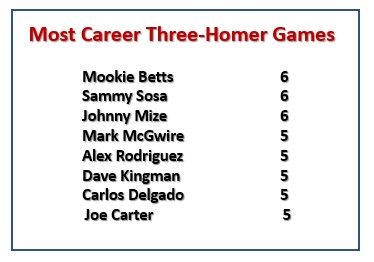
On May 7, Cardinal first baseman Paul Goldschmidt banged out three home runs and  a single, as the Cardinals topped the Tigers in St. Louis. Goldschmidt’s three-homer day was his  third career three-homer contest and the first for the Redbirds since September 3, 2006 (Albert Pujols).  Goldschmidt’s homers came in the:

  • First inning off Alex Faedo;
  • Third inning, again off Faedo.
  • Eighth inning off Tyler Holton.

The 400 Club Adds Two New Members … or Save The Last Out for Me

Photo: TonyTheTiger, CC BY-SA 4.0 <https://creativecommons.org/licenses/by-sa/4.0>, via Wikimedia Commons

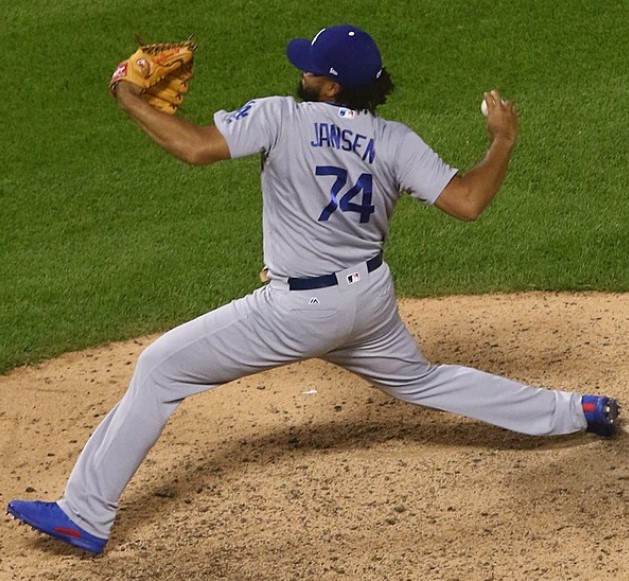
On May 10, Kenley Jansen became just the seventh MLB pitcher to record 400 saves, as he pitched a scoreless ninth inning in the Red Sox 5-2 win over the Braves in Atlanta. It was his ninth save of the season (and ninth for Boston). Now in his 14th MLB season, the breakout for Jansen’s  first 400 saves is Dodgers (350 in 12 seasons); Braves (41 in one season) and Red Sox (9).  Jansen has four seasons of 41+ saves on is MLB resume and four more of 30+ saves.

Photo: LWY on Flickr (Original version) UCinternational (Crop), CC BY 2.0 <https://creativecommons.org/licenses/by/2.0>, via Wikimedia Commons

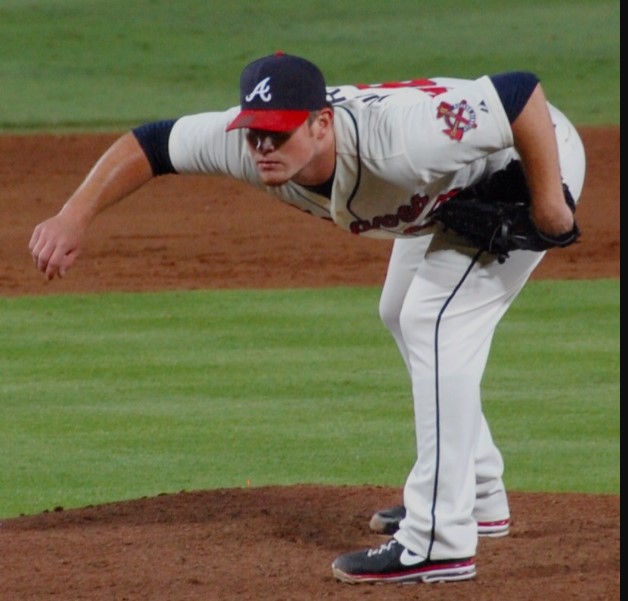
On May 26, the 400-Save Club added an eighth member, when the Philllies’ Craig Kimbrel  tossed a scoreless ninth as the Phillies topped the Braves 6-4 in Atlanta.  Kimbrel, like Jansen, notched save 400 in his 14th MLB season.  His save breakout: Braves (186 in five seasons); Red Sox (108 in three seasons); Padres (39 in one season); Dodgers (22 in one season); Cubs (38 in three seasons); Phillies (six in one season); White Sox (one in one season).  Kimbrel has notched eight seasons of 30+ saves (five of more than 40), with a high of 50 saves in 2013. The eight-time All Star was the 2011 NL Rookie of The Year, when he led the NL with 46 saves and set the record for rookie-season saves.  He led the NL in saves four straight seasons (2011-14) – averaging 46 saves a season in that span.

Other with 400 or more saves include: Mariano Rivera (652); Trevor Hoffman (601); Lee Smith (478); Francisco Rodriguez (437); John Franco (424); and Billy Wagner (422).

Cedric for the Cycle

On May 12, Orioles’ CF and leadoff hitter Cedric Mullins hit for the 2023 MLB seasons’  second cycle, as the O’s  topped the Pirates 6-3 in Baltimore.  Mullins who came into the game hitting .248 with four home runs on the season , flied out to CF in the first; singled in the third; tripled in the fifth; doubled home a run in the seventh; and completed the cycle with a three-run  home run in the eighth.

30-30 Vision

Photo: D. Benjamin Miller, Public domain, via Wikimedia Commons

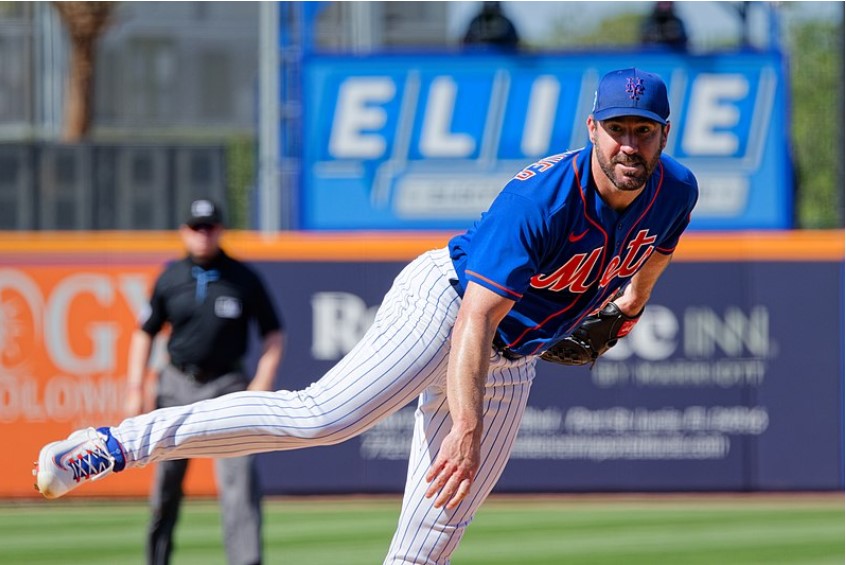
On May 10, The Mets’ Justin Verlander  pitched seven two-hit, one-run innings (fanning seven), as the Mets topped the Reds 2-1 in Cincinnati, Verlander got the win (his first of 2023) and, in the process, became the 21st pitcher to pick up a victory against all 30 current MLB franchises. For those who like to know such things, the first hurler to record victories against all 30 teams was also a Met – Al Leiter, who became first on this list with a win against the Diamondbacks on April 30, 2002.

Photo: Jeffrey Hayes, CC BY 2.0 <https://creativecommons.org/licenses/by/2.0>, via Wikimedia Commons

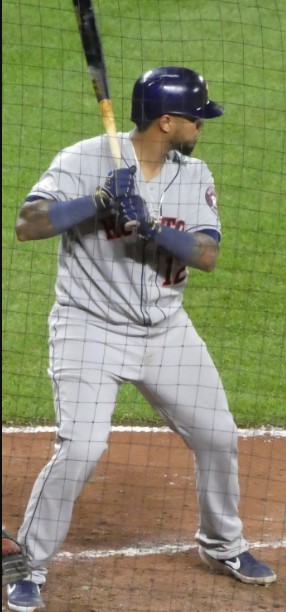
On May 22, we saw another “thirty-team” landmark.  Astros’ catcher Martin Maldonado hit his third home run of the season – as the Astros beat the Brewers 12-2 in Milwaukee.  That blast made Maldonado the 69th MLB player to homer against all 30 MLB teams. It was Maldonado’s 99th career round tripper (in 13 MLB seasons), which (according to the Elias Sport Bureau) made him just the fourth player to homer against all 30 teams before collecting his 100th round tripper (joining Jose Guillen, Orlando Hudson, Stephen Drew).

We Do Love Round Numbers in Baseball

On May 13,  in the bottom of the fifth inning, Royals’ starter Zack Greinke fanned Brewers’ rookies Brice Turang and Joey Wiemer.  In the vein of #InBaseballWeCountEverything, we know that (with those two whiffs) Greinke became just the  fifth MLB pitcher to fan 1,000 different batters.   The others comprise a pretty impressive list: Nolan Ryan, Randy Johnson, Greg Maddux, and Roger Clemens.

Unlucky Number 13

Over their first 39 games of 2023, the Marlins were  involved in 12 one-run contests – and they won them all … setting a new AL/NL record for consecutive wins in games decided by a single tally. The streak was broken on May 13, in their 13th one-run contest of the season, as the Marlins lost to the Reds 6-5 in Miami. Miami’s early run of one-run victories is even more surprising, considering the team was an MLB-worst 24-40 in one -run games last season.

Shohei-time AGAIN

On May 15, Shohei Ohtani went seven innings in a 9-5 win over the Orioles in Baltimore.  It wasn’t his best mound outing. He gave up five runs over the seven frames. He did, however, get the win – running his record to 5-1 on the season.

He did a bit better at the plate – stroking  four hits (including a triple and a home run) and collecting a walk in six plate appearances.  The homer, by the way, was not a cheap one – measured at 456 feet by Statcast. For more of #InBaseballWeCountEverything, Ohtani was the first starting pitcher to reach base safely five times in a game since Mel Stottlemyre in September of  1964,

Way To Go Rook

On September 26, 1964, Yankees’ rookie Mel Stottlemyre started against the Senators in Washington D.C.  Stottlemyre pitched a two-hit shutout (five walks, five whiffs), running his record to 9-2, 1.97. As if the complete-game shutout wasn’t enough, Stottlemyre went five-for-five (four singles and a double) at the plate, scoring once and driving in two.  The 22-year-old finished his rookie season with a 9-3, 2.06 record in 13 games (he made his MLB debut in mid-August). At the plate, he hit .243 in 37 at bats.

Over the next six seasons, Stottlemyre was an All Star five times, going 103-83, 2.94, winning 20 or more games in three of those seasons. In an 11-season MLB career, he was 164-139, 2.97.

Another Round Number

On May 17, the Cardinals’ Nolan Arenado notched his 1,000th career RBI, as the Redbirds topped the Brewers 3-0 in St. Louis. The 1,000th RBI came on an infield single off Corbin Burnes in the bottom of the first inning (scoring DH Paul Goldschmidt). As May 2023 closed out, Arenado – in his 11th MLB season, had a career offensive stat line of  .288-308-1,004    – as well as ten  consecutive Gold Gloves – to his credit.

More #InBaseballWeCountEverything

In his last plate appearance on May 16 (ninth inning of a 7-2 loss to the Astros in Houston), Cubs’ RF Seiya Suzuki launched a 2-0 pitch from Matt Gage to deep left for a two-run home run.  Then, in his first two plate appearances the following day (in a 7-6 loss to the Astros), Suzuki hit a solo homer off J.P. France and a two-run shot (again off France).  So, why is this in the highlights? Elias Sports Bureau reports that Suzuki is the first Japanese born player to homer in three consecutive MLB plate appearances. Suzuki who hit .262-14-46 for the Cubs last season was .293-6-19 in 2023 (through May 31).  Suzuki signed with the Cubs  (five years – $85 million) in March 2022 after nine seasons in Japan – over which he hit .309-189-621, with 102 steals in 1,055 games. In 2021 he it .317, with 38 homers in 134 games for the Hiroshima Carp.

Lucky Seven

On May 18, off to a difficult start to the season, the last-place (18-36) Cardinals knocked off the first place (28-16) Dodgers 16-8. They tallied those 16 runs on just 12 hits, including seven home runs (their most long balls in a home game since May 7, 1940).

The Cardinals popped four home runs a six-run third inning: C Wilson Contreras (three-run); PH Juan Yepez (solo), 3B Nolan Gorman(solo); SS Paul DeJong (solo) – the last three back-to-back-to back.  DH Nolan Arenado added a two-run shot in the three-run fourth and,  in the seven-run eighth, Contreras added a second three-run homer and Gorman a second solo shot.

On May 26, the Pirates also enjoyed a win fueled by seven round trippers, as they bested the Mariners 11-6 in Seattle.  DH Andrew McCutchen set the tone, leading off the top of the first with a home run off George Kirby on just the second pitch of the game. 1B  Carlos Santana led off the fourth with a solo short (also off Kirby). Kirby then gave up back-to-back long balls to CF Jack Suwinski (two-run) and 3B Ke’Bryan Hayes in the fifth. Suwinski added a solo shot (off Juan Then) in the seventh and Tucupita Marcano also had a solo homer that inning.  LF  Bryan Reynolds got into the act in the eighth, with a solo homer off Chris Flexen.  It was MLB’s third seven-homer game of 2023. (The Giants poked seven round trippers in a 12-3 win over the White Sox on April 3.

On May 28, the Astros banged out seven home runs in beating the A’s 10-1 in Oakland. All ten of the Astros runs scored via the long ball. DH Yordan Alvarez had a solo homer in the first inning; CF Jake Meyers hit a three-run shot in the third.  RF Chas McCormick and 2B Jose Altuve went back-to-back with solo shots in the seventh; 1B Jose Abreu had a solo homer in the eighth; and SS Jeremy Pena (two-run) and Alvarez went back-to-back in the ninth.

A Grand (Slam) Celebration (sort of)

On May 18, as is Dodgers lost to the Cardinals 16-8, LA’s 1B Freddie Freeman notched his 300th career home run (albeit in a losing causes) – a grand slam in the top of the sixth off Genesis Cabrera. It was Freeman’s eight round tripper of 2023.

Ruben Sierra (2004 Yankees) and Freddie  Freeman (2023 Dodges) are the only MLB players (to date) to celebrate their 300th career homer with a Grand Slam.

More  Shutouts on the Books

May saw four more complete-game shutouts – bringing the 2023 season total to nine.  I note that here because in 2022, we saw only three complete-game shutouts through May and 16 over the entire season.

On May 8, The Pirates’ Mitch Keller shut out the Rockies (2-0) in Pittsburgh. Keller gave up four hits and a walk, while fanning eight.  He threw 103 pitches, 77 for strikes. It was Keller’s first career complete game in 78 starts (over five seasons).

On May 12, the Blue Jays’ Chris Bassitt went nine scoreless frames, as his Blue Jays topped the Braves 3-0 in Toronto. Bassitt gave up just two hits and two walks (eight strikeouts) in the outing – tossing 103 pitches (70 for strikes). It was Bassitt’s second career complete game (and second career shutout) – in 132 starts over nine seasons.

On May 21, the Astros’ Framer Valdez tossed the eighth  complete-game shutout of 2023 – shutting down the Oakland A’s by a 2-0 score – giving up just four hits (no walks), while fanning seven. It was Valdez’ fifth complete game and second shutout over 86 starts in six seasons.  Valdez threw 104 p[itches, 64 strikes.

On May 29,  the Cubs’ Marcus Stroman picked up his fifth win of the season (versus) four losses, tossing a complete-game, one-hit, one-walk, eight-whiff shutout. It was just the second complete-game and first shutout for Stroman – now in his ninth MLB season.  Stroman threw 105 pitches (72 strikes).

1,000 and Counting

On May 22, Mariners starter Luis Castillo  picked up a win, going six scoreless innings (four hits, two walks, eight strikeouts)  in a Mariners’ 11-2 win over the A’s. Notably, his fifth strikeout of the game – A’s  C Shea Langeliers leading off the fifth inning – marked the 1,000 strikeout of Castillo’s MLB career (he’s in his seventh season.)  Castillo finished May 4-2, 2.69 with 76 whiffs in 63 2/3 innings on the season.

Good Company or Three is not a Crowd

On May 23,  Yankees’ starter Gerrit Cole had a rough night – getting touched for five runs in five-plus innings. (Cole was pulled with no outs and two on in the sixth.) The Bronx Bombers did come back to win 6-5 in ten frames. Cole did reach a milestone though, fanning the Orioles’ Jorge Mateo in the second inning for his (Cole’s)  70th whiff of the season and 2,000th  career strikeout. Only Randy Johnson and Clayton Kershaw (pretty good company) reached 2,000 strikeouts in fewer games than Cole’s 278 (Johnson -262 … Kershaw 277). Cole also secured third place in terms of fewest innings pitched to reach 2,000 strikeouts (1,714 2/3), trailing Chris Sale (1,626) and Pedro Martinez (1,711 2/3). C

Moving in a Fast Crowd

On May 25, Twins’ reliever Jhoan Duran threw three pitches at 104 mph+, as he closed out the Twins’ 7-1 win versus the Giants in Minnesota.  They were the first three pitches over 104 mph of the 2023 season (the fastest was 104.6 mph).  The outing enabled Duran to climb up the career list of pitchers with pitches over 104 mph (there are only eight). Ahead of Duran are only Aroldis Chapman (with 67 104-mph+ pitches) and Jordan Hicks (12).

Another Immaculate Outings (inning)

On May 24, Pirate Johan Oviedo threw the second Immaculate Inning (nine pitches/three strikeouts)  of the month, fanning the Rangers’ Jonah Heim, Robbie Grossman and Josh Smith consecutively on nine pitches.  It came in the fourth inning of a 3-2 loss to the Rangers in Pittsburgh.

Somebody’s Got To Be First

On May 26, as the Nationals  faced the Royals in Kansas City, 2B Luis Garcia came into the game hitting .262 on the season. Over the course of the contest, he raised his average to .288 – as he picked up the 2023 season’s first six-hit contest – collecting four singles and two doubles, driving in two runs and scoring three.  The Nationals needed all that punch, as they edged the Royals 12-10.  As noted, it was the first six-hit game of 2023 and just the third six-hit contest in Nationals/Expos franchise history. For those who like to know such things, Wilbert Robinson and Rennie Stennett share the record for the most hits in a nine-inning game with seven.)

The Nationals’  Luis Garcia is the second youngest MLB player to collect six hits in a game (at 23 ear-10 days-old).  The youngest is Jesus Alou (1964 Giants) at 22-years-108 days). 

Getting Off to a Fast Start

Angels’ rookie righty Ben Joyce, on May 29, made his major-league debut against the White Sox in Chicago.  The 22-year-old – called up form Double-A the day before – came  on to start the seventh inning with the Angels up 4-3.  He dispatched the White Sox on 12 pitches (10 strikes), giving up a single and fanning two.  Why a fast start? Eleven of  Joyce’s 12 offerings were 100+ mph.  In two minor-league seasons, the 2022 third-round draft choice (out of the University of Tennessee), had gone 1-1, 3.45 with 44 strikeouts (17 walks) in 28 2/3 innings.

A Feel Good Story in Chicago

On May 29, righty Liam Hendriks – who saved 75 games for the White Sox over the 2021-22 seasons – made his first mound appearance of 2023.  He came on in he top of the eighth with the Angels leading the hometown White Sox 4-3.  It was a bit of a rough inning – Hendriks gave up two runs on three hits and a walk. It was, however, still a good day. It was Hendriks’ first major-league mound appearance since being diagnosed with (and treated for) stage four non-Hodgkin’s lymphoma last December.   Hendriks entered the game to a standing ovation and chants of “Liam! Liam!” – (as wells with players in both dugouts standing to applaud his comeback).  Throughout his appearance fans took every opportunity to show their appreciation for Hendriks perseverance and courage.


——-Individual Statistical Leaders for May  2023———

AVERAGE (at least 75 May at bats)

National League – Freddie Freeman, Dodgers (.400); Owen Miller, Brewers (.363); Lourdes Gurriel,  Jr., Diamondbacks (.352)

American League –  Leody Taveras, Rangers (.368); Riley Greene, Tigers (.365); Masataka Yoshida, Red Sox (.354)

The lowest May average (among players with at least 50 at bats in the month)  belonged to the Phillies’ Kyle Schwarber  at .115 (10-for-87). Schwarber did have seven homers and 15 RBI during the month.,

HOME RUNS

National League – Jorge Soler, Marlins (12); Pete Alonso, Mets (10); four with nine

American League – Aaron Judge, Yankees (12); Salvador Perez, Royals (9); four with eight

The Yankees’ Aaron Judge  had the highest May  slugging percentage (among players with at least 75 at bats) at .882.  The NL leader was the Dodgers Freddie Freeman  at .722.

RUNS BATTED IN

National League – Freddie Freeman, Dodgers (26); Jorge Soler, Marlins (25); J.D. Martinez, Dodgers (24)

American League –  Aaron Judge, Yankees (25); Josh Naylor,Guardians (25); Anthony Santander,Orioles (22)

HITS

National League – Freddie Freeman, Dodgers (46); Lane Thomas, Nationals (36); Spencer Steer, Reds (32); Joey Meneses, Nationals (35)

American League –  Bo Bichette, Blue Jays (42); Marcus Semien, Rangers (37); Riley Greene, Tigers (35); Leody Taveras, Rangers (35)

The Padres’ Juan Soto led MLB players (with at bats 75 May at bats)  in on-base percentage at .482. The AL  leader was the Yankees’ Aaron Judge at .474)..

DOUBLES

National League –  Freddie Freeman, Dodgers (17); Juan Soto, Padres (11); five with nine

American League – Alex Verdugo, Red Sox (10); Andrew Benintendi, White Sox (10); five with nine

TRIPLES

National League – Brandon Nimmo, Mets (4); televen with two

American League – Seven with two.

The Dodgers’ Freddie Freeman had an MLB-high 24 extra-base hit in May.  The Yankees’ Aaron Judge  and White Sox’ Luis Robert shared the AL lead at 17.

STOLEN BASES

National League –  Ronald Acuna, Jr., Braves (10); Starling Marte, Mets (7); Christian Yelich, Brewers (7)

American League – Esteury Ruiz, A’s (17); Wander Franco, Rays (14); three with ten

The Rays’ Taylor Walls  had the most May steals without getting caught, with ten.

WALKS

National League – Juan Soto, Padres (25); Kyle Schwarber, Phillies (22); Matt Olson, Braves (21)

American League –  Adley Rutschman, Orioles (21); Randy Arozarena, Rays (20); Aaron Judge Yankees (20); Zach McKinstry, Tigers (20)

The Dodgers’ Will Smith led MLB players (with at least 75 May at bats) in walks-to-strikeouts ratio at 1.80 (18 May walks to 10 May whiffs). 

BATTER’S STRIKEOUTS

National League – Paul Goldschmidt, Cardinals (35); Jack Suwinski, Pirates (35); four with 34

American League – Teoscar Hernandez, Mariners (40); Jarred Kalenic, Mariners (39; )Brent Rooker, A’s (38)

PITCHING VICTORIES

National League – Merrill Kelly, Diamondbacks (4-0); Mitch Keller,Pirates (401); Ian Gibaut, Reds (4-1)

American League – Jon Gray, Rangers (4-0); Cristian Javier, Astros (4-0); Nathan Eovaldi, Rangers (4-0); Zach Eflin, Rays  (4-1); Lance Lynn, White Sox (4-2)

Alex Manoah, Blue Jays, led MLB in May losses (0-5, 6.15).

EARNED RUN AVERAGE (at least 25 May innings))

National League –  Michael Wacha, Padres (0.84); Logan Webb, Giants (1.30); Bryce Elder, Braves (1.72)

American League – Nathan Eovaldi, Rangers (0.96); Jon Gray, Rangers (1.95); Mike Lorenzen, Tigers (1.95)

Among pitchers with at least four May starts or 20  innings pitched, the Orioles’ Grayson Rodriguez had the highest ERA at 11.14 …  26 earned runs in 21 innings pitched in five starts.

STRIKEOUTS

National League – Spencer Strider, Braves (57 K / 33 2/3 IP); Mitch Keller, Pirates  (53 K / 39 IP); Hunter Greene, Reds (40 K/ 28 IP);

American League – Shohei Ohtani, Angels (44 K / 31 IP); Michael Kopech, White Sox (43 K / 36 IP); Hunter Brown, Astros (42 K / 32 IP)

Among players with at least 25 May innings, the Braves Spencer Striker had the highest strikeouts- to-walks ration at 15.24. the Angels’  Shohei Ohtani led the AL at 12.77.

SAVES

National League – Camilo Doval, Giants (11);  Alexis Diaz Reds (9); Pierce Johnson, Rockies (8)

American League – Emmanuel Clase, Guardians (8); fie with seven

WHIP (Walks +  Hits per Inning Pitched – at least 25 May innings))

National League – Michael Wacha, Padres (0.72); Mitch Keller, Pirates (0.82); Merrill Kelly, Diamondbacks (0.83)

American League – Bryce Miller, Mariners (0.75); Chris Sale, Red Sox (0.81); Zack Greinke, Royals (0.83)

BONUS STAT

  • The Orioles’ Grayson Rodriguez gave up an MLB-high 11 home runs in May (over 21 innings).
  • The Diamondbacks’ Zac Gallen  pitched the most May innings without surrendering a home run … 35.

____________________________________________

If the MLB season ended May 31, your playoff teams would be:

National League 

Dodgers, Braves, Brewers: Wild Cards: Diamondbacks, Marlins, Mets

American League

Rays, Rangers Twins: Wild Cards: Orioles, Yankees, Astros

A few Observations:

  • The young Orioles’ squad continues to surprise  (14 games over .500), but they are going to miss Cedric Mullins (groin strain).
  • Who will wake up in the AL Central Division? Only one team — the Twins – is over .500.
  • Through May, the A’s have a minus-195 run differential (worst in MLB), The Rangers strand at the top with a +131.  The only other team with a 100-run differential (plus or minus) is the Rays at +119.
  • How would you like to play in the AL East?  The Red Sox with a 28-27 record stand in last place  10 1/2 games out.
  • Through May, no team has won more one-run games than the Miami Marlins (16-4 in one-run contests); the Guardians have lost the most one-run games (11-14).
  • The Rays are a remarkable 26-6 at home through May.  The Athletics are an equally remarkable 7-24 at home.
  • The Orioles and and Braves have the best road winning percentages at .667 (18-9).

Primary Resources:  Baseball-Reference.com; MLB.com


Baseball Roundtable – Blogging Baseball Since 2012.

100Baseball Roundtable is on the Feedspot list of the Top 100 Baseball Blogs.  To see the full list, click here.

Baseball Roundtable is also on the Anytime Baseball Supply Top 66 Baseball Sites list.  For the full list, click here

I tweet (on X) baseball @DavidBaseballRT

Follow Baseball Roundtable’s Facebook Page here.  Find More baseball commentary; blog post notifications.

Member: Society for American Baseball Research (SABR); Negro Leagues Baseball Museum; The Baseball Reliquary.


Ken Brett’s Big Day … Double Duty in a Doubleheader

On this date (May 27) in 1974,  MLB saw something we’re not likely to see again. It involved a series of currently somewhat rare occurrences: a doubleheader, a complete-game shutout, a pitcher in the starting offensive lineup and a pitcher tripling as a pinch hitter (driving in the tying runs and scoring the go-ahead run). Now, any of these remain possibilities, but it seems unlikely we’d see them all in the same ballpark on the same day.

On May 27, 1974, the Pirates  faced off against the Padres in a doubleheader (in Pittsburgh). Starting on the mound in Game One, with a 4-3, 3.52 record, was southpaw Ken Brett. Brett went the distance, throwing a two-hit, no-walk, four-strikeout shutout – as the Pirates won 6-0. Brett also contributed an eighth-inning, RBI single, raising his batting average on the season to .409 (9-for-22, with two homers and six RBI). But, he wasn’t done yet.

In Game Two, with the Pirates trailing 3-1 in the bottom of the seventh – and runners on first and third with no outs – Pirates’ Manager Danny Murtaugh looked to his bench for a pinch hitter. His choice? First Game starting pitcher Ken Brett, who laced a triple to left center, scoring both runners and tying the game. Brett then scored the go-ahead run on a double by PH Al Oliver.  (The Pirates eventually won 8-7.)  Quite a day for Hall of Famer George Brett’s big brother. For those who like to know such things, Brett pinch hit for number-eight batter  SS Frank Taveras, batting  .270 at the time.

The day was part of Ken Brett’s only All Star season (in a 14-season MLB career). In 1974, Brett went 13-9, 3.30,with ten complete games and three shutouts in 27 starts.  At the plate, he hit .310 (27-for-80), with four doubles, a triple, two homers and 15 RBI. Brett got at least one base hit in 17 of the 27 games he started on the mound – including six multi-hit games.  He was used 16 times as a pinch hitter, collecting three hits and a walk.

Ken Brett was the winning pitcher in the 1974 All Star game giving up one hit and walk over two innings of work – as the NL won 7-2.

Ken Brett was  selected by the Boston Red Sox in the first round (fourth overall) of the 1966 MLB Draft – after a high school career in which he pitched and played outfield – going 33-3 on the mound and hitting .484. (Society for American Baseball Research Ken Brett Bio, by Jonathan Arnold.)

He made his MLB debut in late September of 1967, as a 19-year-old, in his second professional season. (He had gone 14-11, 1.95 at Double-A and Single-A.)  The young left-handed fireballer actually pitched in two games of the 1967 World Series (1  1/3 innings, no hits, one walk, one whiff). Then things took a turn to the left.

Shortly after the 19678 World Series, Brett began a six-month stint in the U.S.  Army.  After being discharged, he apparently returned to the mound too quickly and suffered elbow issues  that would follow him throughout his career.

He pitched in 14 MLB seasons (1967, 1969-81) and for ten different teams (Red Sox, Royals, Pirates, Angels, White Sox, Twins, Phillies, Dodgers, Yankees, Brewers). He went 83-85, 3.93 in 340 games (184 starts/51 complete games).   Brett won ten or more games in five seasons, a carer-high 13 in 1973, 1974 and 1977.  He earned a reputation as one of MLB’s best-hitting pitchers, putting up a career average of .262 (91-for-347), with ten home runs and 44 RBI.

In 1973, Ken Brett set a still-standing MLB record for pitchers, homering in four consecutive games played (between June 16 and June 23). In the streak, he hit .308 (4-for-13), with four homers and five RBI. He also got the victory in all four games, throwing three complete games, with a 2.88 ERA. In the only game he didn’t finish he went 7 1/3 innings.

Primary Resources:  Baseball-Reference.com; Baseball-Almanac,com.

Baseball Roundtable – Blogging Baseball Since 2012.

100Baseball Roundtable is on the Feedspot list of the Top 100 Baseball Blogs.  To see the full list, click here.

Baseball Roundtable is also on the Anytime Baseball Supply Top 66 Baseball Sites list.  For the full list, click here

I tweet (on X) baseball @DavidBaseballRT

Follow Baseball Roundtable’s Facebook Page here.  Find More baseball commentary; blog post notifications.

Member: Society for American Baseball Research (SABR); Negro Leagues Baseball Museum; The Baseball Reliquary.
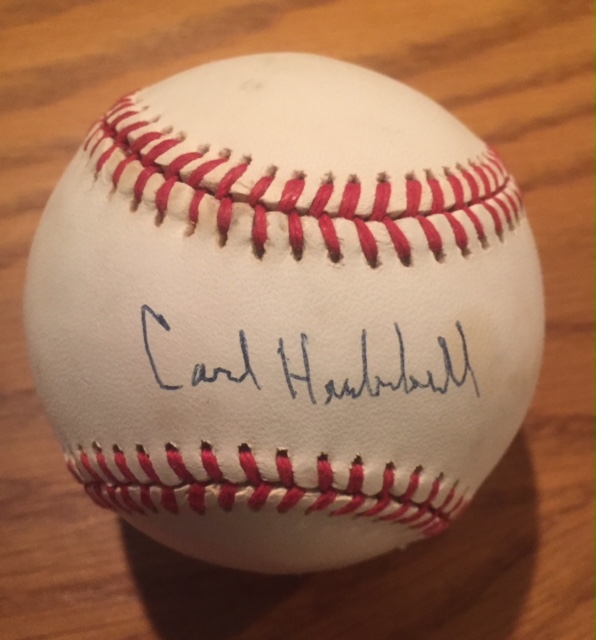
 

Racking up the Putouts … and a Segue to Richie Ashburn

Photo: Keith Allison from Owings Mills, USA, CC BY-SA 2.0 <https://creativecommons.org/licenses/by-sa/2.0>, via Wikimedia

On this day (May 20) in 2009, Red Sox’ CF Jacob Ellsbury tied the MLB record for putouts in a nine-inning game by a CF (and by an outfielder any position) – with 12 – capturing two fly balls in the first inning; two in the second, two in the third, two in the fourth, one in the fifth, two in the sixth, none in the seventh or eighth and one in the ninth. The record-tying  putout was the final out of the game – an 8-3 Red Sox win over the Blue Jays.

In a bit of a twist,  in the same game, Blue Jays’ CF Vernon Wells tied the record for fewest putouts in a nine-inning game by a CF – with zero.


Here are the single-game (nine inning) put out record for outfielders.

CF –  12

Earl Clark, Braves … May 10, 1929

Lyman Bostock, Twins … May 25, 1977

Jacob Ellsbury, Red Sox … May 20, 2009

LF – 11

Dick Harley, St. Louis Browns (NL) …  June 30, 1898

Topsy Hartsel, Chicago Orphans (NL) …  September 10, 1901

Paul Lehner, Athletics …  June 25,  1950

Willie Horton, Tigers …   July 18, 1960

RF – American  League – 11 … National League – 10

Tony Armas, A’s  … June 12, 1982

***

Bill Nicholson, Cubs  … September 17, 1945

Raul Mondesi, Dodgers  … September 25, 1999

A few other outfield putouts factoids:

  • Willie Mays leads all MLB players in career outfield putouts with 7,112.
  • Taylor Douthit of the 1928 Cardinal holds the record for outfield putouts in a season with 547.

This look at outfield putout records provide me with a nice segue to a look at one of my favorite players (from my younger days) – Phillies’ CF Richie Ashburn

Richie Ashburn –  A Defensive Putout Machine and a “Single-ular” Force on Offense

Photo: Bowman Gum, Public domain, via Wikimedia Commons

Richie Ashburn of the Phillies led NL outfielders in putouts nine times between 1949 and 1958 (the only season in that span he didn’t lead the NL in putouts was 1955, when he finished third, behind  the Braves’ Billy Bruton and Giants’ Willie Mays). The Pirates’  Max Carey shares the record for most years leading his league’s outfielders in putouts with Ashburn (9). Carey’s nine leading seasons came between 1912 and 1925.

Six of the top ten seasons for putouts by an outfielder belong to Ashburn. No other player is in the top ten more than once. Ashburn had four seasons of 500+ outfield putouts, no other player had more had more than one. Ashburn ranks sixth overall in career MLB outfield putouts with 6,089.

Ashburn, was known not only for his fine defensive ability,  but also for his bunting skills – an art that contributed to his offensive contribution to the Phillies.

“Bunting is a lost art.  Nobody works on it … Thirty five of my 225 hits one year were bunts, most of them pushed toward third.”

Richie Ashburn in a 1991 interview with sportswriter Norman L. Macht

Ashburn was also recognized for his ability to foul off pitches he couldn’t turn into safeties – a skill that contributed to both his on-base percentage (long at bats that turned into walks) and low strikeout totals.  In his 15-season MLB carer, Ashburn never struck out more than 50 times in a season – a total of 571 whiffs (1,198 walks) in 9,737 plate appearances. In 1952, he fanned just 30 times in 702 pate appearances (154 games).

A Somewhat Foul Ashburn Story … Courtesy of the History Channel (and other sources)

On August 17, 1957, in an at bat against the Giants, Richie Ashburn hit a foul ball that struck a fan in the stands (Alice Roth) in the face. Now, here’s the rest of the story, as noted at History.com.  “After being struck by a foul ball off the bat of future Hall of Famer Richie Ashburn, Roth is being treated for a broken nose, when the Philadelphia Phillies’ star fouled off the very next pitch, hitting her in the leg and breaking it.”   Side note: Alice Roth was the spouse of Philadelphia Bulletin Sports Editor Earl Roth.

Surprisingly, the speedy Ashburn began his professional career with a focus on being a catcher. However, his speed led quickly to a position change.  In Ashburn’s Society for American Baseball Research bio (by Seamus Kearny), it is  reported that a defining moment leading to the position switch came when Ashburn – playing catcher for the Class-A Utica Blue Sox –  on a play with a batted ball hit to the right side (and pursued by both the first baseman and second baseman), Ashburn came out from behind the plate, tossed his mask and didn’t just back up the play at first, but beat the runner to the bag and took the throw for a 4-2 ground out.

Ashburn is the fastest man I’ve ever seen getting down to first base … Anybody who’s faster than Ashburn isn’t running, He’s flying.

                                                          Leo Durocher

Signed as an 18-year-old, Ashburn played in just two minor-league seasons (both in A-Ball), hitting .342 over 243 games.  Ashburn went on to play 15 MLB seasons (1948-59, Phillies … 1960-61, Cubs … 1962 Mets,). The Hall of Famer hit. 308-29-586, with 1,322 runs scored and 234 steals. (Eight of his 29 home runs were inside-the-parkers.)

Known for his ability to slap, slash, bunt and bounce his way on base, 82 percent of Richie Ashburn’ 2,574 regular-season hits were singles. 

Ashburn was an All Star in five seasons.  On offense, he won two batting titles, led his league in hits three times, triples twice, stolen bases once, walks four times and on-base percentage four times. On defense, in addition to leading NL outfielders in putouts nine times, he led NL outfielders assist three times and double plays three times.

Right at the Top of the List(s)

Richie Ashburn not only led MLB outfielders in putouts in the 1950’s (1950-59) with 4,611, he also led all major leaguers in base hits over the same period with  1,875 (for a .313 average).

Richie Ashburn’s Best Season: In 1958, Richie Ashburn  led the NL in batting average (.350), base hits (215), triples (13), on-base percentage (.440).  He also drew a league-leading 97 walks, scored 98 runs and stole 30 bases.  In addition, he led NL outfielders in putouts (495).

Primary Resource:  Baseball-Reference.com.


Baseball Roundtable – Blogging Baseball Since 2012.

100Baseball Roundtable is on the Feedspot list of the Top 100 Baseball Blogs.  To see the full list, click here.

Baseball Roundtable is also on the Anytime Baseball Supply Top 66 Baseball Sites list.  For the full list, click here

I tweet (on X) baseball @DavidBaseballRT

Follow Like Baseball Roundtable’s Facebook Page here.  Find More baseball commentary; blog post notifications.

Member: Society for American Baseball Research (SABR); Negro Leagues Baseball Museum; The Baseball Reliquary.


Baseball Roundtable’s All Nickname Lineups – The Best and Worst of It

——BASEBALL ROUNDTABLE’S BEST AND WORST ALL-TIME NICKNAMES—-

Ted Williams collected nicknames like he collected base hits – The Kid, Splendid Splinter, The Thumper, Teddy Ballgame.  And, of course, there was George Herman Ruth – or Babe, The Sultan of Swat, The Great Bambino, The Big Fella and more. Today, we have the likes of Nelson “Boomstick” Cruz, Shohie “Shotime” Ohtani, “Mad Max” Scherzer and Julio”J-Rod” Rodriguez.

Nicknames have long  been a part of our national pastime – some complimentary (Joe “The Yankee Clipper” DiMaggio); some less so (Fred “Bootnose” Hoffman).

In this post, Baseball Roundtable takes a look  a look two nickname-based lineups – one focused on baseball’s best nicknames, the other on some of the national pastime’s worst. The selection included such factors as:

  • The quality of the nickname (including its appropriateness or inappropriateness);
  • The uniqueness of the nickname;
  • The stature of the player who wore the moniker (Did he add to the nickname’s prominence?);
  • How it was acquired;
  • It’s level of acceptance and use; and
  • Longevity (Is the nickname still around and recognized?)

That fifth and sixth criteria (acceptance, use and longevity) are of particular importance.   For example, Sandy Koufax’ “The Left Arm of God” nickname is clever, unique and appropriate for the Hall of Famer.  It was, however, not used in fan and player conversation to anywhere near the extent of say Leroy “Satchel” Paige, Frank ”Home Run” Baker or Randy “Big Unit” Johnson.   Similarly, “The Capitol Punisher” was a great nickname for Frank Howard, but he was probably better known as “Hondo.”

Uniqueness also got extra points.  There have been lost of Babes, Rubes, Reds and Leftys – none found here. Or take the case of red-headed Daniel Staub known pretty commonly as Rusty. The fact is, MLB has seen plenty of “Rustys,” but (ask any Canadian fan) only one “Le Grande Orange.”  Le Grand Orange makes the cut, Rusty doesn’t.

I should add that the “awarding” and general use of nicknames (among MLB players and fans) has faded a bit over time – becoming less frequent (and, I might note, less cruel) – a fact that readers will find reflected in these lineups.

Let’s get to the lists, leading off with some of MLB’s worst nicknames – often cruel, but always descriptive and almost always entertaining.

—-BASEBALL’S WORST NICKNAMES LINEUP—-

CATCHER

HARTNETT Photo: Coronado Eagle and Journal, Public domain, via Wikimedia Commons

Gabby “Old Tomato Face” Hartnett … The Hall of Fame catcher reportedly picked up his nickname as he gained weight and developed a ruddy complexion. (There’s that “cruel” I referred to earlier.) Notably, even “Gabby” was a nickname (real name Charles Leo Hartnett) – reflecting Hartnett’s career-long shyness and reluctance to speak to anyone, particularly reporters.   Harnett played 20 MLB seasons (1922-41, all but the last season with the Cubs), hitting .297, with 236 home runs and 1,179 RBI. He was a six-time All Star and the 1935 NL MVP.

Reserve:  Fred “Bootnose” Hoffman … Hoffman reportedly acquired his nickname after a home plate collision between a base runner’s knee and Hoffman’s nose. Hoffman played nine MLB seasons (1919-25, 1927-28 … Yankees, Red Sox), hitting .247-7-96 in 378 games. His best campaign came as a Yankee in 1923, when he went .290-3-25 in career-high 72 contests.


FIRST BASE

Photo by rchdj10

Lou “Biscuit Pants” Gehrig …  Great player with multiple nicknames –ranging from Biscuit Pants on the low end to Buster in the middle to The Iron Horse on the high side.  The Biscuit Pants monitor – used by fellow players – acknowledged Gehrig’s baggy uniform pants, thick legs and sturdy derriere. A Hall of Famer, Gehrig played 17 seasons with the Yankees (1923-39), producing a .340 career average, with 493 home runs, 1,995 RBI and 1,888 runs scored. He was a seven-time All Star, two-time AL MVP, won one batting, title, led the AL in home runs three times, RBI five times, runs scored four times, doubles three times and triples once.

Reserve: Dick “Dr. Strangeglove” Stuart … Points for cleverness here, playing off the Dr. Strangelove movie title. Appropriateness points here, as Stuart led his league’s first basemen in errors in seven of his ten MLB seasons.  He played in the majors from 1958-1966 and in 1969 (primarily with the Pirates), hitting .264-228-743.

SECOND BASE

Charlie “Piano Legs” Hickman …  At 5’9” and described a north of 200-pounds (listed at 185 in Baseball Reference), it’s easy to imagine the source of Hickman’s nickname. Hickman played 1B, 2B and OF during his 12-year MLB career (1897-1908), delivering a .295 career average, with 59 home runs and 614 RBI. Hickman led the AL in hits and total bases in 1902, when he split time between Boston and Cleveland. He went ..361-11-110 that season.

THIRD BASE

Willie “Puddin’ Head Jones …  Willie Jones’ nickname (Puddin’ Head) preceded his rise to the major leagues. He picked it up as a youngster, based on a popular 1930’s song titled “Wooden Head, Puddin’ Head Jones.”  And it stuck.

How much staying power did Puddin’ Head Jones’ nickname have? When the Phillies’ Bryson Stott opened the 2023 season with a franchise record-tying 16-game hitting  streak, the NBC Sports headline began “Bryson Stott ties Puddin’ Head Jones’ Phillies record …” Then, when Stott topped Jones’  record by hitting in his 17th straight game to open the season, MLB.com headlined the story “Stott tops Puddin’ Head for Phils-record hit streak.’”  Going through life, a major-league career (and beyond) known as Puddin’ Head” qualifies Jones for this spot.

Jones played 15 MLB seasons (1947-61 … Phillies, Indians, Reds) hitting .258-190-812. He was a fine defender at the hot corner and a two-time All Star.  Consider: Jones led his league’s third basemen in putouts seven times, assists twice, double plays twice and fielding percentage six times. His best season at the plate was in 1951 (Phillies), when he went .285-22-81 in 148 games.

Reserve: Ron “The Penguin” Cey … Ron Cey reportedly picked up his nickname in college – based on his running style.  Cey played in 17 MLB seasons (1971-87), primarily for the Dodgers. He was a six-time All Star and had a career stat line of .261-316-1,139.  Cey hit 20+ home suns in ten season. I also considered Gary “The Rat” Gaetti, but he lost a few points because he was also known as “The G-Man” – a much more complimentary moniker.

SHORT STOP

Bill “Wagon Tongue” Keister … Unlike Gabby Hartnett (see the catcher on this list), Bill Keister reportedly just wouldn’t shut up.  In a seven-season MLB career (1896, 1898-1903), Keister played for Brooklyn, Boston, Saint Louis and Philadelphia in the NL and Baltimore and Washington in the AL.  He hit .312, with 18 home runs, 400 RBI and 131 stolen bases – spending time at shortstop, third base and second base.   In 1901, he set the all-time MLB low for fielding average by a shortstop (.851) – making 97 errors in 112 games (650 total chances).

Reserve: Leo “The Lip” Durocher … A fiery player (and later equally scrappy as a manager), Leo Durocher earned his nickname as a particular loud and aggressive “bench jockey.”  The spirit in which the nickname was applied depended on which bench you were on. A Hall of Famer, Durocher played in 17 MLB seasons (1925, 1928-41, 1943, 1945), hitting .247-24-567. He was an MLB manager for 24 years. Could have been the starter on this squad, but “Wagon Tongue” is just more unique than “The Lip.”

Branch Rickey on Leo Durocher

“He had the ability of taking a bad situations and making  it immediately worse.”

LEFT FIELD

Johnny “Ugly” Dickshot … Apparently not the best looking of men, it’s reported that Dickshot granted himself the title of the ugliest man in baseball.  Clearly, the combination of his nickname and actual name earns Dickshot a spot on this list of worst baseball nicknames.  In six major-league seasons (spread over 1936-45), he played in 322 games (Pirates, Giants, White Sox), hitting .276, with seven home runs and 116 RBI. More than half his career offensive production came in his final season (1945, White Sox), when he hit .302, with seven home runs and 58 RBI.

Reserve: Bris “The Human Eyeball” Lord … Okay, this was meant as a compliment, but its imagery qualify it for a reserve spot on the Roundtable’s worst nickname lineup. Lord was tabbed the “Human Eyeball,” because he was said to enjoy superior eyesight. However, a look at the record shows that, in an eight-season MLB career (1905-1907 and 1909-1913), he hit just .256 and struck out nearly twice as many times as he walked (342-175). Lord did enjoy a stellar season in 1911, when he went .310-3-55, with 15 steals for the Athletics. It was the only season in which he hit at least .270.

CENTER FIELD

Hunter “Captain Underpants” Pence … Okay, this one has not been used to the extent of many of the nicknames on this list – but it’s cleverness (wordplay) swayed me. The story has it that, during a minor-league game, an aggressive heckler thought that (on the minor-league PA system) “Hunter Pence” sounded a lot like “Underpants” and proceeded to taunt him with the Underpants chant, which apparently gained more staying power when teammates promoted Mr. Underpants to “Captain.”  Pence played in 14 MLB seasons, 2007-2020, hitting .279-244-942. He was a three-time All Star.

Reserve:  Norman “Turkey” Stearnes … Stearnes was no turkey.  He  was a five-tool, five-time Negro League All Star, whose nickname reflected the way he flapped is arms while running the bases. He played 18 MLB seasons (1923-40 … Detroit Stars, Chicago American Giants, Philadelphia Stars, Kansas City Monarchs).  Over that time, Stearnes hit .348 (winning two batting titles), with 187 home runs and 1,009 RBI (993 games). He led his league in triples six times, home runs five times, doubles once, and hits once, He may have run like a turkey, but he played like a Hall of Famer (he was inducted 2000).  Still, Turkey is not the most complimentary of nicknames, unless you are a bowler.

RIGHT FIELD

“Bucketfoot” Al Simmons … Another Hall of Famer on this list, Simmons’ nickname (which he disliked) was drawn from his batting stance.  The Bucketfoot stance seemed to work for him. In 20 MLB seasons (1924-41, 1943-44 … Athletics, White Sox, Tigers, Senators, Braves, Reds, Red Sox), Simmons hit .334, with 307 home runs and 1,828 RBI. He led his league in batting average, hits and total bases twice each and RBI once.

Reserve:  Walt “No Neck” Williams … Walt Williams was just 5’6” tall, with a stocky build and a short neck (said to be the result of a childhood medical issue related to a typhus injection.) Despite his stature, Williams enjoyed a ten-season MLB career (1964, 1967-75 … Astros, White Sox, Indians, Yankees), during which he hit .270-33-173. William was known as a high-energy, free swinging, always aggressive ballplayer. How well-known was his nickname?  His New York Times obituary was headed “Wal Williams, Outfielder Known as No Neck, Dies at 72.”

STARTING PITCHER

Hugh “Losing Pitcher” Mulcahy … Ouch! Hugh Mulcahy “enjoyed” a nine-season major-league career (1935-47, minus five WWII years), during which he earned his nickname. He ran up a career record of 45-89, with a 4.49 ERA (all with the Phillies), leading the NL in losses twice, hits allowed once, earned runs allowed twice, walks allowed once, hit batsmen twice and wild pitches once. Notably, he made one MLB All Star squad; in 1944, when he led the NL with 22 losses (versus 13 wins), despite a respectable 3.60 ERA.

Reserve: Arthur “Rats” Henderson …  A nickname that evokes such rodents is a pretty sure path to this list.  For Arthur “Rats” Henderson – who pitched in the Negro Leagues from 1923-31 – the way he reportedly acquired the nickname, earned him extra credit.  It seems, before his MLB days, while working at a glass factory, fellow employees placed a rat in his lunchbox (much to his surprise and terror when he opened it.)   Henderson, known for a sharp-breaking curve and superior fastball, went 70-51, 3.61 over eight seasons with the Atlantic City Bacharach, St. Louis Stars and Detroit Stars.

CLOSER

Mitch “Wild Thing” Williams   Not a lot of bad nicknames for closers. Who wouldn’t want to be called Terminator, The Fireman or even Monster.  The best I could come up with was Mitch “Wild Thing” Williams – simply because of the implication of being a little wild (in relation to the strike zone) – when called on to close out an opponent. Williams’ nickname is due in part to pop culture (think Charlie Sheen’s Ricky Vaughn in the movie Major League), but also reflects Williams’ more than occasional lack of familiarity with the strike zone and a particularly “wild” and off-balance delivery.

Over an 11-season MLB career (1986-95, 1997), Williams  was “effectively wild.” He went 45-58, 3.65, with 192 saves (from 1988-93, he averaged 29 saves per season).  Over his career, he also averaged 7.1 walks per nine innings.

Walkway to Success

In 1993, with the Phillies, Mitch Williams went 3-7, 3.34, with 43 saves. He fanned 8.7 batter per nine innings and walked 6.4 per nine. 

So, there is BBRT’s worst nickname lineup. If I had a a few more spots, they would probably be manned by such notables as: Jeff “Penitentiary Face” Leonard; Ernie “Schnozz” Lombardi; Harry “Stinky” Davis; and  Oscar ‘Heavy” Johnson

A Couple of Sad Nicknames

“Sad” seem like a sad nickname.  There have, in fact, been two MLB pitchers known popularly as “Sad” Sam Jones – and both, happily, have an MLB no-hitter to their credit.

The first “Sad Sam” Jones  pitched in the major leagues for 22 seasons (1914-35 … Indians, White Sox, Red Sox, Yankees, Browns, Senators). He ran up a 229-217, 3.84 record and twice won 20+ games in a season.  On September 4, 1923, he pitched a no-hitter, as his Yankees topped the Athletics 2-0 in Philadelphia. The only batter reached on a walk.

The second “Sad Sam” Jones’ MLB career included the years 1947-48, 1951-52 and 1955-54.  He was a two-time All Star and put up a career 103-104, 2.83 record. This Sad Sam pitched for the Cleveland Buckeyes, Cleveland Indians, Chicago Cubs, St. Louis Cardinals, San Francisco Giants, Detroit Tigers and Baltimore Orioles.  In 1959, with the Giants, he led the NL in wins (21 versus  15 losses), ERA (2.83) and shutouts (four).  He led his league in strikeouts three times.

On May 12, 1955, this Sad Sam pitched a no-hitter at Wrigley field, as his Cubs topped the Pirates 4-0. In the outing Jones walked seven and fanned six.

Side Note:  This Sad Sam Jones was also known as “Toothpick” Jones, but I’m giving precedence to the “Sad” nickname, since his tombstone reads  “Jones … ‘Sad Sam” 1925-71.”


—–BEST BASEBALL NICKNAMES LINEUP—-

Now, here’s The Roundtable’s lineup, again based on a very subjective judgment, of the  best baseball nicknames.  As you will note, solid performance often results in a solid (and memorable) nickname.

CATCHER

Ted “ Double Duty” Radcliffe … Like a few others on this list Ted “Double Duty” Radcliffe was better known by is nickname than his given name. The Double Duty moniker comes from his accomplishments as a two-way player (pitcher and catcher) – his ability to catch a full nine innings in Game One of a doubleheader and come back and pitch a complete game in the second contest. Radcliffe played in 16 MLB seasons (1928-31, 1933-35, 1937-39 and 1941-46 … Detroit Stars, Chicago American Giants, Saint Louis Stars, Homestead Grays, Columbus Blue Birds, Brooklyn Eagles, Cincinnati Tigers, Memphis Red Sox, Kansas City Monarchs, Birmingham Black Barons). He played  285 games at catcher and 89 on the mound. (In 1930, he caught 55 games and pitched 20.) Radcliffe was an eight-time All Star. He career stat line was .271-17-187 at the plate and 31-23, 3.63 on the mound.

Ted “Double Duty” Radcliffe’s full name was very presidential – Theodore Roosevelt Radcliffe.

Reserve: Johnny “Little General” Bench … Catchers are supposed to take charge on the field and this nickname fits Hall of Famer Johnny Bench both behind and at the plate. Bench was a leader for the Reds for 17 seasons (1967-83). He was a 14-time All Star, ten-time Gold Glover, two-time league HR leader, two-time league MVP, 1968 Rookie of the Year and 1976 World Series MVP.

FIRST BASE

BIG HURT Photo: Frank_Thomas_1997.jpg: clare_and_benderivative work: User:Delaywaves, CC BY-SA 2.0 <https://creativecommons.org/licenses/by-sa/2.0>, via Wikimedia Commons

Frank “The Big Hurt” Thomas … When you are 6’5” and 240-pounds and can put a world of hurt on a baseball, the Big Hurt seems an appropriate nickname.  Hall of Famer Frank Thomas played 19 MLB seasons (1990-2008 … primarily for the White Sox, with brief late-career stops in Oakland and Toronto). Thomas was five-time All Star and two-time AL MVP. His career stat line says a lot about the hurt he inflicted on AL pitchers – .301-521, 1,704 in 2,322 games.

Reserve Tie: Lou “Iron Horse” Gehrig … Hall of Fame slugger Lou Gehrig (see his career achievements in the worst nickname lineup under Biscuit Pants) earned this nickname for his combination of power and durability.

Reserve Tie: Albert “La Maquina” (The Machine) Pujols … Known more among fellow players than among fans as La Maquina, Pujols was machine-like in his ability to produce  season after season of consistent excellence. From 2001 through 2010 – his first ten MLB seasons – he hit over .300, smacked 30+ home runs and drove in 100+ runs in every campaign. Pujols played in 22 MLB seasons (2001-2022 … primarily for the Cardinals and Angels), going  .296 (3,384 hits)-703-2,218. He was an 11-time All Star, three-time MVP.

SECOND BASE

Felix “The Cat” Millan … The Cat earned his nickname for his slick fielding around the keystone sack. (Oh, and there was that cartoon.)  In 12 MLB seasons (1966-77, with the Braves and Mets), Millan was a three-time All Star and two-time Gold Glover. He put up respectable offensive numbers with a career line of .279-22-403, with 699 runs scored,

Reserve:  Charlie “The Mechanical Man” Gehringer … Like 1B reserve Albert Pujols, Gehringer’s  teammates and opponents appreciated his almost mechanical consistency on the field. The Hall of Famer played from 1925-1942, all 19 seasons for the Tigers. His career stat line was .320-184, 1,427.  He led AL second baseman in assists seven times, putouts three times, double plays four times and fielding percentage seven times. A six-time All Star, Gehringer was the 1937 AL MVP.

THIRD BASE

Frank “Home Run” Baker … Okay, can there be a better baseball nickname then “Home Run” (if you earn it)? Frank “Home Run” Baker laid the foundation for his nickname when, in his third full MLB season (1911. Philadelphia Athletics), he led the AL in  home runs with 11 (It was the Deadball Era). He then built on that foundation with two critical home runs in the 1922 World Series (off future Hall of Famers Rube Marquard and Christy Mathewson), helping the Athletics top the Giants four games-to-two.

Baker further solidified his grasp on the nickname by leading the AL in home runs in 1912, 1913 and 1914. His final stat line .307-96-991 in 13 seasons (1908-14, 1916-19, 1920-21). Today, more than a century later, the average fan will immediately place the words “Home Run” between “Frank” and “Baker.”

Reserve:  Pete “Charlie Hustle” Rose … BBRT could have put the ultimate hustler in at nearly any place on the diamond, but I like his aggressive play at the hot corner – where Rose started 627 games in his career. MLB’s all-time hits leader (4,256), Rose played 24 seasons in the majors (1963-86) – with the Reds (19), Phillies and Expos. Known for his hustle and aggressive play, Rose was a 17-time All Star, three-time batting champion and two-time Gold Glover, as well as the 1963 NL Rookie of the Year and 1973 NL MVP. He led the NL in games played five times, hits seven times, double five times and runs scored four times.

I also considered Brooks “The Hoover”  Robinson … What can you say, a 16-time Gold Glover at the hot corner deserves to be called The Hoover.  I also really like Pablo “Kung Fu Panda” Sandoval. At  5’11” and 250 pounds, Sandoval  was given the Panda nickname by teammates (after a cartoon movie character) and it became a hit with fans.

SHORTSTOP

Ozzie “The Wizard of Oz” Smith … In his 19 MLB seasons (1978-96, with the Padres and Cardinals), Hall of Famer Smith’s defensive wizardry earned him 13 Gold Gloves. The 15-time All Star had a career average of .262, with 28 home runs, 793 RBI, and 1,257 runs scored.  He led  NL shortstops in assists eight times – and is the MLB career leader in assists at short.  He also led NL shortstops in fielding percentage eight times, double plays five times and putouts twice.

Reserve:  Ernie “Mr. Cub” Banks … Okay, not very original, but it says a lot about the love Chicago fans had for their Hall of Fame shortstop.  Banks played 19 seasons for the Cubs (1953-71) hitting .274-512-1,636. He was a two-time MVP and  14-time All-star. Banks led the NL in home runs and RBI twice each.

LEFT FIELD  (My only first string tie – and for good reason.)

Ted “The Splendid Splinter” Williams … Ted Williams’ nickname (one of several) – the Splendid Splinter – reflects his lanky, splinter-like build and his splendid skills.  Notably, Williams’ play earned him a team’s worth of nicknames – The Kid, Teddy Ballgame and The Thumper among them.  Williams’ career on-base percentage of .482 is the best in baseball history (among players with at least 3,000 plate appearances).  Williams was a 19-time All Star, two-time MVP and two-time Triple Crown winner.  In 19 seasons with the Red Sox (1939-60, time lost for service in WWII and the Korean Conflict), Williams won six batting titles, and lead the AL in runs six times, RBI four times, home runs four times, doubles twice, walks eight times and total bases six times. He retired with a .344-521-1,839 stat line.

Stan “The Man” Musial … Hall of Famer Musial (who started more than 1,800 of his 3,026 games played in the outfield – and started  more games in left field – 868 (than in RF or CF – 679 and 306, respectively) was indeed “The Man” – and not just in Saint Louis (where he played from 1941-63).  He was respected for his bat and his attitude around baseball.  Musial was a seven-time batting champ and three-time MVP, who also led the NL in hits six times, runs scored five-times, doubles eight times, triples five times and RBI twice. He retired with a .331 average, 3,630 hits, 475 home runs, 1,949 runs scored and 1,951 RBI.


CENTER FIELD

James “Cool Papa”  Bell … Ask fans who James Bell was and very few will give you a confident answer.  Ask about Cool Papa Bell, you’ll not only get name recognition, but probably a couple of apocryphal stories about Bell’s blinding speed.  (Like Satchel Paige’s tale that “Once, he (Bell) hit a line drive right past my ear. I turned around and saw the ball hit his  a** sliding into second base.”

Bell got the nickname, when he was a rookie pitcher (1922) with the St. Louis Stars of the Negro National League. Early the season, the 190-year-old Bell was facing the legendary Oscar Charleston in a tight spot in a close game and “cooly” struck him out. St.  Louis manager Bill Gatewood commented on just how “cool” Bell was under pressure and later added “Papa” to the nickname to make it sound better.  It stuck with Bell, elected to the Hall of Fame in 1974, throughout his career. Bell, considered by most to be the fastest player ever to take the field, played in 21 seasons (1922-37, 1942-46 … St, Louis  Stars, Chicago American Giants, Detroit Wolves, Homestead Grays, Pittsburgh Crawfords). He hit .296-57-596 in 1,202 games. A seven-time All Star, Bell led his league in run scored five times and  stolen bases seven times,  A superior defender he led his leagues’ CF in put outs four times, assists three times, double plays twice and fielding percentage three times.

Reserve:  Jimmy “The Toy Cannon Wynn … Jimmy Wynn was just 5”10” and 160 points and earned his nickname for the power he generated for his size.  Lots of points for appropriateness here. Wynn played 15 MLB seasons (1963-77), primarily with the Astros., The three-time All Star hit .250-291-964, with 1,105 runs scored and 225 steals. He hit 30+ home runs in three seasons and had another five seasons of 20 or more long balls. His best season was probably 1974, when he hit .271, with 32 homers, 108 RBI, 104 runs scored and 18 stolen bases.

I also considered Franklin “Death to Flying Things” Gutierrez, Joe “The Yankee Clipper” DiMaggio and Sam “The Jet” Jethroe. Competitions in CF was indeed tough.

RIGHT FIELD

Dave “Cobra” Parker … Dave Parker’s Cobra nickname was born out of his bat speed – striking with the quickness of a Cobra.  Parker brought fame to the nickname over 19 seasons (1973-91 … Pirates, Reds, A’s, Brewers, Angels, Blue Jays). The seven-time All Star hit.290-339-1,493 in 2,466 MLB games. Parker, who was the 1978 NL MVP, also has two batting titles and three Gold Gloves on his MLB resume. He also led his league in hits once, doubles twice, RBI once and total bases three times.

Dave “Cobra” Parker made his final All Star Team in 1990 – at the age of 39 – when he went .289-21-92 for the Brewers.

Reserve:  Jose “Joey Bats”  Bautista … Jose Bautista played 15 MLB seasons (2004-2018 … Orioles, Devil Rays, Royals, Pirates, Blue Jays, Braves, Mets, Philllies).   He  picked up the nickname Joey Bats while with the Pirates. Reportedly, a PNC vendor made  a sign that read “Joey Bats” and raised it whenever Bautista came to the plate. Once the broadcast crew (and television cameras) discovered the sign, the nickname began to take on life.  The nickname rose to prominence during Bautista’s years in Toronto, where he was an All Star in six of ten seasons. Bautista hit .247-344-975 over 1,798 MLB games. He twice led the AL in home runs, with a high of 54 in 2010  For The RoundTable, Joey Bats just seems like a nickname that is both fun and appropriate for a power hitter.

DESIGNATED HITTER

David “Big Papi” Ortiz … As David Ortiz explains it, his nickname started with  the fact that he was not great at remembering  names – and (as a big league ballplayer) was constantly meeting a lot of people. So, he began calling them Papi (as is the custom in the Dominican Republic). People started calling him Papi back. Eventually, given Ortiz’size, big heart and the large leadership role in played in the Red Sox’ success, he became Big Papi.  He’s in this lineup because of the love for Ortiz – and his nickname – among Red Sox’ fans. The fact is, mention Big Papi to the average fan and they immediately know who you are talking about.

Ortiz played 20 MLB seasons (1997-2016 … Twins and Red Sox). He put up a .286-541-1,768 stat line. The Hall of Famer was a ten-time All Star, hit 30 or more homers in ten seasons add drove in 100 or more runs in ten seasons.

In his final season (2016), at age 40, David Ortiz hit .315, with 48 home runs and 127 RBI.

THE ROTATION

Photo: Public Domain, via WikiCommons

“Sudden” Sam McDowell … Yes, there are some Hall of Fame Pitchers with great nicknames. Walter “Big Train” Johnson, “Rapid Robert” Feller are  just two. However, that  “Sudden” nickname is my favorite.  McDowell – whose blazing heater could be past you with amazing suddenness – was a six-time All Star and five-time league strikeout leader. In a 15-year MLB career (1961-75 … Indians, Giants, Yankees and Pirates), McDowell went 141-134, 3.17 and fanned 2,453 hitters in 2,492 1/3 innings.  I like the simplicity of this nickname,


Photo: Acme Newspictures, Public domain, via Wikimedia Commons

Leroy “Satchel” Paige … Lots of points for usage. Say the name “Satchel” and The vast majority of baseball fans will know almost immediately who you are referring to.  Satchel Page is what legends are made of.  No less than Joe DiMaggio, Ted Williams and Bob Feller all called him the best pitcher they ever saw. The story behind the nickname also gets some points, As a youngster, Leroy Paige carried luggage (satchels) for train passenger in a railroad stations.  The nickname stuck.

Paige pitched in 22 MLB seasons (1927-31, 1933-34, 1936, 1940-49, 1951-53, 1965 – taking the mound for the Birmingham Black Barons. Pittsburgh Crawfords, Kansas City Monarchs, New York Black Yankees, Memphis Red Sox, Cleveland Indians, St, Louis Browns and Kansas City Athletics). His MLB record was 124-82, 2.73.  He was a seven-time All Star who led his league in wins once, winning percentage three times, ERA once, shutouts three times and strikeouts six times.  He was also one of – if not the biggest draw in the Negro Leagues and on the barnstorming circuit.

Randy “The Big Unit” Johnson … Some of the most popular pitchers nicknames are derived from the speed of their pitchers – think Dick “Cannonball” Redding , Roger “The Rocket” Clemens, “Rapid” Robert Feller,  I tended to gravitate for those that fell outside that parameter – at least at the top of the rotation.  So here at three is 6’ 10” flamethrower Randy “The Big Unit” Johnson.  Simple, to the point and worthy of Johnson intimidating presence.

The Hall of Famer pitched 22 years in the big leagues (1988-2009), going 303-166, 3.29 and fanning 4,875 batters in  4,135 1/3 innings (and leading the league in whiffs nine times). The five-time Cy Young Award winner also led the league in wins once, ERA four times, complete games three times.

From 1999 through 2002, Randy Johnson’s average season was 20-7, 2.48 – with 354 strikeouts (12.4 per nine innings). 

Wilber “ Bullet” or “Bullet Joe” Rogan … Like Satchel Paige, Joe Rogan’s nickname has replaced his given name (and middle name) in most accounts.  He is most often referred to simply as Bullet Rogan . Now that is nickname recognition. At just 5’7” and 170 pounds, Bullet Rogan Bullet Rogan did , indeed, throw bullets – and he complemented his sidearm fastball with an exceptional curve.

Rogan Played in the Negro Leagues for 12 seasons (1920-29 and 1937-38), all for the Kansas City Monarchs. He went 120-52, 2.65 over that time – leading the league in wins twice, ERA once, complete games three times, shutouts twice and strikeouts twice. Oh, and Bullet Rogan could put his 50-ounce bat on the ball, compiling career average of .338,while spending considerable time in the outfield.

Jughandle” Johnny Morrison … Johnny Morrison earned the nickname Jughandle for a sharp breaking ball that curved and dropped like the handle on the side of a jug.  Morrison pitched in ten MLB seasons (1920-27, 1929-30 … Pirates, Dodgers), going 103-80, 3.65. His best season was 1923, when he went 25-13, 3.49 for the Pirates.

Reserve: Vic “The Springfield Rifle” Raschi  was another of those hard throwers  who could rifle the ball up to the plate.  Extra points among flamethrowers here for a nickname that incorporates his home town of West Springfield Massachusetts and the nearby Springfield Armory firearms manufacturing company.

Raschi pitched in ten MLB seasons (1946-55), primarily for the Yankees.  He went 132-66, 3.72, was a four-time All Star and a three-time 20+ game winner. Between 1948 and 1952, he went 98-42, 3.45 for the Yankees, completing 51 percent of his 165 starts.

CLOSER

Al “The Mad Hungarian” Hrabosky … Al Hrabosky’s nickname is drawn from his ethnicity and his ferocious  mound demeanor. With his long hair and Fu Manchu mustache (later a full beard), Hrabosky would turn his back to the batter, talk angrily to the ball, pound the ball the into his glove, then turn and storm to the rubber glaring menacingly at the batter.  That aggressive persona, Hrabosky maintained, was an asset on the mound.

Hrabosky pitched in 13 MLB seasons (1970-82 … Cardinals. Braves, Royals), going 64-35, 3.10 with 97 saves.  He had just one start in 545 appearances. Consider one of the top closers of his time (actually, I think they were thought  of more as firemen than closers), in 1975 Hrabosky went 13-3, 1.66, with a league-topping 22 saves for the Cardinals.

In a 1975 Sport Illustrated Interview, AL Hrabosky was quoted as saying “I want batters to think I’m crazy.  I want them to know I’m crazy.”


Reserve Tie: Mariano “The Sandman” Rivera … Mariano Rivera is, arguably, the best closer in MLB history – his MLB-record 652 saves attest to that.  His nickname came about when a Yankees’ technician suggested Metallica’s heavy metal “Enter Sandman” as Rivera’s entry song. It was certainly  appropriate, as Rivera’s “cutter” put opposing batters (and any hopes of rallying) to sleep, The tune was embraced by Rivera, his teammates and fans.  Rivera pitched 19 MLB seasons (1995-2013) all as a Yankee. He was a 13-time All Star, led the AL in saves three times. Rivera had two seasons of 50 or more saves, seven seasons of between 40 and 45 saves and six season of between 30 and 39 saves. He also recorded 11 seasons with an ERA under 2.00 – and his ERA in 96 post-season games (141 innings) was a miserly Sandman-like) 0.70.

Reserve:  Dick “The Monster’ Radatz … Dick Radatz, at 6’6” and (conservatively) 230-pounds, was a big man for his time – and an imposing presence on the mound. Radatz also put up some monster seasons early in his career. In fact, a look at his numbers will show how times have changed.  Consider his  two All-Star seasons (with the Red Sox) – 1963 and 64:

  • In 1963 Radatz made 66 relief appearances, finishing 58 games; averaged just over two inning per appearance; put up a 1.97 ERA; won 15 games (six losses); and notched 23 saves.
  • In 1964, he made 79 appearances; finished 67 games; averaged 1.99 innings per appearance; put up a 2.29 ERA; won 16 games (nine losses): and saved a league-best 29.

Radatz played in seven MLB seasons (1962-67, 1969 … Red Sox, Indians, Cubs, Tigers , Expos). He went 52-43, 3.13, with 120 saves.

Nicknames Extra .., Some Names are Just Wonderful On their Own

Okay, this is not a nickname and this player didn’t make the major leagues, but it deserve recognition here.  I’m talking about former Braves’ minor-league outfielder Wonderful Terrific Monds, III. (Yes, that’s his given name.)  Monds was signed by the Braves in the 50th round of the 1993 draft (out of Tennessee State University). Monds played in seven minor-league seasons, hitting .281-55-243, with 162 steals. (Side note: His father, Wonderful Terrific Monds, Jr. played one season – 1978 – for the NFL San Francisco 49ers.)

The story has it that Monds’ great grandfather longed for a son, but his marriage produced 11 daughters before a son was born. Reportedly, he declared finally having a son wonderful and terrific and it became a family tradition to name the first boy in each generation “Wonderful Terrific Monds.” Wouldn’t it have been wonderfully terrific if he had made the show.

Regardless, this seems a wonderfully terrific  way to end this post. 

Primary Resources: Baseball Reference.com; Having Fun with Baseball Nicknames, by Phil Blazovich, MLC Publications 1996; The Baseball 100, by Joe Posnanski, Avid Reader Press, 2021; Ted “Double Duty” Radcliffe, The History Makers.org, June 16, 2001.


Baseball Roundtable – Blogging Baseball Since 2012.

100Baseball Roundtable is on the Feedspot list of the Top 100 Baseball Blogs.  To see the full list, click here.

Baseball Roundtable is also on the Anytime Baseball Supply Top 66 Baseball Sites list.  For the full list, click here

I tweet (on X) baseball @DavidBaseballRT

Follow Baseball Roundtable’s Facebook Page here.  Find More baseball commentary; blog post notifications; PRIZES.

Member: Society for American Baseball Research (SABR); Negro Leagues Baseball Museum; The Baseball Reliquary.


Baseball Roundtable Musings – From Intentional Walks to Games with No “True Outcomes”

Thursday (May 4, 2023), the Minnesota Twins tied a franchise record by issuing five intentional walks (IBB) in a single game. – a 12-inning 7-3 win over the White Sox in Chicago. Each of those free passes came in the eighth inning or later. Ultimately, those intentional walks proved an effective strategic weapon.  In the case of three of those IBB innings (8,9 and 11), the very next batter made an out to end the inning.  The other two free passes came in the tenth and all three of the  batters the Twins actually pitched to struck out.

Well as usual, when Baseball Roundtable looks at a baseball occurrence, one thing leads to another (and to the record books).   So, this post will take a look at a few intentional walk records.  Note:  Intentional walks have only been an officially tracked MLB statistic since  1955.  However, some earlier totals have been garnered from box scores. 

Most Intentional Walks by a Team in a Game

Intentionally walked back-to-back twice in extra innings.

The Twins’ issuing of five IBB yesterday fell three short of the MLB record for a single game.  On August 25, 2021 the Dodgers issued a record eight intentional walks in a 16-inning, 5-3 win over the Padres.  The Dodgers/Padres game provides a solid indication of the impact of the new rule placing a runner at second base at the start of each extra inning.  All the free passes occurred in extra innings:  It went like this:

  • Bottom of tenth (1-1 score) – Alex Vesla intentionally walked pinch-hitter Tommy Pham with one out and a runner on third (the extra-inning placed runner). Vesla retired the next two batters (2B Adam Frazier and PH Victor Caratini).
  • Bottom of the 11th – With two out and the placed runner at second, Phil Bickford intentionally walked the number-three and number-four hitters –  3B Manny Machado and SS Jake Cronenworth (loading the bases) – then got PH Joe Musgrove on a strikeout looking. (Yes, the Padres used pitcher Musgrove as a pinch hitter.)
  • Bottom of the twelfth – With one out and the placed runner at second, Justin Bruihl intentionally walked Pham (who had stayed he game in LF) and then retired the next two batters (Frazier and Caratini).
  • Bottom of 13th – With two out and the placed runner having advanced to third, Brusdar Graterol intentionally walked Machado and Cronenworth, then got pinch hitter Ryan Weathers on a ground out.  Yes, another pitcher used as a pinch hitter.
  • Bottom of the 15th – with two runs in (scored tied 3-3), two out and no runners on, Corey Knebel intentionally walked Cronenworth and got the next batter, P Daniel Camarena, on a strikeout.

_______________________________________

Distraction  Number One – 22 Innings Without a Walk

While looking into the topic of Intentional Walks, I was distracted by an August 23, 1989 game in which the Expos set an MLB record by going 22 innings without issuing a single walk (intentional or non-intentional).  The Dodgers, who had 20 hits in the game (the Expos had 13) won the contest on a Rick Dempsey home run  (off Dennis Martinez) in the top of the 22nd frame. In the game, Montreal starter Pascual Perez went the first eight innings and only went to a three-ball count on one batter (3-2 before fanning Dodgers’ LF Lenny Harris in the first frame). In fact, over the first 18 innings, Expos’ hurlers – they used six in the game –  reached three balls on only three batters.  (Unfortunately, the Baseball-Reference.com pitch-by-pitch only goes through the first 18 innings, so I’m planning a bit more research on this one.) For those who like to know such things, the sextet of Expos broke the record of 21 walk-free innings in a single game which was held by Babe Adams of the Pirates. On July 17, 1914.  Adams went the distance in a 21-inning 3-1 loss to the New York Giants  (in Pittsburgh.)  In 1914, Adams walked just 1.2 batters per nine innings – just about on his career average (19 seasons) of 1.3. Overall, Adams led his league in fewest walks per nine innings four times and was among the top-three another five times.  His  1.29 BB/nine innings career average is 19th all-time,  He finished his carer 194-90, 2.76.

Distraction within  a distraction:  In this game, Youppi – the Expos’ mascot –  was ejected in the 11th inning.

Now back to our originally scheduled posting.

_________________________________________________________

Most Intentional Walks by a Team in a Nine-Inning Game

Three intentional walks.

The record for intentional walks by a team in a nine-inning game is six, set by the Cardinals, in a July 19, 1975 5-2 win over the Giants. In that game:

  • Giants’ C Dave Radar (batting in the eight-hole – with the pitcher up next) was intentionally walked by Cardinals’ starter Lynn McGlothen with one out and a runner on second in the bottom of the second (Giants up 2-0); was given a free pass again with two outs and runners on second and third in the third (game tied at 2-2); and was put on for a third time with two outs and a runner on second (Giants up 4-2) in the fifth. In his only other plate appearance, Radar drew an unintentional walk in the seventh.
  • Giants’ RF Bobby Murcer was intentionally walked by McGlothen in the sixth – with one out, a runner on second and the Giants up 4-2.
  • 1B Willie Montanez was intentionally passed by McGlothen with two out and a runner on third in the sixth. He was again given a free pass with two out and a runner on third in the eighth; this time with the Giants sill up 4-2 and Mike Garman on the mound for the Cardinals.

A few other Intentional Walk records:

  • The most IBB received by an MLB team in a season is 153 by the 2004 Giants. (Of course, 120 of those  belonged to Barry Bonds.)
  • The most intentional walks issued by any team in a single season is 116 by the 1974 Padres.
  • The most intentional passes received  by a player in a game is five, by the Cubs’ Andre Dawson in a 16-inning contest on May 22, 1990 (Cubs beat the Reds 2-1).

Andre Dawson’s Day at the Plate … A Gifted Experience

Photo: derivative work: Amineshaker (talk)Andre_dawson.jpg: User Sacoo on en.wikipedia, CC BY 3.0 <https://creativecommons.org/licenses/by/3.0>, via Wikimedia Commons

On May 22, 1990, RF and cleanup hitter Andre Dawson of the Cubs came to the plate eight times in a 16-inning, 2-1 Cubs win over the Reds. His day went like this:

Bottom of the first – runner on second and one out – intentional walk.

Bottom of the fourth – leading off – ground out to SS.

Bottom of the sixth – two outs and a runner on first – fly out to left.

Bottom of the eighth – score still 0-0, runner on third, two out – intentional walk.

Bottom of the 11th – runner on first, no outs – single.

Bottom of 12th – still 0-0, runners on first and second, two outs – intentional walk.

Bottom of 14th – score now 1-1, runner on second, two out – intentional walk.

Bottom of 16th – runners on first and third, one out – intentional walk, loading the bases. LF Dave Clark followed with a walk-off single to win the game.

Dawson, who hit .310-27-100, drew a career-high 21 intentional free passes in 1990.


  • The record for intentional walks received in a nine-inning game is four, shared by Barry Bonds (Giants – May 1 &  September 22, 2004), Bill Baker (Pirates – September 28, 1943), and Jeff Heath (Indians- July 14, 1941).

The B&B Boys – Baker and Bonds 

Bill Baker is the only MLB player with four or more intentional walks in a game to be intentionally passed in every plate appearance in that contest. It happened the second game of a doubleheader on September 28, 1943.  Baker’s Pirates were facing the Dodgers in Pittsburgh.  Baker was catching and batting eighth. He was intentionally walked in the first with runners on second and third and two out (game tied 0-0); in the fourth with runners on second and third, one out and the Pirates up 1-0; in the sixth with one out, a runner on second and the Pirates up 2-0; and in the eighth with one out and a runner on second (Pirates up 3-2).  The Pirates won the game 4-2. Baker  came into the game hitting .273-1-24 in 62 games on the season. In  seven MLB seasons (263 games, Baker hit .247-2-68) – but  you’ll find him in the record books sharing the mark for intentional walks in a nine-inning game with Barry Bonds.

  • The most intentional passes surrendered by a pitcher in a single game (per Baseball-Reference.com) is seven, by the Yankees’ Herb Pennock on August 21, 1933 – in an 18-inning 3-3 tie with the White Sox. Pennock pitched the final 10 innings.  Those free passes were, of course, awarded at the direction of Yankee Manager Joe McCarthy.
  • The record for IBB by a single pitcher in a nine-inning game is five: shared by Nate Andrews (Braves– April 18, 1945); Sam McDowell (Indians – September 2, 1970); Lynn McGlothen (Cardinals- July 19, 1975); and Warren Spahn.(Braves – June 9, 1954). Keep in mind, this record really belongs to the managers who ordered those free passes – Bob Coleman, Al Dark, Red Schoendienst. Charlie Grimm, respectively.

____________________________________________

Distraction Two – No “True Outcomes”

As I was working on this post, I was again distracted (Let’s face it, how compelling are intentional walks?).  This time by the somewhat recently coined “Three True Outcomes” – Walks, Strikeouts and Home Runs – and how they have become an increasingly frequent part of the national pastime.

I decide to go on a search (Baseball-Reference.com and Retrosheet.org) for games in which there were no “True Outcomes.” Focusing on the Modern Era – post 1900 – I was only able to confirm two games of at least nine innings in which neither team recorded a walk, a strikeout or a home run.

On August 28, 1924 – as the Indians topped the White Sox  7-0 in the first game of a double header – the two teams combined for 21 hits, seven runs and four errors – but not a single walk, whiff or long ball.  The White Sox had eight hits (seven singles and a double), while the Indians knocked 13 hits, including two doubles and a triple. The winning pitcher was Sherry Smith (nine innings pitched, eight hits and, of course, no walks or strikeouts), while the losing hurler was Hollis Thurston (eight innings pitched, 13 hits, seven runs/five earned). The second game of that twin bill, by the way, also saw no round trippers, but did include a combined total of 16 walks and ten strikeouts. That season, American League teams averaged a combined 0.6 home runs, 6.8 walks and 5.4 strikeouts per game.

On June 20, 1922, as the Braves topped the Robins (Dodgers)in Boston 3-2, the two squads put up a combined 16 hits and three errors, but no walks, strikeouts or home runs. All five runs in the contest were unearned. The winning pitcher in this one was Dana Fillingim, who gave up seven hits and two unearned runs in nine innings.  The loser was Leon Cadore (eight innings, nine hits, three unearned runs.) Each team had just one extra base hint – a double. In 1922, National League teams recorded a combined per game average of 0.8 home runs, 5.6 walks and 5.4 strikeouts. The day after their no true outcome contest, the two teams combined for just one run (Robins 1 – Braves 0) on 14 hits, no home runs, four Walks and six whiffs.

Distraction within a distraction:  Leon Cadore is most noted for a May 1, 1920 game in which he (pitching for the Brooklyn Robins) and the Braves’ Joe Oeschger  each went the distance in a 26-inning . 1-1 tie (MLB’s longest-ever game by innings).

Now, once again,  back to our regular scheduled posting.

_______________________________________

  • The most times walked intentionally in a season is 120, by Barry Bonds of the Giants in 2004. The next highest total that season was 26 (Jim Thome, Philllies).
  • The record for most intentional walks received in a career belongs to Barry Bonds (688 in 22 seasons). Second place: Albert Pujols with 316.
  • Barry Bonds led his league in IBB a record 12 times – including his age 41 and age 42 season.

Primary Resources:  Baseball-Reference.com; Retrosheet.org; Baseball-Almanac.com.


Primary Resources:  Baseball-References.com; Baseball-Almanac.com; MLB.com.

Baseball Roundtable – Blogging Baseball Since 2012.

100Baseball Roundtable is on the Feedspot list of the Top 100 Baseball Blogs.  To see the full list, click here.

Baseball Roundtable is also on the Anytime Baseball Supply Top 66 Baseball Sites list.  For the full list, click here

I tweet (on X) baseball @DavidBaseballRT

Follow Baseball Roundtable’s Facebook Page here.  More baseball commentary; blog post notifications; PRIZES.

Member: Society for American Baseball Research (SABR); Negro Leagues Baseball Museum; The Baseball Reliquary.
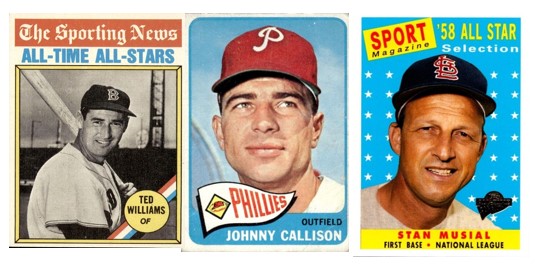
 

March/April Wrap – A .400 hitter, Complete-Game Shutouts, a Long Ball Barrage in Mexico City and Some Sweet and Not-So-Sweet 17 Parties

It’s May 1 and April is now in the MLB’s rear view mirror. That means it’s time for Baseball Roundtable’s first  2023 monthly Wrap Up (for March/April)  – a look at The Roundtable’s Players and Pitchers of the month, the Trot Index, March/April’s leaderboards and the stats and stories that caught Baseball Roundtable’s eye during March/April. And, there was plenty going on this past month. (Side note:  Going forward, when I refer to month, I’ll be referencing March 30-April 30).  Here are just a few attention-grabbers (at least for me):

  • One qualifying player hitting raking at a .400+ pace for the month;
  • Four pitchers each notching five wins for the month;
  • Two players tying the MLB record for  hits in an Opening Day game;
  • Seven complete games, with five  pitchers tossing complete-game shutouts;
  • The first-ever “cycle” by a Marlins’ batter;
  • One player tying an MLB record by launching two home runs in an inning;
  • A  career- and season-opening 12-game hitting streak (by a player who was sent down to Triple-A before the month was over);
  • A player with an MLB record-tying five extra base hits in a game;
  • A game that featured home runs by ten different players;
  • Nolan Arenado’s 300th career home run and Clayton Kershaw’s 200th career victory; and
  • A minor-league no-hitter that was lost – by the team tossing the no-hitter – by a 7-5 score

Not all the baseball highlights came at the MLB, or even professional, level.  So, this month, I’ll break with tradition (The Wrap Up usually opens with The Roundtable’s Players and Pitchers of the Month) and start off  with a Baseball Roundtable (College) Highlight of the Month – an event The Roundtable deems as so dramatic that it belongs at the top of this post.

Note:  Some of the MLB records referenced may change as Negro Leagues’ stats from 1920-48 are fully documented and incorporated into the MLB record books. 

________________________________

Highlight of the Month … A No-Hitter and a Cycle Not Just in the Same Game, but by the Same Player

On April 7, Brady Ware of the University of Indianapolis Greyhounds threw a no-hitter – fanning 11 –  in the second game of a doubleheader against Drury University.  (As part of the doubleheader, it was a seven-inning game.)  Ware also served as DH in the game, and went four-for-four, with two runs and five RBI – and, just as important, hit for the cycle (single, double, triple and home run). Indianapolis, by the way, won by the lucky score of 13-0.

Now, that Wares Well – a Cycle and a No-Hitter.

__________________________________________

BASEBALL ROUNDTABLE PLAYERS AND PITCHERS

OF THE MONTH


NATIONAL LEAGUE

Baseball Roundtable Player 0f the Month – Ronald Acuna , RF, Braves

Photo: Thomson200, CC0, via Wikimedia Commons

Braves’ leadoff hitter, Ronald Acuna Jr., was a driving force behind the Braves’ hold on the number-one spot in the NL East.  He was fourth in the  NL  in base hits (38 – the three co-leaders had 39) and led the league runs scored (23), while hitting .352 (second-best in the NL), with four home runs, 14 RBI and a league-topping 13 stolen bases (in 15 attempts). Acuna’s month included 123 multi-hit games (five three-hit contests).

Honorable Mentions: You can’t leave out the Marlins’ new 2B Luis Arraez, who hit an MLB-best (among qualifiers) .438 for the month and on April 11 became the first Marlin to hit for the Cycle. The Dodgers’  rookie CF James Outman also deserves some props, staring the season at .292-7-20. I also took a long look at Dodgers’ 3B Matt Muncy, who led MLB with 11 home runs, while hitting .238, with 22 RBI. There were a number of other strong RBI men (nine NL-ers with 20 or more RBI), but Muncy’s 22 walks (second in the NL) and .408 on-base percentage gave him an edge.

Baseball Roundtable Pitcher of the Month – Clayton Kershaw, LHP, Dodgers & Zac Gallen, RHP Diamondbacks

Arturo Pardavila III on Flickr, CC BY 2.0 <https://creativecommons.org/licenses/by/2.0>, via Wikimedia Commons

The Dodgers’ veteran southpaw Clayton Kershaw tied for the MLB lead in wins for the month – going 5-1, with a tidy 1.89 ERA. He also threw an ML-best 38 innings, fanning 41 batters (fifth in the league) versus just five walks. Kershaw held hitters to a .175 average  and his 0.76 WHIP was the lowest among NL qualifiers.

The Diamondbacks’ Zac Gallen went 4-1, 2.15 for the month, led the NL with 51 strikeouts (just five walks) and put up a  0.77 WHIP (second – by 0.01 to Kershaw –  among NL qualifiers). He also pitched just 1/3 inning less than Kershaw and held hitters to a .178 average, as compared to Kershaw’s .175. Yes, Kershaw had a slight statistical edge, but Gallen get extra credit for ending the month with a still-active streak of 28 scoreless innings (over four starts). From April 10 through April 26, he gave up just 11 hits in 27 innings, while fanning 41 and walking just one.

Honorable Mentions:  Braves’ 24-year-old RHP Spencer Strider went 3-0, 1.80 in five starts, and fanned 49 (versus 11 walks) in 30 innings.  Cubs’ southpaw Justin Steele also deserves a mention, after going 4-0, 1.49 in five starts.

_______________________________

AMERICAN LEAGUE

Baseball Roundtable Player of the Month – Randy Arozarena, LF, Rays

Photo: All-Pro Reels on Flickr (Original version) UCinternational (Crop), CC BY-SA 2.0 <https://creativecommons.org/licenses/by-sa/2.0>, via Wikimedia Commons

Given their dominance, you had to know a Ray would be in this spot.  For March/April, it’s Randy Arozarena, who batted right in the middle of that powerful lineup. Arozarena hit .327 for the month (second among AL qualifiers), with seven home runs and 28 RBI (second in the AL).  His 36 hits were third in the league and  his 21 runs fifth.

Honorable Mentions: Have to give a shout out to Rangers’ RF Adolis Garcia, who led all of MLB with 30 March/April RBI (.267 average, eight home runs).  I also liked Orioles’ SS Jorge Mateo, who hit .347-6-17, with 21 runs scored and 10 steals in 22 games – and struck out just 12 times. (Mateo did not have enough plate appearances to qualify for the batting average leader board.)

Photo: All-Pro Reels from District of Columbia, USA, CC BY-SA 2.0 <https://creativecommons.org/licenses/by-sa/2.0>, via Wikimedia Commons


Baseball Roundtable Pitcher of the Month – Gerrit Cole, RHP, Yankees

No surprise here,  Cole always seems to be near the top of the list.  In March/April, Cole went 5-0 (one of just four MLB pitchers with five wins), with a 1.11 ERA (second among AL qualifiers).  He also led the AL in innings pitched (40 2/3) and was fifth in strikeouts with 44. On April 15, Cole threw a complete-game shutout, as the Yankees topped the Twins 4-0.

Honorable Mentions: Wow?  Several to mention here.  Like Cole, Rays’ lefty Shane McClanahan went 5-0 in six starts. He put up a 2.12 ERA and fanned 42 in 34 innings.  You also can’t go without giving a nod to Angels’ RHP Shohei Ohtani. The P/DH tied for second in the league in whiffs with 46, while going 4-0, 1.85.  His 0.82 WHIP was fourth among AL qualifiers. And, finally, there is a  pair of Twins: RHP Sonny Gray, with the lowest ERA among qualifiers (0.77) and a 4-0 record in six starts; and RHP Joe Ryan, who went 5-0, 2.81 in five starts (with a 0.81 WHIP).

________________________________________

BASEBALL ROUNDTABLE SURPRISE OF THE MONTH – BRYSON STOTT

Here, I am going to go with 25-year-old Phillies’ SS Bryson Stott, who set a new Phillies’ franchise record with a 17-game, season-opening hitting streak.  During his streak, Stott hit .382 (29-for-76).  Stott closed out April with a .317 average, leading MLB in hits (tied) with 39. It’s not a total surprise, Stott was a .340 hitter in three college seasons (University of Nevada-Las Vegas) and hit an even .300 in 169 minor-league games.  In 2022, he hit .234-10-49 in 127 MLB games.  It looks like, in 2023, he’s delivering on the promise the Philllies saw in  the 2019 first-round draft pick,  More on the streak in the Highlights Section.

Honorable Mentions:  Luis Arreaz, Marlins.  Yes, he’s the 2022 AL batting  champ, but .438 and the Marlins’ first-ever Cycle – didn’t expect that.  I was also surprised by Cubs’ southpaw Justin Steele, who came into the 2023 season with an 8-11, 3.53 MLB record (two seasons) and a 18-23, 3.44 record in seven minor-league campaigns. In March/April, he was 4-0, 1.49 for the Cubs. Steele was a fifth-round draft choice in 2019, out of George County High School. He did show a bit of what he was capable of in 2022, putting up a 3.18 ERA  in 119 innings for the Cubs (despite a 4-7 record).  Looks like he’s doubled down in 2023.  And, of course, there’s Dodgers’ rookie James Outman (already noted in the NL Player of the Month Honorable Mentions) at .292-7-20.

________________________________

TROT INDEX … A REGULAR BASEBALL ROUNDTABLE FEATURE

Through April 30  36.1 percent of the MLB season’s 32,143 plate appearances ended in a trot (back to the dugout, around the bases, to first base). We’re talking about strikeouts, home runs, walks, hit by pitch and catcher’s interference – all outcomes that are, basically, devoid of action on the base paths or in the field. Here’s the breakout: strikeouts (23.0%); walks (8.8%); home runs (3.0%); HBP (1.2%); catcher’s interference (less than 1%). Strikeouts, by the way, outnumbered base hits 7,403 – 7,057.

The 36.1 percent figure is up from 2022’s full season 34.6 percent.  Other recent seasons: 2021 – 36.3 percent; 2020 –  37.3 percent;  2019 – 36.2 percent; and 2018 – 34.8 percent.  By further comparison, in 1990, the Trot Index was 26.1 percent.  

__________________________________________

The Long and Short of It … The Saga of the Pitch Clock, Batter Time Oit Limit and Pick-Off Limits

Through April 30, the average length of a 2023 MLB game was 2:36.  The last season in which the average MLB game ran under three hours was 2015 (2:56). 

___________________________________________

If the season ended April 30, your playoff teams would be:

American Leagues:  Rays, Twins, Rangers:  Wild Cards: Orioles; Blue Jays, Astros.

National League:  Pirates; Braves; Diamondbacks or Dodgers (Diamondbacks and Dodgers tied for West Division lead) . Wild Cards: Diamondbacks or Dodgers, Brewers, Cubs, Mets.

The stars of March/April  were the Tampa Bays Rays, who came out of the gate with by winning their first 14 games of the season (tying the MLB record for a season-opening streak).  For more on the streak, click here.  The Rays also homered in each of their first 22 games – another season-opening MLB record. The Rays, in short, were dominant as they ran out to a 23-6 record. On offense, they led MLB in average (.281), home runs (61), runs scored (195) – as well as in on-base percentage (.351) and slugging percentage (.528). If that wasn’t enough, they had MLB’s lowest Earned Run Average (3.10) and WHIP (1.11) – and gave up the fewest runs (92).  The Rays had seven players with at least 15 RBI in March April – in an offense led by LF Randy Arozarena (.327-7-28), RF Josh Lowe (.342-5-18), 1B Yandy Diaz (.319-7-16) and SS Wander Franco (.300-5-17). The mound staff was led by Shane McLanahan (5-0, 2.12 in five starts) and Zac Elfin (3-0, 3.00).

Location – Location – Location

Every team in  the AL East was over  .500, while the AL Central had just one team over .500. 

There were a couple of surprises in the AL.  The Orioles (83-79, in fourth place, a year ago), got off to a 17-8 start, led by the likes of SS Jorge Mateo (.347-6-17, with ten steals); C Andy Rutschman (.291-4-17); CF Cedric Mullins (.255-3-21, with 11 steals); and 1B Ryan Mountcastle (.244-6-21). On the mound, they looked to Kyle Gibson (4-0, 3.93) and a bullpen that contributed ten wins and nine  saves. (and MLB’s lowest bullpen ERA for the month at 2.86). The Orioles were fifth in the AL in run scored and  and gave up the eighth-fewest runs.

Texas also surprised quite a few folks, with an offense that trailed only the Rays in runs scored (174 to the Rays 188).  RF Adolis Garcia and 2B Marcus Semien finished first and fifth in the AL, respectively, in RBI for the month (30 and 23).. The team ERA was 3.43 – good for third in the AL.  They got solid work out of the bullpen, particularly from closer Will Smith (1.93 ERA in ten games) and Jose Leclerc (0.93 ERA in ten games). Martin Perez led the starters at 4-1, 2.41.The Rangers, 68-94 in 20-22, stood at 17-11 at the close of April action.

Then, of course, there are the  Oakland A’s, with a hard-to-imagine 7.72 ERA. Right now, the only bright spot for the A’s may be DH Brent Rooker,  who came into the season with a .200-10-23 line over 81 MLB games and finished April at  .353-9-22.  And, we can’t forget the White Sox, who suffered through a ten-game losing streak (April 21-29), when they were outscored 70-25.

Over in the National League, as expected, the Braves were at the top of the East – with RF Ronald Acuna, Jr. on an MVP pace (.352-4-14, with 23 runs and 13 steals), 1B Matt Olson and 2B Ozzie Albies each driving in 20+  runs, and Spencer Strider and Max Fried combining for five wins and a 1.26 ERA.

The Pirates (62-100 a year ago) were a surprise atop the Central at 20-9. The Pirates were number-one in the NL in runs scored (156) and had given up he fourth-fewest tallies. Pittsburgh’s offense was led by LF Bryan Reynolds (.302-5-23). Veteran Andrew McCutchen, back in a Pirates’ uniform, contributed .256-5-14). The pitching staff was led by Mitch Keller (3-0, 3.53 in six starts) and closer David Bednar was lights out (2-0, 1.75 with nine  saves in 13 appearances).   Equally surprising was the fact that the favored Cardinals were at the bottom of the Division.

The Marlins closed out April with a 16-13 record. N0tably, they were 10-0 in one-run games.  

The NL West also surprised, with the Diamondbacks and Dodgers tied for the lead at 16-13.  Arizona boasts a balanced offense, with six players posting between 11 and 19 RBI for the month and seven scoring between 11 and 19  runs.  One player to watch is 22-year-old outfielder Corbin Carroll, who went .309-4-9, with 19 runs scored and 10 steals in March/April. On the mound, Zac Gallen (4-1, 2.15) leads the way.  The Diamondbacks are doing it more with offense, however.  They were fifth in the NL in runs scored, but and gave up the third-most runs.  The Dodgers were  second in runs scored in the NL,  but a surprising (especially for the Dodgers) eighth in ERA at the close of April.  LA was also dead last in the NL in batting average for March/April at .224; but first in home runs at 47.

——-Team  Statistical Leaders for March/April 2023 ———-


RUNS SCORED … MLB Average 130

National League – Pirates (156); Cubs (146);  Dodgers (146)

American League – Rays (195); Rangers (178); Red Sox (163)

The fewest  runs (through April 30) were scored by the Tigers – 88. The Marlins tallied the fewest runs in the NL at 99. The only other team under 100 was the Royals at 96. 

AVERAGE  …  Average .247

National League – Cubs (.276); Phillies (.272); Diamondbacks (.265)

American League – Rays (.281); Rangers (.259); Blue Jays (.258)

The lowest team average through April belonged to the Mariners at .219. The Dodgers were the lowest in the NL at .224.

HOME RUNS …  Average 32

National League – Dodgers (47); Giants (46); Braves (41)

American League –  Rays (61); Angels (39); Rangers (38); Twins (38)

The Nationals had the fewest home runs through April at 15. The Guardians were at the bottom of the AL at 17.

The Rays  led MLB in slugging percentage through April  at .528.  The Pirates led the NL at .449.  The average team slugging percentage was .405.

STOLEN BASES … Average 20

National League – Pirates (41); Marlins (27); Cubs (25); Diamondbacks (25)

American League – Guardians (35); Orioles (30); Athletics (29)

The Twins stole the fewest sacks through April – just four in seven attempts..   The Rockies were at the bottom of the NL with six in eight attempts. 

WALKS DRAWN … Average 94

National League –   Dodgers (130); Pirates (113); Padres (113)

American League  Orioles (109); Guardians (103); Red Sox (103)

The Rays led MLB  in on-base percentage through April  at .351. The Cubs led the NL  at .347.  The Royals had MLB’s lowest  OBP through April  at .279.  

BATTER’S STRIKEOUTS … Average 247

National League – Giants (289); Dodgers (275); Phillies (265); Brewers (265)

American League – Mariners (279); Twins (275); Athletics (271)

Nationals’ batters fanned the fewest times through April  (189) – the only team under 200.

Earned Run Average … Average 4.35

National League – Braves (3.37); Brewers (3.41); Pirates (3.55)

American League – Rays (3.10); Astros (3.22); Rangers (3.43)

The Athletics  had an ERA through April of 7.72.  Ouch.  Others over 5.00 were: White Sox (5.96); Royals (5.49); and Rockies (5.36).

STRIKEOUTS … Average 247 

National League – Reds (2655); Phillies (264); Cardinals (264)

American League –  Twins (285); White Sox (285); Yankees (277)

The White Sox averaged  an MLB-best 10.2 strikeouts per nine innings through April. The Reds averaged an AL-best 9.8.  The MLB team average was 8.9.

FEWEST WALKS SURRENDERED… Average 94

National League  – Giants (74); Dodgers (74); Braves (83)

American League – Twins (76); Rangers (77); Astros (79)

The Twins and Dodgers walked an MLB-lowest 2.6 batters per nine innings through April.  The Athletics walked walked an MLB-worst 5.1 batters per nine frames.

SAVES … Average 7

National League – Pirates (13); Padres (11); Brewers (9)

American League – Guardians (11); Angels (11); Blue Jays (11)

Bonus Stat:

The Athletics gave up an MLB-high 50 home runs through April – The Rays gave up an MLB-low 19. .

 _______________________________________

March/April Highlights


Adley Rutschman’s First Opener (march 30) Officials “On/In the Books” … Springer Springs into Action

Photo: Keith Allison: Flickr, e-mail, Twitter, Instagram, website, CC BY-SA 2.0 <https://creativecommons.org/licenses/by-sa/2.0>, via Wikimedia Commons

Orioles’ C Adley Rutschman – who made his MLB debut last May – played in his first Opening Day game March 30, as the Orioles faced the Red Sox in Boston.  Batting in the number-two hole, Rutschman got his season off to a great start.  Not only did he record the Orioles’ first hit of 2023, he also was credited with the team’s first home run, first run scored and first RBI of the new season.

More notably, the 25-year-old went five-for-five (four singles and the homer), with a walk, in the game. He had one run scored and four RBI. His five hits tied the  MLB record for hits in an Opening Day game.  The Orioles, by the way, needed all of Rutschman’s production, as they squeaked by the Red Sox 10-9. Rutschman, who went .254-13-42 (113 games) in his rookie season, ended April at .291-4-17, with a league-leading 22 walks.

Veteran outfielder George Springer (tenth MLB season) also got off to a good start – tying the mark for most hits in an Opening Day game. Batting leadoff and playing RF, Springer went five-for-six (all singles), with four runs scored and one RBI.  As with the Orioles and Rutschman, the Blue Jays needed all of Springer’s production – as they won (over the Cardinals) by a 10-9 score.

Sweet 17 Party … Oh, I Mean Parties

The Rockies opened the season March 30, against the Padres in San Diego and (according to the Elias Sports Bureau) were the first team in the modern era (since 1900) to record at least 17 hits, while also fanning at least seventeen times in a nine-inning game. The Rockies, by the way, won the contest 7-2. RF Kris Bryant, batting second for Colorado, was the only starter not to fan. (Bryant went three-for-five, with a double, run scored and an RBI.)  1B C.J. Cron was the offensive hero for Colorado, going two-for-four, with two homers and five RBI (he fanned once). Six Rockies fanned two or more times, led by leadoff hitter CF Yonathan Diaz, with four whiffs (all swinging) in five plate appearances.

The strikeout artists were Padres’ starter Blake Snell (nine whiffs in 4 1/3 innings) and relievers Nabil Crismatt (2K / 1 2/3 IP), Domingo Tapia (4K / 2 IP) and Steven Wilson (2K/ 1IP).

***

There was a not-so-sweet seventeen party in Oakland on April 14, as A’s pitcher gave up 17 runs – on 11 hits and 17 walks – in a 17-6 loss to the Mets.  In the game, the Mets has two six-run innings that featured just one hit in each – each time by SS Francisco Lindor – who picked up seven RBI in the two frames.

In the second inning of the game, the Mets tallied six runs on just one hit off A’s starter James Kaprielian.  It went like this: DH Daniel Vogelbach, walk; 3B Eduardo Escobar (line out to right); 2B Luis Guillorme, walk; C Tomas Nido, walk; CF Brandon Nimmo, walk (forcing in a run); RF Starling Marte, walk (forcing in a run); SS Francisco Lindor, Grand Slam home run; 1B Pete Alonso, strikeout, LF Jeff McNeil, pop out to second.

Apparently wanting g to prove the inning wasn’t a fluke, the Mets tallied another six runs on one hit in the fifth inning (off A’s hurlers Hogan Harris and Chad Smith).  This one went: Vogelbach, ground out to second; Escobar walk; Guillorme, walk; Nido, walk; Nimmo, hit-by-pitch, forcing in a run; Marte walk, forcing in a run; Lindor, double, scoring three; Alonso, walk; McNeil, hit-by-pitch; Vogelbach, fielder’s  choice (force at second), bringing in a run; Escobar strikeout.

Another Sweet Seventeen

Seventeen was also pretty sweet for Phillies 25-year-old  2B  Bryson Stott, who opened the 2023 season with a seventeen-game hitting streak – the longest-ever seasoning-opening streak for a Philllies’ player.   During the streak, Stott went 29-for-76 (.382), with one home run, six RBI and five runs scored.  Stott had 11 multi-hit games over the course of the streak. Stott clearly was taking an aggressive approach.  During the streak, he walked just once and struck out 18 times. The streak ended in the second game of an April 18 doubleheader, with Stott going zero-for-four in a 3-0 loss to the White Sox (the Philllies has just one hit  against a quartet of White Sox pitchers). Stott was a first-round pick in the 2019 MLB Draft (out of the University of Nevada). A .340 hitter in three college seasons, Stott hit .300 in 169 minor league games before making his MLB debut with the Phillies on April 8, 2022. He hit .234-10-49 in 127 games for the Phillies last season.  As of April 30, of this season, his stat line was .317-2-9.

George Sisler holds the modern ERA (post-1900) record for the longest season-opening hitting streak (34-games) for the 1925 St, Louis Browns. During his streak, Sisler went .399-1-18.He finished the 1925 season at .345-12-105. 

Effectively Wild?

Photo: Charles Edward Miller: Flickr, website, CC BY-SA 2.0 <https://creativecommons.org/licenses/by-sa/2.0>, via Wikimedia Commons

On April 1, Cardinals’ starter Jack Flaherty pitched five no-hit, no-run innings versus the Blue Jays – as the Cardinals topped Toronto 4-1 in St. Louis. That does not mean there wasn’t a lot of traffic on the bases. His five innings of work included seven walks and one hit batter – as he threw 49 strikes and 46 balls. His only clean inning  (1-2-3) was his fifth and final frame.

Counting up, not Down

On April 3, as the Yankees topped the Phillies 8-1 in New York, Yankee 2B Gleyber Torres hit his 100th career home run (in his 580th game). In five plate appearances, he had a single, home run and three steals.

On April 11, Twins’ DH Byron Buxton joined the 100-home run club, with a second-inning, two-run shot off the White Sox’ Lance Lynn. It came in  his 595th MLB game and helped the Twins to a 4-3 win.

On  April 28, Twins’ 2B Jorge Polanco joined the 100-HR Club, poking a three-run shot in  the fourth inning of a Twins’ 8-6 win over the Royals. The long ball came in Polanco’s 759th MLB game.

Lets’ NOT Turn the Lineup Over

On April 3,  The Padres came into the bottom of the ninth (against the Diamondbacks), trailing 4-3, with their numbers eight, nine and one batters slated to step to the plate.  David Dahl was called on to pinch hit for number-eight hitter RF Jose Azocar – and took reliever Scott McGough deep to left center for a game-tying blast.  Next up was number-nine hitter Ha-Seong Kim who blasted a walk-off winner into the left field corner.   More  #InBaseballWeCountEverything, it marked the first time a team got back-to-back, tying and walk-off homers out of the number-eight and number-nine holes in the order.    (A tip of the hat to AJ Cassavell, MLB.com for that tidbit.).

Now, That’s Old School

Photo: Ryan Casey Aguinaldo, CC BY-SA 4.0 <https://creativecommons.org/licenses/by-sa/4.0>, via Wikimedia Commons

On April 4, Marlins’ starter (and 2022 Cy Young Award winner) Sandy Alcantara, in his second start of the season, went truly “Old School,”  throwing a 100-pitch, three-hit, one-walk- five-strikeout, complete-game shutout, as his Marlins topped the Twins 1-0 in Miami. Want more “Old School?”  The game was completed in 1:57.

Of course, this should be no surprise,  In 2022, Alcantara led all of MLB in complete games with six,

Seven  Innings – No Hits – Seven Runs

On April 8, the Double-A Chattanooga Lookouts (Reds) faced off against the Rock City Trash Pandas (Angels). Trash Pandas’ starter Coleman Crow was pitching a gem in the first game of a doubleheader (scheduled for seven innings). After six frames, the Trash Pandas (I like typing that name), were up 3-0 and Crow had not given up a hit (just two walks), while fanning six. Trash Panda reliever Ben Joyce was called on to finish off the no-no. Joyce walked three of the first five batters he faced, while also recording two outs.  So, the Trash Pandas were one out away from a no-hit, no-run victory. Oops! Another walk led to a run and that was followed by a three-run error on a fly ball to center.  Next to the mound was Eric Torres, who who hit four batters and walked one before recording the final out of the inning.  So, the score was now 7-3 in favor of Chattanooga, which still did not have a hit. The Trash Pandas got a couple of runs in the bottom of the frame, but still ended up with a 7-5 loss, despite the completed no-hitter.

Nolan Rolls a 300

Cardinals’ 3B Nolan Arenado in his 11th season and in possession  of ten Gold Gloves and five Silver Slugger Awards poked his 300th career home run on April 8, as the Redbirds topped the Brewers 6-0 in Milwaukee. It was a third inning, two-run shot off Eric Lauer.

Ever See a  Fish on a Cycle?  That Would be Louis Arraez

Going into the 2023 season, the Marlins were the only major-league franchise that had never seen a player in their uniform hit for the cycle (single, double, triple and home run in one game).  Then, on April 11 – in the franchise’s 4,700th game – newcomer Luis Arreaz (acquired in a trade with the Twins) broke the ice – completing a Cycle as the Marlins topped the Phillies 8-4.  Arreaz did it in usual Arreaz’ fashion, as the 2022 AL batting champ used pretty much the whole field.   He doubled to right-center in the first inning, lined out to center in the third, tripled to right in the sixth, homered to left in the seventh and singled to left in the eighth.

Arreaz ended the game with a .537 average (22-for-41) on the season – and closed the month of April with a .438 average.

I’ll Have a Dozen of Those 

Cardinals’ rookie RF Jordan Walker made his MLB debut on Opening Day of this season (jumping from Double-A Springfield, where he hit .306-19-68 in 2022) – and proceeded to start his career in The Show with a 12-game hitting streak (March 30-April 12). During the streak, he hit .319 (15-for-47), with two home runs and eight RBI. Thirteen proved an unlucky number for Walker, as he was finally held hitless in his 13th game – on April 13 – as the Pirates topped the Cardinals 5-0. Walker went zero-for-four with two strikeouts.

David Dahl (2016 Rockies) and Chuck Aleno (1941 Reds) share the record for career-opening hitting streaks at 17 games.)

More of #InBaseballWeCountEverything.  Walker’s 12-game streak matched Eddie Murphy’s (1912 Athletics) record for hitting streaks to begin a career by NL/AL players under 21.

The baseball gods can be a bit fickle, however, between April 13 and April 23, Walker hit just .192 in 28 plate appearances and on April 24, he was sent down to Triple-A Memphis.

200 – A Nice Round Number

On April 18, Dodgers’ nine-time All Star and and three-time Cy Young Award winner Clayton Kershaw picked up his 200th MLB victory (versus just 88 losses). In a 5-0 win over the Mets, Kershaw pitched seven shutout innings, with three hits, no walks and nine whiffs. It brought his record on the season to 3-1, 2.52.

Clayton Kershaw is now one of  just four pitchers (since 1900) to reach 200 wins before accumulating 100 losses (the others are Whitey  Ford, Lefty Grove and Pedro Martínez).

Where’s Waldo? Er, I mean where’s Mookie

After  nine+ major-league seasons, 1,130 games (not to mentions six Gold Gloves as an outfielder), Mookie Betts found himself in the field at shortstop (after pinch-hitting). Betts, who was drafted as a shortstop in the fifth round of the 2011 MLB Draft, had not played the position since 2013 (Arizona Fall League). After taking the field at SS in the bottom of the seventh (versus the Cubs at Wrigley), Betts turned a nifty short-to-first double play in the eighth to help preserve a 2-2 tie.  (The Dodgers eventually scored four in the ninth to win it.)

So, why “Where’s Mookie?” In the very next game (April 21), again versus the Cubs, Mookie started the game back at his familiar right field spot. In the seventh inning, he moved to second base and in the eighth he moved to shortstop. On April 22, he started at second base (versus the Cubs), and later moved to RF and, on April 23 (still at Wrigley), Betts  got his first MLB start at SS and played the whole game there. Since April 21, Betts has started four games in RF, three games at ss and two game at 2B.

An Imperfect Way to Lose a Perfecto

On April 21, Cubs’ southpaw Drew Smyly, as he took the mound in the eighth inning was cruising along with a 13-0 lead and a  Perfect Game (with nine strikeouts) against the Dodgers. The first batter was Dodgers’ LF Dave Peralta, who had entered the game as part of group of Dodger defensive changes in the bottom of the seventh. Peralta dribbled a pitch weakly to the left side of the infield (weakly enough that both Smyly and Cubs’ C Yan Gomes went after the ball).  As Smyly picked up the ball and prepared to make a throw to first, Gomes collided with him, upending the hurler – and Peralta was safe at first.  The official scorer ruled it a base hit – albeit one that traveled only a about 20 feet – and the perfect game and no-hitter were gone.  Smyly got the next two batters (pop up, strikeout) before being relieved by Jeremiah Estrada, who finished up the one-hit shutout.

A Big Day for Garcia

On April 22, Rangers’ RF Adolis Garcia had a five-for-five day, as the Rangers beat the Athletics 18-3 in Texas.  Garcia:

  • Laced a two-run homer in the first;
  • Was hit by a pitch in the second;
  • Bopped a second two-run homer in the third;
  • Rapped a third two-run homer in the fifth (running out of verbs here);
  • Eased up a bit, with a two-run double in the seventh;
  • Added a double in the ninth.

According to MLB.com, Garcia’s night tied an MLB single-game record for extra base hits in a game (five) and, in  true #InBaseballWeCountEverything form, he became the first American Leaguer with three homers and two doubles in a game,

Two Blasts in One Inning

On April 23, Red Sox LF Masataka Yoshida, became just the 60th MLB player to launch two homers in a single inning. It came in a nine-run top of the eighth (versus the Brewers in Milwaukee) and included a solo shot to right off Matt Bush and a Grand Slam to right off Javy Guerra.  For the complete story, click here.  The Red Sox, by the way, won the contest 12-5.  Yoshida finished April at .276-4-16.

It’s Been a Long Time Coming

After 13 minor-league seasons (including six stints at Triple-A), 1,154  minor-league games and 4,494 minor-league plate appearances, thirty-three-year-old infielder Drew Maggi finally made his first MLB appearance – as a pinch hitter (for the Pirates) in the eighth inning of the Pirates’ April 26 8-1 win over the Dodgers. He did fan on four pitches, but it was a major-league strikeout (what most of us wouldn’t give for one trip to the plate in The Show) and Maggi did come to the plate to a standing ovation.   (I should add that, for Maggi, the best was yet to come.) For trivia buffs, Maggi pinch hit for former MVP and 15-year veteran Andrew McCutchen.

Maggi got his first MLB start (at 3B), the following night, but went zero-for-three in a Pirates’ 6-2 win over the Dodgers. Then, in the second game of an April 29 doubleheader (versus the Nationals), Maggi was called in to pinch hit (for 3B Ke’Bryan Hayes), with a runner on third, no outs and the Pirates up 12-0. He delivered his first MLB hit (a single to center off Hobie Harris) and drove in his first MLB run. Maggi stayed in the game at 3B and picked up a second hit (a double) in the top of the ninth – eventually scoring his first MLB run on a Miguel Andujar home run.  After the momentous game, it was back to the Double-A Altoona curve – with a .333 MLB average.

During his professional odyssey, Maggi has played in the Pirates, Dodgers, Indians, Twins and Phillies systems –  for the State College Spikes, Bradenton Marauders, West Virginia Power, Altoona Curve, Arkansas Travelers, Oklahoma City Dodgers, Tulsa Drillers, Columbus Clippers, Rochester Red Wings, Pensacola Blue Wahoos, St. Paul Saints, Lehigh Valley Iron Pigs, and Indianapolis Indians.

This, by the way, was not Maggi’s first call-up to The Show. He also spent a couple of days on the Twins’ roster in September of 2021, but did not get into a game.

High Times in Mexico City – Aided by the Altitude

A sellout crowd for the first MLB game ever played in Mexico City – and the first MLB game played at 7,300 feet above sea level – enjoyed plenty of action. Aided by the altitude, the two teams launched 11 home runs in Padres 16-11 win over the Giants.  While the home run total was two short of the record for an MLB game (13 by the Diamondbacks and Phillies on June 10, 2019), they did tie the record for the most players going deep in a game (10).  Homering in the game were: The Padres’ Nelson Cruz, Juan Soto, Xander Bogaerts, Fernando Tatis, Jr., and Manny Machado (2); and the Giants’ Brandon Crawford, LaMonte Wade, Jr., Mitch Haniger, Blake Sabol and David Villar.

The forty-two-year-old Cruz had a big day: five-for-six, with four RBI, one run scored, a double, a homer and a stolen base. He became the second-oldest MLB player to record a five-hit game (Pete Rose did at age 45.)

The second game in the Mexico Series was  a bit more normal.  The Padres prevailed 6-4 and only three homers were hit.  (That may have something to do with the 24 combined strikeouts.

Quite A Turn-Around

On April 29, the red-hot Tampa Bay Rays seemed to be finally “cooled off.”  White Sox starter Lance Lynn carried a no-hitter (and a 3-0 lead) into the seventh inning against the Rays – having allowed just one baserunner (walk) and notched eight strikeouts, The Rays broke up the no-no with a ten-run seventh inning – nine hits (three home runs) and two walks off three ChiSox’ pitchers).  Lynn saw his no-hitter disappear with a home run by SS Wander Franco (on an 0-2 pitch) to lead off the inning. Lynn was gone after four more batters  (strikeout, single, run-scoring double, walk) and the carnage was on. Final score: Rays 12, White Sox 3.

——Individual Statistical Leaders for March April   2023——-

AVERAGE (qualifiers) 

National League – Luis Arreaz, Marlins (.438); Ronald Acuna, Jr., Braves (.352); Thairo Estrada, Giants (.346_

American League –  Matt Chapman, Blue Jays (.384); Randy Arozarena, Rays (.327); Yandy Diaz, Rays (.319)

The lowest March/April  average (among players with at least 50 at bats in the month)  belonged to the Braves’ Marcell Ozuna at .085 (5-for-59)

HOME RUNS

National League – Matt Muncy, Dodgers (11); Pete Alonso, Mets (10); Patrick Wisdom, Cubs (10)

American League – Rafael Devers, Red Sox (10); Brent Rooker, A’s (9); Adolis Garcia, Rangers (8)

The Blue Jays’ Matt Chapman had the highest March/April  slugging percentage (among qualifiers) at .687.  The NL leader was the Dodgers’ Max Muncy at .663.

RUNS BATTED IN

National League – Pete Alonso, Mets (25); Ozzie Albies, Braves (23); Nolan Gorman, Cardinals (22); Matt Olson, Braves (22)

American League –  Adolis Garcia, Rangers (30); Randy Arozarena, Rays (28); Yordan Alvarez, Astros (27); Rafael Devers, Red Sox (27)

HITS

National League – Luis Arraez, Marlins (39); Nico Hoerner, Cubs (39); Bryson Stott, Phillies (39)

American League –  Bo Bichette, Blue Jays (38); Matt Chapman Blue Jays (38); Alex Verdugo, Red Sox (36); Randy Arozarena, Rays (36)

The Marlins’ Luis Arreaz led MLB (qualifying) players in on-base percentage at .500. The AL  leader was the Blue Jays’ Matt Chapman at .465.

DOUBLES

National League –  Francisco Lindor, Mets (11); Nick Castellanos, Phillies (10); Paul Goldschmidt, Cardinals (10)

American League – Matt Chapman, Blue Jays (15); Wander Franco, Rays (12); Nathaniel Lowe, Rangers (10); Andrew Vaughn, White Sox (10)

TRIPLES

National League – Brandon Marsh, Phillies (4); James Outman, Dodgers (3); seven with two

American League – Riley Greene, Tigers (2); Bobby Witt, Royals (2); Kevin Kiermaier, Blue Jays (2); Cedric Mullins, Orioles (2); Amed Rosario, Guardians (2)

The Blue Jays’ Matt Chapman,  had an MLB-high 120 extra-base hits in March/April. 

STOLEN BASES

National League –  Ronald Acuna, Jr., Braves (13) Ji Hwan Bae, Pirates (11); Jazz Chisholm, Marlins (11)

American League – Cedric Mullins, Orioles (11); Esteury Ruiz, A’s (11;Jorge Mateo, Orioles (10))

The Orioles’ Cedric Mullins had the most March/April steals without getting caught (11).

WALKS

National League – Juan Soto, Padres (27); Max Muncy, Dodgers (22); Dansby Swanson, Cubs (21)

American League –  Adley Rutschman, Orioles (22); Alex Bregman, Astros (21); three with 18

The Marlins’  Luis Arreaz led MLB in walks/strikeouts ratio (among qualifying batters  at 2.20 … 11 walks versus five  whiffs in 25 games.

BATTER’S STRIKEOUTS

National League – Matt Olson, Braves (43); Jazz Chisholm, Marlins (41); Ryan McMahon, Rockies (39)

American League – Teoscar Hernandez, Mariners (38); Riley Greene, Tigers (37); MJ Melendez, Royals (37)

PITCHING VICTORIES

National League – Clayton Kershaw, Dodgers (5-1); Justin Steele, Cubs (4-0); Zac Gallen, Diamondbacks (4-1); Vince Valasquez, Pirates (4-2)

American League – Gerrit Cole, Yankees (5-0); Shane McClanahan, Rays (5-0); Joe Ryan, Twins (5-0)

Bailey Falter, Phillies (0-5, 5.01) and Logan Webb, Giants (1-5, 4.19)  led MLB in September losses.

EARNED RUN AVERAGE (among qualifies)

National League –  Justin Steele, Cubs (1.49); Spencer Strider, Braves (1.80); Wade Miley, Brewers (1.86)

American League – Sonny Gray, Twins (0.77); Gerrit Cole, Yankees (1.11); Luis Castillo, Mariners (1.82)

Location-Location-Location

In March/April, Chris Bassitt, Blue Jays,  went 3-2, with a 5.18 ERA, while  Josiah Gray, Nationals – with a 2.67 ERA – went 2-4. 

STRIKEOUTS

National League – Zac Gallen, D-backs (51 K / 37 2/3 IP); Spencer Striker, Braves (49 K / 30 IP);’ Nick Lodolo (44 K / 30 2/3 IP)

American League – Kevin Gausman, Blue Jays (54 k / 38 2/3 IP); Pablo Lopez, Twins (46 K / 36 IP); Shohei Ohtani, Angels (46 K / 34 IP)

Among qualifying players, the Braves’ Spencer Strider has the highest Strikeouts/Nine Innings ratio at 14.70. The Rangers’ Jacob deGrom led the AL at 13.35.

FEWEST WALKS ALLOWED PER NINE INNINGS (Among Qualifiers)

National League: Anthony DeSclafani, Giants (0.90); Alex Cobb,Giants (1.08); Noah Syndergaard, Dodgers (1.15)

American League: George Kirby, Mariners (0.59); Tyler Wells, Orioles (0.93); Joe Ryan, Twins (1.13)

Among qualifiers, Brad Keller of the Royals had the highest BB/9 rate at 7.12 (24 walks in 30 1/3 innings).

SAVES

National League – Josh Hader, Padres (10); David Bednar, Pirates (9);  six with five

American League – Emmanuel Clase, Guardians (9); Jordan Romero, Blue Jays (9); Paul Sewald, Mariners (7); Felix Bautista, Orioles (7)

A Walk on the Wild Side

Shohei Ohtani  led MLB in Wild Pitches (tied at five) and hit batters (six).  Of course, he was also 4-0, 1.85 and second in the AL in strikeouts with 46 – and then there’s his .294-7-18 batting line. 

WHIP (Walks +  Hits per Inning Pitched – among qualifiers)

National League – Clayton Kershaw, Dodgers, (0.76); Zac Gallen, Diamondbacks (0.77); Spencer Strider, Braves (0.83);

American League – Tyler  Wells, Orioles (0.72); Jacob deGrom, Rangers (0.76); Joe Ryan, Twins (0.81)

BONUS STAT

The A’s Ken Waldichuk  gave up an MLB-high ten  home runs in March/April (over 31 innings).


Primary Resources:  Baseball-References.com; Baseball-Almanac.com; MLB.com.

Baseball Roundtable – Blogging Baseball Since 2012.

100Baseball Roundtable is on the Feedspot list of the Top 100 Baseball Blogs.  To see the full list, click here.

Baseball Roundtable is also on the Anytime Baseball Supply Top 66 Baseball Sites list.  For the full list, click here

I tweet (on X) baseball @DavidBaseballRT

Follow Baseball Roundtable’s Facebook Page here.  More baseball commentary, blog post notifications; PRIZES.

Member: Society for American Baseball Research (SABR); Negro Leagues Baseball Museum; The Baseball Reliquary.


Fernandomania – a Little Nostalgia and Wonder

Photo: Tony Barnard, Los Angeles Times, CC BY 4.0 <https://creativecommons.org/licenses/by/4.0>, via Wikimedia Commons

On this date (April 27) in 1981, a 20-year-old rookie southpaw for the Dodgers named Fernando Valenzuela threw his third consecutive shutout (and fourth in five starts), as his Dodgers topped the Giants 5-0 in LA before a raucous crowd of 49,478.
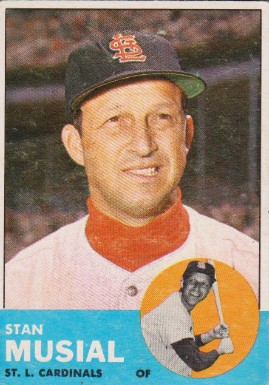
With that event in mind, I’d like to use this post to allow “geezers” like me to look back with nostalgia on the phenomenon that was Fernandomania and to let a new generation of fans get a better idea of the “wonder” that was Fernando Valenzuela’s  screwball.

Fernando Valenzuela is the only MLB player to win Rookie of the Year and the Cy Young Award in the same season.

In July of 1979, Valenzuela, then 18-years-old, was purchased by the Dodgers from the Yucatan Leones of the Mexican League.  Early on, teammate Bobby Castillo taught the youngster (who did not have an overpowering fastball) how to throw a screwball. It was a stroke of good fortune for Valenzuela and the Dodgers. Valenzuela quickly perfected the pitch and took it to new heights.  That screwball, in fact,  would earn Valenzuela a call up to the Dodgers by September of 1980.  As the 1980 MLB season closed out, Valenzuela made ten relief appearances for the Dodgers –  pitching  17 2/3 innings without giving up an earned run (walking five and fanning 16).

In 1981, as a 20-year-old with his rookie status still intact, Valenzuela not only made the season-opening Dodgers’ roster, but when the slated Opening Day starting pitcher Jerry Reuss suffered an injury warming up, manager Tommy Lasorda chose Valenzuela to start the opener.   He didn’t disappoint.  In his first MLB start, the Dodger rookie pitched a complete-game shutout (topping the Astros 2-0), with five hits, two walks and five strikeouts – and thus the foundation of Fernandomania was born.

Over his first five MLB starts, using his devastating screwball and unorthodox lineup, the likable youngster pitched  five complete games, four of them shutouts, while  walking 11 and fanning 43 in 45 innings. In his only non-shutout, Valenzuela gave up one run on four hits and two walks, while fanning ten. After five games, the 20-year-old was 5-0, with a 0.20 ERA and 43 whiffs in 45 innings.  In the process, Valenzuela captured not only the hearts and passion of the California Latino community, but the attention of fans across baseball.

At home, Valenzuela’s 1981 starts drew 48,431 fans, as compared to 40,912 for games he didn’t start  – an 18 percent increase.  Valenzuela’s road starts drew an average of 33,273 fans, while Dodger road games he did not start drew 19,456.  I’ll do the math again.  That’s a 71 percent jump.

Eleven of Valenzuela’s 12 Dodger Stadium 1981 starts were sellouts.

Valenzuela brokered his devastating screwball into a 13-7, 2.48 record (in a strike-shortened 100-game season), finishing second in the NL in wins (13), first in innings pitched (192 1/3); first in strikeouts (180); first in games started (25); first in complete games (11); and first in shutouts (eight).  Valenzuela also won a Silver Slugger Award in 1981 (hitting .250 over 64 at bats).

Not only did the 20-year-old rookie make the 1981 NL All Star team, he was chosen to start the game.  Then he topped off the season by winning not only the NL Rookie of the Year Award, but also the league’s Cy Young Award.  He helped lead the Dodgers to the World Series and won Game Three, as the Dodger stopped the Yankees four games-to-two.

From 1981 through 1987, Valenzuela went 111-82, 3.11 for the Dodgers in the regular season and 5-1, 2.00 in the post season,  His career marks  (1980-91, 1993-97 … Dodgers, Angels, Orioles, Phillies, Padres, Cardinals) were: 173-153, 3.54 in the regular season and 5-1, 1.98 in the post season.

A few other Valenzuela tidbits:

  • On June 29, 1990, Valenzuela threw a no-hitter, as the Dodgers topped the Cardinals 6-0 in LA;
  • He won two Silver Slugger Awards and one Gold Glove.
  • He was a career .200 hitter, with ten home runs and 84 RBI in 936 at bats.
  • In 1990, he hit .304-1-11 in 69 at bats.
  • In 19 place appearances as a pinch hitter, Valenzuela hit .368.
  • He led the NL in wins once (21 in 1986).
  • He also led the league in complete games three times, and shutouts, innings pitched and strikeouts once each.
  • He was a six time All Star – consecutive years 1981-1986.

In the 1986 All Star Game, Fernando Valenzuela tied the record (set by Carl Hubbell) for consecutive strikeouts with five. Valenzuela’s victims were: Don Mattingly; Cal Ripken, Jr.; Jesse Barfield; Lou Whitaker; and Teddy Higuera.


Primary Resources: Baseball-Reference.com; Baseball-Almanac.com; How Fernando Drew Thousands of Extra Fans, by Mike Petriello, MLB.com, August 15, 2012; When 20-year-old Rookie Fernando Valenzuela Captivated LA and Major League Baseball, by Phil Sheridan, History Channel, September 8, 2021.


Baseball Roundtable – Blogging Baseball Since 2012.

100Baseball Roundtable is on the Feedspot list of the Top 100 Baseball Blogs.  To see the full list, click here.

Baseball Roundtable is also on the Anytime Baseball Supply Top 66 Baseball Sites list.  For the full list, click here

I tweet (on X) baseball @DavidBaseballRT

Follow Baseball Roundtable’s Facebook Page here.  More baseball commentary; blog post notifications; PRIZES.

Member: Society for American Baseball Research (SABR); Negro Leagues Baseball Museum; The Baseball Reliquary.