The Joy of the Small Sample Size -MLB Stats that Caught My Eye

Photo by Keith Allison

Photo by Keith Allison

Now that we’ve reached Tax Day, Baseball Roundtable would like to take a look at a few MLB statistics – through April 15 – that you probably don’t see much of in regular baseball coverage.  Admittedly, we are looking at a pretty small sample size, but the box below illustrates the kind of early-season “numbers” that caught BBRT’s eye.

  • Rays’ righty Yonny Chirinos, as of April 15, had pitched more innings (14 1/3 innings in two starts and one relief appearance) without giving up a run this season than any other pitcher.
  • The Mets’ Jose Reyes had the most at bats (16) of any player who had yet to get a hit this season.
  • The Padres’ Jose Pirela has the most at bats (74) and the most hits (24) without a home runs this season.  The other players with at least 60 at bats without a long ball through April 15:  D-backs’ Ketel Marte; Reds’ Scooter Gennett; Marlins’ Starlin Castro; Astros’ Jose Altuve; Marlins’ Lewis Brinson.

Then, of couse, there are some team numbers that stand out.

THROUGH APRIL 15 …

  • The Angels have scored an MLB-best 103 runs in 16 games – the Royals have plated MLB-worst 39 in 13 contests.  No surprise, the Angels are 13-3, the Royals 3-10.
  • The Indians are averaging right on the Mendoza Line (.200) – as a team. Despite the lowest average in the majors, the Tribe is 8-6 on the season.
  • The Angels have hit more home runs (26) than the Royals (5), Tigers (5), Rays (7) and Marlins (8) COMBINED.
  • The Brewers blew an MLB-leading seven saves (in just 11 opportunities) – and are still playing .500 ball (8-8).  The Braves, meanwhile, have had only two save opportunities – and blew them both – but are 8-6 on the season.  

_______________________________________

Here’s a few other stats that caught my attention – all through April 15.

  • No player has grounded into more double plays than the Marlins’ Starlin Castro – seven times in 15 games. Still, Castro is hitting .295 over 61 bats.

GDP – Through April 15 …

Starlin Castro, Marins – 7; Stephen Piscotty, A’s – 5; Aaron Judge, Yankees – 5.

The Angels’ Albert Pujols led MLB in grounding into double plays in 2017 – with 26.  That was 0ne more than the NL leader, Matt Kemp of the Braves.

  • The Mets’ Yoenis Cespedes and Rockies’ Trevor Story are tied for the most strikeouts by a batter at 26 (in 58 and 62 at bats, respectively). Notably, both are hitting under .200 through April 15.

Most Strikeouts – Through April 15 …

Yeonis Cespedes, Mets – 26; Trevor Story, Rockies – 26; Drew Robinson, Yankees – 25; Giancarlo Stanton, Yankees  – 25; Paul DeJong, Cardinals – 25.

BBRT note:  Cespedes, despite leading in K’s and hitting just .190, has 12 RBI.  Robinson is the only one among these leaders who has fanned in more than half his at bats (25 whiffs in41 at bats).

The 2017 MLB strikeout leader was Yankee rookie Aaron Judge who, last season, set MLB rookie records in both strikeouts (208) and home runs (52).

  • No one has averaged more pitches seen per plate appearance so far this season than the Twins’ Miguel Sano (4.96) – who is hitting .250-3-8 in ten games.

Pitches Per Plate Appearance – Through April 15 …

Miguel Sano, Twins – 4.96; Jose Ramirez, Indians – 4.73; Matt Davidson, White Sox – 4.67; Todd Frazier, Mets – 4.57; Trevor Story, Rockies – 4.57

Curtis Granderson (Dodgers/Mets) saw the most pitches per plate appearance (among qualifiying hitters) in 2017 at 4.52. Overall, he hit .212-26-64 in 147 games.

  • The Cubs’ Javier Baez leads the major leagues in intentional walks this season with four, while the Nationals’ Bryce Harper – hitting ,300 with an MLB-best seven home runs – leads in overall walks with 20. 

Intentional Walks – Through April 15 …

Javier Baez, Cubs – 4; Freddie Freeman, Braves – 3; Jody Mercer, Pirates – 3; Michael Conforto, Mets – 3.

Total Walks – Through April 15 ….

Bryce Harper, Nationals – 20; Freddie Freeman, Braves – 17; Matt Carpenter, Cardinals – 14; Trea Turner, Nationals – 14.

The Reds’ Joey Votto led MLB with 20 intentional walks in 2017. He also led in total walks with 134. 

  • The Cubs’ Kris Bryant has already been hit by a pitch an MLB-leading five times.

Hit-By-Pitch – Through April 15 …

Kris Bryant, Cubs – 5; Martin Machado, Angels – 4; Robinson Chirinos, Rangers – 4; Jose Abreu, White Sox – 4.

Last season’s MLB hit-by-pitch leader was the Mets’ Anthony Rizzo with 24. The Rangers’ Carlos Gomez led the AL with 19.

  • Looking at players with at least 10 at bats with runners in scoring position – The Braves’ Dansby Swanson has the best RISP average at .615 (8-for-13).

Average with RISP – Through April, minimum 10 RISP at bats) … Dansby Swanson, Braves – .615 (8-for-13); Freddie Freeman, Braves – .600 (9-for-15); Jose Pirela, Padres – .571 (8-for-14).

Among players with at least 75 at bats with runners in scoring position in 2017, the Nationals’ Daniel Murphy had the highest average with RISP at .409 (47-for-115).

  • The Dodgers’ Chase Utley, Dodgers’ Kyle Farmer and Cubs’ Tommy La Stella share the lead in pinch hits with four reach. Utley got his in just five pinch-hit at bats, Farmer in six at bats and La Stella in eleven. 

The Marlins’ Ichiro Suzuki led all MLB players in pinch hits in 2017 with 27 (in 100 pinch-hit at bats). Looking at players with at least 20 pinch-hit at bats, The Cardinals’ Jose Martinez put up the highest pinch-highest average at .462 (12-for-26).

  • The Mariners’ Dee Gordon leads MLB in stolen bases through April 15 with seven – and also had the most stolen bases through April 15 with being caught. The leaders in caught stealing – all with three through April 15 – are the Padres’ Freddy Galvis (3 attempts); Rays’ Mallex Smith (five attempts); and Cardinals’ Tommy Pham (8 attempts).
  • Among pitchers with at least 15 innings pitched, the Astros’ Gerrit Cole has fanned the most batters per nine-inings at 15.43.

Strikeouts Per Innings – Through April 15 (minimum 15 innings pitched) …

Gerrit Cole, Astros – 15.93 (36 K/21 IP); Patrick Corbin, D-backs – 14.24  (29K/18 1/3 IP); Noah Sundergaard, Mets – 13.92 (33K/21 1/3IP).

In 2017, among pithchers with at least 100 innings pitched, Chris Sale led the way with 12.93 strikeouts per nine innings. Among pitchers with at least 40 innings pitched, the leader was the Red Sox’ Craig Kimbrel at 16.43 (126 K in 69 IP).

  • The Angels’ Garrett Richard leads MLB in walks allowed with 15 (20 innings pitched/24 strikeouts). Special mention goes to the Padres’ Bryan Mitchell, second in walks with 14, but in just 13 2/4 innings.

Most Walks Allowed – Through April 15 …

Garrett Richards, Angels – 15 (20 innings pitched/24 strikeouts); Bryan Mitchell, Padres – 14 (13 2/3 IP/3 K); Carlos Martinez Cardinals – 14 (25 2/3 IP/ 30 K).

  • The highest earned run average among pitchers with at least two starts in 2018 is 12.00 – A.J. Cole of the Nationals. Chris Tillman has an 11.91 ERA in three starts. At the other end of the spectrum, Yonny Chirinos of the Rays has two starts and one relief appearance and has yet to give up a run (14 1/3 innings).

The highest ERA among qualifyng pitchers (162 innings pitched) in 2017 was 5.52 (Matt Moore, Giants).  Note: Jordan Zimmerman had a 6.08 ERA in 29 starts – but only 160 innings pitched. 

Primary Resources: ESPN.com; MLB.com; Baseball-Reference.com.

I tweet baseball @DavidBBRT

Follow’Like the Baseball Roundtable Facebook page here.

Member: Society for American Baseball Research; The Baseball Reliquary; Negro Leagues Baseball Museum.

 

STANTON’S FIVE-K CONTESTS – A SIGN OF THE TIMES

StantonThe Yankees’ Giancarlo Stanton’s two five-strikeout games this season are a sign of the times in major league baseball – a time of hard-throwing pitchers and free-swinging hitters.  This post is meant, by the way, not as a judgment – but rather as an observation of how the game has changed and a look at some of the related statistics that caught my eye. Spoiler Alert: This post will appeal most to fellow stat freaks.

Let’s look at a few tell-tale signs of the current homer- and strikeout-heavy era.

THE PLATINUM SOMBRERO

The record for a batter’s strikeouts in a game is five – an accomplishment(?) which earns the mythical “Platinum Sombrero.” As most of you know, Giancarlo Stanton has already had two five-strikeout games this season – and it’s still April. (His five-whiff contests came on April 3 and April 8.)   How rare is that?  In MLB history, only one other player has two five-whiff games in their career.  That distinction goes Toronto Blue Jays’ outfielder Alex Rios, who had five-strikeout games on July 29, 2006 and June 4, 2009.

Overall, there have been 68 five-strikeout games (by 66 players). Here are the documented five-strikeout games totals by decade. Pay particular attention to the numbers since 2000.

—–TOTAL FIVE-STRIKEOUT GAMES BY BATTERS—–

1871-79           1

1880-89           1

1900-09           0

1910-19           0

1920-29           0

1930-39           4

1940-49           1

1950-59           1

1960-69           6

1970-79           9

1980-89           6

1990-99           8

2000-09           17

2010-18           14

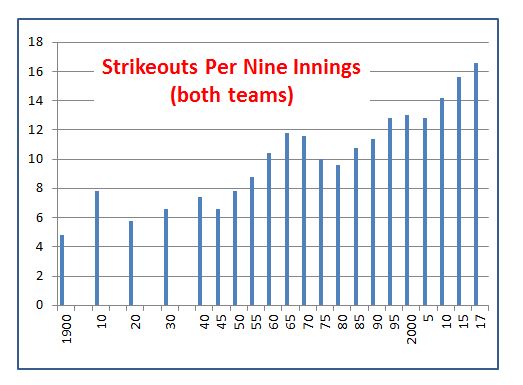
There is no doubt strikeouts are on the rise.  In fact, MLB has set a new strikeout record in each of the past ten seasons.  In 2017, fans saw an average of 16.6 strikeouts every nine-innings. Here’s the chart.

SO9

Looking a bit further, in 2017, 140 MLB players struck out at 100 or more times (Aaron Judge topped MLB with 208 whiffs.). Here’s an historic look.

     —–MLB PLAYERS WITH 100+ STRIKEOUTS IN A SEASON—–

                    Year                            Number of Players

1910                                        0

1920                                        0

1930                                        0

1940                                        1

1950                                        2

1960                                        7

1970                                       27

1980                                       11

1990                                       37

2000                                       58

2010                                       88

2017                                       140

There are those, of course, who maintain the increased K’s are the price you pay for increased HR’s.  And, the chart below would seem to support that. In 2017, we saw the first MLB season with more than 6,000 MLB home runs.  A more accurate measure would be home runs per game – and 2017 was a record year there as well.

HR Per Game chart

But there is other evidence to consider.

DO YOU HAVE TO PAY FOR LONG BALLS WITH STRIKEOUTS?

MLB’s three most prolific home run hitters – Barry Bonds, Hank Aaron and Babe Ruth – had one season of more than 100 strikeouts (in a combined 67 MLB campaigns) among them. That came in Bonds’ rookie season (1986), when he fanned 102 times. (In the spirit of “how the game has changed,” we should keep in mind that, while Ruth never fanned more than 93 times in a season, he did lead the league in whiffs five times. Neither Aaron nor Bonds – the other two 700+ HR players ever led the league in K’s.)

In 2017, Aaron Judge and Giancarlo Stanton (now Yankee teammates) hit a combined 111 home runs – and fanned a combined 371 times.  In 1961, Yankee teammates Roger Maris and Mickey Mantle hit a combined 115 home runs – but fanned nearly 200 fewer times (179).

A prime example of the potential to combine power and plate discipline would be Ted Kluszewski, who put together three consecutive seasons of 40 or more home runs with 40 or fewer strikeouts. Note: In 2017, five players hit 40 or more home runs. Of these, J.D. Martinez (45 homer runs) had the fewest whiff at 128. 

PLAYERS WITH 40 OR MORE HOME RUNS AND 40 OR FEWER STRIKEOUTS

Mel Ott, 1929 – .328-42-151, with 38 strikeouts,

Lou Gehrig, 1934 – .363-49-165, with 31 strikeouts

Joe DiMaggio, 1937 – .346-46-167, with 37 strikeouts

Johnny Mize, 1948 – .289-40-125, with 37 strikeouts

Ted Kluszewski, 1953 – .316-40-108, with 34 strikeouts

Ted Kluszewski, 1954 – .326-49-141, with 35 strikeouts

Ted Kluszewski, 1955 – .314-47-40. with 40 strikeouts

A UNIQUE 50-HOMER CAMPAIGN

Johnny Mize is the only player to record a season of 50 or more home runs and 50 or fewer strikeouts.  In 1947, Mize hit .302-51-138, with just 42 whiffs. 

One final reflection.  MLB has seen a total of ten player seasons of 200 or more strikeouts (a total of six players) – and all have occured since 2008.  In fact, 45 of the top 51 batter-strikout seasons have occured since 2000 – and the top 25 strikeout seasons (by a batter) have all occured since 2004 (18 of those 25 since 2010).

As the 2018 season unfolds, we can continue to expect high strikeout and home run totals.  Pitchers are throwing harder, relief pitching is as – if not more – dominant than ever and batters seem to be increasing focused on going deep.  As I write this post, MLB teams are averaging just over two home runs (combined) per game and a combined 17.3 strikeouts per nine frames – and that’s  despite some pretty frigid weather across much of baseball.   We’ve also see this trend reflected in an increasing interest in statistics like pitch velocity, spin rate and swinging strike percentage, as well as batted ball exit velocity and launch angle. Good for the game?  Don’t know.  Only time will tell.  (Although I, admittedly, prefer more action on the base paths and in the field – and less trotting around the bases or back to the dugout.)

By the way, if you are interested in a look at how BBRT readers see today’s game – with opinions on everything from the length (time) of games, the designated hitter, record-breaking performances they would like to witness, favorite ballpark concessions and even Hall of Fame controversies, click here.

I tweet baseball @DavidBBRT

Follow/Like the Baseball Roundtable Facebook page here.

Member:  The Society for American Baseball Research; The Baseball Reliquary; The Negro Leagues Baseball Museum.
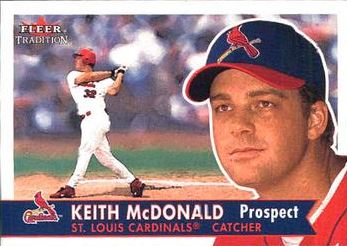
Keith McDonald – 2018 Paciorek Award Winner – Made a Career Out of Going Yard

JPAFIn 2014, Baseball Roundtable launched the John Paciorek Award (JPA). The JPA recognizes players who have had short, often very short, major league careers, but whose accomplishments, nonetheless, deserve recognition.  (Note: Information on John Paciorek’s career – the inspiration for the JPA – can be found at the end of this post. Paciorek’s day in the sun constitutes arguably the best one-game MLB career ever.)


________________ 2018 JPA Winner – Keith McDonald _______________

The fans are going to expect it every time, but it may be a long time before I hit another one.

                                                                   St. Louis Cardinals catcher Keith McDonald

                                                                   July 6, 2000

mCdKeith McDonald speculated on the timing of his next MLB home run shortly after the Cardinals/Reds contest during which he had become just the second player in history to homer in his first two major league at bats.  As it worked out, neither he nor the Redbirds’ fans, had to wait that long. His next MLB long ball came just nine days (July 15) and three plate appearances later – giving him three home runs in his first six MLB at bats (eight plateappearances, he also drew a pair of walks).

Just as McDonald had no idea of how short the span of time between career home runs number-two and number-three would be, he probably was equally in the dark as to how few at bats would fall between home run number-three and his final major league plate appearance – or  that his MLB career stat line would include just eight games, 11 plate appearances (two walks),  three hits in nine at bats (.333 average), three home runs, three runs scored and five RBI.  (That, for those more deeply into stats, is an MLB career on base percentage of .455 and a slugging percentage of 1.333.

Keith McDonald is the only MLB player with more than one career hit, who can look back on major-league tenure when his every hit was a home run. Note:  Since this post was written, two players (John Gant and Nolan Fontana) have had MLB careers with two hits, both home runs. )

I’m getting a little ahead of myself. Let’s look back on how Keith McDonald found his way into the MLB record book.

McDonald was a star athlete for Esperanza High School (Anaheim, California).  He was a three-year starter at quarterback – throwing for 31 touchdowns in his junior and senior seasons.  He also was a three-year player on the school baseball squad: a catcher as a sophomore; third baseman and relief pitcher as a junior; and first baseman and pitcher as a senior.  How good was he? In his senior season, McDonald hit .406 and put up a 1.90 ERA (4-0, with three saves).

Selected in the 18th round of the 1993 MLB Draft, McDonald chose instead to accept a scholarship to the University of Utah; where he would be able to play both football and baseball. Things didn’t work out at Utah, however, and – after a difficult period of adjustment, a “red shirt” season in football and a challenging year on the diamond – McDonald chose to return to California.  He transferred to Cypress College (Cypress, CA), where he combined his studies with a .353-8-37 line in 55 games (and threw out 34 of 62 base runners attempting to steal).  In 1994, it was on to Pepperdine University (Malibu, CA), where he hit .266, with seven home runs and 24 RBI in 48 games.

The St. Louis Cardinals selected the 6’2”, 215-pound, 21-year-old in the 24th round of the 1994 draft – and McDonald’s pro career was underway.  From 1994 to 1999, McDonald worked his way up through Rookie ball, A, High A, Double A and Triple A (Memphis Redbirds). His best seasons were 1998 (.318-7-22 in 58 games at Triple A) and 1999 (.304-7-41 in 88 games at Double A and Triple A combined).

As he started the 2000 season at Memphis, McDonald had little idea he was on the brink of MLB history. He was hitting .246, with one home run and 17 RBI for the Memphis squad as the season moved into July – and, more important, precisely when Cardinals’ backup catcher Eli Marrero injured his hand attempting to steal a base. On July 2, McDonald was called up to the big club to replace Marrero – a move McDonald has said even surprised him.

He got his first taste of MLB action on July 4, before an Independence Day crowd of 46,022 (in St, Louis). McDonald came to the plate as a pinch hitter (for SS Edgar Renteria) in the bottom of the eighth inning – with the Cardinals ahead by a 13-3 score.  It was a good opportunity to provide a rookie with a low-pressure first MLB at bat.  After hitting just one home run in 177 at bats at Triple A that season, McDonald sent a 2-2 pitch out of the park to left-center.  The blast made him the 79th players to homer in their first MLB at bat.

McDonald did not play in the Reds/Cardinals July 5, tilt, but On July 6 – this time before a crowd of 43,287 – McDonald started at catcher against the Reds, batting in the number-eight spot.  He got his first at bat in the bottom of the second, with the Cardinals trailing 3-2. He tied the game with a home run on a 1-0 pitch – becoming just the second MLB player ever to homer in their FIRST TWO plate appearances. He finished the day one-for-three with a walk and two RBI.

Keith McDonald is one of only two players – and the only National Leaguer – to homer in his first two major league plate appearances.

In McDonald’s next MLB game (July 8) – with the Cardinals hosting the Giants –  McDonald replaced Matheny at catcher in the top of the ninth, with the Giants up 7-6. McDonald came to the plate in the bottom of the inning and drew a walk. He didn’t take the field again until July 13, when he again entered the game as a pinch hitter (this time in the top of the ninth with the Cardinals up 13-3 on the White Sox in Chicago).  He grounded out to second.

Two days later (July 15), still in Chicago, McDonald pinch hit again. This time, it came in the top of the ninth of a game in which the Cardinals trailed 15-5. McDonald popped a 3-1 pitch for a two-run home run. (Attendance  40,681.) At this stage of his MLB career, he was three-for-six – with all three his hits leaving the yard and all before crowds in excess of 40,000.  Talk about coming through on the big stage. McDonald got only one more major league at bat that season, a ninth-inning, pinch-hit fly out against the Twins on July 15.

Keith McDonald’s three MLB hits, all home runs, were witnessed by crowds (announced attendance) totaling 129,990.

Then, as suddenly as it began, it was over. On July 21, McDonald was sent back down to Memphis, where he finished the season .263-5-30 in 83 games.  He appeared in just two more major league games – in September of 2001 – going hitless in two at bats.   McDonald then spent the next five seasons at AAA; playing in the Cardinals’, Cubs’, Pirates’, Rangers’ and Yankees’ systems.  He played a total of 13 minor league seasons, hitting .264, with 78 home runs and 418 RBI.

It was, however, that remarkable – short, but sweet –  run in in 2000 that caught BBRT’s eye and earned Mcdonald John Paciorek Award recognition.  Keith McDonalds’s major league career may have been short, but those three home runs must have been sweet.

________________________________________________________

PAST JOHN PACIOREK AWARD WINNERS:

2014 – Brian Scott Dallimore

In his first start (not his first game) for the 2004 Giants, Dallimore had two singles, a Grand Slam (his first MLB hit and only MLB home run), a walk and a hit by pitch.  For the full JPA take on Dallimore’s 27- game MLB career, click here.

2015 – Roy Gleason

Gleason played in just eight MLB games, had a double in his only MLB at bat – but also earned a World Series ring (1963) and a Purple Heart. Ultimately, he was the only ballplayer with MLB experience to serve on the front lines in Vietnam. For the full JPA take on Gleason, click here. Note: Gleason’s life is detailed in the book “Lost in the Sun – Roy Gleason’s Odyssey from the Outfield to the Battlefield.”

2016 – John Allen Miller

Miller played just 32 MLB games (during the 1966 and 1969), taking the field (at 1B/LF/3B/2B) for the Yankees and Dodgers. Miller collected ten hits in 61 MLB at bats (.164 average) and hit just two home runs – but he made those long balls count.  Miller made his MLB debut with the Yankees on September 11, 1966 and hit a two-run homer in his first big league at bat –  making him (surprisingly) the first Yankee ever to homer in his first MLB at bat. (Little did Miller know he would not get another home run or RBI until the final at bat of his MLB career.)  Miller’s final at bat came as a Dodger (September 23, 1969) and he stroked a solo home run.  That narrow “body of work” made Miller one of just two players in MLB history to homer in their first and final official appearances in a major league batter’s box. For more on Miller, click here.

2017 – Chris Saenz

RHP Chris Saenz’ big day came on April 24, 2004 – when he was called up from Double A Huntsville (where he was 1-1, 3.86) to make a spot start against the Saint Louis Cardinals, whose powerful lineup included the likes of Albert Pujols, Scott Rolen, Jim Edmonds and Reggie Sanders.   The rookie went six innings, giving up just two hits, three walks and no runs, while fanning seven. There was some speculation (primarily among sportswriters and fans) that Saenz’ performance might earn him another start or two, but two days after his debut, he was on his way back to Huntsville.  Unfortunately, his minor league season included a September elbow injury that required Tommy John surgery and he never returned to the majors. Statistics before 1900 can be sketchy, but baseball-reference.com shows that Saenz is the only pitcher to complete a one-game MLB career of at least five innings pitched, without giving up a single run (earned or unearned). For more details on this JPA honoree, click here.

—–INSPIRATION FOR THE JPA—-

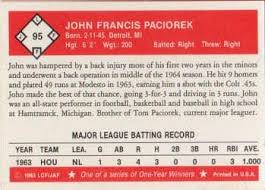
John Paciorek – signed out of Saint Ladislaus High School in Hamtramck, Michigan (where he had starred in football, basketball and baseball) – appeared in his first major league game on the final day of the 1963 season (September 29) at the age of 18.  The 6’ 1”, 200-pound outfielder had spent the 1963 season with Class A Modesto Colts. The Colts’ parent club, the Houston Colt .45s (that was the current Astros’ franchise name back then), was suffering through a difficult season. The team was 65-96 going into that final game.  Looking to the future, Houston had, in fact, fielded an all-rookie lineup (average age 19) on September 27. Youth was still being served two days later when John Paciorek started his first MLB game. The results were surprising – and worthy of recognition.

pACIOREKPlaying right field and batting seventh in a 13-4 win over the NY Mets, Paciorek ended up with three hits and two walks in five plate appearances, with four runs scored and three runs batted in.  Perhaps equally surprising is that it was not only Paciorek’s first major league appearance, it was to be his only MLB appearance.  Back pain the following spring, followed by surgery (he played 49 minor league games in 1964 and missed all of the 1965 season), put an end to his MLB playing days. (Paciorek did play in four more minor league seasons.)  Still, you will find John Paciorek in the Baseball Encyclopedia and his is arguably the greatest one-game MLB career ever.  Among one-gamers, he holds the record for times on base and runs scored, and shares the record for batting average, on base percentage and RBIs.

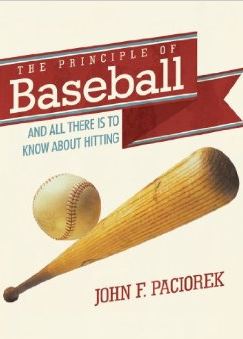
paciorekPaciorek, by the way, went on to become a high school teacher and multi-sport coach and is the author of two books (Plato and Socrates – Baseball’s Wisest Fans and The Principles of Baseball: And All There Is To Know About Hitting.) You also can enjoy Paciorek’s prose (and expertise) directly at his blog “Paciorek’s Principles of Perfect Practice” by clicking here. You can find out even more about Paciorek in Steven Wagner’s 2015 book “Perfect: The Rise and Fall of John Paciorek, Baseball’s Greatest One-Game Wonder.”  (See the review of “Perfect” by clicking here.)

A final note. John Paciorek’s insight into the national pastime should come as no surprise. Paciorek comes from a true “baseball family.”  He was the first born of eight siblings and was followed to the big leagues by younger brothers Jim and Tom Paciorek.  (Like John, Jim’s MLB career was short – 48 games for the Brewers in 1987. Brother Tom, however, achieved a .282 average over an 18-season MLB career.)


Primary Resources:  Baseball-Reference.com; MCPower Surge, Los Angeles Times, July 9, 2000, Lon Eubanks; McDonald’s College Tour Stops Again, Los Angeles Times, July 8, 1993, Martin Henderson.


I tweet (on X) baseball @DavidBaseballRT

Follow/Like the Baseball Roundtable Facebook page here.

Member:  Society for American Baseball Research; The Baseball Reliquary; The Negro Leagues Baseball Museum.
The Eagle has Landed – Twins Home Opener and MLB first-week Musings


“People ask me what I do in winter when there’s no baseball. I’ll tell you what I do. I stare out the window and wait for spring.

                                      Baseball Hall of Famer Rogers Hornsby

As the Twins opened their 2018 home season, Minnesota fans were (like Rogers Hornby) still waiting for spring (weather), but they no longer were waiting for baseball.  It was “Game On” versus the visiting Seattle Mariners.

Despite the wintry conditions (the photo is of my backyard on Twins Home Opening Day), it was - indeed - a beautiful day for a ball game. As is every day.

Despite the wintry conditions (the photo is of my backyard on Twins’ Home Opening Day), it was – indeed – a beautiful day for a ball game. As is every day.

As I departed for the  game – with about 8-inches of snow on my front lawn and my snow blower seemingly still warm from the most recent major snow storm (about 48 hours ago) – I was appropriately suited up for Minnesota baseball (Long Johns under jeans; a flannel shirt under both a hoodie AND a leather jacket; one pair of socks under another; plus snow boots, ear muffs and ski gloves).

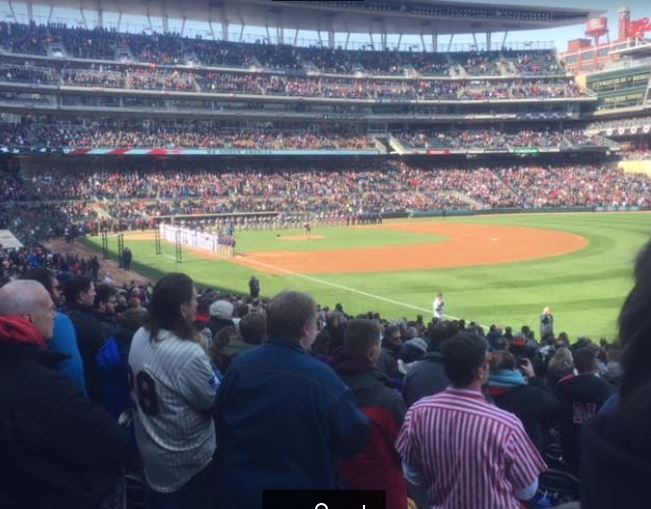
Once in the ballpark, as I made my way to my seat in 35-degree weather, the “magic” started to happen.  The grass was a bright emerald green (good work, grounds crew); the ball the starkest of whites; and, perhaps miraculously, the sun was shining out of a deep blue, relatively cloudless (and snowless) sky.  The crowd – bundled in an array of colorful winter outerwear, huddled under blankets (many baseball-themed) and even, in some cases, snuggled in sleeping bags – buzzed happily in anticipation.  There were also the other sounds of the game: the slap of ball against glove as players warmed up; the shouts of vendors (for everything from hot dogs and beer to hot chocolate and wild rice soup); upbeat music, interrupted by frequent welcoming announcements on the PA system; and, most important, fans talking BASEBALL.  And let’s not forget the sweet and savory smells as you passed by the many food stands (for more on Twins newest food and beverage offerings, click here.) We were ready.  Note:  Since this is Minnesota, I need to add that there were – as always in wintry weather – a scattered few of Minnesota’s boldest (and coldest) fans – outfitted in shorts, tennis shoes and T-shirts.

OpenerCoreboardThe Home Opener is a special day, particularly in Minnesota.  It’s a sign that we have survived the long, cold winter (even in years when it still seems to be hanging on). And, it’s a symbol of hope for a grand and sunny summer. Home Openers represent a day for optimism across the hardball landscape.  As the season opens, every team can aspire to be a contender, every rookie is a potential “phenom,” every fading veteran can be viewed as a potential “Comeback Player of the Year,” and every new face in the lineup or on the bench a welcome addition to YOUR team.

THE EAGLE HAS LANDED

Okay, enough sentiment.  How about the events of the day.  I’ve often written on these pages that one of the greatest things about baseball is that, once in the ballpark, you can almost always see something you’ve never seen before.  Well, that axiom was proven true even before yesterday’s game began.

As rap artist Dessa sang the national anthem, Challenger (an American Bald Eagle) was released from a perch in center field to soar majestically above the diamond while his handler waited on the pitcher’s mound.  The “soaring” was perfectly majestic.  The landing – not so much.

Mariners’ starting pitcher James Paxton was standing at attention in leftfield during the anthem, when Challenger decided to deviate from his expected route. The large, sharply beaked and taloned symbol of American might and democracy decided a more appropriate perch might be Paxton’s right shoulder.  Paxton, by the way, handled the situation with courage and calm – as you can see in the video above.

Paxton, or perhaps Challenger, got a significant round of applause after the incident.  For those of you who are interested, here are the most notable ovations of the afternoon.

TWINS 2018 HOME OPENER – MOST NOTABLE OVATIONS

–  90+-year-old World War II veteran Robert O’Connor, who raised the American flag during the Star Spangled Banner. (Note: O’Connor got a second ovation when he appeared on Kiss Cam later in the game.)

– The 2018 Olympic Gold Medal-winning US Men’s Curling Team, who rolled out the first pitch.

– Ichiro Suzuki, during the Mariners’ introductions.

– Twins’ players and staff during pre-game introductions – particularly manager Paul Molitor, coach Eddie Guardado and players Byron Buxton, Brian Dozier, Joe Mauer, and Miguel Sano.

– Former Twin (and AL MVP) Justin Morneau (when he appeared on the video board).

– Twins’ CF Byron Buxton after a leaping catch in deep right center in the fifth inning.

– Twins Miguel Sano, Mitch Garver and Eddie Rosario after their sixth-, seventh- and eighth-inning home runs.

– Twins’ 1B Joe Mauer and C Mitch Garver after Seattle 3B Kyle Seager grounded to Mauer with runners on first (Robinson Cano) and third (Jean Segura) and one out in the seventh inning (score tied 2-2). Mauer smartly fired home and Segura was trapped too far down the line. (Garver ran him down for the out.)

– Snow flakes, which began falling in the eighth (only after surviving the Metrodome would Minnesota fans applaud falling snow during a baseball game).

Miguel Sano ... made up for a run-scoring error in the first innig with a game-tying homem run in the sixth. Photo by Keith Allison

Miguel Sano … made up for a run-scoring error in the first innig with a game-tying homem run in the sixth.
Photo by Keith Allison

So, what about the game itself? First, let me say, it was a good contest, in spite of the weather – which likely contributed to the three errors, wild pitch and passed ball. The Twins trailed 2-0 after the first inning, when the Mariners scored on a pair of singles and an error by Twins’ 3B Miguel Sano.  The home team came  back on a game-tying homer two-run homer by (Sano) in the sixth, took the lead on a Mitch Garver home in the seventh and added an insurance run on a Eddie Rosario dinger in the eighth.

SOMETHING  OLD AND SOMETHING NEW

41-year-old Fernando Rodney, the Twins’”new” closer, picked up his first save of the season – the 301st of his career.  In the process, he became the oldest player to record a save for the Twins.

As the game progressed, we saw a lot of what we will, apparently, be seeing across MLB this year.  In the Twins’ Home Opener, we saw ten pitchers, 18 strikeouts and four of the six runs in the game scoring on home runs.  It clearly looks like 2018 will be another hard-throwing/free swinging season – when we see plenty of pitchers and plenty of batters trotting back to the dugout after fanning or trotting around the bases after a long ball.

THE FIRST SEVEN DAYS OF THE 2018 MLB SEASON

In the first seven days of this season (through April 4), MLB teams played 86 games and hit 194 home runs.  In addition, the first week of play saw 1,509 strikeouts. I did the math on those K’s. Over the course, of the week, that meant an average of 17 combined strikeouts every nine innings.

Opening Day (March 29) alone, in 13 games,  fans witnessed 133 pitchers taking the mound, 264 strikeouts and 33 homeruns – with 42 percent of the day’s tallies scoring on the long ball.  Math again – just over 10 pitchers, 20 strikeouts and 2 1/3 home runs per game.

AND THEY ARE OFF! SOME FIRST WEEK HOMER HIGHLGHTS

  • On March 29, the Cubs’ Ian Happ hit the very first pitch of the 2018 season for a home run – and the new season was off and trotting.
  • On March 29, White Sox DH Matt Davidson became just the fourth player in MLB history with a three-homer Opening Day game.
  • On March 29 and 30, the Giants topped the Dodgers 1-0. In each game, Giants; 2B Joe Panik provided the sole run via the long ball – the first time in MLB history that a batter had – on two consecutive days – driven a game’s only run via the home run.
  • On April 3, The Cardinals opened the game against the Brewers with back-to-back jacks (Dexter Fowler and Tommy Pham) on the game’s first three pitches. Then, with two outs in the bottom of the ninth inning, the Brewers (trailing 4-3) closed out the game with back-to-back home runs from Christian Yelich and  Ryan Bruan.  MLB.com reported it was the first time in MLB history a game opened and closed with back-to-back long balls.
  • On April 3, in the Yankees’ home Opener, SS Didi Gregorius – appropriately batting cleanup – ripped a pair of homers and drove in eight runs (setting a new RBI record for a home opener.)
  • On April 3, the Padres won their first game of the 2018 season (after four losses) behind a three-home run, five-RBI game from rookie 3B Christian Villaneuva.

GOING DEEP CAN BE HABIT FORMING

Through April 4, there had already been 14 multi-homer games: Who got ‘em? Here’s the list:  Tim Anderson; Tyler Austin; Charlie Blackmon; Wellington Castillo; Matt Davidson; Paul DeJong; Brian Dozier; Edwin Encarnacion; Didi Gregorius; Bryce Harper; Justin Smoak; Giancarlo Stanton; Christian Villanueva.

MORE ON THE TWINS HOME OPENER

OpenerIntrosIn the Twins’ opener, we saw some Twins-specific occurrences that we are likely to see plenty more of this season.

  • A Miguel Sano home run – I expect we will see at least 30 of those this campaign if he stays healthy.
  • Fernando Rodney putting a batter on (walk) and bringing the tying run to the plate before nailing down a save. (He has a reputation for outings that keep the manager and fans on edge – and, last season, had 39 saves, despite a 4.23 ERA.)
  • A leaping catch in center field by Byron Buxton – last year’s Gold and Platinum Glover will continue to be a running highlight reel in the outfield.
  • Newcomers Zach Duke, Addison Reed and Fernando Rodney in the late innings.

The Home  Opener also included a handful of important (to me) firsts.

  • The Twins’ first home win of 2018.
  • Mitch Garver’s first MLB home run.
  • My first completed scorecard.
  • My first “old school” ballpark hot dog – a tepid offering, served up by an in-the-stands vendor.
  • My first 6-4-3 double play of the season – a Twins’ twin-killing that snuffed a two-on, one-out Mariners’ threat in the fifth inning.  (As regular readers of BBRT know, I love 6-4-3 and 4-6-3 double plays.)

And that, my friends, is the BBRT take on the Twins’ Home Opener.

Thanks for reading.

Coming Soon, BBRT’s Fifth Annual  John Paciorek Award.

I tweet baseball @DavidBBRT

Follow/Like the Baseball Roundtable Facebook page here. 

Member:  Society for American Baseball Research; The Baseball Reliquary; The Negro Leagues Baseball Museum. 
 

Twins Food and Beverage Preview … and a few food items from around MLB I’d like to try

Today (April 2), Baseball Roundtable again took part in what has become a new rite of spring for me – the Twins’ Ninth Annual Food and Beverage Preview. Sponsored by the Minnesota Twins and Delaware North Sportservice (the team’s exclusive food and beverage partner), this annual event features a look at (and taste of) the upcoming season’s new Target Field food and beverage offerings – and this year also featured the Bat and Barrel, a new “must-visit” facility within the ballpark.  If I had to describe the event, it’s a bit like the State Fair in winter.

The Twins Just Keep Raising the Bar

When I first began attending MLB games, standard fare consisted of (not always piping) hot dogs and (not always ice) cold beer and soda.  For those wanting to step outside the box, there were peanuts, popcorn and Cracker Jack® and, if you were really adventurous, ice cream (usually frozen malt cups with a possibly dangerous wooden spoon), licorice ropes or cotton candy.  When pizza and burgers arrived on the scene, we all thought baseball’s culinary landscape was complete.   

The 2018 Target Field Food and Beverage Preview again brought home how wrong we were – and how committed the Twins are to continually raising the ballpark food and beverage bar.

Now, I have neither the space, nor the time, to touch on all the new food and beverage items that were unveiled this afternoon. (They ranged from an Arabic Chicken Shawarma Wrap to The Impossible Burger to a Blue Cheese Crusted Tenderloin to a Prince-Inspired Purple Rain Salad.)  I would like to share a comment or two on some of the new food items my photographer (Bob King) and I found especially tasty, interesting or both. For the Twins’ concessions guide, which lists the full and most up-to-date (locations, prices could change) slate of concessions, locations and prices, click hereNote: As I write, the Twins have not yet posted this year’s guide.  I would expect it soon. Also, at the end of this post, you will find a description of a handful of top new food items from other ballparks that I would like to try.

THE OBLIGATORY TARGET FIELD BLOODY MARY

Photo: Bob King

Photo: Bob King

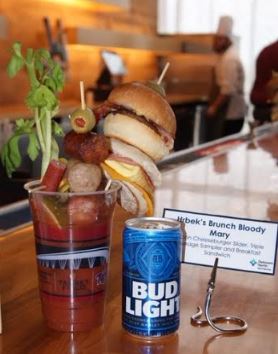
Those who read Baseball Roundtable regularly know I always review the Bloody Mary offerings when I take in a new ballpark.  Well, nobody does Bloody Mary’s like Target Field. Each year, Twins fans eagerly await Target Field’s newest Bloody Mary (offered at Hrbek’s Pub, near Section 114).

This year, it’s the “Brunch Bloody Mary” – served on Sundays only – featuring a bacon cheeseburger slider, breakfast sandwich (sausage, ham and cheese), sausage sampler, cheese cubes, pepperoncini, olives, celery, dill pickle spear and a beer chaser.  (Not yet priced.)  Word of caution – it’s a bit top heavy, so handle carefully. Note:  The Twins’ other signature Bloody Mary’s – like the Triple Sausage Sampler and Bigger Better Burger versions – will be available on game days throughout the week.


THE BAT & BARREL

Photo: Bob King

Photo: Bob King

The new Bat & Barrel food and beverage area was the highlight of the afternoon – whether your focus was food, beverage or atmosphere. Formerly the season ticket-holder Metropolitan Club, the Bat and Barrel is open to the public and features lot of big screen viewing; bar, tavern and lounge seating; plenty of beverage offerings; and a selection of entrées, small plates and quick-serve food items (showcasing local restaurants, breweries and distilleries).  You can also enjoy viewing a collection of Twins’ memorabilia while you “graze and guzzle.”  It’s well worth a visit while you’re at the ballpark.


Here are just a few favorites from the Bat & Barrel …

Pan Seared Barramundi  (Baja House)

Photo: Bob King

Photo: Bob King

A light fish, perfectly accompanied by tropical pico de gallo, pasilla mole, pumpkin seeds, citrus butter and guajillo sauce. Bob and I both rated this as one of our top three “tastes” of the day.


Blue Cheese Crusted Tenderloin (Murrays)

Photo: Bob King

Photo: Bob King

A 10-ounce tenderloin, wrapped in bacon and served with carmelized pears, grilled spring onion and a blackberry and port reduction.  The flavors complimented the tenderloin – which Bob described in this way:  “The steak was perfect, but then again, it was Murray’s.” (I told you the Twins were raising the bar).


Impossible Burger (Hell’s Kitchen)

Photo: Bob King

Photo: Bob King

This was the surprise of the day – a burger made entirely of plant-based ingredients that can satisfy even the most carnivorous eaters.  Now, “Bob the Photographer” is also “Bob the Grill Guy” (see bobthegrillguy.com).  He loves his barbeque, his steaks and his burgers.  I never thought anyone could sneak a non-meat burger by him.  But, he liked the Impossible Burger.  In his words, “I’d even order this on purpose.”  I thought it has a nice char-broiled flavor as well.  Got a vegetarian in your group?  You’re all set at the Bat & Barrel.


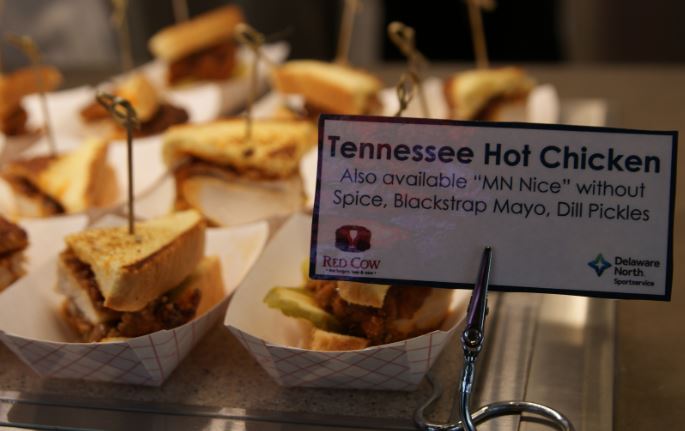
Tennessee Hot Chicken (Red Cow)

Photo" Bob King

Photo” Bob King

Now, it won’t send you running for a cold drink or turn your lips numb, but this crusted chicken sandwich has a nice little bite to it (served on hearty bread with blackstrap mayo and dill pickles).  They have a non-spiced “MN Nice” version, but I really don’t  think you need to be that cautious.  I really liked this  one.


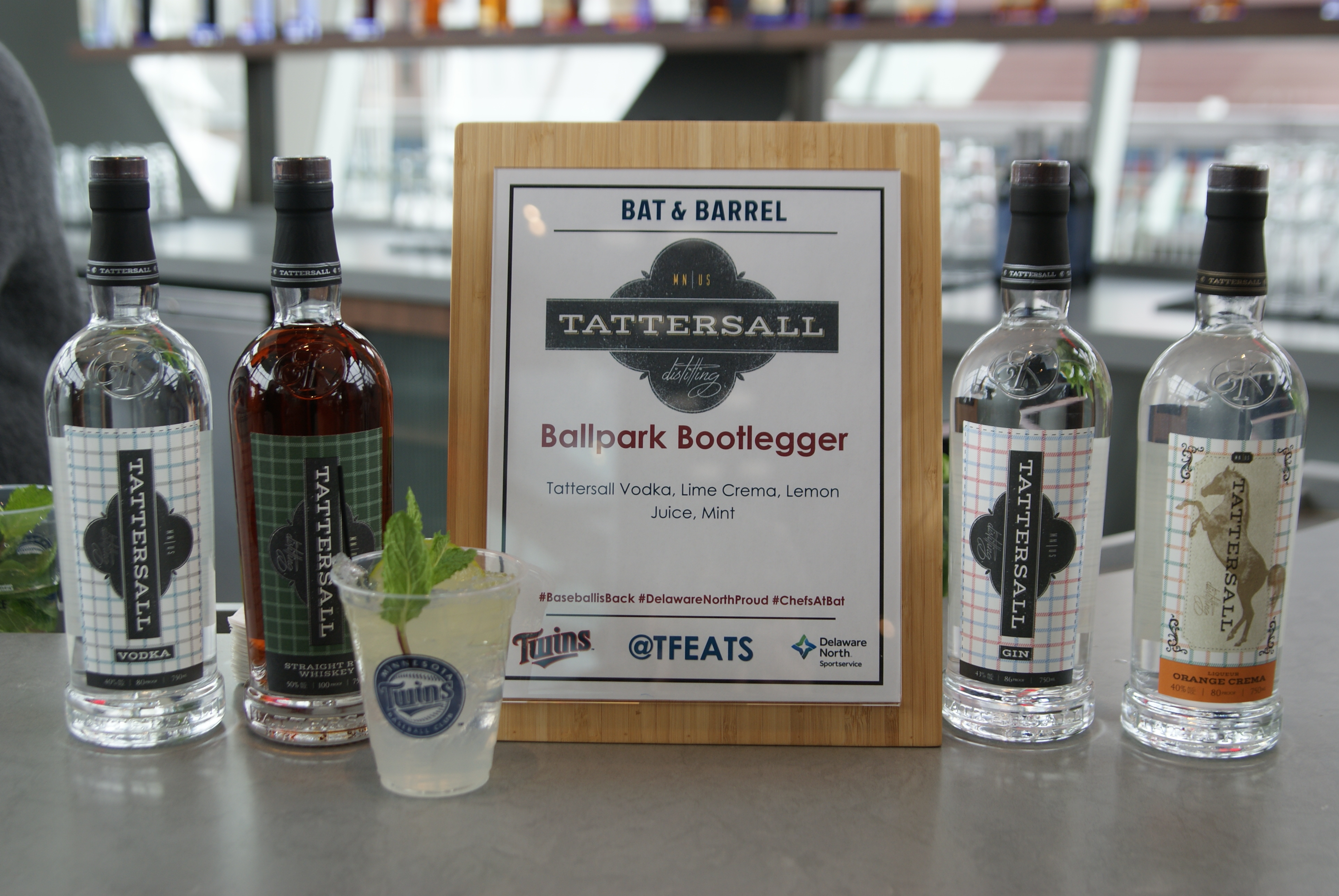
Ballpark Bootlegger (Tatteresall Distilling)

Photo: Bob King

Photo: Bob King

There are plenty of beverage choices in the Bat & Barrel (You name it, I’m pretty sure the bartenders can make  it), but this gem really stood out.  It’s a combination of Tattersall Vodka, Lemon Crema, lemon juice and mint.  It’s tasty and refreshing, and that sprig of mint really adds something to the experience. (I picture this as a perfect mid-summer drink.) I’d be careful though, I have a hunch these could sneak up on you.


___________________________________________

Now, lets look at some other choice around the ballpark.

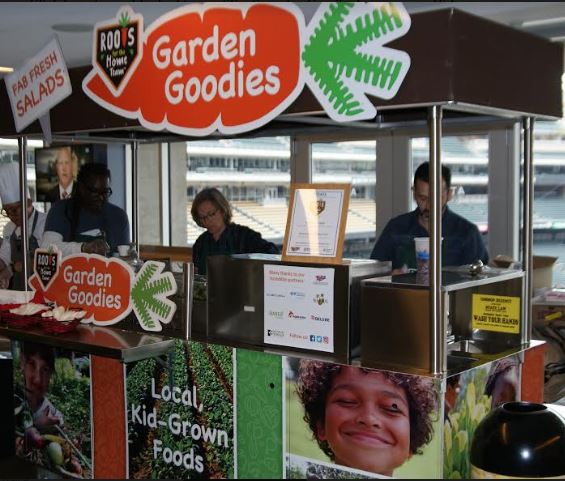
Garden Goodies – Good Food for a Good Cause

Photo: Bob King

Photo: Bob King

Look for the Roots for the HomeTeam’s  “Garden Goodies” stand near Gate 34.  (It was inside for the Food and Beverage Preview.) It’s open for weekend games and offers great food options supporting a great cause.   Roots for the Home Team partners with youth garden programs in the Twin Cities to give multicultural teens the opportunity to develop business and entrepreneurial skills – and the youngsters actually grow about 60-to-70  percent of the ingredients in their fresh offerings.  New for this year are a Prince-inspired Purple Rain Salad – blueberries, beets, purple cabbage, with a raspberry vinaigrette dressing and a Dreaming for the Veggie Soup.  Bob was particularly impressed by the Veggie Soup, He chose the “with chicken” option, which also included potatoes, carrots, corn, beans, squash and cilantro. His description was pretty simple – “Hearty and loaded with good taste.”

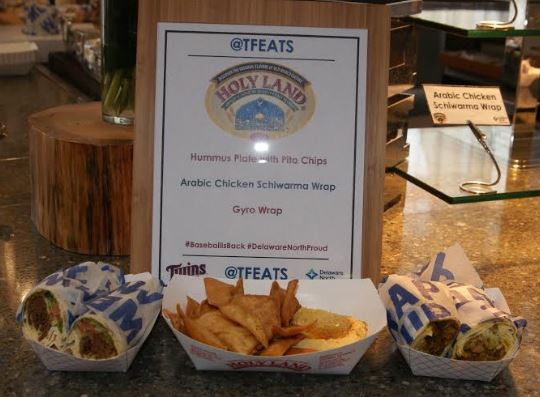
Arabic Chicken Shawarma (Holy Land … Section 107)

Photo: Bob King

Photo: Bob King

The Chicken Shawarma at the Holy Land booth was delicious, with the unique cumin and curry flavors standing out – and, in a wrap, true ballpark convenience. They also offer Gyro Wraps and Hummus with Pita Chips – which Bob thought would be a nice change of pace from nachos and cheese. (By the way, I did find several different spellings for shawarma.)


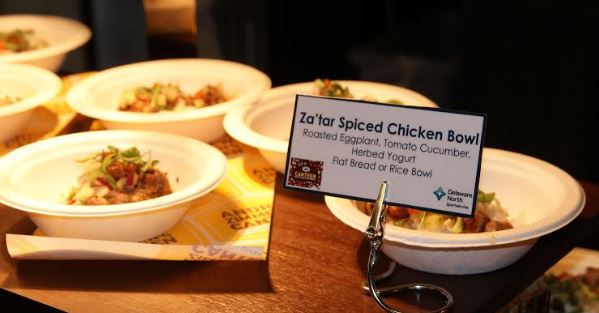
Za’tar Spiced Chicken Bowl (Andrew Zimmern’s Canteen … Section 114)

Photo: Bob King

Photo: Bob King

Mediterranean chicken served over jasmine rice, with roasted eggplant, herbed yogurt sauce, tomato-cucumber, crisp chickpeas. (Also available with braised beef ).  A rice-bowl version of the Zimmern popular Mediterranean skewers, these are flavored to perfection.  Also, if you don’t have the “Frozen Hot Chocolate” – white chocolate ice cream – you are missing a real treat.


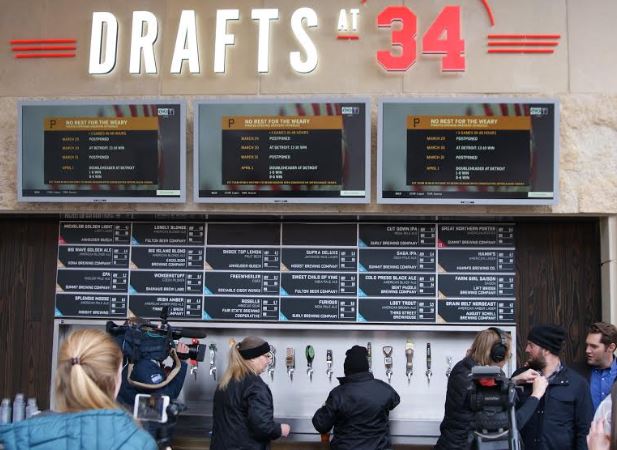
Drafts at 34 (Near Gate 34)

Photo: Bob King

Photo: Bob King

A ballpark beer wall (How appropriate is that?) featuring 22 beers – many of them popular local brews –  on tap.


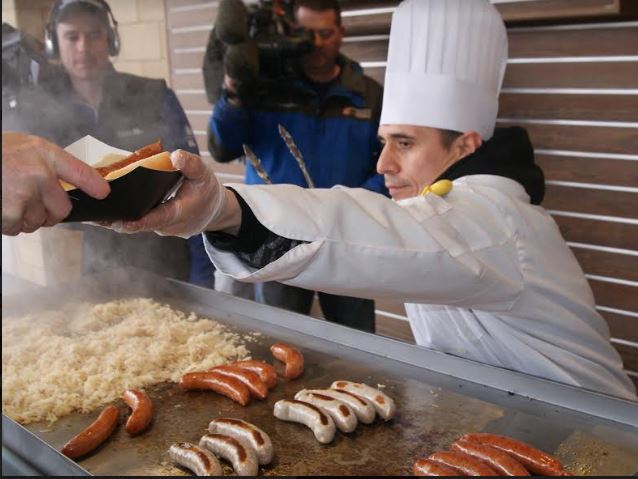
HOT DOGS – BRATS – POLISH SAUSAGE

SausageWhen Baseball Roundtable did its fan survey, the number-one ranked ballpark food item was a hot dog or sausage – maybe old school, but still a ballpark tradition (at least in my family). So, for all those “old schoolers” out there, here’s a picture from the Kramarczuk’s Ssusages location at the Food and Beverage Preview.

Note:  To see the full Baseball Roundtable Fan Survey, that looked at ballpark food and beverages, promotions and giveways, MLB rule changes, the Hall of Fame and the length and type of game fans preferred, click here


_________________________________________________

NOW A LOOK AT THE TOP FIVE (PLUS ONE) NEW FOOD FROM OTHER PARKS

THAT I’D LIKE TO TRY.


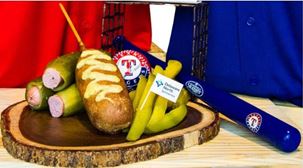
  1. Texas Rangers – Dilly Dog
Delaware North

Delaware North

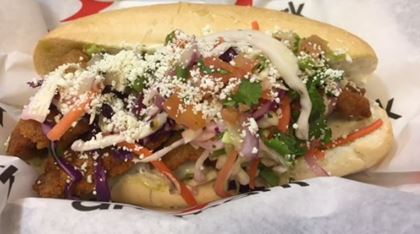
Take a dill pickle, hollow it out, insert a hot dog.  Then dip the whole thing in batter and deep fry.  Now you’ve got a treat on a stick with its own bite.


2. Denver Rockies – Rocky Mountain Po’Boy

Aramark

Aramark

I’m headed to Coors Field with Ballpark Tours this summer, so this sandwich ranks high on my list. Now, if you don’t know what Rocky Mountain “Oysters” are, you may not be ready for this treat – a combination of that delicacy, on a Po’Boy roll – with garlic slaw, green chili ranch, pico de gallo, guacamole, and cotija cheese.


3. Dodgers – Cheeto-lote

Levy

Levy

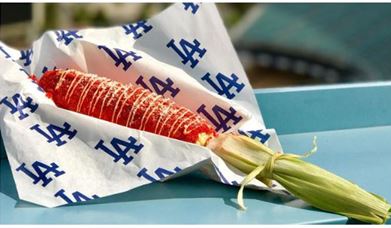
I love Mexican roasted corn, so this one intrigues me.  It’s roased sweet corn, rubbed with lime mayo – and topped of with Flamin’ Hot Cheetos(R) dust, tajin seasoning and cotija cheese.


4.  Brewers – Johnsonville(R) Pierogies

Delaware North

Delaware North

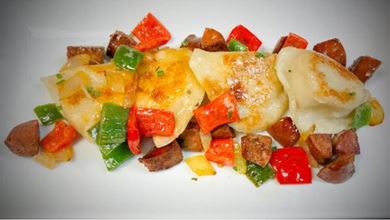
I was born in Milwaukee’ I’m Polish (Karpinski may have given that away); and I’m a baseball fanatic.  It’s no wonder then that “Pierogies at the Park” would be high on my list.  This treat features potato- and cheese-filled Pierogies, with diced Polish sausage (Kielbasa, if you prefer) sauteed in onions and peppers and seasoned with a Parmesan-garlic sauce.


5. (Tie)  Mariners and Red Sox

Whenever you can get lobster at the ballpark, it’s a pretty darn good day.  So, here’s the tie for number-five  on my list.

Mariners – Lobster Roll

Safeco Field

Safeco Field

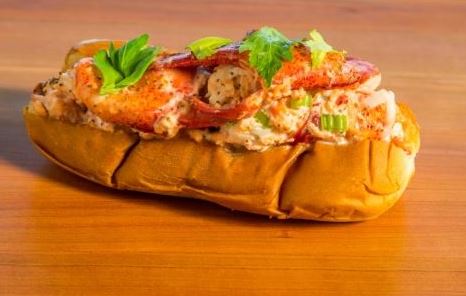
Simple, but tasty and rich (maybe, even elegant) – sweet lobster claw meet, dressed in garlic-celery aioli and served on a King’s Hawaiian(R) roll.


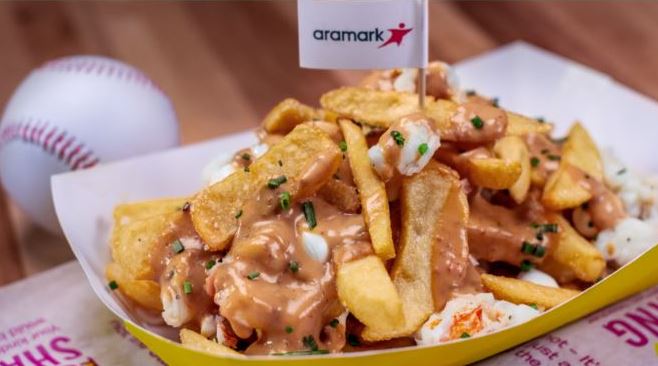
Red Sox – Lobster Poutine Stak

Aramark

Aramark

From my perspective this one has two things going for it – Lobster and it’s served in Fenway Park. Basically, we’re looking at steak fries, covered in sweet lobster meat, cheese curds, bisque and chives. Be still my heart … and taste buds.


I tweet baseball @DavidBBRT

Follow/Like the Baseball Roundtable Facebook page here.

Member: Society for American Baseball Research; The Baseball Reliquary; The Negro Leagues Baseball  Museum. 


Bobbleheads to Boogie Boards … A Cornucopia of 2018 MLB Team Promotions

MLB’s regular season is closing in fast and, as is BBRT’s tradition, it’s time to take a look at the ballpark “extras” fans can expect – promotions, giveaways, theme nights, special events, ticket discounts and more.  Being from Minnesota, I will again put “extra” emphasis on the Twins; but I’ll share some information on my favorite giveaways from each team across MLB.  I’ll also spend more time on the “at-the-gate” promotions, and less on those “theme night” items that often require an extra-charge ticket.

This year’s team promotions range from bobbleheads to boogie boards to bottle opener sunglasses – and pretty much everything in between. You’ll find giveaways ranging from replica jerseys to duck calls, baseball caps to baseball bats and beer steins to back packs – there’s even a Bob Gibson commemorative pitching rubber and a Prince inflatable guitar.  The Special/Theme Events are equally varied, ranging from Star Wars Nights to Vegan Day.  So, let’s take a look at what’s happening on the promotions stage at Target Field and around major league baseball.

DISCLAIMER:  Keep in mind, promotional items, eligibility and schedules are subject to change without notice. In addition, some of the teams had not yet released their full schedule of events as this post “went to press.” For a complete list and up-to-date details regarding 2018 Twins promotions (including dates, numbers of items, activities and eligibility) click here.  For Twins Special/Theme Events, click here. For details on promotions and events across MLB, visit each team’s website.

Before we get into the details, BBRT would note that coming up with the annual selection of giveaways and promotions is the result of months of consideration, evaluation and brainstorming.

Twins Manager of Promotions and Marketing Mitch Retelny says the work on each season’s slate of promotional items and special events starts even before the previous season ends.

“In August and September the wheels start turning,  and we start getting the calendar for next year into shape,” Retelny said. “But, really, it’s a year-round process. We’re always on the lookout for a new ideas or opportunities that will connect with the fans.”

He added that there are two main focuses to the  process.

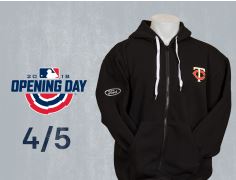
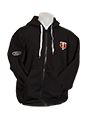
xxhoodie“Obviously, we look at whether we think the item will sell incremental tickets. Will it get people excited and get them to come out to the ballpark?” he explained.  “Second, we ask ourselves if it is an item people will use.  Will it get fans to wear our brand, inside and outside the ballpark, or (for non-wearables) will it be something they will hold onto?”

Retelny cited the Twins Opening Day hooded sweatshirt as a good example of a promotional item that “has not only made a connection with the fans, but also has been a great for getting our brand out in the Twin Cities early in the season. ”

________________________

BOBBLEHEADS REMAIN THE TOP MLB GIVEAWAY

The king of MLB giveaways remains the bobblehead.  This year, teams will hand out approximately three million bobbleheadS “at the gates.” (An exact count is difficult, as some teams list totals for giveaways as “all fans” or “as long as supplies last” and others have not released their full promotional calendars.)  BBRT would also note that the three-million estimate does not include bobbleheads to be distributed as part of theme nights that require special tickets.

DODGERS TO HAND OUT MORE THAN 400,000 BOBBLEHEADS

XXgIBSONIf bobbleheads are the royalty of ballpark giveaways, the Los Angeles Dodgers are the bobbing head kings.  This season, the Dodgers have scheduled eleven bobblehead at-the-gate giveaway – totaling an MLB-high 440,000 bobblers.

Kirk Gibson’s iconic 1988 World Series Game One, game-winning, walk-off home run is the subject of the Dodgers’ first 2018 bobblehead.

Bobbleheads are still the most popular giveway, Retelny said, but the approach is changing.

“It used to be, we just said we need to have four or five bobblehead nights and then worked to fill them in,” he continued “ Now, it’s not the number that drives the decision, but what makes sense – in terms of the team and fan base.”

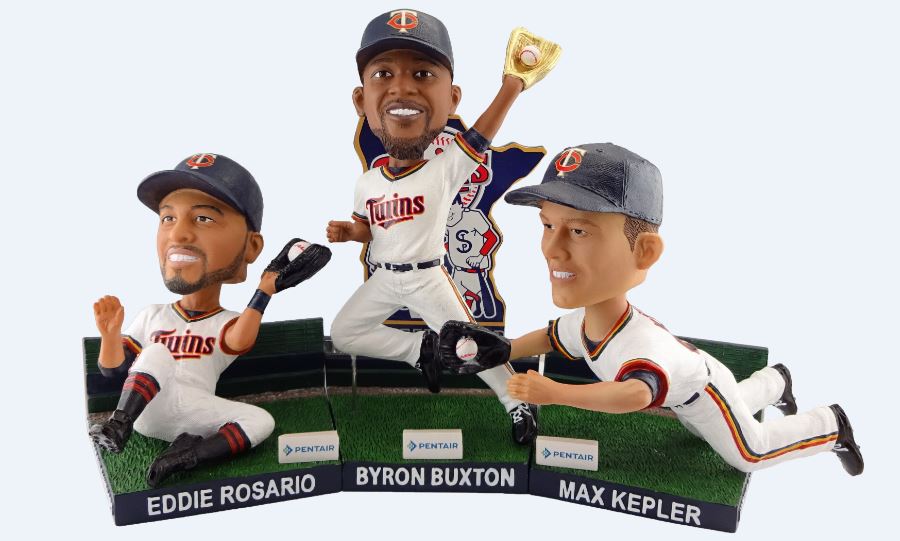
BuckEdMaxHe added that the Twins highly regarded outfield defense offered a bobblehead opportunity that made sense for 2018, and that the Twins wanted to do something unique with that opportunity.

“This year’s Nothing Falls But Raindrops bobbleheads feature Kepler, Buxton and Rosario –all on defense,” he said.  “It’s unique because, while each boblehead can stand alone, they are meant to be a set.  They fit together and interact with each other – also creating the full stadium outfield backdrop.”

It will be busy at the gates this season this season, with the Twins handing out:

  • 65,000 shirts/T-shirts;
  • 60,000 stocking caps;
  • 45,000 baseball caps;
  • 40,000 bobbleheads;
  • 30,00 hooded sweatshirts;
  • 30,000 magnetic schedules;
  • 20,000 tote bags;
  • 20,000 winter flap caps;
  • 10,000 inflatable guitars;
  • 5,000 commemorative pins;
  • 5,000 backpacks;
  • 5,000 pillow cases.

BBRT’S FIVE FAVORITE TWINS 2018 GIVEAWAYS

tchOODIE#1 – Twins Hooded Sweatshirt – Opening Day (April 5)/First 30,000 fans.

Now an Opening Day tradition – a practical way to wear the Twins colors, especially early in the season.

#2 – Nothing Falls But Raindrops Bobblehead Set – June 1, June 22, July 13/First 10,000.

A unique trio of interlocking bobbleheads (Max Kepler-June 1; Byron Buxton-June 22; Eddie Rosario-July 13) that, when put together, give you the Twins outfield trio and the Target Field outfield backdrop.

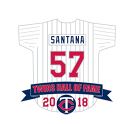
XXPIN3. Johan Santana Twins HOF Pin – August 3/First 5,000.

I collect stadium and ball park event pins (they take up a lost less room than hats or bobbleheads), so this is a great way for me to commemorate the Twins’ two-time Cy Young Award winner. Lots of shelf room? August 4 features a Santana bobblehead.

tcGUIRTAR4. Inflatable Prince Guitar … June 8/First 10,000 fans.

Unique – and uniquely Minnesotan (you won’t get this at any other MLB park) – this Twins giveaway honors the Minnesota Music icon.

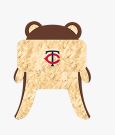
XXTRAPPER5. T.C. Bear Trapper Cap … September 30/First 10,000 12-years-old or younger.

A fun item that the kids can wear all winter (and, as we Minnesotans all know, as September leaves, winter is just around the corner.

For a complete list of Twins giveaways and events, visit the Twins website – links in the Disclaimer box near the top of this post.

BBRT’S NUMBER-ONE 2018 BOBBLEHEAD – THE BABE … IN BOSTON

Babe Ruth started his career on the mound in Boston (with the Red Sox), built a legend as a New York Yankee and wrapped it up with one season back in Boston (with the Braves).  The Braves are celebrating the Bambino’s final season with a September 4, “Babe Ruth as a Boston Brave” bobblehead giveaway (first 20,000 fans).  That’s one I’d really like to have.

_________________________________________________

BBRT’S FAVORITE GIVEAWAY – TEAM BY TEAM

Note: as of this posting, not all teams had released a complete promotional schedule. 

Arizona Diamondbacks … Mother’s Day Tote… May 13/10,000.

xxDbacksTaking Mom to the ball park and she gets a tasteful tote! Wow, your shopping is done; and you’re at a ball game! Start planning now for this one.

Diamondbacks Bobbleheads: Archie Bradley (April 21); Star Wars Paul Solo (June 2); TBD (July 21, September 8).  All first 20,000 fans.

Atlanta Braves … Chipper Jones replica Hall of Fame Plaque … August 10/First 20,000.

xxBravesPicking up a replica of Chipper Jones’ Hall of Fame plaque will be a nice way to honor this long-time Braves star. Speaking of long-time stars, the Braves will celebrate Hank Aaron Weekend June 22-23  – watch for details on that one.

Braves Bobbleheads: Ender Inciarte (April 20); Blooper (April 22); Ozzie Albies Calrissian (May 4); Freddie Freeman (June 15); Chipper Jones (August 18); Babe Ruth (September 4); Mike Foltynewicz (September 15). All first 20,000 except Blooper, first 10,000 14 and under. 

Baltimore Orioles … Buck “Snow”-alter Snow Globe … June 28/First 25,000 15+.

The play on words is enough to ensure the “Buck” stops here in the BBRT favorites list – although if you are taking Mom for Mother’s Day, the May 13 Pashmina Scarf giveaway is looking good.

Orioles’ Bobbleaheads: Dylan Bundy (June 12); Trey Mancini (July 28).  Both first 25,000 age fifteen or over.

Boston Red Sox … Red Sox Socks … July 10/First 10,000 fans.

xxRedSoxWhat’s more appropriate than socks from the Sox?  Now, if they came with stirrups, that would be something quite special.

Red Sox Bobbleheads: Chris Sale (April 13);  Andrew Benintendi (May 25); Jackie Bradley Jr. (June 27); Xavier Bogaerts (July 31); Mookie Betts (September 14); Pedro (September 25).  All first 10,000.

Chicago Cubs …  Cubs Cap-Shaped Umbrella … May 22/First 10,000.

xxcubsWhat could be more appropriate for a rainy day at the ballpark than an umbrella shaped like a baseball cap?  Still, there is one more limited item I really, REALLY, find intriguing: the Cubs “Bottle Opener Sunglasses” given away on July 20 to the first 5,000 (21 and older) arriving for the Budweiser Bleachers.  Now, that is something I just have to have.

Cubs Bobbleheads: Wilson Contreras (May 11); Jason Heyward (June 18); Javier Baez (July 23); Kyle Hendricks (August 15); TBD (September 16).  All first 10,000 fans.

Chicago White Sox … 1983 Replica Road Jersey … June 2/First 20,000.

Harold Baines, Carlton Fisk, Greg Luzinski, Lamar Hoyt, Richard Dawson, five relievers with at least five saves, 99 wins and an AL West title. White Sox fans probably remember this jersey proudly – especially since the crosstown Cubs only won 71 games that season.

White Sox Bobbleheads: Hawk “Solo” (May 19); Jim Thome (August 11). Both for first 20,000.

Cincinnati Reds … Scooter Gennett Bobblehead … June 9/First 20,000.

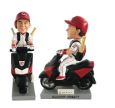
xxredsFew bobbleheads make it to both the BBRT bobbleheads list and as the featured item for a team.  However, when you are honoring a guy named “Scooter” for hitting four home runs and driving in ten runs in a single game, that item deserves recognition. And, if you put this “Scooter” on a scooter, it’s even better.

Reds Bobbleheads: Tucker Barnhart (April 14); Eugenio Suarez (May 5); Scooter Gennett (June 9); Rosie Red (June 30); Fan Vote (August 18).

Cleveland Indians … 1948 Replica Road Jersey …. September 1/First 12,500 fans.

The Indians are celebrating the 60th anniversary of their 1948 World Series Championship – a season in which they were better on the road (49-29) than at home (48-30), if only by the narrowest margin.  It’s appropriate then that part of the celebration include a replica of the road jerseys worn that season by such Indians’ greats as Lou Boudreau, Larry Doby, Bob Feller, Joe Gordon, Bob Lemon and even Satchel Paige (who went 6-1, 2.48 for the Indians at age 41).

Indians Bobbleheads:  Corey Kluber (May 28); Andrew Miller (June 16); Carlos Carrasco (July 12); Edwin Encarnacion (August 29).  Kluber first 15,000 fans, all others first 12,500.

Colorado Rockies … 25th Anniversary Throwback Replica Jersey … June 23/First 15,000.

xxrockiesWay back in the Rockies’ Year One (1993), this jersey was worn by the likes of Andres Galarraga, Vinny Castilla, Dante Bichette, Charlie Hayes – and even future Marlins and Yankees manager Joe Girardi (who played for the Rockies from 1993 through 1995). Nice memento of the first  year of MLB in Denver.  Kids might be interested in the June 10 Junior Fire Marshall Helmet giveaway.

Rockies Bobbleheads: Charlie Blackmon (April 8); Nolan Arenado (July 14). Both first 20,000.

Detroit Tigers  … 1968 Replica Road Jersey … September 8/first 20,000.

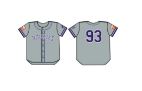
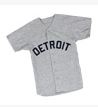
xxTigersOkay, to be fair, the 1968 replica jersey probably should not be number-one – that honor most likely belongs to the Negro Leagues Tribute Game Stars Hat (June 9) or the replica jerseys of the Tigers’ newest Hall of Famers – Jack Morris (August 12) and Alan Trammel (August 26).  But I’m going with the 1968 World Series Champion Tigers replica road jersey for sentimental reasons.  Hall of Famer Eddie Mathews is my all-time favorite player and he got his last major league at bat as a member of the Tigers in the ’68 World Series.  All I’d need to do is put a number seven (Mathews wore seven with the Tigers) on that jersey and I’d be good to go.

Tigers Bobbleheads: Al Kaline (May 26); Nick Castelanos (May 27); Bill Freehan (June 2); Willie Horton (July 7); Mickey Lolich (August 25).  All first 10,000 fans. 

xxAatrosHouston Astros – Replica World Series Trophy … April 6/First 10,000 fans

When you win the World Series, promotional opportunities abound – and the Astros are delivering with everything from replica World Series Championship rings to World Series Championship tote bags to a George Springer World Series MVP bobblehead.  BBRT’s favorite is a Replica World Series Championship Trophy (April 6), although that replica WS Championship ring (April 7) has some sparkle as well.

Astros’ Bobbleheads: George Springer (April 14): Jose Altuve (April 28); Justin Verlander (July 14); Alex Bregman (September 1).  All to the first 10,000 fans.

SALT IN THE WOUND?

Justin Verlander – acquired from the Tigers for a trio prospects in late August of last season (much to the dismay of Detroit fans) – went 5-0, 1.06 for Houston down the stretch and picked up four post-season wins. On July 14, the Astros will be handing out Justin Verlander K-Counter bobbleheads. Who’s in town that day?  The Tigers, course.

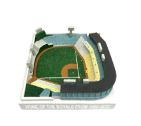
Kansas City Royals … Municipal Stadium Replica … April 14/First 10,000.

xxroyalsGetting a ballpark in a ballpark – you gotta like that.

Royals’ Bobbleheads: Sluggerrr (May 5); George Brett (May 19); Whit Merrifield (June 2); Jeff Montgomery (August 25). All first 20,000 fans.

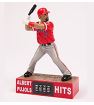
Los Angeles Angels … “Albert Pujols Count Down to 3,000” action figure … April 6.

xxAngelsFuture Hall of Famer Albert Pujols is only 32 base knocks shy of 3,ooo – and lots of lucky Angel Stadium fans will have the opportunity to count down with him … on their very own Pujols Countdown to 3,000 action figure. 

Angels’ Bobbleheads: Andrelton Simmons (May 11); Shohei Ohtani (July 12); Vlad Guerrero (August 10).

Los Angeles Dodgers … Jackie Robinson Replica Jersey … April 15/First 40,000.

Jackie Robinson is legend (as is the Dodgers’ policy of having almost all promotional giveaways reach the first 40,000 fans). This jersey is a fitting tribute – and right at the top of the list of 2018 giveaways for any team. (For the kids, the pick might be the Junior Dodgers Fidget Spinners on May 27 – first 12,000 ticketed fans 14 and under.)

Dodgers Bobbleheads: Kirk Gibson (March 30); Cody Bellinger  (April 21); Corey Seager (May 22); Chris Taylor (May 30 ); Manny Mota (June 9); Kike Hernandez (June 26); TBD (July 14, July 31, August 14, August 22, September 18).

Miami Marlins … Billy the Marlin Pool Float … June 30/While supplies last.

Miami and floating a bright blue pool just seem to go together.

Marlins Bobbleheads: Superhero (July 1); Celebrity (July 29). Listed as while supplies last. 

Milwaukee Brewers … Mini Replica Bullpen Car … June 17/First 20,000.

xxBrewersBullpen cars take me back to my youth, when just about every team had one.  So, I can get hyped for this giveaway.  I’m sure there would be a place for it in my man-cave.

Brewers Bobbleheads:  Eric Thames (April 22); Travis Shaw (May 27); The Gauntlet (June 24); Lorenzo Cain (August 26). Listed for all fans.

New York Mets . .. Mets Cereal Bowl … September 9/First 15,000.

Why a cereal bowl for the list? Because it’s the only one I saw among MLB team giveaways – and a good breakfast is important. I might add that I am also interested in the HR Apple Figurine (June 23) – just because it’s in The Big Apple; and I also was wondering about the Yoenis Cespedes Shin Guard (July 8).

Mets Bobbleheads: Mr. Met – as Hans Solo (May 19); Jacob deGrom (July 7); Noah Syndergaard – as Thor (August 4); Jay Bruce (August 25).  All for first 25,000 fans.

New York Yankees … Didi Gregorius Bat Day … May 12/First 10,000 14-years-old and under.

Nostalgia!  I remember went “Bat Day” was THE day to be a kid and at the ballpark.  In New York, it is again.

Yankees Bobbleheads: David Wells (April 23); Aaron Judge – Jedi Warrior (May 4); Ron Guidry (June 14); C.C. Sabathia (July 27); Brett Gardner (August 31).  All first 18,000 fans; except Judge Jedi for the first 40,000.

Oakland Athletics … “2002 Streak” team t-shirt …. August 18/First 15,000. 

In 2002, when they finished with a 103-59 record, the A’s ran off a remarkable 20-game winning streak. What Oakland fan wouldn’t want a t-shirt commemorating that achievement?

A’s Bobbleheads: Black Panther (May 5); Sugar Skull (September 9).  Both first 15,000

Pittsburgh Pirates … Pirates Oktoberfest Stein … September 22/First 20,000.

Baseball and beer, what more can I say? Oh yeah, baseball and beer in October is especially nice. That’s when I’d put the Pirates Oktoberfest Stein to use.

Pirates Bobbleheads: Vintage (May 19); Sean Rodriguez (June 23); Josh Bell (July 14); The Hulk (July 29); Andy Van Slyke (August 4); Felipe Rivero (September 8). First 20,000 fans for all except The Hulk – limited to those 14-years-old and under,

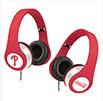
Philadelphia Phillies … Phillies Headphones … April 27/Fans 15-years-old and older.

xxphilliesWe just needed something “tech-ee” on the list, and these Phillies Headphones looked pretty sharp. BBRT also recommends the John Kruk Batting Practice Pullover (June 10) as a more traditional giveaway grab.

Phillies Bobblehead: Brad Lidge (August 5).  Listed for all fans. 

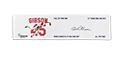
Saint Louis Cardinals … (tie) Bob Gibson Pitching Rubber & Dizzy Dean Watch …. May 18 and August 19/Both first 30,000 age sixteen and over.

xxcardinalsTough choice here, the uniqueness of a pitching rubber (photo) commemorating Gibson’s historic 1968 season (given out May 18) or the more practical Dizzy Dean Watch (August 19). Can’t go wrong either way, why not go to both games? Oh, and there’s a pretty snazzy Rawlings Kids Baseball Glove for those 15 and under (May 20).

Cardinals Bobbleheads: Opening Day Card Parade Mystery Players (April 7); Dexter Fowler (April 21); Chris Carpenter (June 3); Carlos Martinez (June 30); Adam Wainwright (July 14); Mark McGwire (September 16). All first 30,000 age 16and over. 

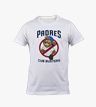
San Diego Padres … Cub Busters T-Shirt … July 14/All fans.

xxpadres2This item makes the list partially because it is  one of only two that actually mentions the competiition (both, interestingly, from California, see the SF Giants’ BBRT-featured giveaway). The “Cub Busters” T-Shirt will be handed out before a Cubs/Padres tilt on July 14.  If you are planning ahead, available sizes will be Youth L and Adult M, XL, 2XL.

Padres Bobbleheads: Tony Gwynn (May 10); Ken Caminiti (May 11); Trevor Hoffman (May 12); Greg Vaughn (May 13); Trevor Hoffman (June 30); Trevor Hoffman (July 28); All listed for all fans.  

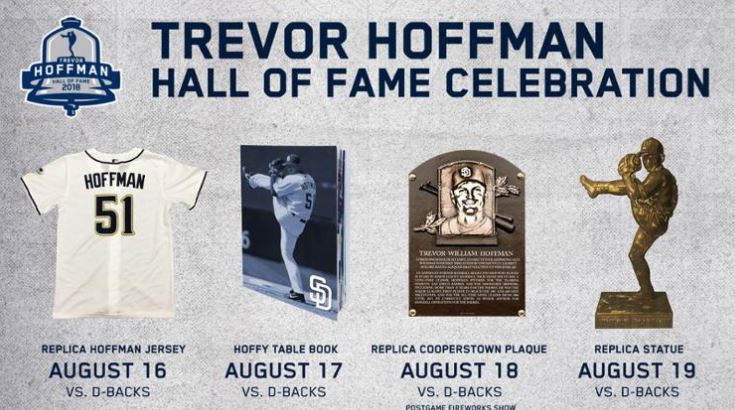
HOFFMAN HALL OF FAME HONORS

xxpadresThe Padres are showing their pride in new Hall of Famer Trevor Hoffman – with a total of eight Hoffman-focused giveaways:   ’98 Bobblehead (May 12); 500th Save Bobblehead (June 30);  #51 Retirement Bobblehead (July 28); #51 Flag (July 29); Replica Jersey (August 16); Hoffy Table Book (August 17); Replica Hall of Fame Plaque (August 18); Statue (August 19). 

San Francisco Giants … Giants/Dodgers Collectors Rivalry Pin … April 8/First 20,000.

xxGiantsThe Giants/Dodgers rivalry stretches from the 1890s to the present day and from the East Coast to the West Coast.  This Rivalry Pin celebrates the the last sixty years of that rivalry – one of the longest-standing and most fervent in baseball history. Throughout the season, the Giants will celebrate their 60th Anniversary in SF with logo items ranging from tote bags to backpacks to blankets.

Giants Bobbleheads:  Willie Mays (April 7); Willie McCovey (June 3); Buster Huggs (August 25). All first 35,000.

Seattle Mariners … Robinson Cano & Nelson Cruz Wine Stoppers … May 25/First 10,000 21+.

There’s no crying in baseball, but there is “wining,” as evidenced by BBRT’s favorite Mariners’ giveaways – Robinson Cano and Nelson Cruz Wine stoppers.

Mariners Bobbleheads: Robinson Cano (March 31); “Han” Seago (May 4); Felix Hernandez (May 19); James Paxton (July 1); Dee Gordon (July 21).  All first 20,000.

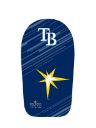
Tampa Bay Rays … Boogie Board … June 10/While supplies last; 14 and under.

xxraysA real local flavor for youngsters 14-years-old and under, as the Rays hand out Boogie Boards. Want a Rays’ tank top to wear when you ride that board? Come back on July 22.

Rays Bobbleheads: Carl Crawford (April 14); Fred McGriff/Tino Martinez (June 9); Akinori Iwamura (August 4); Wade Boggs (August 25); Dan Johnson (September 29). All while supplies last. 

Toronto Blue Jays … Alomar, Molitor, Olerud Triple Bobblehead … August 11/First 20,000.

This history behind this bobblehead is what earned the top ranking. Back in 1993, three Toronto Blue Jays posted the top three American League averages – 1B John Olerud (.363), 2B Roberto Alomar (.326) and DH Paul Molitor (.322). And, they are together again on the Blue Jays’ August 11 Triple Bobblehead giveaway.  Oh yes, and the only other time three players finished 1-2-3 in the batting race was 1893, when the Philadelphia Phillies’ outfield of Billy Hamilton, (CF), Sam Thompson (RF) and Ed Delahanty (LF) finished with averages of .380 (Hamilton), .370 (Thompson) and .368 (Delahanty).

Blue Jays Bobbleheads: Justin Smoak (March 31); Marcus Stroman (June 6); J.A. Happ (July 2); Alomar-Molitor-Olerud (August 11);  All first 20,000.

Texas Rangers … Adrian Beltre 3,000 Hits Mini-Bat … April 20/First 15,000.

xxrangersThe Adrian Beltre Mini-Bat is a nice tribute to a sure future Hall of Famer who already has 3,048 hits, 462 home runs and 1,642 RBI.  BBRT … who likes statistics and print materials … also likes the fact that the Rangers are giving away 20,000 Ranger Yearbooks on June 26.

Rangers Bobbleheads: Adrian Beltre (March 31); Elvis Andrus (April 7); Joey “Hans” Gallo (May 26); Joey Gallo (June 9); Best Friends #1 – Adrian Beltre (June 16); Best Friends #2 – Elvis Andrus (July 21); Vlad Guerrero (August 4); Ted Williams – as a manager (August 5); Nomar Mazara (August 18); Robinos Chirinos (August 28); Rangers’ Captain (September 1).   All first 15,000.

The Rangers and Dodgers are each giving out a MLB-high eleven bobbleheads in 2018. (Free bobbleheads as opposed to Theme Night ticket bobbleheads.)

Washington Nationals … Kids Superhero Cape … May 20/First 10,000 12-years-old and under.

Just about every kid would like to be a superhero. This cape giveaway can give them a head start.

Nationals Bobbleheads: Sean Doolittle (April 13); Max Scherzer (May 4); Ryan Zimmerman (June 8); Bryce Harper (July 6); Anthony Rendon (August 3). All first 25,000.

_____________________________________________________________________

SPECIAL EVENTS/THEME NIGHTS – ALL THE RAGE

Who knows whom or what you might see at a MLB ballpark on a"theme day."

Who knows whom or what you might see at a MLB ballpark on a”theme day.”

Major League teams are also working to bring fans to the ballpark with special event or theme nights (which usually, but not always, involve a special … and specially priced … ticket package). These events are designed to enhance the fan experience; create a sense of community around a shared cause or concern, location or institution,  activity, vocation, or ethnicity; and, of course, sell tickets.  How popular are these special events?  As I put together this post in early March, not all the teams had completed or announced their full Special/Theme Event schedules – and I was still able to identify just over 500 such events across MLB. 

These events usually include a special experience (like wine or craft-beer tasting, a yoga class or a chance to attend a game with your dog) and/or an exclusive commemorative item (like a limited edition bobblehead, unique baseball cap or t-shirt, team-identified wine glass or beer stein).  Their focus is varied. Some are tied to pop culture (Star Wars Day, Jerry Garcia Night), others to baseball events (World Series anniversary celebrations), specific causes (cancer, autism, Alzheimer awareness), appreciation for specific groups (military, law enforcement, teachers), specific activities (needlework, yoga, youth baseball/softball), ethnic heritage … and the list goes on and on.  Note: In many cases, a portion of the cost of the ticket package is donated to a specific cause or group.

VEGAN NIGHT – AMONG THE MOST UNIQUE 2018 MLB THEME EVENTS 

The Pittsburgh Pirates (as of this writing) are the only MLB team holding a VEGAN NIGHT … when a special event ticket provides pre-game access to an exclusive vegan menu in the Pirates Picnic Park.  BBRT query: Is beer vegan? I hope so.

Running a close second were the Texas Rangers with two unique events:

  • Beltre the Giraffe’s Birthday (June 8) … Celebrating the first birthday of the Fort Worth Zoo’s giraffe Beltre, with a special Beltre the Giraffe Bobblehead
  • Last Chance Theme Night (September 21) … A second chance for those who may have missed a particularly coveted exclusive theme night commemorative. Buy a special ticket and pick up one of the leftover items from theme nights held throughout the season.

Here are a few observations from BBRT’s review of 2018 Special/Theme Events Calendars:

  • College Nights – usually involving a co-branded baseball cap are extremely popular. The Texas Rangers alone have slated events honoring thirteen colleges and universities.
  • Star Wars is the focus of at least 19 theme nights, making it an MLB pop culture All Star.
  • Allowing fans to bring their “best friend” (canine, that is) is most popular in Pittsburgh, where the Pirate have scheduled eleven occasions when you and your BFF (Best Furry Friend) can take in a ball game.
  • Firefight/Military/Law Enforcement Appreciation Days/Nights are also popular.
  • There also are a good number of events focused on wine- and beer-tasting, needle arts (Stitch N’ Pitch slated by five teams) and yoga.
  • Also of interest to BBRT were the Zubapaloozas (three teams); Grandparents Days (two teams); and World Wrestling Entertainment Night (one team).

______________________________________________________

Being from Minnesota, I’d also like to take a closer look at the:

TWINS SPECIAL EVENTS AND THEME NIGHTS

Here is a list of Theme Events and the promotional items that go with the special ticket.  In each  case, the event also includes, of course, a ticket to that day’s game.   For full  (and the most up-to-date) details, check out the Twins Theme Events schedule on the team website.  There is a link in the disclaimer box near the top of the post.

-University of Minnesota Night … April 27

Participants receive a co-themed Twins/U of M Cap; great for U of M students, staff and alumni. Goldy Gopher will also make an appearance – and a portion of each ticket package goes to the U of M Alumni Association.

-Minnesota Lynx Night … May 1

Celebrate the Lynx’ successful franchise with a co-branded Twins/Lynx cap. Lynx Mascot Prowl will be in the house – and a portion of each ticket package will go to support the Positive Coaching Alliance.

-Scrubs Night … May 16

The Twins salute area health care professionals with Twins hospital scrub pants – a nice complement to last year’s Scrubs Night scrubs top.

-Minnesota United Night … May 21

Soccer fans “Unite” at Target Field, and receive a co-branded Minnesota United/Twins scarf. PK Loon will be on hand.

BBRT TOP TWINS THEME NIGHT – STAR WARS – MAY 22

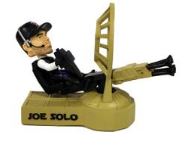
XXSTARWARSThe special gift for this one is a “Joe ‘Solo’ Mauer Millennium Falcon Bobblehead.”  Joe is sitting in the gunner bay in this unique bobblehead that features moving parts and sound.

-Wine, Women and Baseball … June 1, July 12, August 17.

Start your evening with a pre-game hospitality event at Loews Minneapolis Hotel – wine tasting, appetizers and desserts – and take home a Twins Leather Clutch Wristlet.

-SKOL Night … June 1

Proudly wear your new Vikings purple and gold SKOL/Twins cap. A portion of each special ticket package will go to support the University of Minnesota Children’s Hospital.

-Margaritaville Night … June 2

You’ll know it’s five o’clock somewhere when you wear your exclusive Margaritaville-inspired Twins Hawaiian shirt.

A PRINCE OF AN EVENT … JUNE 8

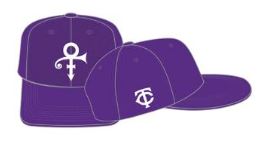
XXpRINCEPrince fans purchasing this special package will receive this co-themed Prince/Twins purple cap. Arrive among the first 10,000 fans at the gate and you can add an inflatable Prince Guitar.

-Faith Day … June 10

This day features a post-game program with live music from the Eagle Brook Church music team and testimonies by Brian Dozier, Kyle Gibson and other Twins.

-University of St. Thomas Night … June 20

Show your colors with a purple and gray Twins/St. Thomas cap. “Tommie” will make a Target Field appearance – and a portion of the package price will go to the St. Thomas Alumni Association.

University of North Dakota Night … July 6

Be true to your school with an exclusive UND/Twins cap – with a portion of each package price going to the UND alumni Association.

-Pride Night … July 9

This package includes an exclusive Minnesota Twins Pride Night cap – and a portion of each package will go to support One Heartland.

-South Dakota State University Night … July 12

Wear your new SDSU/Twins co-themed cap with pride – and a portion of the package price goes to the SDSU Alumni Association.

-College of Saint Benedict/St. John’s University Night … July 30

How about a three-themed hat – CSB/SJU and the Twins; with a portion of the package price supporting the CSB/SJU Alumni Association?

Cancer Awareness Night – August 14

XXCANCEROn Cancer Awareness Night, participating fans will be able to select a Twins cap in colors that reflect the cancer charity of their choice – and know that a portion of their package price will go to local non-profit organizations to support cancer awareness and research.

North Dakota State University Night … August 16

Top your Target field experience off with a co-themed NDSU/Twins cap – and have a portion of your package cost go to the NDSU Alumni Association.

-Twins Sportsmen’s Flannel Night … August 18

XXFLANNELWow, a ball game, a Joe Mauer Signature Flannel shirt AND a portion of the package price supports Pheasants Forever.  You’d have to hunt far and wide for a better ballpark deal.

-Yoga Night … September 8

This package includes a September 5 yoga class, your ticket (of course) to the September 8 Twins game and a special edition Twins Yoga Mat.

-Minnesota Wild Night …. September 12

Winter’s just around the corner and you may need the exclusive co-branded Minnesota Wild/Twins winter beanie that comes with the package,  Also a special; appearance by Nordy – and a portion of each package goes to support the Ronald McDonald House.

-Minnesota Timberwolves Night … September 25

Cheer on Crunch from under your Twins/Timberwolves co-branded cap – and know a portion of each package price goes to support the Positive Coaching Alliance.

-Love Your Melon Night … September 27

This package includes a Twins Love Your Melon knit beanie and a portion of each package goes to support Love Your Melon, a program focused on providing hats to children battling cancer.

-Zubapalooza  … September 28

Pretty self-explanatory (and popular), this package gets you into the ball game – and into your very own pair of stylish Twins Zubaz!

PRE-GAME HALL OF FAME CEREMONIES

The Twins are also planning pre-game Hall of Fame Ceremonies for Jack Morris (August 18) and Jim Thome (August 25). 

_______________________________________________

DISCOUNTS AND MEAL DEALS

If you follow BBRT, you know how much I love a bargain.  For Twins Fans, here are a few of the bargains available at Target Field.

 TICKET DISCOUNTS …

FOR SENIORS

Treasure Island Resort & Casino Senior Days … All weekday day games.

Fans 55 and better receive a $5 discount on Field Box, Treasure Island Cove and Left Field Bleacher tickets for all weekday day games. Offer available by phone and in-person only. Tickets subject to availability. Not available for April 5.

FOR VETERANS AND ACTIVE MILITARY

Military Discount sponsored by FOX Sports North … Monday through Thursday.

Active military members or veterans with a valid ID can purchase up to four half-price Home Plate View tickets for every Monday through Thursday game.  Available at GovX.com or day of game at Target Field.  Visit twinsbaseball.com/military for accepted forms of ID. Not available April 5.

FOR STUDENTS

Student Day presented by Rasmussen College … Every Wednesday game.

Every Wednesday, Ballpark Access tickets are just $5 for students. Plus students can download a free Metro Transit ride pass.  Visit twinsbaseball.com/student to sign up to purchase tickets through the MLB Ballpark app and to download the free ride pass. Tickets are also available on the day of game at the Target Field Box Office beginning at 9 am. Limit one ticket per student with valid ID.

MEAL DEALS …

CUB FAMILY SECTION … with media partner FOX Sports North

Tickets in the alcohol-free family section include a FREE Schweigert™ hot dog and Pepsi — available at the Mill City Grill by Section 318.

KIDS DAY … presented by Gillette Children’s Specialty Healthcare – Every Sunday

On Sundays, Kids Meals are half price – just $4 – at the Hennepin Grille by Section 311 and Taste of Twins Territory by Section 124.  In addition, before the game, kids 12 and younger can play interactive games and get free autographs from a Twins player. Postgame, kids can run the bases.

U.S. BANK MEAL DEAL … Every Tuesday

Every Tuesday, when you purchase a U.S. Bank Home Run Porch View ticket, you receive a FREE Schweigert™ hot dog and Pepsi – at the Hennepin Grille by Section 232 and The Deck Section U, and at Taste of Twins Territory by Section 234.

SCHWEIGERT™ DOLLAR-A-DOG DAY … Every Wednesday.

At Wednesday games, hot dogs are just $1 – at the Hennepin Grille and Taste of Twins Territory concession stands.  Limit 20,000 per game; two per person

_______________________________________________________

FINALLY (WHEW!) …

BBRT’S 2018 FREE BOBBLEHEAD ALL STAR TEAM(S)

CURRENT

     C – Tucker Barnhardt

    1B – Freddie Freeman

     2B – Jose Altuve

     3B – Nolan Arenado

     SS- Andrelton Simmons

     OF – Bryce Harper, Mookie Betts, Charlie Blackmon

     DH – Aaron Judge

     P – Max Scherzer

ALL -TIME

     C – Bill Freehan

     1B – Willie McCovey

     2B – Roberto Alomar

     3B – Wade Boggs

     SS – Adrian Beltre (a little desperate here, but he did play 7 MLB games at SS)

     OF – Willie Mays, Vlad Guerrero, Tony Gwynn

     DH – George Brett

     SP – Babe Ruth (Hey, he was a pretty fair hurler – and I get his arm and his bat.)

I tweet baseball @DavidBBRT

Follow/Like the Baseball Roundtable Facebook page here

Member: Society for American Baseball Research; The Baseball Reliquary; The Negro Leagues Baseball Museum.
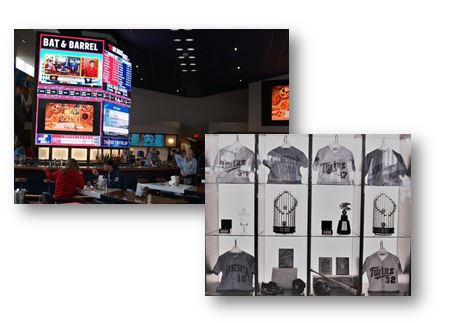
An Historic 39 Seconds … Telling the Remarkable John Wesley Donaldson Story

In 2011, Peter Gorton (baseball fan, researcher and writer) showed a group of veteran major league scouts a 39-second film of a rangy, African-American southpaw. The verdict was unanimous, an electrifying talent, referred to by one scout as “a left-handed Bob Gibson.”

Video of John Donaldson. Courtesty of W.T. Oxley and the Donaldson Network.

Courtesty of W.T. Oxley and the Donaldson Network.

That cinematic audition did not, however, lead to a professional contract. The fact is, the film was shot in 1925 and featured John Wesley Donaldson – a pitcher who ultimately amassed more than 400 wins, 5,000-plus strikeouts and was hailed by Hall of Fame manager John McGraw (and others) as “the greatest I have ever seen.”

That film clip has, however, been part of the force behind a documentary film project (appropriately titled 39 Seconds) detailing the life (and, importantly, the times) of left-handed hurler John Wesley Donaldson.

A FEW OF JOHN DONALDSON’S DOCUMENTED ACCOMPLISHMENTS*

  • 404 victories
  • 5,034 strikeouts
  • 13 no-hitters; two perfect games
  • A 31-strikeout game (18 innings)
  • 33 games of 20 or more strikeouts
  • Three consecutive 500-strikeout seasons
  • A winning percentage of more than .700

*You can put an “at least” in front of all these statistics. These are just the victories and strikeouts documented thus far by The Donaldson Network.

The discovery of that 39 seconds of historic footage was part of the work of Peter Gorton and The Donaldson Network – an organization dedicated to generating the recognition (and someday the Baseball Hall of Fame plaque) that Donaldson deserves. Gorton (in an effort involving more than 500 researchers) has spent 17 years documenting and bringing John Donaldson’s achievements to light and is now working with Tru Ruts Films, 612IM and the Negro Leagues Baseball Museum to bring Donaldson’s career to life on the big screen. (The project begins shooting this summer).

Baseball Roundtable will take a closer look at Donaldson’s career a few paragraphs down the page, but first a bit of background on this historic film project  – and a look at how you can be part of it.

THE FILM

39 Seconds39 Seconds will tell the Donaldson story with a combination of interviews with those who knew (or knew of) Donaldson and scenes from the times recreated by actors, historic film and still images. It will not only look at Donaldson’s achievements on the ball field, but also put his life in the context of the times – giving viewers a look at how baseball and American society changed over Donaldson’s lifetime.  For more on the project and the story it will tell (including comments from Negro Leagues Baseball Museum President Bob Kendrick), click here and scroll down.

Gorton, who has written numerous articles and made presentations on Donaldson across the country, said the film was a next step that made a lot of sense.

“I could have written a book” he explained, “but – in these times – telling the story in film seemed like the most effective way to get people to sit down and literally open their eyes to his (Donaldson’s) greatness.”

Gorton added that the timing of 39 Seconds also seemed right, citing the verification of Donaldson’s statistics, the Donaldson Network’s success in getting the player into the Missouri Sports Hall of Fame and even the movie “42.”

“We’ve reached the point where we have thoroughly documented his legacy,” Gorton said, noting that The Donaldson Network has collected more than 6,000 newspaper articles on Donaldson alone.

“Ten years ago, we weren’t ready to prove that the Donaldson story was not just myth or legend,” he said, adding that he spent May of 2012 through Thanksgiving of 2016 digging through those thousands of articles and other resources – verifying the stories and the statistics.

The Center for Negro Leagues Baseball Research has called the Donaldson Networks’ efforts “The most extensive research project that has ever been undertaken related to Black baseball.

“We now know that, if anything, his achievements are underrepresented,” Gorton added.  “We do have gaps, when we know Donaldson was pitching pretty much every Sunday, but we can’t find acceptable documentation. But every one of those 400-plus wins and 5,000 plus strikeouts is backed but solid evidence.”

The movie “42” also showed that a film focusing on the trials faced by African-American baseball players could both make a statement and draw an audience, Gorton continued.

In addition, Donaldson’s election to the Missouri Sports Hall of Fame last year provided both validation and energy to the project.

The documentary will look at more than Donaldson’s on-field accomplishments, Gorton said.

John Wesley Donaldson Photo: Courtesy of The Donaldson Network.

John Wesley Donaldson
Photo: Courtesy of The Donaldson Network.

“John Donaldson knew, from a very early age, what it took for a Black man to survive in the segregated world,” he said.  “He was a great ballplayer, but his life is an extraordinary example of what it was like to be Black in America. He endured his father being murdered by a railroad cop in 1923. His ability to navigate the miles and play baseball in at least 25 states and over 550 cities meant he showed exceptional courage to merely survive. That’s another part of his story that needs to be told.”

WANT TO BE PART OF 30 SECONDS?

“39 Seconds” is running a Kickstarter fundraising effort through the end of March.  If you are interested in being part (big or small) of this effort – and helping to move this project forward and shining more light on the Donaldson legacy. – you can get more information by clicking here.

__________________________

NOW HOW ABOUT A LOOK AT JOHN DONALDSON’S BASEBALL CAREER

NOTE: The historic background here is updated from an ealier BBRT post promoting Donaldson’s inclusion in the the Basebal Hall of fame.

John Donaldson’s playing career touched four decades (1908-1941) and he wore the uniforms of at least 25 teams and took the mound on more than 550 ball fields.  Donaldson’s collection of home jerseys stretched from coast-to-coast and in between – Brooklyn Royal Giants, Chicago American Giants, Kansas City Monarchs, Los Angeles White Sox. In BBRT’s home state of Minnesota, Donaldson twirled his mound magic for teams in Bertha, Lismore, Madison, Melrose, Arlington and St. Cloud.  He also starred internationally, pitching for several Canadian squads.

Over his 34-year career, Donaldson pitched pretty much wherever he could draw a crowd and a paycheck and against pretty much anyone willing to step in the batter’s box and face him. But, I’m getting ahead of myself.

John Wesley Donaldson was born February 20, 1891 in Glasgow, Missouri. It’s reported that he was a good student and a superb athlete. He began pitching in grade school and, as a sixth-grader, led his school’s team to the regional championship.

As a teenager, Donaldson pitched for the Missouri Black Tigers (Higbee, MO) in 1908 and the Hannaca Blues (Glasgow) in 1909-1910.  Donaldson, however, really began building his reputation as the “greatest colored pitcher of his time” when he left college and joined the Black barnstorming Brown’s Tennessee Rats in 1911. During that season, Donaldson won 41 games against just three losses – foreshadowing a long and successful career on the mound.

JOHN DONALDSON GOES 18 INNINGS – FANS 31

On September 14, 1911, John Donaldson took the mound for the barnstorming Brown’s Tennessee Rats versus a team from Humboldt, Iowa.  The Rats won 4-3 in 18 innings, with Donaldson tossing a complete game and fanning 31 batters.

donaldsonposterIn 1912, Donaldson moved to the All Nations multi-racial team operated by future Hall of Fame baseball executive J.L. Wilkinson. The All Nations team – composed of Black, White, Native American, Latino, Hawaiian and Asian players – was one of the country’s most successful barnstorming clubs. Donaldson proved one of the most dominant pitchers in the game while with the All Nations squad.  In his first two seasons, he won eighty games, while losing only five – consistently racking up double-digit strikeout totals.

The National Baseball Hall of Fame (enshrined in 2006) executive/entrepreneur J.L. Wilkinson termed John Donaldson, “One of the greatest pitchers that ever lived – white or black.”

The year 1917 was a notable one for Donaldson.  It was the year the major leagues came calling. Reports show that Donaldson was offered $10,000 to travel to Cuba, change his name and return to the U.S. to play big league ball as a Cuban.  The major league offer required him to renounce his family and all association with “colored” people in order to maintain his “Cuban” identity. Donaldson flatly refused the offer and, with that refusal, lost his only shot at the all-white hallowed fields of the major leagues. That same year, the impact of World War I reached America.  The baseball season closed and the All Nations team was dissolved. Pressure from the looming Railway Control Act grounded the ability of barnstorming clubs to travel. For the next few years, Donaldson’s career “settled” and he enjoyed “home field advantage” for the first time since his teenage years (although with a number of different established clubs.)

Just as Donaldson’s on-field life settled in 1917, he settled in off the field as well – marrying Eleanor Watson of Minneapolis, Minnesota. Donaldson’s marriage lasted until his death in 1970 and had an impact on both his baseball career and Minnesota’s baseball history.

Donaldson’s next contracts were signed with a series of top-notch All-Black teams including the Brooklyn Royal Giants, New York Lincoln Giants, Indianapolis ABC’s and Detroit Stars.  When the Negro League was officially formed in 1920, Donaldson was again paired with his old boss, J.L. Wilkinson, who signed him for the Kansas City Monarchs. Donaldson would become one of the best centerfielders in the league. He anchored the Monarchs with his five-tool ability, pitching less and presiding over a club that would become the most successful franchise in the history of Negro League baseball. During his tenure with the Monarchs (1920-23), Donaldson also played for and managed the revived All Nations barnstorming team, now traveling by automobile.

In 1924, Donaldson returned to his wife Eleanor’s home state of Minnesota – signing a contract with the semi-pro Bertha Fisherman for the princely sum of $325 per month. (BBRT note: It is reported the Donaldson received $1,478 for his season’s work – $18 more than the combined salary for the rest of the Bertha squad.)  It was a solid investment, as the team won games, drew large crowds and turned a profit behind Donaldson’s electrifying left arm. Donaldson’s record was 21-3 and he struck out 325 batters in 211 innings. He also led the team with a .439 batting average.

DONALDSON FANS SIXTEEN MAJOR LEAGUERS

The date was December 9, 1917 and the Los Angeles White Sox were facing the California Winter League defending Champion San Pedro Merchants in San Pedro.  (BBRT note: The California Winter League is generally recognized as the first U.S.  Integrated league in the 20th Century. The teams themselves were not integrated, but all-Black teams were included in the league.)

On the mound for the LA Team was John Wesley “Cannonball” Donaldson, star hurler from the barnstorming All Nations squad – considered by many to be “the greatest colored pitcher of his time.”  Starting for San Pedro was Pete Schendler – a 20-game winner for the Cincinnati Reds during the 1917 National League season. The San Pedro lineup, in fact, was made up of all major leaguers.

The Los Angeles squad emerged as 5-3 victors.  Of even more significance is the performance of Donaldson against San Pedro’s all-white, all-major league squad. Donaldson pitched a complete-game, six-hitter, fanning sixteen batters.

Donaldson followed up with a stellar season for Bertha in 1925, before moving on to the Lismore (MN) Gophers in 1926.  Lismore signed the profitable lefty for $450 a month, the use of a furnished house and the opportunity to pick up extra money pitching for other teams on off-days.  Not to be repetitious but – continuing to go where he could make the best living on the mound – from 1928 to 30, Donaldson racked up wins and strikeouts for teams in towns like: Bertha; Melrose, Minnesota; Scobey, Montana; and St. Cloud, Minnesota; as well as for barnstorming squads like the Colored House of David.

SHOWING SATCHEL PAIGE THE WAY

Negro League all-time great Buck O’Neil once (maybe more than once) said …”Josh Donaldson … showed Satchel (Paige) the way. And, the fact is , there are many people who saw them both who say Donadlason was just as good as Satchel “

In the early 1930’s, Donaldson – now entering his forties – played for such squads as his own John Donaldson All Stars (1931-33); The Kansas City Monarchs (1931 and 1934); Joe Green’s Chicago Giants (1934-37); and even Satchel Paige’s All Stars. Even as his career wound down, he continued to display the skills that had made him one of the most sought after ballplayers over the previous two decades.

JOHN DONALDSON RECORDS 23-STRIKEOUT GAME … AT AGE 43

On June 3, 1934 – the then 43-year-old John Donaldson – went to the mound for Joe Green’s Chicago Giants against the People’s Club in Rockford, Illinois. Donaldson threw a complete-game, one-hit shutout, fanning 23 batters on the way to a 3-0 win.

While Donaldson clearly made history on the field, he is also credited with making it off the field.  In 1949, the Chicago White Sox hired Donaldson as the first full-time African-American scout in the major leagues.  The White Sox drew on Donaldson’s half-century of experience in segregated baseball to help connect the team to the untapped talent of the Negro Leagues and Black baseball.

Ultimately, BBRT sees 39 Seconds as a documentary film that deserves to be made … and John Donaldson as a ballplayer who deserve to be in teh Baseball Hall of Fame.

PETE GORTON … AND THE DONALDSON NETWORK

BBRT note: This post … and the “39 Seconds” project would not have been possible without the considerable efforts of Pete Gorton and the resources of The Donaldson Network.  Gorton, who lives in Minneapolis, is a speech consultant and member of the Society for American Baseball Research (SABR) Negro Leagues Committee. He has studied the career of John Donaldson for the past 17 years; and shared in the SABR/ Sporting News Research Award for his chapter on Donaldson in the book “Swinging for the Fences: Black Baseball in Minnesota.” He also received the 2006 Coates Memorial Award for outstanding research in the field of Black baseball and the 2011 Tweed Webb Lifetime Achievement Award (recognizing long-term contributions to the field of Negro League research).

MINNESOTA PRIDE

As a Minnesota, BBRT takes special pride in John Donaldson’s accomplishments. He played for or against teams in more than 130 towns and cities across the state. Nearly 150 of Donaldson’s documented victories were recorded on Minnesota ball fields, as were approximatelty 1,900  of his documented 5,034 strikeouts.  In 189 documented games pitched in Minnesota, Donaldson averaged just over 9.9 strikeouts per contest. Segregation in the major leagues forced Donaldson to seek baseball stardom in the Gopher State and Minnesota benefitted.

I tweet baseball @DavidBBRT

Follow/Like Baseball Roundtable’s Facebook page here.

Member: Society for American Baseball Research; The Baseball Reliquary; The Negro Leagues Baseball Museum. 
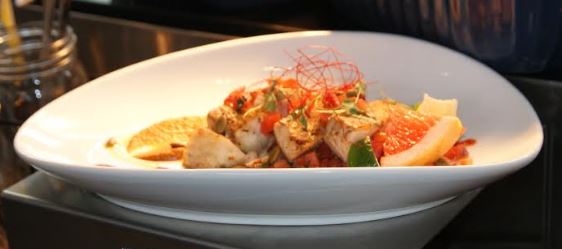
A Signature Look at Baseball History … Guest post by a dedicated autograph seeker

Why I Love Baseball – How my Autograph Collection

Furthered my Interest in Baseball’s Past

 Guest Post by Scott Perry

I’ve been incredibly interested in history for as long as I can remember. Presidents, pioneers, major battles – you name it, I’ve likely studied it at one time or another.

At the same time, I’ve always been passionate about baseball. I grew up playing the game daily and watching it on TV practically every night. These were the days when names like Ken Griffey Jr., Frank Thomas, or Cal Ripken Jr. were at the tip of the tongue whenever kids were asked “Who’s your favorite player?”

It only seems right when, in retrospect, I consider how my passion for the national pastime’s unique heritage has grown. In many ways, my ever-expanding interest in baseball’s history fueled another passion: collecting autographs form the players who helped shape that history.

Starting my Collection

I was a typical 9-year-old kid in the summer of 1996, who – despite spending a ton of time outdoors with friends – would also find myself “bored” from time to time. One day that summer, I decided to try something new to help alleviate my boredom: I wrote a letter to the legendary Hank Aaron. I sent that letter to the Atlanta Braves’ ballpark, the address of which I found listed in a Sports Illustrated for Kids magazine.

wwhankMuch to my surprise, a large, manila envelope arrived in the mail for me a few weeks letter. In it was a letter from Hank Aaron, thanking me for my note, as well as an autographed 8 x 10 photo.  I was amazed and felt like I had been gifted this unique, precious thing that hardly anyone else had. I grabbed an old 8 x 10 frame that my Mom no longer used, put the autographed picture in it, and promptly hung it in a place of honor in my bedroom.

The success I experienced in getting a signed photo from Hank Aaron prompted me to try my luck with a number of other legendary ballplayers. So, I wrote to Hall of Famers like Ted Williams, Bob Feller, and Stan Musial – players who, in my mind, helped write the history of the game. Each piece of return mail I received from these legends was exhilarating; amplifying my love of baseball and prompting a deeper examination into its history and that of its most notable figures. I used the process not only to expand my baseball knowledge, but also to determine whom I should contact next. I was hooked.

Learning of Memorable Men and Moments from Baseball’s Past

Like many, when I first began my hobby of collecting autographs, I only knew of the ultra-famous names associated with baseball’s past. Think of names like Ty Cobb, Honus Wagner, Babe Ruth or Mickey Mantle. As I began digging deeper, however, I learned that there was a large number of ballplayers in the Hall of Fame, many of them living, and most of whom I had never heard.

I read about these men, about their accomplishments and career statistics. Then I began to write them, asking for autographs. Soon enough, I was getting signatures in the mail from Hall of Famers like George Kell, Robin Roberts, Lou Boudreau, Duke Snider, and more.

Recognizing Unique Characters and Moments

 While I especially cherished (and still do) getting autographs from Hall of Fame players, my own studying soon led me to understand that there were incredibly interesting players not enshrined in the Hall of Fame, each of whom contributed in one or more ways to baseball’s wonderful past.

wwfidI learned about Mark “The Bird” Fidrych, the 1976 AL Rookie of the Year and quirky pitcher who made a name for himself yelling at the baseball while he pitched, among other antics. Soon enough, I had a signed picture of Fidrych to add to my collection.

I also learned about the famous “Shot Heard Round the World,” when Bobby Thomson hit a ninth-inning home run off of Brooklyn’s Ralph Branca to send the New York Giants to the World Series.  This bit of baseball history set me on a quest to get the signatures of both Branca and Thomson. Just as these two players were connected in baseball lore, I wanted them to be connected in my collection. That turned out to be the most nerve-wracking collecting challenge I have faced.

First, I sent the card to Branca and got his signature. I next mailed the card to Thompson, who countersigned the card and added the famous October 3, 1951 date between the two signatures.  Why was this so nerve-wracking? It took a while to get both signatures, and I worried that I might lose my new Branca autograph when I popped it back in the mail to go to Thomson!   For a youngster, the few weeks I had to wait for the card to return seemed like an eternity. Ultimately, however, I had an autographed card to commemorate this unique baseball event and the players who created it.

I was also intrigued by Dodgers outfielder Al Gionfriddo’s incredibly famous catch of a Joe DiMaggio line drive during the 1947 World Series. Though Gionfriddo’s career wasn’t overly notable, the picture of him making that catch in such a huge game was a defining image of 1940s baseball. In an old, beat-up baseball book I found a copy of this picture – and I promptly cut it out and sent it to Gionfriddo for him to autograph, which he so kindly did.

I’ve also worked to collect the signatures of some of baseball’s most unique characters.  Perhaps the most peculiar player whose autograph I’ve received is Bill “Spaceman” Lee. He was a great pitcher and has nearly 120 MLB victories under his belt. However, he had a very unusual personality and was known for his off-field behavior probably more than his on-field results.

The Race in ’98 to Beat Maris’ Record

My collection and interest in baseball history was really surging back in the summer of 1998. As any baseball fan knows, that was the summer when Mark McGwire and Sammy Sosa were racing against each other to be the first to break Roger Maris’ record of 61 home runs in a single season.

Photo: SABR.org

Photo: SABR.org

In the midst of this home run craze, I learned about a man named Joe Bauman who had actually hit more home runs than Roger Maris did. Bauman accomplished this feat in 1954, when he hit 72 home runs in a season for a minor league team named the Roswell Rockets. Despite his tremendous power, Bauman never made it up to the major leagues. He never became famous, and his name lived on only as a piece of arcane baseball trivia.

My curiosity was piqued. Why wasn’t anyone talking about Bauman? Why wasn’t he in any of my baseball books? I was determined to write to him, get his autograph and recognize his accomplishment in my collection. Yet, I couldn’t find his name and address anywhere.

Turns out he was living a normal life in Roswell, New Mexico, where he had run a gas station after his playing career ended. After days of searching, I finally discovered an address in the white pages and sent off a letter hoping it was to the right Bauman. Weeks later, an envelope from New Mexico appeared in my mailbox, and in it were a signed card and a note from Bauman thanking me for my letter and for remembering him.

I was thrilled. It was one of the highlights of my summer in 1998 – even more exciting to me than watching McGwire and Sosa finally eclipse 61 homers.

My Favorite Autograph

As I reflect on my collection, the Aaron autograph always stands out. It was the first real autograph I received in the mail, as well as the response that fueled my passion and laid the foundation for my collection.  Still, my most prized autograph is probably a signed 8 x 10 from Reggie Jackson. The story behind it is this:  While still a young kid, I drew a picture of Jackson wearing his pinstripe Yankees uniform and sent it to him. Jackson actually sent me a note back saying he liked the drawing and asked if he could include it in his newsletter. Wow!

Of course, I wrote back quickly, more – way more – than happy to give my permission. About two weeks later, a glossy, full color, personalized and autographed 8 x 10 photo of Jackson arrived in the mail. It was awesome.

My Collection Since

As time has gone by and I have grown up, the “busy-ness” of life has often taken precedence over watching ball games and reading about baseball’s past. College, a job, family, and increasing responsibilities will do that kind of thing to you.

Yet whenever I get a moment here or there, I still manage to send out an autograph request or two. My growing collection now includes autographs from over 500 major league ballplayers, signatures of men who played from the 1930s to today. My collection includes autographs from Hall of Famers, perennial Gold Glove winners, World Series MVPs, as well as from men who only played a handful of games in the big leagues.

Cracking open the multiple binders I have that are filled with autographs takes me back to my childhood, in many ways. It also reminds me of the colorful, poignant, and timeless game that I love, and of the legendary ballplayers and moments that made it what it is.

This is one of the reasons why I love Baseball.

SCOTT PERRY AUTOGRAPH COLLECTION ALL STAR TEAM

Note: Includes only players whose autograph I received free of charge through the mail.

                    RF: Hank Aaron

                    CF: Duke Snider

                     LF: Stan Musial

                     3B: Mike Schmidt

                     SS: Ozzie Smith

                     2B: Bobby Doerr

                     1B: Ernie Banks

                     C:   Jorge Posada

                     SP: Nolan Ryan

                     RP: Trevor Hoffman

About the Author

Scott Perry is the founder of Catchers Home, a website dedicated to Baseball and Fastpitch Softball Catchers. Catchers Home provides educational articles for Catchers, as well as reviews of all types of catcher’s gear. Check out his site over at www.catchershome.com.

Baseball Roundtable thanks Scott for sharing is autograph-seeking experiences.  Perhaps it will inspire some readers to head to the post office for stamps.  Or inspire additional readers to contribute their “Why I Love Baseball” stories.  


I tweet baseball @DavidBBRT

Follow/Like the Baseball Roundtable Facebook page here

Member: Society for American Baseball Research; The Baseball Reliquary; The Negro Leagues Baseball Museum.
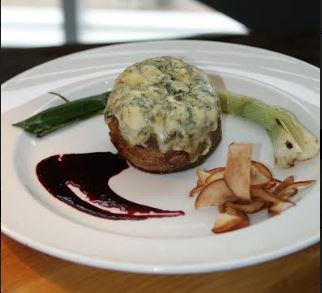
Putting the Ball in Play … MLB’s .300-hitting Teams

Fenway park photo

Photo by davidwilson1949

A team hitting .300 for the season … It hasn’t happened for 68 years, but it’s not as rare as you might think.  In fact, there have been 73  .300+-hitting teams – from the 1871 National Association Philadelphia Athletics, Boston Red Stockings and Troy Haymakers to the 1950 Boston Red Sox.  Let’s look at the 1950 Boston Squad, the most recent team to rake at a .300+ pace for a full season.  Note: You’ll find a full list of .300-hitting MLB team at the end of this post. 

The Red Sox’ .302 team average was 31-points above the overall American League average and 20-points above the Tigers and Yankees, who shared the second-best AL team batting average at .282.   If you take out the Red Sox’ numbers – the rest of the league hit just .266. It was not enough to bring the Red Sox the pennant, however.  That went to the Yankees (98-56).  Boston finished third, four games off the pace. Pitching was the culprit; the Red Sox led the AL in runs scored at 1,027 (the  Yankees were second at 914), but Boston finished sixth out of eight teams in earned run average (4.88).

The Red Sox offense was led by: Walt Dropo (.322-34-144); Vern Stephens (.295-30-144); Ted Williams (.317-28-97); and Bobby Doerr (.294-27-120).  But that .300 team batting average would not have been possible without Billy Goodman, who led the AL with a .354 average – and was the first (and still only) true utility (infield/outfield) player to win a batting crown.  Read Goodman’s story here.

1950 Red Sox

A few .300-hitting team tidbits:

  • Of the 73  .300-hitting teams, 40 hit that mark after 1900;
  • No team has had more .300-hitting seasons than the Pittsburgh Pirates – with seven;
  • The 1876 National League Champion Chicago White Stockings (Cubs) outhit the league average by the widest margin – 72 percentage points. The White Stocking hit .337, the league average (which includes Chicago) was .265 (without Chicago, the rest of the NL hit .254);
  • The National League has recorded the most .300+ seasons (38), followed by the American League (23), National Association (11) and American Association (1).

The highest team batting average ever recorded over a season belong to the 1894 National League Philadelphia Phillies at .350 – led by an all-.400 outfield (future Hall of Famers – Billy Hamilton, Sam Thompson and Ed Delahanty and super-reserve Tuck Turner, who outhit them all). You can read more on the Phillies all-.400 garden here.

The Phillies’ fourth-place finish should not come as a surprise – eight of the National Leagues’ 12-teams hit over .300 that season.

1894 Phillies

More .300-season tidbits:

  • Only twice has MLB seen a league average of .300+ for a season: the 1894 National League with the MLB all-time high of .309 and the 1930 National League at .303;
  • No decade saw more teams hit .300 or better for a season than the 1920s (1920-29), accounting for 26 (36 percent) of the 73 such campaigns in MLB history;
  • 1930 saw the most teams hit .300 or better at nine (of 16 MLB teams) – six in the NL and three in the AL; 1894 is second, with eight of 12 NL teams topping the .300 mark;
  • The National League Baltimore Orioles hold the record for the most consecutive .300+ seasons at five (1894-1898); the American League record is three, shared by the Detroit Tigers (1921-23) and Saint Louis Browns (1920-22); and the National Association record (five) belongs to the Boston Red Stockings (1871-75). Note: The Pittsburgh Pirates had four consecutive post-1900 seasons of .300+ (1927-30).

        .300+ Seasons (team batting) By Decade

                                    1870s … 12                       1900s … 0                         1930s … 13

                                    1880s … 1                          1910s … 0                         1940s … 0

                                    1890s … 20                       1920s … 26                      1950s … 1

                                                                             1960s forward … 0

__________________________________________

MLB TEAMS THAT HAVE HIT .300 FOR THE SEASON

                                                                   Avg.              Lg. Avg.

1950

Boston Red Sox (AL)                                 .302                   .271

1936

Cleveland Indians (AL)                               .304                   .289

New York Yankees (AL)                             .300

Detroit Tigers (AL)                                      .300

1934

Detroit Tigers (AL)                                      .300                    .287

1930

New York Giants (NL)                                 .319                   .303

Philadelphia Phillies (NL)                            .315

St. Louis Cardinals (NL)                              .314

Chicago Cubs (NL)                                     .309

Brooklyn Dodgers (NL)                               .304

Pittsburgh Pirates (NL)                                .303

New York Yankees (AL)                              .309                     .288

Cleveland Indians (AL)                               .304

Washington Senators (AL)                         .302

1929

Philadelphia Phillies (NL)                            .309                    .294

Chicago Cubs (NL)                                      .303

Pittsburgh Pirates (NL)                                .303

1928

Pittsburgh Pirates (NL)                               .309                     .281

1927

Pittsburgh Pirates (NL)                               .305                     .282

New York Yankees (AL)                              .307                     .286

Philadelphia Athletics (AL)                          .304

1925

Pittsburgh Pirates (NL)                                  .307                  .292

Philadelphia Athletics (AL)                            .307                  .292

Washington Senators (AL)                            .303

Detroit Tiigers (AL)                                        .302

1924

New York Giants (NL)                                    .300                  .283

1923

Cleveland Indians (AL)                                   .301                 .282

Detroit Tigers (AL)                                          .300

1922

Saint Louis Browns (AL)                                 .313                .285

Detroit Tigers (AL)                                          .306

Pittsburgh Pirates (NL)                                   .308                .292

New York Giants (NL)                                     .305

Saint Louis Cardinals (NL)                              .301

1921

Detroit Tigers (AL)                                           .316                .292

Cleveland Indians (AL)                                    .308

Saint Louis Browns (AL)                                  .304

New York Yankees (AL)                                   .300

Saint Louis Cardinals (NL)                               .308                .299

1920

Saint Louis Browns (AL)                                   .308                .284

Cleveland Indians (AL)                                     .303

1899

Philadelphia Phillies (NL)                                  .301               .282

1898

Baltimore Orioles (NL)                                       .302               .271

1897

Baltimore Orioles (NL)                                       .325               .292

Boston Braves (NL)                                           .319

1896

Baltimore Orioles (NL)                                       .328               .290

Cleveland Spiders (NL)                                     .301

Boston Beaneaters (NL)                                    .301

1895

Philadelphia Phillies (NL)                                  .330              .296

Baltimore Orioles (NL)                                       .324

Cleveland Spiders (NL)                                     .305

1894

Philadelphia Phillies (NL)                                    .350                .309

Baltimore Orioles (NL)                                        .343

Boston Beaneaters (NL)                                     .331

Chicago Colts (NL)                                             .313

Brooklyn Grooms(NL)                                         .312

Pittsburgh Pirates (NL)                                       .312

Cleveland Spiders (NL)                                       .303

New York Giants (NL)                                         .301

1893

Philadelphia Phillies (NL)                                   .301                   .280

Cleveland Spiders (NL)                                      .300

1887

Saint Louis Browns (American Assoc.)              .307                   .273

1876

Chicago White Stockings (NL)                            .337                   .265

1875

Boston Red Stockings (National Assoc.)             .321                   .254

1874

Boston Red Stockings (National Assoc.)             .312                   .273

1873

Boston Red Stockings (National Assoc.)             .340                   .290

Baltimore Canaries (National Assoc.)                 .316

Philadelphia Athletics (National Assoc.)              .301

1872

Philadelphia Athletics (National Assoc.)              .317                   .285

Boston Red Stockings (National Assoc.)             .317

Troy Haymakers (National Assoc.)                      .300

1871

Philadelphia Athletics (National Assoc.)              .320                   .287

Boston Red Stockings  (National Assoc.)             .310

Troy Haymakers   (National Assoc.)                    .308


Primary Resources: The ESPN Baseball Encyclopedia Fifth Edition; Gary Gillette/Pete Palmer; Sterling Publishing (2008) and Baseball-Reference.com.


I tweet baseball @DavidBBRT

Follow/Like Baseball Roundtable’s Facebook page here.

Member:  Society for American Baseball Research; The Baseball Reliquary; The Negro Leagues Baseball Museum.
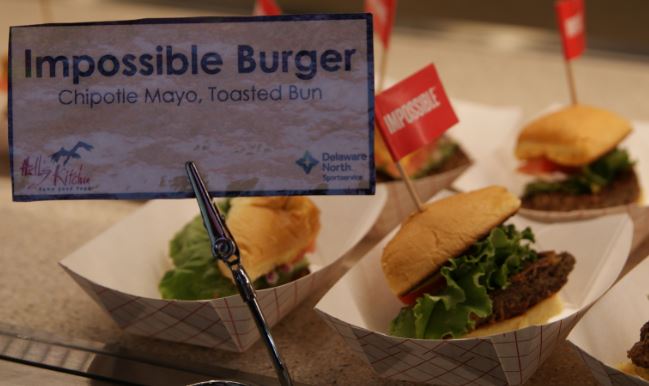
Baseball Roundtable Unofficial Fan Ballot – Hall of Fame A Tough Sell

The 2018 Baseball Hall of Fame electees (via the traditional Baseball Writers Association of America ballot) have been announced – and four players were selected for 2018 induction by the BBWAA – Chipper Jones, Jim Thome, Vlad Guerrero and Trevor Hoffman.   It was just the sixth time in HOF history that the traditional balloting has produced at least four inductees (four in 1939, 1947, 1955, 2015 and five in 1936, the Hall’s inaugural year).  These four 2018 electees will join Modern Era Committee selections Jack Morris and Alan Trammell during the July 29 Induction Ceremony.  Baseball Roundtable congratulates all six worthy inductees.

FiveHOF

BBRT NOVEMBER PREDICTIONS – ON THE MARK

In early November, Baseball Roundtable made its 2018 BBWAA Balloting predictions – projecting the election of Chipper Jones, Jim Thome, Vlad Guerrero and Trevor Hoffman.  For a complete look at the 2018 ballot, BBRT’s November predictions and how BBRT would have voted (if I had a ballot), click here.

As regular readers may recall, Baseball Roundtable conducted an unofficial fan BB HOF ballot in November/December – inviting voters from among BBRT readers and a handful of Facebook groups dedicated to  fans of the national pastime.

SPOILER ALERT: 

Voters in the BBRT unofficial fan ballot gave the necessary 75 percent support to just two candidates – Chipper Jones and Jim Thome. Notably, players further down the ballot got more support in the fan vote (than in the official BBWAA balloting), while PED suspects got a bit less support in the fan ballot.

The order of finish in the BBRT fan balloting was remarkably similar to the BBWAA.  The same five players finished in the top five positions.  However, Guerrero, Hoffman and Martinez all got consisderably less support.

Although the order was mixed, nine players were included in the first ten spots on both ballots – and fourteen players appeared among the first fifteen vote-getters on both tallies. The most notable variation was Fred McGriff, who finished ninth on the fan ballot (37.9%), but 12th (23.2%) in the BBWAA voting.

Again, the most significant difference between the BBWAA and BBRT fan ballots is that only two players (Jones and Thome) reached the necessary 75 percent for election to the Hall in the fan ballot, as opposed to four in the BBWAA voting.  Looking at the ballots, that variation can be partially explained by fans belonging to the “Voting-from-the-Heart” Cadre (an explanation of the voting cadres BBRT identified appears later in this post). This group of voters appears to be swayed at least partially by a home-town bias or loyalty to a favorite player.  This  seems evidenced by the fact that the BBWAA voting saw six players not receiving a single vote, while only two were shutout in the BBRT fan balloting. (Fourteen players failed to reach five percent on the BBWAA ballot, while twelve failed to reach that threshold in the unofficial fan ballot.)

We’ll look at the results in more detail, but here are a few high-level observations:

  • A total of 271 fan ballots were cast – but ten were eliminated because they included votes for more than the allowed ten players (as many as 21 on one ballot). There were 422 BBWAA voters
  • The average number of players voted for per ballot on the fan ballot was 7.9.  BBWAA voters used an average of 8.5 of their ten allowed votes.
  • 50 percent of the BBWAA voters used all ten avaliable votes; compared to 43 percent in the BBRT balloting.
  • Only one player – Chpper Jones – was checked on 90 percent of the fan  ballots. Both Jones and Vlad Guerrero topped 90 percent on the official BBWAA voting.
  • In the BBRT fan balloting, only five players reached at least 50 percent, while nine reached that level in the BBWAA voting.

HOfChart

___________________________________________

Now, how about a look at what BBRT observed as “VOTER CADRES.”

The ballots and comments (form fans and BBWAA members( pointed to a half dozen voter “cadres” impacting BBRT fan balloting, most of which were also reflected in the BBWAA balloting.  This is not a judgement on voter strategies, but rather just an observation on factors that appear to be influencing voting patterns and vote totals.

The Anti-PED Cadre

This group declines to vote for PED users or (depending on the strength of their opposition) those under various levels of suspicion. There continues to be enough of these voters to effectively block a significant number of PED-associated candidates from election.  Yet, there still is enough support to keep them on the ballot, reducing the numbr of available votes for other candidates. (A bit of a Catch-22 here.)  This cadre made its presence felt in both the BBWAA and BBRT balloting.

A FEW FAN COMMENTS ON PEDs

Here are a few comments from the BBRT unofficial fan ballot that shed some light on the depth and impact of this issue.

“I know baseball turned a blind eye in the steriod era, but I didn’t. Hammering Hank is the true home run king.”  Luke … CA

“I voted the steroid users in because the HOF needs to have the conversation. The Mitchell Report showed that GM’s knew who was using … they were complicit. I was an A’s season ticketholder, they marketed Bash Brothers inflatable arms!”    Bill … CA

“The ten-vote limit isn’t working. Voters who support PED-users take votes away from non-users on the ballot – and those who oppose PED-users keep suspected violators from being elected. Both sides lose.” Bob …  MN

The Small-Hall Cadre

This cadre focuses on  demanding the highest standards for election to the Hall of Fame – and tends to vote for very few (or even zero) candidates.  This, by the way, is not a new approach. Back in 1988, for example, nine blank ballots were cast in the BBWAA voting. A Los Angeles Times article quoted New York Daily News reporter Phil Pepe (who sent in one of the nine blank ballots) as saying the Hall of Fame was “too crowded,” adding  “I think to go in alongside Ruth, DiMaggio, Williams, Aaron, Cy Young, you have to be the cream of the cream. The more you erode the standards, the more the standards will be eroded.” (1)  This cadre has a notable impact on elections, since each ballot a player is not named on requires three ballots to counter that omission.
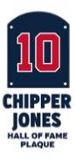
The Ballot-Hierarchy Cadre

Member of this cadre most often draw a line between first-ballot and subsequent-ballot votes, demanding far more to secure first-ballot entry. It is part of the reason that we have never seen a unanimous selection.  But the impact of the balloting does, in some cases, go further. In a column (after turning in a blank ballot in 2013), ESPN’s Howard Bryant wrote: “I believe in the hierarchy of the ballot, that the first ballot is different than the second or the tenth, that there is a special prestige to a player being voted in the first time he is eligible.” (2)   The question is,  “Do voters just withhold that first-, second- or other-ballot vote, or does it go to another candidate who meets the hierarchy test?”  There also appears to be a group of voters who combine “Ballot-Hierarchy” with “Anti-PED,” withholding votes from PED suspects until later years of eligibility.

The Strategist Cadre

Somewhat related to the “Ballot Hierarchy” group – at least in impact – this group reasons that certain players are sure bets to get the required 75 percent (like Chipper Jones this year) and chooses not to add to the sure-thing margin, but rather cast that vote for a player they find deserving further down the ballot.  This approach may actually improve the chances of additional electees (while also continuing to ensure we don’t see a unanimous selection). A subset of this group are those who note that certain players (in, for example, the 40 percent range), while NOT likely to reach 75 percent in a given year, ARE pretty much assured of adequate support to stay on the ballot. This subset witholds votes from those candidates and votes to protects those the would like to see on the ballot (but who are less “safe”).

The From-the-Heart Cadre

This group (which seemed to show up in the BBRT unofficial fan ballot) casts votes for a specific player (or players) further “down the board” either as a “fan” statement or to ensure that player does not fall off the ballot (get less than five percent).  This strategy may cost deserving candidates votes and delay/preclude their election. A Minnesota fan voting in the unofficial BBRT balloting, commented “I was a little concerned about Johan Santana, so I looked for some players I would support who seemed safe for a return and dropped one of those votes to Santana.”  Simiilarly, BBWAA voter Minnesota StarTribune sportswriter Patrick Ruesse indicated he voted for “Scott Rolen and Johan Santana to keep them on the ballot.” (5)

The Ten-Best Cadre

This group simply votes for whom they felt are the ten best players; regardless of the factors influencing any of the cadres already noted.  (Well, in some cases it is the eight or nine candidates they feel are deserving.) A few provided comments on who they would have added if they had one, two or three more votes. New York Post Sportswriter Ken Davidoff, who used all ten of his allotted votes, indicated he would have “included as many as five more” had he been allowed. (3)    CBS sportswriter Matt Snyder put it this way in a January 11 article, “I definitely want more than ten players from this ballot to make the Hall of Fame, but it feels wrong to game the ballot. My stance is to just vote for who I believe are the ten best candidates and let the chips fall where they may.” (4)

THE RULE

Voting shall be based on the player’s record, playing ability, integrity, sportsmanship, character and contributions to the team(s) the on which the player played. 

Footnotes:

(1) Blank Hall of Fame ballot serves as protest … January 14, 1988; Associated Press

(2) Drawing a blank on a HOF ballot … January 9, 2013; Howard Bryant, ESPN Senior Writer; espn.com

(3) My crowded Hall of Fame ballot, with no regard for the ‘sacred place’ … January 20, 2018; Ken Davidoff; New York Post (nypost.com)

(4) Hall of Fame Roundtable: Should voters ‘game” the ballot to get more players in? … January 22, 2018; Matt Snyder; cbssports.com

(5) It’s a Hall voter’s prerogative to change mind … January 25, 2018; Patrick Reusse; StarTribune

A COUPLE OF BOBBLEHEADS SOON TO BE ON THE WAY

hofbhBaseball Roundtable conducted a random drawing from among those voting in the unofficial Hall of Fame fan ballot – and a follower from Georgia was selected to receive a pair of bobbleheads (Jack Morris and Bernie Williams).  They will be shipped out as soon as I hear back with shipping info. (If you are a Baseball Roundtable FB follower and are from Georgia, check your FB messages – it might be you.)


I tweet baseball @DavidBBRT

Follow/Like the Baseball Roundtable Facebook Page here.

Member:  The Society for American Baseball Research; the Baseball Reliquary; The Negro Leagues Baseball Museum.