Once again, it’s time for Trivia(l) Tidbit Tuesday. I hope you are enjoying this weekly presentation of baseball occurrences that for some reason caught The Roundtable’s eye. (I’m particularly fond of unexpected performances and statistical coincidences.) These won’t necessarily be momentous occurrences. At times they may even be inconsequential. They’ll just be events, statistics or coincidences that grabbed my attention. I’m also drawn to baseball “unicorns,” those one-of-a-kind accomplishments or statistics.
Now, most readers will know that: Tony Conigliaro is MLB’s youngest-ever home run leader (32 dingers for the 1965 Red Sox at 20 years-269 days of age); Al Kaline is MLB’s youngest-ever batting champion (.340 for the Tigers in 1955 at 20 years-280 days of age); and Dwight Gooden is the youngest MLB 20-game winner (1985 Mets (20 years-282 days of age). Twenty seems like a magic number there. Well, that led me (with The Roundtable doesn’t one thing always lead to another) to think about teenage major-leaguers – those who accrued the most MLB playing time before their twentieth birthday. I found four players who appeared in 200 or more major-league games before turning twenty:
- Robin Yount: – 243 games;
- Mel Ott – 241;
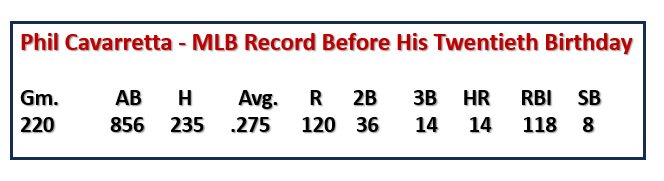
- Phil Cavarretta – 220; and
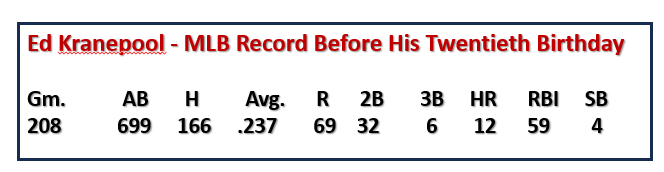
- Ed Kranepool – 208.
Here are their stats and stories.- plus a (more than) Honorable Mention – Bob Feller.
Robin Yount – 243 MLB Games Before His Twentieth Birthday
Date of Birth: September 16, 1955
MLB Debut: April 5, 1974 (18 years-201 days of age)
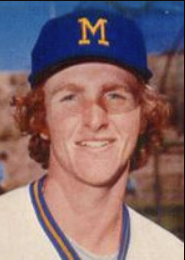
Photo: Hostess via tradingcarddb.com, Public domain, via Wikimedia Commons
Yount may be a significantly underrated player – which is a lot to say when you consider he was a first-ballot Hall of Fame Electee (1999) and is Number 66 all time in Joe Posnanski’s “Baseball 100.” I just don’t hear him talked about with the same level of frequency or reverence as a lot of other first-ballot HOFers (or other members of the 3,000-hit club). Side note: Yount’s three All Star sections are the fewest among any MLB hitter with 3,000 hits whose MLB career occurred primarily after the first All Star Game (in 1933).
Yount was a First-Round (third overall) pick (Brewers) in the 1973 MLB draft – after hitting .455 and being name the Los Angeles City Player of the year in his senior (high school) season. He was assigned to the Class-A Newark Co-Pilots, where he hit .285-3-25 in 64 games. It would be his only taste of the minor leagues, as he made the Brewers out of Spring Training in 1974 and embarked on a 20-season MLB career (1974-1993 … all with the Brewers) primarily at shortstop through 1984 and then in CF.
As a Brewer, Yount appeared in 243 MLB games before his twentieth birthday.
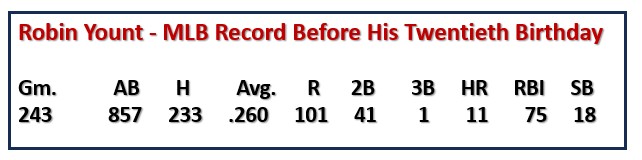
Over his 20 MLB seasons, Yount appeared in 2,856 games, going .285-252-1,406, with 1,632 runs scored and 271 steals. He collected 3,142 career regular-season hits (21st all-time), was a three-time All Star, one-time Gold Glover and the National League MVP in 1982 and 1989. He was inductee into the National Baseball Hall of Fame in 1999.
Yount hit .300 or better in six seasons, scored 100+ runs five times, topped 100 RBI three times, hit 20+ home runs four times and stole 15 or more bases in nine seasons. He hit .344 in 17 post-season games.
———————————–
Mel Ott – 241 MLB Games Before His Twentieth Birthday
Date of Birth: March 2, 1909
MLB Debut: April 27, 1926 (17 years-56 days of age)
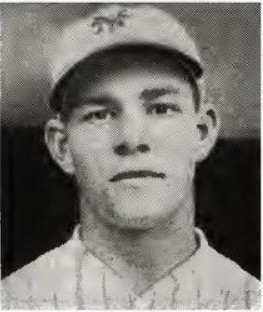 During his high school years, Ott, who started out as a catcher) played for both his high school team and a local semi-pro team. At the age of 16, he was playing for a lumber company’s semi-pro team in Patterson, Louisiana (about 90 miles from his home in suburban New Orleans). The owner of the lumber company – Harry Palmerston Williams – happened to be of friend of Giants’ Manager John McGraw. Long story short: Williams arranged a tryout with the Giants for the young Ott. A nervous Ott, still in high school at the time, balked. Williams then personally put Ott on a train to the Big Apple – and the rest, as they say, is history.
After the tryout, McGraw made three decisions: 1) Ott was a keeper; 2) He was not about to send Ott to the minors, where some manager or coach might mess with his swing; 3) Ott was too small to be a catcher and would be converted to an outfield.
Ott made his MLB debut with the Giants at the age of 17 – and stayed with the big club for 22 seasons (1926-47) – and he justified Williams’ recommendations and McGraw’s decision(s) by batting his way into the Hall of Fame.
Mel Ott was the first National League player to reach 500 career home runs.
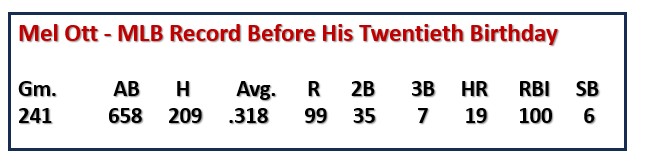 Over his career, Ott played in 2,730 games and went .304-511-1,860, with 1,859 runs and 89 steals. He was an All Star in 11 consecutive seasons (1934-44); led the league in home runs six times; runs scored twice; RBI once; and walks six times. He topped 100 runs scored in nine seasons; had 100+ RBI in nine campaigns; hit 30 or more home runs eight times; and walked 100 or more times in ten seasons.
___________________________
Honorable Mention – Bob Feller
Most MLB Games MLB Pitched Before Twentieth Birthday (M0dernEra)
Date of Birth: November 3, 1918
MLB Debut: July 19, 1936 (17-years-259 Days)
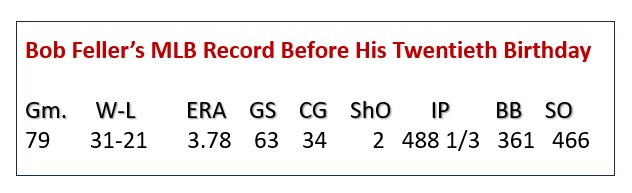
Bob Feller was very good – very early. As a pitcher, particularly a starter, the 200-game qualifying stat for this list was a bit out of reach for a teenager. Still, his MLB record as a teenager demands recognition. He didn’t just go directly from high school to the major leagues; he went to the major leagues while he was still in high school. In fact, he earned a share of the major league single-game strikeout record before he earned his high school diploma.
In Feller’s formative years (in a baseball sense), he played for his local American Legion team, the local Farmers Union team, his high school team and the “Oakviews” – a team of semi-pro and high school players that played on a field, complete with scoreboard and bleachers, built on the Feller family farm.
In 1935, Feller, sixteen-years-old and still in high school, was signed by the Cleveland Indians – reportedly for one dollar and an autographed baseball. The next year, Feller made his major league debut as a 17-year-old, pitching one scoreless inning in relief on July 19, 1936. In his first six games, all in relief, Feller totaled eight innings pitched, giving up 11 hits, seven runs, eight walks, and notching nine strikeouts. Despite those stats, the Indians felt the youngster – who had shown a blazing fastball and knee-buckling curve – was ready for his first major-league start. It came on August 23, 1936, against the St. Louis Browns. In that initial start, the 17-year-old threw a complete game 4-1 victory, giving up six hits and four walks and striking out 15. The teenager suffered a pair of losses (to the Red Sox and Yankees) before evening his record at 2-2 with another complete game win over the Browns in which he fanned ten. Then, on September 13, Feller bested the Athletics 5-2, throwing a complete game two-hitter, walking nine, but striking out seventeen – which, at that time, tied the MLB single-game strikeout record. Feller finished the 1936 season with a 5-3 record, 3.34 ERA and five complete games in eight starts. He walked 47 and fanned 76 in 62 innings. And, of course, he had yet to complete high school.
In his first start of the 1937 season (April 24 against the Browns), the teenage phenom – who had been featured on the cover of the April 19, 1937 issue of Time magazine – came up with a sore elbow. Feller ended up pitching six innings, striking out 11, in a 4-3 loss and didn’t appear in another game until mid-May, then was shelved again until June 22. The break did give Feller time to complete high school (his graduation was broadcast live on NBC Radio). He finished the year, 9-7, 3.39, with 106 walks and 140 strikeouts in 148 2/3 innings. Not bad for an 18-year-old, but the best was yet to come. In 1938, as a 19-year-old, Feller went 17-11, 4.08 and led the American League in strikeouts with 240.
Feller went on to an 18-season MLB career (1936-41, 1945-56), all with the Indians. He racked up 266 wins (162 losses), a 3.25 ERA, 3,827 innings pitched, 279 complete games, 44 shutouts and 2,581 strikeouts. He made eight All Star teams, threw three no-hitters (12 one-hitters), led the AL in strikeouts seven times, wins six times, innings pitched five times, shutouts four times, complete games three times and ERA once.
And, had World War II not interrupted those numbers would be even more impressive. Two days after the Japanese attack on Pearl Harbor brought the U.S. into World War II, Feller became first professional athlete to enlist in the U.S. armed forces; eventually serving as a Gun Captain aboard the USS Alabama. Feller was discharged from the Navy in late August, 1945, having missed 3 ½ MLB seasons. He immediately rejoined the Indians and finished up the season with a 5-3, 2.50 record, completing seven of nine starts and striking out 59 in 72 innings.
In his first full season after his discharge, Feller picked up right where he left off before the war, leading the league in wins (26), complete games (36), shutouts (10), innings pitched (371 1/3) and strikeouts (a then MLB-record 348), while posting a 2.18 ERA. In the first three full seasons after his post-war return, Feller led the league in wins twice, complete games once, shutouts twice, innings pitched twice, and strikeouts three times.
Side N0te: The record for most games pitched before a twentieth birthday pre-1900 is 1o7, share by Willie McGill (49-42, 3.99 from 1890 through 1893) and John Ward (69-32, 1.92 … 1878-79). McGill went 71-73 in a seven-season MLB career (1890-96); while Hall of Famer Ward, went 164-103, 2.10 in seven pitching seasons (1878-84). Ward, also an outfielder/ infielder, has a 17-season MLB career (1878-1894 – hitting .275-26-869. (Of course, it was a very different game back then. In 1879. Ward’s National League Champion Providence Grays played in 85 games and Ward appeared in 70 of them (starting 60).
——————————–
Phil Cavarretta – 220 MLB Games Before His Twentieth Birthday.
Date of Birth: July 19, 1916
MLB Debut: September 16, 1934 (18 years-59 days of age)
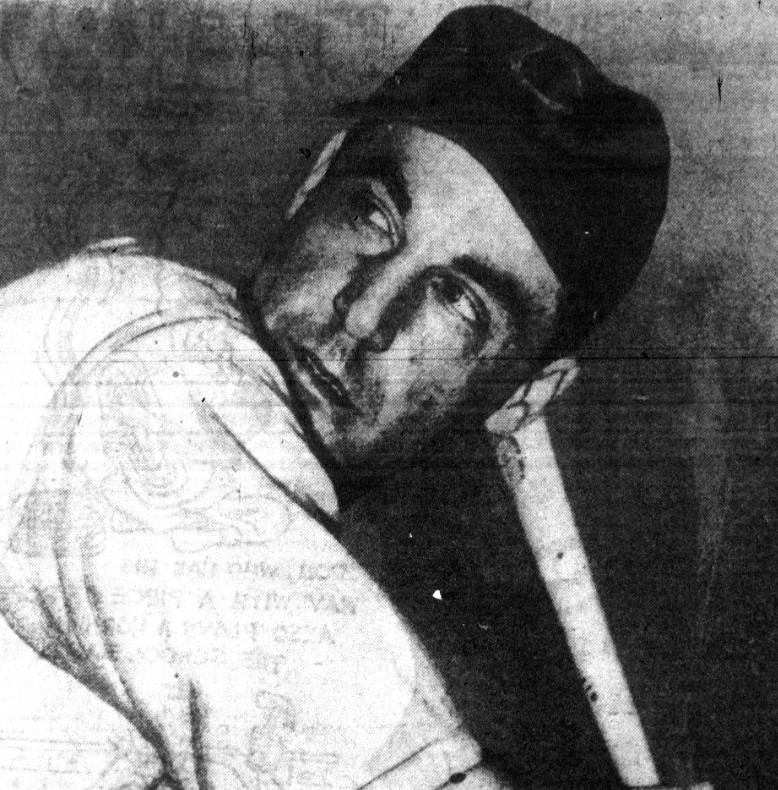
Photo: Los Angeles Daily News, Public domain, via Wikimedia Commons
As a teenager, Cavarretta (at the time a pitcher and first baseman) led his high school squad to a city championship and his American Legion team to a national title. Then, at 17 years of age, at the height of the Great Depression, Cavarretta dropped out of high school to help support his family by doing what he did best – playing baseball. Cavaretta tried out with the Cubs, whose Wrigley Field home was less than five miles from Cavarretta’s Chicago home and high school.
Cavarretta signed with the Cubs and began the 1934 season with the Class-B Peoria Tractors. That season, in 108 minor-league games (at Class-B and Class-A, Cavarretta hit .308, with seven home runs – earning a late-season call up to the Cubs, where he went .381-1-6 in seven games. He spent the next 21 seasons in the major leagues in Chicag0 (19 of those seasons with the Cubs, two with the White Sox).
Phil Cavarretta hit for the “cycle” (single, double, triple and home run in the same game) and drove in four runs in his first-ever professional baseball games (for the Peoria Tractors on May 15, 1934).
Cavaretta (1B/OF) played in 22 MLB seasons (1934-55 … Cubs, White Sox), hitting .293-95-920, with 990 runs scored and 65 steals, over 2,030 games. He was the 1945 NL MVP, when he led the league with a.355 average. Cavarretta was a three-time All Star. In addition to his 1945 batting championship, he led the NL in hits in 1944, with 197 safeties. He hit .317 in 17 World Series games.
____________________________________
Ed Kranepool – 208 MLB Games Before His Twentieth Birthday
Date of Birth: November 8, 1944
MLB Debut: August 22, 1962 (17 years-318 days)
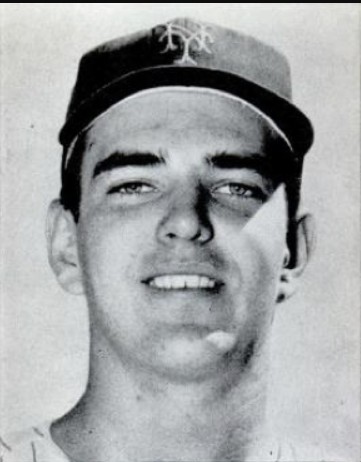
Photo: Public domain, via Wikimedia Commons
Back in 1962, Kranepool – a 17-year-old “phenom” for James Monroe High School in New York City (where he starred in baseball and basketball) – seemed a good match for the fledgling (and woeful) New York Mets.
Kranepool signed with the Mets in June of 1962, and after about a week on the Mets’ major-league bench was sent to the minor leagues, where a .301 average in 41 games (at three levels) earned the 1B/OF a September call-up to the major-league club (three games, six at bats, one hit). Kranepool. was up-and-down between Triple-A Buffalo and the Mets in 1963. In 1964, he started the season with New York, but an early slump sent him back to Buffalo in May, where a solid couple of weeks (.352 in 15 games) got him back with the big club to stay. He finished the season with a .253-10-45 line in 119 games for the Mets.
In a Pinch? Ask Ed!
In 1974, Ed Kranepool had 28 pinch-hitting plate appearances (35 at bats) and collected 17 hits for a .486 pinch-hitting average – the highest “pinch” batting average in a season for a player with at least 30 pinch-hit at bats. In the five seasons from 1974 through 1978, as his career was winding down (Kranepool’s final MLB season was 1979), he thrilled Mets’ fans with a .396 average as a pinch hitter.
Kranepool enjoyed an 18-season MLB career (1962-79), all with the Mets. He hit .261-118-614, with 536 runs scored over 1,853 games. He was an All Star in 1965.
Primary Resources: Stathead.com; Baseball-Almanac.com; The Baseball 100, by Joe Posnanski, Avid Reader Press (2021); Phil Cavarretta bio, by Lawrence Baldassaro, Society for American Baseball Research (SABR);Ed Kranepool bio, by Tara Krieger, SABR.
Baseball Roundtable – Blogging Baseball Since 2012.
Baseball Roundtable is on the Feedspot list of the Top 100 Baseball Blogs. For the full list click here.
I tweet (on X) baseball @DavidBaseballRT
Follow Baseball Roundtable’s Facebook Page here. More baseball commentary; blog post notifications; PRIZES.
Member: Society for American Baseball Research (SABR); Negro Leagues Baseball Museum; The Baseball Reliquary.

P 1097