Once again, it’s time for Trivia(l) Tidbit Tuesday. I hope you are enjoying this weekly presentation of baseball occurrences that for some reason caught The Roundtable’s eye. (I’m particularly fond of unexpected performances and statistical coincidences.) These won’t necessarily be momentous occurrences, just events, statistics or coincidences that grabbed my attention. Regular readers know much The Roundtable likes MLB unicorns, those one-of-a-kind occurrences. This week, that unicorn is Hoyt Wilhelm – the only MLB pitcher to win a regular-season ERA title without starting a single game.
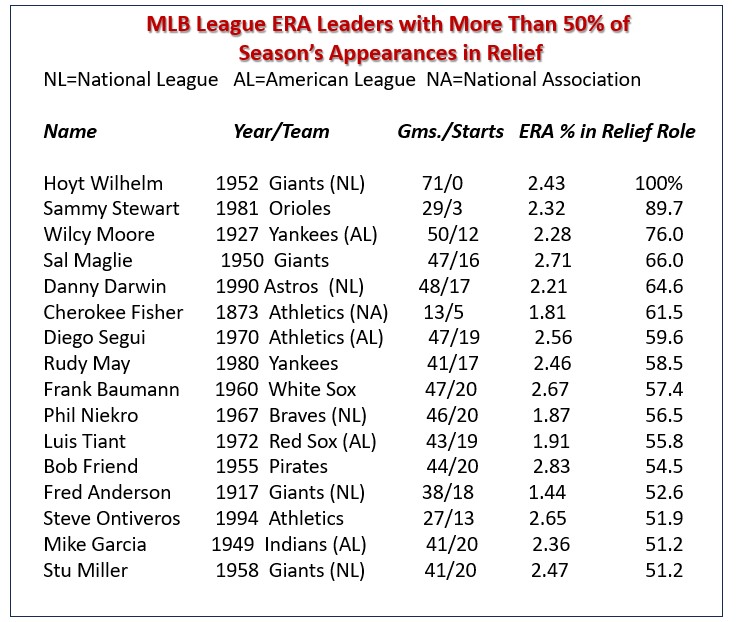
Baseball Roundtable is presenting an abbreviated version of this week’s post here – concentrating on Wilhelm. At the Baseball Roundtable blog site, you can find a longer post, looking at all the MLB pitchers who won an ERA title in a season in which their relief appearances outnumbered their starts – pitchers like Hall of Famer Phil Niekro (the last pitcher to win 20 or more and lose 20 or more in the same season); Danny Darwin (who pitched in 21 MLB seasons and never made an All Star team); Mike Garcia and Wilcy Moore (who – like Wilhelm – won ERA titles as rookies; Sal Maglie (who “jumped “ to the Mexican League, got banned and was able to jump back to MLB); Bob Friend (the first pitcher to win an ERA title with a last-place team); Diego Segui, the only player to play for both Seattle expansion teams); and more. (There are 14 pitchers on the list.)
Side Note; Saves did not become an official stat until 1969. Saves noted here before that season were calculated retroactively.
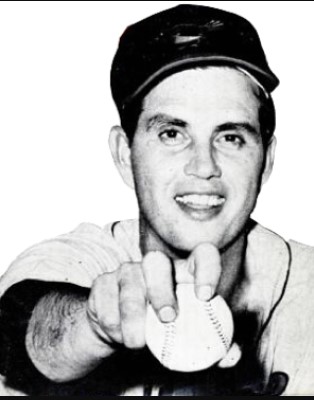
Photo: Public domain, via Wikimedia Commons
Hall of Famer Hoyt Wilhelm was less than 100 days shy of his thirtieth birthday when he made his major-league debut. Yet, he still fashioned a 21-season, 1,070-appearance MLB pitching career – making his last MLB appearance (two scoreless innings in relief) just 16 days shy of his fiftieth birthday.
Wilhelm’s unicorn season came in his 1952 rookie campaign, when he went 15-3, 2.43 for the Giants, leading the NL in earned run average, winning percentage (.833) and appearances (71). He was the first – and still only – pitcher to win an ERA title without making a single start. Seven seasons later (1959), Wilhelm would win a second ERA title – this one in a year when his starts outnumbered his relief appearances 27-to-5. Only three other pitchers have won ERA titles both when their relief appearances outnumbered their starts and vice versa (Luis Tiant, Mike Garcia and Cherokee Fisher).
A little background on Wilhelm
At a time when the knuckleball was primarily used by pitchers who had “aged out” of effective curves and heaters, Wilhelm began using the pitch (actually a fingertip-ball in his case) as his mainstay as a teenager. In 1942, after high school, Wilhelm signed with the Class-D North Carolina State League Mooresville Moors, near his home town of Huntersville, North Carolina. He went 10-3 for Mooresville before being drafted into the Army. He spent three prime years in the military, seeing plenty of combat and receiving a Purple Heart for wounds he suffered in the Battle of the Bulge.
Hoyt Wilhelm pitched his entire MLB career with a piece of shrapnel (from the Battle of the Bulge) lodged in his back.
After his release from the service, Wilhelm returned to Mooresville, where he went 41-15 over two seasons and, in 1947, he was signed by the New York Giants. And, the rest, as they say, is history. Working primarily as a starter, he worked his way up from Class-B to Triple-A between 1948 and 1951 – going 56-46 and pitching to a 3.68 earned run average over 813 innings.
In 1952, Wilhelm stuck with the Giants and had that stellar (unicorn) rookie season that prompted this post.
Wilhelm and his knuckler stayed in the big leagues through 1972. He pitched in 1,070 games (52 starts, more than half of them in 1959). His final stat line was 143-122, 2.52, with 228 saves.
How Much Did Hoyt Wilhelm’s Knuckleball Flutter?
In his first 16 years in the major leagues, the teams Wilhelm suited up for led their league in passed balls in 15 campaigns. A couple of other indicators:
- In 1958, with Wilhelm on the staff, Indians’ catchers committed a league-topping 35 passed balls. In 1959, without Wilhelm in the fold, that number dropped to six.
- In 1959, Orioles’ catcher Gus Triandos had 28 passed balls – 24 of them came with Wilhelm on the mound.
THE OTHERS ON THE LIST
Sammy Stewart, RHP, Orioles …. 1981
Stewart put up a league-leading 2.32 earned run average while appearing in 29 games for the Orioles in 1981 (his fourth MLB and age-26 season). He made just three starts that season, with his 26 relief outings making up 89.7 percent of his total appearances. In his three starts, he went 0-3, 6.89. He put up a 1.58 earned run average in relief. His final line for the season was 4-8, 2.32 with four saves in 112 1/3 innings. Long relief was clearly his role, as Stewart averaged 3.7 innings pitched per relief stint over the course of the season.
Stewart pitched in 10 MLB seasons (1978-87 … Orioles, Red Sox, Indians) and went 59-48, 3.59, with 45 saves. He made just 25 starts in 359 total appearances. – or just seven percent of his total appearances. Notably, pitching primarily in relief, he pitched 100+ innings in six of his ten MLB campaigns.
Stewart was a 28th Round pick in the 1974 MLB Draft (Royals), but did not sign. He signed as an amateur free agent with the Orioles. He made his MLB debut, with the Orioles, September 1, 1978 – after a 13-10, 3.80 season (27 starts) at Triple-A. In his debut game, versus the White Sox, he went 5 1/3 innings (six hits, two runs, no walks, nine strikeouts) in a 9-3 win. At one point in the game, he fanned seven consecutive hitters.
Sammy Stewart’s Best Season: 1984 Orioles … 7-4, 3.29, with 13 saves in 60 appearances (all in relief).
Wilcy Moore, RHP, Yankees …. 1927
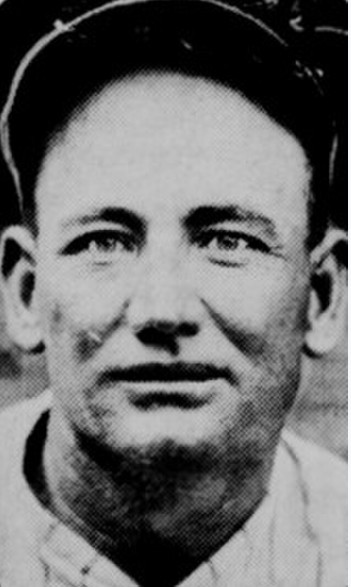
Photo: Healdsburg Tribune, Public domain, via Wikimedia Commons
As 30-year-old rookie with the vaunted 1927 Yankees, Wilcy Moore went 19-7, with league-topping 13 saves and a league-leading 2.28 earned run average in season in which he made 12 starts and 38 (67 percent) relief appearances and pitched 206 innings. Moore was effective as both a starter 6-2, 2.61 in 93 innings and reliever 13-3, 2.11 in 119 2/3 innings. He averaged just over three innings per outing in his relief role.
Moore pitched in the minor leagues from 1922-25, when a “break” changed his trajectory. He suffered a broken arm when hit by a batted ball in the 1925 season and, when he returned to the field, found that it was too painful to throw overhand – so he became a side-armer and that signed his ticket to the Yankees. The new motion led to a devastating “low-in-the-zone” sinker and, in 1926, he went 30-4, 2.86 for the Class-B Greenville Spinners team. (Not that Moore was a slouch before 1926. From 1922 through 1925, as he worked is way up the minor-league ladder, Moore was a combined 56-24. In 1927, he was a Yankee.)
The 1927 World Series
Wilcy Moore pitched in two games of the Yankees four-game sweep of the Pirates in the 1927 Fall Classic. He got a save in Game One with 1 2/3 innings of scoreless, one-hit relief. He started and got the win in the Yankee’s Game Four 4-3 victory with a complete game (10 hits, three runs, one earned).
A non-baseball-related arm injury cut into Moore’s effectiveness in 1928-29. While he went 10-8 with 12 saves over those two seasons, his earned run average was 4.15 – and he spent time on the voluntary retired list. In 1930, he was back in the minors (St. Paul Saints), his arm issue (pain) had subsided and he righted the ship (22-9, 4.07 with a league-leading 272 innings pitched). From 1931-33, he pitched in the majors (Red Sox/Yankees), but never as spectacularly as in his rookie season.
Moore’s final MLB line was 51-44, 3.70 with 49 saves. He pitched in 261 games (just 32 starts).
Wilcy Moore’s Best Season: 1927 Yankees … 19-7, league-leading 2.28 ERA, league-leading 13 saves in 50 appearances (12 starts).
Sal Maglie, RHP, Giants …. 1950
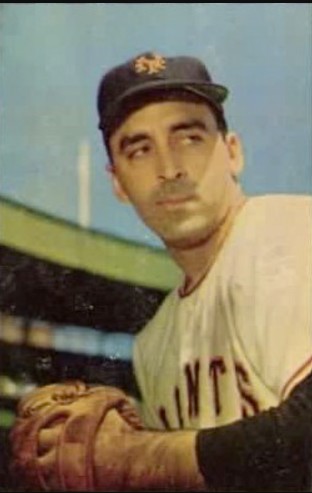
Photo: Bowman Gum, Public domain, via Wikimedia Commons
Sal Maglie got his first taste of the major leagues in 1945 and put up a 5-4, 2.35 record with the Giants. Then, in 1946, he was among the major leaguers who “jumped” to the Mexican League (which was offering lucrative contracts) – where he played for two seasons. That decision, the Mexican leagues’ decline and Baseball Commissioner Happy Chandler’s five-year ban on the players who made the jump from resulted in Maglie not pitching in the major leagues again until 1950 – his age-33 season. But he was ready. Note: Between 1947 and 1950 (when Chandler cleared the way for the jumpers to return), Maglie ran a gas station and also played with a barnstorming team and in Canada.
In 1950, as a reliever and spot starter, Maglie went 18-4, 2.71, with one save. He led he National league in ERA, winning percentage and shutouts (while making 66 percent of his appearances coming in from the pen, averaging 2.1 innings per relief outing). That season marked another turning point in Maglie’s career – the shift to a starting role. While he made 31 appearances relief in 1950, he made just 47 relief appearances over his next eight MLB seasons (versus 206 starts). From 1950-52, Maglie went 59-18 (18-4, 23-6, 18-8), with a 2.86 earned run average. Then back issues (and perhaps a bit of age) seemed to take a toll, as he picked up just 55 more wins over the next six seasons.
Maglie pitched in ten MLB seasons (1945, 1950-58 … Giants, Indians, Dodgers, Yankees, Cardinals) going 119-62, 3.15. He had an ERA under 3.00 in six of his ten MLB seasons. Who knows what he might have done if he hadn’t lost those five prime years to the Mexican League and the Chandler ban.
Sal Maglie’s Best Season: 1952 Giants … 23-6, 2.93, 22 complete games, four shutouts in 42 games (37 starts). You can also make a case for the 1950 season, already discussed.
Danny Darwin, RHP, Astros … 1990
Darwin was in his 13th (and age-34) MLB season when he led the National League in ERA at 2.21 – to go with 11 wins (four losses) and two saves. That season Dawin made 48 appearances, 31 (64.6 percent) in relief. He averages 1.5 innings per relief stint and 6.9 innings per start.
What impressed me most about Darwin was his willing versatility (21 seasons, 371 starts, 345 relief appearances). He had seven seasons of 25 or more starts and four of 35 or more relief appearances. In 1985, he appeared in 68 games – all in relief. A few years later, in 1993, he started 34 games and did not appear even once in relief. Overall, He had 13 seasons when his starts outnumbered his relief roles and eight where his relief appearances outnumbered his starts. You might get an idea of how his career went when you consider that in 1982, he went 10-8, 3.44 in 56 appearances for the Rangers – 55 of those in relief. The very next season, he went 9-9, 3.44 in 28 (26 of them starts) appearances for those same Rangers.
Over his 21 seasons (1978-98 … Rangers, Brewers, Astros, Red Sox, Blue Jays, Pirates, White Sox, Giants), Darwin went 171-182, 3.84 with 32 saves.
Darwin signed with the Rangers as an undrafted amateur free agent in 1976 and almost immediately showed potential – going 13-4, 2.51 in 23 starts for the Double-A Tulsa Drillers. Although he struggled in 1978 (8-9. 6.26 at Triple-A), he did get a September call up went 1-0, 4.15 in three games for the Rangers. In 1979, he improved (6-6, 3.60 at Triple-A) and was called up to the Rangers to stay in June. He finished that season at 4-4, 4.04. From 1980 through 1998, he appeared in 693 MLB games and just one minor-league contest.
Danny Darwin’s Best Season: 1989 Astros or 1993 Red Sox … His best season as a starter was 1993, when he went 15-11, 3.26 in 34 appearances (all starts) for Boston. It marked his most wins, starts and innings pitched in any season. As a reliever, his top campaign was probably 1988 for the Astros (11-4, 2.36, with seven saves in 68 appearances – no starts).
William “Cherokee” Fisher, RHP … Athletics (National Association) 1873
The National Association Philadelphia Athletics played a 51-game schedule in 1873 and Cherokee Fisher went 3-4, 1.81 with two saves in 13 appearances (five starts). It was the second consecutive season that Fisher led the Association in ERA. In 1872, with the Baltimore Canaries, he had gone 10-11.80 in 19 appearances (eight starts).
Fisher pitched in seven MLB seasons (1871-76, 1878 … Rockford Forest Citys, Baltimore Canaries, Philadelphia Athletics, Hartford Dark Blues, Philadelphia Whites, Cincinnati Reds, Providence Grays) going 56-84, 2.61 in 165 appearances (141 starts).
Cherokee Fisher’s Best Season: 1872 Canaries (National Association) … In 1872, Fisher went 10-1, 1.80 for the Canaries, leading the National Association in winning percentage (.909) and ERA. That season, he appeared in 19 of the Canaries’ 58 games (11 starts).
Diego Segui, RHP, Oakland Athletics … 1970
Diego Segui started his MLB career with the Kansas City Athletics in 1962. From 1962 through 1966, he was primarily a starter going 33-50, 4.33 in 176 appearances/109 starts. Then from 1967-1977, he made 401 relief appearances and just 62 starts. In 1970, he split his time between starting and relief – 19 starts and 28 relief appearances (59.6 percent). He went 10-10, with a league-leading 2.56 earned run average. That season, he was slightly more effective as a starter (8-6, 2.33 than as a reliever (2-4, 3.11). In 1962, he averaged 1.5 innings per relief role and 6.1 frames per start.
The Ancient Mariner
Diego Segui pitched in the first-ever regular season game for the expansion Seattle Pilots (April 8, 1969 at California), as well as in the first-ever regular-season game for the Seattle Mariners (April 6, 1977). He is the only player to have played for both Seattle expansion teams. Segui was the oldest player on the 1977 Mariners’ squad (he turned forty during the season, earning him the nickname “The Ancient Mariner.”)
Segui’s final MLB stat line (1962-75, 1977 … Athletics, Pilots, Cardinals, Reds Sox, Mariners) was 92-111, 3.81, with 71 saves.
Diego Segui’s Best Season: 1969 Pilots … Given the 1969 Pilots 64-98-1 record, Segui’s 12-6, 3.35, 12-save season stands out (66 appearances/8 starts). He was on the mound in 35 percent of the Pilots’ wins. He was second on the team in wins (Gene Brabender was 13-15); first in saves; first in appearances; third in innings pitched (142 1/3).
Rudy May, LHP, Yankees …. 1980
Rudy May was in his 13th MLB season (age-35 season) when he had his ERA-leading campaign. In a season in which he made 17 starts and 24 relief appearances (58.5 percent) for the Yankees, May went 15-5, 2.46 with three saves. As a starter, he went 10-3, 3.52 in 117 2/3 innings (averaging 6.9 innings per start). As a reliever, he was 5-2, 2.34, with three saves in 57 2/3 frames (2.4 frames per appearance). May was primarily a starter throughout his 16-season MLB career. In fact, his starts outnumbered his relief appearances in 12 of his 16 MLB seasons.
In his 16 MLB campaigns (1965, 1969-83 … Angels, Yankees, Orioles, Expos, ) May went 152-156, 3.46, with 12 saves in 535 appearances (360 starts) – 105 of his 175 relief appearances came in his final six MLB seasons.
Rudy May’s Best Season: 1980 Yankees … I’ve got to go with the season that got him on this list: 15-5, 2.46 with three saves deserve recognition. It was May’s second-most wins in a season (He went 18-14 in 1977.); lowest qualifying ERA; and second-highest winning percentage (.750). You could also make a case for his 1979 Yankees/Expos season (10-3, 2.31 in 33 games/7 starts).
Frank Baumann, LHP, White Sox … 1960
Over his 11 MLB seasons, Frank Bauman was primarily a reliever. In fact, 43 of his 78 career starts came over two seasons (1960-61, White Sox). In 1960, he went 13-6, with a league-leading 2.67 ERA for the White Sox in 47 appearances – 27 in relief (57.4 percent). In his 1960 dual role, Baumann was equally effective as a starter and reliever – 7-3, 2.74 as a starter and 6-3, 2.49 in relief roles. He averaged 6.7 innings per start and 1.9 innings per relief appearance.
Baumann was in the majors from 1955-65 (Red Sox, White Sox, Cubs), going 45-48, 4.11, with 14 saves in 244 games (78 starts).
Baumann was a highly regarded high school prospect and signed with the Red Sox as a teenager in 1952. In two seasons at Triple-A (as an 18- and 19-year-old, he went 14-7, 3.25. He lost the 1954 season to military service and was up and down (minors and majors) with the Red Sox from 1955 through 1958. He stuck with Boston in 1959, going 6-4, 4.05 in 26 games (10 starts) before being traded to the White Sox – where in 1960, he turned in the season that go him on this list.
Frank Baumann’s Best Season: 1960 White Sox … 13-6, 2.67, with four saves.
Phil Niekro, RHP, Braves … 1967 Braves (Member BBHOF)
Phil Niekro made his way into the Hall of Fame as a starter. Of his 318 victories, 302 came as a starter and 82.9 percent of his 864 appearances came in a starting role. In fact, in his 24 MLB seasons, 104 of his 148 relief appearances came in his first four seasons. It was in his fourth MLB seasons (his age-28 season) that Niekro won his only ERA title going 11-9, 1.87, with nine saves for the Braves in a season of 20 starts and 26 relief appearances. He went 10-7, 1.96 in 20 starts (averaging 8.0 innings per start) and 1-2, 1.54, with nine saves as a reliever (1.8 innings per appearance.)
It was not, however, the only time, Niekro would lead the league in a pitching category. He would go on to lead his league in wins twice (losses four times – consecutively 1977-80), winning percentage once, starts four times, complete games four times, innings pitched four times and strikeouts once. He would become a five-time All Star and five-time Gold Glover.
Niekro pitched in 24 MLB seasons (1964-87 …. Braves, Yankees, Indians, Blue Jays), going 318-274, 3.35 with 29 saves. He is in MLB’s overall career top 20 in wins (318 – 16th); innings pitched (5,404 – fourth); strikeouts (3,342 – 13th); games started (716 – fifth);
You Win Some/You Lose some
Phil Niekro is the last pitcher to record 20 wins and 20 losses in the same season. In 1979, he led the National League in wins and losses, with a 21-20, 3.39 record. That season, he made 44 starts and got a decision in 41. He threw a league-leading 23 complete games and pitched a league-topping 342 innings. The only other pitcher with a “20-20” season since 1916 is Wilbur Wood (another knuckleballer), who went 24-20 for the White Sox in 1973. There have been a total of 152 20-20 seasons, just 11 in the Modern ERA (post-1900).
Niekro signed with the Braves as an amateur free agent in July of 1958. He didn’t get a lot of traction early in his pro career and, in fact, did not make his MLB debut until 1964 (a call up after an 11-5, 3.45 season at Triple-A). His first full MLB season was the 1967 season that put him on this list.
Phil Niekro’s Best Season: Tied: 1969 Braves/1982 Braves … In 1969, Niekro went 23-13, 2.56, with one save. Forty appearances, 35 starts, 21 complete games. In 1982, his age-43 season, he went 17-4, 3.61 in 35 starts.
Luis Tiant, RHP, Red Sox … 1992
Like Wilhelm, Luis Tiant captured an ERA title in a year when he made more appearances in relief than as a starter and in a year when he made more starts than relief appearances. In 1968, with the Indians, Tiant went 21-9, 1.60 (winning the ERA crown) in a season in which he made 32 starts among his 34 games appearances. Then in 1972, with the Red Sox, he went 15-6, with three saves and a league-topping 1.91 ERA. That season he made 43 appearances – 19 as a starter and 24 (55.8 percent) in relief. He went 12-5, 1.88 as a starter and 3-1, with three saves and a 2.05 ERA as a reliever. He averaged 7.8 innings per start and 1.3 innings per relief appearance.
Tiant pitched in 19 MLB seasons (1964-1982 … Indians, Twins, Red Sox, Yankees, Pirate, Angels), going 229-172, 3.30. He made 484 starts and came on in relief in another 89 games. Tiant was a three-time All Star. He won 20 or more games in four seasons and led the league in shutouts three times.
A Dazzling Debut
Luis Tiant made his MLB debut (as a 23-year-old) with the Cleveland Indians on July 19, 1964. It was the second game of a doubleheader against the Yankees In New York. The Yankees, defending AL Champions, were on their way to a 99-63 season and another AL pennant – and had their ace Whitey Ford on the mound (Ford was 12-2, 2.04 at the time). In that debut game, Tiant dazzled, tossing a four-hit (all singles) shutout and fanning 11 Bombers, as Cleveland prevailed 3-0.
Tiant’s contract was purchased by the Cleveland Indians (from the Mexico City Tigers) in 1962. Just 21-years-old, he had three Mexican-League seasons under his belt. In the Cleveland system, he went 7-8, 3.60 at A/Triple-A in 1962; 14-9, 2.56 at A-Level in 1963; and 15-1, 2.04 at Triple-A in 1964 before a July call up. (He went 10-4 2.83 for the Indians in is rookie season.)
Luis Tiant’s Best Season: As already noted, in 1968, Tiant went 21-9, with a league-low 1.60 ERA. He threw 19 complete games in 32 starts and led the American League with nine shutouts.
Bob Friend, RHP, Pirates … 1955
Bob Friend was in his fifth (and age-24) MLB season when he won his only ERA title. That season, Friend went 14-9, 2.83, with one save in 44 appearances – 20 starts and 24 relief outings (54.5 percent). It was, notably, Friend’s first winning MLB season. In his first four seasons, he had gone 28-50, 4.61. In 1955, The last-place Pirates had gone 60-94 and Friend was their only pitcher with a winning record. That season, Friend went 9-8, 3.21 as a starter and 5-1, 1.95 with two saves as a reliever. He averaged 7 innings per start and 2.5 innings per relief appearance.
May the Last Be First
In 1955, Bob Friend became the first pitcher to lead his league in ERA while pitching for a last-place team..
Friend pitched in 16 MLB seasons (1951-66 … Pirates, Yankees, Mets), going 197-230, 3.58. He made 497 starts and 105 trips in from the bullpen. He was a three-time All Star and logged eight seasons of 14 or more victories.
Friend was signed by the Pirates as a 19-year-old in 1949 and spent just one year in the minor leagues (14-13, 3.62 in Class-B and Triple-A) before making it to the Pirates (6-10, 4.27 in 1951).
Education is Important
Bob Friend attended Purdue University in 1949 (signed with the Pirates that same year) and then attended Purdue in the off-season for eight consecutive years – earning a Bachelor’s Degree in Economics in 1957,
Bob Friend’s Best Season: 1958 Pirates … In 1958, Friend led the NL with 22 wins (14 losses) and put up a 3.68 ERA, finishing third in the Cy Young Award voting.
Fred Anderson, RHP, Giants … 1917
In 1917, Fred Anderson went 8-8, with league-best 1.44 ERA for the Giants. He made 18 starts and came out of the pen 20 times (52.6 percent). Anderson went 6-7, 1.45 as a starter and 2-1, 1.51 in relief. He averaged 6.5 frames per start and 2.1 innings per relief appearance.
Anderson pitched in seven MLB seasons (1909, 1913-18 … Red Sox, the Federal League Bufalo Buffeds/Blues, Giants), going 53-57, 2.86, with eight saves. He made 114 starts and came on in relief in 64 times.
Fred Anderson’s Best Season: 1915 Federal League Buffalo Blues … 19-13, 2.51 with 14 complete games in 28 starts (36 total appearances).
Steve Ontiveros, RHP, Athletics …. 1994
In 1984, Steve Ontiveros went 6-4, with a league-leading 2.65 earned run average for the Athletics in 13 starts and 14 relief outings (51.9 percent). It was his ninth MLB season (his age-33 season). He was much more effective as a starter than a reliever that season – 5-2, 1.59 as a starter and 102, 5.58 as a reliever. He went 6.5 innings per start and 2.2 innings per relief appearance.
Ontiveros started his MLB career as a reliever. In his first two MLB seasons (1985-86), he went 3-5, 3.30 with 18 saves in 85 appearances for the A’s – all out of the pen. Then, from 1987 through 1989 (A’s/ Phillies), he went 15-13, 4.12 in 51 games, starting in 37 (72.5 percent). He next had two MLB seasons (1990 and 1993 … Phillies/Mariners) in which he made just 29 appearances – all in relief. The, of course, came 1994, nearly evenly split between starting and relieving, before a final two seasons 1995 and 2000 (A’s/Red Sox) in which he made 22 starts in 25 appearances,
It all added up to a career MLB record of 34-31. 3.67 over ten seasons (73 starts and 134 relief appearances). Ontiveros made one All Star team (1995, with the A’s.) Side note: Ontiveros’ MLB career was interrupted more once than by arm issues.
Ontiveros was a second-round pick (Athletics) in the 1982 MLB Draft – out of the University of Michigan. He went 18-8, 3,78 in four minor-league seasons before his 1985 call up.
Steve Ontiveros’ Best Season: 1994 Athletics … It would have to be that 1994 season, with the league-low 2.65 ERA in 27 games (6-4 won-lost). A close second would be his one All Star campaign (1995 A’s), when he went 9-6, 4.37 in 22 games (all starts).
Mike Garcia, RHP, Indians … 1949
Mike Garcia was a rookie for the Indians in 1949 (he pitched in one game, two innings in 1948). In 1949 (his age-25 season), he went 14-5, with a league-best 2.39 ERA over 20 starts and 21 relief appearances. Yep, he barely made this list. He started the season in the bullpen, appearing in relief in his 12 of his first 14 outings. A 4-2 (1 save), 3.12 record earned him a regular starting spot. For the season, he was 11-4, 2.36 as a starter and 3-1, 2.33 (two saves) in relief. He averaged 6.9 innings per start and 1.4 innings per relief appearances.
Garica captured a second ERA title in 1954, when he went 19-8, 264 in 45 games (34 starts) for the Indians.
Garcia pitched in 14 MLB seasons (1947-1961 … Indians, White Sox, Senators), going 142-97, 3.27 in 281 starts and 147 relief appearances. In his four prime years (1951-54), he went 79-41, 2.84, twice winning 20 or more games and making three All Star squads.
Garcia began his professional career (as an 18-year-old) in in the Indians’ farm system in 1942. (He had been spotted playing semi-pro ball in California.) That first season, he put up a 10-10, 3.94 at Class-D. He then spent three years in the military before returning to pro-ball in 1946 (22-9, 2.56 at Class-C.) Two more solid minor-league seasons (17-10, 3.24 at A-Level and 19-16, 3.09 at Double-A) punched his ticket to the majors.
Mike Garcia’s Best Season: 1952 Indians … In 1952, Garcia went 22-11, 2.37, with 19 complete games in 36 starts (he also made ten relief appearances – four saves) and pitched six shutouts.
Stu Miller RHP, Giants … 1958
In 1958, Stu Miller, in his sixth (age-30) MLB season went 6-9, with a league-leading 2.47 ERA in 20 starts and 21 relief appearances (51.2 percent). He went 6-7, 3.01 as a starter and 0-2, 0.81 in relief. He went 6.9 innings per start and 2.1 innings per relief appearance.
Miller pitched in 16 MLB seasons (1952-54, 1956-68 … Cardinals, Phillies, Giants, Orioles, Braves) making his mark primarily as a reliever. (He went 105-103, 3.24, with 153 saves in 93 starts and 611 relief appearances. He twice led his league in saves (for the Giants in the NL in 1961 with 17 and for the Orioles in the AL in 1963 with 27). He was an All Star in 1961, when he went 14-5, 2.66 with 17 saves in 63 relief outings.
Miller was signed out of a Cardinals tryout camp in 1949 and worked his way up to the Cardinals by 1952 (age-24-season). That season, he was 11-5, 2.34 at Triple-A before an August call up. He went 6-3, 2.05 for the Redbirds in 12 appearances (11 starts).
Stu Miller’s Best Season: 1965 Orioles … In 1965, Miller went 14-7, 1.89, with 24 saves in in 67 appearances (all in relief.)
Primary Resources: Stathead.com; Baseball-Reference.com; Hoyt Wilhelm SABR bio, by Mark Armour; Sal Maglie SABR Bio by Judith Testa; Bob Friend, SABR bio, by Clifton Parker.
Baseball Roundtable – Blogging Baseball Since 2012.
Baseball Roundtable is on the Feedspot list of the Top 100 Baseball Blogs.
I tweet (on X) baseball @DavidBaseballRT
Follow Baseball Roundtable’s Facebook Page here. More baseball commentary; blog post notifications; PRIZES.
Member: Society for American Baseball Research (SABR); Negro Leagues Baseball Museum; The Baseball Reliquary.
P 1086