Once again, it’s time for Trivia(l) Tidbit Tuesday. I hope you are enjoying this weekly presentation of baseball occurrences that for some reason caught The Roundtable’s eye. (I’m particularly fond of unexpected performances or statistical coincidences.) These won’t necessarily be momentous occurrences, just events, statistics or coincidences that grabbed my attention. I recently posted (on the Baseball Roundtable blog/website) an article on the 2025 Baseball Hall of Fame ballot which included The Roundtable’s predictions and preferences, bios of the candidates and a link to The Baseball Roundtable 2025 (unofficial) Fan/Reader Hall of Fame Ballot. (We’d love to count your vote.) For that post, click here. To go directly to the ballot and cast your vote, click here. N0w, staying with the HOF theme, this Tuesday’s Tidbit focuses on the Hall of Fame.
As you are all probably aware, the first BBHOF “class” was inducted in 1936 – and included MLB icons Ty Cobb, Walter Johnson, Christy Mathewson, Babe Ruth and Honus Wagner. By virtue of it being the Hall’s first year of existence, all five were “first-ballot” electees.
Today’s Tidbit focuses on that first-ballot honor and addresses the question: “Who were the first players, after the initial Hall of Fame Class in 1936, to be elected in their first year on the ballot? I would take two answers.
- Lou Gehrig in 1939.
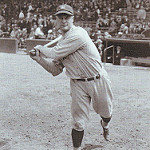
Photo by rchdj10 
Gehrig, suffering from amyotrophic lateral sclerosis, was elected and added to the Hall of Fame following a December, 1939 special election (waiving the five-year post-retirement waiting period for eligibility). Gehrig would clearly have been a first-ballot inductee (five-years later) even without the special election. In a 17-season career (1923-39, all Yankees), he hit .340-493-1,995, with 1,888 runs scored. He was a seven-time All Star (remember the first All Star Game was played in 1933) and a two-time AL Most Valuable Player. Gehrig led the AL in hits once (collecting 200 or more hits in eight seasons); doubles twice, triples once; home runs three times; RBI five times, batting average once and total bases four times. He ranks among MLB’s top 25 players all time in batting average; runs scored; total bases; on-base percentage; slugging percentage: runs batted in; extra base hits; and walks. Note: Batting average, on-base percentage and slugging percentage among players with at least 3,000 career plate appearances.
Your answer: Bob Feller and Jackie Robinson in 1962. (Elected on the traditional competitive ballot.)
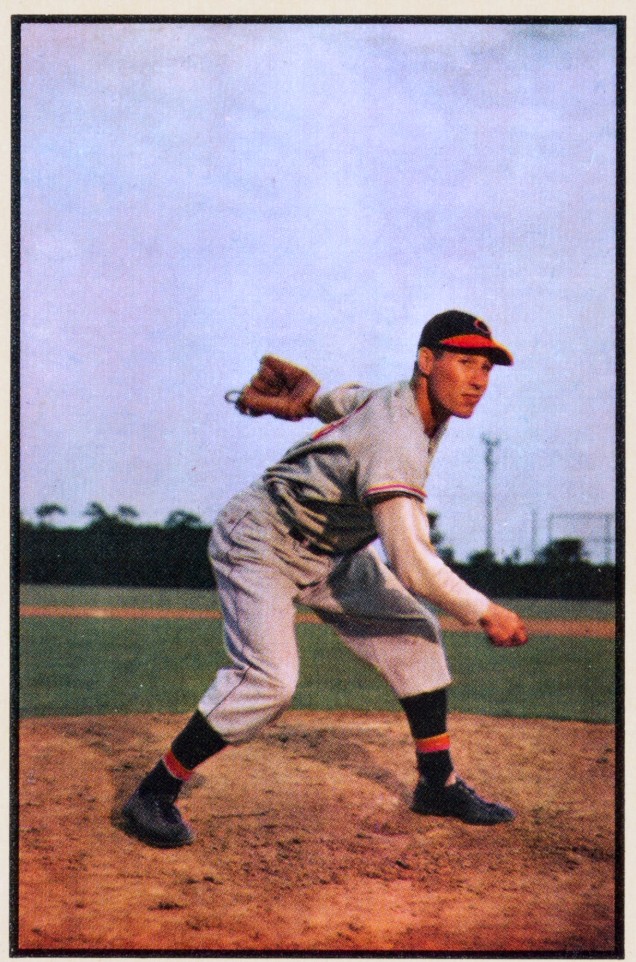 Bob Feller, who made it to the majors as a 17-year-old: played 18 MLB seasons (1936-41, 1945-56 … Indians); went 266-162, 3.25; and recorded 279 complete games and 44 shutouts (570 appearances/484 starts). Feller (an eight-time All Star) led the AL in wins six times (a high of 27 in 1940); strikeouts seven times (a high of 348 in 1946); complete games three times; innings pitched five times; shutouts four times; ERA once. And, his numbers would have been even more impressive if he hadn’t lost three-plus seasons to military service in World War II. Notably, Feller led the AL in wins the three seasons before entering the military (1939-41) – and then led the league in wins in his first two full seasons after his return (1946-47). (He got nine starts in late 1945.) Feller’s resume also includes three no-hitters (1940-1946-1951) and the pitcher’s Triple Crown (wins, ERA, strikeouts) in 1940.
Bonus Trivia(l) Tidbit
What future Hall of Famer batted second and manned centerfield in Bob Feller’s April 30, 1946 no-hitter (a 1-0 win) versus the Yankees in New York? It was rookie Bob Lemon, who started his MLB career as a 3B/OF, but made the Hall of Fame as a pitcher (207-128, 3.23).
Jackie Robinson, who of course, broke MLB’s long-standing “color line,” was a seven-time All Star, the 1947 NL Rookie of the year (.297-12-48, with a league- topping 29 steals) and the 1949 NL Most Valuable player (a league-leading .342 average and a league-topping 37 steals, with 203 hits, 16 home runs, 124 RBI and 122 runs scored).
This Could Be the Start of Something Big
Jackie Robinson was MLB’s first official Rookie of the Year – and, in 1987, the award was renamed the Jackie Robinson Rookie of the Year Award.
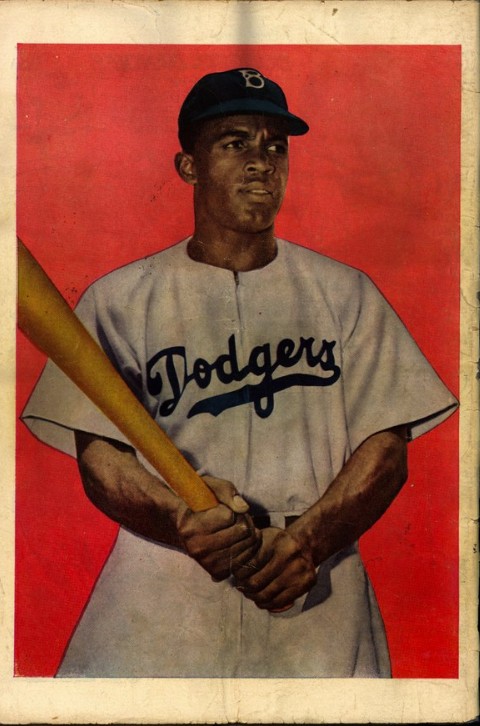 Over his MLB career (1945) Kansas City Monarchs; 1947-56 Brooklyn Dodgers), Robinson hit .313-141-761, with 972 runs scored and 200 stolen bases in 1,416 games. He scored 100+ runs in six seasons, had 200+ hits once; hit 35+ doubles three times; and stole 20+ bases five times (twice leading the league). He also hit .300 or better in seven seasons (including .375 in 34 games for the Monarchs in 1945. A man of character and courage, Robinson delivered the performance under considerable pressure and scrutiny.
___________________________________
A Letter “Four” Me?
Jackie Robinson was the first UCLA athlete to letter in four sports –
baseball, basketball, football and track.
____________________________________
First Ballot Baseball Hall of Famers (percent of vote in parentheses)
1936 Ty Cobb (98.2), Walter Johnson (83.6), Christy Mathewson (90.7), Babe Ruth (95.1), Honus Wagner (95.1)
1939 Lou Gehrig (special election)
1962 Bob Feller (93.8), Jackie Robinson (77.5)
1966 Ted Williams (93.4)
1969 Stan Musial (93.2)
1972 Sandy Koufax (86.9)
1973 Warren Spahn (83.2); Roberto Clemente (special election)
1974 Mickey Mantle (88.2)
1977 Ernie Banks (83.8)
1979 Willie Mays (94.7)
1980 Al Kaline (88.3)
1981 Bob Gibson (84.0)
1982 Hank Aaron (97.8), Frank Robinson (89.2)
1983 Brooks Robinson (92.0)
1985 Lou Brock (79.8)
1986 Willie McCovey (81.4)
1988 Willie Stargell (82.4)
1989 Johnny Bench (96.4), Carl Yastrzemski (94.6)
1990 Joe Morgan (81.8), Jim Palmer (92.6)
1991 Rod Carew (90.5)
1992 Tom Seaver (98.8)
1993 Reggie Jackson (93.6)
1994 Steve Carlton (95.6)
1995 Mike Schmidt (96.5)
1999 George Brett (98.2), Nolan Ryan (98.8), Robin Yount (77.5)
2001 Kirby Puckett (82.1), Dave Winfield 84.5)
2002 Ozzie Smith (91.7)
2003 Eddie Murray (85.3)
2004 Dennis Eckersley (83.2), Paul Molitor (85.2)
2005 Wade Boggs (91.9)
2006 Tony Gwynn (97.6), Cal Ripken, Jr. (98.5)
2009 Rickey Henderson (94.8)
2014 Tom Glavine (91.9), Greg Maddux (97.2), Frank Thomas (83.7)
2015 Pedro Martinez (91.1), John Smoltz (82.9)
2016 Ken Griffey, Jr. (99.3)
2017 Ivan Rodriguez (76.0)
2018 Chipper Jones (97.2), Jim Thome (89.8)
2019 Roy Halladay (85.4), Mariano Rivera (100)
2020 Derek Jeter (99.7)
2022 David Ortiz (77.9)
2024 Adrian Beltre (95.1), Joe Mauer (76.1)
Primary Resources: Baseball-Reference.com; BaseballHall.org
Baseball Roundtable – Blogging Baseball Since 2012.
 Baseball Roundtable is on the Feedspot list of the Top 100 Baseball Blogs. To see the full list, click here.
I tweet (on X) baseball @DavidBaseballRT
Follow Baseball Roundtable’s Facebook Page here. More baseball commentary; blog post notifications; PRIZES.
Member: Society for American Baseball Research (SABR); Negro Leagues Baseball Museum; The Baseball Reliquary.
P 1078