 We’ve all seen baseball fans reward a player (with a loud round of applause) for getting up, dusting himself off and trotting to first base after getting hit by a pitch.
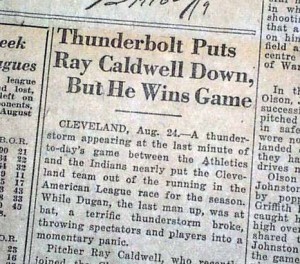
But how about a player who gets up, dusts himself off and continues to play – after getting leveled by a lightning bolt. It happened on this day (August 24) back in 1919, when hard-nosed, hard-living, Cleveland Indians’ hurler Ray Caldwell was knocked out by a lightning strike – only to get to his feet, “shake it off” amd complete the game. Note: BBRT commented on Caldwell’s feat in a 2013 post, but a lot of readers have been added since then, and I think Caldwell deserves another shout out for his grit (and I’ll add a few details on his career.)
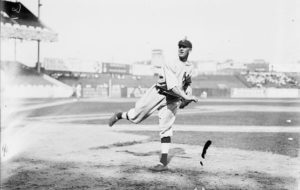
Bain News Service photo.
As a ballplayer, Ray Caldwell was known as someone who played hard – on and off the field. The 6’2”, 190-pound, right-hander was thought by many to be a potential team “ace” on the mound. However, his career was derailed by ongoing arm troubles and a penchant for “living large” … with a noted preference for liquor and the ladies. His days in MLB were marked with multiple fines and suspensions related to alcohol and absenteeism. As New York Yankees’ manager Miller Huggins described it, “Caldwell was one of the best pitchers that ever lived, but he was one of the characters that kept a manager in constant worry.”
Caldwell, like most pitchers of his day (his MLB career lasted from 1910 though 1921), liked to finish what he started. He, in fact, finished more than 70 percent of his starts (184 complete games in 259 starts). Not only was it difficult for opposing hitters to drive him from the mound, even Mother Nature couldn’t get the best of him.
On August 24, 1919, Caldwell made his initial appearance for the Cleveland Indians (after being released by the Red Sox, with a 7-4 record and 3.94 ERA). Cleveland manager Tris Speaker, in a tight pennant race with the White Sox, thought he could handle the problematic Caldwell, and it turned out he was right. Caldwell went 5-1, 1.71 in six starts down the stretch, including a September 10th no-hitter against the Yankees. (He also hit .348, 8-for-23, with four doubles in his six starts for Cleveland.) But let’s get back to that August 24 game.
Caldwell started his first game in Cleveland – against the lowly Philadelphia Athletics – and, despite threatening weather, was cruising along with a four-hitter and a 2-1 lead. With two outs in the bottom of the ninth, Caldwell faced not only the A’s number-five hitter (shortstop Jumpin’ Joe Dugan), but also dark skies, rumbling thunder, occasional lightening and intermittent rain. As witnesses reported, with Dugan at the plate, a lightning bolt blazed from the sky, hit near the press box, traveled down the ball park railings, exited and crossed the infield, dropping Caldwell (some said that it hit him in the top of the cap) as though he had been struck by a line drive.
The fans gasped, some even screamed, and the umpires rushed to the mound, where Caldwell lay face up, arms outstretched. Various reports have Caldwell prone for three-to-five minutes. He then slowly sat up, got to his feet and shook his head to clear the cobwebs – refusing any suggestion that he leave the mound. Instead, he demanded the ball and retired Dugan on a grounder to third base on the very next pitch.
Caldwell finished 1919 strong for Cleveland and, in 1920, his 20-10, 3.86 season helped Cleveland capture the AL pennant. By 1922, at the age of 33, however, Caldwell’s history of arm and disciplinary problems had brought his major league career to an end. He kept playing, however, logging a dozen more minor league seasons – and despite two twenty-win minor league campaigns, never again toed a major league pitching rubber.
Ray Caldwell – Some Highlights
In addition to bouncing back to complete a game after being hit by lightning, Ray Caldwell had some other electrifying career moments:
– On June 10 and 11, 1915, Caldwell was used in consecutive games as a pinch hitter for the New York Yankees. He delivered consecutive home runs – a solo homer and a three-run shot. (This was in a year when the AL leader stroked only seven long balls.) More #WhyIHateThe DH. Then, on June 12, Caldwell’s turn to pitch came up – at home against the Saint Louis Browns. Caldwell went the distance in a 9-5 win and, for the third consecutive day, hit a home run. Over the three-day, three-game stretch, Caldwell was three-for-six, with three home runs, three runs scored and seven RBI.
– On June 23, 1917, Caldwell started both ends of a Yankees/Athletics doubleheader – winning both games. He pitched six scoreless innings in Game One (leaving with a 9-0 lead in an eventual 10-4 Yankees’ win); then he threw a complete game six-hitter in Game Two (as the Yankees won 2-1). A good day at the office, for sure.
– In 1915, Calwell started 36 games and completed 31.
– He was a 20-game winner (20-10, 3.86) for the Indians in 1920.
– In 1914, he won 18 games for the Yankees and posted a 1.94 ERA (fourth best in the league).
– In 1915, he finished fifth in the AL in pitching victories (19), and ninth in home runs HIT (4).
– His career batting average was .248 and in 1918 and 1919, respectively, he hit .291 and .296.
Caldwell’s final MLB stats (Yankees, Red Sox, Indians) included a 134-120 record and a 3.22 ERA. In addition to his 20-win season with the Indians, he went 18-4, 1.94 for the 1914 Yankees and 19-16, 2.89 for the 1915 New York AL club. A versatile athlete, Caldwell was also often used in the outfield, first base or as a pinch hitter. In 1918, he pitched in 24 games (21 starts) for the Yankees and also hit .291 in 169 at bats – playing in 65 games and taking the field at first base and in all three outfield positions (most often center field). In 1915, his four home runs were ninth in the AL (Braggo Roth led the league with seven), despite Caldwell having 200 at bats fewer than anyone else in the top ten. (League leader Roth hit his seven homers in 384 at bats; Caldwell hit his four homers in 155 at bats.)
Ray “Slim” Caldwell – not even a lightening bolt could drive him from the mound.
Primary Resources: Baseball-Reference.com; Society for American Baseball Research (article by Steve Steinberg)
I tweet baseball @DavidBBRT
Follow/Like the Baseball Roundtable Facebook page here.
Member: Society for American Baseball Research (SABR); The Baseball Reliquary; The Negro Leagues Baseball Museum
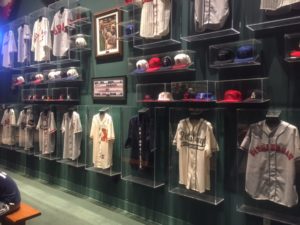 If you are a baseball fan, you can’t afford to miss the Negro Leagues Museum, which gives you a look at some of the richest – and some of the most poignant – times of our baseball history. Located in the 18th and Vine district, the museum takes you through the history of the Negro Leagues – and individuals of color – across baseball history. The story is told with a wide range of films, audio visual exhibits, photographs and memorabilia of all kinds. It is indeed a history lesson. You’ll learn a lot not just about baseball, but also about American history, race relations and attitudes.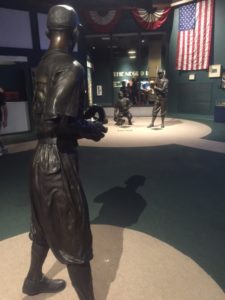
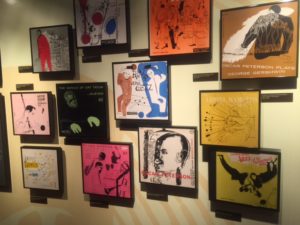 From the Negro Leagues Museum, we made our way to the American Jazz museum (housed in the same building) – where we were able to get and eyeful and earful of the greats from this unique American music genre. The museum included plenty of listening stations to enjoy the greats (and even separate the music into the parts that make up the whole) and visual impressions of the history of jazz (from photographs and films of jazz greats to album cover art to jazz club neon). If you are a fan of jazz, this visit is a must.
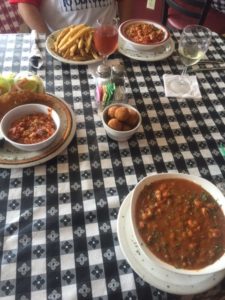 After our museum visit, we took the advice of the locals and headed to Danny’s Big Easy – practically across the street from the museums – for Cajun food. There were four of us in our group and the reaction was unanimous – WOW! Great, and we really mean great, Cajun food; as well as a server whose “life is a party and you are all invited” attitude made the experience even more enjoyable. Among the items we had: Crawfish Etouffee; Jambalaya; Catfish Po’ Boy; mac ‘n cheese; wings; specially seasoned house fries; and hush puppies. We washed it down with wine, but when one of our group asked about a beverage called “Living Easy,” they brought us a free one with four straws. (Also of interest was the fact that they had Kool-Aid on the menu for three dollars.)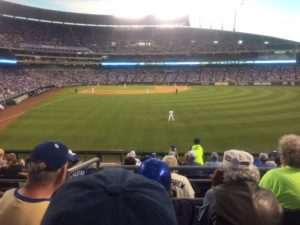
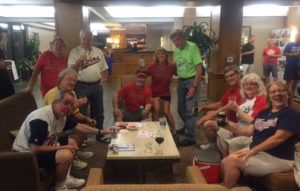
 An additional bit of information on Day Seven – for the full day, click
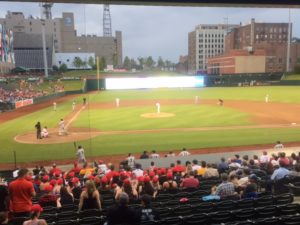
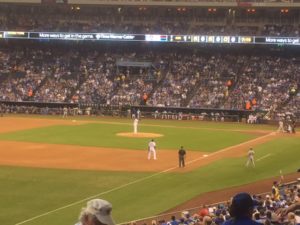
 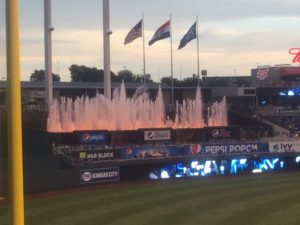 Arriving at Kaufmann Stadium, you first notice the higher level of security (as opposed to all our minor league stops) … bag searches and metal detectors were the order of the day. Once inside the stadium, which opened in 1973 and underwent significant renovation in the late 2000’s, you notice the steep upper deck, massive “Crown Vision” scoreboard/video board in center field and the right field fountain area.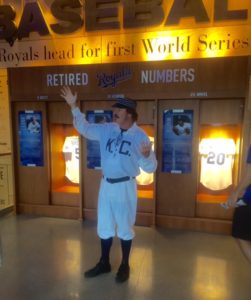
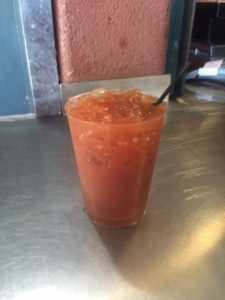
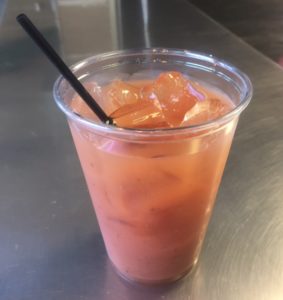
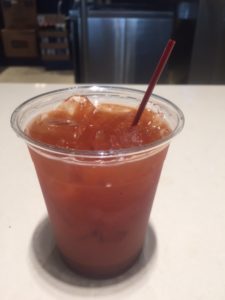 The Bloody Mary – $10 at the Boulevard Pub – was adequate: good pour; spicy, but not over bearing (it could have used a touch more tabasco and a bit of celery salt); it included a lime wedge, but I do like more substance in a Bloody Mary (maybe a celery stick, olives or a pickle spear.) Still at $10, it was a better bargain than the $11 beer. (One of our group reported paying $27 for two beers and a bag of peanuts.)
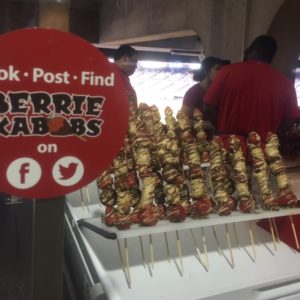 One popular concession item with our group was the “Berrie Kabob” – available for $7 at a nearby concession stand or from strolling vendors. They consisted of chocolate dipped strawberries, bananas and brownies (in various combinations) on a stick – and were delicious. If you are looking for dessert, this one is a hit.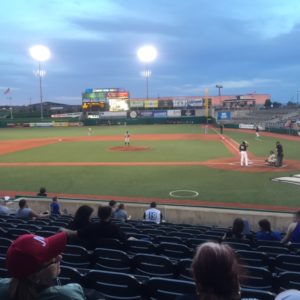
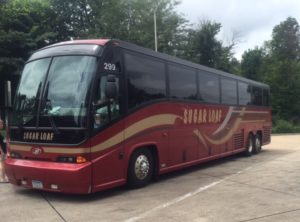
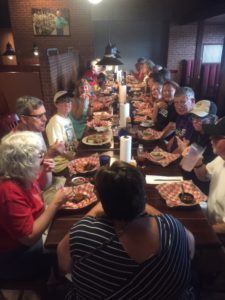
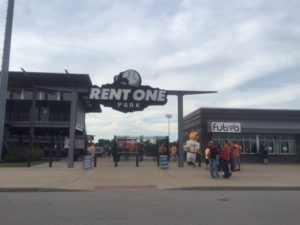 Then it was on to the Holiday Inn Express, literally the width of one street from the parking lot of Rent One Park – home of the Frontier League Southern Illinois Miners.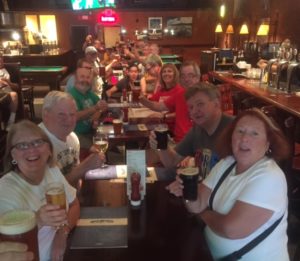
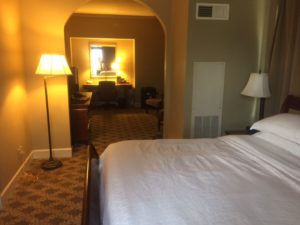 hen it was on to check-in at the Read House Historic Inn – originally opened in 1872 and rebuilt in 1926. It boasted beautiful (and historic) rooms, complemented by the most up-to-date amenities. Sitting in the elegant, high-ceilinged, chandeliered lobby, you half expected Winston Churchill of Al Capone – both previous guests – to come strolling in.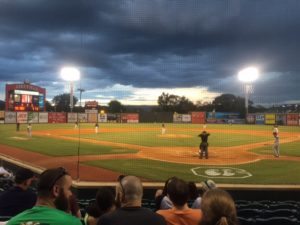
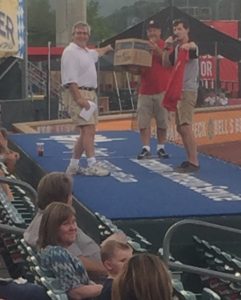
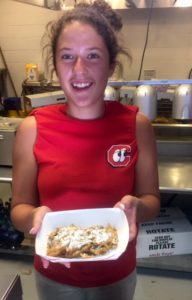 For those not familiar with it, a Moon Pie is a confection – popular in the southern states – that is basically a portable “s’more.” The traditional Moon Pie consists of two round graham crackers, with marshmallow filling in-between, dipped in chocolate. The dessert has been around since 1917 and, for reasons unknown, there is a southern tradition of washing them down with RC Cola. In fact, at least two musical groups have had minor hits with songs based on the RC Cola/Moon Pie combination. Moon Pies, by the way were born and are still produced by The Chattanooga Bakery. They now come in Chocolate, Caramel, Banana, Vanilla and Strawberry.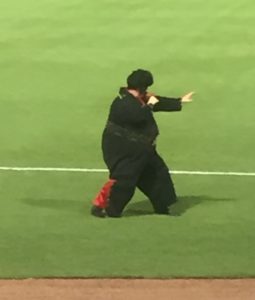
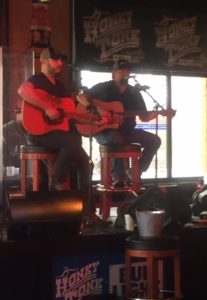
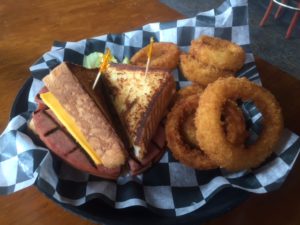
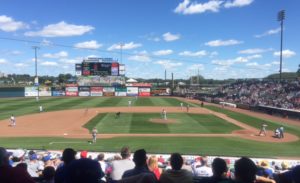
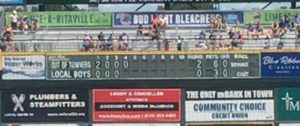
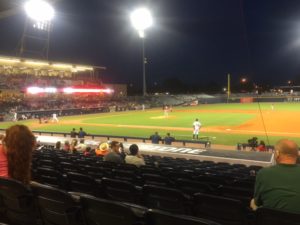 Now, to the game. The Tacoma Raniers were in town – meaning we were seeing two first-place teams (Raniers 71-51, first in the Pacific Coast League Northern Division) and the Sounds 70-53, first in the Southern Division), playing for home field advantage in the upcoming playoffs.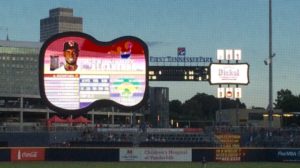
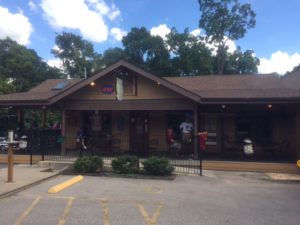
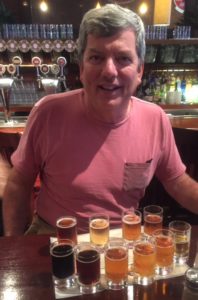
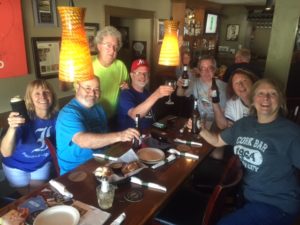 As the beverages flowed, the smiles on our group expanded (and the volume of the conversation was amplified) – at least until the food began to arrive. Overall, it was a tasty and refreshing stop on our way into Nashville.
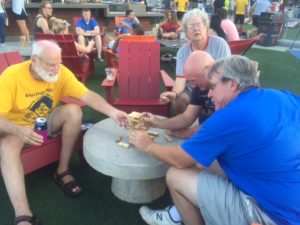
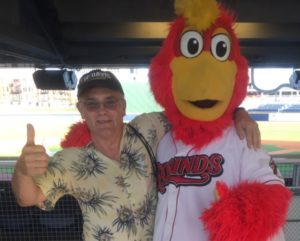 First Tennessee Park –which opened in 2015 – is home to the Nashville Sounds. The stadium, which holds 10,000, has very sleek design and, most notably, a unique guitar-shaped scoreboard/video board (a tribute to Nashville as Music City). It has a wide concourse that circles the entire field – offering great views from anywhere. Out in right field, you will find another unique aspect of this ball park – The Band Box, with its full bar and host of free outdoor diversions, including shuffle board, foosball, bean bag games, ping pong and – for a five-dollar fee – miniature golf. There is also ample seating (couches, lounge chairs, bar stools) and a very “I’m on vacation having a good time” vibe. BBRT recommendation: If you get here, go there.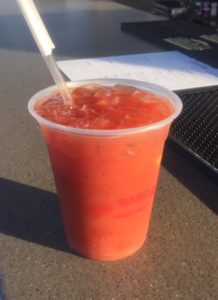
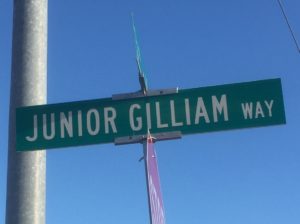 First Tennessee Park is located on Junior Gilliam Way. Gilliam – born in Nashville – was an infielder (2B/3B) with the Dodgers from 1953-66; 1953 NL Rookie of the year; a two-time All Star; and key member of seven NL pennant winners (four-time World Series Champions). Before joining the Dodgers, he was a three-time Negro League All Star (Baltimore Elite Giants) and the 1952 International League Most Valuable Player (with Montreal). Considered one of MLB’s true gentleman – and a gamer who gave his all for the team – Gilliam is not only honored by with Nashville’s Junior Gilliam Way, he also has a Los Angeles park named in his honor.
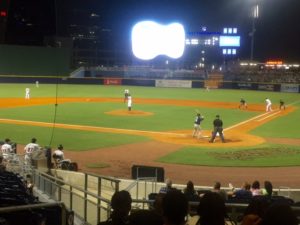 We had good seats once again, down the third base line – and we saw a competitive contest, taken by the Reno Aces (over the Nashville Sounds) 3-2. Shelby Miller – a 15-game winner for the Cardinals in 2013, but sent down after starting 2-9, 7.14 for the Diamondbacks this season – went 7 1/3 innings, giving up just two runs on ten hits. He helped himself out with some key strikeouts (a total of nine K’s versus no walks). Miller, reaching the mid-90s, threw 72 of 100 pitches for strikes. In addition, he got a hand (or arm) from Reno catcher Ronnie Freeman who shut down the Nashville running game, nailing all three Nashville attempted stealers (second, third and fourth innings). The Sounds were, apparently, testing the 25-year-old Freeman, in his first game at AAA since being promoted from AA Mobile. He passed. There was one other attempted steal in the game. This one, by Reno, was thwarted by Nashville catcher Matt McBride. Not a good day on the base paths for either side.
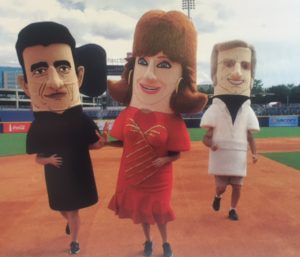 There were mixed feelings about the Nashville Sound Wave (cheerleaders/dance line). Some of our group questioned whether baseball needs cheerleaders. I’ll stay out of that one. Everyone seemed to like the racing country stars – Johnny Cash, Reba and George Jones.
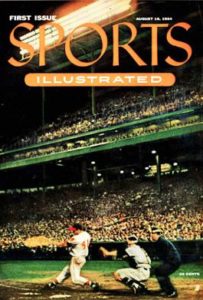 On this date (August 16) in 1954, the first issue of Sports Illustrated hit the newsstands. One the cover was BBRT’s favorite player of all time, Braves’ third baseman Eddie Mathews. The Braves’ third sacker – known as a basher (512 career home runs) and a brawler (he had some memorable conflicts with players like Don Drysdale and Frank Robinson) – was pictured hitting a home run. He would appear on the cover again in June of 1958 and August of 1994 (40th Anniversary Issue).
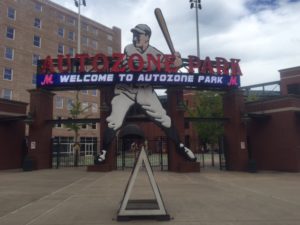 Day Three of Ballpark Tours XXXIV sees us remaining in Memphis, with a second Tacoma Raniers/Memphis Redbirds game slated for 6:05 p.m.
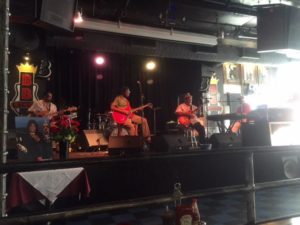 Being as major fan of the blues, I headed toward the Beale Street Entertainment District, where the barbeque is sweet and the live music starts at 11 a.m. and runs straight through to 3 a.m. It’s also where I saw quite a few of my fellow tour participants. I stopped to take in a few tunes at a handful of clubs before heading for lunch at my previously selected destination – B.B. King’s Blues Club. I could not miss visiting the original B.B. King’s location. I was not disappointed. The house band was great – back in Minnesota they’d be headliners – and so were the Memphis-style dry-rub ribs. I hung out at B.B. King’s for a couple of hours (or a couple of brews, depending on how you measure) before heading over to Autozone Park for the evening’s ball game (6:05 p.m. start),
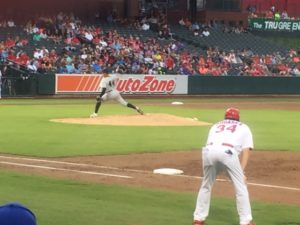
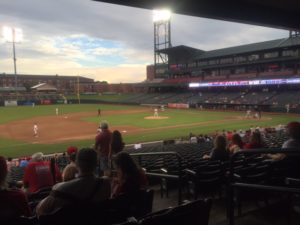 It was another heavy, humid day – with storms predicted –which may have contributed to the very small crowd (as might the Redbirds sub-.500 record). We did not, however, get rained on. The announced attendance was 3,517, but I’d be surprised if there were more than 2,500. – and they were a quiet bunch, despite Memphis’ 6-2 win. We tried to get something going, but often all you heard was the “sound of one fan clapping.” Good seats again, by the way, third-base side this time.