Johnny Allen – and an underrated/under-recognized/near-perfect season

Here’s just a little something from BBRT to contemplate while waiting for tonight’s Yankees/A’s contest.  And it has, appropriately, a bit of a Bronx Bomber hook. It’s about a little recognized and underrated hurler named Johnny Allen.

In the thirty days from September 3 to October 3, 1937, Indians hurler Johnny Allen started and completed eight games winning seven (losing one).  During that span, he also made one relief appearance (no decision).

 Over the 1937 season and first half of 1938, Allen went 27-2, 2.82 – completing 24 of 36 starts.
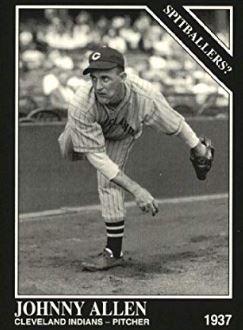
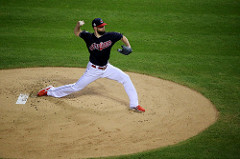
AllenOn this date (October 3) in 1937, Cleveland right-hander Johnny Allen (who originally came up with the Yankees) was starting for the Indians (against the Tigers) in Detroit.  Since September 3, he had thrown one 2 1/3-inning relief stint (no decision) and started seven games. He had completed and won all seven of those starts, throwing 63 innings and giving up just 14 earned runs.  On the season, he was a perfect 15-0 (despite missing about a month-and-a-half with appendicitis) and carried a 2.62 earned run average. Going for his eighth win in 30 days (September 3 – October 3), Allen was in a position to record the most wins ever in an undefeated MLB season.

It was not to be, however, but through no fault of Allen.  The righty – known for a lively fastball and solid curve – went the distance that day, giving up a second-inning run on a double by Tigers’ RF Pete Fox and a single by 1B Hank Greenberg. It was the only run he would give up in a complete game – his eighth in 30 days – five-hitter. (Side Note: In an article for the Society for American Baseball Research, author Jon Weeks reports that the single actually was a grounder muffed by Cleveland 3B Odell Hale and Allen had to be restrained twice “when he tried to assault the error-prone third-sacker.”  Baseball-Reference.com has the grounder scored as a base hit.)

Unfortunately, Tigers’ southpaw Jack Wade – who came into the game at 6-10 on the season, with a 5.64 earned run average, pitched the game of his career. He tossed a nine-inning, one-hit shutout – topping Allen 1-0 and putting the Indians’ hurler’s season mark at 15-1. How surprising was Wade’s performance? His MLB career record (eight seasons) ended at 27-40, 5.00.

Getting back to the underrated and under-recognized Allen – he came up to the majors in 1932, after going 21-9 in the International League (Toronto and Jersey City) the year before.

As a 27-year-old MLB rookie, Allen went 17-4, 3.70 and led the AL in winning percentage at .810. In four seasons with New York his record was 50-19, 3.79 – before attitude (anger) issues contributed to a trade to Cleveland in December of 1935

Hall of Fame outfielder Al Simmons (.334 career average) once said, “The pitcher who gave me the most trouble was Johnny Allen … He threw hard and with a side arm.  He was particularly tough with men on base. 

                                                            (Article by Jimmy Jemail, August 8, 1955, Sports Illustrated.)

 Allen flourished in Cleveland, going 20-10, 3.44 in the 1936 season, following that with his 15-1 record in 1937. He started 1938 in the same near-perfect fashion and was 12-1, with a 2.98 ERA at the All Star Break.   Then, injury struck (some say something went awry in his shoulder during his All Star appearance, others say he slipped in the shower).  After the break, Allen was 2-7, 6.29 – and, over the next six seasons, he won only 43 games (37 losses). He finished with a career mark of 142-75, 3.75. Before the 1938 injury he was 97-31, 3.44 – afterward 45-44, 4.20.

Johnny Allen pitched three innings in the 1938 All Star Game – giving up two hits and one run and fanning three (Leo Durocher, Billy Herman, Mel Ott).

Allen’s temper was a consistent matter of concern (part of the reason he suited up for five different teams in his 13 MLB seasons) –  to the point of a fine and suspension for attacking an umpire in 1942.  Ironically, after retiring as a player, Allen became a minor league umpire – even rising to Umpire-In-Chief in the Carolina League.

Primary sources: Baseball-Reference.com; Society for American Baseball Research.  

I tweet baseball @DavidBBRT

Follow/Like the Baseball Roundtable Facebook page here.

Member: Society for American Baseball Research; The Baseball Reliquary; The Negro Leagues Baseball Museum.
Cycles, 3-Run Wild Pitches, More Records in Whacks and Whiffs … BBRT’s September and Year End Wrap Up

Well, it’s October first and yesterday, I attended the final Twins’ game of 2018.  Now it’s time  to get down to the business of the September (and season’s-end) BBRT wrap up – Baseball Roundtable’s regular look at the stories, statistics and parrticularly outstanding or unique performances that defined baseball over the previous month.

And, what a magical month/finish it was!  MLB gave us:

  • Two game 163’s for the first time ever.
  • A run at the Triple Crown by Christian Yelich.
  • Three teams reaching 100 wins on the season – Red Sox, Astro and Yankees.
  • Forty-six Yankee September home runs – running the team’s season total to a new MLB single-season record of 267.

Bronx Bomber Balance

The Yankees had a balanced attack in 2018, becoming the first team to get 20 home runs from all nine spots in the batting order. The 1997 Seattle Mariners, whose record of 264 home runs the Yankees (267) broke, got fewer than 20 home runs from two of the nine spots in the order (lead off and ninth).

  • 292 September strikeouts by White Sox batters – including 15 in their final game (aginst my Twins) – to bring their season total a new MLB-record 1,594.  The 2017 Brewers held the record at 1,571.
  • The 2018 season saw a record total of 41,207 strikeouts – up from last season’s 40,104 and the 13th consecutive year of increased strikeout totals.
  • A .132 September average (7-for-53) for the Orioles’ Chris Davis, giving him a season average of  .168 (79-for-470), the lowest average ever for a player with enough plate appearances to qualify for the batting title. The previous low was .179 (Tigers’ Rob Deer in 1991 and Braves Dan Uggla in 2013). Davis did have 16 home runs and 49 RBI.
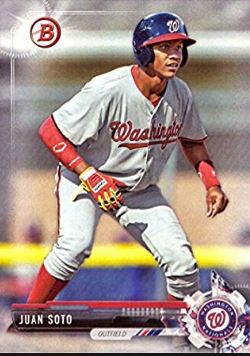
  • Nationals’ 19-year-old rookie Juan Soto became just the third player to reach 20 home runs as a teenager.
  • The was not a single complete-game pitched in the American League over the final month of the season.
  • For the first time in history,  MLB finished a season with more strikeouts (41,207) than base hits (41,019).

____________________________________________________________________

TROT INDEX … A REGULAR BBRT FEATURE

For the 2018 season, more than one-third (34.8 percent) of all MLB 185,139 plate appearances ended in a trot (back to the dugout, around the bases, to first base). We are talking about strikeouts, home runs, walks, hit by pitch and catcher’s interference – all outcomes that are, basically, devoid of action on the base paths or in the field. Here’s the breakout: strikeouts (22.3%); Walks (8.5%); home runs (3.0%); HBP (1.0%); Catcher’s Interference (less than .001%). Personally, I’d like more action in the field of play.

____________________________________________________________________  

How dear to my heart was the old-fashioned hurler

     Who labored all day on the old village green.

He did not resemble the up-to-date twirler

     Who pitches four innings and ducks from the scene.

He has a queer habit of pulling up lame

     And that is the reason I hanker and long  for

The pitcher who started and finished the game. 

The old-fashioned pitcher,

     The iron-armed pitcher,

The stout-hearted pitcher

     Who finished the game.

                                                                                             UNTITLED POEM

                                                                                             BY GEORGE E. PHAIR


You may be wondering why I chose to share this poem near the top of this post.  Well, I came across the untitled verse in Lawrence S. Ritter’s book The Glory of Their  Times – published more than fifty years ago (1966). I’m not sure when George Phair (a journalist and columnist) penned the poem (in trying to track it down, I did find Phair poetry from as early as 1918), but I found it interesting that – even decades ago – observers were lamenting the passing of the complete game. Consider this, in 1966 (the year The Gory of Their  Times carried this poem) it took 27 complete games to lead MLB and a dozen just to make the top ten.  That season saw 736 complete games in MLB.  We saw only 42 complete games this season – and nine of the 30 MLB teams recorded zero complete outings all season.

James Shields is the only pitcher since 2000 to reach double-digits in complete games in a season - with 11 in 2011. Photo by Keith Allison

James Shields is the only pitcher since 2000 to reach double-digits in complete games in a season – with 11 in 2011. Photo by Keith Allison

In 2018, it took just two complete games to lead MLB in “finishing what you started” – a feat accomplished by eight players. It’s the first season  ever that no major leaguer completed at least four contests (although, in 2017, the Indians’ Corey Kluber and Twins’ Erwin Santana  ties for the AL lead in CG with two.)  Now, this is neither a note of complaint or support, but rather just an observation on how the game has changed – and, with the new “opener” strategy, it is changing even more.  Like Phair, I do kind of miss the old-fashioned, iron-armed pitcher, but those days are truly past.

_____________________________________________________________

Next up, before getting into the standings, a look at the …

BASEBALL ROUNDTABLE PLAYERS AND PITCHERS OF THE MONTH (SEPTEMBER)

American League Player of the Month – Tie … Luke Voit, 1B, Yankees & Steve Piscotty, RF, A’s

This was too close call between some a couple of names that haven’t been mentioned here that often: the A’s Steve Piscotty and the Yankees’ Luke Voit.  Voit put together a solid month across the board for the post-season bound New York squad – a .333 average, an AL-best ten home runs, second-best 22 RBI and 19 runs scored. Piscotty’s number were equally compelling: a .310 September average; AL fourth-best eight home runs, an AL-topping 25 RBI and 21 runs scored.  And, both of these players delivered in the heat of a pennant race.

Other Contenders:  1B Yuli Gurriel of the Astros also had a solid month – a .356 average, with five home runs, 21 RBI and 14 runs scored.  And, of course, Red Sox’ RF Mookie Betts led the AL with a .377 average, with three home runs, ten RBI and 20 runs scored.

National League Player of the Month – Christian Yelich, CF, Brewers

Christian Yelich photo

Photo by hueytaxi

Christian Yelich had an MVP-worthy month of September –  .352 average (tied for the tops in the NL); a league-topping ten home runs (also tied); an NL-best 33 RBI; and 24 runs scored – and he even threw in six stolen bases (which further separated Yelich from the pack). He fueled the Brewers’ run to the post-season – and notched his second cycle of the season along the way. A memorable month for this 26-year-old rising star.

Other Contenders: The Nationals’ 3B Anthony Rendon also deserves recognition for a month in which he hit .352, with six home runs, 26 RBI and 24 runs scored.   Rendon also gets some points for ending the month with more walks (14) than strikeouts (12). Mets’ 25-year-old LF Michael Conforto was also in the mix, after a .286-9-29 month (with 17 runs scored).

American League Pitcher of the Month – Blake Snell, Rays

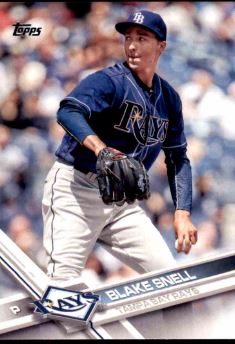
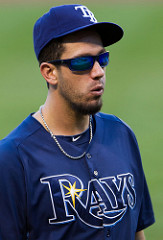
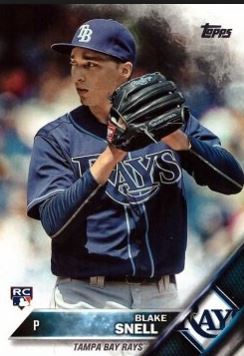
snekkRays’ 25-year-old southpaw Blake Snell had a dynamite September – not only did he become MLB’s first 2018 20-game  winner (he ended the season 21-5), he also led the AL in September wins – going  5-0 in six starts. (The only AL pitcher to chalk up five September wins.) Among pitchers with at least 20 innings pitched in the month, his 1.26 earned run average was fifth-best overall and second in the AL. He fanned 53 batters in September (tied with the Indians’ Carlos Carrasco for the most in MLB) and gave up just 21 hits and eleven walks in 35 2/3 innings.

Other Contenders: Veteran power-righty Justin Verlander always seems to be a contender.  In September, he went 3-0, fanned 50 batters (third-best in the AL) in 33 innings and put up a nifty 1.09 ERA (tied with the White Sox’ Reynaldo Lopez and Reds’ Luis Castillo for the MLB’slowest September ERA). 24-year-old righty Reynaldo Lopez of the White Sox started five games (two wins and one loss) in September and gave up just four runs in 33 innings – delivering a 1.09 earned run average. He also fanned 35 batters (nine walks).

National League Pitcher of the Month – Jose Urena, Marlins

Lots of good candidates (four NL pitchers logged five wins in September), but still not a tough choice. Right-hander Jose Urena went 5-0 in five September starts (for the last-place Marlins, mind you). He fanned just 20 batters in 30 innings, while  putting up a 1.20 earned  run average (second only to the Reds’ Luis Castillo – 1.09 – among NL pitchers with at least 20 September innings).

Other Contenders:  There were a handful of other contenders.  The Rockies’ Kyle Freeland went 5-0 in six starts, with a 2.61 earned run average and 31 strikeouts in 38 innings. The Mets’ Jacob deGrom went 2-1, 1.80 (eighth in the NL) in five September starts. He pitched 35 innings, fanning 45 batters (fourth in the NL).  In his 35 innings, deGrom gave up just five walks and 15 hits for an MLB September-best WHIP (walks plus hits per innings pitched) of 0.57.  I also liked what the Rockies’ young (23-year-old) right-hander German Marquez did in the heat of a close West Division race. Marquez started five September contests – going 3-1, with a 2.14 earned run average. He also fanned 48 batters in 33 2/3 innings pitched.

_______________________________________________________________

SEPTEMBER’S BEST AND WORST

AMERICAN LEAGUE

No team won more games than the Astros, who went 21-6 in September – and they did it on the shoulders (and arms) of the pitching staff. The Astro scored 131 runs in September – tying the Royals (who went 15-13) for the seventh-most in the AL. Their 2.99 earned run average, however, was the league’s lowest. They rode the arms of starters Justin Verlander (4-0, 1.09); Gerrit Cole (3-0, 3.03); Charlie Morton (2-0, 3.00) – not to mention reliever Ryan Pressly, who made 12 appearances and did not allow an earned run (15 whiffs in 9 2/3 innings) and Roberto Osuna (ten saves in ten opportunities.) The offense went through 1B Yuli Gurriel (.356-5-21) and OF George Springer (.330 with 24 runs scored). In the post season, they’ll need more from 2B and hit-machine Jose Altuve, who hit just .256 in September.

Other teams putting up strong September performances were the Rays at 19-9 and A’s (16-10).  Tampa scored the second most September runs at 152 and bucked the trend by doing it more with average (.273, the AL’s top September figure) than power (32 home runs, eighth in the league). Key September contributors were CF Tommy Pham (.368-5-16), SS Willy Adames (.341-2-11); 2B Joey Wendle (.319); and CF Kevin Kiermaier. It didn’t hurt to be able send Blake Snell to the mound (5-0, 1,26)  The A’s were first in the AL in runs scored and second in home runs behind the bats of Steve Piscotty (.310-8-25), Khris Davis (.237-9-19) and Matt Olson (.282-5-19).

The Oakland A’s – with 2018 lowest payroll at the start of the season – were a surprise entrant in the 2018 post season.

At the other end of the September performance spectrum were the Orioles (7-20); White Sox (8-19); and Rangers (9-18). Notably, they also made up the bottom three in the AL in runs scored – the only junior circuit teams with less than 100 September tallies. Making it worse for Baltimore and Chicago, they were the only AL teams with September ERA’s over 5.00 (5.33 and 5.02, respectively).

NATIONAL LEAGUE (not including October’s Game 163)

MIlwaukee Brewers photo

Photo by bryce_edwards

The top September winners in the NL were the Brewers (19-7); Rockies (19-9); Dodgers (18-9); and Mets (18-10). Notably those teams took the top four league spots in both earned run average and home runs. The Brewers had the best September earned run average (2.77), were third in home runs (39) and fourth in runs scored (144). Outfielders Christian Yelich, (.352-10-33), Lorenzo Cain (.310 with 23 runs); and Ryan Braun (.266-6-14) were solid contributors. Starters Gio Gonzalez and Wade Miley each went 3-0, with ERA’s of 2.13 and 3.52, respectively.  And the bullpen was lights out, led by Cory Knebel and Jeremy Jeffress, who made a combined 25 appearance, went nine-for-ninepin save opportunities and fanned 47 in 26innings.

The Dodgers combined offense and pitching.  They were first in the league in September home  runs (44) and runs scored (161) and third in ERA (3.18). On offense, OF Yasiel Puig (.295-8-16), SS Manny Machado (.276-4-19) and OF Matt Kemp (.339-3-16) stood out.  Twenty-one of the teams 27 starts were handled by Clayton Kershaw (3-0, 3.89); Rich Hill (5-0, 3.90), Hyun-Jin Ryu (3-2, 1.50) and Walker Buehler (1-1, 1.95). With Kenley Jansen (five-for-five in September save opporunities) in the pen, they should set up well for the post season. The Rockies were second in home runs (43) and runs scored (154) and fourth in ERA 3.26.  They got big Septembers from CF Charlie Blackmon (.349-6-15-14); LF David Dahl (.298-9-27); SS Trevor Story (.298-9-22); starter Kyle Freeland (5-0, 2.61); and closer Wade Davis (seven-for-seven in save opportunities, with a 0.82 ERA). Finally, the Mets kicked it up a notch to go 18-10 – with the league’s second-best September ERA (3.14) and fourth-most round trippers (31). They finished seventh in runs scored. A couple of surprising offensive forces emerged: 2B Jeff McNeil (.340 average – 18 runs scored) and OF Michael Conforto (.286-9-29). The pitching names are familiar: Noah Syndegaard (4-1, 1.73 for the month); Jacob deGrom (2-1, 1.80); and Zach Wheeler (3-0, 2.8)

At the other end of the September NL won-lost markers were the Giants (5-21), Diamondbacks (8-19) and Phillies (9-20) – three of the six NL teams that scored less than 100 runs in September. The Giants scored the fewest runs in all of baseball (69) and hit the second-fewest September home runs (17), while the Diamondbacks were tenth in the NL in runs (98) and the Phillies were eleventh (97). The mound work wasn’t any more promising. The Phillies were last in the league in September ERA (5.49), while the D-backs were 13th (4.75) and the Giants were 12th (4.72).

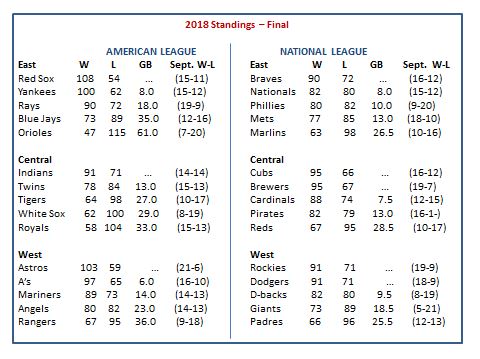
2018Fstasdning

Wild Card Predictions – More post-season predictions to come (but, with my record, you can’t take these to the bank.)

Cubs over Rockies: Two loaded line-ups, but I give the Cubs a slight edge.  I like the veteran Jon Lester starting a key game – and am a little concerned about Kyle Freeland’s recent workload (six starts since September 2) and start on short rest.  That, coupled with the fact that the Rox have to travel to the friendly (for the Cubs) confines gives Chicago an edge.  Should be a close game,  however.


Yankees over A’s: The balanced Yankees’ lineup should be enough to end the low-budget A’s remarkable run to the post season. Still the A’s have enough power and bullpen strength to make it interesting. However, in today’s game of home runs and strikeouts, Yankees get the edge.

—-LEAGUE LEADERS – TEAMS –  SEPTEMBER—–

RUNS SCORED … MLB Team Average – 120

AL: A’s (167); Rays (152); Yankees (150)

NL: Dodgers (161); Rockies (154); Nationals (149)

The Giants scored the fewest September runs – just 69. They also finished last in batting average (.211) and 29th in home runs (17, just one ahead of the Marlins) for the month. In the AL, the weakest September  offense went to the White  Sox, with just 89 runs plated.

BATTING AVERAGE … MLB Team Average – .243

AL: Rays (.273); Twins (.272); Red Sox (.264)

NL: Dodgers (.274); Rockies (.273); Nationals (.267)

No team grounded into more double plays in September than the A’s with 25. Then again that may be a product of all those base runners, they also scored the most runs in MLB at 167. In the NL, the Nationals matched the A’s 25 GIDP – and scored the third most runs (149).

HOME RUNS … MLB Team Average – 30

AL: Yankees (46); A’s (41); Angels (38)

NL: Dodgers (44);  Rockies (43); Brewers (39)

San Francisco (17) and Miami (16) were the only teams with fewer than 20 September home runs. The Twins, Tigers and Orioles tied for the bottom of the AL with 23 round trippers.

STOLEN BASES … MLB Team Average – 15

AL: Royals (39); Rays (30); Indians (26)

NL: Nationals (24); Brewers (21); Braves (19); Rockies (19)

People tend to think of the National League as the “running” league.  However, the top five teams in September steals were from the AL: Royals, Rays, Indians, Orioles and Red Sox.

BATTERS’ STRIKEOUTS … MLB Team Average – 236

AL: White Sox (292); Blue Jays (263); Royals (249)

NL: Giants (270); Phillies (261); Cardinals (257)

The Astros put the ball in play – fanning an MLB-low 174 times in September.

EARNED RUN AVERAGE … MLB Average – 4.15

AL:  Astros (2.99); Mariners (3.67); Indians (3.69)

NL:  Brewers (2.77); Mets (3.14); Dodgers (3.18); Rockies (3.26)

Three teams carried ERA’s over 5.00 for September – the Phillies (5.99); Orioles (5.33); and White Sox (5.02).  No Surprise, they went a combined 23-59 for the month.

PITCHERS’ STRIKEOUTS … MLB Average – 236

AL:  Indians (300); Astros (276); Yankees (267)

NL: METS (269); Dodgers (264); Phillies (256); Rockies (254)

The Dodgers’ staff had September’s best strikeout-to-walk ratio at 4.55. In the AL, the leader was the Indians at 3.75.

SAVES … MLB Average – 7

AL: Astros (14); Rays (12); Angels (9)

NL: Brewers (10); Mets (9); Braves (8); Pirates (8); Rockies (5)

Wild Things

In September, Red Sox’ pitchers hit an MLB-high 23 batters; the Braves walked an MLB-high 141; and the White Sox led all of baseball with 24 wild pitches.  The MLB team September averages in those categories.   Hit By Pitch – 11; Walks 90; Wild Pitches – 11.

________________________________________________________

HOW ABOUT SOME SEPTEMBER HIGHLIGHTS?

30-30 Vision

On September 9, Indians’ 3B Jose Ramirez became the 39th member of MLB’s 30-30 (HR’s & SB’s) club – stealing his 30th base of 2018 in the first-inning of a 6-2 Cleveland loss to Toronto. The theft gave the 26-yeqar-old switch-hitter 37 homeruns and 30 stolen bases on the season.  He finished the campaign at .272-39-106, with 34 steals.

MLB has seen only four 40-40 (HRs/SBs) Seasons

Jose Canseco, A’s … 1988 (42 HR/40 SB)

Barry Bonds, Giants … 1996 (42 HR/40 SB)

Alex Rodriguez, Mariners … 1998 (42 HR/46 SB)

Alfonso Soriano … Nationals 2006 (46 HR/41 SB)

No Running in the Halls, Young Man

sostoNineteen-year old Nationals’ rookie outfielder Juan Soto has been doing all sorts of wild things on the diamond this season – and on September 15, he ran wild on the base paths.  In the Nationals’ 7-1 win over the Braves, Soto stole three bases, becoming the youngest (19 years, 325 days) player ever to steal three bags in an MLB game.  (Rickey Henderson had held the record at 20 year, 241 days.)

Soto stole second in the first inning and second and third in the fourth. For the game, Soto had one hit and three walks in five plate appearance, with two runs scored and one RBI.


A Real Teeny-Bopper

No one has hit more home runs as a teenager than the Red Sox’ Tony Conigliaro – who had 24 round trippers before his 20th birthday.  This season Nationals’ 19-year-old rookie Juan Soto made a run at the record – hitting six September long balls (a .283-6-20 month) to finish the season with 22 – tied for second all-time.

Most MLB Home Runs by a Teenage

24 … Ton Conigliaro, Red Sox

22 … Bryce Harper, Nationals

22 … Juan Soto, Nationals

19 …. Mel Ott, Giants

16 … Ken Griffey, Jr. Mariners

Red(s) Hot Yelich

On September 17, the Brewers’ Christian Yelich continued to be Red(s) hot – hitting for his second cycle (single, double, triple, homer in same game) of the 2018 season – becoming just the fifth MLB player with two cycles in a season. Both of Yelich cycles have come against the Reds. For the full story and more about MLB cycles, click here.  Yelich also made a September run at the Triple Crown, ending the season at .326-36-110.  He won the batting crown, fell just one shy of a tie for the RBI title and two shy of the home run crown.

Tea for Two a Good Way to Celebrate?

senllOn September 18, Rays’ southpaw Blake Snell became MLB’s first 2018 20-game winner – and, in the process, the 25-year-old picked up his 200th strikeout of the season and dropped his 2018 earned run average to under 2.00 (1.97).  He also became just the 2nd Ray to reach 20 wins in a campaign.

Snell reached these milestones in the Rays 4-0 win over the Rangers in Texas – a game in which Snell pitched five scoreless innings, giving up one hit and two walks, while fanning five. Snell finished the season, his third in the majors, at 21-5, 1.89. Going into the season, his career record was 11-15, 3.82.

Braille on Jersey an MLB First

On September 18, the Orioles hosted the Blue Jays at Camden Yards and Baltimore’s home jerseys had the team and player names spelled out in Braille – an MLB first.   The O’s were recognizing the 40th anniversary of the National Federation of the Blind moving its home office to Baltimore.   And, here I thought it had something to do with the umpires.

20-20 Vision

In 2017, MLB had no 20-game winners.  In fact, no hurlers even reached 19 victories. (Carlos Carrasco and Corey Kluber, Indians; Jason Vargas, Royals; and Clayton Kershaw, Dodgers, tied for the MLB lead with 18 wins.) Things were a little different this season.

  • On September 18, the Rays’ Blake Snell became 2018’s first twenty-game winner – as Tampa topped Texas 4-0. See the Tea for Two description above.
  • On September 24th, the Indians’ Corey Kluber became 2018’s second twenty-game winner (like Snell by a 4-0 score), as Cleveland prevailed over the White Sox. Kluber went seven innings, giving up four hits and one walk, while fanning eleven. It was Kluber’s first 20-win season in eight MLB campaigns – although he had won 18 games three times and is a two-time Cy Young Award winner.  He finished the season at 20-7, 2.89.

In the Moment

On September 19, Indians’ veteran 2B Jason Kipnis came to the plate with 999 career hits. More important, the bases were loaded, there was one out and his Cleveland squad was trailing 1-0.  Kipnis made the most of his milestone moment.  His 1000th hit was a game-winning, walk-off Grand Slam.

Boom – Just Boom, That’s All

Luke Voit photo

Photo by Keith Allison

On September 20, Yankee 1B Luke Voit popped his 10th home run for the Yankees (since being acquired from the Cardinals on July 29).  Despite the Yankee’ 11-6 loss to the Red Sox, the long ball carried some significance.  It gave New York an MLB record twelve players with double-digit home runs in the same season.  Here’s the final 2018 count for that dirty dozen:

Giancarlo Stanton … 38

Aaron Judge … 27

Didi Gregorius … 27

Miguel Andujar … 27

Aaron Hicks … 27

Gleyber Torres … 24

Gary Sanchez … 18

Luke Voigt … 14

Brett Gardner … 12

Greg Bird … 11

Neil Walker … 11

Austine Romine … 10

Stick Around, You May See Something New

On September 20, there was plenty of action for the home crowd in Oakland, as the A’s pounded the Angels 21-3.  Still, even if you were an Angels’ fan, staying to the bitter end may have paid off. You would have seen the Angels’ 29-year-old rookie catcher Francisco Arcia go from one end of the battery to the other – taking the mound in the seventh inning with the Angels trailing 18-2.  Arcia pitched two innings, giving up three runs on four hits. In the top of ninth, he got one of those runs back by launching a solo homer off reliever Chris Hatcher.  It made Arcia the first player ever to catch, pitch and homer in the same MLB game.  (More of “In baseball, we track everything.”)

Arcia, who made his MLB debut this year (in his 12th professional season), made another MLB “splash” earlier this season. On July 26, he played his first MLB game – going two-for-five, with a home run and four RBI as the Angels beat the White Sox 12-8. On July 28, he saw his second MLB action, this time going three-for-four with two doubles, a home run, two runs scored and six RBI in an 11-5 win over the Mariners.  Those performances made Arcia the first player to reach double-digit RBI in his first two MLB games.

Band of Brothers

On September 21, major league brothers Yuli Gurriel and Lourdes Gurriel, Jr. weren’t on the same teams, weren’t on the same field and weren’t even in the same country.  Yet, they managed to make MLB history together.  In another example of “In baseball, we track everything,” the two became the first brothers to have multi-homer games on the same day.

Lourdes, playing shortstop for the Blue Jays in Toronto, rapped a pair of homers (his tenth and eleventh of the season) as the Blue Jays topped the Rays 11-3.

Yuli, playing first base for the Astros at home, hit a Grand Slam and a two-run shot as Houston beat the Angels 11-3. They were his eleventh and twelfth dingers of the season.

Clearing the Bases … Sandlot Style

On September 23, the Brewers plated five runs in the top of the sixth inning of their crucial 13-6 win over the Pirates – and three of them scored on a single wild pitch.  Here’s how it went.

Reliever Steve Brault started the frame by fanning Brewers’ LF Christian Yelich. The Pirates’ southpaw then loaded the bases on a single by CF Lorenzo Cain and walks to 2B Travis Shaw (with a wild pitch in the mix) and 1B Jesus Aguilar.  After a mound visit, Brault struck out 3B Mike Moustakas – and the Pirates were one out away from a clean get-away.  (That was not to be.)

Michael Feliz was brought in to face Brewers’ C Erik Kratz – and the Brew Crew countered with pinch hitter Ryan Braun. Feliz walked Braun and SS Orlando Arcia to force in a pair of runs, leaving the bases full – and bringing up Eric Thames (pinch hitting for pitcher Corey Knebel). A wild pitch to Thames ricocheted off the wall and down the first base line – scoring Aguilar. Pittsburgh 1B Josh Bell retrieved the ball and threw to the plate (Braun was attempting to score from second).Feliz missed the throw, allowing both Braun and Arcia (who had been on first to score) – clearing the bases. Hard to imagine? See the video below.

Movin’ On Up

The Rangers Adrian Beltre belted 24 hits in September – giving him 3,166 for his career and moving him past Tony Gwynn, Robin Yount and George Brett to number fifteen all-time.

Just Getting a Little Air

Justin Verlander Astros photo

Photo by Keith Allison

On September 22, RHP Justin Verlander helped the Astros make a notable contribution to the current trend toward more and more strikeouts (and home runs). Verlander went six shutout innings as the Astros topped the Angels 10-5.  In the process, he gave up just one hit and no walks, while fanning 11 (to reach a career-high 280 for the season) – bringing the total strikeouts recorded by the Astros’ staff this season to a new record of 1,069.  (The record of 1,066 – set by the Indians last season – was actually topped with Verlander’s ninth whiff of the game, which came in the fifth inning.) Notably, just four innings later – as reliever Roberto Osuna fanned 2B Sherman Johnson for the first out in the ninth – the Astros also set a new record for total staff strikeouts in a season at 1,615.  Houston ended the season with 1,101 strikeouts by the starters and a total of 1,687.  Verlander finished at 16-9, 2.52, with a league-leading 290 strikeouts in 214 innings.

Mike Clevinger photo

Photo by Keith Allison

In a somewhat related event, that same evening (September 22). Mike Clevinger of the Indians reached 200 strikeouts in a season (202 to be exact) – fanning six batters in five innings as Cleveland bested Boston 5-4. (Clevinger got a no-decision and gave up three hits, five walks and two earned runs. Appropriately, for the times, both runs came on solo homers. One by 3B Rafael Devers and one by C Blake Swihart.) Of more interest is the fact that Clevinger became the fourth Indians’ starter to reach 200 strikeouts this season – making Cleveland the first MLB team ever with four pitchers notching 200 or more K’s.  Here they are with their season totals.

231 … Carlos Carrasco

221 … Trevor Bauer

222 … Corey Kluber

207 … Mike Clevinger

It’s Been a Long (Ball) Season – More of the Walks and Whiffs Trend

Wacks and whiffs (HR’s & K’s) seem to be the order of the day in MLB lately. So, it was no surprise that, on September 29, the Yankees set a new record for team home runs in a season – topping the 264 of the 1997 Mariners.

The landmark blast came off the bat of 2B Gleyber Torres in the top of the fourth inning (his 24th of the season) – and just to prove it was no fluke  DH Giancarlo Stanton added another round tripper to the record in the seventh inning.  The two solo shots were even more meaningful, as they helped the Bronx Bombers to a 3-2 win (over the Orioles) that clinched an AL Wild Card spot.

Most Home Runs in A Season … Team

267 … 2018 New York Yankees

264 … 1997 Seattle Mariners

260 … 2005 Texas Rangers

257 … 1996 Baltimore Orioles

257 … 2010 Blue Jays

253 … 2006 Baltimore Orioles

Rolling the Perfect 300 (Season)

On September 25 , three-time Cy Young Award winner Max Scherzer of the Nationals became just the 40th pitcher all-time and 17th since 1900 to notch 300 strikeouts in a season – reaching 300 in a seven-inning outing versus the Marlins.  Full story here.  Scherzer finished the season at 18-7, 2.53, with 300 strikeouts in 220 2/3 innings.

Who Says Pitchers Can’t Hit?

On September 25, Giants pitcher Madison Bumgarner hit a pinch-hit, walk-off. RBI single in the bottom of the 12th inning to give the Giants a 5-4 win over the Padres. It was Madbum’s fourth RBI of the season and 58th career run plated (in 529 at bats). The Giants’ hurler also has 17 career home runs. More #WhyIHateTheDH

__________________________________________

–INDIVIDUAL LEADERS FOR SEPTEMBER —

BATTING AVERAGE (minimum 75 September plate appearances)

AL:  Mookie Betts, Red Sox (.377); Tommy Pham, Rays (.368); Yuli Gurriel, Astros (.356)

NL: Anthony Rendon, Nationals (.352); Christian Yelich, Brewers (.352); Charlie Blackmon, Rockies (.349)

The lowest September average among players with at least 75 plate appearances during the month belonged to the Angels’ Kole Calhoun at .125 (11-for-88).  Austin Jackson of the Mets held the bottom spot in the NL at .141 (11-for-78).

 HOME RUNS

AL: Luke Voit, Yankees (10); Khris Davis, A’s (9); Francisco Lindor, Indians (9)

NL:  Christian Yelich, Brewers (10); Trevor Story, Rockies (10); Michael Conforto, Mets (9); David Dahl, Rockies (9)

Nobody went more at bats without a home run in September than the Rays’ Mallex Smith, who had 27 hits in 106 at bats (22 singles and four doubles and a triple).

RUNS BATTED IN

AL: Stephen Piscotty, A’s (25); Luke Voit, Yankees (22); Marcus Semien, A’s (21); Yuli Gurriel, Astros (21)

NL: Christian Yelich, Brewers (33); Michael Conforto, Mets (29); David Dahl, Rockies (27)

RUNS SCORED

AL: Tommy Pham, Rays (26); George Springer, Astros (24); three with 21

NL: Christian Yelich, Brewers (24); Anthony Rendon, Nationals (24); Charlie Blackmon, Rockies (23)

HITS

AL: Robinson Cano, Mariners (35); Nick Castellanos, Tigers (35); Tommy Pham, Rays (35); Jorge Polanco, Twins (35)

NL: Charlie Blackmon, Rockies (38); Anthony Rendon, Nationals (37); Jeff McNeil, Mets (36)

Among players with at least 75 September plate appearances, the Brewers’ Christian Yelich had the highest slugging percentage at .807. The Yankees’ Luke Voit led the AL at .736.

STOLEN BASES

AL: Whit Merrifield, Orioles (16); Aldaberto Mondesi, Royals (14); two at 13

NL: Trea Turner, Nationals (9); Amed Rosario, Mets (8); two at 6

BATTER’S STRIKEOUTS

AL:  Jack Cave, Twins (38); Randal Grichuk, Blue Jays (34); two at 33

NL: Javier Baez, Cubs (36); Austin Jackson, Mets (35); Matt Carpenter, Cardinals (33)

WALKS DRAWN

 AL:  Robbie Grossman, Twins (22); Tommy Pham, Rays (19); three at 18

 NL: Bryce Harper, Nationals (34); Brandon Nimmo, Mets (29); Christian Yelich, Brewers (24)

Mike Trout of the Angels drew the most  intentional walks in September with five.

PITCHING VICTORIES

AL:  Blake Snell, Rays (5-0); Taylor Cole, Angels (4-0); Brandon Workman, Red Sox (4-1); Ryan Yarbrough, Rays (4-1)

NL:  Rich Hill, Dodgers (4-0); Mike Mikolas, Cardinals (5-0); Jose Urena, Marlins (5-0); Kyle Freeland, Rockies (5-0)

Just two pitcher picked up five losses in September: Carlos Rodon, White Sox (0-5, 9.22) and Yovani Gallardo, Rangers (1-5, 7.33).

EARNED RUN AVERAGE (at least 25 September innings)

AL:  Justin Verlander, Astros (1.09); Reynaldo Lopez, White Sox (1.09); Blake Snell, Rays (1.26);

NL:  Luis Castillo, Reds (1.09); Jose Urena, Marlins (1.20); Hyun-Jin Ryu, Dodgers (1.50

In September, thirteen pitchers with at least 25 September innings pitched logged earned run averages under 2.00.

STRIKEOUTS

AL:  Carlos Carrasco, Indians (53 – 37 1/3 IP); Blake Snell, Rays (53 – 35 2/3 IP); Justin Verlander, Astros (50 – 33 IP)

NL:  Max Scherzer, Nationals (51 – 34 IP); German Marquez, Rockies (48 – 33 2/3 IP); Aaron Nola, Phillies (47 – 36 1/3 IP)

The Mariners’ James Paxton led all pitchers (with at least 20 September innings) in strikeouts per nine innings at 13.71.

SAVES

AL:  Roberto Osuna, Astros (10); Sergio Romo, Rays (7); Ken Giles, Blue Jays (7); Edwin Diaz, Mariners (7)

NL: Felipe Vazquez, Pirates (8); Wade Davis, Rockies (7); Jeremy Jeffress, Brewers (7)

WHIP-ping into Shape

Among pitchers with at least 25 September innings, the Mets’ Jacob deGrom was the stingiest – giving up just 0.57 walks plus hits per inning pitched (WHIP). deGrom allowed just 15 hits and five walks in 35 innings. Fourteen pitches with at least 25 September innings posted WHIPs under 1.00. This is from among 80 hurlers who made the 25-inning mark.


________________________________________

HOW ABOUT SOME SEASON-ENDING TOTAL/

—INDIVIDUAL LEADERS FINAL —


BATTING AVERAGE (Qualifying)

AL:  Mookie Betts, Red Sox (.346); J.D. Martinez, Red Sox (.330); Jose Altuve, Astros (.317)

NL: Christian Yelich, Brewers (.326); Scooter Gennett, Reds (310); Freddie Freeman, Braves (.309)

The lowest batting average among qualifying players went to the Orioles’ Chris Davis at .168 (79-for-470). Davis, the only qualifier to hit under .200) had 16 home runs and 49 RBI.

Side note: Sixteen qualifying batters hit .300 or higher – eight in each league

HOME RUNS

AL: Khris Davis, A’s (48); J.D. Martinez, Red Sox (43); Joey Gallo, Rangers (40)

NL:  Nolan Arenado, Rockies (38); Trevor Story, Rockies (37); Matt Carpenter, Cardinals (36); Christian Yelich (36)

Honorable Mention to Manny Machado, who totaled 37 home runs for the Orioles and Dodgers combined.

RUNS BATTED IN

AL: J.D. Martinez, Red Sox (130); Khris Davis, A’s (123); Edwin Encarnacion, Indians (107); Jose Ramirez, Indians (107)

NL: Javier Baez, Cubs (111); Nolan Arenado, Rockies (110); Christian Yelich, Brewers (110);

Among qualifying batters Khris Davis of the A’s had the best home runs per at bat ratio at one home run for every 12.0 at bats. The Brewers’ Jesus Aguilar was best in the NL, with a 14.1 ratio.

RUNS SCORED

AL: Francisco Lindor, Indians (129); Mookie Betts, Red Sox (129); J.D. Martinez, Red Sox (111)

NL: Charlie Blackmon, Rockies (119); Christian Yelich, Brewers (118); Matt Carpenter, Cardinals (111)

No one with at least 100 at bats against southpaws hit lefties better than this pair of right-handed hitters: The Tigers’ Nick Castellanos (56-for-147) – at a .381 pace and  the Brewers’ Lorenzo Cain (53-for-142) at .373.  The leading hitter versus righties (again, at least 100 at bats versus righthanders) might be a surprise. It was the Mets’ left-handed swinging Jeff McNeil at .345 (58-for-168). In the AL, it was righty Mookie Betts of the Red Sox at .339 (134 for 395).

HITS

AL: Whit Merrifield, Royals (192); J.D. Martinez, Red Sox (188); Nick Castellanos, Tigers (185)

NL: Freddie Freweman, Braves (191); Christian Yelich, Brewers (187); Nick Markakis, Braves (185)

Honorable Mentions goes to Manny Machado, who collected 188 safeties – playing for the Orioles and the Dodgers.

STOLEN BASES

AL: Whit Merrifield, Royals (45); Mallex Smith, Rays (40); Jose Ramirez, Indians (34)

NL: Trea Turner, Nationals (43) Billy Hamilton, Reds (34); Starling Marte, Pirates (33)

Honorable Mention to Jonathan Villar with 35 combined steals for the Orioles and Brewers.

BATTER’S STRIKEOUTS

 AL:  Yoan Moncada, White Sox (217); Giancarlo Stanton, Yankees (211); Joey Gallo, Rangers (207)

NL: Chris Taylor, Dodgers (178); Paul Goldschmidt, D-backs (173); Bryce Harper, Nationals (169)

A Hit Parade Extra (You had to be old enough to see the show.)

Nobody was hit by pitches more often than the Mets’ Brandon Nimmo,who was plunked 22 times. Others who were hit  at least 20 times were: the Rays’ Carlos Gomez (21); Marlins’ Derek Dietrick (21); and Cubs’ Anthony Rizzo (20). On the flip side, the Cubs’ Starlin Castro had the most plate appearances without a single HBP at 647.

WALKS DRAWN

AL:  Mike Trout, Angels (122); Jose Ramirez, Indians (106); Alex Bregman, Astros (96)

NL: Bryce Harper, Nationals (130); Carlos Santana, Phillies (110); Joey Votto, Reds (108)

Among qualifying batters only five players drew more walks than strikeouts: the Indians’ Jose Ramirez; Phillies’ Carlos Santana; Astros’ Alex Bregman; and Reds’ Joey Votto.

PITCHING VICTORIES

AL:  Blake Snell, Rays (21-5); Corey Kluber, Indians (20-7); Luis Severino, Yankees (19-8)

NL:  Jon Lester, Cubs (18-6); Max Scherzer, Nationals (18-7); Mike Mikolas, Cardinals (17-4)

EARNED RUN AVERAGE (qualifying – at least one inning pitched for each game his team  played)

AL:  Blake Snell, Rays (1.89); Trevor Bauer, Indians (2.21); JustinVerlander, Astros (2.52)

NL: Jacob deGrom (1.70); Aaron Nola, Phillies (2.37); Max Scherzer, Nationals (2.53)

Eleven qualifying pitchers finished 2018 with ERA’s under 3.00.

STRIKEOUTS

AL:  JustinVerlander, Astros (290 – 214 IP); Gerrit Cole (276 – 200 1/3 IP); Chris Sale, Red Sox (237 – 158)

NL:  Max Scherzer, Nationals (300 – 220 2/3 IP);  Jacob deGrom, Mets (269 – 217 IP); Patrick Corbin, D-backs (246 – 200 IP)

The Astros’ Gerrit Cole led all qualifying pitchers in strikeouts per nine innings at 12.40. The Nationals’ Max Scherzer led the NL (and was second overall) at 12.24. The only other pitcher to top 12 whiffs per nine frames was Justin Verlander at 12.20.

Twenty-three qualifying pitchers fanned at least one batter  per  inning for the season.

SAVES

AL:  Edwin Diaz, Mariners (57); Craig Kimbrel,  Red Sox (42); Blake Treinen, A’s (38)

NL: Wade Davis, Rockies (43); Kenley Jansen, Dodgers (38); Felipe Vazquez, Pirates (37)

Behind the Eight Ball

Your  leaders in blown saves (at eight) were the Rays’ Sergio Romo, D-backs’ Brad Boxberger and Archie Bradley; and the Blue Jays Ryan Tepera.  Boxberger had 32 saves; Romo had 24;  Tepera just seven saves and Bradley just three.

WAR – GOOD GOD, WHAT IS IT GOOD FOR?

Not a big fan of Wins Above Replacement (WAR) … but for that that are, here are your leaders (among qualifiers).

Non-Pitchers: Mookie Betts, Red Sox (10.9); Mike Trout, Angels (10.2); Matt Chapman, A’s (8.2).  NL leader: Christian Yelich, Brewers (7.4).

Pitchers:  Aaron Nola; Phillies (10.5); Jacob deGrom, Mets (9.6); Max Scherzer, Nationals (8.8).  AL Leader, Blake Snell, Rays (7.4)


—–LEAGUE LEADERS – TEAMS –  Final —–

RUNS SCORED … MLB Team Average – 721

AL: Red Sox (876); Yankees (851); Indians (818)

NL: Dodgers (804); Rockies (780); Nationals (771)

The Miami Marlins were the lowest-scoring team in MLB this season with just 589 runs – the only team under 600. The Marlins also hit the fewest home runs (128)

BATTING AVERAGE … MLB Team Average – .248

AL: Red Sox (.268); Indians (.259); Rays (.258)

NL: Cubs (.258); Braves (.257); Rockies (.256)

HOME RUNS … MLB Team Average – 186

AL: Yankees (267); A’s (227); Blue Jays (217)

NL: Dodgers (235); Brewers (218); Rockies (210)

No body pounded the opposition like the Astros – who had a positive run differential of 263. The only other team over 200 was the Red Sox at +229. On the negative side, the Orioles were outscored by an MLB-high 270 runs.  The only other team to reach a -200 was the Marlines at a negative 220.

A couple of surprises.  Seattle finished 16 games over .500, despite being outscored by 34 runs on the season, while Arizona finished only two games over .500 while outscoring their opponents 49 runs.

STOLEN BASES … MLB Team Average – 82

AL: Indians (135); Rays (128); Red Sox (125)

NL: Brewers (124); Nationals (119); Padres (95); Rockies (94)

The A’s had the major leagues fewest steals – 35 bags swiped in 56 attempts. The Marlins had the lowest success rate at 59.2 percent (45 steals in 76 attempts.)

BATTERS’ STRIKEOUTS … MLB Team Average – 1,373

AL: White Sox (1,594); Rangers (1,484); Yankees (1,421)

NL: Padres (1,523); Phillies (1,520); Giants (1,467)

EARNED RUN AVERAGE … MLB Average – 4.14

AL:  Astros (3.11); Indians (3.58); Mariners (3.89)

NL:  Dodgers (3.38); Cubs (3.65); D-backs (3.72)

The only team with an earned run average over 5.00 for the season was the 115-loss Orioles – at 5.18 (5.48 ERA for starters/4.78 for relievers.

Houston had the best starters’ ERA at 3.16 and the best bullpen ERA at 3.03.

The Marlins and Royals bullpens added the most fuel to the fire – with bullpen ERAs of 5.34 and 5.04, respectively.

PITCHERS’ STRIKEOUTS … MLB Average – 1,374

AL:  Astros (1,687); Yankees (1,634); Red Sox (1,558)

NL: Dodgers (1,565); Phillies (1,465); D-backs (1,448)

The Astros and Yankees were the only two teams to fan at least ten batters per nine innings: Astros – 10.44; Yankees 10.10.

SAVES … MLB Average – 41

AL: Mariners (60); Rays (52); Yankees (49)

NL: Rockies (51); Brewers (48); Dodgers (48)

Giants’ relievers blew the most saves on the season (30), while the Twins led the AL in blown saves (28)

Primary Reources:  Baseball-Reference.com; Baseball-Almanac.com; MLB.com

I tweet baseball @DavidBBRT.

Like/Follow the Baseball Roundtable Facebook page here.

Member: Society for American Baseball Research; The Baseball Reliquary; TheNegro Leagues Baseball Museum.

Joe Mauer’s Final Game

For BBRT’s Minnesota readers … no explanation necessary. Had to add the question mark!

Mauer

New York Yankees – Kings of the 100-Win Campaigns … and other 100-win tidbits

Yankee Stadium ... 100-win seasons live here. Photo by Steven Pisano

Yankee Stadium … 100-win seasons live here.
Photo by Steven Pisano

Yesterday, (September 30, 2018), the Yankees picked up their 100th win of the season becoming the third American League team to reach 100 victories this year (Red Sox – 107 wins/Astros 102, with one game to go).   It was both the Yankees’ 20th 100-win season (extending their own recrord)and the first time we have seen three 100-win teams in one league.

We have seen three 100-win teams in a single season in the past (just n in the same league).


  • 1942: Cardinals (106-48); Dodgers (104-50 wins); Yankees (103-51)
  • 1977: Royals (102-60); Yankees (100-62); Phillies (101-61)
  • 1998: Braves (106-56). Astros-NL (102-60); Yankees (114-48)
  • 2002: Yankees (103-58); A’s (103-59); Braves (101-59)
  • 2003: Braves (101-61); Giants (101-61); Yankees (101-61)
  • 2107: Indians (102-60); Astros-AL (101-61); Dodgers (104-58).

So, looking at the seven seasons (including 2018) in which there have been three 100-win teams, the Yankees have been involved six times; Braves three times; and Astros three times.

____________________________________________

100-WINS- NO REWARD

What really struck BBRT were those eight instances when an MLB team notched 100 wins – and still didn’t get a whiff of the post-season. As yon might expect, they all occurred before the 1994 establishment of the Wild Card system. Let’s look at those:

  • 1909 Chicago Cubs – 104-49 … finished second, 6 ½ games behind the Pirates
  • 1942 Brooklyn Dodgers – 104-50 … finished second, two games behind the Cardinals
  • 1954 Yankees – 103-51 … finished second, eight games back of the Indians
  • 1961 Tigers – 101-61… finished second, eight games behind the Yankees
  • 1962 Dodgers – 102-63 … finished second, one game back of the Giants
  • 1980 Orioles – 100-62 …finished second, three games behind the Yankees
  • 1993 giants – 103-58 … finished second, one game behind the Braves

______________________________________________________

In MLB history, 105 teams have put together seasons of at least 100 wins.

  • No franchise has had more 100- win seasons than the Yankees with 20 (including 2018) … the only other franchise with at least ten 100-win campaigns is the Athletics (10).
  • The National League leader is the Cardinals at nine.
  • The Astros are the only franchise to deliver a 100-win season in both the American and National Leagues.
  • Teams which have never had a 100-win season are the Rays; Blue Jays; Rangers; Brewers; Nationals; Marlins; Rockies; and Padres.

 Three Straight 100-win Seasons

There have been just five runs of three-straight 100-win seasons in MLB history.

Philadelphia Athletics

  • 1929 (104-46)
  • 1930 (102-52)
  • 1931 (102-52)

Saint Louis Cardinals

  • 1942 (106-48)
  • 1943 (105-49)
  • 1944 (105-49)

Baltimore Orioles

  • 1969 (109-53)
  • 1970 (108-54)
  • 1971 (101-57)

Atlanta Braves

  • 1997 (101-61)
  • 1998 (106-56_
  • 1999 (103-59)

New York Yankees

  • 2002 (103-58)
  • 2003 (101-61)
  • 2004 (101-61)


I tweet baseball @DavidBBRT

 Follow/Like the Baseball Roundtable Facebook page here.

 Member:  Society for American Baseball Research; The Baseball Reliquary; The Negro Leagues Baseball Museum

Bell and Blyleven … Linked in MLB History

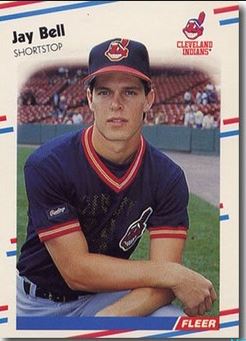
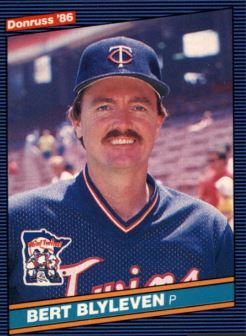
On this date (September 29) in 1986, Indians’ 2B Jay Bell and Twins’ pitcher Bert Blyleven crossed paths for the first time – and the encounter put both players into the MLB record books.

Bell was a 20-year-old rookie, playing his first MLB game and batting ninth.  He was a September call up, after a .277-7-74 season at Double-A Waterbury of the Double A Eastern League.  Blyleven was in his 17th MLB season, had already won 228 major league games – and was on his way to the Baseball Hall of Fame.

It clearly looked like “advantage Blyleven.+

BellBell’s first trip to the plate came with two outs in the top of the third inning. (Blyleven had retired the first eight Cleveland batters in order, fanning three.) On the future Hall of Famer’s first pitch to the rookie, Bell smacked a home run – tying an unbreakable MLB record (to date a total of 30 MLB players have homered on the first pitch they ever saw, Bell was just the twelfth to do so).

But the long ball had more significance.  At the time of the at bat, Blyleven was tied with Hall of Famer Robin Roberts for the most home runs given up in a single season at 46. Bell’s round tripper was the 47th given up the Blyleven that season – giving him sole possession of the all-time record.  Blyleven gave up three more home runs (two more in that September 29 game and one in an October 4 contest against the White Sox) to run the record to 50.  Given how today’s pitchers are used that record also seems unbreakable.

Blyleven gave up at least one home run in 28 of his 36 1986 starts.  In the eight starts in which he did not surrender a long ball, he went 8-0.

Despite all the long balls and a 4.01 earned run average, Blyleven had a respectable season. He led the AL in innings pitched (271 2/3); his 17 wins (versus 14 losses) were the sixth most in the AL; he tossed 16 complete games (second in the AL); gave up the third-fewest walks per nine innings; and finished fourth in strikeouts with 215.

Of the record 50 home runs Blyleven allowed in 1986, 27 were solo shots.

BlylevenBlyleven, by the way, went on to help the Twins to the World Series Championship in 1987 – going 15-12, 4.01 – and giving up 46 home runs.  This gave the Twins’ righty the record for home runs allowed in consecutive seasons (96). What seems a bit surprising is that those two seasons were the only two – in Blyleven’s 22 MLB campaigns – that he gave up more than 24 home runs. He, in fact, had six seasons when he pitched more than 200 innings at gave up less than 20 round trippers.  (In 1973, he pitched 325 frames and allowed just 16 home runs.) Blyleven’s career record was 287-250, 3.31 – with 3,701 strikeouts (currently fifth all-time) in 4, 970 innings pitched.  He was a one-time 20-game winner, won 15 or more games in ten seasons amd threw 60 complet-game shutouts (ninth all-time).

Jay Bell got in just five MLB games in 1986, going five-for-sixteen (.357) with two doubles, the one home run and four RBI. He went on to play in 18 MLB seasons – and added 194 home runs to that record-tying and record-breaking first-pitch blast. He hit .265 over his career, with 860 RBI, 1,123 runs scored and 91 stolen bases. His best year was 1999 (Diamondbacks), when he hit .289, with 38 home runs 112 RBI and 132 runs scored.

More on Bert Blyleven’s 50-home run season:

  • Blyleven gave up at least one home run in 28 of this 36 starts.
  • Blyleven gave up one home run in 15 games; two home runs in six contests; three round trippers in six contests; and five long balls in one game.
  • Blyleven went 8-0 in starts when he did not give up a home run; 6-7 (two no-decisions) in starts in which he gave up one homer; 2-2 (two no-decisions) in starts in which he surrendered two long balls; 1-4 (one no-decision) in three-homer games; and 0-1 in games in which he gave up five home runs.
  • He gave up a season high five home runs (in 5 ½ innings) in a start against Texas (in Minneapolis) on September 13. The long balls went to Pete O’Brien, Pete Incaviglia, Darrell Porter, Ruben Sierra and Steve Buechele. (Blyleven gave up nine runs in the game – eight on home runs.)
  • Blylven gave up home runs to 38 different batters in 1986.
  • The White Sox’ Ron Kittle hit the most home runs off Blyleven that season – four.  The Brewers’ Ben Ogilvie had three and Blyleven gave up two homers each to Reggie Jackson (Angels), Don Mattingly (Yankees), Lance Parrish,(Tigers), Doug DeCinces  (Angels) and Johnny Grubb (Tigers).
  • The Tigers touched Blyleven for the most home home runs in 1986, with nine (four Blyleven starts against them). Next, at six home runs each were the: Rangers (rwo starts); Brewers (four starts); and White Sox (three starts).
  • Blyleven got two wins – and gave up no home runs – in two starts against the Orioles.

Primary Resources.  Baseball-Refrence.com; Baseball-Almanac.com

I tweet baseball @DavidBBRT.

Follow/Like the Baseball Roundtable Facebook page here.

Member. Society for American Baseball Research; The Baseball Reliquary; The Negro Leagues Baseball Museum.
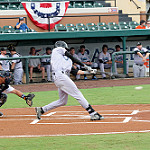


On this date (September 29), in 1986 Indians’ 2B Jay Bell and Twins’ pitcher Bert Blyleven crossed paths for the first time – and the encounter put both players into the MLB record books.


Bell was a 20-year-old rookie, playing his first MLB game and batting ninth.  He was a September call up, after a .277-7=74 season at Double-A Waterbury of the Double A Eastern League.


Blyleven was in his 17th MLB season, had already won 228 major league games – and was on his way to the Baseball Hall of Fame.


It clearly looked like advantage Blyleven.


Bell’s first trip to the plate came with two outs in the top of the third inning. (Blyleven had retired the first eight Cleveland batters in order, fanning three. On the future Hall of Famer’s first pitch to the rookie, Bell smacked a home run – tying an unbreakable MLB record (to date a total of 30 MLB players have homered on the first pitch they ever saw, Bell was just the twelfth to do so).


But the long ball had more significance.  At the time of the at bat, Blyleven was tied with Hall of Famers Robin Roberts for the most home runs given up in a single season at 46. Bell’s round tripper broke that tie – and gave Blyleven the all-time record.  Blyleven gave up three more home runs (two more in that September 29 games and one in an October 4 contest against the White Sox). Despite all the long ball and a 4.01 earned run average, Blyleven had a respectable season: he led the AL in innings pitched (271 2/3); his 17 wins (versus 14 losses) were the sixth most in the A; he tossed 16 complete games (second in the AL); gave up the third fewest walks per nine innings; and finished fourth in strikeouts with 215.


Of the record 50 home runs Blyleven allowed in 1986, 27 were solo shots.


Blyleven, by the way, went on to help the Twins to the World Series Championship in 1987 – going 15-12, 4.01 – and giving up 46 home runs.  This gave the Twins’ righty the record for home runs allowed in consecutive seasons (96). What seem a bit surprising is that those two seasons were the only two – in Blyleven’s 22MLB campaigns – that he gave up more than 24 home runs. He, in fact, had six seasons when he pitched more than 200 innings at gave up less than 20 round tripped.  (In 1973, he pitched 325 frames and allowed just 16 home runs. Blyleven’s career record was 287-250, 3.31 – with 3,701 strikeouts in 4, 970 innings pitched.  He was a one-time 20-game winner, won 15 or more games in ten seasons.


Blyleven gave up at least one home run in 28 of his 36 1986 starts.  In the eight starts where he did not give up a long ball, he went 8-0.


Jay Bell got in just five MLB games in 1986, going five-for-sixteen (.357) with two doubles, the one home run and four RBI. He went on to play in 18 MLB seasons – and added 194 home runs to that record-tying and record-breaking first-pitch blast. He hit .265 over his career, with 860 RBI, 1,123 runs scored and 91 stolen bases. His bet year was 1999 (Diamondbacks0, when he hit .289, with 38 home runs112 RBT and 132 runs scored.


More on Bert Blyleven’s 50-home run season.


  • Blyleven gave up at least one home run in 28 of this 36 starts.
  • Blyleven gave up one home run in 15 games; two home runs in six contests; three round trippers in six contests; and five long balls in one game.
  • In the eight starts in which he did not give up a home run, Blyleven went 8-0.
  • Blyleven was 6-7 (two no decisions) in starts in which he gave up one home; 2-2 (two no decision) in starts in which he surrender two long balls; 1-4 (one no decision in three-homer games; and 0-1 in five home run games.
  • He gave up a season high five home runs (in 5 ½ innings) in a start against Texas (in Minneapolis) on September 13. The long balls went to Pete O’Brien, Pete Incaviglia, Darrell Porter, Ruben Sierra and Steve Buechele. (Blyleven gave up nine runs in the game – eight on home runs,
  • The White Sox Ron Kittle hit the most home runs off Blyleven that season – four.


Primary Resource.  Baseball-Refrence.com; Baseball-Almanac.com


I tweet baseball @DavidBBRT.


Follow/Like the Baseball Roundtable Facebook page here.


Member. Society for American Baseball Research; The Baseball Reliquary; The Negro Leagues Baseball Museum.


On this date (September 29), in 1986 Indians’ 2B Jay Bell and Twins’ pitcher Bert Blyleven crossed paths for the first time – and the encounter put both players into the MLB record books.


Bell was a 20-year-old rookie, playing his first MLB game and batting ninth.  He was a September call up, after a .277-7=74 season at Double-A Waterbury of the Double A Eastern League.


Blyleven was in his 17th MLB season, had already won 228 major league games – and was on his way to the Baseball Hall of Fame.


It clearly looked like advantage Blyleven.


Bell’s first trip to the plate came with two outs in the top of the third inning. (Blyleven had retired the first eight Cleveland batters in order, fanning three. On the future Hall of Famer’s first pitch to the rookie, Bell smacked a home run – tying an unbreakable MLB record (to date a total of 30 MLB players have homered on the first pitch they ever saw, Bell was just the twelfth to do so).


But the long ball had more significance.  At the time of the at bat, Blyleven was tied with Hall of Famers Robin Roberts for the most home runs given up in a single season at 46. Bell’s round tripper broke that tie – and gave Blyleven the all-time record.  Blyleven gave up three more home runs (two more in that September 29 games and one in an October 4 contest against the White Sox). Despite all the long ball and a 4.01 earned run average, Blyleven had a respectable season: he led the AL in innings pitched (271 2/3); his 17 wins (versus 14 losses) were the sixth most in the A; he tossed 16 complete games (second in the AL); gave up the third fewest walks per nine innings; and finished fourth in strikeouts with 215.


Of the record 50 home runs Blyleven allowed in 1986, 27 were solo shots.


Blyleven, by the way, went on to help the Twins to the World Series Championship in 1987 – going 15-12, 4.01 – and giving up 46 home runs.  This gave the Twins’ righty the record for home runs allowed in consecutive seasons (96). What seem a bit surprising is that those two seasons were the only two – in Blyleven’s 22MLB campaigns – that he gave up more than 24 home runs. He, in fact, had six seasons when he pitched more than 200 innings at gave up less than 20 round tripped.  (In 1973, he pitched 325 frames and allowed just 16 home runs. Blyleven’s career record was 287-250, 3.31 – with 3,701 strikeouts in 4, 970 innings pitched.  He was a one-time 20-game winner, won 15 or more games in ten seasons.


Blyleven gave up at least one home run in 28 of his 36 1986 starts.  In the eight starts where he did not give up a long ball, he went 8-0.


Jay Bell got in just five MLB games in 1986, going five-for-sixteen (.357) with two doubles, the one home run and four RBI. He went on to play in 18 MLB seasons – and added 194 home runs to that record-tying and record-breaking first-pitch blast. He hit .265 over his career, with 860 RBI, 1,123 runs scored and 91 stolen bases. His bet year was 1999 (Diamondbacks0, when he hit .289, with 38 home runs112 RBT and 132 runs scored.


More on Bert Blyleven’s 50-home run season.


  • Blyleven gave up at least one home run in 28 of this 36 starts.
  • Blyleven gave up one home run in 15 games; two home runs in six contests; three round trippers in six contests; and five long balls in one game.
  • In the eight starts in which he did not give up a home run, Blyleven went 8-0.
  • Blyleven was 6-7 (two no decisions) in starts in which he gave up one home; 2-2 (two no decision) in starts in which he surrender two long balls; 1-4 (one no decision in three-homer games; and 0-1 in five home run games.
  • He gave up a season high five home runs (in 5 ½ innings) in a start against Texas (in Minneapolis) on September 13. The long balls went to Pete O’Brien, Pete Incaviglia, Darrell Porter, Ruben Sierra and Steve Buechele. (Blyleven gave up nine runs in the game – eight on home runs,
  • The White Sox Ron Kittle hit the most home runs off Blyleven that season – four.


Primary Resource.  Baseball-Refrence.com; Baseball-Almanac.com


I tweet baseball @DavidBBRT.


Follow/Like the Baseball Roundtable Facebook page here.


Member. Society for American Baseball Research; The Baseball Reliquary; The Negro Leagues Baseball Museum.
Scherzer Rolls a 300 – Joins an Elite Pitching Fraternity

Max Scherzer photo

Photo by Keith Allison

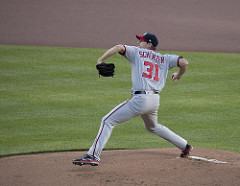
Tonight (September 25, 2018), three-time Cy Young Award winner Max Scherzer became the 40th pitcher in major league history – and just the 17th since 1900 – to reach 300 strikeouts in a season. Scherzer ran his 2018 total to 300 by fanning ten Marlins in seven innings (five hits, one earned run and no walks) as the Nationals won 9-4. On the season, Scherzer is now 18-7, 2.53 with 300 strikeouts in 220 2/3 innings pitched. Scherzer fanned one batter each in the first, third, fifth and sixth innings and two each in the second, fourth and seventh.  His tenth victim of the game and 300th of the season was Marlins’ LF Austin Dean for the second out in the seventh.

Here, in honor of Scherzer’s feat, are a few 300-strikeout tidbits.

  • 41 MLB pitchers have turned in 67 seasons of 300 or more strikeouts – 31 of those before 1900.
  • 1884 saw a record 15 pitchers notch at least 300 strikeouts – since then, there have never been more than five in any single season (1886). Since 1900, there has never been more than two 300 strikeout pitchers in any season.
  • Currently active pitches with 300-strikeout seasons, in addition to Scherzer, are: Chris Sale (308 in 2017) and Clayton Kershaw (301 in 2015).

The Exclusive 500 Club

Only one MLB pitcher has ever fanned 500 batters in a season – and that was Matt Kilroy, who whiffed 513 batters in 583 innings as a 20-year-old rookie with the 1884 American Association Baltimore Orioles. Of course, it was a different game back then.

In 1884, Kilroy started 68 of the Orioles 139 games (49 percent) – and completed 66 of them. (That season, American Association starting pitchers finished an average of 96 percent of their starts.) Despite five shutouts and a 3.37 earned run average (the league ERA was 3.44), Kilroy finished 29-34 for the last-place (46-85) Orioles.

While Matt Kilroy is the only major league pitcher to ever reach 500 strikeouts in a season, five more have reached 400. 400K

  • There were no 300-strikeout campaigns  between 1912 (Walter Johnson – 303) and 1946 (Bob Feller – 348).
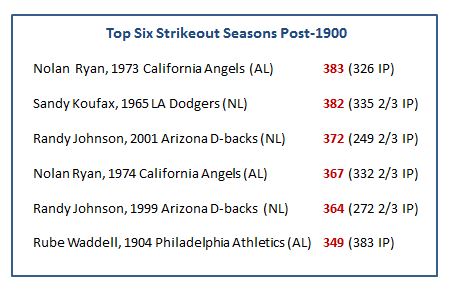
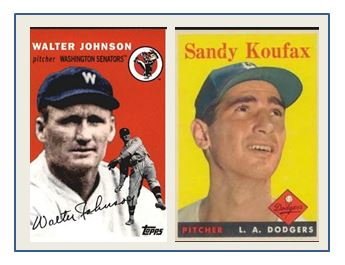
  • Rube Waddell’s 349 strikeouts in 1904 stood as the post-1900 record for 61 years (Sandy Koufax – 382 in 1965). Koufax’ record held for just eight seasons (Nolan Ryan – 383 in 1973, still the post-1900 MLB record). Koufax still holds the NL post-1900 record for whiffs in a season.
  • The only team to boast two 300+ strikeout pitchers in the same season is the 2002 Diamondbacks – Randy Johnson (334) and Curt Schilling (316).
  • The decade of the ‘70s (1970-79) saw 11 seasons of 300 or more whiffs by a pitcher – the most in any decade post-1900.
  • From 1900 through 1962, there were a total of just five 300 or more strikeout campaigns.

Post 1900 K

Primary Resources: Baseball-Reference.com; MLB.com.

I tweet baseball @DavidBBRT

Follow/Like the Baseball Roundtable Facebook page here.

Member: Society for American Baseball Research; The Baseball Reliquary; The Negro Leagues Baseball Museum.

Trivia Teaser – Last Season in which Both ERA Leaders were Under 2.00

The current MLB earned run average leaders are the Mets’ Jacob deGrom in the National League at 1.77 and the Rays’ Blake Snell in the American League at 1.90.

TRIVIA TEASER

When was the last season MLB saw the earned run leaders in both the National and American League at under 2.00?

That would be 1972 with the Red Sox’ Luis Tiant (1.91) and Phillies’ Steve Carlton (1.97).

ERA2


Just to illustrate how much the game has changed, there have been a total of 249 instances in which a qualifying hurler (one inning pitched for each game his team played) has recorded a season earned run average of under 2.00 – and 204 of those occurred before 1920.  Here’s look at the number of qualifying earned run averages under-2.00 in each time period.

Pre-1900 … 46

1900-1919 … 158

1920-29 … 2

1930-39 … 1

1940-49 … 5

1950 – 59 … 1

1960-69 … 14

1970-79 … 8

1980-89 … 3

1990-99 … 5

2000-2009 … 2

2010 – 2017 …. 4

JKThe leader in total qualifying seasons with an earned run average under 2.00 is the Senators’ Walter Johnson with ten over a 21-season career (1907-1927).  His qualifying under 2.00 seasons were:  1908 – 1.65; 1910 – 1.36; 1911 – 1.90; 1912 – 1.39; 1913 – 1.14; 1914 – 1.72; 1915 – 1.55; 1916 – 1.90; 1918 – 1.27; 1919 – 1.49. Johnson finished his career with 417 wins (279 losses) and a 2.17 earned run average.

The post-1919 leader in seasons with a qualifying ERA under 2.00 is the Dodgers’ Sandy Koufax with three: 1963 – 1.88; 1964 – 1.74; 1966 – 1.73.  Koufax retired at 165-87, 2.76 (over 12 seasons … 1955-66).

Tim Keefe of the National League 1880 Troy Trojans – a team that went 41-42 – recorded the major league’s lowest-ever qualifying ERA at 0.86 – giving up just ten earned runs in 12 starts (all complete games, 105 innings pitched). Despite the league’s stingiest ERA, Keefe went 6-6 on the season. (The league ERA that season was 2.37 – and three of the eight teams has ERAs under 2.00.) Keefe pitched 14 MLB seasons (1880-93), going 342-225, 2.63.

The lowest post-1899 ERA goes to the Red Sox’ Dutch Leonard at 0.96 in 1914, when he went 19-5, 0.96, while pitching 224 innings. Leonard was 139-114, 2.76 for his  11-season MLB career (1913-21; 1924-25).  Side note:  The lowest post-1919 qualifying ERA … and fourth-lowest all time … belongs to Bob Gibson, who went 22-9, 1.12 in 1968. The next lowest post-1919 season ERA was Dwight Gooden’s 1.53 for the Mets in 1985 – when the 20-year-old went 24-4.

Primary Resource: Baseball-Reference.com

I tweet baseball @DavidBBRT

Follow/Like the Baseball Roundtable Facebook page here.

Member: Society for American Baseball Research; The Baseball Reliqaury. The Negrpo Leagues Baseball Museum. 


A Look at The Past (and not so bright future) of Complete-Game Shutouts

Cy Young - Library of Congress photo.

Cy Young – Library of Congress photo.

On this date (September 22) in 1911, right-hander Cy Young won his 511th and final major league regular-season game. It was, fittingly, a complete-game shutout – a 1-0 Boston Rustlers win over the Pittsburgh Pirates. It brought Young’s career record to 511-313, and he should have quit while he was ahead.  The 44-year-old Young, in his 22nd MLB season, was 7-6 on the on the 1911 season at the time. Young pitched just three more games that season – going 0-3 and giving up 21 runs in 22 2/3 innings.

That final win – again, a complete-game shutout – led Baseball Roundtable to look at the past (and likely dismal future) of complete-game white-washings.  As Idid that, I learned that Young was one of just 26 pitchers in MLB history to notch double-digit  shutouts in a season.


Trivia Teaser – Who was the last pitcher to log double-digit complete-game shutouts in a season?

That would be southpaw John Tudor of the Cardinals – back in 1985.  That season, Tudor went 21-8, with a 1.93 earned run average for the Redbirds.  He tossed 14 complete games in 36 starts, and ten of those complete-game outings were shutouts. It was the only season Tudor’s 12-campaign MLB career in which he threw more than two shutouts. (He had a career total of 16 CG shutouts.) Tudor finished his career at 117-72, 3.12, with 50 complete games in 263 starts.

The last American Leaguer to throw at least ten shutouts in a season was Orioles’ right-hander (and Hall of Famer) Jim Palmer in 1975. That season, Palmer went 23-11, 2.09 and tossed 25 complete games in 38 starts. Palmer’s career line was 268-152, 2.86 with 211 complete games and 53 shutouts in 521 starts.

There have been 28 instances of pitchers logging ten or more shutouts in a season – and 26 pitchers have accomplished the feat.  Only two have logged ten or more shutouts in a season more than once:  The Phillies’ Grover Cleveland (Pete) Alexander (12 shutouts in 1915 and an MLB-record 16 shutouts in 1916) and the White Sox’ Ed Walsh (10 shutouts in 1906 and 11 whitewashings in 1908).

How Likely Are We to See Ten Shutouts in a Season in Today’s Game?

Since the 2000 season, only one pitcher has thrown at least ten complete games in a season (James Shields of the Rays with 11 in 2011) – much less ten shutouts.

In 2017, the most shutouts by any pitcher was three (Corey Kluber, Indians and Ervin Santana, Twins) and the most complete games was five (same two pitchers). As this post is written no pitcher has more than two complete games or more than one CG shutout in the 2018 season.

A few more shutout tidbits.

  • Walter Johnson (Senators … 1907-1927) holds the career shutout record with 110. No one else has more than 90.
  • The record for shutouts in a season is 16 shared by Grover Cleveland (Pete) Alexander (Phillies, 1916) and George Bradley (Saint Louis Brown Stockings, 1876).

Babe Ruth shares the AL record for shutouts in a season by a southpaw at nine (Red Sox, 1916). Yankee Ron Guidry also threw nine shutouts (1978).

  • Walter Johnson, who drew the Opening Day assignment in 14 seasons, threw a record seven Opening Day shutouts.
  • On August 10, 1944 The Braves’ Red Barrett shutout the Red 2-0 – throwing only 58 pitches (the fewest pitches ever – not just in a shutout, but in a nine-inning complete game of any score.) Barrett pitched a two-hitter with zero walks and zero strikeouts.
  • Don Drysdale of the Dodgers tossed a record six consecutive complete-game shutouts between May 14, 1856 and June 4, 1968.

Playing the Lead Role

In 2008, C.C. Sabathia led the AL, NL and MLB in shutouts. He started the season with the Cleveland Indians and was 6-8, 3.83 with three complete games and two shutouts before being traded to the NL Milwaukee Brewers on July 7. With the Brewers, Sabathia went 11-2 with seven complete games and three shutouts.  His two AL shutouts tied for the American League lead, while he three whitewashings tied for the NL lead.     

______________________________________________________________

Pitchers with Ten or More Shutouts in a Season

George  Bradley, 1876  St. Louis Brown Stockings (NL)  ….. 16

Pud Galvin, 1884, Buffalo Bisons   (NL) ….. 12

Charles  “Old Hoss” Radbourn, 1884 Providence Grays (NL) ….. 11

Jim McCormick, 1884 (two teams) ….. 10

John Clarkson, 1885 Chicago White Stockings (NL) …..  10

Ed Morris, 1886 Pittsburgh Alleghenys  (AA) ….. 12

Dave Foutz, 1886 Saint Louis Browns (AA) ….. 11

Tommy Bond, 1879 Boston Red Stockings (NL) ….. 11

Christy Mathewson, 1908 Giants  (NL) ….. 11

Cy Young, 1904 Boston Americans (AL) ….. 10

Ed Walsh, 1906 White Sox (AL) ….. 10

Ed Walsh, 1908 White Sox (AL) ….. 11

Jack Combs, 1910 Athletics  (AL) ….. 13

Smokey Joe Wood, 1912 Red Sox (AL) ….. 10

Walter Johnson, 1913 Senators (AL) ….. 11

Grover Cleveland Alexander, 1915 Phillies (NL) ….. 12

Grover Cleveland Alexander, 1916 Phillies (NL) ….. 16

Dave Davenport, 1915 St. Louis Terriers (FL) …..10

Carl Hubbell, 1933 Giants (NL) ….. 10

Mort Cooper, 1942 Cardinals (NL) ….. 10

Bob Feller, 1946 Indians (AL) ….. 10

Bob Lemon, 1948 Indians (AL) ….. 10

Sandy Koufax, 1963 Dodgers (NL) ….. 11

Dean Chance, 1964 Angels (AL) ….. 11

Juan Marichal, 1965 Giants (NL) ….. 10

Bob Gibson, 1968 Cardinals (NL) ….. 13

Jim Palmer, 1975 Orioles (AL) ….. 10

John Tudor, 1985 Cardinals (NL) … 10

Primary Resouces: MLB.com; Baseball-reference.com; Baseball-Almanac.com

I tweet baseball @David BBRT

Like/Follow the Baseball Roundtable Facebook page here.  

Member: Society for American Baseball Research; The Baseball Reliquary; The Negro Leagues Baseball Museum.
 

Indians on the Verge of History – Soon to Boast Four 200K Hurlers

Corey Kluber photo

Photo by apardavila

Tonight (September 18), Indians’ starter Corey Kluber fanned 11 batters in eight innings, as Cleveland topped the White Sox 5-3 in Cleveland.  Kluber’s performance enabled the Indians to tie a MLB record  – and put them on the cusp of breaking that record.

Kluber ran his season strikeout total to 205 (in 203 innings) – joining two other Cleveland starters with 200+ strikeouts this season – Carlos Carrasco (206 strikeouts/176 innings) and Trevor Bauer (214 strikeouts/166 innings).  This makes the Indians just the fourth team in MLB history with three pitchers notching 200 or more whiffs in the same season.

The others are:

  • 1967 Minnesota Twins: Dean Chance (220 Ks), Jim Kaat (211), Dave Boswell (204);
  • 1969 Astros: Don Wilson (235), Larry Dierker (222), Tom Griffin (200);
  • 2013 Tigers: Max Scherzer (240), Justin Verlander (217), Anibel Sanchez (202).

Now, perhaps, the even bigger news. A fourth Indians’ starter – Mike Clevinger – currently stands at 196 strikeouts in 188 1/3 innings – which means MLB will likely soon see the first team ever with four pitchers notching 200 or  more strikeouts in the same season.

Special thanks to Baseball Roundtable reader Benjamin Thobe for alerting BBRT to the Indians’ march toward the new record.

Side note: The Houston Astros should  end the season with three 200+ strikeout pitchers. Currently, Justin Verlander stands at 269 strikeouts, Gerrit Cole at 260 and Charlie Morton at 195.

For an earlier post with more detail on the first three teams to have three 200K starters in the same season, click here.

I tweet Baseball @DavidBBRT

Follow/Like the Baseball Roundtable Facebook page here.

Member: Society for American Baseball Research; The Baseball Reliquary; The Negro Leagues Baseball Museum.
Christian Yelich Red(s) Hot … Records His Second Cycle of the Season

Yesterday (September 17, 2018), Brewers’ left fielder Christian Yelich hit for the cycle (single, double, triple, home run in the same game), as the brew crew topped the Reds’ 8-0 in Milwaukee. It was his second cycle of the 2018 season – and both came against the Reds. (The first cycle was on August 29 at the Great American Ball Park.) In yesterday’s contest, Yelich went four-for-four, with one run scored and four RBI.) He singled in the first inning, doubled in the third, hit a home run (with one on) in the fifth and got the most-often elusive triple in the sixth.

Two cycles in a season is a rare accomplishment indeed. In fact, Yelich is only the fifth major leaguer to accomplish that feat.  The others are:

  • Aaron Hill (Diamondbacks, 2012);
  • Babe Herman (Dodgers 1931);
  • Tip O’Neill (St. Louis Browns, American Association 1887): and
  • John Reilly (Cincinnati Red Stockings, American Association, 1883).

Here are a few other cycle tidbits that yo may find of interest.

The Yellow Jersey of Cycles

On June 18, 2000, the Rockies’ Mike Lansing completed the cycle in just four innings – making his the quickest cycle in MLB history – and earning him the “yellow jersey” of baseball cyclists.  Notably, Lansing was consistently behind in the counts and three of his four hits came with two strikes.

Lansing, hitting second in the order, hit an RBI triple to right in the first inning (getting the most difficult leg of the cycle out of the way ) on a 1-2 pitch, added a two-run home run (0-1 pitch) in the bottom of the second, hit a two-run double (2-2 pitch) in the bottom of the third (as the Rockies scored nine times to take a 14-1 lead), and then completed the cycle with a single (another 1-2 offering) to right in the fourth. Lansing then struck out in the sixth, before being lifted for a pinch-hitter in the eighth.

Quickest Cycle Ever … A Career Perspective

Minnesota Twins’ outfielder Gary Ward hit for the cycle in just his 14th MLB game (September 18, 1980 against the Brewers) – the earliest in an MLB career anyone has ever accomplished the feat.

Triple Your Pleasure – Triple Your Fun

Four players have hit for the cycle a record three times: Adrian Beltre (Mariners-2008, Rangers-2012 and 2015); Bob Meusel (Yankees-1921, 1922 and 1928); Babe Herman (Brooklyn Robins-1931 twice and Cubs-1933); John Reilly (Red Stockings-1883 twice and Reds 1890).

Gotta Love the Texas – and More of “We Track Pretty Much Everything in Baseball”

Adrian Beltre’s record-tying three cycles – although hit for two different teams – all took place at the Texas Rangers’ home park (Globe Life Park in Arlington).  He cycled there twice for the hometown Rangers and once for the visiting Mariners, making him the only player to hit for the cycle in the same stadium for two different teams.

Shortest Time Between Cycles

John Reilly (Reds) and Tip O‘Neill (St. Louis Brown Stockings, American Association) had the shortest time between cycles at just seven days. Reilly’s came on September 12 and September 19, 1883. O’Neill’s came on April 30 and May 7, 1887.

It’s Been a Hard Day’s Night

The Expos’ Tim Foli is the only player to start a cycle one day and complete it the next. On April 21, 1976, Foli collected a single, double and triple in a contest against the Cubbies that was suspended (pre-Wrigley lights) in the top of the seventh due to darkness. When play resumed the following day, Foli added an eighth-inning home run. (The Expos prevailed 12-6.)

Patience is a Virtue

The longest time between cycles for a player with multiple cycles goes to the Royals’ George Brett (May 28, 1979 and July 25, 1990) at 11-years-58 days.

Something Old … Someting New

The youngest MLB player ever to hit for the cycle is the NY Giants’ Mel Ott (age 20, cycle on May 16, 1929).

The oldest player to hit for the cycle is The Angels’ Dave Winfield (age 39, cycle on June 24, 1991).

Like Father … Like Son

When Twins outfielder Gary Ward hit for the cycle in just his 14th MLB game (September 18, 1980), he not only recorded the earliest (in terms of MLB games played) cycle ever, he also set the stage for an event that would add to the “rare and unique” nature of his cycle nearly a quarter-century later.   On May 26, 2004, Ward’s son Daryle Ward – playing 1B and batting third for the Pirates as they took on the Cardinals in St. Louis – also hit for the cycle. Gary and Daryle Ward are the only father-son combination (to date) to hit for the cycle.

Sharing the Wealth

Three players have hit for the cycle in both the NL and AL: Bob Watson (NL Astros-1977 and AL Red Sox-1979); John Olerud (NL Mets-1997 and AL Mariners-2001); Michael Cuddyer (AL Twins-2009 and NL Rockies-2014).

Qoute the Raven, “Nevermore”

The Marlins are the only MLB team to never have a batter record a cycle.

A Most Unique Way to Record A Cycle

Photo: Library of Congress

Photo: Library of Congress


The Yankees’ 1B Lou Gehrig (kind of) earned a cycle by being tossed out at the plate.  On June 25, 1934, as New York topped Chicago 13-2  at Yankee Stadium, Gehrig hit two-run home run in the first inning; a  single in the third; and a double in the sixth. Gehrig came up needing just the triple for the cycle in the seventh and hit a smash to deep center (scoring Yankees’ CF Ben Chapman). Gehrig wasn’t satisfied with a three-bagger and was thrown out at home (8-6-2) trying for an inside-the-park home run – thus getting credit for the triple he needed for a cycle.

It Skips A Generation

Pirates’ RF Gus Bell and Phillies’ 3B David Bell are the only grandfather-grandson combination to hit for the cycle (June 4, 1951 and June 28, 2004, respectively).

The Home Run Cycle

Only once in professional baseball has a player hit for the “Home Run Cycle” – solo, two-run, three-run and GrandSlam homers in the same game.  Read that story here.

Primary Resources: Society for American Baseball Research; Baseball-Reference.com; MLB.com; Baseball-Almanac.com


I tweet baseball @DavidBBRT

Follow/Like Baseball Roundtyable’s Facebook page here.

Member: Society for American Baseball Research; The Baseball Reliquary; The Negro Leagues Baseball Museum