For the Love of The Game … Alex McColl’s Less-Than-Meteoric Rise to the Majors

With our national pastime on hiatus, I find myself recalling and/or researching unique plays, players and teams in baseball history. You know, like the Twins being the only team to turn two triple players in one game (both classic groundball 5-4-3  triple killings); the White Sox once scoring 11 runs in one inning on just one hit; or Hall of Fame pitcher Jim Palmer being the only player to draw two bases-loaded walks in a World Series game (links to those stories at the end of this post).

Alex McColll

Alex McColll

Those who read Baseball Roundtable regularly know I have a keen interest in players who had brief, but for some reason notable, MLB careers.  In fact, that is why, each year, BBRT presents the John Paciorek Award.  (More on that later in this post.) Recently, I came across the tale of Alex “Red” McColl, a player who truly played for love of the game – pitching his way through nearly two-decades in the minor leagues before making his major league debut. Let me share his story.

On September 6, 1933, the Washington Senators hosted the Chicago White Sox.   The Senators came into the game in first place, with an 86-45 record and a comfortable 9½-game lead over the second-place Yankees. Starting for the White Sox was Jake Miller, in his ninth (and final) MLB season, with a 5-5 record and a 5.05 earned run average on the season.  Starting for the Senators was rookie right-hander Alex “Red” McColl – making his first-ever major league start.  And, he made the most of it.

McColl went the distance in the game, giving up just one run on four hits (five walks and four strikeouts), as the Senators prevailed 3-1. Not only did McColl get the mound victory and a complete game in his first MLB start, he had a hand in all three Senators’ runs. In the bottom of the second inning, the switch-hitting McColl laced two-run double (scoring Senators’ 1B Joe Kuhel and 3B Ossie Bluege) to left-center off Miller – and two batters later he came around on a double by LF Heinie Manush to complete Washington s scoring for the day. Quite a momentous first start for the rookie.

So ,why did this game catch BBRT’s eye?  Well, as I noted earlier, McColl truly exemplified playing for the love of the game. The rookie was called up to the majors after going 14-11, 3.36 for the Chattanooga (Single-A) Lookouts that season. More important, the Senators’ rookie was 39-years-old and in his 18th minor-league campaign (never pitching above Double A).   At the time, McColl already had more than 240 minor-league victories (including four seasons of 20 or more wins) under his belt. (He had gone 21-8, 3.05 at Chattanooga in 1932.)

In a September 25, 1933, Associate Press story (Asbury Park Press), McColl’s rise to the majors was described in a reporter’s recounting of a September 1933 call from Clark Griffith (owner of the Washington Senators) to Joseph Engel (President of the Chattanooga Lookouts).

“Griffith called Engel by telephone a few week ago and said “Send me a pitcher.” Engel want down to the station and bought Alex McColl a ticket to Washington.

“Now, Mr. McColl is 39-year-old, which is considered aged as pitchers go, and has never seen the inside of a big league ballpark except as a spectator. The wise boys grieved and said old Joe was slipping, but Alex has done right well with the Senators and is likely to see some World Series service.”

McColl, as predicted, did see World Series service. He topped of his less-than-meteoric rise to the big leagues by pitching two scoreless (perfect) frames against the Giants in Game Two of the 1933 World Series (October 4). So, after nearly two decades in the minor leagues, McColl found himself not only in the big leagues, but on the mound in the Fall Classic.  Well worth the effort and wait, I’d say.

McColl spent time the big leagues in 1934, finishing the season at 3-4, 3.86, in 42 appearances (two starts) for the Senators. The forty-year-old made his final major league appearance on September 29, 1934. His career major-league record was 4-4, 3.70, with 46 appearances (three starts), two complete games, two saves, 112 innings pitched, 36 walks and 29 strikeouts,

But wait, remember I said McColl played for the love of the game. He may have been in his forties and his major league career may have been behind him, but McColl wasn’t done yet.,  In 1935, he was back at Chattanooga, where he went 21-12, 3.50, tossing 258 innings in 41 appearances. McColl would, in fact, continue his professional pitching career through 1941 (age 47) – never again pitching above A-Level and serving as a player-manager in each of his final four seasons.

McColl’s final professional season saw him as a player-manager with the independent Class D Warren Buckeyes in the Pennsylvania Association, where he was the club’s “ace” going 12-6, 3.22 and putting a final 137 innings on his resilient right arm. (He managed the team to a 46-62 record.)   He also batted .264 on the season. Notably, at the time, the average player age in the Pennsylvania was 22-years-old.

Baseball-Reference.com credits McColl with 332 minor-league wins (262 losses), a 3.42 earned run average and 5,262 minor-league innings pitched.

Primary Resources: Baseball-Reference.com; “Hardball History: 1941 Buckeyes were Warren’s most recent team,” Warren Times Observer, April 6, 2020, by Josh Cotton; “McColl Makes Major League Pitching Debut: Aging Rookie Turns in Victory for Washington Over Chisox, ” San Bernardino Sun, September 7, 1933. 


John Paciorek Award

If you are interested in a look at some other players with brief, but significant career achievements, you may want to check out Baseball Roundtable’s John Paciorek Award honorees.

2014 – Brian Scott Dallimore

In his first start (not his first game) for the 2004 Giants, Dallimore had two singles, a Grand Slam (his first MLB hit and only MLB home run), a walk and a hit by pitch.  For the full JPA take on Dallimore’s 27- game MLB career, click here.

2015 – Roy Gleason

Gleason played in just eight MLB games, had a double in his only MLB at bat – but also earned a World Series ring (1963) and a Purple Heart. Ultimately, he was the only ballplayer with MLB experience to serve on the front lines in Vietnam. For the full JPA take on Gleason, click here.

2016 – John Allen Miller

Miller played just 32 MLB games (during the 1966 and 1969), taking the field (at 1B/LF/3B/2B) for the Yankees and Dodgers. Miller collected ten hits in 61 MLB at bats (.164 average) and hit just two home runs – but he made those long balls count.  Miller made his MLB debut with the Yankees on September 11, 1966 and hit a two-run homer in his first big league at bat – making him (surprisingly) the first Yankee ever to homer in his first MLB at bat.  Miller’s final at bat came as a Dodger (September 23, 1969) and he stroked a solo home run.  That narrow “body of work” made Miller one of just two players in MLB history to homer in their first and final official appearances in a major league batter’s box. For more on Miller, click here.

2017 – Chris Saenz

RHP Chris Seanz’ big day came on April 24, 2004 – when he was called up from Double A Huntsville (where he was 1-1, 3.86) to make a spot start against the Saint Louis Cardinals, whose powerful lineup included the likes of Albert Pujols, Scott Rolen, Jim Edmonds and Reggie Sanders.   The rookie went six innings, giving up just two hits, three walks and no runs, while fanning seven. There was some speculation (primarily among sportswriters and fans) that Saenz’ performance might earn him another start or two, but two days after his debut, he was on his way back to Huntsville.  Unfortunately, his minor league season included a September elbow injury that required Tommy John surgery and he never returned to the majors. Statistics before 1900 can be sketchy, but baseball-reference.com shows that Saenz is the only pitcher to complete a one-game MLB career of at least five innings pitched, without giving up a single run (earned or unearned). For more details on this JPA honoree, click here.

2018 – Keith McDonald

Keith McDonald’s MLB career (Cardinals 2000-2001) covered just eight games and 11 plate appearances (nine at bats) and three hits – but he made them count.  All of McDonald’s safeties were home runs – making him the only MLB player with more than one career hit who can look back on major league career in which his every hit was a home run.  McDonald is also one of only two players – and the only National Leaguer – to homer in his first two major league plate appearances.  For the full story, click here.

2019 – Harley Hisner

Harley Hisner’s MLB tenure encompassed the day of September 30, 1951. That’s when the 24-year-old righty faced the New York Yankees – and a lineup that included five future Hall of Famers: Mickey Mantle in RF; Joe DiMaggio in CF; Phil Rizzuto at SS; Johnny Mize at 1B; and Yogi Berra behind the plate. In is very first MLB inning, Hisner faced five batters, four of them future Hall of Famers, and gave up two singles and no runs.  His place in history? One of those singles was Joe DiMaggio’s last MLB safety. He faced Mickey Mantle four times in the game – walking him once, fanning him twice and getting him to hit into a double play.   For more on Harley Hisner and his ongoing involvement in and love of the game (he went on to earn the Northeast Indiana Baseball Association Colin Lister Award for “dedication to the game of baseball and its historic legacy,” click here.

2020 – Bert Shepard

Pitcher Bert Shepard had four minor-league seasons on his resume, when World War II and military service interrupted his baseball career. He became a P-38 Lightning (fighter) pilot and logged more than thirty combat missions before being shot down, being taken prisoner and losing his right leg below the knee.  After being released a part of a prisoner exchange, Shepard came back to the states with a desire to get back into baseball. To make a long story short, Shepard eventually became the only one-legged pitcher in MLB history.  For the full story on Shepard, click here. 

Finally, regarding those earlier events used as examples, here are the links.

Twins’ two triple plays in one game (and more triple play tidbits), click here. 

White Sox’ Eleven-run, one-hit inning, click here.

Jim Palmer’s two bases-loaded walks in one World Series’ game (and more on Palmer), click here. 


BASEBALL ROUNDTABLE ON THE TOP 100 BASEBALL BLOG LIST

100Baseball Roundtable is on the Feedspot list of the Top 100 Baseball Blogs.  To see the full list, click here.

I tweet baseball @DavidBBRT

Follow/Like Baseball Roundtable’s Facebook Page here.  More baseball commentary; blog post notifications; PRIZES.

Member: Society for American Baseball Research (SABR); The Baseball Reliquary; The Negro Leagues Baseball Museum.
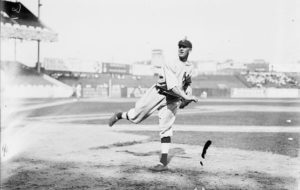
Baseball Roundtable “Who’s Your Daddy?” Series … Bob Feller Edition

Ted Williams was the greatest hitter I ever saw, but (Joe) DiMaggio was the greatest all-around player.

                                                     Hall of Famer Bob Feller

FellerBob Feller was speaking from experience when he lauded the skills of fellow Hall of Famers Ted Williams and Joe DiMaggio.  DiMaggio and Williams are pretty much one and two in every career offensive category versus Feller.  In fact, if you look at a lineup of hitters who put up the “best numbers” against Feller, you will find a host of Hall of Famers – not just Williams and DiMaggio in the outfield, but Johnny Mize at first base and Bobby Doerr at second.  Yes, that’s right, it’s time for the next edition in Baseball Roundtable’s “Who’s Your Daddy?”  series – this time focusing on Bob Feller.

Those of you who read Baseball Roundtable regularly are familiar with the “Who’s Your Daddy?” series – presenting lineups of players who performed unexpectedly well against some of baseball’s top pitchers. In the past, BBRT has featured such moundsmen as Nolan Ryan, Bob Gibson and Pedro Martinez.  (An explanation of the inspiration behind the Who’s Your Daddy? series can be found the end of this post.)  This post looks at a lineup of hitters who found success against Hall of Famer Bob Feller.  As always, I would stress that the pitchers included in the Who’s Your Daddy? series are among the “best in the business.” They are selected not because of the players who performed well against them, but rather because success among hitters when they were on the mound was the exception rather than the rule.

Before we get started on Bob Feller, here are links to the previous editions of this series:

  • Nolan Ryan, click here.
  • Sandy Koufax, click here. 
  • Pedro Martinez, click here.
  • Bob Gibson, click here
  • Randy Johnson, click here
  • Greg Maddux, click here. 
  • Justin Verlander, click here. 

Among those planned for the future are Roger Clemens and Max Scherzer.

Now, on to Bob Feller.

It wasn’t until you hit against him (Bob Feller) that you knew how fast he really was, until you saw, with your own eyes, that ball jumping at you.

                                                                                 Hall of Famer Ted Lyons

Bob Feller – whose fastball (justifiably) earned him the nicknames Rapid Robert, Bullet Bob and The Heater from Van Meter – could “bring it” at an early age.  At the age of 11, he could already throw harder than most of the high school boys in his home town- and, at times, actually pitched against them. His father saw such potential in young “Bobby” that, in 1931, he built a ballpark on the family farm to give local players a place to play – and, of course, to showcase Bobby’s hardball skills and potential. (Bob Feller was 12 at time.)

Without going into a lot of detail on Feller’s American Legion, high school, amateur and semi-pro exploits, suffice it to say that (in 1935) Feller signed a contract with the Cleveland Indians at the age of 16 and was pitching in the big leagues by age 17 … before he graduated from high school.  On September 13 of the 1936 season, rookie Feller (remember, he was just 17-years-old) fanned 17 hitters in a complete-game, 5-2 Indians’ win over the Philadelphia Athletics. The significance of that game?  It gave the teenager from Iowa the American League record for strikeouts in a nine-inning game and a share of the major league record (tying Dizzy Dean). (Both records have since been topped.) One has to wonder if the fear factor came into play.  While Feller only gave up two hits and two runs in that game, he also walked nine and hit one batter.  Command, apparently, was not yet his forte. Feller finished that first season with a 5-3 record – 14 MLB appearances, eight starts, five complete games, a 3.34 earned run average, 76 strikeouts, 47 walks and four hit batsmen in 62 innings. Between the end of his first MLB season and Spring Training in 1937, Feller finished high school.  How impressive was the youthful phenom?  Feller was featured on the cover of April 19, 1937 issue Time Magazine.  

Bob Feller originally signed with the Cleveland Indians for one dollar and an autographed baseball.

Feller went on to pitch 18 MLB seasons (1936-41 & 1945-56, missing three seasons and most of a fourth to military service), all with the Indians.  The Hall of Famer was an eight-time All Star, led the AL in wins six times, strikeouts seven times (also walks four times), complete games three times, games started five times, innings pitched five times, shutouts four times, and earned run average once.  He also pitched three no-hitters, including the (to date) only Opening Day no-hitter ever – a 1-0 win over the White Sox (in Chicago) on April 16, 1940.

Picking Right Up Where He Left Off …

Bob Feller was the first major leaguer to enlist in the military after the attack on Pearl Harbor, joining the U.S. Navy on December 9, 1941; where he ultimately led a gunnery crew in combat aboard the battleship USS Alabama.

Feller had led the American League in strikeouts in each of the four seasons before he enlisted (1938-41). He returned to baseball in time to pitch nine games for the Indians in 1945 and then led the league in strikeouts in his first three full seasons (1946-48) back from military service.  In the six full seasons surrounding his military service (the last three before his enlistment and the first three full seasons after his return), Feller average 22 wins, a 2.81 earned run average, 38 starts, 26 complete games, five shutouts, 318 1/3 innings pitched and 246 strikeouts per campaign.  Just think about what he might have done with those four lost seasons. 

Feller finished his career with a 266-162, 3.25 record. with 279 complete games (484 starts) and 2,581 strikeouts in 3,827 innings pitched His best season was probably 1946, when he led the league in wins (26); games pitched (48); games started (42); complete games (36); shutouts (10); innings pitched 371 1/3; and strikeouts (358).

___________________________________________________________________

Now, let’s get on to the Bob Feller “Who’s Your Daddy?” lineup.  First, a few “leaders” versus Rapid Robert.

FellerCareer

Note on chart;  Baseball-Reference indicates game logs from before 1970 may be incomplete.  In this chart, four game logs is missing from Rudy York’s totals.  In this post, I note when game logs for a specific player are incomplete. 

Now, the Bob Feller “Who’s Your Daddy?” lineup.

_____________________________________________________________

Catcher – Aaron Robinson … Four home runs and 15 RBI in 27 games

An All Star Between a Pair of Hall of Famers

Aaron Robinson was an All Star behind the plate for the vaunted New York Yankees (briefly) between a pair of Hall of Famers – Bill Dickey who handled New York catching from 1925 to mid-1946 (minus two seasons lost to military service) and  Yogi Berra who split catching duties with Robinson in 1947, took over the duties in 1948 and went on to  become an 18-time All Star with the Bronx Bombers. In between the two HOFers was Aaron Robinson, who had a cup of coffee (one game) in 1943, started 92 games at catcher as a rookie in 1946 and another 67 in his All Star 1947 season – before Berra emerged as a force and Robinson was traded to the White Sox (along with two other players) for Eddie Lopat.  For trivia buffs, in 1946, Robinson’s .297 average led all Yankee regulars (and that group included such players as Joe DiMaggio, Phil Rizzuto, Tommy Henrich, Charlie Keller and Joe Gordon). 

In Aaron Robinson’s first-ever at bat against Bob Feller (September 9, 1945), he popped a two-run home run.  In his second at bat (same game), he delivered an RBI triple.  He then added a strikeout and a walk. As Cleveland and Feller topped the Yankees 10-3, Robinson was credited with all three New York RBI. Robinson went on to hit .288, with four homers and 15 RBI in 27 career games against Rapid Robert – including a two-homer, six-RBI game as the Yankees topped Feller’s Indians 9-1 on July 11, 1946.

RobbyFellRobinson played in eight major-league seasons and 609 games (1943 … just one game … and 1945-51). He was a 30-year-old rookie for the Yankees in 1945 (after two years in military service) and played for the Yankees, Tigers, Red Sox and White Sox over his career. He was an All Star in 1947 and finished with a career .261 average, 61 home runs and 272 RBI. He was known as a fine defensive catcher and finished in the top five in the AL in runners caught stealing in 1946, 1948 and 1949. His 19 hits, four home runs and 15 RBI versus Bob Feller were the most he had off any pitcher.

______________________________________________________

First Base – Johnny Mize … .407 against Feller

Yankee first baseman Johnny Mize’s first at bat against Bob Feller resulted in  a two-run home run that opened the scoring in an August 25, 1949 Yankees’ win (6-3) over Feller and the Indians. It was Mize’s 316th major league home run, but his first long ball as a Yankee (he had been sold, by the Giants, to the Yankees three days earlier for $40,000). He went on to do pretty well against Feller, hitting .307 with four home runs and six RBI against him in eight games (1949-52).

MIzeFell

Making Contact … Powerful Contact

In 1947,  New York Giant Johnny Mize became the first (and still only) major leaguer to hit 50 or more home runs in a season, while striking out fewer than 50 times. He went .302-51-138, with 74 walks and 42 whiffs.  

Mize played 15 major league seasons (1936-42 & 1946-53, missing three seasons for military service).  He played for the Cardinals, Giants and Yankees). Mize hit .312 over his career (2,011 hits in 1,884 games), with 359 home runs and 1,337 RBI. Mize was a ten-time All Star and led his league in home runs four times (high of 51 in 1947), RBI three times, batting average once, runs scored once, doubles once, triples once and total bases three times. He topped 100 runs scored in five seasons, had 100+ RBI eight times and hit over .300 in nine campaigns.

The Career that Almost Wasn’t

Mize was a star in the minor leagues (Cardinals’ system) in the early 1930’s, but, in 1934, suffered a serious health issue (spurs on his pelvic bone) that limited him to 90 games. Still, he hit .339-17-66 that season. 

The Cardinals perhaps didn’t like what they saw; but, whatever the reason, they sold Mize to the Reds for $55,000 in the spring of 1935. However, Mize continued to be in such pain that the Reds nullified the trade, sending him back to Saint Louis. Although he tried to play through the pain, Mize lasted only 65 minor-league games before – at the age of 22 – he went on the voluntary retired list, thinking his major league dreams (and baseball career) were over.  That winter Mize took a chance on surgery, made an unexpectedly strong recovery and found himself not just back in baseball in 1936, but in the big leagues – hitting .329-19-93 as a Cardinals’ rookie.  The rest, as they say, is history.  The fact that Mize’s “early retirement” didn’t take led him to the Baseball Hall of Fame.

__________________________________________________________

Second Base – Bobby Doerr … Nine home runs and 34 RBI, heady company

Bobby Doerr had the second-most regular-season hits (53, tied with Ted Williams), second-most RBI (34, tied with Ted Williams) and third-most doubles (10) against Bob Feller – while hitting a healthy .327 against him. His best campaign against Rapid Robert was 1950, when Doerr went six-for-eleven (.545) against Feller, with a double, triple, two home runs and five RBI in six games.  On June 13 or that season, as Doerr ‘s Red Sox topped Feller Indians’  8-1, Doerr faced Feller four times and delivered two home runs, a triple and a walk.

DoerrFell

Note:  One game (log) is missing from Bobby Doerr’s totals versus Feller.

Doerr played 14 MLB seasons (1937-44 & 1946-51), all for the Red Sox. The Hall of Famer put up a .288 career average (2,042 hits in 1,865 games) with 223 home runs, 1,247 RBI and 1,094 runs scored.  He was a nine-time All Star, who topped 100 runs scored once, hit ten or more triples in four seasons, 20+ home runs three times and drove in 100+ runs in six campaigns. Doerr was known as a tireless worker, clutch hitter, a steady fielder and, as Ted William termed it, “the silent captain of the Red Sox.”

I’ll Have One of Each, Please …

Bobby Doerr hit for the cycle twice in his career – May 17, 1944 and May 13, 1947 – both at Fenway Park. 

_________________________________________________________

Third Base – Hank Majeski … .346 in 28 contests

Hank Majeski hit .346 against Bob Feller, driving in 15 runs in 28 games.  In the six seasons in which he faced Feller, Majeski hit .400 or higher in three – the best being 1952, when he went four-for-eight (.,500), with one home run and five RBI in three games.

MajeskiFell

Majeski’s 15 RBI versus Feller ties for the most he had against any pitcher (he also had 15 against Virgil Trucks) and his 28 hits are the most he had against any pitcher.

Handling the Hot Corner

Hank Majeski achieved a record (since broken) fielding percentage for third basemen of .988 in 1947. He led AL third sackers in fielding percentage in both 1947 and 1948.

Majeski, known for his slick fielding at the hot corner, played 13 MLB seasons (1939-41 & 1946-55, missing three seasons due to military service). He suited up for the Bees (Braves), Yankees, Athletics, White Sox, Indians and Orioles. He was a .279 career hitter (956 hits in 1,069 games), with 57 home runs and 501 RBI. Majeski hit .300 or better in three MLB seasons. In 1948, he reached his career highs in average (.310), home runs (12), RBI (120), runs scored (88) doubles (41) and hits (183). Majeski played in 100 or more games in just six of 13 MLB seasons.

_________________________________________________

SS – Pete Runnels … .372 average, .471 on-base percentage

Pete Runnels hit a nifty .372 versus Feller, with 16 hits in 43 at bats in 18 games. It should be noted that the bulk of those 18 games came in the waning years of Feller’s career (1951-56), when Feller went a combined 58-39, 3,81 and did not make a single All Star team. Still, Feller did lead the AL in wins, with 22 in 1951 and Runnels did go four-for-seven against him that campaign.

RunnelsFell

Pete Runnels played 14 MLB seasons (1951-64 … Senators, Red Sox, Astros). He was a true utility player, starting 618 games a 2B, 542 at 1B, 439 at SS, and 49 at 3B.  Runnels was an All Star in three seasons, as well as a two-time batting champion.

Gotta Like Boston

With the Red Sox from 1958-61, Runnels hit .320 (hitting .314 or better in all five seasons) – and won a pair of AL Batting championships.  Over his MLB career, Runnels hit .332 at Fenway Park and .278 outside of Fenway.

Pete Runnels retired with a .291 career average (1,854 hits in 1,799 games), 49 home runs, 630 RBI and 876 runs scored. As a member of the 1962 Red Sox, he had his best season, with career highs in average (.326), home runs (10), RBI (60) and hits 183). That November, he was traded from the BoSox to the Houston Colt .45s for outfielder, Roman Mejias.

Not so Fast There, Buddy

Pete Runnels was thrown out in his first 16 MLB stealing attempts and was 37-for-88 in steal attempts for his MLB career.

_______________________________________________

Outfield – Joe DiMaggio … Most hits, home runs and RBI versus Feller.

In 58 contests against Feller, Hall of Famer Joe DiMaggio hit a robust .342 and collected the most home runs (11) and RBI (46) of any hitter versus Rapid Robert. In the 12 seasons in which he faced Feller, DiMaggio hit .333 or higher against him seven times. In 1948, DiMaggio hit .450 against Feller (9-for-20), with four home runs and ten RBI in six games.

JoeDFell

Joe DiMaggio played 13 MLB seasons (1936-42 & 1946-51, missing three seasons due to military service); all with the Yankees.  He hit .325 (2,214 hits in 1,736 games), topping .300 in 11 seasons. DiMaggio was an All Star in all 13 seasons and a three-time American League Most Valuable Player. He was a two-time batting champion (a high of .381 in 1939) and led the AL in runs once, triples once, home runs twice, RBI twice and total bases three times. He hit 30 or more home runs in seven seasons, drove in 100+ runs in nine campaigns and scored 100 or more runs seven times. In 51 World Series games, DiMaggio his .271, with eight home runs and 30 RBI.

A Couple of Not-So-Bad Endorsements

(Joe) DiMaggio was the greatest all-around player I ever saw.  His career cannot be summed up in numbers and awards. 

                                                              Hall of Famer Ted Williams

There was never a day when I was as good as Joe DiMaggio at his best. Joe was the best, the very best, I ever saw.

                                                              Hall of Famer Stan Musial

______________________________________________

Outfield – Ted Williams … Number Two on the Bob Feller hit parade

Hall of Famer Ted Williams, who averaged .344 against Feller (in 57 games), delivered the second-most home runs (10), the second-most RBI (34), the second-most triples (4), and the second-most base hits against Bullet Bob. Notably, he was second to Joe DiMaggio in all those categories (tied for second with Bobby Doerr in hits and RBI). Williams also had the second-most career walks against Feller (38, two behind Tommy Henrich).  Williams did have the most doubles against Feller at 13.  In 13 seasons against Feller, Williams hit .333 or higher in nine – although Feller did hold the Splendid Splinter hitless in five games in 1947 (0-for-8, with seven walks – three  intentional).

RTeddyFell

That’s about average

Ted Williams’ career average was .344 – as was his average versus Bob Feller.  Ever wonder what pitcher might have had Teddy Ballgame’s number? William was o-for-6 in the regular season against Murry Dickson (his most at bats without a hit against any pitcher), but did draw three walks against him.  Williams was also just 1-for-5, with one walk versus Dickson in the post season. Dickson, by the way, finished an 18-season MLB career with a 172-181, 3.66 line – and three times led the NL in losses (1952-54). Perhaps even more dominant over Williams was Jack Harshman. The southpaw held Williams to a .156 average (five hits – four singles and a double – in 32 at bats over 13 games), no RBIs, three walks and seven strikeouts.  For his career, Williams fanned once in every 13.8 plate appearances. Against Harshman, it was once every 5.0. Harshman played eight MLB seasons, going 69-75, 3.50.

Ted Williams played 19 seasons with the Red Sox (1939-42 & 1946-60, missing three full seasons and most of a fourth for military service),  He compiled a .344 career average (2,644 hits in 2,292 games), with 521 home runs, 1,839 RBI and 1,798 runs scored. He was an All Star in 17 seasons and the AL Most Valuable Player twice. He was a Triple Crown winner in 1942 and 1947, as well as a six-time batting champion.  He led the AL in home runs four times (hitting 30 or more dingers eight times), RBI four times (topping 100 in nine seasons), runs scored six times (topping 100 nine times), doubles twice, walks eight times and total bases six times. In his 19 MLB seasons, he only hit under.300 once (.254 in 103 games in 1959).

Save a Spot on the Paths for Me

Ted Williams’ career major league on-base percentage of .482 is the highest all time.

________________________________________________

Outfield – Tommy Henrich … Eight home runs and forty walks

Tommy Henrich drew more walks (40) versus Bob Feller than any other player. In addition, his eight career long balls against Feller trailed only Joe DiMaggio, Ted William and Bobby Doerr. Henrich’s “eye” is evidence by the fact that, in his first 12 plate appearances against Feller, he drew five walks (he also had two singles). Henrich also fanned only 14 times versus Feller in 188 plate appearances.

HenrichFell

Tommy Henrich played 11 MLB seasons (1937-42 & 1946-50, missing three years due to military service), all for the Yankees. He was an All Star five times and led his league in runs scored once and triples twice. Over his career, Henrich topped 100  runs scored in four seasons, hit 30 or more doubles three times, 20+ home runs four times and drove in 100 runs in one campaign.  He finished his career with a .282 average (1,297 hits in 1,284 games), 183 home runs, 795 RBI and 901 run scored.

___________________________________________________

Pitcher – Schoolboy Rowe … Hit .353 versus Rapid Robert

Schoolboy Rowe hit a solid .353 versus Bob Feller in eight games (6-for-17), with a triple and two RBI – and only one strikeout in 18 plate appearances. (By comparison, batting against Rowe, Feller went 1-for-15, with one double, no RBI, one walk and five whiffs.)

RoweFell

That Rowe should hit fairly well against Feller is no surprise. Rowe was an accomplished hitter (for a pitcher), with a .263 career average (239-for-909), 18 home runs and 153 RBI. He did, in fact, have 99 career appearances as a pinch hitter – hitting .286 (26-for-91), with three doubles, two home runs, 22 RBI and eight walks.  On the mound, Rowe pitched in 15 MLB seasons (1933-43 & 1946-49 … Tigers, Phillies, Dodgers … losing two years to military service). The three-time All Star went 158-101, 3.87, with 278 starts, 104 relief appearances (22 saves), 137 complete games, 22 shutouts and 913 strikeouts in 2,219 1/3 innings pitched. His best season was 1934, when he went 24-8, 3.45 for the Tigers. In games in which Feller and Rowe both took the mound, Feller was 3-3, 3.50, with two no decisions, while Rowe was 3-3, 3.64, with two no decisions.

________________________________________

A Couple of Honorable Mentions

BBRT would like to add a couple Honorable Mentions to this lineup … both outfielders.

Bruce Campbell hit a nice round .400 (12-for-30 versus Bob Feller in 11 regular-season games.  He also drew ten walks (two intentional) for a .550 on-base percentage.  For his career (13 seasons, 1930-42, White Sox, Browns, Indians, Tigers, Senators), Campbell put up a .290-106-766 line (1,382 hits in 1,360 games). His best season was 1933, when he went .277-16-106 for the Browns. Note: One game (log) is missing from Campbell’s total versus Feller.

Jackie Jensen hit .388 (19-for-49), with one home run, 13 RBI, five walks and only one whiff against Feller in 21 games.  Jensen played 11 MLB seasons (1950-59, 1962 … Yankees, Senators, Red Sox), putting up a .279-199-929 line. He was a three-time All Star and led the AL in RBI three times, triples once and stolen bases once. He was the 1958 AL Most Valuable Player (despite the fact that his Red Sox finished third), when he hit.286, with 35 home runs and a league-leading 122 RBI.  Jensen’s career was cut sort – he retired at age 34 – due to an intense fear of flying.

For Trivia Buffs

While dedicated trivia fans should get this one, you may solicit a few wrong guesses from some of your baseball-centric friends.

What future Hall of Famer batted second and played center field in Bob Feller’s second major league no-hitter (a 1-0 Indians’ win over the Yankees) on April 30, 1946?

Answer: Bob Lemon, who made the Hall of Fame not as a position player, but as a pitcher – on the basis of a 207-128, 3.23 record, seven seasons of 20 or more wins and seven All Star selections.  Lemon signed with the Indians as a 17-year-old (1937) – out of Woodrow Wilson high School (Long Beach, California), where he played infield and pitched.  Between 1938 and 1941, he played in 447 minor-league games (playing OF, SS and 3B, with just two games on the mound), averaging .293.  He earned late season call up in 1941 (as a third b baseman). In 1942, he was back in the minors (with the Indians’ Baltimore International League farm club), where he hit .268-21-80). Then military service intervened and he spend a great deal of time starring on teams at Naval bases in California and Hawaii – showing off his skills as both a position player/hitter and pitcher.  In 1946, out of the military, Lemon made the Indians out of Spring training – and while he didn’t displace incumbent third baseman  Ken Keltner, manager Lou Boudreau moved Lemon to  centerfield to get his bat in the lineup. Major league pitching, however, proved a challenge for Lemon and he was moved to mound – where he pitched his way into the Hall of Fame.

Primary Resources:  Baseball-Reference.com; MLB.com; Baseball-Almanac.com; Bob Feller, by C.Paul Rogers III, Society for American Baseball Research.

Who’s Your Daddy?  What It’s All About.

On September 24, 2004, in the middle of a tight pennant race, the Yankees handed future Hall of Famer Pedro Martinez and the Boston Red Sox a tough 6-4 loss.  Martinez went 7 1/3 innings giving up nine hits and five earned runs.  The game came just five days after (in his previous start) Martinez had lasted just five frames against the Bronx Bombers (eight hits, eight earned runs) in a 16-7 loss.

After that second loss, Martinez candidly commented, “What can I say? I just tip my hat and call the Yankees my daddy.”  Little did he know that his comment – and a Yankee fans’ chant of “Who’s your daddy?” would follow him into future starts in New York (all the way to his final MLB start – against the Yankees for the Phillies – in Game Six of the 2009 World Series.)

The concept of “Who’s your daddy?” became the inspiration for Baseball Roundtable to take a look at the players who “had the number” of some of MLB’s premier pitchers.  Again, you can find links to the previous “editions” of “Who’s Your Daddy?” near the top of this post. 

Primary Resources:  Baseball-Reference.com; MLB.com; Baseball-Almanac.com

BASEBALL ROUNDTABLE ON THE TOP 100 BASEBALL BLOG LIST

100Baseball Roundtable is on the Feedspot list of the Top 100 Baseball Blogs.  To see the full list, click here.

I tweet (x) baseball @DavidBaseballRT

Follow/Like Baseball Roundtable’s Facebook Page here.  More baseball commentary; blog post notifications; PRIZES.

Member: Society for American Baseball Research (SABR); The Baseball Reliquary; The Negro Leagues Baseball Museum.

“Who’s Your Daddy?” … Justin Verlander Edition

Texas Rangers’ first baseman Ronald Guzman faced Astros ‘right-hander Justin Verlander for the first time on April 15, 2018 and struck out three times in three at bats – on a total of ten pitches). He next stepped into the batter’s box against  Verlander on May 11 and fanned twice more in two at bats – on a total of nine pitchers.  So, in his first two games against Verlander, Guzman was 0-for-five, with five whiffs on 19 pitchers.  Ouch!  Through the 2019 season, Guzman is o-for-17 against Verlander, with 12 strikeouts.

On the other side of the coin, Yunel Escobar (SS …. Braves. Blue Jays, Rays, Nationals, Angels) faced Verlander 18 times between 2010 and 2013 and never struck out against him (the most plate appearances for any MLB hitter who never fanned against Verlander).  Escobar, however, hit only .200 against the power-pitching righty. For BBRT’s money, the most impressive batter for making contact versus Verlander might be White Sox SS Alex Cintron, who faced Verlander 14 times and never fanned, while collecting six hits (.429 average).

Those of you who read Baseball Roundtable regularly are familiar with the “Who’s Your Daddy?” series – presenting lineup that could be expected to perform unexpectedly well against some of baseball’s best pitchers. In the past, BBRT has featured such pitchers as Nolan Ryan, Bob Gibson and Pedro Martinez.  (An explanation of the inspiration behind the “Who’s Your Daddy?” series can be found the end of this post.) Some readers have asked that BBRT include some current pitchers in the series, so this post will focus on 2019 AL Cy Young Award winner Justin Verlander.  As always, I would stress that the pitchers included in the “Who’s Your Daddy?” series are among the “best in the business.” They are selected not because of the players who performed well against them, but rather because solid hitter performance when they were on the mound was the exception rather than the rule.

Note:  The stats in this post do not include the 2020 season. They will be updated. 

Before we get started on Justin Verlander, here are links to the previous editions of this series:

  • Nolan Ryan, click here.
  • Sandy Koufax, click here. 
  • Pedro Martinez, click here.
  • Bob Gibson, click here
  • Randy Johnson, click here
  • Greg Maddux, click here. 

Among those planned for the future are Bob Feller, Roger Clemens and Max Scherzer.

NOTE: STATS IN THIS POST AS OF MAY 25, 2020. 

Why Justin Verlander is Part of This Series

Justin Verlander Astros photo

Photo by GabboT

Justin Verlander has pitched, through 2019, in fifteen major-league seasons (Tigers, Astros). He is a two-time Cy Young Award winner and one of only ten pitchers to win the Cy Young and MVP Awards in the same season (2011, Tigers). The eight-time All Star has a career record of 225-129, 3.33, with 3,006 strikeouts (only 850 walks) in 2,982 innings pitched.  He has led the AL in wins three times, strikeouts five times, ERA once, winning percentage twice, complete games once, games started five times, innings pitched four times and shutouts once. He also has three no-hitters on his resume.  He has topped 200 strikeouts in nine seasons, reached 300 whiffs in 2019 and has won 15 or more games ten seasons (topping twenty wins twice). Verlander, MVP of the 2017 America League Championship Series, also has 14-11, 3.40 post-season record (31 appearances), with 205 strikeouts in 187 2/3 innings.  A future Hall of Famer. Verlander has earned a spot in the “Who’s Your Daddy?” series.

My God, that guy (Justin Verlander) is throwing 100 miles an hour in the sixth inning. 

                                                                         Hall of Famer Chipper Jones

Now, let’s take a look at the BBRT Justin Verlander “Who’s Your Daddy?’ lineup.  First, some statistical leaders. Then the position-by-position lineup.  All of these stats and selections are based on regular season performance. Note: As you look at the statistics for the players in this lineup, keep in mind that Verlander has held hitters to a .228 average over his career.

VerCareerNow, that lineup.

Catcher – Salvador Perez …  .413 average, 26 hits, 16 RBI

Salvador Perez’ 26 career regular-season hits tie for the second-most safeties off the two-time Cy Young Award winner – and his 16 RBI tie for the most off Verlander. Perez has hit .375 or better against Verlander in four of the six seasons in which he faced him – with a high of .667 (six-for-nine in 2015.) Perez’ 26 hits and 16 RBI against Verlander are his regular-season career highs versus any pitcher.PereVer

Perez has eight MLB seasons under his belt (2011-18 … missing 2019 after Tommy John surgery), all with the Royals. He is a six-time All Star and five-time Gold Glover behind the plate.  He has a .266 career average, with 141 home runs, 543 RBI and 381 runs scored in 942 games. He was also the MVP of the 2015 World Series.

Kind of a (Mad) Bummer

Madison Bumgarner has given up only one run in 36 World Series innings (five appearances).  That tally came off a Salvador Perez home run in Game One of the 2014 WS.

Honorable Mention at catcher goes to Twins’ catcher Joe Mauer, who tied Perez with 26 career regular-season hits off Verlander (second-most), but took 19 more at bats to do it.  Mauer finished .317-4-11 versus Verlander, with 15 walks and 14 strikeouts.  (Mauer’s on-base percentage versus Verlander is .423, Perez’ .418.)

________________________________________________________

First Base – Billy Butler … For his body of work & Jose Abreu for his power

First base was a tough choice, coming down to Billy Butler or Bobby Abreu. After much deliberation, BBRT is calling this one a tie. Let’s look at Butler first.  The Royals’ first-sacker has the most career regular-season hits against Verlander (35); the most career RBI (tied with Salvador Perez at 16); the third-most doubles (tied with Joe Mauer (6); and – what really caught BBRT’s eye – a .402 career average against him. Butler’s best season against Verlander was 2013, when he collected nine hits (.600 average) in six games off the righty.

ButlerVer

Then there is Abreu, whose six regular-season home runs are the third-most against Verlander.  He can also boast a .364 average (16-for 44) and eight of his sixteen safeties have been for extra bases (.818 slugging percentage.) He probably should have this spot to himself, but Butler’s .400+ average was one of those “shiny objects” I couldn’t resist.  Now, I’m not much for a DH; but if I were to include one in this lineup (Verlander is a career American Leaguer), it would be Abreu.

AbgreuVer

Bookends

Jose Abreu’s first at bat against Justin Verlander came on April 22, 2014 – and he delivered a home run to deep center.  His most recent at bat against Verlander came on May 21, 2019 – and he delivered a home run to deep center.   The first dinger provided one of just two runs Verlander gave up in seven innings of an 8-6 Tigers’ win over the White Sox; while the latter was the only run (and only hit) that Verlander surrendered in eight frames of a 5-1 Astros’ win over the ChiSox.

Billy Butler played 10 MLB seasons (2007-16 … Royals, A’s and Yankees) and hit .290 (1,479 hits), with 147 home runs and 728 RBI.  He was an All Star in 2012, when he went .313-29-107.

Abreu was the 2004 American League Rookie of the Year (.316-37-107) and is a three-time All Star. In his six MLB seasons (2014-19 … all with the White Sox), he has driven in 100 or more runs five times and hit 30 or more home runs four times.  His career stat line through 2019 is .293-179-611.

Jose Abreu defected from Cuba in 2013, after ten Cuban League seasons in which he hit .341-178-583 (640 games).

________________________________________________________

Second Base – Jose Altuve … .500+ average

Jose Altuve hit .563 (9-f0r-16) against Verlander before the two became teammates. In his six game against Verlander, Altuve was never held hitless, scored four runs and even stole home once. Admittedly, a small sample size, but you can’t ignore that .563 average.

AltuveVer

In his nine MLB seasons to date (2011-19, Astros), Altuve is a six-time All Star, 2017 American League MVP, a three-time batting champion, four-time league leader in hits, two -time leader in stolen bases and one-time Gold Glover.  He has topped 200 hits in a season four times (from 2014 through 2017, he collected 845 safeties) and stole 30 or more bases in six seasons (a high of 56 in 2014).  His career stat line though 2019 is .315-128-538, with 754 runs scored and 254 stolen bases.

Honorable mention at second base goes to Asdrubal Cabrera, whose 21 regular-season hits tie for the sixth most against Verlander and, while he has hit only .276 against him, Cabrera has launched three three long balls and driven in 11 runs off Verlander.  He might have been the choice at second base if it were not for his 30 strikeouts in 30 regular season games against Verlander – the third-most of any batter.

__________________________________________________

Third Base – Lonnie Chisenhall … .340 average, with three home runs

Lonnie Chisenhall is one of only 13 players who have reached double-digit RBI versus Verlander. He reached that figure in 50 plate appearances, despite not picking up his first RBI against Verlander until his 16th plate appearance against him (seventh game). Chisenhall started nine games against Verlander at third base, six in right field, two in center field and one at DH. His three regular-season home runs and ten RBI against Verlander are the most Chisenhall had against any pitcher.

ChisenahllVer

Chisenhall played in eight MLB seasons (2011-18 … all with Cleveland). He was a .268 career hitter, with 64 home runs and 296 RBI (688 games). During his MLB career, he started 319 games at third base, 196 in RF, 25 at DH, 20 in CF, eight in LF and five at 1B. His best season was 2014, when he hit .280-13-59 in 142 games.

A Tough Day for Verlander

Chisenhall’s best day against Justin Verlander was June 26, 2016, when he came up against him three times in five innings of a Indians’ 9-3 win over the Tigers. Chisenhall singled in the second inning, had an RBI single in the fourth; and hit a two-run homer in the fifth (which knocked Verlander out of the game). Chisenhall’s fifth inning home run was one of four homers against Verlander that inning (Juan Uribe, Tyler Naquin, Mike Napoli and Chisenhall). In 453 starts, Verlander has had only three four-homer games … and this is the only time he gave up four long balls in an inning.

______________________________________________________

Shortstop – Jose Ramirez … Good power in the middle infield

The Indians’ Jose Ramirez had a heck of a year against Verlander in 2017. In four games, he went 5-for-8 (.625, with two home runs, four RBI, three walks (.727 on-base percentage) and no strikeouts. Ramirez, as you can see below, has solid career numbers versus Verlander. Those numbers would be even more impressive if it weren’t for the one 2019 game in which Ramirez faced Verlander. Verlander was apparently “on” that day, pitching seven two-hit, shutout innings (fanning 13), as the Astros topped the Indians 2-0. Ramirez faced Verlander three times that day and fanned three times, on a total of 12 pitches.

RamirezVer

Ramirez has played seven MLB seasons (through 2019), all with the Indians. He has a career average of .280, with 110 home runs, 391 RBI, 451 runs scored and 117 stolen bases. He has been an All Star twice and led the American League in doubles with 56 in 2017 (tied for the fourteenth most doubles in any MLB campaign). In both 2017 and 2019, Ramirez finished third in the AL Most Valuable Player balloting.  Note:  Although Ramirez qualified as the Who’s Your Daddy shortstop, he has started 452 MLB games at 3B, 119 at 2B, 100 at SS, 49 in LF and seven at DH.

A couple of Jose Ramirez trivia tidbits …

  •  In 2016, Ramirez batted in every spot in the Indians’ lineup – and played four different positions (2B, 3B, SS, LF); and
  • On September 3, 2017, Jose Ramirez tied an MLB record with five extra base hits in a game (three doubles and two home runs) –  as Cleveland topped Detroit 11-1.

_________________________________________________

Outfield – Denard Span … .412 average

Denard Span put up a .412 average (19-for-46) against Verlander in 14 games, although he did not get an auspicious start against him. In his first at bat against Verlander – July 13, 2008 – Span fanned on three pitches. In his last two games against Verlander (July 31, 2013 with the Nationals and August 9, 2018 with the Mariners), Span collected two singles, a triple, a home run and a walk in five plate appearances. SpnjVer

Span played 11 MLB seasons (2008-18 … Twins, Nationals, Giants, Rays, Mariners). He hit .281 (1,498 hits in 1,359 games), with 71 home runs 490 RBI, 773 runs scored and 185 steals. He led the AL and NL in triples once each and hit double-digit triples in three seasons. He also led the NL in hits (184) in 2014, with the Nationals.

Pass the Oxygen, Please …

On June 29, 2010, Span tied the modern-era MLB record by rapping and running out three triples in one game (an 11-4 Twins win over the Tigers). In that game, Span collected three triples, a single and a walk in five plate appearances; scored twice; and drove in five runs.

_________________________________________________

Outfield – Alex Rios … .857 average against Verlander in 2013

Alex Rios hit .347 against Justin Verlander (17-for-49) in 17 games.  He was particularly tough on Verlander in 2013, when he faced him seven times in two games and collected five singles and a triple.

Rio9Ver

Alex Rios played 12 MLB seasons (2004-15 …. Blue Jays, White Sox, Rangers Royals). He hit .277 (1,778 hits) in 1,691 games, with 169 home runs, 794 RBI, 885 runs scored and 253 stolen basses.  He was a two-time all Star.

___________________________________________

Outfield – Matthew Joyce … Slow start, strong finish

Matthew Joyce saw his first action versus Verlander on July 27, 2010 – and struck out swinging in his first two at bats (first and fourth innings). He then added a tie-breaking RBI double in the sixth that proved to be the winning hit in a 3-2 Rays’ victory over Verlander and the Tigers.  He did pretty well after those first two whiffs. In his 20 regular-season plate appearances versus Verlander since that time, Joyce has gotten on base ten times – four singles, two doubles, two home runs, two walks and one safe on an error.

JoyceverMatthew Joyce has played 12 MLB seasons (2008-19 …. Rays, A’s, Angels, Pirates, Braves, Tigers). He has a .243 career average in 1,311 games, with 145 home runs and 482 RBI. Joyce was an All Star in 2011 (Rays), when he hit .277, with 19 long balls and 75 RBI.

___________________________________________________

Pitcher – Julio Teheran … For the Win

Spending his career (to this point) in the American League, with its DH, there have not been very many pitcher’s regular-season at bats versus Justin Verlander. So, this spot goes to the Braves’ Julio Teheran, who faced Verlander just twice, but produced a pair of singles. They came on October 2, 2016 versus Detroit. It was the final day of the 2016 season – and a nice finish for Teheran.  The Braves won 1-0, and Teheran picked up the victory after going seven shutout innings (three hits, one walk, 12 strikeouts) – plus, of course, the two hits off Verlander.

TeheranVer

Teheran has pitched in nine MLB seasons (2011-19 … Braves) and put up a 77-73, 3.67 record. He is a two-time All Star and twice won 14 games in a season.  As a hitter, Teheran has 56 hits in 383 at bats (.147 average). In December of last year, he signed (as a free agent) with the Angels.

______________________________________________

Final honorable Mention:  Carlos Santana, with his eight regular-season home runs against Verlander (the most of any hitter to date) deserves a mention here. Santana’s 14 RBI are also the third-most against Verlander – and 13 of his 18 hits against him have gone for extra bases. Santana’s .231 average against Verlander (18-for-78) is what kept him out of this lineup. (Admittedly, I have a batting average/on-base percentage bias.) Santana has started 12 games against Verlander at 1B, nine at DH, eight at Catcher and one at 3B.

Who’s Your Daddy?  What It’s All About.

On September 24, 2004, in the middle of a tight pennant race, the Yankees handed future Hall of Famer Pedro Martinez and the Boston Red Sox a tough 6-4 loss.  Martinez went 7 1/3 innings giving up nine hits and five earned runs.  The game came just five days after (in his previous start) Martinez had lasted just five frames against the Bronx Bombers (eight hits, eight earned runs) in a 16-7 loss.

After that second loss, Martinez candidly commented, “What can I say? I just tip my hat and call the Yankees my daddy.”  Little did he know that his comment – and a Yankee fans’ chant of “Who’s your daddy?” would follow him into future starts in New York (all the way to his final MLB start – against the Yankees for the Phillies – in Game Six of the 2009 World Series.)

The concept of “Who’s your daddy?” became the inspiration for Baseball Roundtable to take a look at the players who “had the number” of some of MLB’s premier pitchers.  Again, you can find links to the previous “editions” of “Who’s Your Daddy?” near the top of this post. 


Primary Resources:  Baseball-Reference.com; MLB.com; Baseball-Almanac.com


BASEBALL ROUNDTABLE ON THE TOP 100 BASEBALL BLOG LIST

100Baseball Roundtable is on the Feedspot list of the Top 100 Baseball Blogs.  To see the full list, click here.

I tweet (X) baseball @DavidBaseballRT

Follow/Like Baseball Roundtable’s Facebook Page here.  More baseball commentary; blog post notifications; PRIZES.

Member: Society for American Baseball Research (SABR); The Baseball Reliquary; The Negro Leagues Baseball Museum.

A “Scroll” Down Memory Lane … A few Baseball Cards to Make You Smile

AllWeNeedIsLoveGloveIs 1970 thereFF

hAISTUOESSnakeHatsWizardBrowsSwiong and a miss

BASEBALL ROUNDTABLE ON THE TOP 100 BASEBALL BLOG LIST

100Baseball Roundtable is on the Feedspot list of the Top 100 Baseball Blogs.  To see the full list, click here.

I tweet baseball @DavidBBRT

Follow/Like Baseball Roundtable’s Facebook Page here.  More baseball commentary; blog post notifications; PRIZES.

Member: Society for American Baseball Research (SABR); The Baseball Reliquary; The Negro Leagues Baseball Museum.


Carroll Hardy … A Man for All Seasons

HardyOn this date (May 18) in 1958, Indians’ rookie Carroll Hardy hit his first major league home run – and it was a big one, a walk-off, in fact.  It was a three-run shot in the bottom of the eleventh inning (off Billy Pierce) and it gave the Indians a 7-4 victory over the White Sox.  Notably, Hardy was pinch-hitting for a fellow who would later gain quite a reputation for the long ball – Roger Maris. It would be the first of only 17 MLB home runs for Hardy – and it came on his 25th birthday. This dinger, and Carroll Hardy, caught Baseball Roundtable’s eye for a trio of reasons.

First, the thrill it must have been to have your first home run be a walk-off.  Second, Hardy is most noted in MLB for his notable pinch-hitting appearances. Third, it gave Hardy the distinction of having both homered in the major leagues and scored a touchdown in the National Football League.

For BBRT’s Minnesota Readers

Carroll Hardy’s last MLB appearance came as a Minnesota Twin. On September 27, 1967, in a game against the Angels (in Minnesota), Hardy pinch hit for Twins’ pitcher Jim Merritt with one out and no one on in the bottom of the ninth inning. (The Twins were down 5-1 at the time). Hardy flied out to second base. Hardy finished that season appearing in nine games for the Twins – going three-for-eight, with a walk, one home run and two RBI.

We’ve already looked at reason one.  Let’s move on to two and three.

Carroll Hardy as a pinch-hitter.

Carroll Hardy was a career .225 hitter. However, not only did he pinch hit for Roger Maris, he also – on September 20, 1960, in Ted Williams’ final MLB season – became the only player ever to pinch hit for the Splendid Splinter. It came in the top of the first inning of a game against the Orioles.  The BoSox had a runner on first and no one out, with Williams at the plate. Williams (hitting .313 at the time) fouled a ball off his foot and had to leave the game.  Enter pinch-hitter Hardy (hitting .217), who hit into a pitcher-to-first double play.  (Side note: Hardy was also the final player ever to replace Williams on the field – replacing him in left field in the ninth inning of Williams’ final game – on September 28, 1960. Williams, who had gone deep in the bottom of the eighth, took the field for the top of the ninth, but was called back to the dugout to set the stage for a final standing ovation.  Hardy took Williams’ place in front of the Green Monster.) On May 31 of the following season, Hardy pinch-hit for another future Red Sox Hall of Famer, Carl Yastrzemski.

Carroll Hardy and Football

Carroll Hardy played for the San Francisco 49ers (receiver/half-back) in 1955 and, like his first home run (that walk-off I talked about earlier), his first “catch” was memorable – a 78-yard touchdown reception (from quarterback Y.A. Tittle) in a 38-21 win over the Lions.  It was the 49ers’ longest play from scrimmage that season. Hardy appeared in ten games in 1955, catching 12 passes for 328 yards and four touchdowns and rushing 15 times for 37 yards.

Carroll Hardy – All Around Athlete

Carroll Hardy earned ten varsity sports letters at Colorado University (1951-55). He earned four letters in football; four in baseball; and two in track. Hardy was inducted into the Colorado Sports Hall of Fame in 1979.  His college football coach (Dial Ward) said he “was the best all around athlete Colorado has ever produced.” Just a few highlights, Carroll Hardy: was a two-time honorable mention All-American in football; was the 1955 Hula Ball Most Valuable Player; gained 238 yards on ten carries in his final game for Colorado and averaged 9.2 years per carry for the season; had a 41.6 yards per kick average as a punter in his final college season; had a career batting average of .392 at Colorado; ran a 9.8 in the 100-yard dash.    

Hardy played in eight MLB seasons (1958-64, 1967 … Red Sox, Indians, Astros, Twins) going .225-17-113 in 433 games.

Primary resources: Baseball-Reference.com; Colorado Sports Hall of Fame; Colorado University Athletic Hall of Fame; Carroll Hardy Bio, Society for American Baseball Research, by Bill Nowlin. 

BASEBALL ROUNDTABLE ON THE TOP 100 BASEBALL BLOG LIST

100Baseball Roundtable is on the Feedspot list of the Top 100 Baseball Blogs.  To see the full list, click here.

I tweet baseball @DavidBBRT

Follow/Like Baseball Roundtable’s Facebook Page here.  More baseball commentary; blog post notifications; PRIZES.

Member: Society for American Baseball Research (SABR); The Baseball Reliquary; The Negro Leagues Baseball Museum.

“Pitching for the Cycle” – Ervin Santana

santanaWe’ve all heard about hitting for the cycle (single, double, triple and home run in one game), but how about pitching for the cycle?  Not really a thing; but it could be.  Especially, if you defined pitching for the cycle (giving up a single, double, triple and home run) not just in one game, not just in one inning, not just to four consecutive batters – but to the first four batter you ever faced in a major league game.

Enter Ervin Santana. On this date (May 17) in 2005, Santana made his major league debut – starting for the Angels against the Indians (in Cleveland). The 22-year-old righty had earned his call up with a 5-1. 2.31 record at Double A (Arkansas Travelers). The first batter he faced in the major leagues was Indians’ CF Grady Sizemore, who tripled  to deep CF; next was LF Coco Crisp, who doubled down the RF line (scoring Sizemore, but was thrown out trying to stretch the two-bagger into a triple; then came DH Travis Hafner,  who singled to CF; the next hitter was Ben Broussard, who   launched a two-run home run to right.  At this point, Santana has faced four batters in his major league career and had given up three runs.  More important (at least to Baseball Roundtable), on his first ten MLB pitches, he had “pitched for the cycle” – surrendering a single, double, triple and home run.   He did retire the next two batters on a pop fly and a strikeout, but the damage was done.  Santana went four innings in the game, taking the loss and giving up eight hits, three walks and six runs, while fanning one. His next start went better. On May 23, he shutout the White Sox (in Chicago), going the full nine frames and giving up just five hits and one walk, while fanning seven. He ended that rookie season with a 12-8, 4.65 record.

HOME-RUN CYCLE

If you’d like to read about the only professional player to hit for the “home-run cycle” (solo, two-run, three-run and Grand Slam home run in one game), click here.

Santana, still active in 2019, has gone 149-127, 4.09 in 15 major-league seasons (Angels, Twins, Royals, Braves, White Sox). He has won 15+ games in four seasons and was an All Star in 2008 for the Angels (16-7, 3.49) and, in 2017, for the Twins (16-8, 3.28).

The Name Game

Ervin Santana’s given name is Johan Ramon Santana. MLB, however, already had a Johan Santana, so (in 2003) the Santana in this post decided to go by the name Ervin (by the time Ervin Santana reached the major leagues, Johan Santana #1 had a Cy Young Award on his resume).

Primary resource:  Baseball-Reference.com.

BASEBALL ROUNDTABLE ON THE TOP 100 BASEBALL BLOG LIST

100Baseball Roundtable is on the Feedspot list of the Top 100 Baseball Blogs.  To see the full list, click here.

I tweet baseball @DavidBBRT

Follow/Like Baseball Roundtable’s Facebook Page here.  More baseball commentary; blog post notifications; PRIZES.

Member: Society for American Baseball Research (SABR); The Baseball Reliquary; The Negro Leagues Baseball Museum.
Baseball Roundtable “Who’s Your Daddy?” …. Greg Maddux Edition

Greg Maddux could put a baseball through a Life Saver if you asked him.

Hall of Famer Joe Morgan

Junior Spivey – first seven plate appearance versus Greg Maddux: six hits, one HBP, one walk.

SpiveyOn August 12, 2001, Diamondback’s second baseman Junior Spivey faced future Hall of Famer Greg Maddux for the first time.  Maddux was in his 16th MLB season and brought a 15-6 record and a 2.68 earned run average into the game. Maddux already had more than 250 major-league wins under his belt. Spivey, on the other hand, was in his rookie season, playing in just hit 42nd MLB game. He had a total of 27 MLB hits and a .276 average.  It would seem to be “advantage Maddux.”  Not so fast.

In his first at bat against Maddux (top of the first), Spivey singled and stole second. He faced him again in the third and singled again; in the fourth, he produced another single; and in the sixth, another single. Spivey picked up a fifth hit in the eighth inning, but Maddux was out of the game. Spivey didn’t face Maddux again until April 25, 2002 – and he seemed intent on proving that  initial four-for-four wasn’t a fluke. He came to the plate three times and went hit-by-pitch, double, walk.  Maddux finally retired Spivey for the first time in his first at bat on August 7 – in Spivey’s eighth career plate appearance versus “The Professor.”  Spivey, who hit .270 over five MLB seasons (2001-2005) went 10-for-18 (.556) in seven career games versus Maddux.

In this post, the sixth  in Baseball Roundtable’s  “Whose Your Daddy?” series, we’ll take a look at a lineup of hitters who performed exceptionally well against Greg Maddux.

Who’s Your Daddy?  What It’s All About.

On September 24, 2004, in the middle of a tight pennant race, the Yankees handed future Hall of Famer Pedro Martinez and the Boston Red Sox a tough 6-4 loss.  Martinez went 7 1/3 innings giving up nine hits and five earned runs.  The game came just five days after (in his previous start) Martinez had lasted just five frames against the Bronx Bombers (eight hits, eight earned runs) in a 16-7 loss.

After that second loss, Martinez candidly commented, “What can I say? I just tip my hat and call the Yankees my daddy.”  Little did he know that his comment – and a Yankee fans’ chant of “Who’s your daddy?” would follow him into future starts in New York (all the way to his final MLB start – against the Yankees for the Phillies – in Game Six of the 2009 World Series.)

The concept of “Who’s your daddy?” became the inspiration for Baseball Roundtable to take a look at the players who “had the number” of some of MLB’s premier pitchers.  

Here are links to the previous editions of this series:

  • Nolan Ryan, click here.
  • Sandy Koufax, click here. 
  • Pedro Martinez, click here.
  • Bob Gibson, click here
  • Randy Johnson, click here

BBRT Note:  Keep in mind, the pitchers included in the “Who’s Your Daddy?” series are among the “best in the business.” They are selected not because of the players who performed well against them, but rather because solid hitter performance when they were on the mound was the exception rather than the rule.

Now, let’s take a look at the mound resume that earned Maddux a spot in this series – and then a lineup of players who seemed up to the task of facing Maddux’ mindful strike-zone mastery.

———————————————————————-

Greg Maddux

MadduxGreg Maddux translated a fastball that peaked in the low 90s (mph) and was in the high 80s much of his career, an assortment of off-speed and breaking pitches (circle change, curve, slider, splitter), exceptional (beyond exceptional) control and a cerebral approach to pitching that earned him the nickname “The Professor” into 355 wins (eighth all time), a .610 winning percentage, four Cy Young Awards and a spot in the Baseball Hall of fame.

I could probably throw harder if I wanted to,but why? When they’re in a jam, a lot of pitchers try to throw harder. Me, I try to locate better.              

                                                                                          Greg Maddux

The 6’, 170-lb. right-hander was an eight-time All Star and won a record 18 Gold Gloves. Maddux won 15 or more games for an MLB record 17 consecutive seasons (18 times overall) and was twice a 20-game winner. He led the NL in wins three times, winning percentage twice, earned run average four times, games started seven times, complete games three times, shutouts five times and innings pitched five times. He also topped the league in fewest walks per nine inning nine times.

Greg Maddux was the first MLB pitcher to win four consecutive Cy Young Awards (1992-95). He was joined in this “club” by Randy Johnson (1999-2002).

Greg Maddux pitched for 23 MLB seasons (1986-2008). He pitched for the Braves (11 seasons); Cubs (10); Dodgers (2); and Padres (2). He went 355-227, 3.16 – with 109 complete games, 35 shutouts, 5,008 1/3 innings pitched, 3,371 strikeouts and 999 walks.  For you trivia buffs, Greg Maddux made his major league debut in the bottom of the 17th inning of a Cubs-Astros game on September 3, 1983 – as a pinch runner (for Jody Davis). He stayed in the game and took the mound for the 18th inning, giving up a game-losing home run to Astros’ CF Billy Hatcher.  In the game, the teams used a total of 53 players (17 pitchers).

Chicago’s Loss

In 1992, Greg Maddux went 20-11, 2.18 for the Chicago Cubs, leading the league in wins and earning the National League Cy Young Award.  After some contentious contract negotiations, Maddux signed with the Braves (as a free agent) on December 9, 1992.  The first regular-season opponent Maddux faced as a Brave? The Chicago Cubs – on Opening Day 1993 (April 5) at Wrigley Field.  Maddux three 8 1/3 shutout innings (five hits, three walks and four strikeouts) and got the win in a 1-0 Braves victory. (Maddux won the Cy Young Award in each of his first three season with the Braves).

“Throwing a “Maddux.” What did Maddux bring to the mound?  On July 22, 1997, Maddux carved up the Chicago Cubs in a 4-1 complete-game victory.  He accomplished the feat in just 76 pitches, 63 of which were strikes. He did not go to a three-ball count on any batter and only two batters reached a two-ball count. Maddux mound mastery is “immortalized” in today’s expression “Throwing a Maddux,” described at MLB.com as tossing a complete-game, shutout using less than 100 pitches. Maddux accomplished the feat 13 times during his career. For you trivia buffs, Baseball-Almanac.com reports that the fewest pitches ever thrown in a nine-inning complete game is 58, by the Boston Braves’ Red Barrett in a 2-0, two-hit, no-walk, no-strikeout victory over the Reds on August 10. 1944. Time of game? One-hour and 15-minutes.

———————————————————

Now let’s look at Baseball Roundtable’s anti-Maddux lineup.  As Baseball Roundtable selected this lineup, a number of factors were considered including, but not limited to, sample size (plate appearances), average and on-base percentage, power, walks versus strikeouts and Maddux’ record in the season in which the opposing batter found the most success.  Like all things baseball, these selections are subject to discussion and debate.

Maddux carrer

Catcher – Javier Valentin … Announcing his presence with authority.

Javier Valentin, catching for the Reds, announced his presence to Greg Maddux “with authority.”  He first faced Maddux on July 22, 2004. In his first at bat against Maddux, Valentin took him deep (right field) on an 0-1 pitch to lead off the third inning and tie the game 1-1. Javier faced Maddux again with two outs in the sixth and the Reds trailing 6-1.  On the first pitch of that at bat, he again homered to deep right. So, now he had seen three pitches from Maddux and had two home runs to show for it. Valentin went two-for-three (in a game in which Maddux went the distance and gave up only four safeties) – and his two long balls were the only runs scored off Maddux that day.  Javier went on to face Maddux 29 times (in 12 games) in his career and hit a robust .393, with two doubles, five home runs and eight RBI. His five home runs tied for the fifth-most against Maddux and he did it in just 29 plate appearance.  None ahead of him had fewer than 91. No other player with at least five regular-season long balls against Maddux did it in fewer than 50 plate appearances.

ValentinMadValentin had a 10-season MLB career (1997-99, 2002-2008 …Reds, Twins, Devil Rays), hitting .251, with 45 home runs and 210 RBI in 631 games. He had more hits, more home runs and RBI against Maddux than he had against any  other pitcher.  Valentin’s best season was 2005, when he went .281-14-50 for the Reds. Side note:  Valentin never appeared in 100 games in any MLB season.

Honorable mention at catcher goes to Benito Santiago, who put up a .289-6-17 line against Maddux in 29 games.

________________________

First Base – Jeff Bagwell … Seven dingers and 17 RBI.

In 28 regular-season games versus Maddux, Bagwell went .305-7-17. He also was hit by a pitch three times, second only Andres Gallaraga’s four. Bagwell’s seven home runs versus Maddux are the third-most of any hitter, while his 17 RBI rank fourth.  His 91 plate appearances are 14th.

Bagwellmad

Bagwell played 15 MLB seasons (1991-2005), all for the Astros.  He was a four-time All Star, who led the NL in games played four times, runs scored three times and home runs, RBI, walks and total bases once each.  He was the National Rookie of the Year in 1991 and the MVP in 1994, when he hit .368, with 39 home runs – and led the league in both runs scored (104) and RBI (116). He also stole 15 bases and won a Gold Glove that season. For his career, Bagwell put up a .297 average (2,314 hits), 488 home runs, 1,529 RBI, 1,517 runs scored and 202 steals. He topped 30 home runs in nine seasons (40+ three times) and stole 30 or more bases twice.

______________________

Second Base – Jeff Kent … Picked up the pace after a slow start.

There was a bit of competition here, with Jeff Kent’s power giving him an edge of Mickey Morandini. Considering his slow start against Maddux, Kent’s final number (.330-5-13) are even more impressive. In his first two season versus “The Professor” (1992-93), Kent came to the plate 15 times and recorded just one single and one hit by pitch – with six of his 12 outs being strikeouts. From 1994 to 2008, he hit .378 (28-for-74).

KentMad

Jeff Kent played 17 MLB seasons (1992-2008 … Giants, Mets, Dodgers, Astros, Indians, Blue jays). He hit .290 (2,461 hits), with 377 home runs and 1,518 RBI. Kent was five-time All Star and the 2000 NL MVP, when he hit .334, with 33 home runs and 125 RBI. Kent hit 30 or more home runs in three seasons and drove in 100+ runs in eight campaigns.

Jeff Kent’s 351 career home runs while in the lineup as a second baseman are the most ever for a keystone sacker.

Honorable mentions  at second base go Junior Spivey (whose performance was described earlier) and  to Mickey Morandini, who hit .344-1-8 against Maddux in 29 regular season games – and also holds the all-time triples mark against him (4).  All of Spivey’s plate appearances against Maddux, however, came in the final four seasons of Maddux’ career. Again, for trivia buffs, Greg Maddux took the mound for the final time in his career as a Dodger (September 27, 2008), giving up one run on two hits in a 2-1 win over the Giants in San Francisco.

____________________________

Third Base – Mike Lowell … A .367 average in 20 games.

Mike Lowell had just one hit (a single) in his first eight career at bats against Greg Maddux, but (like Jeff Bagwell) he picked up the pace.  In 20 career games versus Maddux, Lowell hit .367 (18-for-49) with four home runs and eight RBI.

LowellMad

Mike Lowell had a 13-season MLB career (1998-2010 … Marlins, Red Sox, Yankees). He was a four-time All Star and won a Gold Glove in 2005. Lowell finished his career with a .279 average (1,619 hits), 223 home runs and 952 RBI. He hit 20 or more home runs in six seasons (a high of 32 in 2003); three times topped 100 RBI; and hit over .30o once (.324 in 2007).

Honorable mention at third base goes to Howard Johnson, who hit .284-5-13 against Maddux in 28 games. The edge fges to Lowell based on his average and the fact the Lowell fanned just five times in 20 games versus Maddux, while Johnson fanned 18 times in 28 games.

________________________

Shortstop – Orlando Cabrera … Fanned only once in 50 plate appearance.

Orlando Cabrera hit .340 versus Greg Maddux – 16-for-47 in 16 games, with six extra base hits.    He also fanned only once versus Maddux in 50 plate appearances.

Cabrera MadduxCabrera was a true journeyman, playing for nine teams (Expos, Angels, Twins, Giants, A’s, Red Sox, Indians, Reds and White Sox), after spending his first seven seasons in Montreal. His MLB career stretched from 1997-2011.   Cabrera had a career .272 average (2,055 hits), with 854 RBI, 985 runs scored, 123 home runs and 216 steals (29 or more steals in five seasons). He was also a two-time Gold Glover. Cabrera played in the post season with five clubs (Red Sox, Angels, White Sox, Twins and Reds), hitting .228 with 18 RBI in 37 post-season games.

_______________________________

How About a Utility Player?

If I could pick a utility man it would be Bip Roberts, who started four games at third base, four at second base, two in left field, one in center field and one at shortstop against Maddux.  He didn’t show much power, but he made consistent contact and exhibited a good eye at the plate versus Maddux.  In 13 games against the control master, Roberts walked seven times and fanned just four.  He also had 16 hits (four doubles) for a .471 career average versus Maddux. In 1989, Roberts faced Maddux eight times and reached base six (three hits and three walks.).

Outfield – Tony Gwynn … 103 regular-season plate appearances, no strikeouts.

He’s (Maddux) like a surgeon out there … he puts the ball where he wants to.

                     Eight-time batting champion and Hall of Famer, Tony Gwynn

Despite the respect shown in the above comment, Tony Gwynn faced Greg Maddux 103 times in regular-season games – and never struck out (and another four times in the post-season without a whiff.

GwynnMad

Tony Gwynn collected more regular season hits against Greg Maddux than any other batter (39 in 33 games).  He also had the second-most regular-season doubles, fifth-most walks and second-most intentional walks.  In his first game against Maddux, Gwynn was intentionally walked twice and grounded out twice.

Tony Gwynn was a standout player in both baseball and basketball at San Diego State University, earning All-Conference (Western Athletic Conference) honors in both sports,  He was drafted by both the San Diego Padres and the NBA San Diego Clippers.

Gwynn’s best season versus Maddux was 1990, when he when he went 8-for-12 (.667) against him in four games. He hit .500 or better against Maddux in seven of the 15 seasons in which he faced him.

Tony Gwynn played 20 MLB seasons (1982-2001), all with the Padres. He was an eight-time batting champion and led the NL in hits seven times (topping 200 safeties in five seasons). He was an All Star in fifteen seasons and a Gold Glover in five. He also stole 25 or more bases five times, with a high of 56 in 1987.  A “pure” hitter, Gwynn also led the NL in at bats per strikeout in 10 seasons. In 1995, he fanned just 15 times in 577 plate appearances (535 at bats). Gwynn retired with a .338 average (3,141 hits), 1,383 runs scored, 1,138 RBI, 543 doubles, 135 home runs and 319 steals.

_________________________________

Outfield – Luis Gonzalez … Only player to reach double-digit home runs. 

Luis Gonzalez, hit more home runs (10) and drove in more runs (22) than any other hitter against Maddux (38 regular-season games).

GonzalezMad

Gonzalez got off to a good start against Maddux.  In his first game against “The Professor” (May 1, 1991), Gonzalez had a single on the first pitch he ever saw from Maddux in the third inning; a two-run home run on the first pitch he saw in the fourth, a four-pitch walk in the sixth; a two-run home run on the first pitch he saw in the eighth.  Think about it, on just seven pitches, he had a walk, two home runs and a single – driving in four runs and scoring a pair.  Maddux, by the way, got the win as the Cubs beat the Astros 11-8. In that 1991 season, Maddux went 15-11, 3.35.

Gonzalez played 19 MLB seasons (1990-2008 … Diamondbacks, Astros, Cubs, Dodgers, Marlins, Tigers). He hit .283 (2,591 hits), scored 1,412 runs, hit 354 home runs, drove in 1,439 tallies and swiped 128 bases.  He was a five time All Star.  He also led the NL in hits once, 206 in 1999.  Gonzalez hit 20 or more home runs in seven seasons, with a high of 57 in 2011 – when he went.325-57-142, scored 128 runs and drew 100 walks.  He hit .300 or better in five seasons.

_____________________________________

Outfield – Shawn Green … Home runs right off the bat.

Shawn Green smacked a home run to deep right field of Greg Maddux in his first at bat against him (June 17, 1997) – and went on to go .429-3-10 against him in 15 regular season games.

Greenmad

Shawn Green holds the major league record for most total bases in a nine-inning game. On May 23, 2002, as his Dodgers topped the Brewers in Milwaukee by a 16-3 score, Green went six-for-six, with four home runs, a double and a single (a record 19 total bases) – scoring six times and driving in seven runs.

Green played 15 seasons in the major leagues (1993-2007 … Blue Jays, Dodgers, Diamondbacks, Mets), going .283-328-1,070. He collected 2,003 hits, scored 1,129 runs and stole 162 bases. Green was a two-time All star and one-time Gold Glover.  He hit 35 or more home runs in four seasons (a high of 49 for the Dodgers in 2001) and drove in 100 or more runs four times.

________________________________________

Pitcher -Jamey Wright … Career-long hitting streak.

Jamey Wrights, a 6’6, 240-pound right-hander found himself facing Greg Maddux (on the mound and at the plate) in three contests during his career – and he retired with a three-game hitting streak against Maddux. His three hits against Maddux were the most he had against any pitcher (he also had three career hits versus Kevin Brown). He went 2-0 on the mound against Maddux (he did not figure into the decision in the third game).  Wright faced Maddux as a Rockie, a Brewer and a Giant.

WrightMad

Wright had a 19-season major league career (1996-2014 … Rockies, Brewers, Royals, Dodgers, Rangers, Mariners, Rays, Giants, Cardinals, and Indians). He started 248 games and relieved in 471 – going 97-130, 4.81 with two saves. In six seasons, his earned run average was north of 5.00 and in four  campaigns it was under 4.00. In his final season, 2014, at the age of 39, Wright was 5-4, 4.35 in 61 appearances for the Dodgers. He was a career .144 hitter (64 for 443), with one home run and 17 RBI.

400

Bonus Player – Dave Parker

The Reds’ Dave Parker faced Greg Maddux for the first time on September 7, 1986 – as the Reds lost to Maddux and the Cubs (in Cincinnati) 11-3. In his first at bat against the future Hall of Famer, Parker doubled (two out, no one on in the first inning). It was the start of a pretty good day for Parker (despite Maddux’ complete-game victory). He came up again in the third inning and walked. His next trip to the plate came in the fifth and he slashed a run-scoring single. He faced Maddux one more time that day and produced a seventh-inning single.  Not a bad day, three-for-three, with a walk.

Parker didn’t face Maddux again until the following May (May 20), when the Reds topped Maddux and the Cubs 6-2 in Cincinnati. The results, for Parker, were even better.  He produced a single leading off the second frame and another based hit with one out in the fourth. (He also had a two-run home run in sixth, but by that time, Maddux was out of the game.)  So, after two games against Maddux, Parker was five-for-five with a walk.

Parker would come up against Maddux again just five day letter (as the Reds topped the Cubs 5-4 in Cincy). The pattern continued, as Parker delivered a two-run double off Maddux in the first inning. He came up against Maddux again in the second, with two-out and a runner on second (and the Reds up 5-1). Cubs’ manager name Gene Michael had apparently seen enough of Maddux versus Parker and ordered an intentional walk.  Maddux was out of the game before Parker came to the plate again.  So, it was a one-for-one game, with a walk.  After the season, Parker was traded to the American League A’s and never faced Maddux again.  So, in his career versus Maddux, Parker Came to the plate eight times and collected six hits (two doubles) and a pair of walks.  It is the most plate appearances by any batter that Maddux never retired.

There are, however, extenuating circumstances.  Dave Parker was already “The Cobra” the first time he faced Maddux. He was 34-years-old, in his 14th major league season, had been an All Star six times and the 1978 National League’s Most Valuable Player. Maddux, on the other hand, was not yet “The Professor.”  He was a 20-year-old rookie in his first major-league start (second appearance). He did go the distance – giving up 11 hits and three walks, but only three runs, in earning his first victory.  Also, in the two seasons in which Parker faced Maddux (1986-87), Maddux was 8-18, with a 5.59 earned run average. Parker left the NL in 1988, the first of Maddux’ MLB-record 17 straight seasons of 15 or more wins.  It was these career circumstances that keep Parker – perfect against Maddux – from being on the Baseball Roundtable Greg Maddux “Who’s Your Daddy?” team.


Coming up, new editions of “Whose Your Daddy?” featuring Bob Feller and Justin Verlander.

Primary Resources: Baseball-Reference.com; MLB.com; Baseball-Almanac.com.


BASEBALL ROUNDTABLE ON THE TOP 100 BASEBALL BLOG LIST

100Baseball Roundtable is on the Feedspot list of the Top 100 Baseball Blogs.  To see the full list, click here.

I tweet (on X) baseball @DavidBaseballRT

Follow/Like Baseball Roundtable’s Facebook Page here.  More baseball commentary; blog post notifications; PRIZES.

Member: Society for American Baseball Research (SABR); The Baseball Reliquary; The Negro Leagues Baseball Museum.
Twenty Losses – Not Always a Dubious Achievement

Hall of Famer James Francis “Pud” Galvin racked up a total of ten (consecutive) seasons with 20 or more losses (1879-1888) during his 15-season MLB career.  However, it was a different game back then. In nine of those seasons, Galvin also won 20 or more games and in eight of them he actually won more games than he lost.  In 1884, Galvin, pitching for the National League Buffalo Bisons, won 24 games more than he lost – going 46-22, 1.99 in 72 starts (71 complete games and a league-topping 12 shutouts.)  In games the stocky 5’8”, 190-pound righty didn’t start on the mound that season, Buffalo went 18-25.

Galvin

During his ten-year streak of 20-loss seasons, Galvin went 301-253, with a 2.71 ERA and 535 complete games (50 shutouts) in 562 starts. Galvin is said to have featured great control of an excellent fastball; a serviceable off-speed pitch; a deceptive pick-off move; and exceptional fielding skills.  Galvin finished his career with 365 wins (fifth all time), versus 310 losses (second all time), with a 2.85 earned run average. He ranks in MLB’s top ten in innings pitched (6,003 2/3 – second); games started (666 – tenth); and complete games (646 – second).

In MLB history, there have been a total of 499 seasons of 20 or more losses, accomplished (if that is the right word) by 231 different pitchers.  Notably, 291 of those 499 seasons (58.3 percent) occurred before 1900 and since (and including) 1980, there have been only two 20-loss campaigns (A’s Brian Kingman, 1980 and Tigers’ Mike Maroth, 2003).

20-loss seasons

Here are a few more bits of 20-loss trivia.

  • The 1884 season saw the most 20-loss campaigns, as 25 pitchers reached or exceeded twenty defeats. (The 1884 season featured 33 “major league” teams … National League, Union Association and American Association.)
  • The most wins in a 20-loss season belong to Hall of Famer Guy Hecker, who went 52-20, 1.80 for the 1884 Louisville Eclipse of the American Association. (The Eclipse went 68-40 that season.) Hecker led the league in wins, earned run average, games (73), starts (73), complete games (72), innings pitched (670 2/3) and strikeouts (385). Hecker finished his nine-season MLB career at 175-46, 2.93, with a .282 batting average (he pitched in 336 games, played first base in 322 and outfield in 75).

On the Mound and at the Plate

Guy Hecker won the American Association ERA title in 1884 (1.80) and the league’s batting title in 1886 (.341).

  • The fewest wins in a season with 20 or more losses is one, shared by: John Cassidy (1-21, 3.03 for the Brooklyn Atlantics (National Association) in 1875; and Jack Nabors (1-20, 3.47 for the American League Philadelphia Athletics in 1916). Cassidy pitched in 30 games as a rookie in 1875 and only took the mound twice more in his 11-season MLB career (1875-1885). He hit .246, primarily as an outfielder. Nabors pitched in just three MLB seasons, with 40 of his 52 appearance in 1916.
  • In 107 of MLB’s 499 20-loss seasons, the pitcher put up a winning percentage of .500 or better, with Guy Hecker’s .722 (52-20) being the highest ever.

Baseball Roundtable’s 20-20 Guy

wwodSince 1900, only one pitcher has TWICE put up a season of twenty losses immediately after a season of twenty wins.  That would be the White Sox’ Wilbur Wood, who accomplished the feat between 1972 and 1975.

Wood – a southpaw knuckleball pitcher – started his MLB career primarily as a reliever,  just 21 starts in 365 appearances between 1961 and 1970. He was converted to a starter by the White Sox in 1971 and won 20 or more games in each of the next four season.  He played in 17 MLB seasons, going 164-156, 3.13, with 57 saves. He made a total of 651 appearances (297 starts).  Wood was a three-time All Star and led his league in wins twice (losses once), games pitched three times, games started four times, and innings pitched twice.

Woos

Side note:  Wood was primarily a fastball-curve pitcher in his early years (going 24-2 as a high-schooler and showing some success in the minor leagues (in 1962, he was 15-11, 2.84 at Single-A); but his stuff didn’t play at the major-league level. That is, not until 1966, when Hall of Fame knuckler Hoyt Wilhelm began working with him on a knuckleball that Wood occasionally used as a trick pitch. 

  • The most recent 20-loss season was “achieved” by the Tigers’ Mike Maroth, who went 9-21, 5.73 in 2003. Maroth, a 6’, 180-lb. southpaw, went 50-67, 5.05 in six MLB seasons. Of note is the fact that Maroth was actually the Tigers’ Opening Day starter (a 3-1 loss to the Twins in Detroit) and his nine wins led the Detroit ball club (no other pitcher won more than six games for the Tigers, who  finished 43-119 and 47 games off the pace.)
  • Pitchers have reached 20 ore more wins AND 20 or more losses in the same seasons 52 times.

Both Ends Now

The most recent pitcher to notch 20 or more wins AND 20 or more losses in the same season IS Braves’ Hall of Famer knuckleball specialist Phil Niekro, who went 21-20 in 1979, leading the NL in both wins and losses. (He tied his brother Joe in the wins category). Niekro, notably, led the NL in losses for four straight seasons (1977-80). Niekro pitched in 24 MLB seasons (1964-87), going 318-274, 3.35. He was a four-time All Star and led his league in wins twice, winning percentage once, earned run average once, complete games four times and innings pitched four times. He also earned five Gold Gloves.

  • The most 20-loss seasons by a pitcher since 1900 is three – ten pitches share that mark.
  • The lowest ERA for a pitcher with 20 or more losses in a season is 1.27, by the White Sox’ Ed Walsh in 1910 (18 wins and 20 losses). The league ERA was 2.52 that season.
  • The highest earned run average for a pitcher in a 20-loss season is 6.43 for Les German (2-20 for the 1891 Giants and Senators). The league ERA was 4.36.

Leading the League … In A Way

Only three players have led their league in losses four times in a career, Phil Niekro, Bobo Newsom and Pedro Ramos. Ramos and Niekro accomplished the dubious feat in consecutive seasons: Ramos… 1958-61; and Niekro … 1977-80.

  • The name game.  Some pitchers (whose names stuck out for me) with 20-loss seasons under their belts: Steve Carlton; Walter Johnson; Jerry Koosman; Mickey Lolich; Don Larsen; Rube Marquard; Joe McGinnity; Denny McLain; Old Hoss Radbourn; Eppa Rixey; Robin Roberts; Red Ruffing; Amos Rusie; Mel Stottlemyre; Luis Tiant; Cy Young.
  • Nicknames. Ah, those were the days.  Here are some 20-game losers with nicknames that grabbed me (these are nicknames bestowed upon them by their peers, not selected on their own – as we now see on Players’ Weekend): Ice Box Chamberlain; Egyptian Healy; Phenomenal Smith; Tricky Nichols; The Only Nolan; Brickyard Kennedy; Bullet Joe Bush; Boom-Boom Beck; Pretzels Getzien; Cherokee Fisher; Pink Hawley; Sad Sam Jones; Bobo Newsom.

To wrap this up, let’s look at pitchers, since 1900, who have either followed up a 20-win season with 20 losses in the next campaign, or followed a 20-loss season immediately with a 20-win season.

20 loss after 20 win

20-20


Primary Resources:  Baseball-Reference.com; Baseball-Almanac.com.

BASEBALL ROUNDTABLE ON THE TOP 100 BASEBALL BLOG LIST

100Baseball Roundtable is on the Feedspot list of the Top 100 Baseball Blogs.  To see the full list, click here.

I tweet baseball @DavidBBRT

Follow/Like Baseball Roundtable’s Facebook Page here.  More baseball commentary; blog post notifications; PRIZES.

Member: Society for American Baseball Research (SABR); The Baseball Reliquary; The Negro Leagues Baseball Museum.

Foster, Patkin and Costas Elected to Baseball Reliquary Shrine of the Eternals

This week (on May 6, 2020), the Baseball Reliquary announced the 2020 electees to its Shrine of the Eternals; the Reliquary’s fan-centric equivalent to the National Baseball Hall of Fame.  It was the twenty-second “Shrine” class (the Baseball Reliquary members annually elect three new members to the Shrine of the Eternals).

The 2020 honorees include “the father of Black baseball” – Rube Foster; one of the game’s preeminent broadcasters – Bob Costas; and “The Clown Prince of Baseball” – Max Patkin. (Each year, Reliquary members and vote for up to nine candidates among 50 nominees, with the top three vote-getters earning election.

ReliquaryNewFor those not familiar with the Baseball Reliquary or its Shrine of the Eternals, honorees are selected on the basis of their contributions to the national pastime both on and off the field.  Criteria for election are: “the distinctiveness of play (good or bad); the uniqueness of character and personality; and the imprint that the individual has made on the baseball landscape.  Electees, both on and off the diamond, shall have been responsible for developing baseball in one or more of the following ways; through athletic and/or business achievements; in terms of its larger cultural and sociological impact as a mass entertainment; and as an arena for human imagination.  Past Honorees include such varied “characters” as a man in chicken suit; a member of MLB’s 3,000 hit club; a cartoon character who accumulated more than 1,000 mound losses; a noted surgeon; a renowned statistician; softball’s mound “king;” and a pitcher who threw a no-hitter while on LSD.  (A full list of past honorees is included at the end of this post.)

For more on the Baseball Reliquary – its collections and exhibits, ties to the Institute for Baseball Studies and the Shrine of the Eternals, click here.  That link will also take you to a look at Baseball Roundtable’s 2020 Shrine Ballot.

Here are the photos and bios, provided by the Baseball Reliquary, of this year Electees.

Rube Foster

FOSTERElected to the Shrine of the Eternals in his 22nd year on the ballot, ANDREW “RUBE” FOSTER (1879-1930) was a dominant southpaw pitcher who peaked during the early years of the 20th century. With the Philadelphia Cuban X-Giants in 1902, Foster reeled off 44 consecutive wins and, in the following year, pitched that team to victory over the Philadelphia Giants for “the Colored Championship of the World.” He picked up his nickname when he beat Philadelphia Athletics southpaw Rube Waddell in a 1902 exhibition game.

In 1911, he partnered with the son-in-law of Charlie Comiskey, owner of the White Sox, to found the Chicago American (or Black) Giants. Under Foster’s expert guidance, the Giants crushed opponents, winning every black championship for a decade. After establishing the team as the greatest sporting institution that Black America had ever seen, Foster set his sights higher. During the 1919-1920 off-season, he founded the Negro National League in Kansas City – the first successful, organized black professional baseball league. While still acting as manager of the Giants, Rube took on the additional roles of league president and treasurer, leading the circuit to dizzying heights of success.

The weight of these responsibilities caught up with him in 1926, when he suffered a nervous breakdown. The “Father of Black Baseball” never recovered, dying prematurely in 1930.

The pitcher-turned-entrepreneur, Rube Foster is elected to the Shrine of the Eternals in the same year that he is being honored during the centennial celebration of his greatest achievement, the founding of the Negro National League. “What Rube Foster accomplished in establishing the Negro Leagues against the backdrop of American segregation is monumental and richly deserves to be more than just a footnote in baseball history,” Bob Kendrick, Negro Leagues Baseball Museum president, said. “The Negro Leagues would change the game and America too. This milestone anniversary creates a platform to educate the public about this powerful story of triumph over adversity while using the many relevant life-lessons to inspire a nation to embrace diversity and inclusion.”

————————————————————————————–

Max Patkin

patkinElected to the Shrine of the Eternals in his first year on the ballot, MAX PATKIN (1920-1999) easily holds the all-time record for playing at the most ballparks in baseball history. The “Clown Prince of Baseball “(the second of that name, technically, after Al Schacht), comic Max Patkin played to adoring crowds in parks and stadia from Key West to Kenosha to Kingman to Keokuk and all points between, around, and beyond for decades.

Entertaining tens of thousands of fans and players with over-sized theatrics and uncanny pantomime skills, Patkin was a traveling one-man cottage industry; moving from one minor-league town to another and sometimes squeezing in an appearance at a major-league park, his annual visits were eagerly anticipated.

After an arm injury ended his minor -league career, Patkin joined the Navy during World War II. While stationed in Hawaii, he pitched for a service team against Joe DiMaggio, who quickly homered off him. When Patkin threw down his glove in feigned anger and began to follow the Yankee Clipper around the bases, imitating his movements, the fans howled and, according to the prevailing origin story, a career was born.

After the war, he was hired as a coach by Bill Veeck of the Indians, but after Veeck sold the team in 1949, Patkin struck out on his own to barnstorm around the country. He would appear more than four-thousand times (his estimate) in ballparks big and tiny, dressed in an over-sized uniform with “?” stitched on back, cap askew, contorting his body and face into hundreds of extreme poses and goofy expressions. Patkin stated proudly that in 50 years (1944-1993), he never once missed a performance. While some found his comedy corny, and contemporaries would now most likely find it hopelessly outmoded – a throwback to big-gesture vaudeville performance practices – Patkin nonetheless endeared himself to fans and players everywhere. In 1988, he attained the zenith of his fame when he was named “King of Baseball” at that year’s annual Winter Meetings, and also appeared in Ron Shelton’s Bull Durham, in which he played himself, this time before millions. If baseball fans in America could adore a funny-looking Jewish son of Russian immigrants and former ballplayer-turned-clown, then there’s hope for this country yet.

——————————————————————————-

Bob Costas

cpostasElected to the Shrine of the Eternals in his seventh year on the ballot, BOB COSTAS (born 1952), a native of Queens, New York, has been a near-ubiquitous presence in American sports television since his days as a cub reporter at KMOX in St. Louis during the seventies, when he looked all of fourteen-years-old by some reports. But his cuddly demeanor shouldn’t fool you. Costas is among the sharpest, most articulate, gracious, knowledgeable, good-natured, and devastatingly perceptive sports analysts on the air. He is capable of discussing all sports with the air of an expert, but he is often among the first to humble himself by admitting an error or misperception. Costas is at home in the broadcast booth, any broadcast booth – it doesn’t matter if he’s covering the NBA, NFL, NHL, MLB, the Kentucky Derby, the Olympics (he hosted eleven of ‘em from 1992 to 2016), golf tournaments, or any one of several talk shows. But he is at his happiest and most comfortable when he is talking, broadcasting, or debating baseball.

This eternal kid grew up idolizing Mickey Mantle, the Eternal Kid. The game is in his bones. When he broadcasts a ballgame, his style is informative, but not intrusive; his profound understanding and insights elicit silent smiles of delight, not groans of dismay at the retelling of old war stories; he’s forthright enough to question with vigor conventional wisdom, and smart enough to know when he’s pushed a point too far. Listening to his play-by-play accounts on NBC (for whom he worked from 1979 through 2018) or MLB-TV, you often sense that you’re watching the game while seated beside your smarter kid brother or your favorite uncle. He has been particularly vocal in the recent debate concerning PEDs, holding all parties involved – players, management, the union, the commissioner’s office, the media – accountable to some degree for failure to address the problem in a meaningful and forceful manner. Even the sainted Marvin Miller, the late labor leader, a man whom Costas respected deeply, wasn’t spared the occasional barb.

As excellent an announcer as he is, Costas is an even better interviewer, a talent clearly evident on his talk show, Studio 42 with Bob Costas, broadcast on MLB-TV. Seated informally with one or two guests, and supplemented by film and video clips illustrating the topic under discussion, Costas is able to bring the best out of his subjects, even when the discussion veers into sensitive or painful memories. As viewers, we are fortunate to have a broadcast sports journalist of Costas’ intelligence and skill reporting on the games of our time. Just as the 1960s and ‘70s are remembered as the Jim McKay era in sports reporting, our time will be remembered as the Bob Costas era.

______________________________________________________________

THE SHRINE OF THE ETERNALS:  2020 VOTING PERCENTAGES

Rube Foster – 42.5%

Max Patkin – 36%

Bob Costas – 32%

Effa Manley – 29%

Mamie “Peanut” Johnson – 27%

Dusty Baker – 25%

Felipe Alou – 22%

Octavius V. Catto – 22%

Rube Waddell – 22%

Melissa Ludtke – 20.5%

Hideo Nomo – 20.5%

Annie Savoy – 20.5%

Mike Veeck – 20.5%

Ralph Branca – 20%

Charles M. Conlon – 20%

Charley Pride – 19.5%

John Young – 19.5%

Charlie Finley – 19%

Jack Kerouac – 19%

Denny McLain – 19%

Bill White – 19%

Chet Brewer – 18.5%

Dr. Mike Marshall – 18.5%

Leo Durocher – 18%

Ron LeFlore – 18%

Ernie Harwell – 17%

Janet Marie Smith – 17%

Julio Franco – 16%

Luke Easter – 15.5%

John Kruk – 15.5%

Jim Thorpe – 15%

Rocky Colavito – 14%

John Thorn – 14%

Fred Merkle – 13.5%

Masanori Murakami – 13.5%

Pete Reiser – 13.5%

Bing Russell – 13.5%

Justine Siegal – 13.5%

Chris Von der Ahe – 13.5%

Dave Parker – 12.5%

Vic Power – 12.5%

Tony Conigliaro – 11.5%

Tug McGraw – 11%

Jim Joyce – 8%

Joe Pepitone – 8%

Charley Lau – 6%

Jesse Cole – 5.5%

Cleon Jones – 5%

Jack Dunn – 2%

Bugs Raymond – 1.5%

inmDUCTEES

Note: Due to the coronavirus pandemic, the Shrine of the Eternals 2020 Induction Day has been postponed until 2021. The three electees for 2020, along with the three electees for 2021, will be formally inducted into the Shrine of the Eternals in a public ceremony on Sunday, July 18, 2021.

Again, for more on The Baseball Reliquary, the Shrine of the Eternals and Baseball Roundtable’s Shrine Ballot, click here.  Also, if you are looking for some shelter-at-home reading, while we await the return of baseball, you might find the bio of many past Shrine electees interesting and entertaining – you can find them here.

Primary Resource:  The Baseball Reliquary

BASEBALL ROUNDTABLE ON THE TOP 100 BASEBALL BLOG LIST

100Baseball Roundtable is on the Feedspot list of the Top 100 Baseball Blogs.  To see the full list, click here.

I tweet baseball @DavidBBRT

Follow/Like Baseball Roundtable’s Facebook Page here.  More baseball commentary; blog post notifications; PRIZES.

Member: Society for American Baseball Research (SABR); The Baseball Reliquary; The Negro Leagues Baseball Museum.
More Shelter-at-Home Baseball Trivia … A Couple of All-Time All Star Performances

Here to help get through the days without live baseball is another Baseball Roundtable trivia question.

Question

Only two pitchers have struck out five straight batters in an MLB All Star Game. Credit yourself with a single if you can name one of them; a double for getting them both; a triple if you know the years; a home run if you can name half of their victims: and a Grand Slam if you can name more than half of the players who walked back to the dugout as a “K” went into the box score.


Answer

Carl Hubbell, 1934 and Fernando Valenzuela, 1986. 

Hubbell fanned Babe Ruth, Lou Gehrig and Jimmie Foxx to end the first inning (after giving up a single to Charlie Gehringer and a walk to Heinie Manush) and then fanned Al Simmons and Joe Cronin to open the second. 

Valenzuela came on in the fourth and struck out Don Mattingly, Cal Ripken, Jr. and Jesse Barfield and then added Lou Whitaker and Teddy Higuera to open the fifth.

——————MORE ON FERNANDO VALENZUELA——————————- 

I ask the above question primarily because it gives me a chance to reminisce about “Fernandomania” and, perhaps, introduce the flamboyant lefty to some of BBRT’s younger readers who may not be very familiar with his exploits.

And, what was so special about this portly youngster with the funky windup?  Well, at this point in the season (April 27, 1981) , Valenzuela had started five games, completed them all and given up just one earned run (for a nifty 0.20 earned run average).  But. There was more. While he retained his rookie status in 1981, Valenzuela had appeared in ten games in relief in 1980 (making his debut on September 15) – pitching 17 2/3 innings without giving up an earned run (two unearned). In those appearances, he recorded two wins and a save.  So, as of then end of that April 27 appearance, Valenzuela was 7-0 as a big leaguer, with a o.14 earned run average.  (Valenzuela , who had signed by the Dodgers – out of Mexico in 1979 – had been called up in September  1980, after going 13-9, 3.10 at Double A San Antonio).

And, his early-career “roll” wasn’t over. Valenzuela won his next two starts (on the road), giving up just one run in 18 innings.  Then on May 14, he showed just a tiny bit of vulnerability getting touched for two runs in a 9-2 win over the Expos at Dodger Stadium.  So, in his first eight MLB starts, he was 8-0, 0.50, with eight complete games, five shutouts and 68 strikeouts (17 walks) in 72 innings.  Fernandomania, Indeed.

When the 1981 season was interrupted by a strike (mid-June), Valenzuela was 10-4 with a 2.45 ERA. He was less dominant after baseball returned in August. Valenzuela went on to went on to a 13-7, 2.58 record in the strike-shortened 1981 season, leading the league in starts (25), complete games (11), shutouts (8) and strikeouts (180). In the process, he captured both the NL Rookie of the Year and Cy Young Awards – the only player to win both awards in the same season.

Valenzuela also showed some talent with the stick, hitting .250 (16-for-64) and winning a Silver Slugger Award as the NL’s best hitting pitcher. He would win a Second Silver slugger Award in 1983, as well as a Gold Glove in 1986.

Over the early years of his career, the lefty seemed to shine particularly brightly in the spotlight.

  • In the 1981 post-season, he went 3-1, 2.21 in five starts. For his career, he would appear in nine post-season games, going 5-1, 1.98.
  • Valenzuela appeared in five All Star games, putting up a 0.00 ERA, with two walks and eight strikeouts in 7 2/3 innings. In the 1986 All Star contest, he tied Carl Hubbell’s All Star Game record of five consecutive strikeouts.

How Big Was Fernandomania?

In 1981, the Dodgers averaged 48,431 fans in each home game Valenzuela pitched – 7,519 more fans than in Dodger Stadium contests he did not start. (The difference might have been even greater, but 11 of his 12 home starts we sellouts). When on the road, the Dodgers drew an average of 18,981 fans in games Fernando didn’t pitch as compared to 33,272 in his road starts.

By 1988, a heavy) innings workload) and the stress of his devastating screwball had taken their toll on the left-hander and he was less effective over the remainder of his career.  His final MLB record was 173-153, 3.54 with 2,074 strikeouts in 2,930 innings pitched. In 17 MLB seasons, he was an All Star six times (1981-86); led the NL in wins once (21 in 1986), strikeouts once, shutouts once,  and complete games three times.

Primary Resources: Baseball-Reference.com; “Fernandomania,” The National Pastime (2011), by Vic Wilson.

BASEBALL ROUNDTABLE ON THE TOP 100 BASEBALL BLOG LIST

100Baseball Roundtable is on the Feedspot list of the Top 100 Baseball Blogs.  To see the full list, click here.

I tweet baseball @DavidBBRT

Follow/Like Baseball Roundtable’s Facebook Page here.  More baseball commentary; blog post notifications; PRIZES.

Member: Society for American Baseball Research (SABR); The Baseball Reliquary; The Negro Leagues Baseball Museum.