Baseball Roundtable July 2020 Wrap UP … From Bieber to Bard and More

It’s August first and that means we are starting into the second calendar month of a very non-traditional MLB season.  We are dealing with a July start, empty stands and “piped-in” fans, COVID postponements, extra innings starting with a runner placed at second base, expanded playoffs and even – “Say it ain’t so, Joe!” – upcoming seven-inning games in double headers. Wow.  A lot to take in.

Baseball Roundtable is going to stick with one of its traditions, however. The monthly wrap up.  It will be the usual mix of MLB stats and stories that caught my attention, along with selection of BBRT’s players and pitchers of the month.  Even though July was a short month (from a games-played perspective), there will be a Wrap Up (who knows when they might pull the plug on the season.)

Given the small sample size and disparities in games played (COVID game postponements limiting the Marlins and Phillies to three games each), BBRT statistical leaders may differ a bit from those on MLB lists.  For example, Marlins’ SS Miguel Rojas is listed as the MLB batting leader (.700 average), but he has just ten at bats.  BBRT’s leader board requires 20 at bats, so you will find Giants’ SS Donovan Solano at the top (.458 in 24 July at bats.)

So, let’s get to it.  First a few general observations.

  • As usual, pitchers appear to be ahead of hitters early on, with all of MLB averaging .233 and 45 hitters with at least 20 at bats hitting under .200 – including such “names” as George Springer, Kris Bryant, Cody Bellinger; Jose Altuve; and Ronald Acuna, Jr.
  • As Rod Serling would say, “For your consideration,” 2018 and 2019 National League batting champ Christian Yelich ended July with one hit (albeit a home run) in 27 at bats for a .037 average.
  • The 2020 season saw only 45 complete-games in 2,429 contests – one every 54 games.  Through July 31 this season, we’ve already seen three complete games in 104 contests – one every 35 games.
  • The Cardinals’ bullpen held opponents to a .100 average in July.
  • Shane Bieber Bieber fanned 27 batters in 14 July innings, putting up a 2-0 record and a 0.00 earned run average.
  • Nelson Cruz of the Twins has shown that “40 is the new 30,” leading MLB in RBI with 11 – and putting up a two-double, two-home run, seven-RBI game against the White Sox on July 26.
  • Nobody had more hits in July than Mariners’ CF Kyle Lewis (rookie status still intact), who collected 15 hits in eight games (.455 average).

More on all of this and more as you read on, but let’s get to the players and pitchers of the month.

___________________________________________________________

American League BBRT Player of the Month for July – Kyle Lewis, CF, Mariners

LewsiMariners’ 25-year-old rookie CF Kyle Lewis led all of MLB with 15 July base hits and his .455 average tied the Yankees’ D.J. LeMahieu for tops in the AL among batters with at least 20 at bats. Lewis also had two home runs and his eight RBI were second only to Nelson Cruz in the American League. Lewis, a first-round draft pick out of Mercer University in 2016, hit .268 in 18 games with the Mariners in 2019 (after hitting .263 in 122 games at Double A). Lewis, who leads the AL with 13 strikeouts, does need work on plate discipline.

Others considered:  BBRT also looked at the Twins’ Nelson Cruz (.333-3-11), but took into  consideration that seven of his MLB-best 11 July RBI came in one game. Red Sox’ catcher Christian Vazquez also deserve a shout out.  His four home runs tied for the MLB July lead and he added eight RBI and a .348 average.


_____________________________________

American League Pitcher of the Month for July – Shane Bieber, Indians

Shane Bieber. Latest Indians' CYA candidate.

Shane Bieber. One walk – 27 whiffs.

No contest here, as Indians’ right-hander Shane Bieber’s July was one for the record books. On Opening Day (July 24), he fanned 14 Royals in six shutout innings – coming within one of the MLB Opening Day record for whiffs. Then, six days later, he whiffed 13 Twins in eight shutout innings, tying the MLB record for strikeouts in the first two starts of a season.  For details on those records, click here. So, here’s Bieber’s line for July:  2-0, 0.00 ERA, 14 innings pitched, seven hits, just one walk and 27 strikeouts. Game. Set. Match.

Shane Bieber fanned at least one batter in every inning he pitched in July.

____________________________________________

National Player of the Month for July – Donovan Solano, 2B, Giants

Donovan Solano photo

Photo by mwlguide

Donovan Solano has been around for awhile. He signed as an International free agent with the Cardinals in 2005 and finally made it to the big leagues with the Marlins in 2012. He is now in his seventh MLB  season (serving primarily as a utility infielder). Over his first six MLB campaigns, he played in 451 games and put up a .269-13-122 stat line.  Since signing a minor-league contract with the Giants in December 2018, Solano has been on fire.  He hit .322 in 24 games at Triple A in 2019 and then .330 in 81 games after a call up to the Giants. This July, he has raked at an MLB-best .458 pace (11-for-24), with one home run and ten RBI (trailing only the 11 of the Braves’ Dansby Swanson and Twins’ Nelson Cruz).  While he has yet to draw a walk this season, he has fanned only three times in 24 at bats.  He puts the ball in play.

Others considered:  Braves’ SS Dansby Swanson hit .387, with two home runs and an MLB-best 11 RBI in July. The swing factor here (pun intended) was his 12 strikeouts to Solano’s three (Swanson drew just one walk). Also, Salano’s .458 average was a bright and shiny thing.

__________________________________________

National League Pitcher of the Month – Sonny Gray, Reds

GraySonny Gray put up the lowest ERA in the NL (0.71 in 12 2/3 innings pitched).  He won both his starts, giving up just four hits and three walks. He also fanned 20 batters (second in the NL to Max Scherzer’s 21) and held hitters to an NL-best .098 average. A nice start for the veteran (in his eighth MLB season) and two-time All Star.

Others considered: Kyle Hendricks of the Cubs got a brief look-see after throwing the season’s first complete-game shutout (a three-hitter against the Brewers) in his first start of the season. He pitched his way out of the competition by giving up six runs in his second start. Max Scherzer’s NL-high 21 July strikeouts also merited some attention, but he went 0-1, 2.84 to Gray’s 2-0, 0.71.  It was Gray all the way.

__________________________________________

Now, here are your standing as of end of play July 31.  Too early for any analysis, let the numbers speak for themselves.  If I had to pick a “surprise” this early, I guess it would be the Padres leading the NL West – and sitting atop all of MLB in July runs scored.  They seem to be doing it with a pretty balanced attack – six players with five or more RBI: SS Fernando Tatis, Jr. (9); 1B Eric Hosmer (7); LF Tommy Pham (7); and five each from 3B Manny Machado, CF Trent Grisham, and RF Wil Myers.  They also have six players with five or more runs scored and four players with two home runs.  The Padres also put their speed to good use, getting stolen bases from six players – with their 14 July steals leading MLB by a wide margin. Your other division leaders (excluding the three games-played Marlins) are pretty much as expected.

Standing

—-LEAGUE LEADERS – TEAMS —–

(as of end of play July 31, 2020)

RUNS SCORED … MLB Team Average – 32

AL: Astros (42); Mariners (41); Angels (46)

NL:  Padres (52); Braves (46); Cubs (44)

Runs Per Game

Given the small sample – and range in the number of games played – it is important to note that your runs per game leaders were the Padres in the NL (6.50) and the Astros in the AL (6.00).  One additional team averaged six or more runs per game in July – Cubs (6.29)  

The Rangers scored an MLB-low 13 runs in five July games – and had the lowest R/G (2.60).

BATTING AVERAGE … MLB Team Average – .233    (To qualify for BBRT leaderboard, minimum five games played.)

AL: Red Sox (.264); Mariners (.262); Astros (.249)

NL: Mets (.266); Giants (.257); Cubs (.254)

The Team Mendoza Line

Four teams were hitting below .200 as July play closed: Pirates (.177); Rangers (.180); A’s (.194); Brewers (.198).

HOME RUNS … MLB Team Average – 8

AL: Tigers (15); Twins (12); Angels (12); White Sox (11); Blue Jays (11)

NL: Reds (12); Cubs (12); Dodgers (11); Padres (11)

Who Digs the Long Ball?

The Diamondbacks were power-starved, with just two home runs over their first eight games.

STOLEN BASES … MLB Team Average – 3

AL: Mariners (8); Astros (6); Rangers (5); Blue Jays (5)

NL: Padres (14); Mets (5)

Slow Ride. Take It Easy.

Six teams had stolen only one base through July – Red Sox, White Sox, Indians, Marlins, Brewers, Cardinals.

BATTERS’ STRIKEOUTS … MLB Team Average – 62

AL: Tigers (90); Mariners (79); Royals (75)

NL: Braves (93); Mets (75); Padres (75)

Making Contact

Phillies hitters (only three games) fanned an MLB-fewest 18 times as of end of play July 31.  Among teams with at least five games played, the Cardinals and Orioles had the fewest whiffs (44). 

WALKS DRAWN … MLB Average – 25

AL: Angels (37); Rays (37); Astros (35)

NL: Padres (40; Dodgers (37); Reds (36)

Ouch!

Who crowds the plate?  The Cubs led MLB in hit-by-pitch through July 31 at 12 (the MLB team average was 4). 

____________________________________

EARNED RUN AVERAGE … MLB Average – 4.26

AL:  Indians (2.13); Blue Jays (3.29); Twins (3.34)

NL:  Dodgers (2.04): Nationals (2.69); Rockies (2.72)

He Shoots! He Scores!

Mariners’ hurlers had a rough July with an MLB-worst 6.49 ERA.  Over in the NL, the Phillies were at the bottom at 5.67.

The Indians had the lowest ERA among starting staff in July at 2.18.  The Rockies were the surprise leaders in the NL at 2.46.

STRIKEOUTS … MLB Average – 62

AL:  Indians (94); Rays (85); Angels (72)

NL: Reds (93); Diamondbacks (82);Mets (72); Padres (72)

Inning-by-Inning

The Reds also led all of MLB in strikeouts per nine innings at 13.5– finishing July with ten or more whiffs per nine frames were: Indians (11.8); Brewers (11.0); Rays (10.9); and Rangers 10.8; Diamondbacks (10.0)

SAVES … MLB Average – 2

AL: Tigers (4); Indians (4); Twins (3); Mariners (3)

NL: Braves (3); six with two

Firemen

The Cardinals had the lowest bullpen ERA at 0.98, while the A’s pen had the lowest AL ERA at 1.91.

FEWEST WALKS SURRENDERED … MLB Average – 25

AL: Indians (14); Yankees (16); A’s (19)

NL: Cardinals (9); Phillies (10/three games)); Nationals (19); Marlins (19/three games); Reds (19)

Stingy with those Free Passes

Looking at walks per nine innings, the Indians posted the best ratio at 1.3. The only other team with less than two walks per nine frames was the Cardinals at 1.9.

The Diamondbacks’ staff walked the most batters – 44 in 8 games (5.8 per nine innings).  The Marlins who played just three games, walked an MLB-worst 6.6 batters per contest.

__________________________________________

Now a few individual highlights.

Late Opener – Kiki is all Four It

Dodgers’ 2B Enrique “Kiki” Hernandez got his season off to a running start.  In the Dodgers July 23 opener (at home) against the Giants, Hernandez – a .243 career hitter (starting his seventh MLB season) – went four-for-five, with a home runs, two runs scored and five RBI. It was Hernandez’ first MLB four-hit game, as well as his first five-RBI game.  The Dodgers, by the way, prevailed 8-1.

Round. Round. Get Around. I Get Around.

In his MLB career, Kiki Hernandez has played every position except catcher.  As the 2020 season opened, he had started 126 games in CF, 110 at 2B, 57 in LF, 54 at SS, 32 in RF, 14 at 3B, 11 at 1B and two at DH. He also made on appearance on the mound, 1/3 inning of scoreless relief.

Kepler Goes Deep – In a Hurry

Max Kepler photo

Photo by IDSportsPhoto

Twins’ RF Max Kepler took White Sox starter Luis Giolito yard on the very first pitch of the game – as the Twins and White Sox opened their 2020 seasons in Chicago.    In the very next inning, on a 2-2 count – Kepler went deep again.  Two innings into the season and two home runs, not a bad start. The wins won the game 10-5.

The only two players to homer in the first two innings of their team’s season are Kepler and the Angels’ Ted Kluszewski (1961). Kluszewski two blasts were extra special, they came not only in the teams first game of the season, but also the first game in franchise history – a 7-2 win at Baltimore. Side note:  They came off pitchers with similar names:  Milt Pappas in the first inning and John Papa in the second.

Home Plate is Off Limits

Kyle Hendricks photo

Photo by apardavila

On July 24, as the Cub and Brewers opened the season at Wrigley, Cubs starter Kyle Hendricks threw a complete-game, three-hit shutout (The Cubs won 3-0).  In the game – the first Opening Day complete-game shutout since 2013 (Clayton Kershaw) – Hendricks fanned nine and didn’t walk a batter. Surprisingly, in this age of throw-hard/swing-hard baseball, not a one of Hendricks’ 103 pitches reached 90 M.p.h.

Number-Nine. Number-Nine.  Number-Nine.

Ironically (?), all three hits off Hendricks belonged to the Brewers’ number-nine hitter, SS Orlando Arcia.

Leaving No Doubt

That Angels and Athletics battled to a 3-3 tie after nine innings in Oakland.  That opened the door to MLB’s first extra inning under the new rule, starting extra innings with a runner placed on second base. (A rule many feel puts the legitimacy of victory in doubt.). In the top of the tenth, the Angels’ Shohei Ohtani (the last out in the ninth) was placed a second, but erased on a rundown between second and third (as PH Jared Walsh reached first one fielder choice).  To make a long inning short, the Angels ended up loading the bases, but did not score.

In the bottom of the inning, A’s SS Marcus Semien (last out of the A’s ninth) was placed on second. Angels’ reliever Hansel Robles then hit Ramon Laureano with a pitch, struck out Matt Chapman; wild pitched Semien and Laureano to third and second; and walked Khris Davis.  That loaded them up with one out for Matt Olson, who hit the fist pitch from Robles over the CF fence for a walk-off Grand Slam – making the win a no-doubter, despite the 2020 extra-inning rule.

Worth Waiting For

BardOn July 25, 35-year-old Rockies’ right-hander Daniel Bard took the mound for the first time since April 27, 2013 – a period of seven years, two months and 28 days. Bard was a first-round selection (out of the University of North Carolina) by the Red Sox, sporting a fastball that topped out at at 100+ MPH and was regularly in the mid- to high-90s.  He also used a slider and change up. In 2008, Bard was 5-1, 1.51, with seven saves and 107 strikeouts (versus 30 walks) in 46 appearances (77 2/3 innings) at Double A and Triple A.

In his first season with the Red Sox (2009), Bard went 2-2, 3.65 with 63 whiffs (22 walks) in 46 appearances.  Then, in 2010 and 2011, he made 70 or more appearances for Boston each season.  After three MLB campaigns, Bard had 5 wins (13 losses), with a solid 2.88 ERA in 192 appearance – 213 strikeouts and 76 walks in 197 innings.

One for the Record Books

In 2011, Bard threw a Red Sox-record 25 consecutive scoreless innings (25 appearances from May 27 through July 31).

Then in 2012, the Red Sox attempted to convert Bard to a starter and the wheels seem to come off – and Bard lost command of his pitches.  He went 5-6, 6.22 in 17 games, walking 43, hitting eight batters and fanning 38 in 59 1/3 innings for Boston. Sent to  Triple A, he did not fare any better (3-2, 7.03 with 29 walks and 32 strikeouts in 32 innings).  After that season, Bard pitched only one more MLB inning before retiring in October of 2017. But he didn’t give up and, in 2020, announced he was going to make a comeback.  He did some throwing for scouts and, in February, signed a minor-league deal with the Rockies.  He was added to the 40-man roster in mid-July and on July 25, came into the game with two outs in the fifth inning and his Rockies leading the Ranger 2-0.   Bard went 1 1/3 innings (two hits/one whiff) and, since starter Jon Gray has not gone five innings, Bard picked up the win – his first MLB victory in more than seven years.  Notably, Bard threw 20 of 25 pitches for strikes.

You Can’t Win ‘Em All

Three games (and four days) into the strange 2020 season and there was not a single undefeated team.  The last time that happened?  1954 (when there were only 16 teams). The deepest MLB ever got into a season with at least one team boasting a perfect record? In games, that would be thirteen – with the 1982 Braves (first loss on the season’s 18th day) and the 1987 Brewers (first loss on 16th day of the season) getting off to 13-0 starts .

Off to a Good Start

On July 27, Reds’ rookie catcher Tyler Stephenson – who had come into the game in  the top of the seventh inning with the Reds down to the Cubs 7-1 – stepped to the plate for the first time in his MLB career in the bottom of the frame and popped a 1-0 pitch (off reliever Duane Underwood Jr.) 420-feet over the CF fence (making the score 8-2 at the time). Stephenson finished the game two-for-two, with a walk, two runs scored and two RBI. For those who track such things, Stephenson was the 123rd player to homer in his first MLB at bat (this number includes players from the old American Association).

An Even Better Start

Bob Nieman of the 1951 Browns and Keith McDonald of the 2000 Cardinals are the only players to homer in their first TWO MLB at bats. For more on McDonald’s career (he had only three MLB hits – and they were all home runs – click here.

A Lead-Off Two-Run Homer … Never Saw that Before

New rules, new results! On July 29, as the Dodgers topped the Astros 4-2 in 13 innings at Minute Maid Park, the Dodgers’ Edwin Rios became the first MLB player to lead off an inning with a two-run home run. Rios had come into the game as a pinch-hitter to open the 11th inning (striking out). He then stayed on as DH.  In the top of the 13th, as per 2020 rules, with the scored tied at 2-2, the Dodgers started the frame with Enrique “Kiki” Hernandez placed at second.  Rios, the first batter of the inning, then took reliever Cy Sneed deep for a two-run, lead-off homer that proved to be the game winner.

Rollin’ a 300

On July 29, as the Angels faced the Mariners in Anaheim, the Halos’ LF Justin Upton was sitting at 299 career home runs.   In the sixth inning, he got the landmark 300th long ball – a three-run shot off the Mariners’ Brian Shaw.   Despite Upton’s blast, the Angels lost the game 10-7.  As of July 1, Upton (in his 14th MLB season, had a career line of .265-300-941. He is a four-time All Star and has hit 30 or more home runs in four season and stolen 20 or more bases twice.

Back-To-Back, Bro’

 On April 23, in the second game of a Braves’ doubleheader against the Rockies (in Colorado), Justin Upton and his brother Melvin were playing LF and CF, respectively.  They were also batting second and third in the order. In the top of the fifth inning of that game, they became only the second set of brother to go deep back-to-back in an MLB game.  The only other brothers to accomplish the feat are the Pirates’ Lloyd and Paul Waner in 1938. 

The Call it the Streak

On July 30, on the back of a ninth-inning, three-run home run by Aaron Judge, the Yankees topped the Orioles 8-6. It was the Bombers 18th consecutive win over the Orioles – dating back to April 4 of last season. Over those 18 games, the Yankees outscored the Orioles 153-75.  Even sadder for the Birds, it was the Yankees 17th straight win at Camden Yards. The Yankees last lost in Baltimore was on July 10, 2018.

________________________________________

The Individual July Stats Leaders

One qualifying point here.  For percentage stats – like average, slugging percentage, on-base percentage I am listing only those hitters with at least 20 July at bats. The Marlins, of course, had a number of games suspended due to the COVID outbreak.  That limited SS Miguel Rojas to just ten at bats. In those ten at bats he hit .700, with a 1.300 slugging percentage and .750 on-base percentage … which leads MLB. Rojas, however, does not qualify for BBRT’s leaderboard.

BATTING AVERAGE – minimum 20 at bats

AL:  D.J. LeMahieu, Yankees (.455); Kyle Lewis, Mariners (.455); Hanser Alberto Orioles (.440)

NL: Donovan Solano, Giants (.458); Mike Yastrzemski, Giants (.414); Dansby Swanson, Braves (.387)

A Big O-Fer

The most at bats through July 31 without a it is 21 – Hunter Pence, Giants.  

BASE HITS

AL: Kyle Lewis, Mariners (15); Jose Ramirez, Indians (12); David Fletcher, Angels (12)

NL: Mike Yastrzemski, Giants (12); Dansby Swanson, Braves (12); three with 11

HOME RUNS

AL: Christian Vazquez, Red Sox (4); Teoscar Hernandez, Blue Jays (4); seven with three

NL: Colin Moran, Pirates (4); Anthony Rizzo, Cubs (3); Trevor Story, Rockies (3); Corey Seager, Dodgers (3); Max Muncy, Dodgers (3)

The Total Picture

The Blue Jays’ Teoscar Hernandez, Tigers’ JaCoby Jones and Giants’ Mike Yastrzemski share the lead in total bases this July at 23.

RUNS BATTED IN

AL: Nelson Cruz, Twins (11); four with 8

NL: Dansby Swanson, Braves (11); Donovan Solano, Giants (10); Fernando Tatis, Jr., Padres (9)

OBP – SLG  WOW!

Among hitters with at least 20 at bats, Indians’ Joe Ramirez led MLB in on-base percentage at .529 and JaCoby Jones of the Tigers had the highest slugging percentage at .885.

RUNS SCORED

AL: J.P Crawford, Mariners (9); Nelson Cruz, Twins (8); six with seven

NL: Trent Grisham, Padres (9); Freddie Freeman, Braves (8); Mike Yastrzemski, Giants (8)

STOLEN BASES

AL: Ten with two

NL: Tommy Pham, Padres (5); Fernando Tatis, Jr., Padres (3); three with two

BATTER’S STRIKEOUTS

AL:  Niko Goodman, Tigers (13); Kyle Lewis, Mariners (13); Evan White, Mariners (13)

NL: Ronald Acuna, Jr., Braves (17); Yeonis Cespedes, Mets (13); Christian Yelich, Brewers (12); Dansby Swanson, Braves (12); Fernando Tatis, Jr. Padres (12)

No Whiff Zone

The Angels Andrelton Simmons has the most at bats without a whiff at 16,

WALKS DRAWN

AL:  Yandy Diaz, Rays (9); Carlos Santana, Indians (7); Domingo Santana, Indians (7); Anthony Rendon, Angels (7); J.P. Crawford. Mariners (7); Andrew Benintendi, Red Sox (7)

NL: Eric Sogard. Brewers (7); Freddie Freeman, Braves (7); Marcell Ozuna, Braves (7); Chris Taylor, Dodgers (7); Mike Yastrzemski, Giants (7); Rhys Hoskins, Phillies (7)

That Hurts!

The Cubs Anthony Rizzo is available for target practice. He has been hit by a pitch six times already this season. There’s a three-way tie for second place at three plunkings.

_______________________________________

PITCHING VICTORIES

AL:  Gerrit Cole, Yankees (2-0), Burch Smith, A’s (2-0); Dallas Keuchel, White Sox (2-0); Shane Bieber, Indians (2-0); Brandon Bielak, Astros (2-0)

NL:  Sonny Gray, Reds (2-0); Adam Kolarek, Dodgers (2-0); Ross Stripling, Dodgers (2-0)

EARNED RUN AVERAGE (Minimum seven innings pitched)

AL: Shane Bieber, Indians (0.00/14 IP); Lance Lynn, Rangers (0.00/12 IP); Zach Plesac, Indians (0.00/8 IP)

NL:  Sonny Gray, Reds (0.71); Zack Wheeler, Phillies (1.29/7 IP); German Marquez, Rockies (1.54/11 2/3 IP)

Take It on Home, Boys

Rick Porcello of the Mets gave up the most runs in July, surrendering 11 runs (nine earned) over two starts (six innings pitched).

STRIKEOUTS

AL:  Shane Bieber, Indians (27 – 14 IP); Lance Lynn Rangers (17/12 IP); Dylan Bundy, Angels (15/12 2/3 IP)

NL: Max Scherzer, Nationals (21/12 2/3 IP); Sonny Gray, Reds (20-12 2/3 IP); Luis Castillo, Reds (17/12 IP)

K-Men

Shane Bieber and Max Scherzer stand atop the list of strikeouts per nine innings – at 17.4 and 14.9. respectively.

SAVES

AL:  Joe Jimenez, Tigers (4); seven with two

NL: Wade Davis, Rockies (2); Trevor Gott, Giants (2); Mark Melancon, Braves (2); Drew Pomeranz, Padres (2); Archie Bradley, D-backs (2)

One Bad Outing Doesn’t Spoil the Whole Darn Barrel

Wade Davis of the Rockies has two save, despite a 16.88 earned run average in three appearances. Brad Hand of the Indians has two saves, despite a 15.43 earned run average in three appearances.

GAMES PITCHED

AL: Scott Barlow, Royals (5); Buck Farmer, Tigers (5); Greg Holland Royals (5); Evan Marshal, White Sox (5)

NL: Drew Pomeranz, Padres (5); Tanner Rainey, Nationals (5); Tyler Rogers, Giants (5)

I like to Finish What I Start

We saw three complete games in July – one each y the Yankees Gerrit Cole, Cubs Kyle Hendriks and National Matt Scherzer.


Primary Resources: Baseball-Reference.com; Stathead.com; Baseball-Almanac.com; MLB.com; ESPN.com

100Baseball Roundtable is on the Feedspot list of the Top 100 Baseball Blogs.  To see the full list, click here.

I tweet baseball @DavidBBRT

Follow/Like Baseball Roundtable’s Facebook Page here.  More baseball commentary; blog post notifications; PRIZES.

Member: Society for American Baseball Research (SABR); The Baseball Reliquary; The Negro Leagues Baseball Museum.

Bieber’s 27 (2020) Strikeouts Special … Spooner’s 27 (1954) Whiffs Even More So

spoonsIndians’ right-hander Shane Bieber tied a major-league record and set a new American-League standard last night (July 30, 2020), when he fanned his 13th batter in an eight-inning, three-hit, no run performance against the Minnesota Twins.  (The Indians won 2-0.) It gave Bieber 27 strikeouts in his first two outings of the seasons. (Bieber fanned 14 Royals in a six-inning scoreless stint on July 24 – a game the Indians also won by a 2-0 score.  On the season, Bieber is now 2-0, with a 0.00 earned run average and 27 strikeouts in 14 innings pitched (seven hits and one walk).

Shane Bieber has struck out at least one batter in every inning he has pitched this season.

So, whose records did Bieber tie and break?  First, he broke a lesser-known record, held by a more widely known pitcher.  That would be the American League mark of 25 strikeouts in the first two appearance of a season – held by Hall of Famer Nolan Ryan. Ryan set that mark back in April of 1978 (when he was with the Angels) – fanning 13 A’s in a six-inning, no-run, two hit, four walk outing on April 8 and following it up by fanning 12 Twins in a ten-inning, no-run, four-hit, four-walk outing on April 13.  Despite, Ryan’s stellar pitching, the A’s split the two games – losing 4-2 to the A’s and dropping the Twins 1-0 in 11 frames.  Ryan did not get a decision in either contest.

Now, for the MLB record Bieber tied (perhaps a better-known record by a lesser-known hurler) – the one that really gets Baseball Roundtable’s attention.  That is the MLB record of 27 whiffs in a pitcher’s first two mound appearance of a season. That one belongs to the Dodgers’ Karl Spooner and is even more “magical” than Bieber’s recent feat.  Why?  Because Sponger not only set the record for the most strikeouts in a pitcher’s first two appearance of the season, he did it in the first two appearances in his MLB career.

Spooner truly looked like he was going to be a “pitching phenom” for the Brooklyn Dodgers. In 1954, Spooner went 21-9, 3.14 at Fort Worth (Double A Texas League), fanning 262 batters in 238 innings – despite missing a month of the season with a knee injury.  That performance earned him a late-season call up to the “show” and a September 22 start against the league-leading (and already pennant-clinching) rival New York Giants. How did he do?  Spooner went the full nine innings, gave up just three hits and no runs – and set the record for strikeouts in an rookie’s inaugural game by fanning 15 Giants. That earned the 6’, 185-pound, 23-year-old -year-old southpaw a second start (September 26 against the Pirates).  He notched a second complete-game shutout, this time fanning a dozen Pirates.   So, after 18 MLB innings, he had given up just ten hits and six walks, thrown two complete-game shutouts and fanned 27.
For more on great first-game-ever pitching performances click here. 

Unfortunately, Spooner suffered a shoulder injury in Spring Trailing the following year – finishing his first (and last) full MLB season with an 8-6, 3.65 record in 29 appearances (14 starts). He made 28 minor league appearances between 1956 and 1958, but never returned to the majors.

The 25-year-old Bieber, by the way, is in his third MLB season. He was an All Star in 2019, when he went 15-6, 3.28 and led the AL in complete games (3) and shutout (2). His career record stands at 28-13, 3.57, with 404 strikeouts in 343 innings.

Primary resources: Stathead.com; Baseball-Reference.com; Elias Sports Bureau.

100Baseball Roundtable is on the Feedspot list of the Top 100 Baseball Blogs.  To see the full list, click here.

I tweet baseball @DavidBBRT

Follow/Like Baseball Roundtable’s Facebook Page here.  More baseball commentary; blog post notifications; PRIZES.

Member: Society for American Baseball Research (SABR); The Baseball Reliquary; The Negro Leagues Baseball Museum.

Last Team to Hit .300 – Boston Red Sox 70 Seasons Ago

When was the last time a team hit at least .300 for a season? That would be the 1950 Boston Red Sox, who hit .302, scored an MLB-high 1,027 runs (6.67 runs per game). Unfortunately, the 1950 BoSox  also had the fourth-highest MLB earned run average at 4.88 (second-highest in the AL) – and finished in third place (four games behind the Yankees and one behind the Tigers).  In those post, Baseball Roundtable out like to share a few facts and figures about that Boston squad – as well as about other squads that hit .300+ or scored 1,000+ runs or both.  So, as Jackie Gleason would have said, “Away we go!”

  • The 1950 Red Sox were the first team since 1936 to hit.300 for a season, and one of only 21 MLB teams to score 1,000 runs in a campaign (just seven since 1900) – the most recent being the 1999 Indians (1,009 runs).
  • The Red Sox put up their .302 average, despite missing their top offensive player, Ted Williams, who (due to an elbow injury) played in only 89 games (going .317-28-97).
  • The lowest average among the seven players who played at least 100 games for the Red Sox in 1950 was .294 (Bobby Doerr, 2B). SS Vern Stephens (.295); CF Dom DiMaggio (.328); 1B Walt Dropo (.322); RF Al Zarilla (.325); 3B Johnny Pesky (.312); and Utility Player Billy Goodman (.353).

Put Me IN coach!

goodmanLefty-swinging Billy Goodman, in his fourth MLB season at age 24, won the American League batting crown with a .354 average, but still could not secure a spot of his own in the Red Sox lineup. Early in the season, Goodman – who had been an All Star at 1B in 1949 – suffered an ankle injury that kept him out of action for the first three weeks in May.  When he returned, he had lost his spot in the lineup to Walt Dropo.   However, injuries to Bobby Doerr, Johnny Pesky and Ted Williams opened playing time along the way and the versatile Goodman stepped in.  That season, Goodwin started 45 games in LF, 27 at 3B; 20 at 1B; five at 2B; and one at SS. He also started 21 games as the leadoff hitter, 21 in the number-two hole, 40 batting third, one at cleanup; three in the number-six spot; and 12 in the seven-hole.
How important was Goodman to the BoSox, that season he finished second to the Yankees Phil Rizzuto in the MVP balloting. Notably, Goodman, who was hitting .342 at the break, did not make the AL All Star Squad. Goodman hit an even .300 in 1,623 MLB games over 16 seasons (1947-62).  For more on Goodman, click here.

  • The Red Sox .302 average was 20 points higher than the next highest (.282 by the Tigers). Overall, the other 15 MLB teams averaged .263.
  • In 1950, the Red Sox average 6.67 runs per game – the fourth highest average since 1900. (Since 1900, 29 teams have averaged six runs per game or higher.)RPG

___________________________________________________________

A total of 73 teams have hit .300 or better in a season, with “Roaring 20’s” boasting more than one-third of them. No season, however, saw more .300+ hitting teams then 1930, when nine squads reached that mark: Giants (.319); Phillies (.315); Cardinals (.314); Cubs (.309); Yankees (.309); Dodgers (.304); Indians (.304); Pirates (.303); and Senators (.302).

.300 decade

A total of 21 teams have scored 1,000 or more runs in a season – and six of those squads hailed from Boston.  Boston, in fact. has had 1000-run teams in the Players League, American Association, National League and American League.

  • The 1894 Boston Beaneaters (NL) hold the record for runs scored in a season (1,220).
  • The Yankee hold the record for the most consecutive seasons scoring 1,000 or more runs at three (1930-32).
  • The most recent team to plate 1000+ runs in a season was the 1999 Cleveland Indians (1.009).

1.000 wins

A few other offensive records:

  • Highest team batting average: 1894 Phillies (NL) – .350 (some sources say .349).
  • Highest team batting average since 1900 – 1930 Giants at .319.
  • Highest runs per game (at least 100-game season) 1894 Boston Beaneaters 9.17 on 132 games.

RPG6 runs since 1950

  • The 1871 American Association Philadelphia Athletics averaged an all-time MLB-high 13.43 runs per games in a 28-game season.

A few other high-marks

  • Most hits in a season – 1930 Phillies (1,783)
  • Most doubles in a season – 2008 Rangers (376)
  • Most Triples in a seasons – 1894 NL Baltimore Orioles (153)
  • Most home runs in a season – 2019 Twins (307)

Primary Resources:  Stathead.com; Baseball-Almanac.com


100Baseball Roundtable is on the Feedspot list of the Top 100 Baseball Blogs.  To see the full list, click here.

I tweet baseball @DavidBBRT

Follow/Like Baseball Roundtable’s Facebook Page here.  More baseball commentary; blog post notifications; PRIZES.

Member: Society for American Baseball Research (SABR); The Baseball Reliquary; The Negro Leagues Baseball Museum.

July 28 … A Tough Day for a Couple of Hall of Famers

Three was not always a lucky number for Hall of Famers Stan Musial and Brooks Robinson … at least not on July 28.  That date marks two unlikely outcomes – the only time that Stan Musial struck out three times in a game and the only time Brooks Robinson made three errors in a contest.  Here’s are the stories.

Stan Musial’s Three Whiffs… July 28, 1963

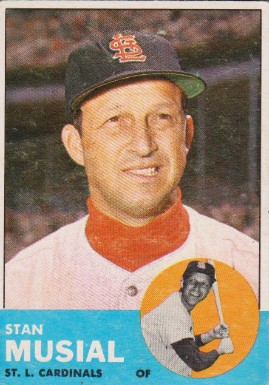
StanleyIn his 22-season career, Stan Musial fanned only 696 times.  Here I’ll do the math – that translates to once every 4.3 games or once every 18.3 plate appearances.  Further, Stan the Man had only one three-strikeout game in his entire career – and that came on July 28, 1963 (Musial’s final MLB season). It was the 2,980th regular-season game of Musial’s 3,026 game career. Further, the strikeouts came in three consecutive plate appearances (Musial’s only trips to the batter’s box in the game).

It came in the first game of a Cardinals/Cubs doubleheader at Wrigley Field. Twenty-three-year-old southpaw Dick Ellsworth (on his way to a 22-10, 2.11 season for the Cubs) fanned Musial – who started in left field, batting sixth – in the second, fourth and sixth innings. (In the bottom of the sixth Cardinals’ starting RF Charlie James moved to LF, Gary Koth came into to play RF and Musial went to the bench.)  The Cubs, by the way, won 5-1 and Ellsworth pitched a complete-game, seven-hitter, with one walk and ten strikeouts.

Baseball’s Up and Downs

Southpaw Dick Ellsworth, who went 22-10, 2.11 in 1963 (when he fanned Stan Musial three times in one game) had lost twenty games the year before (9-20, 5.09). Ellsworth would go 115-137, 3.72 over 13 MLB seasons.  

A little refresher on why Hall of Famer Stan Musial was “The Man.”  He was an All Star in 20 seasons, a three-time Most Valuable Player and a seven-time batting champion. He finished with a .331 average (3,630 hits), 475 home runs, 1,951 RBI and 1,949 runs scored. Stan Musial stuck out just four times in 23 post-season (all World Series) games – in 99 plate appearances. He also led the NL in hits six times, doubles eight times and triples five times.

So-o-o Close

In 1948, Stan Musial – with 39 home runs – fell just one  home run short of tying Johnny Mize and Ralph Kiner for the National League home run crown (despite his 475 long balls Musial never led his league in homers).  He lost one homer to a rain out that season.  Without that rain out, Musial would have had an offensive sweep, leading the National League in average (.376), hits (230), doubles (46), triples (18), homers, runs scored (135), RBI (131), on-base percentage (.450), slugging percentage (.702), and total bases (429).  Oh, and he struck out just 34 times in 698 plate appearances. 

___________________________________________________

Brooks Robinson’s Three Boots …  July 28, 1971

Rpobbies2

Sixteen-time Gold Glover Brooks Robinson made just 263 errors in his 23 MLB seasons (2,896 regular-season games).  Again, I’ll do the math.  That’s one error each 11 games.  (It’s also one error every 34.8 chances – .971 fielding percentage). However, on July 28, 1971 (eight years, to-the-date, after Stan Musial’s only three-strikeout game), Robinson had the only three-error game of his career. Even more surprising, all three errors came in the same inning (on two of only three balls handled by Robinson in the game).

It all came down with the A’s batting against Robinson’s Orioles in the top of the fifth inning of a scoreless game.

It started out harmlessly enough, with Orioles’ starter Mike Cueller getting the first two A’s batters (the number seven and eight hitters).  Cueller then walked A’s pitcher Blue Moon Odom.  Speedy SS CF Bert Campaneris bunted for a base hit, but (attempting to make the play) Robinson threw the ball past first baseman Boog Powell for an error that let Odom go to third and Campaneris to second. Next up was CF George Hendricks, who grounded to third.   Robinson booted the grounder (error number two) and then threw wildly to first (error number three). Odom and Campaneris both scored and Hendrick ended up on second base. Cueller then RF fanned Reggie Jackson to end the inning.

The score stayed 2-0 until the bottom of the ninth when Frank Robinson bailed out Brooks by rapping a three-run, walk-off home run off A’s closer Rollie Fingers.

Brooks Robinson was a 16-time Gold Glover, the 1964 AL Most Valuable Player and an All Star in 15 seasons. He finished with a .267-268-1,357 career stat line. He is the all-time leader at third base in games played, putouts, assists and double plays.  He led AL third sackers in fielding percentage 11 times, putouts four times, assists nine times and double plays four times.  In 39 post-season games, Robinson made four errors in 145 chances (.972 fielding percentage).

Triple Plays – Two Sides of the Coin

Brooks Robinson’s renowned glove was involved in three triple plays during his career.  His bat was, however, part of our triple killings.  Robinson holds the MLB record for hitting into triple plays at four.

Primary Resources … Baseball-reference.com; Stathead.com; NationalPastime.com

100Baseball Roundtable is on the Feedspot list of the Top 100 Baseball Blogs.  To see the full list, click here.

I tweet baseball @DavidBBRT

Follow/Like Baseball Roundtable’s Facebook Page here.  More baseball commentary; blog post notifications; PRIZES.

Member: Society for American Baseball Research (SABR); The Baseball Reliquary; The Negro Leagues Baseball Museum.

From Both Sides Now – Going Yard from Both Sides in a Single Game

Leury Garcia photo

Photo by rchdj10

Yesterday (July 25, 2020), Chicago White Sox’ 2B Leury Garcia went deep twice against the Twins, as the White bounced Minnesota 10-3, behind a five-home barrage. Garcia – batting in the nine-hole – went three-for-four in the game, with two runs scored and four RBI.  Side note:  It’s nice to write about something that happened this season for a change. 

What made Garcia’s game a bit special in BBRT’s view is that the switch hitter homered from both sides of the plate. He hit a solo shot left-handed to lead off the fifth (off Zack Littell) and added a three-run home run – right-handed – with two outs in the seventh off Devin Smeltzer.  It was only the second two-homer game for Garcia (in his eighth MLB season), who has a .257-25-123 stat line in 464 MLB games.

Now, homering from both sides of the plate is not as rare an occurrence as you might think.  It’s been done in the regular season a total of 341 times, and by 118 different different players. Still, it a feat the deserve recognition.   And, now, here are a few more “From Both Sides Now” tidbits:

  • The first player to homer from both sides of the plate in the same game was Wally Schange of the Philadelphia Athletics on September 8, 1916.
  • The career regular-season record for homering from both sides of the plate in the same game is 14 – shared by Mark Teixeira and Nick Swisher. Leaders among players homering from both side of the plate in the same game:

____________________________________________________________________

Both sidews

In 2019, two Diamondbacks homered from both sides of the plate in three games each: Ketel Marte (April 5, April 24, May 3) and Eduardo Escobar (June 10, July 17 and August 3.

_________________________________________________________________________

Players to Homer from Both Sides of the Plate in Ten or More Games

Mark Teixeira – 14 times

Nick Swisher – 14

Carlos Beltran – 12

Chili Davis – 11

Eddie Murray – 11

Tony Clark- 10

Ken Caminiti – 10

Mickey Mantle – 10

  • Only three players have hit home runs from both sides of the plate in the same inning: Carlos Baerga, Indians (April 9, 1993); Mark Bellhorn, Cubs (August 29, 2002); Kendrys Morales, Angels (July 30, 2012).
  • In 1996, the Padres’ Ken Caminiti hit a home run from both sides of the plate in the same game a record four times in a single season – three times in the month of August alone. Note: Caminiti also achieved the feat three times in a single month in September of 1995.

_____________________________________________________________

No team has had more instances of a player hitting long balls from both sides of the plate in a game than the Yankees – 56 times.  Here are the perpetrators:

Mickey Mantle (10 time)

Mark Teixeira (9)

Bernie Williams (8)

Jorge Posada (8)

Roy White (5)

Nick Swisher (5)

Tom Tresh (3)

Aaron Hicks (2)

Roy Smalley

Ruben Sierra

Tony Clark

Melky Cabrera

Carlos Beltran

Neil Walker

_____________________________________________________________________

BIG BOMBS IN THE BIG APPLE

From 1955-1965, a game in which a player homered from both sides of the plate occurred in the AL 14 times, with 13 of those being Yankees (Mickey Mantle 10, Tom Tresh 3).

The only non-Yankee to achieve the feat in the AL during that time span was the Red Sox’ Pumpsie Green (August 15, 1961). Green hit a total of just 13 home runs in his five-season MLB career.  BBRT Note: Green achieved historic significance as the first African-American player for the Boston Red Sox – the last MLB team to break the color line (1959). In the 1955-65 time span, there were only three NL games which saw a player homer from both sides of the plate – two by the Cubs’ Ellis Burton, one by the Dodgers’ Maury Wills.

  • Carlos Beltran and Nick Swisher share the record for hitting a home run from both side sof the plate in a single game for the most teams at five:  Beltran – Mets, Cardinals, Royals, Astros, Yankees; Swisher – A’s, Yankees, White Sox, Indians, Braves.

Only three players have homered from both sides of the plate in a post-season game.

Bernie Williams, Yankees       ALDS Game Three (October 6, 1995

Bernie Williams, Yankees       ALDS Game Four (October 5, 1996)

Chipper Jones, Braves             NLDS Game Four (October 4, 2003)

Milton Bradley, A’s                ALCS Game Two (October 10, 2006)

Primary Resources:  Baseball-Reference.com; Stathead.com; Baseball-Almanac.com

100Baseball Roundtable is on the Feedspot list of the Top 100 Baseball Blogs.  To see the full list, click here.

I tweet baseball @DavidBBRT

Follow/Like Baseball Roundtable’s Facebook Page here.  More baseball commentary; blog post notifications; PRIZES.

Member: Society for American Baseball Research (SABR); The Baseball Reliquary; The Negro Leagues Baseball Museum.


Some Less Than Significant Observations from Opening Days 2019 & 2010

As the 2020 MLB season opened, I wondered what impact the strange start to this campaign might have on the players and the game – if any.  What would the difference be between a July 23 start, with a brief Summer (Spring) Training and the usual March start with a traditional Spring Training (using last season).

Now, I know this is a small sample and pretty meaningless – so I consider this post to be observation, rather than analysis.  Basically, I used “all the games played until all the teams had played a game.” For 2019, that was 17 games (The two Mariners/A’s games in Tokyo on March 20 and 21 and the full slate on March 28). For 2020, it was 16 games (Yankees/Nationals and Giants/Dodgers on July 23 and the remaining teams – plus a second Giants/Dodgers game – on July 24),

2019 bersu 2020

So, what did I observe?  As the chart shows most of the stats were pretty similar (again in a small sample size). There were 7.5 runs per game in 2019’s first 16 games compared to 7.6 RPG in 2020’s first 16 contests. The earned run averages in the span were 3.68 for 2019 and 3.62 for 2020.  In both samples, pitchers had the upper hand – which you would expect, on Opening Day you get the “aces” – although average-wise, hitters fared a bit better in 2020 (.219 to .208 in 2019).

The major difference was in home runs. The 2019 sample showing 3.2 long balls per game, versus 1.9 in 2020. The raw number on dingers are even more surprising – 55 homers in 2019’s first 17 games, just 30 in 2020’s first sixteen.  Lots of possibilities here – adjustments to the baseball, how a ball travels in an empty ballpark, hitters timing due to short preparations. Ironically, there were actually more games with zero home runs in the 2019 sample (seven) than in the 2020 sample (three).  Why?  In the 2020 “Opener Sample,” the most home runs in any game was three.  The 2020 sample had eight games with more than three (one with ten, one with six, three with five and three with four).

Here are a few more statistical observations.

  • The fist seventeen games in 2019 saw five shutouts, the first sixteen in 2020 saw four shutouts.
  • The 2019 sample had four teams scoring ten or more runs in a game, 2020’s sample just two.
  • In 2019’s first seventeen games, both teams played error-free ball in seven contests, versus six such games in 2010’s first 16 match ups.

Ultimately, no conclusions to be drawn. Just thought I share a few numbers with my fellow stats freaks.  (By the way, I am into both stats and stories.)

For a poetic look at Opening Day, click here.  For some Opening Day records, click here.

Primary resources:  Baseball-Reference.com;  Stathead.com.


100Baseball Roundtable is on the Feedspot list of the Top 100 Baseball Blogs.  To see the full list, click here.

I tweet baseball @DavidBBRT

Follow/Like Baseball Roundtable’s Facebook Page here.  More baseball commentary; blog post notifications; PRIZES.

Member: Society for American Baseball Research (SABR); The Baseball Reliquary; The Negro Leagues Baseball Museum.

COVID 19 AT THE BAT

Covid At the Bat
With Apologies to Ernest Lawrence Thayer

The outlook was brilliant for MLB that day,
COVID lurking near and only sixty games to play.
For several months, on fans, a deathlike silence sat.
There seemed little chance we’d see anyone come to bat.

Introduction and ceremonies seemed a little bland,
With nary a fan nor vendor, in the stands.
No joyous yell rumbled through the seats across the empty park.
No, score sheets lay in anxious laps, waiting to be marked.

Still, for some real baseball, each fan had an unscratched itch.
And we couldn’t wait for Fauci to throw out the first pitch.
Anticipation further grew, as Aaron Hicks slowly took his place,
Pondering mighty Max Scherzer, whom he was about to face.

As Hicks dug in the batter’s box, amid the piped-in cheers,
In living rooms across the land, the fans popped open beers.
And as the Nats’ Mad Max ground the ball into his mitt,
Hicks slowly waived his bat and prepared himself to hit.

And, then the red-stitched leather sphere came whizzing toward plate,
And, on our TV’s and devices, we all anticipated the pellet’s fate.
The pitch was quite a way outside, amply off the dish.
And Hicks thought “That ain’t my style,” and decided not to fish.

Hicks’ bat eventually did come round, cutting through the air,
Launching the horsehide on the ground, going not foul, but fair.
And with that rap, the season opened for all the fans – and me,
On a grounder that was recorded as an out from four to three.

Three batters later, with the new season’s first home run blow,
Giancarlo Stanton gave the Yankees a lead of two-to-oh.
Then Brett Gardner did some positive Scherzer pleasin’,
Finishing the very first frame with the first whiff of the season.

It continued with the Yankees, by 4-1, still winning,
Until the rain and lightning came in the top of the sixth inning.
With all the protocols it took to get the boys out on the field,
It seemed a shame this American game had to the weather yield.

Ah, but across this favored land, the sun is shining bright.
Fans are smiling, fans are shouting and everything seems right.
There are hits and runs, whiffs and walks and on-the-field fun.
Everything seems a little better, baseball season has begun.

Post Script:
Of course, on and off the field, things are not all rosy.
We’re missing some big names, like Markakis, Price and Posey.
And then there is the virus, that is still not in our past.
And, despite hope that springs eternal, we know this season may not last.

BaseballRoundtable.com

100Baseball Roundtable is on the Feedspot list of the Top 100 Baseball Blogs.  To see the full list, click here.

I tweet baseball @DavidBBRT

Follow/Like Baseball Roundtable’s Facebook Page here.  More baseball commentary; blog post notifications; PRIZES.

Member: Society for American Baseball Research (SABR); The Baseball Reliquary; The Negro Leagues Baseball Museum.

Pressed (for answers) While You Wait … Opening Day Trivia and More

Okay, so Opening Day won't be quite the same. At least, it's on the way.

Okay, so Opening Day won’t be quite the same. At least, it’s on the way.

How about a little Opening Day trivia, as we eagerly anticipate the first pitch the counts in the 2020 MLB season?  Here are a half-dozen quick questions – and answers – followed by lots more Opening Day facts and figures.  Mull them over a bit before you read on.

  1. Who was the first MLB pitcher to throw nine no-hit innings in an Opening Day start? Hint: It’s not the Feller you may be thinking of.
  2. Which player became a “victim of circumstance” and set an Opening Day single-game record by fanning five times? Hint:  Well, it was against Randy Johnson, whose 107 career Opening Day strikeouts are an MLB record.
  3. Steve Carlton started 14 of the 15 Phillies’ Opening Day games from 1972 through 1986. The one year he missed cost him the record for consecutive Opening Day starts and consecutive Opening Day starts for the same team. Who was the pitcher who interrupted Carlton’s streak?  Hint: Like Carlton, a lefty (and one who ought to be in the Hall of fame, but isn’t).
  4. Can you name the pitcher who holds the record for the most walks surrendered in an Opening Day game (11)?  Hint, despite the 11 free passes, the opposition only scored three runs (two earned) off him in 11 innings.
  5. Which pitcher holds the mark for the most strikeouts in an Opening Day game? Kinda tossing you a curve on this one.
  6. Which player holds the record for the most hit-by-pitches in an Opening Day game – getting plunked three times? Hint:  These pitches were to (Glenn) close for comfort.

Read on for the answers and more Opening Day facts and figures.

  1. Who was the first MLB pitcher to throw nine no-hit innings in an Opening Day start? Hint: It’s not the Feller you may be thinking of.   Answer: Leon “Red” Ames.

On April 16, 1940, 21-year-old Bob Feller (already in his fifth MLB season) threw the first – and still only – Opening Day no-hitter in MLB history – topping the White Sox 1-0 in Chicago. It was the first no-hitter (of an eventual three) for Feller, who walked five and struck out eight. During the season, Feller would go on to lead the AL in wins (27), ERA (2.61), strikeouts (261), games pitched (43), games started (37), complete games (31), innings pitched (320 1/3) and shutouts (4).

Feller, however, is not the answer to this trivia question.  Back on April 15, 1909 – as the Giants opened against the Superbas (Dodgers) in Brooklyn – Giants’ righty Red Ames started and, with just the minimum of support, could have made history. Ames held Brooklyn hitless for nine innings, but got nary a run of support from his batsmen.  Ames finally gave up a hit with one out in the tenth and, while he kept the shutout going through the 12th inning, eventually lost 3-0 in 13 innings.  How the game has changed:  Both Ames and Brooklyn starter Irvin “Kaiser” Wilhelm went the distance.  Ames, by the way, had a 17-season MLB career (1903-10), going 183-167, 2.63. His best season was 1905 (Giants), when he went 22-8, 2.74.

—————————————————————————————

  1. Which player became a “victim of circumstance” and set an Opening Day single-game record by fanning five times? Hint:  Well, it was against Randy Johnson, whose 107 career Opening Day strikeouts are an MLB record.  Answer:  Ron Karkovice.

On March 31, 1996, White Sox’ catcher Ron Karkovice set an MLB Opening Day record by striking out five times as Chicago lost 3-2 in Seattle.  Karkovice, however, may have been a victim of circumstance.

First, future Hall of Famer Randy Johnson started on the mound for the Mariners – striking out 14 in seven innings (including Karkovice three times).

Randy Johnson holds the record for the most career Opening Day strikeouts with 107 and for the most Opening games with double-digit strikeout totals (four).

Second, the White Sox could muster only two runs on four hits over the first nine innings – taking a slim 2-1 lead into the bottom of the ninth (at that point, Karkovice had fanned just three times).

Third, the Mariners tied the contest in the ninth, and the game went to 12 innings before the Mariners prevailed 3-2.  In those three extra innings, Karkovice struck out against Norm Charlton (tenth inning) and Edwin Hurtado (twelfth inning) to set the Opening Day record.

———————————————————————————-

  1. Steve Carlton started 14 of the 15 Phillies’ Opening Day games from 1972 through 1986. The one year he missed cost him the record for consecutive Opening Day starts and consecutive opening Day starts for the same team. What pitcher interrupted Carlton’s streak?  Hint: Like Carlton, a lefty (and one who ought to be in the Hall of fame, but isn’t.  Answer: Jim Kaat.

In 1976, Jim Kaat- a three-time 20-game winner, and an All Star the year before – got the Opening Day nod from the Phillies. For those who may be wondering whether Carlton’s health played an issue in Kaat’s Opening Day start, Carlton started the second game of the season and went on to a 20-7 record in 35 starts. Side note:  Kaat was not only a 283-game winner, but also a 16-time Gold Glover. Kaat pitched for the Phillies from 1976-79, putting up a 27-30, 4.23 record. He spent 15 of his 20 seasons with the Senators/Twins.

——————————————————————–

  1. Can you name the pitcher who holds the record for the most walks surrenders in an Opening day game (11)?  Hint, despite the 11 free passes, the opposition only scored three runs (two earned) off him in 11 innings. Answer: Herb Score.

On April 16, 1957, Cleveland southpaw Herb Score set the Opening Day record for pitcher’s walks, delivering eleven free passes to the visiting White Sox.  Despite Score’s wildness, it was a close contest, with Score going the distance in a 3-2, 11-inning loss. Score struck out ten and gave up just seven hits and two earned runs – stranding 14 Chicago base runners.

Herb Score was the 1955 AL Rookie of the Year, when the 22-year-old lefty went 16-10. 2.85 and led the league in strikeouts with 245.  In 1956, he was even better, going 20-9, 2.53 and again topping the league in whiffs (263). His 1957 season ended on May 7, when he was it in the face by a line drive off the bat of Yankee Gil McDougald.  Score suffered a broken nose, as well as damage to is right cheek bone and right eye.  He was hospitalized for about three weeks and did not return to the mound that season.

Score came back in 1958, but suffered an elbow injury early in the season (some wondered if he had changed his delivery after the McDougald incident, but Score denied that – and had been pitching well to that point). At any rate,  from 1958 until he retired in 1962, Score was 17-26, 4.43. 

————————————————————————

  1. What pitcher holds the mark for the most strikeouts in an Opening Day game? Hint: Kind of tossing you a curve on this one. Answer: Camilo Pascual.

On April 18, 1960, Camilo Pascual (known for his sweeping curve ball) took the mound at Griffith Stadium for the Washington Senators (against the Boston Red Sox). In 1959, the Senators had finished in last place in the AL, but Pascual had gone 17-10, 2.64, leading the league with 17 complete games and six shutouts. As the Senators’ Opening Day starter in 1960, Pascual picked up right where he left off – tossing a complete game three-hitter, walking three and striking out a still Opening Day record 15 batters in a 10-1 win over the Red Sox.

Pascual pitched 18 MLB seasons (1954-71), winning 174 and losing 170, with a 3.63 earned run average. He was a five-time All Star, two-time twenty-game winner and led the league in complete games, shutouts and strikeouts three times each.

———————————————————————

  1. Which player holds the record for the most hit-by-pitches on Opening Day – getting plunked three times? Hint:  These pitches were too (Glenn) Close.   Answer: Glenn Davis.

On April 9, 1990, Astros’ first baseman and cleanup hitter Glenn Davis was hit by a pitch an Opening Day record three times. Davis came to the plate six times and never put the ball in play – but still made only one out.  Davis (who led the league in HBP that season with eight) was hit by a pitch three times, walked twice and struck out once as the Astros lost to the visiting Reds 8-4.  Davis finished Opening Day with a batting average of .000, but an on-base percentage of .833.

Glenn Davis played 10 MLB seasons (1984-93), hitting .259, with 190 home runs and 603 RBI.  He was hit buy a pitch 55 times.

—————————————————————————

Now, let’s look at some additional Opening Day tidbits.

Let’s get this party started.

No pitcher started more Opening Day games than Hall of Famer Tom Seaver (16). Seaver opened for Mets eleven times, the Reds three times and for the White Sox twice.  Seaver recorded seven wins, two losses and seven no decisions on Opening Day,

“They call him the streak.”

Hall of Famer Jack Morris holds the record for the most consecutive Opening Day starts at 14 (eleven for the Tigers, one for the Twins and two for the Blue Jays).

Rockin’ Roberts

Hall of Famer Robin Roberts, holds the record for the most consecutive Opening Day starts for the same team at 12 – for the Phillies from 1950-1961.

In the “How the Game has Changed” category, in the 1950’s (1950-59), Robin Roberts won 199 games and threw 3,011 2/3 innings – for an AVERAGE of 20 wins and 301 innings pitched per season.

Opening Day Starts – Gimme five!

Gaylord Perry was honored by the most teams with Opening Day starts. He started on Opening Day for an MLB-record five different teams (Giants, Indians, Rangers, Padres and Mariners).

The Longest Day – 15 Shutout Innings

On April 13, 1926, the Senators’ Walter Johnson pitched a 15-inning, complete-game shutout (six hits, three walks, nine strikeouts) as Washington topped the Philadelphia Athletics 1-0 in Washington.  The opposing starter, Eddie Rommel tossed the second-most innings in an Opening Day appearance – going 14 1/3, as Washington scored the winning run with one out in the 15th.  Johnson, by the way, was 38-years-old at the time.

U Can’t Touch This – 7-0 on Opening Day

Jimmy Key holds the record for Opening Day wins without a loss at seven – and he did in the minimum seven starts (Blue Jays, Yankees and Orioles). In those seven wins, he threw 44 1/3 innings, with a 3.05 ERA.

Knock Three Times – Most Home Runs in an Opening Day Game

The Opening Day, single-game record of three home runs is shared by four players – the Blue Jays’ George Bell, Cubs’ Tuffy Rhodes, Tigers’ Dmitri Young and White Sox’ Matt Davidson.

On April 4, 1988, George Bell – batting clean-up and serving as the DH – became the first major leaguer to hit three home runs in an Opening Day game, as his Blue Jays topped the Royals 5-3 in Kansas City. Bell’s power outburst was no surprise. He was coming off a 1987 season in which he hit 47 homers, drove in 134 runs and was the AL MVP. Bell went three-for-four with three runs scored and four RBI, hitting all three home runs off Royals’ starter Brett Saberhagen.

On a windy April 4, 1994, Karl “Tuffy” Rhodes (leading off and playing CF for the Cubs in Chicago) hit three solo shots off Mets’ starter Dwight Gooden. Rhodes also had a single and a walk in five plate appearances. Despite Rhodes’ record-tying performance, the Cubs lost to the visiting Mets 12-8. At the time, Rhodes had played 107 MLB games in four seasons – hitting a total of five home runs. His MLB career consisted of 225 games in six seasons, with a .224 average and just 13 round trippers (with a high of eight in 1994). Rhodes did go on to hit 474 home runs in eleven seasons in Japan.

On April 4, 2005 the Tigers’ Dmitri Young joined Bell and Rhodes on the list of batters with three home runs in an Opening Day game – as the Tigers topped the Royals 11-2 in Detroit. Young started at DH and went four-for-four with four runs and five RBI.  Young, an All Star in 2003 and 2007, hit a total of 21 home runs in 2005 – and 171 in 13 MLB seasons. He hit a career-high 29 round trippers in 2003.

On March 29, 2018, as the White Sox topped the Royals 14-7 in Kansas City, DH and (appropriately) cleanup hitter Matt Davidson opened the season with a three-homer, five-RBI game. He went three-for-four with a walk, four runs scored and five RBI. Davidson went deep off three different pitchers: solo shots in the fourth and fifth off Danny Duffy and Blaine Boyer and a three-run blast in the eighth off Brian Flynn. Davidson, in his fourth MLB season, went on to a .228-20-62 campaign.  In his 273 MLB games (2013, 1015-18), Davidson has just three multi-homer contests. and a total of 49 round trippers.

Bringing the boys home, sweet home

The Opening Day single-game record for RBI (seven) is shared by the Twins’ Brant Alyea and the Cubs’ Corey Patterson.

On April 7, 1970 – in his very first game as a Twin – LF Brant Alyea drove in an Opening Day record seven runs as Minnesota topped the White Sox 12-0 in Chicago. Batting fifth, Alyea went four-for-four, with two home runs, two singles and two runs scored.  The game, it turned out, would foreshadow a strong April for Alyea.  In 17 April games, he hit .415, with seven runs, 23 RBI, four doubles and five home runs.

On March 31, 2003, the Cubs’ CF Corey Patterson tied Alyea’s record. In a 15-2 win over the Mets in New York, Patterson, batting seventh, drove in seven runs, going four-for-six with two home runs and two runs scored.

Corey Patterson, a career .252 hitter (12 seasons), was a true Opening Day All Star. In seven Opening Day appearances, Patterson hit .440, with seven runs, 12 RBI and three home runs.

Eight is Enough

On Opening Day 2019 (March 28), as the Dodgers topped the Diamondbacks 12-5 in Los Angeles, the Californians launched an Opening Day record eight home runs (two by LF Joc Pederson, two by 2B Enrique Hernandez and one each by C Austin Barnes, SS Corey Seager, 1B Max Muncy and RF Cody Bellinger. Before the Dodger outburst, the Opening Day record for team long balls was six (1988 Mets and 2018 White Sox.)

Eight is also a career magic number for Opening Day. Frank Robinson, Ken Griffey, Jr. and Adam Dunn Share the career record for Opening Day home runs with eight each.  Robinson’s were all hit in one-homer games, giving him the record for the most Opening Days with a home run.

BBRT KINGS OF OPENING DAY – IN THE BATTER’S BOX AND ON THE MOUND

Ted Williams photo

Photo by Wicker Paradise

Perhaps no one looked forward to Opening Day more than Ted Williams – the king of the Opening Day batter’s box.  A career .344 hitter, Williams was even better on Opening Day.  Teddy Ballgame played in fourteen “Openers” and was never held without a hit.  He compiled a .449 Opening Day average (22 hits in 49 at bats), with three home runs, eight doubles, one triple, nine runs scored, 14 RBI and eleven walks.  His Opening Day on-base percentage was .550 and his season-opener slugging percentage was .837. (Side note:  The highest career Opening Day average – at least 50 Opening Day at bats –  is .467 shared by Gabby Hartnett, Jeff Kent and Adrian Gonzalez.

The Washington Senators’ Walter Johnson can be crowned king of the Opening Day hill.  On his first-ever Opening Day start (April 14, 1910), the 22-year-old Johnson tossed a 3-0 one-hit shutout against the Philadelphia Athletics.  Sixteen years (and 13 Opening Day starts) later, a 38-year-old Johnson fulfilled his last Opening Day assignment with a 15-inning, complete-game, 1-0 win (6 hits, 3 walks, 9 strikeouts) over the A’s.  Johnson holds the record for Opening Day pitching victories with nine (against five losses) and also threw a record seven Opening Day shutouts.

Primary Resources:  Baseball-Reference.com, Stathead.com; Baseball-Almanac.com; MLB.com

100Baseball Roundtable is on the Feedspot list of the Top 100 Baseball Blogs.  To see the full list, click here.

I tweet baseball @DavidBBRT

Follow/Like Baseball Roundtable’s Facebook Page here.  More baseball commentary; blog post notifications; PRIZES.

Member: Society for American Baseball Research (SABR); The Baseball Reliquary; The Negro Leagues Baseball Museum.

Baseball Roundtable “Who’s Your Daddy?” Series … Tom Seaver Edition

Rick Monday … Figured It Out

Cubs’ CF Rick Monday’s first game against the Mets’ Tom Seaver (August 12, 1972) did not hold out much promise for the future. Monday struck out in his first three at bats against Seaver (second, fourth and sixth innings). Apparently having given up laying good wood on Seaver’s stuff, Monday attempted to bunt for a hit in the bottom of the ninth (with the game tied at one), but was thrown out third-to-first. 

Surprisingly, after that slow (to put it kindly) start, Monday hit .366 versus Seaver over the remainder of his career – and his 11 home runs off Tom Terrific are the most Seaver gave up to any batter, as well as the most Monday hit against any pitcher.

_____________________________________________________

Who’s Your Daddy?  What’s it all about?

That’s right, it’s time for the next edition of Baseball Roundtable’s  “Who’s Your Daddy?” series … focusing on some of  MLB’s premier pitchers – like Bob Feller, Bob Gibson, Sandy Koufax and Nolan Ryan, as well as contemporary hurlers like Justin Verlander and Max Scherzer.

In this series, BBRT presents lineups of players who performed unexpectedly well against baseball’s top pitchers. (An explanation of the inspiration behind the Who’s Your Daddy? series can be found the end of this post.)  As always, I would stress that the pitchers included in the Who’s Your Daddy? series are among the “best in the business.”  They are selected not because of the players who performed well against them, but rather because success among hitters when they were on the mound was the exception rather than the rule.

Before we get started on this edition – focusing on Hall of Famer Tom “Tom Terrific” Seaver, here are links to the previous editions of this series:

  • Nolan Ryan, click here.
  • Sandy Koufax, click here. 
  • Pedro Martinez, click here.
  • Bob Gibson, click here
  • Randy Johnson, click here
  • Greg Maddux, click here. 
  • Justin Verlander, click here. 
  • Bob Feller, click here
  • Roger Clemens, click here
  • Max Scherzer, click here. 

____________________________________________

Now, let’s take a look at Tom Seaver and the players who seem to have his number (that would be “41,” by the way).

SeaverpnotoHall of Famer right-hander Tom Seaver’s recognitions include three Cy Young Awards (1969, 1973, 1975) and the 1967 Rookie of the Year Award. During his 20-season MLB career (1967-86 …. ages 22 through 41 … Mets, Reds, White Sox, Red Sox), Seaver was a 12-time All Star. He won 20 or more games in five seasons and 15 or more in 13 campaigns.  He retired with a 311-205, 2.86 record – and his 311 wins are 18th all-time.  Seaver ranks in MLB’s all-time top ten in strikeouts (3,640 for sixth) and shutouts (61 for seventh). Seaver held hitters to a .226 batting average over his career.

Seaver led his league in wins three time, strikeouts five times (ten seasons with 200 or more whiffs), earned run average three times, shutouts twice, complete games once, strikeouts per nine innings six times and strikeouts-to-walks ratio three times.  His best season was 1969, when he went 25-7, 2.21.

That’s a No-No

On June 16, 1978, Tom Seaver pitched a no-hitter in a 4-0 Reds’ win over the Cardinals.  He walked three and fanned three and allowed only six fair balls out of the infield.

____________________________________________

On April 27, 1970, Tom Seaver was  particularly dominant.  Not only did he fan 19 batters in a complete-game, two-hit, 2-1 win over the Padres, he got stronger as the game went on. Seaver set an MLB single-game record for consecutive strikeouts with ten – and they were the last ten Padres’ hitters of the game.

_______________________________________________

So, who could hit Tom Terrific?

SeaverCareerCatcher – Ted Simmons … 33 hits, 14 walks

Ted Simmons had the sixth-most career, regular-season hits (33) against Tom Seaver and the seventh-most walks (14).  That gave the Hall of Fame catcher a .297 career average and .373 on-base percentage in 37 games versus Seaver.  Simmons’ best year against the righty was 1972 (when Seaver went 21-12, 2.92). That season, Simmons collected seven hits and two walks in 13 plate appearances over four games (.636 average/.692 OBP).  The first two games in which Simmons faced Seaver that campaign, he got on base seven times in seven plate appearances: walk; single; single; two-run home run; RBI single; single; double.

SimmonsTom

The switch-hitting Simmons was an eight-time All Star, who finished his 21-season MLB career (1968-88 … Cardinals, Brewers, Braves) with a .285 average (2,472 hits), 248 home runs and 1,389 RBI. He hit 20 or more homes runs in six seasons, had 100 or more RBI three times and hit .300+ in seven full seasons. He also led the league in intentional walks twice.  Among players who played primarily at catcher, Simmons is second all-time in in hits and doubles (Ivan Rodriguez is first) and second only to Yogi Berra in RBI.  His best season was 1975, when he appeared in 157 games for the Cardinals (starting 148 at catcher) and hit .332, with 18 home runs and 100 RBI.  Behind the plate, Simmons led the league in games played at catcher three times, and his 1,7771 games crouching behind the plate are 16th all-time.

Might as Well Be First

Ted Simmons was the first catcher to start in All Star games for both National League and the American League.

______________________________________________________

Catcher John Tamargo (1976-80 … Cardinal, Giants, Expos) had the most plate appearances against Seaver without ever being retired.  In four plate appearances over two games, he had two singles, a double and a walk. Tamargo was a .242 career hitter.

On the other side of the coin, among non-pitchers, Rance Mulliniks had the most plate appearances against Seaver without ever getting on base – zero-for-sixteen, with seven whiffs, over five games. (Among all players, pitcher Don Sutton holds this dubious mark against Seaver at zero-for twenty-two.)

_________________________________________________________

First Base – Tom Hutton … .320 average, 15 RBI, 11 walks versus five strikeouts

Tom Hutton drove in 15 runs versus Tom Seaver in 24 games – and, while Hutton was a career .248 hitter, Hutton hit .320 versus Tom Terrific and hit .333 or better in six of the nine seasons in which he faced him.

hUTTON tOMHutton had a 12-season MLB career (1966, 1969, 1972-81 … Dodgers, Phillies, Blue Jays, Expos).  Known more his glove than his bat, Hutton hit for a .248 career average, with 22 home runs and 186 RBI in 952 games.

Picking on Tom Terrific

Tim Hutton had more hits (16), home runs (3), RBI (15) and walks (11) against Tom Seaver than he had against any other pitcher.

Honorable mention at first base: Ten-time All Star Steve Garvey put up strong numbers versus Tom Seaver – .318-5-19 in 35 games.  Hutton gets an edge on two counts.  He did nearly as much damage (15 RBI to Garvey’s 19) in 11 fewer games – and Hutton has 11 walks and just five strikeouts versus Seaver, compared to Garvey’s six walks and 17 whiffs.  (Hutton’s on-base percentage versus Seaver was .435 to Garvey’s .354.

___________________________________________

Second Base – Joe Morgan … .304 average, 22 walks, .425 OBP

Hall of Famer Joe Morgan’s 22 walks are the most Tom Seaver surrendered to any batter and Morgan’s five round trippers are the sixth-most against Seaver.  In 36 games versus Seaver, Morgan went .304-5-11 (he also had seven doubles).  That Morgan ended up getting those 22 free passes versus Seaver is no surprise. He walked in his first plate appearance versus Seaver (May 5, 1967) and, in his first two games against him, had three walks (and a single) in nine plate appearances.

MorganTom

Joe Morgan enjoyed a 22-season MLB career (1963-1984 … Astros, Reds, Giants, Phillies, A’s). He had a career average of .271 (2,517 hits), with 268 home runs, 1,153 RBI, 1,650 runs scores and 689 stolen bases (eleventh all-time). Morgan was a ten-time All Star, five-time Gold Glover and two-time MVP.

He led his league in runs scored once (scoring 100 or more runs in eight seasons); triples once (with ten or more three times); walks four times; and on-base percentage four times.  While he never led the league in stolen bases, he stole 40 or more bags in nine seasons, with a high of 67 in 1973 and 1975.  In the field, Morgan led NL second basement in putouts three times, assists once, double plays once and fielding percentage three time.  He is third all-time at second base in assists (6,937), fourth in putouts (5,742) and sixth in double plays (1,505). He is fiftieth in errors (244).

Lucky 13

Joe Morgan is one of only 13 players to win back-to-back league MVP Awards (Reds – 1975 & 1976). For a look at BBRT’s lineup of players who belong to the Back-to Back MVP club, click here.

___________________________________________

Third Base – Bob Horner …  .370, with four home runs in ten games

Bob Horner put up a .370 average (10-for-27) in ten games against Tom Seaver.  Further, seven of his ten hits went for extra bases (three doubles and four home runs), for a .926 slugging percentage. On October 3, 1981, as the Braves downed Seaver and the Reds 4-3, Horner went two-for-two (sacrifice fly, solo home run, solo home run). He had a third at bat in the game, singling off reliever Tom Hume and eventually scoring the winning run.

HornerTom

Four Dingers … For the Loss

Bob Horner is one of just 18 players to hit four home runs in a single MLB game – and one of only two to do it in a game his team lost.

Horner had his four-homer day on July 6, 1986. As his Braves faced the Expos in Atlanta, Horner homered leading off the bottom of the second (off starter Andy McGaffigan) to give Atlanta a 1-0 lead. After the Expos scored one run in the third and three in the fourth, Horner homered again (off McGaffigan) with two out in the bottom of the fourth inning, cutting the deficit to 4-2. Montreal put up a six-spot in the top of the fifth, with Atlanta coming back with five in the bottom of the inning – with Horner again taking McGaffigan deep, this time a three-run shot.  Still the Braves trailed 10-7. Horner popped out to first in the seventh (Braves trailing 11-7 at the time) and then added a solo home run in the bottom of the ninth (off Jeff Reardon), as the Braves lost 11-8 despite Horner’s four homers and six RBI.

Horner had a ten-season MLB career (with the Braves from 1978 through 1986 and Cardinals in 1988). He was a one-time All Star and finished with a career line of .277-218-685. He hit 30+ home runs in three seasons and drove in a high of 98 runs in 1979 (arguably his best season at .314-33-98).

Honorable mention at third base: Steve Ontiveros hit .500 (9-for-18) against Seaver in ten games, with two home runs and two RBI.  Ontiveros also drew ten walks versus Seaver (for a .679 on-base percentage).  In a nine-plate appearance streak against Seaver – over three games from May 7, 1974 to August 22, 1975 – Ontiveros got on base nine straight times (six walks, two singles, one home run). So why does Horner get the nod? Horner hit four home runs and drove in nine tallies in his ten games against Seaver, while Ontiveros has two home runs and just two RBI.  BBRT will go with damage done.

Mikey Doesn’t Like It

Hall of Fame 3B Mike Schmidt did not have much luck against Seaver. He had just 16 hits in 30 games against him (.188 average) and fanned 35 times in 85 at bats.

___________________________________________

Shortstop – Dave Concepcion … .391 average

Dave Concepcion hit a healthy .391 (18-for-46) versus Seaver over 18 games. He also drew nine works versus the Hall of Fame right-hander – for a .491 on-base percentage. In his last eight trips to the plate (during the 1983 season), Concepcion had four walks, three singles and a ground out.

Concepcion

Concepcion had a 19-season MLB career (1970-88), all with the Reds. He was a career .267 hitter (2,326 hits, poked 101 home runs, drove in 950, scored 993 and stole 321 bases.  A more than solid defender, Concepcion was a nine-time All Star and five-time Gold Glover. He twice hit .300+ and had seven seasons with 20+ steals. He hit career highs in home runs (16) and RBI (84) in 1979. In the field, Concepcion led NL shortstops in assists twice (and his 6,591 assists at the position are eleventh all-time); led NL shortstops in putouts once (and his 3,670 are 21st); and led the NL in double plays turned at shortstop once (his 1.,290 are ninth all-time). Concepcion hit .297-2-13 with 30 runs scored and seven steals in 34 post-season games.

All Star MVP

Dave Concepcion was selected MVP of the 1982 All Star Game, in which he went one-for-three, with a two=run home run off American League starter Dennis Eckersley. Yes, “Eck” started for the AL. That season, Eckersley was 13-13 in 33 starts for the Red Sox (11 complete games). At the All Star break, Eckersley was 9-7, 3.20, with nine complete games in 18 starts.

Honorable mention at SS: Cal Ripken, Jr. hit a nice round .400 (8-for-20), with three home runs and six RBI in seven games versus Seaver.  That would seem to put him in this lineup (added power) over Concepcion.  BBRT, however, factors in that Ripken’s at bats against Seaver came from 1984 through 1986 (Seaver’s last three MLB seasons), when Seaver was 38-35, 3.83.  Concepcion faced Seaver from 1971 through 1983, when Tom was more Terrific, 198-126, 2.82.

_____________________________________________

Outfield – Ricky Monday … .349 with 11 round trippers

Rick Monday’s 11 home runs versus Tom Seaver are the most Seaver gave up to any hitter and Monday’s 17 RBI are sixth-most. Couple those numbers with Monday’s .349 average against Seaver and you can see why Monday is in this line up.

MOndayTom

Ricky Monday played 19 MLB seasons (1966-84 … A’s, Cubs, Dodgers). He was a two-time All Star (once in each league). Monday was a career .264 hitter (1,619 hits), and finished with 241 home runs, 775 RBI, 950 runs scored and 98 steals. He hit 20 or more home runs in three seasons. His best campaign was 1976, when he went .272, with a career high in home runs (32), RBI (77) and runs scored (107) for the Cubs.  After the season (January 1, 1977), he was traded by the Cubs (along with Mike Garman) to the Dodgers (for Bill Buckner, Ivan de Jesus and minor-leaguer Jeff Albert).

First of the First

Rick Monday was the first player selected in the first-ever MLB draft (1965 – by the Kansas City Athletics).  Note: In 1965, Monday was the Sporting News National (College) Player of the Year – after hitting .359 with 11 home runs for Arizona State University (1965 College World Series Champions) in his sophomore season.  Monday also was selected for the 1965 NCAA University Division Baseball Tournament All-Tournament Team.

_________________________________________________________

Outfield – Willie Davis … 42 hits, .389 average

Willie Davis’ 42 hits (in 30 games) against Tom Seaver are the most safeties Sever gave up to any hitter. Davis faced Seaver in ten seasons (1967-76), hitting over .350 against him in six of them.  Davishit safely in 27 of his thirty games against Seaver – with 11 mufti-hit games.

DavisTom

Willie Davis played 18 MLB seasons (1960-76, 1979 …. Dodgers, Expos, Rangers, Cardinals, Padres, Angels), 14 with the Dodgers. The two-time All Star hit .279 for his career (2,561 hits), topping .300 in three full seasons.  He hit 182 home runs (a high of 21 in 1962), drove in 1,053 tallies (a high of 93 in 1970), scored 1,217 runs (a high of 103 in 1962) and swiped 398 bases (20 or more in 13 campaigns). He also led the league in triples twice and hit double-digits in three baggers four times.  Davis was also a three-time Gold Glover.

On the Big Stage

Willie Davis can lay claim to a couple of World Series records – one on each side of the ledger. 

In Game Five of the 1965 World Series (against the Twins), Davis earned a share of the World Series’ single-game record for stolen bases with three – stealing second base in the third, fourth and eighth innings.  Others with three steals in a WS Game – Lou Brock (1967 & 1968), Honus Wagner (1908). 

The following season, in Game Two of the Series against the Orioles, Davis (who would go on to become a three-time Gold Glover) set a World Series record by committing three errors in a single inning. The errors came on consecutive plays in the fifth inning. Coming into the top of the fame, the game was a scoreless tie (not unexpected, with Sandy Koufax versus Jim Palmer).  Boog Powell led off with a single to left, followed by a Davey Johnson pop out on a fouled bunt attempt. Then, Davis lost a Paul Blair fly in the sun for an error – ending up with Powell on third and Blair on second. The sun got to Davis on the very next batter (Andy Etchebarren) resulting in a dropped fly ball, followed by Davis’ errant throw to third. Both Powell and Blair scored and Etchebarren ended up on third. Sadly, this was to be the last game ever pitched by Koufax, who retired before the following season.  In a 7-0 loss, the Dodgers made a total of six errors, five during the six innings Koufax was in the game. Koufax gave up four runs (one earned) on six hits (two walks – two strikeouts) and took the loss in his last MLB mound appearance.

________________________________________________

Outfield – Dusty Baker … .347, 20 runs batted in

Dusty Baker’s 20 RBI versus Tom Seaver ties Willie Stargell for the most career RBI against the Hall of Fame righty.  Baker’s 33 hits (in 34 games) are the sixth-most against Seaver, as are his five home runs.

BakerTonBaker played 19 MLB seasons (1968-86 … Braves, Dodgers, Giants, A’s), hitting .278 (1,981 hits, with 242 home runs, 1,103 RBI, 964 runs scored and 137 stolen bases). He was a two-time All Star and one-time Gold Glover.  Baker hit 20 or more home runs in five seasons, topped 100 runs scored one, reached a career-high 99 RBI in 1973 and hit .300 or better three times.  Baker’s best season was 1980, when he hit .297-29-97 and stole 12 bases. In 40 post-season games, Baker went .282-5-21.

High Five History

On the last day of the 1977 season (October 2), Baker and the Dodgers were playing the Houston Astros in Los Angeles. At that point, three Dodgers had reached the thirty-home run mark, 1B Steve Garvey with 33, RF Reggie Smith with 32 and 3B Ron Cey with 30.  LF Dusty Baker stood just one long ball away from 30 dingers – which would make the Dodgers the very first MLB club with four 30-HR players in a single season.   Baker gave the Dodgers the record by taking J.R. Richard deep in the bottom of the sixth. 

Legend has it that, as Baker crossed the plate, his rookie teammate Glenn Burke was waiting, right arm  high in the air in celebration.  Baker reportedly didn’t know exactly what to do, so he reached up and slapped Burke’s hand. That, they say, is when the “high five” was born (and it quickly became a symbol of Dodger pride).  Burke, by the way, batted next and hit his first MLB home run.  Note:  There are other stories regarding the origin of the high five, the most notable involving the University of Louisville basketball team.  But being a baseball fan, I’m sticking with the Baker-Burke tale. Also The Burke-Davis high five preceded, in time, the other most credible story (Louisville).  

While the four 30-HR player mark would be tied over the years, it wasn’t topped until 2019, when the Twins broke the record with five 30-HR players(Nelson Cruz, Max Kepler, Eddie Rosario, Mitch Garver, Miguel Sano).

Honorable mention, outfield: Terry Puhl probably should have been a fourth outfielder – or at least a DH in this lineup. It’s just that this outfield lineup was tough to crack. In 17 games against Seaver, Puhl hit .444 (20-for-45), with two home runs and eight RBI. Puhl, by the way, hit .280 over a 15-season MLB career (1977-91) with the Astros. He had 62 career home runs, 435 RBI, 676 runs scored and 217 steals.

_______________________________________________

Pitcher – Ray Sadecki … three-for-six

Ray Sadecki faced Tom Seaver nine times (in three games) and came a away with three singles, two walks, a sacrifice bunt, two ground outs and a fly out (no strikeouts) for a .500 average and a .625 on-base percentage.

SadekiTom

In his three games versus Tom Seaver, southpaw Ray Sadecki went 2-1, pitching 21 2/3 innings, giving up five earned runs (2.08 ERA), on 13 hits and four walks, while fanning 26. Seaver went 1-2, going 20 2/3 innings, giving up five earned runs (2.18), on 20 hits, 11 walks, with 16 strikeouts,.

Sadecki had a 18-season MLB career (1960-77 … Cardinals, Giants, Mets, Braves, Royals, Brewers).  He went 135-131, 3.78 in 563 appearances (328 starts). He threw 20 shutouts and fanned 1,614 batters in 2,500 1/3 innings. His best season was 1964, when he went 20-11, 3.68.  As a hitter, Sadecki averaged .191 (151-for-789) and had five home runs and 56 RBI.

__________________________

Primary Resources:  Baseball-Reference.com; Stathead.com; MLB.com

Who’s Your Daddy?  What It’s All About.

On September 24, 2004, in the middle of a tight pennant race, the Yankees handed future Hall of Famer Pedro Martinez and the Boston Red Sox a tough 6-4 loss.  Martinez went 7 1/3 innings giving up nine hits and five earned runs.  The game came just five days after (in his previous start) Martinez had lasted just five frames against the Bronx Bombers (eight hits, eight earned runs) in a 16-7 loss.

After that second loss, Martinez candidly commented, “What can I say? I just tip my hat and call the Yankees my daddy.”  Little did he know that his comment – and a Yankee fans’ chant of “Who’s your daddy?” would follow him into future starts in New York (all the way to his final MLB start – against the Yankees for the Phillies – in Game Six of the 2009 World Series.)

The concept of “Who’s your daddy?” became the inspiration for Baseball Roundtable to take a look at the players who “had the number” of some of MLB’s premier pitchers.  Again, you can find links to the previous “editions” of “Who’s Your Daddy?” near the top of this post. 

100Baseball Roundtable is on the Feedspot list of the Top 100 Baseball Blogs.  To see the full list, click here.

I tweet baseball @DavidBaseballRT

Follow/Like Baseball Roundtable’s Facebook Page here.  More baseball commentary; blog post notifications; PRIZES.

Member: Society for American Baseball Research (SABR); The Baseball Reliquary; The Negro Leagues Baseball Museum.


A Whole “Lotta” Strikeouts … 30 Whiffs in a Game

Old baseball equipment photoOn this date (July 15) in 1941, southpaw Clarence “Hooks” Lott took the mound for the Class D Paragould Browns (versus the Newport Dodgers) of the Northeast Arkansas League.  Little did he know he was in for a bit of somewhat-unsatisfying, but record-setting, overtime.

Overtime?  The 6’2”, 200-pound, 21-year-old lefty would pitch the entire contest – all 16 innings.

Somewhat unsatisfying? The game would end in a 1-1 tie – a “no decision” for the hard-working Lott.

Record-setting?  Lott would fan 30 batters – still the professional baseball record for whiffs by a pitcher in an extra-inning game.

Were all those whiffs a surprise? Not really, about a month earlier – June 18 – facing the Batesville Pilots, Lott had set the record for the most strikeouts in a nine-inning game (25).  That record stood until 1952, when Ron Necciai of the Bristol Twins fanned 27 – yes, 27 – in a 7-0 win over the Welch Minors (also Class D). For the BBRT story on Necciai’s game and career, click here.  Spoiler alert: Necciai, who fanned 109 batters in 43 innings at Bristol that season (before being promoted to Class B) earned only one major-League victory in his professional career.  Anyway, back to the Hooks Lott story.

Lott’s 1941 minor-league exploits did earn him a call up to the Saint Louis Browns in September of 1941, where gave up two runs on two hits and a walk in two innings (two appearances, no decisions). He also fanned one batter. Lott spend the 1942 season with the San Antonio Mission of the High-A Texas League, going 6-11, 4.26, before joining the Army in November of that year. He returned from military service in late 1945 – and started the 1946 season back in San Antonio.   To make a long story a bit shorter, Lott made it back to the majors in 1947, getting in 24 games (nine starts) and going 3-9, 7.00 – fanning 52 batters (walking 66) in 79 2/3 innings.  He was back in the minor leagues in 1947 and, though he pitched through the 1957 season, he never made it back to the major leagues (his final MLB stat line was 3-9, 7.05 – with 53 strikeouts and 67 walks in 81 2/3 innings).

Clarence Lott’s Moment(s) in the Major-League Sun

Clarence Lott threw two complete games at the major-league level. One was “especially” special.
On June 23, 1947, Lott (0-1, 16.20 for the St. Louis Browns) was claimed off waivers by the Giants.  He quickly took a train to Chicago (where the Giants were slated to play the Cubs) and, on the day after the trade, tossed a two-hit shutout (five walks/seven strikeouts) in an 11-0 win.

On July 27.  Again, against the Cubs, Lott went the distance in a 7-3 win, giving up just one earned run on eight hits and two walks (seven strikeouts).

Lott pitched in 17 minor league seasons, toiling for an equal number of minor league teams. His best minor-league seasons were 1951-53 with the Saint Petersburg Saints of the Class B Florida International League, where he went: 22-12, 2.00; 24-9; 1.83; and 15-6, 1;99.

Primary Resources:  Baseball-Reference.com; Stathead.com; “The time a pitcher struck out 30 batters in one game,” by Tim Hagerty, Sportingnew.com

100Baseball Roundtable is on the Feedspot list of the Top 100 Baseball Blogs.  To see the full list, click here.

I tweet baseball @DavidBBRT

Follow/Like Baseball Roundtable’s Facebook Page here.  More baseball commentary; blog post notifications; PRIZES.

Member: Society for American Baseball Research (SABR); The Baseball Reliquary; The Negro Leagues Baseball Museum.