Baseball’s Worst – Fiction Follows Fact

When the Cleveland Indians (now Guardians) were considering a new name, the legendary Cleveland Spiders  were on the tip of more than a few tongues.  Best remembered for their 1899 all-time worst 20-134 record, the Spiders of that season were an unusual band of characters forced to play more than 70 percent of their games on the road.  Now, in this post, I will look at how this misfortune  fell upon the Spiders (who, by the way, were Cy Young’s first MLB team), but first a bit of Baseball Roundtable’s “one thing leads to another” musings.

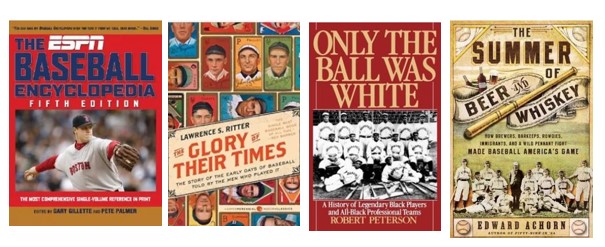
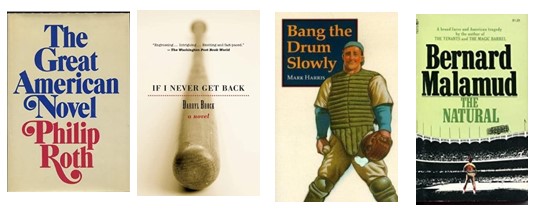
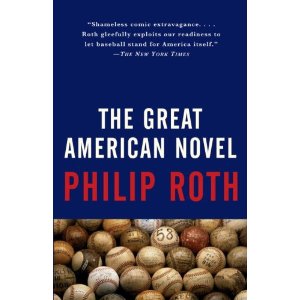
Digging into the plight of the Spiders, reminded me of my favorite work of baseball fiction –  The Great American Novel , by Pulitzer Prize-winner Philip Roth. The book, set in the 1940s, recounts the very-comic  sufferings of the (Port) Ruppert Mundys – a baseball team of limited skill and unlimited neurosis that (due to losing its stadium to the war effort) must play an entire season on the road.

Written from the perspective of retired sport journalist “Word” Smith,” The Great American Novel takes you into the hearts and (often dark) souls of a team made up of  ex-cons, alcoholics,  amputees, veteran players well  beyond their primes, 90-pound adolescents not ready for the big-time, and even extremely vindictive Lilliputians – and into Patriot League (the third major league) ballparks in places like Asylum, Ohio; Terra Incognita, Wyoming; and Kakoola, Wisconsin.  It also takes you from the dugout to an asylum (for an exhibition game) to the House Un-American Activities Committee.   The prologue includes Word Smith’s encounter with Earnest Hemingway and the book wraps up with a letter written by Smith to China’s Chairman Mao.

BBRT considers this a must-read for fans of baseball fiction. Readers should be forewarned, however, that – like the movie “The Loved One,” the Great American Novel can promise something to offend everyone.  Yet, it is this across-the-board irreverence that makes the offense tolerable and even comic.

Oddly enough, in this case, fiction (at least somewhat) follows fact and, as noted earlier,  this post will focus on the 1899 Cleveland Spiders, who played 112 games of its 154-Game National League schedule “on the road” – finishing in last place, 84 games off the pace and earning snickering nicknames around the league like the “Exiles,” “Wanderers,” “Forsakens” and “Misfits.”

The Spiders, however, were not always so woeful. They were, in fact, the first MLB team to put Cy Young on the mound and, in 1898, Young went 23-15, 3.00  in a Spiders’ uniform.  The year before their dismal 1899 season, the Spiders boasted a winning record (81-68-7) and finished fifth in the National League. In ten NL seasons (1889-98), the Spiders had a winning record seven times and finished among the league’s top three four times. In fact, from 1892 through 1898, the Spiders had the third-best winning percentage in the league.  The 1898 team also included three future Hall of Famers – Cy Young, Jesse Burkett and Bobby Wallace (all three of whom ended up in St. Louis in 1899, bit I’m getting ahead of myself).

So, what happened?  As in Roth’s tale of the Mundys, there were some shenanigans involved.  Spiders’ owners Frank and Stanley Robison were  disappointed in the level of fan support (attendance) in Cleveland (despite a respectable won-lost history), as well as with Cleveland’s Sunday Blue (liquor) Laws. At the same time, the Saint Louis Browns were suffering on the field and at the gate – and went bankrupt after the 1898 season. Still, Saint  Louis was the nation’s fourth-largest city and the Robisons saw an opportunity. The Robisons purchased the Saint Louis team, renamed it (optimistically the “Perfectos” and came up with a plan to draw Saint Louis fans into the park with a super team.

You see, the Robisons still owned the Spiders and quickly set about strengthening the Saint Louis squad with the best players from the Spiders (and replacing them on the Spiders with lessor players – a number of whom had been on the last-place Browns –  as well as minor-league and semipro players).   It was indeed the Robison’s’ series of lopsided trades and misguided (perhaps intentionally) signings that opened the door to the basement for the Spiders.

More than a dozen  Spiders from 1898 found themselves in Perfectos’ uniforms in 1899 – and former Spiders made up eight of the most used positions players – including the teams top three in RBI, top two home run hitters and top four in runs scored. In addition, former Spiders started  on the mound in 124 of the Perfecto’s games and got the win in 69 of the team’s 84 victories. (The Perfectos were far from perfect,  they finished 84-67-5, fifth place in the NL).

With their woeful team, 1899 attendance dropped even lower – averaging less than 150 fans per contest. Other teams began to refuse to play in Cleveland (since their share of the gate would not even cover expenses) and that’s how the Spiders came to play 112 games on the road.

The Best of the Spiders

The two best players to open the 1899 season as Spiders were veteran infielders Lafayette Napoleon “Lave” Cross (3B and manager) and Joe Quinn (2B). Cross managed the team to an 8-30 record, while fielding well at third base and hitting at a .286-1-20 clip. The “Perfectos” were having some infield issues, however, and (true to form) Cross found himself at the hot corner in St, Louis by early June (where he hit .303-4-64 in 103 games). When Cross departed, the 36-year-old Quinn became manager and led the team in RBI (.286-0-72 in 147 games) – as well as leading them 12 wins and 104 losses.

A few other tidbits from the Spiders’ 1899 season:

  • The team’s longest winning streak was two games – achieved just once.
  • The team’s longest losing streak was 24 games, they also had two 11-game losing streaks and individual losing streaks of 13, 14 and 16 games.
  • They lost 40 of their last 41 games.
  • Eight of the Spiders 20 wins were by one run; as were 18 of their losses.
  • They lost 69 games by five or more runs (24 of those by ten or more).

In 1899, the Cleveland Spiders played just 42 home games, averaging 145 fans per game.  They were 9-33 at home and 11-101 on the road. (The Saint Louis Perfectos average 4,298 fans per game, second-highest in the National League.

  • The Spiders scored the league’s fewest runs (529) and gave up the most (1,252) – a minus-723 run differential.
  • The team finished last in the league in batting average, hits, runs, doubles, triples, home runs, RBI and steals
  • The pitching staff had the league’s highest ERA and hits allowed; the fewest strikeouts; and the second-most home runs and walks allowed
  • The ‘ace” of the pitching staff, Jim Hughey went 4-30, 5.41. He had the staff’s most wins (tied); most starts (34); most complete games (32); most strikeouts 54); and lowest ERA (among qualifiers).

Jim Hughey might have been the poster-boy for the Spiders’ situation. He was sent from St. Louis (where he had gone 7-24, 3.93 in 1898) to the Spiders for the 1899 season (where, as noted, he went 4-30, 5.41. He had a seven-season MLB career (1891, 1893, 1896-1900) in which he went 29-80 4.87.

  • The Spiders hit 12 home runs (no one with more than two). Former Spider Bobby Wallace, who went to the Perfectos in 1899, hit 12 homers on his own. that season.
  • Cy Young and Jack Powell (also former Spiders) each won more games for the Perfectos in 1899 than the Spiders won as a team; 26 and 23, respectively.
  • The Spiders used 15 pitchers in 1899 and only two had earned run averages south of 5.00 – Jack Harper, who went 1-4, 3.89 in five starts and Harry Lochhead, who went 0-0, 0.00 in one 3 2/3-inning relief appearance. It was the only career mound appearance for Lochhead, who also appeared in 146 games at SS and one at 2B for the 1899 Spiders.
  • Against their former teammates (on the Perfectos), the Spiders went 1-13.

A Name to Remember

Harry Colliflower made his MLB debut with the Spiders on July 21, 1899, and picked up a win (by a 5-3 score)  as the Spiders topped the Senators. It would be the 30-year-old rookie’s only win in his only MLB season. He finished the campaign (and his MLB career) with a 1-11, 8.17 record. Notably, Colliflower also appeared in four games at 1B, four in CF and two in RF. In 23 games for the Spiders, he put up a .303 average (23-for-76) and drove in nine runs.

________________________________________

What a Way to End the Franchise

On the final day of the 1899 season (October 15), the Cleveland Spiders played a doubleheader against the Reds (in Cincinnati, of course) – and were outscored 35-4 in the two games. It turned out to be the final two games for the franchise, which was disbanded after the seasons as the NL contracted from 12 to eight teams.  Also disbanded were the Louisville Colonels, Baltimore Orioles and Washington Senators.

___________________________________________


Primary Resources: Baseball-Reference.com;  Baseball-Almanac.com; It’s Time to Bring Back the Cleveland Spiders (who really weren’t that bad, you know) … By Bradley Doolittle, ESPN.


100Baseball Roundtable is on the Feedspot list of the Top 100 Baseball Blogs.  To see the full list, click here.

I tweet baseball @DavidBBRT

Follow/Like Baseball Roundtable’s Facebook Page here.  More baseball commentary; blog post notifications; PRIZES.

Member: Society for American Baseball Research (SABR); Negro Leagues Baseball Museum; The Baseball Reliquary. 


Remember that Time When … Andy Hawkins Lost the Same No-Hitter TWICE

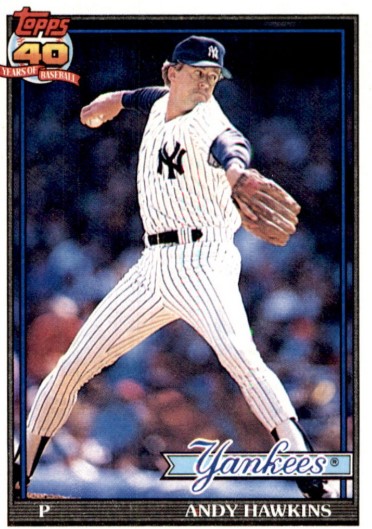
Passing time browsing Baseball-Reference.com while I wait for the owners and players to come to their senses, I ran across an interesting boxscore – Andy Hawkins’ 1990 no-hitter, which he lost 4-0 and then later lost … Oops, getting ahead of the story here.

Andy Hawkins’ Double-Lost No-Hitter

As Yankees’ righthander Andy Hawkins took the mound on July 1, 1990, the fans may not have expected a victory and almost certainly would not have been expecting a no-hitter.  Yet, Hawkins – who brought a 4-9 record (13 games/12 starts) and  a 6.40 earned run average into the game – would get (temporarily) the least expected of the two.

The game was being played in Chicago and Hawkins’ mound opponent was southpaw Greg Hibbard, who was 8-6, 2.49 at the time. After seven  frames the game was knotted at 0-0, and Hawkins had given up no hits, while walking two and fanning three. Hibbard had also tossed seven scoreless innings (four hits, no walks, four whiffs).

Barry Jones came to the mound for the ChiSox in the top of the eighth and held the Yankees without a run.  In the bottom of the eighth, the baseball Gods began to “mess with” Hawkins’ game.  It started out fine, with ChiSox catcher Ron Karkovice and 2B Scott Fletcher both going down on infield pop ups.  Then, RF Sammy Sosa  (batting in the eight-hole) reached first on an error by Yankee third baseman Mike Blowers (a bobbled ground ball). Hawkins followed by walking SS Ozzie Guillen on a 3-2 pitch and then issuing a four-pitch walk to CF Lance Johnson. Sacks full, but shutout, no-hitter and the chance of a much-needed win still intact. Next up was 3B Robin Ventura,  who hit a playable flyball to rookie Jim Leyritz in LF. The ball clanked off Leyritz’ glove for an error and – with the runners moving (two outs) – all three  scored (Ventura ended up on second).  Next up was DH Ivan Calderon, who hit a fly to RF that Jesse Barfield lost in the sun and dropped (another error) enabling the fourth run of the inning to score.  Hawkins then retired LF Dan Pasqua to end the inning.

The Yankees went scoreless off reliever Scott Radinsky in the top of the ninth, ending the game. At that moment, Andy Hawkins had a complete-game, no-hitter, 4-0 loss. Little did Hawkins know; he was going to lose this no-hitter a second time.

In September of the following season (1991), MLB ruled that official no-hitters had to be at least nine innings.  Since the White Sox had not batted in the bottom of the ninth, Hawkins, despite the complete game, no longer had an official no-hitter.

It Was That Kind Of Season

In Andy Hawkins’ next start, just five days after his July 1, 1990 no-hit loss, Hawkins carried a NO-HIT, shutout into the twelfth inning (against the Twins in New York).  Unfortunately, the Twins’ Allan Anderson and Juan Berenguer held the Bombers scoreless (despite ten hits).  The Twins got to Hawkins for two runs (two walk and two hits) in the twelfth and Rick Aguilera set down the Yankees without a run in the bottom of the inning. So, 11 no-hit innings for Hawkins and the end result was another loss.  That gave Hawkins a streak of 19 consecutive hitless innings over the two games – with two losses to show for it. 

Hawkins finished 1990 at 5-12, 5.37. Hawkins pitched in 10 MLB seasons (1982-91 … Padres, Yankees, A’s), going 84-91, 4.22. His best season was 1985, when he went 18-8. 3.15.

_______________________________________

Looking into Hawkins’ lost (in more ways than one) no-hitter, set me to looking for other unusual no-hitter outings.

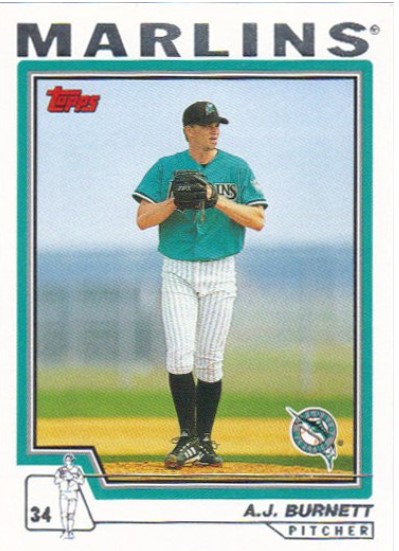
A.J. Burnett …  A Walk on the Wild Side

In A.J. Burnett’s May 12, 2001 no-hitter for the Marlins, a 3-1 win over the Padres, every starting position player for the Padres reached base at least once.   (Burnett walked nine and hit one batter).  Burnett’s nine walks are the most ever in a nine-inning, one-pitcher no-hitter. Burnett threw 65 strikes and 64 balls in the game – his 50.4 percent strike-to-ball ratio is the worst ever in a no-hitter.

His game looked like this:

  • First inning – One (four-pitch) walk, one left on base.
  • Second inning- Two walks (both on 3-2 pitches), one left on base.
  • Third inning – Two walks (on  3-1 and 3-2 counts), one wild pitch, two left on base.
  • Fourth inning – One walk (3-1 pitch), one hit by pitch (3-2 count), two left on base.
  • Fifth inning – Three up, three down.
  • Sixth inning – Three up, three down.
  • Seventh inning – One walk (four-pitch), one left on base.
  • Eighth inning – Two walks (on four-pitch, one on a 3-2 count), two left on base.
  • Ninth inning – Three up, three down.

A.J. Burnet pitched in 17 MLB seasons (1999-2015 … Marlins, Blue Jays, Yankees, Pirates, Phillies), going 164-157, 3.99. He won ten or more games in 11 seasons (a high of 18 for the Blue Jays in 2008).

A First for A.J.

A.J. Burnett made his first All Star team in his final MLB season (at age 38 in 2015). He was 2-4, 2.53, for the Pirates, at the All Star break.  He went 7-3, 3.89 the rest of the way. 

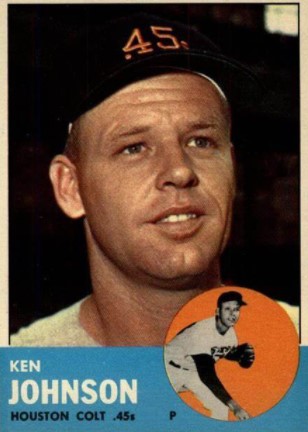
Ken Johnson … How About a Little Help from My Friends?

On April 23, 1964, the Houston Colt .45s’ Ken Johnson had held the Reds hitless through eight innings (in Houston) – walking two and fanning nine. However, the Reds’ Joe Nuxhall also had a shutout going, although he had given up five hits.   A couple of errors in the ninth cost Johnson the game – but not the no-hitter.  In the top of the ninth, Nuxhall led off against Johnson and grounded out (third-to-first). The next batter, 2B Pete Rose, attempted to end the no-no with a bunt to the third base side of the infield.  Johnson fielded the bunt, but threw wildly toward first base.  Rose ended up on second (a two-base error). Chico Ruiz followed up with a line drive off Johnson that was fielded by 3B Bob Aspromonte, who threw Ruiz out at first (with Rose going to third). Next up was Reds’ CF Vada Pinson, who was safe on an error by Houston 2B Nellie Fox (Rose scoring). Johnson then retired RF Frank Robinson on a routine fly to left.  The no-hitter was intact, but the damage was done – one unearned run. Nuxhall  held the Colt .45s scoreless in the bottom of the inning and Johnson had MLB’s only complete-game, official no-hitter loss.

Edwin Jackson – Who’s Counting?

On June 25, 2010,  the Diamondbacks’ Edwin Jackson got off to a wild start against the Rays.  Jackson’s pitch count was up to 70 after just three innings – during which he gave up seven walks, threw one wild pitch and fanned two.  He settled down after that – walking just one more batter, fanning four more and holding the Rays hitless.  Jackson threw 149 pitches, the most ever in a no-hitter, as the Diamondbacks prevailed 1-0.

Jackson pitched in 17 MLB seasons (2003-2019 … Dodgers, Rays, Tigers, Diamondbacks, White Sox, Cardinals, Nationals, Cubs, Braves, Marlins, Padres, Orioles, A’s, Blue Jays).  His career MLB stat line was 107-133, 4.78.

I’m a Travelin’ Man

Edwin Jackson pitched at the major-league level for more teams (14) than any other player in MLB history. In the five seasons between 2009 and 2013, he pitched for six different MLB teams (Tigers, Diamondbacks, White Sox, Cardinals, Nationals, Cubs).  He pitched for two MLB teams in six of his 17 MLB campaigns. 

Steve Barber – One for the Books

The most walks in a no-hitter by one pitcher is ten by Steve Barber in a combined no hitter.  Barber took a no-hitter, albeit with seven walks, and a 1-0 lead into the top of the ninth as his Orioles played the Tigers in Detroit on April 30, 1967.  Barber walked the first two batters in the final inning. Then a sacrifice moved them to second and third.  A wild pitch followed, plating the tying run.  Barber walked the next hitter, and was relieved by Stu Miller. Miller finished up the no-hitter, but the go-ahead run scored on an error, giving the Tigers a 2-1 win without the benefit of a hit.

Barber enjoyed a 15-season MLB career (1960-74 … Orioles, Yankees, Pilots, Cubs, Braves, Angels., Giants), going 121-106, 3.36. He was a two-time All Star and a 20-game winner (20-13, 2.75) in 1963 (Orioles).

Jim Maloney …  You Win Some, You Lose Some (not necessarily in that order) … or a Very Larry Tale

On June 14, 1965, the Reds’ Jim Maloney held the New York Mets hitless for ten innings (in Cincinatti) – walking one and fanning 17.  Unfortunately, the Mets’ Frank Lary and Larry Bearnarth held the the Reds scoreless through ten frames (on six hits).  Mets’ RF J0hnny Lewis led off the tenth with a home run off Maloney, the Reds did not score in the bottom of the inning and all Maloney had to show for his effort was a loss.

Maloney, however, was not to be denied a 1965 no-hitter. On August 19, he held the Cubs hitless over the first nine innings (in Chicago). The Cubs’ Larry Jackson, however, had matched him zero-for-zero … in what was a wild game, at least for Maloney.  As they went into the tenth, Maloney had walked nine, hit one batter and fanned 12, while Jackson had surrendered seven hits, walked none and fanned five. Reds” SS and number-eight hitter Leo Cardenas touched Jackson for a solo home run in the top of tenth and Maloney walked one and then got a fly out and a 6-4-3 double play to end the game and  get the no-phit victory.  Side note: In  his very first start of the 1965 season (April 19 at Milwaukee), Maloney had taken a no-hitter into the eighth, only to have it broken up a a Denis Menke single (the only hit of the game for the Braves). 

Maloney pitched in a dozen MLB seasons (1970-71 … Reds, Angels), going 134-84, 3.19. He won 15 or more games six times and was twice a 20-game winner (23-7, 2.77 for the 1963 Reds and 20-9, 2.54 for the 1965 Reds).

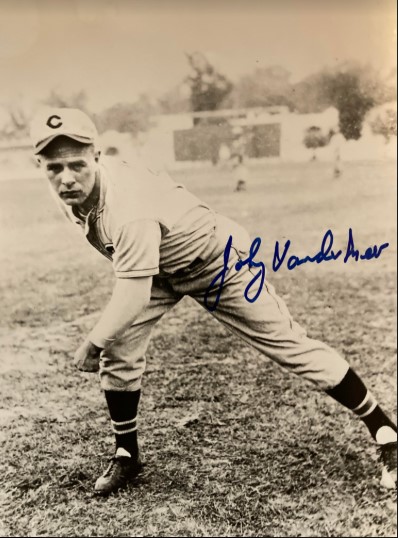
Johnny Vander Meer … Working Hard to Finish

Most fans know that Johnny Vander Meer is the only MLB pitcher to toss consecutive no-hitters (June 11 and 15, 1938 – in the 23-year-old southpaw’s second MLB season). But, were you aware of the wild finish to the second no-no?  On June 15, facing the Dodgers in Brooklyn, the Reds’ Vander Meer took a no hitter and a 6-0 lead into the ninth inning.  At this point, he had walked five and fanned seven. He got the first batter of the frame,  Buddy Hassett, on a weak grounder to the mound.  Then things got a little wild – as he walked the bases loaded (C Babe Phelps, 3B Cookie Lavagetto and 1B Dolph Camilli). Next up was CF Ernie Koy, who hit a grounder to third that resulted in a force out at the plate.  Sacks still full, with the shutout and no-hitter intact. SS Leo Durocher was up next and Vander Meer got him a fly out to center.

Vander Meer pitched in 13 MLB seasons (1937-43, 1946-51 … losing two prime years to military service).  He pitched for the Reds, Cubs and Indians.  Vander Meer was a four-time All Star (all before his military years) and won 15 or more games in five seasons. He led the National League in strikeouts in each of the three seasons before his military break. Vander Meer’s final MLB stat line was 119-121, 3.44.

This One May Top Them All … Especially if You Like Pitchers’ Duels

On May 2, 1917, the Cubs faced the Reds in Chicago – with Fred Toney (4-1, 1.88) starting for the Reds and Jim “Hippo” Vaughn  (3-1, 2.25) on the mound for the Cubs. (Side note: In 1917, the MLB overall earned run average was 2.68. ) At the end of nine frames, the game was scoreless and the fans had yet to witness a hit by either team. There had been only five base runners in the game (four walks and one safe on an error ). In fact, only seven  batted balls had even reached the outfield. In the top of the tenth, the Reds broke through, scoring a run on two singles and an error. Toney held firm in the bottom of the inning, recording a 1-2-3 frame (two strikeouts) and putting a no-hitter into the record books. Toney finished the season at 24-16, 2.20 (and had a career line of 139-102, 2.69 in 12 seasons); while Vaughn went 23-13, 2.01 in 1917 and 178-137, 2.49 in 13 MLB seasons. 

Primary Resources:  Baseball-Reference.com; Baseball-Almanac.com

 

100Baseball Roundtable is on the Feedspot list of the Top 100 Baseball Blogs.  To see the full list, click here.

I tweet baseball @DavidBBRT

Follow/Like Baseball Roundtable’s Facebook Page here.  More baseball commentary; blog post notifications; PRIZES.

Member: Society for American Baseball Research (SABR); Negro Leagues Baseball Museum; The Baseball Reliquary. 


Baseball Roundtable Fan Concerns Survey

Baseball Roundtable recently sent out a link to a survey soliciting fan opinions on some of the issues facing MLB today … from the length of games to a lack of on-field action to the cost of attendance to the current owners/players financial bargaining. Thirty-nine readers responded and they represented a cross-section in terms of attendance – with the bulk (59 percent) falling in the 1-10 MLB games attended per season categories.

Editors’ Note:  This is a self-selected (as opposed to random) sampling.  Those who responded were both interested enough in the national pastime to seek baseball info and news on the internet and also felt strongly enough to take the time to respond. 

Respondents were asked to rate the importance of several issues on a zero-to-five scale – with zero being  “not important at all” and five being “extremely important.”  Here are the raw results followed by a bit of commentary.

The Number-One issue, with a 3.6 rating was the cost of attending a game (tickets, parking, concessions, etc.) Notably, 41 percent of the respondents rated this at the top of the scale (five-extremely important). This would indicate a need for MLB to examine its financial structure with an eye to its impact of the cost of an afternoon/evening at the ballpark.

Number Two, at 3.1, was parity/competitiveness among teams.  Just over a quarter (25.6 percent) gave this issue a “five” rating.  This topic would relate to such issues as salary caps/floors, MLB draft rules, the luxury tax, etc.

At Number Three (2.8) was in-game downtimeThe most common rating here was “four” – 25.6 percent.  Here, we’re looking at such issues as pitch clocks, making batters stay in the batters’ box, making pitchers remain on the mound, challenges/replays, mound visits, etc.

FAN OPINIONS ON SPECIFIC RULES ISSUES/PROPOSALS

Baseball Roundtable recently did a fan survey on a host of specific rules proposals (more than 200 respondents to that one) – ranging from pitch clocks to infield shifts to robot umpires (and more). For the results of that detailed survey, click here.  

Number Four  (2.8) was the number of teams in the post-season, just slightly behind downtime. The debate here seems to center on balancing the positive impact of having more teams stay “in the hunt” for a post-season spot and having so many team it overly reduces the importance of baseball’s “marathon-not-a-sprint” season. As they negotiate, owners and player need to get this right – and not just in terms of its on-the-surface financial impact.  More post-season games may mean more post-season revenues, but what impact does it have on regular-season attendance (if regular-season games mean less in terms of making it into October).

Number Five was the lack of on-field action at 2.7. Four was the most common response (35.9 percent).  Here we are dealing with possible rules changes aimed at reducing walks and strikeouts (more balls in play), leading to more baserunners (no shifts) and promoting the running game (limiting pick-off throws, bigger bases). Seeing both in-game downtime and lack of on-field action finish notably ahead of length of games, indicates (at least to me) that fans are fine with long afternoons and evenings at the ballpark – if something is happening on the field.

Number Six (2.1) was owner/player financial issues. Notably, here the most common response was zero-not all all important at 28.2 percent. It appears fans find all the dollar-and-cents … my share versus your share …  talk less compelling then a look at the product on the field (and, of course, the cost to the fan).

Bring up the rear at Seven and Eight were length of game (1.7) and length of season (1.4) – again reinforcing the importance of the on-field product (in terms of action and parity/competitiveness).

Of course, right now, there is no action on the field.  With that in mind, Baseball Roundtable also asked fans whom they blamed for the current standoff. Owners seem to be getting more blame than players, but more than 40 percent of the respondents did place the blame equally on both sides.

Finally, respondents were asked if they expected their attendance to go up or down in the future. Not surprisingly, given the current CBA negotiations and the prospect of empty ballparks, more than one-third said they expected their attendance to go down (and this follows a response that indicated 48.7 percent had already seen their attendance go down in recent seasons).  But still, just over half of the respondents expected their level of attendance to stay the same.  Some good news for MLB there.

The survey also included an open-ended (write your own answer) question on what would most influence each respondent’s decision to go (or not go) to an MLB game going forward. In order ot the number of mentions, the leading factors were:

1) Cost/price (mentioned more than twice as often as any other issue);

2) Duration/outcome of lockdown;

3) Parity/competitiveness;

4) COVID;

5) Family-friendly atmosphere/safety.

___________________________________________

Finally, here is a representative selection of  written responses from the comments section.

I’ve been more distressed by players and owners taking extreme political stances than by financial issues around the game; not just in baseball but in all sports.

——-

The question on playoffs, I would prefer LESS playoff teams than further expansion. Four teams per league is fine, expanding to 14 or more does not make sense to me, without shortening the regular season.

—–

PLEASE get the games back to two hours. Your popularity will skyrocket….and lower the cost of a family to attend…not just on a Tuesday night/upper deck/D-Backs game. and stop with this changing the rules business. This isn’t the NFL.

—–

The major league game is being played at a very high standard these days, but the owners don’t much care about the fan experience or the minor leagues — they are short-sighted.

—–

Get rid of or modify the shift and offense will go up. Singles, doubles and triples make the game exciting. Home runs are rally killers.

—–

Lets play ball, lets learn to go the other way to beat the shift, lets put the bat on the ball.

—–

And, finally, a condensed version of the most detailed comment provided by a reader.

I’m for:

  • moving the mound back six to eight inches and lowering it to 7.5 inches;
  • two infielders needing to be on each side of second base
  • a pitch clock for pitchers (count a ball for each five seconds over time);
  • hitters not allowed to step out of the batters’ box except as granted by the home plate umpire, and then only once per PA, special exemptions at the umpire’s discretion;
  • in-between innings transitions timed to something TBD as reasonable (60-90 seconds, perhaps?);
  • pitchers required to step off the rubber to throw to any base;
  • all fences made to conform to deeper minimums at four points in each stadium built after 1980, with two exceptions at each team’s discretion;
  • ghost runners added only when a game goes to the 13th inning;
  • a separate replay umpire to make calls in real time (to immediately correct bad calls without a team petitioning for review). This is not for calling balls and strikes; I am also against the robo-ump, and believe that TV strikezone boxes be disallowed.

Once again, for a look Baseball Roundtable’s more detailed survey on specific rules and rules proposals (taht address many of these issues), click here


100Baseball Roundtable is on the Feedspot list of the Top 100 Baseball Blogs.  To see the full list, click here.

I tweet baseball @DavidBBRT

Follow/Like Baseball Roundtable’s Facebook Page here.  More baseball commentary; blog post notifications; PRIZES.

Member: Society for American Baseball Research (SABR); Negro Leagues Baseball Museum; The Baseball Reliquary. 
 

Willie, Mickey and the Duke … With a Side Trip on the Bill(s)

The outlook isn’t brilliant for baseball fans today,

As owner and players squabble, we can only look on in dismay.

It seems they are willing to take our game away.

And keep us in suspense about “When is Opening Day?”


When can we have a hot dog and a vendor-delivered beer?

When can we salute our favorites with a loud and lengthy cheer?

When will there be double plays, stolen bases and home runs?

When will the players and owners see it’s a game and should be fun?


We don’t know when will there be scorecards, so carefully filled in.

Or when we can gasp at a fastball near a batter’s chin.

Or when can we view that most welcome sight of all;

An umpire pointing at the mound and shouting the words “Play Ball.”


So, as the financial squabbling  seem to drag on and on, 

We can only think fondly of baseball days bygone.

So, here in Baseball Roundtable, as the baseball lockout lasts,

We’ll entertain ourselves with memories of baseball from the past. 

______________________________________

Spoiler Alert – A Tale of Two Bills and a Duke

Duke Snider faced hard-throwing Bill Pierro just five times in his career and never made an out. In fact, he hit for the cycle against Pierro (plus a walk).  On the other side of the coin,  Snider faced Bill Henry five times in his career and all Snider had to show for it were four strikeouts and a groundout.

That Bill Pierro and Bill Henry made their way onto this page is another example of “how one thing always seems to  lead  to another” when researching for Baseball Roundtable topic.   Normally, at this time of year, I would be busy putting together predictions for the upcoming season.  However, with so many free agents still out there and the start date for the 2022 season delayed and  “up in the air,”  that seems a bit premature.  So, I find myself  searching for topics that might provide some fan entertainment during the  owners/players squabble. In my search, I came across an old Baseball Digest article in which Mickey Mantle name Dick Radatz as the toughest pitcher he ever faced. (Notably, I also came across instances were Mantle put Sandy Koufax and Herb Score on that list.) The lyrics to “Talkin’ Baseball” also came up as I searched for Mantle quotes – and that led me to consider a post on which pitchers were toughest on “Willie, Mickey and the Duke.”  In the Duke Snider portion of that research, I was distracted by the tales of Bill Pierro and Bill Henry (versus Duke Snider) – which I would like to share before I get to the Willie, Mickey and the Dule portion of this post.

___________________________________________________

A Baseball Double Bill

Bill Pierro, was a hard throwing 6’1”, 155-pound right-hander signed by the Pirates in 1947. He quickly became one of the Pirates’ top pitching prospects. Pierro went 8-9. 4.30 with the Class-D Bartlesville Oilers of the Kansas-Oklahoma-Missouri League in his first pro-season (1947).  The 21-year-old then went 17-8, 2.15, reportedly fanning 300 in 230 innings, for Bartlesville in 1948. The following year, he was promoted to the Class-B (Big State League) Waco Pirates, where he went 18-11, 2.96 and fanned 275 hitters in 255 innings. (There were some cautionary signs.  In addition to the 275 whiffs, he walked 126 batters and hit 16.) Pierro  started 1950 with the Double-A Indianapolis Indians and was 8-3,  2.60 when the Pirates called him up. With Pittsburgh, Pierro went 0-2, 10.55 in 12 appearances (three starts) – walking 28 batters in 29 innings.   MLB never got to see if Pierro could harness his command and deliver on his early promise, In 1951, he  contracted encephalitis, which nearly ended his life and did end his pitching career.

Cycling the Pierro/Snider story. Duke Snider faced Bill Pierro just five times in his career – all between July 22 and September 19, 1950. In a span of three games and 13 pitches, Snider hit for the cycle against Pierro –  collecting  a single, double, triple, home run and walk. On July 22, with Pierro starting against the  Dodgers in Pittsburgh, Snider walked on a 3-1 pitch in the first and singled (on a 1-0 pitch) in the third inning. Exactly one month later, on August 22, Pierro came on in relief (third inning) against the Dodgers (again in Pittsburgh).  In the fourth, Snider hit Pierro’s first pitch to him for an RBI triple. Then, on September 9, Pierro  again came on in relief against the Dodgers, this time in Brooklyn. Pierro relieved Vern Law in the top of the second, with the Dodgers up 6-1, no outs and runners on first and third.  The first batter he faced? You guessed it. Duke Snider. Snider hit  his first offering for a two-run double. With Dodgers up 10-2, Pierro was still around when Snider led off the bottom of the fourth – with a solo home run on a 2-1 pitch – and the cycle against Pierro was complete. (Snider never faced Pierro again.) Side note: If you eliminate that first at-bat walk, Snider actually completed the cycle against Pierro in eight pitches.

Putting a Good Swing on the Bill Henry Story. The other Bill provides The Roundtable with a totally different (and much longer) story. Bill Henry did not show the early potential of Bill Pierro.  Toiling in the minors he went 44-52 over his first four seasons (1948-52). Still, he made his MLB debut on April 17,  1952. From 1952 through 1956, he bounced between the major and minors (Red Sox), appearing in 75 MLB games and 68  minor-league contests. Then, in January 1957, the 30-year-old was traded from the Red Sox to the Cubs and his perseverance began to pay off. In 1957, he went 14-6 as a starter for the  Double-A Memphis Chicksaws. In 1958, the Cubs converted him to a reliever – and opportunity came knocking in a big way. That season, Henry went 5-3, 3.60 for the Triple-A Portland Beavers (17 games/two starts) and 5-4, 2.88, with six saves for the Cubs. In 1959, at age 31, Henry played his first full season in the majors (Cubs), going 9-8, 2.68, with 12 saves, while appearing in a league-leading 65 games.  (I warned you this was a long story.) The conversion to reliever worked well. From his age-30 season forward, Henry made 452 MLB mound appearances (just two starts).  Ultimately,  Henry enjoyed  a 16-season MLB career (1953-55, 1958-69 … Red Sox, Cubs, Reds, Giants, Pirates Astros), pitching in the majors until he was 41-years-old. He went 46-50, 3.26, with 90 saves  in 527 appearances. He made one All Star Team (1960).

Now, we FINALLY get to why Henry is in this post.  Duke Snider’s record against Bill Henry was kind of the opposite of how he fared against Bill Pierro. Snider faced Henry five times in his career (five games over three seasons … 1959, 1961, 1963). Those five at bats resulted in one infield groundout and four strikeouts. Henry, by the way,  put up some solid  numbers against an impressive lineup of future Hall of Famers.  Just a few examples; Frank Robinson (a .059 average in 17 at bats); Stan Musial (.167 in 18 at bats); Roberto Clemente (.154 in 13 at bats); Yogi Berri (.091 in 11 at bats); Eddie Mathews (.188 om 32 at bats).

_____________________________________________________

Now, on to Willie Mickey and the Duke … and the Pitcher Who Were Tough on Them

Willie Mays

When looking pitchers Willie Mays found particularly tough, I came across a YouTube video (posted by Joe McNamara) in which Mays lists some of the usual suspects 0 Don Drysdale, Sandy Koufax and Bob Gibson – but also drop in a surprise in the form of Bob Rush.

Looking at the numbers, Mays did well against Don Drysdale – .330-13-30 in 60 games.  Sandy Koufax was a bit tougher on Mays – .278-5-14 in 43 games. Bob Gibson, however, truly earned his spot at the top of Mays’ list, holding him to a .196 average and fanning in him in 30 of 108 plate appearances (27.8 percent).  Mays bit over .250 against Gibson in just three of the 143 seasons he faced him,

As for the surprise from Mays’ interview, Bob Rush.  Rush faced Mays between 1951 and 1960, some of Mays’ most productive seasons. In those nine seasons (1953 lost to military service), Mays hit .317-279-812, was the Rookie of the Year (1951), the NL MVP (1954) and an All Star seven times. Rush held him to a .244 average and struck him out 18 times (to nine walks) in 36 games.

Bob Rush pitched 13 MLB seasons (1948-60, primarily with the Cubs). He went 127-152, 3.65. The two-time All Star won 13 or more games in five season.

Tom Sturdivant faced Mays between 1961 And 1964 –  again, some of Mays’  prime years (he was an All Star all four seasons and hit .307-174, 478 over that span. Sturdivant held Mays to a .105 average and did not give up an extra-base hit to Mays, fanning him five times and walking him just once.Sturdivant pitched in 10 MLB seasons (1955-64 … Yankees, Athletics, Red Sox, Senators, Pirates, Tigers, Mets). He went 59-51, 3.74, with 17 saves in 335 appearances (101 starts). His best season were as a Yankee.  In 1956, he went 16-8, 3.30 for New York and in 1957, he went 16-6, 2.54 for the Bombers.

Steve Arlin and Bill Singer also did well against Mays, but their appearances against him came later in Mays’ career.

Arlin  faced Mays 28 times between 1971 and 1973 (the final three years of Mays career), holding him to a .125 average and fanning him ten times in 28 plate appearances. Singer faced Mays in 17 games between 1966-71, holding him to a .171 average and notching 14 whiffs versus Mays (with just four walks).

Arlin had a six season MLB career (1969-74), during which he went 34-67, 4.33.   Bill Singer pitched in 14 MLB seasons (1964-77… Dodgers, Angels, Rangers, Twins, Blue Jays.) The two-time All Star went 188-127, 3.39 and was twice a 20-game winner.

In two of the seasons Steve Arlin faced Willie Mays, Arlin led the NL in losses (9-19, 3.48 for the 1981 Padres and 10-21, 3.60 for the 1972 Padres).  In those  two seasons, he held Mays to two hits in 20 at bats.

Of course, it wouldn’t be fair to not  at least mention a few pitchers that Mays raked. For example, he hit .632-2-7 against Danny McDevitt in 19 games (Mays’ highest average against any pitcher he faced at least 25 times) and .500-6-18 against Jay Hook in 17 contests.  And, as the chart below shows, He also handled Warren Spahn pretty well. His 18 home runs and 40 RBI against Spahn are Mays most against any pitcher and his 68 hits are second only to his 75 safeties verse Don Drysdale.

Willie Mays first-ever major league hit was a home run off Warren Spahn.

_______________________________________________________

Mickey Mantle

Looking Mickey Mantle, I came across an old Baseball Digest article in which he noted just how tough Dick Radatz was on him – and the numbers back up that assessment. Radatz faced Mantle 19 times between 1962 and 1966 and fanned him in twelve (63.2 percent) of the plate appearances.

In 1962, when MIckey Mantle went .321-30-89 and was the AL MVP,   rookie righty Dick Radatz face him six times. The result? Five strikeouts and a walk.

Radatz, at 6.6’, 230-pounds, was an imposing presence on the mound (and could bring the high heat). In a seven-season MLB career (1962-67, 1969 … Red Sox, Indians, Cubs, Tigers, Expos), Radatz made 381 appearances (all in relief) and went 52-43, 3.13 with 120 saves. The two-time All Star led the AL in saves as a rookie in 1962 and again in 1964.

There are few other pitchers who could make Mantle’s toughest list (at least the stats would seem to indicate that.)

Luis Tiant held Mantle to a .111 average (the lowest for Mantle against any pitcher he faced at least 25 times) and struck Mantle out in ten of thirty plate appearances.

Then, there’s: Saul Rogovin, who faced Mantle early in his career (1951-55) and held him to a .150 average and no extra base hits in 15 games; Jack Urban, who faced Mantle in 1957-58 and held him to a . 143 average with no extra-base hits in ten games; and finally, Joe Sparma who face Mantle from 1964 to 1968  and held him to a .162 average in 14 games (and struck Mantle out in 30 percent to his plate appearances).

Rogovin went 48-48 in eight MLB seasons (1949-53, 1955-57 … Tigers, White Sox, Orioles, Phillies). He won ten or more games in three seasons (a career-best 14-9 for the 1952 White Sox) and led the AL in ERA in 1951 at 2.78. Urban pitched in just three MLB seasons (1957-59 … Athletics, Cardinals), going 15-15, 4.83. Sparma pitched in seven MLB seasons (1964-70 … Tigers, Expos). Primarily a starter, he went 52-52, 3.94. In 1967, he was 16-9, 3.76 for the Tigers.

It wouldn’t be fair to not take a look at a couple of pitcher Mantle did well against. Conder longtime White Sox ace Billy Pierce. Mangle got more career hits, doubles, triples and RBI versus Pierce than against any other pitcher.

Pierce pitched 18 MLB seasons (1945, 1948-64 … Tigers, White Sox, Giants). He was a seven-time All Star and a two-time 20-game winner.  He final stat line was 211-169, 3.27 and he led the AL in wins once, ERA once, strikeouts once and complete games three times.

Mantle also hit .500 (25-for-50), with five homers and 21 RBI in 32 games  against Hank Aguirre. Aguirre had a 16-season MLB career (1955-70 … Indians, Tigers, Dodgers, Cubs). He went 75-72, 3.25, with 33 saves.  In 1965, he made his only All Star team, while going 16-8 and leading the AL with a 2.21 ERA. That season, he started 22 games (completing 11) and relieved in 20 contests.  For his career he had 149 starts in 447 appearances.

_________________________________________________

Duke Snider

Looking into Duke Snider, the name Juan Marichal kept emerging when he was asked about the toughest pitchers he ever faced, along with Bob Gibson. Not a bad pair  to start with. Gibson did hold Snider to a .212-3-5 line in 12 games, but Marichal was even tougher on the Duke.

Baseball Roundtable would add a couple of other pitchers to the “tough on the Duke” list, starting with Harvey Haddix, who held Snider to a .158 average over 15 games and fanned him in 34.1 percent of his plate appearances. In 1954, when Snider hit .341-40-130, Haddix faced him 12 times in three starts – and fanned him six times (giving up a lone single and two walks in 12 plate appearances).

Harvey Haddix pitched in 14 MLB seasons (1952-65 … Cardinals, Phillies, Reds, Pirates, Orioles), going 136-113, 3.63.  He was a three-time All Star and won ten or more games in nine seasons (a high of 20 in 1953, when he went 20-9, 3.06 and led the NL with six shutouts among his 19 complete games_.

Luis Arroyo also handled Snider pretty well, holding him to a .125 average in 10 games and fanning him in nine of 16 plate appearances between 1955 and 1957.

It wouldn’t be fair not to list at least a couple of hurlers that Snider took the measure of, like Warren Hacker, whom Snider  hit for a .363 average, with ten home runs and 15 RBI in 40 games. Hacker had a 12-season MLB career (1948-58, 1961 … Cubs, Reds, Phillies), going 62-89, 4.21, with 17 saves (306 appearances/157 starts). Then, there’s Hall of Famer Robin Roberts, whom Snider touched for a .295 average, with 19 home runs and 50 RBI in 73 games (the most RBI and home runs he had against  any pitcher. (Also, the most home runs and RBI Roberts gave up to any hitter.)

Duke Snider Face Robin Roberts in 14 MLB seasons. Over the first three, he hit .178, with three home runs and three RBI in 14 games.  Over the next 11, he hit .321-16-47 in 59 games.

Primary Resource: Baseball-Reference.com

Coming Soon:  More Lockout Reading – How Andy Hawkins Lost the Same No Hitter … Twice – and other wild no-hitter stories.

100Baseball Roundtable is on the Feedspot list of the Top 100 Baseball Blogs.  To see the full list, click here.

I tweet baseball @DavidBBRT

Follow/Like Baseball Roundtable’s Facebook Page here.  More baseball commentary; blog post notifications; PRIZES.

Member: Society for American Baseball Research (SABR); Negro Leagues Baseball Museum; The Baseball Reliquary. 
 

More Distractions From CBA Negotiations … Some No-Hitter Observations

Wise Words from a Pair of Bills

It never ceases to amaze me, how many of baseball’s wounds are self-inflicted.

Hall of Famer Bill Veeck

Baseball must be a great game to survive the fools who run it.

Hall of Famer Bill Terry

As Baseball Roundtable waits, less than patiently, for baseball’s owners and players to come to their senses (and thereby to an agreement), I continue to randomly search for baseball stories and stats that pique my interest. For example, looking at Giants’ right-hander Ted Lincecum’s stat line and game logs, I noticed that:

  • Lincecum threw only two complete games in the last five seasons of his 10-season (2007-16) MLB career; and
  • Both of those complete games were no-hitters.

As always with Baseball Roundtable, one thing led to another and I was reminded of the fact that Phil Humber threw just one complete game in his eight-season MLB career (2006-13) – and that outing was a Perfect Game.  That led to Mike Fiers’ two career complete games – both no-hitters.

These  observations led me to look even more deeply at pitchers who managed to throw MLB no-hitters, despite a minimal number of career complete games.  As I began the search, I set my sights on pitchers with one no-hitter and fewer than three career complete games and those with multiple MLB no-hitters and fewer than ten career complete games.  Since I do like charts, I developed two based on these criteria: one for pitchers no longer active and another for pitchers active in 2021 (who have a chance to pitch their way off the chart).  Side note:  As you might expect, given changes in the game (pitch counts, relief specialists, etc.), most of the pitchers on the charts began their MLB careers in the 2000’s.

In this post, I’ll present those charts, along with some info on each pitcher, as well as a couple of Baseball Round Table No-Hit Parade Extras.

Homer Bailey …. Two No-Hitters, Seven Career Complete Games, 245 Career Starts

Homer Bailey threw the last MLB no-hitter of the 2012 season and the first no-hitter of the 2013 season. The right-hander made 245 MLB appearances – and never pitched in relief in the majors.  Bailey (with the Reds) no-hit the Pirates (in Pittsburgh) on September 28, 2012 (1-0), walking one and fanning ten. On July 2, 2013, he no-hit the Giants (in Cincinnati) by a 3-0 score, walking one and whiffing nine. Bailey pitched in 14 MLB seasons (2007-20 … Reds, Royals, A’s Twins) going  81-86, 4.56, with 1,157 strikeouts in 1,401 innings. Bailey’s  given name, by the way,  was David Dewitt Bailey Jr.  His “Homer” nickname (which seemed unfortunate for a pitcher) honored his great grandfather.

High School High Roller

Homer Bailey was a first-round pick (Reds) in the 2004 MLB Draft – out of La Grange (TX) High School, where he had gone 41-4, 0.90 with 536 strikeouts in 298 innings.

________________________________________________

Bobo Holloman … No-Hitter, One Career Complete Game, 10 Career Starts

Alva Lee “Bobo” Holloman threw a no-hitter in his first MLB start (fifth appearance). On May 6, 1953, righty Holloman and his St. Louis Browns no-hit the Philadelphia Athletics in a 6-0 whitewash. It was the only complete game in Holloman’s one season (1953) career. Holloman walked five and fanned three. Notably, he made the no-no hard work for himself, by walking three batters in the top of the ninth inning. He made nine more starts that season, going 2-5, 5.40 in those appearances.  His season and career stat line was 3-7, 5.23.

Making the Roundtable No-Hit Parade and Hit Parade

In Bobo Holloman’s first MLB start, he not only notched a no-hitter and his only MLB complete game, he also collected two hits and three RBI – his only major league hits and runs driven in.

____________________________________________

Baseball Roundtable No-Hit Parade Extra … Making Those Last Two Complete Games Count

Ted Lincecum had a pair of no-hitters, but his ten career complete games kept him off the chart. Lincecum, who led the National League with four complete games in 2009, had just two complete games over his final five MLB seasons (2012-16)  – both were no-hitters. On July 13, 2013 (Could 13 be Lincecum’s lucky number?), Lincecum no-hit the Padres (in San Diego) as the Giants won 9-0. He walked four and struck out thirteen. On June 25 of the following season, he no-hit the Padres again in San Francisco. The final was 4-0 and Lincecum walked one and fanned six. The four-time All Star went 110-89 in ten MLB seasons (2007-16 … Giants Dodgers). He was also 5-2, 2.50 in the post-season.

Bud smith … No-Hitter, One Career Complete Game, 24 Career Starts

Southpaw Bud Smith threw his no-hitter in his rookie season, in his 11th MLB start (September 3, 1001). It was the   21-year-old Cardinal rookie’s  fourth win (against two losses) in a season in which he would go a promising  6-3. 3.83.  Smith walked four and whiffed seven in a 4-0 win over the Padres (in San Diego). Smith’s early promise faded.  In 2002, he went 1-5, 6.94 and, in July,  was traded to the Phillies in a multi-player trade. He did not pitch again in the major leagues.,

_____________________________________________

Philip Humber … One No-Hitter, One Career Complete Game, 51 Career Starts

Phil Humber’s lone career complete game was not only a no-hitter, it was a PERFECT GAME. On April 21, 2012, Humber set down 27 straight Mariners in Seattle, with his White  Sox winning 4-0. He fanned nine in the effort and threw 67 strikes in 97 pitches (69 percent). In his very next start, Humber lasted just five innings against the Red Sox, giving up nine earned runs on eight hits and three walks. Humber was not exactly a candidate for a “perfecto.”  The righty pitched in eight MLB seasons (2006-13 … Mets, Twins, Royals, White Sox Astro), going  16-23, 5.31.  The year he pitched his perfect game, his final stat line was 5-5, 6.44.

We’ll Take Phil

Philip Humber was a First Round draft pick (Mets – third overall pick) in the 2004 MLB draft – out of Rice University, where he had gone 35-8, 2.80, with 422 strikeouts in 353 2/3 innings over three seasons.

_______________________________________________

Hisashi Iwakuma … One No-Hitter, One Career Complete Game, 136 Career Starts

Hisashi Iwakuma pitched 11 seasons in Japan (and had been an All Star in multiple campaigns) before signing with the Mariners (as a 31-year-old) in 2012. He adjusted to MLB quickly.  In his first three seasons with the Mariners, the right-hander went 38-20, 3.07 and was selected to the 2013 AL All Star squad.  On August 12, 2015, he no-hit the Orioles (in Seattle ), as the Mariners triumphed 3-0.  He walked three and fanned seven. In six MLB seasons (2012-17, all with the Mariners, Iwakuma went 63-39, 3.41.

Not First, But Almost

Hisashi Iwakuma was the second Japanese player to pitch an MLB no-hitter (after Hideo Nomo).

______________________________________________

Jonathan Sanchez … One No-Hitter, One Career Complete Game, 137 Career Starts

Giants’ lefty  Jonathan Sanchez threw his no-hitter on July 10, 2009 – shutting  down the Padres 8-0, while walking none and fanning 11. The first (and only baserunner) came with one out in the top of the eighth on an error by Juan Uribe, who had moved from 2B to 3B in the seventh inning. Sanchez came into the game 2-8, 5.30 on the season (16 appearances/13 starts). He  finished the season 8-12, 4.24. Sanchez pitched in eight MLB seasons (2006-13 … Giants, Royals, Rockies, Pirates) and went 39-58, 4.70.

Jonathan Sanchez’ Dad Can Thank Randy Johnson for This One

On the night he threw his no-hitter, Jonathan Sanchez was slated to work out of the bullpen.  Randy Johnson was scheduled to start for the Giants, but was a late (injury) scratch. And the rest is history. Oh, one final note, it was the first time that Sanchez’ father was in the stands to see  him pitch in an MLB game.

 ______________________________________

Baseball Roundtable No-Hit Parade Extra … A Good Start for Bumpus

Charles Leander “Bumpus” Jones is the only MLB pitcher to throw a no-hitter in his first-ever MLB appearance.  It happened a bit before my time –  on October 15, 1892. Bumpus earned the (very) late (final-day-of-the-season) start with the Reds after a 24-3, 0.93 record with the Joliet Convicts/Aurora Indians of the Illinois-Iowa League.  He tossed his no-hitter against the Pirates, striking out three and walking four in a 7-1 win.  Of note is the fact that Jones ‘s no-hitter was the last one thrown  with pitchers  throwing from a box with the front line 50-feet from home plate  and the back line 5 ½-feet farther back.  The following season, the distance was stretched to the current 60’6” and Bumpus could not recreate the magic of that first appearance. In 1893, he went 1-4, 10.19 and never pitched in the majors again.

Chris Heston … One No-Hitter, Two Career Complete Games, 33 Career Starts

Right-hander Chris Heston pitched his no-hitter on June 9 , 2015 – as his Giants topped the Mets 5-0 in New York. Heston fanned eleven and walked none.  It was the second – and final – complete game of Heston’s four- season MLB career (2014-17 … Giants, Mariners, Twins).  Earlier that season (May 12), Heston had pitched a two-hit, complete game in an 8-1 win over the Astros.  Heston ended the 2015 season at 12-11, 3.95.  He had only one other victory in his  MLB career. His final  MLB stat line was 13-13, 4.55.

This Will Hurt You More than it Hurts Me

In his no-hitter Chris Heston hit three batters – a record for a no-hit performance.

___________________________________

Jose Jimenez … One No-Hitter, Two Career Complete Games, 38 Career Starts

On June 25 1999, Cardinals’  right-hander Jose Jimenez (rookie status intact, he pitched in just four games in 1998), found himself facing the Diamondbacks (and the imposing figure of five-time All Star Randy Johnson) in Arizona. Johnson was 12-4, 3.36 at the time (and had 60 MLB career complete games under his belt.). Jimenez came into the game 3-7, 6.69 on the season and had yet to toss an MLB complete game. Sanchez went the distance, giving up no hit and two walks, while fanning eight, as the Cardinals prevailed 1-0.  (Johnson pitched a complete game five-hitter with 14 strikeouts.) Sanchez ended the season 5-14, 5.85. Johnson finished at 17-9, with a league-leading 2.48 ERA and a league -topping 364 strikeouts.

Sorry Randy, But I Got This

Jose Jimenez had only two complete games in his career. They came on June 25 and July 5, 1999. Both times, the opposing team was the Diamondbacks and the opposing starter was Randy Johnson.  Sanchez’ Cardinals won both contests by scores of 1-0. Sanchez gave up a total of two nits and fanned 17  in the 18 innings, Johnson gave up nine hits, two runs and fanned 29.

Jimenez pitched in seven MLB seasons (1998-2004 … Cardinals, Rockies), going 24-44, 4.92.  Notably, after his 1999 no-hitter season, he was traded to the Rockies, where he was converted to a reliever and racked up 102 saves over the next four seasons.  He added eight saves for the Indians in 2004.

_________________________________________

Kent Mercker …  One No-Hitter, Two Career Complete Games, 150  Career Starts

Southpaw Kent Mercker spent most of his 18-season MLB career as a reliever (542 relief appearances/150 starts). In his 150 starts, he pitched just two complete games. Both complete games came in 1994 and one was a no-hitter.  It came on April 8, in Mercker’s first appearance of the season. He faced the Dodgers (in LA) and Mercker picked up a win (6-0), no-hitting the Dodgers  (four walks, ten strikeouts). He threw the second and final complete game of his career on July 18 of that season –  a two-hit,  3-2 win over the Pirates. Mercker finished the season  9-4, 3.45. Mercker pitched for nine teams in 18 MLB seasons (1989-2000, 2002-2006, 2008 … Braves, Orioles, Indians, Reds, Cardinals, Red Sox, Angels, Rockies, Cubs). He was 74-67, 4.16, with 25 saves over that time.

There’s More Than One Way to Get This Done

Kent Mercker is one of only four MLB pitchers to start a complete-game no-hitter and also start a game which ended in a combined (multi-pitcher)  no-hitter.

__________________________________________


Mike Fiers …. Two No Hitters, Two Career Complete Games, 199 Career Starts

Mike Fiers has pitched just two complete games in 199 starts over eleven seasons – and both were no-hitters.  On August 21, 2015, the right-hander notched his first-ever complete game. Pitching for the Astros, he no-hit the Dodgers in a 3-0 win in Houston.  He walked three and fanned ten. Fiers came into the game at 5-9, 3.87 and finished the season at 7-10, 3.69.  His second career complete outing came on May 7, 2019, pitching for the A’s.  In that contest, he no-hit the Reds (a 2-0 win), walking two and fanning six. He came into that game 2-3, 6.81. The no-no seemed to turn his season around.  He won his next  11 decisions and finished the year at 15-4, 3.90.

Ups and Downs

Mike Fiers had his ups and down on May 7, 2015. He started for the Brewers against the Dodgers that day.  With the game tied at 1-1 in the top of the fourth, Fiers had an inning in which he issued  three four-pitch walks (one intentional) and gave up a pair of singles. (Two runs scored in the inning.) In his next frame, he pitched an Immaculate Inning – nine pitches, three outs, three strikeouts.  

Fiers has pitched in 11 MLB seasons (2011-21 … Brewers, Astros, Tigers, A’s), going 75-64, 4.07. He pitched in just two games in 2021 due to elbow issues.

_______________________________________

Jake Arrieta … Two No-Hitters, Six Complete Games, 279 Starts

Cubs’ Righty Jake Arrieta threw his first no-hitter in his sixth MLB season (2015) – a year when he led the National League in wins (22), starts (33), complete games (four) and shutouts (three).  Going into the season, Arrieta had just one complete game in 97 career starts.  He threw the no-hitter on August 30 in his 27th start of the 2015 seasons (his 124th career start), as the Cubs topped the Dodgers 2-0 in Los Angeles. Arrieta, in running his season record to 17-6, walked just one and fanned 12.  Arrieta finished the game with a flourish, leaving no doubt, as he struck out all three hitters he faced i the ninth inning.

Arrieta’s second no-hitter came just ten starts later – on April 21, 2016, as the Cubs clobbered the Reds 16-0 in Cincinnati. In that one, Arietta walked four and fanned six. Since that 2016 no-hitter, Arriet has started 118 games without going the distance. He finished the 2016 season at 18-8, 3.10.  Arrieta’s has pitched in 12 MLB seasons (2010-21 … Orikoles, Cubs, Phillies and Padres), going 115-93, 3.98.   In an injury-interrupted  2021 season, he was 5-14, 7.39 for the Cubs and Padres.

What a Second Half

Jake Arrieta, although he won the NL Cy Young Award in 2015, did not make the All Star team that season.  He was 10-5, 2.66 before the break and a sparkling 12-1, 0.75 after the break. 

_______________________________________

Tyler Gilbert … – One  No Hitter, One  Career Complete Game, Six Career Starts

Diamondbacks’ rookie left-hander Tyler Gilbert threw a no-hitter  on August 14 of last season – in his fourth MLB appearance and his first MLB start. The Diamondbacks topped the Rockies 7-0 in Gilberts no-no.  He walked three and struck out five.  Gilbert finished 2021 at 2-2, 3.15.

______________________________________

Alec  Mills … One No Hitter, One  Career Complete Game, 37 Career Starts

On September 13, 2020, Cubs’ righty Alex Mills – in his 15th MLB start – cruised to a 12-0 win over the Brewers in Milwaukee, walking three and fanning five. It was part of the 28-year-old’s  5-5, 4.48 record in his fourth MLB season.  Mills has played in five MLB seasons (2016, 2018-21 … Royals, Cubs), going 12-13, 4.60. In 2021, he was 6-7. 5.07 for the Cubs.

______________________________________

Spencer Turnbull …  One  No Hitter, One Career Complete Game, 53 Career Starts

Spencer Turnbull no-hit the Mariners (in Seattle), on May 18, 2021, winning by a 5-0 score. The 28-year-old righty (in his fourth MLB season)  walked two and fanned nine in the effort.  It was his first MLB complete game and came in his 51st MLB start.  Turnbull’s season was cut short in early Junie by arm issues that eventually required Tommy John surgery. He finished the season at 4-2, 2.88 and with a career mark of 11-15, 4.25.  Turnbull was selected by the Tigers in the second round of the 2014 MLB Draft (out of the University of Alabama).

_______________________________________

John Means …. One  No Hitter, One  Career Complete Game, 63 Career Starts

 On May 5 of last season, Orioles’ lefty John Means pitched the first (and still only) complete game of his four-season MLB career in a 6-0 Baltimore victory over the Mariners (in Seattle).  Means faced the minimum 27 batters, gave up no hits, did not walk a batter, did not hit at batter and there were no errors committed in the game.  Yet, he did not record a perfect game. In fact, he lost the perfect outing on a strikeout. At least it came early.  In the bottom of the third inning, Seattle left-fielder Sam Haggerty swung at a 1-2 breaking pitch in the dirt that catcher Pedro Severino couldn’t handle. Haggerty made it to first (advancing on the third-strike rule) on what was rule a wild pitch. (It was one of 12 Means’ strikeouts  in the game). On the very next pitch, Haggerty was caught stealing. And, as it turned out, he would be the only Seattle baserunner of the game. It’s the only MLB game in which a perfect game has been lost on a strikeout (dropped third strike or wild pitch.)

Making That First Pitch Count

In his May 5, 2021, no-hitter, John Means faced the minimum 27 batters and recorded a first-pitch strike on 26 of them.

Means who was 4-0, 1.37 after the no-hitter, ended the season 6-9, 3.62. After four seasons, all with Baltimore,  the 28 year-old’s MLB stat line is 20-24, 3.82.

________________________________________

Joe Musgrove … One  No Hitter, Two Career Complete Games, 114 Career Starts

On April 9, 2012, the Padres’ Joe Musgrove no-hit the Rangers (by a 3-0 score) in Texas.  He walked none and fanned ten.  The only base runner was Joey Gallo, hit by an 0-0 pitch in the fourth inning. It was Musgrove’s  first MLB complete game and came in his 85th MLB start. On August 27, the right-hander tossed his second complete game – a 5-0, two-hit (two walks/nine whiffs) road win over the Angels.   Musgrove finished the season 11-9, 3.18, with 203 strikeouts in 181 1/3 innings.  His career MLB record (2016-21 … Astros, Pirates, Padres) is 40-47, 4.02. He was a first round pick (Blue Jays) in the 2011 MLB Draft, right out of Grossmont High School in El Cajon, CA.

Like a Rocket

The season before his 2016 MLB debut, Joe Musgrove made a rapid climb in the Astros’ system.  He was 4-1, 1.88 for the A-Level Quad Cities River Bandits; 4-0, 2.40 for the High-A Lancaster JetHawks; and 4-0, 2.20 for the Double-a Corpus Christi Hooks. In 2016, he was 7-4, 2.74 at Double A and Triple A before his call up.

____________________________________

Carlos Rodon …. One  No Hitter, Two Career Complete Games, 116 Career Starts

The White Sox‘ Carlos Rodon notched his first complete game early in his MLB career –  in his rookie season and in just his 17th career start (August 17, 2015). Rodon went the distance in a 2-1 road loss to the Angels.  His next complete game came on August 14, 2021 – a no-hit, 8-0 win over the Tigers. In that one, he walked none and fanned seven. In that game, the lefty  was perfect with one-out in the ninth, when he hit Tigers’ catcher Roberto Perez with an 0-2 pitch. Perez proved to be the only Tigers’ baserunner in the game.  Rodon finished the 2021 season 13-5, 2.37.  His career record (2015-21), all with the White Sox, is 42-38, 3.79.  Rodon was a first round pick, (White Sox) in the 2014 MLB Draft – out of North Carolina State University, where he went 25-10, 2.24 with 436 strikeouts in 345 2/3 innings over three seasons.

_____________________________________________

James Paxton … One No Hitter, Two Career Complete Games, 137 Career Starts

Southpaw James Paxton has pitched in nine MLB seasons (2013-21 … Mariners, Yankees). He threw his first MLB complete game in his sixth MLB seasons (82nd career start) – and it was a no-hitter.  It came on May 8, 2018, in a 5-0 Seattle win over the Blue Jays in Toronto.  Paxton walked tree and fanned seven in that game.

Home Sweet Home

James Paxton is the first Canadian to pitch a no-hitter in Canada. 

Paxton’s second career complete game came just two starts later (May 19), in a 7-2 win over Detroit (in Seattle). Paxton finished the 2018 season at 11-6, 3.76.   His career record is 57-33, 3.59, with 831 strikeouts in 745 2/3 innings. Note: Paxton pitched in just one game in 2021 (Tommy John surgery).

How Rare is a Complete Game These Days?

James Paxton’s two complete games and one complete-game shutout in 2018 were good enough to tie for the MLB lead in those categories.  That points to plenty more pitchers making their way onto these charts in the future.

Primary Resources: Baseball-Reference.com; TheBaseballCube.com


100Baseball Roundtable is on the Feedspot list of the Top 100 Baseball Blogs.  To see the full list, click here.

I tweet baseball @DavidBBRT

Follow/Like Baseball Roundtable’s Facebook Page here.  More baseball commentary; blog post notifications; PRIZES.

Member: Society for American Baseball Research (SABR); Negro Leagues Baseball Museum; The Baseball Reliquary. 


Relief from Collective Bargaining Banter – Installment Three

Okay, we’re past the date when we should have heard or read those most exciting words – Pitchers and Catchers Report – and there’s no relief in sight. So, here’s another installment in Baseball Roundtable’s effort to provide some “relief” from CBA banter, focusing, appropriately, on relief pitchers.  (For Installment One, click here.  For Installment Two click here.)  Side note, the time it takes you just to read this post should be roughly equal to the time owners and players spent in the lat negotiating session. 

This time, I’ll focus on a relief pitcher who showed unexpected and bittersweet power at the plate – and a power hitter who showed unexpected and bittersweet talent on the mound.

The Rick Camp Game … The Perfect Storm

On July 4 (and July 5) , 1985, the Atlanta Braves and New York  Mets took part in one of the wildest games in either franchise’s history.  In Atlanta, it’s known as the “Rick Camp Game”  in honor of the role(s) the Braves’ reliever played in the 19-inning marathon.

That the game happened at all is a bit of a surprise.  The Independence Day contest did not start until 9:04, thanks to a 94-minute rain delay.  Still, attendance was reported at  44,947 (many fans likely attracted  by the planned post-game fireworks).  In addition, the hometown Braves were 34-41, in  fifth place, ten games off the pace.  I should also note here that the inclement weather continued, with another 40-plus minute delay in the third  inning.

The  fans who stayed in the park not only enjoyed the post-game fireworks, but plenty of in-game fireworks as well.  The 19-inning contest featured 29 runs and 46 hits. Mets’ first baseman Keith Hernandez hit for the cycle and Mets’ C Gary Carter collected five hits and a walk in ten plate appearance. Seven Mets had at least three hits in the game – including Howard Johnson, who didn’t come into the game until the ninth inning (and still went three-for-five, with a home run, a walk, four runs scored and two RBI).  Johnson, by the way, entered the game hitting just .194 (in 58 games) on the season. On the Braves’ side, LF Terry Harper went five-for-ten, with a home run, four RBI and three runs scored. Harper was one of four Braves with at least three hits in the game.

It was a back-and-forth battle, with the teams tied at one run apiece after one inning, the Braves up 3-1 after three, the Mets up 5-3 after four, the game tied at eight after nine and tied again at 10-10 after 13 – with more still to come.  You get the idea.

So, why, given all this, did the contest become known at the Rick Camp Game?

Let’s pick up the action in the top of the 17th, when Camp came on to pitch in a tie game (10-10). He held the Mets scoreless in the inning (one walk, two whiffs and a groundout). The Mets’ Tom Gorman returned the favor in the bottom of the inning and the game went into the 18th frame still knotted.  That’s when things got a little “Campy.”

Camp gave up a single to Mets’ SS Howard Johnson, LF Danny Heep attempted to sacrifice and was safe on an error by Camp, with Johnson going to third.  Johnson then scored the go-ahead run on a sacrifice fly by CF Lenny Dykstra. Camp retired the next two batters.

In the bottom of the eighteenth, Met’s reliever Tom Gorman retired the first two batters on easy ground outs.  That brought up Camp.  The Braves were out of position players, so Camp came to the plate.  At this point in his career, Camp was batting 0.60 (10-for-162), with no home runs and five RBI.  As you might expect, he quickly fell behind 0-2.  He was now one strike away from being the final out in the marathon (and, of course, taking the loss). Then the unexpected happened. On an 0-2 pitch, at approximately 3:30 a.m. on July 5, Camp hit what was to be the only home run in his MLB career – tying the game and sending it into the 19th inning. (After Camp’s home run, Gorman gave up a walk before getting the final out of the frame.)

In the July 4, 1984 contest, the Mets used 21 players (including seven pitchers), while the Braves used 22 players (including  seven pitchers).

Unfortunately, Camp did not avoid the “loss” for long. In the top of the nineteenth, Camp gave up five runs on four hits and two walks (both intentional).  But Camp’s Day was not over. In the bottom of the inning, facing Ron Darling, the Braves scored two runs and – with two outs – had two on and the tying run at the plate in the person of (Who else?) Rick Camp. Camp struck out to end the game. The time?  Approximately 3: 55 a.m. News reports indicate that about 8,000 fans stayed for the duration – and for the 4:00 a.m. fireworks.

The Mets’ Gary Carter caught all 19 innings of the game and, consequently, Mets’ backup catcher Ronn Reynolds was the only position player to not take the field that day. 

Rick Camp played in nine MLB seasons (1976-78, 1980-85), all for the Braves. He went 55-49, 3.37, with 57 saves  in 414 appearances (65 starts).  His best seasons were 1980 and 1981, when he went a combined 15-7, 1.86 with 39 saves. As a hitter, he went 13 for 175 (0.74), with one home run and seven RBI. He struck out in 43.1 percent of his plate appearances.

In is first six seasons, Rick Camp hit 0.26, with no home runs and no RBI (two hits in 78 at bats).  In his final three seasons, he “improved” to .113 (11-for-97) and collected his only home run and all seven of his career RBI.

____________________________________________________

One of my favorite all-time baseball cards.  For a look at 16 other “cardboard classics”  that brought me smiles, click here.

_______________________________________

A Camp-to-Foxx Segue

Rick Camp’s only MLB home run (see story above) came in his final season.  Jimmie Foxx also delivered some unexpected results in his final season. We all know about Foxx’s power. In 20 MLB seasons (1925-42, 1944-45). Foxx hit .325 and mashed 534 home runs. The three-time AL MVP led the league in home runs four times, hitting fifty or more twice. In 1932, he hit .364 and led the AL in home runs (53), RBI (169) and runs scored (151).

When Neil Armstrong set foot on the moon, he and all the space scientists were puzzled by an unidentifiable white object. I knew immediately what it was. That was a home run ball hit off me in 1933 by Jimmie Foxx.

                                                     Hall of Famer Lefty Gomez

In 1945, at age 37, Foxx delivered some unexpected results. He was playing for the Phillies at the time (he went .268-7-38 in what would be his last season as a player; which is what makes this pitching stat bittersweet). The Phillies were short on pitching (it was wartime, there were plenty of shortages). So, Foxx volunteered to take the mound. He had pitched in high school and in one game for the Red Sox in 1939 (one inning pitched – a 1-2-3 frame with one strikeout).  Foxx’s first two mound appearances for the Phillies were in relief – and he tossed 4 2/3 innings, giving up no runs, walking five and fanning two.  Those relief appearance qualify Foxx for this CBA relief post.  To make a long story short, Foxx finished the season having appeared on the mound in nine games (two starts), going 1-0 and putting up a 1.59 earned run average in 22 2/3 innings. In the process, he gave the Phillies some much needed relief. So, for his MLB career, this well-known power hitter, finished with a 1.52 ERA in ten mound appearances; eight (for the purposes of this post) in relief.

Primary Resources: Baseball-Reference.com; Remembering the Rick Camp Game, Cliff Corcoran, Sports Illustrated, April 26, 2013


100Baseball Roundtable is on the Feedspot list of the Top 100 Baseball Blogs.  To see the full list, click here.

I tweet baseball @DavidBBRT

Follow/Like Baseball Roundtable’s Facebook Page here.  More baseball commentary; blog post notifications; PRIZES.

Member: Society for American Baseball Research (SABR); Negro Leagues Baseball Museum; The Baseball Reliquary. 
More “Relief” From Collective Bargaining Agreement Banter … The GrayStone Chronicles

You’ve heard it before, when Baseball Roundtable starts researching  a hardball topic “one thing often leads to another.” In this case, the recent Roundtable post on exceptional, unique or interesting relief appearances (to see that post click here) – intended to provide a bit of relief from news of the CBA impasse –  led reader Leon DeHaven to point The Roundtable in the direction of Dean Stone’s 1954 All Star Game relief stint, when Stone picked up a win without retiring a single batter.

Thirteen pitchers were used in the 1954 All Star Game. It was the only career All Star selection for six of them: Carl Erskine; Marv Grissom; Sandy Consuegra; Bob Keegan; Bob Porterfield; and Dean Stone.

The game proved to be one of the highest scoring in All Star history – an 11-9 American League win – featuring home runs by Ted Kluszewski, Gus Bell, Al Rosen (two homers and five RBI), Ray Boone and Lary Doby. But back to Stone’s appearance.  Stone was called in to replace Bob Keegan with two outs in the bottom of the eighth inning, with runners on first (Al Dark) and third (Red Schoendienst). (Earlier in the inning, Keegan had given up a two-run, pinch-hit home run  to Gus Bell to give the National League a 9-8 lead.) The pitching change put the southpaw Stone up against lefty batting Duke Snider (who already had three hits and a walk in the game).

As Stone prepared to fire his third pitch to Snider, Schoendienst (apparently hoping to catch the rookie unaware) broke for home. Stone stepped off the rubber and threw to catcher Yogi Berra to retire Schoendienst and end the inning.  In the bottom of the ninth,  the AL scored three runs to take the lead – putting Stone in line for the win. The White Sox’ Virgil Trucks pitched a scoreless top of the ninth to save the victory.

Virgil Trucks, who went 177-135, 3.39 in 17 MLB seasons (1941-43, 1945-58) won 14 or more games in eight MLB seasons (a high of 20 in 1954). He is  best known for throwing  two no-hitters for the Tigers in 1952 – a season in which he won only give games (19 losses).

Over the years, Stones’ All Star Game win has not been without controversy.  While some report that Stone picked up an All Star Game victory “without retiring a batter,” others assert that – since Snider did not complete a plate appearance – Stone’s win came without “throwing an official pitch.”  That demanded further digging. Where did I go to seek an answer to this “thorny” question? To the best source I know for getting an accurate assessment of such issues – Stew Thornley. Thornley is one of MLB’s official scorers (assigned to then Twins),  a datacaster for the MLB.com website and  a member of the MLB Official Scoring Advisory Committee. He also has authored dozens of books and articles on professional baseball and basketball (for a list, click here.) Thornley has won national awards for his baseball research from McMillan Publishing Company, the Society for American Baseball Research, USA Today Baseball Weekly and The Baseball Reliquary. How did Thornley answer the Stone question? Here it is. “There is no ‘official count’ on pitches, but since he (Stone) stepped off, this was a play and not a pitch, so there were only two pitches … It is correct that Stone got a win without retiring a batter, but too often it’s been written that he got a win  without throwing a pitch.”

Thanks For This Story, Stew

In replying to my question on Dean Stone (Remember in Baseball roundtable, one thing always seems to lead to another), Stew Thornley recalled witnessing Jeff Gray pick up two MLB wins on just three pitches.

I did some digging, and here’s the story.  Gray was drafted (by the A’s) out of Missouri State University in the 32nd Round of the 2004 MLB Draft. At Missouri State, the 6’3”, 205-pound righty had gone 23-13, 4.29 over four seasons.  Gray made his MLB debut with the A’s  on September 8, 2008 (as a 26-year-old). He was up and down from 2008-11, going 1-2, 4.57 in 66 games (all in relief) for the A’s, Cubs White Sox and Mariners. In October of 2011, the Twins selected him off waivers (from the Mariners), which is how he came to Thornley’s attention.

Gray’s 2012 season with the Twins was his best in MLB, at least from a W-L standpoint (it was also his final season in the majors).  He went 6-1 (but with a 5.71 ERA). Gray pitched in 49 games for the Twins, but two games in April caught Thornley’s eye (and stuck in his memory). In those two games, Gray tripled his career win total (going from one to three). Put another way, after just one win over four-plus seasons, Gray picked up two victories in the span of three pitches. It went like this:

  • On April 11, 2012, the Twins faced the Angels (in Minnesota) and Gray was called in to relieve Carl Pavano in the top of the seventh inning with the Angels up 5-3, two outs and a runner on second. The Angels’ batter was CF and number nine-hitter Pete Bourjos and Gray induced a weak ground out (third-to-first ) on the first pitch he threw.  In the bottom of the inning, the Twins scored three to take the lead.  Glen Perkins replaced Gray in the top of the eighth and set the Angels down 1-2-3. Closer Matt Capps came on for the Twins in the ninth and held the Angels scoreless.  So, Gray picked up the win on one pitch (Perkins got the hold and Capps the save).
  • The very next day, again against the Angels, Gray was called in to replace reliever Brian  Duensing with the Angels up 7-6, two outs and a runner on first. The hitter wa 2B (and number-two in the lineup) Howie Kendrick. Gray got Kendrick to ground into a force out (short-to-second) on just his second pitch.  In the bottom of the eighth, the Twins scored four runs to take a 10-7 lead. Capps pitched the ninth and picked up a save, despite surrendering two runs on three hits.  Gray got the win.

Two days, two wins, three pitches.  That’s being in the right place at the right time. Jeff Grays’s career stat line was 7-3, 4.99, with one save (115 appearances.)

Let’s close with a little more a little more on 1954 All Star Game winner Dean Stone. He signed with the Cubs in 1949, right out of high school, but was released  that May and signed as a free agent with the Senators in June.  Stone  pitched pretty well in the Senators’ minor-league system –  including a 17-10, 3.16 season for the Class-B Charlotte Hornets in 1952. He earned a September 1953 call up after an 8-10, 3.33 season at for the Double-A Chattanooga Lookouts.  He appeared in three games for Washington (one start) and went 0-1, 8.31 in 8 2/3 innings.

In 1954, Stone made the Senators squad out of Spring Training. He jumped out to that 7-2, 3.47 start (before the 1954 All Star Game) and finished at 12-10, 3.22 (31 appearances, 23 starts, ten complete games, two shutouts). It would be his best season in the majors.  In fact, it would be  one of only two seasons in which he recorded a winning record.

From 1955-57, Stone pitched in 104 MLB contests (52 stars), going 12-23, 5.08 for the Senators and Red Sox.

From 1957-1963, Dean Stone pitched for six major-league clubs and four Triple-A squads.

Stone spent most of 1958-61 in the minor leagues (Red Sox and Cardinals systems.) He did into 18 games for the Cardinals in 1959, going 0-1, 4.20. At Triple-A, he showed promise, pitching in 153 games (81 starts) – going 43-31, 3.28. That got the attention of the expansion Houston Colt .45s, who picked him up in the November 1961 Rule Five Draft.  Stone  started the 1962 season with the Astros and threw a pair of complete-game shutouts in his first two appearances  – 18 innings pitched, eight hits, three walks,12 whiffs. He struggled after that hot start, going, 1-2, 6.82 in his next 13 appearances (five starts). He was traded to the White Sox on June 25, where he pitched well out of the pen (1-0, 3.26 with five saves in 27 appearances). After the season, he was sold to the Orioles and, in 1963 (his final MLB season), he went 1-2, 5.12,with one save in 17 relief stints.

Stone played in eight MLB seasons (1953-57, 1959, 1962-63 … Senators, Cardinals, Red Sox, Orioles, Colt  .45s, Orioles) – and put up a career line of 29-39, 4.47 in 215 games (85 starts), with ten complete game and five shutouts.

Primary Resources:  Baseball-Reference.com; The BaseballCube.com

100Baseball Roundtable is on the Feedspot list of the Top 100 Baseball Blogs.  To see the full list, click here.

I tweet baseball @DavidBBRT

Follow/Like Baseball Roundtable’s Facebook Page here.  More baseball commentary; blog post notifications; PRIZES.

Member: Society for American Baseball Research (SABR); Negro Leagues Baseball Museum; The Baseball Reliquary. 

A Little “Relief” from the CBA Banter – Baseball Roundtable Look at Unique Relief Performances

Want a little relief from all the Collective Bargaining Agreement banter?  How about a look at some of the best – or most unique – relief pitching accomplishments/events?   That’s one way Baseball Roundtable is passing the time, while I wait to see if – and when – players take the field in 2022.

Greatest Relief Performance Ever

Ernie Shore – Photo: Library of Congress. Harris & Ewing Collection

When talking about great relief performances, the first that usually comes to mind first is Ernie Shore’s relief outing (taking over for Babe Ruth) on June 23, 1917. Ruth, carrying a 12-4, 2.35 record (with 14 complete games in 16 starts) started on the hill for the Red Sox (in Boston.) against the Senators.  Ruth, however, did not last long. He walked Senators’ lead-off batter 2B Ray Morgan and, to put it mildly, did not agree with umpire Brick Owens’ strike zone. An argument and melee ensued during which landed a punch to the side of Owens’ head. Ruth was tossed after the one batter (and later fined $100 and suspended for ten games).

In came Ernie Shore (8-7, 2.63, with nine complete games in 18 starts). Along with Shore came catcher Sam Agnew, replacing starting backstop Pinch Thomas.  The Agnew-for-Thomas switch paid off quickly. Morgan attempted to steal second and was gunned down by Agnew.  Shore went on to prove himself masterful in relief, retiring the next 26 batters in order, completing a perfect outing that – due to that opening walk by Ruth – is now on the books as a combined no-hitter. The Red Sox topped the Senators 4-0.

Shore ended the season 13-10, 2.22 – with 27 starts and just two relief appearances. Ruth finished the year, 24-13, 2.01, with a league-leading 35 complete games. Shore played six MLB seasons (1912, 1914-17 and 1919-20 … Giants, Red Sox, Yankees), going 65-43, 2.47 (121 starts and 39 relief outings).

Staying Pretty Darn Close to the Shore

Now, Shore’s  perfect outing deserves the top spot here, but 38-seasons later,  Hal  Brown of the Orioles came pretty darn close.  On August 31, 1955, the Orioles faced the Indians in Cleveland. Starting for Baltimore was Bill Wright (3-5, 2.53 at the time, with 28 appearances and four complete games in eight starts). On the mound for Cleveland was rookie sensation Herb Score, 13-10, 3.21,  with eight complete games in 27 starts. (The 22-year-old Score would go 16-10 and lead the American League in strikeouts with 245 that season, taking AL Rookie of the Year honors.)

It was not to be Wright’s day. In  the bottom of the first, he faced seven batters, giving  up five runs on  three singles, two doubles and two walks – failing to record a single out.  Hal Brown came on in relief  and proceeded to throw eight no-hit innings (the Indians, with a 5-1 lead, did not bat in the bottom of the ninth). In his no-hit relief outing, Brown walked five and fanned ten. I rate Brown’s performance close to Shore since the Indians clearly  came in with their hitting shoes on – and Brown quickly “tied those shoes up.”  Those ten whiffs were also impressive, as the average strikeouts per nine innings in MLB that season was 4.4 (compared to 8.9 in 2021).

Brown finished the season, 1-4, 3.98 in seventeen games (five starts). He  had a 14-season MLB career (1951-64 …. Orioles, Red Sox, Colt .45s, White Sox , Yankees – going 85-92. 3.81 (11 saves) in 211 starts and 147 relief appearances.

____________________________________________

So, there you have a couple of the all-time great relief performances.  Let’s take a look at a few others that stand out for Baseball Roundtable – in no particular order.

Record-Setting Whiffs … Not so Long Ago

On August 2, 2020, the Tigers faced the Reds in Detroit in one of those short-season, seven-inning doubleheader matchups. Game One saw The Tigers’ Rony Garcia starting against the Reds’ Anthony DeSclafani. Garcia gave up a two-run home run to Reds’ RF Nick Castellanos in the first inning and a solo shot to Castellanos to open the top of the third.  That brought Tyler Alexander in from the pen – and he did his job, fanning the first nine hitters he faced, setting an MLB record for consecutive strikeouts in a game by a reliever and tying the MLB record for most consecutive strikeouts from the first batter faced in an appearance.   His whiff streak went like this:

  • 2B Mike Moustakas, striking out swinging on a 2-2. Foul tip.
  • 3B Eugenio Suarez, strikeout on an 0-2 pitch, taking all three strikes.
  • DH Jesse Winker, strikeout an 0-2 pitch, swinging at all three strikes… ending the third.
  • CF Nick Senzel, strikeout swinging on a 1-2 pitch to open the fourth inning.
  • 1B Josh VanMeter, strikeout looking on an 0-2 pitch.
  • SS Freddy Galvis, strikeout swinging on a 3-2 offering … an 8-pitch at bat that ended the inning.
  • C Tucker Barnhart, strikeout looking on a 1-2 pitch to open the fifth inning.
  • LF Shogo Akiyama, strikeout looking on a 1-2 pitch
  • RF Nick Castellanos, strikeout swinging on a 2-2 pitch to end the inning.

Alexander was now in position to tie all-time record for consecutive strikeouts in a game (10 – held by Tom Seaver, Aaron Nola and Corbin Burnes) in the top of the sixth.  And, it looked like he might do just that, as he had Moustakas down one-ball/two-strikes before hitting him with a pitch to end the streak.  What did the next batter do? Saurez went down swinging on a 1-2 pitch.   Travis Jankowski, running for Moustakas, was caught stealing during pinch hitter Matt Davidson’s at bat (Alexander to 1B C.J. Cron to 2B Jeimer Candelario).  Davidson eventually walked and Carson Fulmer replaced Alexander on the mound.  In his outing, Alexander three 38 strikes in 55 pitches (69/1 percent).

Alexander went 2-3, 3.96 in 14 appearances in 2020, fanning 34 batters in 36 1/3 innings.  At the close of the 2021 season, the 26-year-old southpaw was 5-11, 4.13 in 68  MLB appearances over three seasons.

As a high school senior (Carroll Senior High in Southlake, Texas), Tyler Alexander was 12-1, with a 0.66 ERA. Then, in two seasons as Texas Christian University, he went 16-6, 2.71. He was a 23rd round draft pick in 2013.

Making a Good First Impression

They say you only get once chance to make a first  impression. Well, when it comes to taking the major-league mound, Pete Richert did just that.

Richert was signed right out of high school (Sewanhaka High School, Floral Park, Florida), where – despite his small statue – he was noted for an impressive fastball. (Adam Ulrey’s Society for American Baseball Research bio on Richert indicates Richert was 5’7” and 150 pounds in high school and 5’11”/165-pounds when he made it to the major leagues as a 22-year-old).

Richert made his MLB debut on April 12, 1962 – with the Dodgers facing the Reds in Los Angeles. Stan Williams started for the Dodgers versus Joey Jay (one of my favorite baseball names) for the Reds. With two outs in the top of the second, the Dodgers already trailed 4-0 and the Reds had another runner in scoring position.  Williams was clearly not on his game having already  given up two hits and four walks – and committed a balk.  Dodger Manager Walt Alston called  to the pen and Richert came to the mound. History was about to be made.

The first batter Richert faced was the number-three hitter in the Reds’ lineup – CF Vada Pinson. Rookie jitters? No problem.  Richert fanned Pinson  on three pitches.

Things didn’t get any easier for the rookie in the top of the third.  First up was future Hall of  Famer RF Frank Robinson.  Richert struck him out on four pitches. Then came 1B Gordy Coleman – another three-pitch strikeout (but Coleman reached first on a passed ball).  So, now Richert had thrown just ten MLB pitches, facing the three-four-five hitters in the Reds’ lineup and had recorded three whiffs.  But he wasn’t done yet. Next up was LF Wally Post – another four-pitch strikeout. Post was followed by C Johnny Edwards.  Perhaps, Richert was tiring. It took him five pitches to fan Edwards and end the inning.

Third baseman Tommy Harper led off the top of the fourth and Richert recorded another three-pitch strikeout.  So, now his MLB career consisted  of 22 pitches, 18 strikes, four balls and six strikeouts – and he had the MLB record for the most consecutive strikeouts at the start of an MLB career. Ironically, Reds’ starting pitcher Joey Jay (who would hit .114 for his 13-season MLB career and strikeout in 42.7% of his at bats) broke the whiff string, grounding out to first base on an 0-1 offering.  Richert went 3 1/3 innings in the contest, giving up no hits, no walks and fanning seven. The Dodgers came back for an 11-7 win and Richert got the victory.  Overall, Richert threw 41 pitches – 33 strikes (including balls put in play) and just eight balls.

Pete Richert is the only major leaguer with a four-strikeout inning in his MLB debut.

Richert finished his rookie season at 5-4, 3.87 (19 games, 12 starts), with 75 strikeouts in 81 1/3 innings. The two-time All Star enjoyed a 13-season MLB career (1962-74 … Dodgers, Senators, Orioles, Cardinals, Phillies) – going 80-73, 3.19 with 51 saves (429 games/122 starts).

Working Overtime … NO, Really Working Overtime

Zip Zabel. Photo: Bain News Service, Public Domain

On June 17, 1915, the Cubs faced off against the Brooklyn Robins (Dodgers) in Chicago, with Bert Humphries (3-2, 0.59) starting for the Cubs and Jeff Pfeffer (5-4, 2.61) on the mound for the Robins. With two out and one-run across in the top of the first inning, George Washington “Zip” Zabel was called on to relieve Humphries, who had been hit on the pitching hand by a line drive

To make a lo-o-o-ng story short – Zip Zabel was still on the mounds in the 19th inning, with the score knotted at 3-3. His 18 1/3 innings (nine hits, two runs, one walk, six strikeouts) remains the longest relief effort in MLB history. The Robins pushed across a run in the bottom of the nineteenth to give Zabel the win.   Notably, Pfeffer (Cubs’ starter) tossed a complete game in the loss.

Zabel finished the season at 7-10, 3.20 in 36 games/17 starts. His MLB career lasted just three seasons (1913-15), all with the Cubs, and he went 12-14, 2.71, (It was reported that Zabel came up with a sore arm after his 18 1/3 inning relief stint.     Zabel was 5-4, 2.25 on the season through June 17 and was 2-6, 4.15 after the outing.  It was his final major-league season, although he did pitch two more season in the minors.)

Tomorrow, Tomorrow … It’s only a Day Away

Randy Johnson. Photo by SD Dirk

On June 18, 2001, the Diamondbacks were facing the Padres in San Diego, with the Diamondbacks starting Curt Schilling on the mound against the Padres’ Woody Williams.  The game was suspended in the top of the third inning, with Arizona up 1-0 – after an electrical malfunction knocked out part of the outfield lighting.  The suspended game was to be completed before the following day’s regularly schedule game.  Southpaw Randy Johnson was slated to start the regularly scheduled contest, but D-back’s manager Bob Brenly (with the Padres’ lineup in the resuming game set for righty Schilling) moved Johnson up to begin the suspended game. Williams returned to the mound for the Padres.  Johnson pitched seven scoreless, one-hit innings for the win (3-0). More important for the record books, he fanned 16 batters, still the record for strikeouts in a single relief appearance. Notably, it was Johnson’s only relief appearance of the season and his first relief assignment since September 27, 1997.

Johnson finished the 2001 season 21-6, 2.49, with 372 strikeouts in 249 2/3 innings. The Hall of Famer enjoyed a 22-season MLB career (1988-2009 … Expos, Mariners, Astros, Diamondbacks, Yankees and Giants). He went 303-166, 3.29 and fanned 4,875 batters in 4,135 1/3 innings. In 22 seasons, he made just 15 relief appearances (603 starts).

Walter Johnson. Photo by pingnews.com

If you want to know the strikeout record for an AL relief appearance (and for a relief appearance that took place on the same day the game started), that would go to  another Johnson: Hall of Famer Walter Johnson. The St, Louis Browns were facing the Washington Senators in Washington on July 25, 1913. George Baumgardner(7-11, 2,47) was on the mound for St. Louis, Joe Engel (8-13, 3.67) for the Senators. Neither was around for long. Baumgardner lasted just 1/3 of an inning, giving up two runs on three hits (two home runs).  Engel fared a bit better, lasting three frames and giving up four runs (three earned). Tom Hughes followed Engel, but lasted just two-thirds of an inning, before Johnson was called in with the Senators trailing 7-6. Washington tied it in the fifth, but St. Louis scored a run off Johnson to take an 8-7 lead in the seventh, only to have Washington retie then score in the eighth.  The game ended in an 8-8 tie and Johnson had gone 11 1/3 innings, giving up seven hits, two runs (one earned), walking two and fanning an AL still single-game record for relief pitchers 15 batters.

One that Stands Out

Walter Johnson led the League in strikeouts an MLB-record 12 times.  Ironically, despite working primarily as a starter (666 career starts/136 relief appearance). His highest single-game strikeout total came (15) came in the above noted  July 25, 1913 relief appearance

Walter Johnson pitched 21 MLB seasons (1907-1927), going 417-279, 2.17. He won 20 or more games in 11 seasons ( 30+ in two of those) and led the AL in wins six times, ERA five times, strikeouts 12 times, complete games six times and shutouts seven times.

Let’s Keep that Plate Clean

The longest scoreless relief outing was fourteen innings – by the Cubs’ Bob Osborn on May 17, 1927, facing the Boston Braves (in Boston). Surprisingly, Osborn did not come into the game until ninth inning.  At that point, the game was knotted 3-3. Osborn went on to pitch 14 scoreless frames, giving up just six hits (all singles), while walking two and fanning just one. The Cubs scored on a walk, sacrifice and single in the top of the 22nd inning to give Osborn a well-earned win.  Braves’ starter Bob Smith went the distance – giving up four runs (three earned) in 22 innings – on 20 hits and nine walks (that was one tough day at the office).  Osborn finished the season at 5-5, 4.18 in 24 appearances (12 starts). He pitched in six MLB seasons (1925-27, 1930-31 … Cubs, Pirates), going 27-17, 4.32 in 121 games (43 starts).

Shortest-ever Relief Appearance … and It Lasted an Entire MLB Career

Larry Yount, brother of Hall of Famer Robin Yount, made his MLB debut on September 15, 1971 – coming on in the top of the ninth to replace Skip Guinn (who had been pinch hit for in the previous half inning).   The score was 4-1 and, if all worked out, Yount would face LF Ralph Garr, 1B Hank Aaron and C Earl Williams.  All did not work out. Yount had experienced a bit of elbow pain in the bullpen warming up  and, as he continued to warm up on the mound, it only got worse. He called the trainer to the mound and, after a bit of discussion, Yount walked off the field – officially registering an MLB appearance, but not tossing s single pitch. Yount pitched two more season in the minors, but never came to the major-league mound again.

Another Short Relief Appearance that Didn’t End a Career, but Did End a Game

On July 15, 2005, Mike Stanton of the Nationals was called into a game in a tough spot. It was the bottom of the tenth inning, the Nationals and Brewers were tied at 3-3 and the Brewers had runners on first and third with one out when Stanton came to the mound to take over from Luis Ayala.  Conventional wisdom? Intentionally  walk Lyle Overbay to load the bases and set up a possible double play. Unconventional outcome. The game resumes after Stanton’s warmup and, before tossing a pitch, Stanton balks in the winning run.  Game over, without Stanton throwing a single pitch.

Stanton, for those who like to know such things, pitched 19 years in the major leagues (1989-2007 …. Braves, Yankees, Red Sox, Mets, Nationals, Giants, Rangers, Reds), appearing in 1,178 games, picking up 69 wins (63 losses), with 84 saves and a 3.92 ERA. He made one start in his career.  On May 9, 1999 – for the Yankees against the Mariners – going four innings (two hits, no runs, one walk, three strikeouts) and leaving with a 4-0 lead (but getting no decision).

A Few More Short Stories

Disappointed with the major-leagues bargaining this off-season? Think about how Oliver Perez must have felt on June 29, 2018.  With the Indians down 2-0 to the Athletics in the bottom of the seventh, and the Athletics threatening to break the game open (runners on second and third and two out), Indians’ manager Terry Francona brought in southpaw Perez to face left-handed (leadoff) hitter CF Dustin Fowler.   Athletics’ Manager Bob Melvin countered by pinch hitting with  right-handed hitter Mark Canha (who would be followed by left-handed hitting LF Matt Joyce).  Now, the managerial wheels were turning. Francona had Perez intentionally walk Canha to load the bases and get to lefty Joyce. (Remember, this was with the new “wave ‘em to first” intentional walk rule, so Perez had yet to throw a pitch.)  Melvin made another managerial move, having righty Chad Pinder hit for Joyce.  Francona countered by pulling Perez and bringing in righty Zach McAllister. So, Perez was out of the game without tossing a pitch. He was also credited with a walk and, if that runner on third scored, it would go against his ERA.  Ouch!   Fortunately, McAllister fanned Pinder on four pitchers and Perez was off the hook.

There are also a few instances of pitcher actually getting a decision (win or save) without throwing a pitch.  Keeping in mind that batter counts pre-1980 are not readily available, here are three such instances I could document (baseball-reference.com).  I’d welcome info on any other such instances.

On April 28, 1989, The Cubs were leading the Padres 3-0 going into the bottom of the ninth – with Paul Kilgus on the mound for the Cubs and the 3-4-5 hitters due up for San Diego.  Kilgus got CF Tony Gwynn on a fly to deep left, but then 1B Jack Clark doubled to right; C Benito Santiago reached on an error (Clark going to third); LF Carmello Martinez reached on a fielder’s choice (as Clark was cut down at the plate – third-baseman Curt Wilkerson to catcher Rick Wrona); and RF Luis Salazar singled Santiago home, with Martinez going to third. Manager Don Zimmer brought in Mitch Williams to face SS Garry Templeton. Before tossing a pitch to Templeton, Williams picked Martinez off second (SS Shawon Dunston covering) ending the inning and the game – and giving William a “save” without a pitch. Williams ended the season 4-4, 2.76 with 36 saves and a league-leading 76 appearances.  Williams pitched in 11 MLB seasons (1986-95, 1997 … Rangers, Cubs, Phillies, Astros, Angels, Royals) going 45-58, 3.65 with 192 saves. (He had three seasons of 30 or more saves, a high of 43 in 1993).

On May 1, 2003, the Orioles faced off against the Tigers in Detroit. The game was tied at 1-1 in the bottom  of the seventh, when the Tigers scored the go-ahead run off Pat Hentgen (in his fifth inning of relief).  With two out and a runner (Omar Infante) on first , Orioles’ manager Mike Hargrove brought B.J . Ryan in to face Tigers’ RF Bobby Higginson. Before tossing a pitch, Ryan caught Infante off base and he was retired Ryan to 1B  Jeff Conine to shortstop Deivi Cruz.  The Orioles scored three in the top of the eighth to take the lead. Ryan was replaced by Buddy Groom to open the bottom of the eighth. The Orioles went on to win 5-2 and  Ryan picked up an MLB victory without tossing a pitch. Ryan finished the season 4-1, 3.40 in 76 appearances. He pitched in 11 MLB seasons (1999-2009 … Reds, Orioles, Blue Jays), going 21-28, 3,37, with 117 saves in 560 appearances (all in relief). Ryan was an All Star in 2005 and 2006, saving 36 and 38 games in those two seasons, respectively,

On July 7, 2009, the Rockies took on the Nationals in Denver. The two teams went into the eighth innings tied at four apiece, with Joel Peralta (the Rockies’ fourth pitcher of the ay) on the mound for the Rox. With two outs, a runner (Austin Kearns) on first base and Washington’s leadoff hitter, lefty CF Nyjer Morgan, due up, Rockies’ manager Clint Hurdle called in southpaw Alan Embree. Before tossing a pitch, Embree caught Kearns off first and he was retired in a rundown (Embree to 1B Todd Helton to SS Troy Tulowitzki and back to Embree for the putout). Seth Smith pinch hit for Embree as The Rockies scored the winning run in the bottom of the inning,. Huston Street came in to toss a 1-2-3 ninth and Embree had a win without throwing a pitch.

Now, let’s move on to some “longer” relief accomplishments.

We’ll Never See This Again

In 1974, the Dodgers’ Mike Marshall put up the grand-daddy of all relief seasons – becoming the first reliever to win the Cy Young Award and setting the still-standing record for appearances with 106 and relief innings pitched in a season at 208 1/3. He finished the season 15-12, with a league-topping 21 saves and a 2.42 ERA.  Marshall was called on to go more than one inning in 74 games (68.5 percent of the time) and toiled three or more innings 22 times.  Marshall’s longest stint came on August 19, when he came on in the seventh inning of a 7-7 game against the Cubs – and went six innings, earning the win as the Dodgers topped the Cubs 8-7 in twelve innings.

In 1974, Mike Marshall took the mound every day from May 17 through May 24 (8 days) … pitching 14 2/3 innings and giving up just one earned run.

Lucky  Number 13

Just two relievers have pitched in 13 consecutive games:

Mike Marshall appeared in 13 consecutive games for the Dodgers from June 18 through July 3, 1974 – going 6-0, 1.69 with two saves.

In his rookie season (1986), the Rangers’ Dale Mohorcic appeared in 13 consecutive games from August 6 through August 20  – going 0-1, 3.86 with two saves. He finished the season 2-4, 2.51, with seven saves in 58 appearances. Mohorcic played five MLB seasons (1986-90 … Rangers, Yankees, Expos), going 16-21, 3.49 with 33 saves. His best season was 1987, when he went 7-6, 2.99, with 16 saves for the Rangers.

Dale Mohorcic, who played college baseball at Cleveland State University, made his professional debut at age 22, with the low-A Victoria Mussels. He made his MLB debut in his ninth pro season, at age 30. After minor-league stops at Victoria, Dunedin (Blue Jays), Salem (Pirates), Portland (Beavers), Buffalo (Bisons), Hawaii (Islanders), Lynn (Sailors), Nashua (Pirates) and Oklahoma City (89ers).

84 Straight Saves

Eric Gagne. Photo: OctopusHat, CC BY-SA 2.0 <https://creativecommons.org/licenses/by-sa/2.0>, via Wikimedia Commons

From August 28, 2002 through July 3, 2004  the Dodgers’ Eric Gagne converted a record 84 consecutive save opportunities, during that stretch he appeared in 123 games, going 6-3 (the three losses did not come in “save” situations), with a  1.98 earned run average and 207 strikeouts in 132 innings.

__________

Bookends

The Blown Save that preceded the start of Eric Gagne’s 84-saves streak came against the Diamondbacks on August 26, 2002.  Gagne came into the game in the ninth to protect a 3-2 Dodger lead, but a single by Steve Finley and a double by David Dellucci tied the game (the Dodgers lost 6-3 in twelve frames). The Blown Save the ended the string came on July 5, 2005 – again versus the Diamondbacks. Gagne came on in the top of the ninth to protect a 5-3 lead, but gave up two runs on a Shea Hillenbrand single, Louis Gonzalez double and Chad Tracy single.

__________

Gagne pitched in 10 MLB seasons, going 33-26, 3.47 with 187 saves. He was a three-time All Star and won the 2003 NL Cy Young Award when he went 2-3, 1.20 with 55 saves in 55 save opportunities.

A What Might Have Been Story

Eric Gagne made his MLB debut with the Dodgers in 1999,  as a 23-year-old starting pitcher. In his first three seasons with LA, he was a middling 11-14, 4.61 in 56 appearances (48 starts) at the back of the Dodger rotation.  Then, in 2002, Dodgers’ closer Jeff Shaw retired and Gagne was one of the arms the Dodgers took a look at for the role.  The rest is history. From 2002 through 2004, he was the best in the business – earning  the nickname Eric “Game Over” Gagne.   In those three seasons, Gagne went 13-7, 1.79, saved 152 games in 158 opportunities and fanned 365 batters in 247  innings – making three All Star teams and picking up the 2003 NL Cy Young Award along the way.  Finishing the 2004 season at 28-years-old, the sky seemed the limit.  However, it was not to be. Over the next four seasons (2005-08), Gagne went 9-5, 4.28, with just 35 saves and 114 strikeouts in 113 2/3 innings.

What happened? The frailties of the human arm.  First, you need to know that Gagne had Tommy John surgery (elbow) in 1997.  He had elbow surgery again in 2005 and 2006 – and also had back surgery (herniated disc) in 2006. (He appeared in only 16 games in 2005-06.) Gagne also suffered a shoulder injury in 2008 (his final MLB season … Brewers).

Baseball Roundtable Obligatory Chart

The MLB record holder in relief appearances is Jesse Orosco, who came out of the bullpen 1,248 times. Orosco, however, had four starts early in his 24-season MLB career.  All-time saves leader (652) Mariano Rivera had ten starts in his first year with the Yankees and all-time leader in career wins in relief Hoyt Wilhelm made 52 starts over his 21-season MLB career.   As starters, Orosco was 0-2, 6.38; Rivera was 3-3, 5.94; and Wilhelm was 19-19, 2.68 (with 20 complete games and five shutouts).

Roy for the Win

In 1959, the Pirates’ Roy Face set the (still-standing) MLB record for relief wins in a season – going 18-1, 2.70 with 10 saves. In that season, Face pitched two or more innings in 24 of his 57 relief appearances.  Ten of his 18 victories came in extra-inning games; four wins came in games in which he also recorded a blown save (retroactively); his longest outing was five innings; and his lone loss came on September 11, after 17 wins to start the season.

Face began his professional career as a starting pitcher, going 69-27 in four minor-league seasons (1949-52), earning a spot on the Pirates in 1953.  At the time, the  Face relied on a fastball and curveball, but at about 5’8” and 160 pounds, he was not your classic fastball/curve power pitcher. And major league hitters made that clear.  In 1953, Face was 6-8, 6.58 – and in 1954 he was sent back down to Double-A, where he developed the forkball that eventually defined his career.

He was back with the Pirates in 1955, working primarily as a reliever and going 5-7, 3.58 with five saves in 42 games (ten starts).  From there his career as a reliever took off, and he appeared in 50 or more games in 11 of the next 12 seasons (twice leading the league in games and three times in saves).

Face ultimately played 16 MLB seasons (1953, 1955-69 …Pirates, Tigers, Expos) going 104-95, 3.48, with 191 saves.

Primary Resources: Baseball-Reference.com; Baseball-Almanac.com; Gagne to have back surgery, miss rest of season, Associated Press, July 7, 2008.

100Baseball Roundtable is on the Feedspot list of the Top 100 Baseball Blogs.  To see the full list, click here.

I tweet baseball @DavidBBRT

Follow/Like Baseball Roundtable’s Facebook Page here.  More baseball commentary; blog post notifications; PRIZES.

Member: Society for American Baseball Research (SABR); Negro Leagues Baseball Museum; The Baseball Reliquary. 


Another Kind of Double Duty … Multi-Sport Major Leaguers

Negro Leagues star Ted Radcliffe earned the nickname “Double Duty” for his on-field performance as a pitcher and a catcher.  More recently, Shohei Ohtani has doubled up, showing “power”  as a starting pitcher and a designated hitter. This post focuses on a different kind of double duty: MLB players who have played other sports at the highest level – players who have made a splash on the basepaths and out of the backfield; on the mound and at the free throw line; on a field of grass and a sheet of ice.

In this post, Baseball Roundtable would like to present its 20 “favorite” players who reached the pinnacle in baseball and at least one other leading U.S. sport.  (There isn’t room to note all who qualify. As I began this post, various sources pointed to 69 players to play in both MLB and  the NFL,  13 to play in both MLB and the NBA and one to suit up in MLB and the NHL.) I labeled this list “favorites,” rather than the 20 “best” simply because I am taking into consideration more than their performance in both sports (with emphasis, of course, on baseball(), but also  accomplishments or stats that I  found unique or interesting.

Before we get started, a spoiler alert.  Here’s the kind of info you’ll find along the way:

  • Braves’ pitcher Gene Conley is the only person to play on both a World Series winner and an NBA championship team;
  • Hinkey Haines was the first player to play on a World Series and NFL Champion;
  • Bo Jackson is the only player to be an MLB All Star and an NFL Pro Bowler;
  • Deion Sanders is the only athlete to suit up for a Major League Baseball and National Football League game on the same day;
  • Carroll Hardy (the only player ever to pinch hit for Ted Williams) had a season in which he hit eight home runs for the Red Sox and another in which he scored four touchdowns for the San Francisco 49ers;
  • Famed Olympian Jim Thorpe – thought by many to be the greatest athlete of the 20th century – and lesser-known Steve “Flip” Flipowicz are the only two to play for the MLB New York Giants and NFL New York Giants;
  • James Riley is the only person to play in both MLB and the NHL.

So, how about those 20 favorites?  But first, a “Double Duty Extra.”

Double Duty Extra … Jim Thorpe (MLB/NFL)

Jim Thorpe gets a spot all to himself in this post.  Trying to make comparison would be both difficult and perhaps a bit unfair – given the legends that surround Thorpe’s history.  There are those who cite Jim Thorpe as the greatest American athlete of all Time … and they provide plenty of evidence to back up that claim.  After all, Thorpe took the Gold in the 1912 Summer Olympics in both the Pentathlon and Decathlon – winning eight of the fifteen events in the two all-around competition.  In college (Carlisle Indian Industrial School), he starred  in track and field, baseball, football and Lacrosse (and was an  All American in football).

_________________________________

Save the Last Dance

Jim Thorpe won the 1912 intercollegiate ballroom dancing championship. 

_________________________________

Thorpe played six MLB seasons (1913-15 & 1917-19, Giants, Reds, Braves), hitting .252, with seven home runs and 82 RBI in 289 games. His final season was his best – with a .327-3-26 line in 62 games.  He was also one of the first stars of National Football League.  Prior to 1920 (you’ll see why that is important in a minute), Thorpe had played with the Canton (Ohio) Bulldogs – leading them to thee Ohio League crowns.  In 1920, he was among the founders – and first president – of the American Professional Football Association, which became the National Football League.  As a player, he was also among the league’s first stars (and drawing cards). Although accurate records are difficult to track down and document, Thorpe was one of the league’s early stars (playing from 1920 through 1928). His bio on the Pro Football Hall of Fame website (he is a charter member) states “There is no question he was superb in every way. He could run with speed and bruising power. He could pass and catch passes with the best, punt long distances and kick field goals either by drop-kick or place-kick … He blocked with authority and, on defense, was a bone-jarring tackler.

Now that list.

Number One – Deion Sanders (MLB/NFL)

With his nine-season MLB career and 14-season NFL career (all between 1989-2005), Sanders tops this list on the basis of some unique accomplishments:

  • Only person to play in the Super Bowl (for the victorious San Francisco 49ers, 1995, and the winning Dallas Cowboys, 1996) and the World Series (for the losing Atlanta Braves, 1992);
  • Only person to hit a major-league home run and score an NFL touchdown in the same week;
  • Only person to “suit up” for an MLB and NFL game on the same day.


Now, that Would Have Been Quite the Doubleheader

On October 11, 1992, Sanders played for the Atlanta Falcons in an NFL day game against the Miami Dolphins and then flew to Pittsburgh to suit up for the Atlanta Braves’ League Championship Series game against the Pirates that night. (He did not, however, get into the game).

As an MLB player (1989-1995, 1997, 2001) Sanders manned the outfield for the New York Yankees, Atlanta Braves, Cincinnati Reds and San Francisco Giants, Sanders played in 641 regular-season games, compiling a .263 average with 39 Home runs, 168 RBI and 186 stolen bases.  His best year was 1992, when he played in 97 games for the Braves – going .304, with a league-leading 14 triples, along with eight home runs, 28 RBI, 54 runs scored and 26 stolen bases.  He followed that up by hitting .533 (8-for-17), with four runs scored, one RBI and five stolen bases in the World Series.

During his NFL career, Sanders earned his way into the Pro Football Hall of Fame  – intercepting  53 passes, returning nine for touchdowns;  returning 155 kickoffs for 3,523 yards and three TDs; returning 212 punts for 2,199 yards and six TDs; catching 60 passes for 784 yards and three TDs; and recovering four fumbles (one for a TD). He was an eight-time Pro-Bowler and the NFL’s 1994 Defensive Player of the Year. Sanders squeaks into the top spot on the list (over #2 Bo Jackson)  by virtue of his Football Hall of Fame selection.

Variety is the Spice of Life

During his NFL career, Sanders scored touchdowns  via a pass reception, a pass interception, rushing, punt return, kick-off return and fumble recovery.

_____________________________________________

Number Two – Bo Jackson (MLB/NFL)

Bo Jackson had an eight-season career as an MLB outfielder:  Kansas City Royals (1986-90); Chicago White Sox (1991, 1993); California Angels (1994). He also was a running back for the Los Angeles Raiders for four seasons (1987-90).  In 1989, he was selected as an MLB All Star (and MVP of the 1989 All Star Game) and, in 1990,  he was named to the AFC NFL Pro Bowl team.

His best year in MLB was 1989, when he hit .256, with 32 home runs, 105 RBI and 26 stolen bases for the Kansas City Royals.  That same year, he notched 950 yards rushing (5.5 yards per carry) and four rushing touchdowns for the Raiders.  That season he also caught nine passes for 69 yards.

In his MLB career, Jackson played in 694 games, hitting .250 with 141 home runs, 415 RBI and 82 stolen bases.

In his four seasons in the NFL, Jackson rushed for 2,782 yards (5.4 yards per carry) and 16 touchdowns.  He also caught 40 passes for 352 yards and two touchdowns.  Plenty of fans would place Jackson at number-one on this list (and I’d have little argument with that ).

Just think of what Jackson might have done had a not been for a career-altering 1991 hip injury.  Perhaps only “BO Knows”

Make Room on the Mantle

Bo Jackson is one of only two major leaguers to win the Heisman Trophy as the nation’s top college football player. Vic Janowicz, who appear later on this list was the first.

____________________________________________

Double-Duty Extra – “Last Night I Spent the Night in Detroit City

Matt Kinzer did not make this list, as his MLB and NFL careers lasted a combined nine games.  He did, however, earn a spot among the “Extras” for playing for both the Detroit Tigers and the Detroit Lions. During the 1987 NFL strike, Kinzer started one game as a punter for the Detroit Lions (seven punts for an average of 34 yards).  It was his only NFL game.  In 1990, he went to the mound in one game for the Tigers (giving up three runs in 1 2/3 innings). He also appeared in nine games for the Cardinals in 1989.

Number Three  – Gene Conley (MLB/NBA)

The 6’ 8” right-handed pitcher excelled at baseball and basketball and holds the distinction of being the only person to play on an NBA Championship squad (Boston Celtics in 1959, 60 & 61) and a World Series Champion (Milwaukee Braves, 1957).

His MLB career spanned 11 seasons:  Boston Braves/Milwaukee Braves (1954-58); Philadelphia Phillies (1959-60); Boston Red Sox (1961-63). Conley pitched in 276 games (214 starts), winning 91 and losing 96 with an ERA of 3.82.  He was a three-time All Star and the winning pitcher in the 1955 All Star Game.  His best year was 1954 when he went 14-9 with a 2.96 ERA.  He pitched in just one game in the 1957 World Series, giving up two runs in 1.2 innings of relief (the starts for Milwaukee went to Warren Spahn, Lew Burdette and Bob Buhl).

Conley’s NBA career was as strong as his MLB run.   At forward and center  –  playing for the Boston Celtics (1952-61) and New York Knicks (1962-64). He came off the bench to score 2,069 points, grab 2,212 rebounds and dish out 201 assists.  He averaged 16.5 minutes, 5.9 points and 6.3 rebounds per game.  In 33 playoff games, he averaged 14.6 minutes, 6.7 points and 5.1 rebounds.

I Do Love Beantown

Gene Conley is the only athlete to play for the Boston Braves, Celtics and Red Sox.

_________________________________________________

Number Four – Brian Jordan (MLB/NFL)

Brian Jordan patrolled considerable territory in his 15 seasons as an MLB outfielder (1992-2006) and three seasons as an NFL safety.  Jordan’s baseball career included time with the St. Louis Cardinals (1992-98); Atlanta Braves (1999-2001, 2005-06); LA Dodgers (2002-03); and Texas Rangers (2004).  He played in 1,456 games, hitting .282 with 184 home runs and 821 RBI.  He was an All Star in 1999, when he hit .282, with 23 home runs, 115 RBI and 13 stolen bases.

His brief NFL career, all as a defensive back with the Atlanta Falcons (1989-91), included five interceptions and four quarterback sacks in 36 games.

Take ‘Em Deep, Brian

In 38 MLB post-season games, Brian Jordan his  six home runs and drove in 27 (,250 average).

______________________________________________

Double Duty Extra – Twice a Giant  in the Big Apple

Steve “Flip” Flipowicz played big-time baseball and football in the Big Apple.  He played for the New York Baseball Giants (outfield) in 1944 and 1945 and for the NFL New York Giants in 1945-46 (running back). He hit two homes runs in 50 games for the baseball Giants and  scored two touchdowns in 21 games for the football Giants.  He also played one season for the Reds (1945). His final MLB line was .223-2-26 in 57 games.

Number Five –  Dick Groat (MLB/NBA)

Dick Groat had a 14-career as an MLB shortstop (1952, 1955-67) with the Pittsburgh Pirates, St. Louis Cardinals, Philadelphia Phillies and San Francisco Giants.  He was a five-time All Star and won the 1960 NL Most Valuable Player Award, while helping the Pirates earn the NL Crown (and win the World Series).  That season, he led the NL in batting at .325.  Groat was a career .286 hitter, with 2,138 hits, 39 home runs and 707 RBI.   He was on two World Series winners:  the 1960 Pirates and the 1964 Cardinals.

Groat also played one season (1952-53) for the NBA’s Fort Wayne Pistons, averaging 25.5 minutes, 11.9 points, 2.7 assists and 3.3 rebounds per game.

Deck the Halls – Plural that is

While at Duke University, Dick Groat was a two-time All-American in both baseball and basketball.  He was the first person selected to both the College Baseball and Basketball Halls of Fame (one of those unique stats that improved his spot on this list).

______________________________________________

Number Six –   Kevin “Chuck” Connors (MLB/NBA/Hollywood)

Six-foot-five with athletic skills and rugged good looks, Connors played for MLB’s Brooklyn Dodgers and Chicago Cubs and the Basketball Association of America (later rebranded as the NBA)  Boston Celtics (and was also drafted by the NFL Chicago Bears) before going on to play before even larger audiences as the star of the hit television series “The Rifleman.”   He makes this list more on the basis of his acting career (one of those unique or interesting facts that impact this subjective Roundtable list). Connors, ultimately,  appeared not only in The Rifleman, but in more than 40  movies, including a starring role in the classic “Old Yeller,” and made guest appearances on dozens of television shows.

His MLB career included one at bat with the Brooklyn Dodgers in 1949 and 66 games as a first baseman/pinch hitter for the Chicago Cubs in 1951.  He chalked up a .239 career average with two home runs and 18 RBIs.  In 1946-48, Connors played forward for the Boston Celtics, averaging 4.5 points per game in 53 games played.

Give Me a Break

Chuck Connors is credited with shattering the first professional backboard ever, during a November 1946 Celtics’ pregame warm-up.

______________________________________________________

Double Duty Extra – Is There a Draft in Here?

MLB Hall of Famer Dave Winfield was drafted coming out of college by the San Diego Padres (MLB); Atlantic Hawks (NBA); Utah Stars (ABA); and Minnesota Vikings (NFL).

MLB Hall of Famer Tony Gwynn was drafted by the NBA’s San Diego Clippers and the NL’s San Diego Padres – on the same day (June 10, 1981).

Number Seven –  Dave DeBusschere (NBA/MLB)

The best basketball player to ever play major-league baseball, Dave DeBusschere played 12 seasons in the NBA (1962-74, Detroit Pistons and New York Knicks), was an eight-time NBA All Star, six-time NBA All-Defensive Player and played on the Knicks’ 1970 and 1973 NBA Championship teams.  DeBusschere is a member of the National Basketball Hall of Fame.  Over his career (875 games), the 6’6” forward/guard averaged 35.7 minutes, 16.1 points, 2.9 assists and 11 rebounds per game.

DeBusschere’s MLB career was considerably shorter than his basketball tenure.  He joined the Chicago White Sox at age 22 in 1962 and pitched in the 1962 and 1963 seasons, logging 36 appearances (10 starts), a 3-4 record and a 2.90 ERA. His brief major league career did include one complete-game shutout.  On August 13, 1963, DeBusschere shut out the Indians 3-0 (in Chicago) on a complete-game, six-hitter – walking one and fanning three.

Let the Kid Do It

In the 1964-1965 season, DeBusschere, just 24-years-old, was appointed player-coach of the Detroit Pistons – becoming the youngest coach in NBA history (another of those unique facts that affects this listing).   From 1964-67, he coached the Pistons to a 79-143 record before going back to a player-only position. 

__________________________________________________

Number Eight  –  Frank Baumholtz (MLB/BAA)

Frank Baumholtz enjoyed a ten-season MLB career (1947-49, 1951-57) as an outfielder with the Cincinnati Reds, Chicago Cubs and Philadelphia Phillies.  He played in 1,019 games, finishing with a .290 average, 25 home runs, 272 RBI, 450 runs scored and 20 stolen bases.  His best season was his 1947 rookie year, when he played in 151 games, led the league with 711 plate appearances and hit .289 with five home runs, 45 RBI and 96 runs scored.

Baumholtz played one season of professional basketball (1946-47), as a guard for the Cleveland Rebels of the Basketball Association of America, forerunner of the NBA. He appeared in 45 games, averaging 14.0 points per game.

______________________________________________

Double Duty Extra – The Game with the Little Ball

Sammy Byrd had an eight-season MLB career (1929-34, Yankees and 1935-36 Reds), during which the outfielder hit .274 with 38 home runs and 220 RBI in 745 games. After leaving baseball, at the age of 29, to pursue a professional golf career, Byrd won six events on the PGA tour between 1942 and 1946. Byrd is the only person to play in both MLB’s World Series and the PGA Masters Tournament.

Number Nine  – George Halas (NFL/MLB)

While Football Hall of Famer George Halas may have been “Mr. Everything” in professional football for some six decades – player, coach, owner, promoter, innovator and pioneer – his MLB career was shorter and less noteworthy.  Halas played in 12 games (22 at bats, .091 average) as an outfielder for the 1919 Yankees.  Halas’ status as a charter member of the Pro Football Hall of fame, earned him a spot this high on the list.

During his pro-football playing career (1919-1928), Halas played defensive end and wide receiver for the Hammond All Stars, Decatur/Chicago Staleys and Chicago Bears.  A Bears’ owner from 1920 until his death in 1983, Halas coached the Chicago Bears (and their predecessor Staleys) for 40 seasons (1920-29, 1933-42, 1946-55. 1958-67).  Under his leadership, the Bears won nine Divisional titles, six NFL Championships and only six times finished with a losing record.

Let’s Try Something New

 George Halas is credited with developing football’s  T-formation.

________________________________________________

Number Ten –  James Riley MLB/NHL

Riley finishes in the top ten primarily because he is the only player I could find that played in MLB and the NHL. His baseball career was – and I write this generously – nondescript.  In two MLB seasons (1921 Browns and 1923 Senators), he appeared in just  six games and went zero-for-fourteen. He also played one season (wing) in the NHL, notching two assists in nine games and eight seasons in the Pacific Coast Hockey Association  (a rival to the NHL), where he scored 93 goals. Riley  played eleven seasons in baseball’s minor leagues.

____________________________________________

Double Duty Extra – Can’t Let This One  Skate

Hall of Famer Tom Glavine (a 305-game winner and two-time Cy Young Award recipient) was drafted in the fourth round of the 1984 National Hockey League draft — two rounds ahead of future National Hockey League Hall of Famer Brett Hull.   (Glavine scored 232 points and had 111 goals as a high school hockey player).

Number Eleven  – Clarence “Ace” Parker (MLB/NFL)

Clarence Parker got his MLB career off with a bang, homering in his first at bat for the 1937 Philadelphia Athletics.  It was downhill from there, as Parker played in just 94 games in 1937 and 1938 (SS-3B-OF) hitting .179 with two home runs and 25 RBI.

Parker proved more adept at football, making the Pro Football Hall of Fame as a multiple-threat player.  Playing from 1937 to 1946 for Brooklyn, Boston and New York (and winning the NFL MVP Award in 1940), he completed 335 of 718 passing attempts for 30 touchdowns, rushed 498 times for 1,292 yards and 13 TDs, had eight pass receptions for 229 yards and three TDs, returned 24 punts for 238 yards and one TD, returned five kickoffs for 98 yards, made 25 of 30 point-after-touchdown kicks (but only 1 of 5 field goal attempts) and punted 150 times for a 38.4 yard average.

_____________________________________________

Number Twelve – Ernie Nevers (NFL/MLB)

Ernie Nevers is a member of both the College and Pro Football Hall of Fame. As a pro, he played for the NFL’s Duluth Eskimos and Chicago Cardinals for five seasons between 1926 and 1931 – earning All-NFL recognition at running back in each of those campaigns. Nevers also pitched for three seasons  (1926-28) for the AL Saint Louis Browns, going 6-12, with a 4.44 ERA in 44 games (12 starts).

A Big Day for Ernie

 On November 28, 1929, Chicago Cardinals’ fullback Ernie Nevers scored six touchdowns and kicked four extra points, accounting for all the Cardinals’ scoring in a 40-6   victory over the Chicago Bears.  The forty points scored in a single game is still the individual NFL record.

_____________________________________________

Number Thirteen –  Danny Ainge (NBA/MLB)

Danny Ainge broke into the major leagues at age 20 (in 1979) with the Toronto Blue Jays.  He played just three seasons in the majors – 211 games, with a .220 average, two home runs and 37 RBI.  Primarily a second baseman, Ainge also saw time at third base, shortstop and all three outfield positions.  Notably, Ainge’s MLB career overlapped his college basketball career – Brigham University, 1977-81 – where he ran up average of 20.9 points, 4.6 assists and 4.6 rebounds per game and was the 1981 Collegiate Basketball Player of the Year.

Ainge’s NBA career began at age 22 and stretched over 14 seasons (1981-95) with the Boston Celtics, Sacramento Kings, Portland Trailblazer and Phoenix Suns.  The 6’ 4”, 175-pound guard totaled 11,964 points, 1,133 steals, 4,199 assists, 2,769 rebounds.    Ainge played in 193 NBA playoff games, averaging 26.1 minutes, 9.9 points, 3.4 assists and 2.3 rebounds.  He was a member of the Celtics 1984 and 1986 NBA Championship teams and a 1988 NBA All Star.

Now that’s an All-American

Danny Ainge was selected as a first team High School All-American in baseball, basketball and football.

___________________________________________

Number Fourteen –  Carroll Hardy (MLB/NFL)

Carroll Hardy was a multi-sport talent for the University of Colorado in the early 1950s, lettering in football, baseball and track – earning All-Conference honors in football and baseball.  Immediately out of college, Hardy signed on as a receiver with the NFL San Francisco 49ers.  In 1955, he caught 12 passes for 338 yards and four touchdowns, and returned three punts for  65 yards.  Hardy then chose to concentrate on baseball and played eight seasons (1957-64, 1967) as a major league outfielder, getting into 433 games for the Indians, Red Sox, Astros and Twins.  His career average was .225, with 17 home runs and 113 RBI.

Catch the Bench Ted

Carroll Hardy gets extra credit for being the only player to pinch hit for Ted William.

_____________________________________________

Number Fifteen – Hinkey Haines MLB/NFL

Henry “Hinkey” Haines played just one season in MLB, hitting .160 in 24 games for the 1923 World Series Champion Yankees. (He appeared in two games in the 1923 World Series.) He took a bigger bite out of the Big Apple in football, where he where he scored 22 touchdowns (14 rushing, six receiving, on punt return, one-kickoff return) over six seasons – and was a star for the 1927 NFL champion New York Giants. Haines rates this high on the list for that “Hinkey” nickname and the fact that he was  the first  player to play for a World Series Champion and NFL Champion during his career.

Nice Six Pack Hinkey

In two years at Penn State, Hinkey Haines earned two varsity letters each in baseball, football and basketball.

_____________________________________________

Number Sixteen  – Ron Reed (MLB/NBA)

A  6’6”, 217-pound, right-handed pitcher, Ron Reed,  enjoyed a 19-year career as an MLB starter and reliever (Atlanta Braves, 1966-75; St. Louis Cardinals, 1975; Philadelphia Phillies, 1976-83; and Chicago White Sox, 1984).  Reed’s MLB career record was 146-140, 103 saves, a 3.46 ERA and 1,481 strikeouts in 2,477 2/3 innings pitched.  His best season was 1969, when he went 18-10, 3.47 in 33 starts for the Braves. He had seven season of ten or more wins.

Reed also played forward for two seasons for the NBA Detroit Pistons (1965-66, 1966-67), averaging 18.9 minutes, 8.0 points and 6.4 rebounds per game.

__________________________________________

Number Seventeen –  Steve Hamilton (MLB/NBA)

The 6’6” left-handed reliever enjoyed a 12-year (1961-72) career with the Cleveland Indians, Washington Senators, New York Yankees, Chicago White Sox, New York Giants and Chicago Cubs – going 40-31 with 42 saves and a career ERA of 3.05.

Hamilton also played two seasons as a forward for the NBA Minneapolis Lakers (1958-60) – averaging 13.3 minutes, 4.5 points and 3.4 rebounds in 82 games.

_________________________________________

Number Eighteen –  Mark Hendrickson  (MLB/NBA)

Hendrickson, a 6’9” left-handed hurler, recorded 10 MLB seasons (328 appearances, 166 starts) with a 58-74 record and a 5.03 ERA.  Between, 2002-2011, he pitched for the Toronto Blue Jays, Tampa Bay Devil Rays, Los Angeles Dodgers and Baltimore Orioles.  His best MLB season was 2009, when he went 6-5 with a 4.37 ERA for the Orioles.

Hendrickson also played four seasons (1996-2000) as a power forward in the NBA for the Philadelphia 76ers, Sacramento Kings, New Jersey Nets and Cleveland Cavaliers.  In 114 games, he averaged 13.2 minutes, 3.3 points and 2.8 rebounds per game.

______________________________________________

Double Duty Extra – Short but Sweet

Drew Henson played quarterback for the Cowboys (2004-05) and Lions (2008).  He also appeared in eight games for the 2002-03 Yankees, going one-for-nine.  His NFL career consisted of just nine games played, and he completed a total of 11 of 20 passes with one TD and one interception.  Despite this “small sample size,”  he can lay claim to reaching the highest professional level in two sports – and to throwing and NFL Touchdown and collecting an MLB base hit.

Number Nineteen –  Vic Janowicz (MLB/NFL)

Janowicz got in 22 games as a halfback for the Washington Redskins (1954-55), gaining 410 yards on 99 carries with four touchdowns.  He also played 83 games at catcher and third base for the Pittsburgh Pirates over the 1953 and 1954 seasons – hitting .214 with two home runs and ten RBI.  His athletic career was cut short by injures received in an automobile accident (age 26).  He is on this list based on what might have been.

Top Notch College Player

Vic Janowicz, playing for Ohio State University, won the 1950 Heisman Trophy as college football’s best player.

________________________________________________

Number Twenty –  Howie Schultz (MLB/NBA)

Schultz played major league baseball for six seasons (1943-48), spending time at first base with the Brooklyn Dodgers, Philadelphia Phillies and Cincinnati Reds.  He played 470 games, hitting .241, with 24 home runs and 208 RBI.

In 1949, the 6’6” Schultz switched to basketball, beginning a three-year stint as an NBA center/forward.  He played for the NBA’s Anderson Packers, Fort Wayne Pistons and Minneapolis Lakers, averaging 5.3 points per game. Let’s face it, every list needs a Howie.

Primary Resources: Baseball-Almanac.com; Baseball-Reference.com; Pro-Football-Reference.com; Basketball-Reference.com; MLB.com; The Day Deion tried to play two, by Michael Clair, MLB.com, October 12, 2021; Dick Groat Bio, Duke Hall of Fame, GoDuke.com;  Legends Profile: Dave DeBusschere, NBA.com; In 1929 Ernie Nevers Scored 40 Points in a Single Game, Jon Turney, Pro Football Journal, September 22, 2019; Before he attained Olympic glory, Jim Thorpe was an athletic hero in Carlisle, by Leah Polakoff, Penn State Commmedia News, October 15, 2013.

100Baseball Roundtable is on the Feedspot list of the Top 100 Baseball Blogs.  To see the full list, click here.

I tweet baseball @DavidBBRT

Follow/Like Baseball Roundtable’s Facebook Page here.  More baseball commentary; blog post notifications; PRIZES.

Member: Society for American Baseball Research (SABR); Negro Leagues Baseball Museum; The Baseball Reliquary. 

For the Love of the Game … John Lindsey’s Long Climb to the Majors

I have often noted in this  blog how  – when I start digging into one baseball event, career or question – “one thing leads to another.”  This post is no exception.  I started with the intention of looking at who the newest, oldest-ever MLB rookie is, now that Satchel Paige has had to relinquish that crown (with the classification of the 1920-48 Negro Leagues as major leagues).  I got a bit sidetracked as my research took me to the player who had the longest minor-league career (16 seasons) before making his MLB debut.  We’ll get to Paige’s successor, but first a look at John Lindsey’s remarkable climb to the majors.

How many of  us – as baseball fans – would  have given anything for even just one at bat in the  leagues? Or, if we were really lucky, one hit (or one strikeout or one mound win)?  Getting our picture on a big-league baseball card – or our name on a page in The Baseball Encyclopedia would have been heaven.

Well, John Lindsey accomplished that dream – and, in doing it, showed more perseverance than any major leaguer before or since.  Lindsey spent 16 seasons and a combination of 1,571 minor-league games, as well as four seasons and 141 games in the Mexican, Dominican and Venezuelan Winter Leagues, before his September 8, 2010 MLB debut with the Dodgers. Lindsey’s was the longest minor-league  “internship” ever before an MLB debut.  In fact, before he put on the Los Angeles uniform, he had he had played in the Rockies, Mariners and Dodgers’ systems, suiting up for the:

  • Arizona Rookie League Rockies;
  • Northwest League Portland Rockies;
  • South Atlantic League Asheville Tourists (two seasons);
  • Carolina League Salem Avalanche (three seasons);
  • California League San Bernardino Stampede;
  • Florida State League Jupiter Hammerheads;
  • Independent Canadian-American Association New Jersey Jackals (two seasons);
  • Pacific Coast League Las Vegas 51s (two seasons);
  • Dominican Winter league Estrellas de Oriente (San Pedro de Macoris);
  • Pacific Coast League New Orleans Zephyrs;
  • Southern League Jacksonville Suns;
  • Mexican Pacific Winter League Hermosillo Naranjeros and Mazatlán Venados; and
  • Pacific Coast League Albuquerque Isotopes.

Let’s take a look at the remarkable perseverance and positive attitude that got Lindsey to the big-leagues as a player and what happened once he got there (and beyond).

Lindsey was a signed as a teenager, right out of Hattiesburg (MS) High School, where he played football and baseball.  He was a 13th round pick of the Rockies in the 1995 MLB Draft. He got off to a bit of a slow start, with averages ranging from .208 to .275 over his first five seasons – although the big first baseman did have a solid season in 1998 at Class-A Asheville (.275-14-73 in 126 games).  Promoted to High-A Salem the next season (1999), he struggled (.208-4-35 in 75 games), but then turned it around and hit .280-16-88 in 155 games over  the next two  seasons (both at Salem).

Lindsey  was granted free agency after the 2001 season and signed with the Mariners – who assigned him to High-A San Bernardino, where he showed a solid bat with power,  hitting .297-22-93 in in 127 games. That earned him a promotion.  In 2003 – now 26 and in his eighth pro season – he moved up to Double-A (San Antonio), where he had two very solid years:  .296-22-93 and .282-19-72.  Despite those  solid campaigns, Lindsey again found himself as a free agent after the 2004 season. He signed with the Cardinals in October of 2004, was released by St.  Louis in March 2005. He ended up starting the 2005 season with the New Jersey Jackals of the Independent  Canadian-American Association – still determined to earn that big-league opportunity. That season, he hit .321-9-62 in 56 games and earned a spot on the Can-Am 2005 All Star Team. His performance also earned him a  contract (signed that July) from the Marlins  – who assigned him to High-A Jupiter, where Lindsey hit just .219 in 30 games.   After the 2005 season, he once again found himself a free agent.

Some might have given up the dream, but Lindsey just kept working.  In 2006, it was back to New Jersey, where he hit .311-10-41 in 69 games and attracted the attention of the Dodgers, who signed him in January 2007.   The Dodgers sent him to Double-A Jacksonville, where a .286-11-33 line (in 56 games)  finally earned him – at age 30 and in his apparently lucky 13th minor-league season – a shot at Triple-A ball.  One step closer to the dream. 

Lindsey continued to improve.  In 2007, he hit .333-19-88 in 77 games at Triple-A Las Vegas.  He followed that up with .316-26-100 in 133 games at Las Vegas in 2008.  He once again displayed average, power and clutch performance – and still no call up. By this time, he was 31-years-old, with 13 minor-league seasons under his belt. The clock was ticking on the dream. In fact, the Dodgers let him get away, as a free-agent signee with the Marlins for a second time. As a Florida farmhand, Lindsey turned in a .251-19-83 season at Triple-A New Orleans in 2009.

The Dodgers must have remembered what they liked about Lindsey, as they resigned him after the 2009 season. In 2010, he found himself at first base for the Triple-A Albuquerque Isotopes. At Albuquerque, he continued to impress the Dodgers – and boasted a .353-25-97 line when he was called up in  early September.  Goal one – making it to the bigs – accomplished.  Now,  to get that at bat and hit.  We’ll get to that in a minute, but first more about Lindsey’s path to Dodger blue.

Over this arduous journey, Lindsey earned a reputation for his perseverance, professionalism, positive attitude, relentless work ethic, passion for the game – and seemingly never missing smile.

What Kind of Character It Really Takes … A Great Lesson in Never Giving up

About a week before John Lindsey’s 2010 call up, the Dodgers’s (then) Farm System Director De Jon Watson said this about Lindsey, “He is unbelievable for our young guys. He shows what it takes to persevere in this game. He’s a quality human being with a great work ethic and integrity.  You want those kinds of people around  your young guys that are on their way to the big leagues, so they don’t forget what this game really takes, what kind of character it really takes, what kind of resolve it takes to come in every single day and keep grinding away.” 1

Commenting on Lindsey’s call up, Dodgers’ (then) manager Joe Torre said “ That’s a great lesson in never giving up.  That’s the simple way to put it … he’s got this big smile on his face all the time.  Very polite, very respectful and just worked at getting himself better.” 2

______________________________________________________________

John Lindsey’s First MLB Appearance (Kind Of)  …. and His Final MLB Appearance (Kind Of)

John Lindsey “kind of” made his first MLB appearance on September 8, 2010 – as the Dodgers faced the Padres in San Diego. It came in the eighth inning, with the Dodgers trailing San Diego 4-0, with runners on first and second and no outs. Lindsey was called in to pinch hit for left-handed hitting LF  Scott Podsednik against southpaw Joe Thatcher – producing that traditionally preferred lefty-right matchup.  Finally, Lindsey was coming to the plate in a major-league game – almost.  Padres’ manager Bud Black pulled Thatcher and brought in right-hander Luke Gregerson.  Dodgers’ skipper Joe Torre quickly countered, calling Lindsey back to the dugout and sending up  lefty-swinging Andre Ethier.  So, while Lindsey is officially credited with his first major-league game that day – he did not appear in the batter’s box, on the basepaths or in the field. To add insult to injury, Ethier grounded into a second-to-first double play on Gregerson’s very first pitch.

Lindsey appeared in ten more games as the season wound down – primarily as a pinch hitter He did start two games at first base).  He got one hit in 12 at bats – a pinch hit single off the Astros’ Nelson Figueroa on  September 12.

On September 25, Lindsey got his second (and final) start of the season at first base. In the seventh inning, he was hit on the right hand by a pitch (on a 1-2 count)  from the Diamondbacks’ Daniel Hudson.  The broken hand ended his season  – again kind of – and required surgery.
Then on the final day of the season (October 3), Dodgers’ manager Joe Torre chose to honor Lindsey’s attitude and perseverance.  He “officially” called on  Lindsey to pinch hit for pitcher Ted Lilly in bottom of the seventh (with the Dodgers leading the Diamondbacks 2-1) – and then immediately removed him for pinch-hitter Trent Oeltjen (who popped up to the pitcher on a bunt attempt).  That would turn out to be the last MLB game of Lindsey’s career.  So, in both his first and late official MLB appearances, he did not “appear” in the batter’s box. on the basepaths or in the field.

_____________________________________________________

While that October 3, 2010 game was Lindsey’s last in the major leagues, it was not his last as a professional. He continued to play  for five more years – taking the field for  teams in the International League,  Canadian-American Association (yes, back to the New Jersey Jackals), Mexican League and Mexican Pacific Winter League.  While his MLB record is one single and one hit-by-pitch in 13 plate appearances, overall Lindsey is credited with 21 pro seasons, 2,277 games, 2,291 hits, a .284 average, 377 home runs, 1,536 RBI – and a never diminished passion for the national pastime.  We could all learn a lesson about passion, perseverance and a strong work ethic in pursuing our dreams from major-leaguer John Lindsey.
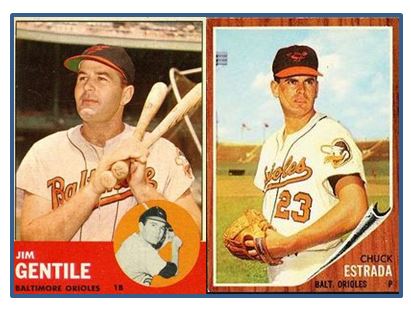
  1. John Lindsey Waits for his chance, by Ramona Shelburne, ESPN, ?August 29, 2010.
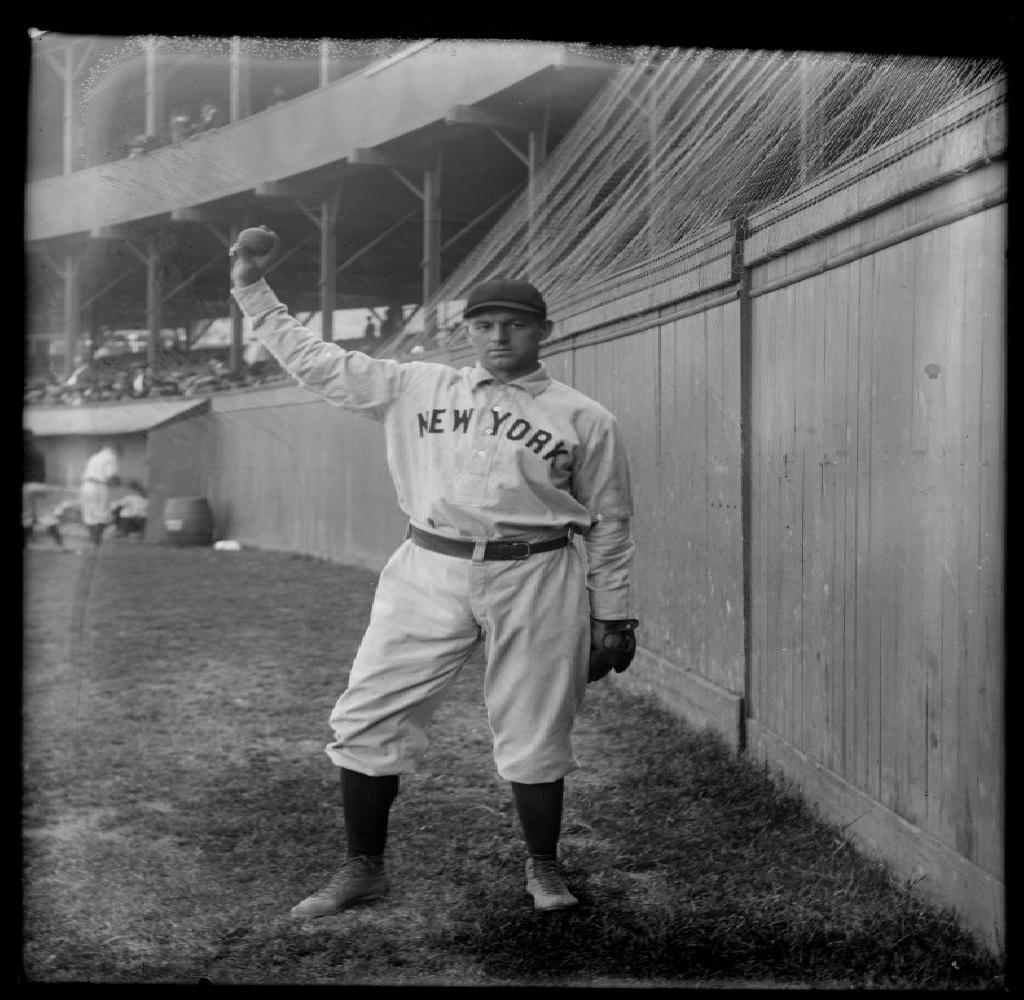
  2. Dodgers’ Lindsey finally a big leaguer, by David Wassen, The Press Enterprise, September 7, 2010.

Back to My Original Search

Who holds the title of MLB’s oldest rookie?  For years, of course, that crown has belonged to Satchel Paige … who debuted for the Cleveland Indians on July 9, 1948  (at a reported 42-years and two-days old). But with the recent changes assigning major league status to the Negro Leagues (1920-48), Paige’s major-league debut now came as a 20-year-old with the 1927 Birmingham Black Barons.  Your new oldest MLB rookie would be Dominican-born southpaw Diomedes Olivo – who was 41-years and 227-days of age when he debuted for the Pirates on September 5, 1960.  By the time he reached the major leagues, Olivo had  pitched in Mexico, Puerto Rico, Cuba, Venezuela, Nicaragua and Columbia. As you might expect, his MLB career was short. He was 5-6, 3.10 in 85 games (one start) over three MLB seasons (1960, 62-63). As a 43-year-old in 1960, he went 5-1, 2.77 with seven saves in 62 games for the Pirates.

Primary Resources:  Baseball-Reference.com; Baseball-Almanac.com; Where Nobody Knows Your Name: Life in the Minor Leagues of Baseball, by John Feinstein, Anchor Books, 2014

100Baseball Roundtable is on the Feedspot list of the Top 100 Baseball Blogs.  To see the full list, click here.

I tweet baseball @DavidBBRT

Follow/Like Baseball Roundtable’s Facebook Page here.  More baseball commentary; blog post notifications; PRIZES.

Member: Society for American Baseball Research (SABR); Negro Leagues Baseball Museum; The Baseball Reliquary.