Mike Trout’s Seven Straight Games with a Long Ball – and Those Who Did Him One Better

The Thirteenth unlucky for Mike Trout … and Cleveland fans
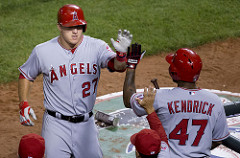
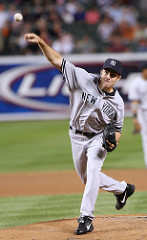
Mike Trout .. . Hit long ball, round bases, high five repeat.
Photo by Keith Allison

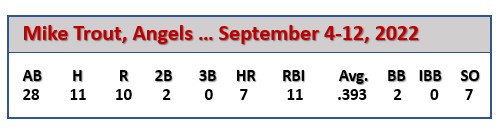
Yesterday (September 13, 2022), Mike Trout went zero-for-three (one walk) as his Angels lost to the Guardians 3-1 in Cleveland. While I’m sure the Cleveland fans enjoyed the win, they did miss the chance to see a bit of MLB history. Trout’s zero-for-three ended a streak of seven straight games in which he had gone yard – leaving him one shy of the record consecutive games with a home  run. Surprisingly, during his hot streak, the Angels went 3-4 (outscoring their opponents just 33-28, with Trout driving home one-third of the Angels’ tallies).

Trout’s offensive outburst should not be too much of a surprise.  A first-round (25th overall) 2009 draft pick out of Millville (NJ) Senior High, Trout made his MLB debut July 8, 2011 (at the age of 19).  In three minor-league seasons, the teenager had risen from rookie ball to Double-A, hitting a combined .338, with 22 home runs and 102 stolen bases in 266 games.

As high school senior,  Mike Trout hit .531 (81 at bats), with 18 home runs and 21 steals.

While he hit just .220 in 40 2011 games for the Angels, Trout became a regular in the Angels’ outfield in 2012, hitting .326-30-83, leading the league in runs scored (129) and steals (49) – and winning Rookie of the Year honors. To date, he has been a 10-time All Star (missing just 2020) and three-time AL MVP.  He had topped hit 30 or more home runs in seven seasons (35 so far this year), driven in 100+ runs three times, scored 100+ runs in seven campaigns, hit over .300 in six seasons and stolen 30 ore more bases three times. Even without the eighth consecutive games with a home run, he is building quite a Hall of Fame Legacy.
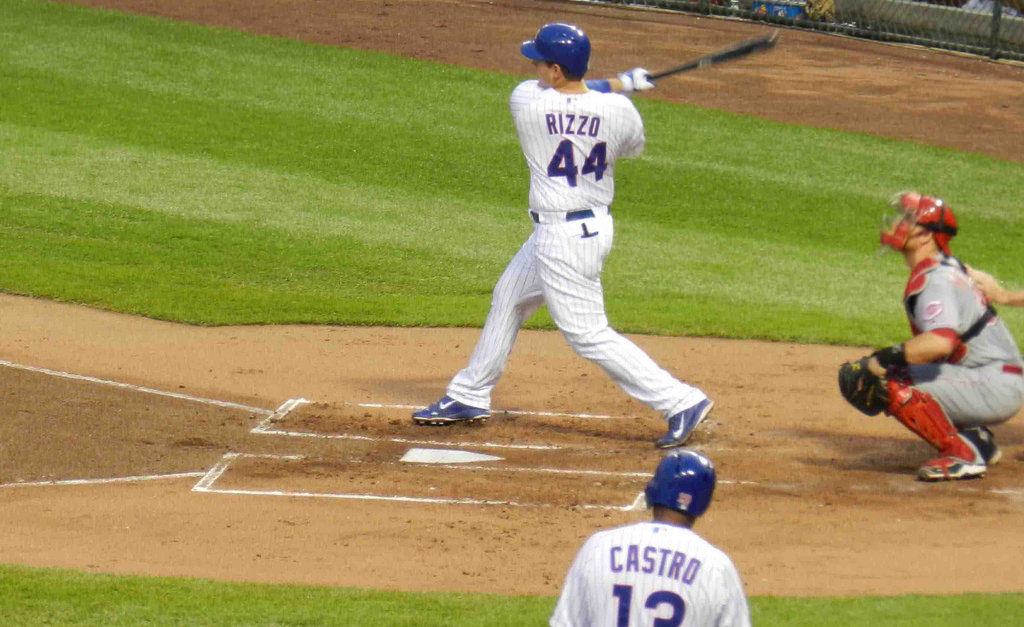
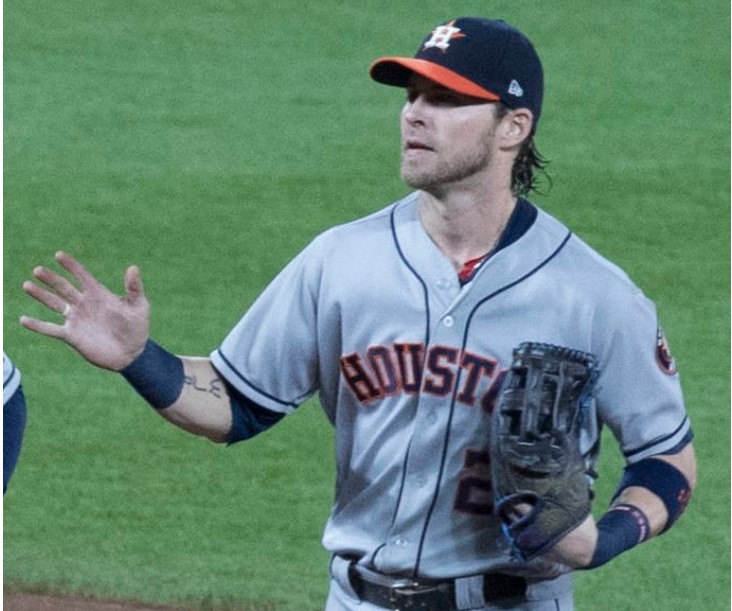
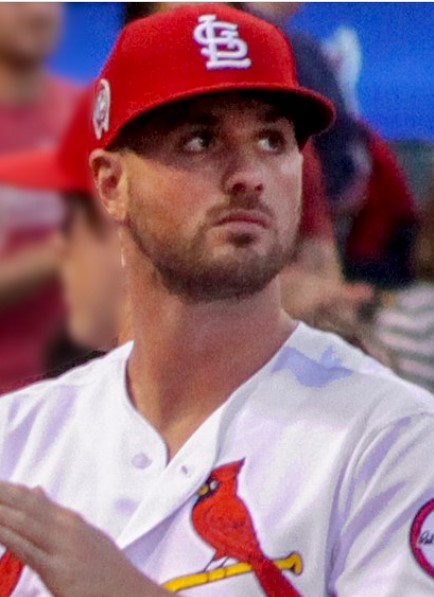
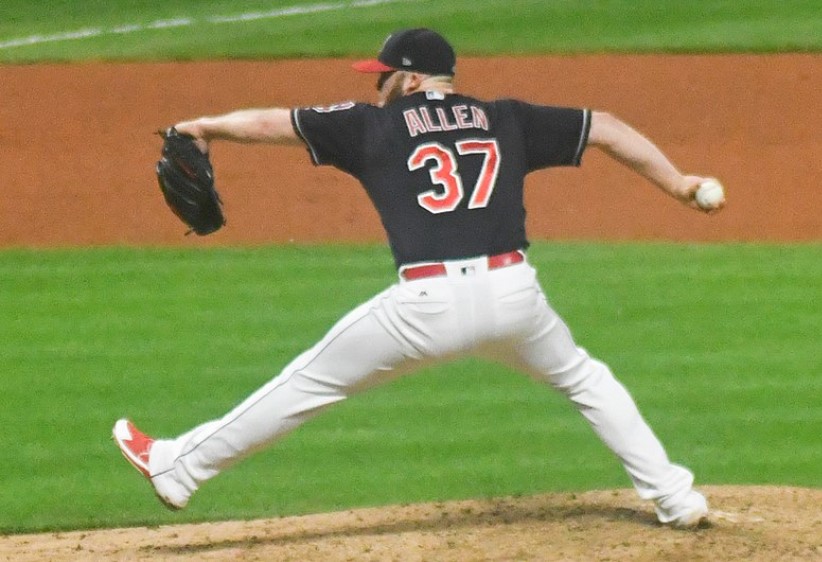
With that on the books, let’s take a look at the players who are on the short list of those with homers in eight consecutive games.  Dale Long, Don Mattingly and Ken Griffey, Jr. (Side note:  All thee began their professional careers as teenagers. Not really that important, but the kind of coincidence The Roundtable notices.)

______________________________________________________

A brief interruption before we return to our regular programming.

Time here for a short rant about #HowTheGameHasChanged. Yesterday, I was at a Twins game and Twins’ rookie starter Joe Ryan coasted through the first seven innings with a no-hitter (versus the Royals). After seven frames, he had given up two walks, fanned nine, tossed 106 pitches and was enjoying a 6-0 lead.

My very clean scorecard during Kershaw’s outing and a very clean scoreboard during Ryan’s.

As the eighth opened, Twins’ Rocco Baldelli brought in rookie reliever Jovani Moran (to significant booing from the crowd). Now, I didn’t join in the chorus of displeasure, but (as a fan) I was not really happy with the decision. Still, we could at least hope for the Twins’ first-ever combined no-hitter (and by two rookies no less). Alas, it was not to be, as Moran lost the no-no with one out in the ninth – giving up two walks, followed by an RBI double to Bobby Witt, Jr. (Moran eventually gave up a another hit and a total of three runs in the inning.)

All of this took me back to a game I attended on April 13 – with the Twins facing the Dodgers at Target Field. Despite the fact that the Twins were down 3-0, there was plenty of drama on the field and plenty of excitement in the crowd – as many of us anticipated a chance to see Dodgers’ starter Clayton Kershaw try for MLB’s 24th-ever Perfect Game.  After seven innings (Does this timing sound familiar?), Kershaw had thrown just 80 pitches (53 strikes) and had fanned 13 batters – with only three balls had been hit out of the infield. He was cruising and it was a masterful performance to watch.

Like Ryan, Kershaw did not come out to pitch the eighth. Dodgers’ manager Dave Roberts instead put in Alex Vesia. The change was met with a chorus of boos, from Twins’ fans and a large contingent of Dodger Faithful seated behind the third base dugout.

Now, there’s never been a combined Perfect Game, so I had a bit of hope. One out and five pitches after Vesia took the mound, Twins’ catcher Gary Sanchez lined a single to right and the Perfect Game and even the no-hitter were gone. (The Twins, ultimately, lost 7-0 and Sanchez’ single was their only safety.)

Side note:  I later learned, via the Elias Sports Bureau, that only once before ( since 1900) has an MLB pitcher been pulled after the seventh inning with a Perfect Game intact.  Both times, Roberts was the manager.  (The first was on September 10, 2016, when he pulled Rich Hill – a reported finger issue –  after seven innings with Perfect Game intact against the Marlins (and the Dodgers up 5-0). Hill had thrown 89 pitches (62 strikes) and fanned nine. Hill was replaced by Joe Blanton and ten pitches and two outs later, Marlins’ LF Jeff Francoeur collected the first of two Miami hits in the game.

In both the Ryan and Kershaw  games, I found myself trying to imagine what would have happened in the same situation with the likes of  Jack Morris, Bob Gibson or Don Drysdale on the bump.  I understand managers looking ahead and trying to protect their pitchers, so I can’t be too critical.  But, as a fan, I can be disappointed when a pitcher is pulled with a late-inning no-hitter or perfect game intact.  I’ll resist starting the next sentence, “Back in the day ….”

_________________________________________________

Now, back to the three players who share the record for consecutive games with a home run at eight.

Dale Long … 1956 Pirates
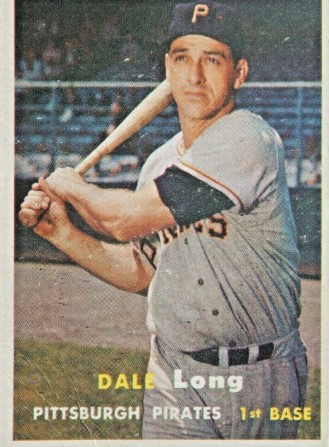
Dale Long’s path to the big leagues was not an easy one. Signed, in 1944,  at age 18, after a stint in the Navy, Long  made his major-league debut on April 21, 1951 (after seven minor-league seasons … and 11 minor-league teams with four different franchises.). He was back in the minors by mid-season (after hitting .231-3-12 in 44 games for the Pirates and Browns).

He didn’t make its back to the MLB diamond until 1955, again with the Pirates. In his first season as a big-league regular, the lefty first basemen hit .291-16-79  and the led NL in triples with 13.

The following season – the year of his eight-game home run streak – Long made his only All Star team, hitting .263-27-91 in 148 games for Pittsburgh.  (The 27 long balls and 91 RBI would prove to be career highs.

Overall, long played ten MLB seasons (Pirates, Browns, Cubs, giants, Yankees, Senators,), hitting .267-132-467 in 1,013 games. He hit 20 or more homers in four season and .290 or better twice.
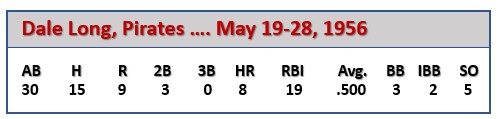
The Pirates went 7-1 during Long’s  home run streak, outscoring their opponents 44-22, with Long driving in 19 of the 44 runs.

______________________________________________

Don Mattingly, 1987 Yankees

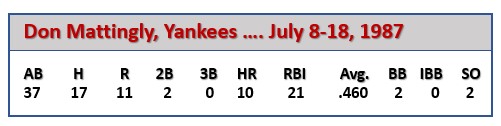
Don Mattingly had his eight-game home run streak in 1987, in the midst of his fourth straight All Star campaign, third straight season of 30 or more home runs, fourth  straight season of 100+RBI and fourth straight season hitting .325+. He was, in fact, at the peak of his career. The previous three seasons, he had led the league in hits twice, doubles three times, RBI once, batting average once, total bases twice and slugging percentage once.

Mattingly was  19th round draft choice, out of Reitz Memorial High School. He had worked his way from Low-A to Triple-A over four seasons (1979-82), hitting .332 in 457 games. He had yet to develop his power stroke, however, with only 20 home runs on his resume.  He made his MLB debut, as a 21-year-old, for the Bronx Bombers on September 8, 1982 and earned a spot as a regular in the Yankee lineup by the following June. In 1984, his first full MLB season, the 23-year-old Mattingly was the AL batting champ – putting up a .343-23-110 line.  He went on to a 14-season MLB career (1982-95), all for the Yankees – hitting .307-222-1,099; was an All Star six straight seasons (1984-89); earned nine gold Gloves at first base; and was the 1985 AL MVP.

In 2020, Don Mattingly was the NL Manager of the Year – leading the Marlins to a 31-29 record – good for second place (NL East) in the COVID-shortened season.

Despite Mattingly’s eight-game output – 10 home runs and 21 RBI – the Yankees only went 5-3 in his streak. (They did outscore their opponents 55-36, but that included a 13-4 win over the Twins and a 12-3 victory over the Rangers.)
 

_____________________________________________

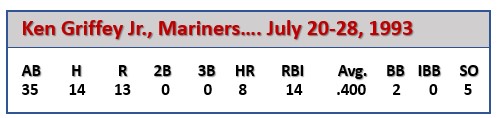
Ken Griffey, Jr., 1993 Mariners

Ken Griffey Jr. was signed, as a 17-year-old, in the first round (first overall) of the 1987 draft (Mariners).

Ken Griffey Jr. (Archbishop Moeller High School, Cincinnati) was the 1987 U.S. High School Baseball Player of the Year. 
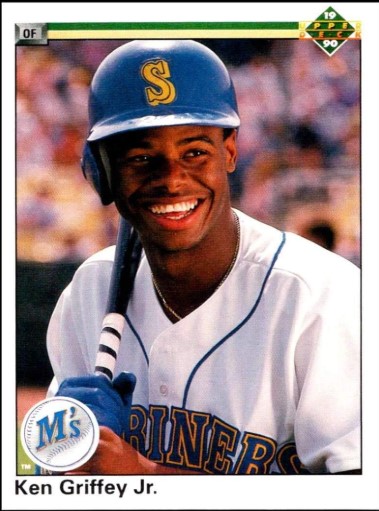
As a 17-year-old, Griffey hit .313-14-40, with 13 steals at Low-A Bellingham (54 games). The following season, he hit .325-13-52, with 36 steals at A and Double-A (75 games.)

In 1989, at 19-years-old), Griffey was a regular in the Seattle outfield.  The rest is history.  He went on to a 22-season, Hall of Fame career – hitting .284-620-1,836, with 184 steals in 2,671 games. Griffey hit 40 or more home runs in seven seasons, with two seasons (1997-98) of 56 roundtrippers. He also collected 100 or more RBI eight times. He was a 13-time All Star, ten-time Gold Glover and the 1997 AL MVP (when he hit .304, and led the league with 56 home runs, 125 runs scored, 147 RBI and 398 total bases.

During Griffey’s 1993 home run streak, the Mariners won five of the eight games – outscoring their opponents by just four runs  52-48.
 

______________________________________________

Just a Little (Big, Really) Baseball Roundtable Long Ball Bonus
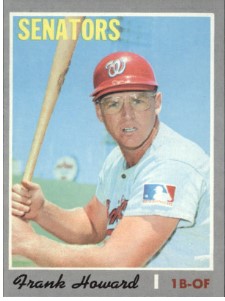
Most fans recognize 1968 as “The Year of the Pitcher.”  The overall MLB earned run average was 2.98; Bob Gibson put up a 1.12 ERA; Denny McLain won 31 games; only six qualifying MLB hitters hit .300 or better and Carl Yastrzemski won the AL batting title with a .301 average. Pitching was so dominant, MLB lowered the mound five inches for the 1969 season.

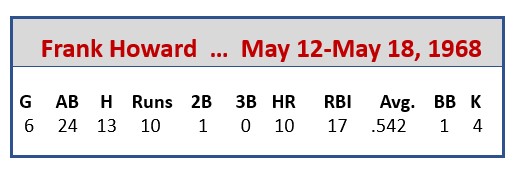
Yet, somehow – in the midst of all this pitching dominance – the Washington Senators’ big (6’8” – 260-lb.) OF/1B Frank Howard put together one of the most explosive offensive weeks in MLB history. From Sunday May 12 through Saturday May 18, in just 25 plate appearances (in six games), Howard banged out thirteen hits – including ten home runs and one double – and drew one walk (for a .542 average).  He also scored ten times and drove in 17 tallies. Side note: Surprisingly, the Senators went 3-3 over Howard’s streak.  Howard’s ten home runs remain MLB’s record for home runs in a week.  

Howard’s game lines during the streak looked like this:

  • May 12 … two-for-four, two runs scored, two RBI, two home runs.
  • May 14 … three-for-four, two runs scored, three RBI, two home runs.
  • May 15 … two-for-four, one run scored, two RBI, one double, one home run.
  • May 16 .… two-for-four, two runs scored, four RBI, two home runs.
  • May 17 … one-for-four, one run scored, two RBI, one home run.
  • May 18 … three-for-five, two runs scored, four RBI, two home runs.

Howard picked on some pretty good hurlers during his streak.  Three of the long balls came off the Tigers’ Mickey Lolich,  who went 17-9, 3.19 on the season and won three games in the 1968 World Series. Another pair of the record-setting round trippers came off “Sudden” Sam McDowell, who – while he only went 15-14 that season – put up a 1.81 earned run average and led the AL with 283 strikeouts.   Howard also showed he could “hit ‘em anywhere.” Only two of the ten long balls came at home – and his streak also included home runs in Boston, Cleveland and Detroit.

Howard came into the streak with a.300 average on the season (which he raised to .347 during the six games). Notably, he didn’t “come in hot,” he had  just three hits (.130 average) over his previous six games.
Primary Resources:  Baseball-Reference.com; MLB.com; Elias Sport Bureau.


Baseball Roundtable – Blogging Baseball Since 2012. 

BASEBALL ROUNDTABLE ON THE TOP 100 BASEBALL BLOG LIST

100Baseball Roundtable is on the Feedspot list of the Top 100 Baseball Blogs.  To see the full list, click here.

I tweet (on X) baseball @DavidBaseballRT

Follow Baseball Roundtable’s Facebook Page here.  More baseball commentary; blog post notifications.

Member: Society for American Baseball Research (SABR); The Baseball Reliquary; The Negro Leagues Baseball Museum.
A True Journeyman Officially Retires

Photo by Keith Allison

On Friday (September 9, 2022), righthander Edwin Jackson – who played for more major-league teams (14) than any other player – officially announced his retirement from the playing field.  The announcement came on his 39th birthday and on the 19th anniversary of his first appearance on a  major league-mound.

While Baseball Roundtable has written about Jackson’s travels before, this seems an appropriate to to again reflect on his career and, in The Roundtable’s “one things leads to another” tradition, also take a look at Jackson’s unexpected no-hitter, and a few other record-setting journeymen.

Jackson, who has not pitched in the major leagues since 2019, had a career record of 108-133, 4.78 in 412 MLB games (318 starts) over 17 seasons. In 1,960 innings pitched, he fanned 1,508 and walked 779.  Jackson was an All Star in 2009, when he went 13-9, 3.62 in 33 starts for the Tigers. In his MLB career, he won ten or more games in five seasons.  In six of his 17 MLB seasons, Jackson pitched for more than one major-league team.

Jackson’s record – year-by-year and team-by-team.

How did he do it?

2001

  • Drafted by the Dodgers in June.

2003

  • Debuted with the Dodgers on September 9.

2006

  • June 14 – Traded by the Dodgers to the Rays. (Jackson and Chuck Tiffany for Danys Baez and Lance Carter.)

2008

  • December 10 – Traded by the Rays to the Tigers. (Jackson for Matthew Joyce.)

2009

  • December 8 – Went from the Tigers to the Diamondbacks in a three-team trade. (The Tigers sent Curtis Granderson to the Yankees; the Yankees sent Phil Coke and Austin Jackson to the Tigers; the Yankees sent Ian Kennedy to the Diamondbacks. The Diamondbacks sent Max Scherzer and Daniel Schlereth to the Tigers. So, ultimately, the Tigers turned Jackson and Granderson into Coke, Austin Jackson, Scherzer and Schlereth.)

2010

  • July 30 – The Diamondbacks traded Jackson to the White Sox. (Jackson for David Holmberg and Daniel Hudson.)

2011

  • July 27 – Jackson was traded by the White Sox to the Blue Jays and (on the same day) from the Blue Jays to the Cardinals. (Jackson went to the Blue Jays – with Mark Teahen – for Jason Frasor and Zach Stewart. He then went to Cardinals – with Octavio Dotel, Corey Patterson and Marc Rzepczynski – for Trevor Miller, Colby Rasmus, Brian Tallet and P.J. Walters.)
  • October 30 – Granted free agency

2012

  • February 2 – Signed with the Nationals.
  • October 29 – Granted free agency.

2013

  • Signed with the Cubs.

2015

  • July 27 – Released by the Cubs.
  • August 14 – Signed with the Braves.
  • November 2 – Granted free agency.

2016

  • January 13 – Signed with the Marlins.
  • June 2 – Released by the Marlins.
  • June 29 – Signed with the Padres.
  • November 3 – Granted free agency.

2017

  • April 5 – Signed with the Orioles.
  • June 13 – Granted free agency.
  • June 16 – Signed with the Nationals.
  • November 2 – Granted free agency.

2018

  • January 11 – Signed with the Nationals.
  • June 1 – Released by the Nationals.
  • June 6 – Signed with the A’s.
  • October 29 – Granted free agency.

2019

  • April 11 – Signed with the A’s.
  • May 19 – Purchased from the A’s by the Blue Jays.
  • July 19 – Released by the Blue Jays.
  • July 0 Signed by the Tigers.
  • October 31 – Granted Free Agency.

2020

  • February 3 – Signed by the Diamondbacks.
  • May 22 – Released by the Diamondback.

While Jackson had not pitched in the major leagues since 2019, he was part of the U.S. Olympic baseball team that won the Silver Medal in 2012.

______________________________________________

Edwin Jackson’s Unlikely No-Hitter

On June 25, 2010, Edwin Jackson and his Diamondbacks were facing the Rays in Tampa Bay.  Jackson, in his eighth MLB season, was playing for his fourth MLB team. Ironically, he had been traded away from the Tigers after his only All Star campaign (2009, when he put up a 13-9, 3.62) record for the Bengals.  Jackson got off to a slow start for Arizona and came into the June 25, 2010, game with a 4-6 record and a 5.05 earned run average on the season.  That day in Tampa Bay, however, he was unhittable – and unscored upon. Still, despite the 1-0 final score, it wasn’t a classic gem of a no-no.

In his June 25, 2010 no-hitter,  Edwin Jackson threw 149 pitches (79 strikes) – acknowledged as the highest total ever in a no-hit game.

Here are just a few facts about Jackson’s no-hitter – one that no one saw coming, particularly after the first three frames.

  • Jackson started the game with an earned run average (on the season) north of 5.00.
  • Jackson went to a three-ball count on the first four batters he faced – walking two.
  • Jackson also walked two more in the second inning and walked the bases full with no one out in the third.
  • In the first three innings, Jackson threw 70 pitches.
  • For the game, Jackson walked eight and hit a batter – and the Rays left nine runners on base.
  • Over his nine innings, Jackson went to a three-ball count on 13 of the 36 batters he faced.
  • It was Jackson’s first – and, ultimately, only – complete game of the 2010 season.

Side note: Just five week after his no-hitter, Jackson was traded from the Diamondbacks to the White Sox.

________________________________________________

Now, now about a look at a few other MLB journeymen.

—–Most Teams Played for in a Season—–

In 2018, 32-year-old right-hander Oliver Drake set a new major-league mark by playing for five MLB teams in a single season (previously more than dozen players shared the record at four).

Drake began the season with the Brewers (where he finished the previous campaign).  After going 1-0, 6.39 in eleven appearances,  he was designated for assignment on May 2 and, on May 5, purchased from the Brewers by the Indians.

He was with the Tribe until the final week in May – going 0-0,with a 12.46 ERA in just four appearances – before again being designated for assignment.

May 31, he was selected off waivers by the Angels. Sixteen days (and 0-1, 10.13 record) later, he was again designated for assignment.  He went unclaimed and reported to the Angels’ Salt Lake City Triple-A affiliate – where he was pretty much lights out.  That earned him a trip back to Anaheim, where he added four more appearances, with an 0-0, 3.00 record – and was again designated for assignment.

He was picked up (off waivers) by the Blue Jays on July 26 and was there for just two appearances (giving up three runs in 1 2/3 innings) before again being designated for assignment.

On August 3, he was selected off waivers by the Twins – his fifth MLB team of the season – where he found a bit more success and stability. Pitching for his fifth MLB team of the year, Drake finished the season with Minnesota, getting in 19 games and posting a 2.21 ERA an fanning 22 batters in in 20 1/3 innings pitched.What did that get him?  In the off-season, he was again designate for assignment.

Oliver Drake finished the 2018 season with an 1-1 record, a 5.29 ERA and 51 strikeouts in 47 2/3 innings.

For his career, Drake has pitched in six MLB seasons (2015-20 … Orioles, Brewers, Indians, Twins, Angels, Blue Jays, Rays). Over those six campaigns, he has gone 10-10, 4.27, with five saves in 196 appearances.

__________________________________________________

—-Most MLB Teams Player for In a Single Day—–

Taking the Field for Two Teams in a Single Day

Three players share the record for the most MLB teams played for in a single day at two. The first two to accomplish this feat were Max Flack and Cliff Heathcote, who were traded for each other between games of a Memorial Day 1922 Cubs/Cardinals doubleheader. (Flack going from the Cubs to the Cardinals and Heathcote vice versa.) The two outfielders each suited up against their previous team for Game Two. Both went hitless in game one of the doubleheader and both collected hits for their new teams in the second game (Flack a single in four at bats, Heathcote a pair of singles in four trips to the plate).

Joel Youngblood tied the record for teams played for in a single day in 1982, adding a twist – he played for and recorded hits for two different teams in two different cities on the same day.  Let’s look at Youngblood’s unique achievement.

On August 4, 1982, Youngblood started his day as a member of the New York Mets, who were playing an afternoon game against the Cubs at Wrigley Field. Youngblood opened the game in center field, batting third.   After striking out in the first inning, Youngblood drove in two runs with a single in the top of the third. Youngblood was unexpectedly replaced in center field by Mookie Wilson in the bottom of the fourth – and told by Mets’ manager George Bamberger that he had been traded to the Expos (for a player to be named later).

The Expos were scheduled to play in Philadelphia that night, and Youngblood immediately set out to join his new team. He managed to catch a 6:05 p.m. flight to Philadelphia – eventually arriving at Veterans Stadium with the game in progress. To his surprise, there was an Expos uniform, with his name already sewn on the back, waiting for him.  The Expos wasted no time getting their newest player into the game. Manager Jim Fanning sent Youngblood into right field and the number-two spot in the batting order (replacing Jerry White) in the sixth inning. In the top of the seventh, Youngblood singled in his first Expos’ at bat.  Thus, Youngblood collected base hits for two different teams in two different cities in one day.

Youngblood’s feat is even more startling when you consider the pitchers he touched for his two safeties. In Chicago, it was future Hall of Famer Fergie Jenkins; while in Philadelphia, it was future Hall of Famer Steve Carlton.

—-Most MLB Teams Played for  by a Position  Player —–

Matt Stairs moved around the diamond in his MLB career, primarily as an outfielder, first baseman, DH and pinch hitter.  He also moved from team to team, suiting up for position-player record 12 MLB teams (Expos, Red Sox, A’s, Cubs, Pirates, Royals, Rangers, Tigers, Blue Jays, Phillies, Padres and Nationals) in 19 MLB seasons (1992-93, 1995-2011).  In 2006, he suited up for the Royals, Rangers and Tigers – going a combined .247-13-51 in 117 games). His career stat line was .262-265-899 in 1,895 games.  His best season was either 1998, when he went .294-26-106 in 149 games for the A’s; or 1999, when he went .258-38-102 in 146 games for the Oakland squad.  Stairs hit 20 or more home runs in six seasons.

Matt Stairs holds the MLB record for career pinch-hit homers with 23. 

Primary Resources: Baseball-Reference.com; MLB.com; Baseball-Almanac.com

Baseball Roundtable – Blogging Baseball Since 2012. 

BASEBALL ROUNDTABLE ON THE TOP 100 BASEBALL BLOG LIST

100Baseball Roundtable is on the Feedspot list of the Top 100 Baseball Blogs.  To see the full list, click here.

I tweet (on X) baseball @DavidBaseballRT

Follow Baseball Roundtable’s Facebook Page here.  More baseball commentary; blog post notifications.

Member: Society for American Baseball Research (SABR); The Baseball Reliquary; The Negro Leagues Baseball Museum.
Some Doubleheader Musings … I do miss those Sunday Twin Bills

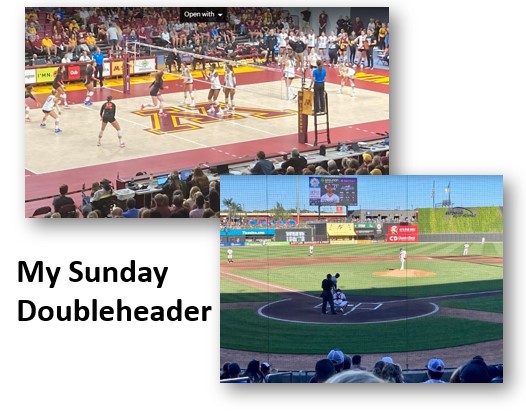
Yesterday (September 4) marked the anniversary of the day in 1928 when the Boston Braves began an MLB-record streak of  nine consecutive doubleheaders (over as 12-day span). Pretty sure we’ll never see that again.  I was going to commemorate that anniversary with a post on doubleheaders, but I had to delay that for a day because I was taking part (as a spectator) in a doubleheader of my own yesterday – taking in the number-four ranked University of Minnesota (volleyball) Gophers’ victory over number-13 Florida and the Triple-A Saint Paul Saints loss to Omaha.  So, I’ll revisit some doubleheader trivia a day late.

Note: Some of these records/lists may change as the Negro League records from  1920-48 are further documented and incorporated into MLB records. 

18 Games in 12 Days

The 1928 Boston Braves played a record nine consecutive doubleheaders over a 12-day span (September 4-15). During the streak, they swept one doubleheader, were swept six times and split two – for a four win-fourteen loss record.  Notably,  six players played every inning of those games (RF  Lance Richbourg; LF Eddie Brown; 1B George Sisler; 2B Rogers Hornsby; 3B Les Bell; SS Doc Farrell). The team used eight different starting pitchers during the 18-game stretch – none more often than Bob Smith, who started four contests (including both ends of one doubleheader).

The stretch of twin bills may have been taxing on the hurlers’ arms. The Braves got just five complete games during the span (27.8 percent of the starts) – well below the MLB average for the year of 50.7 percent and short of the Braves’ average for the rest of the season  (36.2 percent). Smith’s record may be indicative of that wear and tear. In his first start of the stretch (September 5), he tossed a complete-game two-hitter as Boston topped Brooklyn 7-1. On September 10, he tossed a second complete game, a seven-hitter, as Boston lost to the Giants 4-1.  Then on September 14, he failed to make it out of the first inning of the first game against the Giants, giving up four runs without recording an out.  Undeterred, the Braves sent him back out to start the second game of the twin bill – in which he gave up  five runs (three earned) in 6 1/3 innings – taking his second loss of the day.  Side note:  Smith recovered from that tough two-loss day. He had three more starts that season, pitching 31 1/3 innings in those games (1-2, 2.87). He finished the season 13-17, 3.87 for a Braves team that went 50-103.

Nearly 60 percent doubleheaders … Now, that’s a Tough Schedule

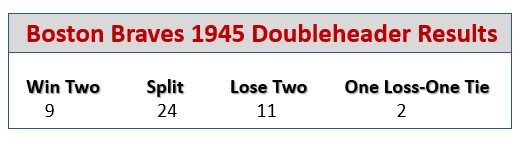
The 1945 Boston Braves played an MLB-record 46 doubleheaders. Let’s put that in perspective – 59.7 percent of the games they played that season were part of doubleheaders. How did they do?  They won 42 of those games, lost 48 and tied two.  Basically, they played .466 ball in twin bills, a bit better than their .403 winning percentage on days when they played just one game.  By the way, just so you don’t think those 46 doubleheaders were a one-off event, the 1943 White Sox hold the AL record for doubleheaders in a season at 44.

Let’s Play …. Three?

While, there have been three occasions in which major-league teams have played three games in a single day, research by Society for American Baseball Research (SABR) member Bill Nowlin indicates there has been only one “true”  (read single-admission) triple header.  That came on October 2, 1920, with the 80-69 Reds facing the 77-73 Pirates at Pittsburgh’s Forbes Field.  With four contests left in the season, the previous two Pirates-Reds games cancelled due to weather and third place (and a World Series’ share) at stake, the teams faced off in a one-day, three-game  series starting at noon. Long story short, the Reds won the first two games (13-4 and 7-3), while the Pirates took the final game 6-0 (called – darkness – after six innings).

Only five players played in all three games (making them all, of course, single-day MLB record holders). They were the Reds’ Morrie Rath (2B-RF) and Pat Duncan (LF) and the Pirates’ Cotton Tierney (2B-SS), Clyde Barnhart (3B) and Fred Nicholson (PH-RF-LF).

The two other instances of three-games-in-a-day matchups have occurred – on September 1, 1890 (Brooklyn Bridegrooms versus Pittsburgh Innocents) and September 7, 1896 (Baltimore Orioles versus Louisville Colonels). In both of those, the first contest was a separate-admission morning game, with a second admission required for the afternoon doubleheader.

Putting Up Crooked Numbers

The record for runs scored in a doubleheader – both teams – is 54.  It has been done twice.  On August 21, 1894,the National League Boston Beaneaters swept a doubleheader from the Cincinnati Reds by score of 18-3 and 25-8. Then, on Independence Day in 1939, there were lots of fireworks on the field in Philadelphia, as the Red Sox topped the Athletics 17-7 and 18-12.

Well, That Didn’t Take Long

The fewest runs scored in a doubleheader? It may surprise you (because it’s not two.)   The answer is one.  On September 4, 1902, the Pittsburgh Pirates and Boston Beaneaters matched up in a doubleheader in Boston. Game One went to Boston 1-0 (in one hour and twenty minutes). Game Two ended in a nine-inning 0-0 tie (one hour and 30 minutes).

A Hero’s Performance

Ted Williams, the fighter pilot, was a true hero – earning the Presidential Medal of Freedom and  three Air Medals, among other decorations. Teddy Ballgame demonstrated a different kind of bravery in a doubleheader on September 28, 1941.  It was the final day of the season and William was hitting .3995 – which, when rounded, would make him the first Al or NL .400 hitter since 1930. Offered the chance to sit it out and sit on the .400 average, Williams declined. Williams went four-for five in Game One of the twin bill, helping Boston top the Athletics in Philadelphia 12-11, (He had three singles, a home run, two runs scored and two RBI. ) He now had a .404 average and another chance to rest on his laurels, Instead, he went out and produce  a two-for-three second games (in a 7-1 Red Sox loss) finishing the season at .406.

A Good Day’s Work

On September 26, 1908, Cubs’ righty Ed Reulbach started both games of a doubleheader against Brooklyn (Superbas).  He went the distance in both contests, giving up just nine hits – and no runs –  over the 18 innings.  Reulbach is the only MLB pitcher ever to record two complete-game shutouts in a single day. The final scores were 3-0 and 6-0.

Another Good Day’s Work – and Baseball Roundtable’s Favorite “Coincidence”

On May 2, 1954, Cardinals’ right fielder Stan Musial hit five home runs in doubleheader (versus the Giants in Saint Louis). Sitting in the stands that day was eight-year-old Nate Colbert who – On August 1, 1972 – would become just the second player ever to hit five home runs in a twin bill. Colbert was playing first base for the Padres, who were taking on the Braves in Atlanta. In his five-homer twin bill, Colbert set the record for RBI in a doubleheader (13). The Cardinals, by the way, split their doubleheader on Musial’s big day, beating the Giants 10-6 in Game One and losing the second game 9-7. The Padres swept the Braves (9-0 and 11-7) on Colbert’s record-tying day.

I Call Trade-Zees

On May 30, 1922, the Cardinals and Cubs matched up in a Memorial Day doubleheader in Chicago. The Cubs took Game One by a 4-1 score – with one of the four tallies driven in by RF Max Flack. Playing CF for the Cardinals was Cliff Heathcote, who went zero-for-three.  In Game Two,  Heathcote and Flack were both starting in the garden – but for the teams they had opposed in Game One.  Traded between games, Flack started in RF, leading off, for the  Cardinals, while Heathcote started in RF, batting fifth for the Cubs. The Cubs won this one 3-1, with Heathcote going two-for-four.  Flack went one-for-four for his new team.

Don’t Worry – I Got This

In August of 1903, the Giants’ Joe McGinnity started  both games of a doubleheader three times – August 1, Augusts 8 and August 31.  In those starts, he picked up six complete-game victories – giving up a total of 10 runs in the six contests. By the way, the Giants played 11 doubleheaders that month. Surprisingly, on the August days when he pitched only one game (another six starts), McGinnity went 1-5 and gave up 28 runs. For the season, he was 31-20, 2.43, with 44 complete games in 48 starts.  No wonder his nickname was “Iron Joe.”

Way Too Much Overtime

On May 31, 1964, Mets fans faced a long day of suffering.  Not only did the New Yorkers lose both ends of a doubleheader to the San Francisco Giants – it took them a doubleheader-record 32 innings (9 hours and 52 minutes) to do it. The Giants won game one 5-3 in a brisk 2:29.  The second game, however, went 23 innings (7:23), with the Giants winning 8-6.   This is the longest doubleheader by innings and the longest in time –  without a weather delay.

On July 2, 1993, the Padres and Phillies split a twin bill in Philadelphia that kept the fans (who stayed on) in the park for more than 12 hours. Consider the patience needed.  The first game was delayed one hour and ten minutes before the first pitch; another one hour and 56 minutes in the fourth inning; and two hours and 48 minutes in the sixth. The teams began play at 4:35 p.m. on Friday, July 2 and wrapped up at 4:40 a.m. Saturday – a doubleheader record 12 hours and five minutes.

Nine-for-Nine

Nine players have a record collected nine hits in a doubleheader. Here’s the list.

Lee Thomas, Angels …. September 5, 1961

Lee Thomas collected his nine hits as the Angels were swept  in a doubleheader by the Athletics  (in Kansas City) – losing Game One by 7-3 score and Game Two 13-12.  Thomas (playing right field  and batting second) went five-for-five in the first game (four singles and a double) without scoring or driving in a run. He had half of the Angels’ ten hits. Thomas was more productive in Game Two, going  four-for-six – with three home runs, three runs scored and eight RBI. He took the field in right field batting second in that contest. The Athletics won the game on a two-run walk-off home runs by CF Bobby Del Greco with two outs in the bottom of the ninth.

Thomas played eight MLB seasons (1961-68 … Yankees, Angels, Red Sox, Braves, Cubs, Astros). He went .255-106-428 in 1,027 games., His best season was as an Angel in 1962, when he was an AL All Star and hit .290-26-104 (all career highs).

Pete Runnels, Red Sox …. August 30, 1960

Pete Runnels was on his way to the 1960 AL batting championship when he had his nine-hit doubleheader on August 30 – as the Red Sox swept the Tigers (in Boston), winning the first game 5-4 (15  innings) and taking  the night cap 3-2 (10 innings). Runnels, started Game One batting seventh and playing 2B (he later moved to first base). He went six-for-seven, with one double, one RBI and one run scored. Three of his hits came in extra innings and his RBI double with one out in the fifteenth frame was a walk-off game winner. Runnels was at 2B batting sixth in Game Two and went 3-4 with two doubles and one run scored.

Runnels finished the 1960 season with a .320-2-35 stat line (80 runs scored) – winning the first of two career batting titles. (He won again with a .326 average for the Red Sox in 1962), The three-time All Star played 14 MLB seasons (1951-64), hitting .291-49-630 in 1,799 games.

Roundtable Extra – More #OneThingLeadsToAnother”

I interrupt this list to once again show how, when Baseball Roundtable begins looking at one thing, it often lead to another. As I was looking at players who had a record nine hits in a doubleheader, I (of course) came across the record for hits in a nine-inning game (seven) shared by Wilbert Robinson (who is on this list) and Rennie Stennett.  I also came across another nine-hit record. On July, 10, 1932, as the Athletics topped the Indians in 18 innings, Indians’ SS Johnny Burnett set a record with nine hits in a game (of any length). Ironically, the 18 innings played match up with the innings in most doubleheaders. Burnett went 9-for-11, with two doubles, four runs scored and two RBI. 

Burnett, a utility player, played nine MLB seasons (1927-35) – eight for the Indians and one for the Browns. His final stat line was .284-9-213 in 588 games. He played 100 or more games at 2B, SS and 3B; but only twice topped 100 games in a season. 

George Case, Senators … July 4, 1940

George Case had a big day for the Senators on Independence Day 1940 – lashing out nine hits as the Senators swept a doubleheader from the Philadelphia Athletics 5-1 and 9-5. Case went four-for-five in Game One, with a triple and a run scored. He did even better in Game Two – five-for-five, with a double, two runs scored  and two RBI. Surprisingly, despite all those times on base, Case (a CF known for his speed) did not steal a  base in the twin bill. (He would lead the AL with 35 steals that seasons, one of six stolen base titles he would earn.)

Case was a three-time All Star who played 11 MLB seasons (1937-47 … all but his 1946 season with the Senators). He hit .282-21-377 (785 runs scored and 349 steals) in 1,226 games.

Bill Terry, Giants…. June 18, 1929

Bill Terry’s Giants managed to lose both ends of a double header to the Robins (Dodgers) in Brooklyn – despite a nine-for-ten day by Terry. The Giants lost Game One 8-7 and dropped Game Two 7-6. In Game One, Terry – playing first base and batting fifth – went five-for-five, with a home run, run scored and three RBI. In Game Two, he went four-for-five (all singles) with two RBI.

Hall of Famer Terry should be no surprise on this list. He was a career .341 hitter over 14 MLB seasons (1923-36), all with the Giants. He had 154 career home runs, 1,078 RBI and 1,120 runs scored. He hit over .300 in 11 seasons, hitting .350 or better four times (a high of .401 when he won the 1930 batting title).

Freddie Lindstrom, Giants …  June 25, 1928

Freddie Lindstrom’s nine-hit twin bill came as the Giants topped the Athletics 12-4 and 8-2 in Philadelphia. Lindstrom, batting third and playing third base, went five-for-six (all singles), with three runs scored and three RBI in Game One and four-for-five (three singles and a double), with one run and one RBI in Game Two.

A Hall of Famer, Lindstrom hit .358 and led the league with 231 hits in 1928. He played in 13 MLB seasons (1924-36 … Giants, Pirates, Cubs, Dodgers) and hit .311-103-779 in 1,438 games.

Ray Morehart, White Sox … August 31, 1926

Ray Morehart may be the least known player on this list. He picked up nine hits as his White Sox played  a doubleheader with the Tigers (in Detroit), winning Game One 19-2 and losing Game Two 7-6. Morehart, batting second and playing second base, went five-for-six with a double, a stolen base, a hit-by-pitch , two runs scored and six RBI in Game One. He came back to go four-for-four, with a double, a walk, one run and two RBI in Game Two.  So, for the day, he reached bases 11 times in 12 plate appearances. Why is he a surprise?  Morehart played in just three MLB seasons (1924, 1926-27 … White Sox, Yankees), going .269-1-47 in-177 games.  His claim to fame may be playing in 73 games for the 1927 Yankees (considered by many to be the best team of all time). Then, of course, there was the 1926 doubleheader.

Joe Kelly, Baltimore Orioles … September 3, 1894

Joe  Kelly celebrated Labor Day 1894 with nine hits in a doubleheader – as his  Baltimore Orioles topped the Cleveland Spiders 13-2 and 16-3. In the second game of that twin bill, he laced four doubles off none other than Cy Young. In that 1894 season, the 22-year-old outfielder hit  .393-6-11, with 46 steals. Kelly, a Hall of Famer, played 17 MLB seasons (1891-1906, 1908) and hit .317-65-1,194.

Wilbert Robinson, Baltimore Orioles… June 10, 1892

Wilbert Robinson collected nine hits in a doubleheader, as his Orioles topped the St. Louis Browns 25-4 and 9-3.  While Robinson still shares the record for hits in a doubleheader, he is better known for a record he set in the first game of the twin bill – seven hits in a nine-inning game. That record has been matched just once in MLB history, by the Pirates’ Rennie Stennett in a 22-0 Pittsburgh win over the Cubs (in Chicago) on September 16, 1975. Robinson also drove in a then-record 11 runs in the first game of his nine-hit doubleheader – a record that stood until September 16, 1924, when Jim Bottomley drove in 12 runs in a Cardinals’ 17-3 win over the Brooklyn Robins in Brooklyn. (Another Cardinal, Mark Whiten, matched Bottomley’s 12 RBI on September 7, 1993, in a 15-2 Cards win over the Reds in Cincinnati.)

Robinson, who went on to become a Hall of Fame Manger, played 17 MLB seasons (1886-1902), hitting .273-18-722 in 1,371 games.

Fred Carroll, Pittsburgh Alleghenies … July 5, 1886

Fred Carroll collected nine hits in a doubleheader as his Alleghenies swept the Baltimore Orioles 15-1 and 13-2 in Pittsburgh. The 21-year-old Carroll hit .288-5-64 for the American Association (major league ) that season. He enjoyed an eight season MLB career – going .284-26-366 in 754 games (C-OF-1B).

Primary Resources:  Baseball-Reference.com; Baseball-Almanac.com; MLB.com; Joe Kelly, SABR Biography by Jimmy Keenan; Seven Hits in Seven Tries for Wilbert Robinson, SABR, by Jimmy Keenan; This Week in Pittsburgh Sports History, July 5, 2017, by Charles Dietch; The Last Triple Header, by A.D. Suehsdorf, SABR Research Journals Archive.

BASEBALL ROUNDTABLE

BLOGGING BASEBALL SINCE 2012


BASEBALL ROUNDTABLE ON THE TOP 100 BASEBALL BLOG LIST

100Baseball Roundtable is on the Feedspot list of the Top 100 Baseball Blogs.  To see the full list, click here.

I tweet (on X) baseball @DavidBaseballRT

Follow Baseball Roundtable’s Facebook Page here.  More baseball commentary; blog post notifications.

Member: Society for American Baseball Research (SABR); The Baseball Reliquary; The Negro Leagues Baseball Museum.


Baseball Roundtable August Wrap – An Ultimate Slam, A Triple Play, A “Maddux” and More

It’s September 1, and regular readers of this blog know it’s time for Baseball Roundtable’s look at the standings, stats and stories that captured The Roundtable’s attention over the previous month, as well Baseball Roundtable’s Players and Pitchers of the Month (August) and the ongoing Trot Index.

Here’s just a teaser of the things that caught Baseball Roundtable’s eye in August:

  • The Nationals got their first win from a starting pitcher since July 6;
  • The Twins turned their second triple play of the season;
  • The Rangers’ Adolis Garcia had a 21-game hitting streak;
  • Mariners’ rookie pitcher George Kirby started a game and didn’t throw a called ball until his 25th pitch;
  • The Yankees’ Josh Donaldson hit an”Ultimate Grand Slam;”
  • The Angels’ Pablo Sandoval channeled “The Professor” and threw a “Maddux;”
  • Shohei Ohtani became the first MLB player to hit at least 30 home runs and collect at least ten pitching victories in the same season;
  • 42-year-old Albert Pujols put up a .361-8-17 stat line in 23 games;
  • The Phillies had a game in which they put up 18 runs on 22 hits – without a single home run;
  • The Cardinals hit the most home runs in August and gave up the fewest round trippers;
  • The Angels, who hit the AL’s fewest home runs in July, led the AL in August round trippers.

You’ll find more on all this – and more – as you read through this post. Not into stats? Skip ahead to the Highlights Section. 

That Makes Sense

The Dodgers Guardians and Rays all put up earned run averages under 3.00 for August – and went a combined 56-26.  The Rockies, Red Sox and Nationals all put up earned run averages 0f 5.00+ – and went 31-52 for the month. 

_______________________________________

—-August Players and Pitchers of the Month—-

National League

Player of the Month – (Tie) Paul Goldschmidt, 1B, Cardinals & Nolan Arenado, 3B, Cardinals. Let’s look at these two Redbirds.

It’s no wonder the Cardinals went 22-7 in August (and moved to the top of the NL Central). The team boasted three solid candidates for NL Player of the Month:  Nolan Arenado; Paul Goldschmidt; and Albert Pujols.  Baseball Roundtable thinks it’s appropriate that Arenado and Goldschmidt share the recognition. Let’s look at the August offensive contributions of this this pair of corner infielders, who both also have multiple Gold Gloves on their resumes.

  • Arenado had the edge in August average – .364 to Goldschmidt’s .343. They were, respectively, second and fifth in the NL among players with at least 60 August at bats. (Pujols, by the way, was third at .361)
  • Goldschmidt and Arenado each hit nine August home runs – tying for the major-league lead. (Pujols had eight.)
  • Arenado led MLB with 29 August RBI, Goldschmidt was third with 27.
  • Goldschmidt’s 25 August runs were second in the NL; Arenado scored 19 times.
  • Arenado’s 39 hits were third in the NL, while Goldschmidt’s 35 August safeties were seventh
  • Goldschmidt’s .448 on-base percentage topped NL hitters with at least 60 August at bats. Arenado was at .410. On the other hand, Arenado’s slugging percentage for August was .729 (second only to Pujols’ .803 among NL players with at least 60 August at bats), while Goldschmidt was fourth at .667.

Goldschmidt had nine multi-hit games (five three-hit contests) and eight multi-RBI games (including a five-RBI contest in an 8-3 win over the Cubs on August 25. In a four-game stretch from August 17-20, he went 11 -for-17 (plus two walks), with two home runs and eight RBI.

Arenado had ten multi-hit games. He had eight multi-RBI contests – and only once went two consecutive games without a hit.

Honorable Mentions: The Cardinals’ 1B/DH Albert Pujols – at age 42 – had a tremendous month (as he climbed up the All-Time offensive charts. He put up a .361-8-17 line in 23 games. Mets’ 2B Jeff McNeil also deserves mention. His .385 average was the highest among NL players with at least 60 August at bats (he had 109) and  his 42 hits tied for the MLB August lead. McNeil had two home runs, 11 RBI and 14 runs scored for the month,  Finally, a shout out to Mookie Betts of the Dodgers for his .330-9-17 month, which include an MLB-best 30 runs scored and five steals in five attempts.

Pitcher of the month – Zac Gallen, RHP Phillies

Zac Gallen went 5-0 (the only National Leaguer with five August wins), with a minuscule 0.68 earned run average in six starts (the lowest ERA among MLB pitchers with at least 25 August innings). His 40  innings pitched were second in MLB and his 44 strikeouts third . In four of his five wins, he went at least seven innings without surrendering a run. He put up a 0.75 WHIP and held hitters to a .154 average.

Zac Gallen ended August with an active steak of 34 1/3 consecutive scoreless innings.


Honorable Mentions: The Mets’ Jacob deGrom, who was also in the running, led MLB in August strikeouts with 55 (in 36 1/3 innings) putting up a 4-1, 1.98 record.  I also considered Tony Gonsolin, RHP, Dodgers. He put up a 4-0, 0.76 line in four August starts.The fact that he threw just 23 2/3 innings (20 strikeouts) was the difference maker.   And, I looked at  Dodgers’ southpaw Julio Urias, who went 4-1, 0.90 in five starts.

Baseball Roundtable Extra – August’s Mr. No-Decision

Cubs’ southpaw Justine Steele put up a nifty 0.96 ERA in five August starts – with 39 strikeouts (eight walks) in 28 innings. And, while the Cubs eventually won four of those five games, Steele did not pick up a single win. (All five were no-decisions).  

____________________________________

American League

Player of the Month – Alex Bregman, 3B, Astros

Photo: D. Benjamin Miller, Public domain, via Wikimedia Commons

Alex Bregman hit .362 for the month (fourth in the AL among players with at least 60 at bats) with seven homers (tied for fourth in the AL) and 22 RBI (tied for third.) He also scored a league-leading 27 August runs and drew 17 walks to just ten whiffs (giving him a .452 on-base percentage (third among AL players with 60 or more August at bats).  Bergman’s month included ten multi-hit games – including a four-hit, two-home run, six-RBI game (against the White Sox) on August 21.

Honorable Mentions: Rangers’ 1B Nathaniel Lowe’s .389 average led all MLB hitters (with at least 60 August at bats), his seven August home runs tied for fourth in the AL, and his 21 RBI were seventh. He led the league with 42 August hits. For Baseball Roundtable, the difference (that gave Bregman the edge) was that Lowe walked  ten times times and fanned 21; versus Bregman’s 17 walks and ten whiffs.  (Bregman also had the edge in both on-base percentage and slugging percentage.)


Pitcher of the Month – Framber Valdez, LHP, Astros

Framber Valdez was just the only AL pitcher to win five games this August (and one of just two in MLB). Valdez went 5-0 2.04 in five starts. He went at least seven innings in four of his five starts and fanned 33 batters in 35 1/3 innings. Valdez ended August with a 14-4, 2.63 record on the season.

Honorable Mentions: The Guardians’  Shane Bieber went 3-1, 1.62 in five starts, fanning 35 and walking just four in 33 1/3 innings. He put up a 0.90 WHIP, fifth among AL pitches with at least 25 August innings. He pitched  at least seven innings in three of his five starts and, in his one loss, he gave up just one earned run in 6 1/3 frames.  Drew Rasmussen of the Rays had the best August WHIP (0.67) among AL pitchers with at least 25 innings pitched, while going 3-1, 1.59, walking just four and fanning 29 in 28 1/3 innings.

Baseball Roundtable Extra – Life Is Just Not Fair

The White Sox’ Lucas Giolito went 4-2 in six August starts – despite a 5.68 earned run average.  The Yankees’ Gerrit Cole went 1-4, despite a 3.20 ERA. 

_____________________________________________

Surprise Player of the Month – Mariners RHP George Kirby

Mariners’ 24-years-old rookie righty George Kirby – who made his MLB debut in May – came into August with an MLB career record of  2-3, 3.56 (but with just 11 walks, versus 73 strikeouts in 73 1/3 innings pitched).  In August, he turned it up a notch. In four starts, he went 4-0, 2.15, with just three walks and 34 strikeouts in 29 1/3 innings. (You’ll find more on this 2022 surprise in the Highlights section.)


______________________________________________________

TROT INDEX … A REGULAR BBRT FEATURE

Through August, 34.4 percent of the MLB season’s 146,364 plate appearances ended in a trot (back to the dugout, around the bases, to first base). We’re talking about strikeouts, home runs, walks, hit by pitch and catcher’s interference – all outcomes that are, basically, devoid of action on the base paths or in the field. Here’s the breakout: strikeouts (22.3%); walks (8.2%); home runs (2.8%); HBP (1.1%); catcher’s interference (less than 1%). Personally, I’d like more action in the field of play.

The 34.4 percent figure is down slightly from 2021’s full season 36.3 percent.  2020’s 37.3 percent;  2019’s 36.2 percent and 2018’s 34.8 percent.  By further comparison, in 1990, the Trot Index was 26.1 percent.  

_________________________________________________

The Dodgers went 21-7 and  were hitting on all cylinders.  Their 2.29 earned run average for the month was easily the best in MLB and they were second in runs scored (to the Cardinals).  A few tidbits:

  • They didn’t loses their first August game until the 14th;
  • In August,  they held opponents to two or fewer runs 13 times and scored eight or more runs 12 times;
  • They had eight players with 12 or more August RBI and  six with 13 or more runs scored;
  • Key starters Julio Urias and Tony Gonsolin went a combined  8-1, 0.83.

Now, we hear a lot about the Dodgers’ (22-game winners in August) potent lineup (Mookie Betts, Freddie Freeman, Trea Turner and more) and their lights-out starting rotation.  But what caught Baseball Roundtable’s attention was the work of a group of lessor-known (except for one) relievers, who each appeared in a dozen August games.  Together they pitched 46 innings and went a combined 3-0, with two saves and a 0.78 ERA, Their names and August records? Evan Phillips (0-0, 0.00 ERA and one save in 11 2/3 innings); Alex Vesia (0-0, 0.00 in 11 innings); Chris Martin (3-0, one save, 1.59 in 11 1/3 innings); and the better-known David Price (2-0, 1.50 in 12 innings.)

The Cardinals also won 22 August games. Despite the NL’s fifth-best earned run average, their hitting is what stood out. They led MLB in August  runs scored, home runs, average, RBI, total bases, on-base percentage and slugging percentage. The Cardinals had five players with at least 50 at bats hit over .335 in August; three players among the top four NL August home run hitters; and two of the top three in RBI (three Cardinals drove in 20 or more runs in August). For more on the Cardinals’ offense, check the August NL Players of the Month section.  Jordan M0ntgomery may have been the Redbirds’ mound surprise of the month – going 4-0, 1.76 in five starts. Closer Ryan Helsley picked up four wins and three saves (2.45 ERA in nine appearances). The other 14 wins were split among nine pitchers.

——Team  Statistical Leaders for August  2022 ———-

RUNS SCORED

National League – Cardinals (173); Dodgers (165); Braves (160)

American League – Astros (132); Rays (130);  Rangers (124); Mariners (124)

The fewest August  runs were scored by the Marlins – 62. The A’s tallied the fewest runs in the AL at 89.

AVERAGE

National League – Cardinals (.281); Dodgers (.273); Phillies (.273)

American League –White Sox (.270); Red Sox (.268); Astros (.265);

The lowest team average for August  belonged to the Marlins   at .196.

Notably, the top seven MLB teams in August run production were from the National League. 

HOME RUNS

National League – Cardinals (51); Brewers (41); Dodgers (40)

American League –  Angels (40); Mariners (39); Rangers (33)

Bonus Stats

  • The Angels had the fewest home runs for July  at 15 – then led the AL in long balls in August with 40.
  • The fewest August home runs belonged to the Tigers, just 13.  
  • The Cardinals led MLB in August slugging percentage at .503 – the only team over .500. The Astros  led the AL at .411. 

STOLEN BASES

National League – Marlins (25); Phillies (24); Diamondbacks (22)

American League – Royals (23); Guardians (21); Rangers (21)

The White Sox  stole the fewest sacks in August  – two (in six attempts).

WALKS DRAWN

National League –   Padres (120); Cardinals (109); Brewers (106)

American League – Twins (96);  Mariners (95); Rays (94)

The Cardinals  led MLB  in on-base percentage for August at .361. The White Sox led the AL at .334.

BATTER’S STRIKEOUTS

National League – Cubs (263); Reds (261); Braves (257)

American League – Angels (279); Tigers (270); Red Sox (252)

Bonus Stats

  • The Cardinals  led MLB in total bases in August with 504. By contrast, the Marlins were 30th, with 287 total bases for the month.
  • The Red Sox grounded into an MLB-high 33 double plays in August; the Marlins hit into an MLB-low 11.
  • Five of the thirty teams did not put down a single successful sacrifice bunt in August. The Diamondbacks led in successful sacrifice bunts with ten.

Earned Run Average

National League – Dodgers (2.29); Braves (3.27); Mets (3.41)

American League – Guardians (2.80); Rays (2.85); Astros (3.00)

Three  teams had August ERAs of 5.00  or higher– Rockies (5.70); Red Sox (5.36); Nationals (5.00). 

STRIKEOUTS

National League – Mets (275); Braves (262): Dodgers (254)

American League – Twins (265); Astros (262); Guardians (256)

Bonus Stats

  • The Astros averaged an MLB-best 9.47 strikeouts per nine innings in August.  The Braves had the highest ratio in the AL at 9.42.
  • The Rays walked a stringiest 1.96 batters per nine frames in August. The Padres were best in the NL at 2.27.
  • The Pirates walked an MLB-highest 3.99 per nine innings for the month.
  • The Rays has MLB’s best strikeouts-to-walks ratio in August at 4.70. The Padres led the NL at 3.94.

SAVES

National League – Cubs (10); Phillies (9); three with 8

American League – White Sox (10); Astros (10); Orioles (9); Red Sox (9)

The Pirates recorded just three saves in seven August opportunities. The Cubs,  despite leading MLB in August saves, also flubbed the most save opportunities (10 saves in 20 save opportunities). 

WALKS AND HITS PER INNING PITCHED (WHIP)

National League – Dodgers (0.94); Braves (1.18); Mets (1.20);  Brewers (1.20)

American League –  Guardians (0.99); Rays (1.06); Yankees (1.10)

Bonus Stats

  • The Dodgers held opposing batters to an MLB-lowest .183 average (the only team to hold opposing hitters under .200)
  • The Nationals  and Cubs gave up an MLB-high 45 home runs in August; the Cardinals gave up an MLB-low 19 dingers. (Notably, the Cardinals hit the most August homers at 51.)
  • There were only nine complete games pitched in August: three by the Phillies (two for Aaron Nola, Noah Syndergaard) and one each by the White Sox (Johnny Cueto), Angels (Patrick Sandoval), Marlins (Sandy Alcantara), Cardinals (Jordan Montgomery) and Nationals (Paolo Espino).  
  • The Marlins staff shutout their opponents an MLB-high five times in August.

______________________________________

—-August 2022 Highlights—-

Lucky Seven? Maybe Not So Much.

On August 4, the Angels became just the sixth team to homer seven times in a loss – as they hammered seven solo home runs in an 8-7 loss to the A’s.  It was also reported that it was the first time (at least since 1900) that a team hit seven solo home runs – without scoring any other runs in the game. The dingers belonged to:

  • First Inning – DH Shohei Ohtani
  • Second Inning – C Kurt Suzuki
  • Third Inning – RF Taylor Ward
  • Fourth Inning – LF Jo Adell
  • Sixth Inning – 1B Jared Walsh
  • Seventh Inning – Ohtani
  • Ninth Inning – CF Mickey Moniak

More of the Shohei Show

Photo: hj_west from USA, CC BY-SA 2.0 <https://creativecommons.org/licenses/by-sa/2.0>, via Wikimedia Commons

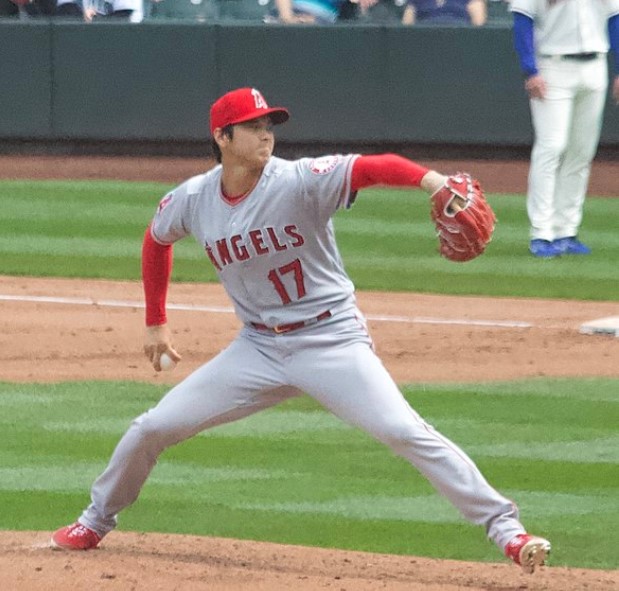
As usual, the Baseball Roundtable monthly update includes a tidbit about Shohei Ohtani – the Angels’ two-way star. In the Angels’ August 9 game against the A’s in Oakland, Ohtani started on the mound and in the lineup (batting second) at designated hitter.

Ohtani pitched six scoreless innings (four hits, three walks, five strikeouts) for his tenth win of the season.  He also went two-for-three, with his 25th home run.  That pitching victory made Ohtani just the fourth  MLB player to hit at least ten home runs and record at least ten pitching victories in the same season. The only others?  Babe Ruth, for the Red Sox,  back in 1918  (13-7, with 11 long balls)  and two Negro League stars – Ed Riles (11-6, with 11 home runs) for the 1927 Detroit Stars and Bullet Rogan (14-8, with 15 home runs) for the Kansas City Monarchs in 1922.  Ohtani ended August at 11-8, 2.67, with 176 strikeouts in 128 innings on the mound and .260-30-82 on 469 at bats.

Shohei Ohtani hit his 30th home run of the 2022 season in an August 31 Angels’ 3-2 win over the Yankees. Coupled with his 11  pitching wins (thus far this season) that made him the first MLB player ever to earn at least ten pitching victories and hit at least 30 home runs in a season, 

Field of Dreams

On August 11, the Cubs and Reds played the second annual MLB at Field of Dreams Game in the MLB-built ballpark, in a cornfield outside of Dyersville, Iowa.  The Cubs prevailed 4-2, but this one (although it counted) was more about nostalgia and atmosphere than the outcome. The highlights – other than the locale – were probably Ken Griffey, Sr. and Ken Griffey Jr. walking out of the cornfield to “have a catch” and  the pregame ceremonies that included Hall of Famers Billy Williams, Andre Dawson, Fergie Jenkins, Ryne Sandberg, Lee Smith, Johnny Bench, Ken Griffey, Jr. and Barry Larkin.

Nelson Cruz Putting Up a Nice Round Number

On August 13, as the Nationals  topped the Padres 4-3 in Washington, 42-year-old Nelson Cruz went two-for-three, with a walk and a run scored.  His second hit of the night, an eighth-inning single, marked his 2,000th MLB safety.

Pete Alonso also Putting Up Some Round Numbers

Photo by slgckgc

On August 19, as the Mets topped the Philllies 7-2 in Philadelphia, Pete Alonso drove in the first run of the game on a fielder’s choice in the first inning– notching his 100th RBI of the season. Then, in his next at bat (third inning), he added another round number hitting a two run home run for his 30th round tripper of the year. The 2019 home run leader as a rookie (with a rookie-record 53 home runs) finished August with a .271-31-105 line on the season.


So Close and Yet …

On August 14, the Drew Rasmussen pitched a gem – taking a perfect game into the ninth inning in just his 30th major-league start (67th MLB appearance in three seasons).  Rasmussen reached the ninth inning (against the Orioles in Tampa) having retired the first  24 Orioles to come to the plate on a total of 79 pitches (56 strikes). Six Orioles had gone down on strikes.

In the top of the eighth, Rasmussen retired the Orioles on two ground outs and a strikeout, but needed 16 pitches to record the three outs (the most pitches he had thrown in any inning of the game).  Over the first seven innings, he needed more than ten pitches to the retire the Birds in just one frame (12 in the second). Despite striking out, Orioles’ 2B Rougned Odor made Rasmussen work – with an eight-pitch at bat in the eighth (the longest Orioles’ at bat of the contest).

Orioles’ SS Jorge Mateo, who came into the game hitting .231, put an end t0 the suspense by hitting Rasmussen’s first pitch in the ninth for a double to left. Rasmussen, still working toward his first MLB complete game and first MLB shutout, then got PH Terrin Vavra on a ground out (second-to-first), with Mateo moving to third. Next up was CF Brett Phillips. With the count 1-2, Rasmussen tossed a wild pitch for ball two, with Mateo scoring from third.  Two pitches later, Phillips swung and missed (for strike three) on another wild pitch, but gained first base. That ended Rasmussen’s day.  After eight perfect frames, no perfecto, no no-hitter, no shutout, no complete game – but his seventh win (four losses) on the season. For more on perfect games lost late (with two outs in the ninth or later), click here.

Rasmussen, by the way, went 3-1, 1.57 in six August starts – running his 2022 record to 9-4, 2.70. It looks like a solid future ahead.

Baseball Roundtable Extra – Space Cowboys Launch a Big Inning

On August 19, the Triple-A Sugar Land Space Cowboys faced off against the Oklahoma City Dodgers. The game was tied 4-4 in the bottom of the sixth  inning, when the Space Cowboys scored 17 runs on  ten hits, nine walks and one hit-by-pitch.  Eight of the nine Space Cowboy hitters reached base two or more times in the frame. The inning lasted just two minutes shy of an hour. 

Note: The MLB record for runs scored in an inning is 18, set by the Chicago White Stockings in the seventh inning of 26-6 win  against the Detroit Wolverines on September 6, 1883. In the seventh inning of that game, the White Stockings launched 18 hits and had three players get an MLB-record three hits in an inning –  Tom Burns (two doubles and a home run); Fred Pfeffer (a double and two singles); and Ned Williamson (a double and two singles). For more on players with three-hit innings, click here.

Patrick Sandoval Channels the Master

On August 19, Angels’ southpaw Patrick Sandoval channeled Professor Greg Maddux – tossing what MLB has come to term “A Maddux” – a complete-game shutout in less than 100 pitches. It was Sandoval’s first career complete-game (four seasons, 50 starts).   After the game, Sandoval joked that  “Usually, I’m like through four innings on 97.” In the 1-0 win, over the Tigers in Detroit, Sandoval gave up just four hits and no walks, while fanning nine. Of his 97 pitches, 73 were strikes. Notably, nine of those pitches came in a single at bat – Tigers’ CF Riley Greene grounded out  second-to-first to end a nine-pitch at bat for then final out in the sixth inning. It as the only three-ball count in Sandoval’s outing. Sandoval closed August with  5-9, 3.02 record on the season.

Donaldson Posts Ultimate Grand Slam

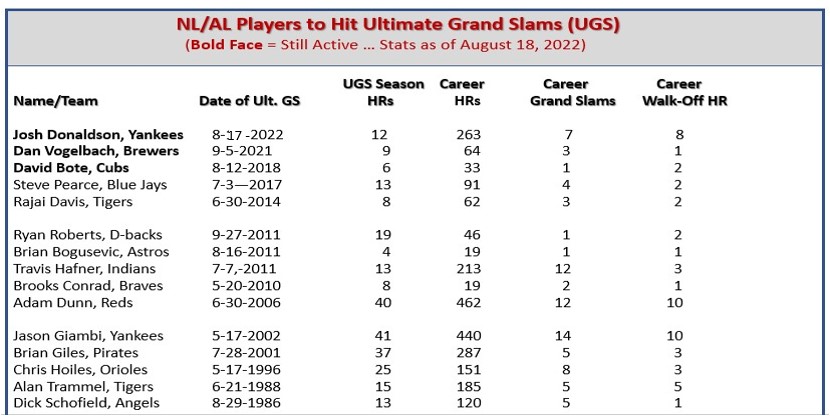
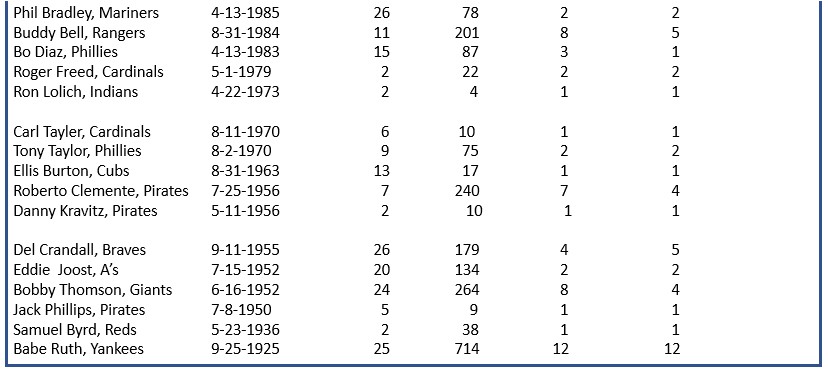
On August 17, Yankees’ DH Josh Donaldson joined the ranks of the MLB players who have launched an “Ultimate Grand Slam” – a Grand Slam, Walk-Off Home Run with their team down by three runs. Note: This list may change as the Negro League records from 1920-48 are fully documented and incorporated into the MLB records.

Donaldson’s blast came in the bottom of the  tenth inning, with his Yankees trailing the division-rival Rays 7-4. The Rays had plated three runs in the top of the inning (placed runner, two walks and a double) off New York closer Aroldis Chapman to set up the need for the four-run shot.  The Yankees opened the bottom of the inning with RF Aaron Judge placed at second base and Jalen Beeks on the mound for the Rays.   New York 2B Gleyber Torres greeted Beeks (on an 0-1 pitch) with a single to right, with Judge moving to third. 1B Anthony Rizzo then walked on four pitches, loading the sacks  for Donaldson, who hit a Grand Slam, Walk-off home run down the right field line.

Donaldson is no surprise on this list.  He’s a long-standing legitimate power threat.  The dinger was the four-time All Star’s 12th home run of the season and 263rd regular season long ball of his career. It was also his seventh career Grand slam and eighth career walk-off home run.

Below is a list of the AL/NL players who have poked an Ultimate Grand Slam since 1900. There are some expected names (like Donaldson, Travis Hafner, Adam Dunn, Babe Ruth and Roberto Clemente), and some surprises (like David Bote, Brian Bogusevic and Danny Kravitz). Note: Baseball-Almanac.c0m also credits Roger Connor of the 1881 Troy Trojans with a UGS.

Prince Albert Passes Stan the Man

Photo by Dirk DBQ

Albert Pujols, in  what he has announced will be his final season as a player, proved he can still handle the dog days of August– putting up a .361-8-17 line in 23 August  games for the Cardinals. During August, Pujols passed Stan Musial for second all-time in total bases. As the month ended, he stood among the top-five all time in games played (fifth); total bases (second); doubles (fifth); home runs (fifth); RBI (third); extra-base hits (third), and intentional walks (second). His career stat line was 296-694-2,191 at the close of August.

Another Notch in Pujols’ Belt

On August 29, in the third inning of a Cardinals 13-4 win over the Reds (in Cincinatti), Redbirds’ 1B Albert Pujols hit his 15th home run of the season – a two-run shot off he Reds’ Ross Detwiler.  In another of those #InBaseballWeCountEverything moments, it marked the MLB-record 450th pitcher Pujols has taken deep in his 22-season MLB career. 

Not a Path to the Majors You Could Bank On

In 2019, southpaw Nate Fisher had his best college season (7-3, 3.27) – in his senior year with the University of Nebraska. Surely, the scouts would come calling.  Fisher, however, went undrafted and signed a minor-league deal with the Mariners. In 2019, he went 0-2, 4.10 in 12 games (six starts) at Low-A.  Then, when COVID resulted in cancellation of the 2020 season and Fisher was released by the Mariners in May, the 24-year-old took a position as a commercial lending analyst at a bank in Omaha. But his baseball dream was not  yet over.

In June of 2021, he signed another minor-league deal with the Mariners and put up a 3-0, 2.89 line  in 21 games –  working his way from rookie ball to High-A to Double-A to Triple-A. .   He became a free agent that November  and signed another minor-league deal (Mets) that same month.  He went 1-3, 3.38 at Double- and Triple-A before an August call up to the Mets – who were facing an injury-depleted pitching staff and a heavy schedule.

On August 21, Fisher came on in the fifth inning of a game in which the Mets trailed the Phillies 7-4. He  pitched three scoreless (one hit, two walks, one whiff) innings and left with the game tied 7-7. (The Mets eventually own 10-9). Just as a stint in banking interrupted his baseball career, his MLB debut was also interrupted 45-minute rain delay after his first inning of work.  What lies ahead for the pitcher/banker? Hard to say, the day after his MLB debut, he was designated for assignment. Somehow, I expect he will persevere and Baseball Roundtable opes (and expects) to see him back in an MLB uniform.

Little League Classic – Big Success

On August 21, the Red Sox and Orioles traveled to Williamsport, Pennsylvania to play in the fifth Little League Classic – a game played (in the minor-league home of the Williamsport Crosscutters) in conjunction with the Little League World Series. This year’s game was won by the Orioles 5-3, but the real  highlight was the interaction between the Little Leaguers and their big-league counterparts – autographs, selfies, high-fives, fist bumps, impromptu games of catch between major leaguers and little leaguers, the sharing of big and little baseball stories and, of course, the cardboard sliding down the hill beyond the center field fence of Lamade (Little League) Field.  As is usual for this great event – a good time was had by all.  Of all the “events” MLB has created recently to boost the game (think Field of Dreams Game and Players Weekend), the Little League Classic is by far my favorite.

Three IS a Crowd

On August 22, the Twins turned their second triple play of 2022. (There have been four triple-killings this season). It came in the top of the fourth inning of a Twins 2-1 loss to the Rangers.  At the time, the game was scoreless and Twins’ starter Sonny Gray had given up a single to 2B Marcus Semien, followed by a four-pitch walk to SS Corey Seager. The next batter, 1B Nathaniel Lowe, lined the first pitch he saw from Gray to Twins’ 1B Jose Miranda. The runners were moving on the hot smash and Miranda tagged first to double off Seager) and tossed to shortstop Carlos Correa, who stepped on the second base bag to retire Semien.

Three for Two

The Twins remain the only team to turn two triple plays in one game. They  came on July 17, 1990, in a 1-0 Twins’ loss to the Red Sox in Boston. Both triple plays (in the fourth and eighth innings) were the most  traditional of triple plays – ground ball  third base (Gary Gaetti, steps on bag); relay to  second (Al Newman); relay to  to first (Kent Hrbek).

More #InBaseballWeCountEverything

On August 24, Mariners’ 24-year-old rookie right-hander George Kirby started against the Nationals in Seattle.  And, he got off to  quite a “start.”  Kirby opened the game by throwing 24 straight strikes (before his first called ball). According to STATS, that represents a record number of strikes to start off a game (at least since the initiation of pitch tracking in 1988). Kirby did not throw a called ball until he was facing his eleventh batter – with two out in the bottom of the third.  Over that span, he fanned three batters, and gave up five singles and one run. While the Mariners eventually lost the game 3-1, Kirby had a solid outing – seven innings (eight hits, one run, no walks and nine strikeouts). He threw 85 pitches (69 for strikes).

Kirby, a first round pick in the 2019 MLB draft (out of  Elon University), has a well-earned reputation as a strike thrower. In 30 minor-league outings, he went 7-4, 2.26 and walked just 21 batters in 117 1/3 innings (139 strikeouts). Thus far in 2022, his MLB record is 5-3, 3.32, with just 13 walks (102 whiffs) in 97 2/3 innings.

Baseball Roundtable Extra … Bartolo Colon Goes on the Record on Strike(s)

On April 18, 2012, the Oakland A’s Bartolo Colon started on the mound against Ervin Santana and the Angels.  During one stretch of that game, won by A’s 6-0, Colon threw 38 consecutive strikes.  (The longest such streak since pitch-by-pitch data began being accurately tracked in 1988.) Were all 38 offerings in the strike zone? Perhaps not, but all those pitches that were outside the zone were close enough that the batters offered at them.

Overall, the streak lasted from the second pitch of the fifth inning until the seventh pitch of the eight frame.  Surprisingly, Colon struck out just two batters during the streak.  He also gave up two hits during the streak of strikes. A few notes:

  • 35 of the 38 pitches were fastballs (two change ups and one slider).
  • There was only one swing and miss (17 strikes looking).
  • There were ten foul fouls and ten balls put in play.

Another Mariners’ Shining Rookie

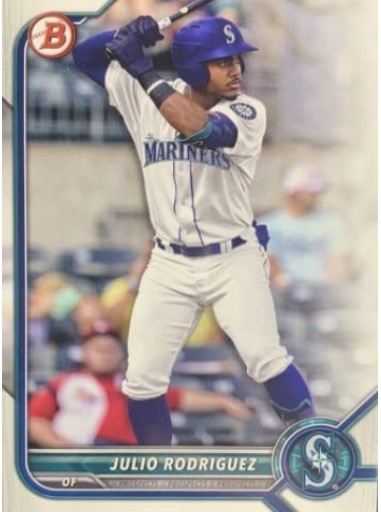
On August 24, Mariners’ 21-year-old rookie CF Julio Rodriguez popped his 20th home run of the season (the only Seattle score in a 3-1 loss to the Nationals). Matched up with his 23 stolen bases, Rodriguez became just the fourth AL/NL rookie to notch a 20-20 season. The others are: Mitchell Page, 1977 A’s (21 home runs/42 steals); Marty Cordova, 1985 Twins (24 HR/20 SB); Ellis Burks, 1987 Red Sox (20 HR/27 SB).  Rodriguez ended August with a .266-21-65, 23 stolen bases stat line.

More Old Guys Rule

Being and “old guy” myself, I always enjoy it when some of MLB’s most veteran players make the highlights (like Nelson Cruz, Justin Verlander, Albert Pujols and Adam Wainwright). Well, you can add Rich Hill to that list. On August 27, the 42-year-old southpaw – in his 18th MLB season – picked up his sixth win of 2022 (6-5, 4.32) – going seven scoreless innings (three hits, one walk and 11 strikeouts) in a Rays 5-1 win over the Red Sox at Fenway Park.  In the process, he became the first Red Sox pitcher in his 40’s to record at least 11 whiffs in a game.

They Call Him the Streak

From August 3 through August 27, Rangers’ outfielder Adolis Garcia put up a 21- game hitting streak – going 30-for-95 (.316), with three home runs and 16 RBI.

Decisions… Decisions

On August 27, Nationals’ starting pitcher Patrick Corbin pitched six solid innings (four hits, two runs – one earned – one walk and five strikeouts) and picked up the win as the Nationals topped the Reds in Washington D.C. It was Corbin’s fifth win against 17 losses. Why does it make the Highlights? It was the first win by a Nationals’starting pitcher since July 6;  an MLB-record 43 consecutive games without a win from a starter. Over that time, the Nationals’ starters went 0-26.  Here’s a breakdown. (Note: decisions and earned run averages are only as starters, an asterisk indicates the pitcher also had relief appearances during the streak.

  • Patrick Corbin … 0-7, 9.82 in eight starts
  • Anibel Sanchez – 0-5, 5.72 in eight starts
  • Paolo Espino … 0-4, 5.53 in nine starts
  • Erik Fedde … 0-3, 7.50 in four starts
  • Josiah Gray … 0-3, 6.94 in seven starts
  • Cory Abbott* … 0-2, 5.78 in four starts
  • Joan Adon* … 0-1, 9.00 in one start
  • Cade Cavalli… 0-1, 14.54 in one start

Who got that July 6 win?  That was Josiah Gray, who fanned 11 batters in six innings (four hits, two earned runs, one walk) in a 3-2 win over the Phillies.

Soon to Join the 60’s Club

On August 29, the Yankees’ Aaron Judge, in a 4-3 New York loss to the Angels, rapped his 50th home run of the 2022 season – making him one of just two Yankees to have multiple 50-homer seasons (the others – Babe Ruth and Mickey Mantle are fairly well known) – and putting him in good position to join Ruth and Roger Maris as the only Yankees with 60-homer campaigns.  Here are your players with at least one 60 or more homer seasons: Barry Bonds (73 in 2001); Mark McGwire (70 in 1998, 65 in 1999); Sammy Sosa (66 in 1998, 64 in 2001, 63 in 1999); Roger Maris (61 in 1961); Babe Ruth 60 in 1927). Note: Judge ended August with 51 home runs on the season.

Jhoan Duran – On Fire

On August 29, Twins 24-year-old rookie reliever  Jhoan Duran – known for his 103 mph+ fastball – unleashed  100.8 MPH “splinker” (his combination of a splitter/sinker) – reported by STATCAST to be the first documented 100-MPH+  “offspeed” pitch of the pitch-tracking era.  Duran, by the way, pitched the seventh inning of the game – a Twins 4-2 win over the Red Sox – retiring the heart of the Boston batting order on two strikeouts and a ground out. On the season, the rookie is 2-3, 1.91 with six saves and 73 strikeouts in 56 2/3 innings.

Probably Won’t See That Again

On August 31, the Phillies closed out the month with a bang – collecting 22 hits and scoring 18 runs – in an  18-2 win over the Diamondbacks,.  We may see 18 runs again, but these 18 tallies came without the benefit of a single home run. A few other notes:

  • Nine Phillies had multi-hit games;
  • Ten Phillies drove in at least one run;
  • Ten Phillies scored at least one run;

_______________________________________

——-Individual Statistical Leaders for August 2022——

AVERAGE (60 August  at bats minimum)

National League – Jeff McNeil, Mets (.385); Nolan Arenado, Cardinals (.364); Albert Pujols, Cardinals (.361)

American League –  Nathaniel Lowe, Rangers (.389); Eloy Jimenez, White Sox (.371);  Alex Bregman Astros (.362)

The lowest August  average (among players with at least 60 at bats in the month)  belonged to the Guardians’ Myles Straw at .093 (7-for-75).

HOME RUNS

National League – Paul Goldschmidt, Cardinals (9); Nolan Arenado, Cardinals (8); Mookie Betts, Dodgers (9)

American League – Aaron Judge, Yankees (9); Eugenio Saurez, Mariners (9); Shohei Ohtani (8)

The Cardinals’ Albert Pujols had the highest August  slugging percentage (among players with at least 60  at bats) at .803.  The AL  leader was the Astros’ Alex Bregman at .681.

RUNS BATTED IN

National League – Nolan Arenado, Cardinals (29);  Manny Machado, Padres (28); Paul Goldschmidt, Cardinals (27)

American League –  Randy Arozarena, Rays (23); Eugenio Suarez (23); four with 22

HITS

National League – Jeff McNeil, Mets (42); Manny Machado, Padres (40); Nolan Arenado, Cardinals (39)

American League –  Nathaniel Lowe, Rangers (42); Jose Abreu, White Sox (37); Eloy Jimenez, White Sox (36)

The White Sox’ Eloy Jimenez led MLB (players (with at least 60 August at bats) in on-base percentage at .461. The NL leader was the  Cardinals’ Paul Goldschmidt at  at .448.

DOUBLES

National League –  Manny Machado, Padres (14); Jeff McNeil, Mets (13);  Nolan Arenado, Cardinals (12); Michael Harris, Braves (12)

American League –  Alex Verdugo, Red Sox (12); Jose Altuve, Astros (12); Yandy Diaz, Rays (10)

TRIPLES

National League – Lars Nootbaar, Cardinals (3); J.T. Realmuto, Phillies (3); six with two

American League – Shohei Ohtani, Angels (3); Magneuris Sierra, Angels (3); six with two

The Dodgers’ Mookie Betts and Cardinals’ Nolan Arenado tied for the MLB lead in August extra-base hits with 21 each.  

STOLEN BASES

National League –  Jake McCarthy, Diamondbacks (8); Starling Marte, Mets (6); Josh Rojas, Diamondbacks (6)

American League –Bubba Thompson, Rangers (8); Andres Gimenez, Guardians (7); Adolis Garcia, Rangers (7); Cedric Mullins, Orioles (7); Randy Arozarena, Rays (7)

The Diamondbacks’ Jake McCarthy and Rangers’ Bubba Thompson was eight-for-eight in August steal attempts.

WALKS

National League – Juan Soto, Padres (25); Lars Nootbaar, Cardinals, (23); Paul Goldschmidt, Cardinals  (19)

American League – Aaron Judge, Yankees (25); Adley Rutschman, Orioles (22); Carlos Correa, Twins (18)

The Padres’ Juan Soto led in walks/strikeouts ratio (among batters with at least 60 August  at bats)  at 1.92 … 25  walks versus 13 whiffs in 24 games.

BATTER’S STRIKEOUTS

National League – Jose Barrero, Reds (41); Oneil Cruz, Pirates (41); Dansby Swanson, Braves (35); Kyle Schwarber, Phillies (35)

American League – Riley Greene, Tigers (41); Matt Chapman, Blue Jays (35); Adolis Garcia, Rangers (35)

PITCHING VICTORIES

National League – Zac Gallen, Diamondbacks (5-0); Chris Bassitt, Mets (4-0); Tony Gonsolin, Dodgers (4-0): Ryan Hensley, Cardinals (4-0); Jordan Montgomery , Cardinals (4-0); Julio Urias, Dodgers (4-1); Kyle Wright, Braves (4-10; Jacob deGrom, Mets (4-1)

American League – Framber Valdez, Astros (5-0); George Kirby, Mariners (4-0); Cal Quantrill, Guardians (4-0); Michael Wacha, Red Sox (4-0);  Lucas Giolito, White Sox (4-2); Marco Gonzalez Mariners (4-2)

 EARNED RUN AVERAGE (at least 25 innings pitched)

National League –  Zac Gallen, Diamondbacks (0.61); Drew Smyly, Cubs (0.90); Julio Urias, Dodgers (0.90)

American League – Patrick Sandoval, Angels (1.39); Drew Rasmussen, Rays (1.57); Shane Bieber, Guardians (1.62)

Among pitchers with at least four August starts or 20 August innings, the Diamondback s’ Madison Bumgarner  had the highest ERA at 9.23 (27 earned runs in 26 1/3 innings in five starts).

STRIKEOUTS

National League – Jacob deGrom, Mets (55 / 36 1/3 innings); Blake Snell, Padres (46 / 32 innings); Zac Gallen, Diamondbacks (44 / 40 innings); Max Scherzer, Mets (44 / 40 2/3 innings)

American League – Triston McKenzie, Guardians (43 / 38 2.3 IP); Lance Lynn, White Sox (42 / 36 2/3 IP); Kevin Gausman, Blue Jays (42 / 36 2/3 innings); Gerrit Cole, Yankees (42 / 39 1/3 IP)

SAVES

National League – Daniel Bard, Rockies (6); Edwin Diaz, Mets (6); Kenley Jansen, Braves (6)

American League – Lam Hendriks, White Sox (9); Felix Bautista,Orioles (7); Emmanuel Clase, Guardians (7)

WHIP (Walks +  Hits per Inning Pitched – 25 innings minimum)

National League – Jacob deGrom, Mets (0.55); Zac Gallen, Diamondbacks (0.75); Freddy Peralta, Brewers (0.81)

American League – Drew Rasmussen, Rays (0.67); Cal Quantrill, Guardians (0.76); Justin Verlander, Astros (0.79)

__________________________________

If the season ended August 31, the post-season teams would be:

National League: Dodgers, Mets, Cardinals   Wild Cards: Braves, Phillies, Padres

American League: Astros, Yankees, Guardians   Wild Cards: Rays, Mariners, Blue Jays

—–Statistical Leaders Through August 2022 ———-

RUNS SCORED … Average 561

National League – Dodgers (691); Braves (646); Cardinals (644)

American League – Yankees (652); Blue Jays (600); Astros (593)

The fewest  runs (through August) were scored by the Tigers – 431. The Pirates tallied the fewest runs in the NL at 463.

AVERAGE  …  Average .243

National League – Dodgers (.261); Rockies (.261); Cardinals (.258)

American League – Blue Jays (.260); White Sox (.260); Red Sox (.258)

The lowest team average through August  belonged to the A’s at .215. The Pirates  were at the bottom of the NL at .220.

HOME RUNS …  Average 139

National League – Braves (194); Brewers (181); Dodgers (170)

American League –  Yankees (205); Astros (172); Rangers  (159)

The Tigers  had the fewest home runs through August  at 76 … the only team under 100 dingers.

The Dodgers led MLB in slugging percentage through July at .449.  The Blue Jays led the AL at .426.  The average tam sluggiung percentage was .395.

STOLEN BASES … Average 66

National League – Marlins (108); Phillies (86); Cubs (86)

American League – Rangers (101); Royals (85) ; Guardians (83)

The Twins stole the fewest sacks through August (27 in 42 attempts).   The Rockies were at the bottom of the NL with 36 in 52 attempts.  The White Sox stole 41 bases through August and were caught just eight times.

WALKS DRAWN … Average 399

National League –   Dodgers (485); Padres (476); Brewers (467)

American League  Yankees (500); Mariners (464); Astros (439)

The Dodgers  led MLB  in on-base percentage through August at .337. The Yankees led the AL  at .323.  The A’s had MLB’s lowest  OBP through August at .280.  

BATTER’S STRIKEOUTS … Average 1,086

National League – Braves (1,211); Pirates (1,205); Reds (1,145); Cubs (1,157)

American League – Angels (1,264);  Tigers (1,140); Rays (1,134)

Guardians’ batters fanned the fewest times through August  (887).

Earned Run Average … Average 3.98

National League – Dodgers (2.82); Mets (3.51); Braves (3.53)

American League – Astros (3.03); Yankees (3.31); Rays  (3.32)

Two teams had  ERAs through August of 5.00  or higher – Nationals (5.11) and  Rockies (5.05).

STRIKEOUTS … Average 1,086

National League – Braves (1,245); Mets (1,235); Brewers (1,217)

American League –  Astros (1,182); Yankees (1,172); White Sox (1,157)

The Braves, Mets and Brewers averaged an MLB-best 9.5 strikeouts per nine innings through August. The Astros averaged an AL-best 9.2. Eight teams average at least nine  whiffs per nine innings.

FEWEST WALKS SURRENDERED… Average 399

National League  – Dodgers (320); Giants (356); Mets (357)

American League –  Rays (304); Blue Jays (342); Yankees (342)

The Rays walked an MLB-lowest 2.4 batter per nine innings through August.  The Dodgers were best in the NL at 2.5.  The Royals walked an MLB-worst 3.9 batters per nine frames.

SAVES … Average 33

National League – Braves (44); Brewers (43);  Padres (42)

American League – Astros (41); White Sox (39); Yankees (38);

Bonus Stats:

  • The Nationals gave up an MLB-high 195 home runs through August. By contrast, the Astros and Giants gave up an MLB-low 111.
  • There were 26 complete games through August. The Marlins had the most complete games at four.  Sixteen of the 30 MLB teams have yet to record a complete game.
  • There have been 275 team shutouts (ten of those single-pitcher complete game shutouts). The Mets have the most shutouts with 17.
  • The Mariners committed the fewest errors through August (47) and had the top fielding percentage at .990. The Pirates committed an MLB-high 95 fielding miscues through August. 

Primary Resources: Baseball-Reference.com; ESPN.com; MLB.com


100Baseball Roundtable is on the Feedspot list of the Top 100 Baseball Blogs.  To see the full list, click here.

I tweet baseball @DavidBaseballRT

Follow/Like Baseball Roundtable’s Facebook Page here.  More baseball commentary; blog post notifications.

Member: Society for American Baseball Research (SABR); The Baseball Reliquary; The Negro Leagues Baseball Museum.
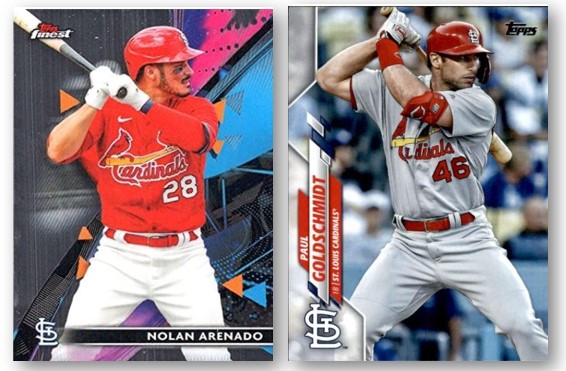
Baseball Roundtable, blogging baseball since 2012. 

Guest Post … Looking at Some Top Baseball Walk-Up/Walk-In Tunes

GUEST POST

Baseball Roundtable is pleased to present this guest post from Paul Hall, who operates the popular Little Ballparks blog (LittleBallparks.com); covering diverse baseball and softball topics – ranging from “Why do Baseball Games Start at Odd times?” to “Best Baseball Board Games” to “Best Baseball Radar Guns” (and a lots of topics in between). If you want something that may spark a little debate, you might try “The Most Important Position in Baseball,” in which Hall share his view on baseball’s most and least important positions. Here’s a link to that post.

In this guest post, Hall looks at his favorite Walk-Up/Walk-In songs.

 ——————————————————-

 My Favorite baseball Walk-Up Songs

Guest Post

By Paul Hall

Enter Sandman – Metallica

Photo by Keith Allison

My mind is so infected with baseball that, more often than not, the first association when hearing some song is the player who uses it as a walk-up song.

Among all those songs and players, no mental connection is stronger than the one between Metallica’s Enter Sandman and Yankees’ icon Mariano Rivera.

It’s come to the point that it’s impossible for me to hear that long-building Kirk Hammet guitar intro and not picture Rivera coming out the bullpen and slowly jogging towards the mound.

I had the good fortune to attend a couple of Yankees games in the early days and witness the crowd go crazy for Rivera.  To this day, the old Yankee Stadium, as Mariano came in to the intro of Enter Sandman, is for sure the loudest place I’ve ever been.  Surely louder than any rock concert.

At these moments, it was hard not to feel for the opposing batters.  It’s not enough that you have to face probably the best closer ever, but he comes out to the field accompanied by one of the most menacing songs ever.

Big Poppa – The Notorious B.I.G


Photo by Keith Allison

Big Poppa is hugely popular and used as a walk-up song by a number of players.  However, this is another number that will forever in my mind be connected with just one player.

Moreover, because of that player, it’s a walk-up song that’s particularly near and dear to my heart. “Big Papi” David Ortiz is one of my favorite players ever, even though I’m the farthest a man can be from a Red Sox fan.

He just had something special about him and the swagger he played and carried himself with made this classic rap banger a perfect fit for his character.

The slow and groovy jam seemed to perfectly capture the essence of Ortiz as a player and as a public persona.

Other players, even some rather prominent ones such as CC Sabathia, also used this song as they walked up on the field.  Still, I feel that none of them managed to own it in the way Big Papi did.

Can’t Stop – Red Hot Chili Peppers

As a boy ( and as an adult, to be honest), I used to spend countless hours dreaming about playing in the MLB.  A fair share of that daydreaming went to thinking about what would be my walk-up song if I ever got a chance to step onto the Major-League field.  I considered literally hundreds of songs, but it always came down to the same one – Can’t Stop by the Red Hot Chili Peppers.

It’s one of my favorite songs by one of my favorite bands and it has everything a good walk-up song should have.  The song checks all the boxes – upbeat intro, rhythm bursting with energy, immaculate vibe, catchy melody, and inspiring lyrics.

Plus, it’s played by probably some of the coolest dudes on the planet.  So, it’s no wonder that plenty of players, including All-Stars such as Anthony Rizzo, love to have Can’t Stop blasting through the loudest baseball speakers as they enter the game.

Careless Whisper – Wham

Photo: Keith Allison from Hanover, MD, USA, CC BY-SA 2.0 <https://creativecommons.org/licenses/by-sa/2.0>, via Wikimedia Commons

I’ve always loved players who didn’t take themselves too seriously. Players who knew how to have fun, and made jokes at their own expense.  And, what better way to prove you’re all this than choosing one of the corniest songs ever as your walk-up song?

The 80s classic, Careless Whisper, is in many ways, the opposite of what a walk-up song should be. With its sensual saxophone intro, slow-dance atmosphere, and romantic lyricist, the song would be better fitting for a beauty pageant or a cheesy nightclub than a baseball field.

Still, some players, such as Josh Reddick, embraced the irony and managed to make it one of the greatest walk-up songs ever.  It even came to the point that fans began carrying their own prop saxophones to the games.

However, despite all of the above, I feel that there’s another perspective to this.

When a player chooses Careless Whisper, in my eyes, he’s a total bad-ass who doesn’t care about looking cool and his only worry is how to annihilate the opponents.

Halloween Theme – John Carpenter

Photo: Johnmaxmena2, CC BY-SA 4.0 <https://creativecommons.org/licenses/by-sa/4.0>, via Wikimedia Commons

One of the things I enjoy the most is when baseball goes beyond the boundaries of sport and intersects with popular culture. Choosing a movie theme as your walk-up song certainly falls into this category. These songs don’t just draw from the sound, but also have another layer of meaning that’s familiar to every movie buff.

Obviously, Mike Mayers, a former Cardinals’ (current Angels) pitcher, didn’t have to think too hard when choosing his walk-up song. (Those of you familiar with the Halloween movie franchise movie villain will recognize that Mayers only had to add a vowel.)

He may not have reached the star level of others in this post, but Mayers certainly has a “household” name and his choice of walk-in music readily leans into the notoriety of his namesake from the Halloween franchise.

Now, Mayers has not reached the level of intimation attributed to many of today’s relievers. Nevertheless, I certainly wouldn’t want to be in the batter’s shoes when he comes out of the bullpen to the sound that used to announce the arrival of one of the scariest villains in movie history.

God’s Gonna Cut You Down – Johnny Cash

Photo: Erik Drost, CC BY 2.0 <https://creativecommons.org/licenses/by/2.0>, via Wikimedia Commons

Although I’m all for peace and love on the baseball field, I love when things get a little dark. Without it, it’s difficult to achieve the much-needed intimidation factor of the walk-up song. Besides pumping up the player and the crowd, the song should also send chills down the spines of opposing players. That’s probably why pitchers like Cody Allen and Drew Storen (among others) have taken the mound to this Cash tune.

And, it’s hard to think of anyone better for sending a chill down the spine than the Man in Black himself. Hearing Johnny Cash’s harrowing lyrics, accompanied by the dark country twang and stomp-clap beat, is enough to creep me out even when I’m sitting safely at home.

I can only imagine how intimidated the players may feel when they hear the words “You can run on for a long time/Sooner or later God’ll cut you down” as their opponent steps onto the field.

——————————–

About Post Author Paul Hall

Throughout his whole life, Paul Hall has been, in one way or the other, involved in baseball.

Growing up in a baseball-obsessed family, he caught the bug early from his father and spent countless hours playing and watching the game, dreaming of making it big.  Even though his playing career ended in high school, Paul never veered too far from the baseball field.

Over the last 25 or so years, he has traveled the country, trying to visit as many ballparks as possible and talk baseball with fellow enthusiasts.

Paul even managed to combine baseball with his other passion, writing, and runs a blog at littleballparks.com, providing a helpful resource for everyone looking for useful and actionable information about the game.

The blog covers a wide range of topics, including how-to guides, explanations of niche baseball slang, recommendations for the best baseball gear, and fun trivia articles.

Recent posts include diverse subjects such as Why Do Baseball Players Wear Arm Sleeves, USA vs USSSA Bats, How Much Does A Baseball Weigh, and How Much Money Does A Baseball Stadium Make Per Game.

Baseball Roundtable Q&A with Paul Hall

Q: Why did you decide to start a baseball blog?

A: In my group of friends, I was always known as “the baseball guy.” Any time anyone had a question about baseball, they would turn to me for an answer, as they knew I was a living encyclopedia of weird baseball facts and obscure game rules.

As much as I love talking about baseball and as much as I love my friends, this can get tiring after a while.

So, I decided to create a one-stop spot for everyone who might have similar questions and gather all my knowledge in one place.

Q: What positions did you play in Little League and High School?

A: Initially, I roamed around and played every position except the catcher.

However, as I grew older, I got rather tall, so the coach would usually put me on  first base. I remained at  first base throughout high school,  when my competitive baseball career ended. I like to think that it was due to the incompetence of college scouts, but it probably had more to do with the lack of talent.

Q: How many ballparks have you been to?

A: By my account, I have visited 17 MLB ballparks and almost 60 Minor-League fields.

Of course, some of them are no longer in use, and it makes me happy that I was able to make my pilgrimage there while they were still active.

The first stadium I visited and the site of the first ballgame I saw in person was the old Tiger Stadium in Detroit.  My father took me to the Opening Day of the 1985 season, and we watched the Tigers beat the Indians.

I don’t remember much from the game except how enamored I was with the atmosphere, and that the pitcher for the Tigers was my childhood hero and still one of my favorite players ever, Jack Morris.

Out of current MLB stadiums, I would like to visit the “new” ballpark in Atlanta and the Marlins’ stadium in Miami next.


100Baseball Roundtable is on the Feedspot list of the Top 100 Baseball Blogs.  To see the full list, click here.

I tweet baseball @DavidBaseballRT

Follow/Like Baseball Roundtable’s Facebook Page here.  More baseball commentary; blog post notifications; PRIZES.

Member: Society for American Baseball Research (SABR); The Baseball Reliquary; The Negro Leagues Baseball Museum.
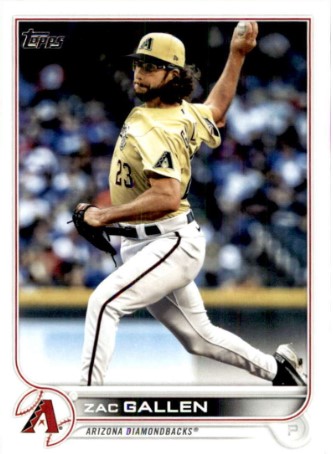
Baseball Roundtable, blogging baseball since 2012. 

Perfect Games Lost At the Last possible Moment – Two Outs in the Ninth (or later)

In recognition of the Rays’ Drew Rasmussen’s loss of a perfect game in the ninth inning (yesterday), Baseball Roundtable revisits perfect games lost at the last possible moment – with two outs in the ninth innings (or later).   But first a look at Rasmussen’s near-perfecto.

Drew Rasmussen pitched a gem – taking a perfect game into the ninth inning in just his 30th major-league start (67th MLB appearance in three seasons).  Rasmussen reached the ninth inning (against the Orioles in Tampa) having retired the first  24 Orioles to come to the plate on a total of 79 pitches (56 strikes). Six Orioles had gone down on strikes.

In the top of the eighth, Rasmussen had retired the Orioles on two ground outs and a strikeout, but had needed 16 pitches to record the three outs (the most pitches he had thrown in any inning of the game).  Over the first seven innings, he had needed more than ten pitches to the retire the Birds in just one frame (12 in the second). Despite striking out, Orioles’ 2B Rougned Odor had make Rasmussen work – with an eight-pitch at bat in the eighth (the longest Orioles’ at bat of the contest).

Orioles’ SS Jorge Mateo, who came into the game hitting .231, put an end t0 the suspense by hitting Rasmussen’s first pitch in the ninth for a double to left. Rasmussen, till working toward his first MLB complete game and first MLB shutout, then got PH Terrin Vavra on a ground out (second-to-first), with Mateo moving to third. Next up was Brett Phillips. With the count 1-2, Rasmussen tossed a wild pitch for ball two, with Mateo scoring form third.  Two pitches later, Phillips swung and missed (for strike three) on another wild pitch, but gained first base. And that ended Rasmussen’s day.  After eight perfect frames, no perfecto, no no-hitter, no shutout, no complete game – but his seventh win (four losses) on the season.

Now a look at Perfect Games lost with two outs in the ninth or latter – as ranked by Baseball Roundtable.

NUMBER ONE – I’m “Calling” This the Toughest Perfect Game “Missed” Ever …  or “So Close and Yet So Far.”

Armando Galarraga, Tigers … June 2, 2010

Photo by Kevin.Ward

Photo by Kevin.Ward

Perhaps the most heartbreaking “no-hitter breakup” took place on June 2, 2010, when Detroit Tigers’ righty Armando Galarraga found himself on the mound in the top of the ninth 26 outs into a perfect game (three strikeouts).  The Tigers led 3-0 and Galarraga was facing Indians’ second baseman Jason Donald. Galarraga induced Donald to ground to right side of the infield. Detroit first baseman Miguel Cabrera moved to his right to make a fine play, spinning and throwing to Galarraga covering first (who clearly beat Donald to the bag). Umpire Jim Joyce called Donald safe, a mistake he admitted and apologized for after the game. (Talk about a bad time for a bad call.)

The official scorekeeper gave Donald an infield single, ending both the perfect game and the no-hitter. Galarraga retired the next batter – CF Trevor Crowe – on a ground out. Joyce’s call, despite the post-game mea culpa, stood, and Galarraga, painfully, joined the list of pitchers losing a perfect game with two outs in the ninth.

Galarraga had a five-season MLB career (2007-2012), going 26-34, 4.78 for the Rangers, Tigers, Diamondbacks and Astros. His near-perfect game was one of only two complete games in 91 career starts.

_________________________________________

NUMBER TWO – Unlucky 13, Indeed … or “So Far and Yet So Close.”

HaddixFor another hard-luck story involving near-perfection, consider the plight of Pittsburgh Pirates’ southpaw Harvey Haddix, who took a perfect game into the 13th inning – AND LOST.

On May 26, 1959, Haddix took the mound against the first-place and defending NL Champion Milwaukee Braves.  Haddix retired the first 36 hitters in order – fanning eight, carrying a perfect game into the bottom of the 13th. A 20-game winner in 1953, the 33-year-old Haddix had come into the game 4-2, with a 2.67 ERA in seven starts – and had thrown complete games in his two previous outings. (He would end up 12-12, 3.13 on the year.)

Unfortunately,  the Pirates’ lineup had given him no support. Braves’ righty Lew Burdette, despite giving up 12 hits and fanning only two, had held the Pirates scoreless. Milwaukee 2B Felix Mantilla led off the 13th by reaching on a throwing error by Pirates’ third baseman Don Hoak. Future Hall of Famer 3B Eddie Mathews bunted Mantilla over to second, which led to an intentional walk to another future Hall of Famer (RF Hank Aaron), bringing up 1B Joe Adcock.

Adcock launched a 1-0 pitch over the right field fence for what appeared to be a three-run home run.  However, the Braves, in celebrating the tension-filled victory, forgot how to run the bases. Adcock passed Aaron between second and third and, after some deliberation, Adcock was called out – ultimately changing his three-run homer to a one-run double. So, despite 12 perfect innings, Haddix lost the no-hitter, the shutout and the game itself.  But he did etch his name forever into baseball lore; and countless trivia quizzes. He still holds the record for the most consecutive hitters retired from the start of a game – and the second spot on this heartbreak, near-perfect list. 

Haddix spent 14 seasons (1952-65) in the major leagues (Cardinals, Phillies, Reds, Pirates, Orioles), going 136-113, 3.48.  His best seasons were with the Cardinals in 1953-54. In those two campaigns, Haddix put up lines of 20-9, 3.06 and 18-13, 3.57.  The 5’9”, 170-pounder was a three-time All Star and led the NL in shutouts (six) in 1953.

_____________________________________

NUMBER THREE – Not Just One Out, One Strike, Away.

Max Scherzer, Washington Nationals … June 20, 2015 

Photo by Corn Farmer

Photo by Corn Farmer

Washington Nationals’ right-hander Max Scherzer came within one out – within one strike actually – of a perfect outing on June 20, 2015. Missing by just one swing and miss – and having four chances to sneak that final strike by – earns him number-three on the hard-luck, near-perfect roster.

Scherzer entered the top of the ninth with a 6-0 lead over the Pittsburgh Pirates – having retired the first 24 batters, striking out ten.  In the ninth, Scherzer retired the first two batters (RF Gregory Polanco on a pop out to the catcher and SS Jordy Mercer on a liner to center) and then worked the 27th hitter (pinch hitter Jose Tabata) to a 2-2 count.  Tabata fouled off three 2-2 pitches before Scherzer lost the perfect game in perhaps the most painful way (in more ways than one) possible – by hitting Tabata with a pitch (a breaking ball to the elbow).  Scherzer then got Pirates’ second baseman Josh Harrison on a fly ball to left, completing the no-hitter – and earning a 6-0 victory.  Scherzer, by the way, was not the first pitcher to lose a perfect game by hitting the 27th batter (see George Wiltse, next in this post).

Scherzer, still active, is in his fifteenth major league season (Diamondbacks, Tigers, Nationals, Dodgers, Mets).  He is a eight-time All Star, two-time twenty-game winner and three-time Cy Young Award winner (2013, 2016, 2017). In 2015, he went 14-12, 2.79, but led the NL with four complete games and three shutouts.  As this post is written his career record is 198-99, 3.11 – with 12 complete games, five shutouts and two no-hitters.

______________________________________________________

NUMBER FOUR – Another Bad “Call” – Another “Missed” Perfecto – Another “Not Missed” Batter.

George “Hooks” Wiltse, New York Giants … July 4, 1908

Giants’ southpaw curveballer George Wiltse – like Max  Scherzer (above) – got not just within one out, but within one strike, of perfection.  And, as in the Armando Galarrago near-perfect game, the umpire later admitted that Wiltse threw that strike, and had the out, he just didn’t get the call.

It looked, for the longest time, like Wiltse was going to have plenty to celebrate on Independence Day 1908. The Giants’ southpaw retired the first 26 Phillies before hitting Philadelphia pitcher George McQuillan with a pitch on a 2-2 count (after not getting the call on a very close pitch on his previous delivery – a call umpire Cy Rigler later admitted he missed).  Wiltse retired the next batter. However, despite nine no-hit/no-run innings, he wasn’t done yet.  He and McQuillan were embroiled in a 0-0 duel (like Harvey Haddix, Wiltse got little support in his near-perfecto).  Wiltse went on to pitch-a 1-2-3 tenth (preserving the no-hitter) and the Giants managed to push across a run to give Wiltse a 1-0, no-hit victory. Wiltse is one of only three pitchers to date to complete a no-hitter of more than nine innings. Wiltse finished the 1908 season 23-14, with a 2.34 ERA. He was also a twenty-game winner in 1909 (20-11, 2.00) and went 139-90, 2.47 in twelve MLB seasons.  He finishes a spot behind Scherzer’s two-strike hit batsman only because, even if he had gotten the strike out, the perfect game would not have been completed (since the game itself was not completed). Given his 1-2-3 tenth, however, that missed call cost him a perfect outing.

___________________________________________________

NUMBER FIVE – Another One-Strike-Away Performance

Mike Mussina, Yankees … September 2, 2001 

Photo by Keith Allison

Photo by Keith Allison

Fifth-place on the list goes to another one-strike-away, near-perfect performance. On September 2, 2001, the Yankees’ Mike Mussina squared off against the rival Red Sox at Fenway Park. After eight innings, Mussina and Red Sox starter David Cone were locked in a 0-0 duel. Mussina hadn’t allowed a base runner, striking out twelve. Cone had given up just four hits and three walks (fanning eight), while holding New York scoreless.  The Yankees pushed across a run in the top of the ninth on a single, an error and a double by 3B Enrique Wilson. Mussina, looking for his 14th victory of the campaign, went to work on his perfect game (which would have been the first ever at Fenway) – notching a ground out (pinch hitter Troy O’Leary) and a strikeout (2B Lou Merloni) and taking pinch hitter Carl Everett to a 1-2 count before Everett singled to left. Mussina retired Trot Nixon for the final out, in a 1-0 one-hit win.

Mussina finished the season 17-11, 3.15. In an 18-season MLB career (1991-2008), Mussina went 270-153, 3.68 with 57 complete games and 23 shutouts. The five-time All Star won 17 or more games eight times and, ironically, had only one 20-win season – his last. As a 39-year-old, Mussina went 20-9, 3.37 for the Yankees in 2008. In the major leagues from 1991 to 2008, Mussina pitched for the Orioles and Yankees.

_________________________________________________

NUMBER SIX

Dave Stieb, Blue Jays … August 4, 1989 … Worked Really Hard for a No-Hitter

Dave StiebOn August 4, 1989, Blue Jays’ right-hander Dave Stieb took a 2-0 lead and a perfect game into the top of the ninth inning against the Yankees. Stieb started the inning as though ready to make history, fanning pinch hitters Hal Morris and Ken Phelps on nine pitches (his tenth and eleventh strikeouts of the game).  Then Stieb fell behind the number-nine hitter – CF Roberto Kelly – 2-0. Stieb had to throw a strike and Kelly knew it – and hit it. He broke up the perfect game and the no-hitter with a double to left.  Second baseman Steve Sax followed with a run-scoring single, before left fielder Luis Polonia grounded out to end the game.  So, Stieb lost the perfect game, the no-hitter and the shutout – but did get the win.

Stieb ended the season 17-8, 3.35 – one of six seasons in which the seven-time All Star logged 16 or more wins.  In a 16-season MLB career (1979-1992, 1998), Stieb went 176-137, 4.83 for the Blue Jays and (for one season) White Sox.   Stieb takes sixth-place on this list based not solely on that 1989 game – but also on the fact that it came after he lost two no-hitters (not perfect games) with two outs and two strikes on the batter the previous season. (See box below.)

ROUNDTABLE EXTRA:   DAVE STIEB – So, So-o-0 Close 

In 1988, Dave Stieb – who would lose a perfect game with two outs in the ninth on August 4, 1989 – twice came within one strike of a no-hitter – and in consecutive starts. On September 24, 1988 (against the Indians) and September 30. 1988 (versus the Orioles), he lost no-hitters with two outs in the ninth inning and two strikes on the hitter (2 and 2 counts both times).  Stieb did get two complete-game shutouts, 1-0 over the Indians and 4-0 over the Orioles. The games were his final two starts of the 1988 season, so he had the entire off-season to contemplate his bad luck. Stieb did finally get his no-hitter – the first in Toronto Blue Jays’ history – a 3-0 win (four walks/nine strikeouts) over the Indians in Cleveland on September 2, 1990.

___________________________________

NUMBER SEVEN – Unfortunately, A Walk In The Park.

Milt Pappas, Cubs … September 2, 1972

On September 2, 1972, the Cubs’ Milt Pappas held an 8-0 lead over the San Diego Padres – and had a perfect game going (with six strikeouts) as the Padres batted in the ninth.  After retiring the first two batters in the final frame, Pappas walked pinch hitter Larry Stahl on a very close 3-2 pitch.  Pappas then retired pinch hitter Garry Jestadt on a pop out to second base. So, while he lost the perfect game, he did save the no-hitter. Pappas – who went 209-164, 3.40 in 17 MLB seasons (1957-73) – had his best year in 1972, going 17-7, 2.77. It was the 33-year-old’s 16th MLB campaign (he retired after the 1973 season). The two-time All Star (1962 and 1965) spent time with the Orioles, Reds, Braves, and Cubs.

______________________________________________

NUMBER-EIGHT – Once Again, One Strike Away.

Ron Robinson, Reds … May 2, 1988

Reds’ right-hander Ron Robinson was one strike away from a perfect game on May 2, 1988. He had a 3-0 lead, two outs in the ninth, nary a base runner allowed (three strikeouts) and a 2-2 count on Expos’ pinch hitter Wallace Johnson – and then hung a curveball that Johnson hit for a single. Tim Raines followed with a two-run home run, and Red’s closer John Franco was brought in to get the final out.  So, on the verge of a perfect game (with two out and two strikes in the ninth), Robinson lost the no-hitter, the shutout and the complete game. (He did get the win.)

In his nine MLB seasons (1984-92 – Reds and Brewers), Robinson recorded eight complete games and two shutouts – and had a respectable 48-39 record, with a 3.63 ERA and 19 saves. His best season was 1990, split between the Reds and Brewers, when he went 14-7, 3.26 and notched three seven of his complete games and both of his career shutouts.

BASEBALL ROUNDTABLE  EXTRA … Perfect game lost on a strikeout.

On May 5, 2021, Orioles’ southpaw John Means pitched a no-hitter (12 strikeouts) in a 6-0 win over the Mariners in Seattle.  Means lost his chance for a perfect game on a strikeout. It came in the third inning (with one out) on a 1-2 pitch to Mariners’ LF and number-eight hitter Sam Haggerty. Haggerty swung (and missed) Means’ fourth offering of the plate appearance – in the dirt – for strike three. The wild pitch got by catcher Pedro Severino and Haggerty reached first base.  Haggerty was thrown on stealing on the next pitch (to Mariners’ SS J.P. Crawford) and proved to be Seattle’s only base runner of the game.  Means faced the minimum 27 batters, but missed the perfect game on “strike three” to Haggerty.  Means, who underwent Tommy John surgery this April,, is 20-24, 3,81 over five MLB seasons.  The no-hitter is his only complete game in 65 starts. 

_____________________________________________

NUMBERS NINE & TEN (tie) … Yu Can’t Always Get What You Want

Yu Darvish and Yusmeiro Petit

Ninth and tenth place tie – double Yu’s; and as much irony as heartbreak.  In 2013, two pitchers named Yu – Yu Darvish and Yu Petit lost perfect games with two outs in the ninth.  Those two share ninth place, just for the irony of having two “Yu’s” lose a perfect game with two outs in the ninth in the same season.

Yu Darvish, Rangers … April 2, 2013

In his first start of the 2013 season (April 2), Rangers’ Ace Yu Darvish stifled the Houston Astros without a base runner for 8 2/3 innings – fanning 14. All he had to do to gain perfection was retire the Rangers’ number-nine hitter, Marwin Gonzalez. (Gonzalez had hit .234 in 80 games as a rookie in 2012, and would hit .221 in 72 games in 2013.)

Gonzalez hit Darvish’s first pitch up the middle – through Darvish’s legs – for a single. It was Darvish’s 111th pitch and he was relieved by Michael Kirkman, who finished off the 7-0 win. So, despite a sterling effort, Darvish was denied a perfect game, a no-hitter, a complete game and even a personal shutout.  He did get the win.  Darvish, still active, finished the 2003 season 13-9, 2.83. As this post is written, his career record is 89-4, 3.55 and he has two complete games and one shutout in 234 starts (2012-14, 2016-22 … Rangers, Dodger, Cubs, Padres).

Yusmeiro “Yu” Petit, Giants … September 6, 2013

On September 6, 2013, the San Francisco Giants’ Yusmeiro (Yu) Petit joined the unlucky “almost perfect” rotation. With two out in the ninth, Petit – with a 3-0 lead over the Diamondbacks – had retired all 26 batters he had faced, fanning seven.  The Diamondbacks sent up pinch hitter Eric Chavez, who worked the count full. Then, just one strike away from perfection, Petit gave up a single to right field (that dropped just out of the reach of a diving Hunter Pence).  Petit retired the next hitter CF A.J. Pollock on a grounder to third – settling for a one-hit shutout.  This made Petit the second pitcher name “Yu” to get within one out of a “perfecto” during the 2013 season.  Petit finished the season a 4-1, 3.86 (eight games, seven starts). In 14 MLB seasons (2006-09, 2012-2012 … Marlins, Diamondbacks, Giants, Nationals, Angels, A’s), Petit is 50-44, 3.93 with 59 starts in 515 appearances. He has two complete games and one shutout.  Petit started the 2022 season in the Padres’ minor-league system.

______________________________________________

HONORABLE MENTIONS

THE REMAINING HURLERS WHO LOST NO-HITTERS WITH TWO OUTS IN THE NINTH INNING.

Brian Holman, Mariners … April 20, 1990

On April 20, 1990, the Mariners’ Brian Holman retired the first 26 hitters (six strikeouts), shutting down the defending World Champion Oakland A’s. Holman had a perfecto and a comfortable 6-0 lead with two outs in the bottom of the ninth, before giving up a first-pitch home run to pinch hitter Ken Phelps (and, of course, losing the perfect game, no-hitter and shutout).  It was Phelps only home run of the 1990 season and the last of his 123 career round trippers. Holman then struck out Rickey Henderson for the final out in a 6-1 Mariners’ win.  It was one of only two complete games in Holman’s four MLB seasons (37-45, 3.71). Holman finished the 1990 season 11-11, 4.03 – the only season he finished at .500 or better. He played for the Expos and Mariners (1988-91).

———-

Milt Wilcox, Tigers … April 15, 1983

With two outs in the bottom of the ninth – in an early-season game (April 15, 1983) –  Tigers’ right-hander Milt Wilcox had yet to allow a White Sox hitter to reach base (and had struck out eight). Pinch hitter Jerry Hairston ended that with his first hit of the season – a clean single. (As with the hit that broke up Brian Holman’s perfect game, Hairston’s came on the first pitch of his at bat.) Wilcox retired the next batter (CF Rudy Law) for a 6-0 (one-hitter) win. Wilcox finished the season 11-10, 3.97. He won 119 games (113 losses) in 18 MLB seasons (1970-75, 1977-86) with the Reds, Cubs, Tigers, Mariners. His career ERA was 4.07, with 73 complete games and 10 shutouts. Wilcox’ best season was 1984, when he went 17-8, 4.00.

———-

Billy Pierce, White Sox … June 27, 1958

White Sox’ lefty Billy Pierce was on a roll when he faced the Senators on June 27, 1958.  Despite a slow start to the season (his record was 6-5 on the year), Pierce was coming off back-to-back complete-game shutouts of the Red Sox and Orioles.  Pierce retired the first 26 hitters he faced (eight strikeouts) and then gave up a double to Senators’ pinch hitter Ed FitzGerald before striking out AL 1958 Rookie of the Year Albie Pearson to gain a 3-0 win (and his third consecutive,complete-game shutout).

Pierce finished the season 17-11, 2.68.  He was a seven-time All Star and two-time twenty-game winner and won 211 games (versus 169 losses) with a 3.27 in 18 MLB seasons (1945, 1948-64). He threw 193 complete games and 38 shutouts.

———-

Tommy Bridges, Tigers … August 5, 1932

On August 5, 1932, the Tigers’ Tommy Bridges was coasting along with a 13-0 lead, seven strikeouts and a perfect game with two outs in the ninth, when he gave up a single to Washington Senators’ pinch-hitter Dave Harris.  Bridges then got the final out for a 13-0 win. Bridges went 14-12, 3.36 that season, but hit his stride two years later – winning 20+ games in 1934, 1935 and 1936. The six-time All Star finished a 16-season MLB career (1930-43, 1945-46) with a 194-138, 3.57 record. He pitched 200 complete games and recorded 33 shutouts.

Primary Resources:  Baseball-Reference.com; Society for American Baseball Research; MLB.com.


100Baseball Roundtable is on the Feedspot list of the Top 100 Baseball Blogs.  To see the full list, click here.

I tweet baseball @DavidBaseballRT

Follow/Like Baseball Roundtable’s Facebook Page here.  More baseball commentary; blog post notifications; PRIZES.

Member: Society for American Baseball Research (SABR); The Baseball Reliquary; The Negro Leagues Baseball Museum.
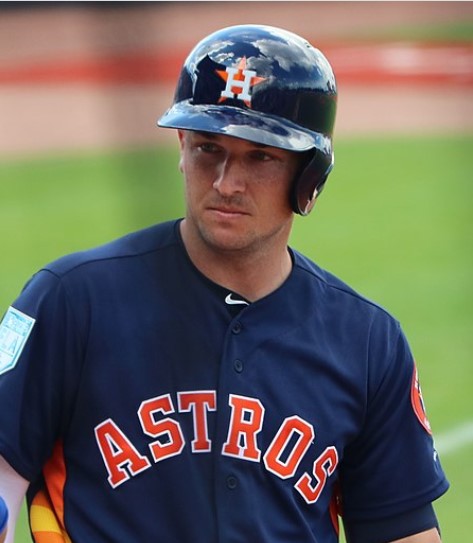
 

13 … A Pretty Lucky Number for Harry Hedgpeth

Earlier this week (August 10 to be exact), second baseman Chandler Redmond of the Double-A Springfield Cardinals became just the second player in baseball history to hit for the “Home Run Cycle” – a solo, two-run, three-run and Grand Slam  home run all in the same game. More on that in just a bit, but (spoiler alert), this is one of those Baseball Roundtable posts when I start researching a baseball and “one thing seems to lead to another.”

Redmond’s offensive outburst seemed unlikely to me.  He was a 32nd round pick (965 overall) in the 2019 draft, hit just .267 (but with 50 home runs) in four college seasons (Gardner-Webb of the Big South Conference) and was hitting .228 (with 13 home runs) for Springfield at the time. Well, that started me thinking about (and looking into) other unexpected (and at least somewhat extraordinary) minor-league accomplishments.  Boom!  Among others, I found one that occurred on this date (August 13) in 1913.

On that day, 24-year-old southpaw Harry Hedgpeth of the Petersburg Goobers of the Class-C  Virginia League blanked the Richmond Colts  twice‚ by scores of 1–0 and 10–0‚ both games going nine innings. He gave up only one hit in the opener and improved on that in Game two, tossing a no hitter.

Hedgpeth’s opponent in the first game was the ace of the Richmond staff, 22-year-old righty Yancey Wyatt “Doc” Ayers – on his way to a 29-8 season (and coming off a 25-12 season for the Colts in 1912). Ayers gave up just six hits and fanned 13, while Hedgpeth (himself on the way to a 21-10 season) gave up just one hit and one walk, while fanning six. The only hit was a single by Richmond SS and cleanup hitter Eugene Newton.

The Goobers jumped out to a 6-0 lead in the first inning of Game Two and Hedgpeth again went the distance giving up no-hits and two walks, while fanning two. The closest any major leaguer has come to Hedgpeth’s big day is the time the Cubs’ “Big Ed” Reulbach became the first (and still only) only major leaguer to throw two complete-game shutouts on the same day. It came on September 26, 1908, as Reulbach and the Cubs topped the Brooklyn Superbas 5-0 and  3-0.  Reulbach gave up eight hits in his 18 frames of work.

Here, recreated as accurately as I can, are the box scores from Hedgpeth’s one-hit doubleheader sweep (first names can be a problem in some old minor-league accountings).

New reports at the time indicated Clark Griffith of the Washington Senators had purchased both first game starters;  and Ayers and Hedgpeth both pitched in Washington that season. Hedgpeth got into a game for the Senators on the final day of the 1913 season, pitching one scoreless inning.  It was his only MLB appearance.  A shoulder injury the following spring apparently dampened his chances for an MLB career.  Ayers went on to pitch in nine MLB seasons, going 64-78, 2.84.

Yancey “Doc” Ayers started for the Washington Senators in the June 23, 1917 game (versus the Red Sox) in which Babe Ruth and Ernie Shore pitched MLB’s first combined no-hitter. Ruth walked the first batter and then was ejected for accosting the umpire. Ernie Shore came on in relief and, after the base runner was caught stealing, retired the next 26 batters in order – as the Rd Sox won 4-0.

Now, back to Redmond’s Home Run Cycle. Notably, at least for the Roundtable, Redmond tied the record of another Cardinals’ farmhand – Tyrone Horne, who hit for the Home Run Cycle on July 27, 1998 – as his Double-A Arkansas Travelers topped the San Antonio Missions of the Texas League 13-4.  (For the complete story on Horne’s big day, click here.)

Redmond’s big game came as the Springfield Cardinals topped the Amarillo Sod Poodles 21-4.  He hit his four history-tying round trippers in a four-inning stretch off four different pitchers.  His day went like this:

First Inning – RBI single off Slade Cecconi;

Third Inning – Strikeout (Cecconi);

Fifth Inning – Two-run home runs off Brent Teller;

Sixth Inning – Grand Slam off Josh Green;

Seventh Inning – Solo homer off Justin Lewis;

Eighth Inning – Three-run home run off Austin Pope.

—–Other Eye -Catching Minor-League Stats—–

N0w, here are a a half dozen other professional (minor-league) baseball achievements that have caught The Roundtable’s eye.

  • Outfielder Joe Wilhoit hit in a professional-baseball record 69 straight games in 1919, while with the  Wichita Jobbers of the Class-A Western League. His streak included 50 multi-hit games and a .515 average. He finished the season hitting .422 for Wichita, collecting 222 hits in 128 games. Wilhoit played in four MLB seasons, hitting .257-3-74.  For the full Wilhoit story, click here.
  • Outfielder Bob Crues drove in a professional-baseball record 254 runs (in 140 games) for the Class-C Amarillo Gold Sox in 1948; while hitting .404 with 69 home runs. Crues played in 11 minor-league seasons, but never made it to the major leagues.
  • Twenty-year-old righty Ron Necciai pitched a no- hitter for the Class-Bristol Twins (Appalachian League) in 1952 – and struck out a professional-baseball record 27 batters in the game.   Necciai played in just one MLB season (1952), going 1-6, 7.08 for the Pirates.  For the full Necciai story, click here.
  • Buzz Arlett, P-OF-1B, is often described as the minor-league Babe Ruth.  He started his minor-league career as a pitcher and racked up 99 wins in his first five seasons. Arm issues forced him from the mound and into the outfield. He went on to hit .313 with 432 home runs over 19 minor-league seasons – hitting  30 or more home runs in eight  seasons and hitting better than .300 in 14.  Arlett played in just one MLB campaign, hitting .313-18-72 for the 1931 Phillies. For the full Arlett story, click here.
  • Walter “Smoke” Justis went 25-17 for the Class-D Ohio State League Lancaster Links in 1908 – and he threw four no-hitters during the campaign. Justis won 20 or more games in three minor-league seasons. He appeared in just two major-league games, giving up three runs on four hits and six walks in 3 /13 innings.
  • Speaking of stats, Arnold “Jigger” Statz recorded 11 professional seasons of at last 200 hits – the final ten of those in the minor leagues. He had 209 hits (.319 average) for the Cubs in 1923. Then, between 1926 and 1938, he had ten more 200+ hit seasons for the Pacific Coast League Los Angeles Angels.  Statz retired, (at age 44) after the 1942 season, with 4,093 professional hits – 3,356 in the minor-leagues, 737 in the majors.  (His totals were, of course, helped by the PCL’s long season of the time.)  Side note: Ichiro Suzuki also had 11 200-hit seasons, ten in the U.S. major leagues, one in the Japan Pacific League. 

Primary Resources: Baseball-Reference.com; National Pastime.com; MLB.com; Richmond News Leader, October 15, 1925 (via VirginiaChronical.com); The Day Book (Chicago newspaper) , Volume 2, Number 281, August 25, 1913 (via the Illinois Digital Newspaper Collection); other sources cited in links.


100Baseball Roundtable is on the Feedspot list of the Top 100 Baseball Blogs.  To see the full list, click here.

I tweet baseball @DavidBaseballRT

Follow/Like Baseball Roundtable’s Facebook Page here.  More baseball commentary; blog post notifications; PRIZES.

Member: Society for American Baseball Research (SABR); The Baseball Reliquary; The Negro Leagues Baseball Museum.
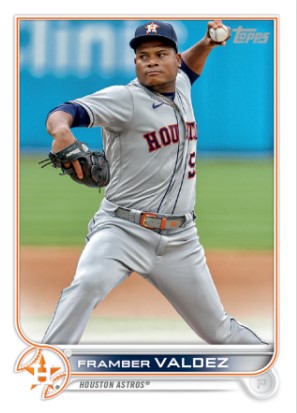


David Dahl … A Baseball Roundtable “What If?”

On this date (August 11) in 2016, Rockies’ 22-year-old rookie LF David Dahl started in the cleanup spot and went one-for-four with one run scored and one RBI, as the Rockies topped the Rangers 12-9 (in Texas). Dahl’s hit, a first-inning single had a little extra meaning for the rookie.  It extended his career-opening hitting streak to 17 games, tying him  with the 1941 Reds’ Chuck Aleno for the longest hitting streak ever from the beginning of an MLB  career.

The very next night (August 12), Dahl “missed” his chance to capture the record for himself (at 18 games), going zero-for-four with three swing- and-miss strikeouts.   Side note: I happened to be at that game, as part of a Ballpark Tours’ trip and was rooting for Dahl to capture sole possession of the mark.

Dahl collected 24 hits in 70 at bats (.358) during his career-opening streak – including one double, three triples and three home runs.  Over the 17 games, he drove in ten runs and scored 17. His streak included two three-hit games and three two-hit contests.

Dahl was selected – out of Mountain High School in Birmingham, Alabama – in the first round of the 2013 MLB draft (10th overall). Before hitting “the show,” he carried a .310 average with 47 home runs and 74 stolen bases over five minor-league seasons (367 games). In 2016, Dahl had moved up from Double-A Hartford to Triple-A Albuquerque before his call up, hitting .314 with 18 home runs, 61 RBI and 17 steals in a combined 92 games. Dahl finished the 2016 MLB season with a .315-7-25 line over 63 games.  His career was clearly on a sharp upward trajectory, despite some early setbacks.

Dahl’s rise to the major came despite a significant 2015 injury, suffered in an outfield collision while playing for the Double-A New Britain Rock Cats. Dahl suffered a spleen laceration and eventually had the spleen removed.

After his 2016 MLB debut season, the injury bug continued to bite Dahl. He suffered a stress factors (ribs) in 2017 Spring Training and eventually was shut down for the entire season.  Dahl, however, was back on track with the Rockies in 2018, hitting .273-16-48 in 77 games.  Then came a broken foot in 2018, an ankle injury (that shortened an MLB All Star season) in 2019 and shoulder surgery in 2020.   In five MLB seasons (2016, 2018-21 … Rockies, Rangers), Dahl hit .272-42-160 in 327 games.  The Roundtable wonders “What If David Dahl had stayed healthy?” 

David Dahl  was an All Star in 2019, hitting .302-15-61 in 100 games.

Dahl 17-game career-opening streak tied the record of Chuck Aleno,  3B for the Reds, who was called up May 15 1941. During his 17-game streak, Aleno hit .389 (28 for 72), with two doubles, two triples, nine RBI and 12 runs scored.  He started his streak with four multi-hit games and the streak included 11 two-hit games.  Aleno finished the year at .289-1-18 in 54 games, the most he would ever play in an MLB season.  (After his torrid 17-game start, Aleno played in just 101 more MLB games, hitting just .163, with two home runs and 25 RBI.)

When he was called up, the 24-year-old Aleno was in his fifth professional season and was hitting .348 (19 games) for the Double-A  Indianapolis Indians of the American Association. Aleno played 17 seasons of professional ball, parts of four in the majors. His MLB career line was .209-2-34 in 118 games. I

Primary Resources:  Baseball-Reference.com; Colorado Rockies Non-tender Oft-injured OF David Dahl, December 1, 2020, Associated Press  (via ESPN.com); Rockies’ Outfielder David Dahl’s Latest Injury is a High Right Ankle Sprain, August 4, 2019, Jack Etkin (via Forbes.com).


100Baseball Roundtable is on the Feedspot list of the Top 100 Baseball Blogs.  To see the full list, click here.

I tweet baseball @DavidBaseballRT

Follow/Like Baseball Roundtable’s Facebook Page here.  More baseball commentary; blog post notifications; PRIZES.

Member: Society for American Baseball Research (SABR); The Baseball Reliquary; The Negro Leagues Baseball Museum.
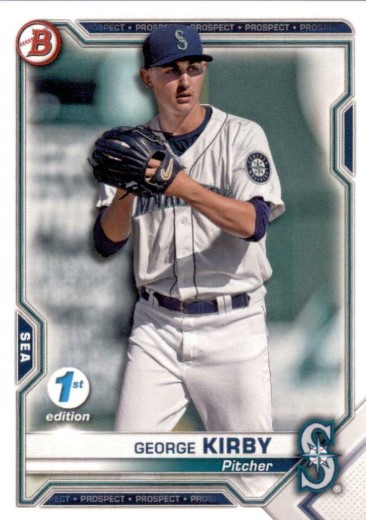


Baseball Roundtable July Wrap … Here’s Comes the Judge

It’s the first day of a new month and that means it’s time for Baseball Roundtable’s Wrap Up of the previous month – the stats and stories that captured The Roundtable’s attention, as well as the Players and Pitchers of the Month, team and individual leader boards and, of course, the Trot Index.

This month’s Wrap Up could easily be termed The Aaron Judge Special Edition.  Judge not only led all of MLB in July home runs, RBI and run scored, he set a new AL record for home runs before August 1, and tied the Yankee franchise records for home runs before the All Star break (tying Roger Maris) and for walk-off  home runs in a season (tying Mickey Mantle). You’ll find all the details in the Highlights Section of this Wrap Up. But Judge wasn’t the only story of July 22. We also saw:

  • A rookie became  just the third pitcher to throw a no-hitter and an Immaculate Inning in the same season;
  • Another rookie going deep on his first MLB swing of the bat;
  • The first team to launch back-to-back-to-back-to back home runs in the first inning;
  • The first-ever centerfield-to-third base triple play;
  • 2022’s fifth cycle;
  • Two players hit their career 200th home runs and one pitcher notch his 100th victory;
  • The Orioles put up the Al East’s best won-lost record;
  • The Blue Jays explode for 28 runs versus the Red Sox;
  • Three players with at least 60 July at bats hit .400 or better and three pitchers with at least 20 July innings pitched put up ERAs under 1.00.
  • And more.

You’ll find the stories in the Highlights Section.

First, though, let’;s look at Baseball Roundtable’s Players and Pitchers of the Month for July 2022.

_____________________________________________

Baseball Roundtable Players and Pitchers of the Month – July 2022

National League

Player of the Month – Austin Riley, 3B Braves

Braves’  25-year-old 3B Austin Riley came into July hitting .257 and entered August at .301 – thanks to a .423-11-25 month. Riley’s July included an 18-game hitting streak (July 5-26), during which he hit .444, with eight home runs, 16 RBI and 16 runs scored. (The streak included 11 multi-hit games.)  His .423 July average was second in the MLB among players with at least 60 July at bats, as were his 11  home runs and 25 RBI (tied with teammate Matt Olson). His 44 July base hits led all of MLB, as did his .885 slugging percentage.

Honorable Mentions:  Another 25-year-old, Phillies’ 3B Alec Bohm hit .434-3-14 in 20 games. That .434 average was the highest in MLB for players with at least 60 July at bats. Bohm went without a hit in only two of his 20 July games. During a 14-game hitting streak (July 8-29), he hit a torrid .471.  Dodgers’ 1B Freddie Freeman did MLB veterans proud, going  .388-6-19 in 26 July games.  His 38 July base hits were second in the NL.

Pitcher of the Month – Merrill Kelly RHP, Diamondbacks.

Photo: Barry Stahl on Flickr, CC BY 2.0 <https://creativecommons.org/licenses/by/2.0>, via Wikimedia Commonshoto:

Merrill Kelly went 4-0, with a 1.31 ERA in six July starts, putting up a stingy 0.77 WHIP (lowest in the NL among pitchers with at least 20 July  innings  pitched) and fanning  33 batters (versus just eight walks) in  an MLB-highest 41 1/3 July innings.  The 33-year-old, who came into 2022 with a 23-27, 4.27 MLB record over three seasons, ended July 10-5, 2.87 on the year. He gave up two or fewer runs in each of his six July starts. For the month, he allowed just five earned runs in his 41+ innings of work.

Honorable Mentions:  Mets’ righty Max Scherzer went just 1-1 for July, but  put up a 1.39 ERA and tied for second in the NL in July strikeouts with 45 (just four walks) in 32 1/3 innings. Edwin Diaz, RHP, Mets, was seven-for-seven in July save opportunities, with  a 0.00 ERA and  25 strikeouts (one walk ) in 11 1/3 innings.

______________________________________________

American League

Player of the Month  – Aaron Judge, OF, Yankees

Photo: DR. Buddie, CC BY-SA 4.0 <https://creativecommons.org/licenses/by-sa/4.0>, via Wikimedia Commons

Aaron Judge hit .333 for July with an MLB-best 13 home runs, as well as an MLB-tops 32 July RBI and an MLB-leading  25 runs scored. In addition, he stole five bases in five attempts. Judge had ten multi-hit, three multi-home run and eight multi-RBI games in July. He was also one of just three players with at least 60 at bats to put up an .800+ slugging percentage (.806).

Honorable Mentions: For most of the month, Yankee OF/DH Matt Carpenter was running neck-and-neck for this Roundtable recognition (a late-July power explosion by Judge closed the deal). Still, the 36-year-old veteran Carpenter deserves recognition for coming up big when the Yankees needed it. His 23 July RBI were second in the AL to Judge and he also delivered nine home runs (second in the AL to Judge) and a .356 July average.  Now a .400 average is a “bright and shiny thing” that tends to attract The Roundtable’s attention. So ,I have to give a shout out to Rays’ 1B Harold Ramirez (.400-1-10 in 16 games).

Pitcher of the Month – Dylan Cease, RHP, White Sox

Dylan Cease’s strikeout ratio for July was 10.1 per nine innings – his lowest for any month this season (11.5 in April, 13.6 in May and 14.8 in June).  Still, it was his best season of the month in terms of wins and  second-best in terms of ERA). Cease, 5-1, was the only MLB five-game winner in July.  His 0.76 ERA was the MLB’s lowest among pitchers with at least 20 July innings pitched.  He fanned 40 batters in 35 2/3 innings. In his six starts, he never gave up more than one earned run.

Honorable Mentions: The ageless wonder – Astros RHP, Justin Verlander – went 4-0, 1.01 in four July starts, fanning 32 batters in 26 2/3 innings (five walks). Cole Irvin, LHP, A’s, went 4-1, 1.85 for the A’s.  Notably, Irvin’s five starts including three  games against the Astros and one against the Blue Jays  – a pretty demanding set of assignments.  Despite facing these challenging lineups (and the fact that he fanned just 22 batters in 34 innings), Irvin’s WHIP for July was 0.65 – best in MLB among pitchers with at least 20 July innings.

_______________________________________

Surprise of the Month  – Tie: Ramon Urias, IF , Orioles & Jose Miranda, 1B/3B Twins

Ramon Urias was originally signed by the Rangers in 2010, as a 16-year-old international free agent out of out of Mexico. From 2011 through 2020, he played in the Rangers, Cardinals and Orioles minor-league systems, as well as in the Mexican Leagues.  In February 2020, Urias was selected off waivers (by the Orioles from the Cardinals) and he made his major-league debut in his tenth professional season (August 20, 2020), hitting .360-1-3 in ten games for the Orioles.  (Urias had gone .262-10-55 at  at High-A, Double-A and Triple-A in 2019). In 2021, Urias played in 85 games for Baltimore and hit .279-7-38. This season, he it .225-6-18 for the Birds through June, before turning in a surprising July – a .329-5-18 line, as the O’s made a July surge.  While he played primarily 3B in July, he also took the field at 2B and SS.

Twins’ 24-year-old rookie Jose Miranda came into July hitting .240-5-20 for the season (and his MLB career … 44 games).  In July, Miranda turned it up a notch (or more), going .353-5-19 in 20 July games. Miranda, signed by the Twins in the second round of the 2016 MLB Draft may have been a bit less of a surprise than Urias.  In 2021, he hit .344-30-94 in 127 games at Double- and Triple-A and was named the Twins Minor League Player of the Year.

Honorable Mentions: Braves’ 23-year-old rookie righthander Spencer Strider surprised me not by his success, but by how quickly his “stuff” has proven dominant – particularly since he missed the 2019 season recovering from Tommy John surgery.  Strider was selected by the Braves in the fourth round of the 2020 MLB draft – out of Clemson University, where he was 5-2, 4.71 over two seasons – fanning 89 batters in 63 innings. In 2021, he worked his way  from A-Level ball to High-A, Double-A and Triple-A before making his MLB debut with the Braves in October ( 2 1/3 innings in two appearances). Strider  (whose fastball averages in the high-90’s) started this season in the Braves’ bullpen. In fact, he didn’t get his first start until May 30 – when he lasted 4 /13 innings, giving up five runs (three earned) on four hits and two walks.  He went 2-1, 2.70 in five starts for the Braves in July, opening some eyes (even further) by fanning 41 batters in just 26 2/3 innings. Also mentioned as a surprise is the entire Baltimore Orioles team – more on that a bit later in this post.

______________________________________________________

TROT INDEX … A REGULAR BBRT FEATURE

Through July, 34.5 percent of the MLB season’s 114,855 plate appearances ended in a trot (back to the dugout, around the bases, to first base). We’re talking about strikeouts, home runs, walks, hit by pitch and catcher’s interference – all outcomes that are, basically, devoid of action on the base paths or in the field. Here’s the breakout: strikeouts (22.3%); walks (8.2%); home runs (2.8%); HBP (1.1%); catcher’s interference (less than 1%). Personally, I’d like more action in the field of play.

The 34.5 percent figure is down slightly from 2021’s full season 36.3 percent.  2020’s 37.3 percent;  2019’s 36.2 percent and 2018’s 34.8 percent.  By further comparison, in 1990, the Trot Index was 26.1 percent.  

_________________________________________________

When you look at July’s winningest teams, you see some expected squads – the Dodgers (21-5), Astros (19-9); Braves (18-8); and Mets (17-8). I’d like to devote a few paragraphs to a couple of teams among July’s top winners who would have to be noted as “surprises.”

Let’s start with the Orioles, who:

  • This June had their first winning month (14-12) since August of 2017;
  • In the past five years, have finished last in the East four times and second-to-last once; and
  • Last season finished 58 games under .500 and 48 games out of first place.

In July, the Orioles put up the best record in the Al East (16-9), raised their season record to 51-51 and moved to within three games of a Wild Card spot. The O’s were led on offense by 3B Ramon Urias (.329-5-18 for July); RF Anthony Santander (.316-5-17); and CF Cedric Mullins (.250-2-14, with six steals and 14 runs scored). On the mound, 12 different pitchers recorded July wins, led by Jordan Lyles (3-1, 3.58 in six starts) and Spencer Watkins (2-0, 2.35 in four starts), as well as some solid bullpen work. (Bryan Baker (2.45 ERA in 12 appearances); Felix Bautista (2.03 in 13 games);  Cionel Perez (1.46 in 13 appearances); Joey Krehbiel (1.54 in 11 appearances); and six saves by Jorge Lopez (despite a 4.76 ERA for the month).  The Orioles’ 3,61 ERA was the AL’s third-best for July.

Orioles’ July Win Streak

From July 1 through July 13, the Orioles surprised fans with a ten-game winning streak – going from nine games under.500 to one game over. The double-digit streak included five one-run wins, three walk-offs and victories notched by eight different Orioles’ pitchers. During the streak, they outscored opponents 52-30, outhit them .266 t0 .220 (but were out-homered 9-8). Over the streak, the Orioles’ pitching staff put up a 2.93 ERA to their opponents 4.80 and fanned 9.1 batters per nine innings to their opponents’ 8.1.

The Seattle Mariners also made a big move in July, leading the AL West with a .720 winning percentage – CF Julio Rodriguez led the offense (.267-5-18) and, while the averages weren’t strong, the Mariners got run production out of C Cal Raleigh (.224-4-14); 3B Eugenio Suarez (.218-3-14); and 1B Carlos Santana (.179-5-12). SS J.P. Crawford (.275 with 13 runs scored) and LF Sam Haggerty (.292, with 10 tallies) also chipped in.  Like the Orioles, the Mariners benefited from solid pitching, especially out of the pen: Ryan Borucki (2-0, 0.96 in nine games); Diego Castillo (2-0, 1.04 in nine games); Erik Swanson (2-0, 1.69 in 12 games); Matthew Festa (2-0, 3.12 in nine games); Matt Brash (1-0, 2.45 in seven games). That’s nine of those July wins (against no losses), right there.   Chris Flexen led the starters at 3-0, 1.95 in five starts.  The Mariners’ 3.22 July ERA was the AL’s lowest.

Mariners’ Big Streak

From July 2 through July 17, the Seattle Mariners ran off a 14-game winning streak.   During the streak, the Mariners outscored their opponents 70-34, outhit them .257 to .228 and out-homered them 21-to-11. The pitching really carried the streak, however, putting up a 2.07 ERA (to the opponents’ 4.46) over the 14 games; giving up two runs or fewer in nine games. Seven of the 14 wins were by one run and eight of the victories came on the road.  The streak ended with the Mariners dropping three straight to the Astros (July 22-24) in Seattle.

——Team  Statistical Leaders for July  2022 ———-

RUNS SCORED

National League – Dodgers (147); Diamondbacks (126); Brewers (125)

American League – Yankees (167); Astros (139); Rangers (135)

The fewest July runs were scored by the Angels – just 71. The Nationals  tallied the fewest runs in the NL at 78.

AVERAGE

National League – Dodgers  (.275); Rockies (.260); Brewers (.256)

American League – Blue Jays (.288);  Guardians (.269); Royals (.269)

The lowest team average for July belonged to the Angels at .199.

HOME RUNS

National League – Braves (42); Dodgers (36); Brewers (35)

American League –  Yankees (50); Astros (43); A’s (36)

The Angels  had the fewest home runs for July  at 15.

The Dodgers led MLB in July slugging percentage at .482.  The Yankees led the AL at .479.

STOLEN BASES

National League – Marlins (26); Braves (21); Cubs (18); Brewers (18)

American League – Yankees (22); Angels (21); Royals (20)

The Twins and Reds stole the fewest sacks in July – three each (the Twins in six attempts, the Reds in nine).  The Giants were 14-for-14 in steal attempts.

WALKS DRAWN

National League –   Dodgers (102); Giants (98); Brewers (97)

American League – Yankees (116); Rays (95); Astros (95)

The Dodgers  led MLB  in on-base percentage for July at .358. The Yankees led the NL  at .356.  

BATTER’S STRIKEOUTS

National League – Pirates (260); Reds (259); Giants (251)

American League – Red Sox (265); Rangers (262); Rays (251)

Bonus Stats

  • The Yankees led MLB in total bases in July with 440 . By contrast, the Angels were 30th, with 234 total bases in July.
  • The Reds led in July hit-by-pitch, with 22 Reds’ batters plunked.  The Phillies and Diamondbacks each had just three “victims” each.
  • Five of the thirty teams did not put down a single successful sacrifice bunt in July. The Diamondbacks, Guardians and Mets led in sacrifice bunts with five each.

Earned Run Average

National League – Mets (2.48); Cubs (2.87); Dodgers (2.94); Braves (2.95)

American League – Mariners (3.22); Astros (3.25); Orioles (3.61)

Three teams had July ERAs of 5.00  or higher– Red Sox  (6.30); Twins (5.30); Nationals (5.27)

STRIKEOUTS

National League – Mets (259); Marlins (247); Brewers (247)

American League – Astros (282); Yankees (249); Angels (236)

The Brewers averaged an MLB-best 10.28 strikeouts per nine innings in July. Also at 10+ were the Angels (10.24); Mets (10.21); and Astros (10.19).

FEWEST WALKS SURRENDERED

National League  –  Dodgers (56); Mets (62); Phillies (64); Cardinals (64)

American League –  Rays (59); Blue Jays (62); Orioles (65); A’s (65)

The Dodgers walked a stringiest 2.16 batters per nine frames in July.  The Red Sox walked an MLB’s highest 4.20 per nine innings for the month.

SAVES

National League – Marlins (10); Braves (10); Dodgers (10)

American League – Mariners (10); Orioles (9); A’s (9)

The Angels recorded just one save in July (just two  opportunities). They did win only six of 24  games.

WALKS AND HITS PER INNING PITCHED (WHIP)

National League – Dodgers (1.03); Mets (1.05); Phillies (1.11)

American League – Astros (1.07); A’s (1.13); Blue Jays (1.17)

Bonus Stats

  • The Mets were the only team to fan at least four times as many batters as they walked in July – 4.18 K/BB.
  • The Nationals gave up an MLB-high 42 home runs in July; the Giants gave up an MLB-low 18 dingers.
  • There were only four complete games pitched in July. One each for the Guardians (Shane Bieber); Astros (Framber Valdez); Giants (Carlos Rodon); and Cardinals (Adam Wainwright).

—–July 2022 Highlights—–

Nolan Arenado Does a Little RE-Cycling

Nolan Arenado got July off with a bang, providing some notable fireworks in the Cardinals’ July 1 5-3 loss to the Phillies in Philadelphia. In the game, Arenado hit for 2022’s fifth cycle (single, double, triple and home run in the same game). It was the second cycle of Arenado’s career, making him  the 29th modern-era American or National League player to hit for multiple cycles. The feat leaves Arenado one short of the all-time record for career cycles (three) shared by Christian Yelich, Trea Turner, Adrian Beltre, Babe Herman and Bob Meusel.

In the game, Arenado:

  • Got the triple out of the way in the top of the first inning (off Bailey Falter);
  • Added the home run (a two-run shot) off Falter in the third;
  • Hit a leadoff double (off Nick Nelson) in the sixth; and
  • Singled off Seranthony Dominguez in the eighth.

On the day, Arenado was four-for-four, with one run scored and three RBI.

2022 Cycles

The 2022 season has seen “cycles” by the Brewers’ Christian Yelich (May 11); Mets’ Eduardo Escobar (June 6); Angels’ Jared Walsh (June 11); Orioles’ Austin Hayes (June 22); Cardinals’ Nolan Arenado (July 1).

Three is a Crowd – a Good Crowd

On July 1 (in the same contest as Nolan Arenado’s’ cycle – reported above), Phillies’ rookie DH/1B Darick Hall hit his third home run of the season (he made his MLB debut June 29). It was made notable by the fact that it was also his third career base hit (coming in his third MLB game) and made Hall just the second Phillies’ player whose first three hits  were long balls. The other was outfielder Ed Sanicki in 1949, whose three homers came in his first five games. Sanicki, by the way, played in just 20 MLB games (in the 1949 & 1951 seasons), going .294-3-8. He had five MLB hits (one single, one double and three home runs).

Hall collected his first no-homer MLB safety (a single) on July 3.  At the close of July, his stat line was .244-5-11 in 24 games.  Hall has shown consistent power in the minor leagues. He was .269-20-67 in 72 games at Triple-A this season and has hit 188 home runs in 631 minor-league games – .250 minor-league average.

A Handful of Homers

Pirates’ infielder Rodolfo Castro is the only player whose first FIVE MLB safeties were home runs. He accomplished the feat in 2021, going .238 (5-for-21), with five long balls in his first nine MLB games.  He collected his first non-homer hit  (a double) in his 11th MLB game (July 3, 2021). Side note: Keith McDonald is the only player with more than one MLB hit (three), whose every MLB hit was a home run.  For more on McDonald, click here. 

Come on Let’s Get this Party Started

On July 2, the Cardinals looked to be getting off to a slow start.  In the top of the first, in Philadelphia, the first two batters (SS Tommy Edman and LF Brandon Donovan) were retired on seven pitches. (Kyle Gibson was on the mound for the Philllies). Then Redbirds’ 1B Paul Goldschmidt singled – followed by consecutive home runs off the bats of 3B Nolan Arenado, 2B Nolan Gorman, DH Juan Yepez and CF Dylan Carlson.  After the four blasts, RF Lars Nootbaar flied out to end the five-run inning). It was the just the 11th time an MLB team has hit four consecutive home runs in an inning and the first time it happened in the first frame. The Cardinals rode that five-run first inning outburst to a 7-6 win. (It took another Arenado home run in the ninth to seal the deal.)

Jeremy Pena Provides the Thunder, Pitching Staff Throw in the Lightning

Astros’ rookie shortstop Jeremy Pena has some big shoes to fill (Carlos Correa’s to be exact) and, on July 3, he more than filled the bill. Pena went four-five, with two home runs, two runs scored and three RBI – as the Astros topped the Angels 4-2 in Houston.  The icing the cake was that the second Pena blast was a two-run, walk-off homer in the bottom of the ninth.

The pitching staff, however, stole the show – tying an MLB nine-inning, single-game record  by fanning 20 Angels. STATS also reported that the Angels became the first team in MLB history to fan 48 batters in a three-game series that did not include extra innings. In the July 3 game, starter Framber Valdez fanned nine batters in six innings, Hector Norris and Rafael Montero each fanned two in one inning of work apiece and closer Ryan Pressly fanned three in a 1-2-3 ninth.  Four Astros’ pitchers fanned 12 Angels in a 9-1 win July 2 and three Houston hurlers fanned 16 in an 8-1 win on the first.

As for Pena, the rookie’s doing a solid job in Correa’s stead –  .252-15-38, with six steals at the end of July.

Giving a Double  – no Triple – Take

In their July 4, 6-3 win over the White Sox in Chicago, the Twins’ turned a unique 8-5 (centerfield to third base) triple play. By unique, I mean that, according the Society for American Baseball Research triple play data base, it is the only 8-5 triple play in MLB history.  Here’s how it went down.

The White Sox opened the inning with a ground rule double by 1B Jose Abreu (off reliever Griffin Jax). Jax then hit RF Gavin Sheets with a pitch and allowed a run-scoring single to 3B Yoan Moncada – leaving Sheets at second and Moncada at first with no outs and the game tied at two apiece. The ChiSox then brought in Adam Engel to pinch run for Sheets at second.  Sox LF  A.J. Pollock next hit an 0-2 Jax offering for what looked like a double to  to deep right center – only platinum glove CF Byron Buxton ran it down and made the catch at the wall (out number one). Buxton spun and threw  to the  infield, where Engel and Moncada were running hard. It what may have been a bit of good fortune, Buxton’s throw sailed over the heads of the cutoff man and to the glove of third baseman Gio Urshela, waiting between second and third. As Urshela caught the ball, Moncada (who had been on first) was headed toward third and Urshela made an easy tag for out number two. Engel (who had started on second) had passed Urshela and was rounding third. Urshela ran the ball to second base – tagging the bag for out number three.

Turn Two – or Three

The Twins remain the only team to turn two triple plays in a single game – a July 17, 1990 1-0 loss to the Red Sox.  Those triple killings were both around the horn (third-to second-to first … Gary Gaetti-to Al Newman-to Kent Hrbek) and occurred in the fourth and eighth innings

The very next day, the Twins tied an AL record by turning six double plays in a 4-3 win over the Red Sox.  In that game , the Red Sox also turned four double plays – giving the Twins/Red Sox the MLB record for combined twin killings in a game. 

More #InBaseballWeCountEverthing

According the STATS, the July 4 Brewers/Cubs (in Milwaukee) game was the first in MLB history  to feature  a player’s first career home run; an inside-the-park home run; AND A walk-off home run.

Cubs’ Rookie CF Nelson Valazquez gave Chicago a 1-0 lead in the top of the third inning with his first career home run. It came in his 14th Career game and 32nd career at bat.

Cubs’ Rookie RF Seiya Suzuki tied the game a two apiece with an inside-the park home run with one out in the  top of the ninth (off Brewers’ closer Josh Hader). It was his fifth home run and first inside-the-parker.

Brewers ‘1B Victor Caratini topped off the game with a three-run, walk-off homer run in with two out in the bottom of the tenth. It was his seventh of the season and 29th of his six-season  MLB career.

Robbie (maybe) Didn’t See This One Coming

In the eighth inning of the White Sox July 10 win over the Tigers in Chicago, Detroit LF Robbie Grossman appeared to temporarily lose a fly ball in the sun and had it bounce off his glove for a two-base  error.  An error, no big deal, right?  Well, it was kind of a big deal, it was Grossman’s first miscue in the field since June 13, 2018 – a span of 440 games  and the longest error-free streak by a position player in MLB history. The error, by the way, would have been the third out of the inning in a 2-2 tied game. After the miscue, the White Sox added an intentional walk and a pair of singles for two unearned runs and a 4-2 win.

Albert Pujols Continues to Climb the Charts

Photo by Dirk DBQ

On July 11, as the Cardinals topped the Phillies in St. Louis, Albert Pujols touched Phillies’ starter Aaron Nola for an inning-opening double in the seventh (and came around to score on a home run by LF Corey Dickerson).  When Pujols got his hit, the Cardinals were already up 3-1 and it was his only hit in the game.  Still, it had a lot of meaning.  It was Pujols 1,378th career extra base hit, enabling him to pass perhaps the most famous Cardinal of all –  Stan “The Man” Musial – into third place on the all-time career extra-base hit list. Pujols, who finished July with 1,382 career XBH, trails only Hank Aaron (1,477) and Barry Bonds 1,440.) At the end of July, Pujols was third all-time in XBH, third in RBI (2,174); third in total bases (6,110); and fifth in home runs (686).

Move Over Roger

On July 16, Yankee Aaron Judge hit his third and fourth homers of the month, as the Yankees topped the Red Sox 14-1 in New York. Even more significantly, they were  32nd and 33rd homers of the season – tying him with Roger Maris for the most home runs before the All Star break by a Yankee. It also tied him for eighth all-time in homers by the break. (Keep in mind, the first All Star Game – and thus the first “break” – did not take place until 1933.) More on Judge after the All Star Break (below).

___________________________________

Baseball Roundtable All Star Break

Plenty has been written about the 2022 All Star Game, in which the American League emerged as 3-2 victors on the strength of a fourth-inning, two-run home run by Yankee LF Giancarlo Stanton, followed immediately by a solo blast from Twins’ CF Byron Buxton.

Baseball Roundtable, with that in mind, will just take a quick look at the game’s Baseball Roundtable Trot Index – percent of plate appearances that end with a batter’s “trot” (back to the dugout, to first base or around the bases).  These are basically plate appearances that produce no action on the field.  For  the game’s 73 plate appearance, The Baseball Roundtable Trot Index was 43.8 percent. It breaks out like this: strikeouts – 30.1%; walks – 6.8%; home runs – 4.1%; hit by pitch  – 2.7%; . (Percentage total differs slightly due to rounding.) If such things interest you, fans also saw 62 players, including 20 pitchers. 

For some unique tidbits from All Star games past (like the time, 1942, when the American League used just 11 players in a nine-inning All Star Game or when, in 1967, Bill Freehan caught all 15 innings of an All Star game, click here.

___________________________________________

Judge Continues His Assault Post All Star Break

After the All Star break, Aaron Judge hit a robust .405, with nine home runs and 21 RBI in 11 games. That gave him 13 home runs for the month and 42 on the season. That 42nd home run – in  Yankees 8-2 win over the Royals on July 30 –  made Judge just one of two players to reach 200 career round trippers in less than 700 games. Judge got there in 671 games, trailing only Ryan Howard (658 games). Others in the top five include: Ralph Kiner (706 games); Juan Gonzalez (766); Harmon Killebrew  and Albert Belle (tied at 769).

Judge also passed Yankee legend Babe Ruth for the most home runs by a Yankees before August 1 (Ruth had 41 as of July 31, 1928). Stathead indicates Judge’s 42 home runs before August 1 are an American League record and trail only Mark McGwire (45 for the Cardinals in 1998) and Barry Bonds (45 for the Giants in 2001) for the MLB-high.

Blue Jays Explode Against the Red Sox

On July 22, the Blue Jays exploded for 28 runs (on 29 hits) against the Red Sox – winning by a 28-5 score. In the game, every member of the Blue Jays’ starting lineup collected multiple hits and scored multiple runs. For a more in-depth look at the contest, click here.

Betts Gets Number 200

On  July 23, Dodgers’ RF Mookie Betts hit his 22nd home run of the season, as the Dodgers beat the Giants 4-2 in LA. The blast was also Betts 200th career home run.

More #InBaseballWeCountEverything

34-year-old Bryan Shaw of the Guardians has been spending his summers in a major-league clubhouse for 12 seasons (2011-2022 … Diamondbacks, Indians, Rockies, Mariners). And, until this July 26, he started every game in the bullpen.  On that day, after 732 relief appearances, he made his first MLB start (against the Red Sox in Boston).

Why is this in the Highlights Section?  It gave Shaw the most relief appearance ever at the beginning of a career before making a start. (Keep in mind, you have to make at least one career start to qualify.) Shaw went 2 1/3 innings, giving up two runs on three hits and a walk, while fanning two.  Cleveland won 8-3 and Shaw got a no-decision. Shaw was relieved by 25-year-old righty Nick Sandlin, who has made 61 relief appearances without a start.

If Shaw’s name sounds a bit familiar, it should. In his first 11 MLB season, he led the AL in appearances four time.

Is Forty, the New Thirty?

On July 27, the Cardinals topped the Blue Jays on the strength of a three-run home run by 42-year-old Albert Pujols (part of a three-for-four games) and a one-run, seven-inning, eight-strikeout performance by 40-year-old starter Adam Wainwright.

He wasn’t Throwing Junk Out There

I’ve always though Homer Bailey was an unfortunate name for an MLB pitcher, in the same way Steve Swisher is not ideal for a hitter.  Well, add Angels’ 26-year-old rookie righthander Janson Junk to that list. On July 27, Junk made his second MLB appearance of 2022 (and sixth career MLB appearance). Junk started against the Royals and went five innings (four hits, one walk, eight strikeouts) in picking up his first MLB victory. Oh, one of my favorite baseball names? How about the Diamondbacks’ Seth Beer?

More  Judgments (or Judge moments)

On July 28, Yankee OF Aaron Judge rapped his 39th home run of  the 2022 season.   It came with one out in the bottom of the ninth inning and gave the Bronx Bombers a 1-0 win over the Royals. It was Judge’s third walk-off home run of the season, tying Mickey Mantle (1959) for the franchise record for walk-off long balls in a  single campaign.

Sho-Time Again

It wouldn’t be a 2022 Roundtable Highlights Section without a nod to Shohei Ohtani. The Angels’ two-way star. On July 28, as the Angels lost to the Rangers 2-0 in LA, Shohei gave up two runs on eight hits over six innings – while fanning 11 and walking none. While it was a loss, it was also the sixth consecutive game in which Ohtani fanned 10 or more batters – leaving him to enter August one game shy of the franchise record for consecutive games with double-digit strikeouts,  Who owns that record?  None other than Nolan Ryan. Not bad company. Since June 22, Ohtani has made six starts on the mound, going  4-2, 2.08 and fanning 68 batters (eight walks) in 39 innings.

Old Guys Continue to Rule

Okay, let get this right up front, Houston righty Justin Verlander is 39-years-old, missed the 2021 season recovering from Tommy John surgery and pitched only one game in 2020. So, how’s he doing.  On July 29, he became the 2022 season’s first 14-game winner, going 7 2/3 innings  and giving up one run on five hits (with five  strikeouts), as the Astros topped Seattle 11-1. That victory ran Verlander’s record to 14-3, with a 1.81 ERA and 122 strikeouts in 124 innings.  Verlander has won his last six starts, putting up a .086 ERA over 41 2/3 innings (on out shy of seven innings per start).

100 – That a nice Round Number

On July 30, Mets’ right-hander Carlos Carrasco threw 7 2/3 innings of shutout ball, as New York topped the Marlins in Miami. It ran Carrasco’s season record to 11-4, 3.79 – and was his 100th MLB victory. Carrasco is 100-82, 3.86 over 13 MLB seasons. His best season was 2017, when he went 18-6, 3.29 for the Indians, leading the AL in victories and finishing fourth in the Cy Young Award balloting.

Three’s Company – Pretty Good Company!

In the second inning of the Angels’ matchup with the Rangers (in Texas) – with the score knotted at 1-1 – Angels’ rookie starter Reid Detmers was slated to face 3B Ezequiel Duran, RF Kole Calhoun and 2B Charlie Culberson (the numbers 6-7-8 batters in the lineup). He dispatched the trio on nine pitches – all strikes – to record an Immaculate Inning (three strikeouts on nine pitches, to produce a 1-2-3 inning).

It was the fourth Immaculate Inning this season, but this one was extra special.    Detmers, you may recall, threw a no-hitter against the Rays back on May 10 (a 12-0 Angels win). Adding the Immaculate Inning made Detmers the first rookie and only the third pitcher in MLB history to throw a no-hitter and an Immaculate Inning in the same season.  The others?    Sandy Koufax (1962, 1963, 1963) and Mike Fiers (2015).

Nice Start, Rook!

On July 31, as the Dodgers faced the Rockies in Colorado, James Outman made is MLB debut in RF for the Dodgers.  The 25-year-old rookie, batting ninth came up against Rockies’ starter German Marquez in the top of third, with one on and no outs and the game tied at 0-0. Outman did not make an out, Man! After taking two pitches for a 1-1 count, Outman took his first major-league swing and popped a home run to right-center.  He finished his first MLB game three-for-four, with two runs scored, three RBI, a double and a homer.

——-Individual Statistical Leaders for July  2022———

AVERAGE (60 July  at bats minimum)

National League – Alec Bohm, Phillies (.434); Austin Riley, Braves (.423); Freddie Freeman, Dodgers (.388)

American League –  Harold Ramirez, Rays (.400); Lourdes Gurriel, Jr., Blue Jays (.382); Matt Carpenter, Yankees (.356)

The lowest July average (among players with at least 60 at bats in the month)  belonged to the Phillies’ Didi Gregorius at .116 (8-for-69).

HOME RUNS

National League – Austin Riley, Braves (11); Kyle Schwarber, Phillies (10); Matt Olson, Braves (9)

American League –  Aaron Judge, Yankees  (13);  Matt Carpenter, Yankees (9); Matt Chapman, Blue Jays (9)

The Braves’ Austin Riley had the highest July slugging percentage (among players with at least 60  at bats) at .885.  The AL  leader was the Yankees’ Matt Carpenter  at .822. 

RUNS BATTED IN

National League –Matt Olson, Braves (25); Austin Riley, Braves (25); Freddie Freeman, Dodgers (19); Brandon Drury, Reds (19)

American League –  Aaron Judge, Yankees (32); Matt Carpenter, Yankees (23); Matt Chapman, Blue Jays (22)

HITS

National League – Austin Riley, Braves (44); Freddie Freeman, Dodgers (38); Trea Turner, Dodgers (35)

American League –  Steven Kwan, Guardians (38); Jose Abreu, White Sox (36); Vlad Guerrero, Jr., Blue Jays (35)

The Nationals’ Juan Soto  led MLB (players (with at least 60 July at bats) in on-base percentage at .495. The AL leader was the Yankees’ D.J. LeMahieu at .462.

DOUBLES

National League –  Austin Riley, Braves (15); Freddie Freeman, Dodgers (11); Trea Turner, Dodgers (9): Randal Grichuk, Rockies (9)

American League –  Yandy Diaz, Rays (11); Leody Taveras, Rangers(10); Vlad Guerrero, Jr., Blue Jays (10)

TRIPLES

National League – Gavin Lux, Dodgers (3); five with 2

American League – Jorge Mateo, Orioles (3); four with 2

The Braves’ Austin Riley  led MLB in July extra-base hits with 26.  He had 18 singles, 15 doubles and 11 home runs.

 STOLEN BASES

National League –  Ronald Acuna, Braves (9); Michael Harris, Braves (7); Jon Berti, Marlins (6); Jonathon Davis, Brewers (6); Josh Rojas, Diamondbacks (6)

American League – Bobby Witt, Royals (8); Marcus Semien, Rangers (7); Cedric Mullins, Orioles (6)

The Braves’ Michael Harris stole the most bases without being caught in July at seven. 

WALKS

National League – Juan Soto, Nationals (25); Christian Yelich, Brewers (18); Christian Walker, D-backs (15); Daniel Vogelbach, Mets (15)

American League – DJ LeMahieu, Yankees (20): Jorge Polanco, Twins (20); three with 17

BATTER’S STRIKEOUTS

National League – Kyle Schwarber, Phillies (37); Matt Olson, Braves (36); Ian Happ, Cubs (33)

American League – Kole Calhoun, Rangers (42); Riley Greene, Tigers (39); Adolis Garcia, Rangers (36)

PITCHING VICTORIES

National League – Merrill Kelly, Diamondbacks (4-0); Reiver Sanmartin (4-0), Julio Urias, Dodgers (4-0); Kyle Wright, Braves (4-0)

American League – Dylan Cease, White Sox (5-1); Justin Verlander, Astros (4-0); Cole Irvin, A’s (4-1); Corey Kluber, Rays (4-2)

The Angels’ Patrick Sandoval had the most losses in July (0-5, 6.20 in fie starts).  

 EARNED RUN AVERAGE (at least 20 innings pitched)

National League –  Marcus Stroman, Cubs (0.89);   Carlos Carrasco, Mets (0.90); Tyler Anderson, Dodgers (1.11.)

American League – Dylan Cease, White Sox (0.76); Justin Verlander, Astros (1.01); Reid Detmers, Angels (1.13)

Among pitchers with at least four July starts or 20 July innings, the Red Sox’ Nick Pivetta had the highest ERA at 9.38 (25 earned runs in 24 innings.)

STRIKEOUTS

National League – Carlos Rodon, Giants (53/37 IP); Max Scherzer, Mets (45/32 1/3 IP); Yu Darvish, Padres (45/34 IP)

American League – Gerrit Cole, Yankees (51/38 IP); Shohei Ohtani, Angels (44/22 1/3 IP); Brady Singer, Royals (42/30 2/3 IP); Jose Berrios, Blue Jays (42/36 IP)

SAVES

National League – Tanner Scott, Marlins (7); Daniel Bard, Rockies (7); Edwin Diaz, Mets (7)

American League – Jordan Romero, Blue Jays (7); Scott Barlow, Royals (6); Jorge Lopez, Orioles (6); Lou Trivino, A’s (6)

Edwin Diaz of the Mets went seven-for-seven in save opportunities and put up a 0.00 July ERA. Also going seven-for-seven were the Blue Jays’ Jordan Romano (0.84 ERA) and Rockies’ Daniel Bard (1.00 ERA).

WHIP (Walks +  Hits per Inning Pitched – 20 innings minimum)

National League –Merrill Kelly, Diamondbacks (0.77); Braxton Garrett, Marlins (0.80); Clayton Kershaw, Dodgers (0.80); Alex Wood, Giants (0.80)

American League – Cole Irvin, A’s (0.65); Shane McClanahan, Rays (0.82); Triston McKenzie, Guardians (0.83)

BONUS STATS

  • The Nationals Josiah Gray gave up the most homer in July – nine in 26 2/3 IP.
  • Among pitchers with 20 July innings, the Braves’ Spencer Strider held opponents to the lowest July batting average (.158 )

_______________________________________________


If the season ended July 31, the post-season teams would be:

National League: Dodgers, Mets, Brewers   Wild Cards: Braves, Padres, Phillies

American League:   Yankees, Astros, Twins   Wild Cards:  Blue Jays, Mariners, Rays


——-Team  Statistical Leaders Through July   2022 ———-

RUNS SCORED

National League – Dodgers (526); Braves (486); Phillies (476)

American League – Yankees (551); Blue Jays (495); Red Sox (468)

The fewest  runs (through July) were scored by the Tigers – 331. The Pirates tallied the fewest runs in the NL at 363.

AVERAGE

National League – Rockies (.261); Dodgers (.258); Mets (.256)

American League – Blue Jays (.265); White Sox (.257); Red Sox (.255)

The lowest team average through June  belonged to the A’s at .215. The Pirates  were at the bottom of the NL at .219,

HOME RUNS

National League – Braves (158); Brewers (140); Phillies (131)

American League –  Yankees (177); Astros (146); Blue Jays (132)

The Tigers  had the fewest home runs through June  at 63.  The Nationals  trailed the rest of the NL at 79.

The Yankees led MLB in slugging percentage through July at .444.  The Dodgers led the NL at .442.

STOLEN BASES

National League – Marlins (83); Cardinals (67); Cubs (66)

American League – Rangers (80); Yankees (68); Orioles (62)

The Twins stole the fewest sacks through July (16 in 29 attempts).  The Rockies were at the bottom of the NL with 27 in 40 attempts.  The White Sox stole 39 bases through July and were caught just four times.

WALKS DRAWN

National League –   Dodgers (389); Giants (372); Brewers (361)

American League – Yankees (408); Mariners (369); Astros (359)

The Dodgers  led MLB  in on-base percentage through  July at .336. The Yankees led the AL  at .331.  The A’s had MLB’s lowest  OBP through July at .275.  

BATTER’S STRIKEOUTS

National League – Pirates (955); Braves (954); Brewers (899)

American League – Angels (985);  Rays (903); Orioles (898)

Guardians’ batters fanned the fewest times through  July (707).

EARNED RUN AVERAGE  

National League – Dodgers (2.97); Mets (3.54); Braves (3.60)

American League – Astros (3.04); Yankees (3.19); Rays (3.45)

Two teams had  ERAs through June of 5.00  or higher – Nationals (5.14); Reds (5.12). 

STRIKEOUTS

National League – Braves (983); Brewers (970); Mets (960)

American League – Yankees (952);  Astros (920); White Sox (915)

The Brewers  averaged an MLB-best 9.64 strikeouts per nine innings through  July. The White Sox averaged an AL-best 9.09. Eight teams average 9+ whiffs per nine innings.

FEWEST WALKS SURRENDERED

National League  – Dodgers (249); Giants (282); Mets (286)

American League –  Rays (251); Blue Jays (267); Yankees (268)

The Rays and Dodgers each walked an MLB-lowest 2.49 batter per nine innings through July.

SAVES

National League – Brewers (37); Braves (36); Padres (35)

American League – Yankees (34); Astros (31); Blue Jays (30)

Bonus Stats:

  • The Nationals gave up an MLB-high 150 home runs through July. By contrast, the Giants gave up an MLB-low 82 homers through July.
  • There have been just 17 complete games through July; the Red Sox lead the category with three. Eighteen of the 30 MLB teams have yet to record a complete game.
  • The Mariners committed the fewest errors through July (35) and had the top fielding percentage at .990.  The Pirates committed an MLB-high 73 fielding miscues through July.


Baseball Roundtable Note: Some of the MLB records noted in this post have the potential to change as Major League Baseball recognizes and further incorporates Negro League records from 1920-48. 

Primary Resources: Baseball-Reference.com; Baseball-Almanac.com; MLB.com


100Baseball Roundtable is on the Feedspot list of the Top 100 Baseball Blogs.  To see the full list, click here.

I tweet baseball @DavidBaseballRT

Follow/Like Baseball Roundtable’s Facebook Page here.  More baseball commentary; blog post notifications; PRIZES.

Member: Society for American Baseball Research (SABR); The Baseball Reliquary; The Negro Leagues Baseball Museum.
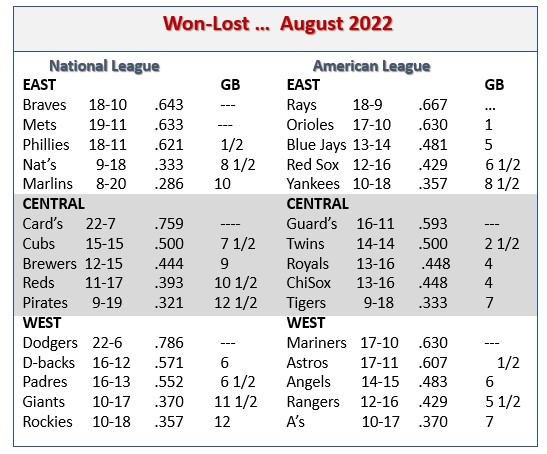


Ed Linke- A “Heads Up” Start to an Unusual Double Play and a Head Start on his Best MLB Season

On this date (July 26) in 1935, Ed “Babe” Linke – in a truly “heads up” play – started one of the most unusual double plays in MLB history. Not only that, the play seemed to give him a head start (or jump start) to his best-ever MLB campaign.
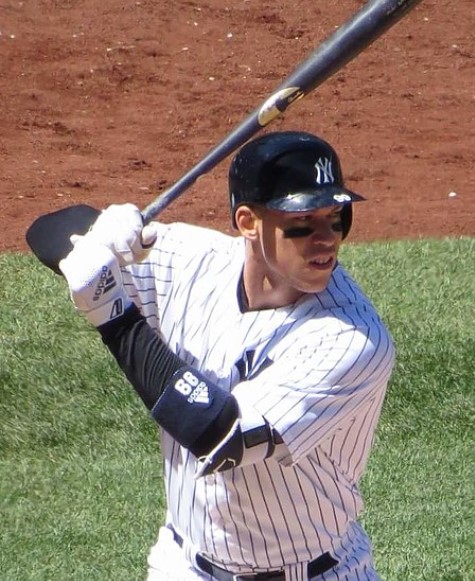
That day, the 23-year-old started (in New York) on the mound for the Senators (fighting to stay out of last place)) versus the Yankees (trailing the first-place  Tigers by 1 1/2 games).  Linke came into the game 3-6, 7.60), while his mound opponent,  Johnny Broaca was 8-3, 3.15.     He had no idea he was soon to start a unique double play – with his head.

Linke was wild from the start, walking the bases loaded with one out  in the first frame (3B Red Rolfe, RF George Selkirk, 1B Lou Gehrig), but escaping without a Yankee run (striking out C Bill Dickey and getting SS Tony Lazzeri on a ground out.)  The Senators had tallied once in the top of the first and added a second run in the top of the second, so Linke was staked to a 2-0 lead as he took the mound in the bottom of the second inning.  Little did he know where his afternoon was headed.  If he had, he might have left the mound.

In the bottom of the second, with one out, Yankee lead-off hitter and left fielder Jesse Hill smashed a line drive off Linke’s forehead.  The ball hit the right-handed hurler with such force it ricocheted back to Senators’ catcher Jack Redmond, who caught it on the fly and fired to Senators’ shortstop Red Kress, catching a surprised Yankee base-runner (CF Ben Chapman) off the bag for a 1-2-6 double play – completed as Linke lay semi-conscious on the mound.  Linke was carried off the field on a stretcher and spent two days in the hospital before returning to the Senators – to begin the most successful pitching streak of his six-season MLB career. (He was back on the mound just eight days later.)

At the time of the beaning – including that game – Linke’s record on the season was 3-6, with a 7.41 ERA. (He would complete his MLB career at 22-22, 5.61.) However, for the remainder of 1935, after being felled by the Hill liner, Linke went 8-1, 3.18 in 11 starts and three relief appearances.  During that time, he also threw seven of his 13 career complete games – including a ten-inning, two-run (one earned) performance against the Indians on August 18 and a twelve-inning, three-run (two earned) outing against the Tigers on September 11.

Linke finished up the 1935 season 11-7, 5.01. (Note; Baseball-References lists Linke’s ERA at 5.01 in his career overview and 5.06 in his 1935 game logs.)  The following year,  he would go 1-5, 7.10; and would be out of the major leagues by age 27.) The knock on the noggin’ didn’t seem to hurt Linke’s batting eye either, Hitting .259 at the time of the injury, Linke finished the season at .294, with one home run and nine RBI.  Clearly, Linke got a head start on his best season on this date 87 years ago.

Primary Resources: Baseball-Reference.com; BaseballRulesAcademy.com; NationalPastime.com


100Baseball Roundtable is on the Feedspot list of the Top 100 Baseball Blogs.  To see the full list, click here.

I tweet baseball @DavidBaseballRT

Follow/Like Baseball Roundtable’s Facebook Page here.  More baseball commentary; blog post notifications; PRIZES.

Member: Society for American Baseball Research (SABR); The Baseball Reliquary; The Negro Leagues Baseball Museum.